UBC MBA: Climate Career Track
Supplemental Courses
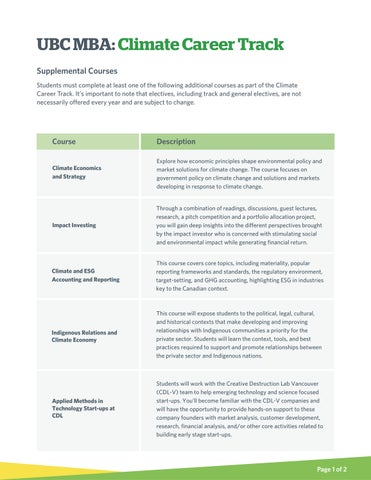
Students must complete at least one of the following additional courses as part of the Climate Career Track. It’s important to note that electives, including track and general electives, are not necessarily offered every year and are subject to change.
Course Description
Climate Economics and Strategy
Impact Investing
Climate and ESG Accounting and Reporting
Indigenous Relations and Climate Economy
Applied
Methods in Technology Start-ups at CDL
Explore how economic principles shape environmental policy and market solutions for climate change. The course focuses on government policy on climate change and solutions and markets developing in response to climate change.
Through a combination of readings, discussions, guest lectures, research, a pitch competition and a portfolio allocation project, you will gain deep insights into the different perspectives brought by the impact investor who is concerned with stimulating social and environmental impact while generating financial return.
This course covers core topics, including materiality, popular reporting frameworks and standards, the regulatory environment, target-setting, and GHG accounting, highlighting ESG in industries key to the Canadian context.
This course will expose students to the political, legal, cultural, and historical contexts that make developing and improving relationships with Indigenous communities a priority for the private sector. Students will learn the context, tools, and best practices required to support and promote relationships between the private sector and Indigenous nations.
Students will work with the Creative Destruction Lab Vancouver (CDL-V) team to help emerging technology and science focused start-ups. You’ll become familiar with the CDL-V companies and will have the opportunity to provide hands-on support to these company founders with market analysis, customer development, research, financial analysis, and/or other core activities related to building early stage start-ups.