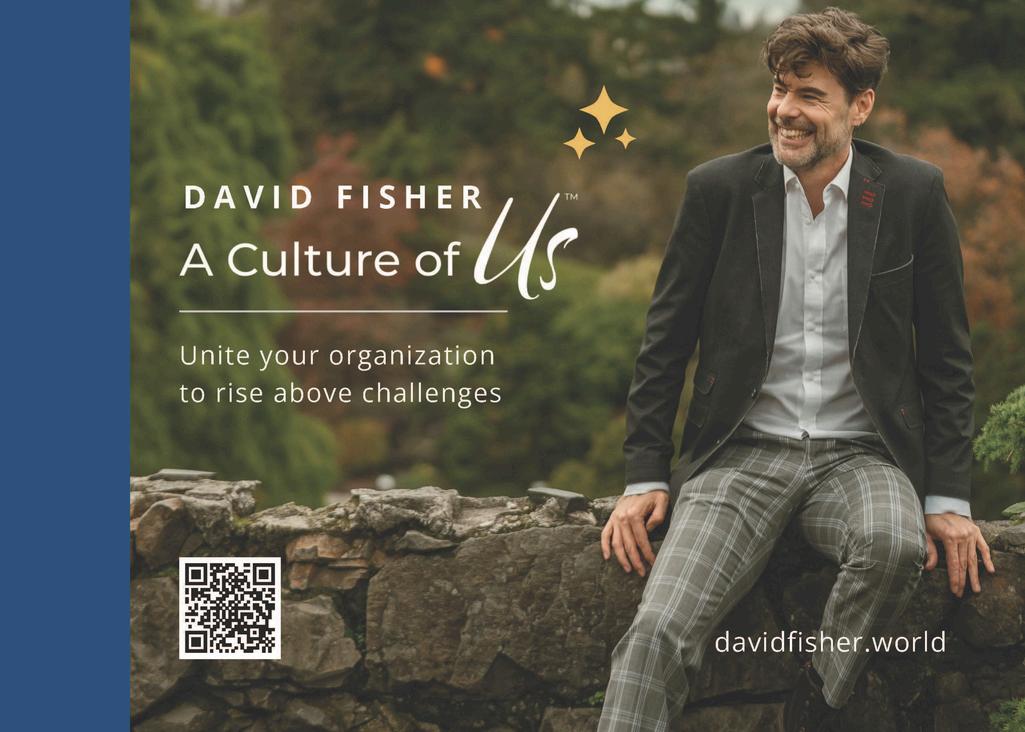
A Culture of Us™
Join David as he guides you toward increased wellbeing through an uplifting philosophy and methodology of communication, storytelling, and creativity.
Our opening keynote will guide you toward increased performance and well-being through the power of communication, storytelling, and creativity. You will begin with self-reflection, exploring the stories you tell yourself about your values, goals, and purpose and how these shape your well-being and performance.
You will then discover how to communicate with greater clarity, learning how meaning and misunderstanding influence our interactions and how stronger connections can reduce conflict and improve collaboration.
Finally, you will explore what it means to lead with intention whether or not you hold a formal leadership role creating spaces where voices are heard, people can grow, and everyone recognizes the impact they have within their teams and communities.
Concurrent Session 1 May 13, 2026
1:15-2:45 p.m.
A: Amplify Your Story
This session is for anyone looking to strengthen their message and connect more meaningfully with others. Join David as he explores how storytelling can inspire connection and action.
Through practical examples and engaging guidance, David will demonstrate how stories can deepen relationships while building trust and credibility.
You will discover how narrative can be used as a powerful tool for leadership, collaboration, and influence in any setting.
You will leave this session with a practical toolkit for finding and crafting stories that move people to action, the confidence to use personal experience to strengthen your message, and a storytelling playbook you can use to create meaningful connections with any audience.
B: Elevating Emotional Intelligence, Self-Care, and Support in the Community Service Industry
Community Service workers face unique pressures as they support people with diverse needs, collaborate with teams, and respond to complex situations. Many report increased stress related to the emotional and physical demands of their work.
Elevating Emotional Intelligence, Self-Care, and Support in the Community Service sector explores the essentials of these three important areas, providing a strong foundation to help workers navigate workplace-related stress. Join us as we examine the impact of emotional intelligence in building self-awareness, strengthening relationships, and supporting thoughtful decision-making. Discover practical self-care strategies to support your mental, emotional, and physical well-being. Finally, we’ll highlight available resources and supports to help navigate challenges, equipping you with the tools and knowledge to maintain your psychological health.
Vendor Tradeshow: May 13 only!
We are please to be hosting a tradeshow where SARC Members and other nonprofits will share the services and products they offer in their communities. Each vendor represents the innovation within our network, showcasing quality offerings and products while building meaningful connections. Be sure to explore the vendor tradeshow - you never know what you will find!
David Fisher
Judith Ekwelum, Service Hospitality
Concurrent Session 2 May 13, 2026
3:00-4:30 p.m.
A: What Does Behaviour Tell Us? Understanding Person-centred Functions of Behaviour: Ourselves and Others
For many years, behaviour support has relied on a small set of functional labels to explain why people engage in behaviours that others experience as challenging.
While these labels can be technically useful, they are often charged. The language we use to describe behaviour shapes how we interpret it, and how we respond.
Grounded in the ‘Multi-Element Behavior Support’ (MEBS) model developed by LaVigna and Willis, this session introduces person-centered ways of understanding the functions of behaviour that shift the focus from control and compliance to unmet needs, environmental barriers, and opportunities for skill-building. Participants will explore how reframing behaviour, from “attention seeking” to attempts to interact with others, or from “escape” to preventing an upsetting situation, can change the entire direction of support planning. The session will also examine our own behaviour as carers, exploring how our assumptions, language, and responses influence subsequent events. You will leave with practical tools for understanding behaviour in ways that promote dignity, curiosity, and effective support.
B: Reconciliation in the Workplace
Reconciliation is often spoken about, but what does it actually look like? This thought-provoking session invites you to move beyond surface-level actions to explore the heart of reconciliation in a meaningful, actionable way.
By learning the historical context and understanding why reconciliation matters today, you will gain practical insights for developing authentic relationships with Indigenous peoples and communities. This session encourages open dialogue, self-reflection, and connection –essential steps for anyone seeking to contribute to reconciliation in their workplace and beyond.
Whether you’re just beginning or deepening your journey, this session offers the tools and perspectives needed to help turn good intentions into meaningful action.
Lori Ann Dotson, IABA
Peter Gosselin, Consultant, CRTI
A: STAYING GROUNDED WHEN THINGS GET HARD: ATTUNEMENT, MINDFULNESS, AND OTHER PRACTICAL TOOLS FOR WEATHERING THE STORM
Supporting people during moments of distress or escalating behaviour can be challenging. Practical strategies are needed that help carers remain calm, supportive, and effective when situations become difficult.
Lori Ann Dotson, IABA
Grounded in the ‘Multi-Element Behavior Support’ (MEBS) model, this session introduces simple mindfulness and co-regulation strategies that help supporters stay centred and provide stability during stressful moments. You will learn practical ‘Non-Aversive Reactive Strategies’ (NARS) that emphasize safety, dignity, and maintaining positive relationships while reducing escalation. The session explores how our own emotional regulation influences the course of an interaction and how calm, supportive responses can help people regain control during difficult moments. Through discussion and real-world examples, you will gain strategies they can immediately apply in residential, day program, and community support settings.
B: BEYOND THE TABOO: MASTURBATION AN SEXUAL HEALTH
This session explores the often-avoided topic of masturbation and why it is important to address it openly in the context of sexual health and support. Together, we will examine definitions, scientific facts, statistics, and historical perspectives while reflecting on the unconscious biases that can make this topic uncomfortable.
We will discuss the consequences that arise when people do not receive appropriate guidance or support, and explore practical strategies for responding to concerning behaviours. You will leave this session with resources and skills to support dignity, privacy, and healthy exploration of self and sexuality.
C o n c u r r e n t S e s s i o n 3 M a y 1 4 , 2 0 2 6 9 : 0 01 0 : 3 0 a . m .
Jan Arneson
A: STAGES OF CONNECTION: HELPING PEOPLE NAVIGATE HEALTHY RELATIONSHIPS
Jan Arneson
This session explores the origins and stages of relationship development and why explicit teaching of these stages is important for many people. We will review the key stages of relationship development, identify which elements often require direct instruction, and explore practical strategies for supporting with these skills. This session will also examine the consequences that can arise when people do not receive guidance in navigating relationships, as well as how to support family members in understanding this learning process. You will leave this session with tools to support people as they move through the stages of healthy relationships.
B: CREATIVE COPING: BRING ACCESSIBLE ART THERAPY TO THE DISABLED COMMUNITY
Join Daniella Paulich (she/her), a Canadian Certified Counsellor and professionally trained Art Therapist, as she shares her experience working in the disability sector in Calgary. This presentation will introduce the foundations of art therapy and highlight how Daniella is developing accessible art therapy opportunities for the disABLED community.
She will discuss the differences between individual and group art therapy, and explore how approaches may vary across diverse populations, including individuals with complex needs, those who have experienced trauma, and aging adults experiencing cognitive decline. The session will conclude with an interactive, regulation-based art therapy activity, giving participants the opportunity to engage in the process firsthand.
C o n c u r r e n t S e s s i o n 4 M a y 1 4 , 2 0 2 6 1 1 : 0 0 a . m .1 2 : 3 0 p . m .
Daniella Paulich