SARATOGA
THE PEOPLE • THE PLACES • THE LIFESTYLE










OWNER/PUBLISHER
Chad Beatty
EDITOR-IN-CHIEF
Chris Vallone Bushee
MAGAZINE DESIGNER
Kacie Cotter-Harrigan
ADVERTISING DESIGNER
Madison Teator
ADVERTISING
Thomas Beaury
Jim Daley
Cindy Durfey
CONTRIBUTING WRITERS
L.A. Berry
Samantha Bosshart
Katie Burns
Colleen Coleman
Jodie Fitz
Meghan Lemery Fritz
Frank Geremski
Carol Godette
John R. Greenwood
Wendy Hobday Haugh
Jennifer H. Kovalt
Robert C. Lawrence
Eamon Ó’Coileáin
JPV Oliver, Gent
Bill Orzell
Megin Potter
John Reardon
Lauren Roberts
Theresa St John
Ralph Vincent
PHOTOGRAPHERS
Erin Baiano
Susan Blackburn Photography
Fred R. Conrad
Francesco D'Amico
Wendy Hobday Haugh
Alec Hodge
Ironglass Productions
Paul Kolnik
Megan Mumford
Randall Perry Photography
Neal Santos
Theresa St John
Patricia Voulgaris
Warner Records
Daniel Wilson Photography
PUBLISHED BY
SARATOGA TODAY
2254 Route 50 South
Saratoga Springs, NY 12866
518-581-2480
saratogaTODAYnewspaper.com
SimplySaratoga.com

Samantha Bosshart joined the Saratoga Springs Preservation Foundation in 2008. As Executive Director, she advocates for the preservation of the unique architecture and rich heritage of Saratoga Springs. Samantha previously worked at Historic Albany Foundation and Galveston Historical Foundation. Samantha completed her coursework for a Master of Arts in Historic Preservation Planning from Cornell University and received a Bachelor of Arts in History from Indiana University.
Ed Collins writes a captivating All Aboard for the Adirondacks! His many other works include stories about: early Adirondacker legacies; surviving a life-threatening health crisis; completing 40,000 daily walking miles (far more than Forest Gump!); the life-value of avocations; the early covid pandemic months; Irish history and culture – including producing, directing and co-writing a documentary Irish Hands That Built America working with narrator William Devane, an Emmy- and Golden Globe-nominee Irish-American. He is completing a new Adirondack tale and has published poetry and photography – his forever-wild Adirondack lake photo graces a magazine cover.
JOHN R. GREENWOOD
John Greenwood is a leftover Saratoga Springs milkman who loves capturing stories about the people and places that surround him.
John and his wife Patricia have been holding hands since high school. The couple recently retired and are looking forward to having more time to enjoy the nooks and crannies of the surrounding area. You can explore more of John’s writing at rainingiguanas.com, where you will find the glass half full and the weather mostly sunny.
Meghan Lemery Fritz , LCSW is a telehealth psychotherapist and coach specializing in personality disorders. She is a graduate of the Columbia University of Social Work and has been practicing for over 25 years. To work with Meghan: meghanfritzlcsw@gmail.com Meghan Fritz, LCSW - Fritz, Stanger & Associates (518) 307-1990 | www.fritzstanger.com
Born and raised in Saratoga Springs, Carol Godette’s fascination with neighborhood stores began at age 11 when she frequented Rowland’s. A passionate educator, Godette taught elementary school in the Saratoga School District for 31 years. Carol is a co-owner of the local Ben & Jerry’s franchise. Godette and her husband live in her childhood home where they raised their two children. She welcomes your comments and stories/photos on neighborhood stores via email: saratoganeighborhoodstores@gmail.com
WENDY HOBDAY HAUGH
Northville freelancer Wendy Hobday Haugh’s short stories, articles, and poetry have appeared in dozens of national and regional publications, including Woman’s World Weekly, Highlights for Children, and WritersWeekly.com. Her stories have appeared in 15 different Chicken Soup for the Soul anthologies. To learn more, visit wendyhobdayhaugh.com.


ROBERT C. LAWRENCE
Robert C. Lawrence, a retired educator of 42 years at the elementary, middle, and college levels, is the author of What's With Those Adirondack Mountain Names? (The Troy Book Makers). His book explores the origins of over 100 Adirondack mountain place names. Bob, a Saratoga County resident, is a member of the New York State Outdoor Writers Association and the Adirondack Mountain Club. He shares his passion for the outdoors with his wife, Carol Ann, and their wire-haired Dachshund, Adi, short for Adirondack. Contact: adkmountainnames@gmail.com
JENNIFER H. KOVAL
Jennifer Koval is an Agriculture Educator with CCE Saratoga County. She works on issues related to Climate Resiliency in communities and within the Agriculture Community. She was born and raised here and resides on a dairy farm with her family in the Town of Saratoga.
BILL ORZELL
Bill Orzell is a retired Geographic Field Analyst and Airframe & Powerplant Mechanic. A fervent sportsman, who resides in DeRuyter, New York, he has a lifelong appreciation of the economic, political, social, and sports history of the Empire State, with a special appreciation of the unique equine, human and geographic narrative which defines the Spa as the place to be.
Megin is an expressive writer and artist with work published in books, newspapers, corporate communications and online. A resident of the region for over 20 years, she continues to discover anew the interesting people, places and products it has to offer. As a mother to her active young son, she is inspired to explore even more.
John Reardon purchased Compliments to the Chef in July of 2004 and has enjoyed selling over 6,000 high quality cookware and cutlery items to his Foodie Friends ever since. His wife Paula - as well as being a college professor - helps out along with their son John and daughter Aubrey … and they fit right in to his Foodie Team! If you ask John or Aubrey to cook up a special dish, you’ll see a gleam in their eyes! John reminds us... “Life Happens in the Kitchen” and yes… “Anyone can cook!”
THERESA ST. JOHN
Theresa is a freelance travel writer and photographer based in Saratoga Springs. Even though history was not on her radar while in high school, she has a deep interest in all things historical now. She has been on assignment for several magazines and is published in both print and online venues. She is the proud mom to two young men and Nonnie to six rescued dogs, two chinchillas, and a bird. Life is good, she says.
RALPH VINCENT
Ralph Vincent is a lifestyle writer enamored with the Spa City. As an enthusiastic contributor to Simply Saratoga Magazine, he enjoys writing about a variety of topics including home entertaining, cooking, and cocktail crafting. His body of work also includes articles on subjects of special significance to him such as his experiences as a pet parent, gardening, and Yaddo. He resides locally with his partner Steven and their adorable Cavalier King Charles Spaniels.

COVER PHOTOS BY



CHECK OUT ALL OUR PUBLICATIONS HERE!

NEVER MISS AN ISSUE! SCAN & SUBSCRIBE
PUBLISHERS OF...
Simply Saratoga
Saratoga TODAY Newspaper
Saratoga Bride
Saratoga Home & Lifestyle
Welcome Home
Equicurean
Saratoga Christmas

Whether you’re here for vacation or are lucky enough to live here… You’re in for a wonderful time!
We know why you’re here (The Track, SPAC, Downtown!!) so I feel it’s my job to take you “behind the scenes” a bit, show you around and introduce you to the people and places you might not otherwise know. And, if you are NOT aware of how important Saratoga is historically (We have so much more than just HORSES to thank for our reputation!) please do not miss the Saratoga 250 article in our (Fabulous!) history section. And… speaking of milestones…
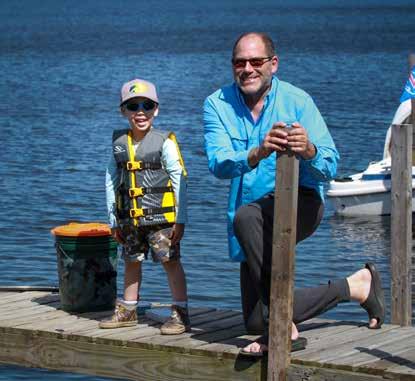
Saratoga TODAY is celebrating their 20th Anniversary this year! Meaning you may see some FAVES from over the years making a cameo! In addition to those old favorites, we have plenty of fabulous new content… 19 pages of fashion (Yes, NINETEEN PAGES!!) Tons of things to enjoy while in town, and the cutest little boy learning how to fish on Saratoga Lake… yes, we are the summer place to be! As always, THANK YOU! to our advertisers for helping us provide this beautiful magazine – free of charge! They not only enable us to print and distribute but provide you with an abundance of cool places to visit while here!
Saratoga TODAY was built on the premise of being able to provide local newsfor FREE - and we couldn’t print our publications without our advertisers, so please mention us by name when supporting them… Simply Saratoga, the Saratoga TODAY magazine.
P.S...
While in Saratoga - don’t pass up any opportunity to hang on a porch, visit our beautiful Saratoga Lake or just stroll…we have a short season up here in the Northeast – enjoy every moment of it!
Chris Vallone Bushee, Editor in Chief
cBushee@SaratogaPublishing.com 518-581-2480 ext. 201
SimplySaratoga.com saratogaTODAYnewspaper.com











Such a Delightful Way to Start Your Day!
WWho doesn’t love summer? All those long, lazy days, when the sun rises early and sets late, leaving more time for all the wonderful things we love to do. In this case, it brought a day filled with things I’d never done before.
The Saratoga Breakfast and Breeding Farm Tour debuted during the 2022 racing season, when the New York Racing Association partnered with the Capital District Transportation Authority (CDTA), which had presented the idea, offering these distinctive tours once a week, beginning mid-July, and accommodating up to 40 horse lovers at a time.
I was lucky enough to be one of them this past summer!
The fan package included a delicious buffet breakfast at the Saratoga Race Course. It was fun to walk in before the day’s card began. I was seated near the rail and got to watch the world-class Thoroughbreds warm-up while enjoying the hot-and-cold offerings. Think piping hot scrambled eggs, savory French toast, fresh seasonal fruit, cereals, assorted muffins, Danish, yummy bacon, sausage, plus coffee, tea, and juices. (I had a mimosa at an extra charge.) I mean, why not, right? When the time came, I met others at the pickup spot out in front of the Clubhouse, and we were ready for an adventure!
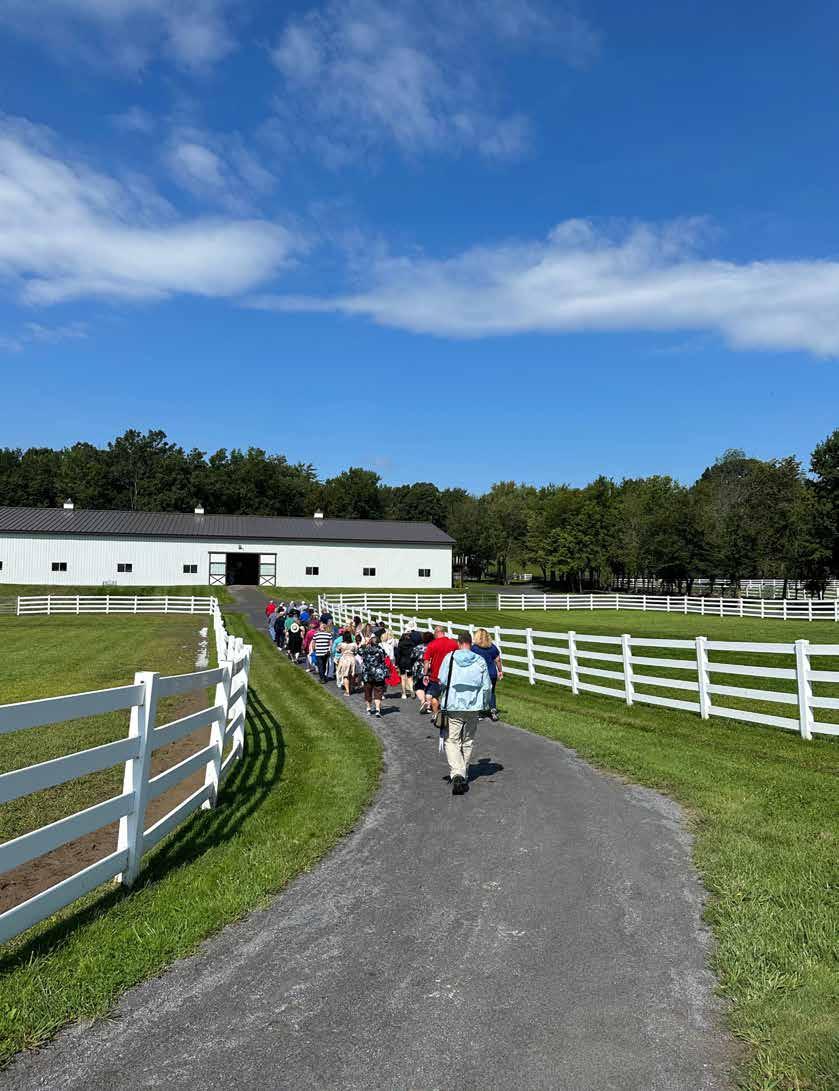
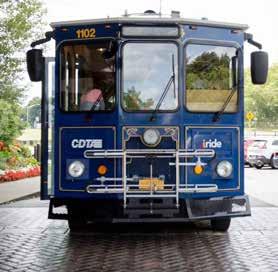
We boarded an open-air trolley and took a long, leisurely ride to the James Bond Racing Stables, our guide pointing out interesting things along the way. We were excited to experience a behind-thescenes look. Even though most of us were strangers on the trolley, we chatted as if we’d known each other for years. Some of the folks had been on the tour before, but to a different farm, while others, like me, were part of it for the first time.
I was interested in seeing where the work with horses begins, and the guide talked about this breeding farm, particularly the mystery of 007. “I read that all of the horses going to the track have a '007' saddle cloth, but that’s the extent of a connection to the actors or the movies of the same name,” one attendee said. You could hear chuckles at that. The 90-minute tour was sure to be educational, and we suspected it would be entertaining, too.
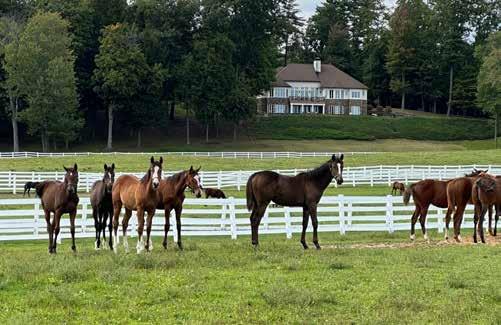
It was obvious that everything had been done with the horse’s level of comfort in mind. From the expansive meadows where the horses run free, to the barns, where the stalls are designed for cross-ventilation to promote horse health. We were led by two women who walked and talked with us, educating the group about their breeding practices. The event was something to write home about – and certainly let us see how Thoroughbred racing supports many varied sectors of our local economy. It gave us a fantastic chance to watch remarkable animals in their earliest stages of life, there on the farm.
“I could never, in a hundred summers, get tired of this.”
-SUSAN BRANCH
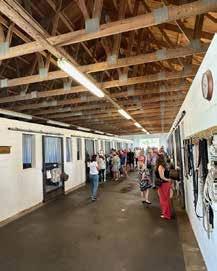
We even got to meet Mr. Bond, who spoke for a few minutes in one of the barns, sharing what he looks for when purchasing a Thoroughbred, which I found quite fascinating. I go to the races every year, and I enjoy betting on one here and there. I never really took into account all the work – research, studying the bloodline, making sure the horses have no injuries or health issues, watching the habits of foals in the paddock to see which is aggressive, or submissive – a personality trait that can determine how the horse might compete on the track when the time comes. Mr. Bond shared how his dad, an extremely successful horseman, was the first and biggest influence in his life. “By 11, I was galloping horses, and I got my trainer’s license when I was 16.” Talk about a youngster with purpose and a high work ethic! It has certainly paid off!
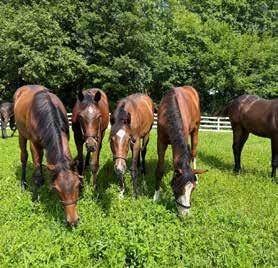
Taking part in one of these tours opens what used to be “behind closed doors,” offering a range of experiences to many people who love the sport and want to learn more about the horse-racing world. It allowed me to see firsthand some of the care and preparation, as well as the agricultural and economic impacts that the industry has on the local community and the state of New York.
I left with a deeper appreciation, for sure. I hope you buy a ticket and enjoy one of your weekdays in a refreshingly unique way this season! Eventually, when you get dropped off back at the track, your ticket allows same-day entrance into the Saratoga Race Course –maybe you’ll win a few bucks like I did.
It truly was a great way to soak in the charm of Saratoga. SS

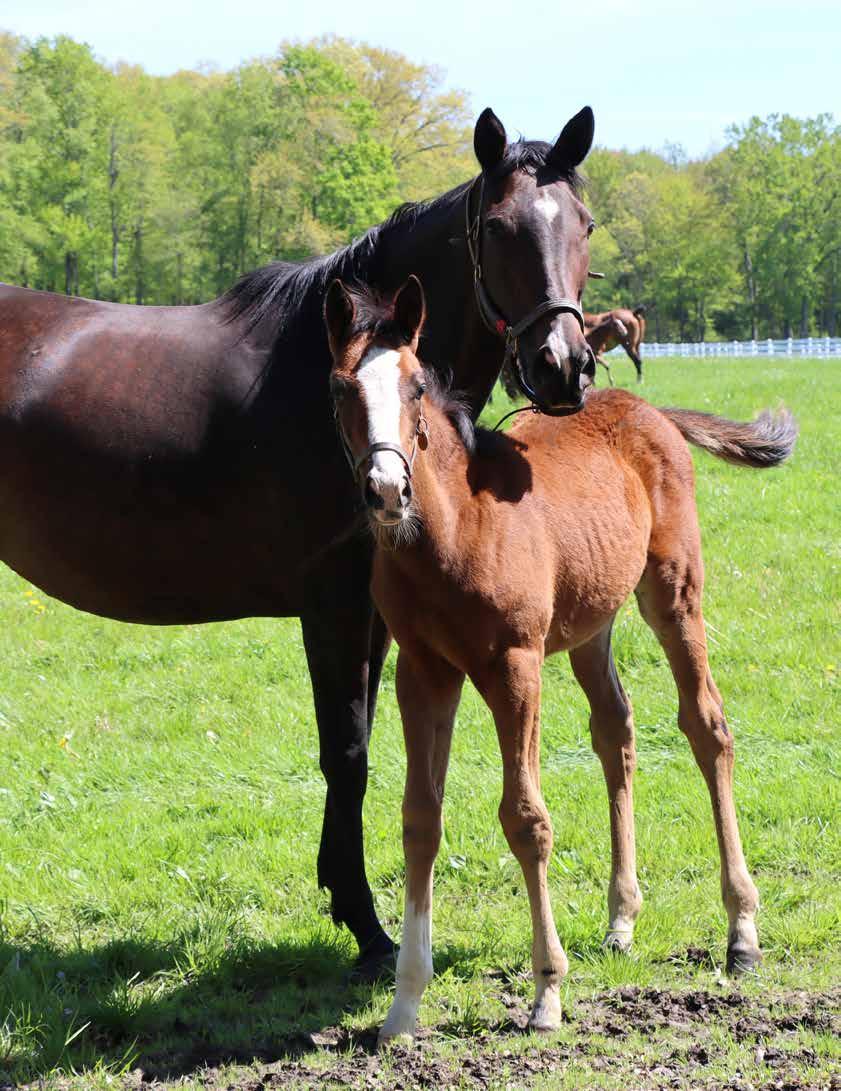
“The outside of a horse is good for the inside of man.”
~ There may be debates over who actually coined the phrase, but the sentiment is a true and meaningful one here at Song Hill.
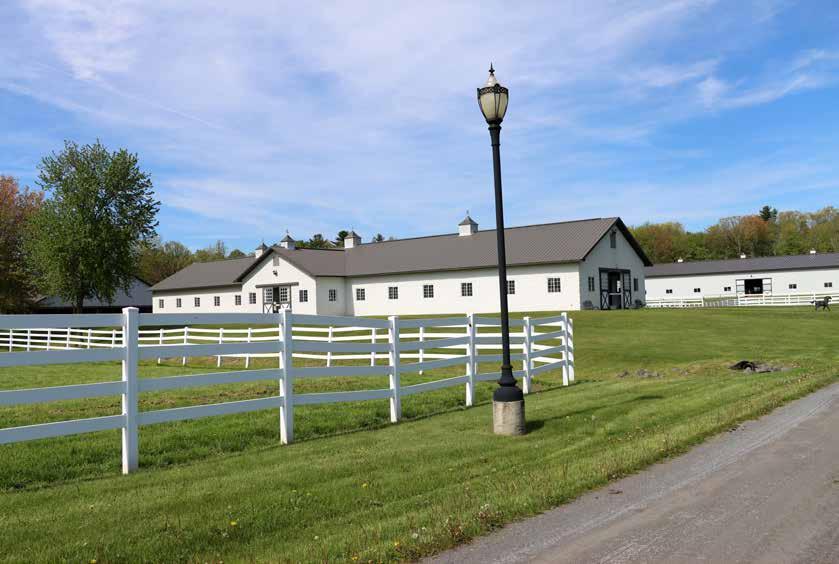
TThe first thing I see is the bright white fence, stretching along Route 75 in Mechanicville. It’s a gorgeous sunny day with blue skies overhead. I smell freshly mown grass, and the emerald-green color is captivating. I turn into the long driveway and pull up to the gate. I’ve been looking forward to this interview and am grateful the weather’s cooperated.
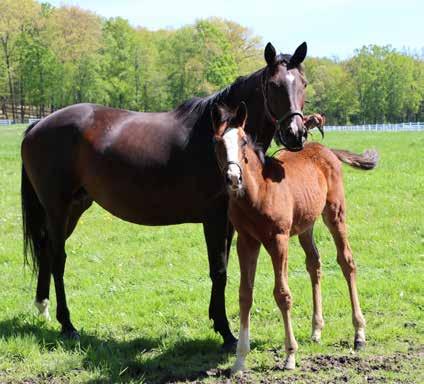
Tina Bond and her daughter-in-law, Grace, are waiting to meet me at the barn. Grace is leaning down to talk with her daughter, Sophia. Instantly, I feel welcome and can tell this is a family affair –Sophia doesn’t even come up to my knee. She’s a tiny little thing, but she’s very comfortable around the mares and foals that are just beyond her reach. From her vantage point, they must seem enormous, yet her delight is almost palpable.
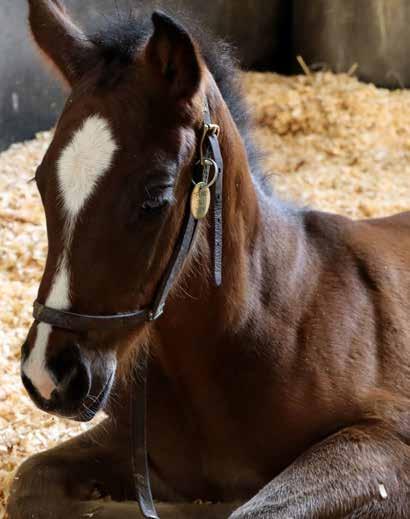
When I ask Tina if she grew up around horses, she smiles and shakes her head. “No, I didn’t. When Jim and I were dating, though, he surprised me with a six-month-old colt. Let me tell you, I had no idea how much that colt would change my life.” I could only imagine. “Because of him, I learned about horses, about patience, and about heartbreak and joy–that’s where my journey with horses began.”
Jim, on the other hand, grew up around horses. His father, Harold, was a trainer in the Finger Lakes Region. When he fell ill, James gave up his dream of becoming a veterinarian and instead obtained his trainer’s license at the age of 16.
Grace tells me they’ll offer 90-minute walking tours on the farm every Friday during track season this year. “The tours will run from 10 to 11:30 a.m. We all agreed we want to give visitors the chance to learn about the ins and outs of what happens here – from mating and foaling, to raising young horses, training them, and ultimately having them make it to the racetrack. We will also talk about retirement and what life after the track looks like.” If there’s a lot of interest, she says, the family might consider extending the tours into the fall months, attracting locals who might be curious about seeing the farm and learning more about the life of a Thoroughbred.
I ask if I can walk up to the fence, where I’m able to say hello to a curious mare and foal that decide they want to meet me. Sophia scrambles over the stone wall with her mom to join me. “You can tell which foals are the youngest,” Tina grins, explaining how the ones who have been born in the last few months seem to be tied to their mom’s apron strings, while the foals a few months older are running around on their own or with ‘friends’ they’ve made since their birth. “See them over there, taking a nap? Or over there, running the length of our fence? Mom is still in the vicinity, but not like in the beginning.”
Grace explains how, at about five or six months old, the mares and foals kinda- sorta part ways. The mares might be pregnant again and need to conserve their energy while the foals are off in another field, doing their own thing, socializing with others. Because they’re separated for a while, out in the fresh air, or in the barn, they eventually
lose the scent of each other. Maybe the horses pass each other in the barn or out in the fields again, but they don’t recognize that they’re related any longer.”
For some reason, this makes me a little bit sad. Really? They don’t know they’re related? “They’re ready for it,” Tina tells me. “Think of it like this: a teenager graduates and is excited to go out and explore the world on their own. And mom is just as ready for a break! Right?” Well, I can certainly relate, and find myself chuckling when she puts it like that…
As we walk through the barns, which are spic-and-span, by the way, I find myself looking at the nametags on the front of each stall and the beautiful horses inside. My favorite is so handsome, and his name seems to fit his muscular form just right! It makes me wonder how horses are named.
“One of the fun parts of racing is naming the horses,” Tina explains when I voice what I’ve been thinking. “It can also be one of the hardest, since our choices need approval, and sometimes they’re sent back to the drawing board. Many people combine part of the sire’s name with the mare’s. That’s not me, never has been,” she laughs, and Grace joins in. I’ve watched the two women together over the last hour – it seems like they have a nice and easy relationship, which is nice to see. “Years ago, we named a horse Ruffino, and he turned out to be very successful on the racetrack. From that point on, Jim and I decided to combine two things we really love – horses and Italian red wines – when naming our horses. It’s become a tradition that’s brought us a lot of joy over the years.”

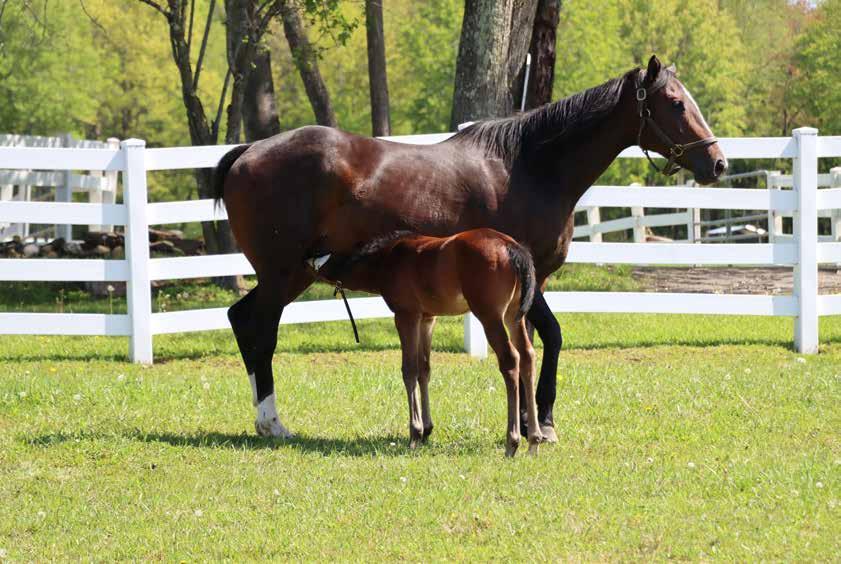
Tina and Grace both share how the farm is a full-circle business. From even before the foals are born to the day they die, the farm and family are there to make sure all of them are healthy and happy. I find myself interjecting. “Do you ever have a depressed horse here?” Tina pauses for a minute. “Well, I suppose they can be a little melancholy when they first retire. Their whole life has been racing, and they love the sport. So, when they retire, it’s a big adjustment. Yet, they have many years left to live and be productive. So, it’s important that they learn something new. They need to switch gears and master new disciplines. Some begin breeding at this stage in life. Or, perhaps they train and become a jumper, instead.” The important thing is that the family is committed to ensuring every horse they breed has a home – even the retired Thoroughbreds.
Retired horses are still young, fit, and sprightly, so I assume they must need another outlet for expending some energy? Grace nods in agreement. “Barrel racing, hunting, trail riding, and dressage are a few ways they can remain active and feel useful,” she tells me. “We work hard to help train the horses in transitioning and learning about life after the track.” I’m also sure some horses are forced into retirement due to illness or injury. I like to picture them resting in luxury and relaxing on a wonderful farm like this one.
“You know,” Tina says in a serious tone. “Those of us lucky enough to have horses in our lives are so blessed. Every single day, in so many ways. Horses have a way of teaching us, grounding us, and healing us – all at the same time.”
I watched an interview a year or so ago with the Bond couple. Jim shared that he and his wife “have been best friends for over forty years. When you work with your best friend, great things happen. I’m the luckiest guy in the world.” I think the horses here on Song Hill feel the exact same way. SS
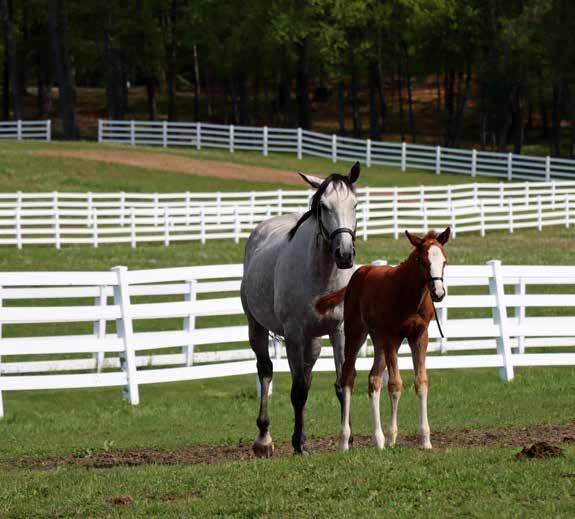

WRITTEN BY L.A. BERRY
We don’t think about glass ceilings at dirt racetracks. But only three times in the 151-year history of the Kentucky Derby have female racehorses (fillies) won the first jewel of the Triple Crown: Regret (1915), Genuine Risk (1980) and Winning Colors (1988). There’s even a name for the 20th century presumption that taller, heavier colts enjoy a natural advantage in strength and speed. They called it the “Derby Effect.”
But since when is racing a sure bet? Meet three horses that turned running like a girl into a compliment.
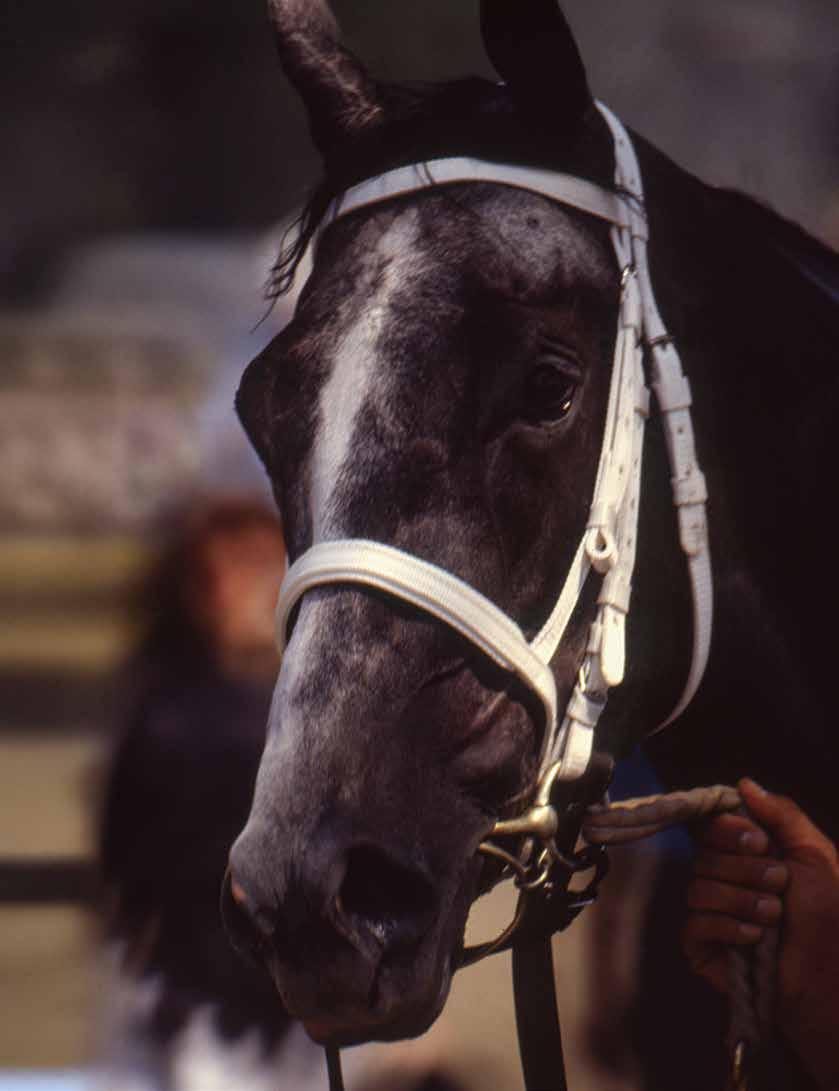
Break the ice and impress your hosts at that brunch, porch party, or summer soirée by dropping one or two fun facts about these champion fillies. Regret (1915), Genuine Risk (1980) and Winning Colors (1988) all raced against males (colts) to win the Kentucky Derby.
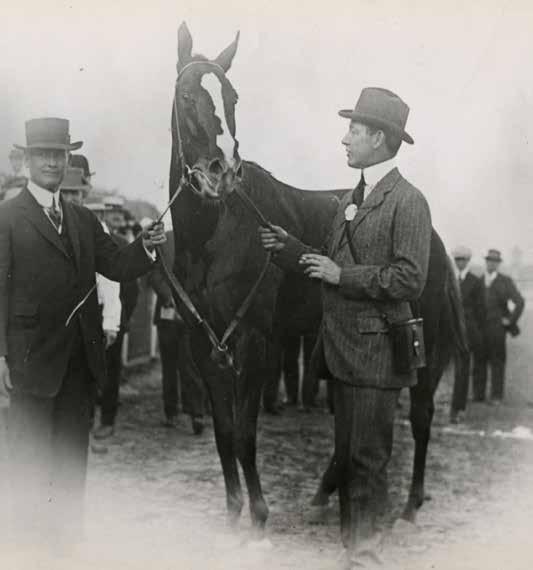
“It was the most chivalrous Derby ever run, for the lady led every step of the way,” wrote William H.P. Robertson in his 1964 tome, The History of Thoroughbred Racing in America, referring to the 1915 Kentucky Derby win by Harry Payne Whitney’s threeyear-old chestnut filly, Regret.
For the bright white blaze-wearing daughter of Broomstick, foaled out of the Hamburg-bred Jersey Lightning, at Whitney’s Brookdale Farm, it was a quintessential case of right place, right time. Because Derby organizer Matt Winn still needed a good publicity bump or two before he could say he had turned the investment corner, having spent much of the last decade doing the promotional and fiscal heavy lifting necessary to transform an 1875 Kentucky tradition into a national classic for the finest young Thoroughbreds the country had to offer.
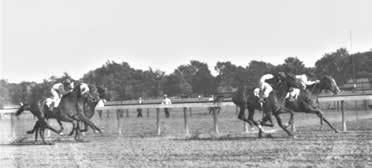
Regret, undefeated among her own sex, shattered all supposition that no filly could beat colts of the same age at a mile and a quarter in May. It took the horse (who had not raced since the previous August) and jockey Joe Notter just over two minutes (2:05 2/5) to finish their romp around the track as such tenacious but unsuccessful colts as Pebbles and Sharpshooter tried but trailed. Regret crossed her finish line first by two lengths and sent reporters racing to their typewriters.
“Behind Regret,” wrote one, “trailed the greatest field that had ever worn silk in this premier turf event.”
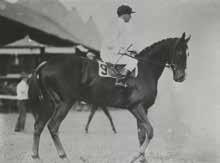
By 1915, Winn’s Derby was the richest three-year-old racehorse event in America and seated among its Churchill Downs cognoscenti that afternoon was the complete membership of the Kentucky Racing Commission and its chairman, Hartland Farm breeder and U.S. Senator, Johnson N. Camden.
“Notables,” a local reporter wrote, “from all sections of the country were present in the greatest (40,000) gathering ever assembled at Churchill Downs.” They would not be disappointed.
The long respite between races format proved less fruitful the following year when, seeking to duplicate her 1 ¼-mile Derby win in the Saratoga Handicap, Regret finished last to Stromboli. She then returned to her old self for a string of wins before ceding the 1917 Brooklyn Handicap by a nose to barn mate Borrow, and a field that included two other Derby winners and her nemesis, Stromboli.
Regret’s final race on September 25, 1917, at Aqueduct set a sevenfurlong track record. She retired to Brookdale Farm on nine wins in 11 starts, having rewritten racing history as the first filly to break the Kentucky Derby’s glass ceiling.
Over the ensuing decades 15 fillies would break if not win, from Churchill Downs’ starting gates, including three Kentucky Derbies (1920, 1921, 1934) hosting more than one distaff entry.
Regret was inducted into the Racing Hall of Fame in 1957. Not so bad a ROI on a racing prospect whose Jockey Club-registered name Whitney confessed had been chosen to reflect disappointment in getting a filly rather than a colt.
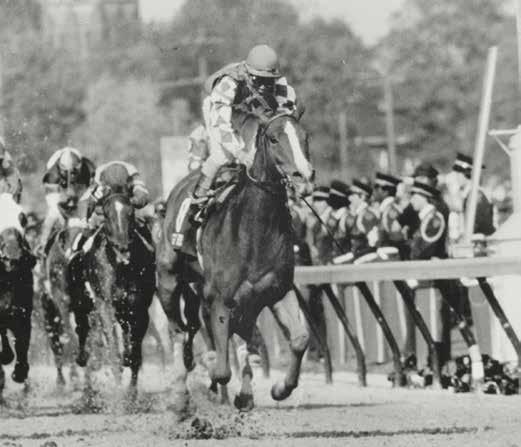
Speaking of disappointment, it would be a string of 65 heartbreaks in 65 years before Kentucky Derby fans would celebrate another filly in its Churchill Downs winner’s circle.
Then Genuine Risk changed everything.
Matthew Firestone was a 14-year-old military student when he accompanied his real estate developer father, Bertram Firestone, and Bert’s third wife, Diana (a maternal cousin to actor Michael Douglas) to the July 1978 Fasig-Tipton Kentucky Yearling Sale. No tyros to Derby aspiration, since marrying in 1973 the Firestones had owned two Kentucky Derby runners-up, General Assembly and Honest Pleasure.
Young Master Firestone noticed they had dog-eared a few pages in the sales book but had overlooked a daughter by the best-known stallion of the moment, Exclusive Nation, sire of Affirmed, the Triple Crown winner crowned just a month before.
So the family inspected the filly prior to the sale and liked what they saw enough to indulge their son doing the bidding. At $32,000 the gavel went down and the dubious family drolly registered the yearling with the Jockey Club as Genuine Risk. The Firestones had a mutual agreement that all colts ran under Bertram’s name, and all fillies ran under Diana’s, so Diana was registered as Genuine Risk’s owner.
“I knew I wanted a filly to use as a broodmare,” Matthew told the Wisconsin State Journal in 1980. “Her pedigree looked very good. She had the distance and she had the speed. I went to look at her and found she had beautiful conformation and good legs. She was just put together right.”
‘Jenny’ also put together the right team. She had LeRoy Jolley as a trainer, and Jacinto Vasquez, jockey to the late great Ruffian, in her irons. By the time the two-year-old Genuine Risk was 4-for-4 with two graded stakes as a juvenile and $100,000 in earnings amply recouping her auction price, AmericasBestRacing.net says Vasquez told Jolley, “This filly’s got a chance to win the Derby next year.”
Chat: Winning Colors and Genuine Risk are the only two fillies to compete in all three Triple Crown races: Winning Colors was third in the 1988 Preakness Stakes and sixth in the 1988 Belmont Stakes; Genuine Risk was second in both the 1980 Preakness and Belmont.
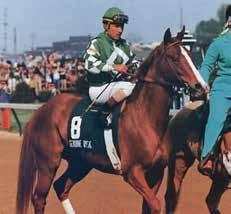
He was right. The next May, he and Genuine Risk were thundering down the Churchill Downs homestretch, denying a late rally from Rumbo and winning their place in history by a length in 2:02 as only the second filly to win a Kentucky Derby.
“In entering Genuine Risk,” The Washingtonian wrote in 2008, “Diana was bucking history. No filly had won since Regret, but that bit of trivia might be deceiving, Diana realized. The fact was no filly had been entered in the race since 1959. Seven years after the Bobby Riggs/Billie Jean King ‘battle of the sexes’ the public remained fascinated by the idea of females competing on even terms with males.”
Genuine Risk didn’t run on even terms. She scorched them. Her last quartermile going into the homestretch clocked in at 24 2/5-seconds, the fastest effort by a Derby winner since Secretariat’s record-making 23 seconds and despite (if not thanks to) the goading of jockey Darrel McHargue, who drew his horse, Jaklin Klugman, alongside Jenny and Vasquez to yell, “This is my Derby!”
Instead, The Washingtonian recounted, “Genuine Risk shifted into another gear, leaving McHargue and Klugman behind. Conventional racing wisdom said a good filly could not hold out against a charging colt in the stretch. But Genuine Risk ran the last quarter mile faster than any previous Derby winner except Secretariat.”
Genuine Risk passed away at the ripe old age of 31 in 2008, in her own paddock at the Firestone’s Newstead Farm in Upperville, Virginia. She was inducted into the Racing Hall of Fame in 1986 and prior to her death, was ranked as the oldest living winner of a Triple Crown race.
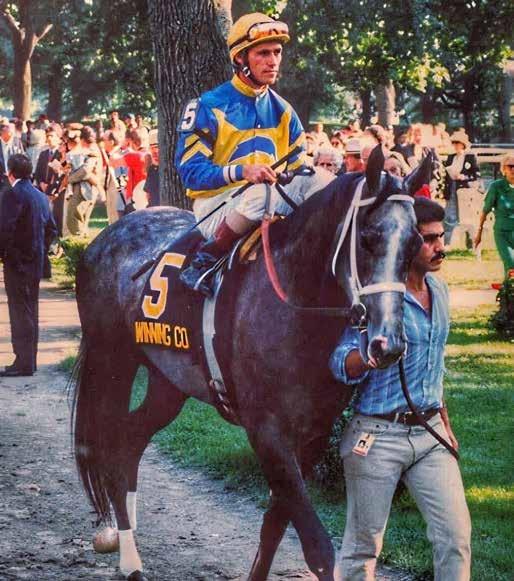
While Billie Jean King inspired women’s sports, Chris Evert was having a pedigree moment.
No, not the tennis player but the eponymous Thoroughbred racehorse, who shared with “half-sister” All Rainbows the stakes-winning bloodlines that ignited like napalm on gasoline when crossed with the French sire of Canadian Triple Crown and Kentucky Derby champions, Caro.
The result was a 16.3-hand roan-grey filly that lived up to all aspirations in looks and performance: Winning Colors.
“Caro bequeathed his rugged make and a fair measure of the rather infamous disposition of his grandsire Grey Sovereign (son of the tempestuous Nasrullah) to Winning Colors, a yearling
purchase [of more than half a million dollars] by trainer D. Wayne Lukas on behalf of Eugene Klein,” cited AmericanClassicPedigrees.com in an April 21, 2025, entry. “Her price reflected her size and excellent conformation as well as an excellent female family.”
Lukas wasn’t the only one with a discerning eye for a good horse. After Winning Colors broke her maiden at Saratoga by 2 ½ lengths against future Breeders Cup Juvenile Fillies winner, Epitome and four months later won in 1:09 4/5 over six furlongs at Santa Anita, Steve Davidowitz in The Best and Worst of Thoroughbred Racing recounted, “Some of the grooms and stable help who worked for Lukas made a trek to Las Vegas with one purpose in mind: to bet several hundred dollars on Winning Colors to win the 1988 Kentucky Derby at 100-1 odds.”
Chit Chat: 40 fillies have run in the Kentucky Derby. No filly has competed since 2010, when Devil May Care finished tenth.
“Even today,” recalled J. Keeler Johnson in a May 20, 2025, entry for AmericasBestRacing.com, “the 1988 Derby field stands out as one of the best in history.” In addition to Winning Colors, it included Forty-Niner, Risen Star, and the unbeaten Private Terms.
“When the gates flew open, she broke like lightning, ears pinned, stride rolling, fearless from the first breath,” said jockey Gary Stevens, who used the big filly’s stride and speed to hold a four-length lead down the backstretch and into the turn.
With the approach of each challenger, he whispered to the filly, “You’re still there, girl. You’re still there.” Proper Reality came within three lengths before falling back to fourth. Seeking The Gold ran out of steam and dropped to seventh.
With a furlong to go, Winning Colors was in front and three-and-half lengths away from Derby destiny when Pat Day and Forty Niner came up the middle of the track, devouring more ground with every stride just as Stevens felt Winning Colors beginning to tire.
Stevens asked Winning Colors for one more gear one more time and she answered, holding on by a neck in a photo-finish win to become only the third filly ever to win the Kentucky Derby.
It was the first of three Derby victories for Stevens, who told The Real Players Inside the Backstretch earlier this year that winning that first one on Winning Colors was still his favorite racing moment. “It was an out-of-the-body experience.”
In 1988 Winning Colors was voted the Eclipse Award for Outstanding ThreeYear-Old Filly and in 2000 was inducted into the National Museum of Racing and Hall of Fame. She is buried at Greentree Farm in Lexington, Kentucky.
Regret, Genuine Risk and Winning Colors broke expectations about fillies and colts without ever breaking stride. Learn more about these distaff champions and other inductees at the National Museum of Racing and Hall of Fame on Union Avenue across from Saratoga Racetrack. Visit www.racingmuseum.org to learn more.
New York City Ballet and The Philadelphia Orchestra Return to Saratoga for a Landmark 60th Anniversary Season
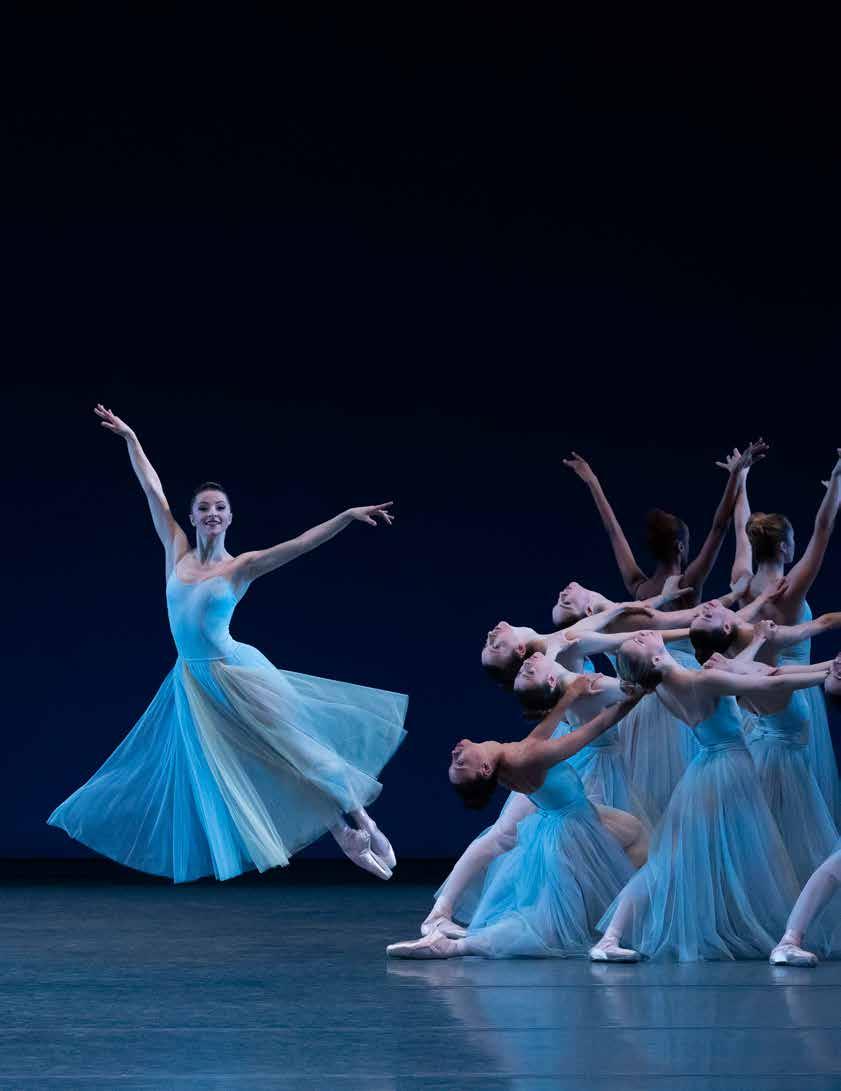
There’s simply no summer tradition quite like SPAC. As Saratoga Performing Arts Center celebrates its 60th anniversary season in 2026, audiences are invited once again to gather beneath the pines for an extraordinary season of music, dance, and live performance in one of the country’s most iconic outdoor settings.
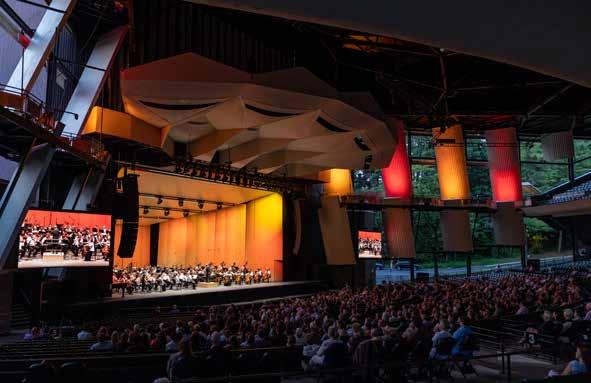
This summer’s lineup features the return of resident companies New York City Ballet and The Philadelphia Orchestra alongside celebrated guest artists, iconic masterworks, SPAC premieres, blockbuster film nights, and special anniversary events that honor six decades of artistry and community. Pack a picnic, spread out a blanket on the lawn, and experience the unmistakable magic of a Saratoga summer.
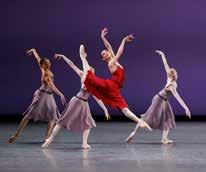
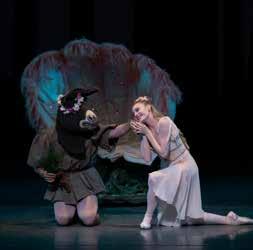
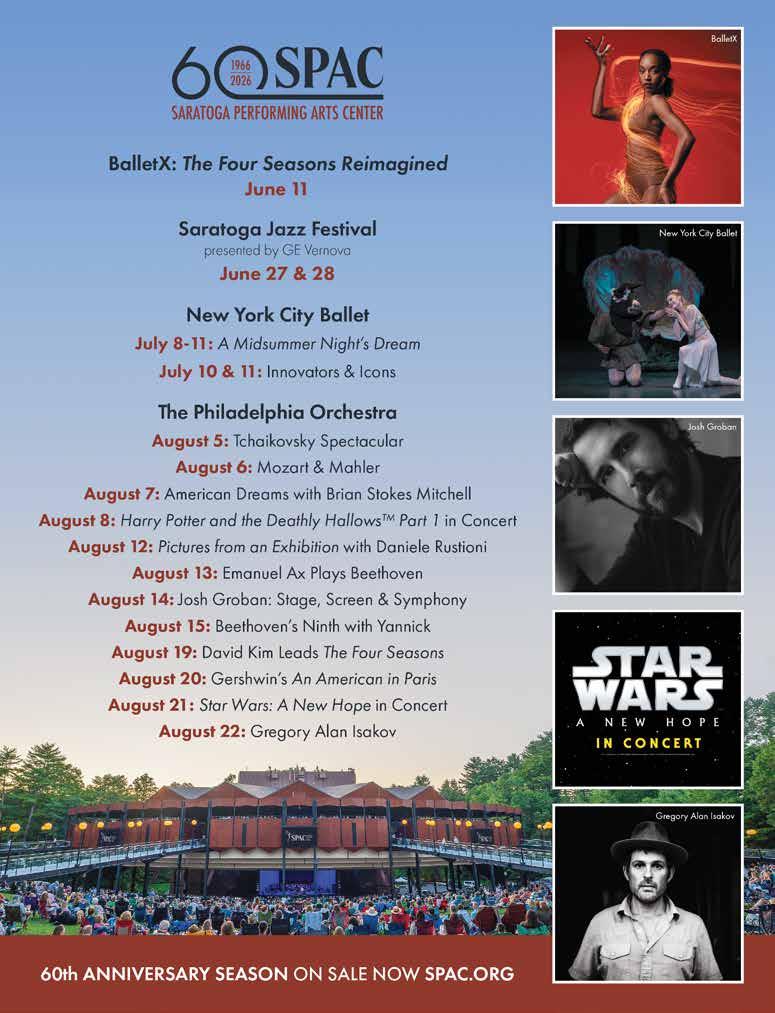
Among the highlights of this year’s festival is New York City Ballet’s celebrated summer residency at SPAC. Returning in honor of SPAC’s opening season is George Balanchine’s enchanting full-length ballet A Midsummer Night’s Dream — the very first performance presented on the SPAC stage in July 1966. This beloved adaptation of Shakespeare’s cherished comedy brings to life a magical world of spellbound lovers, mischievous fairies, and feuding kingdoms, all set to Mendelssohn’s luminous score. Featuring a large cast of local children, the production remains one of ballet’s most joyful and enchanting experiences.
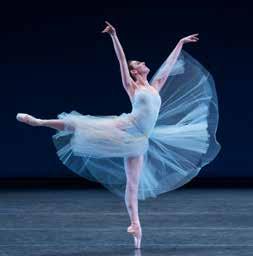
The residency also features a program highlighting works by innovative and iconic choreographers both past and present. Get swept away by George Balanchine’s romantic masterpiece Serenade, first performed at SPAC in 1966 and known for its ethereal long blue tutus, then embark on a feverish journey with Jerome Robbins’ Opus 19/The Dreamer, returning to SPAC for the first time since 2008. The program closes with Symphonie Espagnole, a new work by Principal Dancer Tiler Peck, which had its world premiere as part of NYCB’s 2026 Spring Gala.

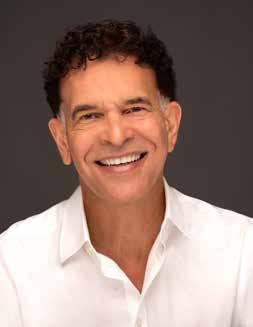
The Philadelphia Orchestra returns to its summer home in Saratoga for a three-week residency, featuring appearances by Tony®, EMMY®, and five-time GRAMMY® Award–nominated singer Josh Groban, GRAMMY® Award–nominated indie-folk singer Gregory Alan Isakov, and two-time Tony® Award–winning Broadway star Brian Stokes Mitchell.
Anchoring the season is Beethoven’s monumental Ninth Symphony, featured in The Philadelphia Orchestra’s first SPAC season in 1966. Led by Yannick Nézet-Séguin alongside Albany Pro Musica and an acclaimed cast of soloists, the iconic masterpiece serves as a fitting centerpiece for the anniversary celebration.
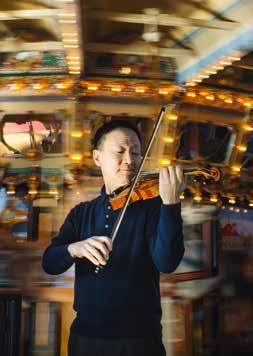
The season also explores the theme of “Seasons” through paired performances of Vivaldi’s The Four Seasons and Piazzolla’s The Four Seasons of Buenos Aires led by concertmaster David Kim. Opening the residency are three performances under the baton of renowned conductor Marin Alsop including a dazzling evening of Tchaikovsky featuring the 1812 Overture with live cannon fire and a brilliant fireworks display.
The popular film nights also return to delight audiences of all ages as Harry Potter and the Deathly Hallows™ – Part 1 in Concert and Star Wars: A New Hope in Concert are projected in HD while The Philadelphia Orchestra performs the scores live.
Throughout the season, special anniversary offerings — including select $19.66 lawn tickets — will help welcome audiences of all ages to experience SPAC’s landmark summer celebration.
“As we celebrate SPAC’s 60th anniversary season, we honor the artists, audiences, and traditions that have shaped this remarkable place while looking ahead to an exciting future filled with inspiration, discovery, and connection,” said Elizabeth Sobol, Chief Executive Officer of Saratoga Performing Arts Center.
New York City Ballet
July 8–11: A Midsummer Night’s Dream
July 10 & 11: Innovators & Icons
The Philadelphia Orchestra
August 5: Tchaikovsky Spectacular
August 6: Mozart & Mahler
August 7: American Dreams with Brian Stokes Mitchell
August 8: Harry Potter and the Deathly Hallows™ – Part 1 in Concert
August 12: Pictures from an Exhibition with Daniele Rustioni
August 13: Emanuel Ax Plays Beethoven
August 14: Josh Groban: Stage, Screen & Symphony
August 15: Beethoven’s Ninth with Yannick
August 19: David Kim Leads The Four Seasons
August 20: Gershwin’s An American in Paris
August 21: Star Wars: A New Hope in Concert
August 22: Gregory Alan Isakov with




There are few places as deeply woven into the spirit of summer in Saratoga as SPAC. As the beloved cultural destination celebrates its 60th anniversary season, the milestone offers a moment to reflect not only on the legendary performances and memories that have shaped generations, but also on the remarkable evolution that has reshaped the organization over the past decade.
Under the leadership of Chief Executive Officer Elizabeth Sobol, who marks her tenth anniversary with the organization this year, SPAC has grown from a primarily seasonal presenting venue into a dynamic year-round cultural institution. Reflecting on that transformation, Sobol recently shared: “Ten years ago, we were the stewards of something extraordinary—but also something at risk. We asked ourselves: what would it mean to be as bold now as SPAC’s founders were then? Over the past decade, we have transformed this campus—honoring its history while preparing it for the future. We have evolved from a seasonal presenter into a year-round institution, bringing life, learning, and artistic expression into all four seasons.”
Today, SPAC welcomes more than 500,000 visitors annually while presenting programming throughout the year spanning music, dance, literary arts, culinary arts, healing arts, and visual arts. Along the way, the organization has deepened partnerships with many of the region’s leading arts and community organizations — including Skidmore College, Caffè Lena, Saratoga Bridges, and AIM Services — helping position SPAC as an increasingly vital cultural hub for the Capital Region.
Education and community engagement have also become central to SPAC’s expanding mission. Over the past decade, SPAC’s education initiatives have grown from serving approximately 5,000 students annually to more than 60,000 individuals today through partnerships with schools and community organizations across the region. Programs ranging from SPAC School of the Arts and Classical Kids to inclusive community collaborations and wellbeing initiatives reflect the organization’s belief in the arts as a powerful force for creativity, connection, and belonging.
That same spirit of reinvention has reshaped the physical campus as well. In recent years, SPAC has transformed the Pines campus with new buildings and gathering spaces, opened SPAC School of the Arts, enhanced backstage facilities, and embarked on the historic restoration of Spa Little Theater — a project that will culminate later this year with the theater’s reopening as SPAC’s permanent yearround performance home.
And while the anniversary season offers an opportunity for reflection, it is equally a celebration. Throughout the summer, audiences are invited to experience special 60th anniversary events, exhibitions, and commemorative initiatives that honor the artists, audiences, and traditions that have shaped SPAC for generations.


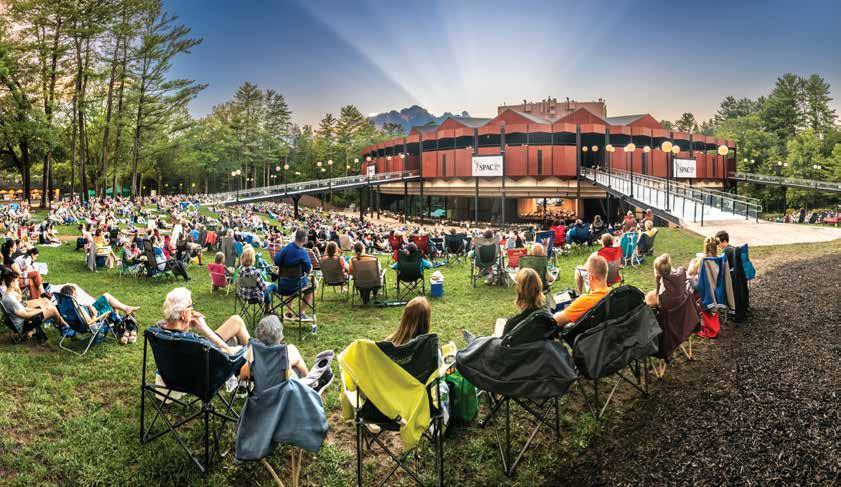
This summer, SPAC’s 60th anniversary celebration comes to life through special events, experiences, and festive community traditions that honor the artists, audiences, and memories that have shaped six extraordinary decades beneath the pines.

Explore This Place Loves You Back
Step into SPAC’s newest VisualArts@ SPAC exhibition by artist Whitney Browne, inspired by archival images and the shared moments that have unfolded on the SPAC grounds for generations. On view in The Pines during performances by BalletX, New York City Ballet, and The Philadelphia Orchestra, the exhibition offers a moving reflection on the connection between audiences, artists, and place.
Try the Limited-Edition
“Fireworks on the Lawn” Ice Cream
In partnership with Stewart’s Shops, SPAC has created a playful anniversary flavor inspired by one of summer’s favorite traditions. The limited-edition treat — featuring vanilla ice cream, tart cherry swirl, and red and blue Pop RocksTM — will be available throughout the Capital Region this summer.
Bring Home a Piece of SPAC History
Celebrate SPAC’s iconic visual legacy with a special collection of vintage Milton Glaser poster prints, including artwork created for SPAC’s celebrated seasons in 1980, 1982, and 1990.
Join the July 9 “Anniversary Night” Celebration
Celebrate SPAC’s official birthday during New York City Ballet’s performance of A Midsummer Night’s Dream — the very ballet that opened the SPAC stage in 1966. Audiences are invited to arrive early for a festive pre-show gathering featuring tastings, treats, music, photo opportunities, and other anniversary surprises.
SPAC 60th Anniversary Lawn Ticket Offer
As part of the celebration, special $19.66 anniversary lawn tickets will be available for New York City Ballet and select Philadelphia Orchestra performances — making it easier than ever to gather with friends and family for a memorable summer night under the stars.
Whether revisiting cherished traditions or discovering SPAC for the very first time, this anniversary season is a celebration of the artists, audiences, and shared experiences that have defined summers at SPAC for sixty extraordinary years.
Visit spac.org for more details.
WRITTEN BY SAMANTHA BOSSHART, SARATOGA SPRINGS PRESERVATION FOUNDATION
PHOTOS PROVIDED (UNLESS NOTED)



This originally ran in Simply Saratoga Summer 2024, But we loved it so much, it’s making an appearance during our 20th Anniversary Year Long Celebration!
History was made on June 8, 2024, with the first running of the Belmont Stakes at Saratoga Race Course, the oldest sports venue in the United States. While everyone is familiar with the iconic spires of the historic grandstand, many may not know about the former private stable of August Belmont Jr.
Historically, several prominent families owned private stables adjacent to the Saratoga Race Course – Dupont, Madden, Sanford, and Belmont. All these properties were acquired over time. Today, Saratoga Race Course encompasses over 350 acres with more than 200 structures. One of the more visible private stables is the former stable of August Belmont Jr., named “Surcingle,” which is a leather strap used to accustom young horses to girth pressure.

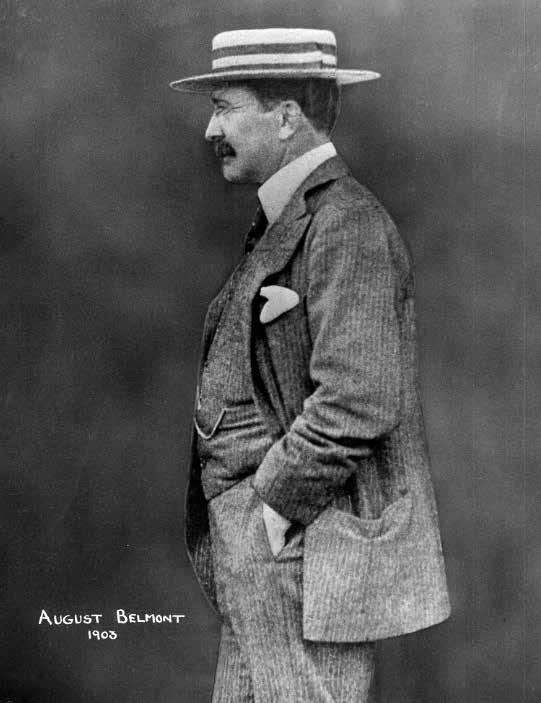
August Belmont, Sr. was a German immigrant who established the banking house, August Belmont & Co., in 1837. He became a wealthy financer and prominent figure in the development of Thoroughbred horse racing in the United States. In 1866, Leonard W. Jerome and Belmont Sr. funded the construction of Jerome Park Racetrack. The following year, Belmont financed the first Belmont Stakes, the oldest and longest of the three classic horse races that constitute the Triple Crown. In 1890, Belmont, Sr. joined Senator George Hearst, A. J. Cassett, W. J. Arkell, and others to form a new Saratoga Association that was most likely short lived due to Belmont, Sr. passing away on November 24, 1890, and Hearst passing away on February 18, 1891.
August Belmont Jr. followed in his father’s footsteps. Immediately upon the passing of his father, Belmont took control of August Belmont & Co. and purchased seven of his father’s mares
at a dispersal sale. In 1894, he was one of the founding members and first president of The Jockey Club, a role he served until his death. Belmont was also one of the nine founding members of the National Steeplechase Association, established in 1895, and served as the chairman of the first New York Racing Commission.
In 1902, Belmont founded the Interborough Rapid Transit Company to finance and operate the first line of what is now the New York City Subway. That same year, Belmont and William C. Whitney, along with other investors, purchased the land to build Belmont Park, named in honor of Belmont’s father. In 1905, Belmont Park opened and hosted the Belmont Stakes, which had previously run at Jerome Park and Morris Park.
In 1900, a reborn Saratoga Association that included William C. Whitney, Richard T. Wilson, Belmont, and others
acquired Saratoga Race Course from the infamous Gottfried Walbaum.
Under the leadership of Whitney, the Saratoga Association made significant improvements, including rotating the track 25 degrees and moving and expanding the Grandstand. In 1902, as a result of the rotation of the track, the original Belmont Sr. stables were relocated, and Belmont built new private stables that today are visible from Nelson Avenue.
A June 1, 1902, New York Times article described the many improvements made at Saratoga Race Course and noted that Belmont Jr. “proposed to make Saratoga his northern headquarters and with this end in view has expended $75,000 on his property… He has constructed a private practice track, which encircles his residence and stables, moved from the farm north, where they were situated a year ago.” Today, $75,000 is worth an estimated $2.7 million.
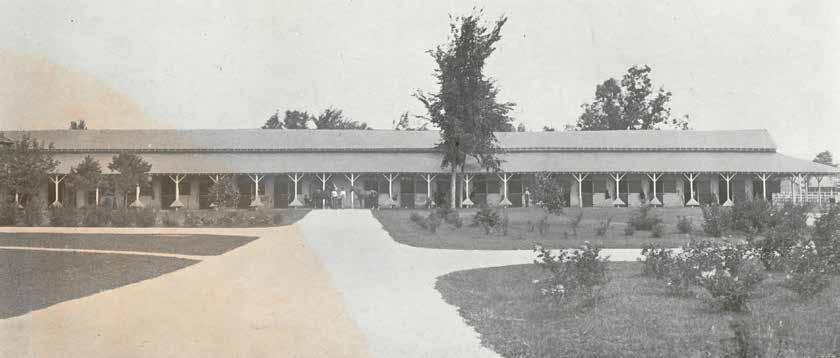
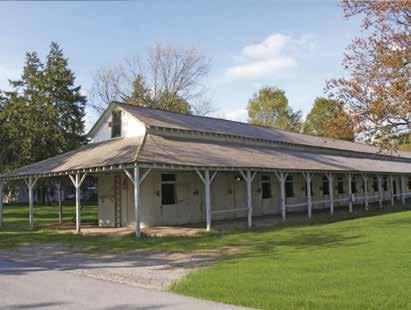
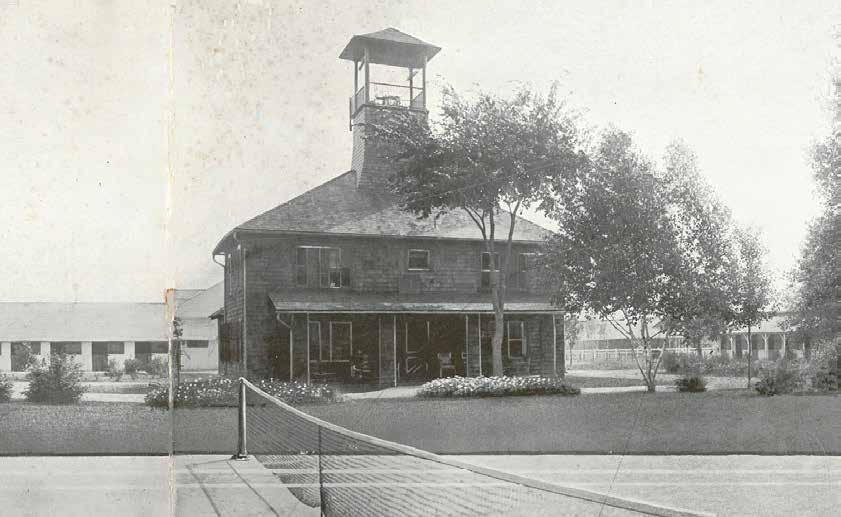
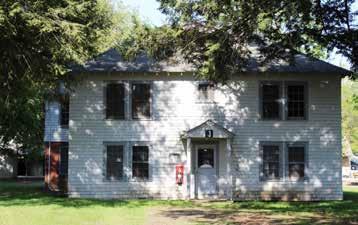
On the new 13-acre site south of the newly rotated main track, Belmont built a comprehensive stabling facility that included a residence, stables, and structures to serve as a kitchen, blacksmith’s workshop, and dwellings for employees. The buildings were encircled by a private exercise halfmile track. His two-story, shingle-clad residence, which was referred to as a “cottage,” had a lofty outlook tower that gave Belmont a commanding view of the entire training track and was surrounded by lush gardens and a lawn tennis court.
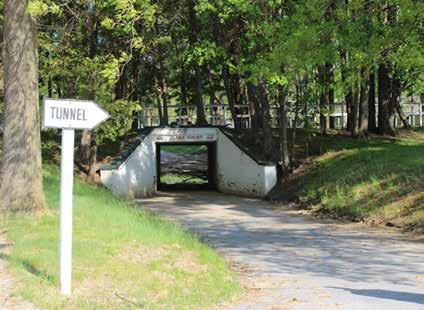
A tunnel was constructed at the cost of $10,000 so that Belmont could reach his residence without having to disrupt the horses on the training track. The same 1902 New York Times article described the tunnel as being “10 feet square, with square arches and macadamized flooring. It will be lighted by electricity.”
According to the 50th Anniversary
The Saratogian 1856-1905 Souvenir, the stables were “constructed with as much care as the ordinary dwelling” being built of the “best materials, by the most skillful workmanship, and
is a model home for the horse. Mr. Belmont is a great lover of the horse, and he has certainly erected for him here some of the most luxurious homes ever prepared for this noblest of the friends of man.” He built stables for both Thoroughbred racehorses and polo ponies. The Souvenir continued, “One of the sights to see of this handsome park is to see the Belmont polo ponies, some fifteen or twenty of them filing out of their luxurious quarters, in charge of some half dozen attendants, and starting for the grounds at the Saratoga Polo Club on the other side of the village.”
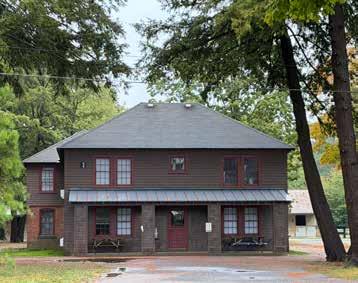
Two of the stables are single-row with 24 stalls with a distinctive gable slate roof with a wrap-around shed roof to allow for horses to be walked under cover. The vertical tongue-and-groove clad stables have rounded corners and chamfered posts intended for horse safety while using the sheltered walking ring. The stables have a full attic loft for storing hay that can be accessed by wall ladders. In addition, a barn was constructed solely for the stabling of driving horses and carriages. The carriage stable with its large double doors is flanked by six horse stalls with a cantilevered roof on each side.
Belmont died on December 10, 1924. The Times Magazine, dated December 22, 1924, wrote, “He is credited with having saved Thoroughbred racing when it was at its lowest ebb in the East, after the repeal of the racing law in New York State.” In total he had bred 129 stakes winners, including the great racehorse Man o’ War and six other champions. At some point after his death, the private Belmont property became part of Saratoga Race Course. Surcingle was later renamed Clare Court in honor of Tom and Anne Clare who served as successive superintendents of the track from 1924 to 1960. The stables and small cottages are still used today. Belmont Jr.’s cottage currently serves as a women’s dormitory. Unfortunately, over time the front porch and the large tower that provided Belmont with views of his property were removed. In 2024, the New York Racing Association completed a rehabilitation of the cottage, which included the restoration of the front porch, but not the tower.
The next time you drive along Nelson Avenue, be sure to look east to catch a glimpse of August Belmont Jr.’s former property, Surcingle. The Saratoga Springs Preservation Foundation will host a tour of Saratoga Race Course that will include this area and many others in August. To learn more and register, please visit saratogapreservation.org or call (518) 587-5030. SS


WRITTEN & PHOTOGRAPHED BY THERESA ST JOHN
There’s so much to see and do and learn about in my own back yard, and I often refer to exploring nearby areas as my ‘back pocket travels.’
Recently, I learned about a self-guided walking app called GPSmyCity and found out they offered two tours in the Spa City. I wondered if the app could teach me something new about this place I call home and thought it would be fun to try it out. I’ve been on group walking tours before, and although I’ve enjoyed them, the thought of a self-paced tour, where I could stop in between and

grab a cup of coffee, or step into one of our many shops on Broadway, was somehow more appealing. I chose the City Introduction Tour and pretended it was my first time in Saratoga. The app told me it would take about 2 hours, and I left my apartment to follow the directions with bright blue skies overhead. I’ll talk about a few of the ten stops here, but I encourage you to try out the app for yourself – they offer great subscriptions and 1,500 walks worldwide! (I took another selfguided tour in Victoria, Malta, a few months ago, which was fabulous!)

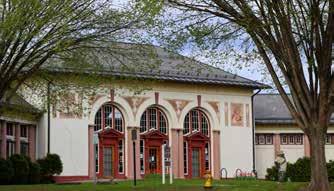
A local visitor center is always great, and the staff here were friendly and willing to tell me a little bit about the building and its history. This was the site of several early businesses, all of which had burned down! The woman at the desk explained that the sites included the Grand Central Hotel, the Favorite Spring building, and the Hamilton. “In 1902, the Hudson Valley Trolley Company built a wooden structure that served as a station,” she said. “Lines ran between Schenectady, Saratoga Springs and Glens Falls before it was torn down in 1914.” When I commented that the building here on the corner seemed pretty unlucky, she laughed. “Yes, I think I’d have to agree.”

The present building’s architecture (1915-1916) is stunning and typical of turn-of-the-century landmarks. It was considered the most beautiful Trolley Station in the Northeast. After the line was abandoned, it was renovated into a drinking hall that operated until 1964. It opened as the visitor center in 1992. It holds a plethora of information, and I’d gladly direct anyone here to learn more about Saratoga.
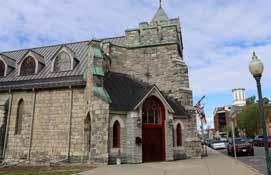
The stone church is in the English Gothic style, with a distinctive Norman Romanesque tower and several stunning Tiffany stained-glass windows that enhance its grandeur. I loved standing outside that Sunday morning. Services were ongoing, or I would have tried to step inside and snap a few pictures. When I am traveling, I’m always in search of a cathedral or chapel where I can venture in and be reflective in my faith for a few moments. In 2030, the church will celebrate its bicentennial, and I hope to be there to witness it. Stay tuned for the story and photos to come!

3
4 5
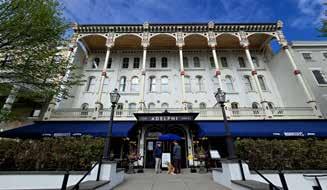
I wasn’t surprised to see the historic Adelphi Hotel on the walking app; it’s such an icon in Saratoga. I used to visit this place before its renovation/remodel. I loved all the haunted stories surrounding the building and had a few paranormal experiences of my own staying overnight there. (Another day, another time, another story!) I decided to wander in and have a drink and a bite.
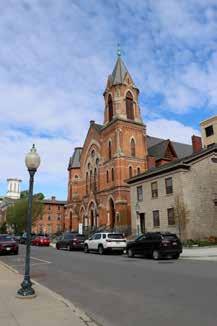
This building was built in 1871 as a Methodist Church. In 1976, it was sold to Universal Baptist Church and, over time, fell into disrepair. It was condemned in 2000, but a group of Saratoga Springs residents came forward to save it. It’s been interesting to watch the UPH transformation over the years. In 2015, the Universal Preservation Hall became part of Proctors Collaborative – a huge honor that excited all of us here in the city. Renovations began in 2018, and people were excited when it opened in 2020 as a performing arts and event venue in the heart of the Spa City. Rosanne Cash, the oldest daughter of Johnny Cash, was the inaugural act.
Morrissey’s is a pretty cool lounge, with a “place for locals” feel. It’s named after John Morrissey, prizefighter, high-stakes gambler, and one of Saratoga’s most notorious gentlemen. They’re promoting their happy hour, from Sunday to Thursday, from 5:00 pm to 7:00 pm; time literally pays off. Going at 5:00 for an early meal? Five bucks will buy you a selection of beers, wine, and well cocktails. Meeting friends for a drink around 6:00 pm? Six bucks will do the same. Leaving work on time never sounded better! Hurry, though, the promotion ends July 2nd. And, if you ever have the chance to stay overnight here, ask if you can sleep in room 205. It’s said to be the most haunted! I’m hoping to stay there one day myself, (and write all about it of course!)
In the 1970s, Saratoga was changing, big time. This building had been in decline and was revitalized by true entrepreneurs; Mark and Elizabeth Straus, who played a key role in helping restore the unique charm of Saratoga Springs.
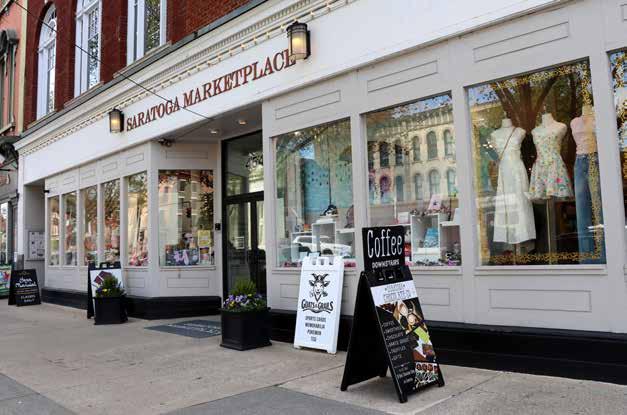
Walking through the front doors of this indoor shopping plaza is like opening little sparkling gifts; with more than a dozen eclectic shops, galleries, and eateries – I could, and have, spent hours here choosing gifts for family, friends, and even myself. Such a diverse shopping experience!
During COVID-19, when the world was shut down, the owners pivoted like so many others and modified the retail destination. The interior and exterior updates that were done to the individual shops, (the restored tin ceiling, new paint and fixtures, to name a few) are well worth seeing.
Although there were other places on the app that I visited, it’s too much to write about here. Canfield Casino, Congress Park, the East Side Historic District, National Museum of Racing and Hall of Fame, and a leisurely stroll down the Union Ave Historic District were a real pleasure.
I had so much fun on this tour and appreciated how easy the app was to use. At each place, you could find out some information about the site, and I loved how two little red footprints appeared next to the stop, indicating that I’d been there. The directions were very concise and accurate. I had a great morning visiting places I go by every day, running errands, or meeting up with friends. I was happy to spend a little time getting acquainted with Saratoga in a unique, “touristy” way for a change. You will too! SS



WRITTEN BY MEGIN POTTER | PHOTOS PROVIDED
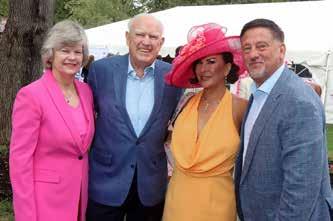
As first-generation entrepreneurs, Sonny and Julie Bonacio hit the ground running. In 1988, they founded Bonacio Construction, and have since reached great heights of success building the Capital Region’s skyline while also dedicating significant portions of their wealth, time, and expertise to charitable causes that are shaping the local landscape. Best known for their mixed-use, commercial, and custom luxury residential projects, Bonacio Construction’s team of 150+ skilled professionals have made the Bonacio name synonymous with buildings that leave a lasting impact. In addition to being President of Bonacio Enterprise, in 2015, Julie established her own successful brokerage firm, Julie & Co. Realty.
In the decade since, the Bonacios’ three children (Will, Luca and Gianna) grew up in Saratoga and have now joined the family business. This is a family that means business, but they also like to have fun. Their altruistic acts, including volunteering and financial gifts, joyfully foster connection and drive long-term solutions.
Long before Gianna Bonacio became Bonacio’s Business Development and Project Manager, she was just a kid riding with her dad through downtown Saratoga, surprised when he pointed out the buildings that her family’s company had built, learning the importance of active compassion early on.
“Giving back and philanthropy were always a big part of our family and we attended different events all summer long,” remembers Gianna. One of her earliest memories is of going to the annual Saratoga Hospital Gala.
For the last decade, Bonacio Construction and Julie & Co. Realty have been major sponsors of the event. Julie served on the Saratoga Hospital Foundation Board and was in the Gala Planning Committee for 17 years. During the last four, Gianna has also been a member of the committee helping to plan this fundraising event. “My favorite part of the Hospital gala is the live auction itself – it’s so invigorating and exciting the day of, after seeing all the work that goes into it, and how it all comes together.”
Last year was the highest grossing live auction in the Gala’s history. In an unforgettable auction experience, the guests’ record-breaking generosity netted a remarkable $495,000 to support community health.
This year is the 44th Annual Gala, that, with its Great Saratoga Clambake theme at the Saratoga Casino Hotel’s Polo Meadow, and array of live auction items, promises to put the “fun” in fundraising like never before.
The organizations that the Bonacios support span a wide array of sectors, and their contributions occur quite organically, said Gianna.
In May, they helped build porches in Wilton with Rebuilding Together Saratoga County and displayed the spectacular re-envisioning of an iconic property, The Waldorf, at 122 Regent Street, during the Saratoga Preservation Foundation’s annual Historic Homes Tour.
The design of The Waldorf model unit’s kitchen, inspired by Gianna’s own travels through Lisbon, Portugal, blends contemporary style with traditional lines for show-stopping results. In addition to their other contributions, members of the Bonacio family were there supporting the event in smaller ways, too - handing out water bottles, picking up flowers, and lending a helping hand wherever it was needed.
Among their most notable recent projects, the Bonacios provided financial support and resources to the construction of the RISE Adelphi Street Shelter, the county’s first year-round, low-barrier, 24-hour shelter.
“We attended a luncheon where individuals shared heartfelt letters expressing their gratitude for the shelter. Hearing their stories made me realize just how meaningful our collective efforts can be when Saratoga community members, businesses, and the city come together to address complex challenges,” said Gianna.
She helped coordinate the donation of existing furniture, linens, towels and restaurant equipment from the former Longfellows, now the Brookmere Saratoga, a Mariott Tribute property by Bonacio Development, to local organizations including RISE, Shelters of Saratoga, Business for Good, and others in the community.
The construction for RISE’s HOMEBASE therapeutic community center was completed earlier this year, and an event thanking its supporters, including Congressman Paul Tonko, is planned this summer.
HAVING
The list of organizations and causes that the Bonacios have supported is extensive.
Sonny, a huge Dave Matthews fan, has been on the SPAC board since 2016. He donated and built the 3200 sq. ft. Julie Bonacio Family Pavilion on the SPAC campus in 2020. Julie has been a board member of Saratoga Sponsor-A-Scholar since its inception in 2007. Over the years, she has sponsored numerous scholars and she helped secure underwriting for their annual Derby Day fundraising events. Both Sonny and Julie are also Hall of Fame inductees that continue to support the Albany Business Review's 40 Under 40 awards.
Earlier in May, the Bonacios helped raise more than $10,000 during the "Jail for Bail" charity fundraiser benefiting Blood Cancer United. It was just the kind of event the Bonacio family enjoys - folks coming together in fun ways to do a world of good. SS

Impossibility is an illusion. By playing with our perceptions, magician Alan Edstrom, 62, has been stretching our understanding of the world for more than half a century. He got his first magic kit when he was eight years old and delighted in aweing visitors at several different children’s museums early in his career. Alan even wrote a weekly column for the Staten Island Advance Newspaper called, “You Can Do Magic,” encouraging people to try their hand at the ancient art.

When he moved to Saratoga, Alan began managing events for organizations including the Saratoga Automobile Museum and the Saratoga Polo Association, in addition to performing live magic and juggling shows. He thrives on the intimacy of one-on-one interactions and appreciates the immediate reactions that he elicits while table-hopping at events, doing sleight of hand card and coin tricks.
“I take what’s known and turn it on its head,” he said. “I’m doing artwork that is not only using muscle memory work, but I’m also talking with people and creating conversations, while having interactions that are short, sweet, and that people will remember.”
Recently, Alan performed what could be his greatest trick yet. He was accepted into the International Artists and Writers Residency program at the historic Chateau d’Orquevaux, a magnificent 19th century estate in the French countryside where he hopes to take his magic to a new level.
“I try to do something scary every day,” he said, “but this will be the scariest thing I’ve ever done.” The competitive program hasn’t ever accepted magicians before, and Alan won’t know any of the other two dozen residents. He is also following in the footsteps of two of the greatest magicians of all time: Jean Eugene Robert-Houdin (the illusionist Harry Houdini named himself after) and Georges Méliès, a visionary magician, filmmaker, and forefather of today’s technical special effects artistry.
Alan grew up with five brothers in a Chicago suburb, wanting to stand out and make a name for himself. Since then, he’s had several. Among them, he’s an entertainer who has acted as Grover Parks in William Kennedy’s Prohibition Story (2011) and Scrooge for a Nolan Propane commercial (2014). He is also a long-time member of the Academy of Magical Arts at the Hollywood Magic Castle. On Instagram, he’s @the_great_edstrombolli
During his tenure as Events Coordinator at Beekman 1802, Alan was known as the goatmilk-based skin and body care brand’s “Chief Kindness Officer.” Among his miraculous feats during his five years at the Sharon Springs farm was becoming an ordained officiant so that he could marry 30 couples in a transformative 24-hour marriage marathon after the COVID pandemic derailed ceremonies for so many across the country. (Read Big Wedding, Little Chapel in the Saratoga BRIDE, Fall 2021 issue)
Each of Alan’s varied roles has had the same common thread. “Every job I’ve done is about connection,” he said. Although the two-week French residency program is more about the process than the final product, Alan hopes to end his stay with a short performance. He’s already conjuring which magic tricks he’ll perform, and practicing them for his wife of 25 years, Andrea, who already knows how many of his tricks work, or at least thinks she does, said Alan. “If I can fool her, then I know I’m good.” SS




WRITTEN BY MEGIN POTTER | PHOTOS PROVIDED
Jude Connally Zimmerman, creator of the Jude Connally lifestyle brand, was raised in Upstate New York. She spent many summers in Saratoga, going to the track and enjoying the town.
Saratoga summers became family traditions. Jude’s uncle, the honorable James T. Foley, and his wife, her Aunt Eleanor, always had a box at the Saratoga Race Course. Five of Jude’s six siblings, and their families, still live in the area (two of which are now directors in the company). The family business’ Jude Connally Flagship Store is located in Westfield, NJ. Jude’s sons operate the company’s distribution center nearby.
Since its founding in 2010, Jude Connally has grown into a women’s lifestyle brand being sold in more than 300 specialty boutiques across the country, select Dillard’s department stores, as well as online at JudeConnally.com.
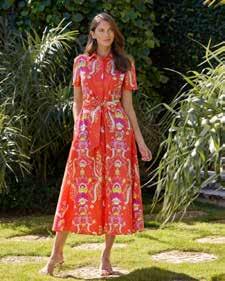
By combining easy silhouettes with joyful, vibrantly colored prints, Jude Connally clothing makes getting dressed effortless. This is activewear-inspired clothing that women can throw on and feel instantly comfortable in yet know they look polished and put together.

Jude Connally’s signature Jude Cloth product is made in New York City’s Garment District. A rarity in today’s fashion marketplace. By cutting and sewing pieces within the city, Jude supports the local garment industry and remains close to the process. While continually designing and delivering new collections every month, Jude Connally also offers white-glove customer service, with style help, and order care all just a phone call away.
Saratoga however, will always hold a very special place in Jude’s heart. Just before he passed away, Jude’s father suggested she open a store here. Seven years later, in 2011, Jude was in the area on business and had a short break between meetings.
She decided to visit Saratoga, a place she had loved as a child, when fate stepped in. A little more than a week after she saw a vacant storefront on Broadway, Jude had signed a three-month lease and opened a pop-up shop at 438 Broadway. It felt serendipitous, she said.
“That shop became one of the highlights of the early days of the brand. I met people from all over the world, created wonderful relationships, and many of those connections helped expand Jude Connally in ways I never could have imagined. At the time, I remember saying, ‘I fell in love here — with the track, the people, the energy.’ That is still how I feel about Saratoga.”
... a dress should take you from
the track to lunch, from shopping on Broadway to dinner with friends, from a summer afternoon to a lasting memory. That is very much the world I design for."
Like the Jude Connally brand, Saratoga is classic, optimistic, and full of life.
“For me, Saratoga has always been more than a place to visit. It has a feeling all its own — the energy of the track, the beauty of Broadway, the history, the people, and that wonderful mix of elegance and ease. When I think of Saratoga, I think of summer, color, movement, conversation, and joy.”
“It is the kind of place where a dress should take you from the track to lunch, from shopping on Broadway to dinner with friends, from a summer afternoon to a lasting memory. That is very much the world I design for.”


BY ROBERT C. LAWRENCE

While kayaking on beautiful Lake Durant near Blue Mountain Lake, NY, one June day, my wife Carol Ann asked, "Where does Blue Mountain get its name?" So we visited the nearby Adirondack Museum at Blue Mountain Lake to buy a place names book. But there was no such publication. So... I wrote What's With Those Adirondack Mountain Names?
The history of the Adirondacks is closely linked to that of the United States. As we celebrate our nation’s 250th Anniversary this July 4th, we have an opportunity to honor the many individuals, both prominent and lesser known, who shaped our country. Many of their names are found throughout the Adirondack Mountains. The Adirondack Mountains reflect America’s diversity, particularly in the names of their peaks. Some are named for leaders, scientists, writers, businesspeople, surveyors, and soldiers, while others honor conservationists, guides, public
servants, presidents, secretaries of state, doctors, activists, landowners, teachers, lawyers, engineers, and war heroes. Macomb Mountain is among these, named for a distinguished hero.
To understand the origin of Macomb Mountain’s name, we look at the story of Alexander Macomb. Born in Detroit in 1782, when it was under British rule, he was the son of a successful merchant and fur trader. After the Revolutionary War, the family relocated to New York City. Alexander attended school in Newark, New Jersey, and later graduated from West Point.
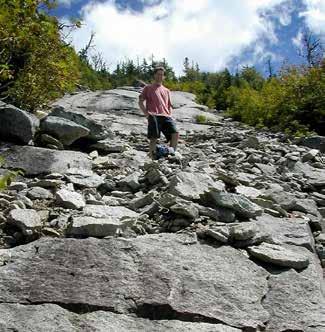
After graduating from West Point, Macomb began his military career as an officer in the Corps of Engineers. His leadership and planning abilities led to rapid advancement. He contributed to the construction of coastal defenses and frontier posts. By the War of 1812, he had achieved the rank of colonel.
Macomb’s skills were put to the test during the War of 1812, when he led American troops at the Battle of Plattsburgh in September 1814. He oversaw about 1,500 regular soldiers, militia, and volunteers who defended Plattsburgh, New York, against a much larger British force led by General Sir George Prevost. Macomb used smart tactics, such as building field defenses, creating dead-end roads, and moving his troops around to confuse the enemy, which slowed the British attack. Meanwhile, on Lake Champlain, Master Commandant Thomas MacDonough also faced tough odds but used his own strategies to defeat the British. The British attack ended on September 11, 1814, with an American victory. Macomb was praised and called "the Hero of Plattsburgh" by some American journalists. He was promoted to major-general for his

actions and received formal thanks from Congress and a Congressional Gold Medal.
The American victory at Plattsburgh marked a turning point in the war. It halted the British campaign in the north and enabled the United States to secure more favorable terms in the Treaty of Ghent, which ended the war on December 24, 1814, in Ghent, United Netherlands (now Belgium). This success also advanced Macomb’s military career.
Each September, the Battle of Plattsburgh is commemorated with events in downtown Plattsburgh with activities for all.
Following the victory at Plattsburgh, Alexander Macomb became Commanding General of the United States Army in 1828, a position he held until his death. Despite limited resources during peacetime, he maintained the Army’s effectiveness, implemented significant reforms, and enhanced the professionalism of the officer corps. He improved the Army’s organization and training, established the first court-martial rules, initiated the establishment of Army pensions, and advocated for death benefits for soldiers’ spouses.

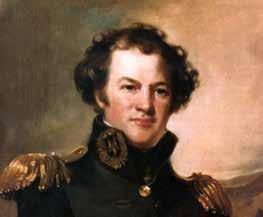
Alexander Macomb’s legacy endures in places such as Macomb Mountain, Macomb Reservation State Park, and Macomb Residence Hall at SUNY Plattsburgh. More importantly, his leadership and service continue to be respected. As we reflect on 250 years of history in the Adirondacks and beyond, Macomb’s story encourages us to honor those who have shaped, and will continue to shape, our nation’s future.
Author’s Note: Thank you to Brooke Dubuque, a member of the Board of Directors of 1814 Commemoration Inc., Battle of Plattsburgh, for contributions to this article.
What's With Those Adirondack Mountain Names? (The Troy Book Makers) is available at the following retail locations: Market Block Books (Troy), The Book House of Stuyvesant Plaza (Albany), Open Door Bookstore (Schenectady), Friar Tuck Newsroom (Rensselaer), Northshire Bookstore, Saratoga Outdoors (Saratoga), Adirondack Country Store (Northville), St. Andrews Ace Hardware (Queensbury) in many retail establishments in the Adirondack Park and on Amazon.com. SS


Meghan Fritz is a Licensed Clinical Social Worker at Fritz, Stanger & Associates. Do you have a question or topic, let me know… meghanfritzlcsw@gmail.com
Instagram: @Puttinonthefritz1 TikTok: @personalitydisordercoach www.fritzstanger.com
"I always feel a sense of dread when Father’s Day is approaching, I don’t have a great relationship with my dad and I experience stress and sadness leading up to the day. Why is this day so difficult for me?"
One of the things I do as a therapist is take a deep dive with my clients around their childhood experiences. I specifically ask about their relationship with their parents and how they experienced love from their father and mother. From a spiritual perspective, our fathers shape our identity and self-esteem. How we see ourselves in the world, what we perceive to be our strengths and weaknesses, and the core of our identity.
A father wound would show up as an adult who struggles with depression, struggles to feel a sense of security and well-being, often feels lost or alone in the world. Even in a room full of family and friends a person with a father wound would experience a feeling of isolation and a sense that no one understands them.
This comes from not having an emotionally present father who took the time to nurture and shape your identity and encourage you in areas of growth and development.
The road to healing involves being able to process your sense of grief around your experience with your father. Taking the time to do this involves nurturing the small child in you that felt invisible and undervalued. One of the benefits of therapy is working with someone who can help you to process unresolved feelings of anger and walk with you on the path to healing and peace.
If you have a difficult relationship with your father, approach Father’s Day from a place of protection. Do not put
yourself in a situation that will trigger old wounds and lead to a day full of stress and dread. Have a plan of what you will do and how you will celebrate.
If being around your father causes anxiety, send a note with a memory of something positive that you experienced. Be proactive around the plan that works best for you. Do not buy a card that feels inauthentic to your experience, you can acknowledge the day without putting yourself in a position of people-pleasing behavior.
As we age, our childhood triggers become more painful the longer we avoid them. Holidays can trigger old wounds that have not been addressed. One of the best gifts that you can give yourself is to address areas of unhealed wounds. When we stay in a place of hurt and anger we carry on that trauma to the next generation.
Forgiveness is not necessarily about having a relationship with the person that hurt you, rather, recognizing that their inability to be the parent you wanted and needed comes from their unhealed trauma. When one person in the family decides to break generational trauma, you offer freedom to the next generation.
If you have a father wound, be kind to yourself this month and plan a day that keeps you safe and full of peace. Do not give your energy to people, places and things that steal your joy. Do what works for you and get the help you need.
YOU ARE WORTH IT!

PGS. 54-72



























































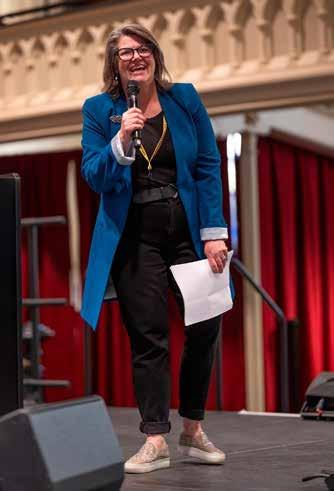
The Saratoga Book Festival, held every October, is a literary showcase that routinely features marquee names like Joyce Carol Oates, Russell Banks, Ruth Reichl, Wally Lamb, Liz Moore and Greg McGuire and it'd be swell to say since its founding in 2020, the SBF's gone from strength to strength to achieve its now legendary status. It'd be swell, but untrue. What actually happened is, in its first year, the event nearly succumbed; a victim of Covid, like so many perfectly good businesses, nonprofits and programs. How SBF battled back from the brink is largely down to the efforts of one woman, Ellen Fenlon Beal, the festival's founder, who simply would not accept defeat. It's a story straight out of a best seller.
WRITTEN BY JPV OLIVER, GENT | PHOTOS BY FRED R. CONRAD
"I knew in my heart a town as unique as Saratoga Springs deserved a book fair worthy of the place," she says. "So, I wouldn't let it go without a fight.
"I simply couldn't allow the pandemic, gruesome though it was, to keep us down."
The showcase has grown to be an irresistible three-day affair that involves presentations of multiple genres - horror, romance, history, science, serious literature, graphic and young adult novels, fantasy, the lot, as well as a Night Market where authors, writers and creators offer their works to attendees.
This year the festival kicks off on Friday evening, October 2nd, at UPH with the Night Market, live music, light bites, a cash bar and a vibrant showcase of local authors and literary-themed vendors. A variety of mostly free panels and events follows on Saturday and Sunday, including the KidZone at the Saratoga Children's Museum.
As those two sentences suggest, the festival's a weekend full of splendid events at different locations across the city.
"One of the big weekends on our calendar around here is, of course, Chowderfest. The Saratoga Book Festival is just Chowderfest, but with books," Beal says cheerfully.
Over the last six years, Beal assembled a terrific group of devoted book lovers who are the foundation of SBF's success, chief among being the Friends of the Saratoga Public Library, where the festival is now their biggest fund-raising event. "Without the Friends there's simply no Book Festival," she says evenly.
The two people always shoulder-to-shoulder with the weekend's originator are Jennifer Allen, who works at the Friends and spends about 30% of her time managing Festival logistics, partnerships and fundraising, and Steve Rosenberg, the multifaceted operations director who does everything from managing the Night Market, volunteers and book sales.
"They're both elegant artists in their own ways," according to Beal.
When asked what was her most challenging moment in festival history, she has a ready answer.
"A few years ago, Dee Sarno - a legend in the Saratoga arts world - and I were at the Saratoga Arts Center, and we needed to get to a keynote speech in a hurry. It was a big name - it might have been Joyce Carol Oates - and we started walking the quick march, got caught in a horrific cloudburst and we both were drenched to the bone. I said, 'Dee, we're stopping at my house, we're going to drop our drawers, throw our stuff in the dryer and not leave till our clothes are done.' And that's exactly what we did. We made a mess of the introductions, but on the up side, we didn't catch pneumonia either."
SBF has been fortunate to have the incomparable Joe Donahue interview festival keynotes over the years. Host of WAMC's The Round Table's Book Talk, Donahue reads something north of 80 novels a year (nonfiction pushes the number higher), but says he'd probably be doing that even if it wasn't job-related work.
“But I really love talking to authors. I find they always have such interesting things to say and not always just about their books." His love of literature now brings him to book events all across the Hudson Valley, Upstate New York and Western New England.
"The terrific thing about the Saratoga Book Festival," he notes, "is it's open to such a huge variety of tastes - it's quite special in that way. Every community should have a book festival in my opinion.
"And the bonus is, readers are really fun people to hang out with," Donahue says. This year, he'll be back in the host chair at the SBF with a soon-to-be-announced special guest.
Beal and her crew make a point of finding inventive ways to keep the SBF fresh. For example, this year's October weekend will - for the first time - include a session specifically designed for people who want to learn how to get their stories out into the world.
"There's a lot of needless mystery surrounding book publishing and the new panel, called I Could Write a Book, aims to set out a clear path for would be authors," she says. "There's no feeling on Earth like holding your very own book for the very first time and if you haven't experienced that, this panel will help get you there."
One of the things Beal looks forward to every October is what the event's speakers will say once they're on stage. She notes what you expect to come out of an author's mouth rarely does - and that's what makes things interesting. "I look, really look forward to seeing an audience connect with what the author is saying and sensing how important that connection is to the writers". That sense of connection suffuses throughout the whole Festival weekend. Ellen says the mood is perfectly captured in Joyce Carol Oates quote: “Reading is the sole means by which we slip, involuntarily, often helplessly, into another’s skin, another’s voice, another’s soul".
"For one lovely weekend in October, we help bring readers and writers together to leave the world for a while and slip into what it's like to see life from other people's eyes.” And for everybody involved, that's more than a little magical.
Saratoga Book Festival will host its sixth annual city-wide event this year October 2-4 p.m. For more information, go to friends.sspl.org/book-festival. SS

WRITTEN BY WENDY HOBDAY HAUGH | PHOTOS PROVIDED
In Peggy Frezon’s latest book, Goodbye to a Good Dog; Healing, Comfort, and the Hope of Heaven After the Loss of Your Pet, the Rexford author offers personal reflections, seasoned advice, and coping strategies for the one event every dog lover dreads most: the death of their beloved canine companion. Bonding with a dog is one of life’s greatest joys, so losing that connection can be life-altering. Having loved and lost many dogs herself, Frezon understands that devastation well. By sharing her insights and suggestions, as well as first-person vignettes written by dog lovers from around the world, she hopes to offer compassion and support to grief-stricken dog lovers everywhere.
“What makes a relationship with a dog truly special,” Frezon says, “is that the love is mutual. The communication is two-way. We don’t have to be told that dogs have feelings, because we know. We see trust and devotion in their eyes. We see joy in the way they wag their tail. We see their doleful expression when we leave the house, and the frenzy of delight when we return. We feel the warmth of their love when they snuggle up beside us.”
Peggy and her husband, Mike, have lived with nine dogs, one of them an elderly golden retriever named Brooks. Although the rescue golden only lived with them eleven short months, Brooks etched a forever mark on their hearts. To honor this beautiful dog’s life and passing, the Frezons created BrooksHaven: a homebased sanctuary and forever ‘retirement home’ for senior golden retrievers.
“Because we rescue senior dogs, we’ve experienced loving and losing dogs more than some people have,” Frezon muses. “Having gone through the horrible, heart wrenching grief of losing dogs, there were times when Mike and I thought we couldn’t do it again—we couldn’t keep rescuing senior dogs and facing loss over and over again. But when we lost one and felt ready for another, we still felt drawn to senior dogs. They needed a home, and it was a privilege to rescue them. So at that point we knew that the loss was just something we were going to have to figure out how to face. That’s when I knew that I had this book in me.”
For more than 20 years, Peggy Frezon has been a contributing editor and writer at Guideposts and Angels on Earth magazines, a frequent contributor to numerous devotionals and Chicken Soup for the Soul books, and the prolific author of seven books about the incredible connections forged between humans and animals. In Goodbye to a Good Dog, Frezon offers comfort and hope to the brokenhearted.
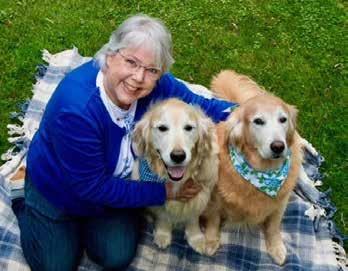
Beautifully written and spiritually uplifting, love infuses every page. Although written for dog lovers, this book is the perfect read for anyone grieving the loss of a pet.
“There is no one more qualified — as an author, as a dog lover, as a uniquely empathetic human being — than Peggy Frezon to write a book like Goodbye to a Good Dog,” writes Edward Grinnan, Editor-in-Chief of Guideposts Magazine. “More than a practical guide to pet loss, it examines the deep emotional bonds we form with the animals we love and who love us back. Goodbye to a Good Dog belongs on every pet lover’s bookshelf.”

Goodbye to a Good Dog (Revell, $19.99) may be ordered through your favorite bookstore, retailer, or Amazon.
Meet Peggy and her therapy dog, Sophie, at Cornerstone Veterinary in Saratoga on July 15 from 6:30-8 for an author talk, pet memorial activity, and refreshments. SS


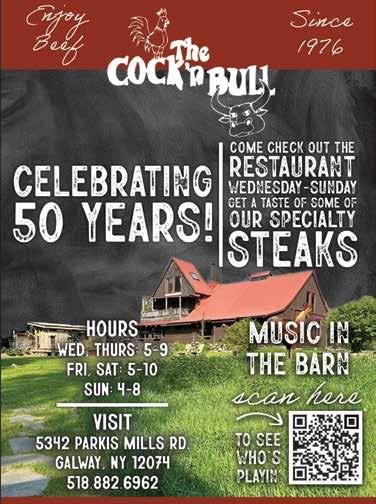


WRITTEN BY MEGIN POTTER | PHOTOS PROVIDED

Suspense sizzles in The Shady Side of Saratoga, the recently released debut novel by author Richard Cobello, a former Saratoga TODAY magazine contributor who uses his 40+ year career in cybersecurity, and his background in enterprise technology, to create realistic portrayals of how nonprofit data can be manipulated in Saratoga, a town simmering with secrets.
In this fast-paced contemporary cybercrime thriller, Cobello blends high-stakes digital espionage with mystery and intrigue, while introducing us to Catherine King, a senior FBI cybersecurity investigator tasked with rooting out a criminal enterprise hidden in the data’s shadows.

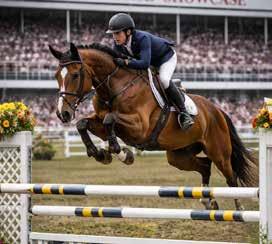
Find The Shady Side of Saratoga on Amazon, through Ingram Spark, and at Northshire Bookstore, 424 Broadway, Saratoga Springs, where author, Richard Cobello, will be hosting a launch event, reading, and book signing at 2 p.m. on September 5. For updates, follow @authorrichardcobello on Facebook.
This book is the first of five in the Catherine King Enigmatic Quest series, where, to solve the crime, this plucky analyst must uncover the secrets lurking within the digital infrastructure - and risk it all - in a place where gamblers grandstand, while the underpinnings of a sinister underworld linger in the rarified air.
At the oldest track in America, tradition, wealth, and modern interests collide in dangerous ways. Among so much high society and old money is hiding a threat that’s all too real. As Catherine wages a silent battle against those who make quiet allowances for digital discrepancies, and corruption is a legacy as much as it is a way of life, she must unmask those willing to avoid disruption at all costs.



WRITTEN BY KATIE BURNS
PHOTOS BY THERESA ST JOHN
How 2 local makers transformed Congress Park into a "third space" for art, vintage, and connection
When: Second Sunday of every month (May-October)
Cost: Free to the public Contact Details: secondsunday.co
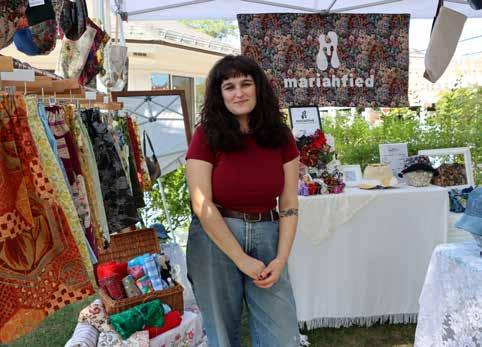
On the second Sunday of the month, a distinct shift in energy fills the open space near the carousel in Congress Park. The usual quiet of the morning gives way to something more vibrant: the rustle of vintage fabrics, the rich aroma of local coffee, and the steady hum of excitement as people discover unique treasures. Born from a desire to see a more sustainable, affordable, and small artist-centered scene, the Second Sunday Market is a living, breathing "third space" quietly redefining the local creative scene.
The market idea began on Beekman Street between two local creatives: Mariah Singleton of Mariahfied, who crafts handmade goods from vintage materials, and Noah Chani of Grateful Threads, a curator of 80s and 90s fashion. They met when Singleton moved her business into the studio adjacent to Chani's storefront and discovered a shared vision: to create a regular, sustainable event that would bring together vintage, art, and the local creative community in an accessible and affordable space.
“The idea of starting an event of my own had been in the back of my mind for a while,” says Mariah. “The area felt like it lacked a vintage clothing scene and art scene that wasn't predominantly horse and track-related art. We have some phenomenal arts organizations in the area, but we wanted something happening regularly, with a sustainability focus, and that was affordable. So, we put
our heads together one afternoon and came up with a draft of what we wanted it to look and feel like, and we went from there. We were so excited, I think I had the park booked in just a few days.”
What sets Second Sunday Market apart, however, is its dedication to the "micro-business." Now in its third successful season, the market hosts a rotating roster of over 80 independent vendors. By intentionally keeping vendor fees low, Mariah and Noah have built a low-risk incubator empowering the artist to experiment, pivot, and fuel a creative, communityfirst environment.
It’s an empathetic business model rooted in their personal experiences. The creative journey is notoriously filled with unpredictable highs and lows- a reality the founders understand well. Yet, when asked what they would say to other creative entrepreneurs wondering whether to take the leap, their reply is unwavering: "It’s always worth it. Regret is worse than failure."
Looking ahead, Second Sunday is only planning to deepen its community roots. The founders are already envisioning adding more live music, interactive spaces, an expanded footprint for local food vendors, and design collaborations with area artists. It’s an ever-evolving project. “If you have suggestions for what you’d like to see, we’re all ears,” Mariah adds.







Summer is the perfect season for sunshine, outdoor adventures, and family picnics! Whether you’re heading to the track, a park, a beach, the backyard, or even an event at the library, packing healthy foods can help children stay energized, hydrated, and ready for fun.
One of the best ways to encourage healthy eating habits is to involve children in the picnic planning process. When kids help choose, prepare, and pack foods, they are often more excited to try new things and make healthier choices.
Here are some simple ways to build a healthy picnic while making it fun and interactive for children.

Warm summer days mean children need plenty of fluids. Water is always the best place to start when packing your picnic basket or cooler.
Try:
• reusable water bottles
• fruit-infused water with strawberries, oranges, cucumbers, or watermelon
• frozen water bottles to help keep the cooler cold
Hydrating fruits and vegetables are also a great addition to summer meals and snacks.
Top Hydrating Fruits & Vegetables for Summer Picnics
Here are some refreshing foods that contain lots of water and make great picnic additions:
• Watermelon
• Strawberries
• Grapes
• Oranges
• Pineapple
• Peaches
• Cucumbers
• Celery
• Romaine Lettuce
• Tomatoes
These foods can be packed on their own, added to salads, blended into smoothies, frozen into treats, or infused into water for flavorful hydration fun.
Turn healthy packing into a colorful adventure! Ask children to help choose fruits and vegetables for the picnic.

You can even challenge children to “eat the rainbow” by choosing different colors for the picnic basket.
Children love foods that are easy to grab and explore.
Try creating simple snack containers filled with:
• sliced fruits
• crunchy vegetables
• cheese cubes
• whole grain crackers
• yogurt
• trail mix
• mini sandwiches

Giving children choices helps them feel included and encourages independence.
Getting children involved in preparation builds excitement and confidence. Kids can help:
• wash produce
• sort snacks
• pack napkins and utensils
• fill water bottles
• assemble sandwiches
• count servings
• decorate the picnic bag with drawings or stickers
Even young children can participate in simple ways.
Presentation matters for kids!
Try:
• fruit kabobs
• cucumber circles
• watermelon stars
• colorful wraps
• snack “rainbows”
• colorful yogurt parfaits in a mason jar

Creative food displays can turn healthy foods into exciting discoveries.
Read more of this article on SimplySaratoga.com!
Learn more about Jodie’s Better Bites Bunch at betterbitesbunch.com and follow recipes at jodiefitz.com. SS

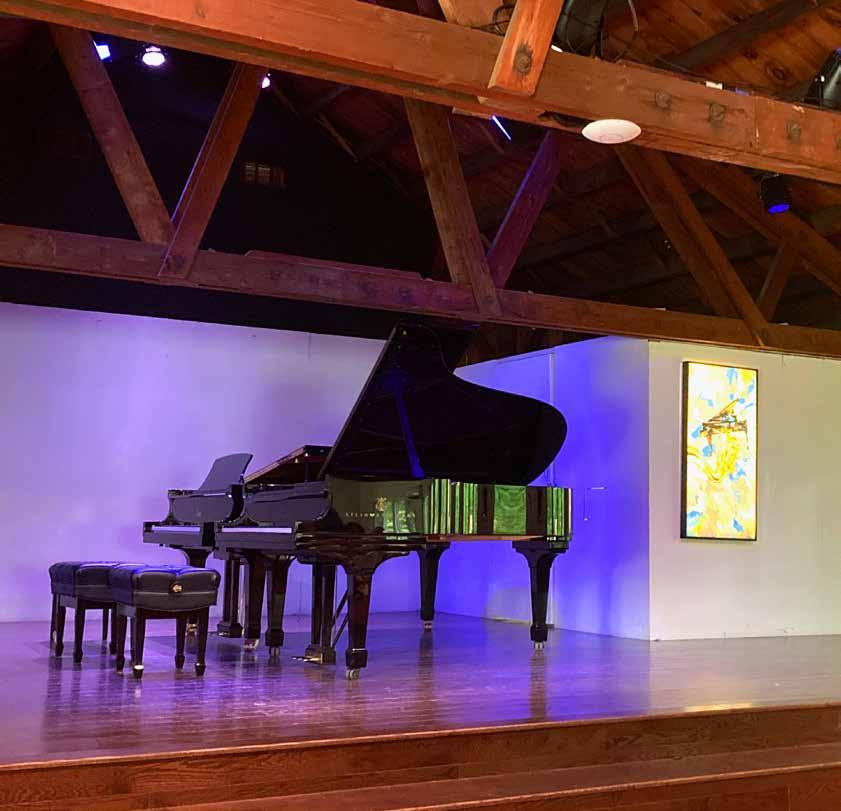
WRITTEN & PHOTOGRAPHED BY WENDY HOBDAY HAUGH
Last July, weary of beach and board games, I found myself craving a new cultural experience: something musical in nature that didn’t involve a lot of driving, throngs of people, or pricey entry fees. Suddenly, I remembered Luzerne Music Center (LMC), a music camp in Lake Luzerne that provides world-class music instruction and opportunities to aspiring young musicians. I’d heard stories about people canoeing on
the lake as the soft strains of music filtered through the pines. I’d even driven past the Center’s Route 9N sign dozens of times over the years, yet I’d never investigated further. I decided it was time to learn more about this surely harmonious place.
A bit of online sleuthing revealed that LMC offered an abundant list of summertime concerts, some performed by the camp’s faculty and
many more put on by LMC students. Faculty Artist Concerts are affordably priced ($15 for adults, $10 for seniors, $5 for students, free to children under 18); and all Student Concerts are open to the public and free of charge. Intrigued by the prospect of seeing and hearing budding musicians in action, my husband and I marked our calendar for a music-filled afternoon on campus.
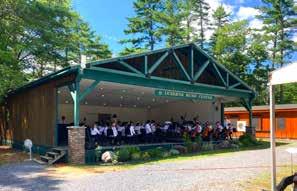
At the Center’s wooded entrance, we stopped briefly to savor the peace and tranquility of the setting. LMC’s 20-acre plot was originally home to the Kanien’keha:ka (Mohawk Nation Council) and a gathering place for the Haudenosaunee (Iroquois) and other Indigenous peoples. The Luzerne Music Center is deeply committed to fostering diversity, tolerance, kindness, and respect among its students and faculty. Equally committed to honoring those who came before, the Center strives to keep its vibrant history alive and to serve as responsible stewards of the land.
Arriving on campus, we found a large green field of open space, edged by cozy dormitory cabins, practice cottages, large performance venues, and various administrative buildings. In recent years, extensive capital improvements have been made to update and expand the facilities, with many more yet to come. The campus was bustling with instrument-carrying musicians, their families, and day visitors of all ages— clearly a place where activity was the norm rather than the exception!
Attracting musicians from all over the world, LMC hosts 150 gifted musicians each year while maintaining an impressive 8:1 student-to-staff ratio. A typical day includes morning and afternoon music classes and practice followed by a variety of physical games and lakeside activities. During August, Senior Session students spend a thrilling week interacting, studying, and performing with members of the Philharmonic Orchestra. Mondays, however, are non-music, ‘recreationonly’ days when all students enjoy field trips to water parks, SPAC, and other fun local sites.
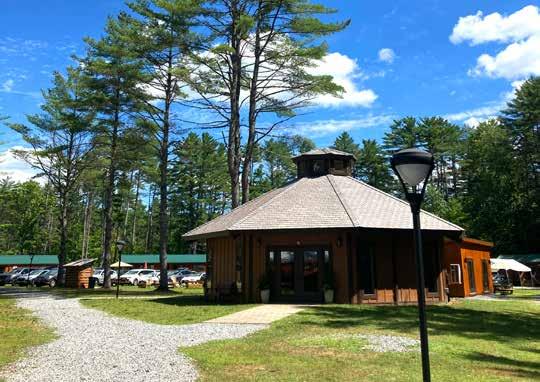
For decades, beginning in 1909, LMC’s campus was home to Camp Tekakwitha, a summer camp for boys from Albany’s Cathedral of the Immaculate Conception. In 1980, following the camp’s closure, the property was purchased by Philadelphia Orchestra cellist Bert Phillips and Steinway pianist Toby Blumenthal. This gifted husband/ wife duo had long envisioned a topnotch music center where talented musicians from all walks of life could partake equally in training and mentorship from world-renowned musicians. To this day, LMC remains committed to this mission, welcoming people of “any race, creed, color, socioeconomic status, national origin, sexual orientation, gender identity or expression, sex, ability, military status, marital status, or age.”
At the helm of Luzerne Music Center today, serving as CEO and Artistic Director, is internationally-celebrated classical violinist Elizabeth Pitcairn.
The Philadelphia native, whose own violin training began at age three, attended LMC herself as a student in the late 1980s and, years later, became Bert Phillips’ chosen successor as the organization’s President and CEO. Year after year, passionate about young people and education, Pitcairn continues to embrace, lead, and challenge LMC students and faculty.
During our visit, my husband and I were impressed by the poise and friendliness of the students we met. From the greeters who welcomed us and handed out programs to the skilled young performers, everyone seemed to take pride in working efficiently and energetically as a team. The first of that day’s two-part concert — a Piano Prelude performance held within LMC’s elegant Jack Lawrence Performance Lodge—included 15 different works, spanning several centuries. When the piano concert ended, we moved to a more casual outdoor auditorium where the Junior Session Symphony Orchestra performed four energetic works on LMC’s open air Shed Stage.
As the afternoon wound down, I realized we’d truly been honored to enjoy such a full and diverse program of piano and orchestral music at LMC’s exquisite Adirondack campus. Music brightens the world, and seeing so many talented young people sharing their art and their commitment to one another was, at once, inspiring and heartwarming.
With summer fast approaching, my husband and I find ourselves already making plans for a return visit to Luzerne Music Center—and this time, we’ll bring our grandchildren! For us, a wonderful new family tradition has begun.
To learn more about LMC and see its schedule of summer concerts, visit www.luzernemusic.org
WRITTEN BY MEGIN POTTER | PHOTOS PROVIDED
“The blossoms are really heavy. The bees have been working overtime,” said George Stanislowsky in May about this year’s crop of blueberries on Eagles View Farm in Galway.
Weather dictates flavor, but with cool nights and warm days, their 2,500 bushes will likely ripen around July 4th and keep producing big, plump blueberries until mid-August. The farm is bursting with freshness and fun, and people have been coming here to enjoy their five varieties of pick-your-own blueberries for decades. There are small sweet ones, and huge, quarter-sized goliaths with a delicate tartness that delights the tastebuds.
Forty-one years ago, George, a pilot, and his wife, Sandy, a swim coach, started Eagles View Farm with 500 blueberry bushes to teach their two daughters, Michelle and Stephanie, about responsibility and good work ethics. Through the years, Eagles View Farm attended area farmers’ markets and sold their juicy berries to local establishments (including The Gideon Putnam in Saratoga Springs). Both girls helped run the farm stand while they were growing up and now Stephanie is an Aviation Safety Inspector and Michelle is the founder of Burlingame Orthodontics in Ballston Spa. Last year, Michelle’s two daughters, Leah, 11, and Eloise, 9, became the third generation to tend to the summertime stand, helping visitors take home bucketfuls of sunshine.


On July 25th, from 9 a.m. – 3 p.m., find Eagles View Farm at the Town of Galway’s Annual Blueberry Festival, at Dockstader Recreational Park, 5078 Sacandaga Road, rain or shine. It is free to attend and will include crafts, blueberry bushes, products, and more.
Eagles View Farm, 2089 Route 29, Galway will be open Monday, Wednesday, and Saturday, 8 – 11 a.m. (please note – dew makes the area damp in the early morning hours). Parking is close to the grassy blueberry field and handled picking buckets are provided.
For more information, follow @eaglesviewfarm-blueberries on Facebook, and visit eaglesviewfarm.weebly.com SS



WRITTEN BY FRANK GEREMSKI
PHOTOS BY SUSAN BLACKBURN PHOTOGRAPHY (UNLESS NOTED)
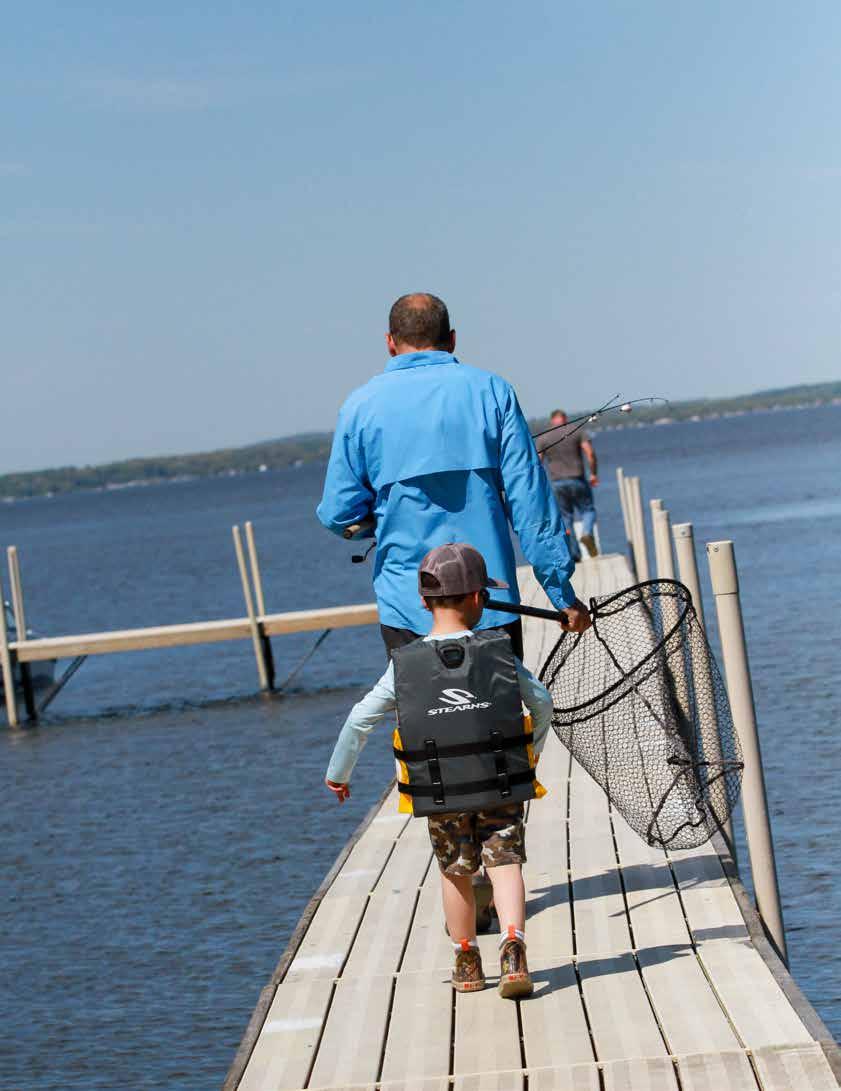
Parents turn your STRUGGLES WITH PHONES around and get everyone outside!
One of Upstate NY’s greatest gifts is the endless resource of freshwater! With two easy DIGITAL AIDs, you’ll be able to get your kids interested in no time!
Fishing, or as I say… “Catching!” is the perfect Upstate NY hobby for your kids… or the kid in you!

Upstate NY has all these beautiful waterways, with excellent public access through fishing easements and NY State Parks. Plus, our local counties, towns, villages, and wellmeaning non-profit groups supplement this with endless access to boat/canoe/kayak launches and open-air community space… Fishing is the perfect go-to endeavor to get outdoors on the water!
And think of all the things it can lead to… boating, kayaking, canoeing, birding, outdoor photography, hiking, sunning, even tree hugging!! Finding and exploring new fishing spots or hiking to a waterway is just a gateway to countless related outdoor passions, and I know this firsthand.
The two digital aides we’ll share show you the best way to take advantage of these outdoor gems. It will save you money, provide prime fishing access, some real educational experience, and get you started “catching!” More than ever, we need an outdoor release that re-connects us back to nature. Fishing and related “woods and water” pursuits have been providing this fun wilderness recreation for ages. This outdoor culture and our endless lakes/rivers/ streams/ponds were the original attractions to the Saratoga/Lake George area. The forefathers of our state anticipated this and set aside huge parcels of land for us to enjoy, such as the 6-million-acre Adirondack State Park.
Competitive Sports certainly provide our youth with physical outlets, but fishing, and these related outdoor adventures, are less structured, more intimate skill builders. It’s a totally different connection, and much better at bridging generational gaps. I played sports with some success, but excelled at fishing, and these connected outdoor activities. My dad took me fishing often while I was young and thoroughly taught me boat fishing. During the winter we would tie spinner rigs in the basement and make our own sinkers. We bonded much better over fishing than sports, an activity that lasted his whole life.
From day one, my dad put me on MAP DUTY, and would insist I brought us back to port, at first to the chagrin of my Uncle Dick, who I was also bonding and learning from. My head was on fishing, yet they were teaching me initial standards of BOATING and NAVIGATION. My fishing transitioned to different outdoor hobbies when I started canoeing/hiking/fishing in the Adirondack back-country ponds as a teen with my friends. Now I was learning ORIENTATION with TOPOGRAPHIC MAPS and a COMPASS, taking me deep into the Adirondack wilderness seeking out seldom fished ponds for brook trout. Little did I realize these route-finding missions to secret fishing holes tangibly developed skills that would help me in my career as an Air Traffic Controller. My initial navigation skills were honed by fishing maps and trail guides, now in retirement I am a NYS licensed Hiking and Fishing Guide, go figure...Real life skills learned on fishing trips.




Anyone interested in fishing- and many other outdoor adventures will be incredibly impressed with the scope that dec.ny.gov covers. It is an interactive virtual library of EVERYTHING OUTDOORS in New York. This digital aide includes maps, tactics and features on countless fishing/outdoor locations. For young people this is a positive, interesting digital “supplement” like those games they like playing!
Dec.ny.gov opens a completely new hobby that is occurring in REEL-TIME. Transparent fun info about updated trout stocking and other events occurring around the state - or you can filter to our immediate Region 5 - for cool stuff happening right here! For example, locally Saratoga State Park has an awesome Creek-side Classroom next to the amply stocked Geyser Creek. Likewise, Moreau State Park has a fantastic year-round wilderness educational hub near the park’s beach, Moreau Lake is a peaceful motor-less fishing hot-spot. These facilities serve as the basis for each park’s multi-faceted outdoor events. They are regularly posted on dec.ny.gov and once signed up these activities will be sent regularly via email.

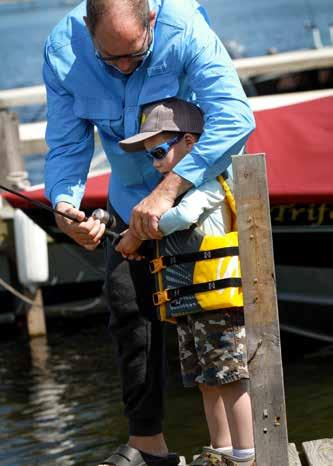

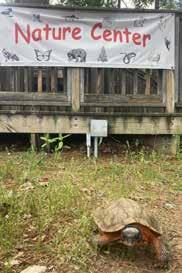
Angler Achievement Awards, volunteering for fishing surveys, and a plethora of interactive conservation and wildlife topics keeping youths not only interested but involved. HuntFishNY is a phone app associated with dec. ny.gov that also is consistent with modern day info gathering, great for any aged outdoor enthusiast and is a positive digital influence.
My favorite money saver is the Empire Pass for $72 which gives unlimited yearly entry to NYS Parks, forest preserves and boat launches. A significant amount of trout stocking occurs at these spots, and your new digital outdoor wizard can time the adventure to the fishing conditions and reports on the HuntFishNY app or dec.ny.gov. These parks are a perfect starter spot for beginners and families because of the safe managed park environment and professional staff. With hiking trails, swimming areas and facilities, there is something for everyone!
Free Fishing Days, between June 27-28th, meaning no license is needed for those over 16. An inexpensive way to “give it a cast.” (Sept. 26 and Nov.11th are also free fishing days).


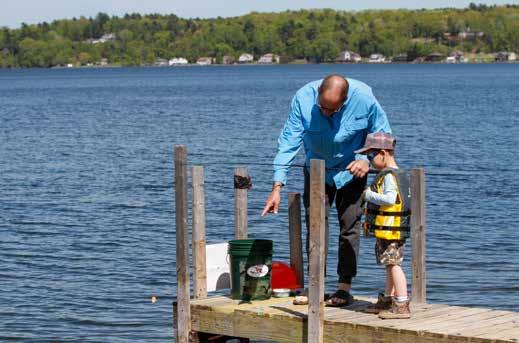
New York State Outdoor Guide Association (nysoga.com) is NYS’s oldest and largest guiding organization - since 1891 - with over several hundred active guides in a wide array of outdoor adventures. These are your “coaches” in Upstate NY for wilderness sports. A safe and successful first trip is the best way to get our youth hooked on fishing. Starting with a guide(coach) will allow you to utilize the guide’s tackle, then act as your equipment consultant, just like other sports. An initial entry to the sport with a qualified expert will likely produce much better early fishing results, teach ethics of the outdoor culture, and share how weather affects fishing and water-sports safety. The tutoring from this trip is the foundation to start your fishing life. And catching some lunkers and having a higher “fishing IQ” when you start fishing without your coach, makes a lifetime of difference.

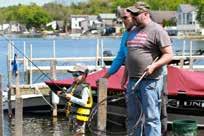
What makes NYSOGA’s digital aide so dynamic? You can scroll and select over 29 different activities… then view all the professional guides’ profiles in your region to select the best fit for you. Wouldn’t you love that option for the soccer teams, matching the coach’s strengths and expertise for the experience you want?!
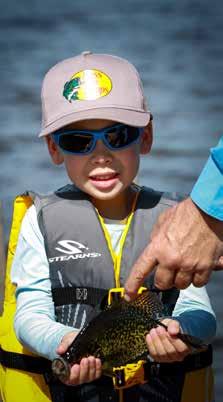

Whether you are new to fishing, the Saratoga area, or just want an enhanced fishing experience, hiring a professional guide provides hidden value. Access to the area’s lakes is becoming crowded, costly and complicated, especially on weekends. Your family’s safety, time, and peace of mind - by booking a certified guide, with comprehensive safety training - is an inherent benefit to consider. We mentioned the trout stockings listed in ny.dec.gov, but we also have nice populations of naturally reproducing trout spread throughout the region. Large-mouth, small-mouth bass, northern pike, pickerel, and large schools of kid friendly perch and pan-fish are peppered throughout our many waterways, but where do you start without direction? An expert local guide will help you dial in on the correct species and areas to target, and increase your knowledge for future outings. Starting with a professional will help everyone bypass early mistakes and share basics and tactics, creating a shortcut to long-term angling success. Learning these skills of this positive hobby correctly from my dad and uncle made a huge impact on my life, and I hope this fishing passion finds your kids this summer. It’s catchy.
Frank Geremski, with wife Lisa, own Saratoga Fishing Charters and Boat Tours. A retired air traffic controller, Frank has been fishing upstate New York for over 55 years.
SS



Proudly Representing Simply Saratoga Magazine and Saratoga TODAY with Professional Photography for Twenty Years! Happy Anniversary!



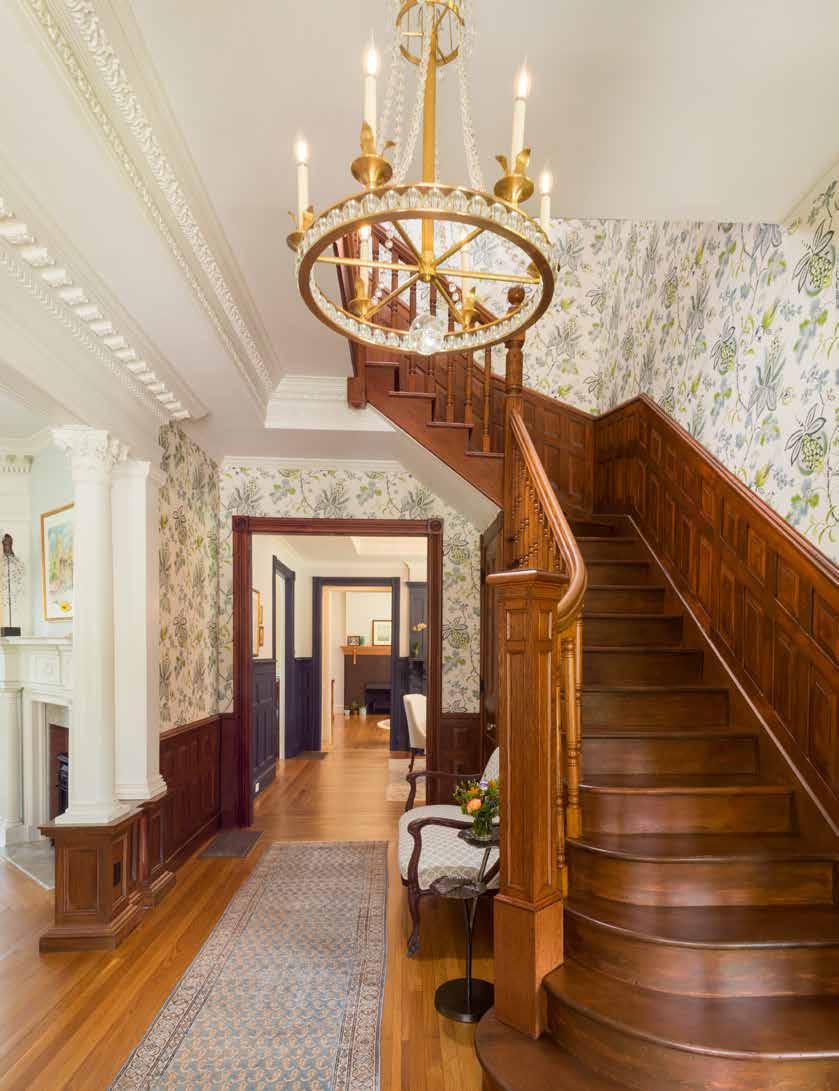

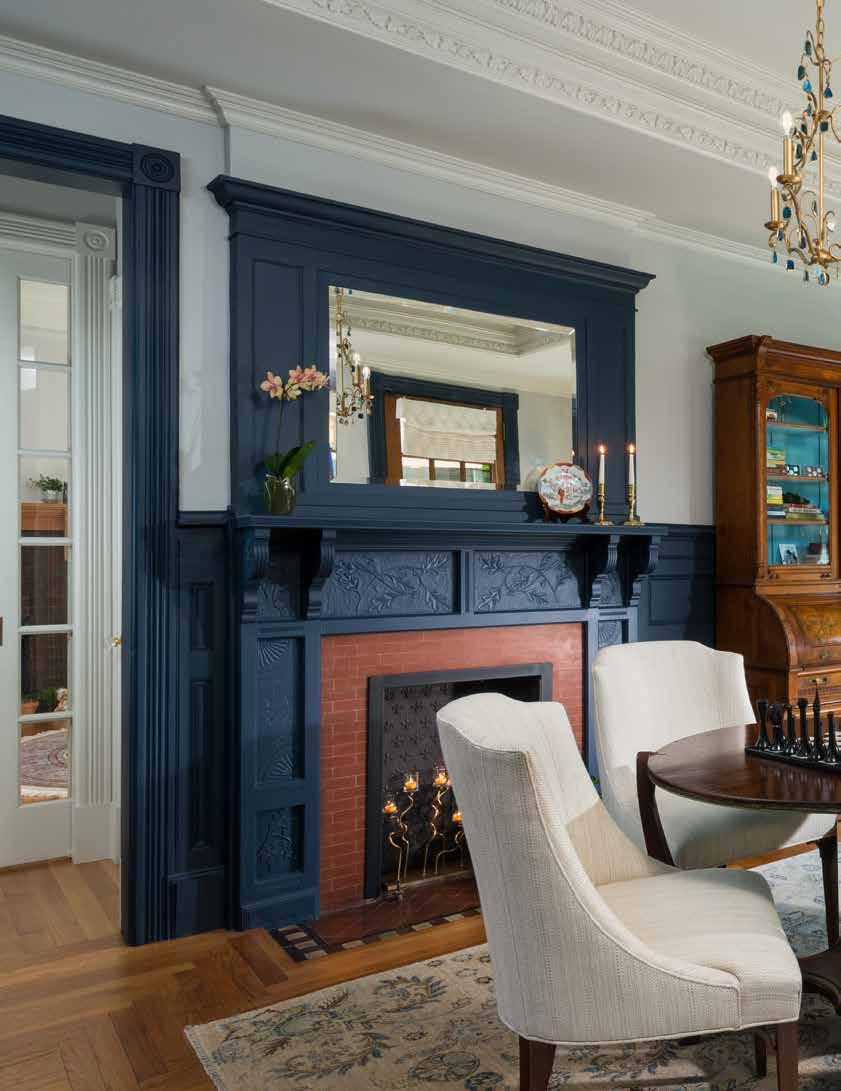
This originally ran in Simply Saratoga Summer 2021, But we loved it so much, it’s making an appearance during our 20th Anniversary Year Long Celebration!
Follow us as we explore some of the area's unique spaces...
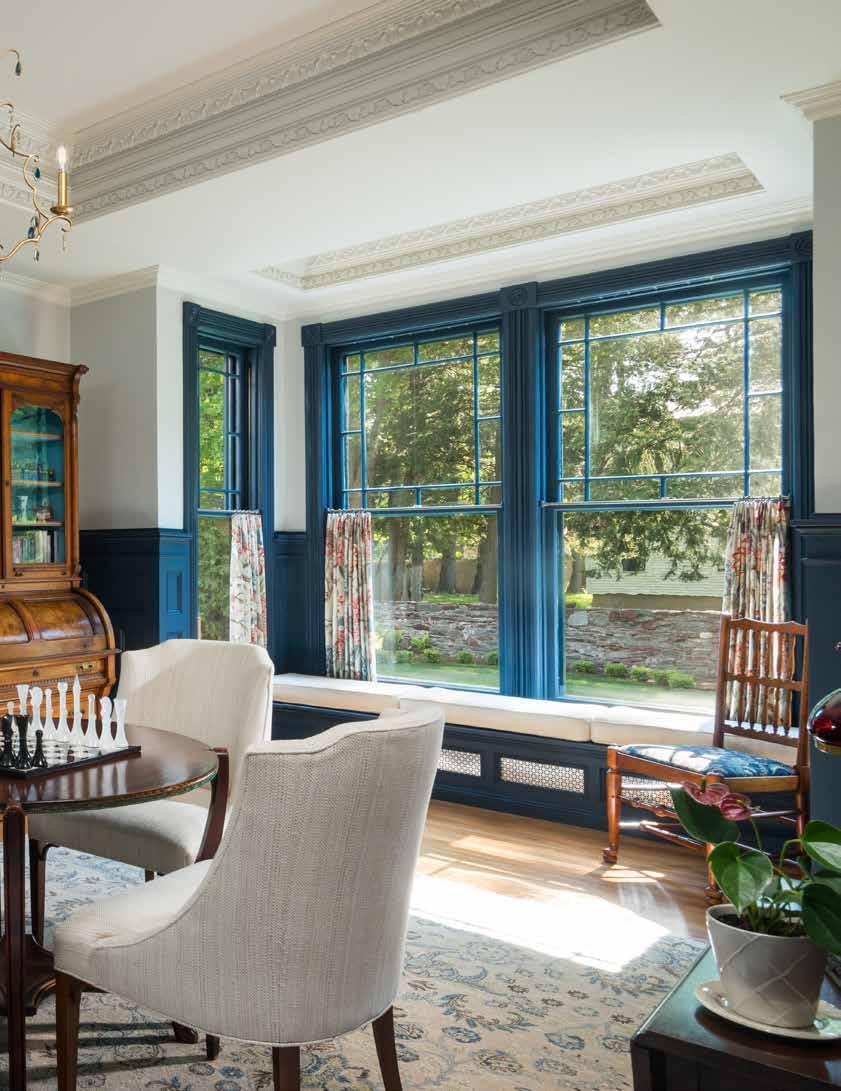

WRITTEN BY MEGIN POTTER | PHOTOS BY RANDALL PERRY PHOTOGRAPHY
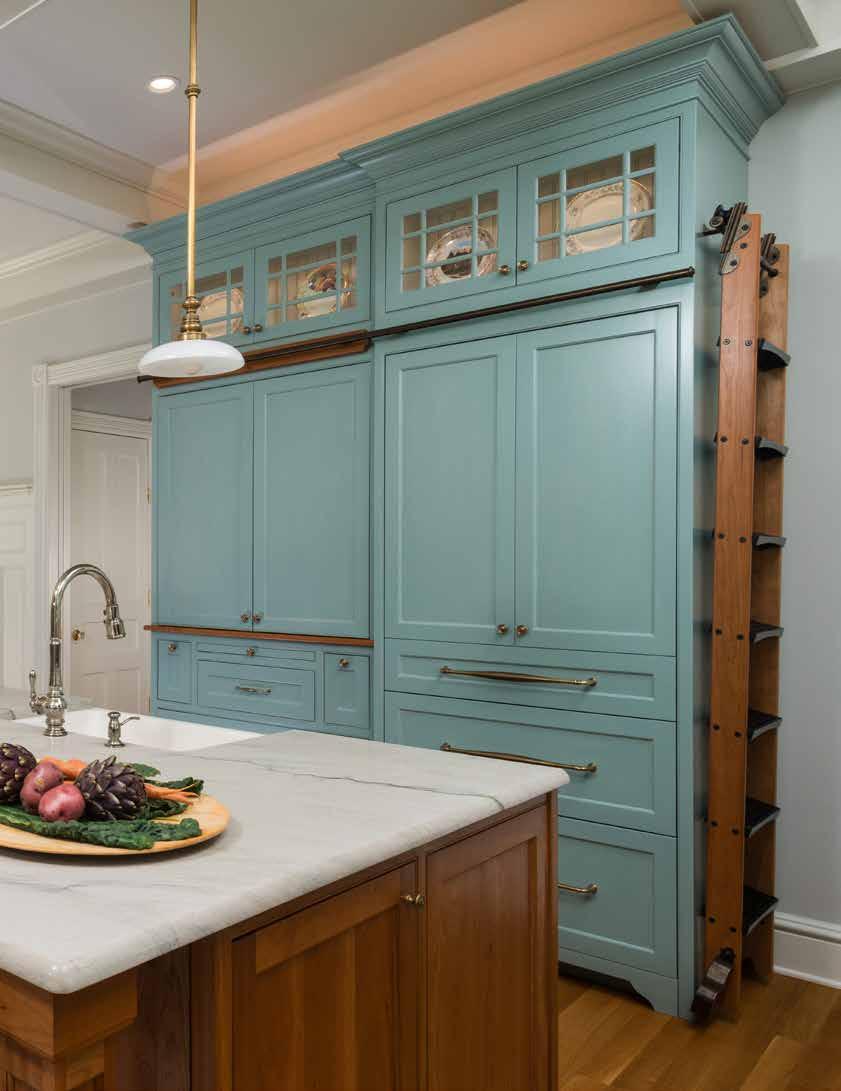
A Victorian home renovation affords classic comfort by tying together the old with the new.
Victorian homes are loaded with lots of detailed woodwork and odd-shaped spaces, so to the modern family, they tend to feel more regal, than comfortable, more elegant, than easy to live in.
When Colleen Coleman, Principal Interior Designer of CMC Design Studio LLC, was brought in as the interior designer on the remodel project in 2018, substantial reconstruction on the property had already been underway by Courtney Enterprises, as directed by the homeowner’s architect, Phinney Design Group.
“The architects did a beautiful job redesigning the space. My job was to take those spaces and bring them back to life,” she said.

Originally built in 1883, the now six-bedroom, five-bath, 4,439 sq. ft. home has been preserved in a way that makes sense for Colleen’s clients, John and Michelle.
“In listening to my clients and working through what is important to them, they are the ones who design their spaces, I am the one who facilitates their dream into a reality!”
Previous owners had used the building as both a private residence and a dentist’s office. Two additions were built on in the early 1900s, moving the kitchen each time.
Now, the kitchen has been returned to the center of the house, making it convenient for entertaining, as is the impressive butler’s pantry that leads up to it, housing Michelle’s large collection of dishware.




Queen Victoria herself would’ve likely approved of the Oval Room Blue paint chosen for the cabinetry, a hue selected from the Farrow & Ball Collection.
It’s a color Colleen knew her clients would appreciate, as is the library ladder that Michelle dreamed of installing in her kitchen one day.
“It was a simple request that set the tone for the whole kitchen,” said Colleen.
“The ladder can be easily rolled to reach the high storage or display cabinets, even down the hallway to the den where an additional rail was installed!”
To retain the essence of a Victorian kitchen, the modern refrigerator was hidden behind panels, disguised as French cabinet doors with three lower drawers.
Throughout the first floor of this three-story home, the ceilings take center stage.
In the kitchen, a metal beam is hidden within a circular display of coffers. Colleen created the ceiling detail by combining three different heights of beams to create a sphere unbroken above the semi-formal dining area of the home.
The substantial brass light fixture above the table carries the eye upward without appearing too heavy or impeding the view of the garden beyond.


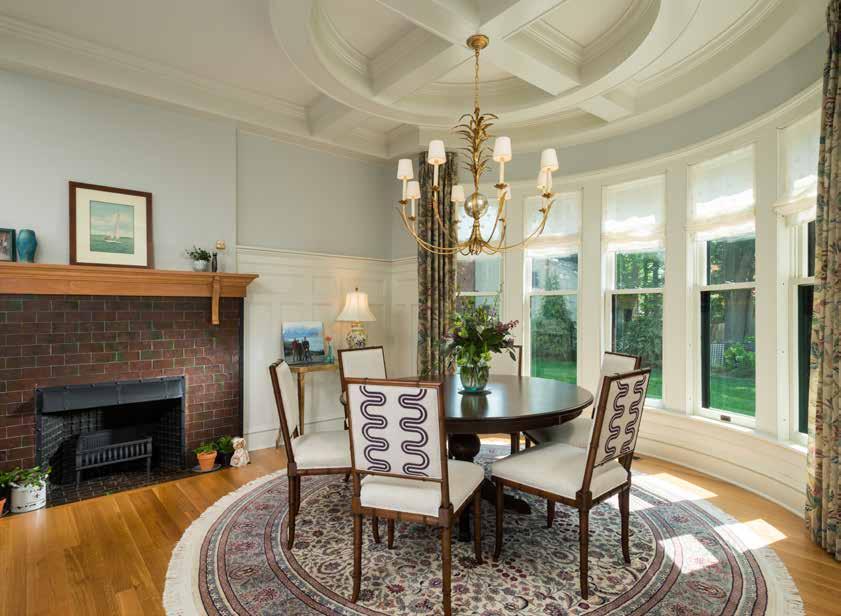
Historical homes are filled with the history of past occupants.
Colleen played off some of these historical elements, as in the new vent hood above the kitchen range, which mirrors the lines of the vintage fireplace insert in the semi-formal dining area.
The kitchen windows were designed by Colleen and manufactured by Marvin Windows. By replicating the ratio of the historical parlor windows, they appear as if they are original to the home, accurately enough to have been approved by the Design Review Commission of the Saratoga Springs Preservation Foundation. Using the same ratio, Colleen designed the upper glass fronted kitchen cabinet and butler pantry doors.
They also synchronize with the windows in the game room. Here, Colleen secured an authentic gaming table which once resided at the Saratoga Casino, taking center stage while being surrounded by chairs that will keep you playing for hours!
A watercolor of the Casino (not shown), purchased at Minnie Bolster’s estate sale, overlooks the table that once dwelt within.
The wonderfully refurbished wainscot, originally a dark oak, was dismantled by the builders and skillfully remastered within the kitchen and butler’s pantry (as were the columns framing the fireplace in the den). They fit so naturally into their new location, it’s as if they’d always been there.



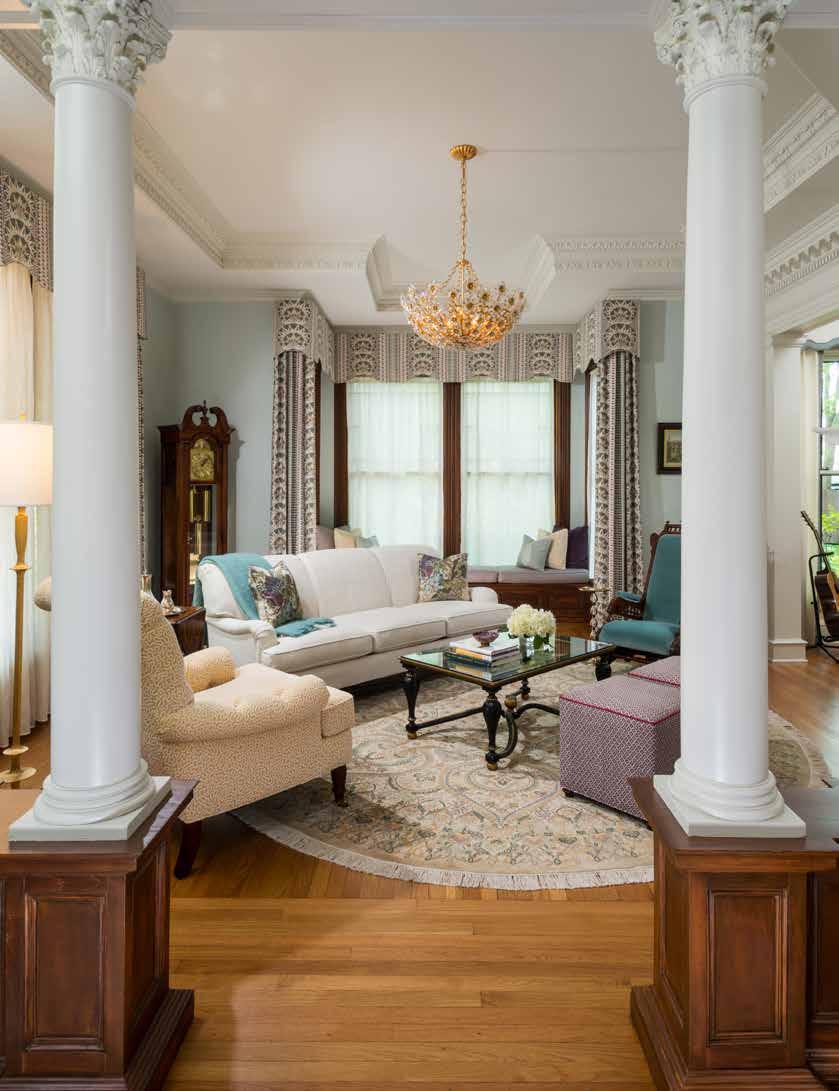
The golden rule to a historical renovation is to make mindful choices. When working in a home that’s been changed significantly by past inhabitants, a remodel can often turn into a "remuddle.”
Rather than trying to erase the past, Colleen capitalized on the elements each owner brought to the home.
The once golden-topped, faux-painted Corinthian columns were painted white instead of being removed altogether. Likewise, the layers of crown molding were painted to blend in with the tray ceilings (that were added to incorporate plumbing and electrical components), allowing your eye to focus on the updated light fixtures surrounded quietly by the home’s old-world charm.



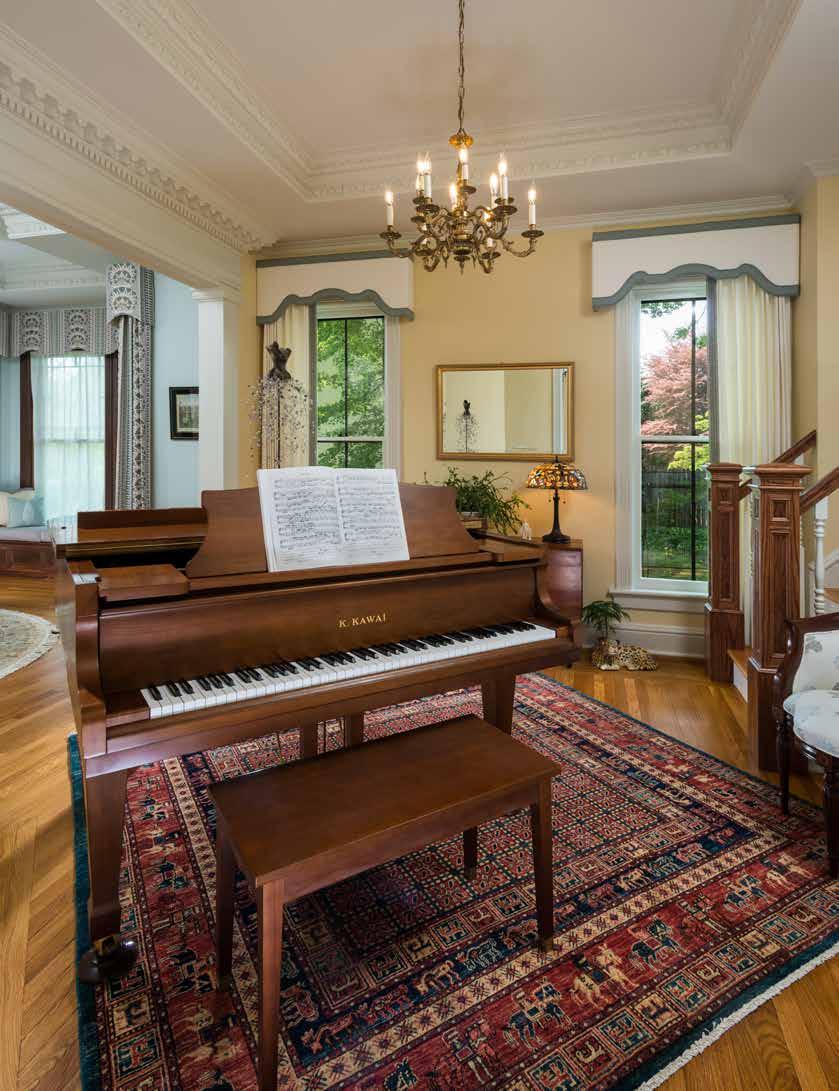
Also in the parlor, the soothing symmetry of the ceiling is accentuated by the gracefully installed custom drapery and cornice boards. Majestically, they weave in and out of the window seat area, reflecting the columns at the entry to the room.
In the adjoining music room, the cornice boards gently move to the sound of a symphony being played. Colleen said she found inspiration in researching famous opera houses throughout the country and in Europe.

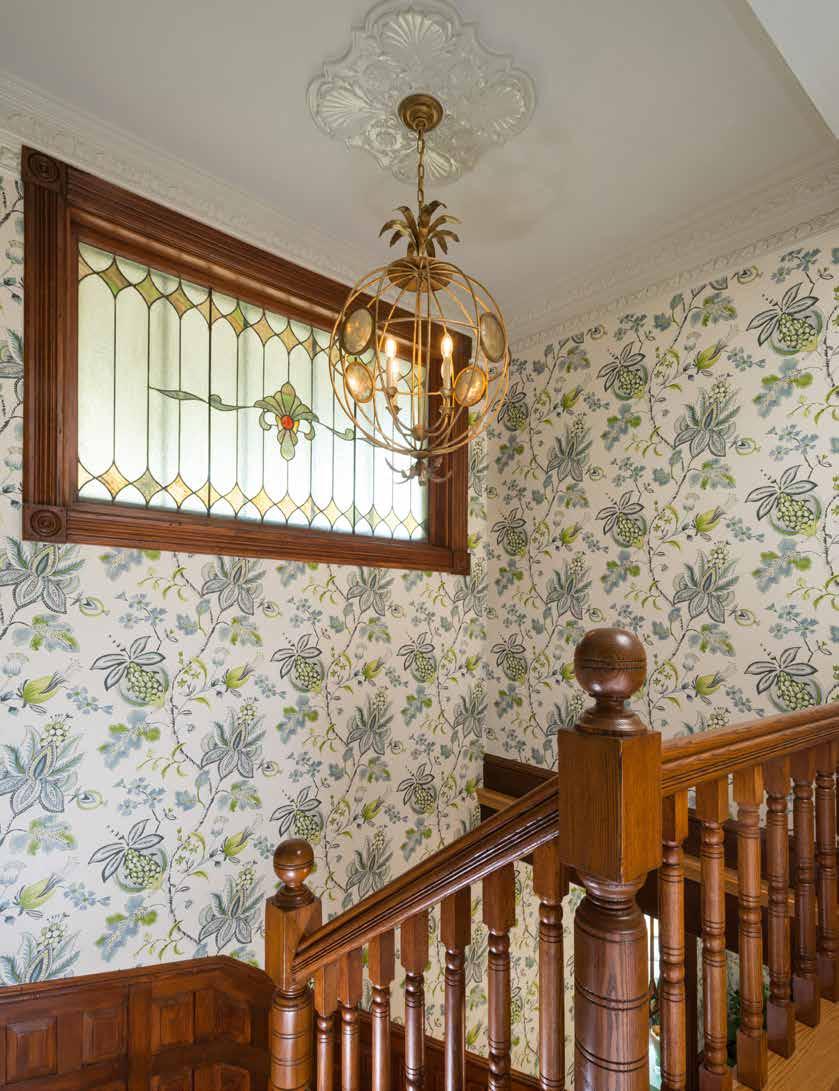
have a huge part to play in the front stairway, where the large, modern floral printed wallcovering by Thibaut carries in the darker greens and charcoals from the exterior of the home. It also serves to lighten up the entry in an effort to retain the original dark oak, patinaed wainscot and staircase.


Without sacrificing its past, this Victorian is now a very personal reflection of the current homeowners.
“It was very dark. It had a neat look, but, boy, was it dark! We were concerned that even after the renovation, the Victorian wasn't going to feel like a comfy, cozy home," said John.
"With all the design choices that Colleen helped with, the feel has totally changed - it has become a very comfortable and beautiful home." SS

WRITTEN BY COLLEEN COLEMAN OF CMC DESIGN STUDIO LLC
a glorious thing… The Summer Season… here in Saratoga!
Flowers are all in bloom, the blue skies glisten until 9 p.m. and the nights fade with a cool New York evening by the firepit! It’s days like these that we wish they’d never end! I know the time you’ve spent preparing your homes and gardens for these prized days was well worth the effort as you now sit back and take in the view! But there’s always room to add just one more touch of Saratoga to the mix! My travels to catch up with our local shops and boutiques paid off…and I can’t wait to share them with you! Come along with me for a stroll!

Colleen Coleman is the Principal of CMC Design Studio LLC located in Saratoga Springs. With certifications in Kitchen & Bath Design, Aging in Place and True Color Expert, her curated design extends into all areas of her field including new construction, historical and major renovations. Her passion is in designing & customizing hand-crafted cabinets for all areas of the residential market.
For my first stop, I landed at Compliments To The Chef where I was warmly greeted by Paula Reardon (John’s beautiful wife) and their newly married daughter, Aubrey. Check out the Spring/ Summer edition of Saratoga Bride…including the cover…to read a father-daughter memoir to each other! So beautiful…so Saratoga! Compliments To The Chef is THE BEST source for all your cooking needs! And for Summer, I hit the jackpot on MUST-HAVES like this TOADFISH Shucker’s Bundle. What’s a shucker?? Why… for shucking oysters of course! The kit includes a Put ‘Em Back Oyster Knife, Shucking Cloth and Professional Oyster knife. The Toadfish team has really gone all out in their mission to not only provide you with the most ergonomic, non-slip handle design and full length blades, they’re also passionate about planting oyster habitats to clean our coastal waters. For your best oyster fest, check out their cut-proof & puncture resistant cloth specifically designed for opening shellfish! If you’ve ever shucked…you understand why this cloth is a great find! It’s also crafted of antimicrobial material that’s safe to toss into the washing machine for another day of tackling oysters! Once those oysters are open, you’ll need a dish of butter for dipping! Be sure to pick up enough of these Ceramic Butter Warmers for each of your guests…a perfect addition to any shucking party! And of course, lemons are also a must so why not wedge them up on a Horse Bust Cutting Board to add a touch of Saratoga no matter where you shuck your clams! See what I mean when I said this place is THE BEST source for all your cooking needs! I wouldn’t go anywhere else!


368 Broadway, Saratoga Springs ImpressionsSaratoga.com | 518-587-0666


33 Railroad Place, Saratoga Springs SaratogaChef.com | 518-226-4477



Each piece is signed by the individual artist, carrying specific Unikat numbers



Saratoga including Saratoga Jockey Silks Tea Towels…I love buying a variety of towels for each season! 100% pre-washed linen to dress up your kitchen or use as a guest bath towel. With a wide variety available for the summer season, they make a great house warming gift too! Then I spotted this…The Linda Lou Horse Kitchen Sink Strainer! What is a Saratoga home without one of these?? I mean, even the dirty dishes will race to see who can get cleaned first! And I know you’ve all seen the large Saratoga Finish Line Pole here at the store or on a bike being toted up and down Broadway…but did you know you could get a Saratoga Mini ¼ Pole to adorn a smaller area like a table on your covered porch or bar? At 15” high, it’s the perfect finish line for any gathering! For ceramic collectors…you’ll want to hurry in to see their collection of Ceramika Boleslawiec Polish Pottery with floral and equine motifs. All hand painted and detailed in Poland, these “Unikat” limited-edition collector pieces are made only once a year and in limited quantities. Each piece is signed by the individual artist, carrying specific Unikat numbers. All their pieces are fired at temperatures exceeding 1250 degrees Celsius, so these beauties are safe for the oven, microwave and dishwasher!
445 Broadway, Saratoga Springs
ImpressionsSaratoga.com | 518-587-0689

2570 U.S. 9, Malta Allerdice.com | 518-899-6222

Down the street at The Dark Horse Mercantile, I found a fabulous solution for outdoor dining... Sili Glasses...Pint, Stemless Wine and Rocks! What makes them “Sili”? Why these are not your average plastic picnic glasses. You can squeeze and tumble them without cracking! They have a weighted bottom to keep them from tumbling over and the material is non-slip so your drink stays put! You’re going to love these!!! Now, this shop seems to be my fav for finding unique Saratoga Art pieces… like this Kim Perry Jockey Barrel Stave crafted from authentic wine barrels! Being a Kentucky native, Kim’s art reflects her love for Kentucky’s rich culture specializing in themes of bourbon, florals, and equine subjects. It’s a one-of-a-kind find…be sure to head over to Dark Horse for this work of art and others available by Kim Perry as well!
A few shops down, I’d recommend popping into Silverwood Home & Gallery where you’ll find the very special Triple Crown Glass Set perfect for entertaining… especially after a BIG win on track day! And to make the fanfare even more special, greet your guest with their beverage and a delicately Embroidered Hand Towel, capturing the win of the day! You never know when that trifecta will hit…so be ready! And as the sun sets, be ready for the cool evenings with this new Cashmere Topper with beautiful patterns for any summer gathering. It’s great for those convertible rides home after a sip with friends at the lake as well!
Over in Malta at the Ace Hardware you’ll find Accents at Allerdice…a must stop shop for unique items and special finds such as these Faux Leather Horseshoe Coasters & Stand. I don’t know about you, but I’m a huge coaster fanatic and love to have sets for each season and holiday! These are perfect for your Summer gathering with friends celebrating your big wins of the day without worry of icy summer drinks on your favorite side table. And for a bit of nostalgia, pick up a collection of these Cast Iron Mini Race Horse & Jockeys to add a colorful pop of fun to a shelf or atop a dresser! Three different sizes and silk colors lead the charge in curating a sweet but simple nod to our heritage of horse racing! And this sweet Polka Dotted Yellow Ceramic Boot is adorable as a child’s toothbrush holder, a flower vase or even a pen cup to remind you its Summer…even as you work at your desk!

SILVERWOOD HOME & GALLERY
398 Broadway, Saratoga Springs
SilverwoodGalleries.com | 518-583-3600

How I love this part of my career as an interior designer! Roaming the local shops to find unique items to share with all my readers! I often get so busy working on large residential projects that these moments to stop and visit our local stores is so refreshing! And it’s a great opportunity for me to update my own home as well! I love shopping local and decorating my home with pieces that we will cherish, items to create conversation, and trinkets to pass along to loved ones in memory of a visit to our area! I hope each and everyone of you enjoy this glorious summer season, win a few big races at the track and laugh with family and friends constantly!
Until next time my friends,
Cheers to a spectacular Summer Season! SS

Colleen Coleman of CMC Design Studio LLC
National Award Winning Designs
Contributing Interior Design Editor, Saratoga Publishing
colleen@cmcdesignstudio.net
@cmcdesignstudiollc
“Creating Environments for Life” TM

IN THIS ELEGANT EDUCATIONAL CONVERSION, THE HIGHLY REGARDED AND WELL-LOVED FORMER WALDORF SCHOOL SPACE IS SUCCESSFULLY TRANSFORMED INTO AN UPSCALE RESIDENTIAL TOWNHOME THAT MAKES THE GRADE.



When Bonacio Construction assigned Interior Designs Atelier with an adaptive reuse project, they were poised for excellence.
“It’s always a great challenge to work with a space that’s a little unique, and to make it feel as large, and be as functional, as it possibly can be,” said Interior Designs Atelier’s owner Linda Gerace Skinner.
By integrating the ease of modern, open-concept living with the incredible bones of a grand Tudor style building, Interior Designs Atelier has created a home that’s charming and rich in character.
While preserving the historic exterior architecture of an iconic downtown Saratoga Springs gem, Project Manager Gianna Bonacio’s thoughtful design started with a blank slate inside this former school house, reimagining the 9760 sq. foot building into five high-end residential units with upgraded appliance packages, quartz countertops, and stunning hardwood flooring.
When you first walk into the 1800 sq. ft., 3-bedroom, 3-bath model condo, the kitchen’s bold red stove (and tile wrapping around the wall above it) beckons masterful meals to be made here by positioning soft banquette seating into the space under the stairs, Linda has created an ideal spot for dining, doing homework, or watching tv. Dynamic straight lines and angles in this space are balanced with gently curving furnishings, supple fabrics, and the clever fluidity of uneven glass pendant lights that dangle like jewelry from the rich, dark coffered ceilings. “For us, it’s one of the best elements in the space,” said Linda.
In an unexpected twist, cinched curtains hang high on the wall and kiss the floor between the windows, adding depth and intrigue to the great room.

In the primary suite, an immersive wallcovering, inspired by the foliage painted in the ancient Roman Villa of Empress Livia, wife of Augustus, preserves a glorious moment within the natural world.
A television that looks like art is cleverly disguised within the opposing gallery wall, a hot trend in technology that exists effortlessly, as an organic chandelier fearlessly announces its presence from above.
In the master bath, greens from the bedroom are brought in to complement the gold hardware and fun, freeform lighting.
Interior Designs Atelier earns extra credit for their use of a murphy bed that does double duty as a second reading or working space.
The gorgeous patio, with its grandiose outdoor kitchen and seating areas, extends the enjoyment of the summer season just steps from Congress Park and the Saratoga Race Course.

Nothing says “Saratoga” more however, than the custom red Saratoga Toile wallpaper in the first-floor powder room. Available in a variety of colors, this custom product is a collaboration between Interior Design Atelier’s Senior Designer, Diane Meyer, and local artist Lauren Mangina, that plays off the reds in the kitchen. It features a dozen illustrations of Saratoga landmarks (of the client’s choosing) in a classic repeating pattern that showcases this home’s place among Saratoga’s admirable architectural lineage. SS

WRITTEN BY MEGIN POTTER | PHOTO PROVIDED
DSG Builder Group of Saratoga, an industry-leading general contractor based in Saratoga Springs, has a new name and has expanded its leadership team with the welcome addition of two new partners, Larry DeThomasis and Christopher Bucher.
DSG Construction and Remodeling, Inc. founded by Dave Gadomski in 2017, specializes in high-end custom homes, historical renovations, and remodels completed with a meticulous eye for detail. Their spectacular homes have been featured in the Saratoga Springs Showcase of Homes for several years (and they won the Favorite Luxury Home Runner-up award in 2022!).
“My pot was overflowing with water,” said Gadomski. “As we started doing more historical renovations and custom high-end building, the people just kept on coming.” DSG Construction’s portfolio exemplifies projects with superior scope, masterful millwork, and flawless finishes that attract discerning clientele.
Before joining DSG Builder Group, DeThomasis and Bucher, both Capital Region natives, teamed up at a Saratoga auto dealership, which is where Gadomski first met them seven years ago while searching for a new truck.
Larry DeThomasis has a degree in finance from Siena College and is from a family experienced in the construction trades (his father was a contractor, and his uncle is skilled in Italian masonry). For more than 20 years, he has been developing the talents that are now proving beneficial to DSG Builder Group’s unique approach to luxury homebuilding.

We’re a like-minded team who is shaking things up and bringing improved customer service to the construction arena,” said DeThomasis.
Chris Bucher also has decades of dealership experience and was one of the youngest Executive General Managers in the industry. While handling daily operations at the dealership, he developed the organizational skills that he’s now using to help DSG Builder Group streamline their workflow.
By integrating best-in-class Houzz Pro industry software, Bucher is organizing architectural design plans, product selections, estimates, and schedules to make the build process more efficient from start to finish. By successfully utilizing these and other tools, clients receive clearer, more detailed communications, and DSG Builder Group can complete projects within budget, on an accelerated timeline, while remaining responsive to each person’s needs.
“Our goal is to reduce the time it takes to complete a project so we can effectively improve the customer experience,” said Bucher.
In addition to expanding their leadership team, DSG Builder Group has contracted with Interior Designs Atelier’s owner Linda Gerace Skinner and Senior Designer Diane Meyer to create impactful and visually appealing interior designs for high-performance homes that blend sophistication with individuality to produce exceptional outcomes.
By the end of a project, clients become like friends, said Gadomski. Protecting that relationship remains paramount, with each partner invested in ensuring that every aspect of a project exceeds their client’s expectations.
By continuing their commitment to personalized service and their dedication to performing the highest quality work, DSG Builder Group, and their top craftsman, are creating spaces that speak to you.
For more information, visit dsgbuildergroup.com



PHOTOS PROVIDED
Welcome to the 163rd Anniversary of the Saratoga Race Course - the racing season is on!
Along with excitement that attracts individuals from all over the world, the Saratoga Race Course provides an original beauty that no set designer could reproduce. Films such as Seabiscuit, Saratoga, The Horse Whisperer, Billy Bathgate, Ghost Story, and My Old Man, have beautifully featured the Saratoga Race Course, and Ian Fleming chose to set a scene in the James Bond novel, Diamonds are Forever, at the Saratoga Race Course as well.
In 1999, Saratoga Race Course was rated by Sports Illustrated #10 Sports Venue of the 20th Century. Many people come to not only be part of the atmosphere of our country’s oldest track, but to also admire the beauty of the racing horses. The horses are amazing to watch; they are truly spectacular animals. I always catch my breath at the majestic beauty of the horses that come to Saratoga Springs to race. Along with a track that attracts individuals from all over the world, the Saratoga Race Course provides an original beauty that with the passage of time continues to get prettier every year. Although I’ve only lived in the area for 29 years, my brothers and sisters know the track very well. During my childhood in the 60s and 70s, it was mostly myself and my two brothers, coming to Saratoga with my dad as one of his stops on the way to my grandmother’s house in Vermont for about 16 years in a row. Even though it was an hour out of our way, my dad knew it was the only way he could visit Saratoga every summer without mom ever knowing.
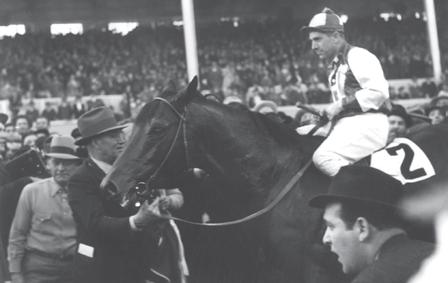
Did you know that 2026 is the year of the Horse (according to the Chinese Zodiac cycle)? What better place to celebrate horses than in Saratoga Springs, especially in the summer. “Health, History, and Horses” is our local motto that represents Saratoga Springs. Racing and equestrian art capture the beauty of horses within our community. A charming example of local equestrian art is a cutting board from wood artist Adam Cielinski, made right here in Saratoga Springs! We have a diverse assortment of food safe cutting and serve boards that are made with a Saratogian flare.
At Compliments to the Chef, we love wood cutting boards. Good hard woods such as oak, maple, walnut, ash, and cherry are tough cutting surfaces that have been used for centuries to cut food or butcher meat on. A good cutting board properly maintained can last a lifetime and they are safer than plastic, which if left wet, or isn’t sanitized can harbor bacteria. Some of the reasons for this are:
• Plastic is not water-absorbent, so it stays wet longer, which means longer bacterial survival.
• Wood is water-absorbent, so it dries faster, which means shorter bacterial survival.
• Wood contains natural antibiotic agents that retard bacterial growth.
Adam’s boards are part of Saratoga Springs’ Art History. They are each unique with no two being the same. We have boards shaped like horse heads, pigs, guitars, violins, hearts, bears, fish, whales, apples, owls, ducks, and handled serving boards. The good news is they are reasonably priced too. Wood cutting boards have been in my family for generations and we hand them down. Stop in and pick up a piece of Saratoga History and have something that you can hand down in your family.
A little advice on their care:
• Dry the board immediately after (hand) washing
• Once a month, rub the board with oil, to keep it water-repellent and warpfree. Apply a coat of warm food-safe mineral oil, let soak in, and then wipe off the excess.
• Scratches can be sanded out then re-oiled.
To further add to your equestrian spirit, we carry horse head, horse, and horseshoe cookie cutters, along with a limited edition of Horse Embossed Staub Dutch Ovens. Celebrate the Year of the Horse in style with Staub's collectible enameled cast-iron pans, featuring an intricately embossed equine portrait on the lid.
This summer, stop by Compliments to the Chef, your Neighborhood Kitchen and Cutlery Store located at 33 Railroad Place. Choosing an Adam Cielinski wood cutting board can make a great “Saratoga” themed gift to bring to family or friends or it can be one for your own home! Bring a horse head to celebrate the racing season to gift to an equestrian, or choose one that may reflect a special love or hobby of the person you are buying for. They are simply beautiful and functional.
Remember my Foodie Friends: “Life Happens in the Kitchen.”
Enjoy Saratoga Springs this summer and take advantage of the incredible offerings in our wonderful community!

• 2 Tbsp. extra-virgin olive oil
• 2 (8-oz.) boneless, skinless chicken breasts, cut into 1" pieces
• Kosher salt
• 4 garlic cloves, finely chopped
• 1/4 tsp. crushed red pepper flakes
• 1 3/4 cups water
• 3/4 cup heavy cream
• 8 oz. penne pasta
• 1 oz. Parmesan, finely grated (about 1/2 cup)
• 2/3 cup store-bought or homemade pesto
• Fresh basil, for serving (optional)
1. In a medium skillet over medium heat, heat oil. Add chicken; season with 3/4 tsp. salt. Cook, stirring occasionally, until browned and an instant-read thermometer registers 160°, 4 to 5 minutes total. Transfer to a plate.
2. In same skillet over medium heat, cook garlic and red pepper flakes, stirring, until fragrant, about 30 seconds. Add water, cream, and 1/2 tsp. salt and bring to a simmer. Add penne and cook, stirring occasionally, until pasta is al dente and liquid is reduced to a sauce that coats the pasta, 8 to 10 minutes.
Take Care, John & Paula
3. Stir in Parmesan and chicken and toss until cheese is melted and chicken is warmed through, about 2 minutes. Remove from heat and fold in pesto; if sauce feels dry, add water, 1 Tbsp. at a time, until a creamy sauce forms. Season with more salt, if needed. Top with basil (if using). SS

Come join us at Pink Paddock on July 11 from 11 a.m. - 2 p.m.!
I’ll be making a NEW Signature Cocktail, to honor Kim and her FABULOUS store, but that’s all I’m saying now... Come join us to find out WHAT I come up with!!
Summer camp fun isn't just for kids!
Let me show you how to throw a party with a summer camp vibe, that every grown-up on your guest list will enjoy. Even better… You can keep things as simple and stress free as you like!
Of course, you can also go as far as you want with this idea, like decorating your outdoor space in a camp related theme, include games such as sack races and cornhole, maybe even a campfire. However, you can capture the fun atmosphere of summer camp simply with the food and drinks you serve as well. So, come along with me for some awesome camp inspired recipes …with a grown-up twist!

When I think of summer camp I think of s'mores, and such was the inspiration for my delish new libation creation! Marshmallow flavored vodka, chocolate liqueur, and a fun graham cracker touch give my Perfect S'mores Martini the flavor of those toasty campfire treats with an added "kick"!
Next up is One Cool Chili Cheese Dip. This delish camp inspired crowd pleaser is quick and easy to make. Just mix the ingredients together and pop it into your fridge for an hour or so. No cooking required!
Lastly my Easy Ultimate Trail Mix is the perfect "grazing" food. This bowlful of salty and sweet deliciousness includes dried cranberries, nuts, pretzels and chocolate. It takes only a few minutes to make, and you can customize the ingredients to your liking.
Round out your party menu and save time with some prepared noshes like Pigs in Blankets (there are some awesome plant-based versions available), flavored popcorn, or anything else that brings summer camp to mind.
I hope you and your guests enjoy these recipes. As I always say, have fun in your kitchen cooking (and making drinks!) for the people you love and remember... it doesn’t have to be perfect, it just has to taste good!
Ingredients for one drink:
• 1 ounce of marshmallow flavored vodka
• 2 ounces of chocolate liqueur I love Trader Vic's Chocolate Liqueur for this drink
• 1 ounce of almond milk or oat milk
• Chocolate syrup
• 2 or 3 crushed graham crackers spun around in a food processor until finely crushed
Directions: Spread the crushed graham crackers onto a small plate. Spread the chocolate syrup on another small plate. Dip the rim of a martini glass into the chocolate syrup then into the crushed graham crackers to coat the rim. Set aside. Pour the first three ingredients in an ice filled shaker, secure the lid and shake it like crazy. Strain into the prepared martini glass. Cheers to you!
You can make multiple drinks easily by mixing the liquid ingredients into a pitcher and chilling ahead of time. Prepare the martini glasses in advance and place them in your refrigerator.
• 1 cup of low-fat sour cream
• 3 tablespoons of low-fat mayonnaise
• 1/2 cup of chopped and drained tomatoes
• One 4 ounce can of green chiles
• 1/2 cup of finely chopped bell pepper
• 1/4 cup of minced red onion
• 1 teaspoon of chili powder
• 1/2 teaspoon of garlic powder
• 1/2 teaspoon of ground cumin
• 1 cup of grated Colby-Jack cheese
Directions: Mix all the ingredients together and chill for 1 hour. Serve with your favorite tortilla chips or vegetables for dipping.
• 2 cups of mixed nuts
• 1 cup of dried cranberries, raisins or other small, dried fruit
• 1 cup of small pretzels
• 1 cup of dark chocolate chips or another flavor you like


WRITTEN BY JENNIFER H. KOVALT, CORNELL COOPERATIVE EXTENSION SARATOGA COUNTY
While weather is a short-term condition of the atmosphere outside your door, climate is the long-term pattern of the weather in a particular region. Though in the northeast we enjoy four distinct seasons, over recent years we have been experiencing more extreme weather events and changes to our climate. Many individuals wonder how they can help their communities mitigate and adapt to these changes to be better prepared.
A newer program created to meet the need for local action is the Cornell Climate Stewards program. Developed by researchers, Extension specialists, students from Cornell University and NY Sea Grant, it is modeled after other Extension programs with a volunteer component, like CCE Master Gardeners, Master Forest Owners, and Master Composters. CCE programs include a mission of putting knowledge to work in pursuit of economic vitality, ecological sustainability and social well-being. Each year this program expands to more counties across the state including CCE of Saratoga County!



Cornell Climate Stewards volunteers are given the tools to learn and communicate about climate science and includes 12 weekly online classes. The training culminates in a certificate of completion and opportunity to complete a 40-hour stewardship project of their choosing over the course of a year. Examples of projects include creating pollinator gardens, invasive species removal, supporting a local task force, winter seed sowing of native plants, or organizing a public educational event; the opportunities are only limited by the imagination! Many existing organizations and municipalities in the Saratoga area are already doing this work, have a laundry list of needs, and would love to be matched with more volunteers!
Funding to create the program came from many sources, but sustained funding is from NY’s Department of Environmental Conservation which helps the program continue to grow. Another way that volunteers can combine efforts is to seek out projects identified through the New York State Climate Smart Communities Program.

To find out if your municipality is a registered or certified community, visit www.climatesmart.ny.gov. To find out more about the Cornell Climate Stewards Program visit www.climatestewards.cornell.edu or contact jh157@cornell.edu. Training for the fall cohort begins in September and will occur on Thursday nights. SS




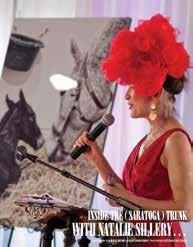
1. First issue of Simply Saratoga Summer edition!
Simply Saratoga Summer 2011
2. Publisher Chad Beatty saddles up for Polo Lessons.
Simply Saratoga Summer 2012
3. Spotlight on Saratoga Spring Water, established in 1871 and known for their iconic blue glass bottles. Simply Saratoga Summer 2011
4. Track Fashion with Natalie Sillery of Saratoga Trunk Simply Saratoga Summer 2015
5. Saratoga Race Course 150th Anniversary!
Simply Saratoga Summer 2013
6. Fun out on Saratoga Lake!
Simply Saratoga Summer 2017



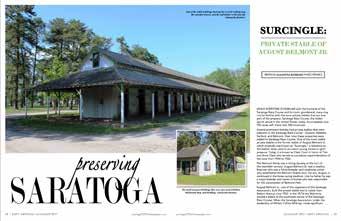



7. Preserving Saratoga series covers the history of Belmont at Saratoga Race Course Simply Saratoga Summer 2017
8. Spotlight on SPAC's President and CEO, Elizabeth Sobol Simply Saratoga Summer 2018
9. Contributor Carol Godette takes us back to Kaydeross Park. Simply Saratoga Summer 2019
VIEW FROM THE SARATOGA CLUBHOUSE,1903
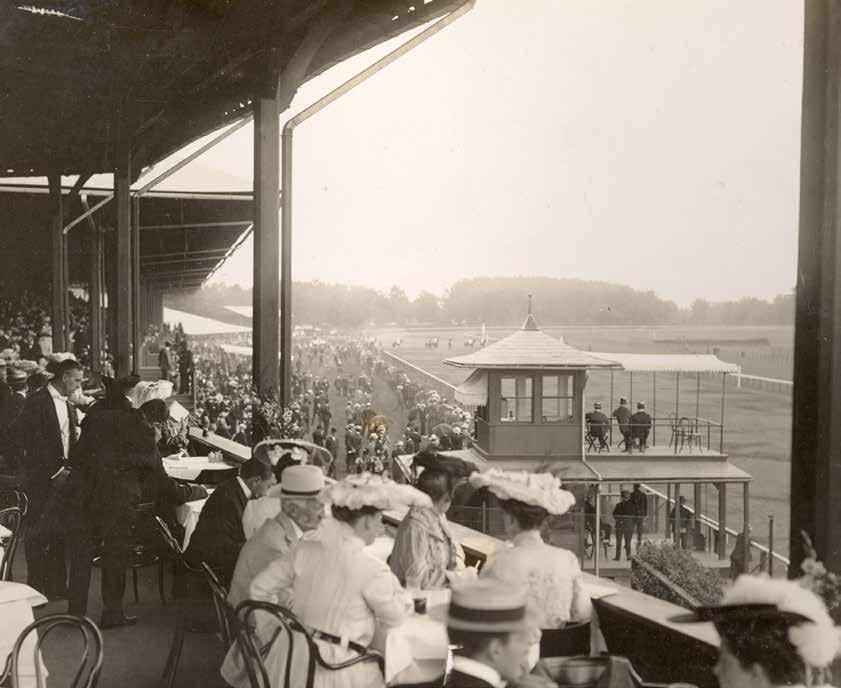
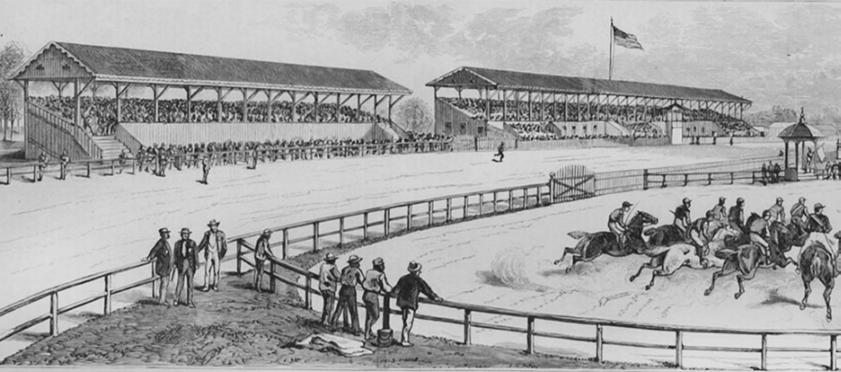
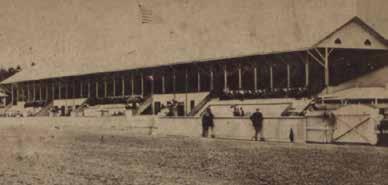
WRITTEN BY BILL ORZELL
The Wilson Chute was returned to operation during the 2022 Saratoga race meet, and operations manager Glen Kozak should be commended for his forethought several years prior when the track base was overhauled to plan its re-incorporation. Prior to the NYRA franchise operations beginning in 1955, the Saratoga Association operated the track as a private entity and employed six track superintendents.
During the Civil War, Bill Puckett was working in the deep woods of Quebec, where he learned of what must have sounded like an illusory proposed venture in Saratoga Springs. He had been born John William Puckett in Weymouth, Dorsetshire, England in 1830 and emigrated to Canada in the 1850s where he specialized in producing timber and wood construction. Convinced of Yankee virtues he traveled to the Spa in 1863 and introduced himself to John Morrissey and explained how greatly he endorsed the yet unproven venture and was hired to build the place. Bill Puckett, due to his skill and enthusiasm for the race track project, became a favorite of the other principal stockholders of the Saratoga Association for the Improvement of the Breed of Horses; Col. Charles Wheatley, James H. Marvin, John McB. Davidson and William Travers and was made track superintendent.
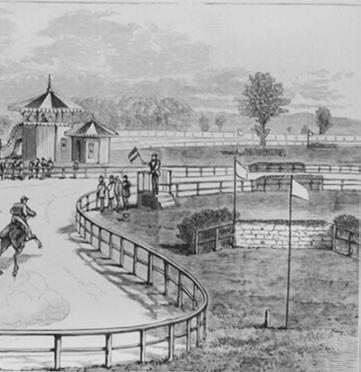
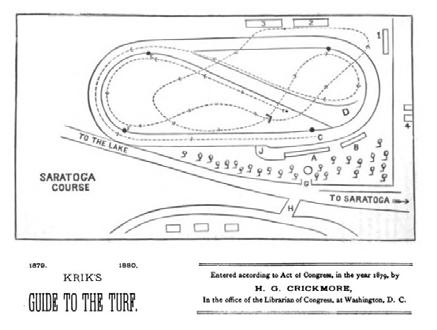
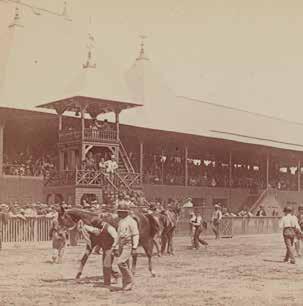
In 1864 track competition moved across Union Avenue to its present location and Mr. Puckett converted the former setting into a practice and stable area known as Horse Haven. Retired Thoroughbreds drew his personal buggy.
Superintendent Puckett had everything in order as usual for the racing season at Saratoga during August of 1890, when the tattooed beat of racetrack rumors spoke about a change of ownership, a common theme. This instance bore more viability than in the past because of the personalities involved, Pierre Lorillard, August Belmont, Senator George Hearst, with the syndicate headed by publisher William J. Arkell. This deal did not materialize due to the death of two of the main principals, and the opportunity arose for the disreputable Gottfried Walbaum to purchase the Saratoga Race Course in 1891. He frightened the racing business with his operation of the Guttenberg Racetrack in New Jersey, only a ferryboat ride from Manhattan. Operations at “The Gut,” were a black mark for the turf, where winter racing was staged with little concern for equine athletes or jockeys.
At Saratoga, “Dutch Fred” Walbaum functioned as track operator, stable owner, bookmaker and faro dealer into the early hours of the morning. The legendary gentleman-jump jockey Harry S. Page described those days as “squalid,” and further stated that Walbaum’s sport was “mostly indoor, unfortunately.” Mr. Walbaum’s lasting influence at the Spa which has endured is the classic grandstand with its iconic slate roof, unique turrets and copper trim, so recognizable in our time. The new owner negotiated with architect Herbert Langford Warren at the Worden House on Broadway which included Mr. Puckett, and by late autumn of 1891 the
began tearing down the original grandstand.
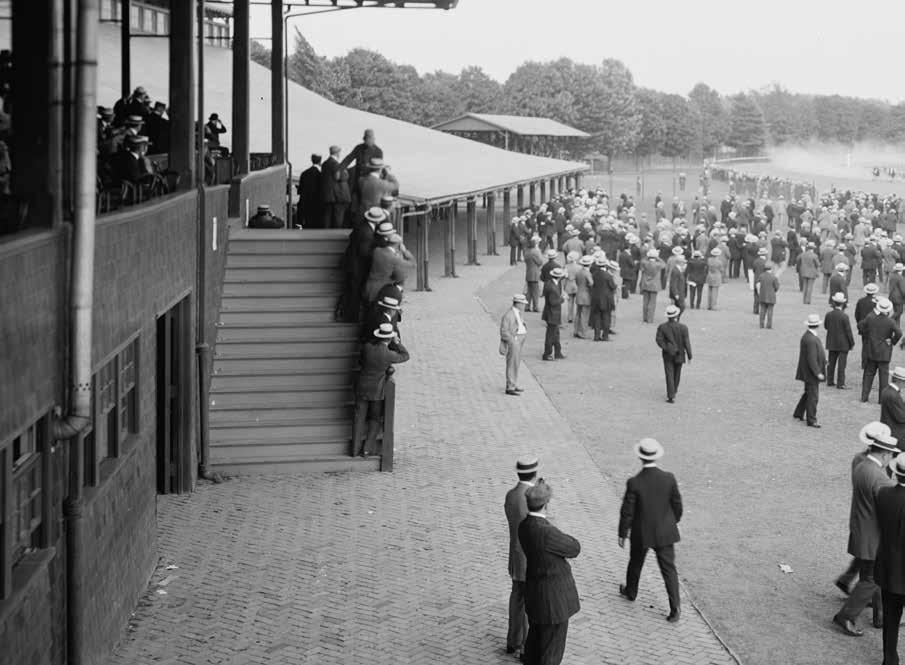
Bill Puckett would see another change in management when the consortium headed by William C. Whitney purchased the Saratoga track in late 1900 and immediately began work to restore the lost reputation. A new elliptical paddock was constructed, and the grandstand was disassembled, moved and lengthened around a reconfigured new track. The revised track length and configuration mirrored those at the Sheepshead Bay Course in Brooklyn and occurred after the 1901 Spa season and had everything in place for the 1902 opening. It is regrettable that much of the documentation of this revision was lost due to the Arcade Building fire in June 1902, which, in addition to an unfortunate loss of life, completely destroyed the local and on-site Saratoga Racing Association office. From newspaper quotes at this time, Superintendent Puckett realized he had made the right choice so many years before, realizing the Spa provided a beneficial tonic-effect on horses and people. He was pensioned by the Association, and the reconfigured track was supervised by Reed Landers.
Mr. Landers had previously served as Saratoga Springs village superintendent and managed Judge Hilton’s Woodlawn Estate. He was responsible for creating the Oklahoma Training Track and stables on land the Saratoga Association acquired north of Horse Haven. Reed Landers was in charge during the racing ban created by Governor Hughes and carried out the sad lay-off of employees, and sale of work horses. Mr. Landers lived across Union Ave and kept the grounds up until the return of racing in 1913. After devastating spring 1917 fires at Belmont Park, Superintendent Landers organized a security detail and had the Spa track ready as a replacement location, although that option was passed up.
The 1917 season was marred by the condition of the track and the Saratoga Association planned major alterations, seeking to replace the aging Reed Landers. Their answer was Billy Myer, a former prize fighter and pool sharp, with experience at racetracks around the country. Revising drainage and using soil removed from inside the oval to improve the banking, Mr. Myer performed his magic. This refashioning, which also created the attractive infield lake, made the surface much quicker than previous seasons. Ten new track records were established during the 1918 Spa season. Billy Myer, the toast of so much success, just after the season ended, was complicit with owner Willis Sharpe Kilmer in a spectacle to establish a new mile record by his colt Sun Briar, and was sacked during that winter. Indignant editors of The Saratogian published the headline, “MYER DISMISSED AT OFFICIALS’ DEMAND.”
Faithful Reed Landers was recalled but would succumb to a stroke in August 1919. The management of the Saratoga Association reached back to its Long Island roots and selected William Clare. Superintendent Clare learned his business from his father, James Clare, who was the superintendent of the Brighton Beach Racing Association. He had recently reconditioned the Blue Bonnet track at Montreal and was known to virtually everyone in racing as "Billy."
Billy brought his sister-in-law Anne Clare and his brother, Tom, to the Spa as resident assistants. Besides their abilities as track conditioners, the trio possessed an artistic sense of landscape gardening, which benefited the racing grounds. One of their big projects in the early 1920s was creating what was then called the new “automobile paddock.”
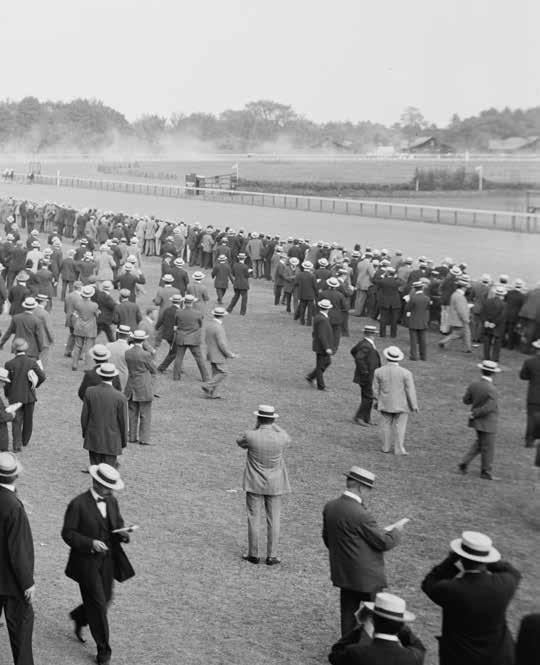
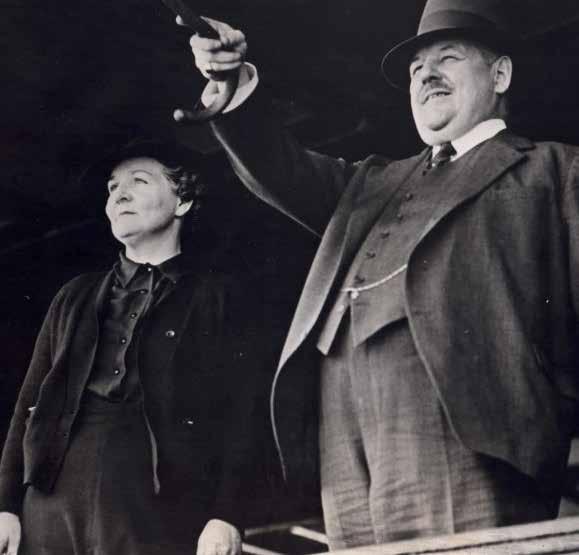
Saratoga Track Superintendent Anne Clare and Saratoga Association President George Bull in a clubhouse discussion. King Features Syndicate, Inc. wire service photo.
Superintendent Clare died unexpectedly in January 1924 at age 51 in his home, Brighton Cottage on the Union Ave racing grounds. Billy had been one of the best-known figures on the American turf. Later that same week, the Saratoga Association announced that Thomas Clare would succeed his brother as Superintendent of their racing plant.
Tom Clare, a former Thoroughbred trainer, would carry on programs started by his brother in naming roads and paths after famous equine performers, and also growing all the hay and oats required by the track’s work horses on the racing grounds. These same draft animals were used during the winter to harvest ice to be used during track season.
Anne and Tom Clare were year-around residents in Saratoga Springs, and firmly integrated in the community, attended services at St. Clements, and were participants in the County Fair. Tom had a fine working relationship with the stout, genial and gregarious man who was president of the Saratoga Racing Association, George H. Bull, who was never content unless he was giving a party. His ebullient personality fostered much of the goodwill at the Spa track.
In 1936 the Saratoga Association was having difficulties providing ample stable space to meet the ever-increasing demands, a good problem if you are a racetrack operator. Through Tom Clare’s urging and influence, track management was able to obtain the private 106-acre training center on Nelson Avenue, originally constructed by August Belmont, which he referred to as “The Surcingle.”
Tom and Anne Clare would typically attend southern racing for periods during the winter season and mix with stables and jockeys they got to know well during August. Like many trainers of the time, they would stop in South Carolina, about halfway between New York and Miami.
In January of 1940, after arriving at trainer Tom Healey’s Hialeah cottage, Tom Clare succumbed to a heart attack.
After Tom‘s unfortunate demise, George Bull selected Anne Clare for the superintendent position at the Spa track, replacing her late husband; she was the first woman to hold such a position at any track. In 1940, the “The Surcingle” area was renamed Clare Court by John Galligan, Assistant Superintendent of the track, in memory of Tom Clare.
Anne Clare, with her Scottish Terrier Mickey in tow, and George Bull fostered an esprit-de-corps on the track backside with weekly softball and boxing events featuring jockeys and stable hands.
During WWII, while the Saratoga track was shuttered to conserve military resources, the Superintendent was relocated to Belmont Park where she oversaw wartime racing. Following the cessation of hostilities in 1946, Anne Clare quickly conditioned the track for the return of Thoroughbreds to the historic oval, which now included a canoe on the infield lake.
New York State, in 1955, accepted the deeds to racetracks at Belmont Park, Aqueduct, Jamaica and Saratoga in exchange for a franchise to operate Thoroughbred racing, which is today known as the New York Racing Association (NYRA), and Anne Clare made the transition.
George Bull’s faith in Anne Clare was justified by her long service as Saratoga Superintendent, retiring from NYRA in 1960. To place it into proper perspective, when she started in the position she was not allowed in the bar which was then “gents only.”
Each of the six superintendents during private operations made their own contribution to the facilities we now enjoy at Saratoga Race Course.
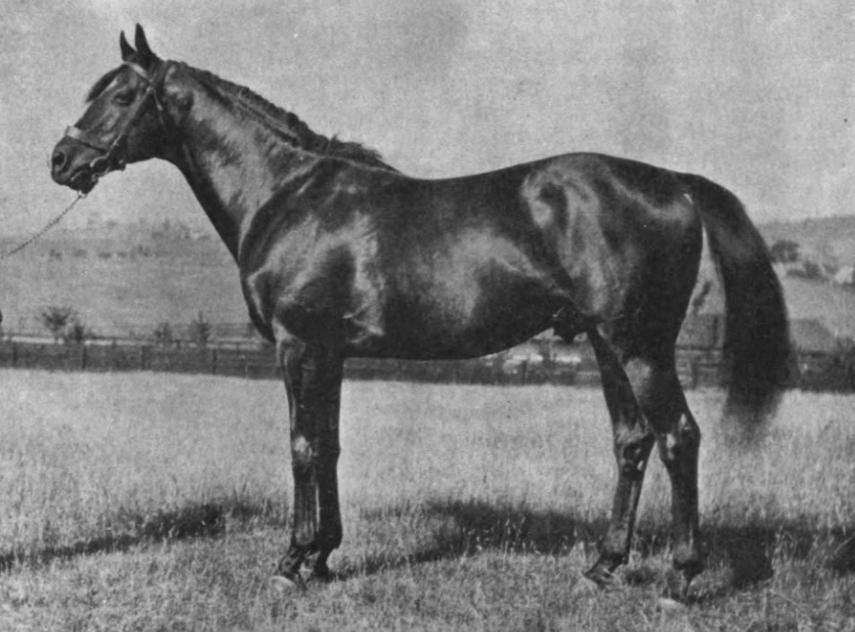
WRITTEN BY BILL ORZELL
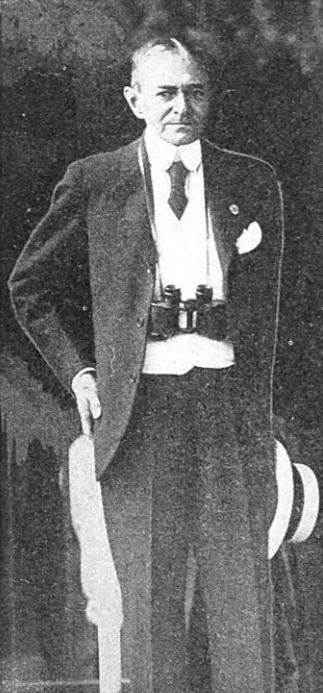
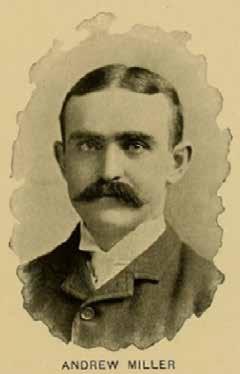
The Saratoga racetrack season of 1917 saw a two-year-old bay colt named Sun Briar establish himself by winning the Albany Stakes, Grand Union Hotel Stakes, the Saratoga Special and the Hopeful Stakes, becoming the top money-winning juvenile in the country, and the Kentucky Derby favorite. The 1917 season at Saratoga, however, was marred by the condition of the track, and the President of the Saratoga Association, Richard T. Wilson, realized that major rework was required, despite the high prices and manpower shortages due to World War I. Mr. Wilson had been instrumental in organizing an investment group that included William C. Whitney, which purchased the operations in Saratoga Springs at the turn of the century, and rebuilt the track for the 1902 season, based on the dimensions and layout of their favorite club-grounds at Sheepshead Bay, Brooklyn. Messrs. Wilson and Whitney were a part of the coterie that made the pilgrimage from the Long Island pleasure grounds to the Spa each summer season and were committed to the track’s long-term success.
Before the 1917 racing season ended, the Saratoga Association committed toward major alterations to their track and sought an experienced track supervisor to replace the aging Reed Landers, who had been the caretaker since the 1902 rebuild. A prospective superintendent, Billy Myer, visited Saratoga in mid-September, inspected the track and conceptualized what treatment would best rehabilitate the old track.
Richard T. Wilson and Andrew Miller interviewed Billy Myer, originally a pugilist and pool sharp, who had developed a racetrack management reputation which made him widely trusted by horsemen, and hired him as the superintendent of Saratoga racetrack.
By autumn the efforts of the new track superintendent were noted. Horsemen would find a new Saratoga when they returned to the Spa for August racing. The Saratogian reported that Billy Myer had traveled to New York to report progress to Andrew Miller, secretary of the Saratoga Association, “The track over which the Thoroughbreds will contest will be practically new. The chief need of the track was new soil for the horses to run over, and this has been supplied already, for thousands of square yards and thousands of tons of dirt and sand have been dug up out of the infield and hauled out upon the track to replace the hard, clay substance that was ploughed up and taken away. And where this dirt and sand was dug away there is a basin, where an artificial lake will greet the eyes of visitors next year.”
Revising drainage and using soil removed from inside the oval to improve the banking, Mr. Myer performed his magic. These modifications, which also created the attractive infield lake, made the surface play much faster than in past seasons. By the spring of 1918 the Daily Racing Form quoted Billy Myer describing the track as "a safe and sane course, one that will protect the horses, dry out quickly, and give general satisfaction." The same article also quoted Hall of Fame trainer John Madden’s description of the course as being a wonderful achievement, and a great credit to Billy Myer.
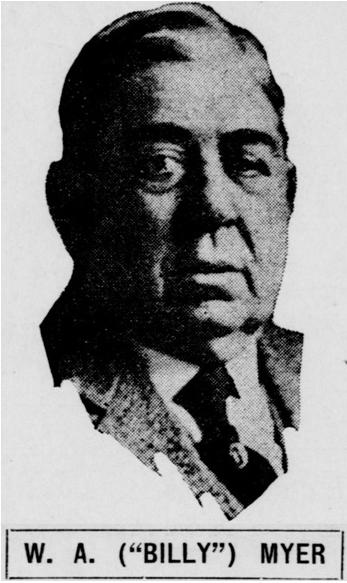
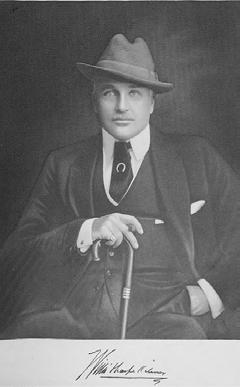
On opening day, Andrew Miller’s Roamer set a new track record. The Saratogian reported that Billy Myer was widely congratulated on conditioning the fastest track in America. On August 3, 1918 the New York Times reported,
“Further evidence that the rebuilt track of the Saratoga Racing Association is lightning fast was supplied this afternoon, when on the second day of the meeting two track records where smashed.”
The horsemen where very pleased with the track condition, and presented Myer a $1,500 gift of appreciation. Considering a 1918 Ford Model T Runabout cost $500, this present was substantial.
Ten new track records were established during the 1918 Spa season, with Sun Briar establishing a new American record for a mile, going 1:36 1/5. This new measure of performance broke the record set in 1914 by Richard T. Wilson’s Amalfi at the Syracuse State Fairgrounds.
In a blatant display of one-upmanship, the Saratoga Association staged a trial against time to be run by Roamer on August 21, 1918, a clear and calm Wednesday, which attracted what was thought to be the largest ever mid-week crowd. Every effort was made to ensure a mile record with Billy Myer floating the surface, providing a smooth, soft cushion. The popular seven-year-old bay gelding Roamer was ridden by Andy Schuttinger, and wore the blinkers which made him a consistent performer. In company with his stablemate Snap Dragon, Roamer started from the chute just beyond the Clubhouse, and set a new record, covering the mile course in 1:34 4/5. The New York Herald reported of the event, “When the official time was posted and spectators realized that turf history had been made, there was a riot of enthusiasm. Phlegmatic as well as temperamental men shouted, swung arms, danced and threw hats in the air, while women vented their feelings in emotional screams.”
A special cup was presented to Andrew Miller, Roamer’s owner, to commemorate the exploit over the very fast Saratoga track.
A match race between that season’s record breakers Roamer and Sun Briar was proposed, which the owners favored. The perfect weather they both stipulated did not materialize, and a post-meet date was suggested over the swift Saratoga track after the Spa season concluded. However, with war-time constraints, Jockey Club participation was denied.
Having a record holder in his breeding shed would go a long way in promoting Mr. Kilmer’s new stud operation. Certainly, Exterminator’s victory in the 1918 Kentucky Derby had vaulted the Kilmer operations into the upper echelon of Thoroughbred racing.
Following Sun Briar’s record-setting Travers victory, Mr. Kilmer was reluctant to race him further, as mares purchased in Europe for his star sire’s first breeding season were arriving. Many owners avoided competition to preserve a stallion’s record; Mr. Kilmer was harshly criticized in print for passing up the Saratoga Cup on the final day of the meet, and the Lawrence Realization, contested in early September at Belmont Park.
Always the consummate salesman, Mr. Kilmer devised a plan to impress the racing industry, which would take place following the Lawrence Realization. He had Sun Briar race the clock, over the new velvet fast Saratoga track, which had just closed for the season.
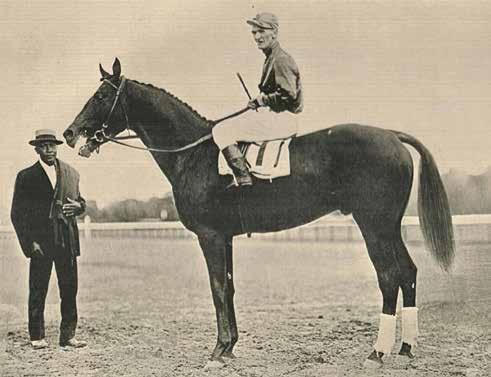
Overseen by track superintendent Myer, with 102-pound lightweight jockey Al Claver in the saddle, in the company of the speedy mare Josefina Zarate for the first half and Exterminator for the second half, Sun Briar set a new one-mile record of 1:34 flat in the private trial over the pasteboard surface.
Mr. Kilmer, in his trademark unconventional way, continued at his initiative and expense. Imagine how well the reporters, and the staff responsible for the surface, were treated by Mr. Kilmer in creating his sought-after headlines announcing Sun Briar had become the fastest Thoroughbred in America. Although the new record was unofficial and considered illegitimate, it made the desired impact on the racing community about Sun Briar’s abilities, and removed the risk caused by a non-winning effort.
Mr. Kilmer, anticipating doubt, had all those witnessing the event, swear out affidavits executed before Clarence H. Knapp, Notary Public, later the Mayor of Saratoga Springs and curator of the National Museum of Racing.
A complicating factor was the national reemergence of the Spanish Flu; the non-competitive time trial occurred on September 11, 1918, and coincided with the final game of the World Series which saw the Red Sox prevail over the Chicago Cubs in a more than half-empty Fenway Park due to the pandemic.
The Saratoga Association, specifically President Richard T. Wilson and Secretary Andrew Miller, were also Thoroughbred owners. Mr. Miller’s gelding Roamer carried his cardinal with white sash and black cap colors to the then one-mile record, which Mr. Kilmer sought to eclipse. These two Saratoga Association executives were incensed by Billy Myer’s complicity with Mr. Kilmer’s scheme. They both spoke with the Daily Racing Form the day after the trial, President Wilson was quoted, “that so far as he knew the Saratoga track was officially closed until next year.”
The same article continues,
“Anyone can work a horse” said Andrew Miller owner of Roamer, “but I hardly think a record made privately will be recognized."
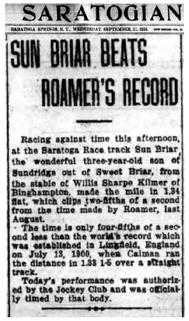
Andrew Miller, a publishing professional, recognized the power of the press; he was a founder and executive at Life magazine. He was a Jockey Club Steward and deeply resented the headlines Willis Sharpe Kilmer created around Sun Briar being the fastest Thoroughbred in the country. It was decided that the man with the keys to the Saratoga Race Course, Billy Myer, the toast of so much success and certainly complicit in Mr. Kilmer’s spectacle, would be dismissed.
Mr. Myer’s employment future was in doubt, few details reached the press and rumors abounded during the winter of 1919. Announcement was made in February that Billy Myer was out as superintendent. This news quickly reached the Spa. The Saratogian headline screamed; “MYER DISMISSED AT OFFICIALS’ DEMAND,” despite the splendid rebuilt track.
With no reason stated, one must speculate about the Saratoga Association’s dismissal of Billy Myer. Yet it’s difficult not to assume that Sun Briar’s time trial at the Spa, minimizing Roamer’s similar effort, was not a factor.
Despite ill health, Reed Landers was recalled as Saratoga track superintendent but suffered a fatal stroke that August.
On his stud farm in Binghamton, which Mr. Kilmer prepared for the equine marketplace, he stood the Thoroughbred who ran the fastest mile ever, Sun Briar. He named his new operation Sun Briar Court. As legendary horseman John Madden always said, “opinions die, records live.”
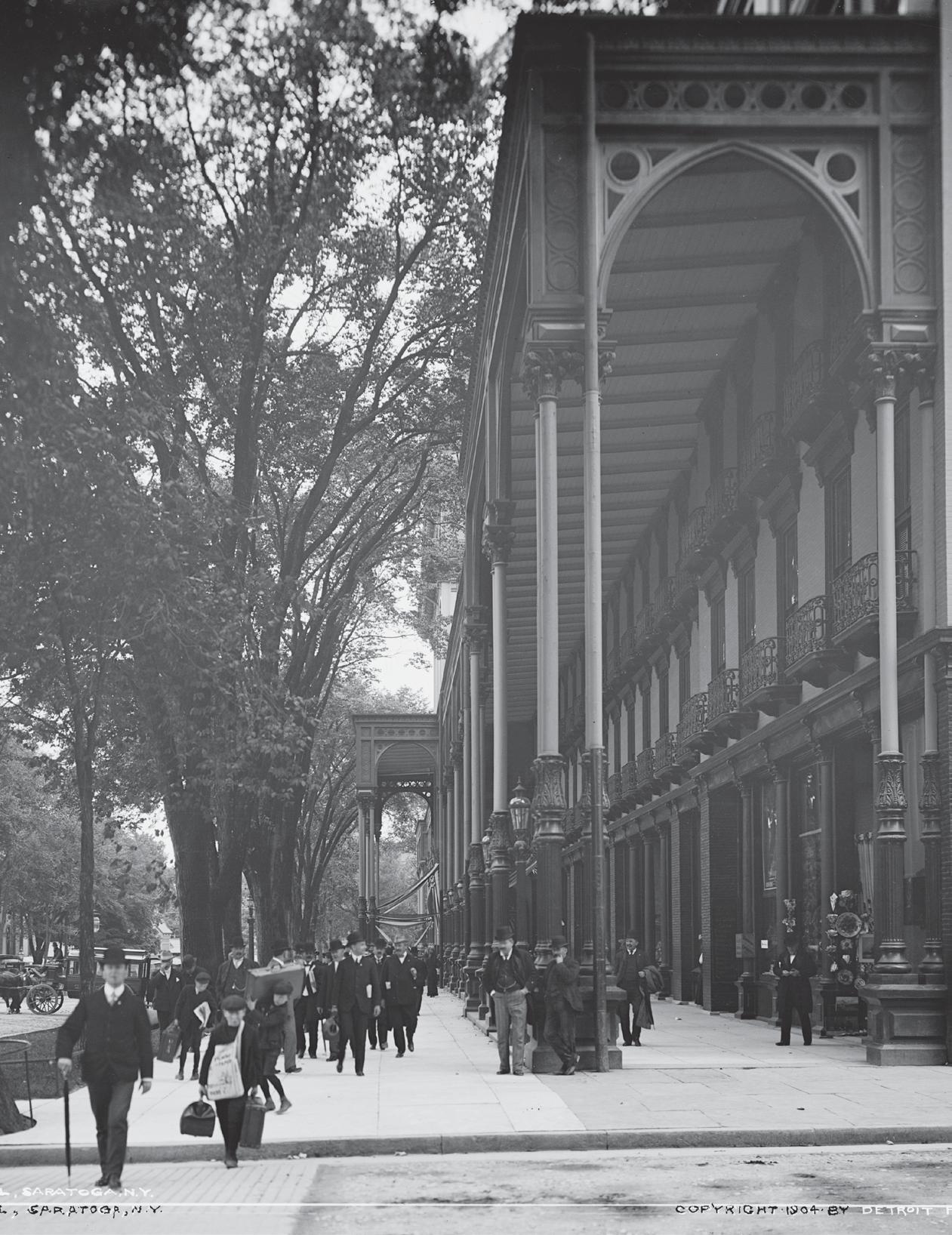
Third in the series exploring moments in Saratoga Springs when national history, human folly, curiosity, and chance collided in our small city.
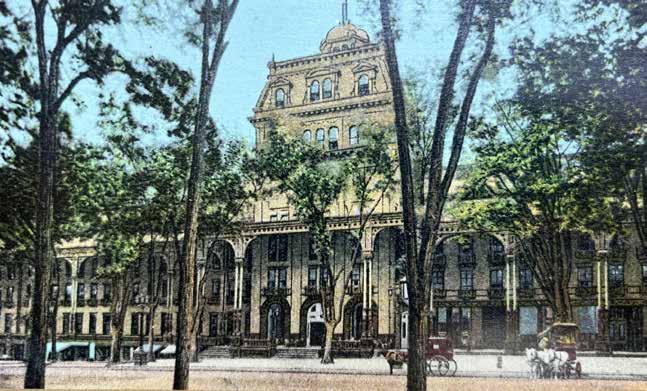
This summer, thousands will visit our city and stay at one of the 17 hotels within our city limits to enjoy our health, history, horses, and culture.
Picture yourself a bit weary, arriving after a long journey with your family, ready to check into the same room you have loved for the past ten years.
The desk clerk looks uneasy and says, "I’m sorry, but I have strict orders not to let you stay at this hotel. Last season, business was slow, and we had many guests similar to you. Our owner decided our customers didn’t like the people we had. This year, we’re following a different policy, and I’ve been told not to let you in."
As unlikely as this sounds, in 1877, this actually happened in Saratoga. Often referred to as “The Seligman Affair,” it’s a classic case of America in a fight between its myth of universal belonging and the practice of selective belonging.
For those unfamiliar with The New York Times front page story of June 1877, Joseph Seligman was denied entrance to the Grand Union Hotel by Henry Hilton, the newly appointed manager. On the surface, the story appears to be a shocking display of antisemitism. But underneath the incident is a deeper story of greed, loss of humanity, betrayal, revenge, and retribution.
The Grand Union Hotel, Joseph Seligman and Henry Hilton were all “influencers” of their time, dominating headlines and society pages across the country.
At center stage was the Grand Union Hotel, the largest hotel in the world during the Gilded Age. No expenses were spared at this favorite hotel of the wealthy. In the 1870s, it accommodated 2,000 guests who enjoyed morning concerts on a three-storyhigh, 1,250-foot-long signature porch, an elaborate white-andgold ballroom, elevators, indoor plumbing, and private cottages lining the 4-acre interior garden.
Enter regular customer Joseph Seligman, a wellknown financier who helped fund the Union during the Civil War and was a personal friend of Ulysses Grant. He was a man of grit who overcame obstacles and achieved success. Seligman arrived in America with $100 in his pocket and quickly rose from peddler to store owner and to prominence as a Wall St. banker.
Behind the scenes, in June of 1877, Henry Hilton (not related to the Hiltons of hotel fame) was newly appointed manager. He was a lawyer, judge, and trusted friend of the recently deceased hotel owner A.T. Stewart. When visionary Stewart, one of the richest men in America, died in 1872, Stewart’s widow, Cornelia, inherited his properties. Perhaps out of devastating grief or undeserved trust in her husband’s lawyer, Cornelia had turned over her husband’s business enterprises to Hilton for one million dollars. They were actually worth 40 million dollars.
On June 13, 1877, Seligman and his family entered the hotel, ready to check in for the summer. The hotel manager stated, "Mr. Hilton has given instructions that no Israelites shall be permitted in the future to stop at this hotel."
An astonished Seligman hesitated and asked, “Are they dirty, do they misbehave themselves, or have they refused to pay their bills?”
The manager responded,” Oh no, the reason is simply this: business at the hotel was not good last season, and we had a large number of Jews here. Mr. Hilton came to the conclusion that Christians did not like their company, and for that reason, he resolved to run the Grand Union on a different principle, this season, and gave us instructions to admit no Jew.”
In reality, there was more to Seligman’s rejection. Hilton felt slighted by Seligman when he was not invited to a dinner he hosted for Grant when he was elected United States President.
Seligman’s rejection was the next day’s front-page headline in The New York Times. It began a deepseated discussion of antisemitism that still endures.
This debate played out on the pages of newspapers across America. The New York Times featured Hilton’s justifications in a June 19, 1877, article. Hilton explained that Seligman was the “wrong kind of Jew.” Hilton felt that Hebrews were acceptable, but Ashkenazi Jews were not.
Seligman had the sympathy of fellow Jewish merchants, who quickly withdrew their accounts from Stewart’s department store, which was then under Hilton's oversight. Shortly after, the once successful New York department store was forced to sell and became Wannamaker's.
By 1883, Stewart’s properties, under Hilton's management, declared bankruptcy. I wonder if Joseph Seligman, who died in 1880, felt that Hilton got what he deserved. Personally, I believe Seligman did not share Hilton’s pettiness and would not have wanted someone to experience the same pain he had. He expressed his displeasure in a letter to Hilton saying, “The civilized world is beginning to be more tolerant in the matters of faith or creed or birth then you believe, or would have them. They despise intolerance, low cunning, and vulgarity, and will not patronize a man who seeks to make money by pandering to the prejudice of the vulgar.” Rather than giving Hilton the satisfaction of banning him from Saratoga, Seligman continued vacationing here a few blocks further south on Broadway at the Clarendon Hotel.
Despite Hilton’s demise, Jewish people in Saratoga were banned from many popular hotels until the 1950s. A powerful reminder is the historical marker on Putnam Street that explains the area known as the Gut. The blue and yellow marker defines it as “a lively Jewish enclave of stores, markets, hotels, and boarding houses” where Jews were compelled to build a community within a community.
The ripple effect of this event extended far beyond Saratoga.
Jewish travelers needed to know where they were welcome, prompting the publication of a Jewish travel guide called “The Jewish Vacation Guide.” In the 1920s, Victor Green was inspired by this example and created the “Negro Travelers Green Book.”
Drawing a parallel to Seligman’s experience, I recently got a glimpse into the world of racial discrimination when I visited Miami’s Historic Hampton House Museum, the only standing Green Book Hotel from the Jim Crow era.
Executive Director Curb Gardner’s tour helped me feel Muhammad Ali’s need to remind himself that he belonged. Ali was banned from the white hotels in Miami Beach and could only stay at the Hampton House, a Green Book hotel for blacks. The room he regularly stayed in is preserved, complete with his boxing bell on the nightstand. Curb had me ring the bell and exclaim, “The Champ is here!” just as Ali did every time he entered his room.
Both Ali and Seligman, men of extraordinary achievement, needed to remind the world, and maybe even themselves, that they belonged.
Author’s Note: If you’d like to hear more about this event, please visit the newest exhibit “ The Scandals of Saratoga: The Downfall of the Gilded Age Glories” at the Saratoga Springs History Museum. Thank you to Michelle Isopo of The Saratoga Room at the Saratoga Springs Public Library. SS

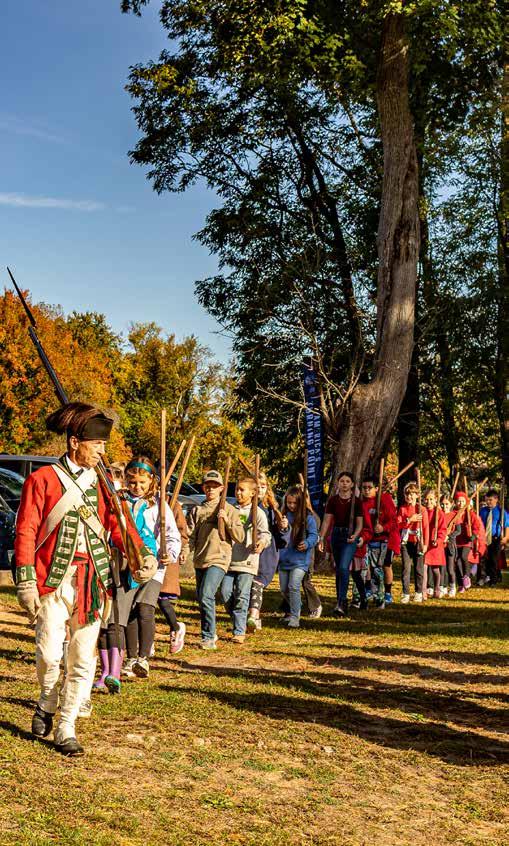
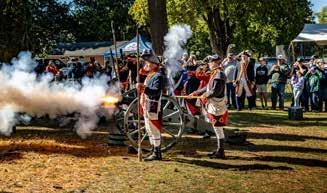
This summer, communities across our nation will celebrate the 4th of July in spectacular ways to mark the… 250th Anniversary of the Declaration of Independence! Also known as the semi-quincentennial, the 250th Anniversary offers a chance to look back at our history. In a place like Saratoga County, you don’t have to look too hard.
Saratoga 250 offers a full slate of events moving through 2026, with an emphasis on the Anniversary of the Declaration of Independence this July. Look for us at the Saratoga Race Course’s July 4th Racing Festival where you can mingle with revolutionary reenactors, get up-close and personal with our cannon and more! Later that evening, visit one of the many fireworks shows throughout the county.
News traveled a bit slower in the 18th century than it does today, which is why the Declaration of Independence wasn’t read publicly to the people of Saratoga (part of Albany County in 1776) until July 19th. In keeping with that tradition, Saratoga 250 is partnering with Saratoga National Historical Park to host a public reading of the Declaration on that anniversary. The event will be held at the Visitor Center at the Saratoga Battlefield and will include music, history and more. Listen as we bring together several individuals from around the area to read the entire document and learn a bit about the four signers who hailed from New York (and find out why New York was the very last colony to vote for independence!)
Don’t forget the great Saratoga County Fair comes to town July 21 – 26 in Ballston Spa. The Saratoga 250 marquee tent will be there with exhibits, historical interpreters and hands-on activities for all ages. In August, you can catch us in the Turning Point Parade in Schuylerville and at various events during the accompanying historical week.
Fall brings a change in season, one that General Burgoyne felt on his way south along the Hudson in 1777. On the weekend of September 19th and 20th, the 249th Anniversary of the Battle of Freeman’s Farm will be honored with an encampment weekend at Saratoga National Historical Park. Visit Saratoga 250 at the Visitor Center on your way out to interact with both American and British Forces at strategic locations along the tour road. Experience the annual wreath laying ceremony put on by the Daughters of the American Revolution at the Monument to the Unknown American Dead.
On October 10th and 11th, the annual Saratoga Siege Weekend event will take place at Fort Hardy Park in Schuylerville. Immerse yourself in revolutionary Saratoga with military encampments, a traveling forge, horse-drawn wagon rides, artillery demonstrations and more. New for this year, we will have the grand opening of our Saratoga Revolutionary Experience Center, located in the lower level of the Champlain Canal Region Gateway Visitor Center in Fort Hardy Park. Take in one of our new digital experiences and listen to the voices of 1777 that echo all around this area.
October 17th, known in Saratoga as “Surrender Day” will also have a new spin this year. The annual school program, held on the Field of Grounded Arms in Fort Hardy Park, will take place on the morning of Friday October 16th to align with the school calendar. The public is welcome to attend this weather permitting event. On the following day, Saturday October 17th, Saratoga 250 will once again be partnering with Saratoga National Historical Park, to offer a unique Surrender Day Experience. Plan your day in Schuylerville and visit the many sites that tell the story of the American victory at Saratoga.
A free trolley, compliments of CDTA, will shuttle visitors back and forth between five historic sites. The Saratoga Revolutionary Experience Center will be open in Fort Hardy Park, the Schuyler House will be open for exploration, and the Sword Surrender Site will feature friendly park rangers to answer all your questions about this consequential day in American History. In addition, the Saratoga Monument will be ready for climbing, and Victory Woods, where Burgoyne’s troops waited out their last days before the surrender, will be open to explore.
In the evening, finish off Surrender Day with 18th century music and storytelling in a celebration of the Turning Point of the American Revolution at the Arts Center on the Hudson in Mechanicville. We’ve hit the highlights here but many more events including parades, family days and programs round out our 2026 calendar. To catch up on the latest event details, please visit our website saratoga250.com. As we march toward the 2027 commemorative events, make sure to take advantage of all the offerings in place for this semi-quincentennial year of our country’s founding. SS

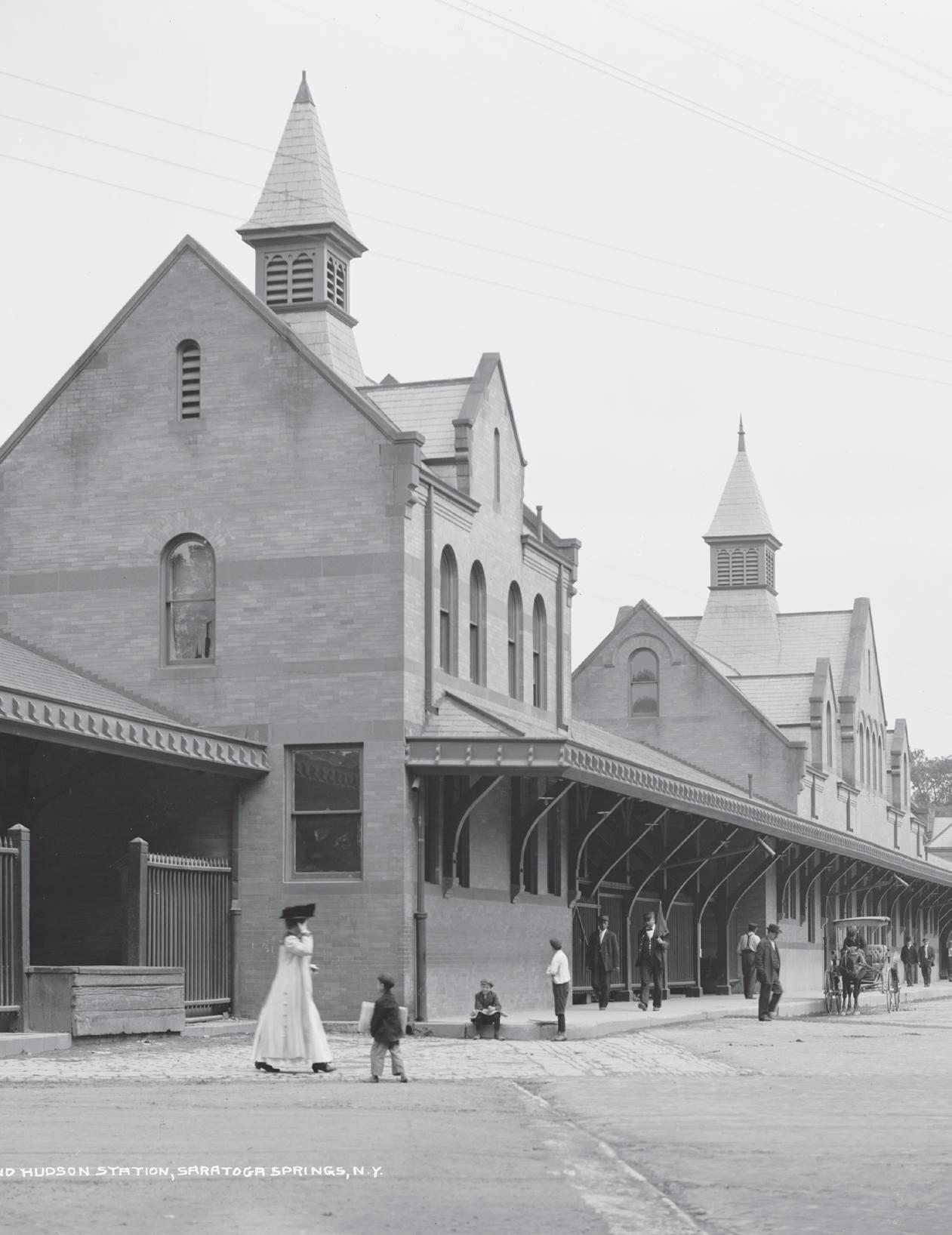
WRITTEN BY EAMON Ó’COILEÁIN (ED COLLINS)
As more elegant hotels and resorts were being built in the Adirondacks in the late 19th century, more and more wealthy Americans summered there. But, as we know, there is wealth, and then there are the “glittering elites.” The Irish have a saying, “Cut your coat according to your cloth.” These “Gilded Americans” traveled to Saratoga and then into the Adirondacks, indeed cutting their own coats according to their luxurious batts of cloth: they lived the “Great Camp” lifestyles. The “Great Camp Magnates,” following in the footsteps laid down by Thomas and William West Durant, enjoyed their opulent summer Adirondack lifestyles sustained by Irish domestic help, caretakers and wilderness guides. Alfred Gwynne and Margaret Emerson Vanderbilt’s Great Camp Sagamore, lavishly expanded after purchasing it from William Durant, was arguably one of the most illustrious. At Camp Sagamore, the Vanderbilts relied on Richard and Margaret (née Callahan) Collins, both of Irish heritage, to maintain and ensure year-round order, organization and entertainment for the family and their guests. The
Collinses saved enough from their years of service to the Vanderbilts to earn their own “Failte” sign – they purchased The Duryea Camp on Blue Mountain Lake and renamed it The Hedges, still welcoming guests under different management after more than 100 years.
With railroads, roads, lodging and resorts being built, and the advent of the automobile in the early decades of the 20th century, the Adirondacks were attracting more and more “vacationers” who “motored” their way into the mountains rather than travel by trains that all started with Thomas Durant’s Adirondack Company Rail Road leaving from Saratoga Springs. The Irish played an important role in promoting our state’s great mountains, valleys, lakes and streams for everyone to enjoy. In 1871, Irish immigrants John and Mary Cunningham started a family on a farm near Chestertown. Son Patrick James “P. J.” Cunningham grew up to become an Adirondack Fire Warden and then one of the first Adirondack District Forest Rangers, working the woodlands until retiring his ranger boots in 1940 at age 69. While serving as a forestry Fire Warden, P. J. established Cunningham’s General Store in North Creek in 1909.
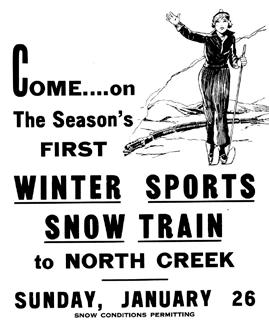
Curiously, P. J. began turning the store’s barrel staves into skis and lengths of leather into bindings. True to the old Irish crofter proverb that “you’ll never plough a field by turning it over in your head,” P. J. turned his ideas into actions selling skis, bindings, poles, and winter gear and thus helped foster the sport of skiing in, and attract winter recreationists to, the Adirondacks. P. J.’s descendants still own and operate the business today as Cunningham’s Ski Barn, believed to be the oldest continuously operating ski shop in America. By adding skiing in the winter to canoeing, fishing, hiking, camping and hunting during the warmer seasonal months, the Adirondacks had become a year-round destination.
Today, New York State’s Adirondack Park, covering an area larger than Yellowstone, Yosemite, Grand Canyon, Glacier, and Great Smokies National Parks combined, welcomes millions of visitors every year. These days, vacationers traveling into The Park can motor on The Adirondack Northway, a main artery that courses along the shoulders of Saratoga Springs.
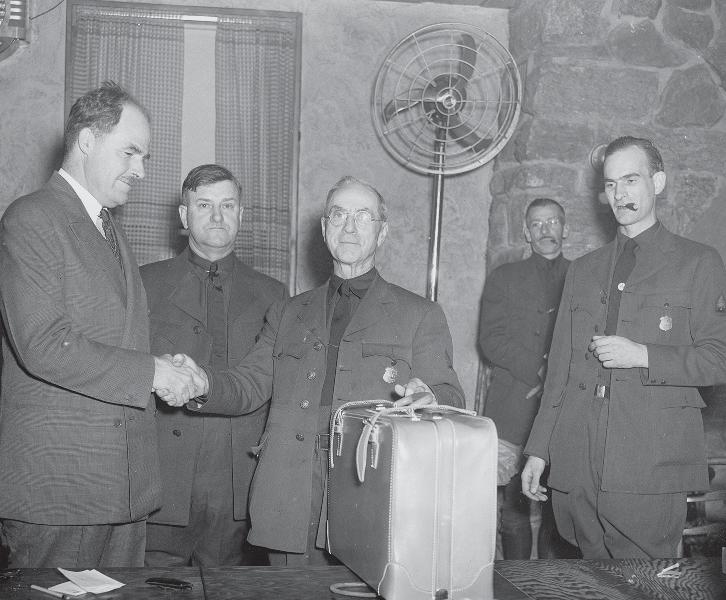
Thomas Durant’s Adirondack Company Rail Road eventually became the Adirondack Railroad and then the Adirondack Branch of the D&H Railroad in 1902, with the tracks carrying passengers and, at various times, freight cars hauling Adirondack almandine garnets, the world’s largest, out of North Creek.
In the 1930s, the rail line was affectionately known as “The Snow Train” carrying thousands of skiers from Saratoga Springs to North Creek and its Ski Bowl, the precursor to Gore Mountain Ski Center, now the largest ski operation in New York State, all as a result of Durant’s original vision for opening up the Adirondacks to “Wilderness Experiences.” His tracks helped in America’s World War II efforts by hauling titanium dioxide out of Tahawus for military purposes. After the war and until 1989, freight trains continued to cart titanium from Tahawus and garnet out of the Adirondacks while intermittent passenger service carried visitors between the city of “Health, History and Horses” and North Creek.
After 1989, Durant’s original Adirondack Company Rail Road tracks lay dormant until used as part of the scenic sightseeing Saratoga & North Creek Railway,
which ran from 2011 to 2018 when all locomotive rail service again ceased operation. In a welcoming throwback to the 19th century when bicycle peddle power was a popular Saratoga Springs and North Creek mode of getting around locally, Durant’s tracks at North Creek are now ridden by vacationers seeking to capture the “Adirondack Experience” by peddling Revolution Rail Company rail bikes out of North Creek along the Hudson River through forest canopies and on trestle tracks over water. The railroad baron’s North Creek Train Station still stands today, over 150 years after its opening, as The North Creek Railway Depot Museum.
History perhaps has not been as kind to Durant as his descendants might have liked it to be, based on his many alleged financial transgressions. However, Dr. Thomas Clark Durant’s ambitious endeavor to build a gateway rail line from Saratoga Springs into the vast northern wilderness did have a major positive impact, eventually transforming The Adirondack Mountains into a great and memorable “Wilderness Experience” destination for millions. Read Simply Saratoga Fall, due out in September for more of this great tale! SS
WRITTEN BY JOHN R. GREENWOOD | PHOTO PROVIDED
Twain said, “Write what you know.” One thing I know is how much I loved the Saratoga 70s.
I went from 15 to 25 years old during the 70s and it was the most eventful decade of my life. I went from puberty to adulthood, to fatherhood, all within the Saratoga 70s. In 1970, I was 15 years old. Mr. Shay was the Circulation Manager at the Saratogian. He put his sons, our friends, and me to work inserting advertising flyers into the Sunday Saratogian on Saturday nights. I would be steadily employed for the next 50 years.
In 1971, I met Patricia. She was a Junior and I was a Sophomore. I lived in Greenfield. She lived on the Eastside. On Saturday nights, I would hitchhike the six miles down 9N to Saratoga. Many times, my ride would drop me off at the corner of Church St. and West Ave. From there, it was my Converse AllStars that transported me to Jumel Place. The future Mrs. G. and I would then begin walking to SPAC. We’d wind our way through the old Skidmore Campus, stealing a shadowed kiss or two along the way. We almost died of embarrassment the night an overzealous Skidmore Security Officer hit us with his spotlight. To our surprise, it was her uncle Richard, known for his offbeat sense of humor.

as parents. Our mutual love of Saratoga thrived in the 70s: movies at the Community Theater, grinders at the original Saratoga Pizza House across the street, dancing at The Rafters and Aquarius North, Saratoga Streak football games at the Eastside Rec, and watching Sonny Gooden and Buster Tillman tear up and down the basketball court in the Saratoga Blue Streak’s gym. Oh, and let’s not forget those my-parentsare-out-of-town house parties out in, “The Crest.”
Marriage in the mid-70s led to two sons and our first house on Marion Ave in the late 70s. I was working at Saratoga Dairy then and retired from its big brother, Stewart’s, in 2019. My wife retired from Skidmore College on the same day.
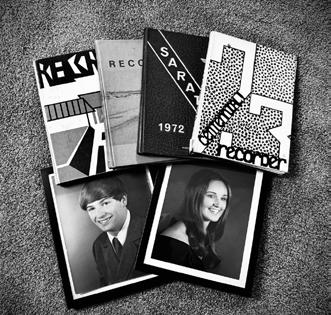
An hour later, we were at the main gate of SPAC, plunking down five bucks for two lawn tickets to James Taylor. I don’t remember carrying a blanket, so I can only assume we actually sat on the lawn. It was thick, cool, and plentiful back then. After the long walk back to Jumel Place and a little more kissing, I’d head back home to Greenfield using my thumb as the most basic form of transportation.
During the summer of those high school years, Patricia was a lifeguard at the Peerless and Victoria Pools during the day. In the evenings, she would be a chambermaid at the Gideon Putnam Hotel. She also worked at Pizza Hut and the Saratoga Chamber of Commerce Information Booth. Our combined work ethic was key to our future as husband and wife and
I realized how special the 70s were for me when my wife of 51 years passed away this past March. (See Simply Saratoga H&G 2026 issue). We went from 0-60mph in those 10 years. Every minute of every day was bursting with something new and exciting.
Why did we still love living here? It’s not simply what’s here now; it's the memories we collected as a couple. There isn’t a street or road in Saratoga County that doesn’t hold some vivid memory we shared.
Weeks after my wife passed, I opened her 1972 High School Recorder and began reading the comments her friends had written. There were several about the fun times they’d had in and out of school. There were lots of “Good Luck” and “Keep in Touch” references. But what I wasn’t expecting were two of her girlfriends commenting on the two of us as a known “item.” One said, "What a good couple we make," and another wanted to be notified if we were going to elope.
Yes, the Saratoga 70s were a long time ago, but the memories and the high school “butterflies” never faded. The scenery changed. Friends came and went. But love hung on tight and never let go.
Saratoga 70s, oh yeah... I’d do it all over again in a heartbeat.