

SARATOGA Simply... ®




Looking Back





For two decades, Saratoga TODAY has been the trusted voice of our community –connecting readers to the stories, businesses, and events that make Saratoga Springs thrive.
We are a locally owned and operated multimedia company originally launched in 2006 as a grass roots local newspaper. We grew to also produce a variety of high-quality lifestyle magazines and websites - all of which are still FREE for our readers in print and online. Celebrate 20 Years with Saratoga TODAY! We are inviting readers and local businesses to be part of this milestone event! To be included in our commemorative publication call 518-581-2480 by April 3.
OWNER/PUBLISHER
Chad Beatty
EDITOR-IN-CHIEF
Chris Vallone Bushee
MAGAZINE DESIGNER
Kacie Cotter-Harrigan
ADVERTISING DESIGNER
Jocelyn Lucey
ADVERTISING
Thomas Beaury
Jim Daley
Cindy Durfey
CONTRIBUTING WRITERS
Madison Blodgett
Samantha Bosshart
Katie Burns
John R. Greenwood
Carol Godette
Wendy Hobday Haugh
Robert C. Lawrence
Eamon Ó’Coileáin
Bill Orzell
Megin Potter
John Reardon
Theresa St. John
Ralph Vincent
Maureen Werther
PHOTOGRAPHERS
Corey Aldrich
Susan Blackburn Photography
Wendy Hobday Haugh
Keeneland Library Hemment Collection
Patricia Lane
Randall Perry Photography ROOST
Theresa St. John
Studio di Luce Photography
Super Source Media Studios
Michael Whitney
PUBLISHED BY SARATOGA
2254 Route 50 South
Saratoga Springs, NY 12866
518-581-2480
saratogaTODAYnewspaper.com
SimplySaratoga.com
MADISON BLODGETT
Madison Blodgett is the Community Horticulture Educator at Cornell Cooperative Extension Saratoga County. She has found her passion in art amongst the natural world and ties her background as a freelance artist into each facet of her life. Her love of gardening blossomed when she settled into her rural home in Greenfield with her partner and two daughters. This love grew deeper as she worked with Daisies and Dahlias LLC before beginning her career with the Master Gardeners in Saratoga County.
SAMANTHA BOSSHART
Samantha Bosshart joined the Saratoga Springs Preservation Foundation in 2008. As Executive Director, she advocates for the preservation of the unique architecture and rich heritage of Saratoga Springs. Samantha previously worked at Historic Albany Foundation and Galveston Historical Foundation. Samantha completed her coursework for a Master of Arts in Historic Preservation Planning from Cornell University and received a Bachelor of Arts in History from Indiana University.
EAMON Ó’COILEÁIN (ED COLLINS)
Ed Collins writes a captivating All Aboard for the Adirondacks! His many other works include stories about: early Adirondacker legacies; surviving a life-threatening health crisis; completing 40,000 daily walking miles (far more than Forest Gump!); the life-value of avocations; the early covid pandemic months; Irish history and culture – including producing, directing and co-writing a documentary Irish Hands That Built America working with narrator William Devane, an Emmy- and Golden Globe-nominee Irish-American. He is completing a new Adirondack tale and has published poetry and photography – his forever-wild Adirondack lake photo graces a magazine cover.
JOHN R. GREENWOOD
John Greenwood is a leftover Saratoga Springs milkman who loves capturing stories about the people and places that surround him. John and his wife Patricia have been holding hands since high school. The couple recently retired and are looking forward to having more time to enjoy the nooks and crannies of the surrounding area. You can explore more of John’s writing at rainingiguanas.com, where you will find the glass half full and the weather mostly sunny.
CAROL GODETTE
Born and raised in Saratoga Springs, Carol Godette’s fascination with neighborhood stores began at age 11 when she frequented Rowland’s. A passionate educator, Godette taught elementary school in the Saratoga School District for 31 years. Carol is a co-owner of the local Ben & Jerry’s franchise. Godette and her husband live in her childhood home where they raised their two children. She welcomes your comments and stories/photos on neighborhood stores via email: saratoganeighborhoodstores@gmail.com
WENDY HOBDAY HAUGH
Northville freelancer Wendy Hobday Haugh’s short stories, articles, and poetry have appeared in dozens of national and regional publications, including Woman’s World Weekly, Highlights for Children, and WritersWeekly.com. Her stories have appeared in 15 different Chicken Soup for the Soul anthologies. To learn more, visit wendyhobdayhaugh.com.


ROBERT C. LAWRENCE
Robert C. Lawrence, a retired educator of 42 years at the elementary, middle, and college levels, is the author of What's With Those Adirondack Mountain Names? (The Troy Book Makers). His book explores the origins of over 100 Adirondack mountain place names. Bob, a Saratoga County resident, is a member of the New York State Outdoor Writers Association and the Adirondack Mountain Club. He shares his passion for the outdoors with his wife, Carol Ann, and their wire-haired Dachshund, Adi, short for Adirondack. Contact: adkmountainnames@gmail.com
BILL ORZELL
Bill Orzell is a retired Geographic Field Analyst and Airframe & Powerplant Mechanic. A fervent sportsman, who resides in DeRuyter, New York, he has a lifelong appreciation of the economic, political, social, and sports history of the Empire State, with a special appreciation of the unique equine, human and geographic narrative which defines the Spa as the place to be.
MEGIN POTTER
Megin is an expressive writer and artist with work published in books, newspapers, corporate communications and online. A resident of the region for over 20 years, she continues to discover anew the interesting people, places and products it has to offer. As a mother to her active young son, she is inspired to explore even more.
JOHN REARDON
John Reardon purchased Compliments to the Chef in July of 2004 and has enjoyed selling over 6,000 high quality cookware and cutlery items to his Foodie Friends ever since. His wife Paula - as well as being a college professor - helps out along with their son John and daughter Aubrey … and they fit right in to his Foodie Team! If you ask John or Aubrey to cook up a special dish, you’ll see a gleam in their eyes! John reminds us... “Life Happens in the Kitchen” and yes… “Anyone can cook!”
THERESA ST. JOHN
Theresa is a freelance travel writer and photographer based in Saratoga Springs. Even though history was not on her radar while in high school, she has a deep interest in all things historical now. She has been on assignment for several magazines and is published in both print and online venues. She is the proud mom to two young men and Nonnie to six rescued dogs, two chinchillas, and a bird. Life is good, she says.
RALPH VINCENT
Ralph Vincent is a lifestyle writer enamored with the Spa City. As an enthusiastic contributor to Simply Saratoga Magazine, he enjoys writing about a variety of topics including home entertaining, cooking, and cocktail crafting. His body of work also includes articles on subjects of special significance to him such as his experiences as a pet parent, gardening, and Yaddo. He resides locally with his partner Steven and their adorable Cavalier King Charles Spaniels.
MAUREEN WERTHER
Maureen Werther is a local author and longtime resident of Saratoga County. She recently retired as Communications Director for a national association management firm and is happy to return to her role as a freelance writer and editor.
Susan Blackburn Photography

COVER PHOTO
Bloomin’ Fiori Flowers

See this Feature on page 29!


CHECK OUT ALL OUR PUBLICATIONS HERE!

NEVER MISS AN ISSUE! SCAN & SUBSCRIBE
PUBLISHERS
OF...
Simply Saratoga
Saratoga TODAY Newspaper
Saratoga Bride
Saratoga Home & Lifestyle
Welcome Home
Equicurean
Saratoga Christmas

from the editor-in-chief
20
years ago this April, Chad Beatty started Saratoga TODAY, and how lucky are we?! I've only been here for 18 of those 20 years, but as I'm sure you know, I've loved every minute of it!
Please look for our commemorative 20th Anniversary pull out in April, and if you’d like to be a part of it, please email me at cBushee@SartaogaPublishing.com
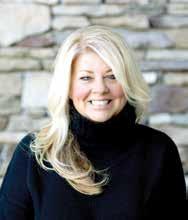
Simply Saratoga SPRING has always been about people, I mean who doesn’t love meeting new people?! (One of my favorite things to do!) and we have featured so many over the years – see for yourself by searching MEET at SimplySaratoga.com. Such a great lineup in this issue!
And speaking of people, you may have seen my Aunt Georgie’s obituary in our weekly paper Saratoga TODAY a few weeks back. She was one of my mother's older sisters, and the last one of a family of six, creating such a loss in my life. BUT, I need to share what she did – it was such a wonderful surprise! She wrote little notes about special items she wanted me to have…who it was from, what that person meant to her, and such – I absolutely loved finding all these little letters. I'm telling everybody about this, as I think we should all do it… it’s like having one last conversation.
My biological family may be shrinking, but my work family has been with me for years, over a DOZEN years actually! Cheers! To the best writers, contributors, photographers (and magazine designer!) in the area!
I hope you all enjoy our little Looking Back snippets that I plan on throwing in every issue this year, and don't worry about Colleen's Picks, it will be back in our next issue, Simply Saratoga H&G, she just happened to be at a tradeshow in Florida when I was working on this issue.
As always… I must close with a big THANK YOU! to our advertisers, without them, Saratoga TODAY couldn’t continue to offer these beautiful publications free of charge to the thousands that read them. Please mention us by name when visiting these businesses… Simply Saratoga, the Saratoga TODAY magazine!
I wish everyone a blessed year filled with good health, great times, and purpose!
Chris Vallone Bushee Creative Director/ Managing Editor cBushee@SaratogaPublishing.com
518-581-2480 ext. 201 SimplySaratoga.com saratogaTODAYnewspaper.com


Bloomin’ Fiori Flowers
Photo provided

preserving
SARATO GA
The Porch Guy: CHRIS BENNETT
WRITTEN BY SAMANTHA BOSSHART, SARATOGA SPRINGS PRESERVATION FOUNDATION | PHOTOS PROVIDED
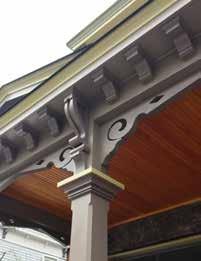
“The details make it interesting,” responded Chris Bennett, a local craftsman who is known for his historic porch restorations, when asked about his work. “There are so many different columns, balusters, brackets, and trim pieces that give a porch its distinctive character - it is never boring. Each one is different,” he continued.
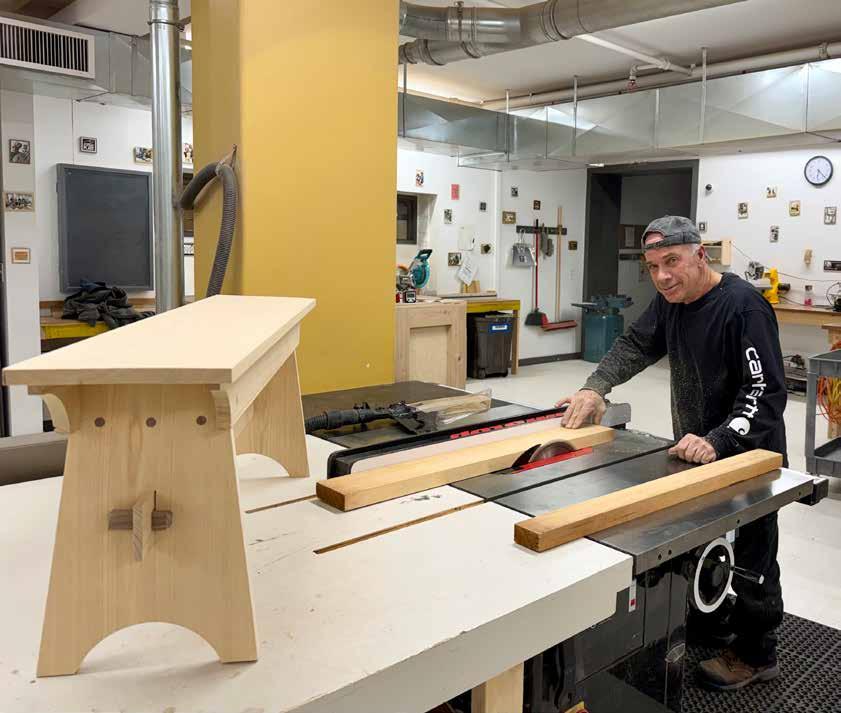
Chris Bennett with the bench he built and will help guide others to build at a class at the Saratoga Joinery.
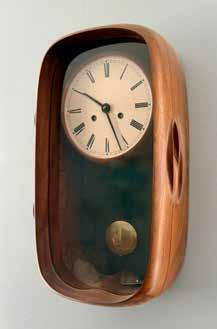
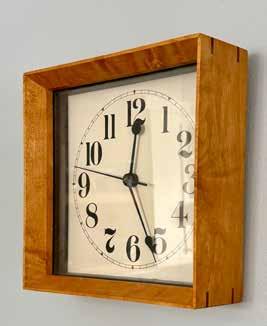
Chris grew up in Brookline, Massachusetts, outside of Boston. He was first introduced to woodworking at an early age at his public grade school. It was there that he learned that he enjoyed working with his hands. In high school, Chris’ stepfather, Ernie White, designed, with the help of Chris’ mother Barbara Bennett, and assembled hand-carved clocks that became sought after. Chris helped to assemble those clocks and then designed and made his own clocks that he sold. It was also in high school that he built his first piece of furniture. As someone with dyslexia, “College was not an option for me,” said Chris. However, he knew he needed to find a way to make a living. At age 17, he discovered the North Bennet Street School, America’s first trade school, located in Boston’s historic North End. A private vocational school founded in 1881 to enable immigrants to adjust to their new country by learning the skills needed for gainful employment. Today, the school’s mission is to train students for careers in traditional trades that use hand skills in concert with evolving technology, to preserve and enhance craft traditions and to promote a greater appreciation of craftsmanship. At the time, the school - coincidentally with a similar name as his last name, but with one “t” not two - was only for adults. However, it is no surprise to those who know Chris, he somehow talked - and Chris does love to talkhis way into being allowed to attend the school prior to turning 18. It was there he learned to read blueprints, create shop drawings, and use hand tools and machinery – everything to build a house. “Our class constructed an entire house within a building! We made everything a house needs, exterior and interior - framing, exterior siding, trim, windows, stairs, and cabinetry. How cool is that?!” shared Chris. Upon graduating from the North Bennet Street School, Chris did different construction jobs. He placed an ad in the paper and did a variety of jobs on the side - kitchen and bathroom remodels, finishing basements, and repairing porches.

Chris was first introduced to Saratoga Springs through his wife Ellen who he had met in Boston. She grew up in Rochester, and her sister Linda had moved to Saratoga Springs and they came to visit her. “I loved it the moment I saw it,” shared Chris. “The historic architecture, the downtown and neighborhoods - it was special.”
Not long after, Ellen and Chris moved to Saratoga Springs, residing on George Street in the East Side neighborhood. Initially he worked for a construction company that installed
the Limited and Disney stores at Colonie Center. Upon completion, the company asked Chris to continue to work for them, but that meant he would have to travel to other cities. It was then he decided to strike out on his own. He built bookcases, decks, kitchen and bathroom remodels, and additions. Later, Chris and Ellen purchased a four-family residence on Spring Street and converted it to a two-family. The larger of the two units is where he and Ellen raised their three children, Emma, Bailey, and Jack.
The hand-carved clock made by Ernie White, Chris' stepfather, and the clock that Chris designed, built, and sold.
Scan the QR code to view the Preserving Saratoga article "The Porch of 144 Spring Street" from Simply Saratoga Spring 2018.
Photo by Patricia Lane
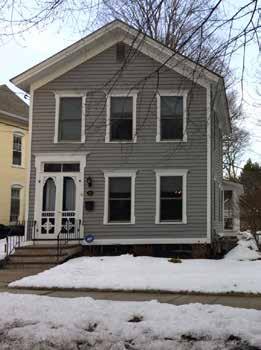
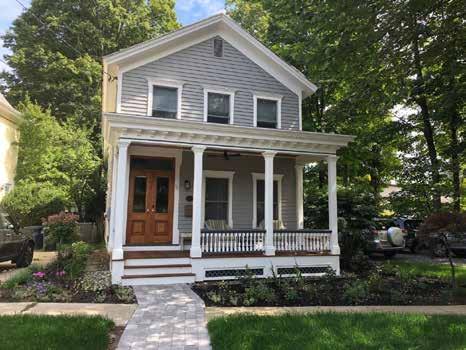
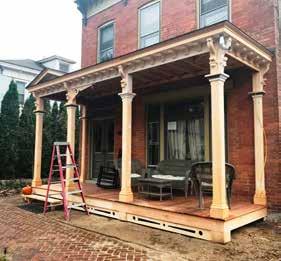
“I did my first cool porch project at 29 George Street,” said Chris. “It was my first taste of doing something interesting with some historic character. Playing off the architecture of the house and the neighborhood, I designed and built the side porch,” he continued. One could say that the rest is history. Chris has gone on to restore countless porches throughout the city, many of which have been awarded Preservation Recognition Awards from the Saratoga Springs Preservation Foundation, including 144 Spring Street and 10 Stratton Street, which will be featured on this year’s annual Historic Homes Tour.
“About seven years ago we decided to reconstruct the longmissing front porch of our 1870s era house. Everyone from our architect to our neighbors urged us to try to get the ‘porch guy’ to do the job, which we did,” shared Paul Kligfield, owner of 10 Stratton Street. “Chris Bennett is a master woodworker with a love for the architectural history of Saratoga, a keen sense of period design, and a great gift of gab. He did the job with enthusiasm and beyond expectations,” Paul continued. Since then, he has helped Paul and his wife Pam Abrams with interior projects including multiple built-in period bookcases, a wood framed ceiling, and a bathroom reconstruction. “How fortunate for us to have Chris in our lives!” Pam said.
George Street is where he also met Geoff Bornemann, a neighbor who was city planner for the City of Saratoga Springs at the time. It was Geoff that first suggested that Chris be a member of the Design Review Commission, today the Design Review Board. Geoff thought his knowledge of construction would be helpful when reviewing proposed projects in the Architectural and Historic Review districts. Mayor Ken Klotz was the first of four mayors to appoint Chris to serve on the Design Review Commission.
When asked why he serves, “it is importantly to preserve our downtown and neighborhoods, striking a balance between new and old so Saratoga Springs keeps its character/charm. Plus, it is fun!” he responded.

10 Stratton Street porch after reconstruction.
10 Stratton Street porch before reconstruction.
After serving numerous terms, Chris will step down in June when his current term ends. “Chris Bennett has been an invaluable member to the Design Review Board. His contributions have been enormoushis knowledge of carpentry and construction, his appreciation of historic preservation, his ability to effectively communicate with applicants, his witticisms, and more. We are a better board as a result of his presence, and for that I am very grateful. Chris has been an amazing colleague, and he has become a good friend. He will be sorely missed,” shared Tamie Ehinger, Chair of the Design Review Board.
Once Chris is no longer serving on the Design Review Board, he will spend more time at the Saratoga Joinery, a nonprofit community woodworking makerspace that offers classes and memberships for all skill levels.
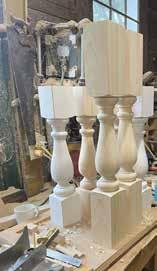
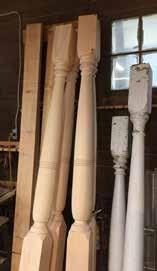
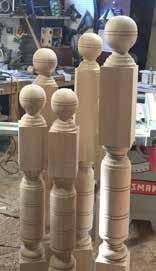
John Haller, the founder of Saratoga Joinery, first met Chris during his extensive home rehabilitation. Chris was hired to make the porch columns and balusters for the side porch that matched the front porch and newel posts for a new staircase that matched the newel post of the original front staircase.
John became inspired by the craftspeople who worked on his house. He took a greater interest in woodworking as he transitioned away from his career in technology. However, he did not have the space for a workshop nor did it make financial sense to purchase expensive machinery for only his use. “I thought to myself wouldn’t it be great to have shared space for people to use,” said John. “Chris was one of the first people I reached out to be a sounding board for the idea of creating such a space,” shared John. Chris, who had always wanted to create such a space but did not have the time nor the resources, was incredibly enthusiastic. “Chris was so excited! He helped to make the concept a reality. As a founding board member, not only did he promote it, but he also helped to make important connections with people who could intersect with the spacecraftspeople and suppliers,” continued John.
"Chris’ deep expertise in woodworking is matched only by his enthusiasm for sharing it, and he has a true gift for connecting with community members. He inspires confidence and a respect for safety that is so important,” John added.
In addition to the Joinery, Chris has also generously donated his time and expertise to the Giving Circle, an all-volunteer organization founded on the principle of neighbor helping neighbor and community helping community. He served on the board of directors and helped with a variety of projects such as building handicap ramps and doing senior home repairs.
Chris’ passion for his trade and preservation is unmatched. Our city is fortunate to have benefited from his expertise on the Design Review Board, his skill at creating beautiful details that adorn porches throughout the city, his willingness to share his knowledge with others, and his generosity in giving back to the community. SS


Seasoned
WRITTEN BY MAUREEN WERTHER | PHOTOS BY SUSAN BLACKBURN PHOTOGRAPHY
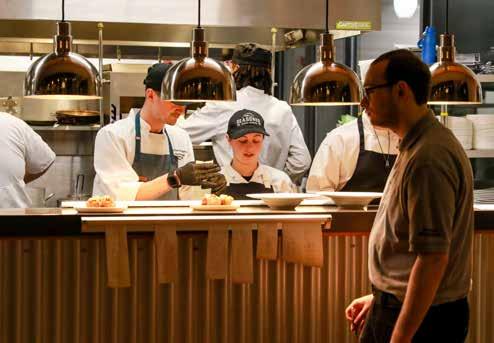
Seasoned Restaurant, at 14 Hudson Avenue in downtown Glens Falls, opened in 2018 and is the first of the Glens Falls Downtown Revitalization projects completed to date. The concept of the place is simple, beautiful, and delicious. Provide students with invaluable hands-on experience - quite literally from ‘soup to nuts’- operating a restaurant. From the freshmen toiling behind the bar, to the seniors participating in their final projects as sous chefs before moving on to professional careers, everyone involved is either a student or an instructor.
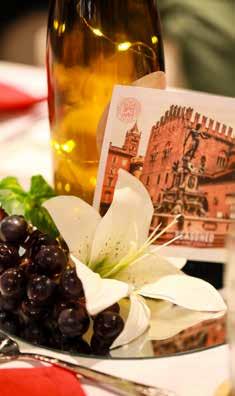
The space is perfect - open and casual, with the right balance of color, warmth, and contemporary style that makes for a relaxed and friendly dining experience. We were lucky to secure a table on the opening night of this year’s program. Our Chef de Cuisine, student Jenna Fantasia, chose Italy as her culinary region. She explained that a different senior acts as sous chef for the week, and is responsible for choosing the culinary region, developing the complete menu, including pairings, designing their own menus for the week, and any other tasks that come with running a fine quality restaurant.
After a delightful and delicious dining experience and a (very) brief pow wow, Susan and I both agreed to give Jenna and the team an A-Plus for their efforts.
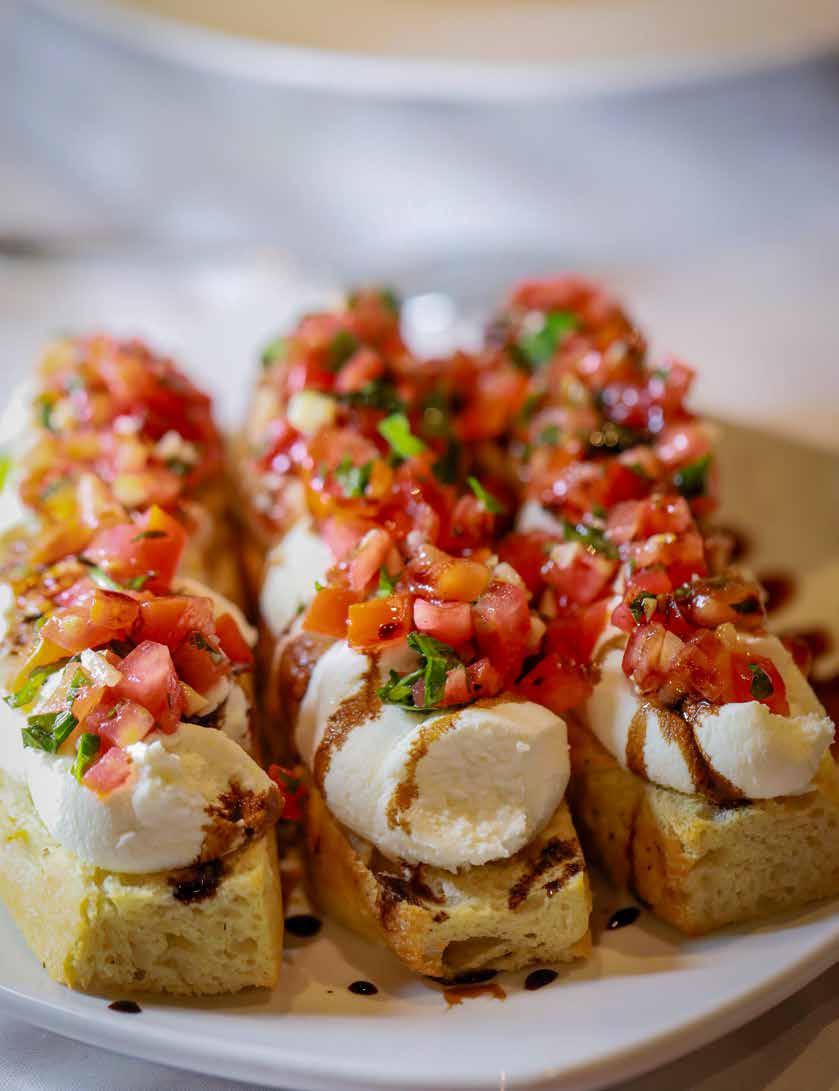
With no advance idea about what dishes the kitchen would serve us, Susan and I gave a thumbs up to all the selections. The first course was a simple, creamy, and elegant chicken and gnocchi soup - a great opener, according to Susan - and a bruschetta ricotta crostini that was so good, I brought an extra one home and gobbled it the next morning for breakfast! One word suffices. Yum.
Every year, starting in early February and running through April, the city of Glens Falls becomes the beneficiary of a new ethnic restaurant that changes weekly, thanks to the skilled culinary arts students at the SUNY Adirondack Culinary Program.


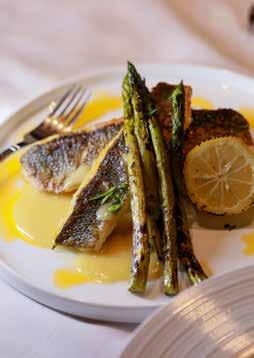

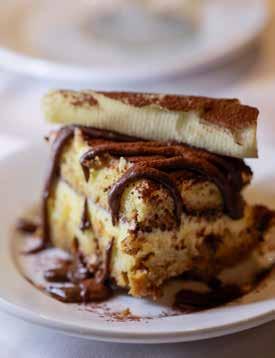
Our main courses were a penne a la vodka with a beautifully balanced and spicy sweet Italian sausage made by Ms. Fantasia. Brava! The second entree was a pan-seared branzino with perfectly grilled and seasoned asparagus, surrounded by a lovely creamy expanse of lemon beurre Blanc. Kudos to the student managing the grill for hitting this one out of the park. And whoever made the lemon beurre Blanc, please may we have some more!! Dinner was followed by a dessert sampling of a lovely tiramisu dusted with cocoa powder, and a surprising (for us, at least) pistachio panna cotta with candied cranberries and a discreet honey drizzle. We love it when the kitchen selects our dining choices for the evening. It’s a wonderful way to sample and learn about new flavors, textures, and combinations of the two. I would not have gravitated toward a pistachio desert, but I learned how wrong I would have been to pass this one up.
Did I forget to mention the wine?
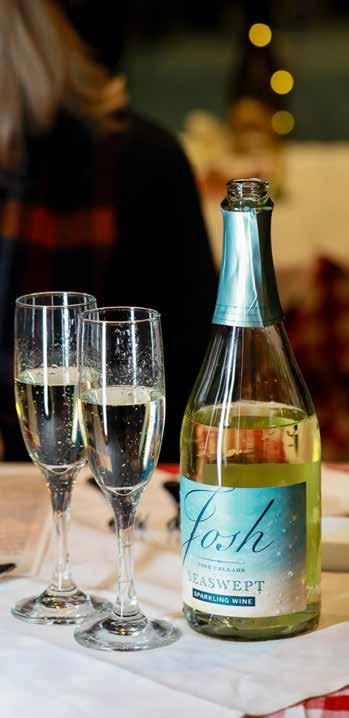
Our wine for the evening was a new release from Josh Cellars - Seaswept. A crisp, citrusy sparkling wine, it was the perfect accompaniment to both entrees. Joseph Carr, the founder of the brand, is a supporter of the SUNY Adirondack Culinary Program and Seasoned is thrilled to offer the vintners’ new wines - and old favoritesthroughout the duration of the program.
The Culinary Center project is run by Chef Matthew Bolton, Executive Chef Instructor and Director of SUNY Adirondack Culinary Arts, Chef Dynia Mariano, Instructor of Culinary and Baking Arts, and Emily Petersen, Adjunct Instructor and Program Assistant.
Following the meal, Chef Bolton was kind enough to offer a tour of the facility, which boasts a state-of-the-art kitchen, bakery, and three classrooms. Seasoned sources its ingredients from local growers and producers. They also have their own composting operation, which develops the soil for each year’s vegetable gardens farmed by the Agricultural Business students.
All in all, Seasoned is an impressive facility and a well-run operation with a talented group of students and teachers that offer diners a true “sampling” of the future talent coming out of the SUNY Adirondack program.
If you’re interested in experiencing Seasoned, reservations are preferred; walk-ins are a roll of the dice, especially for the International dinners (Thursdays), which are on a waitlist for this term. Lunch is served Tuesdays, with classical cuisine dinners served Wednesdays between now and April 30. For full details, visit them here: sunyacc.edu/ campus-life/our-campus/additional-facilities/seasoned SUNY Adirondack also offers non-credit baking and cooking courses throughout winter and spring. For more information, contact them at conted@sunyacc.edu or 518-743-2238. SS

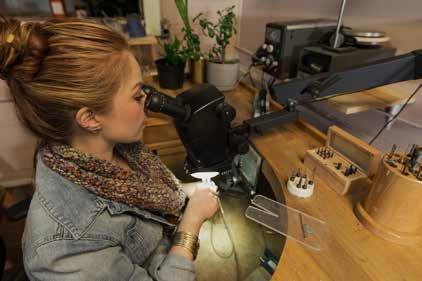

Laura Ortiz McCaffrey
Transforming Sentiments into Sensational Jewelry
WRITTEN BY MEGIN POTTER | PHOTOS PROVIDED (UNLESS NOTED)
PHOTOS:
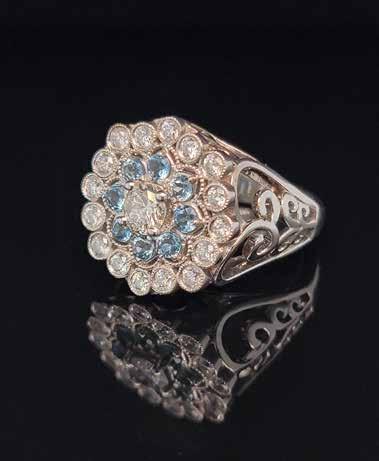
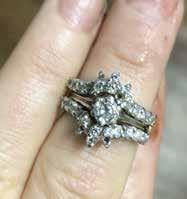
A. After redesign: The aquamarine and heirloom diamond redesign is set in 14k
The day beautiful butterfly jewelry caught the eye of four-year-old Laura Ortiz McCaffrey at Stuyvesant Plaza; she decided she would become a jeweler. Today, she combines professional excellence with the power of positive energy to create finely crafted designs that subconsciously call to you.
“I’m drawn to the energetic and symbolic side of jewelry,” said Laura, the founder of La OM Jewelry. “For me, jewelry is not decoration, it’s identity.”
white gold
B. Before redesign: heirloom diamond ring
Custom purple sapphire ring in 14k yellow gold and platinum with moissanite side stones.
Laura Ortiz McCaffrey
Photo by Corey Aldrich
GIVING JEWELRY THAT GOLDEN TOUCH
Whether designing ready-to-wear pieces or luxury custom fine jewelry, Laura intentionally welds an artistic mastery that shines through her work.
“Intention is everything. It is what gives a piece meaning beyond aesthetics,” she said.
Laura, a SUNY Geneseo graduate, trained under Jason Marchiafava, a former Master Craftsman for Tiffany & Co., and earned her Graduate Bench Jeweler Certification from the New Approach School for Jewelers in 2015.
She continued to refine her skills at local jewelers’ benches until 2016, when Laura launched La OM Jewelry. Her earliest collections centered on hand-formed, cold-fusion wire work with a fluid, sculptural vitality all their own.
For several years, Laura hosted private consultations and classes from La OM’s retail studio space in Albany. In 2022, Laura, who maintains membership with the Manufacturing Jewelers & Suppliers of America, began integrating more warm copper pieces into her collection, while continuing to create fine custom jewelry in gold and platinum.
Today, she works by appointment, collaborating one-onone with clients to create heirloom redesigns, bespoke pieces, and totally new pieces true to their unique vision.
INFUSED WITH SACRED SIGNIFICANCE
No matter what Laura is working on, she carefully chooses materials, paying careful attention to proportion, placement, and meaning, to create jewelry that possesses strong symbolic significance.
“When I choose conflict-free, responsibly mined, recycled, or lab-grown materials, I’m reducing harm at the source. That integrity matters. You can feel the difference when something is created in alignment rather than through extraction,” she said. “Wearing ethical jewelry becomes more than adornment, it becomes an extension of personal values.”
Laura, a Reiki master, gives inherited pieces new life by clearing negative energies from the pieces she receives, infusing them with the best intentions and highest vibrations possible.
AN ELEVATED EXPERIENCE
Because her foundation in mastering jewelry techniques has coincided with her energetic work, Laura can walk clients from concept all the way through to finished piece with confidence. For custom pieces, Laura uses 3D CAD modeling or hand-carved wax to give clients a preview of the design before the final fabrication. Depending on complexity, each piece is completed in six to 12 weeks.
For an elevated shopping experience, during La OM’s fun and informative Adornment Evenings, Laura will bring a curated selection of jewelry for you and your guests to choose from in a friendly, intimate setting.
La OM Jewelry will be available at the Annual Beekman Street Art Fair on June 14, 2026, and at River Rocks Jewelry and Bead Shop in Troy. For updates, follow @LaOMjewelry on Facebook and Instagram. For more information, go to laomjewelry.com SS



NAME THAT Mountain
The Tupper Lake Triad Arab, Coney
& Goodman Mountains

Part of the "What's With Those Adirondack
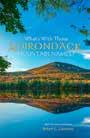
While kayaking on beautiful Lake Durant near Blue Mountain Lake, NY, one June day, my wife Carol Ann asked, "Where does Blue Mountain get its name?" So we visited the nearby Adirondack Museum at Blue Mountain Lake to buy a place names book. But there was no such publication. So... I wrote What's With Those Adirondack Mountain Names?

Rising from the northern Adirondacks, Arab, Coney, and Goodman Mountains form the Tupper Lake Triad. This scenic hiking challenge spans 7.6 miles. Organized by the Regional Office of Sustainable Tourism (ROOST), the Triad offers a year-round, family-friendly experience. It is suitable for beginners, seasoned hikers, and anyone up for a challenge. Arab Mountain is the first of the three, known for its natural and cultural history. The name "Arab" is believed to have originated from a misinterpretation of the French word “arable.” The person who named it took “arable” to mean “maple mountain,” referencing the abundance of maple trees on the mountain. The French word for maple is “érable,” while “arable” in French means arid land. Today, Mount Arab features a restored caretaker cabin, a small museum, and a fire tower—once part of a larger network and now one of only two left in Saint Lawrence County. Although no longer used to spot fires, the tower remains an important historic site and a popular place to visit. The station opened in 1912, and the steel fire tower was built in 1918. Mount Arab is included in both the Fire Tower Challenge and the Triad, allowing hikers to complete both at once.

WRITTEN BY ROBERT C. LAWRENCE | PHOTOS COURTESY OF ROOST
Mountain Names?" Series
Arab Mountain Fire Tower
Spring View from Goodman Mountain Summit

Coney Mountain’s story unfolds through its surveyors and sequence of names. First called Monument Mountain and ascended in 1772 during Archibald Campbell’s survey, it was later named Coney by Verplanck Colvin for its cone-like shape. Its open summit draws astrophotographers for sweeping 360-degree views of the night sky.
Completing the Triad, Goodman Mountain now stands as a memorial. It was once called Litchfield. In 2002, it was renamed in honor of Andrew Goodman, a young civil rights worker. His family spent summers in Tupper Lake and often climbed the mountain, following their trail of soup can tops. In 1964, at age 20, Goodman helped register Black voters during Freedom Summer in Mississippi. He, James Chaney, and Michael Schwerner were killed there by the Ku Klux Klan. The 1988 film Mississippi Burning, starring Gene Hackman and William Dafoe, tells this story.
In 2014, President Barack Obama posthumously awarded the Presidential Medal of Freedom to the three men, with Senator Kirsten Gillibrand sponsoring the bill. She called them “unsung heroes” who gave their lives for freedom and equality,
adding, “Voting is one of the most sacred rights we have as Americans.” Today, the trailhead kiosk at Goodman Mountain shares Andrew Goodman’s story and his family's memories.
Upon completion of the Triad, hikers can receive a patch by registering online or by mail for $10. There are patches for summer (March 21 to December 19) and winter (December 20 to March 20). Even dogs can earn a patch.
To register by mail, print the form, include a $10 check or money order to ROOST, and mail both to: Attn: TL Triad, 121 Park Street, Tupper Lake, NY 12986.
The Tupper Lake Triad is more than a physical challenge. It helps hikers connect with local history, enjoy the area’s natural beauty, and learn about the people who molded the region. Completing the Triad is a rewarding and memorable experience.
Author's Note: Thank you to Ashley Garwood, Saranac Lake and Tupper Lake Regional Manager, Regional Office of Sustainable Tourism (ROOST), for her contribution to this article.


What's With Those Adirondack Mountain Names? (The Troy Book Makers) is available at the following retail locations: Market Block Books (Troy), The Book House of Stuyvesant Plaza (Albany), Open Door Bookstore (Schenectady), Friar Tuck Newsroom (Rensselaer), Northshire Bookstore, Saratoga Outdoors (Saratoga), Adirondack Country Store (Northville), St. Andrews Ace Hardware (Queensbury) in many retail establishments in the Adirondack Park and on Amazon.com.
Astrophotographers Capturing the Night Sky Above Coney Mountain’s Summit
Tupper Lake Hiking Triad Patches
DRUMROLL PLEASE
Celebrating 50 Years+ of Saratoga’s Avant Garde Drum & Bugle Corps
WRITTEN BY MEGIN POTTER | PHOTOS PROVIDED




1979 1980 1981 1982




On fields and in stadiums across America, Saratoga’s musical ambassadors, the Avant Garde Drum & Bugle Corps, made history. Their dedication to precision pageantry exceeded expectations right from the start.
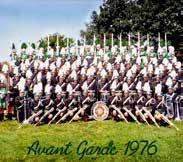
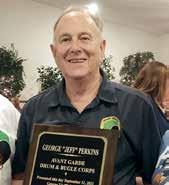
In the fall of 1974, two area drum corps, Saratoga Springs’ Bethesda Emerald Knights and Speigletown’s Speigleaires, merged to form the Avant Garde Drum & Bugle Corps led by directors George “Jeff” Perkins and Ron Ghetti.
That first year, Avant Garde marched in their black wool uniforms, baking in brutal heat, in nearly 30 parades to raise the capital needed to compete. For the decade to follow, the traveling corps of more than 100 performers, mostly between the ages of 15-21, staff, and volunteers, spent their summers competing in battles of artistic expression, forging lifelong friendships, and making life-changing memories.
In 1975, Avant Garde was undefeated in the Northeast drum corps circuit. They won the Class B World Open Championship, and rocketed onto the national stage, earning the coveted spot of 25th at the prestigious Drum Corps International (DCI) Championships, granting them DCI membership.
Drum Corps International, deemed Marching Music’s Major League™, is comprised of the world’s most elite marching ensembles of student musicians and performers. Their youthfocused competitive drum corps events attract tens of thousands to stadiums across North America.
THE ROAD TO GLORY
In 1977, Ron Ghetti resigned as co-director, while Jeff Perkins, who began playing bugle with the Saratoga NY Ambassador Drum Corps in 1953 at the age of 11, remained sole Director of Avant Garde until they disbanded in 1985.
Each summer, a caravan of three buses, two vans, a truck, and a trailer traveled 10,000 miles for six-week tours across the country. The entourage slept shoulder-to-shoulder in school gymnasiums and prepared more than 20,000 meals in their kitchens. Avant Garde held instructional clinics and practiced in football fields for performances at large high school, college, and major professional stadiums in the US and Canada.
WITH EVERYONE IN STEP
In addition to traveling from across New York, members came from eight states, Canada, and England to compete with the world class Avant Garde Drum & Bugle Corps. Rehearsals were held weekly at the Saratoga Springs Armory and full corps practices took place in the old Pyramid Mall parking lot.
Avant Garde won the New York State Championship for five consecutive years and performed for monumental celebrations including during the Empire State Winter Games’ opening ceremony, and at the grand opening of the Saratoga City Center.
To fund their activities, Avant Garde raised more than a million dollars over the course of their 11-year lifespan. Major local supporters included Charlie Dake, co-founder of the Stewart’s Shops Corporation, and Joe Dalton, Executive Director of the Saratoga County Chamber of Commerce from 1970-2009.
Avant Garde was supported by two dedicated Booster Clubs, one in Saratoga and one in Rome, NY. Satellite recruiting offices were set up in Tennessee, North Carolina, and Virginia. The generous gift of two tour buses from a pleased North Carolina parent kept the corps rolling.
MARCHING ON
After more than a decade, Avant Garde hit a high note in 1984, rising to achieve 15th place at the DCI World Championships. After the conclusion of their 1985 season, Avant Garde stopped competing and founded the Avant Garde annual scholarship, an award presented by DCI to deserving youth pursuing a career in music.
Among Avant Garde’s more than 1,000 alumni have been those who went on to build successful careers in music, including Saratoga Springs High School Music Department Head and Conductor of Skidmore College’s Concert Band, Milton Lee; former Dolly Parton set drummer, Mark Mauceri; and Tony Gambaco, director of the powerhouse local wedding and corporate band, Ten Most Wanted. Introducing the next generation of buglers to the tradition, Tony and his son, Carson, also play a riveting “Call to Post” at the Saratoga Race Course during the summer season.
1984 2018 2021
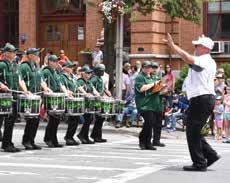
1984 Drum Corps East and World Open Championships

WELCOMING BACK THE GOLDEN AGE
In 2018, 160 Avant Garde alumni convened once again on the Saratoga-Wilton Elks Lodge, their home away from home, for a performance at the 51st Annual SaratogaWilton Flag Day Parade.
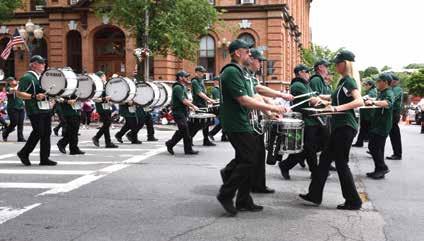
The Avant Garde Alumni Drum & Bugle Corps, the largest musical unit to ever march on Broadway, were met with thunderous applause after pouring their hearts into their performance at the reviewing stand.
Jazz ensembles from the Saratoga Springs, Schuylerville, and Mohonasen school districts joined Avant Garde Alumni for a Celebration of the Music of Chuck Mangione in 2019, with Mangione and his family in attendance.
In 2021, Jeff Perkins became the first person to be inducted into the Avant Garde Drum & Bugle Corps Hall of Fame, and today, many Avant Garde artifacts reside at the Marching Pageantry Art Museum in Pennsylvania.
Never skipping a beat, in September 2025, Avant Garde celebrated their 50th Anniversary with a custom photo album and a banquet at Kings Tavern. Saratoga Mayor John Safford issued a proclamation officially recognizing the Avant Garde Drum & Bugle Corps’ contributions to the community, and to its advancement and enrichment of youth.
For more on this story, visit simplysaratoga.com (search Avant Garde) and visit avantgardealumni.com. SS
Saratoga-Wilton Elks' Flag Day Parade 2018. Photos by Super Source Media Studios
Jeff Perkins, 1st Inductee to Hall of Fame



Where Repair Meets Design
Michael Whitney takes a sustainable approach, uniting art and repair in his work
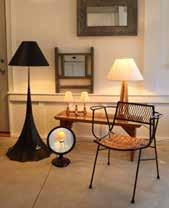
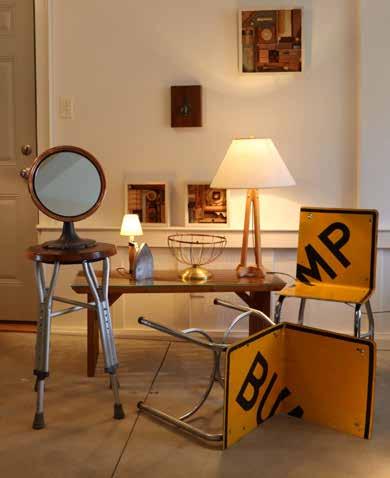
Whitney studied at Pratt Institute, learning what he calls the “language of design.” Although he entered college planning to become a product designer, by senior year, he realized that was not his path. His redirection arrived during an unexpected moment on a date. Walking past a broken chair and a discarded broom handle, he realized he could rework them. Repair wasn’t a lesser act; it was creative reinvention. That moment shaped a philosophy that still guides him: nothing belongs in the landfill. Building furniture from discarded materials around Brooklyn became his passion, and he eventually ran a fabrication and art practice there for over two decades.
Today, his work blends multiple disciplines: carpentry, painting, plumbing, and, as he describes it with a smile, creative tinkering. Creative problem-solving like his doesn’t fit neatly into one category. Clients bring items into his shop. Other times, he visits their homes for small-scale projects. He can quickly tell whether something can—or should—be fixed. Expectations are discussed, and communication is direct. That clarity builds trust. In a field fraught with skepticism, Whitney sees integrity as part of the craft. Many clients who began with repairs now collect his art. Salvaged materials often enter his art through relationships: he rescues wood from basements before dumpsters arrive, giving forgotten pieces a second life. Whitney’s “wood stories” clearly illustrate his philosophy, where grain, texture, and color carry memory and nostalgia. In his hands, those histories aren’t erased; instead, they’re reframed.
WRITTEN BY KATIE BURNS
BY MICHAEL WHITNEY
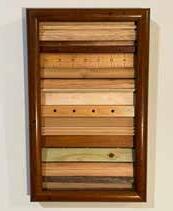
His recent show at Spring Street Gallery featured 33 works, most of which used repurposed materials. For Whitney, the significance isn’t just the sale, but what comes after: “One job or piece doesn’t matter much beyond itself,” he says. “But a show—those pieces go out and start conversations.”
At its core, his work asks a quiet question: What kind of effort are we willing to put in to keep something useful and working? Often, he argues, it’s less than we think. A bit of research or a conversation is enough. Sometimes, just a willingness to try will do.
Under the name General Fixit, Whitney now offers a repair concierge service from his space on Burgoyne Street. He designs, builds, and repairs, guided by a simple belief: most things don’t need replacing; they simply need attention. He tackles small projects and readies for future shows. Whether mending a hinge or turning salvaged wood into sculpture, his focus remains: make it work– and let it matter.
The next collaborative show Whitney’s works can be found in, ‘Reciprocity,’ opens April 26 from 2 to 5 p.m. The show will run through October 2026.
Follow on Instagram @MichaelWhitneyMaker.
PHOTOS
A broken chair. A car spring. A cabinet headed for the curb. Where others see the end of an object’s usefulness, Michael Whitney sees possibility.
Meet... Julie Gold

Your New BFF for Flowers, Flowers, Flowers!
WRITTEN BY MEGIN POTTER | PHOTOS PROVIDED
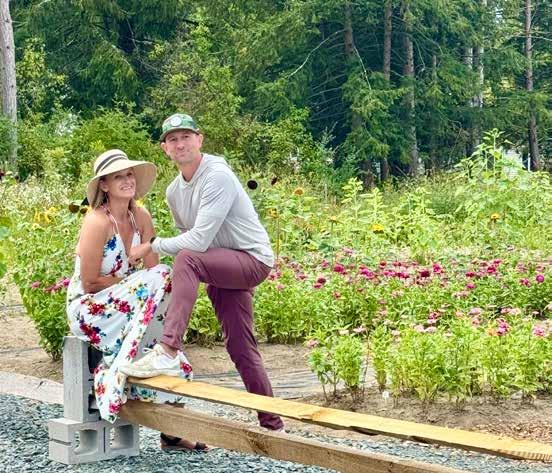
Beautiful wide pathways of natural mulch crunch underfoot through the rows of raised beds at Bloomin’ Fiori Flowers (BFF), at 2782 US 9 (across from the Malta Drive-In), a convenient Pick-Your-Own micro-flower farm filled with wildlife and natural wonder.
After sowing tens of thousands of native and non-native seeds for Bloomin’ Fiori Flowers’ late summer opening last year, Julie Gold and her family are getting a head start on the 2026 season with thousands of plugs, organic fertilizer, and a no-till approach at the area’s newest boutique farm.
A DREAMY FRIENDSHIP
Don’t have the space, time, or the green thumb to grow-your-own? Your BFF’s got you!
Flex your creative freedom solo, or with family and friends, with innovative cut flowers from Danzinger, including blossoms from the Scabiosa Bon Bon Scoop Series (which have an extra-long vase life).
Delve into the drama of 5,000 vibrantly colored daffodils (from Holland), while also relishing the glorious shapes and sumptuous fragrances of exclusive eye-catching blooms that will make an ideal focal point in your next bouquet.
Sixty percent of the flowers at Bloomin’ Fiori Flowers are perennials - there’s a large patch of dahlias, nine varieties of hydrangeas, and a small grove of rose bushes - so you’re sure to find something that you absolutely love!
For a refreshing new twist, BFF is also excited to have a PYO Herbal Tea row this year, filled with chocolate, pineapple, and strawberry mint, peppermint, chamomile, lemon balm, lemon verbena, “Phenomenal” and “Provence” lavenders, and other “brew-tiful” beauties that look as lovely as they taste!

A RESPLENDENT ENCOUNTER
Opening early for the spring tulip and daffodil season, Bloomin’ Fiori Flowers will reopen again in June for the full PYO season. As summer stretches into fall, early sunflowers in soft whites and lemons are replaced with those in moody wine and chocolate tones.
Julie, a real estate agent, and retired critical care nurse, can’t remember a time when she didn’t have her hands in the dirt, planting and caring for flowers. A nurturer at heart, Julie, along with her husband of 28 years, Eric, started excavating the vacant lot they own on busy Route 9 in Malta last year, transforming it into a sweet spot where visitors of all ages and abilities can safely experience the joy of connecting with nature (and with each-other) season after season.
With the help of their children, Julie also added a row (named the “Liv Lane”) in honor of their close friend, Olivia Allen, a Saratoga Springs High School student who passed away in 2024 after her heroic battle with leukemia.
Stain glass shimmers in the hand-crafted farm stand, where bouquets, potted floral plants, and floral gifts are paid for on an honor system. Children’s scissors and vessel sizes are available. Seating and shade umbrellas are also onsite. For updates and events, follow @BloominFioriFlowers on Facebook and Instagram.
Meet... Maddy Zanetti
WRITTEN BY MEGIN POTTER
PHOTOS BY SUPER SOURCE MEDIA STUDIOS
Twenty years ago
,
Maddy Zanetti began working weekends and summers at Impressions of Saratoga, the Everything Saratoga Store where, even as a high school student, she loved to shop.
Maddy jumped right into the job, bringing her own special blend of passion and excellence to her work, and it quickly became a running joke among the Impressions’ team that she would be running the business someday.
Today is that day.
Now, after two decades of striding over every hurdle, Maddy is now the owner of both Impressions of Saratoga and their sister store, The Dark Horse Mercantile.
It’s an exciting milestone on a journey that’s taken her through the paces.
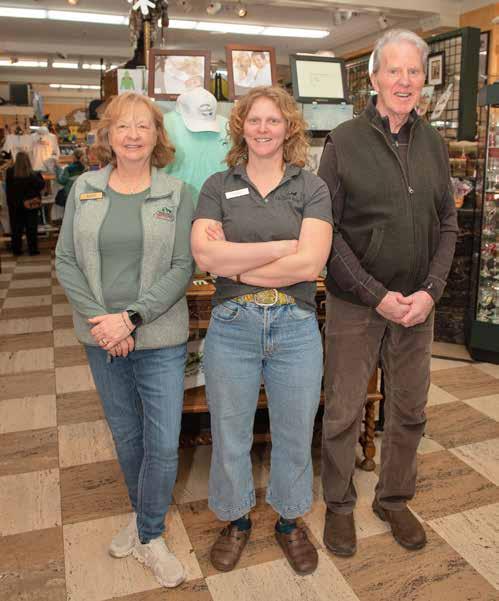
“Saratoga is my home and I can't imagine being anywhere else,” said Maddy. “I have now been at Impressions for over 20 years, and few people can say they have worked the same job since they were a kid. It is a part of me, and I have grown up with it. I'm very fortunate to have had Mare and Dave to show me the ropes and we have had a lot of fun over the years. Many people go to work because they have to, but I enjoy what I do and I love being here!”
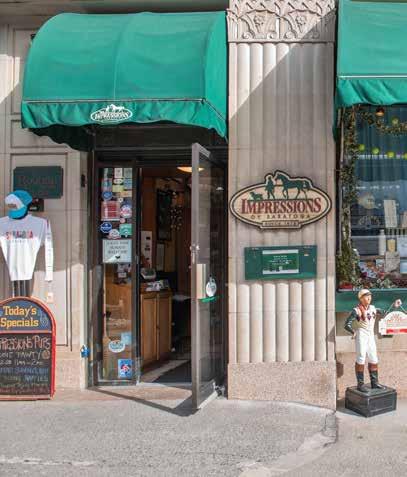
The Woman Taking the Reins at Impressions of Saratoga
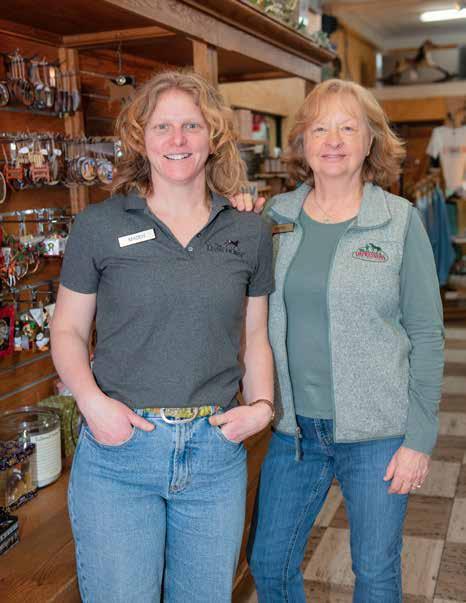
Maddy Zanetti (left) and Marianne “Mare” Barker
CHOMPING AT THE BIT
While Marianne travelled the country to find the special selection of new and unique equine art, jewelry, gifts, and clothing stocked on Impressions’ shelves, Maddy excelled at college and graduated (in just three years!) with a BA in Business Administration in 2011.
After returning to Saratoga, Maddy worked closely with the Barkers to grow Impressions by embracing new trends, events, and all sorts of changes – both big and smallalong the way.
In 2014, Impressions launched The Dark Horse, a brand that celebrates a long history of Thoroughbreds beating the odds in the race to become champions. The product launch introduced brand ambassador, Maddy’s horse Upset, the Miniature Dark Horse.
SADDLING UP
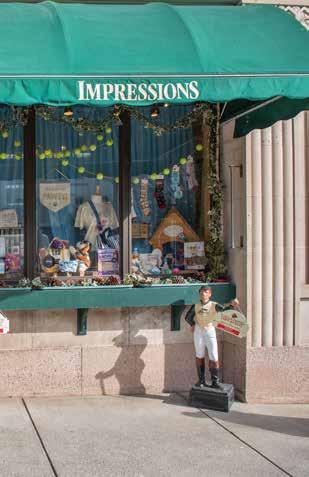
Dave and Marianne “Mare” Barker established Impressions of Saratoga with a $2,000 loan, lots of faith, and a strong entrepreneurial spirit. The shop, now at the corner of Broadway and Phila Street, has remained the cornerstone of their business ventures ever since.
“We are very proud of what we’ve built and the friendships it has allowed us over these 48 years,” said Mare. “Mostly, we are proud of Maddy for helping us maintain and grow for almost half of those years - and stepping into the lead role. She is the best person to take the reins! She has the skill, ambition, love for this wonderful community, and the drive to take it into the future.”
“We consider ourselves lucky to have someone as invested in this wonderful business as we have been. We are looking forward to watching her growand for us to step back taking more time to smell the proverbial roses all around Saratoga and beyond!”
Two years later, Maddy became co-owner of Impressions after purchasing Dave’s shares. In 2018, Maddy and Mare opened The Dark Horse Mercantile on Broadway, Upset became the subject of Maddy’s first children’s book by the same name, and he happily started making appearances across the street from Impressions in a store dedicated to him!
Through the years, Impressions has partnered with, participating in, and contributing to, many local organizations and events. They’ve hurdled the challenges and are looking forward to a bright future.
Despite the change in ownership, Mare will still be in the store, providing friendly customer service and consulting for a few more years, as everyone excitedly awaits the 50th anniversary celebration of Impressions of Saratoga in 2028. SS


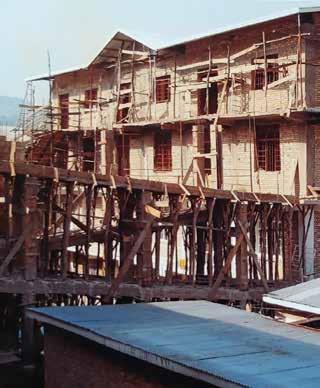
Streit's first trip to Rwanda in 2005 Kigali Medical University, 2011

The man who helped birth
HEALING in Rwanda

Meet... Dr. John Streit
WRITTEN BY MEGIN POTTER | PHOTOS PROVIDED
In 2005, when Dr. John Streit, a retired Saratoga obstetrician, entered a small Rwanda clinic, 70 women were already lined up waiting for their chance to speak with him – it took four days to see them all.
The day Dr. Dennis Snyder, co-founder of Medical Missions for Children, invited Dr. John Streit to go to a tragically underserved area in sub-Saharan Africa, was the luckiest of his life, he said.
“I was given a gift when I was given the opportunity to go there,” said the former obstetrician, and 2025 recipient of Albany Medical College’s “Humanitarian Alumni of the Year” award for his exceptional work, both at home and abroad.
“There was a dearth of doctors then, just one doctor for every 36,000 people, and the women there travelled long distances for care. They were patient beyond imagination.”
RIDING THE WHEEL OF FATE
Dr. Streit returned to Rwanda 22 times to help establish the second medical school to be built there after the area was decimated a decade earlier during the Rwandan Civil War.
“It was meeting the Rwandan people and encountering their nature that most propelled me into wanting to do something for them,” he said. “I found the Rwandan people to be the warmest, most genuine, hardworking people I’d ever met. In 22 trips, I never once heard a baby cry.”
Despite there being no electricity or running water in the poor, rural, hill towns, people gathered to sing and dance, said Dr. Streit. Here, a simple plastic water bottle (that Americans regard as garbage) became a thrilling plaything for a child.
“They didn’t have anything, so didn’t expect anything. It was like visiting Mars, and it was wonderful. It was 180-degrees opposite from America,” said Dr. Streit. “I realized I was very privileged by my accidental birth in this country. There is such a difference between developing countries, and the spoiled country America has become.”




Kigali Medical University students & staff
(left to right) Streit, Dr. Ntawukuliryayo, Min of Health, his wife Chantel and Vianney Ruhumuliza.

LIVING THROUGH A LIFE-CHANGING CULTURAL SHIFT
John Streit grew up in Congers, a small hamlet in Rockland County, NY, and attended college at Carnegie Mellon University. By his second semester, he decided to pursue a career in medicine.
After graduation from Union College, John went to Albany Medical College before landing at Saratoga Hospital in 1967. During his 33 years practicing obstetrics and gynecology there, Dr. Streit delivered an estimated 6 – 7,000 babies and witnessed first-hand the advent of the inclusion of men in the delivery room.
“It was very significant to me, and I had a hand in that. Before then, men would sit out in the waiting room, having no idea what was going on in there. On the whole, that change has been fantastic, and today, we have stronger family units as a result,” said Dr. Streit.

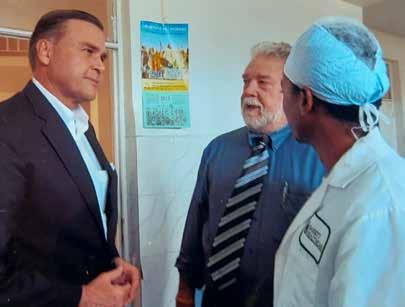
DOING THE UNIMAGINABLE
It was meeting Gerard Urayeneza however, that would most change Dr. Streit’s life. Gerard transformed a small school started by Seventhday Adventist missionaries in Rwanda, into a fully functioning modern health center. He started Rwanda’s first private college, which offered four majors, including nursing and pre-medical studies. Then, he founded the Kigali Medical University and appointed Dr. Streit its president in 2006.
As a white American, Dr. Streit was granted admission into the Ministries of the Rwandan Cabinet, government entities crucial to the school’s implementation.
Kigali Medical University also had the support of Dr. Jean Damascene Ntawukuliryayo, the former Minister of Health, President of the Rwandan Parliament, and Rwandan presidential candidate.
FIGHTING THE POWERS THAT BE
For four years, hundreds of doctors participated in the school’s training program. However, their dreams were thwarted when a political cabal managed to suspend the medical school on trumped-up charges, said Dr. Streit.
In a conflict of interest, the new Minister of Health, Dr. Agnes Binagwaho, had been working with Harvard University to establish their own medical school in Rwanda (and did not want the competition of the upstart initiative).
“I was angry, disappointed, and absolutely outraged that the person in charge of the health of the people of a country instead made choices to enrich herself,” said Dr. Streit.
To collect funds and raise awareness, in 2006, Dr. Streit formed the Kigali Medical University Foundation, with the support of Saratoga’s Duane Palmateer, and others.
SUCCESS THROUGH COMPASSION
The 317 students who had completed four years of training at Kigali Medical University transferred to the National Medical School, and on November 17, 2024, graduated with Doctor of Medicine degrees.
Today, Dr. Streit, 89, still resides with his two cats, Carlton and Katja, in the historic Greenfield home he and his wife, Diane, moved into in 1980. Originally built in 1830, it was the home of Henry VanBuren in the 1850s (a distant relative of Hannah Van Buren, wife of the eighth President of the United States, Martin Van Buren).
Through the years, Dr. Streit and Gerard have remained close friends, and he is looking forward to Gerard’s next visit this Spring, he said. SS
Kigali Medical University graduation
W. Stuart Symington, US Ambassador to Rwanda, Streit and Olivier Urayeneza, surgeon son of Gerard Urayeneza.

WRITTEN BY MEGIN POTTER
PHOTOS PROVIDED (UNLESS NOTED)
A psychotherapist making a positive difference in your life right away.

Meghan Lemery Fritz, LCSW-R
YOU CAN GO HOME AGAIN
Each morning, Meghan Lemery Fritz, LCSW-R, wakes up before her husband and son, drinks her coffee, and takes a deep dive into the silence.
This meditative practice anchors her. It’s a simple tool that makes a world of difference – improving the day, right away.
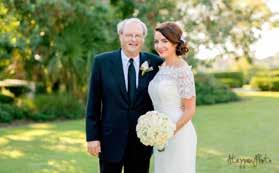
Meghan grew up in Glens Falls, skiing on West Mountain. Her dad, John, a successful attorney who passed away last year, taught Meghan how to buckle her ski boots before teaching her how to tie her shoes. Today, Meghan still loves skiing, but now she doesn’t have to venture to the top of a mountain to find the sun - even in the depths of the darkest winters. She taps into a moment of brightness and wellbeing anytime with mindful breathing practices, positive affirmations, and yoga that fit easily into her daily routine. Meghan began practicing with these (and other tools) when her mother Joan, who earned her master’s in social work at the age of 50, piqued her daughter’s interest in the field.
In 1997, Meghan graduated from the University of Virginia, then earned her master’s at the Columbia University School of Social Work in 1999. By 2005, she was teaching others how to address unhealthy habits, manage mental health conditions, work through trauma, improve their relationships, and more confidently handle life’s many transitions (including marriage, divorce, parenting, and career changes).
In 2009, Meghan opened a second location for her practice on Railroad Place in Saratoga Springs and began a 12-yearrun publishing snippets of valuable advice on the pages of Saratoga TODAY Newspaper, and its magazines.
Five years later, after a 2014 wedding to her husband, William, the couple moved to State College, PA, where Meghan joined a group practice. Their son was born in 2016, and by the time he started kindergarten, the family had moved back to Glens Falls.
“I just love the sense of community in Glens Falls – it’s Hometown USA!” said Meghan. “There’s such a warmth and enthusiasm here about our town, the sense of community and kindness is what brought me back here to raise our family.”
AN INNATE CONNECTION
During the pandemic, Meghan teamed up with Linda Stanger, LCSW, to form Fritz, Stanger & Associates, a telehealth practice that serves clients in New York, Pennsylvania, New Hampshire, Vermont, and Colorado.
Despite predictions that soon, AI will replace human therapists, Meghan believes there will always be a need for compassionate listeners who validate your efforts and encourage you to believe in yourself.
“Humans are born to connect with one another – it’s deep within us – and nothing will ever replace sitting with another individual and opening up about pain. Nothing replaces a connection where you feel seen, heard, validated, and accepted.”
Now, Meghan is also growing her coaching services, pinpointing specific tools for clients that not only build confidence, but that help them achieve their individual goals. Begin your empowerment journey today by following @puttinonthefritz1 on Instagram, @personalitydisordercoach on TikTok, and by visiting fritzstanger.com
SS
Meghan skiing with her husband & son.
Meghan with her dad at her wedding
FA SHI ON

PGS. 38-47










Picnic Elevated
Softly Structured
Poolside, but make it fashion
Sardine Summer
Built-In
Chasing Sunshine


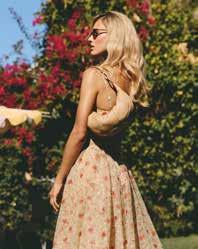
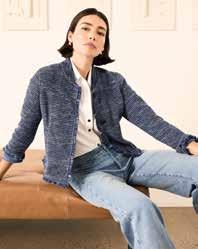

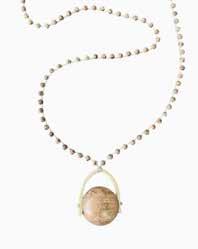

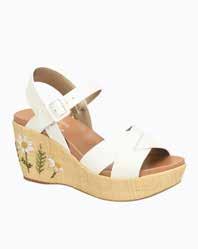
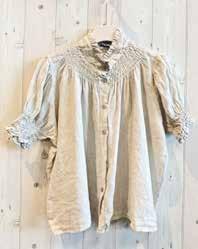
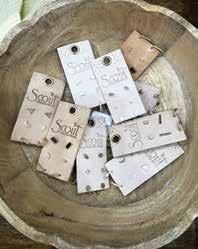

The Forever Uniform Made by Hand Pure Linen
In Constant Rotation
Softly Structured Small Statements
Tailored Ease
Fresh Picked
Shades of Blue














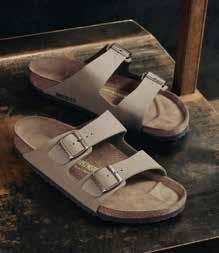



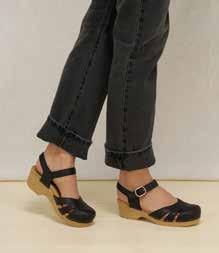








Warm Days Ahead
Salt Air
Broken In
Off-Duty Uniform
Summer Scent
Open Collar Season
Stacked Right
Unbuttoned
Sneaker

Introducing a Unique Artistic Experience
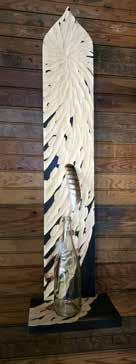
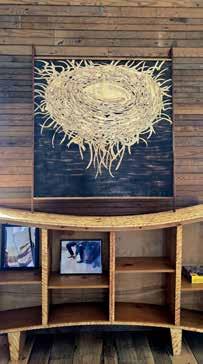
‘Art that encourages social connection.’ When I heard those words for the first time, I was eating lunch with a friend downtown, catching up on our lives since we’d last seen each other. Social connection has always been important to me, especially since 2020, and I wanted to learn more about how Michael Whitney, a creative himself, thought art could encourage communities to engage with it and with one another.
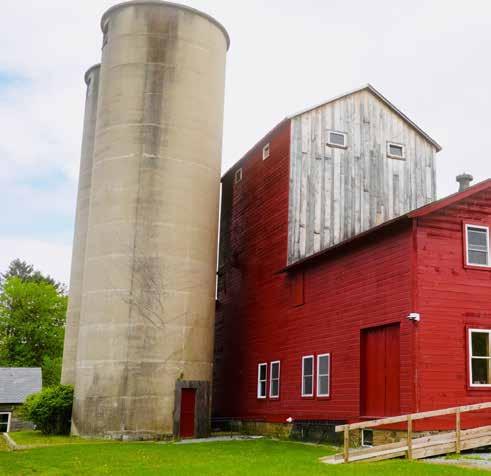
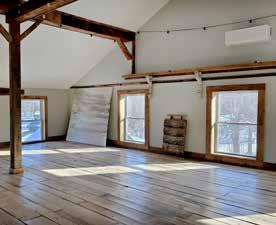
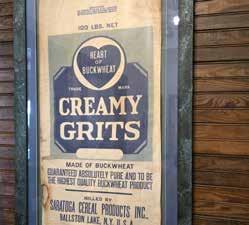
Which brought the conversation to InterArts North. “Wait till you see this space,” he tells me, rubbing his hands together. “It’s enormous - a 14,000 squarefoot repurposed grain mill. It’s all warm wood, big windows, open spaces, with so much potential.”

WRITTEN & PHOTOGRAPHED BY THERESA ST. JOHN
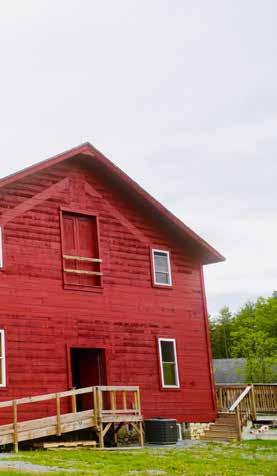
InterArts North barn
Michael pauses for a second and starts to talk about their upcoming event.
“Can you picture it?” He asks. I can tell he’s excited to be part of such a unique collaboration. “If people interacted with art, whether it’s a painting, a photo, something in the fiber arts world, in dancing, theater, or music, how great could that be?” He tells me the spring show will be geared toward social engagement, using interaction as a two-way street. “It’ll invite and require shared participation. It’ll be an experience where the artists, viewers, the audience, and the medium can merge to support each other, while creating human connections – if only for a few minutes that day.”
“Like, for example, you wouldn’t just watch the drum circle – you’d be part of the drum circle?” I ask him. He nods, smiling. This interests me, as I usually watch this form of art from the sidelines. What would it look like for me if I used my hands and leaned into the magic of a drumming circle? Picked up a paintbrush and added a small part of my imagination to the canvas? Hmmmm.
A few days later, I drove to the location in Ballston Spa and stared at a gorgeous red barn boasting old grain silos.

Michael was right, it was a beautiful, open space, with plenty of rooms spread out over the building’s two floors and a cellar they’re envisioning as a ceramic studio with separate entrances from the main building.
Groups of people were buzzing in and out, setting down their items for the day, getting to work in classes they’d signed up for or projects they were working on. “Our mission is to create a safe and inclusive environment, where we can effectively build community and relationships around artistic practices.” Creative Director Eric Archer Dahlberg says, as he greets me warmly.
The barn used to be an old grain millnow it is a space where artists can work and spotlight their creations.
“The flagship site is in Patterson, New York,” he tells me as we walk through the new Ballston Spa location. “It holds two ceramic studios, a yoga and dance studio, a digital art lab, a music studio, and a larger multimedia studio.” When I ask what the multimedia studio entails, Eric explains that it’s used for painting, drawing, theater, fiber arts and crafts. “It’s a beautiful space that hosts approximately 4-6 community art shows a year. InterArts is a collaboration with Community-Based Services. We share the same vision for this space – it’ll be a place where community comes together, where art from all genres lives side by side. There may be painters next to dancers, musicians next to sculptors, storytellers next to actors, photographers next to fiber artists or ceramicists.” All of this sounds intriguing to me.
“We’re hoping to introduce people to InterArts North and our mission. Folks can learn about our core program schedule, our rehabilitation classes for adults with disabilities, and several programs that appeal to youth, the elderly, and families alike. We also have a keen interest in hearing from teaching artists who can spearhead programs that align with their passions across traditional and digital media.”
Currently, the InterArts North event has booked two large-canvas painters, one artist who works with reclaimed and natural objects, two musicians, one furniture maker, one woodcarver and multimedia artist, and one photographer. They’re hoping to add a ceramicist, videographer, dancer, music teacher, and theater artist to the evening’s lineup as well. “It will be an immersive experience for participants to engage with the artifacts, the artists, and each other within the space and co-created environment.”
The Opening Reception is Friday, April 24, 4-10 p.m., at InterArts North, 13 Mill Road, Ballston Lake, NY.
Inquiries or correspondence via email: info@hudsonvalleyinterarts.org
I’m looking forward to experiencing this show in person. If you see me, please say hello! SS
Photo provided
It’s a Family Affair!
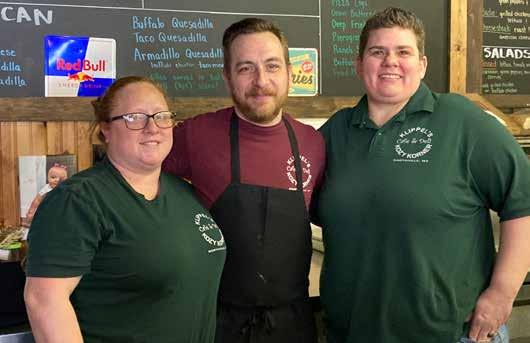
Klippel’s Kozy Korner
WRITTEN & PHOTOGRAPHED BY WENDY HOBDAY HAUGH
Every lucky town has one: that casual, homespun eatery where everyone goes to get good, affordable food and shoot the breeze with friends and neighbors. In Northville, Klippel’s Kozy Korner on Bridge Street is that welcoming, Cheers-like place (minus the alcohol) ‘where everybody knows your name.’ Owned and operated by siblings James and Heather Klippel— who purchased the business from their father, Russell, in 2011—the bustling café/deli recently celebrated its 30-year anniversary.
“I was working in a family restaurant in the Catskills in 1995,” Russ Klippel recalls, “when I saw a FOR SALE ad in the paper for this small place in Northville. I was ready for a change, and the business was up and running, so my wife, Lynda, and I just built on what was already here. We actually moved our family to Northville on Halloween that year. After trick-ortreating with our kids downstate, we all piled into our old station wagon and headed north.”
Two North Country Restaurants Serve Up Great Food & Friendly Service
Having helped out in their parents’ deli since childhood, James and Heather learned the restaurant business from the ground up. “We started out dishwashing, sweeping, and mopping,” Heather grins. “Every kid liked snow days—except for us. We got put to work! We definitely learned a work ethic early. Later, after earning my degree in accounting, I returned to Northville. Dad was on his way out by then, so James and I decided to kind of take things over—and here we are.”
Sibling co-owners Heather and James Klippel with longtime employee/friend Sara Wilson.
According to James, taking over the deli was a natural next step. “Both our parents had run restaurants, so we learned a lot from them. My mother’s father had more of a French-style restaurant with great homemade desserts, and there was a German chef at my father’s restaurant who really knew how to cook. We learned a lot of German foods and baking tricks from him.”
Heather credits her mother with teaching them the importance of patience. “Things don’t always go the way you’d like, so patience is key. Mom was always out front, the first person you saw when you walked into Klippel’s. She was our calm centerpiece, keeping everything together.”
Since purchasing the business in 2011, Heather and James have spruced up the building’s exterior and greatly expanded their line of homemade soups and baked goods. Heather makes their turnovers, muffins, cookies, brownies, rice pudding, and cream pies, along with a wide variety of cheesecakes.
“But James bakes also,” she says, “and our nieces, Talia and Lily, are doing a lot of it now, too. We have all our family recipes in a little book, and we enjoy experimenting, taking a basic recipe and tweaking it.”
Klippel’s Kozy Korner offers dine-in, take-out, and catering. They’ve catered weddings for 100 people, made food for church and school fundraisers, and put on birthday parties for little ones. “We do pretty much anything,” says Heather, “whatever the community needs. If we can do it, we will try our best.”
Comfort foods are a staple at Klippel’s. “We’re known for our daily specials,” James points out, “a lot of them old-time favorites like chicken parm, meatloaf, pot roast, stuffed peppers, and chicken ‘n biscuits. Not many places still offer these items, but they’re popular, they’re our favorites, and that’s why we run them.”
The camaraderie at Klippel’s is palpable. “After 30 years, we’ve had multiple generations coming through our doors,” Russ muses. “We’ve had parents coming with their kids, who now have kids of their own. Actually, we have three generations working here now. Lynda and I still help out, plus James and Heather and two of our granddaughters.”
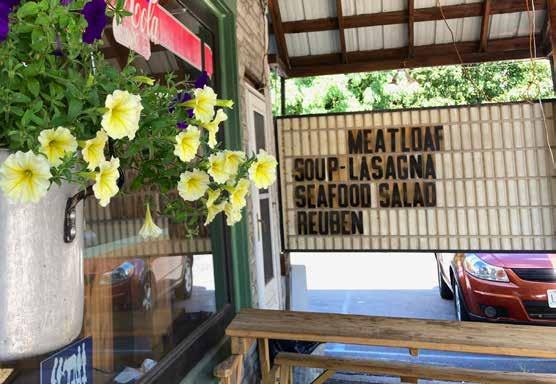
An outside menu board announces Klippel's daily specials.
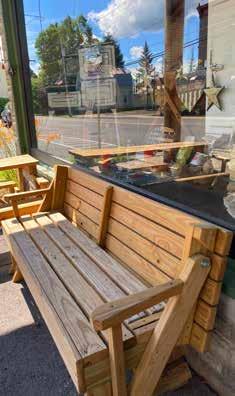
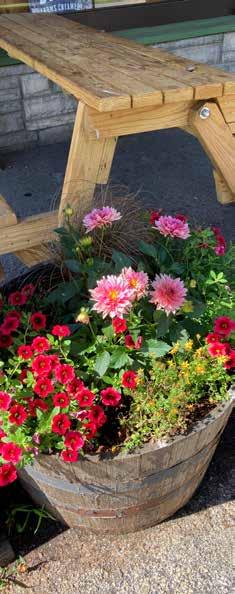
Klippel's Kozy Korner offers takeout, catering, and casual dining, inside or out.
Longtime employee and front-end worker Sara Wilson is a beloved fixture at Klippel’s. “When Heather and I purchased the place,” James explains, “I reached out to Sara, who had gone to culinary school and was actually running a kitchen at the time. We’d been best friends since middle school, and Sara is incredibly friendly. She knows everybody in town, and she isn’t intimidated by our extensive menu board. She’s a great front-end person and a great asset, genuinely interested in everyone who walks through that door. It doesn’t matter if Sara knows you or not. She’s going to know you by the time you leave.” Klippel’s gears its menu towards adults but goes out of its way to meet the needs of school kids who pop in at lunchtime. “We have a special white board for kids, listing our daily specials,” Russ says. “For five bucks, they can have lunch here with their friends. And if someone has a bag lunch and wants to join them, that’s okay, too. We don’t want anyone to feel left out.
“The restaurant business is a lot different now than it was years ago,” he muses. “Unless you have enough staff— and most places don’t have enough staff—you’ve got to make it work for you. Four or five of our Klippel’s workers put in 10-12 hour shifts daily, so years ago we decided to close down on weekends. It’s a lot easier for our staff to get through a 60-70 hour work week if they know they have two days off. We also close down the restaurant during February, our slowest month. That gives everyone a chance to recuperate and regroup.”
Consistency and affordability are key goals at Klippel’s. “Keeping things affordable for the locals is important to us,” James says. “We had a big family growing up, and we want to make eating-out affordable for families, not just on special occasions but any time.”
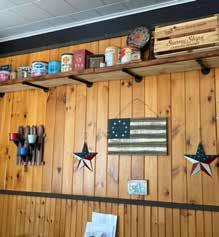
Klippel’s Kozy Korner isn’t flashy. It’s a modest hometown establishment with an impressively large menu board, delicious lunch and dinner options, amazing desserts, and friendly service. Heather, an avid antiques collector, has decorated the eatery with pieces from her own extensive collection. With its vintage displays and soft lighting, there’s a timeless aura to the place that makes it the perfect gathering spot for people of all ages.
“We’ve had plenty of people tell us that they’ve driven by for 10, 20, 30 years and never stopped in,” James says.
“And then, after they finally do stop, we see them almost every week. We have a lot to offer—a lot more than you might imagine when seeing the place from the outside. So, if you’ve ever driven by and wondered about us, I encourage you to stop in and visit.”
KLIPPEL’S KOZY KORNER
221 Bridge St, Northville, NY, 12134 • (518) 863-8550.
Open Monday-Friday, 10 a.m. - 7 p.m. • Closed February
See FB for daily specials: facebook.com/klippelskozykorner12134
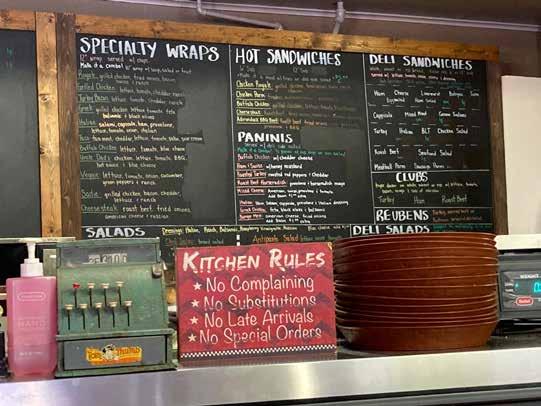
Photo above: Klippel's offers an extensive menu—and some KITCHEN RULES to live by!
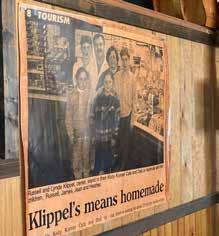
Photos left: The café/deli’s cozy, old-time interior attracts people of all ages. A framed newspaper article heralds the Klippel family's arrival in Northville 30 years ago.
The Alpine
WRITTEN & PHOTOGRAPHED BY WENDY HOBDAY HAUGH
Located along a picturesque stretch of Route 30 in Wells, just eleven miles north of Northville, The Alpine is a gem of an Adirondack restaurant, treasured by year-round residents and seasonal visitors alike. With its rustic elegance and fine-dining cuisine, it’s the go-to place for occasions big and small, fancy and casual. Situated surprisingly close to the road, directly across from the scenic Sacandaga River, The Alpine is easily driven past in a rush— and wellworth turning around to check out!
Since 2013, the restaurant has been owned and operated by the husband/wife team, Chad and Jean (Klippel) Gray. “Chad and I first met in third grade,” says Jean, a former Northville kindergarten teacher, “and we’ve been together since we were 13 and 14 years old.”
Having grown up helping out at her parents’ Klippel’s Kozy Korner café/ deli in Northville, Jean is no stranger to the demands of a bustling eatery.
“My grandparents on both sides had restaurants, and my parents taught me to prepare food and make desserts,” she says. “So I’ve pretty much been in this line of work my entire life. When we took over The Alpine, Chad had already been working there for six years.”
Jean currently serves as bartender, although she says she has done every possible job in the place.
“Except Chad’s!” she quickly amends. “I definitely could not do Chad’s job as chef. I don’t think anyone could do what he does. Sometimes I feel like he could run circles around all of us.”
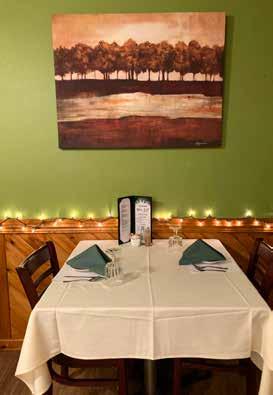
Jean Gray at work behind her restaurant's beautiful Adirondack bar.
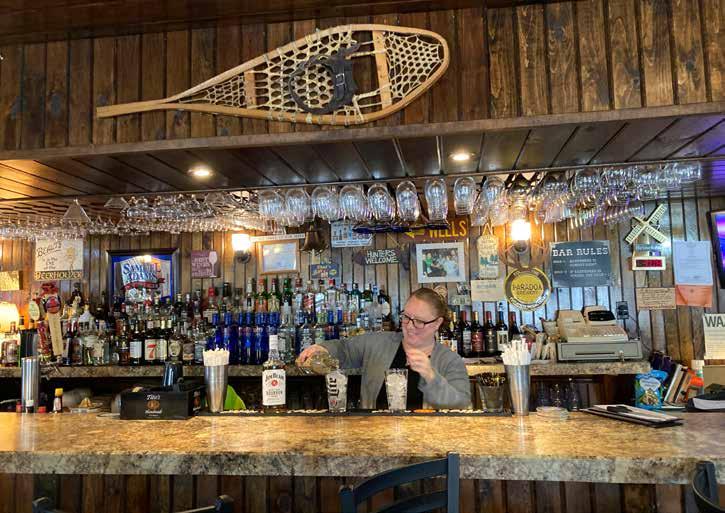
Intimate tables abound at The Alpine restaurant in Wells.
Like Jean, Chad Gray’s food industry career began at an early age. “When I was 13, I was hired to work at the Sport Island Pub in Northville,” he recalls, “and from there, things just kind of escalated. I attended SUNY Schenectady’s culinary arts program for a while, and over the years— through trial and error—I worked my way up in the restaurant business and figured out what worked and what didn’t.”
According to both the Grays and the Klippels, finding good workers, training them, and keeping them remain the biggest challenges for any restaurant. In this respect, the two nearby businesses—Klippel’s and The Alpine—are fortunate to have one another to call on for assistance when unexpected staffing shortages arise.
“When Chad and Jean first opened up,” recalls Jean’s father, Russ, “they
were a little overwhelmed because they got busy right away, so I helped out in the kitchen for a while. Then, after they found kitchen help, they needed a bartender. I hadn’t bartended in 20 years, or even had a drink in 25 years, so I didn’t know any of the new stuff. I didn’t even know how to make a cosmo, so I had a lot to learn. Eight years later, one in the kitchen and seven tending bar, I finally pulled the plug.”
For three years after assuming The Alpine ownership, Jean Gray continued to teach kindergarten at Northville Central. “During that time, my mom helped out by hosting at our restaurant,” she says. “Today, both my parents still help out at Klippel’s regularly, and they help Chad and me by babysitting our kids while we’re working. They’re a great help to all of us.”
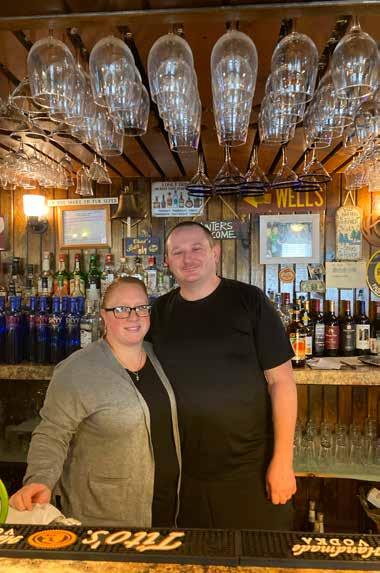
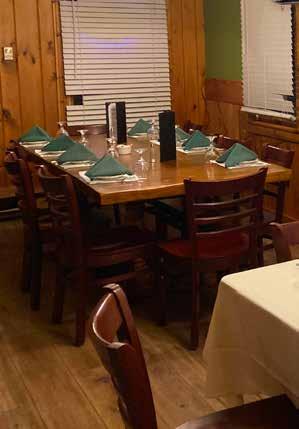
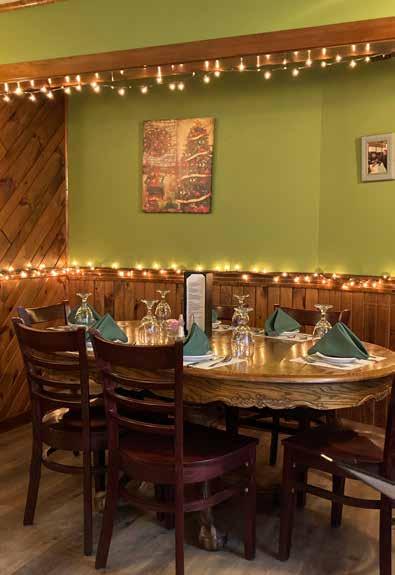
Jean and Chad Gray have owned and operated The Alpine since 2013.
A cozy alcove at The Alpine.
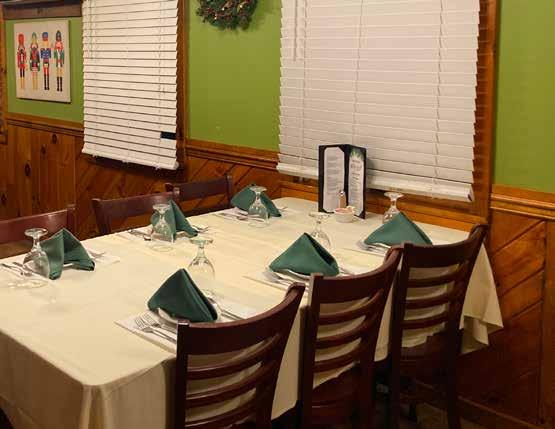
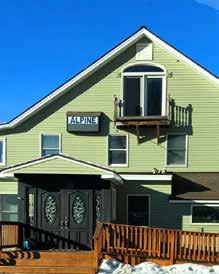
Managing a busy restaurant while raising a family takes some juggling. “There’s a good side and an evil side to owning your own business,” Chad muses. “Our kids are into a lot of activities now, so Jean and I kind of base our schedule around what they’ve got going on. The good news is we can close down whenever we need to attend our kids’ events, and we’re always closed Presidents’ Week in February for the school vacation. On the flip side, though, I’m here working 12-14 hours a day, and we’re only open five or six hours. Running a restaurant takes a lot of hard work and long days.”
Fortunately, looking ahead a few years, an all-new line of Alpine helpers may be emerging. “All three of our kids love to cook with us,” Jean says proudly. “When we were short-staffed last summer, Ethan helped Chad in the kitchen, making salads and desserts, and our daughter Charleston—‘Charlie’— helped us bus tables. She bussed on Valentine’s Day, too, and absolutely loved it. They both realize what it means to work hard and make money.”
The Alpine offers a diverse selection of appetizers, lite fare, entrees, and desserts, with steak, salmon, and haddock specials consistently ranking as bestsellers. “Ninety percent of our food is scratch-made,” Chad points out, “and we can seat around 100 people. But we may turn that number over multiple times in an evening.”
Decadent desserts they’ve offered include peach Melba, chocolate chip cannoli, brownie hot fudge sundae, root beer schnapps parfait, tiramisu, lemon raspberry cheesecake, banana cream pie, and lemon mascarpone cake. And that’s just a partial list!
For over 125 years, The Alpine has been an integral part of the Wells community. “The building itself has a fascinating history, dating back to the late 1800s,” Chad explains. “I don’t know when it was built, exactly, but I have an abstract that shows that the building was sold for the first time in 1898. It was a stagecoach stop at one point, and it served as an inn in the 1940s with rooms upstairs and dining down.”
The Alpine’s colorful legacy continues today with customers regularly streaming in from Amsterdam, Johnstown, Gloversville, Caroga Lake, Lake Pleasant, Speculator, and Piseco. And no wonder! Given its diverse dine-in or take-out menu, delicious food, charming Adirondack décor, and friendly staff, The Alpine is definitely worth a trip from anywhere.
THE ALPINE
920 State Highway 30, Wells, NY • (518) 924-5655
Open for dinner Thursday-Saturday 3-9 p.m.; Sunday, 3-8 p.m. facebook.com/people/The-Alpine/100063615610257 SS
The Alpine's spacious banquet room.
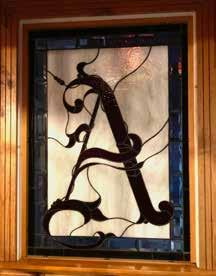
Stained glass windows welcome you to The Alpine.






Randall Perry Photography
Architecturally



This originally ran in Simply Saratoga SPRING 2018, But we loved it so much, it’s making an appearance during our 20th Anniversary Year Long Celebration!
Randall Perry Photography
Architecturally SPEAKING
Follow us as we explore some of the area's unique spaces...
A Perfect Fusion of Art and Home
WRITTEN BY MAUREEN WERTHER | PHOTOS BY RANDALL PERRY PHOTOGRAPHY
For Gary and Dianne Zack, it is truly all about the art. The couple are probably best known as owners of Pane in the Glass on Van Dam Street and the iconic Symmetry Gallery, which closed in 2014 after attracting lovers of blown glass, stained glass artwork and multi-media art forms through its doors for nearly 25 years.
The demands of creating their art and running a successful business were big factors in the Zack’s decision to move from their home on Van Dam Street – a 5,000 square foot converted church – to a more tranquil setting about 10 minutes outside of the city, in Greenfield Center.
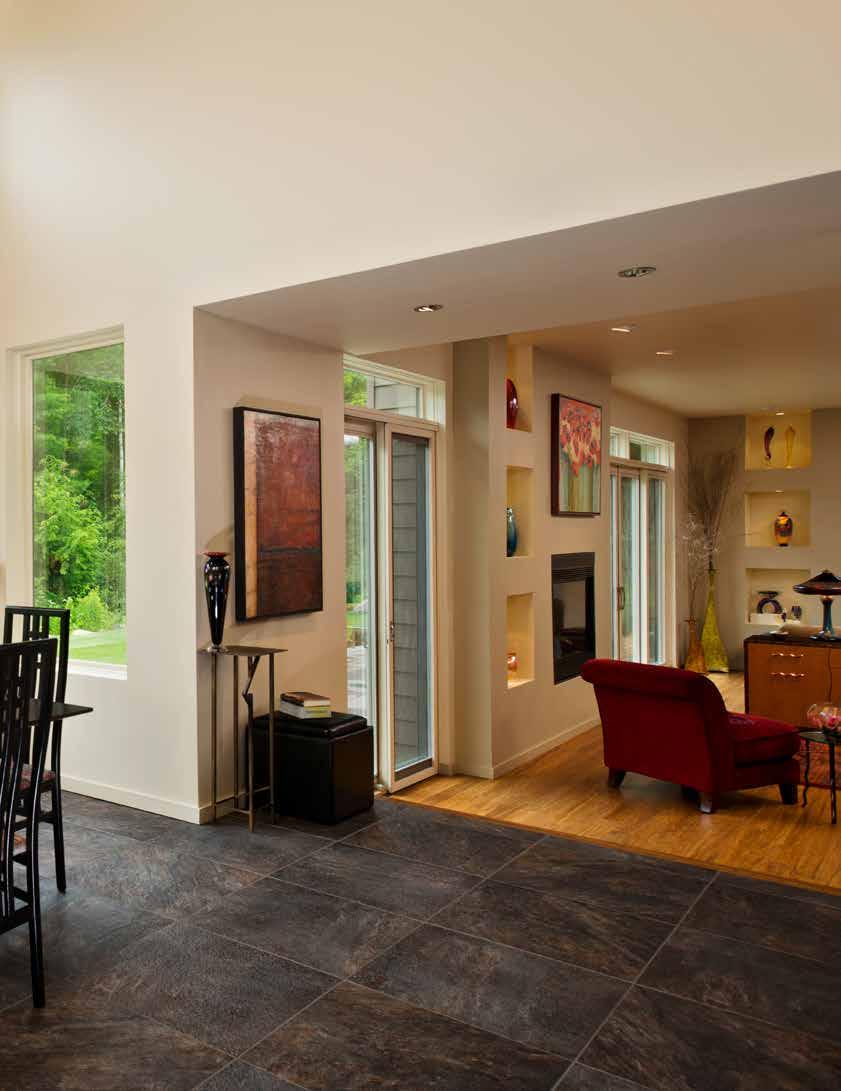
“We worked on the design of the home for about two years,” said Dianne. “We took the spaces that we used most in our former home and made a sort of puzzle out of them.” Then, fitting the pieces of that puzzle together, they came up with the design and floor plan of their new home.
But it is more than a home. The Zack’s have designed a space that showcases the couple’s fine art collection, amassed across a span of 35 years, while also creating a personal sanctuary, a place of respite, rejuvenation and reinvigoration of the spirit and the senses.

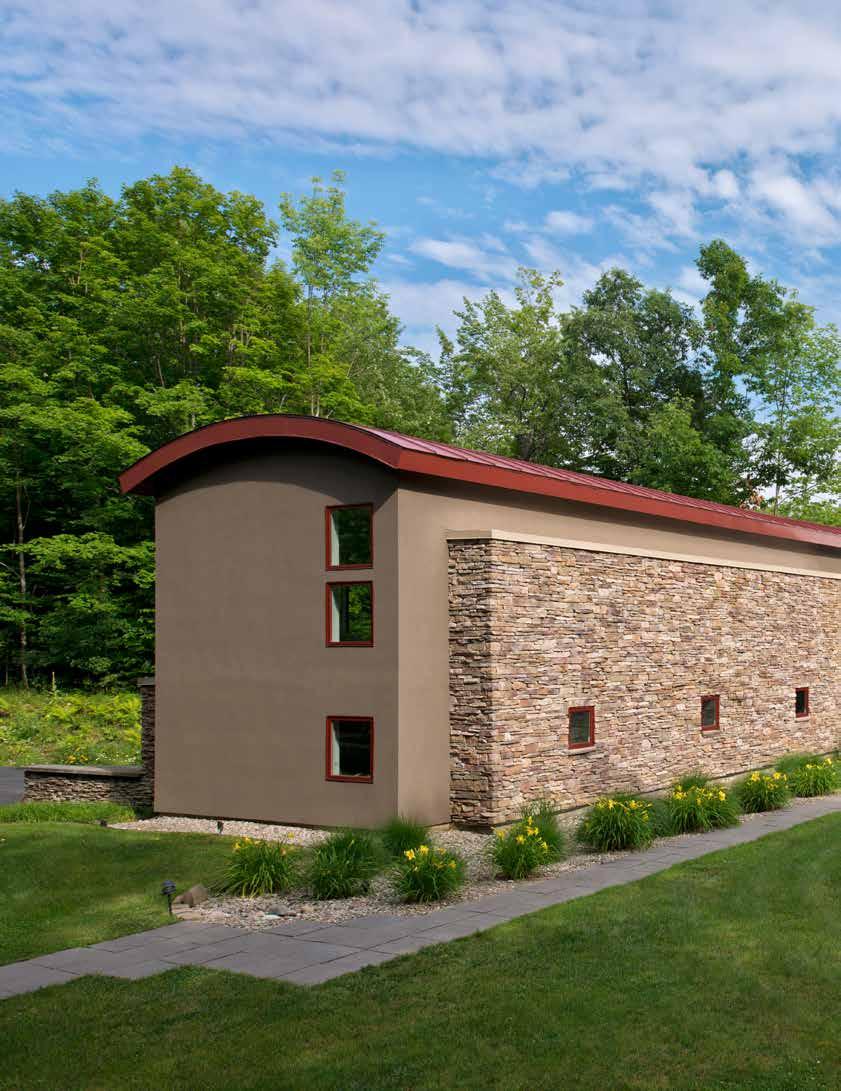
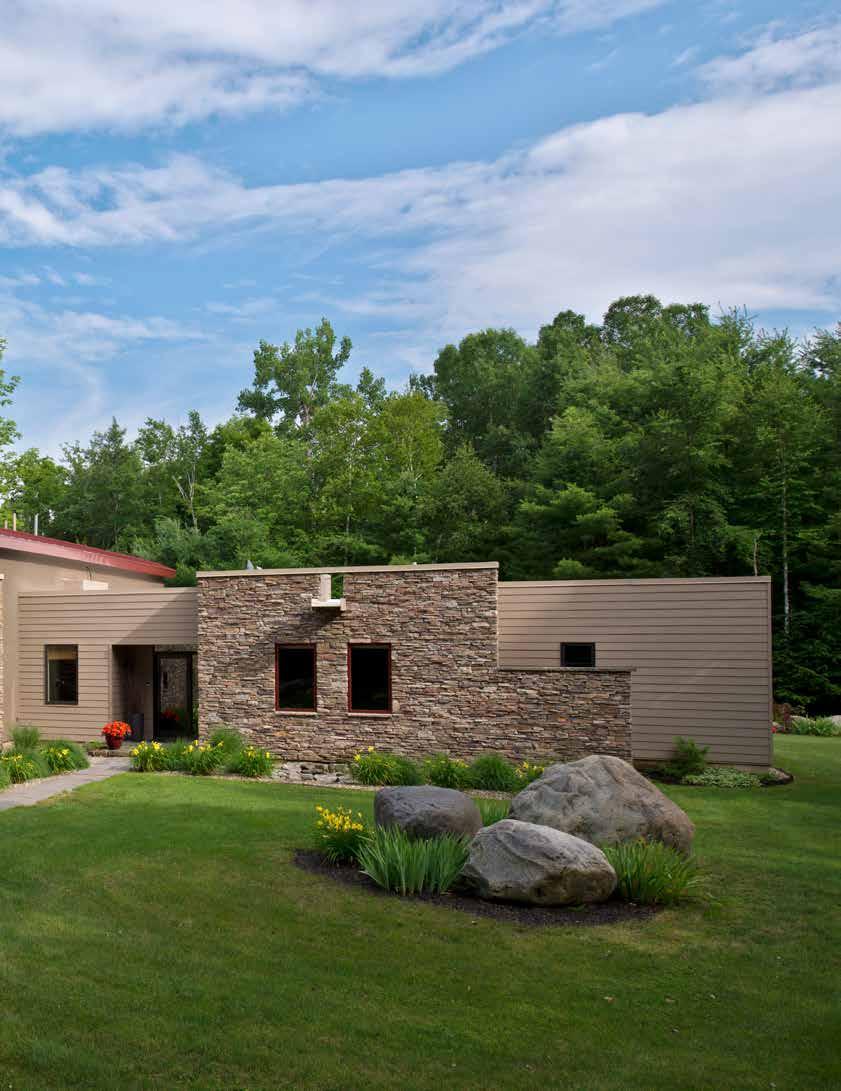
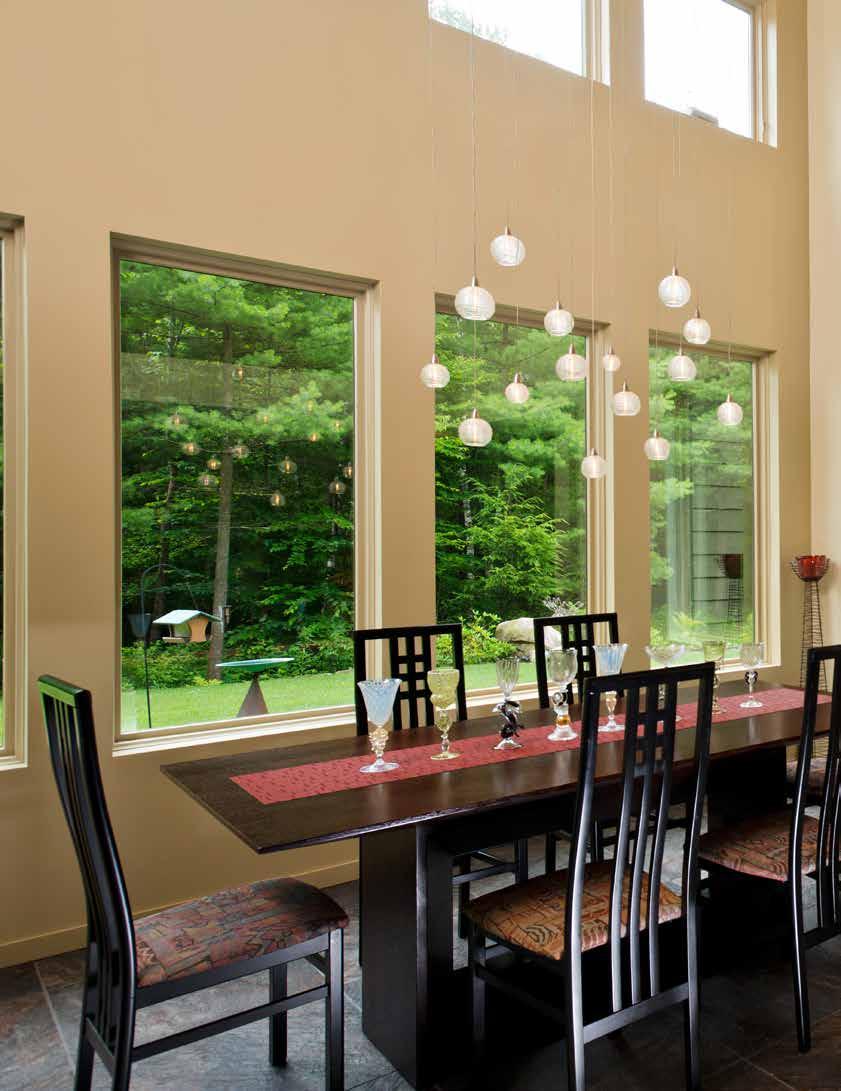
The 4,500 square foot contemporary home stands on five acres of wooded land, invisible from the nearby road and surrounded by birches, alders and firs. The stone exterior, topped off by a brick red metal roof at first seems imposing and impenetrable. But the broad custom-built cherry doors stained in mahogany that adorn the entryway quickly dispel any trepidation. The main entry hallway is the focal point of the home, with a view of the welcoming living area and fireplace. The Zack’s see their entry hall as the synchronistic center of the home. Standing there, you can look north, south, east and west all at the same time. To the west are the main living quarters and on the east are the guest rooms. The living, dining and kitchen areas have a southern exposure, creating warmth of passive solar and inviting relaxed conversation around the couple’s expansive wood dining table.

Randall Perry Photography
Randall Perry Photography




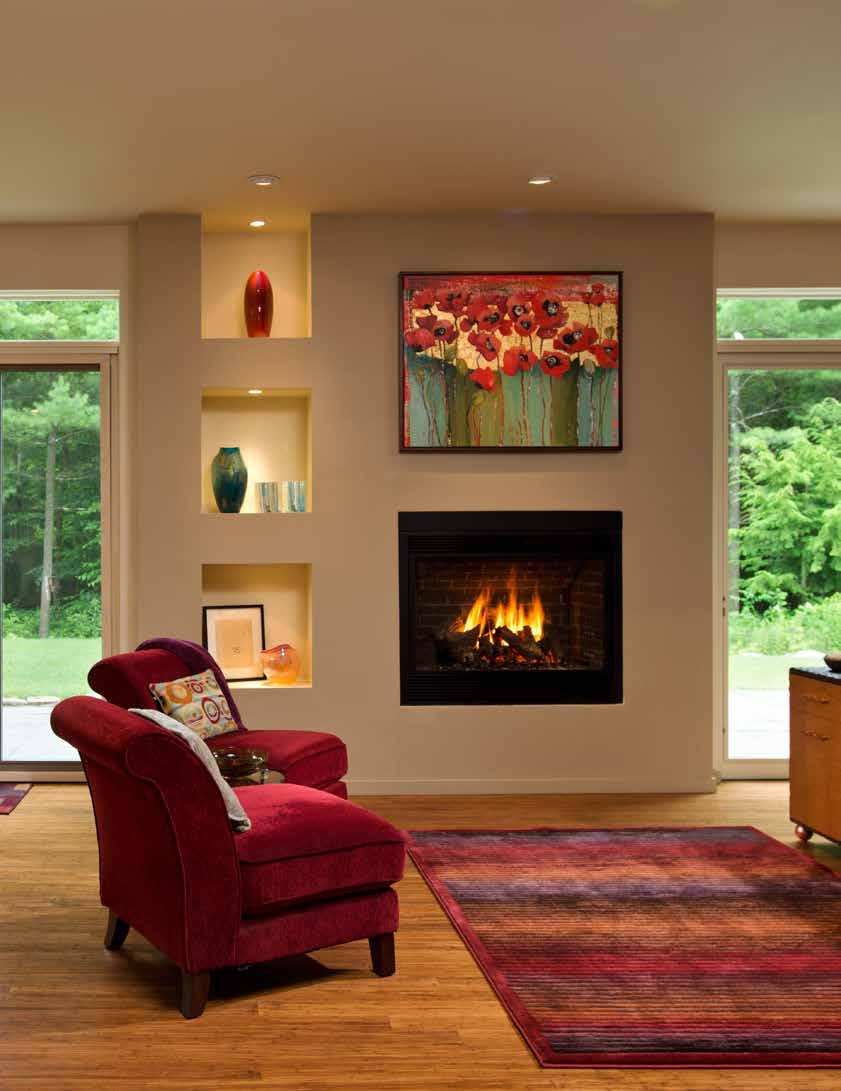
The walls of the home are the repositories of two lifetimes of collected art – glass vases, sculpture, vibrant oils, calming pastels – all drawn together by the deep hues on the central weight-bearing overhead beams, the pale companion walls and the cool bamboo flooring. The curved transoms overhead have a softening effect on the space.
The total effect of colors, textures, shapes and objects both soothe and invigorate. There is an intangible satisfaction that comes from being surrounded by art, beauty and imagination. The clever niches and nooks located throughout the house and carefully illuminated by subtle lighting are continued sources of delight and study.
The Zack’s left nothing to chance in the design and layout of their home, and they spent hours and hours choosing the right textures, colors, lighting and materials throughout their home. While the overall effect is an understated and modest opulence that bespeaks high-priced custom design, in reality, they were very practical in their choices.

Randall Perry Photography
Randall Perry Photography



Gary Zack, who prefers to be called “Zack,” attributes the smart budgeting during the design and construction to his wife, Dianne. While she is a successful artist in her own right, Dianne is also the titular business head of the family.
“We had a budget and I created a spreadsheet,” said Dianne. The spreadsheet had three columns. The first column was for things they would incorporate if money were no object. The second and third items were for functionality and utilitarian design. In that way, they were able to spend their budget wisely. Of course, the master shower – which includes one exterior wall made of ceiling-to-floor glass that overlooks the outdoors, and radiant heating that runs from the pebbled floor below and travels up the stone walls of the shower – fell into the column of “if money were no object.”

Randall Perry Photography
Randall Perry Photography


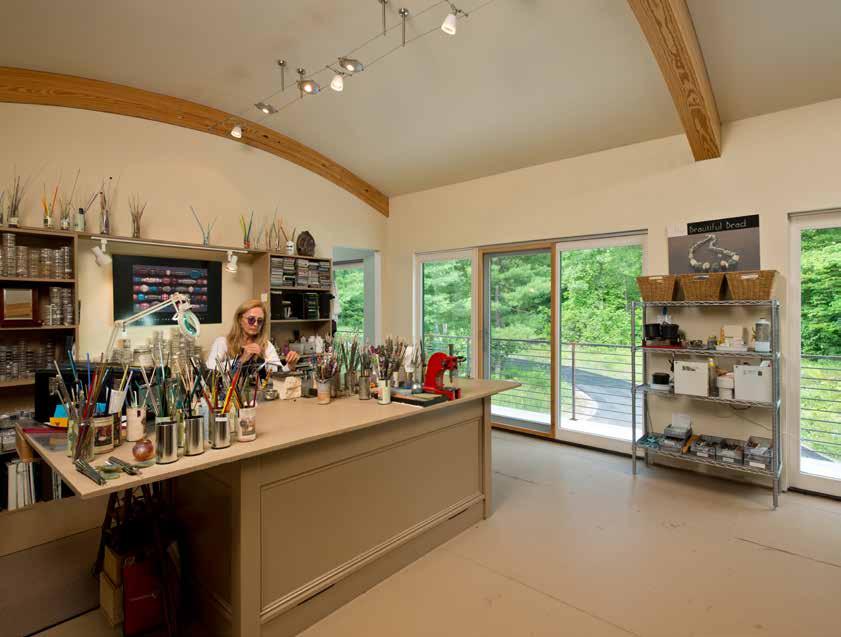
The Zack’s were quick to point out that they really could not have achieved such a marvelous finished product without the help of their architect, Vic Cinquino.
Zack said that, while Cinquino had built his reputation mainly in the commercial arena, he was excited about doing this project.
“We brought our ideas to Vic and he was immediately interested.” Dianne agreed. “When we were going into our first meeting with Vic to see his plans, Zack said to me, ‘Keep a straight face.’ But, I couldn’t! Vic just nailed it!”
But Dianne thought it looked “way over our budget.” However, Cinquino used stock materials and mostly standard sizes, which helped the Zack’s in controlling the costs of building.
Cinquino also made some changes to the Zack’s original plans, which included expanding the screened in outdoor living space (the Zack’s weren’t fully aware of just how bad
the bugs can be in the spring and early summer months) and the positioning of the home on the property to give them the benefit of passive solar heat.
The house is also situated close to Snook Creek. In the spring, when the 15-foot wide stream is flowing in full force, the the sound of the roaring water fills the house and completes the serenity of the place.
While the first floor of the Zack’s home is their personal living space, the second floor is devoted to the creation of their art. Dianne is an accomplished designer and creator of glass bead jewelry and her expansive studio, which sits above the three-car garage and has an eastern glass wall exposure, is where she goes to create, meditate and satisfy her artistic nature. Zack also takes advantage of the space, with his easels located at one end of the space. Dianne’s work bench with blow torch and domestic and Venetian glass dominate the far end of the room.
Randall Perry Photography



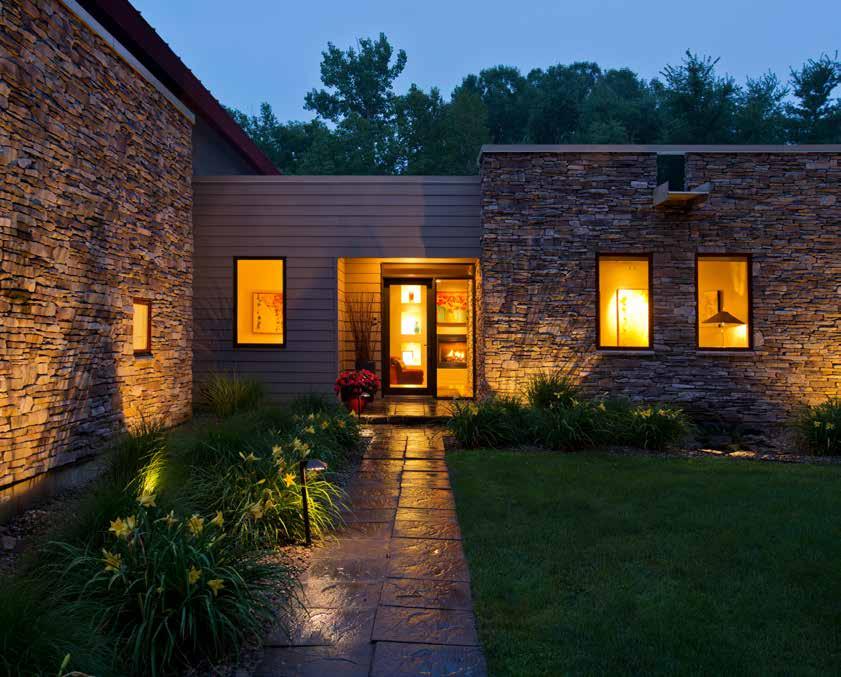
Dianne said that Zack kept wanting to expand the garage, which was fine for her because it meant she would have an even larger studio to work in. She even created a niche for a mini photography studio, where she takes photos of her gorgeous glass bead jewelry designs that she uses to display her products on www.artfulhome.com.
Zack, who’s talents include painting, wood and metal work and, of course, glass blowing, designed and built several pieces of furniture in the house, including the wood and metal side table in the living area. He also designed and made the delicate glass fixture that hangs above the dining
table. Dianne said that they experimented with string and paper cups to determine how low the pendants should hang from the ceiling to create an artistic effect while not impeding the view to the outdoors that the full-length glass windows provide.
While some may think that living in a home that easily doubles as an art gallery might include tiptoe-ing around, think again. The Zack’s five grandchildren, who range in age from 3 to 14, feel completely at home and comfortable in their surroundings. “We’ve had them riding their bikes up and down the hallway,” laughed Dianne.
Randall Perry Photography SS



In the Kitchen JOHN REARDON WITH

Hello my Foodie Friends!
Spring is such a beautiful time. Honestly speaking, it is one of my favorite seasons. Longer days that trigger vivid childhood memories of riding my bike, playing outdoors, and getting to spend time playing with animals. I’ve had a love of animals, something that my father exposed me to early in life. My story is to honor both my mother and father as we celebrate Mother and Father’s Day this spring. My father was raised on a dairy farm in the 1920s and 30s and he loved all animals. We secretly felt that animals could sense his thoughts. They just made their way to his feet and would not leave his side. Mom was always giving us kids a leash and telling us to bring a dog home to its owners. My father passed that love on to his children and we have passed it on to our children. Dad was always bringing home a new pet for us and my mother had a hard time reeling him in. We lived in a neighborhood that was carved out from someone’s farmland. The whole thing was surrounded by cornfields and cows! Dad taught us to respect all animals. He once brought home a very large owl in a giant cage because the owner had suddenly passed and no one wanted him. Mom was not happy but felt bad for the owl. He became friends with the farmer that owned all the land around us and helped him out from time to time. On one occasion the farmer asked my dad for a favor - to care for a group of ducklings while he was away. So, Dad came home with a big wooden box with hot lights and just full of the cutest ducklings you’ve ever seen. He asked us five kids if we thought we could help him take care of them for two weeks? We were all over-the-moon with an emphatic “Yes!” They were Muscovy ducks and needed a lot of care. When the two-weeks were up, the farmer offered us a reward for doing such a good job – a duckling to keep! We were so happy and mom… not so much. I came up with his name, and it was Admiral Pete. Dad built a beautiful duck house for him and he grew fast. Pete would wag his tail like a dog and run to us when he saw us. We played with him every day, he was always following us around the back yard as we marched around the perimeter of our fenced yard. We even invited other little kids in the neighborhood to march with us and sing the Admiral Pete song. Ok, it was corny, but we were seven years old so don’t critique my song writing ability.
“Admiral Pete is really neat with funny little feet and he loves his bread and lives in our shed!”

When he was alone he would still march around the yard making sure his humans were safe. Muscovy ducks are pretty much silent but when they are excited, they make a sound like someone trying to whistle but only wind and a little sound comes out. There was a little boy next door to us who was five years old and he had a cherry tree in his yard. I noticed he would often throw the cherries at Pete from his yard. I asked him to stop and told my mom who said “Wait till your father gets home.” But Pete, he did not want to wait for Dad. Pete found a spot in the fence low enough to jump over and waddled over to little Jimmy’s front porch – and waited for him! Jimmy’s mom called my mom and told her that they were prisoners in their own house with Admiral Pete outside of their door. This worried my mom, so she and Dad had a meeting. With a heavy heart and five children crying for many a night, Dad returned Pete to his friend the farmer, Admiral Pete lived for another twelve years with his brothers and sisters. I was especially heartbroken as I felt like Admiral Pete was mine. So, one day Dad picked me and my brother up from our boy scout meeting and in the front seat was… a beautiful Golden Retriever puppy! I won the naming rights again and his name was Major. A little demotion but he lived to 18! He will be the source of future stories.
Something very unique about Admiral Pete was that along with his protection of us, he loved my mother’s cooking. I think he could smell her getting dinner ready each evening. Oddly enough, when my mother was cooking dinner, Admiral Pete would somehow find his way to the back door of the house and tap at the door. This left my mother with the dilemma of having to give Admiral Pete a “treat.”
Preparing food was my mother’s way of bringing us together at one table despite preoccupations with our own lives. As I reflect on this time, I do recall that my mother had some key kitchen tools that were her “go to” as she prepared each meal. My mother was intent of having some key items always available in her kitchen arsenal. I always saw on the counter or stove these items, as my mother made her culinary creations. Almost any chef will tell you that a quality chef’s knife is the most important tool in any cook's arsenal and likely the single piece of kitchen equipment you use the most. When selecting a good chef knife, look for the balance between the blade and handle to feel in control during delicate tasks like cutting through slippery tomato skin. I can recall my mother’s Dutch oven always being situated on top of the stove. She made almost everything in it. A good Dutch oven is usually made of heavy-duty cast iron coated in hard, resilient enamel, ensuring they will last a lifetime with proper care
Another key piece that was my mother’s goto over the years, was a good stainless steel open skillet or fry pan. When selecting a good pan, even heat distribution, a comfortable handle, and noticeably durable construction is important to consider. Consider investing in one capable of lasting for years and looking good while doing it. A cutting board can make or break a recipe. If your kitchen only has some dinged-up, thick plastic boards that are warped from the dishwasher or those thin, floppy ones that scoot all over the counter as you chop, it's time for an upgrade. And of course... the wooden spoon. One of my mother’s favorite cooking tools, and still my wife’s favorite, is the wooden spoon. My mother used a wooden spoon for all of her daily cooking tasks. She would let us “taste” her sauce using a wooden spoon. There were wooden spoons for frying the meatballs, stirring the sauce and one that would sit at the kitchen table while we ate... just in case!
Having the right tools for the job is one of the easiest ways to set yourself up for success in the kitchen. Stop by Compliments to the Chef, your Neighborhood Kitchen and Cutlery store located at 33 Railroad Place in Saratoga Springs for the “cool tools” you need to properly equip your kitchen. Cherish your memories and Remember: “Life Happens in the Kitchen.”
Take Care, John & Paula
Roasted Honey-Dijon Salmon with Spring Vegetables

Recipe courtesy of Food and Wine and foodandwine.com
INGREDIENTS
• 2 bunches red radishes, ends trimmed
• 1 bunch thin carrots, ends trimmed, halved crosswise
• 1 large shallot, sliced lengthwise
• 2 tablespoons plus 1 teaspoon olive oil, divided
• 1 3/4 teaspoons kosher salt, divided
• 1 teaspoon black pepper, divided
• 2 tablespoons honey
INSTRUCTIONS
• 1 1/2 tablespoons Dijon mustard
• 1 teaspoon sriracha
• 1 (1 1/2-pound) side of salmon, skin removed
• 8 ounces fresh sugar snap peas, strings removed, halved lengthwise
• 1 bunch fresh asparagus, trimmed
• 1/2 cup fresh mint and/or fresh flat-leaf parsley leaves, for serving
• Lemon wedges, for serving
1. Preheat oven to 425°F. Cut radishes in half; quarter any large radishes. Combine radishes, carrots, and shallot in a medium bowl; toss with 1 tablespoon olive oil, 1/2 teaspoon salt, and 1/4 teaspoon pepper.
2. Spread vegetables in an even layer on a large rimmed baking sheet; roast in preheated oven until vegetables have started to sizzle and brown, about 10 minutes.
3. Stir together honey, mustard, and sriracha. Drizzle salmon with 2 teaspoons olive oil, and sprinkle with 3/4 teaspoon salt and 1/2 teaspoon pepper. Spread mustard mixture over top of salmon.
4. Remove vegetables from oven. Toss vegetables; clear a space in the center for the salmon. Nestle fish onto baking sheet, and return to oven. Roast 10 minutes.
5. Toss snap peas and asparagus in a bowl with remaining 2 teaspoons oil, remaining 1/2 teaspoon salt, and remaining 1/4 teaspoon pepper. Remove pan from oven; scatter asparagus and snap peas around salmon, stirring so they make contact with the pan.
6. Return to oven, and roast until salmon flakes easily with a fork and vegetables are tender, about 10 minutes. Transfer to a platter; sprinkle with herbs. Serve with lemon wedges.

Entertaining
RALPH VINCENT WITH Ideas
for relaxed entertaining your guests will
love…
and you will too!
A Brunch Menu to Celebrate Spring!
For me, brunch is the quintessential form of relaxed entertaining, and one of my favorite ways to celebrate the arrival of Spring with family and friends. Key to keeping things easy and laid back for your guests (and yourself!) is to serve a buffet of delish and easy to prepare dishes. Everyone can serve themselves and you get to relax and enjoy yourself as well!
I’ve put together some new Spring-inspired brunch worthy recipes that include a bit of advance preparation to save you time and stress. All you need is to add a few items, maybe a prepared fruit salad and some ready-made sweets like scones, cinnamon rolls, or whatever pastries you like.
So, let’s get started!
Brunch and bubbly libations seem to go hand in hand, but instead of the usual Mimosa or Bellini try my spin on the classic French 75. The Saratoga 75 is also a gin based champagne cocktail but has the added sweetness - and a bit of a kick - from the edition of Elderflower Liqueur. You can make this drink in batches to serve multiple cocktails quickly or set up a bar station and let your guests serve themselves. And be sure to have some non-alcoholic drink options as well.
The Strawberry Balsamic Lemon Tartine is a cute little open-faced sandwich that looks as good as it is to nosh on and has a Toga twist as well! Sicilian Lemon Balsamic Vinegar from the Saratoga Olive Oil Company is reduced and mixed with fresh strawberries and piled on toasted bread slathered with a mix of ricotta cheese and basil. Yum!
The Artichoke and Spring Onion Strata is a savory main dish casserole that you put together the night before. All you do the next morning is bake it, saving you time and stress. Artichokes and Spring Onions combined with bread cubes and cheese are baked in an egg custard to bubbly golden perfection. What could be better than that?
I hope you and your guests enjoy these recipes. As I always say, have fun in your kitchen, cooking and making drinks for the people you love, and remember...
it doesn’t have to be perfect, it just has to taste good!
Strawberry Lemon Balsamic Tartine
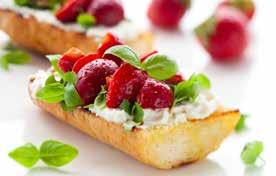
• 1 loaf of Italian bread cut into 1/2 thick slices
• 1 lb. of diced fresh strawberries
• 1/2 cup of Saratoga Olive Oil Co. Sicilian Lemon Balsamic Vinegar
• 1 & 1/2 cups of ricotta cheese
• 1 tablespoon of fresh minced basil or 1 teaspoon of dried basil
• 1/2 teaspoon of salt
• 1/4 teaspoon of freshly ground black pepper
Directions: Preheat your oven to 350 F. Arrange the bread slices in a single layer on a baking sheet and toast in the oven for about 5 minutes until lightly toasted. Remove and cool.
Pour the vinegar into a small saucepan and reduce it by about half over medium heat. Allow it to cool a bit. In a mixing bowl combine the strawberries and vinegar reduction. In another bowl mix the ricotta cheese with the basil, salt and pepper. Spread each bread slice with a generous tablespoon or more of the seasoned ricotta and top each with a tablespoon of the balsamic strawberries. Arrange on a serving platter. Chill until party time.
Artichoke and Spring Onion Strata

• 1 tablespoon of olive oil
• 1 cup of thinly sliced scallions
• Two 15-ounce cans of artichoke hearts, drained and coarsely chopped
• 1 & 1/2 teaspoons of minced garlic
• 1 & 1/2 teaspoons of dried thyme
• 8 large eggs
• 3 cups of whole milk or half and half
• 2 cups of shredded Italian blend cheese
• 1/2 cup of grated Parmesan cheese
• 1 teaspoon of salt
• 1/2 teaspoon of black pepper
• 1 loaf of French bread cut into 1-inch cubes to make about 8 to 9 cups
Directions: Heat the olive oil in a large skillet over medium heat and add the scallions, garlic, thyme, and artichokes, sauté until the onion is soft and translucent. Remove from the heat and allow it to cool. In a large bowl, whisk the eggs and milk or half and half together. Stir in 1 & 1/2 cups of the Italian cheese blend, Parmesan cheese, salt and pepper. Add the cooled artichoke mixture and the bread cubes and stir gently to combine. Transfer the mixture to a buttered 9x13 baking dish, sprinkle with the remaining cheese. Cover and refrigerate overnight. When ready to bake, remove from refrigerator, uncover and preheat your oven to 350 F. Bake for about 50 to 60 minutes or until the egg and bread mixture is set and lightly browned. Allow to cool for 15 minutes before serving.
Saratoga 75 Cocktail
Ingredients for one cocktail:
• 1 ounce of your favorite gin (I prefer a London Dry Gin like Beefeater, but you can use one of the many artisanal gins that are available nowadays).
• 1/2 ounce of fresh lemon juice
• 1/2 ounce of Elderflower liqueur
• Chilled Brut Champagne

Directions: Measure the gin, lemon juice, and Elderflower Liqueur into an ice filled shaker, secure the lid and shake it like crazy. Strain into a champagne flute and top off with chilled champagne. You can make this drink in batches as well. In a pitcher combine the gin, lemon juice, and Elderflower Liqueur for as many drinks as you think you will need. Chill the mixture in the refrigerator. To serve, fill each flute about 1/3 full and top off with Champagne. Cheers to springtime!

Acquiring an Eye for Garden Design
WRITTEN BY MADISON BLODGETT, COMMUNITY HORTICULTURE EDUCATOR
AT CORNELL COOPERATIVE EXTENSION SARATOGA COUNTY
As a new homeowner with a blank canvas for a yard, I excitedly visited my local garden centers and purchased everything I thought looked pretty. I remember thinking, “I’ll make it work,” and coming to the horrible realization that what I’d selected for beauty couldn’t tolerate the same sun exposure. Some that I bought small had unexpected mature heights. Worst of all, I had such a diverse assortment that my new garden looked like confetti. The purposeful gardener I am today is a far cry from how I began. Avoid my novice mistakes by bearing a few simple design concepts in mind, and your next shopping trip will be well spent!
THE SITE

When envisioning the layout of your future garden, consider its shape and nearby features. For an island bed, the tallest plants will be centered, encircled by medium-height plants, with the shortest along the perimeter. This ensures your garden is beautiful from every angle without hiding flowers. Planting a large specimen such as a shrub or ornamental tree will “anchor” the bed. While it doesn’t have to be dead center, avoid planting it on a far end. If your garden is raised or tiered, creeping or cascading plantings may help soften the edges. A garden bed against a structure has different schematics; tallest go in the back, with medium height plants in the center, and shortest at the front. Try adding interest and height with a trellised plant. When planting shrubs or trees by a building, factor in mature size and allow for plenty of distance to grow, saving you potential structure damage and awkward pruning down the road.

COLOR THEORY
A basic understanding of color theory helps create balance, cohesion, or contrast in your garden beds. Warm colors (reds, oranges, and yellows) appear to come forward in the landscape and are used to draw the eye toward them. They evoke a lively, energetic mood. Conversely, cool colors (violets, blues, and greens) appear to recede in the landscape, making small spaces feel bigger. They elicit a sense of calm and tranquility. When you combine colors, you further influence the mood. Remember that color wheel you learned about in elementary school? Complementary colors, located directly opposite each other on the wheel (purple and yellow, blue and orange, red and green), work together to make the other pop. Adjacent colors, near each other on the full wheel, create a harmonious balance when paired. A monochromatic color scheme focuses on just one color, offering cohesion while emphasizing plant form and texture.


GROWTH HABITS
TEXTURE
Create a stimulating, visually pleasing garden by incorporating various textures. Consider soft, fuzzy Lamb’s Ear, spiny Globe Thistle, the fluffy inflorescence of Smokebush, curly-cued Corkscrew Rush, or the fern-like foliage of Yarrow. Accentuate textures by grouping contrasting ones; place a large, smooth-leaved Hosta alongside Astilbe, another shadeloving perennial with serrate-edged foliage and feathery flower plumes.
Take note of the growth habit of a plant, which is its mature form. Mounding, climbing, erect, and creeping are a few terms you’ll run into at the garden centers. When assigning spots in the garden, balance each other’s growth habits and remember to fill in the gaps. For example, tall, erect flowers such as Foxglove might be staggered with a medium-sized vase-shaped bush, such as a Rose. This way, the shortest flowers in the front of the bed aren’t left with a towering wall behind them. Instead, our eyes will float along the varying levels of height.

GROUPING
The way in which you plant your beds ties everything together. Refrain from scattering single specimens throughout. Instead, plant in “drifts”- larger groupings of the same plant. This technique mimics nature and better attracts pollinators. So, while it may cost more upfront, grab several of each plant you select when you’re at the store. Lastly, follow spacing requirements to avoid nutrient competition and disease pressure later.
Effective garden design is multidimensional and harmonious. Take cues from the natural world around you when building your beds. Keep the elements of design front and center when selecting plants. Additionally, Cornell University has wonderful online resources that can help you select the right plant for the right place. Take advantage of these resources, draw up a plan, and plant intentionally to create a respite you’ll enjoy for years to come.
Happy gardening, friends!





Looking Back
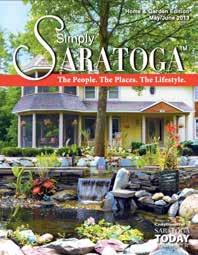


1. Chris' first issue as Editor!
Cover photo by Mark Bolles
Simply Saratoga Home & Garden 2013

2. This was the first time "Celebrating Saratoga" appeared, written by Charlie Kuenzel and Dave Patteron. I can still remember them visiting our Case Street office pitching their idea - to me!! I had been the editor for less than one year, and they wanted to run with me... I couldn’t have been prouder!
Simply Saratoga Spring 2014
3. SPAC's 50th Anniversary! Simply Saratoga Summer 2016
4. Stewart White’s series "Saratoga Reading Room" Simply Saratoga Spring 2019





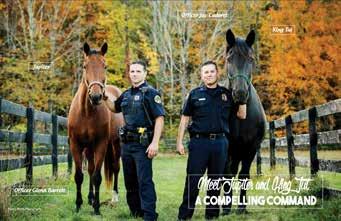









5. Contributor Carol Godette's first series "Mom & Pops." Simply Saratoga Home & Garden 2016
6. Meet... Randall Perry - our Architecturally Speaking series award-winning photographer! Simply Saratoga Fall 2018
7. Saratoga's Mounted Patrol: Officers Glenn Barrett with Jupiter & Jay Cadoret with King Tut Simply Saratoga Holiday 2015
8. One of the EARLY mags when each issue had a different SEASONAL name! Autumn Lane 2010
Image provided by the Keeneland Library Hemment Collection, listed as Frank Bishop and unidentified woman, 1909-1910 (who the author believes is Gertrude Bishop). At the races this day she is wearing a wide hat and a day dress, which had a high neck of lace, a distinctive "pigeon front" or "mono bosom" blousy front bodice, nipped in at the waist with an "S-bend" or "health corset,” and a narrow skirt that flares as it reaches the ground.
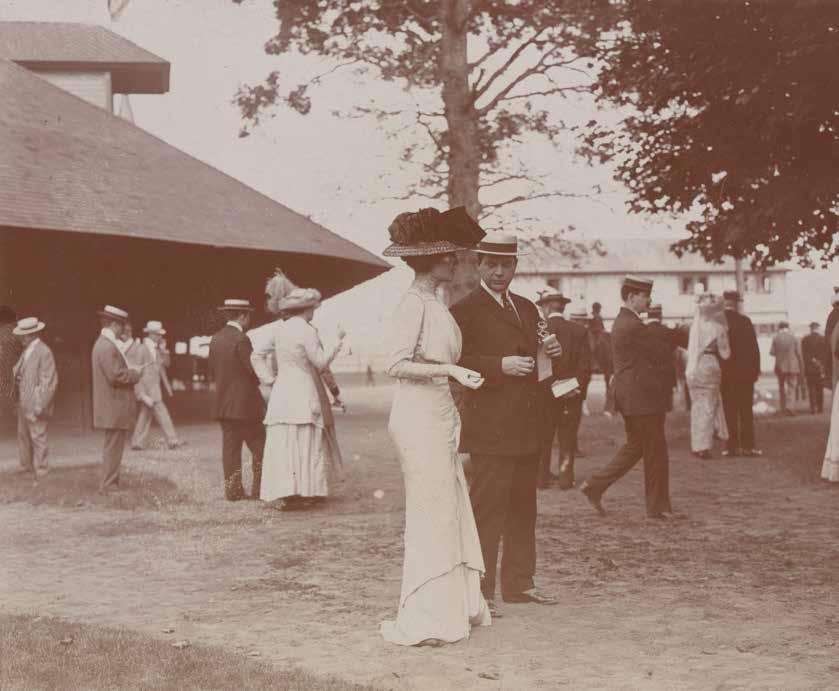
HISTORY
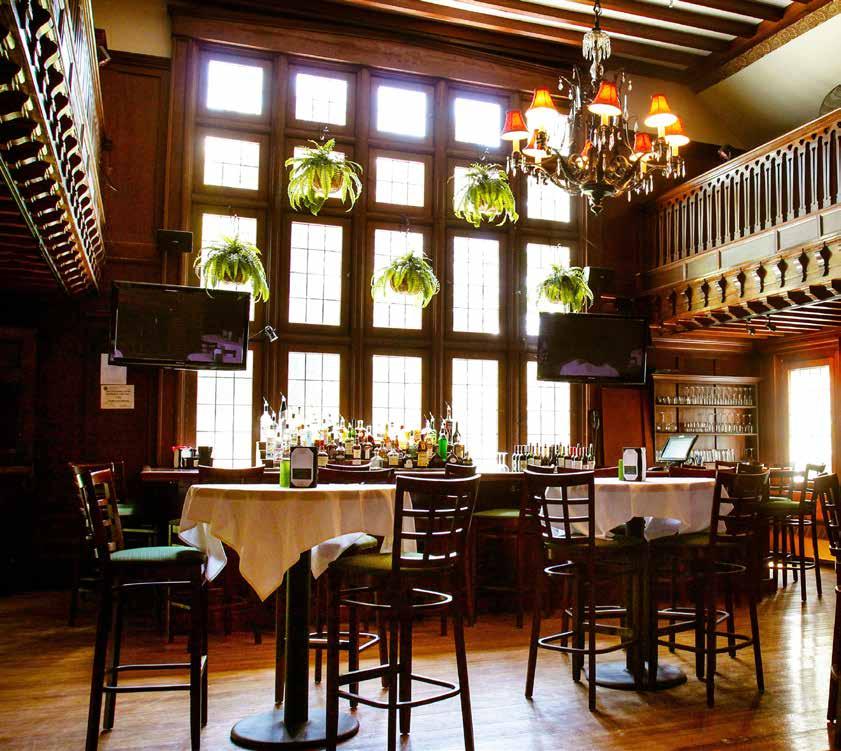
The Lodge
Casino Hotel
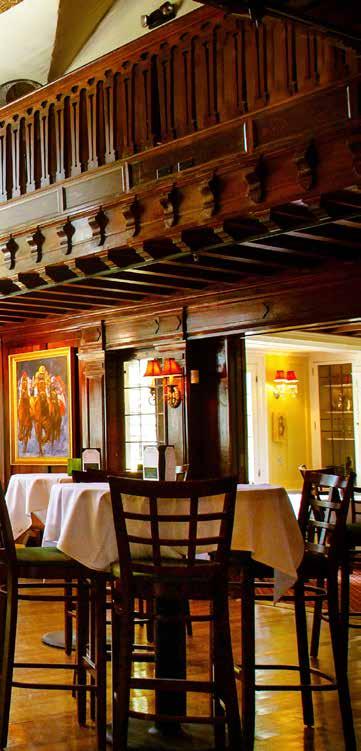
William C. Whitney certainly left his mark on Saratoga Springs in so many positive ways. It is difficult to begin a historical narration of any sort without mentioning his name; please count this as one more. He had retired from a busy professional life and political career and sought satisfaction by improving the Race Course to the facility we now enjoy and acquired large pieces of property along Union and Nelson Avenues to achieve this end. He planned a personal retreat on property he had purchased from the Eddy Family, where Nelson met Crescent Avenue, but his unexpected 1904 passing prevented this arrangement.
His son and executor, Harry Payne Whitney, sold the property in the early spring of 1906 to his friend Francis C. Bishop. Both these men were among the best polo players in the world and also owned Thoroughbred stables.
Frank Bishop and his wife, the former Gertrude Pell, who was well known on the ladies’ tennis circuit, decided to continue the elder Mr. Whitney’s vision for a country home, with training stables and a track, at One Nelson Ave. The couple had only recently wed, and G. Blair Painter and Andrew Miller, Saratoga Association secretary-treasurer, were attendants. These two gentlemen were Frank Bishop’s partners in Newcastle Stable, which they had formed the year before, and placed under the care of trainer Thomas Welsh to contest in their red and white colors.
During August of 1906 Newcastle Stable sponsored a clambake for horsemen, and at this symposium the Jockey Club‘s recent resolutions were read aloud. This summer was tapering into election season, where a serious foe to Thoroughbred racing, Charles Evans Hughes, was nominated for Governor by the dominant party in upstate New York, and the knife-held-to-the-throat of Saratoga commerce would be decided at the polls.
Gertrude and Frank Bishop continued to plan their Saratoga summer-place-to-be, despite the harsh political winds, and contracted with Boston/Baltimore architect Arthur Wallace Rice to design their dream home. The Bishops wanted their summer home to be constructed in the then leading-edge of architecture. The style that Architect Rice chose was the Craftsman bungalow, which resulted from the Arts and Crafts movement of the early 1900s.
The attractive building, still existing and in use today, is a two-story structure with many windows, those on the first floor framed by engaged columns, which created a stylistic segue between the indoor and outdoor spaces. The roof is a pleasant combination of gable and hip styles, with multiple dormers, and open eaves with exposed rafter tails. The overhangs are supported by decorative yet functional corbels, with the exterior surface covered with split cedar shakes painted forest green.
The Craftsman style differed from the ornate Victorian homes mostly constructed during that era, with undisguised features such as exposed structural elements, quality natural materials and detailed millwork. Function, simplicity and handcrafted details were major tenets of this style.
The exterior of The Lodge is clad in green cedar shakes, accented by the white trim of the numerous windows. Near the close of the Victorian era, the taste which fashioned design of the country house changed toward simplicity and practicality. Author-supplied photo.
The central hall is prepared for merrymaking. Photo courtesy of Saratoga Casino Hotel.
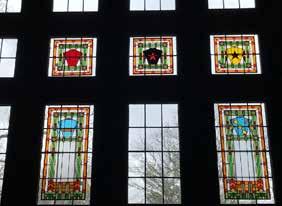
The main and center room of what was then known as the “Bishop Bungalow” is open for the full two stories, and is surrounded by a second story balcony, which provides an excellent view of the room below and the large fireplace and hearth, while also providing access to the second-floor rooms. The quartersawn balusters support a railing and ornamental parapet around the balcony and complement the turned balusters of the accessing main stairway. This greatroom, or central hall, is finely paneled and flanked by a parlor on each side that includes built-in storage. In the tradition of the Craftsman cottage, all the assembly rooms have exposed ceiling beams.
Architect Arthur Wallace Rice used an interesting fenestration with a series and parallel arrangement of windows to emphasize the vertical line that draws the eye upward, demonstrating the height of the central hall. The windows are both in horizontal bands and vertically stacked, illuminating the main gathering place during the day and projecting warmth after dark. Recently, stained-glass panels in the colors of several racing stables were added, enhancing the effect.
Construction of the Bishop Bungalow continued, with the local firm of Jesse S. Mott & Son acting as the contractor. Mrs. Bishop and her mother oversaw the work from their United States Hotel domicile between trips to Newport, where she competed in the National Tennis Championships (presently known as the US Open). Before the structure was completed, Governor Hughes was elected and Thoroughbred racing, especially in Saratoga, would see a paradigm shift take place due to his executive objection to the sport. This would culminate in a ban on racing across the Empire State for the years 1911-12, leading the partners to dissolve Newcastle Stable.
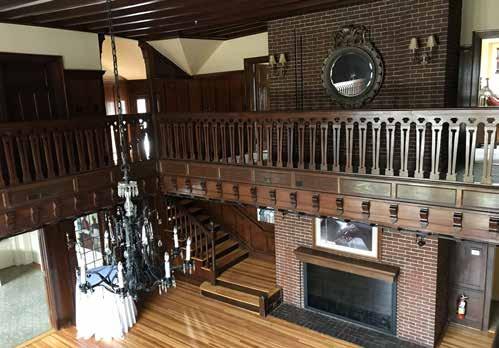
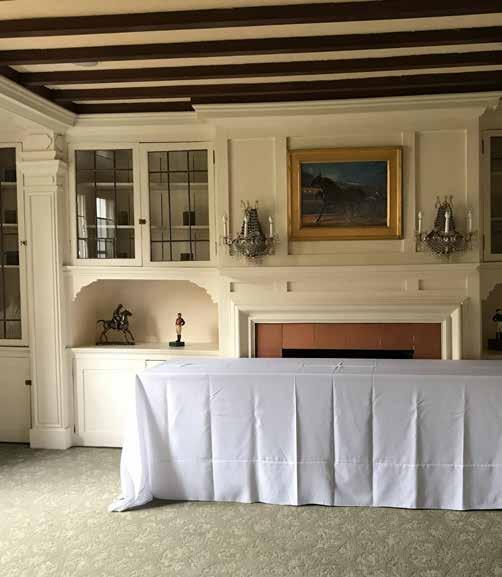
This parlor features built-in cabinets that exemplify the Craftsman-style bungalow. Author-supplied photo.
The Craftsman style balusters of the balconies accent the extensive woodwork featured throughout the building. Author-supplied photo.
The stained glass panels extend the racing motifs used in The Lodge great room. Author-supplied photo.
Stockbroker and Jockey Club member Frank Bishop and his athlete wife started their family at the same time their Saratoga abode was completed, and the residence was desirable to others during the track season. They leased the new structure in succeeding years to Mr. and Mrs. Herman Duryea, William Fanshawe, Saratoga Association president Richard T. Wilson, Andrew Miller and Gifford Cochran, where the Thoroughbred world enjoyed many banquets. The couple sold the Bishop Bungalow in 1923 to a consortium who planned to operate a restaurant there.
The stable on Nelson Avenue would be the quarters for French sensation Epinard when he visited the Spa in 1924. The property was then transferred to Anita V. Trempher of New York City, who operated a restaurant and guesthouse she called Cedar Lodge.
Title to Cedar Lodge next transferred to Nathaniel Evens, whose notorious reputation was well known to law enforcement from his possible connection to Arnold Rothstein and the 1919 World Series fix and his silent partner in operation of the fabulous Brook Roadhouse out Church Street where illegal gambling was conducted in arguably the most extravagant speakeasy to have ever existed in Saratoga Springs. Nathaniel Evens leased the Cedar Lodge long-term during most of the 1930s to Joseph Leiter and later Walter Schuttler, both owners of racing stables.

Mr. Evens’ heir would sell the property to a partnership, which again operated the structure as a restaurant when the Saratoga Harness Racing Association, headed by W. Ellis Gilmour, was granted a charter of incorporation in early 1941. The new track was planned by Albany architect Marcus T. Reynolds, who earlier designed the Gideon Putnam Hotel.
Less than a year after the end of World War II, the Saratogian reported,
“The Saratoga Raceway has purchased Cedar Lodge and 25 acres of land adjoining the Nelson Avenue Raceway property to the south, and already has taken possession. There are no immediate plans for the large residence in the southeast corner of the property, but some of the land adjoining the present parking lot of the Raceway will be used to provide additional parking space.”
Frank L. Wiswall, who succeeded Mr. Gilmour as president of the Saratoga Harness Racing Association, occupied Cedar Lodge as a summer home with his family. The structure also provided administrative offices for the Raceway.
In 1990 Raceway Management began an expansion of the facility beyond harness racing. One of the new features, next to the recently constructed polo grounds, would be once again operating the Bishop Bungalow as a restaurant in 1997, now simply named The Lodge. This restaurant would function on a concession basis, first under The Elms of Ballston Spa and later Siro’s, but it was soon realized that the facility excelled at hosting distinctive occasions with weddings becoming a specialty.
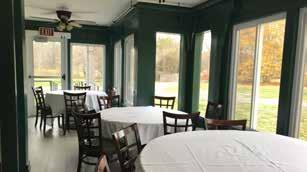

Rooms in the bungalow that were designed to house the servant staff, and even their staircase, have been converted to kitchen and preparation areas, with the second-floor bedrooms providing a sequestered area for groomsmen, and the bride and her attendants to prepare themselves on their big day.
Like many structures of a certain age in Saratoga Springs, The Lodge is felt by some to harbor a spectral presence, a difficult to describe sensation of a welcoming female form who links back to so many events of the past in a spirit of hospitality.
The Lodge can comfortably seat numerous guests for any type of special occasion or wedding, and the banquet facilities can be pleasantly expanded to the outdoors with the use of a large protective marquee, or canopy strung with chandeliers over a stamped concrete floor, allowing fresh air and dancing under the stars to be part of the celebration.
The Lodge annually hosts large gatherings, such as the Saratoga Hospital summer gala, and the grounds and foliage provide countless photo opportunities. The expansive setting easily allows horses and equipages to be used in the ceremony.
The Saratoga Casino Hotel looks forward to providing more fabulous celebrations at The Lodge in the months and years to come. Should you wish to discuss scheduling your special event in this historic and well fitted venue with the most novel atmosphere, contact Colleen Carlson, Director of Sales, at (518) 581-5750.
The festive site, as day fades to night.
Photo by Studio di Luce Photography
Numerous windows with engaged columns provide a stylistic segue from outside to inside spaces. Author-supplied photo.
It Happened in Saratoga
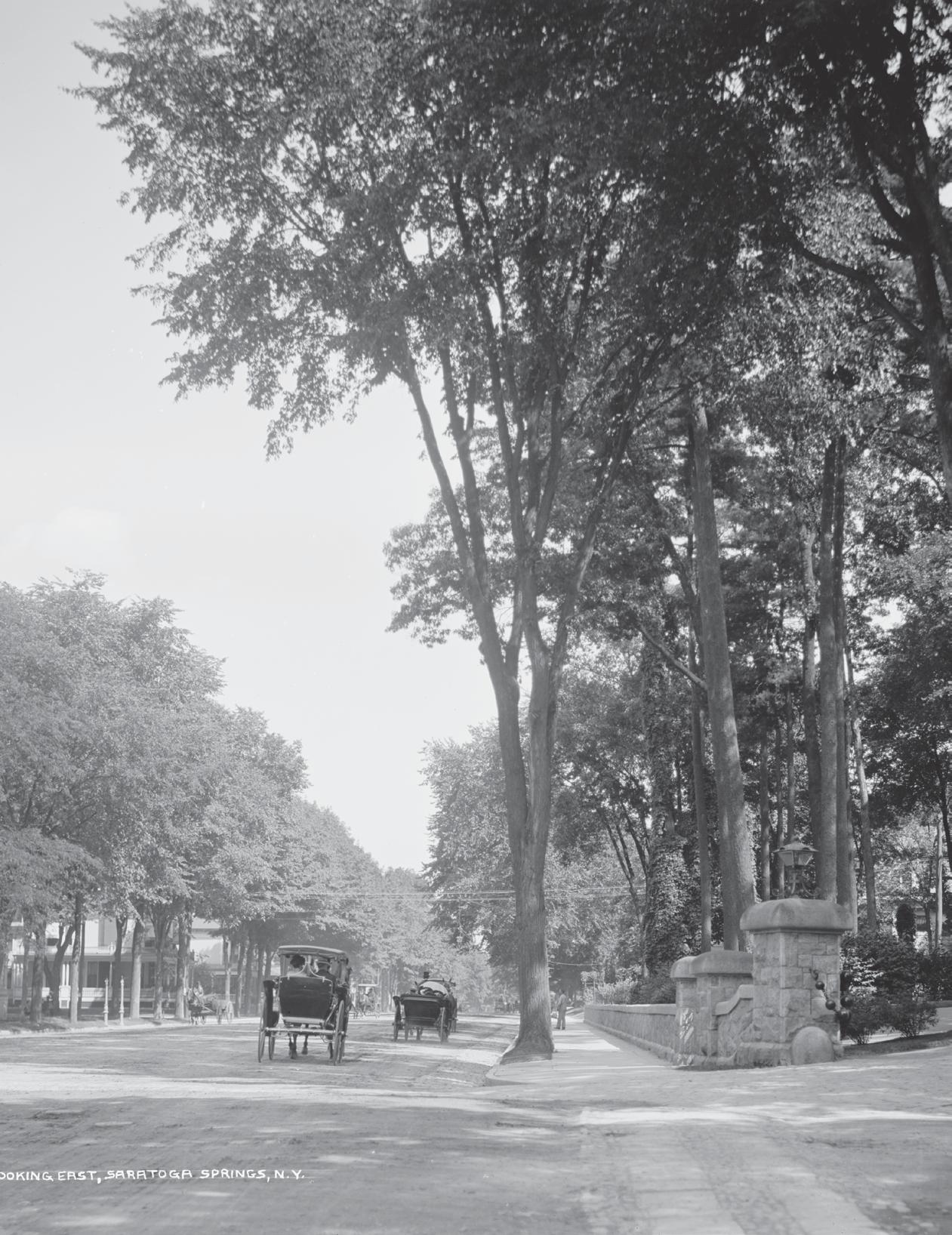
This is the first in a new series exploring moments in Saratoga Springs when national history, human folly, curiosity, and chance collided in our small city.
WRITTEN BY CAROL GODETTE | PHOTOS PROVIDED (UNLESS NOTED)
Union Avenue, looking east c.1900-1920.
Photo courtesy of Library of Congress
When I was growing up at 45 Mitchell Street, I played in the yard between George and Mitchell Streets without ever wondering where their names came from. Only later did I learn they honored the original landowners — brothers Caleb and George Mitchell. In the 1800s, as Saratoga was developing, prominent landowners often laid out streets and named them after themselves. That was likely the case with my street, which bore Caleb’s name—the older and more famous brother, whose life would become one of the most dramatic in Saratoga’s history.
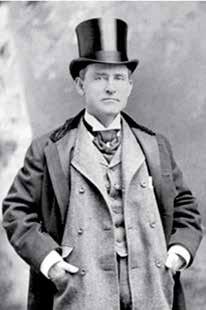
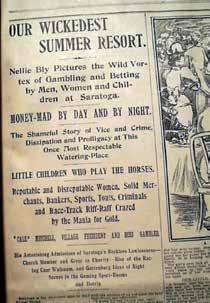

On the frigid morning of January 29, 1902, Caleb W. Mitchell, walked into Town Hall and shot himself through the temple at the entrance to Senator Edgar Brackett’s office. He was one month shy of his sixty-fifth birthday. To this day, no one fully understands why he did it.
Saratoga Springs has always had a way of surprising us.
And that is where this story begins…
Mitchell was happily married and had nine children. He found success in business, investing in many ventures and serving as President of Saratoga Springs three times. He owned a well-known wine and grocery store on Broadway and, with his brother George, ran the Glen Mitchell Hotel just outside town. The hotel became a favorite spot for sports fans, featuring a trotting ring and a popular threechute toboggan slide. Yet it was his Broadway gaming hall, where Uncommon Grounds stands today, that drew the greatest notice.
During the Gilded Age, Saratoga was popular among the affluent as a destination for relaxation and health, but according to Hugh Bradley, the author of Such Was Saratoga, gaming had become the favorite diversion of the wealthy traveler. Mitchell tuned into that fact and made sure Saratoga would deliver what the tourists wanted. It was not for naught that well-known investigative journalist Nellie Bly labeled Caleb Mitchell “the village president and boss gambler” in her 1894 full-page exposé calling Saratoga “OUR WICKEDEST SUMMER RESORT.”
Bly’s opening declaration: “Saratoga is the wickedest spot in the United States. Crime is holding a convention there, and vice is enjoying a festival such as it never dared approach…” didn't capture my attention as much as her center page interview with Mitchell. She began their conversation wanting to dislike him, asking sharp, pointed questions, all of which he honestly answered with charm and dignity. Her interview painted a portrait of a genteel man who attended church, rarely drank, and gave largely to charities, ending with a revealing line: “I'm sorry I've met you. I could've said mean things about you if I hadn't.”
Caleb Mitchell was born February 12, 1837 in Troy, New York. In a newspaper interview he said, “ While I’m not good looking, I’m decidedly genteel.”
Nellie Bly's expose on gambling in 1894
This 1888 Burleigh’s map shows Mitchell Street highlighted in yellow and George Street highlighted in blue.
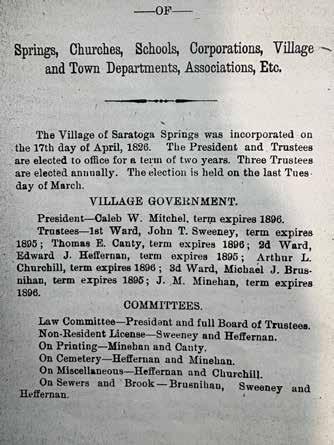
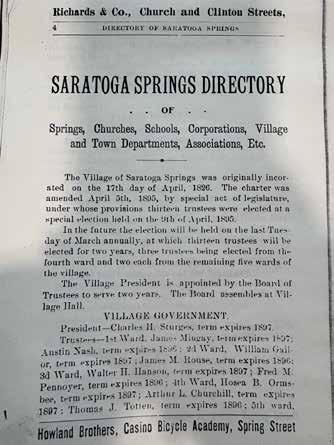
When Mitchell was first elected as village leader in 1872, the Gilded Age was just beginning. Saratoga was home to the largest hotel in the world at the time, the Grand Union Hotel, and tourists were flocking to town. Mitchell saw an opportunity for growth, feeling that the town was ripe to promote more than its famed mineral waters. The times dictated that pleasure could be part of a bigger equation, and gambling appealed to Mitchell as an activity to develop and exploit.
Almost two decades passed between Mitchell’s first foray into Saratoga government and his second and third terms as President. In that time, Mitchell had earned and lost a few fortunes. His closest brother and business partner, George, was no exception. Troubled by money problems, George took his own life at the Friends Lake Inn in 1875.
Caleb Mitchell was just nine years old when his mother, Laura Weeks Mitchell, slit her throat in the basement of their family home, an impetus for lasting family despair. Caleb was 38 when his brother William hung himself from a beer cask in his NYC saloon. By the time William’s body was discovered, rats had eaten his ears and feet. I can only speculate on his pain, having three immediate family members die by suicide in the span of 29 years.
Misfortune did not stop there. An unexpected change in village election laws very possibly accounted for Mitchell’s fatal break.
Mitchell began his political career in 1872 as Village President. Nearly twenty years later, he won the popular vote again, securing a term in 1891. By 1893, his popularity cemented a 385-vote win, despite Protestant ministers opposed to gambling sermonizing against him. Bly’s article became a rallying call for those opposed to gambling. Hugh Bradley wrote, “Many thought it was not quite right for the Village President to conduct a gambling house on the main street. They suggested he move to a more secluded location. Mitchell laughed at the suggestion.”
But those in higher power knew there was more than one way to skin a cat. In an effort to change Saratoga’s image as a gambling town, Senator Edgar Brackett and other reformists legislated that the village board of trustees would be the ones to “elect” the Village President. This ensured a candidate aligning with their conservative values.
On May 6, 1895- one year into Mitchell’s third term - Charles Sturges was appointed as President. He immediately closed Mitchell’s gaming house but looked the other way when it came to Richard Canfield’s “Saratoga Club.”
Caleb felt his removal from office was unconstitutional and challenged it in court. He lost his appeal and began to complain that all his friends had abandoned him. He was unrealistically hopeful that the village trustees would reappoint him as President in 1901. Adelbert Knapp was instead appointed, and Mitchell became depressed.
1st page of Saratoga directory in 1895 listing Village President and the election terms. Mitchell’s term was to expire in 1896.
Saratoga Springs directory for the following year 1896 notes the charter revision. As a result of this revisio, Charles Sturges is now the President with his term expiring in 1897.
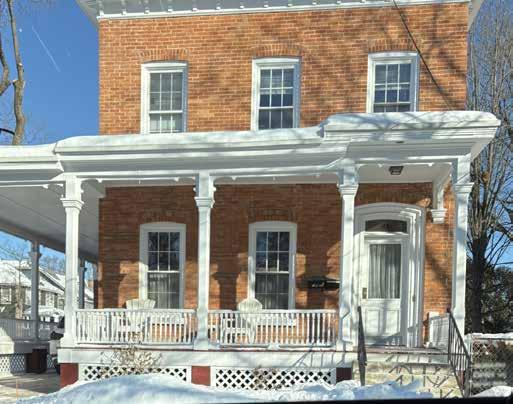
When Caleb left 149 Phila Street to take a short walk before breakfast on January 29, 1902, his wife and daughters were relieved. Finally, he seemed like his old self again. His first stop was at Towne’s Hardware store on Broadway to buy a revolver. He told the clerk he needed it to kill “disturbing cats.”
Next, he crossed the street to the undertaker’s office at 457 Broadway to see fellow Irish Catholic William Burke Sr. “on a matter of business.” It was shortly after 8 a.m., and Mr. Burke had not yet arrived at his office.
Caleb’s last stop was Town Hall, where he went to Senator Brackett’s office. Brackett was on his way to Albany. Minutes later, a janitor found a man “dressed like a tramp” with a fatal gunshot wound to the head. The janitor didn’t recognize his former Village President. Mitchell’s suicide drew national attention, capturing a Washington, D.C. paper with this headline: “Cal Mitchell, Prince of Sport, Commits suicide at Saratoga.” His choice of a tragic and very public death was remarkable to me. It seems a very pointed protest to the senator who denied him what might have been his most prized raison d’etre - as Saratoga’s President.
Today, the quiet .16-mile stretch of Mitchell Street is often overlooked. Few who stroll this quiet residential street realize it honors a man whose life embodied Saratoga’s glamour, controversy, and tragedy.
Author's Note: Thank you to Micelle Isopo at the Saratoga Room; Mitch Cohen for research assistance and writing style advice from authors Victoria Campos and David Sobhoff.

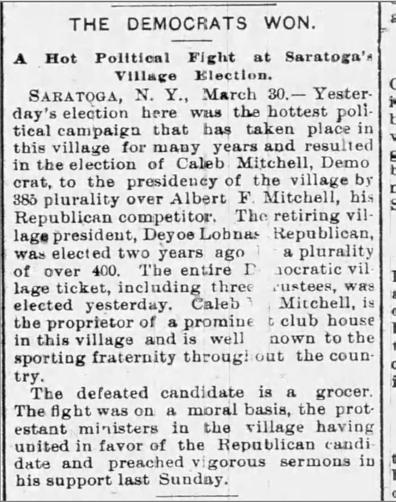
Caleb Mitchell’s home at 149 Phila St. Mitchell left his home on January 29, 1902 to take a walk before breakfast. His final stop at Town Hall was his last.
Caleb Mitchell is buried in Greenridge Cemetery in Saratoga Springs.
News clipping announcing Mitchell’s win for Saratoga presidency. Clipping courtesy of Newspapers.com
All Aboard for the Adirondacks!
Of Saratoga Springs, Thomas Durant, Railroads, The Great Camps and The Irish
A SARATOGA STORY TOLD IN THE GRAND IRISH SEANCHAÍ STORYTELLING TRADITION | PART 2
WRITTEN BY EAMON Ó’COILEÁIN (ED COLLINS)
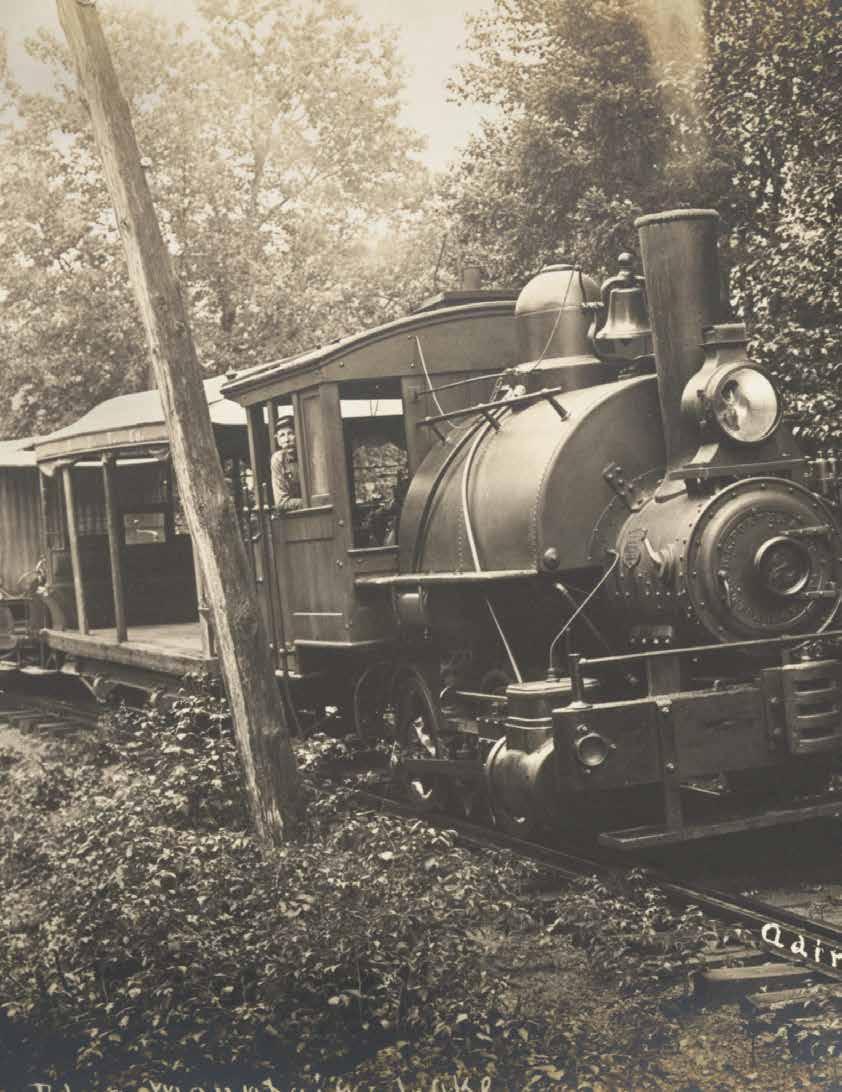
Imagine a journey into the wilderness just as Thomas Durant had envisioned ticketholders doing back in the day as they paid to step onto his train in Saratoga for an “Adirondack Experience.”
But the ever-ambitious and wealth-ravenous Durant was not done. After completion of his 60 miles of tracks from Saratoga Springs, he purchased “The Gables” mansion in North Creek along the Hudson River and took up residence there, lavishly furnishing it. He became one of the most notable citizens north of Saratoga and heard of a local man, a Mr. Holland, who had built a handsome hotel deep in the forests to welcome people into the Adirondacks for “sport, recreation and relaxation.” John Holland, born in Ireland, was working in a North Creek general store where he listened to stories from lumberjacks about a beautiful wilderness lake deep in the Adirondacks. Over two years, Irishman Holland hired help who toiled hauling building materials across a rough winter lumbering road, then wilderness paths and frozen waters to build a hotel on the lake. He changed
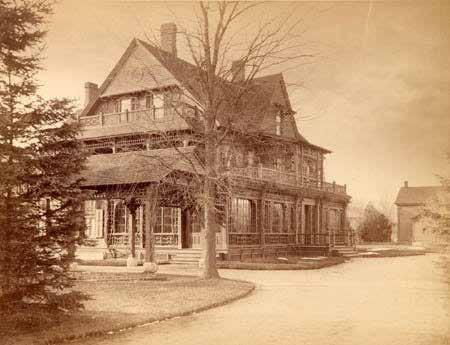
the lake’s name from the somewhat unappealing “Tallow Lake” to the more inviting “Blue Mountain Lake” for a nearby summit and, more importantly, for publicity purposes, capitalizing on what he called the peak’s “blue hue.”
After Holland opened his rustic log Blue Mountain Lake House, according to Alfred Donaldson’s A History of the Adirondacks, “People fairly rushed in from the start.” Durant, the relentless speculator, learned of Holland’s success and enviously eyed the commercial potential of Holland’s hotel and the hospitality potential of the Adirondacks. With thoughts of making money dancing in his head, he enlisted his son, William West Durant, to help establish a stagecoach line on an almost 40-mile hard-packed road they built from Durant’s Adirondack Company Rail Road North Creek terminus to deliver travelers to Holland’s Lake House coming from Saratoga Springs and beyond on his railroad. Holland’s original Blue Mountain venture, later transformed into a grand hotel, welcomed thousands of guests until it burned to the ground in 1904, never to be rebuilt.
Thomas Durant's beloved "The Gables" Grandiose Mansion, North Creek, by Seneca Ray Stoddard. Photo courtesy of the Adirondack Experience.
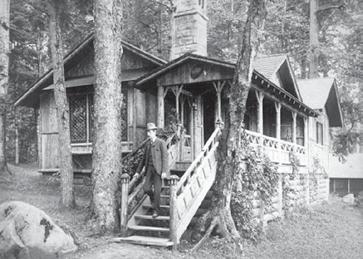
In “six degrees of separation from... well, you know from whom,” it can be said that Saratoga Springs opened the door to “The Era of the Great Camps.” As a result of the Durants’ interest in connecting the wealth in, and coming to, Saratoga to Irishman John Holland’s Blue Mountain Lake House through their rail line to North Creek and then their new road, Durant and his son, William West, built Camp Pine Knot, their own retreat near Blue Mountain, on Raquette Lake, launching the architectural “Great Camp Rustic Style” of expansive lodging compounds that were designed to blend into the wilderness. At their Great Camp Pine Knot, the Durants, energic son and aging father, together entertained wealthy friends who traveled by rail through Saratoga Springs and onto North Creek and then on Durant’s stagecoach line into the Adirondack wilderness. Opportunistic father and son used the gatherings to solicit financial interest in building Great Camps like their Pine Knot retreat to help create high-class destination sanctuaries for “Wilderness Experiences.” Indeed William would later replicate the “Great Camp” style by building Great Camps Uncas and Sagamore. All three camps would eventually be purchased by wealthy “Gilded Notables,” Collis P. Huntington, J.P. Morgan and Alfred Vanderbilt, respectively. The “Age of the Great Camps” was born!
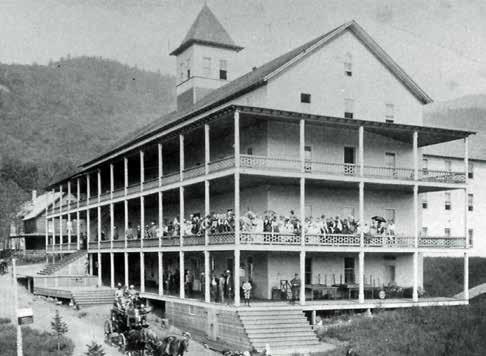
On the far more modest slopes, creases and lakes of the Adirondacks, John Holland and a number of other Irish entrepreneurs offered “Céad míle fáilte!” – “A Hundred Thousand Welcomes!” – to wilderness adventurers in the grand Irish spirit of “oigidecht” – the “Gaeilge” (Irish language) for “hospitality,” the Celtic cultural tradition of “welcoming” travelers, which actually was required of the Irish as written into their ancient Celtic Brehon Law. These Irish innkeepers inspired a keen pace for hostelry commerce and, consequently, promoted road and railroad building in the Adirondacks. As the “Wilderness Experience” began taking off in the years following Durant’s Saratoga-to-North Creek line, Irish muscle helped build roads and short lines of track among villages and towns within the Adirondacks. Dr. Durant would die without realizing his dream of expanding his railroad through the majestic mountains all the way to the Canadian border and Montreal. In fact, no railroad would traverse the region entirely until 1892 when the final spike was driven of William Seward Webb’s St. Lawrence and Adirondack Railroad. Hundreds of Irishmen were recorded on Webb’s employment logbooks among the many immigrants recruited to clear terrain and lay tracks for the 191 miles of that railroad in a grueling 18 months of hard labor.
In the late 19th century, news of Adirondack adventures and the railroad, road, and hotel building activities in the mountains reached the affluent in eastern cities. Great numbers of well-to-do city dwellers began “vacating” their homes in the heat of summer to enjoy the “Adirondack Experience” of the cool mountains and, by serendipity, created the very American notion of “summer vacation” that lives to this day. These Adirondack vacationers initially took advantage of trains from New York City with scores of stops to pick up wealthy city-dwellers along the way to Saratoga Springs and then on Durant’s Adirondack Company Rail Road to North Creek, although new routes were opened eventually from other directions. Just as the earlier Irishman John Holland had at Blue Mountain Lake, scores of Irish eyes saw opportunity in these wealthy visitors and hung out their own “Fáilte” – “Welcome” – signs. Read Simply Saratoga H&G, due out in May for more of this great tale! SS

William West Durant at Great Camp Pine Knot, by Seneca Ray Stoddard. Photo courtesy of the Adirondack Experience.
The greatly expanded Holland Lake House, by Seneca Ray Stoddard. Photo courtesy of the Long Lake Archives.
Fáilte Sign. Photo by Ed Collins
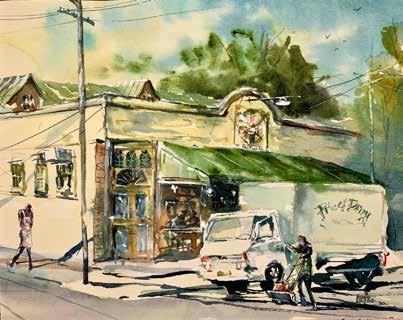
Caught Off Guard
"Hey Johnny, I got something I want you to have."
That was the text message I received on a random Tuesday afternoon. It was from my friend Chris Leske. Minutes later, we were sitting in a booth at the corner Stewart’s Shop with two fresh coffees. After pingponging stories about our days, neither of us could wait another minute. I'd been staring at the brown paper package lying on the table between us. I'm far from Sherlock Holmes; I'm more of a Get Smart tripping on the clues type, but even I knew the package in front of me was a painting.
"Well, go ahead, open it!"
As I peeled off the masking tape and pulled back the paper, I had the same look as Ralphie opening his Red Ryder carbine-action, 200-shot, range model, air rifle with a compass in-the-stock. "Whoa"
I was more than a little overwhelmed. I was afraid to tear up, for fear someone might think Chris had just told me it was my turn to pay.
I sat there looking at ten years of my life rolled into an eight-by-ten watercolor. It was passing before my eyes like a Rolodex of scenes. I was envisioning those early morning milk deliveries to Lou's/Compton’s, Shirley's, and the Spa City Diner; the long dark hall leading into the cellar of Lillians, and the steep decrepit stairs under the Tin & Lint; my Friday afternoon finale at the Parting Glass, Madame Jumel's, Hattie’s, Mother Goldsmith’s, and Caffe Lena. It was a flood of warmth and nostalgia, a flash of joy, and a tinge of regret that it didn't last longer.
The Painting
by John R. Greenwood colors are secondary to the story shared the gift, a painting wrapped in brown paper years stacked neatly in an old red milk crate revived in an instant the hours, the work, the friends an artist's gratitude overwhelms the receiver memories framed and hung in reverence
WRITTEN BY JOHN R. GREENWOOD
This was more than the gift of a painting; it was an artist's look into my heart and soul. Our conversations and recollections over several months had manifested themselves in his paintbrush and creative eye. It was his way of thanking me for my writing — the whole time, all I wanted him to know was how grateful I was for him opening his artistic mind to me.
For me and many, these are the snippets of life that make the dark days worth muscling through. It can be hard to wrestle pain and heavy baggage, but when the sun comes out and warms you up, man it feels good. It takes a unique eye to decipher the needs of others and place them on a canvas or in a musical note. Banjo Man Chris "Lee" Leske is one of them.
I am forever grateful for his gift of friendship wrapped in a painting.

PHOTOS PROVIDED
A photo of my Price’s Dairy truck at the loading dock of the now extinct Saratoga Dairy on Excelsior Ave. Photo courtesy of Bill Barton’s book "Facts and Tidbits of Saratoga’s Dairy Industry from Early 1800s to 1988"