CLEAR OUT OF UNFRAMED STOCK
APRIL 2026
CLEAR OUT OF UNFRAMED STOCK
EVERYTHING SOLD MOUNTED BUT UNFRAMED EXCEPT WHERE STATED
15TH TO 24TH APRIL 2026
OPEN WEEKDAYS 10AM TO 6PM
Guy Peppiatt Fine Art Ltd Riverwide House, 6 Mason’s Yard Duke Street, St James’s, London SW1Y 6BU
Tel: +44 (0) 7956 968 284 guy@peppiattfineart.co.uk www.peppiattfineart.co.uk
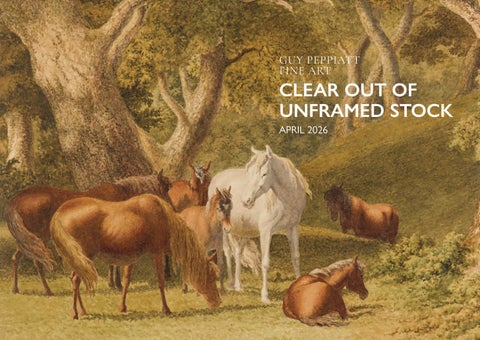
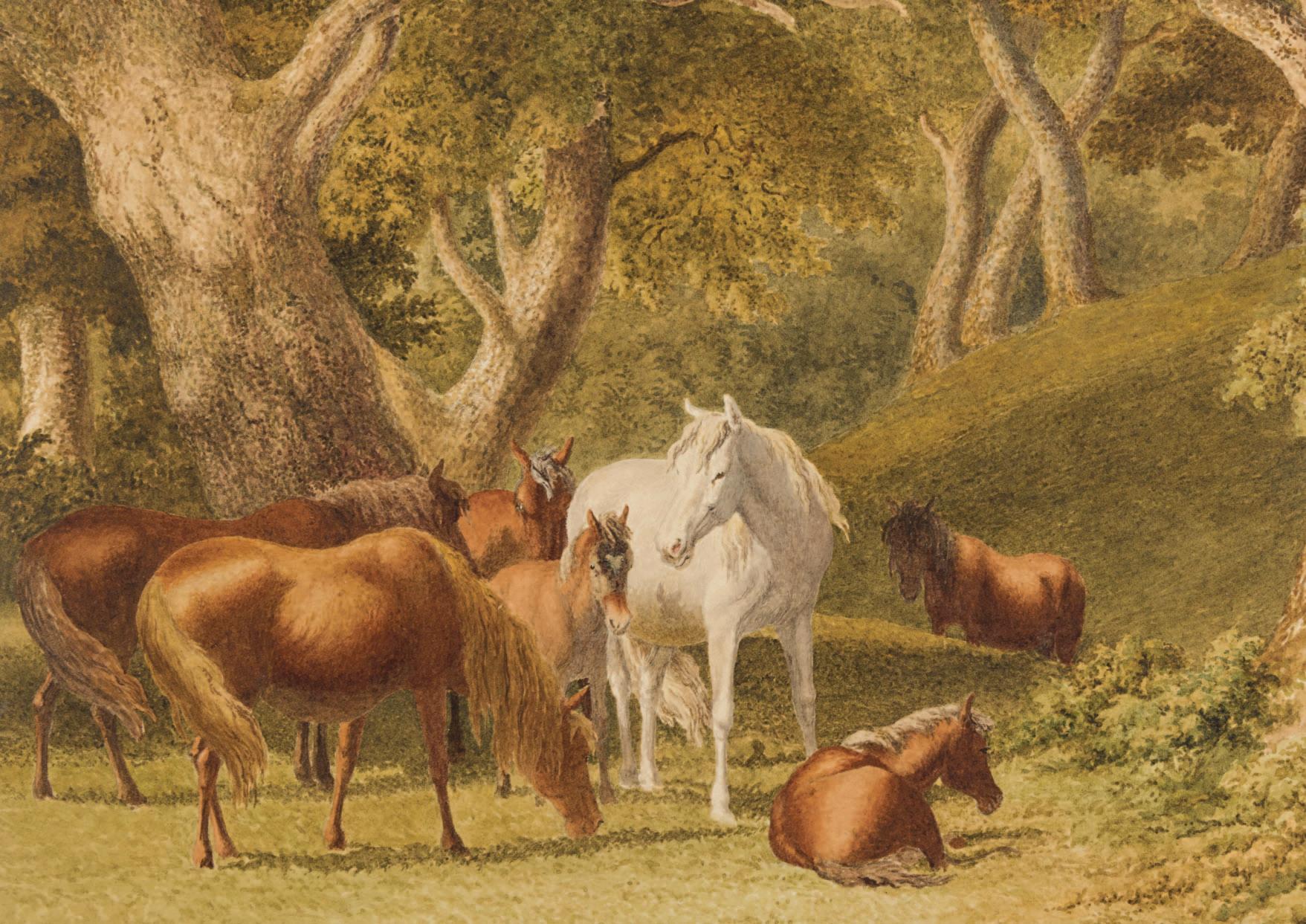
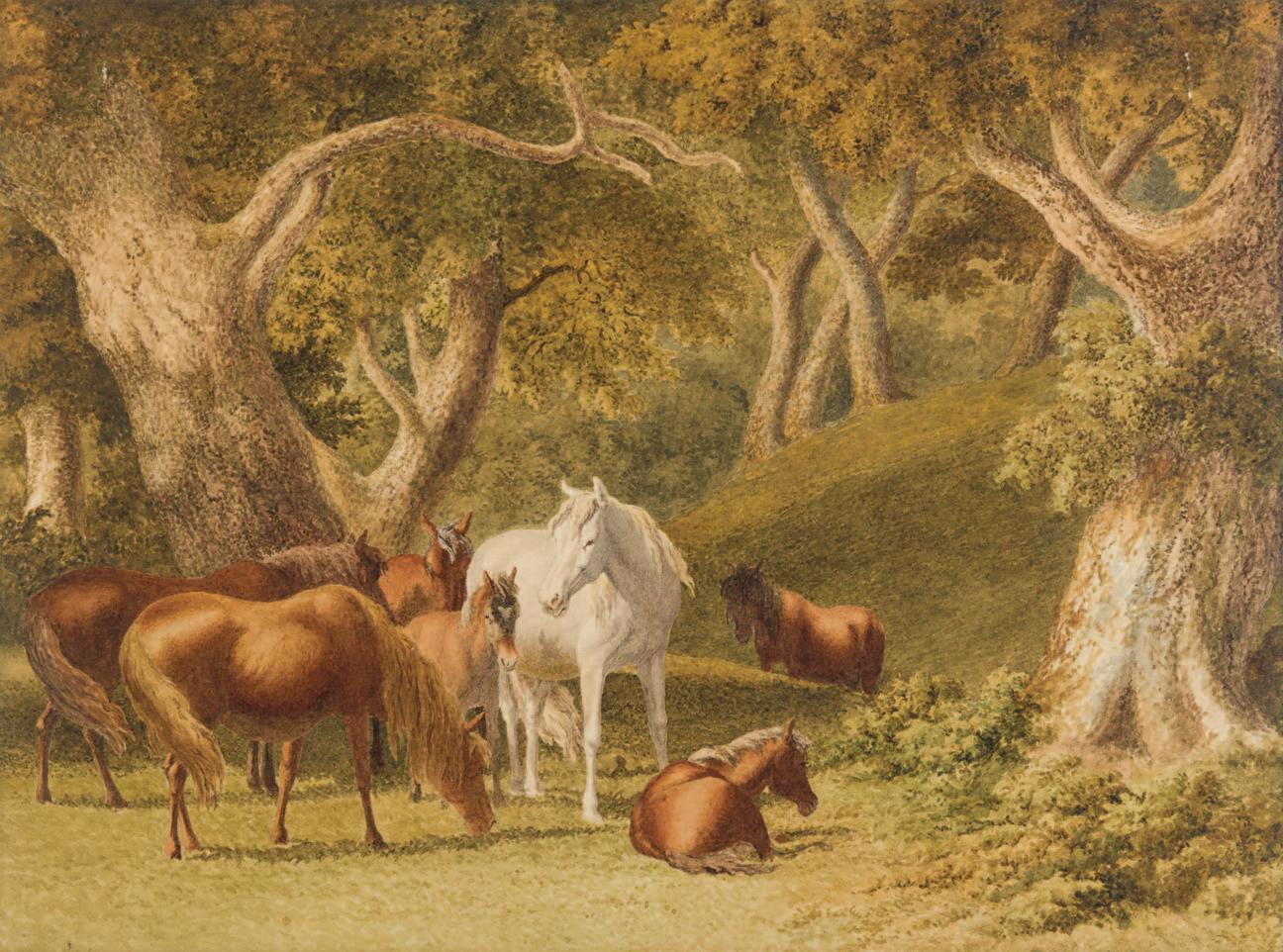
Front Cover: (58) Robert Hills (1769-1844) Horses in a wooded Landscape
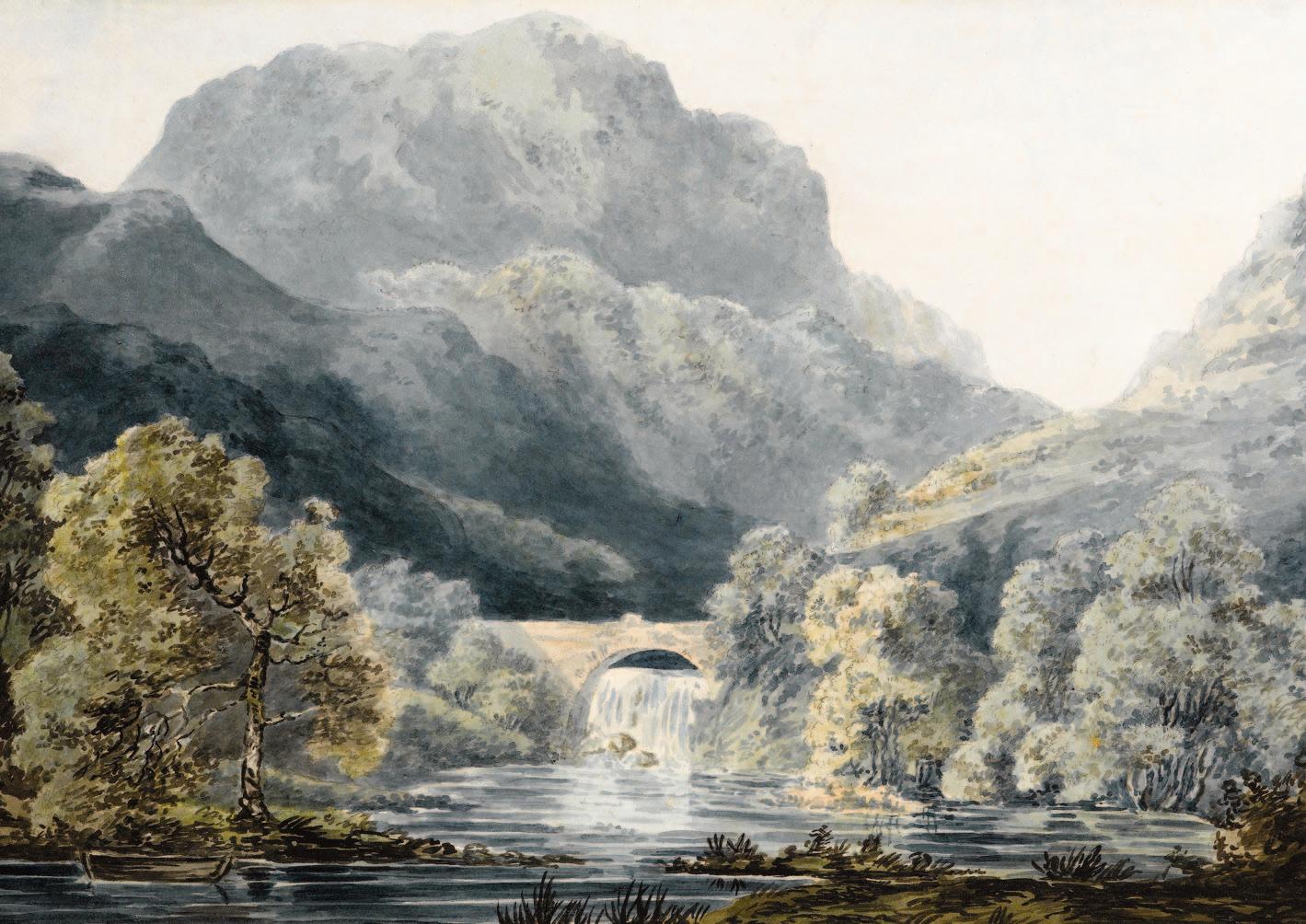
Opposite: (13) Edward Dayes (1763-1804) Pont Aberglaslyn, North Wales
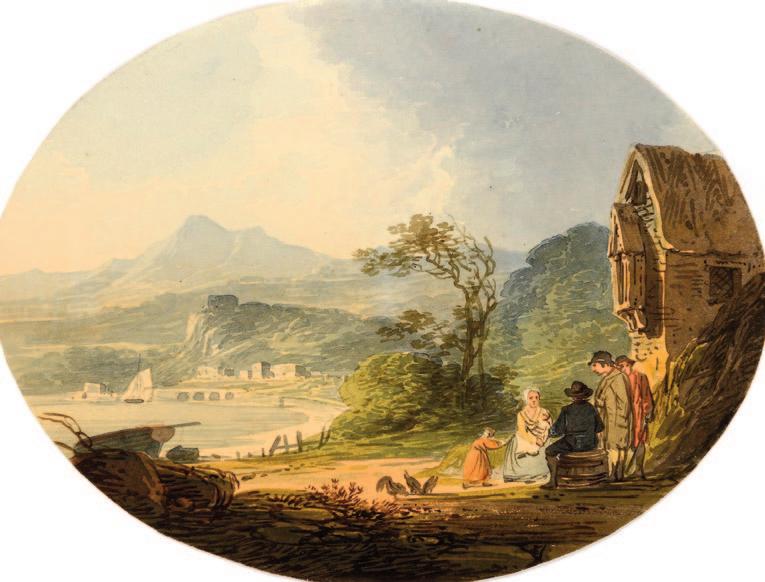
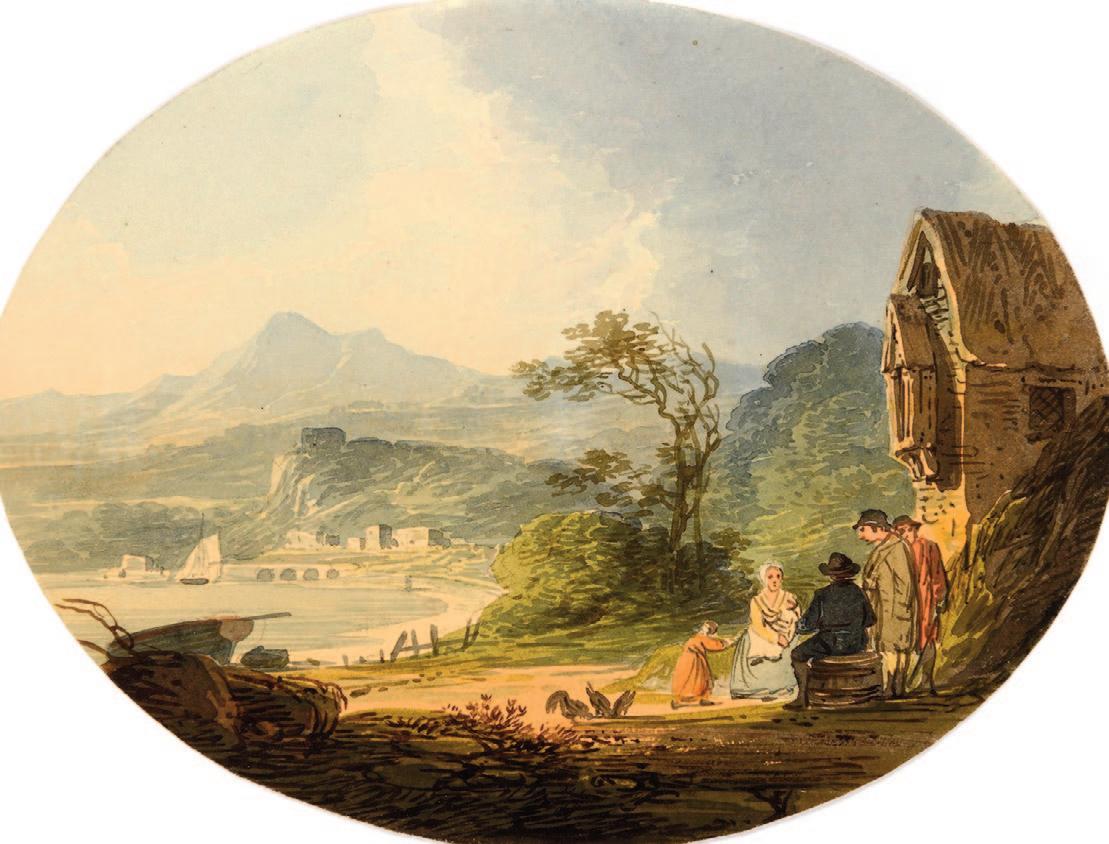
Rear Cover: (37) William Payne (1760-1830) Figures by the Sea, a Castle beyond
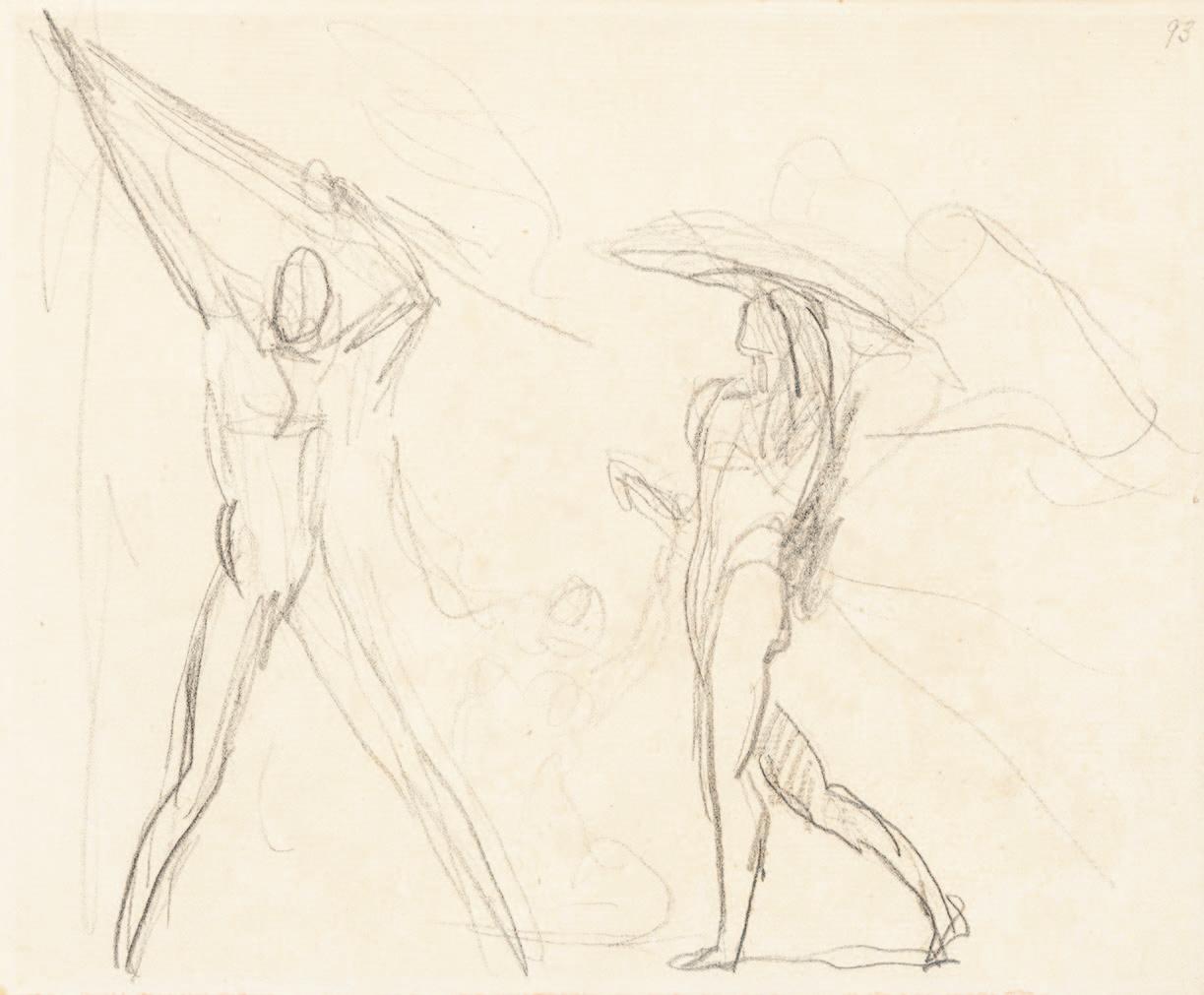
1 George Romney (1734-1802) Satan, Sin and Death
Numbered 93 upper right
Pencil on laid paper
15.7 by 18.9 cm., 6 by 7 ¼ in.
This subject is inspired by lines 629 to 814 of book 2 of John Milton’s Paradise Lost. Satan has descended into Hell where he is confronted by Death. As they prepare to do battle, Sin intervenes and declares herself to be the daughter of Satan and that Death is their incestuous son.
£500
George Romney (1734-1802)
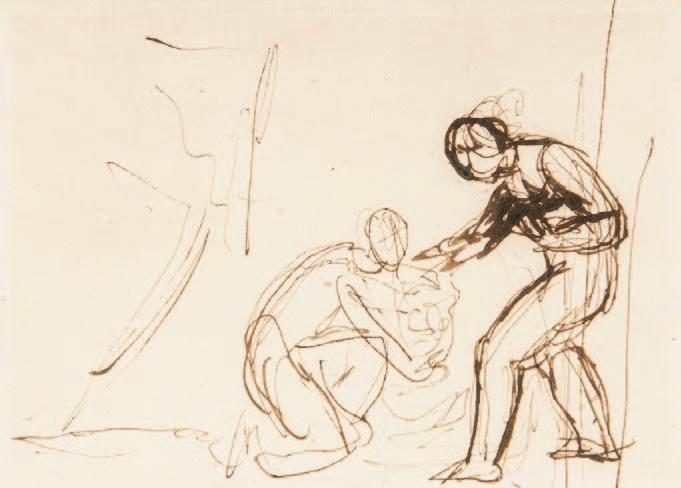
Hector saying goodbye to his wife Andromache and son Astyanax
Pen and brown ink on laid paper
14.8 by 20.7 cm., 5 ¾ by 8 in.
In a scene from Greek mythology, the Trojan hero Hector is depicted saying goodbye to his wife Andromache and son Astyanax as he heads off to war.
£500
George Romney (1734-1802)
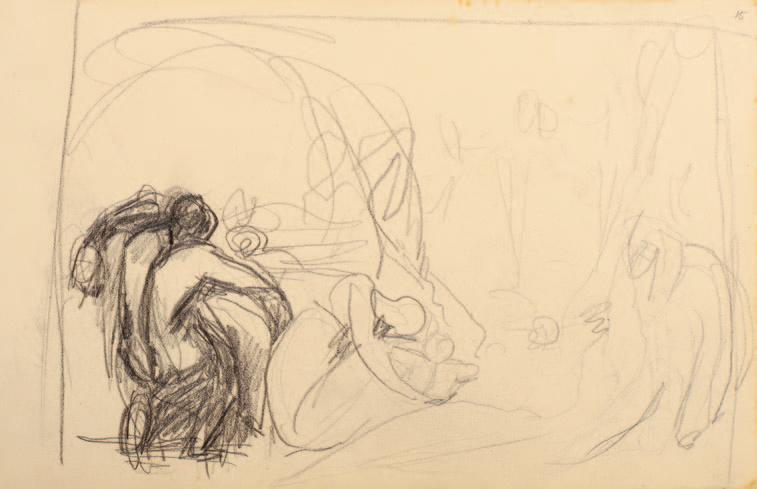
John Howard visiting the Lazaretto
Numbered 15 upper right Pencil
14 by 23.8 cm., 5 ½ by 9 ¼ in.
John Howard (1726-1790) was a prison reformer who worked for the improvement of conditions in British jails. He visited prisons all over the country and in 1778 he appeared before a House of Commons committee to put forward his thoughts on how to improve them.
Howard never sat to Romney, nor did the artist produce a finished subject painting of Howard and his work. However, during the 1790s, Romney became increasingly fascinated by the subject and the resulting group of drawings, form probably the largest body of work of the period.
£700
4
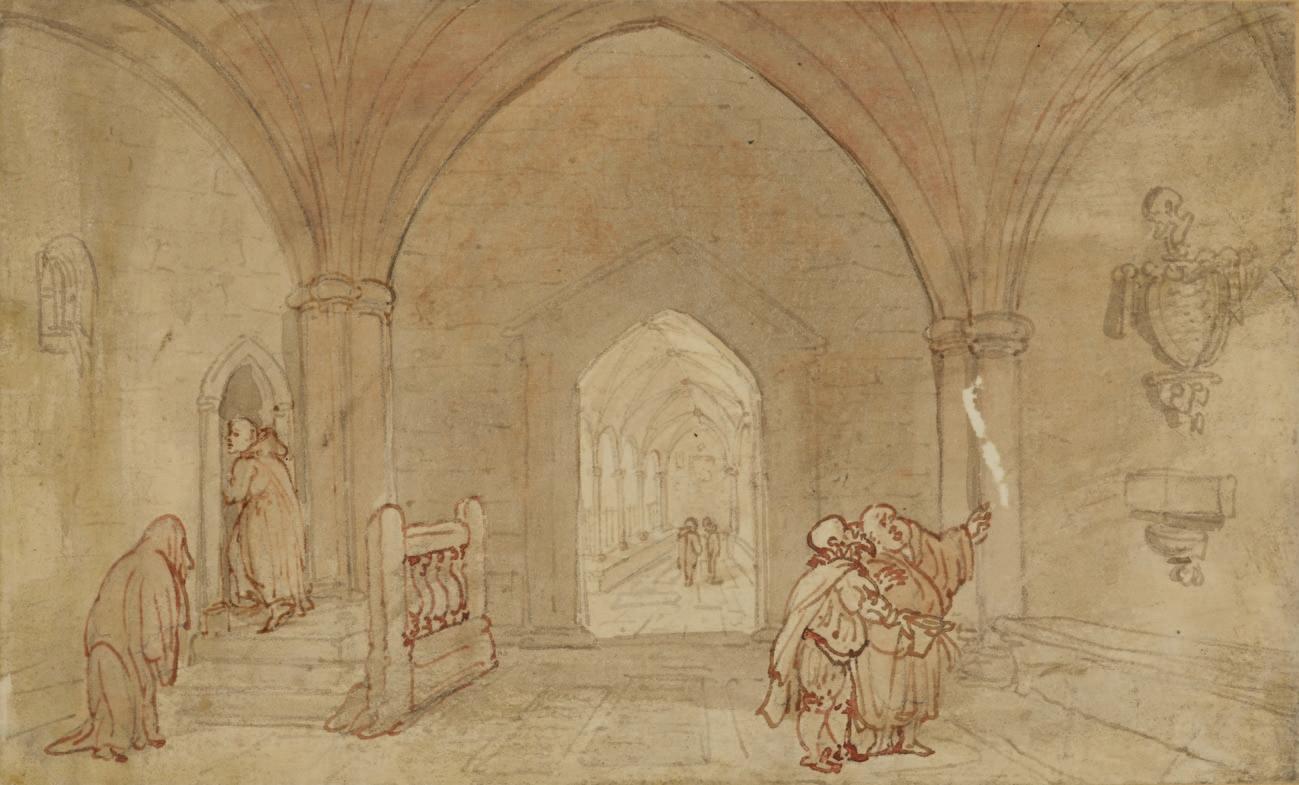
Thomas Rowlandson (1756-1827)
Monks in a Cloister
Pen and ink and grey wash
13 by 19.6 cm., 5 by 7 ¾ in.
£550
Etching on wove paper, published by Hannah
St James’s Street, 10th March 1802
Plate 25.5 by 20.5 cm, 10 by 8 in.
£550 sold unmounted
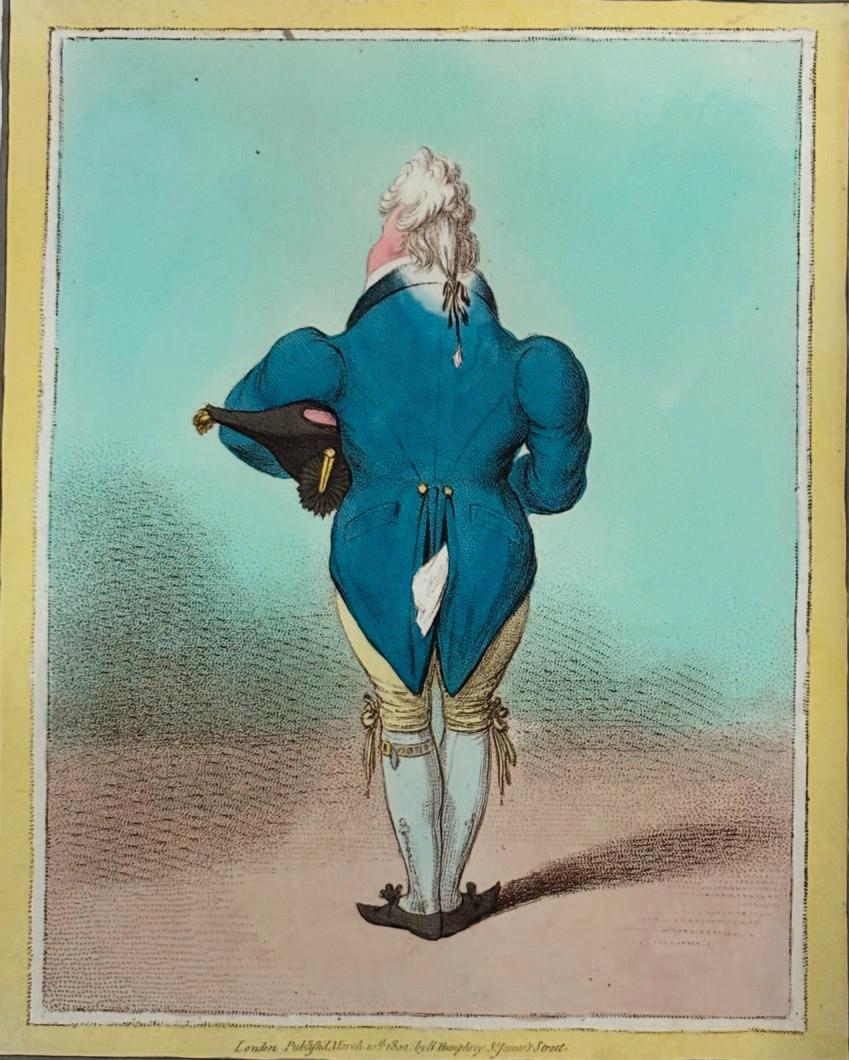
James Gillray (1757-1815)
The Prince of Wales
Humphrey,
6
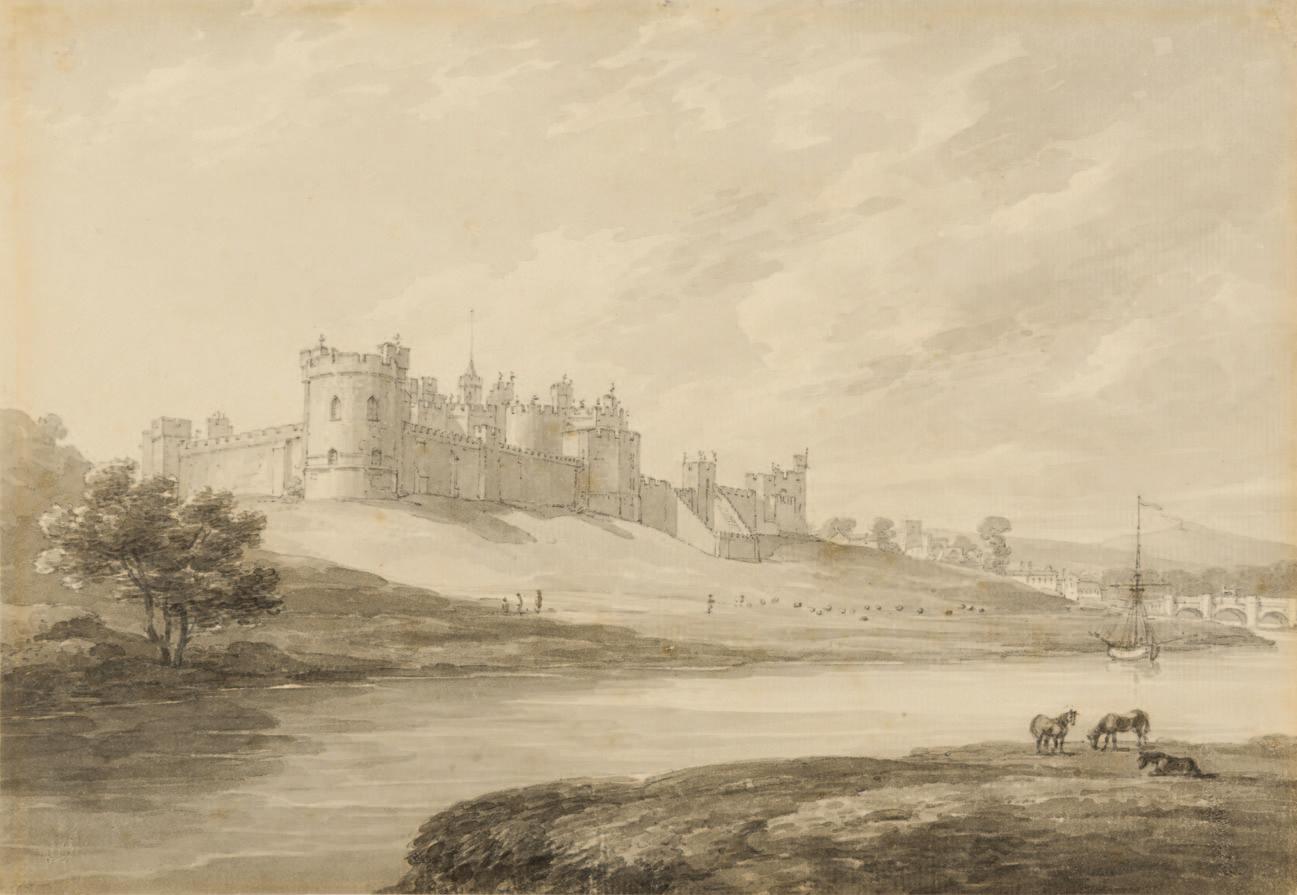
Thomas Hearne (1744-1817)
Alnwick Castle, Northumberland
Grey washes over pencil on laid paper 18 by 26.1 cm., 7 by 10 ¼ in.
Provenance: With J. Leger & Son, London
This drawing originates from Hearne’s first tour of the North of England with the collector and amateur artist Sir George Beaumont in the summer of 1777. Having spent time in the Lake District where they met up with Joseph Farington, they crossed to the east coast and visited Alnwick and Warkworth before returning south through Yorkshire and Nottinghamshire. Many sketches from this tour were subsequently worked up into finished watercolours for engravings, but not apparently the present work.
£950
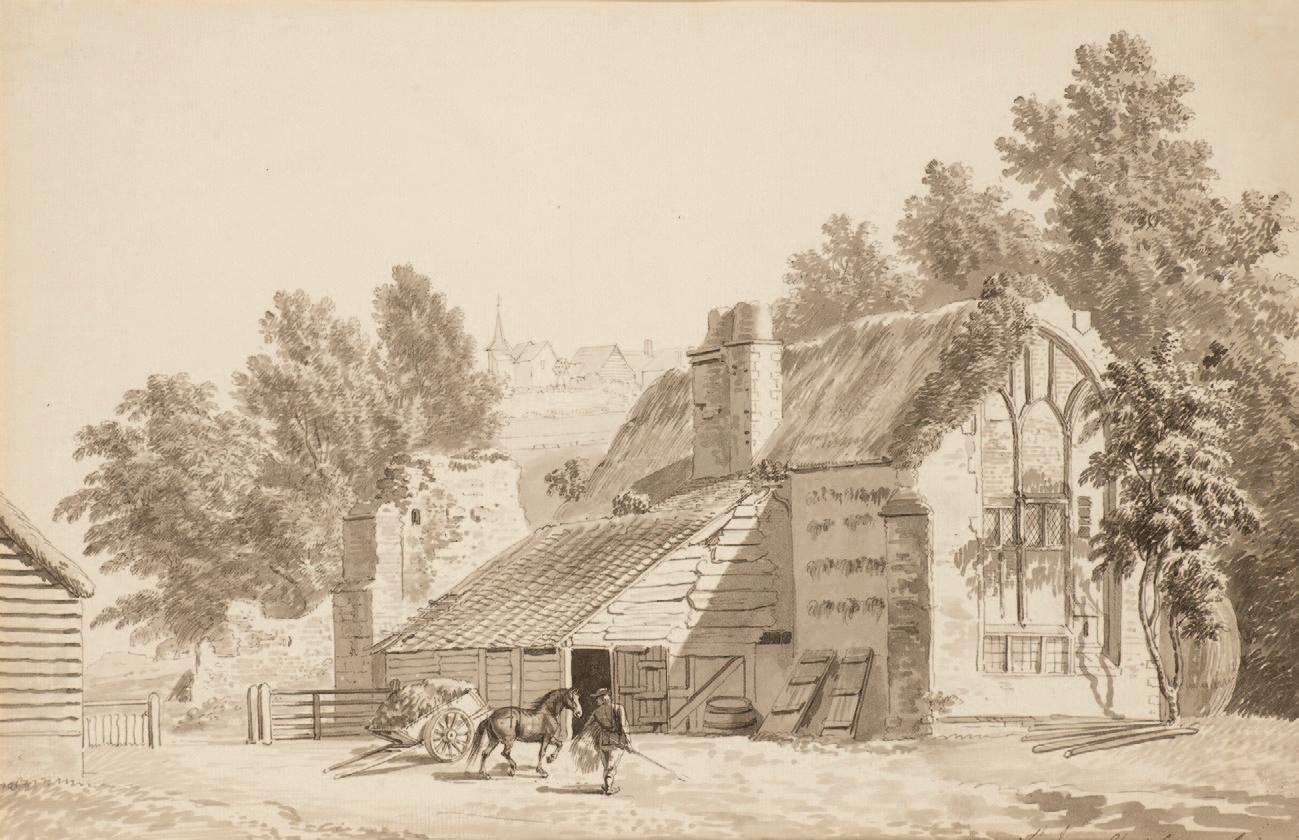
Paul
Sandby, R.A. (1731-1809)
St James's Chapel near Lewes, Sussex
Inscribed lower right: St. James Chapel near Lewes and inscribed verso: St James’ Chapel near Lywes Pen and grey ink and watercolour over pencil on laid Whatman paper
26.6 by 39.7 cm., 10 ½ by 15 ½ in.n.
St James’s Chapel on the edge of Lewes was originally part of the Hospital of St James founded by William de Warenne, the second Earl of Surrey (d.1138), as a hospital for 24 elderly or infirm brothers and sisters and for pilgrims and the sick. It was maintained by Lewes Priory and survived the dissolution, although the hospital fell into disuse and decay. Only part of the chancel of the chapel remains today. The present watercolour shows the chapel as it was in the 18th Century when it was converted into a house. It was later used as a school building.
£1,200
8
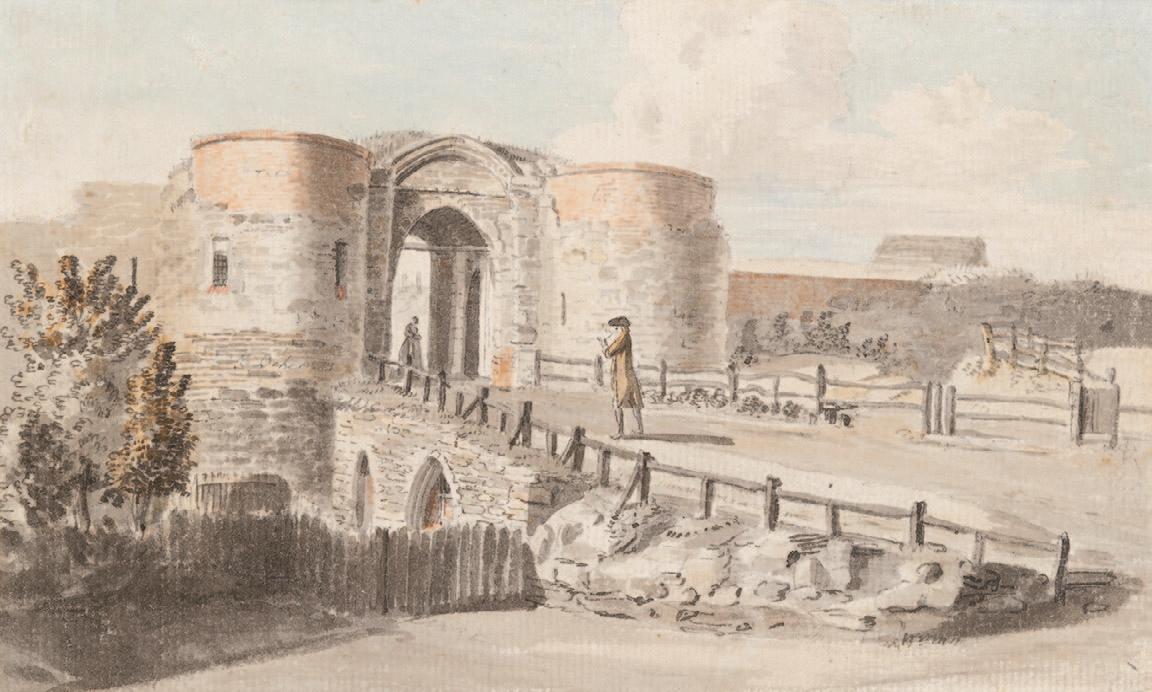
Colonel Joshua Gosselin (1739-1813)
The Gateway of Nottingham Castle
Pen and grey ink and watercolour over traces of pencil on laid paper
10.6 by 17.5 cm., 4 by 6 ¾ in.
Provenance:
By descent from the artist until sold ‘Joshua Gosselin Collection of Topographical Watercolours’, Phillip’s, 5th November 1999, lot 57, one of three
Gosselin came from an old Channel Islands family and joined the Guernsey Militia in 1758, rising to the rank of Colonel in 1789. Apart from his military career, he was an accomplished artist, naturalist and antiquarian. A large collection of his work was sold at Phillip’s in 1999.
Nottingham Castle was founded by William the Conqueror in 1068. It has played a key role in many of the leading events of the country. It was one of King John's last strongholds when he rebelled against his brother King Richard and was where Charles I raised his standard, thus declaring war in England. It was a royal palace by 1330, until James I sold it to the Earl of Rutland. In 1831, the castle was torched by rioters angry with the way the Duke of Newcastle had voted against wider emancipation. It stood as a ruin for nearly half a century, until work began restoring it and turning it into the first municipal art gallery outside London.
£250
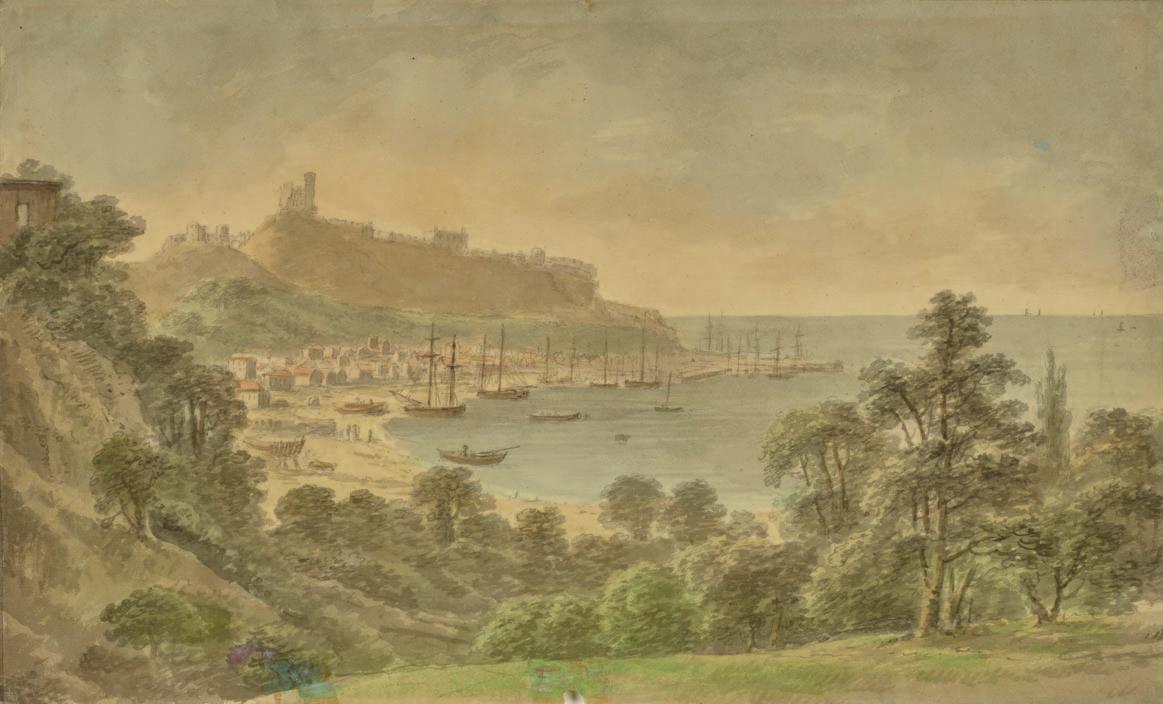
9 Amos Green (1735-1807)
The Town and Castle of Scarborough, Yorkshire
Watercolour over traces of pencil 24 by 39.5 cm., 9 ½ by 15 ½ in.
Born in Birmingham, Green was apprenticed to a printer for whom he painted boxes. He became an artist and landscape gardener exhibiting in the 1760s. In 1796 he married Harriet Lister of York, a fellow artist, and they settled in Bridlington. They sketched extensively in the Lake District and Yorkshire.
£550
10
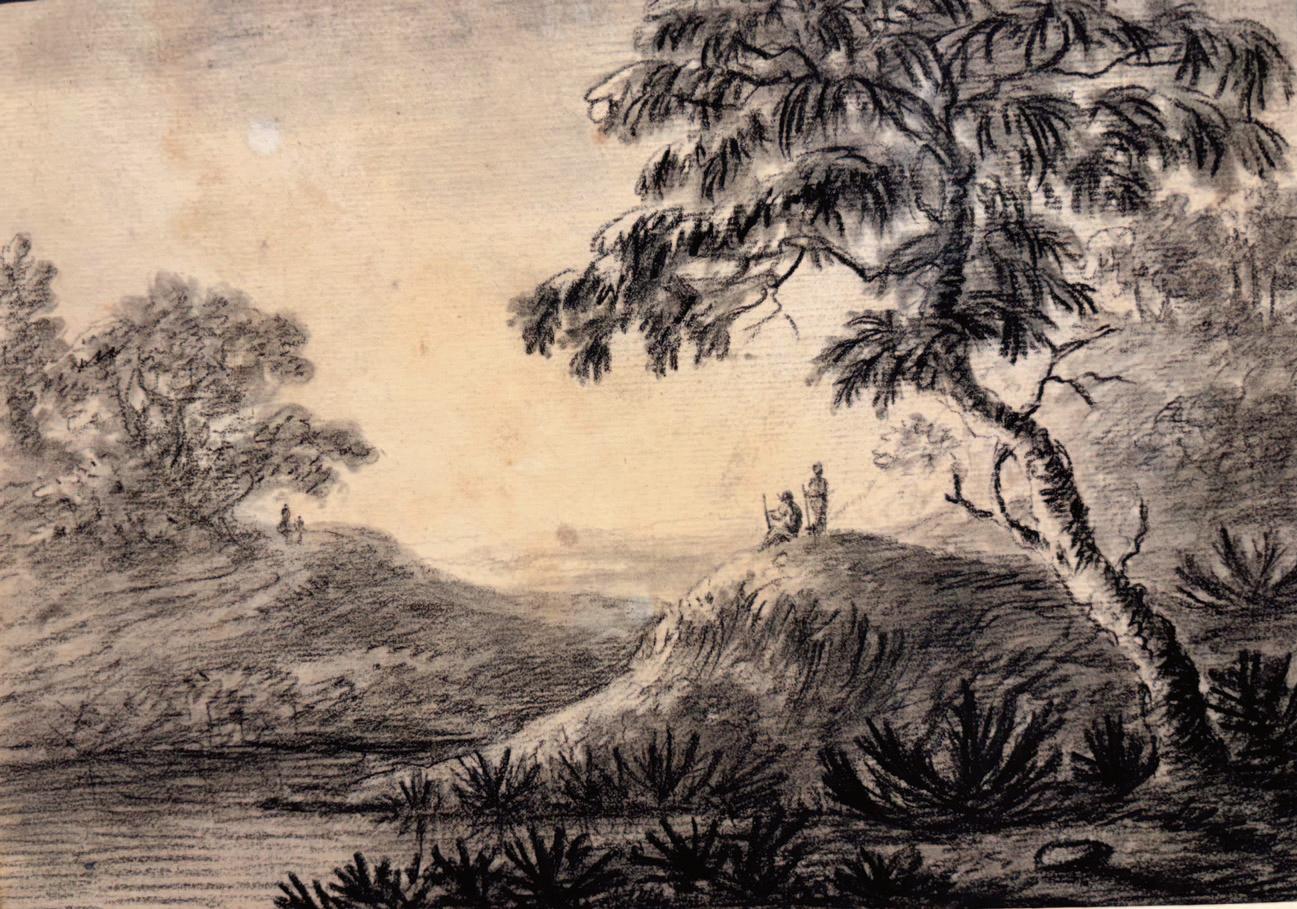
Anthony Devis (1729-1816)
Figures in a wooded hilly landscape
Black chalk and stump on laid paper with fragmentary watermark GR with fleur de lys
22.3 by 31.1 cm., 8 ¾ by 12 ¼ in.
Provenance: Iolo A. Williams (1890-1962); By descent unto 2024
£500
11
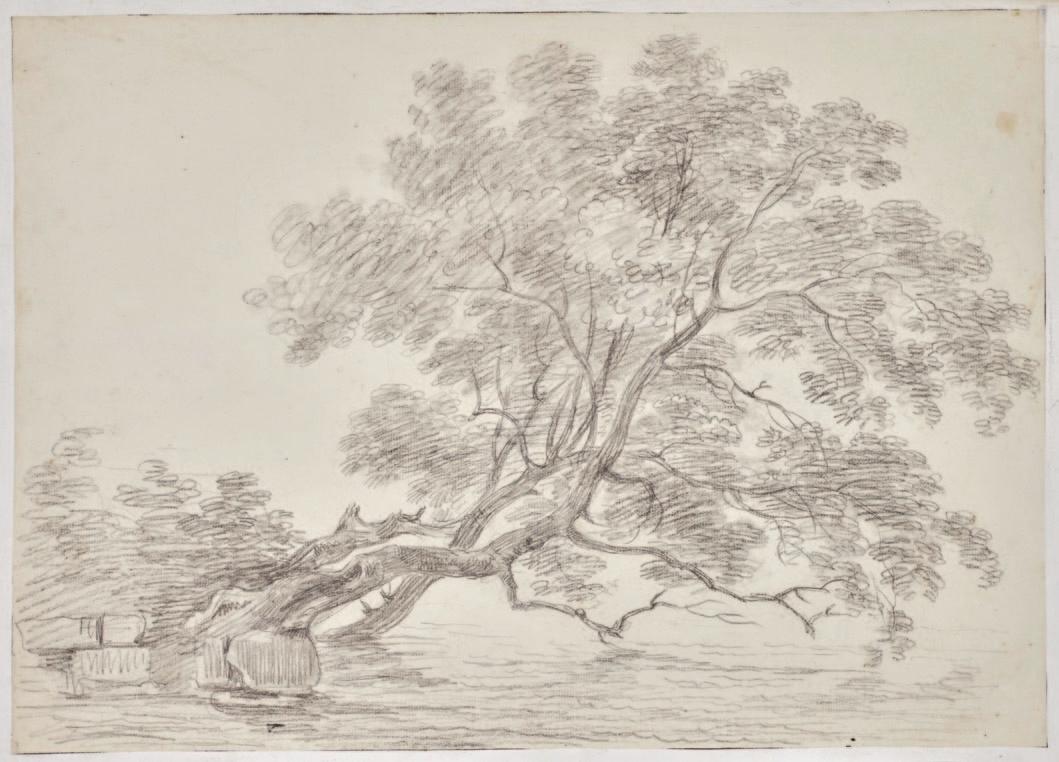
Carlo Labruzzi (1748-1817)
A Tree overhanging Water
Pencil on laid paper watermarked with a crown and a fleur de lys 36.3 by 50.9 cm., 14 ¼ by 20 in.
Provenance:
Wentworth Woodhouse, Yorkshire until 1948; Private Collection; With Simon Dickinson where bought July 2012
Exhibited:
London, Simon C. Dickinson Ltd, Carlo Labruzzi: The Grand Tour - an Exhibition of over Ninety Drawings and Watercolours, 12th June to 13th July 2012, ex. cat.
Labruzzi was an Italian landscape artist who was born in Rome. In 1798 he became Professor and later Director of the Academy of Fine Arts in Perugia.
£950
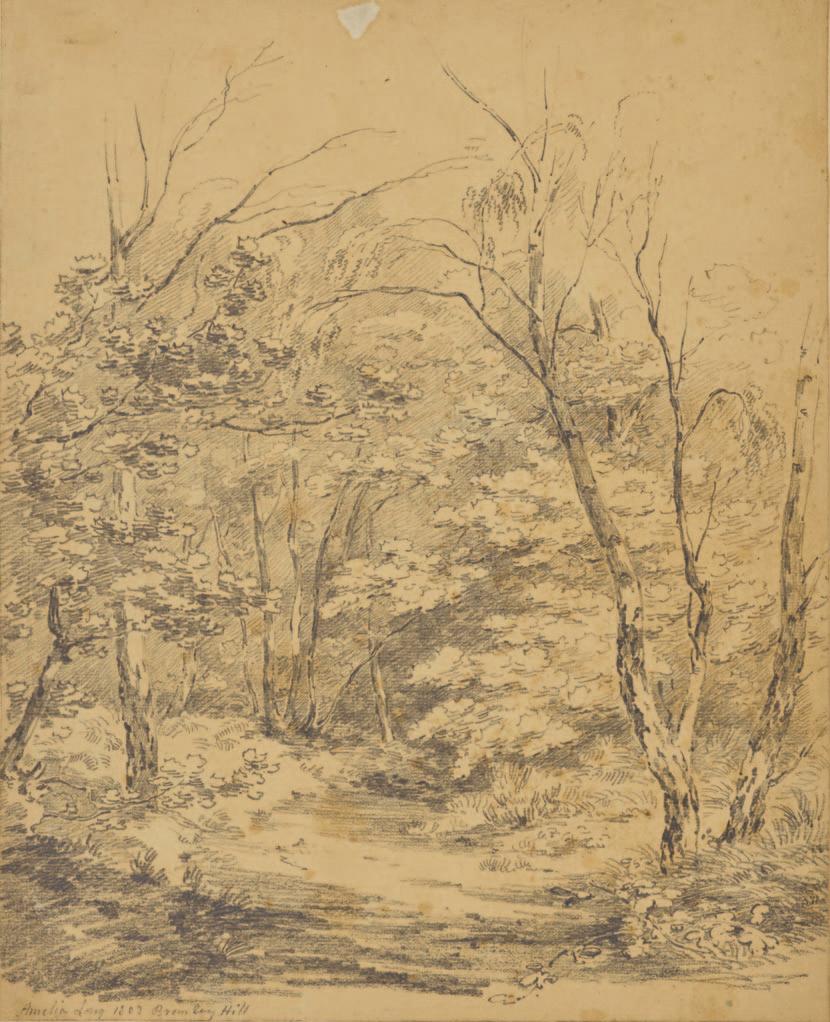
Amelia Long, Lady Farnborough (1772-1837)
A Path in a wooded Landscape, Bromley Hill, Kent
Signed and inscribed lower left: Amelia Long 1803
Bromley Hill
Pencil on laid paper
30 by 24.2 cm., 11 ¾ by 9 ½ in.
Provenance: Iolo A. Williams (1890-1962); By descent unto 2024
Amelia Long was a talented amateur artist who was taught by Girtin and Edridge, and exhibited at the Royal Academy between 1807 and 1822. She married Sir Charles Long (1760-1838) and they lived at Bromley Hill, Kent, where she designed the celebrated gardens.
£475
13
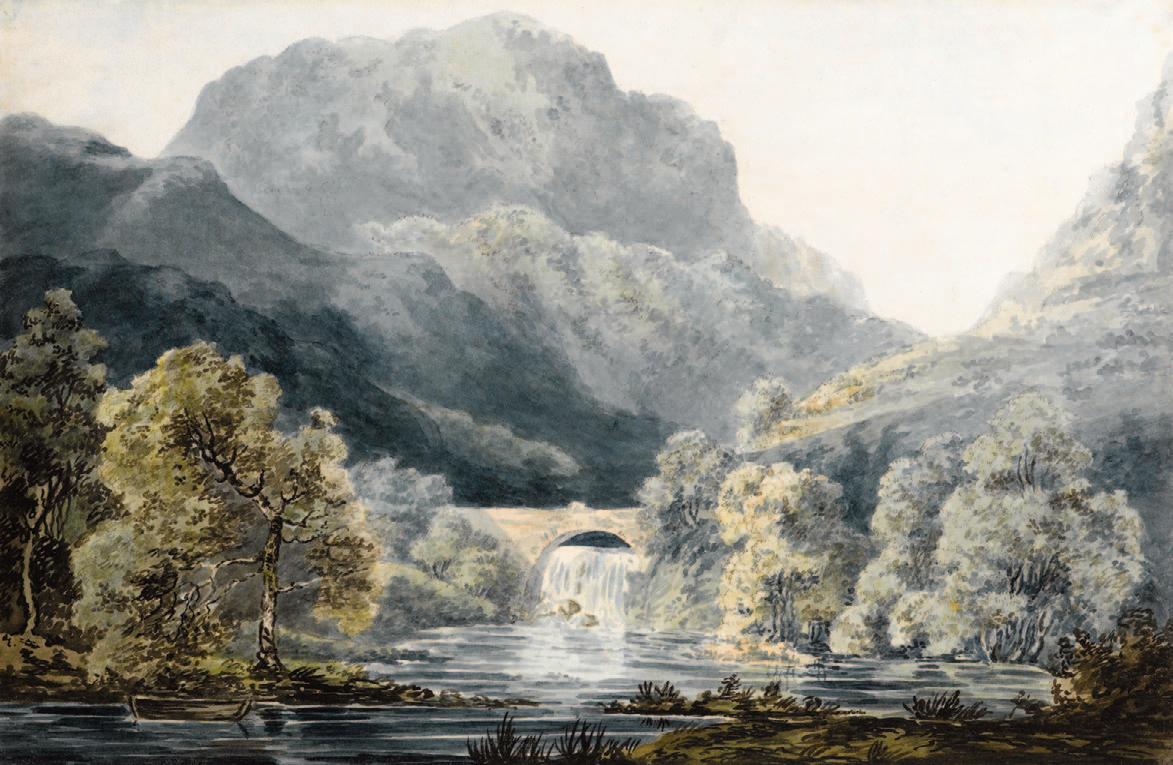
Edward Dayes (1763-1804)
Pont Aberglaslyn, North Wales
Watercolour over traces of pencil
25.6 by 39.1 cm., 10 by 15 ¼ in.
Provenance:
With Andrew Wyld, 2005; Private collection, UK, until 2011
Exhibited:
London, Manning Gallery, November 1967, no. 3;
London, Andrew Wyld, Watercolours and Drawings – the Annual Exhibition, 29th June to 22nd July 2005, no.24
Pont Aberglaslyn, the bridge spanning the beautiful narrow Aberglaslyn gorge in North Wales, is one mile south of Beddgelert, a popular base for watercolour artists in the late eighteenth and nineteenth centuries.
£1,500
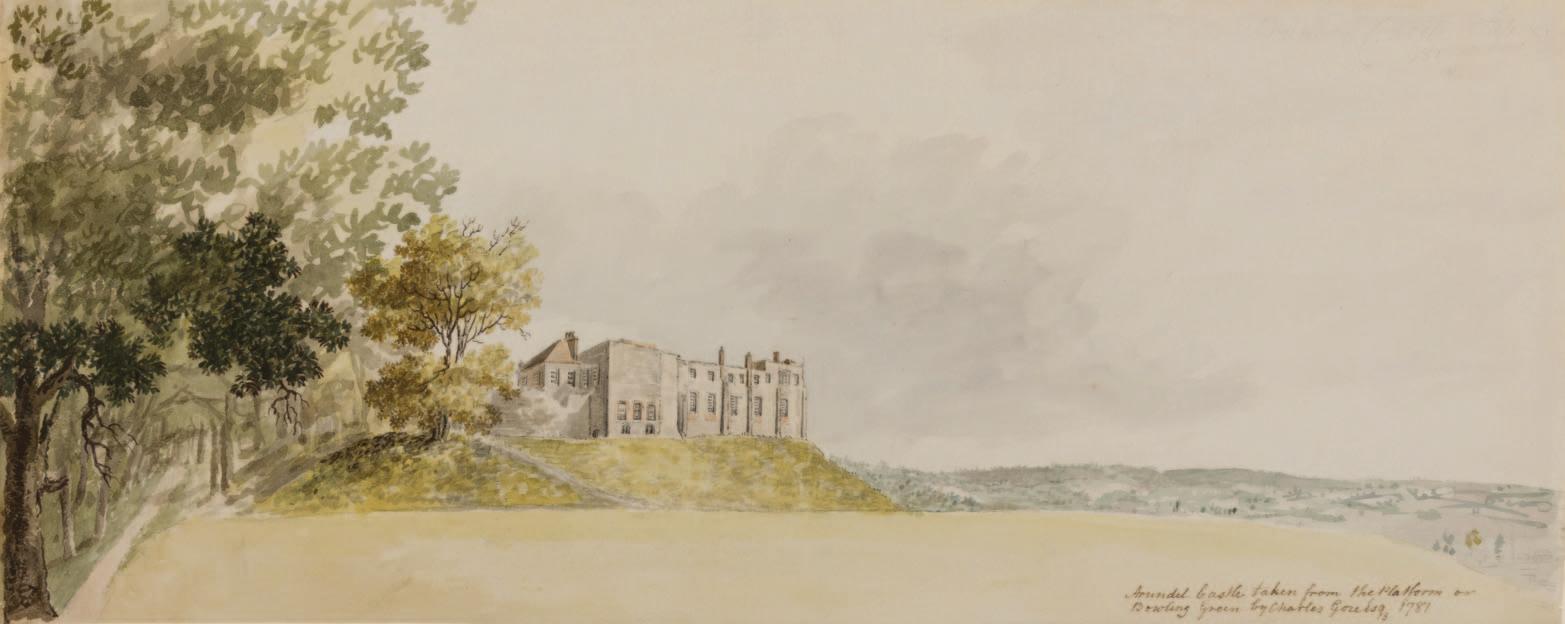
Charles Gore (1729-1807)
A view of East front of Arundel Castle, West Sussex, seen from the Bowling Green
Inscribed lower right: Arundel Castle taken from the Platform or/Bowling Green by Charles Gore Esq 1781 and indistinctly inscribed upper right: Arundel Castle Sufsex/1781
Watercolour over touches of pencil on laid paper, watermark Whatman
19.6 by 49 cm., 7 ¾ by 19 ¼ in.
Provenance:
Iolo Williams (1890-1962); And by descent until sold Sotheby’s 13th July 1989, lot 5; Private collection
The Bowling Green is the name given to the square earthworks, which along with the fishponds is located on the east side of the Castle and were probably created to strengthen the castle's defences during the Civil War.
£450
15
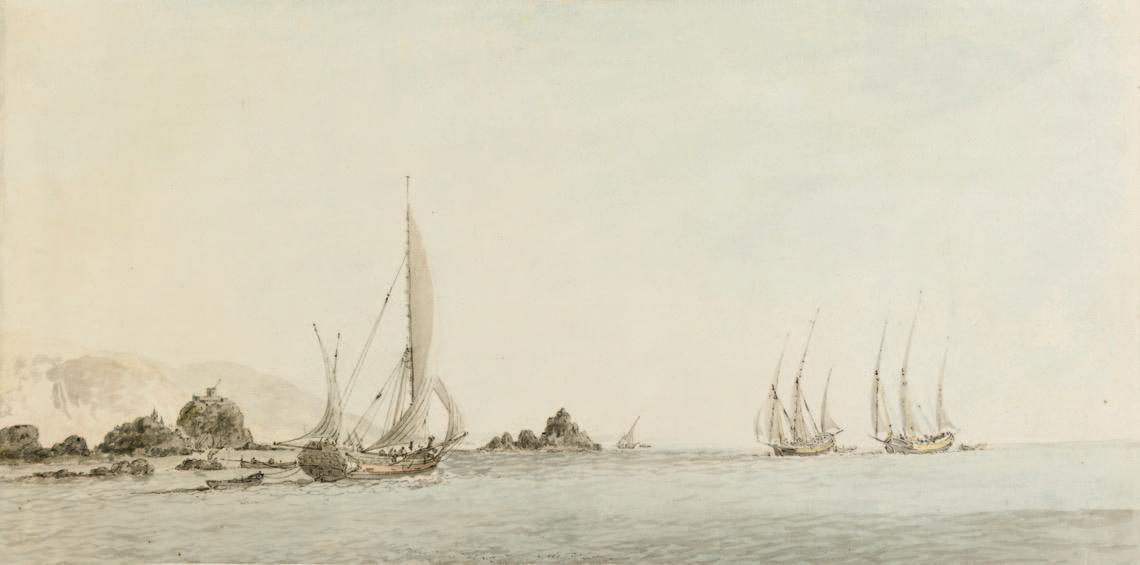
Charles Gore (1729-1807)
A Cutter off a rocky Islet, with other Shipping in the Distance
Pen and grey ink and watercolour over pencil on laid paper
19.3 by 47.3 cm., 7 ¾ by 18 ½ in.
The present drawing may depict Porto Venere on the Ligurian coast of Italy, although the landscape beyond would be rather hillier than that shown here. There is a drawing by Gore in the British Museum, which appears to show the same hilly outcrop with buildings, which is inscribed with the location.
£300
16
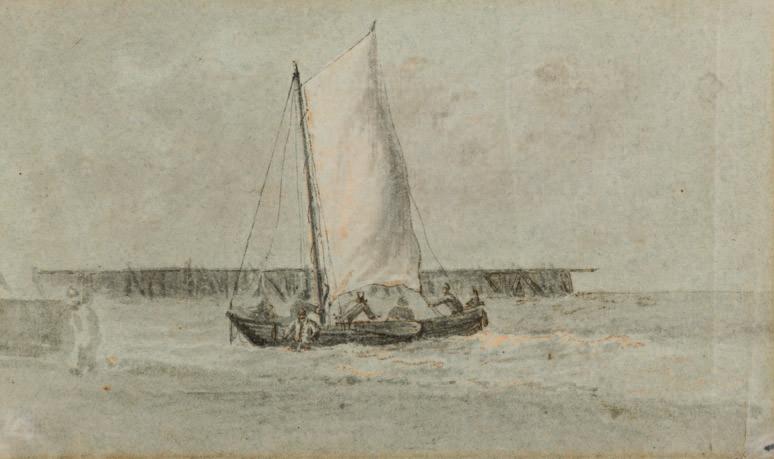
Charles Gore (1729-1807)
A Weyschuit coming ashore under the shelter of a Groyne on the Dutch coast: Study after van de Velde the Younger
Pen and grey ink and watercolour over pencil on grey-blue laid paper
Sheet 18.1 by 28.8 cm., 7 by 11 ¼ in.
£400
17
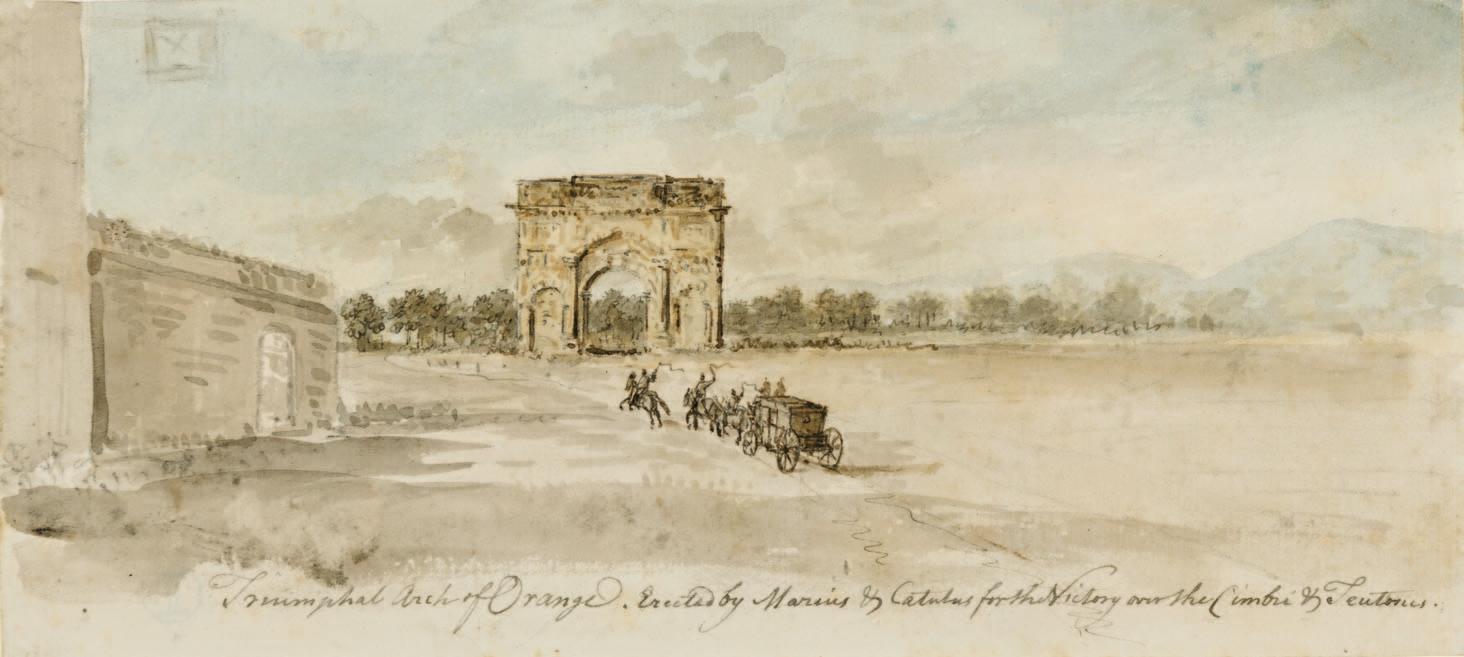
Charles Gore (1729-1807)
The Triumphal Arch at Orange, France
Inscribed lower centre: Triumphal Arch of Orange. Erected by Marcus & Catulus from the Victory over the Cimbri & Teutons
Watercolour over pencil on laid paper watermarked GR, with collector’s mark verso 11 by 24.5 cm., 4 ¼ by 9 ½ in.
Provenance:
Sir Bruce Ingram (1877-1953) (Lugt. No. 1405a); Michael Ingram (1917-2005)
The Gallo-Roman arch at Orange, is the largest and oldest surviving arch of the period and has been classified a UNESCO world heritage site. Its design was subsequently used in Rome, with the Arches of Constantine and Septimus Severus. It was constructed between A.D. 10-25 during the reign of Augustus and was first dedicated to the glory of the veteran armies and then to Emperor Tiberius. It stood on the Via Agrippa and marked a border between the world of the dead and the Roman city of Orange.
£500
18
Charles Gore (1729-1807)
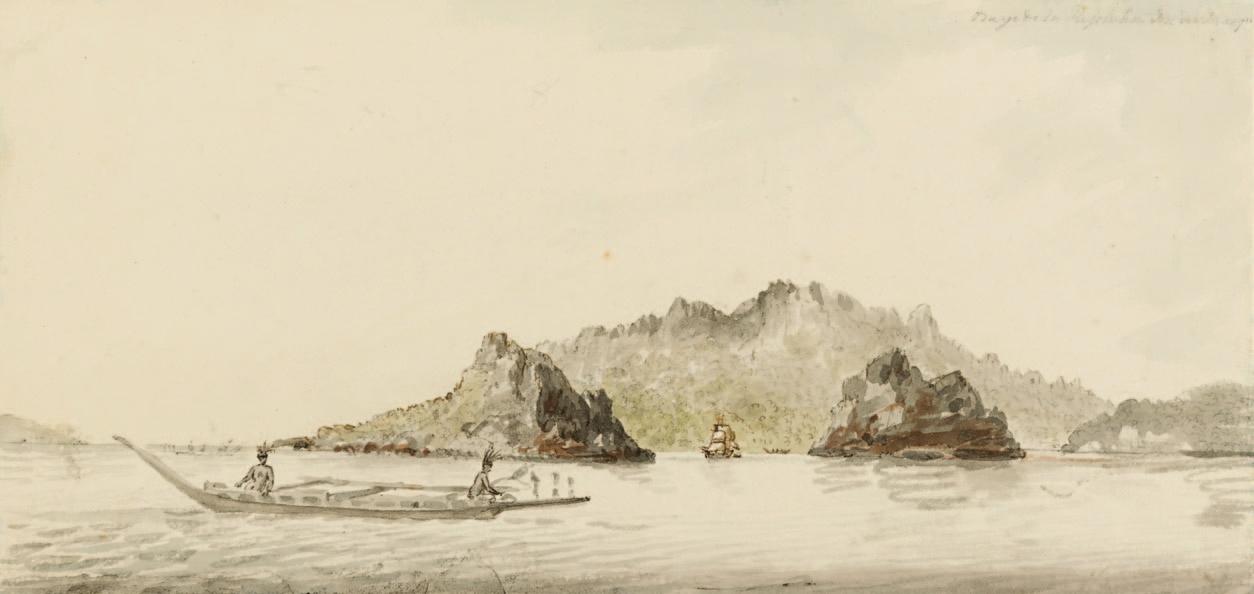
Resolution Bay, Marquesas Islands
Inscribed upper right: Baye de la Resolution Isle des Marquis and similarly inscribed on mount
Pen and grey ink and watercolour over pencil on laid paper, with pen and black in border 13.3 by 27.7 cm., 5 ¼ by 10 ¾ in.
Provenance: Michael Ingram (1917-2005)
Gore, although well-travelled through Europe, never ventured further afield and in the present drawing, he has taken inspiration from Benjamin Thomas Pouncy’s engraving of William Hodges’ drawing of the islanders of Resolution Bay, wearing woven grass head-dresses, in their long canoes. Looking at work by artists who had travelled further afield, was not uncommon at the time, many maritime artists such as John and Robert Cleveley, drew on the works of others. William Hodges (1744-1797) joined Cook's second expedition to the South Pacific between 1772-5, as a draughtsman. Cook travelled to the Marquesas in March of 1774.
£400
19
Charles Gore (1729-1807)
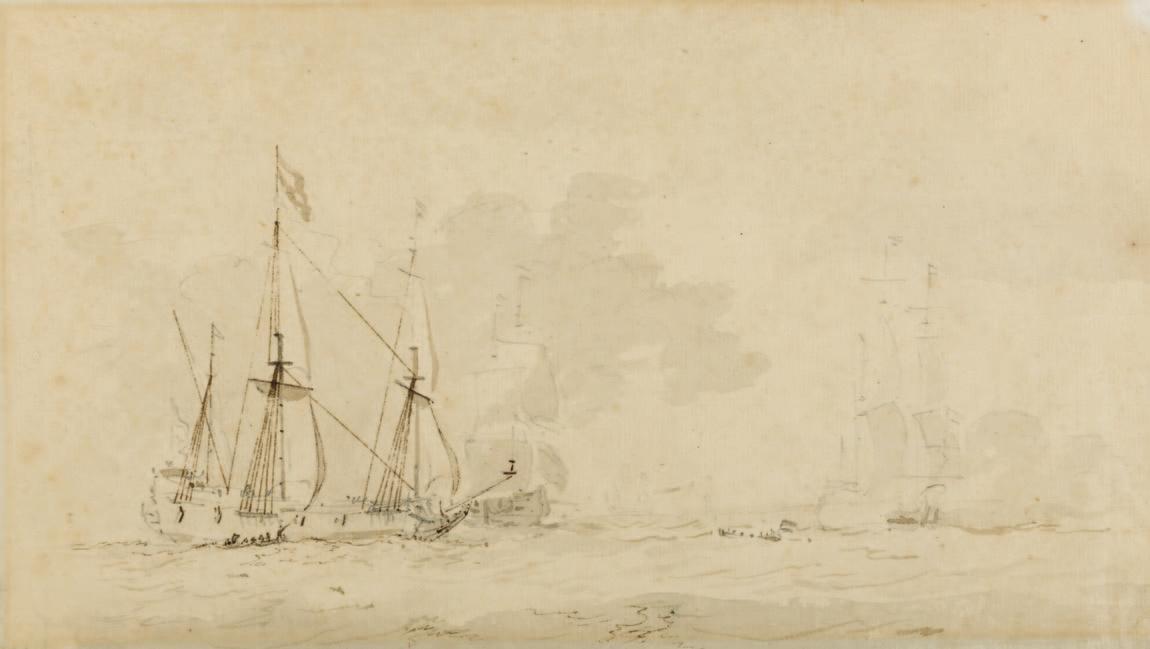
Shipping in Rough Seas, possibly after the Van de Veldes
Pen and brown ink and washes over pencil on laid paper
Sheet 18 by 34 cm., 7 by 13 ¼ in.
Gore appears to have collected a number of drawings and watercolours by the Van de Veldes, although, it seems that initially, he was more interested in the subject matter, than in their artistic value. This is evidenced by the fact that he often overworked the slighter sketches and studies.
£250
20 Charles Gore (1729-1807)
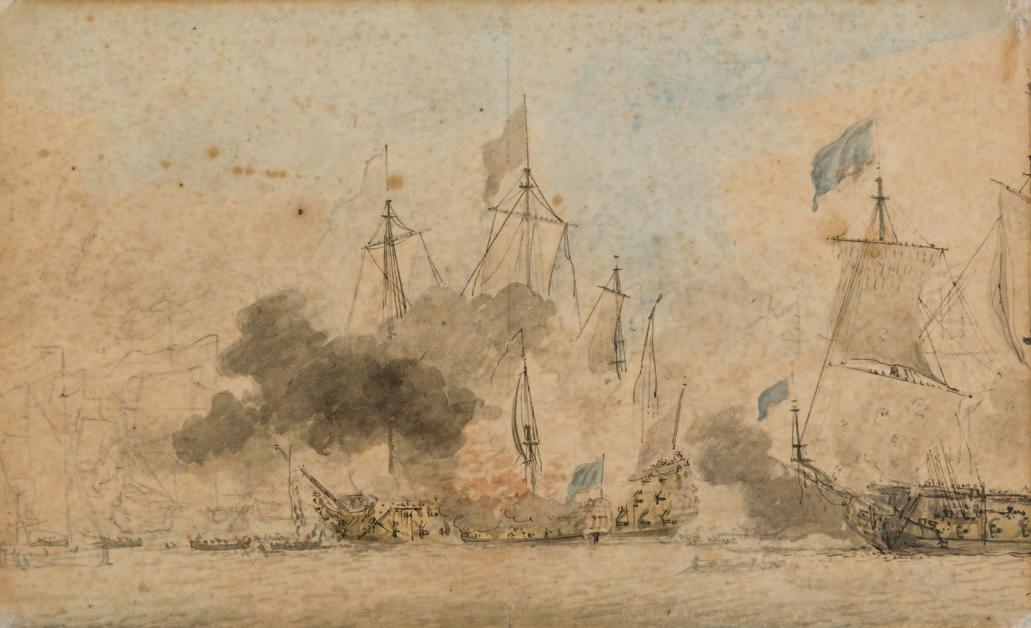
The Burning of the ‘Royal James’ at the Battle of Solebay, 7th June 1672 - a study after Willem van de Velde, the Younger
Pen and grey ink and watercolour over pencil on laid paper 19 by 30.4 cm., 7 ¾ by 12 in.
The present drawing is a study after a painting by Willem van de Velde the Younger (1644-1703) in the National Maritime Museum, Greenwich (NMM BHC0302). Van de Velde explored the subject in a number of versions, as well as in preparatory drawings, one of which closely mirrors the present composition, also in the National Maritime Museum (NMM PA17272).
In the battle of Solebay during the Third Dutch War, the Admiral of the English Fleet, Edward Montagu, 1st Earl Sandwich, commanded the navy from aboard the Royal James, a three-deck, 100-gun vessel. It was set alight during the battle and Montagu was drowned whilst trying to move his flag to another vessel.
The ship in the centre of this work is the Royal James, with Sandwich’s flag flying at the main. The small vessel next to the Royal James is the Dutch fireship Vrede, under the command of Jan van Rijn. The boats pencilled in to the right of the Vrede, may be her crew making their escape. The English crew are abandoning the ship, over the bow where there are waiting boats. The flag on the foremast of the ship at right (despite being blue) is the Dutch tricolor of Vice-Admiral Isaac Sweerts on the Oliphant
£200
21
Frederick Mackenzie (1787-1854)
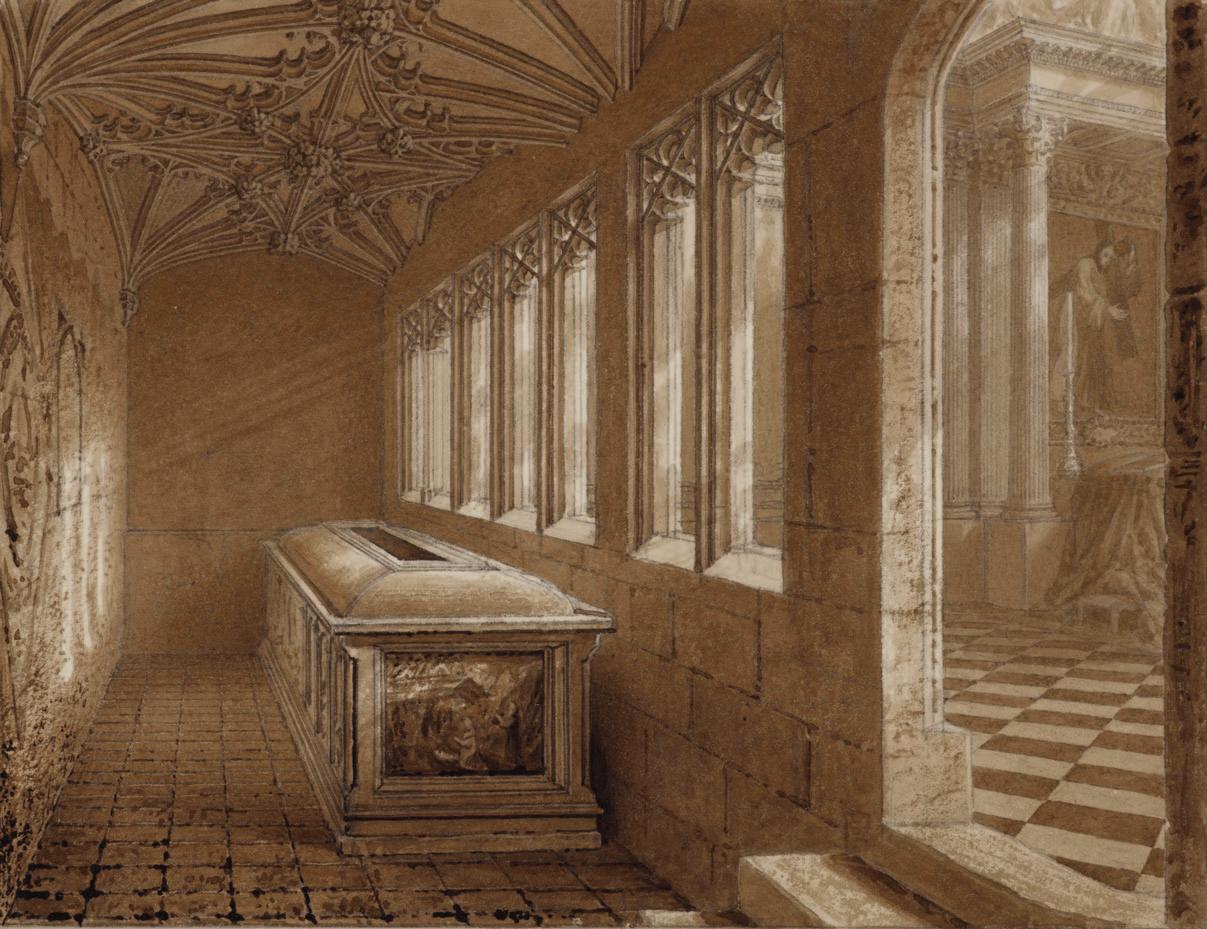
An Oratory on the north Side of Magdalen College, Chapel
Signed and inscribed with title on mount Brown washes over pencil Image 14.4 by 18.6 cm., 5 ½ by 7 ¼ in.
London-born, Mackenzie was principally an architecture draughtsman whose drawings were engraved for the works of John Britton and others. The following four drawings may relate to ‘A History of the University of Oxford’ published by Ackerman in 1814.
£900
Frederick Mackenzie (1787-1854)
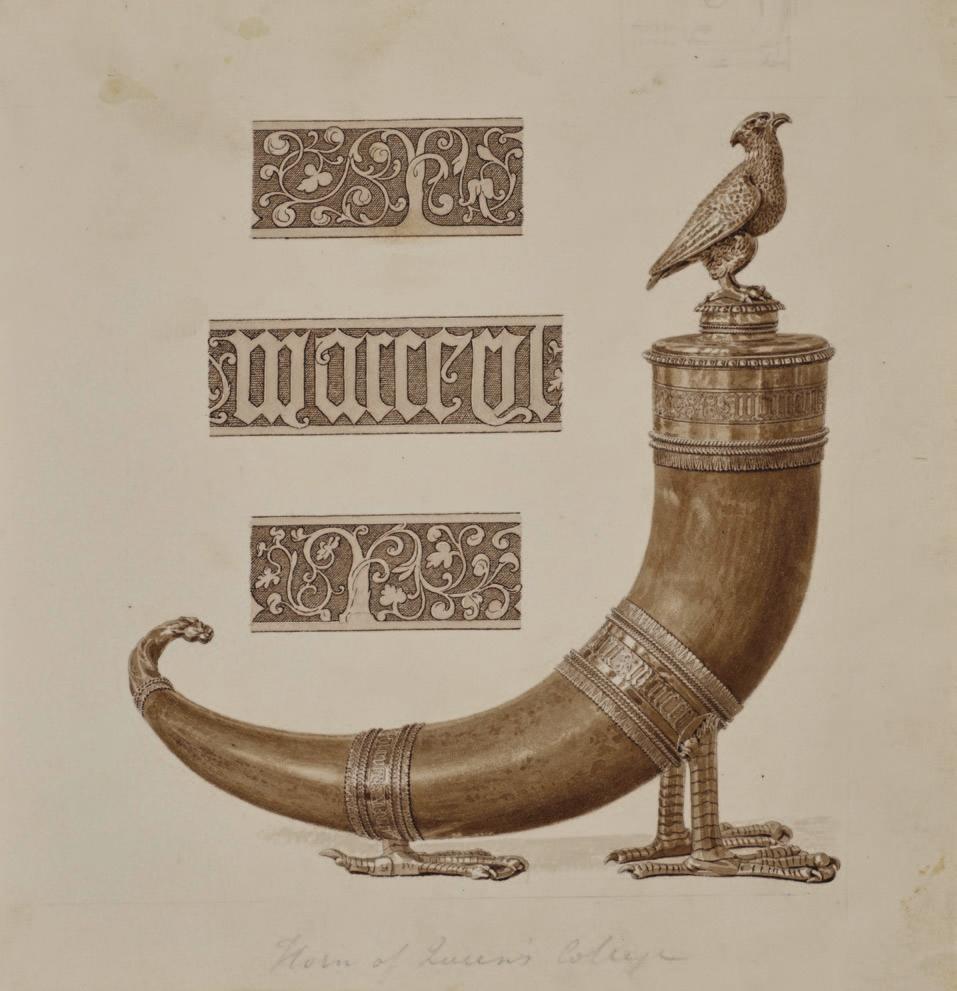
The Horn of Queen’s College, Oxford
Signed on mount: F. Mackenzie del. and inscribed with title lower centre Pen and black ink and brown washes over pencil
22.8 by 21.8 cm., 8 ¾ by 8 ½ in.
This is a buffalo’s horn mounted in silvergilt dating from the 14th century in the collection of Queen’s College.
£600 22
Frederick Mackenzie (1787-1854)
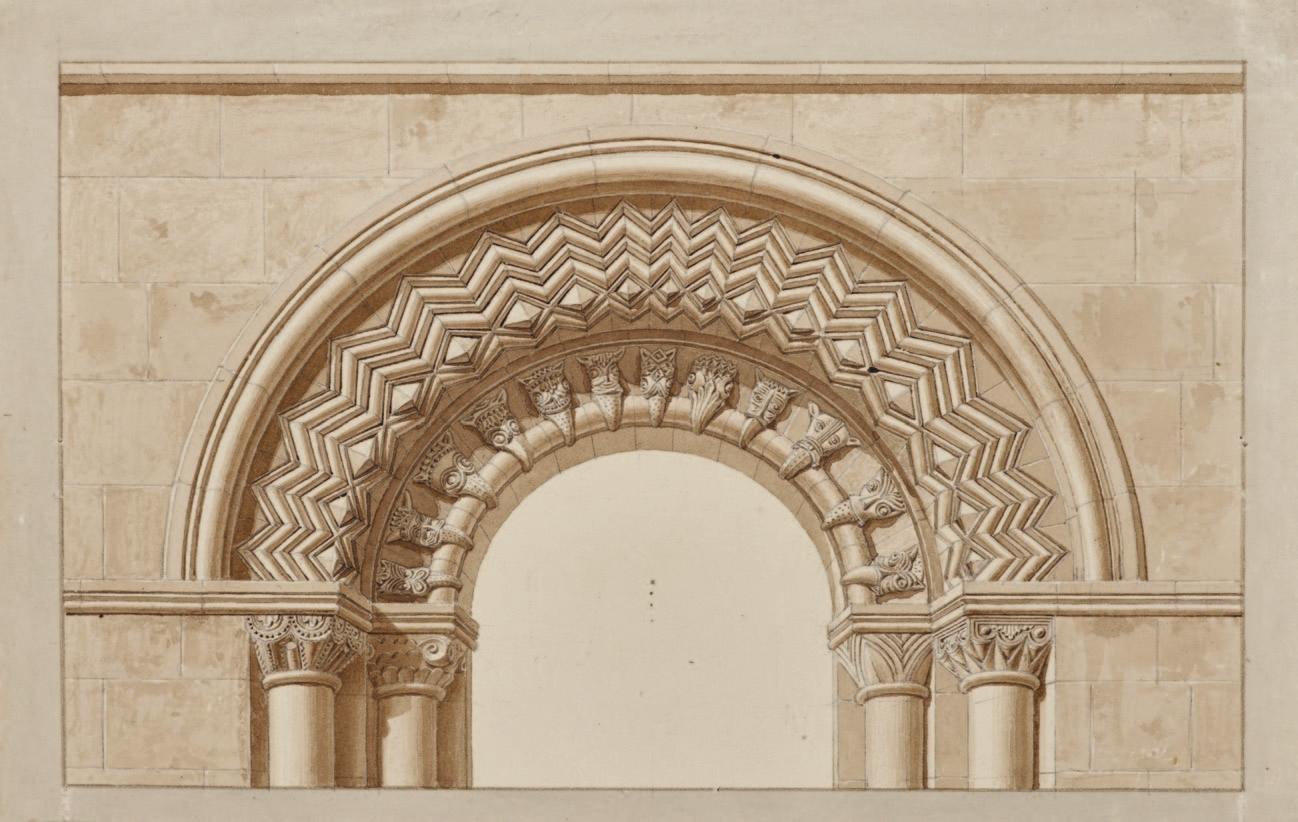
A Saxon Arch in St Ebbe’s Church, Oxford
Signed and inscribed with title on mount
Pen and black ink and brown wash over pencil
Image 12.1 by 18.5 cm., 4 ¾ by 7 ¼ in.
St Ebbe’s Church in central Oxford is named after the Northumbrian abbess Aebbe of Coldingham who lived in the seventh century. The current church dates from 1814-16 but incorporates the Norman west door as shown here.
£500 23
24
Frederick Mackenzie (1787-1854)
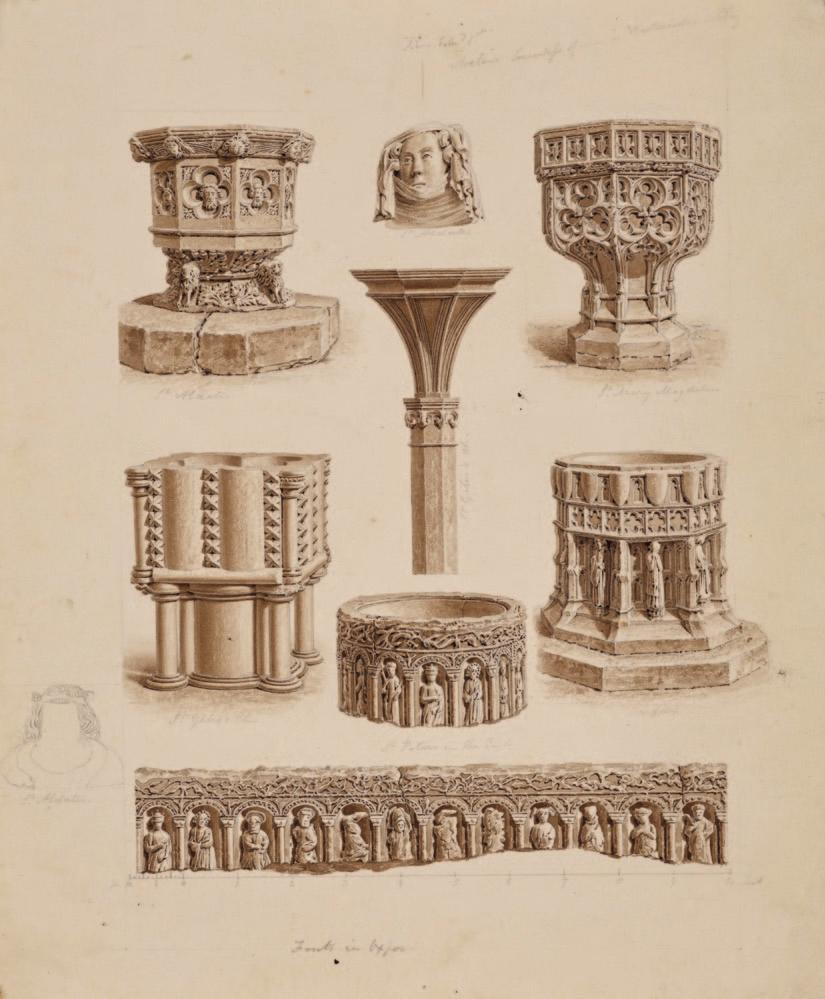
Fonts in Oxford
Signed on mount: F. Mackenzie del., inscribed with title lower centre and inscribed with location under each font Brown washes over pencil 30.1 by 25 cm., 11 ¾ by 9 ¾ in.
£600
25
Cornelius Varley (1781-1873)
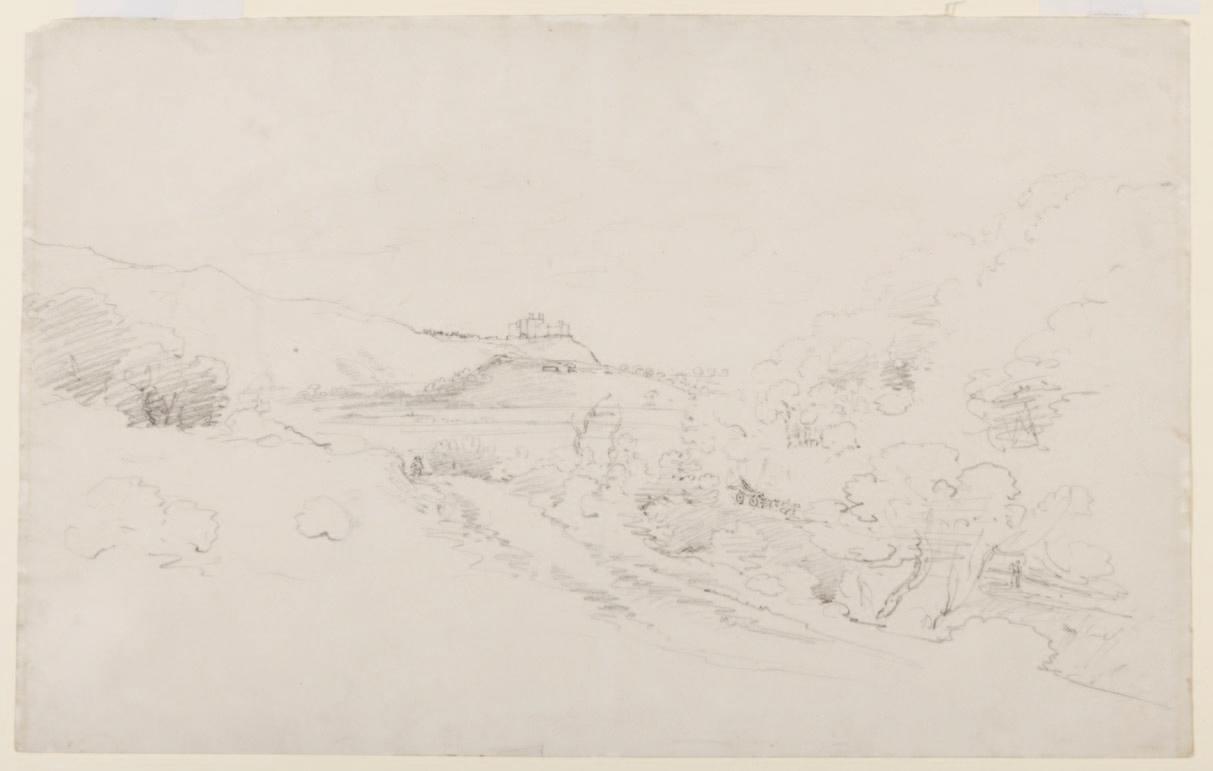
A distant view of Harlech Castle, North Wales
Pencil on wove paper watermarked 1801/ WHATMAN
23.8 by 37.8cm., 9 ¼ by 14 ¾ in.
This is one of a group of drawings by Varley on Whatman paper dated 1801 and of this size which Varley mainly used on his 1803 trip to North Wales (see Peter Bower, ‘A material pleasant to work on’: Cornelius Varley’s Use of Paper’, essay in Cornelius Varley – The Art of Observation, Lowell Libson exhibition catalogue 2005, p.51). Cornelius Varley visited North Wales in 1802 with his brother John and the architect Thomas Webster and again in 1803 in the company of Joshua Cristall. Varley also used this batch of Whatman paper on his 1802 tour but the confidence of the handling in the present work suggests a date of 1803 is more likely. We are grateful to Peter Bower for his help in cataloguing this drawing.
£750
26
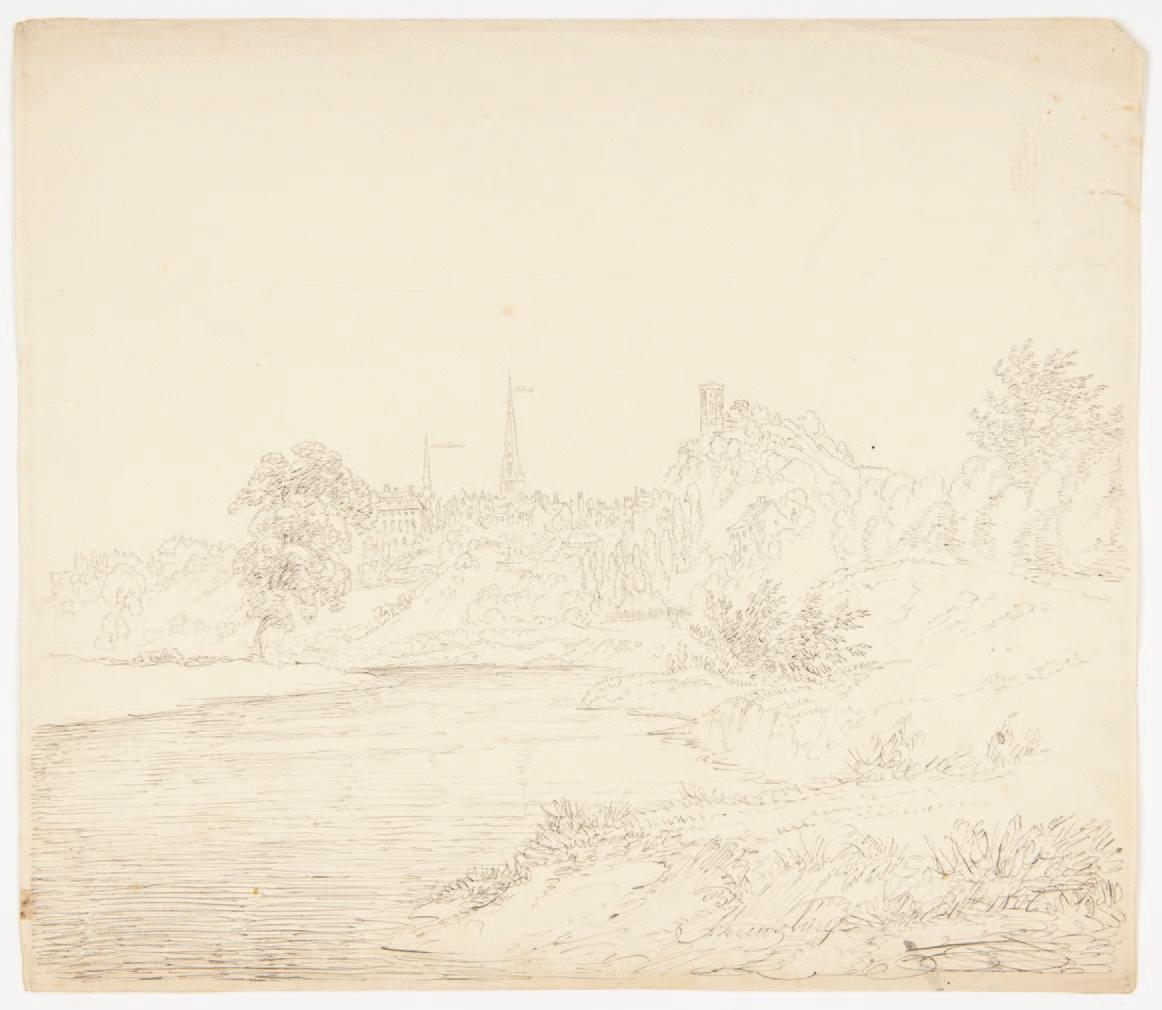
John Pearson (1777-1813)
Shrewsbury from the River Severn, Shropshire
Inscribed lower right: Shrewsbury June 14th 1802
Pen and grey ink over pencil
35.8 by 41.1 cm., 14 by 16 in.
Provenance:
By descent to the artist’s great-great-niece Mrs E. Sanford, 1948; By descent until 2020
Pearson was born in Ripon, Yorkshire, the eldest son of a wealthy local banker. He is thought to have been a pupil of the Yorkshire artist Francis Nicholson. Shrewsbury is the county town of Shropshire in the west of England near the Welsh border.
£350
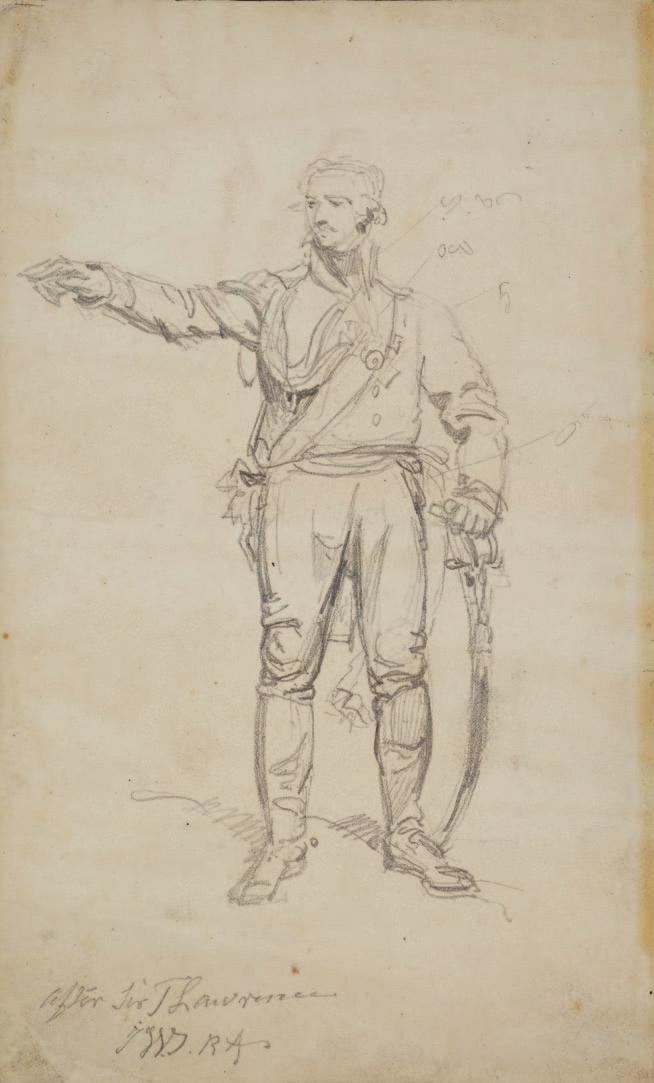
James Ward, R.A. (1769-1859)
after Sir Thomas Lawrence, P.R.A.
Study of the Portrait of General Blücher at Windsor Castle
Signed and inscribed lower left: after Sir T Lawrence/JW RA Pencil
22.7 by 13.7 cm., 8 ¾ by 5 ¼ in.
Provenance:
Iolo A. Williams (1890-1962); By descent until 2024
The present study of Lawrence’s full-length portrait of the Prussian, Field-Marshall Gebhert Leberecht von Blücher, Fürst von Wahlstatt (1742-1819), was probably drawn when the portrait was exhibited at the Royal Academy's Annual Exhibition in 1815. The exhibition contained several paintings intended to celebrate the end of the Napoleonic wars. However, Napoleon’s escape from Elba in March 1815 and the resumption of hostilities proved the celebrations a little premature, with Napoleon’s final defeat happening just days before the exhibition closed. Blücher led the Silesian army into Paris in 1814 and was thus instrumental in forcing Napoleon’s first abdication. After Lawrence’s portrait was painted, he became Commander-in-Chief of the army of the Lower Rhine and was crucial in helping win the Battle of Waterloo. He sat for Lawrence in 1814, when he was attending the Congress of London.
£450 27
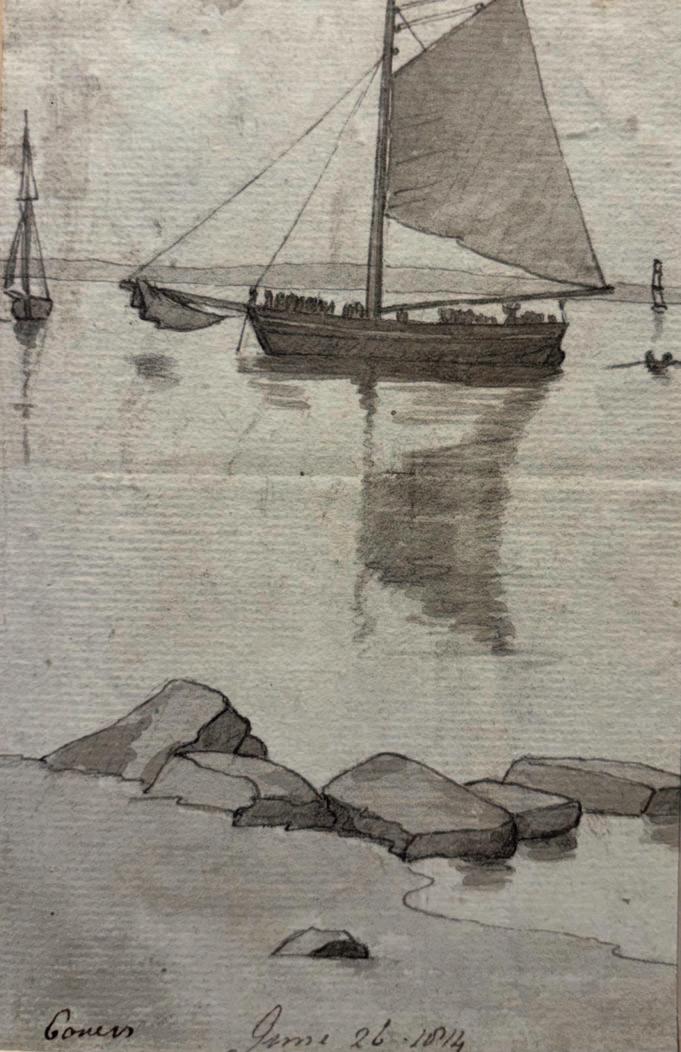
The Worthing Draughtsman (fl. 1812-1832)
Study of a Boat at Cowes, Isle of Wight
Inscribed lower centre: Cowes/June 6 1814
Pen and grey ink and washes over pencil on laid paper 16.7 by 11 cm., 6 ½ by 4 ¼ in.
Provenance:
With Appleby Brothers, London, circa 1958; Ian Fleming-Williams; Anonymous sale, Christie’s, 21st July 2015, lot 463 (part)
The artist and authority on British watercolours Martin Hardie described the artist of a group of around 40 drawings by the same unidentified hand as ‘The Worthing Draughtsman’. The works which are dated between 1812 and 1832 are mainly of views of the south of England. One appears to be signed with the initials ‘N.P.’.
29
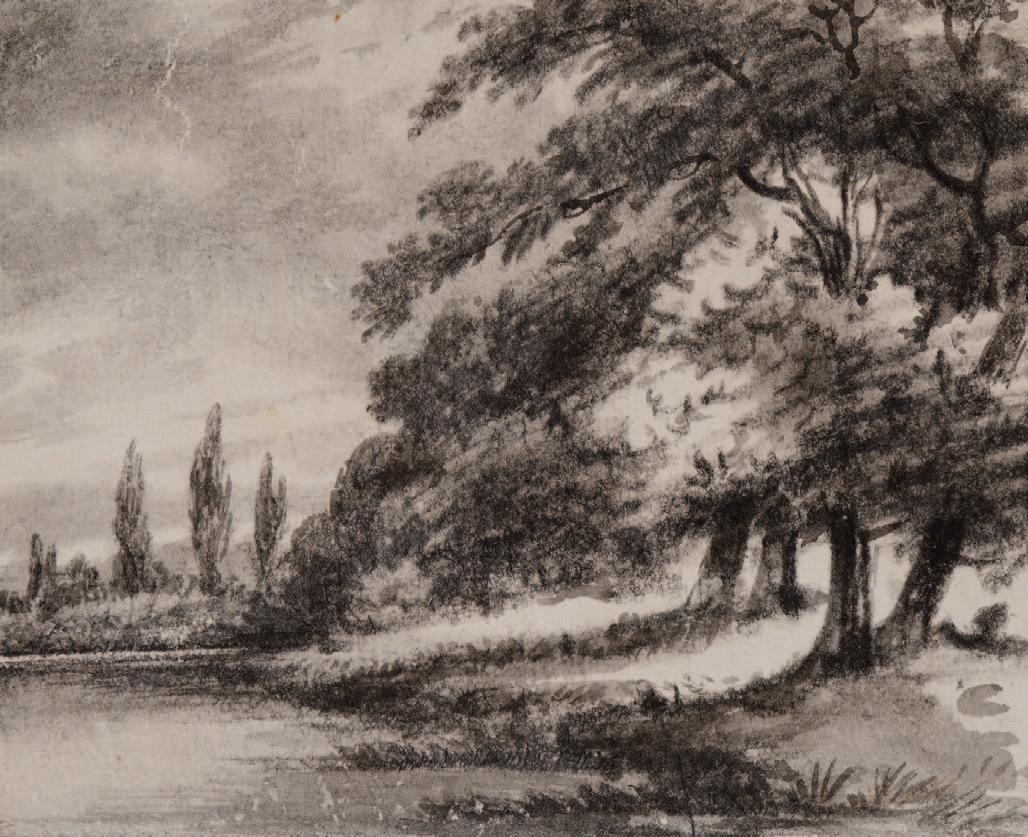
Dr Thomas Monro (1759-1833)
Trees by a River
Black chalk and grey wash 12.3 by 15.3 cm., 4 ¾ by 6 in.
Provenance:
By descent in the family of the artist until 2013
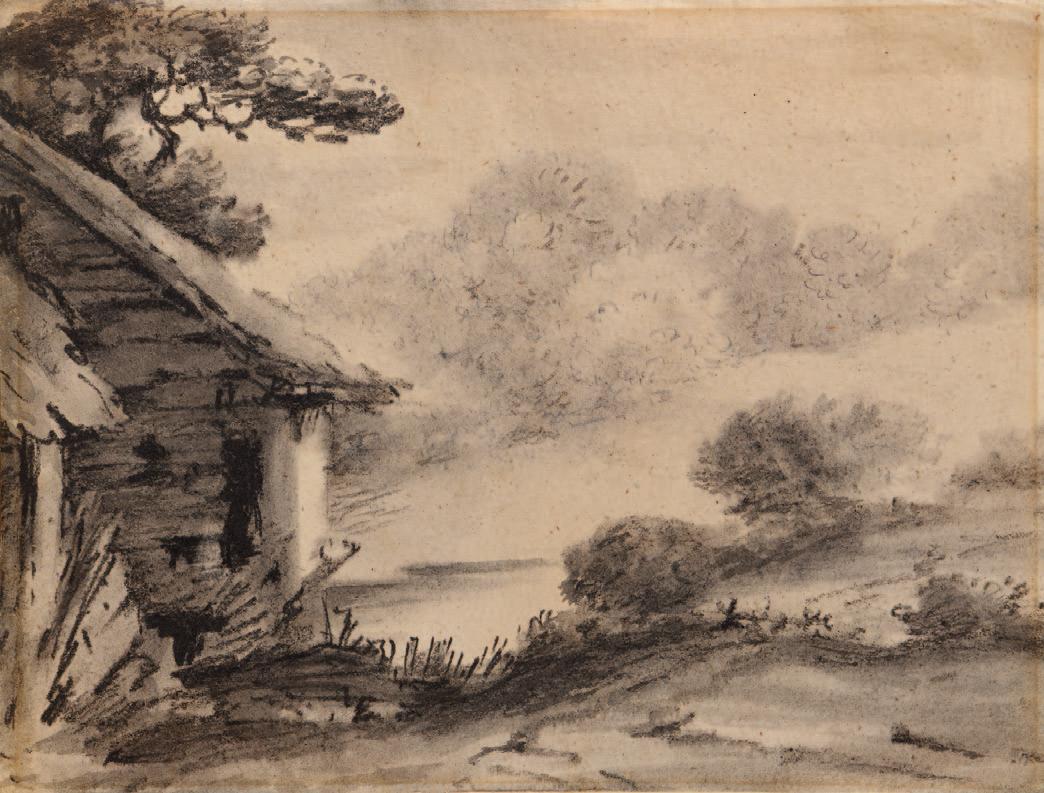
Dr Thomas Monro was a doctor by training and was the third of four generations of physicians appointed to Bridewell and Bethlem hospitals; his grandfather, father and one of his sons all held the same post. He is today best known for his encouragement of a generation of young artists and his part in the establishment of the British watercolour tradition. Monro turned his house into an evening studio and informal academy, providing space for young artists to meet, share supper, work and study the work of other artists. In return, Monro retained any drawings produced during the evening. On his death, his collection was sold at Christie’s in June 1833. Amongst the artists to benefit from this environment were J.M.W. Turner, Thomas Girtin, John Varley, Cristall, de Wint, William Henry Hunt and John Linnell. He was also a talented artist in his own right.
£400
30 Dr Thomas Monro (1759-1833)
A Building by a Clearing
Black chalk and stump
19.9 by 26 cm., 7 ¾ by 10 ¼ in.
Provenance: By descent in the family of the artist until 2013
£300
31
Joshua Cristall (1767-1847)
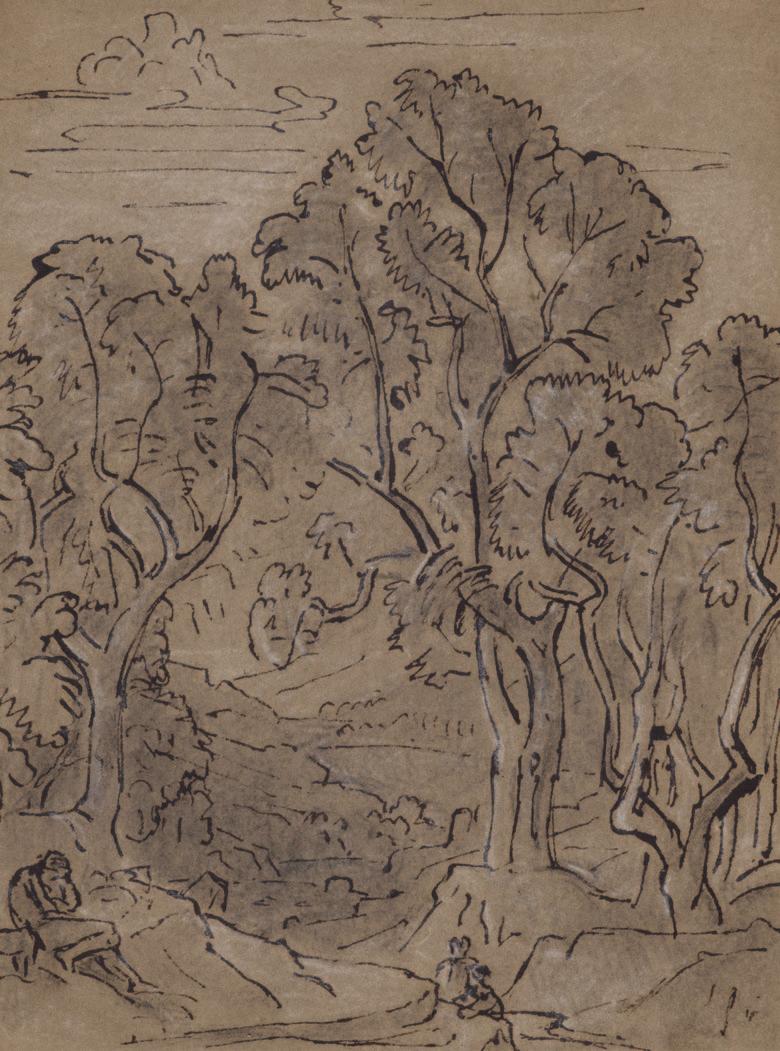
Figures resting in a wooded Landscape
Pen and ink and wash heightened with white on grey paper 19.7 by 14.5 cm., 7 ¾ by 5 ¾ in.
Provenance: Iolo A. Williams (1890-1962); By descent unto 2024
£250
Joshua Cristall (1767-1847)
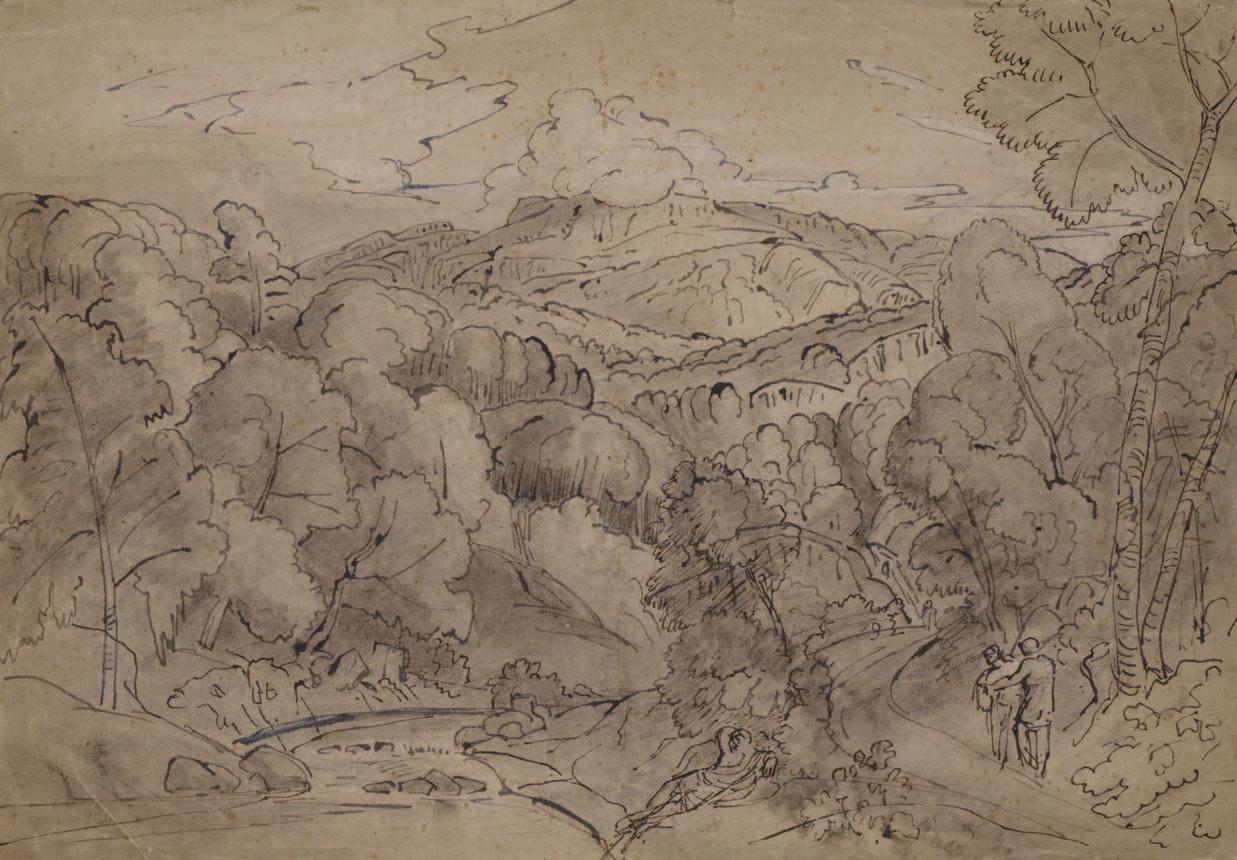
Figures by a River in a mountainous Landscape
Pen and ink and grey wash over traces of pencil heightened with white on grey paper
39.2 by 54.4 cm., 15 ¼ by 21 ½ in.
Provenance:
Iolo A. Williams (1890-1962); By descent unto 2024 £450
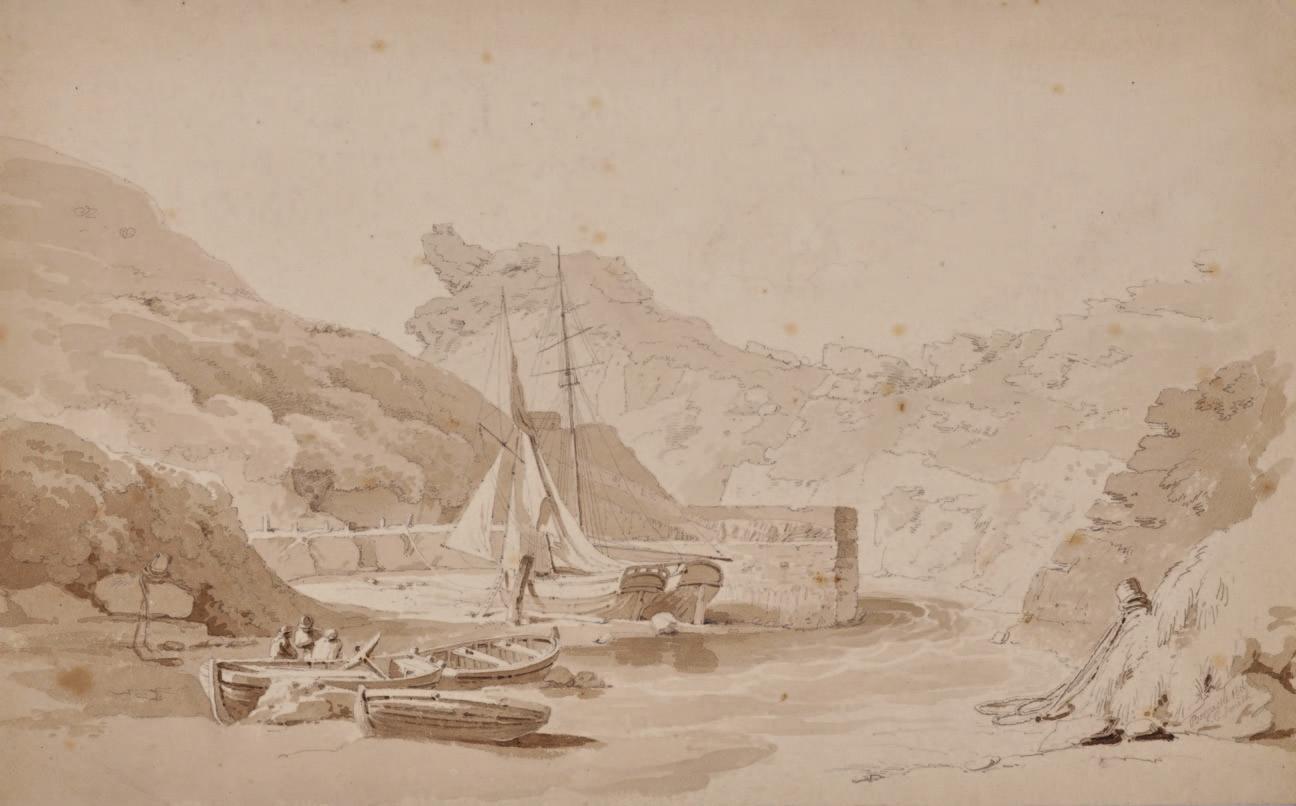
and inscribed lower right: Boscastle 1806/J. C Smith Brown washes over pencil 26.6 by 42.9 cm., 10 ½ by 16 ¾ in.
33
Joseph Clarendon Smith (1778-1810) Boats in Boscastle harbour, Cornwall
Signed
Provenance: Iolo A. Williams (1890-1962); By descent unto 2024
£300
Sir Augustus Wall Callcott, R.A. (1779-1844)
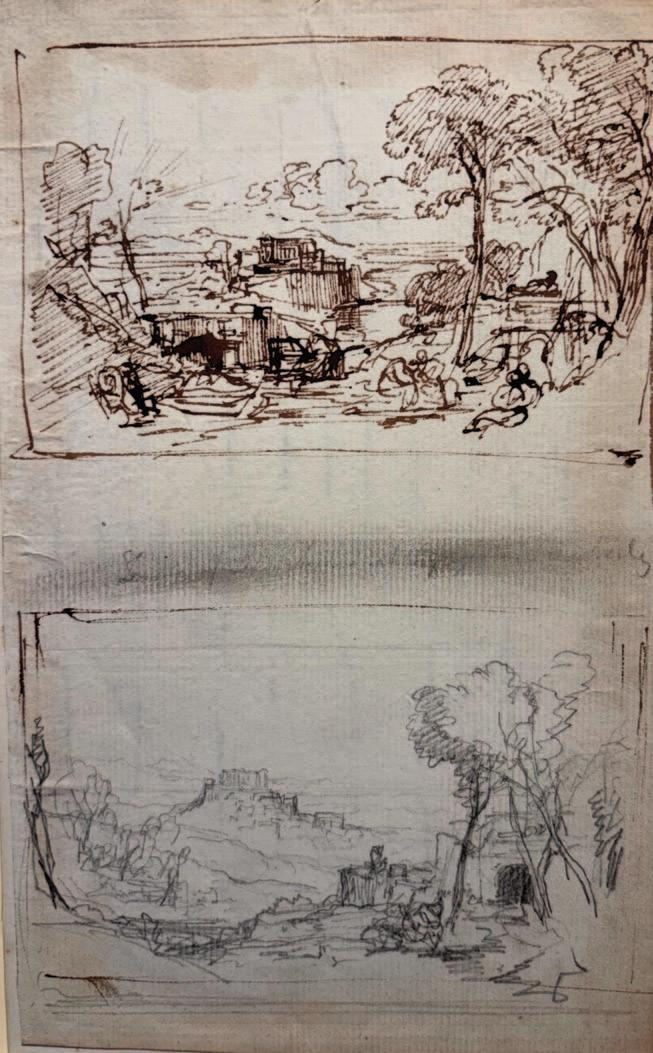
Two Landscape Studies
One pen and ink, the other pencil, on laid paper 23.5 by 14.7 cm., 9 ¼ by 5 ¾ in.
Provenance: Iolo A. Williams (1890-1962); By descent unto 2024
Callcott was a pupil of John Hoppner and studied at the Royal Academy schools focusing first on portraits and later on landscapes. He became a Royal Academician in 1810 and in his day was compared to his contemporary J.M.W. Turner. He was appointed Conservator of the Royal Pictures in 1839.
35
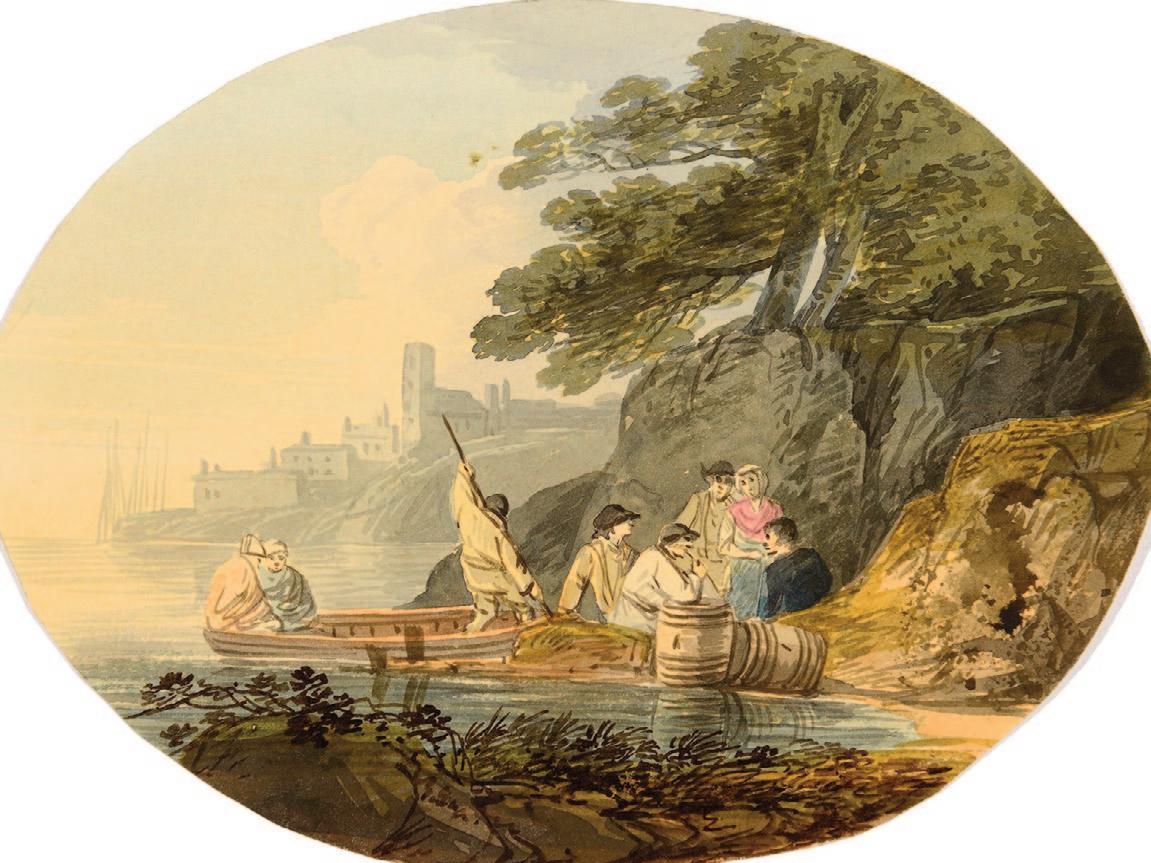
William Payne (1760-1830)
Smugglers in a Cove, a Town beyond
Signed verso: W. Payne
Watercolour over traces of pencil Oval 14.4 by 18.7 cm., 5 ½ by 7 ¼ in.
Provenance:
Probably inherited by Lady Emily Frances Percy, daughter of the 2nd Duke of Northumberland, who in 1810 married James Murray, 1st Lord Glenlyon (1782-1837);
Probably by descent to their son George, 6th Duke of Atholl (1814-1864);
By descent at Blair Castle, Blair Atholl, Scotland
The 1st Duke of Northumberland bought the estate of Werrington, near Launceston, Devon, which would explain his patronage of the Devon artist William Payne.
£750
36
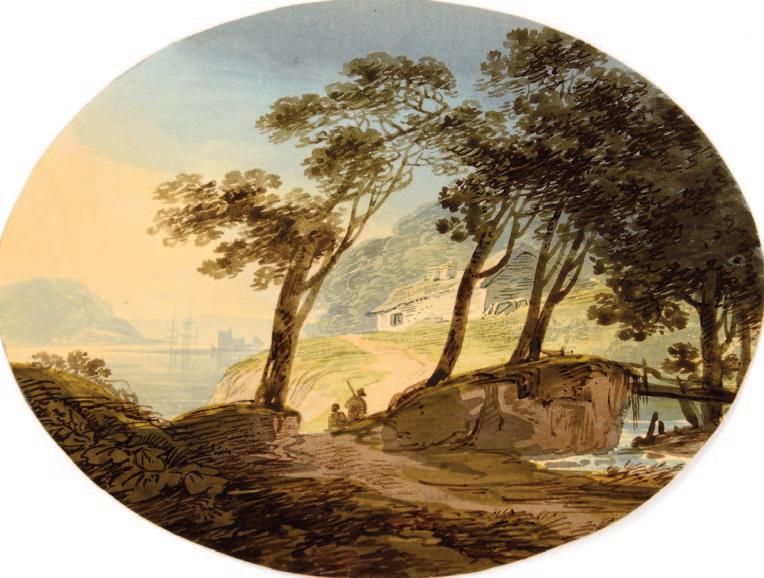
William Payne (1760-1830)
A House by an Estuary
Signed verso: W. Payne
Watercolour over traces of pencil
Oval 14.4 by 18.7 cm., 5 ½ by 7 ¼ in.
Provenance:
Probably inherited by Lady Emily Frances Percy, daughter of the 2nd Duke of Northumberland, who in 1810 married
James Murray, 1st Lord Glenlyon (1782-1837);
Probably by descent to their son George, 6th Duke of Atholl (1814-1864);
By descent at Blair Castle, Blair Atholl, Scotland
£750
37
William Payne (1760-1830)
Figures by the Sea, a Castle beyond
Signed verso: W. Payne
Watercolour over traces of pencil
Oval 14.2 by 18.4 cm., 5 ½ by 7 ¼ in.
Provenance:
Probably inherited by Lady Emily Frances Percy, daughter of the 2nd Duke of Northumberland, who in 1810 married James Murray, 1st Lord Glenlyon (1782-1837);
Probably by descent to their son George, 6th Duke of Atholl (1814-1864);
By descent at Blair Castle, Blair Atholl, Scotland
£750
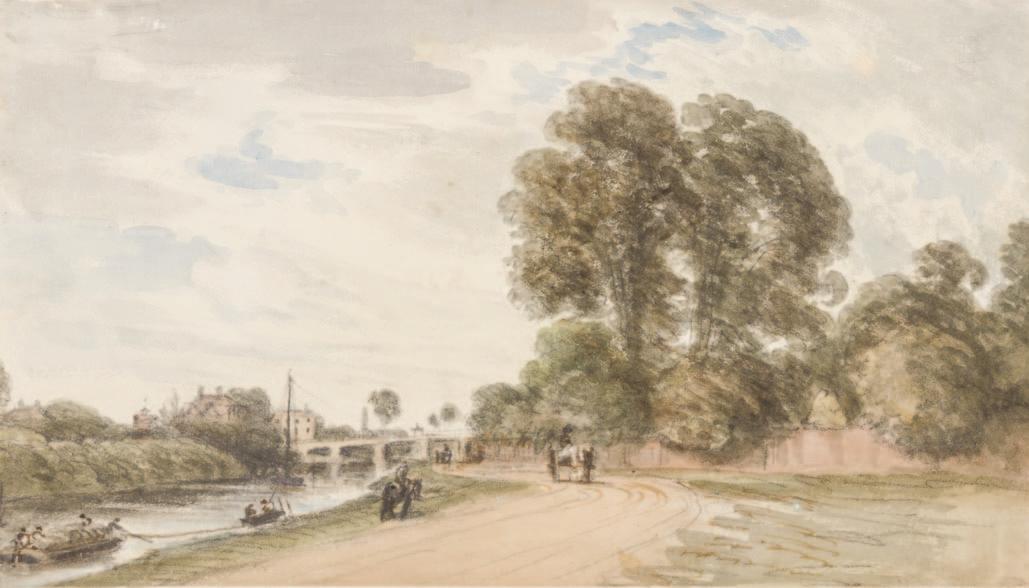
38
Dr William Crotch (1775-1847)
Datchet Bridge and Park Wall, Windsor
Inscribed verso: Datchet Bridge & ye Park Wall Windsor/July 20 1832 ½ past 11only see my accuracy – compare the trees with the last and numbered 45
Pen and brown ink and watercolour over black chalk
12.9 by 22.6 cm., 5 by 8 ¾ in.
The bridge in the present drawing, viewed from the Windsor bank of the river, linked Datchet and Windsor and was completed in 1812. A timber structure built on earlier stone piers, it collapsed just four years after this drawing was executed in 1832.
£500
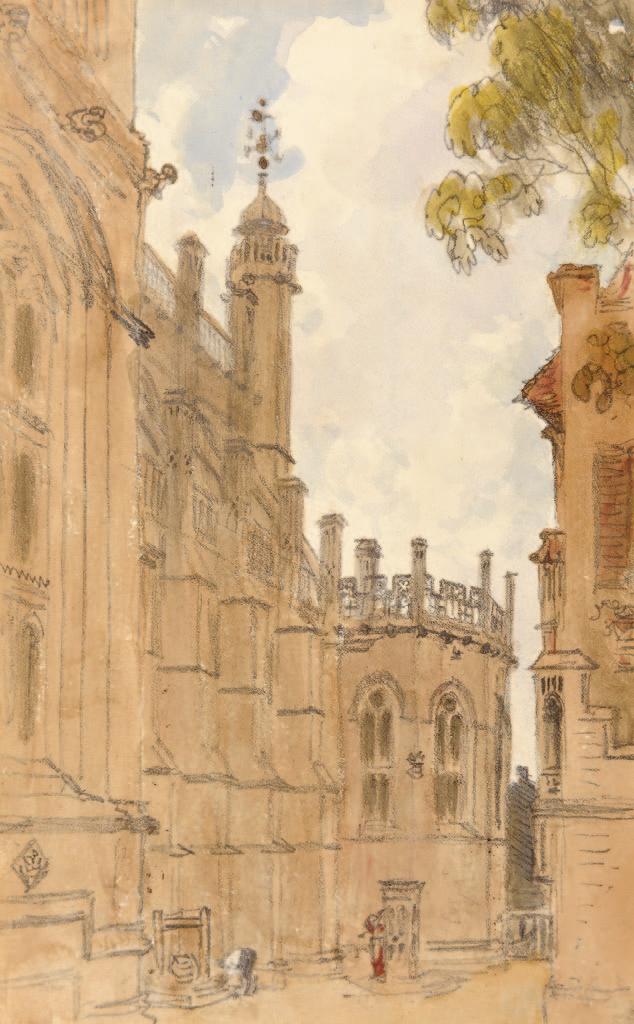
39 (right)
Dr William Crotch (1775-1847)
The Pump on the South side of St George’s Chapel, Windsor Castle
Extensively inscribed verso: Urswick’s Chapel in w.ch is the Cenotaph of ye Pr.cess Charlotte/The pump on the South Side of St George’s Chapel Windsor/July 25 1832 Noon/The new Commons 1579. Built for Stipendiary Priests & Choristers
Watercolour and pencil
21.8 by 13.5 cm., 8 ½ by 5 ¼ in.
During Wyatville’s extensive remodelling of the Castle, he laid a series of pipes around the castle, with ‘various cocks applied to throw water on the building in case of fire.’ Urswick’s Chantry or Chapel is located on the south side within St George’s. It was named for Christopher Urswick (1448-1522), confessor to Margaret Beaufort (Henry VII’s mother) and Dean of Windsor.
£450
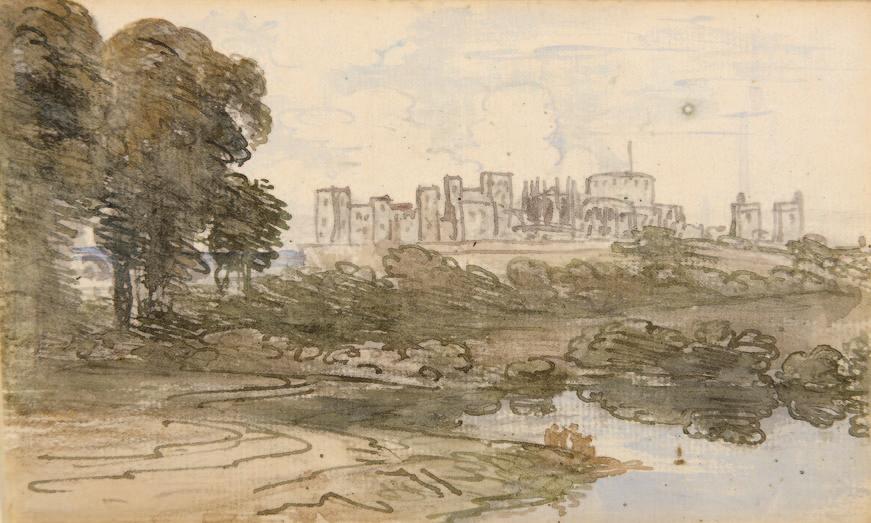
40 (above)
Dr William Crotch (1775-1847)
A distant View of Windsor Castle
Inscribed verso: Windsor/too big – too near/This round tower is going to be spoilt by a/tower & turret to be added to it 1828/horrid! with later addition: but it is not spoilt
Pen and grey ink and watercolour on laid paper
9.5 by 15.6 cm., 3 ¾ by 6 in.
The present view shows the Castle from the north from the Eton bank of the River Thames, executed whilst Sir Jeffry Wyatville, R.A. (1766-1840) was in the midst of his work developing and restoring the castle.
£350
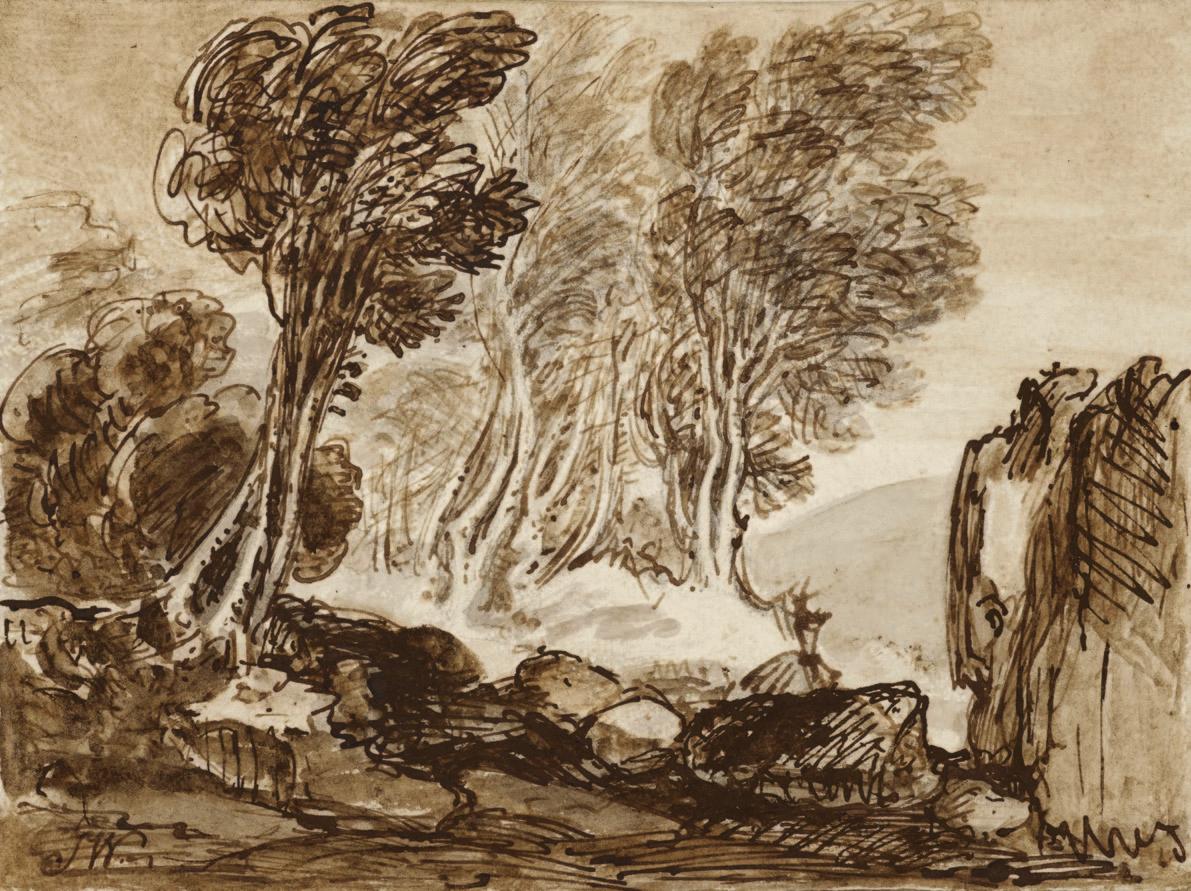
41
James Ward, R.A. (1769-1859) A wooded Landscape
Signed with initials lower left: JW. Pen and ink and brown and grey wash over pencil
12.2 by 16.1 cm., 4 ¾ by 6 ¼ in.
Provenance: Iolo A. Williams (1890-1962); By descent unto 2024
£350
42
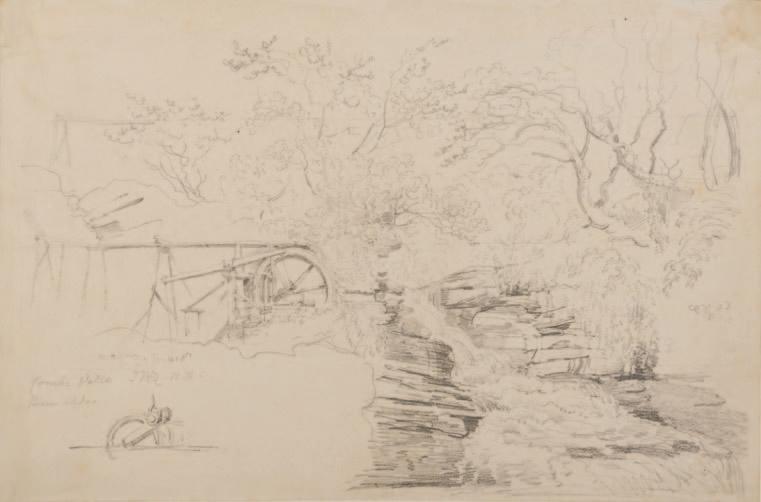
James Ward, R.A. (1769-1859)
A Mill on a River
Signed with monogram lower left and inscribed: Combe Valle/River....
Pencil
24.4 by 37.2 cm., 9 ½ by 14 ½ in.
Provenance: With Spencer’s; From whom purchased by Peter Cochrane (1913-2004), July 1940
£550
43
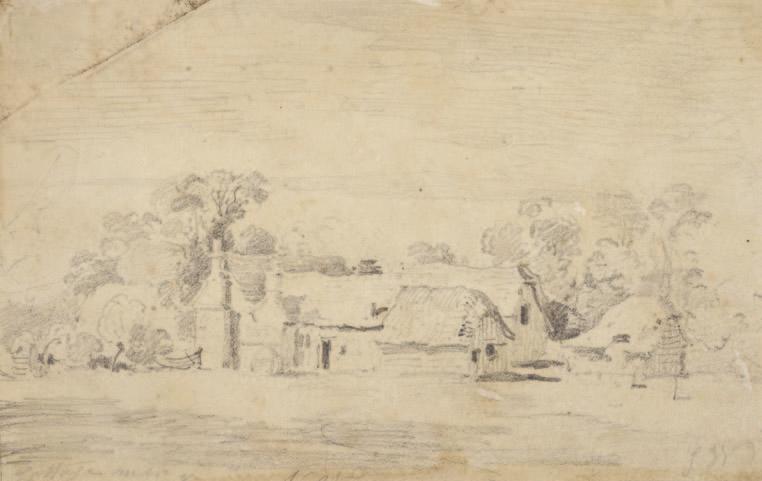
James Ward, R.A. (1769-1859)
A cottage near Calne, Wiltshire
Signed with initials lower right: JW and inscribed and dated lower left: Cottage near/Calne Augst 1807 Wilts
Pencil
12 by 19.8 cm., 5 by 7 ¾ in.
Provenance:
Probably Mrs G.M. Ward; Levin of Vauxhall Bridge Road; Iolo A Williams (1890-1962); By descent until 2024
£300
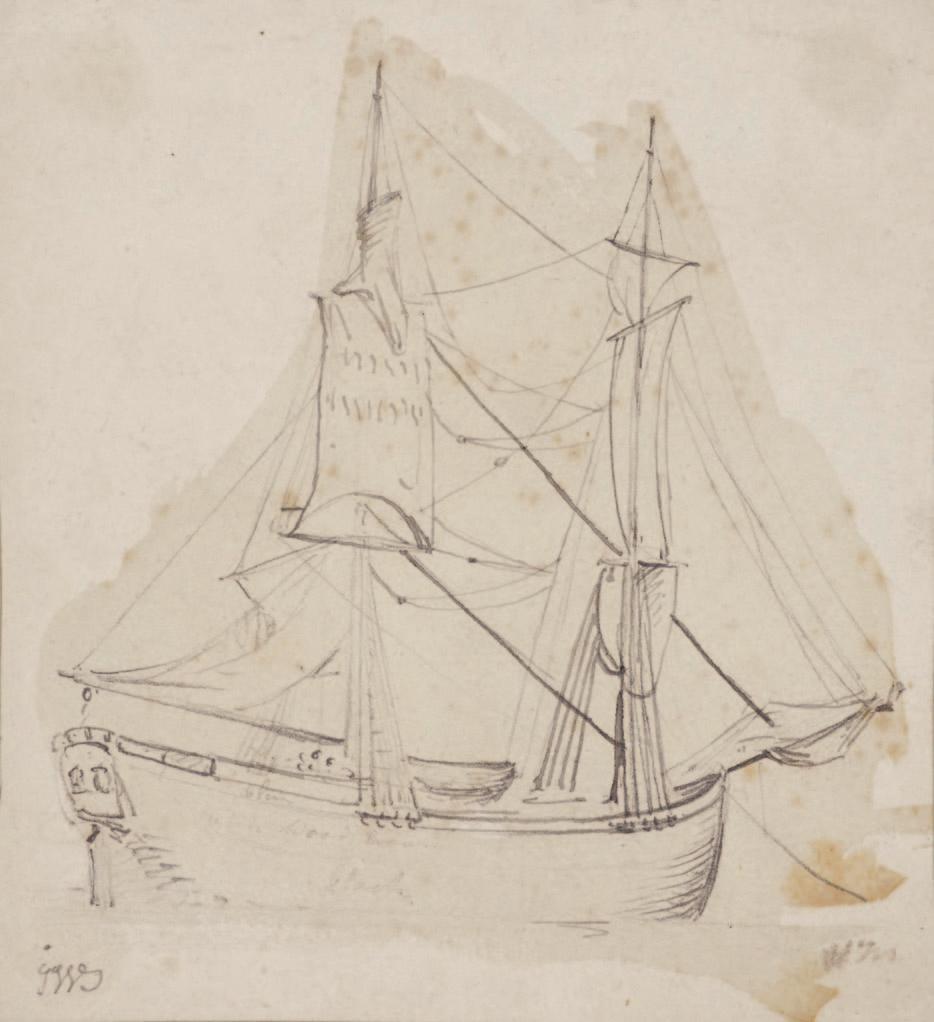
James Ward, R.A. (1769-1859)
Study of a Ship at Anchor
Signed with monogram lower left
Pencil and brown wash
15.4 by 13.9 cm., 6 by 5 ½ in.
Provenance: Iolo A. Williams (1890-1962); By descent unto 2024
£200
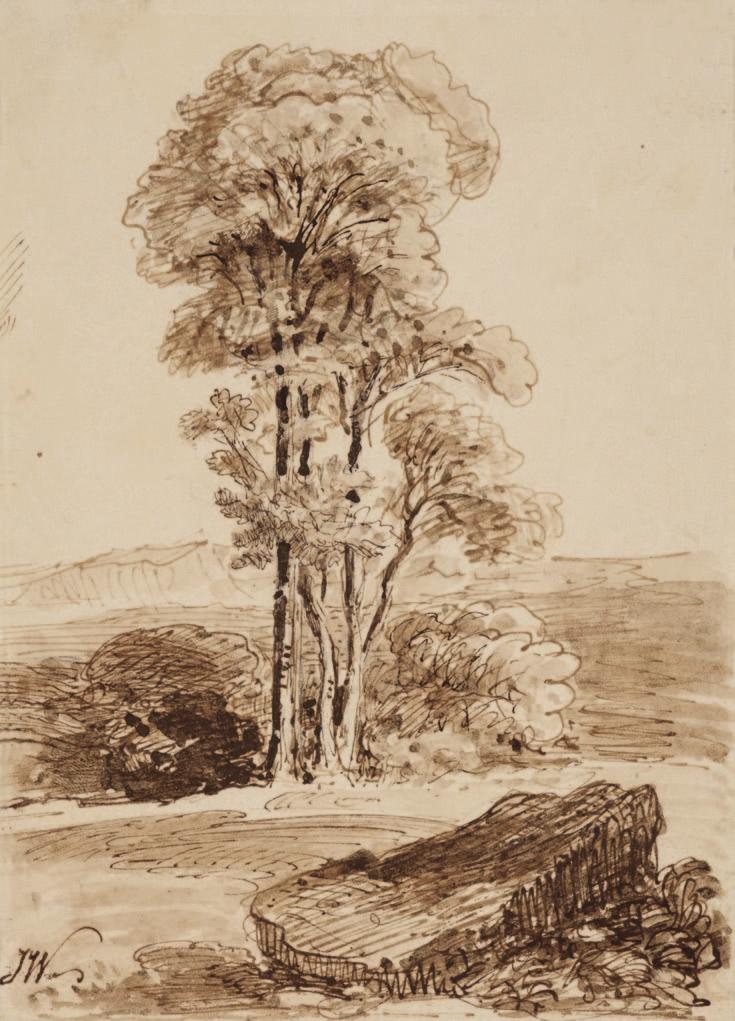
James Ward, R.A. (1769-1859)
Landscape with Trees
Signed with initials lower left: JW
Pen and brown in and wash over touches of pencil
17.4 by 12.5 cm., 6 ¾ by 4 ¾ in.
Provenance:
Iolo A. Williams (1890-1962); By descent unto 2024
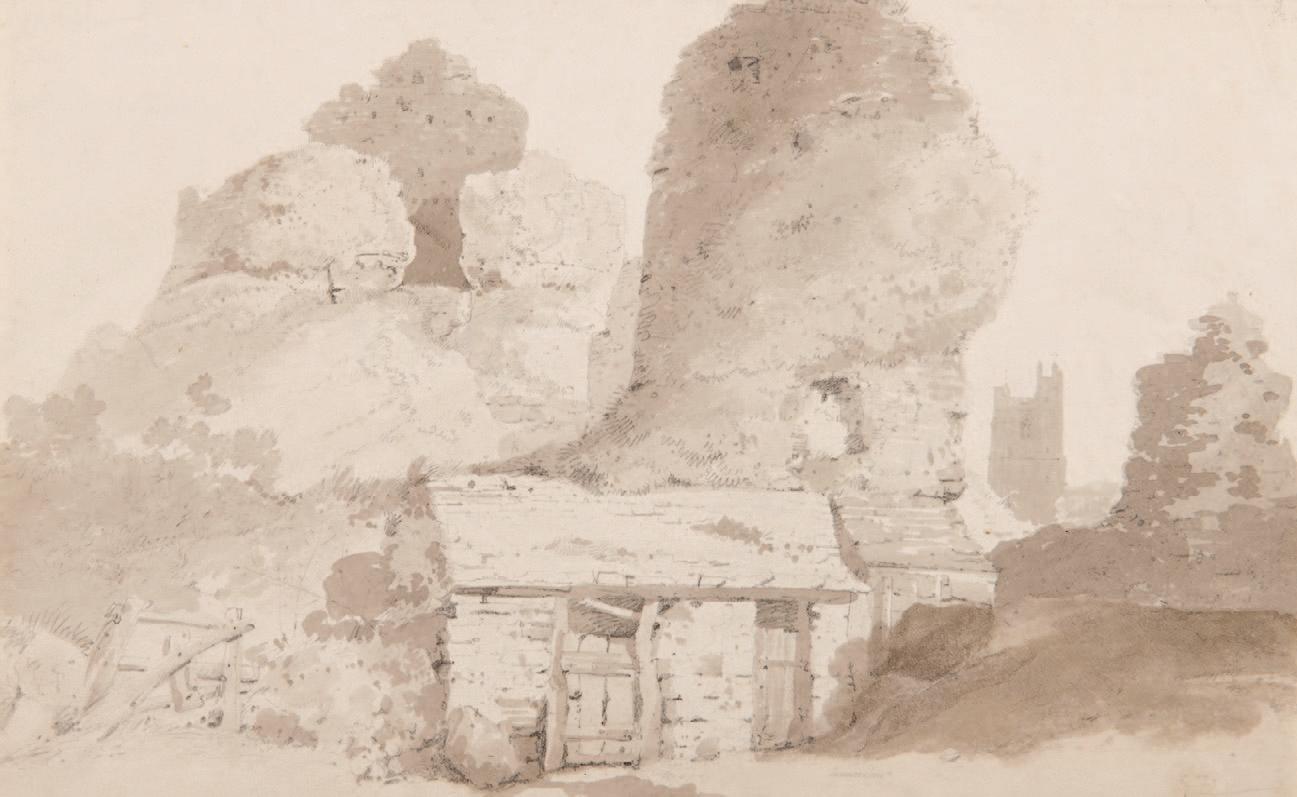
Samuel Prout O.W.S. (1783-1852)
A view of Launceston Castle with the tower of St Mary's Magdalene in the distance
Indistinctly inscribed, lower centre: Launceston and further inscribed upper right: Grey Pencil and grey wash 22.2 by 36.2 cm., 8 ¾ by 14 ¼ in.
Launceston Castle was begun soon after the Norman Conquest by William the Conqueror’s half-brother. Richard, Earl of Cornwall expanded and developed the castle in the 13th century and it served as the administrative headquarters for the Earl. After his death, it became a prison and served as the base for the Royalist defence of Cornwall during the Civil War. This dates from Prout’s time in Devon from 1805 to 1808.
£1,000
47
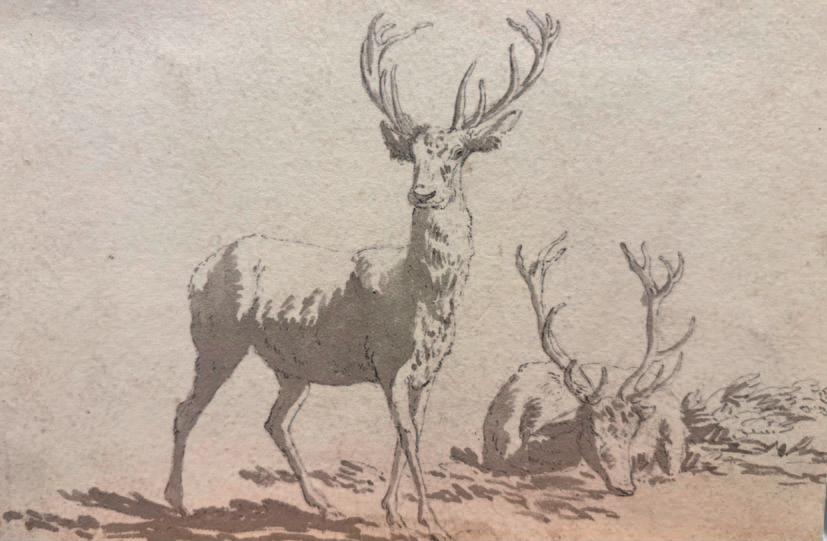
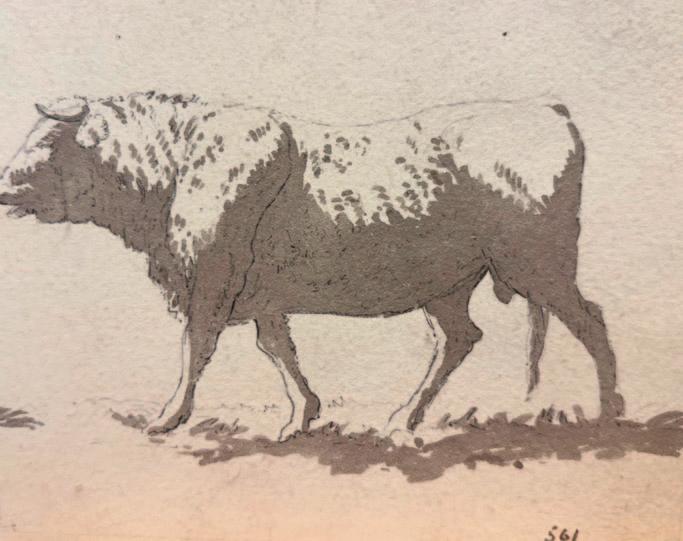
Robert Hills (1769-1844)
A folio of drawings of Cattle, Deer and Sheep
Five, grey washes over pencil
Various sizes
£350 sold unmounted
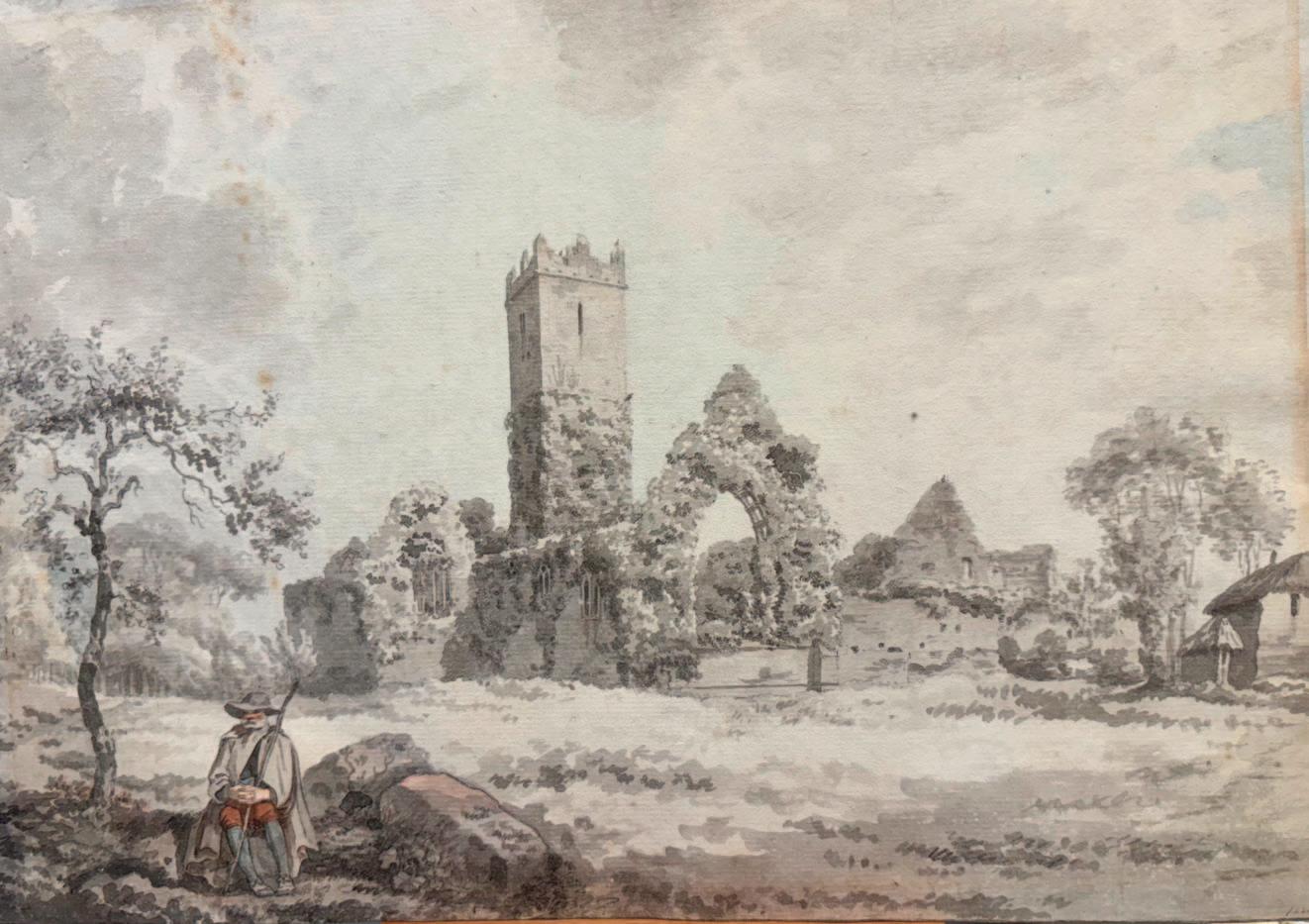
48 Circle of Francis Wheatley, R.A. (1747-1801)
A ruined Abbey, Ireland
Grey washes over pencil on laid paper
26.4 by 37.4 cm., 10 by 14 ½ in.
Provenance: John Ross, Knockmore, Enniskerry, Wicklow, Ireland until 2019
This is probably a view of the two abbeys at Adair, Co. Limerick, Ireland.
£250 sold unmounted
49
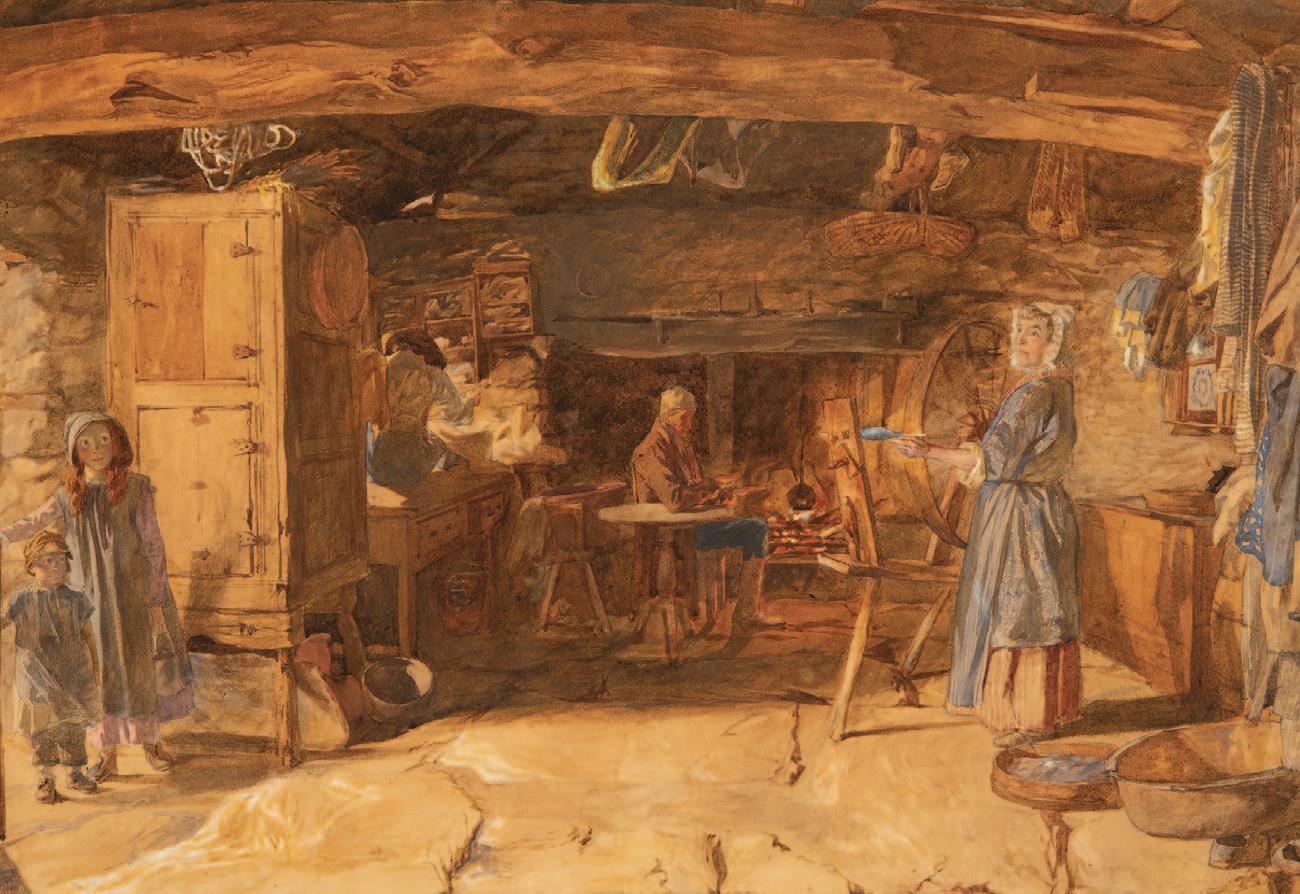
Alfred Downing Fripp (1822-1895)
The Interior of an Irish Cottage
Watercolour over pencil heightened with bodycolour 42 by 61 cm., 16 ½ by 24 in.
Fripp exhibited a number of Irish interiors at the Society of Painters in Water-colours in the 1840s. A similar watercolour entitled ‘Interior of a Fisherman’s Cabin, Galway’, signed and dated 1845, was sold at Adam's, Dublin on 10th January 2014, lot 69.
£1,500
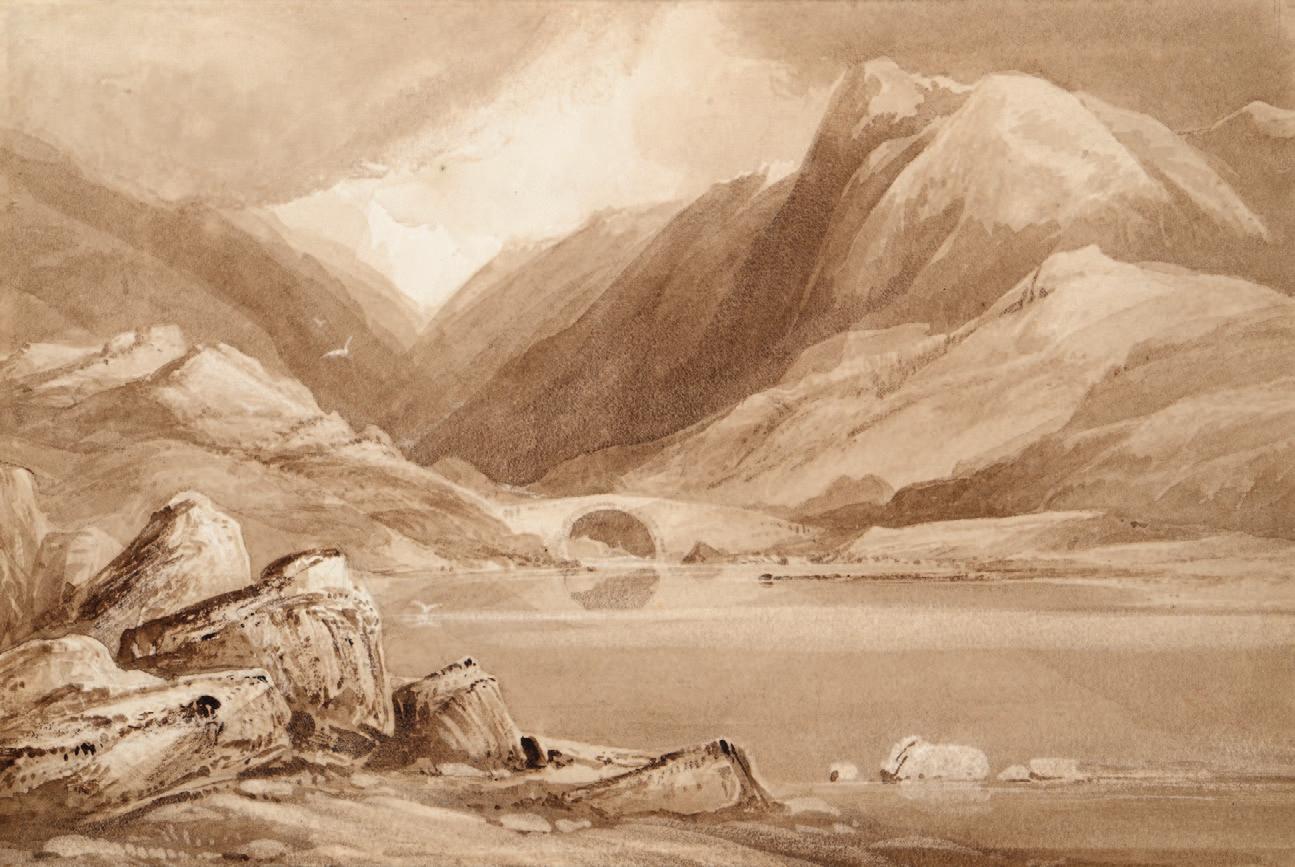
50 Samuel Jackson (1794-1869)
View of a Bridge in a Mountainous Landscape
Brown washes heightened with stopping out 19 by 28 cm., 7 ½ by 11 in.
Provenance: With the Gallery Downstairs, London, 1991
£250
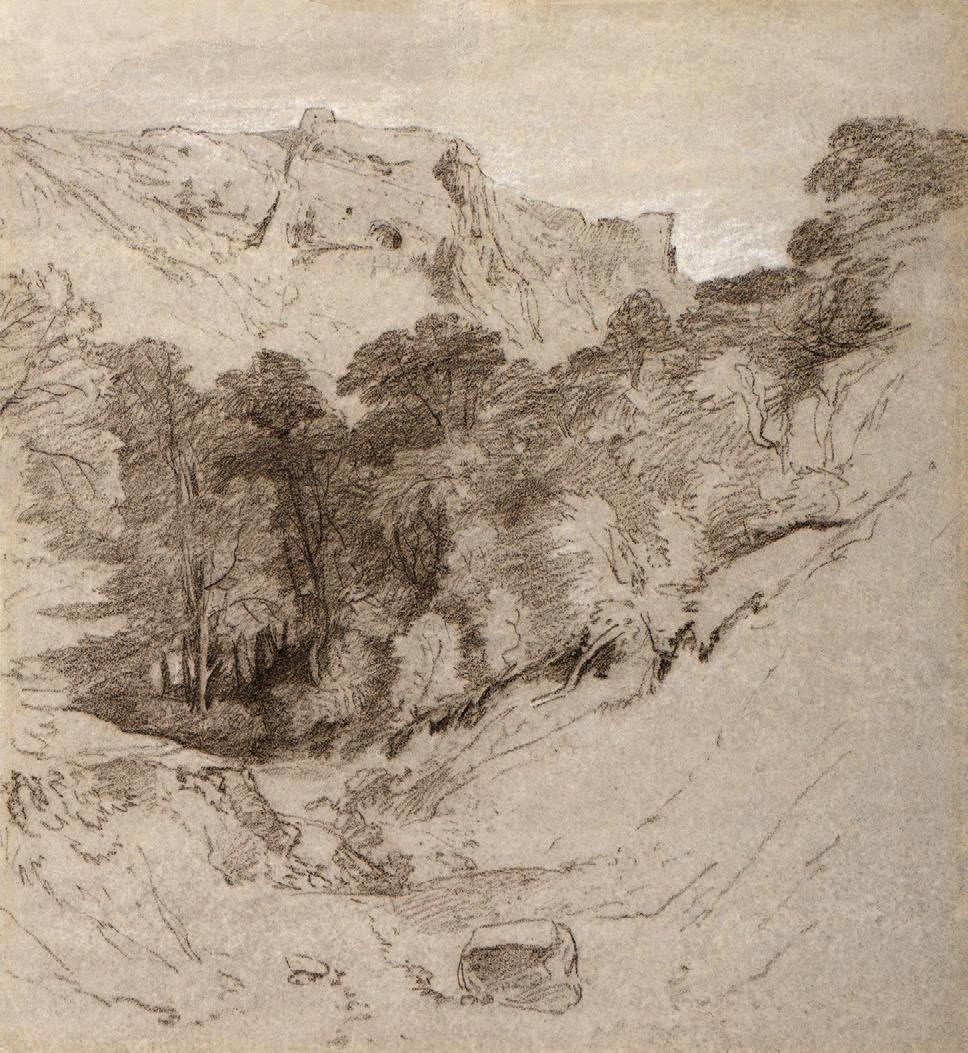
51
Samuel Jackson (1794-1869)
St Vincent’s Rocks from Nightingale Valley, Clifton, Bristol
Black and white chalk on grey paper
27.4 by 24.9 cm., 10 ¾ by 9 ¾ in.
Provenance: With Suzi Quadrat, Clifton, Bristol; Private Collection until 2014
This is a view looking down Nightingale Valley to St Vincent’s Rocks which stand over the Clifton Gorge. Above St. Vincent’s Rocks stands Clifton Observatory which from 1828 was used as a studio by Jackson’s friend the artist William West. A watercolour of this view by Jackson is in the Victoria and Albert Museum (see Francis Greenacre and Sheena Stoddard, The Bristol Landscape – The Watercolours of Samuel Jackson, 1986, no. 26, ill. p.46).
£400
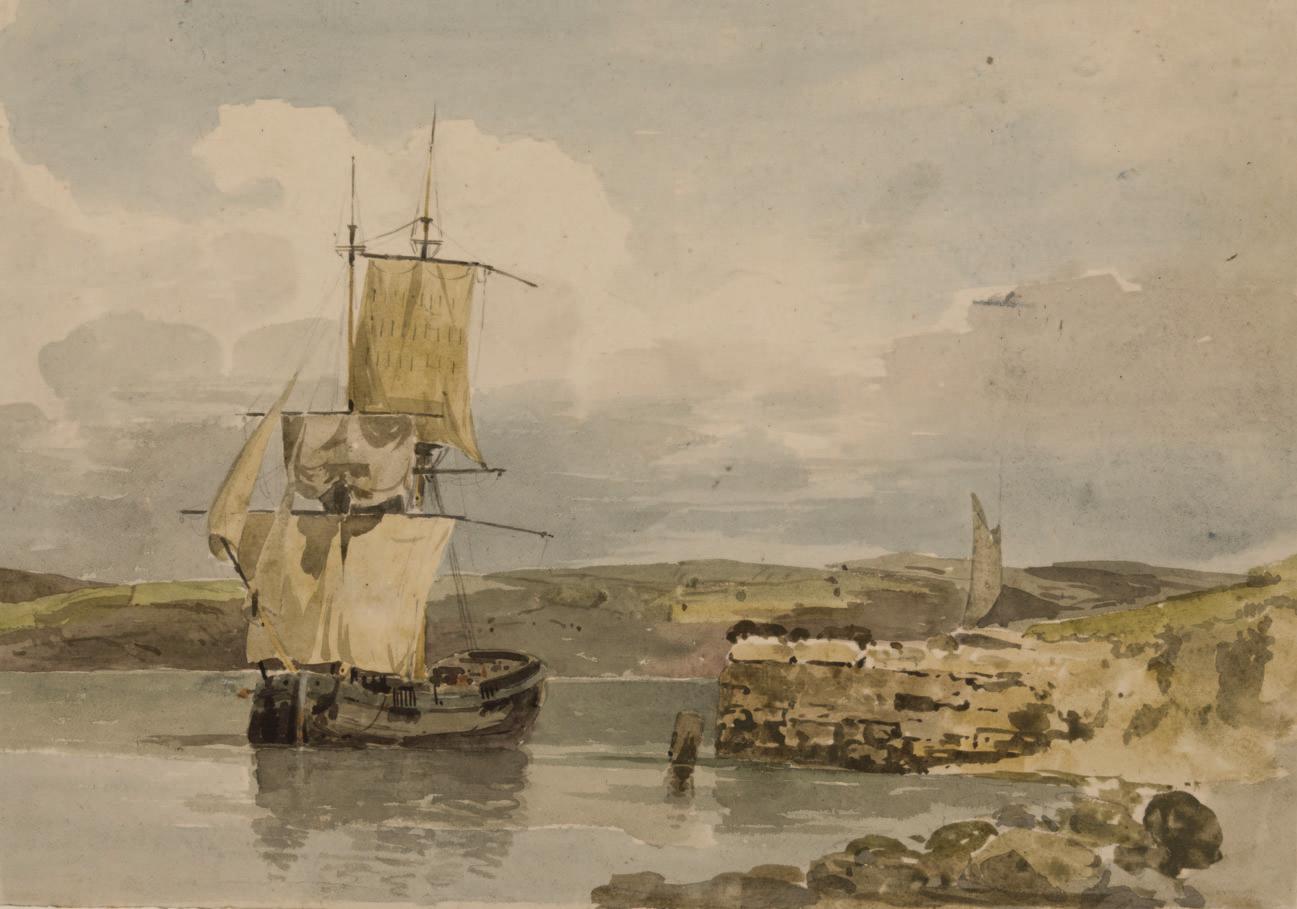
A Ship off a Pier
26.1 by 37.2 cm., 10 ¼ by 14 ½ in.
52
English School
circa 1830
Watercolour over pencil
£275
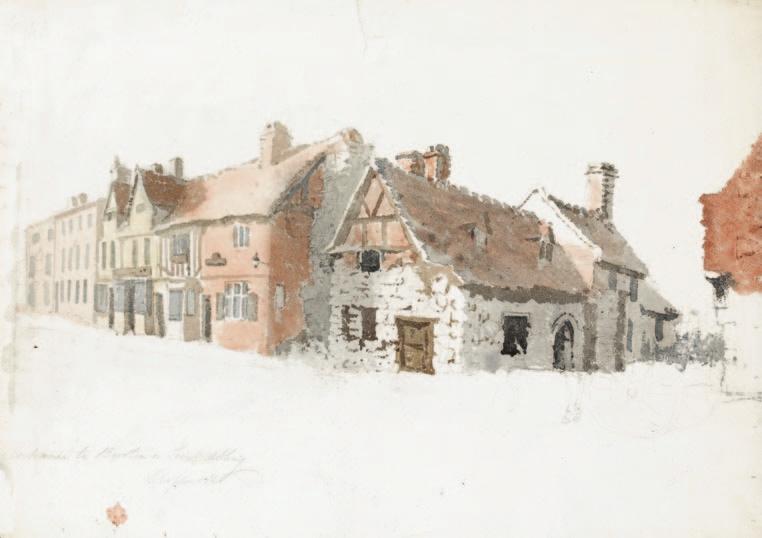
English School circa 1820
The Entrance to Burton-on-Trent Abbey, Staffordshire
Inscribed with title lower left
Watercolour over pencil
Sheet 16.7 by 36. 7 cm., 6 ½ by 14 ¼ in.
This watercolour is traditionally attributed to the Norwich artist Robert Dixon (1780-1815). The open area is the right is the old entrance to Burton-on-Trent Abbey which was dissolved in the sixteenth century and little remains of it today. The building to the left was still there in circa 1900 as were the original gates to the abbey but by the 1930s had been replaced by a parade of shops called Abbey Arcade which is still there today by the junction of New St and the High St.
£250
54
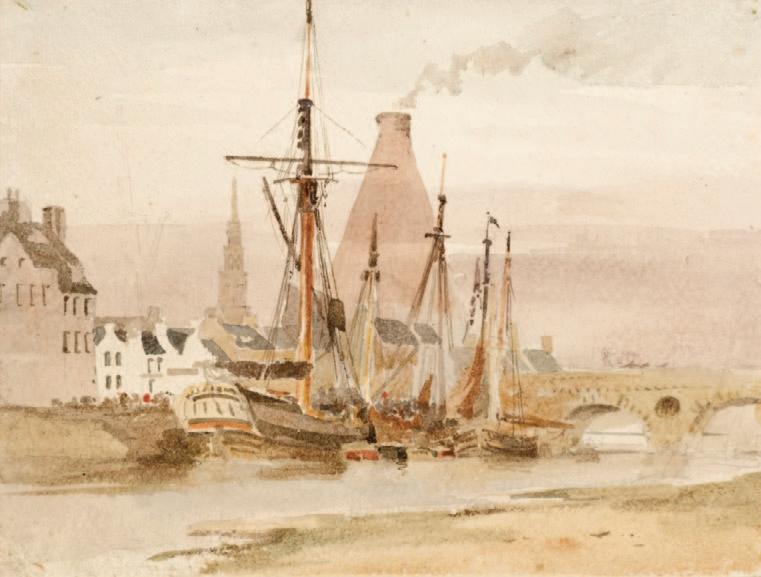
English School circa 1830
Boats by a Kiln on the Clyde, Glasgow
Watercolour over pencil 24.6 by 32.5 cm., 9 ½ by 12 ¾ in.
Provenance: Sir Bruce Ingram (1877-1953); Charles Gerald Agnew (1882-1954); With Andrew Wyld, 2006
This has previously been attributed to Luke Clennell (1781-1840).
£250
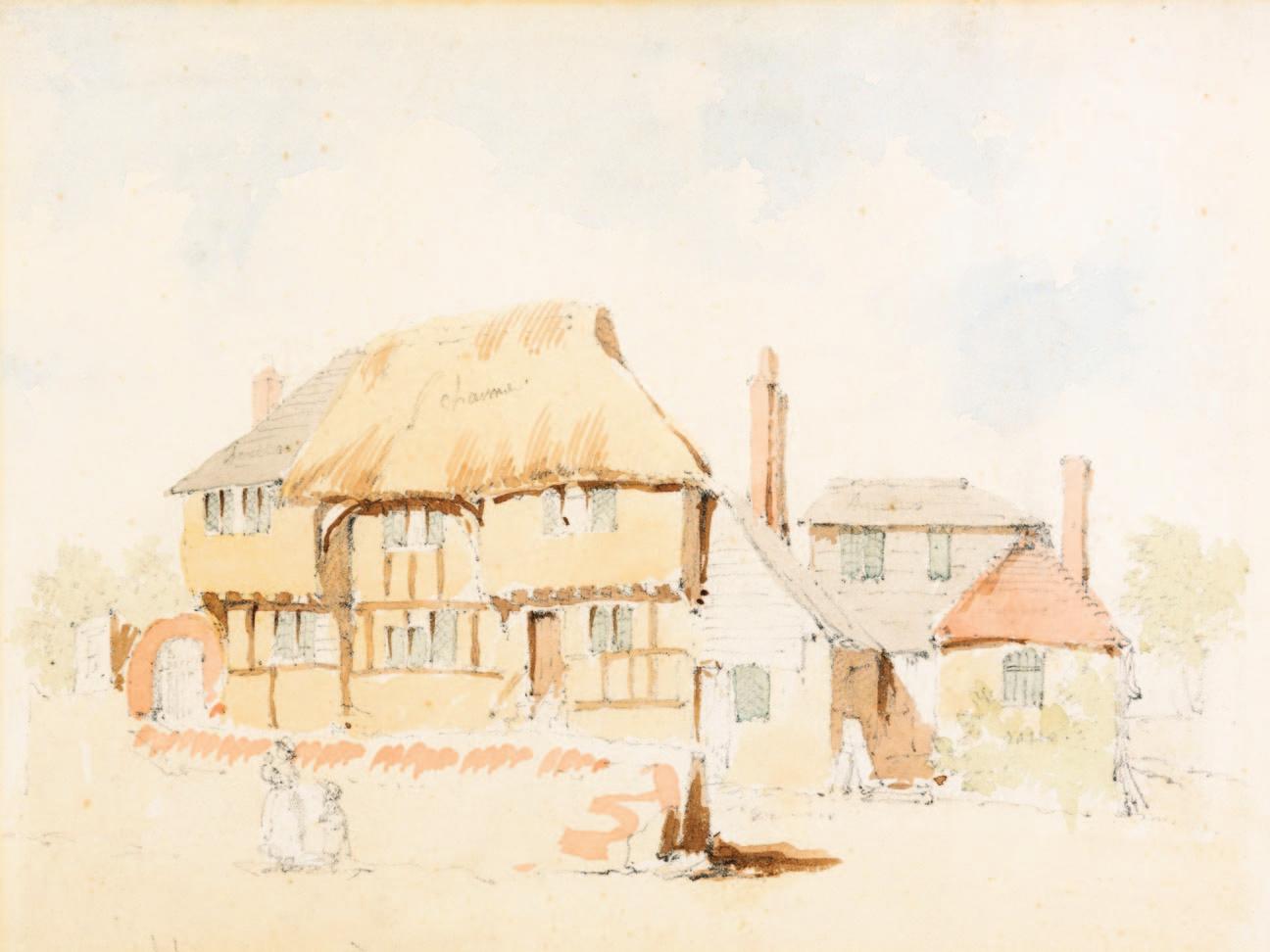
55 James Stark (1794-1859)
The Old Workhouse, Steyning, West Sussex
Inscribed lower left: Old Union Steyning July 57 Watercolour over pencil 24.9 by 35.9 cm., 9 ¾ by 14 in.
Provenance: Private Collection, Norfolk
This shows the old workhouse on Mouse Lane, Steyning. The building still exists as privately owned cottages. This watercolour shows the roof partly thatched and partly tiled (Stark’s inscription ‘Chaume’ is another word for ‘thatch’) whereas a photo of the early 1900s shows it all tiled, as it is still today. Steyning is five miles north-west of Shoreham in West Sussex
£200
56
James Stark (1794-1859)
Fuller's Hole, St Martin at Oak, Norwich
Watercolour over pencil 26.1 by 36.2 cm., 10 ¼ by 14 ¼ in.
Fuller’s Hole was the popular name for the house of Alderman Fuller, Mayor of Norwich. Fuller’s Hole stood on the banks of the river Wensum next to Wensum Park. It was knocked down in the 1930s.
£350
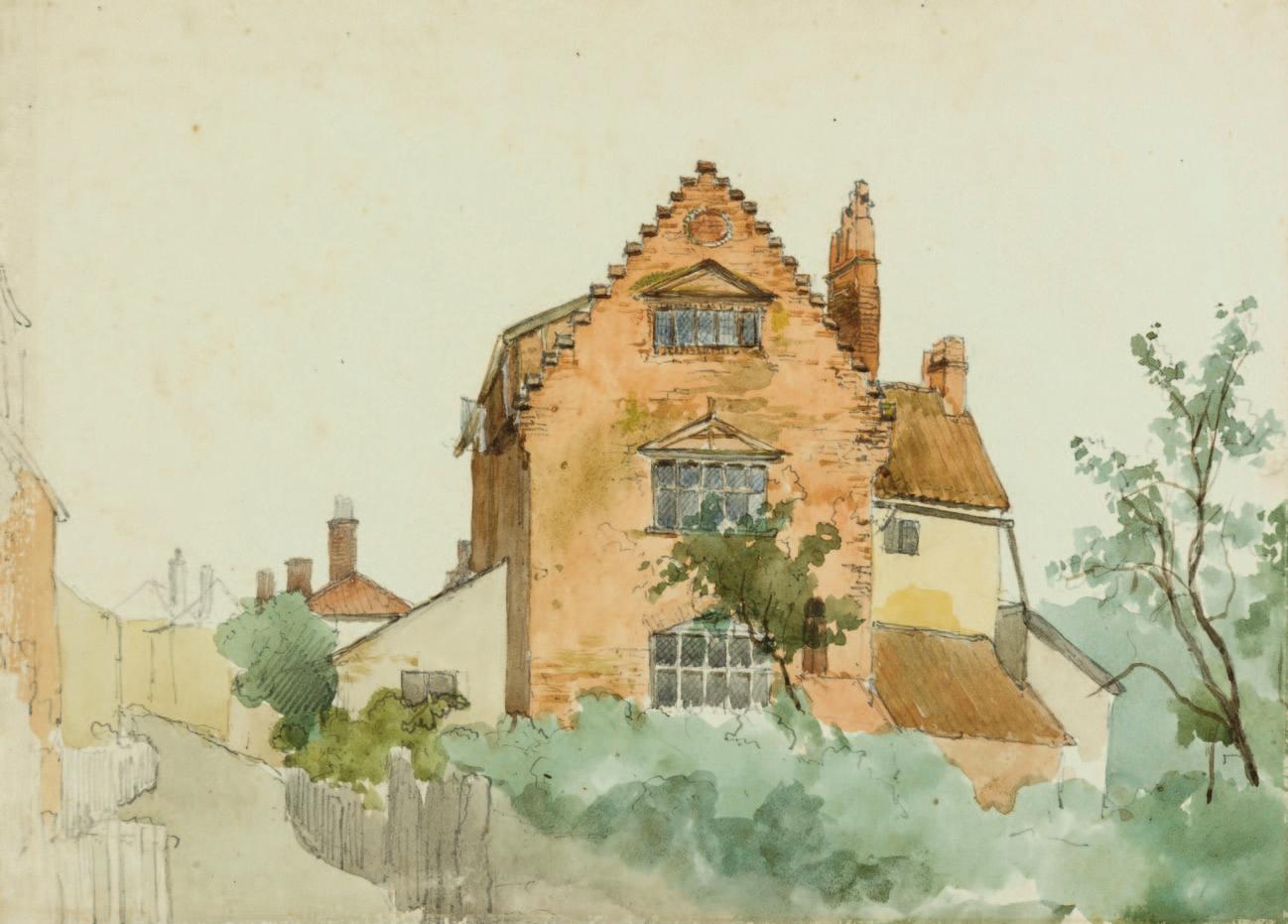
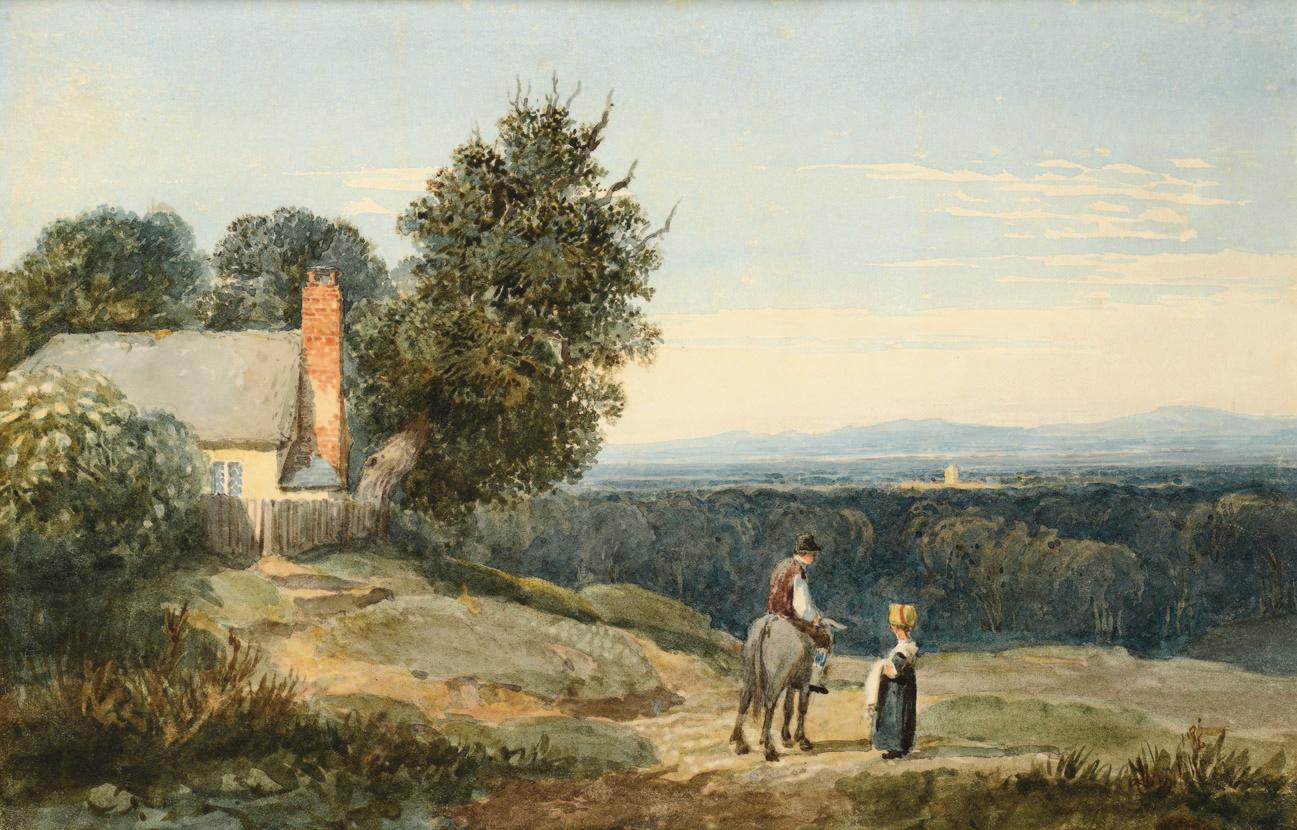
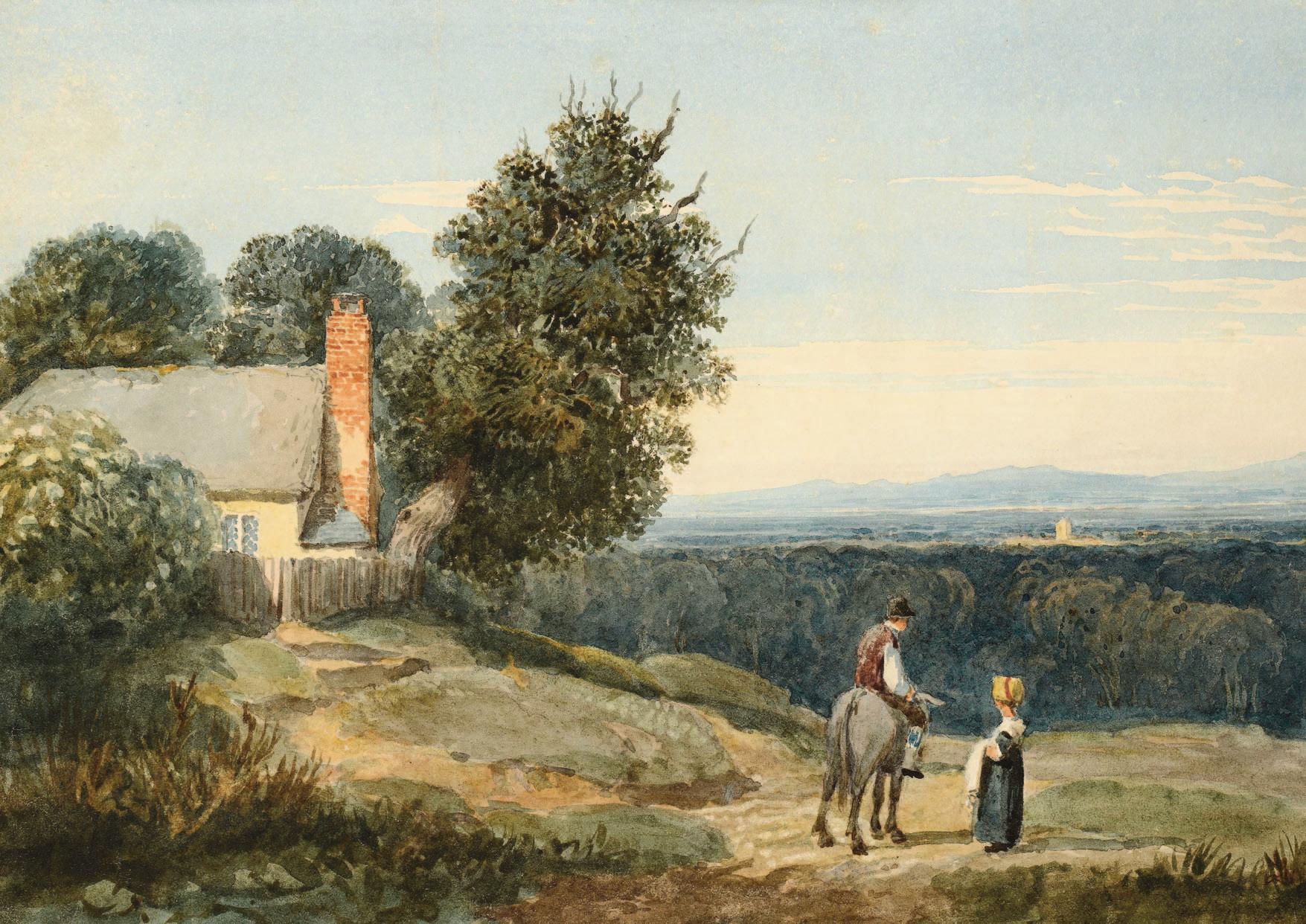
57
David Cox (1783-1859)
Travellers by a Country Cottage
Watercolour over traces of pencil heightened with touches of bodycolour
21.4 by 33.5 cm., 8 ¼ by 13 in.
Provenance: Charles Nugent
This dates from 1815-20.
£1,750
58
Robert Hills (1769-1844)
Horses in a wooded
Landscape
Watercolour over traces of pencil heightened with touches of bodycolour
31.8 by 42.6 cm., 12 ½ by 16 ¾ in.
£1,800
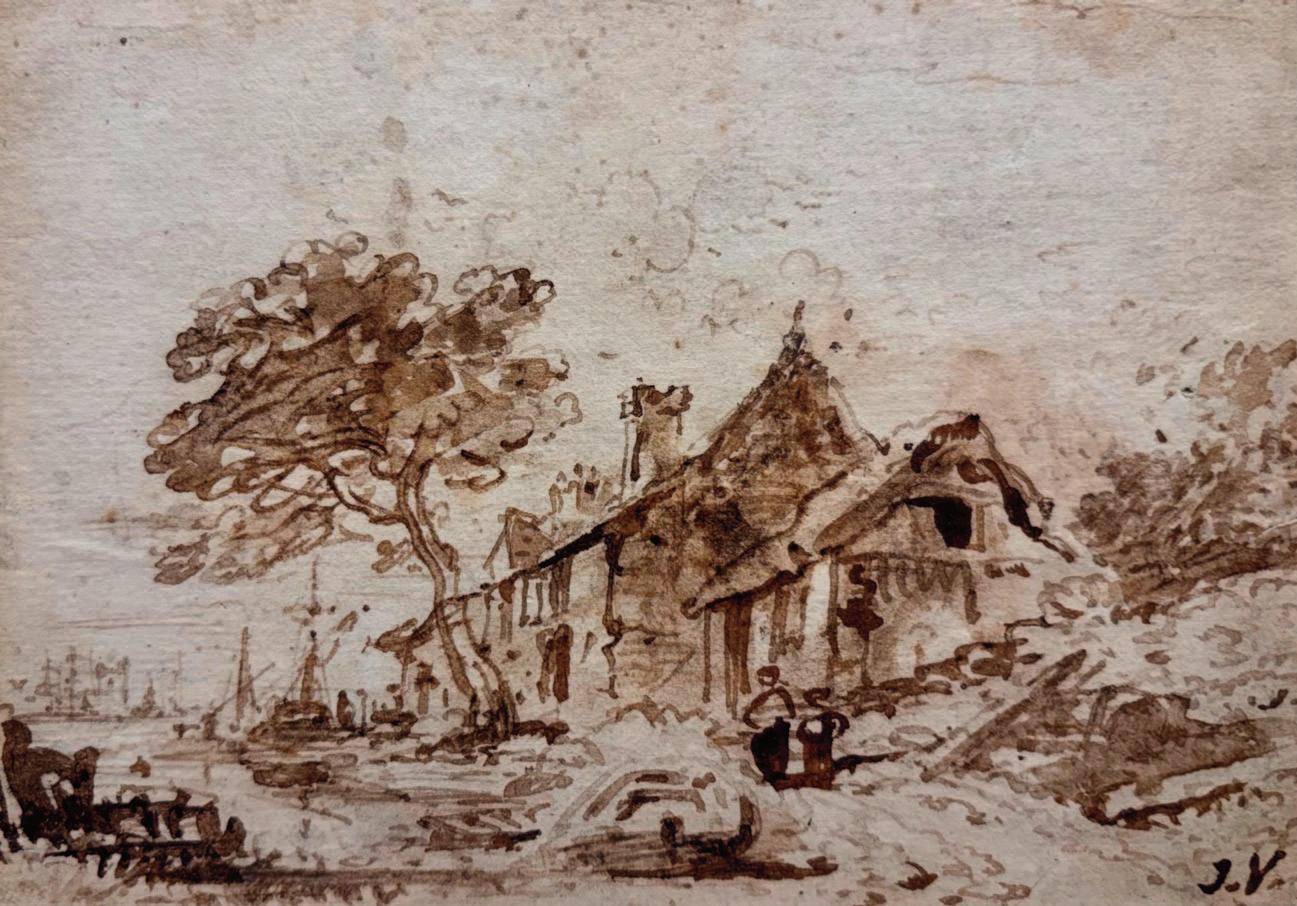
59
Signed with initials lower right
Pen and brown ink and pencil
10.5 by 14.5 cm., 4 by 5 ½ in.
Iolo A. Williams (1890-1962); By descent unto 2024
£250
John Varley (1778-1842)
Cottages by a River
Provenance:
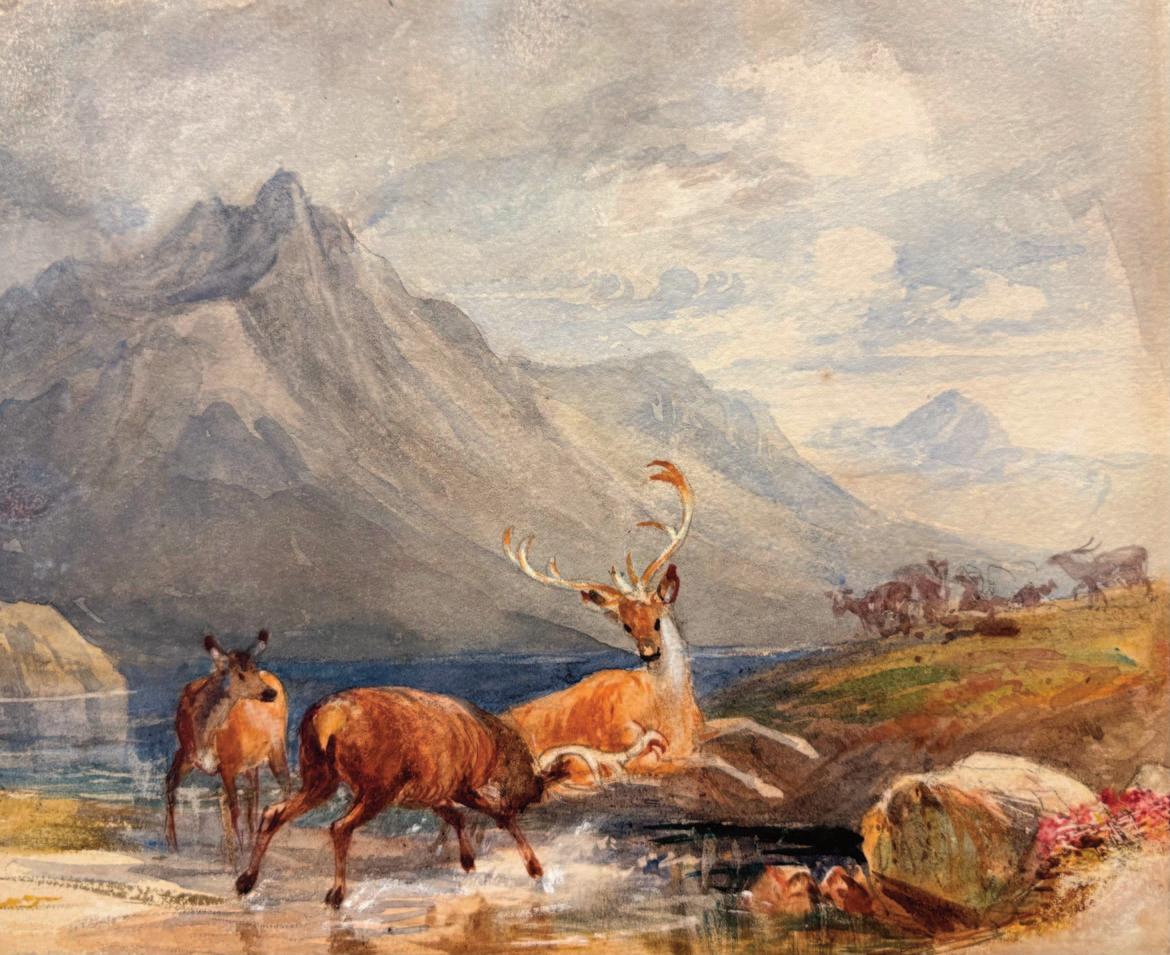
Circle of John Frederick Lewis, R.A. (1805-1876)
Deer Playing in a River
Watercolour over pencil heightened with touches of bodycolour and stopping out With a further watercolour sketch of deer verso 18.8 by 22.6 cm., 7 ¼ by 8 ¾ in.
£250 sold unmounted
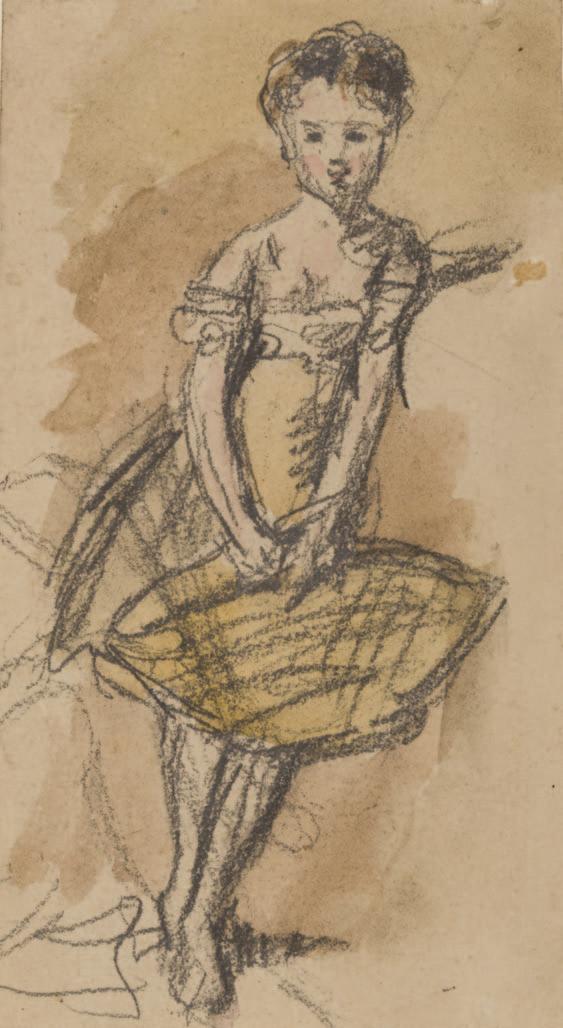
62 (right)
William Henry Hunt O.W.S. (1790-1864)
A Girl holding a Basket
Pencil and wash, with fixative 15.9 by 8.9 cm., 6 ¼ by 3 ½ in.
Provenance: Cyril Fry (1918-2010)
Literature:
Norwich, Castle Museum and London, J.S. Maas Gallery, William Henry Hunt 1790-1864, Watercolours and Drawings from the Collection of Mr & Mrs Cyril Fry, 1967, no 20; John Witt, William Henry Hunt (1790-1864), Life and Work, with a Catalogue, 1982, p. 177, no. 371
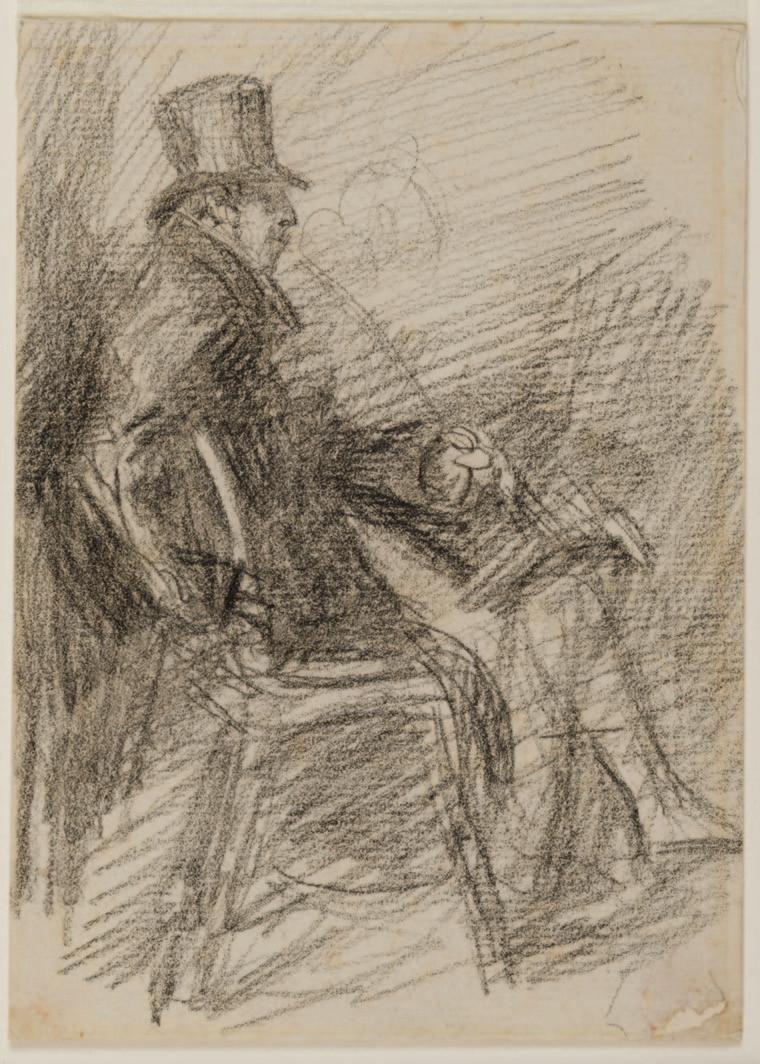
61 (left)
William Henry Hunt O.W.S. (1790-1864)
Study of a Gentleman seated, smoking a Pipe
Pencil on laid paper 12.8 by 9.1 cm., 5 by 3 ½ in.
Provenance: Cyril Fry (1918-2010)
Literature:
Norwich, Castle Museum and London, J.S. Maas Gallery, William Henry Hunt 1790-1864, Watercolours and Drawings from the Collection of Mr & Mrs Cyril Fry, 1967, part of no. 16
Exhibited:
Norwich, Castle Museum and London, J.S. Maas Gallery, William Henry Hunt 1790-1864, Watercolours and Drawings from the Collection of Mr & Mrs Cyril Fry, 1967, no 16 (one of Three Pencil Portrait Sketches).
£500
Exhibited:
Norwich, Castle Museum and London, J.S. Maas Gallery, William Henry Hunt 1790-1864, Watercolours and Drawings from the Collection of Mr & Mrs Cyril Fry, 1967, no. 20
£350
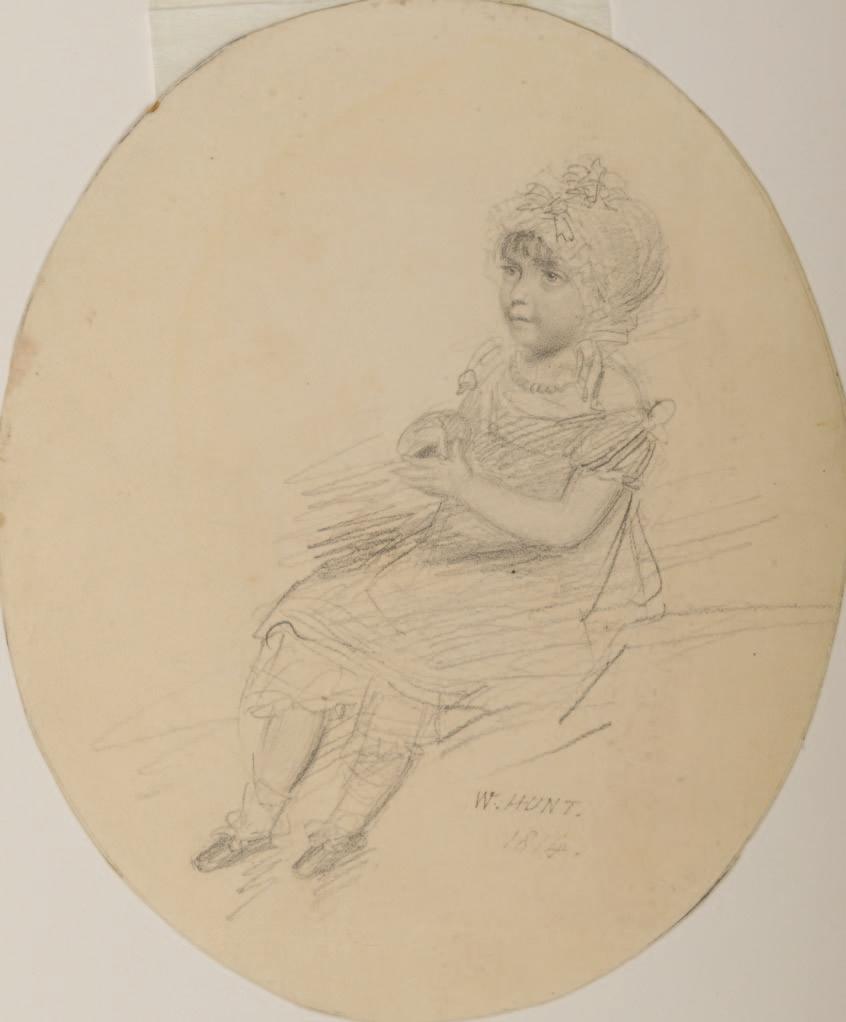
63 (far right)
William Henry Hunt O.W.S. (1790-1864)
A Girl seated holding a Toy
Signed and dated lower right: W. HUNT./1814. Pencil
15.4 by 12.6 cm., 6 by 5 in., oval
Provenance: Cyril Fry (1918-2010)
£250
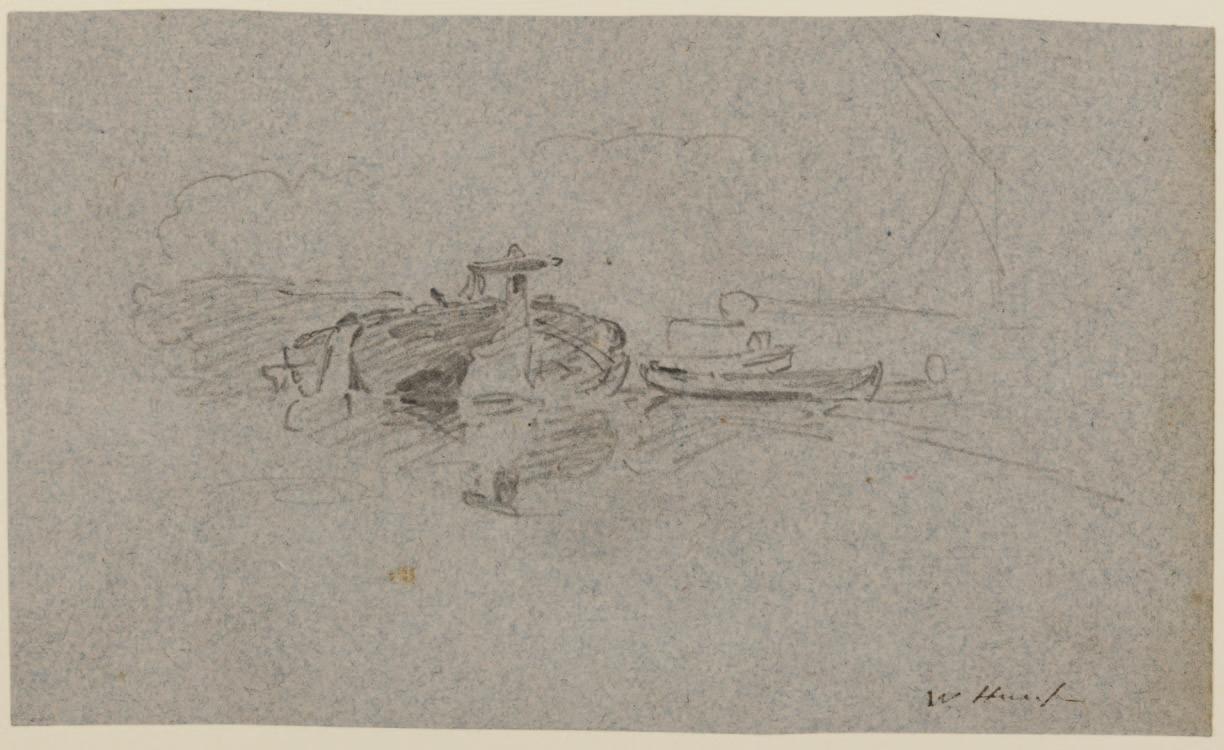
William Henry Hunt O.W.S. (1790-1864)
Boats on the Thames
Signed with initials lower right: W H
Pencil heightened with white chalk on blue paper
16 by 25.9 cm., 6 ¼ by 10 ¼ in.
Provenance:
Cyril Fry (1918-2010)
£250
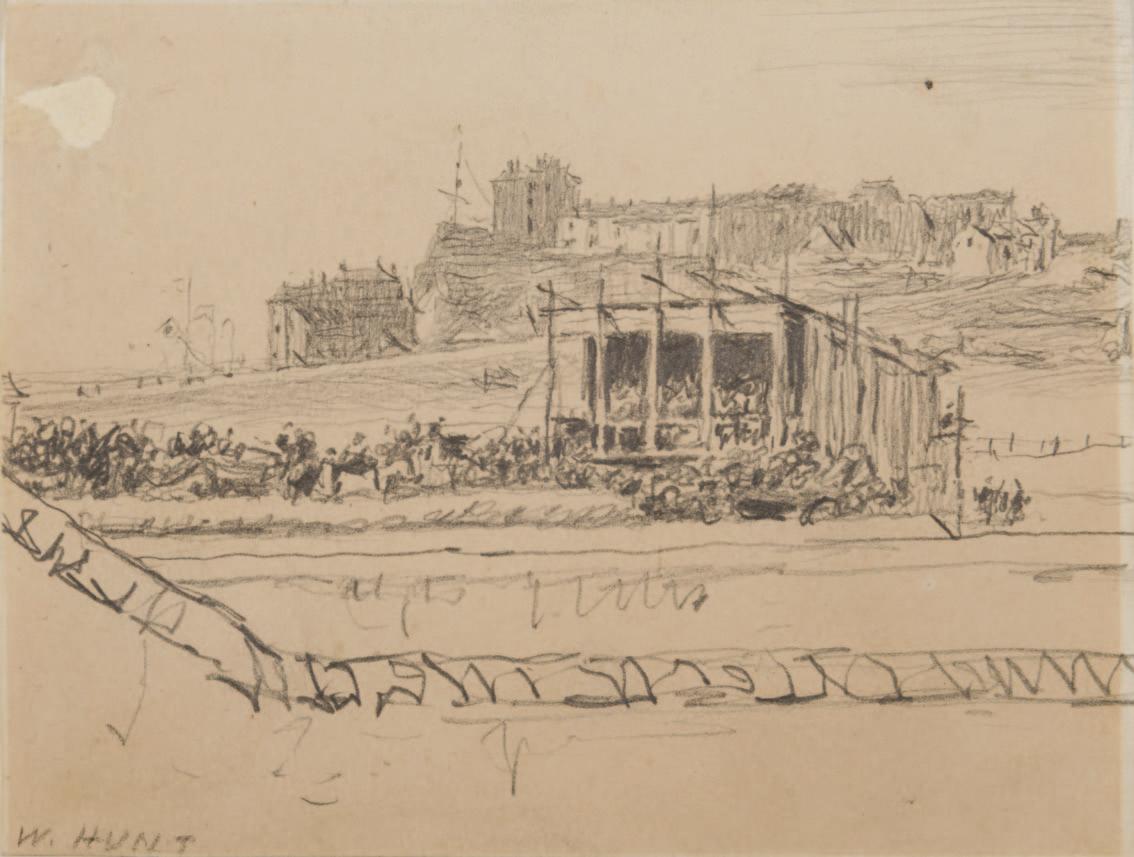
William Henry Hunt O.W.S. (1790-1864)
Crowds watching a regatta, possibly Hastings
Signed lower left: W. HUNT
Pencil
9.3 by 12.1 cm., 3 ½ by 4 ¾ in.
Provenance: Cyril Fry (1918-2010)
£300
66
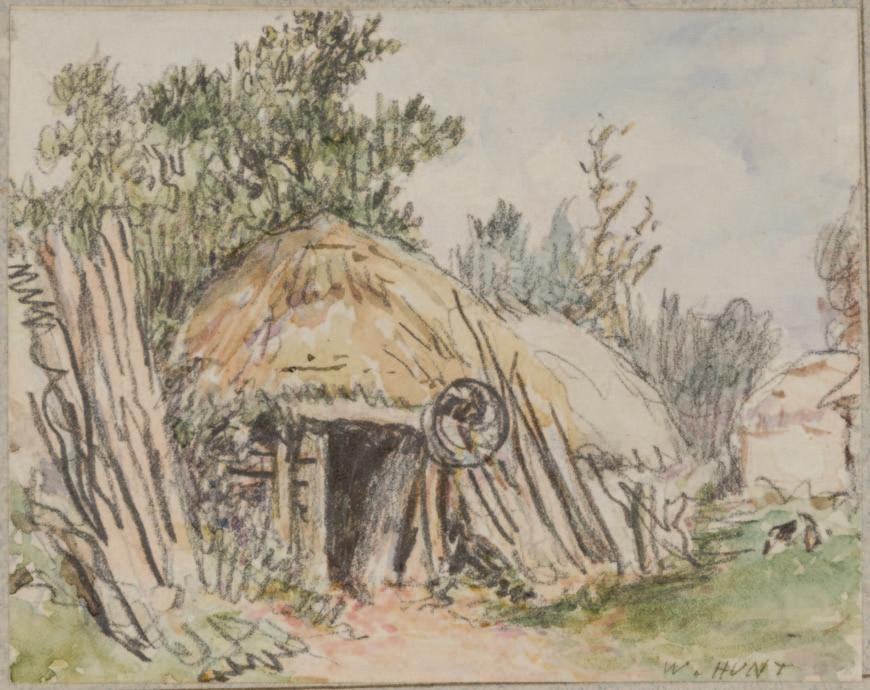
William Henry Hunt O.W.S. (1790-1864)
A study of thatched Farm Buildings
Signed lower right W. HUNT
Watercolour over pencil
8.3 by 10.5 cm., 3 ¼ by 4 ¼ in.
Provenance: Cyril Fry (1918-2010)
£400
67
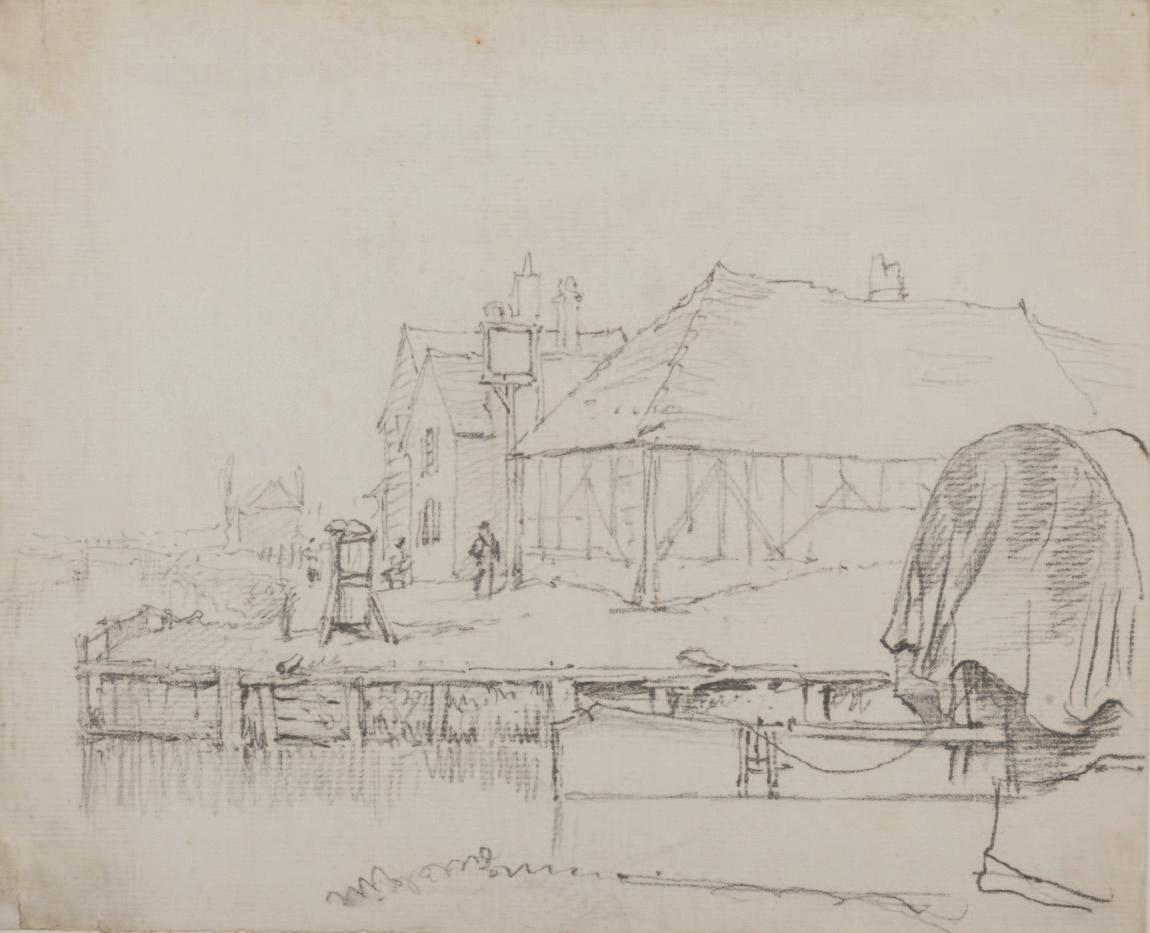
William Henry Hunt O.W.S. (1790-1864)
A Village Quay
Pencil on laid paper, watermarked 1824 18.5 by 22.6 cm., 7 ¼ by 9 in.
Provenance: Frederick Richard Meatyard (1881-1966); Cyril Fry (1918-2010)
£250
Attributed to Peter de Wint (1784-1849)
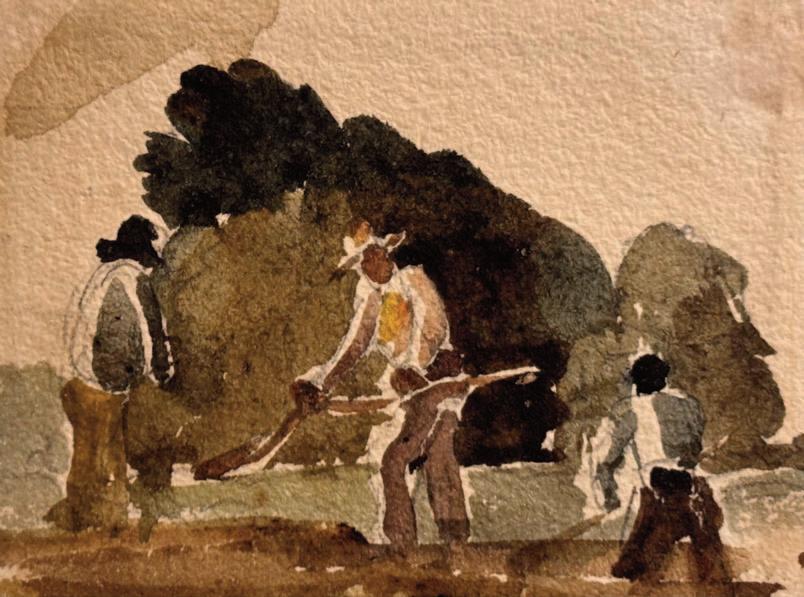
Study of three Men, one with a Scythe
Watercolour over pencil
6.2 by 8.2 cm., 2 ¼ by 3 ¼ in.
£200
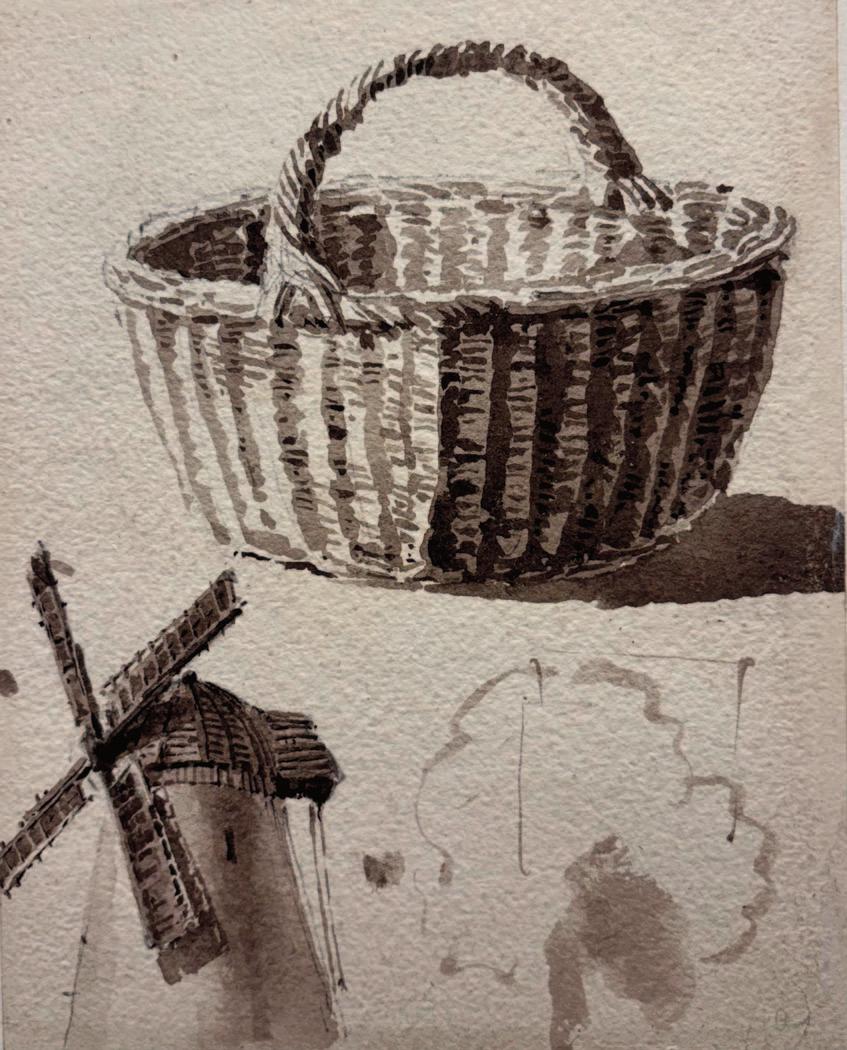
Attributed to Peter de Wint (1784-1849)
Study of a Basket and Windmill
With a study of a boat verso Grey washes
20.8 by 16.2 cm., 8 by 6 ¼ in.
Provenance: Mrs K.L.A. Dixon, great grand daughter of de Wint’s dealer John Vokins; Cyril Fry (1918-2010)
£250
70
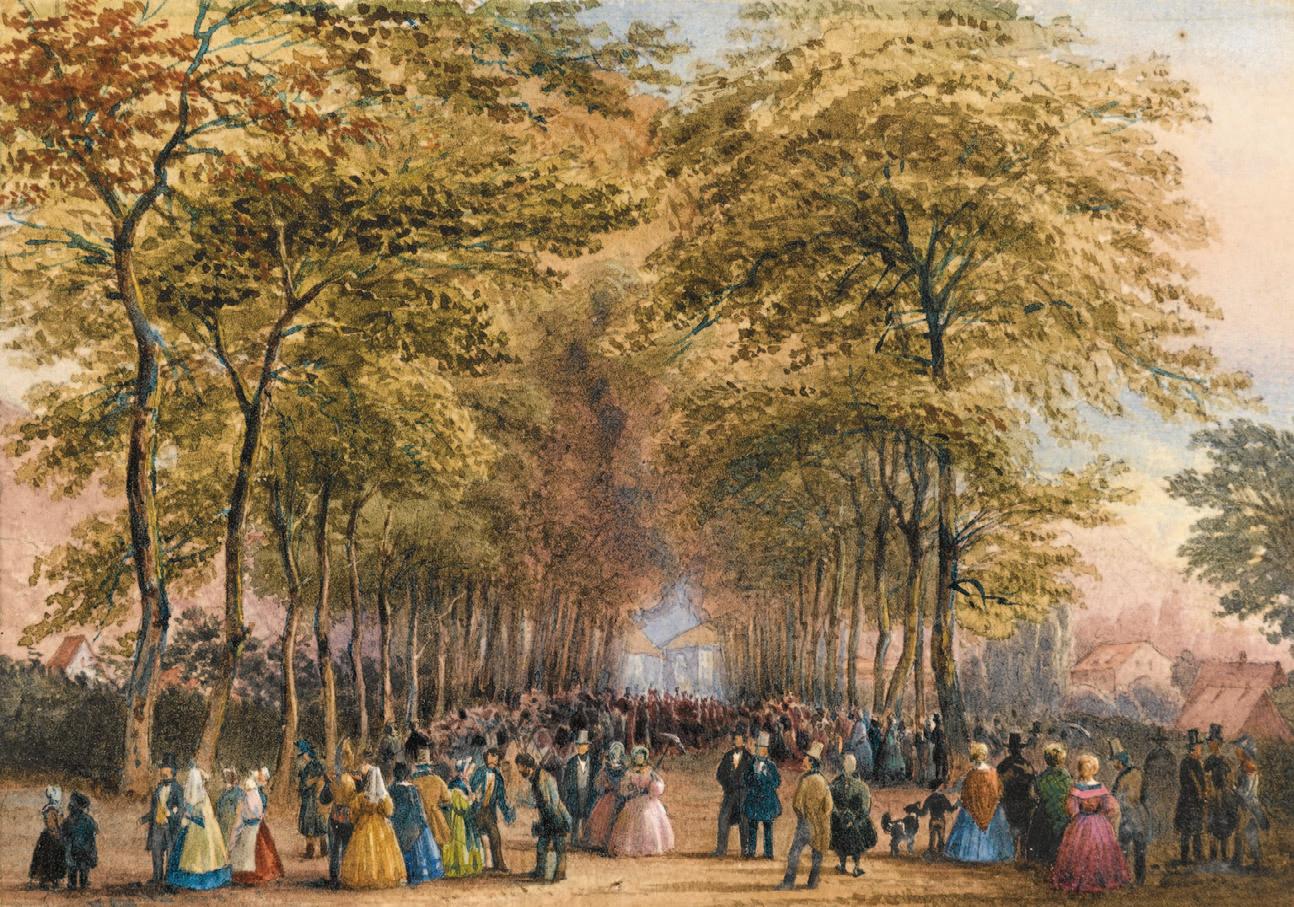
Theodore Fourmois (1814-1871)
View of the Promenade de Sept Heures at Spa, Belgium
Watercolour over pencil heightened with bodycolour 11.6 by 16.1 cm., 4 ½ by 6 ¼ in.
Engraved:
For ‘Views of Spa and its surroundings’ and published by Dewasme, Brussels, 1833
Fourmois was a Belgian landscape artist and print maker. He studied in Brussels and first exhibited there in 1836. Many of his works are in the Royal Museums of Fine Arts of Belgium.
£550
71
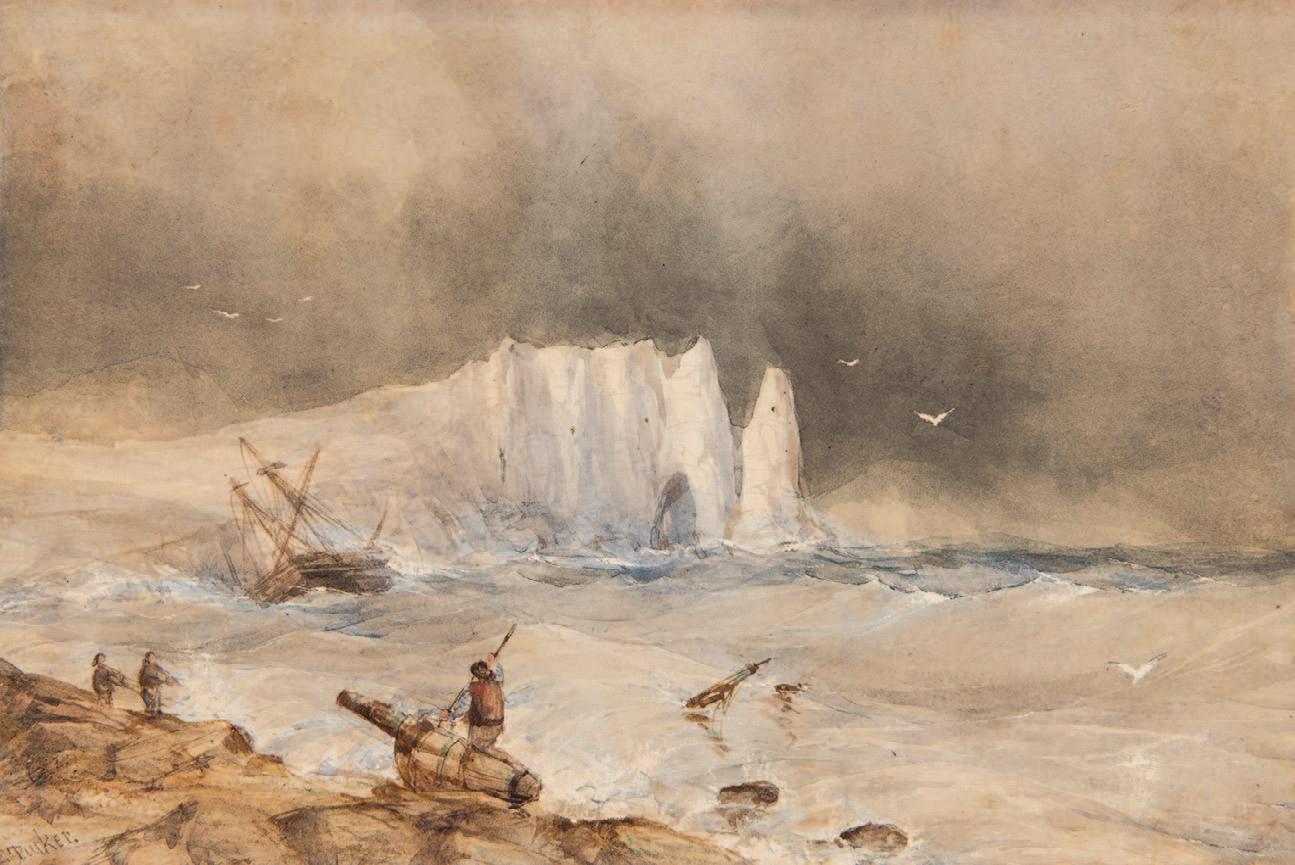
Edward Tucker (c.1825-1909)
Dover Cliffs after a Storm
Signed lower left: E. Tucker
Watercolour over pencil heightened with bodycolour and scratching out 22.2 by 33.1 cm., 8 ¾ by 13 in.
Tucker married fellow artist Julia Mary Maile and they had five sons, all of whom became artists. In 1865, Tucker moved to the Lake District where he remained until his death. He undertook regular sketching tours throughout Europe.
£400
Edward Duncan, R.W.S. (1803-1882)
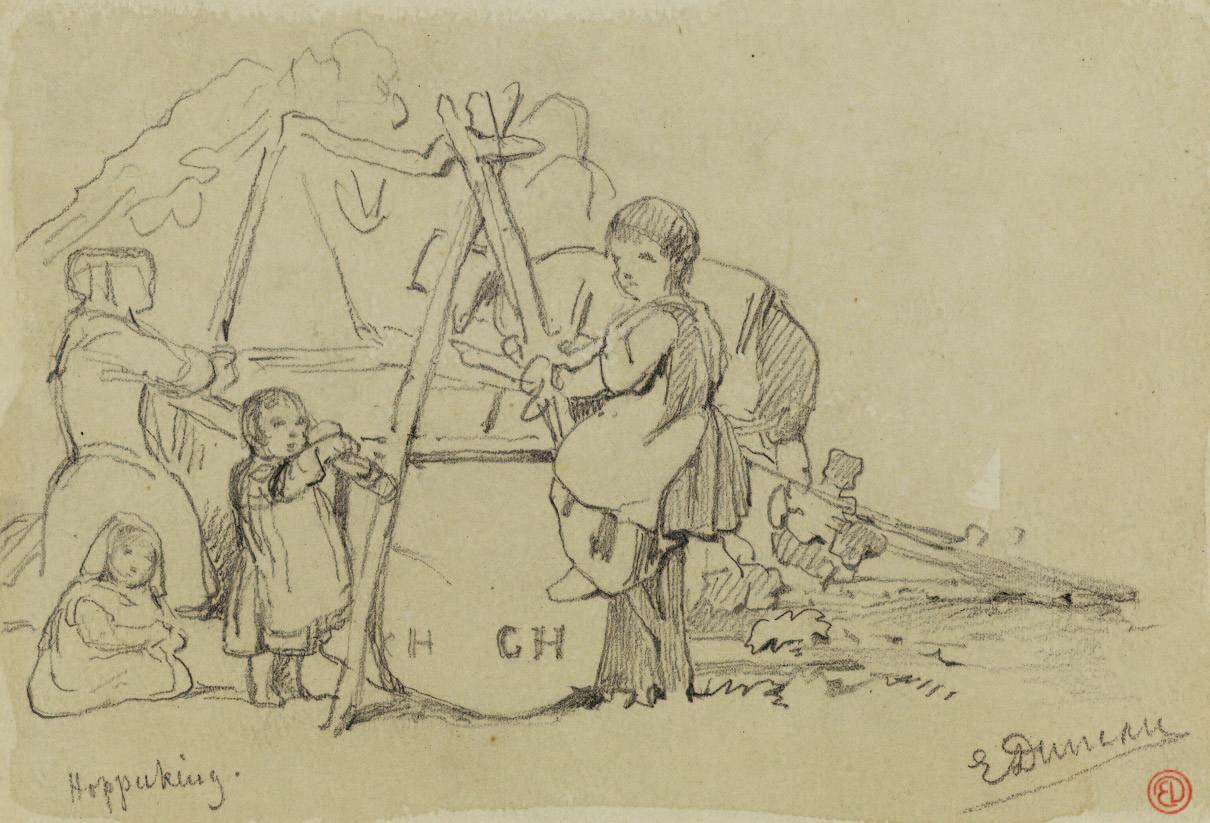
Hop-packing
Signed l.r., with artist’s studio stamp l.r. and inscribed with title l.l., pencil and brown washes on buff paper 12.1 by 17.6 cm., 4 ¾ by 6 ¾ in.
Duncan was born in St Pancras, London, and apprenticed as a young man to Robert Havell who specialised in aquatint engravings and his brother the watercolourist William Havell. After his apprenticeship he set up his own studio working principally for Fores of Piccadilly. In 1826 he embarked on a project to engrave maritime scenes after paintings by the artist William Huggins and this appears to have sparked his interest in marine subject matter.
He married Huggins’s daughter and embarked on a successful career as a marine and coastal painter exhibiting over 500 watercolours at the New and Old Watercolour Societies from 1833, as well as at the Royal Academy and the Society of British Artists. He also produced country scenes, mainly of the South of England.
£250
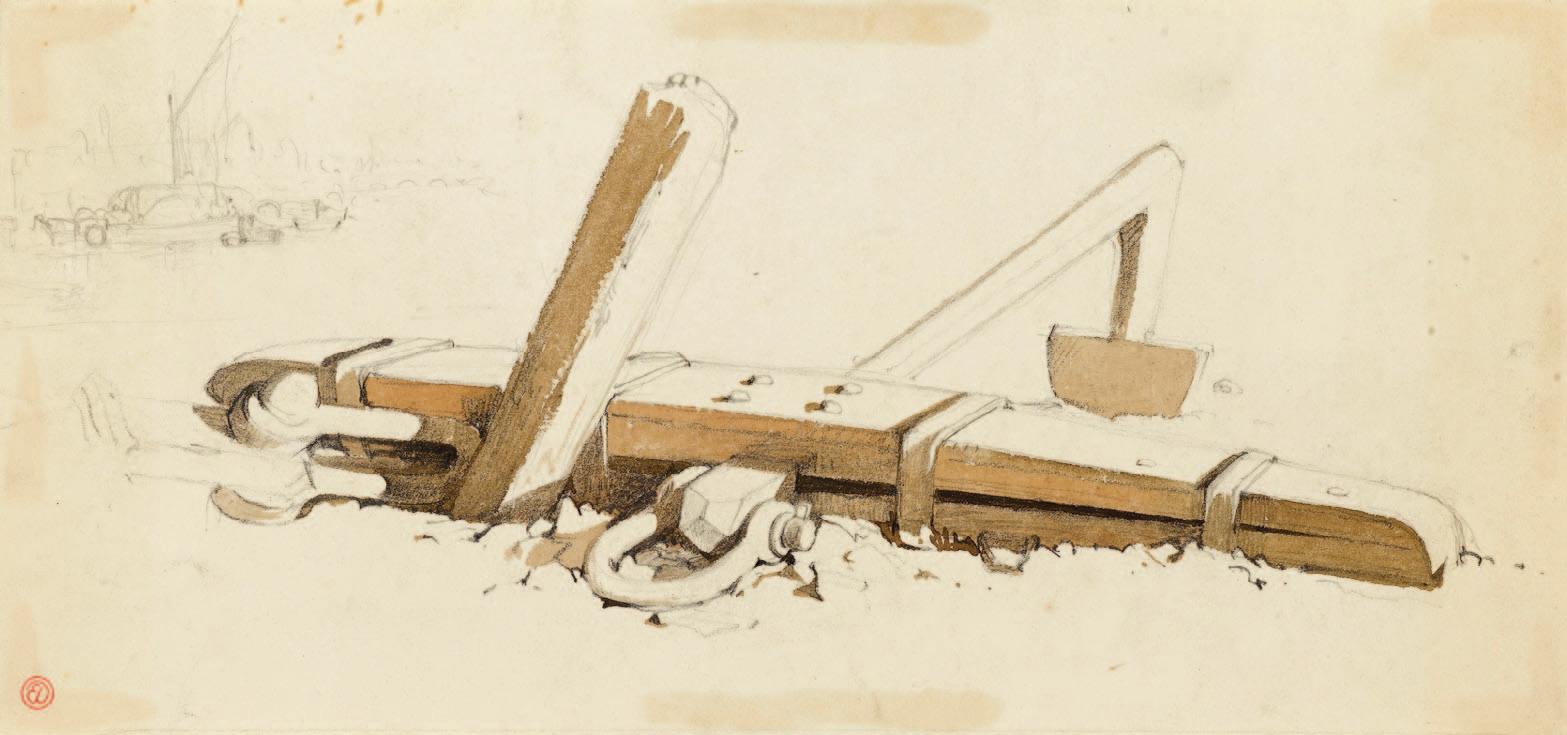
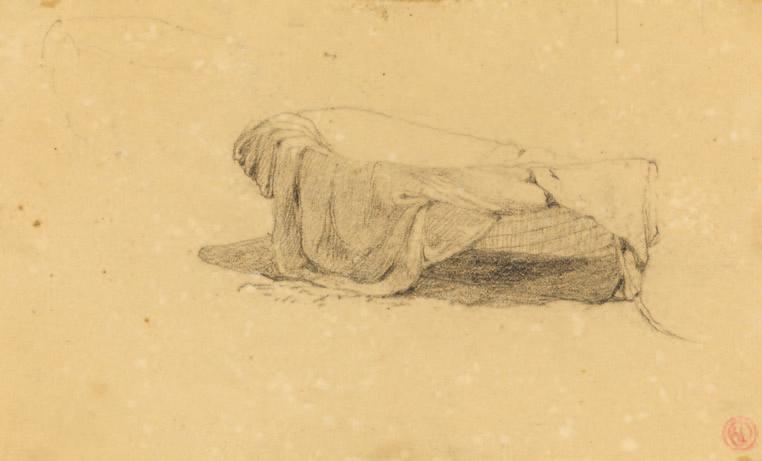
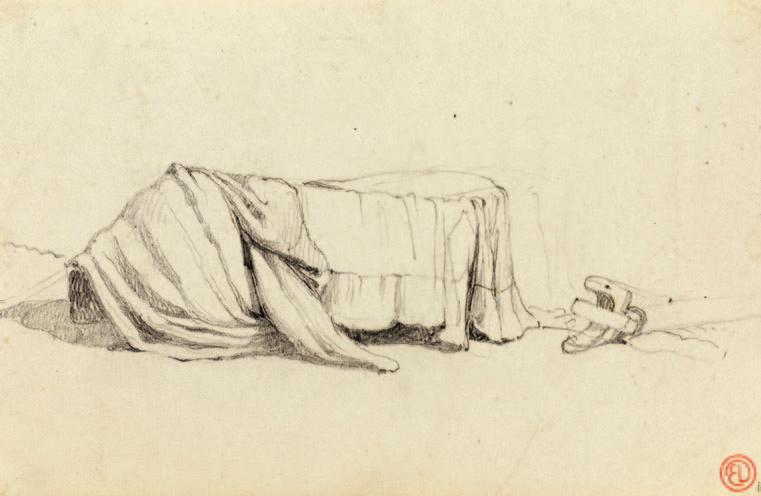
Study of an old Anchor
With artist’s studio stamp l.l., watercolour and pencil
14.1 by 30 cm., 5 ½ by 11 ¾ in.
Edward Duncan, R.W.S. (1803-1882)
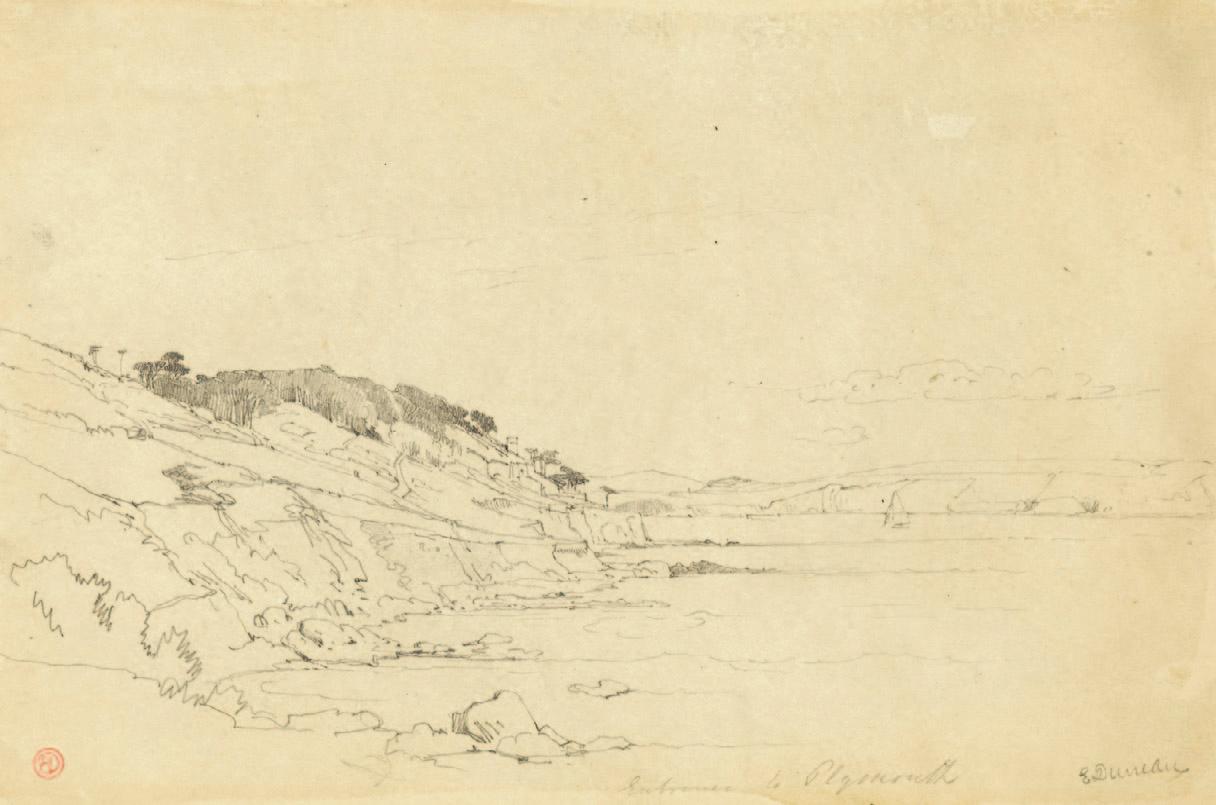
Edward Duncan, R.W.S. (1803-1882)
The Entrance to Plymouth
Signed l.r., inscribed with title and with artist’s studio stamp l.l., pencil on buff paper 16.4 by 24.9 cm., 6 ¼ by 9 ¾ in.
Duncan was born in St Pancras, London, and apprenticed as a young man to Robert Havell who specialised in aquatint engravings and his brother the watercolourist William Havell. After his apprenticeship he set up his own studio working principally for Fores of Piccadilly. In 1826 he embarked on a project to engrave maritime scenes after paintings by the artist William Huggins and this appears to have sparked his interest in marine subject matter.
He married Huggins’s daughter and embarked on a successful career as a marine and coastal painter exhibiting over 500 watercolours at the New and Old Watercolour Societies from 1833, as well as at the Royal Academy and the Society of British Artists. He also produced country scenes, mainly of the South of England.
£150
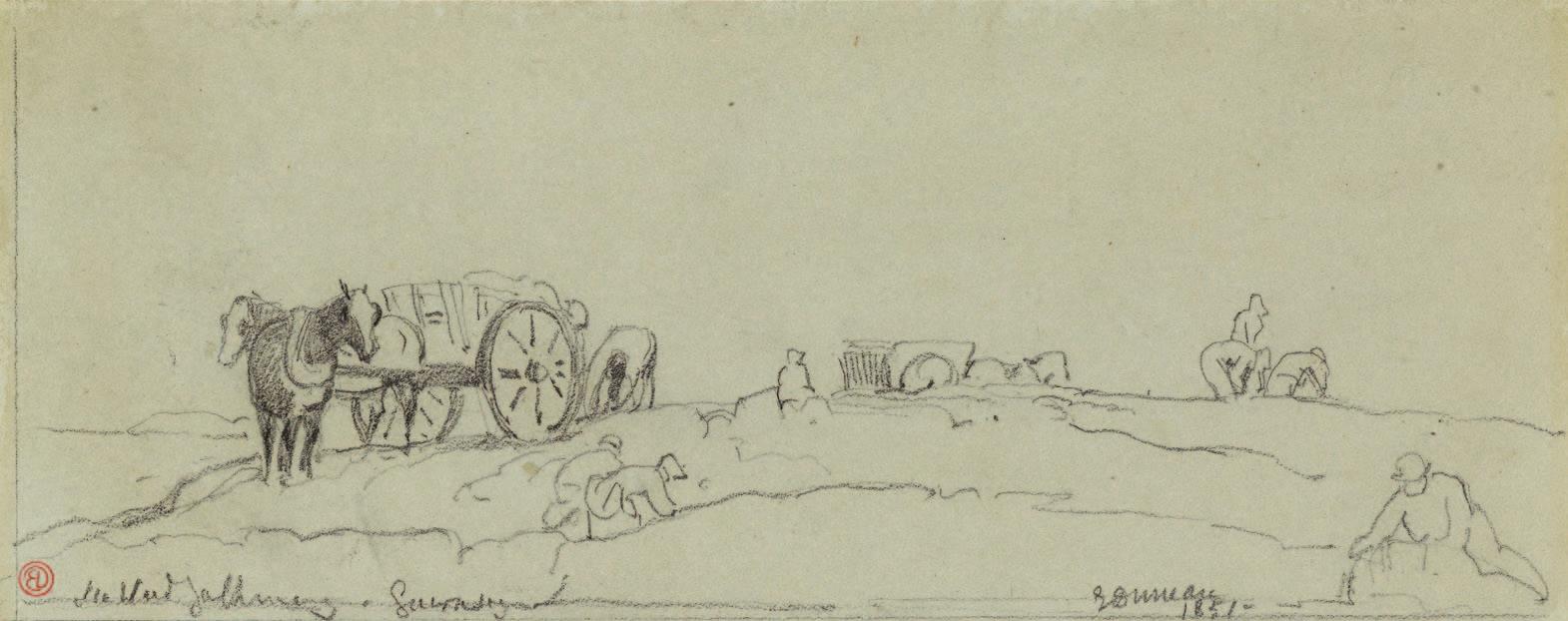
Edward Duncan, R.W.S. (1803-1882)
Seaweed Gathering, Guernsey
Signed l.r., dated 1851, with artist’s studio stamp l.l. and inscribed with title, black chalk on grey paper
11.2 by 28.4 cm., 4 ¼ by 11 in.
£350
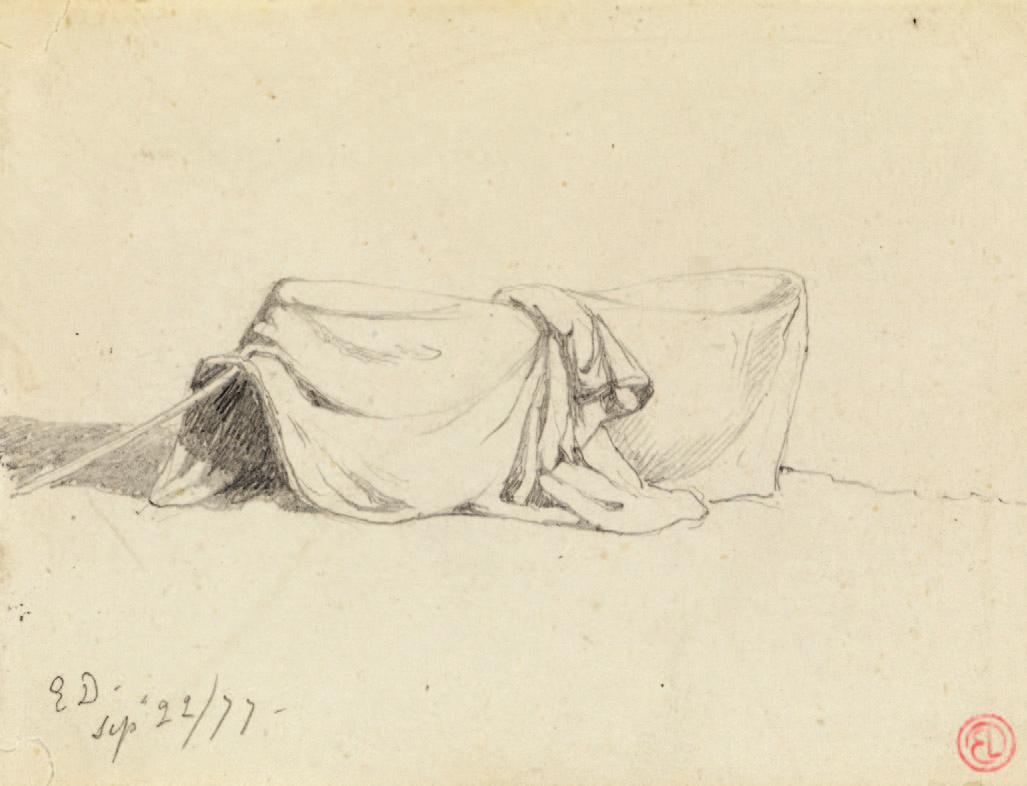
76
Edward Duncan, R.W.S. (1803-1882)
Study of a covered Boat
Signed with initials l.l. and dated 22 September 1877, with artist’s studio stamp l.r., pencil
8.6 by 11.2 cm., 3 ½ by 4 ¼ in.
£200
78
Edward Duncan, R.W.S. (1803-1882)
Study of a Boat
With artist’s studio stamp l.r., pencil on buff paper
8.5 by 14.2 cm., 3 ¼ by 5 ½ in.
£200
Edward Duncan, R.W.S. (1803-1882)
Study of a covered Boat and Anchor
With artist’s studio stamp l.r., pencil
8.6 by 13.3 cm., 3 ¼ by 5 ¼ in.
£200
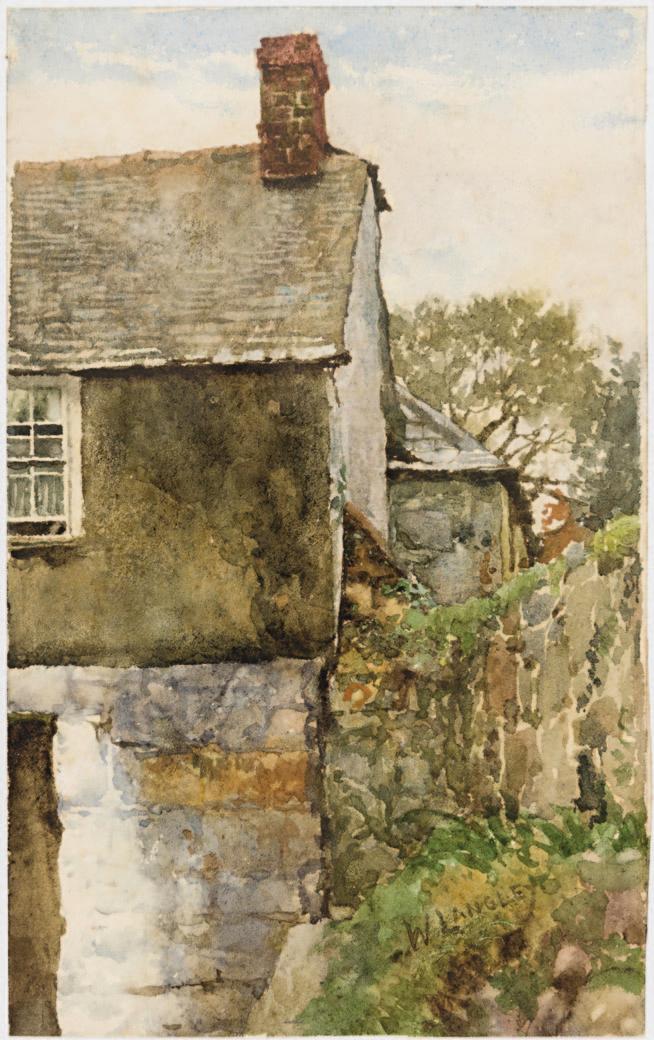
Walter Langley (1852-1922)
A Cottage at Tredavoe, Cornwall
Signed lower right: W LANGLEY and inscribed on part of old mount: 2213/At Tredarvoe
Watercolour
20 by 12.5 cm., 7 ¾ by 4 ¾ in.
Langley is often regarded as the pioneer of the Newlyn School, as he was the first of the group to settle in the village, setting up his studio in 1882. He remained in west Cornwall until his death in Penzance in 1922. This early view, which dates from circa 1880, is drawn at Tredavoe, a village to the south-west of Newlyn.
£900
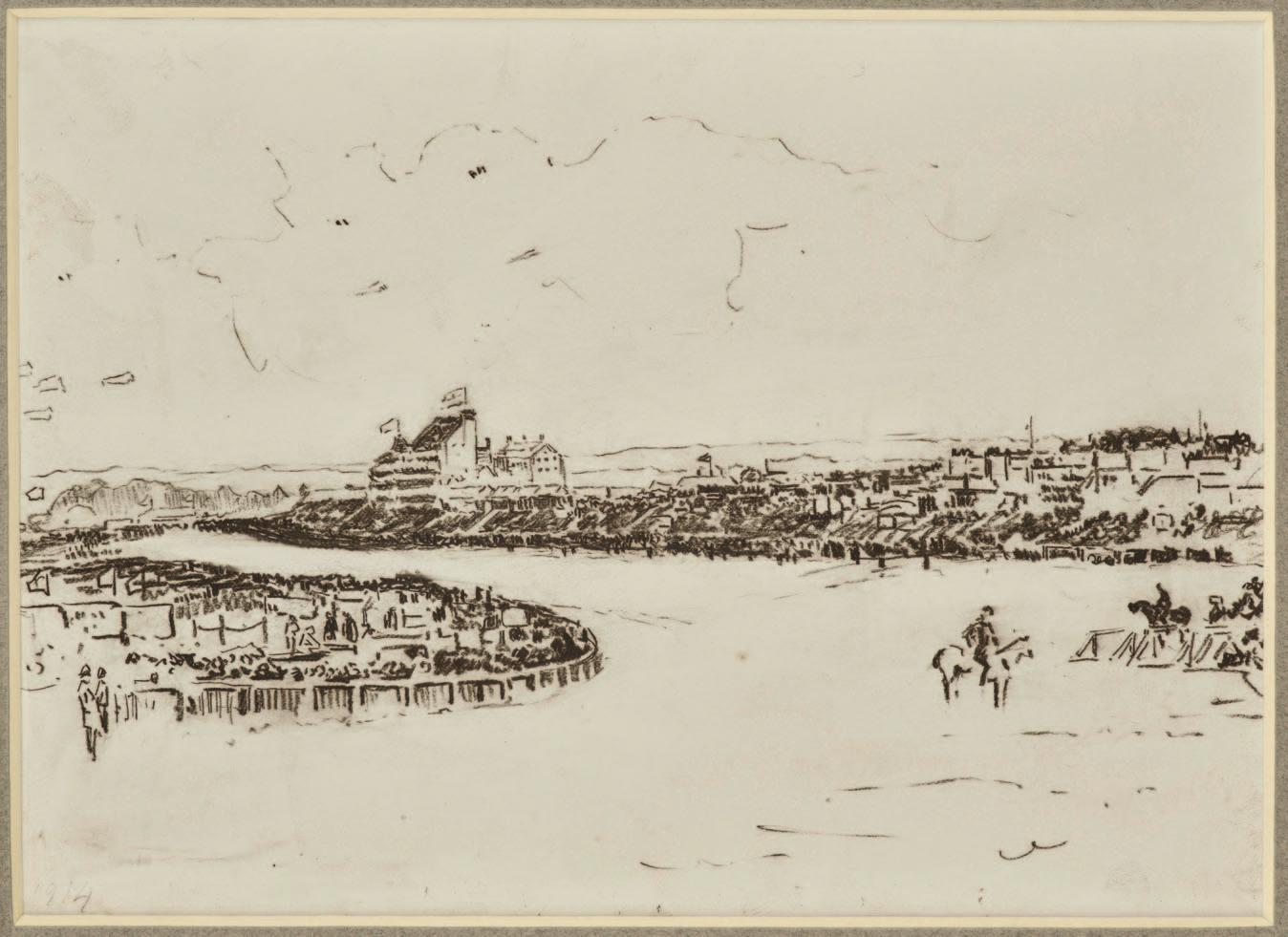
80
William Monk (1863-1937)
Racing at Epsom, 1914
Dated 1914 lower right
18 by 24.6 cm., 7 by 9 ½ in.
Born in Chester, Monk worked mainly as an etcher and printmaker as well as working in oil and watercolour. He was a member of the Royal Society of Painter-Etchers and Engravers living in London from 1892 before moving to Buckinghamshire in 1903.
£200
Pencil
C
Callcott, Sir Augustus Wall
Cat No.
R.A. (1779-1844) 34
Cox, David (1783-1859) 57
Cristall, Joshua (1767-1847) 31, 32
Crotch, Dr William (1775-1847) 38, 39, 40
D Dayes, Edward (1763-1804) 13
de Wint, Peter Attributed to (1784-1849) 68, 69
Devis , Anthony (1729-1816) 10
Duncan, Edward R.W.S. (1803-1882) 72, 73, 74, 75, 76, 77, 78
E English School (c. 1820) 53 English School (c. 1830) 52, 54
F
Fourmois, Theodore (1814-1871) 70 Fripp, Alfred Downing (1822-1895) 49
Guy Peppiatt Fine Art Ltd
Riverwide House, 6 Mason’s Yard Duke Street, St James’s, London SW1Y 6BU
Tel: +44 (0) 7956 968 284
guy@peppiattfineart.co.uk
www.peppiattfineart.co.uk
Design: sarahgarwoodcreative.com
G
Gillray, James (1757-1815) 5
Cat No.
Gore, Charles (1729-1807) 14, 15, 16, 17, 18, 19, 20
Gosselin, Colonel Joshua (1739-1813) 8 Green, Amos (1735-1807) 9
H
Hearne, Thomas (1744-1817) 6
Hills, Robert (1769-1844) 47, 58 Hunt, William Henry O.W.S. (1790-1864) 61, 62, 63, 64, 65, 66, 67
J
Jackson, Samuel (1794-1869) 50, 51
L
Labruzzi, Carlo (1748-1817) 11
Langley, Walter (1852-1922) 79
Lewis, John Frederick R.A. Circle of (1805-1876) 60
Long, Amelia Lady Farnborough (1772-1837) 12
M
Mackenzie, Frederick (1787-1854) 21, 22, 23, 24 Monk, William (1863-1937) 80 Monro, Dr Thomas (1759-1833) 29, 30
P
Cat No.
Payne, William (1760-1830) 35, 36, 37
Pearson, John (1777-1813) 26
Prout, Samuel O.W.S. (1783-1852) 46
R
Romney, George (1734-1802) 1, 2, 3
Rowlandson, Thomas (1756-1827) 4
S Sandby, Paul R.A. (1731-1809) 7
Smith, Joseph Clarendon (1778-1810) 33
Stark, James (1794-1859) 55, 56
T
The Worthing Draughtsman (fl. 1812-1832) 28
Tucker, Edward (c.1825-1909) 71
V
Varley, Cornelius (1781-1873) 25 Varley, John (1778-1842) 59
W
Ward, James R.A. (1769-1859) 27, 41, 42, 43, 44, 45
Wheatley, Francis R.A. Circle of (1747-1801) 48
Opposite: (57) David Cox (1783-1859) Travellers by a Country Cottage
GUY PEPPIATT FINE ART
Riverwide House, 6 Mason’s Yard, Duke Street, St James’s, London SW1Y 6BU