SAP Downstream Consulting Optimizing Oil and Gas Operations with SAP
The downstream oil and gas industry manages complex processes involving refining, fuel distribution, inventory, sales, transportation, pricing, and customer management. As market conditions and operational requirements continue to change, companies need connected technology to improve visibility and efficiency. SAP downstream consulting helps oil and gas organizations design, implement, and optimize SAP solutions that support their downstream operations from supply planning to product distribution. With the right SAP strategy, businesses can connect critical processes, improve data flow, and build a more responsive downstream operation.
What Is SAP Downstream Consulting?
SAP downstream consulting focuses on helping oil and gas companies use SAP technologies to manage and improve downstream business processes. Consultants assess existing operations, identify process gaps, and develop SAP solutions aligned with business requirements. Downstream consulting may cover areas such as: ● ● ● ● ● ● ● ● ●
Refinery and supply operations Fuel distribution Inventory management Sales and marketing Commodity pricing Transportation and logistics Contract management Financial integration Reporting and analytics
The objective is to create connected processes that help organizations manage their downstream activities more efficiently.
Why SAP Solutions Matter for Downstream Operations Oil and gas downstream operations involve multiple departments, locations, products, and supply-chain activities. Managing these processes through disconnected systems can make it difficult to maintain consistent information. SAP-based solutions can help organizations establish integrated workflows across business functions. Key advantages can include: ● ● ● ● ● ● ●
Centralized business information Improved process visibility Automated operational workflows Better inventory control More efficient distribution Integrated financial processes Enhanced reporting capabilities
By connecting different parts of the downstream value chain, companies can create a stronger foundation for operational management.
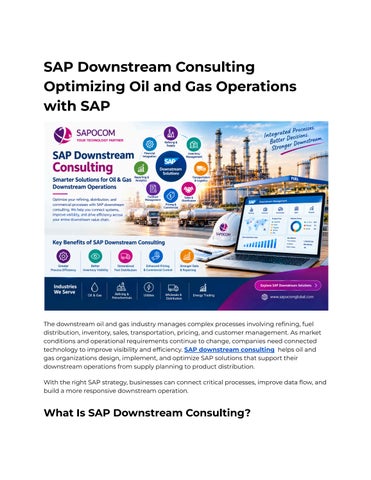
Key Benefits of SAP Downstream Consulting
1. Improved Process Efficiency Consultants can analyze existing workflows and identify repetitive or manual activities. SAP solutions can then be configured to streamline relevant processes and reduce unnecessary effort.
2. Better Inventory Visibility Downstream companies need accurate information about fuel, refined products, storage locations, and movements. Integrated SAP processes can help teams monitor inventory more effectively.
3. Streamlined Fuel Distribution Distribution involves multiple stages, from product availability and order management to transportation and delivery. SAP downstream solutions can connect these activities and support better coordination.
4. Enhanced Pricing and Commercial Management Fuel and commodity pricing can involve market references, differentials, taxes, premiums, and other commercial conditions. SAP solutions can help businesses manage pricing processes in a structured environment.
5. Stronger Data and Reporting Centralized data can provide management teams with clearer insights into sales, inventory, distribution, and operational performance. This can support more informed business planning.
Important LSI Keywords for SAP Downstream Consulting Businesses researching SAP downstream consulting may also explore related solutions and concepts such as: ● ● ● ● ● ● ● ●
SAP IS-Oil solutions SAP downstream solutions SAP oil and gas consulting SAP fuel management SAP Retail Fuel Network Operation SAP Trader’s and Scheduler’s Workbench SAP commodity management SAP oil and gas implementation
These related areas demonstrate how SAP can support different parts of the downstream oil and gas ecosystem.
How SAP Downstream Consulting Supports Oil and Gas Companies Every downstream organization has different processes and technology requirements. A consulting engagement typically begins by understanding the company's existing operations and identifying areas for improvement. Consultants may support organizations with:
Process Assessment Existing supply, inventory, sales, pricing, and distribution processes are reviewed to identify operational gaps and integration opportunities.
Solution Design SAP functionality is mapped to business requirements, helping create a solution architecture that supports the organization's downstream operations.
Implementation and Integration Consultants can assist with SAP configuration and integration with relevant enterprise systems, helping connect downstream activities with finance, logistics, sales, and other functions.
Testing and Training Business scenarios are tested before deployment, while employees receive training to help them work effectively with the new processes.
Ongoing Support Post-implementation support can help organizations resolve issues, optimize workflows, and adapt SAP processes as business requirements evolve.
SAP Downstream Solutions for a Connected Supply Chain
A connected downstream supply chain can help businesses coordinate activities across procurement, refining, storage, transportation, sales, and distribution. SAP technologies can provide a common environment for managing information across these functions. For example, a downstream organization may need to coordinate: ● ● ● ● ● ● ● ●
Product supply and demand Refinery operations Storage and inventory Fuel pricing Customer orders Transportation scheduling Retail distribution Financial settlement
Integrating these processes can help reduce information gaps and provide teams with greater operational visibility.
Choosing an SAP Downstream Consulting Partner Selecting an experienced consulting partner is an important part of an SAP transformation. Organizations should consider a provider's understanding of both SAP technology and oil and gas business processes. Important considerations include: ● ● ● ● ● ● ●
Oil and gas industry experience SAP implementation capabilities Understanding of downstream processes Integration expertise Knowledge of commodity and pricing workflows Training and support capabilities Ability to develop scalable solutions
A practical consulting strategy can help organizations align SAP capabilities with their operational priorities.
Conclusion SAP downstream consulting can help oil and gas companies improve the way they manage supply, refining, pricing, inventory, sales, logistics, and distribution processes. By connecting critical business functions through integrated SAP solutions, organizations can improve visibility, streamline workflows, and create a scalable foundation for changing downstream requirements. With experienced consulting support, businesses can approach SAP
transformation with a structured strategy designed around their specific operational needs. Explore SAP Downstream Solutions with SAPocom.