There is no lack of enthusiasm from governments, regulators, NGOs and trade bodies for endorsing cooperation. Everyone seems to agree that co-operation is something food and farming needs to embrace, and there are multiple key strategic drivers to tap into: exploiting new markets, tackling climate and nature emergencies, adopting innovation and increasing agriculture’s bargaining power in the supply chain, just for starters. However progress actually building on these good intentions is glacially slow.
There is now explicit acknowledgement of co-operation within the Agricultural and Rural Communities (Scotland) Act 2024, but the associated Rural Support Plan is underwhelming in backing this up.
The UK Government has set a target to double the size of the co-operative economy, and established a Mutuals and Co-operatives Business Council, but has yet to respond to the Council’s detailed recommendations and proposals.
Talking up co-operation is the easy bit. But just because it’s a good idea doesn’t mean it will happen by osmosis. There are many barriers and, if these aren’t acknowledged and addressed, then little progress will be made.
Raising awareness of these barriers and advancing proactive solutions is now a priority for SAOS and is driving our expanded advocacy work. In recent months, policy proposals have been shared with the Scottish Government and meetings held with officials. Similarly, at a UK level, we met recently with Alistair Carmichael MP, the Chair of the Environment, Farming and Rural Affairs Committee. So what is holding back the advent of more co-operation?
At present, there are real barriers to co-operation which either need to be removed, or a means provided to scramble over them!
• Discriminatory: co-ops are ineligible for certain schemes and programmes.
• Inaccessible: co-ops are often prevented from participation due to anomalies in how the rules or criteria have been drafted. No doubt this is usually caused by lack of awareness or naivety, and through inconsistent application across Government departments - so more ‘cock-up’ than ‘conspiracy’. But these hurdles have a stifling impact on real progress.
Direct co-op exclusion: one area in which co-ops could accelarate progress is the adoption of new technology - this can be achieved cost effectively by pooling investment across the membership. Yet right across the UK, our member coops have been unable to access capital funding support. In Scotland, the high-profile Future Farming Investment Scheme (FFIS) was available to farming businesses who were department-registered, and the funding levels were determined by land area. Co-ops can fulfil the former, but not the latter. Similarly,
in England, the Farming Equipment and Technology Fund sets rules and funding caps per farm business, thus excluding co-ops. Ironically, these scheme rules have resulted in poor value for public money.
Criteria anomalies: Earlier this year the Small Producers Pilot Fund (SPPF) in Scotland initially provided more optimism by explicitly supporting collaborative initiatives and, by extension, funding support for co-ops. Yet the SPPF underpinning criteria were based on the ‘small producer’ definition - i.e. limited business turnover and employee numbers, thereby rendering even our smaller and island co-ops ineligible to apply.
Policy inconsistency: Scotland’s Marine Fund, and the Fisheries and Seafood Scheme in the rest of the UK, actively promote applications for funding to support co-operative activities and partnerships within our fishing sectors. This is great news, both signalling and funding within a programme to support co-operation. Guess what - nothing equivalent exists for agriculture!
In Scotland, we welcome the Government’s ongoing support for the Fruit and Vegetable Aid scheme, this is a real positive, but it is a very specific and isolated example. (However, in England, DEFRA removed funding for even this!)
The reality is that, for all the positive noises about co-operation being a key ingredient for success and survival for our farming and food industry, it’s all talk but no action. Co-operation cannot happen on just goodwill. It has enormous, untapped potential, but it needs to be promoted, nurtured, incentivised and funded. The future of our farming and food industry depends on it.
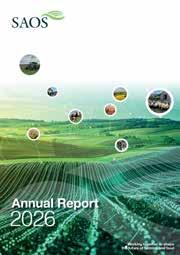
Along with this newsletter you’ll have received our Annual Report which reflects on some of our work and achievements over the past financial year (our Annual Accounts will be published in the next few weeks).
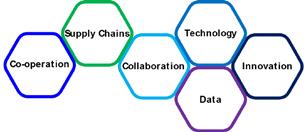
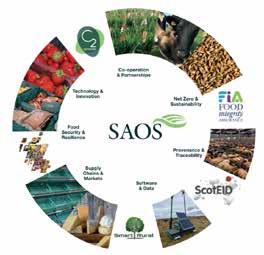
We have changed the way we report our impacts, reflecting the SAOS Group wheel (right) and how our businesses overlap.
Please do take a few minutes to take a look at the Report - we very deliberately keep it brief!
We are of course a bit biased but for our size, we feel that the spread of our work and the impact that it has, is pretty impressive.
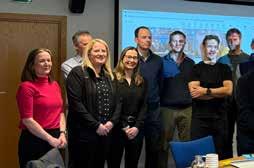
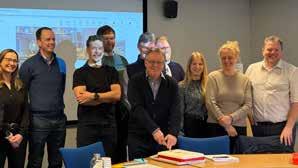
The end of March saw us bid farewell to our former Head of Supply Chain Development, Alan Stevenson who, after nearly 27 years with SAOS, attended his last team meeting where he was joined by colleagues in person and online to wish him well.
Alan joined SAOS in 1999, having gained key experience in market and trade development roles with Scottish Enterprise and Seafish. He was initially employed as a Graduate Management Trainee and Retail District Manager at United Biscuits, forming a life-long appreciation of a good biscuit.
Alan’s role was integral to the expansion of SAOS’s supply chain development work and his contribution to the wider Scotland’s food and drink industry has also been immense. With seemingly boundless enthusiasm, a light touch and trademark self-deprecating humour, Alan has been a standard-bearer for greater collaboration in Scottish food and drink supply chains, helping to improve profitability, market responsiveness, efficiency and sustainability.
He summed it up well in this interview from our SAOS Update archives (from March 2011) when asked what one thing about Scotland’s food and drink industry he would change:
“Collaboration, collaboration collaboration! We have some great examples of businesses and sectors working together for improved rewards but there are some that still have a way to go. I would like to see a much more enlightened market
and consumer focus for everyone in the chain, as well as recognition of the real costs for each component part. Sharing information and creating a more open business culture will help companies understand the constraints and plan better for the future, making Scotland’s food and drink industry stronger in the years ahead. Coping with the sustainability challenge – producing more with less - will be one such fast evolving challenge, where the whole sector would benefit greatly from more collaboration. Much has been talked about it in theory, but when it comes to action you realise sustainability is not abstract, but a better way of doing business in every way and, key to this, is working together.”
And so say all of us! Congratulations Alan, you will be missed. Enjoy a well-earned bit of a rest and relaxation.
We were really privileged to hear from Rob Wainwright at our monthly ‘Lunch and Learn’ webinar in March - about a stellar rugby career, fundraising for My Name’5 Doddie Foundation, mental and physical health and wellbeing, and the trials and delights of farming on Coll. Absolutely great work by Helen Glass to nab Rob for the spot!
Helen’s initiative to spread learning around the team on different areas of our own work, as well as regular slots from
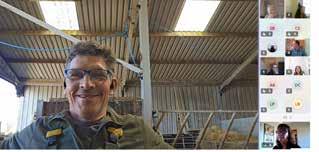
external speakers, has been a huge success. We’ve covered so many brilliant topics already (in the one before this, we heard from soil scientist and crime solver, Professor Dame Lorna Dawson) - keep them coming Helen!
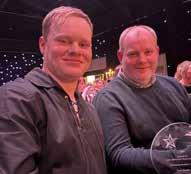
We were delighted to support Lantra Scotland’s ALBAS again in March and had a great night sharing the table with the Ringlink Scotland team and the Pre-Apprenticeship award winner, Luke Barclay (pictured top right with his father) who is a great example of how well the scheme can work.
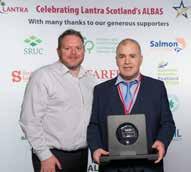
SAOS’s Patrick Hughes is pictured below with Peter Cairns accepting The Anna Murray Award for Partnership Working for Pitlochry High School’s Junior Rangers programme. The award recognises the strength of the collaboration behind the programme. In partnership with supporting organisations, it gives pupils the opportunity to connect with nature, build practical outdoor skills, and gain a real insight into the kinds of careers that exist in the countryside, conservation, and land-based sectors. It’s about inspiring the next generation - helping young people discover the outdoors, grow in confidence, and that exciting career opportunities exist in environmental and land-based industries.
In other Lantra news - Applications are now open for the Next Generation Practical Training Fund from Lantra Scotland, in partnership with The Scottish Government. With £300,000 available this year, new entrants to agriculture can apply for up to £500 of fully funded training per course to build practical skills and support the future rural workforce.Training opportunities include:
• Tackling climate change
• Protecting wildlife and habitats
• Workplace safety
• Equipment and machinery skills
• Farm business and financial management
Funding may also be available for courses over £500 where clear value can be demonstrated.
Find out more at:
https://www.scotland.lantra.co.uk/next-generation-practical-training-fund
Over the coming year, SAOS will be working on a new project entitled: “Growing our Co-operative Capacity: Developing a National Toolkit for Farmer Collaboration to Accelerate Sustainable Outcomes in Scottish Agriculture.”
Working with co-ops, collaborative groups and stakeholders, we’ll explore practical support around:
• governance and leadership
• sustainability planning
• supply chains and market development
• peer learning and knowledge exchange
• collaborative development and group structures
The project will explore how we can strengthen support for existing co-ops, as well as taking a broader outlook around emerging forms including collaborative supply chains, farmer clusters and other producer-led initiatives.
Scottish agriculture is facing changing sustainability, market and policy requirements, alongside increased pressure around resilience, governance, supply chains and long-term business sustainability.
At the same time, more groups are recognising the value of collaboration in helping address challenges and opportunities. We want to gain a better understanding of what support co-ops and collaborative groups need, where the gaps are, and how practical support can evolve in response.
Importantly, this will be a listening and learning process built around engagement with groups already operating on the ground. The intention is to develop practical tools, guidance and learning that can help strengthen resilience, sustainability, and collaborative capacity across Scottish agriculture. The work will also help SAOS continue to evolve its wider support services for co-operatives and farmer collaboration in the years ahead. We are very keen to hear from any co-operatives, collaborative groups or stakeholders who would like to hear more about the work or explore opportunities to get involved. Contact adam.forrest@saos.coop
SAOS Member Co-op Directors - you are cordially invited... It’s that time of year again! The Highland Show is nearly upon us and we look forward to welcoming SAOS’s member co-op directors and our invited guests to the SAOS/ScotEID stand. Join us for a catch up drink and some nibbles 4-6pm on Thursday, 18th June
If you do plan to come, please RSVP by email by 11th June to: jennifer.thompson@saos.coop
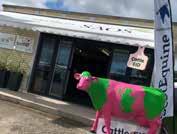
We hope to see you, either at the reception or pop in for a catch up on all the latest with ScotEID, Food Integrity Assurance, SmartRural and SAOS - and do make use of the tea room and our catering during the rest of the show! Our stand is situated ringside on 7th Avenue, you can’t miss Edie the pink and green cow!

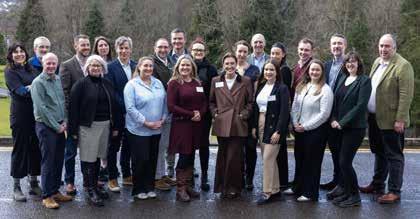
Our Growing Tomorrow’s Leaders programme was established in response to increased challenges and pressures facing the rural sector. With market volatility, regulatory change, workforce pressures and succession planning all now part of the ‘day-to-day’ for those in leadership positions, developing confident, capable leaders has never been more important. Developed and supported by SAOS, in partnership with NFU Scotland, the programme brings together mid to senior-level professionals from across the rural sector, strengthening the leadership awareness, confidence, and perspective needed by participants to guide their organisations through an increasingly complex environment.
Another key learning that’s come across time and again, is how much participants learn about other parts of the industry through the experience. The value of this shared exchange of learning and a better understanding of shared views and challenges cannot be underestimated and really adds to the experience. The programme is delivered with the help of leadership specialists Tack TMI Leadership Factory, who work with participants throughout the programme to explore leadership behaviours, decision-making and team dynamics. Recruitment is now open for the next cohort, beginning in October 2026, applicants can apply individually or they can be nominated by their organisation. Further information, including lots of great feedback from our past participants is at https://saos.coop/events-and-training/growing-tomorrows-leaders/ or get in touch with: emma.koubayssi@saos.coop
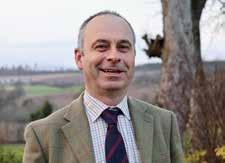
Easter Ross farmer, Donald Ross, has been appointed as the new Chairman of the Scottish Agronomy Board. Donald has been vice chair for 3 years and succeeds Borders farmer Guy Lee as Chair.
taken a collaborative and co-operative attitude to business and building knowledge. He is former chair of grain co-op, Highland Grain and, as well as being named AgriScot Arable Farmer of the Year, he has scored highly in the well-regarded YEN (Yield Enhancement Network) competition.

Farming a 350ha mixed unit based at Rhynie Farm in Easter Ross, Donald brings a wealth of experience in practical faming, as well as a progressive and evercurious approach to trial and experimentation to improve crop management and farming practices.
A member of Scottish Agronomy since 1997, Donald is part of the Easter Ross group and has always
Donald grows wheat for animal feed and distilling, barley for malting, oilseed rape, beans for cattle protein and spinach for seed production sold worldwide, alongside 100 suckler cows and 250 breeding ewes.
Rhynie also hosts the most northerly site for Scottish Agronomy trials with almost 1000 plots of Spring Barley, providing valuable local knowledge and data to growers in the Highlands. With farming navigating the multiple challenges of rising input costs, a changing regulatory environment and increasing pressure to demonstrate environmental credentials alongside financial viability, Donald believes access to independent and regional
trial data and advice has never been so important, and he is looking forward to taking on the role of Chair.
This year marks 40 years since Scottish Agronomy was established as a cooperative by a progressive group of farmers from the length and breadth of Scotland seeking independent, practical agronomic advice.
Since those 48 farmers planted the first trials in 1985, the co-op has expanded to over 30,000 trials plots across a range of sites and soil types throughout Scotland, evaluating varieties, inputs and management practices under true field conditions to give regional and climatic nuance.
Scottish Agronomy takes huge pride in the fact they have over 40 years’ worth of evidence and data to help their members make important business decisions to continue to improve yields, manage costs and farm sustainably.
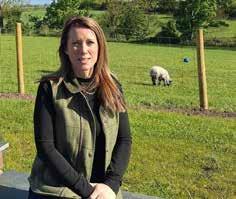
Aspatria Farmers has appointed Clare Sowerby as Chair, marking a significant milestone in the co-op’s history as the first woman to take on the role.
Clare was elected at the Board Meeting in April and succeeds William Graham, who will remain on the Board to help ensure a smooth transition.
Clare, a chartered accountant and tax advisor by trade, commented: “I’m proud to take on the role of Chair at Aspatria Farmers and to represent a business with such a long history of supporting the farming community. Coming from a farming background, I understand both the challenges and resilience within the industry and the importance of having trusted support around farm businesses. Aspatria Farmers has built a strong reputation for providing practical advice, quality service and a co-operative approach, and
I’m looking forward to helping build on that in the years ahead. At a time when margins remain under pressure, it’s more important than ever that we continue delivering real value and support to our members across the region.”
Chief Executive Ian Buchanan welcomed the appointment, stating: “Clare brings a strong combination of professional experience, local knowledge and understanding of the agricultural industry to the role. Having served on the Board since 2018, she already has a strong understanding of both the business and the needs of our members.”
Aspatria Farmers is the UK’s longest established farmer-owned co-op, supporting members across feed, animal health, machinery, dairy, agronomy and retail services. The business continues to focus on providing practical support and value to farmers across the region.
The co-op recently confirmed that a quarter of the profits from their 2024/25 financial results will be returned directly to members.
CEO Ian Buchanan, said: “In a year where margins have been under real pressure, this is about making sure the success of the co-operative is shared with the farmers who support it. This approach ensures that when the business performs well, our members benefit directly.”
In May, following renewed public debate around its use as a pre-harvest desiccant, United Oilseeds released new farmer-led evidence on the importance of glyphosate to UK food production.
The data, based on responses from 767 growers across Great Britain to a survey conducted between December 2025 and March 2026, was gathered to inform policymakers ahead of the UK’s 2026 glyphosate approval decision.
The survey highlights the critical role glyphosate plays in harvest management in the UK, where our maritime climate means short and unpredictable harvest windows, with crop timing in Scotland, Northern England and Wales being particularly challenging. United Oilseeds Director and Scottish Borders farmer Colin McGregor said: “If pre-harvest glyphosate is removed and harvests are pushed later, the whole system starts to break down. It means higher costs, more fuel use, more drying, and ultimately higher food prices. In some areas, it could make crops like oilseed rape unviable.”
The survey highlights how widely glyphosate is used as a harvest management tool.
• 97% of respondents in northern regions reported currently using glyphosate on one or more crops.
• 76% of farmers use it for pre-harvest desiccation
• 67% say losing it would increase costs
• 66% expect greater risk of crop losses
• 72% say some crops could become difficult or impossible to grow
Farmers warn that this would mean not only higher food prices, but also increased reliance on imports, many of which would undoubtedly have been sprayed with glyphosate pre-harvest, only exacerbating the unlevel playing field for UK farmers.

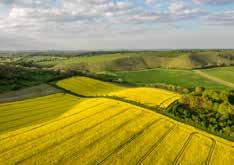
Calls to restrict glyphosate are often framed as environmentally beneficial, however farmers say the reality is more complex, and that, without it, there would be increased ploughing and soil disturbance, greater fuel use for cultivation and crop drying, and that practices such as cover cropping could be abandoned.
During a recent Farming Today discussion, Andy Neal from The Centre for Dynamic Soils acknowledged that removing glyphosate is likely to result in more cultivation, a shift that risks undoing progress in soil health and carbon management. With a decision on glyphosate approval due by the end of 2026, growers are urging policymakers to take a balanced approach. United Oilseeds’ MD, James Warner summed up: “Policy must be grounded in practical, evidence-based outcomes and reflect the realities of food production and global supply chains. This risks significantly reducing UK oilseed rape production at a time when demand for vegetable oils continues to grow, resulting in increased imports of rapeseed, oilseeds and oils from countries that continue to use glyphosate, and in many cases operate to lower environmental standards — while also adding unnecessary transport emissions. Decisions on its future use must therefore be proportionate, balanced, and fully reflective of the realities of UK farming.”
You can read more at https://www.unitedoilseeds.co.uk/news-events/Glyphosate-Ban-Response
Increases in turnover, profit and returns to members have defined another strong trading year for the ANM Group. They announced increased turnover by 20% to £13.8m, and trading profit to £2.8m, making a pre-tax profit of £892,000 during the financial period. This meant a total dividend payment of £265,000 for members.
The group has more than 5,000 members and its enterprises include Aberdeen and Northern Marts, land and estate agents, and hospitality and events businesses.
The Group has delivered a member benefits package returning £918,000 in commission savings with average commission rates of 3.39%, well below the industry average of 4%.
The annual report also confirms £265,000 of dividend payment to members, with an additional 89 trading members joining the Group during the year.
Commenting on the figures, ANM Group Chief Executive Grant Rogerson said: “These results reflect a positive year for the Group, with growth in both turnover and profit, while continuing to return value directly to our members through competitive commission rates and dividend payments.
“I am incredibly proud of my team’s hard work and dedication in delivering such a strong performance. In a year where costs have remained high across the sector.
Our 2025 figures reflect the resilience of the Group, and we remain committed to building on the progress made to date, with our focus on strategic priorities and a commitment to continuing to grow the business delivering success and return for our members.”
Ringlink Scotland, the UK’s largest business ring, has appointed Faye Barron as Human Resources Manager. The role will see her lead the co-op’s recently established HR division, supporting people and culture within the internal Ringlink business, while providing a suite of HR support services to its membership of over 4,000 businesses.
Faye brings extensive experience to the Ringlink team, ranging from consultancy roles at Hunter Adams and Empire HR to in-house positions that include people development company Insights and nearly seven years as Director of People at Aberdeen Performing Arts.
Managing Director, Graham Bruce, said: “We’re delighted to welcome Faye to the team to lead the growth and development of our new HR division in what is an increasingly fast-moving employment landscape.

“Our members have told us they need a dedicated, professional resource to help them navigate the complexities of people management. This appointment reflects Ringlink’s ongoing commitment to delivering high-quality, practical support to its members as they adapt to an evolving employment environment. Faye’s blend of commercial consultancy and inhouse leadership means our members will have access to the highest level of expertise to help their businesses thrive.”
Faye commented: “I am excited to join a local organisation that I have known and respected for a long time. This role at Ringlink reflects my balance of experience with my decade in consultancy and 15 years of in-house leadership. I can support Ringlink as they develop their people and culture, as the team has expanded in recent years to more than 50 members. Externally, launching HR services for our diverse membership in rural and land-based industries is an exciting prospect.

“We can help members with immediate and upcoming changes in employment law such as this year’s Employment Rights Act which brings significant changes around aspects like statutory sick pay, holiday records and much more. But beyond that, we are here to help members get the best out of their people. Being a good employer is the most effective way to attract and retain the talent our industry needs.”
Four years on from establishing a largescale soil carbon baseline, First Milk, with soil carbon measurement specialist Agricarbon, has undertaken interim resampling on three member farms. Early findings show soil carbon stocks increased on all three farms, with average gains of 8.9tC/ha (8.2T CO2e/ ha/year) and a positive relationship was observed between the level of regenerative farming activity and the carbon increase. While the results apply only to the farms re-sampled so far, they are encouraging early evidence that regenerative farming practices are delivering measurable improvements.
Mark Brooking, Chief Impact Officer at First Milk, said: “There has been much debate about whether soil carbon can be measured reliably and whether
sequestration can be demonstrated at farm level. What these results show is that when you measure properly, and when farmers adopt regenerative practices, we can see real changes happening in the soil. This early data is extremely encouraging and reinforces the direction our farmers are taking.”
“By investing in direct measurement and building a high-quality dataset, we are ensuring that the environmental performance of our farms is backed by robust evidence. Over the coming months we will be building on this work with more data becoming available.”
changing, measurable increases in soil carbon can occur over relatively short periods of time.”

Alan Strong, Co-founder of Agricarbon, said: “Direct measurement is the most robust way to understand what is happening in soils. These early results show that, where farming practices are
Because of its baseline programme, First Milk holds one of the largest contemporary soil carbon datasets in the dairy farming world, positioning the coop as a leader in building robust evidence for regenerative dairy farming. A full five-year remeasurement programme beginning later this year will expand sampling across the membership, growing the dataset and understanding of how farming practices influence soil carbon in dairy systems. The results will help provide practical guidance for First Milk farmers on managing soils to protect and increase soil carbon, while supporting future carbon reporting frameworks across the dairy sector.
SAOS Project Managers, Paty Rojas Bonzi and Claire Dyce headed to Brussels in March to attend the CBE JU Stakeholder Forum 2026. The theme was ‘Driving impact – bio-based innovation for a competitive, sustainable Europe’.
CBE JU stakeholders’ community is delivering real impact for Europe’s competitiveness and resilience, supporting the green transition and how it can continue driving change. The forum gave over 400 representatives from the circular bio-based sector - primary producers, industry, policymakers and researchers - the opportunity to reflect on the lessons learned and a platform to discuss how to scale up bio-based innovations, support market uptake, ensure better access to finance, create green jobs and ultimately drive sustainable economic growth. Together, stakeholders from across the bio-based value chain focused on one central question: how to move faster from innovation to industrial deployment.
Building on a decade of investment in research and innovation, discussions centred on scaling up bio-based solutions, strengthening Europe’s competitiveness, and ensuring that innovation translates into tangible economic and environmental impact. Paty’s key takeaway was: “The bioeconomy will only succeed if primary producers are at the centre — not at the periphery.” Her fuller reflections are at: https://www.linkedin.com/feed/update/urn:li:activity:7444690767022837760/
The four-year EU Horizon project, IntercropVALUES, is coming to an end, providing an opportunity to reflect on some of the key lessons learned. The project involved 27 partners from 16 countries, with SAOS and SRUC representing the UK.
Intercropping - growing multiple crops simultaneously in the same field - is gaining increased attention as an agroecological approach that can deliver environmental, economic and nutritional benefits.
SAOS joined the project to explore the potential for intercropping as a more sustainable crop production system, particularly in a future with reduced reliance on artificial fertilisers and agrochemicals. The project also provided an opportunity to:
• Support a group of innovative organic growers
• Gain practical experience relevant to Scottish arable co-ops
• Build networks with academic and industry partners across Europe.
SAOS’s role focused on supporting a dedicated Scottish grower group and processor (Norvite) to develop and market a premium vegetable oil for the UK market.
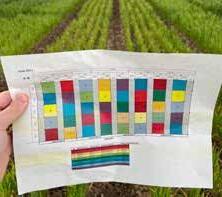
Across the wider project, 13 grower groups developed new food and drink products using intercrops.
In Scotland, the supply chain involved 8–10 growers working alongside Norvite, who handled seed cleaning, drying, crushing, bottling and marketing.
SAOS’s project lead, Jim Booth, told us: “The success of the Scottish group relied heavily on collaboration, commitment and trust between growers and processor. As organic oilseed rape had never previously been grown commercially in the UK, there was little technical
guidance available. “Progress depended on experimentation, open communication and shared learning, with a WhatsApp group proving invaluable for exchanging information and solving problems quickly. All players were committed and motivated to make it work, taking a long-term view.
“The development of intercropping faces many obstacles. There is a lack of awareness of the benefits of intercropping across the whole supply chain – growers, processors, consumers and policy makers.
“Two distinct challenges emerged: the technical challenge of successfully producing organic OSR, and the commercial challenge of building a viable premium veg oil brand in a highly competitive market.
“One of the strongest messages from the project is that Scotland has talented farmers, researchers and business entrepreneurs capable of driving agricultural innovation. However, future progress will depend on continued collaboration, supportive policy frameworks and access to the right resources and infrastructure.
More information about the project can be found on the IntercropVALUES website at: https://intercropvalues.eu/downloads
Antimicrobial resistance (AMR) threatens the effective prevention and treatment of an ever-increasing range of infections caused by bacteria, parasites, viruses and fungi. The Scottish AMU (antimicrobial use) Pilot, running since July 2023, echoes an approach first taken by Welsh Lamb and Beef Producers, supporting veterinary practices to produce AMU reports for their farming clients, helping lead the way in tracking the use of antibiotics in livestock.
SAOS is working with Quality Meat Scotland, Farmvet Systems and ScotEID, supported by Scottish Government, to take the pilot forward with an ambition for national rollout of the scheme. Initially supporting six vet practices, funding was secured from Scottish Government to increase this number to 15. Further expansion would enable recruitment of another six practices, allowing a greater geographical reach and increased awareness of AMU reporting throughout Scotland.
The key objective is to use vet-recorded data to reflect to farmers the usage of antimicrobials on farm and enable discussions with the vet to reduce use where possible, and around use of supporting proactive healthcare interventions such as:
• vaccination
• grazing and pasture management
• parasite control
• modern housing and husbandry
• tailored nutrition
• endemic disease control strategies
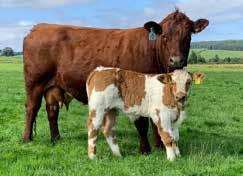
If you would like to find out more or get involved, please get in touch with emma@saos.coop or abbie.robertson@saos.coop

Findings from the second year scoring on the Sector Resilience Tracker are beginning to answer exactly that question. Building on last year’s work, the Tracker brings together input from 16 sectors (with malting barley a new entrant for this year), using 43 indicators to assess everything from supply chain strength and skills, to sustainability, innovation and market performance. The process blends self-assessment by industry organisations, with expert input, giving a well-rounded view of how confident industries feel about their ability to withstand challenges and adapt to change.
Scoring took place post harvest 2025, so before the current situation in the Gulf emerged and the results present a snapshot of industry confidence at that time.
The headline story this year is one of cautious optimism. Confidence is growing, with improvements seen across the majority of indicators. Areas such as consumer demand, quality standards, resource efficiency and continuous improvement all scored particularly well - suggesting many sectors are building strong foundations for the future.
That said, the findings also highlight some clear pressure points. Performance varies widely between sectors but some issues are clearly shared across the industry. Access to skilled labour has emerged as the most significant concern across sectors, alongside ongoing challenges linked to global competition and supply chain dynamics.
A new addition this year - the importance of “Scottishness” in driving value - also underlines the role of identity and provenance as part of long-term resilience.
As the Tracker continues to evolve, its real value lies in helping sectors move from insight to action - pinpointing where to focus effort, and heling to drive a more resilient, future-ready industry.
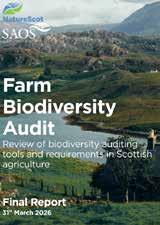
Biodiversity is moving steadily up the agenda for agriculture - and not just through policy. A recent review of tools, schemes and supply chain expectations conducted by the Supply Chain team of behalf of NatureScot highlights how the landscape around farm biodiversity is evolving, and what that means in practice for farmers, crofters and those supporting them.
The work explored three closely linked areas: digital tools used for biodiversity assessment and planning; accreditation and assurance schemes; and the growing set of biodiversity expectations emerging through agri-food supply chains. While each area was examined separately, together they paint a clear picture - biodiversity is becoming much more visible within farm business systems. At the same time, the way biodiversity is measured and evidenced remains complex and, in many cases, fragmented. Different tools and schemes often use different metrics, levels of detail and verification approaches. This reflects the fact that they are designed to solve different problems, but it can also create challenges for farmers in navigating what’s required of them.
One of the most important insights from the work is that biodiversity evidence is no longer shaped by public policy alone. Retailers, processors and assurance schemes are increasingly influencing what farmers may be expected to demonstrate. These drivers often operate at a UK-wide or global level, meaning Scotland cannot be viewed in isolation. This research is effectively a snapshot in time, and the landscape is evolving rapidly, but it’s clear that biodiversity is becoming a core part of how farms as assessed, valued and managed.
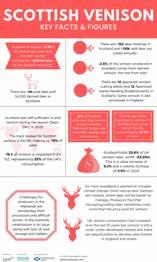
In 2021, SAOS began working with key sector businesses and organisations on the foresighting, analysis, and mapping of more than twenty major food and drink supply chains. The maps offer a unique overview of the strengths, weaknesses, opportunities, and threats for each sector, and have provided a great starting point for discussions among supply chain partners.
They provide a comprehensive analysis of the whole supply chain for each sector, and we’ve also produced a summary of each, providing key facts and figures in a more concise onesider.
All the documents are reviewed twice a year, and updated with information from industry and Government sources.
Find out more/get in touch to find ways to discuss how your business/supply chain operates: https://bit.ly/4fGlTSp

We produce four newsletters a year, two of which are printed and copies sent to our Co-op Member Directors (our Summer and Winter editions).
Let us know if you’ve any suggestions for content for future SAOS Updates (or if you no longer wish to receive it) please contact: jennifer.thompson@saos.coop