The site sits in the Pico Neighborhood, where 83% of trips are by car and nearly half of residents struggle with rent
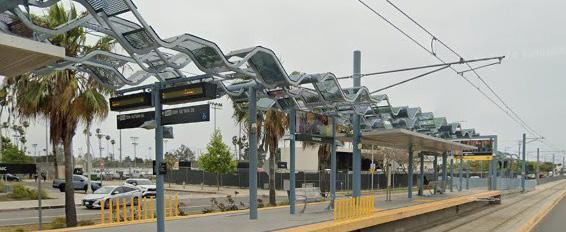
Metro unveiled four proposals to turn a 2.3-acre site at the 17th St./SMC Station on the Expo Line into affordable housing, aiming to ease Santa Monica’s housing crunch.
Developers Community Corp of Santa Monica, West Hollywood Community Housing Corporation, BRIDGE Housing, and a Decro Corporation-Alliant Communities partnership are vying to
build, with Metro set to pick a winner by June.
The site, near Metro Bike Share and Big Blue Bus stops, sits in the Pico Neighborhood, where 83% of trips are by car and nearly half of residents struggle with rent. Each plan offers 100% income-restricted housing for low-income households, plus public spaces, retail, and bike facilities to boost transit use.
Community Corp proposes 347 units, including 156 for very low-income residents and 101 for the homeless, with a coffee shop, bike repair shop, and 20,000 square feet of open space. It plans modular construction and 191 parking spots.
West Hollywood Community Housing pitches 281 units for families, seniors, and workers, with 59 for very low-income tenants, artist live/work spaces, and 47,000 square feet of open space, using prefab
methods to cut costs.
BRIDGE Housing offers 324 units for families and seniors, with 69 for very lowincome residents, community rooms, and a 12,000-square-foot plaza for pop-up shops. It plans to fast-track approvals and collaboration to speed building.
Decro and Alliant suggest 180 units,
with 54 for very low-income families, 18,000 square feet of open space, and 30 public parking spaces, with a cost-saving design and an option to donate land. Metro is taking public comments at jointdevelopment@metro.net to share with the chosen developer, set to be named this summer.
A Los Angeles County committee narrowly voted to reject a proposal to create an independent Malibu Unified School District, citing significant financial and educational risks to the existing Santa Monica-Malibu Unified School District. However, procedural errors have prompted the committee to schedule a revote, extending the contentious debate over the 2017 petition.
The Los Angeles County Committee on School District Organization voted 6-5 on April 2, 2025, to recommend denying the City of Malibu’s petition to form a standalone Malibu Unified School District (MUSD), according to an email sent to SMMUSD parents. The decision followed a comprehensive feasibility study by the Los Angeles County Office of Education (LACOE), which concluded that the proposal fails to meet eight of nine state criteria required for district unification.
The LACOE study, presented at the April 2 meeting, warned that separating Malibu from the SMMUSD would jeopardize the fiscal stability of the resulting Santa Monica Unified School District, potentially leading to significant cuts in staff and programs. It highlighted concerns including insufficient student enrollment in Malibu, projected
at 1,063 compared to the required 1,501, and the risk of increased racial and ethnic segregation.
Dr. Allison Deegan, LACOE’s Business Advisory Services Coordinator, emphasized during the presentation that the split would cause a “tremendous deficit” for Santa Monica, according to the SMMUSD email. The study projects the loss of Malibu’s high-value property tax base and parcel tax revenue, threatening SMMUSD’s status as a basic aid district, which relies primarily on local taxes rather than state funding.
Committee member Estefany Castaneda, representing the second supervisorial district, voted to deny the petition, arguing it lacks a fair plan for fiscal and educational equity. “Public education is about shared responsibility,” Castaneda said in the SMMUSD email. “A reorganization that allows one city to take its wealth and walk away, without a full, fair plan, violates the principles of fiscal justice and educational equity.”
The City of Malibu, which has pushed for the split since 2015, argues that its distinct community identity and geographic separation from Santa Monica justify an independent district. The LACOE study notes Malibu’s claims of inadequate representation on the SMMUSD board and concerns over the distance to district offices. However, the study found no evidence of educational deficiencies in SMMUSD, which boasts a 95% graduation rate compared to the state’s 84.7%.
The April 2 vote followed hours of public testimony, with Malibu residents
advocating for local control and Santa Monica stakeholders warning of adverse impacts. Jon Kean, an SMMUSD Board of Education member, praised the committee’s focus on the state criteria, stating in the email, “The committee majority understood the task at hand to focus on the nine criteria required for unification and how it failed to meet eight of the nine criteria.”
However, the decision was clouded by procedural issues. An initial motion to approve the petition was followed by a substitute motion to deny it, but LACOE legal counsel later determined that the committee skipped a step to formally accept the substitute motion, according to the SMMUSD email. On April 4, the committee announced it would retake the vote at its May 7, 2025, meeting in Downey, scheduled for 9:30 a.m.
Kean expressed confidence that the revote would uphold the denial, noting, “Nothing has changed in terms of altering the inequitable petition from the City.” The
SMMUSD email encourages community members to attend the meeting or submit comments to LACOE via email (Bernstein_ Victoria@lacoe.edu (mailto:_Victoria@ lacoe.edu)) or voicemail (562-922-6131), pending confirmation of whether public comment will be allowed.
The SMMUSD Board of Education plans to discuss alternative options and updated agreements at its April 23, 2025, meeting, signaling ongoing efforts to address Malibu’s interests while protecting Santa Monica students. The LACOE study acknowledges nine years of negotiations between Malibu and SMMUSD, which have failed to resolve key financial disputes, including the division of assets and liabilities.
If denied, Malibu could appeal to the State Board of Education, which holds final authority over district unifications. Approval would require further state review, environmental analysis, and a potential election, prolonging the process.

Our neurosurgery virtuoso is now offering consultations in West LA.
As a professor and the associate chair of neurosurgical innovation at the Keck School of Medicine of USC, Dr. Cohen is often consulted for his second opinion by patients and other neurosurgeons alike. His experience is unparalleled as he has performed over 7,000 complex brain surgeries. His pioneering expertise and compassion is now closer than ever, in West LA.
Aaron Cohen-Gadol MD, MSc, MBA




















After a shocking incident of violence in Santa Monica, a man has been arrested in connection with a stabbing that injured two people early Saturday morning along Ocean Front Walk, according to the Santa Monica Police Department.
The incident occurred around 2:26 a.m. on April 19 in the 1700 block of Ocean Front Walk. Officers arrived on the scene within two minutes and found two victims suffering from stab wounds.
A male victim sustained multiple stab wounds to the upper torso. Officers provided initial medical aid before Santa Monica Fire Department paramedics transported him to a local hospital, where he remains in critical but stable condition. A female victim was also taken to the hospital for treatment and has since been released.
Witnesses reported that two suspects fled
the scene on foot, heading southbound. After an initial investigation, police released descriptions of both suspects.
The second suspect, identified as 20-year-old Ivan Angel Plancarte of San Gabriel, was arrested on April 21. He has been charged with attempted murder and is being held on $1 million bail. He is scheduled to appear in court on April 23.
The first suspect, described as a Hispanic male with a thin build, wearing a gray sweater and a blue bandana or face covering, remains at large.
Authorities say the victims, both from Northridge, were not previously known to the suspects. The motive behind the attack remains under investigation.
The Santa Monica Police Department is urging anyone with information to contact Detective Peter Zamfirov at (310) 4588398 or via email at Peter.Zamfirov@ santamonica.gov. Detective Sergeant Alfonso Lozano can also be reached at (310) 458-8774 or Alfonso.Lozano@ santamonica.gov. The department’s watch commander is available 24/7 at (310) 4588427.



The U.S. Army Corps of Engineers, under Colonel Swenson, has cleared 500 properties in the Palisades, enabling rebuilding to begin
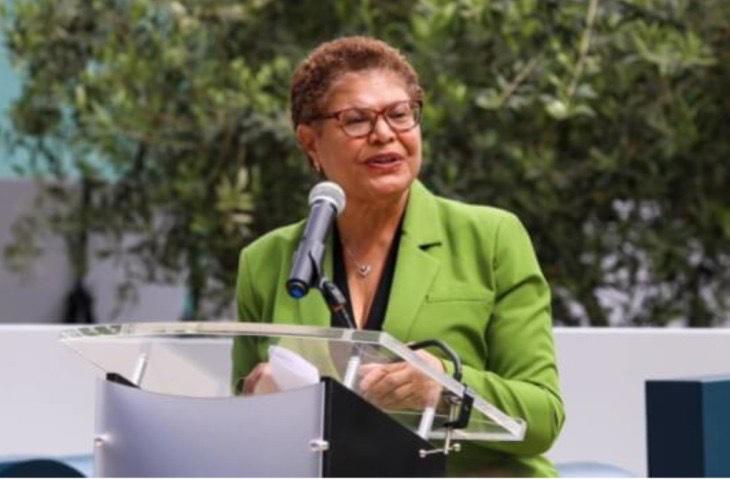
Mayor Karen Bass unveiled new measures to aid Pacific Palisades residents recovering from a catastrophic firestorm that claimed 12 lives and destroyed thousands of homes just over 100 days ago. In her State of the City address Monday, Bass outlined initiatives to streamline rebuilding and support the community, emphasizing a rapid and resilient recovery. Bass introduced a self-certification program to reduce redundancy in the permitting process, allowing residents to bypass repetitive bureaucratic steps. Additionally, she announced an innovative initiative to deploy artificial intelligence to accelerate the city’s permit approvals,
aiming to get Palisades residents back into their homes faster. If successful, both programs could expand citywide.
“Home is at the heart of healing,” Bass said, addressing the Palisades community directly. She noted that the recovery is on track to be California’s fastest, with permits issued twice as quickly as after the 2018 Camp and Woolsey fires and utilities restored significantly sooner.
The mayor also highlighted a publicprivate partnership to rebuild the Palisades Recreation Center, led by organizations like Steadfast LA and LA Strong Sports, with support from Lakers coach JJ Redick. The initiative aims to provide a renewed community space for youth still grappling with the trauma of the fires and the pandemic.
Bass praised local heroes, including Larry Vein of Pali Strong, Maryam Zar of the Palisades Recovery Coalition, Sue Kohl of the Pacific Palisades Community Council, and Kevin Chin, a cancer patient who saved lives during the blaze. She also commended Councilwoman Traci Park for her tireless advocacy, noting her daily presence at fire stations and recovery centers.



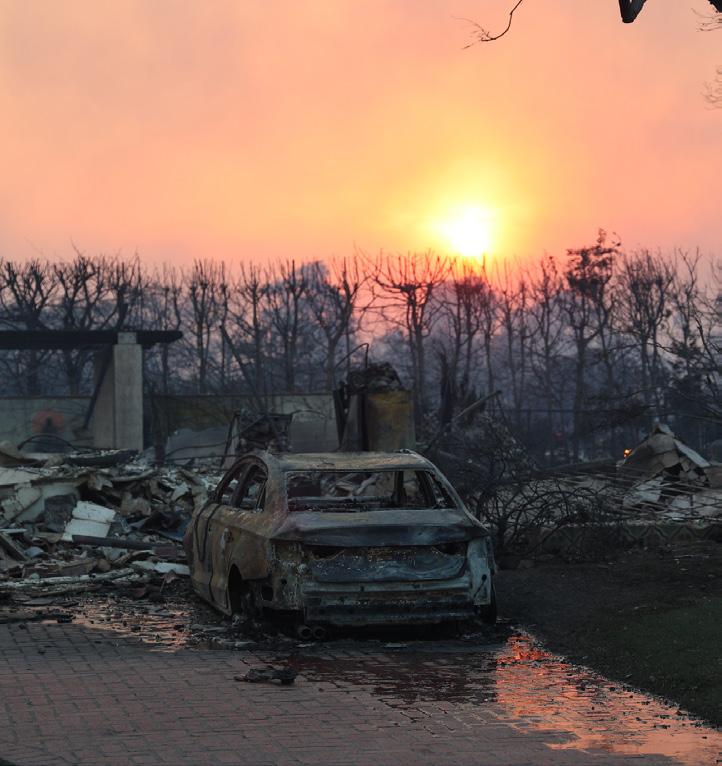
Attorneys representing homeowners impacted by California’s January wildfires have filed a pair of lawsuits in Los Angeles County, accusing major insurance companies of orchestrating a scheme to restrict traditional coverage in high-risk fire zones, forcing policyholders into the state’s limited and expensive FAIR Plan.
The legal complaints, brought by Larson LLP and Shernoff Bidart Echeverria LLP, allege that State Farm, Farmers, and more than 20 other insurers, which collectively hold about 75% of the state’s home insurance market, colluded to cancel or deny policies in areas including Malibu, Pacific Palisades, and Altadena just before the fires hit. The plaintiffs argue that this abrupt and coordinated withdrawal violated California’s antitrust and unfair competition laws, leaving thousands of residents financially exposed during a time of crisis.
Rather than providing the standard, comprehensive coverage homeowners had
relied on for years, the insurers allegedly funneled affected residents into the California FAIR (Fair Access to Insurance Requirements) Plan—a last-resort option designed for those who cannot secure private insurance. FAIR Plan policies cap payouts at $3 million and cost, on average, more than twice as much as typical policies, while offering far more limited protections.
“Insurance should be there when disaster strikes,” said attorney Michael J. Bidart of Shernoff Bidart Echeverria LLP. “Instead, these companies pulled the rug out from under our clients, saddling them with overpriced, inadequate coverage when they needed it most.”
One of the complaints, Todd Ferrier et al. v. State Farm Group et al., was filed on behalf of homeowners who lost properties in the January wildfires. The plaintiffs claim they had sufficient insurance coverage until their policies were abruptly canceled or non-renewed, forcing them to purchase FAIR Plan policies just months before the disaster. As a result, their insurance payouts fell far short of covering their losses.
The second case, Anthony Canzoneri v. State Farm Group et al., seeks classaction status on behalf of all policyholders
who were pushed into the FAIR Plan after January 2023, when the alleged conspiracy is alleged to have begun. It asserts that homeowners throughout California have paid steep premiums for substandard policies as a result of insurers’ coordinated effort to limit exposure in wildfire zones.
The suits also highlight what they describe as structural flaws in the FAIR Plan system. Insurers are the sole voting members of the plan’s governing body and are required to fund the program in proportion to their market share. The plan was underfunded at the time of the fires, according to the lawsuits, and changes approved by the state in 2024 now allow companies to recoup those contributions by raising premiums for customers in lowrisk areas, creating additional incentives for insurers to reduce their risk by pushing more customers onto the FAIR Plan.
Stephen G. Larson, co-counsel in the litigation, said the case is not only about seeking damages for victims of the wildfires but also about restoring competition and fairness to California’s insurance market. “This kind of coordinated market manipulation is exactly what antitrust laws are meant to prevent,” Larson said. “We intend to hold these companies accountable and ensure Californians have access to the
coverage they need and deserve.”
While the lawsuits focus on those directly impacted by the wildfires, others have shared similar experiences. Alicia Kalvin, a homeowner in a fire-prone area, said she was dropped by her insurer last July and denied coverage by multiple other providers. “I was told the FAIR Plan was my only option,” she said, as quoted by NBC News Palm Springs. Though her house survived the fires, toxic ash rendered it uninhabitable, and she remains uncertain whether her insurer will cover rental assistance or restoration costs.

If you’re looking for something fun and different to do, the Brewery Artwalk is holding its Spring Artwalk on May 3rd and 4th, with two days of open studios on Main Street in Lincoln Heights, just east of the LA River.
A venerable institution, the Brewery Artwalk is in its 41st year of welcoming the public to this twice-yearly event. It is a truly unique opportunity to explore the campus – a fascinating jumble of former industrial buildings which were once home to East Side Tap Brewery, and later Pabst Blue Ribbon – now home to hundreds of artists and creatives, many of whom will be opening their studios during the weekend.
You’ll find nearly every discipline represented here, and the pleasure of meeting the artist in their studio is a wonderful way to fall in love with original art. Start your collection with a connection to the person who made it, and you will have a story to go with the artwork that adds layers of meaning to the experience and your memories of your visit.
This event is for everyone! From families to first time buyers, collectors

to curators, experienced art denizens to young kids experiencing the art world for the first time.
Get a jump on starting your art collection, or add to it with new work, by visiting the Brewery Artwalk. It’s a free event, and is sure to be a great day of exploring and seeing!
There will be a beer garden in the
middle of the complex with a menu of onthe-go food, plus an array of food trucks on Moulton and Avenue 21. Free parking is available at the UPS facility on Moulton Avenue. Open Saturday and Sunday, May 3rd & 4th, from 11am to 6pm.
1920 N. Main Street, Los Angeles 90031 www.breweryartwalk.com info@ breweryartwalk.com

The City of Malibu is evaluating more resilient wastewater infrastructure alternatives for properties in fire-prone areas, particularly along the city’s beachfront, officials announced this week.
As part of that effort, Malibu Public Works is conducting a study to examine the feasibility of connecting local properties to the Los Angeles County and Hyperion wastewater systems. The goal is to improve long-term sewer service
reliability in areas impacted by wildfires, which have historically strained existing infrastructure.
City officials will present preliminary findings of the study at a public meeting on Thursday, April 24, at 2:00 p.m. at
Malibu City Hall. Community members are encouraged to attend and participate in the discussion.
Additional information and the full meeting agenda are available online at https://bit.ly/4i5Ehm3

Immerse yourself in a sanctuary where nature’s tranquility meets the vibrancy of city life. Urban Jungle is more than a plant store it’s a communitycentered oasis bringing a lush slice of paradise to your urban lifestyle. Here, we passionately believe in the power of plants to transform spaces and elevate well-being.











From soil to sanctuary, Urban Jungle, an indoor and tropical plants nursery, is celebrating one year of business this spring.
Sprouting from a deep-seated love for horticulture shared by founders Tracey and Mark Marriott, this community-centered oasis brings a lush slice of paradise to urban lifestyle.
Hosting a unique variety of indoor and outdoor plants, in addition to a collection of globally sourced pottery, Urban Jungle is a place where plant lovers gather to share stories, tips and their love for all things green.
Most of the outdoor plants found at Urban Jungle started from the soil of the couple’s 14-acre farm in Los Angeles. An unrivaled selection from exotic rarities to familiar favorites, Urban Jungle’s collection is diverse and hand-picked for its health and vibrancy.
“My husband grows a large selection of the plants we carry. We opened this brick-and-mortar to house the plants and
share them with the community. We gutted the previous nursery design and made it our own with a lot of hard work. We’re confident Urban Jungle has turned into a wonderful place for the community,” Tracey said.
Beautify your balcony, terrace or garden with Urban Jungle’s curated selection of outdoor plants tailored for urban environments and green retreats in the heart of the city.
Succulents, perfect for the urban dweller, offer beauty with minimal maintenance while filtering air quality, ideal for adding a touch of green to both indoor and outdoor spaces.
Low watering plants, designed for the eco conscious urbanite, add a beautiful touch of greenery while saving water.
Pairing perfectly with plants, Urban Jungle offers unique and stylish pottery ranging from sleek modern designs to timeless classics, globally and locally sourced.
Urban Jungle welcomes customers traveling near and far for its selection, but also for its monthly events, such as Earthly Elixirs on Thursday, April 24. From 6 to 7:30 p.m., attendees are invited to enjoy
garden-inspired cocktails or mocktails and plant their own windowsill herb garden.
“Lavender infused mojito, or mint mojitos, we are excited to open the space for more events like this in the future, bringing people together to share their love for green,” Tracey said. “These events are all inclusive, and people will walk away with a plant or succulent or something they will craft with their hands.”
Urban Jungle plans to host monthly events throughout the summer for everyone to experience the sanctuary — a thriving community of nature enthusiasts, urban gardeners, and advocates for a greener, more sustainable world.
Going into its second year of business, Tracey said Urban Jungle would like to explore helping businesses flourish with plants and creating good energy in workspaces.
“We’re looking forward to more growth, more customers and continuing what we have for years to come,” Tracey said.
To learn more about Urban Jungle and follow its journey, follow @ urbanjungleplantsandpottery on Instagram.
Visit the nursery at 3113 Lincoln Boulevard, Santa Monica, open Monday through Friday 11 to 6 p.m. and Saturday and Sunday from 10 to 6 p.m.


Soprano Golda Zahra comes home to put on a free concert in her old neighborhood
“Pa-pa-pa-pa-pa-pa…”
The young couple was driving home after attending a performance of “The Magic Flute.” Their 4-year-old daughter, Golda, was in the back seat singing the sounds over and over.
“Pa-pa-pa-pa-pa-pa…”
Little Golda was imitating the famous aria she had just heard sung by the character Papageno. Mozart’s colorful fairy-tale opera had awakened something inside her. The car engine had barely cooled when her parents signed her up for piano lessons.
Today, the 25-year-old Golda Zahra is a rising opera star. She chose her middle name for her stage name to honor her Persian heritage. Zahra can mean flower, beauty or princess in Farsi.
Zahra views herself as not only a singer but also a woman on a mission. In many of her performances, such as her free outdoor concert on May 24 in the Beverly Canon Gardens in Beverly Hills,
she wants to win over listeners who may think opera is too highbrow and “not for them.” Her strategy is to let the beauty of the music speak for itself.
Zahra’s mantra is “Put your heart in your hand.” “Emotion is something that a lot of young singers are lacking in, so I really try to move my audience,” she said in a Zoom interview.
Backed up by a six-musician jazz ensemble, she will perform mostly popular Italian-Neapolitan songs, jazz classics and hits from Broadway and film. But in the middle of the show, she’s presenting one of her favorite arias, “Quando me’n vo,” from Puccini’s “La Boheme.”
Sung by the character Musetta in the opera, the lyrics speak of her reveling in the admiring stares of others, particularly men, as she walks down the street. “The scent of desire is all around me, it makes me happy!” she sings. Written in waltz time, the aria ends in a high B flat with a diminuendo — a high-wire act requiring superb vocal command and range. It's not a problem for Zahra, whose upper range reaches F and beyond (octaves above high C).


Construction is officially underway on the 20th Street Apartments, a new affordable housing development in Santa Monica that will provide 78 units of permanent housing for low-income families and individuals experiencing homelessness.
Venice Community Housing, a nonprofit housing developer and service provider, broke ground Wednesday on the project, which it is co-developing with Community Corporation of Santa Monica. The apartments will be located near the 17th Street/SMC Expo Line stop, providing residents with convenient access to public transit and local amenities.
“Venice Community Housing is proud to expand its service area to Santa Monica and to have begun construction on these much-needed homes,” said Erika Lee, executive director of Venice Community
Housing (VCH). “We are excited to join the community and to be welcoming people home soon.”
The project marks the first collaboration for Community Corporation of Santa Monica with another nonprofit housing organization.
“Working together with Venice Community Housing, we can do even more to address our city’s housing crisis and the urgent need for inclusive, environmentally sustainable homes,” said Tara Barauskas, executive director of Community Corp.
The groundbreaking ceremony drew local leaders and public officials, including Santa Monica Mayor Pro Tem Caroline Torosis, who emphasized the importance of collaborative housing efforts.
“Communities like the 20th Street Apartments are crucial to our city’s ability to maintain economic diversity, provide workforce housing, prevent and address homelessness, and meet our Housing Element commitments,” Torosis said.
Bank of America, one of the project's key funding partners, contributed both debt and equity financing.
“This project represents a model of

effective public-private partnerships,” said Garrett Gin, Greater Los Angeles market executive for Bank of America.
“We’re proud to support the efforts of both Venice Community Housing and Community Corporation of Santa Monica to bring more housing to the Westside.”
Designed to meet LEED Gold standards, the development will feature solar panels, Energy Star appliances, a rooftop community garden, and more than 150 bicycle parking spaces. Other on-site amenities will include community rooms, laundry facilities, outdoor play areas, and
landscaped green spaces.
The project is expected to be completed by mid-2027, with leasing to begin shortly thereafter. Interested applicants can learn more through the City of Santa Monica’s affordable housing website at www. santamonica.gov/housing-apply.
Funding for the 20th Street Apartments includes support from the California Department of Housing and Community Development (HCD), federal and state tax credits, tax-exempt bonds, and investments from the National Equity Fund and Bank of America.

Beverly Canon Gardens 241 North Canon Drive, Beverly Hills
Facebook: Golda Zahra Opera Instagram: @golda.zahra


In-home safety issues that go unnoticed — cracked sidewalks, broken railings or uneven flooring for example — are often the root cause of trips, slips or falls that can cause serious damage and injuries.
A witness to many of these preventable safety hazards, Madeline Fry, MHA, NHA, SHSS, founder of Safely Home Again, says seniors are a primary concern for in-home safety issues, but younger individuals recovering from athletic injuries, car accidents or elective procedures are also at risk.
Despite their age differences, these two groups share a common aspiration: the desire to live independently, safely, and
comfortably in their home, for as long as possible.
What if you could prevent a fall before it happens? Having a certified safety expert assess you or your loved ones’ home for hazards is the best prevention for serious injuries like broken hips, dislocated shoulders or concussions. Prevention can make a big difference, especially, if your loved one desires to age in place.
Here are some of the most common questions in Madeline’s line of work:
Q: My mom wants to stay in her home as she ages, but I worry about her safety since she lives alone. As part of the sandwich generation caring for loved ones, what are my options?
A: You’re not alone — many caregivers in the sandwich generation face the same concerns. There are two great options offered through Safely Home Again. One way to support your mom is to have a care manager visit her weekly who can assist with needs such as finding caregivers, delivery of medical equipment, keeping track of her health, safety, and overall well-being; giving you peace of mind and better rest at night.
The second way is to avoid potential
accidents from happening by scheduling a Fall and Home Safety Assessment. Taking care of small hazards like missing bathroom grab bars, or unsecured floor throw rugs can prevent major falls and injuries. A few simple changes can make all the difference in keeping you and your loved one safe and independent at home.
Q: I’ve heard that home modifications can be expensive, and I’m worried about the cost of making changes to my parents’ home. Can you give me an idea of what to expect?
A: Absolutely! That’s a common concern, but you might be surprised at how affordable most modifications can be. We’re not talking about major renovations — just practical updates to improve safety. The typical modifications recommended by Safely Home Again are much more budget friendly. In fact, most suggested improvements cost less than $200 per modification, with many coming in under $100.
Q: What indicators should I be aware of in my parents’ daily routine that suggest a home safety assessment would be beneficial?
A: Pay attention to signs, like your
Are you ready to contribute to groundbreaking research and help shape the future of memory treatments? Do you sometimes find yourself grappling with memory challenges? If you are right-handed and between 55 and 100 years old, UCLA invites you to be part of our cutting-edge Memory Research Study.
This clinical trial aims to utilize Transcranial Magnetic Stimulation (TMS) as a treatment to enhance memory and improve overall brain function. Whether you're experiencing memory problems or have been diagnosed with Mild Cognitive Impairment, your participation can make a significant impact towards finding new treatments for memory loss. What to expect?
Participants will undergo neuropsychological (memory and cognitive) testing, two functional Magnetic Resonance Imaging (fMRI) brain scans, and 15 stimulation sessions. Participants will receive either active TMS treatment or receive a sham (placebo) TMS. Those receiving sham TMS may be eligible for active treatment upon study completion. Participation in the study requires a time commitment of 20 days over the course of approximately 3 months.
Your contribution to advancing memory treatments:
Memory loss is a pervasive challenge for people suffering from neurological disorders like Alzheimer's disease (AD)

or amnestic Mild Cognitive Impairment (aMCI). Alzheimer’s disease affects about 11% of people over the age of 65, with an estimated 6.7 million Americans affected overall. Unless new treatments or a cure are discovered, the number of people with AD is expected to grow to 13.8 million by 2060. Amnestic MCI is a milder form of memory loss that is twice as prevalent as AD. People with aMCI often experience worsening memory loss and develop AD at the Continue on page 13
loved one holding on to furniture for support or struggling with balance when walking outside. Also, check if they are consistently wearing their hearing aids, as hearing loss can contribute to imbalance. Are they taking their medications consistently? Other red flags include using towel bars for support instead of proper grab bars or isolation, such as avoiding social outings. These behaviors may indicate an increased risk of falls, making hiring a care manager and having a fall and home safety assessment conducted from Safely Home Again a valuable step in ensuring their safety.
I have the education, professional experience, licenses, certifications, and commitment to keeping you safe at home, so you can age in place and remain independent for the long run.
Go to SafelyHomeAgain.com or call 310-405-5758 for more information.



Organizers say the updated venue plan reflects a commitment to using existing infrastructure and showcasing the region’s cultural landmarks
Venice Beach will play a central role in the 2028 Summer Olympics, serving as the new home for the triathlon and the official starting point for both the marathon and cycling road events, organizers announced Tuesday.
The update comes as LA28, the organizing committee for the Los Angeles Games, released its latest Olympic venue plan following approval by the International Olympic Committee's executive board.
The scenic coastal neighborhood, known for its eclectic boardwalk and Pacific views, will host triathlon events that were originally slated for Long Beach. The marathon and road cycling courses will also begin in Venice Beach, though final route details and finish locations have not yet been announced.
“As the Host City for the 2028 Games, Los Angeles will become only the third city in history to host the Summer Olympics three times,” said Mayor Karen Bass in a statement. “This plan brings the Games to all corners of our city like never before—from the Sepulveda Basin to the iconic shores of Venice Beach.”
Organizers say the updated venue
Continue from page 12
rate of 10 to 15% per year. Currently, there are only a limited number of FDA approved treatments for AD, which only temporarily slow the disease’s progression rather than cure or reverse it. For people with aMCI, new and effective treatments are desperately needed to slow or prevent further memory loss and stave off the debilitating effects of AD. Our research combines advanced technologies, including structural and functional Magnetic Resonance Imaging (MRI), electroencephalogram (EEG) EEG, and TMS stimulation to enhance memory function in aMCI and non-aMCI individuals with subjective memory complaints. The techniques used in the study involve no invasive procedures or radiation. Functional MRI produces detailed images of brain structure and activity. Transcranial Magnetic

plan reflects a commitment to using existing infrastructure and showcasing the region’s cultural landmarks. The use of Venice Beach highlights LA28’s goal of integrating the Games into the city’s most recognizable environments.
The 2028 Summer Olympics will feature events across Los Angeles and surrounding areas, including baseball at Dodger Stadium, squash at Universal Studios, and equestrian events at Santa Anita Park in Arcadia. The full venue list is available on the LA28 website.
Stimulation uses gentle magnetic energy to affect brain activity. EEG measures brain waves. The knowledge gained from the study will contribute to the development of personalized, non-invasive therapies for memory restoration.
Compensation:
Apart from the satisfaction of contributing to groundbreaking research, participants will receive financial compensation of $600 for completing the study, covering participation expenses and parking costs. Additionally, you will receive neuropsychological testing results and a picture of your brain!
Join Us:
For more information, contact the Dr. Nanthia Suthana Lab at UCLA via email at tmsmemorystudy@mednet.ucla.edu or call (310) 210-6978.

In 1987, he opened Hal’s Bar & Grill on what was then still called West Washington Boulevard—a street Frederick helped rename
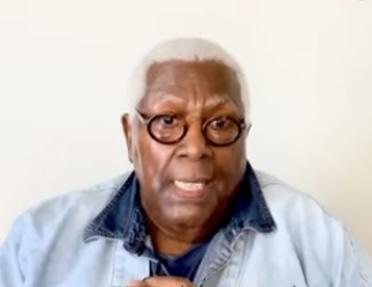
Hal Frederick, the beloved restaurateur behind Venice’s iconic Hal’s Bar & Grill and a central figure in the neighborhood’s cultural and culinary history, has died at the age of 91.
“With sadness, VHM marks the passing of local restaurateur Hal Frederick,”
the Venice Heritage Museum wrote in a Facebook post, honoring Frederick’s decades-long impact on the Westside dining and art scenes.
Known for his charismatic presence and community-minded vision, Frederick was instrumental in shaping the identity of modern-day Abbot Kinney Boulevard.
Born in New York City in 1934, Frederick initially pursued a career in acting, appearing in television shows like Wonder Woman, Galactica 1980, and CHiPs, according to a 2014 interview he gave to Post & Beam LA.
But it was in Venice where he made his most lasting mark.
Frederick moved to Venice in 1977 and quickly launched Roberts, a fine dining establishment that drew a devoted clientele from the city’s artistic and celebrity circles. In 1987, he opened Hal’s Bar & Grill on what was then still called West Washington

Originally established in 1949, Beethoven Market was a grocery store serving the community for 75 years
Beethoven Market, a longtime neighborhood staple in Mar Vista, reopened as a restaurant after an extensive renovation. Restaurateur Jeremy Adler and chef Michael Leonard debuted the reimagined space on March 29 at the corner of Palms and Beethoven Boulevards.
Originally established in 1949, Beethoven Market was a grocery store serving the community for 75 years. Adler, who purchased the market in 2023, aimed to transform the location into a neighborhood gathering place while preserving its historic charm. According to LA Eater, Adler restored the original wood ceiling and steel beams, and a vintage meat scale from the former store now hangs above the expediting station.
The new Beethoven Market features a menu blending California and Italian influences. Offerings include handmade pastas, pizzas, and entrees such as pork collar with roasted fennel and hanger steak with onion agrodolce. The restaurant will also showcase a custom-built rotisserie designed to recirculate chicken drippings back onto the meat. Former Cassia bartender Nicole Mitchell has developed
Boulevard—a street Frederick helped rename to Abbot Kinney, a nod to the neighborhood’s historic founder.
“Twenty-five years ago when I got here, I saw the potential on this street,” he told Post & Beam. “It took us eight months, but we changed the name to Abbot Kinney and we planted the trees.”
Hal’s became a cultural cornerstone for more than three decades. The restaurant was a magnet for artists, musicians, actors, and local families—offering not only food and drink but a sense of community.
Frederick once described the nightly dinner rush as a kind of performance: “There’s a certain point in the restaurant when we’re just about to open the doors, the lights are down, and it’s curtain up,” he said.
In 2015, Hal’s shuttered its original location at 1349 Abbot Kinney, reopening a new venue in Playa Vista. A second Venice location followed in 2017, taking over
the former Primitivo space. Despite these efforts, both sites closed unexpectedly in 2018.
Even after the closures, Frederick remained a cherished figure.
The Venice Heritage Museum on Monday revisited footage from Frederick’s oral history interview, where he reflected on community building and Venice’s transformation over the decades.
a cocktail menu with creative spins on classic drinks, such as a tequila-based margarita with dry Curacao and a gin cocktail featuring Seville orange liqueur.
Fox 11 reported last year that some neighbors had expected a more traditional market-style café rather than a full-service restaurant. Others raised concerns about the restaurant’s liquor license and potential late-night noise. A petition circulated
among residents opposing the license, the local outlet noted.
Beethoven Market will initially operate from 5 p.m. to 9 p.m. Sunday through Wednesday, extending to 10 p.m. on Thursday through Saturday. Happy hour will run from 4 p.m. to 5 p.m. The team plans to introduce weekday breakfast, lunch, and weekend brunch in the coming months.
A collaborative effort between the Santa Monica Fire Department and Wise & Healthy Aging to combat the growing challenge of non-emergency 9-1-1 calls from aging residents has proven successful since its pilot launch in 2023.
Now in full bloom, the goal of the program is to reduce strain on emergency services and improve the quality of life for older adults with chronic health issues, social isolation and other complex needs.
By co-locating a part-time WISE care manager at the fire department, emergency responders can identify and refer adults that need short or long-term health management services; to proactively manage the frequency these individuals need to call emergency responders.
“During the pilot, we found our paramedics who were engaging with these folks needed services from our community partners,” said Patrick Nulty, SMFD’s Emergency Medical Services Battalion Chief, “WISE became a very strong partner of ours to provide dedicated, nuanced services that connect folks with services
they need.”
To measure success, SMFD identified a group of 40 people in need of support services that frequently called 9-1-1 over a six-month period. They found that six months after receiving direct case management from WISE, there was an 86% reduction in calls from those individuals.
“This has been a missing piece of the puzzle for us at the fire department providing emergency medical services in our community. This tool is widely accepted by our paramedics who especially appreciate that they can go into a person’s home and have a solution for them,” Nulty said.
The reduction in non-emergency 9-1-1 calls is a big win. Dr. Anat Louis, PsyD, Vice President of Care Management at WISE says that collaborating with the Santa Monica Fire Department has helped identify and find the right services for vulnerable individuals before their living situation becomes unsustainable.
Other core objectives of this program include preventing homelessness by addressing the root causes that lead to housing instability such as chronic health issues and safety at home to avoid hospitalization, as well as hoarding that can lead to eviction, which ultimately reduces health and medical costs.
“With this partnership, we connect people to proper support within WISE and

the community and help them maintain aging in place independently for as long as possible without them getting hurt,” Louis said.
As the partnership continues, positive results have driven vulnerable people to receive support, sometimes in ways they didn’t know they needed it.
“Sometimes people aren’t aware they are depressed or anxious or have isolated for as long as they have. Whether that be because their spouse passed away, or because they are having mobility issues. Through WISE, they’re able to receive support and socially engage through activities, boosting their overall mental and physical state,” Louis said.
In the future, the fire department and
WISE hopes others adapt this model to help support aging and improve the quality of life for vulnerable older adults.
“I hope this becomes a standard of care in more communities because you can really bridge the gap for a lot of people in need,” Nulty said.
Wise & Healthy Aging serves more than 20,000 older adults per year and is committed to improving the quality of life for seniors through services such as its Adult Day Center for older adults with memory loss and The Club, their senior center that provides a variety of social activities and classes to help older adults stay engaged and connected – and more.
To learn more about WISE, visit wiseandhealthyaging.org.
In a farewell letter to patrons, owners wrote, “We hope these final weeks are a celebration of all we have been through together.”
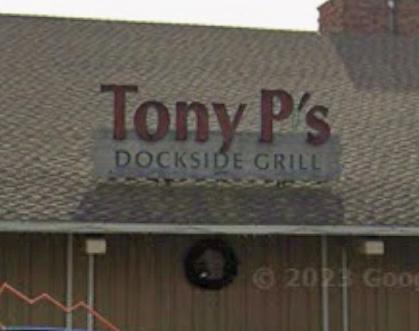
Tony P’s Dockside Grill, a longtime favorite on the Marina del Rey waterfront, will permanently close at the end of June, the restaurant announced on its website. The announcement marks the end of a 28-year run for the popular restaurant, which opened on Super Bowl Sunday in 1997 and quickly became known for its hearty fare, lively sports bar, and harbor views.
Tony P’s will remain open through the end of June, with the owners inviting customers to stop by for one last visit.
“Raise a toast to the end of an era,” the message read.
In a farewell letter to patrons, Palermo called the decision “bittersweet” and thanked the community for decades of support, writing, “We hope these final weeks are a celebration of all we have been through together.”
According to the restaurant’s website, Palermo and Ringwood met in 1975 while working as cooks in Detroit. They moved to Los Angeles in the early 1980s and opened their first restaurant, Teasers, in 1985. Tony P’s followed more than a decade later, after the pair purchased and remodeled a former Charlie Brown’s location in Marina del Rey.
Over the years, Tony P’s became deeply rooted in the community—sponsoring local events, supporting youth programs, and earning numerous hospitality and service awards. Palermo himself has held leadership roles in multiple civic and industry organizations and was recognized repeatedly for his community involvement.