A man died at a hospital after firefighters pulled him from a burning complex.
An elderly man died Friday morning after being pulled from a burning secondstory apartment by rescue crews.
The Santa Monica Fire Department rushed to a two-story, garden-style apartment complex at 2628 5th St. around 8:37 a.m., arriving to find heavy smoke and flames billowing from a rear unit on the second floor.
Firefighters faced difficult access points as they pushed into the smoke-clogged apartment to battle the blaze and look for
occupants. Crews managed to knock down the flames quickly once inside, stopping the fire from tearing into neighboring units.
During a secondary sweep of the scorched apartment, search teams discovered the unresponsive man. Paramedics rushed him to a nearby hospital, where he later succumbed to his injuries.
Authorities are withholding the victim’s name until his family can be notified. Investigators are still working to determine what sparked the fatal blaze.
Following the tragedy, fire officials urged community members to check their home safety systems, noting that functioning smoke detectors drastically improve survival rates. The department recommends testing alarms once a month, replacing batteries regularly, and keeping all windows and doors clear of obstructions to ensure a safe escape route during an emergency.
One dead after second-floor apartment fire in Santa Monica SMC Student Awarded Prestigious National Transfer Scholarship
Recipients also receive academic advising, career guidance, access to internships and study abroad opportunities, and membership in a network of more than 3,900
Cooke scholars and alumni
Santa Monica College student Martin Orea has been named a recipient of the 2026 Cooke Undergraduate Transfer Scholarship, a highly competitive national award that provides substantial financial support to community college students transferring to four-year universities. Orea, a first-generation college student from Fullerton, was selected by the Jack Kent Cooke Foundation as one of 60 scholarship recipients nationwide. The
scholars were chosen from a pool of more than 1,300 applicants, including 485 semifinalists.
The scholarship provides up to $55,000 annually toward completing a bachelor's degree after institutional financial aid is applied. Recipients also receive academic advising, career guidance, access to internships and study abroad opportunities, and membership in a network of more than 3,900 Cooke scholars and alumni.
At Santa Monica College, Orea studies public policy, communications and political science and participates in the college's Law Pathway Program, which supports students from traditionally underrepresented backgrounds pursuing careers in law.
Orea has held several leadership positions, serving as director of basic needs for the Associated Students of Santa Monica College and as communications coordinator for the Faculty Association of California Community Colleges. He hopes to pursue a career in public interest law focused on expanding access to justice for underserved communities.
Earlier this year, Orea was one of only two California community college students selected to receive the Outstanding Student Stipend Award from California LAW Pathways during the 2026 Pathways to Law Summit hosted by UC Law San Francisco. A daily commuter who travels from
Fullerton to Santa Monica by train, Orea plans to transfer to Georgetown University to pursue a bachelor's degree in public policy through the university's joint program with the McCourt School of Public Policy. He hopes to later earn a master's degree in public policy and a law degree before entering public service.
Orea credited numerous Santa Monica College faculty members, counselors and administrators for helping him reach the milestone.
"Whenever I took a leap of faith, these mentors helped me take that leap with confidence," Orea said. "If not for their guidance, belief, and care, I would not be where I am today."
Among those he recognized were Law Pathway Program lead Dr. Vicenta Arrizon, Public Policy Institute co-director Shari Davis, Communication and Media Studies Professor Nathan Brown, Board of Trustees member Dr. Nancy Greenstein, counselors Dr. Paul Jimenez and Tiffany Inabu, and Interim Associate Dean of Student Life Thomas Bui.
Orea said those mentors helped him secure opportunities including internships with Isaac Bryan and Lou Correa, as well as selection to the Harvard Kennedy School Public Policy Leadership Program.
According to the Jack Kent Cooke Foundation, nearly 80% of community college students aspire to earn a bachelor's
degree, but only 16% achieve that goal within six years. The scholarship program aims to improve those outcomes by reducing financial barriers and providing support throughout the transfer process.
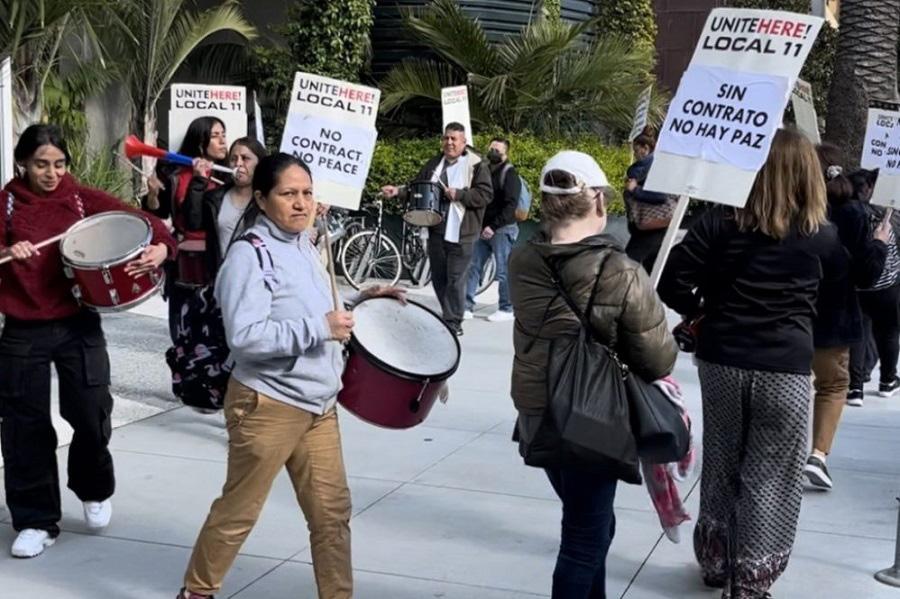
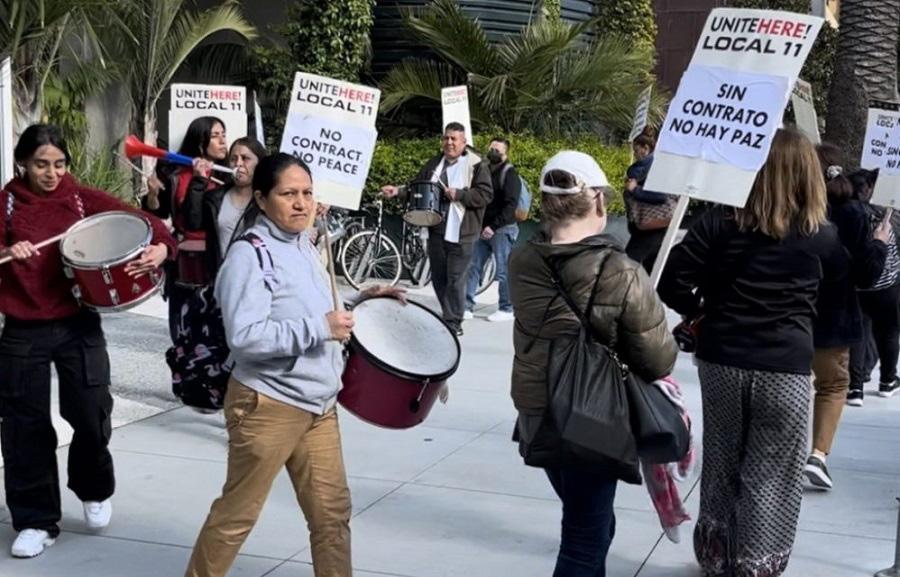
Santa Monica Withdraws Proposed Hotel Worker Benefit Ordinance, Will Still Raise Wage to $25
In a statement, city officials said Santa Monica will continue to follow a longstanding provision in its municipal code requiring local hotel worker wages to match those in Los Angeles. As a result, the minimum wage for hotel workers in Santa Monica will increase to $25 per hour on July 1
Santa Monica officials have withdrawn a proposed ordinance that would have aligned the city's hotel worker wage and health benefit requirements with a recently adopted Los Angeles labor measure, opting instead to increase the local hotel worker minimum wage while leaving existing benefit rules unchanged.
The announcement came Monday, one day before the City Council was scheduled to consider emergency amendments to the city's Hotel Worker Living Wage Ordinance.
In a statement, city officials said Santa Monica will continue to follow a longstanding provision in its municipal code requiring local hotel worker wages to match those in Los Angeles. As a result, the minimum wage for hotel workers in Santa Monica will increase to $25 per hour on July 1 and continue rising alongside Los Angeles until reaching $30 per hour in 2030.
"The City is withdrawing a proposed set of amendments to its Hotel Worker Living Wage ordinance from formal Council consideration," the city said in a statement. "In its place, the City will instead take a narrower step by interpreting our existing
law as requiring that Santa Monica align its hotel worker wage with the City of Los Angeles."
The decision marks a significant change from a proposal that had been scheduled for consideration at Tuesday night's council meeting.
Under the withdrawn proposal, Santa Monica would have considered adopting portions of a Los Angeles ordinance approved May 26 that established a new hotel worker compensation structure. In addition to raising wages, the Los Angeles measure requires covered hotel employers to either provide a specified level of health care benefits or pay workers an additional hourly amount beginning at $4.25 per hour.
City staff had argued that Santa Monica's existing ordinance, which links local hotel worker wages to Los Angeles rates, did not clearly address how the city's wage requirements should interact with Los Angeles' newly adopted health-benefit-orpay system.
The proposal also would have raised questions about whether Santa Monica should adopt Los Angeles' exemption for hotels with fewer than 60 rooms. Santa Monica currently applies its hotel worker
wage ordinance to hotels regardless of size.
According to the city's statement, a review conducted over the past several days concluded that Santa Monica could legally align its wage schedule with Los Angeles without adopting the separate health benefit provisions.
"Staff has determined that Santa Monica can align its wage schedule with Los Angeles, without adopting the new health benefit framework layered alongside it," the statement said.
City officials said the broader amendments are no longer necessary because the wage increase can be implemented under the city's existing ordinance.
The withdrawal comes after opposition emerged from a group calling itself Save Santa Monica Hotels, which had urged the council to postpone consideration of the ordinance. The group argued that the proposal was being rushed through without sufficient public outreach or economic analysis and warned that the added health care requirements could impose significant costs on hotel operators.
Federal arson trial begins for man accused of starting the deadly Palisades Fire
Jury selection is underway for Jonathan Rinderknecht, who faces up to 45 years in prison for a New Year's Day blaze that later reignited.
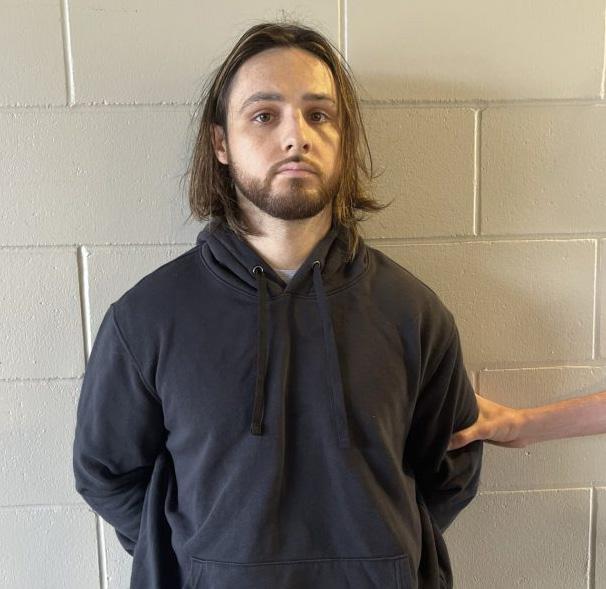
Jury selection began Monday in the federal trial of a Florida man accused of igniting a New Year’s Day brush fire that later flared into the catastrophic Palisades Fire, one of the deadliest and most destructive wildfires in California history. Jonathan Rinderknecht, 30, faces federal charges of arson and malicious destruction by fire in connection with the January 2025 blaze, which claimed 12 lives and destroyed thousands of homes across Pacific Palisades and Malibu. If convicted, the former rideshare driver faces a mandatory minimum of five years and a maximum of 45 years in federal prison. He has pleaded not guilty.
Federal prosecutors contend that Rinderknecht, a former Pacific Palisades resident who was despondent over a failed relationship and ruined New Year's Eve plans, hiked up the Skull Rock trail in Topanga State Park just after midnight on Jan. 1, 2025. According to a trial memorandum, Rinderknecht recorded a video of a small clearing on Hidden Buddha Hill before using a barbecue lighter to set fire to dried brush near a home he once shared with his ex-girlfriend.
Investigators said geolocation data places Rinderknecht's phone at the origin site as the fire expanded. Authorities later seized a Bic lighter from his vehicle, which Rinderknecht admitted to carrying on the trail.
The initial blaze, dubbed the Lachman Fire, was initially suppressed by the Los Angeles Fire Department. However, officials stated the fire continued to smolder undetected deep within subterranean root systems until Jan. 7, 2025, when a historic Santa Ana windstorm re-ignited the embers. The resulting flare-up exploded into a fast-moving wildfire that swept through coastal hillside neighborhoods.
The prosecution alleges that Rinderknecht remained at the scene to watch first responders combat the initial
blaze before logging into his Uber app to accept local fares. Passengers who rode in his vehicle that night described him to investigators as an angry individual who ranted about being "pissed off at the world."
Lead defense attorney Steven Haney has countered that the government lacks direct evidence or eyewitnesses linking Rinderknecht to the ignition point. Haney intends to argue that first responders reported hearing fireworks in the area when the fire began, and maintains that his client is being used as a scapegoat for the fire department's failure to fully extinguish the Jan. 1 blaze.
U.S. District Judge Anne Hwang issued several key pretrial rulings shaping the evidence permitted in court. Hwang barred the defense from arguing that the
fire department was negligent, ruling that a firefighter's civil deposition testimony regarding underground smoldering would confuse the jury and remain irrelevant to the criminal charges.
Additionally, the judge blocked prosecutors from presenting AI-generated images found on Rinderknecht's phone, which depicted dystopian scenes of crowds fleeing flames, ruling them inadmissible for the trial.
Opening arguments are scheduled to begin Wednesday following the conclusion of jury selection. The trial is expected to last approximately two weeks.
BEHIND THE SCREEN
By Kathryn Whitney Boole
Pressure is a story about a vital piece of the strategy in one of the most pivotal wartime battles in world history. In early June of 1944, D-Day, a seaborne invasion, pointed the path of victory away from Hitler and his Nazi forces and towards Britain, the US, and their Allies.
This story is told from an unusual point of view, that of Britain’s chief weather officer James Stagg, played here with fierce intensity by Andrew Scott. Stagg was one of the top scientists in research and theory in the then-nascent field of meteorology. It is important to know here that before WWII, meteorology and weather reports as we know them today did not exist. For the generations born before that war, there was no ubiquitous daily “weather report.”
The Farmers Almanac, a folksy printed compendium of stories and predictions based on animal behavior, past patterns, and old wives’ tales, was a popular resource.
This movie will pull you into the world as it was in 1944, an environment of lives upended, unspeakable events, and true courage found not only on the battlefields but in the lives of those who were going about their days amidst the world chaos. Although the film is a strategic drama, the suspense will keep you locked in on the screen. The invasion that is being planned is top secret, and if it fails, the Nazi’s will gain the upper hand in the war. The editing
Fraser soon suspended my disbelief. On December 7, 1943, President Franklin D Roosevelt had summoned Eisenhower, a 53-year-old general from Kansas, to a meeting. Eisenhower had grown up poor in Kansas, the 3rd of 7 sons. Roosevelt chose Eisenhower, known to be decisive, intuitive, systematic, and a good delegator, rather than one of his more experienced generals, to plan and command what would become the greatest amphibious invasion in world history.
The weather enveloping the planned invasion of the beaches of Normandy would be critical to its success. It would need to be calm for 48 hours before the start of the landings, and parachutists and air support needed less than 30% cloud cover below 8000 feet with a cloud base of no lower than 2500 feet, and visibility over 3 miles. For 3 days prior, there needed to be no more than a moderate breeze, so that landing craft would not capsize.
is superb, including intricate montages that blend smoothly with the narrative. The dialogue is just enough, with much simply written on the faces.
I grew up watching documentaries about WWII and its leaders. Initially it was difficult for me to imagine Brendan Fraser as General Eisenhower. However,
Prior to WWII, weather forecasters believed that past weather patterns repeated. Scottish meteorologist Stagg, a consummate scientist with zero interest in people pleasing, used information coming in from weather balloons in the upper atmosphere and a little-known report from a 21-year-old woman in Ireland
Rated PG-13
100 Minutes
Released May 29th
who forecast a severe storm approaching Europe from the Atlantic.
The filmmakers brought on Bill Shieldods, currently a senior forecaster with the Royal Air Force, as a consultant, because he has hard-to-find experience plotting weather charts, the system used in 1944. He called the set “Disneyland for the Met forecaster” and said he felt like he had stepped into a Time Machine.
All the people represented in this film are real. Even Lieutenant Kay Summersby, played by the accomplished Irish actress Kerry Condon, was a wartime ambulance driver during the Blitz in London who became Eisenhower’s personal assistant and driver. Condon explains that “there’s a nurturing aspect that she brought to these men.”
Touched on briefly in the movie is Operation Tiger, a practice beach invasion which Eisenhower set up as a rehearsal for D-Day. During that practice run, many servicemen were injured. They were attacked by Nazi boats, resulting in 749 servicemen’s deaths. This incident was largely kept secret.
Pressure portrays emotional pressure and barometric pressure, an intersection of science and passion. The leaders knew many soldiers would die carrying
the D-Day invasion through to the end.
Approximately 160,000 Allied troops and 23,400 parachutists from 822 aircraft landed on the beaches of France on June 6, 1944. This movie does not hide the fact that, in spite of the resounding victory that we all remember, so many soldiers were killed in the implementation of that victory, who might have been greatgrandparents, grandparents, and parents of contemporaries we will never know.
Employing the nascent science of meteorology gave the Allies better odds of success, and the balloon measurements used for the D-Day forecast are now a key part of modern forecasts. The D-Day victory was the impetus the Allies needed to initiate the campaign that led to the liberation of occupied Europe.
Eisenhower allegedly told JFK, at his inauguration, that we won the war because we had better meteorologists. Pressure emphasizes how important science is to humanity, and we should never forget that.
Kathryn Whitney Boole has spent most of her life in the entertainment industry, which has been the backdrop for remarkable adventures with extraordinary people. She is a Talent Manager with Studio Talent Group in Santa Monica. kboole@gmail.com
Santa Monica Built the Delay It Now Wants a Law to Erase: Part One.
SM a.r.t.
Santa Monica Architects for a Responsible Tomorrow
The slow coastal permitting the city blames on Sacramento is a wound of its own making — and AB 1740 is the wrong way to close it.
If you have heard anything about AB 1740, you have probably heard that it is about speeding things up near the beach — clearing red tape so that housing, bike lanes, and outdoor dining do not languish for months waiting on a state agency. That is partially true, and it is worth saying plainly before anything else. But it leaves out the one question that explains all the rest, the question a good friend would stop you to ask: where did the red tape come from? The honest answer is uncomfortable. The delay Santa Monica blames on Sacramento is, almost entirely, a problem the city created for itself — and one it has had the power to fix for more than thirty years.
The mechanism
Start with how a coastal project actually gets approved, because the whole argument lives right here. California’s coast belongs, in law, to everyone, and in the 1970s the voters decided that no single city could be trusted to look after it alone. So they created a guardian — the California Coastal Commission — to review what gets built along the water.
A city can earn the right to do that reviewing itself. It writes its own coastal plan, called a Local Coastal Program (LCP), and the guardian checks the work. The plan comes in two parts: one that sets the goals — keep the beach reachable, the views open, the city ready for rising seas — and one that turns those goals into the actual zoning a builder has to obey. Get both approved, and the guardian hands the city the keys: one application, one review. Until that happens, the guardian keeps its authority, and every coastal project needs two approvals instead of one — the city’s, and then a separate permit from the Commission.
That double approval is what everyone means by the “dual process.” It is slower, and the slowness is real: the state’s review can add four to six months, and city staff say some businesses give up rather than wait. For a small shop living on a lease and a loan, that is a genuine cost, not an imagined one.
Where the delay comes from
Here is the part the bill’s supporters tend to hurry past. The dual process is not a fact of nature. It exists for one reason and one reason only: Santa Monica never finished its coastal plan. And it did not fail to finish it once. It failed three times.
In 1992, the city submitted its plan. The guardian approved the goals and rejected the zoning, and the city simply never went back to fix it. In 2014, it tried again —
years of community meetings, sea-level studies, an updated plan the City Council adopted unanimously in 2018. That version stalled on the very same sticking point as in 1992, and rather than push it through, the city quietly withdrew its own plan before the Commission was required to rule. Three decades, three unfinished tries. The delay the city now calls intolerable is a wound it reopened, twice, with its own hand.
You can see the strain most clearly on the Third Street Promenade, which the city offers as Exhibit A. Empty storefronts, it says, are the price of slow permitting. Some of that is fair. But most of what empties a storefront — online shopping, the long decline of mall-style retail, rents, foot traffic — has nothing to do with the coast, and most of what fills one back up, a new tenant building out the same space, never triggers a coastal permit at all. The dual process is a real burden on the projects it actually touches. It is not why the Promenade has dark windows, and a law written as though it were, is aimed at the wrong target.
Two cures, not the same cure
Now the part that matters most, and the part the city tends to blur. There were always two ways to end the dual process, and they are not the same thing.
The first is to finish the coastal plan — which is, after all, the cure the law itself intends. The city writes its rules, the guardian approves them, and from that day forward the city reviews its own projects, with the public’s protections written into local law and the Commission still reachable on appeal. Faster permitting, guardian kept.
The second way is AB 1740. It also delivers faster permitting — but it gets there by removing the guardian outright for the exempted projects, with no approved plan standing behind it. Same speed, guardian gone.
And here is why that difference is not a technicality. The things at stake — beach access, an open view of the water — are not numbers you can measure. They are judgments. Once a project is approved and the view closes, a resident who feels something was taken is left arguing about a building that already exists, and a lost view leaves no receipt. That is the entire reason to want a guardian: not because the rules are exact, but because someone outside City Hall can still be asked to look before it is too late. The finished LCP keeps that someone in the room. AB 1740 shows them the door.
The tell
All of which makes the city’s most recent move the strangest of all. In late May, with public anger building, the City Council signed an MOU agreement with the Commission promising to finish the coastal plan — the very thing it had left undone for thirty years — by the end of 2027. The mayor remarked on how unusually fast the deal came together. It was fast. And in being fast, it proved something: the city could have done this almost any time it wanted to.
So the wound was always closable. Which leaves the question the second half of this story has to take up: if the cure is
finally on the table, why is Santa Monica still pushing a bill — narrowed, shortened, but very much alive in the State Senate — built around a deadline in 2029?
Next: who that deadline is really aimed at, and why a law the city may never need is worth keeping alive anyway.
Jack Hillbrand, Architect
For S.M.a.r.t.: Santa Monica Architects for a Responsible Tomorrow.
Jack Hillbrand AIA, Landmarks Commission Architect; Dan Jansenson, Architect (former Building & FireLife Safety Commissioner); Robert H. Taylor, Architect AIA; Mario FondaBonardi, Architect AIA (former Planning Commissioner); Sam Tolkin, Architect (former Planning Commissioner); Michael Jolly ARE-CRE; Phil Brock (SM Mayor, ret.); Matt Hoefler, Architect, NCARB; Heather Thomason, community organizer; Charles Andrews, columnist, Journalist; Bruce Leddy, Human Services Commissioner and NOMA Co-Chair.
NOTICE OF PETITION TO ADMINISTER ESTATE OF Carollois Sturman aka Cris Sturman aka Carollois Edrich
To all heirs, beneficiaries, creditors, contingent creditors, and persons who may otherwise be interested in the will or estate, or both, of: Carollois Sturman aka Cris Sturman aka Carollois Edrich
A Petition for Probate has been filed by Joan Gilbert in the Superior Court of California, County of Los Angeles, Los Angeles County Superior Court Case No. 24STPB02344
The Petition for Probate requests that LEE STURMAN appointed as personal representative to administer the estate of the decedent.
The petition requests the decedent’s will and codicils, if any, be admitted to probate. The will and any codicils are available for examination in the file kept by the court.
The petition requests authority to administer the estate under the Independent Administration of Estates Act. The independent administration authority will be granted unless an interested person files an objection to the petition and shows good cause why the court should not grant the authority.
A hearing on the petition will be held in Los Angeles County Superior Court as follows: Date: June 25 2026, Time: 8:30 am. Dept.: 610 The address of the court: 111 North Hill Street, Los Angeles, CA 90012.
If you object to the granting of the petition, you should appear at the hearing and state your objections or file written objections with the court before the hearing. Your appearance may be in person or by your attorney.
If you are a creditor or a contingent creditor of the deceased, you must file your claim with the court and mail a copy to the personal representative appointed by the court within the later of either (1) four months from the date of first issuance of letters to a general personal representative, as defined in section 58(b) of the California Probate Code, or (2) 60 days from the date of mailing or personal delivery to you of a notice under section 9052 of the California Probate Code.
Other California statues and legal authority may affect your rights as a creditor. You may want to consult with an attorney knowledgeable in California law. You may examine the file kept by the court. If you are a person interested in the estate, you may file with the court a Request for Special Notice (form DE-154) of the filing of an inventory and appraisal of estate assets or of any petition or account as provided in Probate Code section 1250. A Request for Special Notice form is available from the court clerk.
Petitioner LEE STRUMAN C/O Debby M Ehrlich DME & Assoc., 4305 Third Ave., Ste 3405 San Diego, Ca. 92103
Published in the Santa Monica Mirror 6/5/2026, 6/12/2026, 6/19/2026