
December 2025 | Volume 28 No 2
December
December
December 1 San Antonio Entry deadline
December 1-4 Red Doc Red Hot Female Sale online at DVAuction.com
December 15 Last day to submit bulls for the 2026 SGBI Sire Directory
December 24-26 SGBI office is closed for observance of Christmas holidays
January 19 National Santa Gertrudis Show Fort Worth, Texas
January 25 Santa Gertrudis Junior Show Fort Worth, Texas



Greetings,
We wrapped up our fall sale season with a very quality consignment sale in Gonzales where the South Texas Heritage Sale produced the highest average in its history. Demand continues to build strength for both Purebred and Star 5 genetics, and I feel very bullish about where we are headed as a breed moving into 2026. Also, thank you to all the breeders and showman who took part in the HOT Gert show. It was a very well attended, smoothly ran event. By the time membership reads this, we will most likely already have wrapped up the King Ranch bull sale and Red Doc Farm Red Hot Female sale; however, I would like to compliment them both on a strong, well marketed sale offering and wish them success.
As we shift our focus onto spring sales, shows, and the annual meeting, we want to introduce an opportunity to our breeders that we hope generates excitement and membership involvement. In conjunction with our 75th Annual meeting, SGBI plans to host and facilitate a high-end Santa Gertrudis sale where consigners are allowed only one lot and are encouraged to bring their absolute best. The intentions of the sale are procuring the best lineup of consigner cattle possible and ultimately produce an event we talk about for the next quarter century. As we continue to work out the details, I encourage people interested to reach out with any questions or ideas. Expect much more information coming very soon.
The other purpose of my message is to encourage us as breeders and an association to continue the pursuit of perfection. If we look at where we are at in terms of performance, carcass, maternal, and type, I truly believe the bulk of cattle we are putting into the beef system are as good as we have produced. Regardless, no matter what portion of our diverse market you focus on, I hope the end goal is to always be better than we were the previous calf crop. There seems to be a stigma in all breeds, not just ours, where we try to categorize breeders as a “_________ breeder” *insert whatever prejudice that comes to mind. My hope is that no matter where you sit at the table; and I do believe we all have a seat at the table, that we are continuing to use the tools we have available to make the best possible cattle we can for the modern beef industry. We are all “Seedstock Breeders” at the end of the day, and our customers deserve our attention to detail. No matter your end goal, my dream would be our entire breed would accompany a quality/functional phenotype with a full panel of actual performance data, carcass ultrasound information, feed efficiency testing, and 100k Genomically Enhanced EPD’s. In the process, we must not forget the function, maternal, and adaptability traits that we have been built on. To do this, we need to maintain a zero-tolerance policy for udder, feet, underline and fertility issues. The most important factor for proper selection is a strict culling criteria, and we must hold ourselves accountable.
I will end with this. As seedstock producers, we have a deep responsibility to hold our cattle to a higher standard than our commercial customers who are using Santa Gertrudis genetics to improve their bottom-line in the beef business. I encourage every one of us to look in the mirror and ask yourself, are we making the best possible cattle we can for today’s beef industry? We control our direction as a breed, and I hope we steer the ship towards progress, industry relevance, and profitability.
Merry Christmas, Keaton Dodd
Executive
Director
Santa
Gertrudis Breeders International
Communication Is a Two-Way Street
I still remember a lesson from my college speech class. My professor told us, “It’s not what you say—it’s what they hear.” At the time, I wasn’t sure what he meant. But as he explained, it became clear: communication isn’t measured by the words we speak, but by the understanding on the other end.
I think about that phrase almost daily—whether I’m talking with an employee about a goal, trying to explain my point of view, or simply having a conversation. I often ask myself, How can I say this so the listener truly understands? That mindset has served me in business, in life, and certainly in leadership.
Recently, I’ve had several members and industry partners ask questions about Santa Gertrudis cattle, SGBI programs, and the services we provide. It made me pause and ask: Are we getting our message out clearly? Do our members know the full value and benefits of their breed association? Are we communicating everything we’re working on—and are we hearing from you in return?
A strong association thrives on two-way communication. We can publish information, send emails, and push updates, but the conversation is only complete when members speak up, ask questions, and stay engaged.
So I encourage each of you:
If you’re unsure about a program, ask. If you have an idea, share it. If something isn’t clear, let us know. Your voice strengthens our breed and our association.
Together, through open communication—both directions—we can keep SGBI moving forward and ensure we’re serving our members and the Santa Gertrudis breed the very best we can.
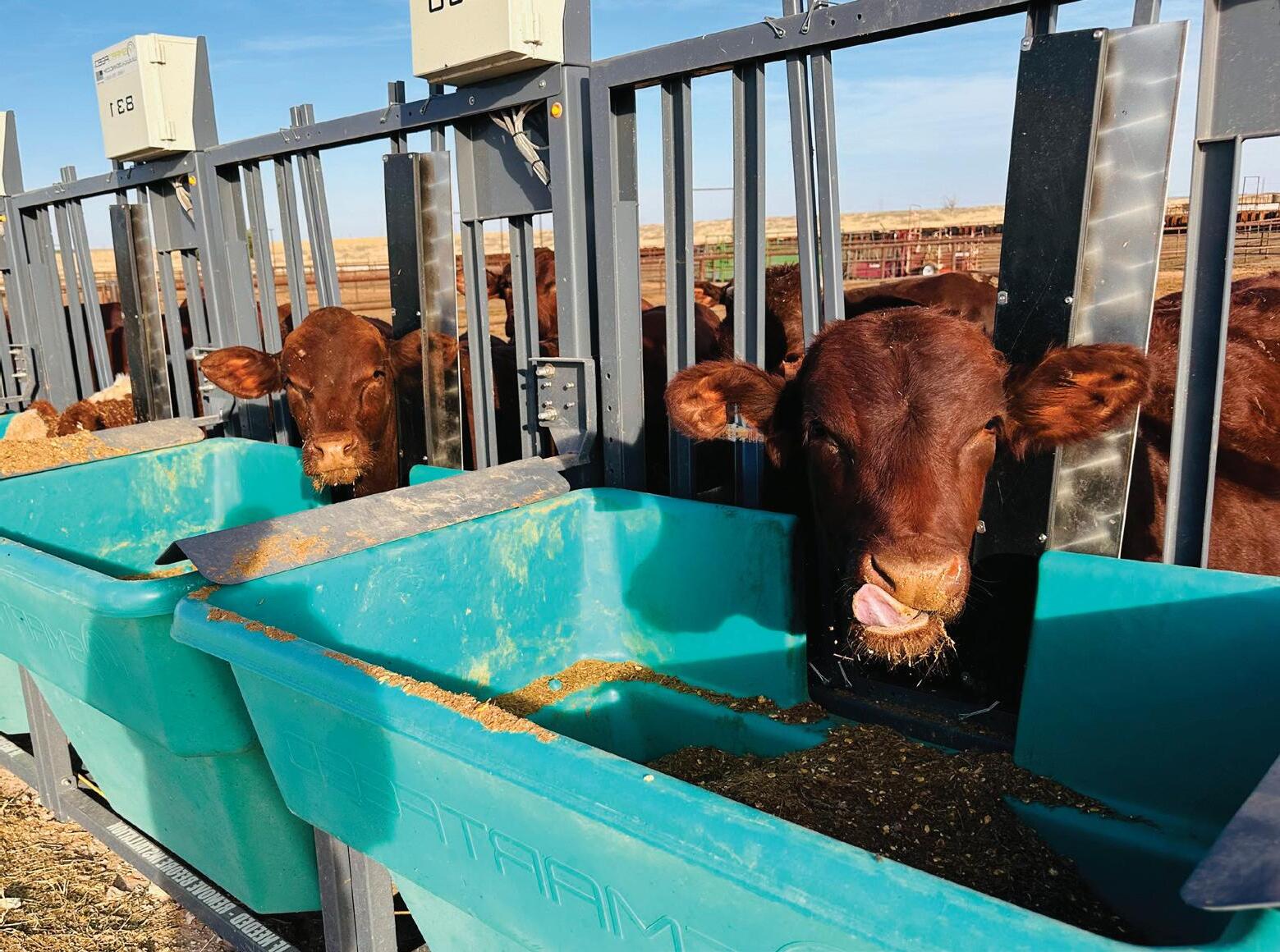
At Black Hills Feeders, development isn’t just part of the process, it’s the cornerstone of lasting productivity.
Our new facilities focus on bull and heifer development and feed efficiency, helping you raise cattle that go further, last longer, and perform stronger.
We are 70 miles northwest of Lubbock, TX. Call Cody Black of Black Hills Land & Cattle to reserve your space.
Cody Black: 806-241-7877
blackhillsfeeders@gmail.com



Many
Vesper Ranch Saul Farms Five J’s Beef & Cattle Zack Denning Red Doc Farm Strait Ranches Tyler Thompson Bill Bello Heath Avery Briggs Ranches Lackey Ranch ARB Cattle Company
Diamond G Ranch Craig and Tonya Bram 2M Ranch Vernon Ramzinski Will Gasiorowski
K&B Streit Farms Old Agency Reserve O/X Ranch VM Ranch Harris Farms Kyle Feazell 3C Glenn Romines . Dwayne Warren . Lazy Dog Ranch
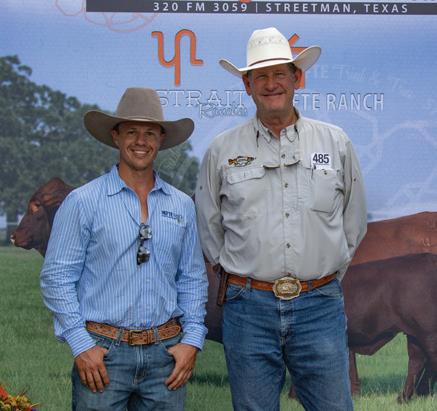
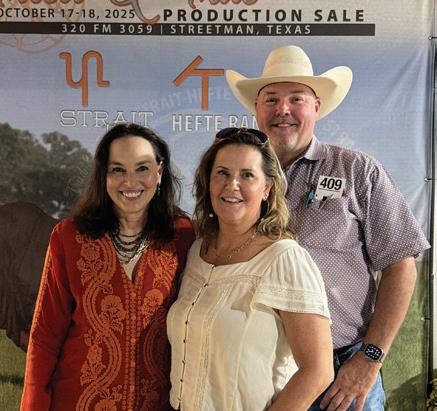
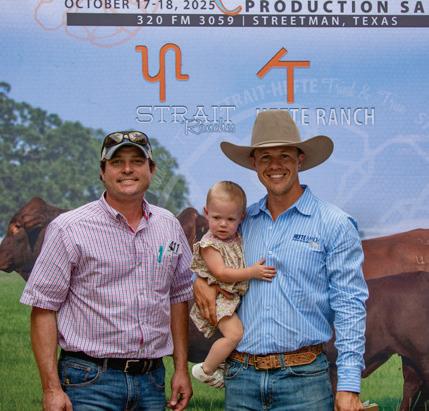
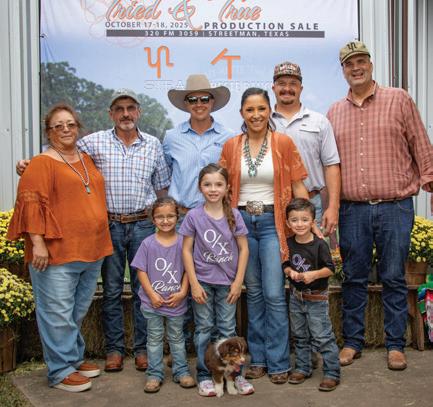
For the Standley family of North Carolina, raising cattle is more than a business. Their farm, established in 1849, has supported seven generations of cattlemen and today is home to one of the most progressive Santa Gertrudis and Star 5 programs east of the Mississippi.
“We’re on our family farm that’s been here since 1849,” said Jody Standley, owner of Five J’s Farm. “We’re the seventh generation of cattlemen in our family who have grown up on this land.”
The family was once focused on Herefords and black baldies, but their direction changed when their son, Jack, discovered Santa Gertrudis. Jack purchased two females from Creech Farms that became the foundation of his now 40 head registered herd. Jody also brought home a Santa Gertrudis bull to put on his Hereford cows.
“When those first Star 5 calves hit the ground, I knew that’s what I wanted to do,” Jody said. “We quit making baldies, got rid of anything black, and started making Star 5s.”
On the farm today, the Standleys finish 150 to 200 steers each year in their allnatural feedlot. The performance of the Star 5s quickly stood out, especially during the extreme humidity of the summer months.
“These Star 5s kept gaining four and five pounds a day like it wasn’t even hot outside,” Jody said. “This cross took the best of hot-weather cattle and coldweather cattle and put them into the ideal Star 5.”
Star 5 cattle are also exceptionally hardy, Jody commented. The family only gives one or two shots a year to their Star 5 cattle.
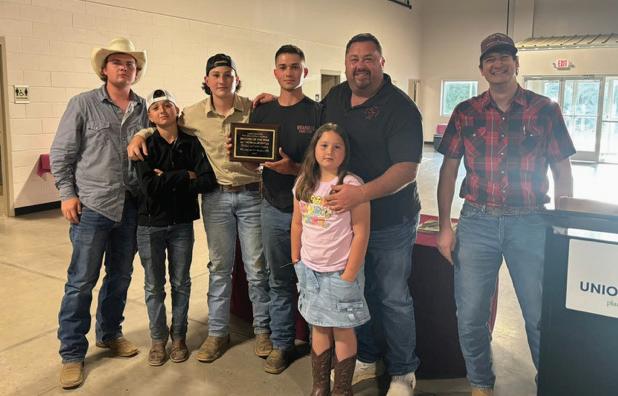
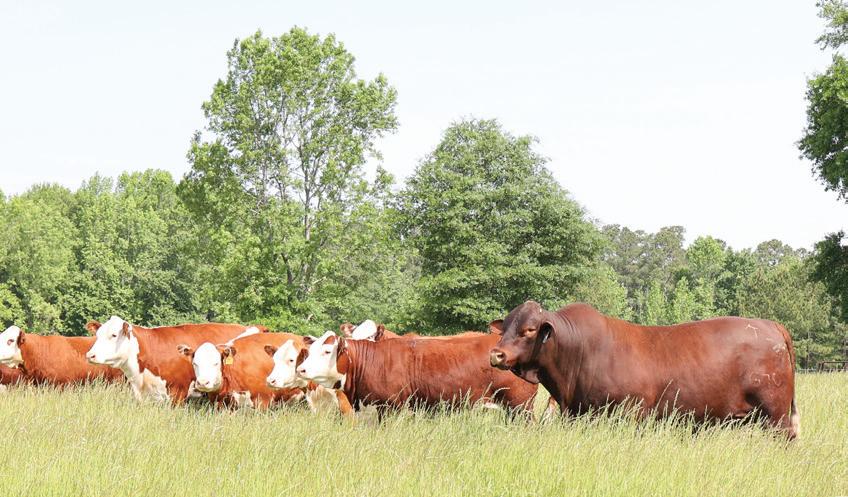
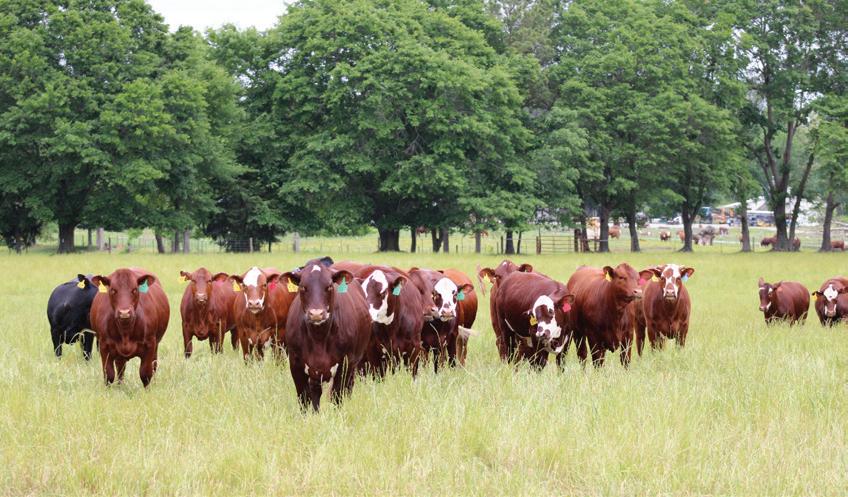
The Standley’s have also expanded their use of reproductive technology, putting in 30 to 40 embryos annually. Jack is flushing his own cows as well, including a standout 2021 female, “Prada”, that combines muscle and performance with a cleaner underline.
Cattle are a family affair at Five J’s Farm. All five of Jody and Angela Standley’s children manage their own cattle and operate like independent businesses, Ashley said. They have to pay pasture rent and buy their own feed, just like anyone else. It teaches them the real cost of it, she explained.
Over the years, the Standleys have raised Angus, Hereford, Brahman, Red Angus, and crossbred cattle, but none compare to the support they have found within the Santa Gertrudis community.
“I have never been part of any breed with people like the Santa Gertrudis crowd,” Jody said. “In other breeds, folks are not as quick to share their secrets. In this one, people are willing to help you.”
Looking ahead, the family hopes to develop their own annual sale featuring Santa Gertrudis bulls, Star 5 females, and Hereford bulls, while continuing to consign to the breeders who helped them get started.
Jody’s advice for new breeders is simple.
“When I first started, I bought the cheapest cows I could,” he said. “Save your money and do not try to buy ten cheap ones. Buy one or two really good ones and start your herd with the best.”
Santa Gertrudis USA
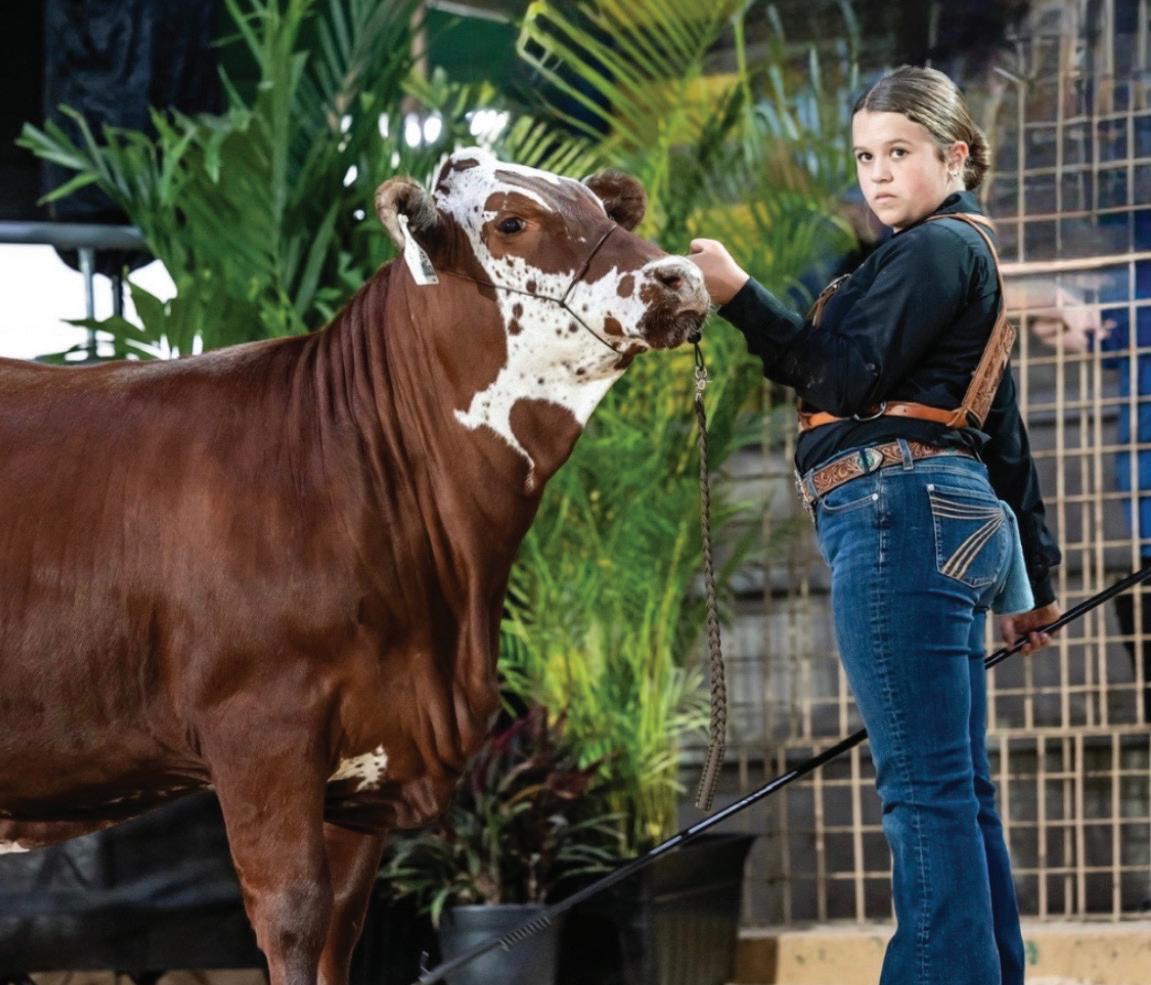
Fourth-generation Florida cattle producer Aubrey White is quickly making her mark in the National Junior Santa Gertrudis Association. The 12-year-old from Fort Meade, Florida, transitioned from showing Herefords to Santa Gertrudis and has rapidly built both a registered herd and a successful show career.
Aubrey began showing with Herefords, but Florida’s intense heat made it difficult to manage a high-maintenance, hair-based breed. Her family began looking for a heat-tolerant American breed with a strong junior program, something that fit both their environment and Aubrey’s growing passion for showing. The White family purchased a heifer from Excell Santa Gertrudis, and Aubrey was hooked.
“It challenged her in the best way,” Ashley said. “Her first Gert gave her goals she didn’t even realize she had, like settling one down or halter breaking one that wasn’t as easy. It helped her grow tremendously.”
The family soon pivoted their commercial operation toward the breed Aubrey had fallen in love with. They now run a growing herd of 29 registered Santa Gertrudis, with no plans to slow down.
“Santa Gertrudis has taught her perseverance, discipline, and responsibility,” Ashley added. “Her confidence and communication skills have skyrocketed.”
Aubrey says she was drawn to the breed for many reasons.
“I just love their whole demeanor,” she said. “They handle the heat better, they don’t have as much hair to work, and their disposition is just great. They fit everything we needed.”
Aubrey attended her first National Junior Santa Gertrudis Show this year in Chickasha, Oklahoma, where she won her class and earned the Byron Thoms High Point Award. The honor recognizes the highest-scoring junior based on both show ring and leadership contests.
“That was pretty cool to do at my first Junior Nationals,” Aubrey said. “It’s definitely going to be hard to top.”
But despite the accolades, she says the best part is the people.
“I’ve met so many great people through SGBI that have been extremely helpful,” she said. “Todd Hyde and Chris Birdwell from Excell Santa Gertrudis, Justin Massey with Harris Riverbend Farm and the Chastain’s from White Rock Farm. Everyone has been so supportive and I just love the community!”
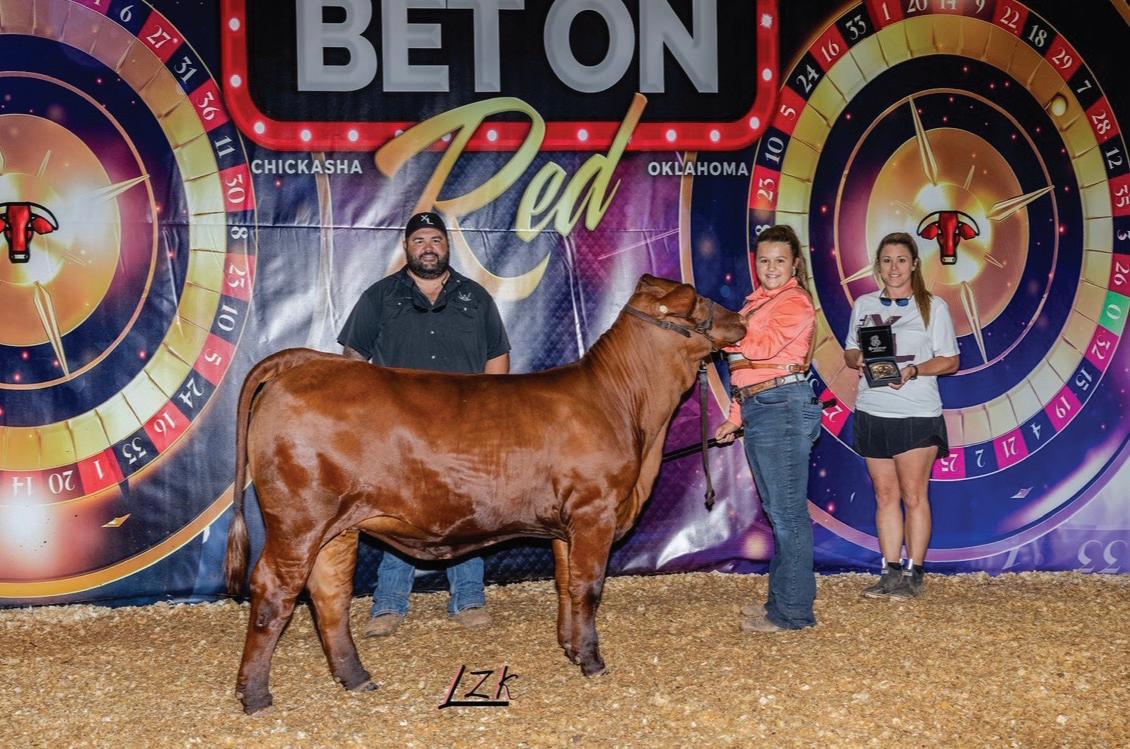
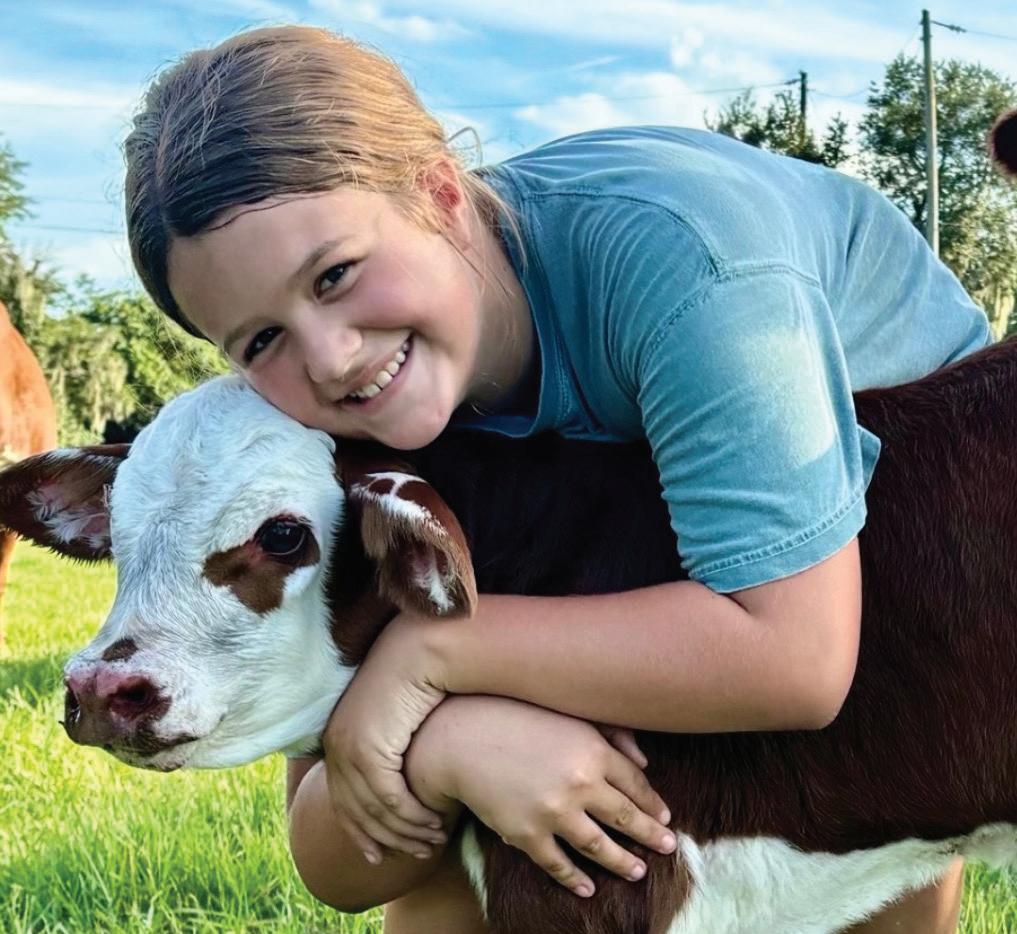
Looking ahead, Aubrey hopes to grow her bred-and-owned program and help expand Santa Gertrudis’ presence in Florida. Aubrey is already preparing for her future in the industry. She recently earned her artificial insemination certification and hopes to pursue a career in genetics.
When asked what advice she would give a new junior member, Aubrey didn’t hesitate.
“Be positive and stick with it,” she said. “It’s not always easy, but it’s always rewarding.”
As days grow shorter and fall color creeps in, cattle producers with spring calving cows turn their attention to weaning, pre-conditioning, and—for seedstock operations—collecting performance data. Accurate, complete records submitted on time are the foundation of sound breeding decisions and effective marketing.
Members of the Santa Gertrudis Breeders International enjoy the industry-leading DigitalBeef platform for registry, performance submission, and herd analysis. The EPDs produced through SGBI’s genetic evaluation service provider, Neogen, are only as good as the data behind them. Reliable, high-quality records are essential for making confident selection and mating decisions.
Commit to collecting complete and accurate data on every calf. There are no bonus points for selective reporting. The old myth that “only registering the good ones makes my herd look better” is exactly backward. Incomplete contemporary groups hurt your best calves the most. When poor performers are left out, the group average is artificially inflated, and even your top calves can end up below average in the analysis. Selective reporting is the fastest way to shoot yourself in the foot.
Precision matters as much as completeness. Subjective scores—calving ease, docility, teat and udder quality—require consistency. If multiple people score cattle on your operation, train together and use the same rubric every time. For weights, invest in reliable scales (digital or analog) and verify their accuracy regularly.
Weighing conditions are trickier than they seem. Animals in the same contemporary group need equal access to feed and water before weighing. Coordinate feeding and processing schedules, shrink cattle uniformly, and remember to zero the scale and clean the chute. A day’s worth of accumulated manure is not extra muscle on the last calf through!
Table 1. Essential Performance Traits and Recommended Observation Windows
All calves born/retained to next selection point
Calving Ease
Birth Weight
DNA Sample
Weaning Weight
Docility
Yearling Weight
Docility
Ultrasound
Foot/leg Score
Breeding Soundness Exam
Scrotal Circumference
Heifer Pregnancy Birth
Branding/Marking
Weaning
Weaning
Yearling
Yearling Yearling Yearling Yearling
Yearling
First Breeding Season
90 days
90 days
160-250
160-250
320-410
320-410
320-410
320-410
320-410
320-410
“You can’t manage what you don’t measure.” If a trait affects your customers’ profitability—or your own—measure it, and measure it honestly. Consistent, careful data collection produces more accurate and reliable EPDs. There are no shortcuts. It takes time, trained people, and good equipment, but the return is real.
I’ve always admired the sign hanging in Mushrush Red Angus’s barn in Strong City, Kansas: “All the data, all the time!” That single sentence sums up the discipline and integrity that today’s seedstock industry demands.
Cattle don’t improve on their own. Genetic progress across economically relevant traits requires measuring—all traits, all calves, every year. Larger contemporary groups with truly equal treatment provide far more statistical power and reveal more about true genetic differences.
The table below lists core traits and the optimal timing for collection in a modern seedstock program focused on commercial-customer success. Savvy breeders are also adding feed-intake measurement and actual carcass data from progeny whenever possible—two trait suites that separate good programs from great ones.
Measure everything. Measure it honestly. Measure it the same way every time. Your customers—and your own genetic progress—depend on it. Credit where credit is due—and accurate data is the only way to give it.
Teat/Udder Score
Mature Weight
Body Condition Score
Docility
Foot/leg Score
Calving Weaning Weaning Weaning Weaning
Bulls
Bred
$8,700
$7,255
$8,780
$5,833 Overall
Bred
Bred




June 14-20, 2026
Monroe, Louisiana