
Hefte Petty (210) 414-2493

K.T. Hefte (361) 813-4937


AJ & Rosemary Gambino P. O. Box 235 Pattison, TX 77466
www.santagertrudiscattle.com e-mail: rosemary.gambino@gmail.com





Membership,
It feels like spring passed in the blink of an eye as we now prepare to head into summer. We are incredibly grateful for the rainfall and moisture God has blessed many areas of our membership with over the past couple of months, and for those still waiting on rain, we continue to pray your pastures receive the moisture they need soon. With a strong cattle market, limited supply in some of the drought-stricken regions, and improving forage conditions thanks to recent rains, demand for our cattle is poised to remain strong. As producers, we must continue doing our part to generate the quality, consistency, and numbers of cattle necessary to meet the opportunities currently in front of us.
Over the past week, a question posted in a Santa Gertrudis Facebook group (not an official SGBI platform) sparked some productive discussion and dialogue. In summary, the member questioned whether the investment in registering cattle and maintaining an active membership is worth the associated cost. While some may instinctively become defensive in situations like this, I believe it is a completely fair question — and one that breed associations should continuously evaluate, address, and communicate more effectively to their membership.
To answer that question, it is important to first discuss the historical role and purpose of breed registries. At the inception of cattle breeds and breed associations, the primary responsibility of a registry was maintaining pedigree accuracy, herd book integrity, and breed standards. As technology advanced, breed associations took on an additional responsibility: data management and data integrity. The development of EPDs at the breed level created a need for more hands-on management of registry systems, with a heavy emphasis on collecting data and turning that information into practical tools for producers. The addition of genomics further enhanced the value of this data, strengthening both its accuracy and usefulness while adding another important layer to the work performed by breed associations today.
When considering what your breed association is doing for you in today’s industry, it is also important to recognize the diversity of production goals within our membership and how the association can help members achieve success within those goals. One comment on the previously mentioned post stated that you get out of the association what you put into it, and I certainly agree with that to an extent. Many producers do not fully utilize the tools available to them through the association, but I would also argue that breed associations must do a better job of educating members on the tools available and how to use them successfully. A large portion of that responsibility falls on the shoulders of breed leadership, and I am more than willing to be accountable for that. Moving forward, I hope to continue expanding educational efforts that help ensure our members can maximize the value of the resources available to them.
So where does the value of membership and registration truly come from? In my opinion, the foundation still lies in pedigree accuracy, herd book integrity, and data management. DNA technology and genomics have significantly strengthened those areas while also improving the accuracy and usefulness of our EPDs — and that value will only continue to grow as more data is submitted. Today, we are approaching nearly one million head in our registry system, and annual genotype submissions have tripled over the past three years alone. That level of data and genetic information has the ability to add value to your cattle regardless of which segment of the industry you focus on. While not every member prioritizes EPDs to the same degree — though I strongly encourage all producers to use them as an important tool — every breeder benefits from accurate pedigrees for both marketing and mating decisions.
Additionally, while I do not believe it is the breed association’s responsibility to market individual cattle, breed-wide promotion absolutely falls within the association’s role and benefits us all. Whether through trade shows, local livestock markets, social media promotion, print advertising, or helping facilitate events where cattle can be exhibited and promoted, the association plays an active role in funding, supporting, and improving those opportunities. Beyond promotion, the association also helps create direct lines of communication with colleges and land-grant universities regarding breed-specific research while providing education to both members and potential customers.
Lastly, breed associations give their memberships the ability to self-govern and establish practices they believe best serve the breed and its future. Every member has the opportunity to be part of the positive change they want to see, and our democratic process provides the ability to initiate meaningful change when needed. We strive to foster a culture of collaboration where breeders can work together while pursuing success within their own individual goals. As we continue to progress, it remains our responsibility at the association level to keep innovation and modern technology at the forefront while implementing programs and initiatives that provide our membership access to the most advanced tools available in the industry.
The most important part of all of this is that we operate as a board-led, nonprofit organization where the association ultimately belongs to you, the member. My challenge to anyone reading this who has ideas, concerns, or changes they would like to see is simple: get involved. Serve on a committee, communicate with your directors, and help be part of the solution. Included in this newsletter is contact information for the board members who represent you. I encourage you to reach out, build relationships, and voice your opinions. That is exactly what they are there for.
As always, continue the pursuit of perfection and progress.
God bless,
Keaton Dodd
Executive Director
Santa Gertrudis Breeders International
Fellow Santa Gertrudis breeders,
With a strong spring sale season behind us, the demand for Santa Gertrudis and Santa Gertrudis-influenced cattle continues to grow, and that is exciting for our breed and our membership. As many breeders begin the weaning process for fall-born calves, I wanted to take a moment to emphasize the importance of evaluating, measuring, recording, and submitting accurate performance data.
One of the greatest strengths of our breed has always been the dedication and integrity of the people behind it. Across our association, breeders work tirelessly every day to raise cattle that are productive, functional, and profitable in real-world conditions. The future success of our breed depends not only on the quality of our cattle, but also on the quality of the information we provide about them.
Good cattle evaluation always starts with the eye of the cattleman. Visual appraisal remains one of the most important tools we have. Not every bull calf is destined to become a herd sire, and not every heifer calf should enter the replacement pen. As breeders, we have a responsibility to be disciplined and objective in our selections.
When evaluating bull calves, we should focus on structural soundness, desirable feet and legs, natural muscling, acceptable underline, and overall balance and conformation. A bull with pedigree alone is not enough. If a calf does not meet the standards needed to positively impact the breed, he should be steered and removed from the breeding population. Making those tough decisions today protects the integrity and progress of our breed tomorrow.
The same applies to replacement females. Functional, fertile, sound cows are the backbone of every successful operation. Selecting heifers with the right structure, disposition, femininity, and maternal traits helps ensure long-term productivity and profitability.
Performance data then adds another layer to the story. Weaning weights are important because they help us measure growth and maternal performance, but we also understand they can be impacted by environment, and management decisions. Creating contemporary's allows you to make decisions on an individual animals performance within that group as long as they have the same opportunities to perform. If we all contribute records, the data becomes more meaningful and more powerful for everyone.
Data collection and submission are among the most important responsibilities we share as seed stock producers. Every weight recorded, every performance measure submitted, every fertility record, carcass result, contemporary group and genomic test result entered helps strengthen the foundation of our breed. These records are not just numbers on paper — they tell the story of our cattle and provide valuable tools for breeders and commercial cattlemen alike.
I think about the breeders who came before us and built this breed through hard work, practical selection, and a willingness to improve with every generation. They may not have had the technology we have today, but they understood the value of keeping records and making decisions based on performance and functionality. Because of their commitment, we have the opportunity to market a breed known for adaptability, longevity, maternal strength, and profitability.
Today’s cattle industry is more data-driven than ever before. Commercial producers are looking for cattle backed by reliable information and proven performance. By recording, testing, weighing, and submitting data to the association, we continue building a stronger and more dependable database that benefits every member and adds value to Santa Gertrudis genetics across the country.
No herd is too small to contribute, and no piece of information is insignificant. One accurate birth weight, one fertility record, or one carcass result may seem minor on its own, but collectively those records shape the future of our breed. Consistent participation from our membership allows us to improve the accuracy of our genetic evaluations and better position Santa Gertrudis cattle for the future.
I encourage each of you to make data collection a priority in your operation. Commit to honest evaluation. Commit to accurate records. Commit to performance testing. Commit to sharing your findings with the association. When we work together and contribute collectively, we strengthen not only our own programs, but the entire breed.
Santa Gertrudis cattle have a proud history built by hardworking cattlemen and women who believed in progress and continuous improvement. It is now our responsibility to carry that vision forward. By investing in good cattle, good records, and good data today, we are investing in the future of our breed tomorrow.
Thank you for your continued support, dedication, and belief in Santa Gertrudis cattle.
If anyone has any questions on collecting or submitting data please contact the SGBI office, SGBI board members, or Executive Director Keaton Dodd.
Sincerely,
Arlin Taylor President
For Cedar Creek Beef Company owner Jewett Borden, Santa Gertrudis cattle have become the foundation of a growing farm-to-table beef business serving customers across Kentucky and supplying beef for major events surrounding the Kentucky Derby.
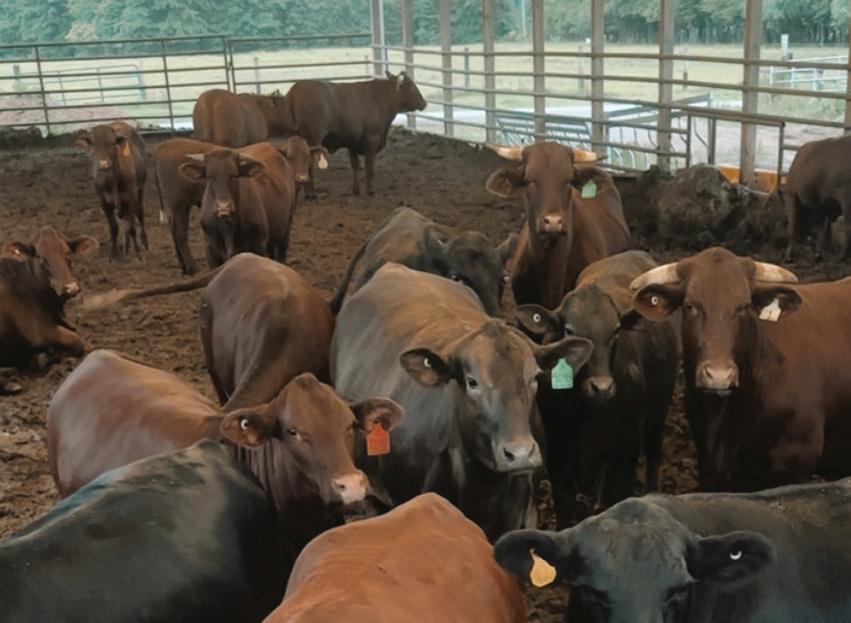
Located in Shepherdsville, Kentucky, Cedar Creek Farms and Cedar Creek Beef Company combine commercial cattle production, carcass-focused genetics and direct-to-consumer beef sales into one vertically integrated operation.
Borden originally started in the Angus seedstock business before returning to eared cattle, drawing on his background raising Beefmasters. His introduction to Santa Gertrudis cattle came through longtime breeder Foster Sanders.
Borden credits longtime breeder Foster Sanders with introducing him to the Santa Gertrudis breed. What began with the purchase of two heifers quickly turned into a long-term investment in Santa Gertrudis genetics and the opportunities they could provide within his operation.
As the operation expanded, Borden noticed the discounts often placed on redhided cattle at local sale barns. Rather than accepting those losses, the family shifted toward direct beef sales.
As the operation expanded, Borden began looking for ways to capture more value from his cattle outside of traditional sale barn channels. That search eventually led to the development of Cedar Creek Beef Company and a directto-consumer marketing approach focused on keeping more value within the operation.
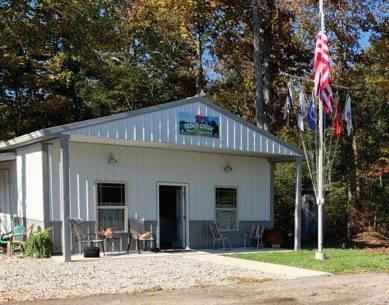
What started with freezer beef sales out of a garage eventually grew into a retail storefront and inspected processing facility on the farm. Today, the operation produces dry-aged beef, beef bratwursts, sausage, patties and retail beef cuts inhouse while processing as many as 125 head annually depending on market conditions.
“About eight years ago, we built a full-on cut room in the back of the shop,” Borden said. “So we’re now inspected so we can make our own sausage, do our own dry aging, beef brats, specialty cutting, all of our own grinds and our own patties.”
Genetics and data collection remain a major focus at Cedar Creek Farms. Borden utilizes EID tags, CattleMax software and performance tracking to monitor feed efficiency, gain and carcass quality.
“We’ve chased a lot of genetics to improve our ribeyes, improve our marbling and improve our back fat,” Borden said.
The operation has also become involved in Kentucky biosecurity and traceability efforts through partnerships with the Kentucky State Veterinarian’s Office and Kentucky Cattlemen’s Association.
Beyond the farm, Cedar Creek Beef Company has grown its reach through relationships within Kentucky’s food industry, including supplying beef products for Kentucky Derby-related events.
“We did 1,000 pounds of smoked prime rib, 1,000 pounds of beef tenderloin, 600 pounds of brisket and 700 slider patties,” Borden said while discussing Derby week catering orders.
For Borden, the operation’s success comes back to producing quality cattle and building direct connections with consumers.
“I’m all for cow-calf straight to the plate,” Borden said. “It really gives your consumer a way to know exactly where their steak on their plate comes from"
Today, Cedar Creek Beef Company continues to demonstrate how Santa Gertrudis genetics can succeed beyond the traditional cow-calf sector. Through a combination of performance-driven cattle, value-added beef production and direct consumer relationships, Borden has built an operation focused on quality from pasture to plate while creating new opportunities for the breed within Kentucky’s beef industry.
For 16-year-old junior member Cheyenne Robertson, what started as a simple promise from her parents, “we’ll buy you your own cow,” quickly became one of the most rewarding parts of her life. Today, she is actively involved in her family’s purebred and commercial cattle operation while building lifelong friendships and valuable leadership skills through the National Junior Santa Gertrudis Association.
“When I started, it was one of the best things I could have ever done,” Cheyenne said.
Growing up around livestock, agriculture was always a major part of her family’s life. Although she was hesitant about showing cattle at first, receiving her own Santa Gertrudis heifer at 8 years old changed everything. Since then, the breed and the junior association have become a major part of her life.
One of Cheyenne’s favorite parts of being involved in the breed is attending the National Junior Santa Gertrudis Show each summer.
“We work with our animals year-round to bring them to this one big show,” she said. “You get to show everybody what you have. You meet so many new people, make so many friends and learn so much.”
While she enjoys the competition side of the industry, some of her favorite memories have come from simply stepping outside of her comfort zone. During last year’s junior national show, she entered the livestock judging contest “just for fun” with friends and ended up placing sixth overall.
“I wasn’t expecting anything,” Cheyenne said. “It made me so happy, and I’ll never forget it.”
Outside the show ring, Cheyenne stays actively involved on her family’s operation, helping feed cattle, work cows and care for both the family’s commercial and purebred Santa Gertrudis herds.
“I like to go sit and watch the animals, especially right now when everybody’s calving,” she said. “I learn a lot from it.”
Like many junior members, Cheyenne said the association has helped her become more confident and outgoing over time.
“I feel like I’m a very shy person, but being involved with the association is very social,” she said. “It’s pushed me to be a little bit more social and pushed me out of my circle a little bit more.”
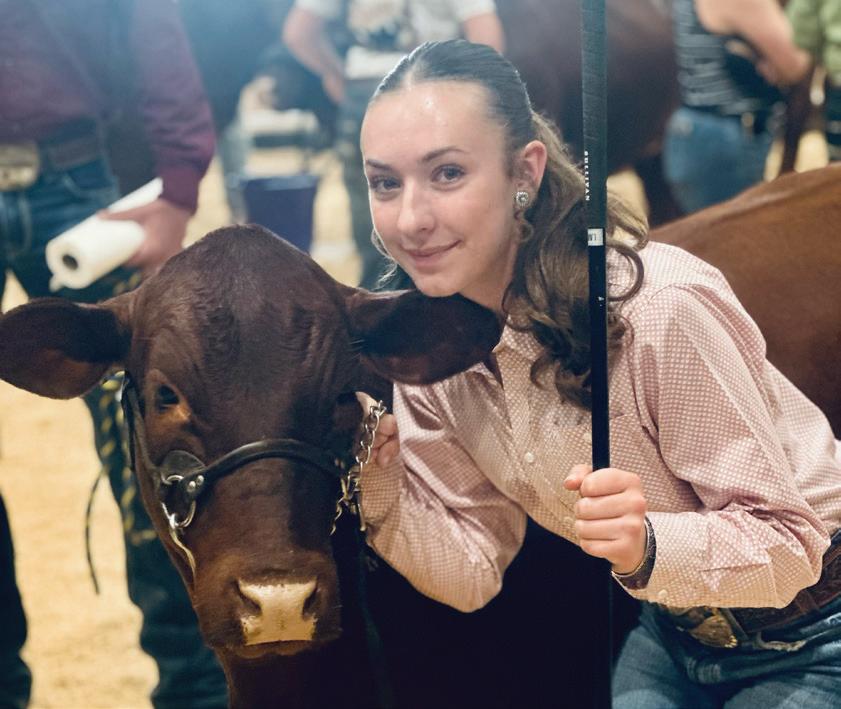
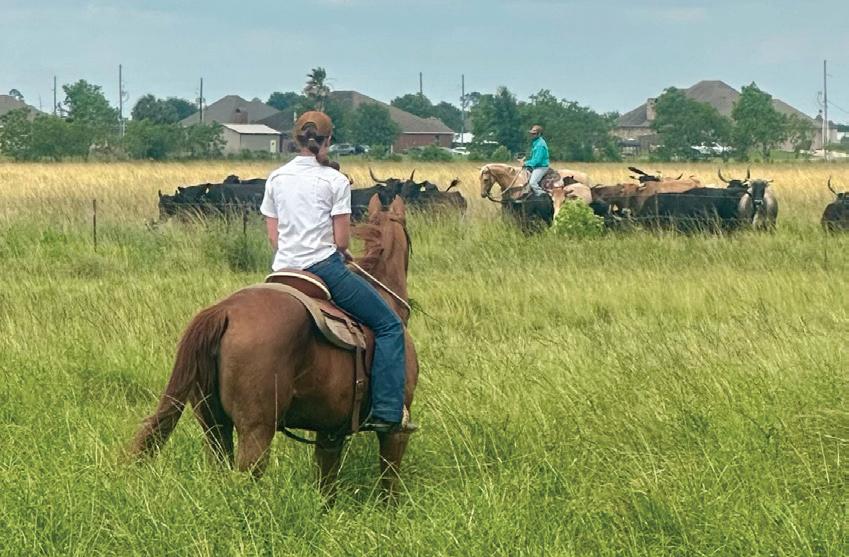
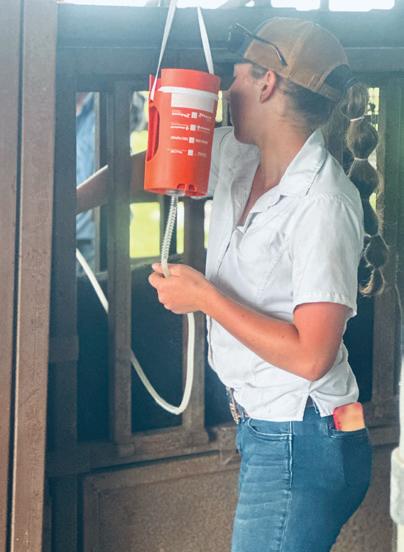
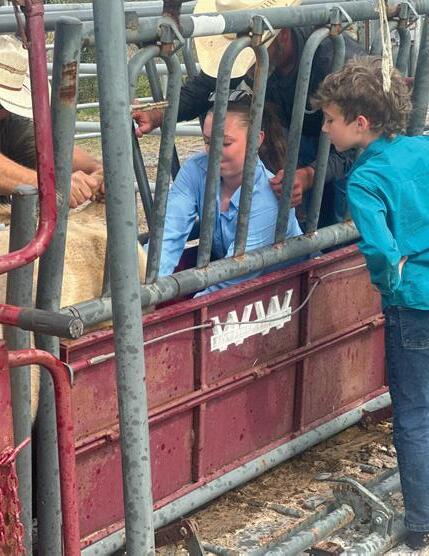
Her parents have played the biggest role in encouraging her involvement along the way, teaching her new skills and helping her become more active within the breed.
Outside of agriculture, Cheyenne is also involved in high school cheerleading and enjoys hunting with her dad whenever she has the chance. She hopes to continue building her family’s cattle herd in the future and sees herself staying involved in agriculture for years to come.
For new junior members entering the breed, Cheyenne encourages them not to let nerves hold them back and to take advantage of every opportunity available through the association.
As Cheyenne continues to grow both in and out of the show ring, her passion for the cattle industry and the Santa Gertrudis breed remains evident. Through the friendships, experiences and lessons gained along the way, she represents the next generation of young cattlemen and cattlewomen helping move the breed forward.
Bred
Purebred

Chair – Heather Blewett
Gene Kubecka
Darrell Pitchford
Dixie Clay
Stacey Montano
Luke Lyness
Ouida Cossey
Finance Committee
Chair – Patti Ermis
Callie Loden
Matthew Tingle
Amber Robertson
Cristi Harrington
Keaton Bush
Chad Murray
Suzanne Fulton
Jessica Humphrey
Wes McDaniel
Deana Parker
Todd Hyde
Suzanne Fulton
Robert Honza
Chair – Darrell Pitchford
Gene Kubecka
Jerome Urbanosky
Egon Neufeld
Virgilio Enrique Vergara Beitia
Antonio Ruiz
Yancey Strait
Devlin Reese
Virginia Silguero
Duane Ermis
PJ Budler
Chair – John Justiss
Bob Rhodes
Suzanne Fulton
Mark Clay
Chair – Callie Loden
Chris Birdwell
Tanya Bram
Jodie Cates
Jamie Daniel
Casey Jones
Amanda Millican
Stacey Montano
Amber Robertson
Britney Shields-Wulff
Heather Strait
Pete Wunderlich
Patti Ermis
Trai Stegall
Emily Taylor
Chair – Arlin Taylor
Daniel Kubecka
John Justiss
Bill Stroman
Darrell White
David Harris
Jewett Borden
Kelsey Cawley
Rafael Miranda
Yancey Strait
Kathryn Petty
Luke Lyness
Cody Black
Chair – Kevin Blewett
Yancey Strait
Kady Burkman
Virginia Silguero
Josh Bowman
Michael Sims
Matthew Tingle
Chair – Daniel Kubecka
Frank Santos
Kelsey Cawley
Brianna Baca
Laura Zibilski
Chair – Patti Manak
Chris Birdwell
Nancy Wunderlich
Shana Pitchford
Nathan Barlowe
Brianna Baca
Trai Stegall
Craig Lopossa
Chair – Kim Wiley
Darrell Pitchford
Chair – Mickey Bowman
Heather Blewett
Suzanne Fulton
President Arlin Taylor
President Elect Daniel Kubecka
Secretary/Treasurer Patti Ermis
Long Range Planning John Justiss
Marketing/Promotion Daniel Kubecka
Breed Improvement Perry Bass
Youth Activities Callie Loden
Membership Mickey Bowman Directors by Region WESTERN REGION
Daniel Kubecka, Texas Wendt Ranches Partners (979) 240-5312 | wendtranches@hotmail.com
Larry Garza, Texas Double G Farms (956) 206-1244 | garzalarry0171@gmail.com
Callie Loden, Texas Strait Ranches (210) 837-1199 | callie@straitranches.com
Jessica Humphrey, Texas H2 Cattle Company (903) 517-7592 | jessica_taylor023@hotmail.com
Perry Bass, Texas San Jose Cattle Company (817) 917-7746 | sanjosecattleco@gmail.com
Devlin Reese, Texas Reese Ranch (956) 286-4239 | reese.ranch@yahoo.com
John Justiss, Texas Four J Cattle (361) 772-0301 | jjustiss@gvec.net
EASTERN REGION
Arlin Taylor, Alabama Tinney Farms (256) 507-3838 | arlin.taylor@bhamfast.com
Cody Mattingly, Kentucky Mattingly Farms (270) 668-3177 | mattinglyfarms96@yahoo.com
Matt Tingle, Mississippi DMC Farms LLC (601) 562-8066 | mtingle.cpa@gmail.com
Todd Osborne, Kentucky Osborne Livestock Company (859) 991-2438 | peppydoc1@aol.com
Jamie Daniel, Arkansas 777 Farms (870) 904-3070 | triple7farms@gmail.com AT LARGE DIRECTORS
Cody Black
Darrell White
Craig Lopossa
Scott Sherrill
Judy McDaniel
District 1 - Dr. Marshall Saiz, New Mexico Mesa Segura Ranch (505) 250-5575 | marshallsaiz@mesaseguraranch.com
District 2 - Patti Ermis, Texas Urbanosky Ranch (936) 870-6410 | pattiurb77@yahoo.com
District 3 - Kim Wiley, Louisiana Wiley Ranch (318) 481-6927 | kkwiley2555@yahoo.com
District 4 - Mark Clay, Mississippi Ridge Point Ranch (601) 573-0206 | markclay@midsouthuniform.net
District 5 - Mickey Bowman, North Carolina Rockin B Farm (336) 669-5771 | rockinbrowdyroosters@yahoo.com
District 6 - Jewett Borden, Kentucky Cedar Creek Farm (502) 718-5441 | jewett.borden@yahoo.com
King Ranch - Virginia Silguero, Texas King Ranch (361) 455-6885 | vsilguero@king-ranch.com