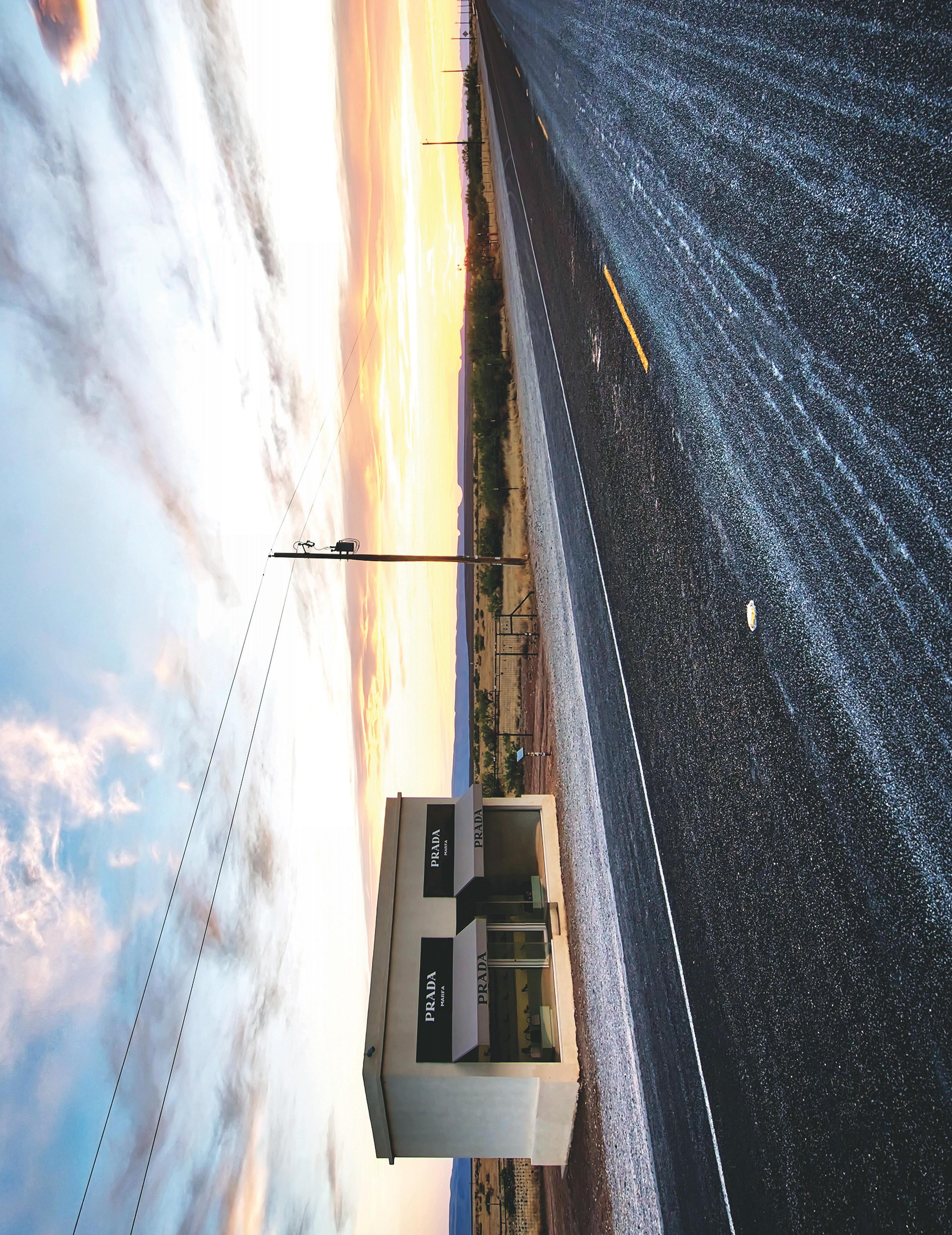
• TATIANA BILBAO’S SOFT BRUTALISM IS HARD CORE MORE:
• THE BORDER WALL AS ART INSTALLATION
• FLASH SHELTON SQUATTER HUNTER
• HOW MONTECITO WAS ALMOST MIAMI (PHEW, THAT WAS CLOSE!)
MORE THAN A LITTLE INSIDE >>> ALSO:
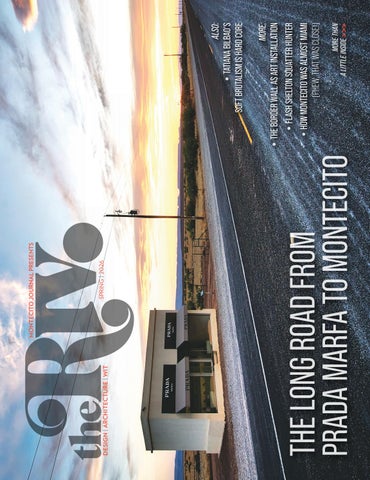
• TATIANA BILBAO’S SOFT BRUTALISM IS HARD CORE MORE:
• THE BORDER WALL AS ART INSTALLATION
• FLASH SHELTON SQUATTER HUNTER
• HOW MONTECITO WAS ALMOST MIAMI (PHEW, THAT WAS CLOSE!)
MORE THAN A LITTLE INSIDE >>> ALSO:



San Ysidro cottages, fireplaces, and complimentary Stonehouse and tastings Grand Award-winning hour stroll the romance icons such Laurence Hepburn, and now of global With more San Ysidro the California’s SAN
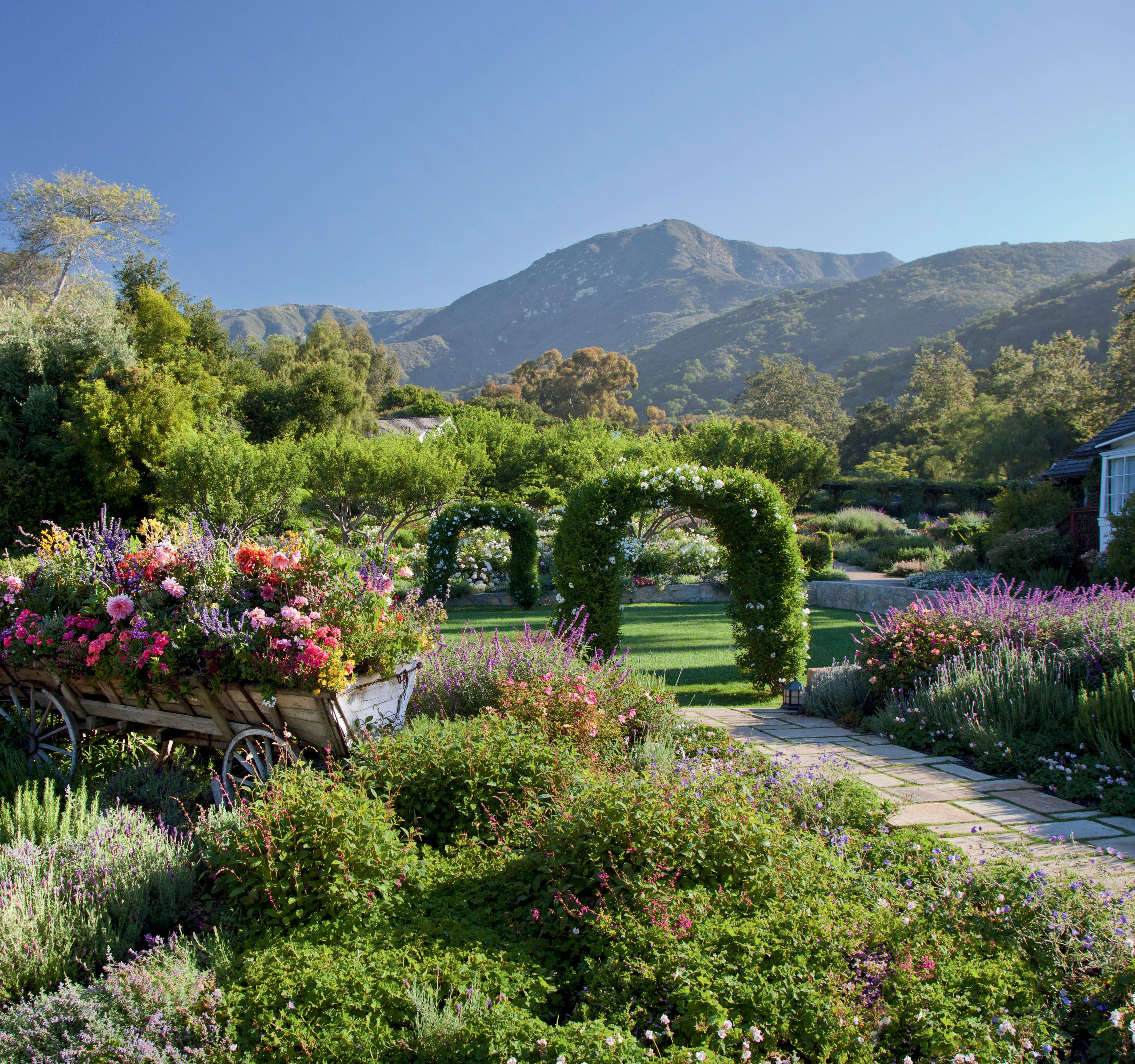
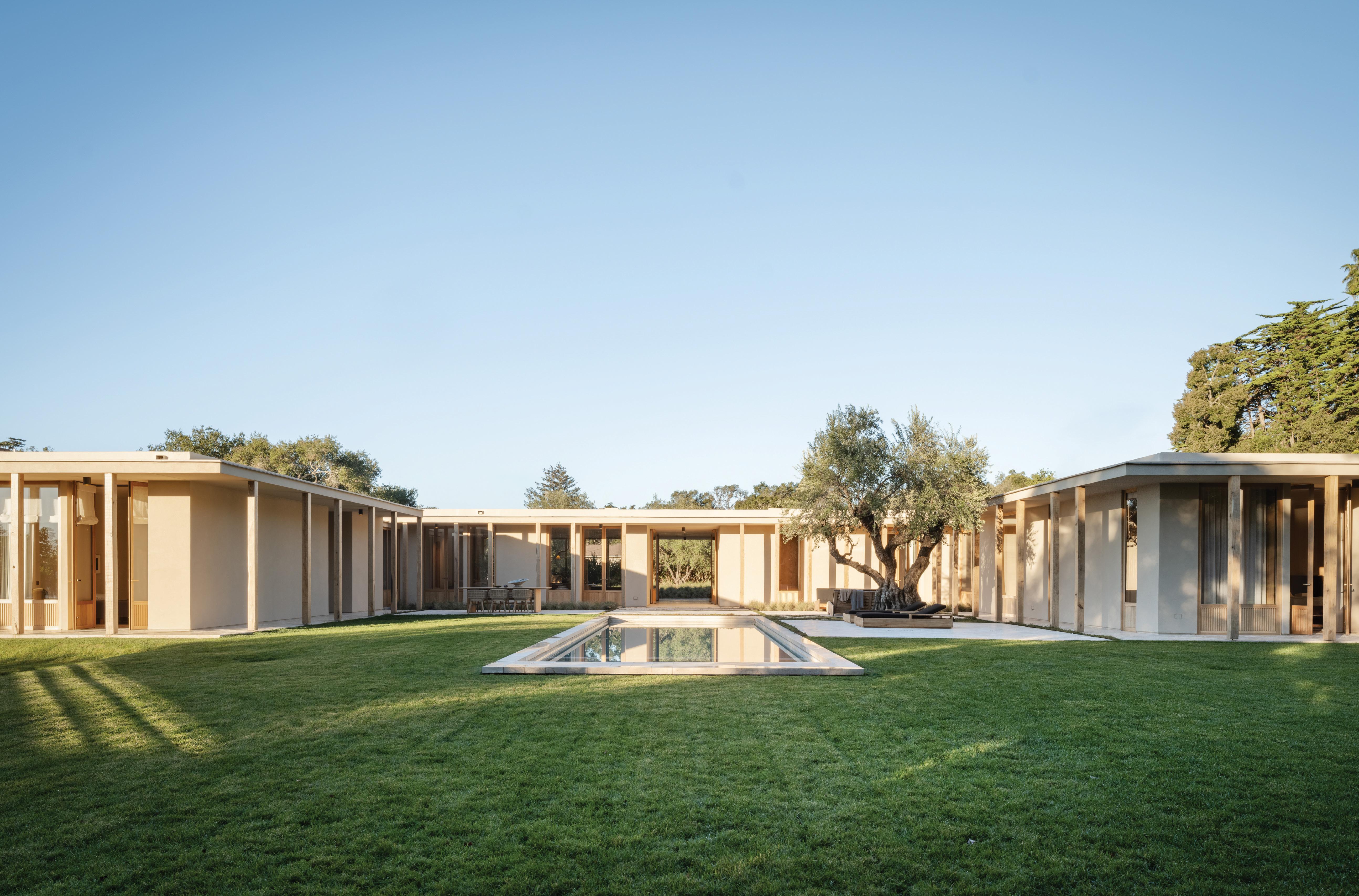
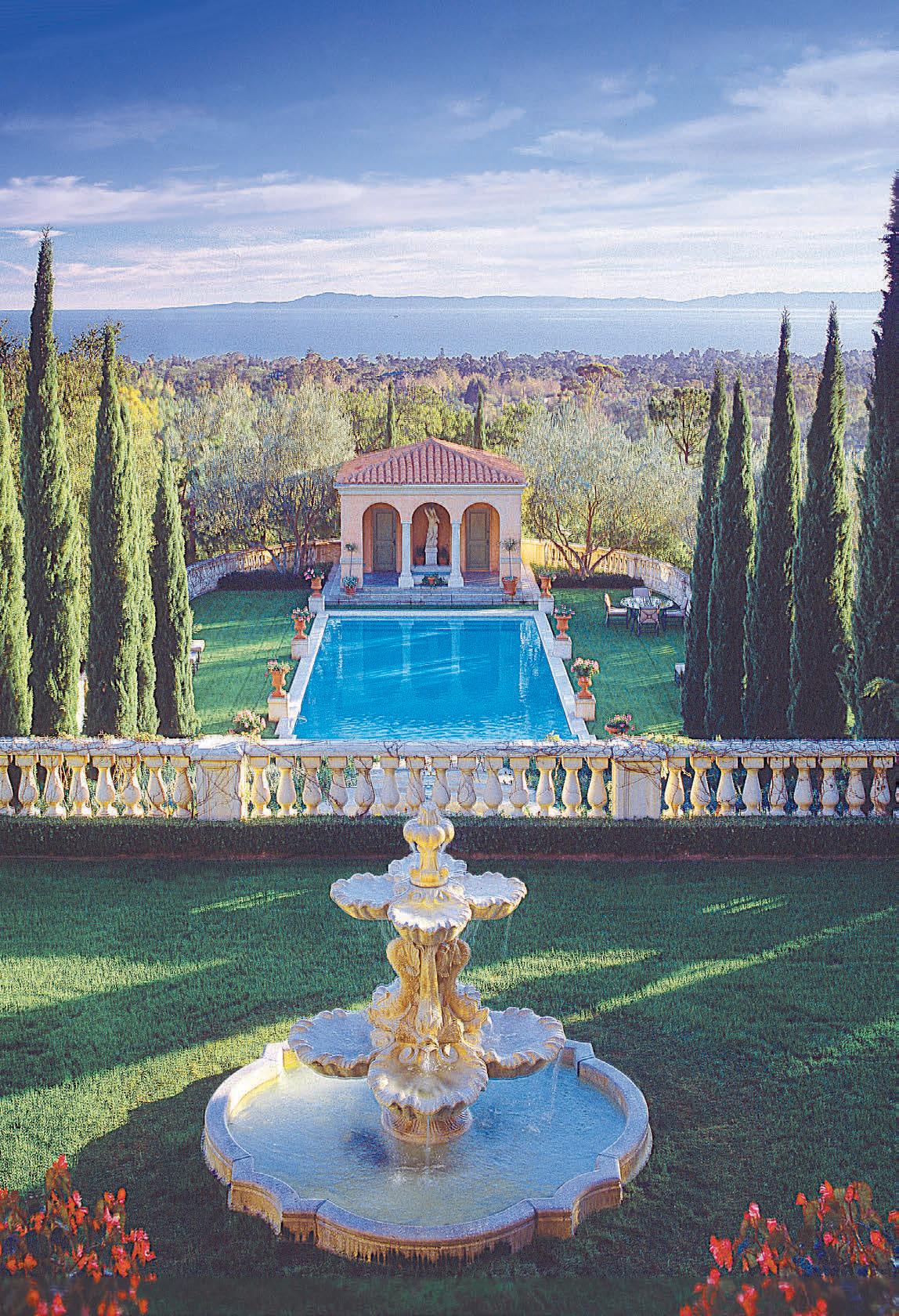
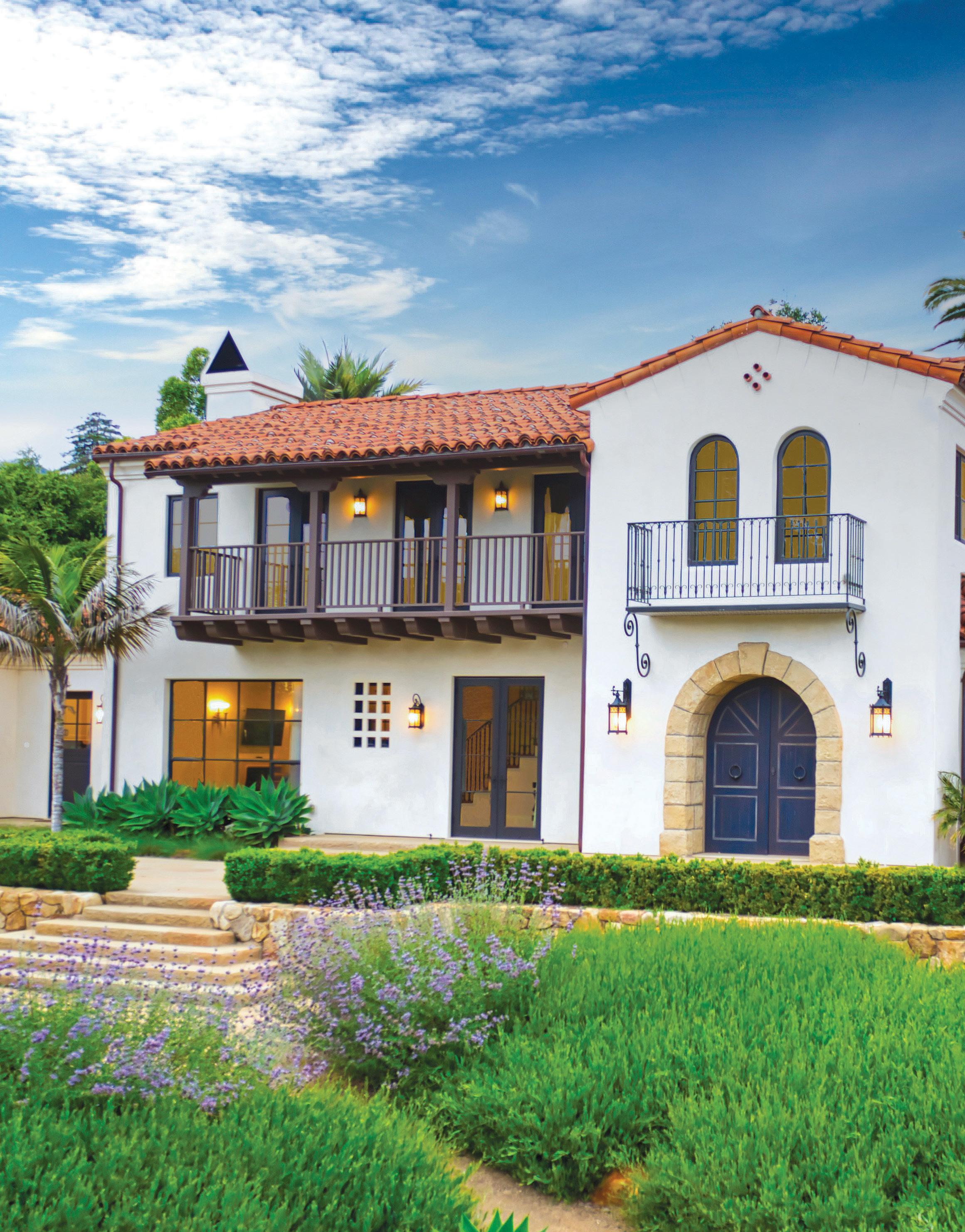
Tucked into the foothills of Santa Barbara, Ysidro Ranch offers thirty-eight ultra-private each featuring individual soaking spas, fireplaces, cottage-side parking, private gardens, and outdoor showers. Guests enjoy complimentary dining at the Michelin-favored Stonehouse Restaurant, along with guided tours tastings in Wine Spectator’s longtime Award-winning Wine Cellar. A golden stroll through lavender-filled gardens evokes romance of Old Hollywood, once graced by such as Jacqueline and John F. Kennedy, Laurence Olivier and Vivien Leigh, Audrey Hepburn, Lucille Ball, and Winston Churchill, now a discreet haven for a new generation global names in film, fashion, and music. more than a century of celebrated legacy, Ysidro Ranch invites you to experience magic that has earned its place as California’s most awarded hotel.
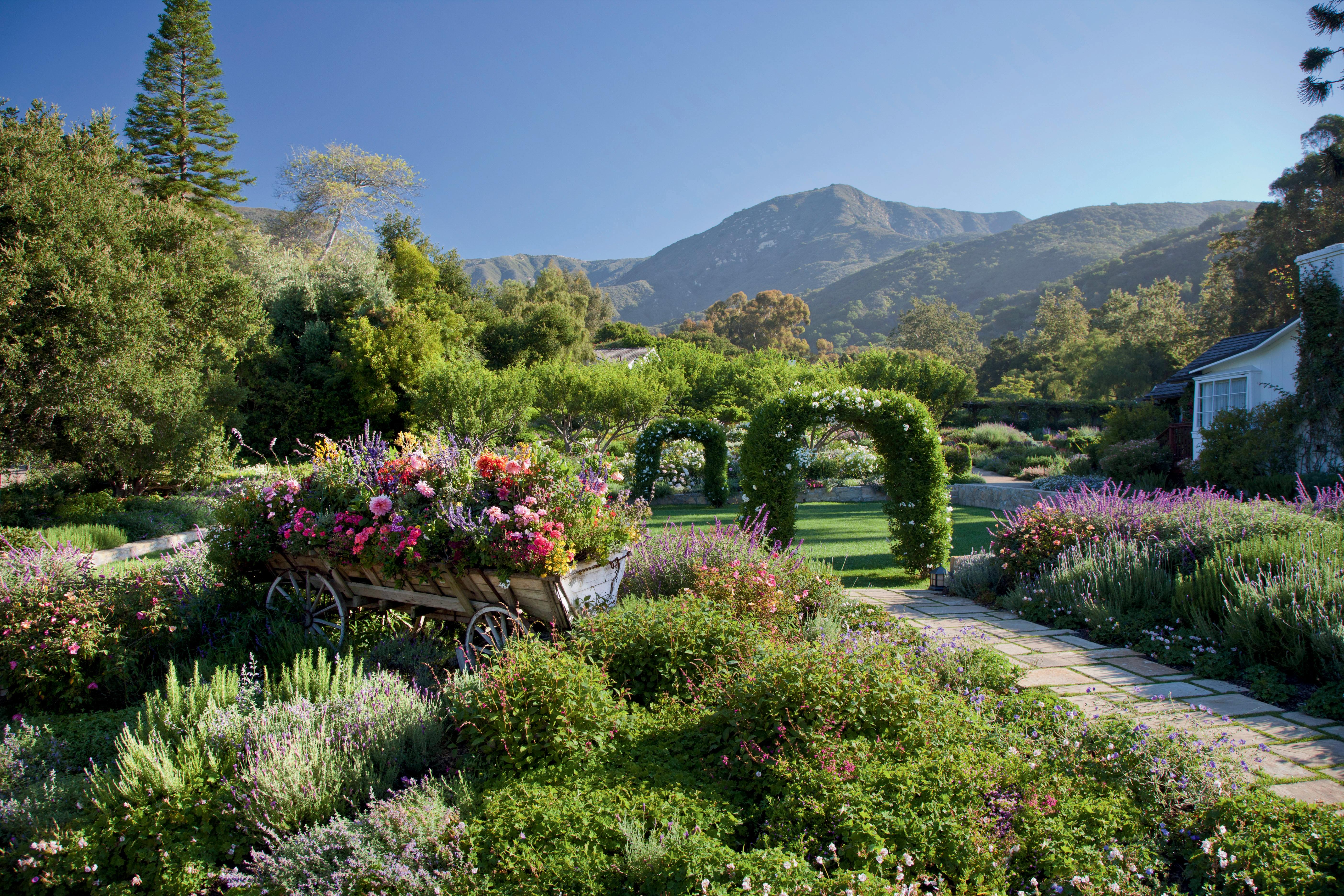
Tucked into the foothills of Santa Barbara, San Ysidro Ranch offers thirty-eight ultra-private cottages, each featuring individual soaking spas, fireplaces, cottage-side parking, private gardens, and outdoor showers. Guests enjoy complimentary dining at the Michelin-favored Stonehouse Restaurant, along with guided tours and tastings in Wine Spectator’s longtime Grand Award-winning Wine Cellar. A golden hour stroll through lavender-filled gardens evokes the romance of Old Hollywood, once graced by icons such as Jacqueline and John F. Kennedy, Laurence Olivier and Vivien Leigh, Audrey Hepburn, Lucille Ball, and Winston Churchill, and now a discreet haven for a new generation of global names in film, fashion, and music. With more than a century of celebrated legacy, San Ysidro Ranch invites you to experience the magic that has earned its place as California’s most awarded hotel.
Tucked into the foothills of Santa Barbara, San Ysidro Ranch offers thirty-eight ultra-private cottages, each featuring individual soaking spas, fireplaces, cottage-side parking, private gardens, and outdoor showers. Guests enjoy complimentary dining at the Michelin-favored Stonehouse Restaurant, along with guided tours and tastings in Wine Spectator’s longtime Grand Award-winning Wine Cellar. A golden hour stroll through lavender-filled gardens evokes the romance of Old Hollywood, once graced by icons such as Jacqueline and John F. Kennedy, Laurence Olivier and Vivien Leigh, Audrey Hepburn, Lucille Ball, and Winston Churchill, and now a discreet haven for a new generation of global names in film, fashion, and music. With more than a century of celebrated legacy, San Ysidro Ranch invites you to experience the magic that has earned its place as California’s most awarded hotel.
A TY WARNER PROPERTY (805) 465-2196
Tucked into the foothills of Santa Barbara, San Ysidro Ranch offers thirty-eight ultra-private cottages, each featuring individual soaking spas, fireplaces, cottage-side parking, private gardens, and outdoor showers. Guests enjoy complimentary dining at the Michelin-favored Stonehouse Restaurant, along with guided tours and tastings in Wine Spectator’s longtime Grand Award-winning Wine Cellar. A golden hour stroll through lavender-filled gardens evokes the romance of Old Hollywood, once graced by icons such as Jacqueline and John F. Kennedy, Laurence Olivier and Vivien Leigh, Audrey Hepburn, Lucille Ball, and Winston Churchill, and now a discreet haven for a new generation of global names in film, fashion, and music. With more than a century of celebrated legacy,
A TY WARNER PROPERTY
A TY WARNER PROPERTY (805) 465-2196
(805) 465-2196



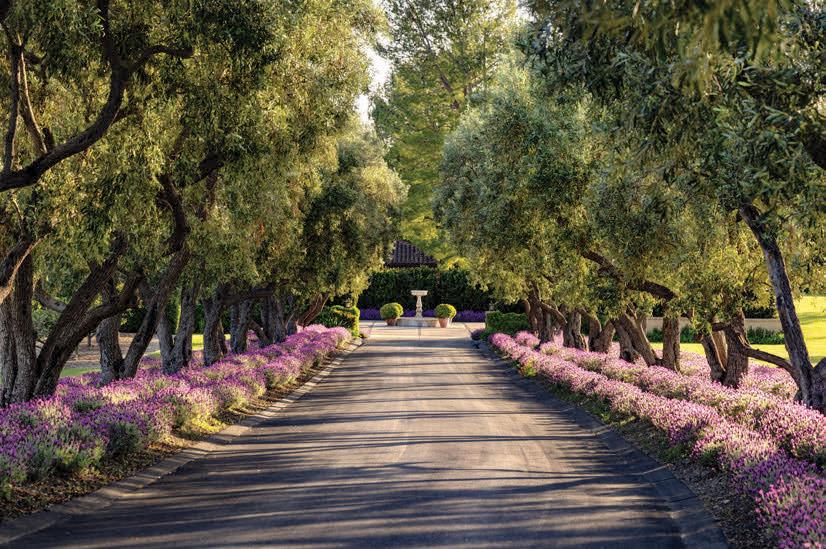
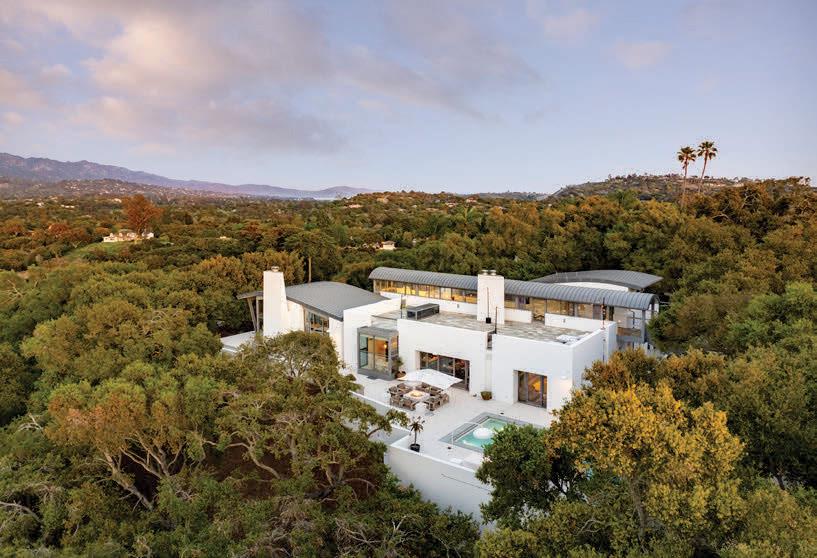
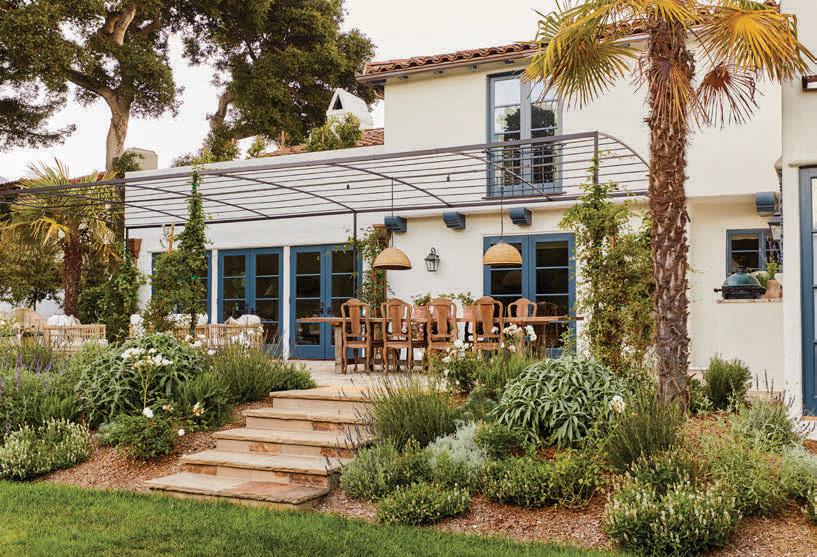
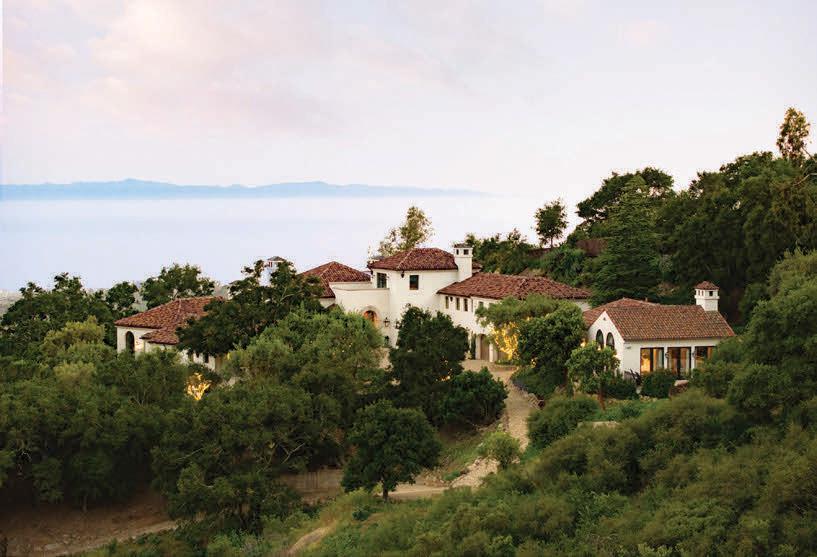
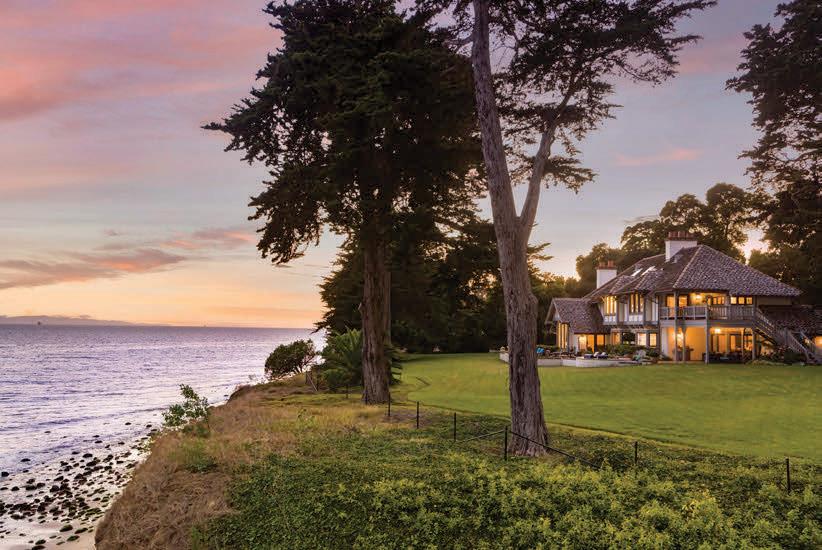
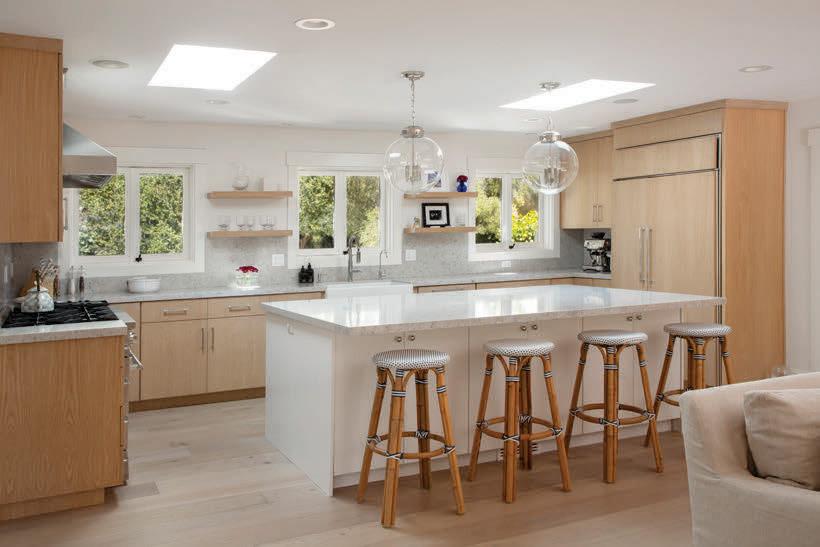
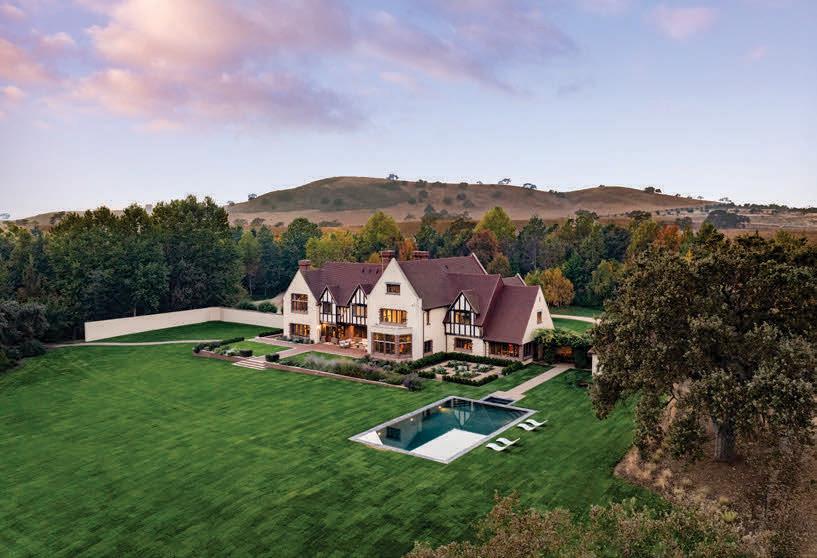
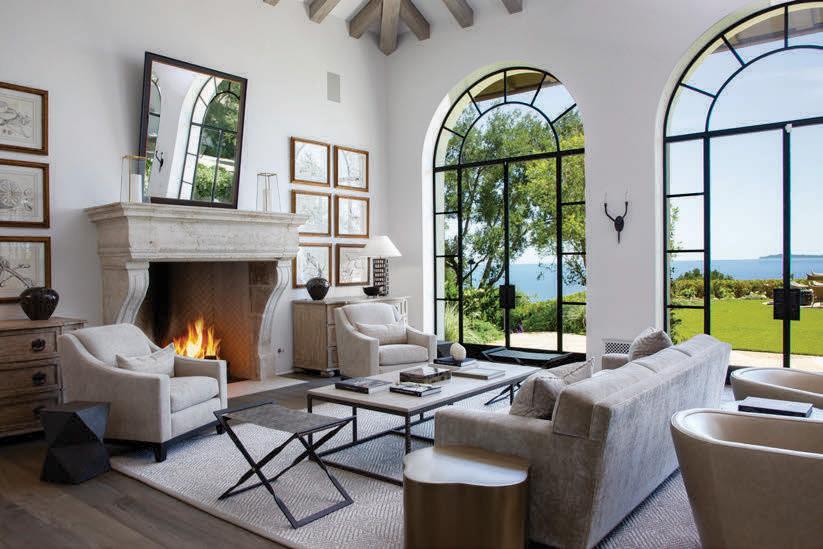
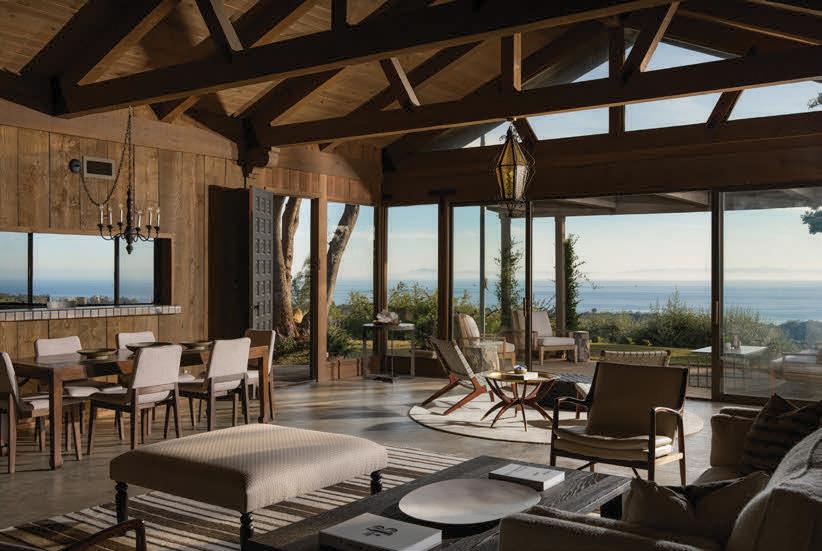
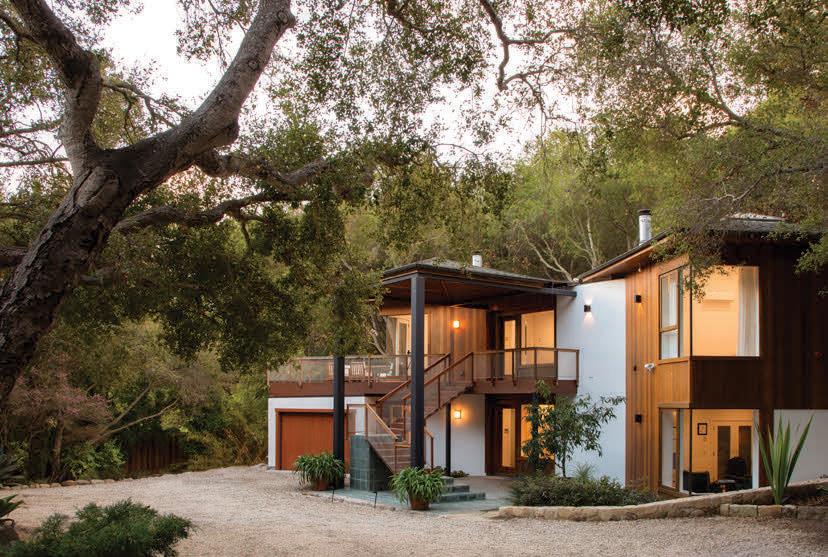
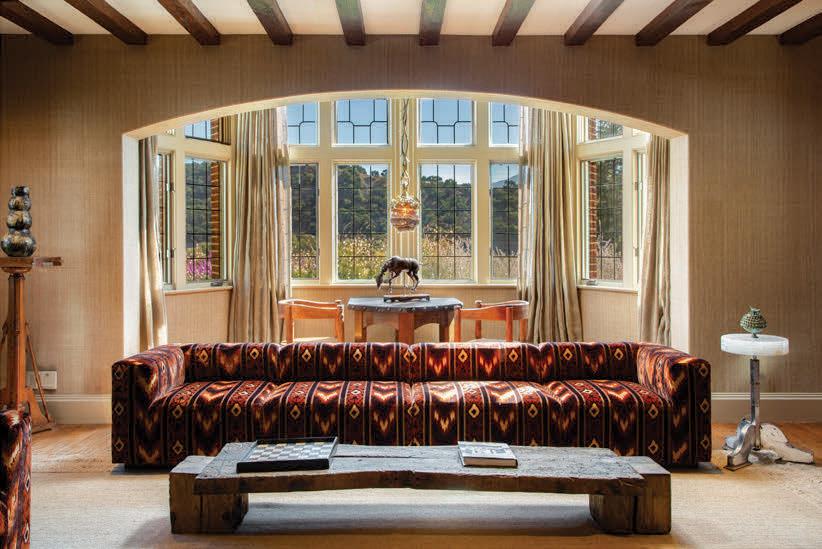
Enjoy a sample of Riskin Partners’ current offerings.
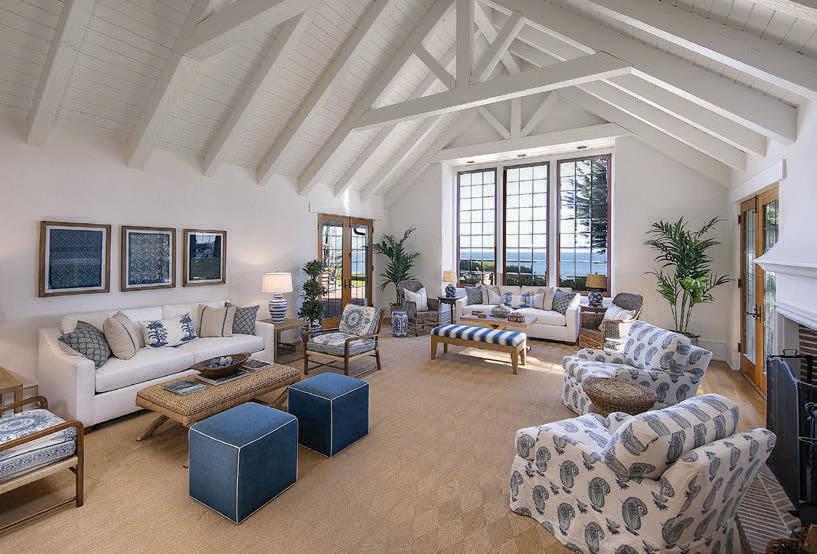
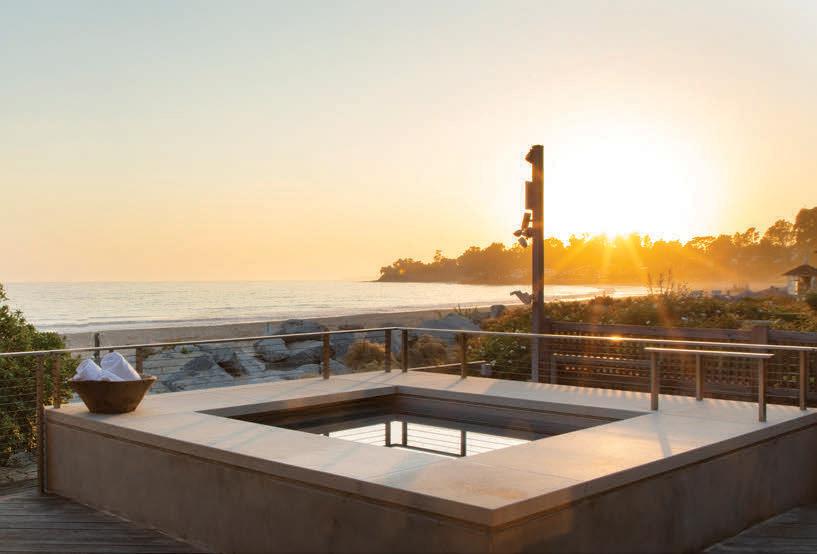
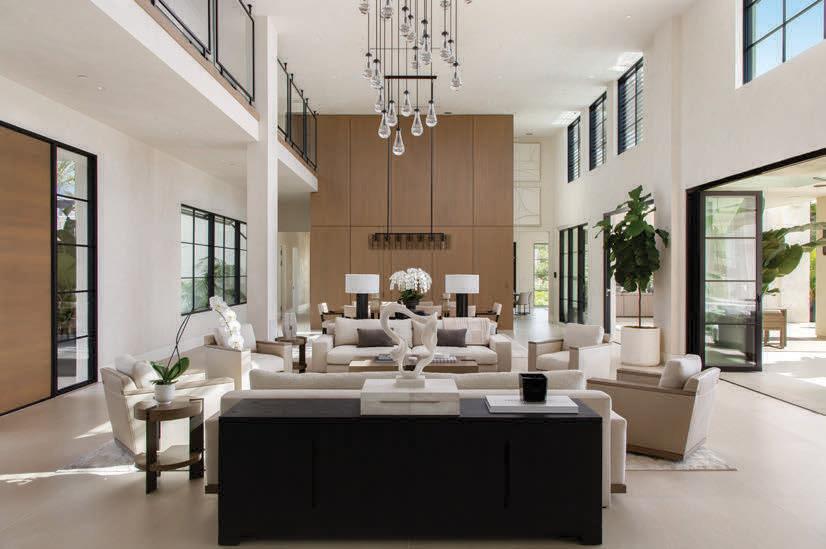
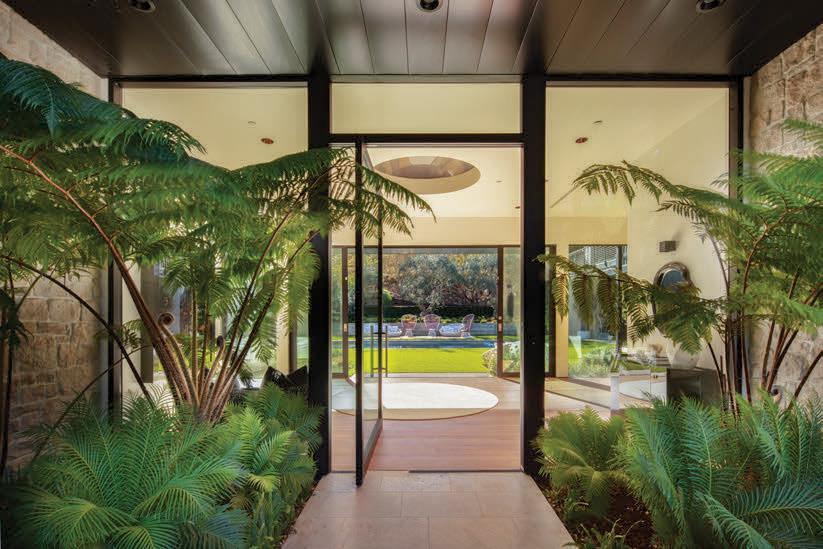
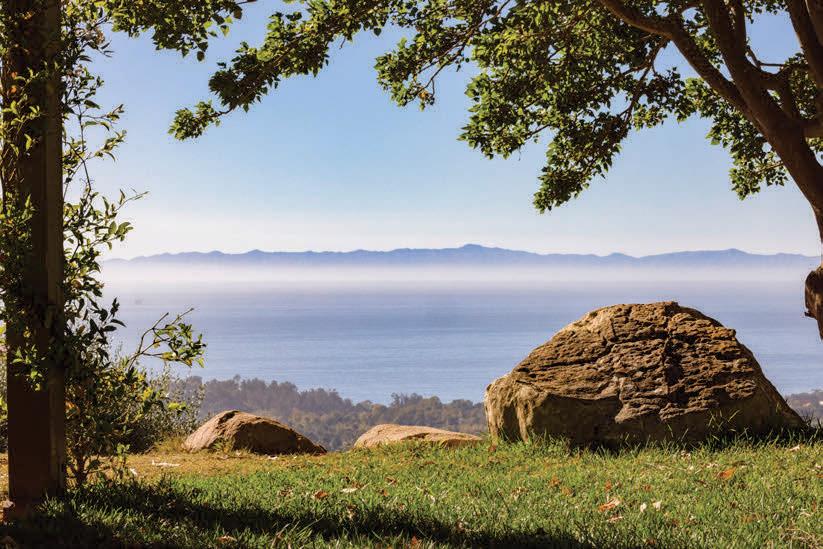
The Premiere Estates of Montecito & Santa Barbara
805 565/2208
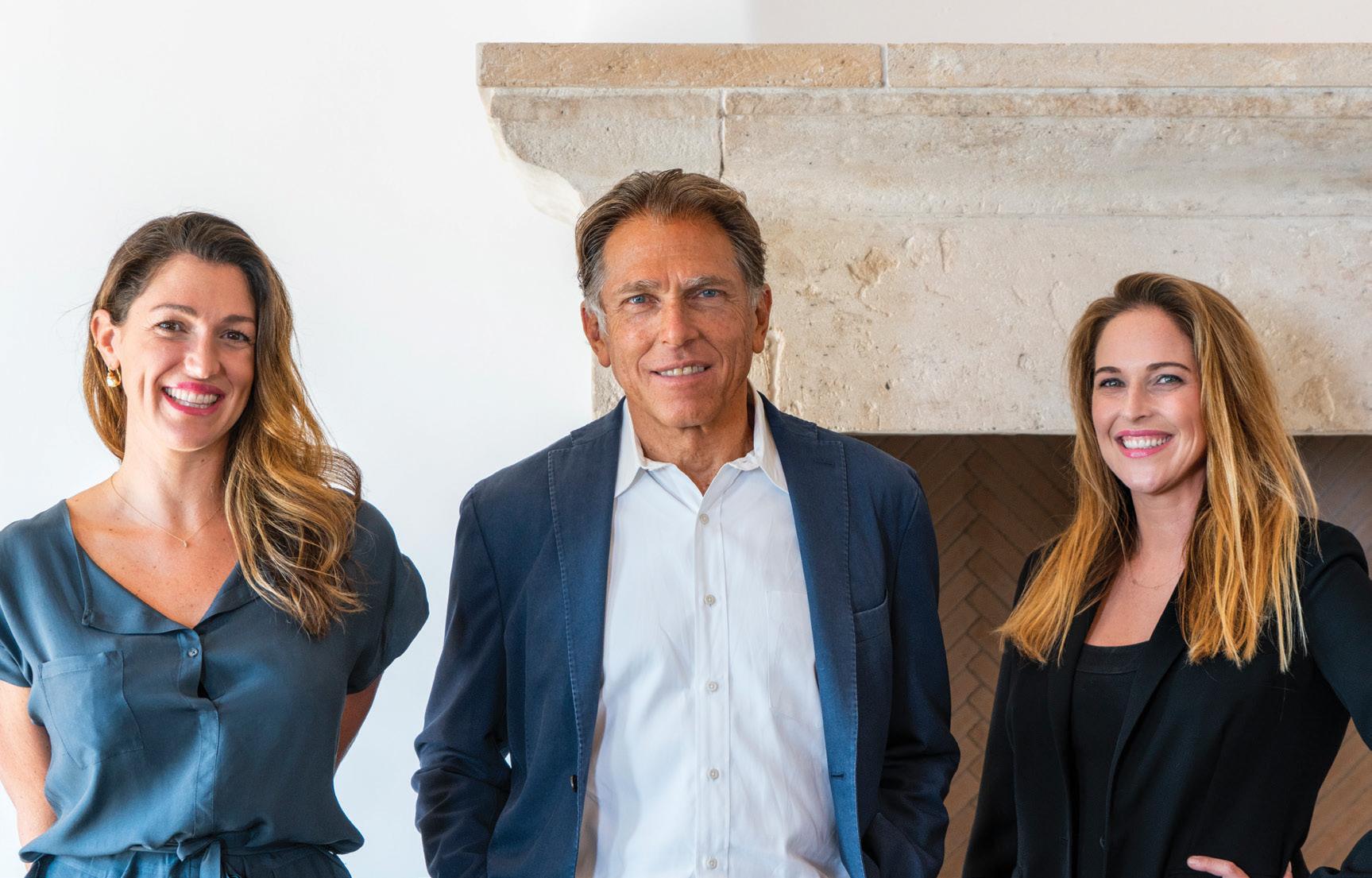
I appreciate their warmth, attention to detail, knowledge of the area, efficiency, timely responses and communication.”
“They were able to finesse the simultaneous closing of escrows on both the old and new properties. This amazing feat allowed me to transition comfortably and happily with a minimum of stress. They are, quite simply, the best!”
“If possible, we would give them higher marks than 5-stars. Thank you for making our dream come true! ”

Recent
Next
Along

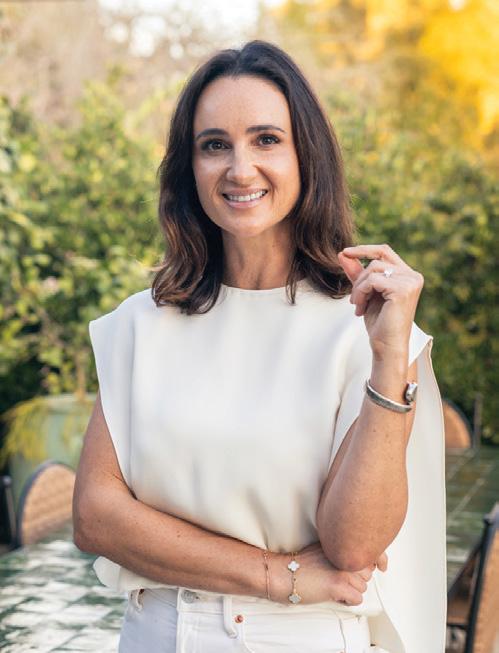
In 1987, my parents and I left the USSR in search of a better life. We were fortunate to find our way to Santa Barbara, a place that would become our sanctuary. Shortly thereafter, we purchased our first home here. I still remember what that moment meant for my family.
That journey, and the pursuit of finding “our home,” continues to inspire me every day.
For nearly 23 years, I’ve had the privilege of helping others find their place in this extraordinary community. Real estate, to me, is far more than a transaction. It is about belonging. About architecture that moves you. About waking up somewhere that feels deeply and unmistakably yours.
When you love where you live, you move through the world differently. With confidence, peace, and purpose, knowing you have something meaningful to return to.
Today, my team and I are honored to be recognized as one of Santa Barbara County’s highest performing real estate groups, specializing in architecturally significant homes, estates, new construction, beach properties, and land parcels. Ranked #1 among Berkshire Hathaway’s small teams nationwide, we remain deeply committed to serving this community with discretion, expertise, and heart.
If you are considering a move, whether near or far, it would be our privilege to guide you home.
Warmly,






















CEO Gwyn Lurie gwyn@montecitojournal.net
Varda Bar-Kar, Tatiana Bilbao, Alejandro Cartagena, Jorge Castillo, Heidi Clements, Tosh Clements, Sheila Lodge, Narsiso Martinez, Ronald Rael, Kim Reierson, Bill Robens, Virginia San Fratello, Flash Shelton, the Vilchis family Volume 19 Issue 1
SPRING | 2026
President & COO
Tim Buckley tim@montecitojournal.net
The Riv Founder & Editor
Les Firestein les@montecitojournal.net
Managing Editors
Chris Connor chris@montecitojournal.net
Zach Rosen zach@montecitojournal.net
Art Director
Trent Watanabe
Staff Writer Jeff Wing
Copy Editor | Lily Buckley Harbin
Graphic Design/Layout Assistant | Stevie Acuña
VP Sales & Marketing
Leanne R. Wood leanne@montecitojournal.net | (805) 284-7177
Account Managers
Tanis Nelson: tanis@montecitojournal.net
Susan Brooks: sue@montecitojournal.net
Elizabeth Scott: elizabeth@montecitojournal.net
Joe DeMello: joe@montecitojournal.net
Photography | Kim Reierson
Contributors
is published by Montecito Journal Media Group, LLC. 1206 Coast Village Circle, Suite G, Santa Barbara, CA 93108 For distribution, advertising, or other inquiries: (805) 565-1860 www.montecitojournal.net


























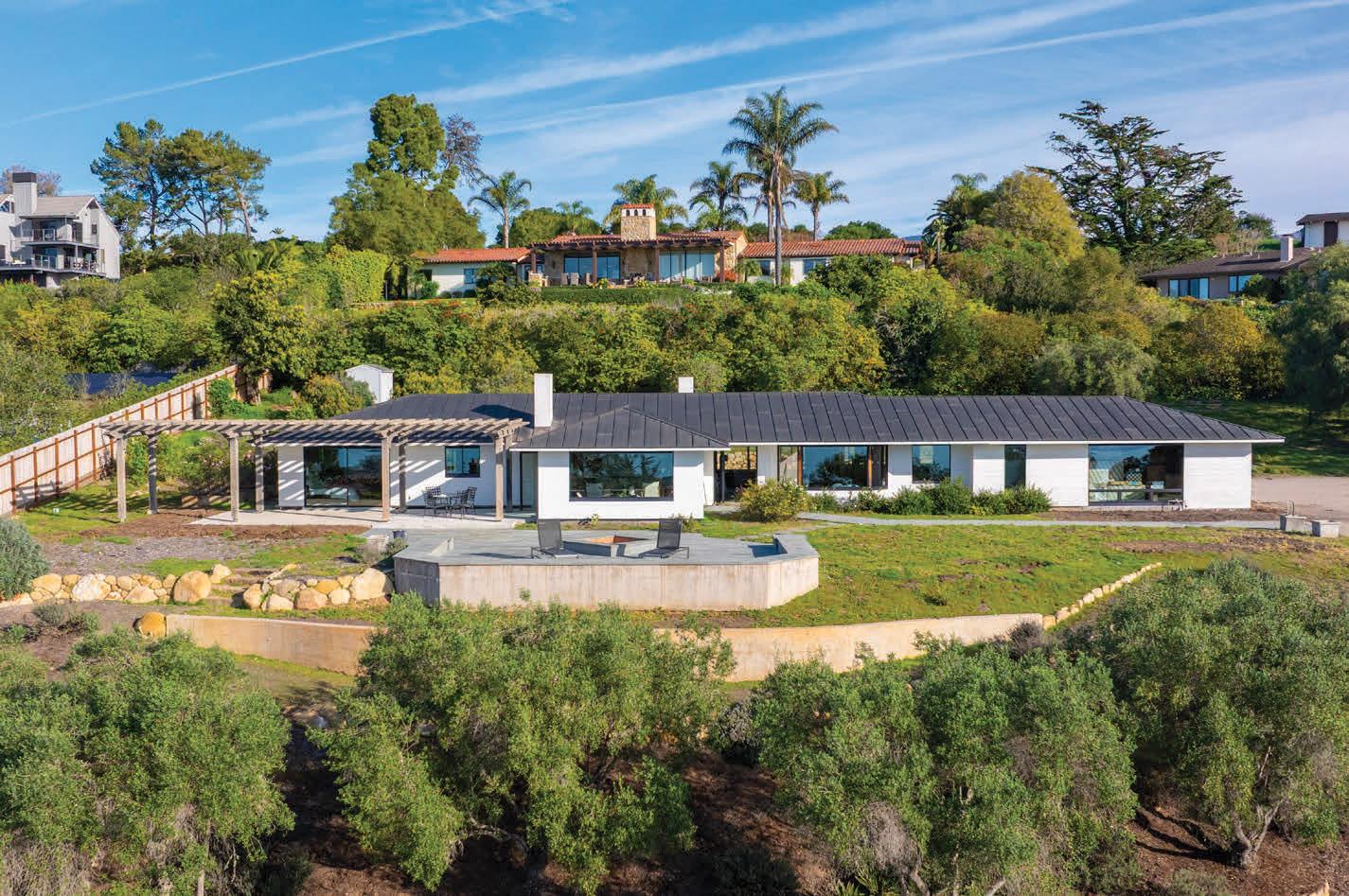
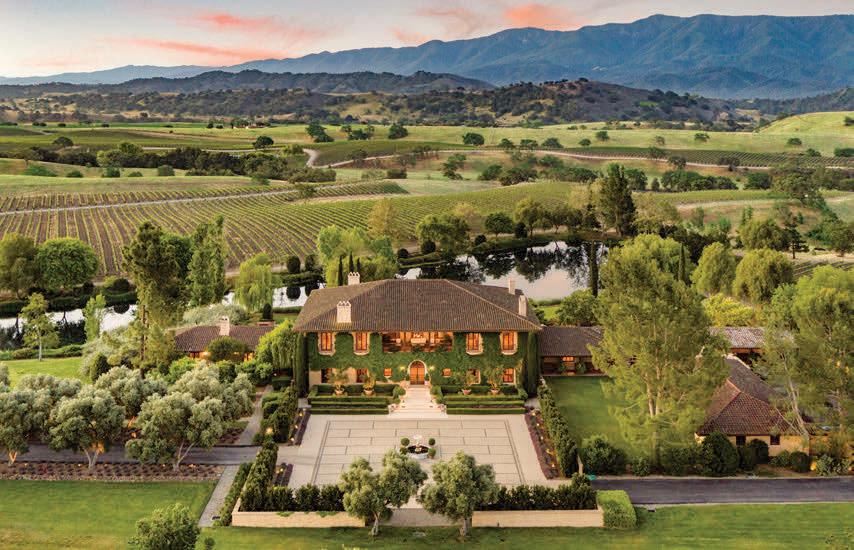
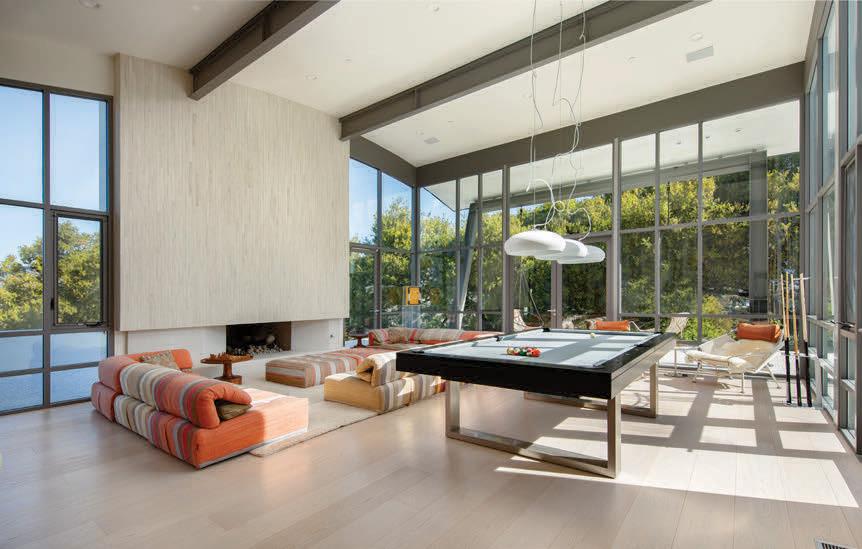
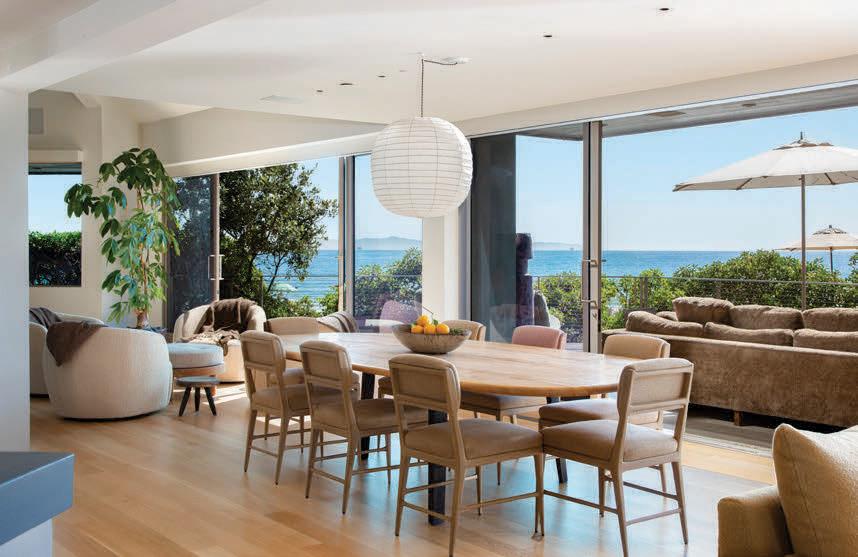
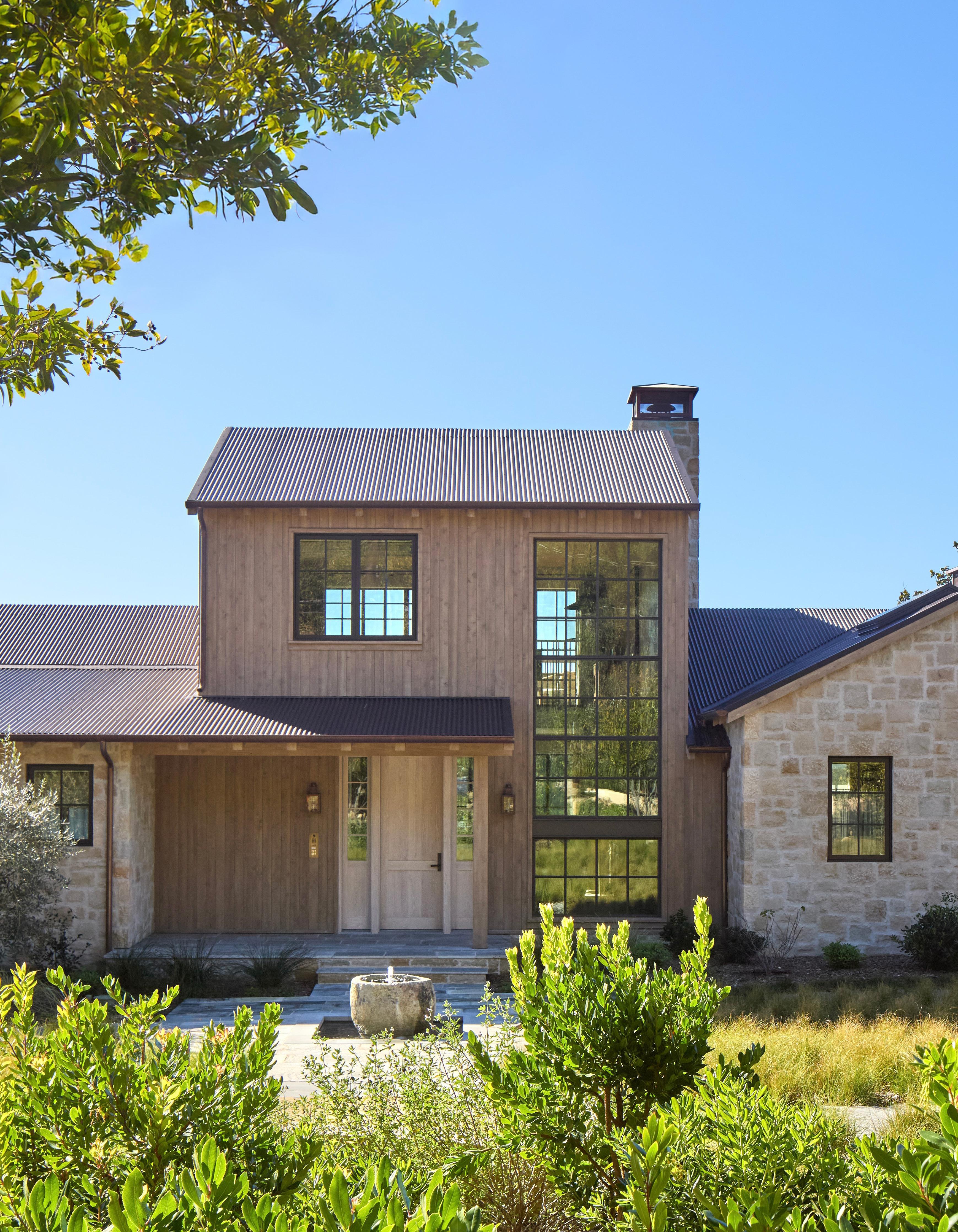
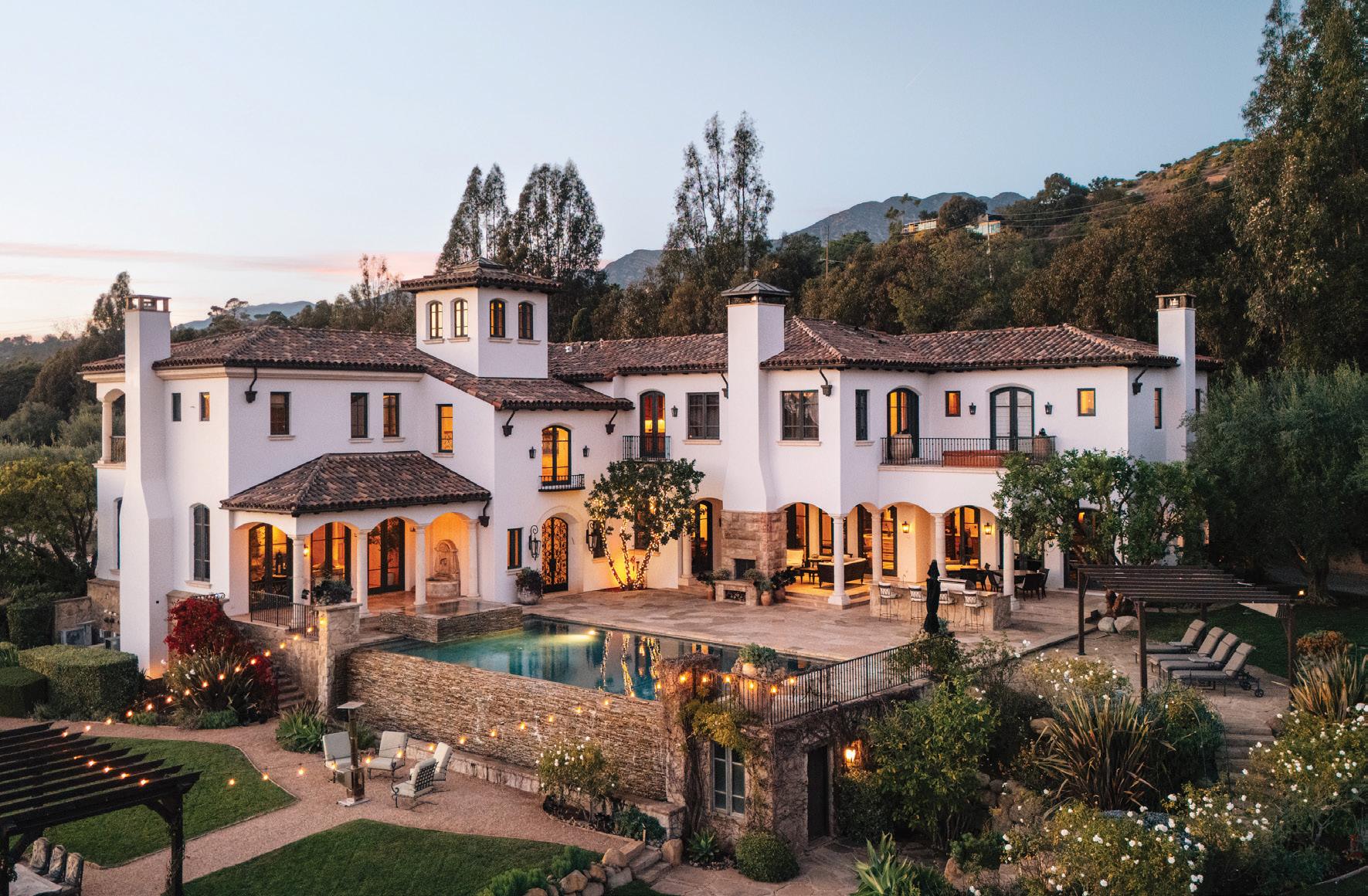
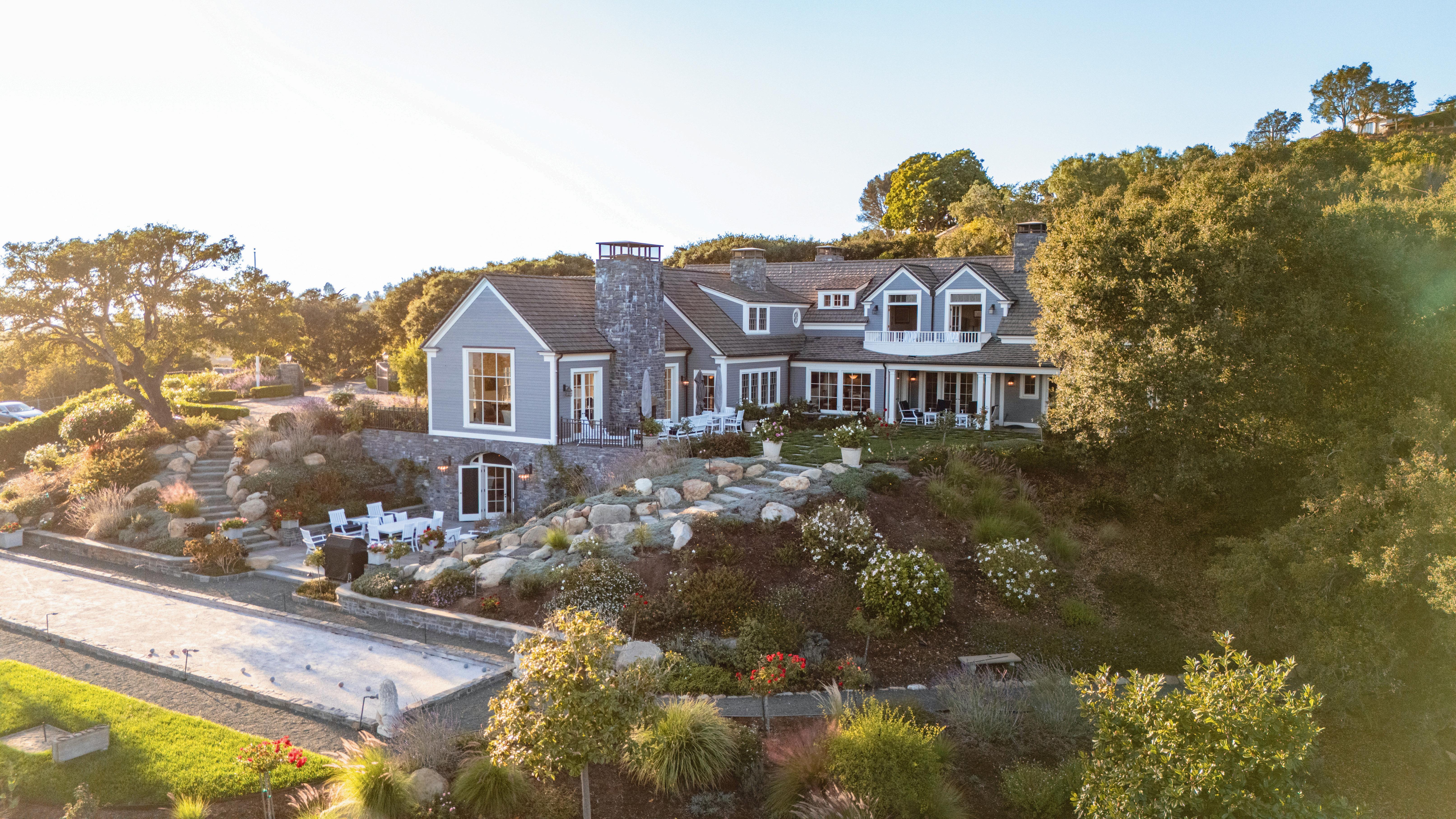
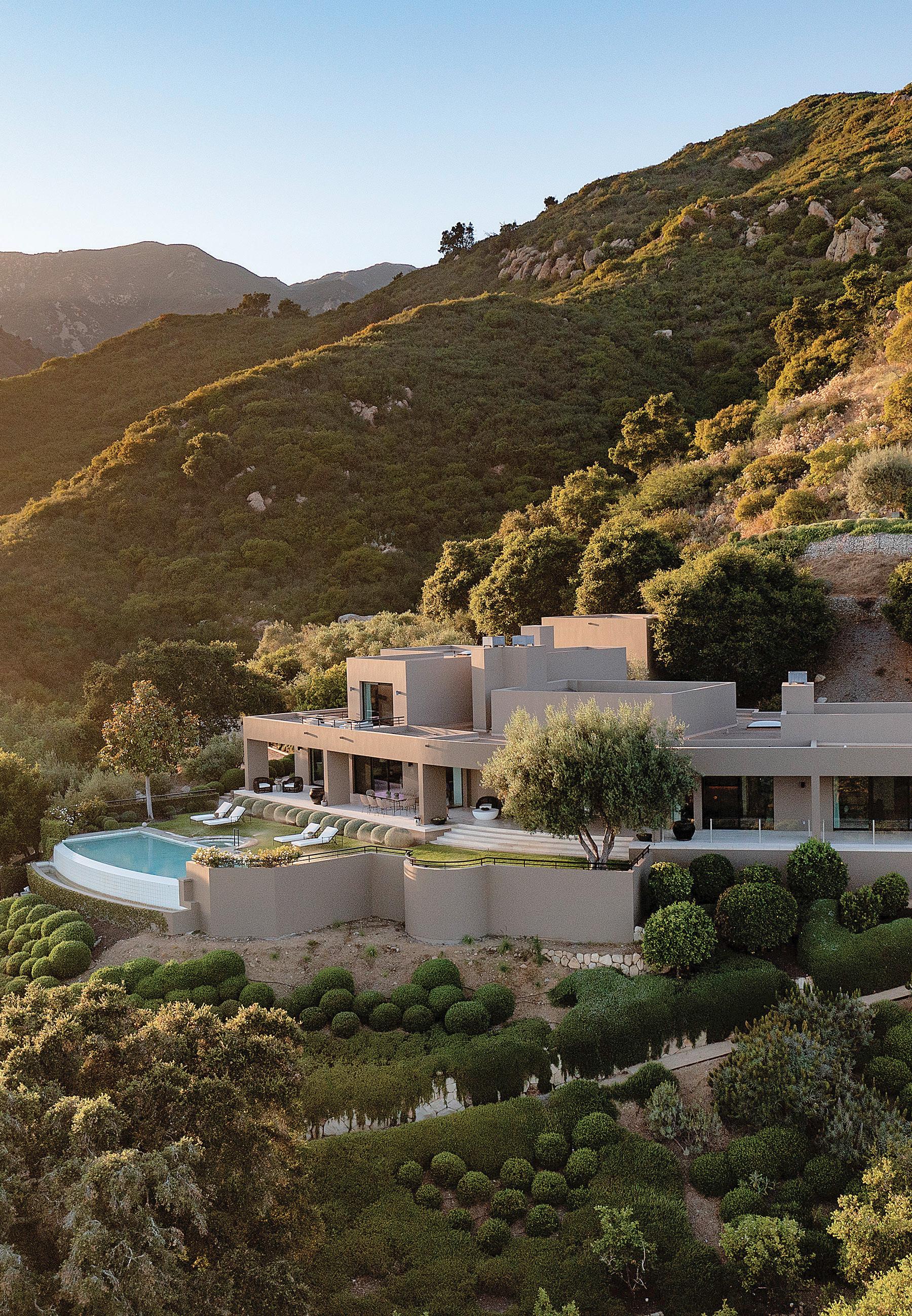
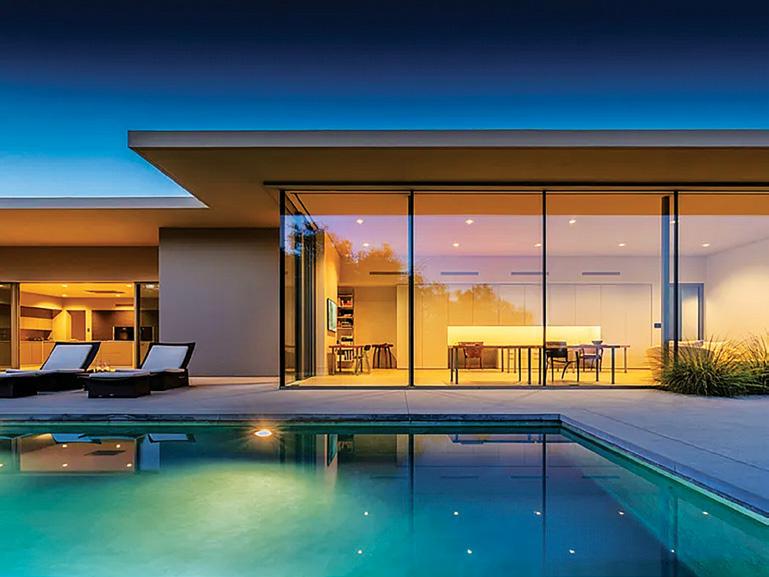
Crowned by a custom copper roof and perched atop coveted Campanil Hill, this sophisticated single-level residence captures breathtaking ocean and island views in a highly desirable closein setting. Grand public spaces, a sublime primary suite wing, and terraced gardens filled with fruit trees and roses create an exceptional backdrop for refined living. Designed by Marc Appleton, AIA, with a Euro-style kitchen by Reeds featuring Gaggenau appliances, along with Lucifer lighting and Skyline doors and windows, the home awaits your personal completion. A rare opportunity to finish a significant estate among premier properties in this sought-after neighborhood.
Offered at $4,995,000
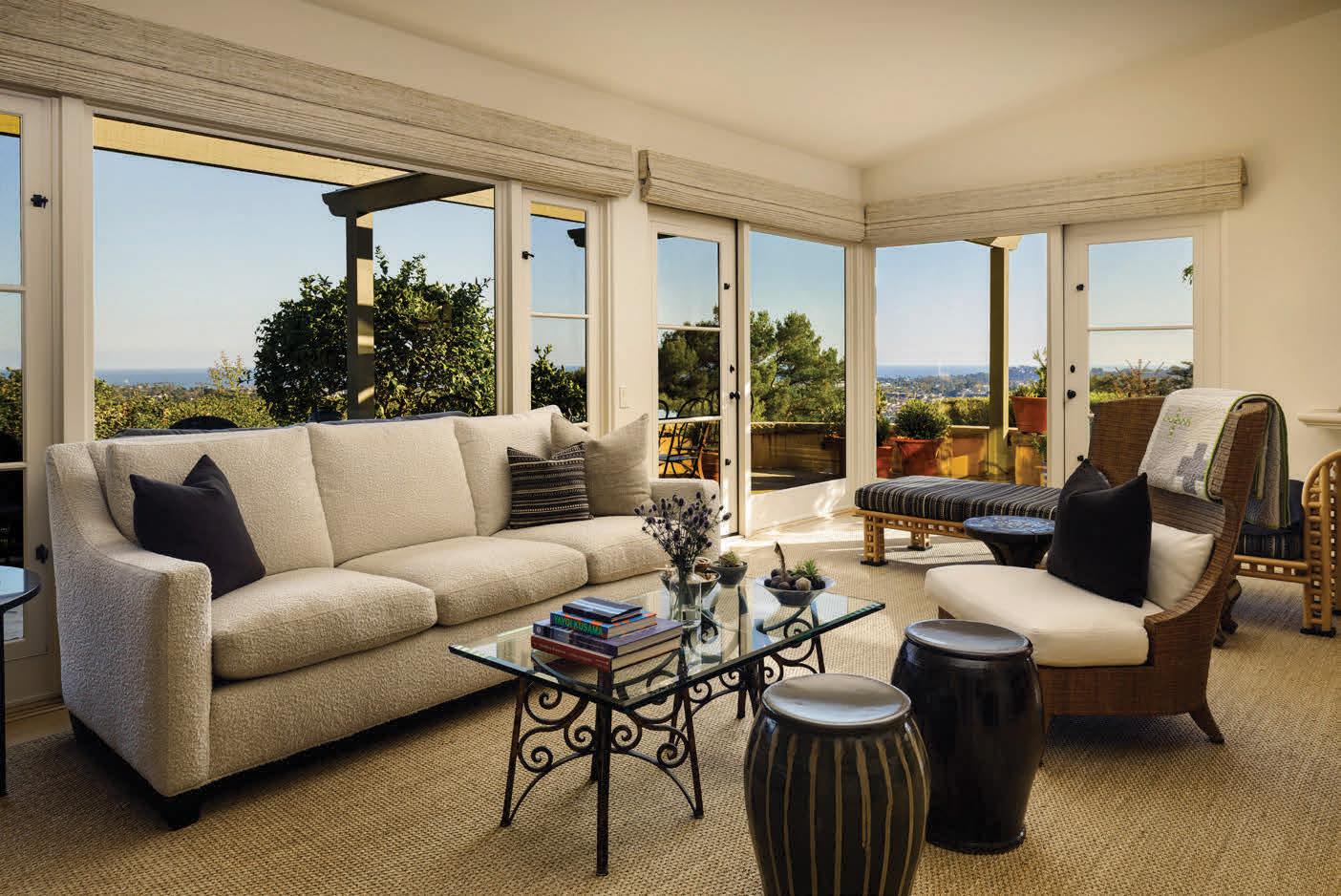
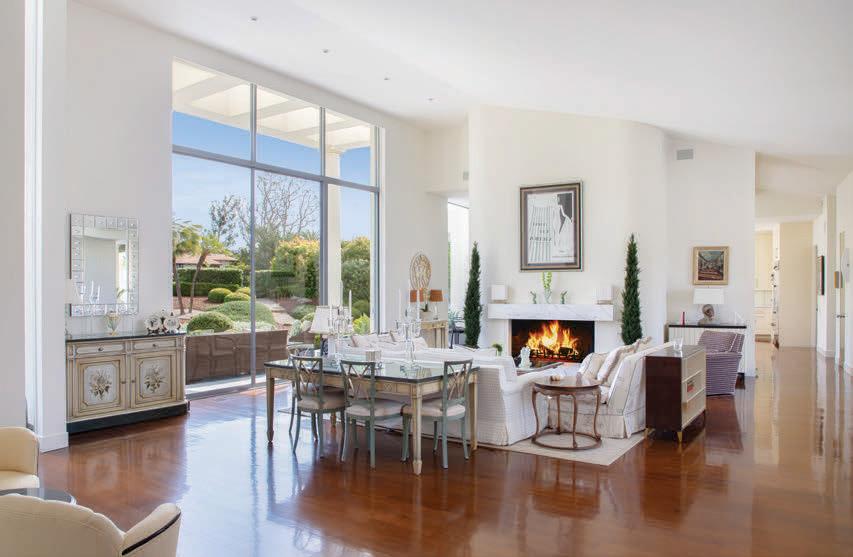
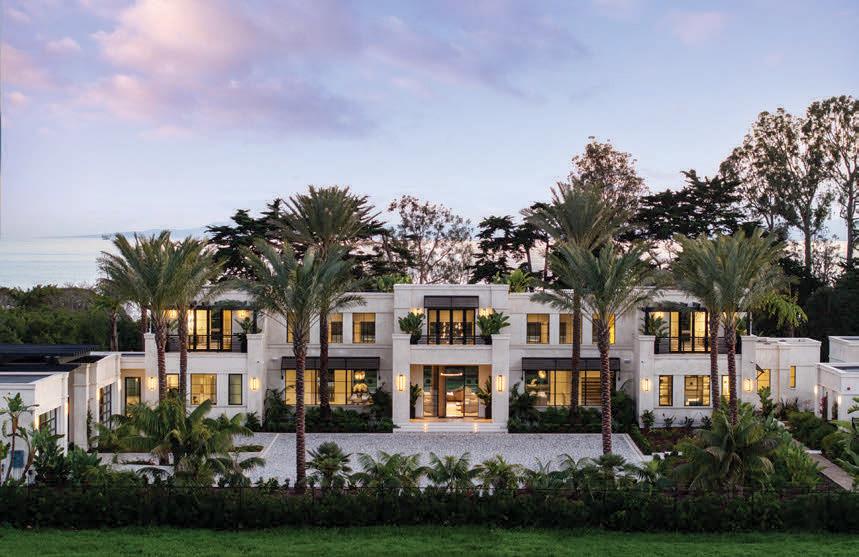
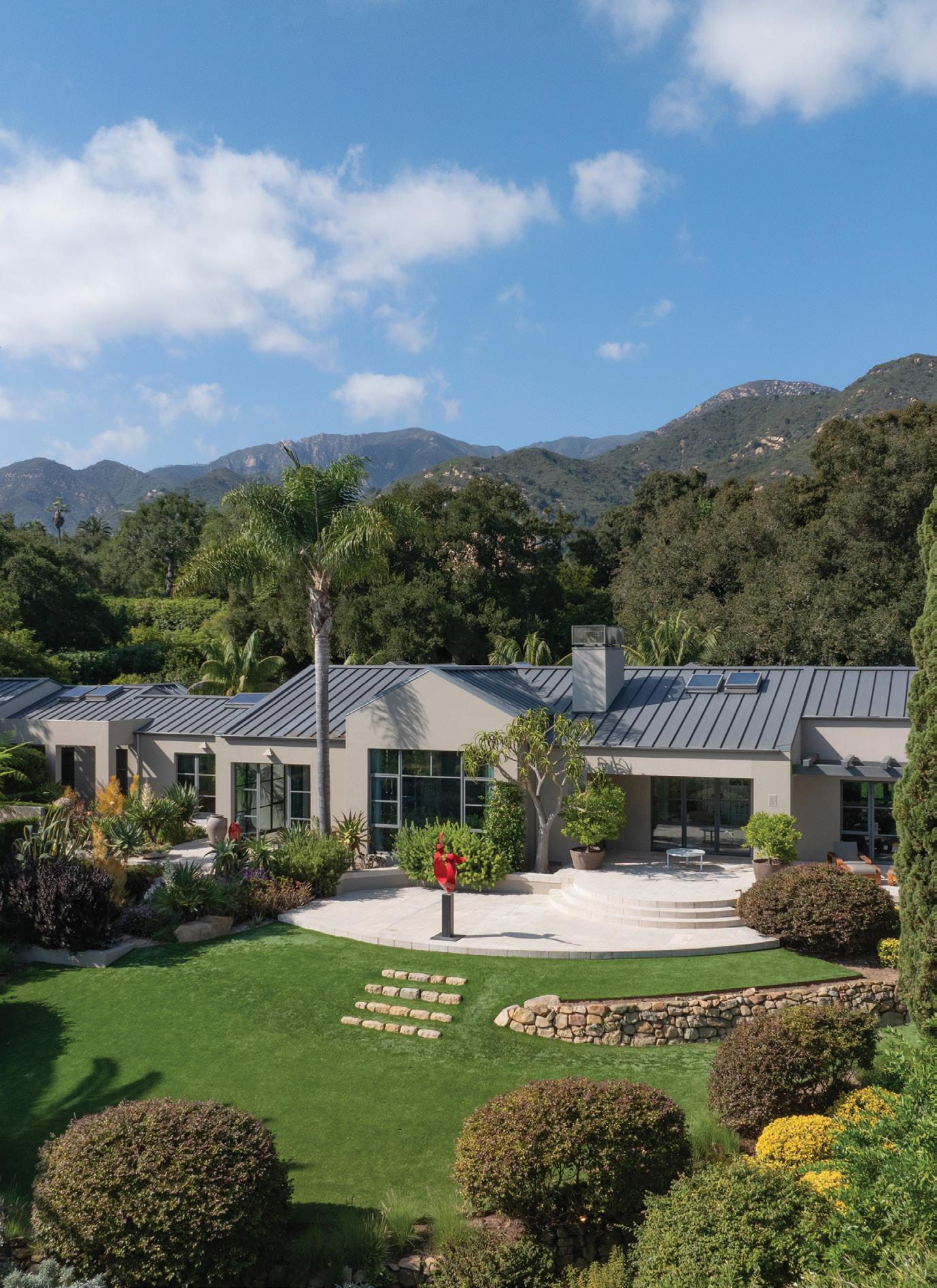
Nestled above the city in a private setting, this Riviera home offers a seamless blend of panoramic beauty, sophisticated design, and forward-thinking sustainability. Experience the very best of coastal California living in an energy-efficient sanctuary that celebrates nature, innovation, and tranquility. This elevated residence redefines modern comfort. With sweeping vistas, eco-conscious systems, and timeless architecture, 1022 Garcia Road invites you to live in perfect harmony with your surroundings. It’s not just a place to live — it’s a place to thrive.
Offered at $5,399,995
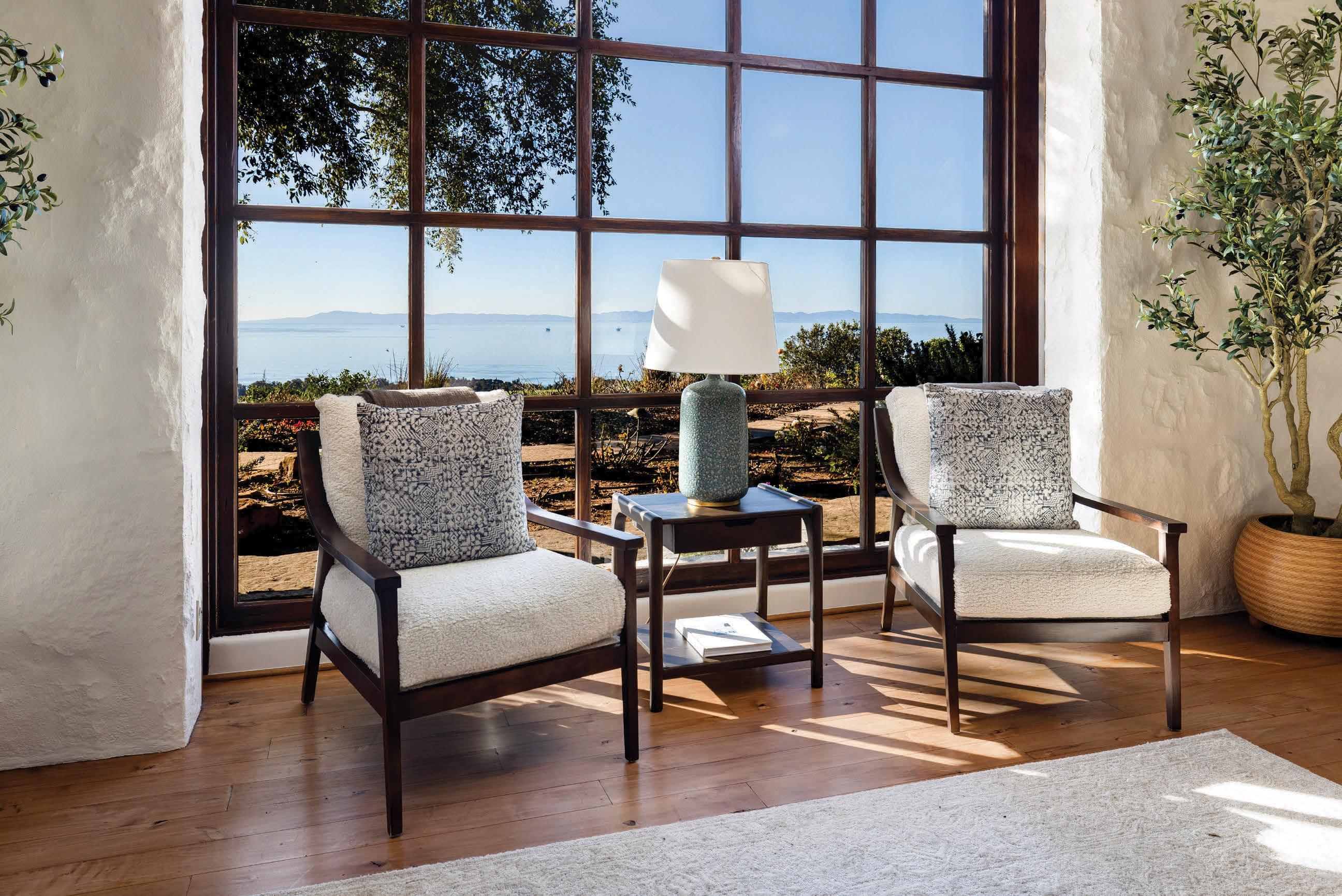
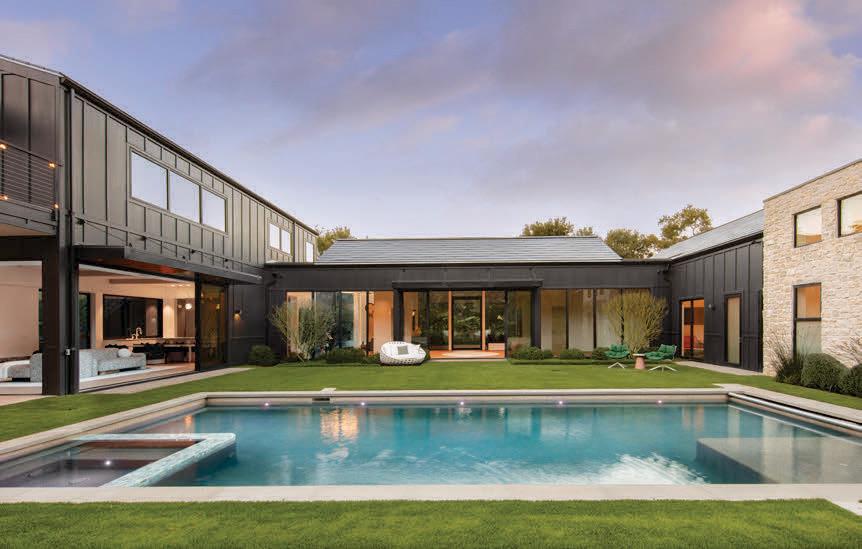
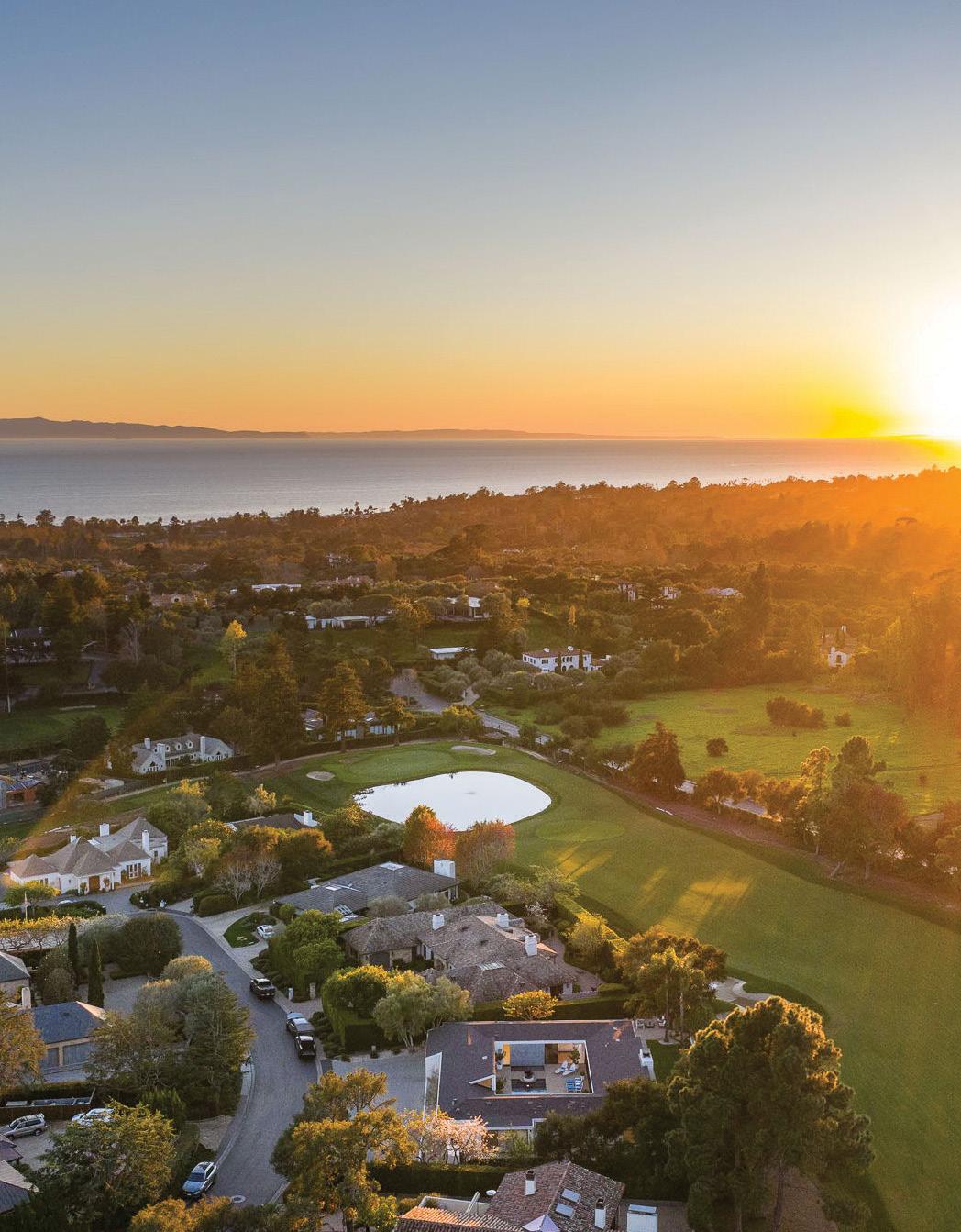
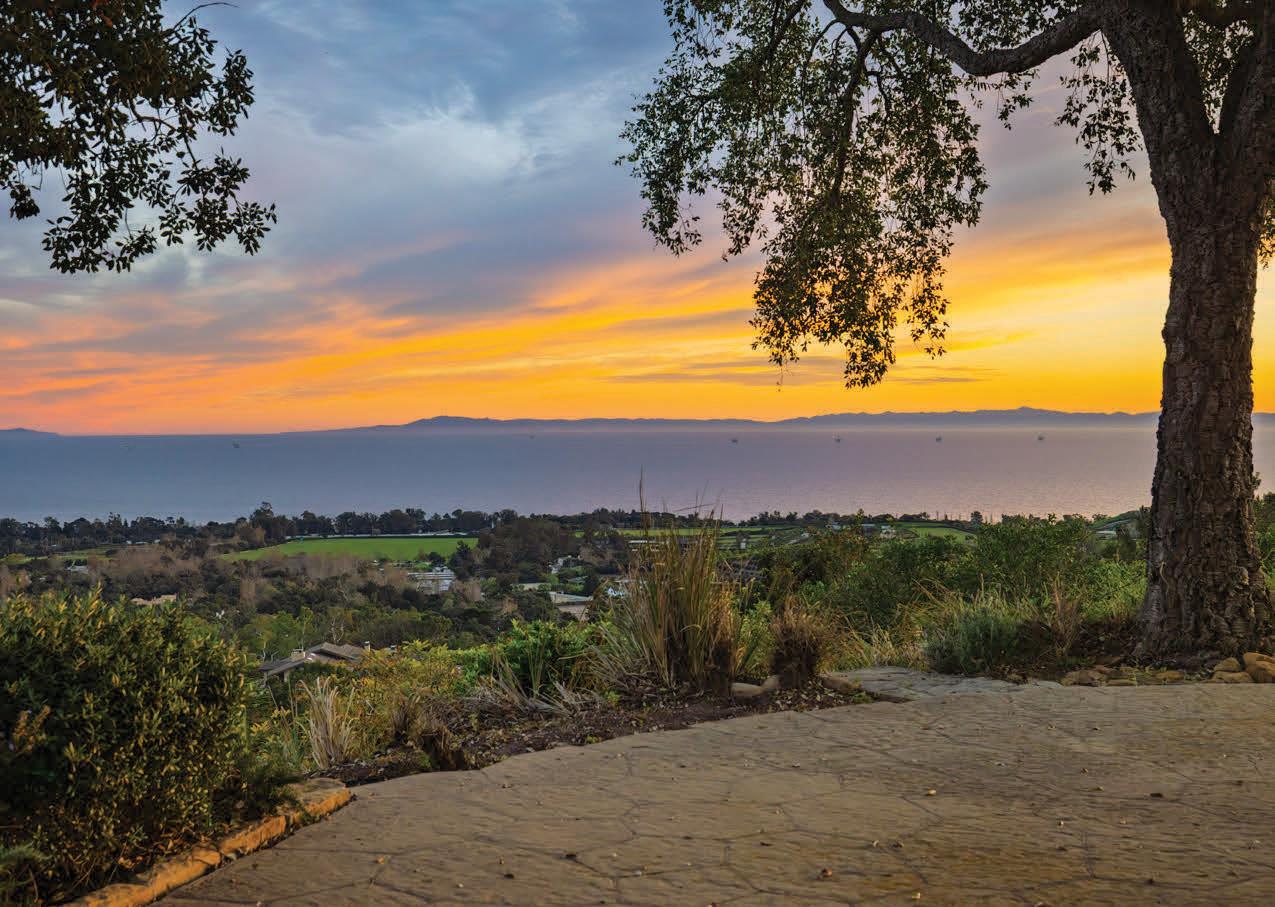
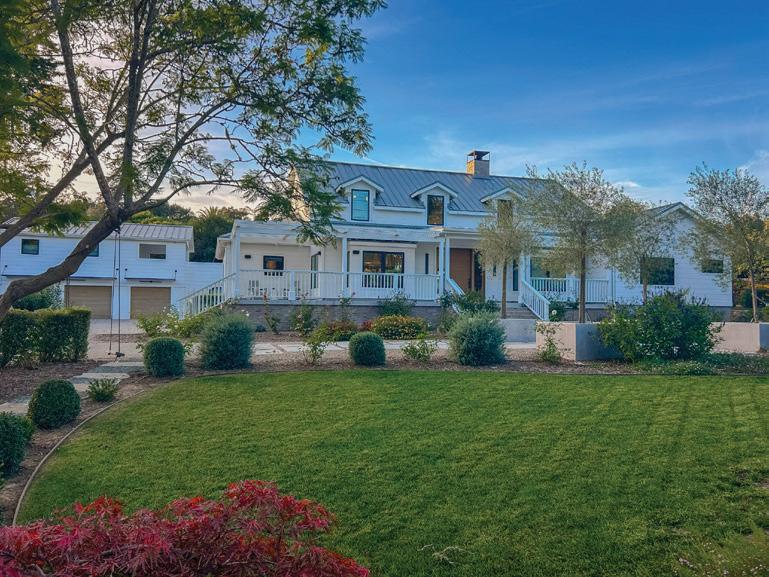
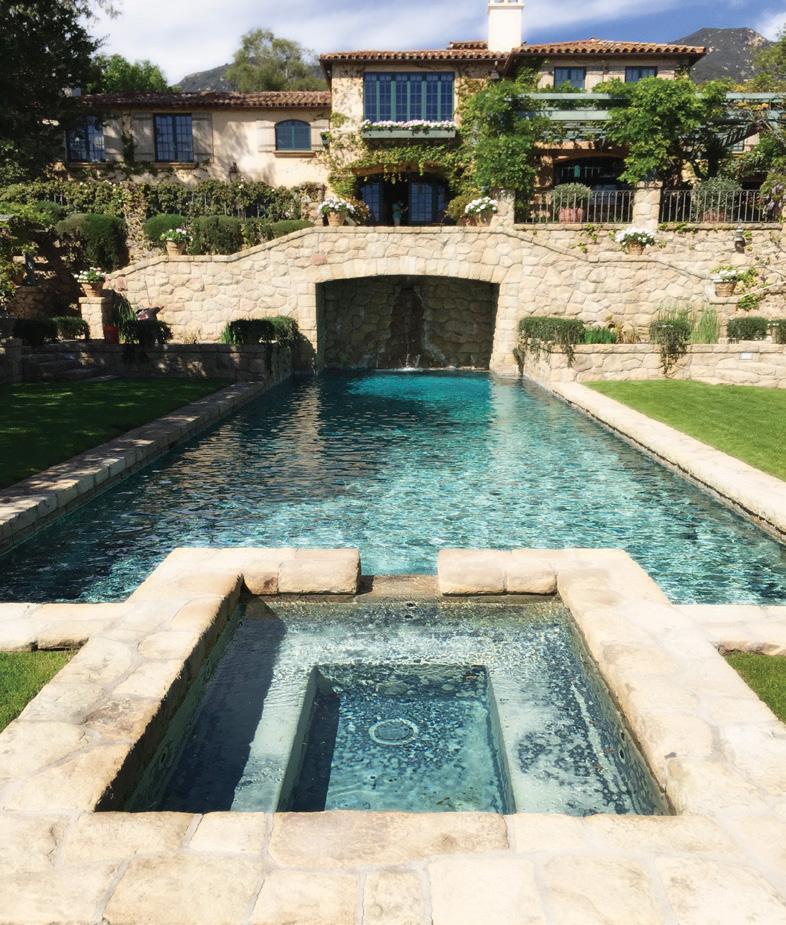
Knoll-top California hacienda on approximately 5 acres. This custom-built, gated, and private retreat is just minutes from town. A dramatic great room greets you upon entering the home from the front courtyard. Additional features include alder hardwood floors throughout, vintage French tile floors in the kitchen and family room, a wine room, media library, and an office or flex space. The primary suite is on the main level with direct access to the pool and spa. Several covered loggias, including one with a fireplace, spill out to the terraces and gardens. Stunning pool and spa. This home offers the ultimate indoor-outdoor California lifestyle. Dramatic views include coastline, white water, islands, harbor, mountains, valleys, and polo fields.

Offered at $9,995,000
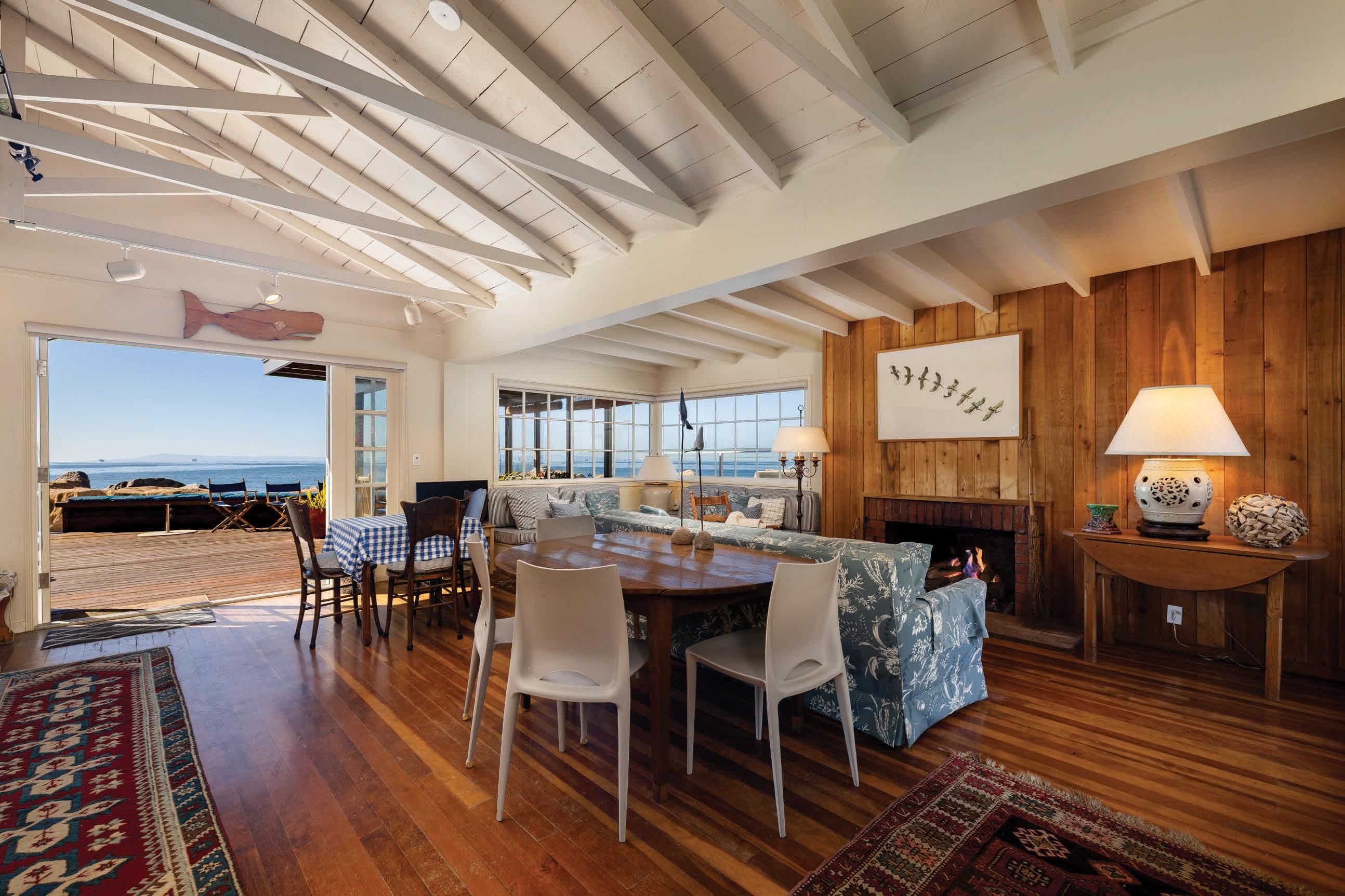
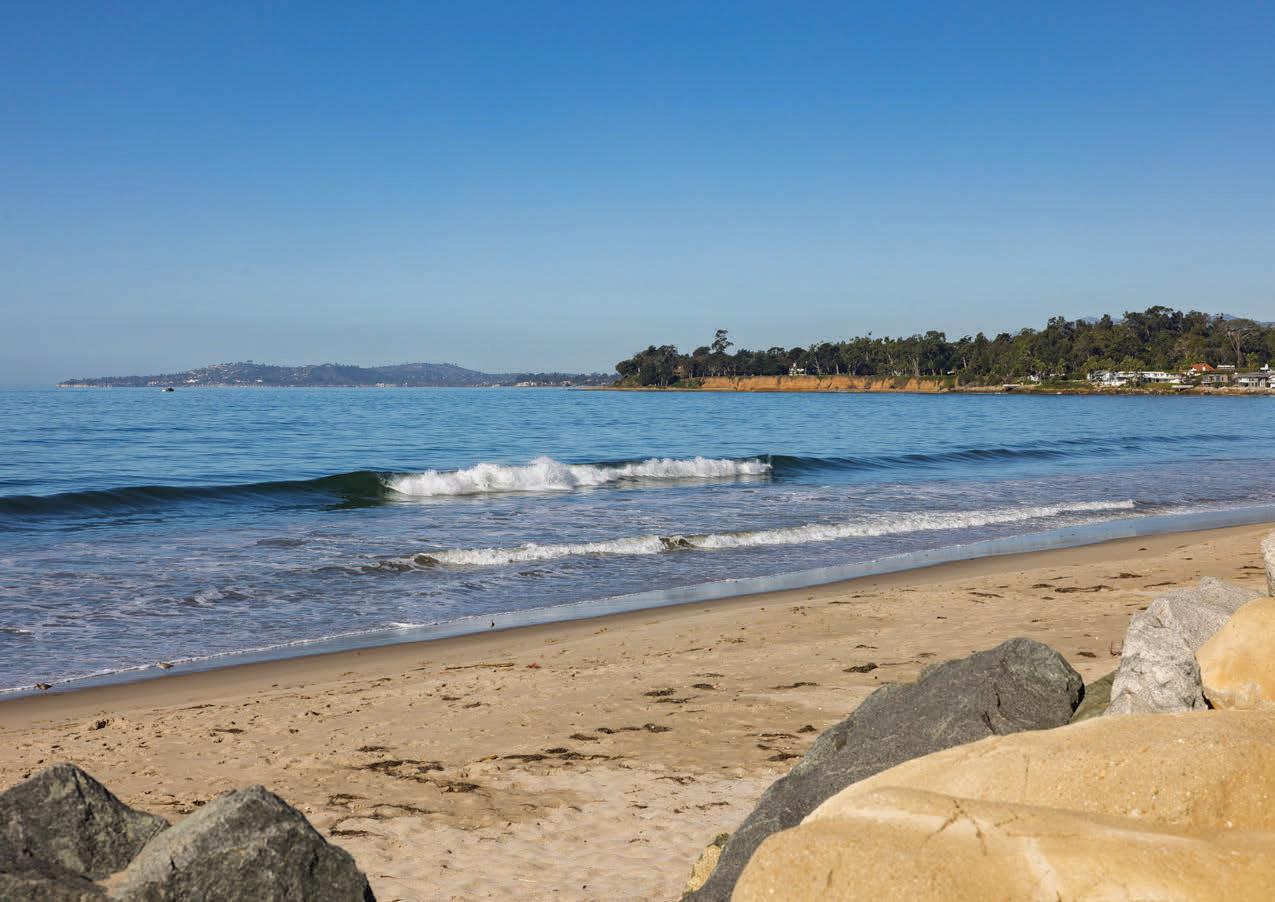
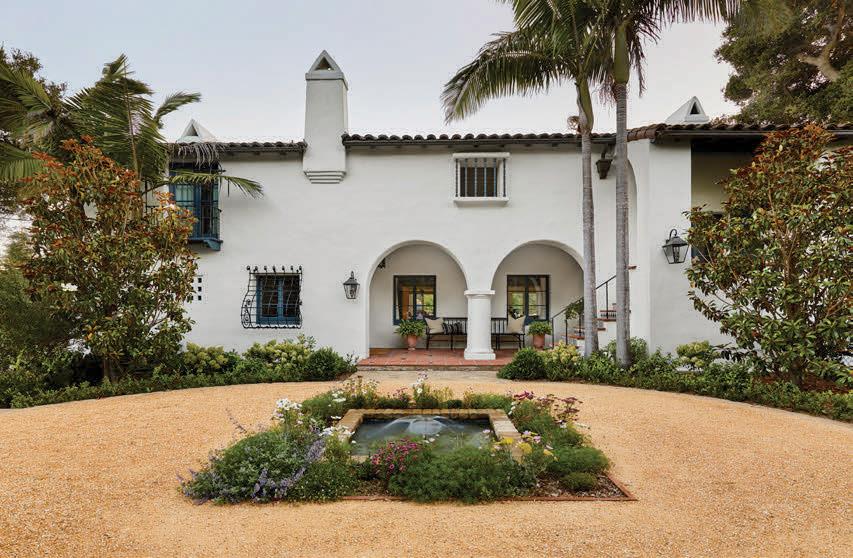
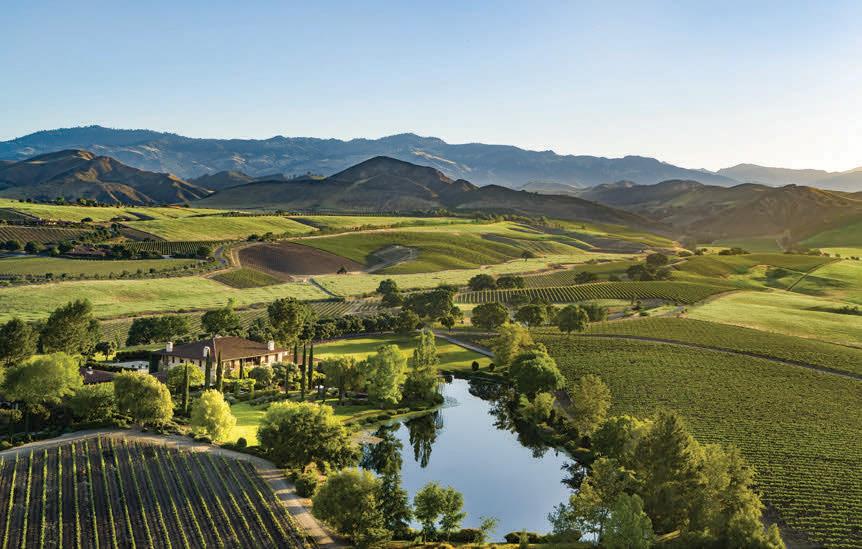
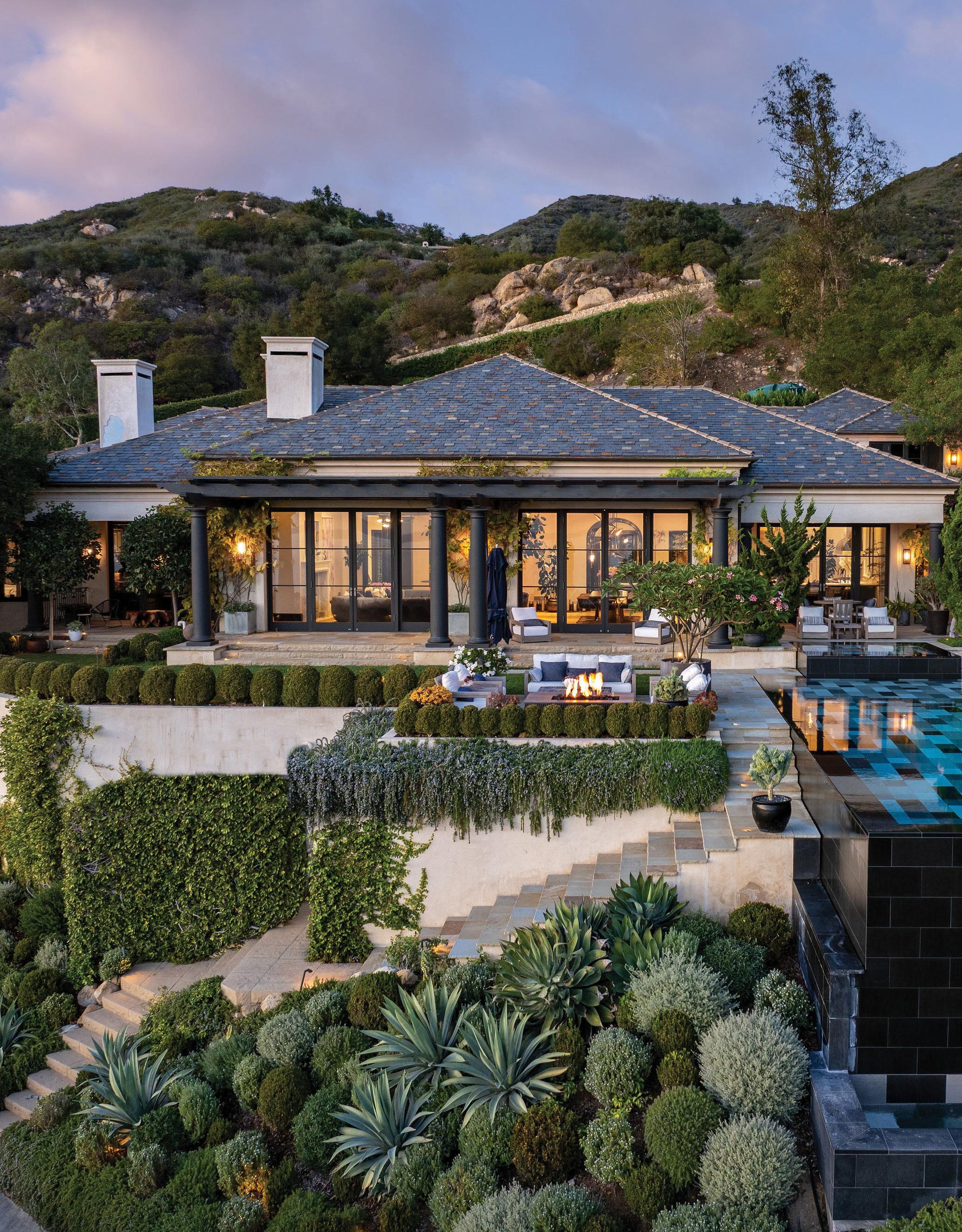
Stunning renovated classic Padaro Lane beach house on approx. 50 feet of beachfront. Spectacular Harbor, Islands & Sunset views. This 4 Bedroom beach house offers an open floor plan with a enclosed glass windbreak terrace at beachside and private gated walk-up courtyard and entry deck. Large oceanside terrace with more than enough room for family and friends and your private steps to the sand, Serena Cove and Loon Point. In 1993, Los Angeles Architect, Edward W. Engs renovated and expanded the original Port Hueneme cottage including a striking 2-story Primary suite addition with ocean and mountain views. The home was published in California Beach Houses, Chronicle Books, 1996.
Offered at $12,500,000
Narsiso Martinez didn’t start out as a showcase artist. Before galleries and prizes, he was a worker at West Coast orchards. Now his canvas is produce boxes and his images of farmworkers are bold and gripping. And they’re selling.

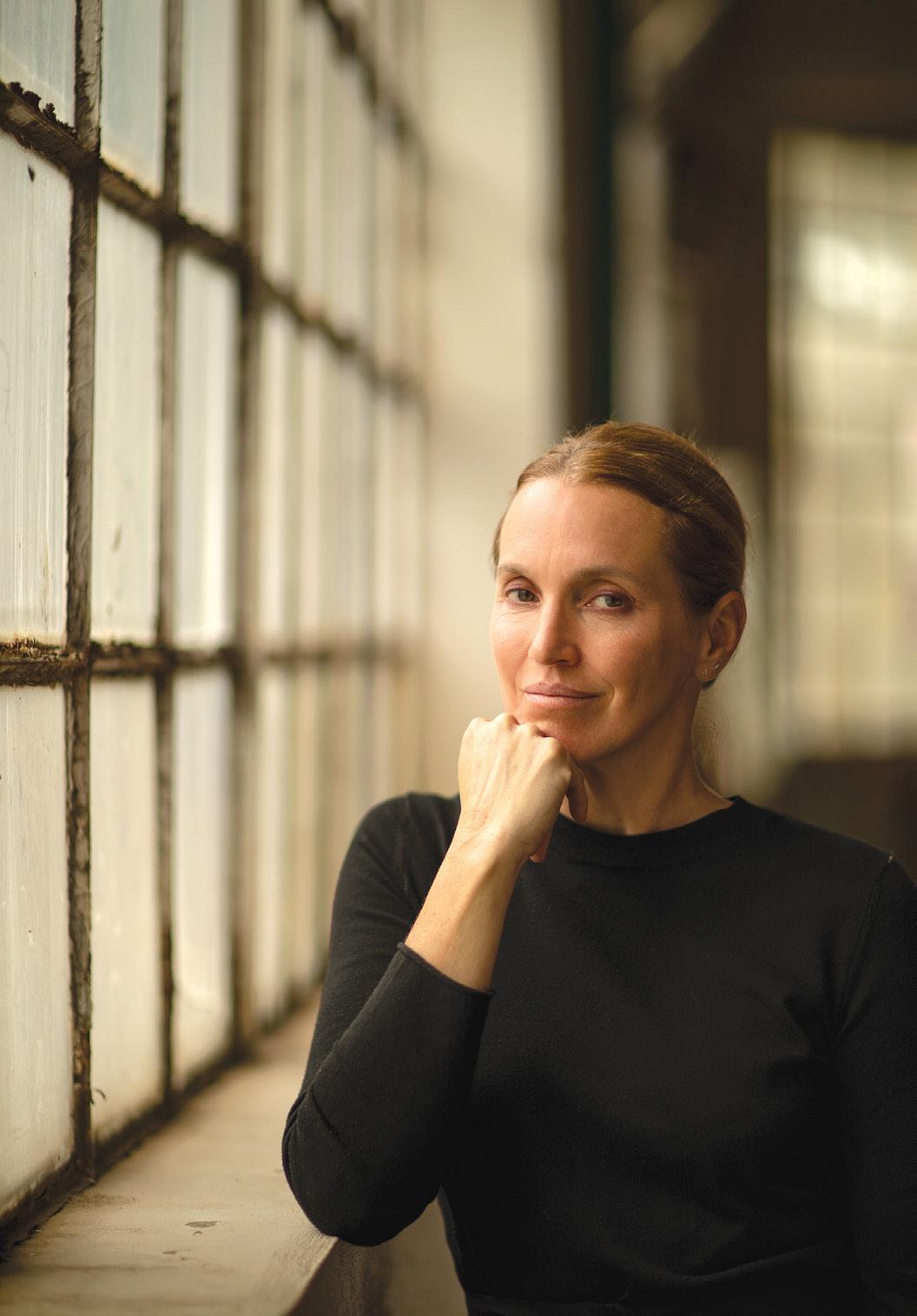
Architecture as care. A home should nurture. It’s that easy. Between lectures at elite universities and projects spanning luxury homes to social housing, Tatiana Bilbao teaches future architects while quietly redefining what architecture itself can and should do.
When life delivers catastrophe, some people pray. Others commission a painting. The retablos of Mexican artist Alfredo Vilchis.
Two giant eyes stare into the sky as celebratory family, friends, and strangers dine upon them. Welcome to our guide to incredible art at the border.
One wall, two countries, and a whole lot of music. The annual Fandango Fronterizo transforms the San Diego-Tijuana border wall into a transnational jam session.
Somewhere between architecture, activism, and amused, revelatory prank lies the provocative work of Ronald Rael.
We always thought Prada Marfa was an Instagram thing, a Beyoncé thing, and a Simpsons thing. Architect Ronald Rael sets us straight.
Most people look at traffic and see inconvenience. Alejandro Cartagena looked down from an overpass and saw documentary art.
A cannon, a border wall, animal masks, Uncle Sam, psychiatric patients, and a human projectile. Inside artist Javier Téllez’s Felliniesque fever dream and commentary on the border.
One day it’s a rustic mountain cabin, the next it’s a 170-foot yacht crossing the Atlantic. They’re all just part of BK Interiors’ journey.
In America’s strange new squatter economy, “Squatter Hunter” Flash Shelton helps homeowners reclaim their houses using negotiation, legal strategy, and the occasional chainsaw.
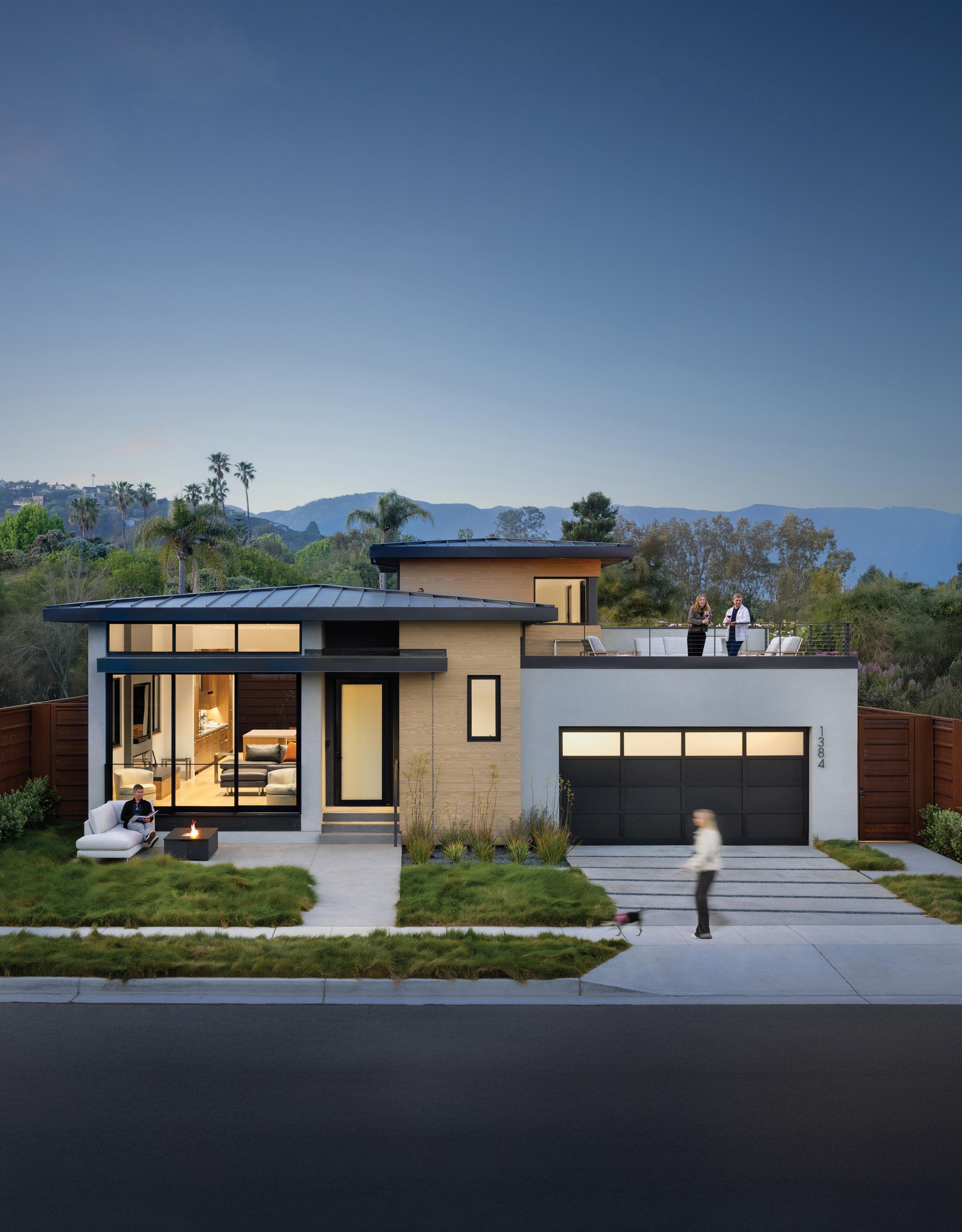
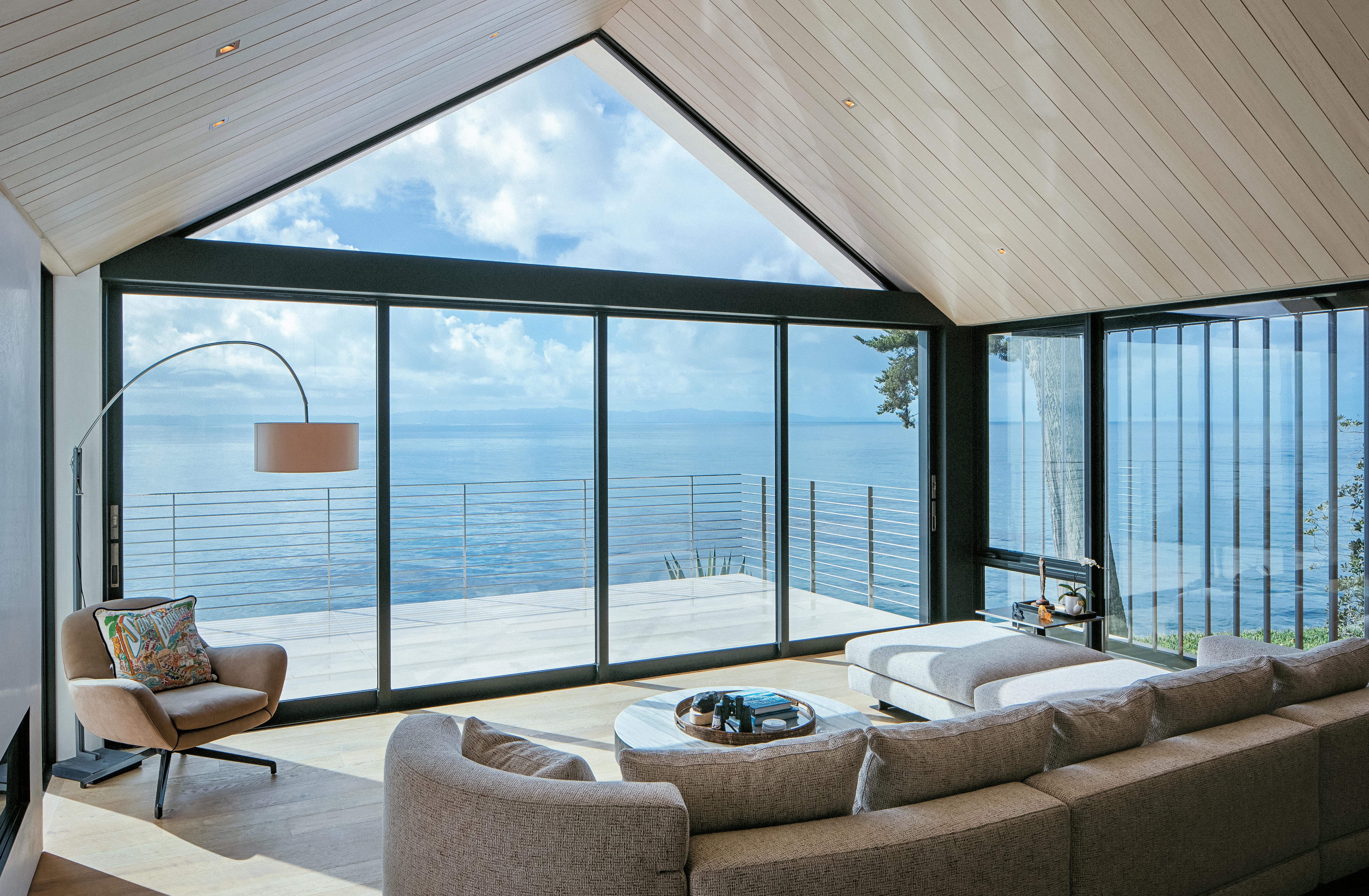
BOUNDLESS LIVING ARCHITECTURE LANDSCAPE INTERIORS
Collectors, botanists, and curious wanderers roam Jeff Chemnick’s Montecito garden where towering cycads, rare lilies of the desert, and a lot of Latin plant names reign supreme. It’s an ‘Aloetusland’ of sorts.
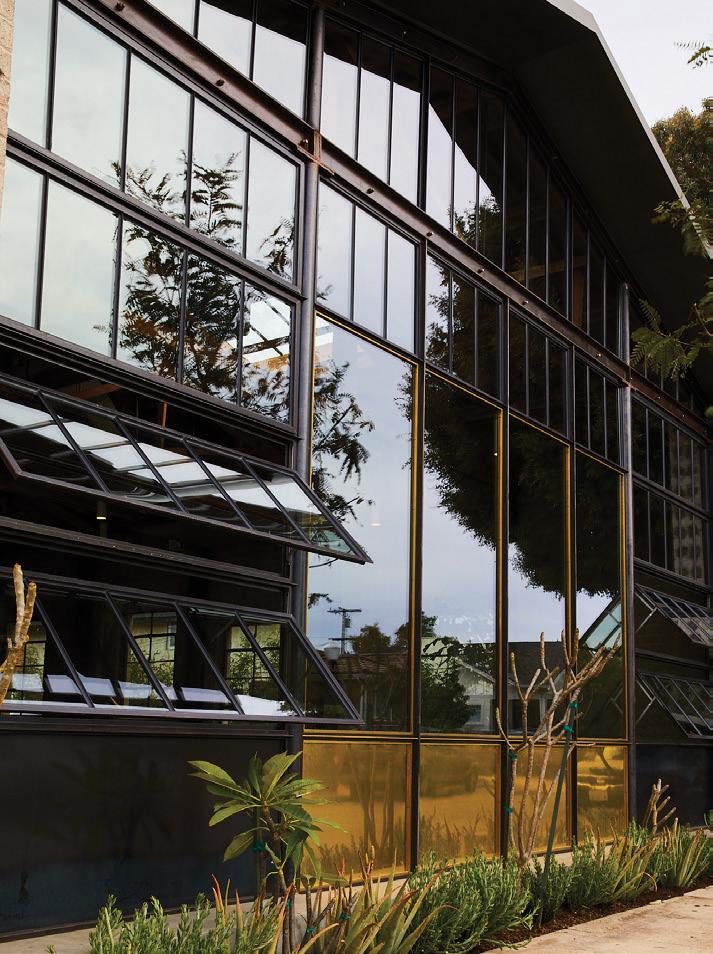
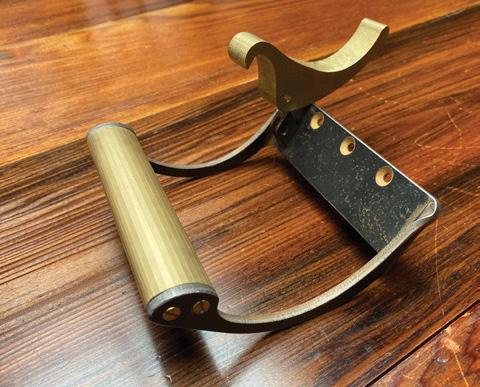
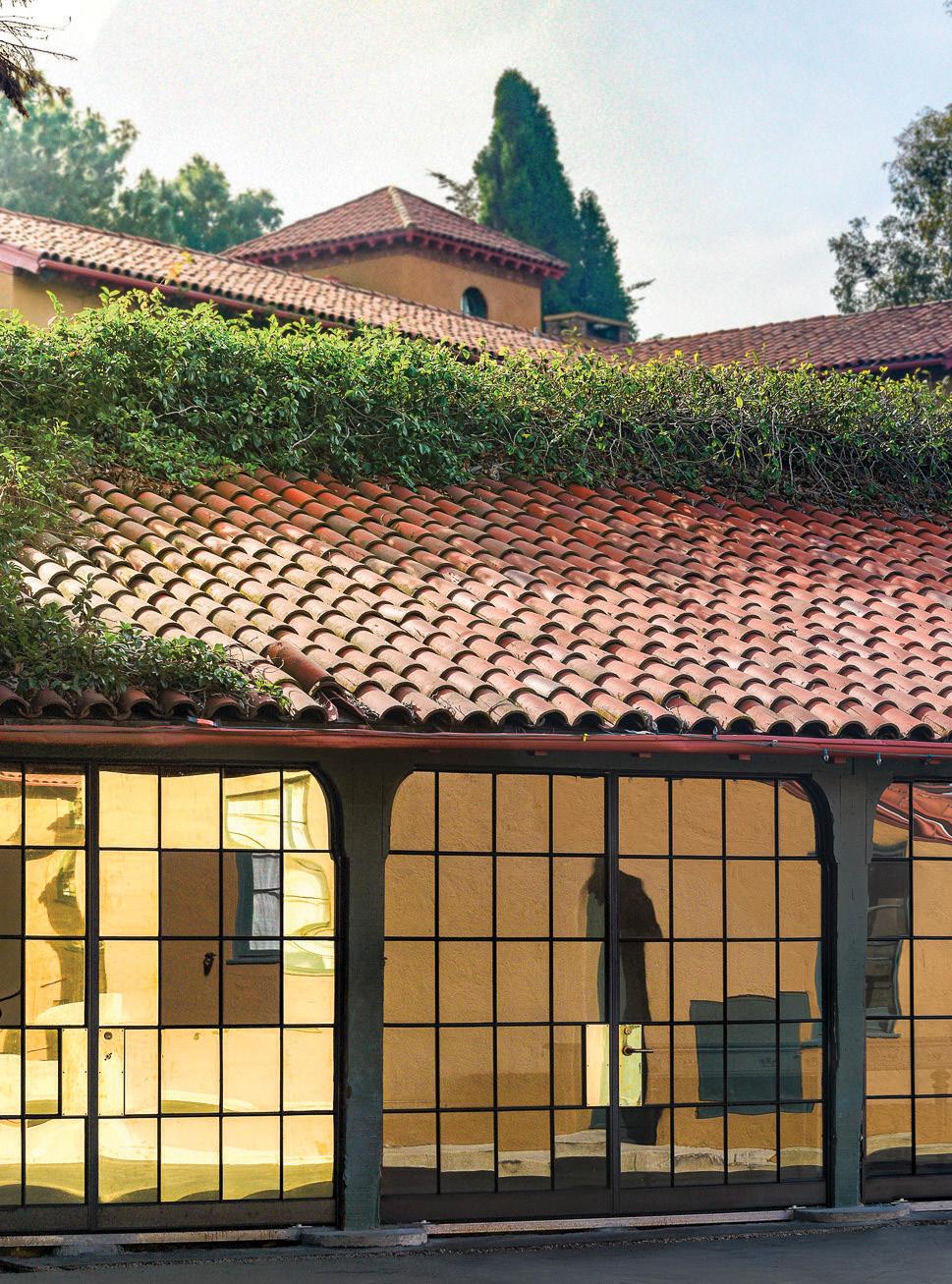
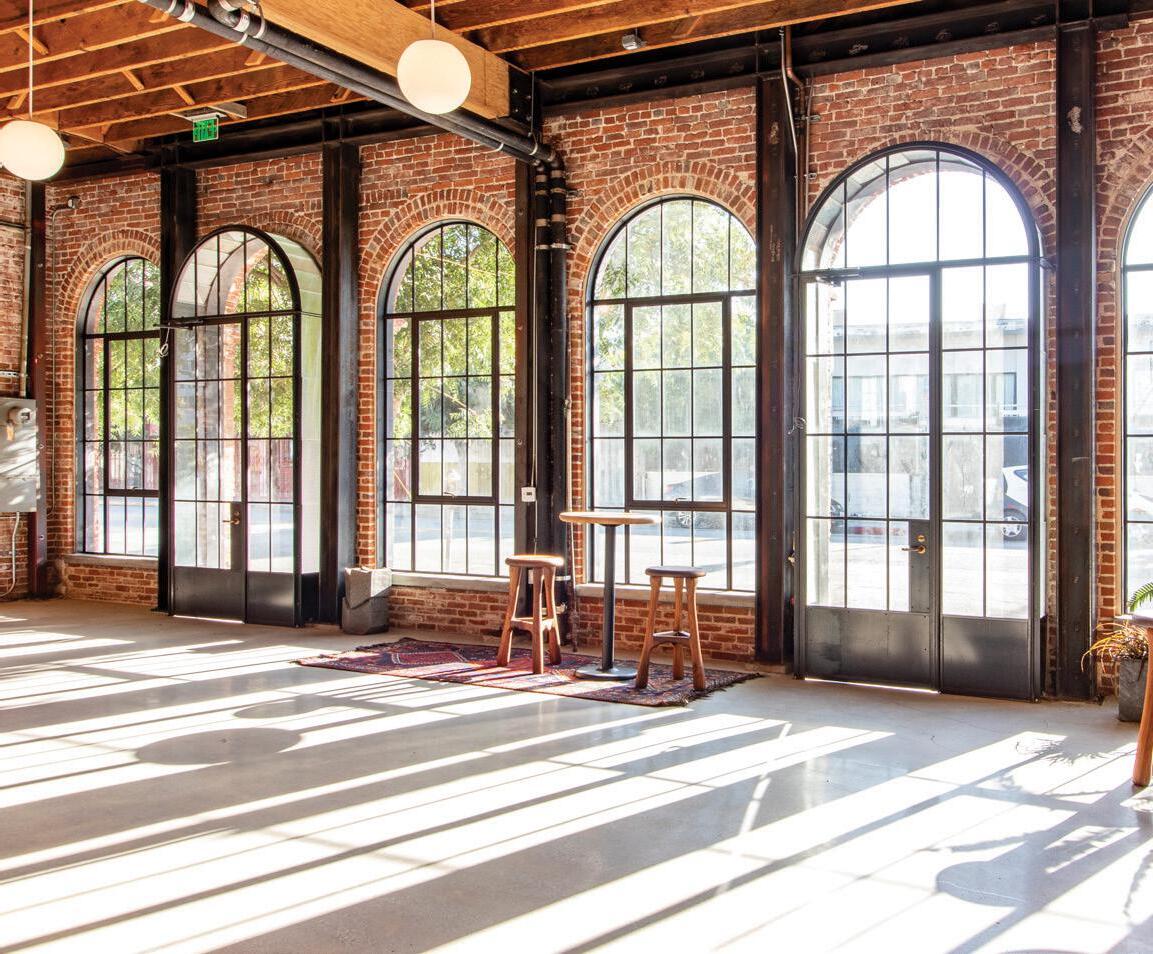
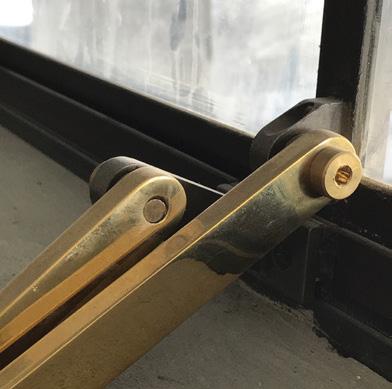
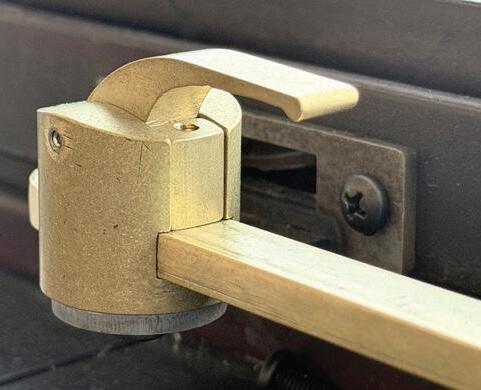
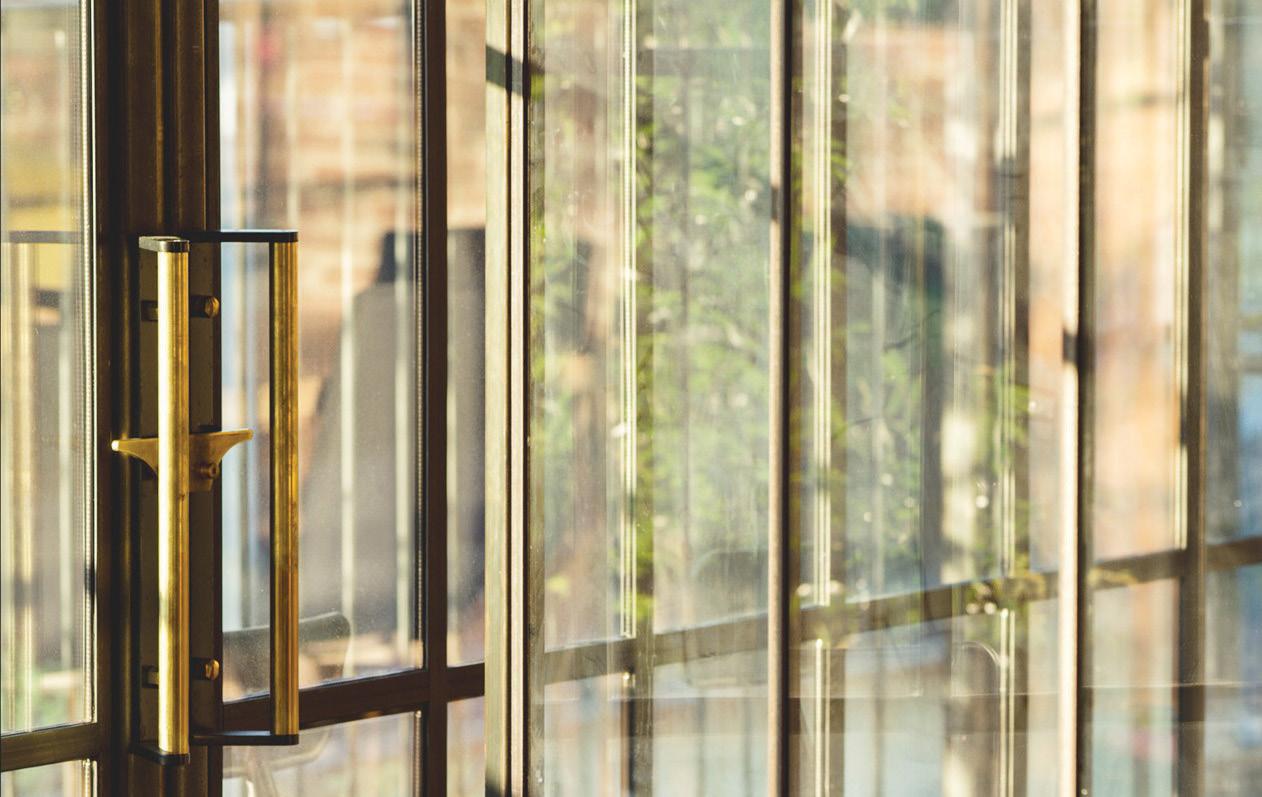
Some things can’t be mass-produced. In these workshops, wood slabs become tables, steel becomes windows of light, rare stones become heirlooms, and upholstery is cut to fit the body of a room.
Santa Barbara’s skyline is famously low-rise. That didn’t happen by accident. Former SB mayor Sheila Lodge revisits the strange civic battles that kept sightlines low and city charm high.
The mirror has long been a treacherous accomplice in the business of aging. Heidi Clements’ Bluetooth-enabled vanity mirror provides a solution.
This band of mischievous teens discovered free rent at Montecito’s iconic resort. The catch? Barbed wire, darkness, and the constant possibility of security ruining their paradise.
For DMHA, “unbuildable” is practically an invitation and these Santa Barbara architects are reserving the right to knock down difficult design challenges.
Rolling down State Street you may well witness a snail, a hamster, and a tiny VW. They are not hallucinations. They are Tiny Art Cars with locomotion.
Inside UCSB’s Media Arts and Technology program. Think Renaissance workshop, upgraded for the digital age.
At any given moment a kitchen is waiting for coffee. A balcony is waiting for sunset. A guest room is waiting for the friend who overstays. The following homes are currently auditioning for their next inhabitants.

For those who savor the finest things in life, travel isn’t just a means to reach a destination; it’s an experience in itself. At Aero, travel is treated as an art form, customer service is a passion, private terminals replace crowded airports, and the amenities are endless—Starlink Wi-Fi, topshelf open bar, and much more. Here is where the worlds of hospitality, design, and travel merge, delivering a private jet experience at a fraction of the cost.
The latest addition to Aero’s fleet, the Gulfstream IV, marks a new era in semi-private aviation combining speed with unprecedented comfort. Book your seat at Aero.com








BY LES FIRESTEIN
Acontractor friend once said to me, “Construction is the only business where the top 1% is forced to interact with the bottom 1%.” I might add that the opposite dynamic is also true. That dynamic in and of itself would have made for a fascinating Riv
A few years back I started noodling on the idea of doing a Riv about the outsized contributions of migrant workers, Mexicans and other Mesoamericans, to Montecito’s globally envied built environment. We enjoy their copious contributions every day. I’ve always believed migrant labor was the unsung design/build MVP of not
here… so many of whom facilitate the transformation of our fantastical design dreams into built realities. Their plight has been well documented for a century—such as in the writings of Steinbeck, Octavio Paz, and the photos of Dorothea Lange.
Here in Cali, all immigrants, including the undocumented, are estimated to contribute more than $1 trillion to our total economic output—fully a third.
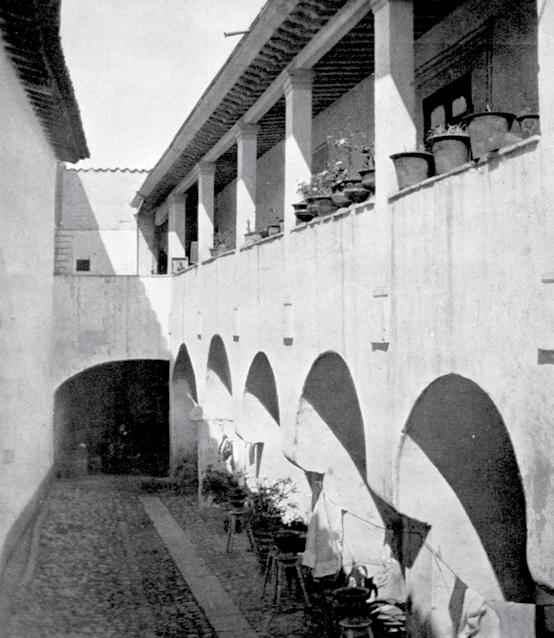
Meanwhile the migrant contribution has gone unheralded, underappreciated, and sometimes outright erased. One excellent example is right here in SB, at the El Paseo multiuse complex (today we call it a mall), developed in the 1920s, which became an exemplar of Spanish revival courtyard style, a linchpin of Santa Barbara’s El Pueblo Viejo design district, and today finds itself, appropriately, on the National Register of Historic Places.
just Santa Barbara but greater California. And the stats above support this.
The life of a migrant laborer is never easy but especially now. Which is why there has never been a better time to recognize the people who made the difficult sojourn
El Paseo was developed very much in cahoots with the vaunted civic leaders of the Santa Barbara aesthetic— Pearl Chase and Bernhard Hoffmann, whom one might call early influencers. Pearl and Bernhard were a Roaring ‘20s version of Chip and Joanna Gaines, but, with more influence, way fewer followers, and no backwards baseball cap.
The stated goal of El Paseo’s credited architect was to recreate a romanticized albeit quintessential “Street in Spain,” a vibe that was trending at the time, with narrow passageways, mucho balconies, and terraced roofs recalling a place like Seville.
Upon its completion El Paseo was immediately lauded in all the important architectural journals, back when there was such a thing. It was the first-ever mall in this state which kicked off the malling of California. You’re welcome, Fast Times at Ridgemont High . [Had California never gotten its first mall there would’ve been no Fast Times at Ridgemont High . And without Fast Times, Sean Penn would never have risen to fame so he could one day hand his Oscar to Volodymyr Zelenskyy. But I digress.]
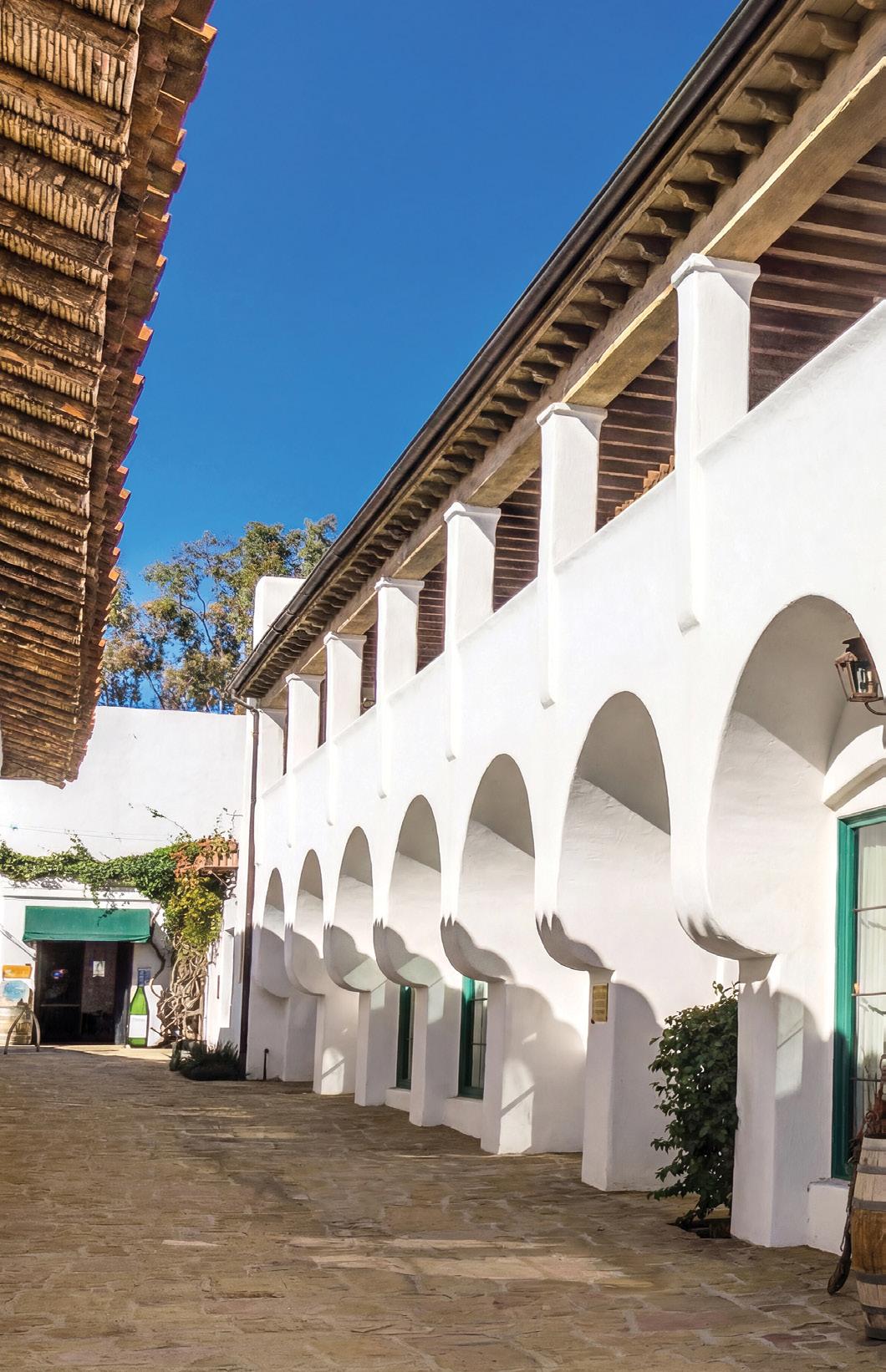
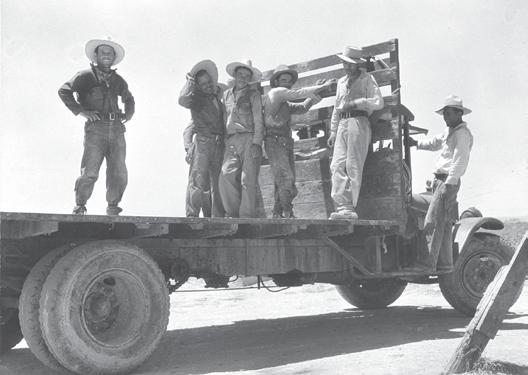

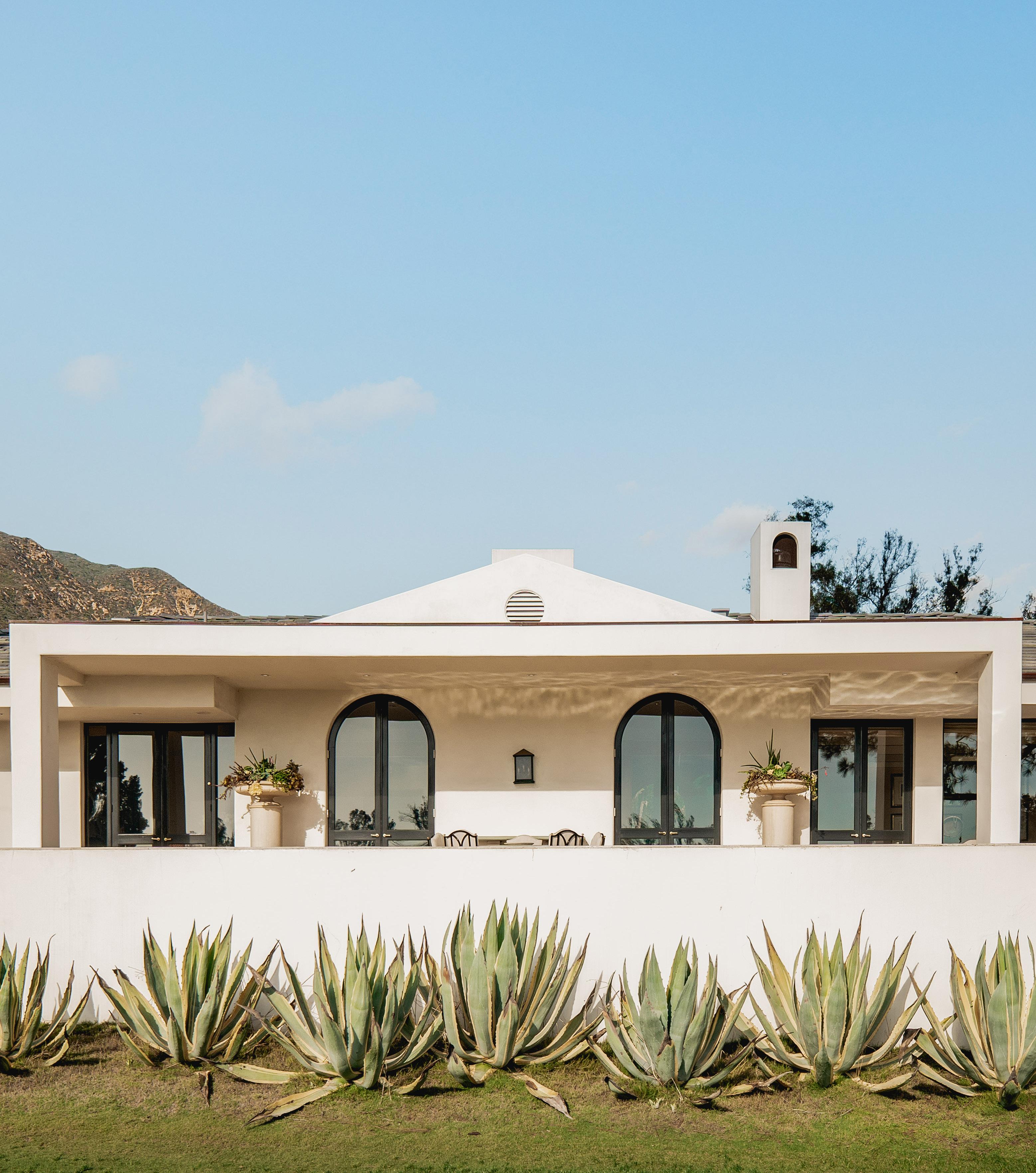
I n reality, El Paseo was copied pretty much wholesale from a building that already existed not in Spain but in Cuernavaca. How good a copy? So good that if you do a reverse image search of the Mexican building, it actually takes you to our El Paseo. Actually I shouldn’t say El Paseo was a 100% copy of the Cuernavaca structure. Some of the design cues at El Paseo were copied from El Convento de Monjas Dominicas in Patzcuaro—also in Mexico.


NOT TO MENTION JAVIER TÉLLEZ’S HUMAN CANNONBALL SHOT OVER THE BORDER WALL INTO SAN DIEGO. IN THE PROCESS, UNDERSCORING THE INSANITY SURROUNDING OUR FRAUGHT RELATIONSHIP WITH OUR SOUTHERN BORDER.
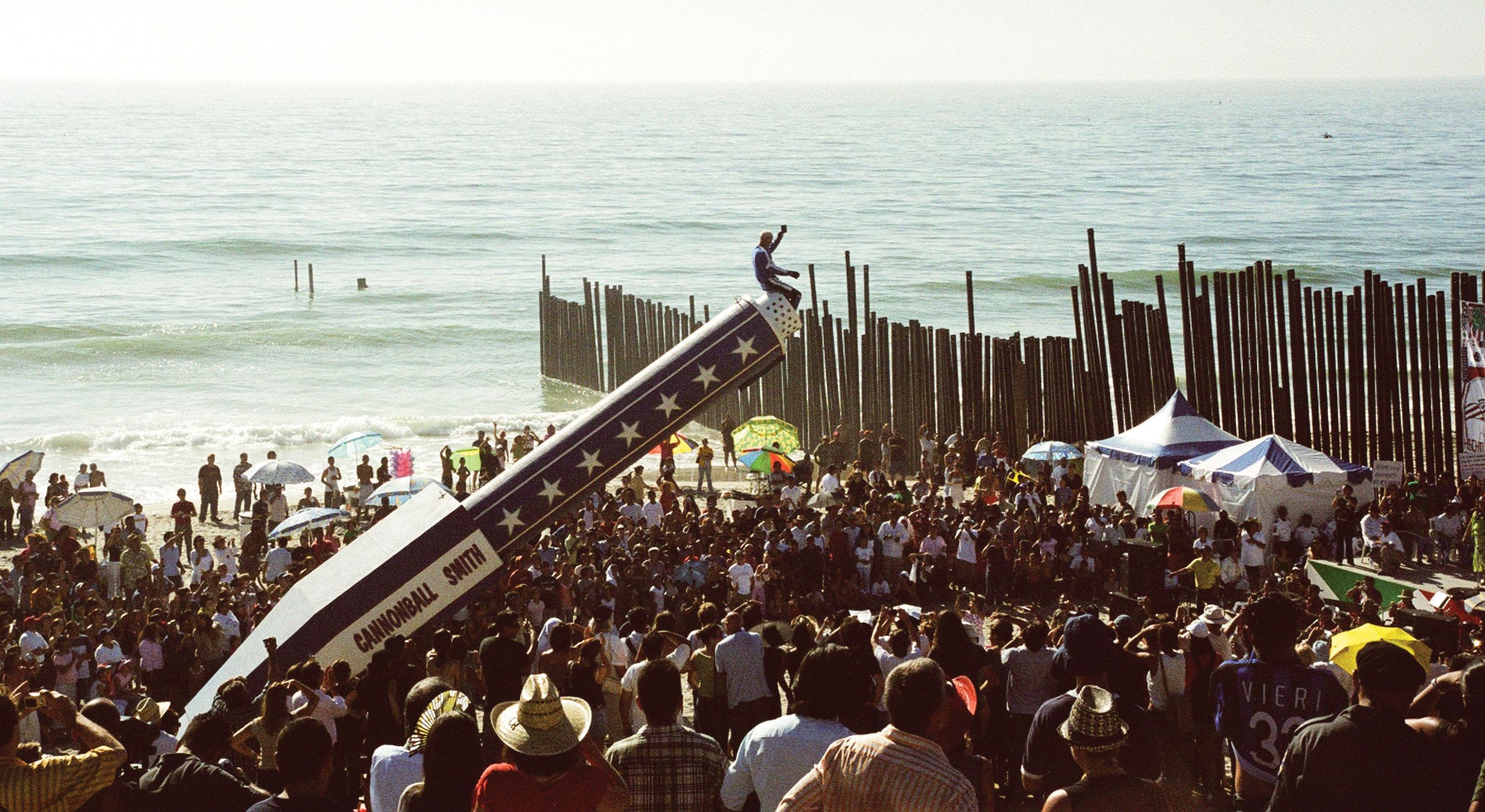
My point is we owe a debt of gratitude to Mesoamericans. To their inspiration. Their design. Their fabrication. And their perspiration. Mesoamerica has put a lot of sweat equity into this state but didn’t necessarily get a lot back. Or even the credit they rightly earned. Something to keep in mind as our neighbors from the south go through this particularly rough time.
This is why in this issue we’ve assembled a veritable allstar team of global talents mostly from Mexico.
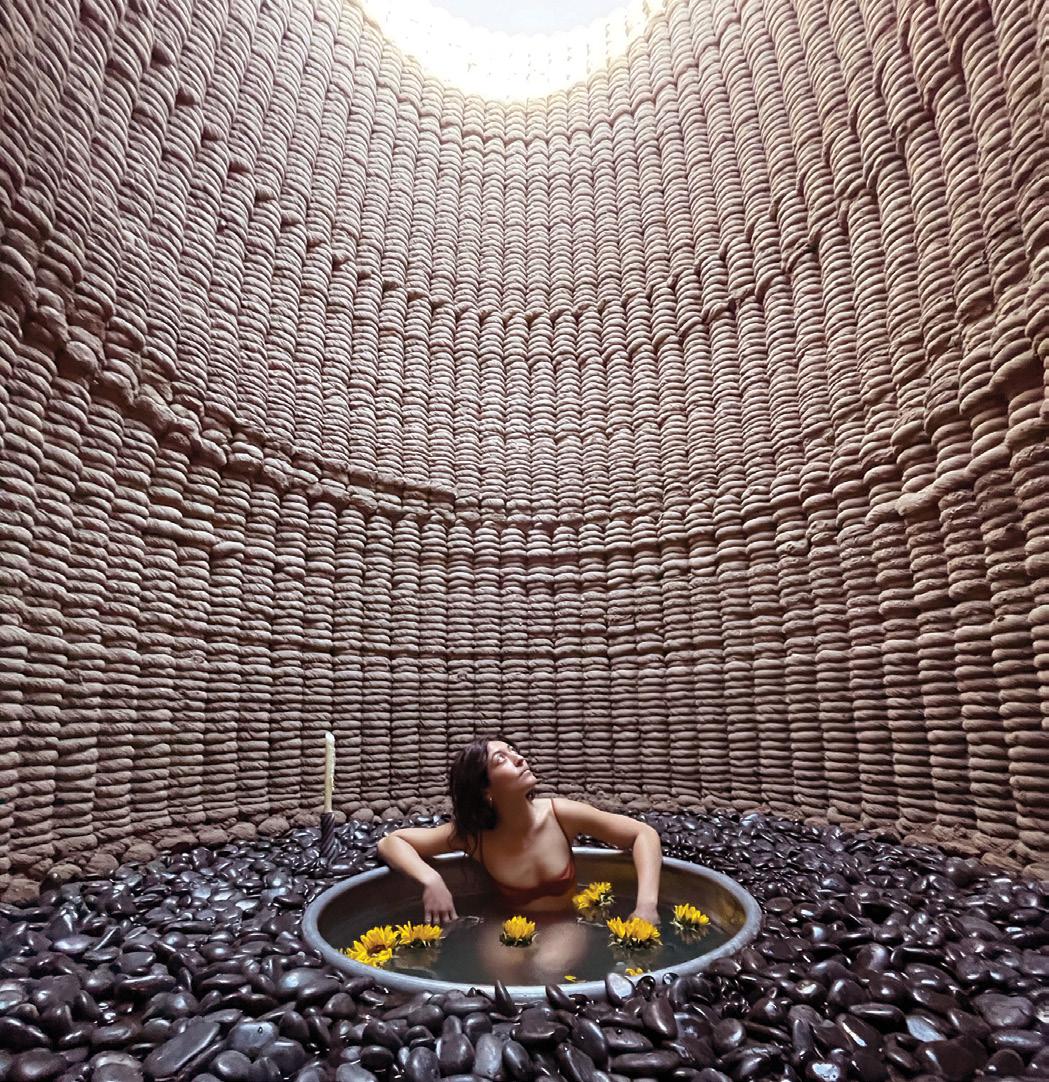
TATIANA BILBAO As you’ll see in our pages, Tatiana Bilbao is not just a massive talent who could design anything, but a major empath and thought leader grappling with macro humanitarian issues like de-institutionalizing affordable housing and reconceiving the border wall.
RONALD RAEL is arguably the Babe Ruth of provocative design. His architecture for the iconic Prada Marfa in Texas and years later his pink teeter-totters penetrating the U.S.-Mexico border wall deservedly won a slew of design awards all over the globe. Now Rael has moved on to 3D printing really attractive and forwardlooking habitable structures which are the first 3D printed abodes I’d actually want to sleep in.
Also in this issue we feature:
Artists ALEX CARTAGENA , ALFREDO VILCHIS , and NARSISO
MARTINEZ (whom I call the Mexican Banksy). All three are brilliantly and beautifully documenting the migrant experience. Also be sure to check out the BORDER WALL BANQUET Not to mention JAVIER T É LLEZ ’s human cannonball shot over the border wall from Tijuana into San Diego. And, in the process, underscoring the insanity surrounding our fraught relationship with our southern border.
A big part of this state’s robust growth can be tracked back to the massive contributions made by migrant labor. Here, in the Golden State, at least two in five workers in the construction, manufacturing, transportation, agriculture, and utilities industries are immigrant. One thing’s for certain. If you’re enjoying this magazine in California, many Latin hands crafted whatever structure you’re sitting in and probably sitting on.
Recognize.










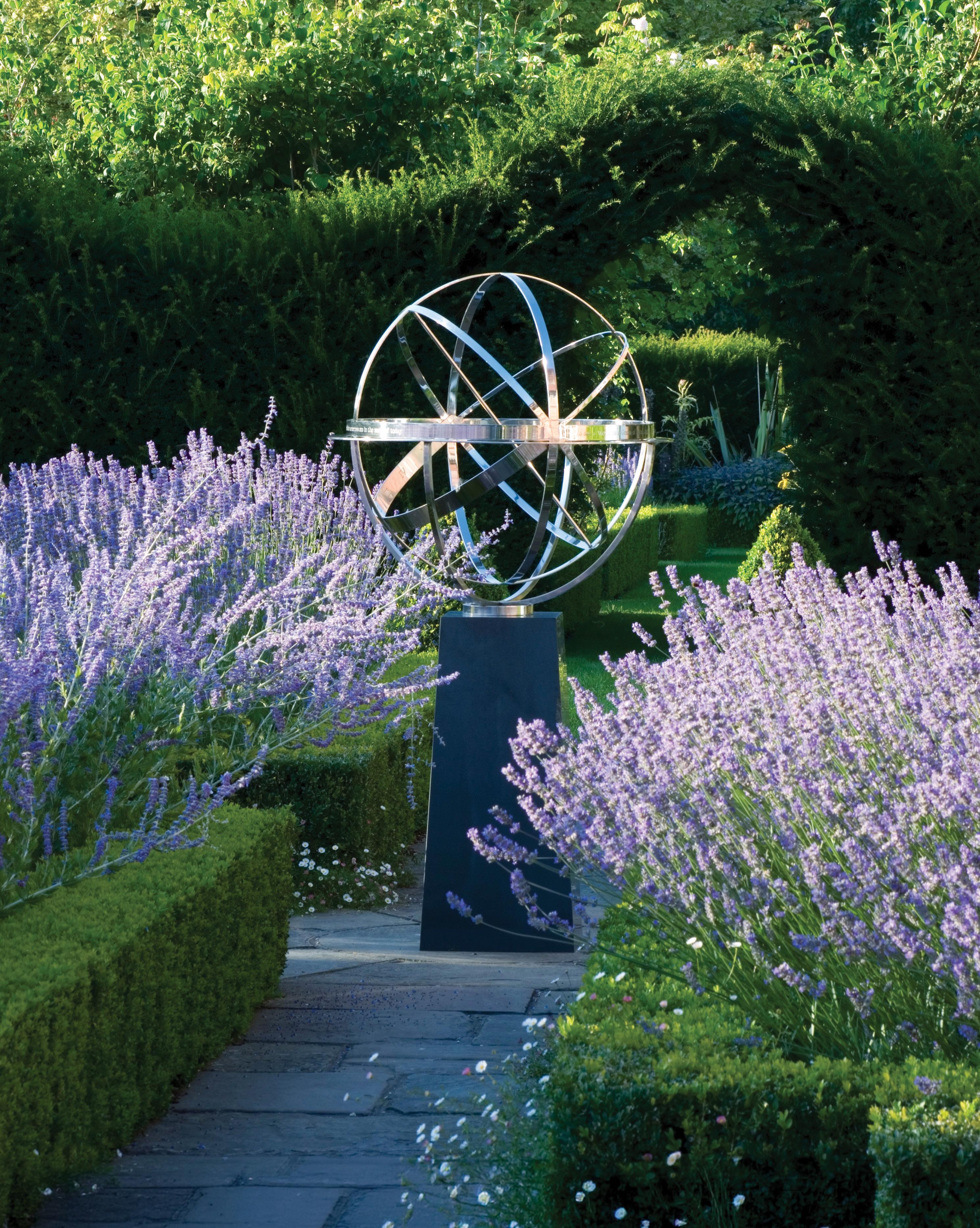



You shouldn’t have to choose between comfort and beauty when you can have both. Come explore our huge selection of furnishings for relaxing and a perfect night’s sleep
Visit Mattress Mike’s Furniture Gallery at La Cumbre Plaza to experience comfort for yourself. Many styles in stock.
0% financing with extended terms available.



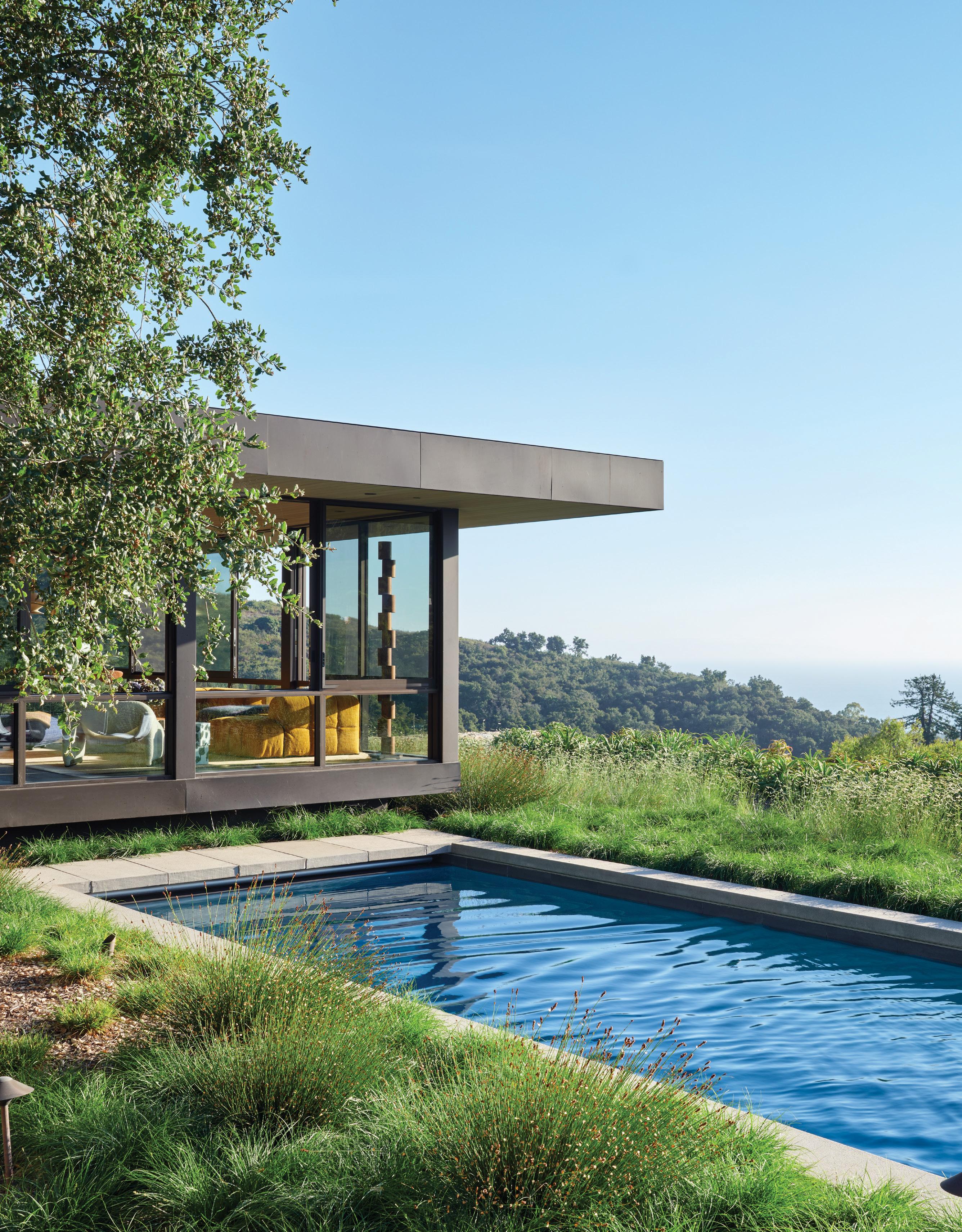
www.marmol-radziner.com
info@marmol-radziner.com @marmolradziner

Meticulous smart system design, installation, and maintenance for the American Riviera’s most exclusive residences

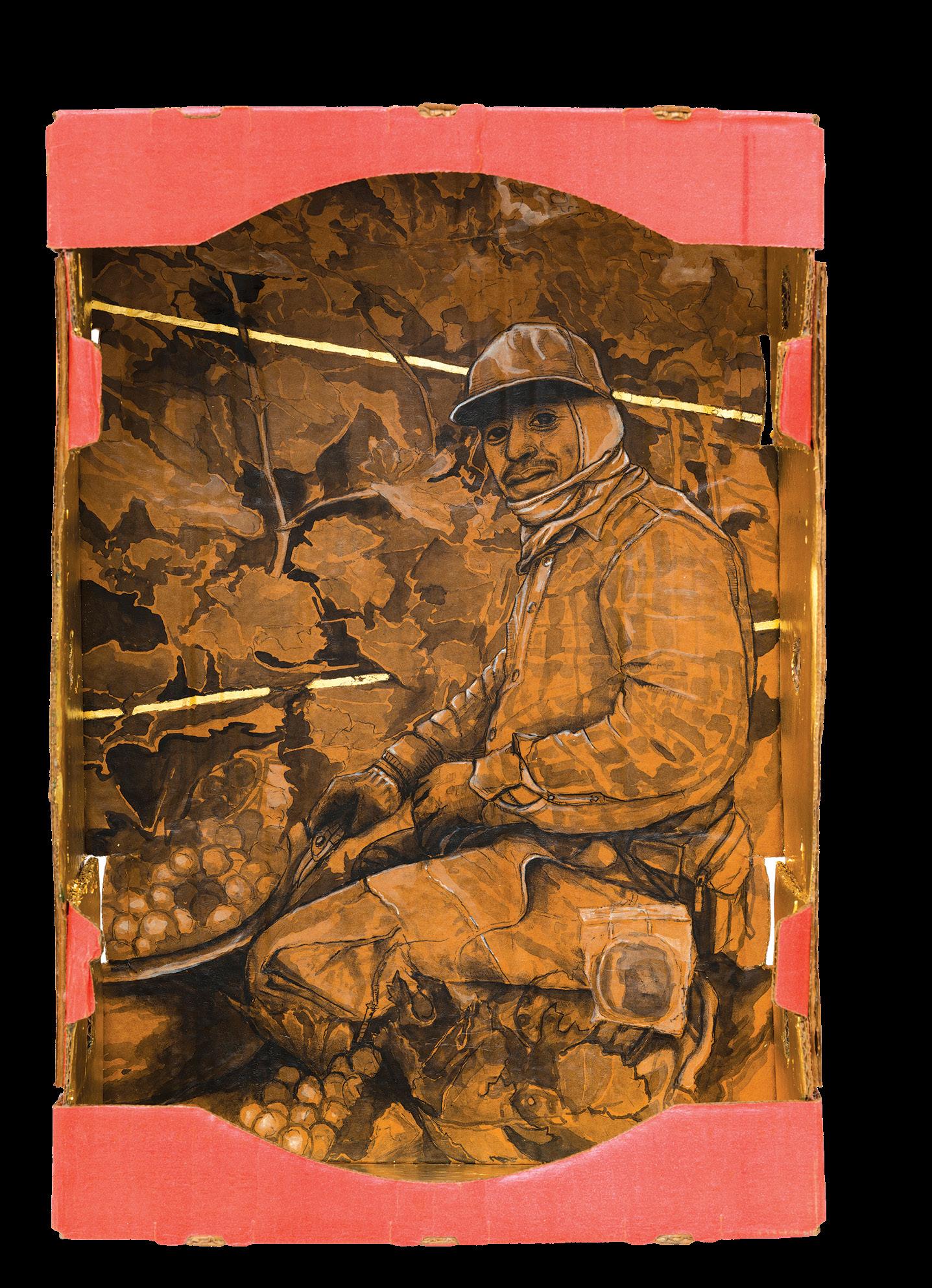
ASPARAGUS PICKER
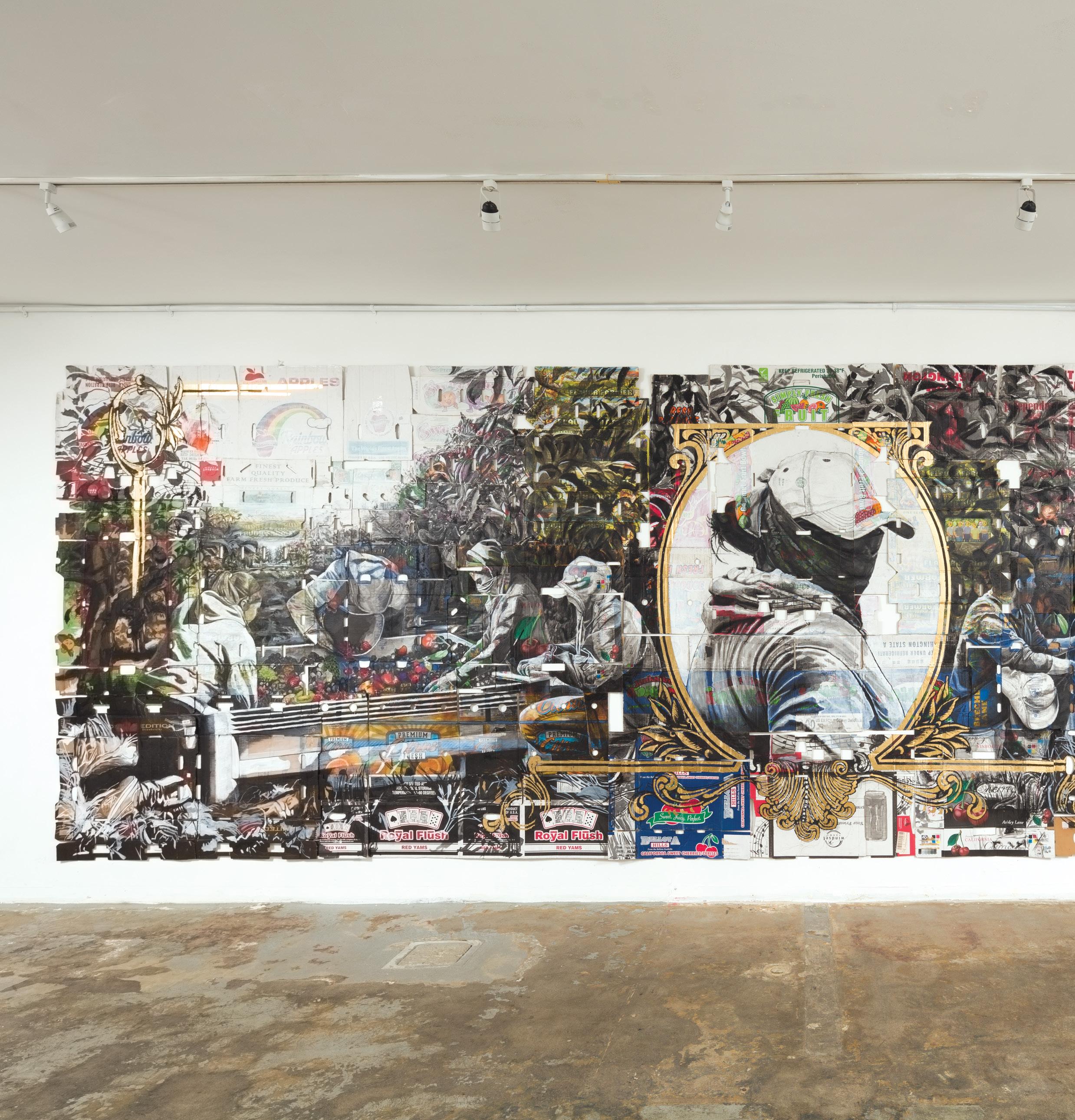
INK, CHARCOAL, AND GOUACHE ON STRAWBERRY BOXES
74 X 23.5 X 12 INCHES, 2025
COURTESY OF THE ARTIST AND CHARLIE JAMES GALLERY, LOS ANGELES
PHOTO CREDIT: YUBO DONG @OFPHOTOSTUDIO
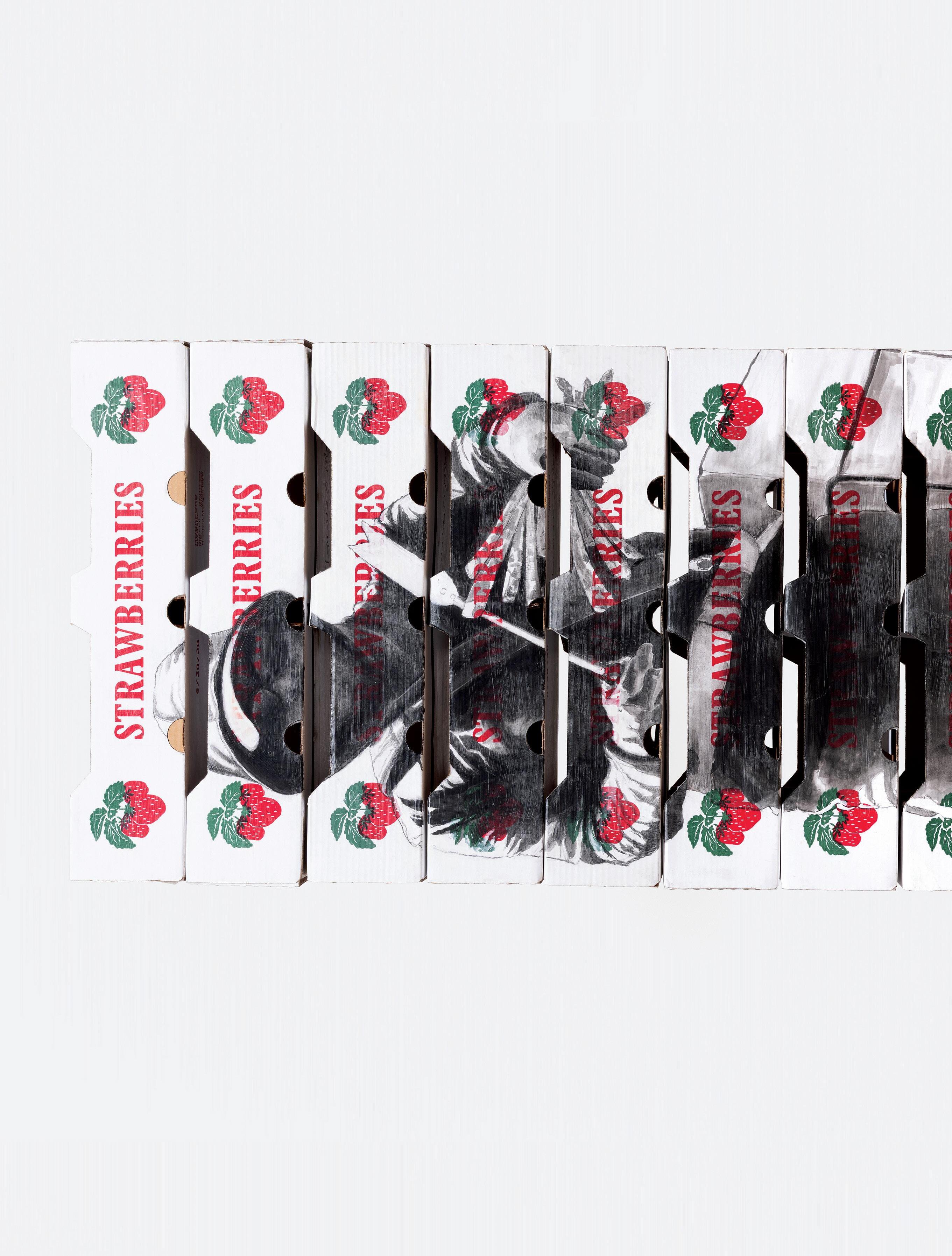

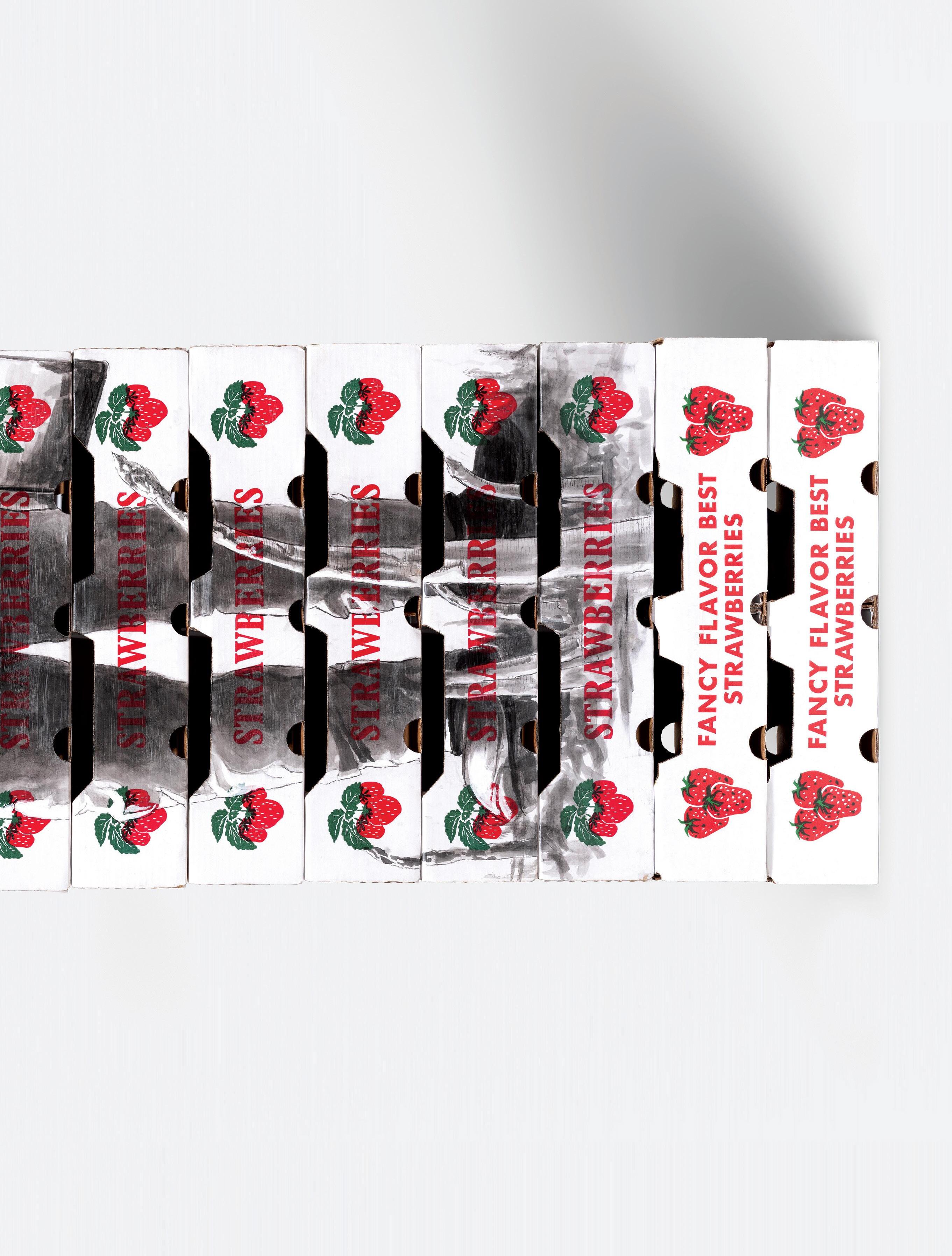
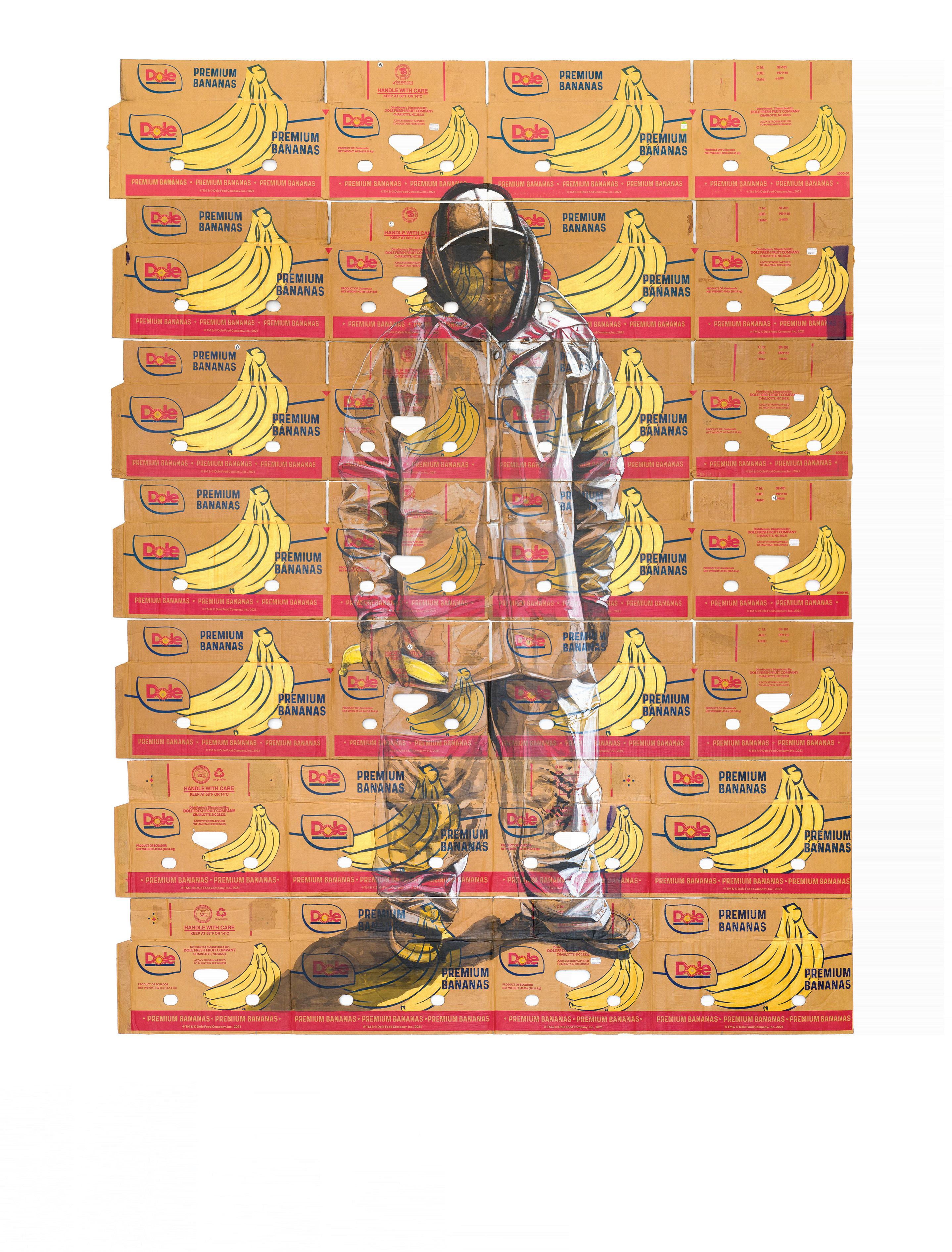
there is a precise moment in every artist’s life when the work stops being about what you’re supposed to make and starts being about what you have to make. For most, it happens in a studio. For Narsiso Martinez, it happened in a field in Eastern Washington, covered in sweat and fruit pulp, holding a discarded banana box.
He is not what the art world traditionally traffics in. No Silver Spoon Foundation grant. No special artistic pedigree. No childhood spent in galleries. Instead: nine years of dawn-to-dusk labor in apple orchards, a high
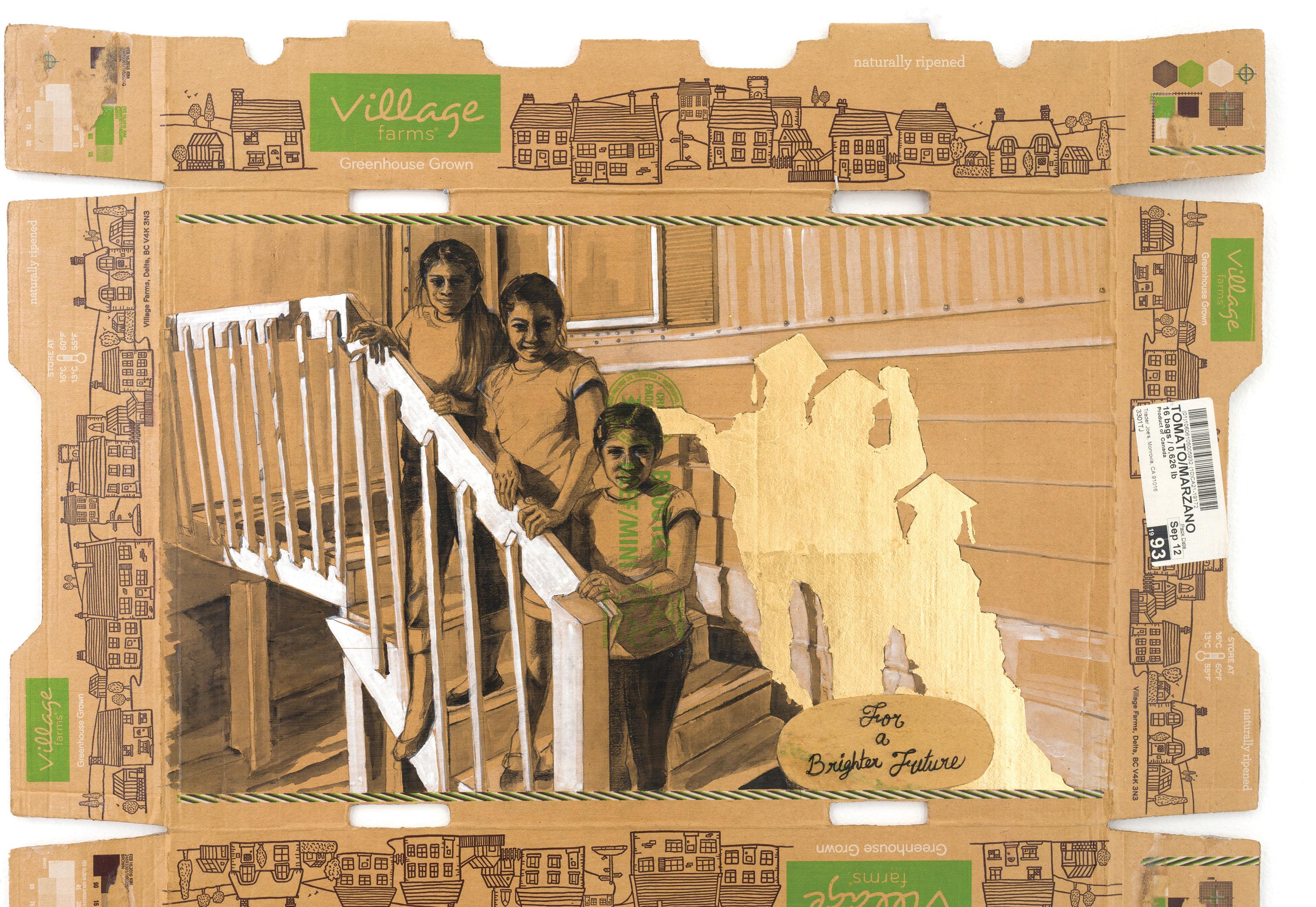
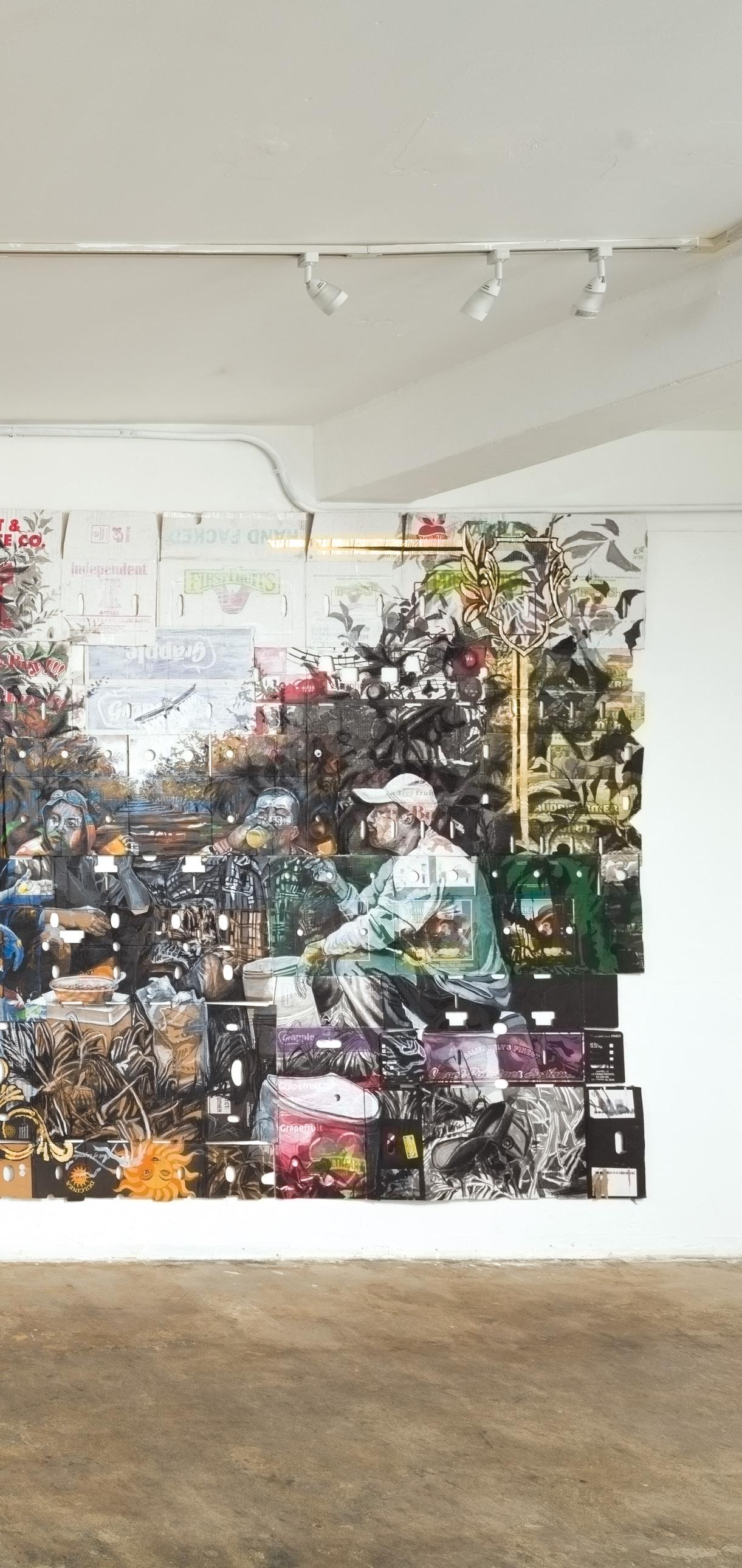
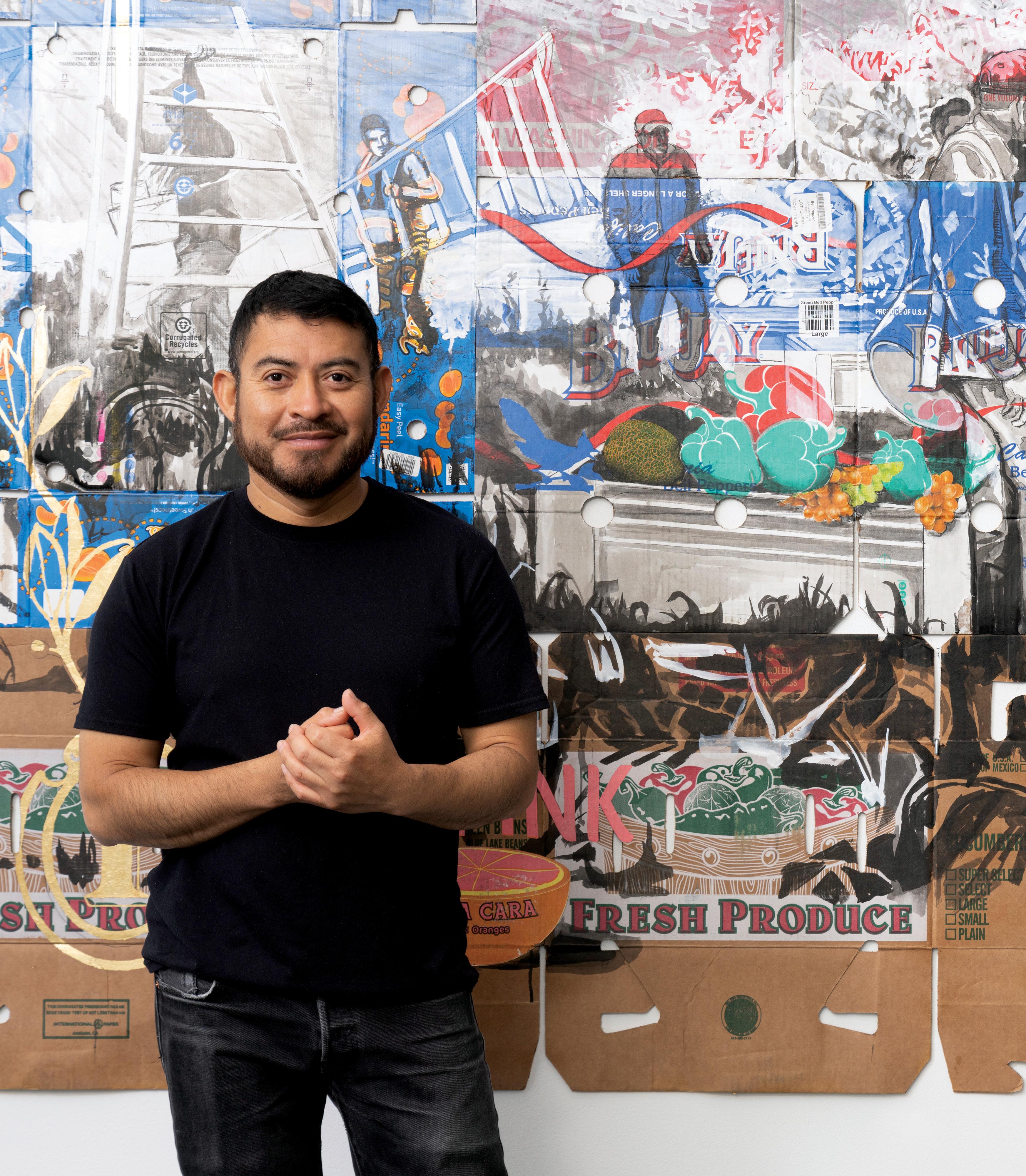
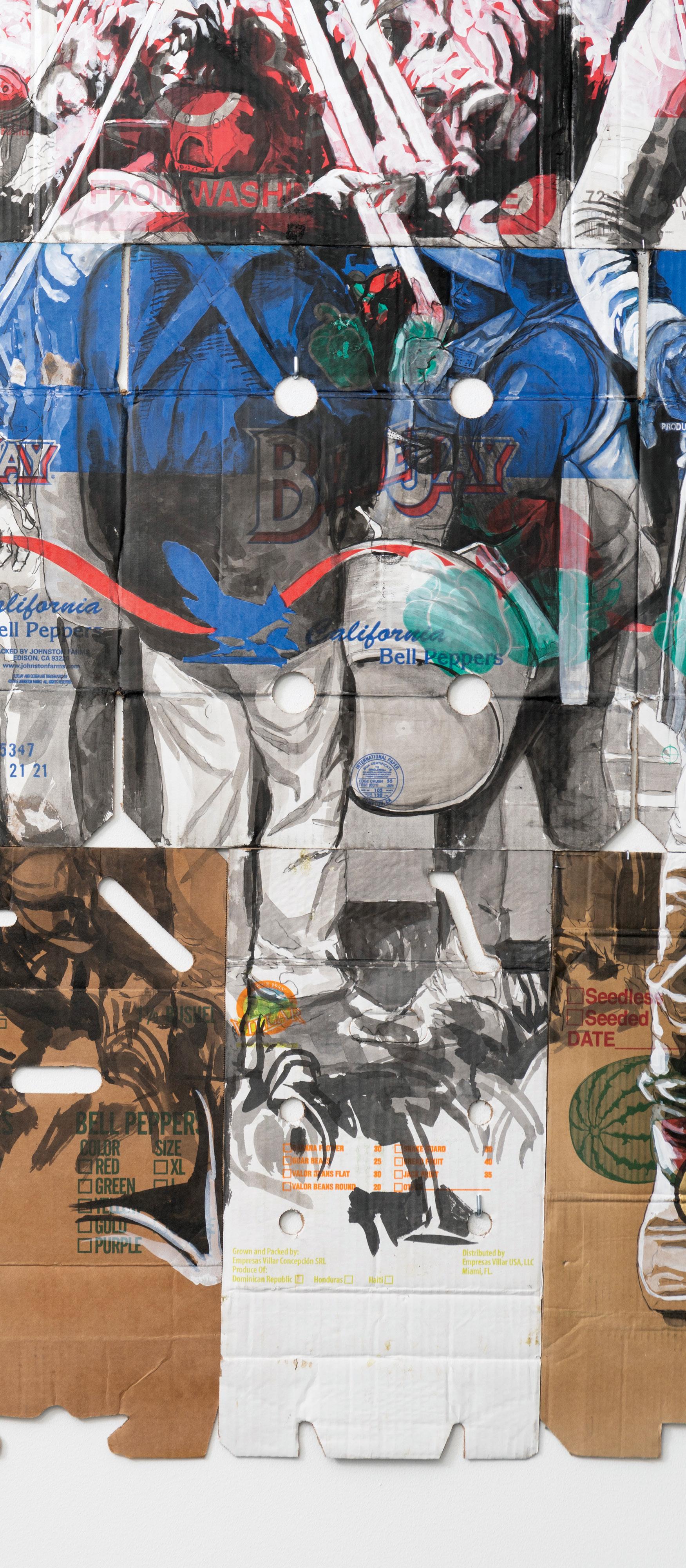
school diploma earned at 29, and an MFA from Cal State Long Beach completed while still figuring out how to make rent. His medium is not canvas or bronze or installation video. It is cardboard—the reject shipping boxes from Costco, the bruised containers that held fruit destined for supermarket shelves. His palette is charcoal, gouache, and gold leaf applied to the backside of cast-off agricultural ephemera.
And somehow, this Mexican-born farm workerturned-artist has managed to get his work into LACMA, the Hammer Museum, our Santa Barbara Museum of
NarSisO MartiNeZ
Art, not to mention collections across the country. At Frieze L.A. in 2023, his pieces sold out in the first day. He won the Frieze Impact Prize—$25,000—at an age when many emerging artists are driving for Uber or asking their folks for studio rent money.
“Off to a good start,” as they say.
But the real story—the one that matters—isn’t about market validation or institutional blessing. It’s about the moment a person becomes visible to themselves, and then learns to make others visible too.
Narsiso grew up in Santa Cruz Papalutla, a Zapotec village in Oaxaca, Mexico. At 20, he took the sojourn north. Way north. For nearly a decade, he picked apples in Washington state, summers and harvests, alongside his family. It was brutally honest labor—the kind that doesn’t end with a handshake and a pension.
At 29, he decided to finish high school through adult education. He was, by any conventional measure, behind. But something in him insisted on reaching forward.
The pivot came in an art history class at L.A. City College. Not because the professor was charismatic or because he suddenly felt the calling of the muses. It happened because he saw something—or rather, someone saw him through paint and brush strokes.
“I wanted to go to

art school because I was in love with traditional oil painting,” he recalls, “and I discovered along the way the art of Jean-François Millet and Vincent van Gogh. I grew up in the countryside in Oaxaca, in Mexico. So those images really struck me. I really wanted to go to art school and learn how to paint because I never painted before. I always drew and sketched, but I never painted. So in my head I was like, I wanted to learn how to paint, and I thought maybe I could paint the people from my hometown, like my grandpa, my dad, my mom going into the fields, standing cows, and so forth. So that was my main drive to art school.”
Think about that for a moment. Millet, the 19thcentury French painter, spent his career revealing the often subtle dignity of peasants. The Gleaners. The Sower. Working people rendered heroic and monumental, their toil transformed into something sacred. Van Gogh looked at Millet’s work and felt seen. He copied it obsessively. And now, a contemporary farm worker from Oaxaca—three generations later, half a world away— was experiencing the exact same recognition: These are my people. This is my story.
The irony is almost too perfect to state. Almost. So Narsiso enrolled at Cal State Long Beach, pursuing a BFA, then an MFA.
This required financing. So Narsiso did what he knew—returned to the fields. Every summer, back to Washington, picking alongside family members who would never go to art school, who didn’t have the luxury of asking “what if?”
During those years—college, graduate school, the grinding daily mathematics of survival—something shifted in his approach to making work. He stopped trying to paint like the old masters. He stopped trying to prove he belonged in the academy. He went back to what he knew, what was actually available to him.
“In order for me to finance my art studies, I worked picking fruit in Washington state alongside my family. Every summer I would be there and then all those years I was sketching on cardboard. My sister would bring boxes from Costco. I’d cut out the labels and save the good part, the bottom part of the box, and I’d use it as a blank canvas. And I would take that to the field, make studies, finish studies or sketches on cardboard.”
This is where most artists would have given up. The materials were literally refuse. The surfaces were imperfect, already printed, damaged by weather and handling. Any art school professor would say: find proper support. Paint on primed linen. Use what the art market recognizes as art materials.
Narsiso did the opposite.
“I just went back to what I knew how to do without any pressure, which was painting on cardboard. And I just happened to collect a banana box from Costco at one point, and I painted a banana picker on the banana box. I never picked bananas. I sort of empathize with a person who was picking bananas. It’s hard work carrying those heavy loads back and forth. And so I was able to speak about it in those terms. So I showed that to my committee, to my class, and all of a sudden the conversations that I want to talk about were coming out to life, and I was able to speak about these stories, my own personal stories and my coworkers’ stories in relation to the drawings, sort of painting that I was doing.”
Here is where constraint became liberation. Here is where rejection became revolution.
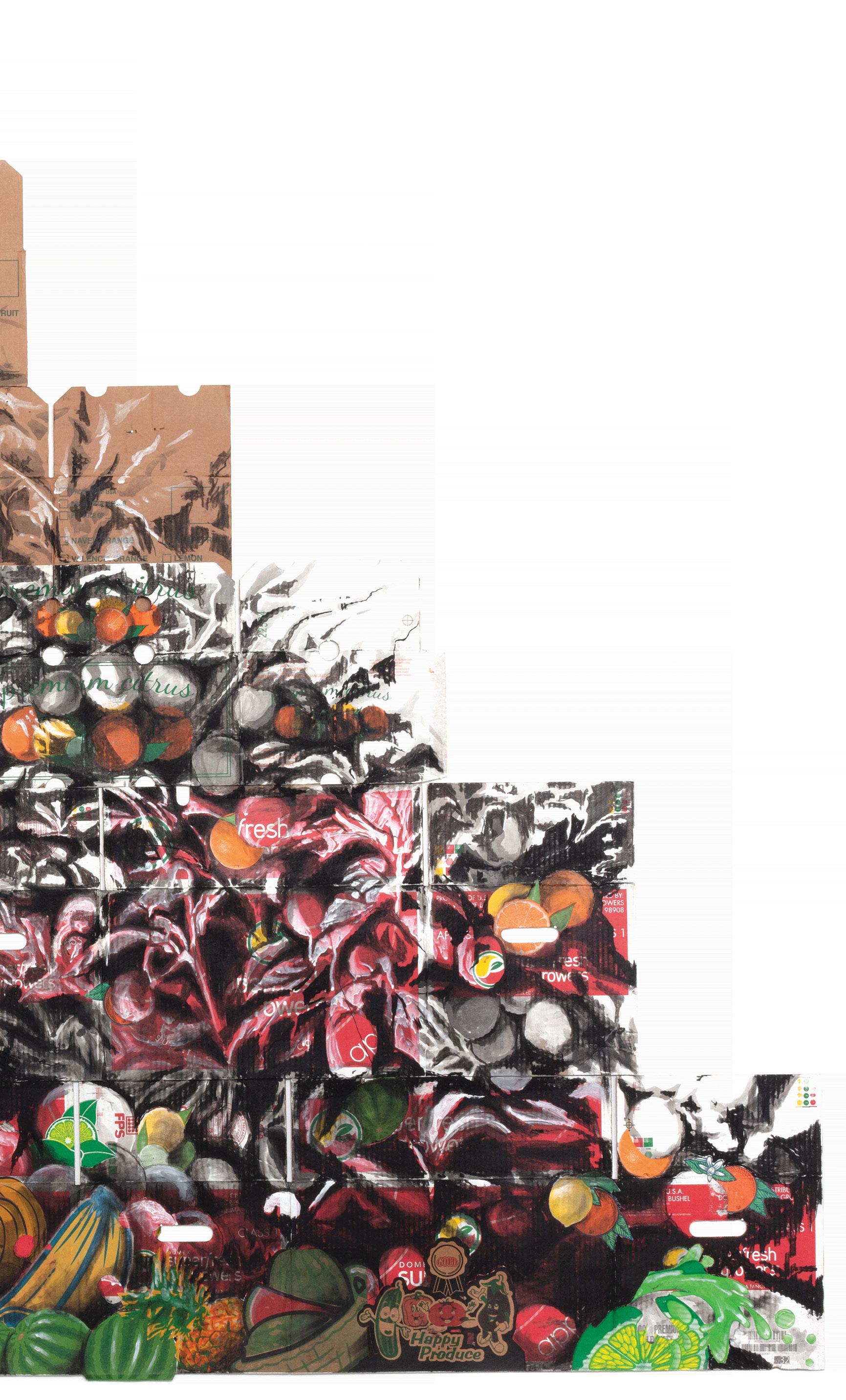
INK, GOUACHE, CHARCOAL, AND COLLAGE ON FOUND PRODUCE BOXES
84 X 133 INCHES, 2020 COURTESY OF THE ARTIST AND CHARLIE JAMES GALLERY, LOS ANGELES PHOTO: JOSHUA SCHAEDEL
the banana box piece unlocked something conceptual and visceral. In a lot of the old fruit picking imagery the anthropomorphized fruit looked quite happy while the workers who picked it were safely out of sight.
What Narsiso realized was these cheerful images on the fronts of the fruit crates—the bold corporate branding, the fruit iconography—was suddenly doing half the work. All Narsiso had to do was paint humanity onto it. All he had to do was make the invisible visible.
“All of a sudden I didn’t have to worry about painting the owner of the orchards or how to represent the agricultural industry because they were already represented by these cheerful labels and the illustrations on the boxes. And all I had to do was represent my community, which was the farm workers.”
This is the insight of an artist who has lived both inside and outside systems of exploitation. This is what happens
INK, GOUACHE, CHARCOAL, AND GOLD LEAF ON PRODUCE CARDBOARD BOX, 24 X 30.75 INCHES, 2021
COURTESY OF THE ARTIST AND CHARLIE JAMES GALLERY, LOS ANGELES
PHOTO CREDIT: YUBO DONG @OFPHOTOSTUDIO
when someone who knows poverty encounters formal education and refuses to choose between them.
The work became increasingly urgent, and the subject matter became increasingly inescapable. Narsiso was no longer documenting a landscape or capturing a moment. He was witnessing—actively witnessing—a class of people rendered systematically invisible.
“Something happened in that period of time that creates some kind of consciousness about the people; my coworkers and I realized that they were people from my uncles or Latin American people, and we spoke the same language and we have the same struggles, and we went through the same issues in the fields, like working hard, longer hours, and are we going to make it through the

He stands at the intersection of everything our systems typically keep separate: manual labor and intellectual labor, mexican immigrant and institutional artist, precarity and permanence. and He Has refused every invitation to cHoose a single identity.
month with food and with rent? All these kinds of issues started to become more noticeable in my life because I wasn’t paying attention to that before. And I realized that farm workers were struggling day by day. And because I was also in academia, I was learning about other cultures, like economic cultures, and I just realized that the system
excluded people who work in the fields given the absence of certain things like healthcare or education.”
This isn’t theory. This isn’t abstraction. This is lived contradiction—attending seminars on inequality by day, picking fruit by night, watching your coworkers sacrifice safety for a few extra dollars.
“In the field, not every worker gets to wear protection either because it’s difficult for them to breathe under those conditions or to see under those conditions, because when people are laboring hard, they sweat and the steam gets the goggles foggy or it’s hard to live with the bandana or the mask on. So sometimes people get rid of one of them, or sometimes both of them if they want to make more out of their time in order to make more money. So some people would sacrifice that to make an extra bag.”
The work expanded. One portrait became two. Two became multiples. Crates stacked into sculptures. The modest cardboard support began to take on monumental proportions—not through grand gesture, but through accumulation, through insistence, through the patient alchemy of making the precarious into the permanent.
By the time he completed his MFA in 2018—a Dedalus Foundation Fellowship year—the work had found its form. A year later, he connected with Charlie James Gallery in Los Angeles. By 2023, he wins Frieze’s Impact Prize. By 2025, his work hangs in major American museums, and he’s in residence with Art Farm at West Dry Creek in Healdsburg, California, continuing to document agricultural labor in one of the world’s most productive valleys.
“Right now I’m doing a residency in Healdsburg, California. I want to know what’s happening with the agricultural workers in this area and bring that to life.”
What Narsiso Martinez has accomplished—and this is the thing that matters most—is a radical act of representation. Not as artistic strategy. Not as iconographic intervention. But as a choice. As a witnessing.
He stands at the intersection of everything our systems typically keep separate: manual labor and intellectual labor, Mexican immigrant and institutional artist, precarity and permanence. And he has refused every invitation to choose a single identity.
When I ask him about the weight of representation—about speaking for a community that has been so culturally underrepresented for generations—he offers this:
“Thank you for seeing that. I think we need people who stand up for the vulnerable communities, really like my community. And it’s just amazing that it’s hopeful that there are still people who want to bring these stories to life and to just keep the conversation going really.”
There is no bitterness in those words. No selfaggrandizement. Just recognition that seeing is a form
this isN’t theory. this isN’t abstrActioN. this is LiVed cOntrAdiCtioN— atteNdiNg seMiNArS oN iNequAlity by day, piCking Fruit by Night, Watchi NG yOur CoworkerS saCriFice SAfety fOr a few extra dOLlars.
of labor. That making people visible is the opposite of glamorous. It is necessary. It is essential.
The cardboard boxes—those ephemeral, damaged, worthless containers—have become monuments. Not in spite of their fragility, but because of it. Because they

refuse forgetting. Because they insist: We were here. We are here. This mattered.
Van Gogh sold almost nothing in his lifetime—a single painting—and died believing himself a failure. But he kept painting the laborers in the wheat fields and the starry nights anyway—painting the world he knew, the people he loved, insisting on their beauty and dignity and importance when almost no one’s eyes were gazing in that direction.
Narsiso Martinez is off to a better start than that. But the real victory isn’t in the galleries or the prices or the
INK, GOUACHE, CHARCOAL AND MATTE GEL ON FOUND PRODUCE BOX
20.75 X 19.75 INCHES, 2020
COURTESY OF THE ARTIST AND CHARLIE JAMES GALLERY, LOS ANGELES
PHOTO: MICHAEL UNDERWOOD
institutional validation. It’s in the quiet, radical act of making invisible hands visible. Of taking the containers of the mechanical agriculture industry and transforming them into containers of human dignity. We’re a long way from the Chiquita banana girl.


Arnoldi’s has served Santa Barbara since 1937, with our time-honored recipes and warm hospitality ensuring every guest feels at home within our doors just as the generations before them have.

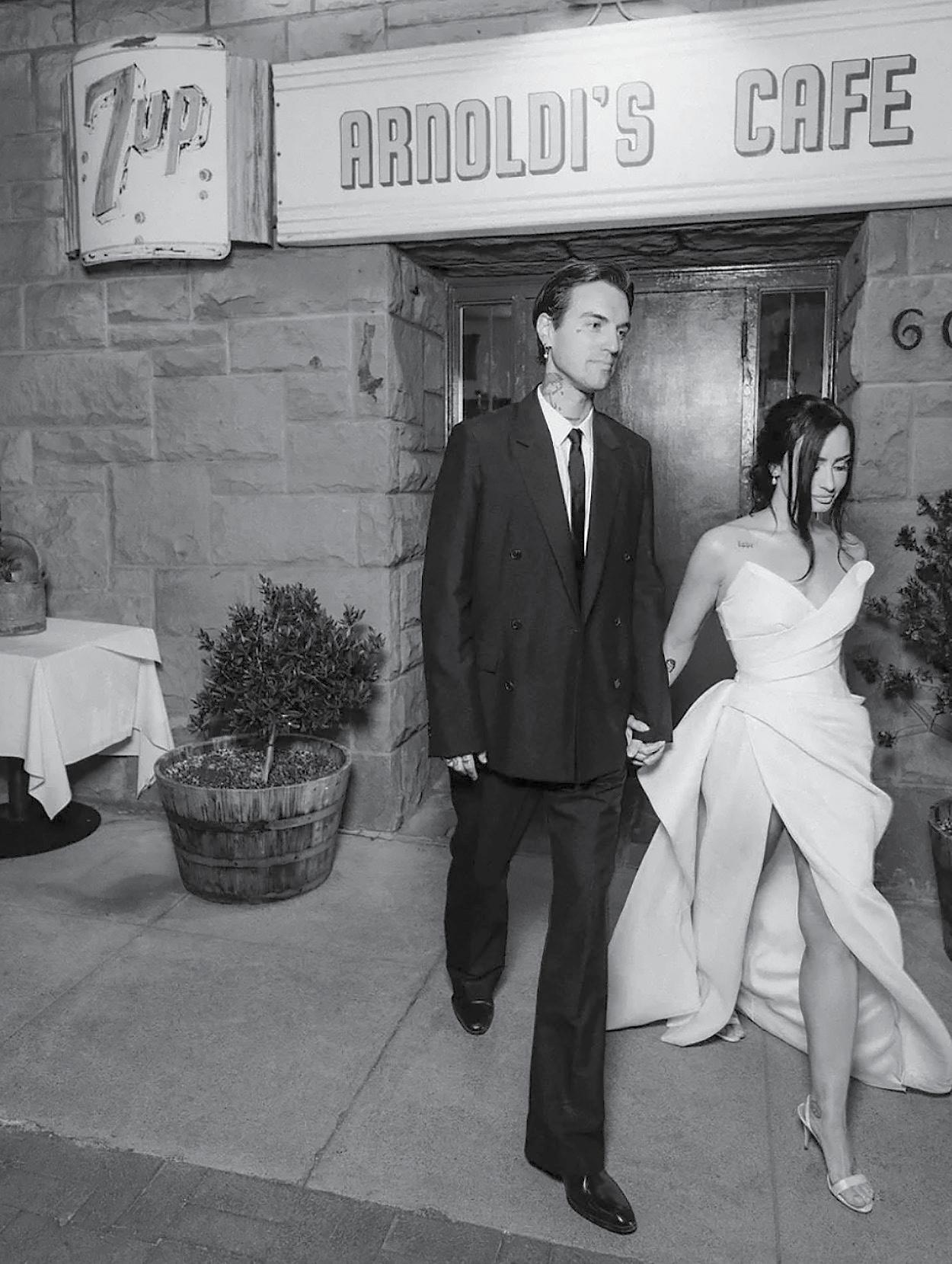
Whether it’s your most special day, or a nostalgic night out... Arnoldi’s is here to bring our community together for every occasion.
ARNOLDI’S CAFE
600 Olive Street | (805)962-5394


CELEBRATING 20 YEARS OF CONNECTION, INSPIRATION AND CRAFT, THE HERITAGE COLLECTION HONORS OUR HISTORY WITH INSPIRED WRAP DESIGNS AND UNIQUE COLORWAYS.
HANDCRAFTED IN JAPAN FROM THE WORLD’S FINEST MATERIALS AND OPTICS.

STORY BY LES FIRESTEIN
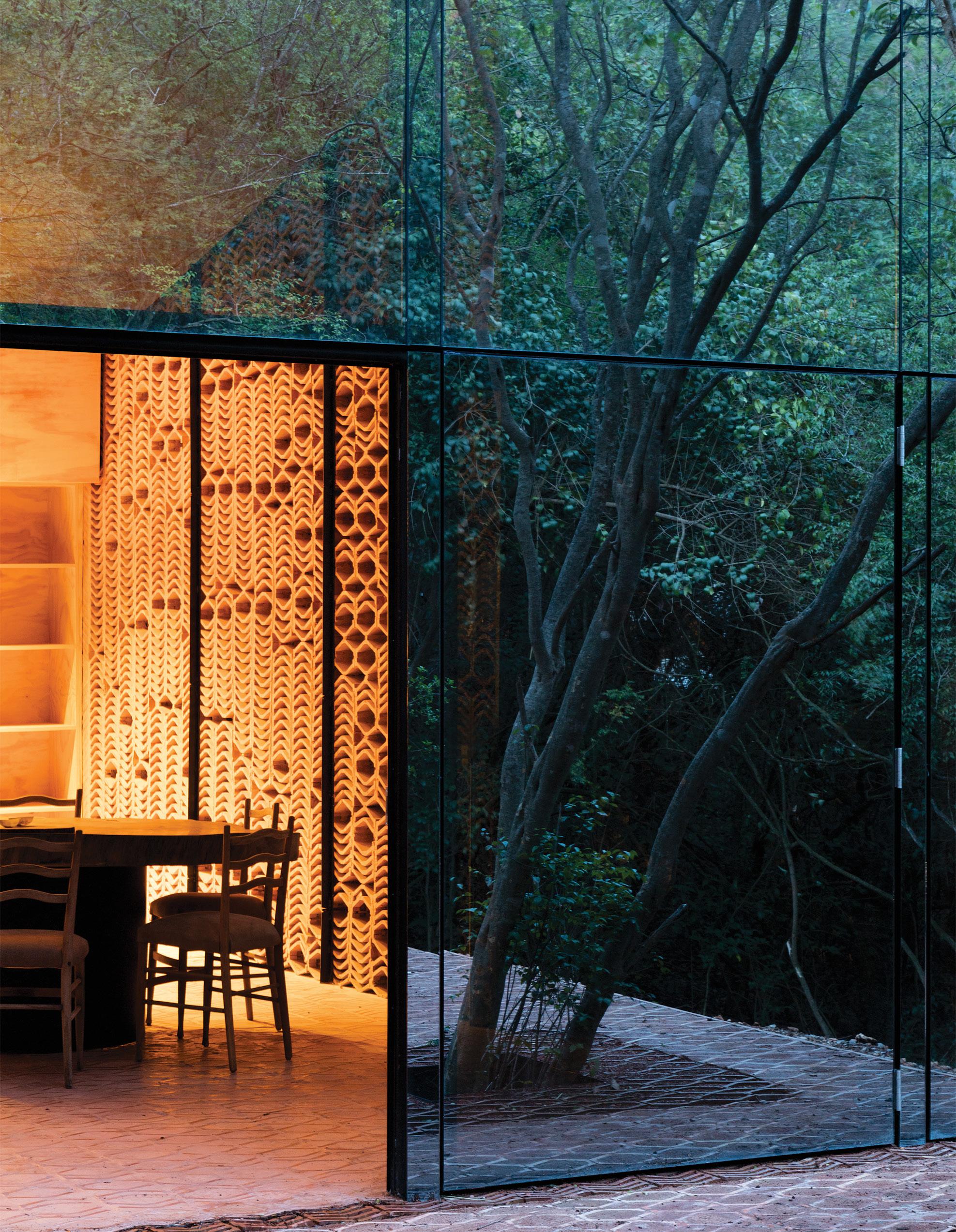
(PHOTO: RORY GARDINER)
‘SOFT BRUTALISM’ IS HARD… BUT THIS ARCHITECT MAKES IT LOOK EASY
DISAMBIGUATION. The almost implausibly talented and prolific architect Tatiana Bilbao was not named after the town of Bilbao or the iconic Guggenheim in Bilbao.
Nor is the architect’s last name self-imposed or ironic like, say, Alec Monopoly or Metta World Peace.
The third significant Bilbao in architecture that Tatiana is also not named after is a phenomenon known as the “Bilbao Effect” which is the idea that a monumental piece of architecture can not just inspire, but elevate the profile and economy of an entire region.
It’s a “rising tide lifts all boats” kind of thing. I think it’s overhyped—architecture’s version of “trickle down economics”—although it did work at least once for Frank Gehry.
TATIANA BILBAO
The Bilbao Effect has also notably not worked on many occasions. Sometimes you build it and they don’t come. More often the Bilbao Effect is invoked to justify tax breaks and bond measures for developers. The Bilbao business model typically features a solo starchitect building a palace (or museum or stadium) paid for with a healthy heaping of public dollars. But this is kind of the opposite of how Tatiana rolls. Although it does explain why in her case the name “Bilbao” is almost misleading. Tatiana is not grandiose. And she’s not looking for applause or a statue of herself. No, this Bilbao believes architecture is no less than an expression of care, a responsibility she takes quite seriously.
As you might imagine with someone so prolific, Tatiana Bilbao is a maestra of doing two things at once. She fabricates fabulous fortifications for the wealthy. But she also builds gorgeous affordable housing that doesn’t act or
dress like affordable housing. It just reads as… really nice housing. And I don’t mean “affordable” in the Montecito sense “we stole this pied-à-terre for only $6 million—it had just fallen out of escrow.” I mean truly affordable, what people here pay for a Marzocco coffee machine. In this country affordable housing is something you give to the newest associate to design. But in Mexico housing is a basic human right actually written into the constitution. Imagine that.
Tatiana sees a big part of her mission to make this affordable housing not suck. And “not suck” it does with flying colors. Her affordable housing (as low as $8K per unit!) is so gorgeous it made it into her coffee table book and, honestly, it’s as nice as anything else in there. (And kudos to Bilbao for putting the affordables in her book along with their residents. The Riv always prefers actual people to CGI.)
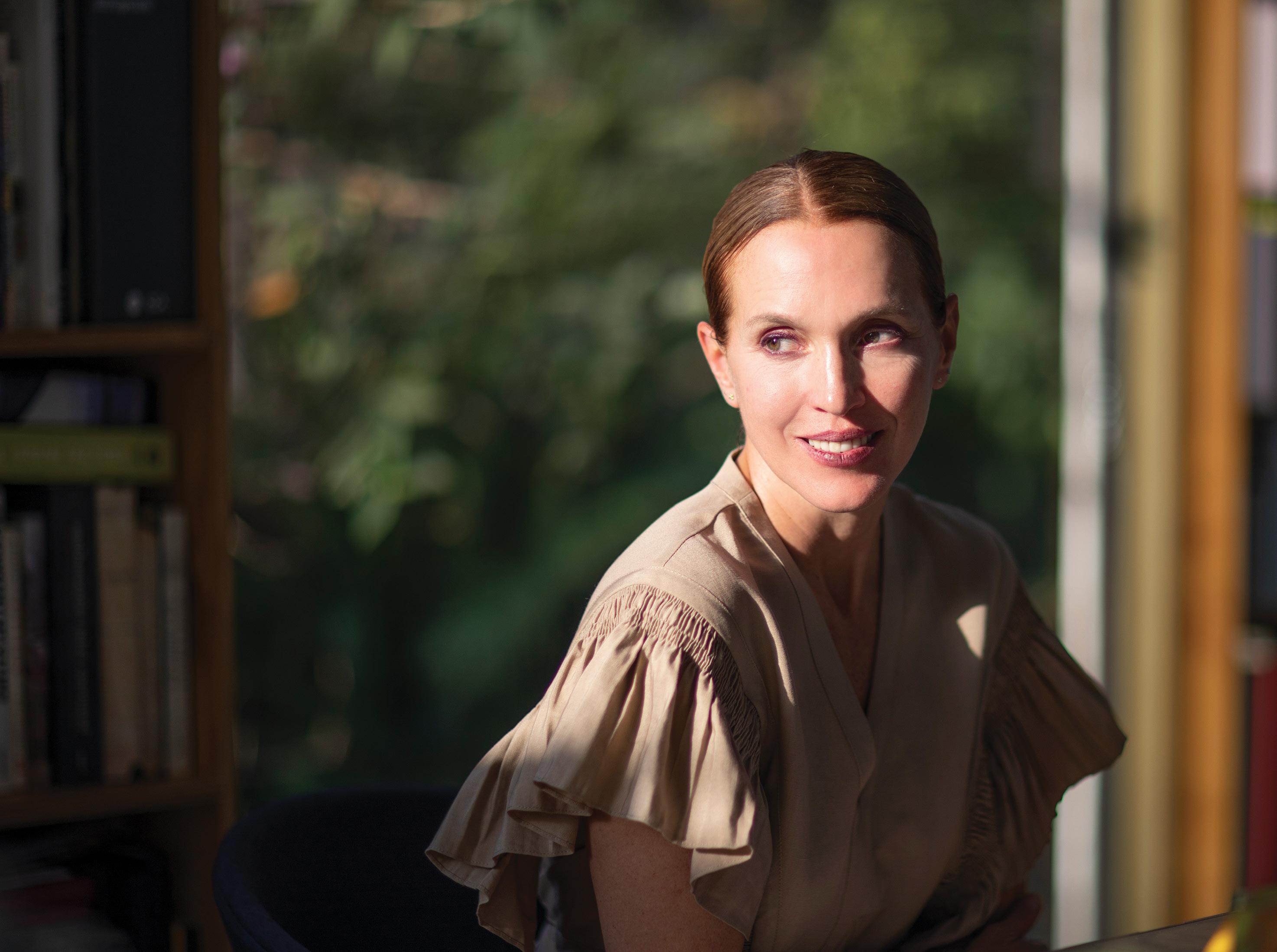
“I LEARNED THAT I’M AN ARCHITECT ON THE INSIDE, I DIDN’T FEEL LIKE I HAD TO BECOME ONE, I ALREADY WAS ONE… I ACTUALLY THINK ALL OF US ARE ARCHITECTS BECAUSE WE ALL NEED [TO CREATE] PROTECTIVE STRUCTURES TO SURVIVE AND INHABIT THIS PLANET.”
(PHOTO: ANA HOP)
On top of all that Bilbao is somehow equally accomplished as an academic, teaching at Harvard and Columbia among other places, but she also produces an immense output of academic research. I first learned about her because of her massively encompassing gathering of ideas reimagining the U.S./Mexico border, which I thought would be important for us to look at—and is. Is her exhaustive tome Two Sides of the Border: Reimagining the Region the best single volume on that topic? Probably. My point is just as an academician Tatiana Bilbao is top tier. Which almost obscures the fact that her architecture is off the charts.
IASSUME she must not sleep, although she looks well rested when we Zoom. Poignantly, I meet with Tatiana as she’s riding a train down to NYC from New Haven because she has also been teaching at Yale for many years. Like actually teaches there. Not like when I was at Columbia film school and Miloš Forman showed up a total of zero times. But I digress.
So I catch Tatiana between at least two of the worlds she shuttles between, the real world and the theoretical one. You’d think an architect who builds for both the wealthiest and the most economically vulnerable communities would eventually develop a kind of professional schizophrenia. That she’d treat these two practices as separate moral universes, never allowing the intimacy of a multi-million-dollar residence to contaminate her vision for social housing, or conversely, never letting the urgency of human need soften her aesthetic commitments. Tatiana Bilbao has done something far more interesting: she has rejected the split entirely. No Robin Hood, instead she’s developed a unified philosophy so intellectually coherent and morally grounded that it carries across everything she designs. She calls it the architect’s “Duty of Care.”
“I believe that architecture provides a primary form of care,” she tells me, her voice carrying the kind of certainty that comes from deeply held conviction. “I always saw architecture as this protective or mediating structure between us and our own ecosystem that allows us to exist
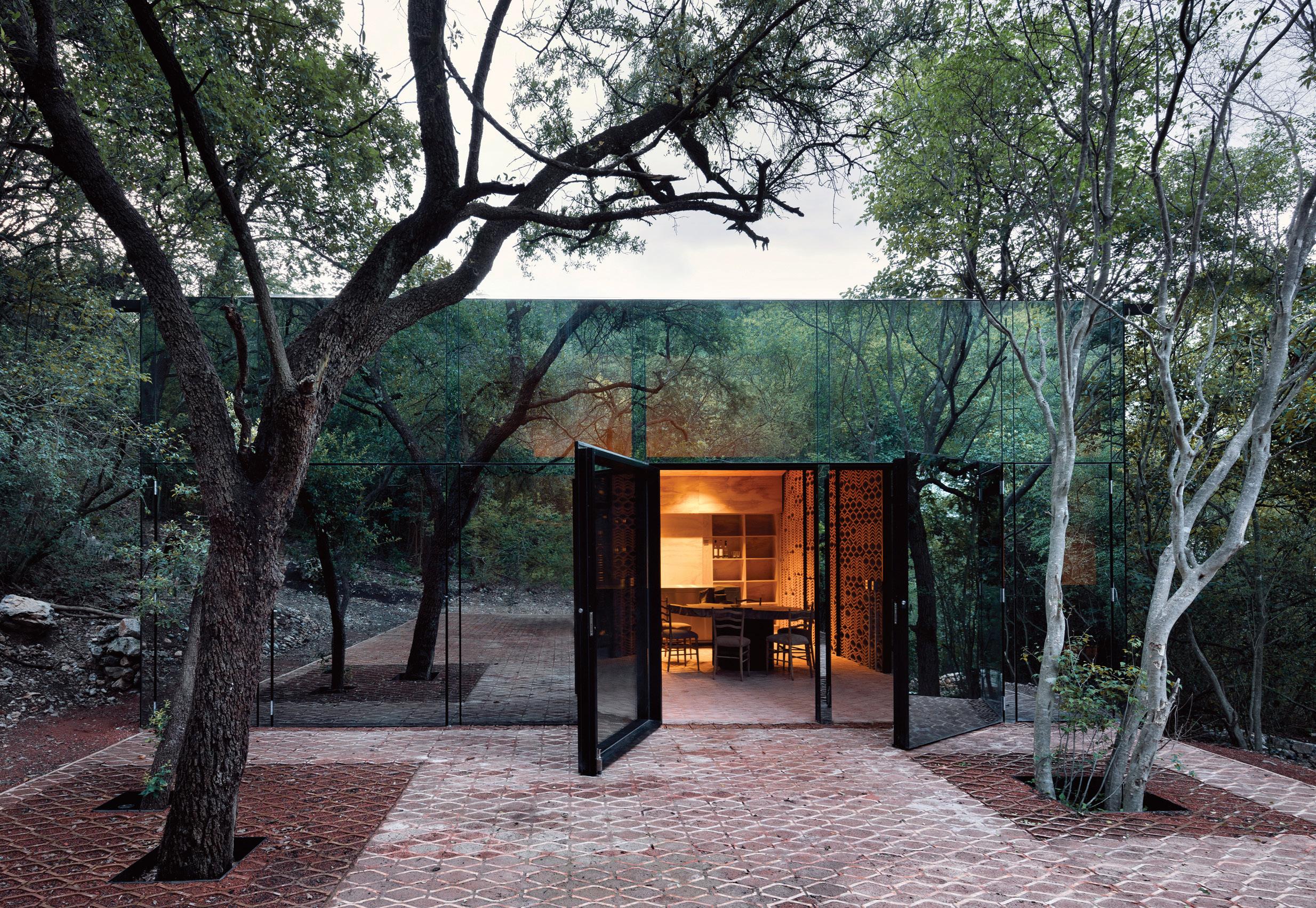
in this building. So that is for me the task of architecture, the responsibility of architecture.” She pauses, then adds: “And I’ve always seen it like that, although I was not taught that in architecture school.”
And this is the through-line of her work. It’s architecture as a kind of shield, a protective envelope of architectural amniotic fluid that forms a protective and nutritional barrier between human vulnerability and an indifferent universe. Everything else—the stunning interiors, the site sensitivity, the material rigor, the cultural sophistication—flows from this fundamental understanding. “Care is everything that we need to exist physically and mentally and spiritually in this moment, as human beings,” she says. It’s why she can move seamlessly between projects. It’s why a social housing prototype and a luxury residence aren’t contradictions in her practice; they’re both expressions of the same core belief. She also says, “I see domesticity and the domestic space as an extension from your inner body to your external social life.” The home thus sort of a halfway house between your corporeal body and the outside world, a chrysalis.
Bilbao established her Mexico City studio in 2004, but her philosophy predates the firm. Among something like 20 other architects Tatiana is related to, her grandfather was Tomás Bilbao Hospitalet, a Basque architect who fled Spain in 1942 and brought with him a certain European sensibility about architecture’s social obligations. She studied at Universidad Iberoamericana in Mexico City—a city, she has noted, that taught her about resilience and adaptation in ways no architecture school ever could. Mexico City is a place where formal and informal collide, where ancient and contemporary layer over each other like geological strata, where the built environment itself is constantly negotiating between order and chaos. I ask Bilbao specifically about how these forces are playing out at the border, five hundred miles north of her studio. And, unsurprisingly, she evaluates the border holistically and humanistically like it’s any other problematic build site that needs to be organized and tamed.
“THE border is the place where everything collides,” says Bilbao. “But the problems as well as the opportunities are all over the region. My idea has been to create an understanding that all the ideas that we’re putting into the border, it’s yes, a conflictive space. But we can make progress by thinking regionally and symbiotically rather than within the one single line that separates us—and where we’re failing.” This is Tatiana’s intellectual jiu-jitsu—not to ignore the border, but to decenter it, to reframe it as a symptom rather than as a cause or a cure. In Bilbao’s world the border is part of a much larger weather system. The border just happens to be where that storm makes landfall.
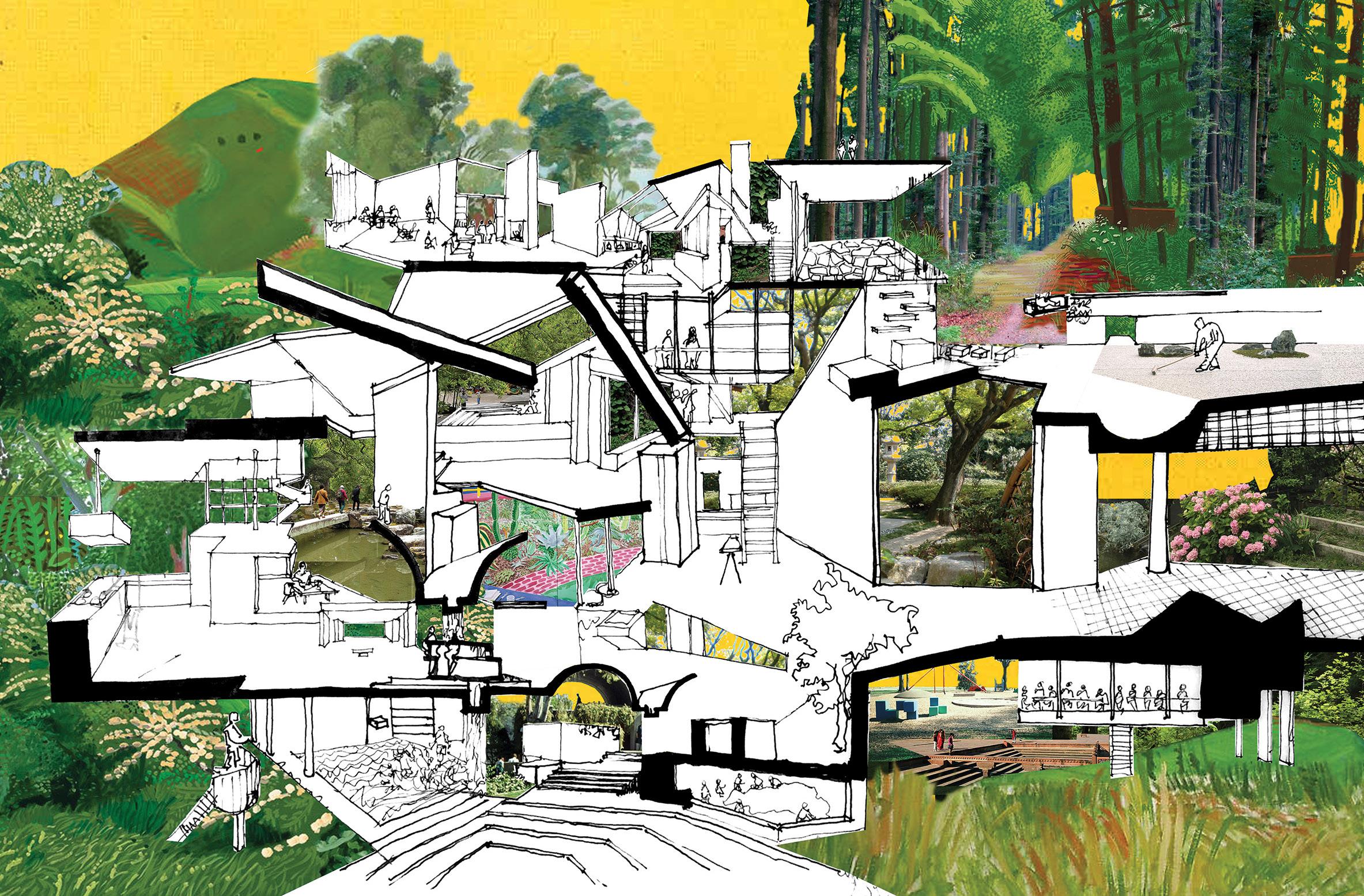
WHAT you notice immediately about Bilbao’s practice is that it doesn’t look like what you’d expect architecture education to produce. The work refuses the slickness of contemporary design—the photorealistic renders, the carefully composed images designed to seduce magazine editors. Instead, Tatiana works in collage (of all things) in rough juxtaposition, in forms that feel more constructed than composed. This too is deliberate. “A traditional render is a very fixed image that gives very little space for the other to represent themselves on it. It gives very little space for a conversation to happen,” she explains.
(PHOTO: KATHERINE DU TIEL)
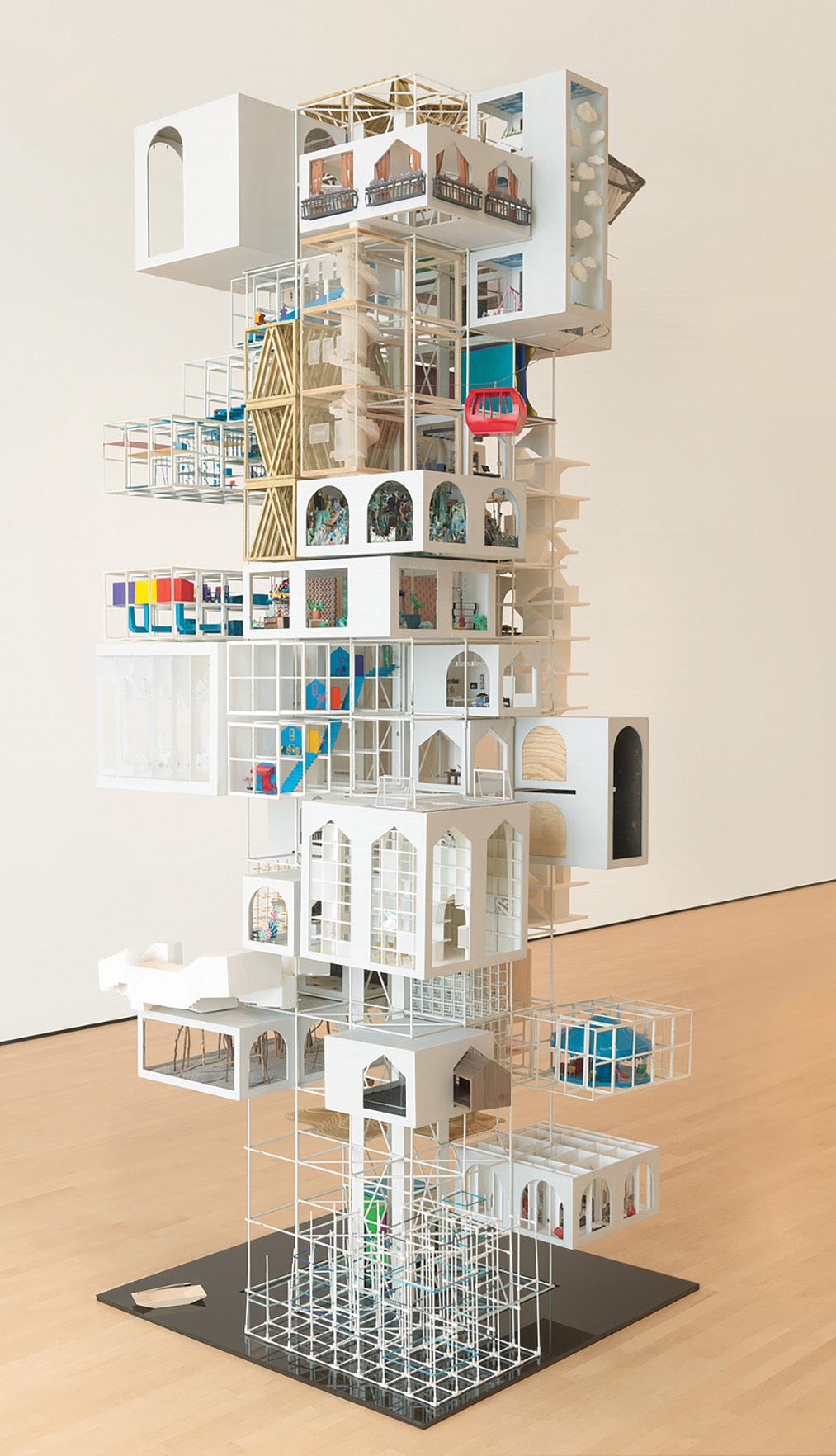
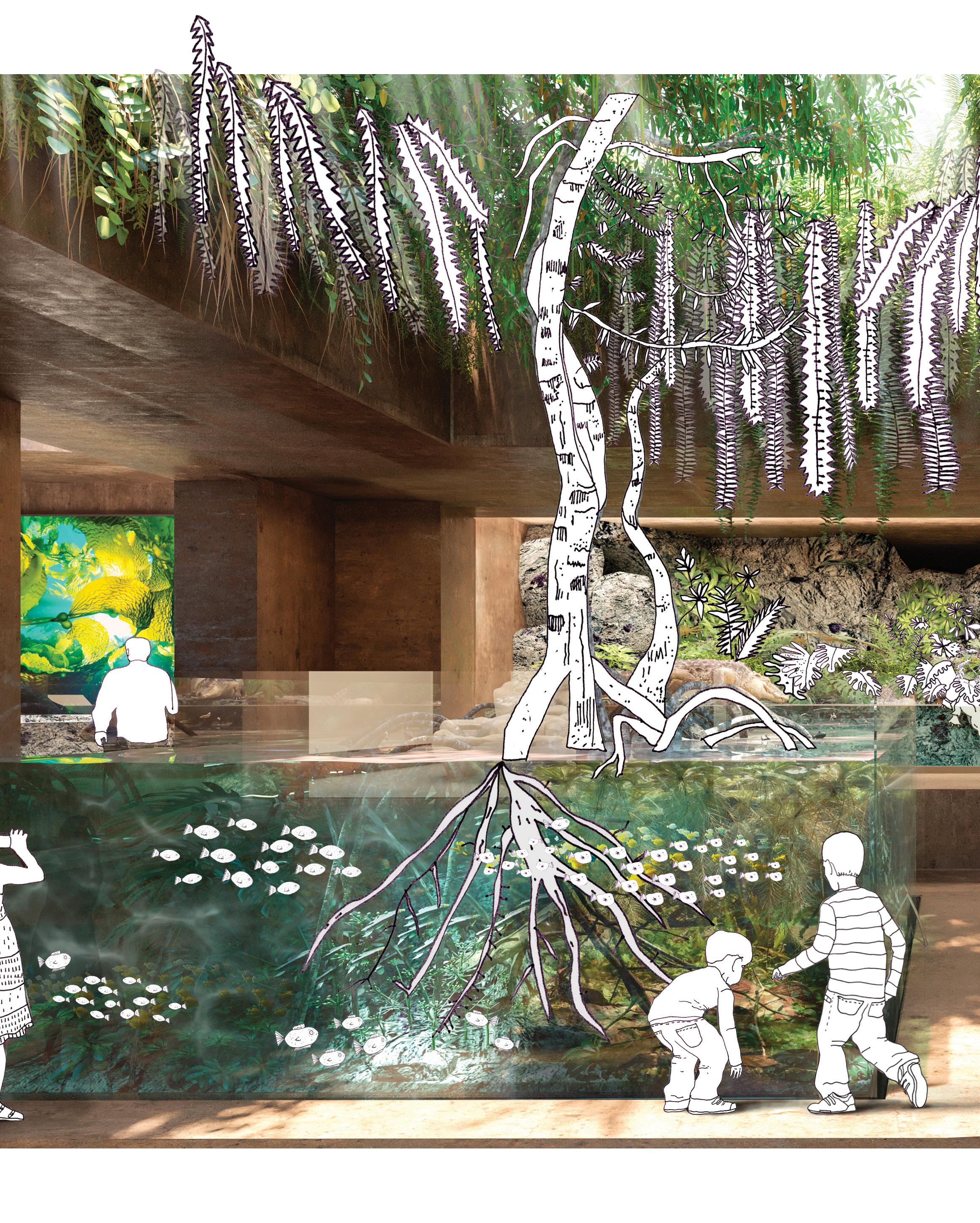
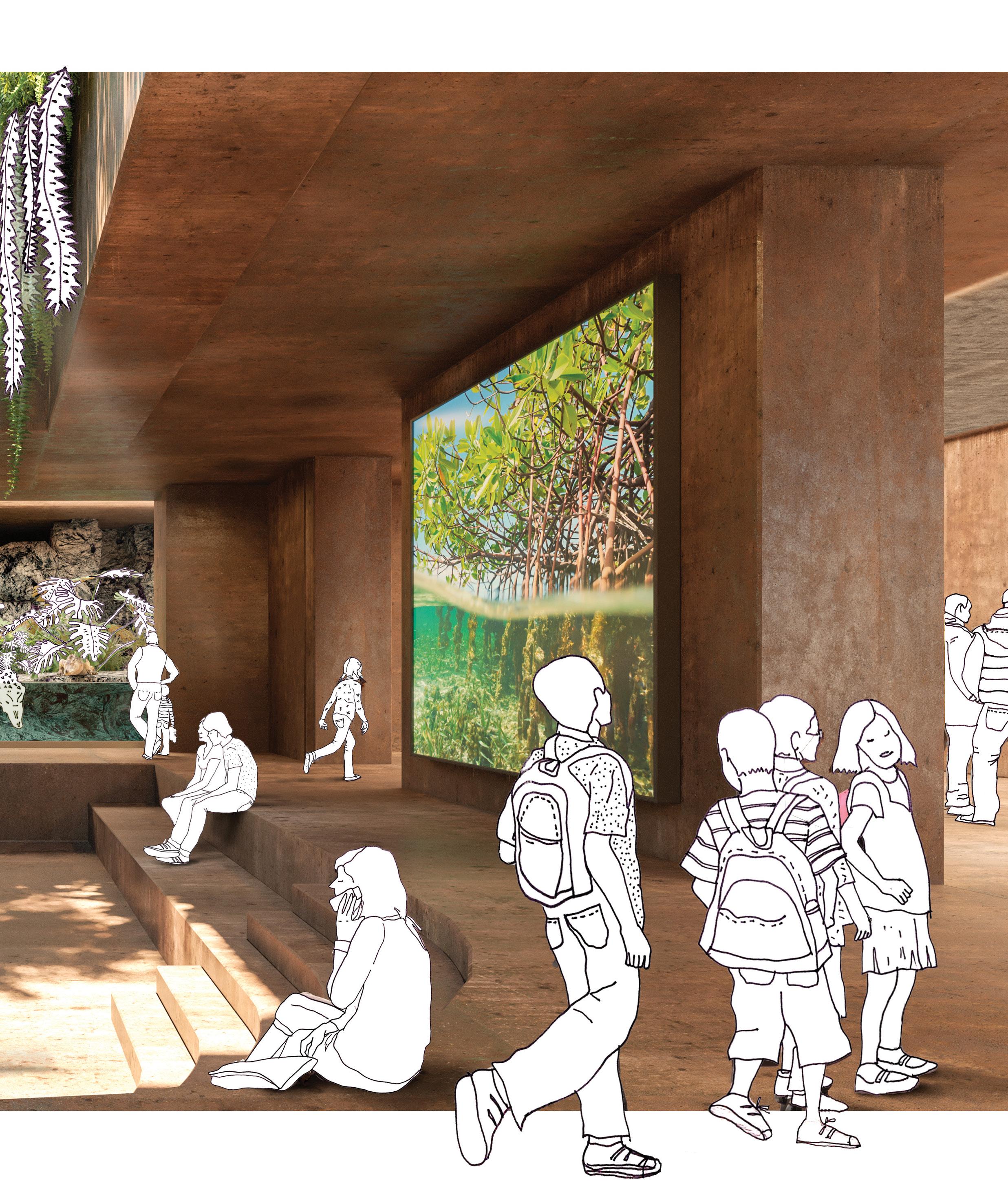
“THAT’S WHY WE THINK WE ARE COLLAGE. PEOPLE ARE COLLAGES. THERE’S A DEMOCRATIC IMPULSE HERE—THE REJECTION OF ONE PERSON’S IMPERIAL VISION, AND A REFUSAL TO DICTATE HOW A SPACE SHOULD BE EXPERIENCED,” SAYS BILBAO, SOUNDING DECIDEDLY NON-STARCHITECT, EVEN THOUGH SHE HAS CERTAINLY EARNED THAT SOBRIQUET.
TATIANA BILBAO
BILBAO continues, “And this I think is what I believe our architecture should be. A place where people decide their own way of inhabiting a space and not necessarily the way we see it. And that’s why we use collage. That’s why we think we are collage. People are collages. There’s a democratic impulse here—the rejection of one person’s imperial vision, and a refusal to dictate how a space should be experienced,” says Bilbao, sounding decidedly non-starchitect, even though she has certainly earned that sobriquet.
For her office she’s built a collective studio practice intentionally—a sanctuary really with many hands, many minds, and many perspectives. I ask her how she does so much architecture in so many ways, some of it for money and still spends much of her time in ponderance, trying to solve some of Architecture’s big questions and greater goals. I ask her if she has a mission or if that’s just “who she is.” “That’s a good question,” she responds. “There’s certainly an architecture gene in my DNA. I think it’s just who I am. What motivates me are simply my surroundings, my place, and my time. I guess in a more abstract
sense I’m just dealing with the site I’ve been given.”
I tell Tatiana it seems she must be a dreamer and an optimist to take on some of the massive issues with which she grapples: affordable housing, trying to reconceptualize the U.S./Mexico border, or dealing with a complicated project where your client is the government. I ask her if I’m correct, and, if so, what is it during this difficult time that gives her hope—what is it that fuels her?
“People give me hope always,” says Bilbao. “People give me hope more than anything else.” It’s a simple statement, but in context, profound. Not projects. Not awards (though she’s won them—the Kunstpreis Berlin, the Marcus Prize, the Global Award for Sustainable Architecture). Not even the satisfaction of buildings well-built. People. “The collaborations with colleagues, the students in my classroom thinking through these big problems for the first time. The conversations with clients, rich or otherwise, about what they hope will take place in their future domicile.” She then shares with me a story about affordable housing that seems like almost a parable:
“THE COLLAGE, BY CONTRAST, IS OPEN. IT LOOKS LIKE A WORK IN PROGRESS AND INVITES INTERPRETATION. IT ALLOWS THE PERSON LOOKING AT IT TO PROJECT THEMSELVES INTO IT, TO FIND THEIR OWN MEANING. AND TO ADD OR DELETE LAYERS AS DESIRED.”
FEBRUARY 27–APRIL 27, 2026
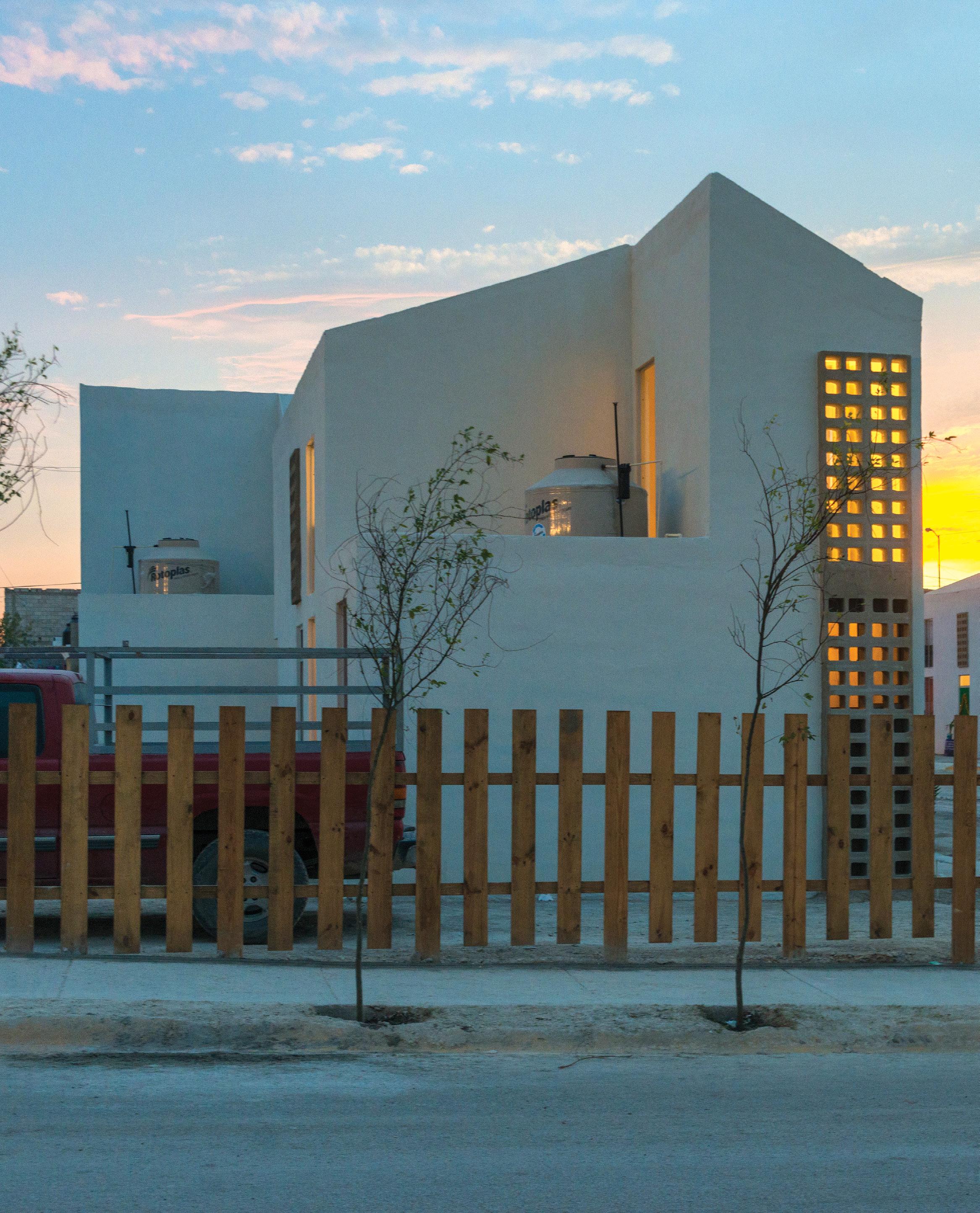
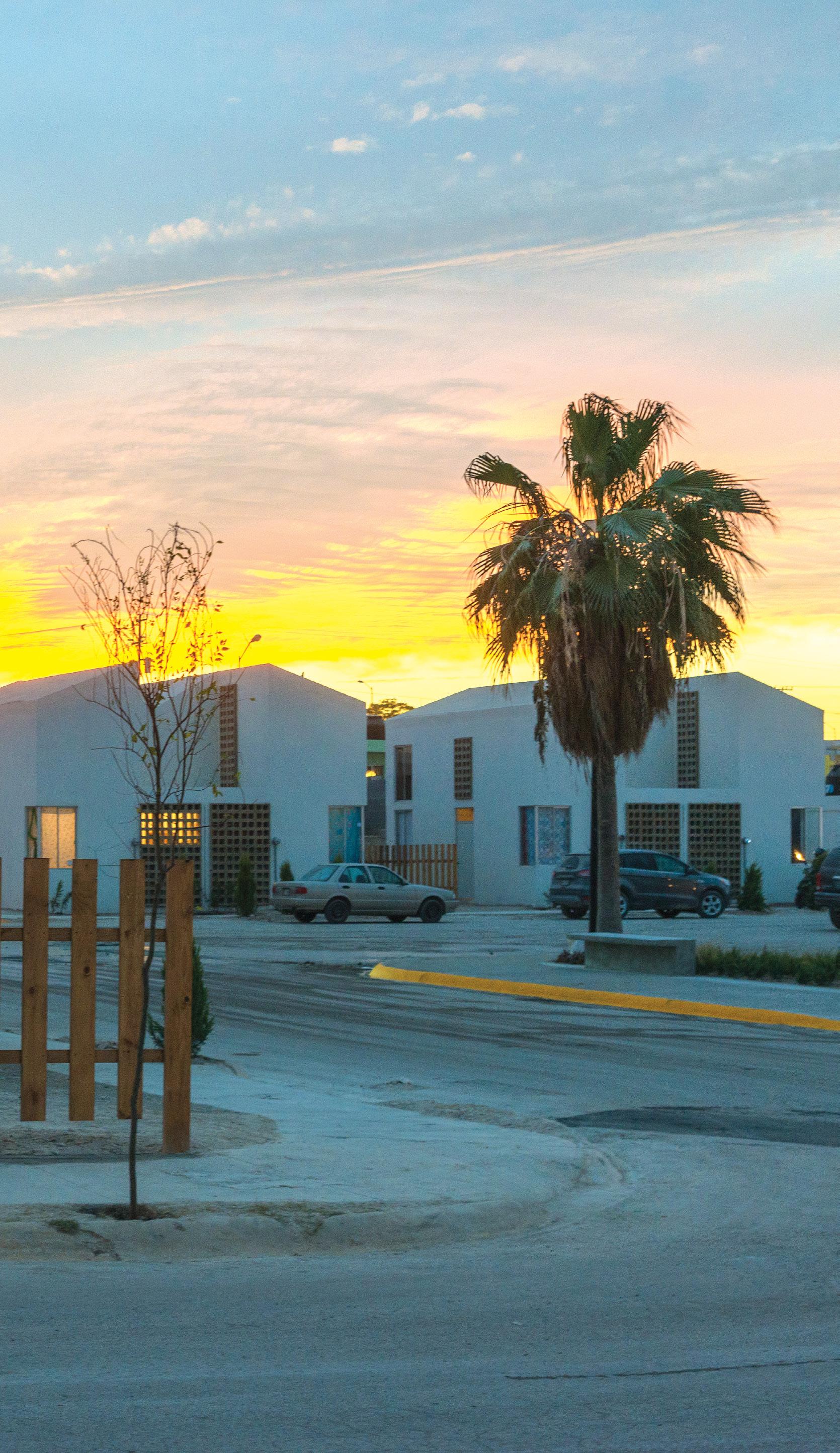
AFFORDABLE HOUSING UNITS, ACUÑA, MEXICO (PHOTO:
“MY IDEA WAS TO CREATE AN UNDERSTANDING THAT ALL THE PRESSURE AND THE IDEAS THAT WE’RE PUTTING INTO THE BORDER, WHICH IS, YES, IT IS A CONFLICTIVE SPACE, COME FROM THE FACT THAT WE ARE A REGION IN CONSTANT FLUX AND EXCHANGE. THERE NEEDS TO BE AN UNDERSTANDING THAT WE NEED TO THINK REGIONALLY AND SYMBIOTICALLY RATHER THAN WITHIN THIS SOLITARY LINE THAT SEPARATES US.”
“WE were doing 23 affordable housing units in a town named Acuña near the border with Texas where 23 homes had been lost to a mudslide. Since the homes were going to be prototypes of affordable housing, we conducted about 2,000 interviews with local residents to see what they wanted from a home. One thing we found was that people really wanted something with a pitched roof that looked traditionally ‘housy.’ That was important. The reason for this is a lot of people in Mexico used to build one story with a flat roof, because the hope was one day you’d build a second story. It was a hopeful act to prepare for growth. But those additions mostly never happened so that unfinished roof became a symbol of dashed dreams—and what used to be a symbol of hope instead became a a symbol of failure. This became a puzzle for us because people told us they wanted a house that looked finished… but could still one day expand. So we developed some houses that were in fact ‘finished,’ but could also easily add more rooms, when funds were available. The interesting tension for me was these new units were built adjacent to 580 units built in the 1990s… but our new units would have double the interior space of their neighbors plus the possibility for growth. I thought this was going to create a huge social problem. But surprisingly it did not, because these properties were the ones that had been completely destroyed in the mudslide. And instead of being jealous the rest of the community was relieved and thinking, ‘Well at least we did not completely lose our house like they did.’ Such is the architecture of hope.”







Luxury home renovations and remodels come with risks, including construction site theft, vandalism, material loss, and property damage. Post Alarm delivers protection through every phase of construction including temporary surveillance and Patrol Services, prewiring for permanent security and video systems, and full-service security solutions to give you long-term peace of mind.
Post Alarm is privately owned and family operated for three generations. For 70 years we’ve protected homes and families in Southern California.

Temporary Construction Security
• Construction Shield live video monitoring & verification
•Patrol & Armed Response Services
• Fast deployment for short or long-term sites

Prewiring & Infrastructure
•Low-voltage prewire for alarm, video surveillance & automation
•Cleaner installs & better performance
•Built to scale into permanent security
Permanent Home Security
• Professionally installed alarm & video surveillance
• 24/7 monitoring & local support
•Enhanced protection with live video monitoring and Patrol Services









by JeFf wiNg
alfredo Vilchis has a conspicuous nickname among his friends: Leonardo da Vilchis. A moniker like that isn’t easily earned. Vilchis is a painter whose work is almost entirely in commissions, and he has reached that enviable and rarefied artistic zenith that finds patrons and clients actually clamoring to possess his images. What does he paint with such penetrating mastery that patrons literally queue up to do business with Vilchis? Landscapes? Portraiture? Stirring still lifes? Yes.
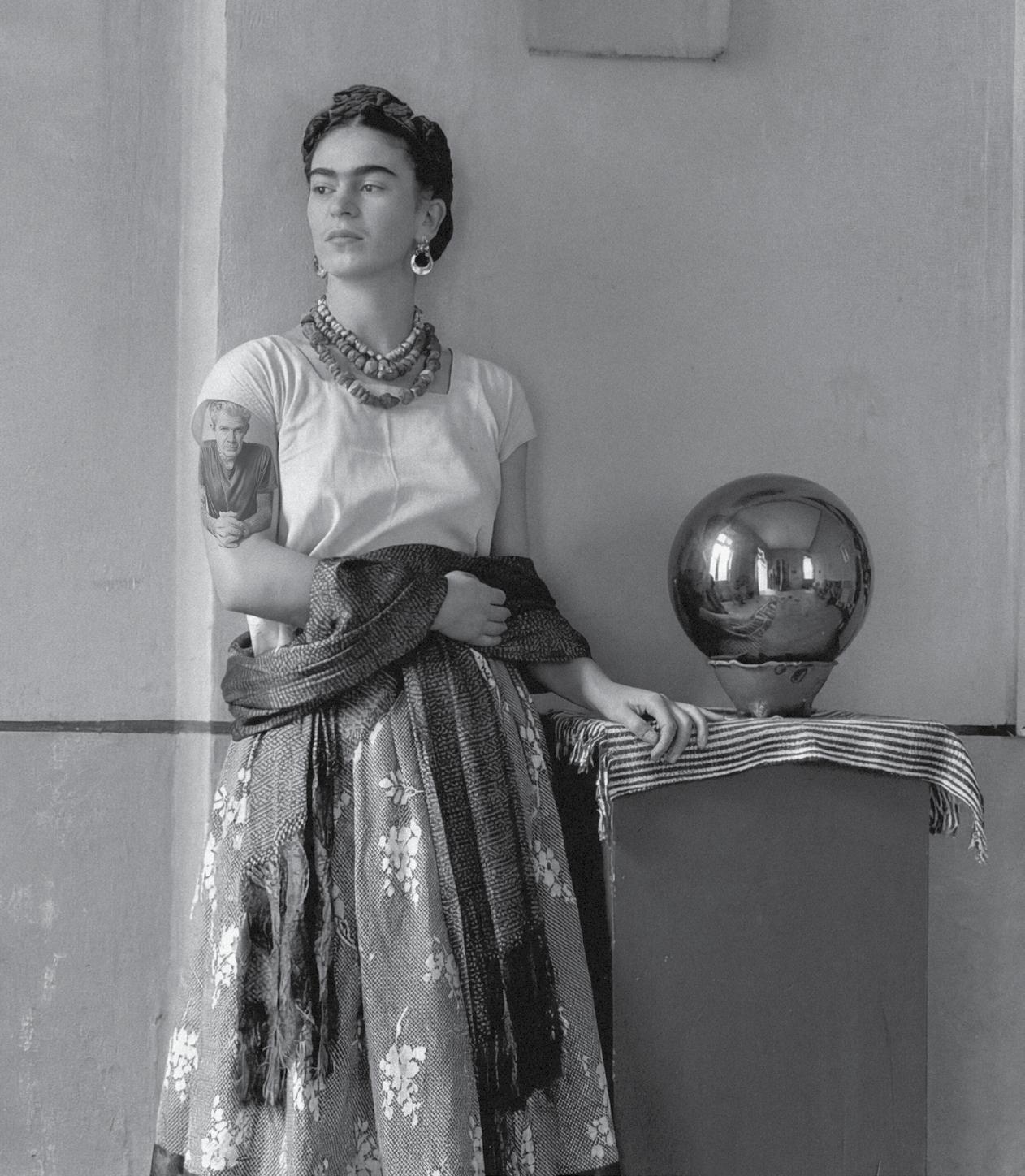
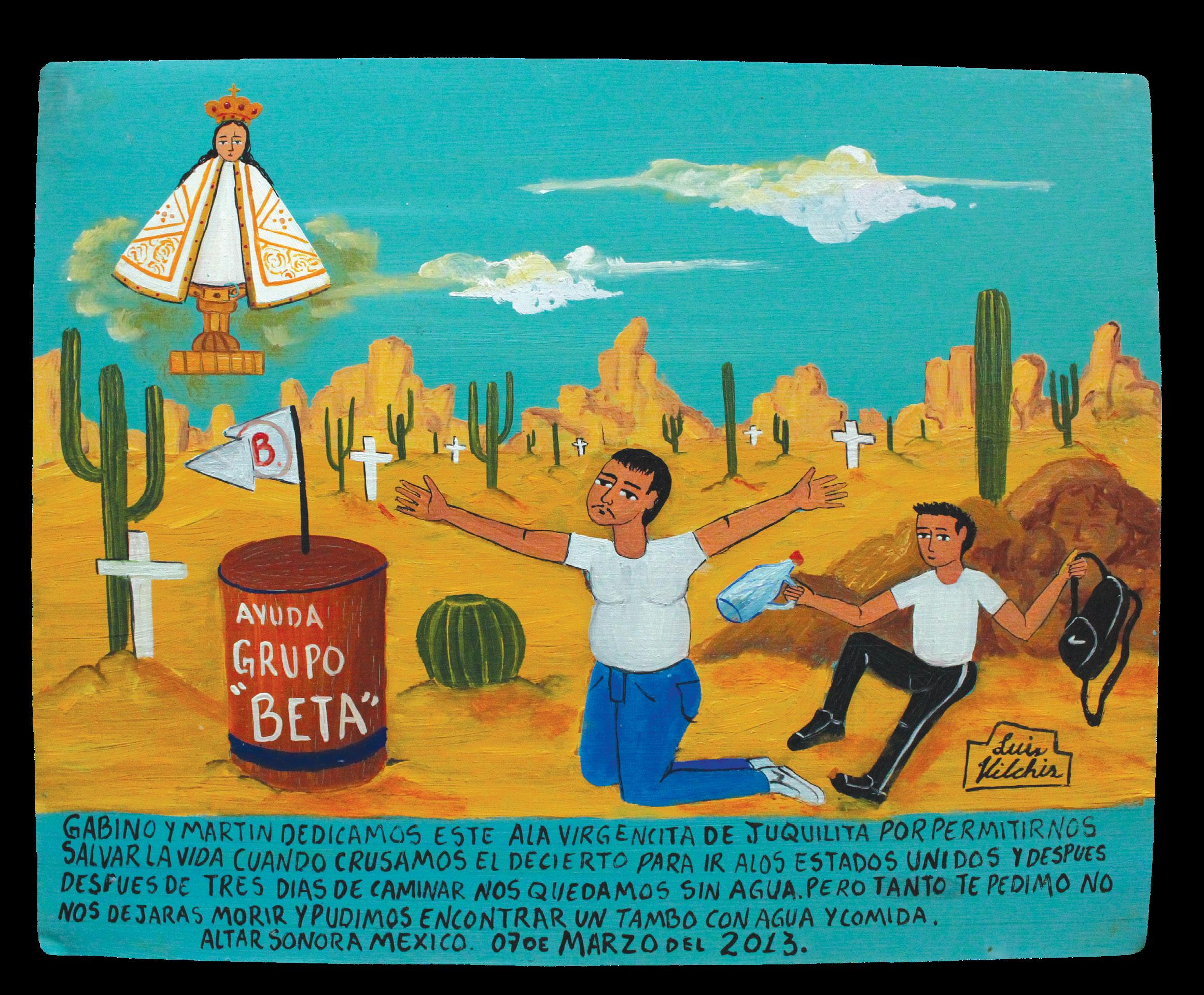
Alfredo Vilchis’ canon is devoted to the canonical, one could say. His medium is the retablo—a bespoke, client-narrated pictograph illustrating a personal hardship—sent up to the heavens in a moment of post-facto gratitude or terrified petition. These sorrow-specific entreaties to the saints are painted in the flattened, primitivist perspective popularized by no less an artist than Frida Kahlo. The paintings’ folk art simplicity is often juxtaposed with images depicting horrific scenes of personal mayhem, lending the retablos a particular surrealist frisson. Vilchis’ paintings, invariably on small sheets of oxidizing tin, are votives—from the Latin votivus; “fulfillment of a vow”—effectively either specific expressions of gratitude for divine rescue, or supplications to the saints for such rescue. More than 50% of Vilchis’ retablos are dedicated to the Virgin of Guadalupe, the Patroness of Mexico.
The votive itself—a picture or object offered as thanks to otherworldly protectors—dates to time immemorial, but made its way from Europe to New Spain in the 16th century with the arrival of the conquistadores. The Spanish conquerors’ secondary mission—to Christianize the native Mesoamerican population—found traction in a syncretic merging of Old-World Catholicism with deeply-held indigenous traditions probably closer to pagan than Christian. The intensely-personalized votive retablos can be seen to have evolved from this amalgam, where missionary prayers to the saints were effectively interwo-
these sOrrOw-SPecifiC eNtreAties to the sai Nts are pAiNted iN the fLAtteNed, PriMitivist perspective pOPuLArized by NO less AN Artist thAN Frida KahLo.
ven with very personal indigenous transmissions to their own protector-gods, often with accompanying gifts or sacrifices—votives.
The retablo in the Americas gained currency in the 19th and 20th centuries, “Journey to America” tableaux trending in parallel with the constantly changing tenor of the immigration conversation. Retablos increasingly featured people carrying a baby across a river, or neck deep in swiftly flowing water, or sprawled in the open desert. In each retablo the Virgin of Guadalupe hovers serenely over the beleaguered journeyers in her aura of fire.
Alfredo Vilchis was born in the José María Pino Suárez district of Mexico City, and growing up he would work as a bricklayer and day laborer and seller of newspapers. When of a certain moment he found himself jobless and unemployable, Vilchis began painting miniature scenes on small pieces of wood and bottlecaps, selling them where he could to neighbors and friends, to tourists. When he saw his first votive painting it powerfully rekindled in Vilchis a boyhood memory of visiting the Shrine of Guadalupe with his mother and being absolutely dazzled with the art he saw there. Vilchis’ first self-produced retablo was for
a family that had miraculously survived a terrible traffic accident; not unlike the first retablo painted by someone you’ve probably heard of—Frida Kahlo. Today, his sons Hugo Alfredo, Daniel Alonso, and Luis Angel Vilchis have taken up the calling, earning their own reputations as artistic and empathetic heirs to what has become a sort of retablo dynasty.
Having had no art schooling, Vilchis is self-taught and admits to the influence of the “naïve art”-surrealist style of Kahlo, whose own pronounced atheism intersected with her love of the folk-votive illustrative style to both mimic and subvert the retablo idiom for her own very personal post-revolutionary ends. The plain aesthetic nature of the votive painting makes it a vibrant conveyor of both spiritual and political expression.
For some, the variety of tribulations proffered by daily life are numberless and salved only by saintly intercession. Vilchis’ work is as wildly varied as the modern sorrows

that befall his clients, and the brief, calligraphic narratives that take up the retablo’s lower portion aggregate to a heartbreaking and plainspoken catalog of hardship. One childlike retablo is of a man on a riverbank, another uniformed man pointing a gun at him. The inscription, here translated into English, reads:
December 31, 1968
When I, full of hope of getting into the United States, crossed the Rio Bravo, I was caught by the migration police. He threatened me with death, pointing his gun in my mouth. I saw that there was no salvation for me, and I implored the Holy Virgin of Guadalupe. I realized what it is to be in a foreign land. I was searched, they took the little I had on me, then they threw me back to the river. I came back, relying on my luck. I promised to bring you this retablo when I came back to my land. Now I do what I promised because you stayed with me.
Tomas Huerta — Zitacuaro, Michoacan
ON THE LAST DAY OF
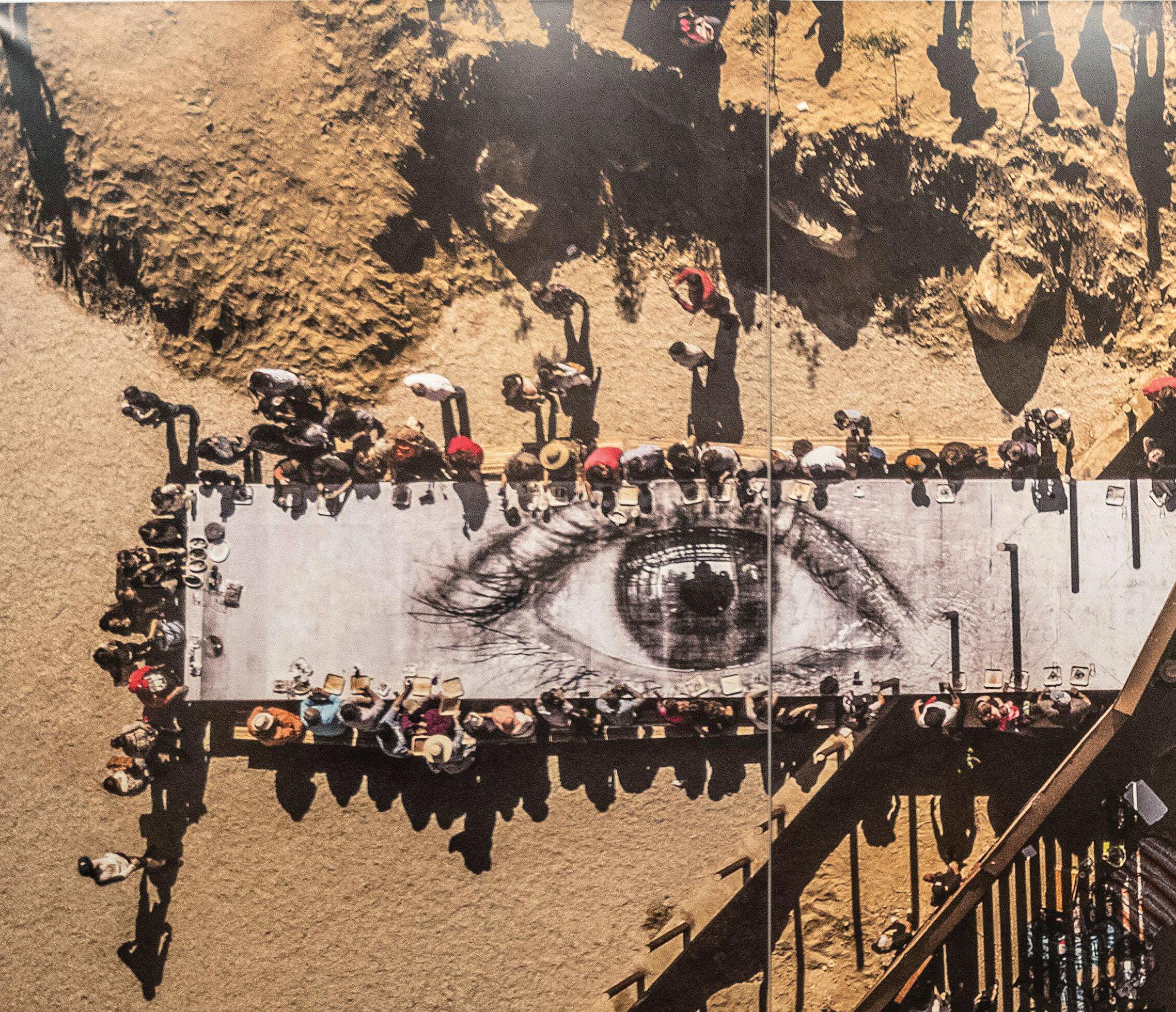
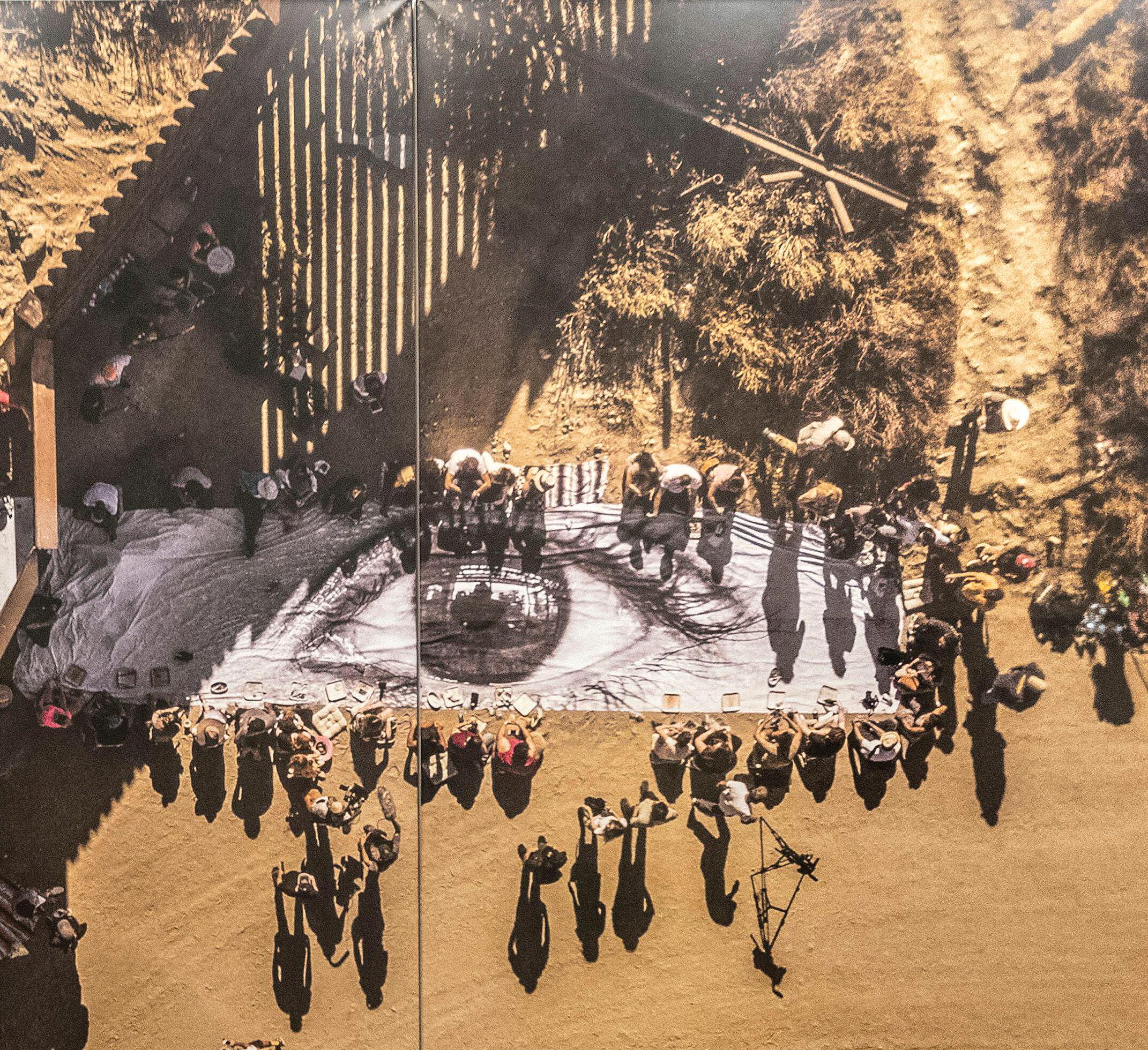
ON THE KIKITO INSTALLATION, THERE WAS A CELEBRATORY BANQUET AT THE BORDER WALL WITH DOZENS OF KIKITO’S FAMILY MEMBERS AND MANY GUESTS.
BY JEFF WING
The pseudonymous JR (first name Jean-René) is a French photographer and street artist who works at sometimes monumental scale. He’ll frequently draw in untrained volunteers from the community to help create, install, and even enact the work—typically enor-
mous, site-specific images given empathetic gravity by the surrounding context. His trompe l’oeil in the Louvre courtyard required him to teach 400 volunteers to carefully paste the 2,000 strips of paper comprising the piece, an anamorphic depiction of some 17,000 square meters
whose effect was to make I.M. Pei’s famous glass pyramid sink into an illusory quarry.
JR’s 2017 installation Kikito is a giant photograph of a toddler whose home is adjacent to the border wall in the Mexican city of Tecate. JR installed the scaffolded image behind the border wall, such that when viewed from the American side of the wall, Kikito is seen to be peeking with curiosity over the top of the barrier. On the last day of work on the Kikito installation, there was a celebratory banquet at the border wall with dozens of Kikito’s family members and many guests. The guests shared a meal while seated
around an immense elongated image, which draped a table on the Mexican side and was laid on the ground as a tarp on the U.S. side. The image was a photo of the eyes of a Dreamer—the term given to undocumented immigrants who arrive in the U.S. as children. Shot from above, the separated halves of the photo align as a pair of thoughtfully staring eyes around which jubilant guests from the two countries dine together. Food and drink were passed back and forth through the wall with much festive laughter, with a U.S. border guard even sharing a cup of tea with JR in the course of the afternoon.
BY JEFF WING
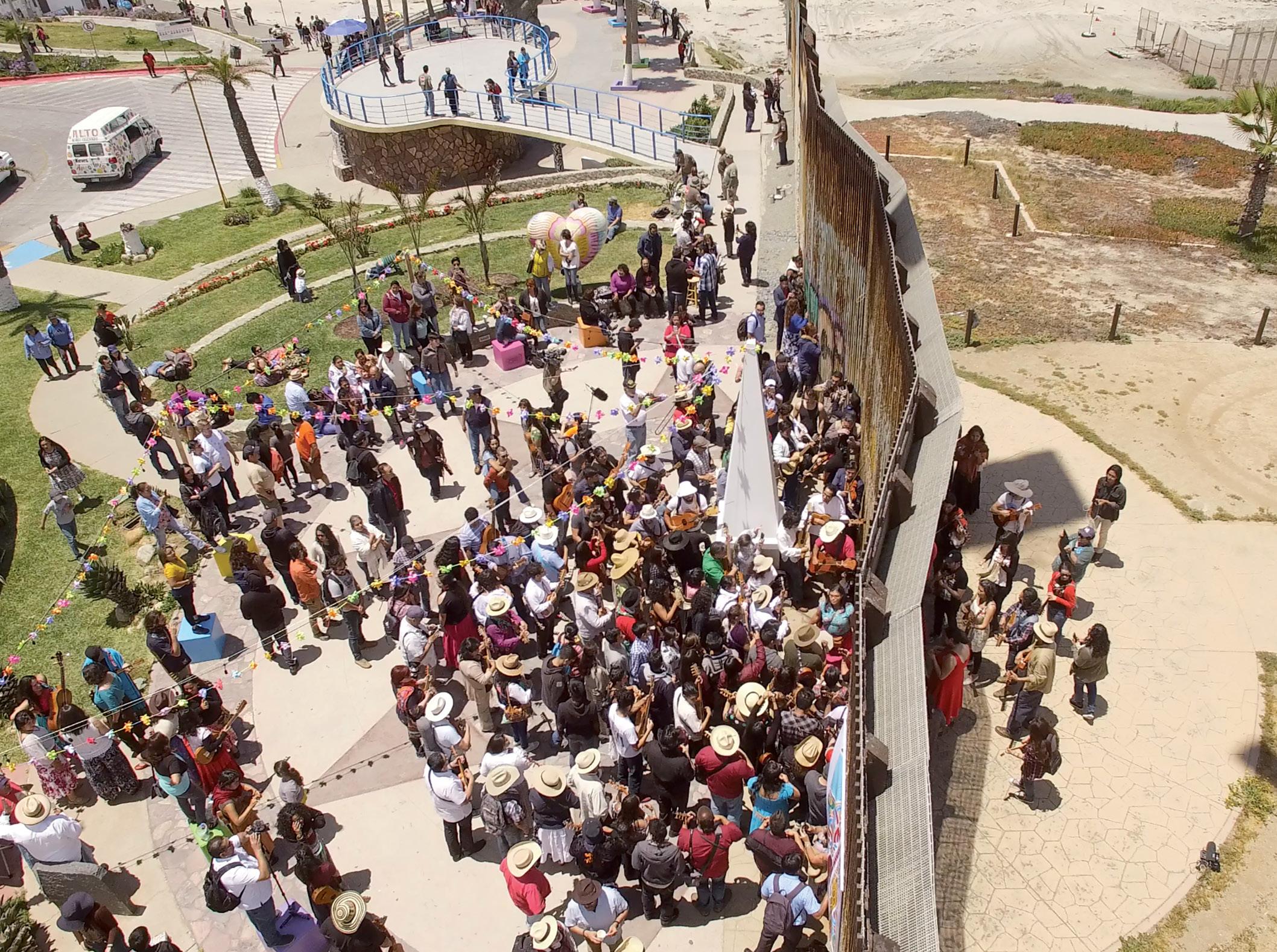
Librarian Jorge Castillo bought himself a jarana in 2007, the eight-stringed instrument an indispensable element of the son jarocho music catching fire in San Diego, where he lived. Veracruz’s 300-year-old folk amalgam of African, Indigenous, and Spanish musical forms was catching on all over the city, and Castillo began attending impromptu sessions called fandangos. Volunteering for public beach cleanup one day, he headed down to Border Field State Park,15 miles south of the city, where the border wall—at that time more a stern mesh fence—separates the U.S. from Mexico. Plucking flotsam from the beach, Castillo smiled at the sight of beachcombers chilling on the Tijuana side. As single-minded musicians will, he suddenly saw a sweet spot for a loud binational fandango. What better way to join two nations in music than at a fence on a beach? The following year, 2008, marked the official beginning of the annual Memorial Day Fandango Fronterizo. What sounds vaguely exotic to non-Spanish speakers will induce a spontaneous grin in its English translation: Border Jam.
Around 2016, filmmaker Varda Bar-Kar got wind of Fandango Fronterizo This well-travelled global citizen—daughter of a South African and Romanian-Israeli and married to a man of partial Mexican lineage—thrilled at the mad mix of musicians counterintuitively joined by a border wall. “A filmmaker friend told me about producer Kabir Sehgal,” she says. “He was seeking a director to film the journey of Arturo O’Farrill, founder and conductor of the Afro Latin Jazz
Orchestra, from New York to Mexico to perform at Fandango Fronterizo.” The resulting HBO documentary, 2020’s Fandango at the Wall [fandangowall.com], followed O’Farrill’s journey to a timeless Veracruz, where he met, sojourned with, and gathered a host of revered deep country son jarocho virtuosos. “Master musicians traveled to the San Diego–Tijuana border for a fandango,” Bar-Kar says. “And that transformed the wall from a symbol of division into one of connection.”
OPPOSITE PAGE:
AN OVERHEAD VIEW OF FANDANGO FRONTERIZO. (FANDANGO AT THE WALL FILM STILL, COURTESY OF VARDA BAR-KAR)
“THE FANDANGO FRONTERIZO ENCOURAGES COMMUNITY PARTICIPATION, IS INCLUSIVE, AND HAS NO ENTRANCE FEE; EVERYONE IS WELCOME. THIS YEAR WE WILL BE CELEBRATING THE 18TH EDITION ON SEPTEMBER 12, 2026.“
(POSTER: FANDANGO FRONTERIZO ORGANIZATION, DESIGN BY DANTE AGUILERA)
BELOW: SON JAROCHO MASTERS AT FANDANGO FRONTERIZO IN TIJUANA (FANDANGO AT THE WALL FILM STILL, COURTESY OF VARDA BAR-KAR)







Immersive Overnights are a unique series of voyages where each port of call features an overnight stay. This allows for deeper exploration, discovery, and engagement with much-loved destinations, including special shoreside experiences, crafted to make each overnight stop a memorable and unique part of your journey.
Storied S candinavia
STOCKHOLM TO OSLO
10 nights | Aug 29, 2026
Seven Seas Grandeur®
2 Days in Stockholm, Sweden
3 Days in Berlin, Germany
2 Days in Copenhagen, Denmark
2 Days in Oslo, Norway
G lamorouS G recian niGht S ATHENS TO ISTANBUL
10 nights | October 24, 2026
Seven Seas Voyager®
2 Days in Athens, Greece
2 Days in Heraklion, Greece
2 Days in Rhodes, Greece
2 Days in Istanbul, Turkey
Sun Set in Santander
LISBON TO LISBON LISBON TO LISBON
10 nights | April 28, 2027
Seven Seas Grandeur®
2 Days in Lisbon, Portugal
2 Days in Santander, Spain
2 Days in Bordeaux, France
2 Days in Bilbao, Spain
Contact a Regent Specialist at Santa Barbara Travel for exclusive pricing and value-added amenities on the World’s Most Luxurious Fleet™.
Santa Barbara Montecito
1028 State Street Santa Barbara, CA 93101 (805) 966-3116
1485 East Valley Road, #9 Montecito, CA 93108 (805) 969-7746

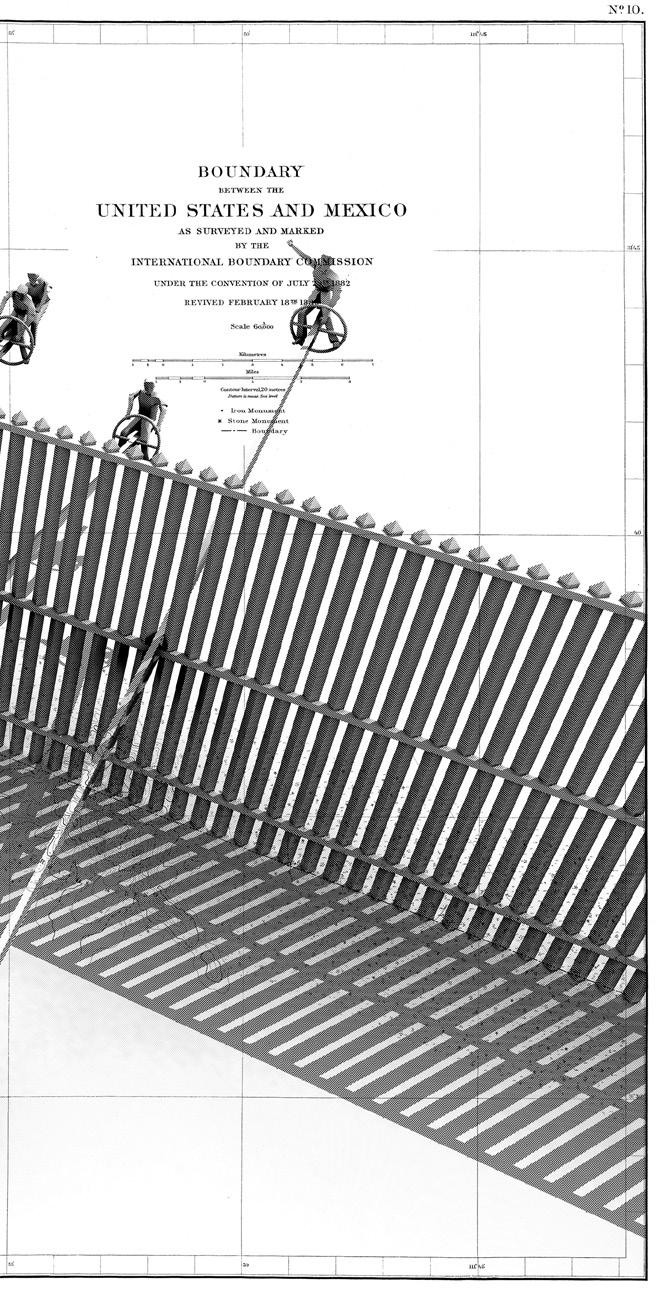
Ilove artists who obsess over one issue their entire lives. For Edward Hopper it was a lifetime exploration of loneliness. For Monet it was water lilies. While the architect, professor, and professional provocateur Ronald Rael has put an inordinate amount of time, thought, and design into the U.S.-Mexico border. It’s a big thing to think about, 2,700 miles or so.
What the walls of our border do, and don’t do, is significant. Think for a moment about the mathematical symbol for “division.” It’s almost an aerial view of our border: two dots divided by a wall—a cuneiform representation of “divided.” Sometimes I feel like Ronald Rael has pondered this idea from every possible angle and considered every possibility. He’s like a scientist who has spent a lifetime trying to centrifuge it out.
Prada Marfa (see Rael’s excellent essay on Prada Marfa elsewhere in this issue, page 98) was one of Rael’s first borderlands projects to go massively viral. “Prada Marfa,” for the five people who don’t yet know, was an art project by artists Michael Elmgreen and Ingar Dragset with the assitance of the architecture partners Ronald Rael and Virginia San Fratello.
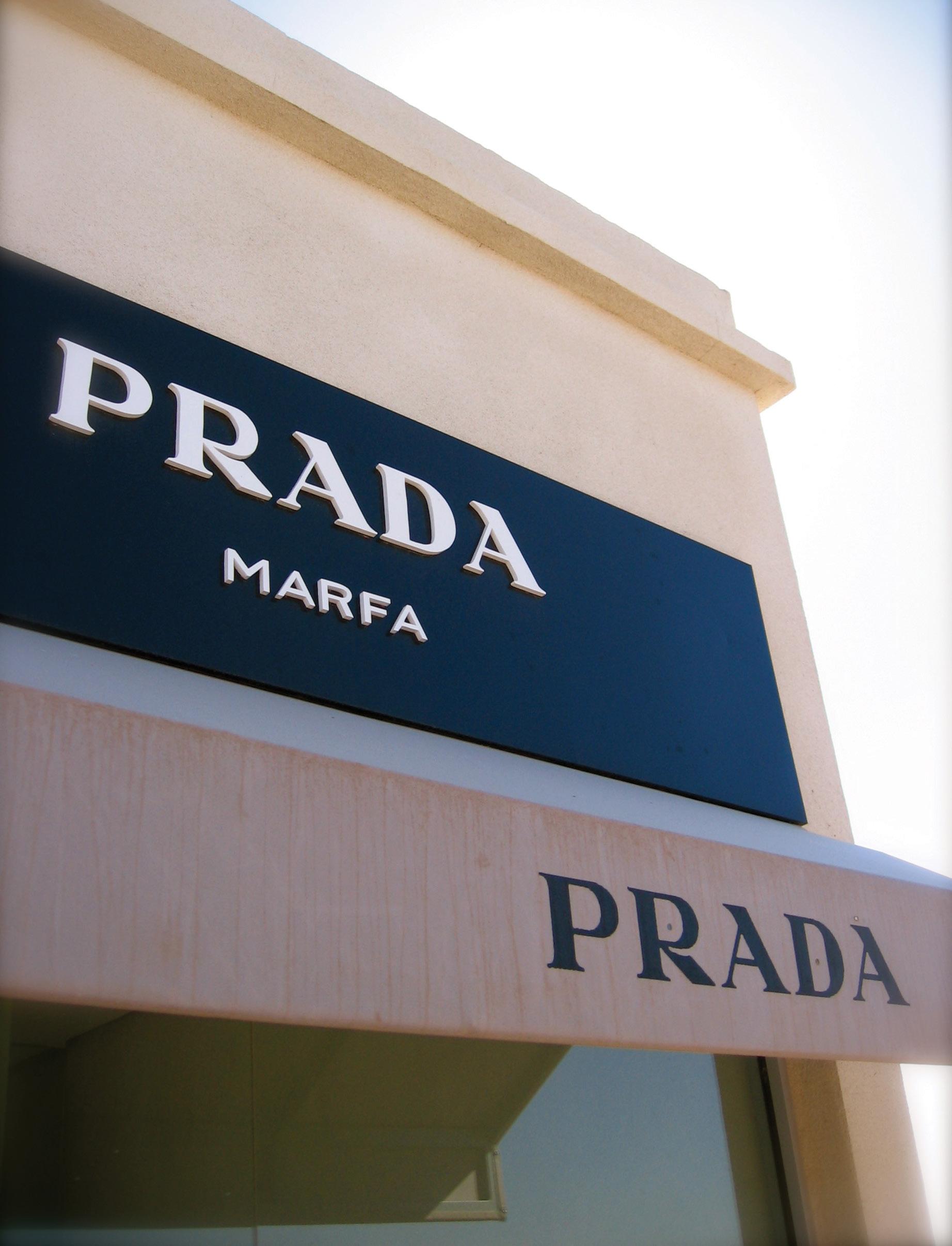
The installation (or technically, “architectural intervention”) of Prada Marfa is a freestanding adobe which looks like an unenterable Prada flagship in the middle of the West Texas desert. Like, on the side of the highway in the middle of nowhere. In fact, Prada Marfa is a “pop architectural land art project” which has since become the most photographed non-monument in the Southwest, and a G.O.A.T. of Instagram that confused people who thought art was supposed to stay on walls.
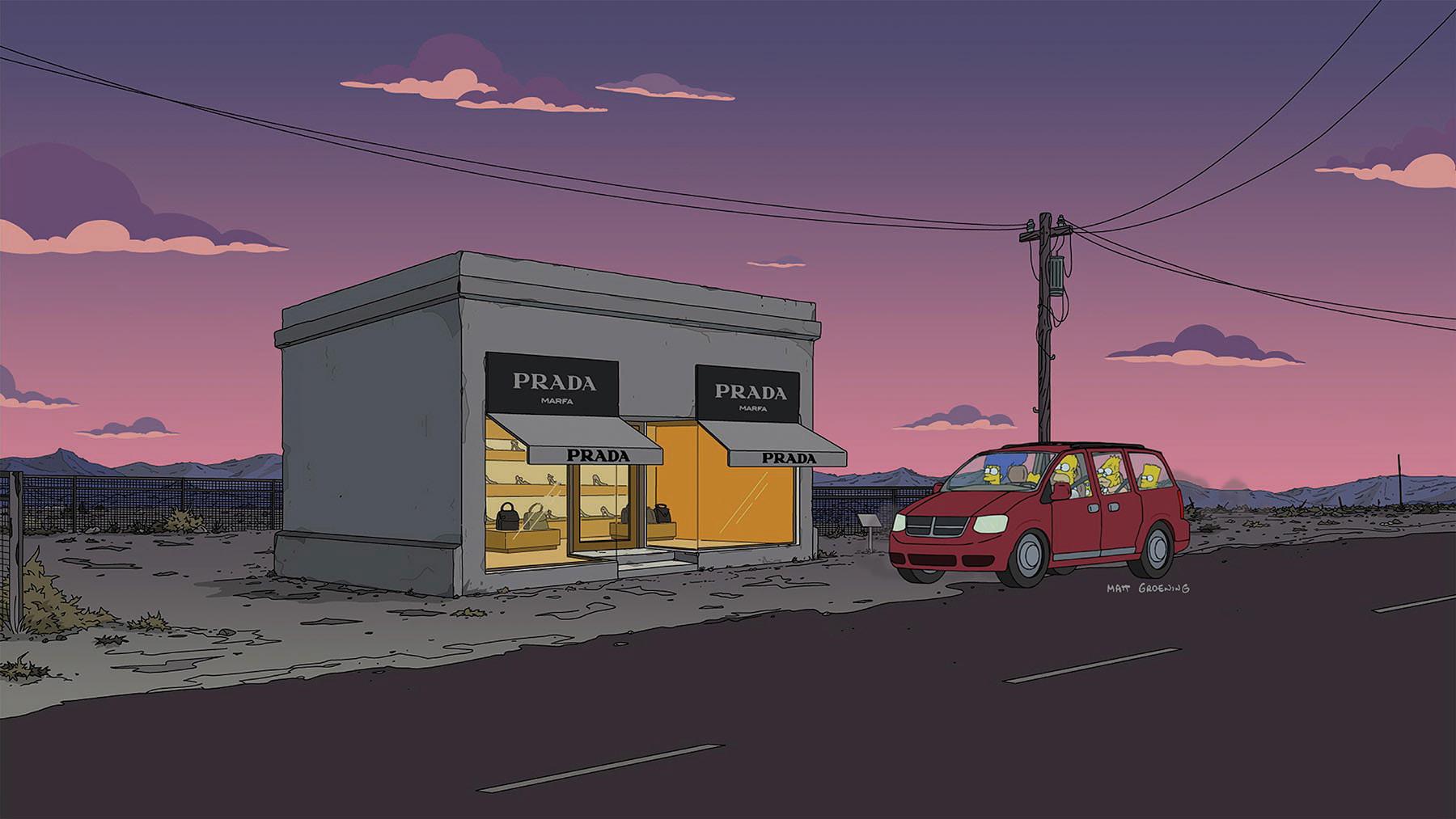
Yet it’s what happened after Rael and San Fratello built Prada that has been something else entirely. Prada Marfa started as an architectural parody about disparity. But along the way it inadvertently became one of the FOMO 7 Wonders of the Western World. It has been featured on The Simpsons, on Beyoncé’s Instagram… and on my wife’s Prada Marfa toile pajamas. Why did it resonate so profoundly?
Ronald Rael is beyond smart and provocative and

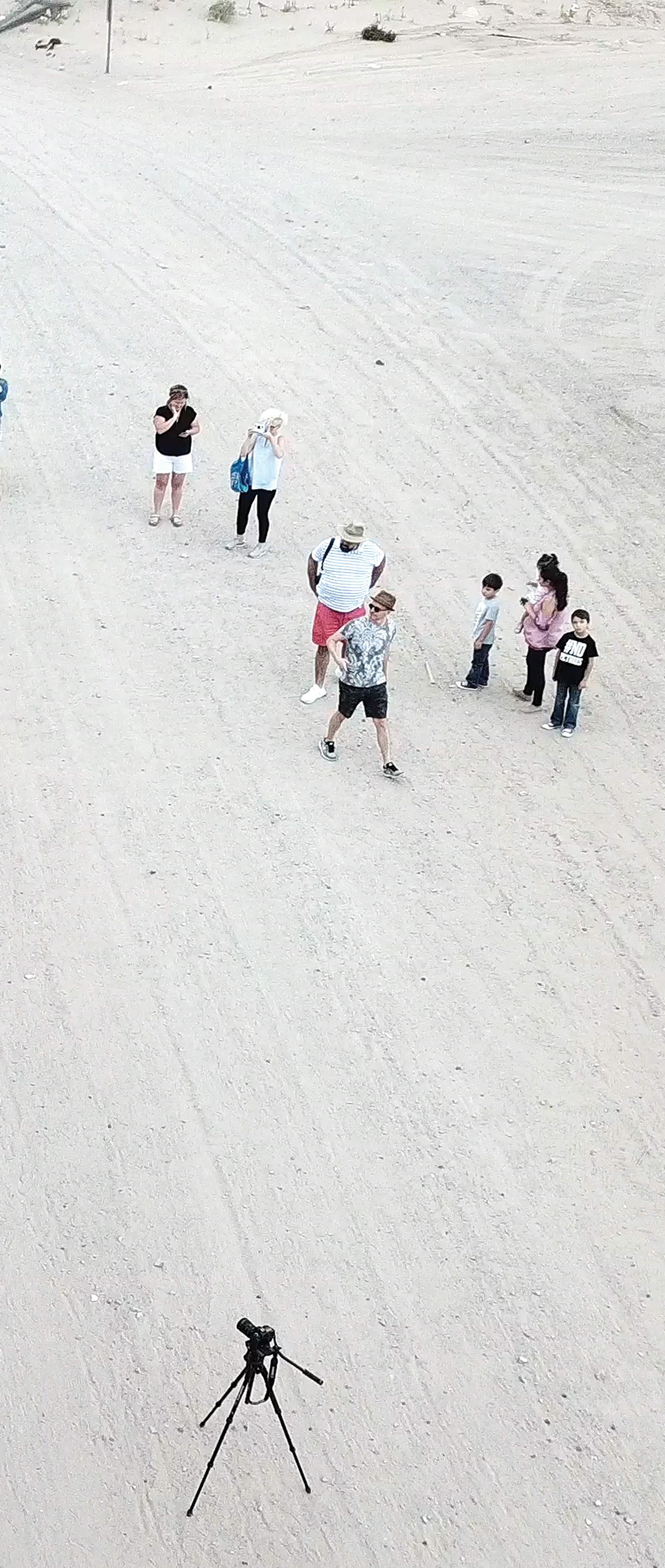
one of those people for whom the words “hyphenate” and “polymath” actually ring true. He is an architect, professor at Cal, design technologist, traditional builder, and multi-generational builder. Oh, and he sold his company that 3D-prints with sawdust as a building material. As you might imagine, Rael just so happens to have his finger on the pulse. Otherwise how do you explain his hitting it out of the design park a second time?
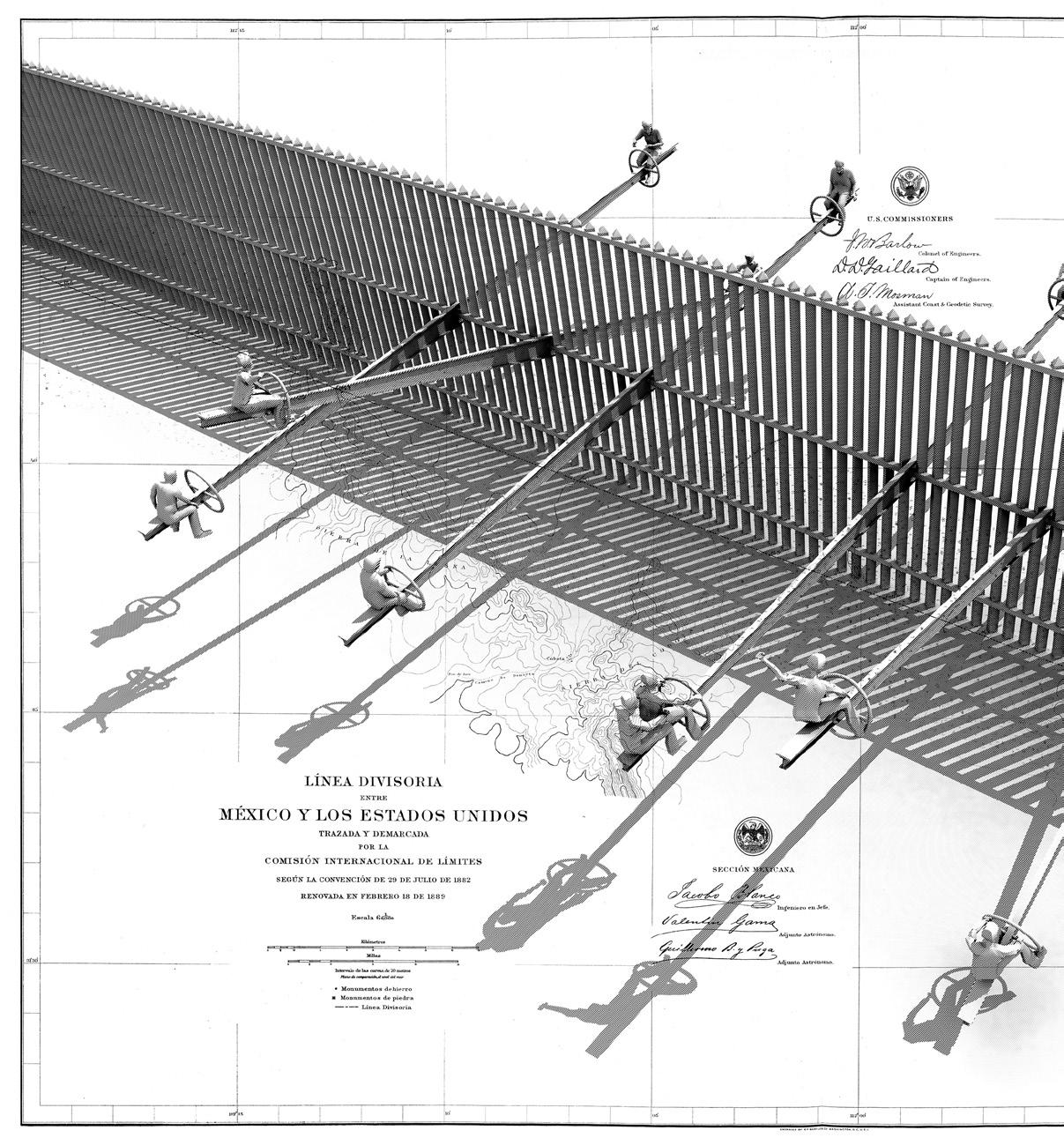
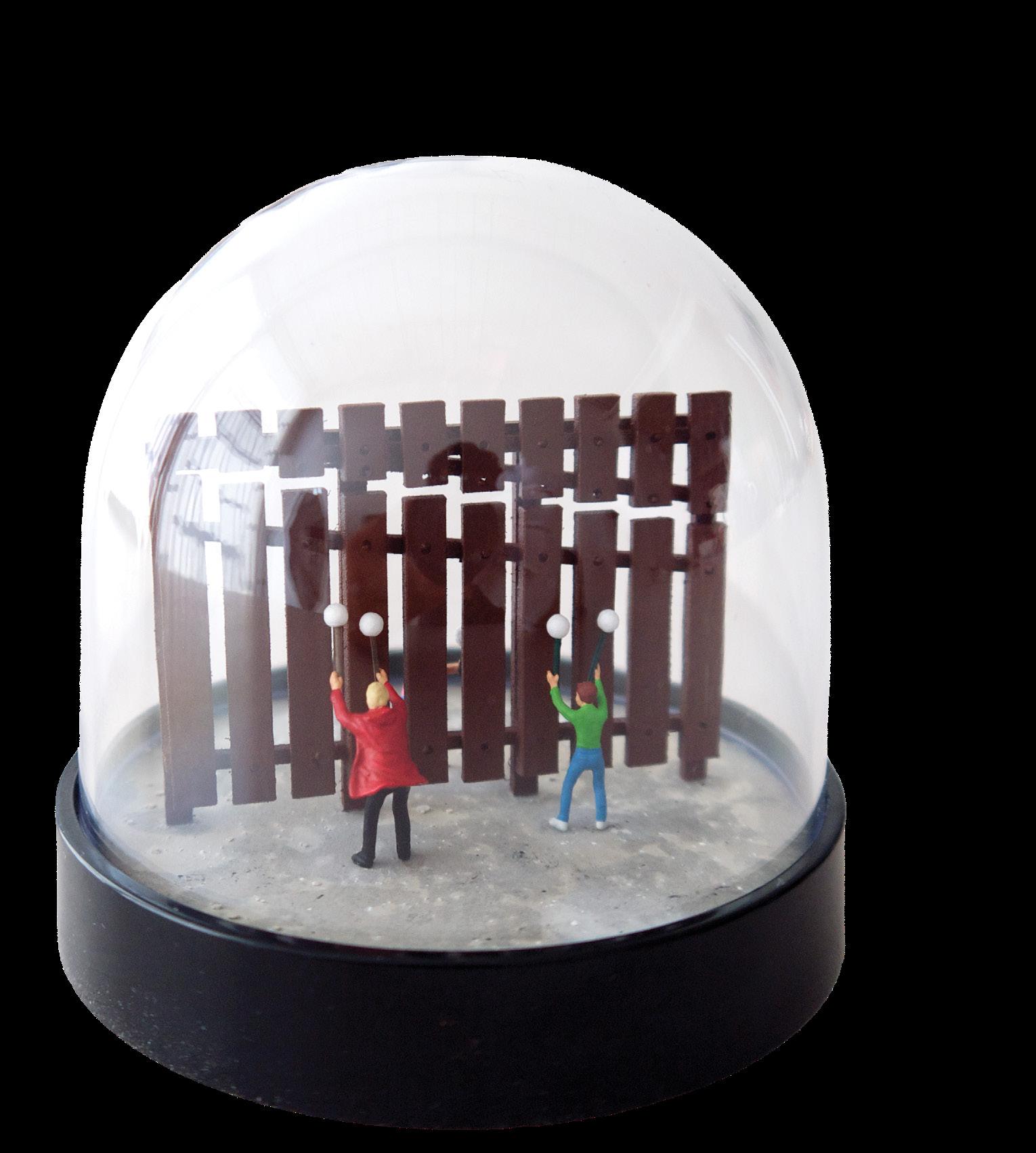
The second time Ronald Rael crushed it on a global level came almost 15 years after Prada Marfa on July 28 of 2019, when Rael and his collaborators installed pink seesaws penetrating the border wall between Sunland Park, New Mexico, and Anapra, Ciudad Juárez, can we say in Old Mexico? Original Mexico? OG Mexico? In any event Rael’s seesaws pierced the oxidized steel border for 43 glorious minutes allowing children on either side to play together, to literally lift each other up and down across a boundary that every American president’s policy since 1991 would have otherwise decreed impermeable.
How did Rael get his teeter-totters installed in one of the most surveilled spaces in North America? By collaborating with the activist group Colectivo Chopeke in Juarez, Mexico, adding a dash of audacity, then assembling both sides simultaneously. And of course once the pink seesaws were up, kids on both sides didn’t need to be prompted what to do. Nor did photographers or news crews. Suffice to say the Teeter-Totter Wall got a massive amount of publicity—and won just about every design award there was that year in the process. The remains of the teeter-totters now reside in the permanent collection of the San Francisco Museum of Modern Art and the Albuquerque Museum where they’re enjoying their new cushy lives as cultural objects.
Anything I missed by way of an exegesis you can find in Rael’s great book, Borderwall as Architecture: A Manifesto for the U.S.-Mexico Boundary, which is most definitely worth buying. The tome is comprehensive in its scope (pitching upgrades to the border wall as an aqueduct, solar generator,
and even border malls and museums). I asked Rael about these architectural provocations he orchestrates and how he feels when they take on new cultural significance from social commentary on wealth inequality alchemized into Beyoncé chow… do these experiments, these “interventions” sometimes lose some of their original intent? And is it, to use the technical term, a bummer?
Rael is actually not so dismayed about the new meanings his interventions sometimes take on, not that he could control how they iterate anyway. He tells me, “I think there’s something really interesting about the notion of cultural objects and when architecture can become a cultural object. I think Prada Marfa is a cultural object. I think the border wall is a confluence of many things,” he says.
“With the seesaws I don’t fixate on the separation of these things. It’s the moment that they crash into each other violently, ridiculously, beautifully—that’s actually the magic.”
This is the move that makes Rael not just an artist or architect, but something worth calling an archtivist: his understanding that architecture can only say so much, and that sometimes you need to let the world do the saying. Says he, “You build the contradiction. You build the question. And then you let culture, capitalism, social media, children playing on pink seesaws—let all of it do the work that words and manifestos cannot.”
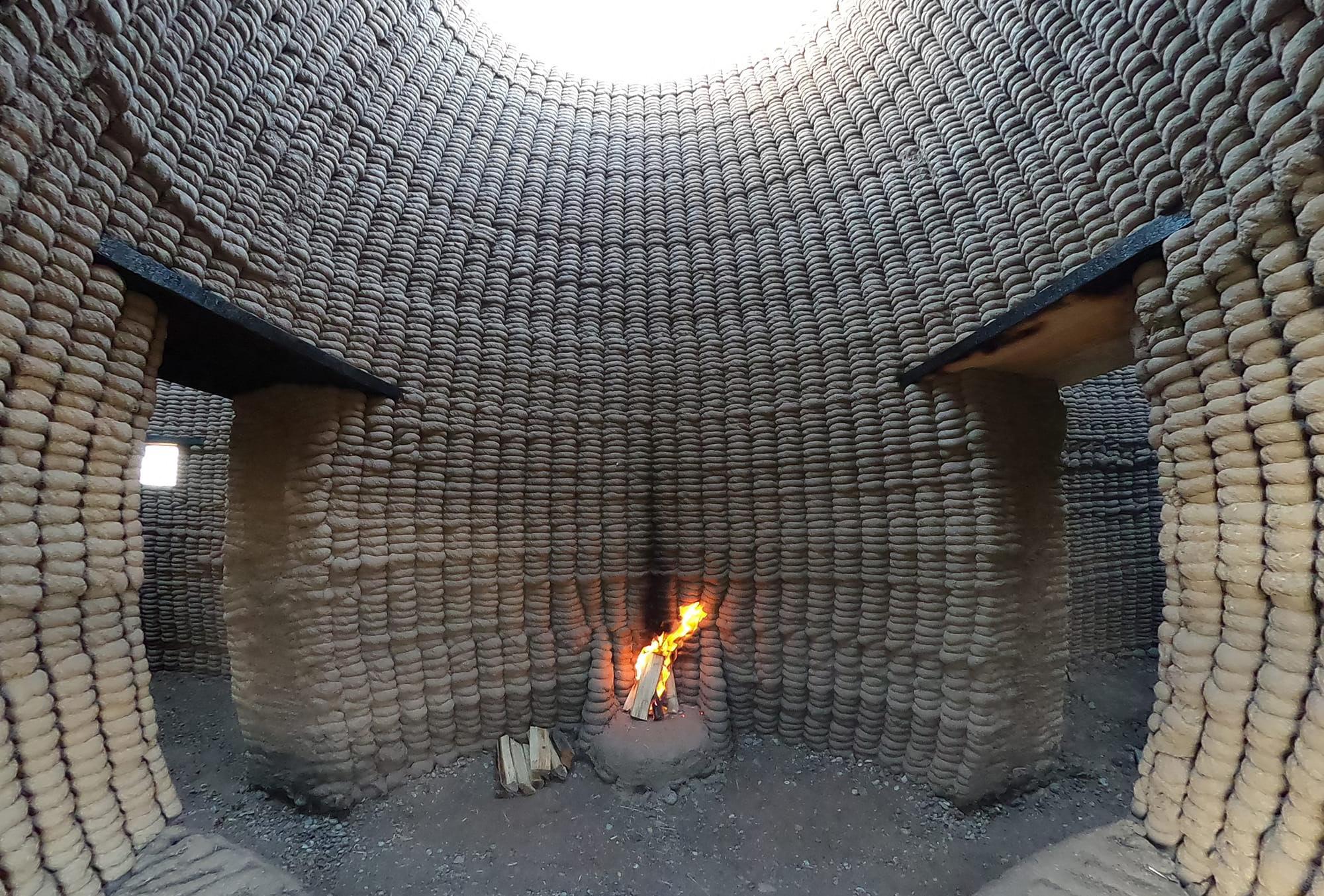
Rael sees in many dimensions and on many planes at once. So it should come as no surprise that today when he’s not teaching, he’s building gorgeous habitable full scale “3D-printed” structures—that unlike the rest of the 3D homes you’ve seen, doesn’t look like something coughed out by an ATM machine with AI assist.
When I pressed Rael about the teeter-totters, about how something so simple—just poles and platforms and the physics of play—could become so symbolically dense that it won awards and changed how people think about borders, and the potential of our two countries, Rael was quiet for a moment. Then he said something that might be the most important thing a maker can say in this politically charged moment: “I think at a time when the entire planet felt division, whether between walls, between political parties, between ethnicities, between religions, between sexual identities, everybody was talking about these divisions and these little pink poles made a connection. It pierced that seemingly impermeable bubble of separation and connected us for a moment.”
Forty-three minutes. Two seconds of a child’s laugh when they get to the top. The weight of another body on the oth-
“ WITH THE SEESAWS I DON’T FIXATE ON THE SEPARATION OF THESE THINGS. IT’S THE MOMENT THAT THEY CRASH INTO EACH OTHER VIOLENTLY, RIDICULOUSLY, BEAUTIFULLY—THAT’S ACTUALLY THE MAGIC.”

“I
THINK AT A TIME WHEN THE ENTIRE PLANET FELT DIVISION, WHETHER BETWEEN WALLS, BETWEEN POLITICAL PARTIES, BETWEEN ETHNICITIES, BETWEEN RELIGIONS, BETWEEN SEXUAL IDENTITIES, EVERYBODY WAS TALKING ABOUT THESE DIVISIONS AND THESE LITTLE PINK POLES MADE A CONNECTION. IT PIERCED THAT SEEMINGLY IMPERMEABLE BUBBLE OF SEPARATION AND CONNECTED US FOR A MOMENT.”
er side of the plank, the jolt of physics and joy. That’s all you need. That’s everything.
Although I’ve looked at Rael’s Borderwall book many times, only today did I look at the dedication, the inscription, which is on Page 1 and is dedicated to his son. “For Mattias Miguel Angelo Rael. I hope you always listen and speak to both sides.”























Reprinted from ARQ 110 with permission from Ronald Rael
he conjunction between art and architecture can help make visible the contradictions implicit in colonial dynamics. The installation of a luxury store on a rural road in Marfa, USA, brings to the fore issues such as immigration, the occupation of indigenous lands or even inequality. Even more so if that store is made of adobe, as it dislocates the usual preconceptions about possible materials for luxury architecture. Thus, ancestral and artisanal land is the material with which a critique of the symbols of economic power is constructed—in the very form of one of those symbols.
On July 13, 2005, 22 miles north of the U.S./Mexico border, patrol agents from the Marfa Sector of the United States Border Patrol surrounded five people traveling through the Chihuahua Desert in West Texas. Suspecting illegal activity, the agents had been informed that illegal immigrants were detected by the tethered aerostat radar system hovering overhead that provides counternarcotics and border crossing surveillance and can distinguish targets down to a meter across at ground level.
It is not uncommon that ‘coyotes’—smugglers involved in human trafficking—drive the desolate roads searching for ‘wets,’ the derogatory term for illegal immigrants, in the vast desert expanse surrounding Marfa. When the five suspects were questioned on the nature of their business
the answer was not so clearly comprehended by the Border Patrol. The suspects were a gallery curator, a photographer, an artist, and two architects, who were discussing the selection of the future building site of Prada Marfa, a minimalist sculpture that replicates the luxury boutique where the Fall 2005 line of Prada shoes and bags were to be displayed.
The juxtapositions between the United States and Mexico, or between wealth and poverty, that are clearly evident in the Big Bend region of Texas, define a landscape charged with contrasting conditions in which Prada Marfa is built. The immense ranches that comprise the area, each several thousand acres or larger, often appear to be abandoned, but are owned by many of the wealthiest people in the United States. Most of the ranch owners have ties to oil, and more recently, dot com wealth, including a ranch owned by Amazon CEO and founder Jeff Bezos, where he has announced plans to construct a spaceport just down the road from Prada Marfa. Just as each of these polarities are somehow equally at home and ‘foreign’ to this environment. So too is Prada Marfa, with its delicate interiors and massive walls, schizophrenically positioned in the geopolitical and cultural framework in which it is built. In fact, the process of building the project is as simultaneously contextually grounded and extrinsic as the work itself.
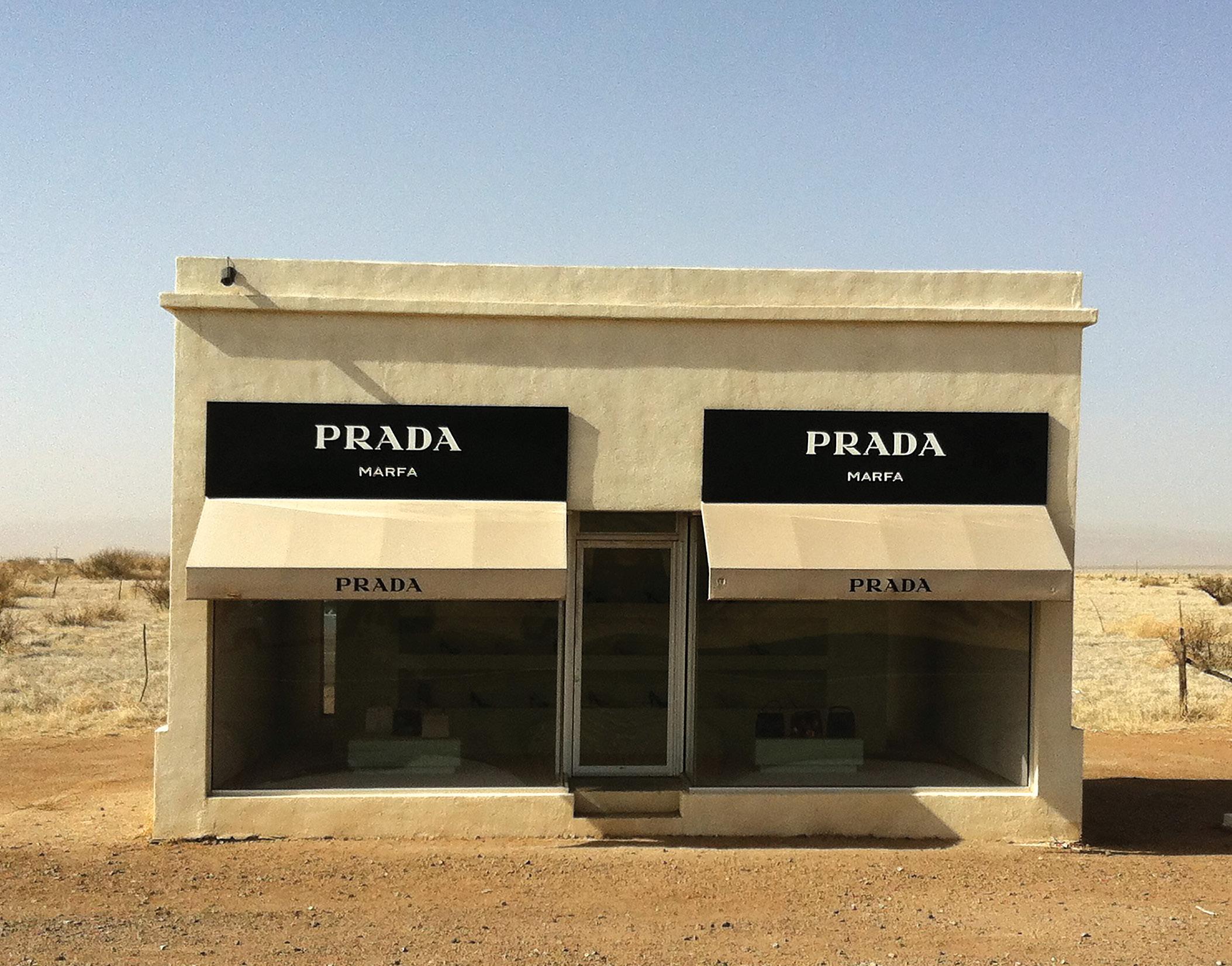
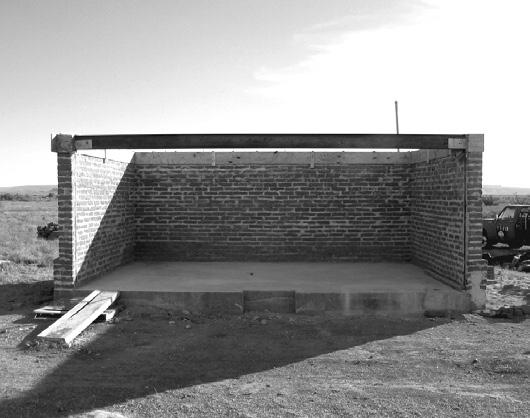
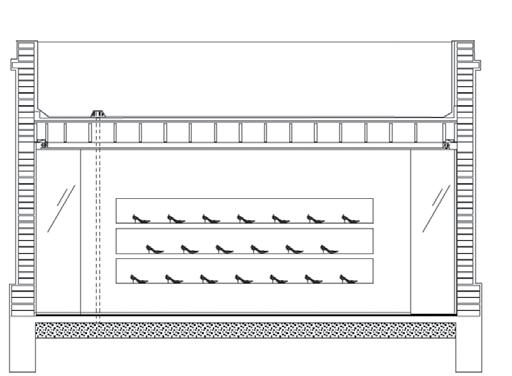
The primary building material used to construct Prada Marfa is dirt. While it may seem odd to construct a building with soil, particularly one with the associated title Prada, building with earth is actually quite common. It is estimated that currently 1/2 of the world’s population— more than 3 billion people on 6 continents—lives, works, or worships in buildings constructed of raw earth. This makes fragmental soil (not to be confused with other materials that come from the ground, such as stone, cement, or metals derived from ore) the most ubiquitous building material on the planet. Earth buildings can also be found in almost every climatic zone on the planet, from the deserts of Africa, Australia and the Americas to England, Denmark, China and the Himalayas. Whereas earth is a material that westerners commonly
perceive to be reserved for the small, humble structures of developing countries, there are earth buildings of almost every architectural type in use by every economic and social class. Examples of churches, hospitals, museums, embassies, and even an airport demonstrate the wealth of earth building types found throughout the world. Typically, earth is also considered to be a building material only used in rural environments, but earth architecture can be found just as easily in contemporary urban environments. The world’s first skyscrapers, 11 story buildings first constructed over 500 years ago, continue to be constructed entirely from mud in the dense cities of Yemen. Earth buildings also represent the oldest extant buildings on the planet. Using approximately 7,000,000 mud bricks, the Ziggurat at Ur dates back to 4000 B.C. Taos Pueblo,

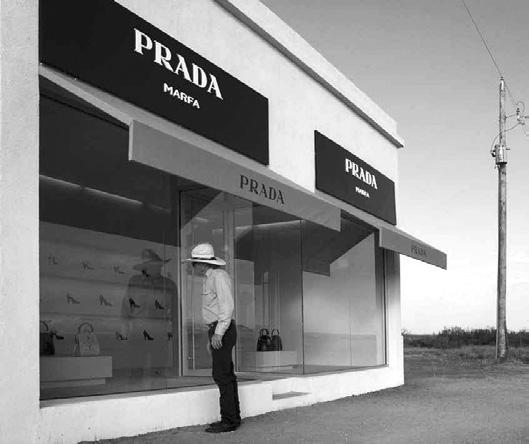
constructed between 1000 and 1450 A.D., in New Mexico, is the oldest continuously occupied dwelling in North America and was also constructed from raw earth.
While earthen architecture is often considered the building material of the very poor, many wealthy residents inhabit the vast mud brick suburbs of Santa Fe, New Mexico. Ronald Reagan’s former Ranch House (also known as “The Western White House”) in California, Saddam Hussein’s childhood home in Iraq, and Chairman Mao’s childhood home in China were all constructed of mud brick, which speaks to the great breadth of ideological extremes represented by this omnipresent material. Now we can add Prada Marfa to this ‘A-List’ of earthen architecture—the first Prada related building constructed of mud.
A large percentage of buildings in the region surround-
ing Prada Marfa are also traditionally constructed of mud brick. Often made directly from soil excavated from the build site, mud brick—called adobe in Texas—is a brick made from soil mixed with water and straw and left to dry and harden in the sun. Historically, this was the traditional construction method used by the Mexican and Mexican American population. In the case of Prada Marfa, the 2,500 mud bricks used to construct the building were made by machine and express shipped to the site from a mud brick yard in Alcalde, New Mexico, over 500 miles away. Not unlike the luxury goods that fill the faux-boutique, the mud bricks arriving from this adobe yard are primarily manufactured to supply a growing population of southwestern affluence enamored with the romantic notion of living in a house constructed of earth. Increasingly, the demands made by wealthy interstate immigrants longing for mud brick residences have had a dramatic effect on the cultural and built landscape.
Once ago, buildings made of earth were looked down upon, and ultimately made illegal to construct for several decades. Today, however, mud brick’s increasing popularity has created a demand for the material that has transformed it into a status symbol in the southwestern United States. The humble earthen houses that comprise Marfa’s residential district now fetch several hundred thousand dollars from New Yorkers, Houstonians and Los Angelenos. Thus, what was once a vernacular tradition has transformed into a capitalist driven process that often leaves the traditional descendants of earth dwellers unable to afford mud, forcing them to switch to an ironically more affordable consumption of prefabricated mobile homes and concrete block houses. Much like the knockoffs of Prada bags that are a consequence of the high price tag of authentic Prada merchandise, adobe knockoffs, faux-adobes, are the preferred style of manufactured southwestern homes.
Unlike traditional mud brick buildings, whose bricks are laid in an earthen mortar, the mud bricks used to build Prada Marfa were set in a cement mortar. The juxtaposition between the industrial material of cement and the traditional mud brick could be read as a nod to Donald Judd, but the combination also represents the bipolar nature of the context in which it is built. In Marfa the use of industrially produced cement, introduced by the U.S. military—each leaving built traces in the landscape that are evident today. By crossing a border between art as commodity and commodity as art, Prada Marfa offers a conceptual interpretation of the latest wave of occupation in the region—Judd and the gentry of gallery owners, artists and art lovers who are his followers. It also raises questions regarding the consequences of this history.
While Prada Marfa was not constructed with illegal labor, mud brick construction is labor intensive, and labor
provided by illegal aliens is cheap. The demand for inexpensive labor in America coupled with a search by immigrants for higher paying jobs work hand in hand to prompt people to cross the desert by foot. Although it is difficult to know exactly how many immigrants cross the border in the Marfa sector each year, in 2005 there were 10,536 illegal border-crossing apprehensions and approximately 12 migrant border-crossing deaths. Most of these deaths are attributed to heat stroke or hypothermia. From a distance, illegal aliens walking through the desert at night might perceive the illuminated building to be a possible source of water or shelter. However, upon closer inspection, Prada Marfa reveals an irony that connects the history of the region while also offering a prognostication. It is not uncommon for one’s shoes to wear out during the arduous journey across the desert. In a desperate attempt to protect tired feet from the rough terrain, immigrants are known to try to fashion shoes from the only material available—the yucca plants that dot the landscape. The contrastingly opulent presentation of meticulously orga-
EDITOR’S NOTE:
You know you’ve made it as a cultural landmark when you’re memorialized on The Simpsons.
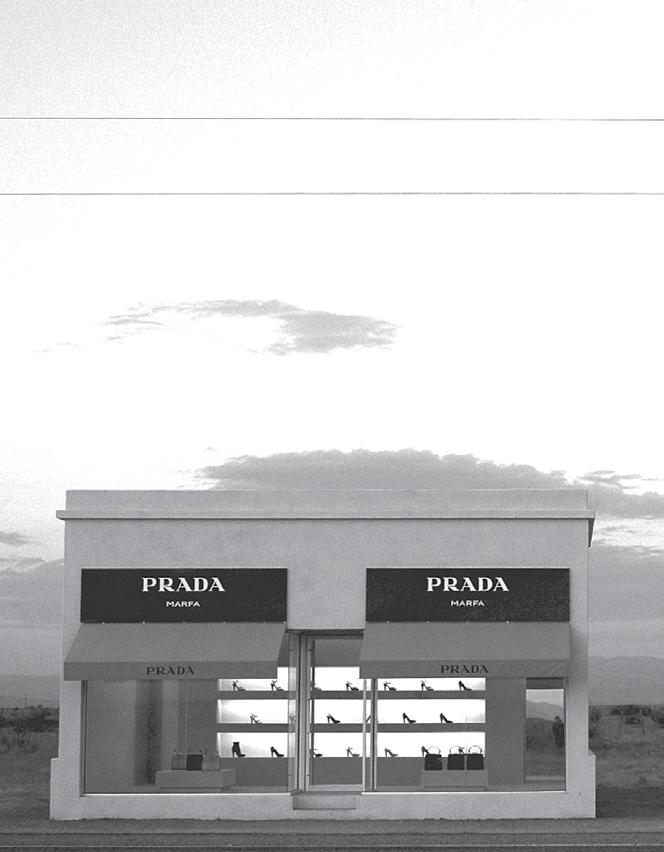
nized shoes and bags housed within the familiarity of mud brick walls also foretells the future—a growing socio-economic polarity at a local and, indeed, global level.
Ronald Rael, Master of Architecture, Columbia University, New York (USA). His work crosses the borders between art, activism, architecture and storytelling, and has been published in The New York Times, Wired, MARK, Domus, Metropolis Magazine, PRAXIS, Thresholds, Log, and Public Art Review. The London Design Museum awarded his practice, Rael San Fratello (with architect Virginia San Fratello), the Beazley Award in 2021 for the design of the year. His research interests connect indigenous and traditional material practices to contemporary technologies. Rael is the author of Borderwall as Architecture: A Manifesto for the U.S.-Mexico Boundary (University of California Press 2017), and Earth Architecture (Princeton Architectural Press, 2008). Ronald Rael is Eva Li Chair and Professor of Architecture at the University of California Berkeley.

STORY BY BILL ROBENS
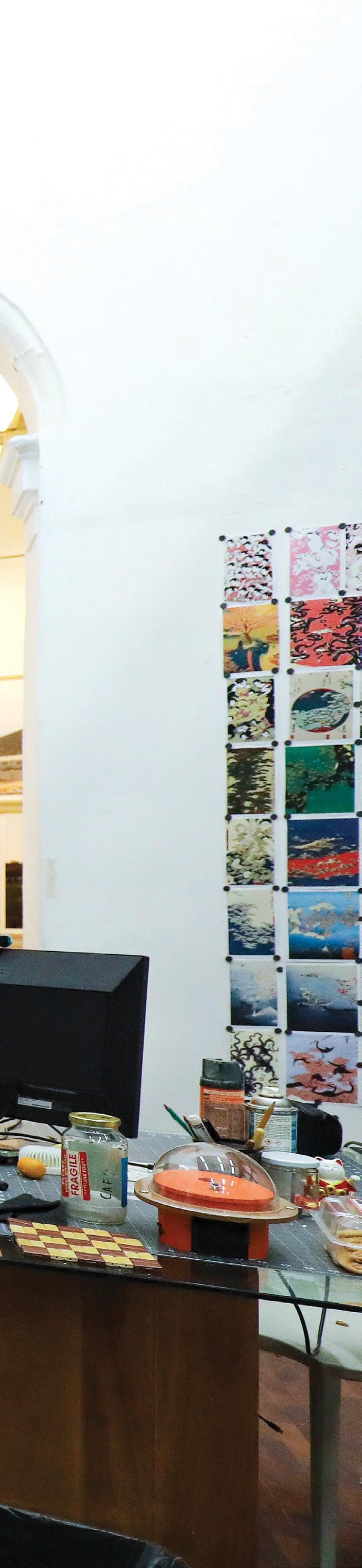
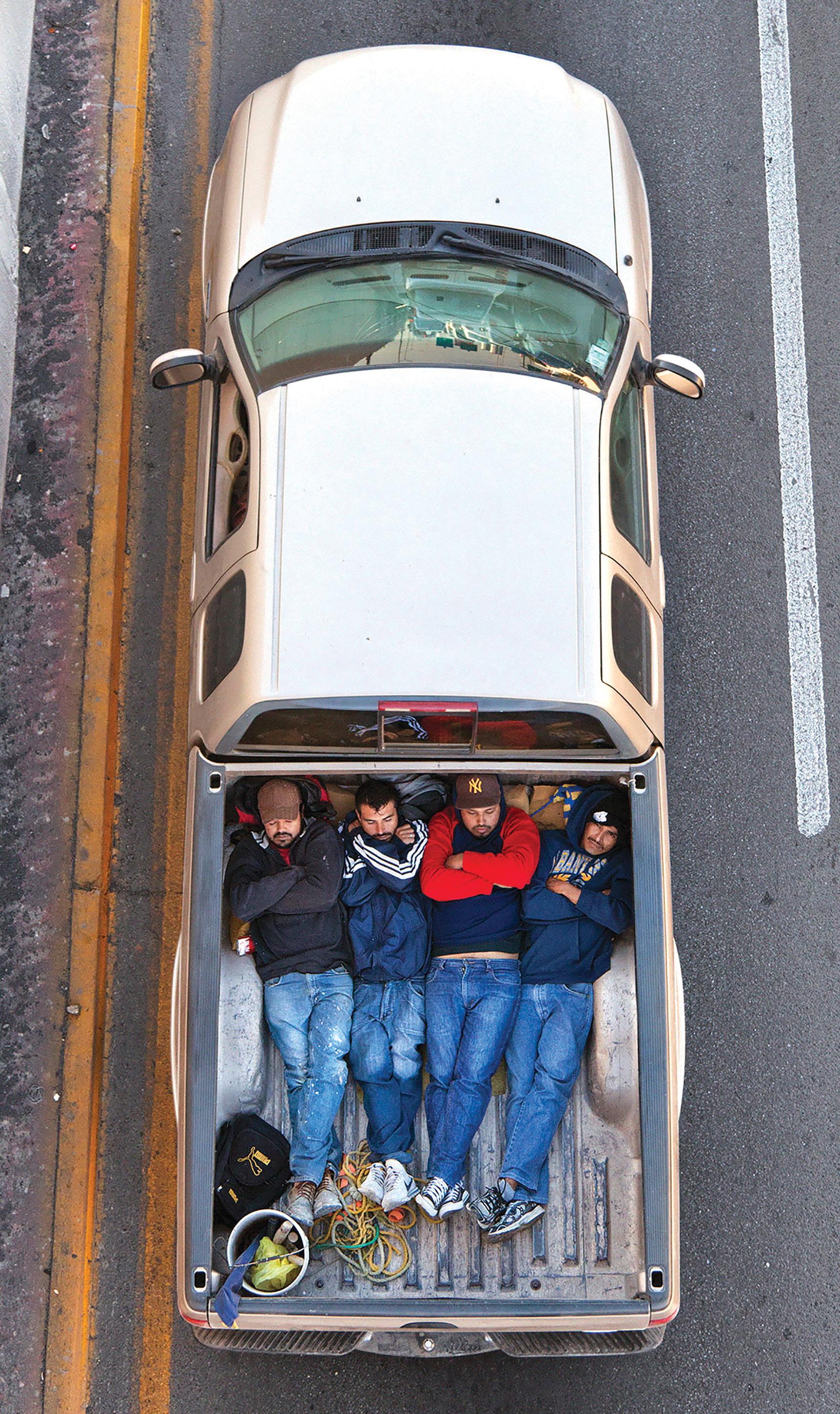
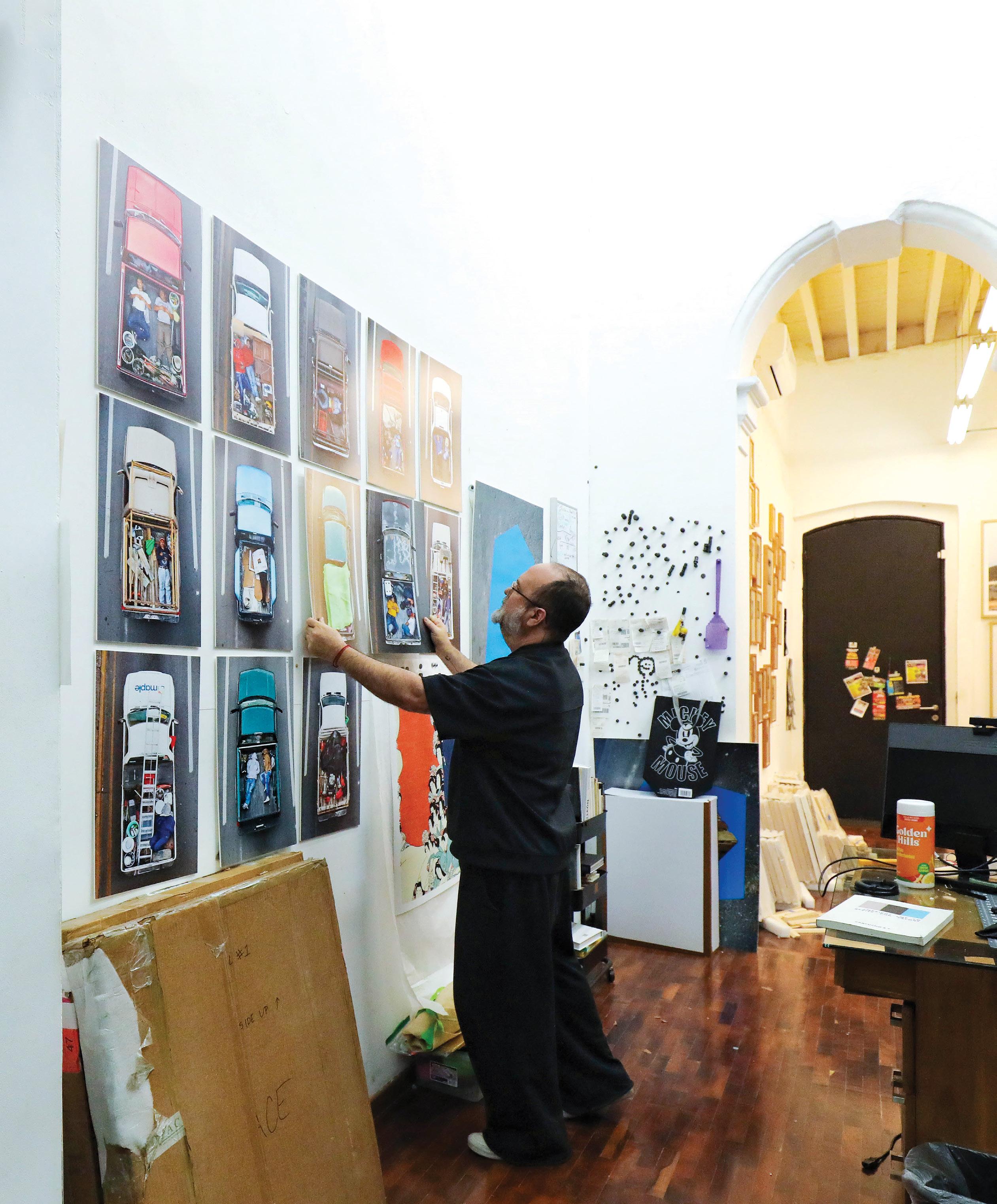
For over 20 years, Mexican photographer Alejandro Cartagena has been compelling viewers to reexamine their perceptions of photography, a journey that is now the subject of his first major retrospective at SFMOMA, Alejandro Cartagena: Ground Rules, on display through April 19.
Since 2014, Cartagena has published collections of “Carpoolers,” overpass views of trucks carrying men and women to work in the suburbs of Monterrey, Mexico. Individually, each photograph is an intimate snapshot of day laborers sleeping, chatting, waiting. Collectively, their meaning is very different. “‘Carpoolers’ disarms the idea of this ‘decisive moment’ when you have on a wall 60 images that are all decisive moments, then what are we doing here?” Cartagena says. “What are we confronting ourselves with? It’s not about the uniqueness of my poetics and my ability to capture this single moment. No, it’s something else.”
That “something else” may be how Cartagena’s work encapsulates the daily struggles of an immigrant community currently under pressure across the United States. Cartagena’s subjects are often the most invisible and vulnerable
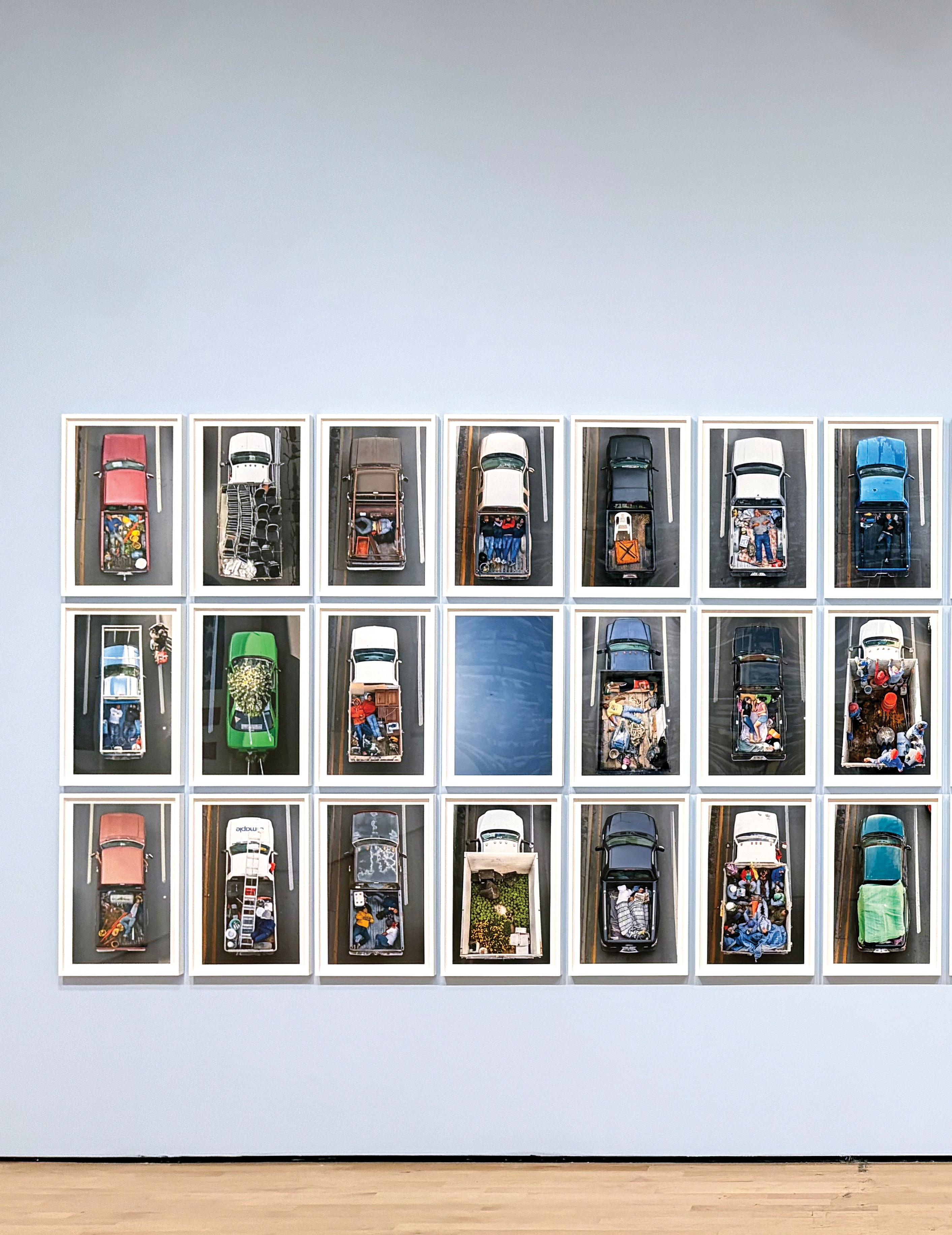
people in Mexican and American society. They build the homes and work the fields. Seemingly apolitical photographs of workers in truck beds and families in Juarez suburbs from over a decade ago suddenly seem as if they’re ripped from today’s headlines.
For all his thoughtful examinations of some of Mexico’s gentrifying and industrializing northern border communities, it might come as a surprise that the only U.S. city to have been a subject of no less than three of Cartagena’s books is Santa Barbara. Why Santa Barbara? “It was serendipitous. It was an invitation by the Santa Barbara Museum of Art. They’d collected my work and they invited me to do a small residency at their project room.” The year was 2016 and, like a lot of artists, his output would be heavily impacted by U.S. President #45, whether he liked it or not.
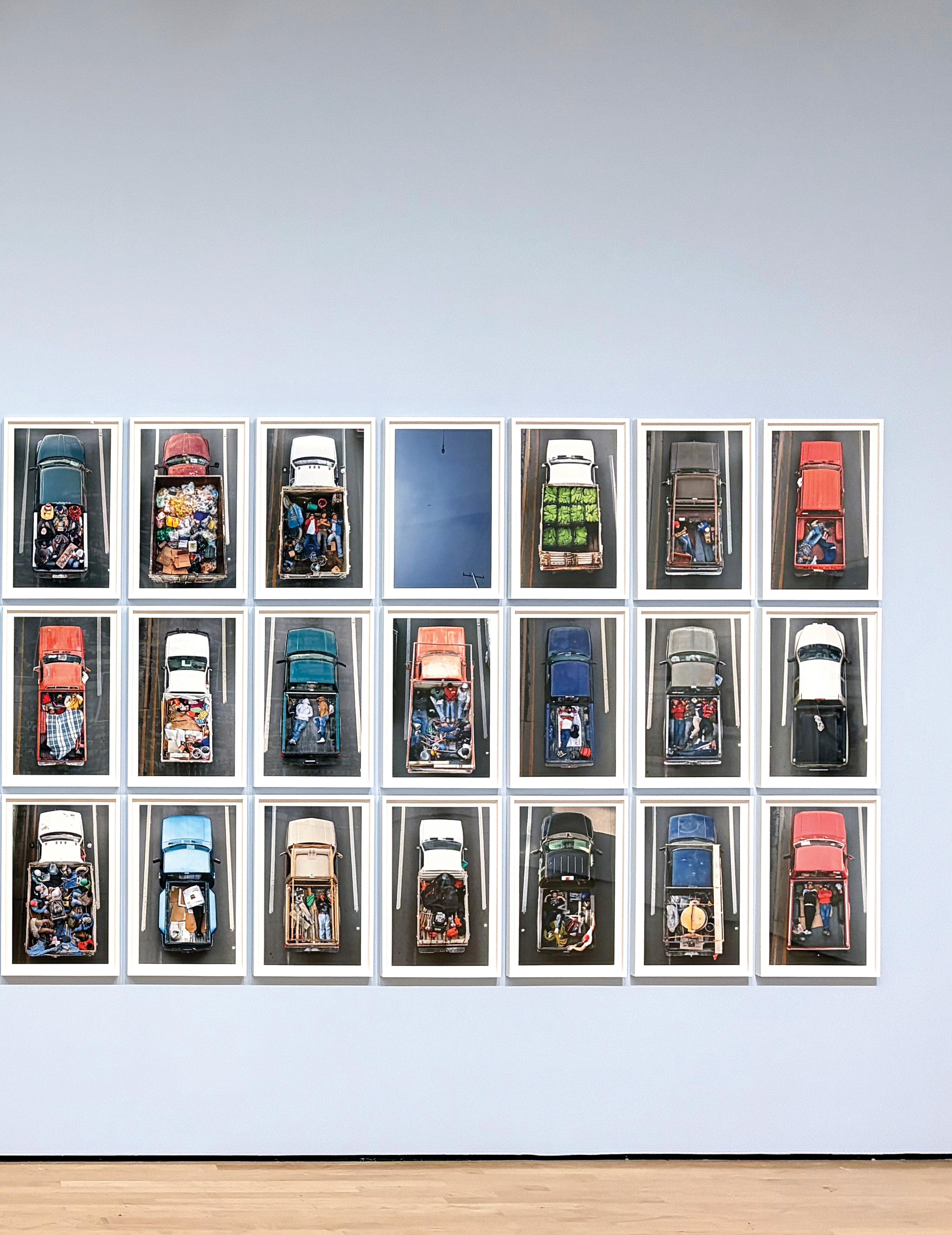
“IT’S ABOUT BEING SENSITIVE TO OTHER PEOPLE’S LIVES. AND IF MY ART CAN CONTRIBUTE TO THAT, I THINK IT’S IMPORTANT TO DO SO AS LOUD AS POSSIBLE, AS MUCH AS ONE CAN.”
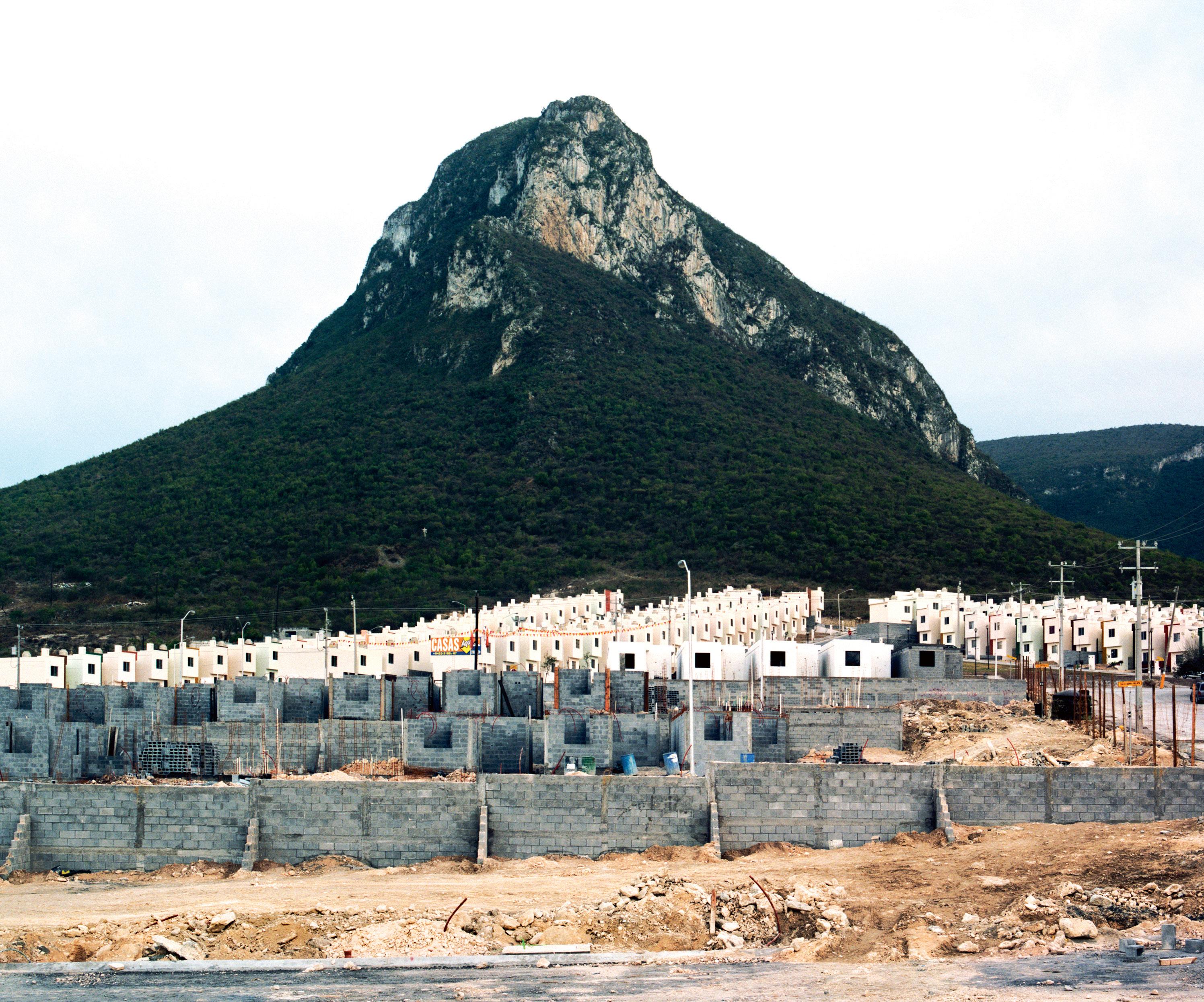
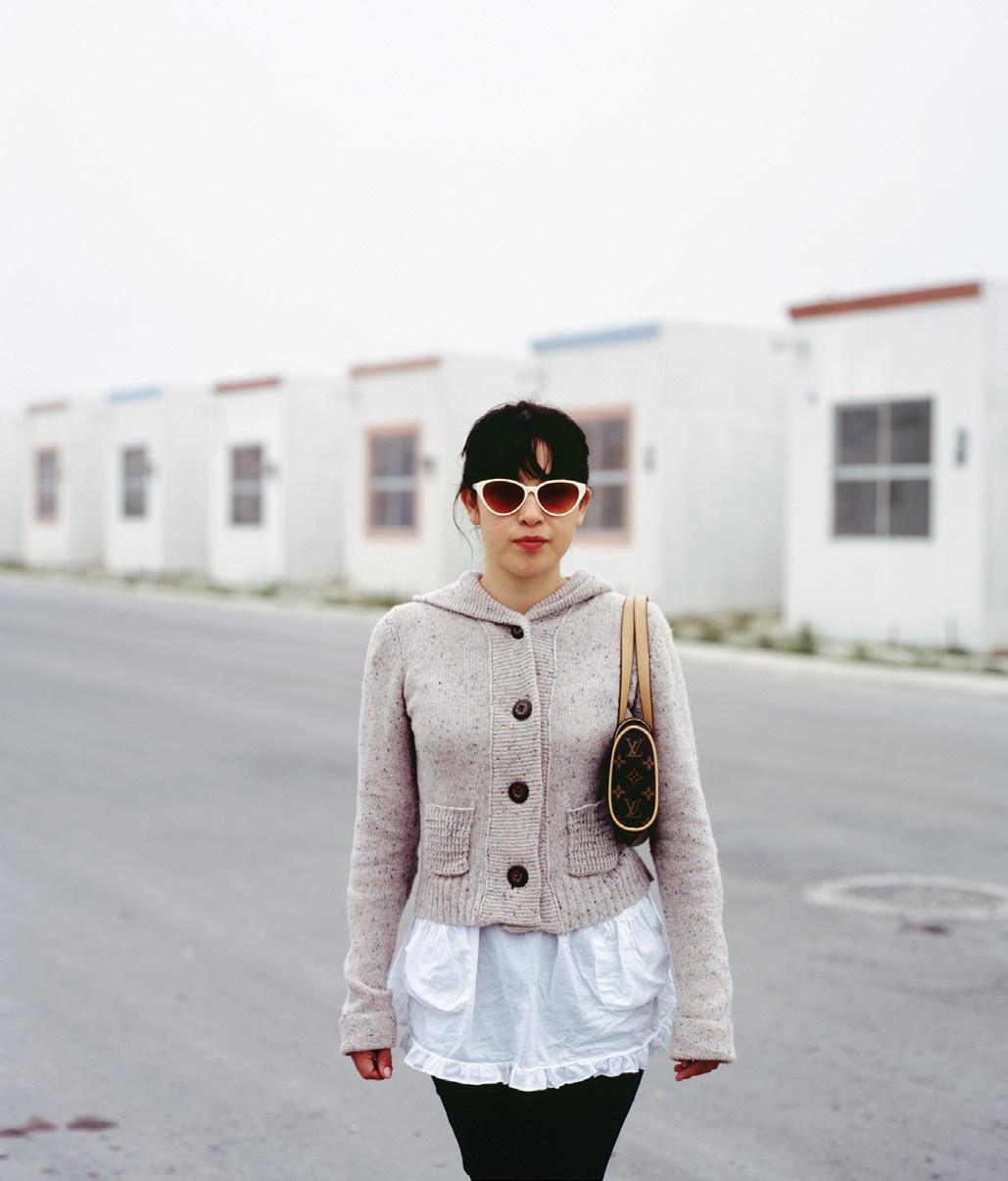
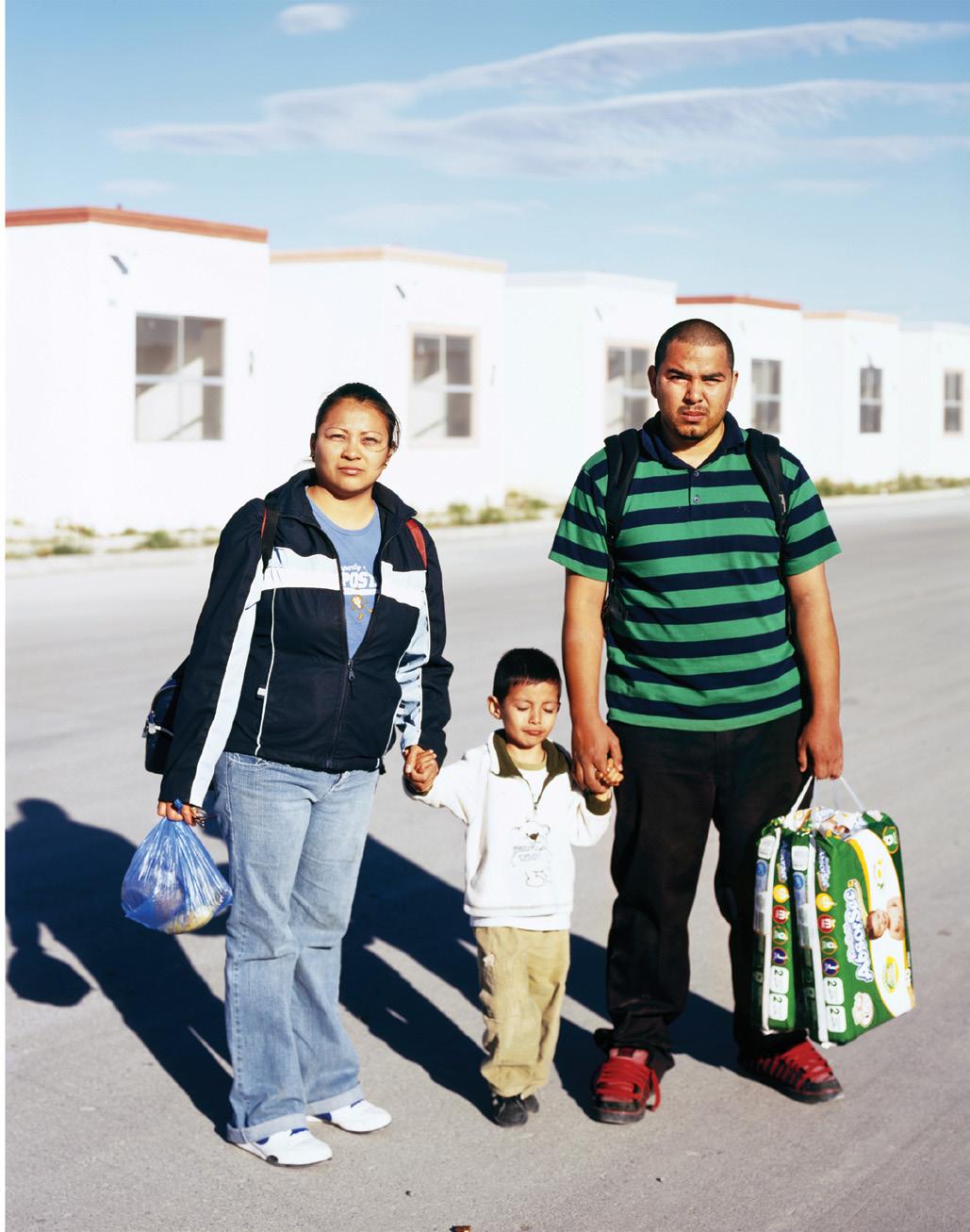


Cartagena has done three photo folios that mention Santa Barbara by name and explains his journey thusly: “What happens if we do three books, the first one during the presidency, and what do those images mean when there’s this political shift about to happen? The next book was published one year into the presidency—there’s a lot of flames, and there’s a lot of chaos, because it was this new reality we were all living in, even from the outside. And then in the fourth year, there were so many problems with North Korea, nukes, and [what seemed like a potentially] world-ending situation. Suddenly, I saw things that were not interesting for the first book because those weren’t the conversations we were having, culturally and politically. It’s an experiment in how context shifts the meaning of images.”
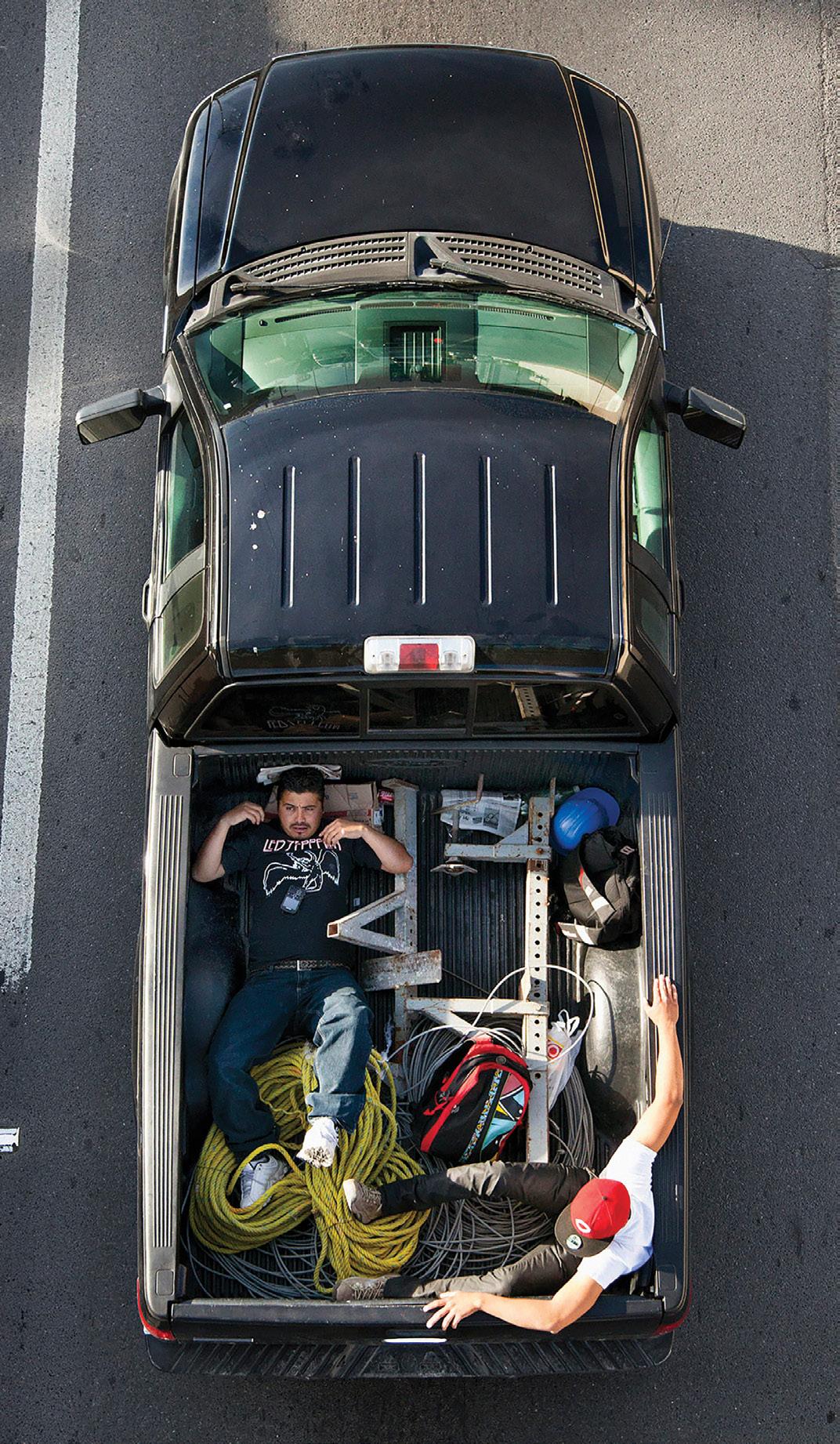
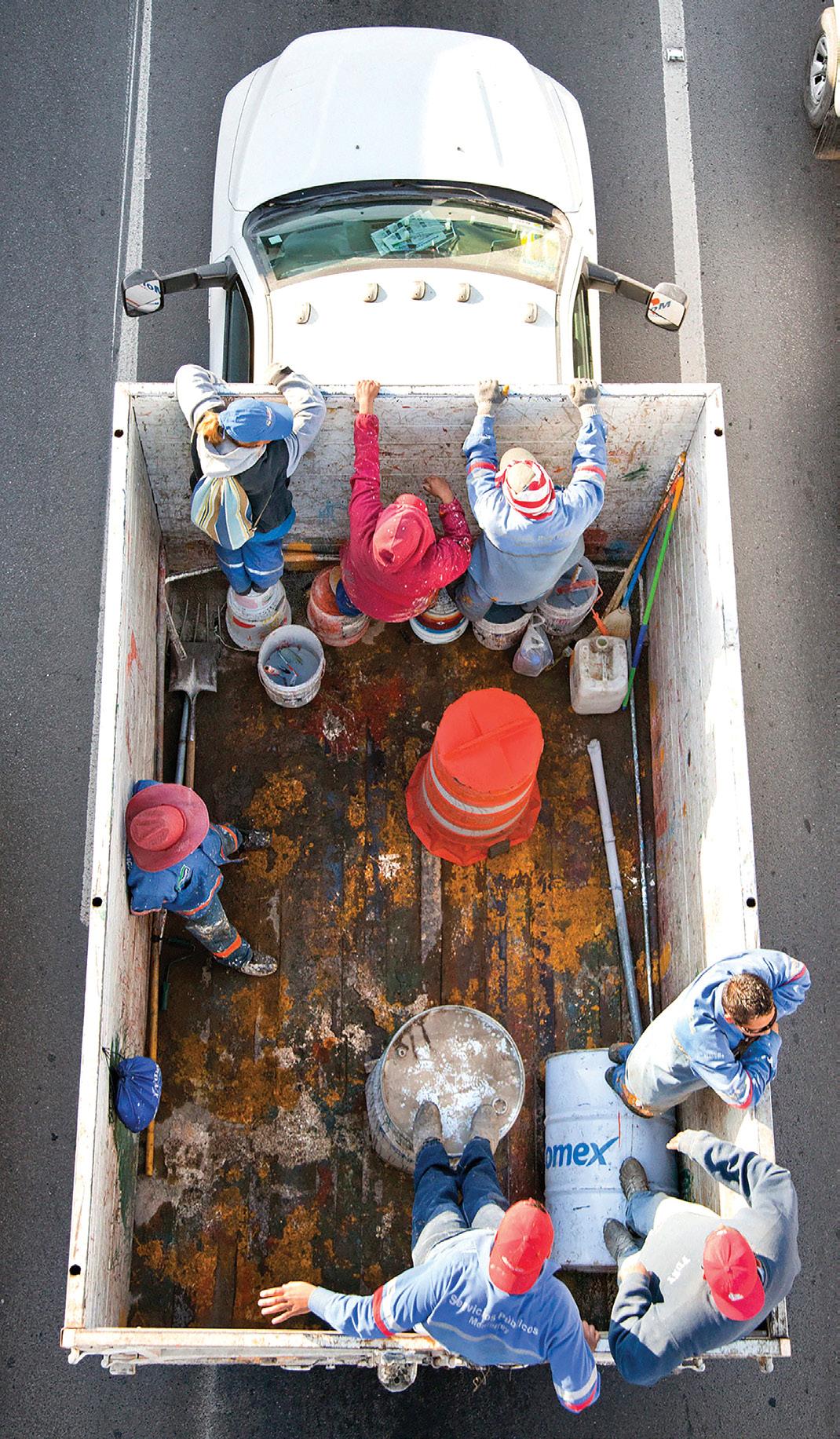
CARTAGENA’S SUBJECTS ARE OFTEN THE MOST INVISIBLE AND VULNERABLE PEOPLE IN MEXICAN AND AMERICAN SOCIETY. THEY BUILD THE HOMES AND WORK THE FIELDS. THESE ARE PEOPLE WORTHY OF OUR RECOGNITION.
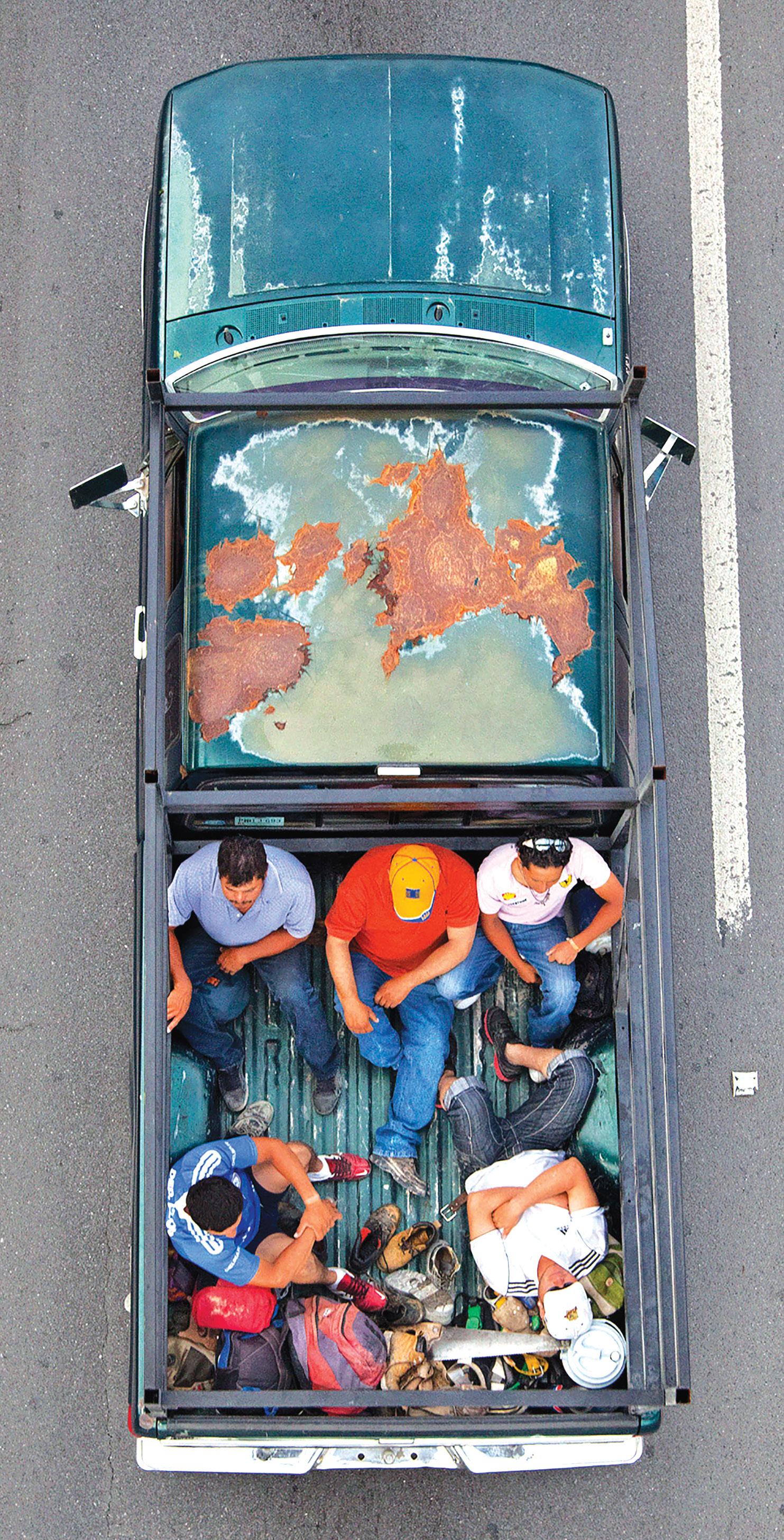
The way context alters our perception is a recurring theme in Alejandro’s photography. Each image is reliant on the context of the piece itself, and whatever it is the viewer brings to the work. “There’s something interesting about ‘Carpoolers’ that it immediately demands the role of the viewer. It’s always about who’s watching the work,” says Cartagena.
Some photographs are self-explanatory. Muhammad Ali knocks out Liston. Nobody’s required to interpret the meaning of Neil Leifer’s iconic image. Great night for Ali.
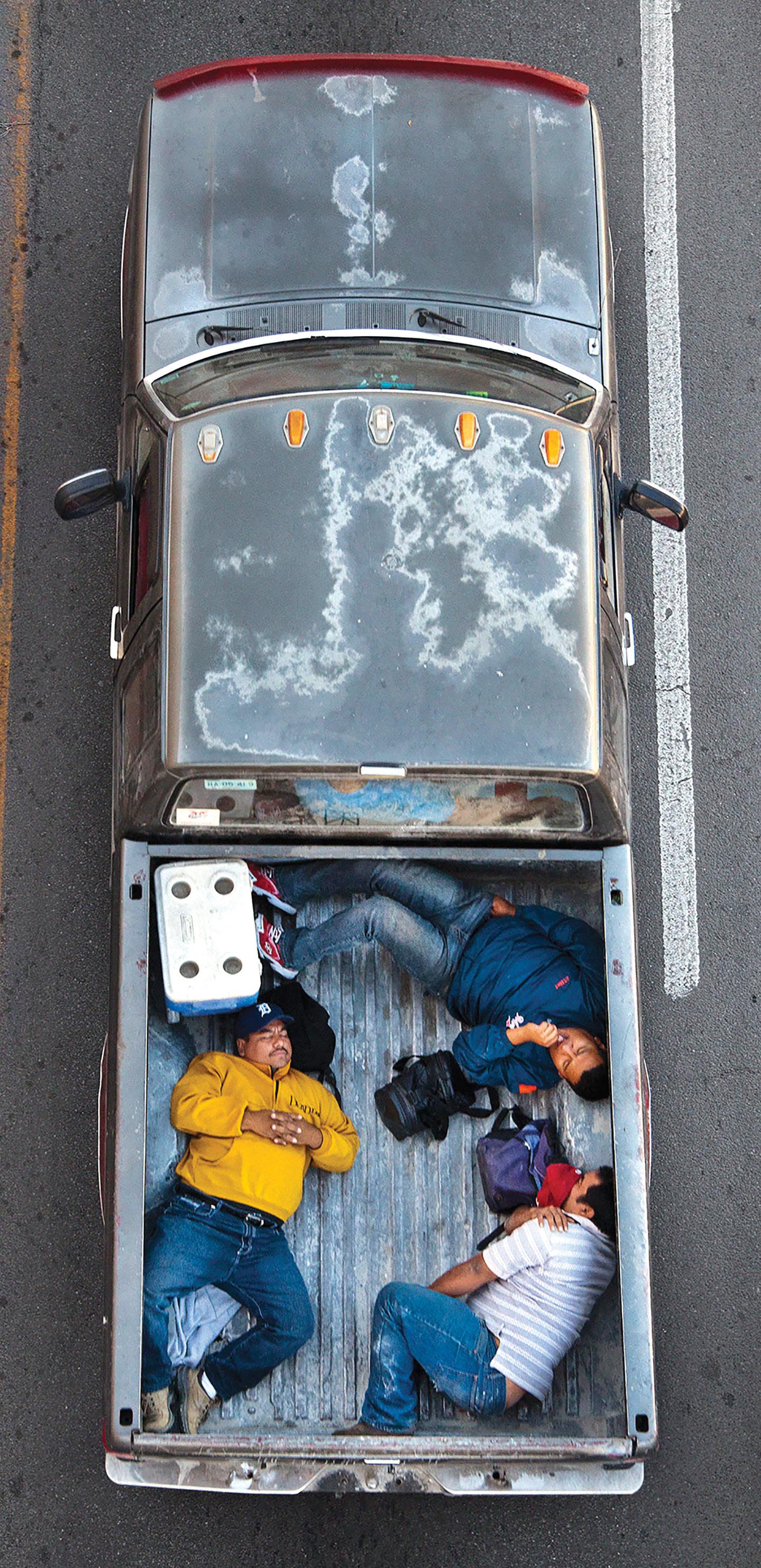
Lousy night for Liston. Such clear interpretations don’t exist when it comes to ‘Carpoolers.’
“There’s a great opportunity for people to understand that life is complicated and that art isn’t about solving those problems,” says Cartagena. “But it’s about being sensitive to other people’s lives. And if my art can contribute to that, I think it’s important to do so as loud as possible, as much as one can—and everywhere. These are humans that are kind, who are caring for other people’s lives, other people’s realities, and I think that is something that we should all be striving for.”
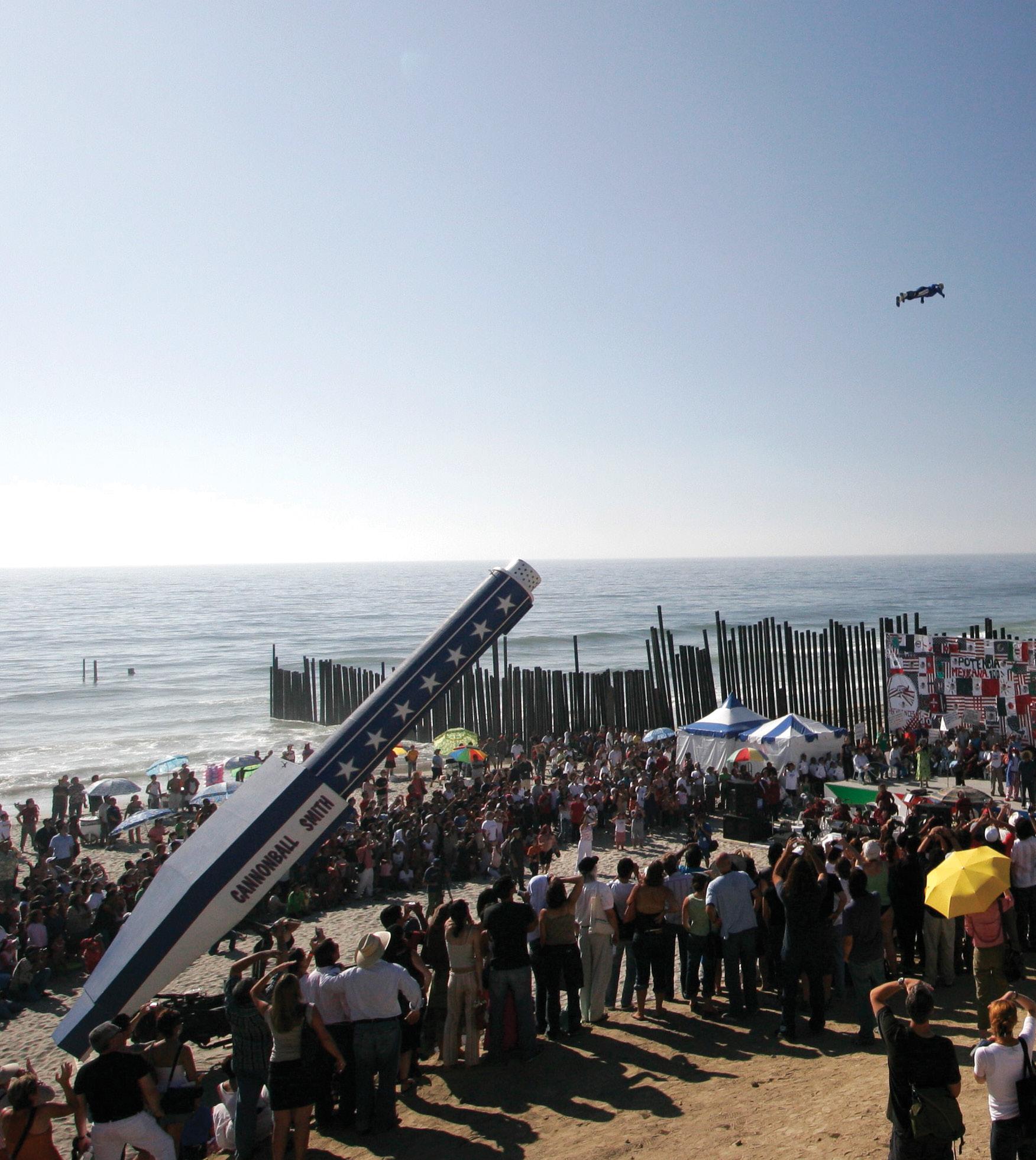
BY JEFF WING

IS A LABYRINTHINE MESS, BUT ONE
STILL HOLDS TRUE: FREQUENTLY, WHEN WORDS FAIL, ART SPEAKS.

n August 27, 2005, filmmaker/cultural provocateur Javier Téllez convened a group of psychiatric patients at the border wall separating the suburb Playas de Tijuana in Mexico, and Border Field State Park in Imperial Beach, California. Why? The patients would both stage and bear witness to the launching of a man over the border wall as both political statement and self-referent art happening. The transnational projectile was the renowned human cannonball David Smith. In the short film documenting the episode (presently ensconced at the Guggenheim), Smith—wearing a blue jumpsuit and no helmet— sits on the lip of the enormous cannon’s barrel as it levers to its proper firing angle. Showily proffering his passport for all to see, Smith disappears into the cannon barrel and is shortly thereafter launched in a graceful arc over the wall, negotiating a gentle somersault before capture in the generous net awaiting him on the California side. Raucous applause erupts.
The spectacle—developed by filmmaker Téllez under the imprimatur of art collective INSITE— is both oblique political theater and strangely festive absurdist pageant. Beachgoers in tank tops, placard-pumping activists, pantomiming Uncle Sams, and movingly delighted mental patients (the latter a feature of Mr. Téllez’s publicly staged oeuvre) commingle on the beach as at a town market fair. Attendees in animal masks take a makeshift stage and hunch dutifully through a hoop held by a genuinely delighted circus master in ill-fitting tails and top hat.
Téllez, raised by two working psychiatrists in Venezuela, grew up with a perspective that interrogated blandly accepted views of “normalcy” and the reflexive institutionalization of mental health. The effect of Téllez’s project—in a clear homage to cinematic empathy called One Flew Over the Void (Bala perdida)—is indescribably poignant, macabre, and entertaining. Rarely has the border wall hosted so anodyne and Felliniesque a political statement, though Mr. Smith’s manufactured flight to freedom could be seen as powerfully glib given the larger stakes. The border discussion is a labyrinthine mess, but one adage still holds true: frequently, when words fail, art speaks.

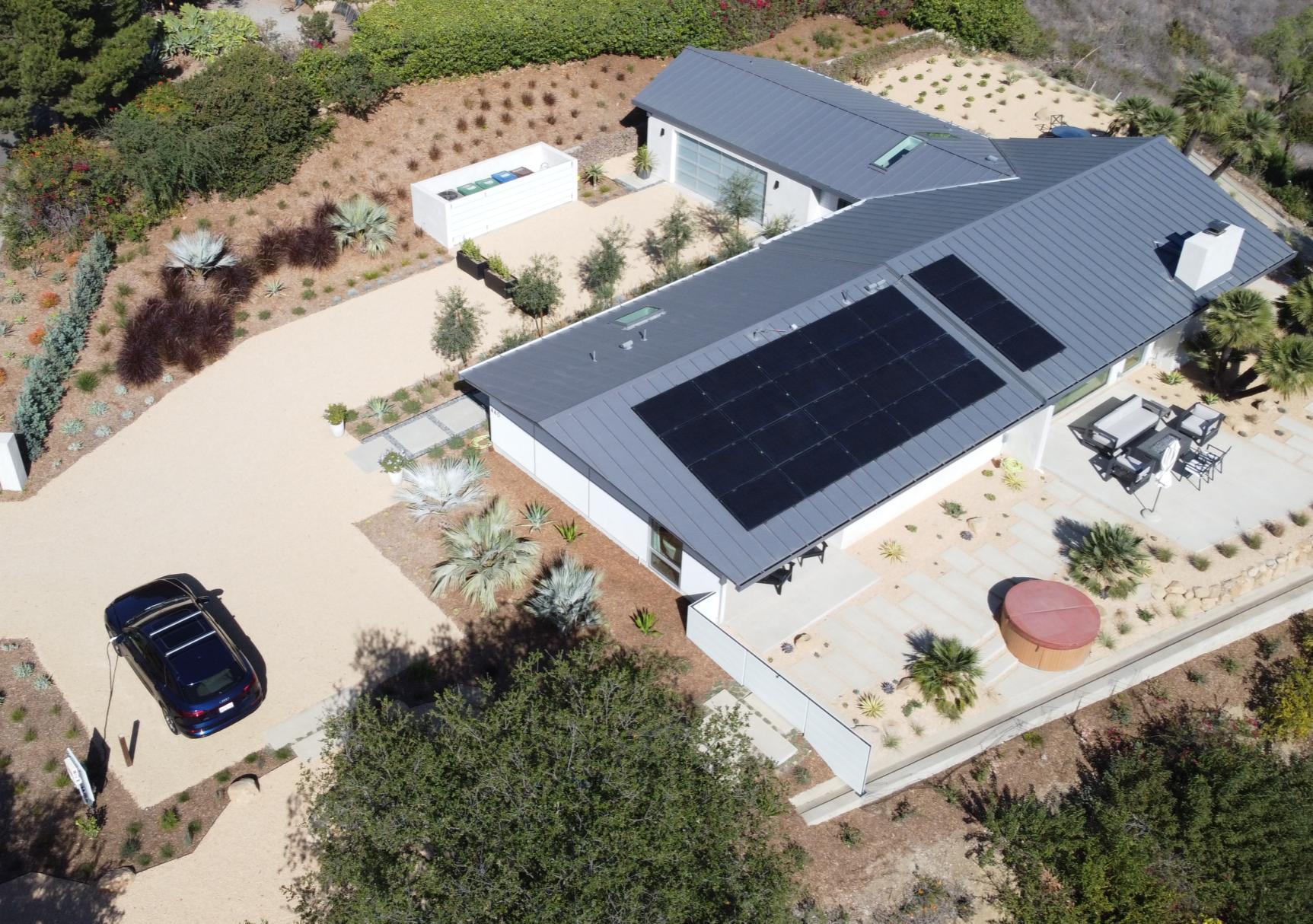
“Just like plumbing and electricity, solar and battery backup should be built into every home.”
- Marine Schumann, Co-Founder of Brighten Solar Co.
Home is where we expect to feel secure. But in Santa Barbara County, located at the very end of an aging
electric grid and highly exposed to wildfire-related shutoffs and storm disruptions, outages happen about 53% more often than the state average. That sense of security is becoming less certain, especially as more homes rely entirely on electricity for heating, cooling, cooking, and even transportation.
At the same time, electricity costs continue to rise. California now has the second-highest electricity rates in the country, behind only Hawaii, including another 13% rate increase from SCE last October Many homeowners find themselves paying more while also worrying about reliability
That’s why more families are installing solar and battery systems not just to save on energy costs, but to take control of their power and protect their homes when outages happen Onsite energy generation and storage is the most reliable way to keep electricity flowing, regardless of what’s happening on the grid. Just like plumbing and electricity, solar and battery backup should be built into every home.
In practice, this means having power when the grid goes down, reducing dependence on utilities, and gaining peace of mind as energy costs continue to rise. It changes the relationship homeowners have with their electricity instead of managing vulnerability, they’re building resilience. And with new financing and ownership options available, installing solar and battery systems no longer requires a large upfront investment
This is the practical choice many Santa Barbara homeowners are making today Because in the end, resilience isn’t just about technology it’s about knowing your home stays comfortable, safe, and functional when you need it most.

by Jeff Wing
Birgit Klein Interiors has many design projects afoot and they are… varied. How varied? At this writing the BK Interiors continuum includes both a rustic five-bedroom cabin and a 170’ luxury yacht. What do these jobs have in common? Certainly a couch of some kind. Though one of the jobs will likely require bolting the thing to the floor. This breadth of artisanship leaves Birgit herself (she prefers “Bee”) unfazed.
“The interior design work on a yacht is amazing. It is very, very challenging. Every inch matters. Those beautiful yachts cross the Atlantic, so it goes to materials, how the furniture is built… everything. I love it.”
Bee hails originally from Germany, but her indefatigable global travels and lengthy homesteading in the States have had their effect, her accent tending now to the untraceably musical “European” so beloved by Hollywood casting agents. It is in fact BK Interiors’ understated amalgam of European and American design sensibilities that—coincident with Birgit’s chosen sobriquet—draws a constellation of varying clients to BK Interiors like Bienen zu Honig
“Our spaces, they’re not loud,” Bee says. “But they’re very expressive. When we use the word European, that really means that our work bridges the old world and the

new. European sensibility in California embraces elements of both structure and softness. So I think these are really the words that describe us. And I’m personally drawn to natural materials, to honest textures. I like linens and cottons and silk. I like the real—the cashmeres, the silk velvets. They have a sense of calm. I don’t need the excess.”
BK Interiors once had studio offices in London, Los Angeles, and Montecito. Bee has since drawn that multi-city trifecta down to one. But like a cadre of master cooks who implausibly feed a packed Michelin restaurant from the confines of a tiny, steam-shrouded, stainless steel phone booth, BK Interiors’ territorial projection of mastery belies the single, tasteful office in its woodland village. The Hamptons, Beverly Hills, Paris, Miami, the Bahamas; BK Interiors’ ever-growing roster of clients and destinations are geographically unbound.
“We have several drafters, senior designers, and design assistants, purchasing agents,” Bee says. “But we do run everything out of Montecito.”
A glimpse of the BK Interiors portfolio is dizzying and calming, the collective design palette gorgeously calibrated and ‘design signature’ free. If there is a subtle aesthetic thread that interweaves and connects the panorama of projects—it is the very absence of a unitary aesthetic approach.

“ We may safely say, at the risk of cinematic overreach, that Bee’s creative nature found a door ajar and forced it open.”
“We are not a studio that imposes a signature style,” Bee says with a smile. “There are so many designers out there that have a particular style. We do not. We have one project that is like walking into the Palace of Versailles, and then the next one is a mountain home, the third one is a beach house, and then all the Montecito projects.”
For all the variety of projects Bee is involved in, each is a difficult farewell at completion. Does she ever find herself emotionally anthropomorphizing a home with which she had become deeply engaged? This question rings a bell.
“Yes, very much. And especially towards the end when you really place the accessories and the rugs and the artwork— that’s when it really comes into its own and it has… a feeling! When a project goes along, the deeper you get into it and the closer you get to the end, you really understand and feel what its temperament is.” For all that she deeply feels about the work, many of BK Interiors’ projects will never feature in a publication.
“I am a very understated person and operate more with quiet distinction. The studio has grown almost entirely through word of mouth. Many of our clients are extremely private and many of our projects may never be seen publicly. For them, true luxury is not visibility, but discretion.”
Birgit Klein is owner and animating flame of a full-service interior architecture and design studio with a global clientele. She is a walking collection of time zones, and likely a strong advocate for the 28-hour day. If I may—what sort of life arc creates an interior designer with a life like this? How? Why? When?


CELEBRATING 20 YEARS OF DESIGN AND CRAFTSMANSHIP
2272 LILLIE AVE, SUMMERLAND, CA
MONDAY - SUNDAY 11 - 5
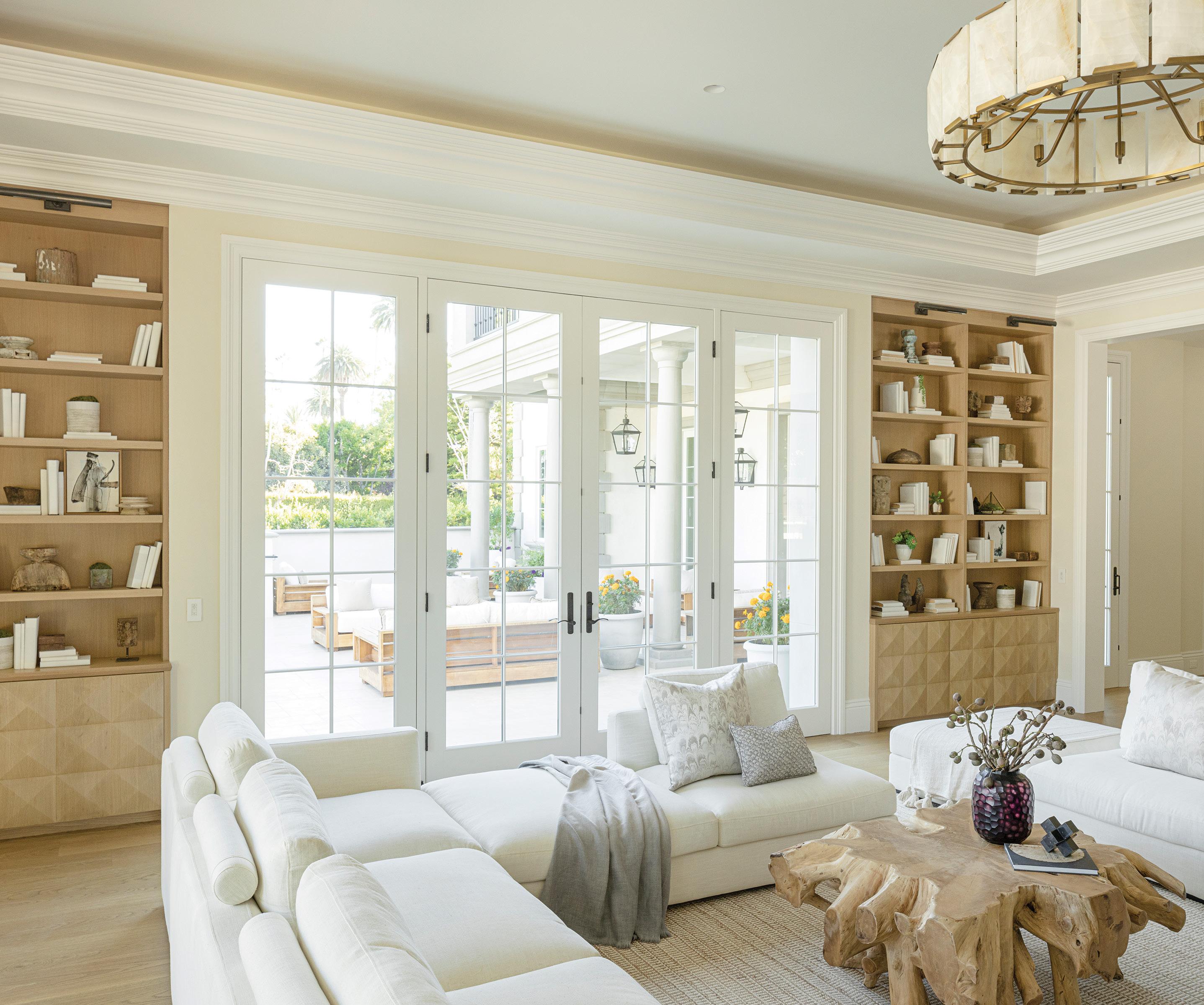
“It wasn’t like a sort of dramatic moment, or like a light switch coming on. I think it was more like a quiet realization. I was working as an account manager in a large commercial property company, traveling a lot. It was a very male-dominated world.”
Fate is a funny thing, but who believes in that? And here is where the writer suggests that Interior Design has about it a very slight metaphysical character. The successful ID is, after all, intuiting a client’s perceived emotional interiority, and then subtly mapping that to its real-world rep-

resentation in that most interior of exteriors—the Home. So, at the theoretical intersection of Fate and—
“Back in 2002, my partner at that time did a lot of property development and I started to help him out with that a bit. I always felt I had an understanding... an intuitive understanding of space. And I was always intrigued how spaces or homes felt when you walked in. And every time I walked into homes, I used to always think, ‘Well, how would I want to live in this? How could I improve this? In a full circle moment, my husband and I are building, and have built, several development homes.’”
We may safely say, at the risk of cinematic overreach, that

“ Towards the end, you can feel sometimes like the home doesn’t need you anymore— because it breathes on its own now. And that moment just never gets old.”

Bee’s creative nature found a door ajar and forced it open. Any reader who may be dreamily imagining an ill-advised, life-altering leap into the color-soaked Unknown is encouraged to give this next section a careful reading.
“Then I met this owner of a custom furniture showroom in London who had a store on Fulham Road. I would purchase things from him and he just said, ‘Bee, you’re so good at this, you’re so good with people. Do you want to work for me? And I’m like, ‘Well, I have a full-time job…’” Bee laughs lightly in the telling. Drawing down the enormity of her full-time job—was that even doable?
“I was thinking about this and I’m like, well, why
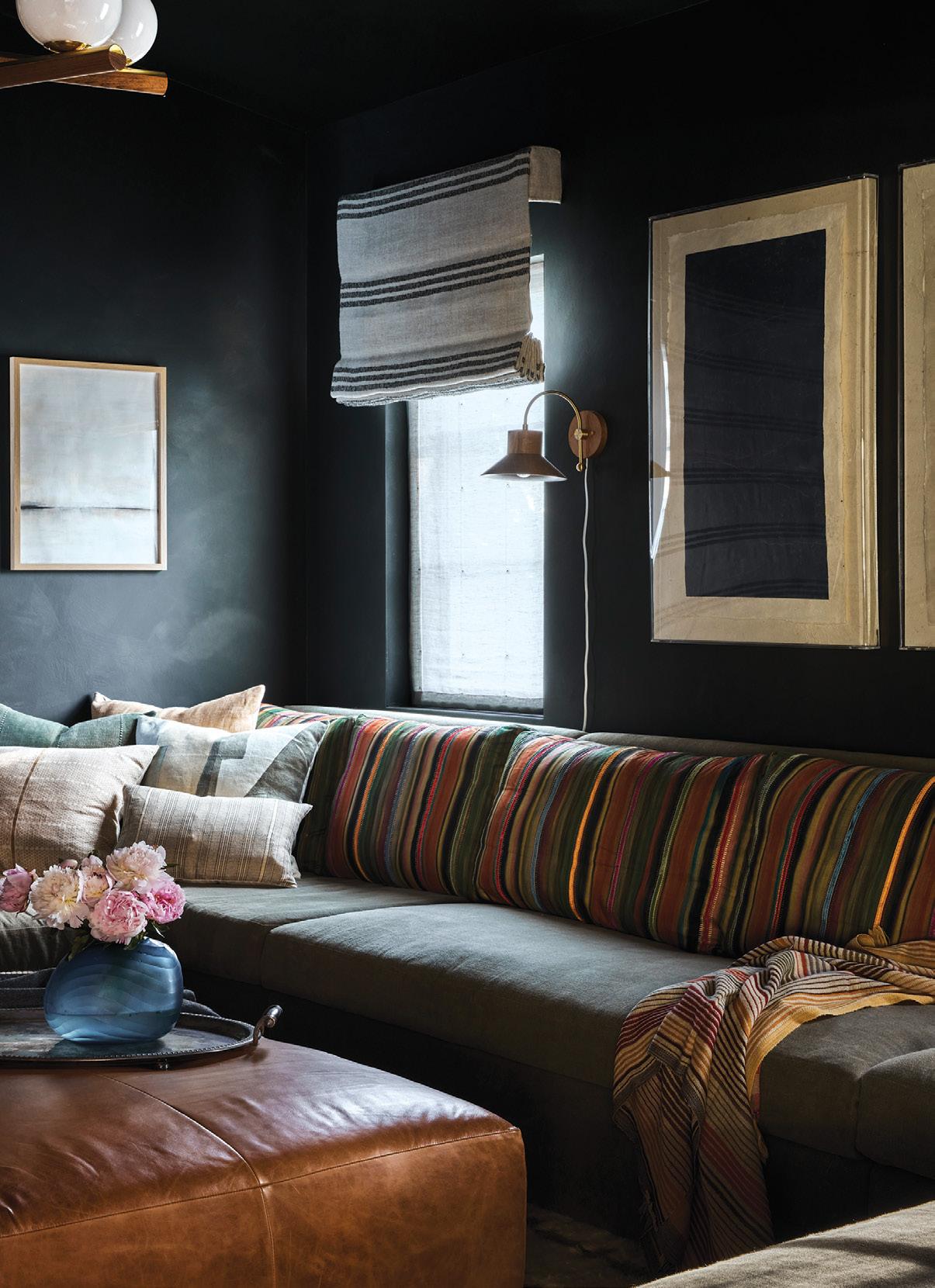
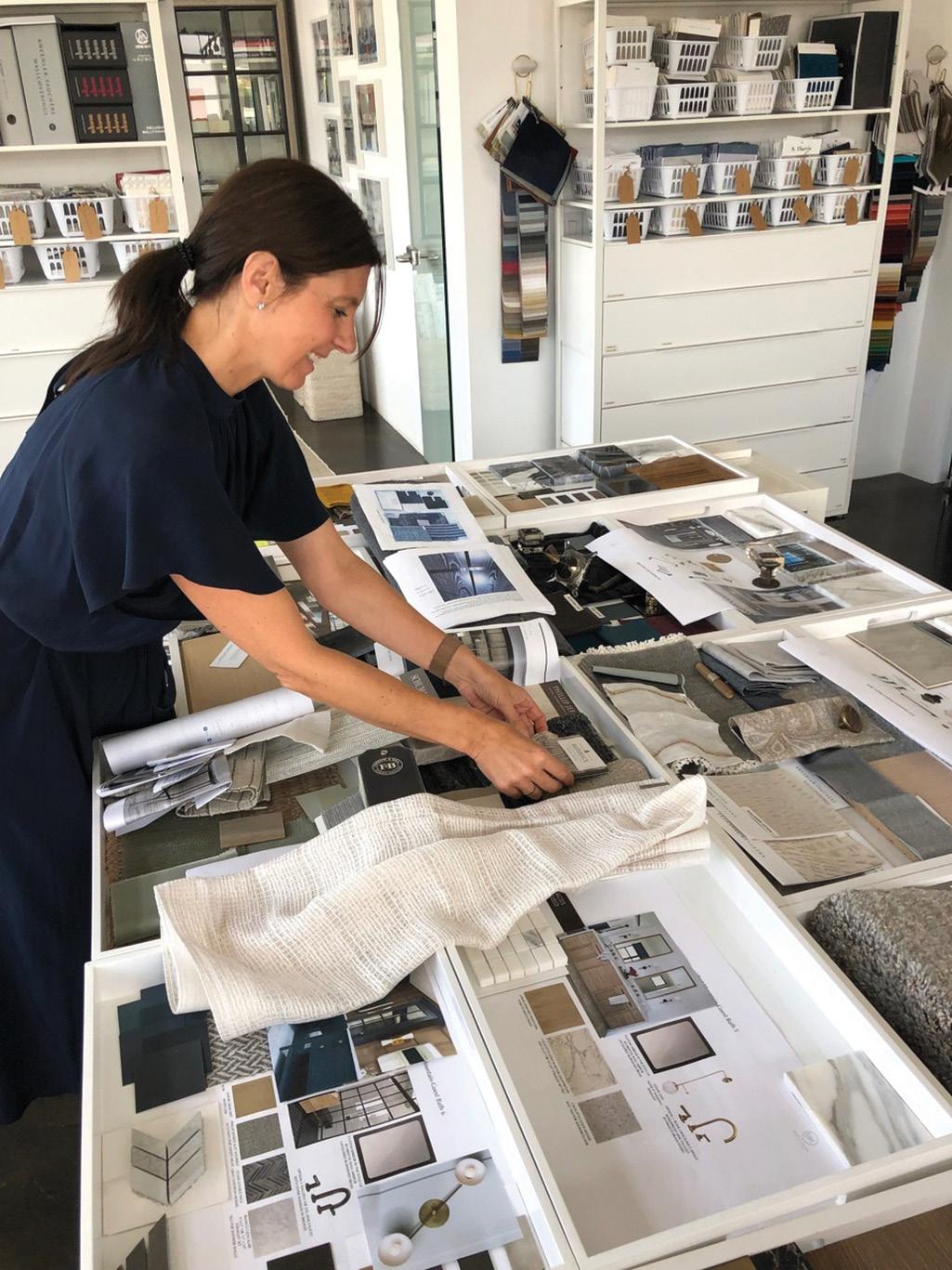
“I guess that’s why I love this work. When I go in a house and don’t want to change anything anymore, then I’m like, ‘Okay, I know it’s complete.’”
not? I mean, I’ll just do it on Saturdays, just because I loved being in that environment. I just found more and more joy in doing this.” If you’ve been wondering, reader, it is at this point our Birgit Klein fully emerges from her chrysalis.
“And so I decided to take a leap, knowing that it might be the completely wrong choice, but I was just going to do it.”
Bee left that catalyzing part-time job and her full-time job as a data-crunching transcontinental portfolio manager. She enrolled at London’s KLC School of Design—recognized as a Center of Excellence by the Society of British & International Interior Design—and the world had one less corporate portfolio manager.
It seems to have worked out. Opening her original BK Interiors London office in 2006, Bee the Creative has fully effloresced into her calling, so much so that

her artisanal attachment to the work can be, at times, almost bittersweet.
“When a home is finished and the clients are settled in, it shifts from being a concept to becoming a lived experience, and it belongs to and is a part of the client.” Birgit “Bee” Klein pauses, and there is the hint of a sigh.
“Towards the end, you can feel sometimes like the home doesn’t need you anymore—because it breathes on its own now. And that moment just never gets old. It’s just this intuition that now the house is good and it’s in a good place. And I guess that’s why I love this work. I know that when I go in a house and don’t want to change anything anymore, then I’m like, ‘Okay, I know it’s complete.’”
birgitklein.com
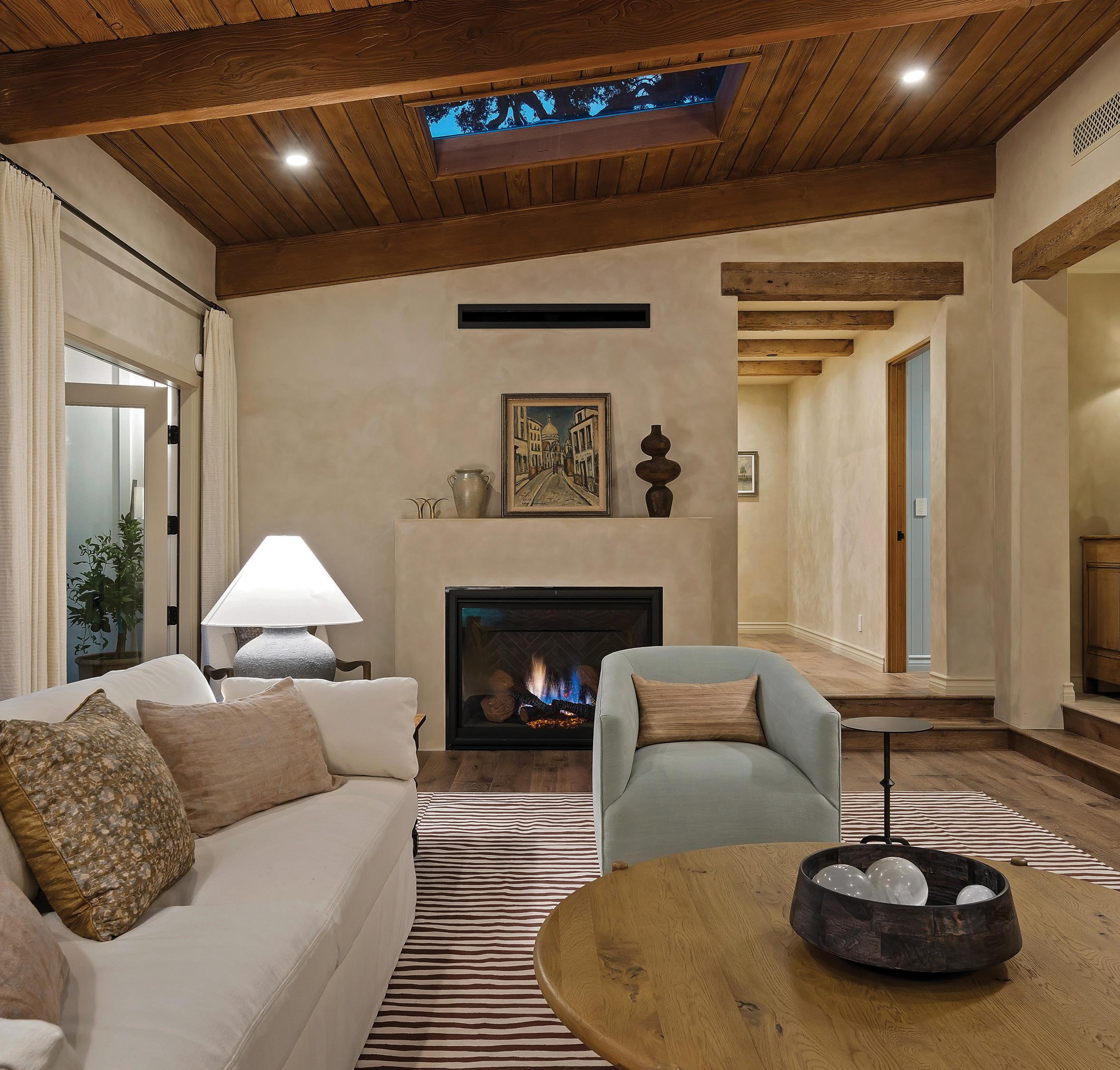

u nlock t H e t rue p otential of Your s anta Bar B ara l uxurY Home.
Your home deserves more than ordinary property management—it deserves Paradise Retreats. As Santa Barbara’s premier luxury vacation rental company, we offer unmatched expertise, personalized care, and proven results.
If Birgit “Bee” Klein is the intuitive cartographer of a home’s emotional interior, Ferguson Home is often where those instincts take material form.
For close to eight years, Bee and her team at BK Interiors have relied on Ferguson’s Santa Barbara showroom as both resource and sounding board.
From Montecito to Santa Ynez and beyond, the collaboration has been steady and symbiotic. Plumbing fixtures, appliances, lighting: the essential, tactile elements that quietly determine how a space lives and breathes. Ferguson’s team assembles detailed portfolios—complete with images and specifications—so Bee can present clients with a clear visual and financial picture at once.
It is a practical elegance that mirrors her own.
“She’s pretty spot on,” says Showroom Manager Caralyn de Jong of Bee’s selections, noting that significant changes are rare once choices are made.
The shorthand between designer and supplier is born of trust. Bee defines the temperament of a client; Ferguson helps source the pieces that will support it—perhaps a hand shower with specific functions in a particular finish— offering curated options from which she chooses.
Yet Ferguson’s reach extends well beyond the design studio. A 75-plus-year-old company and the nation’s leading plumbing wholesaler, Ferguson serves a wide spectrum: builders, contractors, designers, and an increasing number of homeowners navigating renovations themselves.
The balance tilts toward trade professionals, but the showroom doors are equally open to the end user.
For the homeowner standing amid studs and subflooring—or simply seeking a single faucet upgrade—the in-house Ferguson consultants are patient guides. Wellversed in product and performance, they help translate style into specification, function into finish.
Sustainable options and energy-efficient appliances are increasingly sought after; polished nickel and warm brass gleam where matte black once held court.
Trends evolve, but the mandate remains: listen carefully, pivot quickly, and meet clients where they are.
In a moment when many are choosing to hunker down and refine their nests, Ferguson offers both expertise and reassurance.
Because whether a project spans continents—or simply a powder room—true comfort lies in the details that work beautifully, every day.
fergusonhome.com
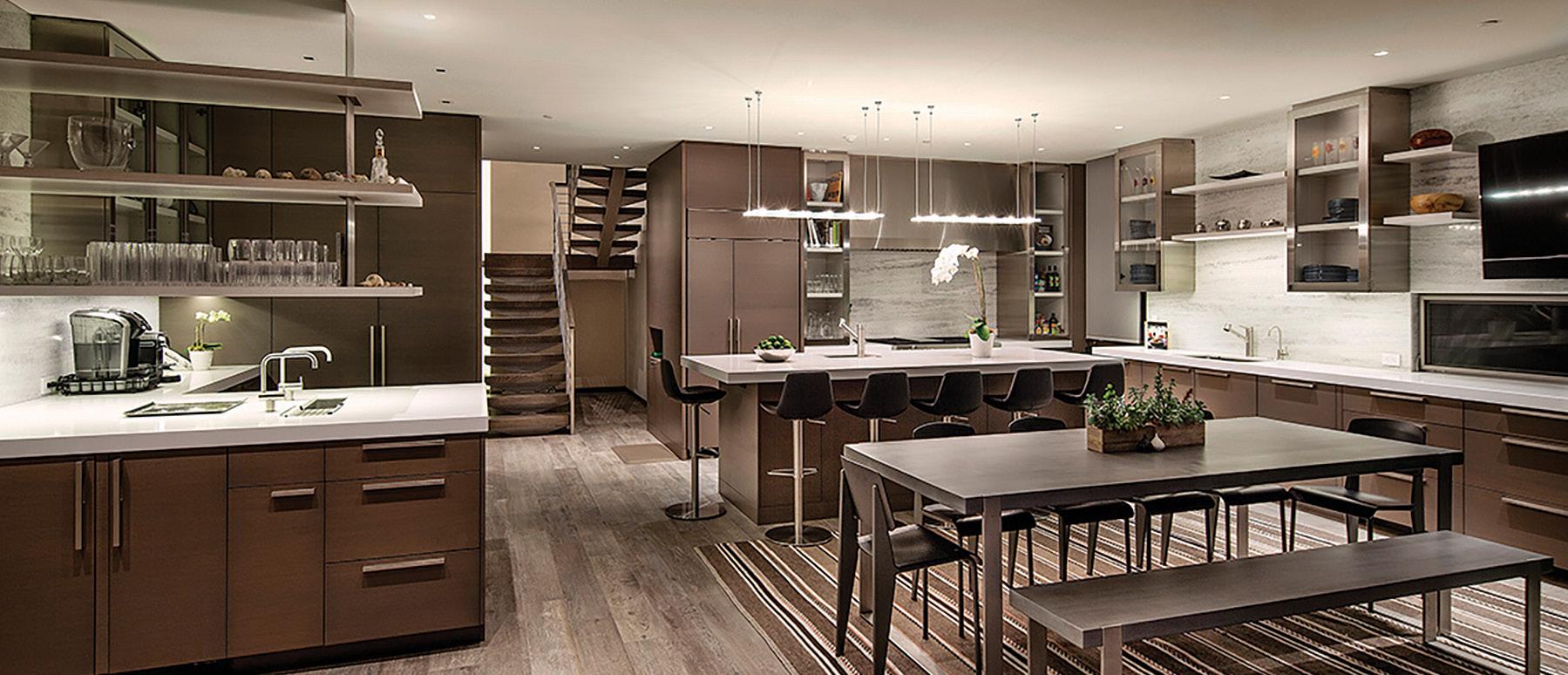
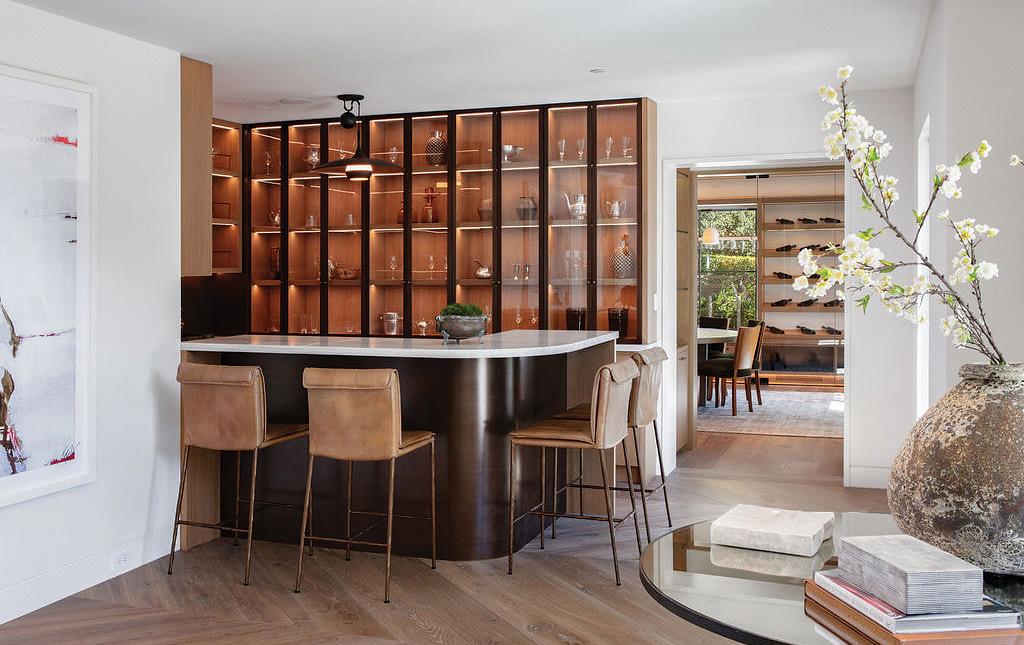
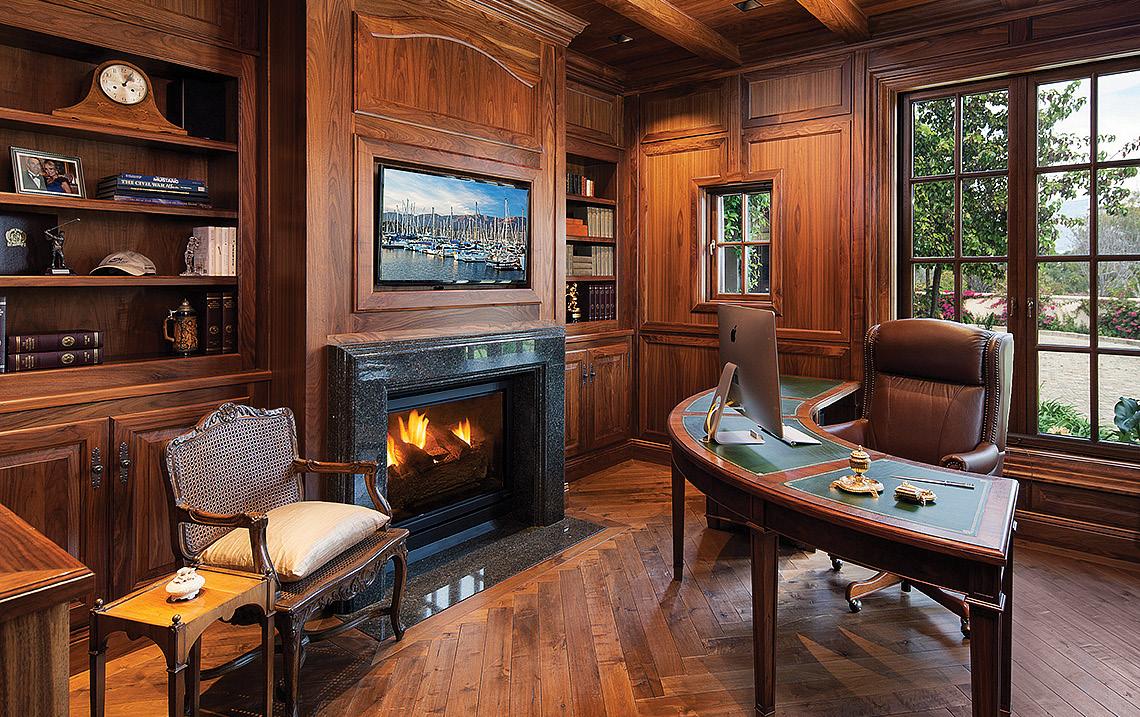
Long before Montecito became shorthand for a certain cultivated ease, Santori Woodworking was already shaping the interiors that would define it.
Established in 1930 by Scott Santori’s grandfather, the family business has moved locations but never lost its lineage.
Four generations in, the hum of the shop floor is as much inheritance as enterprise. Scott’s father worked the trade; today, his sons do the same. “I used to help my grandpa when I was five years old,” Scott recalls.
The continuity is less nostalgia than discipline—knowledge passed hand to hand, project to project.
Based in Lompoc, Santori Woodworking runs a 25-person operation encompassing cabinetry, millwork, metal fabrication, and finishing.
While cabinetry remains the heart of the business, the range is expansive: modern frameless designs, traditional flush inset, hand-carved Moroccan detailing for large estates.
Trends may tilt toward walnut, white oak, and paint-grade finish-
es, but style is dictated by the architect, builder, or designer. “Whatever the builder, designers, owners want—we do it all,” Scott says.
Among those designers is Birgit “Bee” Klein. Their collaboration spans roughly a decade or more, including cabinetry for Bee’s own residence.
The relationship evolved organically—first through shared contractors, later through direct interaction. Like Bee, Santori operates largely by reputation; one job leads to another, and another.
While the company works with hundreds of builders and designers—primarily throughout Santa Barbara County, with projects reaching as far as Newport, Hawaii, and the Mountain West— residential work now comprises the majority of its portfolio.
Still, the shop welcomes private homeowners just as readily as trade professionals. Some clients return across decades and multiple homes.
In an era of fast solutions and flat-pack convenience, Santori’s ethos is resolutely tactile. Hardware is sourced with precision; hinges, drawer systems, and internal mechanics are selected as carefully as the visible face.
It is craftsmanship measured not only in finish, but in feel.
For Bee’s layered, quietly expressive interiors, Santori provides the architectural backbone—the cabinetry that holds, frames, and endures. In the grain of each panel is a family story, still unfolding.
santoriwoodworking.com
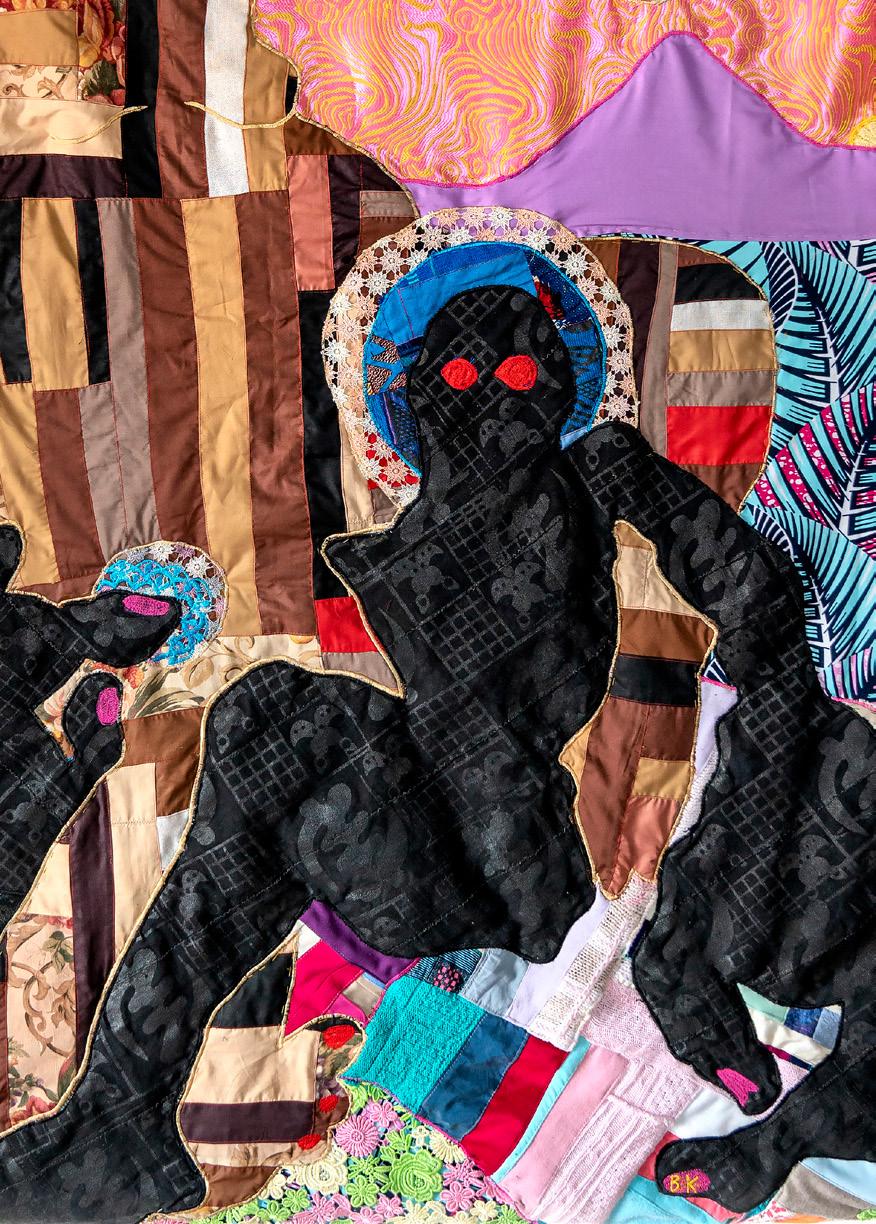

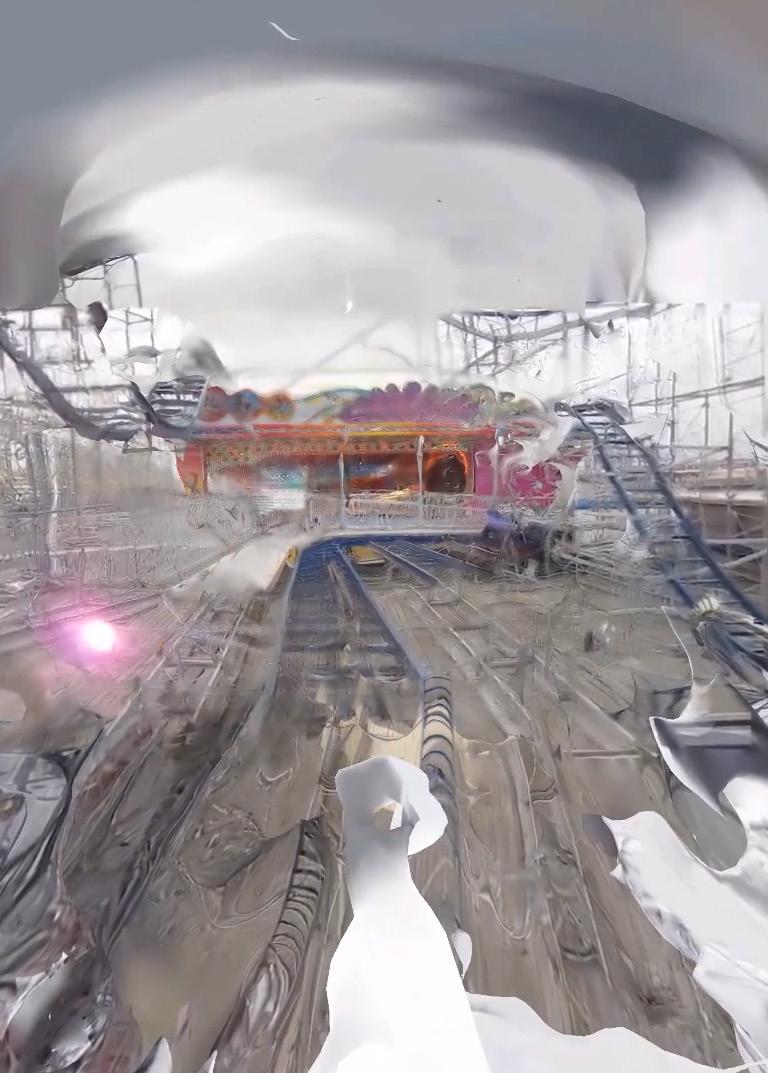





“Last Light in Paradise is drop-dead perfect. In all my years of investigating for the United States and the President–this is the kind of novel you go to for truth, heart, and the deep pleasure of a master storyteller.”
– Richard C. LaMagna Former Director of Counternarcotics White House National Security Council and former Deputy Chief of Intelligence DEA HQ
– Fannie Flagg
Now available at Chaucer’s Books, Tecolote Book Shop and Godmothers
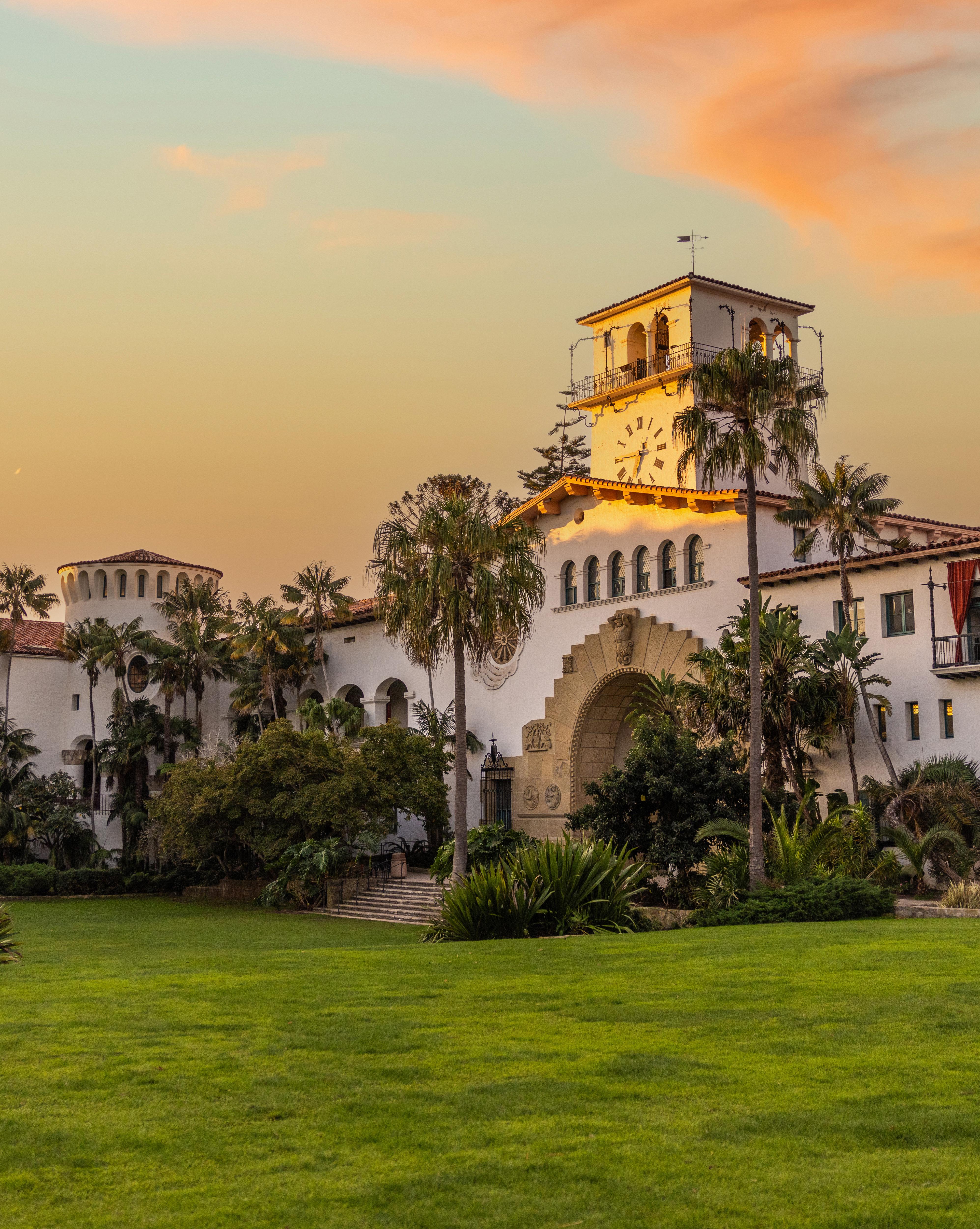
Les Firestein
Fortunately, Squatter Hunter Flash Shelton Is the World Expert on Squat 3/23/26

Every era seems to conceive the unique heroes it needs. Captain America was conceived to help the Allies fight Nazis. Black Panther came into existence during the Civil Rights movement. And, though not from the Marvel universe, Flash Shelton, the globally recognized Squatter Hunter, arose from the combustible intersection of high-flying real estate meets tough love meets “conscious uncoupling.” Where the story takes a left turn is this man who plies his trade by getting squatters out of homes spent more than a few years houseless himself.
A few years back I was helping a friend with a house in L.A. My friend would leave town for long stretches so I’d check on the place occasionally. One early morning when I went to check on the abode, I was surprised to find a squatter luxuriating inside. Literally in fluffy slippers, a pink robe, and sleep mask. I did the natural sissy thing and called 911.
When the cops showed up they looked like they’d been sent by central casting. One cop looked very much like The Rock so I instantly felt relief. Until he opened his mouth. “What do you want us to do?” asked The Rock, his tone equal parts incredulity and existentiality. Like I’d called them because I’d seen a mouse. Said I, “Well he’s trespassing, so I guess… get him out?” “And do what with him?” asked my not-quite Dwayne Johnson. “Since trespassing is illegal,” I said, “Maybe… arrest him?” I mean I didn’t want to mansplain to the LAPD but the situation seemed perfectly obvious. Bum rush the guy.

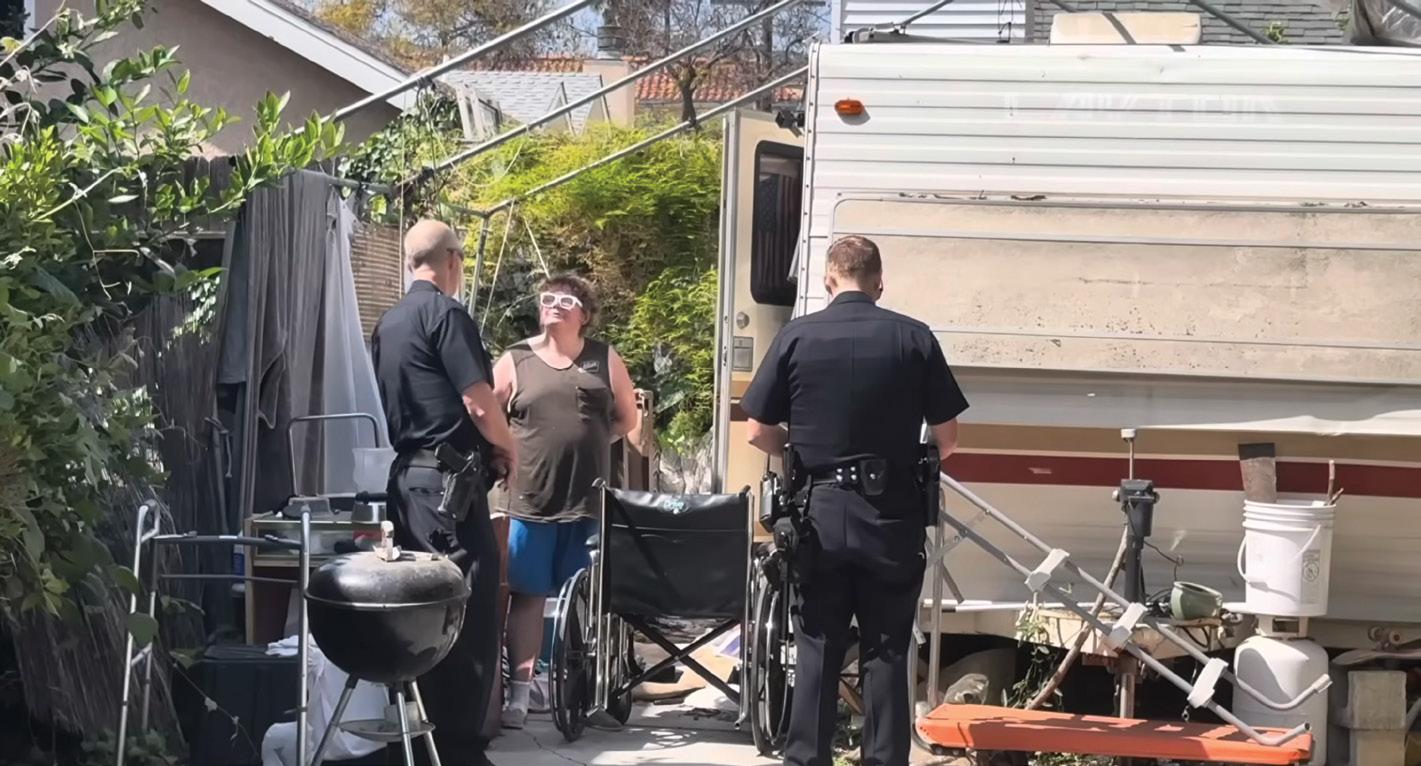
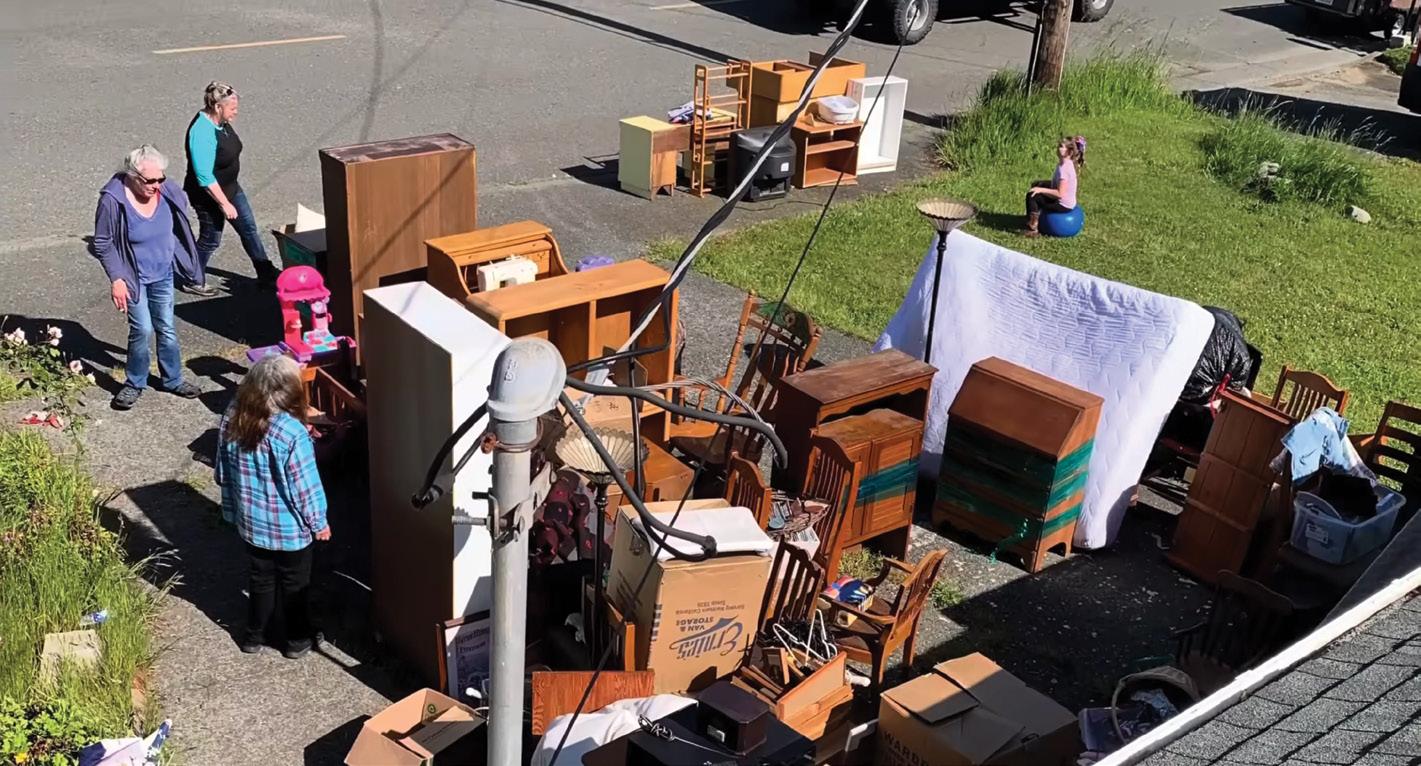
The Rock then proceeded to lecture me about how L.A.’s jails are overcrowded and courts overburdened therefore when the cops arrest squatters, the judges actually get mad. “Squatting is a non-violent crime, and there’s no place to put him, so if we bring this guy in, frankly he could be back on the street after lunch, maybe even before lunch.” Wow, thought I. L.A. wouldn’t even hold Pink Bathrobe past petit déjeuner. Sensing my palpable disappointment, The Rock then told me he could probably walk our trespasser out the door for now, but beyond that could offer me no assurances. If only I had known about Flash Shelton back then. But more on Flash… in a flash.
If you’ve ever heard a squatter story you probably heard the story of how the former president of ABC, Steve McPherson, had an intractable squatter who bilked him out of millions. Or perhaps you read the Vanity Fair story last year about the serial squatter on Point Dume. Even our own Montecito isn’t immune from the vagaries of high-octane


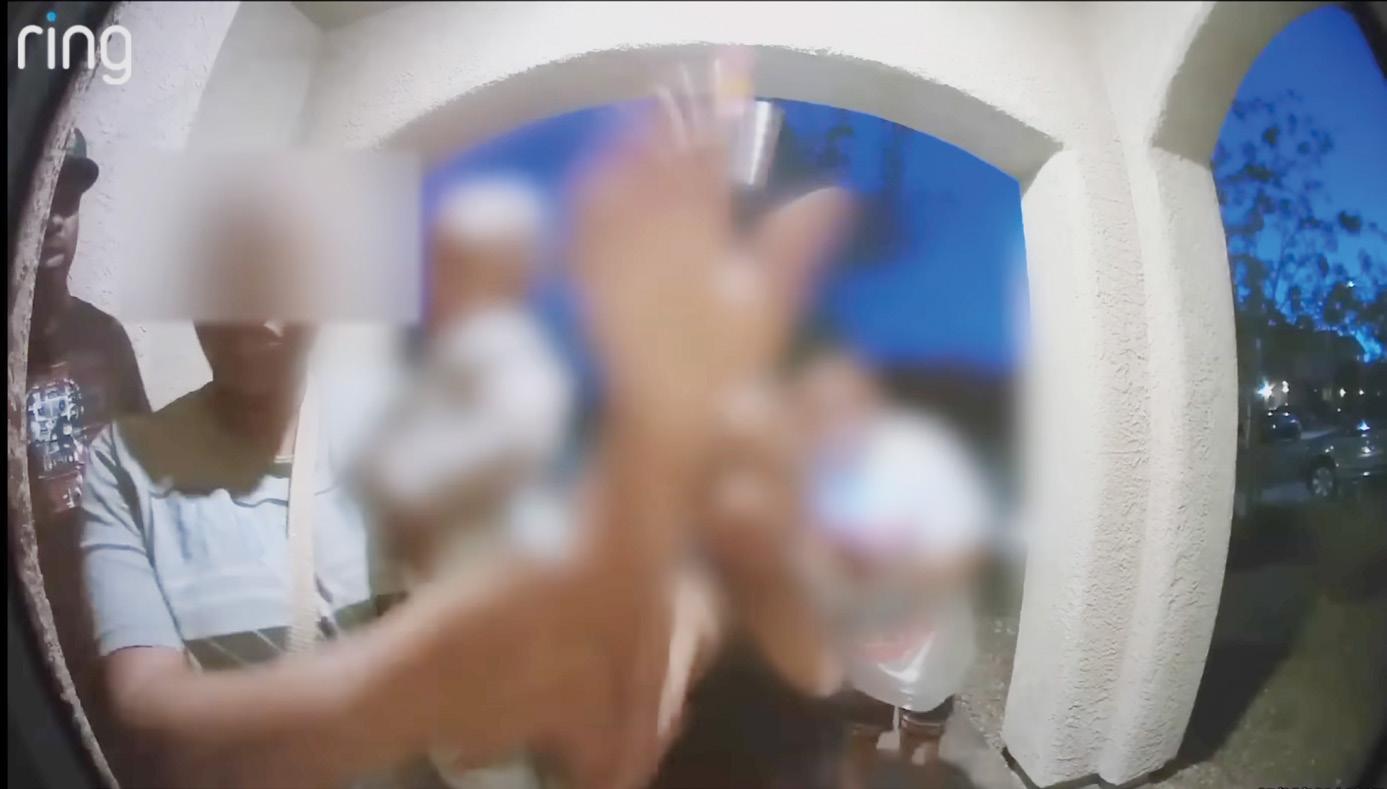
vagrancy. Montecito had multiple incidents with the actor and serial squatter Randy Quaid, to name just one. Elsewhere in California a friend told me about locking out a squatter with a padlock. Only to come back at the end of the day to find the lock shot off and just left there dangling.
“MY GOAL HAS NEVER BEEN TO TRADE PUNCHES WITH YOU. IF WE’RE TRADING PUNCHES THAT DEFINITELY MEANS I’VE FAILED.”
It’s estimated there are 50,000-100,000 people living in “squats” across the U.S. (see Chris Connor’s article about squatting at the Miramar before Rick Caruso purchased it: “Montecito On Zero Dollar$ a Day” on page 178). It’s one thing for someone to live rent-free inside your head, but quite another for someone to live rent-free in a property on which you’re paying the property taxes and utilities.
If you want to raise the hair on the back of your neck, Google “your legal liability for a squatter.” Squatters can sue YOU if your home they’re squatting in has any sort of hazardous conditions you were remiss to repair. Makes you think twice about that cracked window you neglected and might that be asbestos in the old shed? A little deferred maintenance may have been fine for you, but squatters have a tendency to be sticklers.
Into this combustible situation enters the former bouncer and current squatter extractor Flash Shelton, the biggest name globally in what I’d call the business of “empathetic, but emphatic eviction.” You’d expect Shelton to be some sort of taser-happy vigilante thug, a professional intimidator. But in real life I found him to be highly intelligent and, counterintuitively, well-versed in the art of DE-escalation. Says Flash, “That’s the secret. I started my career as a boxer and a bouncer. But the one thing you learn quickly is that bouncers aren’t brawlers—at least not the good ones. My goal has never been to trade punches. If we’re trading punches that definitely means I’ve failed.”
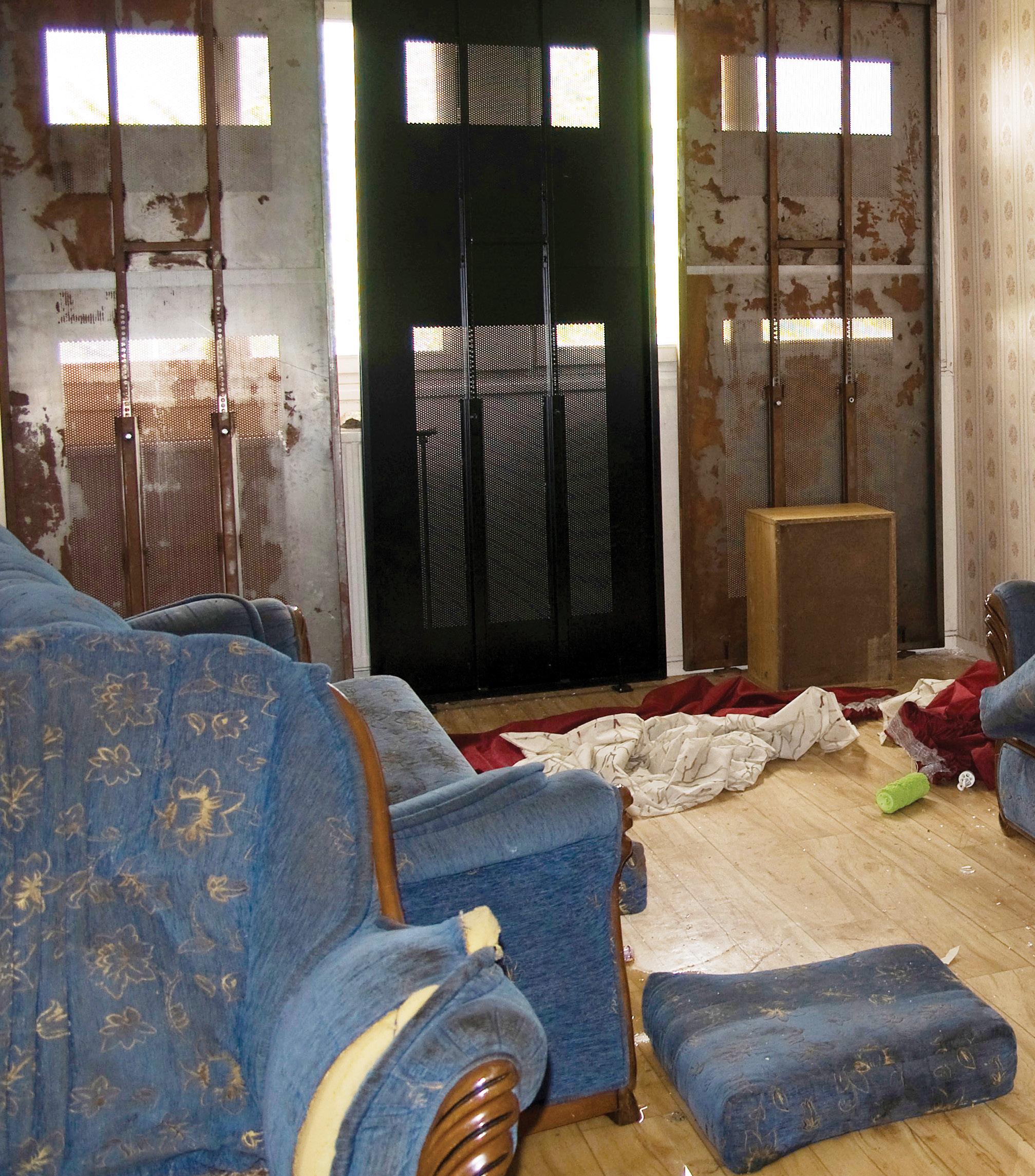
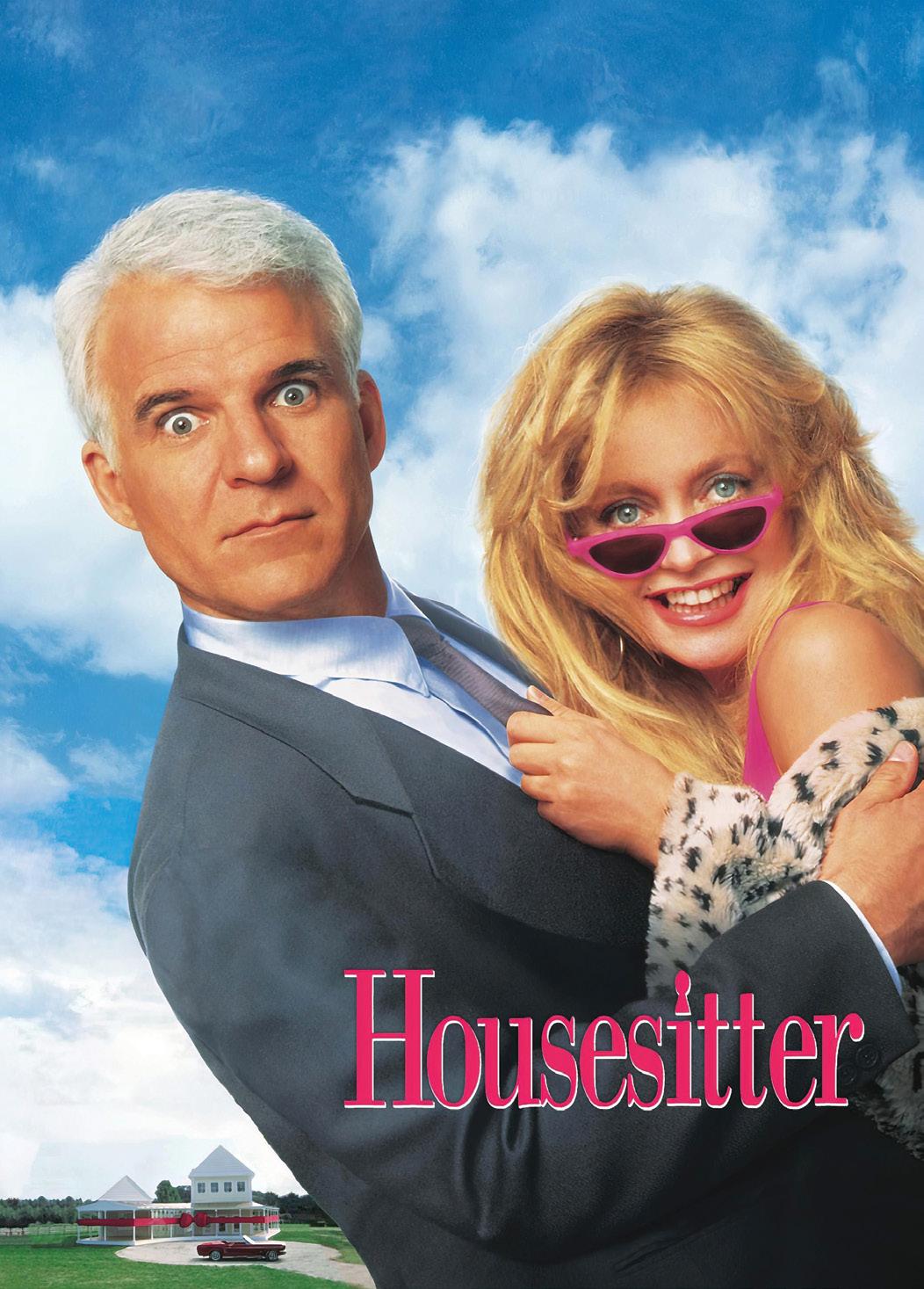

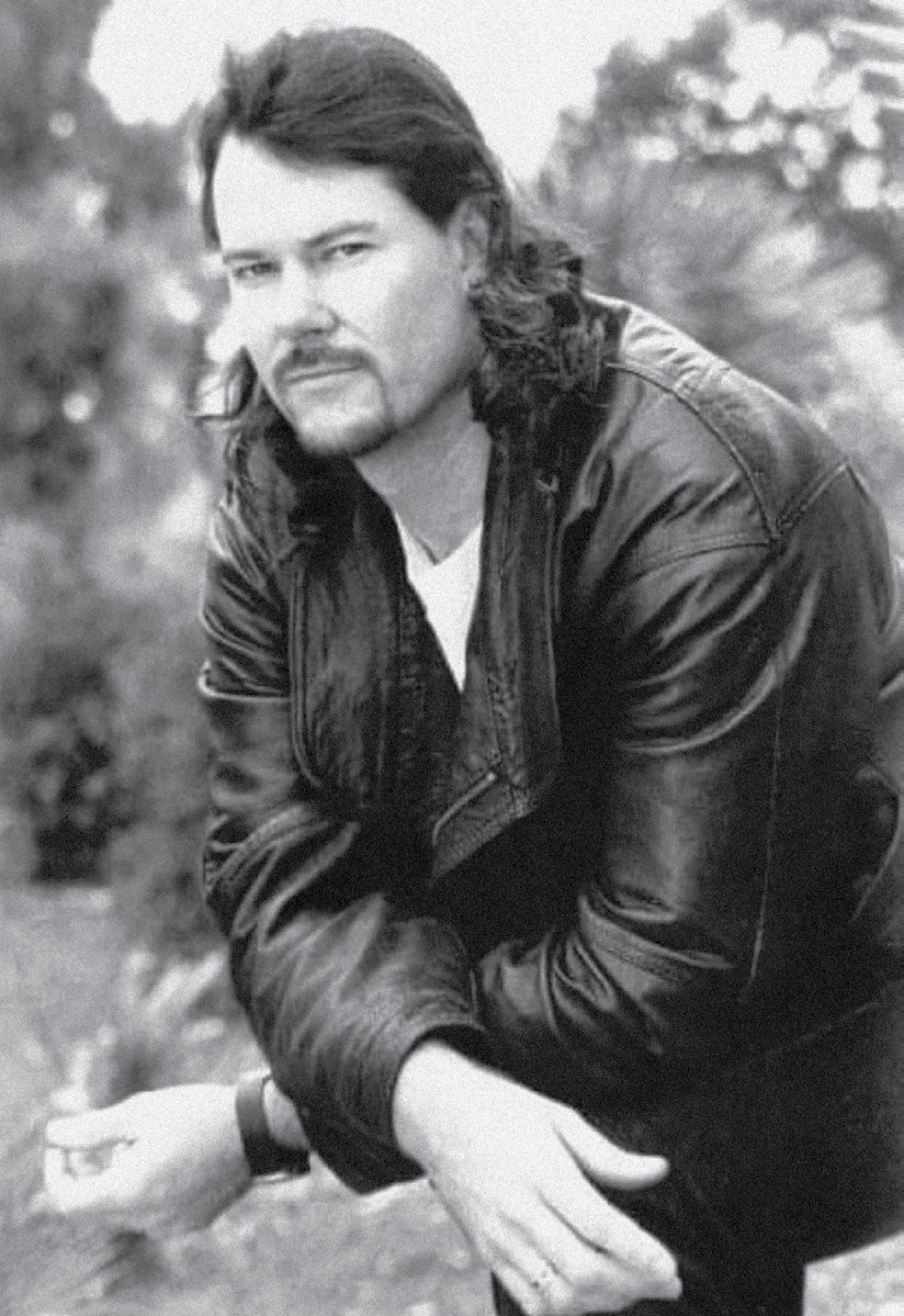
Shelton got certified as a trained de-escalator as part of his bona fides on the road to not just becoming a bouncer, but ultimately training bouncers. Says he, “Anyone who knows thing one about crisis mitigation knows the goal is to avoid physical confrontation. We try to leave that for law enforcement.” Why is Flash so Zen? This man whose hands could be registered as lethal weapons. This man who seems like the result of if Mr. T and Steven Seagal had a baby (which may not be biologically that far off).
Perhaps it’s because Flash has a natural affinity for the disenfranchised and housing insecure…

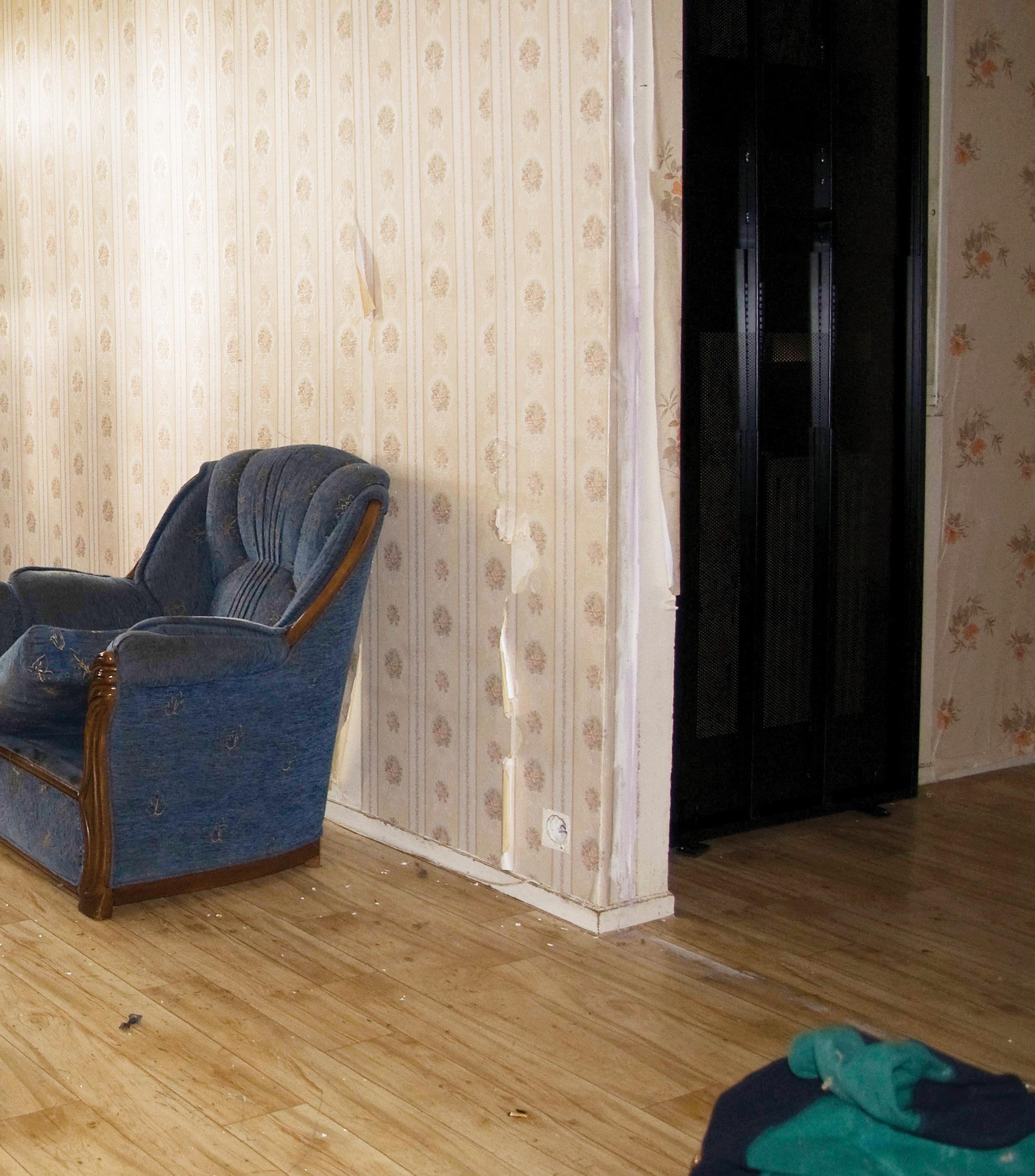
THIS MAN WHO SEEMS LIKE THE RESULT OF IF MR. T AND STEVEN SEAGAL HAD A BABY (WHICH MAY NOT BE BIOLOGICALLY THAT FAR OFF).

“W
hen I was a kid, we were homeless,” says Flash. And not in the cool “Poppa Was a Rolling Stone” kind of way. Flash regales me how he attended 12 different elementary schools—9 before fifth grade—all over the state of California. “It definitely informs my underlying philosophy and approach to this job.”
“Having been one I can tell you that a homeless person has more pride than a squatter,” says Flash. “Most homeless people will live in a tent, a car, or a box before they’ll break into your back door.”
“But squatters are different. What I mostly deal with are people with no intention or even interest in a legit housing situation. They’ll fudge a lease or they’ll forge a lease, but your typical squatter is someone looking for a free ride. And there are many different ways for them to get paid. The traditional scam is ‘Cash For Keys.’ Where you basically pay them to go.” But there are lots of other ways squatters can make money off your house. There have been cases where squatters managed to get a HELOC on a house. And there was a well-known incident last year where the squatter subleased to influencers and OnlyFans models. I hate when people have more fun in my house than I do.
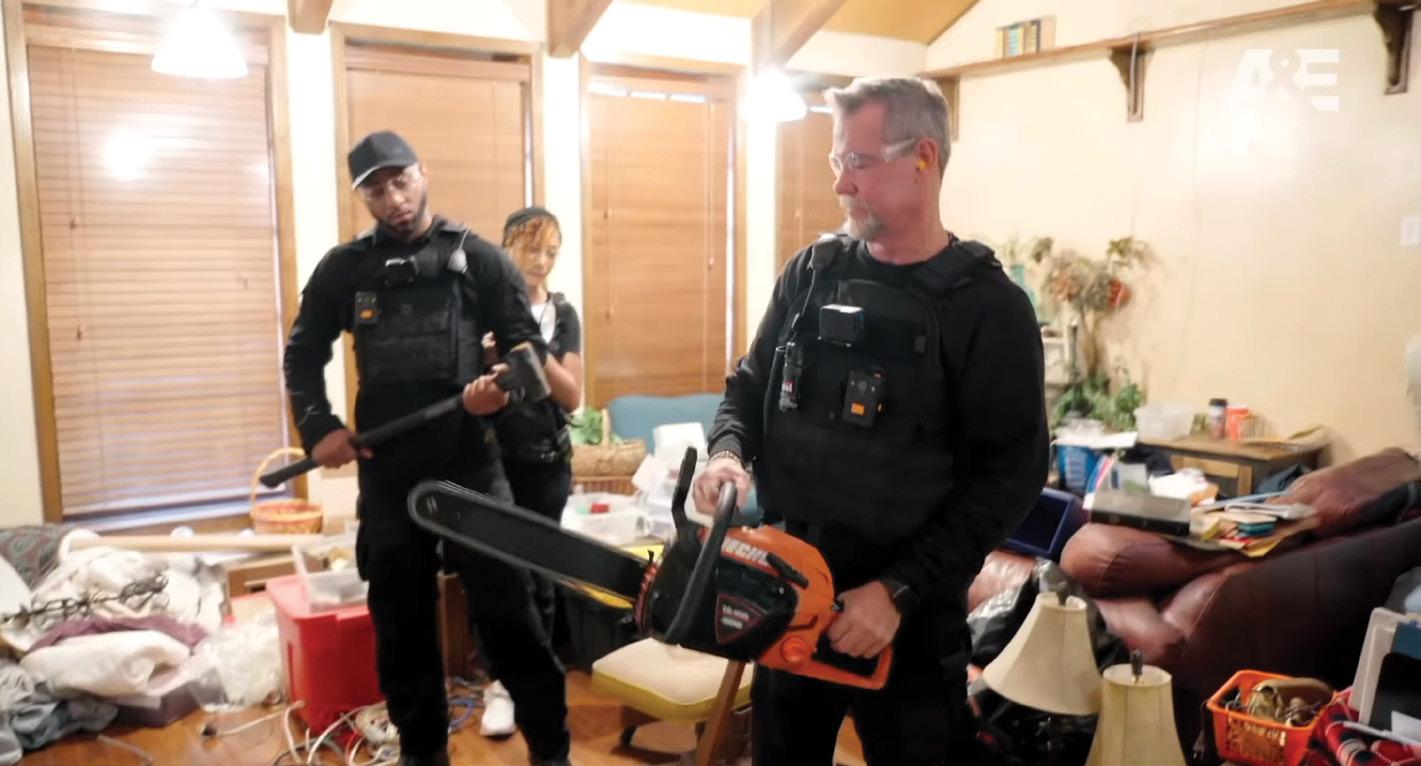

And that’s just the beginning. As you might imagine, squatters have learned to play the system like legal eagles. The sad thing is they’re often smart and resourceful. “My job is to stay one step ahead,” says Shelton, who when he talks squatter sounds like a narrator on a hunting show, telling you about the markings and idiosyncrasies of a special genus.
For example, squatters know that utilities can’t be shut off—“the law says that a landlord cannot shut off the utilities on squatters.” However there IS a chess move here: “No judge can force you to afford the bills. So if you stop paying the bills and the utility company cuts off the utilities, that’s actually perfectly legal,” says Flash. Backstopping Flash is not just the justice system, but his great relationship with law enforcement.
One of the typical tools of the squatter is a fudged lease—something one can just download off the internet then add a couple of forgeries. So Flash will retaliate by getting a real lease from the owner. Flash can then legitimately move in with the squatters along with his camera crew. “When the squatters meet me, if they don’t already know who I am, they learn pretty darn quick and they know what it means. I guess you could say I’m the nuclear option. If I’m involved, the squatter’s life completely changes, they lose their anonymity and with that the ability to do this anymore because I expose them. I’ll make you famous.” And Flash is quick to point out he doesn’t need releases to post your image on YouTube. I asked Flash if on occasion a squatter might try to get physical. “If somebody comes at my crew, we’re trained to take them down, subdue them, and remove them from the premises, then allow law enforcement to take them away.” As you might imagine Flash has quite an excellent relationship with law enforcement and the Justice Department and maybe even a few state governors. As our dystopia continues to disintegrate and morality meets entropy and squatters become bolder and more sophisticated, all of this has kept the world’s most renowned squatter hunter rather busy.
Flash is now at work on a TV series called Squatters on A&E. Twenty-three
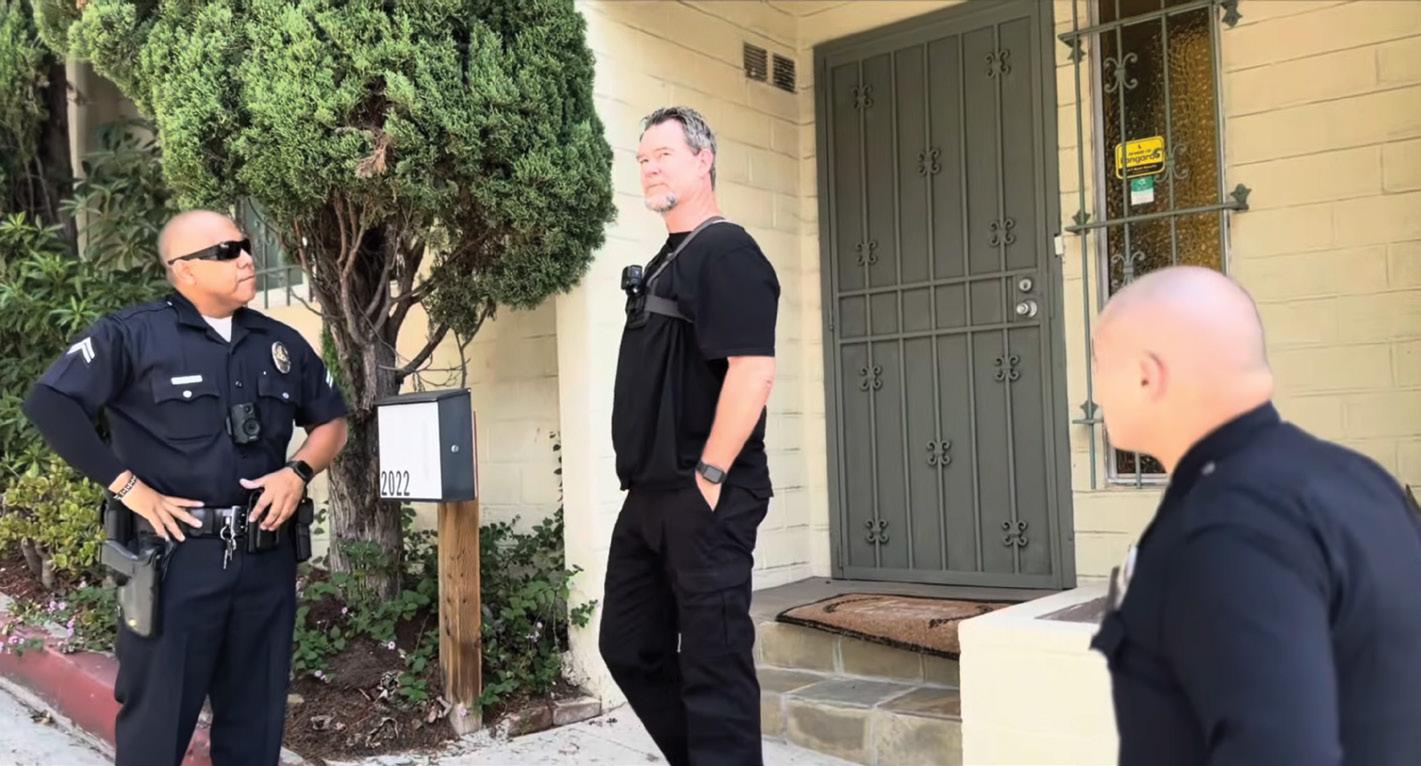

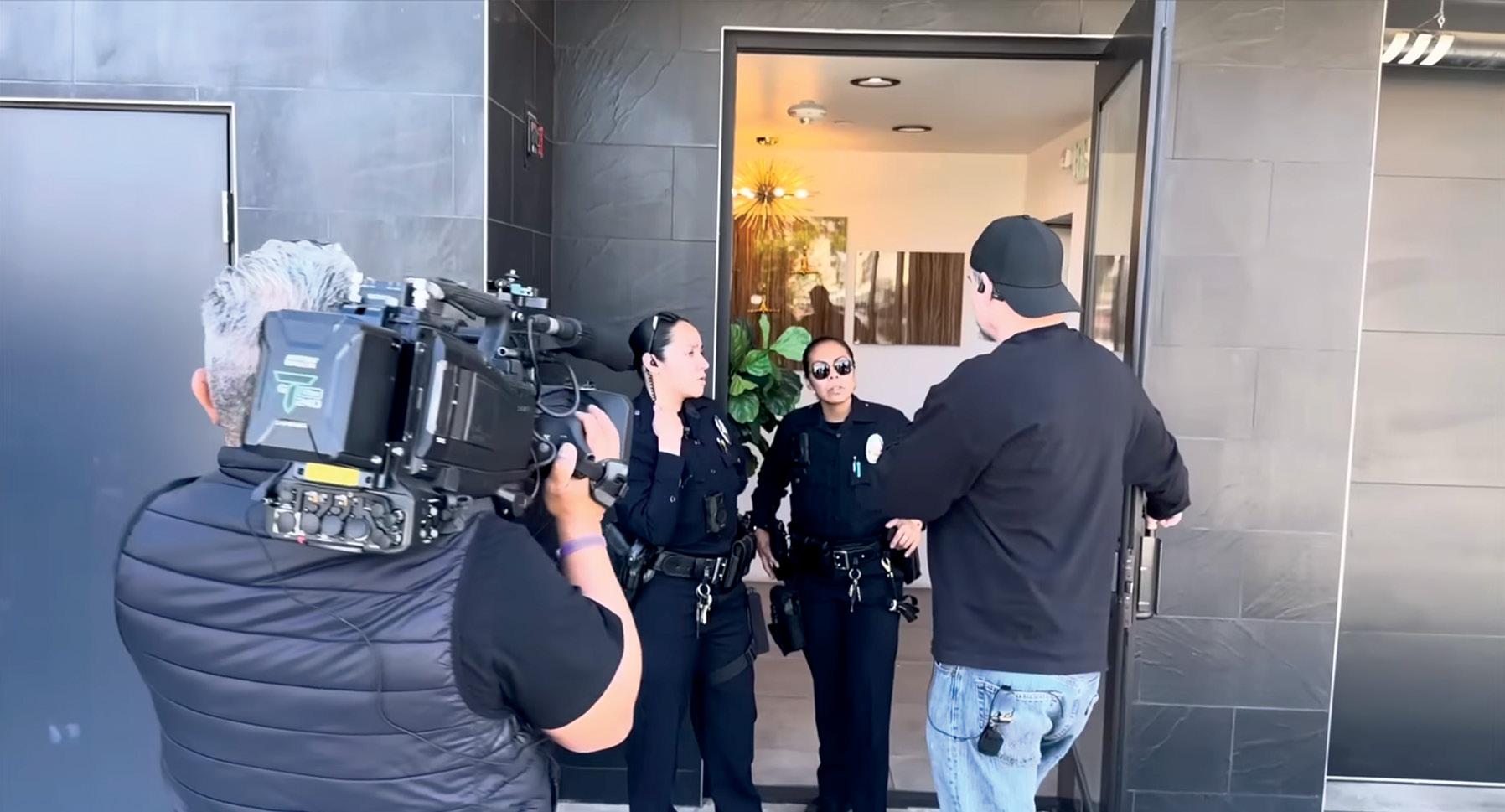
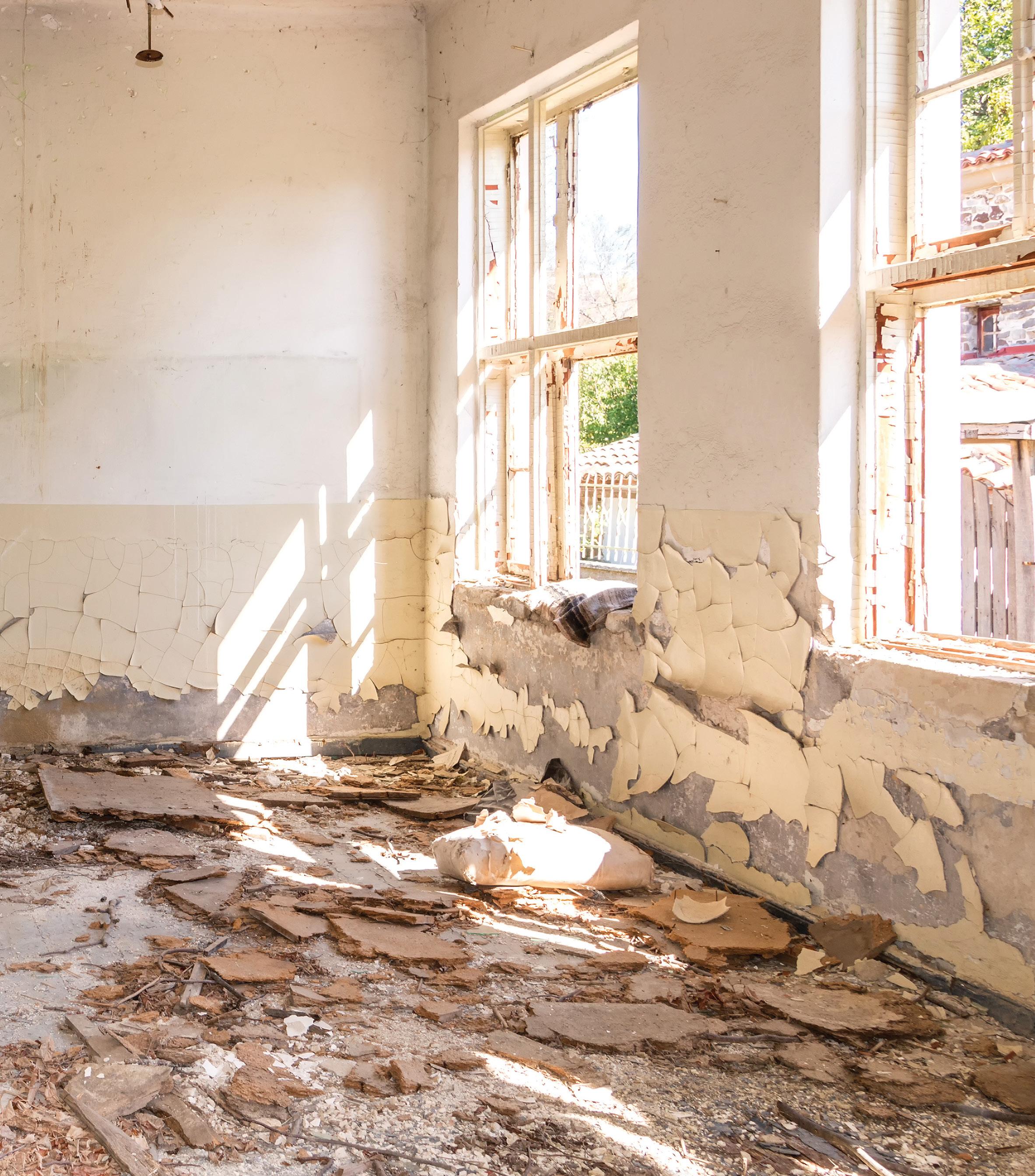


“I GUESS YOU COULD SAY I’M THE NUCLEAR OPTION.”
“IF SOMEBODY COMES AT MY CREW, WE’RE TRAINED TO TAKE THEM DOWN, SUBDUE THEM, AND REMOVE THEM FROM THE PREMISES, THEN ALLOW LAW ENFORCEMENT TO TAKE THEM AWAY.”

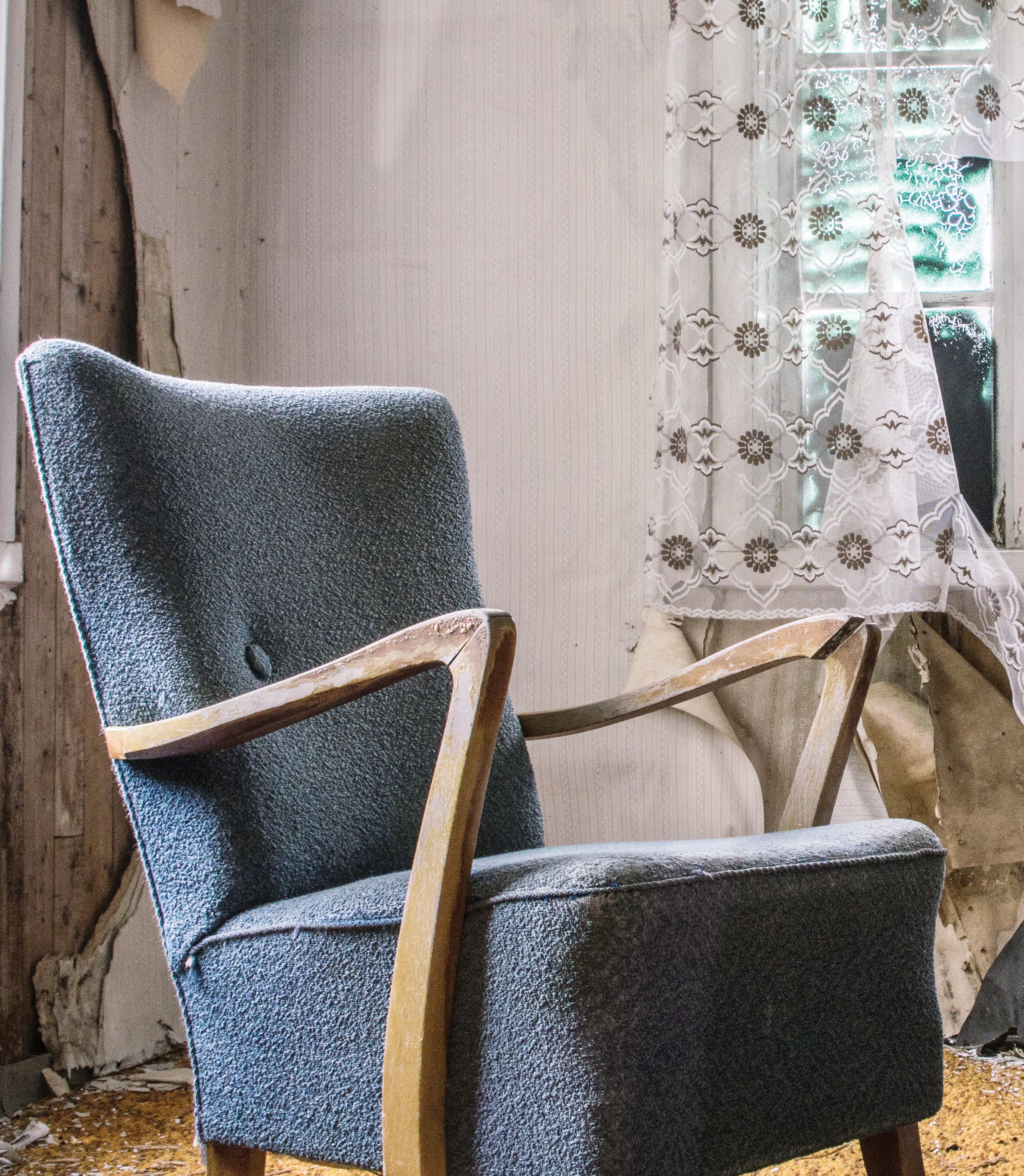
states have criminalized squatting as of now, partly because voices like Shelton’s have made it impossible to ignore. I ask Flash how normal citizens can ultimately win the battle vs. squatters.
“There needs to be an absolute defining line between tenant rights and squatter rights,” he insists. “Squatters cannot be given full tenant rights. There needs to be a real legal separation between people with a legitimate contract, and people who impersonate hardworking people with real legal standing.”
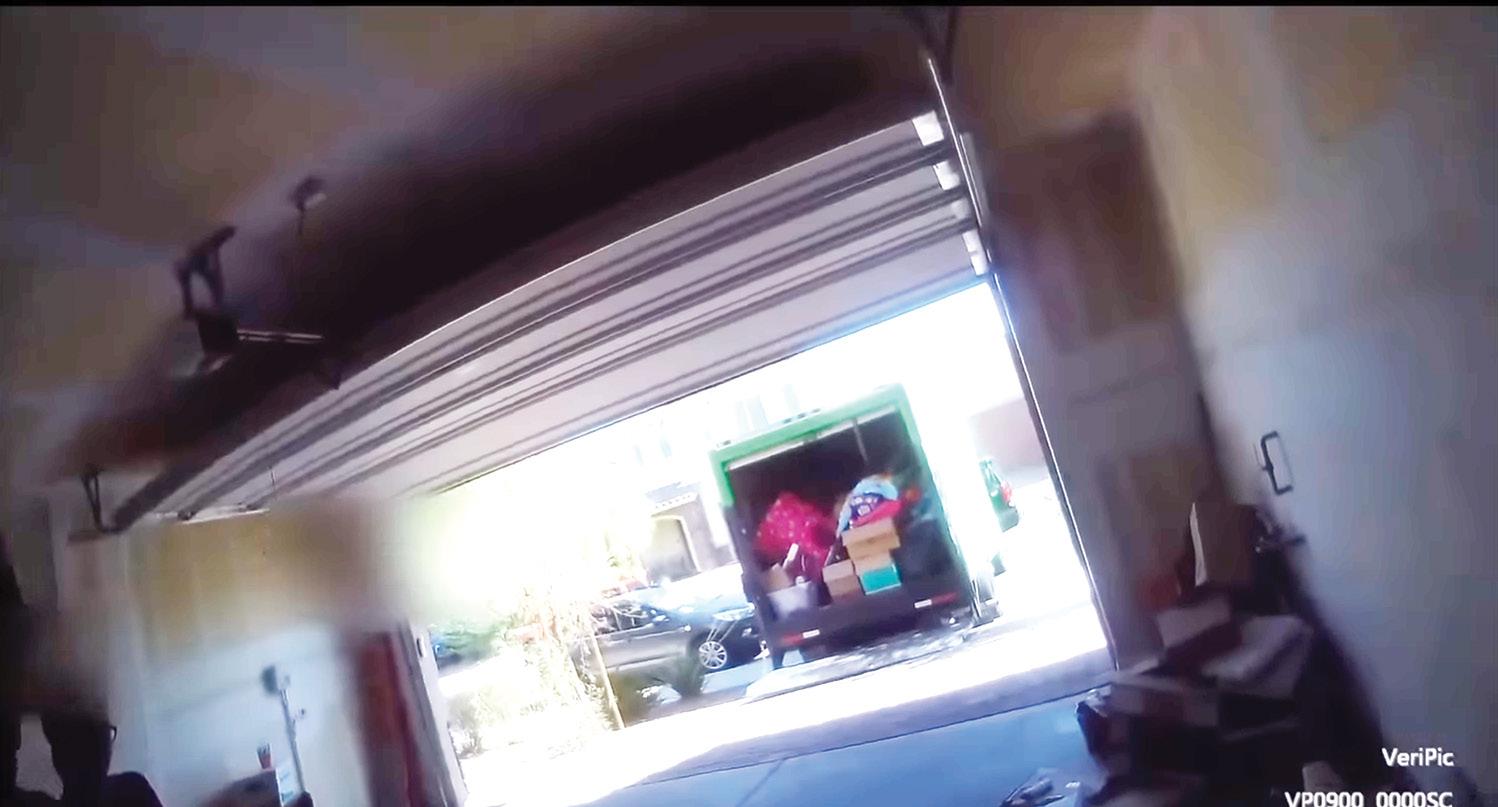

Abig part of the American Dream was always home ownership. Listening to Flash, it occurs to me squatters are also living a version of the American Dream, albeit a Kafkaesque, cosplay, and dystopian one. Just as you, who may have worked your butt off to afford the nice place where you’re reading this, so do squatters often live in nice places, but instead of actual work their full-time job is working the loopholes of our legal system, armed with the presumption of innocence and knowledge that possession is 99% of the law.

“THE ROCK THEN PROCEEDED TO LECTURE ME ABOUT HOW L.A.’S JAILS ARE OVERCROWDED AND COURTS OVERBURDENED THEREFORE WHEN THE COPS ARREST SQUATTERS, THE JUDGES ACTUALLY GET MAD.”
As the Riv went to press, one of the more famous squat cases just got settled in NYC. Mickey Barreto is the man who notoriously “squatted” in the iconic New Yorker Hotel in Midtown Manhattan for nearly five years, paying for just one single night’s stay that entire time. Claiming tenant rights, Barreto lived at the hotel rent-free for five years (I believe mostly with another guest) and later attempted to claim ownership of the entire building by filing a fake deed.
On February 19, 2026, Barreto got sentenced to six months in jail—which means yet another six months of his shelter will be paid for by someone else. Hopefully Barreto reforms. But if he recidivizes, it’s not unlikely there will be a clash with Flash in his future. Wherein Flash will make him even more famous.
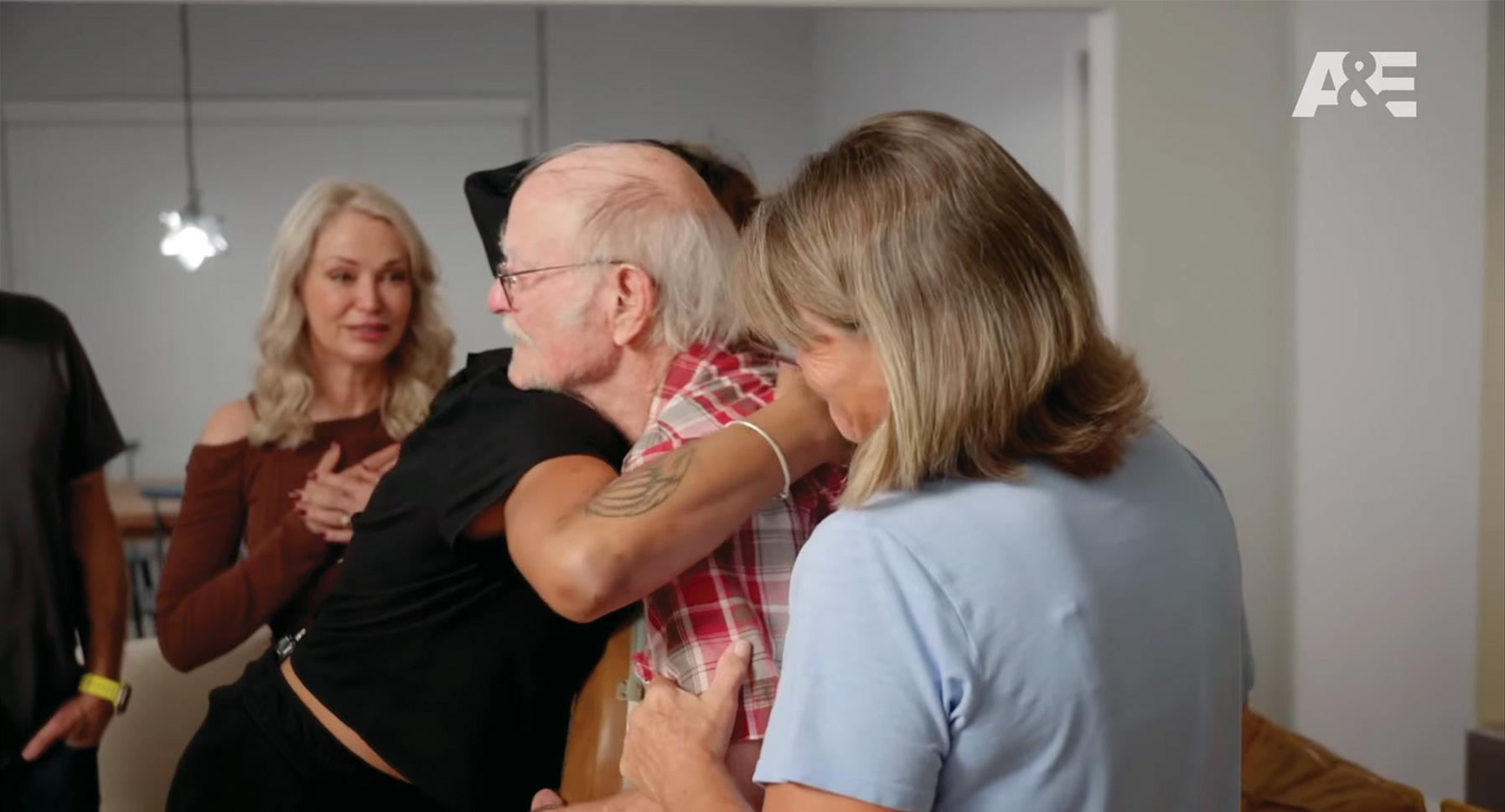

“THERE NEEDS TO BE AN ABSOLUTE DEFINING LINE BETWEEN TENANT RIGHTS AND SQUATTER RIGHTS.”
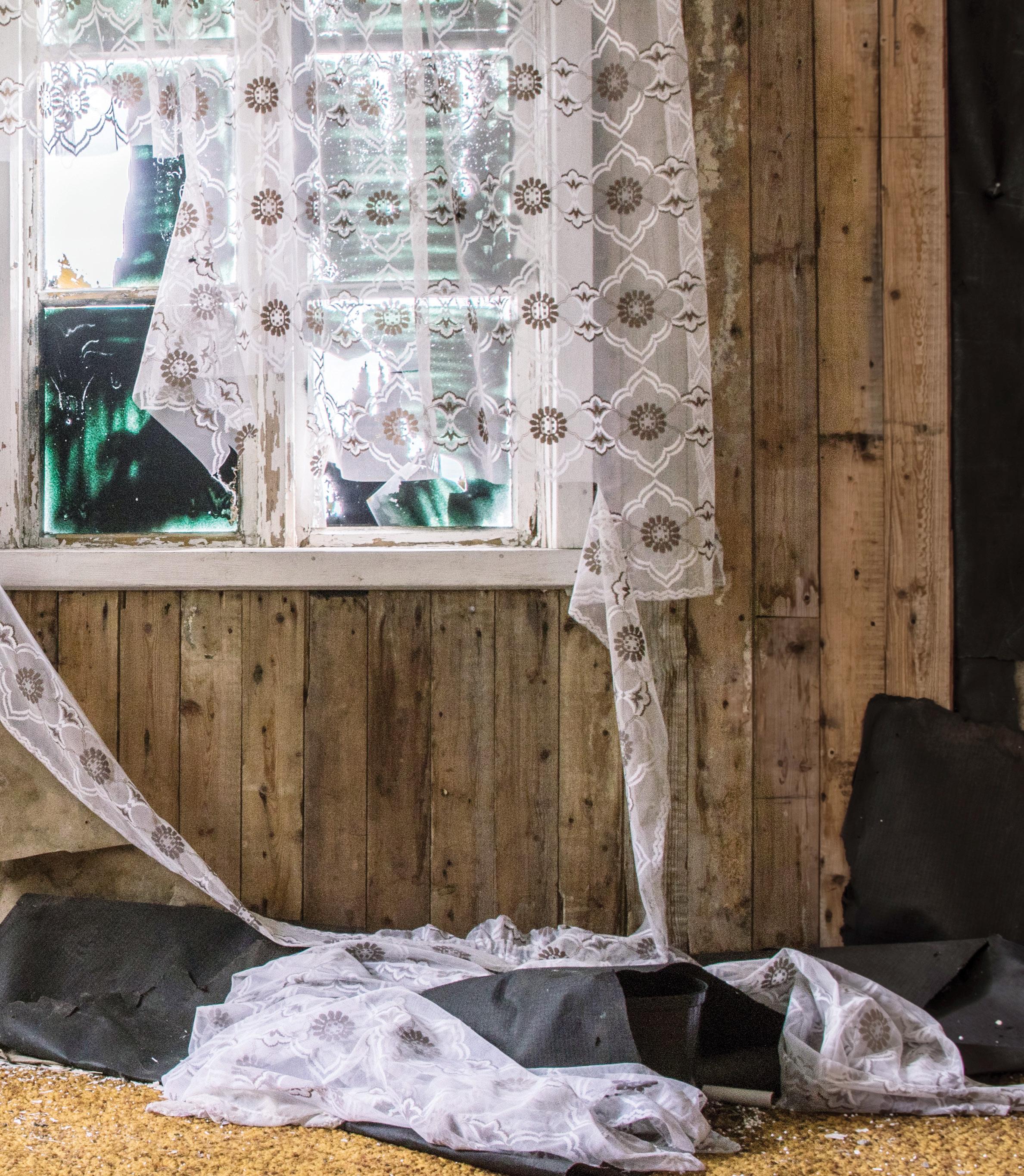
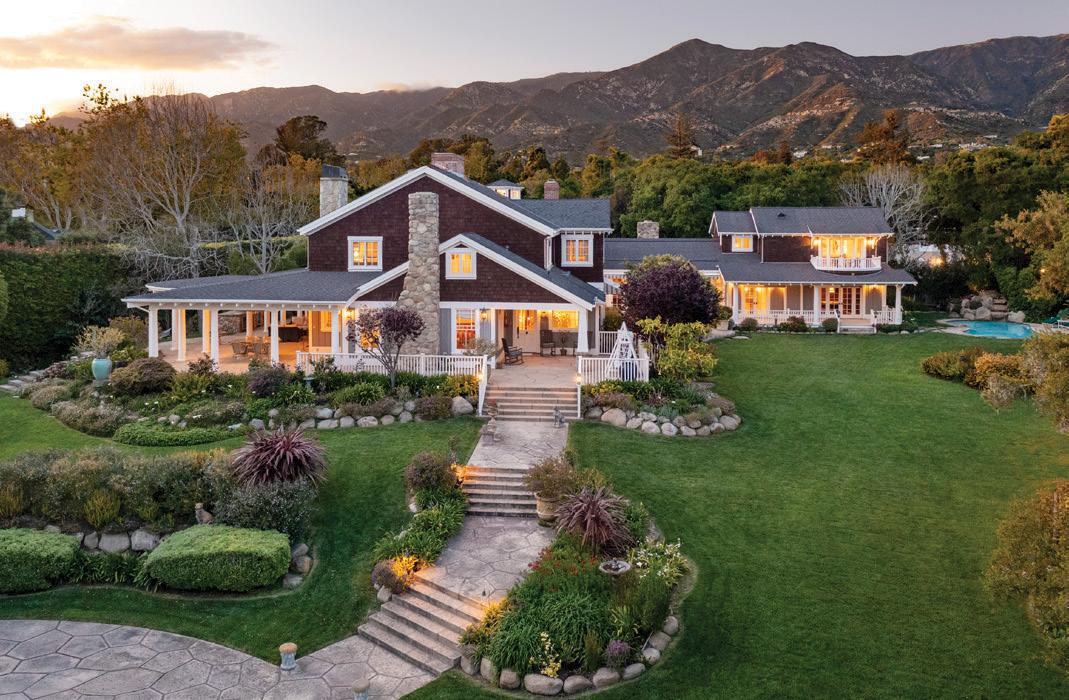
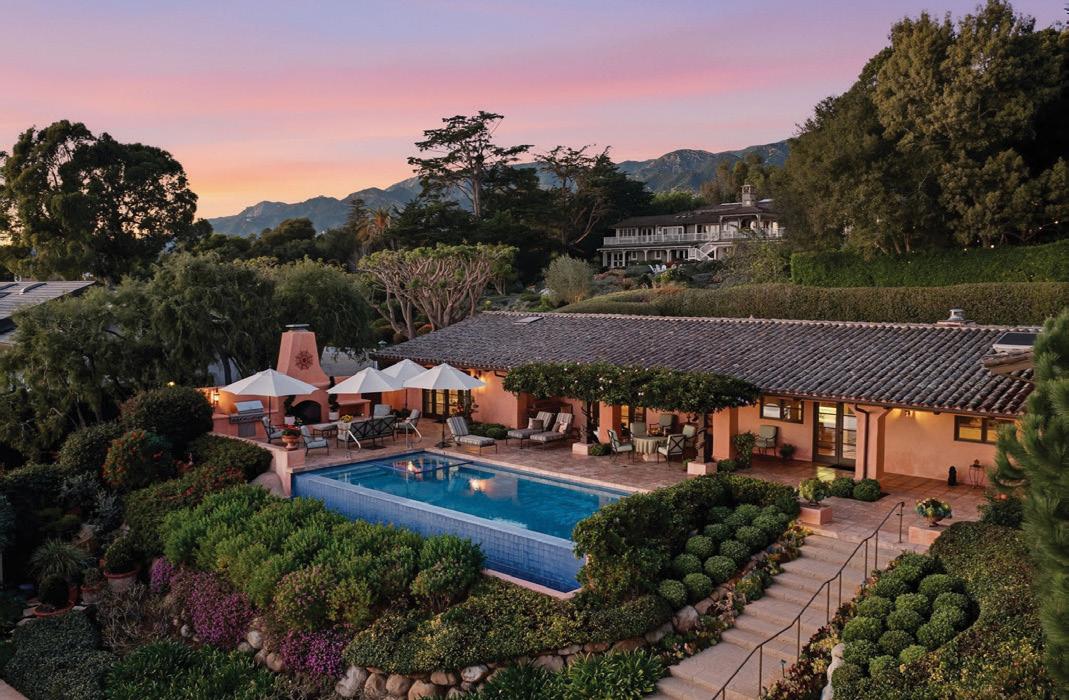
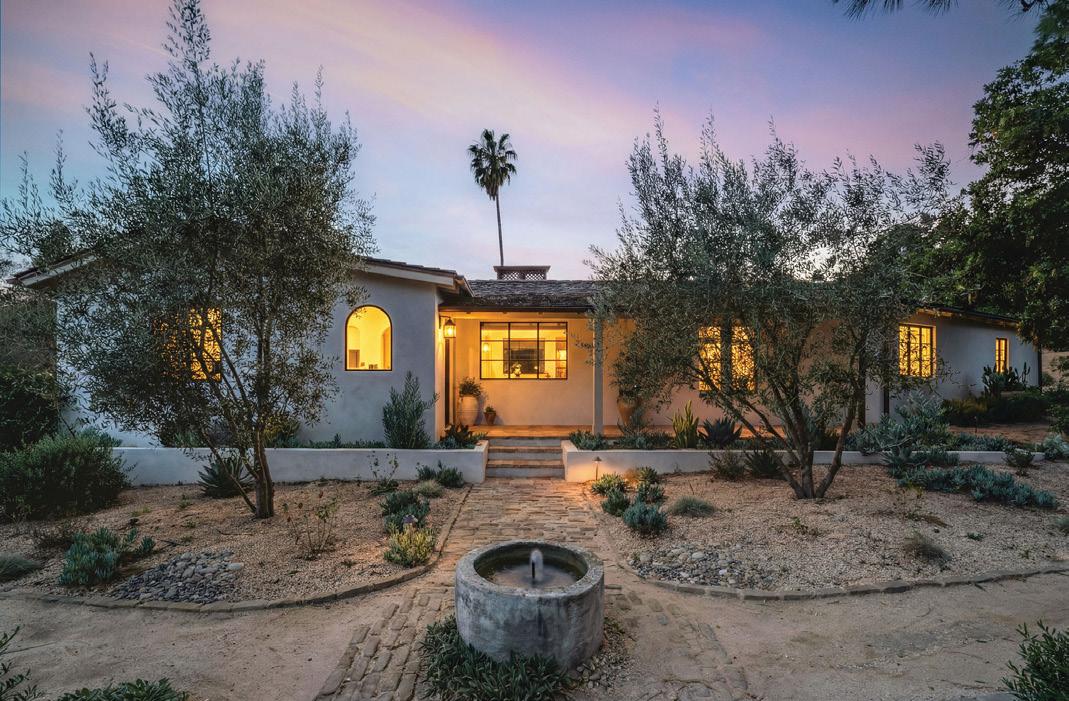
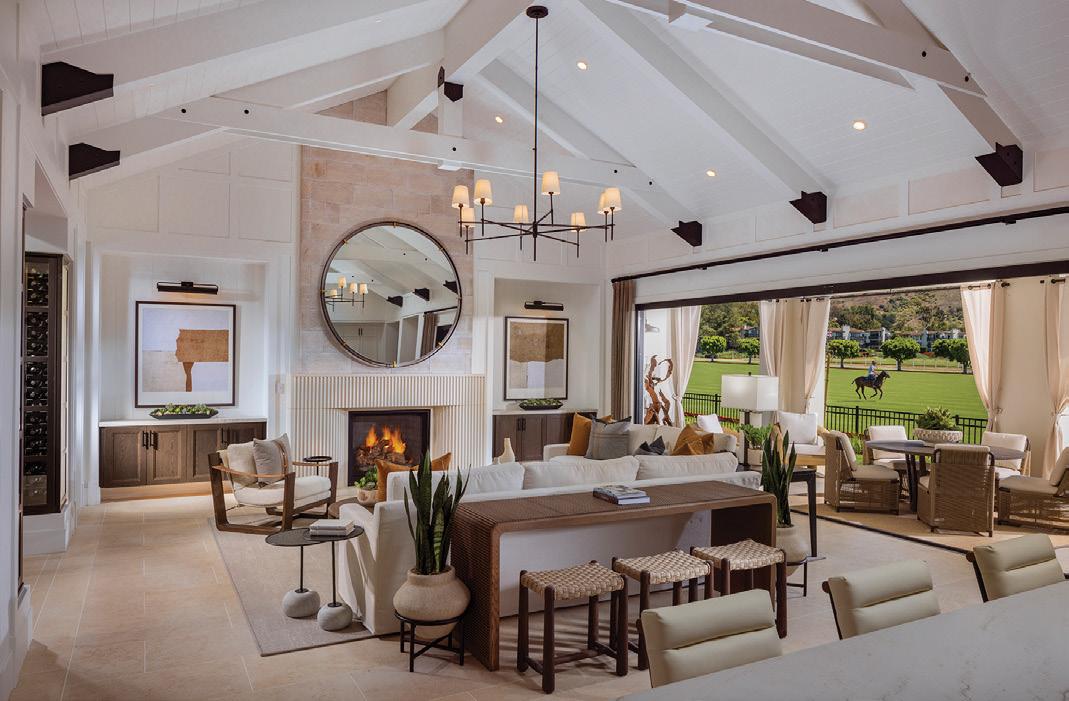









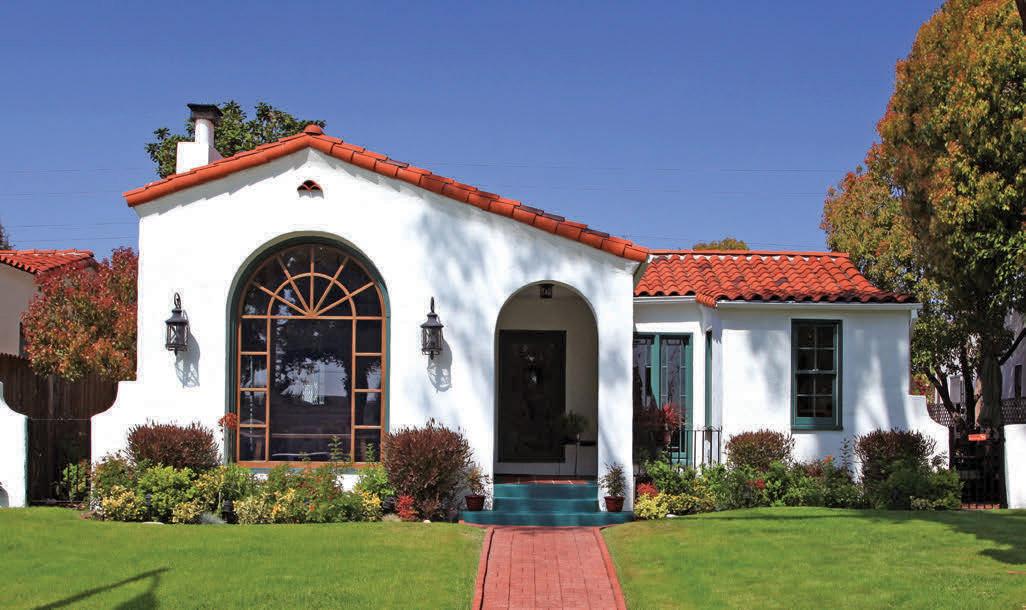
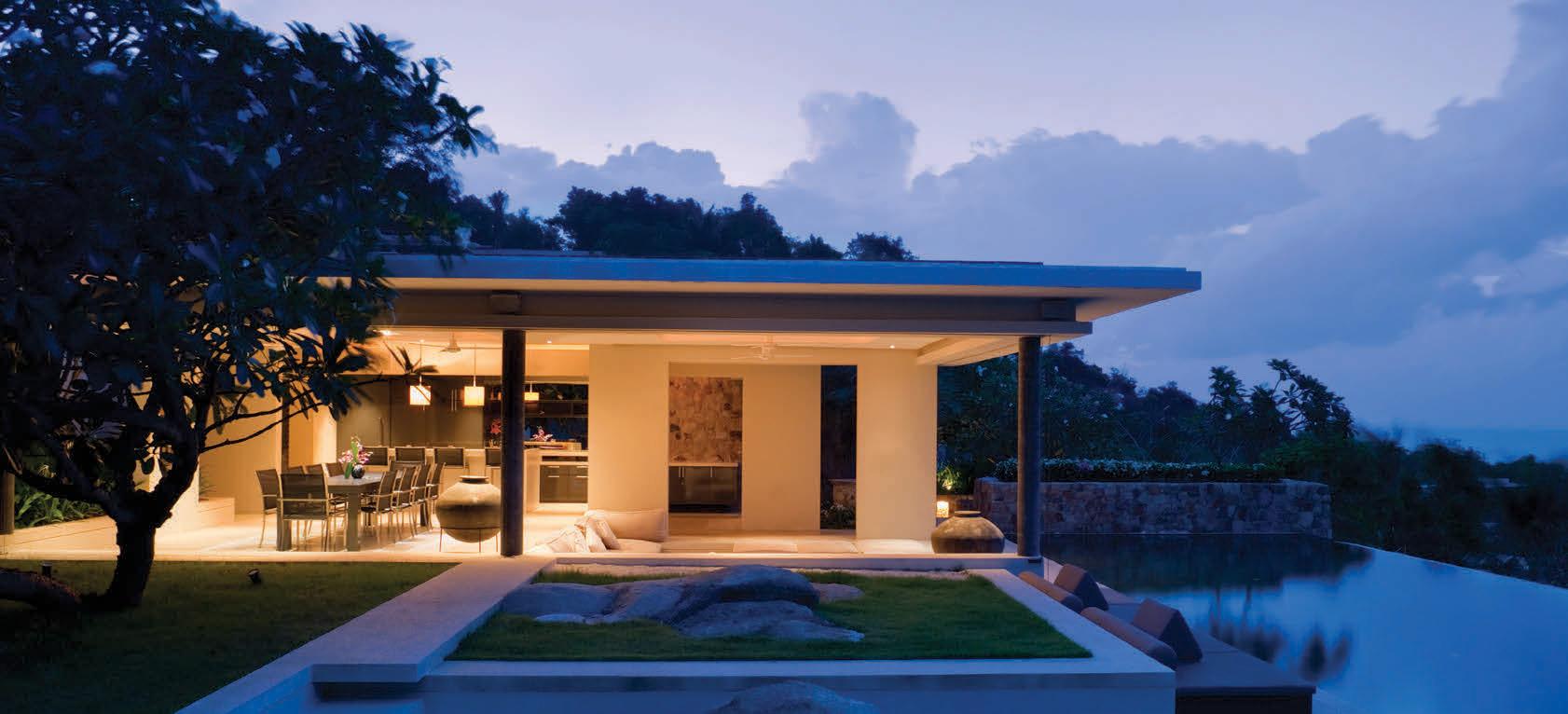
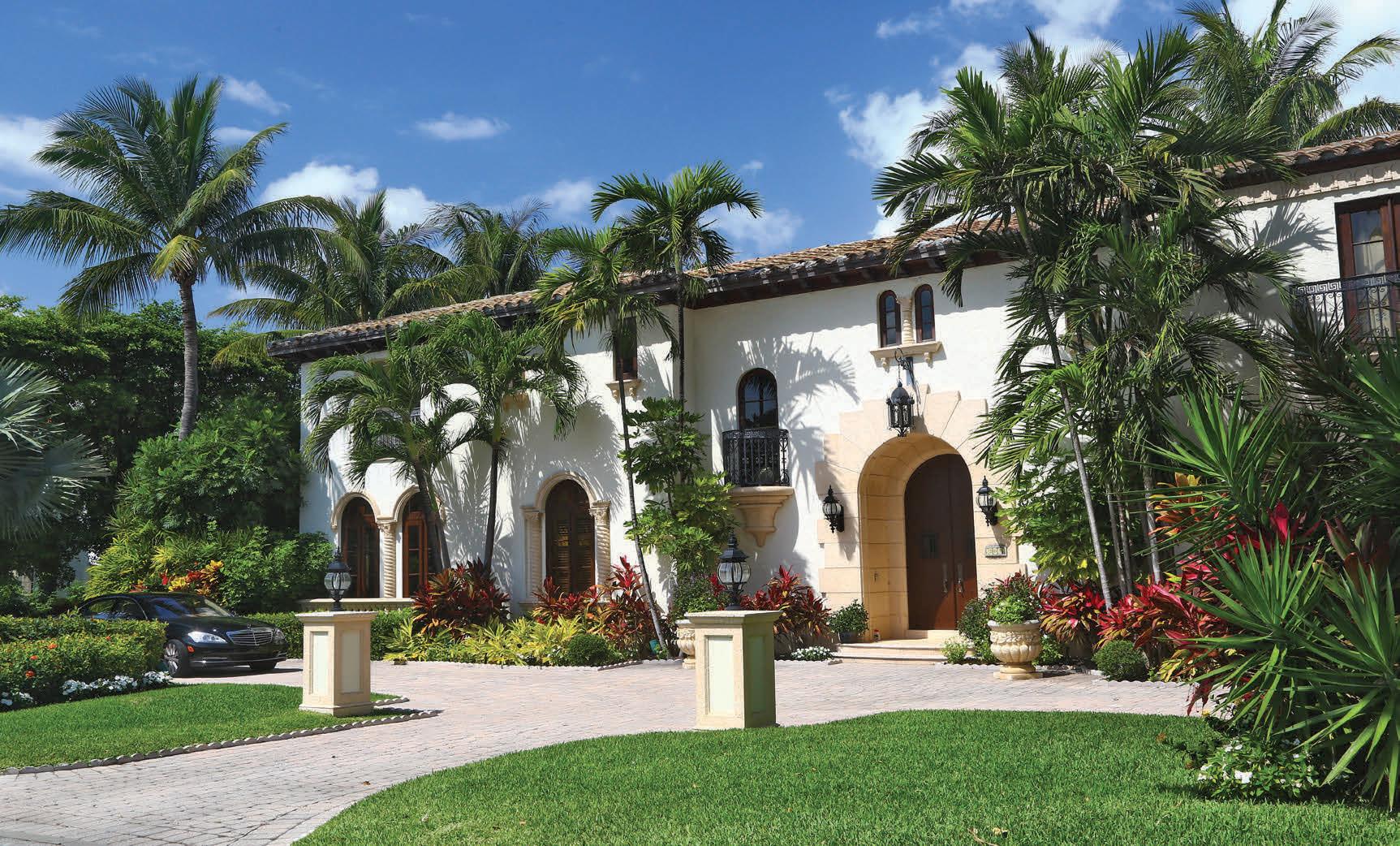
Big. Medium. Small. We bring the same conviction to every project we take. Sure the larger jobs are more complex and time consuming, but for those who have smaller jobs their dreams are just as important. Our experience on a big job may help on the next small job and vice a versa, you never know. So whether you need us to design systems and coordinate multiple subcontractors or to install a simple home entertainment system, put our 35 year experience to work for you.

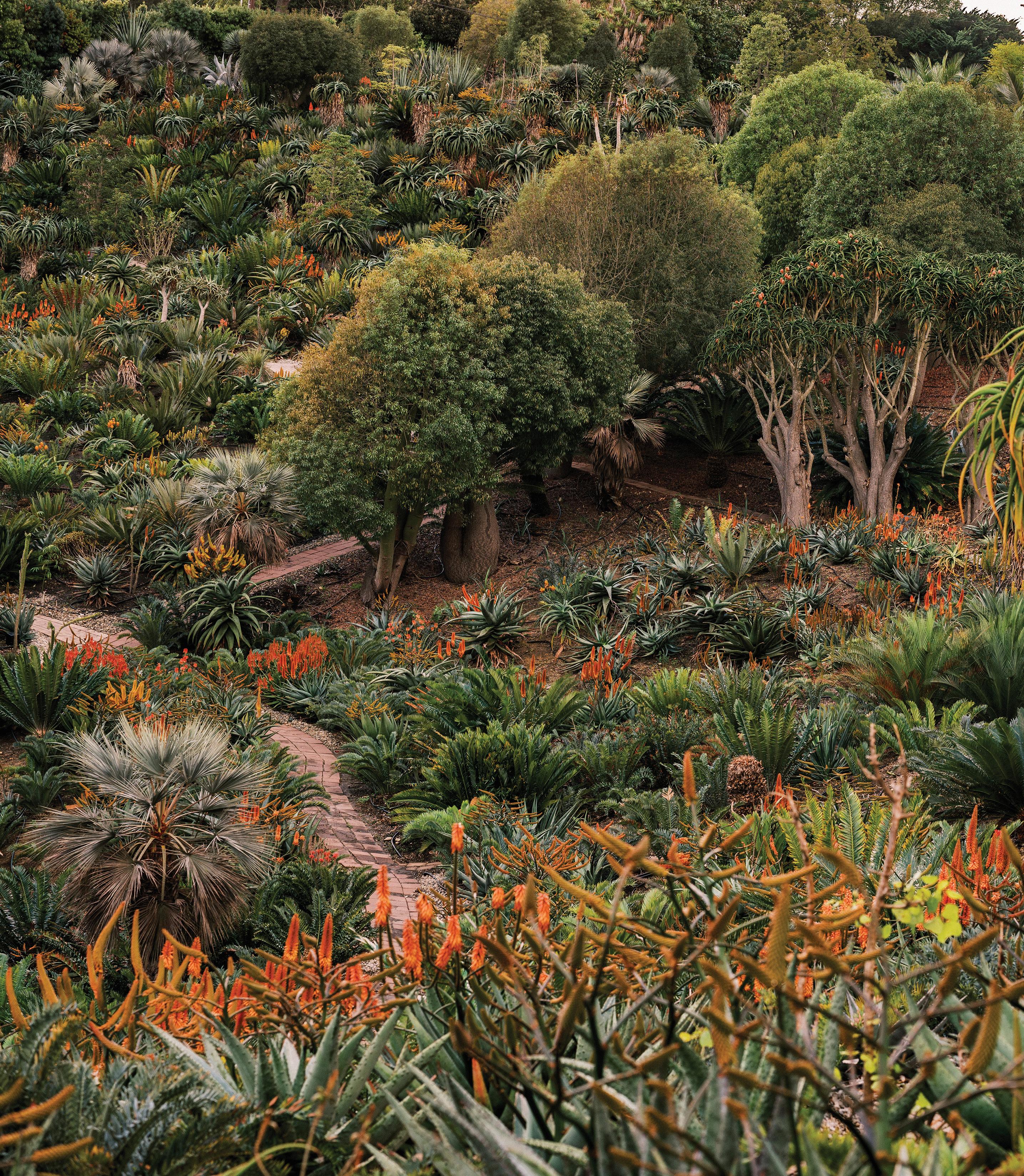
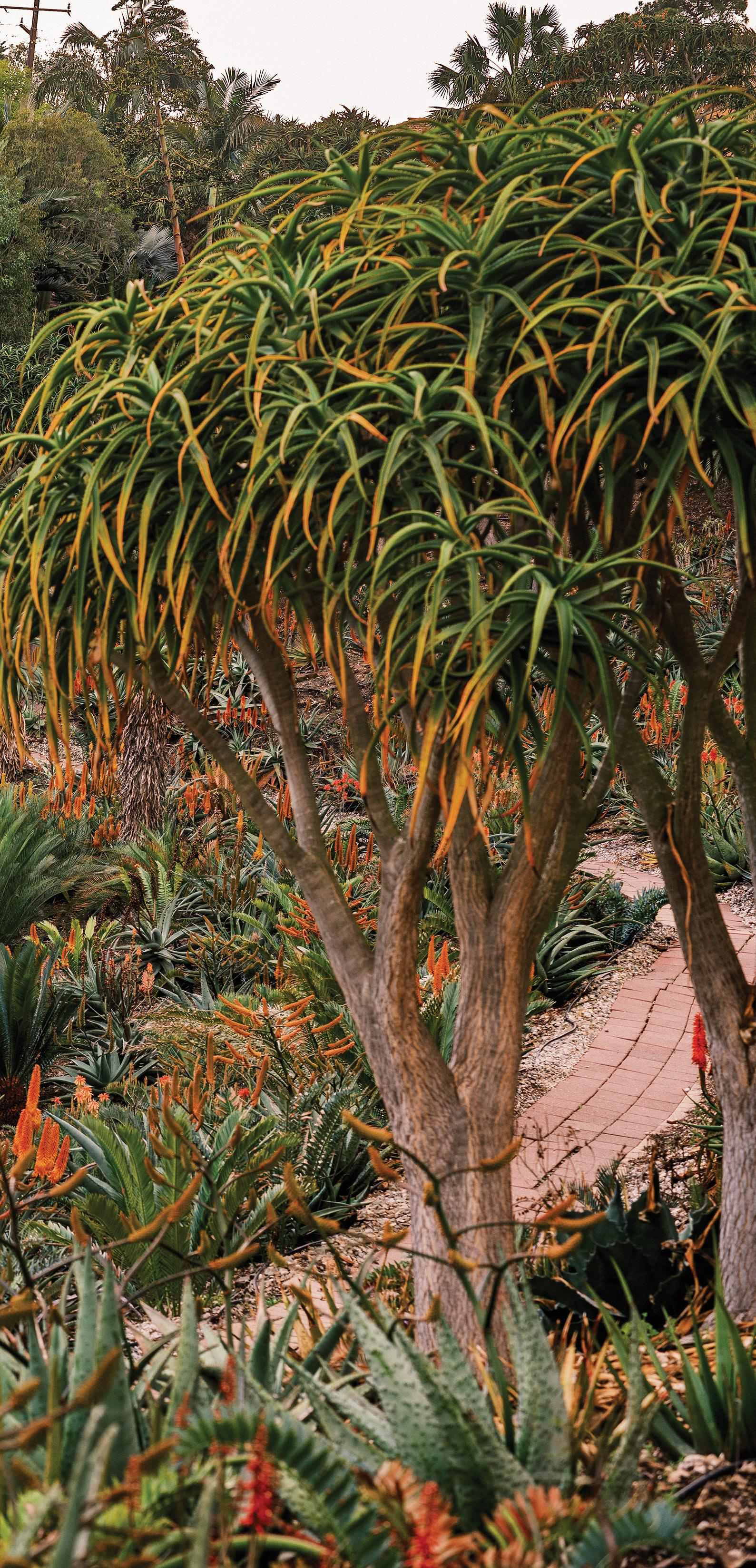
Story and photos
by Kim Reierson
Stepping into Jeff Chemnick’s “Aloes in Wonderland” garden is akin to entering a Jurassic-era landscape, and you’ll feel more and more like you took the pill that made you small as you walk through the towering cycads.
As Jeff walks around pointing to the different species, binomial names—Aloe scobinifolia, Encephalartos arenarius—roll effortlessly off his tongue, spoken with the ease of someone who truly knows his kingdom of flora. In his presence, Latin becomes less a scientific formality and more a language of devotion.
The cultivation, collection, and passion (or Passio) for plants, especially rare and ornamental varieties, are Jeff’s Latin jam.



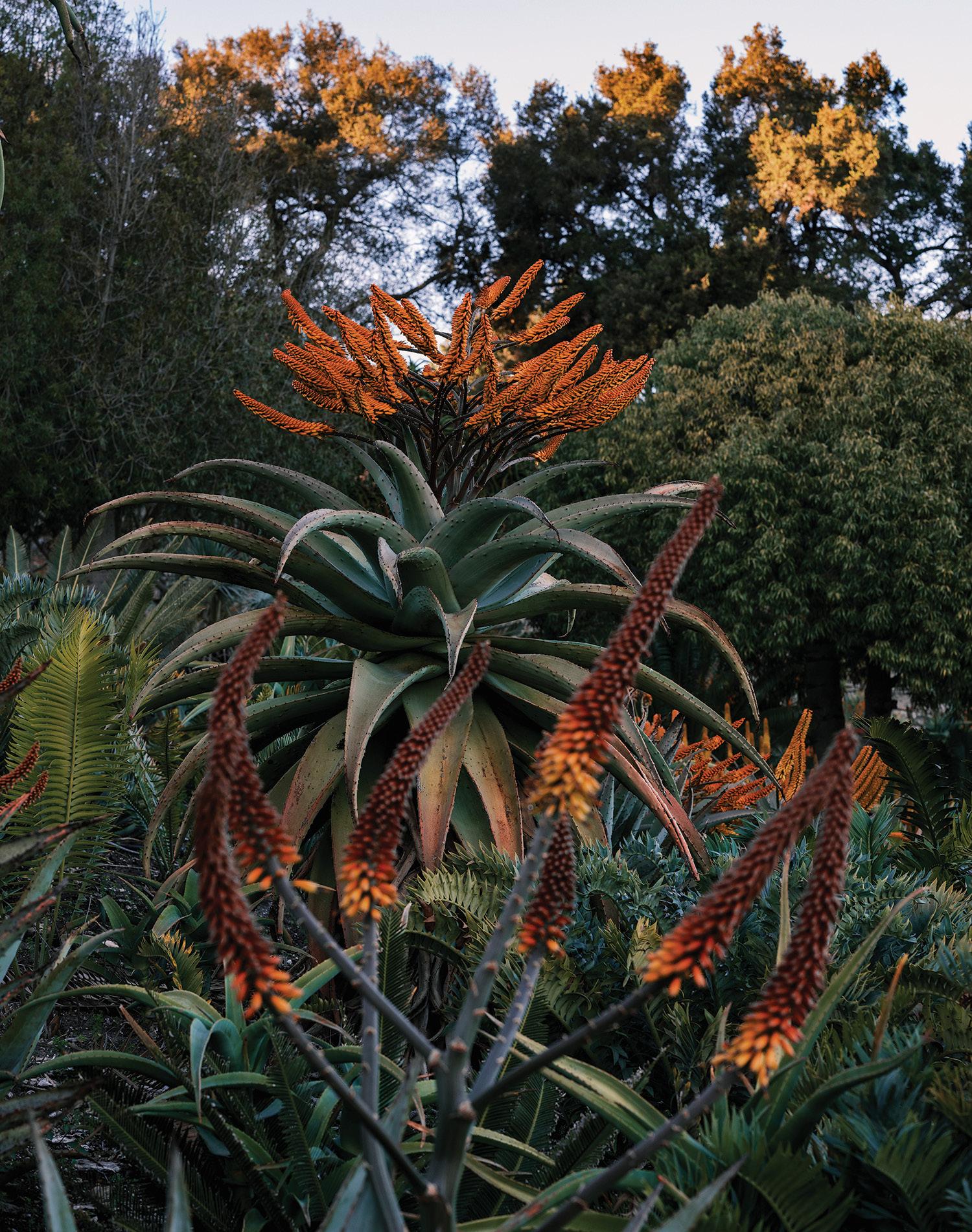

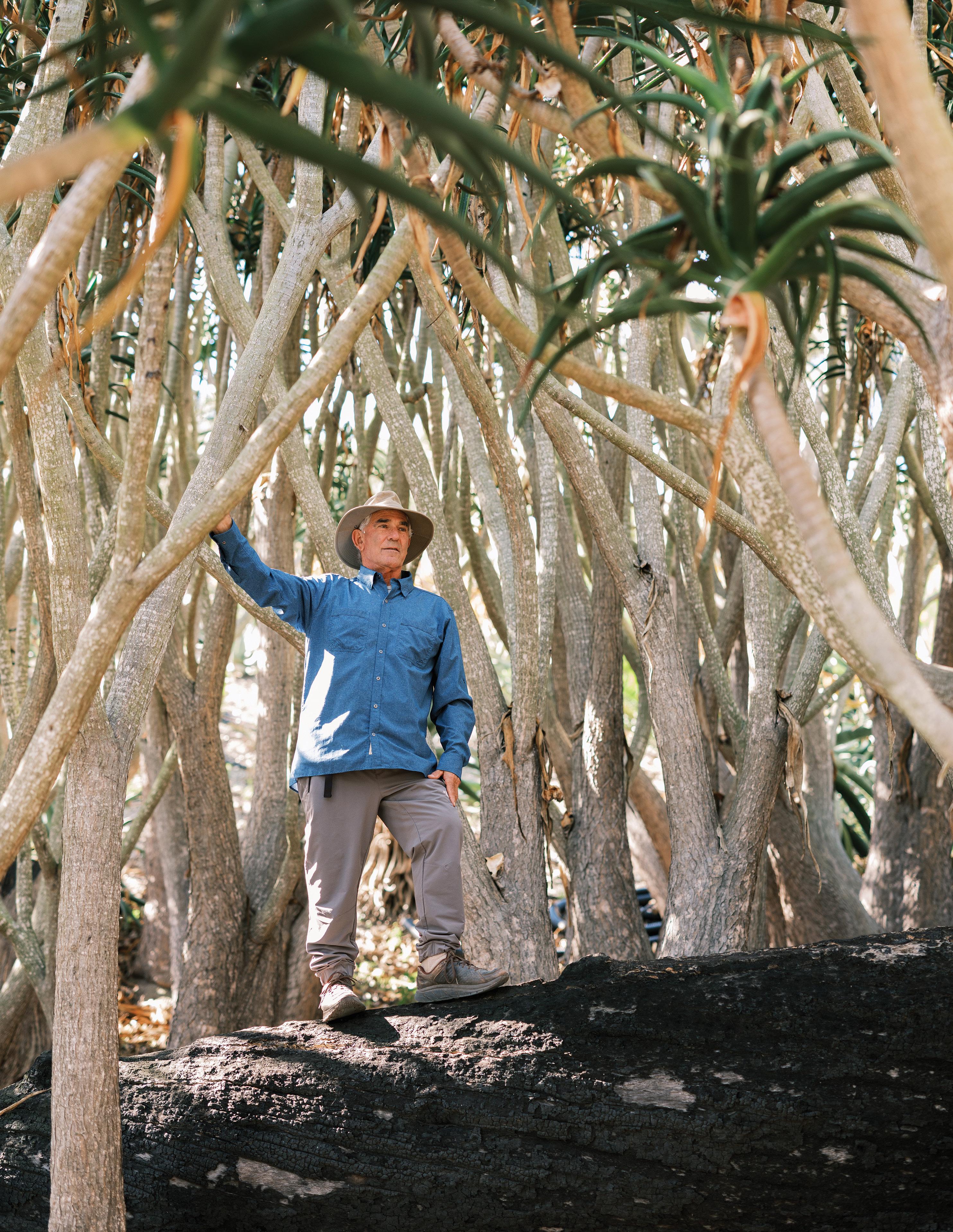
(Aloe barberae surrounds Jeff, standing on the original 2008 burned trunk. )
When Jeff purchased the property in 1988, it held little more than a few fruit trees and sparse vegetation. Through the 1990s, he steadily expanded his collection of aloes and cycads. After the Tea Fire swept through the area in 2008, he acquired neighboring parcels, growing the garden to its current 4.5 acres.
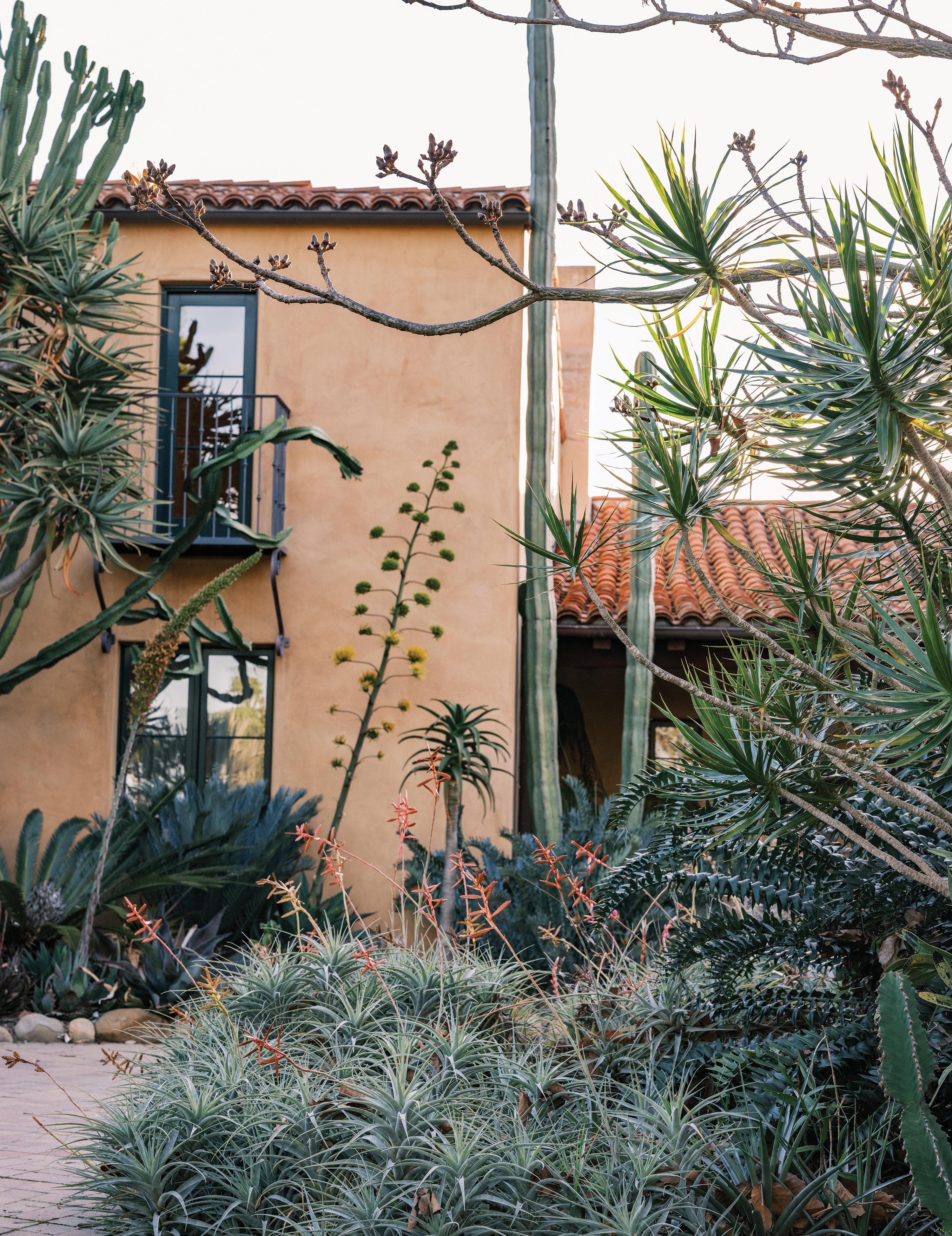
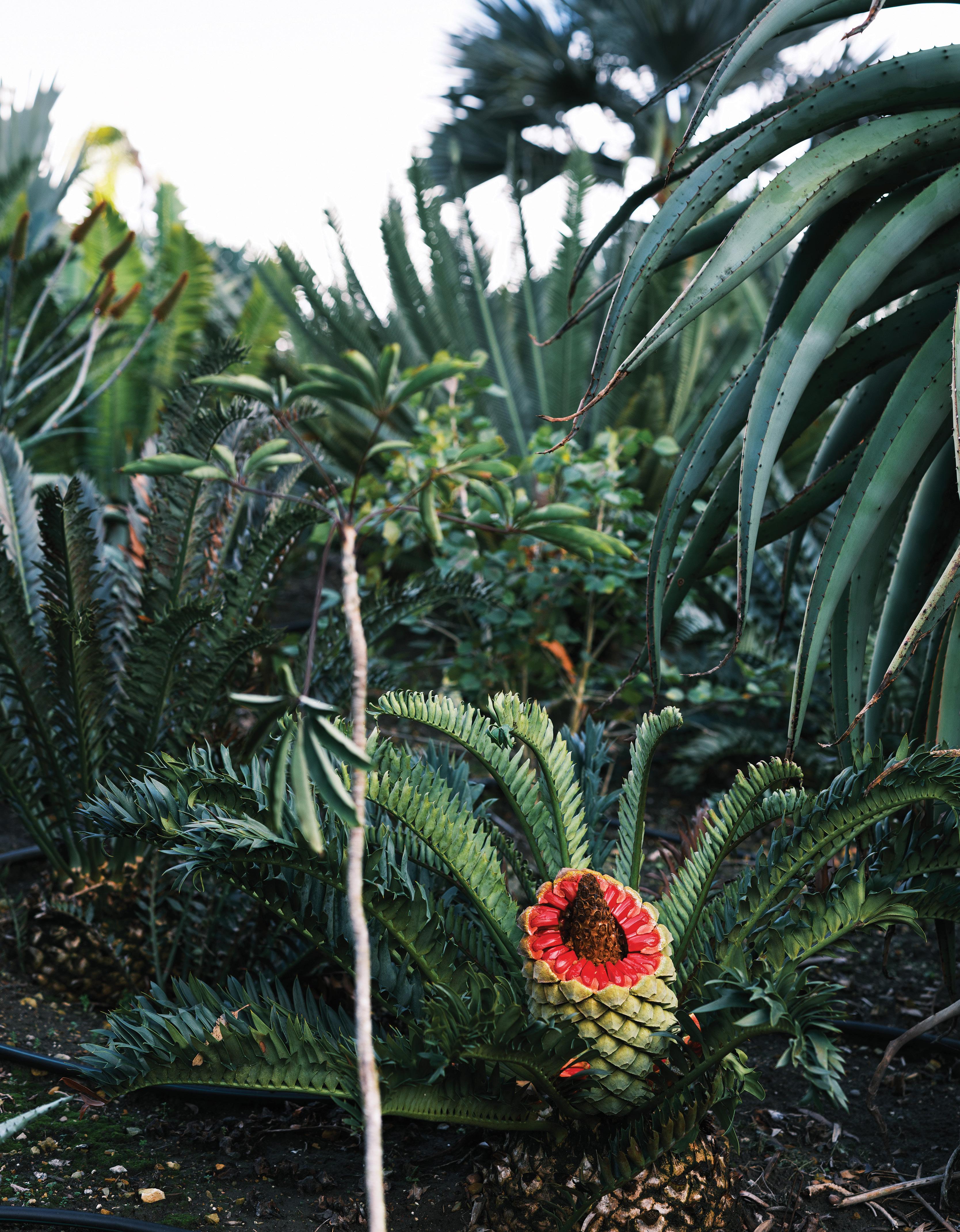
The garden’s most popular attractions are its cycads and aloes. Because their native pollinators are absent, cycads must be hand-pollinated: pollen from male cones is carefully applied to female cones—sometimes using something as simple as a ketchup squeeze bottle. Seeds take six to 12 months to mature and another six to germinate. Reaching coning size can require 15 to 20 years.
In contrast, aloes are largely open-pollinated by what is often described as “the very promiscuous birds and bees,” resulting in natural hybrid variations. Alongside the cycads, they form the garden’s most sought-after collections.
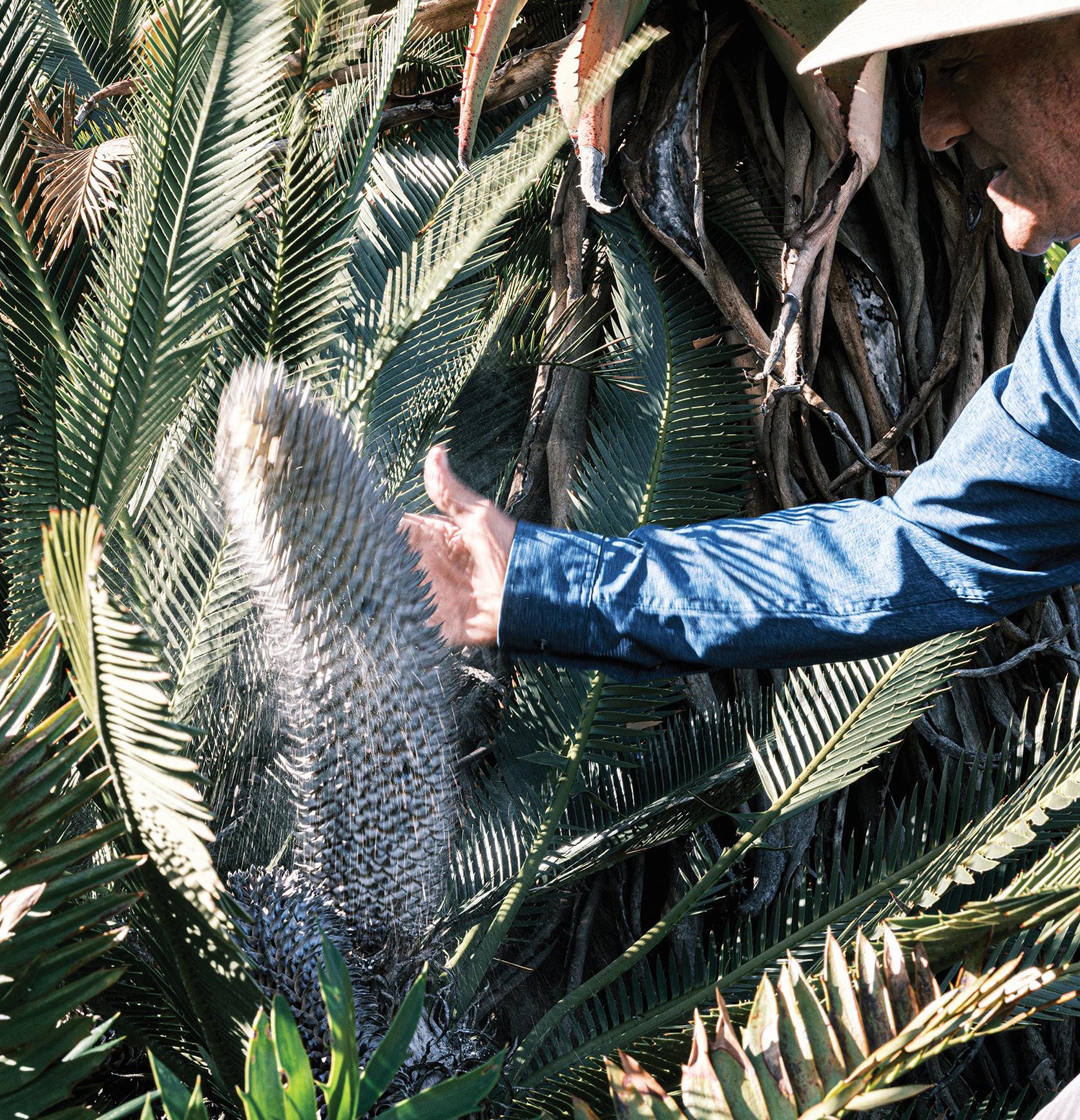
Jeff has tours in addition to selling the plants to the public. Visitors have come from all over the world, from South Africa and Australia to Japan, to see some of Chemnick’s more exotic species in situ and in their native splendor. Aloes in Wonderland is the only botanic garden where full-size plants are available for purchase out of the ground.
Schedule a tour of the garden/nursery: aloesinwonderland.com
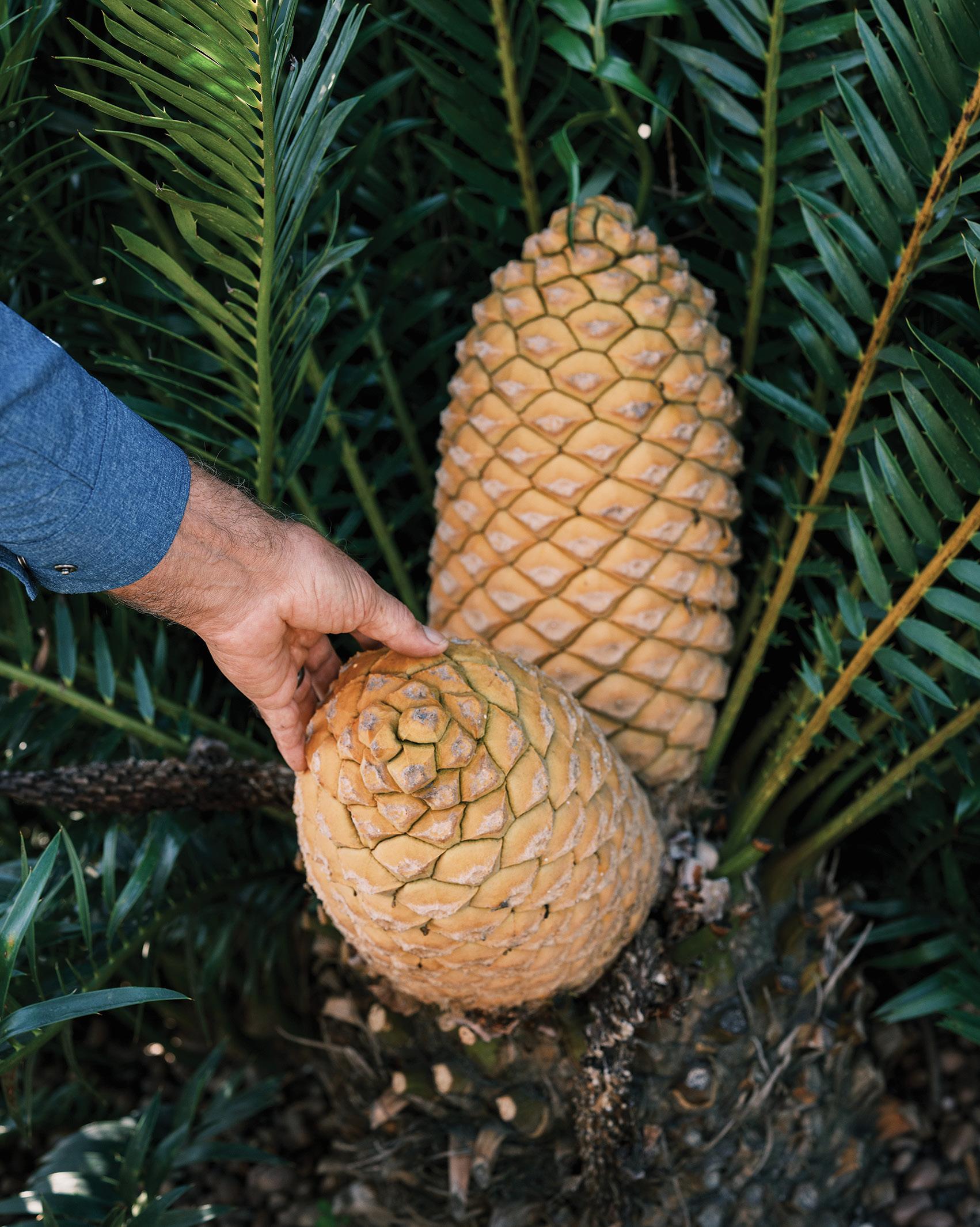
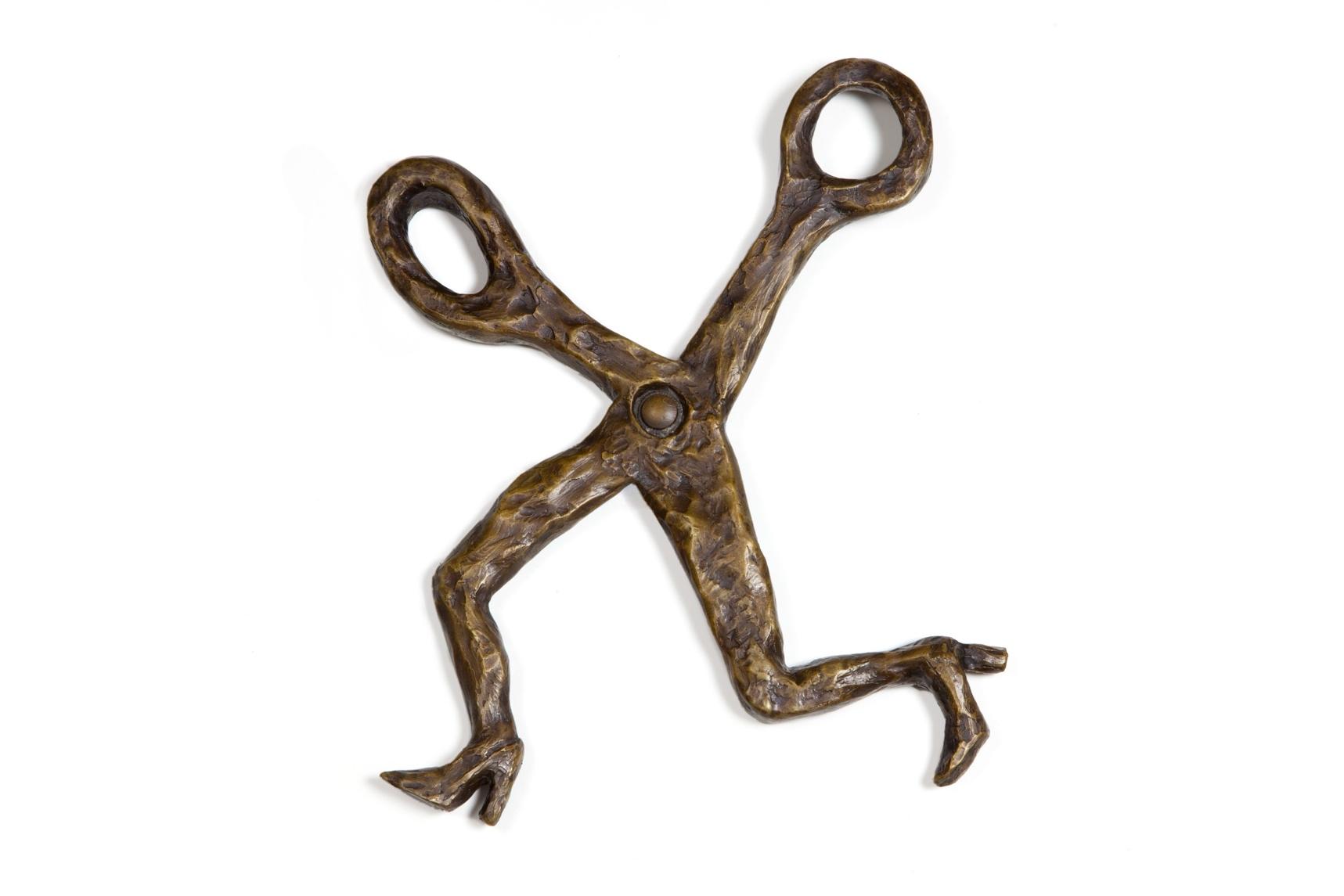


Some things begin with a sketch. Others begin with a slab of wood, a rare stone, a length of steel waiting on a worktable.
In these pages, craft leads. A window frame is welded and balanced until the latch turns with precision. Doors stretch floor to ceiling, drawing light deep into a room. Cushions are cut and filled to hold their shape through years of use. Gold is formed around a gemstone chosen for its character. A century-old tree is milled, dried, and shaped into a table meant to gather another generation. Each story starts in a workshop. Hands measure. Planes glide. Torches flare. Fabric feeds steadily beneath a needle.
What ties them together is care—the kind you see in a seam, a joint, a hinge, a setting refined by fractions.
Tailored work carries the mark of the people who made it. And that mark is the point.
Sometimes a custom piece begins long before the project does. In this case, it began in 1880. When Steve Litchfield and his wife purchased the former recreation hall of the historic Glen Oaks estate in Montecito, the property came with a towering bunyabunya tree-an Australian pine planted by the estate’s original owner nearly 150 years ago.
The tree was massive, beautiful, and increasingly precarious. It dropped 20-pound spiked cones, and its size posed a risk to the home.
Rather than chip it and haul it away, Litchfield hired an Alaskan mill operator to slab the trunk into thick, threeto five-inch planks. The wood is renowned for being remarkably stable, easy to mill, and rich with character. These slabs were stacked, stickered, and left to air-dry naturally for years.
The bunya-bunya is no ordinary pine. An ancient species native to Australia, it has been used for centuries for instruments and structures because of its stability and workability.
Once milled and sanded, its surface reveals a distinctive marbling and a sinewy edge grain that feels unexpectedly smooth to the touch. Clients often find themselves running a hand along the edge of a finished table.
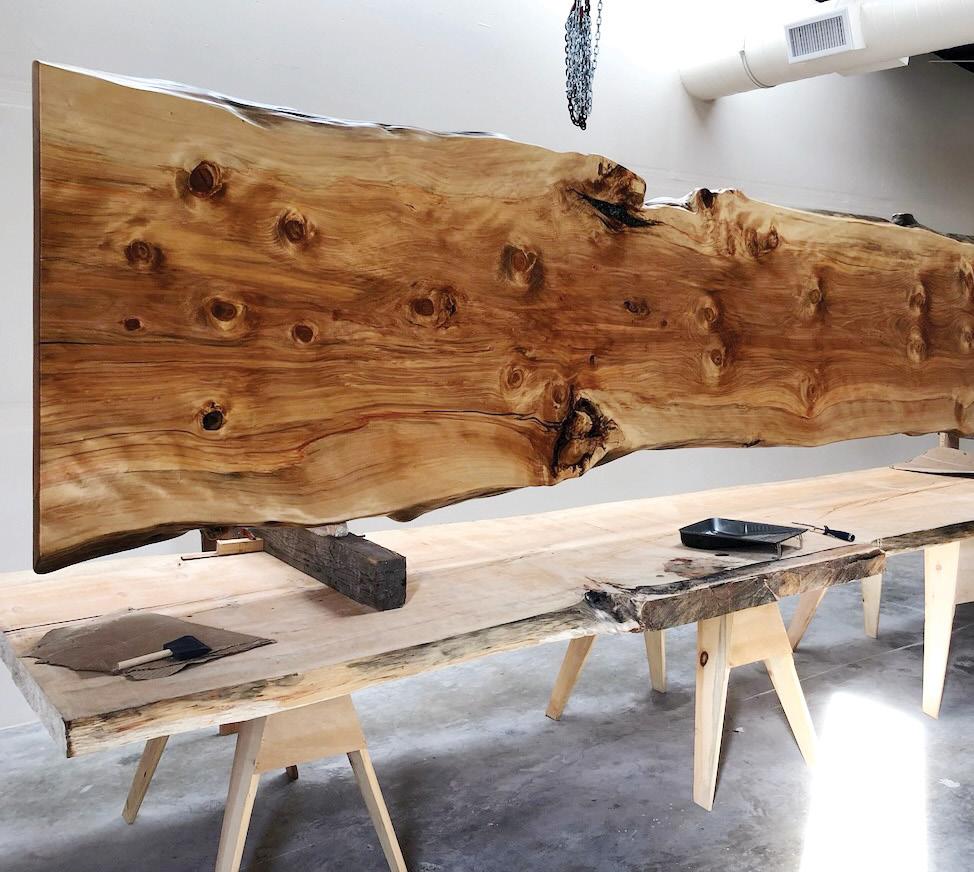
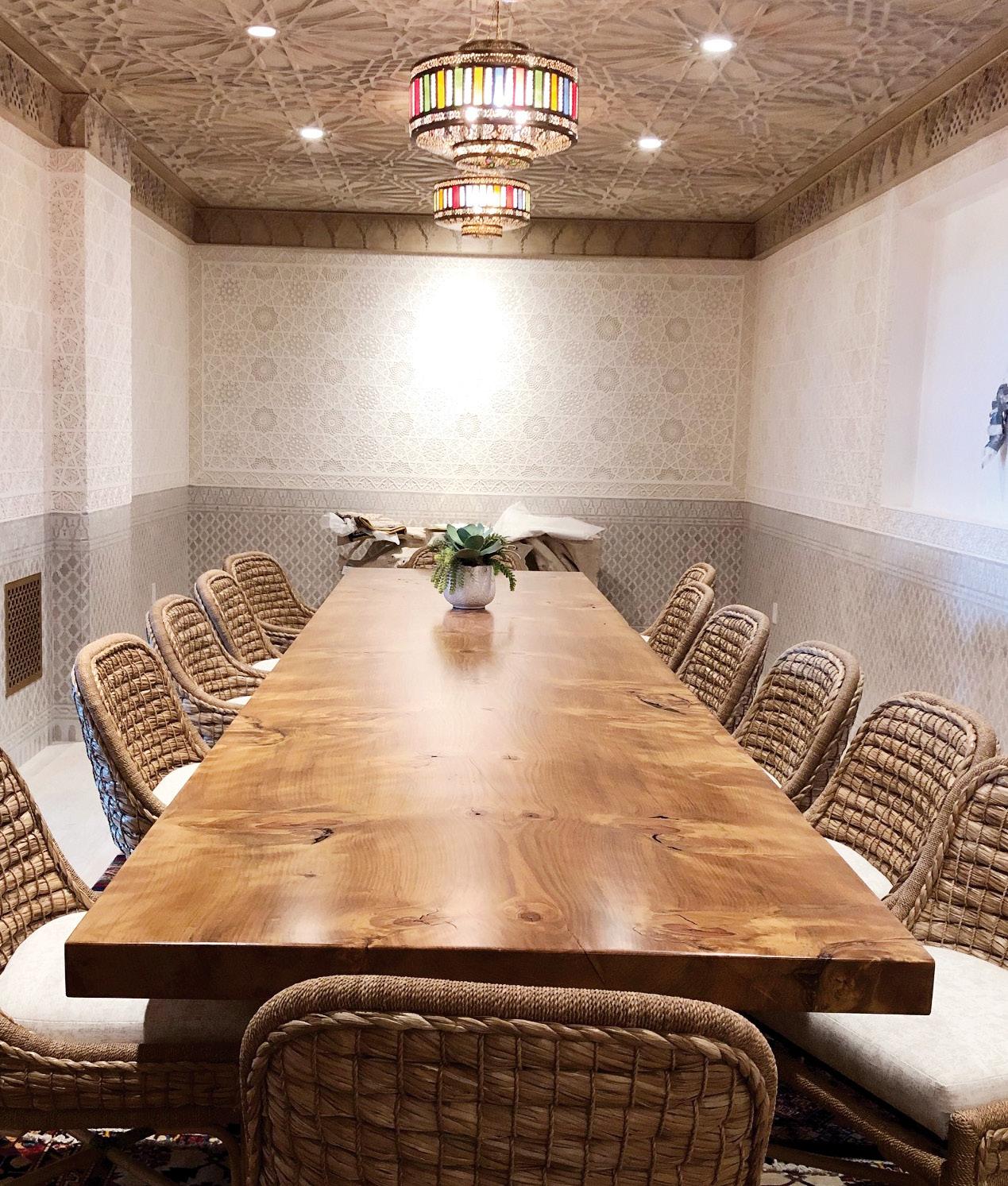
What began as a personal preservation effort has quietly become something Litchfield Builders can offer clients during a custom home or restoration project. The slabs have been crafted into dining tables, benches, bars, fireplace mantels, and countertops, including pieces incorporated back into Glen Oaks’ restored carriage house.
Those wood pieces arise from the same ethos Litchfield brings to every build: hands-on craftsmanship, thoughtful detail, and quality that shows up in both small refinements and grand gestures. Based in Santa Barbara County, the firm builds custom homes, historic renovations, and high-end remodels with a reputation for clear communication and a meticulous approach that treats every project—big or small—as its own craft. In a town where houses carry stories, sometimes the right thing to build is the story itself—sanded smooth, clear-coated, and ready for another century of use.
At Silverhorn, custom design begins long before a setting is drawn. It begins with the stone.
For nearly five decades, Carole Ridding and her husband, Michael, have built their Montecito design studio around a simple but demanding principle: start with exceptional materials.
That means sourcing rare and unusual gemstones directly, with an eye towards their unique character and quality. Each stone comes from their years of travel visiting mines, meeting cutters, and selecting rare gemstones by hand. Carole and Michael continually reinvest in an inventory that surprises even seasoned collectors.
Many of the stones in Silverhorn’s vault are not pieces you’ll encounter in a conventional display case, and from there the process becomes deeply personal.
Clients meet directly with the designer, reviewing sketches and discussing proportion, texture, and balance. Some pieces are driven entirely by the gemstone, the goldwork designed to frame and elevate it. Others allow the metal itself to take the lead, with the stone acting as accent or light.
Each decision is made by hand, not pulled from a mold.
Silverhorn is one of only a handful of European-style design studios in the country where settings are fabricated entirely on site.
In the workshop behind the showroom, goldsmiths work at minute scales, shaping and refining each element until the proportions feel right. There are no ready-made mountings waiting for a diamond to drop in. Every piece is constructed specifically for the person who will wear it.
Ridding notes that trends come and go, but her focus remains steady: create something beautiful that will still feel beautiful decades from now.
The result isn’t simply a ring or pendant. It’s a piece designed from the ground up—chosen stone, forged metal, and a setting that exists for one person only.
There’s a moment, standing in front of one of Gordon’s steel doors, when you realize you’re not really looking at a door at all. You’re looking at light.
At Gordon Doors & Windows, glass is the star and steel is the quiet enabler. The boutique fabricator, founded by Santa Barbara native Patrick Gordon, creates fully custom, handmade steel doors and windows designed to maximize glass and minimize distraction. The effect is immediate: walls dissolve, sightlines stretch, and architecture breathes.
After 22 years in the industry, beginning in installations and eventually moving into executive leadership, Gordon, with his partner as lead fabricator, launched his own company around a proprietary steel profile, tested for strength and thermal performance, that allows for exceptionally narrow sightlines.
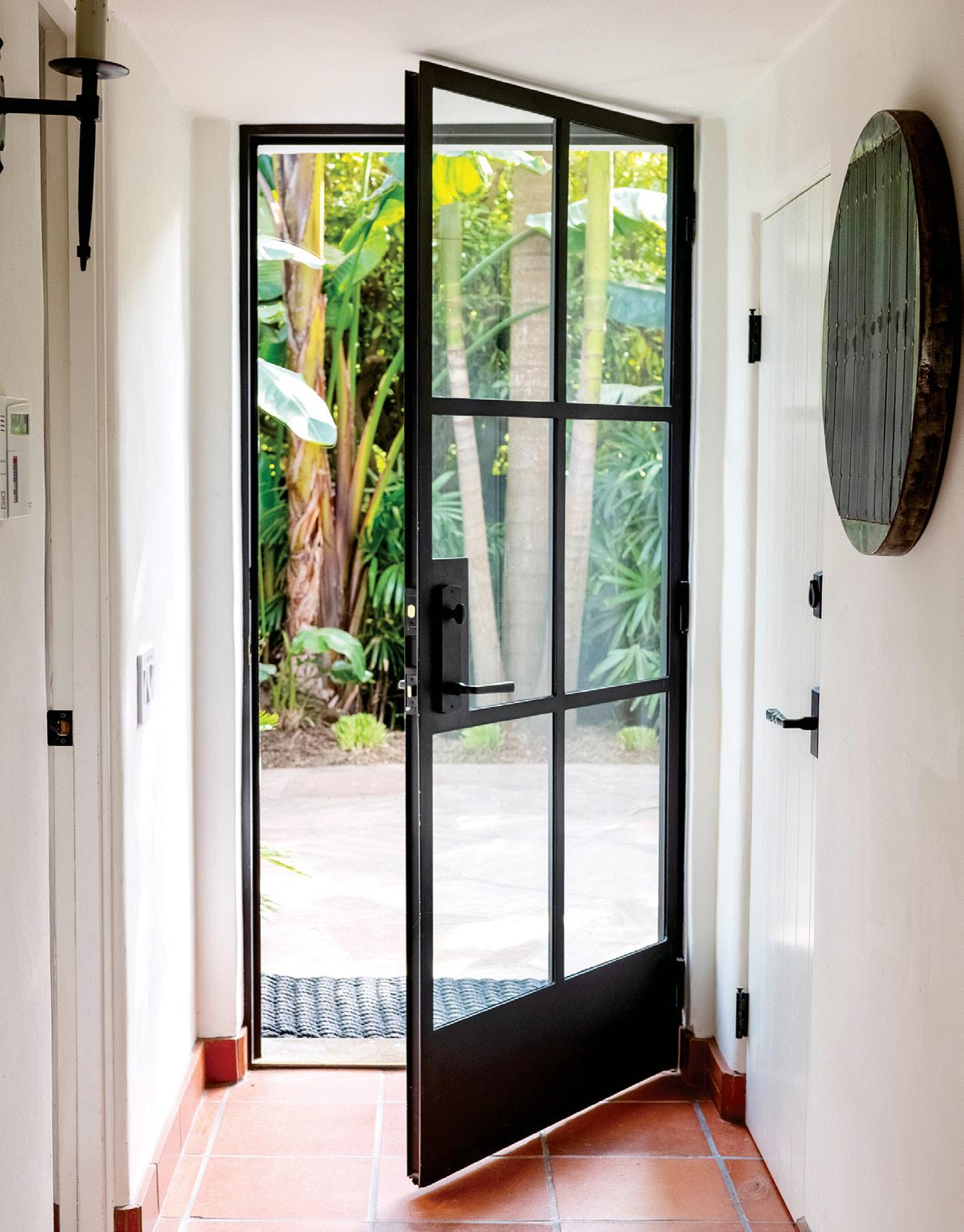
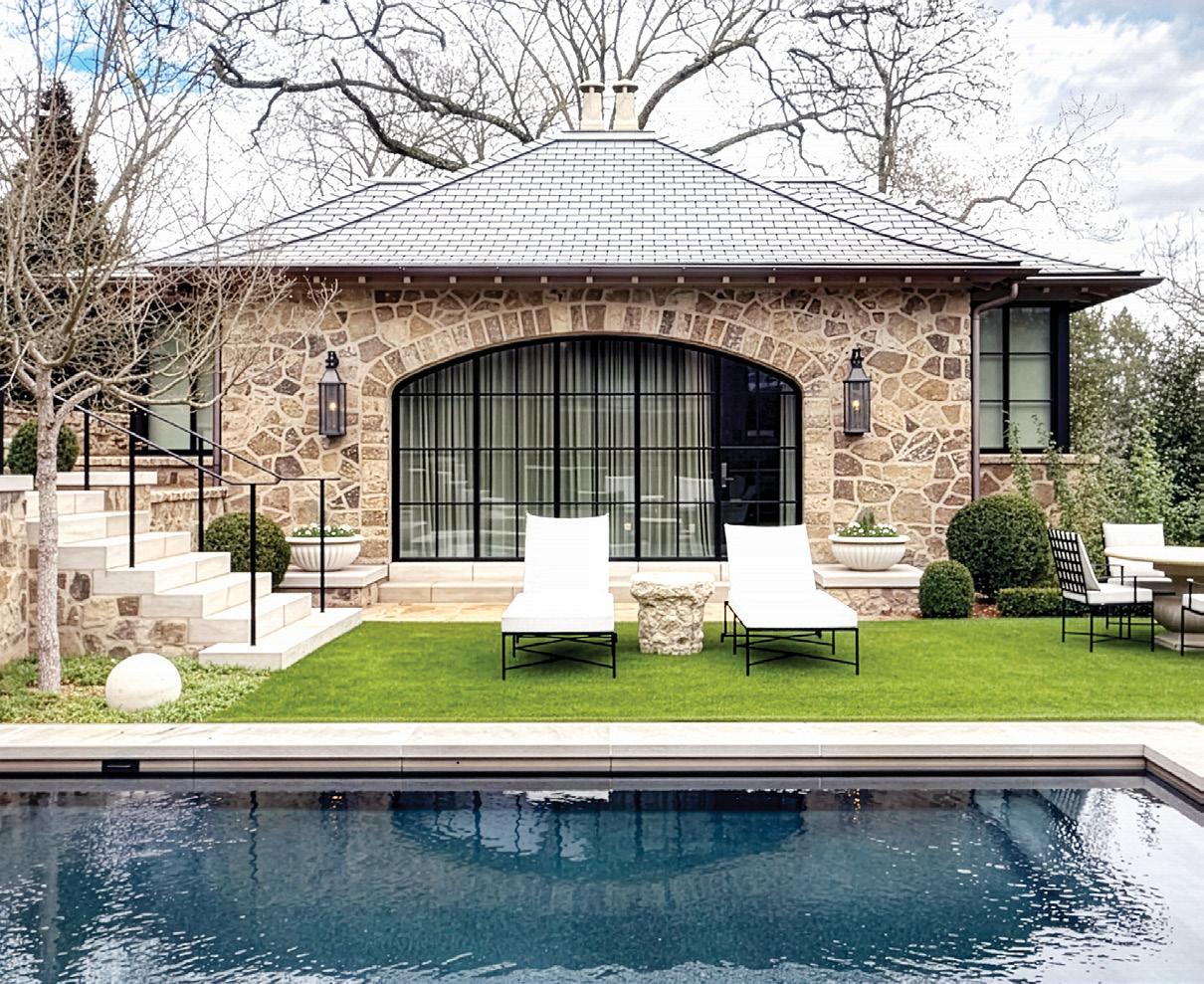
In practical terms, that means more window, less frame—even at heroic scales. Think 10-foot-by-10-foot sliding doors engineered to cantilever from structural steel columns, or pivot and folding systems that feel impossibly light for their size.
Everything is fabricated by hand in the company’s Oxnard shop. No assembly lines. No CNC automation. One craftsperson builds each door or window from start to finish—a master-built approach Gordon likens to a custom guitar.
The result brings precision and personality in steel form, one that feels just at home in a Spanish revival as it does in a clean, modern concrete build.
For homeowners considering a renovation, the first question isn’t steel versus wood or aluminum, but rather, it’s operability. Pivot, slide, fold, French? With Gordon’s system, the sightlines remain consistent across formats, preserving that signature slender profile. From there, finish, hardware, and swing direction follow. The simplicity is part of the beauty.
Small by design, the firm takes on a limited number of projects at a time, offering direct access to its founders and an unusually personal experience.
In the past, most of their work has been out of state, but with a new showroom opening in Carpinteria this Spring, Gordon Doors & Windows brings their craftsmanship back home-positioning the company to better serve and grow its California clientele.

Many paintings capture an emotion, Kenton Nelson’s embody a whole memory.
Raised in Southern California in the 1950s and ’60s, Nelson paints from a well of sun-bleached nostalgia—a time when children rode bikes until the streetlights flickered on and suburbia still felt like a promise. His canvases hold that promise in suspension. A diving board hovers over still water. An Adirondack chair faces an unseen horizon. Figures stand posed and cinematic, almost too perfect, as if lifted from a Sears catalog or a mid-century magazine advertisement.
The compositions are deliberate. Nelson blurs a foreground or background to sharpen our focus elsewhere, heightening the moment until it feels both hyper-real and faintly dreamlike. “Less is more,” he says—but what remains carries weight. The light is crisp. The colors are bold yet softened, like a memory burnished by time.
After 25 years as a commercial illustrator, Nelson shifted fully into painting, where the vision is entirely his own. The images begin intuitively—a chair, a pool, a horizon line— then distill into something pared down and precise. What he offers collectors is not a prescribed narrative, but space: the chance to see themselves inside an image that feels at once familiar and elusive. If a painting resonates, it does so because it mirrors something private: a childhood summer, a pool once visited, a stillness longed for.
In that way, his work is tailor made for the mind.
For his upcoming May exhibition at Caldwell Snyder Gallery in Montecito, Nelson returns to architectural forms, ocean horizons, quietly theatrical figures, and the other ordinary California scenes elevated just enough to feel mythic. Between 15 and 20 new works will line the gallery walls, each one an invitation to step inside and remember.
Acushion seems simple—until it isn’t. The thickness. The density. The way it holds its shape at the corner of a banquette or softens just enough beneath you at the edge of a pool chaise.
At Pampel Design, custom upholstery has become less an add-on and more a quiet extension of the architectural work the company is already known for.
Originally a window covering and outdoor shade company specializing in awnings, pergolas, and exterior systems, Pampel expanded during the pandemic by opening its own local fabrication studio, bringing greater control, precision, and craftsmanship to both its interior and exterior offerings.
What began as producing custom outdoor cushions quickly expanded. With the addition of master sewer José, described as the heartbeat of the sew room, the shop evolved into a full-service upholstery studio.
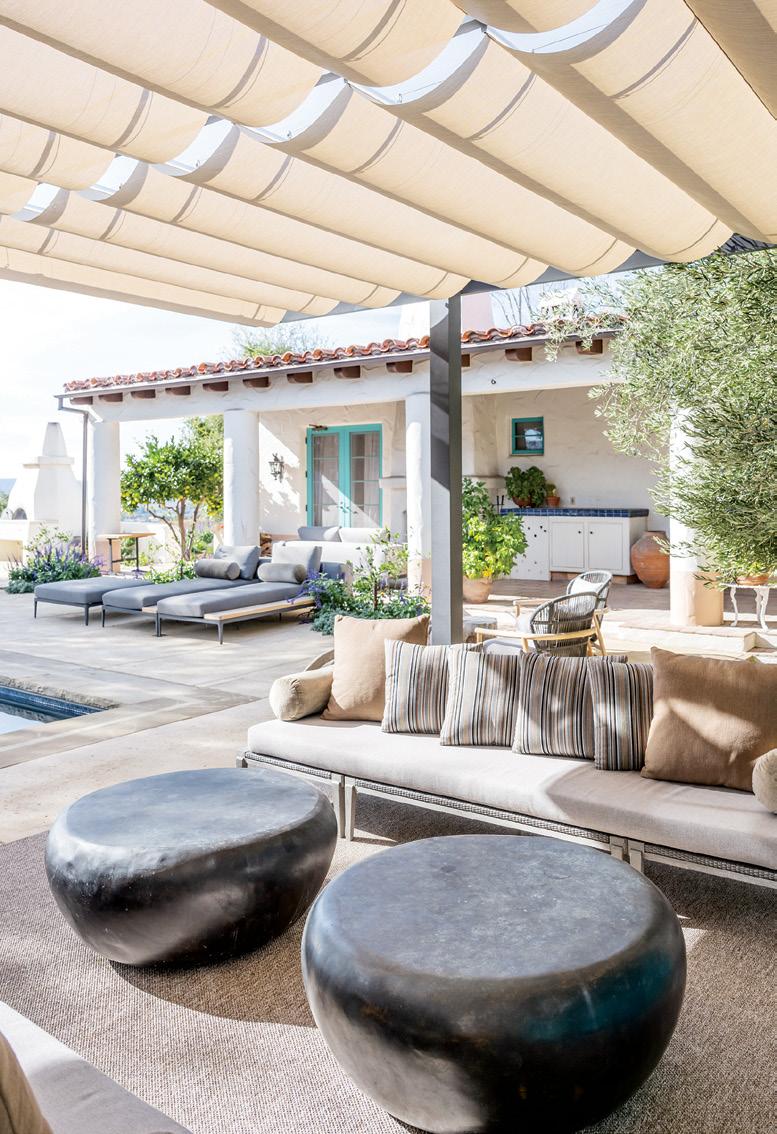

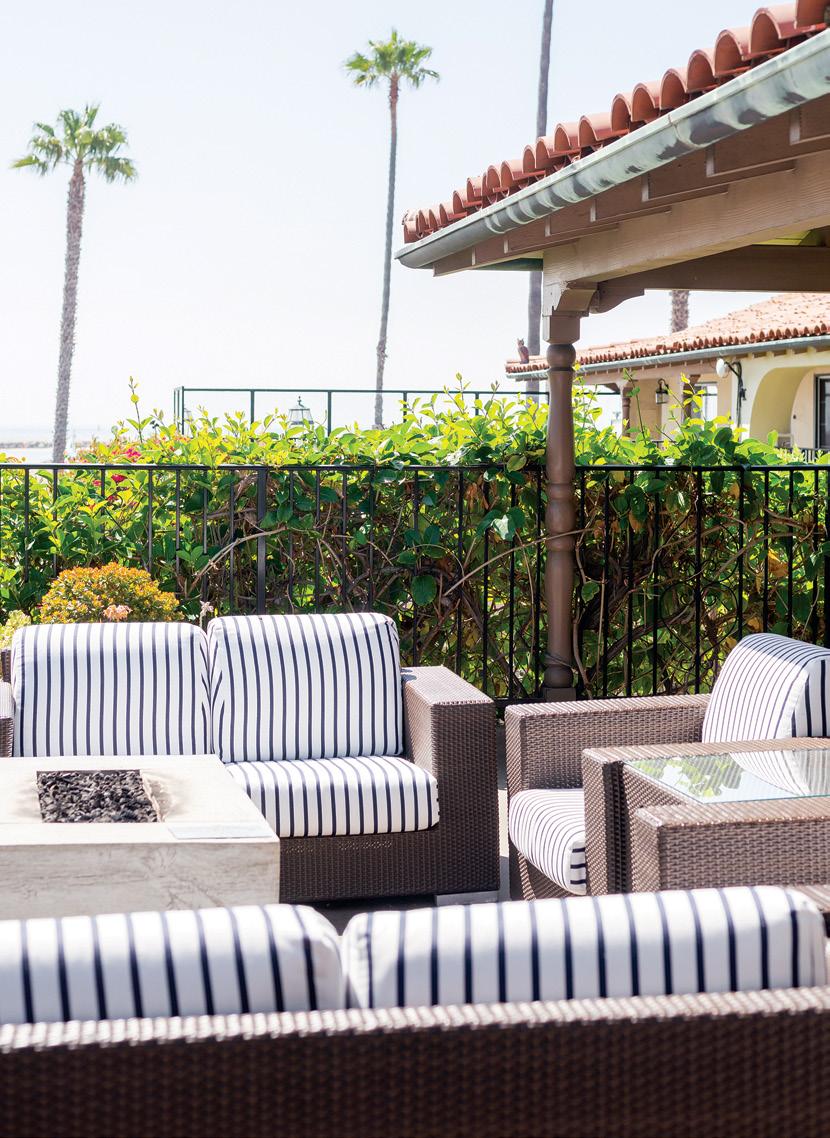
Today, most of Pampel’s upholstery work is one-off and deeply tailored: custom bench seats, bay window cushions, specialty outdoor seating, decorative wall panels, even heirloom furniture brought in for careful reupholstery.
For larger commercial projects, the team can scale up—producing hundreds of cushions for boutique hotels like the Hotel Californian—without losing the hands-on approach that defines the brand.
Fabric options span the upper echelon of the market, including full collections from Perennials and Sunbrella, alongside Italian lines and curated boutique textiles sourced from Los Angeles and the Pacific Design Center.
Foam density, down envelopes, and cushion construction are adjusted case by case, ensuring that what looks beautiful also feels right when you sit.
For homeowners already working with Pampel on pergolas or shade systems, upholstery becomes the connective tissue that ties indoor and outdoor spaces together through color, texture, and comfort.
Fabrication space in Santa Barbara comes at a premium. For Pampel, that investment is intentional. Keeping the work local and the craftsmanship visible is part of the philosophy. The architecture may frame the space, but comfort completes it.
There’s a difference between buying something new and preserving something meaningful.
At Bryant & Sons, that distinction has shaped six decades on El Paseo. Since 1965, the familyowned jeweler has served Santa Barbara with fine jewelry and distinguished timepieces, guiding clients toward pieces chosen or designed for the years ahead.
Inside, graduate gemologists and master goldsmiths transform ideas into finished works of art. A loose gemstone becomes a ring designed from scratch. An inherited pendant is reimagined into something wearable again. A setting is refined by fractions of a millimeter until it rests exactly as it should.
The custom work here begins with sketches shared across a desk, stones examined in shifting light, proportions studied from every angle. Metals are shaped and finished in-house, settings engineered for both strength and elegance. Whether crafting an engagement ring, modernizing a family heirloom, or creating a piece to mark a singular milestone, the approach is measured and exacting. Not louder.
Alongside bespoke design, Bryant & Sons curates distinctive collections from Roberto Coin and Gucci, each reflecting a signature point of view in fine jewelry. In timepieces, the store represents Omega and Breitling—names defined by heritage, innovation, and enduring style.
For collectors and families alike, appraisals are another part of that stewardship. Whether updating insurance documents or planning an estate, Bryant & Sons provides professional, written evaluations that reflect current market value and offer peace of mind.
In the end, tailor-made doesn’t always mean starting from scratch. Sometimes it means shaping, selecting, and safeguarding what will one day tell your story.
For Rick Cortez, a steel window isn’t finished when the frame is welded. It’s finished when the latch feels right in your hand.
Studio Cortez may fabricate steel doors and windows, but what sets the company apart isn’t just the frame—it’s the hardware. In Rick’s Santa Paula workshop, hinges, stays, and multi-point latches are developed and made in-house, each one designed with the same care as the window itself.
The result is a system that feels cohesive, not assembled from off-the-shelf parts.
Cortez’s background in architecture informs that approach. After studying at SCI-Arc and working in design-build, he gravitated toward steel for its longevity and expressive strength.
But unlike highly polished steel systems that aim for perfection, Studio Cortez embraces the material’s character. Welds are left visible. The surface texture remains present beneath a thin protective coating. It’s steel that acknowledges the human hand.
That sensibility extends to the mechanics. A custom operator might unlock multiple panels with a single motion. A hinge is shaped not only for durability, but for rhythm and balance. Even integrated screens are designed to feel intentional and not additive.
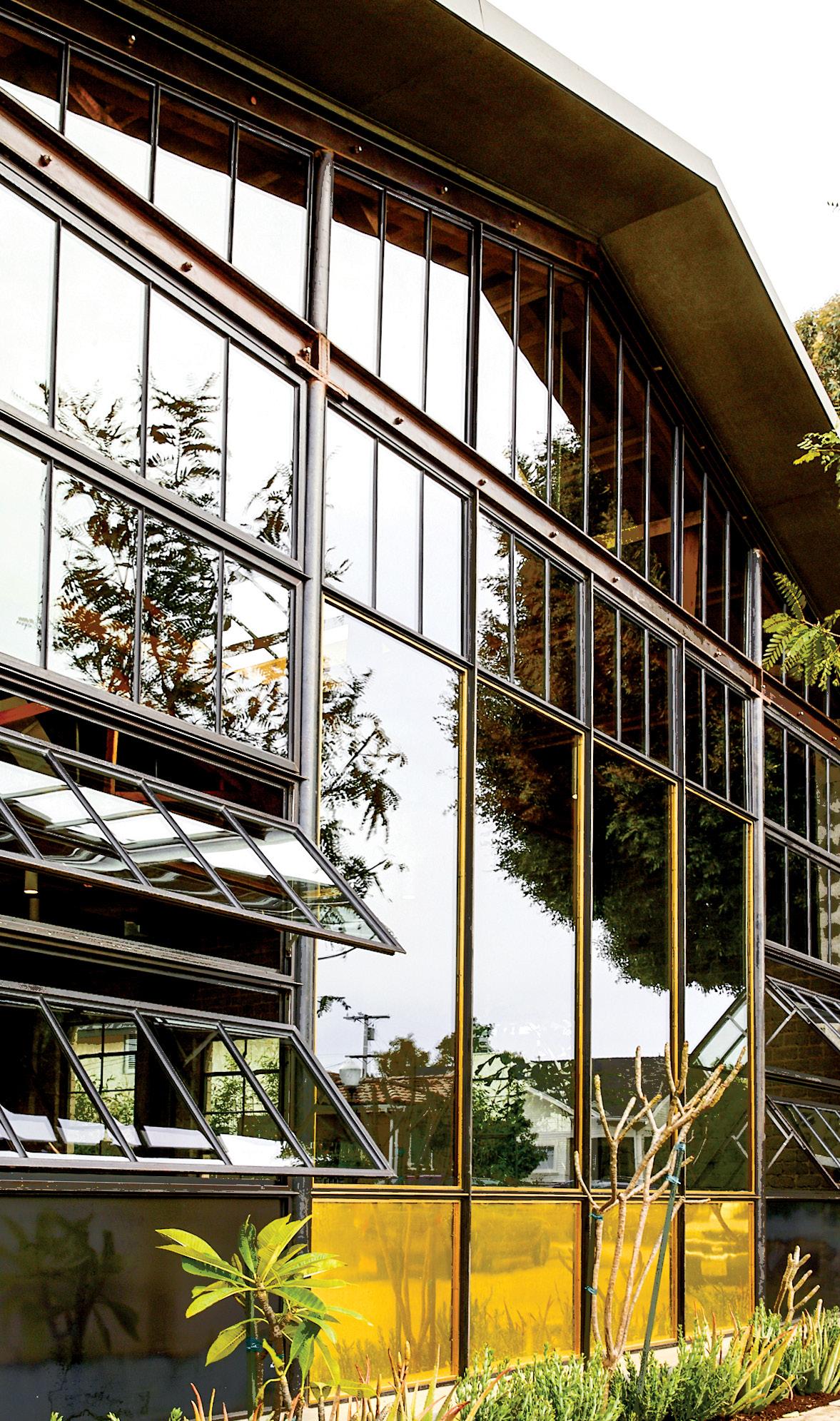
For homeowners considering steel, Cortez is candid: it’s the most expensive option up front. But when viewed through a long lens of decades, not years— steel outperforms wood or aluminum in durability, fire resistance, and lasting value.
Studio Cortez is intentionally small. Clients work directly with the people designing and fabricating the product. Problems are addressed early. Details are refined personally.
In the end, the difference isn’t just in the sightline. It’s in the moment you turn the latch and realize someone designed that movement as carefully as the window itself.
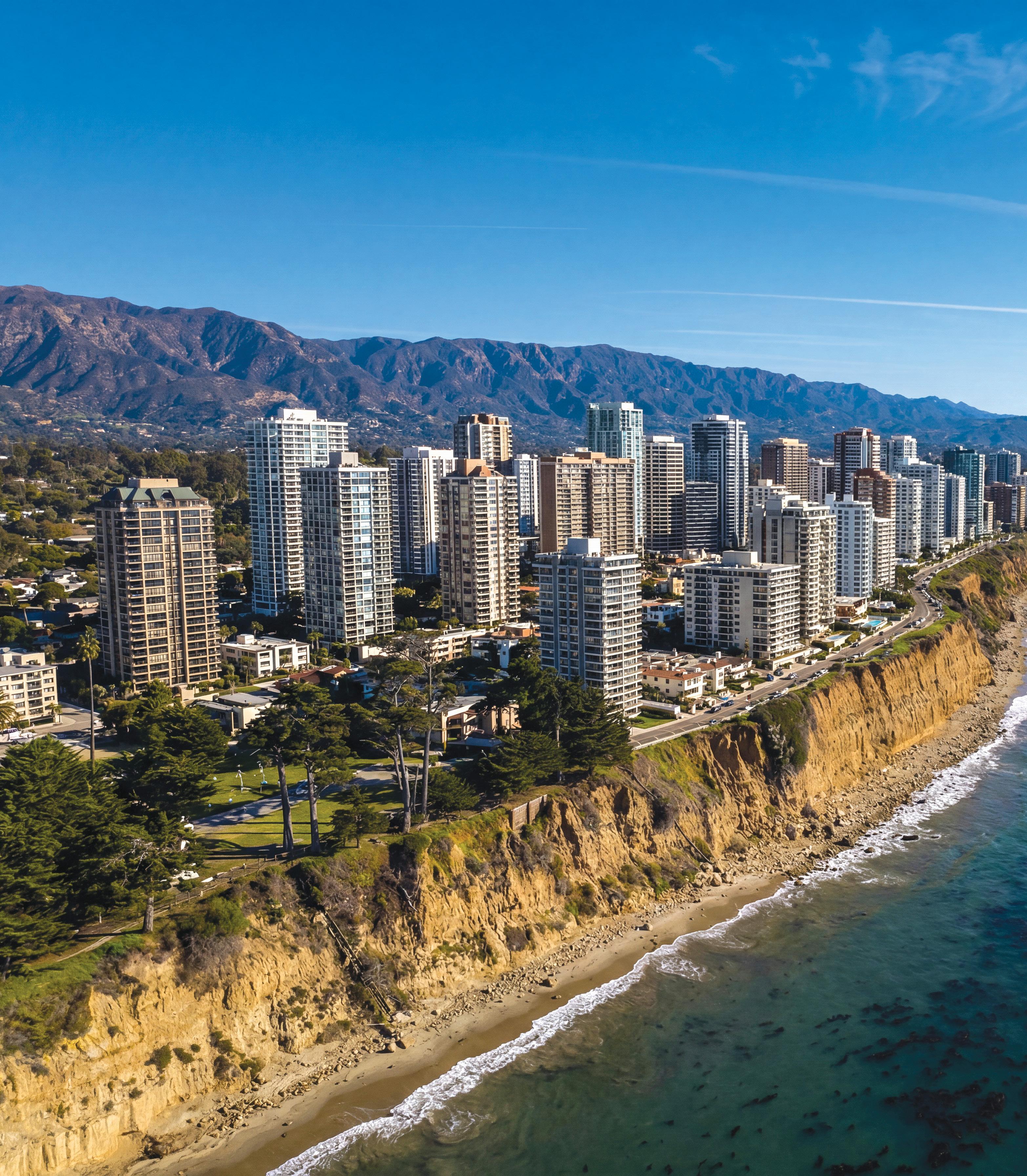
STORY BY SHEILA LODGE
FOREWORD BY JEFF WING
DOESN’T GET BUILT.
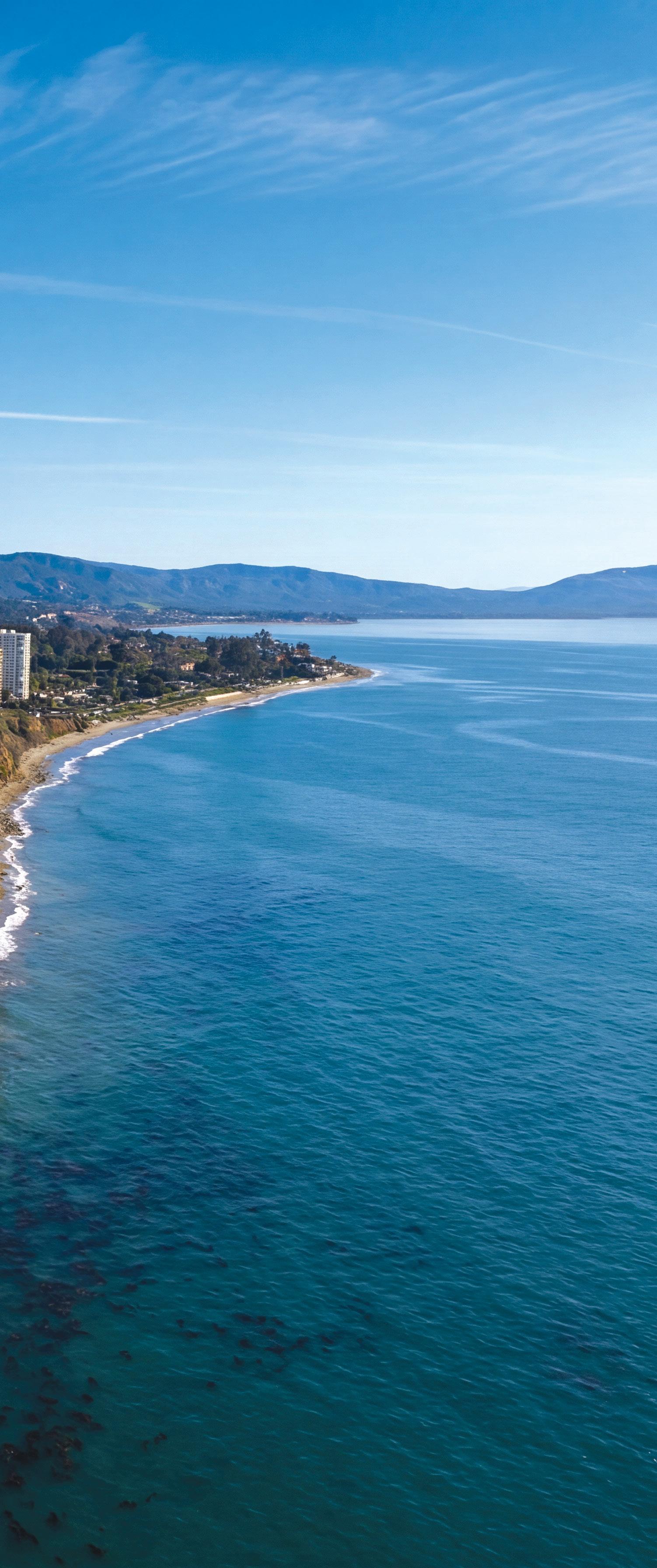
On an otherwise unremarkable June morning in 1925, Santa Barbara was brought to her knees by 19 seconds of seismic pandemonium. The quake unleashed explosive structural chaos in the frontier beach town and, arguably more vexing, 100 years (and counting) of urban design debate. Going forward, post-quake Santa Barbara would be defined by a built Spanish Colonial Revival ambience, and architectural height restrictions commensurate with that Old World quaintness template.
Maximum Allowable Building Height has haunted Santa Barbara’s civic planning conversation since then, culminating in a 1970s exasperated public forum, “Should Santa Barbara Go High-Rise?” Without diving into the gathering’s hollered minutiae, we can report the answer was “No.”
As they will, Santa Barbara developers have ever been in search of a workaround to the town’s height maximums. When in 2022 the State of California mandated local governments to build about 2.5 million desperately needed housing units by 2030, the developers came running, the state’s “Builder’s Remedy ” provision clutched in hand like a preemptive treaty.
The “Builder’s Remedy ” amendment to California’s Housing Accountability Act prohibits a city from disallowing an affordable housing build simply because the project runs afoul of a city’s zoning code or general plan.
And so we come to the embattled, headline-hogging, presentday proposal of the developer Mission LLC. With Santa Barbara’s blessing, Mission LLC will build an eight-story tower comprising some 250 housing units with three levels of underground parking.
The developer’s nom de guerre provides a clue to the shrine in the ointment: They want to build this eight-story tower onto a fastidious little parcel right behind the cherished and historical Santa Barbara Mission. Should we be scared? Should the Mission be scared?
Santa Barbara is extravagantly failing to keep up with housing demand, let alone affordable housing, but Mission LLC’s proposal is fraught on most fronts. There are issues with scale, feasibility, environmental, and archaeological impact, the area’s high fire risk and problematic egress in that event—“Builder’s Remedy” or no, this one has an uphill climb. But witnessing the process will lift the veil on how truly determined Santa Barbara is to meet its mandated housing obligations.
The Honorable Sheila Lodge, former Mayor of Santa Barbara, throws a colorful spotlight on two other notorious instances of proposed urban planning overreach in Santa Barbara’s past. These excerpts are from her own excellent and compulsively readable little book, Santa Barbara: An Uncommonplace American Town.
BY SHEILA LODGE
In 1968 a proposal was made for a development exceeding the city’s 60’ height limit. Called El Mirasol, the proposal—for two 107’ nine-story condo towers where today there is a park—came before the city.
The developers’ representatives were sent through the surrounding neighborhoods touting the project. That was how Terry and Penny Davies heard about it.
The Davies had seen Miami Beach. They were very concerned that a similar fate might befall Santa Barbara. Guided by Santa Barbara’s vaunted conservationist and historical preservationist Pearl Chase, they and many others vigorously opposed the project.
When the enormous towers came before the Planning
Commission, they unanimously denied it and said the project was…
“...out of character with the surrounding area and with the community as a whole...
“This character is recognized throughout the country as a rare example of high quality urban environment and, as such, has been demonstrated to be fundamentally important to the economy and general well-being of the community.”
The project’s proponents appealed to the City Council. They ran five full-page ads before the hearing, saying that the council would be responsible for whether or not the city would move forward or remain a “sleepy little village.”
And it seemed the project proponents were actually gaining momentum.
They threatened that if the condo towers were not approved, “200 cheap, mass-produced small apartments with only profit in mind” would be built.
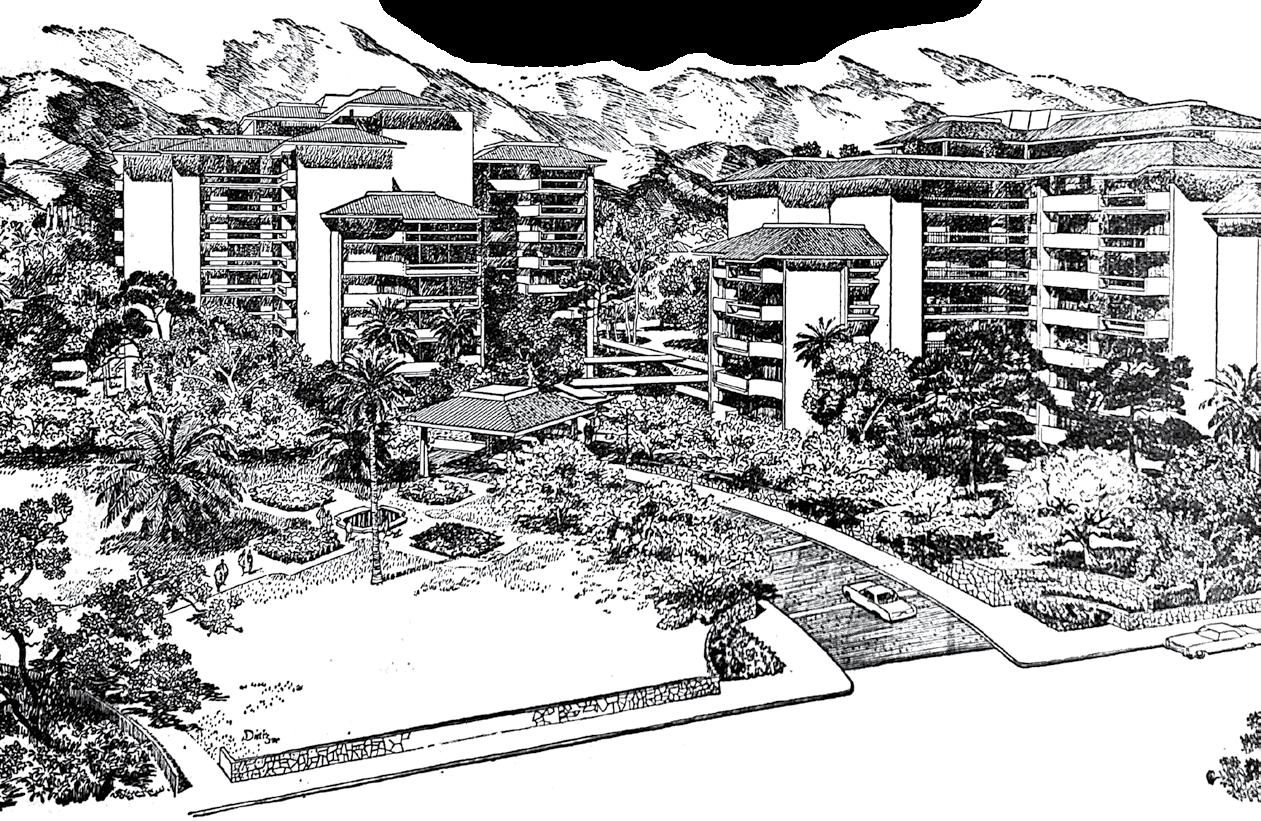
Santa Barbara was just a few meetings away from looking very different. The proposed El Mirasol condominium complex. Note the drawing is a bird’s-eye view. The mountains would never be seen from ground level if the project had been built.
Not having much in the way of budget, the project’s opponents ran small classified ads.
Despite the unanimous Planning Commission denial and vehement public opposition, the Council granted a variance to the existing city ordinance to allow the 107’ towers. They were almost two and a half times as tall as the 45 feet the city ordinance allowed.
Following Council approval, Terry Davies, a research engineer, and Estelle Busch and Frances Yulo, neighborhood housewives, searched for an attorney who would agree to work pro bono and to sue the city. They were successful, and their attorney was successful; the judge ruled that the city had violated its own ordinance. The variance could not be granted.
Following the court decision, the League of Women Voters, Citizens Planning Association (a civic association formed in 1960 to help assure that the County and City adopted sound land use plans), and others worked to get an amendment adopted which would put the height limits in the charter where they couldn’t easily be changed. The voters approved that amendment in 1972.
In 1975, Alice Keck Park, the wealthy daughter of an oil man, bought the El Mirasol land to give to the city of
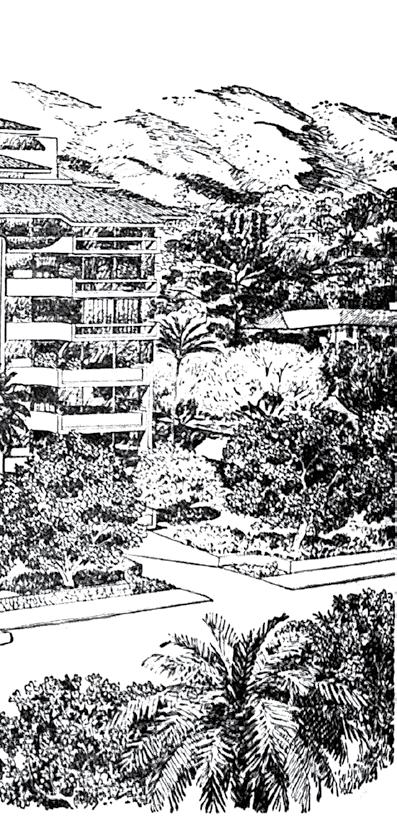
Santa Barbara for a park. Her gift included installation and five years of partial funding of its maintenance. One city council member said that the city shouldn’t accept this new park since it couldn’t properly maintain the ones it already had. That was true, but the rest of us were not about to turn this beautiful offer down.
If the suit hadn’t been filed and won, it is likely many more such projects as El Mirasol would have been built, pushing the new height limit as precedent, and Santa Barbara would have been quite a different looking place.
Because of the concern of two citizens, a research engineer, and the generosity of Alice Keck Park, Santa Barbara has a lovely garden instead of two 107’ condo towers. And contrary to the project proponents’ somber warnings, reasonably designed, high quality condos have continued to proliferate throughout the city.
In an interview years later, Estelle Busch, one of the housewives who sued the city over the El Mirasol approval, said:
“...peons were able to sue 29 of the wealthiest people in the community—the council, the mayor—Jerry Beaver and Bill Alexander (the developers), and we won! I was so proud.”
Every person can make a difference.
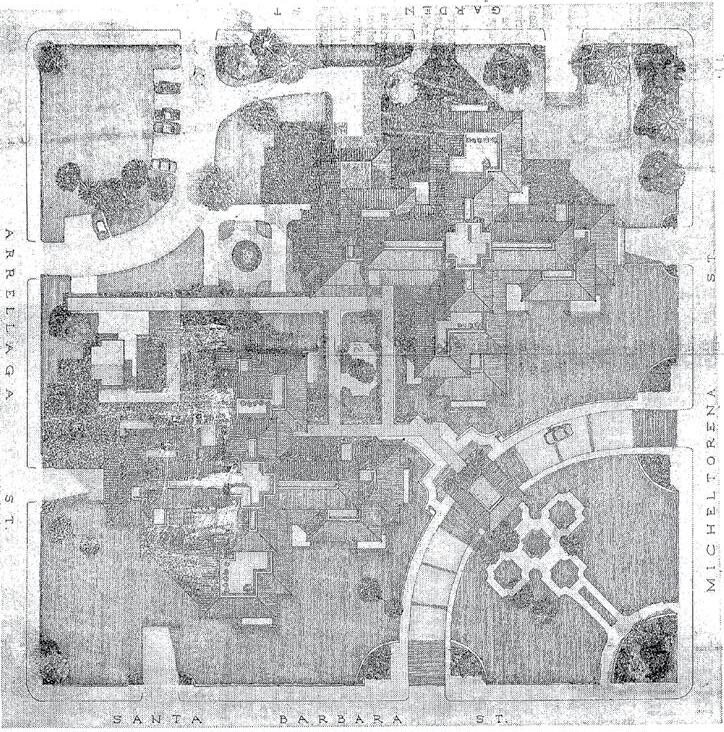
February 1972: Southern Pacific waterfront proposal
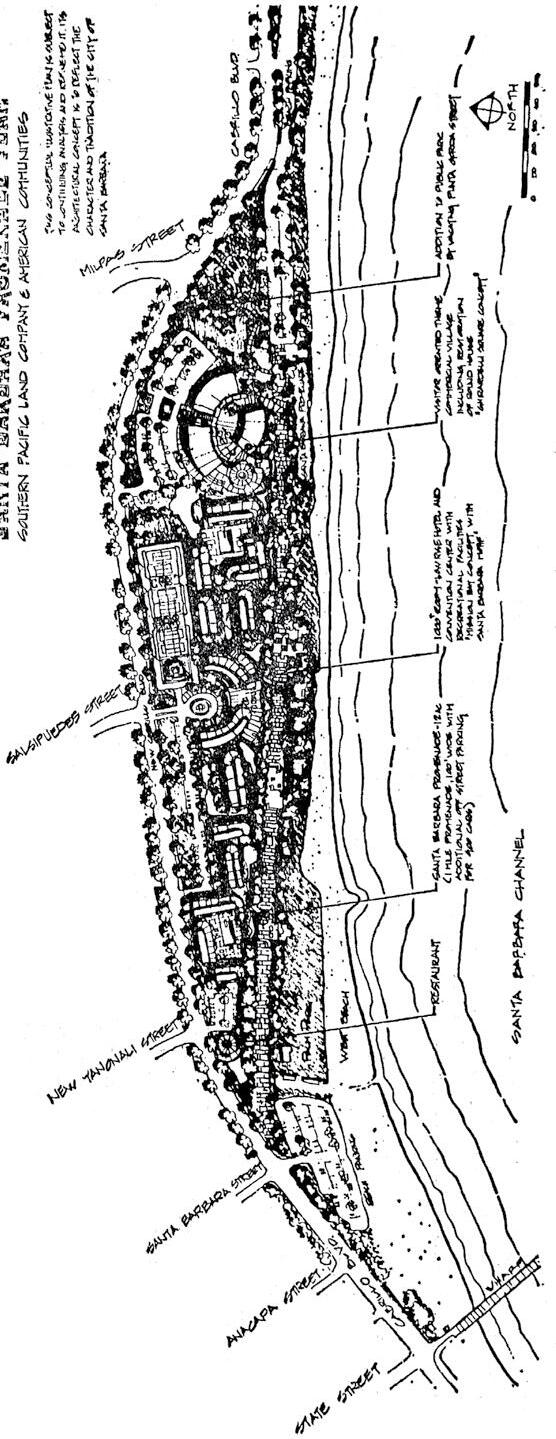
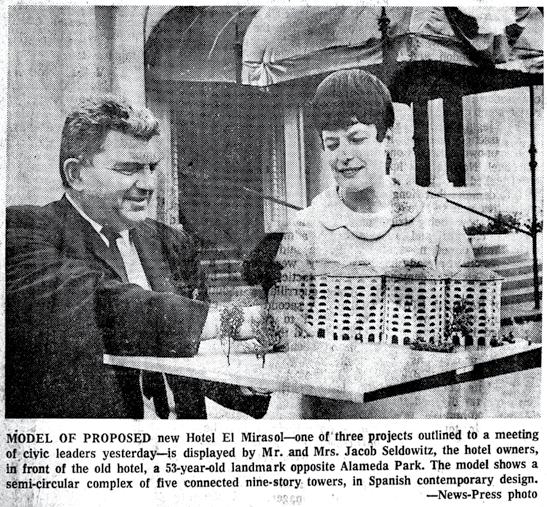
In February 1972, another large project was proposed that caused community controversy. Southern Pacific— owner of almost all the property between Cabrillo Boulevard and the railroad, and Milpas and Santa Barbara Street—joined with Marriott Hotels to present a proposal for development of the waterfront.
The waterfront’s Cabrillo Boulevard was to be moved substantially north between Milpas and Santa Barbara streets. The existing roadway was to become a promenade. One thousand hotel rooms and a 2,000-person-capacity conference center were proposed between the relocated Cabrillo and the beach.
Elected officials, the construction industry, and business leaders enthusiastically supported the project. Others did not, since almost a half-mile of buildings would have blocked the views of the mountains from the beach while they walled off the public from the sea.
They threatened that if the condo towers were not approved, “200 cheap, mass-produced small apartments with only profit in mind” would be built.
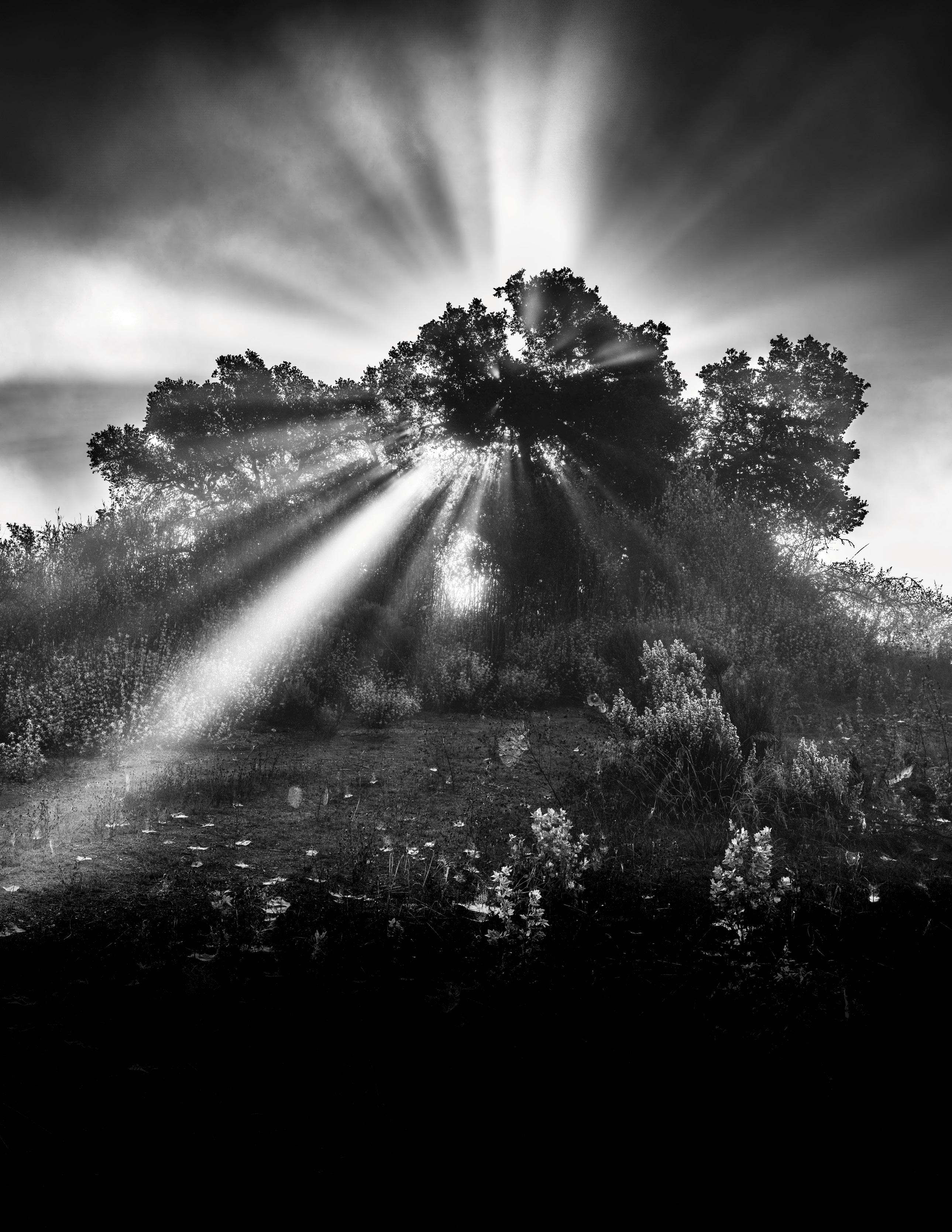
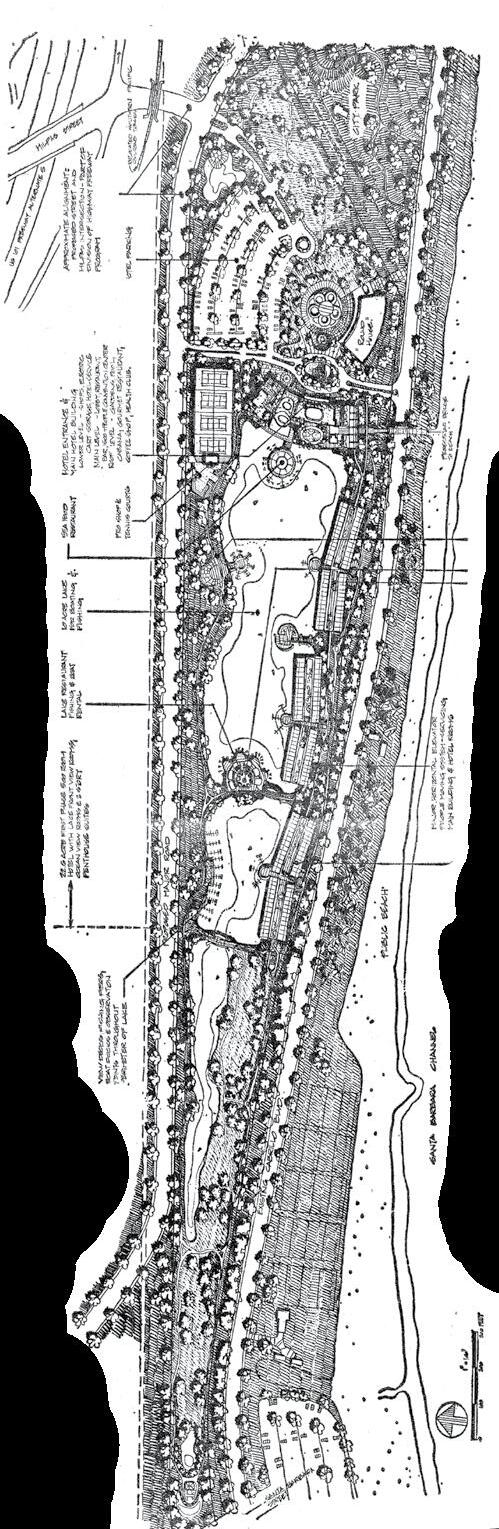
With Santa Barbara’s blessing, Mission LLC will build an eightstory tower comprising some 250 housing units with three levels of underground parking.
The second proposal still had enough development to cut off mountain views from
The Community Environmental Council (CEC) was formed in 1970, a year after the blowout of Union Oil’s Platform A and the massive oil spill that followed. The CEC’s aim was to seek creative solutions to environmental problems. It had two young co-directors, Paul Relis and Hal Conklin, supported by a board of civic activists. The CEC was approached by residents of the Lower East Side who’d heard about the hotel/conference center proposal and who feared loss of access to East Beach and other recreational facilities in the area.
Paul Relis became very much involved. An ad hoc Committee for Santa Barbara was established. Its goal was to have a much smaller hotel and increased park area all north of Cabrillo. Southern Pacific met with the Committee, with the Citizens Planning Association (CPA), the Chamber of Commerce, and numerous other groups.
Thanks to pressure from the community the developers announced a new plan on August 8, 1972.
In this second proposal, Cabrillo would remain where it was and all development would take place north of it. It was still a 1,000-room hotel and 2,000-person conference center. A 10-acre artificial lake—the light irregular area in the middle—occupied much of the space.
To the left is a sketch of the proposed hotel buildings. There was still about a linear half-mile of them, cutting off almost all views of the mountains from Cabrillo and the beach.
In a presentation to the Planning Commission, Southern Pacific said that since the project fit within the zoning it didn’t require any city review except by the Architectural Board of Review. The city attorney begged to differ. Construction was expected to start by the end of the year; proponents saying it would take eight months to build.
A game changer happened three months later in November 1972 when California voters adopted a ballot measure establishing the California Coastal Commission. The project would now come under the Commission’s review.
After lengthy continuing negotiations with Southern Pacific




















































an agreement was reached. Fess Parker, however—a former movie actor—had control of a small portion of the property at its east end, and he refused to sign on to the settlement. Disputes and lawsuits followed. Parker managed to end up with control of the entire property.
What followed were more years of Mr. Parker coming before the Planning Commission and the City Council and still more negotiations with interested groups. Agreement was reached on 360 hotel rooms and a 1,000-person conference center. The project’s last needed approval by the Coastal Commission came in 1981.
However, some members of the community thought there was still too much hotel and not enough park. Enough signatures were gathered for an initiative to put the project on the ballot. Four members of the City Council, including myself as mayor, signed the ballot argument FOR the project. To his credit, Mr. Parker had agreed to respect and respond to all the environmental, aesthetic, and social conditions and concerns. Preservation of the panoramic views was assured. In a special election in March 1985, 13 years after a hotel conference center was first proposed, the voters agreed that Mr. Parker should have his hotel.
This low-intensity development is the result of years of negotiations— battles, should I say?—and an election. It took a very long time for Mr. Parker to recognize that the City meant it when it said that the project had to be in Santa Barbara style, size, bulk, and scale, and that the views had to be preserved. The hotel is appropriate for and sensitive to its extraordinary setting; a setting created in part by the people of Santa Barbara.
If CEC hadn’t existed, and that group of Lower East Side residents hadn’t approached it, and if the CEC’s 20-something co-director hadn’t become engaged in the issue, Santa Barbara might have been cut off from its own waterfront.
In a presentation to the Planning Commission, Southern Pacific said that since the project fit within the zoning it didn’t require any city review except by the Architectural Board of Review. The city attorney begged to differ.
The Honorable Sheila Lodge served as Santa Barbara mayor for 12 years, from 1981 to 1993, and was the first woman to serve Santa Barbara in that office. Prior to that, she served on the City Council from 1975 to 1981. Continue reading about Santa Barbara's urban planning history in Lodge's rather excellent tome Santa Barbara: An Uncommonplace American Town.
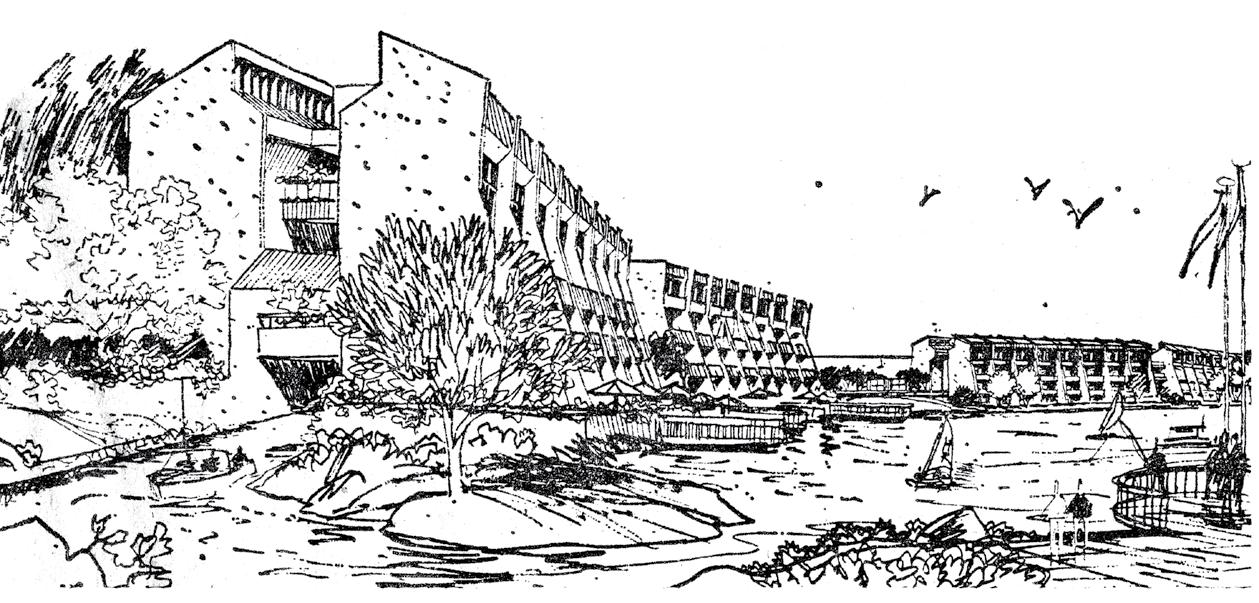
Green cleaning, handcrafted in Santa Barbara—because wellness starts at home.
We specialize in mindful, non-toxic home cleaning that’s safe, effective, and rooted in care. Every product we use is made by hand with essential oils and natural ingredients— designed to purify your space while supporting your well-being.
Santa Barbara Green Clean
Contact Owner: Tami Chambers
Web: santabarbaragreenclean.com
Phone: (805) 637-6683
Email: tami@sbgreenclean.com
Insta: @santabarbaragreenclean
Living Clean, Cleaning Green






BY HEIDI
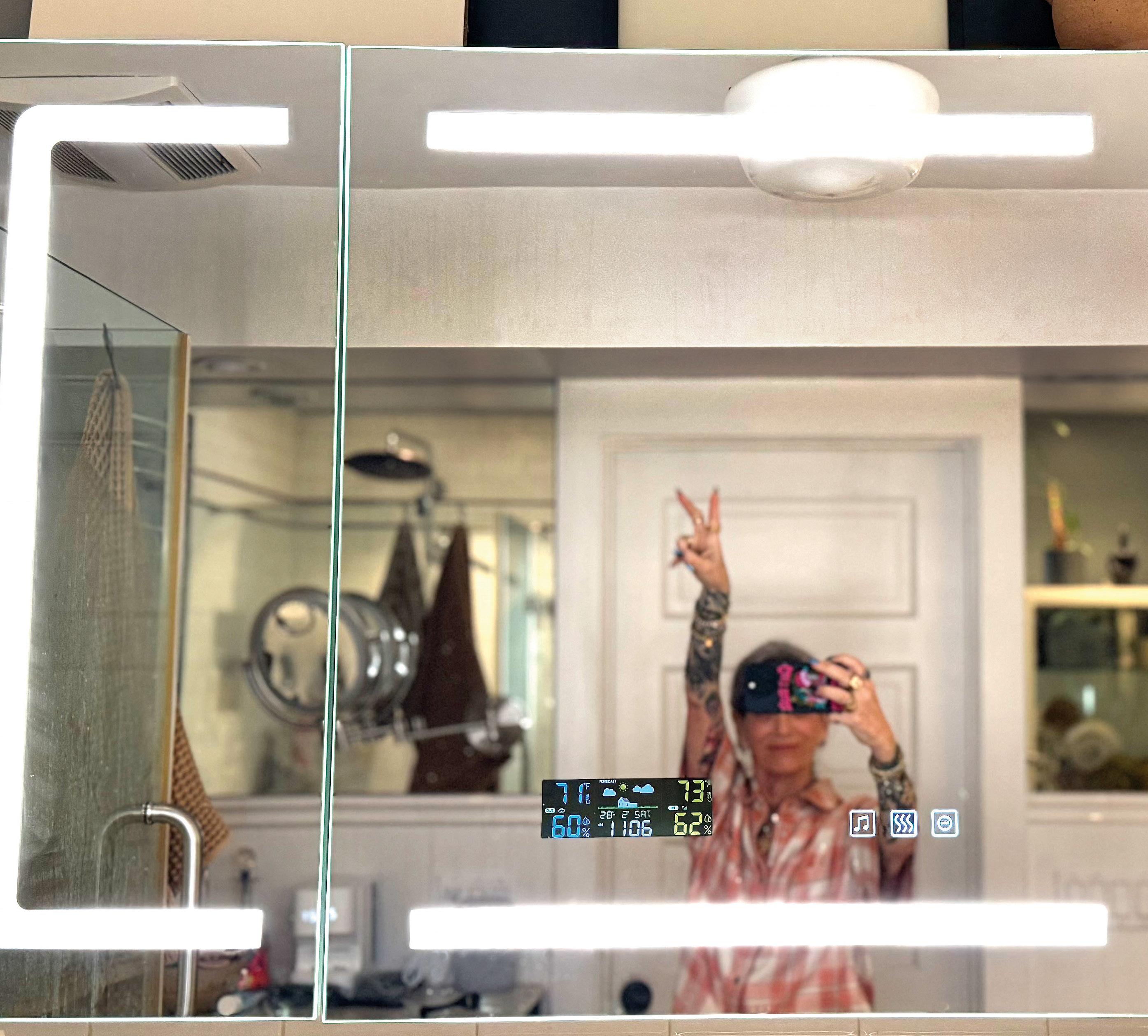
Show me a woman over 50 who enjoys a long deep look into a mirror, and I’ll show you a woman who’s only there because she recently discovered a new stray hair growing from a place that was thought to be incapable of such a heinous and traitorous act. The length of her stay in front of said mirror depends on the magnification she can obtain and the contortionist act she may have to twist herself into to remove said hair. The mirror may have two faces—as Barbra Streisand once told us—but it also holds a thousand flaws, insecurities, and
straight up body dysmorphic lies.
The mirror is not considered a friend to most aging women. A glance into one is usually followed by an array of ughs, a stream of sighs, and an eventual “f*ck it.” The reflection we see back as we age is so tainted by the opinions of the advertising world and the patriarchy that it’s almost impossible to find joy in that glass if you spy even one tiny imperfection, which by the way was named an imperfection by that same advertising world and the patriarchy when we were still happily resting in
"MY NEW VANITY MIRROR HAS MORE BELLS AND WHISTLES THAN A BELL AND A WHISTLE AND IF IT COULD COOK ME DINNER I WOULD MARRY IT."
the womb. If we don’t see youth and beauty, we book a Botox appointment or worse—we face the knife. Yes, we live in a world where a group of total strangers can convince a woman to cut her face, pull it back into a tight skin ponytail, and boast about it on the internet.
“A Short History of The Mirror” by Josiah McElheny dates the first use of glass reflection pieces back to 6000 BCE and the Neolithic period where humans stopped wandering, hunting, and gathering and started making permanent homes. These reflective pieces were made of obsidian, a naturally occurring black glass that when
polished provided a dark and haunting vision of oneself. That seems a bit spot on for how I feel when I catch a glimpse of myself in a reflective glass.
It wasn’t until the fall of the Roman Empire that highquality clear glass was introduced by the Venetians (still known today for their Murano glass). But it was Louis XIV who convinced a group of Venetian glassmakers to divulge their secrets, which promptly got them murdered by their country.
The famous Hall of Mirrors at Versailles was built in 1682, and for quite some time was considered an accoutrement of the bourgeoisie. Those fancy pants men needed somewhere to check their wigs, height of their knee socks, and high shine on their buckled shoes. Flash forward to the late 1970s and the most popular use of a mirror for the rich and famous was chopping and snorting lines of cocaine whilst staring into your own nostrils. Ahhhh progress.
As I’ve aged, I’ve tried to spend as little time as possible in front of a mirror. In fact, I fully understand why some European cultures cover the mirrors in their homes when someone dies. But sadly, the only thing that’s died in my home is the height of my ass and my boobs, which are now in their final resting place.
Three years ago, at the tender age of 62, I decided to do something that would put me in front of my mirror half-naked on a daily basis. I decided to become a content creator who tells stories as I get dressed and while it has helped me reshape my own image of myself, I am far from adoring my own reflection. That is until my bathroom vanity mirror fell off its hinge and needed to be replaced. Enter technology.
My new vanity mirror has more bells and whistles than a bell and a whistle and if it could cook me dinner I would marry it. It may in fact have the potential to do that, I just haven’t made it all the way through the manual. There are three mirrored panels, so contortion is no longer necessary, and this mirror doesn’t just light up—it has three different light settings: indoor, outdoor, and natural. It can fade up and down on said light settings and create a mood. This is a great thing because my mood when looking in a mirror is something that needs adjusting. It has a time display, a temperature display in both Fahrenheit for us American morons and Celsius for the entire rest of the world, a defogger, a humidity setting, and perhaps its best feature—a built-in bluetooth speaker which is how I finally figured out how to make what you see in the mirror make you happy. You dance.
In Feng Shui, mirrors are powerful tools used to manage energy, expand space, and amplify light. It’s a theory I’m practicing right here in my bathroom in Montecito thanks to a light-up vanity mirror that holds the best dance parties in town.

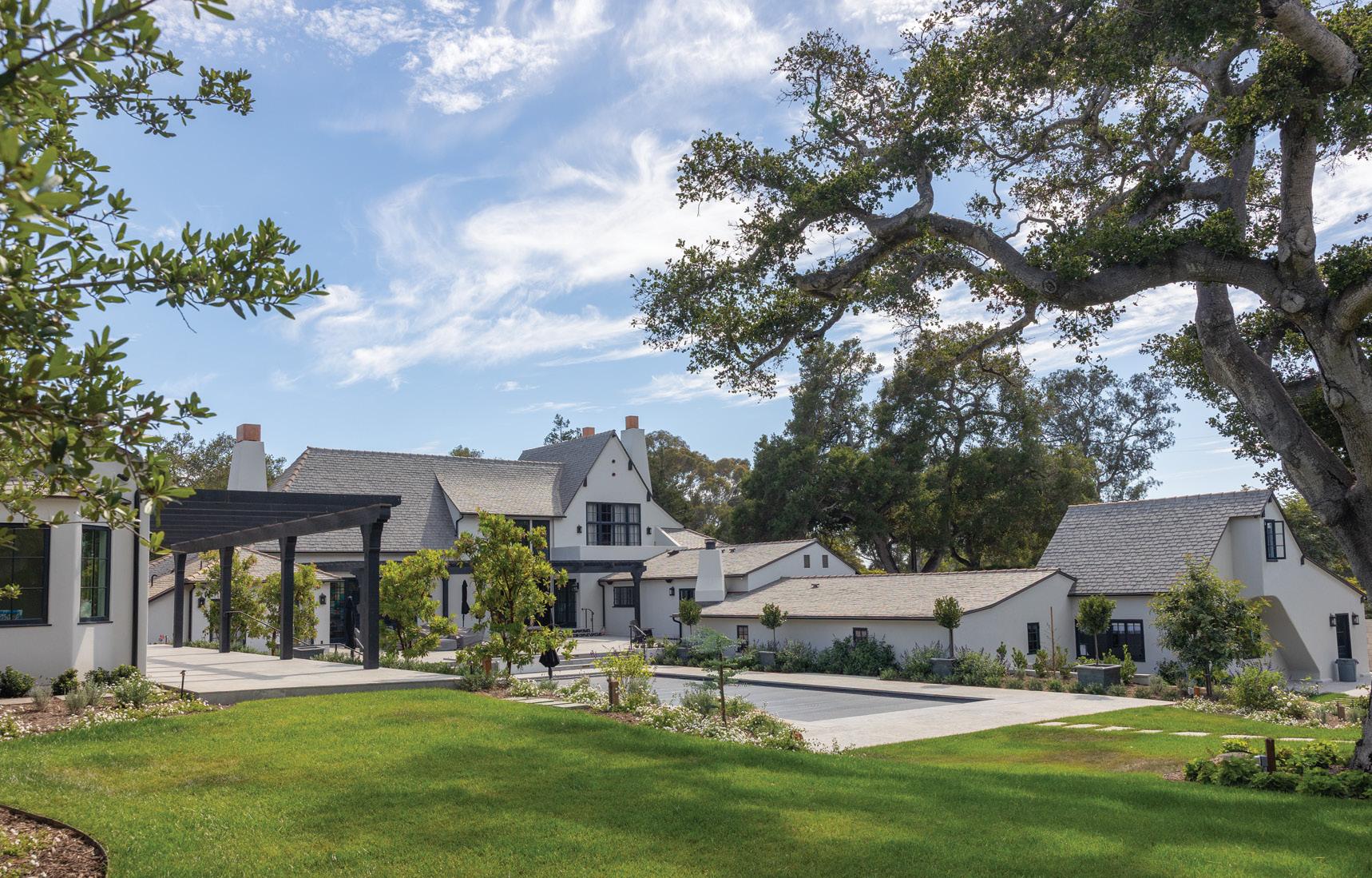
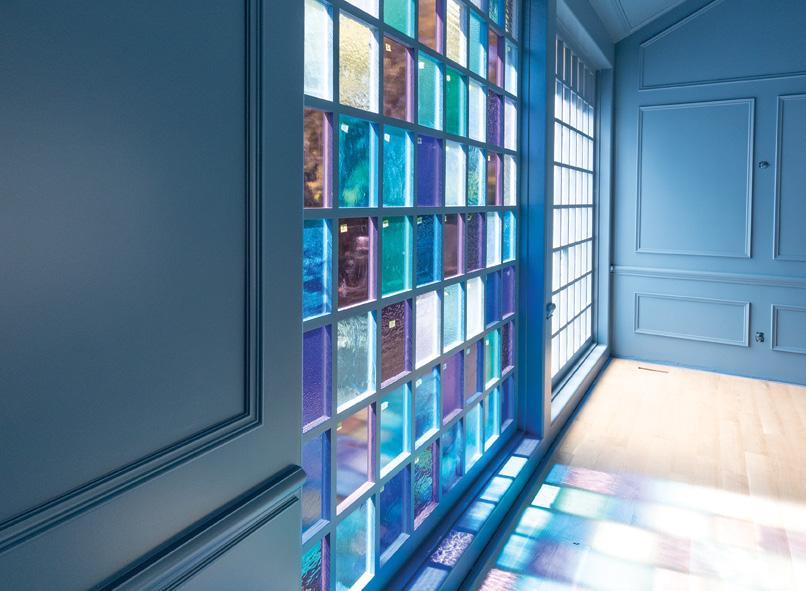
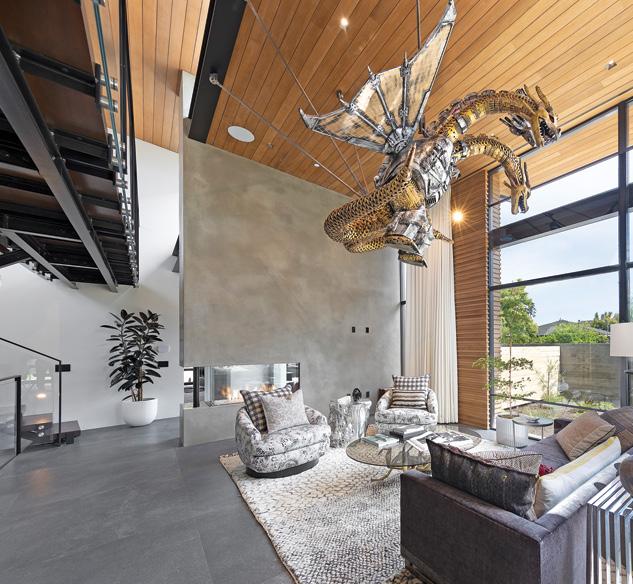
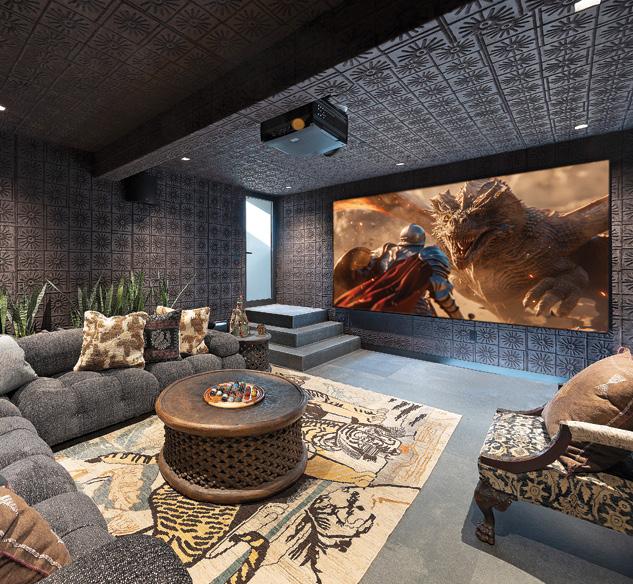
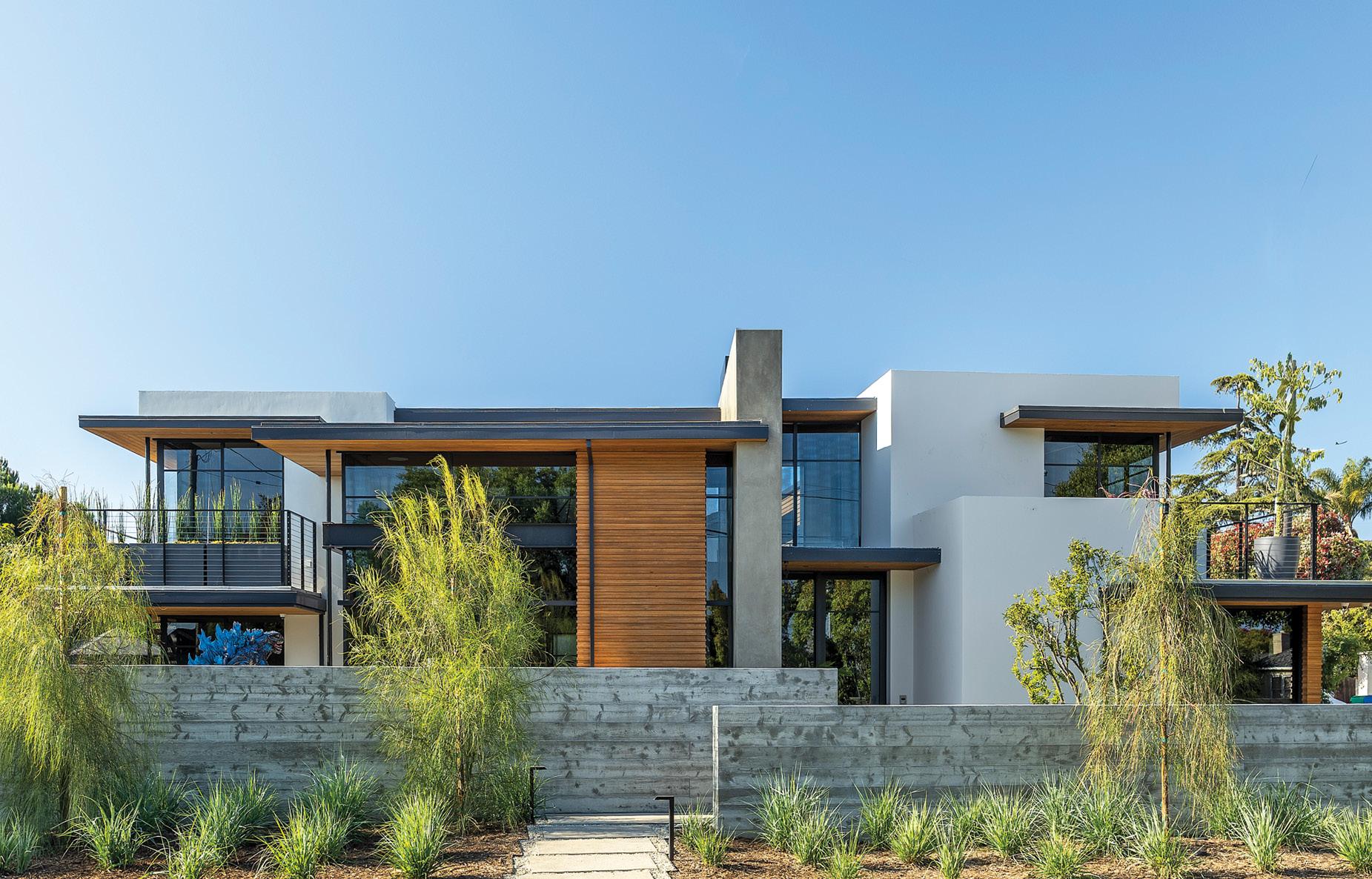


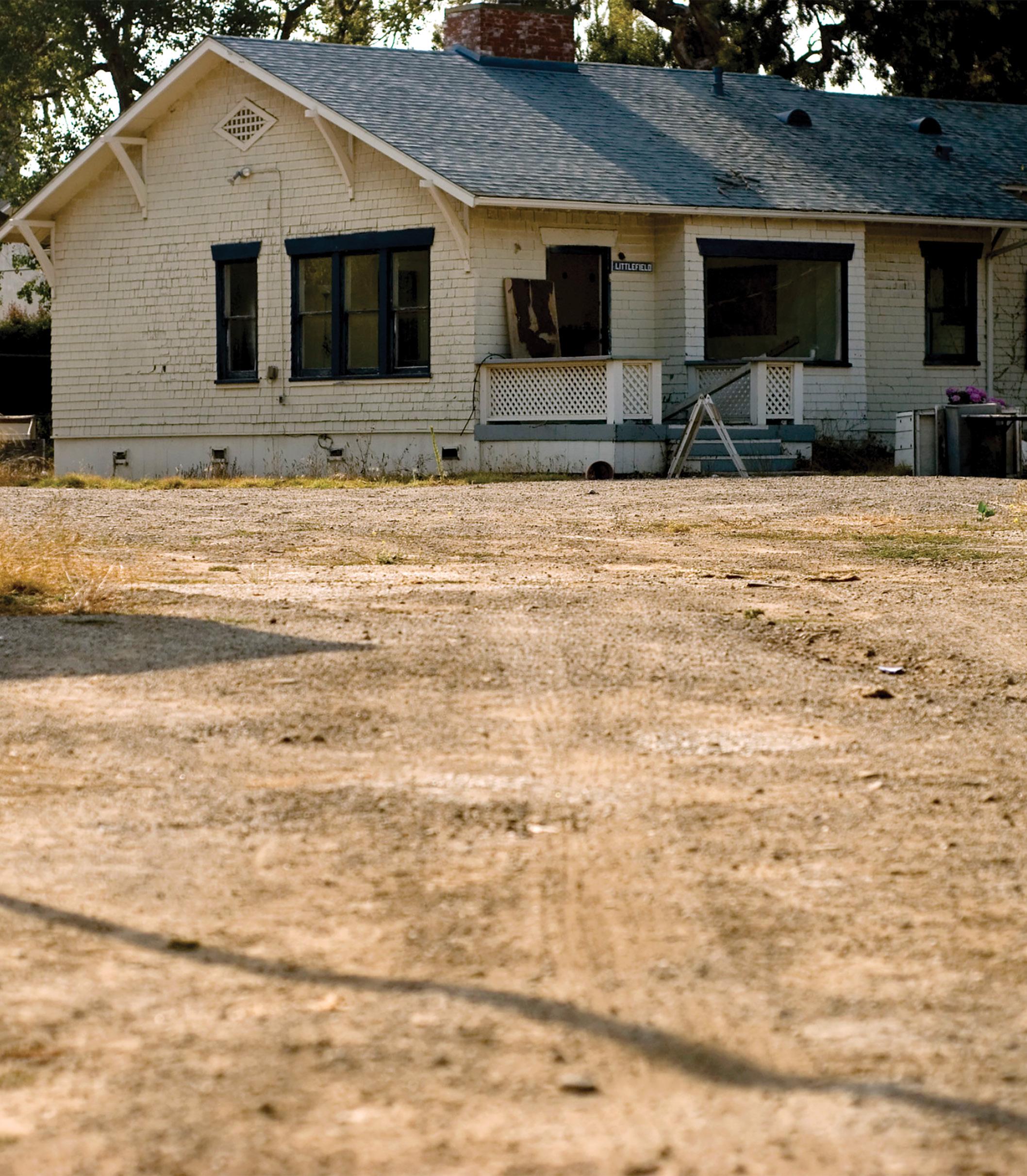
Written by Chris Connor
What’s the weirdest living arrangement you’ve ever found yourself in? I had the distinction of living at the Miramar for zero dollars a day. In the well-known 20 years the property was left derelict, a group of wide-eyed mischief makers—of which I was one— turned a room in one of the most coveted resorts in the nation into their own private vacation stay, free of charge.
What compelled us to “crack”—as we called it—the Miramar? A collection of underground punk zines told tales of mischievous youth eking out a wild existence on the margins of society, finding abandoned and under-the-radar places to live without having to spend a dime. It sounded fantastical. We pondered where we could pull off such a feat.
It was around the year 2007. As the hotel swapped hands and plans to renovate were endlessly delayed, the once charming 101 seaside pitstop, otherwise known as the Miramar, turned into a pile of debris. We looked upon the left-to-ruins resort with a devious glisten in our eyes. We had our answer.
Day one was reconnaissance. Under the cover of night, we found our way through the chain-link fence and barbed wire that surrounded what was left of the empty resort.
Day one was reconnaissance. Under the cover of night, we found our way through the chain-link fence and barbed wire that surrounded what was left of the empty resort. We surreptitiously traversed the abandoned property, taking long pauses to keep a keen eye out for any security patrols. We held our breath and strained our ears for the slightest sign of the guardians against our good time: a distant crackle of a radio; the crunching of gravel beneath a police patrol’s tires; a wandering beam of a flashlight across the vast expanse of darkness. We couldn’t believe our good fortune.
We returned to see if things were perhaps different by the light of day. Still empty. No one was protecting this prime beachside real estate. Fools, we thought. Visions of our seaside sanctuary with a touch of squalor danced in our heads. We didn’t consider the cost of potential trespassing charges because, well, we were teenagers and we believed we were immortal.

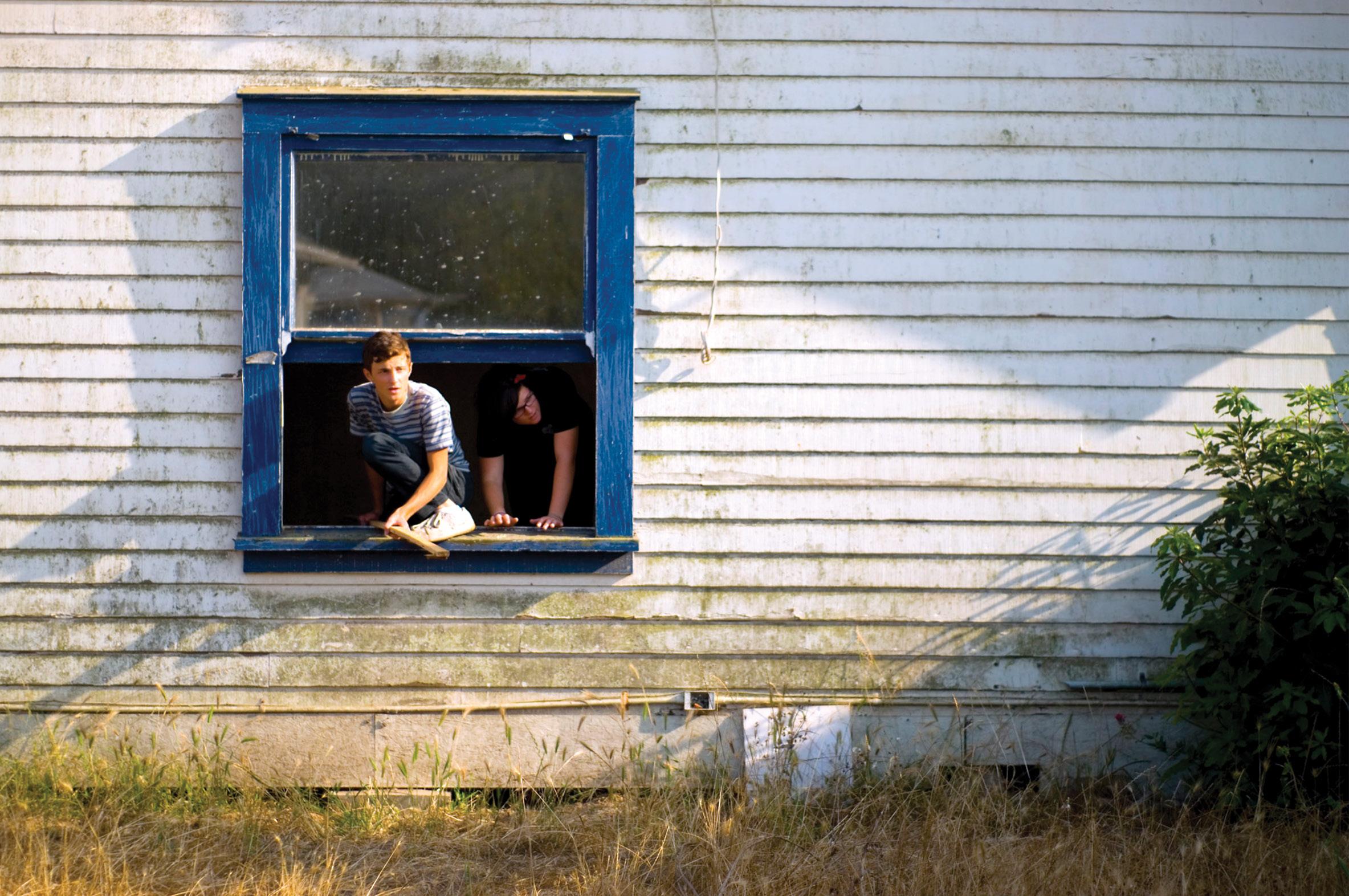
We
didn’t consider
the cost of potential trespassing charges because, well, we were teenagers and we believed we were immortal.
They Say There’s No Free Lunch. But What About Free Stays at One of the Most Coveted Hotels on the Coast?
Whenwe realized that the Miramar was completely unattended, we began pilfering the nearby bungalows for anything left behind that could be made useful. The bungalows were nice, but we didn’t want to settle for a landlocked abode.
We wanted the room with the money shot—the one with the vast unparalleled Pacific spread out before us, its waves lapping at our feet. We dragged over a few unused mattresses, brought in sheets, stocked up on sleeping bags, and we were set.
We inspected the ocean-view rooms and settled on one with the least amount of holes punched into the walls. It might have been wise to wonder “who made those giant holes?” but that was the least of our worries. The main problem at hand was the doorknob and locks. How would we keep out the no-good squatters who might try and lay stake to our claim? You’ll have to use your imagination for this part, but trust me when I say that the doorknob to our Miramar vacation stay soon unlocked to the turn of our keys.
The first night was eerie. There was no way around the lack of electricity. We brought portable lamps and kept the lights dim, praying that no one would spot an out of place shimmer. We spoke in hushed whispers, giggly as can be. Did we really manage to sneak a secret spot at the Miramar? The sound of the surf pounded away outside. An ominous warning or a gentle reminder that the world reveals itself to those who want it? We allowed it to soothe our anxious thoughts, and drifted off. Who needs sleep sounds when you have the Pacific as your pacifier?
We wanted the room with the money shot—the one with the vast unparalleled Pacific spread out before us, its waves lapping at our feet.
Iunderstand why Caruso bought the property. The Miramar’s view is one of the greatest in North America, worth the high price tag. Waking up to the vast expanse of the ocean is unmatched. For us, it was priceless, literally and figuratively. We threw open the dirty curtains, the Santa Barbara sun warming our incredulous faces. The endless blue waters enveloped us, filling our souls with something primal, a swelling that made us both want to laugh and cry.

One fine day, bored with the same old buoy swims, we ventured off across the property in hopes of finding something to scratch our devilish itch.
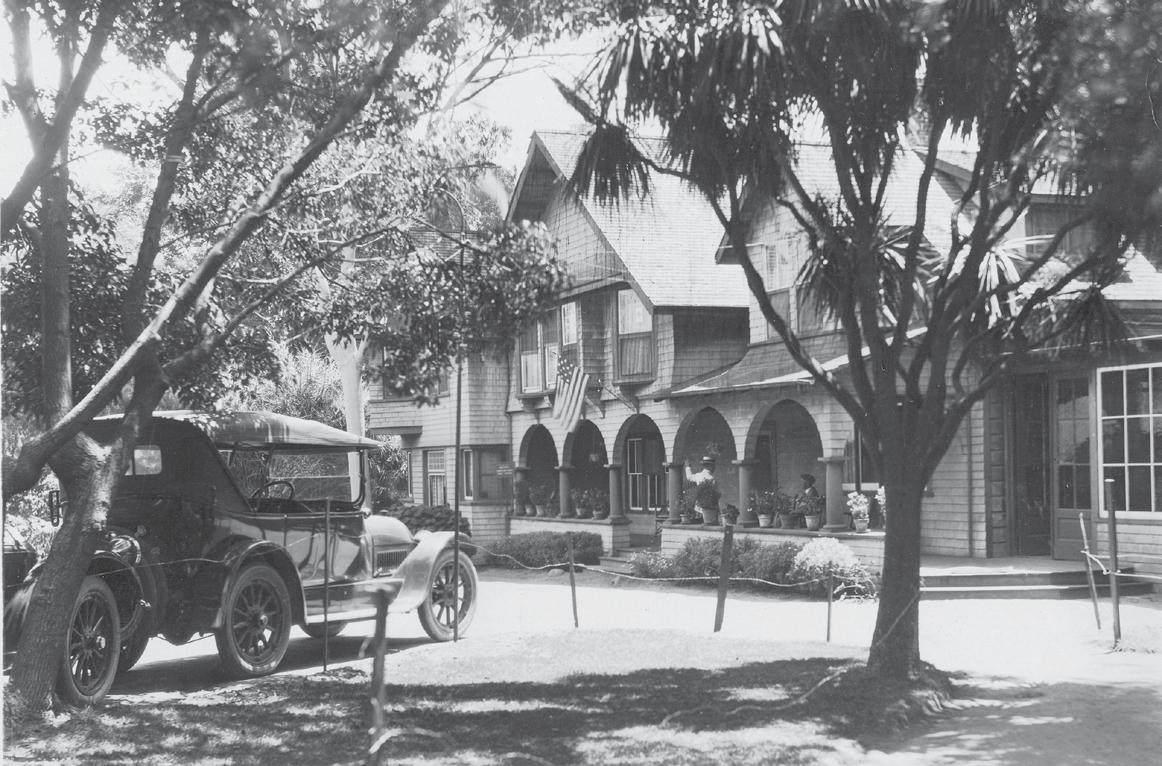
We weren’t there to cause chaos or harm anyone. What we wanted was to share in the unique beauty of Montecito. From our room, we carefully found our way onto the sand and mingled in with the other beachgoers enjoying their afternoon sun, no one the wiser. The cool waters invigorated us as we swam to the buoys and back and spent the day surfing. As evening fell, and families gathered their children and packed up their things to go home, we quietly slunk back through the fences to our hidden home away from home.
The biggest downside was no running water or plumbing. We had to haul food in, Super Cucas burritos so big
that they could last a few days. Anyone with an iota of sense could see this wouldn’t be sustainable long term. But romantic reveries of a secret beachside clubhouse were more powerful than logic.
For years, the abandoned Miramar was a total ghost town where we were the spirits that haunted it. Oddly, we never came across anyone else scrounging for scraps of the sweet life. We seemed to be the only action in town. No battles for turf. No standoffs for the best oceanside suite. We didn’t even have to fend off vermin. We lived in our own idyllic bubble of rubble and debris.
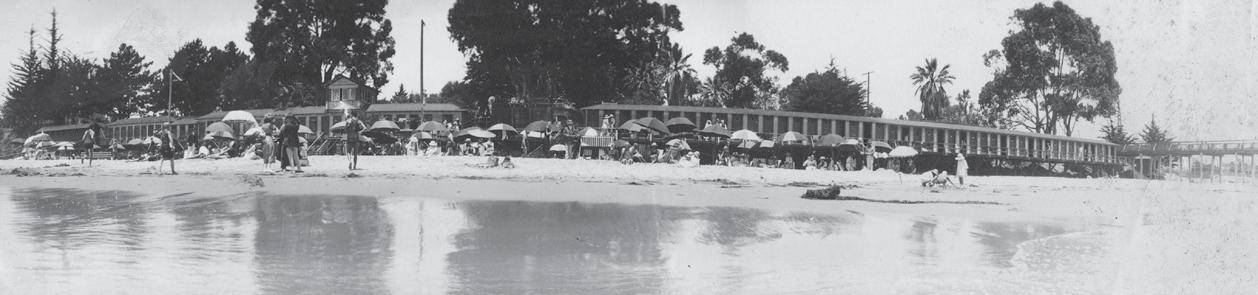

For years, the abandoned Miramar was a total ghost town where we were the spirits that haunted it.
One fine day, bored with the same old buoy swims, we ventured off across the property in hopes of finding something to scratch our devilish itch. The gods of gleeful troublemaking were smiling down on us because we soon came upon a maintenance golf cart with the keys dangling from the ignition. Was this a mirage? Miraculously, it turned on.
As urban legend has it, we took the cart for a thrilling spin. We were not unlike that kid with the Big Wheel in The Shining, childishly maneuvering our way through an empty resort. In our case, dodging dangerous piles of debris, careening from one end of the resort to the other, cosplaying like we survived a nuclear apocalypse and were the last ones left alive.

Over the years, our charming little beachside hovel was used as a place to experiment with a part-time vagabond life. It was often a weekend retreat, a way to experience a romantic roll in the hay as our late teens hormones raged.
“Hey, I’ve reserved us an ocean-view room at one of the most coveted hotels in Montecito. We just have to traverse a bit of barbed wire and evade local security first. How fast can you run?”
And just to dispel any suspicions of drug-induced debauchery, we were proudly drug free. We got high on the fun and the thrill of it all. Not to mention, it helps to have your senses intact when you think security has sniffed you out or in case a curious competitor happened to be lurking around the corner.
We kept up with the development of the property through the local papers, including the Montecito Journal, hoping against hope that our freewheeling life at the
We’re older now: we own businesses in town, have full-time jobs, value security, and spend time with our own families. In one full-circle moment—a sort of karmic retribution—a member of our crew ended up working construction on the final big push of the Miramar reopening, refurbishing the room we secretly stayed in just years before.
Miramar could last forever. But as much as we wanted to ignore it, signs of the end started popping up. We’d come across piles of fresh construction materials, and our stomachs would turn in knots. Eventually, the papers confirmed our fears. Development was coming.
The end of it all was like any other day. We casually walked the path to our secret hole in the fence only to be met, this time, by a security guard posted out front. Our stomachs dropped. Were the police ready to haul us into another “free” living situation? I’d like to say there was a classic showdown, but instead, we quietly resigned to the fact that our last night there was our last night there.

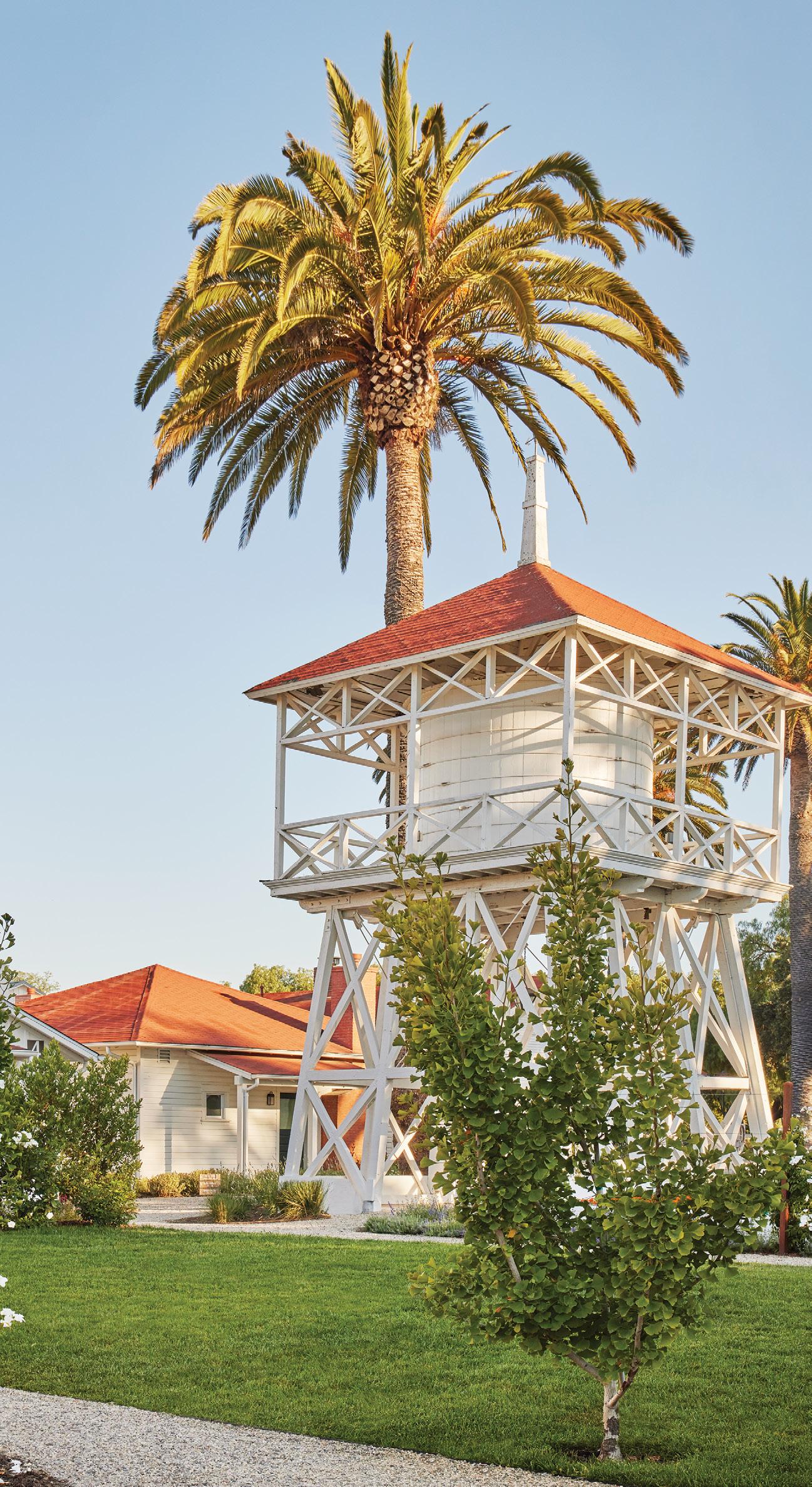
STORY
BY LES FIRESTEIN
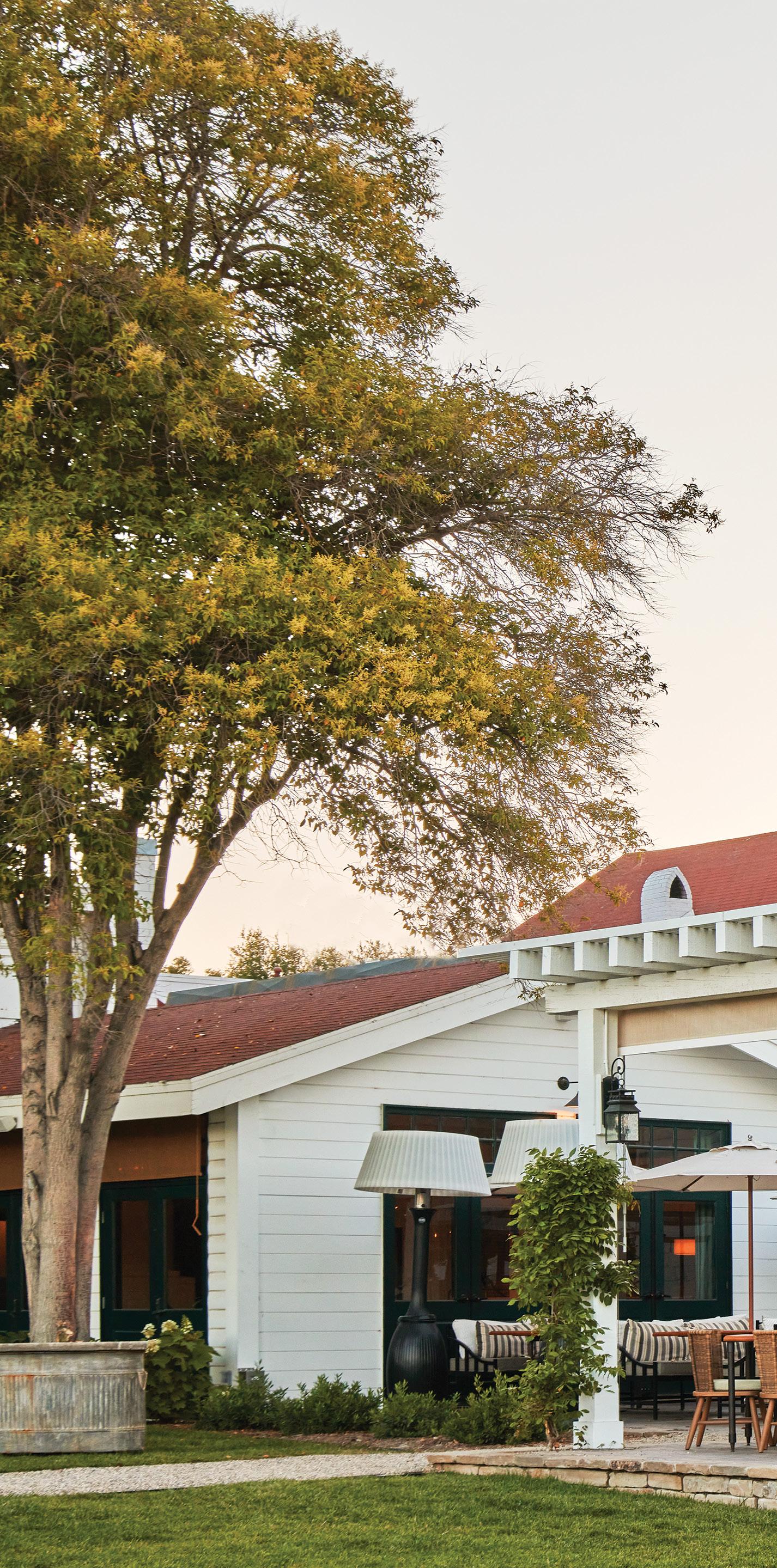

LOS OLIVOS, Santa Ynez Valley—A warm Saturday evening, and the Santa Ynez Valley’s Mattei’s Tavern is aglow on the (estimated) 51,000th sunset of its 140-year history. If you can tune out the occasional clink and sigh of Syrah-hoisting guests, the place could be glancingly mistaken for the railroad and stagecoach stop it once was. The original 19th-century water tower stands sentinel against a purple dusk, several couples lounging and sipping in the thickening shadows beneath it. And you can just make out the silhouette of an adjacent barn, delicately strung with beaded lights and looming like a friendly giant. There are also pleasantly crackling, inexhaustible fire pits and murmuring fountains whose musical waters never cease. First impressions aside, we can guess an 1890s time traveler wandering onto the campus with his wicker suitcase wouldn’t know quite what to make of the scene.
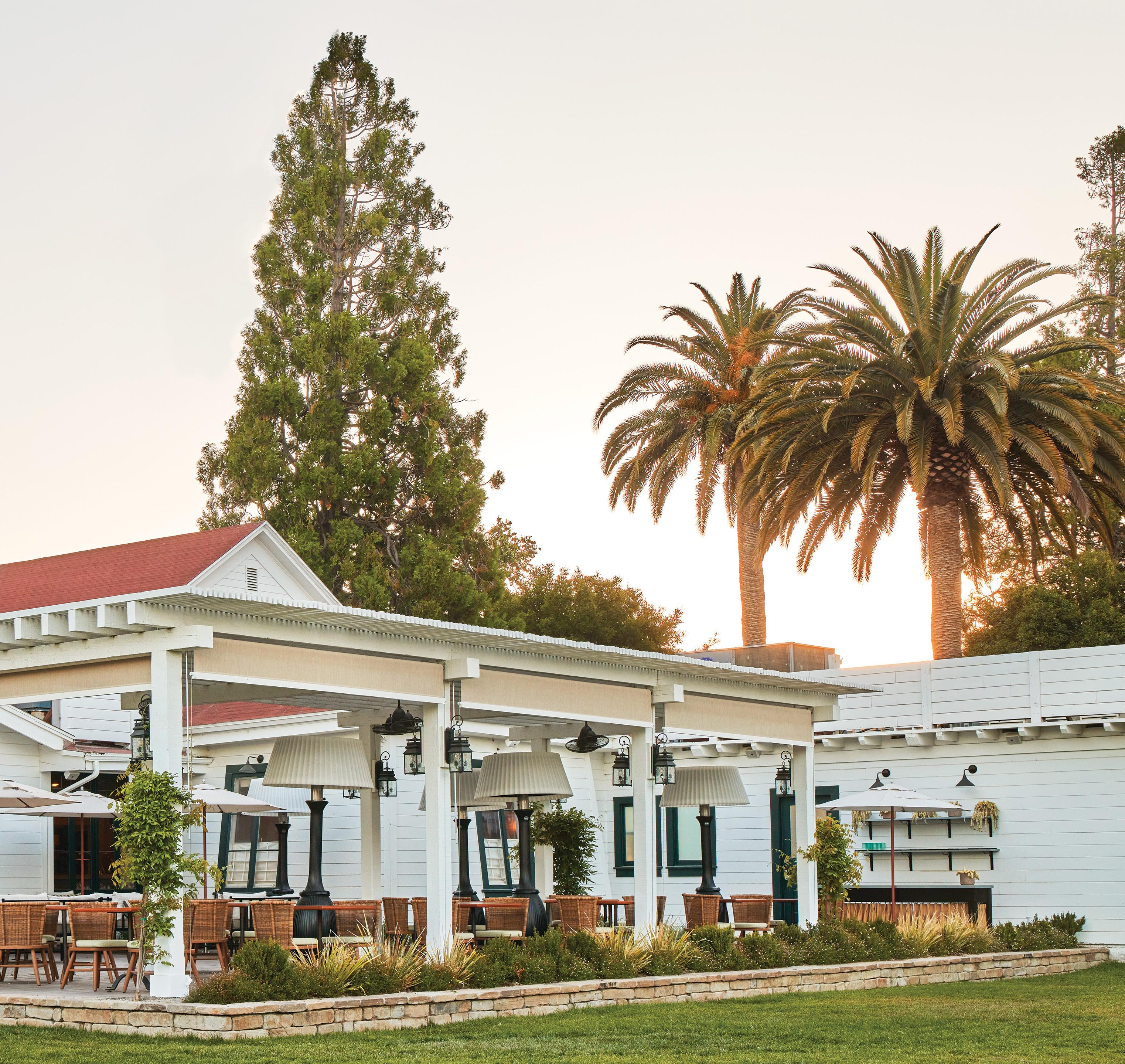

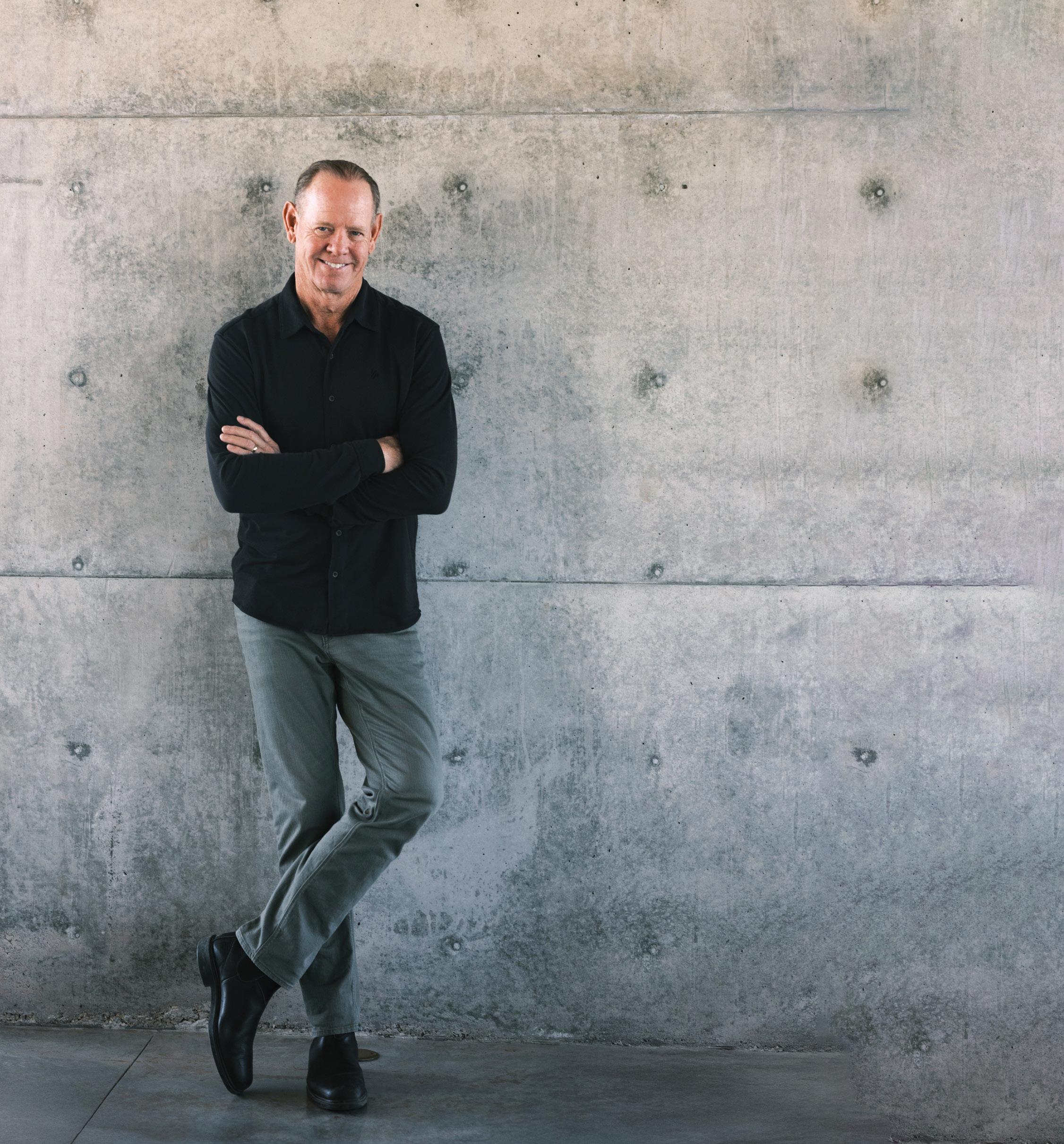
UNTIL, that is, he entered the historic tavern building itself. Opened in 1886 as the Central Hotel to serve passengers alighting from the new Pacific Coast Railway branch line station, the inn has been polished and retouched to its former glory, every vintage wood plank lovingly restored and buffed within an inch of its life. But for all that, Mattei’s is not a museum piece. Recently rejuvenated to elevate anew its undiminished
THEIR SIGNATURE IS PARADOXICALLY INVISIBLE: A RELENTLESS DEDICATION TO CONTEXT, PROBLEMSOLVING, AND WHAT PRINCIPAL MICHAEL HOLLIDAY LIKES TO CALL “STRUCTURES OF MERIT.”

character, the place is vibrant with human congress. This energizing blend of historic charm and contemporary buzz is precisely what the architects at DMHA were after.
“[The goal was] to blend the simplicity of modern farmhouse design,” the project statement explains, “…while respecting and carefully enhancing the original historic buildings on the site.”
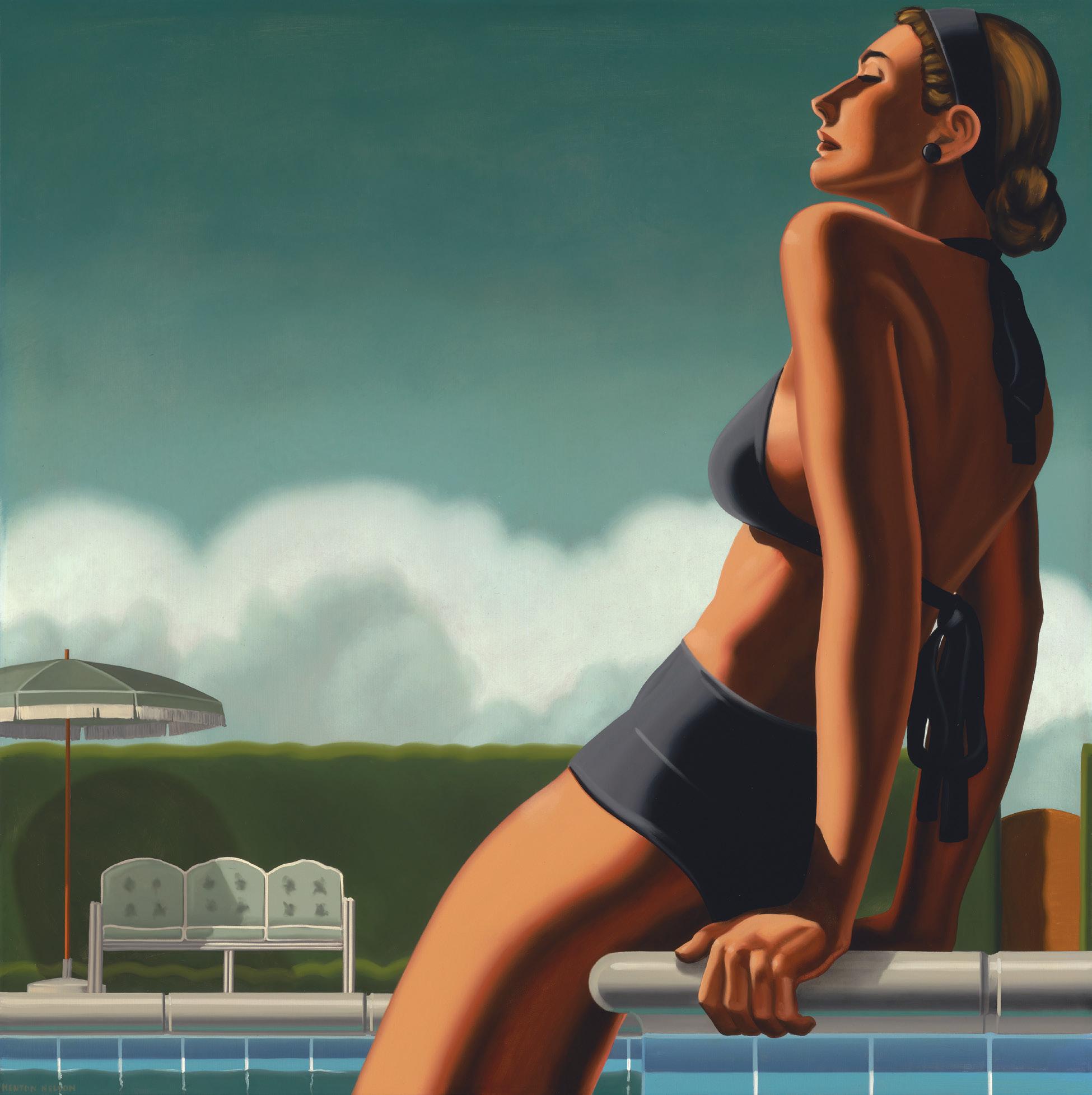
DMHA Architecture & Interior Design, a Santa Barbara-based firm, doesn’t traffic in flashy signature forms or trendy affectation. Their signature is paradoxically invisible: a relentless dedication to context, problem-solving, and what principal Michael Holliday likes to call “structures of merit.”
Holliday’s own architectural origin story reads like a chapter from a Tom Wolfe novel—irreverent, passionate, a little rebellious. He grew up in the modernist playground of 1960s Sarasota, Florida, trotting through houses by mid-century icon Paul Rudolph as if they were his personal jungle gyms. Perhaps not surprisingly, Michael Holliday—the son of an architect—has the discipline in his blood. Fate would have it that Michael’s son, Erik Holliday, would also follow in the family footsteps collaborating with his father on Spyglass Ridge (read on!). As young men will, Michael initially sought a distinct path of his own, immersing himself in pre-med. In the end he was drawn back to building and design— lured finally by his father’s earlier articulation of sheer creative joy. “He goes, I can’t think of anything that is more fun. People actually pay me to do what I love, which is design and build and create .” It was, the elder Holliday added, “the passion of kings throughout antiquity to design and build structures of merit.” Holliday embraced that royal passion and has never looked back.
THREEdecades later, DMHA has forged a reputation for making the impossible possible. Led by Holliday along with partners Ed DeVicente, Ryan Mills, and Mike Stroh—the DMHA modus operandi is to tease out the contextual constraints of each project and then solve the hell out of them. “We thrive on the complexity,” Holliday says of taking on projects that other architects might be inclined to sidestep. In the sun-drenched regulatory crucible of Santa Barbara County, that means navigating a labyrinth of strict design rules, historical sensitivities, environmental challenges, and—perhaps most formidable of all— community opinion.
The DMHA continuum may be best understood by looking at two diametrically different
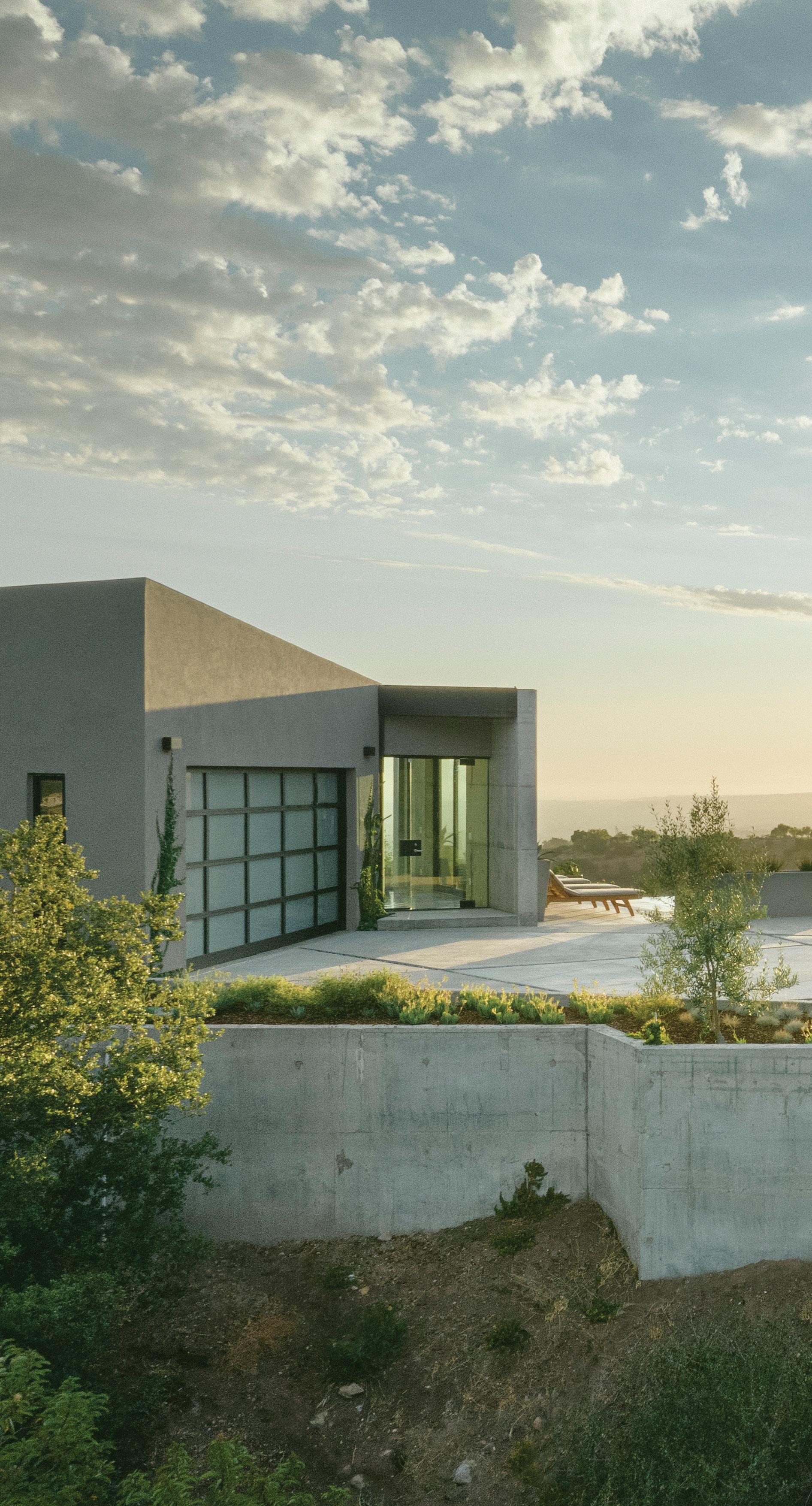
projects in their portfolio: a modernist private residence known as the Spyglass Ridge House, and Santa Ynez Valley’s historic Mattei’s Tavern, whose deft reiteration as an authentically rustic luxury resort left the frontier spirit of the place intact. Each project posed a constellation of challenges—fire codes, preservation of character, neighborhood

A HOUSE IS NOT A HOME, AS THE OLD SONG GOES; DMHA WOULD ADD THAT A BUILDING IS NOT A PLACE UNTIL IT HAS THAT INEFFABLE ALCHEMY OF HERE, THAT VIBE WHOSE EMERGENCE IN A PROJECT OWES MUCH TO THE ENGAGED CONSENSUS THAT CENTERS DMHA’S PROCESS.
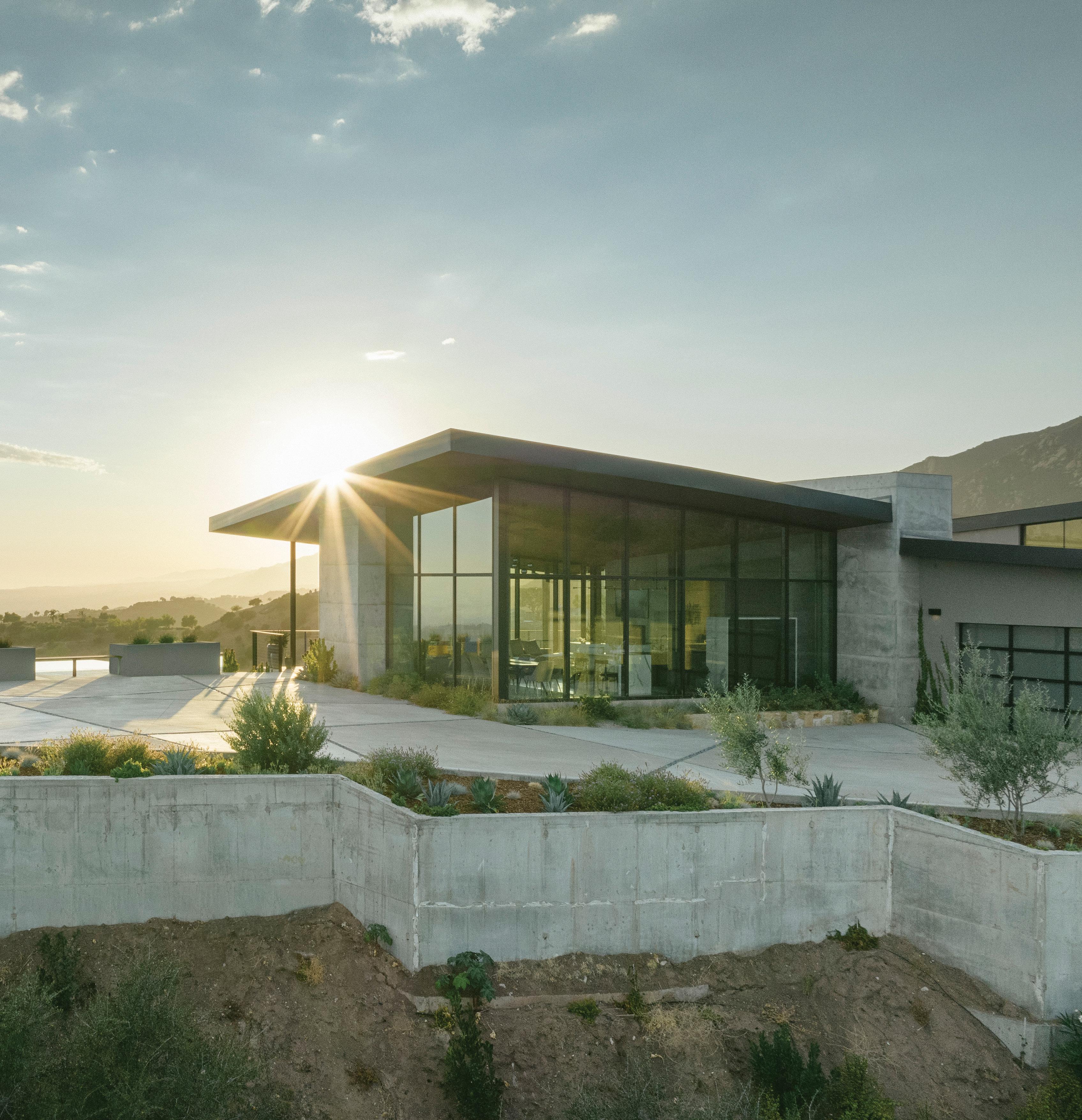
politics, you name it. DMHA approaches these densely-bunched hurdles with a sort of holistic pragmatism that engages everyone in the process, from city officials to next-door neighbors.
A house is not a home, as the old song goes; DMHA would add that a building is not a place until it has that

ineffable alchemy of here, that vibe whose emergence in a project owes much to the engaged consensus that centers DMHA’s process. So how do you uncork a vibe? One answer lies on a windswept ridge high above Santa Barbara, where an unbuildable project got built. And then some.
The Spyglass Ridge Residence occupies a spectacular perch in the foothills above Santa Barbara. Rebuilt after a wildfire reduced the previous home to ash, the low-slung design of concrete, glass, and steel hugs the contours of the hill. Creative site planning even solved a “mission impossible” fire truck turnaround on this site once considered by some to be unbuildable, proving that no code is too tough for a determined and indefatigable architectural concern.
DRIVE up a narrow road into Santa Barbara’s coastal foothills—past chaparral, boulders, and the occasional scorched tree trunk—and you’ll find the Spyglass Ridge house. Modern without ostentation, it’s a sleek arrangement of horizontal roof planes and floor-to-ceiling glass. The manse’s presentational tranquility and million-dollar ocean views belie the fiery drama from whose ashes the house quite literally rose.
The site’s previous structure—a mundane ranch-style home—was burned to the ground by the notorious Je-
susita Fire. When Holliday’s client bought the charred 2.7-acre property, many thought it a fool’s errand. The lot sat atop a ridge with a highly constrained building envelope and a perilously long driveway. Given the parcel’s inflammatory history, a new design would need to include room for a fire engine to turn around at the top of the drive. Early on, the whispering classes dismissed Spyglass as quite possibly “unbuildable.”
For DMHA, “unbuildable” rhymes with “catnip.” The firm huddled with county officials and fire marshals, poring over regulations and topographic maps.
“We fully embrace that upfront research… a due diligence process to figure out whether we even want to help,” Holliday explains. The solution was delightfully clever: they split the program into a main house and a detached guest house. The space between the two structures would be the driveway’s looping terminus—and a broad, fortified apron engineered to handle 50,000 pounds of hulking red fire engine. Holliday walked into the fire chief’s office with the plan and its required “hammerhead” turn.
“I said, ‘Hey, I think we solved that problem’… and [the chief] goes, ‘Hey—you did!’” Holliday recalls the exchange with a grin.
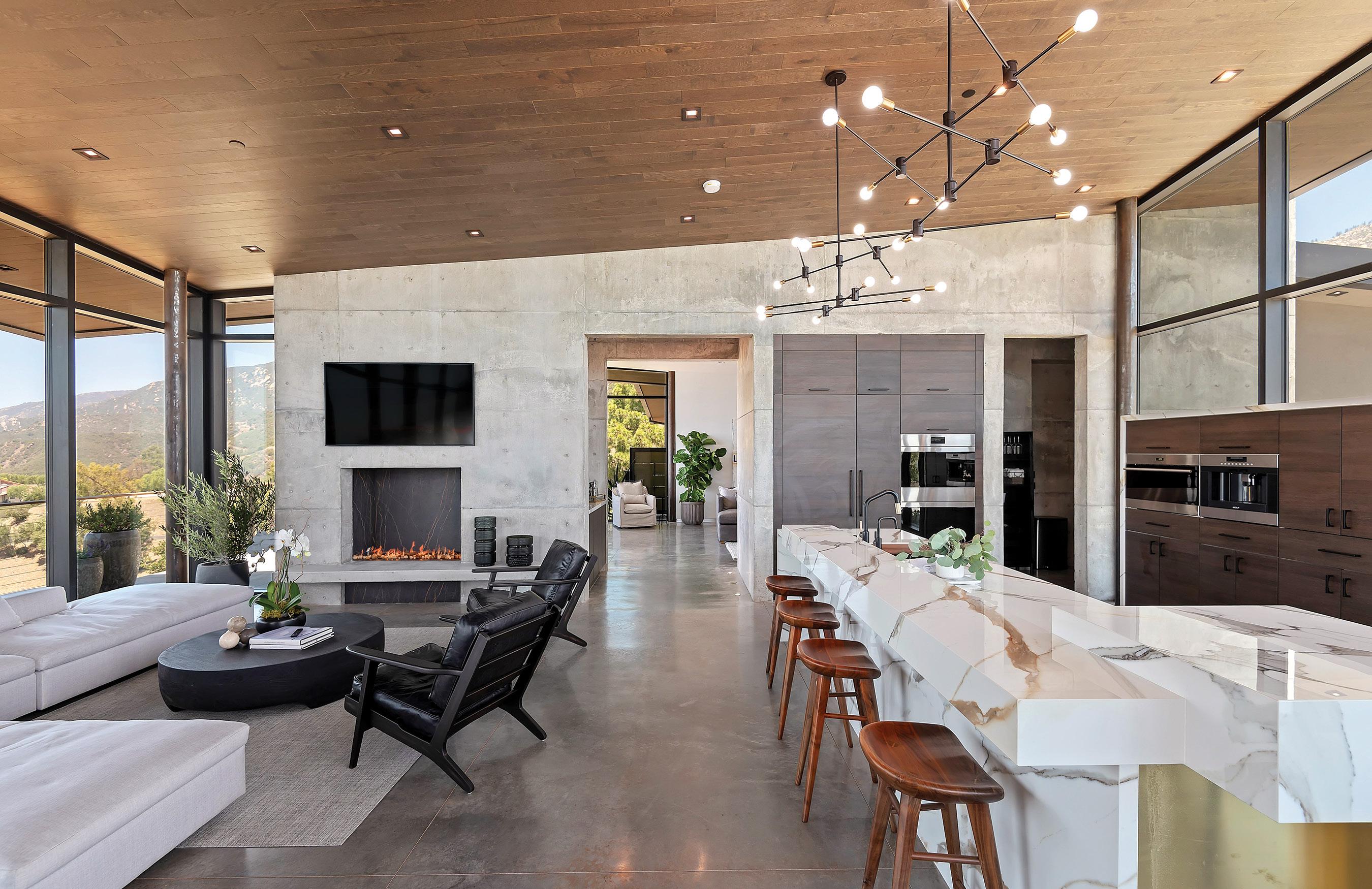


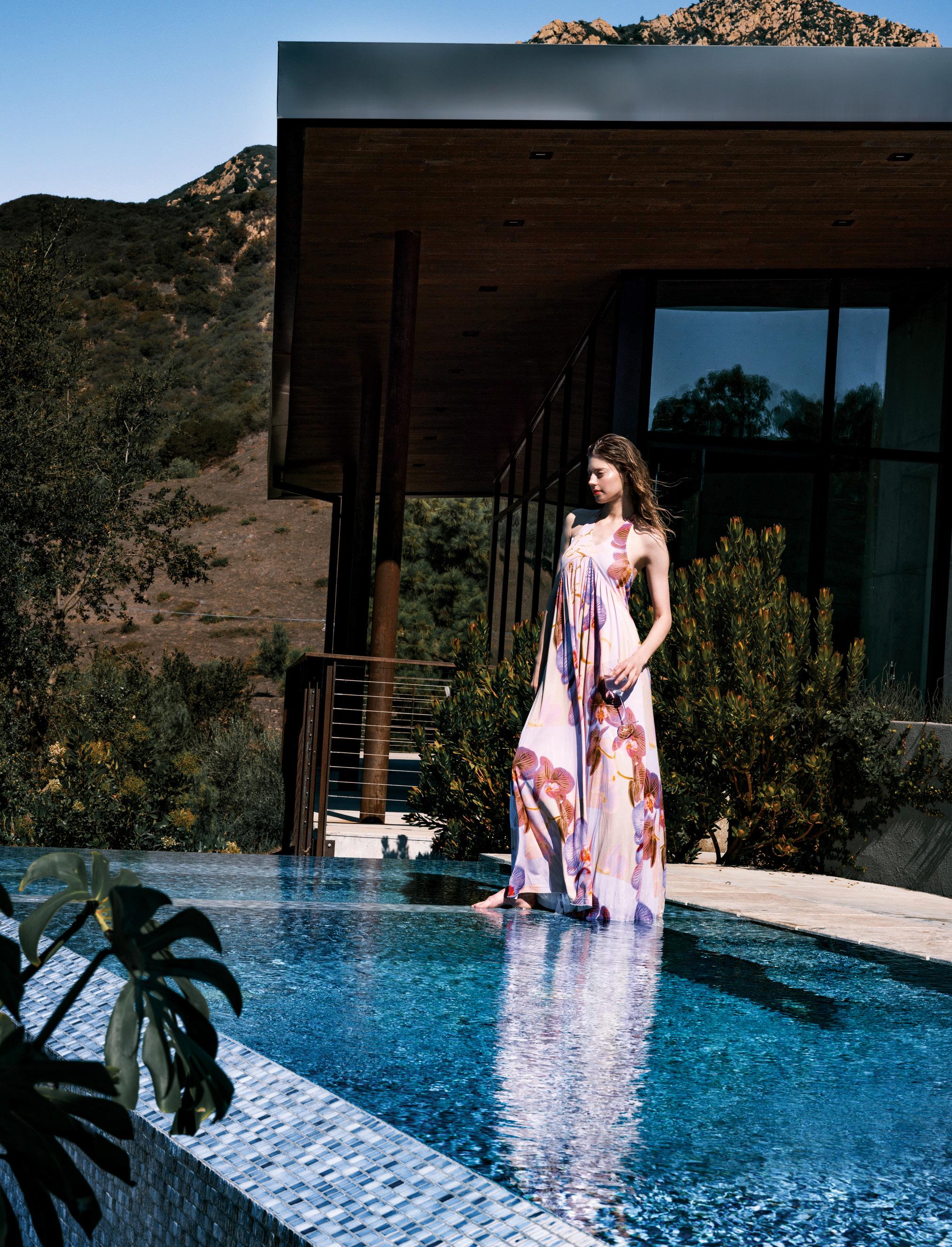
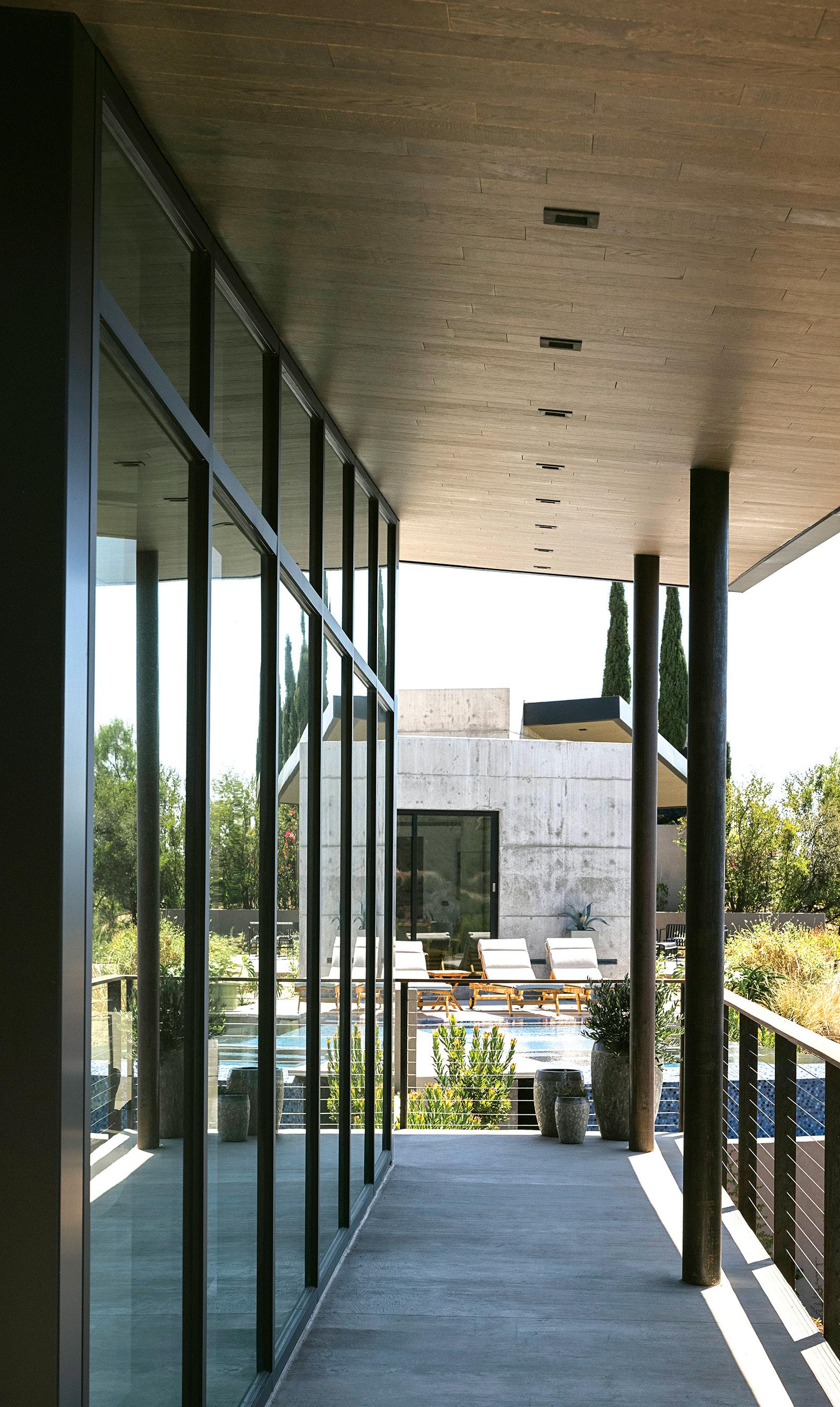
SPYGLASS is no lonely aerie—there are neighbors up on that ridge, and DMHA wasn’t about to ignore them. “One opposing neighbor can cost you tens of thousands of dollars and years in process,” Holliday notes from hard experience. So he personally knocked on doors. Not everyone was thrilled at the prospect of a contemporary masterpiece on their rustic ridge. In this particular case Holliday’s response—a stroke of diplomatic, door-to-door statesmanship—was to present the stark alternative allowed under zoning: a hypothetical two-story “nightmare house” with a red tile pitched roof and glaring white stucco walls. The subtext was clear: We can build something that tries its best to disappear into the hillside, or you might end up with… something that’s less than aesthetically pleasing. The neighbors agreed. When the project went before the county's Board of Architectural Review, there was strong support for the modernist solution. In the end, a little statesmanship—paired with strong design—prevailed and the new contemporary look won over both the neighbors and BAR. .
“Spyglass Ridge Residence represents a unique fire-rebuild opportunity,” notes DMHA’s portfolio, “A timeless, modern design [that] embraces the scenic vistas, overflows with natural daylight, and innovatively fits on the promontory site.” The entire compound is armored with discreet resiliency features: fire-resistant landscaping, ember-proof vents, and that beefy concrete construction that could shrug off all but the fiercest blaze. Both fortress and haven, Spyglass is a modern sanctuary born of disaster.
The lessons of Spyglass served to bolster DMHA’s institutional mantra—start with thorough research, collaborate with officials, listen to neighbors, and never say never. Those principles would be tested again on the next project: one dealing with history.
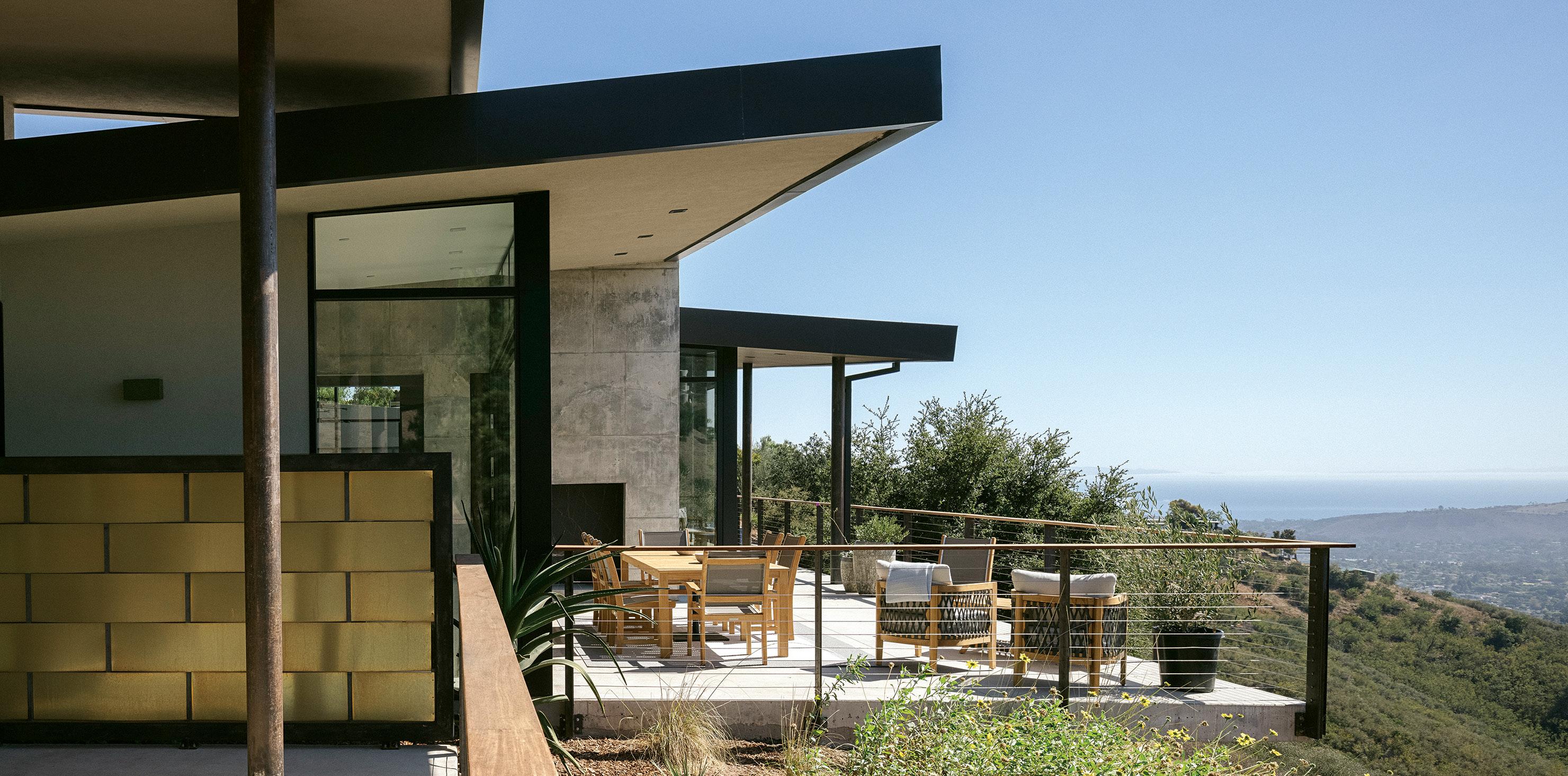



“
You will








remember this novel–its hero and characters and scenes–for a long time.
A big-hearted story
of desperation and courage, crime and redemption, love and loss–it is as entertaining as it is moving.”
– Fannie
Flagg Author of Fried Green Tomatoes
Now available at Chaucer’s Books, Tecolote Book Shop and Godmothers
Twilight at The Inn at Mattei’s Tavern in Los Olivos, California: Once a humble 1886 stagecoach stop, now reborn as a lively resort where history and modern luxury mingle under the oaks. This iconic tavern—carefully restored and expanded by DMHA—thrums with new life as guests clink glasses by the old water tower and newlyweds dance in a rustic barn turned ballroom.
IF
SPYGLASS was a battle with nature and bureaucracy, Mattei’s Tavern was a delicate dance with history itself. The white clapboard tavern in Los Olivos had stood for nearly 140 years. Locals spoke of the place with a reverence usually reserved for missions or courthouses. Holliday’s summation is succinct. “You’re taking over an iconic structure that people love for a whole lot of reasons. Anything you do is going to be highly scrutinized.” No pressure.
DMHA was brought onto the Mattei’s Tavern project by a developer who knew the firm “was good at figuring out the complexities of the county and the historic review process.” Still, the celebrated architects faced a puzzle. How do you tastefully augment a revered 1886 tavern with a 67-room luxury resort—freestanding cottage suites, pool, spa, winding gravel paths, and multiple new buildings—without overwriting the place’s character? The answer: very, very carefully, and with a lot of teamwork. Holliday with partners Ed DeVicente and Ryan Mills de-
vised a strategy to physically and conceptually separate old from new.
“Let’s restore Mattei’s Tavern and keep it as a separate project from the inn” was the mantra. The historic tavern building (with its dining rooms and iconic Victorian façade) would be meticulously rehabilitated on its own—a crown jewel exactingly polished in place by a master gemologist—while the new elements of the resort would orbit at a respectful and tastefully integrated distance. Guest cottages would populate the six-and-a-half-acre property where once stood old outbuildings, a two-story farmhouse-style annex would house a cluster of beautifully appointed hotel rooms, and a sumptuous spa and pool space would be nimbly maneuvered into the lot’s back corner. The community-pleasing coup de grâce? A grand artisanal barn, somehow both soaring and pastoral, whose weddings, banquets, and other large gatherings would not disturb the intimate time capsule of the tavern. When The Inn at Mattei’s Tavern (now
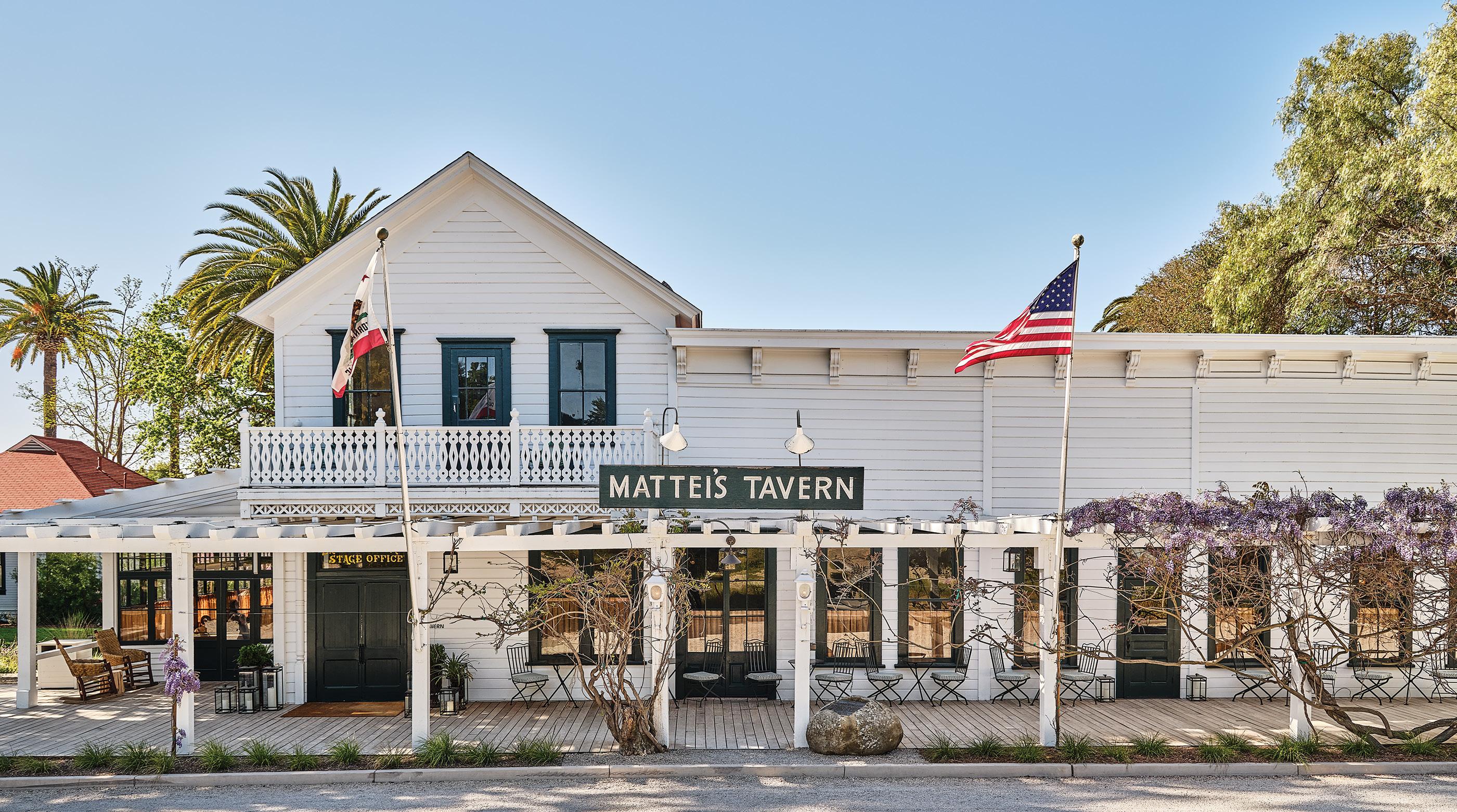

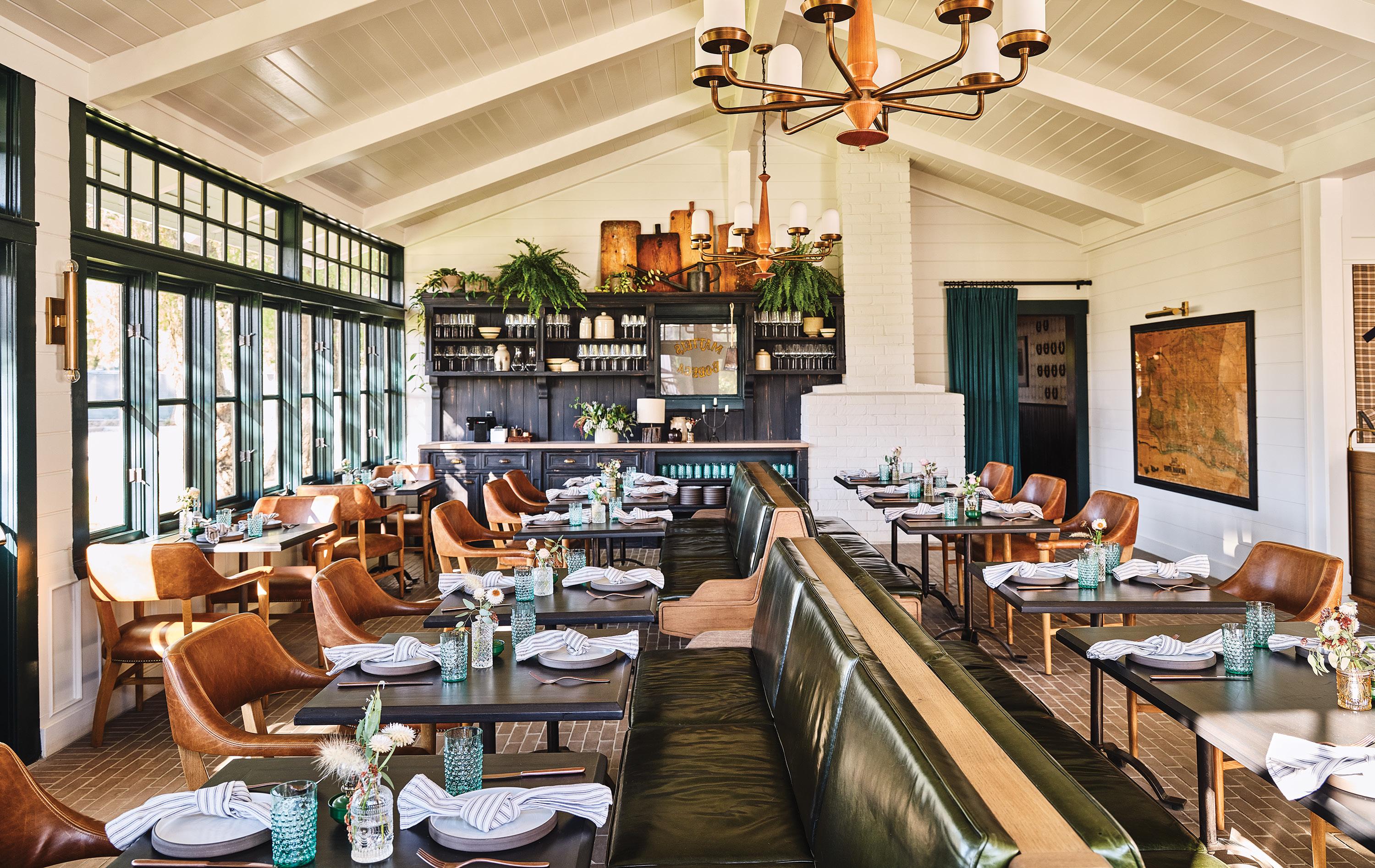
part of the luxury Auberge Resorts Collection) finally opened in early 2023, locals felt like their old friend had been respectfully revived.
As usual, collaboration was key. DMHA pulled in a local landscape architect (Courtney Jane Miller of CJM::LA) and world-class interior designers (San Francisco’s AvroKO). General contractors Northstar and Daniel Allen, alongside structural engineers Ashley & Vance, were partners in problem-solving.
DMHA’s close partnership with builders is a point of pride. The results speak for themselves. DMHA took the Santa Barbara Contractors Association award for design excellence in 2025. It seems fair to say the firm’s collective cohort is equal parts designer, diplomat, and detective. Is there a more concise way to summarize the DHMA approach?
“A theme of our work is that we get these impossible projects approved,” Holliday says. “We have a passion for placemaking.”
www.dmhaa.com
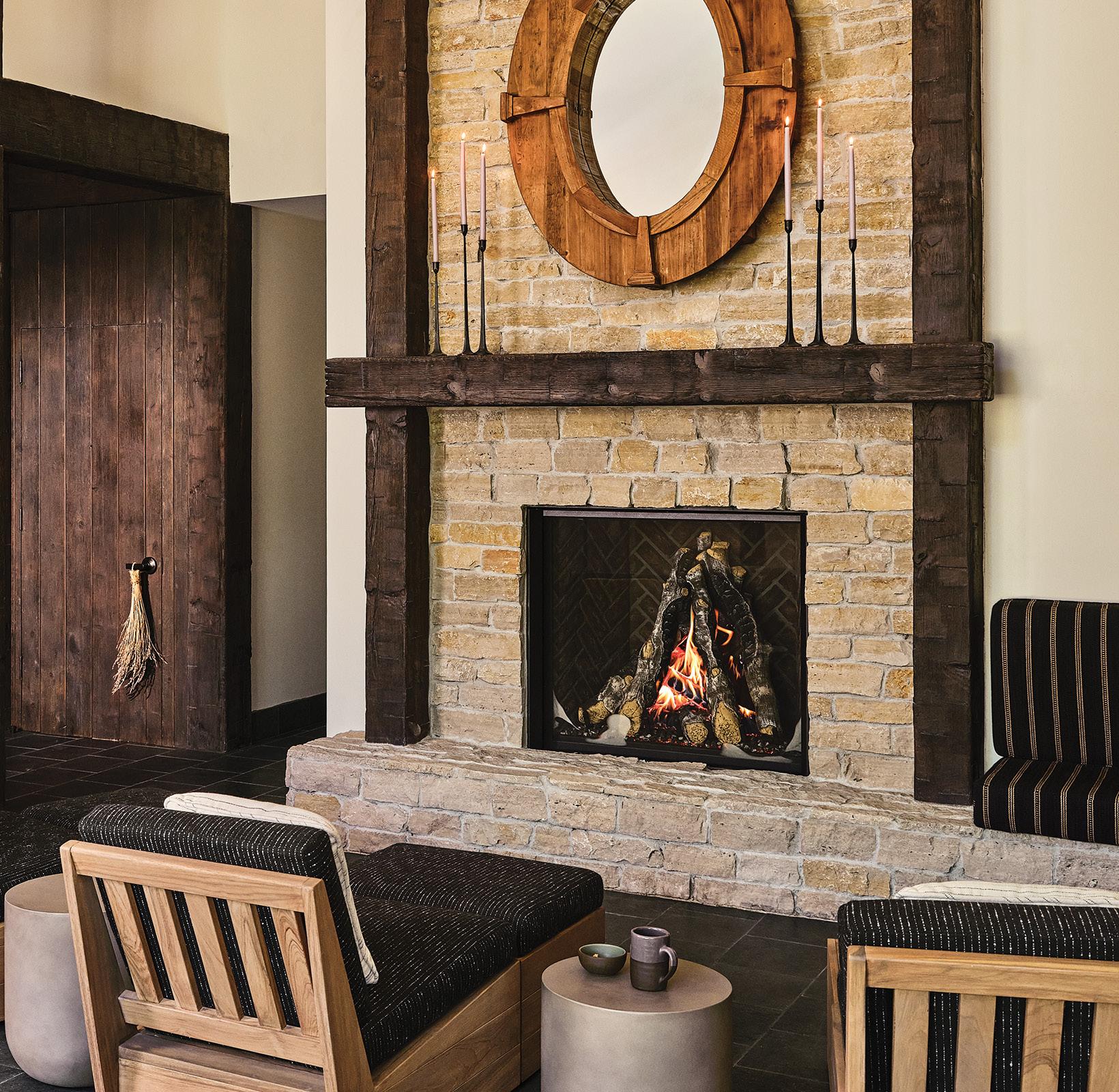

SOME professional relationships deepen over time, evolving into a creative shorthand built on trust and shared intention. Over 13 years of collaboration, CJM::LA and DMHA have developed exactly that—a partnership grounded in mutual respect and contextual sensitivity. At The Inn at Mattei’s Tavern in Los Olivos, their synergy found one of its most articulate expressions.
Originally established in 1886 during the stagecoach era, Mattei’s Tavern carries with it not just architectural significance, but cultural memory. For Courtney Jane Miller, founder of CJM::LA, historic projects begin long before a line is drawn. Her team immersed themselves in archival research—studying original plans, newspaper accounts, and local museum records—to understand not only what the property looked like, but how it lived.
“How did culture move through these spaces?” she asks. That question guided every landscape decision.
Working closely with DMHA, Courtney and CJM::LA co-lead Nicole Greer honored the Secretary of the Interior’s preservation standards, creating additions that are compatible rather than imitative—avoiding what Miller

calls the “Disneyfication” of history.
At Mattei’s, even the open space between landmarked buildings was protected, requiring careful choreography of new structures to preserve historic sightlines, specimen trees, and the expansive communal lawn.
Landscape became both storyteller and wayfinder. The historic water tower anchors circulation, offering guests an intuitive sense of orientation as they move through cottages and toward the tavern.
Gravel underfoot announces arrival with an audible crunch; natural-edged garden paths soften transitions.
At the pool, olive trees—a nod to Los Olivos itself— form a canopy above stone walls and textured surfaces, creating a space that feels rooted, visceral, and timeless.
Material selections were an ongoing dialogue between architecture, interiors, and landscape. Reclaimed elements, raw wood, rusted steel, aged brick, and stone were balanced carefully to ensure cohesion without excess.
The result is not a replica of the past, but a living extension of it—a project shaped by collaboration, restraint, and shared vision. At Mattei’s Tavern, CJM::LA and DMHA demonstrate that preservation, when guided by thoughtful partnership, becomes an act of contemporary artistry.
cjm-la.com
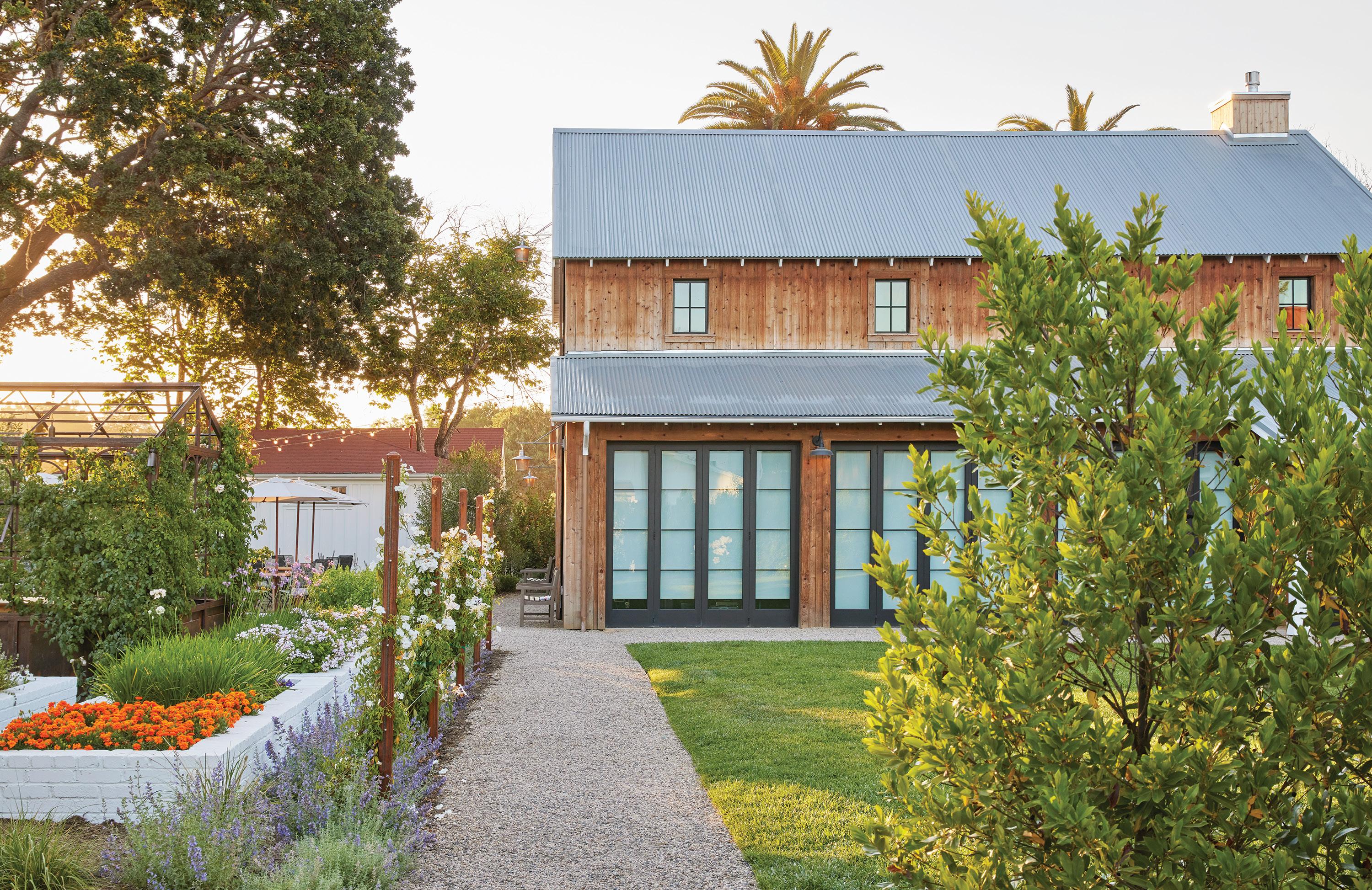
LARGE-SCALE
historic renovations are rarely linear. They demand not only craftsmanship, but steadiness—a team willing to step in, adapt, and carry a vision across the finish line without compromising its integrity. For Daniel Allen Construction (DAC), that moment came at The Inn at Mattei’s Tavern in Los Olivos.
Founded in Santa Barbara three decades ago by Daniel Allen and now co-led by his son Anand Allen, DAC was built on a simple premise: relationships matter as much as results.
That ethos aligned naturally with DMHA, the project’s architectural firm, whose detailed plans and disciplined oversight shaped the restoration from concept through completion.
DAC initially joined the effort to renovate the landmarked Keenan-Hartley House on the property. Several months into construction, as pandemic-era delays and contractor disruptions affected the broader resort timeline, ownership asked DAC to expand its role.
What began with pool and reception decks evolved into something far more substantial: Daniel Allen Construction became what Anand describes as the project’s “official

finish contractor,” ultimately taking over completion of all 67 guest rooms.
Electrical, plumbing, drywall, millwork, carpentry, cabinetry, paint—with a team that grew to more than 30 craftsmen on site, DAC adapted to whatever was required to meet Auberge’s five-star standard.
Yet what stands out in Allen’s recounting is not the scale of the work, but the partnership. Despite external pressures and scheduling strain, DMHA maintained the same level of intensity and professionalism—monthly walk-throughs, redlines, punch lists—never loosening their standards.
“Every decision had to be discussed,” Allen notes of working within a historic context.
With the historic cottages, preservation required restraint— saving materials where possible, respecting original oak floors, ensuring new interventions did not dilute the property’s identity. The goal was not speed alone, but stewardship.
Completed in phases between 2023 and 2024, Mattei’s Tavern reflects more than architectural vision. It reflects collaboration under pressure—a local, hands-on builder working in lockstep with a detail-driven design team to ensure that history was not simply restored, but honored.
dacbuilds.com
Inside Santa Barbara’s rolling parade of dragons, hamsters, and other e-bike locomoted handcrafted delights.
By Zach Rosen
We’ve all been there—walking down the street, minding our own business—when the silent purr of wheeled technology creeps up behind us.
You glance over your shoulder, ready to curse another teenager on an e-bike… and instead find yourself staring at a dragon. Or a guinea pig. Or what appears to be a Star Wars cruiser piloted by some smiling adult kid.
Who’s running this ship anyways?
I’m standing in a house-turned-workshop off Milpas, staring at a naked hamster. Gears exposed. Wires splayed. Fur waiting patiently nearby.
Power tools hang on the walls. A 3D printer sits in the corner.
In between welding masks and big foam eyeballs stand my hosts—Justin Gunn, Torin Curren, and Justine Pannier—and we are here to talk about the little things in life.
As we laugh and talk, the three of them pause at points. Torin is hand-shaping a rear fender for a VW bus that stands about three feet tall.
“Okay it needs to be a little more round.”
“Yeah it needs to arch more, right? It looks a little flat.”
The license plate reads “Micro Bus.”
Next to me is a snail. Its bulbous eyes stare up in agreeance.
Welcome to the world of Tiny Art Cars.
They exist in a gray zone of mechanical loophole and artistic mischief—legally pedalable, electrically assisted, engineered to slip through doorways and down State Street with plausible deniability.
As Justin puts it: “I wanted the convenience of a golf cart with the legal status of a bicycle.”
The wheel has had a fairly long and rather successful run. From Roman chariots to Victorian tricycles, from bakers’ delivery trikes to Radio Flyer childhood rites of passage... oh yeah, plus the wheel was pretty popular with everyone from cave people to pyramid builders… we’ve been rolling for a while.
This origin story though does not begin in a workshop or on a street. Or even a cave. It begins in the dust.
For years, Justin had cruised Burning Man in production golf carts, working in media, broadcasting live feeds from the Playa, operating at full spectacle scale. When that chapter closed, he returned as a civilian—which meant a squeaky, sunbaked beach cruiser from Walmart.
It was hot. It was far. It was exhausting. And at night, it was treacherous—two wheels sliding into invisible dunes, a face full of alkaline powder waiting at every miscalculation.
Justin knew. “There’s got to be a better way.”
He didn’t want to build a full art car. That meant storage, transport, permits, and a machine usable seven days a year. He wanted something nimble, personal, and that could provide year-round fun.
So he bought an industrial adult tricycle—the kind designed for warehouse work, weight-rated to carry hundreds of pounds. He electrified it. Bolted on a spring-loaded tractor seat for a passenger. Draped it in layers of fringe sourced from Los Angeles’ fabric district. Added lights. Added sound.
He called it Fringe Benefits.
Standing still, it looked like it was moving.
On Halloween in West Hollywood, cruising through a sea of costumes and chaos, Justin spotted something remarkable: a miniature Toyota Land Cruiser rolling toward him. It had headlights. A grill. A driver perched confidently inside.
That driver was Torin. A fateful collision of like minds. They rode together that night.
The tiny art car movement was born in that electric moment.
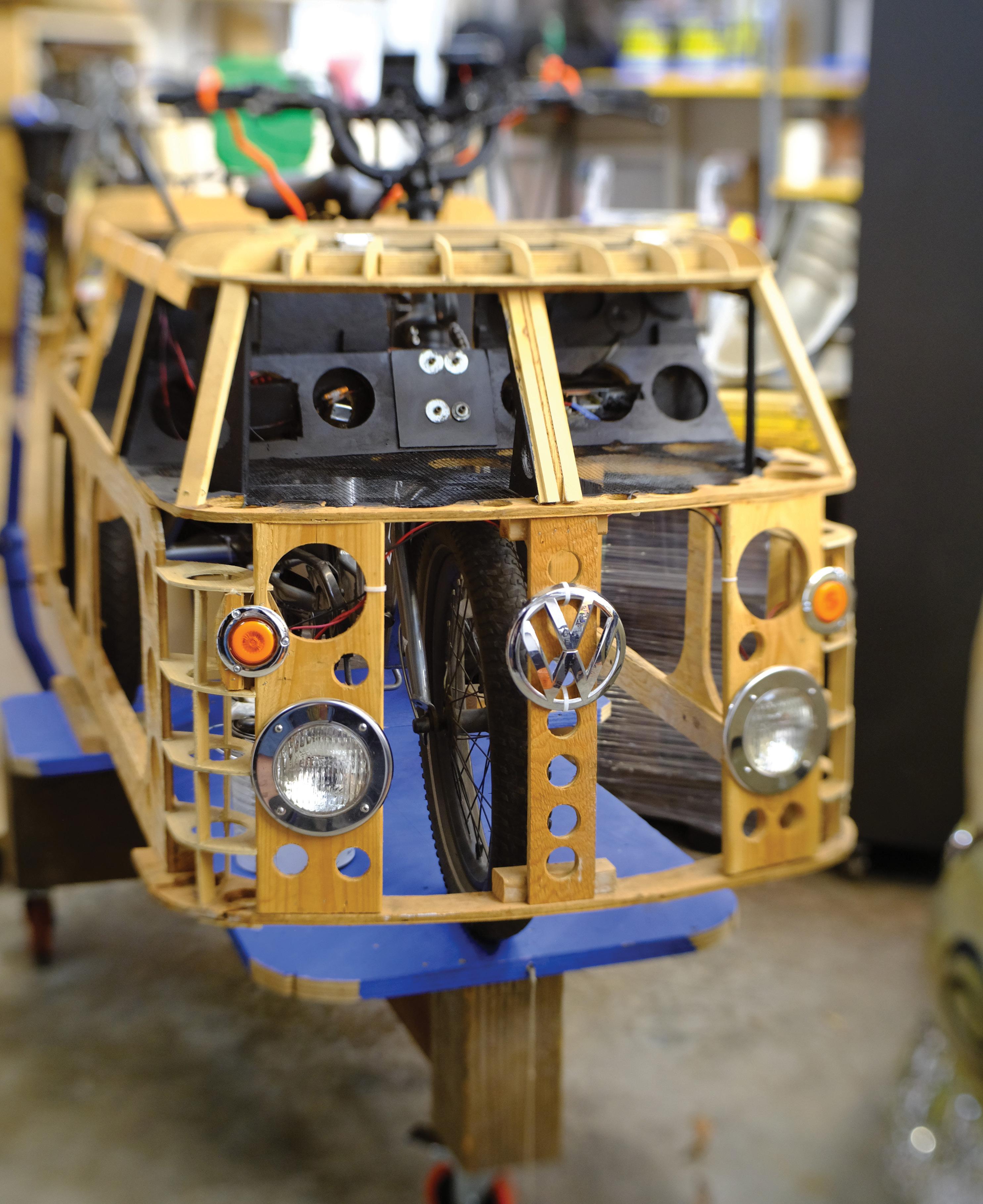
If Justin is the benevolent tinkerer, Torin is the sculptor.
Raised in Pasadena, he learned metal early—first in his grandfather’s locksmith shop, later welding high-end racing bicycle frames that would ship around the world. He became a general contractor by trade, fluent in measurements, codes, and structural integrity.
But tiny art cars are where he exhales.
“At work, it’s ABC, 123,” he says. “Here, it’s sculpting.”
He doesn’t laser-cut. He doesn’t outsource. He hand-shapes thin-gauge steel and aluminum. He salvages materials from job sites and coaxes them into curved fenders and improbable silhouettes. Foam becomes animal anatomy. Sheet metal becomes safari hood.
His first build—a tiny Land Cruiser fashioned from a shopping cart base—moved at a heroic crawl. He had to pull over on hills to let pedestrians pass. It didn’t matter. It looked magnificent.
Now his fleet includes a backward-pedaling snail designed purely to confuse and delight, a guinea pig small enough to slip through a standard doorway, and a pencil car so sharp it seems ready to draft blueprints of its own existence.
He builds them to fit through 36-inch doorways when possible. He thinks about ADA pathways. He considers torque, weight distribution, and the delicate choreography between motor and pedal.
These machines may be furry or whimsical on the outside, but beneath lies rigorous engineering.
Justin’s path to tiny art cars is less linear.
He’s been a computer geek. A television producer. Former MTV-era broadcaster. Not to mention the current Solstice president. A Disneyland mobility-scooter subversive who turns ADA carts into Star Wars troop transports detailed down to hand-forged hardware.
For one build—a turn-of-the-century horseless carriage—he found a restoration company in Indiana that specialized in antique carriage seats. They faxed him a diagram with dimensions. He recreated the seat shape in foam core, mounted it on a custom frame to check the fit, then ordered the fully upholstered piece fabricated the way it would have been built 150 years ago.
“They make them like they used to make them,” he says, admiring the hand-forged brackets.
Justin assembled it with shims and bolts, sourcing parts like a cinematic prop master with a mechanical degree.
“I still wouldn’t consider myself a fabricator,” he insists.
But he reverse-engineers electronics for fun. He tucks lithium batteries inside sculptural forms. He CAD models and 3D prints the parts he needs. He balances weight so the whole thing remains pedalable, legally speaking. He understands that the smaller the chassis, the more precision required.
He is, in short, both an artist and systems thinker.
Then there is Justine.
Mesa-raised. Roller-skating through Solstice parades since adolescence. Her first car was a 1975 Volkswagen bus. She still owns it.
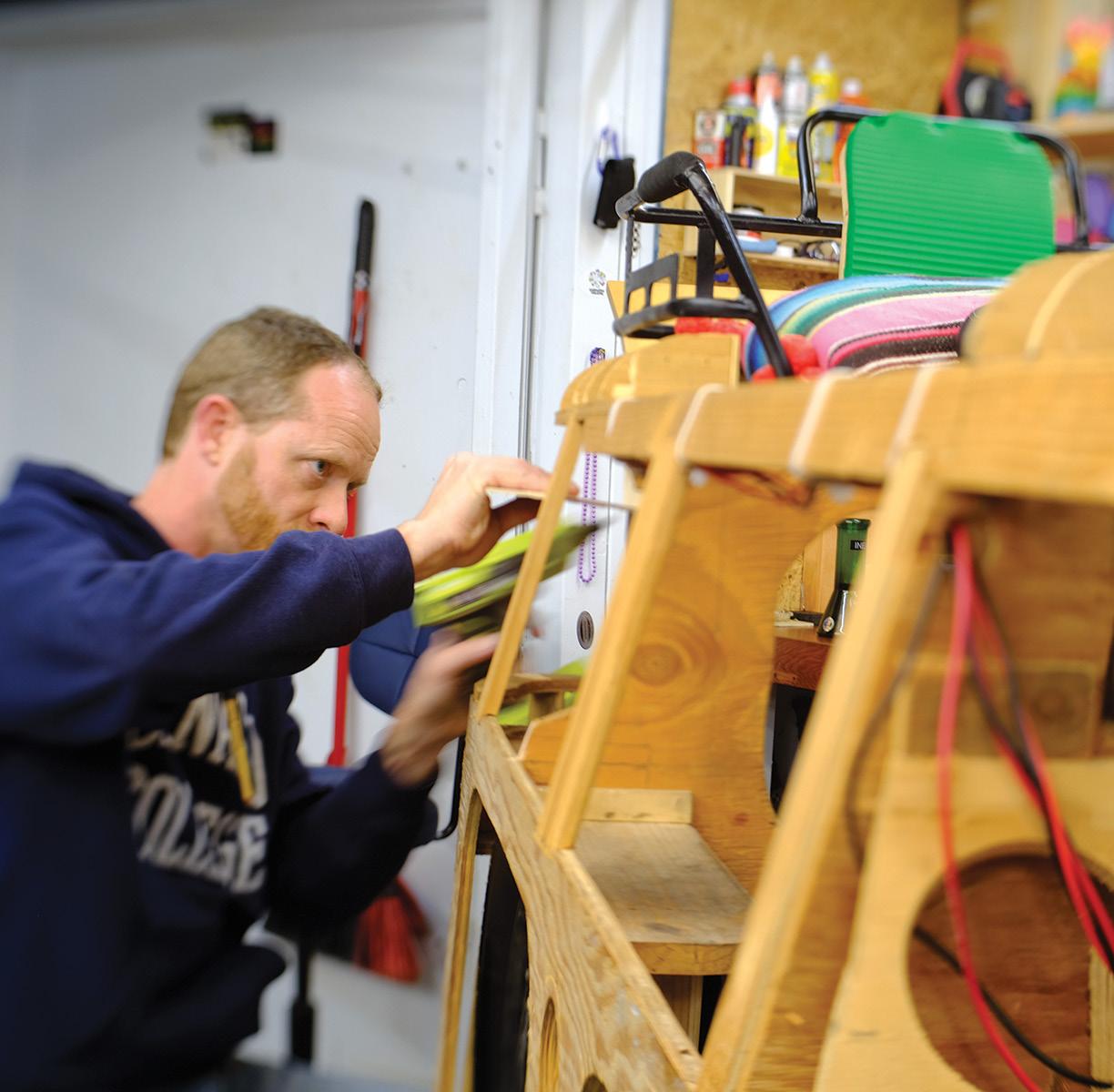


“I wanted the convenience of a golf cart with the legal status of a bicycle.”
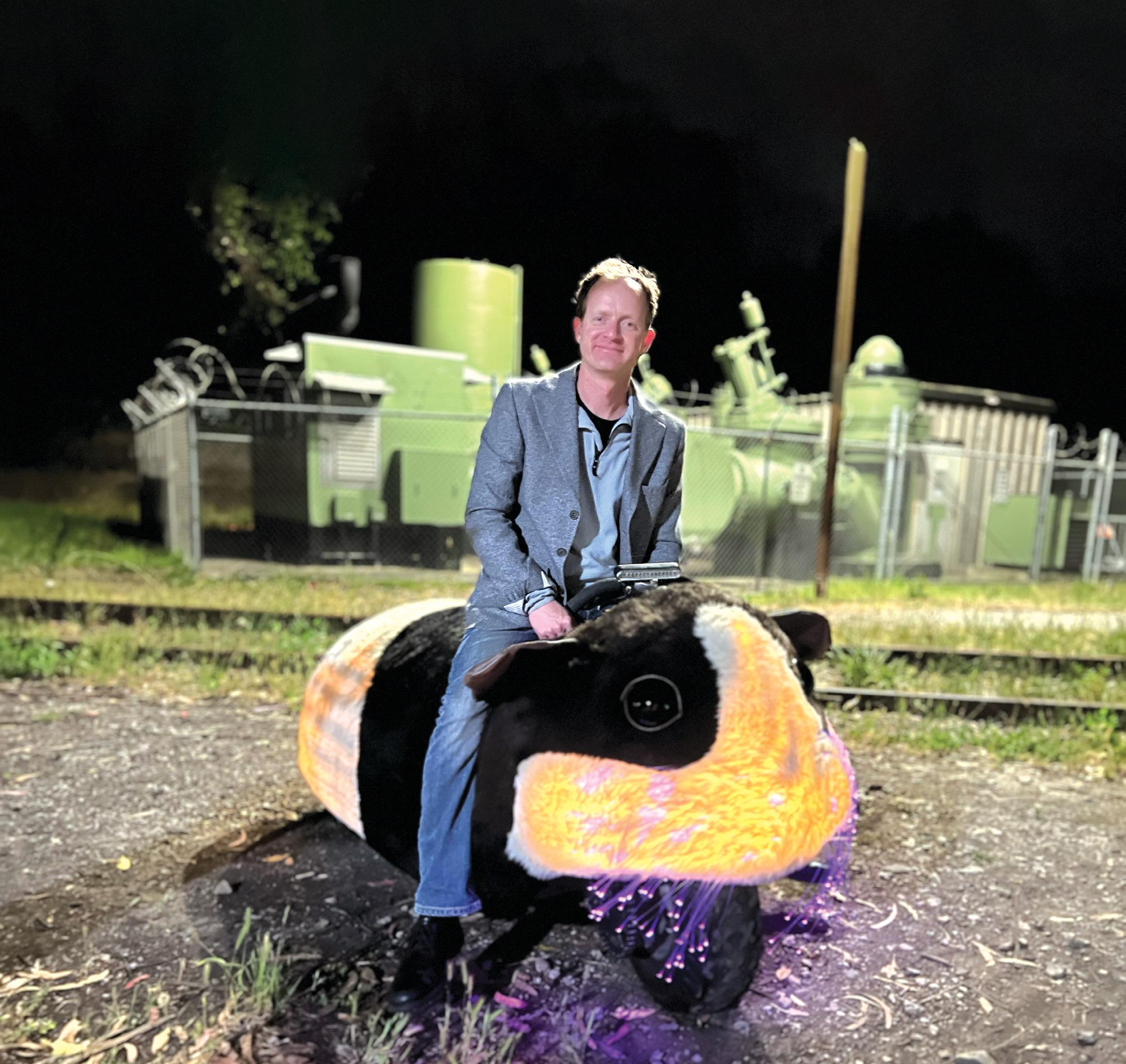

Before dragons and hamsters, there was 1895—when Ogden Bolton Jr. patented a battery-powered bicycle with a 10-volt motor. It was heavy. It was ambitious. It probably required strong calves and stronger optimism. The tricycle, meanwhile, was Victorian England’s answer to stability and skirts. Safer. Sensible. Dignified. Then lithium-ion batteries showed up in the early 2000s and the modern e-bike boom began. Accelerated during the pandemic, e-bikes gave us torque sensors, sleek commuters, and enough silent speed to startle pedestrians everywhere. But somewhere along the line, in a garage full of fringe and foam, the e-bike evolved again. Into something furrier. Funner. Some even speculate that by the year 2050, the tiny art car will be able to fit in the size of your palm… The future is tiny.
Big Art Car… good.
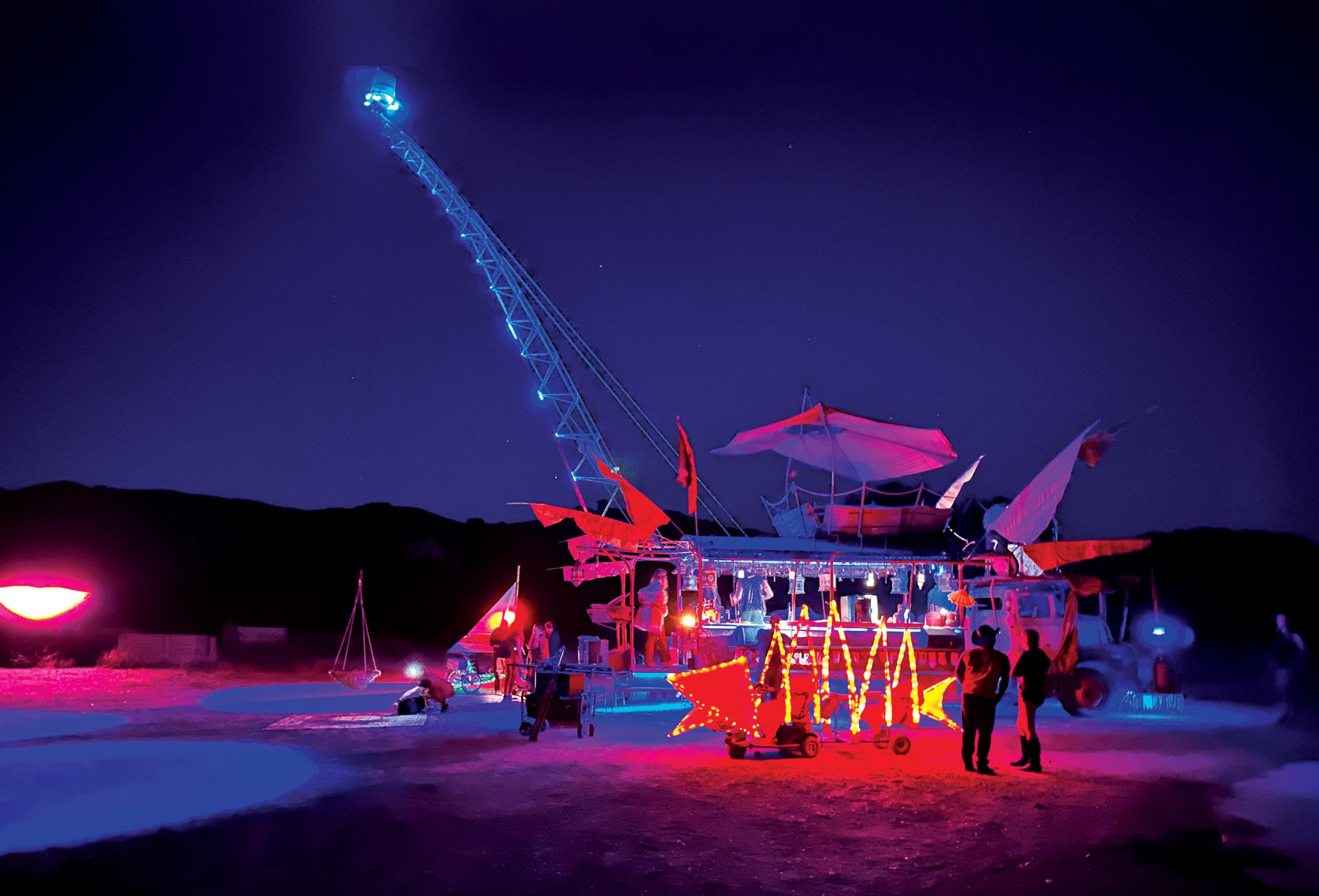
Tiny Art Car… also good.

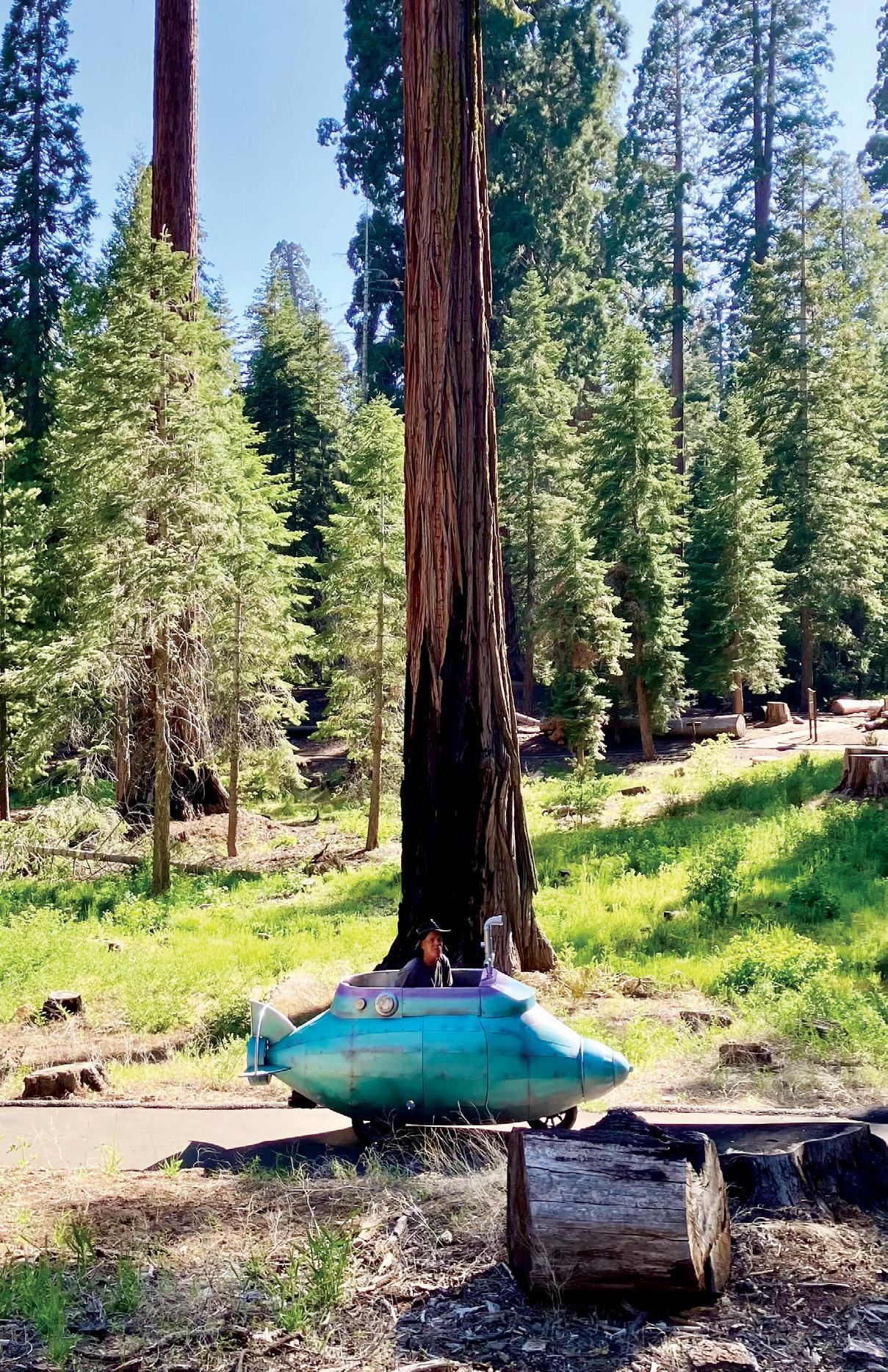
away the fur, the foam, the satire, and there are rules.
Tiny is not measured with a ruler. It’s measured in four essentials according to the tiny art car crew:
- Dry storage: A place for jackets, snacks, tools—the practical stuff.
- Wet storage: A cooler. Hydration is sacred.
- Audio programming: Music, sound effects, personality. The vehicle should announce itself.
- A passenger seat: Non-negotiable. Tiny art cars are meant to be shared.
“As long as you have those four basic ingredients,” Torin says, “you are a party unto yourself.”
It eliminates FOMO. If you miss the concert? Ride around. If you leave early? You’re still the vibe. If nothing is happening? Start something.
Tiny art cars are less about destination and more about orbit.
Naturally, she now pilots a miniature twin.
If Justin builds and Torin sculpts, Justine activates. She understands public space as theater. She knows that a tiny art car is not meant to sit idle—it is meant to circulate.
During the pandemic, when social life shrank to cautious bubbles, she kept showing up on decorated bikes. Eventually, she stepped fully into the tiny art car world.
One evening, she pulled out of her driveway blasting music and passed Rusty’s Pizza, where a 12-year-old birthday party was underway.
She put on “Low Rider,” threw the birthday boy in the back of the bus, and drove right into the restaurant. The parents and grandparents roared in laughter at the sight.

The birthday party broke into dance.
“And this is all because I’m on my way to get dinner,” she chuckles.
“That was a whole life experience for that kid.”
Tiny art cars create moments like that—miniatures make the heart smile.
Hamsters. Dragons. Flying carpets. Rocket ships. Bare fish bones. A lifeguard chair sitting under a beach umbrella. A gleaming pencil poised to write its own legend. A sea serpent slithering down State Street.
Small things get big. Big things get small.
Collectively the three of them have about a dozen tiny art cars. The greater tiny art car community has even more. Together, they’ve created a rolling kingdom—furred, finned, and gloriously fun.
In this tiny domain, engineering meets imagination. If you can dream it, you can build it… tiny.
It would be easy to dismiss tiny art cars as novelty. But that misses the point.
They are exercises in constraint. They demand balance between legality and absurdity. They require knowledge of electronics, load ratings, and structural integrity.
They must fit within four feet of width. They must pedal. They must endure real streets. They are civic performance pieces with wiring diagrams.
And they are deeply local.
Santa Barbara has long celebrated spectacle—Solstice parades, art walks, beachfront pageantry. Tiny art cars are a natural evolution: mobile, intimate, interactive.
You don’t watch them from a curb.
You climb aboard.
So the next time you see a dragon on the street—join the tiny parade.


By Zach Rosen
Inside UCSB’s Media Arts and Technology program, art and engineering converge to train a generation fluent in code, craft, and world-making. The result isn’t interdisciplinary—it’s exponentially evolutionary.
The Media Arts and Technology (MAT) program at UC Santa Barbara functions as a generative system in which faculty operate as constants, students as variables, and the outcome is a new species of creative intelligence—engineer-artist hybrids capable of translating between code and clay, data and desire, sound and structure.
This paper investigates the Media Arts and Technology (MAT) program at UC Santa Barbara as a living laboratory for post-disciplinary thinking. Founded at the intersection of engineering and the arts, MAT integrates computer science, electrical engineering, music, art, architecture, and design into a single, evolving ecosystem.
Through immersive environments like the AlloSphere and research labs spanning data visualization, expressive computation, systemics, and transarchitectures, faculty (constants) cultivate students (variables) who operate fluently across media.
In this paper, we examine the program’s methodology, its hybrid research culture, and its measurable outcomes. With a 95% employment rate within six months of graduation—and alumni shaping institutions such as Apple, Dolby, Adobe, NASA, major game studios, and the Las Vegas Sphere—MAT demonstrates that abstract thinking is not an indulgence. It is infrastructure.
The problem is not that we lack information. The problem is that we cannot feel it. See it. Sense it.
We live in a world quantified beyond comprehension—terabytes of data, molecular simulations, neural networks, immersive media—but the human sensorium remains analog. We see, hear, touch. We do not naturally perceive terahertz light, subatomic lattices, or multi-dimensional datasets.
The Media Arts and Technology program was founded on a radical premise: that the integration of art and engineering could create a new field—media arts and technology—where mathematical abstraction is transformed into sensory experience.
It reports to both the College of Engineering and the College of Letters & Science. It is not art added to science, nor science added to art. It is a hybridization.
If Leonardo da Vinci were alive today, he would not choose between the studio and the lab. He would design the lab as a studio.
Before MAT was a program, it was a pattern.
In the 1980s, across different cities and disciplines, a handful of artists and engineers began sensing the same shift. Digital tools were not simply instruments. They were new mediums.
Architecture was becoming computational.
Music was becoming granular and algorithmic.
Photography was becoming database-driven.
Theater was becoming immersive and networked.
Each future MAT faculty member was, independently, operating at the avant-garde edge of their field— Marcos Novak in virtual “liquid architectures” and “transarchitectures,” JoAnn Kuchera-Morin in computational music and immersive scientific visualization, George Legrady in data-driven visual art, Curtis Roads in computer music, Marko Peljhan in cybernetic systems and aerospace-linked art. They were later joined by Jennifer Jacobs, who brought craft and expressive computation, and Karl Yerkes, who added sound synthesis and multimedia engineering.
They did not yet share a department, but they shared a trajectory.
“Dance of the Fulcrum” by Alexis Story Crawshaw, Maud Watel-Kazak, Timothy Wood (photo: MAT)


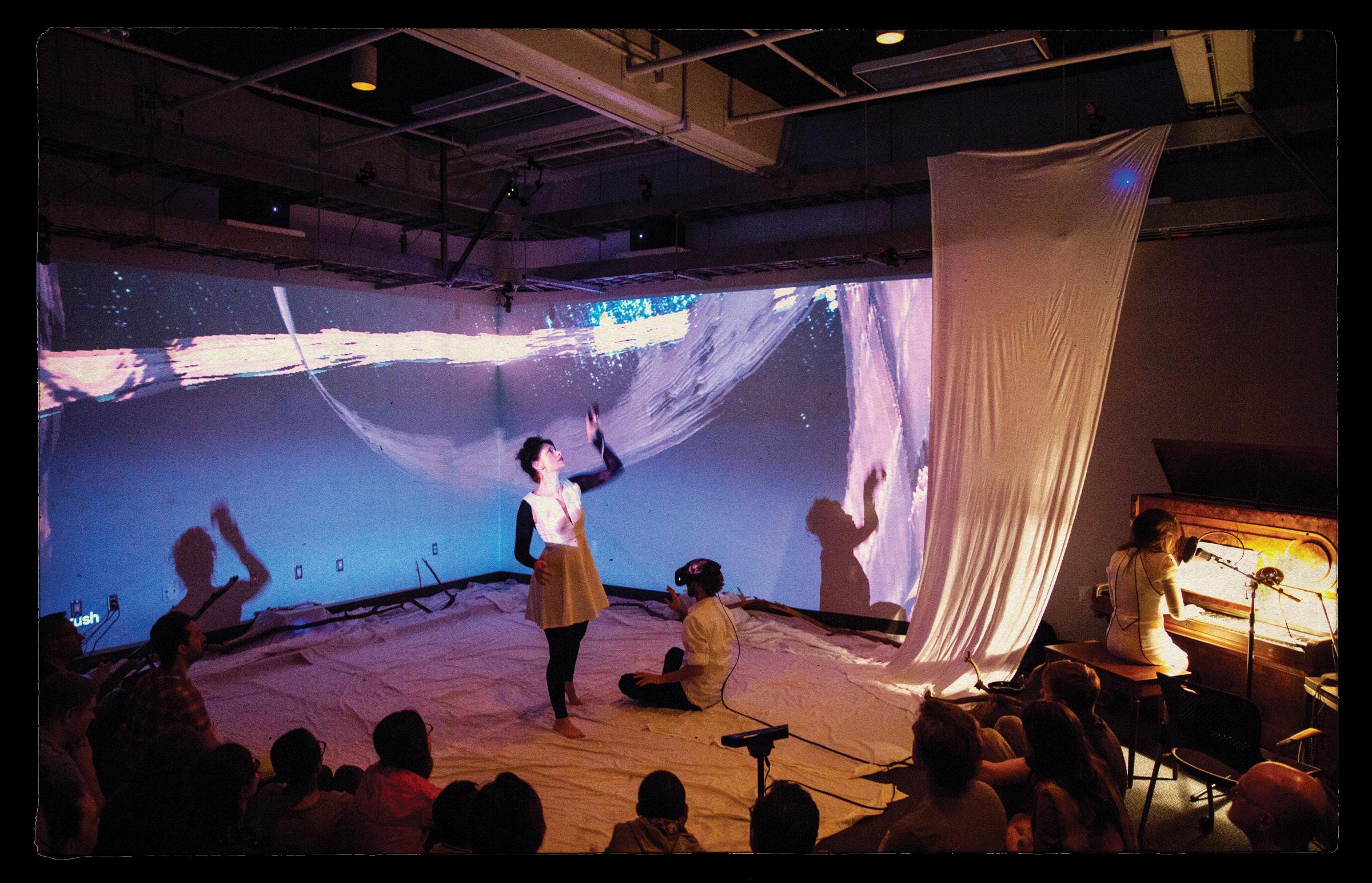

At UCSB, an opportunity emerged. California was investing in nanosystems research. The California NanoSystems Institute (CNSI) would be built.
Kuchera-Morin proposed something audacious: a large-scale immersive instrument—embedded within a scientific institute. Novak added the “Allo~,” meaning “other, of another kind”— a sphere for perceiving the unfamiliar—an AlloSphere.
MAT was formally established in 1999 as a graduate-only fusion of art, music, computer science, and engineering. By 2006 it was a “Program with a capital P,” reporting to both engineering and humanities. It was not an art department augmented by technology, nor an engineering program softened by aesthetics. It was structurally hybrid from inception.

MAT End of the

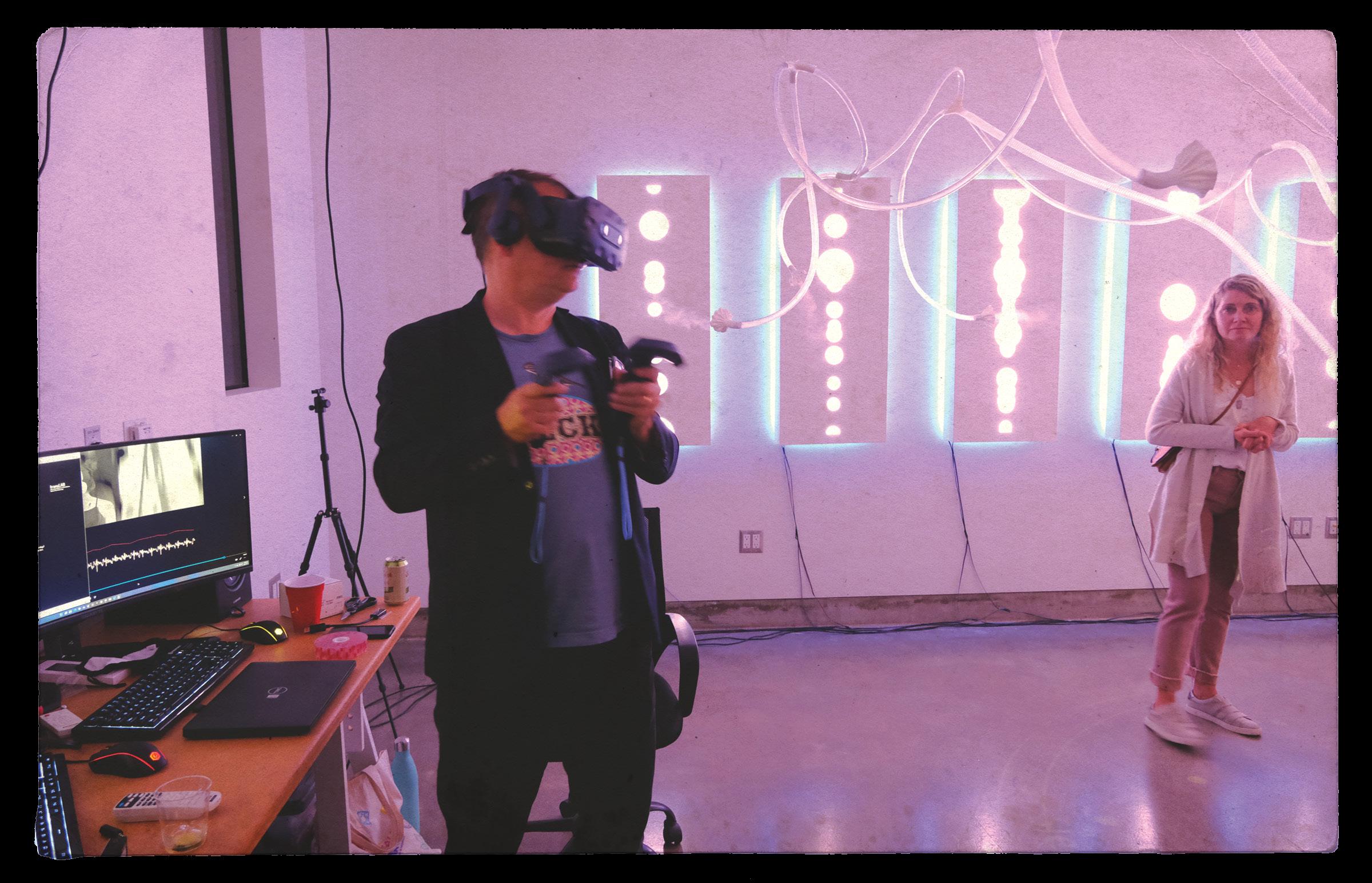
No longer would students have to choose “heads” or “tails.” Instead they could live on the edge. They would become something else.
Over the next two decades, the department evolved alongside the digital revolution. Collaborations were built globally and locally, including the satellite AlloPlex Studio lab located at the Santa Barbara Center for Art, Science, and Technology.
By the time artificial intelligence began reshaping media production, MAT had already trained generations of students fluent in transformation—between code and composition, physics and perception. The program did not pivot to AI. It anticipated it, and then absorbed it.
Experimental Design: Constants and Variables
In this research model:
Faculty = Constants: Long-term vectors of inquiry.
Students = Variables: Adaptive agents exploring new configurations within that field.
Each year, new variables enter the system. Each year, new outputs emerge. But the constants remain—anchoring rigor, extending inquiry, mutating thoughtfully.
Within this system, there are five constants—or labs. But rather than reading this section as a list of labs, consider it a series of controlled environments—interconnected habitats within a larger ecosystem where advanced research meets the vanguard of art.
1. The AlloSphere—Immersion as Instrument
Imagine stepping inside a three-story sphere housed within an echo-free cube.
The AlloSphere is not a screen. It is an environment. Scientific models, earthquake simulations, molecular lattices, architectural renderings, and astronomical data sets are translated into visual, sonic, and spatial experiences.
Here, frequency becomes language.
Data becomes choreography.


Researchers can “enter” models—flying through structures or listening to molecular emission spectra mapped into sound. The instrument scales perception both outward and inward—microscopic and cosmic. It is microscope and telescope, but immersive.
2. Experimental Visualization Lab—Data as Cultural Narrative
George Legrady’s work treats databases as cultural ecosystems.
From tracking library check-out flows to creating interactive visual systems, the lab explores how computation reshapes visual language. Data visualization is not merely analytical; it becomes aesthetic, semiotic, social.
The question is not just: What does this data show?
But: How does it speak? Look? Feel?
3. Expressive Computation Lab—Code Meets Clay
Jennifer Jacobs operates at the seam where digital fabrication and traditional craft meet expressive computation.
In her lab, CNC machines, robotic arms, and 3D printers are not treated as automated endpoints. They are collaborative partners. Material variability—wood grain, clay viscosity, environmental fluctuation— is folded into computational systems.
Instead of replacing craft knowledge, the lab encodes it.
Computation becomes tactile and felt.
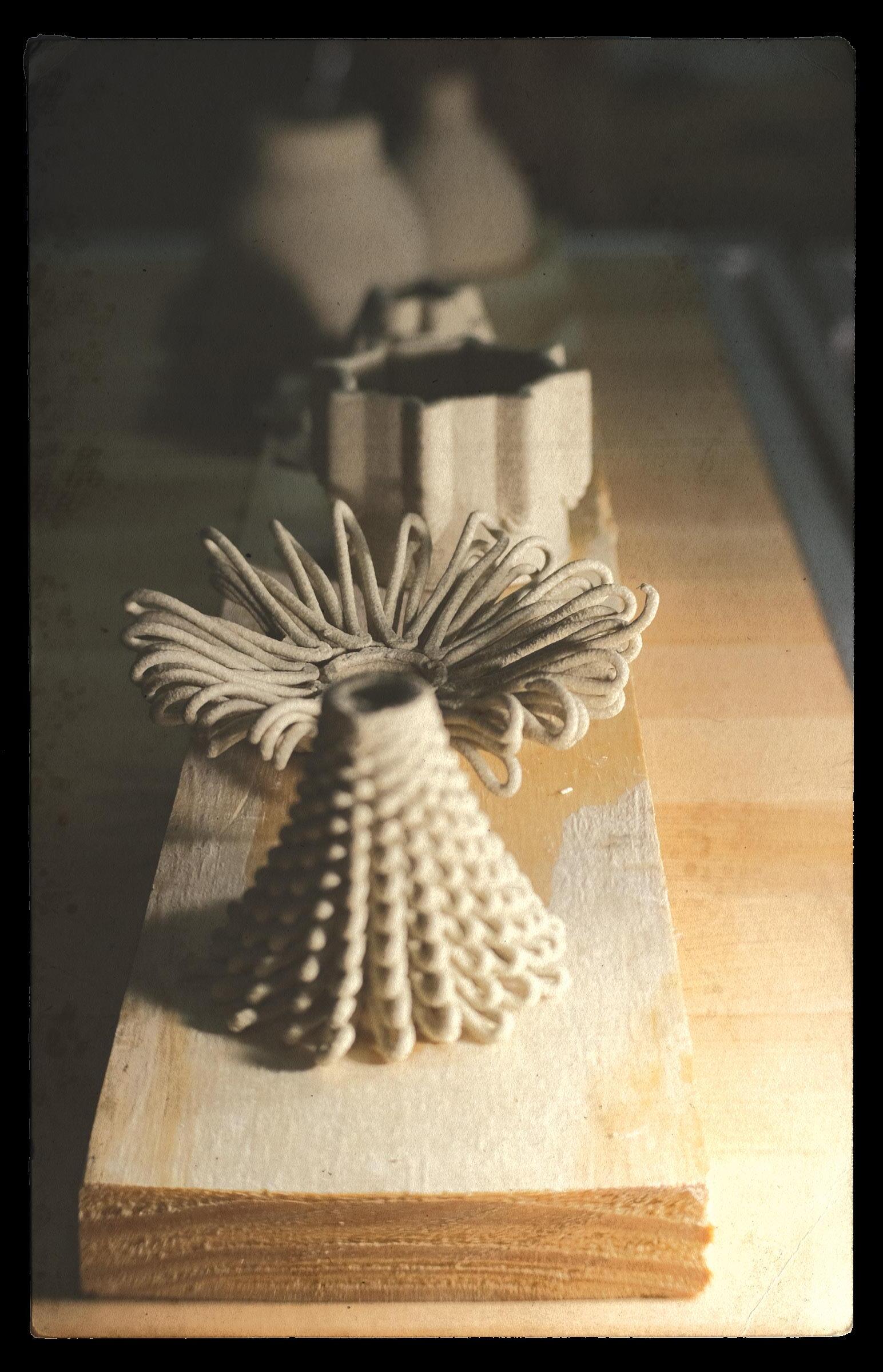
4. transLab—Transformation as Philosophy
Marcos Novak’s transLab explores transformation itself as a transmodal design principle.
Virtual architecture, AI-mediated design, quantum-linked systems, immersive XR environments—these are not isolated technologies. They are modalities of translation.
Transformation → Speciation → World-making. In this framework, the goal is not to create objects, but to generate new species of expression— hybrid fields that did not previously exist, and new species of artist-researcher-scientists capable of exploring them.
5. Systemics Lab—Planetary Thinking
Marko Peljhan’s Systemics Lab extends outward: cybernetics, aerospace systems, environmental networks, communications infrastructure.
It asks: How does art operate at planetary scale? Radio frequencies, drones, geopolitical systems, polar research initiatives—art here becomes embedded in real-world networks.

3D-printed clay forms at the Expressive Computation Lab. (photo: Zach Rosen)

Within six months of graduation, approximately 95% of MAT students are employed. Placement spans academia, industry, and research institutions, entrepreneurial startups, and creative practice. Alumni hold leadership roles at:
- Apple (including senior audio engineering leadership)
- Dolby Laboratories (including product management and spatial audio development)
- Adobe
- NASA (information visualization research)
- Game development studios
- International professorships
- MAT alumni were also instrumental in building the Las Vegas Sphere—arguably the most ambitious (and successful) public experiment in immersive media to date.
Faculty research has been recognized by institutions including SIGGRAPH, Ars Electronica, Creative Capital, Guggenheim, NSF, TED, the Lincoln Center, the Centre Pompidou, and the Venice Biennale.
The program has evolved into a global network: graduates founding labs, teaching internationally, designing new media infrastructures.
In short: MAT grads design the new systems that shape how we see, hear, and inhabit media and the world.
What MAT produces is not a product. It produces a mindset of restless innovation.
The 21st century does not reward narrow specialization alone. It demands translation. The ability to move between domains—to sonify molecular bonds, to parameterize textile craft, to render architectural simulations at planetary scale—is not ornamental. It is strategic.
The professors—constants—anchor the system in rigor: composition, visualization theory, systemics, computation, architecture. The students—variables—introduce new parameters each year: machine learning ethics, augmented reality theater, robotic ceramics, spatial audio, quantum-linked experiments.
The result is a controlled mutation. A cultivated exponential evolution.
If Renaissance workshops trained painters who understood anatomy, geometry, and theology, MAT trains designer-engineers who understand signal processing, fabrication mechanics, perceptual psychology, and aesthetics. They do not simply use tools; they redesign them.
In a culture still tempted to separate “art” from “technology,” MAT insists the distinction is obsolete. Everything is designed. Everything is mediated. Everything informs everything. The question is not whether we will build the next systems of perception—but who will build them, and with what values.
Further Reseach: Building on its acknowledged excellence in digital multimedia, accumulated and refined over the past 27 years, and, looking forward to the next quarter century, MAT is extending its scope and range and leadership into new territories through a brave new strategic phase of <Media Arts+Design> and <AI+Media> exploration—MAD AIM for short—for the program, the campus, the city, the region, and the world.
The data point is simple: 95% employment within six months.
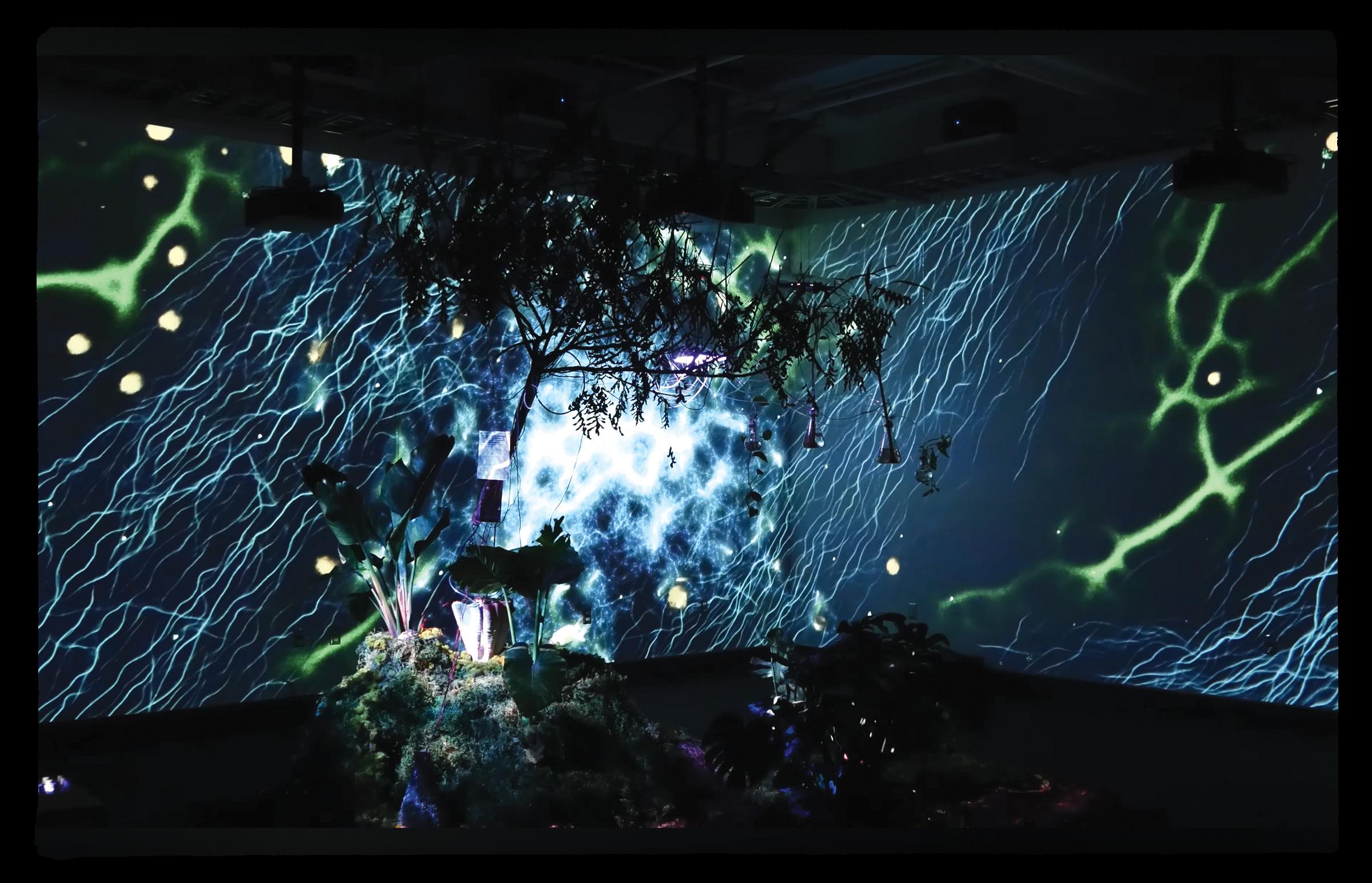
AlloSphere: A large-scale immersive visualization instrument at UCSB designed for multi-sensory interaction with complex datasets. “Allo” means “other”—the sphere is built to perceive the unfamiliar.
Systemics: An approach that examines interconnected systems—technological, ecological, geopolitical—as dynamic networks rather than isolated components. In MAT, it merges art, cybernetics, aerospace, and environmental sensing.
Transarchitectures: A term coined by Marcos Novak describing architecture that moves beyond static physical form into computational, virtual, and immersive realms—spaces that can morph, respond, and exist simultaneously across digital and physical domains.
Transvergence: The fusion of disciplines into a new integrated mode of thinking—not just collaboration between fields, but the emergence of a new hybrid fields and explorers.
Expressive Computation: The design of computational tools that enable creative and critical expression, often integrating digital fabrication with manual craft and material intelligence.
Speciation (in design context): The emergence of a new form or category of creative practice—analogous to biological evolution but applied to art, architecture, and media.


The implication is larger. These graduates are shaping spatial audio at Dolby, hardware ecosystems at Apple, visualization at NASA, creative tools at Adobe, and immersive, experiential architecture in Las Vegas.
They are not choosing between art and engineering.
They are redefining both.
The hypothesis holds.
The next generation of da Vincis is not sketching in isolation.
They are coding, fabricating, sonifying, simulating—and then entering the worlds and inhabiting what they have made.
And from there, they are redesigning the world.
AlloSphere shows are every second Thursday from 5:15 to 7:15 pm and every fourth Saturday from 1 to 3 pm. Prepare for Brave New Work 2.0 to take place October 6-8, 2026, featuring works from world-renowned artists along with MAT faculty, students, and alumni. Visit bravenewworksb.org

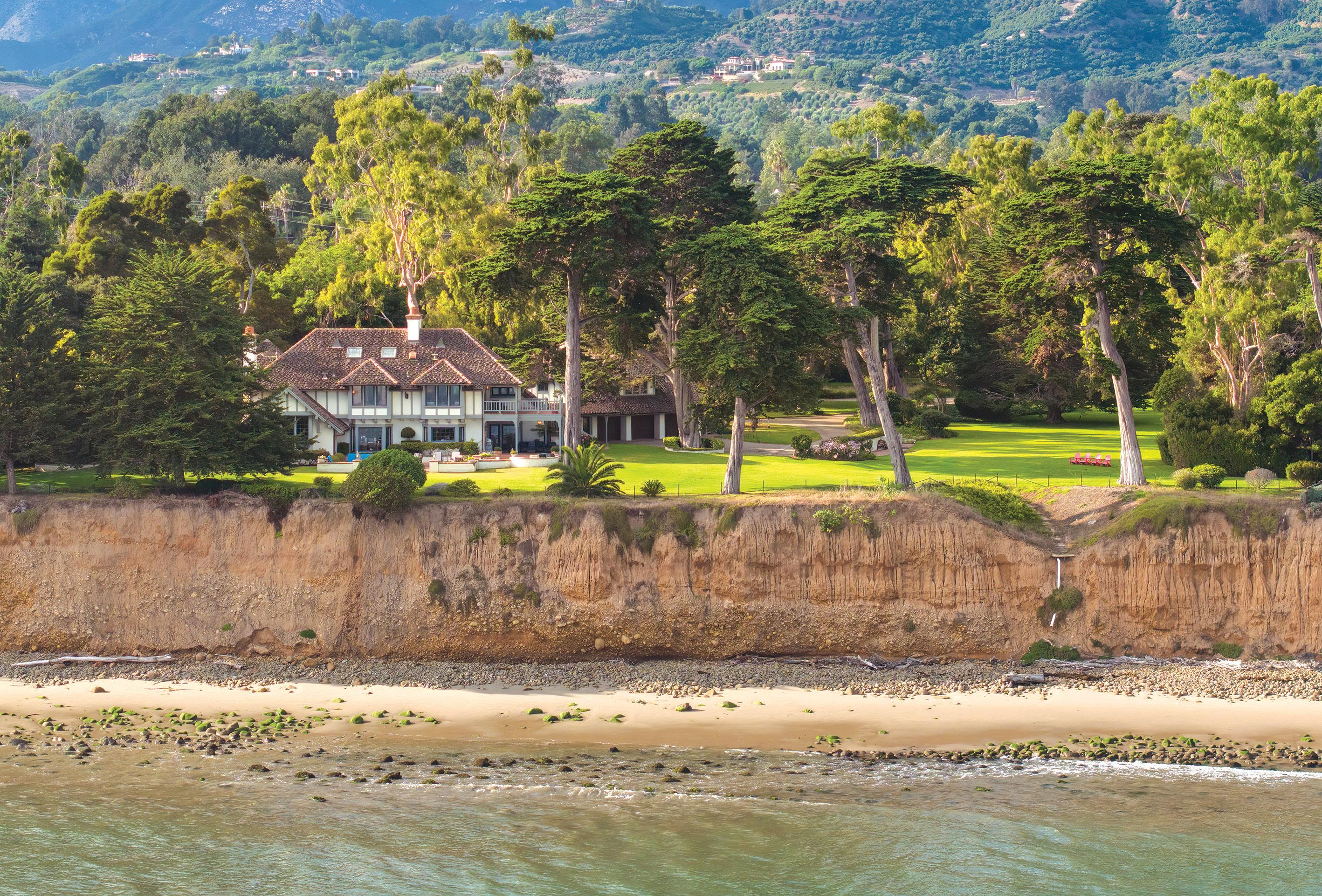
ICONIC PADARO LANE OCEANFRONT
An iconic oceanfront retreat on 4.3± flat acres with 350 feet of dramatic bluff front. Light-filled interiors open to sweeping Pacific Ocean views and expansive lawns, offering a rare sense of scale, privacy, and relaxed coastal presence along Padaro Lane.
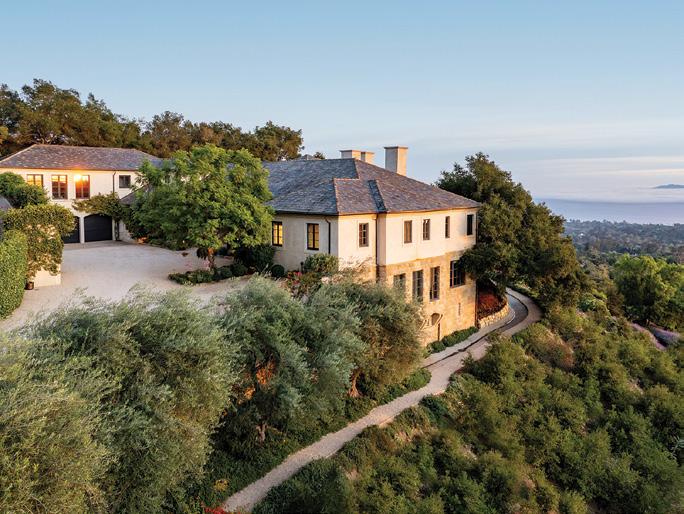
Masterfully built with expansive ocean, island, and mountain views, this contemporary Neoclassical-style residence is privately set in lush landscaping above East Mountain Drive on nearly six acres. Featuring a primary suite, four sumptuous guest suites, and an extraordinary infinity-edge pool.
1140 East Mountain Drive, Montecito
$21,995,000
Don Johnston / Montecito Luxury Group (805) 951-7331
Sotheby’s International Realty DRE#: 01868263
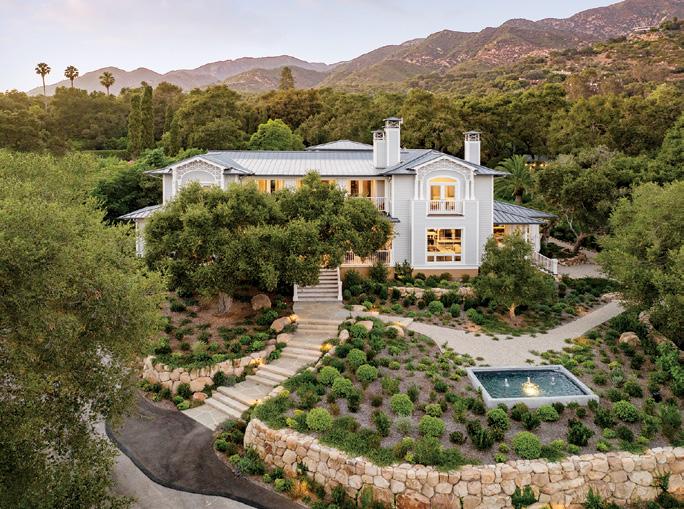
Set along prestigious Picacho Lane with sweeping ocean views, this newly renovated estate pairs timeless elegance with modern comfort. The main residence offers a flexible layout with richly appointed living areas, complemented by a charming guest house and creative cabin.
857 Picacho Lane, Montecito
$21,900,000
Tyrone McKillen (949) 212-8721
Plus Real Estate DRE#: 01915539
3055 Padaro Lane, Carpinteria
$49,800,000
Riskin Partners Estate Group (805) 565-8600
Village Properties
DRE#: 01954177
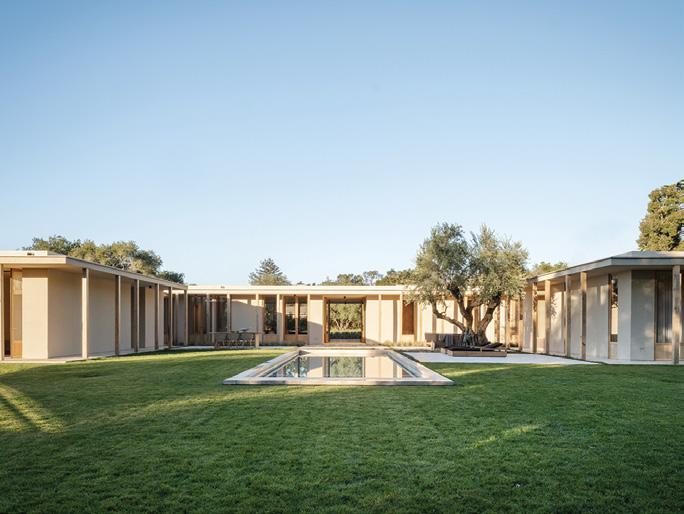
Quietly set off prime Picacho Lane on a tranquil cul-de-sac in Montecito’s Golden Quadrangle, this newly constructed home, designed by Manuel Cervantes, is a disciplined yet soulful expression of architecture where proportion, light, and natural materials define the experience.
620 Stone Meadow Lane, Montecito
$19,995,000
Tyrone McKillen (949) 212-8721
Plus Real Estate
DRE#: 01915539
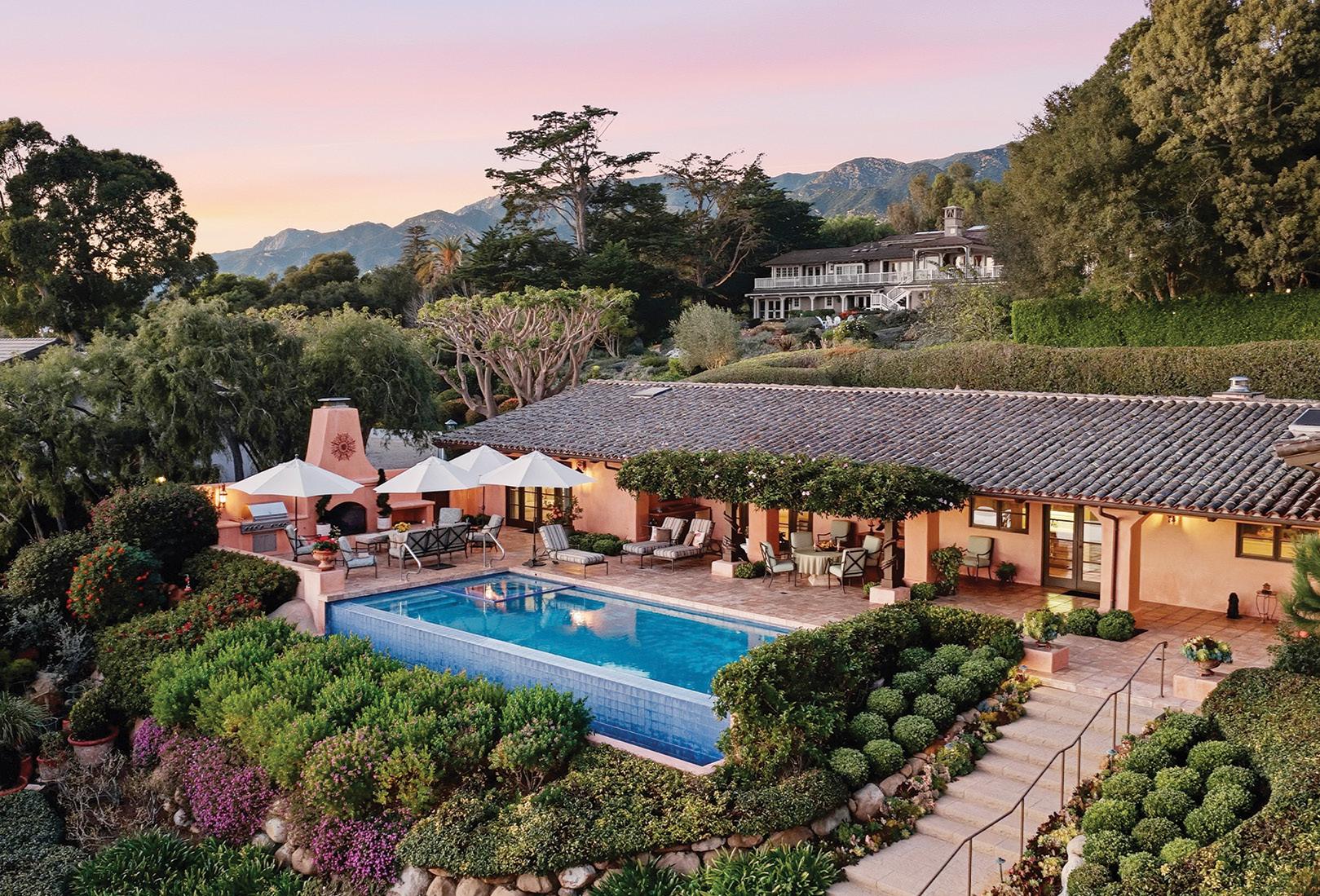
PRIVATE SPANISH-STYLE ESTATE
Set against panoramic mountain and ocean views, this private Spanish-style estate offers compound-style living in a revered Montecito location. The property spans ±0.91-acre with 3BD plus office/3.5BA main residence, multiple guest quarters, infinity pool, terraces, courtyards, gardens, and indoor–outdoor living.
AVANT-GARDE MONTECITO ESTATE
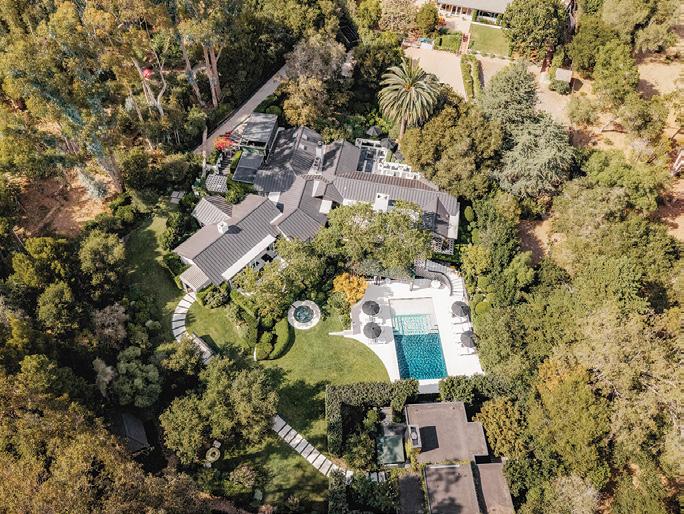
An avant-garde Montecito estate off a private drive near Upper Village offers glamour and discretion across one acre. The single-level residence showcases steel windows, marble baths, seamless indoor-outdoor living, a Parisian guest villa, and resort-style grounds with pool and spa.
1381 East Valley Road, Montecito $12,250,000
Marsha Kotlyar Estate Group | (805) 565-4014
Berkshire Hathaway HomeServices California Properties DRE#: 01426886
420 Santa Rosa Ln, Montecito
$14,000,000
Calcagno & Hamilton Real Estate Group (805) 565-4000
Berkshire Hathaway HomeServices California Properties DRE#: 01499736
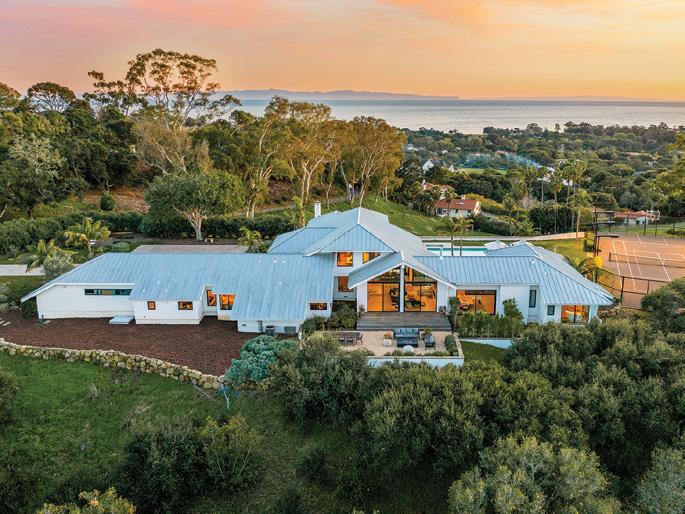
Elevate your lifestyle in this meticulously remodeled 5-bed, 5.5-bath modern residence set atop a private knoll in Hope Ranch. Sweeping 360° ocean, island, and mountain views complement a resort-like setting with pool, sport court, and the potential for an ADU.
4558 Via Esperanza, Santa Barbara $11,995,000
Daniel Zia, Zia Group (805) 364-9009 eXp Realty DRE#: 01710544
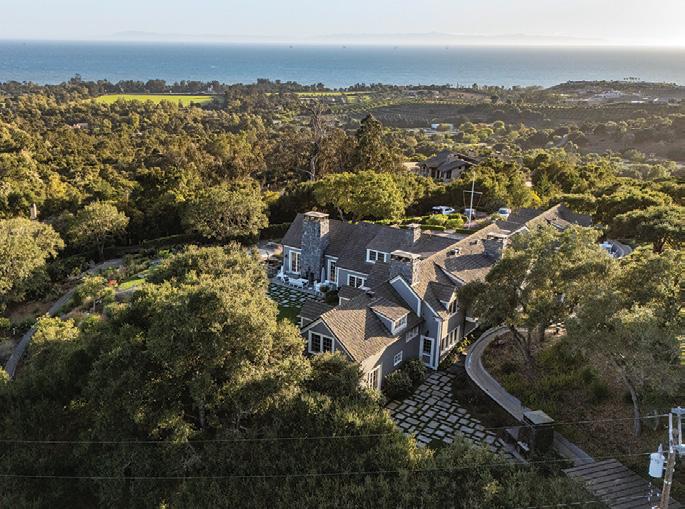
Perched on a knoll amid lush coastal surroundings, this custom Becker residence offers 4 bedrooms, 6 baths, 7 fireplaces, and a 3-level elevator, with cathedral ceilings, chef’s kitchen, guest wing, wine cellar, refined interiors, and exceptional outdoor entertaining spaces throughout.
2820 Torito Road, Montecito
$11,750,000
Gary Goldberg (805) 455-8910
Coastal Properties DRE#: 01172139
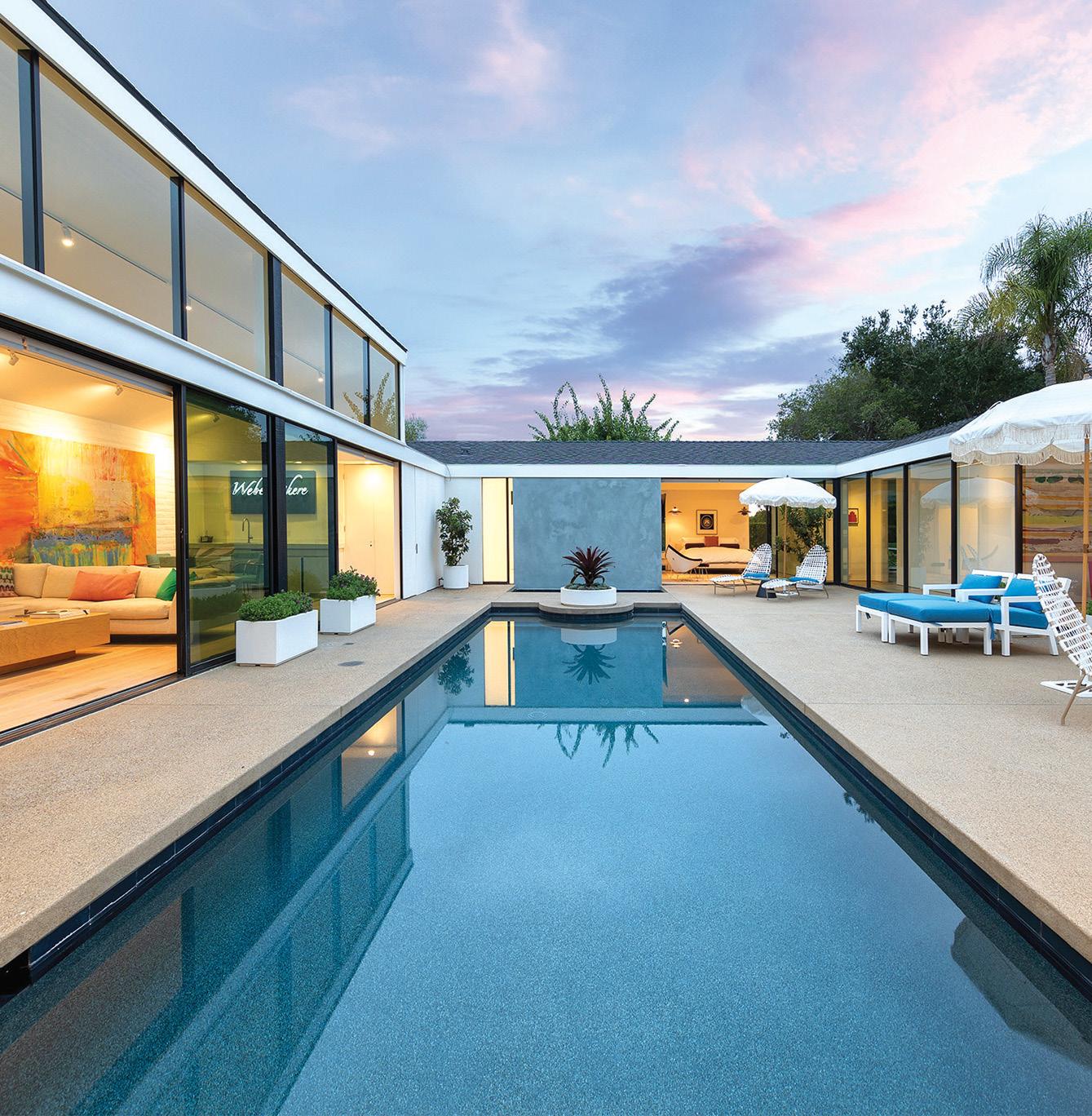
Turnkey
Mid-Century Modern residence designed by Robert Garland, featuring vaulted ceilings and expansive walls of glass. A private courtyard and pool offer effortless indoor-outdoor living on a quiet cul-de-sac between the 14th and 15th fairways of Birnam Wood Golf Club.
1988 Inverness Lane, Montecito
$9,995,000
Don Johnston / Montecito Luxury Group (805) 951-7331
Sotheby’s International Realty DRE#: 01868263
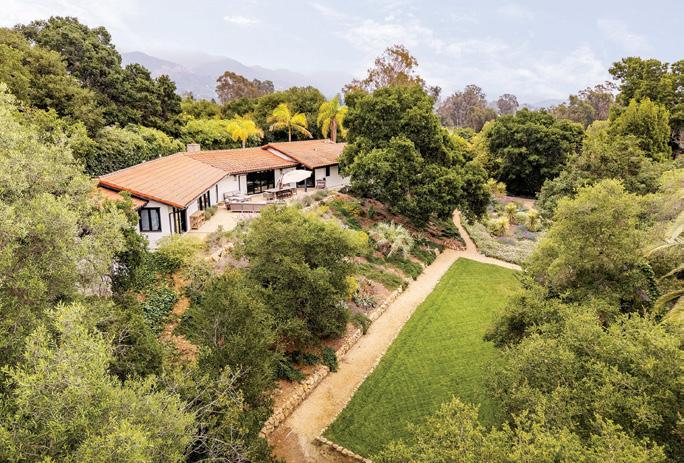
Tucked behind gates on a coveted Montecito lane, this reimagined Spanish residence captures refined California living near MUS and both Villages. Vaulted ceilings, oak floors, and walls of glass open to lush gardens, sunlit patios, and a private bocce court.
1383 School House Road, Montecito
$5,795,000
Marsha Kotlyar Estate Group | (805) 565-4014
Berkshire Hathaway
HomeServices California Properties DRE#: 01426886
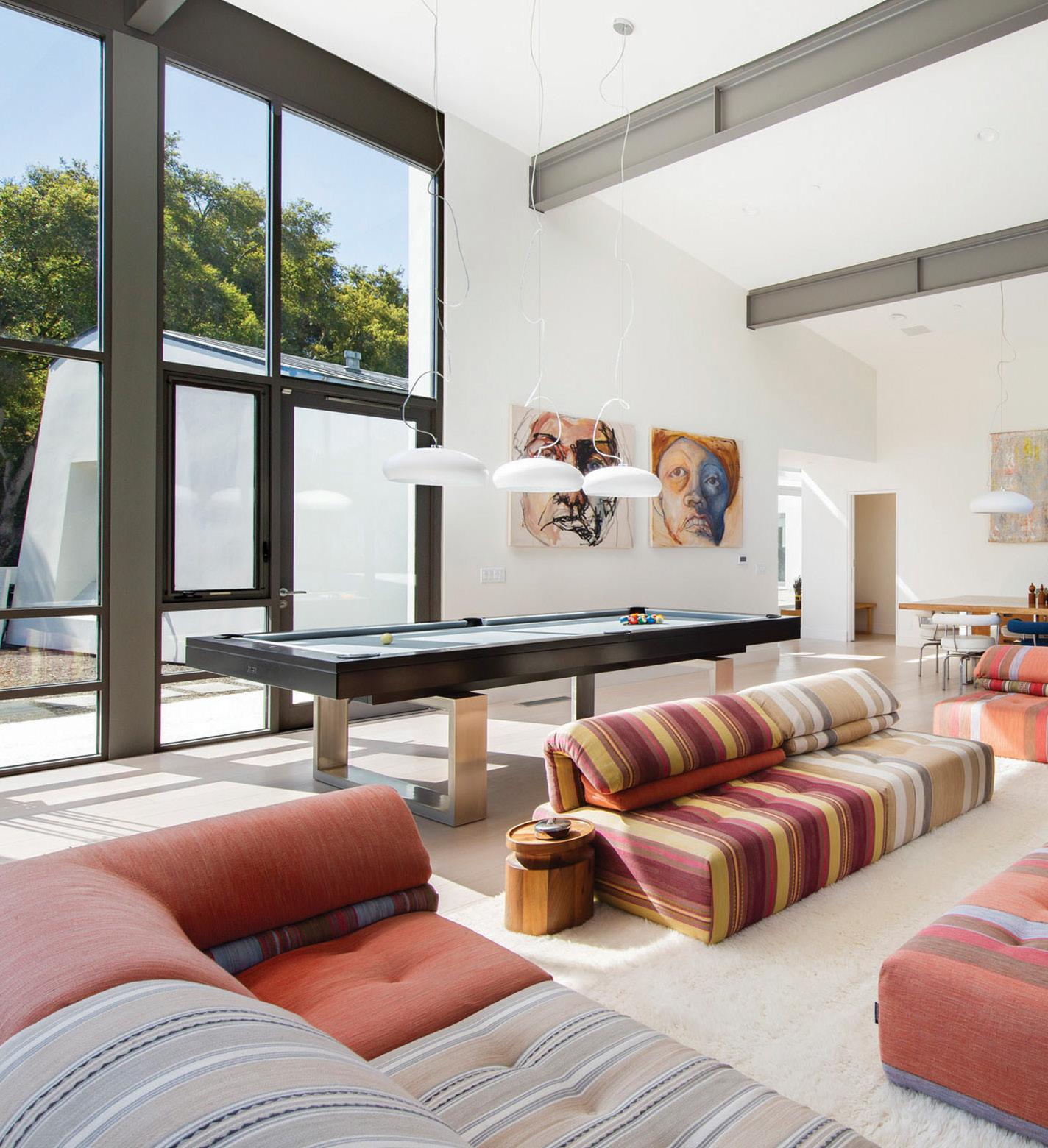
This fully remodeled Hope Ranch estate effortlessly blends sleek contemporary design with sweeping panoramic views, a reimagined chef’s kitchen, floor-to-ceiling glass, luxe upgrades, and seamless indoor-outdoor living. It includes a new pool, rooftop deck, wine cellar, and modern luxury throughout.
4450 Via Alegre, Hope Ranch
$9,250,000
Riskin Partners Estate Group (805) 565-8600
Village Properties DRE#: 01954177
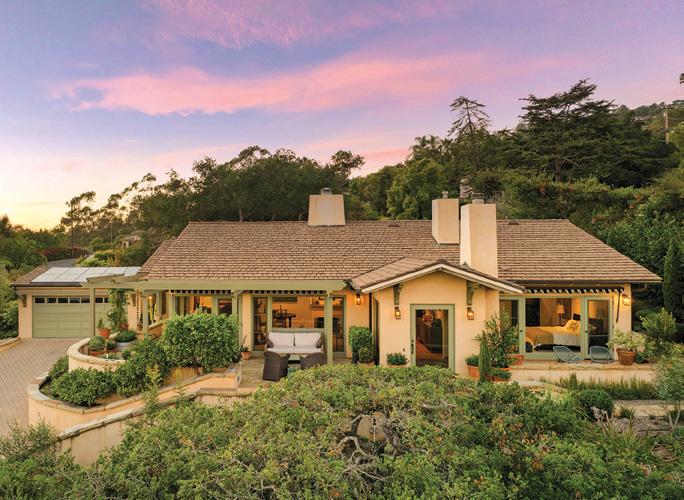
C
ompleted in 2001, this single-story Riviera home offers an open floor plan with three bedroom suites, all opening to lush terraces and gardens. Exceptional ocean views and rare privacy are seldom found in such a desirable, close-in Santa Barbara location.
1022 Garcia Rd, Santa Barbara
$5,399,995
Tim Walsh (805) 259-8808
Village Properties DRE#: 00914713
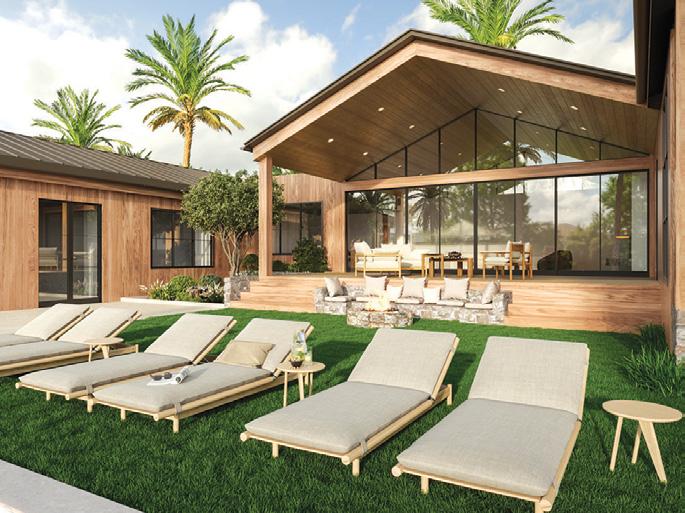
B
uild your dream home in the heart of Montecito! This south-facing property at the end of a private lane offers privacy and convenience, just a mile from the Upper Village. Electric Bowery architects have designed plans for a 4,332-square-foot residence.
625 Parra Grande Lane, Montecito
$4,495,000
Randy Solakian Estates Group (805) 453-9642
Coldwell Banker Realty DRE#: 00622258
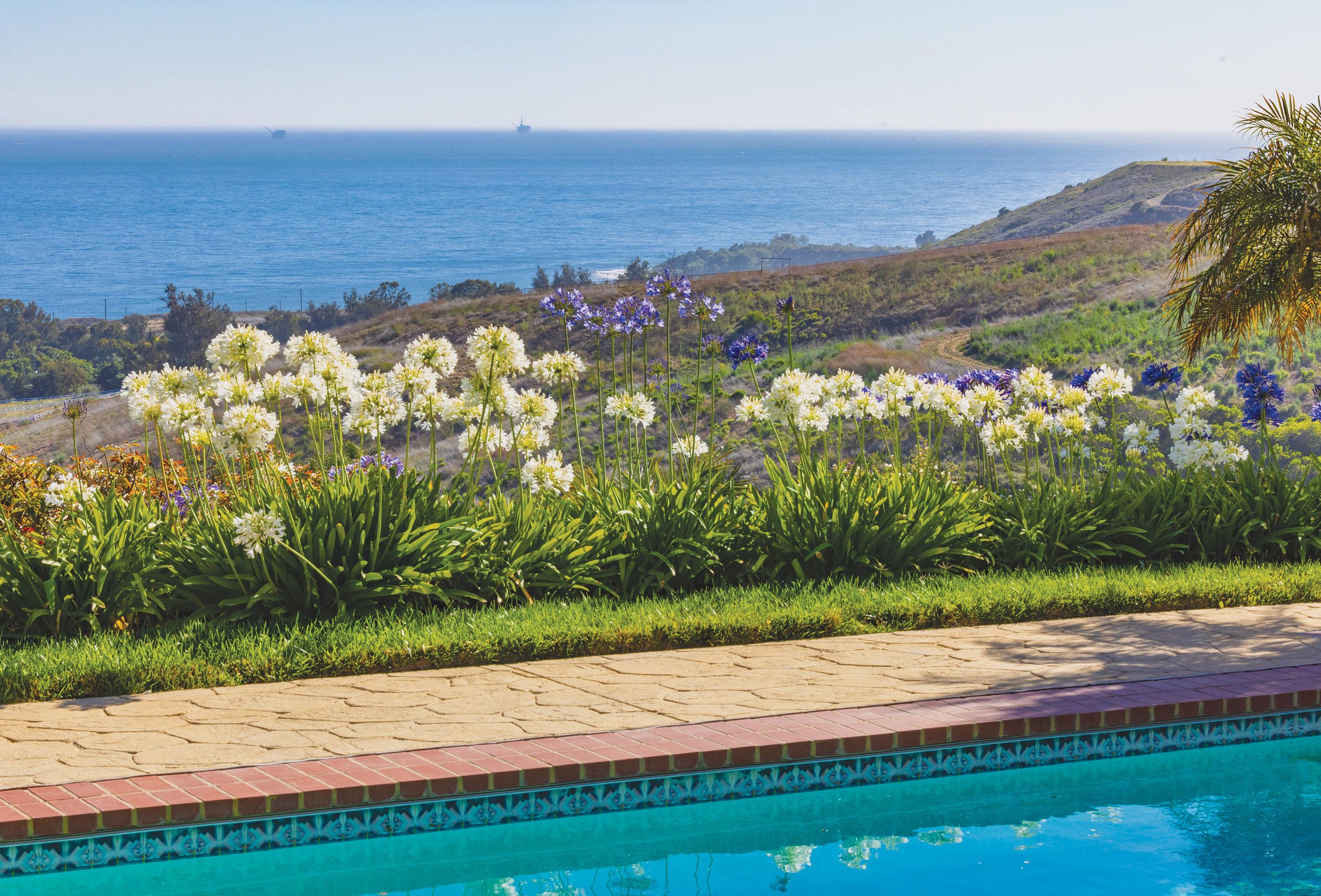
Nestled in the gated coastal community of El Capitan Ranchos, this newly renovated Spanish home sits on 10 private acres with unsurpassed ocean views, rolling meadows, and sweeping mountain ranges. Private gated beach access is available for all community homeowners.
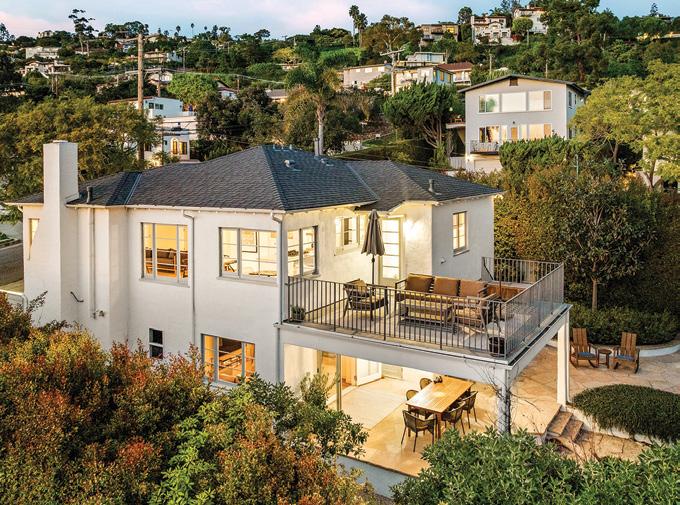
Sweeping ocean and island views meet abundant natural light in one of the city’s most desirable settings. Designed by noted architect Alex d’Alfonso, this home offers delightful main-level living plus a fully appointed lower-level residence. Beautifully maintained and move-in ready.
1322 E. Cota St., Santa Barbara
$2,850,000
Lisa Foley Luxury Homes | (805) 252-2271
Berkshire Hathaway HomeServices California Properties DRE#: 01995513
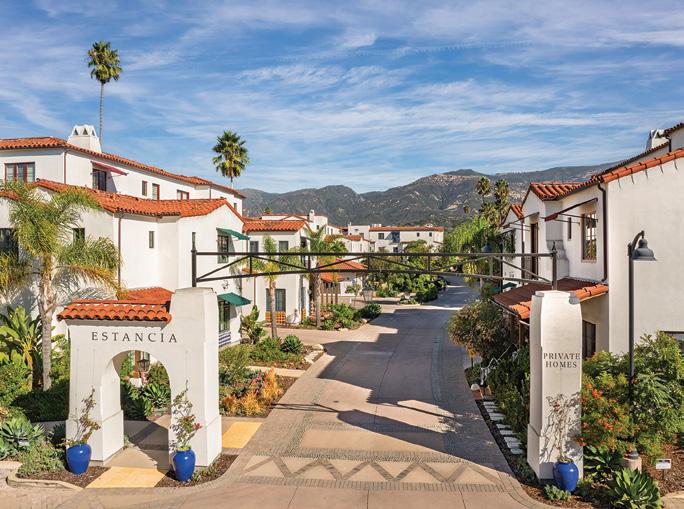
Estancia single-level condominium built in 2018, offered in impeccable condition. This 2BD/2BA second-floor end unit features an open floor plan, high ceilings, a large covered balcony, and an oversized garage. Ideally located near State Street for dining, shopping, and amenities.
3726 State Street, Santa Barbara
$1,499,000
Don Johnston / Montecito Luxury Group (805) 951-7331
Sotheby’s International Realty DRE#: 01868263
425 Calle Lippizana, Montecito
$3,395,000
Tim Walsh (805) 259-8808
Village Properties DRE#: 00914713
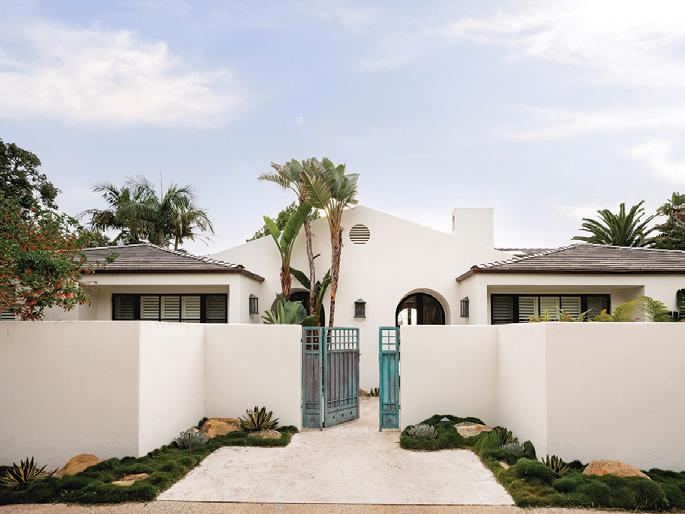
Effortless living behind the gates of Montecito’s Birnam Wood Golf Club. This contemporary single-level home on the 10th fairway captures south-facing light with a peek of ocean and mountain views, featuring a pool, landscaped gardens, and access to world-class amenities.
2025 Birnam Wood Drive, Montecito Price Upon Request
Casey Turpin / Turpin Muller Group (805) 232-5766
Village Properties DRE#: 02125478
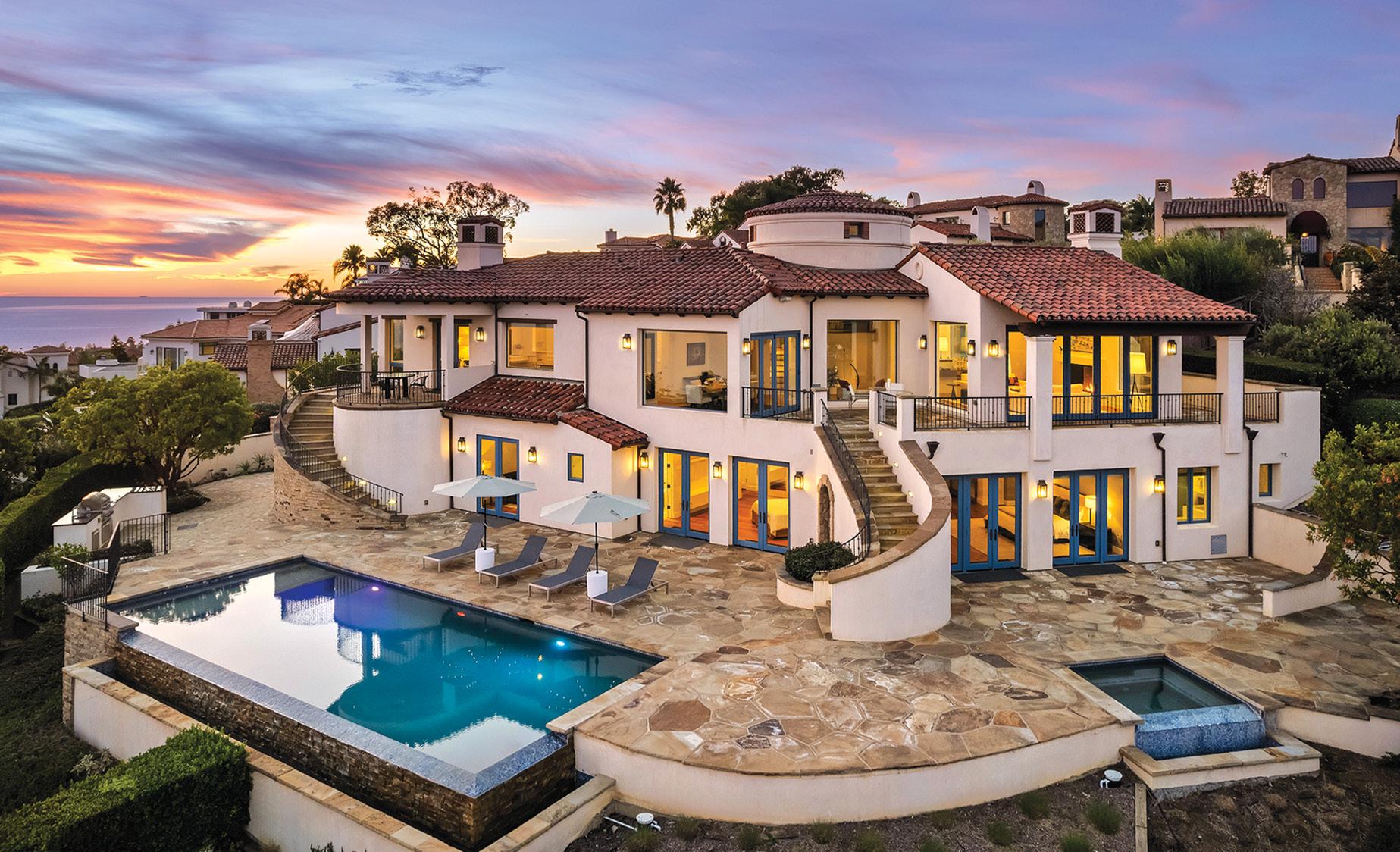
Perched on a quiet private cul-de-sac, Villa Pacifica offers 3 bedrooms and 4.5 baths, panoramic ocean and Channel Islands views, an infinity pool, spa, and expansive terraces, creating a serene and sophisticated retreat perfect for coastal living and memorable entertaining.
* 30-night minimum stay required
The Mesa, Santa Barbara Please inquire for rates
Paradise Retreats (805) 716-6059
Paradise Retreats Real Estate, Inc. DRE#: 02090892
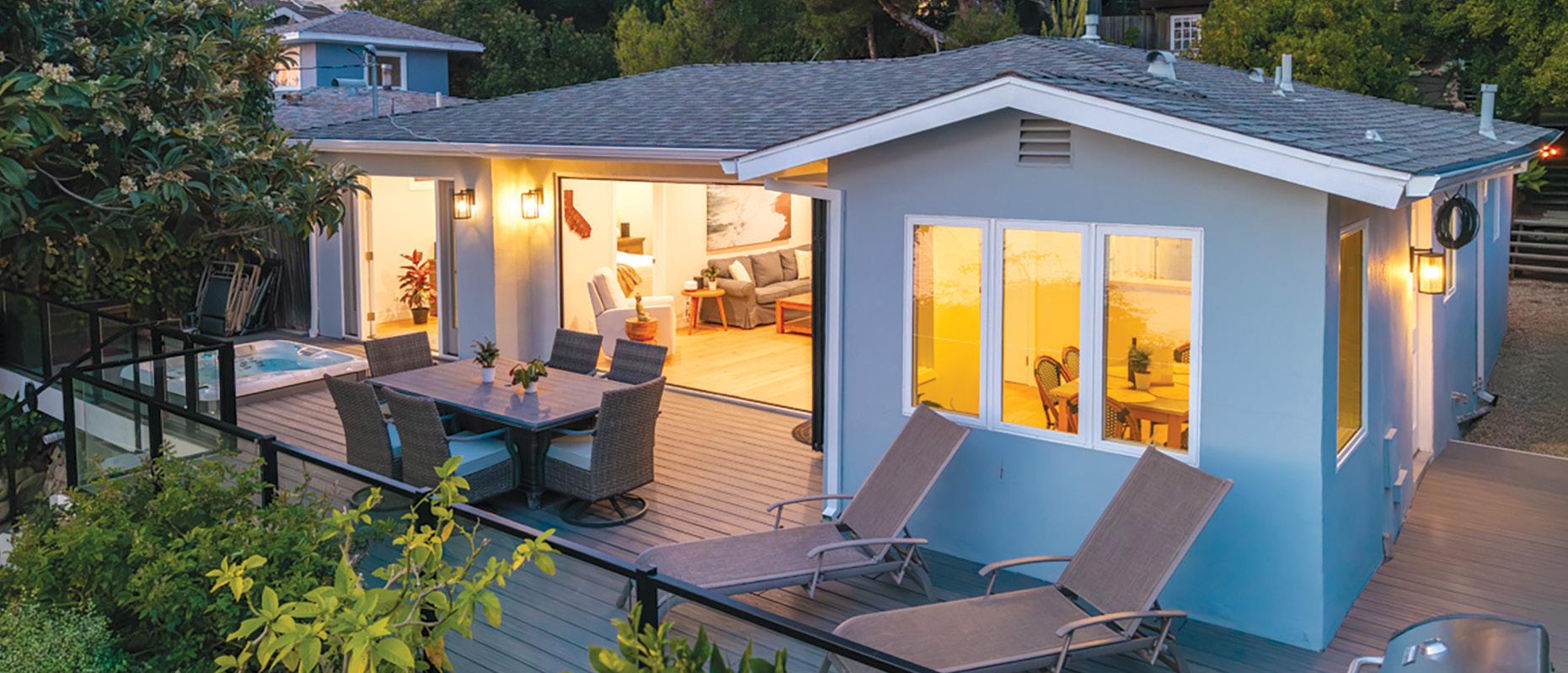
Chic 3-bed, 2-bath Summerland retreat featuring sweeping ocean views, a jacuzzi, sauna, and a private backyard with BBQ—perfect for sunsets. Pet-friendly and stylishly updated, this coastal escape blends relaxation and luxury just minutes from the beach and charming downtown Summerland.
Summerland Inquire for details
Aidan Williams (805) 450-4648
Chosen Luxury Wellness Rentals DRE#: 02244348




















































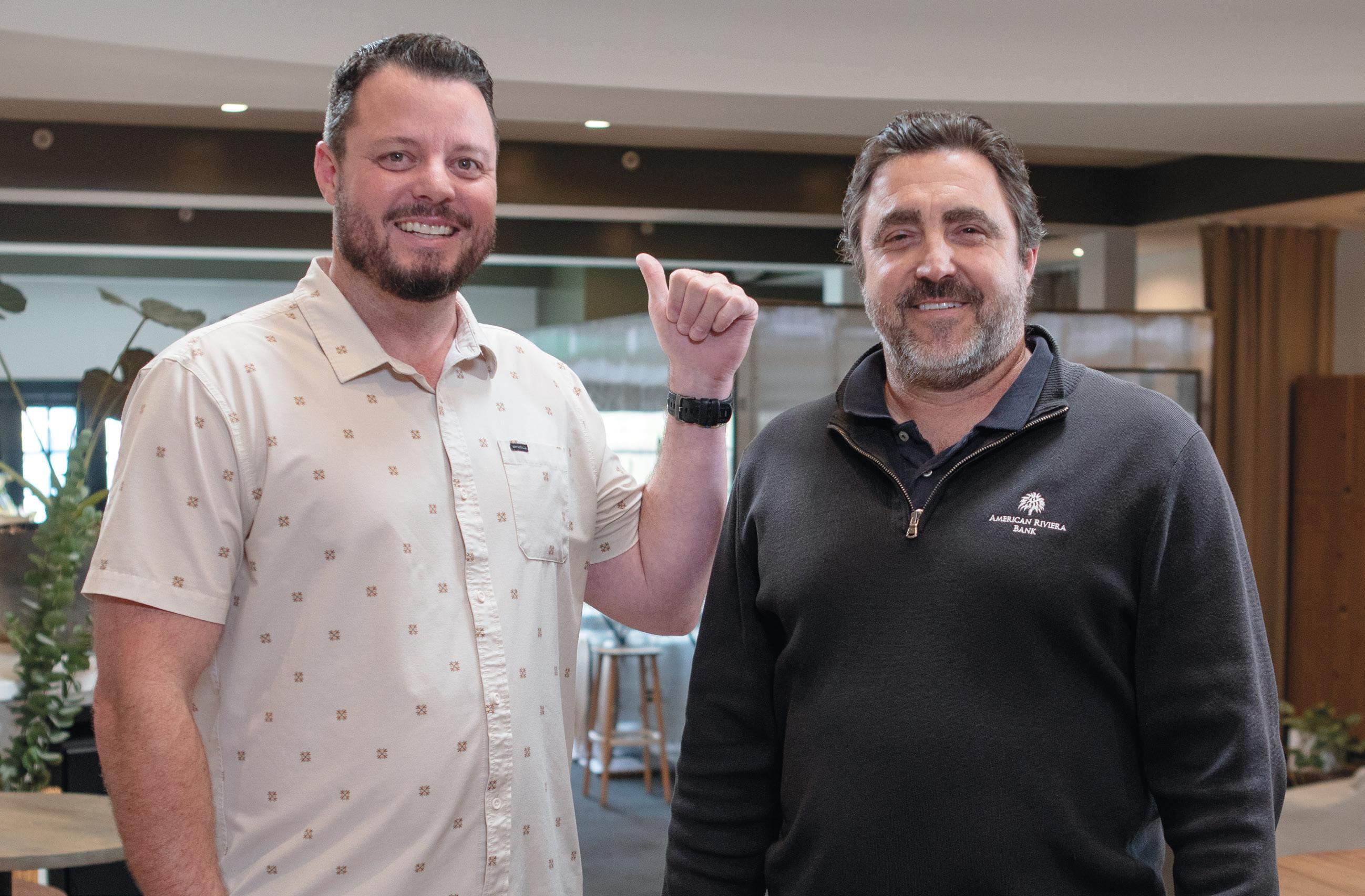

We’re here, at the intersection of sophisticated solutions and local partnerships. When you need the financial tools of a national bank and the local knowledge of a community bank, your choice is easy. Come to American Riviera Bank where your bank is about you.
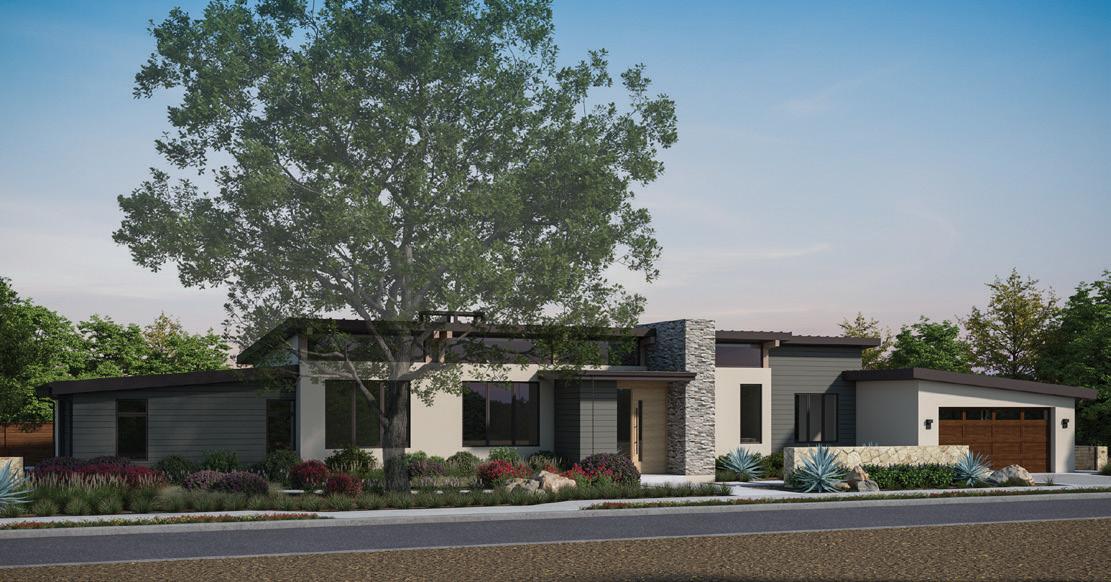
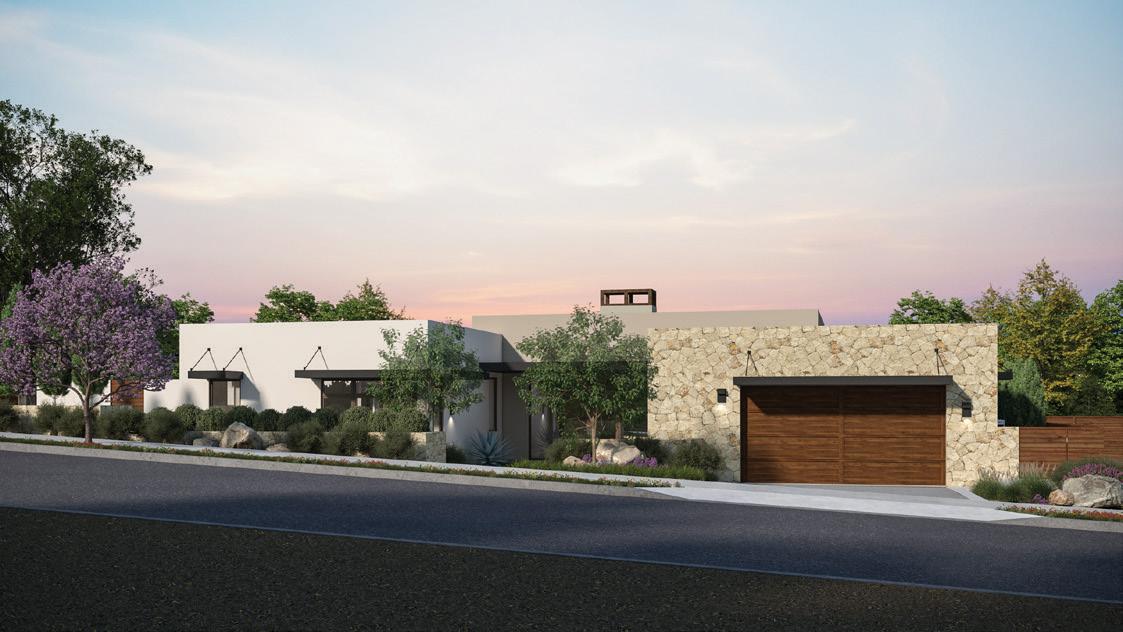
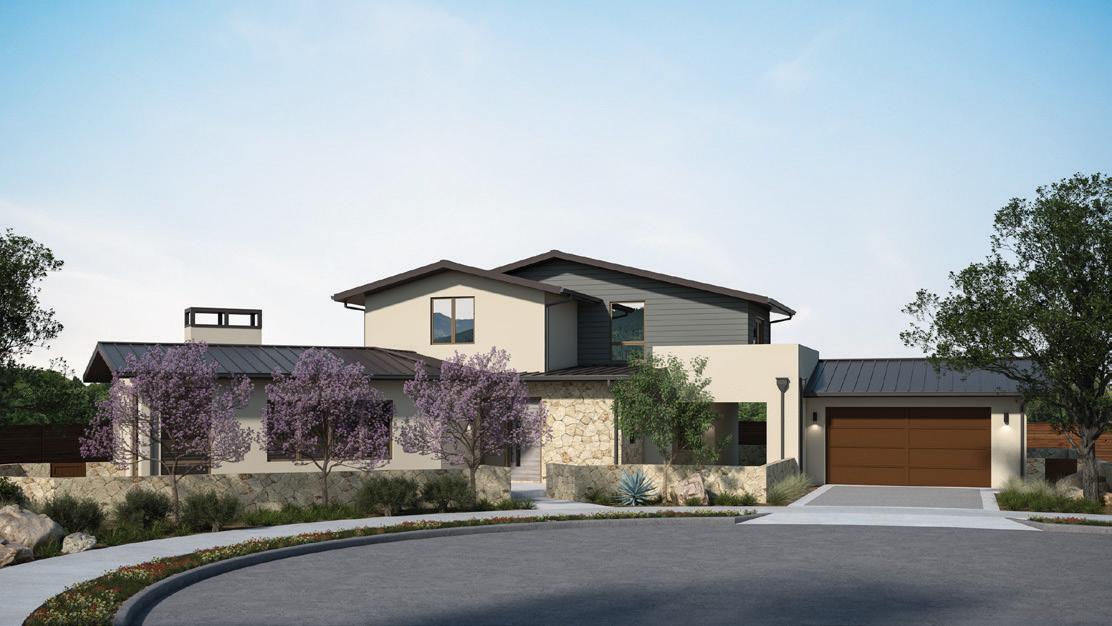
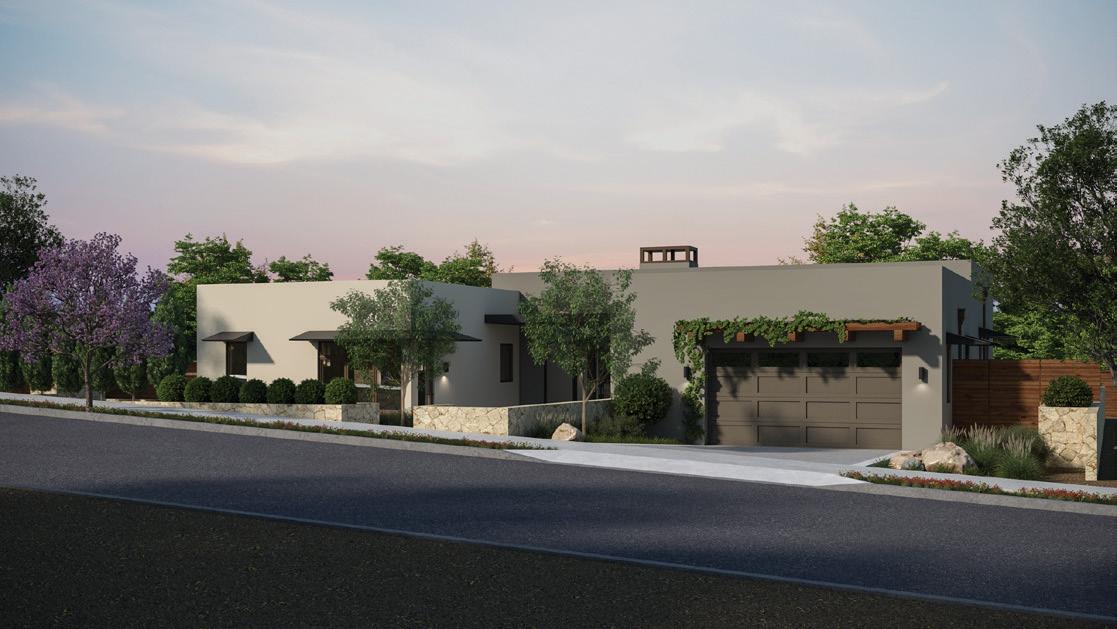
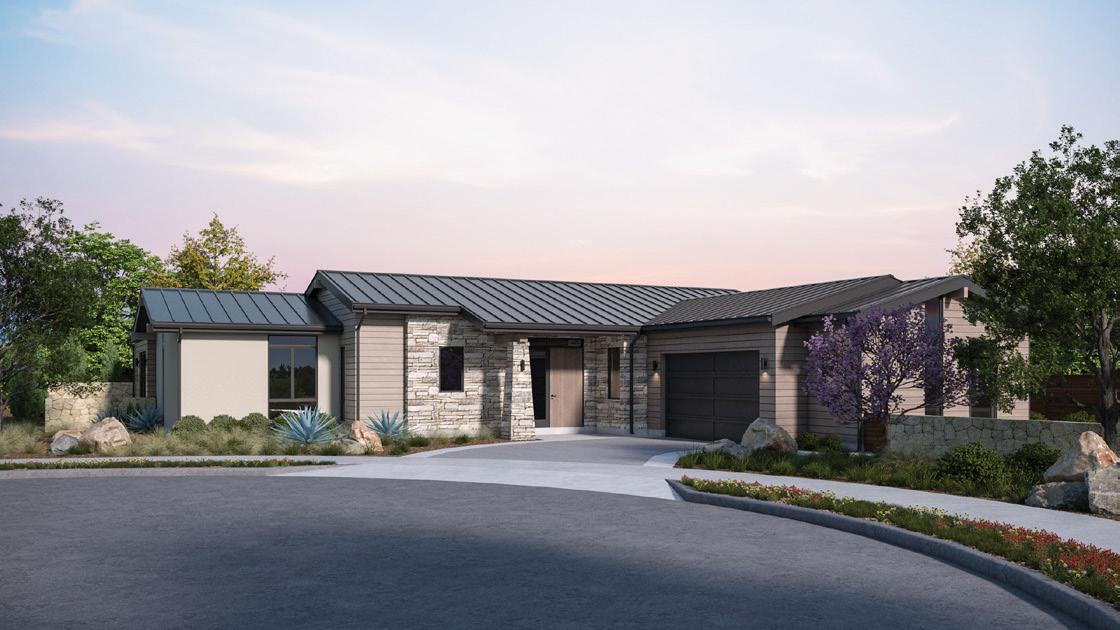
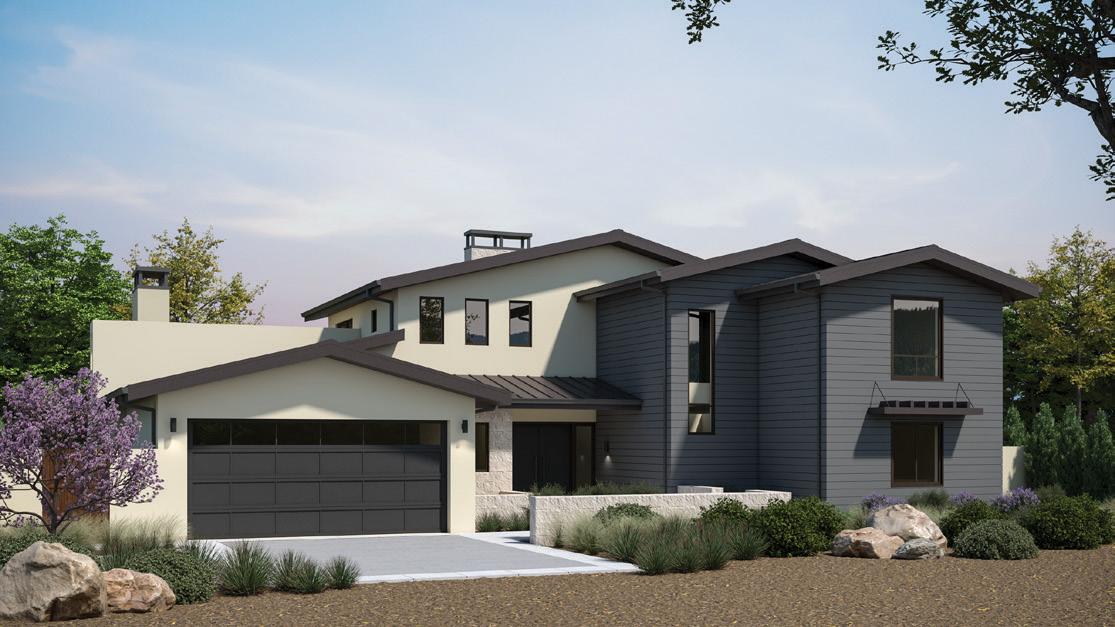


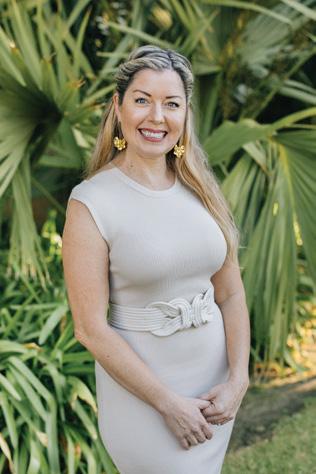





Featuring a Thomas Keller Restaurant (Coming Soon)
Featuring a Thomas Keller Restaurant (Coming Soon)
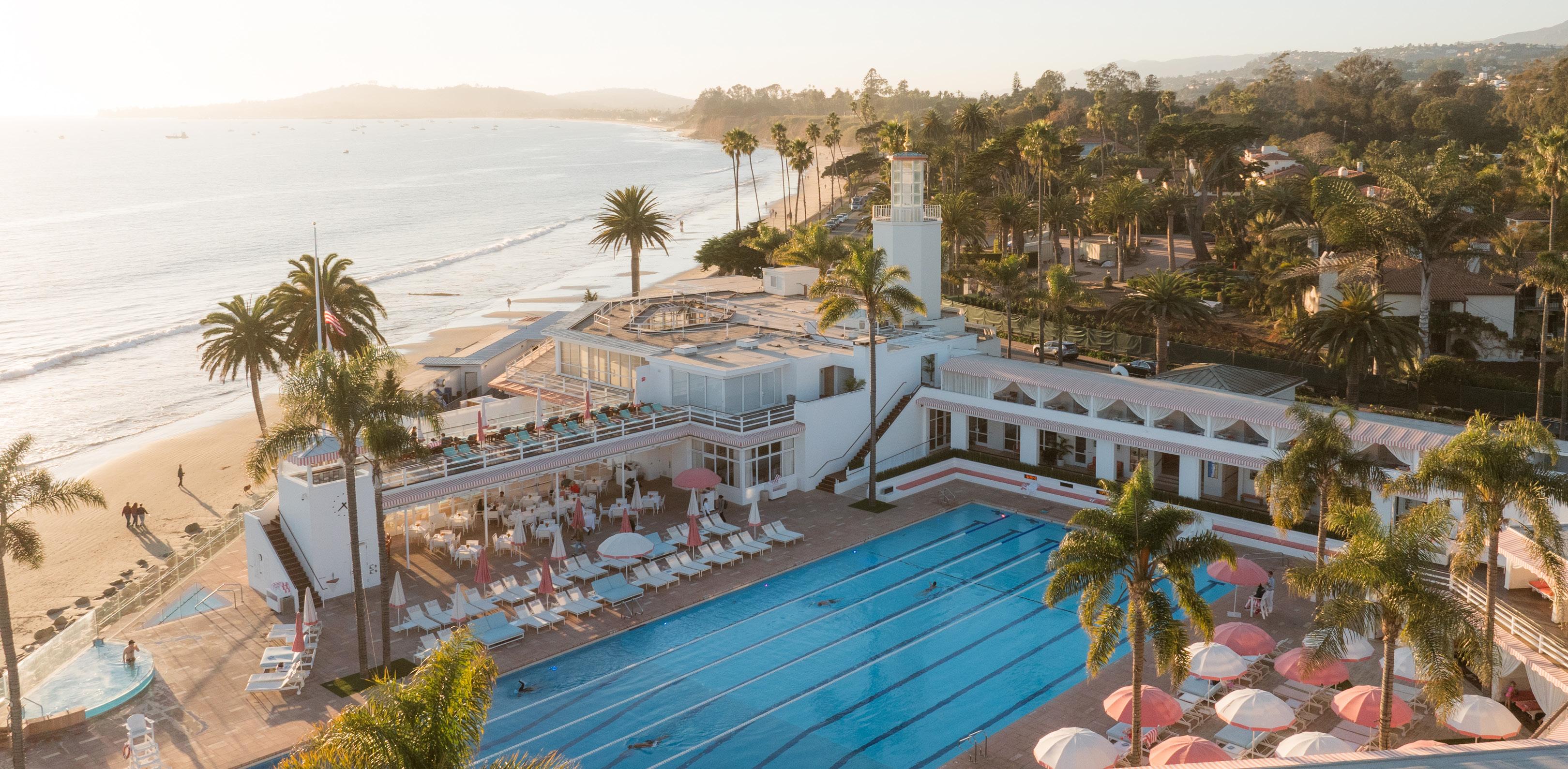
Heated oceanfront Olympic-size swimming pool with four lap lanes and diving board
Heated oceanfront Olympic-size swimming pool with four lap lanes and diving board
Largest Japanese glass spa in California overlooking the Pacific Ocean and Channel Islands
Largest Japanese glass spa in California overlooking the Pacific Ocean and Channel Islands
Oceanfront rim-flow cold plunge pool and outdoor sauna
Oceanfront rim-flow cold plunge pool and outdoor sauna
Oceanfront shaded rim-flow beach entry kid's pool
Oceanfront shaded rim-flow beach entry kid's pool
The Studio featuring custom Pilates reformers offering an abundance of complimentary pilates, yoga, and stretch classes with top instructors
The Studio featuring custom Pilates reformers offering an abundance of complimentary pilates, yoga, and stretch classes with top instructors
Fins featuring an open kitchen serving coffees from around the world, fresh juices, deli, bakery and snacks amid an open air seating overlooking the ocean and pool
BECOME A MEMBER
Fins featuring an open kitchen serving coffees from around the world, fresh juices, deli, bakery and snacks amid an open air seating overlooking the ocean and pool

Crow's Nest wrapped in glass with seating for 9 extends out over Butterfly beach with views of downtown Santa Barbara and Malibu
31 luxury cabanas fully equipped with private service and upscale amenities
31 luxury cabanas fully equipped with private service and upscale amenities
Private Dining room sitting atop the second deck with fully retractable glass walls offering an open air experience with oceanfront views
Private Dining room sitting atop the second deck with fully retractable glass walls offering an open air experience with oceanfront views
Newly surfaced gated tennis and pickleball courts with fully stocked amenity stations for optimized playing conditions
Newly surfaced gated tennis and pickleball courts with fully stocked amenity stations for optimized playing conditions
Fitness center featuring views of the ocean and mountains as you workout with world famous Peter Park from Platinum Fitness
Fitness center featuring views of the ocean and mountains as you workout with world famous Peter Park from Platinum Fitness
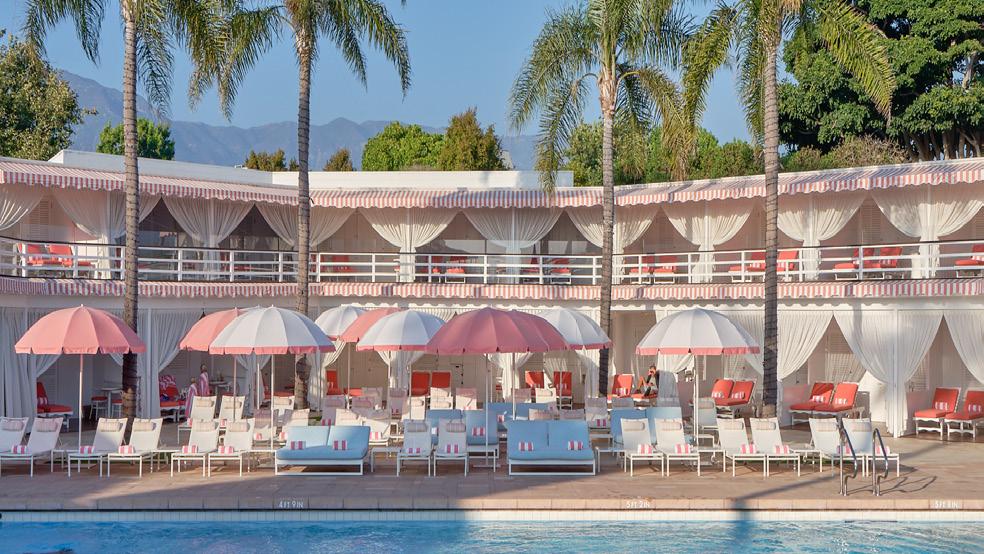
lounge chairs and smooth sand imported from Malibu
Private beach access and lounge seating at Butterfly Beach
Private beach access and lounge seating at Butterfly Beach
The lounge with original fireplace and lounge seating for ultimate relaxation
The lounge with original fireplace and lounge seating for ultimate relaxation
Locker rooms with luxury amenities and steam and sauna rooms
Locker rooms with luxury amenities and steam and sauna rooms
Al Fresco dining in the Coral Cafe featuring Rosa Verona bar with a 50' LED sky screen overlooking the ocean, mountains and Sand Box beach
Al Fresco dining in the Coral Cafe featuring Rosa Verona bar with a 50' LED sky screen overlooking the ocean, mountains and Sand Box beach
The Garden surrounded by bougainviella and strawberry trees, perfect for a relaxing morning or intimate event
The Garden surrounded by bougainviella and strawberry trees, perfect for a relaxing morning or intimate event
BECOME A MEMBER
KELLY CAMPBELL
KELLY CAMPBELL
Director of Membership Sales
Director of Membership Sales kcampbell@tymail.com | 805.455.2587
kcampbell@tymail.com | 805.455.2587