

![]()


compiled by Susan Drinkard

Besides family, what is too important to forget?


“ I think it’s important to remember that everything we have has been given to us and we don’t know how long we have here. That should make us live lives that exemplify Christ and His teachings.”
Lane Riffey Retail Sandpoint
“Learning and choices.”
Joel Fristina and son Eli Construction Sandpoint
“For me, it’s basic human rights the world over. People are caught up in issues that aren’t important instead of the human rights of freedom of expression, health, equality, and remembering that we are all citizens of planet Earth.”
George Rickert Retired teacher Sandpoint

Wow, what an amazing couple of days of skiing it has been. For those of you lucky enough to get some turns at Schweitzer, how are those legs feeling? I love when snowfall is measured in double digits. It makes the beer taste better.
The awesome crew at Schweitzer Ski Patrol invited me along on their avalanche control on Wednesday morning, which was great timing since 14+ inches of the good stuff dropped the night before. Look forward to a story next week with photos. Spoiler alert: it involves bomb chucking.
Speaking of explosives, this is the last shameless plug I’ll give for my play, “Death of a Small Town in the West,” which shows at the Panida Theater’s main stage this weekend, Jan. 26-27. Tickets are only $10 if you buy them in advance (at Eichardt’s, Eve’s Leaves or online at Panida.org), or $12 if you want to buy them at the box office. A portion of the proceeds will benefit the Sandpoint Reader and local theater production company Unknown Locals. I look forward to seeing you there this weekend, or, if you can’t make it then, “Death” will play again next weekend – Feb. 2-3.
Have a great weekend, my friends.
-Ben Olson, Publisher
111 Cedar Street, Suite 9 Sandpoint, ID 83864 (208)265-9724
www.sandpointreader.com
Publisher: Ben Olson ben@sandpointreader.com
Editor: Cameron Rasmusson cameron@sandpointreader.com
Zach Hagadone (emeritus) John Reuter (emeritus)
Advertising: Jodi Taylor Jodi@sandpointreader.com
Contributing Artists: Mountain Taylor (cover), Ben Olson, Susan Drinkard.
Contributing Writers: Cameron Rasmusson, Ben Olson, Lyndsie Kiebert, Nick Gier, Mike Wagoner, Shannon Williamson, Mayor Shelby Rognstad, Brenden Bobby, Erik Daarstad, Jim Mitsui, Robens Napolitan, Jeannette Schandelmeier, Maureen Cooper, A.C. Woolnough, Jodi Rawson, Gabrielle Deubendorfer.
Submit stories to: stories@sandpointreader.com
Printed weekly at: Griffin Publishing Spokane, Wash.
Subscription Price: $95 per year
“The most important thing to remember is that God is faithful and that I can trust Him in any area of my life.”
Nikki Favor Miller’s Country Store Elmira

“Peace is too important to forget.”
Bill Williams Retired wooden boat restorer Samuels


Web Content: Keokee

The Sandpoint Reader is a weekly publication owned and operated by Ben Olson and Keokee. It is devoted to the arts, entertainment, politics and lifestyle in and around Sandpoint, Idaho. We hope to provide a quality alternative by offering honest, in-depth reporting that reflects the intelligence and interests of our diverse and growing community. The Reader is printed on recycled paper using soy-based ink. Leftover copies are collected and recycled weekly, or burned in massive bonfires to appease the gods of journalism. Free to all, limit two copies per person
SandpointReader letter policy:
The Sandpoint Reader welcomes letters to the editor on all topics.
Requirements:
–No more than 400 words
–Letters may not contain excessive profanity or libelous material. Please elevate the discussion.
Letters will be edited to comply with the above requirements. Opinions expressed in these pages are those of the writers, not necessarily the publishers.
Email letters to:
letters@sandpointreader.com
Check us out on the web at: www.sandpointreader.com
Like us on Facebook.
About
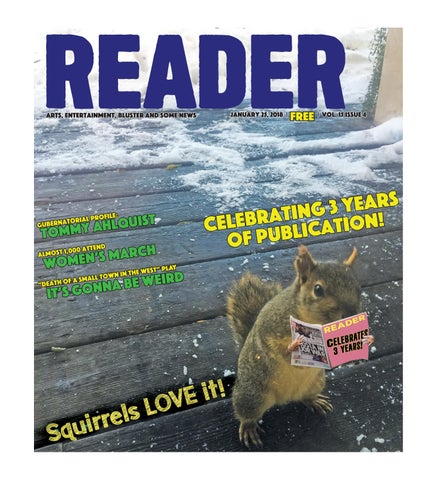
This week’s cover photo was sent in by Mountain Taylor. Mountain says: “Hi there, my name is Gus Gus and I’m a local tree gopher. I love being hand fed pecans and staring through windows.” Apparently he also loves reading tiny Readers.
By Nick Gier Reader Columnist
“Christ furnished the spirit and motivation, while Gandhi furnished the method.”
—Martin Luther King, Jr.
In a 1921 sermon Unitarian minister John H. Holmes declared that not only was the Mohandas K. Gandhi the greatest living human being, but that he was also “the greatest Indian since Gautama Buddha and the greatest man since Jesus Christ.”
Do I dare trump Holmes’ hyperbole and propose that Martin Luther King, Jr. was the greatest person since Gandhi and, more daringly, suggest that he was the greatest American ever?
George Washington is usually considered the greatest American, overcoming incredible odds against the British army and successfully leading the nation through its first eight years.
But what is more remarkable: a violent overthrow of imperial rule or liberating former slaves — long denied their full rights — without ever firing a shot? The revolutionary soldiers were certainly brave, but were they as courageous as unarmed people facing vicious police dogs
Dear Editor,
We’ve recently had three mass killings where the shooters had impressive fire power. In the Texas church, 26 were killed, 20 wounded and almost 500 shots fired. In Las Vegas, 58 were killed, 546 injured and more than 1,100 shots fired. In Colorado, one policeman was killed, six people wounded and about 100 shots fired. We know the first two had “large-capacity magazines” (those holding 10 to 100 shots) and can guess that the Colorado shooter probably had them as well. The Las Vegas shooter also had “bump stocks” that allowed machine gun-like bursts from his semi-automatic rifles. Both bump stocks and large-capacity magazines can be purchased online. You need 30 or 40 shots for self-defense? Really?
These shootings were done by sick people with access to weapons modified to kill people. That access has been made more likely by actions the NRA has taken.
in Selma, Ala.? King was also a Mahatma, a “Great Soul.”
An apocryphal story tells of a meeting between Gandhi and Pasthun warriors in the Panjab. He had only one question for them: “Who is the most fearless among us? You, armed to the teeth, or me in a loincloth and walking stick?” Abdul Gaffar Khan, the Pasthun leader, had to admit that Gandhi was the most fearless, and he went on to form a nonviolent army—80,000 strong—called the “Servants of God.”
Both Gandhi and King combined spirituality and political action in a way never experienced before. Previously, religious banners flew at the head of invading armies. Religion was usually used to deny people their rights, and it was also used to exclude competing religious factions. King and Gandhi were inclusive in their spiritual visions and actions, and they brought religious factions together rather than keeping them apart.
King was first introduced to Gandhi’s ideas by Benjamin E. Mays, president of Atlanta’s Morehouse College, where King matriculated at the age of 15. Mays was one of those African Americans who, during the 1930s, had made the pilgrimage to India to meet with Gandhi.
These black leaders debated
No one measure will stop gun violence, but several common-sense actions could begin to reduce it: improved, universal background checks; closing loopholes in current laws; outlawing high-capacity magazines and full automatics and improved mental health treatment. None of these would infringe “on the right of the people to keep and bear arms” or lead to the gun confiscations the NRA constantly warns us about.
As with any letter that criticizes the NRA, we can now look forward to rebuttal letters containing personal attacks and quotes of NRA-supplied data that show where I’m wrong.
Ken Thacker Sagle
Dear Editor, Dan Rose’s latest rant in the Jan. 11 Reader calling out “socialists” just demonstrates how divisive he and his
about the feasibility of importing Gandhi’s methods to America. Most of Mays’ colleagues eventually convinced themselves that Gandhian non-violence could succeed in America, but only if African Americans could learn how “to sacrifice for a principle” as the Indians had done.
Initially, the young Martin, however, was more interested in Henry David Thoreau, and he read and re-read “On Civil Disobedience.” Both Gandhi and King would take Thoreau’s one night in jail protesting a poll tax far beyond what Thoreau would have had the inclination to do.
Even after being introduced to Gandhi and Thoreau, the young King still kept to his books and did not engage in any political activities. Similarly, Gandhi’s early years do not give any hint of his future as an activist. He failed as an attorney in India, and his career was saved by being hired by Indian merchants in South Africa, where he finally found his true calling. Like the biblical prophets, Gandhi and King were initially very unlikely and reluctant political and spiritual leaders.
It was at Crozer Theological Seminary that King studied Gandhi in depth. After hearing a lecture on the Gandhi, King went out and bought six of his
fellow travelers are. It displays why now, more than ever, we need people to run for local, state and federal offices who seek out factual information and don’t undermine our community with bullying tactics.
Mr. Rose’s denial of climate science is just one piece of evidence of how detached from reality his worldview is. The science is clear that human activity has dramatically increased the concentration of carbon dioxide in the atmosphere, which is causing havoc with our climate. Independent polls show that a majority of Americans are concerned about this trend and would support government action to help address it.
The response of Mr. Rose and other members of the Redoubt movement appears to be denial (judging by the Redoubt News site) while prepping and arming themselves for eventual societal upheaval. Ironically, that upheaval may well be fueled by our nation’s unwillingness to address problems like global warming, which is already creating climate refugees.

books and started his “intellectual odyssey to non-violence.” The 21-year-old King was not sure how Gandhi’s philosophy would combine with his Christian faith.
The solution finally came to him: “Gandhi was probably the first person in history to lift the love ethic of Jesus above mere interaction between individuals to a powerful and effective force on a large scale. It was in this Gandhian emphasis on love and nonviolence that I discovered the method for social reform that I had been seeking for so many months.”
The Buddha and Christ are clearly our foremost ancient practitioners of nonviolence. Christ’s message that we are to love even those who hate us is essentially the message of the Buddha. Both knew very well that hate figuratively burns a
What better way to prime the pump of discord than through divisive language and name-calling, which Mr. Rose is so adept at using? His rejection of facts, his attempt to demonize local citizens who care deeply about public education, and his embrace of “New World Order” conspiracy theories, is all the more disturbing because we know many other people moving here are getting their information from the same internet echo chamber. These people used to be considered fringe. Now they have control of our local Republican party and, it seems, the nation.
People like me – someone who respects scientific facts and cherishes American traditions such as free, public education and public lands – may never convince people like Dan Rose that we are not part of some grand conspiracy to take their private property and guns. But we can speak up for truth and our commonly held values. And we must vote for people who have a shred of common sense and care about providing a secure,

hole in our hearts.
Equally remarkable, particularly because we know their personal histories and weaknesses so well, are the lives of Gandhi and King. Taking the ancient saints of nonviolence or the more human Gandhi and King as our models, let us all try to develop the virtue of nonviolence until it becomes as natural as taking a breath.
Nick Gier of Moscow taught religion and philosophy at the University of Idaho for 31 years. Read the full version at www. nickgier.com/GandhiKing.pdf, and read excerpts from his book The Virtue of Non-Violence at webpages.uidaho.edu/ngier/ vnv.htm. He can be contacted at ngier006@gmail.com.
abundant and healthy future for all of us – liberal or conservative, Christian or not, black or white, wealthy or poor.
Susan Drumheller Sandpoint
Lockwood for Commissioner...
Dear Editor, Bonner County will be fortunate to have Steve Lockwood as a county commissioner. His experience and service on local boards is clearly what is needed, and the laughable attempt by Mr. Rose to warn against “creeping socialism” suggests neither an understanding of the meaning of the word (my fellow Canadians haven’t done too badly!), nor an honest appreciation of just what is entailed in public service.
Brian D’Aoust
Clark Fork
‘Does anyone else think that drilling for silica in the Lake Pend Oreille watershed is a terrible idea?’
By Shannon Williamson Reader Columnist
As some of you may have read in the Bee earlier this month, a Montana-based company called Pend Oreille Silica Inc. is looking to do some exploratory drilling on lands managed by the Idaho Panhandle National Forests (IPNF). These lands, also known as the Green Mountain Silica Deposit, happen to be located on steep terrain that drains to Lake Pend Oreille, south of Cedar Creek, along the eastern shore. Do you see where I’m going with this?

Shannon Williamson
The District Ranger made a preliminary assessment of the request and felt that the proposed
actions “do not individually or cumulatively have a significant effect on the quality of the human environment and, therefore, may be categorically excluded from documentation in an Environmental Impact Statement (EIS) or Environmental Assessment (EA).” Um, no. Granted, the footprint of the proposed drill site seems small in scope. One could argue that drilling down to a max depth of 200 feet from an 80X30 foot drill pad is nothing to get all panicky over. But wait – there’s more! The total claims area is 640 acres
with an additional 1,700 acres that are ready for staking/claiming. The combined area is supposedly home to a whopping 21 MILLION TONS of high-purity silica. If exploration proves fruitful, we could be looking at a big ol’ silica mine in the midst of the Lake Pend Oreille watershed. Let’s pump the brakes, shall we?
We definitely had something to say about this, and for anyone that knows me, this should come as no surprise. Through the public comment process, we strongly urged the District Ranger to reconsider its Categorical Exclusion (CE) for the Green Mountain project and undertake a draft EA instead. Our request isn’t just a “pretty please with sugar on top” – it’s grounded in years of regulatory and case law.

I’ve always liked the rain, listening to it dance on a tin roof or watching the steam rise off that roof after it quits and the sun comes out. It’s interesting that it’s so pure and free of salt since rain basically comes from the ocean.
When the morning sun heats the surface of the various oceans, huge amounts of surface water evaporates. That is, it changes from its liquid form into a gas — water vapor. This allows the water to escape the bonds of all that salt and travel inland on the prevailing breezes. Somebody was thinking when they came up with this because too much salt kills plants. Then, when the moist air cools down for one reason or another, the gas turns back into liquid and falls to earth as rain or snow. Warm air can pick up and transport a lot of water this way, but
By Mike Wagoner Reader Contributor
cool air isn’t very good at it.
There’s a little experiment that can really help to understand why. Get a large bottle and put the mouth of a deflated balloon over the top of it. You’ve just trapped a little piece of the atmosphere. This creates more room between the gas molecules of that air so it can pick up and hold water, like a sponge. Now, turn on the cold water, the balloon deflates because - you guessed it - the air is squeezing together. Well, this is like ringing the sponge out. And this is why it rains.
Time for the “hippie prose.”
Today, I happened upon a spider, the likes of which one may never see in a lifetime. There it was, diligently weaving a
Through our comments, we demonstrated that the proposed project possesses potentially significant direct and cumulative effects, impacts that the Service has so far failed to meaningfully analyze contrary to clear requirements under the National Environmental Policy Act (NEPA), the Federal Land Policy and Management Act of 1976 (FLMPA), and the National Forestry Management Act (NFMA).
I’ll spare you all the details that most people find yawn-inducing (unless you’re a total policy wonk like me). Suffice it to say that we made a defensibly strong argument for doing the right thing, which is ditching the CE and going for the EA instead. And when I say “the right thing”,
I mean “what’s required by law”. It just sounds more pleasant the other way.
A mine of this size has the very real potential to cause significant harm to the watershed, and we just can’t have that. Whether this proposal has anything to do with the proposed HiTest silica smelter over in Newport or not (oddly coincidental?), we’ll be watching how this particular project unfolds very closely. It’s a NO to the CE and a YES to the EA. That was the last acronym. I swear!
Shannon Williamson is the executive director of Lake Pend Oreille Waterkeeper and president of the Sandpoint City Council.
masterpiece of silk in the afternoon sun. If someone held a gun to my head and said, “Make one just like that or else,” I’d say, “You might as well just shoot me now.”
With a brain about the size of the sharp end of a pin and no parent that ever hung around at all, how is it that this thing can do this? Genetically or chemically programmed? OK, who was first?
Some days I try to intellectualize myself out of the dark. And other days I just shrug and go, “Huh, that’s cool.”
Mike Wagoner has a dual personality. By day he is a science teacher and by night a singer-songwriter. He has recently moved to the area from Nashville, where he taught school and did studio work on the side.


Bouquets:
•Last weekend, Cadie and I attended an animal tracking class with Brian Baxter in Libby, Mont. We’ve always been interested in learning more about this fascinating subject and thoroughly enjoyed Brian’s passion for tracking. The class involved a handful of walks, a snowshoe excursion and some “stop and hops” to observe wildlife and look for tracks. We saw tracks and scat from mink, river otter, deer, coyote, several bird species and learned all about the habitat of each animal. If you ever get a chance to attend Brian Baxter’s tracking classes, do it!
Barbs
•It’s time again to remind our contributors and letter to the editor writers of a few grammatical issues that help make our jobs a bit easier:
1. Please single space your submissions. It may seem petty, but we literally spend hours every month eradicating the extra space from your submissions.
2. We use AP style, which means all punctuation goes inside the quotes. “If it looks like this”, it’s wrong. “This is how it should look.”
3. Letters to the editor are only accepted if they are under 400 words. If you’re a few words over, we’ll make it work, but try to keep under the limit.
4. Story submissions will not be accepted over 1,000 words without prior approval.
5. Ellipses... I used to love them. Now, as a newspaperman, not so much. Ellipses are used correctly when they omit a section of a quote. They do not denote a pause. If you want to pause, use the em dash — or long hyphen. The only time we use the ellipsis is as a stylistic method to denote the titles of letters to the editor.
Dear Editor, Regarding the “Barb” about skiers cutting lines:
The Lakeview Triple needs a singles line and a design that traffics skiers in a safe manner!
I have gone to the front of the line and called out “single.” The Triple is a singles line when it is busy, or at least it should be! I’m not taking cuts. Just thinking.
We are trying to educate you skiers who let empty chairs go up the mountain with only onesys or twoseys. Triple — three skiers.
The problem is with the skiers who will not group up with others to make a threesome and fill the chair.
There is no designated singles line. Pay attention. Think ahead. Make a threesome, and fill those empty chairs. Call out “single” if you are one or two. You snooze, you lose, and so does everyone waiting in line behind you.
You just might make a new friend or learn something from riding with a stranger or just enjoy having a seat.
It is also a safety issue. The sooner the line moves forward the less likely someone is to get hit by a skier coming in too fast or out of control.
You feel you lost out because you and others ahead of you did not do their duty and fill an empty chair as each and everyone of you should have. No one was taking that seat, so I did.
Hopefully management will see the need for a singles line at the Triple and also formulate a better traffic pattern for loading. Then the good little schoolchildren/skiers won’t have to do any thinking.
Thanks,
Leila Olson Sandpoint
Dear neighbor Dan Rose, Imagine my surprise when after taking you on two weeklong river trips and having you over to share a meal at my home you choose to slander me in a public forum over comments that were not addressed to you.
In all the time I’ve known you since you moved here two to three years ago we have never discussed politics or religion. I base my willingness for friendship on mutual respect and character. I didn’t know if you were a Redoubter, (fact is I didn’t know what that was until recently) or a Republican or a socialist. I would not have cared. It is a free country, and we all have a constitutional right to our unfettered beliefs, no matter how ignorant they may seem to others.
In debating philosophy your comments are called an ad hominem attack — that is, “attack the person and skirt the issue.” The fact that you chose to
do this publicly and not to my face is not just juvenile, but cowardly. Climate change is not, or should not be, a political partisan issue. It is a science issue that I believe, along with the majority of scientists that STUDY it, is a matter of likely disastrous consequences by the year 2050. Now, if you needed to cross a bridge and the MAJORITY of engineers told you it would not support your weight, would you cross it?
After Vietnam and finishing college, my young wife and I took time to travel this great country and look for a place we wanted to raise a family. Having an old high school friend living in Kooskia we drove up to visit. I fell in love with the land from Boise to Bonners Ferry, and admired the people we met along the way: strongly individualistic, independent and self reliant. Characteristics I hoped to emulate. We bought some acreage with the “necessary elements” and settled in to build our home, raise a large garden and raise our children in a healthy environment.
Struggles, yes. Regrets, none. What we didn’t do, neighbor, is plant cameras in the trees, keep two assault rifles by the front door, and fly flags apparently representing a society that prophecies and prepares for a time when our government will come after us and chaos ensues. I’ve seen that movie, and read those comic books, and I’m sure that in time this movement will be relegated to the dust bin of American history. But that is just me expressing my unvetted opinion guaranteed to me by the freedom of expression in our Constitution.
And for the record, though I greatly appreciated you plowing my driveway, I never once asked you to do so, and after living here for near 40 years I’m sure I will survive.
I have to note that neither of your flags is the American flag.
Sincerely,
Ray Libby Samuels
Dear Editor,
On Jan. 18 I attended the Bonner County Commissioner’s public hearing regarding the proposed Bonner County Natural Resource Plan.
I have concerns with the manner in which the public hearing was conducted. At the beginning of the hearing the commissioners stated any letters mailed to the board that in their opinion had been “cut and pasted” were not going to be given consideration. There were several times those who were speaking were interrupted by the commissioners, who then proceeded to argue with them. A public hearing is the time to listen to what the public has to say. All citizens who take the time to write a letter or to attend a public hearing should be
listened to, whether pro or con, and treated with respect by their elected officials.
All in all, six people spoke in support and I estimate that 20-25 were opposed. It became quite clear by the end of the hearing that all of the commissioners are in favor of the plan and that they were not really interested in the opinions of the public, especially of those who had an opposing view.
I am a voter, a long-time resident and an informed citizen and like many others in the county I expect that my representatives in local government are representing all of us and are making decisions to run our county in everyone’s best interests. This was not the case at the public hearing and this plan is not representative of our county. It is not supported by the Idaho Forest Group or the Idaho Conservation League.
A natural resources plan should involve all stakeholders and be developed with input from a broad spectrum. Input should be provided by federal agencies, state agencies, sportsmen’s groups, the outdoor industry and the forest products industry.
Our board of commissioners should be representing all of their constituents and respectfully take into consideration all opinions and value the input that could be provided by those qualified people within the groups listed above.
Connie Burkhart Hope
Dear Editor,
In “The Folly of it All” Ms. Wheeler refers to an Angel Over Sandpoint as saying “She would dance naked in the streets if it would feed the poor.”
I say, “ We have our own Lady Godiva. And thank God for people like her, because she works hard to feed and help the poor.”
Rhoda Sanford Sandpoint
Dear Editor,
After much consideration, I have finally decided it is time to let my voice be heard. My husband and I moved to Blanchard Idaho to retire in 2014. We found a perfect community in Blanchard, met some wonderful people and enjoy all four seasons in this beautiful landscape.
In the summer, we enjoy hiking some of the wilderness areas with a group of fellow hikers in our neighborhood, or bicycling the streets of Sandpoint or Coeur d’ Alene. Winter you may find us snowshoeing, or cross-country skiing or when there is no snow, sometimes just walking and taking in the vistas.
In October 2017, all our dreams of a future in this beautiful area, surrounded by forests and lakes and so many outdoor activities came crashing down. The cause? The potential of HiTest Sands (a Canadian corporation) coming to Newport, Washington to build their silicon smelting operation.
This kind of industry has no place in a rural residential setting. The proximity to homes, schools and the entire community of Newport, Wash., should give pause to this type of industry. Smelters are dirty business in general, and a silicon smelter would produce all sorts of pollutants that we do not want.: everything from nitrogen oxides, carbon monoxide, particulate matter and more. Many of these are linked to diseases of the lung, cancer, and environmental problems like acid rain and haze
Add to all of this our natural inversion layer, which already causes days of unhealthy air, and you have a recipe for disaster. Last summer’s fires and smoke in this region proved just how bad it can be. After two weeks of an inversion layer holding the smoke over an area stretching from Coeur d’ Alene to Sandpoint (and possibly beyond) my husband and I both had difficulty breathing even days after the inversion layer lifted and the smoke cleared.
Please, contact your state and local representative, do some research, and join the fight to keep HiTest Sands from building this monstrosity in our beautiful scenic area.
Cora McConnell Blanchard, ID
Oh Say Can You See...?
Dear Editor,
Stars of expletives spat upon a field of blue, All white stripes over bars of red, Burning fear and hate across our flag.
Is this America the great?
Sandra Deutchman Sandpoint
Got something to say? Write a letter to the editor at letters@ sandpointreader.com. Letters must be under 400 words, and be free from libelous statements and profanity. Please elevate the discussion.
By Lyndsie Kiebert Reader Staff Writer
Editor’s Note: This is the first of a series of profiles of political candidates running for office in Idaho. Starting with the gubernatorial race, we will publish profiles of each candidate leading up to the primary election in May.
Tommy Ahlquist has a hard time talking about himself.
He isn’t shy, or bad at articulating his thoughts. Ahlquist would just rather talk about the people who influenced his choices to be a doctor, a businessman and now, a Republican gubernatorial candidate.
“In business, and as a doctor for all those years, you don’t talk about yourself — you talk about other people, and you let the results of your life be the results of your life,” Ahlquist said. “Then all of a sudden you get into (the race for governor), and that’s what it’s about: Why me and not someone else?”
So why should Ahlquist be the next governor of Idaho? If you asked him, it would be because serving people is all he knows.
“I couldn’t help but learn (to serve). That’s how I grew up,” he said. “It may sound corny, but that’s the way it was. If you want happiness, you’ll find it through serving.”
Ahlquist cites his grandparents as his primary influences. He can recount elaborate memories of discussing God and friendship with his Grandpa Pettersson under willow trees, or delivering banana bread to neighbors with his Grandma Pettersson.
Now, Ahlquist says he sees
that spirit of giving across the state.
“Service is the heartbeat of Idaho, and it’s the heartbeat of what makes us great,” Ahlquist said. “There are inspiring stories everywhere you go.”
Ahlquist visited Sandpoint on Nov. 3, 2017, as part of his “44 counties in 44 days” tour. He spoke at the Sandpoint Community Hall to a group of a few dozen locals, outlining what he calls his “conservative blueprint for an even better Idaho.” Small businesses, education, healthcare, tax reform, term limits and ethics are Ahlquist’s primary focuses as he sets his sights on the governor’s office.
“It’s a list of ways we can improve our state, and it starts with re-focusing our priorities,” Ahlquist wrote in a campaign statement this month. Some of those priorities include eliminating regulations on small businesses, streamlining Idaho students to Idaho jobs and reforming tax code to make it more “fair, flat and simple for Idaho families and businesses.”
Ahlquist is Mormon, and served as stake president of the Meridian Idaho North Stake of the LDS Church for a couple of years leading up to his declaration of candidacy. When the Idaho Statesman asked Ahlquist how his beliefs would play into his politics, he said he planned on “running as a businessman and physician, a husband and father.”
“A lot of the best people in my life are of different religions,” he said, noting that most people can find common ground in the belief of a supreme being. “I hate it when

people pander and use religion in politics, and I don’t ever want to do that. It’s a delicate balance, because it does play into your life and who you are. I just always try to check myself.”
As a “businessman and physician,” Ahlquist boasts a sizable resume. He spent nearly two decades as an emergency room doctor before transitioning in 2015 to focus exclusively on his growing real estate business. In the last 10 years, he has helped build over 2 million square feet of commercial property across Idaho, and is often credited with transforming downtown Boise, most notably with the Zion Bank Building, Idaho’s tallest building.
He has also dabbled in a number of entrepreneurial projects and served on more than a dozen community boards and committees.
This is Ahlquist’s first bid for office. In response to questions surrounding past donations to Democratic
campaigns, Ahlquist said it all comes down to good business.
“I voted Republican my entire life, and the core values I believe in are all free markets and personal accountability: very, very much Republican,” he said during his visit to Sandpoint. “And in all fairness to people, I don’t have a voting record, but what I ask people to do is look at … how I’ve lived my life.”
Having traveled the length and width of Idaho a number of times in the last year, Ahlquist said nothing compares to the stories, concerns and suggestions he’s heard from everyday Idahoans.
“The richness of this experience cannot be put into words,” he said. “The enormity of the task that’s at hand and how people will rely on you as a leader and someone to look out for them and listen to them and fight for them — it’s humbling.”
Learn more about Ahlquist and his platform by visiting tommyforidaho.com.
AGE: 50
BIRTHPLACE AND RESIDENCE: Born in Hunter, UT. Lives in Eagle, ID
GOVERNMENT SERVICE: This is his first run for office
PROFESSION: ER doctor, real estate developer and entrepreneur
EDUCATION: B.S. Biology and Doctor of Medicine from the University of Utah
FAMILY: He is married to his highschool sweetheart, Shanna. They have four children, two of which are married as of last summer.
FUN FACT: Today, Jan. 25, is his birthday. Happy 50th birthday, Tommy!
By Cameron Rasmusson Reader Staff
State officials are breaking down the details of a Gov. C.L. “Butch” Otter’s health care plan designed to help residents in the socalled Medicaid gap.
Presented as an option for an estimated 35,000 Idahoans who make too much to qualify for Medicaid but too little for subsidized private insurance, the Otter-backed health care plan would allow insurance companies to sell cheaper plans that don’t qualify under Affordable Care Act standards. At a legislative preview event in early January, state officials said they didn’t feel the plan was feasible under the Obama administration. With the Trump administration a year old, however, they felt the time was right to introduce it via an executive order.
The Spokesman-Review reports that the proposal, dubbed the Idaho Health Care Plan, was detailed this week in Idaho House Health and Welfare Committee presentation. The plan hinges on seeking two waivers for key federal provisions and requires authorization from both the federal government and the Idaho Legislature. In total, the program is expected to cost $100 million, with $29 million of that shouldered by state taxpayers.
“This approach will make a difference in thousands of Idahoans’ lives,” said Idaho Department of
Insurance Director Dean Cameron, according to The Spokesman-Review. “It will help those with severe health conditions with better coverage at lower cost. It will help families who couldn’t previously qualify for assistance because their income isn’t high enough, a basic unfairness that exists in today’s marketplace. And it will help Idahoans who are buying individual plans on Idaho’s marketplace, even outside the exchanges, with lower costs.”
Many conservatives applaud the free-market-based effort to address Idaho’s Medicaid gap, an issue that has dogged the state for years. In an interview with the Sandpoint Reader, Russ Fulcher, a former state senator who is running for the U.S. House of Representatives, said he wanted to see a similar approach pursued years ago.
“Gov. Otter, welcome to 2012,” he said, later adding, “To me it’s a little bit late, but it’s here.”
Other Idahoan individuals and organizations, including the Idaho Democratic Party and the activist group Reclaim Idaho, argue that expanding Medicaid is the more efficient, effective and practical choice. Reclaim Idaho is gathering signatures in an effort to place Medicaid expansion on the ballot, giving Idahoans control over the outcome of its healthcare destiny.

By Cameron Rasmusson Reader Staff
Sandpoint City Council members and officials are tackling new responsibilities following a recent trip to Boise.
In a recognition of her work as Sandpoint City Council president and director of Lake Pend Oreille Waterkeeper, Shannon Williamson’s peers elected her to a two-year term as a District 1 representative on the AIC Municipal Water Users Group oversight group. A good fit given her professional experience, Williamson and the rest of the oversight group will focus on issues including, but not limited to,
water rights, water quality, and stormwater.
Williamson was elected to her second term on the Sandpoint City Council in city elections last year. Council members also unanimously voted for her to continue her role as council president into her second term.
City Administrator Jennifer Stapleton, meanwhile, was voted by her peers to preside over the Idaho City Management Association. An affiliate of International City/County Management Association, the Idaho City Management Association fills many roles, according to Stapleton.
“(Its purpose is to) in-
crease the proficiency and effectiveness of Managers and Administrators of local government within the State of Idaho; to strengthen the quality of local government through professional management; to encourage and support the precepts of the Council/Manager plan; to maintain the high ethical standards of the profession of City/County Management; and provide opportunities to enhance the professional development of its members,” Stapleton wrote in an email. Stapleton was hired as Sandpoint city administrator in December 2015.
By Cameron Rasmusson Reader Staff
If there was one prevailing message at the 2018 North Idaho Women’s March, it was that it’s time for women to start taking leadership in government.
The march, which brought about 951 attendees around the region to Sandpoint, was nothing if not consistent to its theme: First they marched, then they ran. Building off the momentum established last year, the event’s focus was squarely on encouraging women dissatisfied with the political order to file as candidates in local and state elections.
“We’re going to need to do a lot of yoga, because we need to run for office,” said Rebecca Schroeder, who is running as a Democrat for District 4 state representative.
The star of the rally prior to the march was Paulette Jordan, a Democratic gubernatorial candidate who has garnered national attention. If elected, she would be the first female governor of Idaho and the first Native American governor in U.S. history.
“Being part of a new era, I can say this is where it all starts. ... This is a new America,” said Jordan.
In recent weeks, national publications have profiled Jordan, and she even racked up a celebrity endorsement this week when singer and actor Cher announced her support for the candidate. But Jordan emphasizes her down-home roots when it comes to her view on Idaho politics. She said she understands the state because its issues are built into her very foundations.
“I will live and die for Idaho, because I was born and raised in Idaho,” Jordan said.
Jordan maintains a few unusual stances for a progressive political candidate. For instance, she herself is a gun owner and is a strong supporter of Second
Amendment rights. She also encouraged marchers to reach out to those with differing beliefs, saying she counts traditionally libertarian and Republican voters among her supporters. People in general have more commonalities than differences, she said, and it’s important to remember that.
“We’re not just going to win by one party,” Jordan said. “This is going to unify the entire state.”
Prior to Jordan’s speech, Schroeder recounted how she was first motivated to expand her professional skills as a biochemical scientist after her son was diagnosed with cystic fibrosis. She was further motivated to run for political office when Idaho became one of 18 states to resist Medicaid expansion under the Affordable Care Act, a move that benefits many people with cystic fibrosis. Schroeder told the crowd to not be dissuaded when people doubt them.
“Nothing motivates me more

than being underestimated,” she said. Indeed, Medicaid expansion was a major part of the 2018 Women’s March. Organizers set up tables where volunteers collected signatures for Reclaim Idaho, an ongoing campaign to put Medicaid expansion on the Idaho ballot. Proponents of Medicaid expansion see it as a solution for thousands of Idahoans who make too much to qualify for Medicaid but too little to afford a subsidized private insurance plan.
Speaking before Jordan took the stage, Reclaim Idaho activist Emily Strizich said that expanding Medicaid was not only morally responsible but also fiscally responsible.
“We don’t think ‘fingers crossed’ is good enough health coverage for Idahoans,” she said.

By Lyndsie Kiebert Reader Staff Writer
Last Saturday’s North Idaho Women’s March saw 951 attendees.
Amid the sea of poster board, it was easy to discern what each person felt most passionate about. Most were there to show support for feminism-related issues. Some came to protest immigration, abortion and more.
Tasha Shields brought her young children to the march.
“I’m here showing my kids the democratic process and supporting women’s rights and equality for all,” she said.
Mary Meek said she attended the march to stand for peaceful solutions.
“I’m here to help build a bridge, because we’re so polarized,” Mary said. “We need to come together.”
Mary’s daughter, Hannah
Meek, said she marched not just for women, but for all people.
“I think Idaho is an interesting state to live in because there’s change that can happen,” Hannah said.
According to Deeann Smith, who donned a sign that read “We’re Back, Power to the Polls,” that change can happen.
“I’d like to see more women elected. I love Paulette (Jordan), we just met this morning, and she’s amazing. I’m thrilled that there are so many people here to support her,” Smith said. “I think we have a real chance at changing things in Idaho.”
Wayne Babcock said he marched to protest actions happening at the national level.
“I march for love and freedom and the inclusiveness of all people — and against Trump,” he said. “His values of unrelenting greed and self-promotion — those are not the values my mother taught me.”
Jim Bure attended to protest actions on the federal level as well, but in regard to immigration. Bure carried a sign that read “America First” and stood next to a woman with a sign reading “Kate Steinle was a woman too.” Steinle was shot and killed by an illegal immigrant in 2015.

“We have a lot of things going on that are completely breaking what is constitutional law. We’re not opposed to legal changes in law, but when it comes to the DACA stuff, where there is absolutely constitutional law, they’re disregarding it,” he said. “Instead of going through an acceptable avenue which creates change that is acceptable to everybody, there is a certain aspect of the population that wants to
control what they’re doing and bypass constitutional law.”
While some posters included bullet lists of reasons people marched, Kat Hall’s sign was simple: “Still Nasty.”
“I’m here because it’s time to do something,” Hall said. “We have a voice and we need to use it, and that’s what we’re doing.”


By Brenden Bobby Reader Columnist
Confession time, 7B. Recently, I got a surprising diagnosis after a very long time of chronic health issues. Any diagnosis that ends a sentence with “for the rest of your life” is always jarring, but it’s not always a death sentence.
Once I found out what I had, I do what I do best and dug in to research this new term that would go on to define me for “the rest of my life”.
As with virtually anything medical, there’s an immense amount of information out there. For every nugget I found, I had to pry it out of fist-sized clumps of internet condescension, fear-mongering and misinformation.
So, what’s Celiac Disease?
Celiac’s is a hereditary autoimmune disorder where your body reacts violently to gluten. That was a giant and complicated bowl of word salad sprinkled with feta and ghost peppers, so I’ll break it down.
Celiac’s is hereditary, which means it’s passed down through your family’s genes, so you can’t catch it from me unless I created you. We don’t fully understand what genes cause it, we don’t even know why it can skip generations while hitting another very hard. To make things even more confusing, sometimes symptoms won’t show for years or even decades, and for some the symptoms can be terrible or barely noticeable for others.
Gluten is what triggers a reaction in those that suffer from Celiac’s. This is where most of
the bad information starts to circulate. You’ve probably heard about life-changing gluten-free diets or heard the rage of paying an extra $4 at the store for a loaf of gluten-free bread the size of an English muffin.
Gluten is the name for naturally-occurring proteins in wheat, rye, barley, and any cross of those. That’s it. Just those.
Whenever someone with Celiac’s eats something with gluten in it, their immune system goes into attack mode and begins to attack the lining of the small intestine. This causes damage and inflammation, and also doesn’t let the small intestine do its job to help digest food. This causes a multitude of side-effects, which we’ll go into later.
If you don’t have Celiac’s, this doesn’t happen, and ingesting gluten has no effect on you.
So what about these miraculous gluten-free diets everyone’s going crazy over?
I can’t say a gluten-free diet will absolutely work for you if you don’t have Celiac’s, but there are some obvious benefits to not being able to eat wheat products.
On a gluten-free diet, you cannot eat: Donuts, cake, bread, pizza, breakfast pastries, cupcakes… See where I’m going here?
The health benefit isn’t so much that you’re not eating gluten, it’s that you’re not eating the copious amounts of sugar and other carbohydrates sitting on top of the gluten. All of that stuff does exist in gluten-free variants, and it’s equally unhealthy for you, Celiac’s or no.
Celiac’s Disease seems like an oddball thing that’s just popped up in the past few years. This is most certainly not the case. It seems this way because we only put a name to it in the ‘50s, a cause to it in the ‘60s, and underwent a scientific-culinary revolution in the 2000s. It’s not a rare disorder. As many as 1 in 100 people in the United States have Celiac’s, and many don’t show symptoms or even know they have it.
There is evidence of Celiac’s disease as far back as ancient Greece, where the name originates (Coeliac, abdomen in Greek). During the 1850s, there was some pretty extensive research into it, but they lacked the ability to identify or even know what proteins were back then.
In the ‘50s, the cure for chronic diarrhea was a strict diet of bananas. It worked, until the patients were reintroduced to bread.
The symptoms are pretty jarring, and they aren’t uniform. It all starts in the small intestine. While your body is so busy attacking itself, thinking it’s been poisoned or invaded, it starts pushing the partially digested food out as quickly as it can in the form of diarrhea. At first, this can seem like you just ate something bad. When it persists for days, weeks or even months, even if you don’t seem sick, it’s time to talk to a doctor.
The damage the body does on the small intestine is unseen. Physical damage can cause temporary or even permanent lactose intolerance. Malabsorption (not absorbing nutrients) causes chronic fatigue, sleeping
disorders, extreme weight gain or weight loss in the short-term. If left untreated for years it can cause osteoporosis (brittle bones), chronic full-body inflammation and colon cancer, the second most-lethal type of cancer in America.
It’s not all gloom and doom. The Celiac’s diet forces a lot of concessions, but we live in an age of culinary wonder. If you want a gluten-free, dairy-free pizza, you can find one made from rice flour and cashew cheese that won’t cause a reaction. Heck, we have a whole
section for gluten-free cooking at the library.
I’ll leave you with my own personal favorite gluten-free guilty pleasure. Soft boil an egg, cut an avocado in half and put the egg in the middle. Now wrap the avocado in bacon and deep fry it (no batter, obviously) or broil it until the bacon is to your liking. Slice some tomato over top of it once it’s out and maybe stab some corn chips in there, and voila! Gluten-free, lactose-free bacon avocado bomb!
Don’t know much about lobsters?
We can help!

• A lobster’s brain is located in its throat, its nervous system in its abdomen, its teeth in its stomach and its kidneys in its head. It also hears using its legs, tastes with its feet and tends to favor one front limb, meaning they can be right-clawed or left-clawed.
• The lobster was so plentiful in the 1800s that Massachusetts servants demanded a clause in their contracts to prevent being fed it more than three times a week.
• Lobsters are functionally immortal. They show no measurable signs of aging (no loss of appetite, no change in metabolism, no loss of reproductive urge or ability, no decline in strength or health), and seem to only die from external causes.
• The biggest lobster ever documented was in 1977: 44 pounds, almost four feet long, and estimated to be as old as 100 years. Records show lobsters reached as big as six feet during colonial times.
• One in 5,000 North Atlantic lobsters is born bright blue.
• There’s a species of squat lobster named the “Hoff Crab” because it’s dense covering of setae resembles David Hasselhoff’s chest.
• Once and for all: Lobsters do not scream when placed in boiling water. It’s the air trapped in the shell being released.
• Lobsters are cooked alive because they have harmful bacteria naturally present in their flesh. Once the lobster is dead, these bacteria can rapidly multiply and release toxins that may not be destroyed by cooking.
The Aziz Ansari sexual misconduct allegation isn’t the fault of one quiet woman or one aggressive man, but the result of a deceptive sex culture
By Lyndsie Kiebert Reader Contributor
When comedian Aziz Ansari became the latest recipient of a sexual misconduct allegation, it took me a few days before I opened the story.
Before reading the anonymous account on the website Babe, which describes a woman’s uncomfortable date with Ansari, I expected to feel the same way I had when I read all the other allegations: sick, sad, mostly angry.
I was tired of feeling angry, so it was interesting when the article, titled “I went on a date with Aziz Ansari. It turned into the worst night of my life,” made me feel ready to speak up.
The Ansari story is not a case of sexual assault. It is a case of sex in popular culture failing all genders.
I do not intend to discredit Grace’s story (Grace is the woman’s pseudonym in the Babe article). No one has the right to invalidate her experience — it is hers alone. If it changed her life, no one can say it didn’t.
However, there is some debate as to whether what happened truly qualifies as sexual assault. Grace and Ansari went to dinner, then back to his apartment, where he made moves to engage in sexual activity. Grace said she both received and performed oral sex but that she “used verbal and nonverbal cues to indicate how uncomfortable and distressed she was.”
It wasn’t until Grace evaded Ansari’s advances three times with various cues (nonverbal, as well as phrases like, “I don’t want to feel forced,” and, “I don’t think I’m ready to do this”) that he finally understood and offered to call her a car. According to Babe, “Grace compares Ansari’s sexual mannerisms to those of a horny, rough, entitled 18-year-old.”
Some say she should have never performed oral sex if she didn’t intend to perform intercourse. Some say she had the ability to call herself a car at any point when she was uncomfortable. Many say she should have just said “no.” Read the account and create your
own opinion.
While the al legations against Ansari may seem unfair to some and justified to others, I’m not so concerned with that. I see this as a textbook opportunity to address a prob lem deeper than hookup culture and simpler than the male-female power dynam ic. Rather than blaming Grace or Ansari, I choose to blame our society’s inability to talk about sex.
By Mayor Shelby Rognstad Reader Contributor

From my deductions, Ansari is not a bad guy. In a response to the Babe article, he said he and Grace engaged “in sexual activity, which by all indications was completely consensual” and that after he received a text the next day from Grace saying she was uncomfortable, he was “surprised and concerned.” Ansari is a vocal supporter of the #metoo and Times Up movements, which give voices to victims of sexual assault.
Grace is an average 20-something woman trying to navigate the dating world. While she “could” have done this and “should” have done that, her lack of assertiveness is not what is missing from the equation.
It’s a lack of communication.
Think about the hottest TV and movie sex scenes. Often, it all begins with intense eye contact, then a sensual kiss, the removal of clothing and finally, the dirty deed. Simple, sexy and certainly not discussed in detail. This is America. Talking about the ins and outs of sex (no pun intended) is just not the norm.
But here’s the reality: Especially in the world of casual hookups — which are initiated as a means to gain sexual pleasure, right? — people need to use their words. Female pleasure is misunderstood because it has been treated as taboo. But women aren’t the only ones who will benefit
from verbalizing their needs. Men, like Ansari, could benefit from a culture that doesn’t glorify silence as consent.
Grace may not have entered the night with the assumption that sex would happen, and maybe Ansari did. We don’t know. They didn’t talk about it.
Grace felt a certain comfort level during the oral sex phase, but moving beyond that was not on her agenda that night, but she did not explicitly voice this.
That said, Ansari did not pick up on Grace’s nonverbal cues and continued pursuing her. Would things have gone differently had he asked her what she liked, what turned her on, etc.? We don’t know, because that conversation — that awkward, never televised conversation — did not happen.
At the expanse of simplifying a difficult subject, it all comes down to this assumption that silence is sexy, and sex isn’t a conversation. For a truly fulfilling sexual experience — whether you’ve been with the person for 30 minutes or 30 years — enthusiastic consent ought to be a requirement.
While their date could have gone better, Ansari’s and Grace’s story is not a story of sexual assault. It is the unfortunate result of the mind-reading sex system, and that has to change.
I hope all had a happy holiday season. As is customary at this time of year, I’d like to share a brief State of The City to celebrate a few successes in 2017 and give you a heads up on developments underway in 2018.

Last year the city completed Phase 2 of the fiber project. Three providers signed leases on the city’s fiber network, increasing competition in the local market which resulted in higher speeds and more affordable internet for Sandpoint. Expect to see improved service to homes and small business later this year.
Notable public works projects included the downtown street twoway reversion, the Schweitzer Cutoff Roundabout and bridge project and the Phase 1 sewer replacement on First Avenue.
The Strategic Planning Initiative kicked off in 2017 with council and our leadership team. Resiliency, improved communications, accountability and effectiveness were primary goals prioritized by city leadership. To meet these goals, council passed the city’s first Financial Reserve Policy, ensuring the city has the means to meet financial obligations in the midst of economic downturns, emergencies and other unforeseen financial challenges. The city contracted with Opengov to enhance financial transparency for the public while enabling data driven decision making for city leadership. Included in Opengov is an online forum, Open Town Hall, which gives the city enhanced outreach and engagement capacity through the city’s website.
Finally, I have initiated a Mayor’s Roundtable inviting the public to meet with me monthly to discuss updates and issues important to the city. Previously called “Lunch with the Mayor,” the Mayor’s Roundtable is now meeting at 8 a.m. on the last Friday of the month at Cedar St. Bistro.
The City’s Strategic Planning Initiative will continue in 2018 with the Citizen Survey. This will be the test run of Open Town Hall and will give the public the opportunity to provide valuable feedback to City Council on city priorities, levels of service and other important issues.
Open Town Hall will also be used to invite public feedback on continued planning for the U of I Boyer property. After completing
the Comp Plan Map Revision in late 2017, a more detailed analysis is underway to develop a plan that can accomplish the goals identified in the Comp Plan revision. Downtown revitalization will continue this year as bids go out soon for construction of Phase 1, Cedar Street from Fifth to Second. Phase 2 of the sewer replacement project will complete the sewer main on First from Bridge Street to Cedar and Second. Design and scope of work for second Phase of Downtown Revitalization will also be done this year and will include Farmin’s Landing along Sand Creek. It will also give special consideration to the First/Bridge/Church intersection to ensure the best outcome for safety and traffic flow. There will be ample opportunity to participate in all these planning efforts through public workshops and the Open Town Hall online platform.
Wastewater treatment is another major issue facing the city in 2018. The city has contracted JUB to assist in developing a facility plan. The city’s wastewater treatment plant is at the end of its useful life. Now is the time for the city to plan for a new facility that can meet future growth and future permits which are likely to have heightened discharge standards. Thoughtful planning can ensure least impact on utility rate payers. Two locations are currently being considered, the existing site at Lakeview Park and the Baldy site where the disc golf course is located. Public input will be sought after the plan develops over the next couple months.
This year will include a revision of the Parks Master Plan. Special consideration will be given to City Beach, Farmin’s Landing and Sand Creek Lot. The purpose of the plan is to identify opportunities to improve our parks to better meet public needs. The Little Sand Creek Watershed will also be considered. As we see with the Watershed Crest Trail, there may be economic and quality of life benefits to be gained from expanded use of the City’s watershed.
To discuss these topics in greater depth please join me for The Mayor’s Roundtable at 8 a.m. Friday, Jan. 26, at Cedar St. Bistro.
5 p.m. - Closing Thurs. - Sat.


25 26 27 28 29 30 31 1
Dollar Beers!
8pm @ Eichardt’s Pub
Good until the keg’s dry

Five Alarm Funk in concert
8pm @ The Hive
A Vancouver-based band eight men strong and over a decade deep into a career that has seen five acclaimed albums and burning up stages across the country on six national tours. $15 in advance and $18 at the door
Live Music w/ Larry Myer
7:30pm @ Eichardt’s Pub
Live Music w/ One Street Over
5-8pm @ Pend d’Oreille Winery

These guys bring down the house and will make you groove all night
Live Music w/ Mostly Harmless
6-8pm @ Cedar Street Bridge Wine Bar
Live Music w/ Dodgy Mountain Men
6:30-9:30pm @ MickDuff’s Beer Hall
Home-brewed Montana stompgrass. Food by Edelwagen Food Truck
Live Music w/ Mike and Shanna Thompson
5-7pm @ Idaho Pour Authority
Live Music w/ The Somethings
5-7pm @ Idaho Pour Authority
Meg Turner and Chris Lynch duo
Live Music w/ Oak Street Connection
6-8pm @ Cedar Street Bridge Wine Bar
Live Music w/ Other White Meat
6:30-9:30pm @ MickDuff’s Beer Hall
Classic rock and roll

Live Music w/ Right Front Burner
9pm @ Right Front Burner
Funk, disco, rock and groove
Live Music w/ Ken Mayginnes
8-10pm @ The Back Door
Great tunes, great atmosphere
Sandpoint Chess Club
9am @ Evans Brothers Coffee Meets every Sunday at 9am

Robert Burns Night
A Traditional Scottish Celebration
5-8pm @ The Heartwood Center
A traditional Scottish celebration of the birthday of Robert Burns. $42/person, includes dinner
Ballroom Dance
7-9pm @ Sandpoint Community Hall
The evening begins with a Night Club Two-Step lesson. $6 USA Dance members, $9 non-members, $5 teens. Refreshments, door prizes, mixers
Organic Gardening and Seed Saving 1pm @ Sandpoint Library
Come and discuss organic gardening and seed saving. Bring food and seeds to share if you can (if you can’t, come anyway!)
Monday Night Blues Jam w/ Truck Mills
7:30pm @ Eichardt’s Pub
Tuesday Backgammon Tournament
5pm @ Laughing Dog Brewery
The tournament takes place every Tuesday with beer specials and prizes
Wind Down Wednesday
5-8pm @ 219 Lounge
With live music by blues man Truck
Mills. Relax together with friends and colleagues at the end of the day
Dollar Beers!
8pm @ Eichardt’s Pub
Good until the keg’s dry
Night-Out Karaoke
9pm @ 219 Lounge

Join DJ Pat for a night of singing, or just come to drink and listen
Bike Movie Night
Trivia Night
7-9pm @ MickDuff’s Restaurant
The weekly trivia night at is a popular choice for Tuesday Grab a seat early, they go
6pm @ Greasy Fingers Bikes n’ Repair
Happening every Wednesday in January, the bike shop will be showing movies with bikes in them! BYOB. Free!
Injectors Car Club Meeting
7pm @ Di Luna’s Cafe
Monthly meeting takes place the first Thursday of every month. Dinner served at 6 p.m.
Open Mic
5-8pm @ SKåL Musicians ans welcome! is held every
Paint and Sip Party
6:30pm @ Pottery Bug
Enjoy painting a romantic picture tled “First Kiss.” BYOB and you be 21 or over to bring and sip otherwise, 15 and over to paint

Clark Fork Crafternoon
3pm @ Clark Fork Library
Enjoy free family fun and make a craft to take home, starting at 3 p.m. in the Clark Fork Library, 601 Main St. 208-266-1321
Live Music w/ Donna Donna and Cattywomp
9pm @ 219 Lounge
Classic blues rock from Spokane
Mayor’s Roundtable
8am @ Cedar St. Bistro
Chat with Sandpoint Mayor
Shelby Rognstad at the Bridge
January 25 - February 1, 2018
A weekly entertainment guide to keep you on your toes. To list your event free, please send an email to calendar@sandpointreader.com.

Reader recommended
Teen Writers Club
3:30pm @ Sandpoint Library
Teens who write ... unite! Enjoy collaboration, peer reviews, brainstorming activities; writing supplies and refreshments provided. Held on the second and fourth Friday of every month
Mayor’s Roundtable
8am @ Cedar St. Bistro
Mayor Shelby Rognstad hosts a regular meeting with constituents over coffee. Come out this week and bring any questions you’d like the Mayor to answer
Cedar St. Bridge Public Market
10am-2pm @ Cedar St. Bridge
Living Voices’ Klondike: The Last Adventure
7pm @ The Heartwood Center
POAC presents a live storytelling performance is based on real events and tells the tale of Eliza, a young woman who braves the perilous journey to the Yukon in search of gold and opportunity. $15 adults, $11 supporters, $5 youth 18 & under

Come enjoy indoor shopping on the bridge spanning Sand Creek birthday dinner
“A Taste for Roots”
9:45-11:30am @ Sandpoint Community Hall
Featured speaker: Jack Nesbit, author and naturalist. Free Admission, public welcome
Two-Step non-memprizes, mixers and seed you can
4th Annual Fatty Flurry Fest
10am @ Round Lake State Park
A celebration of fat bikes! Group rides, demos, good fat fun sponsored by Greasy Fingers
Jack Nesbit Presentation: A Taste for Roots
9:30am-12pm @ Sandpoint Community Hall
Explore some of the many aspects of Biscuitroots of the genus Lomatium
MickDuff’s Restaurant trivia night at MickDuff’s choice for Tuesday night. early, they go fast!
Open Mic
5-8pm @ SKåL Taproom
Musicians and comedians welcome! Open mic held every Wednesday
Bug romantic picture entiBYOB and you must bring and sip alcohol, over to paint
Idaho Master Gardener Program
“Death of a Small Town in the West” play 7pm @ Panida Theater
Ben Olson’s original play of doom: an absurd dark comedy. When an out-of-town developer convinces Sandpoint to bulldoze the entire town and rebuild it in his own image, a group of scrappy locals take action (to hilarious ends). $10/advance, $12 at the door. Produced by the Reader and Unknown Locals, with a portion of proceeds benefitting the Reader.

“Death of a Small Town in the West” play
7pm @ Panida Theater
Ben Olson’s original play of doom.

Feb. 2
9am-12pm @ Bonner County Extension Office
Are you interested in learning more about gardening while helping out other gardeners in the community? To pick up an application, stop by 4205 N. Boyer Ave.
Business After Hours
5-6:30pm @ Williams & Parsons
This is an opportune time to meet local business professionals and make valuable connections for the future. 708 Superior St.
BGH Community Hospice Adult Grief Support Group
6pm @ Bonner General Health Classroom
Meet to share stories and feelings, and support one another in an understanding and caring environment. Contact Lissa at 208-265-1185 for an application.
Free First Saturday @ Bonner Co. History Museum
Feb. 2-3
Ben Olson’s “Death of a Small Town in the West” play @ Panida Theaer
Feb. 8
The Lowest Pair concert @ Little Panida Theater


By Erik Daarstad Reader Contributor
Ever since President Trump made the comment in a meeting at the White House about Norwegians vs. inhabitants of certain “s-hole” countries, it has become a much discussed and re-visited subject at our morning roundtable at Tango Café. Since I’m the only full-blooded Norwegian at the table, I have received much ribbing and various comments accompanied by much laughter.
Yesterday’s Spokesman-Review had an article by a Washington Post columnist entitled “Dear Mr. President: No Norwegians,” a tongue-in-cheek piece that dealt with many of the benefits that Norwegians enjoy like universal healthcare, long vacations, superior free education and equal pay. This created much conversation and suggestions around the table. Rex suggested creating a bumper sticker for my car reading “I’m Norwegian and You’re Not,” somebody else wanted to create a table centerpiece that would proclaim the presence and celebration of a real Norwegian.
I decided to go online and find out more about the reaction to Trump’s statement, both from sources in Norway and my hometown as well as from people in other places. The predominant reaction was, “Why in the world would we come there!”
Emigration from Norway to the U.S. hit its peak in 1882 when almost 29,000 mostly poor Norwegians crossed the Atlantic. In 2016, however, only 1,114 Norwegians moved to the U.S. while 1,603 Americans moved to Norway. “Why would people from Norway want to emigrate here? They have actual health care and longer life expectancy,” tweeted the author Stephen King. And in 2017 Norwegians were declared the happiest people on earth.
Norway is also not any longer quite as homogenous or white as Trump may think.
About 17 percent of inhabitants are immigrants or children of immigrants — largely refugees from many corners of the world.
On Norwegian TV there were interviews asking people if they wanted to move to the U.S. None said they wanted to leave. “Absolutely not,” proclaimed one man while a woman broke into raucous laughter and added, “Maybe if they get a new president.”
Christian Christensen tweeted: “Of course people from Norway would love to move to a country where people are far more likely to be shot, live in poverty, get no healthcare because they’re poor. Get no paid parental leave or subsidized daycare and see fewer women in political power.”
Brian Hjelle: “My parents came from Norway. God rest their souls. If they were alive today, they would know better.”
Many expressed: “Why would we move to a country with a “s-hole” President?”
Jill Filipovic: “Funny how Norway isn’t a “s-hole country” despite embracing everything Trump supposedly abhors: high taxes, big government, liberal social values, something resembling socialism.”
Yesterday morning I received an email from Freida, a dear friend of mine in Santa Monica, Calif. She started with a short greeting: “We’re lucky to have you here –Your president should give you a medal!”
She attached a graphic showing the comparison of some of the advantages of living in Norway versus in the U.S. I showed this to everybody seated around our Tango round-table. After they took a little time to digest the information, they all looked at me and as if with one voice asked: “WHY ARE YOU HERE?”
Sheepishly I had to answer: “When I arrived as an immigrant in 1958, it was a different time and a different place, but if it was today, it might be a different story with a different ending.”


edited by Jim mitsui

port townsend ghazal for Shime Mitsui, 1901-1986
Dick Hugo swore you could hear whales here, sighing out in the Strait of Juan de Fuca. This place
contains a bit more history than the Mall of America. It has connections to Shanghai as a verb, and Jack London lived here before The Call of the Wild In 1920 someone might have stood on their Widow’s Walk and watched my mother’s freighter pass Marrowstone Island. Her last name, Nakayama, means inside the mountains At night
from Point Wilson, in the rain shadow of the Olympics, you can see the lights of Victoria, in another country.
INSTRUCTIONS:
In ancient Persia the government was enlightened, and subsidized artists and writers. True to a bureaucracy they wanted a guideline to justify payment. So they required poets to write a ghazal every day.
Basically a ghazal was a 10-line poem, formatted in five 2-line stanzas. The stanzas can be separate unrhymed couplets, or they can “run-on” (continue) in the next stanza. Of course the poem had to have a message and make a “point.”
Above is a ghazal that I wrote a long time ago. Try one yourself; I can use more submissions. Let your ending just “happen” – avoid being obvious or predictable. Remember that writing a poem involves a process, which means you should rely on stream-of-consciousness to lead you down the page. Don’t close your poem with an obvious conclusion, like an essay. Explore a little bit.
two poems by robens napolitan frogs at midnight
The black and white photo of her shows a humorous face, its eye twinkle not diminished by the passage of time, or the photo having been unfolded and adored each morning over hot coffee made white by half and half splashed liberally, his worn fingers fisted around the cup in honest regret.
January words: black and white, hot coffee, worn fingers, honest, humor, four
I listen for the night wind, call it to come and rock me to sleep. The candle burns low, its vanilla scent dying with the flame. I am in possession of nothing, yet dreams would be welcome, some light fingers of movement to rout the cobwebs that tangle my thoughts.
Too soon, dawn will rouse me out of this nighttime journey, and I will be holding the light in cupped hands, my need for illumination foremost, as I enter a new day’s dimension.
Robens is an artist, poet and gardener. This poem captures her thoughts late at night as she’s in the midst of writing.
In spring when ponds thaw and creeks slow their furious rushing, frogs begin to sing their mating songs. In the black
dark you can hear them if you step outside in the moonlight and listen. A cadence draws you in and resonates with your own heartbeat. And you will find spring in dawn and dusk varied thrushes’ calls, robin choruses in daylight and frog songs after midnight.
A new year begins — vernal equinox.
-Jeannette Schandelmeir is a retired educator who lives on Talache Road with a view of Grouse Mountain. She grew up in Alaska
Dressed head to toe in clashing shades of blue like a sky undecided which weather to wear filling the doorway with questions and promises.
Maureen lives in Sagle and has just been certified as a Sound Therapist. This haiku-like poem captures this transition of weather that we’re experiencing.

By Reader Staff
If you haven’t ridden a fat bike yet, what are you waiting for?
Fat bikes are all the rage, and during Idaho winters, they should be as they have gained popularity and are seen more and more on the trails.
Greasy Fingers Bikes N’ Repair will be hosting the fourth annual Fatty Flurry Fest on Saturday, Jan. 27, at Round Lake State Park with free fat bike demos and group rides.
Now in its fourth year, Fatty Flurry Fest is a celebration of fat bikes in North Idaho. If you have never tried a fat bike and
always wanted to, here is your chance for free. And if you already have a fat bike, come and ride some fun trails with fellow bikers.
Free fat bike demos featuring Salsa Beargreases will be from 10 a.m. – 12:30 p.m. (sorry, no kids bikes or riders under 18). The group rides will start at 1:00 p.m. (rental bikes available, reservations required).
The staff has been working hard to clear and pack the trails around the park. There will be a variety of different trails and difficulty levels for the group rides.
Post ride, Greasy Fingers
will have hot drinks and refreshments on site to keep you warm and happy. All events will be held at the lake parking lot/event pavilion.
Round Lake State Park is south of Sandpoint, Idaho. A state park pass is required and can be purchased on-site for $5. Fat bikes have tires with at least 3.8-inch wide tires. Please do not bring bicycles that do not have 3.8-inch wide tires to the group rides.
To reserve a fat bike or for any questions, call 208.255.4496 or email brian@ greasyfingersbikes.com.


By Ben Olson Reader Staff
Pend Oreille Arts Council is presenting a live storytelling performance based on real events of the Klondike gold rush days.
“Klondike: The Last Adventure” tells the tale of Eliza, a young woman who braves the perilous journey to the Yukon in search of gold and opportunity. Abandoned by her husband, her resilience and motivations are repeatedly tested in what has been called “The last great adventure” of 1897.
The performance will take place Friday, Jan. 26, at 7 p.m. at The Heartwood Center in Sandpoint.
This program is produced in partnership with the National Parks Service and the Klondike Gold Rush National Historic Park - Seattle Unit.
The character Eliza is inspired by the
real stories of women who experienced the journey to the Klondike. One out of 10 of the 100,000 Klondikers were women.
“Living Voices” worked closely with the Klondike National Historic Park to research and create the character of Eliza and her adventures.
The story includes Eliza’s many challenges, including: preparing for the journey and departure from a chaotic, bustling Seattle, traveling up the Northwest Passage, trekking to Chilkoot Pass, climbing the 3,500 foot pass at least 40 times with over a ton of supplies, riding dog sleds, building a boat, rafting dangerous white water and seeking gold in Dawson City.
For more information, go onto POAC’S website at www.artinsandpoint.org.
By Ben Olson Reader Staff
This weekend and next, my original play “Death of a Small Town in the West” will be playing at the Panida Theater’s main stage.
The play was an important milestone for me creatively, as it was the first time I’d ever attempted to write a play.
It actually started as a novel, but one wild night in 2009, I threw the whole months-long effort into the trash, dug out my typewriter and started punching the keys from scratch. One hour turned into two. Night fell and I was still churning through the pages. By 8 a.m. the next morning, with a stack of manuscript pages to show for it, I had completed the 13-hour marathon session. To date, it remains my most painful, yet most rewarding writing experience.
“Eliza” a young woman who braved the perilous journey to the Yukon in search of gold and opportunity. Photo and illustration courtesy of POAC.

“Death” is sure to entertain — but it’s not for everyone. There is a healthy mix of adult language and situations, and a sense of humor is required, otherwise you’ll have no fun whatsoever.

Jan. 26-27 & Feb. 2-3 @ 7pm
Thursday feb. 8 @ 6:30pm feb. 8-10 @ TBD
Saturday feb. 10 @ 8pm
Weaving inside Sandpoint jokes with absurd, dark comedic events, “Death” tells the story of a town wooed by an out-of-town developer who seeks to bulldoze the entire downtown corridor so that he can rebuild it in his image. A group of disgruntled locals decide to fight back. It involves dynamite, mutants, nerve gas, bureaucracy, land rapers and the doomed democratic process.
Directed by Madeline Elliott, co-written by Chris Herron, and featuring a cast of some of Sanpdoint’s favorite actors,
“Death of a Small Town in the West” will play at the Panida Theater on Jan. 26-27 and again the following weekend of Feb. 2-3. Doors open at 6:30 p.m., and the show starts at 7 p.m. You can get tickets in advance for $10 each at Eichardt’s Pub, Eve’s Leaves or Panida.org. They will also be available for $12 at the door.
A portion of the proceeds will benefit the Sandpoint Reader, as well as the theater production company Unknown Locals.
I hope to see you all there!

Wednesday feb. 14 @ 6:30pm thursday feb. 15 @ 7:30pm friday feb. 16 @ 8pm
A column about the trials and tribulations of Parkinson’s Disease
By A.C. Woolnough Reader Columnist
Most financial advisers recommend a diversified portfolio — primarily to reduce risk and maximize potential growth. If you, as an investor, put all your eggs in one basket, you may hit a home run like those who put their life savings into Apple, Microsoft, Amazon or Starbucks many years ago. On the other hand, you may be homeless and hungry like some who invested every penny in Enron or with Bernie Madoff.

one specific individual who is taking a two-pronged (diversified) approach to basic research. May I introduce to you Dr. Brad Morrison: Idaho’s only Parkinson’s Disease researcher. Brad toils away at Boise State University.
Part of the time, he teaches vertebrate histology (the study of the microscopic structure of biological material and the ways in which individual components are structurally and functionally related) and genetics.
Medical research is similar. Various foundations, institutes, centers, academic institutions and drug companies have different “investment philosophies” as they search for better treatments, therapies and the silver bullet—a cure. Some focus very narrowly while others take a broader approach. I’ve heard it said that some people learn more and more about less and less until they know everything about nothing; others learn less and less about more and more until they know nothing about everything.
Big Pharma’s approach is the easiest to explain. They are less interested in finding a cure than they are in creating a product that will cover the (usually) large investment of time and money and make a profit. Most avenues of drug development end in expensive dead ends. That explanation does not excuse the sometimes immoral and unethical prices charged for new medicines. Nevertheless, Big Pharma is a service that creates and offering new treatments. To demonstrate how difficult this can be, consider that the “gold standard” drug for Parkinson’s Disease was discovered more than 60 years ago. Nothing since has proven as valuable.
Moving on, it is necessary to differentiate between basic research and clinical trials. Basic research is just that—an attempt to understand and increase “the science” that serves as the foundation of the molecular biology of a disease. This includes everything from exploring calcium channels to mitochondrial dysfunction to genetic mutations and on and on. Clinical trials are the process that leads to testing in humans and FDA approval of a drug. Clinical trials will be explored in more depth in a later column. (Spoiler Alert: involves brain surgery, vaccines and inadvertent side effects, including death!)
This month, however, we will focus on
The rest of the time, Dr. Morrison pursues a diversified, two-pronged approach to research. Science usually grows incrementally. Each researcher adds a little more knowledge, each experiment leads to a better understanding of the subject, and each published paper suggests additional lines of inquiry. Brad’s work in apoptosis (a process of programmed cell death that occurs in multicellular organisms as opposed to necrosis — cell death due to injury or trauma) and autophagy (essentially the internal garbage and recycling system of cells) adds to our knowledge base and is very valuable but not revolutionary. How and why cells die or how they stay alive by getting rid of toxic byproducts is necessary to understand the inner working of the brain and thus, Parkinson’s.
Because Brad is both a teacher and a researcher, he frequently takes a practical commonsense approach compared to some pure scientists. For example, some researchers start with an interesting gene and go looking for a disease. Dr. Morrison starts with a disease-relevant gene/mutation, and then obtains relevant information regardless of the outcome in animal models.
The Morrison Lab (research labs are typically named after the PI or primary investigator) also serves as a training ground for future researchers. While visiting the lab, I met one young second year doctoral student working with undifferentiated cancer cells. These cells can be manipulated into behaving like the dopamine-producing brain cells that die in PD patients. It is comforting to me as a PWP (person with Parkinson’s) that there is a new generation of researchers being prepared.
Sometimes, science grows exponentially. It may be due to an “aha moment” or an accidental discovery or simply serendipity. Dr. Morrison’s passion involves his other, non-incremental, research, which has the potential to have extraordinary impact on Parkinson’s Disease. Brad uses the metaphor of a cheap sweater: If you find the right thread, you can unravel the whole thing and find answers. After observing that brain cells in two regions of the brain do

get replenished — not all and not always — Brad’s thinking led him to ask the question: Can dopaminergic neurons (brain cells that produce dopamine, but which die in people with PD) be replenished with stem cells? This is a highly controversial hypothesis and may result in a dead end and a professional black eye… or, it could lead to a dramatic breakthrough in our understanding of how the brain works. This, boys and girls, is exciting stuff! We’ll just have to wait and see if he’s right.


By Jodi Rawson Reader Contributor
In June 2016, Harry Amend received a call regarding Jim Straw, principal of Freeman High School. Amend was asked to come in and “keep the chair warm” for when Straw could return. Amend committed to stay as long as needed, estimating that might be for the first month of school.
In December 2016, while Amend was still keeping his chair warm, Straw was diagnosed with Hodgkin’s Lymphoma, beginning chemotherapy treatments.
Amend described Straw as a “fivetool player... like in baseball, he can do anything.” Amend hired Straw back in 1992, his first year as Freeman School District’s superintendent. Freeman staff and community are hopeful that Straw will heal and get strong enough to return full time. In the meantime, Amend is committed to staying where he is needed.
way that I could as their acting principal.”
Amend has always done all that he could. He offers an analogy of saving just one (“the starfish thrower”), and that his life is filled with purpose, “I have a job where I turn the key in my ignition, and I know that I am on my way to make a difference.”


In 1999 Amend retired as the superintendent of Freeman School District with 30 years of service in the public schools of Washington state, but he continued to do what he loved until 2008. He was superintendent of Flathead school District in Kalispell for three years and superintendent of Coeur d’ Alene School District for another six years.
From third grade until Amend was offered a teaching/coaching job at Central Valley High School in 1969, he wanted to be one of two careers, a baseball player or a doctor (like his respected and well loved father). He grew up in a healthy and loving family and has a strong faith.
“God has made all of my major decisions,” said Amend, who believes that his career path has been laid for him and that he is serving exactly where he needs to.
On Sept. 13, 2017, Freeman High School was rocked by a traumatic mass shooting.
“I was angry that the shooting happened, period,” said Amend. “That something like this could happen at Freeman, the loss of innocence... But then I quickly was called to action with a resolve to minister to the students, staff and Freeman community in any
My dad is one of several students who has grown up to hold on to Amend as a lifetime mentor. As a baseball coach, Amend was a shoe-in mentor for my dad in the early ‘70s, but he offered much more. Love bubbles out of Amend naturally, a stark contrast to the abusive/neglectful step-father that my dad grew up with. “I honestly don’t know where I would have ended up without a role model like Harry,” said my dad.

While Amend was working as Superintendent of the Flathead School District, he got a call from my dad, imploring him to mentor his wayward, college-dropout daughter. Amend and his wife opened their home to me, told me I could live with them as long as I needed, took me to dinner, offered me the keys to their car to get a job in Kalispell, and when I failed and got anxious and itchy feet a month later, I wasn’t shamed.
Amend says he believes in leading with “mercy and grace, rather than judgment,” and from my perspective, he has been very successful. I will always remember the hug Harry gave me when I felt like the whole world had rejected me. I just fell into his open arms and balled my eyes out.
Aside from his teaching, counseling and administrative career with the kids that need him most in the public schools, he was also on the board of directors to build the Kroc center in Coeur d’ Alene, he has consulted in leadership and team building with businesses, and
he was a scout for the Philadelphia Phillies for 20 years. He is a devoted father and grandfather (Amend’s oldest grandchild is a student at Freeman High School.)
Amend has been told, as a result of the Freeman tragedy, that you never get over it. He has talked to Columbine survivors, who still cry when they speak of the shooting almost 20 years later. Many people have sought professional grief counseling, which has been donated extensively to the community of Freeman.
Amend’s schedule is busier than ever with the most challenging school year of his 40-plus year career. He is working full time with no real end in sight. Straw is still healing. Freeman is raw with wounds and only beginning to heal.
“During tough times people need to stick together. We need to look out for those who are hurting,” says Amend, and this morality fuels him, from retirement to Freeman.

By Lyndsie Kiebert Reader Staff Writer
There will be poetry, song, dance, kilts, bagpipes, drums and Scottish pride. And of course, haggis.
This weekend, Albeni Falls Pipes and Drums of North Idaho is hosting Robert Burns Night at the Heartwood Center. On Jan. 27 from 5-8 p.m., you can celebrate the interesting life of Robert Burns — poet and figure of Scottish nationalism — while also learning more about the non-profit and band, which has been around since 1999.
“It is a celebration of Robert Burns, but it’s become more of a celebration of Scottish tradition,” Kleiber said.
She said the band hosted Robert Burns celebrations in the past, but it’s been almost a decade since the last one. While the parties started small, Kleiber said they grew in popularity.
“We were very surprised at the number of people in our area between Bonner and Boundary County and Montana that do have knowledge of their Scottish ancestry,” she said. “People felt good about being able to celebrate some of their Scottish history.”
She noted attendees don’t have to be Scottish to come to Robert Burns Night.
Kleiber said while the band has ebbed and flowed as far as size, right now the group of pipers, drummers and dancers is smaller.

“Still vibrant, but it’s smaller,” she said.
Robert Burns Night is a good opportunity to meet members of the band and talk to them about getting involved, she said. Kleiber said no prior experience is necessary in order to try the pipes or drums, because part of the non-profit’s mission is to provide free training. Kleiber had never played the bagpipes before she joined the band in 2003.
“We are still around, we want to educate, and if people have more interest, there’s that opportunity,” she said.
Tickets to attend Robert Burns Night are $42, which includes the cost of the meal. Seating is limited, so secure your ticket by emailing band manager Janelle Starr at bjrstarr@gmail.com as soon as possible.
By Cameron Rasmusson Reader Staff
Join the Sandpoint Filmmakers Network 7 p.m. Tuesday, Jan. 30, at the Panida Little Theater for a special screening of “Empire of the Sun.”
Directed by Stephen Spielberg and starring John Malkovich and a young Christian Bale, “Empire of the Sun” follows Jamie Graham, a boy living with a wealthy British family in Shanghai who is captured by the Japanese during World War II and held in a prisoner-of-war internment camp. One of Spielberg’s early forays into war filmmaking, “Empire of the Sun” is
considered by the iconic director to be his most important exploration of the loss of innocence.
SFN Movie Night is a movie club that meets the last Tuesday of the month. Its screenings are free, but a $5 donation is suggested to help cover the theater rental. Beer and wine sales are provided by the Panida Theater. Stick around afterward to discuss the film.
SFN Movie Night is a private group event, but it’s simple and free to join up. Just visit www. sandpointfilmmakers.net/join or register at the screening.
This week’s RLW by Ben Olson
My sister handed me a book last week called “The Girl With Seven Names: Escape from North Korea.” It was written by Hyeonseo Lee, a defector from North Korea whose story is a fascinating account inside the hermit nation.
Lee’s point of view is an invaluable peek behind the curtain at the atrocities and authoritarian control North Korea’s ruling Kim class has over its citizens.

I recently flew to Arizona to spend some time with my mom over Christmas. My old-school notso-smart phone only has a limited amount of space, so I chose one album to bring: The Paper Kites’ “twelvefour.”
This sophomore album for the Australian indie band has a great balance to it. There are smooth, enveloping melodies that are wrapped in a retro ‘80s feel and thoughtful explorations with mild synth.
My favorite song on the album is the fugue “Too Late” which builds beautifully to a satisfying end, just like life.


I’ve been delving into Ken Burns’ and Lynn Novick’s “The Vietnam War” series on PBS. Wow. I’ve always enjoyed Burns’ films, but this series blows the rest away for its depth, emotion and sheer scale.
Having traveled to Vietnam last spring, this series is especially intriguing since I can match up the places I visited with the key locations of battles.
The unearthed video clips and heart-wrenching interviews with veterans from both sides make this series a must see.

From The Sandpoint Bulletin
Thursday, July 30, 1942
Dailey Bros. circus came to Sandpoint Monday and left during the night with a multitude of dissatisfaction behind it.
The show was typical of circuses which visit smaller towns.
Many patrons of the show complained of being short changed at the box office at the evening performance. After paying a general admission, the patron found that getting past the next ticket seller meant another charge and so on through a progression of ticket sellers.
After getting inside the first tent, the patron found he had to buy a “seat.” Everything but standing room was reserved, and some suspected they were charged extra for that.
There were numerous disputes between ticket sellers and patrons, all of which were settled in favor of the circus.
One patron complained of being short changed $3 at the general admission window and another $1 and so on. It was one continual complaint. Even the fluffy candy, always sold at circuses, wasn’t sweet and those who bought the stuff threw it away after one taste.
A deluge of rain just prior to the main show did anything but add pleasure to the affair.
All in all the audience was in general agreement that those who stayed away from Dailey Bros. circus could count themselves lucky.


By Gabrielle Deubendorfer Reader Contributor
I feel compelled to respond to Mr. Rose’s letter to the editor of Jan. 11, in which he claims that Mr. Libby’s LTE of Dec. 21 relied on academics as a form of “censorship of free thinking and reasonable analysis,” which he calls “a socialist tactic where freedom and God are supplanted by statist control.”
Frankly, it took me awhile to understand the underlying message, and I will come back to that later. I had to look up statism – the belief that the state should control either economic or social policy, or both, to some degree. While I don’t see how Mr. Libby was making statist claims — he was using science to support claims that climate change is human caused — I do understand how Mr. Rose would come to Mr. Gifford’s defense as Mr. Libby was portraying him as a non-thinking, non-educated dimwit. If anybody would label somebody from my family or group like that, I would react as well. I will explore that more in a later part of this series on the Righteous Mind, which is based on Jonathan Haidt’s research. He claims that we all are evolutionarily designed for “groupish righteousness.”
My intention is to use the reactions to Citizens Climate Lobby’s “Lets Clear The Air” event as an example to explain how we all are ensnared in our own moral matrix –liberals even more so than conservatives. One of Haidt’s principles is that “morality binds and blinds…We all get sucked into tribal moral communities….We think the other side is blind to truth, reason, science and common sense, but in fact everyone goes blind when talking about their sacred objects.” Understanding those sacred values is the clue to understanding the other group. Haidt’s six moral foundations give a handy tool to begin to bridge the current enormous political and social divide and focus on practical solutions. This addresses another principle: “There is more to morality than harm and fairness,” or the liberal moral emphasis. If we take these tools together with the last principle that “intu-
Part 1
ition comes first, strategic reasoning second,” we can open to the possibility that both liberal and conservative groups are composed of good people who have something important to say and contribute elements necessary for a healthy social and political community.
Having this in mind, I would like to explore here why Mr. Rose would claim that education is a communist plot that limits freethinking and reasonable analysis. I am frankly clueless how one could have arguments against Panhandle Alliance For Education (PAFE) wanting to improve teacher training, reading scores and career/college guidance. In fact, our own Republican governor has just reaffirmed support for those goals for this legislative session.
Not too long ago I spent one month in Cambodia, the long-term battleground of the Khmer Rouge. It was a spin off of Mao Tse Tung’s communist China. In the name of equality, all the elite — the whole population of the capital Phnom Pen, then a thriving French colonial city — was evacuated and major factories and universities destroyed. Anybody with any background in government work, an educated profession or multilingualism — a quarter of the population — was systematically eliminated. One way the Khmer Rouge would recognize an intellectual was if he or she was wearing glasses.
I met a man who was trained by the Khmer Rouge in using herbs as all the doctors were being killed in the name of resurrecting the ancient Angkor Wat civilization without modern technology. The effects of such absurdity are still very palpable in Cambodia.
I have to admit that using this Khmer Rouge example is extreme, but the similarity

of wanting to demonize education and science strikes me as communistic, where working the land gets priority. In fact, as Ben Olson said in his response, Mr. Rose’s suggestion to monitor and vet all news outlets according to redoubtnews.com sounds distinctly communistic. I know I am stretching it here, but I think this deserves some thought.
As I can trust that Mr. Rose is not a communist, there has to be something else going on here. I wager that liberal insistence on scientific support for human-caused climate change can be perceived as political correctness, or the suppression of alternate opinions. That would make sense if you are dealing with equally valid opposing opinions based on verifiable facts. However, I suspect that the clue lies in his comment of “freedom and GOD are supplanted by statist control” and that anything reeking of socialism is a “present danger to our constitutional republic.”
Climate Citizens Lobby’s presentation/ panel about the carbon fee and dividend policy stirred up basic conservative fears of government overreach (CO2 regulation), threatened the sanctity of Christian beliefs (God-created nature has always regulated itself) and attacked individual states’ freedom. In part II, I will explain how these fears are representing core conservative values of liberty, loyalty, authority and sanctity, which tend to not be part of the liberal moral repertoire. Later I will explore how the moral values of care and fairness are almost exclusively determining the moral matrix of liberals. And finally I will address how all of these moral values are complementary and how above mentioned principles are necessary for productive social and political dialogue and progress.

I wish I had a dollar for every time I spent a dollar, because then, yahoo!, I’d have all my money back.


of the
1. an important point of division or transition between two phases, conditions, etc.
“The treaty to ban war in space may prove to be one of history’s great watersheds.
Corrections: On last week’s cover, the tease line read “County adopts Natural Resource Plan” when it should have read “County discusses adoption of Natural Resource Plan.” We also inadvertently dropped the final four paragraphs from the news story by Lyndsie Kiebert about the NRP. Sorry for the mistake. -BO

1. Quaint outburst
5. Future fungus 10. Sounds of disapproval 14. You (archaic)
15. Domesticates 16. Nanny 17. Watchmaker 19. Part in a play 20. Not in
Winged
Leered
Become looser
Nude
Hankering
Scheme
A fermented beverage from rye 34. Very good
Caviar 36. Where the sun rises
Unborn offspring 38. Sister and wife of Zeus
Defraud
Central
Equestrian
More ornery
Gentile
Bobbins
Pulp
Dishonor
Garden tool
Ancient unit of measure
Corporate image
Romantic female friend

Solution on page 22
Coral island 60. A style of design
Sit for a photo
Wanderer
Afresh
Community spirit
An evil spirit
Heart artery
Burgled
Heathen
Leave out
9. Eastern Standard Time
10. Objective 11. Had strong suppressed feelings 12. Cabbagelike vegetable 13. Outbuilding
18. Bodies of water
22. Alright
24. Vesicle
26. Anagram of “Star”
28. Indian instrument 29. Pierce
30. 365 days
31. Small casks
32. Conceited
Bitter
44. A persistently annoying person
47. Gloss
33. A type of vegetable 34. Requirement 37. Thwart 38. Hello 40. Run away 41. “____ wilco” 43. Distant
46. Spherical toys
48. Subsequently 49. Provide with a permanent fund
50. Smack
51. Vagabond
53. Brace
56. Muzzle
57. Actress Lupino 58. Border
