Get to know SanDiegoFamily.com, where you’ll discover these articles and a plethora of awesomeness for parents.
Things to Do: Seasonal Happenings
• St. Patrick’s Day Round-Up
• 10 Ways to Celebrate St. Patrick’s Day
For the Kids: Crafts for Kids
• How to Make a Leprechaun Trap
• Shamrock Banner
Parenting: Baby
Have you had a chance to check out the 2026 issue of San Diego Babies and Toddlers?
Can’t find what you’re looking for on our website? Enter key words in the search bar and browse our articles.
Follow Us:
To enter these contests, visit SanDiegoFamily.com, go to “Contests,” then “This Month’s Contests.”
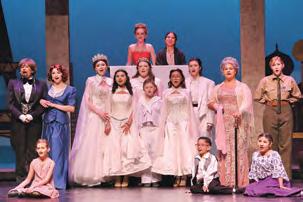
Step into a world of fairy tale fun with San Diego Junior Theatre’s production of Shrek The Musical, playing April 24 through May 10 at Casa del Prado Theater in Balboa Park. This laugh-filled, heartwarming adventure follows Shrek, a lovable ogre on a quest to rescue a feisty princess with the help of a wisecracking donkey and a cast of unforgettable characters. Recommended for all ages, it’s a musical treat the family will enjoy.
Enter now for your chance to win 4 tickets* to Shrek The Musical. Contest ends March 31, 2026.
*Valid for any performance of Shrek The Musical except closing night.
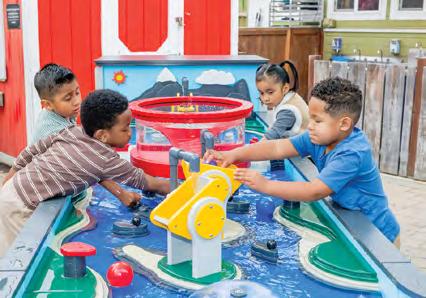
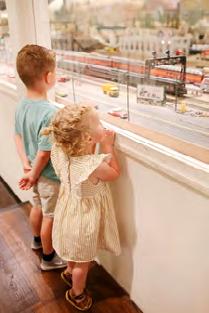
Inspire curiosity and creativity at The Children’s Museum of Discovery in Escondido, where kids can learn, play and dream big. With more than 20 hands-on exhibits, young explorers can dig for dinosaur bones at Base Camp, uncover the journey of water at Water Ways, engineer castles at Storytime Inventing and so much more.
The Museum is open Tuesday through Saturday from 9:30 a.m. to 4:30 p.m. and Sundays from 10:30 a.m. to 4:30 p.m. Parking is always free.
Enter now for your chance to win 4 passes to The Children’s Museum of Discovery. Contest ends March 31, 2026.
Photo credit: Ken Jacques
ABOUT US:
Dimensions Collaborative School has over 20 years of experience partnering with homeschool and independent study families to personalize education. Together with parents and students, we create customized learning plans that help each student discover their unique strengths and become self-determined learners for life.
Learning Centers Located in Mission Valley and Escondido
HOMESCHOOL
ENRICHED
Camps, Spring Cleaning and Phones!
Spring and summer camp season is upon us—it’s time to start making plans. Consider interesting activities the kids can enjoy that don’t involve staring at a screen. With the right opportunities, you may be surprised how easy it is for kids to unplug. By attending camps this spring and summer, they can build friendships, gain new knowledge and have fun.
As a family, you might consider RVing. Freelance writer and local mom Jennifer Garcia has experience in this area, which she shares in an article this month. Spending time away from home and being in nature is incredibly rewarding. The first RV trip may feel a little stressful, but it comes easier once you know what to expect. Even Jennifer says she’s still learning, which is part of the adventure.
Springtime brings thoughts of a fresh start: cleaning out closets, decluttering the house and even sprucing up the backyard. Many items can be donated or recycled. Why not extend that effort to your neighborhood? Be sure to check out our article for ideas. In the backyard, instead of having a compost pile, you might try vermicomposting with red worms and produce scraps. I use two 18”× 24”× 4” boxes. I bought worms from a garden nursery, added soil and fed the worms scraps and eggshells. The worms thrive, and I collect nutrient-rich castings to fertilize our trees and plants. It’s a fun project to do with the kids.
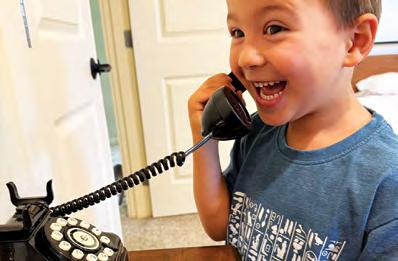
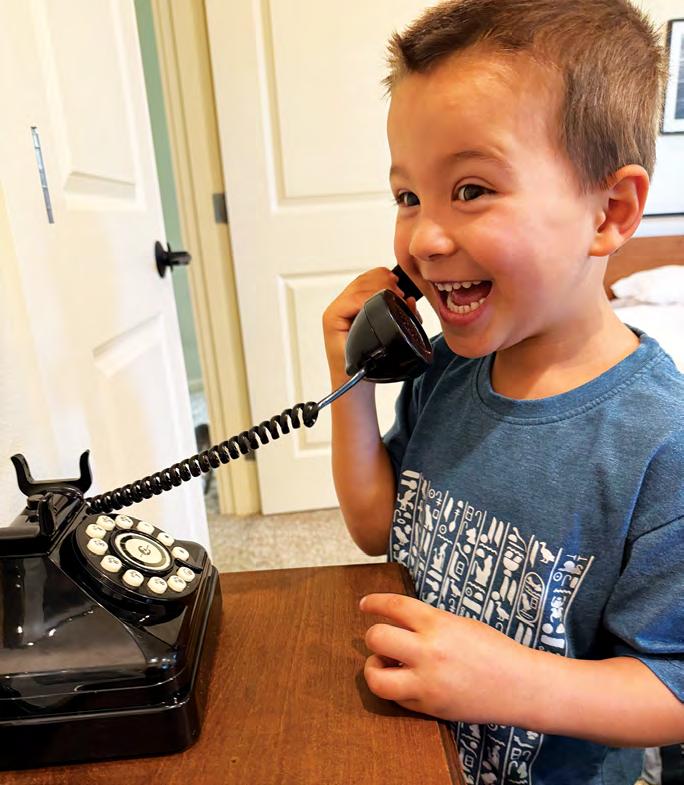
Here’s an unexpected idea from the past: a landline phone for the kids! They can call friends and family to talk—no smartphones needed. Encourage your family and friends to join in, and set an example by using it yourself. It can be surprisingly enjoyable for everyone.
Be sure to read about these topics and take a look at the advertisements. Let our advertisers know you saw their ad in San Diego Family. Happy spring! I’m really looking forward to cleaning out my closets.
sharon@sandiegofamily.com
Main Office: 1475 Sixth Ave. #500, San Diego, CA 92101
Phone: 619-685-6970
Email: family@SanDiegoFamily.com
Mission Statement
To enhance the quality of life for San Diego County families by providing information and resources that support the importance and pleasure of parenting.
Editorial
Publisher/Editor in Chief
Sharon Bay sharon@SanDiegoFamily.com
Managing Editor Lisa Gipson editor@SanDiegoFamily.com
Calendar Editor Linda Bay events@SanDiegoFamily.com
Find editorial guidelines at SanDiegoFamily.com (“Editorial” at the bottom of the home page). Submission does not guarantee publication. We reserve the right to edit all submissions.
Distribution Locations
Pick up a free copy of this month’s issue at Albertsons, select Vons and CVS stores and select public libraries throughout the county.
SanDiegofamily.com
Business
Business Manager
Larry Bay larry@SanDiegoFamily.com
Marketing Director
Michele Hancock michele@SanDiegoFamily.com
Accounting family@SanDiegoFamily.com
Circulation
Sharon Bay sharon@SanDiegoFamily.com
Printing Publication Printers Corp.
Advertising/Marketing
Connect your business to families throughout San Diego County!
Advertising/Marketing Representatives
Tony Andrews 619-813-0774 • tony2018@SanDiegoFamily.com Point Loma, Pacific Beach, La Jolla, North County Coastal
Giovanni Baldan 858-213-7868 • giovanni@SanDiegoFamily.com
South Bay, San Diego Downtown, Uptown 619-685-6970 • family@SanDiegoFamily.com
All other areas
San Diego Family Magazine is published monthly by San Diego Family Magazine LLC. Copyright 2026. All rights reserved. Reproduction in whole or in part without permission is prohibited. Opinions expressed by contributors are not necessarily the opinions of this publication.
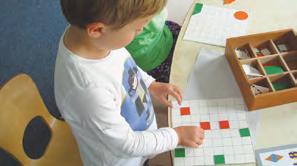
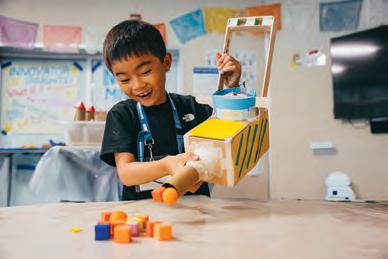
Science Experiments
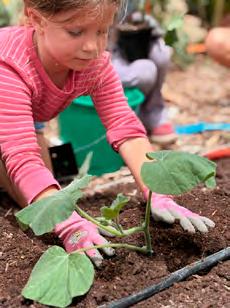
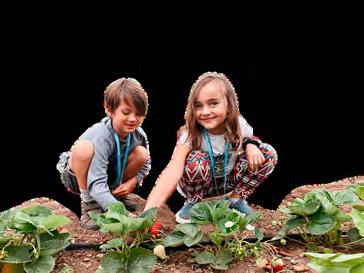
Harvesting
Guided by Jewish values
Convenient Location
Urban Discovery Academy June 8 - July 17, 2026
Simple Scheduling Weekly sessions, 9am-3pm camp day and extended care
K-8th STEAM Projects
Scan the QR code to see our engaging and collaborative 2026 curriculum
Short & Sweet Lisa Gipson
How to Perform, Compete or Sell Goods at the San Diego County Fair
The San Diego County Fair starts in June, but the time to act is NOW if you want to perform, compete or sell handmade goods during the event.
Competition categories for youth and adults include arts & crafts, agriculture, culinary and more. Find competition deadlines and details at www.sdfair.com/p/participate/entry.
Dancers, musicians and magicians are invited to apply to perform at the fair. Entry deadline is March 31. Learn more about performing at www.sdfair.com/p/participate/perform.
Local artisans and makers who want to sell handmade goods, but can’t commit to the entire fair season can apply to participate in the consignment-style Maker Marketplace. Deadline: March 31. Get vendor details at www.sdfair.com/p/participate/vendors.
Don’t miss the free San Diego Festival of Science & Engineering on Saturday, March 7 from 10 am–5 pm at Petco Park. Enjoy more than 100 hands-on STEAM (science, technology, engineering, art and math) exhibits and activities. Fun for the whole family! Learn more at www.lovestemsd.org.
We Want Your Earth Day Stories and Photos!
With Earth Day next month, we want to hear about your family’s sustainable activities (ways you care for the Earth or reduce your carbon footprint), outdoor traditions or relevant experiences for possible publication in our April issue. Please email the following to editor@ sandiegofamily.com by Monday, March 9:
• Your family’s Earth Day traditions, sustainability activities or outdoor experiences (no more than 60 words)
• A clear photo of your family (or just the kids) participating in sustainable activities (gardening, recycling, etc.), attending an Earth Day event or similar
• Names of everyone in the photo and ages of kids
• Area of San Diego County your family lives in
• Put “Earth Day” in the subject line
Editor’s Picks
Firefly Song by Colleen Paeff (illustrated by Ji-Hyuk Kim) is the inspiring true story about a little girl who pays attention and wonders like a scientist, and grows up determined to prove (against all odds) that synchronous fireflies exist in the Great Smoky Mountains. Not only does she prove it, but she (Lynn Faust, also known as The Lightening Bug Lady) becomes a self-taught global authority on bioluminescent bugs.
Nature explorers who want to become animal experts will love A Kid’s Guide to Backyard Animals by Eliza Berkowitz; illustrated by Nicole LaRue. This handy guide features fascinating facts about 40 common mammals, birds, reptiles, amphibians and invertebrates, many of which live right in your neighborhood.
The Baby Loves Science board book series celebrates its 10-year anniversary with the newest title, Baby Loves Robotics by award-winning author, Ruth Spiro; illustrated by Kat Uno. Baby plays with a robot dog while learning the basics of how a robot works.
The Lost Women of Science features true stories of 10 revolutionary women in STEM who conducted groundbreaking experiments, discovered diseases, advanced computer science and more. Written by Katie Hafner (cocreator of the award-winning “Lost Women of Science” podcast) and New York Times bestselling author Melina Gerosa Bellows. For ages 8–12.
Find more STEM books and products in our science article on page 18.
Discover the World Montessoriof
Preschool/Elementary/Middle Lic. #372005943 Two Locations in Encinitas Encinitas 760-942-1111 www.ecdschools.org MONTESSORI ACHIEVEMENT CENTRE
Preschool-first grade
Lic. #376600356 10435 Campo Rd., Spring Valley 91978 East County 619-442-2552 www.mackids.net
Shannon Dean
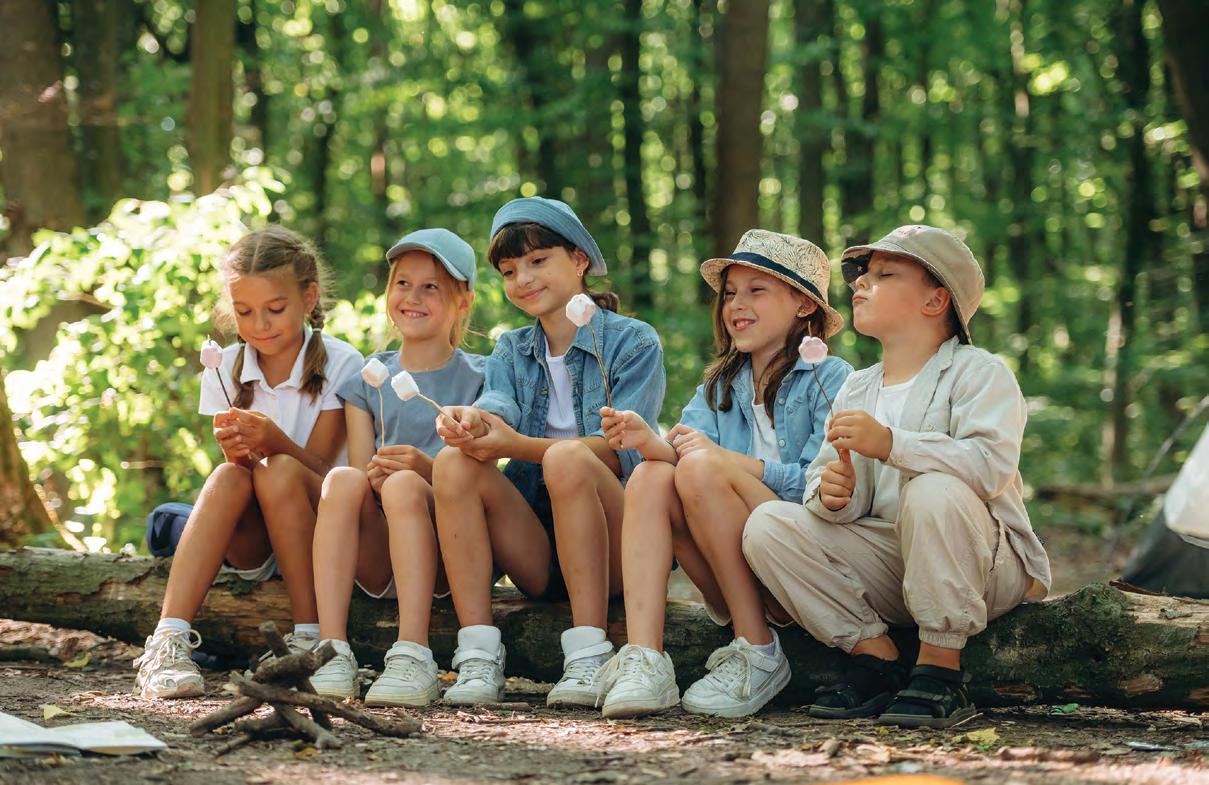
From Screens to S’mores: Why Camp Matters for Kids
Parents sometimes think of summer camp as a nostalgic throwback—s’mores, songs and mosquito spray. But in today’s world of screens, stress and social pressure, that campfire glow is doing something revolutionary.
When parents send kids off for a classic camp experience, they might not realize kids are also being enrolled in a hands-on workshop for life. While kayaks still glide across the bay, spring and summer camps are a strategic antidote to some of the most pressing challenges facing kids today.
Think of camp not just as a vacation, but as a kind of intervention. In an
era of smartphone addiction, rising anxiety and shortening attention spans, the camp environment is uniquely equipped to deliver a dose of what children are missing most.
The Digital Detox: Many camps are intentionally “unplugged” so kids enjoy the absence of pings, dings and endless scrolling. In a world where the average teen spends most hours on media, this isn’t a quirky policy. It’s a neurological reset.
A study published in Computers in Human Behavior found that even five days at a device-free outdoor camp significantly improve s children’s ability to read nonverbal emotional cues. Without a screen in their faces, the kids were better able to notice visual details, such as a stifled laugh, a hesitant smile or a posture of inclusion.
“It appears that live and in-person interactions are ultimately more fulfilling and satisfying,” says Jyothsna Bhat, Psy.D, clinical psychologist and mental health advocate. “This is particularly true as we look at the roles that empathy and social reciprocity play.”
Kids with fewer digital distractions return home not just with stories, but with sharper attention spans and a renewed ability to connect. Once kids reconnect with the real world—and each other—another shift begins: their stress levels start to drop.
The Anxiety Antidote: Many children live with an undercurrent of anxiety. The pressures of school, social media and an overscheduled life (among other things) can leave them feeling overwhelmed and on edge. Camp provides a sanctuary.
Quick Wins from Camp: What Kids Learn
The Power of Boredom
• Without screens, kids get creative.
• Boredom sparks problem-solving and imagination.
Risk Increases Confidence
• Climbing walls, kayaking and performing skits teaches courage.
• Sharing meals, challenges and space teaches empathy.
• Kids practice negotiation, compromise and leadership.
Mistakes Encourage Responsibility
• Lost socks, weather setbacks and group dynamics provide realworld lessons.
• Mistakes become learning moments without any high stakes consequences at home or school.
Nature is an Excellent Teacher
• Sunlight, fresh air and green spaces naturally lower stress levels.
• Kids learn observation, patience and curiosity from the outdoors.
Camp is a masterclass in rhythm and reliability. Daily schedules typically follow a predictable and consistent pattern, which is profoundly calming for an anxious mind. There’s no room for the constant “what’s next?” anxiety that might be experienced at home.
The mental health benefits of outdoor physical activity are undeniable. Research from the University of Michigan shows that group-based activity in natural settings—exactly what many camps provide—is linked to lower cortisol levels and reductions in anxiety. The combination of sunlight, movement and green space acts as a natural mood stabilizer.
“A lot of the current generation are so overscheduled with extracurriculars and other things that they’re not having unstructured time outside,” says Dr. Rosanna Breaux, Ph.D. “Time outdoors or in nature has been linked to better mental health and improved mood, as well as reductions in depression, anxiety and stress.” When kids are calmer and more centered, they’re ready for something even more transformative: challenge.
Teaching “Hard Fun”: Some parents are guilty of clearing every obstacle from their child’s path. Camps are in the business of carefully placing them there. This is the philosophy of “hard fun.”
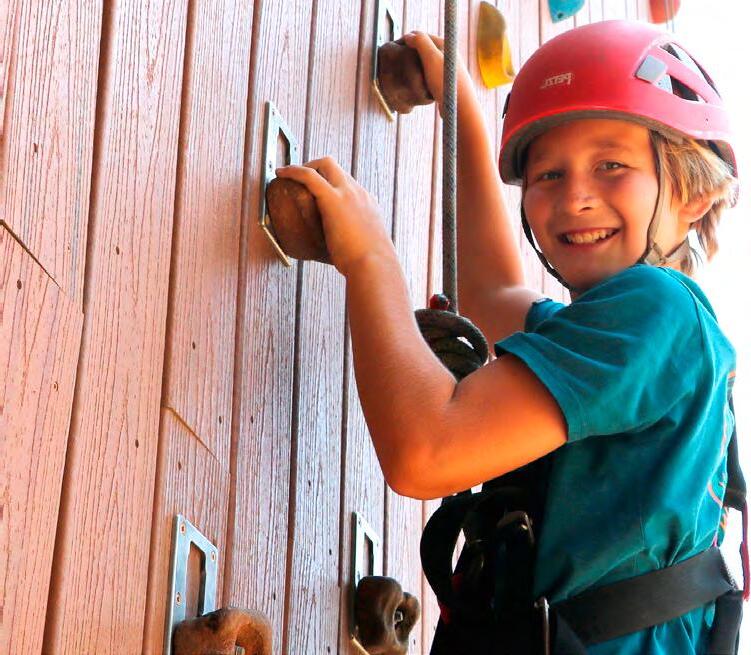
Think of kids staring up at a 40foot rock wall. It’s intimidating. They might want to quit. But with the encouragement of peers and a patient instructor, they take one step at a time. Reaching the top—or even making it halfway—unleashes a euphoric sense of accomplishment that no effortless victory provides.
This is the essence of grit and perseverance. A University of Pennsylvania study found that grit is a more reliable predictor of success than IQ. Camp is a grit-building factory. Whether it’s mastering the tricky fingerings of a new song on the guitar, lighting a fire in challenging conditions, or resolving a disagreement with a cabin-mate, camp is a series of
real-world challenges that teach kids they can struggle and succeed.
“Camps that make kids… stash the earbuds, get a little dirty and even a little frustrated while having fun and making new friends, are the kinds of camps that offer children the best of what they need,” says Dr. Michael Ungar, author of The Limits of Resilience.
These small triumphs don’t just build confidence; they prepare kids for reallife responsibility.
Life Skills 101: Camp is a training ground for executive functioning—the mental skills that include working memory, flexible thinking, self-control and problem-solving, all essential for adult life.
At camp, there’s no parent to remember water bottles, find lost socks or remind kids to be on time. Responsibility shifts to the kids. They must keep track of their belongings (working memory), adapt when rain moves the picnic indoors (flexible thinking), and resist the impulse to grab the last pancake as they take turns (self-control). A child who forgets to hang up a wet swimsuit will discover a cold surprise the next morning—a natural consequence more effective than a parental reminder. Kids learn to show up on time because if they’re late for the canoe trip, the canoe leaves without them. These are low-stakes, high-impact lessons in personal responsibility.
So, when you wave goodbye at dropoff, consider it a valuable investment in your child. You’re not just providing a fun summer experience; you’re providing a rare opportunity to learn and practice life skills.
Camp provides space to unplug, explore, learn, succeed and for kids to remember who they are when no one’s watching. v
Shannon Dean is a freelance writer.
Spring and summer vacations are upon us and we’re here to help. This issue is packed with fun camp ideas for kids, including creative and performing arts, STEM learning, overnight camps and outdoor adventures. Beat the rush and start planning now!
•
•
•
•
Join us at GRIT Gymnastics for high-energy, skillbuilding camps designed to keep kids active, confident, and having a blast. Open to ages 3.5–14, our camps combine gymnastics, games, obstacle courses, strength activities, and tons of movement in a fun and supportive environment.
We offer both half-day and full-day options to fit your family’s schedule • 8:30 AM–12:30 PM • 12:30 PM–4:30 PM
Whether your child is brand new to gymnastics or already flipping, GRIT Camp is the perfect place to build skills, burn energy, and make new friends anytime school is out!
• Teach students HOW they learn,
•
•
• 1 or 2 weeks, M-Th
Spor ts & games
Exciting STEAM activities
Ar ts & craf ts, music, dance, and drama
Field trips & special events
The Theatre School @ North Coast Rep presents
2026 SUMMER THEATRE CAMPS
PLAYFUL ENSEMBLE PERFORMANCE CAMPS
A GES 4-8
1-Week Camps
9:30am-12:30pm
Daring Dogs
6/15/26 – 6/19/26
Moana Magic
7/6/26 – 7/10/26
Safari Surprise
7/20/26 – 7/24/26
12:30pm-3:30pm
Scientific Secret
6/15/26 – 6/19/26
Farmyard Funnies
7/6/26 – 7/10/26
Cinderella Celebration
7/20/26 – 7/24/26
FUN SKILL-BUILDING PERFORMANCE CAMPS
A GES 8-12
2-Week Camps
9:30am-3:30pm
Seussical Kids
6/15/26 – 6/26/26
Magic Tree House: The Knight at Dawn Kids
7/6/26 – 7/17/26
Disney’s Frozen Kids
7/20/26 – 7/31/26
EXCITING THEATRICAL TRAINING PERFORMANCE CAMPS
A GES 12-18
2-Week Camps
9:30am-3:30pm
Beetlejuice Jr.
6/15/26 – 6/26/26
The Cryptid Survival Guide
7/6/26 – 7/17/26
Mary Poppins Jr. 7/20/26 – 7/31/26
Shannon Dean
Raising an Optimist
6 ways to help kids see the good
It doesn’t take more than a few minutes of watching news or scrolling social media to feel the weight of the world pressing in. Holding on to hope can be hard, even for adults. Parents may be wondering how to raise kids who can see the good in a complicated world.
Experts believe that optimism is a mindset we can model, teach and nurture in kids. The payoff is huge. Research by psychologist Martin Seligman shows that children raised by optimistic parents tend to experience lower levels of anxiety and depression. With that in mind, here are six practical ways to help children develop a hopeful outlook, even when the world feels anything but.
1. Start with What Kids Can Control.
When life feels overwhelming, one of the most powerful gifts we can offer children is the understanding that effort matters more than outcome. That small but profound shift helps them feel a sense of agency. And agency brings hope. For example, if a child is nervous about making the soccer team, point to what they can control by saying, “The final roster is up to the coach, but you can keep practicing those corner kicks.”
Psychologist Carol Dweck’s research backs this up: Children who are
praised for their efforts regardless of outcome grow more motivated and resilient, even when the road gets tough.
2. Help Kids Notice the Good. Focusing on the positive doesn’t mean ignoring problems. It means taking time to notice bright spots, too. A simple way to plant positive seeds is to ask, “What went well today?” The answer could be something as tiny as getting extra fries at lunch. Optimistic thinking becomes a habit when kids learn to spot small positive things, rather than waiting for big wins.
If gratitude feels forced, try telling stories instead. Say something like, “Remember when we thought that camping trip was a disaster? But then the tent blew over, and we couldn’t stop laughing.” These moments help shape how kids remember the past and teach them to expect goodness in the future.
3. Talk Honestly, but Carefully.
Kids are observant and always listening, even when we think they aren’t. While we can’t avoid talking about difficult topics, we can balance those conversations with stories of hope. Point out people who make a difference. Show them helpers planting trees, delivering meals and showing up. This acknowledges the world’s problems
without highlighting despair. Show kids that for every challenge, people are trying to fix it.
Sean Grover, author of Shortcuts to a Happier Life, notes that kids who learn the value of helping others experience improved mood, behavior, self-worth and greater happiness.
As part of a family who loves gardening, young Henry becomes discouraged when his plant won’t grow. In Planting Hope by Frederick Joseph, Henry learns seeds of hope are important, not just in the garden, but in difficult times.
4. Let Kids See You Make Mistakes.
Everyone makes mistakes, but how mistakes are handled is where the real teaching happens. Maybe you burn dinner, take a wrong turn on a field trip, or spill coffee down the front of your shirt. A phrase like, “Well, that didn’t go how I wanted,” while moving forward models resilience without pretending everything is fine. Kids who see mistakes as
normal—and recoverable—are more likely to approach life with confidence, flexibility and optimism.
5. Make Home a Safe Place.
In a world that often moves too fast, joyful rituals at home give kids something to hold on to. They’re comforting, grounding and quietly say, “This is your soft place to land.” Rituals don’t need to be fancy. Maybe every Friday is pizza and puzzle night. Maybe mornings start with a “joke of the day” at breakfast. Little routines become anchors that remind kids that even when life gets bumpy, there’s still joy, laughter and love.
6. Don’t Rush to Rewrite Every Negative Feeling. When kids say something heavy, like “I’m the worst at everything” or “The world is messed up,” there’s an urge to leap in with sunshine and rainbows. Try not to rush in. Instead, pause and offer something like, “That sounds really hard. Want to tell me more about it?” Give kids space and shift the lens with, “I know today was tough. But I also saw how hard you tried.”
“Optimism isn’t about pretending everything is fine,” says Dr. Tovah Klein, child psychologist and author of How Toddlers Thrive. “It’s about believing that challenges can be managed and that effort matters.”
Raising an optimist doesn’t mean raising someone who’s endlessly cheerful. It means raising someone who can see life as it is and still choose hope. And that begins with parents: how you navigate your own rough days, how you talk through disappointments, and how you speak to children when everything feels heavy. With your example, kids can believe in the good. They’ll look for the light because they saw you do it first. That’s a superpower they’ll carry for life. v
Shannon Dean is a freelance writer and mom of two sons.
Ellen Cochrane
Stay “in the Loupe”
something powerful happens: time slows. The loupe gives permission to linger. To stare. To return to the same ordinary thing again and again, without needing an immediate answer. Skin becomes a landscape of ridges and valleys. Dust gathers in unexpected constellations. Dirt hides in crevices
What is Close Looking?
Loupes remind children (and adults) that “close looking” (see inset below) has a name, a history and a place in how humans come to understand the world. This is science at home: close, curious and wonderfully low-tech. Magnification is a powerful gateway
Close looking, also known as slow or deep looking, is intentional, unhurried observation that allows time and space for surprising details to emerge.
causes children to ask: Why does it look like that? How small can we go? How do microscopes work? These questions open doors to optics, biology and engineering without ever announcing themselves as “lessons.” A loupe, then a stronger magnifier, then a simple digital microscope clipped to a phone— each step invites deeper investigation. The goal is not to get answers, but to encourage attention.
In a digital era defined by speed and scrolling, attention matters. Tools like loupes quietly cultivate the same skills that good technology requires—focus,
Photo courtesy of Children’s Museum of Discovery
interpretation, comparison—and close looking prepares children to use them well. A phone becomes an extension versus a distraction—another instrument for inquiry.
Once children learn to look closely indoors, the habit travels easily outside. Close looking outdoors helps kids understand how the world works. What appears insignificant at first glance may matter more upon closer inspection. A leaf’s surface shows signs of insect damage. Soil texture hints at moisture below. A spider’s web reveals both engineering and adaptation. These observations build a habit that humans have relied on for generations: slow down, look carefully, adjust accordingly.
Awareness and careful examining foster the ability to notice small details before they become big problems— they can even lead to survival (in the wilderness or in everyday life). As kids grow, they learn to read landscapes, recognize patterns and respond thoughtfully to changing conditions. Water leaves clues. Plants respond to light and stress. Weather signals what is coming next. The science is not announced; it is discovered through observation.
Encouraging close looking at home and around the neighborhood does more than spark curiosity. It builds perceptiveness and discernment. Children learn the essential skills of pausing, comparing and making sense of what they see before acting. Science may begin with a loupe, but it ultimately teaches how to notice what matters. v
Activities/Books that Support STEM Learning
Smithsonian Microscope Kit
$39.99; www.toysmith.com/products
Explorers can zoom in on tiny items from carpet fibers and onion skin to flower petals and sand. This beginner-friendly learning tool for ages 8+ builds confidence in scientific observation. Includes everything needed to get started.
Kids ages 8+ can build a sun-powered robotic flower while learning about photosynthesis and solar technology. No batteries required.
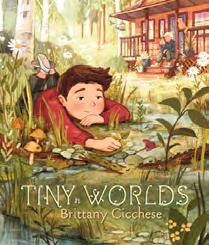
Tiny Worlds www.candlewick.com
A touching story by Brittany Cicchese about a little boy who finds greatness in small things all around him, inspiring kids (and adults) to slow down and appreciate the little things in life and in our world.
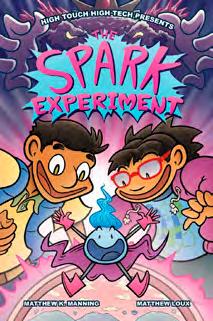
The Spark Experiment www.thesparkuniverse.com
This graphic novel by Matthew K. Manning engages young readers while offering fun, hands-on experiments to do at home, encouraging curiosity and imagination.
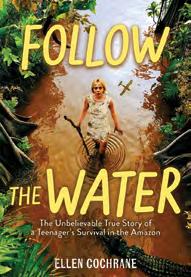
Ellen Cochrane is a California naturalist, former teacher and the author of Follow the Water, the incredible true story of a teen who fell out of a plane over the Amazon and survived in the jungle alone for 11 days.
The Chemistry Between Art and Science www.holidayhouse.com
Author-illustrator Jen White offers an inspiring look at how observation, patience and creativity fuel discoveries in art and science. Perfect for kids ages 4–8 who love to ask questions and create!
Includes info about STEAM careers and DIY activities.
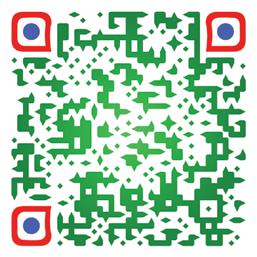
Scan the QR code to discover more STEM activities, products and books.
This article is part one of a two-part series. Read the second article in next month’s issue.
March 20 is the first official day of spring. Often accompanying this highly anticipated season is the urge to clear out what no longer serves us to make room for what does. But what if we took that positive energy and enthusiasm for spring cleaning a step further? Along with refreshing at home, spring is the perfect time to clean up the community. Here are small actions that make a big impact. Get the whole family involved!
Spruce Up the Neighborhood
Grab a bag and gloves and take a walk outside. Even just a few minutes of picking up litter can make an immediate, noticeable impact. Benefits include protecting wildlife, keeping storm drains clear, and making shared outdoor spaces more welcoming for everyone. It’s a simple, hands-on way to include kids in (and model) environmental responsibility. Make it fun for the whole family by wearing colored gloves, turning it into a scavenger hunt for recyclables, or inviting friends to join in. Consider rewarding yourselves with a picnic afterwards.
Amanda Cavallari
Big Impact Small Actions,
A fresh take on spring cleaning
Dawn Casillas of Carlsbad
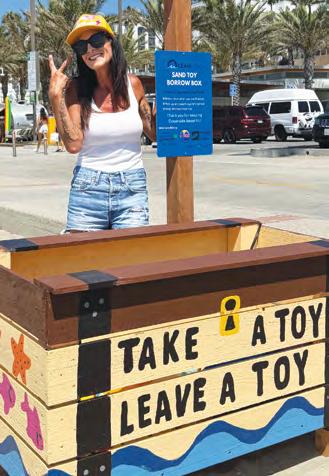
(@OneCleanBeach on IG) decided to take action in her community by cleaning up local beaches. Since 2020 she has picked up more than 13,800 pounds of trash, with the most common items being water bottle caps and straws. Over time, Casillas noticed another issue—abandoned beach toys. After collecting so many that were left behind, she helped launch a sand toys “borrow box” in September 2025 that is located just south of Oceanside Pier (near the play structure). Casillas’ advice for families is simple and follows
the Leave No Trace principle “pack it in, pack it out”: If you bring something to the beach, take it back home with you.
Casillas also emphasizes the importance of replacing single-use items, such as plastic water bottles, straws, flossers and utensils, with reusable alternatives. Families that choose nontoxic, refillable cleaning products also make a lasting impact. These lifestyle changes are safer for local waterways and healthier for families.
Reuse, Recycle
Sustainability isn’t about perfection— it’s about making small, intentional decisions that reduce waste and protect shared resources over time. While spring cleaning at home, pause before tossing items to consider whether they can be repaired, repurposed or recycled.
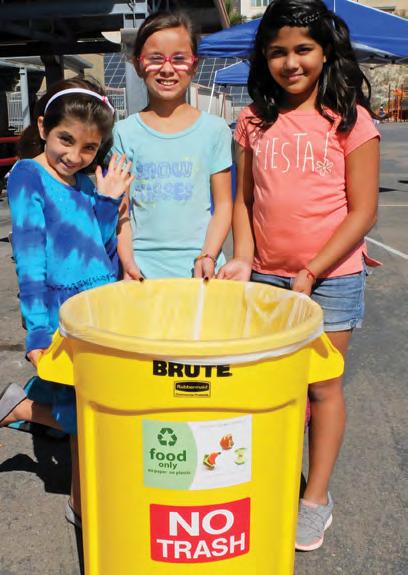
Reorganizing often uncovers piles of paper, old boxes, empty containers and mystery items. This is a great time to brush up on local recycling guidelines. Not everything belongs in the bin, and “wish-cycling” can actually cause more harm than good. Rinse containers, remove non-recyclable parts, flatten cardboard and sort items to help keep recycling systems running efficiently beyond spring. Find City of San Diego recycling guidelines at www.sandiego.gov/environmentalservices/recycling/residential/curbside/list.
Photo courtesy of Coastal Roots Farm
Photo courtesy of Solana Center
Photo courtesy of @OneCleanBeach
Want to learn more? At the Solana Center for Environmental Innovation in Encinitas, visitors learn how to adopt a low-waste lifestyle through workshops, compost consultations and educational resources.
“When we as individuals empower sustainable choices in our everyday lives, we are reducing our environmental impact and influencing our circles to do the same,” says Erin Stone, community engagement manager at Solana Center. She also emphasizes the importance of green spaces—parks, gardens and trails— which help keep the air cleaner, cool our communities, and make neighborhoods healthier and happier.
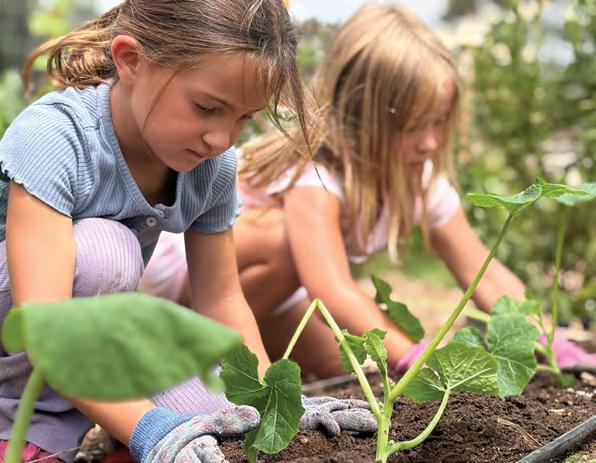
At the Children’s Museum of Discovery in Escondido, kids explore, create and learn through play—especially when it comes to understanding the importance of recycling. The museum’s green space is designed to help children build a meaningful connection to the natural world while learning how to care for it. Through the Edible Garden and daily garden workshops, children discover where food comes from, how plants grow and why environmental stewardship matters. Learn more at www.visitcmod.org.
Compost
Spring cleaning also involves caring for the Earth; and with Earth Day next month, spring is an excellent time to think about making (or continuing) important lifestyle changes. Composting turns food scraps like fruit peels, vegetable ends and eggshells into healthy soil instead of trash.
“Composting is a way for farmers and gardeners [and families] to harness the natural process of decomposition— diverting food waste from landfills, nourishing soil and limiting greenhouse gases that contribute to climate change,” says Megan Freeman, education manager at Coastal Roots Farm in Encinitas. Simple regenerative
practices, such as adding compost to gardens, using leaves as mulch and planting native plants, help keep soil and ecosystems healthy. These small actions allow kids and grown-ups alike to work together to support nature year-round.
Spring cleaning symbolizes a fresh start. By expanding our efforts beyond home and into our neighborhoods, we turn a personal tradition into a collective one. When we care for shared spaces, support one another and make mindful choices, it creates a ripple effect of benefits. This year, as you sweep out the dust of winter, remember that while a cleaner home feels great, a cleaner, stronger community feels even better.
Be sure to pick up the April issue for part two of “Small Actions: Big Impact” when we talk about thrifting with kids. v
Amanda Cavallari is a lifestyle writer living in San Diego with her husband and four kids.
Hands-On Opportunities for Families
Attend Nature Night on March 21 at Children’s Museum of Discovery in Escondido. Learn about recycling, conservation and environmental advocacy through live demonstrations. www.visitcmod.org
Coastal Roots Farm offers nature play classes for kids, farm camps, field trips and more. www.coastalrootsfarm.org
Go to the Zero-Waste Textile Expo at Solana Center on March 22. Enjoy crafts, a clothing swap, and a Fix-It Clinic for mending and repairing clothing items. www.solanacenter.org
PACKAGES!
• Birthdays
• Scout Troops
• Mommy Groups
• Kid Camps
• Bridal Parties
Kids & Adults
Lisa Pawlak
Ring, Ring: The Landline Is Back Why some families are going retro
If you’re of a certain age, you may remember the days of landline phones—waiting at home for someone to call, an entire household sharing just one phone number, calling friends but their parents answering. Oh, and the only thing you could do on the phone was talk. There was no texting, browsing the web, posting on social media or playing video games. Now, with concerns about screen time and online safety, some families are revisiting this old-school technology with fresh purpose.
Research (and common sense) shows that smartphones have drawbacks, especially for kids—who are now getting their first phones at an average age of 11.6 (per Stanford Medicine). Smartphones expose children to inappropriate content, along with impacting physical health (sleep disruption, inactivity, vision problems) and mental wellness (impaired social skills, anxiety, depression).
A growing number of parents are choosing to delay smartphones for as long as possible, instead installing home phones (aka landlines) for their
kids to communicate with friends and loved ones. This movement isn’t just a nod to nostalgia—it’s a calculated parenting decision.
What are the benefits of home phones?
Home phones are a fun, “retro” way to stay connected. From a young age, kids can safely make and receive voice-only calls without exposure to screens or online content. Within this framework, they’re able to build relationships, improve conversation skills, increase responsibility and develop greater selfconfidence. With smartphones out of the picture, it’s also easier for parents to encourage healthy behaviors.
When a close-knit group of parents agreed to install home phones for their kids to call each other, Ellie LaRue
(mom of two, ages 5 and 6) quickly learned that young kids require phone etiquette lessons. “It’s been fun to coach them through how to call someone and how to answer your own phone,” says LaRue. “It’s a new frontier to teach manners and human connection.”
Michelle Headley, Rancho Bernardo mother of three (21, 17, 10), explains her reasoning for delaying smartphones. “We did not want our kids to have open access to the internet at such an early age, see things that their young eyes were not meant to see, and be involved in chat groups/social media,” she says. Her family uses an internet-based home phone service, also known as Voice Over Internet Protocol (VoIP).
“I wanted my children to grow up more similar to our 80s/90s childhood where it was about play, exploration outdoors, and socialization,” says Jill
Photo courtesy of Ellie LaRue
Smith, a Scripps Ranch mother of two (10 and 7). She hasn’t allowed the use of smartphones or tablets at home, but plans to provide basic cell phones for talk/text only when her kids reach high school.
“We installed a new VoIP landline last summer and it has been fun,” says Robin Franceschi of Poway. “The kids now take a more active role in planning their own playdates, and have a direct line to grandparents.”
Other benefits of landlines include superior call quality, greater reliability during power outages and a precise location for emergency responders. Both landline and VoIP phones often cost less than mobile phone services.
What else should parents consider?
Going retro sounds pretty appealing, but mobile phones provide peace-ofmind for some parents. For instance, it’s easier to check in with kids throughout the day. They can also always reach Mom or Dad. Many parents take comfort in using phone location tracking apps to monitor their child’s whereabouts, but there are other options, such as Apple AirTags (which can be tucked in a backpack or shoe) and AngelSense.
Parents who delay smartphone usage with their children understand that they’ll have friends who still own them. Without access to group chats, social media and online video games, kids may feel socially isolated—and will most certainly insist they are “the only person at the whole school without a phone.” Be prepared for pushback and do whatever you can to help kids stay connected in other ways. Remind them to call friends from the home phone, of course. Encourage in-person connections and get-togethers. Deeper friendships develop when smartphones are not part of the equation.
“It’s hard when other parents give their kids phones at an early age and your child begs for a phone too,” admits Headley. Even so, she’s glad they held off until the teen years.
When should kids get a smartphone?
Most experts recommend waiting until at least age 13 (eighth grade). Parents should consider their child’s level of maturity, responsibility and individual circumstances. Whatever age you decide is appropriate, establish clear rules and expectations—and have some serious conversations about internet safety, cyberbullying and toxic social media behavior.
“Once they get a smartphone, it’s hard to go back,” Headley says. “Better to delay.”
Learn more about the “Wait Until 8th ” movement at www.waituntil8th.org. When you do “take the leap,” consider creating a smartphone contract together. Get ideas on how to do that at
In California, analog phone providers are still required to provide traditional copper landline service, at least for now. But low-cost, digital VoIP services are widely available through telecommunications companies like AT&T, Spectrum and Ooma. Another provider, Tin Can, caters specifically to kids. Through a parentsonly companion app, calling can be restricted to approved numbers only. v
Lisa Pawlak is an award-winning contributing writer living in Encinitas with her family.
About Voice-Only Home Phones
AT&T • www.att.com/home-phone/landline Spectrum Voice • https://official.spectrum.com/sem/voice Ooma • www.ooma.com/home-phone-service/buy Tin Can • www.tincan.kids
Jennifer Garcia
RV There Yet?
Myth-busters for families getting started with RV camping
“Of all the paths you take in life, make sure a few of them are dirt.”
~John Muir, naturalist and conservationist known as “Father of the National Parks”
While RV camping dates back to the 1800s, there’s been a surge in popularity as families rediscover the benefits of economic, flexible travel. During the pandemic years alone (2020–2023), RV rentals skyrocketed a shocking 650 percent.
One of the most appealing benefits of RV camping is the opportunity to unplug from everyday stress, yet common misconceptions create apprehension. If overwhelm has kept your family from giving RVing a try, below is a look at some common myths, along with realities to get you on the path to happy trails.
Myth 1: RV camping is too complicated.
Simplify RVing by following the 3-3-3 rule: Don’t drive more than 3 hours (or 300 miles) in a day, arrive at camp before 3 pm (setting up camp in the dark is not easy or fun) and stay at each campground for at least three days (giving everyone time to relax and explore). If you’re new to towing, renting a U-Haul trailer is an inexpensive way to gain experience.
“Aside from a couple of small rental trailers, we had no real experience,” says Rancho Peñasquitos dad Steve Hoffman. “[The first trip] was definitely a learning curve, and I’ll admit it felt a bit intimidating. But after doing our research, getting some practice, and taking solid advice
from experienced campers, I’m now very confident—and even enjoy the challenge of backing our 30 foot travel trailer into tight spots.”
The Camping World blog offers an assortment of how-to tutorials: www.blog.campingworld.com/learnto-rv. Take a printed guide in case cell service is spotty.
Myth 2: My kids are too young. We’ve been RVing with my son since he was 6 months old. It requires extra preparation, but it’s worth it. Studies prove that outdoor play boosts mental, physical and emotional well-being at all ages.
Get kids involved in age-appropriate planning and setup. We let our toddler press buttons to lower or raise stabilizing jacks and ask his input on where to set things up. He likes feeling empowered and helpful.
“Having a bin of toys that stays in the RV has been super helpful,” says Nichole Paukovits of Lakeside. “We switch out the toys occasionally, but things like stomp rockets and magnetic tiles never get old and are easy to store. Walkie talkies are also a life saver for allowing some freedom while keeping tabs.” Pro tip: Glow sticks help “illuminate” children at night.
Myth 3: RV camping is boring. It’s good for families to get back to basics and enjoy healthy, fun activities like biking, hiking, swimming, playing games and scavenger hunts.
“I love having the chance to do nothing but hang out together and relax,” says Paukovits. “At home there is always something that needs
to be done. Camping gives us the opportunity to slow down… [it] is a way to make great family memories, especially while the kids still want to hang out with us.”
Myth 4: RV campgrounds aren’t nice.
On the contrary: many are awesome! Just like hotels, some campgrounds have nicer amenities than others. Locations we’ve enjoyed in San Diego County include Santee Lakes, Paso Picacho, South Carlsbad State Beach, San Diego Metro KOA, San Elijo State Beach, The Springs at Borrego and Campland on the Bay. Below are a few trusted sources for campground reviews and images:
• Campendium
• AllStays
• Campground Views
• The Dyrt
Scan the QR code for the online version of this article that includes live links to the above.
Myth 5: It’s too expensive.
chicken noodle soup, chili and breakfast burritos. Kebobs and foil packet meals (like ground beef, peppers and potatoes) are easy to cook over campfires.
If camping with other families, have each one pick an evening to cook for everyone, or plan potluck dinners to lessen the load.
It’s true that RV camping often presents unexpected learning opportunities. We like to call it memory building! One time we survived two blown transmissions, a small RV fire and a blowout. Luckily, the trip was memorable for other reasons—we got engaged—but we also learned
According to a study by CBRE Hotels Advisory Group, RVing can be up to 60 percent less expensive than traditional vacations due to savings on hotels, flights and eating out.
RVs are available for all budgets; renting may be most practical. Outdoorsy and RVshare are good options that sometimes even offer delivery and set up. Membership clubs can boost savings. Popular choices include Escapees RV Club, Boondockers Welcome, Passport America, Good Sam and Harvest Hosts.
Myth 6: Cooking is a hassle. While RV ovens aren’t perfect, I’ve managed to serve Thanksgiving dinner out of ours. Pre-plan your meals and pre-cook as much as possible. Some go-to pre-cooked dinners include
some things (1. Don’t settle for rebuilt transmissions, and 2. Opt for LED over incandescent lightbulbs).
“Even with all my years of expertise, I still manage to learn a little something new on every camping trip,” writes Rain Tucker, author of RV Camping Guide for Beginners. “Over time, you’ll gain experience and refine your strategies and ability to troubleshoot problems while on the road.”
Happy Camping! v
Jennifer Garcia is an award-winning photographer and freelance journalist in East San Diego County whose family likes to wander, but is not lost (mostly).
Photo courtesy of Jennifer Garcia.
C hall e nge Accepted!
Irish American Heritage Month • National Nutrition Month • Women’s History Month March
Still looking for last month’s events? Check out the digital edition of our February issue at SanDiegoFamily.com
Don’t forget to call to confirm dates, times and admission prices.
sunday | 1
Birch After Hours. Designed for families, couples and anyone looking to wind down the weekend featuring a relaxed nighttime vibe inviting guests to experience the aquarium in a whole new light. Sundays, 5–7 pm. $19.95–$24.95; under 3 free. Birch Aquarium at Scripps, 2300 Expedition Way, La Jolla. www.aquarium.ucsd.edu
San Diego Bird Festival.
A celebration of the wild birds and habitats of San Diego County. Marina Village Conference Center, 1936 Quivira Way. Visit www.sandiegoaudubon.org for schedule and to register.
Animal Crossing Aquarium Tour. Inspired by the in-game aquarium experience, guests will dive into the realworld aquarium with an Animal Crossing: New Horizons twist. Through Mar. 26. $34.95–$39.95; 2 & under free. Birch Aquarium at Scripps, 2300 Expedition Way, La Jolla. www.aquarium.ucsd.edu
The Flower Fields at Carlsbad Ranch
Wander among the giant Tecolote Ranunculus flowers, embark on a wagon ride through the fields, wander through a fragrant sweet pea maze and more. Mar. 1 through May 10. $17–$27. 5704 Paseo del Norte. www.theflowerfields.com
Photo credit: The Flower Fields
“Where the Mountain Meets the Moon.” Follow the journey of Minli, a brave and curious young girl who sets out on a quest to change her family’s fortune. Fri.–Sun., through Mar. 15. $22.50–$24.50. Casa del Prado Theatre, Balboa Park. www.juniortheatre.com
Tidepooling Adventures. Explore local tide pools. Today, Mar. 14 & 29, False Point; Mar. 15 & 18, Scripps Beach. $25. Birch Aquarium at Scripps, 2300 Expedition Way, La Jolla. Reservations required: www.aquarium.ucsd.edu
FREE Picnic at the Park. Performances by San Diego Symphony Orchestra, interactive “Thriller” dance tutorial and more. 11:30 am–3 pm. The Rady Shell at Jacobs Park, 222 Marina Park Way. www.theshell.org
FREE San Diego Chinese New Year Fair. Celebrate the Year of the Horse with live music, food and fun activities. 10 am–5 pm. Third Ave. & J St., downtown. www.sdcny.org
Circus Vargas. Featuring world-renowned performers, aerialists, acrobats and more. Through Mar. 9, closed Tuesdays. Starting at $25. 3030 Plaza Bonita Rd., National City. www.circusvargas.com
Whale & Dolphin Watching. Search for gray whales, dolphins, sea lions and more. Fri.–Mon., through April 12. 9:30 am–1 pm. From $63. Pier Two, 970 N. Harbor Dr. www.cityexperiences.com
San Diego Mojo. Women’s pro volleyball. Tonight & Mar. 7 & 25. Starting at $28. Viejas Arena, SDSU, 5500 Canyon Crest Rd. www.provolleyball.com
“Beetlejuice.” A remarkably touching show about family, love and making the most of every Day-O! 1 & 6 pm. Civic Theatre, 1100 Third Ave. www.broadwaysd.com
FREE Spreckels Organ Society Concerts. Sundays, 2–3 pm. Pavilion-Pan American Pl., Balboa Park. www.spreckelsorgan.org
FREE First Sundays Art for All. Fun hands-on art-making experience. 12–2 pm. Oceanside Museum of Art, 704 Pier View Way. www.oma-online.org
FREE Storytime Scavenger Hunt. Have a Seuss-tastic day with silly stories, art, prizes and more. 11 am–2 pm. La Jolla Village. www.lajollabythesea.com
Play My Way Inclusive Family Fun Day. California Hands & Voices families are invited to join us for a joyful morning of movement, connection and play. 11 am–12:30 pm. $10. Play My Way Adaptive Recreation Center, 7540 Metropolitan Dr. Registration required: www.cahandsandvoices.org/play-my-wayregistration/
Touch-a-Truck Lakeside Edition
Showcasing a wide variety of vehicles, trucks and equipment for kids to touch and feel. Mar. 1. 10 am–3 pm. $10. Lakeside Rodeo Grounds, 12584 Mapleview St. www.lakesidechamber.org
monday | 2
Read Across America Day
Story Time with Seadragons. Enjoy an enchanting storybook tale about ocean creatures from around the world. Mon., Wed., & Fri.; 9:30–9:40 am. Included with admission. $34.95–$39.95; under 3 free. Birch Aquarium at Scripps, 2300 Expedition Way, La Jolla. www.aquarium.ucsd.edu
tuesday | 3
KPBS Kids Event: Super Why. Discover the power of reading with story time, crafts and a costume character photo opportunity. 10 am–12 noon. $14.
Children’s Museum of Discovery, 320 N. Broadway, Escondido. www.visitcmod.org
thursday | 5
UltraStar Cinemas Discount Thursdays. 50% off all movie tickets and popcorn. 7510 Hazard Center Dr. Showtimes: www.ultrastarmovies.com
friday | 6
National Day of Unplugging, Mar. 6–7
LEGO Galaxy Opens. The out-ofthis-world adventure features the Galacticoaster which will take parkgoers on a high-tech adventure where they can virtually customize their spacecraft. LEGOLAND, One LEGOLAND Dr., Carlsbad. www.legoland.com
San Diego Gulls. Tonight, Mar. 7, 13, 14, 20 & 22. Starting at $34. Pechanga Arena, 3500 Sports Arena Blvd. www.sandiegogulls.com
FREE First Friday La Jolla Art Walk. Wander through galleries and pop-up artists scattered across La Jolla. 4–7 pm. www.lajollabythesea.com
Calendar • March
Overnight Adventure Program. Kids and families get to explore the ship after hours, enjoy exclusive time on the flight deck under the stars, sleep in actual Navy racks and more. Today, Mar. 21 & 28. Starting at $110. USS Midway Museum, 910 N. Harbor Dr. www.midway.org
Puppet Shows. Today through Mar. 8, “Gee Golliest: It’s the Very Dolliest;” Mar. 12–15, “It’s Dolly Esper’s Birthday Party;” & Mar. 28–29, “The Freddy Show.” $5. Marie Hitchcock Puppet Theater, Balboa Park. www.balboaparkpuppets.com
saturday | 7
Rooftop Cinema: “Zootopia 2.” Classic cinema concessions, personal headphones and an amazing view. 1 pm. $11–$20. The Porto Vista Hotel, 1835 Columbia St., Little Italy. Full schedule: www.rooftopcinemaclub.com
Sensory Friendly Mornings. For families who would enjoy and appreciate a quieter museum experience with fewer guests and less stimulation. 9–11am. $20–$24. The New Children’s Museum, 200 W. Island Ave. www.thinkplaycreate.org
Ballet of Lights: Peter Pan in a Sparkling Show. Performers in illuminated costumes bring this classic story to life through dance, light and color. 4 & 6:30 pm. Starting at $35. Joan B. Kroc Theatre, 6611 University Ave. www.feverup.com
Young Scientists: Exploring Senses. Explore all five senses—seeing with optical illusions and color-mixing; hearing with sound vibrations through instrumentmaking; touch with tactile art; and taste
FREE San Diego Festival of Science & Engineering
Hands-on science, technology, engineering, art and math (STEAM) exhibits and activities. Mar. 7. 10 am–5 pm. Petco Park. www.lovestemsd.org
and smell with edible experiments. For ages 3–5. Saturdays in March, 9–10 am. $175 for 4 sessions. Fleet Science Center, Balboa Park. www.fleetscience.org
Scripps Pier Walks. Scoop up plankton, dissect a squid and more. Today, tomorrow & Mar. 21–22. $40. For ages 9 & up. Scripps Pier, Birch Aquarium at Scripps, 2300 Expedition Way, La Jolla. Reservations required: www.aquarium.ucsd.edu
FREE San Diego Koi Show. Celebrate the vibrant colors and majesty of koi fish, showcasing their elegance and diversity. Today, 9 am–4 pm & tomorrow, 9 am–2 pm. Del Mar Fairgrounds, Bing Crosby Hall, 2260 Jimmy Durante Blvd. www.koiclubofsandiego.org
Tolkien’s Lord of the Rings Themed Tea. All themed teas are different, most include a “did you know intro,” a game, quiz and a
Denny Sanford Elephant Valley Opens
take-home gift. Through Mar. 20, 12:30 & 3:30 pm. $64.95. The Britannia Tearooms, 2323 Midway Dr. Reservations: www.afternoonteasandiego.com
SeaWorld Seven Seas Food Festival. Sip and sample your way around the world of international flavors. Fri.–Sun. through April 26. SeaWorld, Interstate 5, exit SeaWorld Dr. www.seaworldsandiego.com
FREE Project In A Box. Explore various topics in engineering while building a project. 2–5 pm. Paradise Hills Library, 5922 Rancho Hills Dr. www.sandiego.gov
sunday | 8
FREE Growing Together Family Day. Hands-on art making, circus arts and performances with Fern Street Circus, lawn games and more. 11 am–2 pm. La Jolla. www.lajollahistory.org
Venture through a dynamic savanna environment with more than 300 different plants that are native to Africa, surrounded by elephants on multiple sides. Included with admission. Mar. 5. San Diego Zoo Safari Park, 15500 San Pasqual Valley Rd., Escondido. www.sdzsafaripark.org
Arbor Day & TreeCircus. Learn about what trees give us and how they grow. 10 am–12 noon & 2–4 pm. $5. Alta Vista Botanical Gardens, 1270 Vale Terrace Dr., Vista. Pre-register at farmerjonesavbg@gmail.com. https://altavistabotanicalgardens.org
San Diego Sockers. Watch our indoor soccer team. Today, Mar. 15, 22 & 29. Frontwave Arena, 3475 Hero Dr., Oceanside. www.frontwavearena.com
monday | 9
FREE Family Day. Monthly art-making workshop. Second Sunday of the month, 12–2 pm. 780 Prospect St., La Jolla. www.lajollahistory.org
thursday | 12
Cherry Blossom Festival. Celebrate the tradition of hanami with special performances, a wall of lanterns, community art and more. Through Mar. 15. $20. Japanese Friendship Garden, Balboa Park. www.niwa.org
St. Patrick’s Day Teas. A green-themed version of the four course Cottage Classic Tea. 11:30 am, 1 & 2:30 pm. Through Mar. 16. $15.95–$44.95. Julian Tea & Cottage Arts, 2124 Third St. Reservations required: www.juliantea.com
friday | 13
Circus Vargas. Featuring world-renowned performers, aerialists, acrobats and more. Mar. 13 through Apr. 6, closed Tuesdays. Starting at $25. North County Mall, 272 E. Via Rancho Pkwy., Escondido. www.circusvargas.com
Jimbo’s Garden Workshop. A special garden workshop in the Trudy Bronner Discovery Garden with local, seasonal ingredients. 11–11:30 am. $14. Children’s Museum of Discovery, 320 N. Broadway, Escondido. www.visitcmod.org
saturday | 14
FREE STEAM Pi-Day. Explore the world of STEAM (Science, Technology, Engineering, Arts and Math) with hands-on activities and interactive experiences. 12–2 pm. Monarch School, 1625 Newton Ave. www.manasd.org
FREE St. Patrick’s Day Parade and Festival. Theme: “Here, There, Irish Culture Everywhere.” 9 am–6 pm; parade 10:30 am. Fifth Ave. & Laurel St. www.stpatsparade.org
San Diego Leprechaun Run 5K and Kids 1 Mile. Run through the streets of Pacific Beach, finish under the rainbow and enjoy a drink to start your St. Patrick’s Day party. 9 am. Register: www.sandiegorunningco.com/ sdrc_events/san-diego-leprechaun-run Spring Fam Fest. Fun, inclusive and accessible games and activities including Easter egg hunts, photo ops and more. 10 am–2 pm. Kids, $5; adults free. Williams Barn, Walnut Grove Park, 1952 Sycamore Dr., San Marcos. www.hopeonthehardroad.regfox.com/ spring-family-festival-2026
Mermaid Dash. 1.5-mile race for girls and boys between 6 & 12 years old. 9:45 am. $15. Tecolote Shores North, Mission Bay. Register: www.mermaidseries.com
FREE Automobile Design. Explore the fascinating automobile engineering and design field. 1–3 pm. Balboa Library, 4255 Mt. Abernathy Ave. www.sandiego.gov
FREE Family Art Adventures. Guided family tour followed by a hands-on artmaking activity. Today & Mar. 28, 10:30–11:30 am. San Diego Museum of Art, Balboa Park. www.sdmart.org
Kids in the Garden: Nature Drawing & Watercolors. Take a close look at a tree, a flower, or a plant, then draw it and add color to create a masterpiece. 10 am–12 noon. $5. Alta Vista Botanical Gardens, 1270 Vale Terrace Dr., Vista. Pre-register at farmerjonesavbg@gmail.com. https://altavistabotanicalgardens.org
Shamrock Social. Laser tag, inflatable games, obstacle courses and more. 6–9 pm. For ages 10–14. $15. Pine Avenue Community Center & Park, 3209 Harding St., Carlsbad. www.carlsbadca.gov
FREE 2nd Saturday Art Walk. Diverse and interactive experiences in visual arts, theater, live music, museums and local history offering fun for all ages. 3–10 pm. Grand Ave., Escondido. www.visitescondido.com
FREE Super STEM Saturday. Introduces kids of all ages and their families to the diverse and exciting fields of science, technology, engineering and mathematics. 10 am–4 pm. Cal State University San Marcos, 333 S. Twin Oaks Valley Rd. www.csusm.edu/superstem
Don’t forget to call to confirm dates, times and admission prices.
2026 Where the Mountain Family Mag.pdf 1 2/9/26 12:33 PM
sunday | 15
FREE House of Ireland Lawn Program. Celebrate Irish culture with live music, dancing, food and other Irish traditions. 11 am–5 pm. Balboa Park. www.houseofireland.org
tuesday | 17
St. Patrick’s Day
wednesday | 18
FREE Besos Jazz Trio. Together, they improvise, sing and dance their way through an eclectic stew of swing tunes and sambas, boleros and musettes. 4:30 pm. The Conrad Prebys Performing Arts Center, 7600 Fay Ave. www.theconrad.org
thursday | 19
Taste of Third. An evening of restaurant tastings, live music and neighborhood discoveries along Third Avenue. 4–8 pm. $53.50. Memorial Park, Third Ave., Chula Vista. www.downtownchulavista.com
Movie Nights at the Museum. Afterhours self-guided tour of the Davis-Horton House, followed by a screening of a different classic film in the courtyard. $10. Every 3rd Thursday, 6:45 pm. 410 Island Ave. www.gaslampmuseum.org
Pacific Coast Sportfishing Show. The go-to destination for fishing, boating and outdoor enthusiasts. Through Mar. 22. $20; free for active-duty military & kids 12 and under. Del Mar Fairgrounds, 2260 Jimmy Durante Dr. www.sportfishingfestival.com/
saturday | 21
Pirate Plunge. Pirate-themed pool activities and games. 5–8 pm. $15. Alga Norte Aquatic Ctr., 6565 Alicante Rd., Carlsbad. www.carlsbadca.gov
FREE Family Discovery Walk: Birds & Nests. Learn about the many birds that inhabit Mission Trails and the nests they make. 1–2:30 pm. Kumeyaay Lake Campground, 2 Father Junipero Serra Trail. www.mtrp.org
STEM Through Time. Build simple Roman aqueduct models, test early architectural designs and experiment with basic coding and robotics to see how technology has evolved. For grades 1–4. 9–10:30 am or 11 am–12:30 pm. $35. Fleet Science Center, Balboa Park. www.fleetscience.org
Accessibility Mornings at the Fleet. Enjoy a sensory-friendly experience from 9–10 am. Movie “Sea Otters” at 10 am with house lights on and the soundtrack volume low. Free for one visitor and accompanying guest. Fleet Science Center, Balboa Park. www.fleetscience.org
Boarded! A New Pirate Adventure. Interactive show where participants learn pirate skills. $35–$85. Maritime Museum of San Diego, 1492 N. Harbor Dr. www.sdmaritime.org
LEGOLAND Water Park Opens. Splash into spring with seven slides, sandy beaches, Build-A-Raft River, Pirate Reef and LEGO Legends of CHIMA Water Park. Open daily through April 13, then weekends through May. One LEGOLAND Dr., Carlsbad. www.legoland.com
Growing Confident, Independent TK-12 Learners
One of San Diego’s Best Charter Schools
• Flexible hybrid and homeschool programs
• Personalized learning support
• College and career prep
• Field trips for the whole family
Walk for Animals North County. Support the San Diego Humane Society. 9 am. Kit Carson Park, 3333 Bear Valley Pkwy., Escondido. www.sdhumane.org
Savannah Bananas at Petco Park. The greatest party in sports comes to San Diego. Today & tomorrow. Petco Park. www.thesavannahbananas.com
Nature Night. Explore over 15 hands-on activity booths, interactive nature-themed activities and more. 5–7:30 pm. $12–$17. Children’s Museum of Discovery, 320 N. Broadway, Escondido. www.visitcmod.org
Mission Hills 5K. Run or walk through the streets of San Diego’s historic Mission Hills neighborhood. 8 am. Register: www.runsignup.com/Race/CA/SanDiego/ MissionHills5K
FREE Julian Daffodil Show. Celebrate spring with the Flower of Hope. Today & tomorrow, 10 am–5 pm. Julian Town Hall, 2129 Main St. www.visitjulian.com
Mother Son Spring Fling. For amazing mother figures and their special young gentlemen—filled with love, laughter, dancing and lasting memories. 10 am–12 noon or 5–7 pm. $55. Presented by Dynasty Dance Co. Doubletree Hotel Circle, 1515 Hotel Circle S. www.givebutter.com/c/motherson2026
FREE Little Tech Lab: Taste of Technology. Learn how algorithms, design thinking and wire framing work while increasing digital awareness and creating a prototype in Canva. 12–1:30 pm. San Ysidro Library, 4235 Beyer Blvd. www.sandiego.gov
FREE Squishy Circuits. Through handson activities using batteries, wires, and LEDs, kids learn about current, voltage, and resistance in closed circuits. 11 am–12 noon. College-Rolando Library, 6600 Montezuma Rd. www.sandiego.gov
sunday | 22
Doodle POP. A mischievous duo starts to doodle… and ends up creating a whole imaginative world. 3 pm. $35. The Conrad, La Jolla Music Society, 7600 Fay Ave., La Jolla. www.theconrad.org
GOVX San Diego Half Marathon & 5K. Five miles of waterfront, four historic communities, three beautiful parks, two miles through downtown and one Gaslamp finish. Register: www.inmotionevents.com
thursday | 26
Padres Home Opener. Today through Mar. 28 vs. Tigers & Mar. 30–31 vs. Giants. Petco Park. Tickets: www.padres.com
The Play Exchange: Fostering a STEM Identity. Explore how handson experiences and developmentally appropriate practices can promote essential problem-solving, curiosity and other STEM skills. 1–4 pm. $14. Presented by Children’s Museum of Discovery. California Center for the Arts, 340 N. Escondido Blvd., Escondido. Register: www.visitcmod.org/theplayexchange
FREE Family Arts & Literacy Night. Stories, crafts and a free book. 6:30 pm. The Salvation Army Kroc Center, 6605 University Ave. Register: https:// sd.kroccenter.org/kroc-san-diego/arts
friday | 27
Fun Animal Friday. Story time, handson activity and an animal meet-and-greet. 10–11:30 am. $14. Children’s Museum of Discovery, 320 N. Broadway, Escondido. www.visitcmod.org
saturday | 28
FREE East Village Block Party. Familyfriendly celebration with live entertainment, sports-themed activities and more. 10 am–4:30 pm. J St., from 6th to 10th Ave. www.eastvillagesandiego.com
FREE Easter on the Farm. Scavenger hunt, tractor hayride, photos with the Easter bunny and more. 10 am–3 pm. Bates Nut Farm, 15954 Woods Valley Rd., Valley Center. www.batesnutfarm.biz
Amigos de Vista Lions Club Pancake Breakfast. 7–11 am. $10 donation. Brengle Senior Center, 1400 Vale Terrace Dr., Vista. www.e-clubhouse.org/sites/ vista_amigos/page-8.php
tuesday | 31
Cesar Chavez Day
Find more family happenings at www.sandiegofamily.com.
Want us to spread the news?
Email events@sandiegofamily.com and include the name of the event or activity, a brief description, event address, date, time, cost, contact number and website. Submission does not guarantee publication. Deadline for the May issue: April 1.