36 Questions to Turn Your Litigation Wins Into Powerful “How We Did It” Articles
Wayne Pollock California Case Summaries
Monty A. McIntyre
Sara
Pitfalls to Avoid When Hiring Jury Consulting Firms Sabrina Nordquist
AI is Coming to Divorce Court Bettina D. Hindin
2026 Guide to Marketing Compliance for Law Firms Hanzo
The Attribution Challenge: Connecting Marketing Activities to Business Development Wins Robyn Addis
Erik
“How We Did It” articles are quintessential thought leadership pieces. Here’s how to decide what to cover in your next one.
Any favorable result you secure for a client in litigation can be the basis for a thought leadership article.
Whether you’re discussing a favorable verdict, settlement, or summary judgment decision, you’re taking readers behind the scenes and showing them how you overcame certain obstacles to secure that result for your client.
These “How We Did It” articles are quintessential thought leadership pieces. It doesn’t matter if you’re a plaintiffs’ attorney or a defense attorney. Explaining how you overcame obstacles in litigation to secure a favorable result for a client demonstrates your knowledge and wisdom in action, positioning you as the attorney that past, current, or potential clients or referral sources would be foolish not to reach out to if they or someone they know has a similar legal or business issue.
The Simple Structure of a “How We Did It” Article
“How We Did It” articles follow a straightforward format:
First: the introduction. You’ll set the scene and provide context regarding the case and posture.
Next: the meat of the article. You’ll describe three to five obstacles you faced over the course of the litigation, including during discovery, mediation, settlement, and/or trial, and explain how you overcame them.
In a moment, I’ll walk through 36 questions that will help you and your colleagues identify the obstacles you might want to discuss in the article.
Finally: the conclusion. You’ll wrap up the outcome and provide additional insights if needed.
A Few Caveats Regarding “How We Did It” Articles
“How We Did It” articles focus on the advice you gave your clients. That could be an issue for some attorneys who aren’t comfortable or familiar with writing articles for public consumption regarding the counsel they gave clients. Those
36 Questions to Turn Your Litigation Wins Into Powerful “How We Did It” Articles
by Wayne Pollock
attorneys—and everyone else—should keep the following caveats/reminders in mind when writing “How We Did It” articles.
First, you can discuss how you overcame obstacles without divulging privileged or confidential information. That said, be careful you’re not inadvertently disclosing information that falls into either bucket.
Second, there’s no need to reveal truly proprietary processes that you employ, even if they technically fall outside of privileged or confidential protections. You can mention that you have a proprietary process for evaluating experts, running focus groups, etc., but you needn’t go into the details of those processes that you would like to keep confidential.
Third, you’ll likely be talking a fair amount about actions you took that have been captured, discussed, or reflected in public court filings; non-confidential litigation materials, such as correspondence and deposition transcripts; and court hearings that are open to the public.
There should be plenty of things for you to discuss that won’t be affected by concerns about privilege, confidentiality, or your proprietary processes, since they’ve already been made public.
With these caveats in mind, let’s explore the questions that will help identify the obstacles worth discussing in any “How We Did It” article.
The 36 Questions That Fuel “How We Did It” Thought Leadership Articles
Your answers to 3 to 5 of the following 36 questions, which are grouped by litigation phases, will give you and your colleagues food for thought for obstacles to write about in your “How We Did It” article.
The Big Picture (6 questions)
1. Where was the case most vulnerable?
2. Which issues required the most creativity to resolve?
3. Where did experience—and not just hard work—make a difference?
4. Was there an obstacle that most attorneys may have underestimated?
5. Was there a misconception about litigating against certain entities that you had to overcome?
6. Did you face challenges regarding co-counsel, conflicts, or opposing counsel?
Pre-suit Investigation and Case Intake (4 questions)
These tend to lean more toward the plaintiff’s side, except for #10:
7. Did you face challenges in unearthing certain facts or documents?
8. Did you face challenges corroborating older allegations?
9. Was there statute of limitations concerns?
10. Was there any resistance from the client that made building or defending the case complex?
Drafting and Filing a Complaint (3 questions)
Again, these tend to lean more toward the plaintiff’s side.
11. Did you face challenges pleading with certain facts?
12. Did you face challenges deciding which causes of action to include?
13. Did you face challenges avoiding causes of action that would be easily knocked out by certain defenses?
Early Motion Practice (1 question)
14. Did you face challenges regarding early motions, dispositive or otherwise?
Discovery (3 questions)
15. Did you face challenges with document discovery?
16. Did you face challenges with depositions?
17. Did you face challenges maintaining confidentiality or getting around confidentiality concerns?
Experts (2 questions)
18. Did you face challenges with your own experts?
19. Did you face challenges or obstacles when dealing with opposing experts?
Summary Judgment (1 question)
20. Did you face challenges with summary judgment motions—whether with yours or opposing the other sides?
Mediation (1 question)
21. Did you face challenges with the mediation process?
Settlement (1 question)
22. Did you face challenges regarding the settlement process, such as negotiating terms, or drafting the settlement agreement and releases?
Trial Preparation (5 questions)
23. Did you face challenges with pretrial motion practice, including pretrial evidentiary rulings?
24. Did you face challenges preparing your client to testify?
25. Did you face challenges preparing other witnesses to testify?
26. Did you face challenges planning your trial presentation?
Trial (10 questions)
27. Did you face challenges choosing a jury?
28. Did you face challenges with how the trial began, such as with rulings from the court or your or the opposing side’s opening arguments?
29. Did you face challenges with any of your direct examinations?
30. Did you face challenges with your cross-examinations?
31. Did you face challenges caused by the other side’s direct examinations or cross-examinations?
32. Did you face challenges with trial exhibits?
33. Did you face challenges with your or the opposing side’s closing arguments?
34. Did you face challenges with the jury’s deliberations?
35. Did you face challenges with any post-verdict motions?
36. Did you face challenges with trial publicity?
Putting It All Together
These 36 questions should get your and your colleagues’ gears turning regarding the obstacles you faced on the way to securing a favorable litigation result for your client. Not every question will apply to a particular litigation, and that’s fine. Your goal is to identify the 3–5 most compelling obstacles that will form the core of your article.
By the way, if you’re curious about what makes a particular obstacle and how you overcame it compelling, here’s what I would look for:
• The obstacle required a creative or innovative approach, which included an element of boldness or counter-intuitiveness
• Experience played a key role in overcoming the obstacle
• The obstacle is one likely to be faced by other clients/litigants
As you write “How We Did It” articles, you might discover more questions you can add to this list to help get your creative juices flowing in the future. But as is, this list of 36 questions should give you plenty of inspiration for your next “How We Did It” article. n
Wayne Pollock is the founder of the Law Firm Editorial Service. The Law Firm Editorial Service sets free the knowledge and wisdom trapped inside Big Law and boutique law firm partners by collaborating with them to strategize and ethically ghostwrite book-of-business-building marketing and business development content. Learn more at: www.lawfirmeditorialservice.com.
Engaging a jury consulting firm can materially shape the trajectory and outcome of your case. The right team brings not only insight into juror decision-making, but also discipline around strategy, sequencing, and execution. Yet even experienced trial lawyers can fall into common traps that limit the value of these engagements or undermine them entirely.
In the last 20 years, the litigation industry has seen a surge of jury consulting service providers, and not all approach pricing, strategy, and service the same way. Educating yourself about what matters most and where mistakes can occur will keep your trial preparation running smoothly and ensure your dollars are well spent improving outcomes. Below are several key pitfalls to avoid when engaging jury consultants.
1. Focusing on Rates Without Understanding the True Cost
Cost proposals for jury research and consulting engagements can be deceptively simple on the surface. Many firms present a competitive headline number while excluding critical components such as facility fees, data collection tools, recruiting costs, and AV equipment rental. Others include broad contingencies or disclaim responsibility for third-party costs altogether, shifting both financial risk and logistical burden to the client.
This is particularly problematic because consulting firms are typically best positioned to source and vet vendors for appropriateness, negotiate pricing based on volume, and develop realistic cost estimates considering all necessary elements. Proposals with extensive exclusions and limitations can quickly escalate beyond the initial budget. Transparency upfront is often the best indicator of a well-run engagement. What to look for:
• Clear ownership of third-party costs
• Realistic, flat fee budgets that include these costs
• Limited and well-defined exclusions
• Accountability for execution, not just strategy
• Jury consulting firms with dedicated, professional project managers
Pitfalls to Avoid When Hiring Jury Consulting Firms
by Sabrina Nordquist
2. Skipping Foundational Work Before Holding a Mock Trial
Mock trials are powerful tools and a must-have before trying your case, but they are not always the right starting point. Legal teams that move directly into a mock trial without first conducting exploratory research (e.g., case assessment surveys, strategy sessions, or focus groups) risk testing incomplete or underdeveloped case theories. This can result in feedback that identifies problems but fails to pinpoint solutions or in enough time to execute them.
An effective, iterative approach:
1. Have a robust strategy session with the trial team and jury consultants to explore the themes and narratives that are likely to arise.
2. Use case assessment surveys and/or focus groups to further explore themes and juror language on the issues in the case.
3. Refine the case narrative.
4. Conduct mock trials to test more fully developed arguments.
This sequencing ensures that mock trials validate strategy and expose specific, avoidable weaknesses rather than leaving counsel and their client feeling like the case is simply unwinnable.
3. Letting the Method, Rather Than Goals, Drive the Strategy
One of the more subtle but highly consequential pitfalls is approaching jury research with a predetermined method rather than starting with a clearly defined objective. Too often, litigators default to “we need to do a mock trial” as a standard step in trial preparation. But a mock trial is not a box to check; it is a tool to achieve a certain result. And like any tool, its value depends entirely on how well it matches the task at hand. The starting point should always be “what are we trying to learn or accomplish?”
Examples of well-defined jury research goals:
• Identifying the most persuasive liability narrative
• Testing damages frameworks and anchoring risk
• Understanding juror reactions to a key witness or piece of evidence
• Evaluating case themes for clarity, credibility, and emotional resonance
• Developing a reliable juror profile
Only after those goals are clearly articulated should the team determine the appropriate jury research methodology: a survey, a focus group, a mock trial, or a hybrid approach that addresses multiple concerns.
Risks in reversing the process:
• Over-investing in methods that do not answer the right questions
• Generating interesting but non-actionable feedback
• Missing opportunities to refine strategy in a targeted way
The most effective jury research engagements are intentionally designed around specific, practical objectives, with every component of the project aligned to those goals. In short, the goals should drive the project design, not the other way around.
4. Delaying Witness Preparation Until It’s Damage Control
Witness preparation is often backloaded in the case strategy, but by the time depositions are taken, key narratives may already be set in stone. Witnesses who are not perceived as believable, credible, or competent may already be on video by the time consultants can work with them on corrective strategies. Without early preparation, litigation teams risk creating deposition records that are difficult to rehabilitate and inconsistent with their strongest trial themes. Experienced teams begin witness preparation before depositions, aligning testimony with case strategy from the outset and avoiding preventable credibility issues later.
5. Overestimating What AI Can Deliver
Artificial intelligence is a popular topic right now, and the field of litigation consulting is no exception. Companies are cranking out tools that promise to shortcut human analysis and revolutionize results. Some AI-driven jury analytics and litigation tools can offer meaningful efficiencies in the right hands; however, we are still quite far from AI replacing the sound and experienced judgment of jury consultants. What AI currently lacks:
• Real-time interpretation of juror dynamics
• Contextual judgment developed through experience
• The ability to synthesize nuance across live interactions
Experienced consultants, many of whom conduct dozens of jury selections and research exercises each year, bring pattern recognition and judgment that cannot be replicated by current models. Used appropriately, AI can enhance analysis and improve efficiency in content review; used as a substitute, it can create flawed assumptions and false confidence.
6. Prioritizing Geography Over Actual Experience
Venue familiarity matters, but it is often overvalued when selecting a jury consultant. A common mistake is prioritizing where a consultant resides over where they have handled the most cases, as well as their overall depth and relevance of experience. While local knowledge is helpful, it does not always correlate with insight into juror behavior or case strategy.
Why consultant experience matters:
• Works across jurisdictions regularly
• Recognizes broader juror patterns and behavior that transcend venue
• Combines local inputs with a national perspective
Often, a jury consultant with extensive trial and research experience in similar matters will outperform one selected primarily for proximity. Choosing a firm with a deep bench of experienced consultants can give you the collective benefit of data from a broad range of cases and venues.
7. Excluding Trial Graphics Consultants from Jury Research Strategy
Trial graphics are most effective when they are developed in tandem with case strategy, not after the narrative is formed. In addition to leaving graphic development until right before trial, showing up to the mock trial without well-designed visuals for both sides of the case can be a costly mistake.
Missed opportunities when graphics teams are excluded:
• Increase evidence comprehension in a limited time frame
• Test visual concepts with jurors
• Identify confusion points early
• Refine how complex information is communicated
• Anticipate the presentation strategies of your opponent
Including trial graphics consultants in the jury research phase ensures that visual storytelling is informed by real juror feedback, resulting in clearer, more persuasive presentations at trial. Additionally, ensuring that your jury and graphics consultants work closely together will promote efficiency and avoid support silos that often result from a non-integrated approach.
8. Ignoring Your Consultant’s
Advice During Jury Selection
Jury selection is one of the most consequential moments in trial. Trying the right case before the wrong jury will still result in a loss. When it comes to strike decisions, instinct often competes with empirical data. In recent years, attitudes and their correlation to demographic characteristics have shifted. The old “rules” no longer apply.
Trial lawyers understandably rely on gut judgment, but disregarding a consultant’s recommendations can be a costly misstep, particularly when those recommendations are grounded in deep experience: empirical research, well-executed juror background searches, juror questionnaires and analytics, and extensive voir dire and jury research in similar cases or in the venue. Jury consultants, many of whom conduct more than 20 jury selections each year, bring valuable pattern recognition and calibration to the process.
In Summary
The value of litigation consulting is not just in the expertise itself, but in how that expertise is integrated into the broader trial strategy. Using the right tool at the right time is what matters. Avoiding common pitfalls when hiring consultants enables counsel to control costs more effectively, build stronger and more cohesive narratives, and make better-informed decisions at critical moments. Ultimately, the most successful jury consulting engagements are those built on transparency, a thoughtful and comprehensive program, and trust in the guidance of a well-built team. n
Sabrina Nordquist, JD serves as Senior Director of Global Strategy for IMS, where she leads the strategic direction of the firm’s Litigation Consulting and Advisory practices, aligning expertise, innovation, and insight to drive meaningful outcomes for clients. Her expertise spans litigation consulting, operations, organizational growth, marketing, strategy and people leadership. Learn more at www.imslegal.com.
For Clients Whose Lives Were Permanently Changed A premier law firm handling and welcoming referrals or partnering with lawyers/law firms on very serious injury and wrongful death cases. When negligence causes catastrophic harm, results matter.
NOT A VOLUME LAW FIRM
Handling high-stakes claims and litigation including spinal injuries, those with permanent neurological damage, brain injuries, amputations, burns, life-altering injuries and deaths caused by the negligence of others. Our record reflects disciplined relentless preparation, with trial strategy and willingness to take cases all the way.
Practice Focus
• Spinal Injuries
• Brain Injuries
• Loss of Limbs & Amputations
• Serious Back Injuries
• Neurological Injuries
• Loss of Sight, Hearing or Other Senses
• Orthopedic Injuries
• Other Serious & Catastrophic Injuries
Divorce litigation has always been a search for the truth. For decades, divorce attorneys have asked the same fundamental questions: Who owns what property? How should assets be valued and divided? What income is available for support? And when children are involved, what arrangements truly serve their best interests?
Throughout the years, those questions have not changed. What has changed is the technological landscape in which they are being asked.
Artificial intelligence (“AI”) is now entering nearly every profession, and the practice of matrimonial law is no exception. While AI cannot replace the judgment, discretion, and ethical responsibilities of experienced attorneys and judges, it is beginning to influence how divorce cases are investigated, prepared, and litigated.
Three developments, in particular, suggest that divorce law is entering a new technological era: the use of AI to uncover financial information, the emerging risk of fabricated digital evidence, and the increasing tendency of litigants themselves to turn to AI for guidance.
The Search for Hidden Assets
One of the oldest battles in divorce litigation is the search for undisclosed assets.
For as long as equitable distribution and community property regimes have existed, spouses have attempted to conceal income, transfer funds into undisclosed accounts, or minimize the apparent value of businesses and investments. In complex cases, uncovering the true financial picture can require months of discovery and painstaking review of bank records, tax returns, and corporate documents. AI is beginning to assist in this process.
AI-driven financial analysis tools can review vast quantities of financial data and identify unusual patterns that might otherwise escape detection. These systems can flag repeated transfers to unfamiliar accounts, discrepancies between reported income and actual spending, or unexplained fluctuations in business revenues. In cases involving closely held businesses or high volumes of transactions, AI can help identify areas that warrant closer scrutiny far more quickly than traditional manual review.
For example, recently a case concerning a professional practice with thousands of annual transactions used AI-assisted analysis which detected a recurring pattern of transfers to an entity,
AI is Coming to Divorce Court
by Bettina D. Hindin
newly formed shortly before the commencement of divorce proceedings—an anomaly that justified targeted discovery and expert evaluation.
Still, technology alone cannot resolve these issues. AI can identify anomalies, but determining whether those anomalies reflect legitimate business activity or intentional concealment requires professional judgment. Forensic accountants, financial experts, and experienced matrimonial attorneys remain indispensable in interpreting results and presenting them persuasively to the court.
AI has become—and with constant innovation will continue to be—a powerful investigative tool. Yet it can never substitute for the human capacity to perceive and interpret the subtle factual nuances of a case, apply the law accordingly, and ultimately serve as the finder of fact.
The Emerging Threat of Artificial Evidence
If AI can help uncover the truth, it can also be used to manufacture it.
Courts across the country are beginning to confront the growing phenomenon of AI-generated content, often referred to as “deepfakes.”
With increasingly sophisticated software, it is now possible to create highly realistic audio recordings, text messages, photographs, and even video footage depicting events that never occurred.
In the emotionally charged context of divorce litigation, the risk of misuse is significant.
A fabricated text message purporting to show financial misconduct, or a manipulated audio recording suggesting threats or coercion, could be introduced as evidence. Even if ultimately disproven, such materials may complicate litigation, increase costs, and prolong disputes, particularly at early stages when courts are making interim decisions about custody, support, or exclusive occupancy of the marital residence.
Family law practitioners have always confronted questions of authenticity, but AI raises the stakes considerably. As digital evidence becomes easier to fabricate, courts will likely require more rigorous methods of authentication. Judges, attorneys, and forensic experts will increasingly need to assess not only what evidence appears to show, but how it was created, preserved, and verified.
The law of evidence has always evolved alongside technological change. AI is likely to accelerate that evolution.
When Litigants Turn to Artificial Intelligence
Another development is already underway, though often less visible. Individuals contemplating divorce increasingly turn to AI tools to educate themselves about the legal process before consulting an attorney. AI systems can explain general legal concepts, summarize procedures, and even generate draft settlement proposals. I experienced this first-hand when moments after sending a proposed settlement offer to my client, she ran it through ChatGPT and was advised that the proposed offer was suitable.
In some respects, this trend may be beneficial. Divorce is often intimidating and confusing, and access to basic information may help individuals better understand their rights and obligations.
At the same time, divorce law is highly nuanced and intensely fact-specific. Outcomes often depend on subtle distinctions in financial circumstances, statutory interpretation, and judicial discretion, factors that cannot be reduced to generalized responses. While AI can provide information, it cannot provide strategy, advocacy, or judgment. Those functions remain the province of experienced legal professionals who understand not only the law, but how courts apply it in practice.
New Technology, Old Questions, and the Future of Matrimonial Litigation
AI will almost certainly change the manner in which divorce cases are prepared and litigated. Financial investigations may
become faster and more data-driven. Evidentiary standards may tighten in response to synthetic digital content. Clients may arrive at initial consultations better informed, and sometimes misinformed, by AI-generated advice.
Yet the essential work of divorce law will remain stubbornly human. Lawyers must still exercise judgment, advise clients through emotionally charged decisions, and advocate for fair outcomes. Judges must still evaluate credibility, weigh evidence, and craft equitable resolutions for families navigating a profound personal change.
In Closing
As AI becomes more embedded in the divorce process, courts and practitioners will need to adapt thoughtfully, embracing technology where it enhances accuracy and efficiency, while remaining vigilant against its misuse. The future of matrimonial litigation will be shaped not by machines alone, but by the wisdom with which legal professionals choose to use them. n
Bettina D. Hindin is an accomplished and experienced matrimonial litigator, recognized for her skill and expertise in the investigation and analysis of the complex financial issues that arise in matrimonial, domestic relations, Surrogacy and Assisted Reproductive Technology (ART) and LGBTQIA matters. She is an acknowledged expert in the field and has appeared often as a commentator on these issues for MSNBC and CNN. Learn more at www.offitkurman.com.
Zealous Defense MATCHED WITH Compassionate Support
by Dan Baldwin
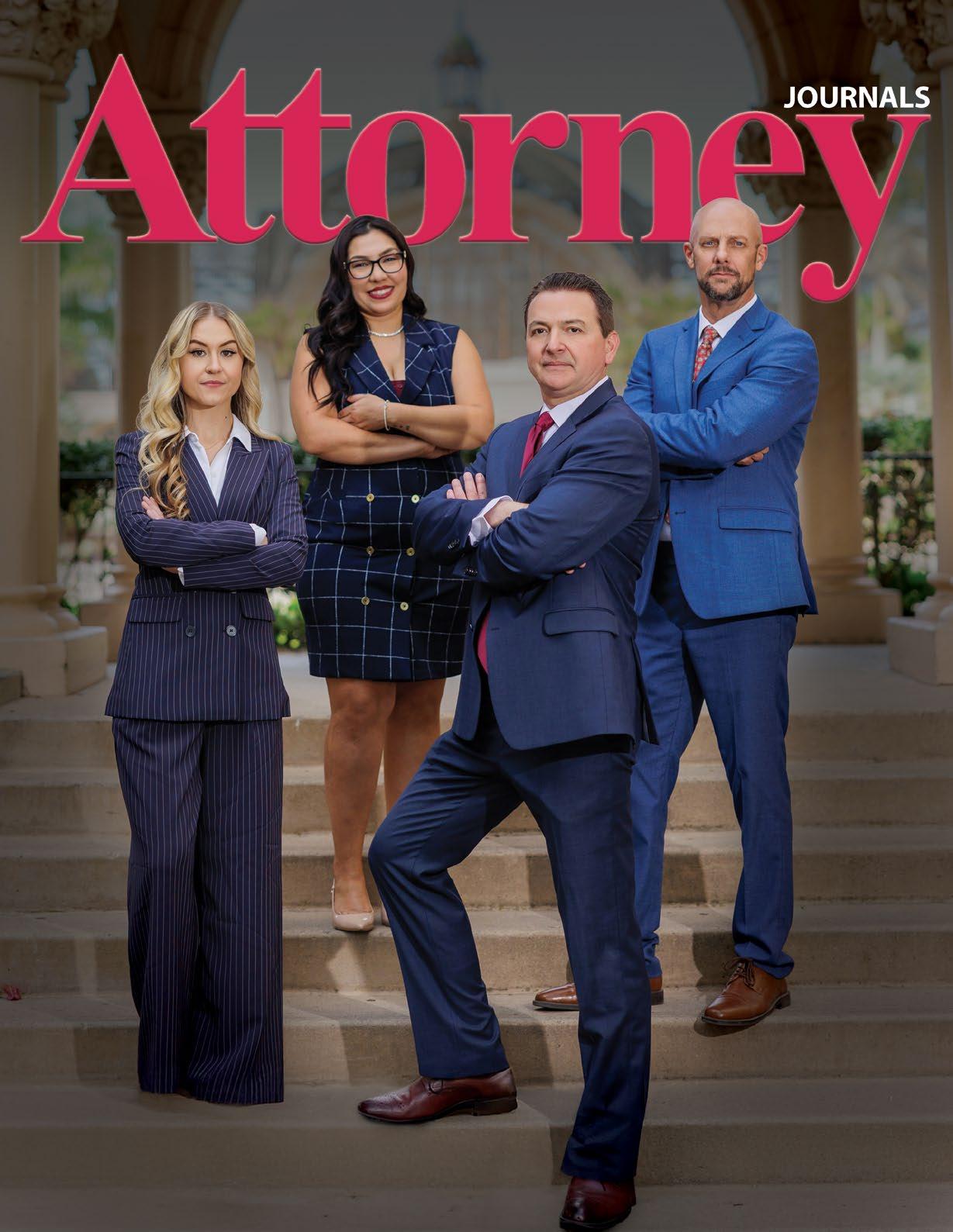
I’ve always wanted a chance to make a difference in the lives of others. Simply stated, my overriding goal as a San Diego DUI and criminal defense attorney is to zealously defend those who make mistakes, while providing compassionate support and unyielding representation to achieve the best possible outcome. I provide a lifeline to my clients facing life-altering charges by encouraging them to participate in mental health or substance abuse counseling, which can result in dismissed charges or alternative sentencing regimens,” says Erik A. Friis, Founder of San Diego-based Superior Law Center.
Friis formed the firm in 2008. He has two associate attorneys, Thomas Moller and Daniella Smigielski and one paralegal, Clarissa Melgosa. His practice focuses on San Diego County DUI defense and California state criminal defense.
Approximately half the cases the firm handles are DUI-related and the other half are a mixture of other criminal cases. Superior Law Center also handles some federal criminal cases and represents active-duty military personnel and veterans.
“I have a hard time passing judgment on people and I believe in second chances. I believe that everyone makes mistakes and that a criminal charge should not define a person’s entire life,” Friis says.
Thanksgiving Day
Friis is known for his willingness and ability to go to extraordinary lengths, if necessary, in service to his clients, a commitment proven in a recent case. His client faced a
jury trial in which he was charged with assault with intent to commit rape, making criminal threats and dissuading a witness. The case involved three separate alleged victims (one alleged victim for each charge). DNA evidence and copious amounts of incriminating text messages made the case appear open and shut at first glance. The offer from the prosecution to resolve the case involved four years of state prison and lifetime registration as a sex offender. Sexual assault cases are notoriously difficult to win for criminal defense attorneys, but the client professed his innocence and was not willing to accept registration for life as a sex offender. He was 26 years old at the time of the incident. Accepting the offer would have obviously had a significant and highly detrimental effect on the young man’s future. Friis worked tirelessly to develop a defense theory to overcome the prosecution’s case. The trial took place two weeks before Thanksgiving. The alleged victims were not credible for various reasons. Additionally, Friis elicited testimony that further weakened their credibility.
The jury was hopelessly hung and the prosecutor later agreed to dismiss the intent to commit rape, charge thereby saving the client a prison sentence and registration as a sex offender. The criminal threats charge was dismissed due to insufficiency of evidence. The client was released to the embrace of his mother and was able to celebrate Thanksgiving with her. The client and his mother cried, hugged Friis, and expressed their heartfelt gratitude for the best Thanksgiving present they ever received.
Much of his drive to succeed in court (and business) relates to his upbringing where he was required to justify every decision
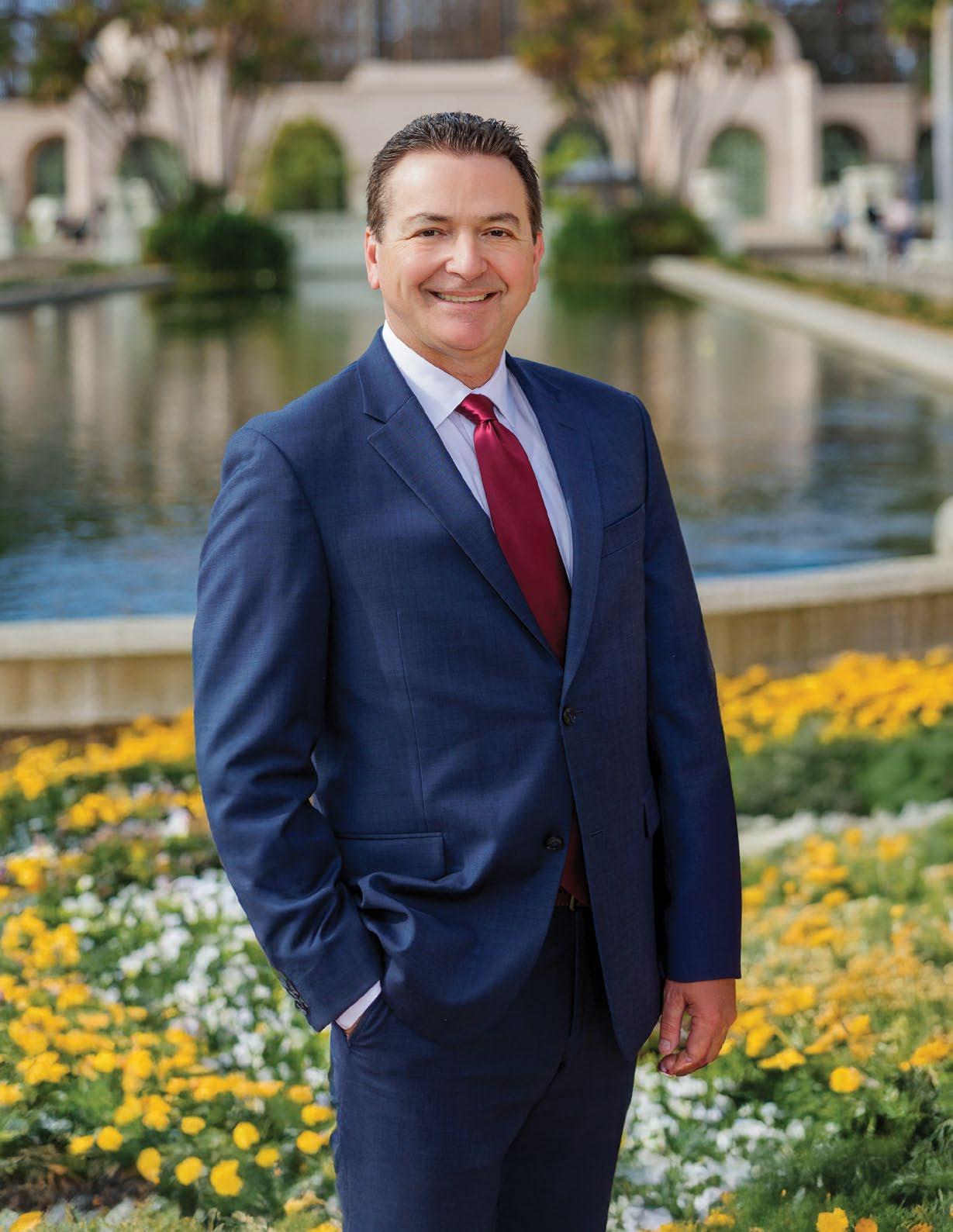
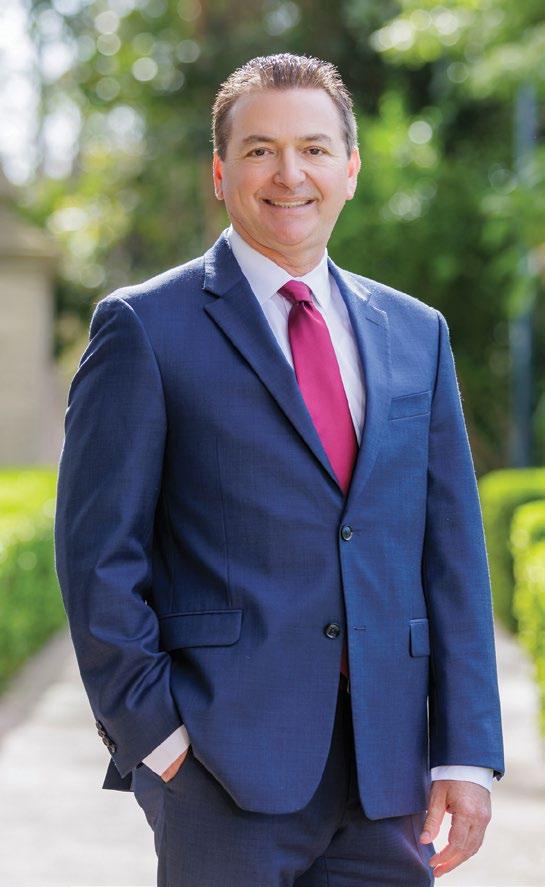
Erik A. Friis, Attorney at Law
to his parents and to fight for what he wanted. Friis grew up in an environment and during a time when things had to be earned. As a child and an adolescent, he resented that. As an adult, he realized they his parents had given him an incredible gift: the intense desire to fight for what he thought was right or just and also the habit of constantly arguing or lobbying for what he wanted in a constructive manner. “This mindset made me feel at home arguing for justice and fairness for my clients, ensuring every client receives a fair trial and that the government adheres to proper procedures in protecting constitutional rights. I truly enjoy defending those that don’t know how to advocate for themselves, ensuring they are reasonably searched or seized, and guaranteeing them effective counsel.”
Matching Strength with Kindness
Friis believes in exceptional communication with his clients and invests considerable time interviewing and getting to know their behaviors, interests, concerns and fears. He contracts with psychologists, psychiatrists, substance abuse counselors or other mental health specialists to humanize those clients and explain their behavior. He believes if there is an explanation for the aberrant behavior, there is usually a remedy to the aberrant behavior, which will make a prosecutor or judge feel comfortable that the client will be able to be safe to the public. “Success is driven by empathy and understanding the client’s goals, not just your legal knowledge. It is of paramount importance to bend over backwards to create a relationship, break the ice, discuss personal things the client is involved in,” he says.
Friis says, “You don’t have to sacrifice advocacy by being nice.” His associates say he is known as “good people” and a “straight shooter” around the court and in the legal community. Friis is diligent about making a conscious effort to be kind and respectful to judges, prosecutors, other defense attorneys and court staff. “Kindness, however, should not be confused with weakness, because I am a fierce advocate for my client.” When the client’s case is closed, he explains that although the contractual relationship is over, the client may call any time with questions or clarifications. Sometimes, clients call years later with updates on their rehabilitation.
One of Friis’ strengths is paying intense attention to detail having learned early on to take every piece of evidence with a grain of salt and to fully investigate every event or situation to get a comprehensive picture. For example, he had a case in which the officer’s stated reason for stopping their client was failure to stop for a posted stop sign. The client insisted there was no posted stop sign and when Friis investigated, he found his client was right. In addition, he checked with the city traffic
engineer and confirmed that there never was a stop sign at that location. The case was quickly resolved in his client’s favor.
Friis enjoys the high-stakes, competitive nature of the courtroom, the necessity to think on his feet, where split second decisions can affect the outcome of an adversarial proceeding, and the intense joy of receiving an acquittal, a hung jury or a dismissal against all odds or after winning based on what the opponent deems an absurd argument.
San Diego is home to a huge military family and Friis has helped hundreds or thousands of active-duty military personnel or veterans rehabilitate their lives, which is a powerful way to thank them for their service. “It is an incredible feeling to be told repeatedly that I have changed a life for the positive, assisted in helping someone with mental health or substance abuse issues finally get the help they need, saved a relationship, or saved a career,” he says.
Building on Referrals
Friis advises attorneys opening their own firms to build upon a base of solid referrals. It’s a recommendation he has followed from the beginning. “You cannot be in business unless you have referrals. Figuring out how to receive referrals is key to driving in cases in the first place. Referrals can be marketing based, relationship based, reputation based or a combination of all three. Once those cases come in the door, successful results and relationships with clients are key to receiving additional referrals from former clients and others in the community.”
Experience and a deep knowledge within his practice areas are what attract referrals on a regular basis. Friis has practiced criminal law for 30 years, limiting himself to DUI and criminal defense for the last 28 years. Unlike some of his competitors, he has never been a prosecutor and has focused on criminal defense his entire career, developing a deep knowledge of DUI and criminal law that referring attorneys may not handle regularly or that referring attorneys may not handle at all. Friis understands the value of maintaining a two-way street when it comes to referrals. “I know how important it is for an attorney to be knowledgeable about the specific area of law the attorney practices. Therefore, when clients ask me for referrals to family law attorneys, personal injury attorneys, wills and trust attorneys, or other litigation attorneys, for example, I want to refer my clients to competent attorneys in those fields. I am always looking for partners to exchange referrals.”
A proven track record of success is another reason for his large number of referrals. Friis has handled thousands of cases in all stages of proceedings. He has negotiated incredible results resulting in plea bargains, saved clients from prison or jail, saved clients’ driving privileges, saved
clients’ careers and livelihoods, litigated legal issues resulting in favorable rulings, filed innumerable motions that resulted in dismissals of clients’ cases and received acquittals and hung juries following jury trials.
Friis says, “Going to jury trial is extremely valuable because it lets an attorney know the true value of each type of case, for example, domestic violence, where it might not be apparent from a review of the discovery. I have been told so many times by clients that ‘you saved my life.’ I have more than 400 five-star reviews on Google, most of which have been obtained in the last five years.”
Friis and his team take on cases that referring attorneys must decline due to conflict of interest, such as codefendant cases, ensuring the referring attorney that all clients receive highquality representation. Although his firm’s representation is focused on San Diego County, Friis receives referrals from the Murrieta area in Riverside County, and provides service to other courts in Imperial County, Riverside County, San Bernardino County, and Orange County, where a referring attorney may not want to go.
The firm offers ethical fee sharing agreements in accordance with the State Bar. Referring attorneys can receive monetary compensation for sending a client to his firm.
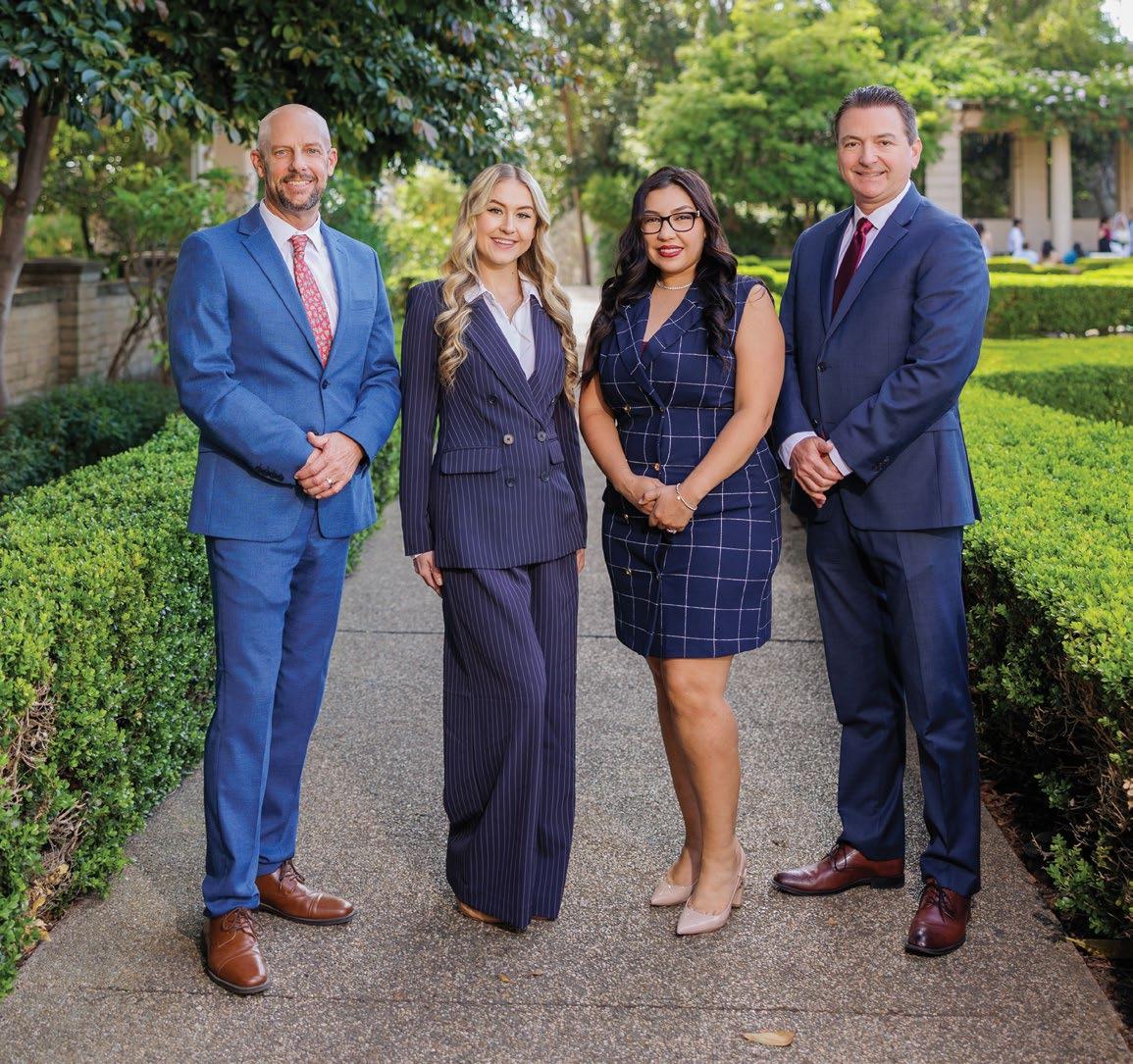
The Superior Law Center Team
Outside the Office
Friis leads a balanced life once he locks the office door at the end of the day. Regular exercise gets him outside and away from a business lifestyle that can easily become sedentary. He runs five miles three times a week, particularly on the Shelter Island area of Point Loma. He has participated in countless 10ks and half marathons over the years, including the Triple Crown on multiple occasions. He rides his bicycle another three to four times per week and he lifts weights two times a week. Friis says he likes to exercise near water, whether it be a lake or the ocean, because water is soothing. “Exercise helps relieve the stress of our profession. I have solved many problems in my life while running. For those problems I can’t solve, running helps me to be more accepting of the difficulty.”
He is a partial season ticket holder for the Padres and enjoys going to Padres games on a regular basis. Friis also enjoys traveling to new places and new experiences whenever possible. He recently went to the Mexico City series vs. the Arizona Diamondbacks. He has recently visited the Philippines, Cabo San Lucas, Puerto Vallarta, Alaska and most recently Mexico City, and 15 of the nation’s 45 national parks.
His musical tastes lean to 80s alternative music and he has recently attended concerts for The Cure, Depeche Mode, Devo, Motley Crue and Fleetwood Mac. Friis has lived in San Diego County since 1993, when he enrolled at California Western School of Law. He has a long-term girlfriend/partner and has three children, two of whom are adults.
Leading a balanced life prepares solid ground for his and his firm’s future. “I am gearing up for a serious sexual assault trial that should take place later this year. I believe there are credibility issues with the alleged victims, and my client looks forward to vindication. As far as my business goes, I plan to do the same things that I have been doing in the last five years, which has involved a continued expansion of my firm. I plan to continue to learn my craft, educate myself and continue to become a better attorney.” n
Contact Erik Friis
Superior Law Center
2667 Camino del Rio South, Suite 304-1
San Diego, CA 92108
619-743-9130
www.superiorlawcenter.com
EXPERIENCE
» EDUCATION
• University of California, Santa Cruz, B.A. in Psychology, 1992
• California Western School of Law, J.D., 1997
» BAR ADMISSIONS
• State Bar of California September, 1997
• United States District Court for the Southern District of California January, 1998
• United States Court of Appeals for the Ninth Circuit, July 1998
» ASSOCIATIONS
• Criminal Defense Bar Association
• San Diego County Bar Association
• State Bar of California
• Better Business Bureau
» AWARDS
• 400+ 5 Star Reviews on Google
• Justia Top Rated Lawyer 10/10
• BBB Rating A+
Erik A. Friis, Attorney at Law
Traditional advertising has given way to a continuous stream of digital activity across websites, search engines, social media, and increasingly, AI-driven interfaces.
This shift has expanded both reach and exposure. Marketing content is now persistent, highly visible, and easily scrutinized. What a law firm publishes can be reviewed by regulators, competitors, and the public at any time, often long after it first appears.
Regulators, including state bar associations, are paying closer attention to how legal services are presented. At the same time, consumers and competitors are more willing to challenge claims that appear misleading or incomplete. Oversight now comes from multiple directions, including state bar disciplinary authorities, state Attorneys General in cases involving consumer protection, and private litigants under statutes such as the Lanham Act.
Today, marketing operates within a regulatory framework that carries direct implications for compliance, reputation, and professional liability.
What “Marketing Compliance” Actually Means for Law Firms
Marketing compliance for law firms is grounded in professional conduct rules. The most relevant starting point is ABA Model Rule 7.1, which governs communications concerning a lawyer’s services. Rule 7.1 prohibits false or misleading communications. The definition of misleading is broader than it may appear. A communication may fall short of compliance if it creates unjustified expectations, omits material information, or leads a reasonable person to form an inaccurate impression. This interpretation has been reinforced through commentary to the Model Rules and through state-level enforcement decisions. State-level variation introduces additional complexity. The ABA Model Rules provide a framework, but each state adopts and enforces its own version. These differences affect disclosure requirements, the use of testimonials, claims of specialization, and whether marketing content must be filed or reviewed in advance.
Marketing exposure also extends beyond professional conduct rules. State Unfair and Deceptive Acts and Practices laws allow regulators and, in some cases, consumers to challenge misleading marketing. The Lanham Act allows competitors to bring claims for false advertising that causes commercial harm.
The scope of marketing itself has expanded. Compliance expectations now apply across:
• Websites and landing pages
2026 Guide to Marketing Compliance for Law Firms
by Hanzo
• Social media content
• Third-party platforms and directories
• Reviews and testimonials
• AI-driven tools, including chatbots
The American Bar Association has noted that the rapid growth of digital communication has placed pressure on traditional approaches to regulating lawyer advertising, requiring ongoing interpretation in modern contexts.
The Fragmented Regulatory Landscape and Why It is Risky
The regulatory environment governing law firm marketing is fragmented and evolving quickly.
U.S. state governments are increasingly active in regulating digital practices, particularly in areas such as data privacy, online advertising, and consumer protection. Dozens of states have introduced or enacted laws in recent years that directly or indirectly affect how firms market their services. In 2024 alone, more than 300 social media-related bills were introduced across 42 states.
Enforcement approaches differ significantly across jurisdictions. Requirements vary across several dimensions:
• Disclosure rules
• Recordkeeping expectations
• Approval workflows
• Enforcement intensity
Some states, including California and New York, are widely recognized for more assertive regulatory approaches. Others apply less intensive oversight.
This environment continues to evolve. Research from Thomson Reuters and KPMG indicates that state-level regulation is expanding and diverging. Some jurisdictions are increasing enforcement activity and introducing more detailed requirements, while others remain closer to federal baselines. This has resulted in a widening gap between states.
For law firms operating across multiple jurisdictions, this creates a practical challenge. Compliance often needs to align with the most restrictive applicable standard rather than a single consistent rule set.
Where Law Firms are Getting Into Trouble Today
The rules governing lawyer advertising are well established. Current enforcement focuses on how those rules are applied in modern marketing environments. Several recurring areas of risk stand out.
• Results-based advertising continues to draw scrutiny. Statements that highlight large settlements or verdicts can create unjustified expectations if they are not properly contextualized. Disclaimers are frequently required, and their placement and clarity influence how regulators assess compliance.
• Superlatives and comparative claims require a clear basis. Terms such as “best” or “top” may be considered misleading if they cannot be objectively substantiated or if the underlying criteria are not disclosed.
• Testimonials and reviews present additional challenges. They can create misleading impressions about likely outcomes if they lack appropriate context. Firms are responsible for how testimonials are presented, even when they appear on thirdparty platforms.
• Fee-related messaging must be precise. Phrases such as “no win, no fee” need to clearly explain any conditions, limitations, or exceptions.
• Third-party marketing introduces further exposure. Law firms remain accountable for marketing conducted on their behalf, including lead generation platforms, affiliates, and directory listings.
A lack of oversight in these areas is a common source of disciplinary action.
The Digital Shift and Why Risk Is Increasing
The transition to digital marketing has introduced a different level of operational complexity. Instead of discrete campaigns with defined timelines, firms manage a continuous flow of content across multiple platforms and formats.
Content is created, updated, and distributed at scale. It often involves internal teams, external vendors, and automated systems. Maintaining consistency across these channels becomes increasingly difficult as volume grows and messaging evolves.
The use of automation, AI-generated content, and chatbots adds further complexity. These tools can generate variations in language that have not been formally reviewed or surface outdated information that no longer reflects current positioning or regulatory expectations.
Recent developments in the legal sector illustrate how quickly this risk can materialize.
Courts have sanctioned lawyers for submitting filings that relied on AI-generated case law that did not exist, highlighting how unverified outputs can pass through professional workflows without detection.
In parallel, regulators are responding to instances where AI chatbots have presented themselves as authoritative sources of legal guidance while producing inaccurate or misleading information. In some cases, this has resulted in users acting on incorrect advice, raising questions about responsibility, supervision, and disclosure.
These examples are not marketing-specific, but they demonstrate a broader pattern. AI-generated content can appear credible and authoritative while introducing errors that are difficult to identify without structured oversight. When applied to marketing, the same risks extend to website copy, social media posts, chatbot interactions, and automated responses at scale.
Digital content also leaves a durable record. It can be indexed, archived, and retrieved with ease. This increases the likelihood that issues will be identified during routine oversight, audits, or investigations. Content that was created quickly or without full review can remain visible and attributable long after it was first published, increasing both regulatory exposure and reputational risk.
From Reactive to Proactive: How Firms Should Approach Marketing Compliance
Many firms address compliance issues after they arise. This approach introduces avoidable risk, particularly in an environment where marketing activity is continuous, highly visible, and subject to retrospective scrutiny.
A more effective approach treats marketing as a controlled, auditable communication function. This requires structure, accountability, and clear documentation aligned with the expectation that marketing activity may need to be reviewed or challenged at any point in time.
• Review processes should be designed to identify higherrisk content before publication, with a focus on claims, disclaimers, and contextual clarity.
• Approval workflows should define responsibility and ensure that decisions are formally recorded and attributable.
• Documentation standards should make it possible to reconstruct and evidence what was published, when it was approved, and how it changed over time.
These controls reduce the likelihood of non-compliant content being published. More importantly, they ensure that firms are prepared to respond when questions arise. A well-structured approach creates a reliable, verifiable record of marketing activity, enabling firms to demonstrate compliance clearly and confidently during audits, regulatory inquiries, or disputes.
Where Technology Fits: Enabling Defensible Marketing Compliance
Meeting advertising rules is not sufficient on its own. Firms must also be able to demonstrate compliance if their marketing is questioned. In practice, this is where many firms face challenges.
Marketing content is distributed across websites, social platforms, and third-party channels. It changes frequently, often without a complete record of what was published at a specific point in time. When regulators, competitors, or litigants raise concerns, firms may struggle to reconstruct the exact communication in question, including how it appeared, what disclaimers were shown, and what context surrounded the claim.
In many jurisdictions, this challenge is a regulatory requirement. State bar rules increasingly expect law firms to maintain records of their advertising at specific points in time. In most states, this takes the form of event-driven archiving, where firms are required to retain copies of marketing content whenever it is “disseminated.” In practice, this means creating a new record each time a website is launched, significantly updated, or materially changed. Some states impose additional, more prescriptive requirements.
New York Rule 7.1(k), for example, requires law firms to archive website content at defined milestones, including:
• the initial publication of the website
• any major redesign
• any meaningful and extensive content change
In addition, New York requires firms to retain a copy of their website at least every 90 days, even if no significant changes have occurred.
New Jersey applies a similar approach, requiring monthly archiving of attorney advertising.
These requirements create a clear expectation. Firms must not only manage what they publish, but also maintain a complete, time-based record of how their advertising evolves.
A defensible approach to marketing compliance therefore depends on the ability to capture, preserve, and reproduce marketing content as evidence, both on a scheduled basis and in response to change.
Building a Defensible, Future-Ready Marketing Compliance Strategy
The way law firms market their services has evolved, and the expectations that govern those activities have evolved with it.
Digital channels have increased visibility and reach, while state-level regulation and enforcement have introduced additional complexity. Firms must now navigate a landscape where marketing activity is continuously exposed to scrutiny.
Those firms that establish clear processes and invest in the right supporting technology are better positioned to manage risk, respond to regulatory demands, and maintain trust in a highly transparent environment. n
Hanzo is a small technology company doing big and brilliant things. As trusted data intelligence partner for their clients, they deliver heads-up data insights and intelligence that help law firms get ahead of litigation, make faster decisions, and better mitigate risk. All while modernizing and automating core business processes. Learn more at www.hanzo.co.
Monty A. McIntyre, Esq.
Mediator, Arbitrator & Referee CA attorney since 1980. ABOTA member since 1995.
Past President SD County Bar Assn. (2002)
Past President SD ABOTA Chapter (2014)
Short summaries (one-paragraph), organized by legal topic, of every new published CA civil case, helping CA attorneys save time, win more, and make more money. Monthly, quarterly, annual, and annual practice area publications are available. Subscribe at www.cacasesummaries.com
WHEN YOUR CLIENT'S CASE CROSSES A LINE
Refer the Elder Abuse Case to the Team Built to Win It.
Financial exploitation. Nursing home neglect. Will & trust fraud. For 30+ years, California attorneys have trusted us with the complex elder litigation their own practices weren't built for—in both civil and probate court.
You didn't build your practice around financial elder abuse statutes, mandatory-reporter rules, capacity evaluations, and probate-versus-civil strategy decisions. We did. Send us the case. Keep the client. Protect thefamily.
I. Nursing Home & Care Facility Abuse
Pressure ulcers, falls, malnutrition, medication errors, physical and sexual abuse, elopement, sepsis, wrongful death. Complex medical liability handled with in-house medical knowledge.
Contested amendments, forged instruments, breach of fiduciary duty by trustees & conservators, inheritance disputes. Prosecuted in probate court by Certified Specialists.
— six reasons it's the right call.
Nursing home abuse: pure contingency. No cost to your client. No fee unless we recover.
Referral fees honored. Per Rule 1.5.1, with full client disclosure.
Certified Specialist on team. CA State Bar — Elder Law and Estate Planning, Trust & Probate.
Financial abuse & trust fraud: flexible fees. Contingency, hourly, or hybrid — structured to fit.
Civil and probate. We litigate wherever the remedy lies.
30+ years of verdicts. AV Preeminent. Super Lawyers. Outstanding Trial Lawyer.
Law Firm of the Month
Across firms, one pattern is unmistakable: the lawyers who excel at business development aren’t “doing BD” at all. They’re simply serving clients—but with a level of curiosity, follow-through, and commercial awareness that naturally generates new work. Meanwhile, many attorneys still experience BD as a separate, uncomfortable, timeconsuming activity that sits outside their legal practice. The divide is unnecessary, and increasingly, it’s holding you back.
What Are We Seeing in Law Firms Now?
In nearly every firm, from Am Law 100 to boutique, leaders are trying to solve the same problem: attorneys logically understand the importance of business development, but they don’t feel connected to it. They see business development as something they “should” do, not something that flows from the work they’re already doing. Three real-world dynamics are driving this:
• Client expectations have shifted. Clients want proactive, anticipatory guidance, not just answers to the questions they asked today.
• Firms are leaner. Marketing and BD teams are stretched thin, so attorneys need to play a more active role in driving relationship growth.
• Competition is fierce. Firms that treat BD as an integral part of client service are winning market share from those that treat it as an extracurricular activity.
The firms making the most progress reframe business development not as outreach, selling, or networking, but as an extension of excellent lawyering.
How Do Top Lawyers Consistently Get This Right?
They treat curiosity as a client-service skill, not a BD tactic. I once worked with a litigation partner who consistently brought in work without the traditional “pitching” we all think of when talking about business development. His secret?
How Can You Make Business Development a Natural Extension of Client Service?
by Sara Goddard
He ended every client call with one question: “What’s keeping you up at night that we haven’t talked about yet?”
He framed it as part of his duty to understand the client’s risk landscape, not as a cross-sell attempt. Clients felt heard, and new matters emerged naturally. This pattern shows up across practices: the best BD performers are simply the best at asking thoughtful, forward-looking questions.
They connect dots across the firm as a form of client protection. A regulatory lawyer at a global firm described her approach this way: “If I see a risk my client hasn’t spotted yet, I consider it part of my job to bring in the right colleague.”
She doesn’t view this as “cross-selling.” She views it as safeguarding the client. The result? She’s become one of the firm’s strongest internal connectors. And her clients rely on her as a gateway to the firm’s full capabilities.
They follow up like a trusted advisor, not a salesperson. A partner shared that he sends short, personalized follow-ups after major industry developments. Not alerts. Not memos. Just a few lines tailored to the client’s business. He said, “It’s not BD. It’s being a good lawyer.”
What Are Some Practical Shifts That Can Make Business Development Feel Like Client Service?
Shift 1: Reframe business development as risk management and client protection.
When BD is framed as “selling,” it is easy for lawyers to resist. When it’s positioned as helping clients anticipate issues, it is more easily embraced. Encourage attorneys to ask one forward-looking question in every client conversation.
Shift 2: Build micro-BD habits into existing workflows. Small actions compound. Instead of asking lawyers to “make time for BD,” embed it into what they already do:
• Add one strategic question to every client call
• Send one personalized follow-up per week
• Share one internal introduction per month.
Shift 3: Equip lawyers with client-ready insights, not marketing materials.
Give attorneys short, digestible talking points tied to client priorities—not long memos or pitch decks. When lawyers feel confident in the substance, they naturally bring it into conversations.
Shift 4: Celebrate behaviors, not just outcomes.
Firms often reward originations but rarely recognize the business development behaviors that lead to them. Highlight attorneys who demonstrate traits that make business development feel like service. Curiosity, collaboration, and proactive communication.
Shift 5: Train lawyers to listen for “moments of opportunity.”
Most business development opportunities arise in passing comments:
• “We are expanding into a new market…”
• “I am worried about upcoming regulations…”
• “We are short-staffed on compliance…”
Teaching lawyers to spot these signals transforms everyday conversations into relationship-building moments.
The Bottom Line
When lawyers see business development as something separate, they avoid it. When they see it as an extension of excellent client service, they excel at it. The firms that win in the next decade will be the ones that stop treating BD as a parallel track and start treating it as part of the craft of lawyering itself n
Sara Goddard has more than 20 years of experience in strategic legal marketing and business development. Sara helps law firms and attorneys turn marketing efforts into measurable results. She advises on strategy, business development, and large-scale marketing initiatives, bringing a deep understanding of the legal industry and a track record of driving growth. Learn more at www.society54.com.
Most law firms are trying to apply a last-click attribution framework to a business development cycle that doesn’t work that way. A corporate prospect doesn’t see a blog post, click a CTA, and retain the firm the same afternoon. They encounter the firm’s name in a search result, read an attorney’s byline in a trade publication months later, hear the firm mentioned by a peer at a conference, and then reach out—through a referral. Marketing touched every stage of that journey.
The referral gets all the credit.
Only 18% of law firms use multi-touch attribution to fully understand campaign performance, and 22% report difficulty measuring marketing results at all. The instinct is to assume those firms need better technology—a more sophisticated CRM, call tracking software, tighter UTM parameters. But the tools aren’t the problem. The model is.
Until firms stop trying to force a direct-response attribution model onto a relationship-driven BD cycle, this conversation will keep stalling.
Why Traditional Attribution Models Fail in Legal
The attribution models most firms have borrowed—from e-commerce, from B2B SaaS, from digital agency playbooks— were built for shorter sales cycles with cleaner conversion paths. They don’t translate to the way law firms develop business.
The Long Conversion Window
Corporate and transactional BD cycles frequently run 6–18 months (or more) from first touchpoint to retained engagement. A prospect may interact with your firm’s content, reputation, and digital presence across dozens of touchpoints before a conversation ever happens, and most analytics platforms lose that thread long before the handshake. By the time a new client signs, the content that sparked the initial awareness may be over a year old and invisible to standard reporting.
The “We Get All Our Business From Referrals” Myth
In most firms, partners credit referrals for new business. That’s not wrong. But it is incomplete. The referral itself was almost always influenced by marketing: the referring attorney saw the firm’s thought leadership and remembered the name; the prospective client Googled the firm after hearing the recommendation and found authoritative practice pages; the firm’s visibility in AI search results reinforced the suggestion at
The Attribution Challenge: Connecting Marketing Activities to Business Development Wins
by Robyn Addis
exactly the right moment.
Marketing doesn’t replace referrals. Rather, it activates and validates them. But last-touch attribution gives the referral 100% of the credit and marketing 0%. Over time, this creates a destructive cycle: marketing can’t demonstrate value, budgets get cut, and the visibility that was supporting BD in ways no one was measuring disappears.
The Multi-Stakeholder Problem
Law firm buying decisions, especially when considering midsize and large firms, typically involve multiple decision-makers. A general counsel, a deputy GC, an outside counsel guidelines committee. Each may interact with different marketing touchpoints at different times. Single-user tracking models can’t capture this. A Google Analytics session belongs to one person; a BD relationship belongs to an organization.
A Better Framework: Measuring Marketing Influence, Not Marketing Credit
The shift in framing matters: stop trying to give marketing “credit” for wins. Start building a framework that measures marketing’s influence across the full BD journey. The question isn’t “which client came from marketing?” The question is “what percentage of our new matters had marketing touchpoints somewhere in the BD journey?” That question is answerable— and the answer is persuasive.
Here’s a four-layer framework for getting there.
Layer 1: Visibility Metrics (Did They Find Us?)
Visibility metrics track whether marketing is creating the conditions for discovery:
• Organic search rankings
• AI citation presence in tools like ChatGPT and Perplexity
• Share of voice in target practice areas
• Branded search volume trends
These don’t prove revenue in isolation, but they prove that the firm is showing up in the places prospects and referral sources look when they’re evaluating options, which is the prerequisite for everything else.
Set a baseline and track trends over time. If branded search volume increases 30% over six months while BD activity
also rises, that’s a meaningful correlation even without direct attribution. It tells a story about momentum.
Layer 2: Engagement Metrics (Did They Validate Us?)
This is the validation layer, i.e. what happens after someone hears about the firm. Track attorney bio page views by practice area, practice page engagement depth, content downloads, newsletter signups, and repeat visits from target accounts or organizations. When a prospect receives a referral, their next step is almost always to research the firm digitally. Your website and digital presence become the validation step. If engagement metrics spike in the same periods that BD conversations are opening, marketing is doing its job, even if the prospect didn’t come in through marketing monitored-entry points.
Layer 3: Pipeline Correlation
(Did Marketing Touch the BD Opportunity?)
This layer requires integration between marketing data and BD or CRM data, and it’s where most firms drop the ball. The goal is to match new BD opportunities against prior marketing touchpoints: Did anyone from that organization visit your site in the 90 days before the conversation started?
Did the referring source engage with your content?
Does the prospect’s company appear in your account-based marketing or intent data?
You don’t need perfect attribution to make this work. Even directional correlation changes the conversation with partnership: “75% of our new matters in Q3 came from organizations that had prior digital touchpoints with our firm” is a statement that holds up in a budget discussion. For more on building your tracking infrastructure to support this kind of analysis, our post on top lead tracking systems for law firms covers the technical foundations.
Layer 4: Revenue Alignment
(What’s the Business Impact?)
Work backward from retained matters: what marketing activities were active during the BD cycle? Which practice areas saw both increased marketing investment and increased new business in the same period? Where is there consistent correlation across multiple quarters?
Return on Objective (ROO) is particularly valuable here. Rather than attempting to prove direct causation—which the data rarely supports cleanly—you define specific marketing objectives tied to BD outcomes and measure achievement against those objectives. Leveraging ROO will allow your law firm to identify approximate estimates as to what you are spending on marketing functions and what the results of those functions have generated for your firm in terms of revenue on a monthly basis. As we’ve covered in our overview of ROO for law firms, this approach is more honest and more persuasive than forcing an ROI calculation that the data can’t support.
Firms doing this well can document marketing influence on 40–60% of new business—not marketing credit for those wins, but verifiable marketing touchpoints somewhere in the BD journey.
Making This Work in Practice
Getting from the framework to actual reporting requires some operational groundwork.
Start With CRM Hygiene
If your BD team isn’t logging how prospects first heard about the firm—or what they looked at before reaching out—no attribution model will fix that gap. Add a “how did you hear about us?” intake field that includes digital options (found us through search, read an article, saw us cited in an AI answer), and train your intake team to probe beyond “referral” as an answer. Referrals have sources too.
Integrate Your Analytics and CRM
Connect Google Analytics, a reverse IP lookup/buyer intent tool (like Lead Forensics, ZoomInfo, or HubSpot), call tracking (CallRail or similar), and your CRM so you can identify which organizations are visiting your site and map that against BD activity. This doesn’t require enterprise-level technology—it requires commitment to doing it consistently. Our post on why law firm marketers should care about analytics lays out the foundational setup.
Report in Layers, Not Single Numbers
Present partnership with the four-layer framework above. Lead with visibility trends, show engagement patterns around active BD opportunities, and correlate marketing investment with practice-area growth over time. This is both more honest and more defensible than a single ROI figure—and it reflects the reality of how legal BD actually works. For more on why this matters structurally, see our piece on tracking law firm marketing ROI.
Accept Imperfect Data as the Goal, Not the Obstacle
The aim isn’t to prove that a specific blog post generated a specific client. The aim is to demonstrate that marketing is consistently creating the conditions for BD success—and that reducing that investment would remove the air support that makes BD work.
The managing partners asking, “What did we get for our marketing spend?” deserve a better answer than a traffic report. They also deserve a better answer than a fabricated ROI number that collapses under scrutiny. The four-layer influence framework gives marketing leaders the language and the data to have an honest, strategic conversation—one that positions marketing not as a cost center fighting for budget, but as the infrastructure that makes business development possible. n
As Chief Revenue Officer at 9Sail, Robyn Addis leverages her expertise in data-driven strategy to help law firms unlock their digital potential and capture market share in a highly competitive marketplace. Robyn’s career spans over 20 years in legal marketing, marketing technology, and global operations. Learn more at www.9sail.com.
CALIFORNIA COURTS OF APPEAL
Attorney Fees
California Case Summaries New California Civil Cases
by Monty A. McIntyre, Esq.
These recent case summaries were provided by Monty A. McIntyre, a mediator, arbitrator and referee, and come from his online publication California Case Summaries™ (https://cacasesummaries.com), which helps California civil lawyers and law firms win more cases by always knowing the new case law in their practice areas. Monty handles cases in the areas of business, employment, insurance, probate, real property and torts. To easily schedule a mediation, visit Monty’s website at https://montymcintyre.mykajabi.com. Monty is also available at ADR Services, and to schedule a matter there contact Monty’s case manager, Rachael Boughan, rboughan@adrservices.com, (619) 233-1323.
Amezcua v. The Superior Court of San Diego County (2026) _ Cal.App.5th _ , 2026 WL 1141733: The Court of Appeal granted a petition for writ of mandate that reversed in part the trial court’s order conditionally granting plaintiff’s motion for leave to amend her first amended complaint (in response to a demurrer) in her wrongful termination and wage and hour action, conditioned upon the payment by plaintiff of $25,000 in attorney fees to defendant (and real party in interest Massage Envy Franchising, LLC). The trial court relied sua sponte on Code of Civil Procedure section 473(a), finding that plaintiff had failed to adequately explain why she had not earlier amended her complaint to add substantive allegations against defendant and had acted contrary to the purpose of the meetand-confer requirements. The Court of Appeal disagreed, and granted plaintiff’s writ petition and directed the trial court to strike the attorney fee payment condition from its order, holding that section 473 does not authorize fee-shifting as a condition of leave to amend and that, under the American rule codified in Code of Civil Procedure section 1021, courts may only award attorney fees pursuant to specific statutory authority or party agreement—neither of which was present here—and that the statutes permitting fee sanctions (sections 128.5 and 128.7) were not invoked and their procedural safeguards were not followed. (C.A. 4th, April 24, 2026.)
Guinnane Construction Co., Inc. v. Chess (2026) _ Cal.App.5th _ , 2026 WL 836484: The Court of Appeal affirmed the trial court’s order denying plaintiff’s motion for attorney fees incurred in prosecuting a “tort of another” action against individual tortfeasors after it had already been awarded attorney
fees in the underlying specific performance action against the defendants. The Court of Appeal affirmed, concluding that attorney fees incurred in an action against the tortfeasor to recover fees awarded under the underlying “tort of another doctrine” do not fall within any recognized exception to the general rule that each party must bear their own legal fees. (C.A. 1st, March 26, 2026.)
Employment
Monroe v. Cal. Public Employees’ Retirement System (2026) _ Cal.App.5th _ , 2026 WL 458134: The Court of Appeal affirmed the trial court’s order denying plaintiff’s petition for a writ of mandate seeking to overturn defendant’s denial of his disability retirement application. While under investigation for on-duty misconduct, plaintiff (a parole agent) applied for service retirement, pending a claim for disability retirement. His application was accepted, and he was thereafter found ineligible for a disability retirement because his departure was not related to a disability and occurred while he was under investigation for misconduct. Defendant’s CalPERS Board of Administration affirmed the denial because a prerequisite for a disability retirement was lacking: the right to return to service. The trial court denied plaintiff’s writ petition, agreeing that plaintiff was barred from applying for disability retirement benefits after he service retired while under investigation for on-duty misconduct. The Court of Appeal held that plaintiff’s service retirement while under investigation for misconduct constituted a complete severance of the employer-employee relationship, eliminating the necessary prerequisite for disability retirement—the right to potential reinstatement— and therefore rendered him ineligible for disability retirement benefits regardless of whether his departure was characterized as a service retirement or a termination for cause. (C.A. 2nd, filed February 28, 2026, published March 11, 2026.) n