GLP-1 Vision Loss Lawsuits: Optic Nerve Injury Claims
David Friend
The Art of Winning Award Nominations: Leveraging
Creative Storytelling
Michael Panelli
Is Your Slow Website Costing You AI-Generated Client Referrals?
Taylor Tufano
GLP-1 Vision Loss Lawsuits: Optic Nerve Injury Claims
David Friend
The Art of Winning Award Nominations: Leveraging
Creative Storytelling
Michael Panelli
Is Your Slow Website Costing You AI-Generated Client Referrals?
Taylor Tufano
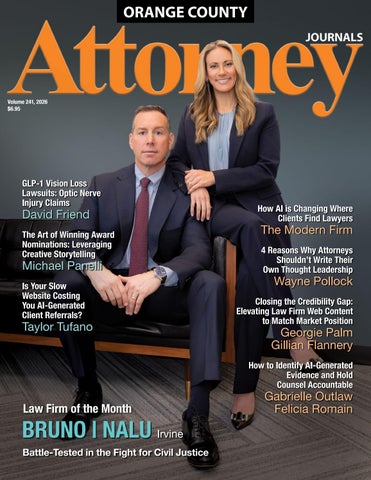
Law Firm of the Month
How AI is Changing Where Clients Find Lawyers The Modern Firm
4 Reasons Why Attorneys Shouldn’t Write Their Own Thought Leadership Wayne Pollock
Closing the Credibility Gap: Elevating Law Firm Web Content to Match Market Position
Georgie Palm Gillian Flannery
How to Identify AI-Generated Evidence and Hold Counsel Accountable
Gabrielle Outlaw
Felicia Romain

















































































Patients who were prescribed Ozempic (semaglutide), Wegovy (semaglutide), Mounjaro (tirzepatide), or other GLP1 receptor agonist medications to treat type 2 diabetes or for weight loss may be at risk of vision loss or blindness from a condition known as non-arteritic anterior ischemic optic neuropathy (NAION).
GLP-1 receptor agonists are among the most widely prescribed medications in the United States for managing type 2 diabetes and obesity. Drugs such as Ozempic, Wegovy, Rybelsus, Mounjaro, and Zepbound have gained widespread popularity due to their ability to regulate blood sugar levels and promote weight loss.
However, recent scientific studies and legal claims have raised questions about whether these medications may increase the risk of sudden optic nerve damage and NAION vision loss in some patients.
As new research and lawsuits continue to emerge, patients and healthcare providers are paying closer attention to reports linking these widely used diabetes and weight loss medications to an increased risk of NAION.
GLP-1 users who were diagnosed with NAION or who have experienced vision problems after taking these drugs can contact an experienced product liability attorney to find out whether they qualify to take legal action.
Non-arteritic anterior ischemic optic neuropathy (NAION) is a condition caused by reduced blood flow to the optic nerve. The optic nerve plays a critical role in transmitting visual information from the eye to the brain. When blood circulation to this nerve is disrupted, permanent damage may occur.
NAION often develops suddenly and typically affects one eye, although it may later involve both eyes. Patients frequently report waking up with blurred vision, darkened areas in their field of vision, or significant vision loss without warning. In many cases, the damage to the optic nerve is permanent.
by David Friend
While NAION has historically been associated with underlying vascular risk factors such as diabetes, hypertension, or sleep apnea, researchers have recently begun investigating whether certain medications, including Ozempic or other GLP-1 agonists, may also contribute to the condition.
Patients seeking additional information can review frequently asked questions about GLP-1 drugs and NAION vision loss to better understand symptoms, diagnosis, and potential legal claims.
Growing attention to the potential connection between GLP-1 medications and NAION has been fueled by emerging medical research. Several studies have examined whether drugs containing semaglutide or similar compounds may increase the likelihood of optic nerve damage.
Researchers have noted that patients using GLP-1 receptor agonists appeared to experience NAION at higher rates than those taking other diabetes medications. Although further research is still ongoing, these findings have prompted increased scrutiny within the medical community.
The possible mechanisms behind this risk remain under investigation. Some studies investigating the link between GLP-1s and NAION have concluded that changes in blood flow or vascular regulation associated with GLP-1 medications may contribute to reduced circulation in the optic nerve. Others have suggested that rapid metabolic or cardiovascular changes triggered by these drugs could play a role in certain patients.
At this stage, scientists have not reached a definitive conclusion about causation. However, the potential association has been strong enough to generate both medical concern and legal action.
Although Ozempic has received the most public attention, several GLP-1 medications are being examined in connection with NAION reports. These drugs share similar mechanisms of action and are often prescribed for diabetes or weight management.
Medications frequently referenced in these discussions include:
• Ozempic (semaglutide)
• Wegovy (semaglutide)
• Rybelsus (semaglutide)
• Mounjaro (tirzepatide)
• Zepbound (tirzepatide)
Because these medications work by activating GLP-1 receptors that regulate blood sugar and appetite, researchers are evaluating whether their biological effects could influence blood flow in sensitive tissues such as the optic nerve.
Patients who experience sudden vision loss while taking these medications may wish to seek medical evaluation promptly, as early diagnosis can help physicians determine the cause of optic nerve damage.
As reports of NAION among users of GLP-1 medications have increased, lawsuits have begun to emerge across the United States involving drugs such as Ozempic, Wegovy, and other medications in the same class. These lawsuits generally allege that manufacturers failed to adequately warn patients and physicians about a potential risk of sudden vision loss associated with these widely prescribed diabetes and weight loss treatments.
Product liability claims involving prescription medications often focus on whether drug manufacturers provided sufficient safety information about known or reasonably foreseeable risks. In GLP-1 vision loss cases, plaintiffs typically argue that stronger warnings about possible optic nerve injury or NAION could have influenced treatment decisions made by physicians and patients.
As the number of lawsuits has grown, federal courts have begun coordinating the litigation. GLP-1 vision loss claims involving NAION have been consolidated in a federal multidistrict litigation proceeding in the U.S. District Court for the Eastern District of Pennsylvania. Multidistrict litigation, commonly known as MDL, allows courts to centralize similar lawsuits before one judge in order to coordinate discovery, address common legal issues, and manage complex pharmaceutical litigation more efficiently.
The creation of the federal MDL reflects the increasing number of claims involving GLP-1 medications and alleged vision loss injuries. When cases involving the same drugs and similar medical conditions are filed in multiple federal courts, MDL consolidation can help streamline the litigation process while allowing individual plaintiffs to pursue their claims.
As additional lawsuits continue to be filed by patients who experienced NAION after using GLP-1 medications, the federal MDL will likely play a central role in shaping how these claims proceed through the court system.
Patients who believe they may qualify to file an Ozempic or GLP-1 vision loss lawsuit can speak with a law firm that handles mass tort claims to find out more about how the MDL may affect their ability to take legal action.
Patients who take GLP-1 receptor agonists for diabetes or weight loss should not discontinue prescribed medications without consulting their healthcare providers. For many individuals, these drugs provide significant medical benefits.
However, patients should be aware of potential warning signs of NAION and seek medical attention if sudden vision changes occur. Symptoms may include blurred vision, dark areas in the visual field, reduced contrast sensitivity, or unexplained vision loss in one eye.
Early evaluation by an ophthalmologist or neuroophthalmologist can help determine whether optic nerve damage has occurred and identify possible underlying causes.
As research and litigation continue to develop, courts and medical experts will play a key role in evaluating the evidence surrounding GLP-1 drugs and NAION. For patients affected by sudden optic nerve injury, understanding both the medical and legal aspects of these developments may be an important step in assessing available options.
Individuals who developed NAION after using Ozempic, Wegovy, Mounjaro, or other GLP-1 medications may also wish to consult with an experienced product liability attorney. An attorney can review medical records, medication history, and other evidence to determine whether a legal claim related to potential drug-induced vision loss may be viable. n

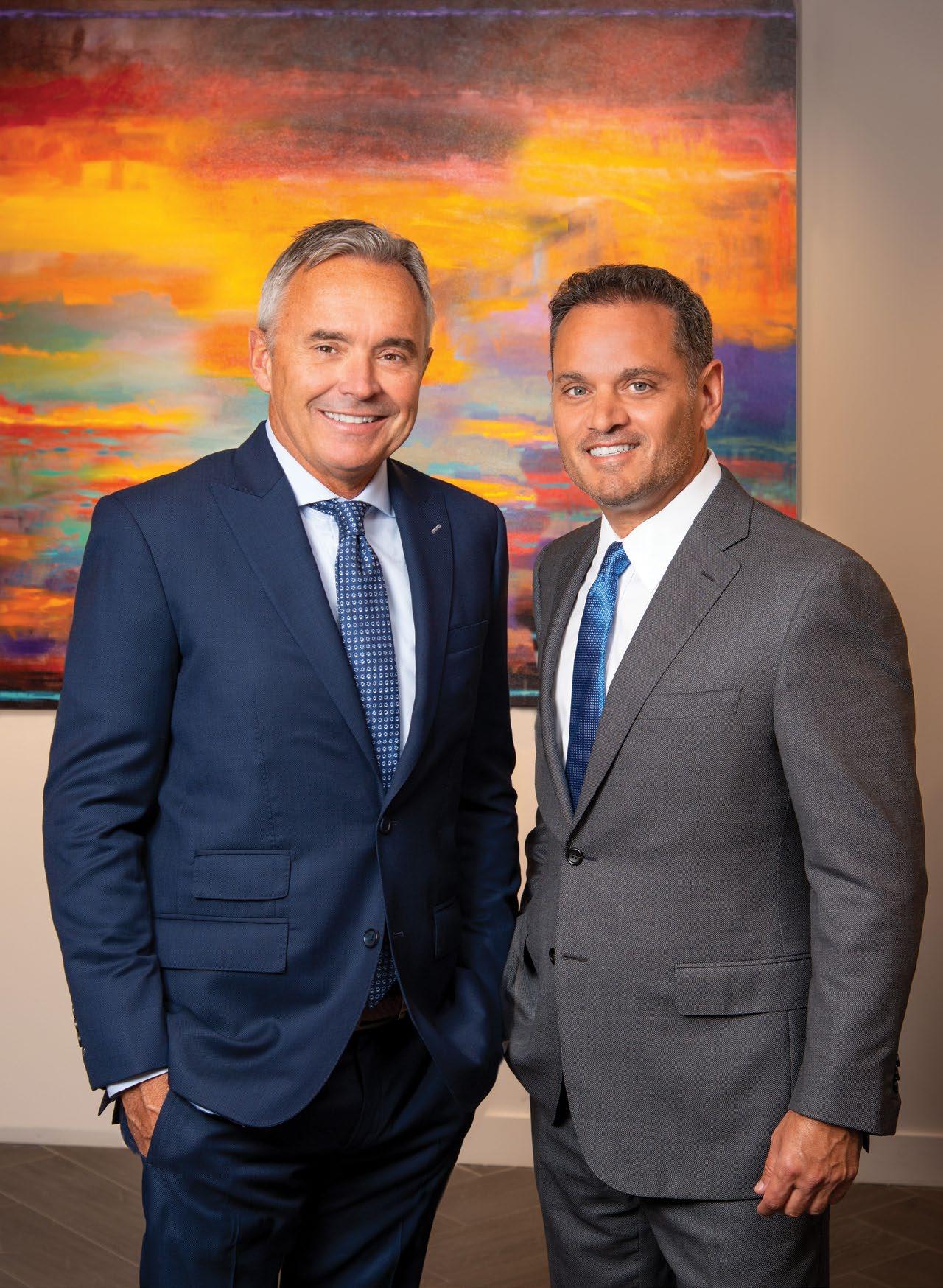
David Friend is a founding partner at Hissey, Mulderig & Friend, PLLC. He focuses his practice on pharmaceutical and medical device litigation, handling cases in locations coast to coast. David currently works with clients who have suffered injuries resulting from their use of GLP-1 drugs (such as Ozempic, Wegovy, Mounjaro, Trulicity, and Saxenda) and the Paragard IUD, as well as clients who have been exposed to Round Up weed killer and PFAS “forever chemicals” and meningioma brain tumors linked to Depo-Provera birth control shots. Learn more at www.hmf-law.com.

Just because attorneys have traditionally written their own thought leadership doesn’t mean they should have or that they were qualified to do so. They shouldn’t, and most of them aren’t.
Throughout history, there are countless examples of practices in society that were “the way we did things” until they weren’t any longer.
We waited for people to deliver milk to our homes, until we didn’t. People dressed up in suits and dresses for everyday errands, until they didn’t. We went to restaurants with smoking and nonsmoking sections, until we didn’t. And attorneys traditionally wrote their own thought leadership as part of their marketing and business development efforts, until they didn’t, or at least, that’s what I hope happens.
Just because attorneys have traditionally written thought leadership as part of their marketing efforts doesn’t mean they should.
Their doing so is a relic from yesteryear, when the key marketing strategies they employed were networking, speaking at events, and writing, and they were forced to execute on these strategies themselves.
But today, it’s a whole new ballgame. Attorneys, no matter their practice or the size of their firms, now have resources to support their marketing efforts.
And when it comes to thought leadership specifically, attorneys no longer must go it alone. They’re increasingly able to turn to internal or external thought leadership ghostwriters to help them strategize and write their thought leadership. With this in mind, here are four reasons why most attorneys should not be writing their own thought leadership today.
It’s cliché, but it’s true: legal writing is not the same as writing for marketing and business development purposes.
Just because an attorney writes extensively for their practice, whether it’s court papers, deal documents, or other work
by Wayne Pollock
product, doesn’t mean they know how to write marketing and business development materials, including thought leadership.
Legal documents tend to be written in a style that includes:
• Heavy use of the passive voice
• A detached, overly formal tone
• Exhaustive detail (such as including every possible argument to support a party’s position in litigation papers, or every contingency in deal documents)
Effective marketing writing demands the opposite: an active, engaging voice; a conversational and accessible tone; and enough substance to make a point, but not so much that you drown a reader in details.
Some attorneys can switch between these writing styles, but most can’t. They’re different skill sets that most attorneys do not have.
Yes, attorneys recognize that when they write thought leadership, they’re writing it for marketing and business development purposes. But they normally don’t write for marketing and business development purposes, which affects the quality of their thought leadership.
They often don’t understand that when they write for marketing and business development purposes, they should orient their writing to their target audience’s needs, whether that audience is clients, referral sources, or another group.
That means crafting their thought leadership to prioritize the questions, concerns, misconceptions, etc., held by their target audiences, speaking in language their audiences understand (including industry jargon), and providing insights that are relevant, valuable, and compelling.
In addition, attorneys rarely know how to write headlines that capture readers’ attention. Nor do they know how to write shorter, punchier sentences and paragraphs that are now a hallmark of the writing style we most often see in marketing and business development materials.
That’s why they so often produce thought leadership content that reads more like a legal document than a marketing asset, which often fails to engage or resonate with its target audience.
Going one step further, most attorneys aren’t students of the thought leadership game. They don’t see that thought leadership is its own world within the larger marketing and business development landscape. They’re missing critical knowledge about:
• The creative process: They haven’t created a regular, reliable process for coming up with ideas and tinkering with them to produce compelling thought leadership.
• Content strategy: They don’t know how to break apart larger topics and cover them from many angles over the course of multiple articles. This gives them more (focused) content to publish and gives readers more digestible chunks of content to consume.
• Objective perspective: They’re often too close to their own knowledge and wisdom to realize how interesting or novel thought leadership that draws from that knowledge and wisdom might or might not be. They lack the necessary distance to assess its relevance to their target audiences.
• Learning from others: They’re probably consumers of others’ thought leadership, but they’re not reading it with an eye toward what works and what doesn’t, and how they can add or subtract those things from their own content to increase its quality.
• The competitive landscape: Perhaps most importantly, they don’t appreciate that their content is competing for attention alongside every other piece of content out there. They’re not just competing with other attorneys’ or law firms’ content; they’re competing with every piece of content on every browser tab their target audiences have open at any given time.
Without understanding these best practices, attorneys’ thought leadership is likely to fall flat.
The issues above that support attorneys not writing their own thought leadership are fixable. But attorneys are unlikely to get around to fixing them because they don’t get enough practice at thought leadership to do so.
For the vast majority of attorneys, thought leadership is something they spend relatively little time on compared to their billable work and other marketing and business development efforts.
An attorney who writes between one and six articles a year or even between six and twelve articles a year isn’t getting much practice. Writing at those frequencies won’t provide enough repetition for an attorney to make a meaningful improvement in their ability to write thought leadership.
Attorneys who frequently write thought leadership, which I’d define as more than once a month, have not only found a system for producing that much volume while juggling other responsibilities, but they also tend to get better at it as they gain more practice. On the other hand, the attorneys who don’t get that much practice will almost certainly continue to produce mediocre (at best) thought leadership.
When we think about the obstacles attorneys face in consistently producing high-quality thought leadership, the first thing that comes to my mind, and probably yours, is that they’re too busy billing time to consistently produce high-quality thought leadership content.
But what if that’s not really true?
What if the biggest obstacle isn’t one of time, but of skill?
If you read enough attorney-produced thought leadership articles, you’ll see there’s a range of quality among the articles. For the reasons I described above, not every attorney has the skills and time to regularly produce thought leadership content that’s relevant, valuable, and compelling to their target audiences.
Those attorneys who regularly have topics in mind for thought leadership articles but don’t have the skill (or time) to write them should consider turning to an internal (i.e., inhouse) or external thought leadership ghostwriter to take those topics from ideas to published content.
Whether it’s a colleague at their firm or an external ghostwriter, professional thought leadership ghostwriters bring expertise, strategy, and execution at levels well above what most attorneys can muster.
These writers eat, sleep, and breathe thought leadership. They understand the nuances, stay current with best practices, and deliver consistent quality because it’s their primary focus, not an add-on to their everyday work.
Professional thought leadership ghostwriters bring three critical elements to the table.
First, they know how to design optimal thought leadership strategies. They understand how thought leadership fits into attorneys’ and law firms’ broader marketing and business development efforts, and can conceptualize thought leadership initiatives that drive actual results.
Second, they know how to execute effective thought leadership programs. They know best practices inside and out because they stay current with what works in content marketing and thought leadership.
Finally, they know how to write high-quality thought leadership content that maintains a consistent voice and quality across all pieces and that resonates with audiences.
When attorneys work with internal and external ghostwriters, they do so collaboratively. Attorneys provide legal expertise and unique insights, while ghostwriters handle strategy, execution, and writing. As a result, attorneys publish higher-quality content under their names that better builds authority and attracts clients and referral sources.
Receiving milk deliveries at your home, putting on a suit to go to the grocery store, and sitting in a smoking section of a restaurant are all relics of days past.
I nominate attorneys writing their own thought leadership as a future relic of the past. Not because attorneys are incapable, but because specialized skills produce better results.
Just as we’ve come to realize that home milk delivery isn’t
the most efficient system anymore, it’s time to recognize that attorneys sitting down to write their own thought leadership 100% of the time isn’t the optimal approach to a vital component of their marketing and business development efforts.
The future of legal thought leadership is collaborative: attorneys provide the insights and expertise; professional thought leadership ghostwriters provide the strategy and execution.
And that’s good news for everyone involved: the attorneys who can market themselves without having to invest as much time as they would if they wrote thought leadership articles themselves, and their target audiences, who stand to gain from having access to more relevant, valuable, and compelling legal thought leadership content. n

Wayne Pollock is the founder of the Law Firm Editorial Service. The Law Firm Editorial Service sets free the knowledge and wisdom trapped inside Big Law and boutique law firm partners by collaborating with them to strategize and ethically ghostwrite book-of-business-building marketing and business development content. Learn more at: www.lawfirmeditorialservice.com.

Monty A. McIntyre, Esq. Mediator, Arbitrator & Referee ADR Services, Inc.
To schedule, contact Haward Cho: (213) 683-1600 and (619) 233-1323 or haward@adrservices.com
Short summaries (one-paragraph), organized by legal topic, of every new published CA civil case, helping CA attorneys save time, win more, and make more money. Monthly, quarterly, annual, and annual practice area publications are available. Subscribe at www.cacasesummaries.com





















For Clients Whose Lives Were Permanently Changed A premier law firm handling and welcoming referrals or partnering with lawyers/law firms on very serious injury and wrongful death cases. When negligence causes catastrophic harm, results matter.

Handling high-stakes claims and litigation including spinal injuries, those with permanent neurological damage, brain injuries, amputations, burns, life-altering injuries and deaths caused by the negligence of others. Our record reflects disciplined relentless preparation, with trial strategy and willingness to take cases all the way.


Practice Focus
• Spinal Injuries
• Brain Injuries

• Loss of Limbs & Amputations
• Serious Back Injuries

• Neurological Injuries
• Loss of Sight, Hearing or Other Senses
• Orthopedic Injuries
• Other Serious & Catastrophic Injuries


A law firm’s website is its most visible and most permanent business development asset. Yet for many firms, it remains under-leveraged. Not because they aren’t investing in design or technology, but because the content itself is rarely aligned with a firm’s revenue strategy, target clients, or growth priorities.
The result is a credibility gap: a disconnect between the sophistication of the firm’s work and what its website communicates to prospective clients and referral sources.
This isn’t a question of effort. It’s a matter of alignment. Over time, firms adopt default approaches to web content that prioritize completeness over positioning. The impact is subtle but material: missed opportunities to reinforce differentiation, clarify value, and support measurable growth objectives.
In this article, we examine three common content habits that create this credibility gap—and outline practical shifts that reposition the website as an active, strategic business development tool rather than a static digital brochure. We also consider how emerging tools, including AI-driven content development, can either reinforce these habits or help firms correct them when used intentionally.
The most common content habit that hinders law firm websites is writing for the wrong reader. Institutional language and carefully hedged practice descriptions don’t persuade potential clients that they are looking at an experienced, trustworthy, and knowledgeable firm. They create distance at precisely the moment the content should be building confidence.
The fix isn’t just stylistic. It requires reorienting the website content development process around a different question, not whether it accurately represents what the firm does, but whether it gives a prospective client a reason to believe the firm understands their situation. That shift, applied consistently across the firm’s website, is what moves a website from a credential repository to a genuine business development tool.
This is particularly important as more firms experiment with AI-assisted drafting tools. While AI can accelerate content production, it often defaults to generalized, institutional language unless guided by clear strategic inputs. Without thoughtful direction, automation can amplify sameness rather than sharpen differentiation.
by Georgie Palm & Gillian Flannery
Attorney profiles and the “About” page are among the most visited pages on a law firm website and among the most consistently underwritten. Typical bios that follow the familiar format with a summary of practice areas, bar admissions, education credentials, and a list of representative matters are accurate, complete, and almost entirely forgettable.
For a prospective client trying to determine whether this is the right attorney for their circumstances, a credential list answers the wrong question. While it confirms that the attorney is qualified, it says almost nothing about whether they are the right fit.
What prospective clients look for is a sense of the lawyer behind the generic information. Address questions such as:
• How does this attorney approach client relationships?
• What kinds of problems is this attorney most experienced in solving?
• Does this attorney’s background map onto a client’s specific industry or situation?
A profile that surfaces those details, even briefly, can do more business development work than a comprehensive credentials summary ever will.
Rethinking attorney profiles requires treating the profile as a narrative asset rather than a compliance exercise. Across a full firm website, profiles written with that orientation create a compounding credibility effect that generic bios simply cannot.
AI can assist in organizing experience and identifying thematic strengths across a lawyer’s matters, but the strategic insight that differentiates this attorney in the market must still come from deliberate positioning decisions. Technology supports the process; it does not replace it.
Many law firms approach website content as something that gets done rather than something that gets maintained. Practice pages are drafted during a redesign cycle and revisited years later, if at all. Blog posts are published actively during busy periods and go quiet when attorney bandwidth tightens.
The cumulative effect, visible to any prospective client who spends more than a few minutes on the site, is a website that feels dated, uneven, and inconsistently invested in. A staggering estimated 38% of website visitors will abandon a site entirely due to outdated information and appearance on pages.
This matters more than firms tend to recognize, as it reflects on the firm’s attention to detail. A website that appears neglected raises a quiet but persistent question about whether the firm is as current and engaged as it claims to be.
The underlying habit is treating the website as a project with a launch date and completion milestone rather than a valuable business development asset that requires ongoing management. Firms that close this gap don’t necessarily publish more; they publish with more intention. The website is never finished, and the firms that treat it that way are the ones whose sites actually work.
In an environment where AI tools make publishing faster and easier than ever, cadence alone is no longer a differentiator. Intentionality is. A living website is not defined by volume of content but by disciplined alignment with strategy.
These habits are not unique to any one firm, practice area, or market. They show up consistently across law firm websites of every size, and they persist because website content rarely gets the strategic attention that it deserves.
Law firm websites serve as the primary first impression for over 70% of potential clients. Closing the credibility gap doesn’t require firms to redesign or completely overhaul their content,

but simply to take a more intentional approach to the content that already exists.
Shifting the focus of website content to develop practice descriptions for an audience of prospective clients, recasting attorney profiles that demonstrate understanding along with experience and qualification, and publishing cadences that treat the website as an active business development tool are small changes that will produce large dividends.
The good news is that these changes aren’t costly ones, either. They are disciplined, and their cumulative effect on how a firm is perceived and whether a prospective client decides to make contact is significant.
This isn’t about rewriting everything. It’s about applying a strategic lens to an asset the firm already owns. As AI becomes more integrated into content workflows, firms that pair efficiency with clear positioning will see the greatest return. When website content reflects strategy rather than default habit, the credibility gap narrows, and the firm’s digital presence begins to reinforce the work behind it. n


Georgie Palm is the Managing Director and Assistant General Counsel at Poston Communications and a marketing and business development professional in the legal industry for over 10 years, and is licensed to practice law in Minnesota. Gillian Flannery is a content intern at Poston Communications, delivering highquality, engaging, and creative content. Learn more at www.postoncommunications.com.





Artificial intelligence (AI) has become a part of nearly every industry, and the legal field is no exception. More specifically, AI-generated evidence is constantly evolving, and it is important for attorneys to keep learning about it, so that we can stay informed, prepared, and, more importantly, ahead of the curve.
AI-generated evidence consists of a variety of data, including but not limited to photographs, videos, and other documents or materials that are developed or integrated through AI technology to analyze data or create new content. While this form of evidence can be an innovative tool, there is widespread, valid concern about the use of this evidence. On one hand, unlike with tangible, physical evidence, there is no clear point of origination with AI-generated materials. Thus, there are concerns about authenticating the validity of the AI-generated evidence and the integrity of said evidence.
To determine whether evidence is AI-generated, there are a few steps we can take to guide our assessment. One step is to trust our instincts. Attorneys are trained to evaluate the credibility, consistency, and plausibility of all evidence and information presented to them while investigating and developing their case strategy. That same instinct should be applied when reviewing potential AI-generated evidence. If a document, text, image, or video appears too polished or inconsistent with the surrounding facts, it may warrant closer scrutiny. There is something to be said about thinking a piece of evidence is “too good to be true.” There is no harm in following up on the validity of a piece of evidence if something about it has raised questions or caused pause.
For example, consider a scenario where opposing counsel produces a video allegedly depicting a plaintiff speaking in a measured, articulate manner with calculated pauses and minimal emotions. Yet during deposition testimony, the attorney sees that the same plaintiff speaks rapidly, with an accent, displays natural hesitation, or is animated. Such discrepancies between the evidence provided and real-world presentation should raise immediate concerns about manipulation or artificially-generated activity.
Depositions are therefore a critical investigative tool, not only for factual development, but also for evaluating whether the evidence aligns with the witness’s authentic behavior, speech patterns, and demeanor. Attorneys may also investigate whether there are any pre-suit recorded statements taken by a reputable third-party, such as an insurance company, of plaintiffs or relevant fact witnesses to further assess any discrepancies with proffered digital evidence.
Once our suspicions arise, the next step is to obtain the underlying metadata associated with the evidence. Metadata
by Gabrielle Outlaw & Felicia Romain
functions as a digital fingerprint, often revealing creation date and time and the device or software used to generate the file.
For example, if a party claims a text message was sent five years earlier, metadata may show that the file was actually created recently and on what software. In many cases, metadata can serve as our smoking gun.
Nevertheless, attorneys must be aware and keep vigilant that in the age of AI, metadata can also be manipulated. It is just one piece of the puzzle that can be used to evaluate the authenticity of proffered evidence.
If authenticity remains in question, retaining an appropriate expert is critical. Courts increasingly rely on technical experts to interpret complex digital evidence, particularly where AI tools may be involved. Relevant experts may include digital forensic scientists, data analysts, and/or cybersecurity professionals.
Courts have begun to confront the admissibility of AI-generated or claimed AI-manipulated evidence. In Huang v. Tesla[1], a California state court rejected an objection to video evidence premised on the generalized claim that the footage “could have been” a deepfake. The court made clear that the mere possibility of AI manipulation is insufficient to exclude evidence. Instead, the court determined that parties must present concrete, technicallygrounded proof demonstrating that the presented evidence is inauthentic or unreliable. This ruling shows that challenges to AI-related evidence must be supported by specific facts, expert analysis, or forensic evidence.
This approach is consistent with longstanding authentication requirements under Rule 901 of the Federal Rules of Evidence. Rule 901 requires only that the proponent produce evidence “sufficient to support a finding that the item is what the proponent claims it is.”
The standard is intentionally low: courts do not demand absolute proof of authenticity, but rather a prima facie showing through testimony of a witness with knowledge (expert witness), distinctive characteristics, metadata, or evidence describing the process or system that produced the item. Once that threshold is met, the burden shifts to the opponent to demonstrate a genuine issue as to authenticity. In the AI context, courts are making clear that hypothetical concerns about deepfakes do not, by themselves, defeat admissibility.
Similarly, attorneys must grapple with the potential consequences of the improper use of AI-generated evidence in their cases and the importance of identifying and asserting improper use by their adversaries. AI use presents risks that we cannot ignore, such as hallucinations in case law citations.
In the matter, Mendones v. Cushman & Wakefield, Inc.[2], The Superior Court of California, Alameda County, dismissed the case with prejudice when it was discovered that pro se plaintiffs had used deepfake videos and altered photographs as exhibits to their motion for summary judgment. As previously discussed, the subject videos showed witness testimony in an unnatural manner with unsynchronized mouth movements and other identifiable issues. Evaluation of the photographs demonstrated false data, such as altered screen-shotted messages and a security guard superimposed into the image.
In the Order, the California Superior Court states, it “remains suspicious of the other evidentiary submissions, but it does not have the time, funding, or technical expertise to determine the authenticity of Plaintiffs’ statements or conduct a forensic analysis.” This point leads into a deeper discussion about how improper use of altered, false, and/or distorted AI-generated evidence puts further burden on court time and resources. In response, courts have begun imposing non-monetary and monetary sanctions in response to the AI-generated hallucinations in legal briefs. Recently, an Eastern District of Pennsylvania federal court judge sanctioned two attorneys after they filed a brief that included these AI-hallucinated citations.
While these sanctions are one tool used by the court to send a strong message throughout the legal community about the consequences of these serious acts of misconduct, it is important for attorneys to remember the professional rules of conduct and oath of fidelity, honesty, and lawful practice that they have an obligation to abide by.
This is not to say that the use of AI-generated materials is strictly prohibited. We know that this ever-developing technology will continue to be a part of ongoing legal practice. However, it is important that all attorneys stay apprised of the rules, protocol, and guidelines as outlined by the courts for the use of AI in their legal practice and hold their adversaries accountable to uphold the same standards.
Since AI is here to stay, attorneys must approach it as a tool, and never as the final product. AI cannot replace professional judgment, ethical obligations, and strategic analysis that is essential to competent representation. There are many nuances that attorneys as humans discover in their cases that can never be replicated by AI technology. Thus, in this age of technology, it is important for attorneys to remember that this human aspect of practice is a strength and, accordingly, must hold ourselves and our adversaries accountable. n


Gabrielle Outlaw is a dedicated attorney at Weber Gallagher, LLP with a primary focus on general liability defense, including premises liability, product liability, automobile liability, and food-borne illnesses defense. Felicia Romain focuses her practice on significant general liability matters, including premises liability, motor vehicle, and transportation cases. She also handles New York Labor Law and construction-related claims. Her knowledge of these areas helps her effectively provide strategic advice and impactful representation to clients facing complex litigation. Learn more at www.wglaw.com.
[1] https://www.thomsonreuters.com/en-us/posts/ai-in-courts/deepfakes-evidence-authentication/ [2] Mendones v. Cushman et al Decision

by Dan Baldwin
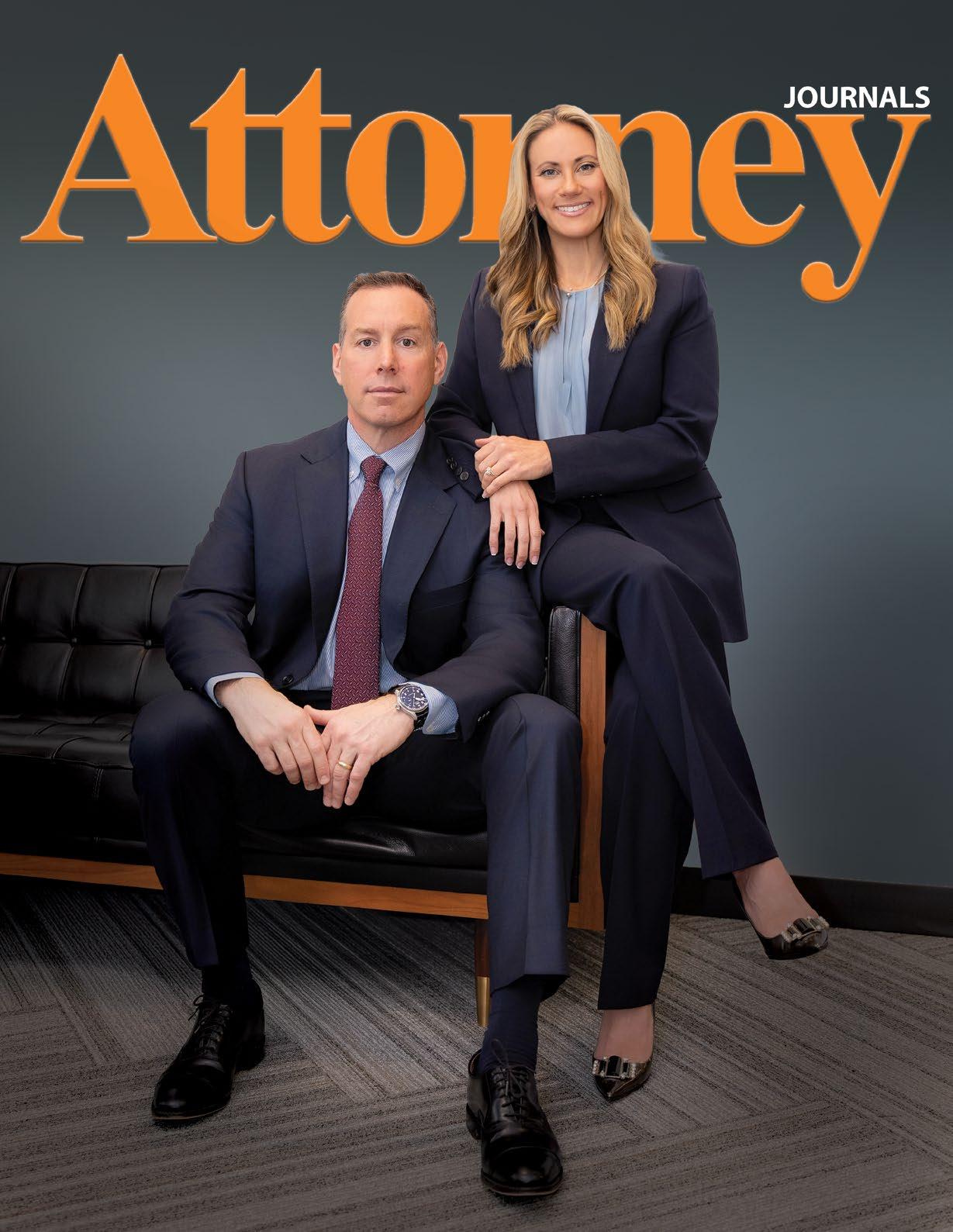
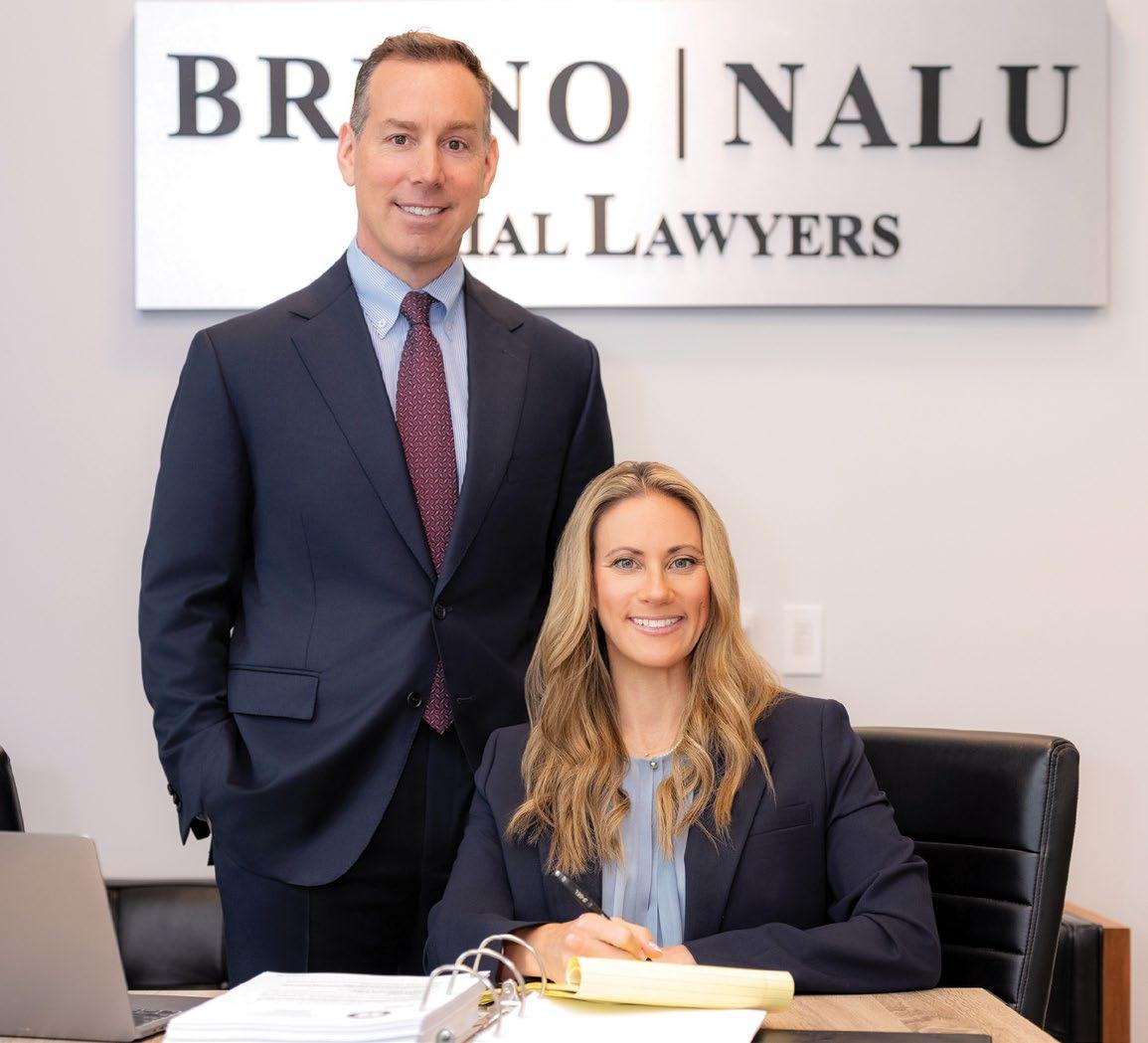
Ten years ago, Attorney Journal introduced readers to Keith and Angela Bruno—a husband-and-wife team who had founded a law firm on a premise most of their peers called impractical: building a practice not by competing with other attorneys, but by partnering with them. Today, that premise has produced some of the largest verdicts in American legal history, and BRUNO | NALU has grown into one of the most sought-after litigation boutiques in the country.
The firm’s referral-based model—stepping into complex, high-value cases on behalf of other law firms and maximizing results through specialized trial expertise—has generated hundreds of millions of dollars in recoveries for clients and referral partners alike. Over a decade in, the results speak for themselves.
When Keith and Angela Bruno founded BRUNO | NALU in 2014, neither had a background in personal injury law. Keith had built his practice in criminal defense—a discipline defined by courtroom combat. Angela came from family law, where the art of negotiation and mediation is indispensable. What they shared was a belief that exceptional lawyering, combined with a collaborative business model, could produce extraordinary outcomes.
“A decade ago, I was practicing criminal law, which is heavily trial-focused. Angela was practicing family law. Our skill sets were divergent, but complementary. Starting a firm together was a natural outgrowth of our abilities, our personal relationship, and our willingness to accept the challenges of taking an unusual path.” —Keith Bruno
The model they chose was deliberately unconventional. Rather than build a marketing-driven, high-volume personal injury practice, BRUNO | NALU would serve as the litigation arm for other firms— accepting referrals of complex and highvalue cases, taking them through trial, and delivering results that those firms were not positioned to achieve on their own.
“We started with a concept that most colleagues said wouldn’t work. We had two lawyers at the top of the firm with no personal injury experience. But we were excellent lawyers, and we knew our values aligned with representing injured, ordinary people. More than a decade later, we have the record to prove the accuracy of our vision. We are still holding to the original business model—and still succeeding.”
—Angela Bruno


The proof of BRUNO | NALU’s model is not theoretical— it is documented in court records across the country. The firm holds the highest verdict in the history of Washington State: $857 million in a product liability case decided in December 2023. In November 2024, they secured a recordbreaking $421 million medical fraud verdict in New Mexico. Numerous eight- and nine-figure results have followed. Every case in the table below originated at another law firm. Each represents a referring attorney’s decision to partner with BRUNO | NALU rather than proceed alone.
Verdict / Settlement
Case Type
$857 Million Product Liability
$421 Million Medical Fraud
$193 Million Confidential Settlement
$48 Million Sexual Assault
$21.3 Million Trucking Accident
$14 Million Slip and Fall
$13 Million Wrongful Death
$12 Million Sexual Assault
$10 Million Wrongful Death
$9 Million School Sexual Assault
$5 Million Confidential Settlement
$5 Million Auto vs. Pedestrian
$5 Million Proposition 213
“We have seen cases that should have resulted in millions, but instead the attorneys recovered nothing. This is usually the result of the wrong strategy and team. If you haven’t been in the weeds—seeing where errors happen—it is too great a risk to hold onto those cases rather than find someone who has specialized in bringing them past the finish line. That is where BRUNO | NALU comes in.” —Angela Bruno
Most litigation firms manage an abundance of cases. The reality, however, is that the prospect of taking a matter to trial is disruptive to most business models. A favorable settlement is the preferred outcome—but when that path is unavailable,
firms need a partner who can step in and fight effectively. That is the role BRUNO | NALU was built to fill.
“Our model is to be of service to our referral partners when they have a particularly challenging case—or one that is extremely high-value and cannot afford to be lost. Understanding the true value of a case and knowing how to recover it is deceptively simple, but never easy. We have the expertise and the track record to do that. What many once doubted could be sustained has become an extraordinary, enduring success.” —Keith Bruno
The firm functions as its referral partners’ litigation department—at no cost to the referring firm. Partners retain their client relationships and their fee interest; BRUNO | NALU handles the courtroom.
Angela Bruno previously worked with one of the Big Five accounting firms in Los Angeles before pivoting to law. Keith Bruno began his legal career in corporate law before becoming a Public Defender—a role that crystallized his commitment to trial advocacy. Those complementary backgrounds inform everything from how the firm evaluates cases to how it prepares witnesses and constructs damages narratives at trial.
“Plenty of firms have tried to hire us as in-house litigation counsel—‘Why don’t you handle all our trials?’ Maintaining our independence is a key factor in staying laser focused on each case rather than drowning in a volume practice.” —Angela Bruno
Over the past decade, BRUNO | NALU developed and refined a proprietary AI-powered case management system designed to accelerate trial and settlement preparation regardless of where a case stands when the firm is brought in. As the practice expanded nationally, the firm built rigorous protocols to ensure that every matter—regardless of jurisdiction—moves through the system with full awareness of local rules and state-specific law.
The system has been tested in courtrooms across Washington, Michigan, Iowa, New Mexico, Florida, South Carolina, and Alabama. It is a competitive advantage that allows the firm to move with the speed and precision that high-value cases demand.
Technology, however, is only as effective as the team wielding it.
“Technology without the right team is useless. Our litigation protocol is experience-based and personally delivered. Every case we accept from a referral firm has both Keith and Angela doing the work—personally. Now, more than ever, with Tort Reform attacks expanding across the country, it is critical to partner with a team that has seen it all and is ready for the battle.” —Angela Bruno
The right to trial by jury—and the rights of injured people to retain qualified counsel—is under sustained attack in California and across the country. BRUNO | NALU has taken an active and public role in opposing two proposed ballot measures in California that would devastate the personal injury system.
The measures, backed in significant part by Uber and other large corporate interests, would cap attorney fees and medical costs in auto cases at 25 percent of recovery—positioned to the public as consumer protection, but operating in practice as a mechanism to reduce corporate liability exposure.
“Lawyers will only be able to afford to take on the highest-dollar cases because they will only be in a position to net roughly eight percent of the recovery. Uber is trying to reduce attorney fees not only to make these cases less attractive for attorneys—they are also limiting the amount of medical care an injured person can receive. The result will be less care, and fewer lawyers willing to take on car accident cases. The citizens of California will have nowhere to turn when they are injured.” —Keith Bruno
The downstream consequences extend beyond the legal profession. When attorneys cannot afford to take cases and physicians cannot expect fair reimbursement, injured people are left without recourse—and the costs of their care shift to taxpayers.
“Uber is on a mission to change the personal injury system by reducing the victim’s access to medical care, reducing the cost of care that is recoverable, and reducing attorney fees. Ultimately, the taxpayer gets stuck with the medical bills.” —Angela Bruno BRUNO | NALU is committed to fighting this encroachment on access to justice—for their clients, their referral partners, and for the profession as a whole.
The firm that Angela and Keith Bruno built over the past decade is not the same firm they launched in 2014—it is larger, more sophisticated, more nationally recognized, and more capable. But the core principle has not changed: serve the client, serve the referring firm, and win.
“Our trial practice is the future—and that future is under threat. Trial by jury is being systematically challenged in California and in jurisdictions across the country. Over the next five years, we intend to deepen our presence in the trial courts, continuing to partner with firms in jurisdictions where our expertise can produce transformative results for clients. The infrastructure and systems we have built over the past decade have positioned us well for that growth, and we are excited about what the next chapter holds.” —Keith Bruno
The firm’s success in its primary practice areas has expanded its reach. Law firms are now sending employment cases and matters involving corporate negligence. Sexual assault litigation—including teacher-on-student, student-on-student, and celebrity cases—has emerged as a significant and growing area of focus.
“We have had incredible success with firms bringing us on to resolve or litigate extremely sensitive sex abuse cases. We are now recognized for aggressively pursuing these cases, and I see that arena as a major area of expansion for us.”
—Angela Bruno
Angela Bruno has also taken an expanding leadership role in the national trial lawyer community—serving women trial lawyers through multiple professional organizations and speaking broadly on trial strategy and the art of negotiation. Keith has been recognized three times as Orange County Trial Lawyer of the Year.
Together, they speak on national stages spanning the American South, Midwest, Pacific Northwest, and Rockies. They are active with OCTLA, CAOC, CAALA, the South Carolina Trial Lawyers Association, WITTS, the Midwest Trial Lawyers Summit, Trial by Human, Trial Lawyers University, and others.
Outside the courtroom, the couple is raising their nineyear-old son, Ford—who has already made clear his intention

Founding Partners: Keith J. Bruno and Angela Bruno (formerly, Angela Nalu)
to join BRUNO | NALU one day. They are active in the archdiocese charities of Orange County through his school, St. Serra, and have adopted Bozeman and Big Sky, Montana as a second home.
“You don’t just hang your shingle and wake up the next day with the skill and battle-hardened ability to fight massive cases. We have spent the last decade proving our concept and building the infrastructure to slay dragons. The next ten years will be incredibly challenging for all lawyers. To meet that challenge, you need a partner who has already proven they are equal to it.” —Keith Bruno n
Contact BRUNO | NALU 18201 Von Karman Ave., Suite 1180 Irvine, CA 92612
866-519-3098
www.brunonalu.com


Have you seen those “Top 100 Lawyers” or “Influential Women in Business” awards and wondered how recipients actually earn those distinctions?
Industry awards can often seem opaque, with confusing criteria and vast competition that makes award nominations feel like an uphill battle. You are not alone.
Over the past decade at Blattel Communications, I’ve written hundreds of award nominations and have seen all kinds of award submission formats. Some ask for a lawyer’s matter list with a short description, while others seek longform essays breaking down the nominee’s influence. But the one thing that remains constant across all submission forms is the emphasis on and importance of a good story.
A strong character can carry a story, but the character’s impact can be devalued if their story itself is weak. Think “The Joker” sequel from 2024: Joaquin Phoenix is a delight to watch, which should have made a mass-appeal hit, but the film’s story left too much to be desired. The inverse is also true: a great story elevates a great character even higher, creating something truly memorable, much like Bryan Cranston in Breaking Bad
That’s where the right team can add value. By leaning into our expert writing skills and storytelling prowess, we can transform your career achievements into a story worth recognizing by highlighting your impact, leadership, and relevance in a way that appeals to judges and readers.
What makes a good story worth telling—and worth recognizing?
As a lawyer, your litigation achievements are impressive, but do results alone make a good story? Don’t get us wrong. There’s a reason legal and courtroom dramas like Suits are popular, but we all know Suits isn’t reality, and the truth of legal work is too procedural for a TV show.
So, what makes a show like Suits work? Drama, suspense, unique settings, compelling themes, and characters: these are
by Michael Panelli
key elements that demonstrate the impact of a good story. When writing an award nomination, all good stories have a beginning, a middle, and an end woven together as a larger narrative. This is what helps convince the reviewing body that this nominee is worth recognizing. As you prepare for your nomination, consider the following:
• Does this matter or achievement break new ground or set legal or industry precedent?
• Was it a first-of-its-kind or unusually complex case or deal in a specialty jurisdiction?
• Did you argue in front of a legendary judge? Close a deal in record time despite a giant transactional team?
• Does this matter exemplify a recent trend or follow a major news event that we can highlight (e.g., consumer class actions against technology companies involved in data breaches, lawsuits against public entities over wildfires, etc.)?
• When you tell colleagues or family members about this case or deal, what excites you? What piques the interest of those outside of the profession?
These are just a few examples, but they point to the key elements that frame the story and help us (the writers) sell the readers (the judges) on the impact of the matter and your role in it.
A couple of my favorite authors are Agatha Christie and Stephen King. Each author pours incredible detail into their stories. There is no such thing as a filler or throwaway point in their storytelling. Every single word or idea, no matter how small, either sets up a red herring meant to distract the reader or a clue pointing to the suspect. From character descriptions to setting the scene, reading these stories is always incredibly immersive.
Details provide additional flavor and context for your story. If you’re describing a matter that recently concluded, it helps to have more facts that point to the impact of the case and your role in it. Asking pointed questions that lead to more detailed answers is a simple way to move beyond a surface-level case description, giving more authority to your submission.
Some examples may include:
• Will this deal break new ground, open new markets, or shape an industry? What brought the parties to the table?
• How long was the matter litigated, and what were the stakes at the outset?
• If settled, can you disclose the settlement amount and the plaintiff’s original demand?
• On what grounds did you successfully convince a judge to dismiss a case?
• What was the basis for your appeal?
• Is the matter still ongoing, and does it signal broader industry impact?
• What are the potential ripple effects of the matter on an industry or society more broadly? If a deal, what is the larger significance of the deal beyond value?
Not every year is the right one to submit a nomination. Maybe you don’t have a big win to highlight, or you want to increase your community involvement before putting yourself forward. Or, maybe you’re working on a big matter that you expect to resolve before next year’s award cycle.
Regardless of the reason, waiting a year isn’t the worst strategy. In most cases, it will strengthen your nomination next year with a fresh and full narrative. The goal is not a submission for its own sake, but recognition grounded in substance and impact. n

Michael Panelli is an Account Supervisor at Blattel Communications. A skilled jargon-buster, Michael helps experts effectively communicate their technical expertise to their desired audiences through multipronged media campaigns. Learn more at www.blattel.com.










Picture this: It’s Tuesday afternoon, and somewhere in your city, a potential client is sitting on their couch with a problem your law firm is perfectly positioned to solve. For the sake of this example, let’s say that their mother was recently in a car accident and needs an attorney. However, instead of opening Google, they open ChatGPT.
Within seconds, they receive a thoughtful response with a list of specific recommendations, complete with practice areas, notable case results, and even office locations. Your firm has over twenty years of experience, a track record of multi-million-dollar settlements, and an office just blocks from where this person lives. You’re the perfect fit; however, you’re not on the list. Why not?
Well, while ChatGPT was scanning the web for law firm websites across your city, your site was still loading, and your competitor’s site got the recommendation instead. That potential six-figure engagement? Gone before you even knew it existed.
Page speed can impact the ranking of content in AI search tools like ChatGPT indirectly, as AI prioritizes highquality, fast-loading, and technically optimized sources. While ChatGPT and other AI search tools don’t “rank” pages in the traditional sense, their algorithms favor websites that offer a better user experience, and fastloading pages are more likely to be deemed credible and useful sources for AI-generated answers. So, what is the cost if page speed is not addressed?
The most immediate and quantifiable impact of slow page speed is lost revenue, real money that should be coming into your firm but instead flows to competitors. According to a 2024 Forbes Advisor survey, on average, people will wait eight seconds for a website to load, but realistically, if your website is taking longer than 3 seconds
by Taylor Tufano
to load, that is a problem. If users aren’t getting to what they need within a few seconds, they will just move on to the next option. This is further proven by a study that found conversion rates drop by 4.42% for every second that it takes the website to load.
Let’s put this into perspective. Consider a typical mid-size law firm with 5,000 monthly website visitors, a current page load time of 6 seconds, and an industryaverage conversion rate of 3%. With an average client value of $5,000, this firm currently generates approximately 150 leads per month, representing $750,000 in monthly revenue potential.
However, if this same firm optimized its website to load in just 2 seconds—a 4-second improvement— the mathematics of conversion loss reveal a striking opportunity. Those 4 seconds of improvement, multiplied by the 4.42% conversion penalty per second, equals a 17.68% increase in conversion rates. This would boost the firm’s conversion rate from 3% to 3.53%, generating 176.5 leads per month instead of 150. The result is a monthly revenue potential of $882,500, representing a monthly opportunity of $132,500 or an annual revenue opportunity of $1,590,000.
It is important to note that the scale of this opportunity varies dramatically by firm size.
Additionally, page speed is a known ranking factor for Google, so having a slow-loading website can impact your rankings and whether potential new clients can even find you online. The same goes for AI search tools such as ChatGPT or Perplexity.
Overall, by not paying attention to the loading speed of your site, if it is failing, then you are ultimately leaving money on the table and missing out on new clients.
Beyond the measurable revenue loss, slow page speed can cause damage to your firm’s reputation and perceived credibility. Your website is often the first impression potential clients have of your firm, and when it loads
slowly or not at all, it can often give people a bad impression. For example, it can suggest poor attention to detail, which is catastrophic in a profession where missing a filing deadline or overlooking a contractual clause can destroy a client’s case.
Additionally, attorneys know that professional referrals are often the highest-quality lead source. But when someone wants to refer business to your firm, they frequently visit your website first to confirm you’re a good match or to get your contact information. If the referring party encounters a slow, frustrating website experience, they may reconsider the referral entirely.
Lastly, brand credibility extends beyond clients to potential employees. Top legal talent researches firms before applying or accepting positions. In competitive job markets where attracting talented associates can determine a firm’s growth trajectory, this hidden cost of poor website performance affects your ability to build a strong team, which in turn affects your capacity to serve clients and grow revenue.
In the emerging AI search landscape, there’s a powerful first-mover advantage that creates compounding competitive disadvantages for slow adopters.
AI systems learn from success patterns. When a firm consistently appears in recommendations (because its site loads quickly), gets clicked by users, and presumably provides satisfactory outcomes, the AI develops a preference pattern. It begins to “trust” that source as reliable. Meanwhile, firms that consistently fail to load or timeout train the AI to skip them. Over time, this creates algorithmic entrenchment where even after you fix your speed issues, you’re fighting an uphill battle against established competitors who have months or years of positive reinforcement in AI systems.
If you get to this point in the article and you are thinking to yourself, “ I don’t even know if my website’s page speed is performing poorly,” you’re probably not alone. Let’s dive into how you can diagnose if your firm’s website speed is costing you potential new clients.
Google’s PageSpeed Insights tool is the best tool to help you diagnose your page speed issues, should any be prevalent. This tool will give you opportunities for improvements,
and it’s something you can easily run and hand off to your developer to get fixed. To make things even better, it’s free!
Core Web Vitals are a part of the PageSpeed Insights report that has grown in importance as well, which measures factors that contribute to a user’s experience. The Core Web Vitals metrics are:
• Largest Contentful Paint (LCP)
Measures loading performance
• Interaction to Next Paint (INP)—
Measures responsiveness
• Cumulative Layout Shift (CLS)—
Measures visual stability
Google has said, “We highly recommend site owners achieve good Core Web Vitals for success with Search and to ensure a great user experience generally. This, along with other page experience aspects, aligns with what our core ranking systems seek to reward.” So, by passing Core Web Vitals, you will also be improving your traditional organic search success.
AI-powered search isn’t a future trend to monitor; it’s today’s reality, actively shaping which firms thrive and which will slowly see the negative impacts of not paying attention sooner. Every day that passes with a slow website is another day of invisible losses, another day of a dozen potential clients who never knew you existed, another incremental advantage handed to your competitors.
While AI adoption is accelerating rapidly, we’re still in the early stages of this transition. In fact, most law firms haven’t yet recognized the connection between page speed and AI recommendations, haven’t tested their load times in months or even years, and are likely losing AI-generated referrals without even realizing it’s happening. That gives you a window to get ahead of this curve before it becomes exponentially harder. Don’t let a slow website be the reason your firm gets left behind. n

Taylor Tufano is a Senior Digital Strategist at 9Sail and a motivated individual with a passion for digital marketing. She is a strong writer with knowledge and background in content and social media marketing as well as search engine optimization (SEO) and pay-per-click (PPC) advertising. Learn more at www.9sail.com.

WHEN YOUR CLIENT'S CASE CROSSES A LINE
Financial exploitation. Nursing home neglect. Will & trust fraud. For 30+ years, California attorneys have trusted us with the complex elder litigation their own practices weren't built for—in both civil and probate court.


You didn't build your practice around financial elder abuse statutes, mandatory-reporter rules, capacity evaluations, and probate-versus-civil strategy decisions. We did. Send us the case. Keep the client. Protect thefamily.
Pressure ulcers, falls, malnutrition, medication errors, physical and sexual abuse, elopement, sepsis, wrongful death. Complex medical liability handled with in-house medical knowledge.
Real-estate transfers, account looting, annuity fraud, undue influence, caregiver exploitation, mortgage & reverse-mortgage schemes. Civil recovery and probate remedies.
Contested amendments, forged instruments, breach of fiduciary duty by trustees & conservators, inheritance disputes. Prosecuted in probate court by Certified Specialists.
— six reasons it's the right call.
Nursing home abuse: pure contingency. No cost to your client. No fee unless we recover.
Referral fees honored. Per Rule 1.5.1, with full client disclosure.
Certified Specialist on team. CA State Bar — Elder Law and Estate Planning, Trust & Probate.
Financial abuse & trust fraud: flexible fees. Contingency, hourly, or hybrid — structured to fit.
Civil and probate. We litigate wherever the remedy lies.
30+ years of verdicts. AV Preeminent. Super Lawyers. Outstanding Trial Lawyer.
Law Firm of the Month


Imagine someone with a legal question, perhaps a young woman who has finally made the decision to file for divorce.
On a quiet evening while her spouse is out of the house, she opens her laptop and begins her search for a lawyer.
Until recently, that search would have started with a query typed into a search engine. Now people are increasingly beginning their search with an AI tool like ChatGPT, Claude, Gemini, or Perplexity.
Even if our searcher did decide to Google, one of the first things she’d see would be an AI Overview. Like the other AI tools, this overview might provide a curated recommendation leading the searcher to contact the website directly, without even sending her to the attorney’s website.
AI is the new referral engine. It hasn’t changed the fact that people need lawyers, but it is affecting how they find them.
Gartner, Inc. predicted in 2024 that traditional search engine volume would drop 25% by 2026. 2026 is here, and that prediction is largely on track.
Understanding what has changed, why, and how to adapt is the key to enhancing your law firm’s visibility to AI and, by extension, your target clients.
Walking through the “old” way of searching for a lawyer online and comparing it to the “new” way helps to illustrate just how much things have changed.
The traditional online path to hiring a lawyer starts with an inquiry to Google or another search engine: something like “divorce lawyer near me.” Within a second, the search engine results page (SERP) appears, yielding a list of SEO-driven links. At this point in the search, position on the SERP takes precedence over substance, and the user is scanning results rather than making a decision.
The next step is to check out a few law firm websites, usually those ranked high in search engine results. Our searcher is making comparisons at this point, not contact. They may leave the law firm websites to gather validation from a third party like Martindale-Hubbell, Avvo, or Google reviews. Finally, the searcher may return to one or more law firm websites, fill out a
by The Modern Firm
contact form, or call the office directly.
With this path, exploration is user-driven, with lots of comparison. Factors like SEO, website design, and reviews all play a role.
Now contrast the journey to a law firm that starts with AI. The query itself is different, more natural, and specific, like “Who is the best divorce attorney near me for high-conflict cases?” It’s more than just a search; intent and context are factored in.
The AI tool generates a short answer with a shortlist of recommendations, including the rationale behind them, such as an attorney’s experience or specialization. Unlike the search engine, the AI isn’t just providing options; it’s screening and recommending them. The user doesn’t have to explore multiple law firm websites and third-party sites for information and validation. They can “borrow trust” from the AI’s framing, contacting fewer firms, and making a decision faster.
In a nutshell: With traditional search, your law firm’s credibility gets checked after a user discovers your website. With AI, if the tool doesn’t find you credible, you may not get discovered at all.
There are many reasons AI and search engines make different recommendations. Here are some of the most important things for lawyers to understand.
Search engines are optimized to return the best group of links for a user to evaluate. Google is incentivized by clicks and time spent on search, and success means the user clicked on something (or multiple things).
By contrast, AI is optimized to return the best answer. Instead of assuming the user will weigh the options, AI assumes responsibility for reducing the effort required to make a decision. Success doesn’t mean more clicks; it means the user got what they needed and doesn’t have to keep searching.
They rank different things.
Google ranks individual law firm web pages, with a focus on things like keywords, backlinks, and site structure. It also pays attention to how “fresh” a site’s content is. But as Best Lawyers CEO Phil Greer points out, peer recognition and structured data determine who AI surfaces in legal search.
AI isn’t just looking at the page and how well it’s optimized for search engines. Instead, it’s evaluating the firm itself across many sources. Some of those, like the law firm website and its content, are entirely within the lawyer’s control.
But AI also looks at professional directories like Avvo and Martindale-Hubbell to confirm the firm’s credibility and review platforms like Google and Yelp for consistent signals about the firm’s reputation. And it doesn’t stop there; AI looks at legal and editorial content, media mentions, and other sources to see if there’s a broad general consensus about what the firm is and does, and whether what the firm says about itself aligns with what others say about it. AI tends to favor firms with a consistent online presence and strong, repeated signals about what they do and how they excel.
They define “help” differently.
Google and other search engines help users by providing them with many options and a somewhat agnostic approach. Think of Google as a hotel desk clerk. When a guest asks what there is to do in town, Google waves them in the direction of the rack holding dozens of brochures for nearby attractions.
AI offers fewer, but more heavily filtered, options. Think of AI as a hotel concierge. When a guest asks for things to do, the concierge asks questions about the guest’s interests, needs, and limitations. Then the concierge makes a recommendation based on that input and the information they have gleaned from experience, previous guests’ feedback, and other sources.
That approach prevents overwhelm and increases confidence, along with the likelihood that the inquirer will actually follow through on one of the recommendations.
There are a number of AI tools that can act in that “concierge” capacity, but like real human concierges, they have their differences. ChatGPT (OpenAI), arguably the most familiar to most people, has a conversational style that helps people clarify their situations on the way to finding a lawyer.
Claude (Anthropic) has a similar style, but tends to be even more deliberate and structured. Gemini is Google’s answer to AI tools like Claude and ChatGPT, with the added benefit of being able to pull from Google’s ecosystem of resources, including maps, reviews, and local data. Perplexity not only provides answers but also cites sources.
There are also legal-specific AI tools like Co-counsel and Harvey, designed to help legal professionals work more efficiently.
While they aren’t used to help people find an attorney, AI tools designed for legal work are further evidence that AI is a growing presence in the legal space, not a passing fad.
Attorneys who want to capitalize on how AI is changing the profession are learning to adapt. Everlaw recently reported that 64% of in-house legal teams expect to rely less on outside counsel due to efficiency enabled by AI. And Jones Walker’s AI forecast for 2026 included the prediction that 40% of enterprise apps will feature task-specific AI agents.
If your prospective clients are using AI to look for an attorney, you need to make sure AI can direct them to you. That might seem daunting for lawyers who have spent years focusing on SEO, but it’s actually good news.
Remember that AI values credibility, legitimacy, and consistency, not technical tricks to game ever-evolving search engine algorithms. Highlighting your strengths is within your control, so let’s talk about some of the things that drive AI recommendations. (You’re probably already doing some of them!)
Your law firm website is still important to AI search, but its role has shifted. AI scrapes websites to understand law firms’ practice areas, location, service area, and depth of experience. Structured attorney profiles, case highlights, and clear practice descriptions help AI decide that a firm is not only legitimate but highly qualified.
Content that is regularly refreshed, such as blog posts and FAQs, signals to AI that the site is active and relevant, which boosts the site’s credibility.
Recognition in Super Lawyers or Best Lawyers and AV- or AV Preeminent ratings from Martindale-Hubbell register with AI as third-party endorsements, which carry more weight than self-promotion. These listings are seen by AI as signals that others in the profession are validating and vouching for the attorney’s skill and ethics.
State bar listings, legal directories like Avvo and Justia, and other online directories contain information about your firm, including name, address, and phone number (NAP) as well as information about your practice areas. When that information is inconsistent (perhaps due to a move or phone number change that wasn’t updated across all directories), AI interprets the inconsistency as a lack of credibility. Consistent, accurate information increases AI’s confidence that yours is a legitimate, established firm.
Authority matters to AI, and demonstrating thought leadership through published articles, speaking engagements, white papers, and relevant quotes in the press signals authority. This is another reason maintaining a blog with current posts on legal topics and new developments in the law has value; it helps AI better understand your practice areas and perceive you as someone who knows them well.
Like independently verified peer recognition, client reviews on platforms like Google and Yelp signal to AI that third parties find your law firm trustworthy and reliable. In particular, AI looks for patterns: multiple satisfied clients describing an attorney as “responsive” or “professional” strengthens the signal of legitimacy, as does a high volume of consistently positive reviews. Because AI culls information from a wide range of sources, there’s a cumulative effect to these legitimacy signals; the more layers of verification, the more likely AI is to surface your firm as a good option for users.
Remember: credibility is not just something that can be measured, but also built. With AI, substance matters more than fluff; smaller firms can compete with larger ones, so long as they maintain a consistent, credible presence. And because AI visibility is linked to trust, leads who come to your firm through AI may be more likely to convert.
While the good news is that smaller law firms can capitalize on their strengths to build AI visibility, the flip side is that firms that ignore the shift in how people search may become “invisible” to AI. That can translate into a loss of business without any obvious reason, leaving firms scrambling to identify and fix the sudden shortfall.
Google provides tools, like Google Analytics and Search Console, to help attorneys track a drop in business. You can see if your organic rankings dropped, say from #2 to #10. That usually leads to a drop in impressions (people seeing you) and clicks (people visiting your site), and ultimately to fewer conversions. With AI invisibility, users may never know you exist; your law firm is simply not presented as an option. You can’t check your rankings or track lost impressions or clicks; you just see fewer inquiries. In other words, with Google, your firm’s presence may decline; with AI, it may disappear. With fewer signals and less feedback, it’s hard to course-correct. And by the time you notice the drop in traffic, it may be even harder to gain visibility.
With the shift in how people find lawyers online, it’s more important than ever for smaller law firms to be proactive in
managing their visibility. Fortunately, there are concrete steps you can take to increase your AI visibility.
AI looks at major legal directories like Avvo, MartindaleHubbell, and Justia for clues to your firm’s credibility. These sites, in particular, are easy for AI to read because they are standardized and structured. To avoid conflicting signals that tank AI’s confidence in your firm, ensure that all profiles tell a complete, consistent story about who you are and what you do.
AI can’t truly know who the best lawyers are, so it relies on credibility signals from those in a better position to know: other lawyers. Peer recognition validation from organizations like Super Lawyers and Best Lawyers tells AI that multiple reliable sources consider you among the best, and that AI can confidently recommend you. Those badges on law firm websites aren’t just for decoration!
Consistent publication of articles on specific legal issues, speaking engagements, and media quotes position you as a thought leader in your areas of practice. AI looks for publications that align with your stated practice areas and that have real depth (not just a generic retread of information that’s already out there).
Attorney profiles are among the pages human readers most often visit on law firm websites. They are also one of the most important (and overlooked) AI inputs. To strengthen yours, clearly state your practice areas and include specific experience and credentials. “California Certified Family Law Specialist with 25 years of experience in high-conflict divorce” is much stronger than “experienced, dedicated, family law attorney.”
Remember that consistency is also important to AI, so audit information about you online and ensure that information in other biographical profiles matches what you have on your law firm website. The goal is to create a clean, unified digital identity that AI can confidently recognize and recommend.
As important as increasing AI visibility is for your law firm’s marketing, it’s critical to adhere to ethics rules about marketing and client privacy while doing so. Unintentional violations can happen in one of the following ways:
• Describing case outcomes too specifically, so that the details make a client identifiable
• Exaggerating claims or credentials in a way that could mislead the public
• Feeding sensitive data or real client scenarios into an AI tool
• Failing to be transparent with clients about whether and how AI is used in their case, or how their data is handled
Minimize the risk of ethics violations by aggressively anonymizing case information online, or avoid real case scenarios altogether. When using AI, never input confidential or sensitive information into a system that trains on your data. And consider centralizing oversight of your marketing content and attorney profiles so unapproved updates don’t fly under the radar.
The legal profession is by nature conservative, but lawyers have successfully navigated change in the past. They can do the same with the shifts in legal search that AI has brought about. As with past changes, the attorneys and firms who understand the nature of the change and adapt their behavior accordingly will not just survive, but continue to thrive.
• AI tools like ChatGPT, Gemini, and Perplexity are becoming the first place people turn when searching for an attorney, changing how clients find legal help.
• The steps that improve AI visibility are the same ones that build a genuinely trustworthy online presence, so the work pays off either way.
• Unlike search engines, AI doesn’t just rank websites. It evaluates a firm’s credibility across many sources and makes recommendations based on what it finds.
• A well-optimized website is a good starting point, but firms need peer recognition, directory listings, client reviews, and regularly published content to succeed.
• AI rewards substance and consistency, not budget or firm size, allowing smaller firms to compete with larger ones. n

This article was provided by The Modern Firm, which is a website design and online marketing company that has worked with over a thousand small law firms by providing a one-stop shop experience for everything a small firm needs to succeed online. Learn more at www.themodernfirm.com.

9 - FIGURES
Consumer Class Action
MULTIPLE 8 - FIGURES
Burn Injury - Product Defect
MULTIPLE 8 - FIGURES
15-Passenger Van - Auto Defect
MULTIPLE 7 - FIGURES
Wage & Hour Class Action
MULTIPLE 7 - FIGURES
Door Latch Failure - Auto Defect
MULTIPLE 7 - FIGURES
Tread Separation - Auto Defect
MULTIPLE 8 - FIGURES
Seatback Failure - Auto Defect
MULTIPLE 8 - FIGURES
Negligence - Rehab Facility
MULTIPLE 8 - FIGURES
Rollover - Auto Defect
MULTIPLE 7 - FIGURES
Wage & Hour - PAGA Class Action
MULTIPLE 7 - FIGURES
Roof Crush - Auto Defect
MULTIPLE 7 - FIGURES
Seat Belt Failure - Auto Defect
MULTIPLE 8 - FIGURES Dangerous
MULTIPLE 8 - FIGURES Motorcycle Accident
MULTIPLE 8 - FIGURES
Caustic Ingestion - Premises Liability
MULTIPLE 7 - FIGURES Dangerous
MULTIPLE 7 - FIGURES
Airbag - Auto Defect
MULTIPLE 7 - FIGURES
Post-Collision Fire - Auto Defect