

As the world slowly appears to be getting back to some sense of normalcy during the COVID-19 pandemic (or, at least, trying to), this is also a time to return to mindfulness of the best ecological practices—and the role you play in that.
In the 2021 edition of The Green Issue, we hope to inform and inspire you on various ways you can help take care of the planet, leaving your corner looking a little better than before.
Stand Up to Trash is a new nonprofit organization formed in South Orange County that does regular cleanup events at the beach. While you’re surfing or relaxing on the sand, they’re diligently picking up litter to keep the area safe and pristine for animals and surfers alike.
In terms of long-running organizations, Goin’ Native Therapeutic Gardens chimes in with a guest column on activities they have going on at parks in San Juan Capistrano.
The effect of plastics on our environment is growing more evident by the day, and the calls for the reduction of their uses are growing louder along with it.
If you want a break from the waves and want to enjoy the outdoors in a more inland sense, give it a read.
Lastly, we have some insight on growing your own fruit trees, detailing which are the best for our climate and soil.
We hope this section leaves you feeling wiser, more in tune with the world around you, and encouraged to practice environmental stewardship in whatever way you can.

By Zach Cavanagh
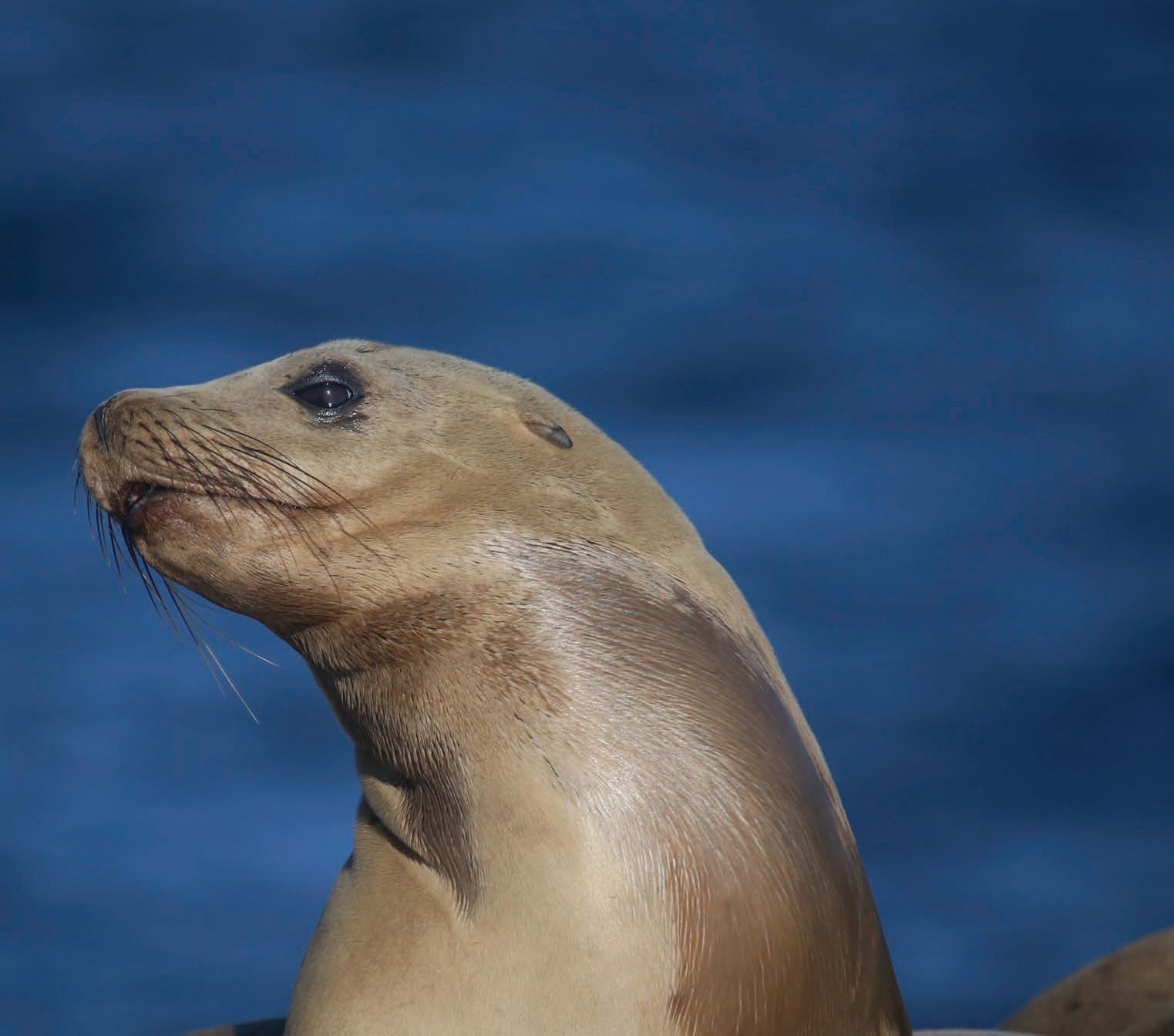
For those in coastal areas, particularly the Pacific Coast, the effects of plastic pollution are seen more starkly than most places on the beach and in the water. From the large collection of microplastics that make up the Great Pacific Garbage Patch to bottles and bags seen in the sand or in harbor waters, there can be no denying from anyone near the water that it’s a problem that has only gotten worse.
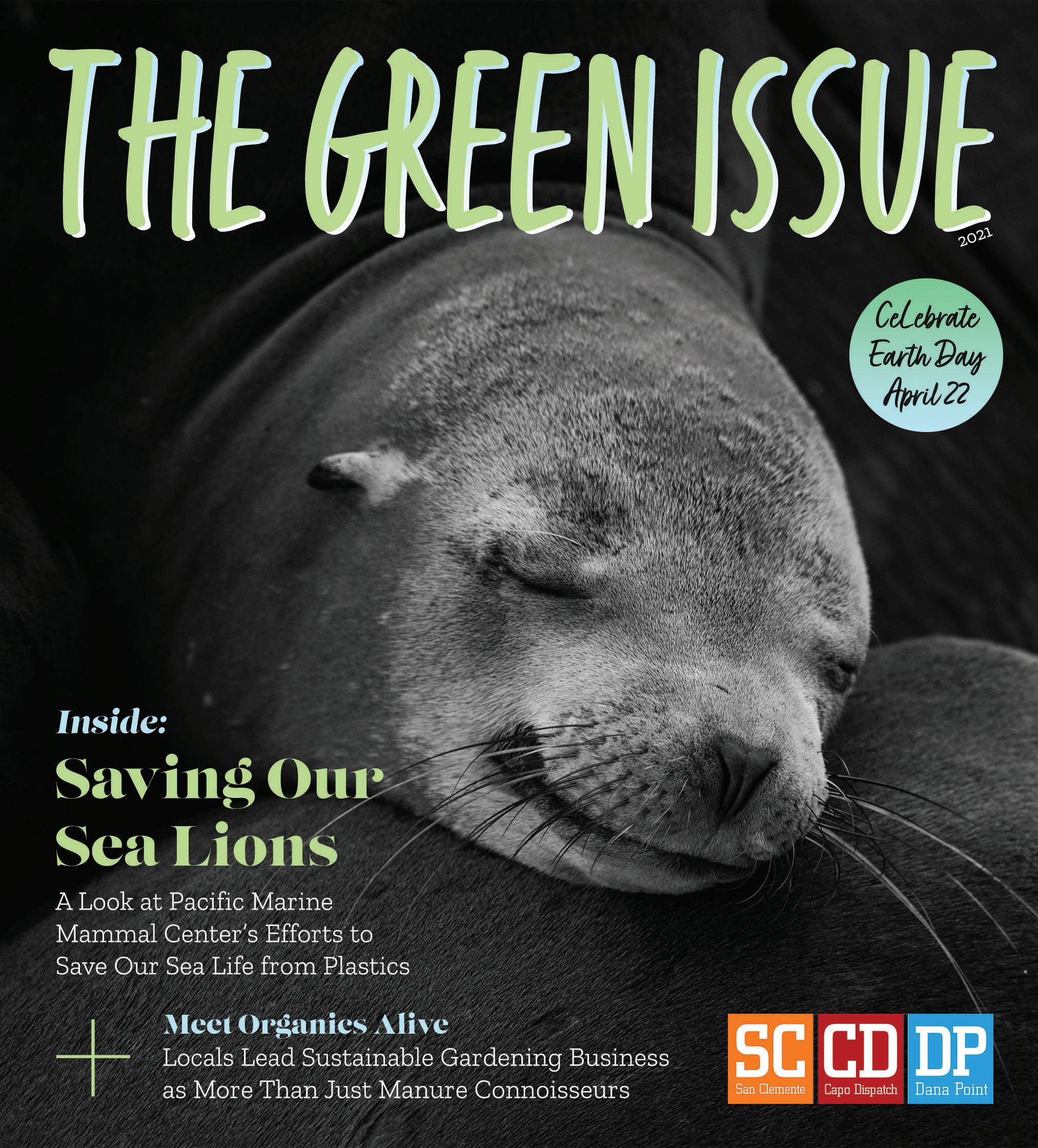
Beyond simply altering the beauty of the beaches and the ocean waters, most affected by plastic pollution in the water are marine animals. And in our local waters, sea lions and seals are among the most impacted.
Last November, Oceana, an environmental group, released a report on the deadly impact of plastics on marine mammals and sea turtles in United States waters. The report, titled “Choked, Strangled, Drowned: The Plastics Crisis Unfolding in Our Oceans,” highlighted 1,792 deaths between 2009 and 2020, with 88% of the deaths coming in species listed as endangered or threatened with extinction.
In Pacific coastal waters, there were 142 deaths examined in the report, including 140 deaths of seals or sea lions and two whales.
“This report is merely a snapshot of what’s happening to the animals inhabiting plastic-polluted waters around the United States—imagine how great the numbers would be if they included the animals not observed or documented by humans,” said Christy Leavitt, co-author of the report and Oceana’s plastics campaign director, in a release for the report. “Plastic production is expected to quadruple
in the coming decades, and if nothing changes, the amount of plastic flowing into the ocean is projected to triple by 2040.”
While turning the tide on the effects of plastics in the ocean and stemming the flow of them into the waters is a monumental task being worked on by groups such as Oceana, there are many along the coasts and locally doing their part to care for the animals.
The Pacific Marine Mammal Center in Laguna Beach is celebrating its 50th year as a leader in marine mammal rescue and rehabilitation. The center also serves as a scientific research facility and provides educational programs on marine science and conservation.
In its 50 years of operation, the Pacific Marine Mammal Center has rescued more than 10,000 marine mammals. As of March 11, the center had 34 current patients, which included 32 California sea lions, one northern elephant seal and one fur seal. Of the current patients, 12 were rescued in San Clemente or Dana Point, including Shipwreck, a male elephant seal rescued from Dana Point Harbor. Most of the patients were stranded due to malnourishment or dehydration.
At the beginning of March, the Pacific Marine Mammal Center also reopened its visitor yard, so the public can return to view the patients and learn about the center’s rehabilitation and conservation efforts. However, visitors must book a spot by reservation. For more information on the Pacific Marine Mammal Center or for opportunities to volunteer, donate or buy an eco-friendly adoption kit, go to pacificmmc. org. To call the center or report a stranded sea animal, the contact number is 949.494.3050.
The Pacific Marine Mammal Center is located at 20612 Laguna Canyon Road, Laguna Beach, CA 92651.
By Lillian Boyd
Organics Alive, a sustainable gardening company, was founded in 2004 by two local surfers who were inspired by the ocean.
“The ocean teaches us so much; the ebb and flow of peace and turmoil, cautious humility, patience, commitment, and how to have fun,” founders Erik Sykes and Todd Salemi say. “It teaches us that everything is connected. The sea affects the land, and the land affects the sea. This is where our story as farmers began … in the ocean.”
Both Salemi and Sykes grew up in Dana Point, developing a love and appreciation for the coastline and environment. Organics Alive, a San Clemente-based business, was formed as a sustainable agronomic company to provide gardeners with another option from toxic chemical fertilizers and to advocate an all-natural, organic and sustainable method of gardening and agriculture.
“We dedicate our time and resources to develop innovative and forward-moving fertilizer technology,” Salemi said. “Our strengths include vermiculture, fermentation, microbial extraction, and carbon-based fertilizers. All of this is achieved without the use of animal byproducts, heavy mining or conventional salt composition.”
OA is working toward advancing the organic movement by eliminating the vast amount of agro-chemicals being used and leached into our waterways, ultimately polluting the Earth’s oceans.
“There’s a whole other world in soil … a lot of symbiotic relationships,” Salemi added. “Our passion lies within the soil.”
Salemi attributes worm castings to be a prominent factor in fertilizing soil. Organics Alive’s worm casting product is created with Red Wigglers worms, using a worm diet of a blend of vegetable compost and other proprietary food sources. The feed stock excludes animal waste, grain, peat, or landscape trimmings. The castings are high in chitin and cellulose degraders.
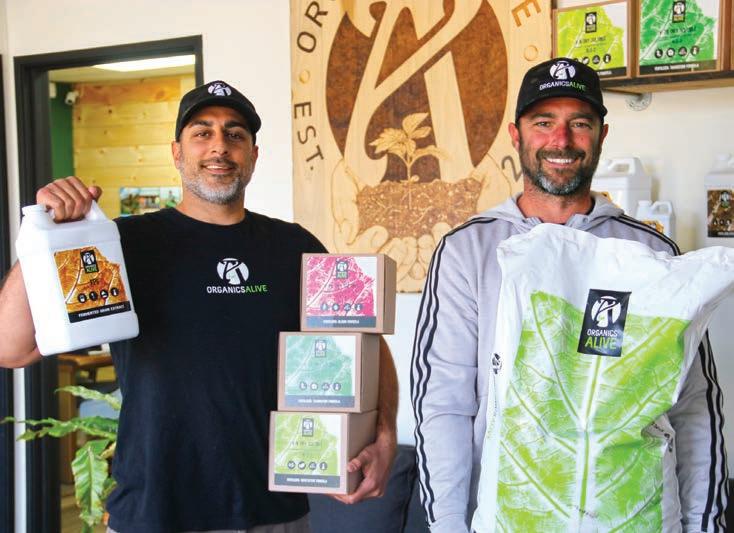
Organics Alive also offers fertilizers for various stages of plant growth, including vegetative, transitional and flower stages. There are also fermentation products and microbial kits.
“My favorite part about Organics Alive is when we hear back from a customer who tells us their garden is doing
excellent,” Salemi said. “People send us before-and-after photos, and it’s very rewarding to know our product is helping their garden thrive.”
Sykes adds that founding and carrying out Organics Alive’s mission statement is a “win-win-win” for him.
“It’s also knowing that what we’re
doing is better for the planet. We’re not just selling another fertilizer that will feed a plant and potentially cause harm to the environment,” Sykes said. “We’re selling them a product that we know will get great results, but the residuals actually have beneficial ecological effects. This keeps our psyche pure and our drive motivated. We’re spreading organics and spreading a material that truly is benefiting the environment. It’s benefiting the plants and benefiting our livelihood. It’s a win-win-win. We love what we do.”
Organics Alive has also taken steps to reduce the company’s plastic use by 70%. While the packaging is recyclable, Sykes and Salemi took it a step further by packaging in post-consumer waste. Sykes and Salemi dedicated Organics Alive to also give back to the community by partnering with nonprofit groups with similar environmental goals, including The Ecology Center, 1% for the Planet and Farm Bureau San Diego County.
A portion of sales is donated through these partnerships to help causes that are making a difference organically. The Organics Alive team assures customers that their purchase of any of their products will help reduce ocean trash, plant a tree or save a species.
“Through our products, our farming practices, fast-growing community and environmental advocacy, we are on a mission to enhance the human connection with the natural world,” Sykes said.

By Zach Cavanagh
There are many things that draw locals and visitors to Bella Collina San Clemente.
Bella Collina is San Clemente’s only private golf club, where members can enjoy the 27-hole Gary Player-designed signature course. Members can also enjoy social and dining perks at the club, and Bella Collina San Clemente is also a renowned wedding destination.
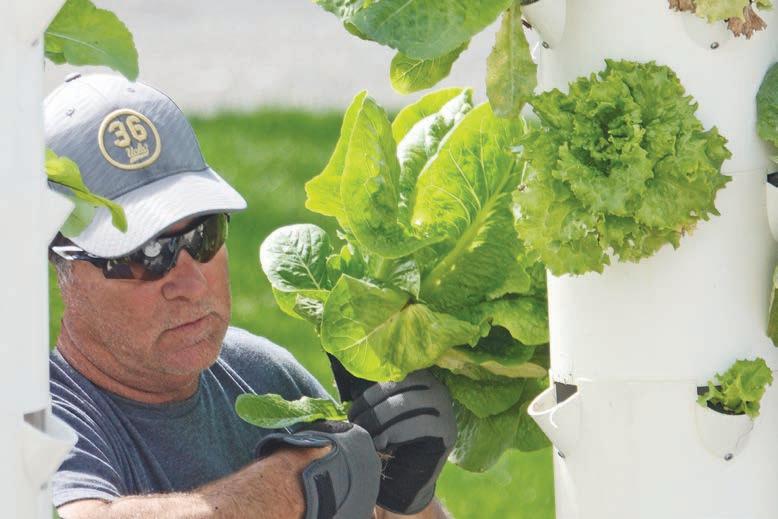
Bella Collina San Clemente is also home to Bella Gardens and the San Clemente Urban Farms—a setup of vertical tower gardens that create organic, non-GMO vegetables and produce.
Bella Gardens features a rose garden, orchard and grapevine as part of the 1,000 total square feet that make up the gardening portion of the Bella Collina property. The garden helps cultivate vegetables for the kitchen at the club, and the rose garden is a perfect backdrop for outdoor receptions.
The San Clemente Urban Farms was established at Bella Collina more than a year ago with a revolutionary vertical aeroponic garden system that uses about 90% less water than traditional growing methods and about 90% less space. The process also doesn’t need any pesticides or fertilizers.
The vertical system houses a 25-gallon reservoir at the base of each tower, which is filled with Aeroponic Power-Gro ionic mineral nutrient solution. The solution is drawn from a pump in the center of the tower, and at the top, the solution then drips down and hits every level of the tower’s gardening spaces on the way down. The plant’s roots feed on the solution and become oxygenated as the solution makes its way back down to the reservoir, where the process is repeated.
CSan Clemente Urban Farms is able to harvest 1,144 plants every 4-6 weeks. Each tower has 44 spaces to grow produce, and the farm’s ultimate goal is to get 52 towers, which would produce 2,288 plants.
San Clemente Urban Farms is a nonprofit that helps supply food banks, such as those of Family Assistance Ministries, Laguna Food Pantry and the Southern California Indian Center. Just last month at a harvest, San Clemente Urban Farms was able to donate 133 pounds of lettuce to the Southern California Indian Center.
San Clemente Urban Farms is also open to the community, with a farm-stand sale on the first and third Saturday of every month from 9 a.m. to 1 p.m. The sale is at the farm’s location at Bella Collina San Clemente, with plenty of fresh and nutrient-filled produce available.
Beyond the donations and farm-stand sales, San Clemente Urban Farms is also providing a community service by selling its tower growing systems and seedlings for members of the community to take home and get their own sustainable source of fresh produce. People can also participate in the farm’s community-supported agriculture (CSA) program by purchasing a membership, which provides different-sized baskets of lettuce, herbs and greens weekly throughout farming season.
For more information, to purchase a tower garden and seedlings or to donate to the San Clemente Urban Farms, go to sanclementeurbanfarms.com, email info@scuf. graystreakmedia.com or call 949.498.7207. Anyone interested can also visit the farm’s location at Bella Collina San Clemente at 200 Avenida La Pata, San Clemente, CA 92673.
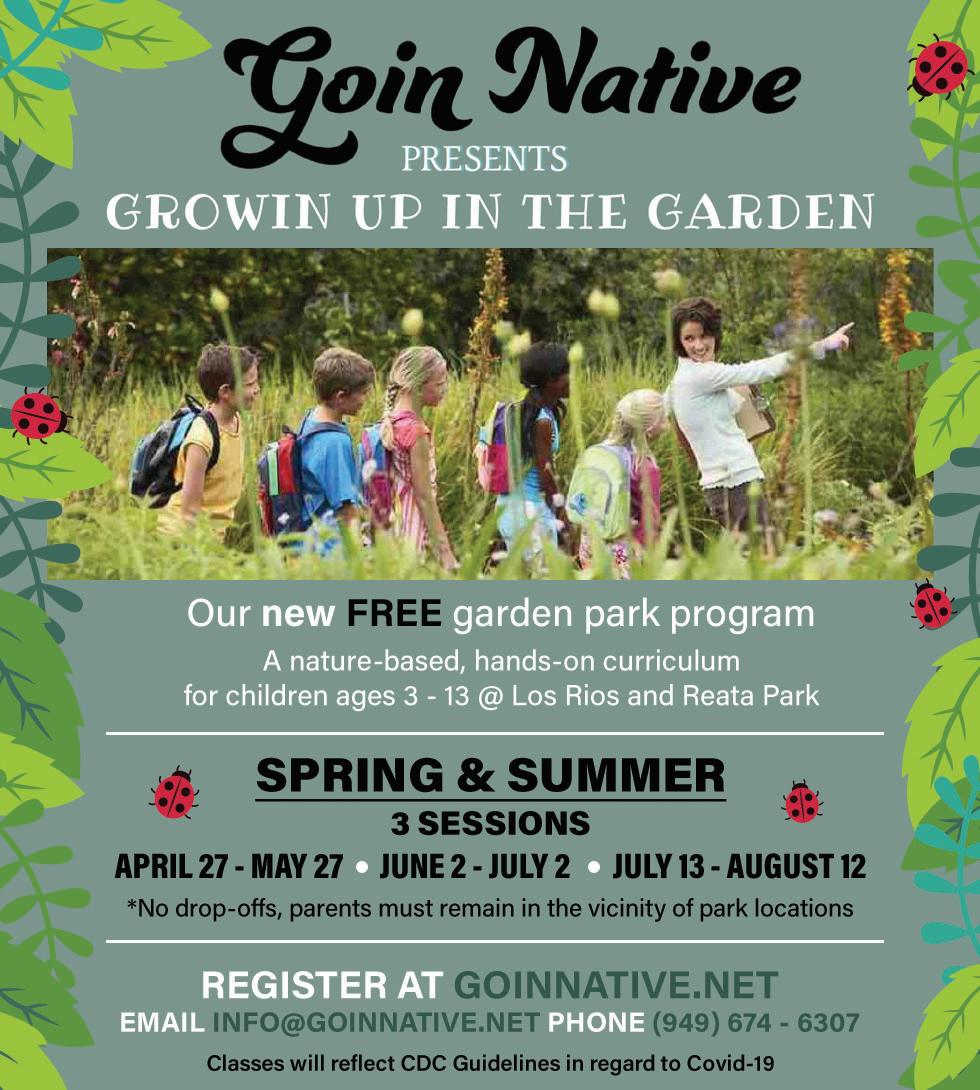
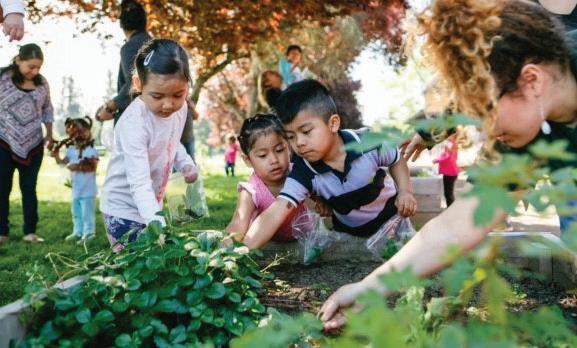
onnecting to nature has never been more important to our physical and mental health living than during this pandemic. With outside spaces being a safe space, families have enjoyed the benefits of creating gardens to tend and nurture at home. On the other hand, children have suffered mostly through time spent on countless classroom Zoom hours, which is now known as Zoom fatigue. We at Goin’ Native Therapeutic Gardens (GNTG) know the power of nature, and we are here to help get our kids back in nature through our free, hands-on afterschool outdoors programs located at two community parks: Reata Park and Los Rios Park in San Juan Capistrano.
As we’re slowly gathering, GNTG will be offering a new children’s nature program series called Growin’ Up in the Gardens, for ages 3-13, beginning on Tuesday, April 27.
• Pollinators Protectors: PK-Tk
• Harvest Hero’s: K-2nd Grade
• Wilderness Warriors: 3rd-5th Grade
• Garden Guardians: 6th-8th Grade
These classes are set up to provide children with time in nature to explore, create, connect, discover, daydream, problem-solve, and socialize with others. All classes are 5-week sessions, once a week for one hour, and are grade-appropriate curriculums with STEM activities. Children will connect and learn about the ever-changing seasons of the natural world.
Goin’ Native Therapeutic Gardens is committed to cultivating emotional and physical well-being and practical life skills through gardening. We envision a world where people of all ages, abilities and backgrounds connect in nature.
The benefits of gardening are endless: it’s an antidote to anxiety and depression, encourages healthy lifestyles, creates environmental awareness and promotes STEM skillsets (science, technology, engineering, math).
Thanks to all of our sponsors, we are able to offer these classes to children locally, as well as children online, through our new LMS Program through Inspire360. Now, children everywhere will be able to connect online to our outdoor classroom, anytime, and be part of the natural world. For more details on the program, sign-ups and locations, please check our website at goinnative.net, email info@goinnative.net or call 949.674.6307.
In addition to our children’s programs, Goin’ Native is officially back at Reata Park three days a week: Tuesday and Thursday, 8 a.m.-10 a.m., tending the gardens with the Garden Angels, and providing free environmental workshops for adults and families on selected Saturdays of each month. Mark your calendars for Saturday, April 17, and Saturday, April 24, at Reata Park & Event Center in San Juan Capistrano. Join us for the first Community Garden Cleanup day from 8:30 a.m.12:30 p.m. Help us tend and beautify the gardens around the house inside the park. Must fill out adult or child volunteer application before the event and bring it the day of event. Applications are online. Gloves will be given out along with garden instructions. More details at goinnative.net. Sign up through celina@ goinnative.net
Join us for butterfly awareness on Saturday, April 24, at 9 a.m. on Zoom and hear from Susie Vanderlip, monarch butterfly expert, on the latest findings on monarch populations and how you can help save our precious monarchs from extinction. Goin’ Native will be live at Reata Park during Susie’s monarch Zoom on April 24, selling California native milkweed plants from 10 a.m.-noon. We will be available to answer butterfly garden questions and will be giving garden tours around the house within the park. For more info, go to goinnative.net. For monarch Zoom sign-ups, email celina@ goinnative.net.
By Shawn Raymundo
At Casa Romantica Cultural Center and Gardens, there are about a dozen main gardens throughout the historic site, with each one broken up into smaller plots to showcase a mix and variety of colorful plants and flowers.
Those gardens, which include both native and non-invasive, drought-tolerant species from around the world, are planted in a way that’s meant to give visitors an appreciation for planting and horticulture, says Amy Behrens, director of the nonprofit organization.
“This garden especially is really a showcase of how people can use their native plants as horticulture instead of just letting them run wild, or planting invasive species that require a lot of water,” Behrens says of the native bowl, one of the more popular and largest plots on the grounds.
During a tour of the gardens, Behrens showed off many of the colorful species that bloom throughout the year, including the fuchsia, which are native to California and oftentimes overlooked by home gardeners.
“They add this excellent pop-up bright color at several points throughout the year, because they’re perennials,” she says, further explaining that perennials bloom multiple times of the year.
For those looking to create their own colorful gardens at home, Behrens advises to stay away from annual plants.
“People who are gardening with color are going to have to replace those
several times a year, so it’s expensive and can be prohibitive on water,” she says. “We mostly work with perennials here at Casa Romantica, and we like to plant in a way that has something always blooming.”
By doing so, she says, visitors can essentially see different gardens when they come back.
“There’s always pops of color throughout here,” Behrens says.
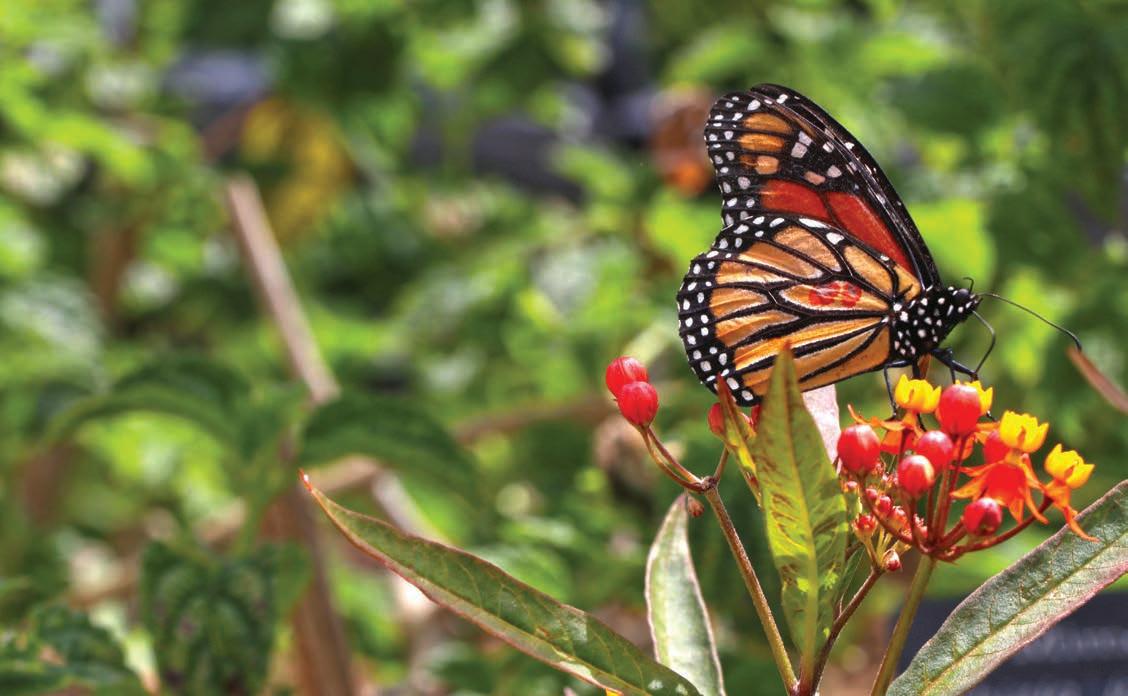
Another highlight of Casa’s gardens is it’s a registered Monarch Butterfly Waystation, as it plants species of flora that are known to attract and nourish the monarch butterflies that migrate through the region each year.
“We have tons and tons of them from about March to June every year,” Behrens explains. “We have a butterfly garden specifically on the other side of the property, but they love the native bowl because of the types of milkweed we have … and other types of plants that we have that they’re likely to find at nature preserves.”
“People want to know they’re coming to a place that’s beautiful, some place that’s using the landscape responsibly. So, anything we do has that in mind.”
—Amy Behrens, Casa Romantica Cultural Center and Gardens
feature programs by Lutter-Gardella that highlight the importance of pollinators like monarchs in our environment.
So how does the nonprofit manage to care for all these gardens? Behrens notes that while it does work with local landscapers for consulting, much of the daily gardening duties are actually performed by a dedicated group of volunteers.
“For the most part,” she says, “all of our day-to-day garden work is done by our volunteers.” Currently, the volunteers are participating through an adopt-a-garden program, which was launched a year ago—at the start of the pandemic.
“For something like the native bowl, we do have a larger group, the San Clemente Garden Club,” she adds. “They don’t all come in at the same time, but you’ll see members of the Garden Club throughout the week here, doing weeding, pruning, sometimes helping out with the mulching.”
When it comes to watering the plants and flowers, Casa uses a watering schedule for the gardens, as some areas need less water and others need more.
Behrens says that the nonprofit just recently applied for a Parks Beautification Grant through the state in the hopes of upgrading to a modernized drip irrigation system with a smart controller.
Adorned within the native bowl garden is a monolith that features three large colorful butterflies, highlighting Casa’s appreciation for the species. Behrens explains that it was a piece of artwork commissioned for the nonprofit in 2017.
For Behrens, that’s something she hopes to see more of around the grounds and the gardens.
“We’d like to put more public art throughout Casa Romantica,” she says, adding that “people love seeing (the butterfly art), and it’s another way to show how you can incorporate art into the gardens. It’s another focal point for people to have.”
This coming June, Casa Romantica will have a new exhibit by artist Christopher Lutter-Gardella, whose works are made out of discarded waste items and recyclables. The exhibit, Behrens says, will

“That would allow us to be even more water-wise,” she says.
“Casa Romantica is many things. We’re a historic site, a cultural center for the arts, we fund awards for our arts programming, and then we’re also a public gardens,” Behrens continues, adding: “People want to know they’re coming to a place that’s beautiful, some place that’s using the landscape responsibly. So, anything we do has that in mind.”
Casa Romantica is open to the public six days a week, and is a place, Behrens says, for people to “come for inspiration, for respite, and really to learn.”
“I would say that we have this beautiful foundation of this history that shaped us,” she says, “but we’re really a place that people are creating; they’re creating friendships, connecting with family, they’re experiencing new and different cultures.”



By Collin Breaux
Providing people an opportunity to get hands-on with beach cleanups has been a good way to raise awareness around plastic pollution, Stand Up to Trash founder Vicki Patterson said. The nonprofit environmental organization, which is based in Capistrano Beach, hosted its first cleanup in November and has generally welcomed at least 100 people to participate in its monthly events. The cleanups—at Doheny State Beach Park in Dana Point, for now—are also a chance for people to get outside during the COVID-19 pandemic, Patterson said.
The most recent cleanup yielded a haul of approximately 280 pounds. “It’s having a nice effect on the people of Dana Point and San Clemente,” Patterson said of how they’ve inspired activism. “It’s families that come.”
Fishing lines, fishing hooks, and cigarette butts are a few of the items that participants have found while

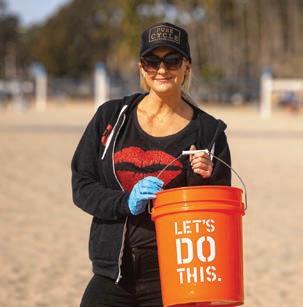
combing the sand. Many have given testimonials and feedback on their participation and how clean the beach looks afterward, often remarking that Doheny is looking better.
“It builds that connection within your community,” Patterson said.
The next cleanup will be in conjunction with Earth Day on April 22. Patterson said she wants Stand Up to Trash to be an inspiring force in the area.“It’s just one big giant heartbeat,” Patterson said.
Check out their website at standuptotrash.com for more information. Follow along on Facebook or Instagram @standuptotrash.