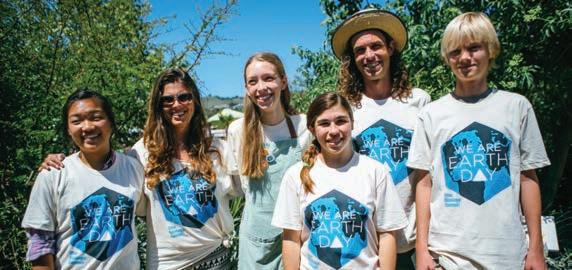

Earth Day is April 22! Check out our Earth Day events page for a list of local beach cleanups.
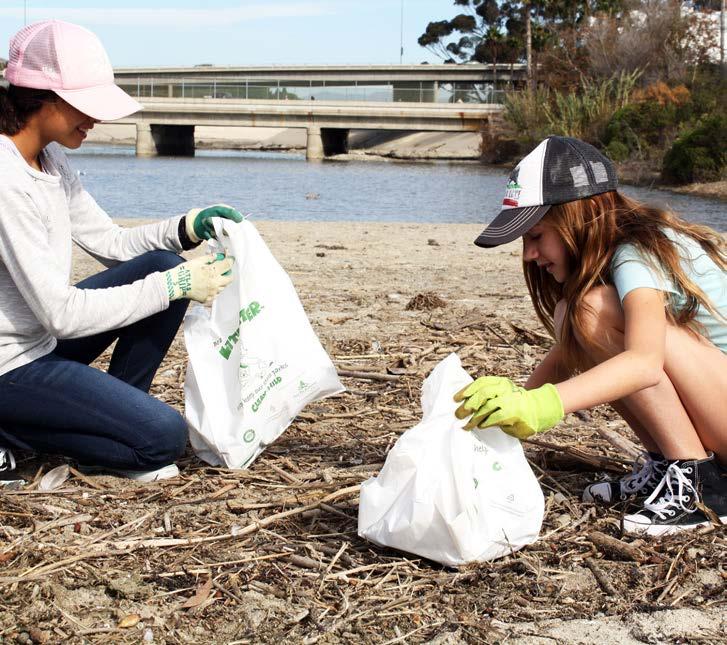

Earth Day is April 22! Check out our Earth Day events page for a list of local beach cleanups.
As global warming and sea levels continue to rise, the focus on individual environmental impacts is more important than ever. Low-cost steps and new habits can be formed to make a positive change in the long-term, including extreme water conservation efforts even though the state drought has been lifted. In this year’s Green Issue, we’ve included articles that will educate and empower you and your family to make lifestyle changes and improve our local communities in South Orange County. If you need motivation, look no further than the youth initiatives of Team Zissou and more as this generation reinvigorates what it means to create an advocacy movement. Learn how to reduce your carbon footprint with
easy-to-implement changes in your own home such as installing energy efficient light bulbs, planting trees for shade or drought-resistant plants, creating your own cleaning supplies and ridding your home of plastic. Extend this education to water conservation too with installing aerators on faucets, replacing outdated showerheads or toilets and purchasing a reusable water bottle. Our local city governments have joined the eco-friendly race too with ongoing initiatives that will be completed throughout the year. If this year’s super bloom of wildflowers throughout Orange County hasn’t made you wonder at the natural world, we hope the stories in this Green Issue inspire you to take every step you can to keep our tiny spot in the universe beautiful.
Reduce waste, dispose of large items in an eco-friendly way
EBY RACHAEL MATTICE
veryday lifestyle choices may not seem to have much of an impact on others or the environment, but even personal decisions such as where to dispose of large furniture items, electronics or biodegradable compost can have long-term consequences on our natural surroundings.
Putting in the extra effort to rid your home and life of these items responsibly can hold a lot of weight. Here are a few call-to-eco-actions.
Dispose: South Orange County customers of CR&R Environmental Services are entitled to four bulky item pick-ups—such as a chair, couch or old refrigerator—free of charge per calendar year. ontact the local office to ma e arrangements for pick-ups at www.crrwasteservices.com/ contact-us. The city of Dana Point also has tri-annual bulky drop-off days at Dana Hills High School. Visit www.danapoint. org for the 2018 dates.
Take any hazardous waste to a site such as Prima Descheca andfill, located at 50 a ata ve., San uan Capistrano.
Reuse: Bring your own bag to the grocery store and repurpose any plastic bags. Don’t forget that plastic bags now cost 10 cents at local stores.
Compost: Green/organics carts are available from CR&R to discard of any organic materials such as yard clippings or old food items like fruits, bread, meats and dairy. Visit www.san-clemente.org for more information.
Read the Labels: Purchase products made, or packaged, with recycled materials such as paper plates, beverage cartons, office supplies and even clothing.
Check out www.calrecycle.ca.gov for more responsible recycling tips.

BY STAFF
If you’re an environmental advocate taking steps to reduce your greenhouse gas footprint, one common complaint you might hear is that it’s too expensive to go green. Solar panels, local produce, electric cars, organic pesticides—they may help the environment, but they can also hurt finances. Though it’s true some of those endeavors may incur an upfront cost, they can also save you money in the long run by cutting down on energy and gas bills, trips to the doctor and yet another tub of RoundUp. In short, there’s a common theme when it comes to being green that an upfront investment yields long-term returns. Here are tips you can take to lower your bills and your eco-footprint.
1 / Natural cooling
Set the thermostat to 78 degrees or turn off the air conditioning during hot summer days. Using fans and pulling down the shades during the day can also keep homes and office buildings cool during the height of extreme heat. Southern California Edison customers are no strangers to flex alerts, or when power use outstrips electricity supply and other challenging grid conditions during heat waves. Shut off appliances during the day: In addition to increasing the temperature on the thermostat, running other major home appliances before 11 a.m. or after 6 p.m. is a commonplace practice to avoid flex alerts and high-cost energy bills. Insulating your home properly will also keep rooms cool during summer and warm during the winter. Unplug chargers and power strips as well. This may be a penny-pincher habit, but you’ll be surprised at the long-term savings.
2
It’s one of the first (and only) environmental lessons we learn in school: Planting trees is healthy for the world. Trees also help consumers by reducing energy bills in hot months. According to the Arbor Day Foundation, planting large trees on the east, west and northwest sides of your property can reduce summer air conditioning costs by 35 percent.
3
Switch out old light bulbs with energy efficient ones and always turn off lamps when able. Opting for natural light versus fluorescent or artificial light is a healthy and cost-saving alternative. If you left

an incandescent bulb on for 24 hours a day, it would cost you about $137 in energy bills, according to the Alliance to Save Energy. Those eco-friendly high efficiency bulbs cost about $40 annually. The average house has 45 light bulbs. Just switching from incandescent to efficiency bulbs would cut your lighting bill by two-thirds.
Invest in energy-efficient appliances such as dishwashers, washers and dryers, aerators and more. Washing clothes in cool water as well as washing full loads of clothing will also cut costs. Powering down computers, televisions and game consoles are also recommended. Save the energy from microwaving or using the oven and heat up dinners on the grill. Visit www.sdge.com to view available rebates.
According to the EPA, bottled water is 600 times more expensive than tap water. If you bought a $1.50 bottle of water every day for a year ($547.50), that same amount out of the tap would cost less than a dime. Never mind the fact that making bottles uses 17 million barrels of oil annually, and Americans only end up recycling about 25 percent of water bottles. Ditch them and buy yourself a reusable bottle.
One of the easiest ways it pays to go green is by limiting your spending on new stuff. Buying consignment furniture or clothes repurposes items destined for the landfill. Borrowing everything from books to bikes reduces production of those items. And cutting out non-essen-
not in use equals savings.
tial items reduces your contribution to the landfill and saves you some money.
7 / Make Your Own Cleaning Supplies
Not only can making cleaning supplies out of natural ingredients prevent toxins from entering your home and the environment, but you can save a buck too. Vinegar and baking soda, mixed into spray bottles, can clean just about anything in your home and reduce the need to buy toxic cleaners that literally just go down the drain.
8 / Prescription Disposals
Prevent chemicals found in unwanted medicines—both prescription and overthe-counter—from entering the waste stream. Instead of flushing unused or expired medications or throwing them in the garbage, dispose of them safely, anonymously and free of charge at the medication drop box at Dana Point Police Services, City Hall, 33282 Golden Lantern. No appointment necessary. San Clemente and San Juan Capistrano also periodically hold drug take-back days.
9 / Farm to Table
Grow at least a portion of your own food. A big yard is not necessary. Many vegetables and fruits thrive in small containers.
10 / Cloth Napkins
Homegrown

Replacing paper napkins with reusable and washable cloth napkins will save money and reduce trash output. Besides, they can be decorative and part of your place settings. Rid your kitchen drawers of other unnecessary plastics such as straws too.

DRINKING WATER: eep a container with drinking water in the refrigerator so the faucet doesn’t have to be left on until the water is cold enough to drink.
DISHWASHERS: Invest in energy efficient dishwashers. ccording to Home Water Works, dishwashers such as EnergySTAR use less than 5.5 gallons of water per load and are more economical than washing dishes by hand.
FAUCET AERATORS: Installing a new aerator that reduces the water flow rate in the kitchen below 2.2 gallons per minute is a lot easier than you would imagine. This is especially helpful for those who don’t have a dishwasher.
• General Faucet Usage: Whether it’s brushing your teeth, washing your face, dishes or clothing, turn the faucet off and run the water only when it’s necessary.

The drought may be lifted, but these watersaving tips can ensure long-term solutions
BY RACHAEL MATTICE
Although emergency water usage regulations issued by Gov. Jerry Brown in recent years have been lifted, the California State Water Resources Control Board is still seeking to enact modified regulations to prohibit certain wasteful water use practices across the state. The drought scare is still prominent in many Californians’ minds and coming up with more long-term solutions has become a priority to ma e water conservation a regular habit and way of life.
According to Save Our Water, a statewide conservation program, the average Californian uses 196 gallons of water each day. Get in the conservation state of mind with these at-home water saving ideas.
SHOWERS: Californians are fortunate that they won’t have to freeze too long while waiting for the water to heat up, but regardless of the length of time it takes, collecting the cold water in a bucket and repurposing it for plants or garden usage is an easy fix. In addition, reducing shower time overall to five minutes saves at least 12.5 gallons of water, according to Save Our Water.
• Showerheads: Ta ing it a step further, loo into replacing your showerhead with a aterSense-labeled product, which reduces the amount of gallons of water used per minute to two.
BATHTUBS: If you wor a laborheavy job where taking warm baths is a God-send to your weekly health routine, eliminating baths may not be a realistic option. Try filling the bathtub halfway or less to save 1 gallons per bath.
TOILETS: epairing old, lea ing or running toilets in average single-family homes is a must. Newer WaterSenselabeled toilets use 1. gallons or less per flush and are designed to remove waste
more efficiently. onsider an upgrade if your toilet was manufactured before 1995.
LAUNDRY: uch li e other appliances in the household, newer economical versions of washers and dryers are available to maximi e energy efficiency. If purchasing new models isn’t in your budget anytime soon, running full loads of laundry and using the recommended amount of detergent to not over-suds your clothes are simple best practices that will save on water.
PLANTS: eplace your yard with drought-resistant plants and trees such as succulents. This step will save between 0-60 gallons of water per 1,000-square feet, according to Save Our Water.
DRIP IRRIGATION: Although installation costs may seem pricy upfront, this solution will yield long-term savings. Add-
ing a smart controller to the drip irrigation system will save some 24 gallons of water per day.
LAWN MOWER: Setting the mower blades to inches encourages deeper roots and saves between 16-50 gallons of water per day.
MULCH: Use it frequently. Mulch preserves between 0- 0 gallons per 1,000-square feet each time you water.
NO-MOW GRASS: No-mow grasses like Korean velvet grass, dwarf mondo grass, sedge and clover can be expensive, but the substantial reduction in watering needed is next to none.
OTHER OUTDOOR TIPS: Check your sprin ler heads for misalignments, chec for bro en pipes or lea s and other irrigation system issues monthly. Resetting timers four times per year for seasonal changes, as well as turning off systems during heavy rains, is also recommended.
Not sure where your home lies in energy efficiency? See how yours compares and loo into other water preservation tips for your home at www.home-water-works. org/calculator.
The cities of San Juan Capistrano, San Clemente and Dana Point have quite a few things in store for 2018 in regards to going green.
With initiatives and programs ranging from a wetlands project to food waste recycling, there are many ways that South Orange County cities are tackling environmentalism.
San Juan Capistrano
There is a variety of environmental initiatives in the works for San Juan Capistrano, including the partnership with the Ecology Center to bring gardens and an agricultural center to the community; a project to bring recycled water and sanitary sewer facilities to the Riding Park at the southwest corner of La Pata and Ortega Highway; a citywide conversion to LED street lights; and construction of a modular wetlands systems.
Expected to be completed this spring, the citywide LED street light conversion will replace 1,200 street lights and save the city some $100,000 per year, San Juan Capistrano Assistant City Manager Jacob Green said. The new lights will also use 60 percent less electricity than the current fixtures, which will also reduce greenhouse gas emissions, he said.
“Moreover, LED lights create a better lit environment for the roadway, creating a more even distribution of light, reducing contrast and increasing overall visibility while improving color rendering,” Green said.
The modular wetlands systems construction will be at two locations near Interstate 5 on and off ramps at Camino Capistrano and Del Obispo Street, north of Forster Lane. These construction improvements are to meet requirements of the National Pollution Discharge Elimination System for storm water runoff require-

South Orange County cities push toward green growth
BY EMILY RASMUSSEN
ments for freeway construction. The wetlands systems are made of bio-filtration units that treat storm water runoff by passing the storm water through a two-stage treatment process. The first stage, or pretreatment, removes larger material and debris from the storm water by passing through a screen. The second stage passes the pretreated runoff into a media filtration chamber which separates tiny impurities contained in storm water, which could contain total suspended solids and hydrocarbons. The project is slated to start in early May.
To learn more about San Juan Capistrano’s environmental programs, visit www.sanjuancapistrano.org/Departments/Utilities.
San Clemente
Two environmental campaigns are taking priority in San Clemente, said Cynthia Mallet, environmental programs supervisor for the city.
The recently introduced food waste recycling program is to help reduce food waste and to reuse food that would typically go to the garbage disposal or trash and landfills.
“Residents can now place their food waste—vegetable trimmings, leftover foods, coffee grounds, filters into their green waste cart, the same cart for their
landscape trimmings,” Mallet said.
From the green waste cart, an anaerobic digester processes the food and landscape trimmings to make them reusable.
“It takes all of that organic material and breaks it down, turns it into compost in a short period of time,” Mallet said.
Any customer of CR&R Environmental Services is able to get two free bags of compost per year at the city’s compost giveaway in November. People can drive up, hand them the coupon from the trash fill and load two bags into their vehicle.
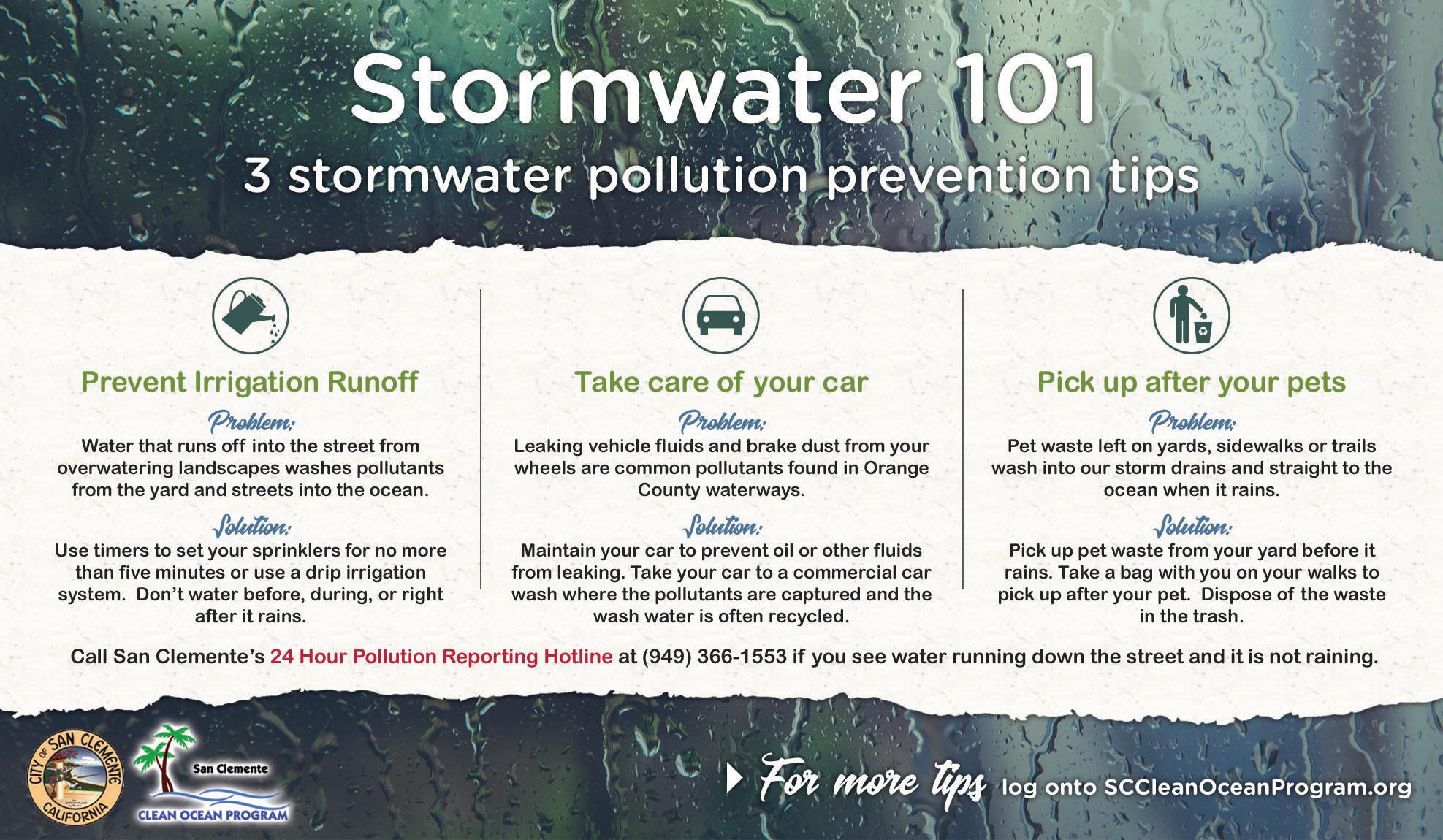
The second campaign related to ocean water pollution prevention is about avoiding irrigation runoff, in which the city of San Clemente is encouraging its residents to have in-ground irrigation systems.
“Many times the (above ground) irrigation systems come on in the middle of the night when people are asleep and don’t necessarily see if it’s spraying on their sidewalks, or if the timing is too long,” Mallet said.
Too much runoff can lead the water from going straight into the curb and gutter, in addition to putting fertilizers and trash into the ocean.
“Our campaign is to let them run the irrigation system during the day, make sure your water isn’t just running into the gutter.”
If someone sees excess water running down the street they can call the pollution hotline number at 949.366.1553.
In addition to ongoing oversight of managing water quality programs, which includes low-flow diversion of urban runoff to sewers, regular storm drain cleaning, plastic bag and Styrofoam prohibitions, the city of Dana Point also has a few other environmental and conservation programs ahead for 2018, said Matthew Sinacori, city engineer and director of public works.
One of the projects includes the Crown Valley Median Replacement Project, which will replace existing landscaping and irrigation on median curbs with drought tolerant and native plants, with drip irrigation, Sinacori said.
Another project is the Salt Creek/ Monarch Beach Falconry Project, which is a partnership between the city of Dana Point, County of Orange and Monarch Beach Resort “to discourage contamination of recently treated runoff from (the city’s) Salt Creek Treatment Plant by seagulls, by placing falcons and other raptor birds at the beach,” Sinacori said. The project is also in conjunction with the Ozone Treatment Plant, which treats the low flow from Salt Creek before discharging to the ocean, he said.
There’s also the no-smoking ordinance approved by City Council that went into effect on Feb. 15, which is being implemented. Methods include placing informational signage in public right-of-way, distributing information to businesses and on websites and seeking progressive enforcement through voluntary compliance via police services, Sinacori said.
To learn more about Dana Point’s environmental programs, visit www.danapoint.org/department/public-worksengineering/environmental.



BY EMILY RASMUSSEN
Students from South Orange County are fully encompassing the term ‘grassroots,’ from converting the school district to more environmentally friendly services to simply collecting recyclables.
From small initiatives to large, longterm impacts, check out what South Orange County youth have been working toward to make their future greener.
Team Zissou and JUST Water
Team Zissou, an environmental club at San Clemente High School, were the leading advocates to switch Capistrano nified School istrict ( S ) schools from plastic water bottles to paper-based bottles.
The campaign lastic ree S ’ started with Team Zissou, which after reaching out to multiple alternative water-bottle companies, came upon JUST water, which uses paper-based water bottles, Team Zissou member Jackson Hinkle said. Partnering with JUST water, a handful of S schools tested the response to the new product for a week and the response was overwhelmingly positive, Hinkle, 18, said.
“The biggest things for me started out from learning the effects of plastic bottles on the environment and human health,” Hinkle, a senior, said. “A lot of what has inspired me is the effects of the plastic bottles on environmental degradation and how it’s going to affect us in the future.”
fter the testing periods, S made the switch to being completely free of plastic water bottles. JUST water CEO Ira aufer said S is the first school district to entirely make the switch.
“It’s absolutely fascinating and amaz-


ing,” Laufer said. “We’re encouraging more and more of that; I wish every school district had such initiative. Since then, we’ve taken a major step reaching out to more school districts.”
ow that S is converted to paperbased water bottles, it saves about 8,541 pounds of plastic each year, according to a U.S. Environmental Protection Agency Carbon calculator.
Going forward, Hinkle said that he will continue to educate students on the effects of plastic water bottles, in addition to encouraging youth to enable change. Hinkle and Jaden Smith, co-founder of JUST water, have visited Shorecliffs Middle School to talk to students and they plan to visit more local schools.
“Youth should get involved as much as they can with making change on any level because I feel like a lot of times youth feel like they can’t make a lot of change because of their age,” Hinkle said. “But sometimes youth can change even more.”
Ryan’s Recycling and the Pacific Marine Mammal Center
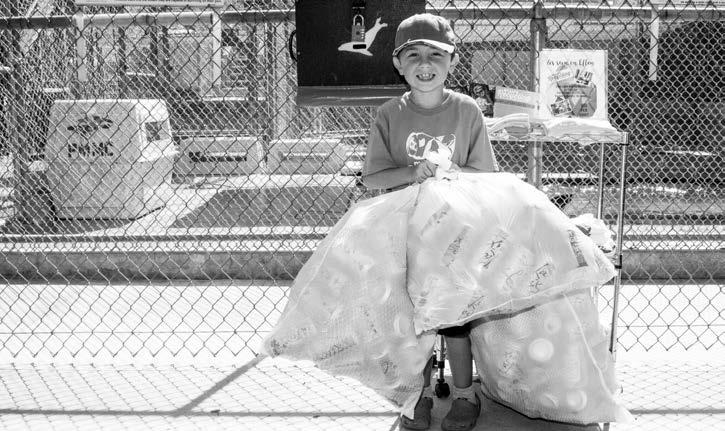
Ryan’s Recycling Company, the San Juan Capistrano recycling center created by 8-year-old Ryan Hickman and his family, is still on the road to recycling as many cans and bottles as possible.
Ryan, a third-grader at Ambuehl Elementary School, started the recycling center in 2012 because of his passion for collecting cans and bottles. In recent years, Ryan’s Recycling has been thrusted into the spotlight, having been on the
Ellen Show and other national media outlets after The Capistrano Dispatch wrote the story in the 2016 Green Issue. Now, after recycling 320,000 cans and bottles with nearly $6,000 donated to the acific arine ammal enter, yan has started a campaign to challenge the community to recycle 300,000 cans and bottles with him. His goal is to nearly double the total number of the center’s 00,000-plus collection over the past five years. All proceeds will go toward the acific arine ammal enter with the goal of $28,000.
“It’s really important to recycle and keep wildlife from being affected by pollution,” Hickman’s campaign website states. “I’m doing my best to clean up our beaches and protect the planet and I hope you will join me.”
amion ic man, yan’s father, said that students at Ryan’s school have joined in on helping recycle, but the efforts have gone nationwide.
“Since his story went viral over a year ago, he’s received thousands of emails each day. One of the things we found was that people in other states don’t know how to get started (with recycling) and the more we looked into it, we found out that some states don’t take plastic bottles.”
To join the challenge, locals can donate directly online at www.beadoer.io/ ryan and log how many recyclables are collected. The challenge ends on May 1.
ana ills igh School senior illad Shokraee, 17, was one of some 15 to 20 students who were involved in a project to implement solar panels at each S high school.
The project was approved unanimously by the S board of trustees on ec. 6, 2017 to award an $18 million contract to REC Solar Commercial Corporation, a solar energy firm based in San uis Obispo, for the conversion of six high school campuses and the district headquarters to solar power. Shokraee said he
got involved with the pro ect about five months before it was approved, and that with collaboration with students from other S high schools, it too nearly three years for the project to get pushed through.
Shokraee credits the group’s persistence and professionalism at S board meetings and other outreach to the success.
“The fact that we’re students being able to enact so much change from the grassroots level, starting out on
our own gave us so much credibility,” Shokraee said. “It’s always a good idea to get involved with things at your school because you’ll be able to socialize with more people and be able to incite change within your community at your own level. Whether it’s solar panels, or anything else.”
t a S board meeting on arch 14, 15 students were recognized for their participation in the solar project, including Sho raee. t the meeting, S hief ommunications fficer yan Bur
ris said that once completed, the solar project is estimated to save $849,000 per year, which will be invested in campuses and classes.
Shokraee said that going forward, he can see himself getting involved with environmentalism in his career field. Already, Shokraee is involved with a political campaign that is environmentally driven, pushing for solar and other environmentally friendly initiatives, and in college he will consider studying political science.
SATURDAY
APRIL
Dana Point Nature Interpretive Center
Whale Walk and Talk
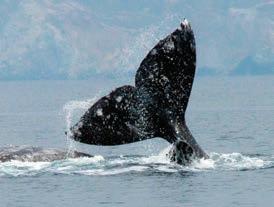
9-11 a.m. From the Dana Point Nature Interpretive Center many different species of whales and dolphins can be seen passing through the acific waters below. Learn about our largest animal visitors on an approximately 1.5-mile walk through the Dana Point Headlands conservation area. Bring your binoculars, and learn migration patterns of different whale species that frequent the area, as well as how to best spot, watch and identify whales. 34558 Scenic Dr., Dana Point, 949.248.3527, www.danapoint.org.
Community Recycling Event at Dana Hills High School
9-11 a.m. Drop off plastic bottles and aluminum cans (no glass) in the back parking lot of Dana Hills High School near the tennis courts and pool area. Students from the school’s chapter of the California Scholastic Federation and Dolphin Pride will collect and sort the recyclables. Funds collected are distributed by the school’s PTSA for student programs. Rain or shine. 33333 Golden Lantern St., Dana Point.
THURSDAY
19
APRIL
Garden Angels
8:30–10:30 a.m. Volunteers meet each Thursday at the Montanez Adobe at Los Rios Park to maintain the gardens. Bring gloves and wear closetoed shoes. 31745 Los Rios Street, San Juan Capistrano, 949.606.6386, www.goinnative. net.
APRIL
California State Parks Foundation Earth Day
Restoration and Cleanup: Doheny State Beach
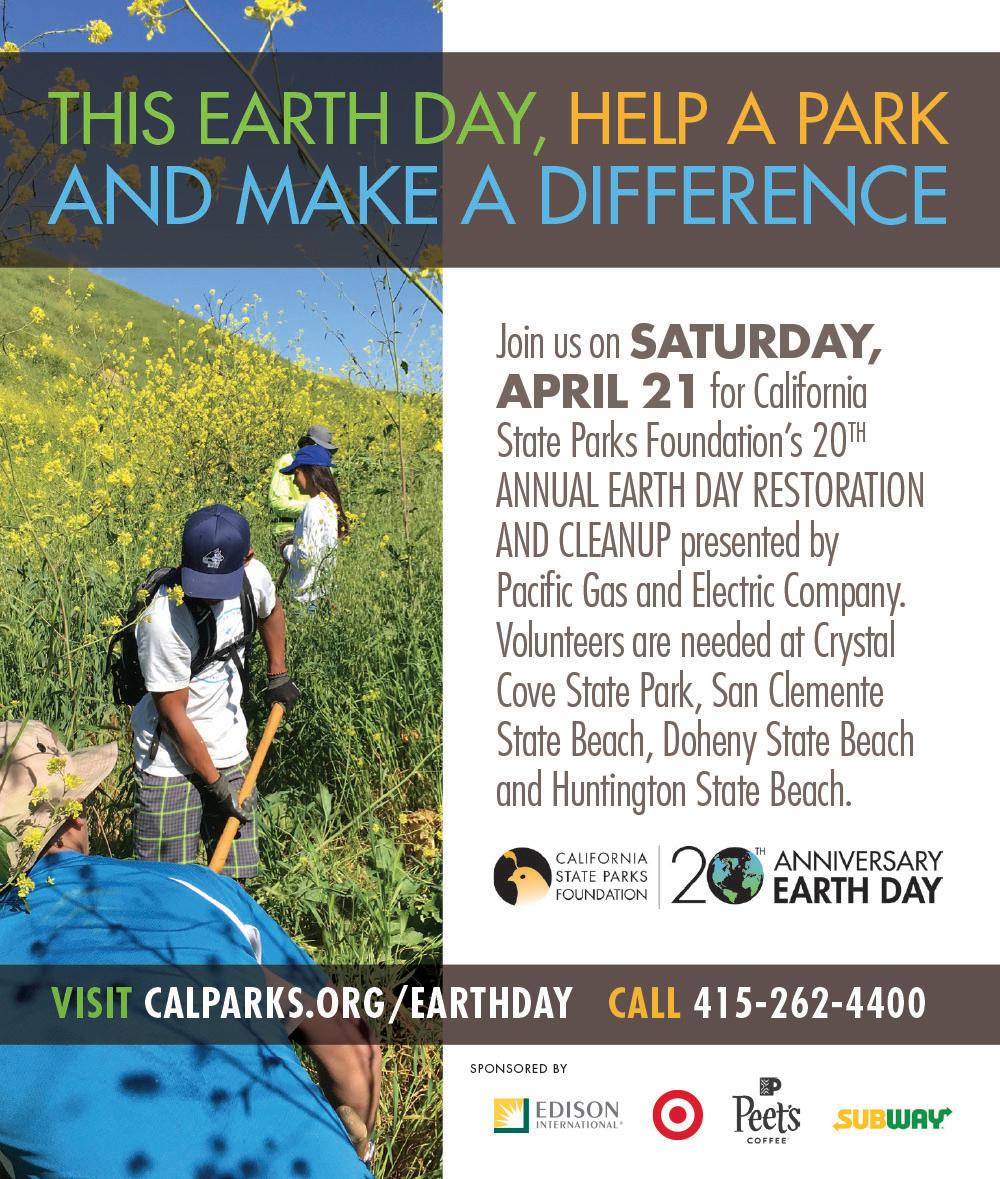
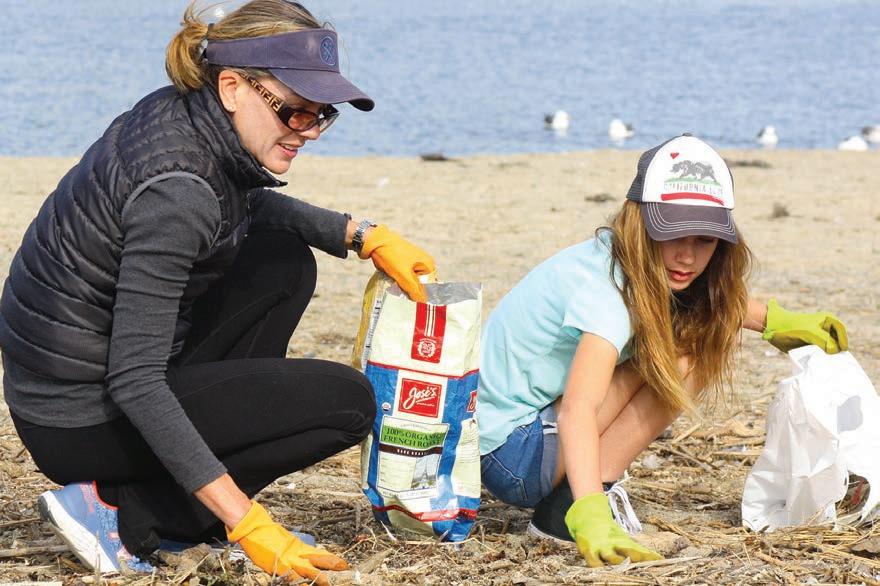
9 a.m.-12:30 p.m. Make improvements to the campground on Doheny by removing diseased plants, shrubs and weeds. Plant native trees, install planter chips, irrigate new plantings and participate in general cleanups around the beach, creeks and jetty area. Children of all ages are welcome if supervised by parents. Checkin time is at 8:30 a.m. Bring a signed volunteer waiver, water bottle, sunscreen, hat, heavyduty gloves and closed-toe shoes. Sign-up at www.calparks. org/help/earth-day/earth-dayregistration. 25300 Harbor Dr., Dana Point.
California State Parks Foundation Earth Day
Restoration and Cleanup:
San Clemente State Beach
9 a.m.-12:30 p.m. Sand and paint bench seating at ampfire
enter. Spread crushed fines on ground around ampfire enter seating, pull weeds and clean up grounds and planter boxes and plant native plants in boxes. Check-in time is at 8:30 a.m. Bring a signed volunteer waiver, water bottle, sunscreen, hat, heavy-duty gloves and closedtoe shoes. Sign-up at www. calparks.org/help/earth-day/ earth-day-registration. 225 Avenida alafia, San lemente.
Ocean Institute Beach/ Harbor Cleanup
10 a.m.-noon. Volunteer to help clean up the beach and Harbor areas. To RSVP or for more information, email Andrea Smith, volunteer manager, at asmith@ oceaninstitute.org. Paperwork is required to attend. Visit the cean Institute’s website to fill out the paperwork. Pickers and trash bags will be provided. Volunteers must bring closed toed shoes, sunscreen and a hat. 24200 Dana Point Harbor Dr., Dana Point. 949.496.2274 ext. 367. www.ocean-institute.org.
Free Community Shred Day
9 a.m.-2 p.m. Monarch Bay Plaza hosts a free shred day with services provided by Paper
beach clean-up at 8:30 a.m. Email info@scwatersheds.com or visit www.scwatersheds.com for more information. 622 Avenida Del Mar, San Clemente.
Earth Day Open House & Environmental Fair 10 a.m.-2 p.m. Join Orange County Waste & Recycling for a free open house and environmental fair. andfill e uipment, tours and entertainment will be offered along with giveaways, prizes and drawings. rima eshecha andfill, 50 Avenida La Pata, San Juan Capistrano. Register at www. eventbrite.com/e/earth-dayopen-house-environmental-fairtickets-43453304002.
Earth Day Celebration at Niguel Botanical Preserve 8:30-11:30 a.m. Stop by the Niguel Botanical Preserve to volunteer to plant, weed and clean up. Children ages 6-12 must be accompanied by an adult. Plants and herbs will be available for purchase. Volunteers should wear closed toed shoes. Water and snacks will be provided. 29751 Crown Valley Pkwy, Laguna Niguel. RSVP to 949.425.5199 or at registration@cityoflagunaniguel.org.
SUNDAY
Recycling and Shredding Specialists. The company is a licensed, bonded/insured cross-cut shredder. Watch your documents being shredded. ertificates of destruction will be available on re uest. imited to five baners boxes per person. For more information, visit their website at www.mobileshred.net. 28 Monarch Bay Plaza, Dana Point, www.monarchbayplaza.com.
Earth Day San Clemente
10 a.m.-2 p.m. Join the city of San Clemente Environmental Division and the Watershed Task Force to reduce litter and pollutants. The free community event will feature live music, kid’s arts and crafts, educational displays, demonstrations and more. The day begins with a
Earth Day at The Ecology Center
22
APRIL
Earth Day at The Ecology Center
Noon-5 p.m. The 9th annual Earth Day Celebration at The Ecology Center will showcase skill sharing, garden activities, local food, music and more. Guests will be able to take a tour of the new mobile ecological experience called Road Trip. Gardening demos, a worm composting demo, pickling and preserving workshops as well as a summer vegetable plant sale will all take place. 32701 Alipaz St., San Juan Capistrano. www.theecologycenter.org.