

Now is a more important time than ever to show your love of Mother Earth. As global temperatures and sea levels continue to rise and federal environmental regulations are imperiled, every action to benefit our habitat matters, whether you’re taking a small step like setting up a composting bin or a big step like powering your home with renewable energy.
In this year’s Green Issue, we’ve included stories about ways to green your life without making the kinds of major lifestyle changes that often derail such initiatives. You’ll learn about Orange County residents who have set up home bee colonies and about how others are using electric bicycles to easily reduce their carbon footprint on their commutes. There’s a breakdown of how going green actually saves you money and how you can have a more Earth-conscious dinner table. We also take a look at local nonprofits saving the planet and share updates on recent legislation that makes it easier to be an eco-advocate.
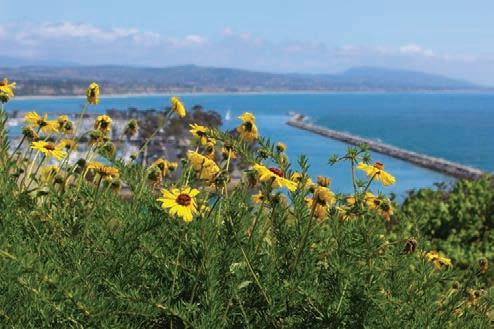
If this year’s super bloom of wildflowers throughout Orange County hasn’t made you wonder at the natural world, we hope the stories in this Green Issue inspire you to take every step you can to keep our tiny spot in the universe beautiful.
BY ALLISON JARRELL
Remember 6-year-old recycling entrepreneur Ryan Hickman from our Green Issue last April? With the help of his family, Ryan founded his own startup, Ryan’s Recycling Company, at the ripe age of 3 in San Juan Capistrano.
Ryan has been recognized for his recycling by the San Juan Capistrano City Council and the Laguna Beach Chapter of the Daughters of the American Revolution.
Most recently, Ryan was invited to speak as a junior entrepreneur at a TEDx conference in Vienna, Austria, this October.
When we interviewed Ryan for last year’s cover story, he had earned more than $8,000 from recycling bottles and hoped to eventually buy his own garbage truck. He told us about how he recycles to help protect marine life from pollution and donates proceeds from his T-shirt sales to the Pacific Marine Mammal Center in Laguna Beach.
Since then, Ryan’s story has gone viral, reaching millions of people in more than 40 countries via major news outlets like CNN, ABC World News, CNBC, PBS and USA Today and through social media videos from Upworthy, Now This, David Wolfe and 60 Second Docs—the latter of which has more than 40 million views.
Public figures and celebrities such as Chelsea Clinton, George Takei and Derek Carr of the Oakland Raiders praised Ryan on social media for his efforts. Locally,
Today, the 7-year-old has earned over $23,000 from recycling more than 200,000 bottles, and thanks to a surprise $10,000 check he received from Shutterfly during a Jan. 30 interview on The Ellen DeGeneres Show. Ellen also awarded Ryan with a personalized, battery-powered, kid-sized recycling truck, which he often takes on his neighborhood runs or to grab the mail. (And yes, he knows how to parallel park, too.)
When he’s not picking up bottles and cans in his truck, Ryan enjoys reading the emails he receives from people around the world who say they’re inspired by his recycling startup. His other favorite part of the business? Visiting the sea lions at the Pacific Marine Mammal Center.
“I like giving them food and medicine,” Ryan said. “They get to go back to the beach.”
For information on Ryan’s Recycling Company, visit www.ryansrecycling.com.

Lawmakers move to further reduce California’s carbon footprint
BY ANDREA PAPAGIANIS-CAMACHO
Can California go 100 percent renewable by 2045? At least one state lawmaker thinks so.
Senate leader Kevin de Leon recently introduced legislation that would give California a 28-year deadline to generate all of its electricity from clean sources such as solar and wind. The measure, Senate Bill (SB) 584, would also fast track the state’s 50 percent renewable energy goal—bumping it up five years from 2030 to 2025.
It’s the latest push in the nation’s most populous state to further California’s standing as a global leader in combating climate change. Last year, state lawmakers continued to embrace green initiatives and doubled down on efforts to dramatically reduce the state’s carbon imprint.
Here’s a look at a few green laws California adopted in 2016:
With California on track to meet or exceed its current target for greenhouse gas emission reduction—down to 1990 levels by 2020—state lawmakers adopted sweeping measures last summer to make even deeper emission cuts. The legislation, SB 32 and Assembly Bill (AB) 197, set an ambitious new target of dropping greenhouse gas emissions to 40 percent below 1990 levels by 2030. “Climate change is real, and knowing that, California is taking action,” Governor Jerry Brown said in a press release. “SB 32 and AB 197 are far-reaching moves that continue California on its path of vast innovation and environmental resilience.”
Starting April 1, consumers and manufacturers will pay a $1 fee for car batteries sold in the state. The projected $30 million in annual revenue stemming from AB 2153, the Lead-Acid Battery Recycling Act of 2016, will fund the cleanup of more than a dozen sites statewide contaminated by lead-acid batteries—including the former Exide battery plant in Los Angeles County. Decontamination estimates for the site are at $50 million with the surrounding area costing upward of $500 million, according to Assembly member Cristina Garcia, who sponsored the bill to relieve communities long impacted by such waste.
California accelerated its fight against climate change and moved to aid its highly-polluted communities by adopting the nation’s toughest restrictions on super pollutants last summer. SB 1383 aims to reduce black carbon and methane emissions from petroleum-based fuels, organic agricultural waste and synthetic gases used in refrigeration, air conditioning and aerosol products. “Reducing short-lived pollutants is the right thing to do for public health and for environmental justice,” Assembly Speaker Anthony Rendon said in a press release. “By taking on harmful super pollutants … SB 1383 is another critical tool in our efforts to prevent and mitigate the dangerous effects of climate change.” Lawmakers also passed legislation to make large-scale investments in communities disproportionately impacted by climate change and air pollution (AB 2722), to protect natural working lands that store significant amounts of carbon (SB 1386) and require municipalities to include an Environmental Justice element in their general plans. Laws requiring the disclosure of ingredients in cleaning products and informing consumers of plants and seeds treated with pesticides known to harm bees were voted down.




BY DEBRA HOLM
Are you interested in a more environmentally responsible approach to your landscape? If so, the pathway to achieve sustainability on your lawn and in your gardens is as simple as 1-2-3:
While chemical insecticides, herbicides and pesticides may kill weeds and eradicate bugs, many are concerned with the health impact they have on other living creatures, including humans. But an inexpensive alternative—organic pesticides— is readily available at local nurseries and is relatively simply to make at home.
Neem oil is considered to be one of the most effective organic pesticides, containing over 50 natural insecticides. The oil may be mixed with organic soap and sprayed on affected plant areas. Be sure to follow package directions, avoiding eye and skin contact, which may cause irritation.
To keep slugs from dining al fresco in your garden, mix one ounce of citrus oil, three tablespoons of organic castile soap and one gallon of warm water for a spray that keeps your herbs and veggies free of these slimy pests. This mixture also repels ants and roaches. Simply sprinkling a few drops of eucalyptus oil in areas where flies and wasps are buzzing will create a natural deterrent without harsh chemical odors.
Your kitchen trash may hold the secret to successful gardening, as composting is a natural method of returning food scraps to the circle of life. “Magic of Composting” seminars are held by the city of Dana Point throughout the year. These sessions include information on both composting and vermicomposting, a system that encourages earthworms to perform their alchemy. Vermicompost is a nutrient-rich organic fertilizer and soil conditioner that is water soluble. For more information, log on to www.danapoint.org/department. Additionally, packaged worm “castings” (yes, worm poo) are easy to obtain. These particles are an optimum soil enricher that increases water retention as well as improving soil aeration and drainage.
Despite recent rainfalls, Southern Californians still must use a judicious approach to using water. According to the Environmental Protection Agency, roughly 30 percent of American water usage occurs outdoors. This number increases in more arid climates. Although popular in Southern California, lawns are not particularly practical. Grass requires frequent watering, use of potentially harmful fertilizers and weekly maintenance in warmer months. It’s easy to assume that drought-tolerant is synonymous with brown and boring. Not so. Mike Evans of the Tree of Life Nursery in San Juan Capistrano feels that replacing lawn with plants native to California is “more authentic, beautiful and engaging” as they attract birds, butterflies and other wildlife. These include hardy shrubs such as rock rose, lavender, sage and salvia, which thrive in warm, dry climates and produce delicate, fragrant blooms.

The Plant Depot, also in San Juan Capistrano, has expanded its succulent section, and staff member Nick Osuni states that, “Without a doubt, customers gravitate toward water-wise gardening practices.” Succulents offer a complex mosaic of shapes, sizes, colors and textures, while requiring very little water. Combining these interesting variables can create living art for an outdoor space.
Some homeowners may not be ready to part ways with their private park as grass can be a desirable area for children and pets to play. Decreasing the size of the lawn and replanting this area with drought-tolerant plants will still reap ecological benefits.
If personally undertaking an outdoor remodel holds no appeal, you can enjoy an eco-friendly outdoor oasis by working with one of the many local landscape designers who specialize in drought-tolerant planting.


Five tips to save your bank account and the earth
BY MATT CORTINA
If you’re a modern day eco-warrior, advocating for people in your community to take steps to reduce their greenhouse gas footprint, one common complaint you might hear is that it’s just too expensive to go green. Solar panels, local produce, electric cars, organic pesticides—they may help the environment, but they can also hurt the wallet. Though it’s true some of those endeavors may incur an upfront cost, they can also save you money in the long run by cutting down on energy and gas bills, trips to the doctor and yet another tub of RoundUp. In short, there’s a common theme when it comes to being green that an upfront investment yields longterm returns.
Here are five simple actions you can take to demonstrably lower your bills and your eco-footprint.
BY MATT CORTINA
A national movement is afoot to get folks out of their cars and onto bikes during their weekday commutes to work. The benefits are obvious: exercise, limiting your carbon footprint, and avoiding the traffic on the interstate.
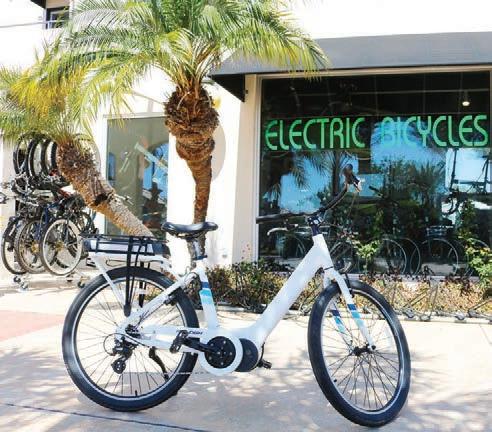
But even for the eco-friendliest cyclophiles among us, the idea of hopping on a bike every morning—especially those gray and chilly ones—and sweating all the way to work as more and more emails pile up can be daunting. However, electric bicycles, or e-bikes, are thankfully hitting the mass market just in time to convince commuters to switch the car keys for the bike lock.
E-bikes come in a variety of different forms, but all are intended to greatly reduce the strenuousness of a bike commute, which is particularly appreciated while riding along the hills and cliffs of South Orange County. They can be modeled after road bikes (built for speed), or mountain bikes (built for rough terrain or durability). They come in comfort models (big seats and ergonomic handles) and minimalist or collapsible designs (built for those who take a bike on public transportation or have a cramped office space).
E-bikes generally have a motor, attached to either the pedal well or the rear wheel hub, which is activated as the rider pedals. That is, you don’t just flip on a switch and let the bike do the work like a moped; rather you adjust the level of “pedal assist” you want while pedaling, which helps reduce resistance as you go uphill, ride into wind or just get tired. E-bikes have vary-

1. Ditch the Bottled Water. Bottled water is a scourge on this planet, and they’re a waste of your money. According to the EPA, bottled water is 600 times more expensive than tap water. If you bought a $1.50 bottle of water every day for a year ($547.50), that same amount out of the tap would cost less than a dime. Never mind the fact that making bottles uses 17 million barrels of oil annually, and Americans only end up recycling about 25 percent of water bottles. Ditch them and buy yourself a reusable bottle.
2. Turn the Lights Off. If you left an incandescent bulb on for 24 hours a day, it would cost you about $137 in energy bills
ing display options—from GPS devices to simple plus and minus buttons. The whole experience is almost like riding on a stationary bike at the gym, where you can adjust resistance with the press of a button. Some e-bikes have gears to allow even more variability for riders. Most e-bikes are outfitted with a removable and rechargeable battery—the higher the assistance you request of it, and for how long, dictates how long it can last, but many models are good without a charge for up to 100 miles.
Robbie Villanueva, owner of EZ Green Bikes in Dana Point, sells a variety of ebikes ranging from $1,200 to $3,500—old bikes can also be fitted with motors and hubs. Villanueva bikes 17 miles to work one way from Rancho Santa Margarita on most days, and says the trip allows him to clear his head or listen to music or podcasts along the way.
A study by the European Cyclists Federation found that using an e-bike to commute to work will release 12 times fewer pounds of carbon dioxide into the atmosphere per day than driving.
As millennials integrate themselves into the workforce, they’re clamoring for more live-work spaces where bike commuting is friendlier, and cities are accommodating their tastes to lure talent—new bike lines and eco-friendly urban design all benefit the environment.
Friday, May 19 is National Bike to Work Day—why not rent, transition to or buy an e-bike to celebrate and start making a difference on your commute.
4. Make Your Own Cleaning Supplies. Not only can making cleaning supplies out of natural ingredients prevent toxins from entering your home and the environment, but you can save a buck too. Vinegar and baking soda, mixed into spray bottles, can clean just about anything in your home and reduce the need to buy toxic cleaners that literally just go down the drain.
annually, according to the Alliance to Save Energy. Those eco-friendly high efficiency bulbs cost about $40 annually. The average house has 45 light bulbs. Just switching from incandescent to efficiency bulbs would cut your lighting bill by two-thirds.
3. Buy Second-Hand, Borrow or Just Don’t Buy. One of the easiest ways it pays to go green is by limiting your spending on new stuff. Buying consignment furniture or clothes repurposes items destined for the landfill. Borrowing everything from books to bikes reduces production of those items. And cutting out non-essential items reduces your contribution to the landfill and saves you some money.
5. Plant Shade Trees. It’s one of the first (and only) environmental lessons we learn in school: Planting trees is good for the Earth. Though their potential to host animal habitats and suck up carbon dioxide are worthy of praise, trees also help consumers by reducing energy bills in hot months. According to the Arbor Day Foundation, planting large trees on the east, west and northwest sides of your property can reduce summer air conditioning costs by 35 percent.

Experts o er ways to make your gardens more bee friendly

BY KRISTINA PRITCHETT
Although it may be automatic to shoo away a buzzing bee, or else run in fear, experts say to do quite the opposite when the creature flies near the beloved flowers and plants in your garden.
“Don’t be afraid of the bees being in your yard,” said Christine Ferrian, president of the OC Beekeepers Association. “They’re just there to forage; they won’t bother you if you don’t bother them.”
Ferrian and Janet Andrews, founder of Backyard Bees, both say bees are a critical part in the garden business and in the environment at large. (Albert Einstein is reported to have said that when the bees die, mankind has only four years left itself.) As the summer months approach, Ferrian and Andrews shared their advice on bee-friendly plants and pesticides and ways to keep the bees returning to your yard.
Through Backyard Bees, Andrews provides honey, natural beeswax products and educates community members about bees. She also provides an alternative to honeybee extermination by removing the bees without pesticides. They collect the accessible honeycomb and bees and relocate them into a wooden hive box and allow them to continue pollinating throughout the area.
Her business began after bees were found in the roof of her home. She said the contractor didn’t kill the bees but instead brought honey down.
“I always had a garden and chickens, so now I can always get honey and pollination,” Andrews said.
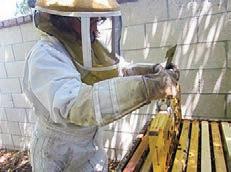
To begin a bee-friendly garden, Andrews and Ferrian said some plants that gardeners can grow to attract the insects include lavender, rosemary, California pepper trees, mustard plant, milkweed, the lacy cecelia and more.
Ferrian said there’s an app—BeeSmart Pollinator Generator—that allows users to input their zip code and it will supply information about which plants are indigenous, the soil types to use on them, how much sunlight is needed and more.
But, Andrews adds, whatever you do plant, make sure there’s a lot of it.
“Make sure you have a large patch of it; they love it,” Andrews said. “If it’s a small bit, it won’t excite them.”
When deciding to use a spray, both Andrews and Ferrian say any type of spray could be harmful.
“Pesticides are always harmful; to what degree depends on the type of spray,” Ferrian said. “I would suggest using soapy water. It’s amazing to get rid of the bugs you don’t want.
“When the bees forage, they do go to the plants that have been sprayed,” Ferrian said. “If it doesn’t harm them right away, it could when they bring it back to the hive.”
When asked if there has been an influx of bees dying, Ferrian said it could be a result in development and the sprays.
“It’s all conducive to the bees dying,” Ferrian said. “The bees that are foraging are often at the end of their life spans. It could be that they’re dying because they’re old.”
She added that their habitats could be dwindling or there might not be enough flowers, but there are many reasons that could be going into a decline of bee populations.
Another tip for saving bees on which both experts agree is having a water source.
“If you have a fountain that has slow motion, a place where a bee could land to get a drink of water without drowning, (that is beneficial),” Andrews said.
Ferrian said to make sure it’s moving water so as not to attract mosquitoes.
For more about either the Assoication or Backyard Bees, visit www.ocbeekeepers.org or www.backyardbees.net.
Earth Day at the Ocean Institute
Saturday, April 22; 10 a.m.–3 p.m.
Celebrate being mindful of Mother Earth with eco-friendly crafts and marine exploration. Get half-priced admission when you take part in keeping the Dana Point Harbor clean. Beach clean-up begins at 8:30 a.m. 24200 Dana Point Harbor Drive, Dana Point. 949.496.2274. www. ocean-institute.org.
Earth Day at The Ecology Center
Saturday, April 22; 10 a.m. Live music, dancing and strawberry picking round out this immersive environment-centric event aimed to bring together the local community to share, learn and dine with one another. Visit www. theecologycenter.com to register for workshops. The Ecology Center. 32801 Alipaz Street, San Juan Capistrano. 949.443.4223.
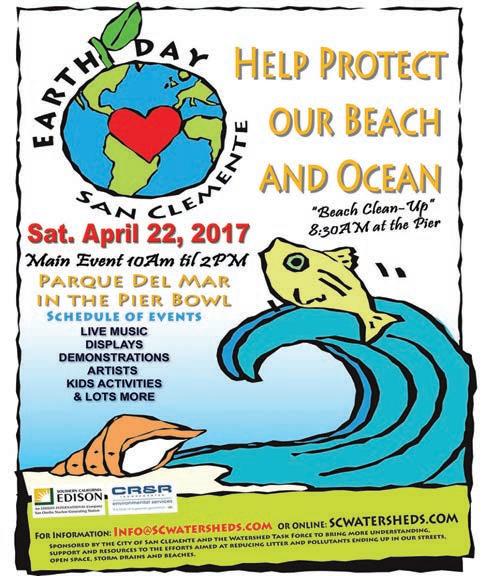
Earth Day San Clemente
Saturday, April 22; 10 a.m.–2 p.m.
Learn how you can make a difference in protecting our planet with tips and tools to reduce litter and pollutants. This free, family-friendly event kicks off with an 8:30 a.m. North Beach clean-up and features live music, crafts, demonstrations and more. Parque Del Mar, San Clemente Pier. www.scwatersheds.com.
Science in the Park
Saturday, April 29; 10 a.m.–4 p.m. The curious of all ages are invited to explore Southern California’s heritage, indigenous plants and animals, natural history and Native American culture with educational, hands-on experiments, demonstrations and exhibits. Parking is $5. Admission is $2 for those over 2. Irvine Regional

Park. 1 Irvine Park Road, Orange. 714.973.6835. www.ocparks.com.
Eco Garden Expo
Saturday and Sunday, May 6 and 7; 9 a.m.–4 p.m. Harness the community’s collective power and creativity with a lineup of workshops and exhibits hosted by local experts at this annual expo where guests can learn, explore and create change. Los Rios Park. 31790 Paseo Adelanto, San Juan Capistrano. 949.606.6386. www.goinnative.net.
Eco Tots
Thursday, May 11; 10:30 a.m.
Tiny gardeners are invited to feed chickens, create gardeninspired art, sing garden songs and use harvested rainwater to nourish The Ecology Center’s grounds. $25 a family. 32801 Alipaz Street, San Juan Capistrano. 949.443.4223. www.theecologycenter.com.
Smart Gardening 101
Dates vary; 9:30 a.m.–11 a.m. Design your dream garden, brush up on bugs, birds and bees, plot your seasonal planting and learn the basics of canning and fermentation during this free, expert-led lecture series. Visit www.goinnative.com for
class schedule. Reata Park & Event Center, 28632 Ortega Highway, San Juan Capistrano. 949.606.6386.
Mother Earth Beach Cleanup
Saturday, April 15; 9 a.m.–12:30 p.m. Do your part to keep Doheny’s iconic surf, campgrounds and San Juan Creek clean. Meet at lifeguard headquarters. Bring gloves and a trash bag. 25300 Dana Point Harbor Drive, Dana Point. 949.496.6172. www.dohenystatebeach.org.
Earth Day Restoration, Cleanup Saturday, April 22; 8:30 a.m.–12:30 p.m. Join in cleaning up and restoring San Clemente State Beach’s nature trail before planting native plants and aiding the installation of an interpretive display. 225 W. Calafia Avenue, San Clemente. www.calparks. org/earthday.
Garden Angels Thursdays; 8:30 a.m.–10:30 a.m. Connect with the community, learn about gardening and help preserve historic San Juan each

week at the Montanez Adobe. Bring gloves and wear close-toed shoes. 31745 Los Rios Street, San Juan Capistrano. 949.606.6386. www.goinnative.net.
Starr Ranch Preservation Various Dates. Join the “Weed Warriors” in removing invasive plants at Audubon California’s 4,000-acre sanctuary in the Santa Ana Mountains. Visit www. starrranch.org for a full list of volunteer days or email Sandy DeSimone at sdesimone@aububon.org from more information.
ROOTS Restoration Fourth Saturdays; 9 a.m.–noon. Lend Upper Newport Bay a hand by volunteering with the California Coastal Commission to remove invasive plants, sow seeds and perform site maintenance. Register at www.coastal. ca.gov. Contact Matt Yurko at 949.640.0286 for additional info.
Back to Natives Restoration Saturdays throughout June, July and August; 9 a.m.–noon. Help restore habitat for animals at the Santiago Creek Nature Reserve in Santa Ana by removing invasive plants. Meet at Back to Natives Nursery. 600 E. Memory Lane, Santa Ana. 949.509.4787. www.backtonatives.org.
Native Plants Hike
First Tuesdays; 8:30 a.m.–11 a.m. Learn the many uses of California’s native plants during this 2-mile hike over steep, uneven terrain. Parking is $3. Online reservation required. Laguna Coast Wilderness Park. 18751 Laguna Canyon Road, Laguna Beach. 949.923.2235. www.ocparks.com.
Yoga Hike
Second Wednesdays; 9 a.m.–10:30 a.m. Reconnect your mind and body on this 2.4-mile hike (with a yoga twist) through the San Joaquin. $3 parking fee. Hike is for participants ages 12 and up. Aliso & Wood Canyons Park. 28373 Alicia Parkway, Laguna Niguel. 949.923.2200. www.ocparks.com.
Headlands Hikes
First, Second and Third Saturdays; 9 a.m.–11:30 a.m. Discover Orange County’s dramatic coastline on a 1.5-mile hike exploring the natural history and diverse ecosystems. Dana Point Nature Interpretive Center. 34558 Scenic Drive, Dana Point. 949.248.3527. www.danapoint.org.
Walk with a Naturalist
Saturdays; 9 a.m.–10:30 a.m. Join an O’Neill Regional Park naturalist on this casual walk to learn about the plant and wildlife calling Trabuco Canyon home. $5 parking fee. O’Neill Regional Park. 30892 Trabuco Canyon Road, Trabuco Canyon. 949.923.2260. www.ocparks.com.
Ranger-Led Hike
Sundays; 8 a.m.–9:15 a.m. Caspers Wilderness Park rangers lead a 1-mile hike of Bell Canyon to explore unique grassland, oak woodland and cactus communities. Hike is suitable for all ages. $5 parking fee. 33401 Ortega Highway, San Juan Capistrano. 949.923.2210. www.ocparks.com.
—Compiled by Andrea Papagianis-Camacho


Eating “green” doesn’t have to be intimidating. While the lingo can conjure up visions of blending veggie smoothies or eating kale-heavy salads, embarking on a journey of more eco-friendly consumption can be much easier—and more delicious—than you think. (Although we definitely encourage you to reach for your kale smoothie goals.) Here are three simple tips to get you started:
one two three
Limit animal and dairy product consumption. Studies have shown that meat production creates considerably more greenhouse gas emissions than growing vegetables. And according to a 2010 report from the IHE Delft Institute for Water Education, it takes about 1,850 gallons of water to produce a pound of beef, versus 39 gallons to produce a pound of vegetables. Consider taking “Meatless Monday” to the next level by going vegetarian or vegan a few days each week. There’s nothing like a grilled portobello burger made with fresh produce from your local farmers market. Which leads to our next tip …

Eat local when possible. When you buy locally grown produce, you’re supporting your region’s economy while also treating yourself to fresher produce than the stuff that’s been trucked to a supermarket or big-box store. South Orange County is brimming with local farmers markets that feature an array of vendors. San Juan Capistrano is also home to the certified organic South Coast Farms, where you can literally see where your food is coming from.
Avoid buying in bulk and shop more frequently. According to a 2015 study out of the University of Arizona, bulk buying food can often result in consumers buying more than they need and ultimately wasting more food than they realize. Recent studies have also shown that more than 30 percent of food grown in the U.S. ends up in landfills. While buying wholesale is often done to save time and money, researchers found that people are overlooking the cost of the unused food they end up throwing away at home. The solution? Shop more often and buy only what you’re going to use in the short-term.
—Allison Jarrell

BY ANDREA PAPAGIANIS-CAMACHO
What if someone told you they could zero out your bills?
Well, one bill particularly. You’d still be on the hook for your mortgage, insurance, water, cell phone and groceries but could—potentially—owe nothing to power up your home, office and car.
Kristin Ashwood and her husband, Matt, are in the homegrown-utility industry, helping homeowners and businesses become energy self-sufficient by utilizing the sun. The duo behind San Clemente’s Planet Earth Solar, has been pumping out anywhere from 125 to 175 solar projects per year for the past decade.
They’re part of a growing movement making electric independence possible.
“It (solar) allows you to produce everything you use,” Kristin said. “You become your own micro-utility.”
According to official San Diego Gas & Electric figures, some 109,600 customers throughout the company’s service area in San Diego and South Orange Counties have already taken the solar plunge. With the technology improving and lawmakers continuing to push toward a cleaner, greener California, we reached out to Planet Earth Solar to talk about their backgrounds, solar technology and funding sources.
Matt is an electrician by trade. An Englishman with decades of electrical experience, he began working in solar when he came to the states. The challenge of an ever-evolving technology has kept him hooked.
Kristin traveled a different path to solar. An environmental policy major, Kristin went to work for the Environmental Protection Agency before receiving her master’s in climate studies. She knew a policy or desk job was out of the question.
“I wanted to do something for the environment,” Kristin said. “I wanted to see the change.”
Ten years ago she moved to California and began working in energy—installing and managing solar projects throughout the state. She’s never looked back. The Ashwoods melded their experience to create Planet Earth Solar in 2012 with a vision of making solar accessible and stress-free. When it comes to solar reservations, the Ashwoods encounter two: technology and cost.
Solar technology is becoming increasingly more efficient, with panels producing about 150 more watts than they were 10 years ago, Kristin said. Customers often ask if they should wait. Kristin says, “No.”
While renewable technologies continue to advance, the cost savings of today could outweigh the benefit of waiting for tomorrow. With energy rates on the rise, the time spent delaying solar installation could wind up costing people more as they lose out on zeroed-out energy bill savings. And when it comes to overall system costs, solar investors can benefit from a federal tax-credit and various financing options.
“It takes about five years to recover the costs of solar or pay yourself back for the investment,” she said.
The Property Assessed Clean Energy (PACE) program allows property owners to finance energy efficiency and renewable projects through property tax bills. This form of financing comes with little to no up-front costs and enables spreading payments out without dipping into other lines of credit.
Although SDG&E and Southern California Edison no longer offer rebate programs, the federal government offers homeowners a renewable energy tax credit for 30 percent of eligible system costs.
RENEWABLE ENERGY TAX CREDIT
30 percent credit of system costs until 2019
Taxpayers can claim a 30 percent credit for costs of their solar system. The tax-credit program, extended under the Consolidated Appropriations Act in late 2015, will gradually be reduced to 26 percent in 2021 and 22 percent until 2022 when it is set to expire. More information at: www.energy.gov.
PROPERTY ASSESSED CLEAN ENERGY PROGRAM
Payback renewable project costs in property tax bill
PACE programs grant local governments the ability to fund up-front costs of commercial and residential energy efficiency and renewable energy projects. This loan is then paid back by property owners through their property tax bill over time. More information at: www.energy.center.org.


BY MATT CORTINA
About one-third of all food produced around the world is lost or wasted every year, according to the United Nations. In the U.S., up to 40 percent of food is wasted. And food and other organic waste is the second most abundant object in our country’s landfills—which are the main source of methane emissions, a harmful greenhouse gas. At the same time, about 1 in 5 children in Orange County do not have access to enough food.
In short, food waste is a humanitarian and environmental catastrophe.
But groups around the country are making an effort to “rescue” food that otherwise would be wasted. By working with homeowners, communities, grocery stores and restaurants, food rescue groups take food headed for the landfill and distribute it to families in need, often via charitable organizations.
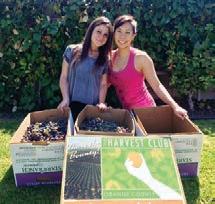
One such group is the Orange County Food Access Coalition, whose Harvest Club sends volunteers throughout the county to pick fruit that would otherwise go unused and distribute it to those in need.
Harvest Club started as a small resident group in Huntington Beach in 2009. That first year, the group rescued 2,000 pounds of food. After shifting hands to the Coalition, more than 51,000 pounds were saved in 2015, followed by 81,000 pounds in 2016. In just the first three months of 2017, the group has saved 25,000 pounds of fruit.
“We know we’re just scratching the surface,” said Coalition Executive Director Christina Hall. “We have so many trees in Orange County. My mapping indicates about 60 percent of all residents, trailers, apartments and houses have at least one fruit tree.”
Hall said South Orange County is particularly ripe for the picking. Although home to many of the Coalition’s volunteers—and home to an abundant
supply of fruit trees—Hall said more donors are needed in San Clemente, San Juan Capistrano and Dana Point to help prevent food waste.

The process is simple: Homeowners with fruit trees can call or email the Coalition. Together, they’ll determine how many volunteers are needed for the pick based on tree size, quantity and type. Then a time for the pick is mutually agreed upon—Hall said, “We highly value our growers’ safety, privacy and security,” so only day-of volunteers are notified of addresses. After the pick, the food is shipped to a local food pantry or distribution center and letters of thanks are distributed to the growers and volunteers indicating how much food was rescued.
Because fruit is picked from home growers, the quality of the food is superior, Hall said.
“Most people don’t spray stuff so this is really awesome produce that is getting into the communities,” she said.
Across the county, the Harvest Club welcomes 1,000 volunteers who pick fruit, about 15 volunteer project managers, about 250 growers, and about 200 pantries to whom food is delivered.
And yet South Orange County remains relatively untapped by the Harvest Club, so Hall said she is excited about the future growth in the region and hopes residents in the area sign up to volunteer or donate food at www.theharvestclub.org.


The Water E ect program helps students spread info on water conservation
BY ERIC HEINZ
In San Juan Capistrano, The Ecology Center is looking to provide students with tools to promote water conservation and sustainability in their communities.
Lauren Fieberg, the school programs coordinator, said one of the center’s programs, The Water Effect, was designed to influence students to be mindful of how they use water and how they can conserve it.
“We really want to reach the high school kids,” Fieberg said. “There wasn’t really that much to engage them in water conservation, and we want to get them fired up about it.”
Fieberg’s background is in high school education as well as ecological science.
“We put a call out for our Water Effect high school ambassadors as an internshipbased program,” Fieberg said. “The students would take the information back to their schools, and we got 16 students who were really passionate.”

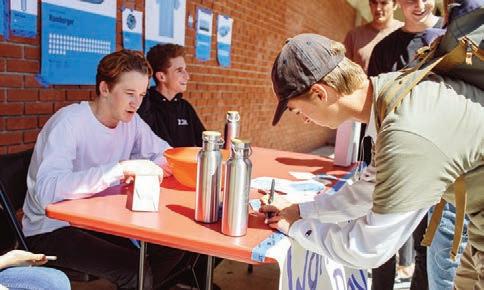
Ambassadors come from San Clemente High School, Dana Hills and Orange County School for the Arts, as well as other local schools.
One of the student ambassadors works out of Grand Rapids, Michigan, and found The Water Effect through the center’s social media campaigns.
“One of the things we wanted to do is create something that could be replicated, an open-source model,” Fieberg said. “We have a student ambassador toolkit that has different campaigns and ideas that students can activate on their campuses regarding water conservation.”
Some of these campaigns include a
“meatless Monday,” where each meal is dedicated to not eating meat, and clothing swaps, as both textiles and meat-based industries use large amounts of water to manufacture their products. By following these campaigns, Fieberg said, people can significantly reduce their impact on local and far-reaching water sources.
“We’ve had a variety of campaigns over the years about water usage, such as purchase with a purpose,” Fieberg said. “Just buying local can conserve water, and we want to show students the steps to conserve water that may not be immediately visible.”
Campaigns are also dedicated to encouraging people to ditch their lawns for
front yards filled with native plant species, which need less water than imported species.
The toolkits also come with a simplified “water footprint calculator” students can use to track their own water usage.
“We encourage students to speak with their local facilities (school boards, governments) about water conservation and looking literally at the water bill,” Fieberg said. “It’s a challenge to know what you’re using at the district level, and it’s a lot of problem-solving for them. The cohorts come together once or twice a month for collective conversations and brainstorming speakers.”
Fieberg said they will take the students on a field trip to the Hurley International facility, which she said is a company that has been ahead of the curve on water conservation.
Part of the program is also teaching students to use social media to get their message more exposure. Try searching the hashtag #thewatereffect and see for yourself.
Jackson Hinkle, a co-founder of Team Zissou at San Clemente High School, has been the school’s student ambassador to The Water Effect. At the school, they have proposed making refill stations for students to fill their reusable water bottles instead of buying new ones or reusing single plastic bottles.
For more information about The Ecology Center’s program, visit www.theecologycenter.org/water. For more information on Team Zissou, follow them on Instagram @teamzissouglobal.