


By Collin Breaux
People are understandably wary of face-to-face contact during the COVID-19 pandemic, but they still may need to pay a visit to their doctor for medical issues.
Fortunately, telemedicine—already a budding trend before the ongoing global health crisis—can be there to fill the void. It’s not exactly the same as making an in-person visit at a doctor’s office, but treatment is treatment.
Local health professionals spoke with Picket Fence Media about varying aspects of virtual doctor visits, particularly at a time when people are exploring digital and creative ways to continue with routines.
There has been an uptick
Tony Nakhla, a dermatologist and surgeon with OC Skin Institute, said his office has seen
As autumn greets us, so comes this year’s second edition of Aging Well. Yet no matter the season, there is no wonder why so many South Orange County residents choose this region to embrace their golden years.
In this edition of our biannual guide for seniors, Aging Well, we’ve curated a collection of stories on what the tri-city area of San Clemente, Dana Point and San Juan Capistrano has to offer, as well as important information needed on staying healthy and active throughout the challenges of a pandemic.
In this Fall edition, local columnists offer insight on living healthy lives. Fred Swegles provides guidance on how seniors can implement best practices in avoiding COVID-19, and health expert Gina Cousineau lists seven healthy habits for seniors to stay active. Be sure to read up on how to best navigate virtual doctor visits to take advantage of technology and enjoy the benefits of virtual appointments.
Continue reading for a special profile on Ruth DeNault, a well-known matriarch of DeNault’s ACE Hardware; a closer look at how massage can be crucial for seniors; resources on meals and housing, and so much more.
We hope this edition of Aging Well can help readers learn something new and also help them make the most of living in beautiful, sunny South Orange County.
an increase in virtual appointments recently.
OC Skin Institute has made it a point to adopt telehealth for senior visits.
OC SkinLab founder and CEO Michelle Hure said their practice has embraced virtual teledermatology visits for most common visits, with the exception of skin checks.
“Our teledermatology integration has been seamless, and we see more virtual than in-person appointments per week,” Hure said. “This has lessened the need to have more people in the office and allowed for better spacing out of our patients who need to be seen in person.”
Most of the in-person visits are by senior patients who need to have skin checks, biopsies, procedures and surgeries, Hure said.
Virtual visits can’t replace all aspects of in-person appointments.
Virtual visits are ineffective for specific concerns that need a physical exam such as listening to lung sounds or examining the skin for atypical moles or skin cancer, according to Hure.
Nakhla said they’re also not effective if someone needs surgery on the spot. Another challenge is technological issues that may arise—patients may spend time getting
a web camera to work or trying to log in for their appointment.
However, they can be convenient in terms of avoiding traffic or taking a lot of time off work if someone has an issue that can be addressed via telemedicine, Hure noted.
“The visits are convenient and allow you to talk to your doctor in the safety of your home without the need to converse in a mask or risk exposure to coronavirus or the upcoming flu season,” Hure said.
Telemedicine should be relatively accessible to people.
Almost anyone who has coverage through Medicare or a preferred provider organization should be able to register for a telemedicine visit. The COVID-19 pandemic has further facilitated a transition to virtual doctor visits.
“Virtual visits have always been around, but were underutilized due to lack of insurance coverage,” Hure said. “Once the shutdowns occurred due to COVID, insurance companies began allowing these visits to be covered by patient plans.”
Patients definitely need reliable Internet access and a webcam on their computers, or they can use a smartphone, Hure said.
By Haley Chi-Sing
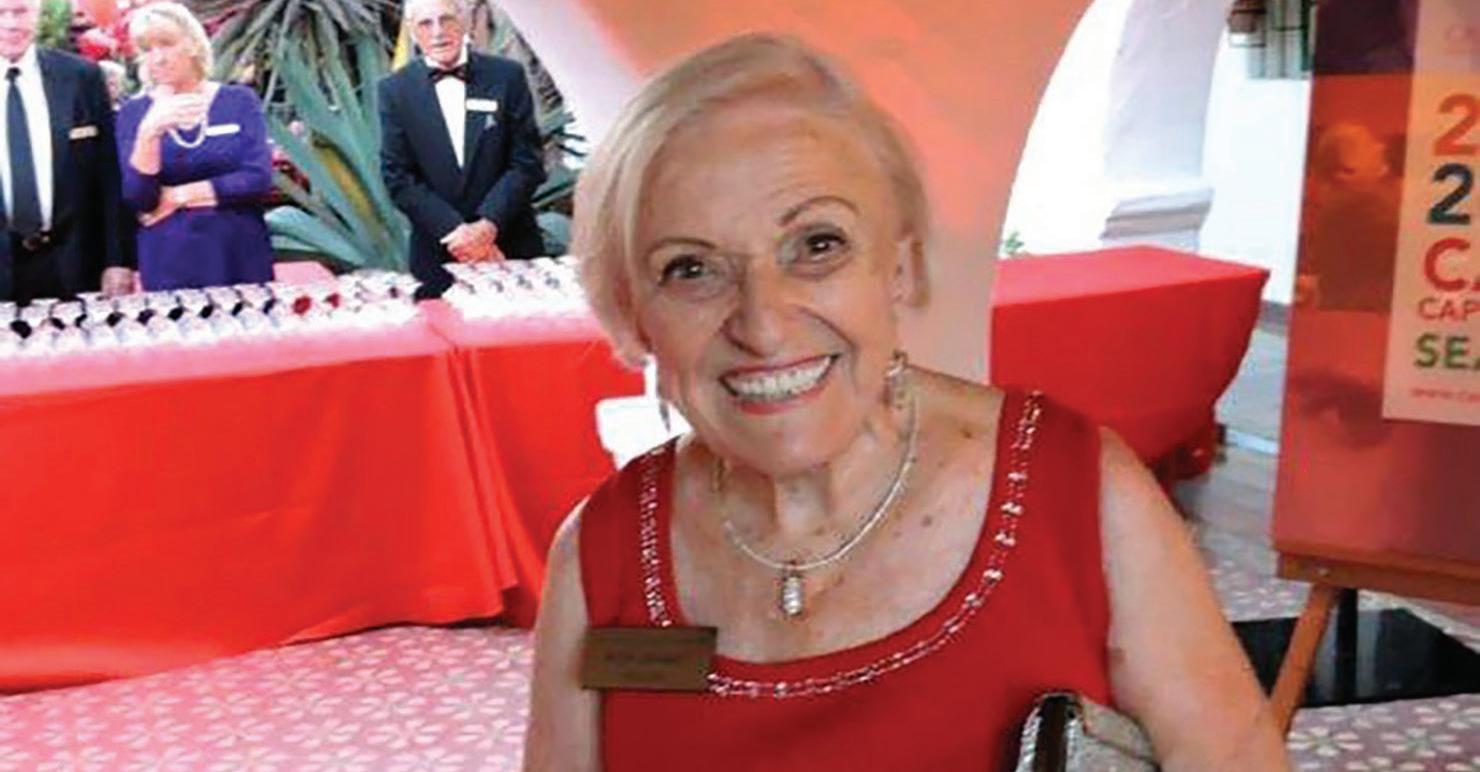
eNault’s hardware stores have become a landmark business in the South Orange County area, with five stores (including San Clemente and San Juan Capistrano) and each one encompassing the neighborhood-friendly, round-the-cornerstore essence. Despite their unquestionable success and growth over the years, it is the woman behind the name that is responsible for the expansion of the business. Ruth DeNault, the matriarch of DeNault’s ACE Hardware Stores, has been at the helm of
the business since their opening in 1956 and continues to lead the company these many years later, all while balancing her family life, education, and philanthropic works.
Originally from North Dakota, DeNault moved to Southern California in the early 1950s as a means of joining her husband, Jim DeNault, who had just recently been a soldier in the Korean War. Promptly after her husband’s Army years, the DeNault family settled in San Clemente with plans of growing a family in the seaside town.
“We looked around for a good place to raise our family and decided that San Clemente was the place we would like to be,” said DeNault.
Shortly after moving to San Clemente, DeNault and her husband took it upon themselves to open their own hardware store after they had been in the business two years prior. In 1956, the family-owned business opened its doors for the very first time at the corner of Ola Vista and Del Mar in downtown San Clemente.
“We started out as a diversified general store, because we had sporting goods, tricycles, bikes, dinnerware,” said DeNault. “Change has been constant.”
DeNault’s own ventures have been accompanied by change, as well. DeNault decided to continue her higher education at Concordia University and earned her BA and MBA, all while managing DeNault’s stores. Already having had plenty of experience of her own in business administration, DeNault recalls having found her prior experience “extremely helpful,” as she went back to school, along with maintaining her hands-on approach in the family business.
Despite all of the personal changes DeNault took on, one constant that remained
By Zach Cavanagh
Muffling of speech, difficulty understanding words with background noise, trouble hearing over the phone or following conversations with two or more people talking, the need to have people repeat themselves, turning up the TV volume too loud, being unable to understand women and children when they speak.
These are all symptoms of something that a majority of Americans will eventually suffer from: hearing loss.
One-third of Americans between the ages of 65 and 75 have some hearing loss, according to the Mayo Clinic. That percentage increases to about one-half for those
was DeNault’s Hardware’s friendly, reliable service. Known for their distinct welcoming feel, the hardware stores continued to provide individualized assistance to every and all customers who walked through their doors.
“We keep up with what people are looking for, and we give them good, friendly service and knowledgeable people to help,” DeNault said. “[Customers] enjoy shopping at our stores and talking to people that they know.” However, one curveball the company’s president never saw coming was the dismantling effect that was the coronavirus pandemic. Considered an essential business starting in March of this year, DeNault’s ACE Hardware stores remained open all through the pandemic, providing supplies and hardware throughout the lockdown.
“It’s been very good. Our stores have been extremely busy because people have time at home now to do projects in their home and in their yard. . . . It’s been a busy time for us,” said DeNault.
To comply with CDC and statewide guidelines, all of DeNault’s stores have installed screens in front of cash registers, required customers and clerks to wear masks upon entering, and have maintained social distancing measures when interacting with individuals. While it has proven somewhat difficult in relation to showing customers certain products and items, DeNault’s stores have maintained their customer-first approach throughout the pandemic.
“We really enjoy knowing our customers . . . it’s really a very friendly place. You come in, and we would have friendly people working for us, and people love to come in and have somebody to chat with about their projects,” said DeNault.
Sixty-four years since they first opened their doors, DeNault’s Hardware has expanded as her four sons—and now, her grandchildren—have joined the business, and so has DeNault’s endless list of familial and community jobs. Along with her position at the family business, DeNault has served on San Clemente PTA boards, her sons’ Cub Scout groups, and as president of the Archeology Institute of America, Orange County branch. She is currently an e-board member of the Archeology Institute of America, President of the Cultural Center at Casa Romantica, member of the Foundation Board of Directors at Concordia University, and a Sunday School teacher.
older than 75.
Hearing loss doesn’t just affect the person whose hearing has suffered. Effects range to family, friends, colleagues and others as they navigate the issue and accommodate the person with hearing impairment or loss. But there are ways to make the situation better.
There are two major types of hearing loss, both of which can be remedied to help you and others around you live a happier life.
The first and easiest to deal with is conductive hearing loss, which is when sounds cannot reach the inner ear due to earwax, fluid or a punctured eardrum. This can be treated and managed.
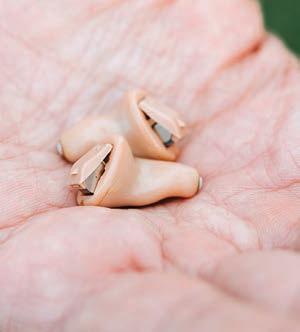
The second, and the one that will require some hardware, is sensorineural hearing loss, which comes from innerear damage. This is the most common type of permanent hearing loss and where hearing aids come into play.
There are also two main types of hearing aids. The cheaper and smaller hearing aids are simply amplification systems to make sounds louder. The more expensive and larger aids help distinguish sounds and make sounds crisper.
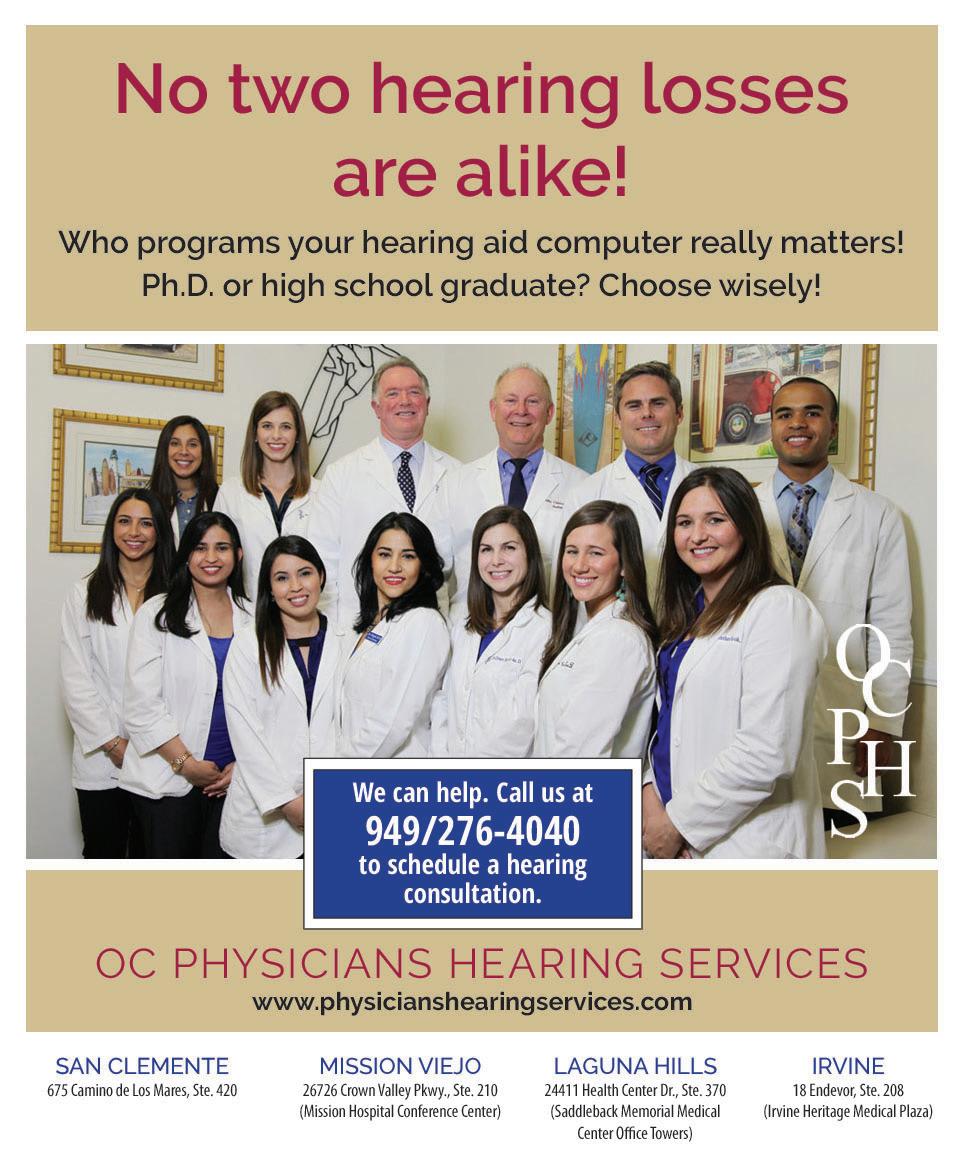
If you are experiencing any symptoms linked to hearing loss, contact your doctor or one of several local hearing services and hearing aid centers.

By Michelle Bryant, Owner, The Massage Associates
According to the U.S. Centers for Disease Control and Prevention, preventing disease and injury is critical to reducing the expected growth of health-care costs headed our way, as more than 70 million U.S. baby boomers cross the 60-yearold threshold. Moreover, disease prevention is critical to, well, your health.
Whether you’re a boomer who is running a marathon or running after your grandchildren, you know that growing older doesn’t mean growing old. If you’re wondering how to stave off the effects of aging, the preventative and restorative nature of massage and bodywork might be just what the body ordered.
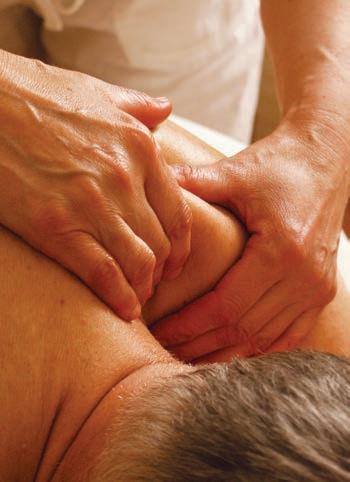
If you’re already a frequent recipient of massage, you know what the work does to combat daily stress. But did you know how detrimental those stressors can be?
Experts say the majority of disease we encounter today is associated with stress. Not only that, stress is a huge factor in premature aging of the body. Researchers say chronic stress ages the body, weakens immune cell function, and can make cells appear up to 17 years older than they really are. Through its effects, massage deftly attacks stress, while boosting the immune system.
Part of the aging process, unfortunately, involves dealing with aches and pains. You might find a day of gardening brings on back pain you never experienced before, or your biking regimen now requires greater recovery time afterward. Even though pain is a constant source of grief for an aging body, massage can make a difference.
In addition to the pains of physical exertion an aging body experiences, the discomfort caused by arthritis can be just as debilitating. Experts predict that one-third of Americans will get arthritis as they age. Ironically, most arthritis sufferers may not think of massage when they start to explore which therapies might ease their pain. While it is doubtful an arthritic joint can “heal” completely with massage, it can feel better. And for an arthritis sufferer, better is a welcome word, particularly when there are no side effects involved.
According to the Arthritis Foundation, an increasing number of doctors are recommending massage to their arthritis patients to help relieve the pain and stiffness caused by their disease. Massage can increase circulation around painful joints, bringing healing oxygen and nutrients, including amino acids, to rebuild tissue. Many massage therapists report that their arthritic clients find better and longer-lasting relief from massage than from pharmaceuticals. Whether it’s reducing the symptoms of arthritis, or simply addressing the aches and pains of living an active life, massage can play an important role in aging well.
The benefits from massage and bodywork can help bodies of all ages, especially for baby boomers. Research has shown that massage:
• Improves range of motion and decreases low-back pain.
• Increases circulation, allowing the body to pump more oxygen and nutrients into tissues and vital organs.
• Provides exercise and stretching for atrophied muscles.
• Reduces swelling and scar tissue.
• Reduces recovery time from injury/ surgery.
• Reduces stress, a major contributor to disease and ill health.
• Releases endorphins, the body’s natural painkiller, thereby reducing the need for medications.
• Stimulates lymph flow and supports the body’s natural process of detoxification.
Michelle Bryant is a Licensed Massage Therapist and the owner of The Massage Associates in San Juan Capistrano. The Massage Associates has therapists who are specifically trained in helping the older generation be their healthiest selves. In-office or in-home treatments are available. 31952 Camino Capistrano, C-10, San Juan Capistrano, 949.489.7924, themassageassociates.com.


By Fred Swegles
When asked if I had any story ideas for this year’s Aging Well section, my reply was, “That’s easy.
Don’t get coronavirus!”
I’m 72, and now I’m seven months into the pandemic, not sick with COVID. That doesn’t make me an expert. And I could be asymptomatic. But I think the precautions I take have worked pretty well.
I’m not perfect. There’ve been stupid moments. Fortunately, they didn’t come back to haunt me. Well, not yet.
Some may call the precautions I take paranoia. I feel they’re pretty simple.
A friend who drove cross-country on a work-related trip told me that wherever he went, he asked, “Do you know anyone with COVID?’—and nearly everyone said no.
I do know it’s out there. And I can’t take a chance. I happen to be caregiving for my brother, who has health challenges not related to COVID. I wouldn’t want to bring COVID home to him or my other housemates. So I’m home most of the time, taking precautions when out shopping or exercising.
AVOID CROWDS
I
figure if you’re a senior like me, a vulnerable group, it’s best to stay home as much as possible without going batty. This is the first summer in my life I’ve spent hardly any time at the beach. And travels are on hold. It’ll pass.
I read a lot. I get outside regularly for exercise and, as need be, to do newspaper work.
For exercise, I ride my e-bike about an
hour, every morning, early, when few other people are out and about, then another 30-45 minutes in late afternoon or evening. I take routes where it’s fairly easy to steer clear of people. To work my legs, I keep the bike in the hardest gear. I pedal as hard and as much as possible.
Sometimes, after dark, I’ll walk around the block, rarely encountering anyone.
Whether walking or riding, I steer clear of people. I’ll walk across the street to pass someone. Or hang a U and head back. Paranoid? No, just prudent. Who cares which direction I’m going? It’s not about where. It’s exercise.
Early on, I gave up regularly riding/walking the beach trail. It was too easy to get trapped in with a grouping of people at choke points. On rare occasions, I’ve done short bits of the trail, avoiding choke points and prepared to reverse direction if I so choose.
Social distancing is about helping protect other people, not just yourself. The trail is pretty wide, most of the way. But I can do without it, for now.
I wear a mask nearly everywhere I go when I leave the house.
Early on, I sometimes wore a gaiter around my neck instead of a mask during early morning bike rides. I figured I could enjoy fresh morning air, unfettered, on deserted streets and raise the gaiter over nose and mouth as need be.
I have gaiters of varying fabrics, so I chose thicker ones. Then I stopped using them at
all, after a pedestrian one morning called out to me from a sidewalk, noticing my gaiter below my mouth. We were probably 25 feet apart, with a parked car between us.
I pedaled by without responding that we were plenty far apart. But then I thought, wearing a mask on all my bike rides is no big deal, just do it. I stopped using the gaiters. I may use them on my face this winter, when it’s cold.
On the other hand, I’ve had people call out to me. ridiculing my mask as overkill, laughing at a bicyclist out on the street using a mask. Indeed, at 10-20 mph, I ride fast enough to generate a breeze, so it’s probably a safe environment.
I figure, just wear the mask, if only for a sudden situation that may arise. And as a continual show of kindness to others.
I have a pretty solid tan, despite avoiding the beach this summer. I buy into the idea that sun exposure is beneficial, giving you healthy Vitamin D and UV, if not in excess.
I’ll sit a brief period daily in my patio.
A few days, I’ve picked an uncrowded stretch of beach to sit, read, hop in the ocean. On those days, I’m getting probably more sun than I should. Hey, until this summer, I did that all the time. Now it’s rare. I’m more conscious of minimizing exposure.
I’ll wear a mask to and from the beach, removing the mask once I’ve found my peaceful patch of sand.
Senior hours at supermarkets are golden. Shop with no crowd. Except that masked
store employees are busy stocking shelves at that hour. You have to navigate the aisles. And what if something I need hasn’t been stocked at that early hour? You can politely ask. They’ll help.
Sometimes, I’ll avoid others by switching directions and walking roundabout to reach my desired shelf. Exercise is good. Paranoia? Nope. No big deal.
I like finding my shopping cart sanitized at the entrance, with cleaning wipes I can drape over the handle. I carry a mini bottle of hand sanitizer I can use, leaving the store. Is that paranoia? To me, it’s easy. No hassle. Same with washing hands.
Evidently, a few readers took exception to an SC Times column I wrote about Thomas Appell’s book, Never Get Another Cold, suggesting healthy diet as a preventative if you’re concerned about COVID.
For many Americans, the diet he advocates is too extreme. I took a little ribbing for having written the column. I’m convinced he is onto something, COVID or not. To me, the diet makes sense.
But for me, the diet was asking too much. I adopted elements of it into my own version of a better diet to help avoid getting sick, pandemic or not.
I’m happy with my compromise.
None of us is an expert. We do our best. There are no guarantees. Be positive. Be kind. Be happy. Count blessings. With prayers and condolences to families touched by COVID, I’m increasingly confident we can come out of this fine.

By Gina Cousineau
Too often we take “advice” from so-called “experts,” who don’t practice what they preach, nor do they necessarily have the knowledge to do the teaching. In this area, I have experience working with many seniors over the years, and I, too, am a senior, albeit a rookie at 57 years of age. But the combination of my wisdom and education allows me to address this topic, which is very near and dear to my heart. These suggestions are in no particular order, but all are necessary practices to consider:
1/ Joy
Finding aspects of your life that provide pleasure on a daily basis is like drinking from the proverbial fountain of youth. Be it the food we eat or the activities we participate in, our actions can dictate our happiness. While we understand that life has many obstacles, if we can focus on that we are grateful for, I do believe that this can be a game-changer for living a joyful, active life.
2/ Nutrition
As a culinary nutritionist, it is obvious that I believe that food is of great importance, providing the calories and nutrients necessary for our bodies to function and thrive. As we age, we tend to have lesser appetites, due to a decrease in our taste sensation. To counter this, we need to add more flavor to our food, including herbs and spices, upping the flavor factor. Keep it simple, sticking with whole grains, legumes, fruits, vegetables, low fat dairy, healthy fats (olive oil, avocado, nuts/ seeds) and lean protein options, and this will be your recipe to success.
3/ Movement
The statements “motion is lotion” and “move it or lose it” holds true in my experience. While our fitness level can decline rapidly as we age, simply walking most days will help to boost our fitness and our mood.
Whether you follow a formal religion or are simply “spiritual,” this practice allows our lives to have meaning and purpose.
Doing for others, be it in a work or volunteer capacity, provides a sense of accomplishment. Never stray from this habit.
These relationships provide support and comfort throughout life, and according to studies, improve our mental well-being and are protective against mental illness.
Being your own advocate, and having someone to pair with your efforts, is paramount to living a long, healthy, independent life. Having an internist/primary care physician that helps guide all aspects of your health care is critical. Too often we neglect health screenings that can detect diseases, which can be treated if caught early. And with aging and as our our health histories become more complex, this individual can play “quarterback,” helping manage potential risks/benefits of tests, screening, treatments, medications and more. They remind you not only about your yearly flu shot, but when you need your shingles and pneumonia vaccines, the intervals for your colonoscopies, prostate screening, skin checks, and they will refer you to a specialist as needed. They also monitor your blood pressure and labs, which is no different than when you take your car in to the mechanic for routine maintenance. Don’t wait until the “check engine light” comes on, folks, as unlike a vehicle that can be replaced, your body cannot. Being proactive and focusing on prevention can add years to your life.

Gina Cousineau sees clients virtually and in person out of her San Clemente office. Her extensive education with a BS in dietetics and MS in integrative and functional nutrition, chef training, and 30-plus years as a fitness professional allow her to help clients lose weight and improve their health. You can reach her at mamag@mamagslifestyle.com, 949.842.9975, and on Instagram /Facebook @mamagslifestyle.
By Zach Cavanagh
Senior services are plentiful throughout Orange County to help its older and aging residents. There are so many that it may be confusing or difficult to find exactly where to go or what will suit a specific need.
That’s where the Orange County Office on Aging comes in. The Office on Aging acts as a facilitator between the county’s many service providers and any member of the aging population who uses those services. The office also administers and funds throughout the county and through service providers.
The Office on Aging can be found online at officeonaging.ocgov.com and can be contacted by email at areaagencyonaging@ occr.ocgov.com or by calling 714.480.6450 or toll-free at 800.510.2020. The Office on Aging can also be engaged on Facebook at @OCOoA and on Twitter and Instagram at @OC_OoA.
The Office on Aging’s service provider in South Orange County is Age Well Senior Services, which operates the Dana Point and San Juan Capistrano senior centers and the Dorothy Visser Senior Center in San Clemente.
In addition to the senior center services, Age Well also offers home-delivered meals, in-home services and non-emergency transportation to and from medical appointments for seniors.
Throughout the coronavirus pandemic, Age Well has also been the Office on Aging’s South Orange County provider for the state’s Great Plates Delivered program, which helps seniors and other adults at risk to COVID-19 stay home and receive three meals a day. The meals are provided by local restaurants, which in turn receive some economic stimulus during these tough times. On Sept. 10, the state extended the program through at least Oct. 9.
The Great Plates Delivered program for
South Orange County can be found online at greatplates.agewellseniorservices.org or by phone at 949.382.6099.
Age Well can be found online at agewellseniorservices.org or reached by phone at 949.855.8033. Their South County Senior Transportation program can be reached at 949.855.8033.
While food and nutrition may be among the most important and widespread that the Office on Aging provides, there is a wide-ranging list of support that can be found from the office.
The easiest way to find these services is through the Office on Aging’s mobile app, OC Senior Resources. The app, which is available on the iPhone and Android through the App Store and Google Play, provides easy access to all of the Office on Aging’s services and resources, including disability services, caregiver support, employment, education, financial assistance and insurance. The app also has information for hotline numbers, behavioral health
services, veteran benefits and volunteer opportunities.
When it comes to hotlines and behavioral health services, the Office on Aging provides several ways for seniors to reach out or for neighbors to help out, which is very important during lonelier times in the pandemic.
Seniors feeling anxious, fearful or lonely can call the 24-hour, toll-free Friendship Line California at 1.800.670.1360. Seniors needing emotional support and resources can call or text the 24-hour OC WarmLine at 714.991.6412 or call toll-free at 877.910.8276.
For those looking to help their senior neighbors, the Office on Aging also provides a downloadable postcard to fill out and give to a neighbor to help with groceries, errands, mail or just daily check-ins.
During the COVID-19 pandemic, the Orange County Office on Aging has stepped up to aid the local senior and aging population and make sure they get through healthy and happy.
By Collin Breaux
Sunshine is a double-edged sword of sorts—it can be refreshing and conjure up feelings of beach days and drives down PCH, but it also can be a hazard that causes sunburn and other unpleasant e ects.
Given the sun is such a ubiquitous part of South Orange County life, we decided to ask some local medical professionals their perspectives on di erent aspects of catching some summer rays.
Sun exposure can benefit your mental health.
“It’s well known that sunlight can trigger the release of serotonin, which is a moodboosting neurotransmitter (chemical in the brain) that regulates anxiety, fear, mental focus and feelings of relaxation,” said OC SkinLab founder and CEO Michelle Hure.
What’s excessive exposure is subjective.
The line between a healthy dose and getting burned can depend on your skin type.
Tony Nakhla, a dermatologist and surgeon with OC Skin Institute, said 15 to 20 minutes a day of unprotected sun exposure is OK for some.
Nakhla recommended leaving your face out of that exposure and limiting it to arms, leg and backs of hands.
Be wary of peak UV periods.
Hure recommends keeping exposure to a minimum between 11 a.m. and 3 p.m., peak

hours of the day when the UV Index is highest.
“In addition, wear Zinc-based sunscreen on all exposed skin and even under clothing if the garment isn’t UPF 50-plus,” Hure said.
“A white T-shirt has an SPF of 6, which is inadequate. Using enough sunscreen and reapplying every 90 minutes or sooner if swimming or sweating are essential.”
The higher, the better, according to Hure, saying “it’s a myth that anything over SPF 30 is all the same.” Hure recommends against using a sunscreen spray on the face.
Overcast conditions won’t necessarily protect you.
Eighty percent of UV radiation penetrates through the atmosphere even on the cloudiest of days, Hure said.
“So, observe the same precautions whether it’s sunny or cloudy,” Hure said. “In fact, I see the worst sunburns happen on cloudy days when people don’t think they need sunscreen.”
Good oral hygiene is the foundation for the health of your entire body, particularly as one ages. Lack of attention to oral hygiene by failing to brush twice daily and oss at least once a day, may lead to periodontal disease. Genetics, hormonal changes, medications, smoking, immunosuppression, and diabetes are also risk factors that contribute to the development of periodontal disease. 80% of Americans will be a icted with periodontal disease by age 45, and 4 out of 5 patients with the disease are unaware they have it. Periodontal disease increases with age and 70% of adults 65 years and older have periodontal disease.
What is periodontal disease?
Periodontal disease is characterized by the in ammation of gum tissue, presence of disease-causing bacteria and infection below the gum line. Infection and bacteria in the mouth can cause bone loss, tissue recession and even tooth loss. ese infections and bacteria can spread beyond the mouth and lead to disease in other parts of the body.
Treatment may include deep cleanings, LANAP (laser assisted new attachment procedure), bone regenerative therapy or gum grafting to restore and strengthen tissues that have been damaged.
When should you see a Periodontist?
· Unexplained bleeding while brushing or consuming food
· Bad breath that continues despite thorough cleaning
· Loose teeth or gum recession. (Often times bone loss may be associated with both of these conditions)
· Related systemic health concerns such as diabetes, heart disease or osteoporosis.
Periodontists are highly trained surgeons with three + years of training beyond dental school. ey work with your general dentist to improve esthetics and achieve optimum dental health. In addition to the treatment of periodontal disease, periodontists remove non-restorable teeth, replace missing teeth with implants, treat gum recession with grafts and re-contour gums (crown lengthening) to improve the restorations of existing teeth.
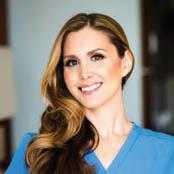
Dr. Vanessa B. Bikhazi is a Periodontist, practicing at Moran Perio in San Clemente. As a highly trained surgeon, Dr. Bikhazi can perform the following procedures: tooth extractions, crown lengthening, correction of a gummy smile, gum/bone grafting, LANAP (laser assisted new attachment procedure), sinus lifts, and single tooth to full mouth dental implants.
For more information or to schedule an appointment, go to moranperio.com or call 949.361.4867 (gums).
SPECIAL ADVERTISING SECTION
BY DR. HAMILTON LE
A prosthodontist is a dentist who has completed dental school plus at least three additional years of advanced training and education in a prosthodontic graduate program. ey specialize in treating and handling dental and facial problems that involve restoring missing teeth and jaw structures.
e term “prostho” means replacement and “dentist” means dealing with teeth. Essentially, prosthodontists are THE recognized experts when anything needs to be replaced in your mouth. is can range from a single tooth, multiple teeth, or all teeth and gums in the mouth. While many other dentists can do some of these treatments, prosthodontists are the specialists dedicated to this type of care.
Prosthodontists have advanced training in restoring and replacing teeth. Prosthodontists are considered the leaders of the dental treatment plan. ey regularly lead teams of general dentists, specialists, and other health professionals to develop solutions for your dental needs.
ey construct oral prostheses to replace missing teeth and associated oral structures with permanent xtures, such as implant-supported prostheses, crowns and bridges, or removable xtures such as dentures and removable partial dentures. ese specialists also restore function and aesthetics to traumatic injury victims, and to individuals with diseases or birth defects.
Choose a prosthodontist because of their advanced education and training, e ciency, and expertise with advanced technology. Prosthodontists are extensively trained in state-of-the-art techniques and procedures for treating complex dental conditions and restoring optimum function and esthetics. Rigorous training and experience give prosthodontists a special understanding of the dynamics of a smile and the preservation of a healthy mouth.
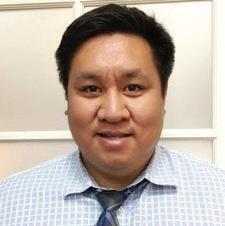
Dr. Hamilton Le is a board certi ed prosthodontist and is part of the Moran Perio team located at the mouth of Talega in San Clemente, He is a native of Southern California who attended UC Berkeley for his undergraduate training. After earning his Bachelor’s Degree, he moved to Boston where he attended dental school and a prosthodontics residency at Tufts University School of Dental Medicine.
As the leading prosthodontist in South Orange County, Dr. Le’s commitment to dentistry and patient care is the foundation for his treatment philosophy, providing you the necessary information to understand your dental needs and concerns.
For more information, visit moranperio.com or call 949.361.4867.
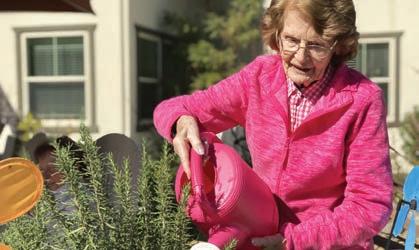
Searching for memory care for your loved one can be an overwhelming, emotional experience. If you’ve taken the step to look for memory care, you’ve decided that it’s no longer working for your loved one to remain in their own home and you are unable to provide the type of care they need yourself. is revelation generally comes with a powerful feeling –guilt. Take comfort in knowing that sometimes providing care on your own simply isn’t realistic. You may have a fulltime job, other family members that need your attention, or maybe your loved one has special circumstances that require expert care that you are not quali ed to provide. Any memory care community should o er the basic necessities - safety and security, access to medical care, comfortable accommodations and caring, 24-hour sta . To nd a community that’s a wonderful t for your loved one, look beyond the basics and think about what characteristics will truly help your loved one live their best life. We suggest looking for these two things.
ROBUST ACTIVITIES • Ask how the community will help your loved one in all dimensions of wellness – physical, social, spiritual and intellectual. Look for a variety of both group and one-on-one activities that are customized to your loved one’s interests and abilities. If they enjoyed cooking, gardening or music prior to entering memory care, nd out how these interests can continue to be cultivated. Also, ask how often residents go out for trips, and if activities include children, pets and local events. Until there are better medications, a strong and well-rounded activity program is the currently the most e ective way to treat and manage dementia conditions such as Alzheimer’s. e very best programs are designed to engage residents all day, 7 days a week.
HOME-LIKE FEEL • It’s important to nd a place where your loved one will feel at home and be treated with the dignity they deserve. Both are things that Serra Sol Memory Care will take to heart. We will create an environment that feels like home and ask all employees to treat residents (and each other) like family. When touring, observe and ask good questions. If you see caregivers interacting with residents – playing games, visiting with them, sharing hugs and smiles – these are all great indications that the environment is warm and loving. Most importantly, trust your instincts. Ask yourself: Does the community have a home-like feel and is it easy to navigate? Does their philosophy of care resonate with me and my family? Would I feel comfortable and at peace if my loved one lived here?
Robust activity programs and a home-like feel are just two things that will make Serra Sol Memory Care truly unique. A partnership between Protea Senior Living and Agemark Senior Living, Serra Sol is coming to San Juan Capistrano in 2021. For more information visit serrasol.com.
BY JAN A. MEYER
As an attorney who assists families with trust administrations and probates, I have seen my fair share of the issues that being disorganized can bring, whether it is when someone is incapacitated or after that person passes away. I have helped a grieving widow with picking up the pieces after her husband passed, including helping her gure out how her bills were paid. I have helped foreign trustees to sort through years of paperwork to determine the estate’s assets and debts. I have assisted a trustee and agent of a power of attorney take over the day-to-day running of the life of a person with dementia. After all that, I realized that people needed to engage in preemptive organization. ere is so much that goes into running your home and your life. If you become incapacitated or you pass away, your family or your nominated duciaries (trustees, executors and agents) are left with the responsibility of keeping things going or wrapping things up. Here are FIVE organizational areas that your family or duciary would thank you for:
Make a list of your physical assets. You should include the cost basis of the asset, the current fair market value of the assets, as well as how the asset is titled, where applicable. Make a list of your monthly bills, as well as your longterm liabilities. Include information about how these bills and liabilities are paid.
Leave your family and/or agents with all your medical information such as prescriptions, re lls, doctors’ contact information, so that your health care can continue without issue in the event of incapacity. If you have an advance health care directive, make sure that it is updated and that
your agent knows its location.
Make a list of your digital assets including passwords to access these accounts. ese are online accounts in your name such as email accounts, credit cards, etc. If you have an estate plan, you want to make sure that your duciaries have the power to access and manage this class of assets.
Take on some intentional spring cleaning. row away unimportant paperwork. Upload photos and videos to an online storage drive. Leave instructions for what to do with your remaining stu . Families left to do this feel guilty throwing things away and sometimes end up keeping decades of junk out of that guilt.
Finally, keep your lists and instructions updated regularly. In my experience, having these areas organized makes a world of di erence for the person(s) who are left to handle it.
Visit my website at danapointwills.com to download a FREE copy of our organizational spreadsheet.
PRO TIP: Leave your printed lists or your computer password and name of your le in an envelope or folder marked “FOR MY FIDUCIARY” in an easily accessible location.

Law O ce of Jan A. Meyer Dana Point, CA 949.607.9412
www.danapointwills.com