Keeping healthy as you get older is crucial— even more so during the COVID-19 pandemic, when the elderly are most at risk. In our biannual Aging Well guide, we’re providing the usual tips for readers to continue enjoying life and prospering in South Orange County, as well as paying mind to the changes brought about by the ongoing health crisis. We take a look at the activities and lifestyles of residents at Reata Glen. Living in a retirement community, after all, doesn’t mean you have to sit around and do nothing. Dating expert Tom Blake reveals some secrets to finding love after 50. Getting older and going through a pandemic shouldn’t mean you have to be lonely or miss out on finding that special someone. Whether you’re in your twilight years or looking after someone entering that golden age, in this section, we aspire to help guide you into aging well.
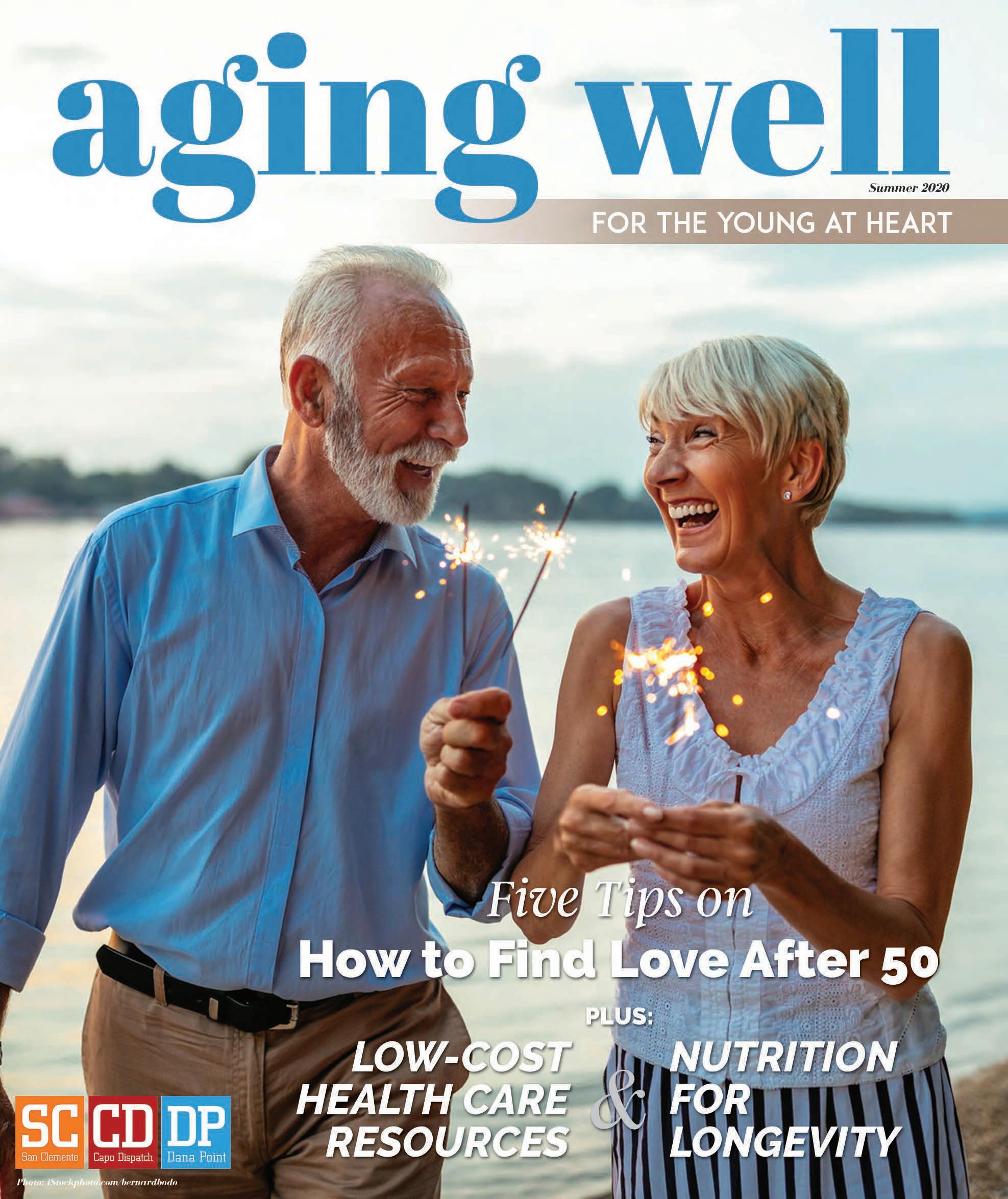
Five Tips on How to Find Love After 50
Finding love after 50 is difficult, unless you get lucky, and someone enters your life unexpectedly. Finding love is like seeking employment. It takes work, energy and commitment.
To help you through the maze, here are five tips for finding love after 50:
1. Create a written finding-loveafter-50 plan. Include in your plan a personal profile—think of it as your resume. But this profile isn’t for publication; it’s for your eyes only, to guide you in your task. Itemize your strengths and interests. But also include items in which you can improve, such as getting more exercise and eating healthier.
Include a section in your plan titled “Qualities,” which has two parts. Part one: Qualities you seek in a mate. For example: “He makes me his top priority,” or “He is kind, warm and caring,” or “He respects his mother.”
Part two: Qualities or traits you won’t tolerate—deal breakers. Examples: Smoking, drug use, heavy drinking, moodiness, or a dislike of animals. Review your written plan often; it will keep you from wasting time on the wrong person.
2. Start moving. This is the action part of your plan. Get off the couch, get out of the house, and get involved in activities you enjoy that will expose you to new people. Volunteer. Join a club via Meetup.com. Take classes or dance lessons. Attend high school and college reunions.
3. Be pleasantly assertive, not aggressive. Strike up a conversation with a stranger who appears to be single (no wedding ring) and who appeals to you. Where? Everywhere. While standing in line at the post office or at a store. Or working as a docent at a museum. Possible conversation starters: “Is that a good Chardonnay?” Or
BY TOM BLAKE, FOR PICKET FENCE MEDIA
“That’s a nicelooking shirt.” Be a salesperson, A-B-C—always be closing. Even if you are shy. End the conversation with, “Would you like to meet for coffee?” Or, “Would you like to walk in the Harbor some morning?” Or, “May I email you?”
Be friendly, and smile.
4. Network. The old-fashioned way to meet people is still the best way. Tell your friends, relatives, neighbors, and co-workers that you’re interested in meeting a potential mate. Ask if they know of anyone near your age who might be a good match for you. Remind them each time you see them. Why? That cute guy down the street who
was married or involved four months ago might now be single. As we age, people’s lives change. Relationships end. New ones begin.
5. Search online. The Internet is another dating tool, a way to reach out beyond your geographical area to meet new people. In my book, How 50 Couples Found Love After 50, half of the couples met online. There are positives and negatives. Every dating site has scammers, and one must be careful when online dating. Ask for guidance from friends, dating coaches, or even me. Trust your instincts. Be careful. With a solid written plan, you’ll improve your chances of meeting a potential mate. Good luck.
Tom Blake is a Dana Point resident and a former Dana Point businessman who has authored several books on middle-aged dating. See his websites http://www.findingloveafter50.com; www.vicsta.com and www.travelafter55.com. To receive Tom’s weekly online newsletter, sign up at www.findingloveafter50. com. Email: tompblake@gmail.com.
Families Deserve Straight Talk About Nursing Home Safety
The coronavirus headlines have been grim. Seventeen bodies piled up in the morgue at a New Jersey nursing home. Fifty-five residents dead in Brooklyn, N.Y. In one week, 104 residents dead in a facility in western Pennsylvania and 102 dead at a home in San Antonio.
Residents in nursing homes had been at risk long before we began reporting on them in the 1990s, and care facilities have continued to be the subject of press inquiry all across the country. Staffing shortages, poor care, and outright abuse had been the stuff of media exposes for years, long before anyone had heard of the coronavirus.
The usual response? Nursing homes that got into trouble promised to clean up their act, engaging in what came to be called yo-yo compliance with state and federal regulations.
Nursing facilities with numerous deficiencies in caregiving would promise to make recommended changes and improve conditions. But promises were just that. Often, they did not result in permanent or meaningful change. A facility would get into trouble again.
The nursing home story today is different: 100 dead residents at one facility in one week when even 55 or 25 would be highly unusual. Casualties during the coronavirus pandemic raise serious questions about infection control, testing protocols, protective equipment for staff, and the number of personnel to care for residents who are intrinsically vulnerable.
Most visitors have been prohibited since the pandemic began, making it more important than ever that the public has access to information about complaints, infection rates, and staffing at their local nursing facilities.
The public needs someone or some agency to be their eyes and ears to help them learn what’s happening on the inside.
Florida, like a lot of other states, had refused to release numbers of nursing home residents who died from the virus, and it has been something of a national struggle for families and the media to get this information. Marbin Miller’s newspaper, along with other media outlets, threatened legal action, and eventually the state agreed to release the death counts.
At the end of the first week of May, the state reported 665 people had died in the state’s nursing homes and assisted living facilities, an increase of 242
from the previous week. Fourteen facilities reported more than 10 deaths.
The Centers for Medicare & Medicaid Services, the federal agency that oversees Medicare and the country’s nursing homes, issued “guidance” requiring the country’s nursing facilities to be more transparent. Beginning May 17, nursing homes were required to report their COVID-19 cases to the federal Centers for Disease Control and Prevention (CDC) and to families and residents already in nursing facilities. Presumably, this information will be on the CDC and Centers for Medicare & Medicaid Services websites and in the states, too.
Earlier this spring, Kaiser Health News offered a glimpse of what nursing home inspectors found when they visited facilities across the country. Infection control was a problem before the days of the coronavirus.
In the past three years, 61 percent of about 9,400 nursing facilities sampled were cited for one or more infection control deficiencies. Sixty-three percent of about 9,700 were cited for infection control deficiencies on their last two standard government surveys.
Even nursing homes with five-star ratings from the government, presumably a designation of high quality, have had problems. It turns out 40 percent of those facilities were cited for infection control lapses.
Results like these suggest families with relatives already in nursing facilities, or those about to place a relative in one, should look long and hard at the new data available.
“A society’s quality and durability can best be measured by the respect and care given to its elderly citizens,” British historian Arnold Toynbee once warned. Do we measure up?
As insurance companies push doctors to save money by switching their patients to generic drugs, complaints about those generics appear to be on the upswing. That’s the observation of journalist Katherine Eban, who has written a book, Bottle of Lies, that tells a very dark tale about the generic drug industry and the safety of generic drugs Americans are increasingly taking.
“My inbox is full of communications from patients who were on a drug that worked but were switched to a generic that didn’t work,” she told Community Health News Service. “Patients find themselves on a medical odyssey.”
She illustrated her point with a case from a major U.S. hospital transplant center where transplant patients who were switched to an immunosuppressant drug made in India suffered organ rejection. One died, and the other had a “tough stay in the ICU,” Eban said. She also noted the plight of one woman whose depression was stabilized on a brand drug but whose condition worsened when the pharmacist switched her to a generic.
Hundreds of patients have told Eban that they don’t do well on some of the generics and have no clue why.
It’s important to understand the rules of the new pharmaceutical game you’re being asked to play.
That game is increasingly focused on the ingredients that go into generic drugs, which are mainly coming from India and China, where Eban’s book shows that good manufacturing practices are often ignored in the name of profits.
Eban described the generic drug industry abroad as a “maze of global deception.”
One company, for example, deceived regulators around the world by submitting fraudulent data that made its drugs appear bioequivalent to brand name drugs. “We are dependent on distant drug manufacturers,” Eban wrote, “yet have little visibility into their methods.”
Eban also found that Americans can’t rely on the FDA to assure that generics made abroad are safe. Although the agency reviewed data from foreign generic drug makers and inspected their plants, it was not systematically testing the drugs. Yet, she pointed out that some 40 percent of the U.S. generic drugs are made in India. Eighty percent of the active ingredients in all of our drugs, brand or generic, are made in India or China.
What Eban uncovered helps explain why a generic drug a doctor had prescribed doesn’t work as well as a brand drug. Maybe it has been adulterated to save money and increase profits for the manufacturer. So how do patients protect themselves if some generic drugs are unsafe?
Eban suggests learning more about the manufacturer of your drug. The drug maker is typically listed on the dispensing label. Find out if the manufacturer has been in trouble with the FDA by looking at the inspections, compliance, and enforcement sections of the agency’s website. If the company has received a warning, that’s a red flag.
It’s not possible, however, to find out where your drug was made. No law requires a drug maker to disclose the country of origin for either the ingredients or the manufacturing of the drug itself.
You can also find out if others are complaining about a particular generic that is not working properly. If they are, that helps build the case to get your doctor to switch you to a different brand. One source for learning about complaints is the People’s Pharmacy (peoplespharmacy.com). For more advice, you can also consult Eban’s website: katherineeban. com.
Low-Cost Health Care Resources
BY JAMES HALL
These resources provide assistance for those on fixed budgets and seniors on Medicare looking for the health care they need.
Established in 1989, the Medicare Rights Center is a nonprofit organization dedicated to ensuring people living with disabilities and older adults have access to affordable health care. medicarerights.org
This national nonprofit provides a wealth of information about drug assistance programs and affordable health care options.
This website offers a
comprehensive overview of how and when to enroll in Medicare, as well as a state-specific list of Medicare information and resources.
A health care cost-reductive service that helps patients renegotiate medical bills, as well as check billing accuracy.
The National Institute of Dental and Craniofacial Research provides advice on how to find low-cost dental care.
An online tool that allows people to find federally funded health centers in their area (data can be exported to PDF or XLSX). This interactive map is also available as an iPhone application.
A state-by-state guide to finding free clinics. Offers additional information for no-cost medical clinics, affordable clinics, lowincome clinics, and clinics that offer services to those who are uninsured.
Created by the National Council on Aging, My Medicare Matters teaches people about the Medicare system (when to enroll, how much you’ll pay, what to expect when coverage begins, and so on).
Local Knowledge
Taking Care of the People
BY COLLIN BREAUX
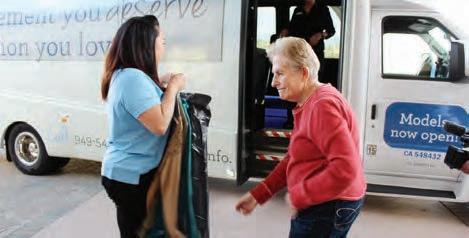
In the retirement community of Reata Glen in Rancho Mission Viejo, the residents do more than sit in chairs. They collect and donate clothes, as they did back in February when the Working Wardrobes warehouse in Irvine burned down in a fire. They enjoy live music. They stay active with fitness programs.
“They’re moving here to thrive,” marketing manager Stephanie Riggs said. “This is the place to be.”
Activities at Reata Glen include the growing sport of pickleball, tennis, tai chi, yoga and poker. All of these help keep the residents active and mentally sharp. Residents Eileen Padberg and Sue Thomas organized the clothing drive for Working Wardrobes, which collected thousands of items.
Before the COVID-19 pandemic, activities also included constant live music, dance and art classes, bridge and card games, and weekly excursions, according to life enrichment director Jayne Austin. Residents have been guided on historical walks and visited the Ronald Reagan Presidential Library.
“We’d have movies every day, fitness classes, everything from yoga to tai chi,” Austin said. “We offered bocce ball, tennis and pickleball.”
Obviously, the COVID-19 pandemic has temporarily changed that. Staff is continually monitoring conditions and ensuring residents stay safe, and some amenities are slowly reopening. Residents are still getting to participate in recommended activities and fitness routines, this time through an in-house channel provided through their televisions. Cycling, walking and jogging have been popular with residents.
Local Knowledge
Good oral hygiene is the foundation for the health of your entire body, particularly as one ages. Lack of attention to oral hygiene by failing to brush twice daily and oss at least once a day, may lead to periodontal disease. Genetics, hormonal changes, medications, smoking, immunosuppression, and diabetes are also risk factors that contribute to the development of periodontal disease. 80% of Americans will be a icted with periodontal disease by age 45, and 4 out of 5 patients with the disease are unaware they have it. Periodontal disease increases with age and 70% of adults 65 years and older have periodontal disease.
What is periodontal disease?
Periodontal disease is characterized by the in ammation of gum tissue, presence of disease-causing bacteria and infection below the gum line. Infection and bacteria in the mouth can cause bone loss, tissue recession and even tooth loss. ese infections and bacteria can spread beyond the mouth and lead to disease in other parts of the body.
Treatment may include deep cleanings, LANAP (laser assisted new attachment procedure), bone regenerative therapy or gum grafting to restore and strengthen tissues that have been damaged.
When should you see a Periodontist?
· Unexplained bleeding while brushing or consuming food
· Bad breath that continues despite thorough cleaning
Residents have also participated in fitness programs from their balconies, with fitness instructors guiding them through movements while far away.
“We have private concerts,” Austin said. “We hire musicians for Reata Glen, record them and then show it to residents.”
Staff even delivered margaritas and chips and salsa to residents for Cinco de Mayo, as well as treats on Mother’s Day. Reata Glen is slowly reopening its library so residents can resume checking out books, and has also reopened the computer lab.
A video on the Reata Glen website features residents talking about how the community has simplified their lives, ensured they avoided being potentially exposed to the virus and the continual health monitoring they receive from staff. Staff members also spoke about how they can arrange doctor visits and other services for residents, so they don’t have to travel outside and risk contracting the virus.
“They have a very enriched lifestyle,” Austin said. “I’ve often heard we’re a cruise ship on land. They’re very well taken care of.”
BY DR. HAMILTON LE
A prosthodontist is a dentist who has completed dental school plus at least three additional years of advanced training and education in a prosthodontic graduate program. ey specialize in treating and handling dental and facial problems that involve restoring missing teeth and jaw structures.
e term “prostho” means replacement and “dentist” means dealing with teeth. Essentially, prosthodontists are THE recognized experts when anything needs to be replaced in your mouth. is can range from a single tooth, multiple teeth, or all teeth and gums in the mouth. While many other dentists can do some of these treatments, prosthodontists are the specialists dedicated to this type of care.
Prosthodontists have advanced training in restoring and replacing teeth. Prosthodontists are considered the leaders of the dental treatment plan. ey regularly lead teams of general dentists, specialists, and other health professionals to develop solutions for your dental needs.
ey construct oral prostheses to replace missing teeth and associated oral structures with permanent xtures, such as implant-supported prostheses, crowns and bridges, or removable xtures such as dentures and removable partial dentures. ese specialists also restore function and aesthetics to traumatic injury victims, and to individuals with diseases or birth defects.
Choose a prosthodontist because of their advanced education and training, e ciency, and expertise with advanced technology. Prosthodontists are extensively trained in state-of-the-art techniques and procedures for treating complex dental conditions and restoring optimum function and esthetics.
· Loose teeth or gum recession. (Often times bone loss may be associated with both of these conditions)
· Related systemic health concerns such as diabetes, heart disease or osteoporosis.
Periodontists are highly trained surgeons with three + years of training beyond dental school. ey work with your general dentist to improve esthetics and achieve optimum dental health. In addition to the treatment of periodontal disease, periodontists remove non-restorable teeth, replace missing teeth with implants, treat gum recession with grafts and re-contour gums (crown lengthening) to improve the restorations of existing teeth.
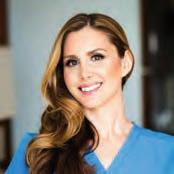
Dr. Vanessa B. Bikhazi is a Periodontist, practicing at Moran Perio in San Clemente. As a highly trained surgeon, Dr. Bikhazi can perform the following procedures: tooth extractions, crown lengthening, correction of a gummy smile, gum/bone grafting, LANAP (laser assisted new attachment procedure), sinus lifts, and single tooth to full mouth dental implants.
For more information or to schedule an appointment, go to moranperio.com or call 949.361.4867 (gums).
Rigorous training and experience give prosthodontists a special understanding of the dynamics of a smile and the preservation of a healthy mouth.
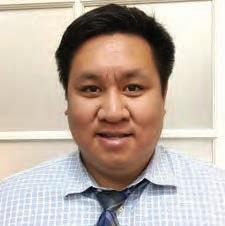
Dr. Hamilton Le is a board certi ed prosthodontist and is part of the Moran Perio team located at the mouth of Talega in San Clemente, He is a native of Southern California who attended UC Berkeley for his undergraduate training. After earning his Bachelor’s Degree, he moved to Boston where he attended dental school and a prosthodontics residency at Tufts University School of Dental Medicine.
As the leading prosthodontist in South Orange County, Dr. Le’s commitment to dentistry and patient care is the foundation for his treatment philosophy, providing you the necessary information to understand your dental needs and concerns. For more information, visit moranperio.com or call 949.361.4867.
BY GINA COUSINEAU
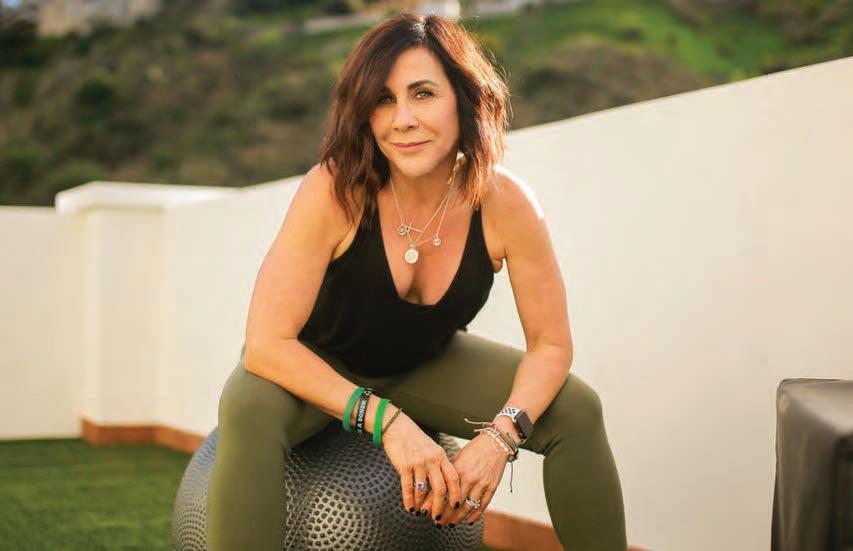
There is no stopping the aging process, but we can certainly impact the effect it has on our bodies with our food choices. As an integrative culinary nutritionist who specializes in weight loss, autoimmune dysfunction, diabetes, and gut distress, the majority of clients come to me for weight loss. Senior clients often reach out after leaving a doctor’s appointment in which their medical practitioner scared them into taking action due to a health concern. And while I want you to heed their warnings, I do not want you to be scared into action that will prove to be futile like in the past, such as going on another diet to simply lose weight. Just like our elders deserve our respect, each human’s body deserves self-respect, and all too often we do not give it. I encourage you to begin moving toward a healthier lifestyle approach—not with a restrictive punitive diet, but instead simply by moving toward food in its most natural form. My
hope by the conclusion of this article is that you have some actions items to consider as to what you should and could include in your day, rather than what you need to avoid, to help you lose weight and improve your health for good.
Whole grains, legumes, fruits, and vegetables should fill your plate for three meals each day, along with a snack or two, depending on your activity level. Proteinrich foods are encouraged with each eating opportunity, which can include lean cuts of meat, fish, poultry; nonfat or low-fat dairy options including eggs, and plant-rich sources such as tofu and other soy-based foods.
And don’t forget the need for healthy fats to help with all of the metabolic pathways and absorption of essential fat-soluble vitamins such as olive oil, avocado, and nuts/seeds. The items you didn’t see me list for your everyday food consumption were things I consider treats and splurges such as cakes, cookies, and ice cream. While I have no issue with a lovely dessert choice for special occasions, I do suggest clients who have health and weight concerns should limit those items. And I must confess, I do encourage clients to avoid at all costs, sodas (both diet and sugar-laden) and ultraprocessed foods, that can live on the shelf or
in the freezer for years on end, offering little nutrition, simply feeding the mind and soul. Along with these food recommendations, we must consider nutrients of concern are lacking in our diets as we age and how to best include them:
Calcium and Vitamin D // These two powerhouse nutrients are imperative for bone health. Food sources: nonfat/lowfat dairy products, fortified foods, dark green leafy vegetables, fatty fishes, canned fish with bones, and fortified foods.
Vitamin B12 // After the age of 50, we might not be able to absorb enough of this vitamin. Food sources: fortified cereal, lean meat, some fish/seafood.
Dietary Fiber // Helps keep us regular, and may reduce risk of heart disease and type 2 diabetes. Food sources: whole grains, legumes, fruits, and vegetables
Potassium // Consuming this mineral, along with limiting sodium typically found in processed foods, may lower your risk of high blood pressure. Food sources: fruits, vegetables, beans, and nonfat/lowfat dairy products.
Gina Cousineau sees clients virtually out of her San Clemente office. Her extensive education with a BS in dietetics and MS in integrative and functional nutrition, chef training, and 30-plus years as a fitness professional, allow her to help clients find a practical nutrition approach to reach their goals. You can reach her at MamaG@MamaGsLifestyle. com, 949.842.9975, and on Instagram / Facebook @ mamagslifestyle.