Power concedes nothing without a demand. It never did and it never will. Find out just what people will submit to and you have found out the exact amount of injustice and wrong which will be imposed upon them and these will continue till they have resisted either with words or blows or with both. The limits of tyrants are prescribed by the endurance those of whom they suppress.
—Fredrick Douglass
(1849)
Breaking the Mental Health Stigma of “What Happens in this house Stays in this House”
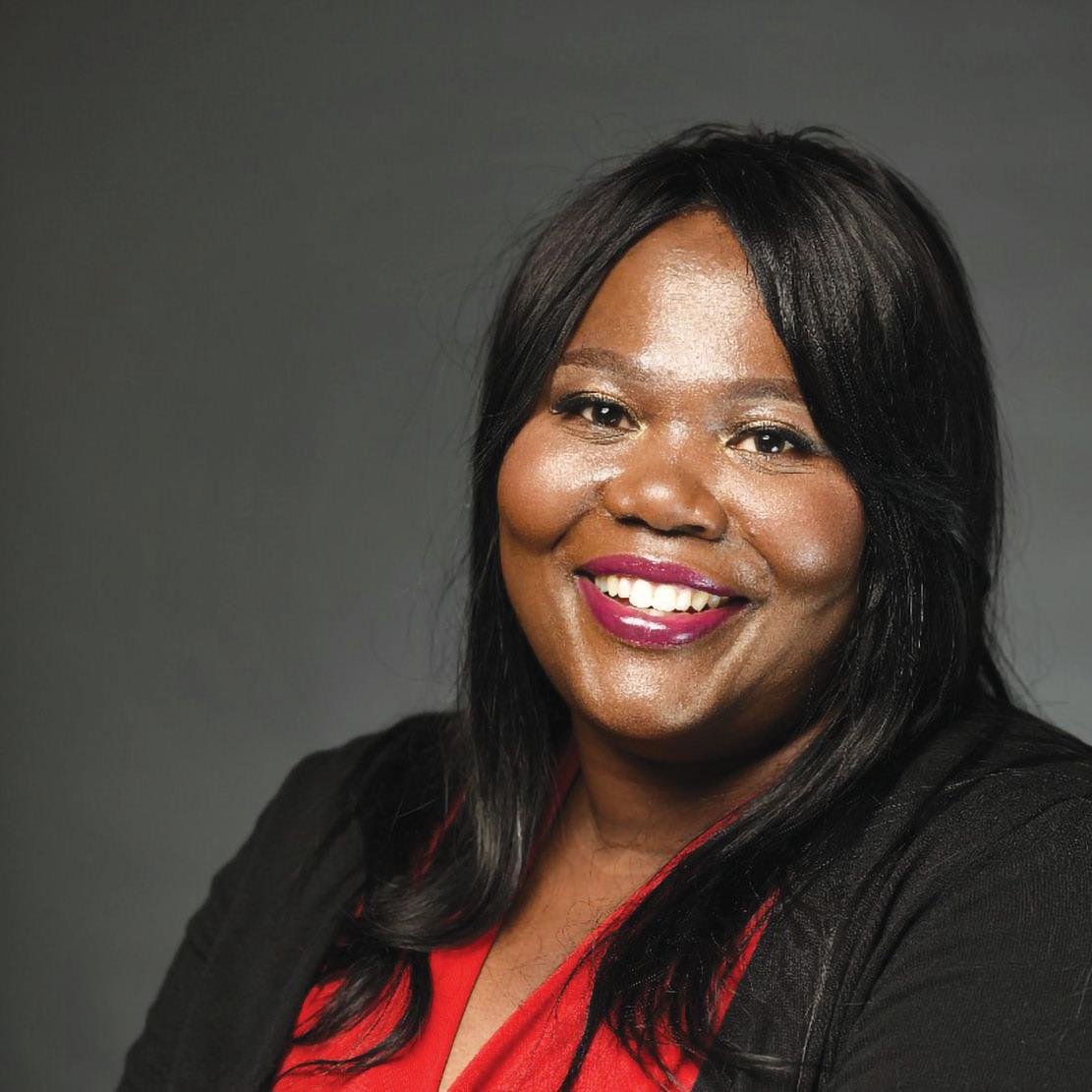
By Ms. Wanda Radio Host, Full Circle KDEE-FM
There are lots of reasons why people don’t seek assistance when it comes to mental health, especially in our community and it’s time we break those barriers. For far too long, we have had this saying in our community of “What happens in this house stays in this house” and that causes stigma and shame for us not to be able to talk about our mental health needs.
I spoke with Dr. Monica Soni, Covered California Chief Medical Officer, about behavioral health as an integral part of wellness and mental, physical, and spiritual healing being key pillars for a holistic approach to healthcare. In honor of Mental Health Awareness Month, I am sharing parts of our conversation, hoping to make a difference in at least one person’s life.
Dr. Soni, mental health, suicide prevention and substance use disorders are some of the key issues affecting Blacks and African Americans. How can we overcome the stigma surrounding
behavioral health?
Behavioral health includes mental health and substance use disorders, and it shapes how we think, feel, cope, and connect with one another. Reducing stigma starts with open, respectful conversations, even when those conversations are difficult. It also means acknowledging that discrimination and lack of access to housing, employment, and education can affect mental health and well-being. Overcoming stigma requires us to listen without judgment, lead with compassion, and create communities where seeking help is seen as a sign of strength. And it means breaking the belief that we must keep everything inside “our house” instead of talking openly and supporting one another in getting the care we need.
Initiating a conversation is key, but it is also important that we take care of ourselves to feel strong enough to notice and deal with changes in behavior from those around us. How do you think we can become better prepared to have a conversation about mental health?
hearing is serious and important signals that you are truly listening.
It is important to note that when we see changes, we must check in and not be fearful to have serious conversations. Part of caring for people and being prepared is also knowing about the mental health supports that exist in California, including the 988 Lifeline which can be texted or called 24/7, 365 days a week.
Why are coverage and access to resources and services important when we are dealing with trauma, stress and so many other things in our lives?
College Students and Young Adults Face Ongoing Mental Health Challenges
By Dr. Nicole Brady, chief medical officer, UnitedHealthcare Student Resources
Mental health challenges among young people remain persistently high, and many students and families are still trying to understand how best to respond.
UnitedHealthcare’s fourth annual Young Adult and College Student Behavioral Health Report found that more than 6 in 10 (62%) college students and young adults not enrolled in college ages 18–28 reported experiencing a mental or behavioral health concern in the past year — consistent with elevated levels over the past four years. In addition, in California, approximately 14.9% of young adults reported their mental health was not good for 14 or more days in the past 30 days, according to America’s Health Rankings. Among college students, concerns are rising.
UnitedHealthcare’s survey found nearly 70% said they have experienced concerns such as anxiety/stress or depression, reaching the highest levels in four years. At the same time, many parents may not fully recognize what students are going through, pointing to an opportunity for more awareness, communication and support.
May is Mental Health Awareness Month. It’s a meaningful time
to focus on practical ways to support young adults and students. Whether you’re a parent, caregiver, educator or navigating these challenges yourself, here are three ways to help support mental well-being:
Start with open, honest conversations
Frequency doesn’t always lead to understanding. Survey findings uncover that while 39% of parents of college students believed their child felt understood after conversations, only 28% of students agreed, and 26% said they felt misunderstood. Meanwhile, young adults not enrolled in college report speaking with parents less often, yet their perceptions of mental health challenges were more closely aligned with their parents. Together, these findings suggest that how we communicate matters as much as how often.
Prioritizing meaningful, two-way conversations that emphasize listening, empathy and understanding can make a meaningful difference.
Encourage balanced use of AI Digital tools are playing a growing role in how young
Maintaining a healthy relationship with those we love and care for is a daily effort. We must be aware that mental health can affect people at different stages in life, from children to adolescents, young adults, and the elderly. Living in a world where social isolation is a real risk, we can each play a role in helping others feel seen, supported, and connected. We must pay attention to behavioral changes, including mood swings and lack of engagement in social activities.
adults and students manage their mental health. Nearly one-third (31%) of respondents reported using AI-based platforms to explore symptoms or find coping strategies, and 26% of those users said they’ve turned to these tools for companionship, reassurance or emotional support. While these resources can be helpful, they are most effective when used alongside guidance from qualified health care professionals.
Help build awareness of trusted resources
Many young adults are unsure where to turn for help, which can be particularly true when they or their families are navigating mental health concerns for the first time. At the local level, community organizations, nonprofits and state-based services can provide accessible, often low- or no-cost support — from crisis lines to counseling and peer programs. Raising awareness of these options can make it easier to take the first step.
Health plans can also play a role in helping individuals understand and access available mental health support. For example, some insurers, including UnitedHealthcare, provide digital self-care tools, coaching and 24/7 support lines for in-the-moment assistance, as well as in-person and virtual care options.
Supporting mental health is not just a one-month focus — it’s a year-round priority. By improving communication, increasing awareness and helping young adults connect to care, we can better support their mental wellbeing when it matters most.
For more information on mental health resources, visit uhcsr.com or uhc.com.
Acknowledging with empathy and compassion that what you are
Everyone deserves access to the wellness and support they need. Taking a preventive approach, rather than waiting until needs become more serious, can help people get care earlier and improve overall health and well-being. Healthcare providers, community-based organizations, and suicide support and prevention hotlines are just a few examples of available resources. Behavioral health screening is
covered by Covered California health plans as a preventive benefit. Strong mental health supports better physical health, and when mental health needs go unaddressed, physical health outcomes can worsen. As someone dedicated to providing information and empowering our communities, I truly believe that eliminating stigmas surrounding mental health is a conversation worth having. Talking with Dr. Soni reinforces my belief that the overall wellness of our communities should be based on a holistic approach focused on the mind, the body and the soul. Ms. Wanda is a Sacramentobased radio personality and host of “Ms. Wanda’s Full Circle Radio” on 97.5 KDEE FM, focusing on empowerment, spiritual, physical and emotional health. Her show frequently covers topics such as womanhood, local community stories, and features guests aimed at community uplift.
They cancelled the election
Voting Rights Act: Part One of a Five-Part Series
By Portia Wood Special to the AFRO
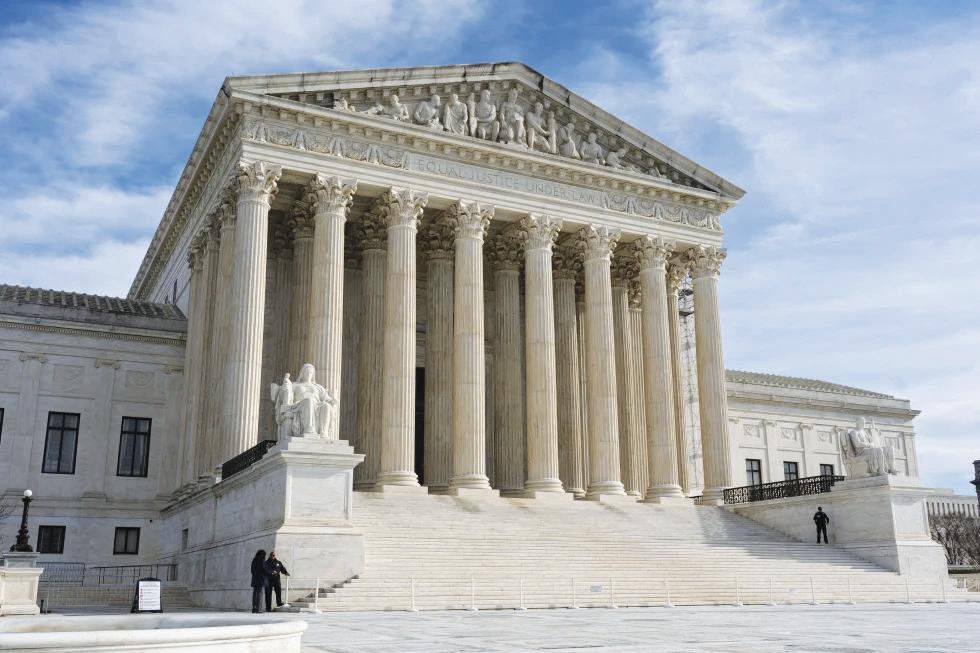
The U.S. Supreme Court issued its ruling in Louisiana v. Callais on April 29, 2026, essentially gutting the last mechanism for ensuring equitable voting rights. (Photo Credit: Unsplash / Tim Mossholder)
On April 29, 2026, the Supreme Court handed down its decision in Louisiana v. Callais. The 6-3 ruling, written by Justice Samuel Alito who was joined by every member of the conservative supermajority, effectively dismantled Section 2 of the Voting Rights Act — the last remaining enforcement mechanism in the 1965 law that made Black political representation in this country possible.
The majority did not formally declare Section 2 unconstitutional. They were too careful for that. What they did instead was hold that compliance with Section 2 cannot justify the use of race in redistricting under the 15th Amendment — meaning the tool Congress gave Black voters to fight
discriminatory maps is now legally incompatible with using it.
The right exists on paper. The remedy is gone.
Damon Hewitt, president and executive director of the Lawyers’ Committee for Civil Rights Under Law, told the AFRO what that looks like in practice: “This is a really slick opinion. It ends up being a rewriting of the VRA that usurps Congress’ power to write laws. We’re left with rights on paper but very few remedies, in fact. This is about as bad as it gets.”
He called it “evil genius.”
That’s not hyperbole. It’s an accurate legal description.
What Section 2 actually was
To understand what was just lost, you need to know what Section 2 did. After Shelby County v. Holder gutted Section 5 in 2013 — ending the preclearance process that required states with a history of discrimination to get federal approval before changing voting laws — Section 2 became the only significant federal protection left. It allowed individuals, civil rights organizations, and the federal government to challenge discriminatory voting practices in court after the fact. No preclearance, but a real legal path.
Section 2 was the provision
B. Johnson
The AFRO represents 133 years of the Black press, kept by one family. The newspaper’s archive is one of the most significant records of Black American life in existence. (Photo Courtesy of the AFRO American Newspapers Archives/Afro Charities)
Thursday, May 7, 2026
California Youth Groups Participate in Legislative Advocacy Days at the State Capitol
Various youth organizations and youth-led initiatives participated in legislative advocacy days last month at the California State Capitol to amplify the voices of Black communities and help cultivate the next generation of leaders.
Among the organizations, the NAACP California-Hawaii State Conference youth councils and young people sponsored by the Black Women Organized for Political Action (BWOPA) engaged directly with state legislators, advocated for policy reforms, and gained experience in the legislative process.
Wisdom O. Cole, the Senior National Director of Advocacy for the NAACP, told California Black Media (CBM) that the youth councils from across the state visited the capital city to monitor legislation that the organization has made priorities: from data centers that affect energy bills to voting rights, and the impact U.S. Immigration and Customs Enforcement (ICE) has on California communities.
“It’s important for young people to be in these spaces because it’s about building a legacy and a ladder of leadership,” Cole said. “Advocacy is a long-term process. We need to continuously revisit the table and consistently revisit the legislators to remind them to build power into the young people.”
Cole added, “Learning the process is important although, oftentimes, it seems difficult and arduous. Sometimes it feels like
our legislative leaders are distant figures that we can’t touch or talk to. We have to remind our young people that these people work for you.”
Cole previously served as the National Director for the NAACP Youth and College Division, where he managed campaigns for over 700 youth and college chapters, focusing on student debt cancellation, police accountability in schools, and voter access.
Before members of the NAACP CA/HI youth councils from Stockton, Oakland, San Diego, Los Angeles, Long Beach, and other areas met with the legislators, they practiced, role-playing as the lawmakers and constituents.
They focused on three bills.
First on their agenda was California Senate Bill (SB) 1420, introduced by Sen. Laura Richardson (D-Inglewood).
The bill focuses on election administration by enhancing voter education and procedures for handling vote-by-mail (VBM) ballots. Richardson is a member of the California Legislative Black Caucus (CLBC).
SB 1420 mandates regulations to promote “Sign, Scan and Go” options, allowing voters to turn in VBM ballots in person, and requires that this information be included in the state voter guide. It passed 7-0 in the Senate AppropriationsCommittee on April 20 but was placed in the
Black Women Organized for Political Action (BWOPA) visited the California State Capitol on April 27, 2026, for its annual Legislative Day of Advocacy and Action. Youth participants also visited the State Capitol Annex
suspense file for further fiscal review.
Next, the young people advocated for Assembly Bill (AB) 1537, authored by Assemblymember Isaac Bryan (D-Ladera Heights). It would bar peace officers from engaging in any part-time, or contractbased secondary employment or volunteering for the U.S. Department of Homeland Security (DHS), its contractors, or any entity involved in immigration enforcement.
AB 1537 passed out of the Assembly Public Safety Committee with a 5-3 vote on March 3. The legislation was placed in the Assembly Appropriations Committee’s suspense file.
Finally, they lobbied lawmakers on AB 2383, authored by Assemblymember Rick Zbur (D-West Hollywood). That legislation aims to protect residential electricity ratepayers by creating a special rate structure for “large energy use facilities,” such as data centers. As of April 14, the bill was approved by the Assembly Utilities and Energy Committee with a 16-1 vote. It has been referred to the Assembly Appropriations Committee.
Langston Notto Bennett, a member of the Los Angeles NAACP Youth Council, said AB 2383 intends to manage the massive energy demands of data centers fueled by the artificial intelligence (AI) boom.
The young man who will enroll at Morehouse College next fall,
a historically Black College and University (HBCU) in Atlanta, learned something else about the bill that he shared with other youth.
“I never knew California as a whole was becoming a hub for AI. I always knew the San Francisco Bay Area was a part of the AI culture because a lot of companies are moving towards AI,” Bennett said. “I also learned that it takes a lot to understand these bills and to go up there to talk to legislators. It’s a powerful moment for sure.”
On April 27, BWOPA was at the California State Capitol for its annual Legislative Day of Advocacy plus and Action. The event was designed to connect members, youth, and leaders with state officials to advocate for policies affecting Black women, families, and communities.
BWOPA is a statewide nonprofit advocacy organization in California, dedicated to training, empowering, and engaging Black women and youth in the political process. Founded in 1968, it is the oldest women’s political organization in the state with chapters concentrated in the Bay Area, Sacramento region, Central Valley, Southern California, and Solano County.
“BWOPA’s Legislative Day was a reminder that we don’t all have to be policy experts—we just have to be prepared, clear, and willing to use our voices,” the BWOPA Oakland/Berkeley Chapter posted April 28 on Instagram.
Black school counselors are a necessity–we don’t have enough
By Alvin Buyinza Word in
Gabrielle Brundidge knew she wanted to be a school guidance counselor since she was a teenager. The idea first came to her while discussing college plans with her guidance counselor, Ms. Garcia, during her senior year at Northview High School in Johns Creek, Ga.
“She was Hispanic, and it was my first time having a school counselor that looked like me,” says Brundidge, a 38-year-old Black woman. With her patience and knowledge of the college application process, she says, Garcia “didn’t make me feel as though I was smaller than what I was dreaming of.” Years later, Brundidge is
paying it forward to middle schoolers at Lee Roy Myers Middle School in Savannah, Ga. Students at the majority-Black school need it more than most: many of the students come from underserved neighborhoods that struggle with crime. Amid hardships at home and teenage growing pains, Brundage says what her students need most is encouragement.
“I want to be that person that just uplifts them, that tells them, ‘Hey, if you do your work here, stay focused, you can go anywhere,” she says. But there aren’t many of her
around
Why are there so few Black school counselors?
Though guidance counselors are critical to shaping a student’s academic, emotional and career development, the American School Counselor Association reports that fewer than one in 10 guidance counselors are Black, a significant decline since 2020. And the number of Black educators entering the profession is continuing to fall.
That’s despite ACSA research showing that Black students matched with a Black counselor are more likely to succeed academically and enroll in college after graduation.
In 2020, according to the ACSA, about 11 percent of its members identified as Black or African American. That percentage fell to 8 percent in 2025.
Dr. Tylon Crook, an assistant professor of counselor education at Sacred Heart University, said one of the many reasons Black school counselors leave the profession is that they feel isolated being the only Black person in their role, and are not given the support they need.
Black school counselors are a necessity–we don’t have enough...continued
Orleans, and to punish him would be akin to telling him his upbringing — the way his mama and aunties spoke — was wrong too.
“Without having that cultural knowledge and awareness, those students would possibly be suspended or expelled or drop out of school because [Black counselors] are not there to support and understand them,” he says.
The push to get more Black school counselors There are national efforts to increase the number of Black school guidance counselors.
In California, the Los Angeles Unified School District has invested $80 million in its Black Student Achievement Plan, a program that funds several initiatives to improve the academic outcomes of the city’s Black students. As part of the plan, 60 school counselors
A
new
Research shows that Black school counselors at mostly white schools are often subject to microaggressions. He also mentioned that many Black school counselors grow frustrated with the K-12 education system.
A cultural touch to working with Black students
Dr. Bernell Elzey Jr., a senior official with the Louisiana School Counselor Association, said that the shortage of Black school guidance counselors means that Black students will lose out on professionals who understand their culture and can relate to them.
Elzey recalled that he intervened on behalf of a Black boy who was disciplined for yelling at a white school administrator. The administrator saw the boy in the hallway after class had started and yelled at him to get going; the boy yelled back that he was on his way, but the administrator cited him for being disrespectful.
Elzey, however, explained to the administrator that the boy’s response wasn’t meant to be disrespectful; rather, it was typical of people from New
have been hired, many of whom are Black, according to KQED. At Marquette University in Wisconsin, the school received a $2.26 million federal grant to expand counseling services and diversify the field, according to EdWeek.
For her part, Brundage, the school counselor in Savannah, Georgia, intends to continue supporting her students, remembering what it was like to be in their shoes.
“This is such a trying time for students,” she says. “They are dealing with going through puberty. They are dealing with wanting to be cool.
They’re going through just so many different developmental changes, physically and mentally, that we are just here to try to help them along the way.”
This article was originally published by Word in Black.
reality: Retirement while supporting young adult children or parents
by Victoria Mejicanos
Rising costs of living and cultural expectations have increased the number of retirees still supporting young adult children, with 50 percent of parents now supporting a child older than 18. (Photo credit: Unsplash / HisArt Photos)
With the rising costs of living, economic pressures and longer life expectancy, many who are preparing to retire must think about what retirement would look like while still financially supporting legal dependents, young adult children or their parents. According to experts who spoke with the AFRO, retiring with dependents has become either a choice or a necessity to help loved ones survive in the current economic climate.
According to a savings.com report, which surveyed 1,000 parents who had adult children, 50 percent of parents are supporting a child older than 18.
For Rose Faye, a certified financial planner, conversations around retiring with dependents is not new, especially for clients of color, but it has changed in recent years.
“Children [are] becoming more and more prevalent in the conversations I have with clients,” said Faye. “It’s even not just in the traditional sense that they live with you. Now, it is how do you also give them an economic leg up, for example, help put down payment for homes, or supplement things like one vacation a year so they can have experiences.”
Rose Faye is a certified financial planner who helps older adults plan for retirement. She says the key to proper preparation for retirement for those who have dependents is open communication. (Courtesy Photo)
While financial planning can help people navigate these decisions, Dr. Sherida Santiago, a professor at Coppin State University’s College of Business, says this rising trend is a result of broader economic and structural factors. She noted that not only
Antonio Ray Harvey | California Black Media
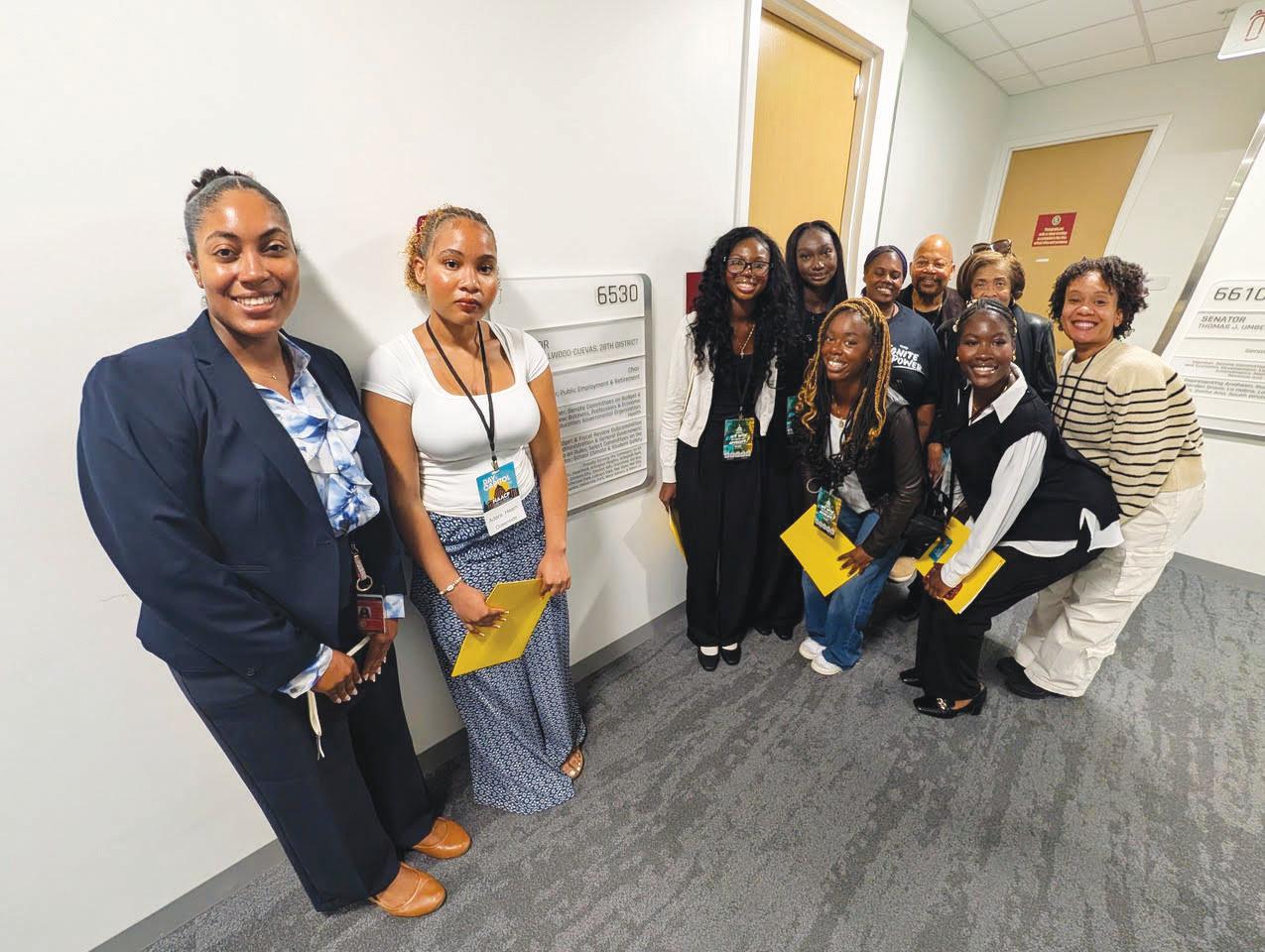
Monea Jennings, far left, a Senate fellow in the office of Sen. Lola Smallwood-Cuevas (D-Los Angeles), welcomed members of the NAACP CA/HI State Conference Youth Councils to speak with her about legislative bills. CBM photo by Antonio Ray Harvey.
Swing Space to speak with legislative aides. CBM photo by Antonio Ray Harvey.
Only 8 percent of school counselors were Black in 2025. Research shows when Black students work with Black school counselors they are more likely to academically succeed. (Photo Credit: Unsplash / CreateHERStock)
Black
Thursday, May 7, 2026
Political Playback: California Capitol News You Might Have Missed AKAs, Zetas and Sigmas Rally at
State Capitol to Advocate for Legislative Priorities
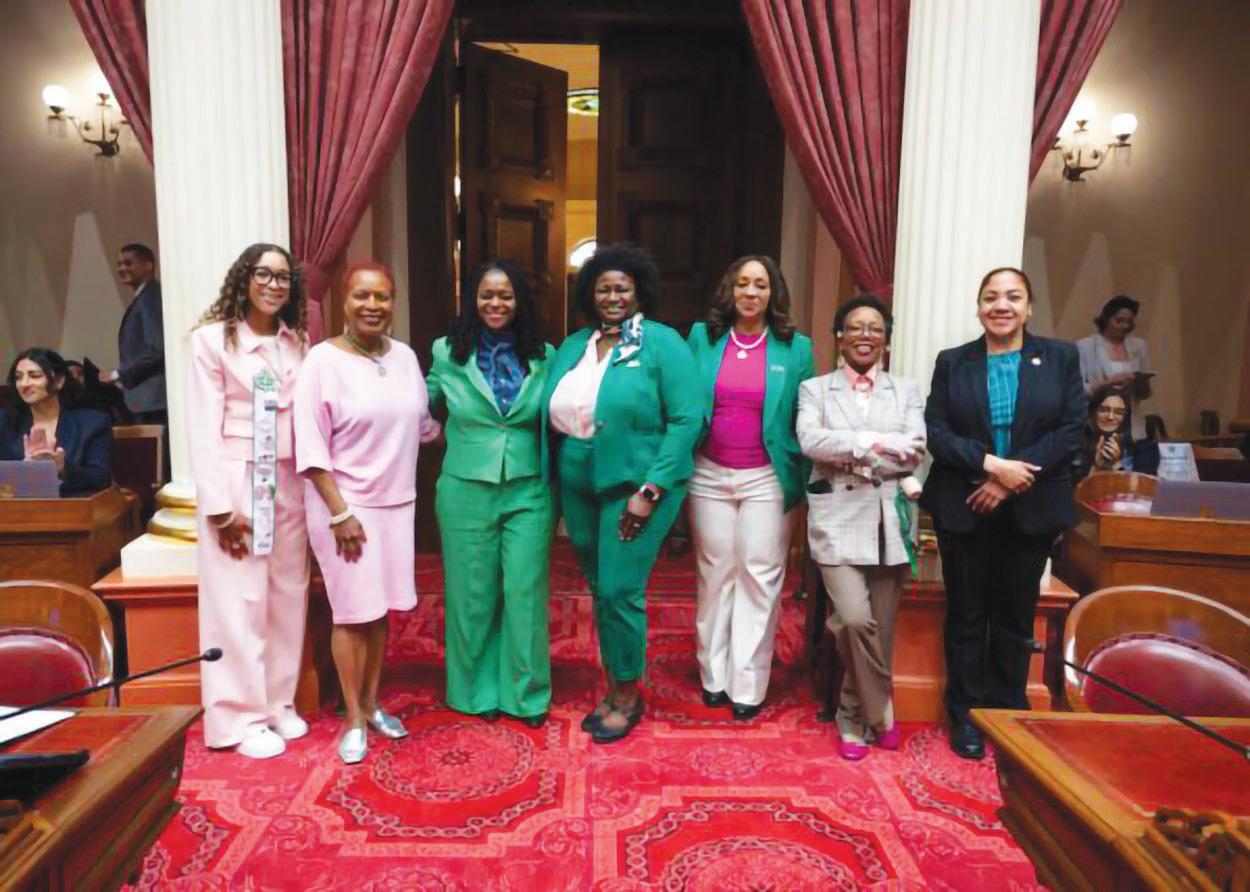
On April 27, members of two Black sororities and one fraternity, Phi Beta Sigma – all members of the Divine Nine (D9) — visited the California State Capitol for a day of legislative advocacy, including presentations on the Senate and Assembly floors led by lawmakers from the California Legislative Black Caucus (CLBC). The State Capitol, Swing Space Annex, and surrounding areas were filled with members of Alpha Kappa Alpha Sorority, Inc. and Zeta Phi Beta Sorority, Inc., dressed in their signature colors of pink and green, and royal blue and white, respectively.
“Being a Zeta strengthened my commitment to community and reminded me that leadership is about showing up, especially for those voices too often unheard,” said Assemblymember LaShae Sharp-Collins (D-La Mesa). “I am honored to be joined today with 50 members of Zeta Phi Beta Incorporated, as well as the Phi Beta Sigma Fraternity, Inc., in the rear of the chamber and gallery.”
Members of Alpha Kappa Alpha Sorority, Inc. were at the Capitol for their 27th Annual Day, meeting with legislators to discuss 2026 priorities, including voting rights protections. Their visit included recognition on the
Senate floor, hosted by Sen. Lola Smallwood-Cuevas (D-Los Angeles).
“Today, we recognize not only the legacy of Alpha Kappa Alpha, but the continued impact of its members who lead, serve, and uplift communities across the nation,” said Assemblymember Tina McKinnor (D-Inglewood).
The D9 is the collective name for the National Pan-Hellenic Council (NPHC), an umbrella organization representing nine historically African American Greek-letter fraternities and sororities founded between 1906 and 1963.
Black PressLA28 Olympic Tickets: Register by July
(AP
Tickets for the 2028 Olympic Games go on sale in August, but fans must register by July 22 to enter a random draw for access to purchase them. Selected participants will receive an email with a designated time slot to access the ticket sale when it opens in August.
The upcoming sale is the second ticket release, following an initial presale that ran April
and
2–6 for residents in the Greater Los Angeles area and Oklahoma City, with tickets then opening to the global market from April 9–16. “The response to our initial on sale was nothing short of historic,” said Reynold Hoover, CEO of LA28. “Fans from near and far have spoken: the world wants to be part of the LA28 Games.”
Statement from Black Elected Officials of California on the Supreme Court’s Decision in Louisiana v. Callais
WE WILL NOT GO BACK!
Political News
We, the undersigned Black Elected Officials representing communities across the United States, and in particular the approximate 2.8 million Black Californians whose political voice hangs in the balance, rise today in unified condemnation of the Supreme Court's 6-3 decision in Louisiana v. Callais.
With this ruling, a majority of the Court has done what decades of voter suppression could not accomplish through the ballot box: it has gutted the heart of the Voting Rights Act of 1965, a law purchased not with ink, but with the blood, sweat, sacrifice, and lives of those who marched, bled, and died on the Edmund Pettus Bridge and throughout this nation.
By requiring proof of intentional discrimination rather than discriminatory results, Justice Alito's majority opinion has erected a near-impossible legal standard, one that our communities, our attorneys, and our advocates cannot realistically meet. The Court has, in effect, handed state legislatures a roadmap to dilute Black political power without legal consequence.
This is not the first blow. In 2013, Shelby County v. Holder dismantled the preclearance formula that served as the Act's frontline protection. In 2021, Brnovich v. Democratic National Committee raised the bar for Section 2 challenges to voting restrictions. And now Callais v. Louisiana is an advancement of the dismantling. Taken together, these three decisions represent
the most sustained judicial assault on Black voting rights since Reconstruction, and we refuse to pretend otherwise.
WE SPEAK DIRECTLY TO OUR COLLEAGUES IN CONGRESS AND IN STATE LEGISLATURES
This is not a moment for equivocation. The Supreme Court has made clear it will not defend the constitution and amendments that have been made for all to be seen as equal. That burden now falls squarely on the legislative branch. We call on Congress to immediately pass updated Voting Rights legislation that restores the results-based standard, establishes a new preclearance formula, and closes every loophole this Court has opened. We call on our colleagues in the California Legislature and in state legislatures across the nation to enact the strongest possible statelevel voting rights protections, because the federal floor has collapsed.
THE STAKES FOR BLACK CALIFORNIA ARE IMMEDIATE AND CONCRETE
California is home to one of the largest, most politically active Black communities in the nation. Black Californians fought hard for, and won, fair representation in congressional and legislative maps. It has been California’s Black leadership
that has influenced how the nation responds to policy and social shifts. That representation is not guaranteed by this Court. With redistricting cycles already underway and the legal tools to defend majority-minority districts severely weakened, the door is now open for challenges that could erase districts where Black Californians have, for the first time in generations, sent representatives who look like them and speak to their lived experience.
This ruling does not affect some abstract legal doctrine. It affects who represents Inglewood and Compton, San Bernardino and La Mesa, Watts and Oakland, Richmond and Sacramento. It determines whether the Black vote counts as a whole vote, or is once again carved, cracked, and packed into irrelevance.
As Justice Kagan wrote in her dissent, this Court has, step by step, dismantled the key civil rights protections that generations of Americans sacrificed everything to secure. We echo her alarm — and we raise it.
WE CALL ON ALL ELECTED OFFICIALS, REGARDLESS OF PARTY, TO ACT
This is not a partisan issue. It is a question of democracy itself. We call on every governor, every state attorney general, and every member of Congress to use every tool at their disposal; legislative,
continued on page 7
Menifee native supported Artemis II recovery mission in the Pacific
By Ashley Craig, Navy Office of Community Outreach
MILLINGTON, Tenn. – When
NASA’s Artemis II crew splashed down in the Pacific upon their return to Earth from their flight around the moon, U.S. Navy sailors stood ready to welcome them home.
Despite the early success, some residents raised concerns about pricing, fees and ticket availability. In response, LA28 officials said they are monitoring feedback and emphasized that nearly half of all Olympic tickets are priced under $200, with more than three-quarters under $400.
Organizers also noted that more than 1 million tickets will be available for $28, while only about 5% of tickets, primarily premium seats for marquee events, exceed $1,000.
Additional ticket releases are expected in the coming months. Registered users will also have future opportunities to purchase tickets for the Paralympic Games, with a separate draw scheduled to begin in 2027.
Officials said fans who do not find their preferred events in this round may have another chance in future releases, depending on availability and purchase limits.
To enter the ticket draw, fans must register by July 22 at tickets.LA28.org.
Petty Officer 2nd Class Nicholas Mercado, from Menifee, California, was among the sailors who supported the recovery of the crew and the Orion space capsule.
Mercado, a 2014 graduate of Heritage High School, serves the U.S. Navy assigned to USS John P. Murtha, the ship tasked with retrieving the astronauts and spacecraft.
Mercado serves as a hospital corpsman and was the flight deck corpsman during the recovery mission.
“My role was to maintain a medical safety cover for the ship’s aviation crew,” Mercado said.
The skills and values needed to succeed in the Navy are similar to those found in Menifee.
“Growing up, my father always taught me the importance of completing the job in front of you, then moving forward to the next,” Mercado said. “This gave me the no-quit mentality and strong work ethic I have today.” Mercado joined the Navy more than eight years ago. Today, Mercado is a hospital corpsman who has earned both Fleet Marine Force and Surface Warfare qualifications.
“I joined the Navy to travel the world and do cool things for the Navy,” Mercado said. “My father served in the Army, and my grandfather served in the Navy.”
NASA’s Artemis II mission sent four astronauts – NASA’s Reid Wiseman, Victor Glover, Christina Koch and the Canadian Space Agency’s Jeremy Hansen – on a nearly 10-day flight around the moon in the Orion space capsule, marking the first time in more than 50 years that humans journeyed to deep space. The crew splashed down just after 5 p.m. (PDT) on April 10 in the Pacific Ocean off the coast of San Diego, where Navy sailors who had been training for this recovery mission were waiting aboard John P. Murtha, an amphibious transport dock.
The U.S. Navy’s amphibious transport dock has unique advantages, including a well deck, helicopter pad, onboard medical facilities and communication capabilities needed to support the mission.
The platform gave NASA the ability to recover the Orion space capsule and collect critical data to help ensure it’s ready to recover the astronauts and capsule during future Artemis missions
Homeported in San Diego, the ship is named in honor of the late and long-serving Pennsylvania Congressman John P. Murtha.
“It is a fitting tribute to
Congressman Murtha, who dedicated his life to serving our nation, that the ship bearing his name will be integral to this historic moment in space exploration,” said Capt. Erik Kenny, commanding officer of John P. Murtha. “He was a champion for our military and a visionary. We are honored to carry on his legacy by supporting NASA and the Artemis II mission.”
Mercado has many opportunities to achieve accomplishments during military service.
“My proudest moment in the Navy was becoming a corpsman and being there for my sailors and Marines in their best and worst times, while having their back to get them through it,” Mercado said. This year, the Navy is commemorating its contribution to the nation’s defense as the United States celebrates 250 years of independence. According to Navy officials, for more than 250 years, the Navy has sailed the globe defending freedom and protecting prosperity. With 90% of global commerce traveling by sea and access to the internet relying on the security of undersea fiber-optic cables, Navy officials continue to emphasize that the prosperity of the United States is directly linked to recruiting and retaining talented people from across the rich fabric of America.
“Serving in the Navy has taught me a great deal of discipline and patience,” Mercado said.
Mercado is grateful to others for helping make a Navy career possible.
“I’d like to give a shout out to my mom,” Mercado said. “Her constant support has helped me do bigger and better things throughout my career. I’d also like to give a shout out to my two kids, Lachlan Burns and Eleanora Mercado, who have been my biggest reminder to keep fighting.”
Members of Alpha Kappa Alpha Sorority Inc. (AKA) are recognized on the California Senate floor. From left are Haley Hutt, Carol R. Dixon, Sen. Lola Smallwood-Cuevas (D-Los Angeles), Hon. Patrice Marshall McKenzie, LaNiece Jones, Dr. Charlotte Gullap-Moore and Adrienne Thames, Senate sergeant at arms. Photo courtesy of the Senate Rules Committee.
An LA2028 sign in front of a blazing Olympic cauldron at the Los Angeles Memorial Coliseum on Wednesday, Sept. 13, 2017. The cauldron was lit early Wednesday morning at the stadium that was the site of the 1932
1984 Olympics.
Photo/Richard Vogel/LA Sentinel)
Los Angeles Sentinel
Early detection of maternal sepsis is critical for survival
by Special to the AFRO
Maternal sepsis remains the second leading cause of maternal mortality in the U.S., making awareness, early symptom recognition and timely treatment critical during pregnancy, childbirth and the postpartum period. Advocates also warn that the rise of maternity care deserts and birthing center closures increases health risks for millions of women, particularly in rural communities. Photo: Nappy.co/alyssasieb Credit: Unsplash/Aaron Burden
In today’s contentious climate, we often hear political debates about maternal healthcare. Readers may be surprised to learn that maternal sepsis – a condition many are unaware of – is the U.S.’s second leading cause of maternal mortality.
Maternal sepsis is the body’s overwhelming response to any infection that occurs during pregnancy, delivery or the postpartum period. Its symptoms include temperature change (high or low), signs of an infection, mental confusion and severe pain.
According to the Sepsis Alliance, early detection provides the best chance for survival and recovery. As soon as a pregnant person experiences symptoms, they should seek treatment. Lack of treatment can mean the difference between life and death.
In recent years, maternity units and birthing centers have been closing at an alarming rate, particularly in rural communities. According to a 2022 report, 36 percent of U.S. counties are now “maternity care deserts” – areas without any maternal healthcare facilities. For 7 million women, low or no access to care makes dangerous outcomes from maternal sepsis much more likely. We must do better. By raising awareness of maternal sepsis signs and symptoms, encouraging patients to seek treatment immediately, and fighting to keep maternal care facilities open, we can prevent deadly outcomes for people who develop sepsis during pregnancy, childbirth and the postpartum period.
Why Most Businesses Don’t Realize They’re Underinsured Until It’s Too Late
By BlackPressUS
It’s often the businesses that don’t realize they’re underinsured until it’s too late. Rather than putting yourself at risk, it’s better to reassess your policy and make sure that there are no glaring gaps that can result in major losses. From operational changes to rising costs, there are many ways a once-foolproof policy can become outdated. That’s why consistent updates and reassessments are so essential for ensuring proper and thorough coverage. By doing this, you can avoid becoming vulnerable at the worst possible moment.
No matter what industry you’re in, most risks apply across the board.
Why Is There a Growing Problem of Underinsurance in Modern Businesses?
You may have the right type of insurance, but that doesn’t always mean the policy itself can keep up with a company’s true risks and assets. As such, it’s often all too easy for organizations to underestimate their business insurance risks.
Instead of assuming that your current plan can cover most crucial scenarios, it’s better to double-check on a regular basis. After all, the following are just a handful of aspects that can add new risks and age policies that weren’t made to handle these kinds of risks: New services
Thursday, May 7, 2026
Why Most Businesses Don’t Realize They’re Underinsured Until It’s Too
Add new services
It can be easy to forget all about updating your policy, but this is a crucial step for every business.
We’re now living in times where cyber risks affect all businesses, whether they’re huge corporations or small mom-andpop joints. The following can lead to massive liabilities, yet many policies lack in this area or ignore it altogether:
Data breaches
Ransomware attacks
System failures
There’s also the matter of business interruption insurance. You should take a closer look at your policy and decide if the coverage limits truly reflect the cost of possible downtime. The last thing you’d want is to leave yourself, your colleagues, and your stakeholders undercompensated during critical recovery periods.
A holistic safety net now can make a world of difference in the future.
How Can Companies Avoid Underinsurance Before It’s Too Late?
The best way to avoid being underinsured is by taking a farsighted and proactive approach. Don’t think of insurance as a onetime setup. Instead, think of it as a contract that, in a sense, expires and needs regular updating. Consistent insurance audits should be done alongside other types of reviews so that you can pinpoint outdated assumptions and fix any discrepancies.
There’s no denying that working with expert advisors can make a sizable difference. After all, such professionals are familiar with industry-specific risks. They’re trained to help businesses avoid underinsurance by recommending relevant coverage adjustments.
Don’t underestimate the
Late...continued
power of scenario planning.
Considering the worst-case scenarios, such as the following, can help you deal with real-world challenges better:
Natural disasters
Lawsuits
Cyberattacks
Through details and strategic planning, you can protect business assets at a greater level than ever before.
How Do Professionals Work to Close Coverage Gaps?
Trying to assess your insurance policy on your own can lead to overlooked risks. With professional advisors, you can home in on weaknesses and fine-tune the policy so it satisfies all your potential needs.
Customized coverage offers an undeniable advantage over generic or one-size-fits-all plans. Trusted advisors can evaluate everything from operations and assets to industry risks and beyond.
Organizations like Hummel Group Insurance prove how custom-fit guidance can lead to polices that offer the fullest possible protection.
Frequently Asked Questions How Often Should Business Insurance Be Reviewed?
A detailed review should happen at least once a year to uncover hidden insurance gaps. Other reviews are crucial after any major changes, such as:
Expansion
New product or service offerings
Hiring more employees
Purchasing significant assets
Remember that economic factors, like inflation, can also affect replacement costs. In situations like this, more frequent evaluations may be needed to maintain one’s coverage.
They cancelled the election...continued from page 1
They cancelled the election...continued
April 29 — the same day the ruling dropped. Not the day after. The same day. Alabama, Mississippi, Tennessee, South Carolina and Georgia called for special legislative sessions within 48 hours. The Trump Justice Department’s Civil Rights Division publicly announced its intent to use Callais to “dismantle” Section 2 protections in additional districts before the 2026 midterms.
The maps were already drawn. They were waiting for the clearance.
Democracy Docket described the situation best: “We are entering an era where political actors are being allowed to build the election airplane as they fly it.”
What Justice Kagan called it
The three liberal justices — Kagan, Sotomayor and Brown Jackson — dissented. Kagan wrote 48 pages that legal scholars are already describing as one of the most significant dissents in the Court’s modern history. She opened by establishing what the Voting Rights Act was “one of the most consequential, efficacious, and amply justified exercises of federal legislative power in our Nation’s history,” born “of the literal blood of Union soldiers and civil rights marchers.” She quoted what the Act had done — Black voter registration in Mississippi rising from 6.7 percent in 1965 to 60 percent within a decade — and then
she named what the majority had just undone. The ruling “demolishes the foundational right Congress granted of racial equality in electoral opportunity,” she wrote. “Only they have the right to say it is no longer needed — not the Members of this Court.”
The AFRO-American Newspaper published coverage of the Callais decision the same day it dropped. Its publisher, Frances Murphy Toni Draper, had written an editorial warning this moment was coming six months earlier, in October 2025, when the case was argued. The AFRO has been covering the fight for voting rights longer than any of the justices who just decided it have been alive.
The next article in this series goes back to where the fight started and why that history explains everything about what just happened.
The AFRO-American Newspaper is one of the oldest Black-owned family businesses in the United States. It has been covering Black voting rights since before the Voting Rights Act existed. If this series matters to you, that’s the institution that made it possible. Subscribe, donate, and share at afro.com/ donate.
The opinions expressed in this commentary are those of the writer and not necessarily those of the AFRO.
A new reality: Retirement while supporting young adult children or parents...continued from page 2
Digital tools
Remote work
Global supply chains
Inflation isn’t something that should go ignored, either. The replacement cost for a given piece of property or equipment, for instance, can grow out of proportion to your old plan if it isn’t updated.
By being underinsured, you could face partial denial of claims or paltry payouts. You may even have to deal with the exclusion of entire categories of loss. From that point, the situation can spiral into financial strain, operational disruption, and other related issues.
What Are the Most Common Enterprise Coverage Pitfalls?
When structuring your insurance coverage, you should always be mindful of enterprise coverage pitfalls, such as undervaluing your physical assets. Whether the evaluation is outdated or simply inaccurate, this can cause businesses to pay sizable out-of-pocket costs after a potential loss.
As mentioned, there’s also the pitfall of policy stagnation. There’s no such thing as an evergreen insurance policy. This is especially true when businesses do the following:
Expand locations Hire more employees
that forced Louisiana to redraw its congressional maps to create two majorityBlack districts in 2024, after a federal court found that the state’s one-district map diluted Black voting power in a state that is one-third Black. It was the provision that had been used for 60 years to challenge gerrymandered maps, voter roll purges, polling place closures and registration barriers across the country.
After Callais, those challenges are now functionally impossible. Any state legislature that wants to draw a map excluding Black voters just has to call the motive partisan instead of racial. The Supreme Court has already told them that works.
What happened in the 72 hours after
The speed of what followed tells you how long this was planned.
On April 30 — the day after Callais — Louisiana Gov. Jeff Landry and Attorney General Liz Murrill announced they were suspending the state’s May 16 U.S. House primary by executive order. The election was already underway. Absentee ballots had been mailed. Qualifying was closed. Candidates had organized campaigns, raised money, and were preparing to ask voters for their support. Early voting was scheduled to begin May 2. None of that
stopped Landry. He invoked an emergency powers statute to cancel the election, pushing it to July 15 at the earliest, pending a special legislative session to draw new maps.
The goal, reported plainly by Verite News and Democracy Docket: eliminate U.S. Rep. Cleo Fields’ Black-majority 6th Congressional District and replace it with a majorityWhite Republican seat.
Voters had already cast ballots. Those ballots were nullified by executive order.
The ACLU, the ACLU of Louisiana, and the Legal Defense Fund filed an emergency motion in state court on May 2 challenging the suspension. Their filing stated: “Emergency powers are not a blank check to rewrite election rules after voting has begun, nor do they authorize the Governor to cancel votes that have already been cast to suit his political purposes.”
The AFRO represents 133 years of the Black press, kept by one family. The newspaper’s archive is one of the most significant records of Black American life in existence. (Photo Courtesy of the AFRO American Newspapers Archives/Afro Charities)
Meanwhile, Florida didn’t wait for a special session. The Florida legislature passed new congressional maps on continued in next 2 columns
are more young adults living at home to save money, but older Black adults do not typically save for retirement.
“I think that when we think about generational oppression, over time, I would say commonly amongst African-American and Latino populations, that if your family did not have the proper social and economic circumstance, then you’re generationally fighting your way out of that, which also puts a strain on the ability to have the proper retirement structure set up, and then that couple with trying to help others come up, it can be a bit of a challenge,” said Santiago.
The financial strain of supporting others while preparing for retirement can have long term consequences according to both experts, especially those who are behind on saving.
Dr. Sherida Santiago, a professor at Coppin State University’s College of Business, says the rising trend of retiring with dependents is a result of broader economic and structural factors.
Santiago said taking additional financial responsibilities can accelerate how quickly retirees spend down their savings, which can lead to delayed retirement or returning to the workforce later in life–-especially as unexpected expenses, such as healthcare costs, pile up. Additionally, Santiago noted that these trends can limit generational wealth.
“If you spend it all taking care of others, it increases the risk that you could lose the thing that you would pass on to your children,” said Santiago. Examples she provided included homes or life insurance.
For Faye, success with retirement planning includes
clients being honest and realistic about how much they would need to save to support whoever they choose once they retire, and already adding that into their expenses prior to the transition to help create spending limits. The advice is going to be to prioritize themselves,” said Faye. “You have to make sure that your own financial plan is sound, before you try to help the children’s financial plan. This way, the entire structure doesn’t topple just because you are overextended.”
Overall, both experts emphasized communication within households about money, especially since the topic is generally avoided.
“People just assume you have [money],” said Faye. “And then they just expect it for you to give it. When the money conversation is had, most people–who do not want to take advantage of you–will understand that you have that limit and then make the adjustment. But we don’t have the conversations.”
For Santiago, addressing the issue requires a cultural shift toward better financial education and being more accepting of community support systems. Santiago noted that people are taught how to budget, but not invest long term.
“Financial literacy, and wealth management are not the same thing,” she said. As seniors navigate retirement and the financial realities that come with dependents or longterm caretaking, experts say communication, planning and education are crucial. Without a plan, what is meant to be support for family members can quickly turn into a strain on personal resources and a risk to assets already owned.
EDD Simplifies How Unemployed Workers Can Certify for Benefits Online
What You Need to Know:
Following the recent release of the Weekly Wage Reporting Tool, the Employment Development Department has made it easier for customers to certify for unemployment benefits online.
The Department reviewed the full process from start to finish and used customer feedback to make improvements. This includes clearer questions and simpler instructions to improve the customer experience.
SACRAMENTO — The Employment Development Department (EDD) just made it easier for customers to certify for unemployment benefits online —another step in modernizing California’s benefit programs and improving the overall customer experience. “State and federal laws make unemployment insurance very complicated.
We listened to our customers and took action to simplify the process” said EDD Director Nancy Farias. “We will keep working to make unemployment insurance as easy as possible.”
When customers receive
unemployment benefits, they are legally required to answer basic questions every two weeks to confirm that they are still unemployed and eligible for their next benefit payment. The process is called certifying benefits. We heard from customers that it’s not always clear what information EDD is looking for and some of the questions were confusing. In response, EDD used customer feedback and research to simplify and streamline this experience. Our team completed a full end-to-end assessment of the entire online unemployment certification experience, including analyzing 45 screens and more than 1,740 lines of content to pinpoint opportunities for improvement. This comprehensive approach allowed us to evaluate and update all questions and instructions that may have caused customer confusion. The online process now features clearer, easier to understand questions, fewer technical terms, streamlined follow-up prompts, and helpful icons and links to guide customers
Submission Deadline is Mondays By 5pm
Targeted Crime Suppression-Operation Consequences, April 27, 2026, through May 3, 2026,
SUMMARY: Between April 27, 2026, and May 3, 2026, investigators from the San Bernardino County Sheriff’s Department – Gangs/ Narcotics Division, along with deputies from patrol stations, and personnel from partnering agencies served 17 search warrants and contacted suspects throughout the county. Additionally, the San Bernardino Movement Against Street Hoodlums (SMASH) Street Enforcement Team (SET) conducted proactive patrols in San Bernardino and the surrounding area. Over the one-week period, investigators contacted gang members and people prohibited from possessing firearms.
During their investigations, eight firearms were seized three of which were ghost guns. Investigators made 12 felony arrests, and two misdemeanor arrests during the operational period. The San Bernardino County Board of Supervisors authorized funds for county-wide crime suppression. The intent is to provide additional funding to the Sheriff’s Department, allowing for increased law enforcement
through each step. The enhanced UI Online system is available in the eight most-commonly spoken languages among working-age Californians.
The simplified certification questions will provide:
• Greater understanding for customers Clearer language and simplified screens to help customers better understand what is being asked during certification.
Improved customer response accuracy With more plain language and less technical terms, customers are more likely to provide accurate responses the first time.
Enhanced customer experience
These improvements reduce confusion and friction, leading to a smoother overall certification experience.
Reduced calls to contact centers
As screens become clearer, customers may need less assistance from EDD contact centers.
• Faster benefit payments
These improvements should help EDD process certifications more quickly by reducing the need to seek clarifications from customers, streamlining the benefit payment process.
For example, in question two, the language was updated to be simpler and more direct
so customers can quickly understand what is being asked and answer with confidence. The updated version removes confusing wording and clearly explains what “not available to work” means, including examples, so customers can more easily select the option that best fits their situation.
Before After
Was there any reason (other than sickness or injury) that you could not have accepted full-time work each workday?
Yes
No
Were you not available to work full-time for a different reason?
If you were not available to work for a reason other than being too sick or injured, select Yes.
Yes, I was not available to work.
No, I was available to work or start a new job, if offered. We also changed the layout of the questions and added more information to provide the customer with more guidance to make an informed choice.
This upgrade is just another step in EDD’s commitment to enhance the way Californians engage with its programs and services. It’s all part of EDDNext, an ongoing modernization effort to completely transform the EDD customer and employee experience.
Buys T.D.s and Buys/Lends on Partial Interests
services related to quality-of-life issues affecting the communities in our county.
Operation Consequences will focus on conducting targeted crime suppression operations in the High Desert and the Sheriff’s jurisdiction surrounding the city of San Bernardino. The operation will include personnel from the Sheriff’s Gangs/ Narcotics Division, Specialized Enforcement Division, patrol stations, California Highway Patrol, San Bernardino Police Department, San Bernardino County Probation, and Department of Homeland Security Investigations. Operation Consequences will take place over the next several months to curb violent crime, disrupt and dismantle targeted criminal street gangs, and locate and arrest criminals who are illegally possessing, manufacturing, and trafficking firearms.
Refer: Public Affairs Division
Station: Gangs/Narcotics Division
Phone No. (909) 387-3700
California Bill Models ‘Buy Local’ Journalism Strategy With Focus on Ethnic Media
By Julian Do
For millions of Californians, ethnic and community media are more than a patchwork of local news sources. These outlets are “trusted messengers,” part of an expansive information network connecting otherwise hard to reach communities across the state.
A new legislative proposal would, if approved, shift how California communicates with its residents leveraging these critical sources of news and information.
The Ethnic and Community Media Equity Act (SB 1358) is currently making its way through Sacramento. The bill represents a potential shift in how California handles state-led marketing and outreach.
From audience reach to community engagement
Authored by State Senator Susan Rubio (D – Los Angeles), SB 1358 moves California away from a topdown, volume-driven planning model prioritizing audience reach and toward one that embraces hyperlocal, in-language media rooted in community and prioritizing audience engagement. With over 1,270 distinct ethnic groups represented in its population, California is among, if not the most, diverse states in the country.
AB 1511, signed by Governor Newsom in 2024, already requires state agencies to “develop a plan for increasing expenditures directed to ethnic and community media outlets.” SB 1358 goes further, requiring that agencies set aside 40% of their annual advertising and marketing budgets for ethnic and community media outlets.
California Bill Models ‘Buy Local’ Journalism Strategy With Focus on Ethnic Media...continued
digital formats. These outlets serve communities including Latino, Black, Asian American, and Native American populations, among others. Many also reach so-called “news deserts,” regions with little to no local media coverage.
SB 1358 follows a broader trend of “buy local” journalism strategies — aimed at shoring up local news industries — being adopted by states including Vermont, New York, Wisconsin and Colorado.
Key provisions of the bill
State agencies will direct at least 40% of their annual advertising and marketing budgets to ethnic and community media outlets.
The Office of Community Partnerships and Strategic Communications (OCPSC) will maintain a verified list of eligible media organizations to help agencies find local outlets.
For contracts between $5,000 and $350,000, agencies can skip complex bidding processes and award funds directly to verified outlets after getting at least two price quotes.
Every state agency will be required to have a small business liaison — a designated employee responsible for helping small businesses navigate state contracts
and regulatory requirements. This includes working with local community groups and organizations to identify additional ethnic and community media outlets to be included in the statewide database.
State agencies would be required to report their exact spending and the platforms they used to the Governor and Legislature every year until 2031. A financial lifeline
While the bill has passed through initial committee hearings with bipartisan support, it comes as Gov. Newsom mulls cuts to state spending in order to shore up the economy ahead of his departure at the end of this year, making its passage less than certain. It also comes as media large and small continue to confront ongoing financial headwinds stemming from the loss of major advertising revenue to digital platforms. SB 1358 would bring some measure of relief for the media through increased state spending.
“These outlets are struggling with financial stability,” noted Rubio. “This bill will provide much needed resources so they can not only survive but they can thrive in their communities.”
Early voting has begun for the 2026 Statewide Direct Primary Election
County//Business News
SAN BERNARDINO, CA — The San Bernardino County Registrar of Voters has delivered mail ballots to the U.S. Postal Service for all 1.2 million active registered voters. Voters do not need to wait for Election Day or for their mail ballots to arrive to cast their votes. Early voting is available at the Registrar of Voters office, 777 E. Rialto Avenue in San Bernardino, during regular business hours of 8 a.m. to 5 p.m., Monday through Friday. The office will also be open for voting on Saturday, May 30, from 8 a.m. to 5 p.m. ing Thursday, May 28, nine additional Early Voting Locations will open in Adelanto, Apple Valley, Barstow, Chino, Joshua Tree, Ontario, Rancho Cucamonga, Victorville and Yucaipa. These locations will be open from 10 a.m. to 6 p.m., May 28 through June 1, excluding Sunday, May 31. Each location will also be open on Election Day, June 2, from 7 a.m. to 8 p.m.
“This bill is aligned with California values to engage our communities as much as possible and keep them informed,” said Rubio in a social media post.
The ‘ad drain’ Supporters argue the bill would help California more effectively reach diverse residents on critical issues ranging from health alerts to climate and disaster relief and potential employment opportunities, to name just a few. Messaging, moreover, would be culturally and linguistically relevant to the target audience. They add the bill corrects what is known as the “ad-drain” — the tendency for state marketing dollars to flow toward global tech platforms rather than local businesses. Keeping those funds within the California economy, they maintain, would support local journalists, graphic designers, printers, and regional distributors. Critics worry about potential government interference in the free market and the administrative red tape of verifying and managing hundreds of small contracts. SB 1358 attempts to address this by centralizing its media database and simplifying the bidding process for smaller awards.
There are an estimated 300 to 350 ethnic news outlets in California operating in print, broadcast and
During early voting at the Registrar of Voters office, voters may cast their voted mail ballot or request a replacement mail ballot. Beginning May 28, voters may also cast a live ballot at the Registrar of Voters office or at any of the nine additional Early Voting Locations operating throughout the county.
An Early Voting Location is just one of four secure ways to cast a ballot in San Bernardino County.
Voters may mail in their voted ballot for free. The county
has prepaid the postage on the return envelopes. Ballots must be postmarked on or before Tuesday, June 2, to be eligible to be counted. Voters who mail their ballots on or close to Election Day are encouraged to request a manual postmark from a postal clerk at their local U.S. Post Office.
The Registrar of Voters also has 77 mail ballot drop-off locations throughout the county open through 8 p.m. on Election Day. To find a location closest to them, voters may use the list of Mail Ballot Drop-Off Locations on the Registrar of Voters website at Elections.SBCounty.gov.
On Tuesday, June 2, voters may cast their ballots at their neighborhood polling place from 7 a.m. to 8 p.m. Voters may find their assigned polling place on the back cover of their County Voter Information Guide, by using the My Elections Gateway application on the Registrar of Voters website, or by calling 909387-8300 for assistance.
County Voter Information Guides began mailing on Friday, April 24. The guides include a sample ballot, candidate statements, Early Voting Locations, and other important information about this election. For more information about voting procedures, replacement ballots, early voting, voter registration, or polling places, visit Elections.SBCounty.gov or call the Registrar of Voters at (909) 387-8300.
Thursday, May 7, 2026
What they wish they knew about money: Older adults pass on financial advice
by Megan Sayles AFRO Staff Writer
For many older adults, financial wisdom didn’t come from the dinner table or classrooms, it came from experience and hardlearned lessons. Now, women like Verlincia Roach, 62, and Carol Fillmore, 79, are sharing what they wish they had known about saving, spending and building financial stability with the younger generations in their lives.
For Roach, a Washington, D.C. resident, those lessons began at home, where money was rarely discussed beyond how quickly it should be spent.
“I guess my parents didn’t
know about money, so they didn’t teach me. They just taught me, when I do get money, to spend it,” said Roach. “Growing up, I wish they had taught me the value of money, how to invest in something for down the road and not to create unnecessary debt.”
That early approach to money carried into Roach’s teenage and early working years. She recalled going on high-end shopping trips with her mother once she began earning income, a habit that spiraled into financial trouble.
“I found myself at an early age being in debt, owing collectors, and trying to get out of it,” said
Spring and summer are rosé glory days
Rosé is a dry pink wine made from red grapes. The color of a rosé depends on the grape varietal and the time the skins of the grape made contact. Colors can range from a pale coral to that of a Siam ruby. Expect to enjoy classic tastes of ripened strawberries, citrus, watermelon, and lively acidity. Fantastic during spring and summer months. France is the largest producer of rosé, and the US follows a close second. Being produced in sparkling, still (non-sparkling), and dessert styles. The stunning romantic color adds glamor to many adult occasions.
Maceration is the most common method of production, maceration, involves using red grapes to make rosé. The red wine grapes are harvested, brought into the winery, and crushed to release their juices. The crushed red grapes are then macerated, or soaked, for a limited period of time to allow the grape skins to influence the juice. This soak lasts anywhere from a few hours to 48 hours, depending on the style of rosé
Roach.
Roach said her understanding of money didn’t begin to shift until after she had children and became a single mother.
The responsibility forced her to rethink how she approached spending and saving.
Now, she encourages young people to start investing early, whether through stocks or bonds.
Roach has also advised her nineyear-old grandson to refrain from spending on unnecessary things, like girlfriends, drinking, smoking or brand-name products.
“As far as I’m concerned, name-brand things are a no-no,”
said Roach. “If you want to get some knockoffs, fine. But, don’t spend a lot of money on material things, like name-brand clothes and shoes.”
For Fillmore, financial lessons also began in childhood, but under different circumstances. A lifelong Washingtonian, she grew up in a household of 10 children led by a single mother. While they didn’t always recognize it, money was tight.
She started working at 15 to afford the things her peers already had, and at 19, she became a single working mother.
Spring and summer are rosé glory days...continued
are typically more complex and fuller-bodied than other styles.
Direct Press
This is another common method which used to produce rosé wine.
The grapes are harvested, brought to the winery, and pressed to extract the juices from the skins. Unlike the maceration technique, the juice is drained off the skins almost immediately.
This quick separation of skin and juice results in just enough color to make pink wine. Some winemakers may choose to blend in some red wine at the end to achieve their desired color.
Blending
being produced.
Provence style rosé wines that are produced in this manner will be macerated for a short periodjust enough time to achieve the pale pink hue of the wine. Since a wine’s color is extracted from the grape skins, longer macerations mean darker rosé. This extended skin contact can also provide more texture and body to the wine. Once the skins have macerated to the winemaker’s preference, the juice is drained from the skins and fermented to make rosé.
Saignée
Directly translating to “bleeding”, the saignée (“sanyay”) method involves bleeding off some juice from a vat that will be used to make red wine. This bled-off juice is then produced into rosé wine, with color and structure resulting from the limited skin contact at the start of the red wine production. The rest of the juice will continue on to make red wine.
Saignée method rosé wines
Speaking with Kids About Mental Health
When recently speaking to a group of soon-to-be therapists, and one person made the comment that they were afraid to work with kids. They were concerned that they wouldn’t know the right thing to say, that they wouldn’t be able to help, or worse, that they would damage them for life (trust me, it’s unlikely).
But you can imagine that if trained therapists feel anxiety about talking to kids about their mental health, it can be even more difficult for parents and caregivers without this training! I have had the good fortune of working as a school counselor (and being a parent myself), and all the kids have taught me so much, which I’m happy to share with you. Here are some tips about how to talk to kids about their mental health:
Don’t wait until something is wrong to have a conversation with your child. It is so helpful to have regular conversations about mental health so your child does not feel targeted or defensive when you open up a dialogue. Be thoughtful about your approach. This is based on what you know about your child – are they most likely to share at the end of the day or when they first get home from school? Every kid is different, so if you are noticing
As the name implies, this method involves adding a very small amount of red wine to white wine, resulting in pink wine.
This practice is commonly used to make rosé champagne (chardonnay + pinot noir+pinot meunier). Otherwise, blending is frowned upon in the wine industry.
Spring and summer are rosé glory days, due to the versatility. Pairs well with pulled barbeque pork, smoked wings, salmon, sushi, fresh fruit, and Mediterranean foods. There are dozens on the market, try a few to find your favorites.
Events – Open to the Public
Bingo – Sat. May 9 & 23, Buy‑In $25 • Power Ball $2 • Payout $75–$200 Doors Open @ 10:15 AM • Game starts @ 11:00 AM
Mother’s Day Tea – Fri. May 1 @ 1pm - $5 advance • $10 door. Lite Refreshment
Family Night – Fri. May 15, @ 15pm $5 (Different games) ADULTS ONLY. Lite Refreshment
Bid Whist – Sat. May 30 , @ 12:30pm, $15 in advance or $20 at the door. Lite Refreshment Monthly or Weekly Church Rentals Available! For membership info or hall rentals for banquets, special events and more, call 760 245 5018
your child is not engaging in the conversation, maybe table it for a time when you know they will be more enthusiastic about the topic. Make sure your conversation is age and developmentally appropriate. Sometimes, as parents, we can go in a different direction than what our child needs. Often, that is based on our own needs or concerns. Address the person in front of you and what they need to understand in a way that can absorb it. Tell your child what you are noticing and then check in to see if it is accurate. Don’t assume you know that their behavior is due to a certain issue (such as stress or depression). Notice the outward signs you are seeing and invite them to tell you about the reasons behind those signs. Leave the conversation open. Sometimes we get discouraged as parents if you ask your child questions or share with them and you get a 2-3 word answer (does “I’m fine” or “I don’t know” sound familiar?). Remember, you may just be planting the seed for a future conversation. The important thing is that your child knows you are a safe space to have difficult conversations, so when the time comes If you have relationship or mental health questions, email pjada@povagency.co.
What they wish they knew about money: Older adults pass on financial advice...continued
That experience shaped her belief that financial education needs to start much earlier.
“I don’t think they’re starting early enough,” said Fillmore.
“By the time they tell them that they should be saving, they’ve already started spending.”
Fillmore believes both parents and schools should play a stronger role in teaching financial literacy, starting as early as fourth grade.
If children receive allowances, she said, a portion should be tied to chores or responsibilities, with an emphasis on saving rather than spending everything.
“I don’t know if it was my
mother or someone else, but they always said, ‘when you got paid, pay yourself first and then pay for other things,” said Fillmore. “It never worked out that way for me, but I would teach kids that now.”
Fillmore also stressed the importance of work ethic and understanding the effort required to earn and keep money, noting that many young people today lack that urgency.
“Spend a little, but save some too,” said Fillmore. “You never know when that rainy day is going to come and you’re going to need it.”
BLACK HISTORY TRIVIA QUESTIONS (ANSWERS 5/14/26)
Q: Who organized the 1963 March on Washington and delivered the iconic "I Have a Dream" speech?
Q: What activist co-founded the Student Nonviolent Coordinating Committee (SNCC) and later became a U.S. Congressman?
Q: What was Rosa Parks' occupation at the time of her historic bus boycott protest in Montgomery?
Q: Which lawyer and NAACP litigator successfully argued Brown v. Board of Education before the Supreme Court?
Q. What phrase did Malcolm X popularize to advocate for Black self-defense and empowerment?
Q. Which activist and journalist co-founded the Black Panther Party in 1966?
Q. Who was the first Black student to integrate Little Rock Central High School in 1957?
Wanda Haynes-Certified Sommelier
Rosé image by Wanda Haynes
Dr. Patrice Le Goy, PhD, LMFT, MBA | International Psychologist and Licensed Marriage & Family Therapist.
By Dr. Patrice Le Goy, PhD, LMFT, MBA | International Psychologist and Licensed Marriage & Family Therapist | Jacksonville Free Press
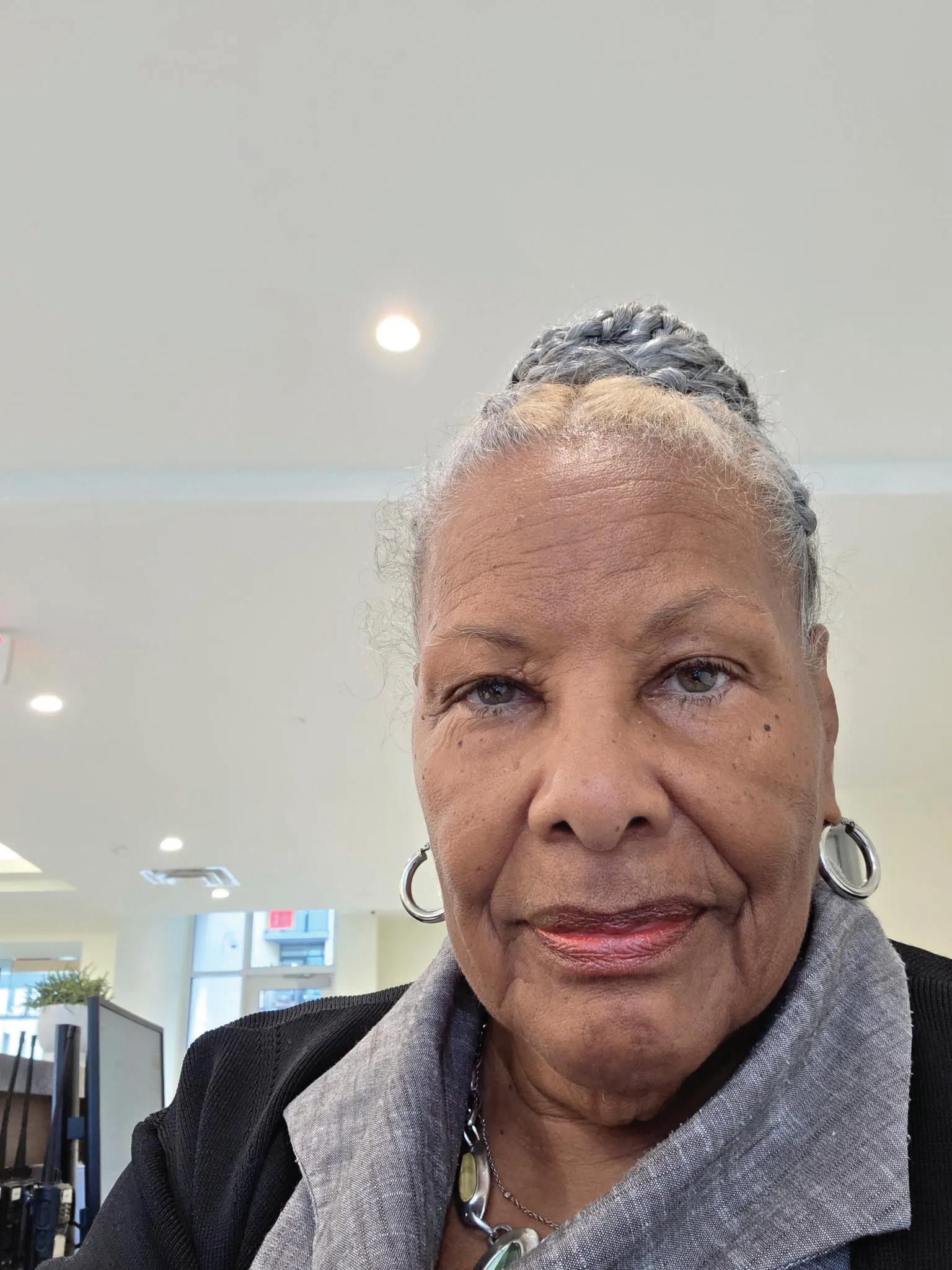
Carol Fillmore is a 79-year-old resident of Washington, D.C. (Photo courtesy of Carol Fillmore)
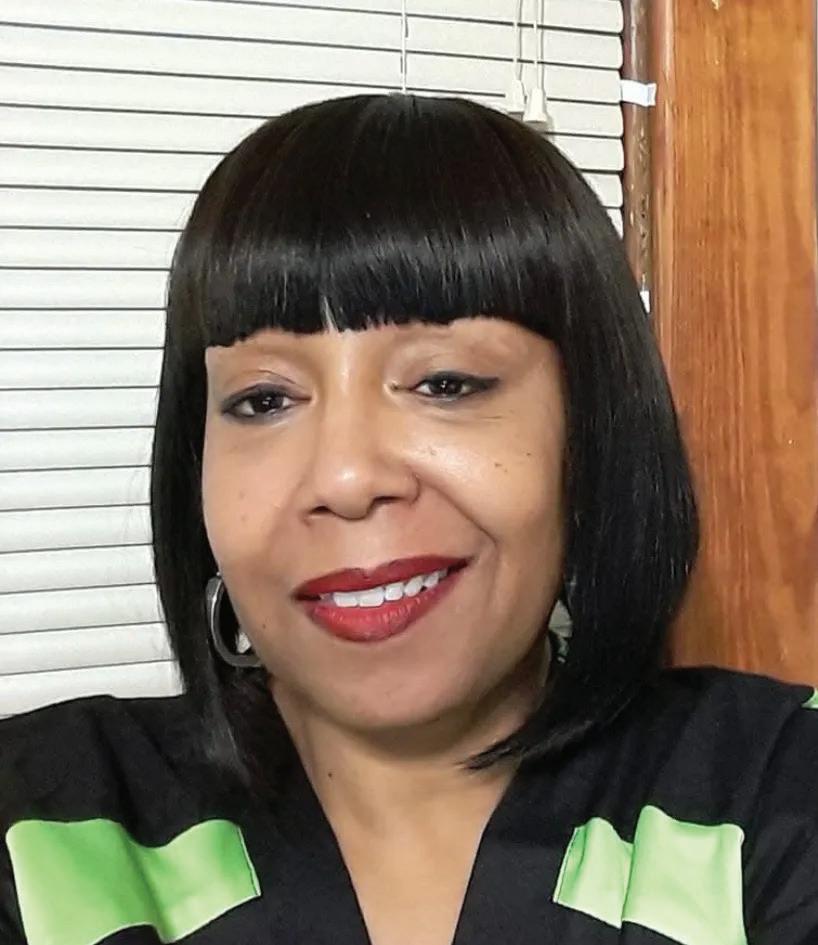
Verlincia Roach is a 62-year-old resident of Washington, D.C. (Photo courtesy of Verlincia Roach)