Power concedes nothing without a demand. It never did and it never will. Find out just what people will submit to and you have found out the exact amount of injustice and wrong which will be imposed upon them and these will continue till they have resisted either with words or blows or with both. The limits of tyrants are prescribed by the endurance those of whom they suppress.
—Fredrick Douglass
(1849)
Trump Shell Game Biggest Grift in World History
By BlackPressUSA Newswire
HOUSTON DEFENDER — A
recent article examines what it describes as an unprecedented use of the Oval Office for private enrichment by former President Donald Trump. While past eras featured monumental acts of plunder, the article argues something different is occurring, with institutions designed to provide checks and balances either looking away or assisting.
History is filled with breathtaking, inhumane thefts. Empires stole land. Colonizers stole labor. Enslavers stole generations. European institutions claimed African achievements as their own. Indigenous nations were stripped of lands that became the United States. As historian Dr. John Henrik Clarke argued, Europe even “colonized” the image of God.
Those are monumental acts of plunder.
Yet America is witnessing something different: a president, Donald Trump, using the Oval Office as ground zero for unprecedented grift, while many of the institutions designed to provide checks and balances either look the other way or help make it possible.
Trump is colonizing his own country.
But the greatest scandal isn’t simply the money he’s pocketing; it’s the normalization of turning
the Oval Office into a grift machine.
The presidency as a profit center
Every administration faces ethics questions. But Donald Trump’s second presidency has produced a rap sheet of reported conflicts of interest, “the likes of which you’ve never seen” (to use Trump’s own favorite phrase).
Investigative reporting has documented billions in wealth generated through Trump-linked businesses, cryptocurrency ventures, licensing agreements,
and investments while he remains in office. Analysts have described an unprecedented intertwining of presidential power and private enrichment, arguing that loopholes in ethics laws make much of it difficult to challenge.
Really? Congressional Republicans were ready to impeach Barack Obama over a tan suit. Yet now we’re told that legal isn’t always ethical, that ethical isn’t always constitutional, and that constitutional isn’t always enforced.
Whatever. Eric Garner was choked to death by cops for
making pennies selling loose cigarettes. Trump robs a wholeass country blind, and he gets people making excuses. Miss me with that.
Bigger than one transaction
The story isn’t one deal. It’s hundreds.
Foreign governments have done business with Trumprelated enterprises. Wealthy individuals have gained exclusive access through Mar-aLago. Trump-affiliated branding deals, cryptocurrency ventures,
and business partnerships continue to expand.
Meanwhile, critics often find themselves targeted politically while loyalists receive prestigious appointments or lucrative contracts connected to Trump’s network.
Any one of these stories would have dominated headlines for months in another era. Together, they paint a picture of public office being used for private enrichment. I could have sworn that was illegal.
America250 or Freedom 250?
One of the most symbolic controversies surrounds America’s 250th birthday celebration.
Congress created America250 as a bipartisan effort to commemorate the nation’s semiquincentennial. Then came the Trump-backed Freedom 250 initiative.
Freedom 250 has been accused of steering donors and financial support away from America250 toward Trump’s organization, including allegations that prospective donors received Freedom 250 account information instead of America250’s. Freedom 250 denies wrongdoing, and investigations continue. If proven, it would represent another example of public institutions becoming vehicles for private political gain. How fitting that America’s birthday celebration would become entangled in a controversy over money and influence.
Pimping pardons
Another controversy centers on presidential pardons. Reports have described wealthy individuals and politically connected figures receiving favorable consideration while lobbyists charge enormous fees to pursue clemency for clients. Whether perception or reality, continued on page 7
Protect Yourself and Your Community from Cyclosporiasis...continued
remaining inner leaves under clean running water. Do not soak.
SB County Health News
The San Bernardino County Department of Public Health is encouraging residents to take steps to help prevent cyclosporiasis, an intestinal illness caused by the microscopic parasite Cyclospora cayetanensis. There have been two cases in San Bernardino County this year; however, public health officials have not identified any outbreaks or clusters in the county.
Cyclospora spreads when people eat food or drink water contaminated with feces that contains the parasite. A total of 4,173 confirmed cases of cyclosporiasis have been reported to the Centers for Disease Control and Prevention (CDC) since May 1, and thousands of additional cases requiring further analysis have been reported across 41 states among individuals who became ill after eating contaminated food. However, the actual number may be higher because only cases reported to the CDC are included. Due to the delay between when symptoms start and when cases are reported, many individuals recover without seeking medical care. Symptoms of cyclosporiasis usually begin one to two weeks after ingesting contaminated food or water and can include:
Learn how to help prevent cyclosporiasis through
Prolonged watery diarrhea, which may be explosive and intermittent
Stomach cramps
Fatigue Nausea
Loss of appetite
Weight loss
Bloating
Vomiting
Low-grade fever
Not everyone infected with cyclospora will experience symptoms. If you are experiencing symptoms, please contact your health care provider. Cyclosporiasis is treatable with antibiotics. If left untreated,
symptoms may last from several days to weeks. Some symptoms, such as diarrhea, may go away temporarily but return later. Individuals experiencing frequent diarrhea should drink plenty of fluids to help prevent dehydration.
Cyclosporiasis is not usually a life-threatening illness, and most infected individuals recover without treatment. However, some individuals may be at higher risk of severe illness, including:
People with a weakened immune system (HIV/AIDS,
cancer, etc.)
People with pre-existing medical conditions (diabetes, heart disease, etc.)
People living or traveling in tropical or subtropical regions
The best way to help prevent cyclosporiasis is to avoid consuming food or water that may be contaminated with feces and follow these food safety guidelines:
Wash your hands with soap and water for at least 20 seconds before and after preparing food, especially fresh produce, and after using the restroom.
Wash utensils and surfaces, such as cutting boards and countertops, after preparing each food item to help prevent crosscontamination.
Thoroughly rinse all fruits and vegetables with water before eating, cutting or cooking them.
For lettuce and other salad greens:
Purchase whole heads of lettuce instead of prewashed, bagged lettuce or pre-mixed salad kits.
Before preparation, remove and discard the outer two to three layers of leaves.
Thoroughly wash the
When preparing greens and produce that can be heated, cook to an internal temperature of at least 158°F (70°C). The parasite is resistant to routine chemical disinfection, and washing alone cannot guarantee its removal.
Cook food thoroughly and store it at safe temperatures.
If working as a food retailer, ensure that staff are following food safety handling practices to prevent foodborne illness. To learn more, visit the California Department of Public Health’s Cyclosporiasis webpage and Safe Food Handling Practices webpage. Together, we can keep cyclosporiasis from spreading in San Bernardino County and maintain a healthy community.
Ontario International Airport unveils next-generation passenger screening
Expanded checkpoint delivers faster passenger flow, enhanced security as ONT continues decade of growth
ONTARIO, Calif. (July 27, 2026) — Travelers flying through Ontario International Airport (ONT) will enjoy a faster, more seamless security screening experience with the opening of a dramatically expanded passenger screening checkpoint in Terminal 2, with similar enhancements scheduled to open soon in Terminal 4.
The project, years in the making, represents one of the most significant improvements to the airport’s passenger processing system since ONT returned to local ownership nearly a decade ago. Designed to improve passenger flow
while incorporating the latest security technologies, the expanded checkpoint is the newest investment in ONT’s commitment to providing travelers with a convenient, efficient airport experience.
Since returning to local ownership in November 2016, Ontario International Airport has grown from approximately 4.3 million annual passengers to more than 7 million, making it one of the fastest-growing commercial airports in the United States. The checkpoint expansion was designed to ensure the
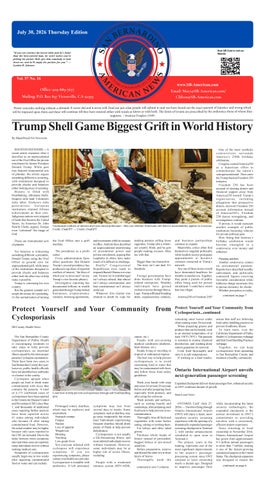
Unchecked conflicts of interest don't just enrich politicians—they test whether Americans still believe accountability applies to everyone. Credit: ChatGPT — Credit: ChatGPT
Thursday, July 30, 2026
California school boards grant themselves hefty pay raises following new law
By Diana Lambert, EdSource
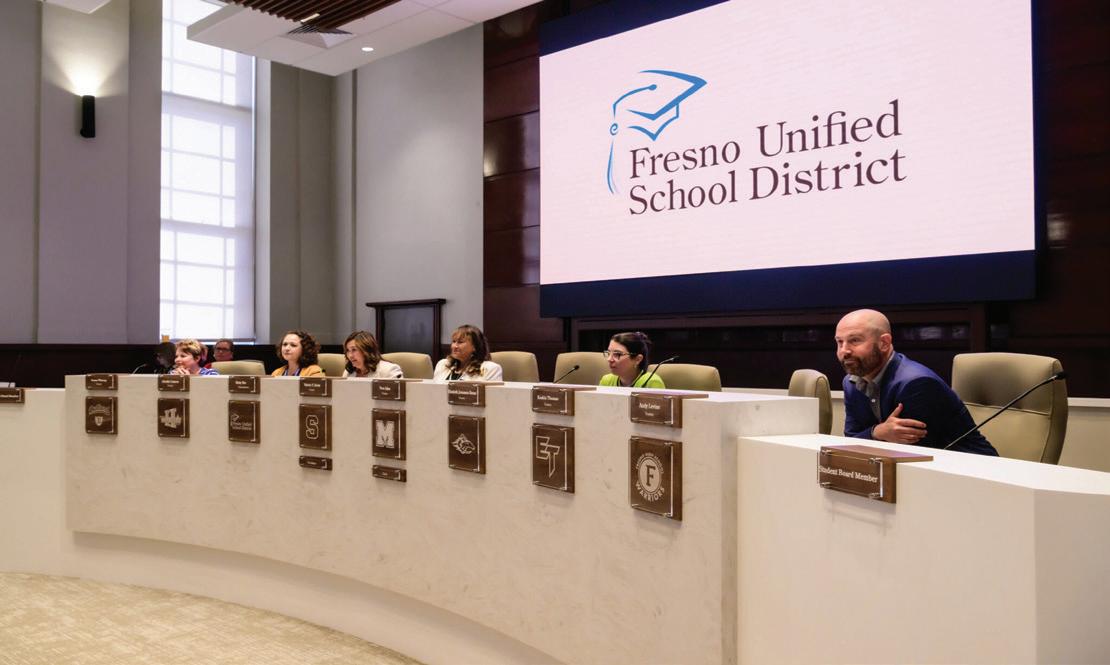
Fresno Unified School District trustees listen to a presentation during a board meeting. Credit: Fresno Unified / Flickr
School board members at dozens of California districts have voted to increase their own pay by thousands of dollars per year after a 2025 law raised trustee compensation limits for the first time in 41 years.
In the first six months of the year, Elk Grove Unified School District trustees raised their monthly stipends by 500% to $4,500. Trustees in the Beverly Hills, Oceanside, Orange, Carlsbad, Escondido and Antioch school districts increased their pay by 400%.
Effective this year, Assembly Bill 1390, raised the cap on board stipends to between $600 and $4,500 a month, depending on student enrollment. Previously, school district trustees could earn between $60 and $1,500 monthly stipends for their service, in what are typically considered part-time jobs. The law also allows school boards to increase their stipend 5% annually, even if it reaches beyond the maximum rate.
Trustees for county offices of education can also increase their pay up to five times their previous wage, with salaries for board members in counties with more than 750,000 students capped at $3,000.
The new state maximums are meant to compensate board members adequately for the hours they spend on the job and to expand the candidate pool for school board seats. But the pay hikes have raised some eyebrows, especially in school districts struggling to bridge budget deficits.
Rocio Galvan, president of the Elk Grove chapter of the California School Employees Association, said she opposed the pay raise, which gives each Elk Grove Unified trustee a $54,000 annual salary, because it exceeds what many of the district’s classified employees earn.
“I specifically said to them that just because you can do something doesn’t mean you should,” Galvan said.
Trustees in many districts also receive health insurance benefits that can cost districts far more than the monthly stipend.
In making the case for his bill, Assemblymember José Luis Solache Jr., D-Lynwood, argued that the increase was necessary to pay board members fairly and to make it feasible for all members of the community to run for school board, which often attracts retirees or individuals with higher incomes.
An Assembly analysis of the bill referenced a 2024 EdSource article, which found that 56% of 1,510 school board races across 49 California counties did not appear on a local ballot that year. Those races either had one unopposed candidate who became a guaranteed winner or drew no candidates at all.
It’s a tough job
The role of a school board trustee also has evolved considerably in the last decade, said Scott Borba, executive director of the Small School Districts’ Association.
“Trustees today oversee significant public resources while making decisions related to student achievement, fiscal oversight, facilities, labor relations and increasingly complex state and federal requirements,” Borba said.
The growing time commitment has become the main reason people don’t run for the job, he said. Raising compensation, Borba said, could entice nontraditional candidates such as “working parents, younger professionals, or others who otherwise couldn’t afford the
time commitment.”
In most cases, the increases in the stipend are relatively modest in relation to the importance of the job, said Troy Flint, spokesman for the California School Boards Association, which supported the legislation.
“I know it’s fashionable to dismiss the work of school boards and to note that they’re volunteers, but if you take the job seriously and perform it to the fullest extent, it’s easily a full-time job,” Flint said.
Some pay remains the same
It is unclear how many California school boards have increased their pay since legislators increased the cap on their stipends. At least three dozen districts have raised trustee stipends, so far, according to an analysis of local news reports and interviews with several school district officials.
Of the state’s five largest districts, trustees in Elk Grove Unified and Fresno Unified voted to pay themselves the maximum allowed for districts with more than 60,000 students — $4,500 a month.
As of July 21, the boards of San Diego Unified and Long Beach Unified had not increased their salaries. Long Beach pays each board member $1,500 a month and San Diego Unified pays its trustees $1,914 per month, according to the districts.
Los Angeles Unified, the state’s largest school district, with 389,000 students, operates under a local charter and is not affected by the legislation. A separate LAUSD Compensation Review Committee determines the salaries of board members, who are considered full-time workers.
As of July 2025, LAUSD school board members were paid $52,000 a year if they have other jobs and $130,000 if they have no other source of income, according to LAist. Their salaries increase 1% a year through July 2027.
Some school districts with the largest increases started with relatively low stipends. Beverly Hills Unified had a 400% increase in trustee pay, from $240 to $1,200 a month. Oceanside Unified, Carlsbad Unified, Orange Unified, Antioch Unified and Escondido Union school districts all increased their
stipends from $400 to $2,000 a month, according to news reports.
Elk Grove trustees get 500% raise Trustees on the Elk Grove Unified school board voted Feb. 17 to increase their stipend from $750 to $3,000 a month, with an increase to $4,500 a month on July 1. They also voted to increase the maximum number of compensated missed meetings from two to three.
At the February meeting, union leaders acknowledged the school board’s hard work, but questioned the amount of the raise and the timing. The vote for the stipend increase took place at the same meeting in which it was announced that 31 classified positions would be cut because the funding for the positions had ended.
The district board increased the stipends as it was grappling with a $34 million deficit and faced projected deficits in the next two years, according to a December financial report.
“If the board were to increase their compensation, it would be more reasonable to do it at a time when we are more secure in our budget,” James Sutter, then-president of the Elk Grove Education Association, told board members at the Feb. 17 meeting.
The pay hike will increase the total cost of board compensation for the district from $63,000 a year to $378,000 annually, which does not include the health insurance board members are eligible to receive.
School board President Beth Albiani voted against the raises at the February meeting and proposed the stipend be increased incrementally based on enrollment growth, instead. The board would earn the maximum amount only if student enrollment exceeds 70,000, she said.
A majority of board members voted for both increases, with some saying they are necessary so that more people can afford to run for school board.
Albiani declined an interview with EdSource, but provided information about the scope of work performed by district trustees. Along with preparing and attending board meetings, trustees attend educational
Inside modern California classrooms: nooks, couches and ‘cozy cubes’ for kids to self-regulate
By Larry Gordon, EdSource
A Pacific Sky student retreats and works in a "cozy cube." Credit: Larry Gordon / EdSource
After a recent playground disagreement at recess, a first grader at Pacific Sky Elementary School in San Diego County came back to class in tears. The youngster asked her teacher whether she could enter a socalled “cozy cube,” a cushioned box in the classroom big enough for one child to stretch out in some privacy but with cutouts allowing a teacher to see inside.
“It was her idea. She went in there, and maybe five minutes later, came back and rejoined the group,” her teacher, Veronica Jones, recalled. “I asked her: ‘Do you want to talk about it?’ And she said, ‘No, I just needed a few minutes in the cozy cube.’ ” The student, Jones said, was able to “self-regulate, use the
space to calm her body, and then come back.”
The 380 students at her K-6 school, which opened in fall 2022, have access to 15 or so built-in nooks, cozy cubes and special chairs. Some are inside classrooms, others in public hallways. Children go to take a quick break, sometimes with sand clocks to time themselves, or to read and do school work.
Those nooks and other functional furniture increasingly are included in schools across California and the country. For example, Compton Unified School District in Los Angeles County recently spent $3.1 million to buy and install calming corners this summer in 790 classrooms, from TK to high schools, officials report.
Nooks or calming corners can vary. Some are cut into walls, others are moveable booths enclosed on three sides. Some are little couches in corners partly shielded by screens. In adopting nooks, more campuses are changing physical designs along with philosophies about accommodating students’
emotions, experts say. This reflects a less regimented and punitive mindset than prior generations, partly in response to more students diagnosed as being neurodivergent or on the autism spectrum.
Education leaders concede that the nooks are not the solution to major classroom disruptions or violence. Traditionalists might think it wasteful and possibly dangerous to provide students with spaces to be alone. To be sure, no large studies have investigated possible impacts. But school officials say nooks can deescalate troubles and avert the need for disciplinary actions.
A school’s learning environment can often improve by adding spaces designed for wellness and privacy, according to architect Kari-elin Mock, who represents the Southwest region for the Association for Learning Environments, an organization that works to design better schools.
Children like “quiet spaces that they can go to reset and to help them show up as their best selves,” explained Mock,
California school boards grant themselves hefty pay raises following new law...continued
classes and conferences, sit on committees, meet with district staff and answer communications from the community, Albiani said. Board members try to visit each of the district’s 68 schools each year, and attend high school graduations and awards ceremonies, Albiani said.
“The end of the year is a very busy time with weeks where you can have up to four nights each week spent at a school,” Albiani said in a statement. “Our jobs have grown through the years and are very self-guided, but through our shared experiences and agreed-upon board goals we are working to lead our district to successfully graduate college, career and life ready students.”
Not all Fresno trustees take the raise Fresno Unified school board members voted Jan. 14 to approve a revision of their bylaws that more than doubled their monthly pay from $2,111 to the state maximum of $4,500. Board members also receive health insurance.
The increase came as the district faced a deficit of $77 million, with a projected $59 million deficit in the coming school year.
Fresno trustee Andy Levine voted against the raise his fellow school board members passed, although he agrees that an increase in board pay was long overdue.
“I think my preference would have been to do it a little later on when we have, hopefully, a more stable budget situation, and we’re not having to make the decisions we’re having to make in this moment,” Levine said.
Fresno Unified school employees, union and community members have since expressed consternation at the 113% pay raise, according to The Fresno Bee.
Levine has opted out of the pay increase, as has board member Elizabeth JonassonRosas, a district spokesperson told EdSource.
Some boards get raises automatically
Trustees in Roseville City School District, which serves 12,700 students in Placer County near Sacramento, had their pay increase automatically from $400 a month to $2,000 after Jan. 1. Board member Jonathan Zachreson said the board’s bylaws allow trustees to receive the state maximum without a vote. However, there are regular public reviews of district board policies, including for the one that allows the automatic raise, he said.
The pay hike will increase the total cost of board compensation for the district from $24,000 to $120,000 annually.
“I know that there’s been some conflict and controversy (in other districts), but generally, what I’ve seen is that it seems generally to go unnoticed or without a lot of attention,” Zachreson said of the pay hikes.
Pleasanton board voted against increase
Not every school board has voted to increase their pay. A committee of Pleasanton Unified School District board members opted not to move forward with a proposal to increase their stipends from $463 to $2,000 a month after hearing from community members who opposed the plan. Board President Kelly Mokashi recommended the proposal. She said the workload of school board members — roughly 15 to 20 hours per week on top of a day job, she estimates — demands a higher wage.
Mokashi said she didn’t run for the position for the money, but that, as a single mother, the pay increase could help her to remain in the community, something she is fearful she may soon not be able to afford to do.
“It’s not a voluntary position. It’s an elected position,” Mokashi said. “There’s quite a bit of responsibility that a trustee has managing the school district.”
Inside modern California classrooms: nooks, couches and ‘cozy cubes’ for kids to self-regulate...continued
Larry Natividad took an EdSource reporter on a tour of the campus. Classrooms, known as “learning studios,” have large glass panels in the corridors, making them feel less isolated than traditional ones. A professional-level performing arts center, with music and digital recording studios, is fronted by a portrait mural of Compton native Andre “Dr. Dre” Young, the rapper and music producer who donated $10 million for the center’s construction.
Natividad said the calming corners will be “a method of inclusion” helping to keep
students in classes “if any kid needs a time-out or just needs a little bit of a break.” Of course, if a teacher or other students feel threatened, removal will still occur, he added.
Jenzy Guzman, 17, a rising senior, predicted the corners will be popular when the fall semester begins.
“If you are stressed and need some time alone, you can come here for 10 minutes, and that can help you feel less stressed,” she said during a break in a summer class.
who is also with the Cuningham Group Architecture firm, which has designed numerous schools around the country.
Compton district redefines classroom spaces
Installed this summer at Compton schools, the calming corners — also called sensory stations — are partly screenedoff areas in classrooms with small couches, stools and a low bookcase with sand clocks and fidget hand toys.
The district wants all students, not just those in special education, to “have access to supportive self-regulation resources within their learning environments,” according to Alicia Weyeneth, director of special education.
“While the financial commitment was significant … early feedback from school sites has been overwhelmingly positive,” she wrote in an email to EdSource.
At Compton High School, which opened to 1,800 students in August 2025 after a $225 million rebuilding, principal
LOS ANGELES – In 2021, Mya publicly defied the military regime in Burma. Today she is among some 4,000 Burmese nationals here with Temporary Protected Status (TPS) who are facing deportation back to the country of their birth.
For Mya, who is in her mid50s, her return to Burma (also known as Myanmar) would not just mean a loss of freedom but a possible, even likely death sentence.
“If TPS protections are completely dismantled and we are deported, the days of hell waiting for us in our home country are beyond measure,” said Mya, her voice trembling. (We are withholding Mya’s last name for security reasons.)
She added, “The absolute worst could happen to us.”
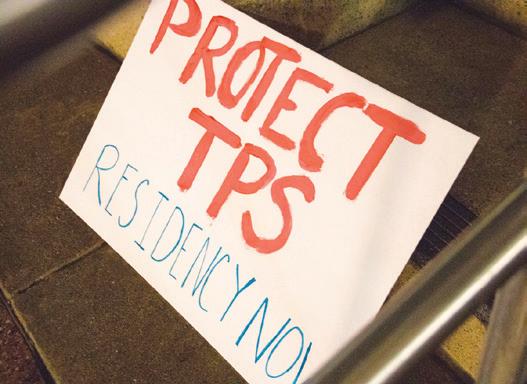
A June ruling by the Supreme Court cleared the way for President Trump to end TPS designations for as many as 13 countries, including Burma. The ruling impacts more than 1.3 million people — many of whom have lived in the US for decades — threatening their work authorization and legal status in the country.
Critics of the ruling say the decision to end TPS ignores conditions within countries like Burma, where the military has maintained control since launching a coup in 2021. The
Southeast Asian nation also remains mired in a bloody civil war as the regime battles prodemocracy fighters and armed ethnic groups.
Advocates here, meanwhile, are actively exploring legal avenues to prevent the looming end of protections for Burmese TPS holders.
“The claims that we’re bringing aren’t addressed in the Supreme Court case,” explained Dinesh McCoy, lead attorney at Asian American Legal Defense and Education Fund (AALDEF).
McCoy is working with the International Refugee Assistance Project (IRAP) and a Chicagobased attorney, June Htun, in representing six Burmese TPS holders who filed a class action suit following SCOTUS’s ruling. The case, Aung Doe v. Noem, was filed on behalf of all Burmese TPS holders.
“Our hope is that these claims also are grounds for the judge to issue a new order, keeping TPS in place,” said McCoy, adding that would allow “more time for a final judgment down the road on whether or not the government’s actions were illegal.”
On July 17, a lower court judge granted an extension of TPS protections for Burmese through August 7 as the court considers a request to pause terminations while the case moves forward.
“I think there are certainly, hopefully legal arguments that will protect people from other communities as well,” said McCoy, noting nationals from Haiti and Syria, specifically, both of which also recently saw their
continued in last 2 columns
Padilla Unveils Legislation to Counter Trump’s Attacks on American Elections
New bill would provide State AGs and voters with ability to enforce federal election protections and protect voters’ ballots from seizure
County/Government News
WASHINGTON, D.C. —
As President Trump escalates his efforts to interfere in the administration of American elections ahead of the upcoming 2026 midterms, U.S. Senator Alex Padilla (D-Calif.), Ranking Member of the Senate Rules Committee with oversight over federal elections and California’s former Secretary of State, introduced the Stop Harassment and Intimidations in Elections through Legal Defenses (SHIELD) Our Elections Act, legislation that would provide State Attorneys General and voters with a private right of action to enforce federal antielection interference laws and extend the statute of limitations for bringing federal criminal prosecutions for violations of those laws from five to nine years. Following the seizure of ballots in Riverside County, Calif. and Fulton County, Ga., the bill also further protects ballots from seizure — especially prior to an election being finally settled.
“Donald Trump has said he regrets not sending federal forces to seize election equipment in 2020 and he has made clear he’ll do whatever it takes to put his thumb on the scale of future elections — even if it means intimidating voters, persecuting election officials, or abusing federal power,” said Senator Padilla. “Trump’s cabinet refuses to rule out sending federal forces to the polls, so we can’t wait until after the damage is done to act. Our elections belong to the voters, and I am fighting to protect every eligible voter’s
Thursday, July 30, 2026
Padilla Unveils Legislation to Counter Trump’s Attacks on American Elections...continued
intimidate them at polling places;
Strengthening accountability by extending the statute of limitations from five to nine years for key federal election crimes, including interference by armed forces and voter intimidation, to enable them to be brought by future administrations for past actions; and
Protecting ballots from improper seizure by limiting when state or federal law enforcement may seize ballots or election equipment and requiring court-authorized election officials to maintain joint custody whenever materials must be seized, especially prior to the resolution of an election.
In addition to Padilla, the bill is cosponsored by Senators Tammy Baldwin (D-Wis.), Richard Blumenthal (D-Conn.), John Hickenlooper (D-Colo.), Mazie Hirono (D-Hawaii), Angus King (I-Maine), Amy Klobuchar (D-Minn.), and Elissa Slotkin (D-Mich.).
“Voting is the fundamental right from which all other rights flow. That’s why, in the face of threats to our democracy, California has led the way in enacting laws that strengthen the security of our elections.
I’m grateful Senator Padilla is now championing the SHEILD Our Elections Act, which would extend these important safeguards nationwide and provide additional protections. Every voter, in every corner of the country, deserves to cast a ballot free from intimidation and interference,” said California Attorney General Rob Bonta.
“Our nation’s elections must always be free from intimidation and unlawful interference from any source. Senator Padilla’s bill strengthens existing protections and holds accountable those who violate federal laws specifically designed to protect our democracy,” said California Secretary of State, Shirley N.
Weber, Ph.D. “Every voter, election worker, and election official deserves the confidence in knowing that casting a ballot and administering an election are protected every step of the way.”
As California’s former Secretary of State, Padilla knows first-hand the importance of taking proactive steps to protect the fundamental right to vote: To commemorate the legacy of former Congressman and civil rights advocate John Lewis, Padilla hosted a voting rights breakfast roundtable with interfaith and civil society organizations and members of the Senate Democrats’ Election Protection Task Force to discuss their concerns about the Administration’s ongoing threats to federal elections.
Padilla and Democratic Leader Chuck Schumer (D-N.Y.) convened a Rules Committee Democrats and Senate Democrats’ Election Protection Task Force spotlight forum focused on state and local responses to combat efforts by the Trump Administration to undermine election administration in the upcoming midterm elections.
Padilla and his Senate colleagues also demanded answers from Trump Administration officials about their lack of election security preparation, insufficient coordination with Congress and election officials, and unsupported public claims about voting system vulnerabilities.
The need for this legislation has been underscored by recent ballot seizures in Riverside County. Calif. and Fulton County, Ga., threats by Trump allies to send federal forces to the polls, and Trump officials’ refusal to confirm that they will follow clear federal laws that prohibit this kind of election interference.
Submission Deadline
Legal publications & News articles must be received no later than By 5pm Mondays
Mya was living in Los Angeles in 2021 when Burma’s military leaders took control of the government following elections that threatened their political power.
Moved by protests inside the country, she publicly denounced the coup. The government quickly retaliated, revoking her citizenship, canceling her passport, and effectively rendering her stateless.
“My family members in Myanmar are interrogated daily by authorities checking if they are still in contact with me,” said Mya, who made the painful decision to cut off all communication to ensure their safety.
“They can no longer run their businesses, and they are barred from leaving the country,” she said. “They are currently in hiding inside Myanmar.”
Burmese TPS holders here express similar fears amid reports of escalating violence as the military junta intensifies indiscriminate airstrikes across the country, targeting civilian settlements and infrastructure.
One such strike in June killed 17 civilians, while another claimed the lives of seven, including a Karenni Christian youth leader.
Data from the Assistance Association for Political Prisoners (AAPP) shows that deaths since the 2021 coup reach into the tens of thousands.
Human rights organizations like Amnesty International and Human Rights Watch report that over 31,500 people have been arrested since the coup, while 2,200 people have died while in custody. Reports of severe torture, abusive interrogations, or the deliberate denial of medical
care are widespread.
“The thought of being thrown into a military prison and subjected to unpredictable forms of torture is too horrific to imagine,” said Mya. “We have seen evidence of even American citizens of Burmese descent being mistreated upon returning. Just thinking about it covers me in cold sweat and makes my heart race.” Such fears are already taking a toll on her health. Over the last two years, Mya’s preexisting diabetes and hyperthyroidism have severely worsened. Her doctors have repeatedly warned her that persistent, extreme anxiety is actively deteriorating her physical health.
“When we first came to the US, our plan was always to return to Myanmar,” said Mya, who first traveled here for work. “We never intended to stay … But the coup flipped our lives completely upside down.”
Recognizing the temporary nature of TPS protections Mya filed for asylum in 2024. Two years later, she is still waiting for an interview notice from USCIS. Her anxieties, meanwhile, were heightened following allegations that U.S. immigration authorities had illegally shared confidential information about Iranian asylum seekers with the Iranian government, violating national privacy regulations.
“When I heard that, I couldn’t stop wondering: Have U.S. immigration agencies already shared the personal data of Burmese political asylum seekers with the junta,” said Mya. “Could the same thing happen to us?” Li Lovett contributed reporting for this story. SweSwe Aye is a Los Angeles-based journalist with Myanmar Gazette.
This week’s quote
“You are where you are today because you stand on somebody’s shoulders. And wherever you are heading, you cannot get there by yourself. If you stand on the shoulders of others, you have a reciprocal responsibility to live your life so that others may stand on your shoulders. It’s the quid pro quo of life. We exist temporarily through what we take, but we live forever through what we give”
— Vernon Jordan
right to cast a ballot freely and sending a warning that anyone who interferes with our democracy will be held accountable — sooner or later.”
The SHIELD Our Elections Act creates a private right to action for State Attorneys General and voters to enforce federal anti-interference laws protecting polling locations and election sites, extends the statute of limitations for election related crimes so that future administrations can enforce them, restricts the seizure of ballots and election equipment from election officials, especially prior to the final resolution of election outcomes, and authorizes a voluntary grant program to support states who have mail and absentee ballot tracking programs to provide confidence and security for voting by mail or drop box. Padilla’s legislation comes following California’s recently enacted SB 73, which prevents election interference at the state level, and the legislation is a proactive federal response to the Trump Administration’s escalating attacks on voting rights and election administration ahead of the 2026 midterms.
Specifically, the bill would secure federal elections by:
Allowing State Attorneys General and impacted voters to sue when federal officials unlawfully interfere with or
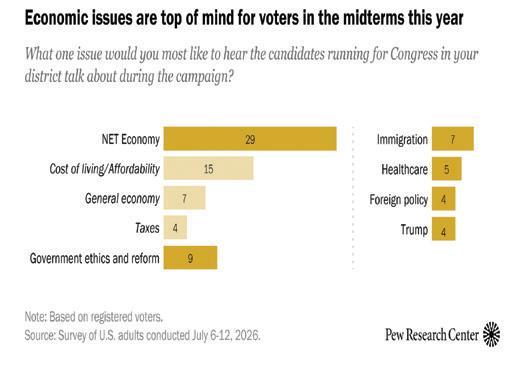
As the 2026 Midterms Approach, Economy Is Front and Center
Democrats hold a modest edge on the generic ballot, while their voters are more attentive to the campaign
County/Government News
WASHINGTON, D.C. (July 23, 2026) – By a wide margin, voters most want to hear congressional candidates talk about economic issues, with many specifically citing prices and affordability, according to a new Pew Research Center survey. But with the November elections on the horizon, Americans are about evenly split over which party they most agree with on economic policies: 37% say the Democratic Party, while 36% say the Republican Party.
According to the survey, conducted July 6-12 among 3,554 U.S. adults, including 2,779 registered voters, on the Center’s American Trends Panel, Democrats currently have both an edge in voters’ congressional candidate preferences, and an engagement advantage among their coalition. Among registered voters: 43% say they would back a Democratic candidate for Congress if the election were held today, while 37% would back a Republican. Two-in-ten say they are not sure or would back another candidate.
70% of Democrats and Democratic leaners say “it really matters” which party controls Congress in November, while 60% of Republicans and Republican leaners say the same. 39% of Democrats have thought a lot about the election, compared with 22% of Republicans.
Among other key findings:
Most voters say President Trump is a factor in their vote – though by roughly two-to-one, voters are more likely to say they think of their vote this fall as a vote against Trump (42%) than to say they think of it as a vote for him (22%). Democrats overwhelmingly (81%) say they consider their vote for Congress this fall a vote against Trump. In contrast, half of Republicans say Trump is not much of a factor in their vote, while 44% say their vote is a vote for him.
Views of the economy:
Current conditions: A quarter (24%) of adults say that current economic conditions in the U.S. are excellent or good, down from 28% in January. This drop has mostly come from Republicans (49% in January, 41% now).
Trump’s policies: Six-in-ten say Trump’s economic policies have made the U.S. economy worse, up from 52% in January. For more on economic attitudes, read here.
Views of the parties across key issues:
Economic Policies: In addition to the even split on economic policies, Republicans also no longer hold an advantage on policies to deal with the budget deficit.
Foreign Policy: Neither party has an advantage on foreign policy or policies related to the use of military force.
Crime: Americans continue to be more likely to agree with the Republican Party (43%) than the Democratic Party (29%) on policies to deal with crime.
Immigration: Republicans hold a 5-point edge on immigration policy. This compares with a 9-point Republican advantage in September. Healthcare, Environmental Policy: Democrats hold a 14-point advantage on both issues.
Demographic differences in voters’ midterm preferences largely track patterns that are similar to other recent elections. Today, Republican candidates have a 10 percentage-point edge among White voters, while Democrats hold even wider advantages among Hispanic, Black and Asian voters. For more on demographic differences in candidate support, read here & explore the detailed tables.
Trump’s approval rating stands at 34%, while 64% of Americans say they disapprove of his job performance -- unchanged since April.
Just a quarter of Americans now hold favorable views of Congress. Current ratings are near record lows and down from last August. Republicans (35%) remain more likely than Democrats (16%) to view Congress positively. The margin of sampling error for the full sample of 3,554 respondents is plus or minus 1.9 percentage points.
Read the full report: https:// www.pewresearch.org/ politics/2026/07/23/as-the-2026midterms-approach-economy-isfront-and-center/ Detailed Tables: https://docs. google.com/spreadsheets/d/1RIrdytKoiXirLuXm29V9Ok1EUIK SSD65Nr7XXsGTdQ/edit?gid= 2077681921#gid=2077681921 Methodology: https:// www.pewresearch.org/ politics/2026/07/23/2026midterms-methodology/ Survey topline: https://www. pewresearch.org/wp-content/ uploads/sites/20/2026/07/ PP_2026.7.23_midterms_ Topline.pdf For more information about the study or to arrange an interview with the lead researchers, please contact Nida Asheer (nasheer@ pewresearch.org)
Thursday, July 30, 2026
Billed as a "party with a purpose," the event raises critical funds that bypass bureaucratic red tape to assist area residents navigating a breast cancer diagnosis directly
RIVERSIDE, CA — A powerful new partnership is taking flight in Riverside to support local breast cancer patients. The CARE Project, Inc. has teamed up with the Riverside Airport Cafe to host the 2026 "Casino Night with CARE" fundraising event.
The annual charity gala will take place on Saturday, August 8, 2026, from 6:00 PM to 10:00 PM at the Riverside Airport Cafe, 6951 Flight Road, Riverside.
A Partnership Built on Shared Purpose
The collaboration represents a deeply personal commitment for Riverside Airport Cafe owner Leimamo Taylor. Like millions of families worldwide, Taylor’s family has been personally impacted by breast cancer.
Driven by a desire to maximize funding for The CARE Project’s core mission, Taylor generously offered her venue to anchor the fundraiser, ensuring that operational overhead remains low and event proceeds are fully optimized.
Asm. McKinnor's Bill Banning Drones Above Outdoor Entertainment Events Awaits Senate Decision ...continued
technology such as drones and other unmanned aerial vehicles present a new challenge for public safety at large events, and this bill would be a meaningful step to solving that challenge.”
However, the Association for Uncrewed Vehicle Systems International (AUVSI) has raised concerns about the bill’s potential effects on legitimate commercial drone operations.
Mason Sisk, the group’s director of government affairs, said AB 2113 would address the “disruptive use of drones,” including operations that infringe on artists’ intellectual property.
However, the trade association has asked McKinnor’s office to add an exemption for commercial flights providing services such as cargo transportation and infrastructure inspections.
think we’re close. We’ve been working together in the last few weeks. I’m optimistic that we’ll get some language together that will suit both our needs.”
The Federal Aviation Administration (FAA) has authority over the safety, use and efficiency of U.S. airspace for traditional aircraft and drones. Federal restrictions already prohibit drone operations near certain large stadiums during specified events.
"The CARE Project is strongly committed to supporting the small businesses who step up to support our small nonprofit," Madrid stated, emphasizing the symbiotic relationship between local commerce and grassroots charity work.
Direct Impact for Local Families
Billed as a "party with a purpose," the event raises critical funds that bypass bureaucratic red tape to assist Inland Empirearea residents navigating a breast cancer diagnosis directly. The CARE Project assists clients by easing the severe financial and emotional burdens that often accompany medical treatment.
Proceeds from the casino night will directly fund essential everyday needs for patients, including:
Medical co-pays and prescription costs
Household utilities and rent
The event also highlights a growing bond between Taylor and Carrie Madrid, the Founder and CEO of The CARE Project. What began as a personal friendship has evolved into a strategic business alliance.
assistance Groceries and nutritional
support
Transportation to and from medical appointments
Vital medical garments, such as compression sleeves
In addition to financial relief, The CARE Project fills a critical gap in emotional care by providing compassionate end-oflife doula services to individuals who are terminally ill.
Event Highlights and Ticket Information
Attendees can expect a vibrant, high-energy evening designed to maximize both fun and community impact. Admission tickets grant guests access to a wide array of activities, including:
CARE Cash: Voucher chips for charity casino gameplay
Cuisine: Light bites and refreshments provided courtesy of the Riverside Airport Cafe
Entertainment: A dedicated photo booth, a high-stakes silent auction, and outdoor dancing on the cafe patio
Parking at the venue is entirely free for all attendees.
Services Offered
The CARE Project, Inc. provides a range of essential services to breast cancer survivors, including: Financial support for treatment co-pays, rent, utilities, groceries and transportation.
Emotional support through peer mentoring and the Survivor Social Club.
Lymphedema care via a partnership with LymphaDivas, providing compression sleeves, gauntlets and gloves to survivors at no cost.
How to Get Involved
Tickets for the event can be purchased directly online through the official registration portal at GiveButter.com/TCPCasino.
Contact Carrie Madrid, Founder of The CARE Project, Inc., for more details or support at CMadrid@TheCareProjectInc. org, TheCareProjectInc.org, or (951) 742-7405.
Asm. McKinnor's Bill Banning Drones Above Outdoor Entertainment Events Awaits Senate Decision
Antonio Ray Harvey | California Black Media
Assemblymember Tina McKinnor (D-Inglewood) is advancing legislation that would prohibit unauthorized drones from operating within 400 feet of large outdoor ticketed entertainment events.
Assembly Bill 2113, titled “Aviation: Unmanned Aircraft Systems: Ticketed Entertainment Events,” passed the Senate Public Safety Committee on June 30 by a 6-0 vote and was referred to the Senate Appropriations Committee.
The Assembly approved the bill May 18 on a bipartisan 72-0 vote, with support from 54 Democrats and 18 Republicans. AB 2113 must clear the Senate Appropriations Committee before the Legislature’s Aug. 31 deadline to remain active.
“Large, ticketed entertainment events such as concerts, festivals, and sporting events bring thousands of people into dense confined spaces, including many venues in my (California State
Assembly District 61),” McKinnor said. “Unauthorized drones and activities in these settings pose a real risk to public safety and can interfere with event operations and emergency response.”
McKinnor said the legislation would establish a state-level restriction that local authorities could enforce while preserving the federal government’s authority over U.S. airspace.
McKinnor also said, “While the Federal Government regulates airspace, local law enforcement is responsible for protecting public safety on the ground, yet current law does not provide a clear state-level prohibition addressing this issue. AB 2113 creates a straightforward prohibition on operating unauthorized drones within 400 feet of or directly above a large outdoor ticketed entertainment venue.”
Under the bill, the restriction would apply to outdoor professional music, sporting or performing arts events held at
venues with capacities of at least 1,000 people. The venues must have gated entrances or other barriers restricting public access, and admission must require a ticket or similar license issued by the venue operator.
Each violation would be an infraction punishable by a $500 fine.
McKinnor, who chairs the Assembly Select Committee on the 2028 Olympic and Paralympic Games and the Los Angeles County Legislative Delegation, said the restrictions are particularly important as California prepares to host major international gatherings, including the 2028 Olympic and Paralympic Games.
McKinnor also cited major live entertainment festivals, including the Coachella Valley Music and Arts Festival, BottleRock Napa Valley, La Onda, the Stagecoach Festival, Beyond Wonderland SoCal and the Aftershock Festival. Together, those events
attract hundreds of thousands of attendees annually.
“AB 2113 protects the intellectual property rights of artists and addresses a growing public safety gap at public events due to the growing use of drones across California,” said McKinnor, a member of the California Legislative Black Caucus (CLBC). . Live Nation Entertainment, which is sponsoring the bill, supports the proposed restrictions. The company promotes concerts, operates venues, provides ticketing services through Ticketmaster and manages artists.
Josh Stevens, senior manager of government affairs for Live Nation, described AB 2113 as “a necessary and significant improvement on public safety regulations.”
“Last year alone, we welcomed millions of fans to Live Nation events across thousands of concerts,”
“Modern
AUVSI describes itself as the world’s largest trade association dedicated to advancing uncrewed systems and robotics. Its members include drone manufacturers and operators, public safety agencies and higher education institutions.
Sisk said AUVSI has “been having very good discussions and operating in good faith” with McKinnor’s office as it seeks language distinguishing legitimate commercial flights from drones that loiter, hover or disrupt events.
“Our issue with the bill really has to do with the distinction between the ‘loitering and hovering’ and the disruptive use of drones. So, I would ask that the committee not support the bill until we have language figured out,” Sisk told the Senate Committee on Public Safety. “I
California law also makes it a misdemeanor to operate a drone near an active emergency scene when doing so impedes, disrupts or prevents law enforcement officers, firefighters, emergency medical personnel or military personnel from performing their duties. To address concerns raised during the legislative process, McKinnor accepted amendments narrowing the bill’s scope and exempting certain authorized operations. The prohibition would not apply to venue-approved flights, venue employees conducting official business, regulated utility employees performing official duties or emergency personnel responding to an incident.
“My office and the sponsor have been engaging with stakeholders throughout this process, and I want to thank everyone for their patience and collaboration,” McKinnor said.
“We remain committed to working in good faith as the bill moves forward to address concerns of stakeholders.”
Inside modern California classrooms: nooks, couches and ‘cozy cubes’ for kids to self-regulate...continued from page 2
One feature, however, has already been eliminated at Compton High: play putty, originally part of the things available in the calming corners. It is just too messy, officials said.
Nooks help students selfregulate
The “quiet space” movement began about 10 years ago as more students were diagnosed as being on the autism spectrum but also integrated into mainstream learning, experts say. A retreat from sensory overload, the nooks have also been increasingly used by all kinds of students in the last couple of years.
Janet Barbieri, deputy director of the Association for Autism and Neurodiversity, described that expansion as positive. “I feel like neurodiversity is the tide that raises all ships,” she said. “It’s really great that educators are thinking about the design and layout of their schools and classrooms, and I think it really supports the student community beyond the neurodivergent student community.”
Washington Elementary School in Sacramento, which reopened 10 years ago after being shuttered and then renovated, has nooks recessed into walls and large moveable booths. Principal Gema Godina said those features help “maximize students’ time in the classroom” if they are having a tough emotional moment, rather than being sent to her office or home.
Some of the booths at Washington Elementary are called Think Nooks, manufactured by Haskell Education, a firm that produces school furniture. Nearly 6 feet
high, those booths — which sell for about $3,000 each — have upholstered benches open in front, with side walls and a narrow roof.
Sixteen recessed wall nooks in the hallways are in the plans for a new two-story annex at Palisades Charter High School in Los Angeles in the wake of the 2025 fire that wrecked part of that campus, according to lead architect Alenoush Aghajanians, of the DLR Group firm. She also led the company’s design team for the new Compton High. Pacific Sky Elementary, an architectural gem that won numerous design awards for the Lionakis firm, is located on a bluff 8 miles east of Del Mar. Classrooms feel like art studios or science labs, and public spaces are topped with skylights and timber beams. Besides sitting in wall nooks, students can climb into tubular reading chairs. In early grades, cozy cubes allow a student to close a front curtain but remain visible through an open roof and side cutouts. Pacific Sky school principal Chelsea Moore said those spaces are not the answer to disruptions that still might require a visit to a counselor. But for a student who is having a hard day or needs a private spot for some work, a brief time in the nooks often works, she said. Children are not sent to the cubes and nooks as punishment, she said. “I don’t think that you would hear a teacher say, ‘Go to a nook and calm down.’ A teacher might say, ‘It looks like you’re upset. Remember you have some spaces you could go to if that feels better for you.’ It would usually be a choice.”
Donors enjoyed Casino Night with CARE at last year’s gala supporting breast cancer patients through The CARE Project, Inc. This year’s charity gala will be held at the Riverside Airport Cafe.
Donors enjoyed Casino Night with CARE at last year’s gala supporting breast cancer patients through The CARE Project, Inc. This year’s charity gala will be held at the Riverside Airport Cafe.
Stevens said.
Assemblymember Tina McKinnor (D-Inglewood), right, introduced Assembly Bill 2113 to address a public safety enforcement gap involving unauthorized personal drones flying over crowds at large outdoor events in California. A violation would be an infraction punishable
by
Tina McKinnor (D-Inglewood)
Thursday, July 30, 2026
Trust Your Gut! 8 Diseases Your Upset Stomach Is Warning You About
By Karen Heslop
A lot of research has gone into establishing a relationship between having a healthy gut and maintaining good overall health. The question is though, how do you know if you have an unhealthy gut?
Well, there are a few tell-tale signs to look out for. The good news is that it’s never too late to make things right.
Typical Signs of an Unhealthy Gut
While changes in your health are not always related to your gut, these are some of the issues that you should never ignore.
Stomach trouble
If you’re experiencing persistent bloating, constipation, or diarrhea, it may mean that there’s something wrong with your gut. For example, an abundance of the wrong bacteria can cause fermentation to occur and produce excess gas. Other bacteria can lead to diarrhea.
Chronic fatigue Studies have linked an unhealthy gut to chronic fatigue syndrome. Of course, other factors can affect this but if you can’t pin your exhaustion on anything else, it might be your gut.
Mood disorders
In other studies, having a
healthy gut leads to having more stable moods and fewer issues with mental health problems. The opposite is true for an unhealthy gut.
Trouble concentrating With the significant link between the gut and brain, it’s no surprise that having an unhealthy gut can affect your ability to focus.
Unexplained food cravings
It has been shown that people who don’t eat properly can experience cravings for certain foods. This is especially true of sugar.
Inexplicable weight changes
Researchers found completely different microbiomes when they compared those who were overweight and those who weren’t. According to health professionals, those who ate a predominantly Western diet were more likely to have the bacteria that favored being overweight.
Frequent skin irritations
An unhealthy gut can manifest in your skin. If you’ve noticed a recent flare-up of eczema or psoriasis, the problem could be in your gut.
Frequent migraines
Even if you’ve had migraines before, an unhealthy gut can make things worse.
A recent diagnosis of an autoimmune disorder
According to a recent study, a certain gut bacterium known as Bacteroides fragilis produces a protein that can spark autoimmune conditions such as rheumatoid arthritis.
unhealthy gut
How to Improve Your Gut
Health
One important aspect of improving your gut health will be modifying your diet. Eating the right foods will encourage the growth of good bacteria, which is the basis of good gut health. The ideal gut-friendly diet includes fresh fruits and vegetables, prebiotics, probiotics, lean proteins, and healthy fats, as well as your recommended portion of water.
On the other hand, you’ll need to cut down on refined sugars, processed foods, and unhealthy fats. If there are specific foods that upset your digestive system, you should avoid those as well. Bear in mind that your diet isn’t the only thing that affects a healthy gut. Studies show that other issues such as drinking too much alcohol, chronic stress, a lack of exercise, and too little sleep can all contribute to an unhealthy gut. It’s best to do what you can to remedy those problems while working on your diet.
Signs That It’s Not Just an Unhealthy Gut
As mentioned previously, some issues don’t only signal an unhealthy gut but a digestive disorder. If you experience any of these symptoms, get in touch with your doctor quickly.
Stomach pain
Unexplained weight changes
Nausea and vomiting
Bleeding Heartburn
Incontinence Constipation Diarrhea
Bloating
Trouble swallowing
This list is not exhaustive but it’s always a good idea to be concerned about significant changes in your digestive health.
Diseases Your Unhealthy Gut May be Tied To Here are some conditions that persistent gut problems may point to.
Inflammatory Bowel Disease (IBD)
Crohn’s disease and ulcerative colitis are chronic inflammatory conditions that affect the digestive tract. Symptoms often include ongoing diarrhea, abdominal pain, weight loss, fatigue, and blood in the stool. While occasional stomach issues are common, symptoms that last for weeks should be evaluated by a healthcare provider.
Irritable Bowel Syndrome (IBS)
IBS is one of the most common digestive disorders. It doesn’t damage the intestines like IBD, but it can significantly affect quality of life. Signs include bloating, stomach pain, constipation, diarrhea, or a combination of both. Stress, certain foods, and changes in gut bacteria may trigger flare-ups.
Colorectal Cancer
Changes in bowel habits can sometimes be an early warning sign of colorectal cancer. Persistent constipation, diarrhea, pencil-thin stools, blood in the stool, unexplained weight loss, or ongoing abdominal discomfort should never be ignored. Early detection dramatically improves treatment outcomes.
Celiac Disease
For people with celiac disease, eating gluten triggers an immune response that damages the small intestine. Symptoms may include diarrhea, bloating, fatigue, anemia, unexplained weight loss,
Key Nutritional Supplements for Those Living with HIV
By Dr. Patrick Thompson
Living with HIV presents unique challenges, particularly as it relates to maintaining a strong immune system, which is crucial for overall health and well-being. In addition to antiretroviral therapy (ART), proper nutrition plays a pivotal role in supporting the immune system of individuals with HIV. In this article, we’ll explore seven key nutritional supplements that can benefit those living with HIV, along with real-life stories of individuals who have experienced their positive effects.
1. Vitamin C: The Immune Booster Andre, diagnosed with HIV several years ago, incorporated vitamin C-rich foods and supplements into his daily routine. “I noticed that I had fewer colds and infections,” he says. “It made me feel like I had more control over my health.”
Vitamin C is renowned for its immune-boosting properties. It’s a potent antioxidant that helps protect immune cells from damage and supports the
production of collagen, which is essential for healthy skin and tissue repair. Individuals with HIV may benefit from vitamin C supplementation to bolster their immune response.
2. Vitamin D: The Sunshine Vitamin Emma, living with HIV, struggled with persistent fatigue. After a vitamin D deficiency was identified, she began taking supplements and noticed a significant improvement in her energy levels.
Vitamin D plays a crucial role in immune function and overall health. It helps regulate immune responses and reduce inflammation. People with HIV are often at a higher risk of vitamin D deficiency due to various factors, including limited sun exposure and malabsorption issues. Supplementation can help maintain optimal levels.
3. Vitamin E: Antioxidant Support
James, who has been on ART for years, incorporated vitamin E supplements into his diet. “It’s
like giving my body an extra layer of protection,” he says. “I’ve seen improvements in my skin health too.”
Vitamin E is another powerful antioxidant that helps protect immune cells from oxidative stress. It plays a role in maintaining healthy skin and can assist in wound healing— an important consideration for those with compromised immune systems.
4. Fish Oils: Omega-3 Fatty Acids Shay, an advocate for holistic health, includes fish oil supplements in her daily routine. “I’ve noticed that my mood and cognition have improved,” she says. “It’s been a positive addition to my regimen.”
Fish oils are rich in omega-3 fatty acids and offer various health benefits. They have antiinflammatory properties and may help reduce the risk of heart disease, a concern for some individuals with HIV. Omega3s also support brain health and overall well-being.
5. Flaxseed Oils: Plant-Based Omega-3s Cory, a vegan living with HIV, includes flaxseed oil in his diet. “It’s a sustainable choice, and I feel good knowing I’m taking care of my health without compromising my values,” he says.
For those who prefer a plant-
Key Nutritional Supplements for Those Living with HIV...continued
supplements may offer immune support.
Living with HIV can be strongly supported with a holistic approach to health and wellbeing. In addition to following prescribed antiretroviral therapy, individuals can benefit from incorporating key nutritional supplements like vitamin C, vitamin D, vitamin E, fish oils, flaxseed oils, milk thistle, and turmeric into their daily routines. These supplements can support
immune function, reduce inflammation, and enhance overall health.
It’s essential to consult with a healthcare provider before starting any new supplement regimen, as individual needs may vary. Remember, a comprehensive approach to health, including a balanced diet and a healthy lifestyle, is vital for HIV management and achieving a fulfilling life.
Ontario International Airport unveils nextgeneration passenger screening...continued from page 1
airport continues meeting that demand while maintaining the convenience that has become a hallmark of the ONT experience.
“The return of Ontario International Airport to local ownership gave us the opportunity to think beyond today’s needs and invest for the future,” said Alan D. Wapner, president of the Ontario International Airport Authority Board of Commissioners and Ontario Mayor pro Tem. “This project reflects that long-term vision. As millions more travelers choose ONT, we’re making sure they enjoy an airport experience that is not only among the safest in the nation, but also among the easiest and most efficient.”
The modernization includes two new security screening lanes in Terminal 2, significantly increasing passenger screening
capacity during peak travel periods. To create the additional space, the secure exit corridor was relocated west of the existing checkpoint, improving passenger circulation throughout the terminal. The new exit corridor features state-of-theart technology to enhance and facilitate security. Enhancements to Terminal 4 will include one new security screening lane and, as in Terminal 2, a secure new exit corridor. The upgraded checkpoint incorporates advanced security and passenger guidance technologies, including enhanced monitoring systems, new document verification equipment, upgraded closedcircuit television systems and digital information displays that help guide travelers through the screening and exit process.
Don’t Forget To Check Out
The SB American Weekly Newsletter
Each edition features a curated selection of events and entertainment from the Inland empire to Los Angeles. Go to sb-american.com to subscribe!
You can enjoy weekly updates on our latest news and our weekly Newsletter.
Don’t forget to follow us on Instagram.
based alternative to fish oils, flaxseed oil is an excellent option. It’s rich in alpha-linolenic acid (ALA), a type of omega-3 fatty acid that can provide similar anti-inflammatory benefits.
6. Milk Thistle: Liver Support Maia, who has been on ART for several years, added milk thistle to her regimen to support her liver. “It gives me peace of mind, knowing I’m taking steps to protect my liver health,” she says.
The liver plays a crucial role in processing medications, including those used in HIV treatment. Milk thistle is an herbal supplement known for its liver-protective properties. It may help reduce the risk of liver damage associated with certain antiretroviral drugs.
7. Turmeric: AntiInflammatory Spice Devon, a longtime advocate for natural remedies, uses turmeric supplements to manage inflammation. “I’ve experienced less joint pain and overall discomfort,” he says. “It complements my HIV treatment.”
Turmeric contains curcumin, a compound known for its potent anti-inflammatory and antioxidant properties. It may help reduce inflammation, which can be a concern for individuals with HIV. Incorporating turmeric into your diet or taking curcumin
Trust Your Gut! 8 Diseases Your Upset Stomach Is Warning You About...continued
and nutrient deficiencies. Some people have very few digestive symptoms, making diagnosis more challenging.
Diverticular Disease
Small pouches can develop in the wall of the colon, especially as people age. When these pouches become inflamed or infected—a condition called diverticulitis— they can cause severe abdominal pain, fever, constipation, nausea, and changes in bowel habits.
Food Intolerances
Recurring digestive symptoms after eating dairy, gluten, or certain carbohydrates may point to a food intolerance rather than an allergy. Lactose intolerance, fructose intolerance, and sensitivity to certain fermentable carbohydrates can all disrupt gut health and lead to chronic bloating and discomfort.
Liver Disease
Your gut and liver constantly communicate through what’s known as the gut-liver axis. An unhealthy gut may contribute to inflammation that affects the liver, while liver disease itself can cause digestive symptoms, including nausea, bloating, loss of appetite, and changes in bowel habits.
Type 2 Diabetes and Obesity
Researchers are finding that an unhealthy gut microbiome may play a role in insulin resistance, obesity, and type 2 diabetes.
Although gut symptoms alone don’t diagnose these conditions, poor gut health is increasingly recognized as one factor that may influence metabolic health.
When to See a Doctor Occasional digestive issues happen to everyone, but you should seek medical care if you experience:
Blood in your stool
Unexplained weight loss
Severe or persistent abdominal pain
Ongoing diarrhea or constipation lasting more than a few weeks
Difficulty swallowing Persistent nausea or vomiting Fatigue along with digestive symptoms
A family history of colorectal cancer or inflammatory bowel disease
As a Black American, it’s definitely worth paying attention to what’s going on in your gut as research shows that Black people are becoming more at risk for developing certain digestive disorders such as Crohn’s Disease.
An unhealthy gut can have significant consequences on your health. If you’d like to take control of your wellness, it’s vital to do what you can to keep your gut happy. Of course, when making changes has no effect, it’s time to talk to your doctor.
Political Playback: California Capitol News You Might Have Missed
Bo Tefu and Antonio Ray Harvey | California Black Media
“The Power to See Threats Sooner”: Gov. Newsom, Safety Officials, Showcase California's Investments in Hi-Tech Wildfire Prevention
speaks during a July 21 presentation at McClellan Park highlighting California’s investments in advanced firefighting technology and wildfire prevention tools. CBM photo by Antonio Ray Harvey.
On July 21, Gov. Gavin Newsom held a presentation in Sacramento, alongside state emergency officials, to showcase California’s major investments in cuttingedge firefighting technology and wildfire prevention.
The media event took place at McClellan Airport in Sacramento County, a primary hub for state aerial firefighting operations. Newsom used the presentation to highlight the state’s modern, tech-driven strategy to combat increasingly severe wildfires.
“California leads with science, innovation, and grit. We are meeting this moment with urgency and building 21st-century solutions for a 21st-century crisis,” Newsom stated. “And through it all, our extraordinary firefighters continue to step up, stand in harm’s way, and protect our communities.”
California Natural Resources Agency Secretary Wade Crowfoot, CAL FIRE Chief Joe Tyler, and California Governor’s Office of Emergency Services Director Caroline Thomas Jacobs appeared with Newsom and provided updates about their respective agencies.
Under the Newsom administration, California’s fire protection budget has nearly doubled since 2019 — from $2 billion to $3.8 billion, including more than $2.5 billion in wildfire resilience and forest health projects.
Newsom detailed the expansion of artificial intelligence (AI) programs, predictive analytics, and sophisticated software used to detect fires at their earliest
stages. He also highlighted the launch of FireSat satellites, a dedicated space network designed to dramatically improve early wildfire detection and tracking.
“Every innovation we adopt supports our people on the front lines who work tirelessly to protect our communities when wildfire strikes,” Tyler stated.
“Technology and innovation help us do our jobs more quickly and safely; however, we still need all Californians to stay vigilant, support our firefighters, and work together to build a safer, more resilient California.”
In addition, CAL Fire showcased a fleet of more than 100 AI-guided firefighting drones positioned strategically across California to provide real-time mapping and aerial monitoring.
The presentation stated that California operates the nation’s largest state-owned aerial firefighting fleet, including the impending addition of two more C-130 aircraft by the end of the year, alongside a workforce of over 11,000 personnel.
“Technology is transforming how California prepares for wildfire, giving us the power to see threats sooner, position resources before fires start and move mutual aid faster when every second counts,” Thomas Jacobs said. “Governor Newsom’s investments are helping us turn real-time intelligence into action, so firefighters and local communities have the people, equipment and information needed to save lives and keep fires from becoming major disasters.”
PLEASE NOTE:
The deadline to submit press releases and legals is Mondays By 5pm
Thursday, July 30, 2026
California Sen. Padilla Joins Colleagues to Introduce Bill Imposing Term Limits on Supreme Court Justices
U.S. Sen. Alex Padilla (D-Calif.) joined several Senate Democrats in introducing legislation that would establish 18-year active terms for Supreme Court justices and create a regular schedule for appointing new members to the nation’s highest court.
The Supreme Court Biennial Appointments and Term Limits (BATL) Act would require the president to nominate one justice every two years, during the first and third years of each presidential term, with Senate confirmation. Under the proposal, justices would serve 18 years hearing the Supreme Court’s full docket before transitioning to senior status, where they would retain their lifetime appointments but hear only a limited number of constitutionally required cases and serve as substitutes when active justices are unavailable.
Supporters say the legislation is designed to reduce the politicization of Supreme Court appointments and restore public confidence in the judiciary by ensuring predictable vacancies and regular turnover on the Court.
“The Supreme Court has reached unprecedented and unacceptable levels of politicization,” said Padilla. “Term limits are a commonsense solution to lower the temperature on the Judiciary and start restoring trust in the highest court in our land.”
Under the bill, only the nine most recently appointed justices would hear appellate cases, which make up the vast majority of the Court’s workload. Justices serving in senior status would continue to hear original jurisdiction cases and could participate in appellate cases if an active justice is recused or otherwise unavailable.
If approved by Congress, the legislation would not take effect immediately. Instead, it would become effective at the start of the first new presidential term following its enactment.
The bill is sponsored by Padilla, Sens. Sheldon Whitehouse of Rhode Island, Cory Booker of New Jersey and Richard Blumenthal of Connecticut. The legislation is also cosponsored by Sens. Mazie Hirono of Hawaii, Jeff Merkley of Oregon, Peter Welch of Vermont, Brian Schatz of Hawaii, Kirsten Gillibrand of New York, Adam Schiff of California and Patty Murray of Washington State
Opinion: When Politicians Start Sanitizing One Chapter of History, They’re Coming After The Whole Book...continued
It came over dim sum.
After the show, Shirley—a Chinese Canadian—and her friend Chris, a Sri LankanMauritian Canadian—insisted on taking me to a restaurant in Winnipeg’s Chinatown.
A Filipino American. A Chinese Canadian. A Sri LankanMauritian Canadian.
The United Nations, if it served dumplings.
Then Shirley told me about her father.
He arrived from China at 14 years old, speaking no English. The school put him in second grade just to learn the language. Once he caught up, they skipped him to ninth grade.
Two years later, he was working.
He opened a restaurant.
It burned down.
He opened another.
Eventually he bought a café in rural Manitoba serving chop suey, burgers, steaks and fries.
Chinese out, Canada passed its own Chinese Exclusion Act. Different country. Same racism.
Canada has spent decades admitting what it did. The Trump administration wants America to do the opposite. The White House recently released a report criticizing the Smithsonian for supposedly promoting “anti-White activism” and other ideological sins. Buried inside is something even more troubling.
U.S. Rep. Sydney KamlagerDove (D-CA-37) is calling on U.S. Immigration and Customs Enforcement (ICE) to provide immediate medical care to a constituent she says has been denied treatment after being shot by ICE officers last year.
Speaking on the House floor, Kamlager-Dove urged ICE to provide urgent care for Carlitos Ricardo Parias, describing him as a father, husband and community volunteer who was recognized by his local city council for his service.
According to Kamlager-Dove, Parias was shot near his elbow by ICE during an encounter in October. She said he received initial treatment at a hospital but has not received proper medical care since being transferred to the Adelanto ICE Processing Center in December.
The congresswoman said she visited Parias in late May and found his condition had worsened. She said his hand had turned
purple, his fingers had become atrophied, and he was suffering from headaches and persistent nerve pain.
“I am worried that he may have a bone infection, and that his arm could be amputated,” said Kamlager-Dove during her remarks.
Kamlager-Dove said Parias’ case highlights broader concerns about medical care at the Adelanto detention facility. She noted that a federal judge recently ordered sweeping changes to improve conditions for detainees.
“It is time for ICE to comply with this judge’s orders and end this cruelty at Adelanto and nationwide,” she said.
ICE has not publicly responded to the allegations raised during Kamlager-Dove’s House floor speech. The congresswoman urged the agency to provide Parias with immediate medical treatment while implementing the court-ordered reforms at the Adelanto facility.
Trump Shell Game Biggest Grift in World History... continued from page 1
pay-to-play justice undermines public confidence. If this were organized crime, we’d call it gangster. If poor Black people did it, we’d call it criminal. Instead, Trump continues making money while avoiding accountability.
Institutions that looked away
The larger scandal may not be Trump himself. Trump has spent decades cultivating an image built around aggressive dealmaking and pushing ethical boundaries. In The Art of the Deal, he celebrated tactics that critics say rewarded refusing to pay and dragging disputes through the courts.
Americans knew who he was before they voted.
The Republican-controlled Congress has repeatedly declined to challenge him aggressively. Critics argue the Supreme Court has also strengthened presidential immunity. Federal ethics laws contain loopholes that previous presidents generally respected, but Trump has been willing to exploit.
Major media organizations often favor spectacle over sustained investigations, while social media platforms reward outrage and distraction.
The result is accountability delayed—or denied.
The cost to democracy Corruption is rarely just about money. Every dollar diverted is one unavailable for schools, healthcare, infrastructure, disaster relief, or veterans. Every ethical line erased makes the next violation easier.
Eventually, Americans stop asking whether something is right and ask only whether it’s legal.
That’s how republics die.
History’s warning Past political scandals—from Watergate forward—generally ended with resignations, prosecutions, congressional investigations, or meaningful reforms.
Today, controversies disappear beneath an avalanche of daily outrage. Critics are demonized. Millions tune out.
Perhaps the greatest grift is convincing Americans that corruption is simply how government works.
What citizens should do The answer isn’t cynicism. It’s civic engagement.
Vote for candidates committed to ethics and transparency. Demand accountability from every administration, regardless of party. Support investigative journalism that follows the money. Pressure Congress to conduct real oversight. Hold media organizations accountable when they ignore credible reporting or normalize corruption.
History teaches that corruption survives only as long as citizens tolerate it.
America’s 250-plus years have included extraordinary achievements and profound injustices. If citizens believe government is being used for private enrichment instead of public service, the responsibility ultimately falls on “We the People” to decide whether enough is enough.
Based on reporting by Houston Defender.
Opinion: When Politicians Start Sanitizing One Chapter of History, They’re Coming After The Whole Book
By Emil Amok Guillermo
I came to Winnipeg to perform my one-man show, 69, Emil Amok: Anchorman—The News Made Me Do It.
I didn’t expect to leave with another lesson about America.
The Good Way Café became the place everybody gathered. Rock and roll played from the jukebox until midnight.
Her father, Arthur Mar, built a business, employed people and became part of his community.
Sound familiar? It should.
It’s the same immigrant story Americans love to celebrate.
Until politics gets involved.
Because before Arthur Mar could build anything, Canada made him pay a $500 Chinese head tax—a fortune in the 1920s. When that didn’t keep enough
The proposal has received endorsements from several advocacy organizations, including the Brennan Center for Justice, Public Citizen, Citizens for Responsibility and Ethics in Washington, the Project on Government Oversight and Stand Up America, which argue the changes would make the Court more accountable and strengthen public confidence in the judiciary. COMMENTARY:
By BlackPressUSA Newswire
The report argues Americans shouldn’t think of the Chinese Exclusion Act of 1882 primarily as a racist law. Instead, we’re told it was about national security. Funny how those two words have always been available whenever politicians want to discriminate against somebody. Black Americans have heard that song before. Slave patrols became public safety. Jim Crow became states’ rights. Mass incarceration became law and order. Same melody.
Different verse. History has a way of putting racism in a respectable suit. When politicians begin sanitizing one chapter of history, they’re coming after the whole book.
Communities of color don’t have identical histories. But we recognize familiar tactics.
Follow him at YouTube.com/@ emilamok1.
For more than three decades, my work has been rooted in West Baltimore, where the gap between scientific progress and community benefit is not theoretical; it is something families experience every day.
That is why a recent announcement about a new treatment for metastatic pancreatic cancer demanded my attention. New clinical data shows that daraxonrasib doubled survival rates for patients with previously treated metastatic pancreatic cancer, reducing the risk of death by 60 percent. For a disease that has long resisted treatment, this is not incremental progress—it is a turning point.
This breakthrough did not happen by accident. It is the direct result of sustained, peerreviewed scientific investment — exactly the kind of research championed by institutions like Johns Hopkins, which has served as an anchor of innovation and healing for generations in our city.
Maryland, with its extraordinary concentration of public and private research assets, has a particular stake in protecting that legacy.
That is why I am alarmed by a proposed federal rule that would give political appointees
veto power over health research grants. Maryland Congressman Jamie Raskin has warned that this change would stifle healthcare innovation for generations. He is right. The peer-review system that produced daraxonrasib works precisely because science — not politics — guides the decisions.
“The peer-review system that produced daraxonrasib works precisely because science — not politics — guides the decisions.”
Undermining that system, whether through politicized grant oversight or pricing policies like most-favored-nation pricing and IRA expansion, puts the next breakthrough at risk before it ever reaches a patient — including those in communities that have historically been the last to benefit and the first to lose.
The opinions expressed in this commentary are those of the writer and not necessarily those of the AFRO. The post Science, not politics, must guide lifesaving medical research appeared first on AFRO American Newspapers.
Gov. Gavin Newsom
Rep. Kamlager Dove Demands Care, Justice for Man Shot by ICE
Based on reporting by AfroAmerican – Washington.
The Rev. Alvin C. Hathaway Sr., founder of the Justice Thurgood Marshall Amenity Center and former senior pastor of Union Baptist Church in Baltimore. Credit: Courtesy photo — Credit: Courtesy photo.
The Mall of America Largest Shopping and Entertainment in the Western Hemisphere
fish, sharks, sea turtles, and much more. There is an interactive virtual attraction, where you put on a headset and virtually go deep in the ocean! Oh, my goodness it seemed real with sharks, star fish, and the vastness of the sea.
a fantastic vacation destination, drawing millions of visitors annually.
If you’re a shop until you drop type personality, Mall of America will be a paradise. The Mall does not charge sales tax on clothing and shoes on all four floors. I did a little shopping as this rare incentive was irresistible!
However, they do charge for the theme parks, aquariums, wheelchairs, electric scooters, plus a refundable deposit for these vehicles. A valid ID is required to rent the mobility vehicles. There is a 7-minute walk from the entrance to the area where the mobility vehicles are located.
I'm wild for indoor aquariums and have visited some of the country's biggest and best.
Sea Life Minnesota Aquarium is a 1.2-million-gallon aquarium featuring a 300-foot underwater glass tunnel surrounded by exotic
Maze of Mirrors is an interactive experience and takes about 10 minutes to complete; you have to wear plastic gloves in order not to smudge the glass. The maze is located on the 3rd floor, near the food court, and there is a fee to enter.
The JW Marriott Hotel is attached to the Mall of America and offers direct access to world-class shopping, dining, and entertainment. Complete with a sleek modern elegance with several suites and rooms to choose from. Guests with Platinum Elite status or higher receive complimentary daily breakfast on the hotel's 15thfloor.
I was told the rooms were updated a few months ago. Big bathtubs and showers. Reading material and books were available in the suite. The mattress offered a blissful night's rest. Smooth
to
hotel doesn’t
a
from the airport. Cedar+Stone is the
and
restaurant and offer breakfast, lunch, and dinner. The Vegan Chorizo Hash with vegan chorizo sausage, roasted sweet potatoes, crispy chickpeas, with avocado salsa was incredible. Lunch was a big smoked turkey sandwich with aged white cheddar, watercress, apple slices, and garlic aioli. The wine list was to my liking and I enjoyed a few glasses. A rosé from France, a California merlot, Oregon Pinot noir, and a sweet Sauternes from France. The zero-proof cocktail was charming as well “Aunt Rosemary” with cranberry juice, grapes, pineapple, and rosemary syrup. I had dinner in my luxury suite, salmon with a kale salad. Cedar+Stone allows guests to customize entrees, and I fully appreciated this gesture. Experiencing the Mall of America and its vast shopping options was fun. JW Marriott offered me total relaxation and a bit of glamour. OP-ED: Why LeBron James and Jaylen Brown will make the Philadelphia 76ers Bigger than Basketball
By: A.R. Shaw
ED: LeBron James picked Philadelphia to close out his career, and pairing with Jaylen Brown makes the 76ers instant contenders. But the bigger story is what the two of them do once the game ends: foundations, schools, voter mobilization, and a refusal to stay quiet. LeBron James’ decision to join the Philadelphia 76ers instantly made his new team title contenders on the court. But with Jaylen Brown as his teammate, it will be a win for Black initiatives off the court.
After several weeks of contemplating his new destination, James bypassed the Golden State Warriors, Miami Heat, and Cleveland Cavs to finish his illustrious career in Philly, a city with a significant Black community and culture.
James, 41, will join a 76ers team that features former MVP Joel Embiid, Tyrese Maxey, VJ Edgecomb, and Brown, who made his way to Philly one month ago via a trade from the Boston Celtics.
If Embiid can minimize his days missed due to injuries, the 76ers will be in prime position to challenge for an NBA championship.
Beyond the basketball court, James and Brown have both embraced leadership roles. In an era when many athletes are encouraged to “shut up and dribble” rather than speak out against injustice or invest in their communities, James and Brown have taken the opposite path, dedicating themselves to empowering the communities they represent.
To this generation, James and Brown are what Muhammad Ali and Kareem Abdul-Jabbar were to theirs.
Since 2004, James and the LeBron James Foundation have created tangible initiatives that continue to serve the community. The I Promise school, located in his hometown of Akron, Ohio, provides education and mentorship for over 1,200 students. James also opened a Starbucks Community Store blocks away from the I Promise school, where workers earned a salary and job-training certificates for the hospitality industry. And in 2017, the NAACP awarded James with the Jackie Robinson Sports Award for his “contributions in the pursuit of social justice, civil rights and community involvement.”
Through his 7uice Foundation, Brown launched The Bridge Program, an initiative that equips young people with skills in science, technology, and innovation. Hosted at MIT’s Media Lab, the week-long program immerses students in hands-on learning focused on robotics, artificial intelligence, climate change, food insecurity, and data visualization.
“There’s fascinating research in early childhood development showing that exposing children to new sounds and experiences helps strengthen brain development,” Brown shared during a recent keynote speech at The Gathering Spot in Atlanta. “Those new experiences stimulate neuroplasticity, strengthen neural pathways, and support cognitive development during the years when the brain is growing most rapidly…For me, that’s community. It’s investing in the next generation.”
During his keynote address, Brown also discussed the importance of integrity and revealed why so many prominent figures are incapable of speaking out against injustices.
“I’ve turned down opportunities worth millions of dollars—not because I don’t like money or don’t need it, but because I understood what came attached to those deals,” Brown shared. “A lot of people only look at the number; I look at the fine print. Many contracts with major corporations don’t just pay you. They also dictate what you can say, how you use your platform, and what opinions you’re allowed to express. Sometimes there’s language that says if
you say something considered controversial—or something that could affect the company’s image—they can terminate the agreement. That’s why so many public figures stay silent. It’s not always because they don’t care. Sometimes it’s because speaking honestly could cost them their career, their endorsements, or their income.”
Brown and James have remained vocal on social issues, disregarding any pushback that may follow. In an effort to mobilize Black voters and fight voter suppression, James helped to establish “More Than Vote” and was a staunch supporter of President Barack Obama. He also took a stand following the deaths of Eric Garner and Trayvon Martin, leading teammates to wear “I can’t breathe” shirts in honor of Garner and hoodies for Martin.
During the 2020 protests following the murder of George Floyd, Brown drove 15 hours from Boston to his hometown Atlanta to participate in a march.
“I drove 15 hours to get to Georgia, my community,” Brown shared during a live stream at the march. “This is a peaceful protest. Being a celebrity, being an NBA player don’t exclude me from no conversations at all. First and foremost I’m a black man and I’m a member of this community… We’re raising awareness for some of the injustices that we’ve been seeing. It’s not OK.”
Brown has also spoken out against environmental justice.
While speaking at MIT, Brown said, “We’re here to talk about
Don’t miss in next week’s edition:
ACLU Report Details
Rampant Violations, Lawlessness in Trump’s Immigration Enforcement
they get an opportunity to sit down together, share resources, and implement plans to improve Black communities, their impact will be immense.
“No matter where my career goes, my integrity has to walk through the door before I do,” Brown shared during his recent keynote in Atlanta. “So when opportunities come along, I ask one question: ‘Will this allow me to remain authentic?’ If the answer is no, then I respectfully walk away. Because I’d rather keep my voice than sell it.”
OP-ED: Why LeBron James and Jaylen Brown will make the Philadelphia 76ers Bigger than Basketball... continued something that affects us all, climate change. Today marks a very pivotal moment in time. The decisions that we make now will have an impact on future generations. Climate change isn’t just an environmental issue. It’s a social justice issue. It’s an economic issue, and it’s also a moral imperative. As someone who prides himself on influence and responsibility, what an honor it is to talk about this topic.” James and Brown will put in hours of work on the court in an effort to lead the 76ers to an NBA championship. But once