Power concedes nothing without a demand. It never did and it never will. Find out just what people will submit to and you have found out the exact amount of injustice and wrong which will be imposed upon them and these will continue till they have resisted either with words or blows or with both. The limits of tyrants are prescribed by the endurance those of whom they suppress.
—Fredrick Douglass
(1849)
Jim Crow 2.0 at the Pentagon
BLACKPRESSUSA NEWSWIRE — The American people are expected to believe that one extraordinary officer after another suddenly fails to meet some undefined standard of excellence. We are expected to ignore impeccable service records while accepting that political appointees alone possess the wisdom to determine who is worthy of advancement.
By BlackPressUSA Newswire
Pete Hegseth insists that he is restoring “merit” to the United States military. But after months of dismissals, blocked promotions, and ideological purges, the evidence tells a different story. His campaign against so-called “diversity, equity, and inclusion” has become something far more dangerous: an assault on equal opportunity that falls with particular force on African Americans, while also targeting women, Latinos, gay Americans, and transgender service members.
The latest example is both troubling and infuriating.
Once again, Defense Secretary Pete Hegseth has reportedly blocked the promotion of an exceptionally qualified woman—Rear Admiral Amy Bauernschmidt. Bauernschmidt is no ordinary officer. She became the Navy’s first woman to command a nuclear-powered aircraft carrier, one of the most demanding leadership assignments in the world. Her career reflects decades of exemplary performance, operational excellence, and leadership under extraordinary pressure.
Yet once again, a distinguished military career appears to have been subordinated to an ideological agenda masquerading as “merit.”
I call BS!
The American people are expected to believe that one extraordinary officer after another suddenly fails to meet some undefined standard of excellence. We are expected to ignore impeccable service records while accepting that political appointees alone possess the wisdom to determine who is
worthy of advancement. The pattern has become impossible to ignore.
General Charles Q. Brown Jr., only the second African American to serve as Chairman of the Joint Chiefs of Staff, was dismissed despite a career that placed him among the most accomplished military leaders of his generation.
Admiral Lisa Franchetti, the first woman ever to serve as Chief of Naval Operations, was removed despite decades of distinguished command experience.
Reports have documented interventions that blocked or delayed the promotions of Black officers and women selected through the military’s rigorous promotion system.
Now Rear Admiral Amy Bauernschmidt joins the growing list of highly accomplished officers whose careers have been derailed for reasons that have never been persuasively explained.
Where is Congress?
Its silence has become deafening.
Congress has an independent constitutional responsibility to oversee the armed forces. Instead, too many lawmakers have watched silently while one of the nation’s most respected institutions is subjected to ideological litmus tests and political interference.
This is not military reform. It is testosterone-fueled performative masculinity disguised as a philosophy of military excellence.
The irony is impossible to miss. Hegseth repeatedly invokes “merit,” yet his rhetoric begins with the assumption that Black officers, women, and other historically excluded Americans must somehow justify their achievements in ways that white male officers are rarely required to do.
That is not meritocracy. It is prejudice wrapped in patriotic language.
No one is asking that anyone be promoted because of race or gender. Americans simply
expect that promotions be based on demonstrated competence, leadership, integrity, and service. The officers being targeted have already proven themselves repeatedly under one of the world’s most demanding evaluation systems. Their records speak for themselves.
The attack on African American military leadership has been especially pernicious.
For generations, Black Americans fought in segregated units, earned decorations while denied equal treatment, and repeatedly demonstrated loyalty to a nation that often failed to extend them full citizenship. They broke barriers not because standards were lowered but because excellence finally overcame institutional discrimination.
Today’s campaign against “diversity” threatens to revive old assumptions under new slogans.
The implication that Black generals and admirals somehow owe their success to affirmative
on page 3
California Lawmakers and Advocates Push Voter Protection Measures Ahead of November Election
Antonio Ray Harvey | California Black Media
With less than three months until the general election, Darius Kemp, executive director of California Common Cause, says California must protect both election security and voter access for the state’s approximately 23 million eligible voters.
Kemp delivered that message during a June news conference at the State Capitol promoting Senate Bill (SB) 46 and SB 884, two measures that are part of the voter protection effort some lawmakers and advocates have dubbed the “Hands Off Our Elections” initiative.
“It’s important that California continues to move forward. We have to progress and not regress,” Kemp said. “Regression is going back in time, back to the 1950s and 1960s when Black people had to show extra identification, count jellybeans in a jar, and guess the number of clouds in
of Women Voters of California. CBM photo by Antonio Ray Harvey.
the sky. That’s regression.”
SB 46, the “No Kings Act,” authored by Sen. Tom Umberg (D-Santa Ana), would prohibit the California Secretary of State from placing
a presidential candidate on the ballot if that candidate does not meet constitutional eligibility requirements, including the twoterm limit for presidents. SB 884, the “Protect Our
Polls Act,” was co-authored by Umberg and Sen. Sabrina Cervantes (D-Riverside). The bill would expand access to early-voting and ballot dropoff locations. It would also prohibit law enforcement officers — including federal immigration agents — from enforcing immigration laws or making arrests within 200 feet of a polling place while voting is underway.
Supporters say the bills respond to national rhetoric and policies aimed at restricting voting rights, which they compare to the voter-suppression tactics Black Americans faced after Reconstruction. California Common Cause is a nonpartisan, grassroots government watchdog.
This Week’s Quote
“No one is born hating another person because of the color of his skin, or his background, or his religion. People must learn to hate, and if they can learn to hate, they can be taught to love, for love comes more naturally to the human heart than its opposite.”
— Nelson Mandela, Long Walk to Freedom, Goodreads.com.
California Lawmakers and Advocates Push Voter Protection Measures Ahead of November Election... continued
According to its website, the organization uses grassroots organizing, litigation, policy research and legislative advocacy to increase public participation in the political process.
Kemp, an Alabama native who became executive director of California Common Cause in June 2025, said California’s voting system has faced intense national scrutiny and partisan attacks. Much of the criticism has focused on the state’s votecounting timeline and the Trump administration’s unsubstantiated allegations of widespread fraud and noncitizen voting.
Kemp said federal efforts to impose new voting restrictions on established election systems across the country echo the restrictive messages his family encountered in Alabama.
“I know my family history and my family lived that history, of voter suppression and intimidation,” Kemp said. “The reason why the Ku Klux Klan existed was partially to intimidate Black people from expressing their rights.”
“In California, we’re making it easier and safer for citizens to vote, and we’re not going to back down on that pledge to make sure that every Californian who can vote, and wants to vote, has the right to vote, and their vote counts,” he added.
Umberg said the bills are intended to protect election integrity, prevent voter intimidation and limit federal interference near polling locations.
“California is facing serious threats to the integrity of our elections, and we will not treat those threats as idle or theoretical,” Umberg said.
“We need to take proactive steps now to safeguard voters and preserve confidence in the electoral process. This ‘Hands Off Our Elections’ initiative does exactly that, by reinforcing California’s constitutional right and responsibility to run our own safe and secure elections.”
Both measures have drawn opposition.
The Peace and Freedom Party of California opposes SB 46, arguing that it would create an unnecessary bureaucratic burden for third-party, independent and left-wing candidates seeking to appear on the California ballot.
The party also argues that
a candidate’s constitutional eligibility may sometimes be legally unclear. Requiring candidates to affirm their eligibility under penalty of perjury could therefore expose them to legal risk, it says.
The California State Sheriffs’ Association and other law enforcement groups oppose SB 884, primarily because it would restrict officers’ authority to make arrests and enforce laws near polling locations.
The bill would allow officers to make arrests within the protected zone for specified offenses, including crimes that disrupt polling-place operations, threaten or harm individuals, or involve property damage or theft.
Jonathan Feldman, representing the California Police Chiefs Association, told the Assembly Public Safety Committee on June 30 that SB 884 could create a temporary safe zone in which officers would be unable to make arrests for offenses such as driving under the influence, selling drugs or engaging in disorderly conduct.
“In very respectful opposition, understanding the goal of the bill, I think we still have some concerns about limitations on legitimate police enforcement in and around the polling sites,” Feldman said. “I think there are also concerns about how this proposes to create an interaction between state and local law enforcement and federal officers in these situations.”
The California Association of Clerks and Election Officials also opposes SB 884. The organization says the requirement to expand vote-by-mail ballot drop-off locations would impose significant financial and logistical burdens on local election agencies.
It also warned that election offices already face severe staffing shortages and lack enough secure public facilities to meet the proposed requirements.
As of July 31, SB 46 and SB 884 were under review by the Assembly Appropriations Committee.
“These bills that (Umberg and Cervantes) have put forward are important in maintaining California’s leadership as one of the fairest states where it is the easiest to vote, where we are constantly checking and verifying votes, and making sure the enfranchised have the right to vote,” Kemp said.
Photo: iStockphoto / NNPA.
Darius Kemp, executive director of California Common Cause, speaks at a State Capitol press conference announcing the "Hands Off Our Elections" initiative, highlighting Senate Bills 46 and 884. He was joined by Sen. Tom Umberg (D-Santa Ana) and Dora Rose, deputy director of the League
Thursday, August 6, 2026
LAUSD could face layoffs, furloughs and school consolidation amid projected $231M shortfall
By Mallika Seshadri,
Los Angeles Unified School District leaders say they are confident they can persuade county officials that the district can avoid a projected cash shortfall and remain under local control, and are preparing for budget cuts, possible furloughs and school consolidation.
A July 2 letter from the Los Angeles County Office of Education found that LAUSD met the criteria for a “Lack of Going Concern,” meaning the district’s financial plan does not show it can meet its future cash obligations. County officials project Los Angeles Unified will face a $231 million cash shortfall in 2027.
The finding, which also comes after the district failed to make sufficient cuts during the 2025-26 budget, triggered a 45-day period for LAUSD to revise its current fiscal plan for the coming school year. The county has appointed an expert to work with the district during that process. If Los Angeles Unified does not make adequate changes, a county advisor would be appointed, giving the county authority to overrule district decisions.
Like many California districts, LAUSD’s financial challenges stem from a combination of declining enrollment, the expiration of Covid relief funding and rising operative
Marcelino
costs. Enrollment fell 3% during the 2025-26 school year in Los Angeles, reducing state funding tied to student attendance. Still, the amount LAUSD has received from the state has increased over the past three years.
The county’s letter also cites a series of union contracts reached this spring that will cost the district more than $2.5 billion over the term of the contracts. Union leaders have disputed the severity of the district’s financial crisis.
Superintendent Andrés Chait said during a press conference last week that the county office of education wants the district to prove it can implement its proposed savings, including possible furloughs, and explain its alternative cost-cutting options.
“I just think it’s really important for board members to take very seriously the process that this state has in place to ensure that every district is fiscally solvent,” said Yolie Flores, president and CEO of Families in Schools, a nonprofit focused on student success. A former LAUSD board vice president, Flores was also appointed to the district’s new revenue task force.
District officials and independent experts say LAUSD’s fiscal challenges have been building for years and are
“Mars” Serna to Receive a Black Rose Award
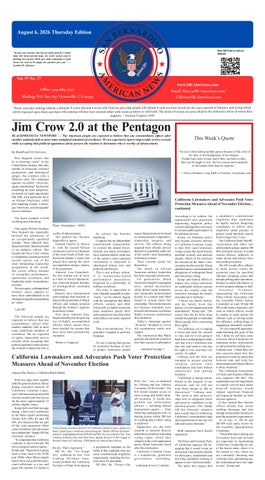
Marcelino “Mars” Serna is in his 40th year as a public servant in the areas of Education, Recreation and Human Services. “This recognition is not just about me. It reflects the collective work of so many mentors, colleagues, and community members who have walked alongside me throughout this journey.
SAN BERNARDINO, Calif.—
The 34th Annual Black Rose Award nominees showcase the outstanding leadership within the Inland Empire, according to Black Culture Foundation President Christen Irving. “Nominations started in September, with individuals from every corner of the Inland Empire nominating those who have made a profound impact on our communities.”
2026 Black Rose awardee Marcelino “Mars” Serna is in his 40th year as a public servant in Education, Recreation, and Human Services. For the past 17 years, Mars has served the San Bernardino City Unified School District (2006 to 2014), the Fontana Unified School District (2015-2016), and currently the San Bernardino County Superintendent of Schools as the Family/Community Engagement Program Specialist.
“I am deeply honored and
not unexpected. They’ve also warned that the district will likely need to make difficult spending cuts to restore its longterm financial stability, and that additional state funding alone is unlikely to solve its structural budget problems.
“Now we’re in a situation where this constriction is still happening, but now the artificial floor is gone,” said Stephen Aguilar, a professor of education at the University of Southern California. “So now, we’re falling through to the basement, and we’re sort of in this emergency period.”
Painful cuts are expected
The district’s most difficult decisions are expected to come over the next several months.
Board member Tanya Ortiz Franklin said schools will receive their budget allocations for the 2027-28 academic year this fall, and the board will discuss workforce reductions needed to balance the budget.
She also said that the district must carefully manage workforce reductions so high-needs schools aren’t disproportionately affected by staff turnover.
The board will also need to weigh other cost-saving measures, including furlough days — a prospect Ortiz Franklin acknowledged could feel like a “slap in the face for our labor unions” — and possible changes to employee health benefit contributions.
Ortiz Franklin also questioned whether the district could successfully save $200 million by reassessing contracts with outside vendors, as some of the items being procured cannot be made in-house.
Looking beyond the immediate budget crisis, she said school consolidation is likely unavoidable as enrollment continues to decline, with those conversations expected to begin
this fall.
The board will meet Aug. 11 in a likely closed session meeting to start discussing its fiscal recovery plan.
“The superintendent is clear that these are ambitious strategies, and that the board needs to not only be aware of them but also weigh in, given that we are elected to represent the voices of our communities,”
Ortiz Franklin said.
“And we want to do our best to make sure we continue to do that, and don’t have a fiscal advisor appointed, so that we lose the ability to make decisions on behalf of our community who elected us.”
LAUSD’s financial situation
Education finance experts say the findings of the county office of education are serious, but not unusual. Districts across California have faced similar fiscal challenges, and many have restored their financial footing after county intervention.
“Unfortunately,” Flores said, “it takes a threat like what L.A. Unified is now experiencing for them to make the decisions that they should be making to show that they are fiscally responsible as a board and as management.”
The board received a similar letter when Flores was on LAUSD’s school board during the height of the Great Recession.
“I just got here, and that’s all we were doing is cutting, cutting, cutting,” she said. “Feeling the impact of what that would mean for our families and for children.
… It was a long year.”
Michael Fine, the CEO of the Fiscal Crisis and Management Assistance Team, said the debate over whether union contracts pushed the district into its present predicament misses the larger issue. The concern, he said, is whether the board approved contracts without
Marcelino “Mars” Serna to Receive a Black Rose Award...continued
LAUSD could face layoffs, furloughs and school consolidation amid projected $231M shortfall...continued
clearly explaining how it would pay for them.
He said that the district should have been more transparent. In July, the parent group Oleada, Inc., published findings from a public records request revealing a series of written warnings from LACOE to Los Angeles Unified dating back to April, months before the school board approved its fiscal stabilization plan.
“It’s when the board says, ‘I’m going to approve these contracts, even though I don’t know how I’m going to pay the bill,’ that’s where the problem is,” Fine said.
“It’s not with the negotiations themselves. It’s not with the deal that was made.”
Despite his criticism, Fine said he does not believe LAUSD is beyond recovery.
“I’m normally the one worrying. I’m normally the one on behalf of all district staff all night figuring out or thinking through ‘Uh-oh, do we have a district in trouble?’ ” Fine said.
“I’m not feeling that for L.A. right now because I truly believe this is well within their ability to address.”
California unlikely to come to the rescue For months, LAUSD and its labor unions have lobbied lawmakers in Sacramento for additional education funding. But education experts say new state funding, while helpful, is unlikely to solve the district’s underlying fiscal problems. Much of that advocacy — including from other districts — has focused on the $3.9 billion of Proposition 98 funds that the state has withheld, Fine said. Even if the state releases those funds, Fine said, LAUSD’s share is unlikely to make up for the shortfalls. And because the funding may come with restrictions, the money may not come in the form LAUSD needs.
“We should be able to invest in our schools. However, that always has to come with the understanding that we can’t artificially raise the floor again,” Aguilar said.
“Because then, what you’re essentially doing is you’re kicking the can down the road, and I think this time it won’t even travel as far if you kick it.”
Credit Union Helps Students with Finances... continued
This year’s in-person camps were held in five communities.
Local children and teens who participated in a series of games and interactive lessons focused on money management gained a better understanding of financial concepts, according to a news release.
Credit union representatives led two workshops in Decatur, featuring curriculum based on age-appropriate National Literacy Standards. The
workshop for children focused on the basics of earning, saving, and spending money, while the workshop for teens presented real-life budgeting scenarios and decision-making exercises. Delta Community also offers workshops for adults focused on various financial topics, including budgeting, home buying, and debt management through the Delta Community Credit Union Financial Education Center.
Lose the Chaos, Not Just the Weight: Healthy School-Year Routines
truly humbled to be selected as a recipient of the Black Rose Award.
To be recognized alongside so many deserving individuals is something I do not take lightly
“I stand on the shoulders of remarkable leaders who have paved the way and set a powerful example of service and commitment to community.
Individuals like Dr. Gwen DowdyRodgers, my good friend, Retired Chief of SBCUSD School Police Joe Paulino, Reverend Sam Casey, Dr. Al Karnig, Norm Nunez, Willie Ulibarri, Sherman Garnett, my dear friend the late Charlie Seymour, and the late Dr. Margaret Hill have each left an enduring legacy that continues to inspire me.
“This recognition is not just about me. It reflects the collective work of so many mentors, colleagues, and community members who have walked alongside me throughout this journey. I remain committed to continuing that work, uplifting others, and doing my part to create opportunities for future generations.
“I accept this honor with gratitude, humility, and a renewed sense of purpose,” said Serna. Serna supports the 33 districts throughout the county with their respective family and community engagement initiatives. He also has served as an Adjunct Professor at San Bernardino Valley College in the Human Services Department where he taught Cultural Proficiency and Cross-Cultural Communication.
Mars also serves on a variety of community boards. He currently serves as vice-president of the
Governing Board of Education at Fontana Unified School District and on the Executive Board of the San Bernardino County Gangs & Drugs Taskforce. He also serves on the Inland Empire Fatherhood Involvement Coalition, the San Bernardino County Mentoring Advisory Committee, and the Loma Linda University Health’s Community Benefit Advisory Council (CBAC).
Along with serving on these boards, Serna was the co-founder of the Inland Empire Family Resource Center Coalition, where he served as Chairperson from 2008 to 2014. Mars received an associate degree from Riverside Community College, a bachelor’s degree in public administration
from California State University, San Bernardino and his master’s degree from the University of Redlands in Management.
Serna is happily married to his wife Marissa and has four children and five grandchildren. He’s also rearing his 16-year-old niece. His specialties include Community Organizing, Sports Officiating, former Disc Jockey and a Notary Public.
Ticket prices are $125 per person, with a table of eight for $840. Student tickets are $75, and a student table for eight is $600. For tickets and sponsorship opportunities, visit https:// sbbcfoundation.org/black-rosetickets/.
Credit Union Helps Students with Finances
THE CHAMPION NEWSPAPER — Delta Community Credit Union’s Cool Cash Money Camps provided financial education to about 400 students in metro Atlanta during June. These camps, launched in 2014, offer summer workshops in both in-person and virtual formats, helping youth understand financial concepts through interactive lessons.
By BlackPressUSANewswire
offer youth financial education workshops during the summer in both in-person and virtual formats, event organizers said.
metro Atlanta, including in Decatur. Launched in 2014, the camps
Milwaukee, WI — When the school year begins, routines naturally start to take shape. Early mornings, packed schedules, and busy evenings can make it challenging to prioritize your health.
TOPS Club, Inc. (Take Off Pounds Sensibly SM), the nonprofit weight-loss support organization with a “Real People. Real Weight Loss.®” philosophy, teaches that consistent routines and structure can help in your weight-loss journey. The backto-school season may be the perfect opportunity to build simple healthy habits that fit into your everyday life.
These habits might include:
Planning Your Meals Ahead Busy schedules often lead to last-minute, unhealthy food choices. Taking a little time each
week to plan meals can help you stay on track. Try… Preparing healthy breakfasts (like overnight oats or egg muffins) you can grab quickly. Packing balanced lunches instead of relying on convenience foods.
Planning dinners before the week gets busy.
Keeping nutritious snacks (nuts, veggies, hard-boiled eggs, etc.) available for the whole family.
Creating a Healthy Morning Routine A rushed morning can set the tone for the entire day. Creating a routine can help you feel more organized and prepared. Consider…
Drinking water when you wake up. Drinking 1-2 glasses of water first thing in the morning can kickstart your metabolism. Eating a protein-rich breakfast,
A Los Angeles Unified School District bus. Credit: Matt Gush / iStock
EdSource
Thursday, August 6, 2026
ACLU Report Details Rampant Violations, Lawlessness in Trump’s Immigration Enforcement
By Edward Kissam
On Inauguration Day, January 20, 2025, President Trump made clear there would be a renewed assault on immigrants’ rights.
What wasn’t clear at the time, but is now, is that this would escalate beyond hate ridden rhetoric into systematic disregard for the rule of law writ large.
That is the key takeaway from the ACLU’s July 16 report, “Agents of Chaos and Cruelty,” which details rampant misconduct by federal immigration agents across the country.
“The abuses detailed in this report are about more than immigration,” write co-authors Denise Bell and Naureen Shah.
“They reveal a blueprint for expanding authoritarian rule in the United States, with profound consequences for everyone in America.”
Bell, an ACLU consultant, and Shah, ACLU director of Policy and Government Affairs for Immigration, examined more than 1,200 instances of immigration law enforcement across eight states. According to the authors, there was aggressive and often illegal use of force or threatened use of force in about one out of four instances.
241 incidents involved physical force
128 incidents involved
threatened force, including the brandishing of weapons or verbal threats or force
105 incidents involved weapons such as batons, tasers, and flashbang grenades
86 incidents involved chemical irritants
82 incidents involved agents using their cars, such as boxing in or hitting other people’s cars
People caught up in enforcement actions included 155 U.S. citizens, 30 legal permanent residents, as well as 144 immigrants in liminal status. The latter includes DACA recipients, TPS recipients, and immigrants with a U visa (victims or witnesses of crime).
Bell and Shah documented 624 instances of enforcement in everyday locations — such as neighborhood sidewalks and streets, bus stops, gas stations, grocery stores, and malls — as well as 252 enforcement actions at places of work, including car washes, restaurants and food stands, landscaping and construction sites.
These encounters, they write, turned “sites of daily life into danger zones.”
Immigrants who are lawfully living and working in the US, but whose legal status is not permanent are particularly vulnerable, they note. Many, if
Black Mayors: Climate Change is in America’s Top Five Crucial Issues
By Hazel Trice Edney
As the Trump Administration continues to deny the reality and community impact of climate change, Black mayors have united to protect African-Americans and other people of color, who are increasingly and disparately in danger across the nation.
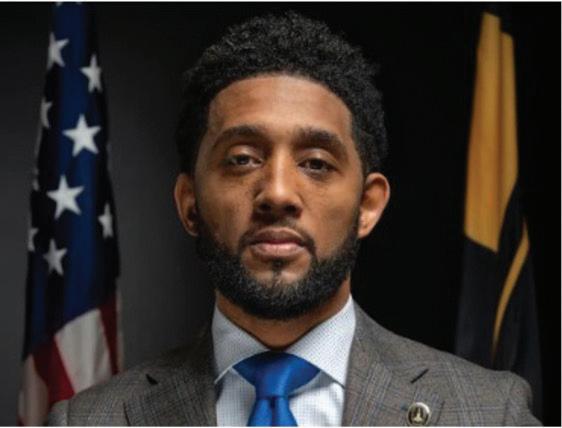
“Even though we have an administration that doesn’t even believe that climate change is real, we’re smart and we know that it is real,” says Baltimore Mayor Brandon Scott, president of the African American Mayors Association (AAMA), in an interview with the Trice Edney News Wire. “People can see these storms that are causing flooding in areas that have never been flooded. People know it’s hotter. They can see that. What we’re doing now is just allowing ourselves to be prepared for the world that we know that we want.”
Baltimore mayor since 2020, Scott has earned a reputation for using his power to actively prepare for the world that he envisions. For example, three years into his administration,
he signed into law City Council Bill 21-0159, sponsored by Councilman Mark Conway, to help "facilitate a transition to zero emissions vehicles for the City’s administrative fleet. Under the law, by 2030, all procurements for the City’s administrative fleet – comprised of light-duty, standard-occupancy vehicles, including sedans, small pickups, and SUVs – will be required to be zero emission vehicles, mostly likely all electric," according to a press release describing the bill. This action followed the 2022 announcement of Scott's vision for a goal of 100 percent carbon neutrality by 2045. Among his earliest legislative actions, Scott also signed a bill requiring the city’s three pension funds to divest from the fossil fuel industry.
“My administration knows the critical importance of ensuring our city is able to confront the climate crisis head-on and do everything in our power to ensure Baltimore is leading the way in sustainability and climate resilience," he said in a press statement. "Doing so
not most, are “in the system,” having provided detailed personal information to USCIS in applications for legal status or by filling out address change forms.
Included in this group are the more than 300,000 Haitians whose Temporary Protected Status officially ended as of July 27. Reporting suggests ICE has made plans to ramp up detentions and deportations of Haitians with enforcement efforts starting as early as this week.
The ACLU report also undercuts rhetoric about targeting “the worst of the worst,” finding that 214 children were detained, targeted for enforcement or experienced law enforcement misconduct, and that among these, 32 were U.S. citizen children. In 54 incidents, agents directly interrogated or detained minors.
Agents “chose to conduct enforcement in places children were present — at school pickups and drop-offs, during traffic stops, in courthouses — even when they did not need to,” the authors write. They “instilled terror.”
Others targeted were identified as “enemies” based solely on the fact that they exercised their 1st Amendment rights to free speech: 80 community or legal observers,
71 protesters, 24 journalists, 23 elected officials or their staff, and 7 clergy.
The eight states in the study (AZ, Ca., CO, FL, IL, LA, MD, ND) comprise one fourth of the entire U.S. population, suggesting the aggregate national impact on American communities is at least four times greater than what the authors detail.
The report weaves together a broad range of sources to explain that violations aren’t usually “mistakes” or “rogue officers” but built into the current enforcement system, reinforced by tactics most often thought of in connection with authoritarian dictatorships.
In about one quarter of the incidents analyzed, ICE or CBP agents were masked, and in about the same proportion agents were driving unmarked cars.
Moreover, ICE has deliberately deployed white nationalist and vehement anti-immigrant messaging in its recruitment efforts. Lackluster screening has also led to the hiring of recruits with documented behavior or mental health issues, including David Brouillette, who killed 26-year-old Joan Sebastian Guerrero in Maine on July 13.
According to Brouillette’s own family and friends he has a long history of mental health struggles as well as aggressive and abusive behavior.
“They’re going to kill someone,” Bell wrote in her notes — presciently, as it turns out — well before events in Minneapolis led to the deaths of U.S. citizens Alex Pretti and Renée Nicole Good.
The report includes specific and practical recommendations:
Dismantle the national immigration policing force (ICE and CPB) which is too large to make it accountable. In its place Congress should create an Immigration Management
Jim Crow 2.0 at the Pentagon... from page 1
action rather than extraordinary performance echoes some of the ugliest stereotypes of the Jim Crow era. Yesterday’s segregationists claimed Black Americans were inherently less qualified. Today’s culture warriors simply employ more politically acceptable language while inviting the same suspicion about Black achievement.
That is why Hegseth’s campaign increasingly resembles Jim Crow 2.0.
The targets may now wear stars on their shoulders instead of military patches on segregated uniforms, but the underlying message is hauntingly familiar: Black excellence is presumed suspect, while white excellence is presumed earned.
America’s military became the finest fighting force in history because it opened its doors to talent wherever it could be found. It grew stronger after President Truman desegregated the armed forces. It became stronger when women assumed greater command responsibilities. It became stronger when every qualified American was given the opportunity to serve to the fullest extent of their abilities.
Diversity is not a concession. It is a strategic advantage.
The nation’s adversaries do not fear an American military because it is racially homogeneous. They fear it because it draws upon the talents of more than 340 million Americans whose diverse experiences, perspectives, and
Black Mayors: Climate Change is in America’s Top Five Crucial Issues...continued
requires us to look at the steps city government can take to change the way it operates, and work to modernize our systems to be more climate conscious."
In the interview, he said he wants Baltimore to lead the nation by example. "When you look at the milestones that we're setting for ourselves, that's how we're holding ourselves accountable."
He said he hopes this vision will spread around the nation to mayors of AAMA as effects of climate change - including global warming, pandemics and other health crisis - have historically affected Black and other people of color disparately.
Scott represents the 641 African American mayors of the AAMA, an organization that grew out of the 50-year-old National Conference of Black Mayors, which merged with the AAMA in 2016. Black mayors represent 48 million citizens across the country.
abilities make our armed forces unmatched anywhere in the world.
Every politically motivated dismissal of a distinguished officer sends a chilling message throughout the ranks: excellence alone may no longer be enough if you belong to the wrong demographic group.
That weakens morale. It weakens recruitment. It weakens retention.
And ultimately, it weakens national security.
Pete Hegseth has every right to pursue military readiness. He has no right to redefine merit in ways that repeatedly cast suspicion upon the accomplishments of Black officers, women, and others who have devoted their lives to defending this nation.
America deserves better. The men and women who wear the uniform deserve better. The Constitution deserves better.
And unless Congress finds the courage to exercise meaningful oversight, history may well remember this period not as a restoration of military excellence, but as the moment political ideology attempted to resurrect, in modern form, the old poison of exclusion.
Jim Crow did not strengthen America. Jim Crow 2.0 will not strengthen America’s military. It will only diminish it
Wade Henderson Strategic Advisor Civil and Human Rights wade@wadejhenderson.com
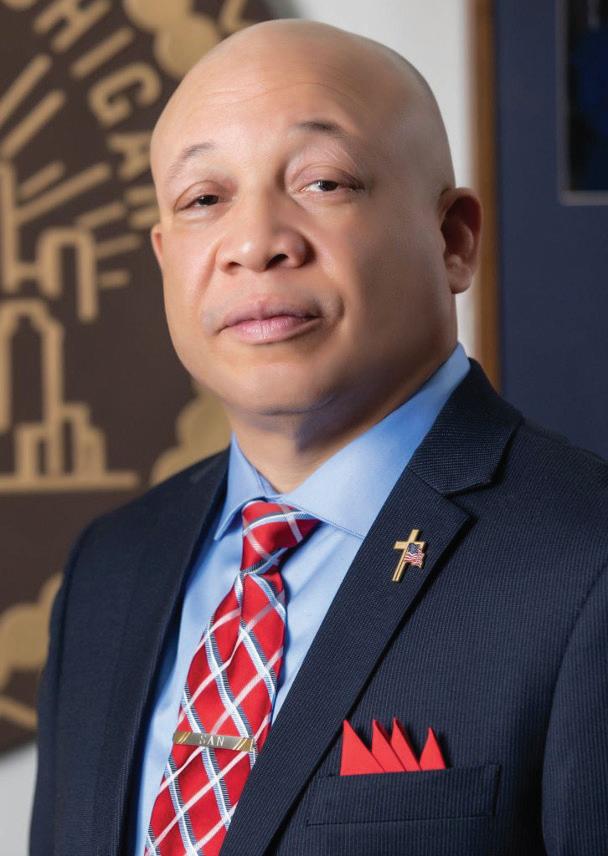
Flint Mayor Sheldon Neeley, mayor since 2019, is still dealing with the aftermath of the crisis. In an interview, he agreed with observers that Flint suffered the inattention that led to the crisis largely because the community was poor and Black.
“We would not have had to continued on page 4
It has been widely reported by credible environmental agencies that climate change causes frequent and severe weather events, heavier than normal rainfalls, dangerous thunder and lightning storms, droughts and scorching heat waves such as those taking place this summer. Coupled with long time environmental racism in poor Black neighborhoods, climate issues have risen to crisis level. Among America’s worst recent environmental crisis was the Flint, Mich., water crisis from 2014-2019. Between 6-12,000 Flint children were exposed to high levels of lead in Flint’s drinking water after residents complained about the taste, smell and appearance of the water for years. Lead affects the brain and central nervous system when consumed.
ACLU Report Details Rampant Violations, Lawlessness in Trump’s Immigration Enforcement...continued
Agency focused on improving community life and preserving the U.S. economy which relies heavily on immigration.
Develop and reliably implement clear rules for processing immigration cases and create a pathway to citizenship for millions of longstanding settled immigrants.
Limit participation of state and local government in immigration enforcement and take measures to prohibit commandeering of state resources by the federal government (as was done in Los Angeles and Washington DC, for example.)
Pass state legislation to authorize civil suits against federal, state and local officials who violate individual’s civil rights. “In countries experiencing authoritarianism, the loss of basic freedoms grows so widespread that it grows less poignant,” the authors warn, noting that even as the scale of immigration enforcement attacks escalates, tracking them becomes more difficult. “It is a fact of life, obscured or ignored, rather than protested.”
Immigrants are the canaries in the coal mine. U.S. citizens must confront the reality that we are all targeted, all hurt, and that community life across the country is undermined by the lawlessness of the current administration’s draconian immigration enforcement policies.
Why Black Families Pay More for Cars and How to Stop It
By The Black Press USA
Roosevelt opens The Color of Our Money Is Green with the conversation every Black family needs to have before their next vehicle purchase.
In Episode 1, Roosevelt covers the federal data documenting why Black borrowers pay significantly higher auto loan interest rates than white borrowers with similar credit profiles, exactly how dealer financing markup works and what it costs Black families, and the three core principles that transform the carbuying experience for any Black buyer who applies them.
What You Learn in This Episode:
• How dealer reserve and interest rate markup actually work
• Why the monthly payment conversation costs Black buyers thousands • How to pull your credit report before any
dealership sees it
• Why a pre-approval letter represents your most powerful finance office tool
• How to separate vehicle price, financing, and add-on product negotiations
AutoNetwork helps serious car shoppers inspect any new vehicle online before walking into a dealership. I’m Roosevelt — I’ve been reviewing cars and shaping digital car buying and credit union auto leasing since before YouTube car reviews existed.
You’ll find detailed walkaround reviews, POV test drives, and buyer-focused breakdowns covering comfort, space, features, and real-world value.
Check it out: https:// blackpressusa.com/why-blackfamilies-pay-more-for-cars-andhow-to-stop-it/
Baltimore Mayor Brandon Scott, President, African American Mayors Association
Flint, Michigan Mayor Sheldon Neeley
Thursday, August 6, 2026
COMMENTARY: We Lived It: Why a Different World Still Matters
Today — an Ode to HBCUs
WESTSIDE GAZETTE — The television show *A Different World* offered an early portrayal of Historically Black Colleges and Universities (HBCUs), depicting Black excellence, growth, struggle, and purpose. The author recounts how the show prepared them for their experience at Florida A&M University from 1997 to 2002, where they found a sense of belonging and community.
By BlackPressUSA Newswire
Some shows you watch. Others shape you.
A Different World did both. It gave us one of our first real glimpses into life at an HBCU, where Black excellence, growth, struggle, and purpose all coexisted. It wasn’t just entertainment; it was a vision. It showed us that college wasn’t just possible; it was ours. As the theme song reminded us, “I know my parents love me… stand behind me, come what may,” grounding us in the importance of family and a sense of foundation as we stepped into new chapters of life. That vision became real for me in the summer of 1997 when I arrived at Florida A&M
University. Though I was nervous, being away from home for the first time, I quickly found myself at home on The Highest of Seven Hills. From 1997 to 2002, I didn’t just attend FAMU… I lived what A Different World had been preparing me for.
It was a place for everybody. For those who walked across the stage Magna or Summa Cum Laude, and for those who fought through challenges and still made it by the grace of God, earning that degree designation: “Thank Ya Lawdy.” No matter the path, the destination meant something. It was also where family was built. Some found lifelong partners, while others created bonds through “play cousins” and friendships that became real
Buys T.D.s and Buys/Lends on Partial Interests
Santa Clarita native participates in world’s largest international maritime warfare exercise
By Senior Chief Mass Communication Specialist John Osborne, Navy Office of Community Outreach
PEARL HARBOR, Hawaii2nd Lt. Philip Olivero, a native of Santa Clarita, California, is assigned to the 15th Marine Expeditionary Unit (MEU) embarked aboard USS Essex, a U.S. Navy warship participating in the biennial Rim of the Pacific (RIMPAC) exercise in and around the Hawaiian Islands.
Olivero graduated from West Ranch High School in 2015 and earned a bachelor’s degree in history from the University of Southern California at Santa Barbara in 2020.
Olivero joined the Marine Corps five years ago.
“I joined the Marine Corps after being around it my whole life,” Olivero said. "My father served 22 years in the Corps, and I had a total respect for him, and I also wanted to be active and have an active lifestyle."
The skills and values needed to succeed in the Marine Corps are similar to those found in Santa Clarita.
“Early on, it was instilled in me the ability to adapt to pressure,” Olivero said. "I didn't have a lot of pressure on me, but I was exposed to it at a young age, and after joining the Corps, it prepared me more than those who weren't."
Today, Olivero serves as a ship's team embarkation officer.
As the world’s largest international maritime exercise, 31 nations, approximately 40 surface ships, five submarines, 14 national land forces, over 140 aircraft and more than 25,000 personnel will participate in RIMPAC 2026. This exercise provides a unique training opportunity that helps participants foster and sustain cooperative relationships that are critical to ensuring safety at sea and security on the world’s oceans. RIMPAC 2026 marks the 30th exercise in a series that began in 1971.
The theme of RIMPAC 2026 is “Partners: Integrated and Prepared.” The participating nations and forces exercise a wide range of capabilities and demonstrate the inherent flexibility of maritime forces. These capabilities range from disaster relief and maritime security operations to sea control and complex warfighting. The relevant, realistic training program includes gunnery,
family. And no matter how much time passes, every reconnection brings that feeling… Homecoming.
Those experiences shaped me, late-night conversations, professors who poured into you, and moments that challenged you to grow. That wasn’t television anymore. That was life. Today, I carry that same spirit forward. I share it with my children, my nieces and nephews, and the young people I mentor, or even those I simply connect with for the culture. I’m not just telling them about college; I’m sharing what it feels like to be in a space that affirms who you are. Because too many of our young people haven’t seen that vision.
They see highlights, but not the depth. They don’t always see that HBCUs are more than institutions; they are environments that build confidence, culture, and community.
And in this day and age, that truth matters even more.
HBCUs continue to stand as pillars of access, opportunity, and cultural identity at a time when they are facing unprecedented and, at times, unfair political and systemic pressures. Challenges around funding, policy decisions, and shifting educational priorities make it critical that we not only remember their value but actively protect and sustain them. These institutions have always done more with less, yet continue to produce leaders, innovators, and changemakers who shape our communities and our country.
So, we must reintroduce and uphold that “Different World.”
Parents, have the conversation. Students, look deeper. Alumni, tell your stories, invest, and stay connected.
Because as the song reminds us, “It’s a different world from where you come from,” and for many of us, it became exactly where we found ourselves.
This is more than a memory.
It is a world our ancestors built and a place where dreams and realities are made.
Based on reporting by Westside Gazette.
Lose the Chaos, Not Just the Weight: Healthy School-Year Routines...continued from page 2
like Greek yogurt with berries or eggs mixed with veggies.
Taking a few minutes to stretch or move your body.
Building Movement Into Your Schedule Exercise doesn't have to be a chore. Small amounts of movement throughout the day can add up. For example:
Take a walk after school dropoff.
Go for a family walk after dinner.
Park farther away when running errands.
Schedule workouts like any other important appointment.
Prioritizing Sleep and Stress Management
The back-to-school season can be stressful, and lack of sleep can make it harder to maintain healthy habits. Establishing a consistent bedtime, limiting screen time before bed, and creating a healthy sleep environment in a cooler and darker room can help you feel your best.
As your family settles into the school-year schedule, look for opportunities to make healthy habits part of your routine. A little planning can help you feel more energized and ready to take on the season ahead.
Santa Clarita native participates in world’s largest international maritime warfare exercise...continued
missile, anti-submarine and air defense exercises, as well as amphibious, counter-piracy, mine clearance operations, explosive ordnance disposal and diving and salvage operations.
It is fitting that the world’s premier maritime exercise occurs as the United States celebrates its 250th anniversary. For 250 years, the United States has built relationships with international partners based on trust, cooperation, and shared values. RIMPAC is where that trust is put into practice, strengthening the people-to-people relationships that are the bedrock of all the nations’ collective security.
Olivero plays an important role in the exercise.
“My first impression of RIMPAC is that it is so widescale,” Olivero said. "It contributes not only to America, but also to many other nations and fosters relationships with our allies."
Olivero serves aboard a Navy ship that operates far forward, around the world and around the clock, promoting the nation's prosperity and security.
“Serving in the Marine Corps means I have pride in the uniform, pride in what I have accomplished and I'm making my father proud,” Olivero said.
Olivero is grateful to others for helping make a career in the Marine Corps possible.
EDD Makes Online Identity Verification Easier
Lifestyle News
At EDD, we’re continuing to improve the way customers access our programs and services. Customers applying for unemployment, disability, and Paid Family Leave benefits can now verify their identity through Socure directly online in myEDD. This streamlined process helps protect customers’ personal information while making identity verification faster and easier.
Over 80% of customers complete identity verification within seconds, helping customers move through the process faster and reducing delays. Since launching for unemployment customers in August 2025, then serving all online unemployment and disability, and Paid Family Leave customers in June 2026, more than 415,000 customers have successfully verified their identity through Socure.
For most customers, identity verification is quick and seamless without the need to switch between websites or logging into multiple accounts. Information supplied by customers is matched with other data sources in real time to verify identity. When
additional review is needed, customers may be guided through ID.me for additional identity proofing, which may include document uploads and credential checks. If a customer cannot complete verification through these tools, trained EDD staff manually review the information and make the final determination.
Protecting Customer Information
All verification processes follow strict state and federal privacy standards. EDD does not share personal data beyond the minimum necessary to confirm identity for benefit purposes. By streamlining routine verification steps, these improvements allow EDD staff to focus more time and attention on claims that require additional review and customer support. This balanced approach reflects how modern organizations strengthen security while improving service. Technology supports the process, but people remain at the center of final decisions and customer care.
Black Mayors: Climate Change is in America’s Top Five Crucial Issues...continued from page 3
experience the things that we are still currently experiencing had we been a community of not so many minority members of our society,” he said.
Environmental racism doesn’t just impact physical health. The continued fear and mistrust of the government also impact mental health.
“When we talk about the psychological and social impact that we've had, you know, there's a crisis of confidence, especially in government,” Neeley said. “Definitely the psychological impact is something that we cannot see and we have to really understand what that is. And so, segments of our community still believe that we're still in crisis.”
“I would like to thank my dad, retired Master Sgt. Philip Olivero, for guiding me and letting me know what to expect when I joined, so I was not surprised,” added Olivero. "I also want to thank my mom, Shanika, for being there for our family when my dad was away and being the rock of our family."
Hosted by Commander, U.S. Pacific Fleet, RIMPAC 2026 will be led by Commander, U.S. 3rd Fleet, Rear Adm. Richard Meyer, who will serve as Combined Task Force (CTF) commander. Chile will fill the role of deputy commander of the CTF, and Japan will fill the role of vice commander. The Republic of Korea will command the maritime component, and Canada will command the air component.
During RIMPAC, a network of capable, adaptive partners train and operate together in order to strengthen their collective forces and promote a free and open Indo-Pacific. RIMPAC 2026 contributes to the increased interoperability, resiliency and agility needed by the Joint and Combined Force to deter and defeat aggression by major powers across all domains and levels of conflict.
More information about RIMPAC is available here: https://www.cpf.navy.mil/ RIMPAC/
Neeley says climate change is among the top five most important issues America currently faces. That is why the AAMA now partners with organizations studying and advocating issues pertaining to climate change.
AAMA, a non-partisan organization, works alongside climate organizations, such as the Climate Action Campaign (CAC), which has kept a sharp eye on moves made by the Trump Administration against climate change issues. CAC pushes for “equitable federal action to tackle the climate crisis.”
For example, CAC has a web feature called, “Trump’s Climate and Clean Energy Rollback Tracker”. Currently it states, “The Trump administration has accelerated the climate crisis and endangered communities’ health, driven up costs and undermined economic growth. The rollbacks tracked below – cuts to extreme weather preparedness, frozen investments, and blocked pollution protections, and more –will have a devastating impact on every American, and particularly the most vulnerable.”
Neeley stresses that he works from a non-partisan perspective; and therefore, will do everything possible to fill gaps where funds have been cut by the federal government.
Meanwhile, the damage continues to grow in the Black community as the AAMA fights back.
The Environmental Defense Fund (EDF) reports, “African American communities are more vulnerable to severe weather and floods. More than half of African Americans in the United States live in the South, an area that is and will continue to see stronger hurricanes and increased flooding from climate change. Many communities adjacent to power plants, petrochemical plants, factories, and other sources of pollution, are African American or other people of color. Unfortunately, recent hurricanes have shown that many of these facilities are ill equipped to deal with flooding from increasingly stronger storms, often leading to releases of air and water pollution.”
The report continues, “For example, after Hurricane Harvey [in 2017], independent monitors found petrochemical plants released cancer-causing benzene at rates six times higher than safe levels. Neighborhoods near Superfund sites, which have also seen flooding from recent storms, are also more likely to be African American. Historic segregation has resulted in African Americans living in less desirable low-lying and flood prone areas in many cities throughout the United States.”
The EDF reports it will only get worse. But Scott says it won’t be difficult to measure the impact the mayors are making. “When you talk about our legacy residents who now have heating and air in their homes. Even things like cool roofs and mitigating extreme flooding,” Scott said. “And people’s basements aren’t being ruined year after year after year. We can hold ourselves accountable for that.”
Scott concludes that the key will be the mayors working together and sharing strategies for success.
"As president of the African American Mayors Association, we do this on every issue, making sure that we're looking for best practices across the country, putting things together and helping each other to make policy better - not just for one city, but for all cities."
Photo by Mass Communication Specialist 1st Class Patricia Elkins, Navy Office of Community Outreach
Thursday, August 6, 2026 THE SAN BERNARDINO AMERICAN NEWS -HEALTH/LOCAL NEWS
Travel with Confidence: 7 Smart Tips for Older Adults on the Go
Dr. Damanpreet Jamarai, Medicare & Retirement Chief Medical Officer, UnitedHealthcare of California
Summer and fall are peak travel seasons for many older adults – whether that means soaking up the sunshine, visiting loved ones or finding a cooler place to unwind. With a little preparation, your trip can be just as smooth as it is enjoyable.
The key is thinking ahead in a few simple ways so you can focus less on logistics and more on the experience.
1. Start with a quick health check-in Before you go, connect with your health care provider –especially if your trip involves long travel days, more physical activity or a time zone change. It’s a simple step that can help you plan ahead, adjust anything needed and avoid surprises while you’re away.
2. Pack smart – and keep essentials close If you are flying, medications should always go in your carry-on bag, in their original containers, with a few extra days’ supply in case plans change. It’s also helpful to keep a short list of medications, health conditions and emergency contacts with you regardless of your mode of travel. This can make a big difference if you need care while away from home.
3. Know your coverage and have a backup plan
Take a few minutes to understand what your health plan covers when you’re out of town – and consider travel insurance for added peace of mind. Sharing your itinerary and key details with a trusted friend or family member is another easy way to help stay protected.
4. Keep moving and stay hydrated Long flights, road trips or train rides can mean more sitting than usual. Make it a point to stand, stretch or walk when you can. And drink water regularly; travel can be more dehydrating than you think, especially on planes.
5. Build in time to rest It can be tempting to jam-pack your schedule, but leaving room to recharge helps prevent fatigue and keeps your trip enjoyable from start to finish. A little flexibility can go a long way if your energy level shifts day to day.
6. Choose safety and comfort over convenience Where you stay and how you get around matters. Welllit areas, walkable spaces and accommodations that meet your needs can help reduce stress and lower the risk of falls or injury.
7. Listen to your body and adjust as needed New climates, different foods and changes in routine can all affect how you feel. Pay attention to your energy, sleep and hydration, and don’t hesitate to slow down or tweak your plans along the way.
Bottom line: Travel doesn’t have to be complicated to be rewarding. A little preparation can help you stay healthy, safe and confident – so you can fully enjoy the journey, wherever it takes you.
August is National Wellness Month: 10 Everyday Habits That Secretly Increase Stress (And What to Do Instead)
August is National Wellness Month, a time dedicated to prioritizing healthy habits and finding ways to improve overall well-being. While many people associate stress with major life events, such as work pressures, financial challenges, or personal struggles, everyday habits can also quietly contribute to feelings of tension, exhaustion, and burnout. The good news is that small changes can make a meaningful difference. By recognizing common behaviors that may be increasing stress levels, it becomes easier to replace them with healthier routines that support mental, emotional, and physical wellness. Here are 10 everyday habits that may be adding unnecessary stress to your life (and what you can do instead).
1. Using Alcohol to Relax After a Long Day
Many people enjoy a drink to unwind, but relying on alcohol as a primary way to cope with stress can sometimes create additional challenges. As Community Outreach Coordinator at Virginia Recovery Centers (an alcohol and drug rehab in Virginia), I’ve seen how while alcohol may provide temporary relaxation, it can interfere with quality sleep, affect mood regulation, and contribute to feelings of anxiety or fatigue the following day. Instead, consider creating a relaxing evening routine that helps your body and mind transition out of “stress mode.” Reading, stretching, taking a warm bath, practicing mindfulness, or
August is National Wellness Month: 10 Everyday Habits That Secretly Increase Stress (And What to Do Instead)...continued
Sleep is one of the most important foundations of good health, yet it is often one of the first things people sacrifice when life becomes busy. Poor sleep can make it more difficult to manage emotions, concentrate, and handle everyday stress.
Create a consistent bedtime routine by going to sleep and waking up around the same time each day, limiting screen use before bed, and creating a comfortable environment that encourages relaxation.
5. Living With Too Much Clutter
A cluttered home or workspace can contribute to feelings of stress and distraction. Constantly searching for misplaced items or feeling overwhelmed by unfinished organizing projects can add unnecessary mental strain.
Rather than trying to tackle everything at once, start small. Cleaning out one drawer, organizing one area, or creating simple systems for everyday items can help create a calmer environment.
6. Multitasking Constantly
Many people view multitasking as a way to accomplish more, but frequently switching between tasks can increase mental fatigue and make it harder to complete important responsibilities. Trying to focus on too many things at once can leave you feeling busy without feeling productive.
Instead, practice focusing on one task at a time whenever possible. Prioritizing your most important responsibilities and breaking larger projects into smaller steps can help reduce overwhelm.
7. Spending Too Much Time Indoors
Modern lifestyles often involve long hours inside, whether
working at a desk, managing household responsibilities, or spending time on digital devices. A lack of fresh air, sunlight, and movement can negatively affect mood and energy levels.
Make time to step outdoors each day, even if it is only for a short walk around the neighborhood. Spending time in nature, getting natural light, and moving your body can support both physical and mental wellness.
8. Comparing Yourself to Others
Social media can make it easy to compare your life, appearance, achievements, or lifestyle to others. However, online content often represents only carefully selected moments, not the full reality of someone’s experiences.
Instead of focusing on comparisons, redirect your attention toward your own goals and progress. Limiting time on accounts that negatively affect your mood and practicing gratitude can help build a healthier mindset.
9. Avoiding Financial Stress
Money concerns are a common source of stress, but avoiding financial tasks can make anxiety grow over time. Ignoring bills, delaying budgeting, or avoiding conversations about money can create additional worry.
Taking small steps, such as reviewing expenses, creating a budget, or setting financial goals, can help create a greater sense of control and reduce stress.
10. Waiting Until Burnout to Practice Self-Care
Many people view self-care as something to do only after responsibilities are complete. However, waiting until you feel completely exhausted can make it harder to recover from stress.
continued in next 2 columns
The JW Vines Society Summer Health Academy Celebrates 24 Years of Mentoring Future Physicians at Annual Banquet
enjoying a favorite non-alcoholic beverage can provide a healthier way to decompress.
2. Constantly Checking Your Phone
Smartphones make it easier than ever to stay connected, but nonstop notifications, social media updates, and news alerts can keep the brain in a constant state of stimulation. Frequently checking devices can make it harder to focus, relax, and be present in the moment. Try setting boundaries with technology by turning off unnecessary notifications, creating screen-free times during the day, or keeping your phone away from your bedside at night. Even short breaks from screens can help reduce mental overload.
3. Saying Yes to Too Many Things
Taking on too many commitments can leave little time for rest, hobbies, or meaningful connections. Whether it is agreeing to extra responsibilities at work, overloading your calendar, or constantly trying to help others, overcommitting can quickly lead to burnout.
Learning to set boundaries is an important part of wellness. So before agreeing to something new, consider whether it aligns with your priorities and whether you realistically have the time and energy to take it on.
4. Sacrificing Sleep
RIVERSIDE, CA - The JW Vines Society announces the Elma Vines Summer Health Academy Banquet on Thursday, August 6, 2026, at 6:00 PM. This special event celebrates two decades of excellence in mentoring the next generation of medical professionals through hands-on learning and dedicated interactions with physicians.
For 24 years, the Elma Vines Summer Health Academy has provided exceptional opportunities for college students to gain invaluable experience in the medical field.
To date, 98 students have benefitted from this unique educational experience. 89 are now practicing physicians, while others have advanced their careers as MD/PhD researchers, university faculty members, or in other health-related disciplines. Nearly all participants have entered the healthcare arena in some capacity in the Inland Empire.
The Vines Summer Health Academy is a five-week paid program that allows students to shadow physicians in
specialized practices, including surgeons, general practitioners, pediatricians, and other medical professionals. Participants not only observe clinical work but also collaborate with office staff, develop professional relationships, and present weekly findings on their experiences— creating transformative educational moments that shape their medical careers.
This year's cohort of students has completed their shadowing placements and will share their experiences and insights at the banquet.
Attendees will hear directly from participants about the lessons learned, the doors opened, and the inspiration gained through their participation in Vines Summer Health Academy. Their presentations offer a compelling testament to the program's impact on aspiring healthcare providers and the medical community as a whole.
Join Us to Support the Next Generation
“We invite physicians, healthcare professionals, business leaders, educators, and community members to join us
The JW Vines Society Summer Health Academy Celebrates 24 Years of Mentoring Future Physicians at Annual Banquet...continued for an evening of inspiration and celebration,” said JW Vines Foundation President Dr. Michael Nduati.
This is an opportunity to learn about the legacy of JW Vines and the impact of the Elma Vines Summer Health Academy, meet talented young scholars committed to medical careers, and demonstrate your support for future healthcare leaders.
“Your presence and partnership strengthen this vital program and encourage students pursuing excellence in medicine,” said Dr. Nduati.
EVENT DETAILS
Date: Thursday, August 6, 2026
Time: 6:00 PM
Location: Canyon Crest Country Club, 975 Country Club Drive, Riverside, CA 92506 For tickets or sponsorship: https://www.eventbrite.com/ e/2026-evsha-banquet-tickets1994888023780?aff=oddtdtcre ator#location
Sponsorship and advertising opportunities are available. For more information, email contact@vinesmedical.org. The deadline is Tuesday, August 4, 2026.
Don’t Forget To Check Out The SB American Weekly Newsletter
Each edition features a curated selection of events and entertainment from the Inland empire to Los Angeles. Go to sb-american.com to subscribe!
You can enjoy weekly updates on our latest news and our weekly Newsletter.
Don’t forget to follow us on Instagram.
August is National Wellness Month: 10 Everyday Habits That Secretly Increase Stress (And What to Do Instead)...continued
Wellness works best when selfcare becomes part of a regular routine. Whether it is exercising, spending time with loved ones, pursuing hobbies, or simply taking quiet time to recharge, consistent self-care can help build resilience.
Small Changes Can Lead to Better Wellness!
National Wellness Month is a reminder that improving health does not require a complete lifestyle overhaul. Often, the biggest improvements come from recognizing small habits that may be increasing stress and replacing them with healthier alternatives. By becoming more intentional about daily choices, you can create routines that support a calmer,
healthier, and more balanced life. Lauren Edwards is the Community Outreach Coordinator at Virginia Recovery Centers, a leading alcohol and drug rehab in Virginia. In her role, Lauren connects individuals and families with the center’s comprehensive addiction treatment programs, including outpatient care, medication-assisted treatment, and holistic therapies such as art and music therapy. She is dedicated to raising awareness about substance use disorders and providing compassionate support to those seeking lasting recovery, helping them navigate treatment options and access the resources they need to thrive. https:// virginiarecoverycenters.com/
Medi-Cal is changing. Here’s what to do if you’re worried about coverage by Kristen Hwang and Ana B. Ibarra
It’s a tumultuous time for healthcare. Federal and state budget cuts are changing the rules for public benefits. Most people with Medi-Cal won’t be affected, but it may be confusing to figure out whether your benefits will change.
Are you on Medi-Cal, or is someone in your family worried about the cuts?
Tell us about your health coverage, and we’ll share advice, information and updates.
The two most important things to do: Update your contact information with your county benefits office, and keep an eye out for any letters mailed from the county or state.
You can update your information by calling your local
county office or online with a BenefitsCal account.
Here are the key changes, what they mean, and where to get help.
Changes for immigrants Non-citizens — undocumented immigrants, refugees, asylum seekers, and people with pending immigration cases — are the group most affected, even those with a green card. The state has an immigration status chart to help you check whether these changes apply to you. If they do, you’ll get a letter.
Undocumented immigrants As of Jan. 1, immigrants over age 19 without legal status can no longer apply for Medi-Cal (children remain eligible).
Those already enrolled keep
Photo caption left to right: (L to R): the 2026 Elma Vines Summer Health Academy summer interns (L to R): Sibonginkosi “Charity” Ncube, Kindall Walsh, Nyla Criego, Kamie Taylor (Program Director), Saafir Moore-Muhammad, Thaila Jenkins and Jessica Ojukwu.
Photo caption: (L to R): Dr. Levister, Dr. Osei, Dr. Fenison, Dr. Kingsley, Dr. Harris, E.A. Kamie Taylor and Dr. Nduati. Not pictured: Dr. A.J. Rogers and Carl M. Dameron.
An exam room at St. John's Community Health Avalon Health and Access Center, in Los Angeles. Feb. 7 2026. Photo by Jules Hotz for CalMatters
Thursday, August 6, 2026
Salvation Army and City of San Bernardino unite families through
collaborative homelessness response
Partnership turns emergency housing into lasting hope and stability. What began as an emergency response to homelessness became a comprehensive solution focused on family connection and long-term well-being.
City/State News
Michelle and her daughter, Emily (on the far left), say goodbye to local friends before departing to be reunited with their family in Springfield, Missouri. The family was welcomed by relatives in Missouri, marking the start of renewed Housing stability and employment opportunity.
SAN BERNARDINO, CA -
The Salvation Army and the City of San Bernardino announced a successful family reunification case that demonstrates the power of community collaboration in addressing homelessness.
Recently, Michelle (last name withheld to respect her privacy) and her daughter Emily were reunited with their family in Springfield, Missouri, ending months of housing instability and beginning a new chapter of hope and stability. What began as an emergency response to homelessness became a
comprehensive solution focused on family connection and longterm well-being.
Michelle initially entered San Bernardino's motel voucher program, providing immediate safety and stability for her and her daughter. Recognizing the program's role as a temporary resource, The Salvation Army's team worked closely with her to find a sustainable long-term solution.
Through case management, the team determined that the best path forward was family reunification with Michelle’s
Predatory Auto Lending Exploits Black
Consumers
By BlackPressUSA Newswire
Nearly 92 percent of American households rely on a personal vehicle to manage their daily lives. Consumers shopping for a vehicle in May learned that the average cost of a new car was $49,307, and that used cars averaged $25,918, according to Cox Automotive. But the high price of vehicles is not the only financial challenge confronting Black and other consumers of color. Discriminatory and predatory practices in the sale and financing of cars, including predatory lending, have pushed millions of buyers into longer and higher priced loans.
A study by the National Fair Housing Alliance found that nonwhite test shoppers were given more expensive financing 62.5 percent of the time compared to white testers with equivalent or worse credit. Similarly, another recent independent study by the Century Foundation concluded that Black, Hispanic, and American Indian borrowers are given higher interest rates on auto loans across all credit tiers. Research published by the Federal Reserve found Black borrowers disproportionately pay the highest interest rate mark-up, resulting in more than $3,000 in additional interest over the life of the loan due to predatory lending practices. Now a new report released by the Center for Responsible Lending (CRL) found that the terms of predatory loans as well as dealers and lenders conniving to drive up costs –not the consumers’ willingness to pay – made delinquency and default more likely. These tactics limit alternatives borrowers can pursue to lower their payments. This conclusion came through a series of consumer focus groups
adult daughter, Sarah, who welcomed the opportunity to provide a home. However, without financial assistance for travel, this remained out of reach.
"This story exemplifies what's possible when we look beyond the immediate crisis and focus on what truly matters, keeping families together," said Mercedes Pacheco, director of social services for the Salvation Army.
"Through our partnership with the City of San Bernardino, we addressed not just homelessness but the core need for family connection and stability. Michelle’s gratitude and hope remind us why we do this work every day," Pacheco added.
By leveraging their partnership, the Salvation Army and the City of San Bernardino secured Greyhound bus tickets, enabling Michelle and her daughter to make the trip. The family was welcomed by relatives in Missouri, marking the start of renewed stability and opportunity.
Michelle expressed deep gratitude to both organizations for their collaborative support throughout this journey.
"Cases like Michelle’s
reaffirm that homelessness isn’t insurmountable when community partners commit to comprehensive solutions," said Pacheco. "The City of San Bernardino's motel voucher program provided the safety net Michelle needed, and together, we turned that temporary shelter into a step toward lasting stability."
If you are Hungry, Homeless, or Hopeless, The Salvation Army can help. Call (909) 792-6868.
About the Salvation Army San Bernardino Corps
The Salvation Army is one of the largest charitable and service organizations worldwide, having served San Bernardino since 1888 and supported those in need. They serve the cities of Bloomington, Colton, Grand Terrace, Highland, Loma Linda, Mentone, Redlands, Rialto, San Bernardino and Yucaipa, as well as Big Bear, Blue Jay, Crestline, Lake Arrowhead and other mountain communities.
The Salvation Army is an evangelical part of the Universal Christian Church and offers holistic programs for individuals without discrimination.
Predatory Auto Lending Exploits Black Consumers... continued
“You pay that and nothing, nothing ever changes,” Nicole shared. “And even when it reports on the credit bureau, it says that I’m still past due, like, 31 payments, and they’ve come, they’ve taken the truck. I pay when I’m past due, and they give it back to me. So, it’s a vicious cycle.”
A portion of CRL’s report explains the costly and limited options lenders provide borrowers who fall behind on payments:
with subprime credit scores, most of whom are Black, reeling from the effects of predatory car loans. High-pressure tactics, misleading claims about vehicle features or conditions, and aggressive upselling of overpriced add-ons and services together obscured the true cost of the vehicle and prevented consumers from making informed decisions. Beyond auto sale, dealer financing exposes consumers to interest rate markups, hidden fees, and unaffordable loan terms.
Nicole, a Black woman in her early 50s who lives in Minneapolis, Minnesota shared her personal story of urgently needing a vehicle as she went through a separation in which her former spouse kept their car.
A full-time employee at a nonprofit organization focused on ending homelessness, she earns less than $50,000 a year. She took out a loan for $19,000 with an interest rate of 24 percent and a 48-month term. In addition to the inflated sales price of the vehicle, the dealer included a $2,000 warranty and the lender rolled over a previous loan for a repossessed vehicle that significantly increased the total financing for Nicole.
Shortly after the sale, Nicole discovered the car lacked heat and had a failed engine, fuel pump, and water pump — all undisclosed problems requiring costly repairs that were not fully covered by the warranty. She now owes more on her car than it’s worth but still needs a way to get to work. Making payments has been a struggle and on a few occasions, the car has been taken away due to late payments.
Cal. They will still be able to see the doctor, pick up prescriptions and see the dentist, but they will no longer have a health insurance plan. Call 1-800-541-5555 to find a new doctor if your current one does not accept it.
Six months later, this group will lose full-scope Medi-Cal and dental benefits, keeping only pregnancy and emergency care.
Promotoras, community health workers and legal aid groups can help answer questions about this.
Adults without children
About 5 million Californians gained Medi-Cal coverage when the Obama administration expanded eligibility to childless adults and those earning slightly above the federal poverty level. Now this group faces stricter requirements in order to keep their health coverage.
Work requirements
Medi-Cal is changing. Here’s what to do if you’re worried about coverage...continued and many immigrants must prove at least 80 hours each month of working or volunteering, or halftime schooling. Who’s exempt: children, seniors, pregnant people, those who are disabled or have serious health conditions or addictions, people on Medicare, those recently released from prison, American Indians and Alaska Natives populations and some former foster youth. The state will mail a letter if this applies to you. Most renewal packets come in a bright yellow envelope, but notices may look different. Respond quickly. More frequent renewals Beginning next March, the state will check Medi-Cal eligibility every six months for adults ages 19-64 and many immigrants, verifying income, work status, and other requirements. Renewal may happen automatically; if it doesn’t you will receive a letter asking for more information.
Beginning Jan. 1, adults 19-64
California Bill Would Let Abuse Victims Use Trauma as Legal Defense for Violent Crime
BlackPressUSA Newswire
stretch and maybe borrow some money from family, friends, or whatever, because it’s better than to do that.”
Many auto lenders have also turned to technology that remotely disables vehicles if a borrower falls behind on payments. These “kill switches” can put drivers in physical as well as financial risk.
Monica, another borrower, told of the lender disabling her car while she was driving:
“A deferment lets a borrower skip a payment, but the skipped amount is added to the end of the loan along with additional interest. Lenders often describe deferments as just moving a payment to the end and does not disclose the true costs of doing so. However, the accumulating interest means borrowers end up paying more than the deferred payment and may become even more underwater as the car depreciates while the loan balance grows.”
“Isabelle,” a journalist in Florida using a pseudonym, related her experience with deferment:
“The problem with that is like they charge a daily interest, and you never catch up. Because I did that a couple of times, I was paying my car payment and then the payoff amount would not change at all, because the interest is so high, plus all those daily fees and everything. So, I didn’t have a choice. I had to do it. I do not recommend [it] if you can
“I forgot that they have the GPS thing installed. My car is jerking and I’m on the side of the road. And so when I called roadside, they were like, we can’t help you. It’s this [start interrupter device] I’m like, you couldn’t send me an email? Like, you see my payment history. What if I was on the freeway, and not only just a regular street?”
CRL urges the Federal Trade Commission, Consumer Financial Protection Bureau, and states to establish several consumer protections, including limits on how much lenders can charge.
“This report shows how the advantages auto dealers and lenders have over consumers result in exploitation,” noted Lucia Constantine, report co-author and a CRL senior researcher. “Our government must establish guardrails to protect consumers — like it did in the mortgage market.”
Based on reporting by Chicago Crusader.
Medi-Cal is changing. Here’s what to do if you’re worried about coverage...continued from page 6
benefits if they renew on time. If they miss the renewal deadline and coverage ends, they have three months to reapply. After that window, they cannot sign up again.
Anyone who loses MediCal may apply for emergency services. Those are limited to pregnancy, emergency visits and nursing home care.
Starting Jan. 1, 2027, this group moves to “fee-for-service” MediCal that limits some coverage. Doctors visits, prescriptions, and mental health treatment won’t be affected. Confirm your doctor accepts this Medi-Cal type, or find a new doctor by calling 1-800-541-5555.
Adults ages 19-64 must also
prove they are working or volunteering at least 80 hours a month. Students, people with disabilities and parents with young children are exempt from the work requirement. Starting July 1, 2027, adults lose dental coverage. Those 19-59 will also pay a $30 monthly fee.
Children and pregnant individuals will remain eligible for Medi-Cal.
Refugees, asylum seekers, some green card holders
Starting Jan. 1, 2027, refugees, asylum seekers, humanitarian parolees, and survivors of domestic violence or trafficking move to “fee-for-service” Medicontinued in next 2 columns
Susan Bustamante isn’t giving up. The formerly incarcerated 71-year-old woman has repeatedly made the long trip from Orange County to Sacramento to urge lawmakers to pass legislation she believes would help her fellow domestic abuse victims facing criminal charges.
Each time, lawmakers seemed supportive — only to kill her bill in secret.
She hopes the fourth year in a row will be different.
Bustamante is again pushing for a measure, which police and prosecutors oppose, that would allow survivors of human trafficking and intimate partner or sexual violence to cite their abuse as a legal defense when facing charges for violent crimes, with the exception of most murder cases.
Those already convicted could also petition a judge to vacate their convictions. If the judge approves, their arrests and convictions would be treated as though they never happened. Their case files would be sealed and destroyed. Any fines and unpaid restitution to victims would be waived.
“I’m willing to fight for those who are not in the position that I am right now to be able to open my mouth and … fight for this,” she told CalMatters in an interview on Friday.
In 1987, Bustamante was sentenced to life in prison without the possibility of parole.
Prosecutors alleged she hired her brother to kill her husband, Steven Bustamante, and helped dispose of his body for a $100,000 life insurance payout she split with her sibling.
Bustamante said she wasn’t allowed to tell jurors in her two-day trial about how her husband beat her and repeatedly threatened to kill her. She said she only asked her brother for help.
“The idea that he would kill Steven never occurred to me,” she told lawmakers last month.
“Later, he called me to say that Steven was dead. He threatened to call the police and say I planned it. He blackmailed me for Steven’s insurance. I was afraid of having my daughters taken
from me, so I gave in.”
Former California Gov. Jerry Brown commuted Bustamante’s sentence in 2017 after learning her story and reviewing her spotless prison record. Bustamante was freed the next year after three decades behind bars.
Bustamante said she would not qualify for her case to be vacated under the measure.
California law already allows defendants to cite abuse they experienced and call in expert witnesses who can explain how their suffering affected their behavior. Judges also can factor in a defendant’s history with human trafficking and domestic violence during sentencing. This bill takes it further by allowing them to cite their abuse as a legal defense when charged with a violent crime.
California law also allows those charged with or convicted of nonviolent offenses to petition courts for similar legal relief.
Appropriations committees kill bills
In the years since her release, Bustamante got involved with nonprofits that help people such as her navigate their past abuse and incarceration as they seek to reintegrate into life outside of prison.
Bustamante first testified before the Legislature about the bill’s need in 2023.
Since then, each year at least one of the Legislature’s two public safety committees approved similar legislation before an appropriations committee killed it. Twice a year, the Legislature’s two appropriations committees meet to quickly and with no debate kill hundreds of bills.
As CalMatters has reported, powerful special-interest groups, the governor’s office, and state agencies secretly lobby the committees to kill bills. Legislative leaders also use the committees to kill politically touchy measures that lawmakers prefer not to go on record voting against in public hearings.
The Senate Appropriations Committee is expected to hear Oakland Democratic Assemblymember Mia Bonta’s abuse bill next month.
Riverside Democratic Sen. Sabrina Cervantes, the new chairperson of the Senate Appropriations Committee, declined to comment through a spokesperson.
Why DAs and police oppose Law enforcement officials fear Bonta’s Assembly Bill 910 would allow violent criminals, including rapists, kidnappers and child molesters, to burden
Photo Credit: Center for Responsible Lending (CRL) — Center for Responsible Lending (CRL)
Assemblymember Mia Bonta announces
Credit: Photo by Martin do Nascimento, CalMatters — Credit: Photo by Martin do Nascimento, CalMatters
Thursday, August 6, 2026
Pathway 2 Purpose School Backpack Giveaway
Amina Daniels is
and
Kids and parents are shown above picking up backpacks and school supplies to prepare for the school year.
2 Purpose hosted two backpack giveaway events, providing the youth with backpacks school supplies, snack, hygiene kits, clothing and water bottles. In addition to hosting youth back to school events, Tyanna’z Pathway 2 Purpose provides a number of additional services including reentry services, housing assistance, mental health
above providing some assistance handing
hand to make sure the youth were equipped with the needed essentials to start the school year off right. Tyanna Daniels, founder of Tyanna’z Pathway
Alpha Kappa Alpha Sorority, Inc. Celebrates New North Atlantic Regional Director
By BlackPressUSA Newswire
Dr. Tonja L. Ringgold, an educator and Life Member of Alpha Kappa Alpha Sorority, Incorporated® (AKA), was installed as North Atlantic Regional Director during the organization’s 72nd Biennial International Convention on July 23 in Las Vegas.
Dr. Tonja L. Ringgold, an educator and Life Member of Alpha Kappa Alpha Sorority, Incorporated® (AKA), was installed as North Atlantic Regional Director during the organization’s 72nd Biennial International Convention on July 23 in Las Vegas.
Dr. Ringgold will serve a twoyear term overseeing one of the Sorority’s largest and most historic regions. With more than 17,000 members, the Notable North Atlantic is the birthplace of the sorority, which was established on Jan. 15, 1908, at Howard University in Washington, D.C.
“I am excited and humbled by the faith placed in me to lead,” said Dr. Ringgold. “I welcome the opportunity to give back to
this illustrious Sisterhood that has poured so much into me.”
The North Atlantic Region, one of the sorority’s 10 regions in the United States and abroad, comprises undergraduate and graduate chapters in Connecticut, Delaware, the District of Columbia, Maine, Maryland, Massachusetts, New Hampshire, New Jersey, eastern New York, Pennsylvania, Rhode Island, and Vermont.
As the 36th Regional Director, Dr. Ringgold will serve on the Alpha Kappa Alpha 18-member Board of Directors and will assist in the implementation of policies and programs under the leadership of International President and Chief Executive Officer Charletta Wilson Jacks.
Her previous sorority leadership includes serving as the North Atlantic Regional Representative to the International Program Committee and as North Atlantic Region Program Chairman. She also served as president of Epsilon Omega Chapter in Baltimore, Maryland.
Dr. Ringgold represents four generations of Alpha Kappa Alpha women, all initiated into the Alpha Delta Chapter at Morgan State University. She was initiated in
service, youth job assistance, life skill, senior transportation, food assistance and much more.
Tyanna’z Pathway 2 Purpose is located at 696 W. 4th Street in San Bernardino, with an additional location at 441 W. MacKay Dr. in San Bernardino. For additional information call 909-440-3104.
Lifetime Achievement Award Winner
Community/ Inland Empire News
Dr Shaudra Jones, MD and Fellow of the American College of Obstetricians and Gynecologists (ACOG) who specializes in women’s reproductive health, pregnancy, and high-risk childbirth, recently attended the 5th Annual True Visionaries Gala in Hollywood. Dr. Jones received the 2025 Presidential Lifetime Achievement Award from former President Joe Biden. During her time in Southern California, Jones visited to the Inland Empire. She is shown above with good friends Terry and Patricia Nunley at their home in Moreno Valley, along with a host of other friends. Photo: James
Alpha Kappa Alpha Sorority, Inc. Celebrates New North Atlantic Regional Director...continued
1982, following in the footsteps of her cousin and Alpha Delta Charter member, Mary Anita Short Wheatley, and her mother, Mary Jane Briscoe Short, a life member of the Sorority with 67 years of service. Her daughter Ashley R. Davy was initiated into the Alpha Delta Chapter in 2011.
You're So Sweet classic cakes & sweet wines
Wanda Haynes-Certified Sommelier
Dessert is a seductive end to a wonderful meal and highly sensual when paired with wine.
So, I’ve decided to pair my favorite cakes with high-quality sweet dessert wines.
Alabama Lane cake is a bourbon-laced cake and traditional in the American South. It was invented or popularized by Emma Rylander Lane, a native and resident of Georgia, who developed the recipe.
A multi-layer white sponge cake filled with a rich, bourbonspiked custard packed with pecans, coconut, and golden raisins.
Also known as a prize cake, it is the official state cake of Alabama.
Pair this baked legend with a rich, sweet, high acidity late harvest Chenin Blanc.
Defined by prominent flavors of ripe apricot, honey, and tropical fruits. Leaving the grapes on the vine longer concentrates their natural sugars and builds a luscious, full-bodied profile.
Blue-berry Buckle cake is a single-layered, old-fashioned coffee cake filled with fresh blueberries and topped with a sweet crumb streusel. It gets its name because the cake "buckles” under the heavy weight of the fruit and topping as it bakes.
A rich cake batter and the fresh berries are folded into the batter, as to not turn the batter blue. The topping is made from flour, coconut, a hint of orange zest, butter, and nutmeg.
Pair this fresh berry darling with a new wine from Italy.
The NV Canella Mimosa GranRiviera ready to drink, made with Prosecco and fresh squeezed orange juice. With a satiny, tangy, finely carbonated mouthfeel, only 6% ABV, and a gorgeous orange color. A crisp, scrumptious, refreshing Mimosa that is lovely for brunch or anytime.
Southern caramel cake is a heart breaker, and I have much love for it, it has warm loving memories attached to each decadent slice! This Southern style cake is a traditional multi-
layer yellow cake covered in a cooked, old-fashioned caramel stove-top icing. Simple ingredients are used to produce this cake and generational knowledge used to make it. Rich in texture and flavors of heavy cream and smooth dairy butter.
Pair this southern gem with a late harvest Riesling dessert wine made from grapes left on the vine past the normal harvest date to build high sugar, balanced by natural acidity. Aromas of honey, stone fruit, lower alcohol levels, and often from Washington State with pride.
Texas sheet cake is a large chocolate cake baked in a jelly roll pan, topped with warm, pourable fudge icing, and typically studded with toasted pecans. Its distinct trait is the fudgy, crackly icing layer, which melts right into the warm cake for an ultra-moist, dense texture. I prefer the cake without nuts and love the thick chocolate taste and the simplicity.
The base is often made with buttermilk and cocoa powder, giving it a light, tangy, and deeply chocolatey flavor. The frosting is made by boiling butter, cocoa, milk, and powdered sugar. It is poured over the cake while both are still hot.
The name could refer to the slogan “everything’s bigger in Texas". Pair this bigger than life chocolate sheet cake with sparkling Lambrusco from Italy. Known for its bright berry flavors, refreshing acidity, and food-friendly versatility. Choose your favorite cake, experiment with wines, and find your true passion for all things sweet.
and
California Bill Would Let Abuse Victims Use Trauma as Legal Defense for Violent Crime... continued from page 7
California’s backlogged judiciary system with a rash of petitions to vacate their convictions.
They say it’s an especially troubling example of how progressive Democrats keep trying to water down penalties for dangerous criminals, with little thought to their victims.
endured,” she said. At least 17 organizations, including ACLU California Action and the San Francisco Public Defender’s Office, support the bill, according to the CalMatters Digital Democracy database.
She holds a doctorate degree in education, master’s degrees in Applied Psychology, Management, Business Administration, and a bachelor’s degree in Psychology.
In addition to her Alpha Kappa Alpha service, Dr. Ringgold is president of the Baltimore County Chapter of The Pierians, Incorporated; a member of the National Council on Black American Affairs; and a member of the Coalition of 100 Black Women.
She resides in Parkville, Maryland.
A nationally recognized educator, Dr. Ringgold has spent more than three decades in higher education. She is a retired Vice President of Academic Affairs within the Community College system and is a faculty member in the Morgan State University’s Community College Leadership Doctoral Program. She also serves as president and CEO of En-Sight Educational and Management Consultants.
“To basically allow them to walk away from a violent crime in terms of accountability is just absurd policy,” said Greg Totten, a former Ventura County district attorney who heads the state’s DA association.
Totten noted that defendants already have the right to argue they were abused or trafficked during sentencing hearings.
Bonta didn’t return an interview request, but she told the Senate Public Safety Committee last month that “AB 910 is a second chance bill, a dignity bill.”
“Survivors should not spend their lives paying for abuse they
Supporters argue hardly anyone convicted of violent crimes actually would qualify under the proposed new law.
For the few who do, advocates say it would be much cheaper to allow abuse victims to reintegrate into society without their felony convictions being used against them as they look for jobs, housing and other support.
“If even one person is granted relief under this bill, it will pay for itself,” said Leigh LaChapelle, director of policy and advocacy at the Coalition to Abolish Slavery and Trafficking.