
Agricultural Engineer
Effie Gant Plans Bay Area Farmers Market Initiative
By BlackPressUSA Newswire

In her 80s and still actively working as an agricultural engineer, Effie Gant continues to break barriers in urban farming and community leadership.
The certified USDA grower and respected urban farmer, based in South Sacramento, was recently spotted vending at the Freedom Farmers’ Market by the Temescal Street Fair on Saturday, July 11, where she proudly displayed dozens of sweet, juicy watermelons.
Festivalgoers gathered not only to purchase her produce but also to enjoy activities like the popular watermelon-eating contest. Yet beyond the festive atmosphere, Gant has a larger vision.
Gant is now setting her sights on the Bay Area, where she plans to launch a farmers’ market to increase access to fresh, locally grown food. Known for her leadership
By BlackPressUSA Newswire
in sustainable agriculture and food justice, she brings decades of hands-on experience and community advocacy to regions where food access remains inconsistent.
She has built a strong reputation through her work with Meadowview Urban Farm and the Yisrael Family Urban Farm, cultivating crops such as watermelons, honeydew melons, and collard greens. Her approach emphasizes sustainability, education, and empowering residents to grow their own food, even in small urban spaces.
As a USDA-certified grower, Gant blends technical expertise with grassroots engagement to combat food insecurity.
Beyond farming, Gant serves as CEO and President of Highways to Hedges, a nonprofit focused on environmental justice and community development.

She is also president of the Hampton Station Neighborhood Association and board chairman for HHCORE, where she advocates for safety, equity, and economic opportunity.
Her proposed farmers market will connect small-scale farmers with urban communities while elevating Black farmers and other underrepresented growers.
“I want to teach the next generation about farming and how lucrative it can be,” Gant said. “You don’t need hundreds of acres. You can start with one acre or even your backyard.”Gant also noted her involvement in a collective of farmers who supply produce through governmentsupported programs.
“We operate as a team, and we all benefit,” she said.
Through workshops, speaking engagements, and hands-on training, Gant and
her organization continue to educate communities about agriculture and food justice. Her market initiative will emphasize affordability, cultural relevance, and nutrition education.
Her broader work includes creating edible forests in partnership with Soil Born Farms, planting fruit trees directly in neighborhoods to expand food access. As a mentor with the Center of Expertise on Food Justice and Health Equity, Gant remains a leading voice in building sustainable and resilient food systems.
Gant says she welcomes the community to join her in creating a new farmer’s market.
“Farming is essential to life,” she said. “I want to train as many people as I can to use food and farming as a tool for empowerment, health, and longterm change.”
What the insurance industry sees when it looks at your home...continued
Protection
Needs
Not
These installations may lower the chances of future claims:
Impact-resistant
Modern plumbing
Luxury
Detached workshop
Even seemingly minor projects can change your house’s insured value, so keep records of permits, contractor invoices, and beforeand-after photos whenever you make home improvements.
Sharing these documents with your insurer allows coverage limits to be updated before a loss happens.
Your Property’s Location
Influences More Than Just Your Premium
Insurance companies examine more than just your house; they also assess where it’s located. These factors all influence how they evaluate a property:
Local weather patterns
Wildfire exposure
Hail frequency
Hurricane risk
Crime statistics
Proximity of fire departments
Homeowners obviously can’t change their location, but they can often reduce risk through proactive measures, such as:
Trimming trees away from the house
Installing storm shutters where appropriate
Improving exterior lighting
Reinforcing vulnerable
You should also understand the environmental risks specific to your area. This can help you determine whether optional endorsements or separate policies are worthwhile.
Insurers Also Consider How
You Maintain Your
Your home’s overall condition can influence both insurability and long-term coverage options. Insurers often look at the age and condition of major systems, such as:
The roof HVAC equipment Plumbing Electrical components
Deferred maintenance can increase the risk of water intrusion and structural issues, and this is concerning for insurers. To mitigate this, have routine inspections, replace aging components before they fail, and keep maintenance records. It’s also wise to create a home inventory with photos or videos of valuable belongings and update it annually.
What Are Red Flags for Insurance Companies?
Insurance companies look for home risk factors that suggest a higher likelihood of future claims or increased repair costs. Common red flags include:
A history of frequent insurance claims
Lapses in coverage
Unpermitted renovations
Outdated building systems that have exceeded their expected service life
Visible structural issues, poor drainage, or safety hazards may also raise concerns during underwriting or policy renewal.
In addition, discrepancies

Agricultural Engineer Effie Gant displays watermelons from her Sacramento farm at the Temescal Festival in Oakland. Photo by Carla Thomas.
Thursday, July 23, 2026
California bill could push schools to use unspent Prop. 28 arts education funds
California bill could push schools to use unspent Prop. 28 arts education funds
By Vani Sanganeria, EdSource

California lawmakers are advancing legislation to revise how school districts implement Proposition 28, the voter-approved initiative that promised roughly $1 billion annually in new arts and music education in schools.
Assembly Bill 2440, authored by Assemblymember Al Muratsuchi, D-Torrance, provides new guidance after many schools’ Prop. 28 spending has come to a standstill because of ambiguous state rules. Passed by voters in 2022, Prop. 28 dedicates 1% of all K-12 education funds specifically for arts education each year.
Despite the investment, many school districts have struggled to turn new arts funding into expanded classroom instruction.
Abe Flores, deputy director at the arts education nonprofit Create CA, said many school districts may have to give up unspent funds at the end of 2026 when the threeyear spending window comes to an end.
“What we were noticing in some districts was a chilling effect, that ‘we’re just going to hold back and not spend this money until we get that clarity,’” on how to hire and launch new arts programs within Prop. 28’s rules, Flores said. “It was really going to affect a lot of smaller schools disproportionately, and so with this bill, we’re hoping school leaders can make decisions confidently.”
AB 2440, which unanimously
passed the Assembly in May, would allow school districts to pool funds designated for individual schools into a shared budget. Smaller districts could then hire itinerant arts teachers to serve multiple schools, fund districtwide orchestras, bands and choirs and share arts equipment and instruction.
“If there’s a school district that’s getting $100,000, and they have four schools, each generating $25,000, it isn’t enough (money) to hire one person at the school site level,” Flores said. The bill helps school districts “be more flexible with staffing realities,” especially with teacher shortages, by sharing resources, he said.
Flores said the influx of Prop. 28 money has also revealed gaps in expertise and personnel across districts, which can largely determine whether schools grow arts instruction.
He pointed to Long Beach Unified, the fifth-largest school district in California, which used a district-level arts education coordinator, existing arts infrastructure and a plan to come up with a strategy to spend new Prop. 28 funds.
“It was the districts who were smaller, who didn’t have the cash flow, who didn’t have the capacity, didn’t have a vision or a plan, that were having a hard time spending down this money in fear of doing something wrong,” Flores said.
“They had less to build off of.”
Los Angeles Unified, for example, has hired dozens of arts educators across music, theater, visual arts and dance, with the nearly $132 million in additional money the district has received through Prop. 28. Palo Alto Unified, with about $1.6 million in new Prop. 28 funds, has funded new spectra art classes and a glass-blowing program as well as expanded a music program for students with extensive needs.
Yet for many districts, the lack of workforce capacity, combined with ambiguous spending rules, has stunted arts expansion in schools, Kyle Holmes, director of the California County Superintendents’ Statewide Arts Initiative, said at an Assembly hearing in February.
“We’ve heard from districts all over the state that are going to have to return some of their Prop. 28 funding at the end of this year,” Holmes told lawmakers. “Not because they don’t want to support the arts, but because they don’t want to be out of compliance with how they spend it.”
Prop. 28 requires that schools use funds to “supplement, not supplant” existing dollars for arts education, and that at least 80% of funds be used to hire educators.
Chad Zullinger, past president of the California Music Educators Association, told EdSource that confusion around those rules has led to many districts misusing funds.
Zullinger said CMEA surveyed arts educators about their school’s use of Prop. 28 funds. One teacher said their school tapped into Prop. 28 funds to pay for choir, band, theater and dance stipends that were already included in the district budget — a possible violation of the “supplement, not supplant,” rule, he said.
In 2025, former LAUSD superintendent and Prop. 28 author Austin Beutner, along with eight students and their parents, sued LAUSD, alleging the district unlawfully diverted $76.7 million in Prop. 28 funding to pay for existing salaries. The lawsuit,
which remains pending after a judge denied LAUSD’s effort to dismiss the case, has deterred districts from spending on the arts due to fear of litigation, advocates said in the February hearing.
To address concerns, AB 2440 would establish a clearer formula for how schools can spend their Prop. 28 funds.
For example, the bill allows funds lost from the previous year to be removed from a school’s existing pool of funds for the arts, enabling the use of Prop. 28 funds. Many districts had worried that if a PTA stopped funding an arts program, the district may be required to replace those dollars with non-Prop. 28 funds before it could spend Prop. 28 money, said Flores.
And with the sunsetting of Covid-era emergency relief funds, “we wanted to make it really clear that they’re not held accountable to those funds,” Flores said, “to allow them to confidently spend that (Prop. 28) money.”
Districts that are unable to meet the rule that at least 80% of Prop. 28 funds go to hiring educators can also seek a waiver from the California Department of Education. AB 2440 directs districts with a waiver to spend those funds on curriculum, instructional materials and professional development aligned with California’s arts standards.
Since individual Prop. 28 funds may decrease with enrollment declines, Zullinger, past president of the California Music Educators Association, said flexibility on spending and pooled funds would enhance smaller districts’ ability to grow the arts.
Zullinger said AB 2440 could help ensure that state and school leaders deliver on Prop. 28’s promise to expand the arts in every school.
“We’re trying to find that administrative mandate that connects to the fiscal mandate of the voters,” Zullinger said. “So that administrators see that (the arts) is something the public is looking at in addition to reading and math (scores).”
Could a lawsuit stop Gov. Newsom and lawmakers from stripping the state superintendent’s power? Probably not
By John Fensterwald, EdSource

State Superintendent of Public Instruction candidate Sonja Shaw has called the new law that strips the next state superintendent’s authority to manage the California Department of Education an unconstitutional “sweeping power grab.”
On Fox, X and elsewhere, she has vowed to sue Gov. Gavin Newsom and the Legislature to prevent future governors from hiring a new education director who would take over the department she wants to run. Shaw should ask Bill Honig what he thinks of her chances. More than three decades ago, then-State Superintendent Honig was sued by the State Board of Education in a power struggle. Honig’s lawyers argued that the 1849 California Constitution
protected the state superintendent from the State Board’s and the Legislature’s intrusion on the superintendent’s authority to control his own budget, hire staff and run the department as he saw fit.
Honig lost State Board of Education v. Honig, which was big news in 1993. Honig predicts Shaw will lose, too.
“So the question, then, is: Can the Legislature reshuffle who does what? And I think it’s clear that they can, and (the court’s decision) said that,” Honig, who’s now 89 and living in Santa Rosa, said in an interview.
Newsom announced his restructuring plan in his January State of the State speech. He said bringing the department operations under one executive responsible for
creating policies and implementing programs would bring order to a divided system.
A century of commissions and research, including a detailed study in 2025 by PACE, an independent, university-based research center, backed up his position. They agreed that dividing responsibilities between an elected state superintendent and the governor/state board he appointed inevitably created confusion and inefficiency.
Dozens of education advocacy groups, organized by Children Now, and the major school associations representing school boards, administrators, county superintendents and charter schools — those most directly involved with the department and the school accountability system — supported the initiative.
But Shaw, in an interview with Fox News, called the move “a direct assault on California’s Constitution and the will of voters,” who, she said, went to the polls in June expecting to vote for a superintendent candidate whose job includes running the education department.
Shaw, who is president of the Chino Valley Unified School District in Southern California, also accused Newsom of making a “back-door deal.”
“He knows he couldn’t win at the ballot box so he is taking it into his own hands,” she said.
Richard Barrera, Shaw’s opponent in November, also castigated Newsom for stripping
Could a lawsuit stop Gov. Newsom and lawmakers from stripping the state superintendent’s power? Probably not..continued
budget trailer bill,” he said.
Shaw can count on the support of Michael Gates, who placed second in the June primary election for state attorney general and will face the incumbent, Rob Bonta, in November. Gates, a Republican, is the city attorney for Huntington Beach.
“The Legislature and governor are wrong to strip the superintendent’s authority — it tragically undermines the public trust and is vulnerable to legal challenge,” Gates wrote in a statement on behalf of the Shaw campaign. “As attorney general, I’ll challenge this latest action in order to restore the superintendent position to the role the People intended.”
Legislature prevails under state constitution
Asked to justify the lawfulness of AB 181, the governor’s office pointed to State Board v. Honig. Honig, a former teacher and superintendent of a small Marin County school district, had served two terms on the State Board under former Gov. Jerry Brown before successfully running for state superintendent in 1982. As Honig tells it, he and then-Gov. George Deukmejian clashed over policy and school funding.
Relations worsened, he said, after Deukmejian appointed State Board members who “were basically given instructions to rein me in.”
“They wanted to expand the powers of the board vis-a-vis the department. They wanted to review the top deputies, take control of the budget — things like that. And that wasn’t the norm,” Honig said.
Before the Court of Appeals Third District in Sacramento could decide whether the State Board did have that statutory authority, the three judges had to consider Honig’s assertion that the state constitution intended to put the state superintendent “in charge and control of the public school system and the state education department.”
The court’s answer was clear: “We reject the argument.”
The 1849 California Constitution established the state superintendent position, but its one-line mention simply said the person would be elected for a three-year term. Three years later, in 1852, the Legislature created the State Board to advise
and supervise the superintendent on distributing state funding. In 1913, it was the Legislature, the decision noted, that revised the government code to outline the duties of the State Board and state superintendent. Then, in 1921, the Legislature established the California Department of Education, and designated the State Board to set education policy and put the state superintendent in charge of the department’s operations.
The underlying principle, the judges said, is this: “The entire law-making authority of the state, except the people’s right of initiative and referendum, is vested in the Legislature, and that body may exercise any and all legislative powers which are not expressly or by necessary implication denied to it by the Constitution.”
In other words, the constitution’s failure to spell out the job of the state superintendent was not an oversight; it was intentional, according to the judges.
Lawmakers can clarify what they blurred Over the decades, governors and state legislators have shipped oversight functions to county offices of education. They created the California Collaborative for Educational Excellence to help with school improvement. This offloading of functions from the department, the PACE report said, has blurred lines of authority. Meanwhile, the governor and Legislature didn’t address — until now — the challenge of a bifurcated system in which a governor and state board create policy and programs but lack the authority to implement them.
The Legislature can’t “extinguish” the constitutional position of the state superintendent, the court said back in 1993, but it can “increase or diminish” its power.
Honig wasn’t pleased with the court’s ruling 33 years ago, but he now supports lessening the superintendent’s authority.
“I think it’s a good idea what they’re doing,” he said. “There’s a strong argument that the governor should be held responsible for the management of the department, and he can put in a person who can really get things organized.”
the state superintendent of power through a budget trailer bill, Assembly Bill 181.
Newsom chose to avoid the process of sponsoring a bill and shepherding it through the legislative process. Instead, he incorporated some of the ideas proposed by Assembly leaders on education — Darshana Patel and David Alvarez, both from San Diego — and cut a deal in the final days of state budget negotiations, ensuring its passage. It turned out he needed every vote they could round up; about a third of the 120-member Legislature abstained on the vote, the majority of whom were Democrats.
The California Teachers Association, which holds sway with many Democrats, also actively opposed the deal.
Chandra Sharma, Shaw’s chief strategist, said it’s premature to discuss the campaign’s legal strategy, but Shaw is confident that AB 181 “will not pass legal muster.”
“California courts have long held that while the Legislature may implement the Constitution, it cannot use ordinary legislation to undermine or circumvent it,” he said in an email. “Governor Newsom knew eliminating an independently elected Superintendent would never survive a vote of the people, so he bypassed them entirely.”
“You don’t fundamentally alter a constitutional office through a
Gov. Gavin Newsom signs Assembly Bill 181, reorganizing TK-12 governance, in early July. Beside him are State Board of Education President Linda Darling-Hammond, second from left, and Assembly education leaders, both Democrats from San Diego, Darshana Patel, left, and David Alvarez, right. Credit: Office of the Governor
Political Playback: California Capitol News
You Might Have Missed
Bo Tefu | California Black Media
Beyond Politics: California Legislators Across Party Lines Celebrate Lori Wilson at 50
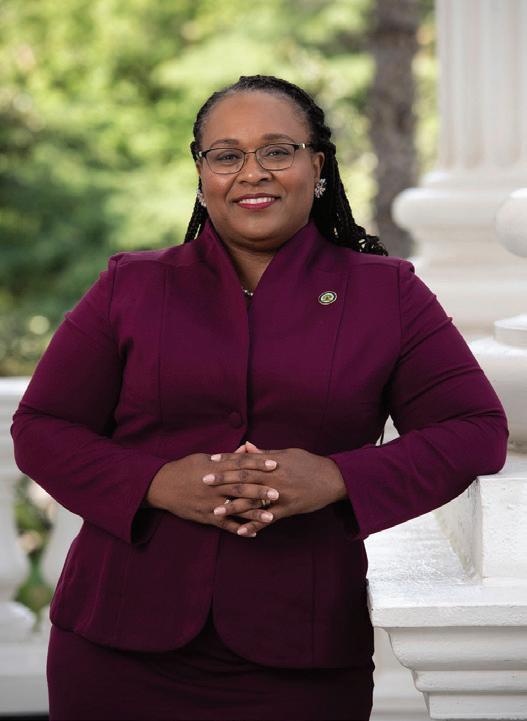
In a Capitol more often defined by policy debates and partisan differences, California lawmakers recently offered a reminder that respect, friendship and collegiality can still rise above politics.
On July 17, legislators from both sides of the aisle came together to celebrate Assemblymember Lori D. Wilson's (D-Suisun City) 50th birthday with a surprise tribute that reflected the admiration she has earned from colleagues across the political spectrum.
Organized by Assemblymembers Anamarie Ávila Farías (D-Martinez) and Stephanie Nguyen (D-Elk Grove), the celebration featured a video filled with birthday wishes from Democratic and Republican lawmakers, as well as Capitol staff, honoring Wilson, who serves as chair of the Assembly Transportation Committee and is a member of the California Legislative Black Caucus.
“I hope you're feeling the love from the Legislature, Lori, and I'm so honored to be able to serve with you and have you as my seatmate,” Ávila Farías said in the video. “You're an amazing human being, and I feel so privileged to celebrate this milestone with you. Happy birthday.”
Assemblymember Corey Jackson (D-Moreno Valley), a member of the California Legislative Black Caucus, thanked Wilson for her leadership and service.
“Happy Birthday, Lori. Thanks for what you stand for and all the work that you've done in the Legislature.”
Republican Assemblymember
David J. Tangipa (R-Fresno) also joined in the celebration.
“You are a rock star. Happy, happy birthday and have a great one.”
Assemblymember Buffy Wicks (D-Oakland) praised Wilson's character and leadership.
“Hugest of happiest birthdays of all time, dear Lori. You are such a ray of sunshine in the Legislature, you are an adult in the room, you are a badass warrior, and we love you and appreciate you,” said Wicks.
Assemblymember LaShae Sharp-Collins (D-San Diego), also a member of the California Legislative Black Caucus, reflected on Wilson's future.
“Wishing you a very happy 50th birthday, Lori. You are an amazing woman, and there's so much more to come for you,” she said.
Assemblymember Sade Elhawary (D-Los Angeles), a member of the California Legislative Black Caucus, added:
“Lori, we are so happy that you are the fearless queen that you are. Happy 50th. Enjoy. You deserve it.”
Republican Assemblymember Carl DeMaio (R-San Diego) also shared his appreciation.
“Happy birthday. I believe you're an amazing individual, an amazing person, and I love your housing policies, so thank you. Again, happy birthday. Have some fun today.”
Assemblymember Rhodesia Ransom (D-Stockton) closed with words celebrating both Wilson's milestone and her wisdom.
“There's a saying that when you become older you become wiser, but I want to say that you're already there.”
At a time when political divisions often dominate the public conversation, the celebration served as a reminder that personal relationships and mutual respect continue to exist inside California's Capitol. For one afternoon, party labels took a back seat as lawmakers from across the aisle came together to honor a colleague whose leadership, professionalism and friendship have earned admiration well beyond partisan lines.
Starting This Summer, California Car Buyers Can Get an Instant $3500 Off the Cost of Electric Vehicles
California residents purchasing their first zero-emission vehicle will soon be eligible for an instant rebate of up to $3,500 under a new state program aimed at making electric vehicles more affordable.
Gov. Gavin Newsom signed Senate Bill (SB) 168 on July 16, creating the MyFirstEV program as part of California’s 202627 state budget. The initiative dedicates $135.5 million in state funding for point-of-sale rebates, which participating automakers will match dollar for dollar. State officials said the combined investment will provide $270 million in savings for first-time electric vehicle buyers.
Beginning later this summer, eligible Californians can receive a $3,500 rebate on new zero-emission vehicles with a manufacturer’s suggested retail price of up to $50,000.
Buyers purchasing qualifying used electric vehicles priced at up to $25,000 can receive a $1,750 rebate. The rebate will be applied directly at participating dealerships, allowing buyers to receive the discount immediately instead of waiting for reimbursement.
Thursday, July 23, 2026
Starting This Summer, California Car Buyers Can Get an Instant $3500 Off the Cost of Electric Vehicles... continued budget.
California continues to expand its zero-emission transportation network. The state surpassed 2.5 million cumulative zero-emission vehicle sales earlier this year, exceeding its original goal of 1.5
“With our new instant rebate program for electric vehicles, we’re making it easier for families to drive clean, breathe clean, and keep more money in their pockets,” Newsom said in a statement.
The MyFirstEV program is part of a broader $600 million investment in California’s clean transportation economy included in the state budget. The funding package also provides $150 million for the Community Air Protection Program, $19.8 million for the Clean Cars 4 All program for lower-income residents, $35 million for clean off-road equipment through the Air Quality Improvement Program, $135.5 million for the Clean Truck and Bus Voucher Incentive Project, and $130 million for the Carl Moyer Program to replace older heavy-duty engines with cleaner alternatives.
According to the governor’s office, the transportation investments are funded through Cap-and-Invest revenue and smog-abatement fees while maintaining a balanced state
million sales by 2025. Officials also reported that California has more than 200,000 public and shared electric vehicle charging plugs statewide, in addition to an estimated 800,000 home charging stations.
From 15% to 60% of Drivers: California Expands Digital License Program
California is significantly expanding access to mobile driver’s licenses after Gov. Gavin Newsom signed legislation increasing participation in the state’s digital identification program while modernizing Department of Motor Vehicles operations.
Senate Bill 169 raises the participation cap for California’s Mobile Driver License Pilot Program from 15% to 60% of the state’s licensed drivers, allowing millions more residents to obtain a secure digital driver’s license on their smartphones. The measure, signed as part of the 2026-27 state budget, also streamlines DMV operations by reducing paperwork, updating customer communications and cutting administrative costs.
The expanded mobile driver’s license program is one of several changes included in the legislation. The bill eliminates certain mailed notices, ends the requirement to print physical driver’s handbooks and modernizes how the DMV communicates with customers about license renewals. State officials said the changes are intended to improve efficiency while making DMV services more accessible.
California Transportation Secretary Toks Omishakin said the legislation reflects the
state’s continued investment in improving public services.
“California continues to lead the way by making government services more accessible and efficient,” said Omishakin.
The legislation also extends relief for transit operators and includes provisions to help prepare California’s highway system for the 2028 Olympic and Paralympic Games.
According to the governor’s office, the DMV has expanded digital services since Newsom launched the DMV Reinvention Strike Team in 2019. More than 90% of DMV transactions are now available online, reducing transaction times by two-thirds.
State officials estimate the agency’s shift to digital services could eliminate approximately 2.4 million office visits annually.
The mobile driver’s license program launched in August 2023, and more than 3.5 million Californians have already applied for a digital ID. The administration said the program includes privacy and security protections while giving residents a convenient way to carry and present identification.
State officials said the legislation continues California’s effort to modernize government services by expanding secure digital tools and improving access to DMV services statewide.
Submission Deadline for legals & news articles is Mondays By 5pm
One Less Spark: California Launches Wildfire Prevention Awareness Campaign
California has launched a statewide public awareness campaign urging residents to take steps to prevent human-caused wildfires as hotter temperatures and drier conditions increase fire danger across the state.
Governor Gavin Newsom announced the 2026 ‘One Less Spark’ campaign July 15, saying the initiative is designed to educate Californians about wildfire prevention through safe vehicle operation, equipment use and outdoor activities. The campaign comes as California enters a period of elevated wildfire risk and builds on the state’s broader wildfire preparedness efforts.
State officials estimate that human activity causes about 95% of wildfires in California. The campaign includes paid advertising on digital platforms, radio stations and billboards in State Responsibility Areas throughout Northern and Southern California. CAL FIRE has also developed a public toolkit with educational materials and social media resources that local governments, fire departments and community organizations can use to promote wildfire prevention.
“One less spark means one less wildfire, and every Californian can play a role in preventing them,” said Newsom. “We’re asking all residents to take prevention steps seriously. Combined with the strongest wildfire readiness and response system in the country, this is how we keep our communities safe.”
What the insurance industry sees when it looks at your home...continued from page 1
between the information provided on an application and the property’s actual condition can lead to delays or additional review. You can avoid this by keeping accurate records of repairs, obtaining permits for major projects, addressing maintenance issues promptly, and notifying your insurer when you complete significant improvements.
Frequently Asked Questions
What Are the 5 Cs of Insurance?
The five Cs of insurance explain the key principles that help homeowners choose and maintain the right coverage. Organizations define them slightly differently, but they are generally:
Coverage: Types of losses your policy protects against, such as fire, wind, or theft
Cost: Includes premiums, deductibles, and any discounts you may qualify for
Claims: Measures how efficiently an insurer handles damage reports and payouts
Customer service: Reflects the company’s responsiveness and support throughout the policy period
Credibility: Considers the insurer’s financial strength, licensing, and reputation for paying valid claims
Evaluating all five factors provides a more complete picture than simply choosing the lowest premium.
What Not To Tell Your Insurance Company?
When you’re filing a homeowners insurance claim, it’s important to provide truthful and accurate information without making assumptions or speculative statements. You should avoid guessing
about the cause of damage if it hasn’t yet been determined, as investigations may reveal different findings.
Don’t exaggerate repair costs or claim damaged property that wasn’t actually affected, either. Inaccurate information can delay processing or even result in claim denial.
You should instead document the damage with photos and save receipts for emergency repairs. You should also answer questions based on facts you know firsthand.
What Is the Most Common Damage to Your Home That Insurance Does Not Cover?
One of the most common forms of home damage not covered by standard homeowners insurance is flood damage resulting from rising water outside the home. These things typically require a separate flood insurance policy:
Heavy rainfall
Overflowing rivers Storm surge Flash flooding Other frequently excluded things are damage caused by:
Gradual wear and tear
Deferred maintenance Mold resulting from long-term leaks
Pest infestations Foundation settling due to normal aging
This Is What the Insurance Industry Looks For Getting home insurance can be daunting, especially if you have an older property. By knowing what the insurance industry looks for, though, you can address the red flags and up your chances of getting better coverage at lower prices.
Cloud Solutions Can Help Overhaul Enterprise Protection Against Evolving Threats
By BlackPressUSA Newswire
CAL FIRE Director and Fire Chief Joe Tyler said reducing the number of human-caused fires requires public awareness and individual responsibility.
“CAL FIRE is committed to helping Californians understand that one less spark means one less wildfire,” said Tyler. “As a state, we must work together to reduce the number of wildfires started each year by changing behaviors, increasing awareness, and taking simple actions that prevent ignitions.”
The campaign encourages residents to mow lawns before 10 a.m., secure trailer chains to prevent sparks, obtain permits before burning debris, avoid parking vehicles on dry grass and use power tools carefully near dry vegetation.
According to the governor’s office, California has accelerated more than 400 wildfire prevention projects covering nearly 100,000 acres following an emergency proclamation on wildfire-prone forests. The state has also made more than $100 million available this year for wildfire prevention grants, including funding for community-led projects and forest resilience efforts.
State officials said CAL FIRE’s workforce has grown from 5,829 positions in 2019 to more than 11,400 positions. The agency has also expanded its use of technology, including AI-powered wildfire detection systems, drones, satellite monitoring and advanced fire mapping tools to improve emergency response.

BLACKPRESSUSA
NEWSWIRE — Outdated enterprise security is a breach waiting to happen. Learn here how quality cloud solutions can help protect your firm against evolving digital threats.
Cloud solutions can help overhaul enterprise protection against evolving threats
Cloud solutions can help enhance enterprise protection from new threats by shifting away from perimeter-based defenses and moving toward dynamic, cloud-native frameworks. With the latter, organizations can enjoy AI-driven threat detection, centralized visibility, and automated remediation.
Today’s firms must be more cautious than ever with security, given the many threats against information technology (IT).
Cybersecurity news platform HackRead.com cited data from the 19th (2026) Verizon Data Breach Investigations Report (DBIR), stating that Verizon security experts analyzed over 22,000 confirmed data breaches. They also investigated 31,000 real-world security incidents across 145 countries.
What Do “Cloud Solutions” Mean?
The term “cloud solutions” refers to cloud data storage, computing services, and
software programs hosted on remote internet servers instead of physical, local hard drives or on-site data centers.
Thanks to cloud solutions, today’s users can now access the applications and data they need from any device connected to the internet. They no longer have to rely on expensive hardware or deal with costly equipment maintenance fees.
What Are Examples of Cloud Solutions?
Cloud solutions make up a multi-billion-dollar market. According to Mordor Intelligence, the estimated value of the U.S. cloud computing market alone was $292.61 billion in 2026, and it is expected to grow to $622.03 billion by 2031.
Some of the most common examples of such cloud solutions include the following.
Software as a Service (SaaS) Software as a Service programs are ready-to-use software applications that users access via web browsers. Google Workspace (for collaboration purposes) and Zoom (for video conferencing) are specific examples of SaaS.
Platform as a Service (PaaS) The term “Platform as a Service” refers to cloud computing models that enable developers to create, build, develop, deploy, and manage applications without having to deal with and worry about the actual underlying infrastructure. With these solutions, developers
Asm. Lori Wilson (D-Suisun City )
Photo: iStockphoto / NNPA
City of Victorville to Host Free Educational Concert for Kids: July 30
Free event teaches children about organics recycling and composting through music & entertainment with the EcoHero Show Team
Lifestyle/Entertainment News

VICTORVILLE, Calif. —The City of Victorville is partnering with the EcoHero Show team to host a free Kids’ Organics Recycling Concert on Thursday, July 30 from 6 p.m. to 7 p.m. at the Cultural Arts Center of the High Desert, located at 15615 8th St. in Victorville. This fun and educational performance will teach children about organics recycling and composting in an engaging way. The show will be approximately 45 minutes, and children in attendance will receive free snacks and goody bags to enjoy during the event.
Thursday, July 23, 2026
National Medical Association Convenes Historic Conference and Community Event in Puerto Rico
NMA’s “Walk a Mile With a Child” Brings Together Health, STEM Education, and Youth Empowerment Initiatives
Events/Entertainment
SILVER SPRING, Md., July 20, 2026 — The National Medical Association (NMA) will convene its Annual Convention & Scientific Assembly in San Juan, Puerto Rico, from July 25-29, 2026, at the Puerto Rico Convention Center. The theme of the convention is “The New Reconstruction — Mobilizing Healthcare Justice for a New America: Our Patients, Providers, and Policy.”
Mitchell, MD, 126th President of the National Medical Association. “Together, we are creating meaningful opportunities to improve health outcomes, inspire future leaders, and strengthen communities across the U.S. including Puerto Rico.”
The “Walk a Mile” event is free and open to the public.
FORTY-FOUR YEARS OF SILENCE
When Justice Refuses to Answer...continued
It also remembers those who chose silence.
Every generation eventually faces a moment when it must decide whether preserving confidence in institutions is more important than examining the possibility of error.
The strongest institutions do not fear scrutiny. They invite it. Because accountability is not the enemy of justice.
Accountability is one of its foundations.
This editorial does not ask readers to reach a predetermined conclusion.
a sentence. It is a generation. It is children becoming parents. Parents becoming grandparents. Loved ones growing older while waiting for a day they prayed would come.
One day, history will write the final chapter of David L. Dew's story. When that day comes, history will also write about us. It will ask whether we turned away because the questions were uncomfortable.
It asks something both simpler and more important.
This event is FREE and open to Victorville residents only. Residents can register online at VictorvilleCA.gov/Recycle before the July 28 deadline. Seating is limited and registration is required. A parent or guardian must accompany each child. At least one adult must be registered before children can be added into the registration system, and each adult may register up to four children. Adults who wish to bring more than four children must contact the City to request special approval.
The convention kicks off with “Walk a Mile With a Child,” a community wellness event designed to promote healthy lifestyles, mentorship, and community engagement. Convention attendees and the local community are welcome to participate in the free event. The annual event will feature:
Free health screenings and wellness resources
CPR demonstrations and health
education
Free street parking will be available near the event location. Space is limited, and residents are encouraged to register only if they plan to attend. For questions about the event, please contact the City of Victorville Environmental Programs Division at (760) 9558615. To learn more about the EcoHero Show, visit ecoheroshow.com.
The Odyssey
By Dwight Brown, Film Critic for DwightBrownInk.com and NNPA News Wire
(****)

“Promise me you’ll come back.” “What if I can’t?”
Back in ancient Greece, when Odysseus (Matt Damon), the king of the island of Ithaca, went off to fight the 10-year Trojan War against the city of Troy, he didn’t know if he’d return. That was a thought his wife Penelope (Anne Hathaway), the queen, could hardly bear. When ten more years were added to her husband’s journey of war and self-discovery, his mysterious disappearance and her hardship became public lore. Vultures, in the guise of suitors, invaded her palace and stayed, intimidating her and their young adult son Telemachus (Tom Holland), who longed for his father who left when he was an infant. Where is this legendary warrior?
It’s a mythical tale passed down orally for centuries, then attributed to the poet Homer who supposedly recorded the folklore around the 8th century BCE, putting it in the form of 12,109 lines of poetry. It’s debatable whether there ever was a real Homer. What’s undebatable is that writer/director Christopher Nolan (Oppenheimer) has tamed this extravagant fable and its compelling mix of history and myths into a three-hour epic. It’s an all-encompassing experience that will dazzle all who love adventure, history, romance, drama and war stories. The character arcs are done with a flourish. The dialogue is often profound and only stumbles when 20th century words sneak into conversations. Odysseus fumes: “How long have I been stuck on
this f—ing island?” It’s likely that a king in that age would use other profanities to express his rage.
King Odysseus sets off with his faithful warriors, helped greatly by his second-incommand Eurylochus (Himesh Patel). Along the way they stow themselves inside a Trojan Horse to get behind the walls of Troy. They’re there ostensibly to fight the enemy and retrieve the Spartan Queen Helen (Lupita Nyong’o), which pleases her husband Menelaus (Jon Bernthal), the king of Sparta. Nothing goes easy for Odysseus and his crew. They’re challenged by the witch Circe (Samantha Morton) and her machinations. Imprisoned by a gigantic cyclops. Forced, while on the open seas, to navigate around deadly maelstrom-like whirlpools, rocky straits and ferocious storms. In the end, the king himself must find his way home if he is to save his endangered Ithaca and beloved wife and son.
The original fable is non-linear with flashbacks, flashforwards, stories within stories and a mix of their reality and that of the gods who watch over or curse them, like Athena (Zendaya). For the first 25 minutes of the film, a taxing back-and-forth structure along with keeping track of all the characters, names, personalities and plotlines, is a daunting task for even those with a great attention span. Casual viewers may get lost, especially when it’s eventually streamed at home, where a bathroom break could disrupt comprehension. But Nolan
STEM activities and youth enrichment programs
Family-friendly games, entertainment, and giveaways
Community engagement opportunities for participants of all ages
“This partnership represents the power of service, collaboration, and collective impact,” said Roger
Families, community leaders, healthcare professionals, and civic organizations are encouraged to attend and be part of this landmark effort to promote wellness and opportunity throughout Puerto Rico. Members of several historically Black fraternities and sororities, known as the Divine 9, plan to participate in the free event on Saturday, July 25, at 8 a.m.
“The collaboration between the NMA and the Divine 9 organizations is one way we can serve together and find new ways to address pressing healthcare challenges across the country,” said NMA Presidentelect Brandi Kaye Freeman, MD, who will be installed as the 127th NMA President on July 28 at the convention and is a member of Delta Sigma Theta Sorority, Inc.
For additional information about the NMA, the convention schedule, or ways to get involved, visit www.nmanet.org.
When Justice Refuses to Answer
By Karen Marine
There are moments in the life of a nation when the question is no longer whether justice has been done.
The question becomes whether we still possess the courage to ask. Not because the answers are easy.
But because they are difficult.
Because history has taught us, over and over again, that every institution created by human hands is capable of human error. Courts. Governments. Prosecutors. Legislatures. Prisons.
The greatness of a democracy is not measured by whether it never makes mistakes. Its greatness is measured by whether it has the humility to confront them.
For forty-four years, David L. Dew has remained inside a California prison.
Forty-four years.
An entire lifetime measured not in birthdays, anniversaries, or family dinners, but in steel doors, concrete walls, and the hope that somewhere, someone would finally be willing to listen.
His supporters have refused to let that hope die.
They have written governors.
They have written legislators.
They have written attorneys, investigators, journalists, civil rights organizations, faith leaders, and public officials.
They have not asked for favoritism.
They have asked for something much simpler.
They have asked that every significant question surrounding David Dew's case receive a full, fair, transparent, and independent examination.
They continue to ask:
Why has that not happened?
On December 16, 2025, David L. Dew was unanimously found suitable for parole by the California Board of Parole Hearings.
To those who support him, that decision reflected decades of rehabilitation, education, service to others, and personal transformation.
Yet they contend that fundamental questions remain unanswered.
They argue that David was
never sworn before the court during the original proceedings.
They point to what they believe are unresolved constitutional and due process issues.
They cite conflicting accounts surrounding the crime, evidence they believe deserves renewed scrutiny, and subsequent proceedings that they believe warrant independent review.
They believe the public deserves to examine those questions—not behind closed doors, but in the light of day.
Because truth should never require permission.
And justice should never fear transparency.
Their concerns extend beyond one individual.
Public reporting by The Guardian and the Los Angeles Times described widespread false-positive drug test results within California's prison system and the state's subsequent review of parole decisions that may have been affected.
For David's supporters, those reports raise a larger question.
If errors capable of affecting liberty can occur on such a scale, how many people deserve another look?
How many families continue waiting?
How many voices have gone unheard?
These questions are bigger than David Dew.
They reach into the heart of every institution entrusted with the power to take away a person's freedom.
That power carries with it the highest responsibility known in a constitutional democracy.
Not merely to obtain convictions.
Not merely to defend prior decisions.
But to pursue justice.
There is a profound difference between defending a verdict and defending the truth.
The first protects the past.
The second protects the future. History remembers those willing to confront uncomfortable truths.
Look.
Read.
Question.
Examine.
Demand transparency wherever liberty is at stake.
Because justice worthy of public trust should never depend upon silence.
Forty-four years is more than
Or whether we possessed the courage to insist that truth be examined wherever it leads. For if justice is to mean anything at all, it must never be afraid of the light.
The measure of our nation is not whether we proclaim liberty.
The measure of our nation is whether we protect it when the questions become hardest to answer.
The world is watching. May history remember that we chose truth over silence, courage over comfort, and justice over finality.
Beloved ‘227’ and ‘Sanford and Son’ Star, Passes Away at 91
By Tarshua Carter Williamson

Television has lost one of its most recognizable and dependable performers. Veteran actor Hal Williams, whose career spanned more than five decades and helped shape some of television’s most beloved Black sitcoms, has died at the age of 91. His manager confirmed that Williams passed away on July 15 at his home in Rancho Mirage, California. A cause of death was not immediately released.
For generations of viewers, Williams was a familiar face whose calm presence, warm smile, and understated humor made him unforgettable.
Whether he was playing Officer “Smitty” Smith on Sanford and Son, devoted husband Lester Jenkins on 227, or appearing in dozens of television dramas and films, Williams built a reputation as an actor who could elevate every scene without demanding the spotlight.
From Ohio to Hollywood
Born Halroy Candis Williams on December 14, 1938, in Columbus, Ohio, Williams didn’t follow the traditional path to Hollywood. Before pursuing acting, he worked as a corrections officer, postal worker, and social worker, developing a strong work ethic that would define his career. He eventually moved to Los Angeles in 1968 to chase his dream of acting—a bold decision that came later in life than many of his peers.
Experts discuss the challenges of living with Sickle Cell Disease and the urgent need for better healthcare advocacy and systemic change.
His journey serves as a reminder that it’s never too late to pursue a passion. In interviews, Williams often encouraged young people to have practical career skills while following their dreams, speaking candidly about the realities of working in entertainment. Even after landing a recurring role on Sanford and Son, he continued working overnight shifts at the
post office because he wasn’t convinced acting alone would provide financial stability.
Becoming Officer “Smitty” Williams’ breakthrough came in 1972 when he was cast as Officer “Smitty” Smith on Norman Lear’s groundbreaking sitcom Sanford and Son. Playing the level-headed police officer opposite Redd Foxx’s Fred Sanford, Williams became a fan favorite thanks to his ability to balance comedy with sincerity. Though his role often served as the “straight man” amid the show’s outrageous antics, Williams’ subtle comedic timing made Smitty one of the series’ most memorable recurring characters. His performances helped make Sanford and Son one of television’s defining sitcoms of the 1970s.
A Television Dad Viewers Loved Williams found another careerdefining role in 1985 when he joined the NBC sitcom 227 as Lester Jenkins, the devoted husband of Mary Jenkins (played by Marla Gibbs).
At a time when positive portrayals of Black fathers were still relatively uncommon on television, Lester became a refreshing example of a loving husband and engaged father. The show also introduced audiences to a young Regina King, and Williams became known as a respected mentor on set.
According to co-star Jackée Harry, Williams was passionate about portraying Black fatherhood in a positive light, believing those representations mattered both on-screen and in real life.
A Career That Spanned Generations Although Sanford and Son and 227 remain his signature roles, Williams enjoyed one of television’s longest-running continued on page 6
FORTY-FOUR YEARS OF SILENCE
Matt Damon in The Odyssey
Thursday, July 23, 2026
Covered California Rates and Plans for 2027: California Continues Fight for Health Insurance Affordability and Access

SACRAMENTO, Calif. —
Covered California announced its health plans and rates for the 2027 coverage year, with a preliminary weighted average rate increase of 9.9 percent and one new carrier entering the marketplace in 2027. Many enrollees can lessen the impact of increasing rates by shopping and switching to more affordable plans.
The proposed rate change can be attributed to many factors, including the increasing cost of health care and pharmacy expenditures alongside broader industry challenges. Additionally, actions taken by the federal government have driven up prices for consumers. Last year, federal lawmakers failed to extend enhanced federal tax credits that helped millions of Americans afford their monthly premiums. This year, the Trump administration cut eligibility for lawfully present immigrants, added administrative burdens to families applying for financial help and made it more difficult for gig workers who have to recalculate their income on an annual basis.
“The federal government and this administration have made it more difficult for hard-working Americans to access high-quality health insurance at a price they can actually afford,” said Covered California Executive Director Jessica Altman. “The
fallout from these federal actions continues to reduce affordability and put health insurance out of reach for too many — something our state is fortunately counteracting.”
California is continuing to fight for affordability and health care access by adding more insurance options and expanding the state’s subsidy program that will help one in four enrollees reduce their monthly premium.
“Since Republicans have not been able to repeal the Affordable Care Act, this administration has instead tried to do all it can to weaken and spread misinformation about ACA marketplaces like Covered California. Unfortunately for them, it’s not working,” said Governor Gavin Newsom.
“California continues to lead the way in providing vital access to affordable health insurance. Our original subsidy program was an inspiration for the enhanced premium tax credits nationally that expired at the end of last year, and our expanded state subsidy program shows a path forward to protect affordability for the most vulnerable Americans.”
Expanded State Subsidy Program Reaching More Californians and Supporting the Most Vulnerable In 2026, Gov. Newsom and the California Legislature increased
the amount of state funds available for the Covered California State Subsidy Program, appropriating $300 million in Health Care Affordability Reserve Fund (HCARF), up from $190 million. As a result, Californians with incomes up to 200 percent of the federal poverty level in 2027 ($31,920 for an individual or $66,000 for a family of four) will be eligible for financial help to lower the cost of monthly premiums.
While the state subsidy program is not enough to fill the gap left by the expiration of enhanced federal subsidies, more than 500,000 Californians are projected to receive a state subsidy in 2027, about 30 percent of all enrollees. Additionally, nearly 200,000 can choose from two Silver-tier plans with a $0 premium.
“Investing in the health of our residents is good for people. It’s also good policy,” said Governor Newsom. “The federal government has decided that health care affordability is not a priority, so California is stepping up once again to help families most in need across our state.”
Covered California estimates the state subsidy program will open financial help to an additional 200,000 Californians who weren’t eligible in 2026
and prevent 90,000 people from dropping coverage in 2027.
“When people have access to health insurance, they face less risk of financial hardship due to a medical issue, they miss fewer days of work, and they’re able to contribute more to their families and communities,” said Altman. “We’re grateful for Gov. Newsom and the California Legislature for passing these critical investments to help more Californians get connected to the coverage they need.”
California’s Individual Market Changes for 2027
Despite ongoing federal rule changes that affect eligibility and affordability, Covered California maintains a strong marketplace, with 1,785,000 enrollees as of March 2026, and engages in active negotiations with health insurance companies to help keep Covered California one of the most affordable options for health insurance.
This has helped ensure that California’s rate increase of 9.9 percent is significantly lower than the preliminary national median rate increase of 14 percent. It’s also why for most of the past decade, the average cost for a benchmark plan in California has been lower than the national average.
3 Ingredients That Can Stop A Heart Attack
By Derrick Lane
Heart attacks are scary, period. They are scary for those who are having one and scary for those who are watching. Of course, eating right and exercising help reduce your risk of a heart attack, but do you know what to do if and when one strikes?
Heart Attack Symptoms in Women
If you think you’re having a heart attack. For women, symptoms are often easily ignored. These can include:
Pressure, tightness and squeezing pain across the chest
Pain radiating down one or both arms or shoulders
Pain or soreness in the jaw, neck, or back
Shortness of breath
Dizziness, lightheadedness, sweating or weakness
Overwhelming fatigue – 70% of women felt fatigued in days or weeks prior to their heart attacks
The feeling of impending doom
Headache, blurry vision, lightheadedness or feeling faint
Gastrointestinal symptoms such as indigestion, nausea, and vomiting
Coughing and palpitations
Heart Attack Symptoms in Men
Most Common Symptoms
Chest pain or discomfort
Can last more than a few minutes or come and go.
Upper body pain
Pain or discomfort in one or both arms, the back, neck, jaw, or stomach.
Shortness of breath
May occur with or without chest discomfort.
Often described as feeling like you can’t catch your breath.
Cold sweat
Have a child with sickle cell?
Learn about a investigational pneumococcal vaccine trial recruiting in Georgia, Nebraska, New Jersey and Texas.
From our partner
Have a child with sickle cell?
Learn about a investigational pneumococcal vaccine trial recruiting in Georgia, Nebraska, New Jersey and Texas.
Sudden, clammy perspiration that feels unusual or out of context (not from heat or exertion).
Nausea or vomiting
Some men experience indigestion-like discomfort or may actually vomit.
Lightheadedness or dizziness
Feeling faint or weak, often combined with chest discomfort.
Less Common (but still possible) Symptoms
Unusual fatigue or weakness
Heart palpitations (irregular or fast heartbeat)
A sense of impending doom or anxiety
Men are more likely than women to experience the “classic” heart attack symptom — chest pain — but they may also overlook subtle signs or mistake them for indigestion, muscle strain, or stress.
3 Ingredients That Help Stop a Heart Attack No one specific food can stop a heart attack that is already in progress, but there are some things you can ingest to keep on hand to fight a heart attack.
Aspirin. Always keep a bottle of aspirin in your bathroom medicine cabinet. If you think
you’re having a heart attack, take one 325mg tablet of adult aspirin. Chew it — don’t just swallow it. It allows aspirin to enter your bloodstream faster and slows the progression of a heart attack.
Cayenne Pepper. Cayenne pepper is a powerful stimulant; it increases heart rate and carries blood to all parts of the body, balancing circulation. Cayenne pepper has a hemostatic effect, stops bleeding instantly, and helps in heart attack recovery. If you have cayenne pepper at home, give the person having a heart attack a teaspoon of cayenne pepper in a glass of water. The patient has to be conscious for this to work. If the person is unconscious, you can use cayenne pepper extract. Put a few drops under the patient’s tongue for results.
Fiber-Rich Carbs: Everyone talks about eating vegetables and dark fruits like blueberries to help improve your circulation, but don’t forget to choose 100% whole grains (quinoa, brown rice, oatmeal) and starchy vegetables (sweet potatoes, squash). A typical serving of oatmeal provides about 4-5 grams of fiber, which gets people closer to the 25 to 38 grams of fiber they should eat per day. But only 5% of the U.S. population eats the recommended amount of fiber, the National Institutes of Health notes, missing out on important health benefits.
Beta-glucan fiber, the type of soluble fiber in oats, “actually clings to cholesterol the body and takes out the bad (LDL) cholesterol,” registered dietitian Natalie Rizzo, nutrition editor for TODAY, previously explained.
Diets naturally rich in fiber also reduce hypertension, or high blood pressure, according to Cardiology. There’s “compelling evidence” dietary fiber prevents the development of cardiovascular disease,
3 Ingredients That Can Stop A Heart Attack...
continued
and nuts.
Choose healthy fats: Olive oil, avocados, and omega-3–rich fish like salmon or mackerel.
Limit or avoid:
Processed meats (bacon, sausage)
Fried or fast foods
Refined carbs and sugary drinks
Excess salt and trans fats
Mediterranean or DASH diets are proven to reduce heart attack risk.
3. Stay Physically Active Aim for at least 150 minutes of moderate aerobic activity (like brisk walking or cycling) per week.
Add muscle-strengthening exercises at least 2 days per week.
Even small increases in activity—like taking stairs—can improve heart function.
4. Quit Smoking Smoking damages blood vessels and lowers oxygen in the blood.
Within one year of quitting, heart disease risk drops by 50 percent.
Avoid secondhand smoke as well.
5. Drink Alcohol Wisely (or Not at All)
If you drink, limit to no more than 2 drinks per day for men.
Red wine in moderation may help raise HDL levels, but excessive drinking increases the risk of high blood pressure and heart failure.
6. Manage Stress Chronic stress can raise cortisol, blood pressure, and heart rate.
Try:
Deep breathing or meditation
Regular exercise
Quality sleep (seven to nine hours per night)
Connecting with supportive friends or family
7. Take Preventive Medications (If Prescribed)
If you have high cholesterol, high blood pressure, or diabetes, take medications consistently as prescribed.
For high-risk individuals, doctors may also recommend:
Aspirin therapy (low-dose), but only under medical supervision.
8. Get Regular Screenings Annual checkups can catch silent risk factors early.
Ask your doctor about:
Cholesterol panels
Blood sugar or A1C tests EKG or stress tests (if symptoms or family history exist)
This week’s quote
“If my future were determined just by my performance on a standardized test, I wouldn’t be here. I guarantee you that.”
— Michelle Obama
researchers note.
Also, this is not an ingredient, but it’s needed in this emergency: your cell phone. Finally, after the aspirin, you’ll need to get help and go to a hospital immediately. That’s why I want you to keep your cellphone with you in the bathroom. You can purchase a cheap cellphone mount and put it on your wall. The best place to put it is on the side of a bathroom cabinet or low on the wall near your toilet.
Extra Tip: To further decrease your risk of a heart attack, you should also keep vitamin D in your medicine cabinet. Many of us are vitamin D-deficient, and new research on supplements and heart disease suggests promising results from taking vitamin D to prevent heart disease. Vitamin D can help regulate blood pressure, inflammation and blood sugar.
You need to take 1000 IUs of vitamin D every morning.
heart attack
How to Lower Your Risk of Heart Attack
1. Manage Key Health
Numbers
Blood pressure: Keep it below 120/80 mm Hg if possible.
Cholesterol: Aim for LDL (“bad”) below 100 mg/dL and HDL (“good”) above 40 mg/dL (men).
Blood sugar: Maintain fasting glucose below 100 mg/dL to prevent diabetes-related heart risks.
Weight: Keep your BMI between 18.5–24.9 or maintain a waist size under 40 inches (men).
2. Eat a Heart-Healthy Diet
Choose foods that keep arteries clear and lower cholesterol:
Eat plenty of: Fruits, vegetables, whole grains, beans,
The Odyssey...continued from page 4
has a trick for getting audiences to keep their eyes on the screen and not run to the concession stand for popcorn during the film’s long-running time. He filmed this extravaganza with IMAX Film Cameras (cinematographer Hoyte van Hoytema) and shot the voyage and its destiny in six countries. This is a monstrous quest with big vivid images that no one will want to miss—not even for a minute.
The palace interiors (production designer Ruth De Jong) are regal, while the beaches, battlefields, and ships with striking red sails are breathtaking. The queen’s robes and her husband’s armor dazzle (costume designer Ellen Mirojnick). Stringing everything together in a coherent, discernible pattern is not an easy mission, but editor Jennifer Lame nails it. And Ludwig Göransson’s heady musical score elevates the drama to epic proportions. This is a spectacle unlike anything audiences could have imagined. Nolan is more a cinematic wizard than a mere filmmaker. He's creating a consistently mesmerizing moviegoing experience. You get caught up in his view of the ancient world so completely you leave the theater feeling like you just went to war. The action scenes are choreographed in ways that astound. The emotional intensity between the characters can be felt all the way to the back rows of the theater. The near-seamless, meticulously well-thought-out production, even with its jagged storytelling format, is a smooth operation. You lose all sense of time, and it feels like the story streams by in an hour when it actually takes 180 minutes to unreel. As a screenwriter, Nolan sifted through every possibility this gigantic tale posed and singlehandedly whittled it down to one sitting. An extraordinary feat. Gladiator, the classic swordand-sandal epic, had three screenwriters. Nolan went solo. This is Matt Damon’s finest hour, as he commands his most demanding, leading role. He masterfully and intuitively connects with everyone around him. Erotically so with Charlize Theron as Calypso the nymph who’s toying with him. In an adversarial role as he clips the wings of the sinister, scheming suitors Antinous (Robert Pattinson) and Polybus (Corey Hawkins). He’s sensitive and compassionate toward the warrior Sinon, as interpreted by Elliot Page, and displays a reverent, brotherly affection for his blind servant Eumaeus, played by John Leguizamo. Hathaway’s Penelope pines for her man. Holland’s Telemachus yearns for his dad with equal fervor. As formidable as the cast is, they’re all better when they interact with Damon. That reflects the strength of his stunning interpretation of the conflicted king. A man whose bravura is eventually eclipsed by regret, as manifested by his apologetic tone. He knows his massive crusade was a sacrifice that everyone paid. An immersive theater experience. The kind that takes you on a journey you never enlisted for. Instead, you’re drafted, and you go. Wondering if this hero can find his way home. Audiences who start this sojourn will finish it. Like Odysseus, they won’t stop.
Trailer:
Thursday, July 23, 2026
Why Is Resilient Infrastructure So Crucial for New Developments?
By BlackPressUSA Newswire

Why developers are investing in resilient infrastructure from day one
Instead of waiting, developers are going all in on resilient infrastructure because it lowers long-term costs and shrinks future risks. Far-sighted planning also helps buildings and public spaces become adaptable to change, whether they’re environmental, economic, or regulatory changes.
This shift goes both ways because consumers are also demanding more reliable and durable communities. Rather than seeing resilience as an optional luxury, more and more developers prioritize it from the earliest possible design stages. From stronger materials and smarter layouts to clever infrastructure planning, the right choices will create developments that are better prepared for all kinds of challenges.
Why Is Resilient Infrastructure
So Crucial for New Developments?
The most resilient infrastructure can perform despite severe weather and heavy usage. Different community needs and other changes shouldn’t make a difference in performance, either.
The following all benefit from designs that anticipate future demand rather than only meeting current minimum requirements:
Roads
Drainage systems
Utilities
Public spaces
Climate-related events have become both more frequent and more intense in regions across the country. At the same time, expanding populations have put tremendous pressure on existing infrastructure.
Developers can’t ignore that early resilience planning goes a long way toward reducing the chance of pricey failures later on. Durable projects also inspire greater confidence among the following:
Investors
Local governments
Future occupants
Rock-solid resilience goes hand in hand with sustainable development because both approaches underscore responsible resource use and long-term performance. Projects that last longer almost always require fewer repairs, fewer replacement materials, and less disruption in general.
What Specific Features Make Infrastructure More Resilient?
Several design choices are known to elevate the resilience of infrastructure from the outset of a project.
Durable construction materials resist weathering and heavy use for longer periods. Efficient stormwater management cuts down on flooding and erosion while protecting nearby properties.
Reliable utility systems with backup capabilities help
maintain critical services during emergencies.
Flexible site designs also make future improvements a cinch. Spaces that accommodate the following changing aspects remain useful for much longer than overly rigid layouts:
Transportation needs
Evolving technology
Population growth
Modern future-proof
engineering gives developers a reason to consider tomorrow’s needs instead of merely solving today’s issues. Forward-thinking designs often include everything from adaptable utilities to stronger structural systems that can accommodate future technologies without extensive overhauls.
Technology and Smart Design
Are Bringing Infrastructure
Planning Into the Future
Digital modeling and predictive analytics have fundamentally changed how developers evaluate potential risks before construction begins. Computer simulations can estimate the following and more with amazing accuracy:
Flood patterns
Traffic flow
Utility demand
Long-term maintenance needs
Smart sensors installed after construction make it possible for owners to keep an eye on structural performance. It also allows them to detect maintenance issues sooner and schedule repairs well before little problems spiral into bankbreaking expenses.
Specialized contractors are the backbone of resilient development. For instance, this boardwalk construction company demonstrates how meticulous material selection and durable engineering practices can prolong the lifespan of structures that have to withstand coastal elements and frequent public use.
It’s when modern technology and experienced construction
professionals come together that infrastructure truly serves communities. At the same time, such construction can cut down on future maintenance needs.
Why Investors and Communities
Benefit From Resilient Projects
Resilient infrastructure comes with advantages beyond construction itself. Property owners benefit from lower operating costs, while communities can have access to the following:
Safer roads
More dependable utilities
Dynamic public spaces
Best of all, all of the above can remain functional even during challenging conditions.
Projects made with long-term durability in mind often become the focal point of buyers’ and tenants’ attention. After all, such projects promise lower maintenance costs and far greater reliability. Municipalities also appreciate developments that put less stress on public repair budgets.
The savviest industry experts now include resilience in their investment insights because durable infrastructure reduces uncertainty over the life of a project. Investors are increasingly viewing long-lasting developments as more likely to deliver consistent returns, especially since they can better adapt to fluctuating market conditions.
As a whole, communities gain so much from infrastructure that continues serving residents in an efficient manner, even as populations grow and environmental conditions change.
Frequently Asked Questions How Exactly Does Sustainable Development Support Infrastructure Resilience?
The core principles of sustainable development encourage efficient resource use and environmentally responsible construction. It also focuses on designs that can remain
continued on page 8
Cloud Solutions Can Help Overhaul Enterprise Protection Against Evolving Threats.... continued from page 3
can access resources like:
Virtual servers
Cloud storage services
Operating systems
Databases
Development tools
Runtime environments
Infrastructure as a Service
(IaaS)
Infrastructure as a Service, another type of cloud computing model, gives service providers a way and place to host and manage fundamental IT infrastructure. Hosts or managers can provide customers with various products and services over the internet, including:
Servers
Storage Networking hardware
With an IaaS provider, customers can rent virtualized resources on demand, paying only for what they use. They can also easily scale their required resources up or down, depending on how much they need within a given time period.
How Can Cloud Solutions
Overhaul Enterprise Protection Against New Threats?
A March 2026 article from Time Magazine noted that the global average approximate cost of just one data breach is $4.44 million. It also reported that between March 2024 and February 2025, cyberattacks that targeted U.S. companies cost over $10 million. With so much money and potential losses on the line, organizations should consider overhauling their enterprise protection, particularly against emerging threats, with the help of cloud solutions. Such
innovations can assist through the following features.
AI-Driven Threat Detection
Some of today’s most reliable cloud solutions (including those that are part of managed services) offer AI-driven threat detection features. They use advanced artificial intelligence and machine learning algorithms to identify established, new, and suspected cybersecurity risks in real time.
AI-driven threat detectors can even respond to threats through automated flagging of dangerous anomalies. They can help prevent users from pushing through with activities that could lead to exploits breaching the network.
Centralized Visibility
Another way cloud solutions can help overhaul enterprise security is by breaking down fragmented security silos. They then transform these segments into a unified management plane. With cloud solutions, organizations can consolidate various types of data, including:
Audit logs User identities Network flows Through consolidation, these datasets’ visibility and overall management become more centralized and straightforward.
Automated Remediation
Organizations that prioritize data security and protection will be happy to know that automatic backup, disaster recovery, and security hardening are part of the cloud solutions that a reliable hybrid cloud managed services provider delivers. It pays to have automated backup and disaster recovery,
as it can help minimize or even eliminate costly downtime. It can also help prevent catastrophic data loss in the event of ransomware or, in the case of hybrid setups, hardware failure. With automated remediation services, organizations can spare valuable IT resources from tedious, labor-intensive manual processes. Instead of spending time on these tasks, IT specialists can focus on higher-value initiatives, such as proactive threat hunting and elimination.
Frequently Asked Questions
What Exactly Do Managed Services Mean?
The term “managed services” refers to a business model in which an organization outsources the daily management, support, and maintenance of its core business functions. They outsource these services to an external third party, also known as a “managed service provider” (MSP).
Managed services primarily cater to IT and technology operations. There are many types of managed IT services, with the most common being cloud solutions, enterprise security (e.g., cybersecurity management and remote monitoring), and help desk support.
How Else Can Businesses
Protect Themselves From Cyber Threats?
Aside from investing in high-quality, protective cloud solutions, businesses should also enforce zero-trust access.
Zero-trust access can help protect sensitive data by implementing a “never trust, always verify” protocol at every connection point. It involves ensuring that continuous
Beloved ‘227’ and ‘Sanford and Son’ Star, Passes Away at 91...continued from page 4
careers.
Find a Doctor in Your Neighborhood! It's Easy! Just click here...
From our partner
Find a Doctor in Your Neighborhood! It's Easy! Just click here...
His credits included appearances on:
The Waltons Roots: The Next Generations Private Benjamin (film and television series) Hill Street Blues Magnum, P.I. The Sinbad Show
Moesha
The Parkers Parks and Recreation
A Black Lady Sketch Show Matlock (2024 reboot)
His film work included memorable roles in Herbie Rides Again, Hardcore, The Rookie, Guess Who, and Flight.
A Life Beyond the Camera Away from television, Williams was known as a thoughtful mentor and advocate for aspiring performers.
He frequently spoke to students and community theater groups about perseverance and financial responsibility, emphasizing that success in entertainment requires resilience as much as talent. Friends and
colleagues often described him as humble, gracious, and deeply professional.
Williams was also involved with the Los Angeles Actors Theatre and established a scholarship in memory of his late son, reflecting his commitment to helping future generations of artists.
He is survived by his children, grandchildren, and greatgrandchildren.
Remembering His Legacy Hal Williams may never have sought celebrity status, but he became something even more enduring—a trusted presence in American television.
For Black audiences especially, his portrayals of police officers, fathers, husbands, and community leaders offered nuanced, dignified representations during an era when such roles were far less common. His performances helped normalize images of stable Black families and professionals on network television, paving the way for future generations of actors and storytellers. As fans revisit Sanford and Son, 227, and his many other performances, Williams’ legacy lives on in the laughter, warmth, and authenticity he brought to every role. His career stands as a testament to perseverance, professionalism, and the lasting impact of quiet excellence.
authentication will always be mandatory. Security teams must always evaluate each access request.
Mandating multi-factor authentication (MFA) is another way for businesses to protect themselves from cyber threats. MFA can help neutralize credential-based attacks and breaches by requiring extra verification factors.
In addition to a username and password, for instance, MFA may require a PIN code. More innovative systems may even mandate a biometric feature, such as a fingerprint or facial/ retinal scan.
Training all employees, both new and tenured, is another way to combat cyber threats. Through ongoing education, everyone can become more knowledgeable in recognizing, resisting, and reporting threats. They’ll be more adept at identifying and avoiding phishing, social engineering, or deepfakes.
Protect Enterprise Security With Robust Cloud Solutions Cloud solutions, with their AI-driven threat-detecting capabilities, centralized visibility, and automated remediation response, can help overhaul and protect enterprise security. Combined with other practical, proactive measures, such as zerotrust access, MFA, and training, firms can significantly minimize their risk of falling victim to cybercrimes.
Find even more related, informative guides like this or the latest news impacting the Black community by browsing the rest of our platform.
Southern California National Council of Negro Women to Host Annual Black Family Reunion
LOS ANGELES, CA — The Southern California Coalition of the National Council of Negro Women (SCC-NCNW) invites families, elected officials, nonprofit organizations, community leaders, businesses, and residents from across Southern California to attend its annual Black Family Reunion on Saturday, July 25, 2026, from 10:00 a.m. to 5:00 p.m. at the historic SoCal Council House, 3720 W. 54th Street, Los Angeles, CA 90043. This free, family-friendly event celebrates the enduring strength of Black families while emphasizing the importance of community unity, cultural pride, and collective responsibility. At a time when many families face economic uncertainty, educational challenges, and barriers to opportunity, the Black Family Reunion serves as a powerful reminder that strong families are the foundation of thriving communities.
Event at a Glance
What: NCNW Southern California Coalition Black Family Reunion
When: Saturday, July 25, 2026 | 10:00 a.m. – 5:00 p.m.
Where: SoCal Council House (L.A. Alpha House) 3720 W. 54th Street
Los Angeles, CA 90043
Admission: Free and open to the public Website: www.ncnwsocal.org
The Southern California Coalition welcomes people of all backgrounds to join this meaningful celebration of family, service, and community empowerment.
For more than nine decades,
the National Council of Negro Women has worked to strengthen families through advocacy, education, leadership, and service.
The Southern California Coalition continues that legacy by bringing together organizations and community partners committed to creating healthier, stronger, and more equitable communities.
The event highlights NCNW's Core Four priorities: · Economic Empowerment · Health Equity · Social Justice · Education & STEM
Guests will enjoy a full day of live entertainment, cultural performances, community exhibitors, health and wellness resources, voter registration, youth activities, educational opportunities, food vendors, and family-friendly programming designed to inspire, educate, and connect the community.
"Now more than ever, it is important that we strengthen our families and invest in our communities, while preserving the stories that define our history," said Dr. Helena Johnson, President of the Southern California Coalition of the National Council of Negro Women. "The Black Family Reunion is more than a celebration, it's an opportunity for our community to come together, share resources, and inspire the next generation."
The Southern California Coalition extends a special invitation to elected officials, nonprofit organizations, faith leaders, educators, and community advocates to attend and engage with residents while demonstrating their commitment to strengthening families and building.
Thursday, July 23, 2026
OP:ED How Black WNBA Players Became Collateral in the Caitlin Clark Culture War
By A.R. Shaw

Caitlin Clark is more than a WNBA player; she has become a tool of weaponization against Black women. And now the federal government is involved.
Led by Texas representative August Pfluger, 11 Republican lawmakers signed a letter to WNBA commissioner Cathy Engelbert, threatening to have the Department of Justice investigate the league because fouls against Clark “may be racially motivated.” s Commissioner, you have an obligation to ensure that every player competes in a safe and professional environment, both on and off the court, free from violence, discrimination, or retaliation. If discrimination or retaliation is occurring and creating a hostile work environment, we support any appropriate investigation by the Department of Justice, the Department of Labor, or the Equal Employment Opportunity Commission. If true, such conduct could constitute violations of federal civil rights laws,” the letter stated.
A competitive moment between Clark and Reese during the 2023 NCAA Championship game sparked a cultural division that followed both players to the WNBA. Their star power has coincided with the league’s recent emergence, but Clark’s supporters have continued to mar the overall success with their divisiveness.
The letter creates a false narrative and is irresponsible and dangerous.
Stephanie Christmas, a former women’s basketball player at Georgia Southern University, has remained a WNBA fan since its inaugural season in 1997. Christmas has never seen politicians use their platforms to sway the league’s direction.
“If you want only one player to play the game, that’s not basketball anymore,” Christmas shared. “I don’t think that they should be
putting any legislation in place. They are making it worse for the players and the WNBA game.”
The people who are using Clark as a tool couldn’t care less about what occurs in between the lines of a basketball court.
Statistically, Clark is a decent shooter and above-average passer, but she lacks offensive efficiency and is a liability on defense. Her most staunch defenders are not basketball enthusiasts; instead, they view Clark as a symbol to further their hatred for Black women.
Every moment of discomfort Clark appears to face on the court becomes an opportunity for her supporters to unleash vile and racist language against the alleged perpetrator. If Clark is fouled hard, engages in trash talk with an opponent, or receives what she views as an unfair call by a referee, her defenders are incited to unleash their wrath.
During a tightly contested match between Clark’s Indiana Fever and Phoenix Mercury in June, the Mercury’s Alysa Thomas and Clark were on the court battling for a loose ball. Thomas’ arm briefly pressed against Clark’s neck during the scramble, but no foul was called. Following the game, Thomas was issued a flagrant one and suspended for one game by WNBA officials. The play triggered Clark’s supporters, and they aimed racial slurs and death threats at Thomas. Thomas responded by calling out WNBA commissioner Engelbert for not protecting athletes in the league.
“We still have yet to hear anything from Cathy. It’s no surprise,” Thomas shared in a press conference after her suspension.
“You can see what’s being said on social media. It’s unfortunate, but as usual, she remains silent. That’s unfortunate when our lives are being threatened.”
It was only after Thomas’ statement that Engelbert responded to the threats sparked by Clark’s supporters.
“The WNBA vehemently condemns any and all forms of hate,” Engelbert said in a statement. “The safety and well-being of everyone in our community is always the league’s top priority. We are aware of Alyssa Thomas’ comments, and what she and her teammates have experienced is completely unacceptable and not representative of the WNBA community.”
Weeks later, Chelsea Gray of the Las Vegas Aces faced racial animus following a simple foul call that went against Clark. While driving to the basket, Gray was fouled on the arm by Clark, who collapsed to the ground and held her stomach as if she were in pain. Clark yelled at the referee, claiming that Gray had hit her, but video replay was proof that Gray never initiated contact with Clark.
But an otherwise normal basketball play led to Gray enduring racial slurs and harassment. Following the game, Gray reposted a screenshot on Instagram of a man using a racial slur against her, and she wrote, “People act like we make this s— up.”
The post went viral, and the man, who worked for Hilton Grand Vacations, was fired within days. Gray responded to the ordeal in a press conference, revealing that she and other WNBA players have faced ongoing harassment.
“Enough is kind of enough,” Gray said. “These messages are not the first time. It’s not. There was other stuff, too. I just decided to share that one. This time I got fed up with it, and I just decided to share it. And maybe I don’t share the other ones, but I know people will think twice.”
Clark never asked to become a symbol for those who aim hatred at Black women, but is she doing enough to distance herself from the position?
She issued a statement after hearing of the harassment Thomas experienced. “The harassment, the hate. None of that is OK,” Clark said. “There should never be a question of character as I’ve always stood up here and said that, and that’s truly what I believe, that’s how I was raised. So, none of that is okay, and I don’t want
anyone to experience that.”
It’s similar to another statement Clark made in 2025 after Angel Reese faced racial slurs while playing against the Fever in Indianapolis. “There’s no place for that in our game, there’s no place for that in society,” Clark said. “Certainly, we want every person who comes into our arena, whether player or fan, to have a great experience. I appreciate the league doing that [investigation]. I appreciate that the Fever organization has been at the forefront of that.”
“I would like for [Clark] to have addressed her fans,” Christmas said. “Her fans are making threats, and they’re making racist comments. And it’s only racial comments coming from her fans. They don’t even really love the game. They just love her and then try to make it about race. At some point. I would like to see her confront her fans when she observes them attacking certain individuals on the court.
Beyond her polarizing fanbase, Clark has also been accused of presenting herself as a victim and throwing tantrums on the court when things don’t go her way.
During a recent game against the Golden State Valkyries, Clark used her hand to create distance while driving for a layup against the Valkyries’ Kiah Stokes. Clark fell to the ground after the layup and began berating referee Gerda Gatling while yelling, “Give me a f—-g call! I got fouled five times!”
Replay video revealed that there was no contact initiated by Stokes, and Gatling showed restraint by not giving Clark a technical foul.
The clip of Clark’s tantrum went viral, and she faced backlash online for her negative attitude.
“Caitlin Clark is a liar and the most dangerous type of white woman,” @mama4obama wrote on X. “One whose lies get Black women death threats. She wasn’t even touched and should have been thrown out for her behavior toward the ref.
The Caitlin Clark experience serves as a microcosm of America’s divided socio-political atmosphere. She has been chosen as a figurehead for hatred and division while her Black colleagues on the court remain prime targets.
It’s become an inescapable stain for a league that fought for years to garner interest and respect.
What Are the Top 3 Chronic Diseases in the US?
By BlackPressUSA Newswire

How chronic illness is reshaping the American workforce
Chronic illness is reshaping the American workforce, as there’s a growing demand for flexible workplace policies and employers are investing more in workplace wellness programs. Advances in technology are also making work more accessible, and chronic illness is influencing workplace planning and business strategy. According to the CDC, 75% of American adults have at least one chronic condition, and over half have two or more. This means that in any given room, the majority of people are dealing with longterm pain and discomfort, and this includes in the workplace.
The impact of chronic illness in the American workforce is massive, and it’s influencing how employers handle things.
What Are the Top 3 Chronic Diseases in the US?
The CDC says that the top three chronic diseases in the US are heart disease, cancer, and diabetes. These conditions
account for a huge share of healthcare spending, especially since they often require lifelong treatment and monitoring.
The good news is that many of the major risk factors (e.g., tobacco use, poor nutrition, physical inactivity, obesity, and high blood pressure) can be reduced through preventive healthcare and healthier lifestyle choices. Those who are affected can also benefit from the aid of a Social Security disability attorney, so they can get the financial help they need.
How Is Chronic Illness Reshaping the American Workforce?
Many people are affected by chronic illness, which has forced employers to rethink how they run the workplace. Here are the top US workforce trends that are accommodating chronic illness and employment.
The Growing Demand for Flexible Workplace Policies
One thing employers are rethinking is traditional workplace expectations. Standard 9-to-5 schedules and mandatory in-office attendance are now on their way out and making room for more flexible arrangements that allow employees to better manage ongoing medical needs.
These things can help workers balance treatment and recovery
for better productivity:
Flexible start times
Compressed workweeks
Remote work options
Additional paid leave
Not only do these policies benefit employees with chronic conditions, but they also improve retention and reduce turnover.
Businesses that adapt to changing workforce health trends are often better positioned to attract experienced professionals who might otherwise leave the labor force.
Employers Are Investing More in Workplace Wellness Programs
Many businesses are expanding their employer support programs to address the long-term impact of chronic illness on employee health and organizational costs. Instead of focusing solely on fitness challenges or annual health screenings, they’re offering programs that support disease prevention and ongoing management.
These may include:
Nutrition counseling
Smoking cessation resources
Stress reduction workshops
Chronic disease coaching
Mental health services
Telehealth access
Some employers also partner with health insurance providers
Why Is Resilient Infrastructure So Crucial for New Developments?...continued from page 7 useful for decades.
Longer-lasting infrastructure does the following:
Reduces waste Lowers maintenance demands
Helps communities adapt to changing environmental conditions without constant rebuilding It’s clear that sustainable development goes hand in hand with the most resilient infrastructure projects.
What Are the Greatest Risks of Delaying Infrastructure Upgrades?
You may want to wait to improve infrastructure for one reason or another. However, this often leads to higher repair expenses, unexpected service interruptions, regulatory compliance challenges, and other issues.
Even minor weaknesses can turn into major structural problems if they’re ignored for too long. It’s better to act now than to wait for something that will make future improvements more expensive and disruptive.
Can Resilient Infrastructure
Increase Property Value?
Indeed. A large number of buyers, tenants, and investors have realized that durable infrastructure offers many financial benefits. The following are some of the perks that make resilient developments ideal, even in competitive markets:
Lower operating costs
Reduced repair needs
Greater reliability Properties designed with long-term performance in mind are better positioned to hold on to value as community needs continue to evolve. The same is true for older properties that have been retrofitted with modern addons and renovations.
Resilient Infrastructure Is the Way of the Future Gone are the days of projects that are designed only for the present. Resilient infrastructure is all about making long-lasting investments that are dependable now and beyond.
to identify preventive care opportunities before conditions worsen. By encouraging healthier lifestyles and improving access to care, they can help reduce absenteeism and lower healthcare expenses.
In addition, they can help employees maintain higher levels of productivity.
Advances in Technology Are Making Work More Accessible Technology is playing a major role in helping people with chronic illnesses remain active participants in the workforce. For example, these tools make it easier for employees to contribute from virtually anywhere:
Cloud-based collaboration tools
Video conferencing
Digital project management
platforms
Secure remote access systems
Workers can also better manage symptoms throughout the day with things like wearable health devices, medication reminder apps, speech-to-text software, and ergonomic office technology. AI is also starting to assist with task automation, helping reduce repetitive workloads that may be physically or mentally demanding.
What Are the Top 3 Chronic Diseases in the US?
Chronic Illness Is Influencing
Workplace Planning and Business Strategy
The rise of chronic illness is making organizations take a broader view of workforce planning. They’re starting to recognize that long-term employee health directly affects productivity, recruitment, succession planning, and operational stability.
Companies are using analytics to identify important trends, and these allow them to develop targeted programs for workplace adaptation. Human resources departments are also placing greater emphasis on inclusive hiring practices, employee retention strategies, and accommodations that help experienced workers remain employed longer.
As the American workforce continues to age, businesses that proactively address chronic health challenges are more likely to maintain a stable and skilled workforce while minimizing disruptions associated with preventable employee turnover and extended medical leave.
Frequently Asked Questions (FAQs)
What Chronic Disease Is on the Rise?
There are several chronic diseases rising in the US, but one of the fastest-growing is type 2 diabetes. According to the CDC, over 40 million Americans have diabetes, and 90% to 95% of them have type 2 diabetes.
These factors have contributed to more Americans developing this condition:
Rising obesity rates
Sedentary lifestyles
Poor dietary habits
An aging population
While genetics can play a role, many cases are linked to modifiable lifestyle factors.
Early detection, healthier eating, regular physical activity, and weight management can significantly reduce the risk of developing type 2 diabetes.
What Country Has the Highest
Rate of Chronic Illness?
It’s hard to name a single
country that consistently ranks highest for all chronic illnesses because prevalence varies depending on:
The specific condition being measured
The age of the population
Healthcare access
Reporting methods
For example, some countries have higher rates of cardiovascular disease, while others report more diabetes or chronic respiratory illnesses. Instead of comparing countries directly, health experts often focus on reducing preventable risk factors.
What Jobs Are Good for Chronic Illness?
The best jobs for people living with chronic illness are those that offer flexibility, manageable physical demands, and supportive workplace policies. Examples include:
Administrative support
Bookkeeping
Customer service
Graphic design
Software development
Technical writing
Digital marketing Online education
Project coordination These often offer remote positions or hybrid work arrangements. You can even get freelance or self-employed work to get greater control over your work hours and workload.
Under the Americans with Disabilities Act (ADA), many employees with qualifying chronic conditions may be entitled to reasonable workplace accommodations, such as flexible scheduling, ergonomic equipment, or remote work options.
The American Workforce Needs Accommodations
Considering that the majority of people live with chronic conditions, the American workforce needs proper accommodations at work to thrive. Businesses that invest in these accommodations create a win-win situation, as they’ll improve worker retention while employees become more productive and engaged, too.