Power concedes nothing without a demand. It never did and it never will. Find out just what people will submit to and you have found out the exact amount of injustice and wrong which will be imposed upon them and these will continue till they have resisted either with words or blows or with both. The limits of tyrants are prescribed by the endurance those of whom they suppress.
—Fredrick Douglass
COMMUNITY: What Trump’s Presidency Means for Black Economic Mobility
By
By any measure, economic mobility is about more than money.
The ability to buy a home, start a business, attend college, access healthcare, vote, and advocate for one’s interests all shape whether families can build wealth and pass opportunity to future generations.
That reality is why many economists and civil rights scholars argue that the policies emerging from President Donald Trump’s second administration have major implications for Black economic mobility.
Some supporters contend that Trump’s emphasis on deregulation, lower taxes, and merit-based policies could create broader economic growth. Critics argue that cuts to diversity initiatives, civilrights protections, and social programs disproportionately harm Black communities that already face historic barriers to wealth accumulation.
The truth may ultimately be found somewhere between those competing narratives.
Economic mobility: Income and more
According to Federal Reserve data, the median wealth of Black families remains a fraction of that of white families. Black homeownership rates also continue to trail national averages, while Black entrepreneurs remain more likely to be denied financing and less likely to receive venture capital
investment.
“Where you start in America still matters too much,” noted economist William Darity Jr., whose research has focused extensively on racial wealth disparities.
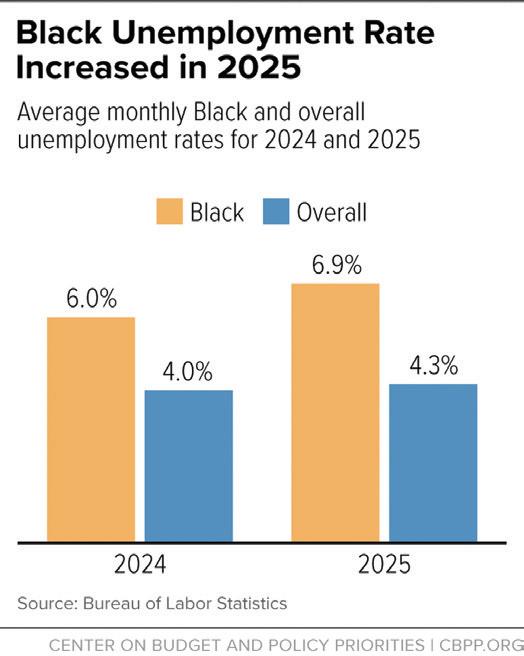
As corporations scaled back Diversity, Equity, and Inclusion initiatives and government agencies faced sweeping cuts, Black women were among the hardest hit. Between spring and late 2025, more than 300,000 Black women either lost jobs, left the workforce, or were pushed out of employment, according to labor data and economic reports tracking the crisis.
Credit: Source: Bureau of Labor Statistics.
Unemployment among Black women climbed from 5.4% to as high as 7.3% by the end of the year — one of the steepest increases of any demographic group. These numbers have an outsized impact on Black communities because nearly 80% of Black mothers in America are primary, sole, or cobreadwinners for their families, according to the Institute for Women’s Policy Research.
And what has gone almost
unnoticed is that between November 2025 and February 2026, the U.S. Bureau of Labor Statistics reported that 567,000 Black men lost their jobs across all sectors.
As a result, policy changes affecting employment, housing, education, healthcare, business development, and voting rights can have significant economic consequences.
Texas Southern University (TSU) Professor Michael O. Adams argues that the current U.S. “war economy” isn’t helping matters.
“We need more reinvestment into domestic kinds of issues,” said Adams. “I’m looking at healthcare, education, and economic development… the war economy takes away from those efforts.”
According to Fortune Magazine, the engagement—
Credit: NNPA
dubbed Operation Epic Fury—is producing a “war economy” that is costing U.S. taxpayers over $1 billion a day.
Housing: The foundation of wealth Homeownership remains the primary source of wealth for most American families.
One area of concern among housing advocates is the Trump administration’s opposition to race-conscious housing and reparative programs.
The administration recently challenged a housing-reparations initiative in Evanston, Illinois, arguing that race-based housing assistance violates civil-rights laws. Supporters of the program say such initiatives are designed to address generations of housing discrimination.
Critics worry that similar
Assemblymember Mike Gipson: Tragic Compton Shootings Drive Home Need for Stronger Gun Control Legislation
Solomon O. Smith | California Black Media
Assemblymember
regulations and the limits states face in enacting gun control measures. At a block party in Compton, a gunman opened fire on a crowd, killing Eric Washington, a former California Assembly aide, and Meah Bordenave-Jenkins, while injuring three others. The deaths of Washington and Bordenave-Jenkins left deep
wounds in the community. Bordenave-Jenkins, 19, was a sophomore studying nursing at the University of Nevada. She was staying with her sister for the summer.
Her mother, Ebone Jenkins, said her daughter wanted to become a neonatal travel nurse and was active in church.
Washington served as a field deputy for Gipson before later
working for HACLA, the Housing Authority of the City of Los Angeles. To honor his memory, HACLA established the Eric Washington Community Impact Awards.
Washington's mother, Tina Johnson, told California Black Media (CBM) that her son was “deeply compassionate” and a “mentor to everyone,” including his own father, whom Washington helped adjust to life after incarceration. She said he was committed to public service and wanted to address gun violence.
For Gipson, Washington's death was both personal and political.
Gipson and Washington worked together for years, united by a shared commitment to reducing gun violence in their communities. Gipson said Washington's passing has been deeply felt. In 2020, Gipson's own son, an innocent bystander, was injured in a violentshooting that same year.
The Compton tragedy also
challenges could limit future efforts to narrow the racial homeownership gap.
At the same time, supporters of the administration argue that reducing regulations and increasing housing supply could help all buyers regardless of race.
Whether those broader market benefits outweigh the loss of targeted programs remains a subject of debate among housing economists.
Black businesses face new questions
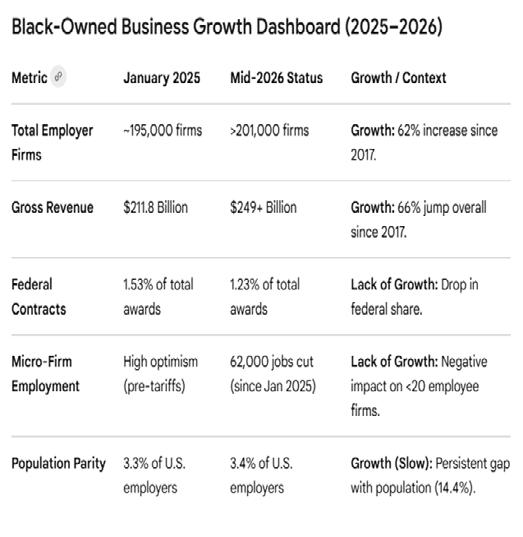
Black-owned businesses generated record growth following the pandemic, yet many still rely heavily on government contracts, supplierdiversity programs, and technicalassistance initiatives.
One of Trump’s most consequential actions has been a series of executive orders that have ended or restricted Diversity, Equity, and Inclusion (DEI) requirements in federal agencies and federal contracting.
The administration argues these measures restore “merit-based opportunity” and equal treatment under the law.
However, many Black business advocates see potential economic risks.
The administration revoked Executive Order 11246, a civil rights-era policy that required federal contractors to take affirmative action to ensure equal opportunity.
Reuters reported that minority contractors have
already expressed concerns that changes to disadvantagedbusiness programs could reduce opportunities for Black-owned firms competing for infrastructure and government projects. Some contractors reported revenue losses, delays, and layoffs connected to certification changes.
For cities like Houston, where minority-owned firms play a major role in public contracting, the long-term effects could be substantial.
Source: Center on Budget and Policy Priorities.
And with so many taxpayer dollars still directed towards the war in Iran, Houston’s roughly 200,000 Black businesses are on the front lines when it comes to being negatively impacted. Higher freight and energy costs, for instance, are wreaking havoc on already thin margins.
“I’m not sure people realize the tight margins small businesses operate within,” said Judson Robinson, president and CEO of the Houston Area Urban League.
“When the price of oil needlessly skyrockets, the burden on Black people increases exponentially…
Assemblymember Mike Gipson: Tragic Compton Shootings Drive Home Need for Stronger Gun Control Legislation ...continued
comes as California and other states continue to navigate legal challenges to their authority to regulate firearms.
A recent U.S. Supreme Court decision in Wolford v. Lopez invalidated portions of a Hawaii law prohibiting people with concealed-carry permits from bringing firearms onto private property that is open to the public without the owner's consent.
Supporters of the law say it was intended as a “common sense” measure to limit firearms in public spaces, but the Supreme Court ruled that portions of it violated the Second Amendment.
Some advocates worry the ruling could weaken states' ability to enact gun safety legislation.
Gipson is among those expressing concern.
“Because of the Supreme Court’s decision to strike down protections in Wolford v. Lopez and rule against Hawaii’s common-senselaws, a pattern continues where the U.S. federal government cannot guarantee us the most basic protections,” Gipson told CBM.
“Taken as a whole, these negligent Washington actions are
already leading to more violence –in Watts and other neighborhoods – which directly affects the people Eric Washington worked with during his life,” he added. Throughout his legislative career, Gipson has championed firearm regulations aimed at creating safer communities. His official website highlights numerous public safety initiatives, including legislation addressing ghost guns and regulating the open carry of firearms in California. He was among the first California lawmakers to pursue ghost gun regulation through Assembly Bill (AB) 879. Currently, Gipson is working to pass AB 2339, the Accuracy in Mental Health Reporting Act. The bill would ensure that “prohibited persons are accurately identified in a timely fashion” and reported to the California Department of Justice to restrict their access to firearms. The measure has garnered strong support, including from California Attorney General Rob Bonta, who wrote a letter endorsing the legislation.
BlackPress USA Newswire
Assemblyman Mike Gipson (D-Carson) at the State Capitol in Sacramento,California, with colleagues of the California Legislature Black Caucus. May 15, 2023. CBM photo by Antonio Ray Harvey. File photo.
Political Playback: California Capitol News You Might Have Missed
Bo Tefu | California Black Media
California Education Chief Tony Thurmond Appoints Atty. Mark Harris to Workgroup on Healthcare Costs
Harris Esq.
California State Superintendent of Public Instruction Tony Thurmond has appointed attorney and economist Mark T. Harris to a new statewide workgroup that will develop policy recommendations to address rising healthcare costs affecting TK-12 school districts and educators.
The TK-12 Education Healthcare Cost Workgroup will bring together educators, economists and policy experts to examine the financial impact of increasing healthcare costs on school districts and identify solutions to help schools continue providing quality healthcare benefits to employees and their families.
“We are all painfully aware of the rising costs of healthcare in this country, and our school districts are not immune to that strain,” said Thurmond. “School districts must be able to afford quality healthcare for their employees, and all school employees deserve access to quality healthcare for themselves and their families.”
Harris is an attorney, economist and senior continuing lecturer at the University of California, Merced. He also serves as director of the university’s Law Clinic,
general counsel to the Fresno Unified School District and special counsel to the Sacramento City Unified School District and Twin Rivers Unified School District. Before entering academia, Harris worked as an investment banker on Wall Street and has lectured internationally on law and finance.
In 2023, President Joe Biden appointed Harris to the ExportImport Bank of the United States’ Council on Climate. He also recently received the inaugural National Action Network Rev. Al Sharpton Legacy Award in recognition of his work advancing civil rights and social justice.
Harris said he accepted the appointment in honor of his late mother, who spent more than 60 years teaching in Los Angeles and Sacramento public schools and served as a leader of United Teachers Los Angeles. He also noted that his wife, Dr. Marianna Y. Harris, is a former public school teacher and school site leader.
“I hope that the contribution I make to the Workgroup helps move the needle in a positive direction relative to healthcare finance equity for all who are within the public education ecosystem,” Harris said.
The California Department of Education said the workgroup’s recommendations will focus on helping school districts manage rising healthcare costs while preserving access to quality healthcare for educators. Officials said the effort comes as school systems across California continue to face growing financial pressures associated with employee healthcare benefits.
OP-ED: Indiana — Stop Playing Politics with Kids’ Food
By BlackPressUSANewswire
In Indiana, over 650,000 kids are without consistent meals this summer because the state opted out of an important federal food program. I just introduced a bill to change that. The Summer Electronic Benefits Transfer (Summer EBT) program is designed to fill a gap for kids who typically rely on free meals at school. It’s a win-win program: the federal government covers the cost of the food benefits. Congress has already approved it, and it’s set to go — signed, sealed, and ready to be delivered to 650,000 Hoosier kids in need. That’s how the program works in other states. Except Indiana has chosen not to participate in the program and has refused to accept this funding. Indiana officials are leaving money on the table because they claim we can’t afford the administrative expenses. But this explanation just doesn’t hold up. Indiana ended the 2025 fiscal year with revenues $170.6 million over expectations, with $2.5 billion in reserves and a $337 million surplus.
It’s not about whether our state can pay for it. It’s about what our state chooses to pay for.
I can’t think of any better investment than nurturing and protecting our nation’s children. Children need consistent healthy foods to support brain development, healthy growth, and strong immune systems.
The psychological impact of hunger is detrimental to children from stigma, embarrassment and lack of confidence — studies show that children from food-
Thursday, July 16, 2026
Gov. Newsom Signs Sweeping Education Governance; Announces $151.4 Billion Investment After Decades of Reform Calls
Gov. Gavin Newsom has signed legislation restructuring California's public education governance system, marking what supporters describe as the most significant overhaul of the state's TK-12 leadership structure in more than a century.
Assembly Bill 181, authored by Assemblymembers David Alvarez (D-San Diego) and Darshana Patel (D-Poway), creates an appointed Education Commissioner who will oversee the California Department of Education under the direction of the State Board of Education. The measure is intended to align the state's policymaking and administrative functions while redefining the role of the elected State Superintendent of Public Instruction.
“California can no longer afford to postpone reforms that have been recommended regularly for a century,” Newsom said after signing the bill. He said the current system has long divided responsibility for setting education policy from implementing it, weakening accountability and slowing improvements for students.
The legislation also expands the superintendent's role by making the office a voting member of the governing boards overseeing California's three public higher education systems, while adding two legislative appointees to the State Board of Education and clarifying responsibilities among state education leaders.
The governance overhaul comes alongside what the Newsom administration describes as a historic investment in California's public schools. On July 10, Newsom announced that the 2026 Budget Act provides $151.4
billion in total funding for TK-12 education — the highest level of school funding in state history.
The budget expands support for Universal Transitional Kindergarten, community schools, literacy and mathematics initiatives, student mental health services, and before- and afterschool and summer learning programs, investments the administration says are designed to improve academic achievement and advance educational equity across the state.
“This budget is remarkable in all the ways you've heard and some others,” said Linda DarlingHammond, President, California State Board of Education.
“Just over a decade when the local control funding formula was beginning to be funded California was one of the lowest funded states in the country and one of the lowest performing states in the country,” Darling-Hammond continued. “We were in the bottom 5 on just about everything and we had the fewest teachers per pupil administrators. This budget has the largest investment education in the last seven years. “Our investments in proposition 98, the education side of the budget, have gone up by about 78%. That’s a 66% increase in per-pupil spending.
The proposal follows months of legislative hearings and builds on recommendations dating back decades. Supporters point to repeated studies, including the Legislature's 2002 Master Plan for Education, concluding that California's education governance structure is fragmented, with overlapping authority that hinders effective implementation of state
continued in next 2 columns
OP-ED: Indiana — Stop Playing Politics with Kids’ Food...continued
servants should ensure that no child goes hungry — especially when resources are available, but callously and deliberately rejected.
We know the problem: Indiana is choosing politics over the wellbeing of our children. Here’s my solution:
insecure households are more likely to suffer from anxiety and depression.
Poverty and hunger rates are higher among most non-White populations. According to Feeding America, Black children are twice as likely to face hunger. Racism, discrimination, low wages, unemployment, and food deserts in communities that are predominately Black all contribute to higher rates of poverty and lower educational outcomes.
“It’s especially cruel that Indiana is cutting summer food assistance when groceries are more expensive than ever.”
It’s especially cruel that Indiana is cutting summer food assistance when groceries are more expensive than ever. Families simply can’t afford to put dinner on the table.
That’s compounded by Trump’s extreme cuts to SNAP — which made the deepest cuts to nutrition assistance ever.
Politicians get into debates about the role of government assistance. Politicians get into debates about work requirements and qualifications that determine whether an adult should receive government assistance.
“There is no reason any child in our country should suffer so adults can score partisan political points.”
But no child should be dragged into politics. There is no reason any child in our country should suffer so adults can score partisan political points. Public
My Summer Meals for Kids Act will integrate Summer EBT into the National School Lunch Program — so no child has to go without food when school is out during the summer months. My bill would allow eligible families to automatically receive benefits through electronic benefit transfer or other approved methods, ensuring uninterrupted access to nutritious food when school meals are unavailable.
The National School Lunch Program operates in nearly 100,000 schools across the country. It provides billions of lunches for children in need, allowing students to learn and grow without the pangs of hunger. No state can opt out of the
National School Lunch program, and it’s past time Summer EBT is treated the same. Hunger doesn’t go away for kids during the summer. Children don’t stop growing — they need healthy, nutritious food — without worrying where the food will come from.
My bill would ensure every state opts into the Summer EBT program. Summer EBT funding is already set aside to go to our kids. It shouldn’t matter what state they live in — no child should experience food insecurity or hunger.
Families need even more help right now — and no state should be able to play politics with our kids.
U.S. Rep. Andre Carson represents Indiana’s 7th District. Learn more at carson.house.gov.
The post Indiana: Stop playing politics with kids’ food. appeared first on Indianapolis Recorder.
Based on reporting by Indianapolis Recorder.
LAUSD, California school districts seek money, changes to social media apps in lawsuits
L.A. Unified and other school districts are suing companies like Meta, Google and TikTok for platforms they say are ‘addictive’ for children.
By Vani Sanganeria, EdSource
Meta, Google, TikTok and other social media companies could soon be compelled to fund student mental health services and redesign features alleged to encourage compulsive use if school districts prevail in a growing wave of lawsuits. More than 1,000 school districts nationwide
LAUSD, California school districts seek money, changes to social media apps in lawsuits...continued
“The costs with these harms include enormous diversion of staff time, and significant cost associated with the increased anxiety and depression, selfharm and suicidality affecting the students.”
The federal lawsuit, filed in the Northern District of California, represents several school districts in Southern California, including Burbank Unified, Oceanside Unified, Coronado Unified, Temecula Unified, Santa MonicaMalibu Unified, ABC Unified and Ramona Unified, along with other districts from around the country. The districts are seeking both financial compensation and injunctive relief to help address increased demand for mental health support.
According to their complaints, districts have had to hire more counselors and therapists, ramp up training for teachers and staff and educate students on online safety and cyberbullying with a reported rise in depression, anxiety and other mental health issues.
A recent landmark jury trial and a bellwether school district’s case in Kentucky have also emboldened the school districts currently in litigation against social media companies.
In March, Kaley Glenn-Mills of Chico was awarded $6 million in a landmark jury trial in Los Angeles. Glenn-Mills, at age 17, sued Meta, the parent company for Facebook and Instagram, and Google, successfully arguing before a jury that the companies engineered their platforms to addict children.
In May, Breathitt County School District in Kentucky became the first district to settle with social
media companies for $27 million for contributing to rising costs of school mental health services. The first part of the multidistrict case, brought by state attorneys general on behalf of their states, is scheduled for August, with the second part of the case, brought by school districts, following in February 2027. Meta appealed the verdict in the social media addiction lawsuit last week and Google plans to appeal as well, the Associated Press reported. “We will continue to defend ourselves vigorously, and we remain confident in our record of protecting teens online,” a Meta spokesperson said in a statement to the Associated Press. Baig said the standing lawsuit, which now represents L.A. Unified, makes the strongest case yet to force social media companies to pay more than a lump sum. Through injunctive relief, school districts are asking the court to compel social media companies to overhaul design “defects” that encourage compulsive use, as well as implement new safeguards to protect student mental health. Overhauls could include drastic changes to commonplace engagement features such as infinite scroll, algorithmic recommendations and autoplay. “It’s not until you have a strong coalition that you can actually effectuate change when you’re going against corporations of this size,” Baig said. “It would never have been enough to just have a few small school districts.” LAUSD board member Nick Melvoin said the litigation follows a strategy similar to the
Gov. Newsom Signs Sweeping Education Governance; Announces $151.4 Billion Investment After Decades of Reform Calls...continued
policies.
Alvarez said the reforms are especially important because longstanding governance problems have contributed to persistent achievement gaps affecting Black and Latino students.
“Past leaders failed to act, and our students have paid the price," Alvarez said, adding that the measure aligns “authority, accountability, and resources” to improve educational outcomes.
The legislation drew support from county superintendents,
school administrators, education equity organizations, business officials, and more than 950 organizations statewide, according to the Governor's Office. The new governance structure takes effect in January 2027, when California's next governor and superintendent assume office. State officials will spend the coming months developing transition plans and reporting requirements intended to ensure an orderly implementation.
dozen in California, including Los Angeles Unified School District — argue that social media companies knowingly designed products that harm children’s mental health, and that the cost of addressing the harm has shifted to schools, which have had to expand counseling, crisis intervention and campus safety efforts.
“Excessive social media use has fueled a youth mental health crisis which essentially forces schools to pivot from education to crisis intervention on a daily basis,” said Aelish Baig, a lead attorney representing LAUSD in the federal multidistrict lawsuit.
Credit: iStock
Mark T.
Thursday, July 16, 2026
Report Highlights Sharp Rise in Denaturalization Lawsuits
By Nicole Chang
Lawsuits seeking to revoke U.S. citizenship have surged under the Trump administration, according to a new report. While the federal government historically filed fewer than one civil denaturalization case per month, the number rose sharply in May and June.
According to a June 17 report by TRAC, an immigration data research organization, the federal government filed at least 15 civil denaturalization lawsuits in May 2026 and 18 more by June 12. The figures mark a steep rise from a historical average of just 0.6 cases per month previously.
TRAC analyzed 166 denaturalization lawsuits filed in federal courts between 2008 and June 12, 2026. The report found that the main grounds for such lawsuits included use of false identities, immigration fraud, concealment of serious criminal conduct before naturalization, and false answers on naturalization applications.
One area of concern involves
a question on the naturalization application asking whether an applicant has committed any criminal acts for which they were not arrested or convicted.
A “no” answer to that question could be interpreted as false if the applicant received minor violations such as speeding, walking a dog without a leash, or fishing without a valid license. Under some jurisdictions such violations can be classified as crimes.
TRAC warned that the scope of denaturalization cases could expand in the future, adding the May and June 2026 lawsuits reviewed so far appear to be based on unlawful conduct serious enough to warrant civil denaturalization proceedings. Still, it said concerns are growing that less serious violations or even noncriminal conduct could be used as grounds for future lawsuits.
Operation Janus provided the foundation
Inland Empire Legislative Caucus secures state funding for new judgeships to expand access to justice
County/Government News
The Inland Empire Caucus recognized the inclusion of funding in the 2026-27 State Budget to begin expanding judicial capacity in California's most under-resourced courts, including the Inland Empire.
The budget provides $44 million annually, to support the phased implementation of 13 new superior court judgeships and $100 million for related court facilities authorized by Chapter 482, Statutes of 2023.
The funding follows years of bipartisan advocacy by the Inland Empire legislative delegation, local governments, the Judicial Council, and regional court leaders to address a shortage of judges that has contributed to higher caseloads and longer wait times for residents seeking access to the courts.
Earlier this year, the Inland Empire Caucus led a bipartisan budget request urging the Legislature to fund judgeships identified by the Judicial Council as the state's highest priorities, with San Bernardino and Riverside Counties ranking among those with the greatest need.
"For decades, the Inland Empire has struggled with a shortage of judges despite being one of California's fastest-growing regions," said Assemblymember Juan Carrillo, Chair of the Inland Empire Legislative Caucus. "This budget represents real progress toward bringing our courts closer to the level of service our residents deserve. It reflects years of work by legislators from both parties, our local court leadership, counties, and many others who refused to let this issue fall off the radar."
"Our communities deserve a court system that is there when people need it most. I'm proud of the efforts of our caucus and our regional partners to keep this issue front and center and advocate for the resources our growing region needs. This funding is an important step toward improving access to justice for families across the Inland Empire." said,
The current expansion of denaturalization efforts has roots in Operation Janus, an initiative launched under the Obama administration in 2010. At the time, the government found that some immigrants who had been ordered deported or removed had later used different identities to obtain immigration benefits, prompting a review of older fingerprint records.
A 2011 search of Department of Homeland Security (DHS) databases found that about 315,000 people, including individuals with final deportation orders, criminal records or fugitive status, lacked digitized fingerprint records. DHS later began the Historical Fingerprint Enrollment, or HFE, project to digitize older paper fingerprint records.
Through that process, officials found that U.S. Citizenship and Immigration Services (USCIS) had naturalized about 858 people who had previously been ordered deported or removed under different identities. Their fingerprint records were not available in the electronic system at the time they became citizens. USCIS later manually reviewed about 2,000 HFErelated naturalization cases. Of these, about 1,600 were found to involve individuals who allegedly concealed information and unlawfully obtained citizenship. As of May 2018, USCIS had referred 89 of those cases to the Justice Department for possible denaturalization.
Cases declined under Biden,
resumed under Trump
Denaturalization lawsuits declined sharply after 2019, a drop attributed in part to the COVID-19 pandemic and reduced fee revenue at USCIS.
During the Biden administration, the number of denaturalization cases remained low, averaging fewer than four per year.
That changed in June 2025, when the second Trump administration included denaturalization among its civil enforcement priorities. In a June 11, 2025, memo, the Justice Department’s Civil Division identified denaturalization as a key enforcement area. The memo also said the department could pursue “any other cases” it deemed sufficiently important and could take action outside the listed categories at its discretion.
TRAC said the language suggests not only that more denaturalization lawsuits are likely, but also that the range of conduct used to justify such cases could broaden.
Only eight denaturalization lawsuits were filed in all of 2025. But the number began rising sharply in May 2026. Some lawsuits filed in June alleged that USCIS fingerprint specialists determined, through fingerprint analysis, that the same individuals had previously applied for immigration benefits under different identities. TRAC said that suggests USCIS has resumed HFE reviews.
continued in next 2 columns
California’s Unhoused Seniors: A Crisis Within the State’s Homelessness Crisis
Assemblymember Greg Wallis, Vice Chair of the Inland Empire Legislative Caucus.
The Inland Empire serves nearly five million residents but continues to face some of the highest judicial workloads in California. The Judicial Council's workload assessment identified San Bernardino and Riverside Counties among the state's highest priorities for additional judgeships based on documented need.
"This funding will help improve access to justice for residents throughout our region," said San Bernardino County Board of Supervisors Chairman Dawn Rowe. "As our communities have grown, the demands on our courts have grown with them. It was a privilege to advocate for this investment alongside our Inland Empire Legislative Delegation in Sacramento, and I'm grateful for their partnership and leadership in securing this funding for our region."
"For years, San Bernardino County has faced one of the most significant judicial officer shortages in California, placing substantial demands on our courts and communities," said Presiding Judge Rod Cortez. "The funding provided in this year's budget is a meaningful investment that will expand access to justice, improve court services, and reinforce public trust. We are grateful to the Governor and Legislature for recognizing these needs and for their continued support of the judicial branch and the residents of San Bernardino County."
While this funding does not fully address California's judicial shortage, it represents an important investment in improving court access for Inland Empire residents and provides the first funding to begin implementing judgeships authorized by the Legislature in 2023.
For any media questions, please contact Jacqueline Escobar at Jacqueline.Escobar@asm. ca.gov.
California’s homelessness crisis is increasingly becoming an aging crisis, as a growing number of older adults experience housing instability at a stage of life when health challenges, fixed incomes and mobility limitations can make finding stability far more difficult.
Nearly half — about 48% — of single adults experiencing homelessness in California in 2023 were at least 50 years old, according to a University of California, San Francisco report. That figure represents a dramatic increase from 1990, when older adults accounted for just 11% of the state’s unhoused single adult population.
For many seniors, preventing homelessness requires more than an affordable apartment. It requires housing connected to healthcare, transportation, case management and other supportive services that allow older adults to remain independent while navigating the realities of aging.
“California’s population is rapidly aging, but our supportive housing systems have yet to catch up,” said David Lindeman, chair of the California Commission on Aging (CCoA), during the Commission’s annual information hearing titled “Nowhere to Go: Addressing the Crisis in Supportive Housing for Older Californians.
The hearing, held at the California Endowment in Sacramento, brought together housing advocates, government officials, service providers and individuals with lived experience to examine why so many older adults struggle to find housing designed to meet their needs.
One of those individuals was Sacramento resident Steve Gasco.
When Gasco, 61, moved back to California after living in Detroit, he found himself facing a challenge
COMMUNITY: What Trump’s Presidency Means for Black Economic Mobility...continued from page 1
it erases profit margins and can put you out of business.”
Education and workforce development
Higher education remains one of the strongest predictors of lifetime earnings.
The Trump administration has highlighted additional investments in Historically Black Colleges and Universities (HBCUs) as evidence of its commitment to expanding opportunity. The White House has promoted increased support for HBCUs and workforce development initiatives as part of its Black History Month agenda.
However, in September of last year, the Department of Education (ED) announced it would pull the plug on approximately $350 million in discretionary funds for institutions that enroll a high percentage of minority students, including HBCUs
Additionally, many education advocates argue that the broader anti-DEI campaign may reduce programs designed to recruit, retain, and support underrepresented students on college campuses.
The administration contends such programs often violate principles of equal treatment. Opponents argue they address documented disparities in access and outcomes.
Healthcare and economic security
Economic mobility is difficult without good health.
Healthcare cuts or reductions in public benefits often affect Black households disproportionately because Black Americans are more likely to rely on Medicaid and other public-health programs.
Policy analysts warn that reductions in healthcare access can produce long-term economic
many older adults now experience: finding housing he could afford while preparing for retirement.
Gasco was paying about $1,300 per month for what he described as the most affordable apartment he could find in Midtown Sacramento. To make ends meet, he relied on gig work, including driving for Grubhub using an older vehicle. When his rent increased, he began searching for another option to avoid becoming unhoused.
That search eventually led him to the Wong Center, a 55-and-older affordable housing community in downtown Sacramento.
“Living at the Wong Center has been just such an amazing, fortunate experience,” Gasco told commissioners. “It doesn’t really have a lot of supportive services, but it’s a landing pad for a lot of older people.”
Gasco said the building has become more than a place to live for its approximately 150 older residents. It has become a community where neighbors support one another through the challenges of aging.
“There’s an old song: ‘I got no place to go, alone in a big city. Will you be a friend and help me?’” Gasco said. “And that plays in my mind because now it’s about 150 older people. I’m one of the youngest at 61, and people are in wheelchairs. People have different mobility issues.”
He said many older adults experience isolation and disconnection that can be difficult to capture through traditional discussions about mental health.
“We talk about behavioral health, but I’m not sure if that really captures the confusion a lot of people live in and the feeling of being disconnected,” Gasco said. “So, we’re starting to band together and help each other.”
Supportive housing seeks to address those challenges by pairing permanent housing with services tailored to residents’ needs. For older adults, those services may include help managing medications, accessing healthcare, arranging transportation and
continued on page 4
consequences, including higher medical debt, lower workforce participation, and reduced family wealth.
For many families, healthcare costs can be the difference between building savings and falling deeper into financial insecurity.
Voting rights and political power
Economic mobility is also connected to political power.
Voting determines who controls budgets, education funding, housing policy, infrastructure spending, and economic-development initiatives.
Civil-rights advocates have expressed concern that efforts to weaken federal oversight of voting protections could reduce political influence in Black communities. While supporters argue that electionintegrity measures strengthen confidence in elections, critics contend that some policies not only create additional barriers to participation but also actively create a reality of voter suppression.
The economic implications are significant because communities with less political representation often have less influence over public investment decisions.
Bottom line For Black America, economic mobility has never depended solely on individual effort. It has also depended on public policy. Federal and state policies moving forward may determine whether Black families can narrow longstanding wealth gaps—or whether those gaps become even harder to close.
Based on reporting by Houston Defender.
Mondays weekly by 5 pm is Submission Deadline for News Articles & Legal Publications
Report Highlights Sharp Rise in Denaturalization Lawsuits...continued
False identity, immigration fraud leading grounds
Among the 62 cases for which TRAC was able to identify the underlying basis, false identity and immigration fraud made up the largest category, with 14 cases overall. Six of those were filed in May and June 2026.
Other identified grounds included child molestation in five cases, fraud or misrepresentation in four, sexual abuse of a minor in three, narcotics distribution in two, terrorism in two, gun trafficking in two and Medicare fraud in two.
TRAC said the publicly available cases appear largely to involve serious crimes or clear misrepresentations. However, it noted that many actual complaints are not easily accessible through the online federal court records system, making it difficult to confirm the specific grounds in every case.
Legal basis may affect immigration status after citizenship loss
The statutes used can also determine whether someone who is denaturalized reverts to lawful permanent resident status or is left without immigration status and becomes subject to deportation or removal.
Denaturalization is governed under federal code 8 U.S.C. § 1451, and the most commonly used provision is § 1451(a) in cases where citizenship was deemed to have been “illegally procured.” TRAC found that about 66% of the 166 cases it analyzed were brought under that section.
Another commonly used provision is § 1451(h), which concerns the attorney general’s authority to correct, reopen, alter, modify or vacate a naturalization order.
An emerging immigration issue
TRAC said denaturalization, once rare in federal courts, is becoming more common. The resumption of HFE reviews, combined with the Justice Department’s decision to make denaturalization a civil enforcement priority, has created the administrative foundation for broader civil denaturalization efforts, the report noted.
“Denaturalization,” according to TRAC, is an emerging issue that requires continued monitoring. The organization said it plans to update its denaturalization database as new cases are filed and publish periodic findings.
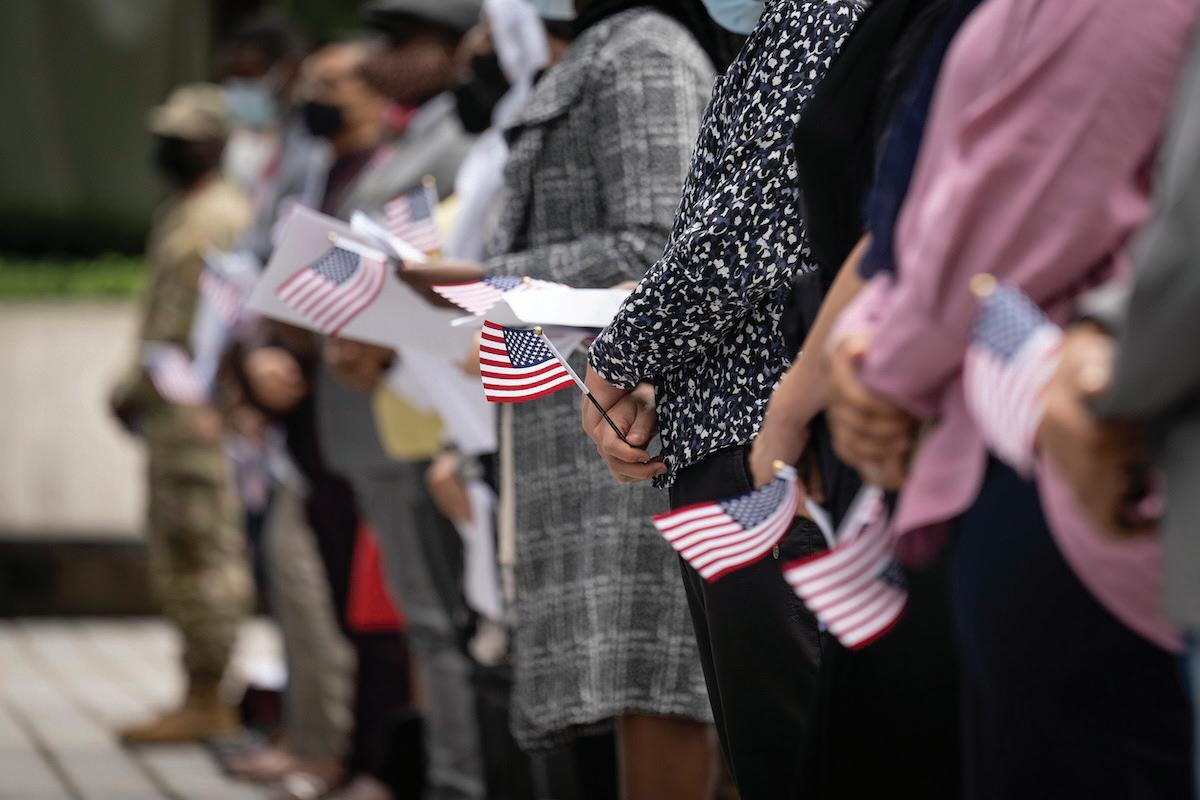
Citizenship Day Naturalization Ceremony. Original public domain image from Flickr
Edward Henderson | California Black Media
Italian white wine in space
By Wanda Haynes Certified-Sommelier
There is an exciting Italian dry white wine to try this summer and all year long.
Grillo means “cricket” in Italian translation. Italian fairytales refer to Cavallo delle Fate as "fairy horse" since crickets are said to ride fairies on their backs. This is charming and add lore to an already amazing dry assessable white wine.
The exciting nose of a fairy horse is beautiful with sliced green apples, carnations, and lily of the valley. Tastes of mouthwatering acidity, spicy radish, green apple, lemon rind, fresh quince, and ripened pineapple.
Feudo Disisa Grillo Sicilia IGT, Sicily, Italy
Be transported to the sunkissed island of Sicily with Feudo Disisa Grillo. A true expression of Sicilian terroir, showcasing the unique characteristics of the region. As you pour it into the glass, its bright golden color promises a sensory delight. The aroma offers a bouquet of tropical fruits, including ripe pineapple and succulent mango, with a light citrus zest. On the palate, the wine delivers a burst of flavors, with juicy stone fruits mingling with refreshing citrus notes.
The mouthfeel is smooth and velvety, showcasing the Grillo grape's full-bodied nature. The finish is vibrant and lingering,
leaving a pleasant impression. Feudo Disisa Grillo is a versatile wine that pairs wonderfully with seafood dishes, light salads, grilled squash, fried chicken, a classic turkey burger with avocado, crisp lettuce, and yellow tomatoes.
Catarratto DOC Sicilia –Organic White Wine Terre di Entella, is a small, certified-organic family estate located in Contessa Entellina in western Sicily. The vineyards are situated at 300 meters above sea level on a mixture of calcareous and clay-loam soils.
The nose offers green apples, Mediterranean wildflowers, limes zests, slices of orange, and heavy tastes of summer cantaloupe. An evolving palate first brings notes grapefruit and lemon, then undertones of clover honey, blanched almonds and a long saline finish. Terre di Entella white wines featuring the indigenous Catarratto grape are known for a dry crisp, coastal profile. The wine pairs well with appetizers, and fun finger foods. Deep fried pitted green olives, parmesan sprinkled salmon sliders, arancini rice balls, oregano chicken kabobs. Experient with pairings and find your unique flavor combinations. Try new wines often, this way you’re always growing your wine knowledge.
Preventing Amputation: A Doctor’s Guide for Diabetes Patients
By BlackPressUSA Newswire
For many diabetes patients, amputation becomes a last-resort measure after infections, ulcers, or poor circulation worsen rapidly and leave few other treatment options.
But according to Dr. Estelle Everett, a physician and researcher specializing in endocrinology, diabetes, and metabolism at the University of California Los Angeles (UCLA), most diabetes-related amputations can be prevented through early intervention, consistent medical care, and patient education.
For Everett, her commitment to diabetes prevention is deeply personal. Watching her younger sister navigate Type 1 diabetes exposed her early to the challenges many patients face, including barriers to advanced diabetes technologies such as continuous glucose monitors and insulin pumps due to racial disparities in patient care.
Those experiences helped shape her focus on prevention, education, and equitable access to care.
Dr. Everett spoke with California Black Media (CBM) about the warning signs of diabetic complications, prevention strategies, healthcare access, and the role of diabetes technology in
Thursday, July 16, 2026
Preventing Amputation: A Doctor’s Guide for Diabetes Patients...continued
knowing it.
That’s why routine screenings are so important. If you have diabetes, controlling it early can significantly reduce the risk of severe complications later on.
Many Black Californians harbor a degree of distrust in the healthcare system. What message would you send to encourage people to get regular checkups?
Distrust is real, and there are many reasons people may avoid healthcare. Some fear discrimination or worry they’ll simply be judged instead of helped.
Personally, I realized some of the care my sister received may have been influenced by racial bias. Although she had diabetes for years, she was never offered diabetes technology like insulin pumps or continuous glucose monitors. When she finally asked about them, she was told she had to jump through many hoops.
Later, I realized her experience wasn’t unique. Research shows that minority patients and people from lower-income backgrounds are less likely to be offered diabetes technology. That inspired me to focus my research on improving access for the populations that need these tools the most.
I think building trust is important. Finding the right doctor is almost like dating. If you don’t feel comfortable with your provider, it may help to find someone you connect with and feel understands your concerns. That relationship can make a major difference in getting consistent care.
Are there newer technologies or innovations in diabetes care that people should know about?
One of the biggest advances has been continuous glucose monitors, or CGMs. These small wearable devices track blood sugar levels in real time and have really changed diabetes care over the past decade.
For providers, CGMs give a much clearer picture of blood sugar patterns throughout the day. For patients, they provide immediate feedback about how food, exercise, and other daily habits affect blood sugar levels.
Someone may notice that certain foods cause major spikes while certain exercises lower their blood sugar. That real-time
information helps people make healthier decisions and improve blood sugar control. Research shows these technologies can significantly improve outcomes.
What daily habits or preventative measures can reduce the risk of complications or even amputation?
The biggest thing is controlling your diabetes. A lot of people automatically think diabetes will lead to amputations, but research shows the risk is much lower when diabetes is well managed.
That means taking medications as prescribed, making dietary changes, and working to keep your A1C below 7. Managing high blood pressure and high cholesterol is also important because both contribute to circulation problems.
People should also inspect their feet every day, especially if they’ve already lost sensation. Some patients injure their feet without realizing it because they can’t feel the damage. Catching wounds early is critical. Good foot hygiene also plays a major role in prevention.
Are there any common misconceptions about diabetes that stand out to you in your clinical work with Black patients?
One major misconception is that diabetes medications cause complications like kidney failure or amputations. In reality, poorly controlled diabetes causes those complications — not the medications used to treat it
Those misconceptions sometimes cause patients to avoid medications or stop taking them altogether. Another issue is that some people believe diet and exercise alone should always control diabetes. While lifestyle changes are important, some patients have severe diabetes that also requires medication.
Needing medication is not a personal failure. Sometimes diet and exercise alone are simply not enough, and medication is necessary to prevent serious complications.
This article is supported by the California Health Care Foundation (CHCF). Visit www.chcf.org
California’s Unhoused Seniors: A Crisis Within the State’s Homelessness Crisis...continued from page 3 coordinating long-term care.
But advocates say California does not have enough supportive housing options available for older adults as the state combats a broader homelessness crisis that is the worst in the United States.
improving outcomes.
What are some of the early warning signs that a person with diabetes may be developing circulation and nerve problems that could potentially lead to amputation?
Amputation is usually the final stage of diabetic foot disease. Earlier signs often involve nerve damage. Some people experience numbness, tingling, burning, or loss of sensation in their feet.
Poor circulation is another warning sign. Symptoms can include calf pain while walking, foot pain at rest, cold feet, skin color changes, or wounds that do not heal properly. Foot ulcers, thick calluses, and untreated cuts can also become serious infections that may eventually lead to amputation if they are not treated early.
Before complications reach that stage, what are some early signs of diabetes itself that people should be looking out for?
Many people are walking around with diabetes and do not even realize it. Some patients first seek medical care only after they’ve already developed complications because they’ve had diabetes for years without
Black Californians are disproportionately represented in California’s aging homelessness population, because of longstanding disparities in housing, income, health, and wealth, experts say. According to the UCSF Benioff Homelessness and Housing Initiative's California Statewide Study of People Experiencing Homelessness, Black Californians make up 31% of older adults experiencing homelessness, despite representing only about 6% of Californians age 50 and older.
Janelle Kazarus, CEO of El Hogar Community Services in Sacramento, told commissioners that many older adults fall into a gap between independent housing and institutional care.
“They require a level of support that falls somewhere between independent living and institutional care,” Kazarus said.
“The middle ground is missing.”
Kazarus said her organization frequently works with older adults who are ready to transition into permanent housing but remain in shelters, hospitals, transitional housing or other temporary settings because appropriate options are unavailable.
“For older adults, behavioral health needs, housing is often the intervention that determines whether recovery is possible,” Kazarussaid. “We can stabilize symptoms, connect individuals to treatment, provide intensive case management and build trusting relationships. But without stable
Over 300 People Attend the Splish Splash Water Safety Fun Day to Kick off a Kid Safe Summer
Lifestyle News
More than 300 parents, caregivers and children kicked off a Kid Safe Summer at Lake Gregory Regional Park for a day of family fun, hands-on activities, community connection and life-saving water safety education. Hosted by First 5 San Bernardino, in partnership with Loma Linda University Children’s Hospital Safe Kids IE and San Bernardino County Regional Parks, the Splish Splash Water Safety Fun Day officially launched another year of our Kid Safe Summer campaign, equipping families with the information and tools they need to enjoy a safer summer
housing, those gains are difficult to sustain.”
Older adults experiencing homelessness also face barriers that younger people may not encounter.
According to the U.S. Interagency Council on Homelessness, housing discrimination, limited income and age-related health conditions can all make securing permanent housing more difficult.
Research has also found that homelessness can accelerate the aging process. Chronic stress, exposure to the elements, untreated medical conditions, poor nutrition and limited healthcare access can contribute to earlier cognitive decline, mobility limitations and frailty among older adults experiencing homelessness.
While lawmakers in Sacramento are advancing a number of bills this session aimed at reducing homelessness, none specifically target the growing crisis of homelessness among older Californians. Current proposals focus on expanding access to sober living housing, strengthening statewide homelessness prevention planning, improving local coordination of homeless services, and creating an Office of Youth Homelessness Prevention.
Although advocates have warned that adults 55 and older are the fastest-growing segment of California's unhoused population, no major stand-alone legislation this year is dedicated specifically to preventing or ending homelessness among older adults.
For Gasco, the issue comes down to recognizing older adults and ensuring they have the support needed to remain connected to their communities.
“We’re all still alive, and we just need a little help to maintain our dignity.”
Cindy Faulkner at water safety event
A highlight reel was produced featuring First 5 San Bernardino’s Interim Executive Director Cindy Faulkner,
Families enjoyed all-day access to Lake Gregory Regional Park while playing games, visiting vendor booths, picking out giveaways, and learning from live demonstrations covering the ABCs of water safety, CPR and proper floatation device use. Parents and caregivers learned simple yet important safety practices to help protect children in and around the water all summer long.
LAUSD, California school districts seek money, changes to social media apps in lawsuits... continued from page 2
district’s fight against vaping and nicotine companies. In 2019, L.A. Unified joined a national class action lawsuit against e-cigarette company Juul, which ultimately paid school districts $1.2 billion in 2023 for targeting teenagers and draining school resources.
“As we did with the vaping settlements, we will present as part of these cases evidence of the amount of money that we’re spending on social workers and counselors, and it would be to reimburse the district for those services that are already being deployed,” Melvoin said. He said LAUSD will likely seek “tens of millions” in monetary relief along with “injunctive relief, and hopefully, policy change.”
Google rejected the allegations.
José Castañeda, a company spokesperson, told EdSource that YouTube has “built services and policies to provide young people with age-appropriate experiences” and that the “allegations in these complaints are simply not true.”
In the Kentucky case, social media companies argued that the district failed to prove that the students’ mental health problems were directly linked to social media use. While the district referred more students for counseling, lawyers for the companies noted that “none of those referrals ever identified ‘social media addiction’ as the cause.”
That’s likely because researchers have not found clear markers of clinical addiction, such as measurable withdrawal, tolerance and real-world impairment, in social media use, to qualify an addiction diagnosis. Rather, studies point to evidence that young people can form harmful and compulsive habits from social media use. That distinction has been at the core of social media companies’ defense, which have boosted billions in revenue with algorithmic features engineered after slot machines.
Vihaan Bhardwaj, a rising senior at Mt. Everest Academy in San Diego and the K-12 co-chief of policy at the GenerationUp youth advocacy nonprofit, said the defense makes “invisible” students’ lived experiences. Beginning at age 12, he said Instagram repeatedly fed him “fear-mongering” content about his acne that led him to lose his
self-confidence.
“Maybe one hour of just straight drinking alcohol will be so much worse sooner than one hour of scrolling, but you can’t just say it’s not harmful because the potency is less,” Vihaan said.
Social media companies also argued that school districts cannot measure which resources directly addressed student mental health issues tied to social media use. Baig, the attorney representing LAUSD, said school districts will tally an estimate based on years of counseling referrals, expenses, disciplinary incidents and costs, as well as documented cybercrimes and threats to children.
“They’re experiencing thousands of annual incidents of suicidal behavior, of sick and depraved cyber crimes, of shooting and bombing threats coming in on social media, of extortion and student sex trafficking, all of which are diverting enormous resources from the district’s core mission — which is to educate a student,” Baig said. “They take up staff time, from teachers to mental health counselors to administrators to even the maintenance crew.” Baig also expects discovery to uncover internal company documents linking youth mental health issues to social media use. Platforms have long studied compulsive use, growth strategies and engagement metrics for young users, and in 2021, leaked documents to the Wall Street Journal revealed that Meta knew that 1 in 3 teen girls had worse body image issues after using Instagram.
Even if social media companies are not forced by the court to make drastic design changes, Melvoin said schools will still save on mental health costs with state efforts to raise the age for a social media account to 16, implement age verification and expand digital wellness education in schools. And if school districts receive a big payout from social media companies, Vihaan said he hopes districts ensure “counselors are not just being added, but also trained” to help kids with social media use.
“You have to understand the in-person social disconnection that pushes us towards these platforms,” Vihaan said. “That nuance is often misunderstood by these adult resources.”
Estelle M. Everett, MD, MHS. Photo courtesy of Estelle M. Everett.
First 5 San Bernardino kicks off Kid Safe Summer at Lake Gregory Regional Park with hundreds of families across San Bernardino County
Thursday, July 16, 2026
Advocacy Groups Call for LAUSD Investigation Over Alleged Racism, Retaliation Against Black Educators
Edward Henderson | California Black Media
The Black Educator Advocates Network (BEAN) and the NAACP San Fernando Valley Branch are calling for an independent investigation into what they say is a longstanding pattern of racial harassment and retaliation against Black educators in the Los Angeles Unified School District (LAUSD).
During a July 9 virtual press conference, leaders from both organizations alleged that Black teachers and staff have repeatedly been subjected to racial slurs, including the N-word, by students on school campuses and through online learning platforms. They also contend that educators who reported the incidents often faced retaliation from school administrators rather than support.
“Black educators are being punished for telling the truth,” said Jalisa Evans, CEO of BEAN. “When these teachers report it, they should be met with support, not retaliation. We are calling on the district to take real, immediate action to end this pattern once and for all.”
According to Evans, the incidents are not isolated but reflect a systemic problem that has persisted across LAUSD for years.
During the press conference, BEAN shared testimony from
Black educators describing incidents in which students allegedly called teachers the N-word during class, wrote racial slurs on classroom desks and walls, and sent racist messages through Schoology and Zoom during distance learning. One teacher recounted opening a classroom door to find the N-word written across a desk.
Another said an administrator responded to a complaint by asking whether a student used the slur ending in “er” or “a.”
Because of concerns over continued retaliation, BEAN said the educators whose experiences were highlighted remained anonymous during the event.
Evans said educators have documented years of racial harassment dating back to at least 2020, when students allegedly used racial slurs during online instruction. In response, Black educators formed a Hate Speech Task Force to formally report incidents, document evidence and advocate for stronger protections.
The advocacy groups said recent meetings with state and district officials have resulted in initial commitments but have yet to produce the accountability they believe is necessary.
According to Evans, members of the task force met July 7
with LAUSD Chief of Human Resources Dr. Frank Serrato, Associate Superintendent of Talent and Labor Relations Krista Murphy and Board Member Kelly Gomez. During the meeting, educators presented documentation of alleged racial harassment and retaliation.
Responding, district officials told the group they were unaware of the scope of the complaints despite documentation that had also been shared with State Superintendent of Public Instruction Tony Thurmond.
“It was really disheartening to us,” Evans said. “There was so much documentation on these experiences.”
The following day, educators met with Thurmond, California Department of Education officials and Gomez during a two-hour discussion focused on policy reforms and stronger district oversight.
At that meeting, Gomez committed to working with educators on a school board resolution addressing racial hate speech and retaliation and agreed to request an investigation into the allegations, according to BEAN.
The organizations also received support from Darrell Goode, Area Coordinator for the NAACP's Los Angeles County branches, who said stronger advocacy from labor unions and community organizations will be critical to protecting Black educators.
“We need to go at their unions,” Goode said. “If they're not getting support, we can call the unions into question. Most unions don't want to be exposed for not supporting Black workers.”
Goode said the concerns raised by Black educators mirror broader challenges facing African American workers across Los Angeles County and urged
educators to continue organizing.
“If they're willing to come forward, we can start mobilizing,” Goode said. “We have legal redress, we have organizational structure, and we can be supportive.”
Among the groups' demands are the immediate reassignment of administrators accused of retaliating against Black educators while investigations are pending, stronger enforcement of existing anti-hate policies and a districtwide review of schools that have experienced significant departures of Black teachers or administrators over the past two decades.
Rev. James Thomas, president of the NAACP San Fernando Valley Branch, said accountability must extend beyond individual complaints and address the broader culture that allows racial harassment to persist.
“If teachers are being disrespected in the way they are, can you imagine what's happening to students?” Thomas said. “What happens to Black people in LAUSD, no one cares about. That has to change.”
Advocates are encouraging affected educators to confidentially report their experiences as they continue gathering evidence and building support for policy reforms. They also urged community members to sign a public letter supporting their demands and to participate in shaping the proposed school board resolution.
Thomas said the coalition is seeking structural reforms rather than symbolic action.
“We are hoping for a real structural resolution to this issue,” he said. “If we do not get it, we will utilize our collective power to force the issue. We don't want Black folks to continue to be victimized in an institution they are serving.”
Alert: Diarrhea Outbreak May be Linked to These Vegetables as Cases Rise Across U.S.
By Nutritionist Mary Toscano
A microscopic parasite that can trigger days—or even weeks— of severe diarrhea is sickening thousands of Americans this summer, prompting health officials to investigate one of the largest outbreaks of cyclosporiasis in recent years.
The illness is caused by Cyclospora cayetanensis, a parasite that spreads when people consume food or water contaminated with microscopic parasite eggs. Unlike many stomach viruses, government officials are thinking that this year’s Cyclospora infections are most commonly linked to fresh produce, including leafy greens, herbs, berries, and other fruits and vegetables that are eaten raw.
As of mid-July, confirmed illnesses have been reported across 31 states, with Michigan experiencing the largest number of cases. Public health officials are still working to determine the exact source of the current outbreak, although investigators say lettuce and salad greens are among the foods being examined.
What Is Cyclospora?
Cyclospora is a single-celled parasite that infects the small intestine. Once swallowed, it can cause inflammation that leads to prolonged gastrointestinal illness.
Unlike norovirus or the flu, Cyclospora usually doesn’t spread directly from person to person because the parasite must mature in the environment before it becomes infectious. Instead, infections are typically traced back to contaminated food or
drinking water.
Symptoms Can Take Days to Appear
One reason outbreaks are difficult to track is that symptoms often don’t begin until about one week—and sometimes up to two weeks—after exposure.
Common symptoms include:
Learn about a investigational pneumococcal vaccine trial recruiting in Georgia, Nebraska, New Jersey and Texas.
Watery diarrhea
Frequent bowel movements
Stomach cramps
Nausea
Bloating
Gas
Loss of appetite
Fatigue
Weight loss
Low-grade fever Without treatment, symptoms can last for weeks or even more than a month, and many people experience cycles of feeling better before becoming sick again.
Who Is Most at Risk?
While anyone can become infected, some people are more likely to develop severe illness, including:
Adults over 65
Young children
Pregnant women
People with weakened immune systems
Individuals with chronic illnesses
The greatest danger isn’t
usually the parasite itself—it’s dehydration caused by persistent diarrhea.
How Is It Treated?
Doctors typically diagnose Cyclospora through specialized stool testing.
If confirmed, the infection is usually treated with the antibiotic trimethoprim-sulfamethoxazole (TMP-SMX), commonly known as Bactrim. Most healthy adults recover completely after treatment, although symptoms can linger if left untreated.
How Can You Tell If Vegetables Have Gone Bad?
One of the challenges with Cyclospora is that contaminated produce often looks completely normal. The parasite is microscopic and cannot be seen with the naked eye.
However, you should avoid eating vegetables that show signs of spoilage, including:
Slimy or sticky surfaces
Dark brown or black spots
Mold growth
Wilted or mushy leaves Strong sour or unpleasant odors
Excessive moisture inside produce bags
Discoloration that wasn’t originally present
Even if vegetables appear fresh, they can still carry harmful microorganisms, which is why proper handling is so important.
Does Washing Vegetables
Alert: Diarrhea Outbreak May be Linked to These Vegetables as Cases Rise Across U.S....continued
4. Rub while rinsing
Use your hands to gently rub firm produce such as cucumbers, apples, peppers, potatoes, and carrots while rinsing.
5. Use a produce brush when appropriate
For vegetables with firm skins, a clean produce brush can help remove dirt trapped on the surface.
6. Dry produce
Pat vegetables dry with a clean paper towel or cloth towel. Drying helps remove additional microorganisms loosened during washing.
7. Refrigerate promptly
Keep leafy greens and cut fruits refrigerated to reduce bacterial growth.
Protecting Yourself This Summer
Although health officials continue investigating the source of the outbreak, experts stress that people should not avoid fruits and vegetables altogether. Fresh produce remains an essential part of a healthy diet.
Instead, lower your risk by:
Washing all fresh produce before eating
Refrigerating perishables quickly
Avoiding fruits or vegetables that appear spoiled
Following food recall notices
Drinking safe, clean water while traveling
Contacting your healthcare provider if diarrhea lasts more than a few days or becomes severe
If you develop prolonged watery diarrhea, especially after eating fresh produce, don’t assume it’s a typical stomach bug. Testing and early treatment can shorten the illness and help prevent serious dehydration.
Assemblymember Mike Gipson: Tragic Compton Shootings Drive Home Need for Stronger Gun Control Legislation ...continued from page 1
“Attorney General Bonta is pleased to co-sponsor your measure, Assembly Bill 2339, and thanks you for your leadership on this important legislation to advance public safety by ensuring that involuntary mental health holds that trigger firearms prohibitions are accurately and timely reported,” the letter reads.
Gipson is also advancing AB 1943, which is designed to educate families about the safe storage of firearms in the home. His gun safety efforts are supported by organizations including Moms Demand Action, Students Demand
Action and Everytown.
While Gipson believes state legislation can reduce gun violence, he argues that meaningful progress also requires stronger federal action.
“They're allowing lobbyists to paralyze Washington D.C. from putting forth federal legislation,” said Gipson. “Just doing just the basics, like background checks, putting age limits, red flag warnings—the list just goes on and on. If they would just take just the basics, we can decrease a lot of gun violence.”
Protecting your health during a wildfire: What Southern California residents should know
By: Dr. Dinelli Monson, Chief Medical Officer, UnitedHealthcare Employer & Individual Plans of California
Prevent Outbreaks Like This?
Yes—but only partially.
Washing fruits and vegetables under running water helps remove dirt, bacteria, pesticides, and some parasites from the surface. However, Cyclospora can cling tightly to produce, particularly leafy greens with many folds and crevices.
Experts say washing reduces risk, but cannot guarantee that every Cyclospora organism has been removed. That’s why public health officials issue recalls when contaminated products are identified.
The Right Way to Wash Fresh Produce
Food safety experts recommend these steps:
1. Wash your hands first
Scrub your hands with soap and warm water for at least 20 seconds before handling produce.
2. Rinse under cool running water
Even fruits and vegetables with peels should be washed before cutting.
3. Skip the soap
Do not wash produce with dish soap, bleach, or household cleaners. These products can leave harmful residues and are not recommended for foods.
A wildfire can change daily life quickly in Southern California when residents face smoky skies, reduced air quality, and the possibility of evacuation during periods of elevated wildfire activity. While conditions may look different from one community to the next, smoke, poor air quality and sudden changes in fire activity can affect residents well beyond areas closest to active flames.
A shift in wind, several days of lingering smoke or even a sudden evacuation order can affect anyone, but children, older adults, pregnant people and those living with conditions such as asthma, COPD, heart disease or diabetes may face added health concerns. While no one can predict exactly when or where a wildfire will occur, taking a few steps now can help Southern Californians stay safer and better prepared if smoke or fire affects the community.
Preparation is most effective before smoke appears or conditions worsen. Taking time now to plan for poor air quality, medication needs and possible care disruptions can help residents protect their health when wildfire conditions change, starting with these six steps.
Protect your lungs from wildfire smoke – Wildfire smoke can irritate the eyes, nose, throat and lungs, and it may worsen breathing or heart conditions. During smoky days, check your local Air Quality Index using local news forecasts or AirNow.gov to see whether air is rated from “Good” to “Hazardous” and help determine when it is safe to be outside. When air quality is poor, limit strenuous outdoor activity and keep windows and doors closed when advised to stay indoors.
Use the right mask if you must go outside – If you must go outside in smoky conditions, a well-fitting N95 mask can help reduce smoke exposure. Because children may have difficulty getting a proper
fit, the safer approach is to reduce their exposure whenever possible by keeping them indoors in cleaner air or relocating away from smoke when conditions become unsafe. Create cleaner air indoors –Keeping windows and doors closed can help limit outside air from entering. Consider using a portable air cleaner or a highefficiency air filter, if possible, and avoid activities that can worsen indoor air quality, such as smoking indoors, burning candles or using fireplaces. Take extra precautions for people at higher risk – Some people are more likely to experience health problems from wildfire smoke, including children, older adults, pregnant people and anyone with asthma, COPD, heart disease, diabetes or chronic kidney disease. These individuals should talk with a health care provider before wildfire season or early in the season about how to adjust medications, inhalers, oxygen, activity levels or evacuation plans if smoke becomes heavy. Seek medical help right away for chest pain, severe shortness of breath, confusion, fainting, symptoms that do not improve indoors or any other emergency warning signs. Prepare for the realities of living in a higher-risk wildfire area –Build a household emergency kit with essentials such as water, nonperishable food, a flashlight, batteries, phone chargers, cash, personal hygiene items and copies of important documents. Be sure those documents include health insurance cards, identification, prescription information and contact details for healthcare providers. Pack health-related necessities as well, including prescription medications, overthe-counter medicines, eyeglasses or contact lenses, hearing aid batteries and mobility aids. If someone in your household relies on refrigerated medication, oxygen
Trump Administration Shelves
Harriet Tubman $20 Bill Plan
By BlackPressUSA Newswire
The Trump administration has shelved the decade-long effort to put Harriet Tubman on the $20 bill— while simultaneously pushing to putTrump’s face on a brand-new $250 bill.
Treasury Secretary Scott Bessent confirmed Monday (July 6) that the Trump administration is “not at present” planning to move forward with placing Tubman’s likeness on the $20, according to Spectrum News. Bessent did not elaborate.
Tubman would have been the first Black American — and the first woman in more than a century — on the face of U.S. paper currency. The plan originated under President Barack Obama in 2016, when then-Treasury Secretary Jack Lew announced that Tubman would replace Andrew Jackson on the front of the $20 bill, originally set to enter circulation in 2020 to coincide with the 100th anniversary of the 19th Amendment.
Trump blocked the plan during his first term, calling it “pure political correctness” and suggesting Tubman be placed on the $2 bill instead.
When President Biden took office in 2021, White House Press Secretary Jen Psaki said the administration was “taking steps to resume efforts” and exploring ways to “speed up the process.”
Former Treasury Secretary Janet Yellen later estimated the bill would be ready by 2030, citing the need for sophisticated anticounterfeiting technology.
In May 2025, during a tense exchange with Rep. Joyce Beatty, a Black Democrat from Ohio, Bessent was asked for an update on the Tubman bill’s status. His response: “I can’t, my staff will get back to you.”
The contrast between the administration’s handling of the Tubman redesign and its support for a proposed $250 bill featuring
Trump drew immediate criticism.
Pressed on the discrepancy, Bessent told Spectrum News: “The 250 requires an act of Congress, because you can’t have a living person on U.S. currency.”
He added: “For us to change an existing bill, whether it’s $1 through $100, takes many years in advance.” No new person has been added to U.S. paper currency since 1928.
Sen. Jeanne Shaheen, a Democrat from New Hampshire who has been introducing legislation to put Tubman on the $20 since 2015, said she was “extremely disappointed” by Bessent’s announcement.
“Commemorating Harriet Tubman would have been the perfect way to honor the women who helped build this country and bravely stood up for freedom and equality throughout our nation’s remarkable 250-year history,” Shaheen said in a statement. “Though Secretary Bessent may be more interested in illegally plastering Donald Trump’s image on a $250 bill, putting a woman on a U.S. bill remains long overdue, and I will keep focusing on finding a path to honor Harriet Tubman’s patriotism and sacrifice.”
Tubman was born into slavery in the early 1820s and went on to conduct 13 missions on the Underground Railroad, helping approximately 70 people escape to freedom. She later served as a Union spy and nurse during the Civil War.
The $20 bill currently features Andrew Jackson, the seventh U.S. president and a slaveholder who signed the Indian Removal Act of 1830, which forcibly displaced tens of thousands of Native Americans.
The post Trump Administration shelves Harriet Tubman $20 bill plan appeared first on Atlanta Daily World.
Updated Analysis Shows Proposed Stormwater Mandates Will Cost San Bernardino County and Cities $11 Billion
New regulations — failing in Los Angeles despite a $300 million new tax — threatens to increase housing costs, bankrupt cities, and harm disadvantaged communities across the region.
An updated Beacon Economics analysis reveals that proposed stormwater requirements will impose an estimated $11 billion in costs on San Bernardino County and 16 of its cities over the next 20 years, unleashing a financial crisis that threatens to bankrupt cities, increase housing prices, gut public safety budgets, and disproportionately harm the region’s most vulnerable residents.
The Regional Municipal Separate Storm Sewer System (MS4) Permit overseen by the Santa Ana Regional Water Quality Control Board regulates stormwater runoff from urban areas. The proposed permit revisions would require sweeping new compliance measures that cities and the county say are both financially unworkable and environmentally unproven. These concerns led to an outcry by Southern California counties and cities in 2024 when the permit was first discussed. After 15 months of silence and no effort at collaboration, the board’s 2026 update to the proposed MS4 permit was released about 60 days ago.
The Beacon analysis found
Thursday, July 16, 2026
Updated Analysis Shows Proposed Stormwater Mandates Will Cost San Bernardino County and Cities $11 Billion...continued
a comparable stormwater mandate has failed to deliver required results despite a $300 million new tax to fund compliance, leaving agencies facing enforcement actions. San Bernardino County officials warn that arbitrary standards not yet proven by science, or technology, or real-world applications will produce the same outcome, leaving its cities unable to fund the basic services their residents depend on.
"We respect the Santa Ana Regional Water Quality Control Board’s mission and share the goal of clean water for our communities, but the cost impacts in this proposal are substantial, and we’ve seen in other regions that large investments in stormwater compliance haven’t translated into measurable water quality gains,” said Board of Supervisors Chairman and Third District Supervisor Dawn Rowe.
As the state wrestles with housing shortage and affordability issues, the Beacon report shows that the price of a new singlefamily home in San Bernardino County could potentially skyrocket by $26,000 to comply with the proposed permit, which require a costly stormwater treatment system to be installed on every single lot in a new home development, a requirement that does not exist today.
"Everyone agrees that clean stormwater is an important goal, but not at the risk of imposing financial hardship on cities, eliminating police and fire services, and pricing working families out of housing. The board has refused to seriously grapple with those trade-offs, and that is simply not acceptable," said San Bernardino County Vice Chair and Fifth District Supervisor Joe Baca, Jr.
The Beacon report also flags a key legal dimension: the U.S. Supreme Court’s 2025 decision in City and County of San Francisco v. EPA found that permit requirements must align with the statutory framework established by Congress. The Court found permittees are not responsible for water quality outcomes they cannot control, yet the proposed permit does exactly that by imposing strict numeric standards for bacteria from nature as opposed to human sources. Federal law requires permittees to reduce pollutant discharge to the maximum extent practicable, not to achieve specific numeric pollutant concentrations.
As such, the proposed permit’s strict standards raise questions about whether the board is operating within its authority – heightened by the fact that no human illness
has ever been connected to the county’s stormwater.
Despite concerns raised by environmental justice organizations, labor unions and dozens of elected and public works officials from across San Bernardino, Orange and Riverside counties, the Santa Ana Regional Water Quality Control Board is moving forward with a public hearing on the permit on Friday, July 24, at 9 a.m. at Orange City Hall. San Bernardino County and its cities are calling on elected officials, labor leaders, and community advocates to attend and urge the board to provide alternative pathways to compliance instead of an unattainable standard that is driving costs.
"Our county achieves 99% compliance with non-bacteria numeric limits, and no agency in the nation has been as successful as we are in detecting and eliminating controllable sources of bacteria,” Baca said. “We should aim for a better path forward than investing billions in compliance measures that have not yet demonstrated consistent success in other regions.”
The 16 impacted cities include Big Bear Lake, Chino, Chino Hills, Colton, Fontana, Grand Terrace, Highland, Loma Linda, Montclair, Ontario, Rancho Cucamonga, Redlands, Rialto, San Bernardino, Upland, and Yucaipa.
Local governments also object to the board process for developing the permit. Cities submitted 100 pages of comments to the Regional Board’s original Tentative Order in 2024. The board's 440-page response to those comments was not released until June 2026 - two years later and just 15 days before the comment deadline, despite prior commitments to provide 90 days for review.
"This is not how sensible environmental policy is made," Rowe said. "Fifteen months of silence followed by a 440-page data dump, broken promises on review timelines, and surprise requirements that were never discussed. Given the astronomical costs, the board owes the communities it regulates a far more transparent and collaborative process."
The Beacon report can be downloaded at https://bit. ly/4vzgHnQ.
Beacon Economics, a nationally recognized economic research and consulting firm, was engaged by the County to conduct an independent, data-driven analysis of the proposed regulations.
Dine LA Restaurant Week Returns
To Celebrate Los Angeles’ Global Culinary Scene
Dine LA Restaurant Week Returns To Celebrate Los Angeles’ Global Culinary Scene...continued
LA’s world-class dining scene. Participating restaurants range from celebrated destinations like CUT by Wolfgang Puck and Broken Spanish Comedor, to restaurants that reflect the city's rich cultural heritage, including Eastern Mediterranean at Ammatoli, Japanese cuisine at JINYA Ramen Bar and Ryla, regional Chinese specialties at Sichuan Impression, and contemporary Mexican cuisine at Dama and La Popular.
Neighborhood Spotlight: Dine & Stay in DTLA
For the ultimate urban stay, Downtown Los Angeles offers an array of premier hotels where world-class accommodations meet exclusive Dine LA menus under one roof. Travelers can check into the luxurious RitzCarlton, Los Angeles and ascend to the 24th floor for panoramic skyline views and vibrant Latin American flavors at Sendero’s Corteza and Leña. Just down the street, the dual-branded Moxy and AC Hotel DTLA serves as a high-energy culinary
playground, allowing guests to stay in style while exploring five distinct participating venues –including the immersive flavors of Que Barbaro, Lucky Mizu, and Maison Kasai. For those looking to elevate their stay further, the InterContinental Los Angeles Downtown offers skyhigh luxury paired with premium dining at the French-American steakhouse La Boucherie or the avant-garde, contemporary Yakiniku experience at Niku X. These seamless dine-and-stay pairings make it easier than ever to turn a memorable dinner into an unforgettable weekend getaway.
“Ospi loves Dine LA because it opens our doors to new guests and gives our community the chance to discover many of our most popular dishes – often for the first time,” said Nick Asoli, Director of Operations, Memento Mori Hospitality.
Dine LA Restaurant Week, produced by LA Tourism, begins August 14. Explore all participating restaurants and make reservations on DineLA. com.
PLEASE NOTE:
The deadline to submit press releases and legals is Mondays By 5pm
Protecting your health during a wildfire: What Southern California residents should know... continued from page 6 or a powered medical device, plan ahead by identifying backup power sources, transportation options and accessible shelter locations.
Know where to turn for care and emotional support – If wildfire smoke, evacuation or other disruptions affect access to care, contact your health insurance provider to ask about early prescription refills, telehealth visits, replacement ID cards, access to network providers and available support services. Wildfires and smoke events can also affect mental health, including anxiety, grief and stress, so ask about behavioral health benefits, counseling services, crisis lines and other emotional support resources that may help during and after a wildfire event. Wildfire preparedness is ultimately about protecting health before conditions become urgent. By planning for smoke, medications, medical equipment and emotional support, Southern California residents can be better prepared to act quickly and care for themselves and their families when wildfire conditions affect the community.
the newest iteration of the proposed permit failed to reduce its huge costs in any material way. While the revised Tentative Order includes some minor improvements in implementation flexibility, the principal cost drivers remain unchanged as it seeks to apply an unproven standard that would force cities and counties to spend billions to divert and treat stormwater, which will drain rivers and streams that species depend upon and residents use for recreation.
The proposed permit presents an environmental paradox: the U.S. Fish & Wildlife Service has publicly voiced concerns that diverting stormwater flows to meet the proposed permit requirements will harm habitats for the Santa Ana Sucker Fish, which is officially listed as a threatened species under the U.S. Endangered Species Act. This raises the prospect that the new rules will cause the very environmental harm they purport to prevent.
Warning signs are also already visible elsewhere. In Los Angeles,
LOS ANGELES, CA [July 14, 2026] – Following a landmark summer that brought the world to Los Angeles and another banner year of recognition from the James Beard Foundation and the MICHELIN Guide, today, Los Angeles Tourism announces the return of Summer Dine LA Restaurant Week, taking place Friday, August 14 through Friday, August 28.
For 15 days, locals and visitors alike are invited to experience LA’s celebrated culinary scene through specially priced prixfixe lunch and dinner menus at restaurants across the county. The program offers an accessible way to discover new neighborhoods, revisit favorite dining destinations and support the restaurants and hospitality professionals that make LA one of the world's most dynamic food cities.
This summer's program will feature more than 400 restaurants across 84 neighborhoods, representing 26 global cuisines.
Lunch and dinner menus range from $15 to $65+, making it easy for diners to explore everything from neighborhood favorites to acclaimed destinations.
"This has been an extraordinary summer for Los Angeles, from welcoming the world during the 2026 FIFA World Cup
to celebrating the incredible recognition our chefs and restaurants continue to earn," said Stacey Sun, Executive Director of Dine LA. "Dine LA offers a chance to experience the creativity, culture, and hospitality that define Los Angeles’ dining scene through the people and restaurants that bring our community together.”
New Restaurants Join the Lineup
This season welcomes an exciting mix of first-time participants that reflects the continued evolution of LA’s dining scene. New additions include Dominique Crenn's Monsieur Dior, Omaniku, Hipico, Dune Atwater Village, and Perse Restaurant, alongside neighborhood favorites and emerging concepts across the county.
Explore LA’s Award-Winning, Diverse Dining Scene
Whether seeking MICHELINrecognized fine dining, beloved neighborhood institutions, or globally inspired cuisine, Dine LA showcases the breadth of
in next 2 columns
City of Rancho Cucamonga Opens Candidate Filing Period for the November 3, 2026, General Municipal Election
for that office will be extended through Wednesday, August 12, 2026, at 4:30 p.m. During the candidate filing period, prospective candidates must file their Declaration of Candidacy and nomination paperwork. Appointments to
receive and file nomination papers are highly encouraged. Rancho Cucamonga City Council Members are elected by district, with only voters residing within each district voting for the City Council Member who will represent their district. The Mayor is elected at large. Each office serves a four-year term, and there are no term limits. The City contracts with the San Bernardino County Registrar of Voters to conduct its elections. The November 3, 2026, General Municipal Election will be consolidated with the statewide general election. For appointment information, nomination materials, filing deadlines, and forms, please
Thursday, July 16, 2026
Racial Divide in the WNBA Runs Wider Than the Grand Canyon
MINNESOTA SPOKESMAN REPORTER — A recent on-court incident between Alyssa Thomas and Caitlin Clark led to a Flagrant 2 foul and a one-game suspension for Thomas, sparking widespread reaction online. A Black journalist noted a pattern of weaponizing such incidents to spread racism and attack Black women and the WNBA. Following the incident, Thomas and her family reportedly received death threats.
By BlackPressUSANewswire
The Alyssa Thomas-Caitlin Clark on-court kerfuffle late last month sadly sparked, for many, a Marvin Gaye “Make You Wanna Holler, Put Up Both Your Hands” moment.
Phoenix’s Thomas made contact with Indiana’s Clark’s throat during a loose-ball scramble during Indiana’s June 24 111-109 loss to Phoenix. League officials later reviewed the play, upgraded it to a Flagrant 2 foul and suspended Thomas for one game. Social media and media knowit-alls afterward went bonkers. Rob Knox admitted last week that he experienced a Gaye moment and shared it on his Substack post. He’s a longtime Black journalist and friend with whom we both share a passion for women’s basketball.
“I’ve noticed a troubling pattern. Whenever something negative happens to Clark, a wave of people emerges from the darkest corners of the internet. They weaponize the moment to spread racism, demean Black women, attack the WNBA, and say things they would likely never utter face-to-face,” wrote Knox.
Amidst the noise, Thomas and her family have since received death threats. Make you want to holler.
And finally, WNBA Commissioner Cathy Engelbert released a “We don’t tolerate hate” statement, though she always seems to be a dollar short when it comes to such matters, which often does nothing to quell things.
America loves heroes and villains, good vs. evil. In the W, are Black female players bad, non-Black players good?
Furthermore, the WNBA didn’t properly prepare for Clark, who quickly became its great
White hope, the so-called AllAmerican girl that advertisers and fans have waited so long for upon her arrival two seasons ago. Definitely, they weren’t prepared for a sudden influx of WBs (W bandwagon) fans that the Indiana guard attracts, along with the racial divisiveness on social media and a Clark obsession among some.
Some fans and media blindly gave Clark credit for the new seven-year CBA over WNBA Players Union President Nneka Ogwumike, who is Black, and her negotiating team, many of whom are also Black, including Minnesota’s Napheesa Collier.
Instead of talking about the many great performances we’ve seen thus far this season, the Thomas-Clark affair has become the talk of the town. Instead of talking about inconsistent officiating, we’re talking about the continued racial divisiveness that grows wider than the Grand Canyon in the W. Dr. Akilah Carter-Francique, now dean of Benedict College’s Education, Health and Human Services school, and Dr. Ajhanai (AJ) Keaton, an assistant professor at the University of
One Year After Glass House Farms Raid, Residents Say Fear and Trauma Remain
By Araceli Martinez
OXNARD, Calif. – It was a year ago this month that Javier’s life changed instantly. The 41-year-old had been working at Glass House Farms along California’s Central Coast when federal immigration agents conducted what was then the largest enforcement operation in the state’s history.
Five days after being detained Javier was deported back to Mexico, where he says he has yet to overcome the trauma of what he lived through.
“I wouldn’t wish on anyone what we experienced that day,” said Javier, who asked that we only use his first name. He spoke from his home in Chiapas, in southern Mexico. “I’m still dealing with the psychological damage.”
On July 10, hundreds of masked agents with Immigration and Customs Enforcement (ICE) and Customs and Border Protection (CBP) executed a militarized search of the marijuana farm, which spans the communities of Carpinteria and Camarillo.
The operation involved heavily armored vehicles, helicopters and
Massachusetts, both spoke to us last week in separate phone interviews. The two Black women regularly study the intersection of race, gender, social politics and sport.
“There’s no scholarly evidence that I know of where we actually have a representative sample of who Caitlin Clark fans are,” said Keaton. “I think there’s kind of an imagery or a caricature that we kind of assume comes with her. We’ve had other star White female players.”
“I think in this era, the sociopolitical context of Trumpism, I think what’s happening in the context with White nationalism,” she pointed out.
Dr. Akilah added, “I think it’s on the court and off the court. Black women, whether they are players or in the front office, are always under a different level of surveillance and scrutiny that other women and men do not have to essentially endure.”
“You have her face,” noted Dr. AJ on Clark, “along with the faces of Black women. We know that the WNBA at this point is predominantly African American, and so it’s easy to go
into that conversation, provide those comparisons and then begin to pit player against player …”
“I think all those things, in many ways, are coming together, are overlapping and are creating a conversation around this sport, around the professionalization of women in this space. I think in many ways this incident can create some challenge, some additional conflict that is taken out of context fully with one incident like this.”
And like a bad old movie, the beat goes on. And the nonsense of Black players being jealous of Clark is just that.
“The racist attacks directed at Black players are reprehensible,” reaffirmed Knox. “Those culturewar talking points. Healthy disagreement has been replaced by performative outrage.”
“We have that racial conversation when we’ve got an individual like a Caitlin Clark that predates even her coming to the league,” surmised CarterFrancique. “The overlap of this race, gender, sexual orientation conversation that is pitting a Black player or a White player versus Black women as a whole.
“I think [Clark] was placed on a pedestal about what she could do for the league that in some ways diminished the efforts and the accolades of the women before her, of even the White women before her, and I think that has created some challenge” for the W, she stressed.
“At the end of the day,” concluded Dr. Akilah, “I believe those women want to play, want to participate without all of the additional commentary.”
Charles Hallman welcomes reader responses at challman@ spokesman-recorder.com.
One Year After Glass House Farms Raid, Residents Say Fear and Trauma Remain...continued
the raids, the community was transformed “in a way I have never seen before.”
Neighbors joined WhatsApp groups to keep each other informed about the presence of immigration agents. They formed volunteer networks to patrol neighborhoods.
Agents, he said, no longer “have space to operate here.”
Still, he added, the fear remains.
“There are kids who no longer go to school, parents who don’t work,” said Martinez. “The terror is still present.”
Luis, 52, is originally from the southern Mexican state of Oaxaca and has worked fields in and around Ventura County for more than 30 years. He said he still carries the fear from that day and worries something similar could happen again.
“We remain concerned,” said Luis, who also requested that we only use his first name. He added, “We look out for each other, and if we see anything unusual … we spread the word.”
Others at the vigil voiced similar worries.
“My wife and I leave every day for work without knowing if we’ll be able to come back home to our kids,” said Pedro, 48, adding all four of his children were born in the US.
A memorial for Jaime Alanis Garcia, the 57-year-old farmworker who died while trying to evade immigration agents dyring a raid at Glass House Farms. (Credit Araceli Martinez)
Aggression and malice
On the day of the raid, Javier remembers parking a company van in front of one of the farm’s warehouses when he first noticed a large contingent of immigration agents.
“I got out of the van and hid in a dark room in the warehouse,” he said. “I covered myself with plants to avoid being seen. There were about 20 of us in there hiding. We hid for around 40 minutes until they found us.”
According to Javier, the agents aimed tasers at the men and women
who were hiding before forcing them to their knees.
“People were crying, screaming,” he recalled. “There were couples who worked together, and their children had been left with a babysitter.” The agents, he said, acted with extreme aggression and “malice.”
Javier was eventually loaded onto a van with others detained that day, among them men and women with open asylum cases and work authorization, or workers who had spent more than 30 years in the country “without even a single traffic violation.”
The detainees were brought to the ICE detention center in Downtown Los Angeles. Javier was crammed into a small, dimly lit room with around 50 others. He would spend the next five days being fed half-frozen burritos and taking turns sleeping on the cold floor.
“I didn’t eat, so that I wouldn’t need to use the bathroom,” Javier said. “We only had one toilet in full view of everyone, with no privacy whatsoever.”
ICE agents gave detainees two options: fight their cases in detention — which would mean months of confinement — or deportation.
“They told me that if I signed my voluntary exit, when I returned to Mexico, they would send me a check for $1,000. I signed the exit,” said Javier. “The $1,000 never arrived.”
Still, he echoed Martinez, noting how the community rallied in response to the raids. He pointed to the work of VC Defensa and 805 UndocuFund, another rapid response network, and described how “friends and acquaintances organized car washes, food sales, and raffles” to raise funds to support him.
In the wake of the raids, he said, the community “was more united than ever.”
This story was produced as part of “Aquí Estamos/Here We Stand,” a collaborative reporting project of American Community Media and community news outlets statewide.
drones and resulted in the detention of more than 360 farm workers, among them 14 minors and four U.S. citizens.
‘We remain concerned’
This past Saturday, July 11, activists and immigrant rights advocates in Oxnard, about 25 miles south, held a vigil in remembrance of the raids and to honor the memory of Jaime Alanis García, the 57-year-old farm worker who died while trying to avoid detention.
“July 10 was very traumatizing for us,” said Leo Martinez with the rapid response network, VC Defensa, which organized the vigil.
He spoke as residents lit candles at a makeshift memorial nearby featuring images of Lorenzo Salgado Araujo, the Texas construction worker killed July 7 by an ICE agent in Houston.
A similar ICE involved shooting on July 13 took the life 26-yerold Joan Sebastian Guerrero of Colombia.
Martinez added that after
San Bernardino native serves aboard one of the world’s largest warships
By Ashley Craig, Navy Office of Community Outreach
NORFOLK, Va. - Petty Officer
3rd Class Franklin Dendeng, a native of San Bernardino, California, serves the U.S. Navy assigned to USS Harry S. Truman, a U.S. Navy aircraft carrier operating out of Norfolk, Virginia.
Dendeng graduated from San Bernardino High School in 2023.
The skills and values needed to succeed in the Navy are similar to those found in San Bernardino.
“Growing up, I learned the importance of making as many
friends and connections as I can,” Dendeng said. “It’s helped me when I’m learning different jobs and different experiences, and when I’m trying to learn my job as supply personnel.”
Dendeng joined the Navy two years ago. Today, Dendeng serves as a logistics specialist.
“I joined the Navy for life experience,” Dendeng said. “I basically just came out of high school when I joined. I wanted to improve myself and have a solid base to start from.”
Aircraft carriers are the centerpiece of America’s naval forces. For more than 100 years, they have projected power, sustained sea control, bolstered deterrence, provided humanitarian assistance and disaster relief, and maintained enduring commitments worldwide.
Among the largest warships in the world, Harry S. Truman is longer than three football fields at 1,092 feet. The ship is 252 feet wide and weighs more than 100,000 tons. More than 5,000 sailors serve aboard these selfcontained mobile airports.
According to Navy officials, aircraft carriers are versatile and have unique mission capabilities
that make them a more strategic asset for the Navy than fixedsite bases. They are often the first response in a global crisis because of their ability to operate freely in international waters anywhere on the world’s oceans.
In addition, no other weapon system can deploy and operate forward with a full-sized aircraft carrier’s speed, endurance, agility and combat capability of its air wing.
Dendeng has many opportunities to achieve accomplishments during military service.
“My proudest accomplishment came during deployment when we had a big supply run where we were getting stocked with a lot of pallets of food, water and other materials,” Dendeng said. “With help from the crew, I had to take up thousands of pallets throughout our time in the Red Sea. It was the most tiring experience I’ve ever had, but it was also the most fun. I bonded with the team and made some friends.”
This year, the Navy is commemorating its contribution to the nation’s defense as the United States celebrates 250 years of independence. According to
Navy officials, for more than 250 years, the Navy has sailed the globe defending freedom and protecting prosperity.
With 90% of global commerce traveling by sea and access to the internet relying on the security of undersea fiber-optic cables, Navy officials continue to emphasize that the prosperity of the United States is directly linked to recruiting and retaining talented people from across the rich fabric of America.
“Serving in the Navy means that I can always improve,” Dendeng said. “As long as I can work, have a base and the mindset that I can work, I can make it through.”
Dendeng is grateful to others for helping make a Navy career possible.
“I would like to thank Chief Bland for helping me get through hard positions and helping me with mistakes I’ve made,” Dendeng said. “I want to thank my mom for supporting me. Even though I asked her not to, she always sent me stuff during my deployment. I also want to thank Chief Massara, who just joined this command, but has been fun to work with and has been getting things done.”
View2 (2) Credit: Courtesy of X Credit:
Photo by Mass Communication Specialist Seaman Melissa ArmsKelly, Fleet Public Affairs Center Norfolk
Community members light candles at a makeshift memorial in Oxnard featuring images of Lorenzo Salgado Araujo, the Texas construction worker killed July 7 by an ICE agent in Houston. (Credit Araceli Martinez)