Power concedes nothing without a demand. It never did and it never will. Find out just what people will submit to and you have found out the exact amount of injustice and wrong which will be imposed upon them and these will continue till they have resisted either with words or blows or with both. The limits of tyrants are prescribed by the endurance those of whom they suppress.
—Fredrick Douglass
(1849)
OP-ED: 250 Years of America –Progress on the Promise?
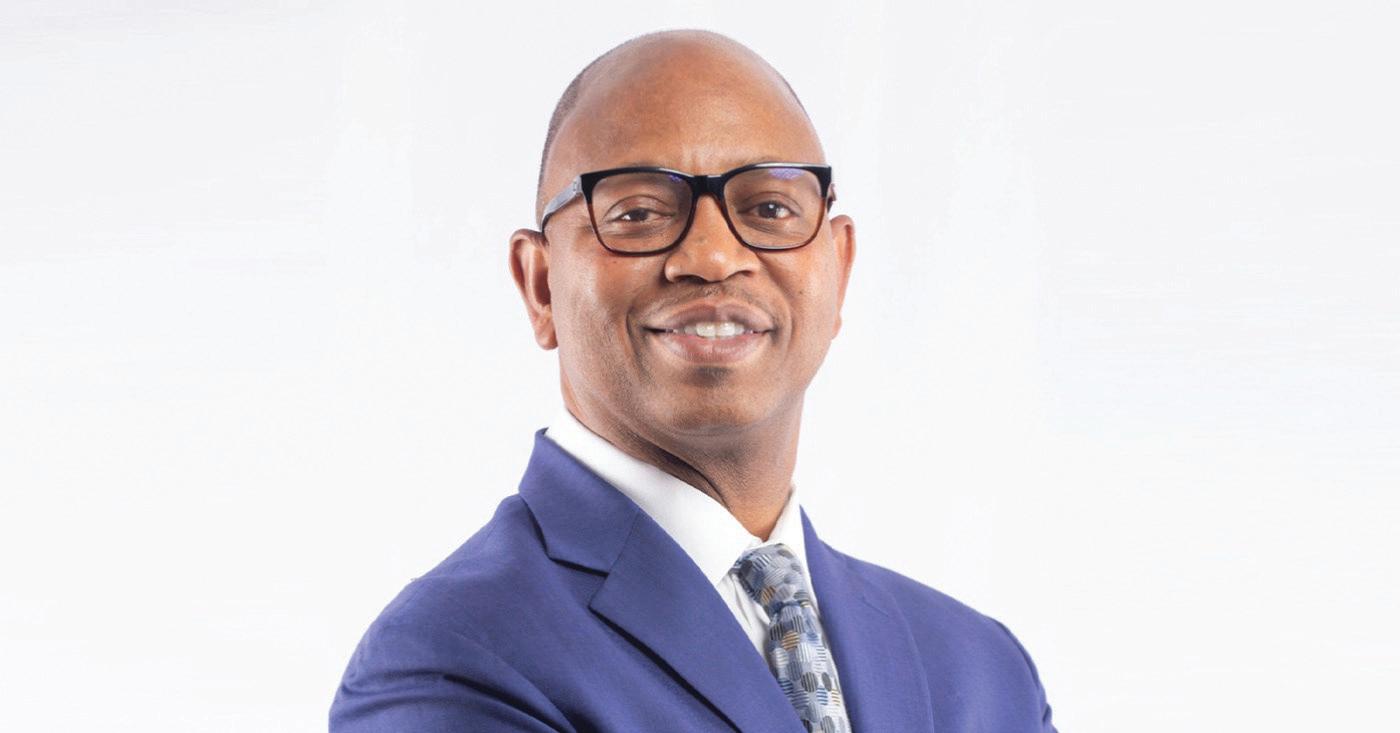
By Delegate N. Scott Phillips
As Americans celebrate the 250th anniversary of our nation’s founding, we should do so with both pride and purpose. Two hundred and fifty years is an extraordinary milestone and is worthy of reflection on the ideals of democracy, and liberty and justice for all. For African Americans, the American story has always been one of profound contradiction. We have consistently believed in the promise of this nation, even when the nation did not believe in us. So, this seminal moment in our history should not only invite celebration; it should also demand honest examination of how well America has delivered on its promise. In 1963, Dr. King, argued that the Declaration of Independence and the Constitution were a “promissory note” guaranteeing certain rights to all Americans but “has come back marked insufficient funds” for Black Americans. In 2026, we must assess the progress made since Dr. King’s dream speech.
Let’s be clear, African Americans have done our part, we have fought in every war, built businesses, advanced science, created culture, and strengthened our democracy, often while being denied its full benefits. There has been undeniable progress, but significant challenges still remain.
As Chairman of the Maryland Legislative Black Caucus, I believe this moment calls for our collective vigilance and less complacency. The distance between our founding ideals and our lived reality has narrowed since the civil rights movement, but it has not disappeared. Equity in economic and educational opportunity, access to affordable housing, fair protection under the law, and competent political representation remain unfinished business.
One of the greatest Marylanders ever, Frederick Douglass, famously challenged America to reconcile its lofty aspirational principles with its
actual treatment of Black citizens in his speech What to the Slave Is the Fourth of July? His words resonate to this day because the answer to his question remains incomplete and insufficient. Every generation inherits the responsibility to move this nation closer to its own ideals and ours is no exception.
Maryland has a lot to be proud of when it comes to the political ascension of African Americans in our state. None but the Old Line State can boast that Blacks serve as Governor, Attorney General, State Treasurer, US Senator, Mayors, and County Executives of over 62% of Maryland’s population and a legislative Black Caucus that comprises 29% of the legislature, the largest percentage in the nation. We have made meaningful investments in education, entrepreneurship, criminal justice reform, and community development.
Yet with all that has been accomplished, disparities persist and since better outcomes are
possible, we must stay committed to doing better and doing more. The reality in Maryland is that Black families continue to face significant wealth gaps. Blackowned businesses still encounter barriers to accessing capital and procurement opportunities. Black communities are disproportionately impacted by economic instability and health inequities. These are not abstract statistics; they are realities that shape the everyday lives of too many Black Marylanders. AfricanAmerican History
The timing of this year’s Independence Day reflection is especially significant as Maryland prepares for Governor Moore to convene a special legislative session on congressional redistricting. Redistricting is far more than drawing lines on a map. It determines whose communities remain whole, and whose interests are represented in the halls of power.
The Maryland Legislative Black Caucus believes that we have an obligation to ensure that African American voting strength is not diluted and that the hard-fought gains secured through generations of sacrifice are preserved. Fair representation is not about guaranteeing outcomes; it is about guaranteeing opportunity. Every Marylander deserves an equal voice in choosing those who represent them.
Our democracy is strongest when every community can participate fully and meaningfully. Protecting Black electoral influence is not a partisan objective; it is a
on page 3
Supreme Court Strikes down Birthright Citizenship Order
Supreme Court Strikes Down Birthright Citizenship Order, Advocates Link It to Voting Rights Fight
By BlackPressUSA.com
Contributing writer Clint Combs reports on the Supreme Court’s 6-3 ruling upholding birthright citizenship under the 14th Amendment, striking down Trump’s executive order. Justice Clarence Thomas dissented, arguing the amendment has been “repurposed,” while Justice Ketanji Brown Jackson warned his reasoning pits Black Americans against immigrants. Civil rights leaders, immigrant advocates and first-time voters weigh in on what the ruling means, and why many see it as connected to a larger fight over voting rights. AfricanAmerican History
On June 30, the Supreme Court struck down President Donald Trump’s executive order declaring that children born in the U.S. to parents who are in the country illegally or temporarily are not U.S. citizens. The 6-3 ruling upheld a long-
settled understanding that the 14th Amendment, adopted after the Civil War, guarantees citizenship to anyone born in the country. Justices Clarence Thomas, Samuel Alito and Neil Gorsuch dissented. In his dissent, Thomas wrote that the 14th Amendment “was designed and understood to secure equal rights for the freed blacks but has instead been
repurposed for political projects that the Reconstruction Congress did not support.”
Justice Ketanji Brown Jackson, the first Black woman to serve on the high court, warned of “an even greater threat” posed by Thomas’ dissent and what she described as the Trump administration’s bad-faith interpretation of the Constitution.
“What is more, this alternative
account pitches Black Americans against immigrants when the advocates who promoted the Fourteenth Amendment did no such thing,” Jackson wrote.
“Freed Blacks fought for the shared humanity of all people.”
Justice Brett Kavanaugh suggested in his opinion that Congress, not the courts, could decide whether to change birthright citizenship through legislation.
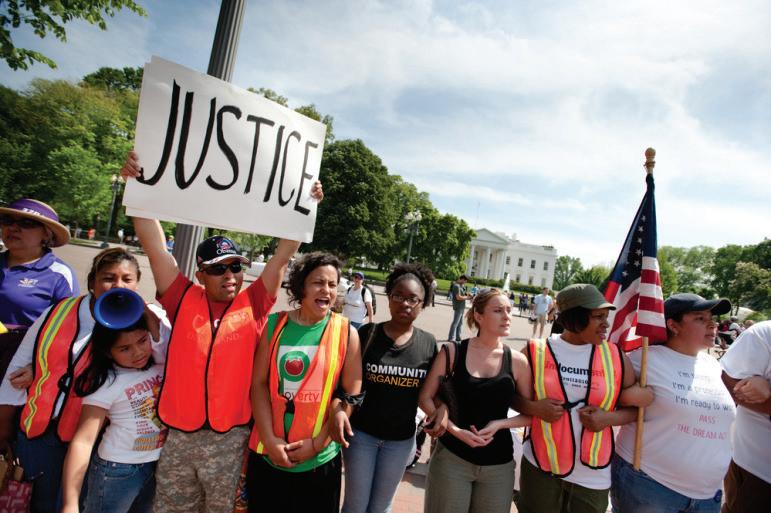
Reaction to the ruling came quickly from civil rights and immigrant advocacy groups, many of whom connected the fight over birthright citizenship to broader efforts to restrict voting rights.
Rod Adams, executive director of the New Justice Project, speaks outside Mercado Central on Lake Street in Minneapolis, June 30. New Justice Project
Supreme Court Strikes down Birthright Citizenship Order...continued
Executive Director Rod Adams said the ruling reflected a promise won through Black resistance.
AfricanAmerican History
“The 14th Amendment was never about legal language. It was a declaration that America could no longer decide who was fully human or fully American based on race or circumstances of birth,” Adams said. “That promise was purchased with Black blood, Black courage and Black resistance.”
Adams argued that Trump’s push to end birthright citizenship is connected to the SAVE Act, a restrictive voting bill that would require Americans to produce a passport or birth certificate to register to vote. Last week, Trump refused to sign a bipartisan housing affordability bill until Congress passes the SAVE Act.
“The same forces attacking birthright citizenship are attacking voting rights,” Adams said. “The same forces targeting immigrant families are attacking Black communities. The same forces trying to erase our history are trying to silence our voices at the ballot box.”
Hamsa Hussein, a Somali American rideshare driver and leader of the SEIU Local 26 Drivers Organization Committee, joined Adams after the ruling and said attacks on birthright citizenship are also attacks on workers’ rights.
“Instead of attacking migrants
who are our neighbors, we should stand up to the billionaires, the big corporations,” Hussein said.
Unidos MN Executive Director Emilia González-Avalos said efforts to end birthright citizenship amount to voter suppression.
“When they move to erase birthright citizenship, they move to erase your vote before you ever cast it, to make sure you could never hold them accountable for a mass deportation agenda tearing families from their homes right now,” González-Avalos said. “Make no mistake, this was voter suppression dressed up as immigration policy, but they miscalculated, because you are here, you are citizens, and your power is real.”
Thomas Wolf, director of democracy initiatives at the nonpartisan Brennan Center for Justice at NYU Law, said the ruling doesn’t offset the damage he believes the court has done this term.
“The Fourteenth Amendment guaranteed citizenship to everyone born here over 150 years ago. The Supreme Court affirmed that 20 years later in Wong Kim Ark,” Wolf said. “Meanwhile, the court has been on an anti-democratic rampage. In just the past few weeks alone, the court further undermined the Voting Rights Act, encouraged more aggressive partisan
Ballot Set for California November Election After Deal Kills Disputed Tax Measure
Antonio Ray Harvey | California Black Media
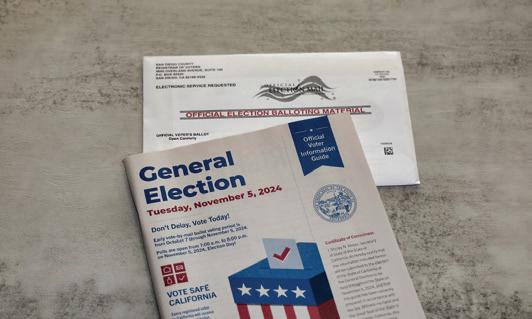
California voters will decide 14 statewide ballot measures on Nov. 3 after state leaders struck a last-minute compromise that removed one of the election's most contentious proposals — a measure that would have made it significantly harder for cities and counties to raise money for local services.
The agreement, reached just days before the deadline to qualify measures for the ballot, ended what had been shaping up to be a costly statewide campaign over local taxes. In exchange for withdrawing the proposed Local Taxpayer Protection Act, lawmakers approved a constitutional amendment that preserves California's longstanding two-thirds voter approval requirement for future local special taxes while avoiding broader restrictions that critics said could have limited local governments' ability to fund public safety, housing, transportation and other community services.
On June 25, California
Secretary of State Shirley Weber announced that the proponents of the initiative titled "Limits Ability of Voters to Raise Revenues for Local Government Services" formally withdrew the measure
before it qualified for the Nov. 3 ballot.
The proposal, backed by Jon Coupal and the Howard Jarvis Taxpayers Association, sought to tighten California's local tax rules in several ways. Among its provisions, it would have required future citizen-sponsored local special taxes to receive approval from two-thirds of voters and would have restricted certain local real estate transfer taxes adopted in recent years. Supporters argued the measure would strengthen taxpayer protections, while opponents warned it would make it more difficult for local governments to pay for essential public services. Instead of allowing the initiative to proceed to the ballot, Gov. Gavin Newsom and legislative leaders negotiated a compromise centered on Assembly Constitutional Amendment (ACA) 22. If approved by voters, ACA 22 would write into the California Constitution a requirement that all future local special taxes — whether placed before voters by elected officials or through citizen initiatives — receive twothirds voter approval. Supporters said the proposal provides greater clarity and consistency in state law while avoiding broader changes contained in the withdrawn initiative.
As part of the agreement, lawmakers also removed ACA 13 from the November ballot.
Delegate N. Scott Phillips is the Chairman of the Legislative Black Caucus of Maryland.
Credit: Clint Combs/MSR
Thursday, July 9, 2026
Short thousands of bilingual teachers, California schools turn to high school students
ZAIDEE STAVELY
several classes and 20 hours of student teaching, and can cost anywhere from $1,500 to $4,000 on top of a college degree.
Short thousands of bilingual teachers, California schools turn to high school students...continued to do!’ ” Sawyer said.
‘A drop of water in the sea’
close to where they live,” said Santibañez. “So when the teacher preparation places aren’t really building capacity in a region that has tremendous growth of multilingual learners, it’s going to create that sort of access or needs gap.”
Fewer established bilingual teachers in an area also means there are fewer teachers who can serve as mentors for student teachers, she said.
a UCLA professor and author of two recent reports on bilingual teacher preparation.
The demand for bilingual teachers
A bilingual teacher in Oak Grove School District in San Jose. Photo courtesy of SEAL California’s audacious goal of having half of all K-12 students enrolled in bilingual education programs by 2030 has encountered one big stumbling block — there aren’t enough qualified bilingual teachers.
To help remedy that, a $10 million grant tucked in the state budget aims to help school districts recruit high school students as future bilingual teachers.
The funding in the education budget bill that passed Thursday allows schools to partner with community colleges and universities to help students obtain a teaching credential and the bilingual authorization required to teach English learners.
Assemblymember David Alvarez, D-Chula Vista, said the idea for the legislation came in part from school districts that communicated about their struggles to find qualified bilingual teachers.
“I kept hearing from districts and educators that bilingual students want to become teachers but run into a fragmented system with no clear path through high school, community college, university and credentialing,” said Alvarez.
Researchers and coordinators of bilingual teacher preparation programs applaud the new grant program, but say it’s not nearly enough to meet the state’s needs.
“Grant funding is important, but to me it just doesn’t feel like it’s going to be enough, given our size and also the size of our dreams and our ambitions as a state,” said Lucrecia Santibañez,
California set a bold vision eight years ago to enroll half of all K-12 students in programs that help them become proficient in two or more languages by 2030.
But to reach that goal in the next four years, California will need an estimated 6,000 more bilingual teachers.
REPORTS ON BILINGUAL TEACHER PREPARATION
From Getting Down to Facts (Stanford University)
From UCLA Center for the Transformation of Schools
From California Association of Bilingual Teacher Education and Californians Together
Several recent reports paint a picture of California’s bilingual teacher preparation as an unfinished quilt filled with gaps, rips and uneven stitching. Not enough bilingual teacher preparation programs exist, the reports found, and those that do exist are too far from the districts with the highest demand for bilingual teachers. In addition, bilingual students interested in becoming teachers are often stymied by the extra cost to finish both a teaching credential and a bilingual authorization — which requires
California has more than doubled the number of bilingual authorizations issued to teachers annually, from 617 in 2014-15 to a record 1,370 in 2023-24, according to the Commission on Teacher Credentialing. Yet Santibañez and other UCLA researchers found that districts issue hundreds of emergency bilingual teacher permits each year for teachers who are not fully qualified to teach bilingual instruction.
The demand for bilingual teachers is not the same everywhere. While some districts have developed thriving dual language immersion programs and found ways to increase their numbers of bilingual teachers, many others lack the teachers and the funding to build these types of programs.
“We’ve worked with districts that have had to close programs they started, and they just couldn’t staff it, and the parents were very disappointed, but the district didn’t want to have long-term subs running their dual language program, which is fair,” said Anya Hurwitz, executive director of SEAL, a nonprofit organization that provides bilingual curriculum training for school districts. “There are other districts that have built more robust relationships with teacher prep programs, but those are the early adopters or the outliers, not the norm.”
Bilingual teaching deserts
The areas in California with the greatest need of bilingual teachers are also the areas where preparation programs are scarce or underfunded, UCLA’s Santibañez said. Imperial County on the Mexico border, as well as Kings and Tulare counties in the Central Valley all have large English learner populations but have no preparation programs nearby.
“We know from the research that teachers and students in college who decide to become teachers like to stay
“We don’t necessarily see somebody from San Diego or even from L.A. making the twohour trip to Indio or Coachella or Calexico or wherever to do those mentoring sessions. So it is important to grow the capacity where the capacity is needed,” Santibañez said.
Starting in high school
The new legislation responds to some of the researchers’ recommendations. For example, school districts will be given priority for grants if they have a high percentage of students who are English learners and not enough teacher preparation programs.
Sparking interest in bilingual teaching among high schoolers, as the new grants would do, is crucial, said Adam Sawyer, director of the bilingual authorization program at California State University, Bakersfield. He said his university helps as many as 30 credentialed teachers get their bilingual authorization every year, and also has a bilingual teaching residency established with local elementary school districts that enlists about 10 to 15 student teachers per year.
Sawyer said CSU Bakersfield is working to establish an undergraduate pathway for prospective teachers and a dual-enrollment course for high schoolers, which will start next year.
“I have always thought this would be a wonderful way to start tapping into high school juniors and seniors that may not have thought about bilingual teaching, but may start seeing that as, ‘Hey, that might be something I want
continued in next 2 columns
Canada’s Impact On The Global Black Power Movement Revealed In “True North: Canadian Myths And Black Power” Premiering On PBS’S Independent Lens And Streaming July 6
How 1960s Montreal Helped Shape the Global Movement for Black Liberation
(San Francisco, CA) — Revealing the largely untold history of anti-Black racism in Canada, “True North: Canadian Myths and Black Power” premieres Monday on PBS’s INDEPENDENT LENS. Through historic archives and the voices of those who lived through 1960s Montreal, “True North” explores pivotal events that impacted the global movement for Black liberation. Directed by Michèle Stephenson, the film is now available on the PBS app and PBS Documentaries YouTube Channel. In 1968, the war in Vietnam
was escalating, African nationstates were decolonizing, and revolutionary activity was increasing in the Caribbean. Civil unrest reverberated throughout the Western Hemisphere. In Montreal, protests were led by taxi drivers, teachers, and police officers. During this politically charged climate, a group of students converged, hailing from Jamaica, Haiti, Trinidad, and elsewhere in Canada. Their anti-colonial ideas merged with Montreal's Black communities’ long-standing spirit of social change. As student protests ignited the Sir George Williams
Affair at one of the city’s anglophone universities, Black youth faced violent repression, unfolding a powerful chapter of the global Black Power era.
Featuring never-before-seen footage and centering the voices of Black students and activists who lived through these events, “True North” weaves intimate personal accounts with historical analysis. The film illuminates a pivotal chapter in the Black Power movement and its lasting impact on the global struggle for Black liberation.
“Celebrating America’s 250th anniversary means acknowledging our history, and sharing the stories of people committed to the idea of equality,” said Lois Vossen, INDEPENDENT LENS
Founding Executive Producer.
“True North shines light on a critical chapter of the Black Civil Rights movement and helps us understand current events, including how activism took hold on college campuses.”
“True North” also revisits the convergence of Black liberation movements at the Congress of Black Writers, held at McGill University in October 1968. Widely regarded as the largest Black Power conference held
Still, the new funding, which will be distributed in grants of up to $600,000, is not a lot to address the need for bilingual teachers, educators say.
“It’s not a whole lot of money to do great things,” said Eduardo Muñoz-Muñoz, San José State University professor and co-author of a report by the California Association of Bilingual Teacher Education and Californians Together. “It’s a drop of water in the sea.” Researchers have called for California to collect and publish data on the number of dual language immersion programs in the state, how many students they serve and the number of teachers with bilingual authorizations working in them.
More data would help the state pinpoint where to fund more bilingual teacher preparation programs, Muñoz-Muñoz said. Santibañez and MuñozMuñoz also recommend the state offer more financial aid for students working on bilingual authorizations on top of their teaching credentials, a stipend for students to complete student teaching in a bilingual classroom, or bonuses for teachers who have bilingual authorizations, which not all districts provide.
“There’s just got to be an incentive,” Santibañez said.
“You’re a college student, right? You’re getting your teaching credential, and you speak Spanish because you’re a heritage language speaker. So getting a bilingual authorization seems like something like a slam dunk, right? But you have to pay for it.”
outside the United States, it featured speakers including Stokely Carmichael (a.k.a. Kwame Ture), Alvin Poussaint, James Forman, and C.L.R. James. These titans of thought and politics discussed the meaning of Black Power and the challenges faced by communities across the Black diaspora.
Montreal’s Congress of Black Writers later fed into and influenced the Black student leaders of the Sir George Williams Affair. In 1969, incensed by a racial incident involving a white faculty member, over 400 students and activists occupied the school’s computer labs in protest. What ensued was a violent reaction by the Canadian government and Montreal's police against Black youth seeking justice.
Black Public Media provided critical funding for the film, which was produced by Leslie Norville.
“True North: Canadian Myths and Black Power” will premiere on PBS’s INDEPENDENT LENS on July 6 (check local listings) and will be available to stream on the PBS app and PBS Documentaries YouTube Channel.
Supreme Court Strikes down Birthright Citizenship Order...continued from page 1
gerrymandering, dangerously expanded presidential power over federal agencies, and further depleted protections for immigrants.”
Emily Rodriguez, a firstgeneration American, speaks outside Mercado Central on Lake Street in Minneapolis, June 30.
Credit: Clint Combs/MSR
For some young people, the ruling is personal. Emily Rodriguez, a first-generation American born prematurely with a weakened immune system, said her parents came to the U.S. seeking a better life after leaving behind poverty and violence.
“Having health insurance meant that we could go to the doctor, get medication and get the care that we needed,” Rodriguez said.
Rodriguez, 18 and collegebound, said she was devastated when she learned Trump had signed the executive order denying birthright citizenship to people like her. She’ll carry that memory with her when she votes for the first time this year.
“That is something that I don’t
think is a given,” Rodriguez said. “My voice matters, because this country recognizes me as an American. Every young person deserves that same certainty about where they belong and what future they can build.” Ali Bella, who turns 18 this October, will also be eligible to vote for the first time in the midterm elections.
“A child doesn’t choose where they’re born. A child does not choose where their parents were born. So why should any child have their rights taken away because of circumstances they never chose,” Bella said. “I’ll be able to vote. Imagine taking that voice away from millions of people simply because of who their parents are.”
For more information on Trump’s proposed Birthright Citizenship Executive Order, visit www.naacpldf.org/ case-issue/know-your-rightsbirthright-citizenship/. Clint Combs welcomes reader responses at combs0284@gmail. com.
The San Bernardino American News was established May 6, 1969. A legally adjudicated newspaper of general circulation on September 30, 1971, case number 15313 by the Superior Court of San Bernardino County. Our product is a local news publication, The San Bernardino American News, that is made available through both print and digital versions. We offer a wide range of content including local news, features, editorials, and columns that focus on the interests and concerns of the minority communities. Our mission at The San Bernardino American News is to provide accurate, compelling, and insightful content that speaks directly to the experiences and interests of minority communities in the County of San Bernardino, Riverside and Los Angeles. We aim to be a trusted voice and platform for these communities, ensuring their stories are told and their issues brought to light. Our strategies involve a combination of robust content creation, digital and print media marketing, and a strong commitment to community engagement. By offering a range of monetization methods, we ensure our services remain accessible and valuable to our readership, while supporting the sustainability of our operations. News releases appearing in the San Bernardino AMERICAN News do not necessarily express the policy nor the opinion of the publishers. The San Bernardino AMERICAN News reserves the right to edit or rewrite all news releases.
A still from "True North"
July 9, 2026
IN MEMORIAM: Tony Brown Gave Black America an Uncompromising Voice
By Crusader Staff
of Tony Brown's Journal/Facebook)
For nearly four decades, millions of Americans welcomed Tony Brown into their homes each week. But Brown was never interested in simply hosting another television program. He wanted to transform the way Black America saw itself—and the way the nation saw Black America.
Brown, the pioneering journalist, broadcaster, educator and civil rights advocate, died June 17, 2026, at his home in Newport News, Virginia. He was 93. His death marked the end of one of the most influential careers in Black media history, but his impact continues to resonate throughout journalism, public broadcasting and higher education.
Long before diversity became a corporate buzzword or television executives embraced inclusive programming, Brown fought to place Black voices, Black issues and Black leadership at the center of the national conversation.
His landmark television program, “Tony Brown’s Journal,” became the longestrunning Black-produced public affairs television series in American history. Airing nationally for nearly 40 years, the program tackled race, politics, economics, education, criminal justice and culture with an honesty that was rare on American television.
Brown interviewed more than 1,000 newsmakers during his career, including the Rev. Jesse Jackson, Lena Horne, Angela Davis, Sammy Davis Jr., President Ronald Reagan
and countless scholars, activists, entertainers and elected officials. Yet he often said the most important question guiding every broadcast was remarkably simple:
“Will it help Black people?”
That philosophy distinguished Brown from many of his contemporaries.
Rather than chasing celebrity interviews for ratings alone, Brown viewed television as an instrument of empowerment. He believed media could either reinforce damaging stereotypes or become a powerful force for education, economic advancement and selfdetermination.
His commitment to changing media was rooted in personal experience.
Born William Anthony Brown on April 11, 1933, in Charleston, West Virginia, Brown overcame poverty and segregation before serving in the U.S. Army and earning degrees from Wayne State University. After working as a social worker and journalist in Detroit, he entered public television at a time when African Americans were virtually invisible in television newsrooms and executive offices.
Brown never forgot those early barriers.
Reflecting years later on his career, he recalled that when he entered broadcasting there were virtually no Black producers or on-air personalities.
“When I started out in television, television stations
COMMENTARY: America Hangs a Help Wanted Sign: “FOR U.S. CITIZENSHIP – WHITES ONLY!”
By BlackPressUSA Newswire
DETROIT – Words from Emma Lazarus’ poem The New Colossus, “Give me your tired, your poor, your huddled masses yearning to breathe free, the wretched refuse of your teeming shore, send these, the homeless, tempest-tost to me, I lift my lamp by the golden door,” seem to have been etched from the bronze plaque of the Statue of Liberty. It should now read, “Don’t give me your tired, your huddled masses, who don’t deserve to breathe free, they lack the pure blood like you and me, we don’t want you here, if you don’t look like us we don’t want you near.”
The United States Supreme Court has made it very clear that it supports the racist policies and agenda of the Trump Administration to deport millions of Black, brown, and yellow folks who don’t fit the image of President Donald Trump and Stephen Miller.
had almost zero producers, zero Black faces on the air,” Brown said in an interview reflecting on his career. “I never dreamed I would ever work in television.”
He remembered approaching a Detroit television station as a young man after being encouraged by a college friend to pursue broadcasting. Rather than receiving encouragement, Brown was laughed at by a station executive who considered the idea of a Black television host unimaginable.
Instead of accepting rejection, Brown helped change the industry.
After producing Detroit public television’s first program focused on African Americans, he was recruited in 1970 to lead Black Journal, the groundbreaking national public affairs program produced by New York public television station WNET.
Under Brown’s leadership, the program grew in influence before eventually becoming Tony Brown’s Journal in 1977.
Week after week, Brown challenged viewers to confront difficult conversations about race, inequality, economics and public policy. His interviews often generated controversy because they addressed issues many national programs ignored altogether.
Brown also understood that representation behind the camera mattered as much as representation in front of it.
He consistently advocated for more Black producers, writers, executives and decision-makers throughout the television industry. He argued that authentic storytelling required diverse leadership in newsrooms and production offices.
His work extended beyond broadcasting.
Brown served as the founding dean of the School of Communications at Howard University before later becoming the inaugural dean of the Scripps Howard School of Journalism and Communications at Hampton University, where he helped mentor a new generation of journalists committed to public service and ethical reporting.
He also wrote books, syndicated a newspaper column and hosted radio programs
while encouraging Black entrepreneurship and economic independence.
Not everyone agreed with Brown’s evolving political views or philosophy. Throughout his career, he challenged conventional thinking across the political spectrum, drawing criticism from both liberals and conservatives. Yet even critics acknowledged his willingness to ask difficult questions and spark conversations that mainstream media often avoided.
Perhaps Brown’s greatest legacy lies in the doors he helped open.
Today’s television landscape— with Black news anchors, network executives, producers, documentary filmmakers and nationally recognized journalists—is dramatically different from the one Brown entered more than six decades ago.
He often credited public television, particularly WNET, for giving him an opportunity when few others would.
“It helped shape my life in a direction nothing else was prepared to do,” Brown said while reflecting on the station’s commitment to diversity and public service.
For generations of viewers, however, Brown did far more than shape his own career.
He proved that Black public affairs journalism could command a national audience without compromising its mission. He demonstrated that television could educate as well as entertain. And he reminded America that telling Black stories truthfully was not a niche endeavor—it was an essential part of documenting the nation’s history.
In an era when conversations about media representation continue to evolve, Tony Brown’s career serves as a reminder that progress often begins with those willing to challenge the status quo.
His voice may be gone, but the platform he built—and the journalists he inspired— continue carrying forward the conversation he began decades ago.
Based on reporting by Chicago Crusader.
Ballot Set for California November Election After Deal Kills Disputed Tax Measure... continued from page 1
OP-ED: 250 Years of America – Progress on the Promise?...continued from page 1
democratic imperative rooted in the fundamental principle that every vote should carry equal weight. As legal and political challenges continue to reshape the landscape of voting rights across the country, Maryland must remain committed to protecting the inclusive representation that has been fought for generation after generation.
The Maryland Legislative Black Caucus will continue to advocate for policies that expand opportunity, protect civil rights, and strengthen our democracy. We recognize that representation is only the beginning. True progress will be evident in positive measurable outcomes in economic mobility, educational achievement, better public safety, and fair access to justice for every Marylander.
As we gather with family and friends this Fourth of July, let us celebrate how far America has come but never denying how far we still must go. Patriotism is not measured solely by our willingness to celebrate our nation’s achievements, but also
by our commitment to perfecting our imperfect union. America’s 250th birthday should inspire us to renew the fight for the promise of our democracy. We owe it to those who fought for but never lived long enough to enjoy the blessings of freedom and to the next generation who should inherit a better America than their foreparents.
That is the work of the Maryland Legislative Black Caucus and all people of good conscience who lead while serving as educators, mavens of business and industry, faith leaders and community activists; and this task before us cannot be lost amid celebratory parades, commemorative speeches and patriotic celebrations from the city to the shore. It requires us to redouble our persistence, and principled leadership in the pursuit of America’s promise.
AfricanAmerican History Delegate N. Scott Phillips is the Chairman of the Legislative Black Caucus of Maryland.
GeographicReference
They seem to believe in only the purest, most opaque form of whiteness in skin tone and ideological perspective.
The 6-3 ruling gives this regime the right to end the Temporary Protected Status (TPS) of those who have been living in the U.S. for decades, who escaped or migrated to this country from wars, catastrophes, and conditions of violence.
Trump and Miller got what they have always been seeking. Trump has called it, “The greatest deportation program in American history.” Stephen Miller, whose parents and other family members, along with the three wives of Donald Trump and their families, immigrated to this country seeking asylum, while reaching for a green card.
This is one of the starkest examples of white supremacist ideology and racial animus for those who are not white AngloSaxon and Protestant. Where are the so-called Christian evangelicals? There is nothing Christlike, loving, caring, or humane about a policy that denigrates a people based on race, color, language or culture.
The Word is, “I was a stranger and you took me in,” Matthew
ACA 13 would have required any future constitutional amendment proposed through the initiative process to pass by the same vote threshold it sought to establish. Critics called the proposal a "poison pill," arguing it was designed to discourage the Howard Jarvis-backed initiative from advancing.
State Sen. Roger Niello (R-Fair Oaks), vice chair of the Senate Budget Committee, welcomed the compromise.
A historic agreement that protects California taxpayers while preserving local government's ability to fund essential services,” he said.
Niello said the agreement avoids a costly and divisive ballot campaign while restoring the twothirds voter approval requirement for future local special taxes.
The compromise also drew praise from legislative leaders, who said it protects both taxpayer safeguards and the ability of local governments to finance essential services without years of legal uncertainty. Senate President pro Tempore Monique Limón (D-Santa Barbara) said the agreement provides voters with clear constitutional rules while helping communities maintain reliable funding for schools, emergency response and infrastructure.
With ACA 13 officially off the November ballot, Weber
announced late week that 14 other statewide measures have qualified. Five of them were referred by the Legislature and nine through the initiative process.
“Initiatives are eligible to qualify for the ballot after proponents collect and submit valid petition signatures,” Weber's office said. “Initiative statutes require 546,651 valid signatures and initiative constitutional amendments require 874,641 valid signatures. The signatures are collected by the proponents and submitted to county elections officials, who verify them through either a random sample or a full signature check.”
Among the legislative measures headed to voters are several proposals expected to draw broad public interest.
One of them is Assembly Constitutional Amendment (ACA) 20, authored by Assemblymember Jesse Gabriel (D-Encino). The measure would raise the constitutional cap on deposits into California's Budget Stabilization Account, commonly known as the rainyday fund, from 10% to 20% of annual General Fund revenues. The proposal was certified by the Secretary of State to appear on the Nov. 3, 2026, statewide ballot as Proposition 2.
Gov. Gavin Newsom has sworn in Tomiquia Moss as secretary of the newly established California Housing and Homelessness Agency, placing a longtime housing official at the helm of California's efforts to expand affordable housing, reduce homelessness and coordinate housing policy across state government.
Gov. Newsom Swears in Tomiquia Moss as Head of California Housing and Homelessness Agency as secretary of the Business, Consumer Services and Housing Agency, said she plans to build a more coordinated and accountable housing system. Before joining the Newsom administration, Moss spent more than two decades in nonprofit and public service leadership, including as founder and CEO of All Home, CEO of Hamilton Families, executive director of San Francisco's HOPE SF Initiative, and chief of staff to the mayor of Oakland.
The appointment comes as Newsom implements the 2026-27 state budget, which funds the new agency, and a package of housing finance reforms, including the Veterans and Affordable Housing Bond Act of 2026. The administration said the measures are intended to accelerate housing construction, preserve affordable homes, expand homeownership opportunities for veterans and middle- and lowerincome households, and increase supportive housing for people experiencing homelessness.
“I'm proud to appoint Tomiquia Moss to lead the California Housing and Homelessness Agency,” said Newsom on June 30. “Tomiquia is a proven leader who understands that housing is foundational to opportunity, dignity, and economic security. We created this agency because California needed a single, coordinated strategy to confront homelessness, expand housing, and protect the rights of every Californian.” Newsom said California has made progress through “historic investments and an all-hands-ondeck approach" but said the work is far from complete. He added that Moss has “the experience, the grit, and the vision to build on that momentum and drive the next phase of this work.” Moss, who previously served
“As we expand opportunity, I'm committed to protecting the civil rights of every Californian while accelerating housing production and strengthening our homelessness response,” said Moss. “I look forward to working with the Governor, the Legislature, and local partners to deliver stability, fairness, and dignity across our communities.”
According to the governor's office, California has increased annual residential construction by 59% since 2018, with about 111,000 homes built in 2024. The administration also said the state recorded its largest reduction in unsheltered homelessness in 16 years and a 2.8% decline in overall homelessness.
The California Housing and Homelessness Agency will oversee the Department of Housing and Community Development, the California Housing Finance Agency, the California Interagency Council on Homelessness, the Housing Development and Finance Committee and the Civil Rights Department as part of a longterm strategy to address the state's housing shortage and homelessness crisis.
Governor Newsom, Cabinet Secretary Nani Coloretti, and newly sworn-in California Housing and Homelessness Agency Secretary Tomiquia Moss. Photo courtesy of Gov. Newsom’s office.
Political Playback: California Capitol News You Might Have Missed
Bo Tefu and Antonio Ray Harvey | California Black Media
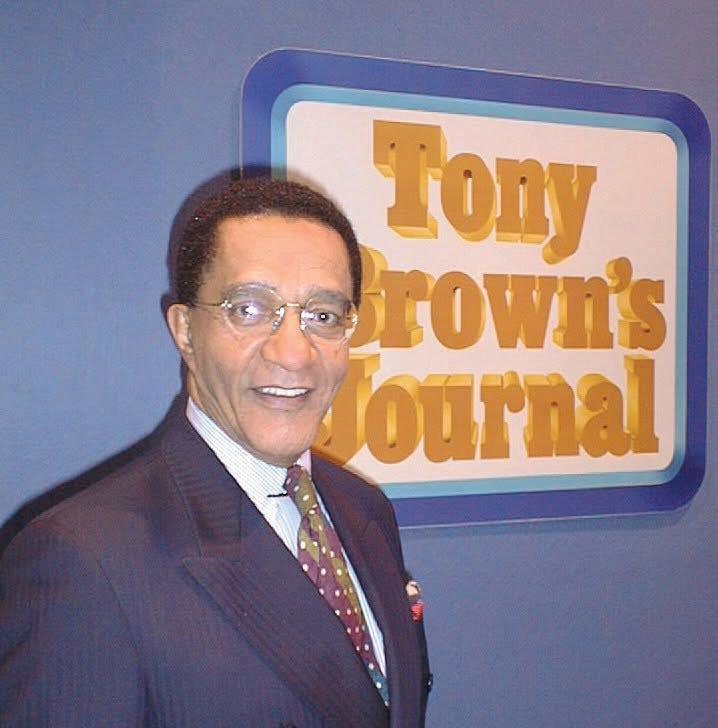
Tony Brown poses in front of the Tony Brown's Journal logo. Brown, who died June 17 at age 93, transformed Black public affairs television and influenced generations of journalists through his groundbreaking broadcast career. — (Photo courtesy
Photo courtesy of Detroit NAACP
Thursday, July 9, 2026
Black Maternal Health: a 360-Degree Look at Black Midwives
By BlackPressUSA Newswire
Black midwives are going beyond the limits of conventional care to help communities confront the maternal healthcare crisis.
The persistent U.S. maternal healthcare crisis is increasingly putting midwives in the spotlight as being part of the all-handson-deck approach to reducing the number of women having pregnancy related complications that too often include death.
Dr. Kaytura Felix spent more than two decades studying minority health, structural racism and the inequities that have left Black Americans with some of the nation’s worst health outcomes. But as the Black maternal mortality crisis deepened, the Johns Hopkins Bloomberg School of Public Health physician and researcher began asking a different question: What was the Black community already doing to save Black mothers?
That search led her to Black midwives.
Now, Felix is leading the Black Birthing Futures study, a multi-city research project examining how Black midwives are addressing the maternal health crisis through community-based care that extends beyond pregnancy to families, neighborhoods and the social conditions that shape health. Her work also explores how poverty, racism and climate change intersect to influence maternal outcomes — and what policymakers can learn from the people already doing the work.
The findings arrive as the United States continues to grapple with persistently high maternal mortality rates, particularly
among Black women.
According to the American Midwifery Certification Board’s 2024 report, just over 14,500 certified midwives were active as of January 2024. More than 8 in 10 identified themselves as white and almost all of them listed English as their primary language. The average age was around 48,, with nearly 15% age 65 or older. The number of new midwives has increased since 2020 but fewer than 10% are Black.
The most commonly cited barriers to entering the field were the direct cost of midwifery education, systemic and experienced racism within the profession, and the cost of related expenses. But a vast majority of midwives said they chose the profession to help address the need for culturally sensitive care and help reduce race-based health disparities.
There’s strong evidence that Black midwives are more likely to adopt community-based approaches that institution-driven medical care, like hospitals and traditional obstetrics, tends to overlook.
Felix is a Distinguished Scholar at the Johns Hopkins Bloomberg School of Public Health in the Department of Health Policy and Management.
The following has been edited for length and clarity.
WIB: How did Black maternal health become the focus of your practice?
Kaytura Felix: I’ve focused on minority health, health disparities, and structural racism for more than 20 years. In 2023, I shifted my attention from
medical racism itself to what the community was doing about it. My simple question was: what is the Black community doing about the Black maternal health crisis?
I spoke to 70 experts, just picking up the telephone. Person after person said, ‘Look to Black community midwives.’ I’m a Black mother and a physician — I had never thought much about midwifery. I thought it was something from another era, something our forebears did because they had no choice. Then one Black midwife offered to let me shadow her postpartum visits, and what I saw changed everything.
The 10-day postpartum visit took place entirely in the new mother’s bedroom. The midwife came to her — not the other way around — because postpartum is an extraordinarily sensitive time and everything needs to wrap around the mother. The eight-week visit had a different energy: it was about reentry into the world. We started in the backyard, went for a 10-minute walk, then came back inside. Three settings, one visit.
What struck me was that the midwife’s role extended beyond stabilizing mother and baby. She had her eyes on the whole family — and we know the majority of maternal deaths occur during the postpartum period.
WIB: How did your observations affect your research?
Kaytura Felix: My team designed a study to understand the Black midwife’s experience: what they do, the impact they have on families and communities, and what supports or hinders their practice. We interviewed midwives, clients, families, and collaborators across five cities — Jacksonville, Florida; Philadelphia, Pennsylvania; Kansas City, Missouri; Los Angeles; and Honolulu, Hawaii.
One consistent finding: Black midwives provide restorative, holistic care — not just for the pregnant person, but for the entire family. Conventional Western care centers the individual; these midwives operate from
the premise that pregnancy is a family event.
WIB: What issues are driving the maternal healthcare crisis in the U.S., and what does it mean to approach fixing it from a community perspective, as opposed to an institution-driven perspective?
Kaytura Felix: Science is beginning to understand that pregnancy is a stress test. Many Black Americans live in historically underinvested communities — more pollution, financial precarity, limited transportation and education. We enter pregnancy already weathered. Weathering is when the body runs on overdrive to stabilize itself against constant challenge — an acceleration of aging. The body is at capacity before the pregnancy even begins.
WIB: What is actually saving the lives of Black mothers right now?
Felix: Two things. First, doulas in hospitals — where most U.S. births happen. Doulas reduce stress on the mother, distribute the load, and help catch complications early. Research shows they increase satisfaction with care and reduce C-section rates.
Second, community birth — in birth centers and at home. In the first episode of Deep Care, we meet a nurse named Brittany Murray who had two traumatic hospital births. Through a Facebook group, someone connected her with a midwife who said, ‘I will take this journey with you.’ The midwife worked with a maternal-fetal specialist, addressed Brittany’s overall health, and supported a home birth after two cesarean sections. Two traumatic births — and she had a joyful, triumphant one. You can meet Brittany in episode one of the Deep Care podcast on Spotify.
WIB: Did your research identify the impact of issues such as mental health, specifically postpartum depression or other potential complications that arise
continued on page 6
COMMENTARY: America Hangs a Help Wanted Sign: “FOR U.S. CITIZENSHIP – WHITES ONLY!”...continued from page 3
25:35. More than 350,000 Haitians and 6,000 Syrians stand to be uprooted by this ruling. The holders of Haitian TPS status generate $5.9 billion dollars annually to the U.S economy and contribute $1.5 billion in federal, state and local taxes. Among Haitian TPS workers are 22,000 cooks and servers, 7,000 factory workers, 8,000 landscapers and hospitality staff, 3,000 school assistants, 13,000 nursing assistants, 14,000 retail staff, 12,000 delivery and taxi drivers, 15,000 agricultural workers, 8,000 caregivers, and 58,000 home health aides.
The American Immigration Council also reports that 112,000 health care workers in America are Haitian born.
The Center for Economic and Policy Research notes that over 21% of Haitian Americans work in the healthcare industry.
Many Haitians, over 520,000, reside in South Florida. In the state of New York, particularly Brooklyn and Queens, there are over 185,000.
In one of the most hypocritical rulings of the court, Justice Samuel Alito, in his majority opinion wrote, “The plaintiffs were unlikely to prove that race was a motivating factor in the decision to terminate Haiti’s TPS designation and that the administration’s stated policy views could rest on race neutral justifications.”
The President has openly and clearly referred to Haiti as a “shithole country” and falsely accused the Haitians of Springfield,
Ohio of “eating cats and dogs.”
He has accused them of, “Poisoning the blood of our country.” Katie Miller, wife of Stephen Miller, architect of this Policy of Deportation, posted on X a clip of Trump’s September 2024 Presidential debate, “Great news for the dogs and cats of Springfield.” This same court in an earlier decision in September 2025, Vasquez Perdomo v. Noem, by a 6-3 margin ruled that ICE agents could use race or language in the work they do or where they happen to be demanding their papers in Los Angeles in order to stop and detain suspected immigrants.
What a contradiction.
A second part of this ruling rests on the “metering” or turn back policy at the border. Justice Alito indicates an alien standing in line does not arrive in the U.S. simply by attempting and failing to set foot in this country. GeographicReference
The others can be turned back.
At the same time the U.S. is planning to send legal immigrants back to Haiti, there is a travel advisory for Americans warning them not to visit Haiti. It states, “Do not travel to Haiti due to the risk of crime, terrorism, kidnapping, unrest, and limited health care.” Haiti has been under a national state of emergency since March 2024, with a level 4 travel advisory.
This is the highest level of
personal risk when visiting a particular country.
Even more mind boggling is that Supreme Court Justice Amy Coney Barrett, who voted to support this anti-immigrant ruling, has adopted two Haitian children.
One must wonder what these children of Haitian parents, now living in the United States, feel about the door slammed on others striving for their freedom and opportunity?
Has America not learned the lesson of the M.S. St. Louis of 1939?
The ship departed from Hamburg, Germany to escape the violence of the Nazi’s carrying 937 passengers. Most of them were Jewish refugees.
They eventually sailed to America arriving near the Florida coastline.
They were refused entry to the U.S. by President Franklin D. Roosevelt and were forced back to Europe.
One year later in May 1940, the Nazi’s invaded Europe.
Tragically, 254 of the original passengers were murdered in the Holocaust, which they were attempting to escape.
Today, white South African beneficiaries of the white supremacist system of Apartheid are being welcomed in the United States with open arms.
Black South Africans cannot come in.
Vegan Wine Tutorial
By Wanda Haynes Certified-Sommelier
Vegans avoid all meat, dairy, eggs, wool, feathers, leather, fur, honey, seafood, fish, and animalderived materials. This includes products tested on animals, and places that use animals for entertainment. The wine they drink must foster their diet and beliefs.
The term “fining” is a process of adding substances to rid the wine of solids to make it clear. It is often traditional fining agents that can make a wine unsuitable for vegans.
Gelatin, fiber of crustation shells, fish bladders, and fish oils can be used to refine wine. Egg whites or casein which is a protein in dairy milk can be used to remove tiny particles in a wine that cannot be removed by traditional filtration.
Animal products used in wine production may include beeswax, used to seal bottles, and agglomerated corks is a milkbased glue. These items aren’t on the wine label, and the USA or Europe aren’t currently required to list them.
What is a vegan wine?
Vegan wine is a style of wine that does not involve the use of animal-derived products or byproducts during the winemaking process.
Carbon, bentonite clay, limestone, kaolin clay, plant casein, silica gel, and vegetable plaques are appropriate in fining vegan wine.
Companies that produce vegan wine
Avaline, known for organic labeled wines (red, white, rosé, and sparkling), all of which are 100% vegan.
Bonterra, a widely available organic winery that clearly labels its white and rosé wines as vegan. Although some reds may occasionally contain non-vegan fining ingredients.
A Washington State dry red wine darling is also vegan, the velvet devil merlot produced by none other than wine genius Charles Smith. Frey Vineyards, a pioneer in organic, no-sulfate-added wines that are certified vegan.
La Crema, a producer offering vegan white and Pinot Noir varieties, widely found in restaurants and liquor stores. Nicolas Feuillatte is available at grocery stores and corner markets across France, and widely available in the US. Syltbar premium Prosecco from Friuli, Italy, and highly rated for its crisp, light flavor profile. Lunetta, is a lively Prosecco Rosé, made in Italy from hand-picked grapes. Bellissima, Zero Sugar Sparkling Rosé a
Taittinger Champagne, is widely recognized as
The company has confirmed that they do not use animal-derived products or fining agents.
Ways to know if a wine is vegan. *Look closely for a ‘Certified Vegan’ label. *Read for animal-derived ingredients. *Go to the producer’s website or social media.
California Theatre of the Performing Arts 562 West 4th Street San Bernardino, California, WE
Friday, July 17, 2026 8:00 PM Saturday, July 18, 2026 2:00 PM
The New York Times reports these white refugees will receive a welcome bag containing an android tablet, an American flag, copies of the Constitution, and Declaration of Independence.
They will also receive a sanitized package of literature which includes a Trump view of American and South African history with a critique of racial equity and civil rights laws, promoting the discrimination against white people.
On the eve of the commemoration of 250 years of American independence, America must never forget.
In 1779 over 500 free Black Haitians, known as ChasseursVolontaires de Saint Dominque, fought for American independence alongside French and Continental troops during the siege of Savannah. African-Americans A monument to the Haitian soldiers still stands in the center of Franklin Square in downtown Savannah, Georgia.
America would not be America without the enumerable contribution of its Black and Brown sons and daughters.
Toussaint Louverture, known as the Father of Haiti, cries out from the grave, “We are free today because we are stronger. We will be slaves again when the government becomes the stronger.”
Let us as a people remain strong.
Based on reporting by South Florida Times.
Thursday, July 9, 2026
The Imported Doctors
By Cecil Egbele
Dr. Ololade Oladimeji and her team pose at Peridot Health Medical clinic in McFarland, which Oladimeji opened just a year ago. "Patients are grateful to have us here."
Kern County built its healthcare system on foreign medical talent. What happens if the international pipeline breaks?
This story was produced for the USC Center for Health Journalism’s Ethnic Media Collaborative.
“Kern County chose me,” said Dr. Ololade Oladimeji. “I did not exactly choose Kern County.”
Known as Dr. Lola, Oladimeji is a Nigerian-born internist who trained at Ladoke Akintola University of Technology in Ogbomoso. She came to Bakersfield in 2012 when her husband’s oil and gas job relocated them from Texas. She has not left.
A year ago, she opened Peridot Health Medical Clinic, a primary care clinic in McFarland, a small, largely farmworker community north of Bakersfield, because so few clinics and providers served the area. “Patients are grateful to have us here and are happy to have more choices in their location and not having to travel to Bakersfield for their primary
care needs,” she said.
Her patients travel from nearby Delano, Wasco, Shafter, Lost Hills, and even from outside Kern County — distances that pale in comparison to the roughly 12,000 miles Oladimeji traveled from Nigeria to serve them.
Oladimeji’s story of arriving in Kern County by circumstance and staying by conviction is far from unusual. The county’s healthcare system has long depended on doctors trained abroad.
But recent decisions coming out of Washington, D.C., brought home the extent of Kern County’s dependence on foreign-trained talent and exposed the county’s vulnerability.
On January 1, the Trump administration imposed a 39-country travel ban, followed by a freeze on immigrant visas from 75 countries. Both actions threatened work permits, visa extensions, and green card processing for foreign-trained medical professionals already in the country.
While the visa ban was quietly lifted inMay, local practitioners and local hospitals and clinics are still wrestling with how they can protect this vital pipeline and the community that depends upon it. Oladimeji said these kinds of visa restrictions will worsen the doctor shortage problem.
The federal flip-flopping on visas exposed the county’s dependence on foreign-trained talent.
Dr. Ololade Oladimeji,
continued in last 2 columns
The Plastic Problem Black Men Can’t Ignore
By BlackPressUSA Newswire
For generations, environmental justice in Black America has been measured in asthma rates, cancer diagnoses and poisoned drinking water. Scientists now say another consequence may be emerging: chemicals and microscopic plastics omnipresent in everyday life could be harming Black men’s fertility. GreenLiving & Environmental Issues
Researchers have found that Black men tend to have elevated levels of endocrine-disrupting chemicals, which mimic or block hormones, due to their presence in consumer products and certain foods. Besides contributing to lower fertility rates, researchers have linked those chemicals, along with microplastics, to other health issues disproportionately found in Black men, like prostate cancer and cardiovascular disease. But in the U.S., studies on environmental exposure and male reproductive health focuses almost exclusively on white men. That’s despite the fact that Black men are more likely to live in areas with heavier concentration of facilities that emit microplastics, harmful chemicals and other forms of pollution that researchers have found affect testicular health and sperm production rates.
Rev. Lennox Yearwood, president and CEO of the Hip Hop Caucus, says the issue of microplastics and similar health threats are the Black community’s modern-day civil rights issue.
Evidence that pollution is now affecting men’s reproductive health, he says, should be a call to arms.
“The plastic epidemic is not a “right” or “left” issue; it’s a ‘you’ issue, a ‘me’ issue, and quite plainly a global issue,” says Yearwood. “Plastics are, in fact, taking over the planet, and they don’t discriminate.”
“As Black men, we’re fighting enough battles when it comes to our health. We shouldn’t also have to worry about plastics and toxic chemicals making their way into our bodies,” Yearwood told Word In Black.
A Worldwide Problem
The Plastic Problem Black Men Can’t Ignore... continued
reduce their microplastic load.
The Imported Doctors...continued
of plastic is produced worldwide each year. And nearly one-quarter of it ends up in the environment, where they very slowly degrade into microscopic pieces. Science has confirmed that these particles may be buried in landfills or released into the atmosphere, but they don’t stay outside the body.
The issue is especially relevant because so many Black neighborhoods are “fenceline communities” — places where industrial facilities, like manufacturing plants, airports or military bases, have been built.
Black Americans are 75% more likely than white Americans to live next to industrial facilities that generate noise, odor, increase traffic or spew emissions that directly affect the population. Besides microplastic particles, those facilities also emit chemical additives that leach from plastics and have been directly linked to hormonal disruption and reduced male fertility.
A 2023 peer-reviewed Harvard study published in Environmental Science & Technology found that communities with higher proportions of Black and Latino residents are significantly more likely to be exposed to dangerous PFAS levels — so-called forever chemicals — in their water.
The researchers link this finding to the high number of major industrial facilities, from factories to military bases, located near watersheds serving these communities. Each facility was associated with an increase in certain PFAS compounds higher than 100% in some cases.
These chemicals find their way into drinking water and hit Black communities hardest.
Studies have found microplastics in human testicular tissue, a condition associated with lower sperm counts. Black men face higher rates of prostate cancer and cardiovascular issues. Microplastics and endocrine disruptors have been shown to worsen these conditions.
Black men have also been found to have elevated levels of endocrine-disrupting chemicals,
which mimic or block hormones, due to their presence in consumer products and certain foods. But in U.S. studies on environmental exposure and male reproductive health more than 80% of study participants are white while just 2% to 10% are Black Americans.
African-Americans
Chemical Disruptors
Another landmark 2023 study published in the journal Toxicological Sciences found microplastics in human testicular tissue and were associated with lower sperm counts. These chemicals act as endocrine disruptors that interfere or reduce sperm quality and lower testosterone.
And in 2014, a study found microplastics in heart arteries. Black men die from cardiovascular disease at a rate 38% higher than men in the overall population.
Dr. Robert Bullard, widely regarded as one of the fathers of the environmental justice movement, has documented this disparity for decades. In his 1990 book, “Dumping in Dixie,” and other works, Bullard established that industrial facilities and toxic waste disposal in Black communities is a deliberate policy decision — not an accident. While white communities experience “pollution advantage,” compared to communities of color no community … should be allowed to become a ‘sacrifice zone’ or dumping ground.”
Yearwood’s organization has been fighting for climate justice and environmental justice for two decades. But there’s more work to be done.
“We’ve seen what pollution has done in places like Cancer Alley. Families have suffered, communities have been devastated, and the effects last for generations,” Yearwood adds. “Protecting our health means standing up to the industries polluting our air and water and understanding that environmental justice is a matter of survival. We can’t pour into our families and communities while being poisoned from the inside out.”
Reducing Your Exposure
The good news is that there are steps individuals can take to
1. Choose tap water over bottled water. A study cited by the NRDC found that people who drink bottled water ingest substantially more microplastics annually than those who drink tap water. Those who consume beverages in plastic packaging also show higher microplastic levels in stool. Use filtered tap water when possible; a reverse osmosis or activated carbon filter reduces particles further.
2. Don’t microwave food in plastic. Scientists have confirmed that heating food in plastic packaging or containers releases plastic particles and chemicals into food. Transfer food to glass or ceramic before microwaving.
3. Replace plastic kitchenware. Plastic cutting boards, bowls, blenders, electric kettles, and sponges all introduce microplastics into food. Alternatives include stainless steel, glass, ceramic, bamboo, and stoneware. Bamboo cutting boards in particular have been shown not to transfer microplastics to food.
4. Choose natural fiber clothing and furnishings. Synthetic textiles shed plastic microfibers continuously — during wear and especially during laundering. Indoor dust in spaces dominated by synthetic carpets and upholstery carries higher microplastic concentrations. Cotton, linen, silk, wool, and bamboo are the recommended alternatives. Check labels carefully, as synthetics are often blended into natural-fiber products. Plastics& Polymers
5. Replace nonstick cookware. Nonstick pans coated with PTFE (Teflon) release millions of microplastics and nanoplastics during cooking. Notably, those particles are also PFAS — toxic “forever chemicals.” The NRDC recommends switching to stainless steel, cast iron, or ceramic cookware.
Source: National Resources Defense Council
Based on reporting by Seattle Medium.
known as "Dr. Lola," runs Peridot Health Medical clinic in McFarland, serving a largely rural, farmworking community.
Dr. Ololade Oladimeji, known as “Dr. Lola,” runs Peridot Health Medical clinic in McFarland, serving a largely rural, farmworking community.
A Physician Desert
“We’re definitely in a physician desert,” said Dr. Terrance McGill, a family medicine physician born in Bakersfield who attended medical school at Ross University in the Caribbean.
The shortage McGill describes has roots that go back nearly five decades. On March 5, 1978, the federal government formally designated Kern County a Health Professional Shortage Area for primary care. That designation has never been lifted. Today, Kern County has 41 primary care physicians per 100,000 residents — it ranks in the bottom third among California’s 57 counties — and well below the state average of 61 per 100,000.
McGill said he returned home in part because “we needed people who looked like me.” He now serves patients in Kern County and runs Maverick Medical Care, his private practice.
Dr. Terrance McGill is a Bakersfield native who attended medical school at Ross University in the Caribbean before opening his private practice in Kern County, Maverick Medical care.
Here he is pictured with his wife and three children.
More than 60 percent of Kern County’s physicians come from medical schools abroad, according to data from the Medical Board of California.
“Bakersfield and Kern County is one of the hardest places to recruit to,” Oladimeji said, recalling her experience as a physician recruiter at Adventist Health Bakersfield. There are locations that boast better weather and amenities, she said. “Most U.S.-born, U.S.-trained doctors are not attracted to a place like Bakersfield.”
McGill, the native Bakersfield doctor who attended medical school abroad, agreed that domestic graduates have a fuller
roster of choices around the state and nation, including coastal hospitals with higher salaries and cleaner air; Kern County’s air quality ranks among the nation’s worst.
Oladimeji said that underserved areas like Kern mean higher patient volume. Lower socioeconomic and educational backgrounds can shape patients’ health outcomes, she said, contributing to higher disease rates, lower insurance reimbursement, and lower physician compensation. These factors impact recruitment. “We had to rely on foreign medical graduates, usually requiring visa sponsorships. That has been a way of getting physicians here.”
Kern County has backfilled its chronic physician shortage with foreign-born and foreign-trained doctors for decades. For those who do come to Kern County from abroad, they often arrive on J-1 or H-1B visas that are tied to sponsoring institutions. Foreignborn physicians face a narrower set of work options and so they remain.
“After residency, usually they stay about two years, and then they find that Kern County is not a bad place to be,” McGill said. “Because they’re already moving from different countries, it’s easy for them to set their roots here. They’re not born in LA or San Francisco and trying to get back.” Threats to the Pipeline One of the pipelines routing these physicians into Kern County runs through Niles Street in East Bakersfield—the Rio Bravo Family Medicine Residency Program, operated by Clinica Sierra Vista. The primary purpose of the program is to train and retain family medicine residents and physicians dedicated to serving the underserved in Kern and Fresno Counties. The program receives roughly 1,600 applications each year, a mix of citizens and foreign-born physicians, for 10 spots.
Dr. Hector Arreaza, a Venezuelan-born and educated physician who was among the 12-year-old program’s first
continued on page 7
Black Maternal Health: a 360-Degree Look at Black Midwives...continued from page 4
during the postpartum period?
Felix: Pregnancy is a massive life transition — biologically and emotionally — and our society provides very little support for it. Employment discrimination, financial stress, the hormonal drop after delivery: these pile onto a body already under strain. What I found is that midwives understand the postpartum period deeply, but their response is not to medicalize it. Their response is to provide love and support.
Shafia Monroe — a longtime midwife — wrote a book on African American postpartum traditions titled Mothering the Mother. That title captures the philosophy: just as the mother is mothering the baby, the extended family and community need to mother the mother. Research confirms this — the mind is not separate from the body. A subset of people will need medical care, but that shouldn’t be the starting point. I named my podcast Deep Care to signal that what these midwives offer is fundamentally different from the 15-minute transactional visits I was trained in — and that so many Black mothers describe when they say nobody listens to them.
Felix: In our research, clients said one of the most valued aspects of care from their Black midwives was education on diet, nutrition, and physical health. These midwives understood that pregnancy is a pivotal window — a chance to shift the trajectory. Research confirms this: how
a woman’s body responds to pregnancy can predict her health at 50 and 60. Gestational diabetes and high blood pressure don’t disappear after delivery; they signal that the body was already at capacity.
WIB: Can you talk to me about what you found with the different certifications, and how those are carried out, and what the benefits are vis-à-vis conventional medicine?
Felix: In the United States, there are several paths. The Certified Nurse Midwife holds a graduate degree and primarily practices in hospitals. The Certified Professional Midwife completes two to three years of community-based training and holds a national certification recognized in roughly 37 to 38 states — compared to nursing, which is recognized in all 50. Out of the community tradition, some midwives train through apprenticeship under a senior midwife and become either a certified midwife or a lay midwife. Despite different training paths, the model is consistent: pregnancy as a physiological process, with the whole family at the center. There’s now a movement to harmonize these tracks.
WIB: Let’s talk about that a little bit. Even knowing it’s a developing story — the fact that it is developing indicates something is making people recognize these two groups shouldn’t be in competition. Is
that also being affected by the policy proposals on the table to change midwifery?
Kaytura Felix Doulas are gaining traction, and people are recognizing that fragmentation within midwifery hurts the field and families. A funder told me directly: ‘These midwives need to get their act together. Come back to me when they do.’ That infighting is showing up as legislative battles — in some states, Certified Nurse Midwives or certified midwives are advancing bills that Certified Professional Midwives believe will harm them. That needs to stop.
WIB: Why did you create the Deep Care podcast, and what are your goals for it?
Felix: We named it Deep Care to signal that this is not about run-of-the-mill care.
Black women need to know all their birthing options. These clients slay dragons to get to midwifery care. The barriers were financial, but also the stigma within the Black community around midwifery. The Deep Care podcast addresses that — to raise awareness, but also to correct misinformation. Midwives are trained, they are educated, they are competent. And Black women — we’re healthy enough to have home births and community births.
What needs to happen: we need a bigger footprint for midwifery in this country. We need better transitions from community midwifery care to hospital care. We need to dispel the myths and change the narrative about Black midwifery and Black birth. Yes, we need to talk about the challenges, but we also need to talk about the solutions — because it’s irresponsible to talk about the challenges without also advancing the solutions. We’ve only begun to scratch the surface.
The post Black Maternal Health: A 360-Degree Look at Black Midwives appeared first on Chicago Defender.
Based on reporting by Chicago Defender.
These midwives are educating us about our health and helping us transform our health. The statistics need to energize us to act. That’s the point of the statistic — to get us off our seats. And there are solutions in the community, there are places we can begin. We can support the pregnant people in our communities. We can fund community-based birth. We can fund the training of doulas and midwives. We can advocate for policies that are friendly to midwives — not just in the community, but also in hospitals. We can advocate for hospitals to follow more of the midwifery model of care, which is about support for the entire family during pregnancy.
Thursday, July 9, 2026
California makes a subtle but impactful change to how it finances preschools
BETTY MÁRQUEZ ROSALES
California is modifying how it pays for preschool by moving the entire California State Preschool Program under the same constitutional funding guarantee that supports students in transitional kindergarten through community college.
It might appear to be a simple shift from one funding bucket to another. But some education advocates say the decision to move all preschool funding under the same funding mechanism for TK-12 schools means financial stability for nonprofits and community colleges that also offer free preschool to eligible 3and 4-year olds, while critics say the shift could reduce funding available for school districts.
The change gained traction this spring after preschool providers outside school districts raised concerns about enrollment and financial strain, with some pointing to the expansion of transitional kindergarten.
Though they share identical educational standards, California has funded preschool programs differently depending on their operator. School district preschool programs are funded under Prop. 98, which assures schools and community colleges a minimum funding level of roughly 40% of the state’s general fund. Privately operated
nonprofit preschools, meanwhile, have been funded from the general fund, which fluctuates with the state’s finances.
Most recently, about $2 billion for preschool programs provided by school districts was covered by the Prop. 98 guarantee, while about $800 million for preschool provided by private nonprofits and community colleges came from the general fund.
“If community-based pre-Ks have a better option of getting Prop. 98 revenue in future years, it’s going to backstop the vitality of the nonprofit sector,” said Bruce Fuller, professor emeritus of education policy at UC Berkeley.
In his final state budget, Gov. Gavin Newsom agreed with that approach, moving the $800 million for nonprofit and community college preschool programs into Prop. 98. The change means the entire California State Preschool Program will now be funded under the state’s constitutional education funding guarantee. The budget also expands eligibility, allowing the children of school district employees to automatically qualify for free preschool.
While some legislators and preschool advocates argued the change will provide greater
Why Well-Child Visits Matter Before
the Start of School
By Rhonda L. Randall, D.O., Chief Medical Officer at UnitedHealthcare, Employer & Individual
As families prepare for the upcoming school year, many are focused on school supplies, schedules and getting back into routines. But one of the most important back-to-school steps happens before the first day of class: scheduling a well-child visit. Because many pediatric and family practice schedules often fill quickly throughout the summer, now is an ideal time for parents to make appointments. These preventive visits help ensure children and adolescents are ready for the year ahead, not only academically, but physically, emotionally and developmentally.
What is a well-child visit?
Well-child visits are annual preventive appointments with a pediatrician or family medicine provider. Sometimes referred to as physicals, these visits help track a child’s overall health and development, including:
· Growth and developmental milestones
· Immunizations and preventive screenings
· Vision and hearing checks
· Emotional and behavioral health
Beyond these clinical measures, well-child visits also give parents a chance to complete school or sports forms and raise any concerns before the school year begins. More importantly, they create dedicated time for families and providers to discuss a child’s overall wellbeing, connecting physical health with emotional wellness and any developmental concerns that may affect success in school and at home.
Mental health is part of overall health
The broader view of a checkup may be especially important when it comes to mental health. A child’s emotional wellbeing may be closely linked to their physical health. According to the US Centers for Disease Control and Prevention (CDC), approximately 1 in 5 children ages 3 to 17 in the US has a diagnosable mental, emotional or behavioral disorder. Mental health needs can look different
financial stability for preschools outside school districts, others warn it could ultimately reduce funding available for K-12 schools and community colleges.
“Including preschool within the existing Proposition 98 allocation would effectively add another grade level to the guarantee without providing the new and necessary resources to support it in an ongoing fashion,”
Troy Flint, spokesperson for the California School Boards Association, or CSBA, said in a statement.
The state is transferring $800 million from the general fund to Prop. 98 to cover the current cost of nonschool district and community college preschool programs. But Flint said these costs are likely to grow as providers seek higher wages, higher annual cost-of-living adjustments and expanded services.
“As the program grows in the future, either due to expansions or annual (cost-of-living adjustments), we anticipate those costs will exceed the additional funding from the rebench, meaning nonschoolbased preschool will eat into other Prop. 98 allocations and leave less money for TK-12 and community college students,”
said Flint.
History repeats itself
California voters approved Prop. 98 in 1988, amending the state constitution to guarantee a minimum level of funding each year for K-12 schools and community colleges.
Soon afterward, lawmakers brought subsidized childcare and preschool programs under the Prop. 98 umbrella, where they remained until 2011. During the budget crisis following the financial fallout of the Great Recession, lawmakers removed nonschool district preschool providers from the Prop. 98 guarantee to ease pressure on education spending.
The debate surrounding that decision echoes today’s discussion.
Because Prop. 98 funding is based in part on the previous year’s spending level, removing preschool from the guarantee lowered the program’s funding base. Supporters of the move argued it was necessary during a fiscal crisis, while critics warned it could reduce education funding over the long term.
In the current budget year, different interpretations of why voters opted into Prop. 98 — and whether preschool should be included or not — have continued.
“This latest decision extends a concerning tendency to sidestep the rules of voter-approved Prop. 98,” said Flint, of the school boards association.
Supporters of this shift disagree. Fuller, of UC Berkeley, said returning all preschool funding to the state’s education funding formula is “sound public policy because this is an education function and meets the intent of the voters and language of Prop. 98.”
Explore more of the 2026-27 budget: Click the arrow below and scroll to explore funding for specific education programs.
Why Well-Child Visits Matter Before the Start of School...continued
depending on age and stage of development.
Young children may experience separation anxiety or behavioral outbursts. School-age children may struggle with focus, stress or social challenges. Teens may show changes in mood, sleep or engagement. While many of these changes are a normal part of growing up, they can also signal when additional support may be needed.
The good news is that early conversations with a pediatrician can make a difference. A wellchild visit is a natural time to check in and help children understand that it’s okay to talk about how they’re feeling. These conversations may also help normalize emotional health as an essential part of routine care.
To help support these conversations and preventive care visits, families are encouraged to review their health plan benefits and available resources as many plans include behavioral health support and programs like Child & Family Behavioral Coaching, which may help families navigate everyday emotional and behavioral challenges
The importance of dental & vision care
Don’t forget to take advantage of vision and dental benefits to help make sure kiddos are ready to learn.
Imported Doctors...continued from page 6
residents, now teaches there.
“Before this program, all these communities around this clinic that were underserved had no place to go for primary care,” he said. Residents see patients in the clinic and also go to hospitals, attend health fairs, and run a street medicine program for Bakersfield’s homeless population.
Dr. Hector Arreaza, a Venezuelan-born and educated physician was among Rio Bravo's Family Medicine Residency Program's first residents—now teaches there.
Dr. Hector Arreaza, a Venezuelan-born and educated physician was among Rio Bravo’s Family Medicine Residency Program’s first residents—now teaches there.
“They are caring for the whole community,” Arreaza said. “The activities are not limited to the walls of the clinic.”
This whole community care model was threatened under the recent visa freeze.
Vision benefits may include annual eye exams that can detect changes in eyesight that may affect learning in the classroom. More than 600,000 children and teens in the U.S. suffer from some form of vision loss. Schoolbased screenings are valuable but may not detect more complex issues. Annual comprehensive eye exams are recommended throughout the school years.
Dental benefits may include routine cleanings and exams that help catch concerns before they become more serious. Tooth decay, or cavities, is one of the most common chronic diseases among children and may contribute to missed days at school. Help monitor teeth and gum health with dental exams twice a year. Ensure your children are brushing for 2 minutes twice a day and flossing daily.
Don’t forget a healthy diet
Proper nutrition is essential when it comes to supporting your child’s physical and emotional health, plus their growth and development. That includes meals with a variety of vegetables, whole fruits, grains, dairy and proteins. It’s best to avoid foods high in added sugars, saturated fats and sodium.
Scheduling a well-child visit is a simple but important step that gives families the opportunity to address concerns support a child’s overall wellbeing throughout the year.
The Trump administration quietly lifted the freeze in May. But the unease remains.
Oladimeji said that if such a policy returned, “it will definitely limit the availability, recruitment, and retention of physicians to Kern County. ”
The county is not without other new efforts to address physician shortages, especially through residency programs. Rio Bravo. Bakersfield Memorial Hospital recently launched a residency program in partnership with Morehouse School of Medicine, a historically Black medical school with a mission of training physicians for underserved communities The program’s second cohort arrives this July. African-Americans
For now, Kern County’s health system still relies heavily on foreign-born physicians committed to practicing in the region.”I see a lot of opportunities to directly impact people’s lives and health in these kinds of communities,” Oladimeji said. “This resonates with my purpose.”
During that time, McGill heard fear from his peers, “almost anger,” he said, because those imported doctors know “how much they’ve benefited the system. Everyone needs help, but you’re blocking off that pipeline to bring people over to assist.”
After Months of Opposition, DHS Drops Georgia ICE Detention Plans
By Jongwon Lee
GAINESVILLE, Ga. — After months of opposition from residents, local officials and congressional delegates, the Department of Homeland Security (DHS) has abandoned plans to convert two Northeast Georgia warehouses into immigration detention facilities.
DHS announced June 18 that it would withdraw from plans to convert warehouses in the small cities Oakwood and Social Circle into Immigration and Customs Enforcement (ICE) detention facilities that could have held up to 11,600 people combined — a proposal residents said arrived with almost no public input.
“It was a complete lack of transparency,” said Jim Robinson, a Vietnam War veteran and organizer with local civic engagement group Indivisible Hall, at a June 19 protest at Poultry Park in Gainesville, the Hall County seat. “The contract was executed without public bidding and without a single town hall meeting.”
DHS plans spark local alarm
The controversy began in February 2026, when Oakwood and Social Circle officials
The scale of the
Social Circle, with a population of roughly 5,000, would have seen its population
overnight were the
to open as planned.
Local officials and advocacy groups questioned whether the warehouse facilities were suitable for housing detainees.
“This is not a place for humans to live,” an Indivisible Hall organizer said. “This is a concentration camp.”
Local officials said federal agencies did not communicate with them directly during the property evaluation process.
“ICE Free Zone” signs
on a local
Credit: Allison Shelley/The Verbatim Agency for EDU images
Jim Robinson (left), a Vietnam War veteran and organizer for Indivisible Hall, stands alongside fellow advocates near Poultry Park in Hall County, Georgia, on June 19, 2026. (Photo: Jongwon Lee)
Thursday, July 9, 2026 THE SAN BERNARDINO AMERICAN
Op-Ed: Black Music Is Not Just Entertainment. It Is Survival.
By BlackPressNewswire
Long before history books or mainstream media documented the Black experience, spirituals, blues, and gospel music served as the community's primary archive of survival and resistance. Credit: Gemini — Credit:
Long before Black Americans held political power, built economic influence, or could count on equal protection under the law, we had something untouchable. We had our music.
Before we owned radio stations, record labels, or corporate boardrooms, we had music. Before our stories made it into mainstream history books, they lived in our melodies. Long before America was willing to actually listen to our voices, we found a way to make sure it could never ignore our sound.
Black Music Month is over, but it’s incredibly easy to let the celebration stay on the surface. We praise the chart-topping hits, replay legendary award show clips, and dance to the tracks dominating our social media feeds. We debate the classic albums, rank the best vocalists, and argue over who belongs on music’s Mount Rushmore.
There is absolutely nothing wrong with any of that.
But if we only treat Black music as entertainment, we miss the entire point.
More than just a playlist, Black music has served as armor, history, and a powerful tool for survival
across generations of American history. Credit: Getty Images Black music has never just been about making people dance; it has always been about helping people endure. It is the most accurate, unfiltered historical archive of the Black experience ever created. For generations, when mainstream institutions refused to document our humanity, our music did the heavy lifting. When textbooks omitted us, songs remembered. When newspapers ignored us, songs testified. When laws oppressed us, songs fought back. African-Americans The spirituals sung by enslaved Africans weren’t just religious expressions. They were literal roadmaps, warnings, and coded escape routes sung right under the noses of overseers. Imagine the sheer courage it took to create beauty while enduring that level of brutality. That isn’t entertainment and defiance. Then came the blues, born out of the cotton fields and back porches of the South. The blues gave Black people permission to speak out loud about heartbreak, poverty, and systemic injustice. It said, “This happened to me, and I am still here.” It taught generations that our individual stories mattered, even if the rest of the country wanted us to suffer
After Months of Opposition, DHS Drops Georgia ICE Detention Plans...continued from page 7
DHS plans reached the city only
through U.S. Rep. Mike Collins, whose district includes Walton County.
Both cities released statements expressing dismay at receiving no input or notification during the property evaluation process.
Weeks later, the Hall County Board of Commissioners enacted a 180-day moratorium on highdensity developments and detention centers, citing fiscal and resource constraints.
Oakwood officials estimated an immediate loss of more than $771,000 annually in assessed property taxes, since federal facilities are exempt from local taxation.
“The federal government supersedes our local controls,” said Hall County Board of Commissioners Chairman David Gibbs at the start of the controversy in February.
Concerns grow in Georgia’s poultry hub
The proposed locations prompted additional opposition because of their proximity to Gainesville, Hall County’s economic engine — known as the “Poultry Capital of the World.” Georgia’s poultry industry earns more than any other crop, generating an estimated $28 billion annually for the state economy and creating approximately 88,000 jobs for the sector — supported overwhelmingly by immigrant workers.
Kim, a Korean American worker with years of experience in the local processing plants who asked that her first name not be shared, said “No one but immigrants work in this industry because of the demanding, cold and dangerous conditions. I was terrified when I realized an ICE
detention center was coming to my job and my town.”
The community is still recovering from a 2021 liquid nitrogen leak at a Gainesville poultry plant that killed six workers, five of them Latino, and injured at least a dozen others.
The Occupational Safety and Health Administration (OSHA) later concluded the deaths were preventable and cited the companies involved for 59 safety violations and nearly $1 million in penalties.
“Our community does not need ICE,” an Indivisible Hall representative said about the added cost of the prospective warehouses. “Our community needs resources.”
Local and elected officials push back
ICE’s proposed facilities sparked protests from state and local politicians.
“Due to the lack of communication from our federal and state officials, I’m not for this facility,” Hall County Commissioner and district Republican challenger Gregg Poole had said in February. “It will increase taxes for our Hall County citizens, and I do not support it.”
A DHS representative failed to attend a scheduled meeting with Social Circle officials that month.
“City staff and officials remained available for 45 minutes past the scheduled start time; however, the representative we were instructed to contact never returned our calls,” Social Circle officials said in a statement.
On March 9, the Oakwood City Council unanimously adopted a resolution asking DHS to immediately stop all planning,
archivists.
When Billie Holiday sang “Strange Fruit,” she forced America to look at the horrors of lynching. When Nina Simone sang “Mississippi Goddam,” she turned performance into direct protest. Marvin Gaye asked “What’s Going On?” during a nation in turmoil, Public Enemy educated an entire generation on systems of power, and today, Kendrick Lamar continues that exact same lineage by dissecting race, trauma, and survival.
Different eras, different sounds—but the exact same job description: tell the truth.
in silence.
Gospel music carried that exact same spirit straight into church sanctuaries. During the heaviest years of Jim Crow, gospel became fuel for weary spirits, reminding people they were infinitely more than what a segregated society labeled them. It’s no coincidence that the songs echoing through Sunday morning pews became the same anthems fueling the Civil Rights Movement on Monday morning. The soundtrack of liberation was sung before it was ever written into law.
As the decades marched on, every genre inherited that same assignment. Jazz put Black genius on display and challenged musical convention. Soul music wrapped heavy political messages inside irresistible grooves. Funk celebrated Black joy unapologetically, while R&B chronicled our love stories and aspirations. And hip-hop gave neighborhoods a megaphone the government tried to make invisible.
You can learn everything you need to know about the Great Migration, economic hardships, and cultural triumphs simply by putting on headphones. Our artists have always stepped up as our community journalists and
That responsibility feels heavier today than ever. We are living through a time when efforts to rewrite history, sanitize uncomfortable truths, and erase Black stories from classrooms have become standard political battlegrounds.
But Black music is too stubborn to copyedit. It refuses to forget, and it refuses to let us forget. Every beat carries a memory. Every lyric carries a legacy.
This June, we need to listen differently.
When the bass drops, listen to the history. When the choir swells, listen for the endurance. When the lyrics hit a little deeper than usual, remember you aren’t just hearing a song—you are hearing survival. You are listening to the sound of a people who, when stripped of nearly everything else, used the rhythm of their own heartbeats to reshape the entire world.
So by all means, celebrate the artists. Attend the concerts, buy the albums, and dance until your feet hurt. But never forget that Black music is more than a soundtrack. It is our armor, it is our testimony, and it is the reason we are still here. AfricanAmericans
Based on reporting by Houston Defender.
Submission Deadline for legals and press releases is Mondays By 5pm
After Months of Opposition, DHS Drops Georgia ICE Detention Plans...continued
construction and preparation related to the proposed detention facility.
The facility became a flashpoint in Georgia’s May 19 primary.
Clyde defended the Oakwood project, saying that “In addition to assisting ICE’s mission and mass deportations, the forthcoming facility will also bring a major economic investment to the City of Oakwood and surrounding communities.”
Democratic primary candidate Caitlyn Gegen countered that the center would be “a stain on our history,” adding that “We have seen the horrors of ICE detention facilities. The people inside are being subjected to cruel and inhumane conditions.”
Gainesville Mayor Zack Thompson also weighed in, saying “Immigration enforcement is a federal responsibility, and national leaders will set those policies. But when those decisions land in our backyard, the conversation must shift from ideology to implementation … Our communities need more than short statements and predictable talking points.”
Opposition reaches Washington
As local opposition grew, lawmakers in Washington pressed DHS to reconsider the projects.
U.S. Sens. Raphael Warnock and Jon Ossoff toured the sites, pressed DHS in Washington and
Political Playback: California Capitol News You Might Have Missed
Lawmakers: $29 Million New Budget Allocation Will Help California Count Ballots Faster
California's 2026-27 state budget includes $29 million to help counties speed up ballot counting through investments in staffing, technology and equipment, part of a broader election funding package aimed at improving election administration ahead of future statewide contests.
The funding comes after criticism over the pace of vote counting following California's June 2 primary election. Election officials and voting advocates say the new investment will help counties modernize ballot processing while maintaining the state's extensive vote-bymail system.
The budget agreement between Gov. Gavin Newsom and state lawmakers allocates $29 million for county election offices to upgrade staffing, technology and equipment. It also includes $5 million for county voter outreach and education, $5 million for statewide voter education through the Secretary of State's Office and $750,000 to combat election misinformation.
Election officials welcomed the funding but said California needs a stable, long-term funding source to maintain election operations.
“You can’t just do things as a one-time fix,” said Jesse Salinas, president of the California Association of Clerks and Election Officials. “They have to be done as a real ongoing commitment. That is critical for us to maintain the quality of our democracy.”
Voting advocates had sought additional funding before the budget agreement. The California Voter Foundation requested $35
million for voter education and another $55 million to support staffing, equipment and expanded ballot-processing capacity.
Foundation President Kim Alexander said California’s lengthy vote-counting process is driven by state policies designed to ensure ballots are counted accurately.
“California has one of the most accessible voting systems in the world, but our long count overshadows our strengths,” Alexander said in a statement. “When results take weeks, it creates space for confusion and misinformation.”
Under California law, election officials have time to verify signatures and allow voters to correct certain signature issues on mail ballots. Following the June 2 primary, counties could not certify results before June 26, and the Secretary of State’s Office is expected to certify the statewide election by July 10. Supporters say the new funding will help counties process ballots more efficiently while preserving safeguards intended to ensure every eligible vote is counted.
The California Secretary of State’s Office will accept ballot arguments supporting or opposing statewide measures through 5 p.m. on Nov. 7, with rebuttals due by 5 p.m. on Nov. 16. Arguments are limited to 500 words and rebuttals to 250 words, with no more than three signers per submission. Materials may be delivered in person, faxed to (916) 653-3214, or emailed to VIGarguments@sos.ca.gov. Faxed and emailed submissions must be followed by the original documents within 72 hours.
introduced amendments aimed at cutting off funding for the conversions.
On June 18, DHS withdrew from both projects, saying that it was “moving swiftly to utilize EXISTING detention space with our state and county partners.”
In Social Circle, the news reached city officials through Collins’ office; in Oakwood, through Clyde’s.
“For months, I have been working to stop the construction of a massive 10,000-person ICE facility in Social Circle,” Warnock said. “The power of the people is always more powerful than the people in power.”
“This news proves yet again that public pressure and opposition works,” Ossoff added.
Civil rights and immigrant advocacy groups celebrated the withdrawal as a victory for community organizing.
“This is truly a people’s victory,” Asian Americans Advancing Justice Atlanta said in a statement. “The people of Georgia rose up across racial, political, and generational lines to make it clear that ICE is not welcome in our state!”
At Poultry Park, the mood among organizers remained triumphant but watchful.
Candice, an Indivisible Hall member, noted the mixed reception the group still gets on the ground.
“We come out and get lots of honks” from passing vehicles, she said, “but also still have lots of middle fingers, too.”
This Week’s Quote
“I admit that the slave does sometimes sing, dance and appear to be merry. But what does this prove? It only proves to my mind, that though slavery is armed with a thousand stings, it is not able to kill the elastic spirit of the bondman.”-Frederick Douglass, My Bondage and My Freedom(Amazon Classics Edition)
California Lawmakers Honor Dodgers’ Back-to-Back World Series Championships at State Capitol
On June 29, representatives from the Los Angeles Dodgers presented their consecutive 2024 and 2025 World Series trophies at the California State Capitol.
State lawmakers showcased the trophies in the Senate and Assembly chambers to honor the Major League Baseball franchise’s achievements and celebrate its impact across California.
The presentations were held while the Dodgers were in the Sacramento area to play a threegame interleague series against the Athletics at Sutter Health Park in West Sacramento.
The Los Angeles Dodgers defeated the New York Yankees
in 2024 and the Toronto Blue Jays in 2025 to win back-toback championships. In total, the Dodgers franchise has won nine World Series titles.
Dodgers manager Dave Roberts, who led the Dodgers to the World Series championships, told California Black Media (CBM) that he visited the State Capitol to meet with lawmakers on June 30 after a golfing outing with A’s manager Mark Kotsay.
“It was absolutely great. I enjoyed meeting with the legislators,” said Roberts, who has been the Dodgers’ manager for the last 11 seasons. “It was a nice occasion. Sacramento treated us really well for our first time playing here.”
Bo Tefu and Antonio Ray Harvey | California Black Media