Power concedes nothing without a demand. It never did and it never will. Find out just what people will submit to and you have found out the exact amount of injustice and wrong which will be imposed upon them and these will continue till they have resisted either with words or blows or with both. The limits of tyrants are prescribed by the endurance those of whom they suppress.
—Fredrick Douglass
(1849)
The San Bernardino American News continues its legacy of serving our community, we’re proud to introduce our new logo.”
Crump and Obama are the Top Black News Makers of the 21st Century
The National Newspaper Publishers Association (NNPA) represents the organized voice, survivor, and power of the Black Press in America. On the eve of Black History Month, we have chronicled the top Black newsmakers of the first quarter of the 21st century to honor Black impact through legacy, liberty, and justice. This list serves as a living record, centering Black leadership, innovation, and influence while ensuring today’s history is documented with clarity and intention for future generations. Our staff researched and reviewed news headlines and news articles for the last 25 years from our catalog of more than 200 member Black-owned newspapers across the United States with a reach of 20 million weekly readers from both our print and digital publications.
Since the Trayvon Martin case propelled him into the national consciousness, civil rights attorney Ben Crump has accumulated a distinction unmatched by any other Black American in the first quarter of the 21st century. A review of national media coverage shows Crump has appeared in more major headlines than any other Black figure over the last 25 years, according to NNPA sources, outpacing presidents, global entertainers, elite athletes, and cultural icons.
“Every time my name appears, it means we’re facing a constitutional crisis, winning a landmark case, or representing a family who is dealing with unimaginable loss,” Crump said. “The attention is not about me. It is about forcing America to confront what it too often
wants to ignore.”
Crump ranks first among Black Americans most cited in national headlines from 2000 to 2026. Former President Barack Obama ranks second, followed by Serena Williams, LeBron James, Vice President Kamala Harris, Simone Biles, Kanye West, Beyoncé, Michelle Obama, and Oprah Winfrey—making up the top 10 newsmakers of the century. The list spans politics, business, sports, and entertainment, yet Crump’s presence differs in kind. His name enters the news not through achievement tours or election cycles, but through courtrooms, jury verdicts, and public demands for justice. It goes without saying that President Obama, being the first Black president in U.S. history, dominated the headlines between 2008 and 2016. His rise from a mixedrace child who ascended to the Oval Office made him a global figure of democratic possibility. He and his wife, Michelle Obama, reshaped how power, grace, family, and intellect could coexist at the highest level. Though he still garners a significant amount of news coverage, the former president seems resigned to enjoy his status as a private citizen not having to be a part of the 24-hour news media cycle.
Serena Williams, LeBron James, and Simone Biles dominated the headlines in their respective sports arenas. Serena Williams won 23 Grand Slam singles titles, the most by any player in the open era, male or female.
She did it across three different decades, proving longevity and adaptability rarely seen in any sport. LeBron James was a permanent fixture in the headlines for over two decades, being considered the best basketball player on the planet on his way to becoming the NBA’s all-time leading scorer, a milestone once thought untouchable. Also there was Simone Biles, who dominated the sports headlines in the first quarter of the 21st century by becoming the greatest gymnast of all time, winning eleven Olympic medals and 30 World Championship medals, making her the most decorated gymnast in history.
As the daughter of immigrants, Vice President Kamala Harris generated a significant amount of headlines by making history when she became the first woman to serve as Vice President of the United States after she already made history as the first Black woman to serve as a United States Senator from the state of California. In addition to dominating newspaper headlines, Oprah Winfrey also dominated television ratings by becoming one of the most powerful media figures in the world. She broke barriers as a Black woman who fully owned her voice, her platform, and her influence. Her show, The Oprah Winfrey Show, broadcast from Chicago, ran in national syndication for 25 years from 1986 to 2011, making her the wealthiest female celebrity and the richest Black woman in the world.
Rounding out the top ten list is hip-hop musician Kanye West, who generated headlines because
his public life appeared chaotic, sometimes controversial, and at times riveting. His music releases, fashion ventures, political statements, social outbursts, anti-Semitic remarks, and his very public personal drama kept him in the news cycle constantly, for better or worse.
Nevertheless, it was Crump who dominated more news headlines in our newspapers since his emergence in 2012, when he represented the family of Trayvon Martin, the unarmed 17-year-old killed in Sanford, Florida. That case placed Crump at the center of a national reckoning and established a legal model he seemed to create by fusing litigation not only in the court of law but also in the court of public opinion. Since then, the cases represented have become household names across America and throughout the world. He represented families connected to the death of Michael Brown in Ferguson, MO (2014), children affected by the Flint Water Crisis (2016), and women, mainly minorities, in a mass tort lawsuit against Johnson & Johnson alleging the company’s talcum powder products led to them being diagnosed with ovarian cancer (2018). He was appointed lead plaintiff co-counsel representing Black women users of chemical hair relaxers that led to them developing uterine cancer (2022), and he was omnipresent in the media representing the families of George Floyd, Breonna Taylor, and Ahmaud Arbery (2020). Crump was also a champion for Black history and Black
culture by winning historical landmark cases for Henrietta Lacks in her medical racism reparations case in 2023; by leading Tamara Lanier, the descendant of her enslaved great-great-grandfather, Papa Renty, to victory in a 150-year-old lawsuit against Harvard University before the Massachusetts Supreme Court in 2023 for slave photographs that were appraised to be worth $100 million dollars; representing the family of Malcom X in a wrongful death lawsuit against the NYPD, the FBI, and the CIA; and he assisted the Black Farmers in reaching a 2.2 billion dollar settlement with the federal government in 2024.
Crump, who has been dubbed Black America’s Attorney General by Rev. Al Sharpton, proclaims that he is on a mission to raise the value of Black life in America. Most recently last month, Crump secured one of the most consequential verdicts of his career. A Florida jury awarded a $779.3 million compensatory verdict to the family of Lewis Butler, a Black security guard killed during an armed robbery at an internet café in Havana, Florida.
Evidence showed the business failed to report a prior armed robbery involving a stolen firearm later used in Butler’s killing. The verdict ranks among the largest negligent security wrongful death awards in American history.
“This verdict was about more than compensation,” Crump said at the time. “It was about making sure businesses understand that Black life is not disposable, not today, not ever.”
The Butler verdict joined other record recoveries that included a $310 million verdict for a Black child that died at an amusement park, which is believed to be the largest amount recovered for a child; a $98.5 million verdict on behalf of Botham Jean’s family; a $27 million settlement for the George Floyd family; a $12 million settlement for the Breonna Taylor family; a $641 million settlement for children poisoned by Flint’s water supply; and more than $250 million recovered in what he refers to as “banking while Black” discrimination cases. Crump’s career has earned him national and international recognition. He has been named to the TIME100 list of the most influential people, Ebony Magazine’s Power 100, Forbes Magazine’s Inaugural Top 100 Lawyers, and The National Trial Lawyers Top 100. Despite the visibility, Crump maintains that prominence was never the goal.
“I would trade every headline if that meant Black people and poor people could achieve equal justice under the law.” Crump said. “Until that day comes, I will keep showing up, because justice does not happen on its own.”
“It is obvious from our vast readership within the Black community that this list of individuals who have become trusted household names represents the hopes, aspirations, and accomplishments collectively of Black culture thus far in the 21st century,” concluded Dr. Ben Chavis, the president and CEO of NNPA.
Special to NNPA Newswire
“As
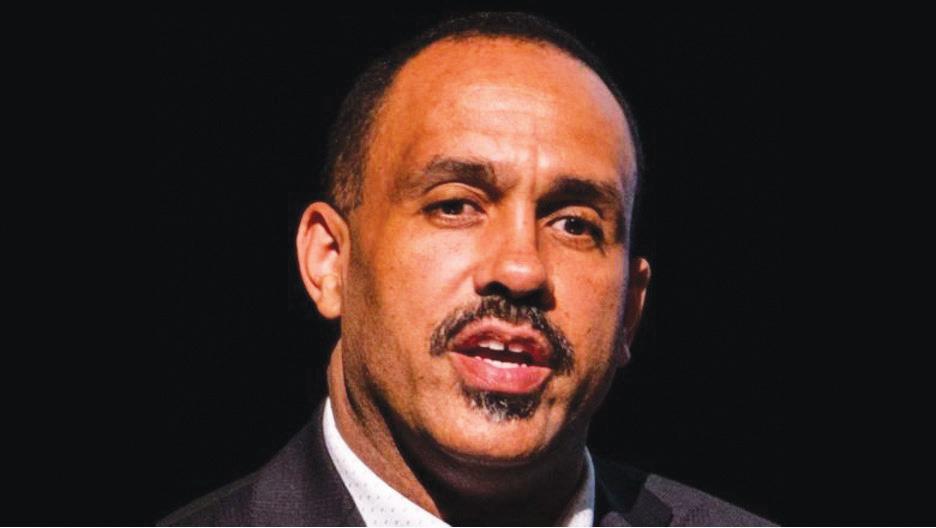
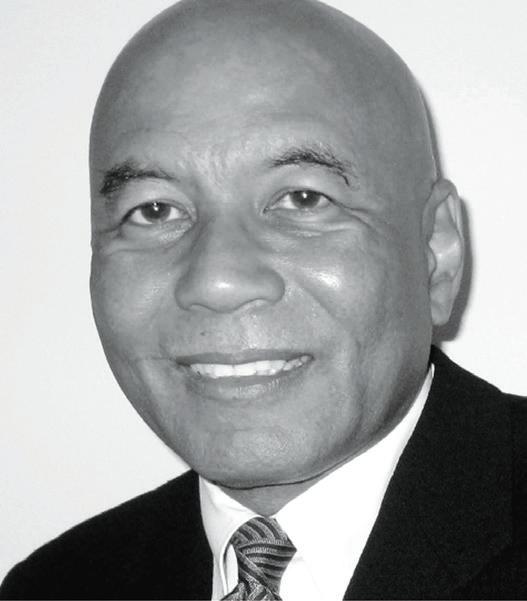
Attorney Ben Crump (left) and National Newspaper Publishers Association president and CEO Benjamin F. Chavis Jr. File photos.
Thursday, January 29, 2026
Hardy & Cheryl Brown are the Grand Marshals for the San Bernardino Black History Parade
Cheryl and Hardy Brown are the Grand Marshals for the 47th Annual Black History Parade along Baseline from Mt. Vernon to California Street, ending at Arryo High School. They are a powerful duo in San Bernardino, using media, publishing, and politics to uplift their community and advocate for representation and equality.
SAN BERNARDINO, Calif.
—Hardy and Cheryl Brown will serve as grand marshals for the 2026 San Bernardino Black History Parade on Saturday, February 7, at 9:00 am, running along Baseline from Mt. Vernon to California Street, ending at Arryo High School. Hardy Brown was the first Black member of the San Bernardino City Unified School District Board of Education, and he and his wife founded The Black Voice News. Cheryl served as a state assembly member for the City and region.
“We are honored and excited to welcome Hardy and Cheryl Brown as the Grand Marshals of the 47th Annual Black History Parade,” said Black Cultural Foundation President Carl M. Dameron. “The Browns’ contribution to the Inland Empire helped create the political and economic diversity we enjoy today.
“The Executive Committee selected these two exemplary pillars of our community as a tribute to their decades of service. The Browns were instrumental in the operations of The Black Culture Foundation and have served on many committees over the years.”
Hardy Brown Sr. is a prominent figure in the Inland Empire’s African American community, recognized
as a dedicated newspaper publisher, philanthropist, and community activist. A deep commitment to social justice, political mobilization, and the preservation of Black history marks his life journey.
Hardy was active with the NAACP and the Inland Empire Urban League. He co-founded the Black Fathers Organization in 1966 to advocate for the integration of Black students into Cajon High School, and he helped establish the Westside Action Group (WAG) in 1972 to mobilize the community and hold politicians accountable. He was also the first Black male president of the San Bernardino City Unified School Board, working to integrate City schools.
Cheryl Brown is an American politician, publisher, and community leader who served in the California State Assembly, representing the 47th Assembly District from 2012 to 2016. A Democrat, Brown has dedicated the majority of her life to public service, earning recognition from numerous local, state, and national organizations for her work.
A lifelong entrepreneur, Brown and her husband, Hardy, purchased the Black Voice News in 1980, focusing on local news in Riverside and San Bernardino counties. They have been married for 63 years. The Browns were
Every Story Counts… A Week in the Life of Your County Library
From storytime magic to late-night study sessions, the library is everyone's favorite hub! Dust off that typewriter and tell us about your tale during Every Story Counts week, Jan. 25-31!
From storytime giggles to latenight research sessions, every library visit tells a story—and the San Bernardino County Library (SBCL) wants to hear yours! As part of the statewide Every Story Counts initiative, happening Jan. 25–31, we’re inviting county residents to share their experiences, memories, and favorite moments at their local library branches. Libraries are more than just books, they’re hubs of creativity, learning, and community. California is home to 188 library jurisdictions and 1,127 libraries, each serving as a trusted source of information and essential services.
“SBCL staff work hard to provide our community with
recognized as the only living publishers included in the 175th anniversary celebration of the Black Press of America. Their daughter, Dr. Paulette BrownHines, now owns and operates the newspaper.
Black History Parade Details:
· Online parade registration: until January 31, 2026: bit.
ly/42SxzcJ
· Date: Saturday, February 7, 2026
· Parade Starts: at Graciano Gomez Elementary School
· Parade Check-in: 7:00 am, Arroyo Valley High School
· Route: Baseline Ave. and Mt. Vernon to California Street
“The Black History Parade, a cherished tradition since 1968, will proceed along Baseline Avenue from Mt. Vernon to California Street in Westside San Bernardino, uplifting the community with its vibrant energy and cultural importance,” said Dameron.
Parade coordinator Russel Ward said, “Five marching bands are set to perform. The Cardinal Marching Band from San Bernardino High School will lead the parade. The marching bands from San Gorgonio High School, Indian Springs High School, and Arroyo Valley High School will end the parade and lead us all to Arrowhead Vista High School for the festival.
“Cheer squads from Arrowview Middle School, Chavez Middle School, Curtis Middle School, Del Vallejo Middle School, Emmerton Elementary School, Fairfax Elementary School, Indian Springs High School, King Middle School, Lytle Creek Elementary School, Marshall Elementary School, Paakumá Elementary, Rio Vista Elementary School, San Gorgonio High School and Urbita Elementary School will perform, along with Steppers from Fairfax Elementary and Cajon High,” added Ward.
Black History Festival Details: Online Parade and Festival registration: till January 31, 2026
· bit.ly/42SxzcJ
· Date: Saturday, February 7, 2026
· Time: - 3:00 pm, after the parade until 3:00 pm.
· Location: Arroyo High School, 1881 W. Base Line St., San Bernardino
· Festival Set Up: 8:00 am, Arroyo Valley High School
· Tear Down: 3:00 pm, Arroyo Valley High School
· Festival Ends: , Arroyo Valley High School
· Contact: Vickie Davis blackontheblock.missd@ gmail.com
“The festival will be a lively celebration with a wonderful mix of vendors, performers, and community groups. Visitors will have the chance to indulge in delicious food, explore cultural arts, and enjoy live shows featuring comedians, dancers, and singers,” said Dameron.
Every Story Counts… A Week in the Life of Your County Library...continued
in turn will tell your own story! Whether you’re:
Bringing your child to storytime
Using the library computers
Checking out items from books to sewing machines
Asking a question at the reference desk
Participating in a workshop, class, or program
…we want to hear about it!
Along with libraries across the state, SBCL values your insight and feedback on the programs and services that make our library a vital part of the community.
We invite you to share your story and help us celebrate your
a wide range of programs and services,” said County Librarian Melanie Orosco. “Now we want to hear from our community directly—how and why you use the library, and what makes it special to you.”
“Every Story Counts helps us capture the incredible variety of activities happening in libraries across California,” said Greg Lucas, California State Librarian. “It’s a chance to showcase the value of public libraries and the tremendous return on investment they provide.”
During the week of Jan. 25–31, we invite our patrons to capture and share photos and videos of them while engaging in our programs and services—which
library experience by filling out our survey.
Share your story and help us show California just how much libraries matter!
For more information about the San Bernardino County Library system, visit library.sbcounty. gov, call 909-387-2220 or follow us on Facebook or Instagram.
The San Bernardino County Library system is a dynamic network of 32 branch libraries that serve a diverse population over a vast geographic area. The County Library strives to provide equal access to information, technology, events and services for all people who call San Bernardino County home.
Opinion submission: ICE
Letter submission:
Now we know why ICE agents are given up to $50,000 signing bonuses. They are being recruited into a murder-for-hire political repression force by our family pet-killing, stone cold lying ICE Barbie, under the direct command of the White House.
We also now know that Trump regime testimony can never again be relied upon in actual court or the court of public opinion. It is worthless. The President long ago boasted of his base being so thoroughly corrupt that he
National Sports Association of Wellness and Mental Fitness Launches to Advance Mental Fitness as a Core Pillar of Athlete Development
RIVERSIDE, CA - The
National Sports Association of Wellness and Mental Fitness (NSAWMF) announces the launch of its national nonprofit association dedicated to advancing mental fitness as a core pillar of athlete development, performance, and lifelong well being. Built to serve athletes, parents, coaches, and institutions nationwide, NSAWMF is designed to make mental fitness education proactive, practical, and accessible across the sports ecosystem.
As pressure continues to intensify across youth, collegiate, and professional sports, mental fitness education is often introduced only after athletes experience burnout, anxiety, or performance decline. NSAWMF was established to address this gap by positioning mental fitness as a trainable discipline that supports resilience, self-regulation, confidence, and sustainable performance throughout an athlete’s journey, both on and off the field.
NSAWMF is led by a founding team that brings together clinical expertise, elite athletic experience, and organizational leadership. Dr. Jeremiah Pearcey, a licensed psychologist, U.S. military veteran, and Professor of Psychology at Saybrook University, specializes in performance psychology and mental fitness development.
Sammy Knight, a former elite collegiate athlete and 12-year NFL veteran and All-Pro Safety, brings firsthand insight into the mental demands of high-performance environments. Gregory Knight, a former C suite executive and current public company board member, provides leadership in governance, risk management, and long-term organizational strategy.
“Mental fitness should be developed with the same level of intention as physical training and nutrition,” said Gregory Knight, founder of NSAWMF. “Athletes perform better and live healthier lives when they are equipped with tools to manage pressure, regulate stress, and build confidence long before challenges arise.”
The association operates as a free, membership-based organization, providing access to mental fitness education and resources for athletes, parents, coaches, and institutions.
NSAWMF’s programming takes a systems-based approach to athlete development and includes Jus Be Great, a mental fitness and wellness education program for youth athletes under 18, along with coach education, parent engagement, institutional collaboration, and ROAR, a mental fitness framework centered on resilience, self-regulation, and performance under pressure.
By making mental fitness education accessible at the community level, NSAWMF aims to reach athletes earlier, support families and coaches more effectively, and reduce the long-term emotional and performance costs associated with unmanaged pressure in sport. Designed to scale through partnerships, the association’s model ensures mental fitness resources are available regardless of geography or socioeconomic background, extending impact beyond individual programs to strengthen the broader sports ecosystem.
To introduce its mission through an immersive, community centered experience, NSAWMF will host the Jus Be Great Youth Mental Fitness Kickoff Event on Saturday, January 31, 2026, from 11:00 a.m. to 2:00 p.m. at San Manuel Stadium, home of the Inland Empire 66ers, in San Bernardino, California. The event is part of NSAWMF’s early community activation work and reflects a shared commitment to supporting the total athlete through both mental and physical development.
Athletes, parents, and coaches will participate in a high energy day featuring Mental Fitness Zones focused on mindset, nutrition, strength, balance, teamwork, and overall wellness, an Athletic Mini Clinic with hands on skill building led by experienced coaches and professionals, and a Parents and Coaches Wellness Workshop offering practical tools to help develop resilient, confident, mentally fit athletes. The event will conclude with Community Awards recognizing leaders who uplift youth and champion wellness in sports. Additional event information is available at NSAWMF.org/kickoffevent. Dr. Jeremiah Pearcey added, “When mental fitness is taught early and reinforced consistently, it strengthens both performance and identity development. This is about equipping athletes with skills they can practice daily, not waiting until something breaks.” NSAWMF is now expanding its free membership network and activating partnerships with sports organizations, schools, and community partners to bring mental fitness education into real world settings and support athletes across every stage of development. To learn more or join the association, visit NSAWMF.org or email info@ NSAWMF.org.
Victorville Senior Citizens Club 14874 S. Mojave Dr. Victorville CA 92395 760-245-5018
could go out into the street and shoot someone without losing their support. His Make America Racist Again fanboys are that loyal to him.
Who would have guessed that earlier boast would extend to many of his new federal hires who would gladly murder for their Dear Leader as long as they are protected from any accountability. His cozy base of millions of ignorant American citizens across America appear to be fine with it all.
Kimball S.
BINGO: Saturday , door open 10am, game starts 11am, BUY IN $25, Pay Out $75-$200+ Doors open 10:15am / game start 11:00am. The Way World Outreach Ministries Wednesday 6pm to 8:30pm. Bid Whist Fundraiser: Saturday January 31, 12:30pm Buy in $15 in Advance - $20 at the Door. Valentine’s Party: Friday February 13, 1pm $5 in advance or $10 at door.
Bunco: Friday April 16, 1:30pm $5 in advance or $10 at door. Mother’s Day Tea Party: Friday May 1, 1pm $5 in advance or $10 at door. ALL ABOVE EVENTS OPEN TO PUBLIC For additional information regarding Membership & Hall Rental Availability Call 760-245-5018
3
Thursday, January 29, 2026
Beyond racism, materialism and militarism
by Dedrick Asante-Muhammad
“When machines and computers, profit motives and property rights, are considered more important than people, the giant triplets of racism, extreme materialism and militarism are incapable of being conquered.”
– Dr. Martin Luther King Jr., “Beyond Vietnam” speech (1967)
that have weakened the labor market. The volatility in Black youth unemployment further underscores the precariousness of the situation, as rates fluctuated dramatically in the latter months of 2025.
Beyond racism, materialism and militarism ...continued
that coincide with rising Black unemployment. As Dr. King stated, “we refuse to believe that the bank of justice is bankrupt,” but urgent action is required to counteract these policy-driven trends before generational losses mount.
Dedrick Asante-Muhammad serves as president of the Joint Center for Political and Economic Studies. This week, he discusses racial and economic inequality in America. Credit: Courtesy photo increasing distrust and tension across the population. This historic regression corresponds with a recessionary environment for Black America. The economic landscape for Black Americans in 2026 is troubling, with unemployment rates signaling potential recessionary conditions. By December 2025, Black unemployment reached 7.5 percent, a stark contrast to the national rate of 4.4 percent. This disparity highlights the persistent economic inequalities faced by Black communities, exacerbated by policy shifts
Dr. King’s words from 1967 summarize today’s political moment, which we have analyzed in our report “State of the Dream 2026: From Regression to Signs of a Black Recession.” Instead of putting the lives of the average and economically insecure American first, there has been a policy embrace of mass deregulation that advances corporate profits and concentrates wealth, a slashing of government and government programs meant to advance upward economic mobility, as well as a deployment of military forces across the country,
Editor’s Note:
The Trump administration’s executive orders have systematically dismantled structures aimed at promoting racial equality. By targeting programs such as Lyndon Johnson’s 1965 Equal Employment Opportunity executive order and defunding agencies like the Minority Business Development Agency, the administration has shifted federal support away from disadvantaged businesses. As a result, Black-owned firms risk losing contracts and resources tied to federal programs, potentially resulting in job losses and reduced economic growth within impacted communities. These changes threaten billions in federal revenue for Blackowned firms and undermine efforts to move beyond racial inequality in the workforce.
The One Big Beautiful Bill Act, passed in 2025, further entrenches inequality by providing tax cuts
that disproportionately benefit high-income households and corporations. While working families gain some relief through tax credits and deductions, the act simultaneously reduces investments in programs that address poverty. Specifically, cuts to Medicaid and nutrition funding, along with increased costs for state SNAP programs, limit access to essential services for low-income households, worsening the situation for marginalized communities.
The technology sector, a critical component of the American economy, is also affected by the removal of safeguards and by the disregard of civil rights considerations.
Executive orders like “Removing Barriers to American Leadership in Artificial Intelligence” have stripped away protections that could advance inclusion in this rapidly growing field. As a result, the future of the American economy risks reinforcing past inequalities.
Dr. King’s call for strong, aggressive federal leadership in addressing racial inequality
continued in next 2 columns
In response to the strong reaction to the story involving Assemblymember Tina McKinnor (D-Inglewood), California Black Media is launching a series focused on the leadership and legacy of Black-owned media—press, radio, television, and film. As the media industry faces uncertainty, these conversations are essential. Black media have long provided truth, accountability, and service to the community. It must play a central role in shaping the future of journalism. This series will explore who controls the narrative, how stories about our communities are told, and why ownership and representation are critical for power, equity, and lasting change.
Commentary: The Question CalMatters Asked About a Lawmaker’s Handbag -- And the One It Refused to Answer
Joe W. Bowers Jr. | California Black Media
Since California Black Media (CBM) reported that CalMatters asked Assemblymember Tina McKinnor (D-Inglewood) whether the Louis Vuitton bag she carried at a Capitol event was “real or fake,” much has been said –just not clearly, or publicly, by CalMatters.
In the two weeks since the question -- and the editorial decision behind it -- sparked backlash and accusations of racial bias, CalMatters has issued no public explanation or correction. Instead, on Jan. 21, it published a story titled “Lobbyists and lawmakers mingle over luxury tequila, shrimp and cigars at capital party.” McKinnor was prominently featured, with descriptions of what she drank, who she spoke with, and her voting record. What it didn’t mention was the question CalMatters had asked her office just days earlier -- one widely condemned as inappropriate, racialized, and unprofessional.
On Facebook, McKinnor wrote about the Jan 21 story, “Instead of asking real, substantive questions, you chose to single me out. That’s not journalism -- that’s a ‘gotcha’ attempt that missed the mark… Ask real questions. Report real news.” Her Facebook followers echoed her frustration. “What
a joke of an article,” wrote one. “I don’t see where they list what everyone was wearing,” said another. Others called the story “selective,” “lazy,” and “pointless.”
The New York Post, responding to CBM’s story about the question, ran a story defending CalMatters and dismissing McKinnor’s reaction as hypersensitive.
While it may have offered some cover, the Post’s story dodged the real issue: when a newsroom becomes the story, silence isn’t accountability. If CalMatters takes comfort in spin from a publication known more for provocation than journalism, it should ask what that says about its own standards.
While it may have offered cover, it dodged the real issue: when a newsroom becomes the story, silence isn’t accountability. If CalMatters finds comfort in validation from a publication known more for provocation than journalism, it should reconsider what that says about its own standards.
CBM followed up with CalMatters CEO Neil Chase, asking for clarity on the purpose of the handbag question, whether the newsroom would review its editorial process, and what steps it planned to take to address bias.
Chase responded via email but didn’t directly answer those questions. He confirmed that he had apologized to McKinnor in writing -- a week after the story became public -- and hoped to meet with her. According to McKinnor’s chief of staff, Terry Schanz, she is not currently planning to meet.
Chase defended excluding reporting on the incident from the Jan. 21 article, saying CalMatters “agreed with the Assemblymember” that the question was inappropriate
and not relevant. But that “agreement” was based not on any conversation with McKinnor, but on their reading of her public post. The editorial decision to feature her in the story while ignoring the controversy, is an editorial choice CalMatters has yet to explain.
The failure to address the incident during CalMatters' Jan. 20 Digital Forum featuring Legislators with press experience -- moderated by Chase -- was a missed opportunity. Sen. Lola Smallwood-Cuevas (D-Los Angeles) raised the issue as an example of media bias against Black women. CBM reporter Antonio Ray Harvey also tried to raise it. Chase said nothing. Chase stayed silent -- offering no acknowledgment, no response, and no engagement.
The California Legislative Black Caucus (CLBC) on Jan. 22 sent a formal letter to CalMatters demanding an unequivocal apology to McKinnor. The letter was signed by eleven of the caucus’s twelve members, except McKinnor, the subject of the question.
The letter called the handbag question “racist and sexist,” labeled CalMatters Jan. 21 story “lazy clickbait,” and said it reduced McKinnor to “an adorned object, not a person.”
It described the article as a “transparent attempt to portray [her] as a quid pro quo legislator,” and demanded CalMatters take responsibility, conduct bias training, and apologize -- stating, “Our democracy demands it.”
CLBC’s involvement makes clear this isn’t just about one lawmaker. It’s about how Black women in elected office are scrutinized or undermined by institutions that claim to hold power accountable. That scrutiny doesn’t come from nowhere. For decades —
remains highly relevant. However, instead of eradicating structures of inequality, current leadership is implementing policies that reduce government jobs and dismantle agencies responsible for preventing predatory economic practices. These policy choices undermine longstanding efforts to combat racial and economic disparities.
The systematic withdrawal of protections, investments and accountability mechanisms is reinforcing economic inequality that has grown over the past decades. The One Big Beautiful Bill Act, through permanent tax cuts for the wealthy and diminished support for working families, exemplifies the regressive economic policies
The State of the Dream 2026 report warns that unless we act deliberately and urgently, economic and racial inequalities will become entrenched, resulting in generational loss. The core question is not inevitability, but whether we will move beyond our nation’s history of racism, materialism, and militarism, and—as Dr. King urged— embrace “the fierce urgency now” to advance equity.
Minnesotans Are Afraid to Access Healthcare Amid Massive ICE Surge
By Sunita Sohrabji
Two American citizens residing in Minnesota were fatally shot by ICE agents this month amid an uptick of immigration enforcement known as “Operation Metro Surge.”
Thousands of people took to the streets of Minneapolis to demand that ICE cease its immigration enforcement activities in the state (MNStandUp photo via Facebook)
WASHINGTON, DC — Minnesota residents are fearful of accessing health care as ICE agents conduct massive immigration enforcement sweeps, said Minnesota Rep. Kelly Morrison.
especially through the 19th and 20th centuries — most major newspapers and broadcasters were owned and run by White editors and publishers.
Stories about communities of color often relied on stereotypes, lacked context, and echoed official narratives. In 2020, the Los Angeles Times confronted its own role in that legacy, issuing a front-page apology for backing the incarceration of Japanese Americans, mischaracterizing the Zoot Suit Riots, and providing biased coverage of unrest in Watts and after the Rodney King beating.
That history casts a long shadow, and it helps explain why questions like the one CalMatters asked still carry deep implications.
CalMatters’ own editorial policies promise fairness, transparency, and responsibility.
“We recognize that our work has an impact on the people and institutions we report on, and we take that responsibility seriously,” the policy states. But the facts here tell a different story.
They asked the question, ignored the backlash, left out the controversy from a story that featured McKinnor, delayed an apology, gave no clear answers, and stayed silent at a public forum. Each of these actions contradicts the mission they claim to follow.
It’s easy to talk about accountability journalism. It’s harder to practice it -- especially when the story is about you.
CalMatters had multiple chances to uphold its own standards and didn’t. If it values public trust, it must hold itself to the same level of accountability it demands from others. Because when journalism avoids accountability, it becomes what it claims to challenge.
“This is a very dangerous and scary moment for our immigrant communities in Minnesota,” said Morrison, a Democrat, in a Jan. 22 interview with American Community Media on the sidelines of Families USA’s annual Health Action Conference here. “They are afraid for their safety. So they are avoiding and delaying access to care.”
”Many of their neighbors are trying to assist them: to get them safely to the care that they need,” she said.
“We are seeing so many Minnesotans stand up for their neighbors — regardless of their immigration status — to protect them from what feels like an invasion of ICE agents into our state,” stated Morrison. The congresswoman is the first and only pro-choice OB-GYN to serve in Congress.
Others at the two-day conference noted that the fear of
accessing health care has spread even among citizens, who are nervous about interacting with ICE.
Fatal Shootings In a Jan. 19 statement, ICE noted it has arrested over 10,000 people in Minnesota, including 3,000 in the past 6 weeks. The agency has justified ICE agents’ fatal shootings of Renee Good on Jan. 7 and Alex Pretti Jan. 24, claiming that both were ”domestic terrorists.” Good was a mother of 3 and a poet. Pretti was an ICU nurse who worked with the Minnesota Veterans Administration health care system.
Department of Homeland Security Secretary Kristi Noem has stated that Minnesota Governor Tim Walz and Minneapolis Mayor Jacob Frey “refuse to protect their own people and instead protect criminals.”
Immediate Withdrawal
At a press conference Jan. 25, Walz demanded ICE
on page 4
Joe W. Bowers Jr.
4
Thursday, January 29, 2026
Three Journalists-Turned-Legislators Weigh in on CalMatters “Real-or-Fake-Handbag" Controversy
Antonio Ray Harvey | California Black Media
Three Journalists-Turned-Legislators Weigh in on CalMatters “Real-or-Fake-Handbag Controversy...
continued
both a bachelor’s and a master’s degree from the Medill School of Journalism, and later attended law school at the University of Utah.
Blakespear began her journalism career at the Los Angeles Times and the Associated Press in the early 2000s, working as a reporter and editor. Blakespear covered local government and legal issues in Orange County before transitioning into law and politics. She later served as mayor of Encinitas and as a member of the city council.
Three California lawmakers, all trained and experienced journalists, weighed in on a political and media controversy sparked after a CalMatters reporter questioned whether the Louis Vuitton bag Assemblymember Tina McKinnor (D–Inglewood) was carrying at a public event was “real or fake.”
On Jan. 20, Assemblymember Gail Pellerin (D–Santa Cruz) and Sens. Catherine Blakespear (D–Encinitas) and Lola SmallwoodCuevas (D–Los Angeles) participated in a CalMatters discussion titled “Digital Democracy Summit 2026.”
During the event, the lawmakers offered their perspectives on the reporter’s controversial question.
Smallwood-Cuevas, a member of the California Legislative Black Caucus (CLBC), said the inquiry about McKinnor’s handbag had nothing to do with policy.
“I thought, where is this coming from? Why this member (of the legislature)? I also thought of all the questions that we need answers to ... this was not a question we needed to discuss,” Smallwood-Cuevas said.
Smallwood-Cuevas continued, “In this time, where our democracy is being threatened,
where we understand the level of misinformation, where newsrooms are just blatantly under attack, and propaganda is being promoted in a way, where is the balance in reporting?”
The question, which CalMatters later said originated with an editor, ignited a broader debate about race, gender, newsroom judgment, and journalistic standards, drawing criticism from elected officials, journalists, and advocacy groups nationwide. The incident has also been referenced in a number of news articles and online discussions about bias, newsroom accountability, and the role of political journalism in an era of heightened misinformation and public distrust.
Right after the incident, McKinnor publicly criticized CalMatters on her Facebook page, calling the inquiry “racist bullsh*t.”
After the issue attracted national attention, Neil Chase, the CEO of CalMatters, said he reached out to McKinnor.
Chase, who moderated the summit, told California Black Media (CBM) that CalMatters is reviewing its standards to ensure future inquiries avoid bias.
Pellerin also commented on the incident, saying that had she been the reporter, she would have
pushed back on the editor who instructed her to ask the question.
“There should never be a reason to ask a legislator about their attire or accessories, their bodies, their hair, or any of that,” Pellerin said. “We are here to do policy. We are here to represent our communities. What we’re carrying or what we look like should not be relevant.”
Blakespear, who has been a vocal proponent of using public funds to support local journalism, said she was not “totally up to speed” on the McKinnor incident and could not respond without knowing all of the facts.
However, drawing from her journalism background, Blakespear said it was somewhat unusual to ask a legislator such a question.
“I agree that it does seem inappropriate,” Blakespear told CBM.
All three lawmakers said they frequently draw on skills gained as journalists -- including investigative research, public communication, and storytelling -- to strengthen their work as policymakers and better connect with constituents.
Smallwood-Cuevas began her journalism career after graduating from California State University, Hayward, now known as CSU East Bay. She reported for the Oakland Tribune, the Long Beach Press-Telegram, and later the Chicago Tribune, where she covered the city’s
poorest neighborhoods on the South Side.
Her reporting focused on working families before she began integrating journalism with union activism in the late 1990s and early 2000s. She worked with SEIU Local 1877, founded the Center for the Advancement of Racial Equity at Work at the UCLA Labor Center, and co-founded the Los Angeles Black Worker Center before being elected to the state Senate in 2022.
“There’s a lot of connections between what I do now and what I did as a reporter,” SmallwoodCuevas said. “(Such as) listening to people, asking questions, and trying to find truth, (and) trying to write things in a way that makes people's lives better.”
Pellerin graduated from California Polytechnic State University, San Luis Obispo (Cal Poly, SLO), with a Bachelor of Science degree in journalism in 1984. Early in her career, she worked as a newspaper reporter and photographer at the Santa Maria Times and the Santa Ynez Valley News.
She later served as a community college instructor before beginning her public service career as the Santa Cruz County clerk, according to her legislative website.
Blakespear graduated from Northwestern University, earning
continued in next 2 columns
Mercy
By
concerns and sincere hopes for a healthier America into harmful policies that endanger our nation’s health and safety,” she said.
Minnesotans Are Afraid to Access Healthcare Amid Massive ICE Surge...continued from page 3 immediately withdraw from his state. He said the mission — known as “Operation Metro Surge” was both dangerous and overreaching.
“You know what you saw,” said Walz of the video footage related to Pretti’s death, which shows the nurse attempting to help a woman who had been shoved to the ground by ICE agents.
Pretti was pepper sprayed before being shot multiple times. A federal judge has issued a temporary restraining order barring federal officials from tampering with any evidence related to Pretti’s death.
ICE agent Jonathan Ross, who fatally shot Good, will not be investigated in a criminal case, the Justice Department has said, noting there is “no basis” for an investigation.
Minnesota Attorney General Keith Ellison filed a lawsuit Jan. 12 which seeks to remove ICE agents from the state.
Thousands of people across the US have taken to the streets to protest what many have called ICE’s extrajudicial killings.
‘Chaos and Instability’ Hospitals in Minnesota have raised the alarm bell, saying ICE agents are interfering with their ability to care for their patients, said Morrison, in her remarks onstage. “A disturbing element of the chaos and instability this administration has created is their practice of twisting valid
”They’ve twisted parents’ legitimate concern for their children, sincere efforts to reform our immigration system, and the valid pursuit of responsibly preventing fraud to advance an agenda that leaves American families poorer, sicker, and less safe,” said Morrison. “Their bad faith attempts to scapegoat and vilify immigrants, doctors, civil servants, educators, and so many others make the work of pushing against their vitriol and humanizing healthcare access that much more critical.”
Public Charge Staci Lofton, director of Health Equity at Families USA, noted that many immigrant families have already dropped out of health care for fear of invoking the public charge rule. The rule — which President Donald Trump attempted to invoke during his 1st term — allows immigration officials to deny permanent legal status to anyone they believe will be dependent on federal benefits.
Lofton noted that immigrants do not have to provide their immigration status when registering at a hospital. She added that hospitals must provide medical care to all who come to their emergency rooms, regardless of their immigration status.
(**1/2)
“Do you honestly think that I killed my wife?”
At the beginning of the ground-breaking horror film 28 Days Later, a bicycle courier (Cillian Murphy) is involved in a near-fatal accident, comatose and wakes up in a hospital bed to discover that London is empty. A shocker opening. This cyber thriller, which delves into AI becoming a judge, jury and executioner, uses a similar gimmick: Detective Chris Raven (Chris Pratt, Guardians of the Galaxy) awakens and finds he’s in a world of trouble. He’s facing Judge Maddox (Rebecca Ferguson, A House of Dynamite), an artificial intelligence (AI) entity that’s charged him with murder. Wow. The murder of his wife (Annabelle Wallis). Wow, wow. And if he can’t acquit himself in 90 minutes, he’ll be executed. Wow, wow, wow!
Screenwriter Marco van Belle, who’s written short films but not feature ones, concocted that fairly compelling premise. But his lack of feature film experience might explain why his storyline starts with a bang, builds somewhat and then has ups and downs. Chris is on a time crunch to discover who killed his wife and unraveling that mystery has a natural momentum and could engage an audience’s curiosity. That’s a positive. Boringly, the detective stays marooned in a chair. That’s a negative. Maddox gives him access to the city’s municipal cloud, databases and digital files. That’s a plus. Most of the characters are unlikable. That’s a negative. The bad points don’t outweigh the good ones but could still depress box office success and good word-of-mouth commentary.
It’s up to director Timur Bekmambetov, most known for
During the panel discussion, the lawmakers emphasized how digital journalism and social media have fundamentally transformed the news industry while creating systemic challenges for traditional newsrooms. They also underscored the importance of fair, balanced, and accurate political reporting, saying such practices build public trust, maintain credibility, and provide citizens with the information necessary for a functioning democracy.
“Journalism taught me the rigors of truth searching, the rigors of being able to understand the problem, and the rigors of trying to understand solutions,” Smallwood-Cuevas said. “All of that is involved with our First Amendment rights, which is whether we have enough information to govern and make decisions about our lives.”
Submission Deadlines:
Mondays By 5pm & Tuesdays by noon when Monday is Holiday
A Year in the Life
by Karen Georgia Thompson
This week will mark the first anniversary of the second term of the President of the United States. This week is also the celebration of the birthday of the Rev. Dr. Martin Luther King, Jr. As these two events are juxtaposed, amidst the increase of authoritarianism, the attacks on democracy, the threats of violence, the militarization of US cities, and the actions taken against other countries and their leaders, what has the year taught us, and how will we, as Christians and people of faith, attend to the year that lies ahead? And, what will be the legacy of the church in this moment? History is being written on the memory of these events that are demanding our attention daily.
There are many challenges to be identified. The deployment of Immigration and Customs Enforcement personnel across the United States has escalated into violence against immigrants and US citizens and has resulted in the killing of Renee Nicole Good. Immigration policy has long been a hot button issue, with deportations being a part of every administration.
This past year has proven that the streets are not safe—not that they ever were—for the stranger, for black and brown people, for those deemed foreign in a country where White Supremacy continues to feed on the glorification of Whiteness and the diminishment of those deemed as other. Lives and livelihood are under attack as the stroke of the pen continues to create Executive Orders meting out injustice in the quest to “make America great again.”
Greatness is questionable when inequities ensure that the most vulnerable among us continue to be oppressed. Immigrant communities have long been a part of the fabric of the United States, their time and presence often exploited for cheap labor, risky tasks, and work others choose not to do. Farming communities and factories are just a few of the places targeted for employing immigrant labor, yet the truth is that immigrants are present across the workplaces and industries needed for sustaining the economy and caring for people. As immigrants shelter in place against this pandemic
of evil, there are changes being experienced in communities, even as neighbors rise to the occasion, protecting and caring for each other.
The president signed 26 Executive Orders on January 20, 2025, the highest number of Executive Orders signed by a president on their first day in office. To date, 225 Executive Orders have been signed. Most do not make the nightly news cycle, the implications of their content often missed in the silence until they are enforced. The commitment to justice necessitates knowledge of actions being taken. The struggle for freedom rests on understanding and correcting what is yet to come. The administration continues to use misinformation and disinformation as strategies for supporting its actions. The truth is needed and necessary for the change yet to come.
The past year has witnessed a blatant disregard for civil rights and freedom of the people. The exception to national and international law bodes ill for many. Rights are being revoked. Human rights are being revoked. The hands of the clock are moving forward, even as these times in which we are living hearken back to the rise of totalitarianism, an extreme form of authoritarianism, which emerged in the world following the economic downturn of the 1930s. Then, the church was implicated in the deaths of those deemed as “other.” Less than 100 years later, democracy is being challenged, and the church gets to choose how it will be written into the history books. The “year that was” has lessons that point to a future that must resist and eliminate the manifestation of injustices and tyranny. The life and legacy of Dr. King are more poignant in the long shadow being cast by tyranny, calling for justice in these days ahead. His words remind us: “The time is always right to do right.”
ABOUT THE AUTHOR
The Rev. Dr. Karen Georgia Thompson serves as the General Minister and President/Chief Executive Officer in the National Setting of the United Church of Christ.
Dwight Brown NNPA News Wire Film Critic
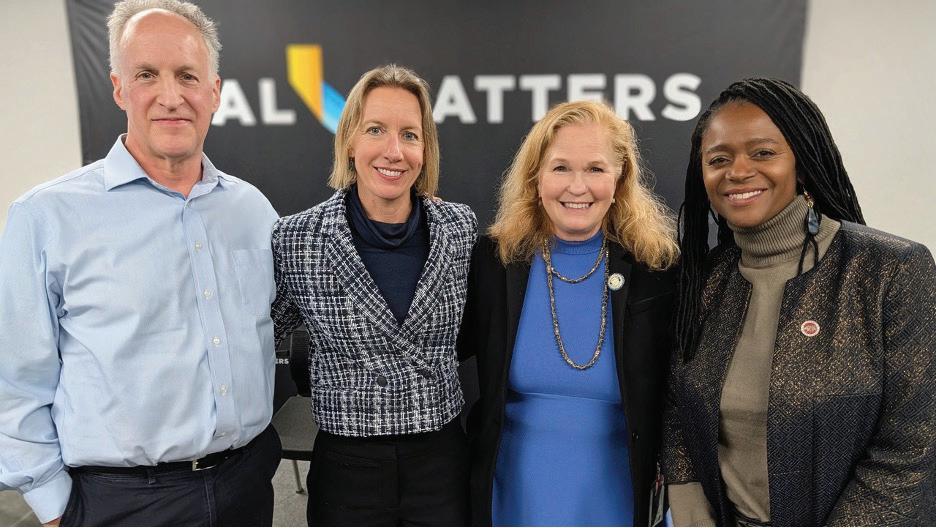
CalMatters CEO Neil Chase, far left; Sen. Catherine Blakespear (D-Encinitas), second from left; Asm. Gail Pellerin (D-Santa Cruz), second from right; and Sen. Lola Smallwood-Cuevas, far right, discussed political reporting and CalMatters' Digital Democracy, an innovative, AI-powered platform designed to increase transparency in California state government by creating a searchable database of legislative activity. CBM photo by Antonio Ray Harvey.
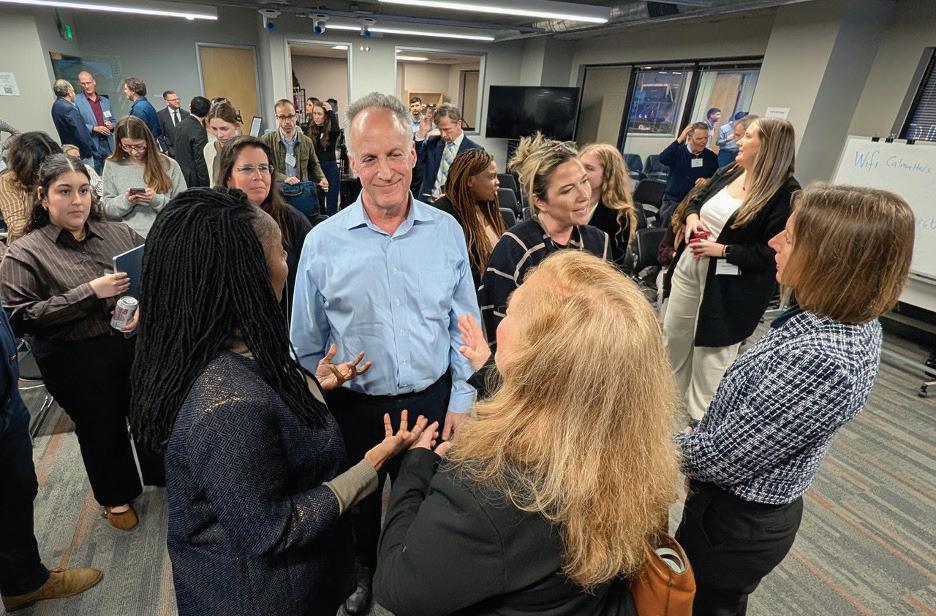
CalMatters CEO Neil Chase speaks with lawmakers following the nonprofit organization’s Digital Democracy Summit in Sacramento. CBM photo by Antonio Ray Harvey.
Most people have heard of osteoarthritis and rheumatoid arthritis. But for some, psoriatic arthritis is the new kid on the block. According to the National Psoriasis Foundation, it affects approximately 1.3 percent of Black Americans compared with 2.5 percent of white people.
Here’s what you need to know about psoriatic arthritis, including symptoms, types and treatments.
What is psoriatic arthritis?
Psoriatic arthritis (PsA), a progressive inflammatory condition of the joints and enthuses (places where the tendons and ligaments attach to bones), occurs when the immune system goes into overdrive and creates inflammation.
This leads to pain and swelling. It is related to the skin disease psoriasis. Most people with psoriatic arthritis suffer from psoriasis first, although some don’t have skin issues until after the other symptoms begin.
Psoriatic arthritis types Psoriatic arthritis comes in five forms, according to Johns Hopkins Medicine:
Affects small joints in fingers and/or toes
Asymmetrical arthritis in the hands and feet of one side or the other
Symmetrical polyarthritis: similar to rheumatoid arthritis and affects both sides equally in multiple joints
Arthritis mutilans: rare, destroys and deforms joints
Psoriatic spondylitis: arthritis of the lower back and the spine.
Psoriatic arthritis causes and risk factors
While the causes of psoriatic arthritis are not completely understood, there are several known factors, according to the American College of Rheumatology.
Genetics: 40 percent of people with PsA have a family member with psoriasis or arthritis Strep throat: It is suspected that the strep infection may be a trigger.
Some other factors that may put people at high risk or trigger PsA include:
Obesity
Severe psoriasis
Stressful events Trauma to the joints or bones Infections.
Some scientists believe genes and an environmental trigger such as a trauma or virus might have a part in the development
National Medical Association Endorses AAP 2026 Childhood Immunization Schedule
Statement attributable to: Dr. Roger A. Mitchell, Jr. 126th President, National Medical Association
The physician members and leaders of the National Medical Association (NMA) continue to recommend an evidence-based immunization schedule that protects against 18 diseases and have endorsed the 2026 childhood immunization schedule released today by the American Academy of Pediatrics (AAP). The AAP schedule is thoroughly researched and rooted in science and differs significantly from recent changes to the Centers for Disease Control and Prevention’s (CDC) federal immunization schedule, which have created unnecessary and harmful confusion about routine childhood vaccinations.
The NMA encourages health care providers, families, and caregivers to rely on the AAP schedule and continue vaccinating children to protect them and their communities from preventable diseases.
The full AAP 2026
Immunization Schedule is available here: https://downloads.aap.org/ AAP/PDF/AAP-ImmunizationSchedule.pdf
The AAP schedule is endorsed by the following medical and health organizations: the American Academy of Family Physicians (AAFP), American College of Nurse-Midwives (ACNM), American College of Obstetricians and Gynecologists (ACOG), American Medical Association (AMA), American Pharmacists Association (APhA), Council of Medical Specialty Societies (CMSS), Infectious Diseases Society of America (IDSA), National Association of Pediatric Nurse Practitioners (NAPNAP), National Medical Association (NMA), Pediatric Infectious Diseases Society (PIDS), Pediatric Pharmacy Association (PPA), and the Society for Adolescent Health and Medicine (SAHM).
Former U.S. Surgeon General: Your Best Shot at a Healthy Flu Season
By Jerome Adams
Winter is upon us, and for many Americans, that means company parties, get-togethers with friends and of course, gathering with extended family. These festivities are joyous. But they also inherently expose us to infectious seasonal illnesses like influenza, respiratory syncytial virus (RSV) and COVID-19.
As vaccination rates decline nationally, that risk is greater this
of PsA, according to the Arthritis Foundation.
According to a study published recently in the journal JAMA Dermatology, there seems to be a causal effect between inflammatory bowel disease and psoriasis/PsA.
“These findings have implications for the management of inflammatory bowel disease and psoriasis in clinical practice,” the researchers said when the study was published.
Psoriatic arthritis symptoms
According to the U.S. National Institutes of Health, symptoms of psoriatic arthritis vary greatly from person to person. They may include:
Scaly, inflamed patches of skin (psoriasis) on the scalp, elbows or knees
Joint stiffness, pain and swelling of one or more joints. Joint stiffness is often worse in the morning or after resting
Tenderness in areas where tendons or ligaments attach to bones. Two commonly affected spots are the back of the heel and the sole of the foot
Painful, sausage-like swelling of a whole finger or toe
Frequent fatigue, abnormal tiredness, or a lack of energy
Nails that pit, crumble, or separate from the nail bed
Eye inflammation, resulting in eye pain, redness, and blurry vision. Prompt treatment is necessary to prevent vision loss
Inflammatory bowel disease may occur in some people.
Psoriatic arthritis treatments
Because it affects both the skin and joints, psoriatic arthritis is a complex condition to treat, according to the Arthritis
Foundation. Treatments include a combination of therapies comprised of medications and non-drug therapies such as exercise, massage, heat and cold.
Psoriatic arthritis medications include the following:
Non-steroidal antiinflammatory meds such as ibuprofen or naproxen.
Disease modifying antirheumatic drugs (DMARDs).
Biologics, such as TNF inhibitors such as Humira (adalimumab), Cimzia (certolizumab pegol), Enbrel (etanercept), Simponi (golimumab) and Remicade (infliximab)
Corticosteroids, which are injected into the joint for temporary relief during a flareup.
Non-drug therapies include:
Exercise — as with other types of arthritis, staying active helps
Massage — stress can cause flare-ups and massage helps with stress
Heat and cold — may help decrease the inflammation
Physical and occupational therapy — to strengthen muscles, protect joints from further damage and increase flexibility
Water therapy — some people find it easier to move while in the water, which partly supports the body’s weight.
While psoriatic arthritis can be a life-altering diagnosis, with proper treatment and lifestyle adjustments, many people with this condition can continue to live an active, fulfilling life.
By Jessica Daniels, BDO Staff Writer | Published February 24, 2025
Veterans receive COLA and Home Loan Guaranty limit increase
COLA and VA loan limit increases make purchasing a home without a down payment an affordable option for veterans and their families.
Veterans who receive disability compensation from the U.S. Department of Veterans Affairs are seeing higher monthly payments and expanded home loan limits as part of recent benefit updates. A 2.8 percent increase in monthly disability compensation took effect Dec. 1 as part of the annual cost-of-living adjustment, known as COLA. The increase applies to all disability ratings, with additional compensation for dependents beginning at the 30 percent disability rating level. Updated VA disability compensation rates are available on the U.S. Department of Veterans Affairs website. In addition to the COLA
To
year than any in recent memory. That's why, now more than ever, Americans must make informed choices to keep themselves and their families healthy. For decades, annual vaccines have been our first and best line of defense. They are stunningly effective. The Centers for Disease Control and Prevention estimates that during the 2023-2024 flu season, vaccines prevented
Former U.S. Surgeon General: Your Best Shot at a Healthy Flu Season...continued
nearly 5 million medical visits and almost 10 million cases of illness. And even though vaccinated people sometimes still contract the disease, flu vaccines lessen the risk of severe illness and potentially life-threatening complications.
Seasonal vaccination rates in the U.S. are already troublingly low -- and trending downward. Last flu season was the most severe in years, yet fewer than half of children were estimated to have received an updated flu vaccine, down from 53.4 percent the year prior. About 47 percent of adults were estimated to have received the vaccine.
The U.S. also endured its highest flu-related hospitalization rates in almost 15 years last flu season, with unvaccinated people comprising two-thirds of those hospitalizations. Those who skip seasonal vaccines this year will face increased risks of serious illness, hospitalization and spreading the disease to their loved ones.
Some of the decline in vaccination is due to a lack of trust in public health guidance that stems from the COVID-19 pandemic. Though COVID-19 vaccines decreased the risk of contracting COVID-19 by about 95 percent for the initial strain of the virus and by at least 40 percent for more recent variants -- shifting recommendations
damaged public health officials' credibility across the country. Despite the fact that vaccines decreased the risk of contracting COVID-19 by about 95 percent for the initial strain of the virus -and by at least 40 percent for more recent variants -- COVID-era public health officials damaged their credibility by repeatedly shifting their recommendations. It's completely reasonable for Americans to have questions about vaccines. But it's also important to seek answers from the right people. Concerns and decisions about vaccination are best discussed with physicians, pediatricians, or local pharmacists who can provide informed and personal guidance.
Many Americans have already received their updated seasonal vaccinations this year. And for those who haven't, there's still time.
Choosing vaccination cannot guarantee complete immunity to the flu, COVID-19, or RSV. No medical intervention can. But reducing the risk of illness can help families celebrate the season with more ease, comfort and togetherness.
Dr. Jerome Adams served as the 20th U.S. Surgeon General during the first Trump administration (2017-2021) and is a practicing anesthesiologist. A version of this piece originally ran in Newsweek.com.
increase, eligible veterans will see expanded homeownership opportunities through the VA Home Loan Guaranty Program. Beginning Jan. 1, the baseline VA loan limit for a one-unit property in San Bernardino County increased by approximately 3.3 percent, rising from $806,500 in 2025 to $832,750. The higher limit allows qualifying veterans to purchase homes valued up to $832,750 with no down payment. Veterans seeking more information about the VA Home Loan Guaranty Program or other available benefits can visit va.sbcounty.gov or call 866472-8387.
Deadline
Submit Press Releases & Legals Is Mondays By 5pm
Mercy..continued from page 4
vampire movies (Night Watch and Day Watch), to make what’s on the screen more fascinating than what’s on the page. Conveying the narrative on monitors, police cams, doorbell cameras and smartphone faces makes what’s on view as immersive as it can be. But not enough to warrant the film’s 3-D format. When the graphics are interspersed with flashbacks and live-action scenes, it’s helpful. Helpful in a way that could make the barrage of eye candy appealing to tech worms, Gen Z and others who flit from screen to screen—all day and into the night.
The onslaught of images is not fine-tuned or artsy. Not like those in Christopher Nolan’s Oscar®-winning film Oppenheimer. Never stunningly lit, composed or strikingly colorful (cinematographer Khalid Mohtaseb; production designer Alex McDowell, Watchman). More like a standard Hollywood production that’s just a couple of levels above a B-movie. That said, the incessant parade of visions has a rhythmic feel (editors Dody Dorn, Austin Keeling, Lam T. Nguyen). Just enough to keep viewers engaged. The year is 2029. Humans have championed an artificial intelligence system named Mercy. Maddox reigns over “Mercy Capital Court.” Those who’ve committed crimes, or been accused of such, tremble as the tech being readies its verdict. Themes of human instinct and feelings versus the cold logic of computer programs aren't exactly original. The sci-fi-classic 2001 was one of the OGs. Mercy is not in that league. But fortunately, the subject of AI dominance, the kind that eats humans’ jobs, couldn’t be more topical. Below the surface of this thin thriller plot are some hard, scary truths about AI threatening the future of humanity.
For those watching from the front row or tuning in late night on Prime Video, there’s enough action to keep the energy level up. When Chris’ partner Jacqueline 'JAQ' Diallo
(Kali Reis, True Detective) mounts her hoverbike and flies over slow L.A. traffic there’s reason to be fascinated and jealous. Fights, shootouts, truck/ car chases and explosions are prevalent. Prevalent but not ingenious. Fans expecting Chris Pratt to do his action/adventure/superhero thing, will be disappointed. He’s in timeout. Strapped to his seat for most of the footage. No traces of that smug fun attitude he displays in the “Guardians…” When the camera closes in on his face, he does emote. But not in a riveting way. His lack of mobility isn’t a good excuse. In the movie The Sea Inside, Javier Bardem played a man afflicted with quadriplegia (paralysis from the neck down). His face and eyes told more in a minute about his feelings and inner workings than Pratt’s acting does in the entire film. Add in the overworn secondary characteristic of being an abusive alcoholic, and nothing about Chris Raven seems particularly affable or original. Ferguson fairs a bit better as the icy Maddox. Only her head is on view, yet, with a better character arc, she is more alluring. Wallis as Chris’ wife Nicole is duplicitous. Reis’ interpretation of the gung-ho cop is fun to watch, until it isn’t. Jeff Pierre’s role as an interloper won’t endear him to anyone. The one likeable character is Ray (Kenneth Choi, The Wolf of Walk Street), Chris’ old partner, and his lack of screentime should be a crime.
After Mercy has run its 100-minute course, it is likely theater audiences might say: “I didn’t feel anything except a small adrenaline rush.” Or “Wish I’d waited to see this on Prime.” They may lack sustained emotions and vigorous enthusiasm. Ironically, just like AI. That’s what dooms Mercy.
Black-owned businesses across Minnesota participated in a general strike to protest ICE operations. Owners say closing their doors is an act of economic resistance and community solidarity.
Hundreds of businesses across Minnesota participated in a statewide general strike Friday, urging residents not to shop, work or attend school in protest of Immigration and Customs Enforcement operations in the state. Several Black-owned and Black-led businesses choose to stand in solidarity by closing their doors.
“We cannot continue to act like any of this is normal,” said Nicole Nfonoyim-Hara, owner and founder of Griot Arts in downtown Rochester. “We cannot do business as usual.
Being able to have a collective call and show our collective power in the face of statesanctioned violence is one of the most powerful things we can do right now.”
The bookstore, art gallery and community space remained closed Friday. Nfonoyim-Hara said participating in the shutdown is a way to use economic power as a form of protest.
“Every business has some power,” she said. “And everyone has the ability to not contribute to the economy.”
Nicole “Cole” Asong Nfonoyim-Hara, founder and owner of Griot Arts.
Nicole “Cole” Asong Nfonoyim-Hara, founder and owner of Griot Arts.
As a Black business owner, Nfonoyim-Hara said she sees herself as part of a lineage of spaces rooted in solidarity and community, making participation in the strike an easy decision. The shutdown, she said, also offers a moment for reflection and truthtelling.
“This is a moment of reckoning,” Nfonoyim-Hara said. “Systems want us participating and not thinking about the violence that’s happening or the
ways our communities are living in fear.”
Rise & Remember, an organization formed after the killing of George Floyd to preserve stories of resistance to racial injustice and create spaces for grief and healing, also participated in the shutdown.
The organization helps steward George Floyd Square and offers guided visits and pilgrimages to the site. On Friday, those services were paused.
Executive Director Jeanelle Austin said the decision was made to stand in solidarity with immigrant communities and U.S. citizens affected by ICE operations.
Jeanelle Austin, executive director of Rise & Remember, poses in George Floyd Square.
Credit: Photo by Isaiah Rustad Jeanelle Austin, executive director of Rise & Remember, poses in George Floyd Square.
Credit: Photo by Isaiah Rustad
“This is a civil rights issue. It’s a humanitarian issue,” Austin said. “Our organization was birthed out of a justice movement, so justice is at the core of what we do.”
Austin said the organization’s pilgrimages, which have taken place for nearly four years, provide visitors with space to reflect on their role in advancing justice. Pausing that work, she said, was intentional.
“Some would say this is the time to open your doors,” Austin said. “But more importantly, this
is the time to stand up and march side by side with our brothers and sisters.”
Rather than hosting official programming, Austin said she plans to protest alongside clergy members, mentors, youth and community members from across the state and country.
Despite frigid temperatures, Austin said showing up physically matters.
“We have to demonstrate. We have to peacefully protest and enact our right to be heard,” she said. “Otherwise, we’re not going to see change.”
Nfonoyim-Hara said she plans to support the strike by connecting people to resources, contacting members of Congress and attending rallies in the Rochester area. Later in the evening, Griot Arts will open its space for a poetry gathering.
“After a day of rallying and striking, people needed a place to land,” she said. “To have that space through the art felt really powerful.”
Organizations including ICE Out of MN are calling for ICE to leave the state, legal accountability for the ICE agent who killed Renee Good, an investigation into alleged constitutional violations, an end to federal funding increases for the agency and for companies to sever economic partnerships with ICE.
A peaceful march was scheduled for 2 p.m. Friday in downtown Minneapolis.
Man Released from ICE Custody a Second Time After Warrantless Arrest
By Alaysia Lane | Minnesota Spokesman-Recorder
Garrison Gibson, a 38-year-old Liberian immigrant and father, was released from Immigration and Customs Enforcement custody for a second time after being re-arrested hours after a federal judge ruled his initial arrest unconstitutional.
Gibson’s attorney confirmed Friday afternoon that he is home with his family and required to wear an ankle monitor while remaining under immigration supervision. The second release followed a series of events that began with a warrantless raid on Gibson’s north Minneapolis home: an entry a U.S. District Court judge later ruled violated the Fourth Amendment.
“This is not just a mistake. This is a constitutional violation,” said immigration attorney Marc Prokosch.
According to Gibson and his family, federal agents arrived at their home around 9 a.m. Jan. 11, knocking before announcing themselves. Gibson said he asked whether they had a warrant and was told they did not.
Minutes later, multiple ICE vehicles arrived, parking in the alley, on the street and in neighbors’ yards as more officers gathered. Gibson said about a dozen agents and vehicles were present, drawing neighbors outside.
Family members said agents later returned to the door claiming they had a warrant but did not show it before breaching the home. They said agents used a battering ram multiple times, damaging the front door and an interior wall.
Gibson’s wife, Teyona Brown, said she stood in front of him as agents entered, attempting to shield him and their daughter.
“I had to make sure my daughter had a father,” Brown said. “And I had to make sure that we had a record, not just for us, but for everyone to see how they’re doing things.”
The family said agents entered with weapons drawn, issued commands to sweep the home and did not show a warrant until Gibson was nearly inside a patrol
vehicle.
A federal judge later ruled that ICE violated Gibson’s constitutional rights by entering his home without a judicially signed warrant. The judge ordered his immediate release, noting that Gibson had been complying with immigration supervision requirements, including attending a check-in just weeks before his arrest.
“He was following every rule,” Prokosch said. “There was no reason for this.”
Gibson has lived in the United States since childhood after fleeing the civil war in Liberia. He has a longstanding deportation order but has been allowed to remain in the country under supervision for years.
After the arrest, Gibson was transferred to the Whipple Federal Building, where he described overcrowded and degrading conditions. He said about 40 people were held in a single cell with no beds, cold temperatures and metal surfaces.
Detainees, he said, were forced to use the bathroom in front of one another while shackled, and one man in the cell had scabies.
“It felt like humiliation,” Gibson said.
Gibson said he was later placed on a plane to Texas without being told where he was going and remained confused about what was happening. In Texas, he said conditions were somewhat different but still restrictive, with detainees sleeping on metal bunk beds in crowded units.
Following the judge’s ruling, Gibson was released Thursday
Man Released from ICE Custody a Second Time After Warrantless Arrest...continued
weights to keep the door shut.”
Gibson said wearing an ankle monitor has affected his ability to find work.
“It’s hard to go into an interview with this big ankle monitor,” he said. “People think you did something.”
Prokosch said his legal team is pursuing two parallel strategies: seeking habeas protections in federal court and moving to vacate Gibson’s 2009 deportation order in immigration court.
“The most important thing right now is to keep him with his family,” Prokosch said. “Then we will work to permanently resolve his immigration status.”
The Immigrant Law Center of Minnesota condemned ICE’s actions in a statement, calling the raid “terrifying” and warning of a pattern of transferring detainees out of state to obstruct access to legal counsel.
“This case is a powerful reminder that community
vigilance matters,” the organization said. Gibson said he plans to remain home as much as possible while his case continues.
“I’m not a violent person,” he said. “If I was, I wouldn’t have been out for the past 17 years, checking in.”
Despite the trauma, the family expressed gratitude for community support.
“The love has been overwhelming,” Brown said. “People brought food. They stayed in the cold for hours. These people are angels on earth.”
For now, Gibson remains under supervision, wearing an ankle monitor, while attorneys fight to keep him in the United States.
“I just want to stay with my family,” he said. “That’s all.” Alaysia Lane is a multimedia journalist and commerce writer based in Minneapolis.
Homelessness is Rising Fast Among a Surprising Group: Infants and Toddlers
By Jackie Mader, The Hechinger Report
Children work on an activity in a Horizons classroom. Teachers at Horizons are trained to work with children who have experienced trauma and instability. Credit: Jackie Mader/The Hechinger Report
For months, Karian had tried to make it on her own in New York.
evening and returned home. The next morning, Gibson, Brown and Prokosch returned to the Whipple Federal Building for what they believed would be routine paperwork to finalize his release.
“The officer said, ‘This looks good. I’ll be right back,’” Prokosch said.
Minutes later, several unfamiliar officers entered the room and informed them Gibson was being taken back into custody.
According to Prokosch, the lead officer said the decision came from a higher authority and was “above my pay grade.” Prokosch said the officer told them the order came from the White House and became emotional during the exchange.
Gibson was taken into custody for the second time but released again approximately two to three hours later.
“It was chaos,” Brown said. “Nobody knew what was going on.”
Brown said the raid and re-arrest deeply affected the couple’s children, particularly their daughter, who now reacts with fear when someone knocks on the door.
Brown, a certified nursing assistant and pediatric health coordinator, said the family had to block their damaged front door with dumbbells for several days after the raid because it would not close properly.
“We couldn’t even turn the heat on,” she said. “We had to use
After the birth of her second daughter, she was diagnosed with postpartum depression, major depressive disorder and anxiety.
A single mother who had moved from Boston to New York about 13 years ago, she often spent days at a time on the couch, unable to do more than handle the basics for her daughters.
“I wasn’t taking care of myself,” she said softly on a recent afternoon.
“I was not really present.” The Hechinger Report is not publishing her last name to protect her privacy.
Karian’s mother urged her to move back home to the Boston area and offered to house her and her daughters temporarily. She started working the night shift at a fast food restaurant to save up for her own place while her mother and sister watched her children.
But in a city where fast food wages aren’t enough to pay the rent, her efforts felt futile. And then, a month after moving in with her family, her mother’s landlord told her the apartment was overcrowded and she had to leave. Karian and her girls, then 7 years old and 8 months old, moved into a homeless shelter, where her depression and anxiety worsened.
“I tried my best, but it’s not their home,” said Karian, now 31.
Karian’s children had joined the growing ranks of very young children experiencing homelessness. Between 2021 and 2023, the number of homeless infants and toddlers increased in 48 states and the District of Columbia.
The most recent estimates found that in 2023 nearly 450,000 infants and toddlers in the United States were in families that lacked a stable place to live. That was a 23 percent increase compared to 2021, according to a report released last year by the nonprofit SchoolHouse Connection in partnership with Poverty Solutions at the University of Michigan. The numbers could be even higher, experts worry, because “hidden homeless” children — those who are doubled up in homes with family or friends or living in a hotel — may not be captured in tallies until they start school. High prices for diapers and formula, the exorbitant cost of child care, the rising cost of living, and rising maternal mental health challenges all contribute to the growing rate of homelessness among very young children, experts say. In 2024, one-third of infants and toddlers were in families that struggled to make ends meet, according to the nonprofit infant and toddler advocacy organization Zero to Three.
“We’re talking about families who have generationally been disadvantaged by circumstance,” said Kate Barrand, president and CEO of Horizons for Homeless Children, a nonprofit that supports homeless families with young children in Massachusetts. “The cost of housing has escalated dramatically. The cost of any kind of program to put a child in, should you have a job, is escalating,” she added. “There are a lot of things that make it really hard for families.” Housing instability is dire for anyone, but particularly for young children, whose brains are rapidly growing and developing. Studies show that young children who are homeless often lag behind their peers in language development and literacy and struggle to learn self-regulation skills, like being able to calm themselves when feeling angry or sad or transition calmly to new activities. They also may experience long-term health and learning challenges. Early childhood programs could provide a critical source of stability and developmental support for these children. But SchoolHouse Connection found only a fraction
Griot Arts in Rochester, Minnesota, will be closed Friday, Jan. 23 to protest ICE in the state. Credit: Courtesy of Griot Arts.
Nicole “Cole” Asong Nfonoyim-Hara, founder and owner of Griot Arts.
Jeanelle Austin, executive director of Rise & Remember, poses inGeorge Floyd Square. Credit: Photo by Isaiah Rustad
(L-R) Marc Prokosch, Garrison Gibson, Teyona Brown, and Abena Abraham during a press briefing in St. Paul, Jan. 17.
Home Loans
Homelessness is Rising Fast Among a Surprising Group: Infants and Toddlers...continued
the fact that many homeless families fear that their children will be taken away by child protective services because they are homeless.
In 2024, to fill that gap in data, the state launched a residency questionnaire given to every K-12 student that includes new questions about homelessness, including if there are younger children in the home who are not students and may not otherwise be counted in homeless populations. Officials say it isn’t a perfect solution, but it’s a start to get a sense of the severity of family homelessness. “We can’t devise a system for dealing with a problem if we don’t know what the problem is,” said Agel.
In Sioux Falls, South Dakota, city officials have ramped up efforts to coordinate city agencies to respond to an increase in homelessness among infants and toddlers.
“In general, the families we see more often have younger children. The school offers so much support, and there’s limited daycare access” to get similar support for infants and toddlers, said Tommy Fuston, Community Services and Housing Navigator at Minnehaha County’s Department of Human Services.
“If a family has younger children, they’re going to struggle more.”
Each week, officials from the city, the Sioux Falls School District, local early childhood programs and shelters hold a “care meeting” to make sure any homeless families, or families at risk of homelessness, are quickly connected to the right resources and receive followup. “We don’t have unlimited resources, but I think it maximizes the resources that we do have,” Fuston said. “We’ve tried to create a village of supportive services to wrap around these folks.” The city relies extensively on private and faith-based donations to help. All shelters in town are privately funded, for example.
Karian heard about the child care center run by Horizons from a
social worker soon after she and her daughters moved into their Bostonarea shelter. In the infant room, her youngest daughter quickly settled into a routine, something Karian said didn’t happen when the baby was watched at night by family members. When staff identified speech and developmental delays, they helped connect Karian to an early intervention program where her daughter could receive therapy. Now 4 years old and in pre-K at Horizons, “she’s thriving,” Karian said. “She’s getting that nourishment.”
Karian also received support.
Each family at Horizons is assigned a coach to help parents set personal goals and connect with resources. The organization offers classes in computing, financial management and English, all within the early learning building.
Two months after setting goals with a family coach, Karian earned her GED, with the help of the child care assistance. A few months later, she graduated from a culinary training program. She now works a steady job as a cafeteria manager for a local school district, where she earns a salary with benefits.
After a year in the shelter, her
Now, Karian has her sights set on eventually opening a restaurant. She also has big dreams for her daughters, something that once seemed out of reach. She wants them to have ambition to “work towards something big,” she said. “I want them to have a dream and be able to achieve it.”
Experts say there are larger policy changes that could
Providing
an
should
families with infants and toddlers in their homes,” said Melissa Boteach, chief policy officer at Zero to Three.
Homelessness is Rising Fast Among a Surprising Group: Infants and Toddlers...continued from page 7
of homeless children are enrolled in early learning programs, and the percentage who are has decreased over the past few years.
“It’s not just incredibly tragic and sad that infants and toddlers are experiencing homelessness,” said Rahil Briggs, national director of the nonprofit Zero to Three’s HealthySteps program, which works with pediatricians to support the health of babies and toddlers. The first few years are also a “disproportionately important” time in a child’s life, she added, because of the brain development that’s happening. Karian and her daughters faced new difficulties after they moved into a shelter. They shared an apartment with another family. If the other family was using the shared common space, Karian tried to give them privacy, which meant keeping her children in the bedroom the three of them shared. Her older daughter had to change schools, and left without getting to say goodbye to many of her friends. At her new school, her grades dropped. The baby developed a skin condition and there was a bedbug infestation at the shelter. Karian didn’t want to put her on the floor for tummy time. She was desperate to find a home.
“We were in a place where we couldn’t really make noise. I couldn’t really let them be kids,” she said. The rise in housing insecurity among young children has created more demand for programs created specifically to meet the unique needs of children who are experiencing instability and trauma. Many of these programs offer support to parents as well, through what is called a “two-generation” approach to support and services.
In 2021, in response to ballooning child homelessness rates, Horizons opened the Edgerley Family Horizons Center, an early learning program that serves children from 2
months to 5 years old. While some families find Horizons on their own, many are referred by shelters around the Boston area. The need is great: Edgerley serves more than 250 children, with a waitlist of 200 more. Karian’s younger child was one of those who got a spot soon after the program opened. Inside Horizons’ large, lightfilled building on the corner of a busy street in Boston’s Roxbury neighborhood, every detail is tailored to the needs of children who have experienced instability. Walls are painted in soothing blues and greens. Each classroom has three teachers to maintain a low child-tostaff ratio. Many of the teachers are bilingual. All educators are trained in how to build relationships with families and gently support children who have experienced trauma.
The starting salary for teachers is $54,200 a year, far more than the national median for childcare workers of $32,050 and the Massachusetts median of about $39,000. That has encouraged more teachers to stay on at the center and provide a sense of security to the children there, said Horizons CEO Barrand.
In the infant room, teacher Herb Hickey, who has worked at Horizons for 13 years, frequently sees infants who are hyperaware, struggle to fall asleep, can’t be soothed easily or cling desperately to whichever adult they attach to first. The goal for the infant teachers, he said, is to be a trusted, responsive adult who can be relied on. Every day, the teachers in the infant room sing the same songs to the babies. “When they hear our voices constantly, they know they’re in a safe space,” Hickey said. “This is calm.” Teachers also follow the same familiar routines. The rooms are decorated simply, organized and filled with natural light. Teachers constantly scan the infants for signs of distress. “We have to be even more
responsive,” Hickey said. “When the child starts crying, we don’t have the convenience to say, ‘I know you’re hungry, I’ll get to you.’” He said teachers want even the tiniest babies to learn that “we’re not going to leave you crying.’”
Other needs arise with Horizons’ youngest children: Infants and toddlers living in homeless shelters often lag in gross motor skills. Many spend time on beds rather than on playmats on the floor, or they are kept in car seats or in strollers to keep them safe or from wandering off. That means they’re missing out on all the skills that come from active movement.
Even the arrangement of toys at the center has a purpose. Staff want children to know they can depend on toys being in the same location every day. For many children, those are some of the only items they can play with. Families entering a shelter environment can usually only bring a few bags, with no room for toys or books. A toddler who recently entered a shelter where Horizons runs a playroom came in holding a small empty chip bag, recalled Tara Spalding, Horizons’ chief of advancement and playspace. When a shelter staff member threw it away, the boy was inconsolable.
“This is the only toy my child has,” staff recalled the mother saying.
“This just shows the sheer poverty,” said Spalding.
As infant and toddler homelessness has increased, other cities and states have tried to provide more support to affected families and get a better sense of their needs. In Oklahoma, experts say, low wages, a lack of housing and eviction laws that favor landlords have led to rising homelessness rates. State officials are trying to gather better data about homeless families to determine the best use of resources, said Susan Agel, chair of Oklahoma’s Homeless Children and Youth Steering Committee. Their efforts are hampered, however, by
family was approved for subsidized housing and moved into their own apartment. Horizons allows families to stay in its programs for at least two years after they secure housing to make sure they are stable.
“Babies shouldn’t be homeless.” This story was produced by The Hechinger Report, a nonprofit, nonpartisan news outlet focused on education.
State Settlement Shines Light on Civil Rights Protections for Black Students
A state civil rights investigation into Yuba City Unified School District (YCUSD) has resulted in a settlement requiring districtwide corrective actions after allegations that a Black elementary school student was subjected to repeated racial harassment over multiple school years.
Joe W. Bowers Jr. | California Black Media to CRD. “Every single student has the right to feel safe at school,” said CRD Director Kevin Kish. “Teachers, administrators, and other school staff are responsible for helping make that happen. There is no place in our schools for anti-Black harassment or discrimination. I applaud our team at the Civil Rights Department for ensuring the Yuba City Unified School District takes action to protect the civil rights of its students.”
The settlement, announced by the California Civil Rights Department (CRD), stems from a 2024 complaint filed by the Black student’s family under the Ralph Civil Rights Act.
According to CRD, the alleged misconduct included incidents over multiple school years in which students used racial slurs while repeatedly kicking, slapping, or taunting the student. The complaint also alleged that a teacher pulled the student’s hair and used disparaging comments. CRD said the family raised concerns with school administrators multiple times, but the conduct allegedly continued.
The Yuba City Unified settlement highlights how existing civil rights laws can be used to protect Black students from racial harassment in all California schools -- particularly in districts where they represent a very small share of the overall student population. In Yuba City Unified, Black students account for 183 of the district’s 12,176 students, or roughly 1.5 percent of enrollment.
According to statewide survey data from the California Healthy Kids Survey, which is administered by the California Department of Education to assess school climate and safety, a substantial share of students report being bullied or harassed at school, with measurable differences by race and ethnicity available through the survey data system.
State officials said the settlement is intended to address both the harm alleged by the family and concerns about school culture, staff response, and accountability. The agreement was reached through mediation and does not include an admission of wrongdoing by the district. The settlement was secured by Senior Staff Counsel Shilpa Ram and mediated by Senior Attorney Mediator Yu-Yee Wu, according
The YCUSD settlement is notable because it involves the Ralph Civil Rights Act; a law CRD more commonly applies to cases involving hate violence in public spaces and only rarely in K–12 schools. By contrast, other school districts in California -- including Los Angeles Unified, Antelope Valley Union High School District, Elk Grove Unified, and Santa Monica–Malibu Unified -- have faced state or federal intervention over racial harassment affecting Black students under different legal authorities, such as Title VI of the federal Civil Rights Act of 1964 or state education oversight provisions. The Ralph Act applies fully in schools when allegations involve race-based threats or violence.
Advocates for Black children say the Yuba City case reflects deeper, long-standing failures in how school systems respond when Black students report harm.
Jerry L. Green, from the Student Advocacy Network Institute (SANI) who works with families nationwide, said such cases often reveal institutional instincts to protect systems rather than students. “This is a failure in the whole system,” Green said. “When a student is assaulted on a school site and no one calls police or child protective services, that tells you the system is protecting itself instead of the child.” Under the settlement, YCUSD is required to implement a series of actions aimed at preventing future incidents and improving how concerns are handled. These measures include mandatory training for teachers, administrators, and paraprofessionals on harassment
and discrimination policies; written guidance clarifying reporting procedures; climate and culture surveys at the affected schools; family education meetings; and age-appropriate counseling and small-group discussions focused on safety and inclusion. The settlement also includes $30,000 in compensation to the family who filed the complaint. The agreement does not appoint an independent monitor to oversee compliance, leaving implementation to the district, with CRD retaining authority to step in if the agreement’s terms are not met. In a response to California Black Media, Superintendent Doreen Osumi said the settlement allows the district to move forward while continuing efforts to strengthen school systems.
“While the settlement does not include findings of wrongdoing by the district, we are steadfast in our responsibility to continue strengthening our systems, so every student feels safe, supported, and respected at school,” Osumi said. She added that the district has taken steps to reinforce expectations for student behavior, improve staff training at identified school sites, and monitor progress through school climate indicators, staff training participation, and feedback from administrators and families.
The YCUSD settlement follows a widely reported racial 2022 incident in the district in which a video circulated showing high school football players participating in a mock slave auction involving Black classmates -- an episode that drew statewide and national attention and led to disciplinary action and public apologies by the students involved. Lorreen Pryor, CEO and president of the Black Youth Leadership Project, said cases like these underscore what is at stake for Black children and their families when schools fail to act decisively.
“For so long, our children have been left unprotected in educational settings,” Pryor said. “When complaints are raised and nothing changes, families become frustrated and exhausted, and children are left to just tough it out. Kids should not have to survive their childhood.”