
Power concedes nothing without a demand. It never did and it never
will be imposed upon them and these will continue till they have resisted
—Fredrick

Power concedes nothing without a demand. It never did and it never
will be imposed upon them and these will continue till they have resisted
—Fredrick
By Selen Ozturk
Even as housing costs soar amid California’s affordability crisis, would-be first-generation homebuyers have a new way to reach the American dream.
The California Housing Finance Agency (CalHFA) is rolling out the Dream For All shared appreciation loan program for qualified Californians to help would-be buyers meet down payment and/or closing costs on home mortgages.
Who Qualifies and for How Much?
From February 24 to March 16, the California Dream For All Shared Appreciation Loan Program will open for qualified Californians — including longundeserved ethnic minority and immigrant communities — to meet down payment and/ or closing costs on new home mortgages, planting the seed for intergenerational wealth.
Since 2021, when the annual Dream For All program started, approximately 4,000 Californians have been helped to buy their first home, with another 1,000 to 1,500 expected this year, explained CalHFA Information Officer Eric Johnson at a Thursday, January 29 American Community Media briefing.
Under the program, firstgeneration homebuyers mean somebody who has not owned a home in the U.S. in the past seven years and whose parents do not currently own one, or if deceased, did not own one at the time of their death; the term also includes or someone who has been in foster care or outof-home institutional care at any point.
Even as housing costs soar amid California’s

Image via Canva.
In the case of multiple borrowers on a loan, only one must be a first-generation homebuyer, but the rest must be a first-time homebuyer, defined as someone who has not owned and occupied their own home in the U.S. as a primary residence in the last three years.
How the Shared Appreciation Loan Works
“So much of a family’s wealth is locked up in their home, and you can pass that home on to the next generation, but so many families have been essentially frozen out of home ownership,” said Johnson. “In California there are thousands
and thousands of people who have a good credit score, a steady job and steady income, but they haven’t been able to save up enough money for that down payment.”
The Dream for All program loans enrollees up to 20% of the value of the home for that down payment — for example, $100,000 of a $500,000 home, so that the buyer bases their monthly mortgage on a payment of $400,000 instead.
As a shared appreciation loan, once the enrollee sells their home, they must pay back not only that percentage loaned, but that percentage of the home’s appreciation — so $100,000 and
20% of the home’s appreciation per this 20% example.
This loan will save the average homebuyer about $1,200 per month, according to California Forward, a nonprofit that prepared a report for the State Treasurer’s Office in 2022.
Annual income limits per county can be found here — $295,000 in San Francisco and $168,000 in Los Angeles as of 2025, for example.
Community Voices on Making the Dream Real
‘The answer is always ‘no’ until you ask’
“In Los Angeles, the dream of home ownership is there … The
question is: Why don’t we own a home? Few have the big down payment for it,” said Shonta Clark, senior loan consultant and CalHFA counselor at New American Funding.
“From the African American to the Korean American community here, most people who come to me simply don’t have the down payment,” she continued, encouraging wouldbe homebuyers to contact her.
“But if anyone says that dream is not possible, that’s not true.
They’re just not talking to the right people to find out how to make it come true.”
“The biggest challenge that
I see in the market is the down payment … but it’s not just about getting them into home ownership, getting them the keys. We want to make sure that they keep those keys and that they don’t lose their house to foreclosure … through programs like these,” added Imelda Manzo, broker-owner of Premier One Realtors in Riverside County, where Latinos represent roughly 53% of the population.
Tiffany Duvernay Smith, a Dream for All beneficiary who was able to buy a house in south Los Angeles after years unhoused, said “The answer will never be yes if you don’t actually apply. My husband and I fell in and out of eligibility during the process … from fluctuating credit scores to ‘Oh, we make too much. Let’s go look at other programs.’”
“But this past September … after being diligent and being responsible and paying our bills and keeping our numbers up … we finally got approved,” she continued. “The answer is always ‘no’ until you ask.”
“Holding on to hope, taking the steps, taking the classes, working on the credit score, believing, working on the deposit — just do it and you get a house,” Smith added.
How and When to Apply The Dream For All application portal will be open here from February 24 to March 16. Selection is random and not rolling, so the date of application does not impact chances of submission.
By Joe W. Bowers Jr. | California Black Media

Don Lemon
On Jan. 30, Los Angeles Mayor Karen Bass attended independent journalist Don Lemon’s federal court appearance at the Edward R. Roybal Federal Courthouse following his arrest in Los Angeles by federal authorities for conduct tied to his reporting on a protest nearly 2,000 miles away in St. Paul, Minnesota. Shortly afterward, Bass convened a Zoom roundtable of Black elected leaders, city officials, and journalists to discuss what the case signaled
-- not just for Lemon, but for journalism more broadly.
Elected leaders joining the call included U.S. Rep. Sydney Kamlager-Dove (DCA-37), Los Angeles County Supervisor Holly Mitchell (2nd District), Assemblymembers Tina McKinnor (D-Inglewood), Mike Gipson (D-Carson), and Sade Elhawary (D-Los Angeles), and State Sen. Lola Smallwood-Cuevas (D-Los Angeles). While the meeting was prompted by Lemon’s arrest, the discussion quickly moved beyond him, turning to growing concerns about the vulnerability of Black journalists covering protests and dissent.
While Lemon was being arrested, Georgia Fort, an award-winning Minneapolis journalist, was also arrested and charged in connection with her coverage of the protest inside the Cities Church in St. Paul reportedly targeted because a pastor worked as field director for Immigration and Customs
Enforcement (ICE).
Both Fort and Lemon have said they were reporting.
However, prosecutors allege conspiracy and violations of the Freedom of Access to Clinic Entrances (FACE) Act -- a federal law that prohibits force, threats, or obstruction at reproductive health facilities and places of worship.
In this case, the law is being applied to include journalists documenting a protest. Participants on the call said that use of the law raises concerns because it risks treating routine newsgathering -- presence, questioning, and narration -- as criminal conduct.
A magistrate judge initially declined to authorize charges, but the Department of Justice moved forward with a grand jury indictment. Jake Tapper, a former CNN colleague of Lemon’s, called the case “shocking,” noting that a chief judge concluded Lemon and his producer were journalists -- not protesters -- with no evidence of criminal conduct.
In a public statement issued after the arrest, Bass said the case
“is about the First Amendment and the right of journalists to do their jobs without fear of intimidation or retaliation,” adding that journalists “must be able to cover events of public concern without being treated as criminals.”
That framing set the tone for the Zoom discussion. Participants raised concerns that Lemon’s speech and presence were being used to transform journalistic activity into evidence of criminal intent. Several warned that such an approach places journalists working outside major institutions at heightened risk.
Kamlager-Dove said the arrests cut to the heart of democratic accountability.
“Journalists must be able to report on protests, government actions, and civil rights issues without fear of arrest or retaliation,” she said. “When reporters are targeted for doing their jobs, it threatens the public’s right to know and undermines our democracy.” Lemon, speaking after his
court appearance in Los Angeles, described the stakes plainly. “I have spent my entire career covering the news,” he said. “I will not stop now. There is no more important time than right now… for a free and independent media that shines a light on the truth and holds those in power accountable.”
As the discussion continued, the roundtable’s participants also made clear why Fort’s arrest mattered. Unlike Lemon, she is not a national television figure, a distinction participants said shows how independent journalists without major institutional backing are often the most vulnerable.
McKinnor said that reality cannot be ignored. “Black journalists have long played a critical role in documenting what others overlook or avoid,” she said. “When reporters are arrested for covering protests, it sends a message that truth-telling itself is being criminalized.”
Participants noted that the Minnesota protest space was
multiracial, yet Black journalists were among those arrested -- a pattern several described as familiar when Black reporters cover protests, immigration enforcement, policing, or civil rights issues.
Smallwood-Cuevas called the arrests “deeply troubling” and warned that “when journalists are arrested for documenting protests, it sends a chilling message not just to the press, but to the public.”
The implications of Fort’s and Lemon’s arrests have drawn responses from leaders of the California Legislative Black Caucus (CLBC) who were not on the Zoom call.
Caucus Chair Akilah WeberPierson (D-San Diego) said Lemon’s arrest “is deeply troubling and should concern every American who values democracy.” She said that “a free and independent press is protected by the First Amendment because journalists are meant to question
2
Thursday, February 5, 2026
By Nadia Jaboneta

The following article is an excerpt from Each and Every Child: Teaching Preschool with an Equity Lens, published by the National Association for the Education of Young Children
As part of the anti-bias curriculum at the preschool where I teach, we study the life of Dr. Martin Luther King, Jr. Learning about Dr. King’s life provides us with a wonderful opportunity to reflect on the principles he stood for. These are ideas my colleagues and I believe are very appropriate for preschoolers to explore and revisit often. We focus on Dr. King’s desire for all people to be treated fairly, regardless of the color of their skin. Solving problems with words; being fair, kind, and inclusive; appreciating similarities and differences among people—these are all ideas we include during morning meetings, small group activities, read-alouds, and regular conversations.
In October 2018, I began by reading a book to the 4- and 5-year-olds in my classroom that was written by a former teacher at our school. Titled Martin Luther King, Jr. and You, the book begins by describing Dr. King and his family, his work as a pastor, and his role in the community. One page introduces his work with Rosa Parks and states that the bus company had an unfair rule: “Their rule was that only some people could sit at the front of the bus.” The next page then shares how the community boycotted the bus company. The book does not explain segregation.
When I read this part of the book, I noticed that many of the children looked confused. I paused the read-aloud and asked them to share their questions. Elena asked, “Who could sit at the front?” Then Jane wondered, “Why couldn’t Rosa Parks sit at the front of the bus?”
I wasn’t sure how to respond. I thought to myself, “Is it age appropriate to introduce them to segregation? How would I explain it?” I decided to respond by telling the children, “Our country has had a lot of unfair rules based on the color of people’s skin. There used to be a bus rule that said only
White people could sit in the front. Black people had to sit in the back. Rosa Parks was a Black woman and she had to sit in the back.”
Many of the children looked shocked. Several shouted out, “That’s not fair!” and “That’s not okay!” One child put her hands over her ears and said, “This is scary. I don’t want to hear about it.”
Marie, a White child, then announced, “Oh, phew! That wouldn’t happen to me. I’m White!” Before I had time to think about how to reply to this statement, Elena, a multiracial child, exclaimed, “What about people like me? Like Sofia? That is not fair! We are your friends!” I first responded by agreeing with the children that this was not a fair rule. I reminded them that the rule changed because Rosa Parks worked closely with Dr. King and their community to make it better. “They worked together, just like we do in our classroom community,” I told them. “If something unfair happens to someone in our community, it is all of our responsibility to help make change. People of all skin colors work together to make things fair.” Marie really listened. She then added, “I want to help my friends! I want to help change unfair rules!”
Reflections, Questions, and a Passion for Developing Leaders
As I reflected on our conversation later that day, I felt unsure about what I said and the role I should have played in this discussion. Had I given the children too little information? Too much?
Marie’s remark, “Oh, phew! That wouldn’t happen to me. I’m White!” really stood out. It reminded me that educators have lots of work to do in helping young children (and many adults) see that just because something may not directly affect us, that does not mean we should not care or should not do something about it.
I also thought about Elena’s response. She immediately shared her thoughts, standing up for herself and others as a leader. She helped Marie think about what she was saying and prompted the whole class to understand that
working to increase fairness is about all of us and is everyone’s responsibility. As her teacher, it was wonderful for me to see her confident self-identity. In a moment in which I hesitated, she was willing to take a risk to speak up about unfairness. She was showing her competence—and she answered my inner question showing that, yes, these are topics children can handle.
Using the Thinking Lens to reflect further on my role with the children, families, and colleagues, I thought about the following:
· What is my role as the children’s teacher? I would like to learn alongside the children as well as be a leader in helping to guide their critical thinking and problem-solving around social justice issues. I want them to be well prepared for their future history and civics classes and, as an essential part of that preparation, I want them to develop their power to make the world better.
· What do children want to know? What do children already know and understand? Children have questions about what is happening in the world today and about history. I planned to observe, listen, and think deeper with the children about these questions.
· What is developmentally appropriate and socially and emotionally appropriate for young children? As I listened to the children’s questions, I thought about the best way to answer. How much should children know about past and present injustices? How much background knowledge did I need to provide for them to think meaningfully about social justice issues? Was I telling them enough? Was I going too far? I planned to do research and collaborate with my colleagues and the children’s families to agree on what is appropriate for the different age groups.
· How can I help children feel safe with all the scary things going on in our world? Often children come to school and share knowledge they have learned at home about our current political
climate or about violence in their communities or other places.
What is my role when these conversations emerge? How can I help them develop their sense of safety?
· How can I introduce powerful “Peace Heroes” in a positive way? An important part of my anti-bias teaching is exposing children to a diverse group of leaders we call Peace Heroes from history and from today. I purposefully select Peace Heroes from around the world, such as Dr. Martin Luther King, Jr., and Mahatma Gandhi, and also from our community, such as Harvey Milk (California’s first openly gay elected official). I know I have to provide context to explain these leaders’ accomplishments, but should I include information about the violence that was often a part of these people’s stories? If yes, how might I do that?
Asking Big Questions and Developing Powerful Knowledge
After our initial conversation about segregation, we embarked on a 7-month journey learning about important Peace Heroes in our world and what our role could be in making this world a better place. Several weeks in, I realized that our investigation was about so much more. The children had big questions. They wanted to have real conversations and understand why things happen in our world. They asked about life, death, fairness, skin color, and race.
Recently, I was asked by a colleague, “What’s your favorite thing about your work with young children?” I answered, “The spontaneous conversations we have about how the world works.”
As I continue my journey as an anti-bias educator, I often reflect on what is hard and what is rewarding about this work. Although I love engaging in real conversations with the young children in my classroom, it is challenging. I don’t know when these conversations will arise or what children will say or ask. My hope is that I can be as prepared as possible and answer children in a way that is honest, is developmentally appropriate, respects their competence and point of view, helps them feel safe, and shows them their power to change the world.
The rest of the school year, the children, my colleagues, and I thought together about what our roles are and what we can do as Peace Heroes in our communities to make this world a better place. We often sang the song “What Can One Little Person Do?,” by Sally Rogers. The children answered that question with many ideas that give me hope for the future.
People should sit wherever they want on public transportation! I want to help change unfair rules.
by Alvin Buyinza/ Word In Black

Teachers and students can access free Zinn Education Project resources, from lesson plans to virtual workshops, to explore Black history with honesty, depth, and urgency. (Photo Credit: Unsplash / Sam Balye)
Teaching the “I Have a Dream Speech,” Rosa Parks refusal to give up her seat on the bus, and how George Washington Carver became “The Peanut Man” are common Black History Month lessons in American schools — if Black history is acknowledged or taught at all.
But this year, the opportunity to educate students about the achievements and struggles
of Black Americans arrives at a moment when students are watching civil rights — their civil rights — being stripped away in real time. Which means this is precisely the moment teachers must teach the truth about Black history and ensure students understand why the African American experience is central to what is happening across the United States right
now.
Doing so requires tools, not just good intentions. That’s where the Zinn Education Project, a nonprofit organization dedicated to social justice education, comes in. ZEP offers free resources to help educators make these connections — between past resistance and present-day protest.
Their site features 445 free lessons on the AfricanAmerican experience — from Reconstruction to the Civil Rights Movement and beyond. But ZEP offers more than a curriculum: free books, virtual workshops, study groups, and a community of educators committed to teaching the truth. Here are five ways to use their resources to teach Black history with nuance, honesty and urgency.
1. Teach why Black history exists in the first place
5 free resources for teaching Black history ...continued clients/teachingforchange/ eventRegistration. jsp?event=314&
2. Teach Dr. King’s history outside the South — and get a free book Most accounts of Dr. Martin Luther King Jr. focus on his organizing work in the South. But King also confronted housing discrimination, police brutality, and economic inequality in northern cities such as Boston, Chicago, and New York City.
Historian Jeanne Theoharis documents this lesser-known history in “King of the North: Martin Luther King’s Freedom Struggle Outside of the South.”
The Zinn Education Project is giving away free copies of the book to teachers who report stories about using their lessons on Dr. King and the Civil Rights Movement in the North.
If educators would like to receive this book, they can fill out this form to report how they have used ZEP’s lessons.
3. Teach students to ask hard questions about the Constitution
In a time of journalist arrests, the detention of immigrants and U.S. citizens, and frequent attacks on educational institutions, students need to understand what the Constitution is and what rights it does — and does not — protect.
The Zinn Education Project encourages teachers to ask tough questions: Why doesn’t the Constitution protect the rights of Black, Brown, immigrant, poor, and queer communities? Why did it take a Civil War to abolish slavery? And why does the 13th Amendment still allow slavery as a punishment for a crime?
Every student should be able to answer questions such as these about the Constitution.
Download free teaching materials on the Constitution here. https://www.zinnedproject. org/login/?redirect_ to=%2Fmaterials%2Frights-andconstitution
4. Join a “Teaching for Black Lives” study group This summer, the Zinn
Education Project is offering a free virtual study group for pre-K through 12th grade teachers on “Teaching for Black Lives.” Participants will learn how to teach students about systemic racism and how to organize for justice — centering not only struggle but also resistance and joy.
Teachers who sign up for the study group must attend at least three of the four scheduled Zoom meetings, based on a collective reading of “Teaching for Black Lives,” a teaching guide, and a recent issue of Rethinking School magazine. The group will meet at 4 p.m. PT/ 7 p.m. ET on Tuesdays: June 23, July 14, and July 21. Participants will also need to complete an evaluation of their experience.
Teachers can sign up for the study group here. https://docs. google.com/forms/d/e/1FAIpQ LSfsOPn4qekngjqJ9Kf9lHev3S VltbHAduV5h1eE5Tus_OuTCg/ viewform
5. Teach students about the fight for the right to learn Black education was illegal for most of U.S. history. And throughout that history, there’s been a pattern: The U.S. government has punished Black folk who are seeking an education or others who are trying to educate Black folk.
A free, 40-page lesson by Jesse Hagopian on ZEP’s site teaches students about laws that restricted access to learning, helping them understand the historical context and motivations—and how the legacy of those laws shows up today.
“This lesson reveals a pattern: When Black people make significant educational gains — or score victories in their broader struggles for freedom — there is a corresponding white supremacist backlash that often includes legal restrictions and violence,” wrote Hagopian.
Download the lesson here. https://www.zinnedproject. org/materials/legalize-blackeducation/
This article was originally published on WordinBlack.com.
Can You Afford a Mortgage but Not the Down Payment? Dream For All Offers Up to $150K
Tanu Henry | California Black Media
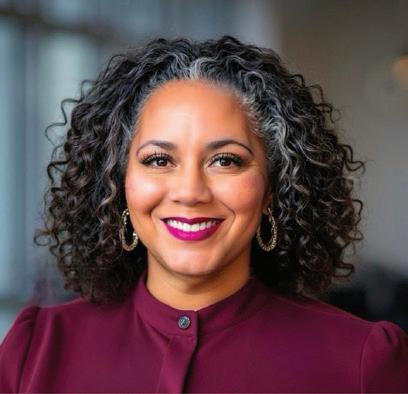
Tiffany Duvernay-Smith
Harvard historian Jarvis Given’s new book, “I’ll Make Me a World: The 100-Year Journey of Black History Month,” tells the century-old story of Black History Month, tracing its beginnings in 1926 as “Negro History Week” to today. Given focuses on ordinary people who played key roles in making Black history visible, expanding our understanding of why this month matters and who made it possible.
He’ll discuss his book and other Black history resources during a free 75-minute online class on Feb. 2. The conversation will feature Cierra Kaler-Jones, executive director of Rethinking Schools, and Jesse Hagopian, editor of the Zinn Education Project.
Sign up for the Feb. 2 class here. https://teachingforchange. app.neoncrm.com/np/
Tiffany Duvernay-Smith went from knowing the harsh realities of homelessness to owning her first home – made possible by the California Housing Finance Agency’s (CalHFA) Dream For All program, which is reopening applications this month with up to $150,000 in down payment assistance for first-generation buyers.
“I feel like I was the least likely person,” Duvernay-Smith says.
“I come from homelessness, and I didn’t know my story would change from homeless to homeowner. But if there’s a house with your name on it, nothing can stop you.”
Duvernay-Smith’s journey exemplifies the transformative potential of Dream For All, a program designed to help firstgeneration homebuyers across California. This year, applications will open on Feb. 24, and close on March 16. The program uses a random selection process to ensure equitable access, and Gov. Gavin Newsom’s office has directed that a minimum of
10% of funds go to applicants in Qualified Census Tracts -communities that historically faced discriminatory or unfair barriers to home ownership. For eligible participants, the program provides up to 20% of the home’s purchase price or appraised value in down payment assistance – capped at $150,000. The shared appreciation structure means that when a home is sold, the original loan plus a portion of the home’s appreciation is repaid, allowing CalHFA to reinvest the funds to help more Californians achieve homeownership.
CalHFA expects to make $150 million to $200 million available in 2026, potentially helping 1,000 to 1,500 families, with a total of approximately 2,000 households supported through the 2025–26 budget allocation of $300 million. The program is particularly impactful for Black Californians, who continue to face the highest rates of homelessness across the state and significant barriers to homeownership due to decades of discriminatory housing policies, redlining, and wealth inequities. “Black Californians continue to face some of the widest homeownership gaps in the state,” says Regina Brown
Thursday, February 5, 2026
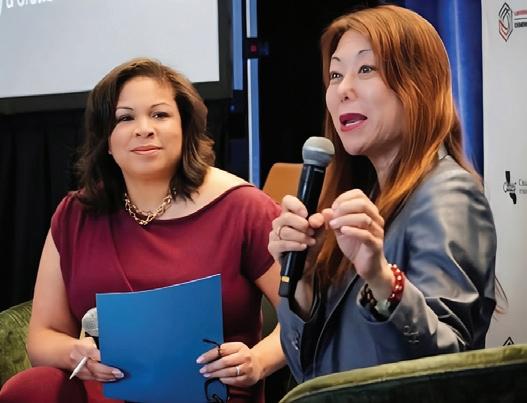
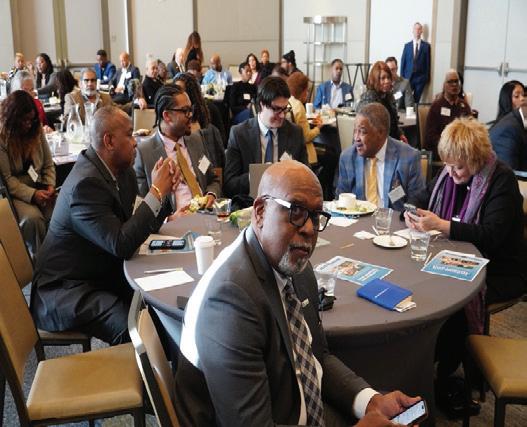
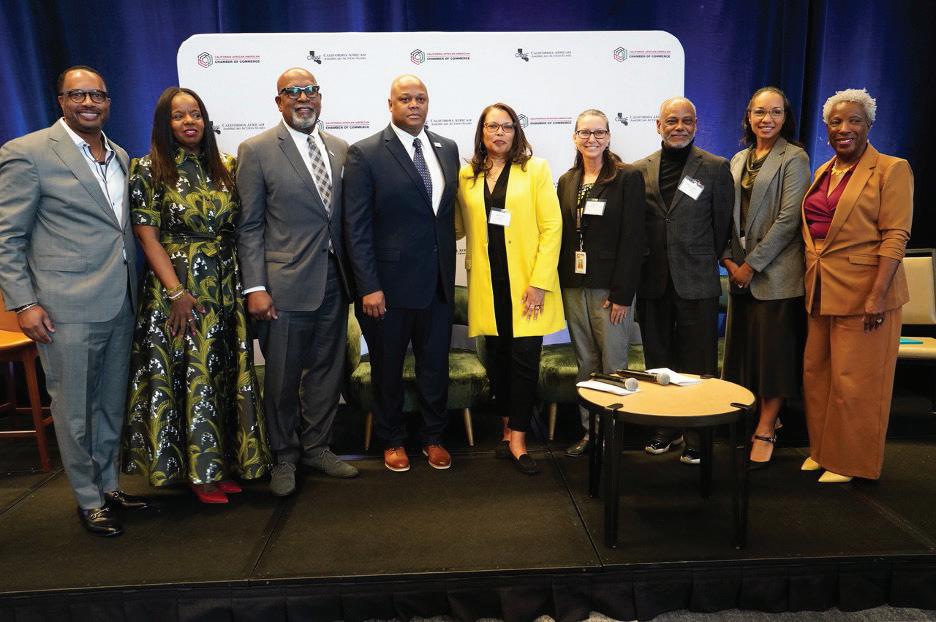
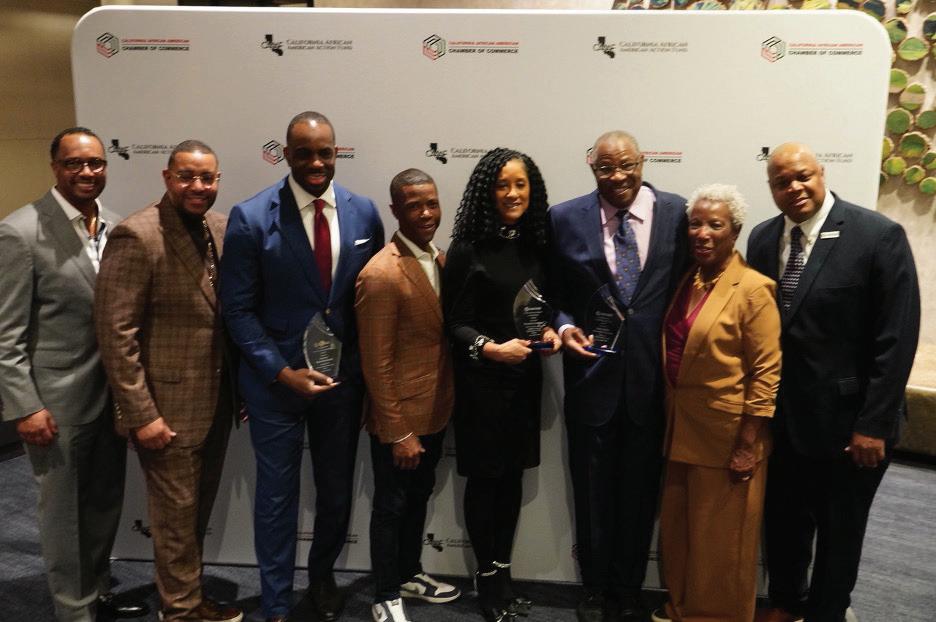
In step with its commitment to drive economic growth, equity, and wealth creation for African American businesses in the Golden State, the California African American Chamber of Commerce (CAACC) held its third annual California American Economy Summit at the Kimpton Sawyer Hotel in Sacramento on Jan. 28.
Organized by CAACC President and CEO Ahmad Holmes, along with CB Communications, members and the board of directors of the statewide organization shared the group’s current priorities and talked about its growing influence across California.
“This is not just about being a state chamber. This is about all of the information we are gathering for our CAACC membership that trickles down to all the chambers across the state,” said Chairperson Patricia Watts, who is also the proprietor of Cerritosbased FCI Management, an energy and water consulting firm.
“The idea is that we are one voice. Especially when it comes to policy issues and information sharing. We’re only stronger if we work together,” Watts said, speaking about the CAACC’s growing influence.
With the theme “Driving Equity Through Economic Innovation,” discussions at the CAACC summit focused on the intersection of policy and commerce, aiming to widen access to California's economic landscape for historically underfunded communities.
The agenda included plenary sessions with topics covering building economic power through artificial intelligence (AI), strengthening Black businesses, increasing state contracting opportunities and cross-sector collaboration to drive business growth.
“We’re grateful for all the entrepreneurs that were here,
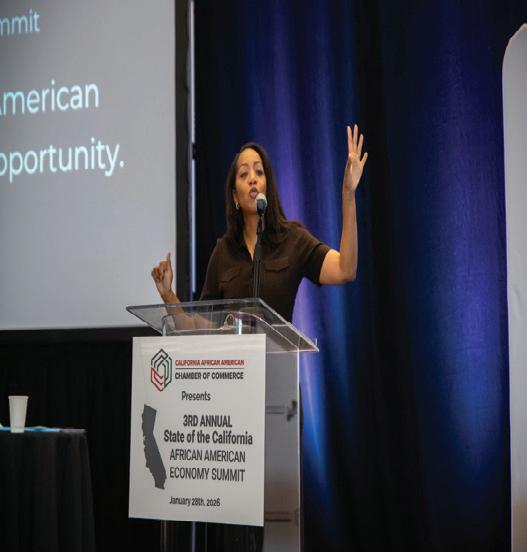
all the corporate leaders, the policymakers, investors, and community champions all in one single room,” Holmes said. “We are united in the shared belief that we believe Black businesses can grow in California. We truly believe that it is greatly possible. This summit is more than just a conference. It's a call to action. It’s about access to capital.”
Gov. Gavin Newsom delivered a video message opening the summit.
State officials like California State Controller Malia Cohen and State Treasurer Fiona Ma also attended.
Cohen highlighted the importance of achieving equitable economic growth, supporting Black-owned businesses, expanding access to state resources, and bringing awareness to the billions of unclaimed property dollars. She emphasized strengthening local economies and utilizing the State Controller's Office (SCO) to help small businesses.
“I want to share this update because the relationship between us -- my office and your businesses -- is a partnership that's grounded in transparency, and, most importantly, reliability,” Cohen said. “You want to know that these numbers that I'm giving you are accurate and responsible.
Cohen continued, “I feel a
sense of responsibility to make sure our bond rating is high, to make sure that you have access to the capital that you need, that you are aware of the opportunities that the state of California has (for small businesses).”
Ma participated in a fireside chat with Regina Brown Wilson, the Executive Director of California Black Media (CBM). Their conversation focused on economic development, infrastructure investment, and fiscal stewardship aimed at driving long-term growth in California. In addition, Ma shared insights on state-level initiatives designed to expand access to capital and support small business growth for underserved entrepreneurs.
CAACC board member Vic Baker noted that Ma has attended many of the statewide business advocacy group’s functions, sharing critical information about economic advancement and opportunity.
“The one thing that you can depend on is that Fiona Ma is here. She shows up,” said Baker, President of EquitiFy, a professional development and consulting firm.
“Fiona Ma supports the work that CAACC does,” Baker added. Members of the Asian Pacific Chamber of Commerce and the California Hispanic Chambers of Commerce were present at the summit. CAACC functions in a unified coalition with those chambers. The alliance was formed to drive collective growth for diverse businesses across the state.
Closing out the event, Toks Omishakin, California secretary of the State Transportation Agency; Danetta Jackson of the Department of General Services; and former Major League Baseball player and 2022 World Series–winning manager Dusty Baker were honored with community recognition awards.
continued in next 2 columns
Can You Afford a Mortgage but Not the Down Payment? Dream For All Offers Up to $150K...continued from page 2
Wilson, Executive Director of California Black Media.
“Programs like Dream For All are critical because they directly address the generational inequities that have long shut our community out of the housing market.”
Wilson was speaking during an online news briefing held Jan. 30 that featured Eric Johnson, information officer in CalHFA’s Marketing and Communications Division and Shonta Clark, senior loan consultant and CalHFA program educator, home counselor and broker, Southern California.
“There are a lot of people in California with steady jobs, good incomes, and strong credit scores – but who haven’t been able to save the five or even six figures needed for a down payment on a home,” says Johnson. “That’s exactly what Dream For All is designed to address. The Legislature has dedicated hundreds of millions of dollars to this program to help as many people as possible, and so far, we’ve helped about 3000 Californians buy their first
home.”
Eligibility requirements focus on first-generation homebuyers -- those who have not owned a home in the past seven years and whose parents also do not currently own a home. CalHFA defines a “first-time homebuyer” as someone who has not owned and lived in their own home in the past three years, Foster youth are automatically considered first-generation homebuyers, reflecting the program’s commitment to reaching Californians who have faced systemic barriers, CalHFA says.
Income limits vary by county, from $148,000 in rural areas like Del Norte County to $309,000 in more expensive cities in counties like Santa Clara in Silicon Valley, ensuring support targets those who need it most.
Applicants must work with CalHFA-approved lenders and provide standard documentation such as government-issued IDs and parental information.
Johnson advises interested homebuyers to begin preparing early: get pre-approved, complete necessary credit checks
and gather required documents before the application window opens on Feb. 24.
For Duvernay-Smith, preparation was less straightforward. After initially ignoring early program notices, she applied just days before the deadline. Random selection worked in her favor, and after months of credit improvement, paperwork, and persistence, Tiffany and her husband became homeowners in August 2025.
“There is a lot of fear, and there are a lot of doubts to overcome,” Duvernay-Smith says. “But just take a step. It’s possible.”
Experts like Clark, who works with CalHFA to educate potential homebuyers, emphasize the importance of community support. Many prospective Black homeowners are unaware of the program or the resources available to help them prepare, she says.
“With our community, we sometimes have negative energy around us that will say, ‘Oh, that’s not a real program.’
That’s not true. I’ve done these types of loans in 30 days from
At Sac Summit, California African American Chamber of Commerce Shows Growing Clout; Lays Out Top Goals...continued
Derek Smith, a CAACC board member who chairs both the Audit Committee and the Political Action Committee, said the organization is continuing to expand its membership, raise its profile, and execute a strategic plan aimed at reaching every region of the state.
Smith, the founder and managing member of Marinship Development Interest, noted that CAACC has already held summits and conferences in Sacramento, Los Angeles,
Burlingame, and Redwood City, with plans to bring future gatherings to San Diego, the Central Coast, and the Central Valley.
“Leadership matters,” Smith said. “This summit is the best one I’ve ever been a part of. We are becoming a force, and I think the state has been waiting for someone to step up. We had a few chambers out there, but we’re finally stepping in and taking control. We’re going to lead for as long as we can.”
Commentary: The Biases We Don’t See -- Preventing AI-Driven Inequality in Health Care
Technology is often sold to us as neutral, objective, and free of human flaws. We are told that computers remove emotion, bias, and error from decision-making.
But for many Black families, lived experience tells a different story. When technology is trained on biased systems, it reflects those same biases and silently carries them forward.
We have already seen this happen across multiple industries.
Facial recognition software has repeatedly misidentified Black faces at far higher rates than White faces, leading to wrongful police encounters and arrests. Automated hiring systems have filtered out applicants with traditionally Black names because past hiring data reflected discriminatory patterns. Financial algorithms have denied loans or offered worse terms to Black borrowers based on zip codes and historical inequities, rather than individual creditworthiness.
These systems did not become biased on their own. They were trained on biased data.
Healthcare is not immune.
For decades, medicine promoted false assumptions about Black bodies. Black patients were told they had lower lung capacity based on race, and medical devices adjusted their results accordingly. That practice, despite lacking scientific justification, was not broadly reversed until 2021. One of the clearest examples that harmed millions of Black patients involved kidney care. Up until 2022, a common medical formula used to measure how well a person’s kidneys were working automatically gave Black patients a higher score simply because they were Black. On paper, this made their kidneys appear healthier than they truly were. As a result, kidney disease was sometimes detected later in Black patients, delaying critical treatment and referrals. These biases were not limited to software or medical devices. Dangerous myths persisted that Black people feel less pain, contributing to undertreatment and delayed care. These beliefs were embedded in modern training and practice, not distant history. Those assumptions shaped the data that now feeds
After Don Lemon’s Arrest, Black Officials Raise Concerns About Independent Black Media...continued from page 1
power, expose wrongdoing, and inform the public,” warning that silencing journalists for doing their jobs “undermines the very foundation of our constitutional rights.”
start to finish,” Clark says. “We have to get the word out so people can take advantage of this opportunity to build wealth.”
The positive impacts of the Dream For All program are far reaching for the state economy, say advocates. Studies suggest that the shared appreciation loans can save an average of $1,200 per month on mortgage payments, freeing up income for other essentials and creating a pathway to long-term financial stability.
“With the Dream for All program, I closed a number of sales last year and I’m hoping to do some this year for my community and outside my community.” says Clark. “We’re everywhere in the state of California.”
Johnson encourages applicants to remain optimistic.
“Take the first step. Despite high interest rates and high prices, it is still possible to buy your first home in California. Believe in yourself and know that homeownership is meant for you,” says Johnson.
CLBC Vice Chair Isaac Bryan (D-Ladera Heights) placed the moment in historical context.
“Black voices matter. Black journalists matter. Black press has
“We
illegal violence on our journalists. They will not be silenced, and neither will we.”
4
By Dr. Paul McConnell, National Dental Director, UnitedHealthcare Dental

Oral health is more than just a bright smile, it’s an important part of a child’s growth, development and overall well-being. Tooth decay is the most common chronic disease among kids in the U.S., affecting nearly half of children ages 2-19. About 1 in 10 children ages 2-5 experience untreated decay, a number that climbs to nearly 1 in 5 by ages 6-8.
Baby teeth play an important role in a child’s development, serving as the foundation for healthy permanent teeth and supporting speech and overall well-being. Moreover, emergency dental care causes children in the U.S. to miss approximately 34 million school hours annually. Good oral health habits and staying on top of dental checkups from an early age can help reduce the risk of developing cavities and other conditions that affect overall health.
Here are some tips for parents to help promote good childhood dental health:
Encourage healthy snacking and hydration. What children eat and drink plays a big role in their oral health. Sugary snacks and drinks feed bacteria that can erode enamel and lead to cavities. Limiting sugar and encouraging plenty of water helps rinse away food particles, dilute acids, and support healthy saliva flow. Adding nutrient-rich foods like fruits, vegetables, cheese and yogurt provides calcium and vitamin D to help keep teeth and bones strong.
Make preventive dental care part of your routine. Regular preventive dental care may help to catch issues early on, helping reduce the risk of more serious — and costly — problems down the road. For kids, untreated cavities can result in poor nutrition and potentially stunt growth and development. Oral health can also be linked to health conditions like diabetes and heart disease, making it important to take advantage of preventive services from a young age. Many dental plans cover preventive services
such as exams, cleanings, x-rays and sealants. Call the number on the back of your dental insurance card to find out what your specific plan covers.
A child's first dental visit should be scheduled after their first tooth appears and no later than their first birthday. After that, kids should see the dentist every six months.
Promote a positive dental experience. Dental fear and anxiety is quite common — one third of young kids around the world experience it. Dental visits may include the use of instruments or services that can seem scary. Regular visits to the dentist may help kids get more comfortable and help make the experience more familiar. Parents can help ease nerves by explaining what to expect, answering questions or using books or videos to help kids feel prepared and confident. Provide guidance for good dental hygiene. While parents may want to supervise brushing until at least age 8 to ensure proper technique, education around oral health can begin much earlier. Encourage brushing twice daily with an ADAapproved toothpaste. Introduce flossing when two teeth touch. This helps teach children that cleaning between teeth is just as important as brushing. Parents can make dental care fun by letting kids choose toothbrushes in their favorite colors, turning brushing time into a family activity, singing songs or setting timers to help them stay engaged. Replace toothbrushes regularly. Change toothbrushes every three to four months, or sooner if bristles are frayed. During cold and flu season, replace toothbrushes after being sick to avoid reintroducing germs to the body.
Encouraging healthy dental habits and staying consistent with preventive care from a young age may help children grow up with strong smiles, fewer health complications and the confidence that comes with a lifetime of good oral health.
Political Playback: California Capitol News You Might Have Missed
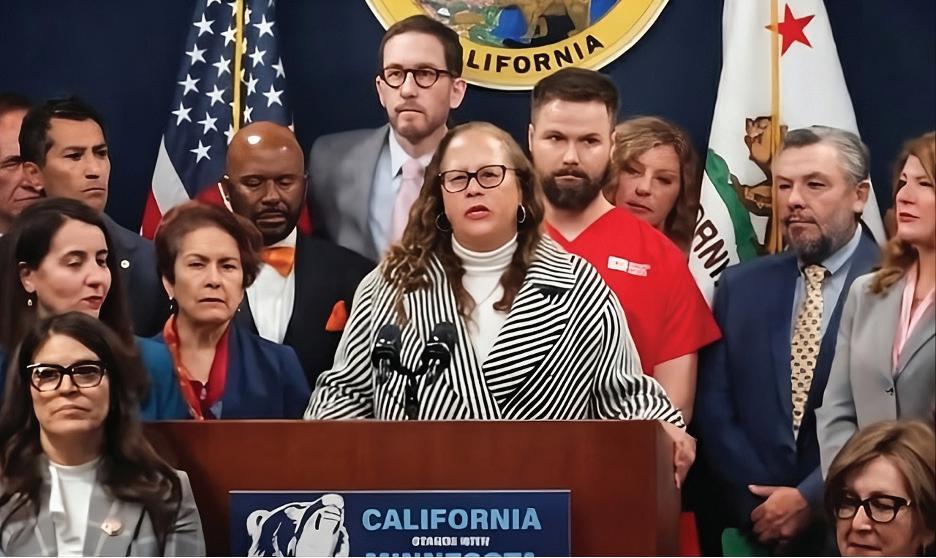
Black Caucus Members Join Legislative Democrats to Condemn Fatal Shootings by Federal Agents
Thursday, February 5, 2026
Black Caucus Members Join Legislative Democrats to Condemn Fatal Shootings by Federal Agents...continued
ICU nurse, and Renee Nicole Good, a poet, writer, and mother of three.
Sen. Laura Richardson (D–San Pedro) spoke on behalf of the CLBC, criticizing federal immigration enforcement practices and calling for accountability.
Richardson, who said she was previously married to a police officer, argued that Immigration and Customs Enforcement (ICE) and U.S. Border Patrol agents are not “making sure lawful activity is occurring.” She invoked the words of civil rights leader Dr. Martin Luther King Jr. to condemn what she described as public silence in the face of injustice.
“We are Californians. We are Americans, and we will not be silent. We will be here every time, every day, until this stops,” Richardson said.
Assemblymember Mark González (D–Los Angeles) recalled the names of people who were allegedly shot in January during enforcement operations involving ICE or U.S. Border Patrol agents.
On New Year’s Eve, Keith Porter Jr., 43, was allegedly shot and killed by an off-duty ICE agent in Northridge, Los Angeles. Authorities said the confrontation occurred outside an apartment complex after the agent alleged Porter fired
celebratory gunshots into the air.
“What’s been happening there is not isolated. It’s part of a dangerous pattern of federal power turning inward on the people it claims to serve,” González said.
Following the news conference, Democratic lawmakers announced a slate of legislative proposals aimed at increasing oversight and limiting the involvement of state law enforcement in federal immigration enforcement.
During the briefing, Rivas described the fatal incidents as an “assault on the American right to life” and characterized federal agents’ actions as a form of “outof-control violence.”
On Jan. 6, Assemblymember Isaac Bryan (D–Ladera Heights) introduced Assembly Bill 1537, titled “Peace Officers: Secondary Employment.” The bill would prohibit California peace officers from taking secondary employment, contract work, or volunteer roles with the U.S. Department of Homeland Security (DHS), its contractors, or any entity involved in immigration enforcement.
“Right now, California’s law enforcement officers can take second jobs with ICE,” Bryan, a member of the CLBC, wrote in a Jan. 27 Instagram post. “AB 1537
Submission Deadlines: Mondays By 5pm & Tuesdays by noon when Monday is Holiday
Commentary: The Biases We Don’t See -Preventing AI-Driven Inequality in Health Care...continued from page 3
medical technology. When biased clinical practices become the foundation for algorithms, the risk is not hypothetical. The bias can be learned, automated, and scaled.
We are seeing this happen in real time.
Across the country, some medical AI algorithms have underestimated how sick Black patients are because they used past healthcare spending as a proxy for medical need. Since Black patients historically received less care and fewer resources, the system overestimated their health because it relied on biased data. That meant fewer referrals for specialty care, fewer preventive interventions, and delayed treatment.
For us in the Black community, this creates understandable fear and mistrust. Many families already carry generational memories of medical discrimination, from higher maternal mortality to lower life expectancy to being dismissed or unheard in clinical settings. Adding AI biases could make our community even more apprehensive about the healthcare system.
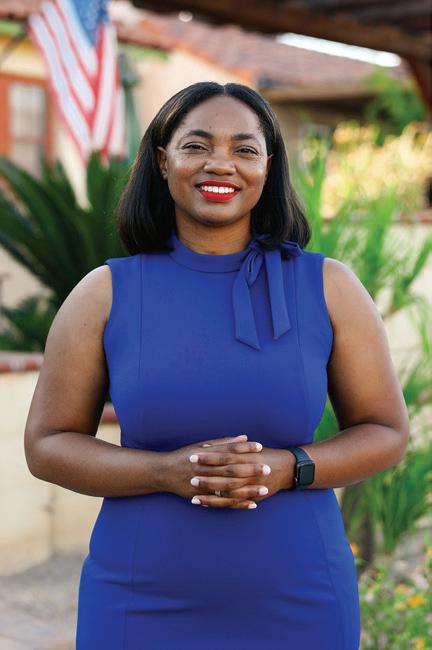
As a physician, I know how much trust patients place in the healthcare system during their most vulnerable moments. As a Black woman, I understand how bias can shape experiences in ways that are often invisible to those who do not live them. As a mother of two Black children, I think constantly about the systems that will one day shape their health and well-being. As a legislator, I believe it is our responsibility to confront emerging risks before they become widespread harm.
That is why I am the author of Senate Bill (SB) 503. This bill aims to regulate the use of artificial intelligence in healthcare by requiring developers and users of AI
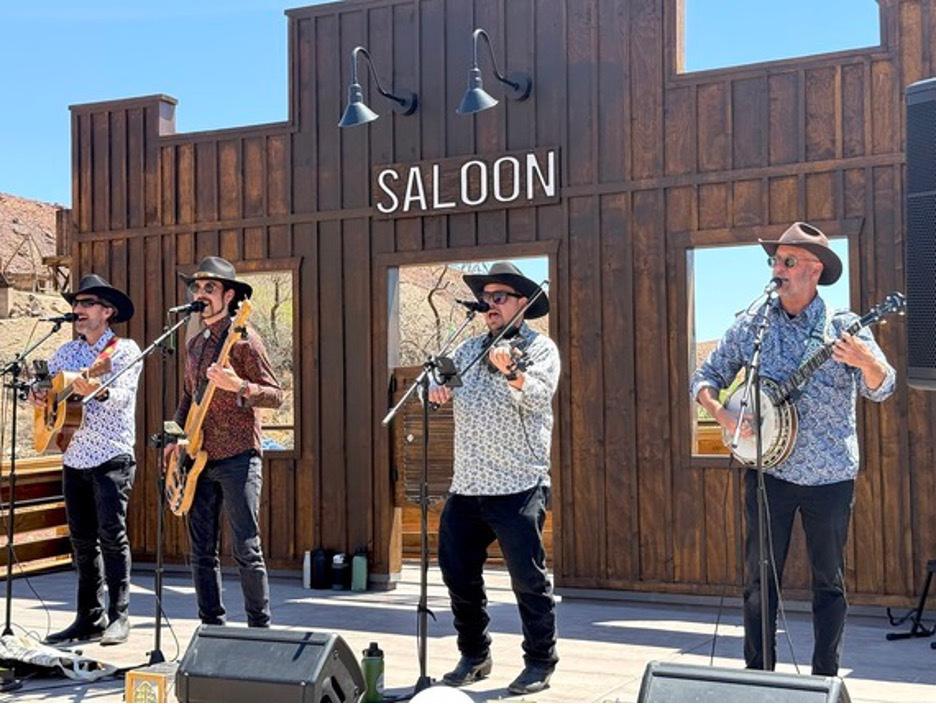
San Bernardino County Regional Parks is excited to commemorate the fifth annual California Days event at Calico Ghost Town over Presidents’ Day weekend on Feb. 14-15, 2026, from 9 a.m. to 5 p.m.
The event celebrates early California history with a focus on California’s admission to the union as the nation’s 31st state on Sept. 9, 1850, which is recognized on February 22 every year.
This family-friendly event highlights the people and culture of early California by hosting family activities, gunfighter shows by the Calico Mountain Volunteer Gunfighters, butter churning, and historic reenactments along with educational displays on the state’s Bear Flag, Pony Express Trail and Butterfield Overland Trail.
Serving as a natural backdrop to the Old West, Calico will travel back in time with a beard and mustache contest, arts & crafts, games and contests for all ages, pony rides, stories about the Pony Express, and a Pony Express relay for kids under 11.
systems to identify, mitigate, and monitor biased impacts in their outputs to reduce racial and other disparities in clinical decisionmaking and patient care.
It is part of California’s effort to ensure that, as artificial intelligence becomes more deeply embedded in healthcare and society, innovation continues to move forward responsibly. Currently under consideration in the State Assembly, SB 503 was not written to slow innovation. In fact, I encourage technological advances in medicine. However, we must ensure that any new tool we introduce into the healthcare field helps patients rather than harms them.
But this conversation is bigger than any single bill.
It is about whether we allow human bias to migrate into code and quietly shape medical decisions for years to come, or whether we intentionally build systems grounded in fairness and accountability.
Every community deserves a healthcare system where decisions are based on need, not stereotypes or flawed data. Every patient deserves to be seen accurately, treated fairly, and cared for with dignity.
If we want a healthcare system worthy of our communities, we must demand that it be free of bias and grounded in fairness.
The health of our families, our children, and our future depend on it.
About the Author
Sen. Akilah Weber Pierson (D–San Diego) is a physician and public health advocate representing California’s 39th Senate District. A former Assemblymember, she focuses on advancing health equity, strengthening healthcare systems, and protecting vulnerable communities across the state.
Live music from popular artists such as The Storytellers, Blue Henry’s and Holy Crow as well as Calico favorites: High D Boys, Orange Town Revival, Mojave County Band and Blacksmith Boys. Other entertainment includes the Victorian Muse Theater at the Town Hall and classroom reenactment sessions from the 1800s at the schoolhouse as well as some Wild West street skits
performed by the "Scoundrels Alley" Calico troupe. The popular Dorsey Dog Delivery Game also returns and is a doggie scavenger hunt where owners and their furry friends search for clues throughout town to win a prize.
There will be plenty of food options and beverages for eventgoers at the Calico House Restaurant, Silver Rush Burger and Lil’s Saloon. All the Calico attractions will be open, including Maggie Mine and the Calico Oddessa Railroad. Attractions are an additional charge. For attraction prices, visit www.calicoattractions.com. The event is sponsored by Apollo Silver Corp., Mitsubishi Cement Corporation an Equinox Gold, who will be on-site with regional mining displays and information materials related to mineral uses in modern consumer products.
Calico Ghost Town offers full and partial RV hookup camping. Reservations may be booked directly online at www. sbcountyparks.com or by calling 1-800-862-2542. Calico offers cabins, bunkhouses and RV trailers as rentals. Calico Ghost Town is located off I-15 at Ghost Town Road in Yermo, just 10 miles north of Barstow. Follow Calico Ghost Town on Facebook at for event photos and videos. Calico will be open from 9 a.m. to 5 p.m. Prices are $10 per adult, $5 children ages 4-11, and 3 years and under are FREE. For more details and a daily schedule of events, visit parks.sbcounty. gov/calico-california-days.
Online ticket sales open today for historic first concert at ONT Field
The Avett Brothers and Dwight Yoakam to Headline March 21 Event
ONTARIO, Calif. – Greater Ontario California (GOCAL) and the City of Ontario today announced that online ticket sales officially open today for the first concert ever to be held at ONT Field, marking a major milestone in the debut of the region’s newest sports and entertainment destination.
Tickets for the highly anticipated concert featuring folk-rock sensations The Avett Brothers, country music legend Dwight Yoakam, and special guest The Iguanas, go on sale today, Friday, January 30, at 10 a.m., exclusively through Ticketmaster.
Set for Saturday, March 21, the concert will officially introduce ONT Field as the Greater Ontario region’s premier outdoor venue for live entertainment and largescale community events.
“Today’s ticket launch is the moment when this incredible project truly becomes real for our community,” said Michael Krouse, President and CEO of GOCAL. “This concert is the first of many unforgettable experiences to come at ONT Field, and it reflects our region’s growing role as a destination for worldclass sports, entertainment and tourism.”
Located near Riverside Drive and Vineyard Avenue, ONT Field will serve as the home of the Ontario Tower Buzzers, the
Dodgers’ Single-A affiliate, and will anchor the Ontario Sports Empire. With a capacity of 6,000, the stadium is designed as a versatile outdoor venue capable of hosting concerts, festivals, cultural celebrations and major special events in addition to professional baseball. Additional event details, including show times, parking information, venue amenities and on-site experiences, will be released in the coming weeks. The Avett Brothers are fourtime GRAMMY Award nominees whose genre-blending sound has earned them a devoted global following and numerous charttopping albums. Dwight Yoakam is a true icon of American music, with more than 25 million albums sold worldwide and a career that has helped redefine modern country through his signature fusion of honky-tonk, rock and Americana. Special guest The Iguanas bring their vibrant blend of Latin, Caribbean, blues and New Orleans influences to complete a truly diverse and dynamic lineup. Tickets are expected to move quickly for this landmark event, which celebrates not only the opening of a new venue, but a new era for entertainment in the Greater Ontario region. For tickets, visit Ticketmaster. com starting today at 10 a.m.
NOTICE OF PETITION TO ADMINISTER ESTATE OF: KAREN B. MCHUGH CASE NO: PROVA2600022 To all heirs, beneficiaries, creditors, contingent creditors, and persons who may otherwise be interested in the will or estate, or both of: KAREN B. MCHUGH also sometimes known as KAREN RUTH BOEGLER and KAREN BOEGLER MCHUGH A PETITION FOR PROBATE has been filed by MARGARET PASZINSKI in the Superior Court of California, County of SAN BERNARDINO THE PETITION FOR PROBATE requests that: MARGARET PASZINSKI be appointed as personal representative to administer the estate of the decedent. THE PETITION requests the decedent’s will and codicils, if any, be admitted to probate. The will and any codicils are available for examination in the file kept by the court THE PETITION requests authority to administer the estate under the independent Administration of Estates Act. (This authority will allow the personal representative to take many actions without obtaining court approval. Before taking certain very important actions, however, the personal representative will be required to give notice to interested persons unless they have waived notice or consented to the proposed action.) The independent administration authority will be granted unless an interested person files an objection to the petition and shows good cause why the court should not grant the authority. A hearing on the petition will be held in this court as follows: Date: February 24, 2026 Time: 9:00 a.m. Dept: F2 SUPERIOR COURT OF CALIFORNIA, COUNTY OF SAN BERNARDINO 17780 Arrow Boulevard Fontana, CA 92335 Fontana District Probate IF YOU OBJECT to the granting of the petition, you should appear at the hearing and state your objections or file written objections with the court before the hearing. Your appearance may be in person or by your attorney. IF YOU ARE A CREDITOR or a contingent creditor of the decedent, you must file your claim with the court and mail a copy to the personal representative appointed by the court within the later of either (1) four months from the date of first issuance of letters to a general personal representative, as defined in section 58(b) of the California Probate Code, or (2) 60 days from the date of mailing or personal delivery to you of a notice under section 9052 of the California Probate Code. Other California statutes and legal authority may affect your rights as a creditor. You may want to consult with an attorney knowledgeable in California law.
1990; Decal/License#: LAN2139; Serial #(s).: 12613850A / 12613850B; Insignia: PFS223916 / PFS223917; Location: 2494 W. Main St, Space 4, Barstow, CA 92311, San Bernardino County. You are further notified that the mobilehome and all its contents, will be sold at 10:00 a.m. on 02/10/26 at 2494 W. Main St, Space 4, Barstow, CA 92311. The warehouseman’s
PETITION requests authority to administer the estate under the independent Administration of Estates Act. (This authority will allow the personal representative to take many actions without obtaining court approval. Before taking certain very important actions, however, the personal representative will be required to give notice to interested persons unless they have waived notice or consented to the proposed action.) The independent administration authority will be granted unless an interested person files an objection to the petition and shows good cause why the court should not grant the authority. A hearing on the petition will be held in this court as follows: Date: 03/02/2026 Time: 9:00AM Dept: F2 SUPERIOR COURT OF CALIFORNIA, COUNTY OF SAN

Here's a compelling reason to shed those extra pounds: A new study finds that middleaged people who are obese, or even simply overweight, may face more health problems down the road. For Blacks, the topic of obesity has been a growing concern for decades. Nearly 48 percent of Blacks are clinically obese, according to the American Psychological Association.
The study, of nearly 30,000 men and women, found that the more people weighed around age 40, the greater their odds of chronic health conditions after age 65. And obesity, particularly severe levels, ultimately cut people's lives short by five years, on average, compared to those who were in the normal-weight range.
“There are serious health consequences to obesity that should not be ignored,” says lead researcher Dr. Sadiya Khan. She is an assistant professor at Northwestern University Feinberg School of Medicine, in Chicago.
Tackling obesity
Class III obesity, once known as “morbid obesity,” refers to a body mass index (BMI) of 40 or more.
“These patients are at least 100 pounds overweight, and often have conditions like high blood pressure and type 2 diabetes,” says Dr. Vance Albaugh, a bariatric surgeon and researcher at Pennington Biomedical Research Center, in Baton Rouge, La. Those people, Albaugh adds, frequently need help beyond lifestyle changes — including medication or some type of weight-loss surgery. Those procedures alter the digestive tract to limit the amount of food a person can eat and the absorption of calories from food.
But this study shows that while class III obesity in middle age might be the biggest health threat, it is not the only one, Albaugh shares.
The findings show a gradient: Middle-aged people who were overweight fared a little worse in older age than those who were
normal-weight, and those with mild obesity did a little worse still.
“That’s not surprising,” Albaugh, who was not involved in the research, says. But it underscores the potential benefits of healthy lifestyle changes for people with the common middleage spread.
“This suggests you can benefit from losing a small amount of weight, or just stopping yourself from moving into the ‘obese’ category,” Albaugh adds.
That’s not to say weight loss — or more to the point, maintaining weight loss — is easy. The human body is more wired toward gaining weight than losing it, Albaugh notes. So when calories are more scarce, the body responds by expending fewer of them.
On top of that, people generally gain weight as they get older, Albaugh adds. It all means that a middle-aged person trying to shed pounds may be fighting an uphill battle.
Not just about the number on the scale
The good news, though, is that it’s not all about the number on the scale, Albaugh shares. People can still reap health benefits from eating well and exercising, even if the scale shows little change.
The new findings, published online March 15 in JAMA Network Open, are based on almost 30,000 Chicago-area adults who were followed for over 40 years. At the outset, they were 40 years of age, on average.
Overall, those who were
overweight had a similar life expectancy as their counterparts with a normal BMI. But obesity took about two to five years from people’s lives. People who were normal-weight died at age 82, on average, versus age 77 among those with class III obesity in middle-age.
But when it came to chronic health conditions, even overweight people were worse off. Compared with their normalweight counterparts, they typically spent an extra year of their lives with conditions like heart disease, diabetes or stroke. That increased to two to three years among people who were moderately obese (class I or II) in middle-age.
Khan stresses that “it’s never too early or too late” to make lifestyle changes for the better.
But she also says the burden should not be on individuals alone — especially people with low incomes who struggle to simply pay the rent. Khan says they need the help of policies that, for example, make healthy “whole” foods more accessible and provide “green spaces” for exercise.
Albaugh also suggests that people start with small changes that are achievable and, most importantly, sustainable. That could mean replacing sugary drinks with water, using the stairs instead of the elevator, or taking a daily walk around the neighborhood.
By Jessica Daniels, BDO Staff Writer | Published
March 25,
2022

a

San Bernardino, CA - On
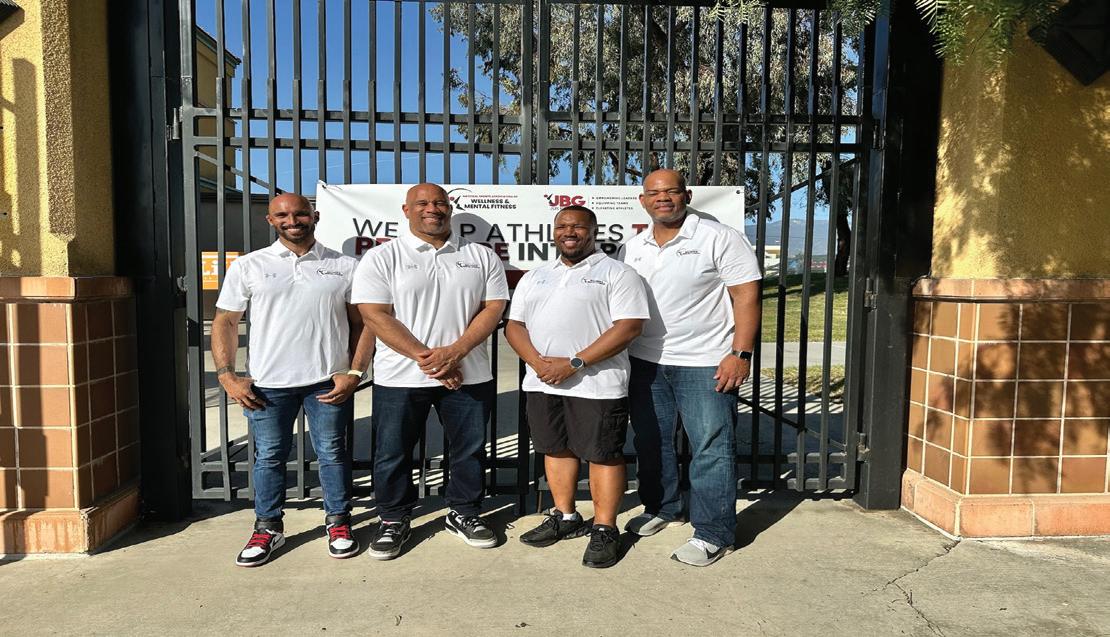
Saturday, January 31, 2026, the National Sports Association of Wellness & Mental Fitness (NSAWMF) officially launched its Jus Be Great™ initiative with an exciting and impactful Community Kickoff at the San Manuel Stadium home of the Inland Empire 66ers, drawing more than 150 youth athletes, parents, coaches, and community leaders for a first-ofits-kind mental fitness experience in the Inland Empire. The morning began with a private pre-reception, where NSAWMF honored five Inland Empire coaches whose leadership and dedication have shaped generations of young athletes: Leroy Sanchez, John Mosher, Carlton Austin, John Hill, and Harrison Cole. Coach Leroy Sanchez played a formative role in the athletic and personal development of
NSAWMF Co-Founders
and Gregory
highlighting the
impact of
the
and
Each
was recognized for their
contributions to
they have
beyond
and for the
and
During the
program, NSAWMF paused for a
Moment to reflect the organization’s commitment to legacy and community investment. Introduced by Sammy Knight Jr., the moment featured Sammy Knight Sr., father of Sammy and Gregory Knight, who presented a $3,000 contribution from the Knight Family Foundation to the Riverside Sports Hall of Fame in honor of
recognized. Austin Quick and Stan Morrison accepted the donation on behalf
of the organization, highlighting the importance of preserving and celebrating the region’s sports legacy.
“This moment represented everything Jus Be Great™ stands for,” said Sammy Knight Jr. “We are honoring the people who poured into generations of young athletes while reinvesting directly into the institutions that protect and celebrate that legacy. This is what stewardship looks like in action.”
Following the pre-reception, the main kickoff program began, welcoming youth athletes and families into the Jus Be Great™ interactive experience, bringing mental fitness to life through movement, challenge, and realtime coaching. Led by NSAWMF Co-Founders Sammy Knight Jr., Gregory Knight, and Dr. Jei Pearcey, with support from trained volunteers, youth participants engaged in hands-on activities designed to help them understand pressure, reset to focus, and emotional control, self confidence and nutrition in ways that felt relatable and engaging.
Sammy Knight Jr., a former12 year12 year NFL veteran and veteran and All-Pro, worked directly with athletes through competitive resilience and mindsetbased exercises, demonstrating how high-pressure moments can change perception and how focus is a skill that can be trained. For many participants, the opportunity to learn directly from a former professional athlete added a
By Stacy M. Brown

Famed journalist Don Lemon may draw the headlines, but Emmy-winning independent reporter Georgia Fort and Trahem Jenn Crews and Jamael Lydell Lundy were also taken into custody as federal agents moved against four Black journalists whose only apparent offense was documenting protests critical of the Trump administration’s immigration crackdown.
Lemon, a veteran broadcaster and longtime critic of President Donald Trump, was arrested late Thursday night in Los Angeles after livestreaming an anti-ICE demonstration connected to a January protest at a St. Paul, Minnesota, church. A short time later, Fort, a respected Minnesota-based journalist, was arrested by federal agents in her home state for reporting on the same protest, according to public statements and court records.
Los Angeles Mayor Karen Bass said the arrests signal a dangerous escalation by the Trump administration rather than any attempt to ease tensions following the fatal shootings of civilians by federal agents in Minnesota. She said Lemon was simply doing his job when agents arrested him and stressed that Fort’s detention made clear this was not an isolated incident but a broader assault on press freedom. Federal authorities revived charges tied to a protest at Cities Church in St. Paul after a magistrate judge had already declined to approve arrest warrants against Lemon and others, citing insufficient evidence. Prosecutors then pursued indictments through a
grand jury, a move civil liberties advocates say appears designed to sidestep judicial scrutiny and chill coverage of protests against ICE operations.
Fort documented her own arrest in a brief livestream as agents arrived at her door, telling viewers she was being taken into custody for filming the protest as a member of the press. Her arrest, announced publicly by Attorney General Pam Bondi, placed an Emmy-winning journalist alongside protesters in a case the administration has described as a coordinated attack. Civil rights leaders said the symbolism was unmistakable. Rev. Al Sharpton, founder and president of the National Action Network, said Lemon’s arrest marked a direct blow against the First Amendment and warned that journalists critical of the president were being singled out. Press freedom advocates echoed those concerns. Lisa Gilbert, co-president of Public Citizen, said the arrests represent a constitutional crisis for journalism in the United States, adding that reporters have the right to document and share information with the public without fear of retaliation.
Mayor Bass said she contacted the U.S. attorney to demand information about Lemon’s status and warned that arresting journalists for entering a church while reporting crosses a line the Constitution was written to prevent. “It’s an egregious assault on constitutionally protected First Amendment rights,” Bass said.
powerful layer of inspiration and credibility to the experience.
In parallel, parents and coaches participated in a dedicated workshop led by clinical sports performance psychologist, Dr. Jei with support from Knight Jr., focused on supporting athlete mental fitness, confidence, and long-term well-being. The session provided practical tools for reinforcing healthy identity, emotional regulation, and resilience both on and off the field.
The event concluded with additional interactive experiences centered on identity, selfconfidence, nutrition, and wellness, reinforcing NSAWMF’s core belief that mental fitness is not reactive, but a proactive and trainable foundation for performance and life success.
“The energy throughout the stadium was incredible,” Gregory Knight added. “Seeing more than 150 people fully engaged, kids learning, parents asking questions, and coaches leaning in, it confirmed that this work is needed and that our community is ready for it.”
Through Jus Be Great™, NSAWMF continues to expand its mission to make mental fitness accessible to athletes, families, and coaches nationwide. Those interested in supporting the movement or becoming part of the association can learn more, join, or make a contribution by visiting www.nsawmf.org.
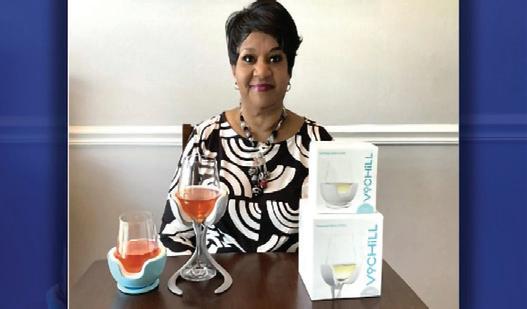
Finally, there is a product that can keep white and rosé wine cold while drinking! This product can also bring red wines to cellar temperatures in just a few minutes. As a wine lover I’m delighted to share this amazing product.
What glass shapes will fit my VoChill? Wine chillers are designed to pair with most standard stem or stemless glassware. However, wine glass bowls wider than 3.75 inches and stems longer than 4.5 inches may not be suitable with VoChill. Glasses with a flat bottom, such as a highball or whiskey tumbler, are not recommended for either style.
VoChill Has a Brand of Wine Glasses
German-made from the finest lead-free crystal. Designed with an ultra-thin rim that enhances the wine’s flavor. Crafted with a seamlessly pulled stem from the bowl for a sleek, durable design that exudes elegance and balance. The glasses are lovely and can be used for any varietal of wine. Just like wine these wine chillers are for adults only and contain multiple small magnets. Dispose of magnets promptly if they become exposed and separate from any part of VoChill. These wine chillers make excellent gifts for wine lovers. https://vochill.com
VoChill is a wonderful concept brought to life by Randall & Lisa Pawlik Inventors + Co-Founders of VoChill. The couple was on “Shark Tank” and received a standing ovation from me. There is a stemless wine glass version and a version for stemmed glasses. Very sturdy units that have a chill cradle which easily comes away from the base and put into the freezer for 3 hours or longer. A magnet securely holds the chill cradle to the base, and the unit is very simple to use. The look is sleek and contemporary, and each product comes in several colors. A new color was recently introduced “Noir” is solid black. Products are made from a highly durable polycarbonate plastic. Also used is a HighDensity Polyethylene for the Chill Cradles™. This is a reliable material that performs optimally for a lifetime of freeze-thaw cycles. Don’t put the wine chiller in a dish washer or in dish water. Simply wipe all components clean with a damp or dry cloth. Glasses for VoChill
Thursday, February 5, 2026
By Beverly Moran/The Conversation

order
the
More than 6 million Americans receive paper tax refund checks annually. Often, those refunds go to purchase groceries or pay the bills. But this year, those taxpayers may be surprised to learn that the paper check they’re waiting for no longer exists.
That’s because of executive order 14247, which President Donald Trump signed in 2025. It directed the Treasury Department to stop issuing paper checks for tax refunds.
The executive order has its fans. Nacha, the organization that runs the network that electronically moves money between financial institutions, says the new rules could save the government US$68 million each year. The American Bankers Association is also excited, predicting the move will help people save on check-cashing fees. Other supporters argue the change will prevent mail theft and check fraud. But what about the 6 million Americans without bank accounts – the so-called “unbanked”?
accounts
2025
form of
Watchdogs warn that they will suffer if exceptions and outreach fall short. As a professor who specializes in tax law, I think those concerns are valid.
Reform could leave the unbanked behind Shifting to electronic payments is a classic modernization effort. So how could that be bad?
The problem is that a sizable number of Americans have no bank account. Twenty-three percent of people who earn under $25,000 were unbanked in 2023. Only 1 percent of people earning over $100,000 in 2023 lacked a bank account.
Black and Hispanic Americans, young adults and people with disabilities are more likely to be unbanked than other people, and 1 in 5 unbanked households include someone with a disability.
Low-income families often use their refunds to pay for basics such as food and rent. And under the status quo, unbanked people already lose a large slice of those refunds to fees. Check cashers, for example, can charge up to 1.5
Red Tape Is Strangling Rural Health Care. Let's Cut It.
By Sally C. Pipes
Rural America is running out of doctors. According to a recent report from the Commonwealth Fund, 43 million Americans now live in rural communities facing a shortage of primary care providers.
This shortage isn't new. It's been reality for rural America for decades. And it helps explain why patients there experience higher rates of chronic illness -- and die sooner -- than their urban counterparts.
At first glance, the problem seems simple -- too few doctors and nurses. But if that's the case, why have so many states adopted regulations that restrict the supply of care?
Our leaders need to scrap those regulations -- and simultaneously invest in efforts to train more healthcare providers locally. Consider scope-of-practice laws, which limit what kinds of care nurse practitioners and physician assistants can deliver to patients -- and how they can do so. In states such as Texas, Oklahoma, and California, nurse practitioners must work under the supervision of another healthcare provider, generally a physician, for their entire career.
Physician assistants must deal with similar restrictions.
Many of these highly trained professionals could treat patients immediately in rural communities that desperately need them. Instead, they're sidelined by regulations that make it illegal for them to use the full extent of their education.
Rolling back these rules would quickly expand access to care.
"Certificate of need" laws are another barrier. These rules force would-be providers to convince state officials that a community "needs" a new clinic or facility before one can open.
They also offer incumbent providers the chance to lobby
percent for government checks in New York, up to 3 percent in California, and even more in other states.
But the unbanked might find that they’re paying even higher fees in a post-check world. They might, for example, use paid tax preparation services to access refund loans. The federal courts and investigative journalists have discussed ways that prepaid tax preparers engage in false advertising and overpriced services.
Or they might forgo their tax refunds entirely.
Geography, race and the digital-banking divide
Where people live affects their access to banking.
Gaps in broadband coverage and lack of public transportation to reach libraries make computer access a problem for poor and rural people.
In so-called “banking deserts” – communities with few or no bank branches – people are more likely to use costly alternatives such as payday lenders and check-cashing services.
Black-majority communities face distinct banking desert challenges, for both poor and middle class Black families. That’s because a middle-income Black family is more likely to live in a low-income neighborhood than a low-income White family. Taken together, these barriers mean that many Americans who are legally entitled to tax refunds could soon struggle to receive them.
What should leaders in government do now?
The government is aware of
against the entry of competitors. What incumbent wouldn't want the government to outlaw its competition? That's exactly what certificate-of-need laws can enable -- to the detriment of patients.
In any other part of the economy, high prices and long waits are signals for entrepreneurs to enter the market. In health care, CON laws replace market signals with bureaucratic permission slips.
Eliminating these laws would make it far easier for doctors and other clinicians to practice in underserved parts of the country. Of course, paring back rules and regulations can only do so much. Rural America also needs a more robust pipeline of physicians. Fortunately, there's evidence that doctors trained in rural settings often choose to stay. A recent study in the Journal of Graduate Medical Education found that residents who complete at least half their training in rural communities are five times more likely to end up practicing there.
Philanthropy could help build that pipeline of rural medical talent. Americans donated just under $600 billion to charity in 2024. Steering even a small portion of that sum to things like rural residency programs could begin to narrow the rural physician gap -- and eventually deliver huge returns for public health.
Rural America is in need of intensive care. Market forces can address that need -- if we let them.
Sally C. Pipes is President, CEO, and Thomas W. Smith Fellow in Health Care Policy at the Pacific Research Institute. Her latest book is The World's Medicine Chest: How America
Achieved Pharmaceutical Supremacy -- and How to Keep It (Encounter 2025). Follow her on X @sallypipes.
the problem. The IRS promises that “limited exceptions” will be available to people who don’t have bank accounts, and that more guidance is on the way.
In the meantime, the agency stepped up on the day after Thanksgiving to urge people without bank accounts to open them, or to check whether their digital wallets can accept direct deposits, while the Bureau of the Fiscal Service has provided a website with all sorts of information for people who need to get up to speed on electronic payments.
For the moment, it’s unclear just how effective these efforts will be. Perhaps this is why the American Bar Association is urging Treasury to keep issuing paper refund checks unless Congress passes a law rather than relying on an executive order.
Consumer groups have urged the Treasury Department to fund robust exceptions, plainlanguage help lines and no-fee default payment options while also banning junk fees on refundrelated cards and mandating easy access to cash-out at banks or retailers.
The problem is that the Treasury Department has lost over 30,000 employees and $20.2 billion in funding since January 2025. Add in the lingering effects of the last government shutdown, adopting a new system for tax filing and refunds might be too much to expect for the 2026 tax season.
This article was originally published by The Conversation. Beverly Moran is professor emerita of law at Vanderbilt University
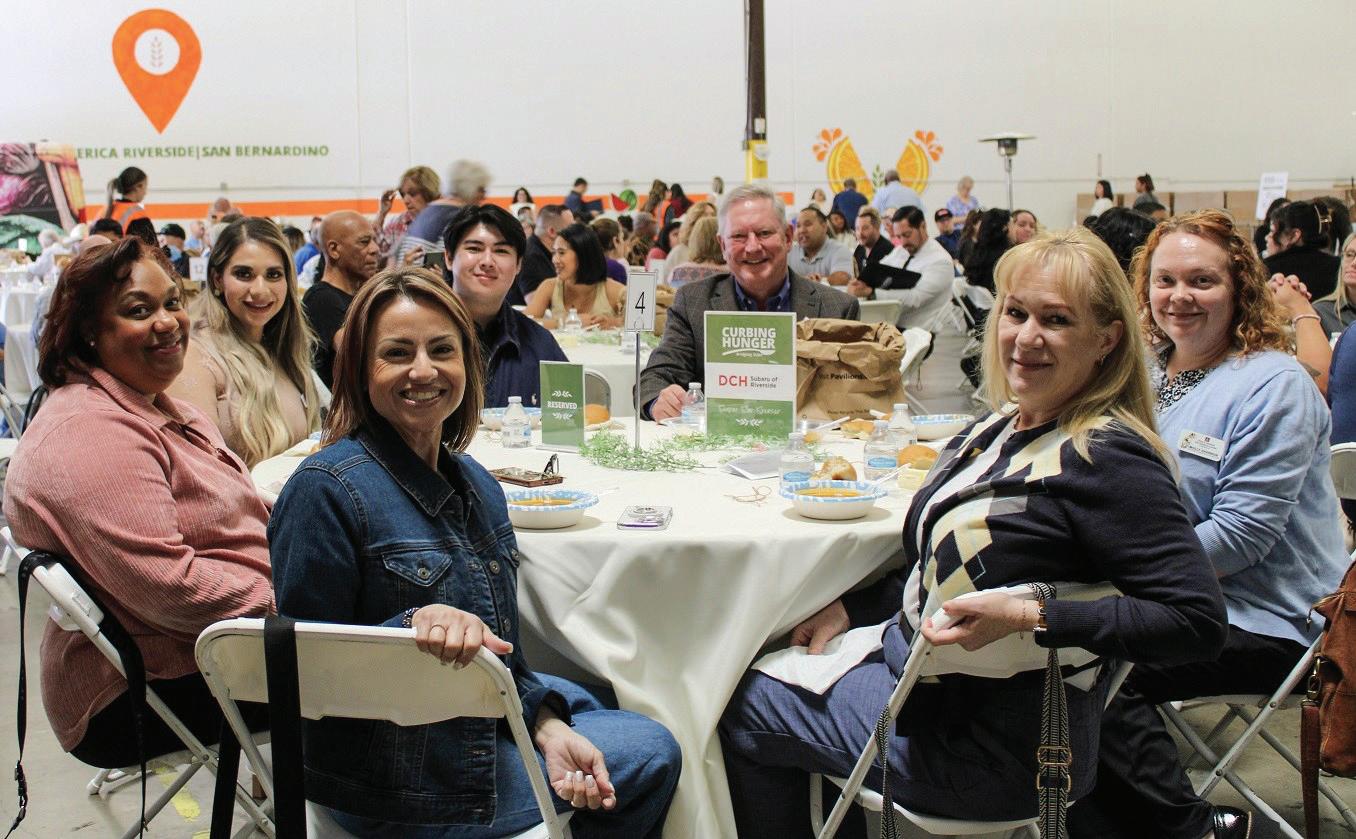
Riverside, CA – February 3rd, 2026 – Feeding America Riverside | San Bernardino (FARSB) hosts highlyanticipated annual soup luncheon: Curbing Hunger: Serving Hope. This informative hour-long lunch showcases current initiatives and programs while offering the opportunity to engage with other hunger-relief advocates over a warm meal.
“Everyone deserves equal access to nutritious food, and the belief in a more equitable future drives our work every day,” said Joanna Solorio, Interim CEO at FARSB.
“Serving hope means bringing our community together around solutions that strengthen dignity, opportunity, and long-term change,” Solorio continued.
This annual event allows food bank staff, community members, volunteers, and donors to gather together in support of hungerrelief while gaining insights into the vital work FARSB is doing in the region. Attendees will get a behind-the-scenes look at upcoming changes,
programmatic updates, and the opportunity to engage with like-minded individuals about supporting the mission of a hunger-free IE!
Event Details:
Date: Friday, March 27th, 2026
Time: 11:30 AM
Admission: Free – RSVP
Required (Limit of 8 per order)
Ready to Become a Soup-porter?
Secure your seat at the table at: www.FeedingAmericaIE.org/ CurbingHunger2026
Curbing Hunger: Serving Hope is proudly sponsored by DCH Subaru of Riverside, Vulcan Materials Company, and Wild Goose Coffee Roasters. For more information on Curbing Hunger: Serving Hope or other upcoming events, please contact Angela at ajugon@feedingamericaie.org. Sponsorship deadline is Friday, February 27th, 2026. To learn more about how to support FARSB, visit www. FeedingAmericaIE.org


“This International Fireworks Championship won’t be like any of the fireworks you’ve seen before – even in Las Vegas,” says Bruce Tyree, founder and CEO of BLAST! EVENTS. “These are incredibly intense and creative displays,
Gates
Greetings,
The BSCC In-Custody Death Review Division (ICDR) invites community members to participate in an upcoming listening session to learn more about the Division’s work and to share feedback, perspectives, and experiences with ICDR leadership and special guest, BSCC Board Member Dr. Gena Castro-Rodriguez.
Dr. Castro-Rodriguez was appointed to the BSCC Board by Governor Newsom in 2025 to serve as the new licensed mental or behavioral health care provider seat on the Board. Dr. CastroRodriguez is a licensed Marriage and Family Therapist, educator, and thought leader with over 30 years of experience in mental health and trauma-informed care. She has held multiple leadership roles in victim services and trauma recovery and now serves as an Associate Professor at the University of San Francisco. This listening session is
organized in collaboration with community partners, including Saving Lives in Custody –California (SLIC-CA) North County Civil Liberties Coalition, and the Saving Lives in Custody Campaign, with support from regional civil liberties, racial justice, interfaith, and jailoversight advocacy networks. The session will be held virtually via Zoom and will be recorded. Details are listed below, and additional information will be available on the BSCC's ICDR Page. Questions, comments, or feedback before, during, or after the listening session may be submitted to icdrpublic@ bscc.ca.gov.
We encourage community members, impacted individuals, families, people who work in local detention facilities, and advocacy partners to attend and share their input.
Use Zoom to view and hear the Listening
Join by phone for audio only. If you do not have it, download Zoom to your device before the meeting.
“Join us in celebrating Black history and culture in Riverside at the 46th Annual Black History Parade & Expo. We can’t wait to see you there!” said Dell Roberts.
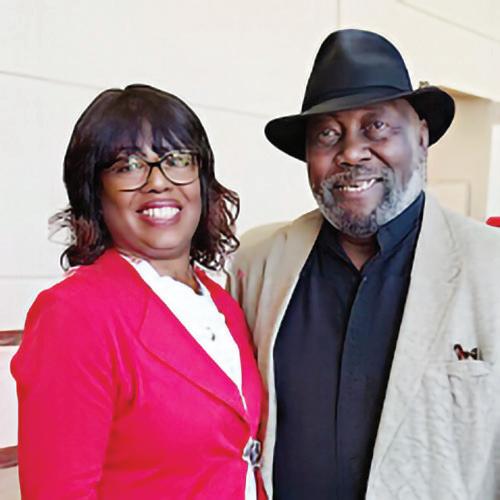
and Adrian
Roberts, Chair, since 1987, and Parade co-chair of the Adrian Dell & Carmen Roberts Foundation, invite you to the 46th annual Riverside Black History Parade & Expo, Saturday, February 14, 2026, from 10:00 a.m. to 5:00 p.m. in downtown Riverside.

RIVERSIDE, CA — Co-
Marshals for The 46th annual Riverside Black History Parade are Tony Thurmond, state superintendent of schools and candidate for Governor; Eric Bishop, Ed.D., interim president of Riverside City College; Robert Shields, interim dean, Dr. Robert K. Jabs School of Business at California Baptist University; Edwin Gomez, Ed.D., Riverside County Superintendent of Schools; Dr. Don Ajené Wilcoxson, Black Distinguished Professor Emeritus of Riverside City College; and Dr. Sonia Llamas, Superintendent of the Riverside Unified School District.
“We are honored to have these prime examples of the leaders of the village it takes to support educational excellence,” said Dell Roberts.
The Riverside Black History Parade & Expo is Saturday, February 14, 2026, from 10:00 a.m. to 5:00 p.m., and ends in front of the Historic Riverside Courthouse.
“This vibrant celebration features a lively parade with drill teams, dance crews, classic cars, and live performances, culminating at the historic Riverside County Courthouse,” said parade committee chair Russell Ward.
At the Expo, attendees can enjoy award-winning food, diverse vendors, and community exhibits. The Expo Chairs are John and Lakisha Jefferson.
The parade begins at Terracina and Magnolia Ave. It proceeds north on Magnolia, which turns into Market. The parade turns right onto Market and 10th St., then right onto 10th and Main. The parade ends at 11th and Main in front of the Riverside Historic Courthouse.
The Expo takes place at the Downtown Riverside Main Street Pedestrian Mall, nestled between 10th Street and University Avenue.
The Riverside Black History Month Parade was founded by two high school students who were members of the Black
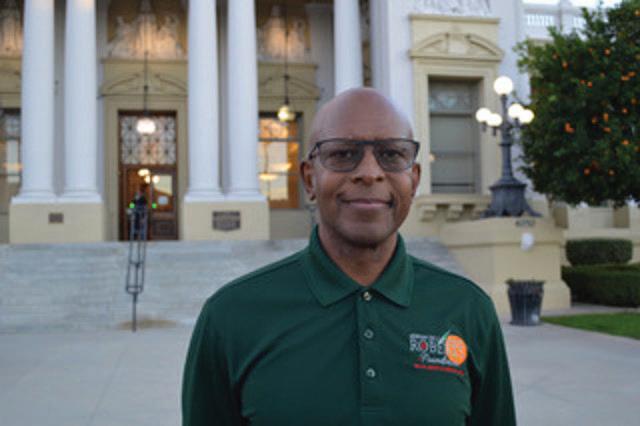
“This vibrant celebration features a lively parade with drill teams, dance crews, classic cars, and live performances, culminating at the historic Riverside County Courthouse. At the Expo, attendees can enjoy award-winning food, diverse vendors, and community exhibits,” said parade committee chair Russell Ward.

“Cheerleaders are part of the parade featuring drill teams, dance crews, classic cars, and live performances, ending at the Riverside County Courthouse. At the Expo, attendees can enjoy award-winning food, diverse vendors, and community exhibits.”
Student Union, Beverly Nezart, Poly High School, Stephanie Thomas, North High School, along with their advisor, Dell Roberts, in 1980.
The Expo was created in 2008, before the non-profit’s 2016 name change to the Adrian “Dell” & Carmen Roberts Foundation (ADCR Foundation).
The event honors prominent community figures as Grand Marshals, including recent honorees such as retired Fire Chief Michael Moore (2025) and RUSD Superintendent Renee Hill (2024).
Register now at https:// adcrfoundation.org/2026-paradeand-expo-vendor-registration/ to be part of this inspiring event. For more information, visit the ADCR Foundation website at www.adcrfoundation.org
“Join us in celebrating Black history and culture in Riverside at the Black History Parade. We look forward to seeing you there!” said Dell Roberts.
The Riverside Black History Parade & Expo's sponsors
include: the City of Riverside, the Riverside Police Department, the Riverside Unified School District, Riverside Community College, Athens Services, Cold Cutz, Edmonds Family Foundation, Bibbs Art, and Dameron Communications.
For more information, call Russell Ward at (909) 519-7962 or email Russ.Ward33@gmail. com.
About The Adrian Dell & Carmen Roberts Foundation
The Adrian Dell & Carmen Roberts Foundation (ADCR Foundation) comprises dedicated volunteers committed to empowering Inland Empire Citizens through the development of cultural activities, education, and economic growth.
The ADCR Foundation showcases the Inland Empire’s rich cultural diversity with colorful, inspiring, and authentic cultural activities throughout the year. Their signature event is the 46th Annual Black History Parade and Expo in Downtown Riverside.
Gold Runner to Run Special Trains to Colonel Allensworth State Historic Park for 2026 Black History Month Celebration, February7th
(February 2, Stockton, CA)
– In honor of Black History Month, Gold Runner will run special trains to Colonel Allensworth State Historic Park for its 2026 Black History Month Festival. The event will take place Saturday, February 7, 2026, beginning at 11:00 AM and concluding at 4:00 PM. Gold Runner has scheduled a special stop at the park for multiple trains, bookable at exclusive half-price “Allensworth fares.”
Travelers from Northern California, the Bay Area, and the Central Valley are invited to enjoy a scenic day trip aboard the Gold Runner, arriving directly at the gates of this historic landmark and celebration. Attendees are encouraged to book now to secure their seats and to enjoy further savings by combining discounts, as detailed on the Gold Runner Deals webpage.
The fun-for-all-ages event will feature food trucks, music, dancing, merchandise vendors, and guided tours of historic buildings.
This year’s Black History Month Festival train marks the first trip to Colonel Allensworth
State Historic Park under the Gold Runner name, continuing a rail service that has become a familiar connection between travelers and this historic California landmark. What began in 2018 with just 97 passengers has grown into a well-loved tradition, with more than 300 riders in 2024 and over 500 passengers traveling by train to the 2025 Juneteenth Festival. Each year, more Californians choose the train as their way to gather, celebrate, and connect with the story of Allensworth. With direct service and exclusive discounted fares, Gold Runner continues to make it simple for travelers across the state to take part in this annual celebration.
Founded in 1908 by Colonel Allen Allensworth, a former enslaved man, Allensworth was

created as a town where Black families could build lives, businesses, and institutions on their own terms. Today, it is preserved as a California State Park and stands as the only California town to be founded, financed and governed by African Americans, giving it a singular place in the state’s history. The park’s history is kept alive through its annual events, which invite visitors to gather, learn, and celebrate at the very place where this remarkable community once stood.
With the special Gold Runner train providing direct service to the festival, traveling to Allensworth has become easier and more welcoming for visitors from across the state, turning the trip into part of the experience and helping more people
UNCF News

The United Negro College Fund is proud to name Billy Mitchell a 2026 UNCF Los Angeles Masked Ball Honoree for his transformative impact at the intersection of music, education, and community. An acclaimed jazz pianist, educator, and Morehouse College graduate, Mitchell founded the Scholarship Audition Performance Preparatory Academy (SAPPA), providing free music training and scholarship support to youth across South Los Angeles. He also leads the Watts-Willowbrook Music Academy and Youth Symphony, creating pathways to higher education through the arts. His work empowers underserved students by pairing talent with mentorship, resources, and opportunity.
Tickets are on sale now -

reconnect with this important piece of California history.
“California State Parks is proud to continue our partnership in bringing visitors directly to Colonel Allensworth State Historic Park, one of California’s most distinctive and important historic places,” said Lori Wear, California State Parks.
“As a town founded, financed, and governed by Black leaders, Allensworth holds a powerful place in California’s story and in our shared history. These special train trips have opened the site to thousands of visitors from across the state, and each year we see festival attendance grow as more people discover Allensworth through this service. We’re excited to welcome even more visitors this February and in the years ahead.”
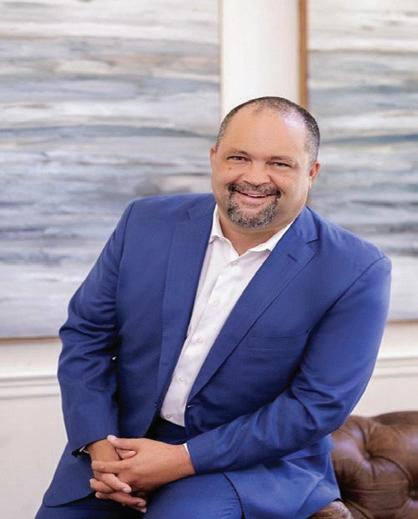
Chicago’s Mayor Brandon Johnson has emerged as a clarion voice for American democracy in turbulent times.
The values he represents reflect the voters who elected him. They remind us of the power of the Black community and the White, Asian American, Latino, and Native American voters who believe in multiracial democracy. Together they help ensure our country ultimately remains a place defined by a deep commitment to achieving freedom and opportunity for all. Yet events at home and abroad show how fragile that path can be. As Black History Month begins, let us rise to this moment again. Let us take stock of what has made the Black community the backbone of movements that strengthen democracy.
Our strength has never been our size. Our strength has been that we hang together. Since we first won the ballot, Black voters have stood remarkably united. Often 80 percent or more have chosen the same candidate and the same vision of fairness. That unity has given us influence far beyond our numbers.
It is no surprise that those who attack democratic rights try to break our voting bloc. They come for civil rights. They come for workers’ rights. They come for equal pay and fair treatment. I have helped lead coalitions to defend our community from those attacks. I have faith we can see through them. What keeps me up at night is quieter. It is the slow erosion of the cohesion that fuels our power.
Our political unity reflects our community life. For generations we were held together by congregations, by family reunions, by Sunday phone calls that crossed state lines. Cousins recognized one another by a reunion T-shirt. Even relatives we rarely saw
were still close kin. Those bonds helped us resist the divisions that split others apart. That cohesiveness was not magic. It was history. The Black community remained confined to segregated towns and neighborhoods long after White America began to suburbanize. We built economically mixed communities out of necessity. In them, elders— especially grandmothers and greatgrandmothers—kept the circle tight. They did it in church basements after service. They did it around kitchen tables late at night. From coast to coast, Black children heard the same maxim: “To whom much is given, much is expected.” Elders organized the reunions. They made the long calls between holidays. They told the stories that reminded us who we were. That love became political power. It lifted leaders from Shirley Chisholm to Jesse Jackson to Brandon Johnson—leaders who speak clearly for democracy and equality. But the elders who held us together are disappearing. One by one. Funeral after funeral. They were born into communities that were integrated by necessity. Many of us were born into communities divided by class, except in a few sacred spaces, often the church on Sunday. As we entered the broader economy, we absorbed its class lines as well. This Black History Month, let us hold our community together by holding our families together. Replicate the reunion. Make the phone calls the elders used to make. Tell the stories they told us. Democracy is under pressure. That pressure should remind us we need one another. We must hang together so our children can live better lives than we have. Let us never forget that the elders we are burying have already shown us how to keep this country free—by keeping our families connected, in tough times and even across great distance. Ben Jealous is a professor of practice at the University of Pennsylvania, former national president and CEO of the NAACP, and author of Never Forget Our People Were Always Free.