
2025 in Review: Seven Questions for Civil Rights Attorney Areva Martin
Edward Henderson | California Black Media

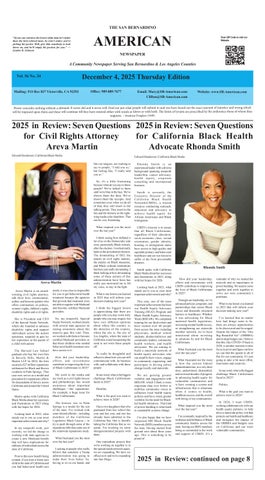
Areva Martin is an awardwinning civil rights attorney, talk show host, commentator, author, and keynote speaker who offers commentary on politics, women’s rights, children’s rights, disability rights and civil rights.
She is President and CEO of the Special Needs Network, which she founded to advance disability rights and support individuals across the autism spectrum, inspired in part by her experience as the parent of a child with autism
The Harvard Law School graduate also has her own firm in Beverly Hills, Martin & Martin LLP. In 2024, the firm secured a $27 million reparations settlement for Black and Brown residents in Palm Springs. That case now serves as a model and precedent for reparations efforts for descendants of slavery across California and around the United States.
Martin spoke with California Black Media about her successes and frustrations in 2025 along with her hopes for 2026.
Looking back at 2025, what stands out to you as your most important achievement and why?
In my nonprofit work, just recently, we led the charge in working with state agencies to create a new Medicaid benefit that will have implications for millions of individuals across the state of California.
Prior to this new benefit being created, if you were a foster care child in the state of California and you had behavioral health care
needs, it was close to impossible for you to get behavioral health treatment because the agencies that provide that treatment were not able to register with Medicaid and become certified Medicaid providers.
So, my nonprofit, Special Needs Network, worked closely with several state agencies on raising awareness about this massive gap, this void. Then, we worked with them to become certified Medicaid providers so that those children who needed behavioral health treatment now have access to it.
How did your leadership, efforts and investments contribute to improving the lives of Black Californians in 2025?
My work in the media and my work as a civil rights lawyer and philanthropy has raised awareness about important challenges – like reparations, for example, a huge issue for Black Californians.
The historic win in Palm Springs is a model for the rest of the state. I've worked with some elected officials – including members of the California Legislative Black Caucus -- to try to push through some of the reparations bills that came out of the statewide reparations study.
What frustrated you the most over the last year?
Looking at people who really believe that somehow a Trump administration was going to make their lives better. So. having to sit on our hands, and
bite our tongues, not wanting to say to people, “I told you so,” but feeling like, “I really told you so.”
So, it's a little frustrating because what do you say to those people? We've talked to them until we're blue in the face. We've shown them the data. We've shown them the receipts. And sometimes even when we do all of that, they still resort to the talking points. They resort to the lies and the rhetoric in the rightwing media echo chambers. That can be very frustrating.
What inspired you the most over the last year?
I think seeing how deflated a lot of us on the Democratic side were, particularly Black women, after the election. I worked really hard on the presidential election. The dismantling of DEI, the attacks on civil rights statutes, the attacks on Black museums, and Black cultural institutions has been just really devastating. I think looking at how devastating some of these actions of this administration have been has really just motivated me to lift my voice, to stay in the fight.
What is one lesson you learned in 2025 that will inform your decision-making next year?
I think the biggest lesson is appreciating that there are people who you may work with, people who you may respect, but have very different opinions about where this country is, the direction of the country, where the city is, the city of Los Angeles, where the state of California is and recognizing the need to not write those people off.
To really be thoughtful and reflective about how you can still communicate with, do business with, and collaborate with these people.
In one word, what is the biggest challenge Black Californians faced in 2025?
Hostility.
What is the goal you want to achieve most in 2026?
I have two daughters that who graduated from law school this year and last year, and one has already been admitted to the California Bar. One is literally taking the California Bar as we speak. I'm working on some intergenerational projects with them.
One immediate project that we're working on together is in the special needs network space, we are expanding. We have six offices now and we're expanding into San Diego.
2025 in Review: Seven Questions for California Black Health Advocate Rhonda Smith
Edward Henderson | California Black Media
Rhonda Smith is an experienced leader with a diverse background spanning nonprofit leadership, cancer advocacy, health equity, corporate consulting and international business.
Smith is currently the Executive Director of the California Black Health Network(CBHN), a trusted resource conducting outreach, education and advocacy to achieve health equity for African Americans and Black immigrants.
CBHN’s mission is to ensure that all Black Californians, regardless of their education, socio-economic class, sexual orientation, gender identity, housing, or immigration status have access to high quality and equitable primary and behavioral healthcare and are not forced to suffer or die from preventable diseases.
Smith spoke with California Black Media about her successes and frustrations in 2025, along with her hopes for 2026.
Looking back at 2025, what stands out to you as your most important achievement and why?
This year, one of the most important achievements has been our Health Equity Advocacy Training (HEAT) Program and Black Health Equity Advocacy Week (BHEAW). We completed training for our third cohort and have trained over 60 people from across the state including physicians, medical school students, doulas/midwives and community leaders, community health workers, and health advocates. We are aiming to build a statewide network of health equity advocates who can amplify their voices, engage in community organizing, and participate in driving policy change locally and statewide.
We are gaining greater visibility and engagement with BHEAW, which I think is more important than ever before to mobilize community voices to influence local health equity policies and have create greater visibility for the need for Blackled health initiatives. That kind of power-building is what leads to sustainable systems change.
I’m also happy that we have surpassed 800 Black Health Network (BHN) members across the state. Having started from ground zero about three years ago. This is something to be proud of.
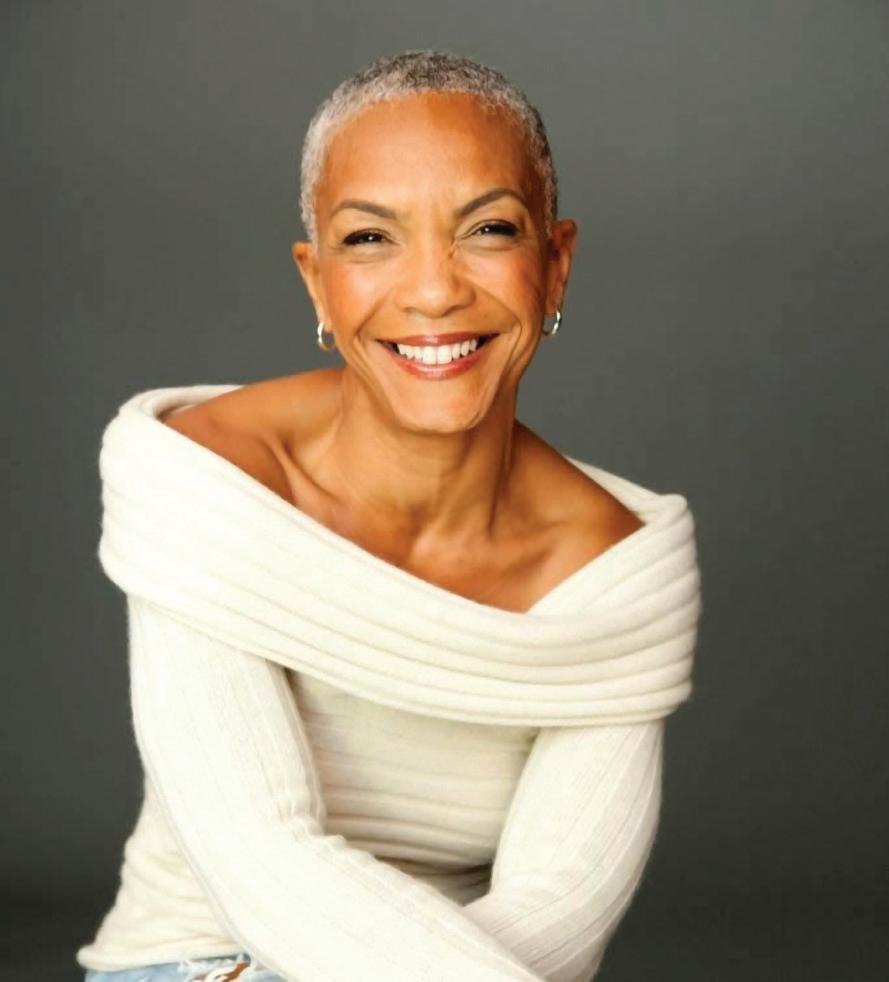
Rhonda Smith
How did your leadership, efforts and investments with CBHN contribute to improving the lives of Black Californians in 2025?
Through our leadership, we’ve advanced policies, programs, and partnerships that center Black voices and dismantle structural barriers to healthcare. Whether it was advocating for Black maternal health legislation, increasing mental health access, or strengthening our statewide member network, we’ve been intentional about investing in solutions by and for Black Californians.
What frustrated you the most over the last year?
What frustrated me the most is how the current federal administration has, in a very short time, undermined, dismantled, and reversed decades of progress in advancing health equity for vulnerable communities and is have creating a system and infrastructure that is inhumane when it comes to health, healthcare access, and the overall well-being of our communities.
What inspired you the most over the last year?
I’m constantly inspired by the resilience and brilliance of Black community leaders across the state. Seeing our BHN members being so committed to the work and support of CBHN. It’s a
reminder of why we started the network and its importance in power building. We need to come together and work together to solve our won community’s problems.
What is one lesson you learned in 2025 that will inform your decision-making next year?
I’ve learned that no matter how bad things seem to be. there are always opportunities to be discovered and leveraged. Despite the impact of the “One Big Beautiful Act” (OBBBA) and its deep budget cuts, I believe that this, like COVID-19 back in 2020, is another moment in time for us to pivot and figure out how we can find the upside in all of this for our community. It’s just going to take a bit more effort, innovation and creativity.
In one word, what is the biggest challenge Black Californians faced in 2025?
Politics.
What is the goal you want to achieve most in 2026?
In 2026, I want CBHN, working collaboratively with our health equity partners, to help drive a statewide policy win that protects our health and healthcare and mitigates the impact of the OBBBA and budgets cuts on California and our most vulnerable communities.
Areva Martin
Seven Steps to Help Your Child Build Meaningful Connections
By Niyoka McCoy, Ed.D., Chief Learning Officer, Stride/K12

Happy mother spending quality time with her adorable
daughter and son, playing together on the floor in their cozy living room
Swinging side by side with a friend on the playground.
Sharing chalk over bright, colorful sidewalk drawings. Hiding behind a tree during a spirited game of hide-and-seek. These simple moments between children may seem small, but they matter more than we think: They lay the foundation for some of life’s most important skills.
Through everyday play, young children begin learning essential social and emotional skills like sharing, resolving conflicts, showing empathy, and managing their emotions. These social skills help shape emotional growth and set kids up for long-term success. Socialization in early childhood isn’t just a “nice-to-have”—it’s essential for development.
Yet today, many young children who haven’t yet started school aren’t getting enough consistent, meaningful interaction with peers. Research shows that there’s a decline in active free play and peer socialization when compared to previous generations.
There are many reasons for this. Children who are home with a parent during the day may spend most of their time with adults, limiting opportunities for peer play. Those in daycare or preschool may have restricted free play, and large classrooms can reduce supervision and social coaching. Some children live in rural areas, are homebound due to illness, have full schedules, or rely on screens to fill their playtime. And for some families, finding other families with young children to connect with isn’t easy. While these challenges can feel significant, opportunities for connection still exist in every community. Families can take simple steps to help children
build friendships, create a sense of belonging, and strengthen social skills. Here are some ideas to get started:
Storytime sessions at libraries or local bookstores
Community offerings such as parent-child workshops, art, music, gymnastics, swimming, or sports programs
Weekly events at children’s museums, which may include art projects, music workshops, or science experiments
Outdoor exploration, where kids can play with peers
Local parenting groups that organize playdates and group activities
Volunteer opportunities where children can participate, such as pet adoption events or packing meals at a food bank
Classes for kids at local businesses, including hardware, grocery, or craft stores
Some of these community activities are free or low-cost and give kids the chance to build friendships and practice social skills. Parents can also model positive social behavior by interacting with other parents and encouraging their children to play with their peers.
These may seem like small moments of connection, but they can have a powerful impact.
Every time your child shares a toy, plays make-believe with peers, or races a friend down the slide, they’re not just playing— they’re learning the skills that build confidence, empathy, and lasting friendships. And it’s good for you, too. Creating intentional opportunities for play also helps you strengthen your own network of parents who can support one another as your children grow together.
FTC Takes Action Against Education Technology Provider for Failing to Secure Students’ Personal Data
Illuminate Education will be required to implement an information security program to address data security failures after a breach involving data of more than 10 million students
The Federal Trade Commission will require education technology provider Illuminate Education, Inc. (Illuminate) to implement a data security program and delete unnecessary data to settle allegations that the company’s data security failures led to a major data breach, which allowed hackers to access the personal data of more than 10 million students.
In a complaint, the FTC alleged that Wisconsin-based Illuminate claimed to protect the privacy and security of the data it maintains but failed to deploy reasonable security measures to protect student data stored in cloud-based databases. These failures led to a major data breach.
“Illuminate pledged to secure and protect personal information about children and failed to do so,” said Christopher Mufarrige, Director of the FTC’s Bureau of Consumer Protection. “Today’s action is an important reminder to companies that the FTC will
Thursday, December 4, 2025
FTC Takes Action Against Education Technology Provider for Failing to Secure Students’ Personal Data...continued like it’s our own” and that it takes “security measures—physical, electronic, and procedural— to help defend against the unauthorized access and disclosure of your information.”
In contracts with school systems, the company represented it implemented practices and procedures designed to meet or exceed private industry best practices and pledged to take specific steps to protect and secure student data, such as encrypting it.
As early as January 2020, Illuminate was alerted by a third-party vendor that there were numerous security vulnerabilities on its network, but the company failed to take steps to adequately correct these problems, the complaint alleged. These alleged security failures included failing to implement reasonable access controls that safeguard students’ personal information, effective threat detection and response, and vulnerability monitoring and patch management practices. They also included storing student data in plain text until at least January 2022.
The FTC also alleged the company failed to notify school districts in a timely manner, as promised, about the data breach. For example, it waited nearly two years to notify some school districts, comprising more than 380,000 students, about the data breach.
The proposed order prohibits Illuminate from misrepresenting its data security and privacy practices and how quickly it will notify school districts and students about breaches involving their personal data. In addition, it will be required to take other steps to address the failures outlined in the complaint, including:
Deleting personal information that it no longer needs to provide requested services;
Following a publicly available data retention schedule that details why information is collected and establishes a timeframe for its deletion; Establishing and implementing
a comprehensive information security program that protects the security, availability, confidentiality, and integrity of personal information it collects; and Notifying the FTC if it has alerted another federal, state, or local government about a data breach involving consumers’ personal information.
The Commission voted 2-0 to accept the proposed complaint and order for public comment.
The FTC will publish a description of the consent agreement package in the Federal Register soon. The agreement will be subject to public comment for 30 days after publication in the Federal Register after which the Commission will decide whether to make the proposed consent order final. Instructions for filing comments will appear in the published notice. Once processed, comments will be posted on Regulations.gov.
NOTE: The Commission issues an administrative complaint when it has “reason to believe” that the law has been or is being violated, and it appears to the Commission that a proceeding is in the public interest. When the Commission issues a consent order on a final basis, it carries the force of law with respect to future actions. Each violation of such an order may result in a civil penalty of up to $51,744.
The lead staff attorneys on this matter are Bhavna Changrani and Robin Rosen Spector with the FTC’s Bureau of Consumer Protection.
The Federal Trade Commission works to promote competition and protect and educate consumers. The FTC will never demand money, make threats, tell you to transfer money, or promise you a prize. Learn more about consumer topics at consumer. ftc.gov, or report fraud, scams, and bad business practices at ReportFraud.ftc.gov. Follow the FTC on social media, read consumer alerts and the business blog, and sign up to get the latest FTC news and alerts.
Pride and Sacrifice: The family side of duty
By Alexis Taylor AFRO Managing Editor

hold them accountable if they fail to keep their privacy promises to consumers, particularly when it involves children’s medical diagnoses and other personal data.”
Illuminate sells cloudbased technology products and collects and maintains personal information about students on behalf of schools and school districts. In its complaint, the FTC alleged that in late December 2021 a hacker used the credentials of a former employee—who had departed Illuminate three and a half years prior—to breach Illuminate’s databases stored on a third-party cloud provider. The hacker gained access to personal data of 10.1 million students, including their email and mailing addresses, dates of birth, student records, and healthrelated information.
On its website, the company claimed that it protects “your data
One of my earliest memories as a child is a night from the early 90s. In my family’s small, but sufficient MacDonald Manor apartment in Chesapeake, Va., a scene plays out.
My mother and I are in the living room. It’s the middle of the night, but this night, we both lay on the couch awaiting a single moment. Finally it arrives.
A jingling of keys. The commotion of bags on the other side of the door. And at long last, my father, in full uniform, walks through the door with his military green duffel bag in tow.
Though he had less than 72 hours to make the hourslong drive to Virginia, see his family and head right back to the military base where he was training, he did it.
He came home to see his wife, his namesake, Allen Taylor III, and his baby girl. For a moment, all was well.
ETA PHI BETA Sorority, Inc. Progressing In 2025-2026

Eta Phi Beta Sorority Inc., Gamma Omega Chapter celebrates its new President, Myrna Torrence-Washington, for the year 2025 2026. She is a 13-year member who has served in many positions including President, Vice President, Financial Secretary, Treasurer, Recording Secretary, Intake Membership Coordinator, and Assistant Intake Coordinator. Since her induction, time has progressed rapidly. In October, we celebrated our 83rd Founders Day, observed Breast Cancer Awareness Month, and assisted with a food giveaway at Loveland Pantry. In November, we celebrated our 30th Western Region Conference at the
Marriott Hotel in Long Beach, California. Our 19th National President Sonda Bradfield and First Vice President Juanita Jones were in attendance.
On Sunday, November 16, the final day in session, the combined chapters of the Western Region, representing Rialto, San Bernardino, Los Angeles, and Las Vegas, Nevada, came together for Sunday worship at Second Baptist Church in Long Beach, California. After a spiritually uplifting service, the group dined together at Parker’s Lighthouse on Shoreline Village Drive, overlooking the bay with a clear view of the Queen Mary. It was truly an unforgettable experience for all. Also in November, the Gamma Omega Chapter provided gift cards to families for Thanksgiving. It has been an exciting three months. Next on our agenda is the Christmas Toy Giveaway. This will be held on December 6, 2025, from 11:00 am until 2:00 pm. All Inland Empire parents with children ages 6 months to 12 years are welcome. The event will take place at the New Hope Family Life Center, located at 1505 W. Highland Ave. in the city of San Bernardino, California, 92411. This is a first come, first serve event. We hope to see you there.
Soror Beverly Haynes, Journalist
Victorville Senior Citizens Club
14874 S. Mojave Dr. Victorville CA 92395 760-245-5018
BINGO: Saturday December 13 & 27, BUY IN $25 Pay Out $75-$200 Doors open 10:15am / game start 11:00am
The Way World Outreach Ministry
Toys for Tots December 20 @ 9am-12pm Bid Whist Fundraiser: Saturday January 31, 12:30pm Buy in $15 in Advance - $20 at the Door ALL ABOVE EVENTS OPEN TO PUBLIC
For additional information regarding Membership & Hall Rental Availability Call 760-245-5018
Pride and Sacrifice: The family side of duty... continued
I loved seeing my dad in his uniform. I still remember being elated and the rush of energy that went through my tiny body when he arrived…but it didn’t last long.
Before the sun could fully come up…a call came in. His Army unit was being called into battle. He needed to report for duty– stat.
One cannot describe the heartbreak.
Though the memory is fuzzy, it’s still buried deep. I cried. I kicked. I screamed. Why would he come home and then immediately leave? Whew… even now, as an adult it still hurts.
And that’s what it means to be in a military family.
Pride…and sacrifice.
Looking back, my upbringing on military bases around the world afforded me an opportunity to get Christmas ornaments from the Nürnberger Christkindlesmarkt in Germany, take in the deserts of El Paso, Texas and call the great state of South Carolina home for a little over 10 years. On the other hand, it meant never having cousins, aunts, uncles or grandparents nearby. It meant changing elementary schools three times before third grade and never really being able to say “you remember, in kindergarten…” to any of my peers.
Being a drill sergeant’s daughter meant discipline and work ethic, but it also meant anxiety and stress.
After serving in Desert Storm, my father returned to the Middle East for Operation Iraqi Freedom (OIF) and Operation Enduring Freedom (OEF) in Afghanistan. But all of that was after his time in Panama for Operation Just Cause.
Though we were thousands of miles away, the family did every deployment with him.
Though we may not have been struggling with 110 degree heat, living in makeshift barracks, dodging bullets or fighting our way back to base, my mother was holding down a household
with three kids and a nursing career often interrupted by a change in duty stations. I was sweating it out in middle school, trying to focus with a parent in a warzone. And somewhere, we all grew accustomed to weeks on end with no communication, just waiting for the phone to ring with high hopes that someone was at home to answer.
Today, I know that my family is in a group of lucky ones. Our drill sergeant turned sergeant major was able to walk through the door again and again. I am happy to see November recognized as National Veterans and Military Families Month, with celebrations for veterans, but also, the families that keep them going.
This month, I encourage all to honor the veterans in their lives, but to also find a way to support their families. It could mean helping that Army wife that is on her first deployment or calling legislators and asking them to support the Military Spouse Hiring Act. It could mean encouraging your child to welcome the new military kid into their friend group or simply sending a thank you to a military family. Because the truth of the matter is, when one person enlists, the entire family answers the call to serve.
baby
Myrna Torrence-Washington
Alexis Taylor is managing editor of AFRO News. This week, she speaks on the service required by the military family when a loved one enlists. Shown here, Taylor with her father, Provost Marshal Protection Sgt. Maj. (Retired) Allen Taylor Jr. Credit: Courtesy photo
Los Angeles Charger Improve to 8-4 With 31-14 Win Over Division Rivals Las Vegas Raiders
By Korbin McCarthy

to the Chargers success. He stepped up and filled the void when running back Omarion Hampton went down with an injury earlier in the season.
The Chargers got a bit of bad news with the win over the Raiders. Quarterback Justin Herbert suffered an injury to his non-throwing hand. He was able to finish the game, but is scheduled to have surgery. The timetable for how long he may possibly be sidelined in unknown. However, Herbert is conducting himself as if his playing in the Monday night match up agains the Philadelphia Eagles.
The Chargers have proved to be a resilient group all season, with Herbert setting the tone. He’s focused on the team’s mission for the rest of the season.
FBI Report Warns of Fear, Paralysis, And Political Turmoil Under Director Kash Patel
By Stacy M. Brown

The Los Angeles Chargers are proof that a bye week can be very beneficial for your program. The time off helped the Chargers reset, recharger and get healthy. After coming off the bye week they delivered a dominating performance against their AFC Division rival, the Las Vegas Raiders. These two teams have been long time bitter division rivals dating back to the Chargers days in San Diego and the Raiders days in Oakland. Even the head coaches are longtime rivals since Pete Carroll’s glory days at USC and Jim Harbaugh’s time at Stanford. No matter how bad the Raiders are when they face the Chargers the record goes out the window. The Raiders sit at the bottom of the AFC West with a record of 2-10, but because of the rivaled history they show up for the challenge against the Chargers.
The Chargers entered the Sunday afternoon match up in second place in the AFC West with a 7-4 record, behind the first place Denver Broncos. With the win the Chargers improved to 8-4. They are two games behind the Broncos who improved to 10-2 with a recent win over the Washington Commanders. The Chargers are fighting for a spot in the post-season, and are currently sitting in the Wild Card position. With five games left on the regular season schedule the mission is clear for the Chargers, keep winning.
“We got five guaranteed, five games to earn the right to get games six, seven. Eight and more,” said Chargers defensive leader Derwin James. “We’re just to get to night and 10th game. Every week, every day you’re earning that opportunity to go out there to get that sixth to seventh game. That’s all we’re trying to do,” added James.
For the Chargers the goal remains the same. The team is focused on their goals one day at a time. The mission for running back Kimani Vidal is the same.
“We know we have what it takes to make the playoff. It’s in our hands and we’re just trying to go out there and win every week,” said Vidal.
Vidal play has been essential
“I think it’s just week by week. We have to do our job, especially when we play on Sundays. All we can control is our attitude, our effort and how we take care of business. Anything outside of that is out of our control. You can monitor it, but you can’t do too much to change it,” said Herbert.
Up next for the Chargers are the defending Super Bowl Champion Philadelphia Eagles. Although the Eagles have been inconsistent, they present a tough match up of the Chargers. With an identical record of 8-4, the Eagles are currently in first place in the NFC East.
The Chargers will attempt to stay in the win column and secure their spot in the post-season when the host Philadelphia Eagles at SoFi Stadium for a Monday Night Prime Time match up on December 8
The Time Is Now: Congress Should Not Leave Small Community and Minority Banks Out of the Digital Asset Future
By Kevin Harris and Cleve Mesidor
Congress is actively working on groundbreaking legislation that would provide much needed regulatory clarity. The Digital Assets Market Structure legislation being developed by the U.S. Senate Agriculture and Banking committees can be better positioned to foster economic growth, promote financial education, and support guard rails for the early and vibrant segments of Americans who actively leverage digital assets.
In Washington, debates over crypto are too often conflated with tensions with Wall Street incumbents, entrenched regulatory turf wars, and the race for global competitiveness. As a result, a critical voice is often absent from deliberations: small financial institutions that have long been the backbone of underserved rural and urban neighborhoods. As Congress considers legislation governing digital assets, it has an opportunity to take a simple transformative, bipartisan step to ensure they are not once again left behind and left out. Lawmakers should include a federal study examining how Community Development Financial Institutions (CDFIs) and Minority Depository Institutions (MDIs) can safely and compliantly offer digital asset products. The time for this level of regulatory clarity is now!
Ensuring Access To The Future of Digital Finance
This is not a niche concern. It is a matter of financial inclusion, U.S. competitiveness, and necessity for a market structure framework that fuels innovation

across rural and mainstream America.
Whether policymakers embrace or resist them, digital assets—from tokenized deposits to stablecoins to blockchainbased payment rails—are increasingly shaping the financial landscape. Large institutions and fintechs are already experimenting with tokenization, on-chain identity solutions, and blockchain-enabled lending. As these technologies become part of mainstream financial transactions, millions of Americans could be locked out if their local community institutions are not part of policy considerations.
CDFIs and MDIs serve precisely the communities most vulnerable to being excluded from transformative financial shifts. If legislation ignores their needs and capacities, we risk repeating a familiar pattern: innovation benefiting the wellresourced first, leaving everyone else to catch up later—if at all.
Including a federal study is not a radical act. It does not endorse any particular digital asset product, mandate their adoption, or loosen regulatory
standards. Instead, it offers something essential: clarity!
While banks are receiving regulatory guidance regarding decentralized finance, this clarity does not extend to this unique subset of the financial system.
Data show that CDFIs support more than 1,400 smaller lenders operating in rural and urban areas that aren’t adequately served by larger banks. Of the roughly 5,900 headquarters and branches of these community lenders, 60 percent [1]are in Republican congressional districts and 55 percent are in states with two Republican senators.
A Federal Study of CDFIs & MDIs Whose Time Has Come
A well-designed federal study would explore important questions. This could include examining how digital asset services could responsibly expand financial access in underserved communities; the regulatory and technical barriers that prevent CDFIs and MDIs from piloting or adopting these tools; ways digital assets lower costs for remittances, small-dollar lending and community development financing. Additionally, federal
research could offer insights into safeguards for market participants and new entrants that offer protections, while also enabling innovation. This is a smart approach as policymakers continue crafting balanced rules that reduce uncertainty for small institutions, and prevent a bifurcated financial system where only large players can innovate.
CDFIs and MDIs have been asking for guidance to better understand regulations, compliance and how to best protect their clients and institutions. Including this federal study in Senate digital assets market structure legislation will serve to ensure they won’t be left navigating this new terrain alone or disadvantaged relative to larger, better-resourced competitors.
Economic Equity Cannot Wait Any Longer
This is a unique moment in policymaking and rulemaking. If we want a financial system that works for everyone, we must ensure that the institutions closest to underserved communities are prepared—not sidelined—as digital assets evolve.
Congress has an opportunity to take a bipartisan, low-cost step toward ensuring that the next generation of financial innovation is inclusive from the start. A study supporting CDFIs and MDIs in the digital asset space is not just good policy— it is smart policymaking. It acknowledges that responsible innovation and increasing access are not competing goals but mutually reinforcing ones.
Six months into Kash Patel’s tenure as Director of the Federal Bureau of Investigation, a newly compiled internal report from a national alliance of retired and active-duty FBI agents and analysts delivers a stark warning about what the Bureau has become under his leadership. The 115-page document, submitted to Congress this month, is built entirely on verified reporting from inside field offices across the country and paints a picture of an agency gripped by fear, divided by ideology, and drifting without direction.
The report’s authors write that they launched their inquiry after receiving troubling accounts from inside the Bureau only four months into Patel’s tenure. They describe their goal as a pulse check on whether the ninth FBI director was reforming the Bureau or destabilizing it. Their conclusion: the preliminary findings were discouraging.
Reports Describe Widespread Internal Distrust and Open Hostility Toward President Trump
Sources across the country told investigators that a large number of FBI employees openly express hostility toward President Donald Trump. One source reported seeing an “increasing number of FBI Special Agents who dislike the President,” adding that these employees were exhibiting what they called “TDS” and had lost “their ability to think critically about an issue and distinguish fact from fiction.” Another source described employees making off-color comments about the administration during office conversations.
The sentiment reportedly extends beyond domestic lines.
Law enforcement and intelligence partners in allied countries have privately expressed fear that the Trump administration could damage long-term international cooperation according to a sub-source who reported those concerns directly to investigators.
Pardon Backlash and Fear of Retaliation
The President’s January 20 pardons of individuals convicted for their roles in the January 6
attack ignited what the report calls demoralization inside the Bureau. One FBI employee said they were “demoralized” that individuals “rightfully convicted” were pardoned and feared that some of those individuals or their supporters might target them or their family for carrying out their duties. Another source described widespread anger that lists of personnel who worked on January 6 investigations had been provided to the Justice Department for review, noting that agents “were just following orders” and now worry those lists could leak publicly.
Morale In Decline
Morale among FBI employees appears to be sinking fast. There were a few scattered positive notes, but the weight of the reporting describes morale as low, bad, or terrible. Agents with more than a decade of service told investigators they feel marginalized or ignored. Some are counting the days until they can retire. One even uses a countdown app on their phone.
Culture Of Fear
Layered over that unhappiness is something far more corrosive. A culture of fear. Sources say Patel, though personable, created mistrust from the start because of harsh remarks he made about the FBI before taking office. Agents took those comments personally. They now work in an atmosphere where employees keep their heads down and speak carefully. Managers wait for directions because they are afraid a wrong move could cost them their jobs. One source said agents dread coming to work because nobody knows who will be reassigned or fired next.
Leadership Concerns
The report also paints a picture of leaders unprepared for the jobs they hold. Multiple sources said Patel is in over his head and lacks the breadth of experience required to understand the Bureau’s complex programs. Some said Deputy Director Dan Bongino should never
The Los Angeles Chargers vs Las Vegas Raiders Wk 13 2025 Kimani Vidal photo
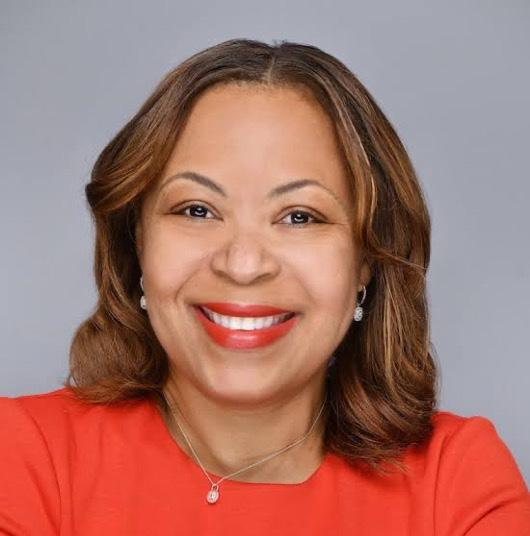
Kevin Harris Cleve Mesidor
After 43 Years ‘Thriller’ Still Outpaces Modern Music
By Stacy M. Brown

Forty-three years after “Thriller” hit the world like a lightning bolt, its anniversary still behaves like a global holiday. This weekend the celebration stretched from one continent to the next. In London, a Brixton record stall blasted the bassline of “Billie Jean” as shoppers argued over vintage vinyl. In Paris, a street musician near Châtelet blended Jackson’s melodies into a Metro platform performance. In Tokyo, clusters of teens practiced the zombie routine in Yoyogi Park, laughing when someone forgot a step. In Los Angeles, where the album was born in the studio, the track drifted from convertibles rolling down Sunset.
In New York, the city that helped fuel Jackson’s rise, “Thriller” pulsed from a Lower East Side bar like it was still 1983. And in Washington, D.C., the song slipped out of car
Michael Jackson
windows cruising down U Street, where older listeners nodded in recognition while younger ones mouthed every lyric.
The album unites places that rarely fall into the same rhythm. When it arrived on November 30, 1982, it landed with a shock. Seven singles hit the Hot 100. “Beat It” and “Billie Jean” reached No. 1. More than 100 million albums sold across continents according to the attached material.
It rebuilt the rules of pop music from the ground up.
The strangest part is how alive it still sounds. This fall, Forbes reports that “Billie Jean” reached a new global chart peak. It hit No. 40 on Billboard Global Excl. U.S. and No. 49 on the Billboard Global 200. The track has now lived more than one hundred weeks on those charts.
Four decades later it is still teaching modern records how
It’s Time to Dream Bigger About What School Could Be
By Dori McCarroll

“If you were asked to design a school and had no limitations on what you could do and what you could offer students, what would you create?”
That was the question our group received during an October gathering in Atlanta of educators, legislators, faith leaders, parents, and other school choice advocates.
The goal was to dream of what the future of education could be. Over the two days we spent together at the EdChoice
“Envisioning Our Future” convening, we were asked to leave our official titles at the door and be fully present and engaged.
An opening reception led to a meaningful conversation about the intersection of education, race, faith, and policy. It set the tone for the types of discussions we would have throughout the event.
We toured a majority Black Christian private school that many of us had not known existed, and ideas began to form.
We were invited to tap into our childlike imagination and think about what is possible for children.
One attendee said they used to be a free thinker as a kid but lost that as they grew up. To think innovatively, we must think freely.
So, what did the group envision for the future?
We believe that every child
should have the freedom to learn in ways that best suit them and that these models should be easily accessible from an early age. They should be able to learn without boundaries or barriers.
Education doesn’t have to begin when children reach school. It should start before that. We want all children to be on a level playing field so that when they reach pre-kindergarten, they are prepared and ready to learn. These ideas are promising, but none of them can happen without the right support in place. We need to strengthen the community—building it, fostering it, and relying on it to help make these visions a reality.
Community members ran Rosenwald Schools in the South to educate the descendants of enslaved people. Many of those schools are now located on the campuses of Historically Black Colleges and Universities.
What if we received a commitment from HBCUs and members of the legacy organizations connected to them to invest in young people and create an intergenerational community that supports itself?
Educators must be equipped with the resources and support needed to foster the next generation of learners. State legislators must craft policies that create a clear path for these ideas to become a reality.
Jackson plays the lead in a rare family-approved performance. The cast includes Colman Domingo, Lorenz Tate, and Nia Long. The film is already generating global attention as the next chapter in the story that began with a groundbreaking album and an artist who refused to be predictable.
Quietly behind it all is the reminder that Jackson’s posthumous projects continue to reach audiences on nearly every continent. His various ventures have generated more than $2 billion in ticket sales, reflecting the scale of the global appetite for his work.
The business is simply another indicator of how far this music still travels.
to behave.
Each October the familiar ritual begins. Streams surge. Costumes appear. NPR notes that “Thriller” jumped from No. 32 to No. 10 this season, giving Jackson the historic distinction of scoring top ten hits in six different decades.
No one else has done that. Even the album itself refuses to slip quietly into nostalgia. It appears across multiple Billboard charts. Forbes notes that it recently sat in the top ten of R&B Albums and Vinyl Albums, remained inside the top forty of Top Album Sales, and hovered near the top forty of the Billboard 200 after celebrating seven hundred weeks on the chart.
And while fans revisited “Thriller” this weekend, the story continued forward. The upcoming biopic “Michael” hits theaters next spring. Jaafar
It’s Time to Dream Bigger About What School Could Be...continued
The bottom line is that children should not have to settle for the status quo in education, and they depend on the adults in the room to advocate for them.
Let’s remember to tap into that childlike wonder to imagine more for our children, because their future selves will thank us for not giving up on them.
FTC Sends Payments to Consumers Impacted by Avast’s Deceptive Privacy Claims
The Federal Trade Commission is sending payments totaling nearly $15.3 million to consumers who were affected by deceptively marketed antivirus software from Avast.
Because at the center of everything remains the sound.
The opening crack of “Billie Jean.”
The guitar snarl in “Beat It.”
The Vincent Price laugh that still spills from cafés in London, apartments in Paris, clubs in Los Angeles, alleys in Tokyo, and late-night streets in D.C. and New York.
Forty-three years later the world still moves to the same beat.
A beat recorded in Los Angeles.
A beat that stretched across oceans and continents.
A beat that refuses to fade.
“Thriller” never aged. It simply kept traveling.
And everywhere it landed this weekend, someone hit play again.
The San Bernardino AMERICAN News Submission Deadline Is On Mondays By 5 pm
FBI Report Warns of Fear, Paralysis, And Political Turmoil Under Director Kash Patel...continued from page 3
have been appointed because the role requires deep institutional knowledge of FBI operations.
A sub-source recounted Bongino telling employees during a field office visit that “the truth is for chumps.” Employees who heard it were stunned and offended.
Social Media and Communication Breakdowns
Communication inside the Bureau has become another source of frustration. Sources said Patel and Bongino spend too much time posting on social media and not enough time communicating with employees in clear and official ways. Several told investigators they learn more about FBI operations from tweets than from internal channels.
ICE Assignments Raise Alarm
Nothing has sparked more frustration inside the FBI than the orders requiring agents to assist Immigration and Customs Enforcement. The reporting shows widespread resentment and fear over these assignments. Agents say they have little training in immigration law and were ordered into operations without proper planning. Some said they were put in tactically unsafe positions. They also warned that being pulled away from counterterrorism and counterintelligence investigations threatens national security. One sub-source asked, “If we’re not working CT and CI, then who is?”
DEI Program Removal
Even the future of diversity programs became a point of division. Some agents praised
Patel’s removal of DEI initiatives.
Others said the old system left them afraid to speak honestly because they worried about being labeled racist. The reporting shows a deep and unresolved conflict over whether DEI strengthened the organization or weakened it.
Incidents
Notable
The document also details several incidents that have become part of FBI lore. Patel ordered all employees to remove pronouns and personal messages from their email signatures yet used the number nine in his own. Agents laughed at what they saw as hypocrisy. In another episode, FBI employees who discussed Patel’s request for an FBI-issued firearm were ordered to take polygraph examinations, which one respected source described as punitive. And in Utah, Patel refused to exit a plane without a medium-sized FBI raid jacket. A team scrambled to find one and finally secured a female agent’s jacket. Patel still refused to step out until patches were added. SWAT members removed patches from their own uniforms to satisfy the demand.
A Bureau at a Crossroad
The Alliance warns that the Bureau stands at a difficult crossroads. They write that the FBI faces some of the most daunting challenges in its history. But even in despair, a few voices say something different. One veteran source said “It is early, but most can see the mission is now the priority. Case work and threats are the focus again. Reform is headed in the right direction.”
In February 2024, the FTC alleged that Avast used its browser extensions and antivirus software to collect, store, and sell consumers’ browsing information without adequate notice and without consumer consent. The FTC also alleged that Avast deceived users by claiming that the software would protect consumers’ privacy by blocking third party tracking, but it failed to adequately inform consumers that it would then sell their detailed, re-identifiable browsing data. As part of the June 2024 settlement with the FTC, Avast is required to provide redress to consumers and is prohibited from selling or licensing web browsing data for advertising purposes.
The FTC is sending checks, PayPal, and Zelle payments to 103,152 Avast customers who filed a valid claim. Consumers selected their payment method when they completed their claim form. Check recipients should cash their checks within 90 days, as indicated on the check. PayPal recipients should
redeem their PayPal payments within 30 days. Zelle payments are deposited directly into the recipient’s account.
Consumers who have questions about their payment should contact the refund administrator, Rust Consulting, Inc., at 1-866290-0165 or visit the FTC website to view frequently asked questions about the refund process. The Commission never requires people to pay money or provide account information to file a claim or get a refund.
The Commission’s interactive dashboards for refund data provide a state-by-state breakdown of refunds in FTC cases. In 2024, FTC actions led to more than $339 million in refunds to consumers across the country. The Federal Trade Commission works to promote competition and protect and educate consumers. The FTC will never demand money, make threats, tell you to transfer money, or promise you a prize. Learn more about consumer topics at consumer.ftc.gov, or report fraud, scams, and bad business practices at ReportFraud. ftc.gov. Follow the FTC on social media, read consumer alerts and the business blog, and sign up to get the latest FTC news and alerts.
WITNESS FOR JUSTICE Issue #1284
Courage is Contagious
Michael Neuroth
“But if anyone strikes you on the right cheek, turn the other also…” (Matthew 5:39)
“Courage is Contagious!” was the closing reminder at a recent training I attended here in Washington, DC. The training was held by Free DC, a local movement advocating for “home rule” for DC’s over 700,000 residents, whose local laws and policy remain subject to Congressional oversight. The Free DC training included lots of good information, but I was struck at the end by this simple reminder: courage is contagious. In our globalized, post-pandemic, social-media driven world where “6-7” can go viral, thoughts, images, and stories can all spread like wildfire across our social media feeds and lives. While we may not be able to stop the spread of hate and misinformation directly, we can work to counter those narratives with stories of joy, of love, of courage. Courage can spread like wildfire if we embody it, if we share it, if we look for it. A few recent stories of courage have particularly buoyed my spirit over these last few weeks. These are stories of clergy stepping into the front of prayer vigils to deescalate and absorb the violence that border security was threatening against their communities. UCC pastor Rev. Jorge Bautista and PCUSA clergy Rev. David Black were both shot in the face with pepper balls by border police. Others, like Rev. Michael Woolf, have been violently thrown to the ground and pinned down. In each of these cases, these clergy exemplified courage in the face of injustice. Following these attacks, these clergy could have backed down or gone underground. They did not. In his testimony to Congress on November 19, Rev. Black noted, “…my faith strongly calls me to return, even in the face of my fear. My Bible tells me to not
be afraid and to step out beyond the face of fear. I feel like it’s my obligation to be back in solidarity with those who are protesting and in ministry towards those who are inside the facility and ICE officers as well.”
When I think of these examples, I am reminded of Jesus’ call to “turn the other cheek.” In his historical context, there was likely significant debate around varied responses to resist Roman occupation. Jesus’ call to courageous nonviolence inspired Ghandi and Rev. Dr. Martin Luther King, Jr., among many others throughout history. The call to turn the other cheek is not an act of surrender, but an act of strategic defiance. For those who are trained, prepared, and able to do so (i.e. not those being victimized or traumatized by violence), absorbing hate and violence shames the perpetrator, exposes injustice, and can interrupt systems of violence. Such acts are a shock to the imagination and remind us of the power we have as individuals and communities.
Let me be clear, this is not a call to martyrdom, but simply courage. We must take precautions to be safe at protests or rallies, and be conscious about keeping others safe as well. Yet, I believe these small acts of courage are what is needed now. What does courage look like for you? Writing a letter or making a phone call to Congress? Joining a rally or a nonviolence training? Offering mutual aid, or filming ICE activity? Whatever it is, let it be one step out of your comfort zone. Take one step forward, together. Let us turn our cheek to the political violence in our world and ground these actions in love. Let our actions encourage one another and remind us that in the end love wins. Love knows no borders.
Thursday, December 4, 2025
American College of Surgeons recognizes RUHS – Medical Center for outstanding surgical care outcomes

MORENO VALLEY, CA
(Nov. 26, 2025) – Riverside University Health System –Medical Center (RUHS – MC)
was recognized for providing exceptional surgical care by the American College of Surgeons (ACS), a nationally renowned professional medical association.
This is the second consecutive year the Medical Center has been recognized for achieving meritorious outcomes for surgical patient care in both of two possible categories: an “All Cases” category and a “HighRisk” category that includes only higher risk cases.
Out of more than 600 participating hospitals, RUHS was one of only 76 that achieved meritorious status, with 51 of those hospitals located in the U.S.
The designation was given by the ACS’ National Surgical Quality Improvement Program (NSQIP), a data-driven program that aims to advance surgical quality.
"At RUHS - Medical Center, we strive to see patients heal quickly, get back to their lives and families and experience improved quality of life," said Dr. Raul Coimbra, RUHSMC Surgeon-in-Chief. "This
award reflects the incredible commitment of the Medical Center to high-level care for surgical patients in Riverside County and beyond."
As part of the program, hospitals track outcomes of inpatient and outpatient surgical procedures and send the results to the ACS to be analyzed.
The ACS then uses two different formulas to develop composite scores for the All Cases and High-Risk categories, taking into account eight different clinical areas: mortality, cardiac events, pneumonia, unplanned intubation, being on a ventilator for more than 48 hours, renal failure, surgical site infections and urinary tract infections.
For more information on the ACS National Surgical Quality Improvement Program, and to see the list of hospitals recognized, visit this link. https://www.facs.org/mediacenter/press-releases/2025/ acs-nsqip-recognizes-76hospitals-for-achievingmeritorious-outcomes-forsurgical-patient-care/
For more information on RUHS surgical care, visit www. ruhealth.org/surgeries.
U.S. Government Announces Agreement in Principle with the United Kingdom on Pharmaceutical Pricing
WASHINGTON — Today, the Department of Commerce, the Office of the United States Trade Representative, and the Department of Health and Human Services issued the following statements announcing an agreement in principle on pharmaceutical pricing between the United States and the United Kingdom. In the historic U.S.U.K. Economic Prosperity Deal (EPD), President Trump and Prime Minister Starmer agreed to address long-standing imbalances in U.S.-U.K. pharmaceutical trade by improving the overall environment for pharmaceutical companies operating in the United Kingdom. The EPD also secured continued investment by U.K. pharmaceutical companies in the United States, further strengthening American leadership in pharmaceutical development and manufacturing.
“Today’s agreement is a major win for American workers and our innovation economy. We are strengthening supply chains, creating high-quality jobs, and reinforcing America as the world’s premier hub for life-sciences investment,” said Secretary Howard Lutnick. “This deal doesn’t just deepen our economic partnership with the United Kingdom—it ensures that the breakthroughs of tomorrow will be built, tested, and produced on American soil.”
“President Trump is the first American President to work with U.S. trading partners to ensure fair payment internationally for innovative pharmaceuticals and pharmaceutical ingredients. For too long, American patients have been forced to subsidize prescription drugs and biologics
in other developed countries by paying a significant premium for the same products in ours,” said Ambassador Greer.
“Today, the United States and the United Kingdom announce this negotiated outcome pricing for innovative pharmaceuticals, which will help drive investment and innovation in both countries.
The Trump Administration is reviewing the pharmaceutical pricing practices of many other U.S. trading partners and hopes that they will follow suit with constructive negotiations.”
Pursuant to the terms of the pharmaceutical pricing agreement in principle announced today, the United Kingdom will reverse the decade-long trend of declining National Health Service (NHS) expenditures on innovative, life-saving medicines, and increase the net price it pays for new medicines by 25%. Furthermore, the United Kingdom will ensure that higher prices for new medicines are not materially eroded by a demand for portfolio-wide concessions under the Voluntary Scheme for Branded Medicines Pricing, Access and Growth (VPAG) or other rebate schemes. In fact, the United Kingdom has committed that the repayment rate owed by companies under the current VPAG scheme will decrease to 15% in 2026 and remain at or below that level for the duration of the scheme.
“This agreement comes less than two months after President Trump announced the first results of his most-favored-nation (MFN) pharmaceutical drug pricing policy and underscores
U.S. Government Announces Agreement in Principle with the United Kingdom on Pharmaceutical Pricing... continued his determination to bring down drug prices for the American people. When nations fairly share the burden of producing and paying for life-saving medicines, every citizen gains, and the fight against global disease becomes one we can actually win together,” said Chris Klomp, Director of Medicare and Deputy Administrator of the Centers for Medicare & Medicaid Services, and a lead negotiator of the agreement.
In exchange for these and other commitments, the United States has agreed to exempt U.K.-origin pharmaceuticals, pharmaceutical ingredients, and medical technology from Section 232 tariffs and will refrain from targeting U.K. pharmaceutical pricing practices in any future
Section 301 investigation for the duration of President Trump’s term. Further, the United States will work to ensure that U.K. citizens have access to the latest pharmaceutical breakthroughs.
“Americans should not pay the world’s highest drug costs for medicines they helped fund,” said Health and Human Services Secretary Robert F. Kennedy, Jr. “This agreement with the United Kingdom strengthens the global environment for innovative medicines and brings longoverdue balance to U.S.–U.K. pharmaceutical trade. President Trump showed real courage and leadership in demanding these reforms, and I thank him for delivering results that put Americans first.”
Breaking the Silence: Black Veterans Speak Out on PTSD and the Path to Recovery
By Tashi McQueen/AFRO Staff Writer


For many military veterans, what they endure while serving their country is just half of the battle. The toll of post-traumatic stress disorder (PTSD) can appear in every part of life, including strained relationships, halted careers and a fading sense of identity.
For Black veterans, the impact can be even greater and more difficult to get help for due to cultural stigma, racial disparities in care and a shortage of personalized mental health support.
“From a clinical standpoint, one of the biggest hurdles for military personnel dealing with PTSD is the pervasive stigma around mental health,” said Dr. Diandra Poe, a mental health professional and veteran advocate. “Even today, mental health challenges are often seen as a sign of weakness in a culture that prioritizes constant performance and endurance. For many service members, the idea of seeking help is intertwined with fear that it could impact their careers or label them as incapable.”
Untreated mental health conditions such as PTSD can create a serious ripple effect on military individuals and their families.
“Unaddressed PTSD can spill over into home life—affecting relationships, the ability to keep a job and ultimately the family’s stability,” Poe said. “It becomes a cycle of trying to push through alone until it’s no longer possible.”
A national health study by the U.S. Department of Veterans Affairs (VA) found that about 22 percent of Black veterans who were deployed had PTSD, compared to 14.1 percent of White veterans. Around 16 percent of Black veterans who were not deployed had PTSD, compared to 9.2 percent of their White counterparts.
“For Black service members, the military might have been a path out of challenging environments, and facing PTSD can feel like they’ve traded one set of struggles for another,” said Poe. “While they might technically have access to care through the VA or military services, actually utilizing that
5 Medications That Can Affect Your Face & Tongue

Medication is supposed to help you and make you feel better, but what if your medication is triggering your face to make involuntary movements and even look different? That’s exactly what happens when some people take their medicine; it causes TD.
What is TD?
care can be a unique challenge due to cultural stigma and a lack of culturally competent support.”
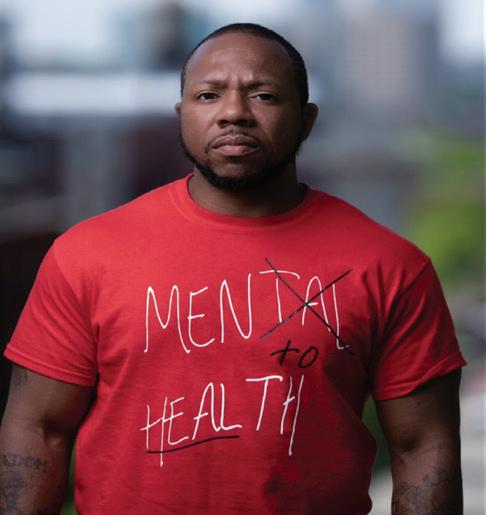
James Harris, a U.S. Army veteran and community advocate, saw and lived these disparities, inspiring him to establish Men to Heal to help fill the gap.
“I emancipated myself at 16. Fast forward, I joined the Army for eight years, two deployments, one Iraq, one Afghanistan,” said Harris. “Going to therapy…there was a disconnect.”
Harris said from his time in therapy as a child and a veteran, he did not feel like the therapists adequately understand what he went through and therefore could not truly help him.
“Since I had those experiences— in addition to the book knowledge, in addition to the case studies, in addition to the license—I thought I could provide greater assistance to veterans, as well as people who look like me, and who have traveled this road,” said Harris.
Through Men to Heal, a movement he started to offer counseling for veterans, youth, families, and couples, Harris does the work of giving back. Through the movement, Harris operates a wellness center in Richmond, Va., providing financial resources, outpatient therapy, and yoga.
Harris said veterans often come home feeling isolated and unable to be understood by the people in their lives.
“You feel like you’re the only person that’s been through it or don’t have anybody who can relate to your experience besides the people that you deployed with,” Harris said.
To better support veterans upon their return home, especially those diagnosed with PTSD, Harris said families and communities can best help by making sure to include them in various activities.
“Avoidance or isolation is no good, so we want to try to involve them as much as possible,” said Harris. “The family should also understand that veterans are oftentimes on alert or have heightened senses. They’re looking for threats; they want to position themselves so that they can see exits and take care of situations.”
Harris emphasized that having patience is key. Veterans can also benefit from widespread access to culturally informed care and a
A serious and potentially lifedisrupting condition, Tardive Dyskinesia (TD) is hard to pin down. From its involuntary, repetitive movements to the embarrassing effects on selfesteem and self-image, TD has many impacts. Tardive dyskinesia (TD) is a druginduced movement disorder characterized by uncontrollable, repetitive movements of the face, tongue, lips, or jaw, and sometimes the arms, legs, and torso.
Symptoms
Facial movements: Lip smacking, puckering, chewing motions, sticking out the tongue, rapid eye blinking, and grimacing.
Body movements: Involuntary movements of the limbs and torso, such as rocking, swaying, or foot tapping.
Other symptoms: Repetitive chewing, puffing out cheeks, or grunting.
It develops after prolonged use of certain medications, most commonly antipsychotics, but also antiemetics (anti-nausea drugs), which block dopamine receptors in the brain. Symptoms include facial grimacing, lip smacking, and tongue darting, and the condition can significantly impact quality of life.
In fact, TD is most often associated with chronic use of certain medications, namely those for psychiatric disorders.
Not sure which medication is causing issues? Let’s cover five meds that may be contributing to TD, and how to reduce the effects.
5 Medications that May Cause TD
1. Haloperidol (Haldol)
Haloperidol is one of the first antipsychotics prescribed to the general public. While the drug may work by blocking receptors in the brain, it also has notable side effects. Usually used to treat schizophrenia, Haloperidol’s blocking ability also makes it problematic. In long-term use of higher doses, TD symptoms may occur.
Users should look for any symptoms of TD while taking the drug. Lower doses are best where possible, and if symptoms occur, second-generation antipsychotics may be preferred.
2. Chlorpromazine (Thorazine)
Another first-generation antipsychotic, Thorazine blocks dopamine receptors in the brain. This drug is prescribed for many conditions, especially schizophrenia and bipolar disorder. Unfortunately, it also causes a spectrum of side effects. Beyond TD symptoms, Thorazine may lead to weight gain, sedation, constipation, and other issues.
People dealing with TD from Thorazine should wean off gradually and not stop suddenly. Sometimes, other meds may be prescribed to counteract the TD symptoms. Other than that,
3. Fluphenazine (Prolixin)
Like the previous two drugs, Fluphenazine is a typical antipsychotic used to treat schizophrenia. It also shows efficacy in treating psychosis, but poses a big risk of causing TD with long-term use. It may even negatively impact the cardiovascular system – another serious concern.
To reduce the effects, users should get regular neuro evaluations to see if TD is coming down the pike. Patients can also use longer-acting formulations. These are usually injected but stay stable in the body to lessen side effects.
4. Risperidone (Risperdal) A second-generation antipsychotic, Risperdal blocks both dopamine and serotonin, important chemicals in your brain. It’s typically used for schizophrenia, bipolar disorder, and symptoms related to autism. Although it doesn’t lead to TD like other drugs, there is always a risk. It can also cause issues with metabolism and weight, making it problematic for people who are already obese.
The best way to address these issues is by lowering the dose and screening routinely for metabolic problems. Fortunately, if side effects occur, other antipsychotics may help.
5. Olanzapine (Zyprexa)
Like other second-generation antipsychotics, Zyprexa is recommended for people with schizophrenia and bipolar disorder. It is also used for cases of depression that resist traditional treatments. Similar to Risperdal, this medication causes metabolic issues as well as TD. It may even lead to diabetes and high cholesterol, which should be carefully monitored.
To minimize these side effects, be sure to eat healthy, get exercise, and track your blood sugar levels. Maintaining a good weight makes a big difference, but if side effects get bad, alte Overall, every patient should be mindful of the medications being used. Don’t be bashful. Have an open dialogue with your doctor and don’t downplay side effects. If you haven’t received info on risks and benefits, it’s your right to!
Make sure you are making informed decisions by getting all of this information. If dose adjustments are made, make sure you understand what changes will occur. While medication shifts may lessen TD symptoms, they may worsen symptoms of other psychiatric conditions. Fortunately, with a collaborative approach, you and your healthcare providers can arrive at the treatment plan best for your needs. Attend your regular check-ups, keep communication lines open, and listen to your body.
Balance is key, and if you put in the effort, you can both manage TD and any psychiatric conditions for which you’re medicated. In other words, the best of both worlds!
By Evan Bollinger | Published
July 3, 2024
Photo: iStockphoto / NNPA.
James Harris is a U.S. Army veteran and founder of Men to Heal, a movement devoted to helping others overcome trauma through culturally informed mental health care and community support. Photo Credit: Courtesy photo
Dr. Diandra Poe is a dedicated mental health professional and veteran advocate committed to breaking stigma and improving access to care. Photo Credit: Courtesy photo
healthy living habits are the most natural way to address TD due to Thorazine.
Thursday, December 4, 2025
White nationalist ideas once at the margins of U.S. society are increasingly shaping mainstream political debates and legislation.
By Selen Ozturk

How are these ideologies rooted in Christian nationalism becoming normalized in public discourse, and what does their spread mean for American democracy?
“The immediate cause was the election of the first nonwhite president in U.S. history, Barack Obama, but white nationalism had been gaining prominence in mainstream politics before that,” with roots in Christian nationalism, explained Sanford F. Schram, lecturer in political science at Stony Brook University. “A lot of people in this group embrace the idea that white identity is threatened.”
Sanford F. Schram, Adjunct Lecturer in Political Science, Stony Brook University (SUNY) and co-author of “Hard White: The Mainstreaming of Racism in American Politics,” discusses white identity politics and its role in shaping the current Republican party.
Schram explained that decades before Barack Obama’s election catalyzed white nationalist backlash, however, Reagan-era figures like Pat Buchanan were already introducing “a sanitized version” of Ku Klux Klan leader David Duke’s rhetoric into GOP politics: “Eventually, you get the Tea Party rising up in reaction to Obama, and Trump taking it all the way to the White House in a rising tide of white resentment politics, especially regarding immigration.”
Christian nationalism has been driving this acceleration, particularly over the last decade since President Trump’s first winning campaign.
“If you’re a Christian nationalist, it means you want a theocracy in America in some way, shape or form,” explained Heath Druzin, journalist and host of the podcast “Extremely

You’re not alone if you reach the end of the week or end of the month and wonder where your money goes.
If you’d like to save money, you may not realize how quickly everyday indulgences like a morning latte or takeout food add up — especially if you don’t track your expenses or follow a budget. For example, the national average price for a latte is $5.46. If you buy one daily over a fiveday work week, that’s $27.30 a week, or $1,419.60 for 52 weeks in one year. If you’re constantly anxious about money, you may wonder how many other people share your struggles.
Let’s examine some financial stress statistics, crunch some more common daily expense costs, see how the money adds up, and offer some savings tips.
American,” covering the mainstreaming of extremist movements. “You don’t simply want to be free to practice your religion … You want the government to be based explicitly on Christianity.”
“The rise of social media has made things happen in months rather than years,” he added.
“People get echo chambers and say things that you might not say if you’re talking to somebody face to face … you can be anonymous, and you don’t have to deal with face-to-face backlash.”
Until the early 1990s, about 90% of U.S. adults identified as Christian. Today, about twothirds of U.S. adults identify as Christian.
A 2020 Gallup report found that U.S. church memberships had dropped below 50% for the first time in the 83 years since measuring began.
Heath Druzin, journalist and host of the “Extremely American podcast,” covering the mainstreaming of extremist and militia movements as well as Christian nationalism, discusses patriarchal and misogynistic beliefs within the Christian nationalist movement.
“When the religious right in the 1980s and 1990s said ‘We’re the moral majority, and if we can just get Christians voting the way that we want them to vote, we can take over American politics,’ that wasn’t a crazy thought,” said Dr. Matthew D. Taylor, a senior scholar of Christianity at the Institute for Islamic, Christian, and Jewish Studies (ICJS).
“The people who are still identifying as Christian, especially the ones who want to hold on to notions of Christian nationalism and some essential Christian character to the United

States … They’re feeling more and more like a minority,” he added.
A 2023 Pew poll found that 35% of U.S. adults don’t identify with the religion in which they were raised.
“MAGA is that intersection of the white majority and the Christian majority saying ‘We don’t want to become minorities, and we’re going to do everything we can to claw back our cultural dominance,’” said Taylor.
Since 2015, he continued, the MAGA movement has drawn upon a Calvinist form of Christianity promoted by Evangelical pastor Douglas Wilson, a self-described Christian nationalist based in Moscow, Idaho.
Trump-appointed U.S. Defense Secretary Pete Hegseth has particularly close ties to Wilson — who has voiced opposition to same-sex marriage and women’s suffrage — as part of a church that the latter cofounded.
Devin Burghart, Executive Director of the Institute for Research & Education on Human Rights (IREHR) and co-author of “Breaching the Mainstream: A National Survey of Far-Right Membership in State Legislatures,” explains why fringe, far-right ideas have been embraced by many in mainstream politics.
A 2022 report published by the Institute for Research & Education on Human Rights (IREHR) documented 875 state legislators serving in 2021 who joined “at least one of 789 farright Facebook groups” including militia organizations, COVID-19 conspiracists, QAnon theorists, white nationalist groups and antisemitic groups.
These lawmakers represent 11.85% of all state legislators in the U.S., and all 50 states.
“When you have state legislators providing that stamp of approval to these groups … it provides a pipeline for those ideas once confined to the margins to be directly pumped into the mainstream and now to become public policy,” said Devin Burghart, executive director of IREHR.
“For instance, when I started
doing this work, I used to hear (about politicians) out in a backwoods militia meeting talking about chemtrails,” he continued. “Now, two states have adopted laws against geoengineering using the same conspiracy theories that were once considered laughable at best.”
Alongside Tennessee and Florida, at least six other states have introduced chemtrailcoded legislation to prohibit geoengineering.
Matthew D. Taylor, Ph.D., Senior Christian Scholar at the Institute for Islamic, Christian, and Jewish Studies (ICJS) and author of “The Violent Take It By Force: The Christian Movement That Is Threatening Our Democracy,” describes the three dominant forms of Christian nationalism that guide the far-right, including the Trump administration.
“The larger ideological underpinning that provides so much glue to so much of this is middle-American nationalism,” Burghart explained. “It’s the idea that white middle Americans are being squeezed from above by elites and from below by the multicultural hordes, and out of that comes the grounding for the conspiracism that we hear today, as well as the pushes for massive militarized crackdowns on undocumented immigrants, or pushes for legislation attacking the LGBTQ community … and the larger civil rights struggle.”
“Of instances where far-right populist movements wedded to religious nationalist movements are overturning democracy, the U.S. is just one outpost of a broader global trend. We’re seeing this in India, in Turkey, in Russia,” added Taylor.
“What works to defeat those things is the biggest tent coalition you can build of people who want to protect democracy and protect the equality of everyone, and that coalition needs to not have any purity tests or shibboleths,” he added. “If we don’t have a democracy, all those other disagreements are basically moot, because no one on our side will like what the far right does when they are in power.”
It’s difficult being grateful during stressful times
By Maurice Carroll

“latter example,” you can admit it and at least be aware that you’re not the only one who gets stuck in that cycle. The paradox that I’ve learned to be helpful is something that you’ve probably heard before. That is “two things can be true at the same time.” You can experience stress, anxiety or depression and still find reasons to be grateful. They say “every cloud has a silver lining.” It sounds cliche, but at its core meaning is something that we often overlook when we are in our stressful moments. Yes, sometimes life or situations may feel hopeless. Sometimes it may feel like you are buried under the weight of it all. Still, it is also true that, in those moments, there is something you can be grateful for.
None of us make it out of life without experiencing some stress. Let’s face it, stress is one of those human traits that crosses all boundaries of faith, nationality, gender and age. There are studies dedicated to defining it and others dedicated to finding and sharing treatments for it.
As African Americans, it isn’t a far reach to find demanding circumstances or mental or emotional strain. Stress is like another house-hold staple that is always present. This holiday season, though it might be challenging to acknowledge reasons to be grateful, it’s not impossible.
Are there outlets to help you navigate being grateful during stressful times? Of course. Absolutely! But the question becomes “Are most of us actively seeking out resources or are we staying comfortable in our cycle of anxiety, depression and complaints?” If you are Team
Here are two easy to remember practices that you can think about when you are struggling to be grateful during stressful times.
First, stress isn’t the problem–your judgement of it is. Viewing stress as a challenge and not as a threat, releases your perspective to shift into options vs. stagnation. Once you apply this technique, you’ll want to move forward.
Second, whatever you say, goes. Across many religions and spiritual practices you will find teachings about the power of words so start changing by simply saying and describing what you want to be vs what you are going though.
Gratitude doesn’t erase the stress, it reframes it. It reminds you that while you may not be able to control the storm, you can decide to seek shelter as it passes. So, the next time stress shows up, don’t just react. Respond with gratitude and notice the difference.
Tracking your daily expenses and becoming aware of what everyday or frequent indulgences cost is a crucial part of developing a solid savings plan.
Here are some average prices of everyday indulgences:
you spend daily or weekly, log all your indulgent expenses into a budgeting app, write them down in a notebook, or record them in an electronic spreadsheet.
Understanding the True Cost of Everyday Indulgences and How to Save Money...continued
Pack your lunch at home instead of opting for fast food or dining out, and take a can of soda to work instead of paying for a fountain soda.
Top Nutrition Coaching estimates that an inexpensive restaurant meal costs $16, while an average meal at home costs $4.23.
A fountain soda averages $3, and a single 12-oz. can averages .567 cents. If you drink five fountain sodas a week for $15, you can drink five cans for about $2.84 total.
Finding grocery and restaurant coupons and deals, planning menus, and eating leftovers are other ways to save money. For a long-term savings strategy, NerdWallet recommends following the 50/30/20 budget. With this plan, you allocate 50% of your take-home pay for rent and expenses, $30% for wants and entertainment, and 20% to repay debt and build savings.
Over 40% of U.S. Adults Stress About Money In a 2025 Money and Mental Health Bankrate survey, 43% of U.S. adults say money negatively affects their mental health, and 69% of those people say rising costs and inflation are the reason. Plus, only 29% of respondents said they reviewed their budget. So, a lot of people aren’t tracking expenses.
Feeling stressed about finances makes sense when price increases and high inflation rates mean you’re paying more for things you previously bought for less, especially if you’re earning the same wage amidst the price hikes. So, is there a way to take control of your money and get ahead?
Exploring the Costs of Everyday Indulgences Photo: wavebreakmediamicro via 123RF
Morning latte – $5.46
Fountain soda – $3.00 Fast food
Manicure – $20-$50
Regular gallon of gas – $3.082
Thrifty groceries per person per month – $297-$372
Liberal groceries for one person per month – $493-$558
These average prices will vary by city and state, but they do serve as examples of common consumer purchases.
Do the Math to Calculate and Track Your Expenses
To get an idea of the actual cost
To calculate fast food expenses, for example, if you eat a fast food meal three times a week, at $11.56 on average, you are spending around $34.68 on fast food per week.
If you drink a morning latte each work day for five days at $5.46 a day for a total of $27.30 in a week, add in three fast food meals at $34.68, get a manicure for $20, and see a movie for $16.08, you are already spending $98.06, which only accounts for three meals out of seven days.
If you eat at more restaurants or have more takeout meals throughout the week, your food expenses increase.
Money-Saving Tips
The most obvious way to save money is to cut back the frequency of some of your indulgences, and leverage deals when you do enjoy them.
For example, have three lattes a week instead of five. Doing so will reduce your latte expense by an average of $10.92 per week.
That’s savings of about $12.16 per week or around $48.64 in a four-week month. If you opt to use a refillable water bottle and fill it at the tap at home instead of drinking soda, you save even more money.
Carpooling to work or taking public transportation saves money, fuel, and energy.
The Bottom Line Indulgences that seem small now add up quickly. Cutting back on frequency and taking advantage of discounts and deals can save money – and still allows you to occasionally enjoy a treat. Also, by following a budget and savings strategy like 50/30/20, you can spend less and save more, which will help you achieve financial goals and reduce stress.
“Don’t
White nationalist ideas once at the margins of U.S. society are increasingly shaping mainstream political debates and legislation.
Maurice Carroll is a sound healing practitioner and longtime music producer in the D.C., Maryland and Virginia area. This week, he discusses how to remain grateful–even during stressful times. (Courtesy Photo)
2025 in Review: Seven Questions for Public Health CEO Sonya Young Aadam
Edward Henderson | California Black Media
South Los Angeles native
Sonya Young Aadam is the CEO of California Black Women’s Health Project (CABWHP).
The nonprofit is committed to improving the health of California's Black women and girls through advocacy, education, policy, and outreach. They also advocate for policies and practices that promote and improve physical, spiritual, mental, and emotional wellbeing.
After leaving the state for 14 years to attend The Wharton School of the University of Pennsylvania in Philadelphia and pursue a career in commercial and investment banking, Aadam returned to California to dedicate her talents to community service. Using her skills in strategic analysis and management, Aadam is determined to positively impact the lives of those around her.
Young Aadam spoke to California Black Media (CBM) about her achievements and frustrations in 2025 -- along with her hopes for 2026.
Looking back at 2025, what stands out to you as your most important achievement and why?
This year, our most important achievement has been standing in the gap for Black communities across California in moments of urgent crisis and emerging health challenges. From responding to the devastating fires in Altadena and the Palisades, to addressing the rising projections of Black individuals living with Alzheimer’s, California Black Women's Health Project (CABWHP) remained grounded in our commitment to holistic health and well-being, even as the landscape around us continued to shift.
In the aftermath of the fires, CABWHP held grief-focused Sister Circles, intentional spaces where Black women could gather, process loss and
be supported in community. We also coordinated donation banks to help meet the immediate needs of those most impacted.
How did your leadership, efforts and investments with CABWHP in 2025 contribute to improving the lives of Black Californians?
My leadership at CABWHP has centered on the principle that we lift as we climb. This principle ensures that our progress is never individual, but collaborative and collective. Through strategic investments in policy, advocacy, community capacity building and direct outreach, we have continued to uplift Black Californians. One of our key priorities has been protecting and expanding the critical infrastructure that supports mental health in our communities. When the proposed elimination of California Reducing Disparities Project (CRDP) funding threatened programs designed by and for communities historically excluded from traditional mental health systems, CABWHP acted. We reminded decision-makers that CRDP is more than funding. It is life-saving infrastructure.
What frustrated you the most over the last year?
What’s been most frustrating this year is navigating a social and political landscape that continues to devalue communityled work, especially when it comes to the health and wellbeing of Black communities. The constant shifts in political will and priorities directly impact funding, public perception, and the kind of messages reaching our communities.
We’ve seen how policy decisions that are often made without community input can destabilize vital programs and erode trust. We’ve also had to
work even harder to ensure our communities receive accurate and culturally congruent information in the face of narratives that ignore or misrepresent our realities. These dynamics don’t just create barriers; they deepen disparities.
What inspired you the most over the last year?
What has inspired me most this year is witnessing the power of our community. Throughout the challenges, Black women across California have remained at the center of every effort; they have led with purpose, vision and determination. Seeing communities come together to demand change, support one another and build pathways that prioritize Black women’s health and well-being reinforces why our work matters. This shared commitment propels us to create a future where Black women are genuinely seen, heard and valued.
What is one lesson you learned in 2025 that will inform your decision-making next year?
This year affirmed the importance of addressing systemic issues through multiple, coordinated strategies. Real change requires more than one approach; it takes advocacy, education, outreach and policy working in concert. Our work in maternal health is a clear example: while CABWHP pushed for stronger policies and investments to improve outcomes for Black birthing people, we’ve also expanded community education and outreach to ensure individuals have the information and support they need to make empowered decisions.
In one word, what is the biggest challenge Black Californians faced in 2025?
Racism.
What is the goal you want to achieve most in 2026?
In 2026, our goal is to deepen our presence across California as a trusted force for change. CABWHP will lead through policy, advocacy, outreach and education that respond to the moment and reflect the evolving needs of Black women and girls. As crises emerge and systems shift, we are focused on creating spaces for healing, holding institutions accountable and ensuring that Black women are not only heard but centered in the solutions.
Teens Reject Today’s News as Trump Intensifies His Assault on the Press
By Stacy M. Brown

The
Project finds that teenagers overwhelmingly believe the nation’s
media is fake, chaotic, and dishonest, a view that threatens the foundation of an informed society at the same time a sitting president intensifies his attacks on journalism. The findings land in an era where corporate consolidation, political pressure, and presidential intimidation collide with the public’s fading confidence in the institutions meant to hold power accountable. According to the report, 84% of teens use negative words to describe news media. They use words such as “fake,” “false,” “lies,” “chaotic,” “overwhelming,” “distorted” and “boring.” Many teens believe that journalists lie more than they inform. One in three teens said journalists are doing well at “lying or deceiving.” Half believe reporters “make up quotes.” Six in ten believe reporters “take images out of context.” Very few believe journalists confirm facts before reporting them. Only 30% said journalists regularly verify information. Only 23% said reporters correct errors. Even when asked to name one thing journalists are doing well, 10% of teens said “nothing.” The study shows how fragile the understanding of real journalism has become. Just 9% of teens used positive words such as “informative” or “good” when asked to describe the media. Their limited exposure to journalism in entertainment is dominated by superhero movies. The most common reference teens made to journalism on screen was Spider-Man. Authors of the report warn that
2025 in Review: Seven Questions for NonProfit Executive Kaci Patterson
Edward Henderson | California Black Media

Kaci Patterson
Kaci Patterson is the founder and Chief Architect of the Black Equity Collective (BEC). This network of funders and nonprofit leaders is committed to investing in the long-term sustainability of Black-led organizations in Southern California.
A graduate of Pepperdine University, Patterson holds an MBA in Organizational Management & Leadership from the University of La Verne.
Patterson takes pride in her commitment to human and community development. She is also the Founder and Chief Architect of Social Good Solutions (SGS), a Black womanowned and operated boutique social impact consulting firm, Patterson serves as an advocate for Black creatives and thought leaders. She encourages them to “know their worth” and to never compromise when it comes to the value of their intellectual property.
Patterson spoke to California Black Media (CBM) about her successes, disappointments throughout the year and plans heading into 2026.
Looking back at 2025, what stands out to you as your most important achievement and why?
Our most important achievement this year as the BEC has been balancing responding to our external environment (attacks on equity-centered work, pullback in public and philanthropic funding, wildfires, ICE raids, and everything inbetween) with the discipline of exercising restraint. We have resisted being pulled in every direction. This has allowed us to continue to focus on building a future full of Black possibilities.
On the program implementation level, we
onboarded 20 new organizations into the BEC's membership, hosted our largest annual symposium to date, released a groundbreaking report on the economic benefits of Black-led nonprofits in California, launched a series of community listening sessions and completed a pilot of a pioneering model on inclusive fiscal sponsorship. We did this while simultaneously supporting wildfire recovery efforts, making solidarity grants to organizations focused on immigrant justice, establishing new collaborative efforts with our ecosystem partners and trying to fundraise in an environment that is increasingly more restrictive of equity-centered work.
How did your leadership, efforts and investments in 2025 contribute to improving the lives of Black Californians?
Since our founding in 2021, BEC has regranted over $7 million to over 40 Black-led organizations (BLOs). In 2024 alone according to our most recent member survey data, the $1.7 million we regranted was leveraged to raise an additional $6.1 million from 44 unique public and private funders. This is significant given the fundraising climate. In May of this year, in partnership with the Nonprofit Finance Fund, BEC released the first-of-its-kind report studying the economic impact of BLOs on California's economy. Julio Marcial, Chief Impact Officer at Liberty Hill Foundation, called the report: “a roadmap for investment.” This report provides a new narrative framework that ties investment in BLOs to not only community impact, but economic vitality as well for the state. With over 4,000 jobs created, $335 million paid
in salaries and over $22 million paid in payroll taxes, BLOs are providing an economic lifeline to thousands of Californians and helping to build a more vibrant and thriving Black economy.
What frustrated you the most over the last year?
I've been frustrated by how quickly some funders have turned their backs on equity broadly and the Black community, more specifically. The politics of fear has crippled courage, caused retreat and made many in philanthropy afraid to stand in true partnership with community, leaving many organizations to wonder if they really do have to fight these battles alone.
What inspired you the most over the last year?
Honestly, nature. I have looked to nature more than ever this year to learn lessons of resilience, adaptability, community care, defiant determination, beauty and joy in the face of unspeakable manufactured chaos.
What is one lesson you learned in 2025 that will inform your decision-making next year?
This has been a year to lean into the wisdom of our ancestors. Mama Harriet Tubman created a secret society to liberate our people by moving in strategic silence with a network of partners and allies who were willing to boldly follow the leadership of a Black woman. Dr. King used direct action--strategic, visible defiance in the face of immoral and unjust laws. Both were effective for their time. Knowing which strategies are most effective for our time is what I'm carrying with me into 2026.
In one word, what is the biggest challenge Black Californians faced in 2025?
Erasure.
What is the goal you want to achieve most in 2026?
Helping our organizations to survive -- to live to fight another day, another year, another battle so together, we can harness our collective quantum intelligence to create Black PermanencyTM in California.
this weak grasp of journalism principles leaves young people open to manipulation and political propaganda. They are susceptible to conspiracy theories, falsehoods, and partisan content disguised as news. The findings reflect a national trend. Only 28% of adults say they have confidence in mass media to report news fully, accurately, and fairly. A Reuters Digital News Report found that only 30% of Americans trust most news most of the time.
At the same time distrust grows, the Trump administration has escalated unprecedented attacks on the press. The president routinely insults reporters, pressures media executives and encourages regulators to punish newsrooms. On Air Force One, when pressed about the Epstein files, he told a Bloomberg reporter “quiet quiet piggy.” During a joint appearance with Saudi Crown Prince Mohammed bin Salman, his response to a question about Jamal
Teens Reject Today’s News as Trump Intensifies His Assault on the Press...continued Khashoggi’s murder was “You are a terrible person.” He has mocked disabled reporters, told an Asian American journalist she should “ask China” about COVID, and accused Black reporters of being racist. These confrontations have coincided with federal pressure on media companies. After Trump’s Federal Communications Commission chairman publicly targeted Jimmy Kimmel, ABC briefly suspended the late-night host. The FCC has launched investigations into nearly every major broadcast network. Trump has sued newspapers, broadcasters, and social media companies, sometimes winning multimilliondollar settlements despite filing meritless claims. The White House now maintains a website cataloging journalists it labels “biased,” listing their names and work under headings such as “malpractice” and “left-wing lunacy.” A leaderboard ranks the Washington Post at the top of what the administration calls offenders. The site claims the press “subversively implied” wrongdoing and calls several outlets “media offenders of the week.” Conflict has also erupted within the conservative media ecosystem. Trump earlier echoed Newsmax’s position in a regulatory fight over TV station ownership, writing “NO EXPANSION OF THE FAKE NEWS NETWORKS” and “If anything, make them SMALLER!” after executives warned him that lifting ownership caps could harm
conservative voices. For teenagers watching this environment, the news appears hostile, fractured, and untrustworthy. Yet while many traditional outlets struggle to maintain credibility under political pressure, the Black Press of America continues to operate with a clear mission that has never shifted from its roots in 1827 when Freedom’s Journal became the first Black owned newspaper in the United States. That legacy was front and center at this year’s Black Press
Sonya Young Aadam