9-1d Remedies Under the ADEA 267 Chapter review 267
Chapter 10 Discrimination Based on Disability 273
10-1 the americans with Disabilities act 273
10-1a Coverage 273
10-1b Provisions 274
10-2 qualified Individual with a Disability 275
10-3 Definition of Disability 275
10-3a The ADA Amendments Act of 2008 276
10-4 medical Exams and tests 281
10-5 reasonable accommodation 283
10-5a Undue Hardship 286
10-6 Defenses under the aDa 287
10-6a Direct Threat to Safety or Health of Others 287
10-6b Job-Related Criteria 287
10-6c Food Handler Defense 287
10-6d Religious Entities 288
10-7 Enforcement of the aDa 289
10-8 the rehabilitation act 289
10-8a Provisions 290
10-8b AIDS and the Disability Discrimination Legislation 292
10-8c State Disability Discrimination Legislation 293
10-8d Drug Abuse and Drug Testing 294
Chapter review 301
Chapter 11 Other EEO and Employment Legislation: Federal and State Laws 307
11-1 the Civil rights acts of 1866 and 1870 307
11-1a Section 1981 307
11-1b Section 1983 308
11-1c Section 1985(c) 309
11-1d Procedure Under Sections 1981 and 1983 309
11-2 Executive order no. 11246 310
11-2a Equal Employment Requirements 311
11-2b Affirmative Action Requirements 311
11-2c Procedure Under Executive Order No. 11246 312
11-3 Employment Discrimination Because of military service: the uniformed services Employment and reemployment rights act 314
11-3a The Uniformed Services Employment and Reemployment Rights Act 314
11-3b Military Family Rights Under the FMLA 320
11-4 the national Labor relations act 321
11-5 Constitutional Prohibitions against Discrimination 321
11-5a Due Process and Equal Protection 321
11-5b Affirmative Action and the Constitution 322
11-5c Other Constitutional Issues 324
11-6 state EEo and Employment Laws 325
11-6a Gender Discrimination 325
11-6b Sexual Orientation Discrimination 326
11-6c Family-Friendly Legislation 328
11-7 other Employment Legislation 328
11-7a Whistleblower Laws 328
11-7b Criminal Record 333
11-7c Polygraph Testing 334
11-7d Honesty Testing 336
11-7e Off-Duty Conduct 337
11-7f Guns at Work Laws 339
Chapter review 340
Part 3 L a B or r EL at I ons L aw « 347
Chapter 12 The Rise of Organized Labor and Its Regulatory Framework 349
12-1 Labor Development in america 349
12-1a The Post–Civil War Period 350
12-1b Recent Trends in the Labor Movement 353
12-2 Legal responses to the Labor movement 354
12-2a Injunctions 355
12-2b Yellow-Dog Contracts 355
12-2c Antitrust Laws 355
12-3 the Development of the national Labor relations act 358
12-3a The Norris–La Guardia Act 358
12-3b The Railway Labor Act 360
12-3c The National Industrial Recovery Act 362
12-3d The National Labor Board 362
12-3e The “Old” National Labor Relations Board 363
12-4 the national Labor relations act 364
12-4a Overview of the National Labor Relations Act 365
12-5 the national Labor relations Board 366
12-5a Organization 366
12-5b Jurisdiction 373
12-5c Preemption and the NRLA 387
Chapter review 392
Chapter 13 The Unionization Process 397
13-1 Exclusive Bargaining representative 397
13-1a Employees’ Choice of Bargaining Agent 397
13-1b Rules That Bar Holding an Election 404
13-1c Defining the Appropriate Bargaining Unit 405
13-1d Voter Eligibility 411
13-2 representation Elections 413
13-2a Decertification of the Bargaining Agent 415
13-2b Acquiring Representation Rights Through Unfair Labor Practice Proceedings 416
Chapter review 420
Chapter 14 Unfair Labor Practices by Employers and Unions
14-1 section 7: rights of Employees 426
14-2 sections 8(a)(1) and 8(b)(1): Violation of Employee rights by Employers or unions 430
14-2a Anti-Union Remarks by Employer 430
425
14-2b Employer Limitations on Soliciting and Organizing 432
14-2c Other Section 8(a)(1) Violations 440
14-2d Union Coercion of Employees and Employers 444
14-2e Section 8(a)(2): Employer Domination of Labor Unions 446
14-2f Sections 8(a)(3) and 8(b)(2): Discrimination in Terms or Conditions of Employment 450
14-2g Discrimination in Employment to Encourage Union Membership and Union Security Agreements 453
14-2h Discrimination in Employment to Discourage Union Membership 456
14-2i Strikes as Protected Activity 456
14-3 other unfair Labor Practices 463
14-3a Employer Reprisals Against Employees 464
14-3b Excessive Union Dues or Membership Fees 464
14-3c Featherbedding 464
14-3d Remedies for Unfair Labor Practices 465
14-3e Reinstatement 466
14-3f Back Pay 468
14-3g Extraordinary Remedies 469
14-3h Delay Problems in NLRB Remedies 470 Chapter review 470
Chapter 15 Collective Bargaining 477
15-1 the Duty to Bargain 477
15-1a Bargaining in Good Faith 478
15-2 the nature of the Duty to Bargain in Good Faith 486
15-3 subject matter of Bargaining 487
15-3a Mandatory Bargaining Subjects 488
15-3b Permissive Bargaining Subjects 494
15-3c Prohibited Bargaining Subjects 494
15-3d Modification of Collective Agreements 495
15-4 antitrust aspects of Collective Bargaining 501 Chapter review 503
Chapter 16 Picketing and Strikes
16-1 Pressure tactics 509
509
16-1a Strikes in the Health-Care Industry 510
16-2 the Legal Protection of strikes 511
16-2a The Norris-La Guardia Act 512
16-2b The National Labor Relations Act 514
16-2c Picketing Under the NLRA 517
16-2d Remedies for Secondary Activity 535
16-3 national Emergencies 535 Chapter review 536
Chapter 17 The Enforcement and Administration
of the Collective Agreement 543
17-1 arbitration 543
17-1a Interest Arbitration versus Rights Arbitration 544
17-1b Rights Arbitration and the Grievance Process 544
17-2 the Courts and arbitration 546
17-2a Judicial Enforcement of No-Strike Clauses 551
17-2b The NLRB and Arbitration 554
17-3 Changes in the status of Employers 555
17-3a Successor Employers 555
17-4 Bankruptcy and the Collective agreement 562
17-4a Bankruptcy and Retiree Benefits 568
Chapter review 570
Chapter 18 The Rights of Union Members 577
18-1 Protection of the rights of union members 577
18-1a The Union’s Duty of Fair Representation 578
18-2 rights of union members 590
18-2a Union Discipline of Members 590
18-2b Union Members’ Bill of Rights 591
18-2c Other Restrictions on Unions 597
Chapter review 598
Chapter 19 Public-Sector Labor Relations 607
19-1 Government as Employer 607
19-2 Federal Government Labor relations 610
19-2a Historical Background 610
19-2b The Federal Service Labor–Management Relations Act 611
19-2c Judicial Review of FLRA Decisions 619
19-2d The Hatch Act 620
19-2e Union Security Provisions 621
19-2f Federal Labor Relations and National Security 622
19-3 state Public-sector Labor relations Legislation 627
19-3a Coverage of State Laws 628
19-3b Representation Issues 628
19-3c Bargaining and Open-Meeting Laws 633
19-4 Public Employees and First amendment Free speech rights 635
Chapter review 639
Part 4 Em PLoym E nt Law Issu E s « 647
Chapter 20 Occupational Safety and Health 649
20-1 Policy and Processes of the occupational safety and Health act 651
20-1a Administration and Enforcement 652
20-1b Employee Rights 660
20-1c Inspections, Investigations, and Record Keeping 666
20-2 Citations, Penalties, abatement, and appeal 671
20-2a Workplace Violence 672
Chapter review 677
Chapter 21 The Employee’s Safety Nets: Unemployment and Workers’ Compensation, Social Security, and Retirement Plans 683
21-1 unemployment Compensation 685
21-1a Litigating Unemployment Claims 687
21-2 workers’ Compensation 691
21-2a Federal Preemption of Workers’ Compensation Claims 694
21-3 social security 696
21-3a Retirement Insurance Benefits 696
21-3b Medicare, Medicaid, and the Affordable Care Act 696
21-3c Disability 699
21-4 Employee retirement Income security act (ErIsa) 702
21-4a Preemption 703
21-4b Fiduciary Responsibility 706
Chapter review 708
Chapter 22 The Fair Labor Standards Act 713
22-1 Background of the FLsa 714
22-2 origin and Purpose of the Fair Labor standards act 716
22-2a Coverage 716
22-2b Minimum Wages 720
22-2c Overtime Pay 727
22-2d Exemptions from Overtime and Minimum Wage Provisions 727
22-2e Limitations on Child Labor 737
22-2f Enforcement and Remedies Under the FLSA 740
Chapter review 743
Glossary 748
Case Index 753
Subject Index 763
Prefa C e
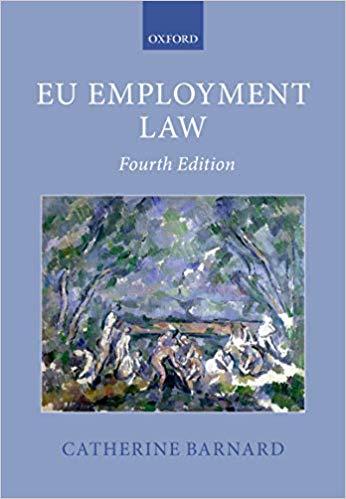
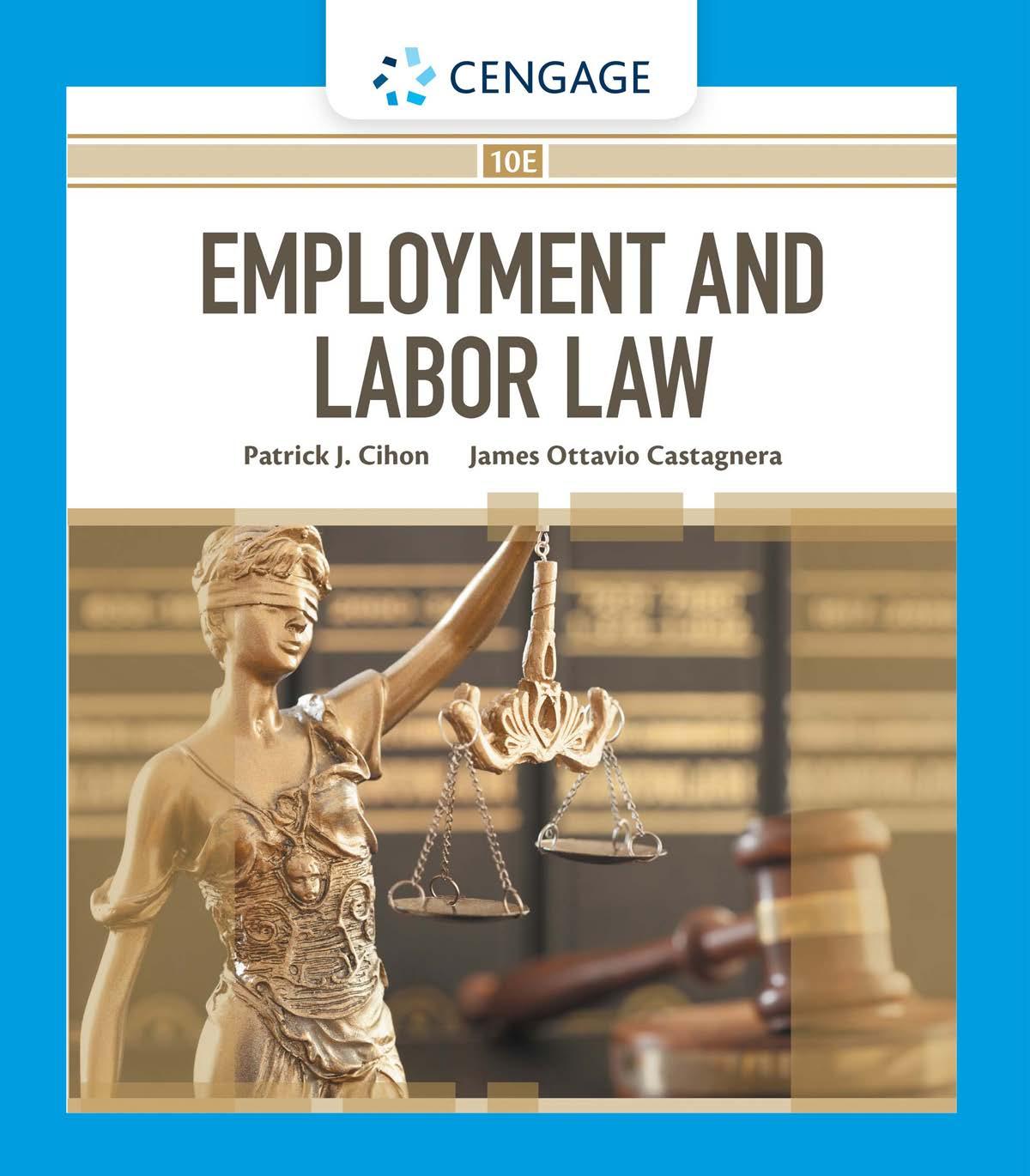
More than three decades ago, when we first undertook the writing of an employment and labor law textbook, we had no notion that our creative effort would carve itself such a long-lasting niche in higher education. Clearly, however, the release of this tenth edition, as well as accolades like those below, confirm that Employment and Labor Law is now firmly established. Lest this sound as if we were resting on our laurels, allow us to hastily add that this new edition has been significantly revised and updated. A source of particular pride is Part 1, expressly intended to bring our “old standard” firmly into the employment and labor as we stand on the cusp of the third decade of the 21st century. Three decades gone by, the third decade of the millennium just ahead, and three issues of critical importance—privacy, globalization, and immigration—treated in-depth. Additionally, numerous new cases and “The Working Law” features ensure that every chapter of this new volume is on the cutting edge of the topic it covers. Here are some of our adopters’ kind words, presented with our sincere appreciation:
I have practiced labor and employment law for over twenty years and I think this is the best text for a basic labor and employment law class…. It’s simple to read and straightforward. I tell my students to keep the book and not sell it because it is quite helpful for the basic questions they will be asked in the work world.
Maris Stella (Star) Swift Grand Valley State University
The text is well laid-out, and is written in language that is appropriate for the students; there is no reason for the students to not read the text. The questions that follow the edited cases help to focus the student’s analysis of the case in question, its relevance to the topic, and introduce the student to legal concepts and outcomes they tend to neglect or may not fully understand….
Curt M. Weber University of Wisconsin–Whitewater
[Employment and Labor Law has an] excellent balance of in-depth case-law readings, related ethical considerations, Internet resources, and foundational materials for the non-lawyer audience.
Susan F. Alevas New York University
Hallmark Features
In the constantly changing, often controversial areas of employment and labor law, the tenth edition of Employment and Labor Law provides current information in a way that highlights critical thinking, ethical decision making, and relevance to the business world.
Current and Balanced Coverage
This text offers a comprehensive balance of both employment law and labor law topics and includes up-to-date information. This edition includes the changes already wrought by the Trump Administration, most especially the Republican-dominated National Labor Relations Board and Department of Labor’s Wage and Hour Division, as well as the conservative majority now dominant on the U.S. Supreme Court.
Readability
In no other area of the law are nonlawyer professionals exposed to such legal regulation, and in no other area do they experience the need for “lawyer-like” skills to the extent that human resources directors and industrial relations specialists do. This book is therefore written to help business and management students, not necessarily lawyers. The straightforward writing style clarifies complex concepts, while pedagogical features help readers develop the legal reasoning and analysis skills that are vital for success in the business world.
The Working Law
Connecting legal concepts and cases to our everyday environment, The Working Law features highlight the relevancy of the law while sparking student interest and bringing concepts to life. Cutting-edge topics like emotional distress via social networking websites and increasing age discrimination claims in today’s tough economy, as well as controversial discussions about sweatshops and the landmark Affordable Care Act, are just a few of those considered in this tenth edition.
Ethical Dilemma
What is the extent of global corporate social responsibility? Can employers use genetic information in hiring decisions? What are the boundaries regarding religion and harassment in the workplace? Questions like these, presented in the Ethical Dilemma features in each chapter, address the increasing need for ethical behavior in decision making. These features can be used to encourage debates in class or as assignments that consider the differences between what is legal and what is ethical.
Guide to Briefing Cases
Students will find the Guide to Briefing Cases to be a valuable reference. It gives a quick overview of how to read a case citation and outlines what information to provide in a brief. While offering an excellent refresher for students who have already taken legal environment or business law courses, it also gives students with no previous legal background an introduction to the basics of case analysis.
Case Treatment
Many new summarized cases, in which the authors outline the facts, issue, and decision of a real case in their own words, have been added to provide more case illustrations that are concise and student-friendly. However, as learning to interpret cases in the language of the court is crucial in developing analytical and critical thinking skills, half of the cases in the text remain excerpted in the words of the courts. These case extracts have been crisply edited to focus attention on the relevant concept, while including occasional dissents and/or concurring opinions, which allow the reader to experience the fact that law develops from the resolution—or at least the accommodation—of differing views. These two different types of case treatment allow for flexibility in approach and depth of coverage.
Concept Summaries
Concept Summaries throughout each chapter reinforce the legal concepts illustrated in applicable sections and provide students with a quick outline to ensure that they understand what they have read.
Key Terms
To help students master the specialized legal terminology and easily identify integral ideas, a Key Terms section is included at the end of each chapter. Page references direct students back to the relevant chapter content and marginal definitions.
End-of-Chapter Problem Types
Each chapter contains five short-answer questions regarding basic chapter comprehension, ten case problems based on real cases, and five hypothetical scenarios to provide students an opportunity to critically analyze real-life situations without a case citation reference. This versatility in the end-of-chapter assignments offers instructors a variety of ways in which to engage students and measure comprehension.
Recent Coverage
The tenth edition of Employment and Labor Law includes recent and up-to-date coverage on many topics. Some of the highlights of this edition include the following:
• Chapter 1: This cutting-edge chapter provides a broad overview of the employment and labor law landscape covered in the subsequent chapters. Worthy of special note in this tenth edition is the inclusion of Epic Systems v. Lewis, the long-awaited Supreme Court decision that settles the question of whether the waiver of class-action rights in favor of individual arbitration in an employment contract is enforceable in a federal court. (The answer, by the way, is yes.) Also included is an updated “The Working Law” on publicemployee unions in the wake of the Supreme Court’s 2018 Janus v. AFSCME decision. Last, but not least, a revised “Ethical Dilemma” explores the efforts by Presidents Obama and Trump to legislate via Executive Orders when the Congress refuses to act.
• Chapter 2: While most courts across the country hold that the public-policy exception to at-will employment is unavailable to plaintiffs alleging employment discrimination (since a statutory remedy already exists), the California courts have diverged from this pattern, as illustrated in a 2018 opinion by the federal court for central California.
• Chapter 3: In mid-2019, as President Trump beefed up tariffs against Chinese goods and forbade U.S. companies from using Chinese telecommunications equipment, allegations of theft of trade secrets by Chinese nationals working in the United States was much in the media. This issue is highlighted in a 2018 opinion issued by the federal court in Philadelphia, U.S. v. Xi, which explains why such employee behavior can be a crime.
• Chapter 4: Perhaps no issue is of greater concern to employees—after compensation and benefits—than personal privacy in this so-called Information Age. From the possibility of genetic testing for latent medical defects to the ability to monitor our email, our Internet usage, indeed our every move, privacy rights are in jeopardy, while litigation nonetheless increases. Sure to encourage lively debates, this chapter brings privacy issues to the forefront. For example, Ringelberg v. Vanguard Integrity Professionals–Nevada (2018) involves an investigator, working for the former employer, who planted a GPS on the former employee’s automobile.
• Chapter 5: “The world is flat,” to quote New York Times columnist Thomas Friedman. Employers and employees alike compete against their counterparts in other regions of the globe. No longer is it enough for students of employment and labor law to grasp the major tenets of American statutory and common law. Furthermore, in a 21st-century society that has moved way beyond America’s traditional melting pot, knowledge of the rules and regulations applying to immigrants, international students, and foreign workers is critical. As this tenth edition went to press, President Trump had only just proposed a new set of immigration policies, making this a red-hot issue. This chapter explores these issues. But perhaps most fascinating is one of several decisions in the long and poignant saga of a group Nepalese workers lured to the Middle East with promises of gainful employment and then trafficked by their ostensible employers.
• Chapter 7: This chapter includes the red-hot question of whether transgender-based discrimination is covered by Title VII’s ban on employment discrimination based on sex. Presented here is one of the several consolidated cases, this one a 2019 opinion from the U.S. Court of Appeals, accepted in spring 2019 by the U.S. Supreme Court in order to resolve the dispute on this issue festering among the federal circuits.
• Chapter 8: The case of Masterpiece Cakeshop v. Colorado (Supreme Court, 2018) is added to our cutting-edge “The Working Law” on the impact of state religious freedom restoration acts. A 2019 federal case out of Texas explores an employee’s right to critique his employer on social media for the latter’s alleged failure to accommodate the former’s religious beliefs.
• Chapter 9: The Supreme Court’s decision in Mount Lemmon Fire District v. Guido (2018), a rare instance in which the employer was too small to be covered by the ADEA.
• Chapter 10: Two more brand-new cases explore the impact of the opioid epidemic and the proliferation of medical-marijuana laws on the ADA and vice versa.
• Chapter 11: The revised chapter documents the battle of Executive Orders between the outgoing Obama administration and the incoming Trump presidency in the context of
sexual-orientation and equal-pay rights for employees of government contractors and efforts by the Trump administration to curtail LGBTQ rights.
• Chapter 14: An expanded discussion of the recent NLRB decisions regarding employer restrictions on employees’ use of social media and the employee status of NCAA Division I football players is included, and the Working Law feature covers the NLRB unfair practice complaint against Boeing for moving production lines to South Carolina. The board’s 2015 “quickie election” rules are also discussed.
• Chapter 16: A case addressing the legality of the NFL lockout of its players in 2011 is included in this chapter.
• Chapter 17: This chapter discusses the recent changes in the NLRB policy of whether to defer to arbitration on unfair labor practice complaints.
• Chapter 18: This chapter includes a discussion of employers’ obligations to post information regarding employee rights under Executive Order 13496, as well as President Obama’s controversial executive orders regarding fair pay for female workers and nondiscrimination protection for LGBT employees.
• Chapter 19: View significant labor law issues in an everyday, easy-to-relate-to setting with this chapter’s updated material on national security and collective bargaining rights for federal employees and TSA airport screens. This chapter has expanded information on the National Security Personnel System, political action committees, the TSA, and current related cases.
• Chapter 21: Following market preferences, this chapter combines content on ERISA with that of employee welfare programs like Social Security, workers’ compensation, and unemployment compensation.
Instructor Resources
Instructor’s Manual
The Instructor’s Manual provides an overview of the chapter, a lecture outline with page references, case synopses for each excerpted case, answers to the case questions, and answers to the end-of-chapter questions, case problems, and hypothetical scenarios.
Test Bank
The Test Bank includes true/false, multiple-choice, short-answer, and essay questions ready to use for creating tests. The Test Bank is available through Cognero. Cengage Learning testing Powered by Cognero is a flexible, online system that allows you to:
• Author, edit, and manage test bank content from multiple Cengage Learning solutions
• Create multiple test versions in an instant
• Deliver tests from your LMS, your classroom, or wherever you want
PowerPoint® Slides
PowerPoint slides offer a basic chapter outline to accompany class lecture. They also highlight the key learning objectives in each chapter—including slides summarizing each legal case and each The Working Law and Ethical Dilemma feature.
Textbook Companion Website
The companion website for this edition of Employment and Labor Law provides access to the Instructor’s Manual, Test Bank, and PowerPoint slides. The website also offers links to the following: a number of important employment and labor law statutes, important labor and employment law sites, labor and employment law blogs, legal forms and documents, free legal research sites (comprehensive and circuit-specific), help in the classroom, labor and employment law directories, departments, agencies, associations, and organizations.
Acknowledgments
The authors wish to thank the many people who contributed to the completion of this book. Pat Cihon wishes to acknowledge the contributions of his research assistants Alex Allport and Katie Goldstein. Jim Castagnera thanks his daughter, Claire Holland, a freelance writer/ editor/illustrator, who contributed significantly to the revision of his chapters.
We also would like to thank all those who have contributed to the preparation and production of this tenth edition. In particular, we wish to acknowledge the contribution and assistance of folks at Cengage Learning: Product Managers Vicky True and Michael Giffen, Senior Content Manager Julia Chase, Marketing Manager Andrew Stock, and SPi Global for their guidance and insights during the revision of this edition.
We wish to thank the following reviewers, whose helpful comments and suggestions were used during the preparation of this and the previous edition of the book:
Susan F. Alevas
New York University
Bruce-Alan Barnard
Davenport University
Curtiss K. Behrens
Northern Illinois University
Helen Bojarczyk
Baker College—Auburn Hills
Colette Borom Carpenter
Mercy College
Terry Conry
Ohio University
Larry G. Covell
Jefferson Community College
Richard Custin
University of San Diego
Sandra J. Defebaugh
Eastern Michigan University
Ronald L. Foster
Cornerstone University, Davenport University
Ken Gaines
East–West University
John L. Gilbert
Southern Illinois University—Edwardsville
Diane M. Pfadenhauer
St. Joseph’s College
Veena P. Prabhu
California State University—Los Angeles
JoDee Salisbury
Baker College
Stephanie R. Sipe
Georgia Southern University
Joe Stauffer
University of Texas of the Permian Basin
Byron Stuckey
Dallas Baptist University
Maris Stella (Star) Swift
Grand Valley State University
Patsy Thimmig
Mount Mercy College
Donald Lee Vardaman, Jr.
Troy University
Janette C. Waterhouse
University of Iowa
Curt M. Weber
University of Wisconsin—Whitewater
Kelly Collins Woodford
University of South Alabama
Lastly, the authors wish to rededicate the book to the memory of their parents, John E. and Marian M. Cihon and James Ottavio and Catherine L. Castagnera.
Professor Patrick J. Cihon Law and Public Policy, Management Department, Whitman School of Management, Syracuse University
Dr. James Ottavio Castagnera Associate Provost/Legal Counsel, Rider University
Adjunct Professor of Law, Drexel University
Guide to Briefin G Cases
Reading and understanding cases is required in order to understand and analyze the legal decisions forming the basis of the law. A case is a bit like a parable or a fable. It presents a set of facts and events that led two opposing parties into a conflict requiring resolution by a court or an agency. The judge or adjudicator is guided by legal principles developed from statutes or prior cases in the resolution of the dispute. There may be competing legal principles that must be reconciled or accommodated. The case is a self-contained record of the resolution of the dispute between the parties, but it is also an incremental step in the process of developing legal principles for resolution of future disputes.
It is the legal principles—their reconciliation and development—and the reasoning process involved that justify the inclusion of the cases we have selected. The critical task of the reader, therefore, is to sift through the facts of a case and to identify the legal principles underlying that case. In analyzing a case you may find it helpful to ask, after reading the case, “Why was this particular case included at this point in the chapter? What does this case add to the textual material immediately preceding it?”
In analyzing the cases, especially the longer ones, you may find it helpful to “brief” them. Case briefing is a highly useful corollary to efficient legal research. A case brief is nothing more than a specialized outline. As such, a brief summarizes the main feature of a court opinion. A group of briefs, accurately and lucidly constructed, often forms the bridge between the relevant decisions identified by a lawyer’s research, on one hand, and the memorandum of law, which is his or her final work product, on the other. The following template should prove useful in outlining the case excerpts published in this textbook.
How to Brief a Case
1. Case name: The case name need not include a complete list of all the plaintiffs and defendants, where multiple parties were involved. Typically, a decision is identified by the last name of the first-named plaintiff and the last name of the first-named defendant. Organizations that are parties should be identified by their full names, except that terms such as “Corporation” may be abbreviated, for instance as “Corp.”
For the Alexander case presented here, the case name would be Alexander v. GardnerDenver Company.
2. Case Citation: Published decisions are identified by the reporters in which they are published. Typical citations begin with the volume number, followed by the name of the reporter, and then the page number where the case begins. Following this information will be the date of the decision in parentheses.
For example, in the Alexander v. Gardner-Denver Company case, the citation is 415 U.S. 36 (1974). This tells the reader that the case appears in volume 415 of the official Supreme Court reporter, starting on page 36, and that the Court announced this decision in 1974.
Citations come in a dizzying variety of forms. They all have one thing in common: A proper citation provides sufficient information for the reader to know the precise place where the full text can be located, the court that issued the decision, and the date it was announced. The “Bible” of case citations is The Bluebook: A Uniform System of Citation, published by the editors of the Harvard Law Review. It is now available online at https:// www.legalbluebook.com.
3. Facts: Here a concise summary of the main facts of the case are presented in no more than a couple of paragraphs. Only facts relevant and material to the court’s decision should be included.
In the Alexander case, the full legal case has been summarized into relevant facts for you already.
4. Procedural History: In a sentence or two the briefer presents an explanation of how the case made its way to the appeals court in which it is now under consideration.
In the Alexander case, the history has been summarized for you already.
5. Issue: A critical portion of the brief, this section identifies the precise question that this court is being asked to answer. The issue is usually expressed in the form of a question. That question seldom is the ultimate question in the underlying case, such as whether the defendant in a criminal case is guilty or whether the plaintiff in a civil suit is entitled to damages. Rather, the issue before the appellate court is usually a more narrow legal point that is an essential step toward enabling the trial judge or jury to reach a correct decision on the ultimate issues of the lawsuit. The issue on appeal is almost always a question of law, not fact.
For example, in Alexander v. Gardner-Denver Company, the U.S. Supreme Court was required to tell the lower federal courts whether a union member (Alexander) was required to submit his discrimination case to a labor arbitrator exclusively or whether he could also pursue his rights under the federal antidiscrimination statutes. The Court was not asked to decide the ultimate issue of whether or not the plaintiff had meritorious discrimination claim.
6. Decision (or answer): Here, in a very few words, the briefer records how the court answered the question that was posed to it.
7. reasoning: The analysis underlying the court’s decision should be summarized here. As with the “Facts,” this analysis should be no more than a couple of paragraphs in length.
8. observations: This optional section is where the briefer may choose to add his or her own reaction to the court’s opinion, some notes on decisions that closely agree or sharply disagree with the outcome of the case, or any other observations that he or she thinks may be useful when it comes time to write the research paper, memorandum of law, or other work product at the end of this research product.
Another Random Scribd Document with Unrelated Content
más agudamente aún que un sufrimiento físico. Nada fué entonces tan innoble para él como Celsa. Su imaginación se la representaba de continuo entregada a actos repugnantes, que él no podía precisar concretamente, en unión del protervo Poupariña. Y odió a Poupariña, a sus ojos saltones, que se le antojaron desencajados por curiosidades abyectas, a su barbita de chivo, a sus manos peludas...
¿Cómo podría Celsa soportar las caricias de aquellas manos de ogro?... Celsa murió dolorosamente en el corazón del rapaz; quedó bajo la losa de un recuerdo de humillación y asqueamiento. La revelación brusca de la triste y miserable verdad de la vida casi enfermó al niño. Una noche, heroicamente, rompió sus versos y tiró por la ventana, al obscuro jardín, el hueso de claudia amorosamente guardado. Lo tiró con tanta rabia y con tanto desprecio como si hubiese estado en la boca de Poupariña, bajo el bigote, en el que un día, comiendo en el Pinar, vió quedar colgantes unos pequeños trozos de fideos.
Desde aquella ocasión desventurada, Sergio no volvió a sentir al amor llamar francamente a las puertas de su corazón ya juvenil. Pero el ansia palpitaba en su interior y él sentía muchas veces sus estremecimientos, como las madres sienten los de los hijos ocultos aún en sus entrañas. Y ahora era Federica la que le agigantaba, de una manera bien distinta, ciertamente, a aquella de los años de la niñez, sin tópicos en verso, sin el ensueño candoroso, sin huesos de claudia guardados a hurtadillas, con una mareante emoción en el alma trémula. Ahora, Sergio, más que manías de fetichismos amorosos, tenía la de recorrer frecuentemente el obscuro pasillo que unía el comedor con la cocina, y cuando, por casualidad, la nueva criada transcurría al mismo tiempo por él, irremediablemente tropezaban.
Aquella tarde, caídas ya las primeras sombras azules sobre la aldea, Sergio halló a Federica en el umbral. Con esa brusca valentía que a veces tienen los tímidos, él, alentado por el ambiente y la soledad confidencial de los anocheceres, le asió una mano por la espalda, como en juego, y al volverse la moza, aun sin intentarlo, el brazo de Sergio rodeó el talle femenil, libre de corsé, en el que la carne palpitaba. Los grandes ojos verdes lo miraron con su cándida serenidad. Sonreía él, azorado. Dijo Federica, en voz baja, con un misterio de cómplice:
—Suelte, que van a vernos.
Y marchó hacia el campo. Sergio entró en su casa, tembloroso de dicha.
III
Al día siguiente, doña Rosa y su hija disponíanse a salir para visitar a los Poupariña. Celsa ya no aparecía por la Gándara sino de tarde en tarde; la prole había aumentado en aquellos nueve años, y los quehaceres de la casa con ella; Celsa, además, estaba siempre entregada a las molestias de la concepción. Su prolijidad era tal, que no se la concebía sin el vientre hinchado y la tez pálida, hundidas las mejillas, lento el andar. Doña Rosa e Isabel, cuando algún ocio se lo consentía, si las corredoiras estaban sin barro, iban a charlar un rato con la vieja amiga, y estas visitas, cada vez más rareadas, se revestían de caracteres de acontecimiento, en la soledad en que unas y otras veían transcurrir su vida.
Sergio esperaba con impaciencia el momento en que la marcha de las mujeres le dejase dentro de la casa en libertad de arrojar sus libros y consagrarse a la persecución de Federica. Vió irse rehaciendo sobre la cabeza de su madre el alto moño que nunca quiso trocar por otro peinado; vió cómo Isabel se empolvaba ligeramente ante el espejo... Al fin las vió dirigirse a la puerta. Pero desde la carretera llegó el sonido de un cascabel, y un tílburi tirado por un caballo del país, pequeño y peludo, se detuvo ante la verja; Isabel adivinó:
—Es Rodeiro.
Era Rodeiro. Pronto se vió su corpulenta estatura envuelta en el invariable traje de pana de color caramelo. Sus grandes bigotes obscuros dividían en dos la redonda cara picada de viruelas, como si hubiesen pasado por ella un ancho pincel embetunado. Isabel y su
madre se miraron, indecisas. Isabel había sentido siempre cierta cordialidad hacia el mocetón. Aun ahora, pese a los cuarenta años de Rodeiro, que hacían resaltar la panza bajo la chaqueta abotonada hasta el cuello como una casaca, la señorita de Abelenda tenía ante él ciertos rubores y ciertas alegres risas inusitadas, y sus ojos vulgares brillaban más. Acaso Rodeiro la había querido secretamente alguna vez. La verdad era que sus atenciones para con ella nunca habían pasado los límites de cortesías de amigo. Cuando perdió casi toda su hacienda y arrendó su casita de la Gándara para marchar a hacerse cargo de su destinejo en Madrid, se afirmó en los contornos que Rodeiro volvería a pedir a Isabel. Rodeiro volvió, pasados tres años, trasladado a la capital gallega; entonces iba frecuentemente a la Gándara, donde una vieja servidora cuidaba de su caserón y del minúsculo huerto. Pero el repatriado no habló jamás de amor con la hija de doña Rosa. Llegaba a veces, bebía un gran vaso de claro vino de la tierra, rogaba a la joven que tocase una canción gallega en el piano, hablaba mal de Castilla, con la estentórea pasión que ponía siempre en sus afirmaciones, y volvía a marchar alegremente. Sergio lo vió ahora entrar, maldiciendo de la inoportuna visita.
—¿Qué?... ¿Iban a salir?... Me marcho.
Isabel le disuadió cortésmente:
—Salíamos por no saber qué hacer. Puede quedarse.
—¿Es que hay misión en la iglesia?
Doña Rosa rechazó la sorna de la pregunta:
—No hay misión, republicanote; no hay misión, aunque buena falta hacía. ¿Es verdad que le da a usted ahora por escribir en El Avance?
Rodeiro sonrió:
—¿Quién lo dijo?
—Lo dijo don Miguel.
Rodeiro se acomodó en una silla, echando hacia adelante el robusto pecho, que parecía ir a hacer estallar la pana.
—No; no es totalmente exacto. No puedo negar que los de El Avance me han pedido que les lleve algo alguna vez. Pero hasta ahora estoy indeciso. Lo que hice el otro día fué un suelto contra don Rosendo, el cacique de la Gándara. Bien lo merece, ¿eh?... Ya sabe usted cuánto daño le debo. ¿Leyeron el artículo?... No estaba mal. Firmaba Oriedor, un seudónimo que se me ocurrió: es el apellido al revés.
Se dejó admirar, retrepado en la silla.
—Pero de eso a que me haya alistado con ellos, hay un abismo... Yo tengo mis ideas; voy más allá. Creía en Rosales, ¿sabe usted?...
En Rosales, sí, ¡caramba!... Tan austero, tan grave, tan puro... Toda aquella gente lo adora. A los «fondos» de ElAvance que hace él no hay nada que pedirles. Realmente, el partido tiene fuerza en la ciudad y gana elecciones desde que ese hombre está a su frente... Sin embargo, tengo que confesar que hoy... que hoy me encuentro un poco distanciado de él... Hay cosas...
Hizo chasquear la lengua, con un gesto de disgusto en la ancha cara. Luego, como adoptando una resolución, contó:
Aquí, en confianza... El otro día jugábamos en el Casino... entre amigos... por distraernos... Tallaba yo. Entonces entró Rosales y dió unas vueltas alrededor de la mesa, y al cabo de un rato apuntó una peseta. Ganó. Se me ocurrió pensar: «He aquí una ocasión de conocer a este hombre», y al pagarle grité, como si me distrajese: «Dos, que hacen cuatro», y le dí cuatro pesetas. «Si es el hombre austero que imagino, las devolverá», me dije. Pero Rosales se guardó las cuatro pesetas y se marchó. Al llegar a casa anoté en mi diario: «Todos son unos.» Y para mí es como si le hubiese puesto un epitafio.
Doña Rosa opinó:
—No debe usted jugar.
Él hizo un mohín:
—No juego casi nunca, más que por distracción. Jugar alguna vez está bien. Debiera ser obligatorio. Presta energía, acostumbra a la conformidad con la desgracia. El jugador piensa: «Ha venido la mala»; y tiene la fortaleza de la fatalidad.
Isabel le miraba cariñosamente:
Y ese ascenso, ¿cuándo llega?
Él hizo un gesto ambiguo:
—No sé; le temo mucho al ascenso. Pudieran trasladarme, alejarme de aquí, quizás hacerme marchar otra vez a Castilla.
¡Aquella Castilla horrible, seca, amarillenta!...
Su amor a la tierra, siempre extremoso desde que advirtió el menosprecio fuera de ella, se agudizó en aquel instante. Suplicó:
—¿Quiere tocar algo, Sabeliña?
Isabel sonrió, abriendo con lentitud la tapa del viejo piano de teclas gastadas a través de los años por sus dedos. Pasó el índice y el pulgar en cruz por toda la escala suavemente, sin despertar los sonidos. Inquirió, mirando al techo:
—¿Y qué quiere que toque?
—Negrasombra.Haga el favor, Sabeliña.
Y Sabela continuó un momento mirando al techo, como si estuviese recordando la melodía que tantas veces había tocado ya. Era la favorita de Rodeiro. Como su voz, un poco dura, no le permitía cantar, seguía a boca cerrada las inflexiones de la triste sonata, elevando las cejas, estirando lentamente el cuello con un leve balanceo de su humanidad, cabeceando. Alguna vez se atrevía a pronunciar en falsete una frase del canto, pronto cortada:
ôped’osmeuscabezales...
Una noche en Madrid, oyendo cantar inesperadamente en el Real a las masas Clavé este coro, rompió en sollozos, invadido por una morriña gigantesca, y si al salir del teatro pudiese hacerlo, aquella misma noche hubiese tomado el tren para Galicia.
Del viejo piano salieron de pronto las primeras notas melancólicas de la balada. Sergio, oculto en un extremo de la amplia galería, abandonó su libro y se asomó. Con esa admirable facilidad con que el alma sabe encontrar en los paisajes el mismo matiz de su sentimiento, le pareció que la gándara toda estaba invadida de aquella misma suave y enamorada tristeza del cantar. Moría el sol, y al morir besaba a la casita y parecía encenderla en rubor. Los pinos del bosque se iban tornando negros. Todo el campo estaba en una gran quietud, y en una negra parcela recientemente roturada, los montoncitos de tierra y raíces ardían lentamente, dejando escapar columnitas de humo blanco y azul. Cuando el disco luminoso y sangriento se hundió subieron haces de luz enrojecida al sereno cielo de otoño, y la serenidad misma de los cielos cayó sobre la tierra toda. Se hicieron más sombríos los hondos surcos de las corredoiras que cruzaban los sembrados como cauces secos; nació tras el bosque la sutil neblina del mar callado; una creciente vaguedad envolvió el verdor de la tierra, la blancura de las casitas diseminadas, el grupo de castaños de un soto; y en una heredad, el agua de un regato brilló de pronto metálicamente, como una lanza de plata tendida en el suelo. La noche nacía abajo, como nace en la aldea; en los surcos hondos y entre las copas de los árboles y bajo los rústicos alpendes y en las laderas de los montes, donde el rudo tojo comenzaba a cubrirse con su hermosa flor dorada. Y en los montoncitos de rastrojo que ardían se hizo más blanco el humo, y en uno de ellos se vió—cuando las sombras crecieron—la mancha roja
del ascua. Al final de la gándara, al través de la noche, parpadeó una luz blanquecina: la de la casa del Pinar...
Sintiéronse, bajo la galería, los pasos pesados de los bueyes que tornaban, conducidos por Chinto, invisibles todos en las tinieblas.
Y hacia aquel tierno desleimiento de las cosas, hacia aquella dulzura, volaban por las ventanas abiertas las notas de las baladas de melancolía, como si volviesen a la tierra que les hizo nacer, para transformarse en el grato misterio de la noche y ser al día siguiente florecillas de tojo o mariposas, o sumarse perpetuamente al rumor de los pinos o al ronroneo del mar, donde el músico las había hecho cautivas, y en aquella dulzura crecía en Sergio la multiforme ansia juvenil: obscuro deseo de llorar, obscuro deseo de cariño, confuso despertar acongojado de recuerdos: el de un verso, el de un rincón umbroso del pinar, el del cuerpo tibio y duro de Federica...
Y Federica entró. Dibujóse toda ella en la luz que llegaba del comedor hasta la galería y hasta un trozo del huerto. Fué descolgando del cordel donde se secaban los encajes trabajados por Isabel, puestos aquella tarde al sol. Cuando se acercó al extremo obscuro donde Sergio anhelaba, los brazos del joven la ciñeron fuertemente. En voz muy tenue, junto al rostro de la rapaza, afirmó como si suplicase:
—¡Te quiero; te quiero!
Y la besó. El cuerpo de la joven, sudoroso por el ajetreo de la jornada, olía a romero, un humano olor a romero. Y aquel olor se obstinó toda la noche en la memoria de Sergio y le permitió volver a gozar el instante dichoso y paladearlo diez veces, cien veces, con la misma fuerza de la realidad gustada.
Cuando Sergio veía salir a Federica por el portón con el enorme lío de ropa, bien atado, puesto sobre la rubia cabeza, marchaba él
hacia el río por caminos recónditos. Se encontraban allí. Ocurría una vez por semana. El resto del tiempo, encerrados en un disimulo cuidadoso, apenas si podían concederse una breve charla en el jardín, un furtivo beso en un pasillo, un contacto de apariencia casual cuando Federica servía a la mesa. Todo con un sobresalto, con un temor que hacía palpitar sus corazones.
El río estaba distante, oculto de la casa por la suave curva de la gándara y por tojos crecidos. A sus orillas erguíanse sanguiños y álamos jóvenes de hojas plateadas, que cruzaban sus copas de una a otra margen. Charlaban los novios mientras ella batía en la piedra blanqueada del lavadero las telas chorreantes y enturbiaba el agua con el jabón. Sentía Sergio, viéndola así, un sordo rencor contra la injusticia de la suerte.
—No debías tú venir al río. Mi madre hace mal en mandarte...
Ella le miraba riente, sin compartir su cólera:
—No me hace daño.
Tú naciste más bien para señorita.
Se sentía halagada y suspendía el recio frote en la tela:
—¿Por qué?
Y le gustaba oir cómo él analizaba sus gracias: las cejas de trazo fino, el suave color de miel del pelo recogido sobre la nuca, los grandes ojos, la silueta airosa, pese a la redondez especial de las formas. Terminaba él:
—Tú eres la hija de unos señores que te abandonaron en la aldea. Cuando menos lo pienses te reclama el príncipe, tu padre.
Una vez preguntó:
—¿Por qué te llaman Volvoreta?
Y ella, sencillamente:
—Por ser así, ¿sabes?, un poco traviesa... Tenía muchos novios... A lo mejor, tres a un tiempo... Los sábados llegaban los mozos de
aldeas distantes a llamar a la puerta de nuestra casa para tunar conmigo.
Él calló, pensativo y celoso.
—Era por risa, no creas: no me gustaban. Ya ves, en cuanto pude me marché a la ciudad.
Los domingos eran para el enamorado los días más felices. Esperaba, soñando, la hora de la tarde en que Federica había de obtener licencia para alejarse del chalet. Por la mañana era preciso acompañar a su familia a la misa de Santa María de la Gándara.
Atravesaba los caminitos aldeanos sin advertir el airecillo mañanero, lleno de todos los perfumes del monte, ni el brillo del sol, ni aquel aspecto especial de los campos, sin gente más que en las veredas; mujeres engalanadas con pañuelos en la cabeza y refajos chillones o negras faldas de merino, y aldeanos que lucían la blanca camisa de lienzo, y sobre un hombro la chaqueta de remontas de pana; gentes que saludaban respetuosamente, cediendo el angosto paso:
—Buenos días nos dé Dios, doña Rosa y la compaña. ¿Y luego?...
¿Se va a oir la misa?
—Para allá vamos.
—¡Vaya, que Dios les ayude!
La pequeña iglesia, cercana al mar, amarilleaba bajo los líquenes. La cuerda de las campanas caía sobre la fachada, y el acólito las hacía sonar desde el mismo atrio. Don Miguel decía la misa con lentitud. Después, en el presbiterio, pronunciaba invariablemente un sermón, en el que a veces hasta hacía reproches a personas determinadas, a las que nombraba sin eufemismo. Los aldeanos le oían con sumisión. Sus homilías tenían a veces este tono:
—Ved el caso de Mingos, el del Pinar, que hizo un pozo en la Xesteira y se gastó todo el dinero que le dieron en la taberna de la Miñoca. Y su mujer anda layando con el hambre y sus hijos también.
Después queréis que con estos ejemplos en la feligresía ampare Dios vuestras cosechas, y cuando pedís que cesen las lluvias no vos acordáis de vuestros pecados. En cuanto a María, la de Gayoso, y a Rosendo elTolo, que den gracias a que están presentes los señores de Abelenda y de la Cruz del Souto, más los del Pinar; si no, bien les iba a poner colorados por los ejemplos que están dando en todas las corredoiras de la Gándara, que parece que no, pero yo bien me entero de todo.
Después de la misa, en el atrio, los aldeanos formaban grupos pintorescos. Los señores de los contornos que tenían asiento en el presbiterio se detenían también a charlar brevemente antes de seguir los divergentes caminos. El atrio estaba alfombrado de hierba. En un rincón veíase el sepulcro de los Rodeiros—el más hidalgo apellido de la Gándara—, humilde y blanco, con un escudo borroso. Cerca de él, un corpulento castaño lo envolvía totalmente en sombra, y a veces sentábanse las rapazas en la losa para palicar. Poco a poco se diseminaba por el campo el gentío, alegrándolo con los colorines de sus trajes, y don Miguel salía presuroso hacia la blanca y vecina casa rectoral, en hambrienta demanda del desayuno. Por la tarde doña Rosa y su hija salían casi siempre a visitar a alguna amistad. Entonces Volvoreta, bien rizada, bien gentil dentro de su blanca blusa y de su falda negra, con una anilla de cobre, brillante a fuerza de frotarla con arena, en un dedo, se presentaba a pedir permiso y salía a pasear. Sergio la esperaba en la arboleda y por ella vagaban, al abrigo de las miradas de todos, hundiendo sus zapatos en el musgo, un poco sojuzgado él por esa solemne gravedad misteriosa de los bosques. Los árboles iban cambiando lentamente el tono de sus hojas. Desde la quinta se veían sus copas como masas moradas y amarillentas y de color sepia y verdes aún.
Cubrían a veces los senderillos del bosque las hojas caídas, y estallaban bajo los pies las pequeñas ramas secas desprendidas por los vientos de otoño. El mar iba tomando un color plomizo, entre la augusta calma de las altas riberas.
Al fin vinieron las primeras nubes en masas formidables, por el Sur. El sol, débil, miró tristemente a la tierra, en una despedida para sabe Dios cuántas semanas. Las nubes avanzaron y cubrieron la redondez del cielo. Aún se sostuvo el tiempo así algunos días. Las primeras gotas sorprendieron a los novios en lo alto del monte, cierta tarde en que Volvoreta había ido a recoger, para el fuego, las piñas caídas de las ramas. Abandonaron el saco a medio llenar y corrieron los jóvenes a ocultarse bajo el saliente de una roca quebrantada por la dinamita para alguna construcción aldeana. Todo el paisaje de la gándara estaba ante ellos. Vieron blanquear, bajo el choque de la lluvia, las aguas pizarrosas de un trozo de la ría; vieron el turbión deshacerse en largos hilos y borrar los horizontes, y, en una cañada frontera, al otro lado de la gándara, fingir humo en los remolinos a que le obligaba el viento. Brillaron las tejas de las casitas, y todas las parcelas que guardaban ya entre sus surcos la siembra de los cereales, se ennegrecieron más aún bajo la lluvia. Recogidos, apretados sus cuerpos, un poco inclinados bajo el reborde de la roca, veían los jóvenes llover, con esa alegría extraña que la lluvia produce cuando se presencia bajo la guarida segura. No hablaban. El espectáculo de un labriego que allá abajo abandonaba su labor, saltando sobre la húmeda tierra, para recogerse bajo un alpende vecino, les hizo reir, gozosos. Y nuevamente enmudecieron, y del vasto espectáculo de la lluvia en el monte redujeron su mirar, un poco abstraídos, a la visión de cómo unos erizos de castaña, vacíos ya, tirados ante la roca, iban siendo limpiados de tierra por el
golpear de las gotas, y cómo otros, con sus púas hacia abajo, iban llenando de agua la blancura de su concavidad.
Al través de los surcos que las gotas de lluvia trazaban en los cristales de la galería veíase el campo tan sólo como una informe mancha verde. Sergio, en pie, frotaba sus dedos húmedos contra las láminas de vidrio, y se complacía en arrancar estridentes gorjeos que crispaban los nervios de Sabela.
—¿Quieres estar quieto?—le gritó.
Y él enfundó sus manos en los bolsillos y dió un suspiro ruidoso que empañó el cristal:
—Entonces... ¿qué quieres que haga?... No he visto cosa más desagradable que la lluvia.
Doña Rosa intervino, mirándole severamente sobre sus gafas:
—Yo creo que sí: los libros de estudio.
Él calló. Realmente estaba desesperado contra aquel incesante aguacero que encharcaba los campos desde hacía una semana ya. Las deliciosas entrevistas con Volvoreta habían terminado desde entonces. ¡Oh, aquel tedio de la casa, llena siempre del rumor de la lluvia, alterada alguna vez la quietud por los gritos de Rafaela contra los aldeanos que no limpiaban sus zuecos antes de entrar y manchaban de lodo los pisos!... Sergio iba frecuentemente a la cocina, con el pretexto de fumar. Aunque doña Rosa lo sabía, no consentiría jamás que su hijo arrancase ante ella una bocanada a un cigarro. Desde que era bachiller, Sergio podía fumar en la cocina, por un acuerdo tácito. En alguna de sus frecuentes ausencias, preguntaba ahora la madre a Isabel:
—¿Dónde está tu hermano?
—Debió de ir a fumar.
Doña Rosa observaba:
—Fuma mucho estos días. No me gusta eso.
—¿Qué le vas a hacer?... Se aburre.
Federica entró aquella tarde en el comedor a anunciar:
—Está ahí doña María, la de Solís, que pregunta por la señora.
Doña Rosa alzó la cabeza de la costura para inquirir, con un leve asombro:
—¿Doña María, la de Solís?
—Sí, señora.
—Que pase, mujer.
Y madre e hija abandonaron sus quehaceres, y sacudieron de sus regazos los trozos de hilo que se habían desprendido de las labores.
Avanzaron al encuentro de su vecina. Sabela dió, como siempre, un ligero saltito para no pisar una baldosa de la galería, donde el pico del carpintero había trazado, quizás para distinguirla, una pequeña cruz.
La señora de Solís entró. No eran frecuentes sus visitas. Tan sólo en alguna ocasión señalada—Año Nuevo, fiesta de días, enfermedad —la triste señora aparecía un momento «para cumplir», y, pretextando el cuidado de los hijos, volvía a marchar sin haber reído, sin haber hablado apenas, sin haber aceptado un dulce ni una fruta, ni un dedalito del vino tostado del Rivero que doña Rosa solía ofrecer sólo en esas grandes ocasiones.
—¿Qué milagro, doña María?... Siéntese.
A pesar de la vecindad, se veían, en efecto, mucho menos que los demás señores de la Gándara. Doña María se sentó, quedamente, con aquel aire silencioso que le había impuesto su dolorosa costumbre de andar por alcobas de enfermos. Resaltaba su palidez sobre las negras vestiduras, y el carmesí de los párpados, irritados
por el llanto y el insomnio, sobre su palidez. Pero en toda su figura había una gran distinción, y en su rostro esa dignificación amarga que dan los pesares. Cruzó las manos lívidas, y habló:
—A molestarlas, doña Rosa, a molestarlas.
—¡Por Dios!...
—Quería saber si tienen ustedes alguna estufa, algún calorífero, para pedírselo prestado.
Doña Rosa miró a su hija, como en consulta.
—Hay mucha humedad—continuó doña María—; ya ve, para dormir los niños con las ventanas abiertas... Y como la casa es grande... Yo encargué a la ciudad una salamandra. Pasado mañana me la traerán, y pasado mañana les devolvería la estufa.
Doña Rosa se lamentó:
—¡Dios mío, nosotras no hemos tenido jamás nada de eso! ¡Qué pena, doña María!... Gracias al Señor, como salud tenemos, y el frío no es mucho en esta tierra...
—No, el frío no; pero la humedad, la humedad...
Casi gimió, con los ojos espantados:
—¡Un catarro viene tan pronto!... ¡Y después!...
Hubo un silencio. Doña María miró al través de los cristales el cielo plomizo, cubierto por una sola nube inmóvil.
—Hace siete días que no hay sol...
Luego clavó sus ojos en las pálidas manos cruzadas:
—¡Yo no sé qué hacer...; no sé qué hacer!...
Doña Rosa intervino con consuelos. ¿No era exagerado todo aquel temor?... Los niños no parecían estar mal; paliduchos y delgados, sí; pero la aldea se encargaría de darles colores y grasas. Allí estaban los hijos de los labriegos, semidesnudos, durmiendo en paja, mojados cuando llovía y quemándose con el sol; comiendo tan sólo borona y caldo de unto. Y tan fuertes y colorados. La aldea es salud.
No había que tener preocupaciones extremadas. Dios es bueno: aprieta, pero no ahoga. Y si Maruja tenía quince años ya, y Dios se había llevado a los otros a los diez y seis, ¿iba a suponerse que se había de repetir la desgracia?... ¿No era absurdo?...
Doña María la miraba sin cambiar su expresión de pena. Después suspiró hondamente. Se levantó como una sombra:
—¡En fin!... Perdonen la molestia.
—¿Qué molestia?... Lo que siento yo es no tener lo que desea, doña María. Ya sabe que toda la casa y todos nosotros... Y cualquier cosa que se le ocurra...
Acompañáronla hasta los mismos umbrales del portón. Ella marchó como una sombra negra, entre la lluvia; y doña Rosa suspiró al volver, penetrada de toda aquella honda angustia de madre que en su propia maternidad hallaba un eco de compasión gigantesca.
Por la noche, deslizándose al amparo de los salientes aleros, esperó Sergio bajo el alpende la presencia de Federica, avisada por él. Esperó unos minutos que se le antojaron inacabables. Desde los canalillos que las tejas formaban caían al suelo chorros de agua, que habían cavado débilmente la tierra, a lo largo del cobertizo, en su persistente choque. Cuando Sergio chupaba el cigarrillo, se avivaba el ascua y veía brillar los goterones en su rápido descenso. La lluvia, invisible en la noche, dejaba oir su sordo rumor en todo el campo encharcado.
Federica llegó al fin, cubriendo su cabeza con parte de la falda, recogida sobre los rubios cabellos como un mantón:
—¿Qué quieres?
Él arrojó el cigarrillo, que se apagó en el agua:
—Que no podemos seguir así. Es preciso idear algo para vernos.