The General Assembly approves agenda and meeting summoning.
Case 2 Approval of chairs of meeting
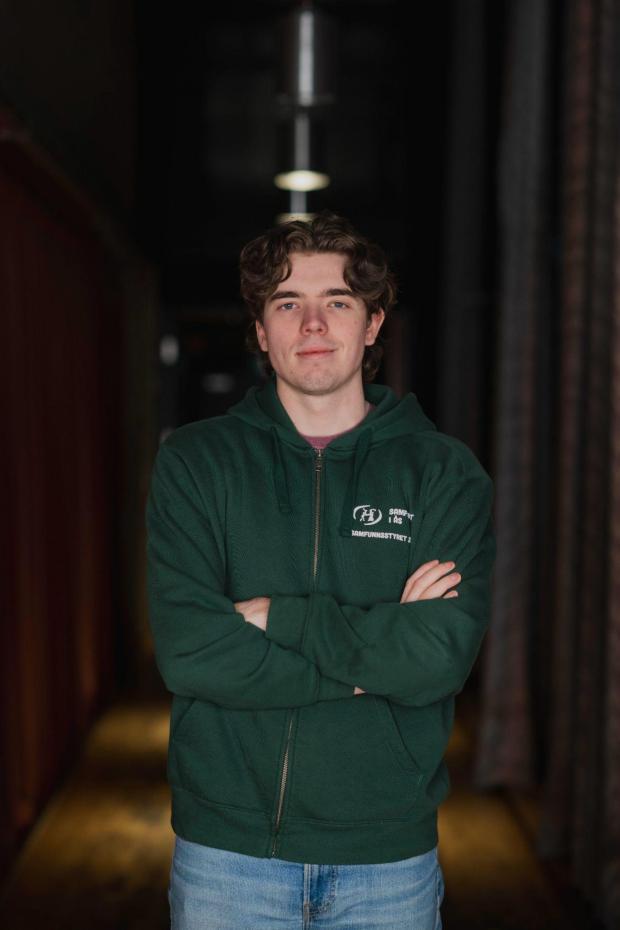
Proposed chairs of meeting: Isabel Warem Øverås and William Fredrik Bakke Dahl.
Proposed resolution
Isabel Warem Øverås and William Fredrik Bakke Dahl are elected as chairs of meeting.
Case 3 Appointment of scrutineers and minutes taker
Proposal to not use scrutineers, due to digital voting system.
Proposed keeper of the minutes: Sofia Buddeberg
Proposed resolution
Scrutineers expire.
Sofia Buddeberg is appointed as minutes taker.
Case 4 Electing two representatives to sign protocol with main chair of the meeting
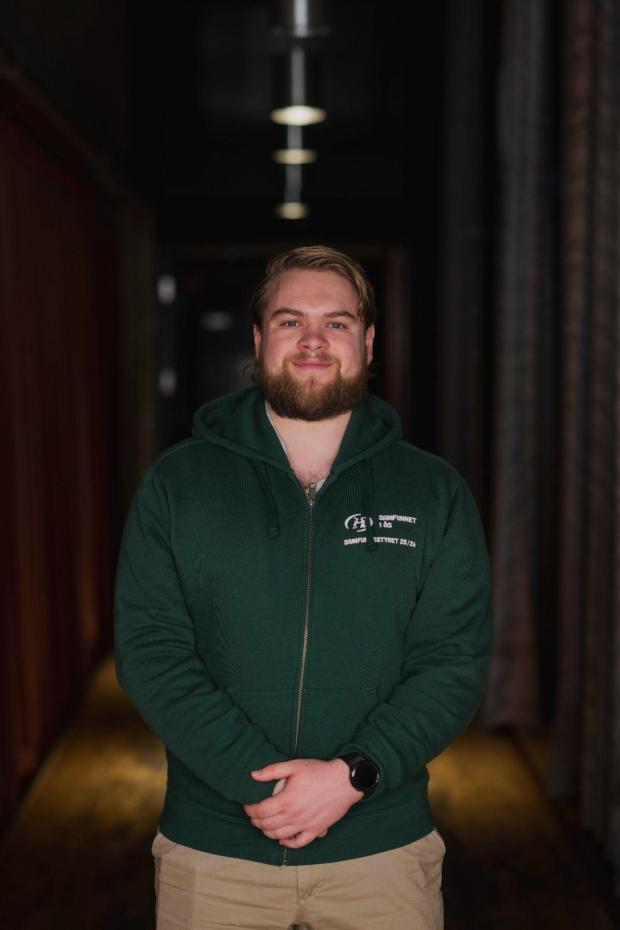
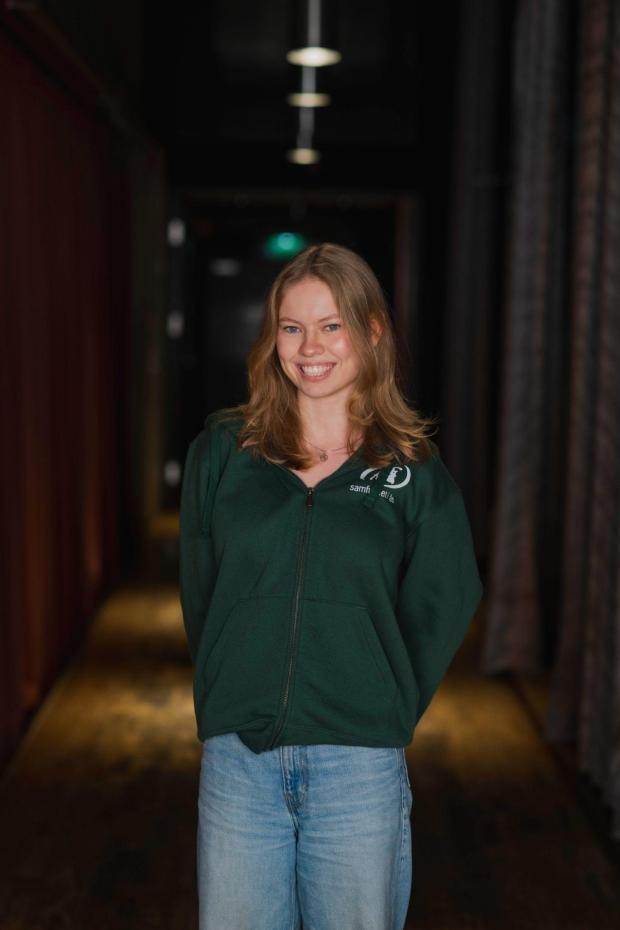
Proposed signatories: Hallvard Helstad and Karen Ringnes Hoff.
Proposed resolution
Hallvard Helstad and Karen Ringnes Hoff are elected signatories.
Case 5 Report for Studentsamfunnet of the previous year according to the established strategy
5.1 The Board of Samfunnet
The Samfunnet board 2025 has consisted of the following members
Spring 2025
Autumn 2025
Leader Magnus Schie Larsen Oskar Solberg Lægland
Head of administration Sigbjørn Flatin
Head of finance
Head of Bodega
Head of events
Head of marketing
Sigbjørn Flatin
Egil Natvik Vestrheim Egil Natvik Vestrheim
Rakel Marieannedotter Orvedal
Otto Hua Wei Engum
Sivert Aarflott
Rakel Marieannedotter Orvedal
Otto Hua Wei Engum
Sivert Aarflott
Head of finance to be Ola Reinskou Andersen
Head of events to be Sunniva McNamara Hundere
4.1 ACTIVITY AND OFFER
EDITED AND CONTINUED GOALS:
4.1.1 During 2025, the Society shall organize at least 6 attractive events in collaboration with co-organizers during the semester, of which at least 1 is a new co-organizer. The event shall benefit the members. Examples of such co-organizers may be student associations, departmental associations, the Student Democracy, sports clubs and interest organizations.
Goal achieved: In 2025 we had a varied stack of collaborative events. In the spring we had, among other things, dance bodega, lectures on sexual health, speed dating, plant and sip, decorating cupcakes, skepsisuka with the Team. The fall semester was just as varied and collaborative events were Speedfriending, ÅM i pizzaspising, language café, election debate, rock bodega, paint on pots.
4.1.2 At least 6 different events must be arranged during the semester that are actively facilitated for international students, in order to, among other things, contribute to the inclusion of international students, preferably in consultation with organizations such as ISU and ESN.
Goal achieved: Events that have been arranged for international students for spring 2025 have been language cafe, light mix quiz, y2k quiz, phone free study, gender-bender, rave. For the fall it was speedfriending, language cafe, general knowledge quiz, paint on pots/cups, pitch a friend, rave
4.1.3 Towards the end of the spring parallel and autumn parallel, a survey will be sent to members regarding points for further development of the offer at Samfunnet i Ås. The aim will be for at least 50% of members to respond to the survey.
Goal partially achieved: The surveys were sent out in the spring and fall. Around 8% of members responded in the spring and 10% of members responded in the fall.
4.1.4 In 2025, active efforts will be made to ensure that 50% of guests are inside the house within 1 hour of opening on party nights.
Goal achieved : On average, over 50% of guests have been inside the house within 1 hour of opening on party nights. One measure that was introduced to ensure this is happy hour.
4.1.5 The club will have a varied and affordable food and beverage offering through 2025.
Goal achieved: There was a varied weekly offer in the Club with different dishes as well as a fixed assortment. The prices in the Club have been reviewed and reduced where possible.
4.1.6 At least 2 major events will be organized during 2025 outside of regular events.
Goal achieved: Two new and larger events during 2025 were the Spring Gala and King's Command.
4.1.7 Each semester, a theme week will be organized that focuses on at least one of the UN's sustainable development goals, preferably in consultation with partners.
Goal achieved: For the spring semester we had "Sustainability Week", in collaboration with the Student Parliament's Sustainability Committee. In the fall semester we had "Election Week", with a panel debate and election vigil.
4.1.8 The Business Committee at NMBU shall work to offer 5 events per semester in addition to Career Day. CV photography does not count as one of those events.
Goal achieved: The Business Committee at NMBU has organized everything from large events such as lectures with Dag Otto Lauritzen and Marit Bjørgen to smaller events like ÅsSå-Videre, where students can learn about the opportunities available after completing their studies at NMBU.
4.1.9 The Business Committee at NMBU will test a new low-threshold arrangement during 2025.
Goal achieved: During Career Week in autumn 2025, we hosted Dag Otto Lauritsen, who gave a lecture about his career both as a professional elite athlete and in working life. Approximately 200 students attended the event.
4.1.10 The Business Committee at NMBU will investigate alternative areas and solutions for future career fairs in 2025 in connection with the renovation of Aud.Max.
Goal achieved: We established contact with Eika and carried out KD Spring 2026 in GGHallen. This was a success, with both students and companies expressing satisfaction with the event.
4.1.11 The community of Ås will maintain passive housing offerings in 2025.
Goal partially achieved: Changes have been made to the furnishings in some rooms, facilitating more passive activity. However, this is a goal that has not been fully achieved, and work will continue in 2026.
4.1.12 During 2025, two major sober events will be held in addition to regular events.
Goal achieved: it has been implemented, for example, the ÅM in pizza eating and debates about rector elections and parliamentary elections.
4.1.13 Several rooms should be used during the party evening, for example the Club or the Pergola, with passive and/or active offerings.
Goal partially achieved: during the sponsor week, several rooms on the 2nd floor were used for party nights, including the Club. The work has been continued and has already been improved in 2026.
4.1.14 During 2025, efforts will be made to hold events at the Pergola outside of party nights.
Goal not reached: Use of the pergola depends on suitable weather conditions. It has therefore been difficult to plan for its use. The pergola was used somewhat during the sponsor week, as August is the most suitable month. Otherwise, the pergola is in use by the Club's guests when the weather permits.
4.1.15 Analyses of events and the use of the services at the Student Community in Ås shall be carried out annually. This data shall be used as a basis for decisions in budgeting, planning and implementing events.
Goal achieved: ticket and bar sales, number of scanned tickets and attendance of volunteers have been used in planning the semester program, budget processes and implementation of events. Statistics around revues have been used to increase the financial support that associations can apply for to implement revues. It is resource-intensive work to carry out this type of analysis, however, the board considers it useful in the cases where it has been carried out.
NEW GOALS:
4.1.16 Improve the use of space in the house based on the survey conducted in 2023.
Goal not reached: the board believes that the survey cannot be used to improve room use. Nevertheless, continuous work has been done to make it easier to use rooms and to increase activity in the house. This has been done, among other things, through a changed room booking system and different use of rooms during party nights.
4.1.17 The club shall have an attractive and culturally varied offering through 2025.
Goal achieved: throughout 2025, a number of different events have been held at the Club. Among others, intimate concerts, events with (un)current events and during NMBU's Mental Health Week.
4.1.18 The community of Ås shall strive to ensure that 80% of tickets sold are scanned during each party evening.
Goal not reached: This has been worked on, and at several events, but has not been reached.
4.1.19 The Student Union in Ås will analyze and map the number of scanned tickets over a two-year period.
Goal achieved: The number of scanned tickets over a two-year period has been mapped and analyzed. However, the information is not the most useful and mainly provides a superficial picture of the real history.
4.1.20 In order to include international students, the Student Association in Ås wants to contribute to international sponsor week for both the spring and fall semesters.
Goal achieved: The student community in Ås has completed the Tour de Samf at the start of both semesters. Assisted with the production and distribution of the English version of the Thorvald and Tora booklet.
4.1.21 The community in Ås shall maintain the offer for guests under 20 years of age on party nights.
Goal partially achieved: bar service has been provided in Halvor's dormitory at some events, with an alcohol offering that differs from the bodega. However, this offering has not been implemented at many parties, partly due to limited volunteers at work.
4.1.22 In 2025, the Ringfest Committee will organize the Ringfest with the Studentsamfunnet in Ås as co-organizer.
Goal achieved: The 2025 Ringfest was held with the Studentsamfunnet in Ås as co-organizer.
4.2 MEMBERS
EDITED AND CONTINUED GOALS:
4.2.1 During 2025, 40% of campus-based students shall be members of the Studentsamfunnet in Ås, and 80% of international students shall be members. Of campus-based first-year students starting in 2025, 60% shall be members during their first semester.
Goal not reached: The Student Society in Ås has worked to increase the number of members through active marketing. We now have a share of 22% of campusbased students who are members and 16% of international students are members of the Society. 25% of first-year students are members.
4.2.2 An annual review and assessment of membership benefits at the Student Association in Ås shall be carried out.
Goal achieved: The society board has reviewed the membership benefits at the Studentsamfunnet in Ås. In addition, work has been done on standardizing benefits across the bodies.
4.2.3 At least 25% of completed community service must be self-reported.
Goal achieved: Over 25% of community services have been self-registered.
4.2.4 At least 70% of community service workers called in must report to work.
Goal achieved: During 2025, attendance at community services has averaged over 70%. Nevertheless, there are several party nights where attendance is significantly lower, which has negatively affected the event.
NEW GOALS:
4.2.5 The recruitment strategy for the Student Union in Ås shall be revised annually, especially to attract members from the new student body at NMBU.
Goal achieved: The recruitment strategy of the Student Association in Ås has been revised in 2025.
4.2.6 The community of Ås shall review and strive to develop a fairer system for calling for and performing community service.
Goal achieved: the call system in the linticket has been changed, and is adapted to a fairer call based on grade level.
4.2.7 The student community in Ås wants to increase the number of non-student members.
Goal partially achieved: The society board has worked on the goal, and has made arrangements for non-students to become members. However, the goal has not been prioritized, and the number of non-student members has not increased significantly.
4.3 VOLUNTEERS
EDITED AND CONTINUED GOALS:
4.3.1 All volunteers shall receive the necessary training and courses during 2025. Internal resources and expertise at the Student Union shall be used where possible.
Goal achieved: various courses for volunteers have been completed throughout 2025. The focus on training has been followed up, although it should be improved.
4.3.2 All volunteers shall be invited, with a strong encouragement to attend, to an introduction to the history, organization and finances of the Student Association in Ås.
Goal achieved: Before the committee workshops in the spring and fall, all volunteers received an invitation to the Student Society's history class. Attendance was a requirement for those who had not participated previously.
4.3.3 Throughout 2025, the work with operating committees across the bodies at the Student Union in Ås will be evaluated and further developed.
Goal achieved: The solution with operating committees has been reviewed and discussed by both Samfunnet and UKA. Of the volunteers who are involved in organizing the party, almost all are operating. In addition, several positions within finance are operating. It is constantly being considered whether other committees should be made operating.
4.3.4 In order to facilitate the optimized operation of events and services at Samfunnet i Ås, the necessary hours worked by volunteers each semester shall be mapped out.
Objective partially achieved: where most relevant, volunteers have been instructed to keep track of time spent on the position.
4.3.5 An annual audit of the benefits for volunteers at the Student Association in Ås shall be carried out.
Goal achieved: through 2025, the benefits for volunteers have been assessed and revised. There is a continuous focus on securing input through various surveys, meetings and workshops.
4.3.6 Society should work to increase well-being and belonging among volunteers.
Goal achieved: a lot of time has been spent working to increase well-being and belonging among the volunteers. Focusing on the social aspect within blocks and committees has been a major theme, including by facilitating the use of social support. In surveys conducted at workshops, the figures show that a large majority of the volunteers feel very well.
NEW GOALS:
4.3.7 After the UKE year, efforts will be made to recruit new volunteers from UKA in Ås to the Community in Ås.
Goal not reached: there has not been any significant effort to target recruitment of these volunteers. Nevertheless, we are experiencing that more people are becoming
volunteers at Samfunnet after the implementation of the UKA, and we view this very positively.
4.3.8 Through 2025, we will work to ensure that more members become volunteers at Samfunnet i Ås.
Goal achieved: work has been done to clarify the benefits for volunteers and the positive aspects of contributing to the community. In addition, work has been done on recruitment through campaigns, competitions and stand activities.
4.3.9 Efforts will be made to ensure that volunteers at Samfunnet i Ås wish to remain on committees for at least one year.
Goal achieved: work to ensure a good environment for volunteers has been an important factor in this work. It is a focus during the hiring process to make clear a desire to remain in the position for at least one year.
4.3.10 In 2025, 25% of the number of members at Samfunnet i Ås shall hold a position beyond regular membership.
Goal not reached: The proportion of members of the Society of Ås who hold positions beyond regular membership has not exceeded 25% in 2025.
4.4 ECONOMY
EDITED AND CONTINUED GOALS:
4.4.1 Tuntreet shall continue to investigate the possibility of reducing its costs, for example by reducing printing costs or licensing costs.
Goal achieved: Tuntreet has reduced its printing costs. In addition, work has been done to more closely coordinate licensing costs across the bodies of the Student Union.
4.4.2 Tuntreet shall work to increase the amount of external support.
4.5 THE PHYSICAL BUILDING
EDITED AND CONTINUED GOALS:
4.5.1 In 2025, a joint consumer and recycling warehouse will be established for the board and committee heads at Samfunnet in Ås.
Goal achieved: a common consumable and reusable storage facility has been created for the volunteers in the office wing.
4.5.2 A priority list for room renovation shall be established in consultation with the Operations and Maintenance Committee.
Goal achieved: A priority list has been created for room renovation in consultation with the Operations and Maintenance Committee.
NEW GOALS:
4.5.3 During 2025, a committee will be established to optimize and digitize the archive at Samfunnet.
Goal achieved: KS husprojekt was hired, which focuses on digitizing and optimizing the archive at Samfunnet, and measures have been initiated to save what is considered valuable.
4.5.4 In 2025, the Student Association in Ås will continue and, if possible, improve the museum in Uggenspranget.
Goal achieved: The museum in Uggenspranget has been continued. No major improvements have been made.
4.5.5 The work on organizing new zones and card access will be continuously worked on to improve the security of the building and the assets of the Student Association in Ås.
Goal achieved: Work has been done to collect and disseminate information about the card readers in the building, including through the creation of a common information document.
4.6 PARTNERS
EDITED AND CONTINUED GOALS:
4.6.1 During 2025, at least one cooperation agreement will be signed with a major sponsor for the Student Association in Ås.
Goal achieved: Major sponsorship agreements have been signed for the Student Association in Ås in 2025.
4.6.2 Tuntreet shall, in collaboration with the sponsorship team, work to obtain more advertisers.
Objective partially achieved: Better routines have been established and more meetings have been held. However, there is room for more collaboration.
4.6.3 In 2025, the sponsorship team will further develop guidelines and agreements with partners.
Goal partially achieved: The community board and NU have worked on the guidelines and offer to potential sponsors in 2025.
4.6.4 The Sprell Festival in 2025 shall have at least one major sponsor.
Goal not reached: The Sprellfestivalen did not have one major sponsor.
4.6.5 The community in Ås shall maintain good cooperation with SiÅs, including at external events.
Goal achieved: The society has a good and fruitful collaboration with SiÅs.
4.6.6 The community in Ås shall be a central part of the sponsor week at NMBU.
Goal achieved: The student community has had a good collaboration with the Faddergeneral, which has led to several events at the house during Fadderweek. The community was successful in several requests related to the implementation of Fadderweek, and was very satisfied with the collaboration.
4.6.7 The community of Ås should look at the possibilities of having sponsors and/or support related to individual events.
Goal achieved: The community has had its own sponsors for prizes for the weekly quizzes.
NEW GOALS:
4.6.8 Partners for the Society in Ås must be well thought out and reflect the principles of the student body.
Goal achieved: Possible collaboration partners are considered, and rejected if they violate general principles of the student body.
4.6.9 The student community in Ås shall maintain good cooperation with the municipality of Ås.
Goal achieved: The student community has had good cooperation with Ås municipality, especially in connection with planning a year without Aud.Max.
4.6.10 The student community in Ås shall maintain good cooperation with NMBU.
Goal achieved: The collaboration with NMBU is considered good. Dialogue takes place through many different channels, mainly regarding the operation of the building itself.
4.6.11 The student community in Ås shall maintain good cooperation with the Student Parliament's working committee.
Goal achieved: The Student Union considers the collaboration with the Student Parliament's Working Committee to be good. The Union Board has strived to have at least one representative present during the Student Parliament meetings. In addition, the Union has had good collaboration around the implementation of Green Week and the Rector's Debate in the spring of 2025.
4.7 ORGANIZATIONAL DEVELOPMENT
EDITED AND CONTINUED GOALS:
4.7.1 In 2025, all bodies at the Student Union in Ås will work to ensure that at least 20% of members attend the General Assemblies held in 2025.
Goal not reached: The goal has been worked on, but attendance was 12.5% at the spring GF and 12.8% at the fall GF.
4.7.2 In 2025, 90% of participants at the General Assembly shall arrive within the first hour.
Goal achieved: Over 90% of participants at the 2025 GF showed up within the first hour.
4.7.3 During 2025, the overlap template will be used for the transfer of expertise and knowledge for the Student Community in Ås.
Goal partially achieved: There has been a focus on using the template for overlap, but there is still work to be done before it is always in use.
4.7.4 The Business Committee at NMBU will work to increase visibility towards students and companies.
Goal achieved: The Business Committee at NMBU purchased marketing materials during 2025 and worked actively with marketing towards the students. Strong attendance at events shows that this effort has produced results.
NEW GOALS:
4.7.5 During 2025, an evaluation of the restructuring of the Student Union's boards will be carried out.
Goal achieved: The restructuring of the Student Union's boards has been assessed in 2025. The conclusion is that the boards are satisfied with the restructuring that has recently taken place.
4.7.6 During 2025, an evaluation of the restructuring of the Student Union's block structures will be carried out.
Goal achieved: An evaluation of the restructuring of the Student Union's block structure has been carried out. The evaluation has taken place in conjunction with point 4.7.5. The result is that people are satisfied with the restructuring.
4.7.7 The Election Committee, in collaboration with the volunteers at the Student Association in Ås, shall work actively with recruitment for the General Assembly.
Goal partially achieved: Targeted work has been done on recruitment to the GF, however, it has not resulted in pre-registered candidates for all positions.
Proposed resolution
The General Assembly takes note of the matter.
5.2 The Board of House and Finance
The report for the Board of House and Finance will be posted when the annual accounts are ready.
Proposed resolution
The General Assembly takes note of the matter.
4.3 Volunteering
NEW GOALS:
5.2 The UKEboard
4.3.11 UKA i Ås shall ensure that the strong volunteer spirit associated with the festival is maintained throughout UKA i Ås 2026 despite the absence of Aud.Max., and ensure good knowledge transfer to UKA i Ås 2028.
Goal partially achieved: Almost 100 new volunteers have been recruited to leadership positions in 2025. In addition, several hundred funkises and NKs have been recruited.
4.4 ECONOMY
NEW GOALS:
4.4.8 During 2025, the financial framework necessary to carry out UKA i Ås 2026 shall be established. This includes maintaining good dialogue with NMBU and SiÅs.
Goal partially achieved: NMBU has granted UKA i Ås 2026 substantial financial support. In addition, favourable agreements have been established with SiÅs. However, UKA i Ås still lacks significant sponsor revenue.
4.5 THE PHYSICAL BUILDING
NEW GOALS:
4.5.6 UKA i Ås shall explore alternative use of facilities for UKA i Ås 2026 in order to carry out the festival in the best possible way.
Goal achieved: UKA i Ås has rented a concert tent that will be used as a replacement for Aud.Max. In addition, work has been done to maximize the capacity of the Samfunnet building itself. New entrance solutions have been developed to allow a large number of guests to enter without using the Aud.Max. entrance.
4.6 PARTNERS
NEW GOALS:
4.6.12 In 2025, a cooperation agreement between Næringslivsutvalget and UKA i Ås 2026 shall be established.
Goal achieved: A cooperation agreement has been drafted and signed.
Proposed resolution
The General Assembly takes note of the matter.
Case 7 Preliminary reports for Studentsamfunnet i Ås for spring 2024
7.1 The Board of Samfunnet
Following are the reports from board members of the Board of Samfunnet (Samfunnsstyret). The report from the leader is on behalf of Samfunnsstyret.
Report from the Leader
Oskar Solberg Lægland
Honored General Assembly!
The community board in spring 2026 consists of the following members
Leader: Oskar Solberg Lægland
Head of Administration: Mathilde Buttedahl
Chief Financial Officer: Ola Reinskou Andersen
Head of Bodega: Snorre Langeland Moberg
Event manager: Sunniva McNamara Hudere
Marketing Manager: Telle Bratås
Since the general meeting in the fall of 2025, the Society Board has been busy with many things to do! Moving, planning, organizing parties and recruiting are just a few keywords. During 2026, the Society Board will continue its work to ensure that the Society in Ås has a wide range of events and activities. We look forward to developing the organization and making volunteering more attractive.
Collaboration with other actors
So far in 2026, we have had good cooperation with various actors regarding events at the Society, and we would like to thank everyone who contributes to good activity and use of the building! We in the Society Board want to strengthen relationships with other actors on Campus and in the surrounding area, which we hope will contribute to improving the Society's operations even more.
SiÅs is by far one of our biggest partners, and we are very pleased with how things are going. Especially when it comes to how positive SiÅs is in contributing to alternatives without Aud.Max. such as providing the GG hall for Ringfesten.
The dialogue with NMBU has largely revolved around the renovation of Aud.Max. So far in 2026, we have moved the Studentsamfunnet's assets out of the building and found a temporary, alternative location. This has not been the easiest task, but we are pleased with the result. The society is hopeful that the renovation of Aud.Max. will go well, and is following up on the aspects that are relevant to us. We have already held a summit in 2026, where the new university director was able to greet the boards, and get to know the Studentsamfunnet better as an organization.
The community board has not had any special dialogue with Ås municipality so far this year, but we are following developments regarding extended serving hours in connection with the World Cup this coming summer. We have been in dialogue with Ås history club, and have a couple of possible collaborative events in the next six months.
Even though we are the same organization, it is also important to ensure good cooperation with UKA in Ås. At the time of writing, miniUKA is being carried out, and we are very impressed with what has been done at the house in such a short time. We are very much looking forward to the actual UKA in the fall, and look forward to contributing by testing new solutions.
The organization
The recent period has been characterized by continuing to adapt operations after several changes in recent years. The integration of the concert block into the event block has been well completed, and operations are as usual in the event block, with the additional committees. The expansion of operating committees has proven to be very useful, and we are in dialogue with the UKE board about which other committees may be suitable.
Recently, the Society has had difficulty recruiting for some of the more technical committees. This has put extra pressure on some volunteers, and the board is very grateful for the effort they have put in. Going forward, the focus will be on finding alternatives to reduce the workload, while also working on finding new ways to recruit committed volunteers.
The economyIn the absence of Aud.Max. it is no secret that it is more demanding to
ensure a good economy for the Society. The concerts are smaller, and fewer people get to see the revues. The entire organization has therefore worked hard to find solutions that will both be good for our guests, while also contributing to the economy.
On the eve of Christmas 2025, the amount we pay to SiÅs for the donation was significantly reduced. This means that we can keep more money within the organization and further develop what we offer our guests.
Ensuring sound financial operations in a pressured situation is not easy, and the board is very grateful to all our volunteers who contribute to thinking new things, and ensure that we can continue to operate well until Aud.Max. opens again.
Final thoughts
We on the board have worked hard to create the best possible offer for our members so far in 2026. We hope you are satisfied with the result, and not least that you are ready for the upcoming events as well.
The following reports from other board members provide more detailed descriptions of the year. It is recommended that you read these to gain a good insight into what the board has been working on and will focus on going forward.
I, and the rest of the board, would like to remind all our members that if you have any questions or feedback, please get in touch. We would love to hear from you, and will always try our best to answer any questions or concerns a member may have. We can always improve, and we are completely
dependent on hearing YOUR opinions and thoughts to make that happen.
Finally, I would like to thank you for a great year on the board! It has been a true honor to be elected to the Student Union, and I am incredibly grateful for all the committed and talented volunteers I have had the opportunity to work with!
Oskar Solberg Lægland, Chair of the Society Board 2025/2026.
Report from the Head of Administration Mathilde Buttedahl
Mathilde Buttedahl
Honourable General Assembly!
The Administration Block, Spring 2026:
Administration Assistant: Sofia
Buddeberg
HR Manager: Signy Tangen
Head of Personell: Wilma Norenberg and Leon Strømsvaag
Head of Linticket (upcoming): Tuva Kullvik (Lotte Baklund Engnes)
Head of IT: Sebastian Mollan
Head of HSE: Ludo Van Der Lee
Head of Billetto: Sebastian Bræin Aaen
Committee Members:
Roombooking: Maja Tveito Frostad
Linticket: Annveig Foss and Jone Lerstøl There have been several changes in the administration block since the previous General Assembly. We have welcomed two new Heads of Personnel in Wilma and Leon, Sofia has taken over the baton as Administration Assistant, Signy has fully stepped into the role of HR Manager, and Lotte has begun the transition period to take over as Head of Linticket. The transition(s) have gone pretty much seamlessly, and I must say it has been a great pleasure to become part of this group of engaged people!
The work of the Administration Block this spring
Administration Assistant Sofia continuously updates the overview of volunteers at Studentsamfunnet and follows up on all contracts. In addition,
she manages communication with NMBU regarding card access so that access needs are covered as well as possible.
Heads of Personnel Wilma and Leon answer questions about membership and manage the logistics around calling in and swapping community services.
Signy has settled well into the role as HR Manager and has organized KS Forum, KS Workshop, and KM Workshop, where many good ideas for the operation and development of Samfunnet have emerged. She also assists with recruitment processes and helps anyone who gets in touch.
Tuva, Head of Linticket, now has a successor for the role: Lotte. Work is continuously being done to solve difficulties people experience with Linticket. The Linticket committee is, among other things, working on setting up events for the entire semester and following up on which functions in Linticket can be used to make the service more user-friendly.
Our Head of HSE, Ludo, is working to map good and poor HSE routines related to the operation of the building. He also assists the committees with HSE work.
Sebastian, Head of Billetto, has started conducting tests to see whether Billetto could be a possible ticketing and membership system for the Studentsamfunnet i Ås.
Questions and issues related to IT are handled by Sebastian Mollan, the Head of IT. He works on keeping mailing lists and groups updated within the organization, which simplifies communication between the different bodies.
Maja is our room booking committee member and is responsible for all communication related to room bookings, including our new room booking system.
Membership numbers
As of 07.03.2026, the Studentsamfunnet i Ås has 2531 members, of which 233 are international members. This represents 36% of the campus-based students at NMBU. We in the Board of Samfunnet greatly appreciate that so many people want to participate in volunteer life at Samfunnet, and we will work to maintain this interest.
Thank you!
I would like to thank everyone in the administration block for the work you do. You make an incredibly important contribution that may not always receive much attention here at "Agraren", but without you things simply would not run. I would also like to thank you for the warm welcome I have received into the block. You have been fantastic in teaching me and helping me settle into the role.
Thank you for the trust I was given at the General Assembly last autumn. It has been incredibly fun to familiarize myself with the position so far, and I look forward to the rest of the year as part of the Board of Samfunnet!
Report from the Head of Finance Ola Reinskou Andersen
Accountants: Frida Amalie Gundersen, Dalia Qadir Zada, Nikolina Trifkovic
Hagtvedt, Haben Berh, Silje Stengrimsen, Ezizgol Rezai
KS Climate Accounting: Håkon Bjørlin
Basma
New KS Climate Accounting: Rebecca Heyenes
Economy Update – Spring 2026
Considering the circumstances, we can say that we are satisfied with the spring semester of 2026. As of March 2, Samfunnet has sold 7,299 tickets to events at the house. This is a solid increase compared to last year, with 1,421 more tickets sold.
Audmax
The loss of Audmax has resulted in split ticketing for several events. We have slightly increased prices for show tickets while reducing prices for those who only wish to attend the bodega. So far in 2026, this has significantly reduced the revenue potential for the Student Samfunnet. As a result, Samfunnet has lost somewhere between NOK 30,000 and 140,000 due to not being able to host events in Audmax. However, this is not entirely negative, as
it also means it has become cheaper for the students to party.
Annual Accounting report
The financial statements will be ready before March 20.
The calendar year 2025 went exceptionally well, particularly due to a very strong autumn semester. Positive experiences from the buddyweek of Autumn 2023 and less successful experiences from buddyweek of Autumn 2024 were combined to create a highly successful buddyweek in Autumn 2025. The buddyweek truly set a positive tone for the entire autumn semester.
I would also like to thank my predecessor Egil for a fantastic effort as head of economy. The foundation you have laid throughout the year has been invaluable. Thank you very much!
Work in the Economy Block
The Economy Block has continued its excellent work with the financial and sustainable operation of the Studentsamfunnet as a whole. This is something we will continue to focus on, and it is very exciting to be a part of.
Economy Assistant and Accountants
Jørg is the Society’s new Economy Assistant and serves as my closest collaborator. Jørg will take over from Skule this spring and is currently familiarizing himself with purchasing routines and invoicing. Skule has done a great job over the past year with invoicing and communication with the committee leaders regarding purchases.
The accounting team has worked diligently throughout the year, especially with the annual accounts. This is a highly skilled group with strong accounting expertise, and they are a key reason why the Student Samfunnet in Ås receives praise from auditors year after year. This year they have also taken on the challenge of transitioning to a new accounting system, along with gaining a new accounting partner in ECIT.
Climate Accounting Committee
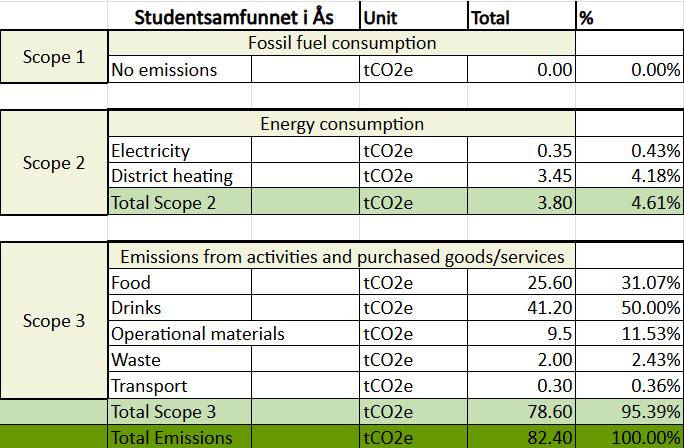
The Climate Accounting Committee invests a great deal of time and effort, with Håkon as committee leader and Rebecca as the new leader. The climate accounts provide valuable data that helps ensure the Society can operate as sustainably as possible. This year we have also established good routines for green procurement. This committee continuously contributes to making Student Samfunnet more sustainable.
Report from the Head of Bodega Snorre Langeland Moberg
Honorable General Assembly!
It feels as though the semester started yesterday, and yet we are already about halfway through! We in the Bodega Block look back on a few months filled with activity and learning.
Wardrobe Tent
January marked a major transition for those of us involved in organizing parties, as Aud.Max was finally closed for renovation. We have had to use the building more efficiently and work to overcome the limitations that followed. One of these limitations was the wardrobe solution. We have long been
spoiled with good cloakroom space in AM, and during the “Eksamensfest” we noticed that the space outside Halvor’s was not sufficient. Before the semester kickoff, we set up a wardrobe tent thanks to great volunteer effort from all departments of the Student Society. Although the wardrobe tent did not work perfectly that evening, we have worked hard to improve our routines, and it now appears that we have an alternative that can function well.
Community Service Volunteers
This semester we have seen a significant decline in the number of community service volunteers showing up for shifts. This has a major impact on how we can run party nights and what services we can offer in the building. On some occasions, the Society Board has had to limit capacity on party nights due to too few confirmed volunteers. The minimum requirement of volunteers is necessary for safety in the building. The wardrobe tent also requires staffing, as an unmanned outdoor cloakroom is impractical. The Bar and Food Committee also relies on community service volunteers for additional support when there are enough people available. We have worked, and continue to work actively, on measures to reverse this trend.
Our Committees
The committees in the Bodega Block continue to work tirelessly to ensure that the Student Society can maintain the best possible offerings. Ordensvern and Konsernet stand firm in safeguarding the
safety of everyone at parties. The Bar and Food Committee works hard to provide food and drinks despite a shortage of committee members. The Entrance Committee has quickly adapted to the wardrobe tent and still welcomes everyone with a smile. The Carpentry Committee has restarted and is working on recruiting new members. This committee was shut down and restarted after the New Year due to uncertainty related to the loss of the carpentry basement. Nevertheless, we have worked behind the scenes to maintain this offering. Klubben continues to be a place for everyone and ran a very successful recruitment campaign in February called “free coffee.” The Party Coordinator works diligently to distribute 75% events in a fair and effective way. We have managed to organize several good events despite limited capacity in the relevant committees. All in all, operations are going well by all indications. People are doing a great job contributing that little bit extra, even though overall we could definitely use more committee members!
Eventsblock Spring 2026
Eventsassistant: Edith Lisa Norheim
Concert assistant: Patrycja Kaminska
Activity and Current Affairs: Ragnhild Bråten
Sound technical: Henrik Johan Larsson
Sound personnel: Elias Rossetnes
Incoming sound personnel: Lea Kanike
Lighting technical: Sander Nygaard
Honorable General Assembly!
Report from the Head of Events
Sunniva McNamara Hundere
Lighting personell: Håvard
Smidesang
Incoming sound personnel:
Lourdes Meireles Johansen
Revue: Liv Elise Slang
Disco: David Hammer
Artist and Booking: Emma Kruge
Storvand and Emil Fjeld
This semester really has flown by, and when looking back at the program it is not surprising that time has gone by fast. The eventsblock has created an amazing, and varied, program that has made yet another semester fun and memorable.
The committees
The events part of the block has worked hard to improve current activities, whilst making more rooms around the house more available. For instance, renovating Rosehagen and Formannens to make them more welcoming. All the new furniture is either found in other parts of Samfunnet and reused or obtained second-hand. In addition, we have tried out various activities such as Silent disco and karaoke.
The concert part of the block has tested the newly rewritten revue instruction, reallocated the costumeroom, and tried what it is like to have revues and concerts in Festsalen. They work constantly in hopes of obtaining a variety of artists, in addition to creating wonderful lightshows to make the concerts more memorable.
We are in a bit of a bind, our lights committee has few members. Committee members have worked hard in hopes of maintaining lights for revues and concerts. However, this has taken a toll on them.
Therefore, we have unfortunately decided that going forward we will not be able to offer lighting shows as advanced as we have previously. In addition, we will have to limit the number of events that require the lighting committee.
The spring so far
Despite not having Aud Max for the moment, we have utilized Festsalen to arrange a successful Semesterkickoff, soldout revues and other accomplished events. The loss of Aud Max has allowed us to try out new things such as double concerts.
Since events such as “Pitch-a-friend” and “Springgalla” were popular, we have decided to continue to arrange these events. We have also tested out events that are more in the direction of academics, where we have invited headmaster Solve, and Tor Kristian Stevik to speak about a chosen topic, and a debate. The reason for this is because we noticed how popular the events surrounding the election, last autumn, were. We are also excited to see how “Felleskjøpet fest” is going to turn out because this is a party that is sponsored by Felleskjøpet, and we hope to see more events such as this one in coming programs.
The autumn so far
We are on track with planning the next semester program. Once again, the block is hard at work to produce a program that is varied, creative and continues to test out different activities for our guests. Our goal is to continue finding activities such as silent disco and karaoke. With all this in mind, we plan to utilize the experience we have gained from the spring to make
the autumn semester as good as possible.
Buddyweek will be one of the biggest projects this autumn, and we hope to have a collaboration that is similar to autumn 25. We aim to give our members a good selection of artists for both “Buddyweekconcert” and “Semesterkickoff”. This semester will in general be quieter considering that a lot of the semester falls under “UKA” and their program, which we are super excited to see.
Thanks!
Lastly, I want to give a shoutout and say thank you to all the committee members and committee bosses within the Events block. You all are doing an amazing job, and without you we would not have these wonderful events! Keep up the good work, and engagement you have.
Report from the Head of Marketing Telle Bratås
Telle Bratås
Honorable General Assembly!
Marketing Assistant: Sara Nielsen
KS Photo: Mathilde Bjørnås
KS Film: Nicolai Lütken Terland
KS Film Editing: Nicolai Lütken Terland
KS Web: Kristian Lund Vang
Head of Recruitment: Solveig Blom
KS Design & Layout: My Scott Hagen og Susanne Helene Josefsen
KS House Prosject: Ingunn Reimers
Since the autumn General Assembly, there have been a few changes at the KS level, including a new KS Web and a new Head of Recruitment. The transition has been smooth, and both have settled well into their roles. With skilled committee heads, the machinery almost runs by itself, and it has been a pleasure to lead this talented group.
The start of 2026 has brought new challenges for the marketing block, particularly related to the absence of Aud.Max. This has required clear and continuous information in our external communication.
The committees’ work
We see that the marketing block shows strong drive and engagement in its work. As a very “visible” block, I am both satisfied and impressed by the quality and knowledge with which the committee heads and members carry out their work.
The work being done is characterized by strong competence and high quality.
It has been decided that the SoMe group in 2026 will move away from the association tour as its main focus and will instead prioritize a committee tour. The goal is to produce engaging content that highlights the breadth of committee work, while also showing as many people as possible the environment and opportunities available through voluntary engagement at Samfunnet. Producing this type of video-based content is resource- and time-intensive and requires thorough planning. For this reason, it was decided to recruit two new committee members to strengthen the capacity for this type of production. This is an exciting project that I look forward to seeing more of.
The committee tour is a collaborative project between the SoMe team and the film and editing committee. Due to somewhat limited capacity in the latter two committees, the majority of their available resources have been concentrated on this project.
At the time of writing, the design and layout committee is working on designing merchandise that will be launched during 2026. The committee heads and members are exploring concepts, visual expressions, and concrete products that can represent Samfunnet in Ås in a new and modern way. Here as well, additional committee members have been recruited to cover the extra workload this entails.
The KS House Project is well underway with the work related to the renovation of Johanne’s, where the goal is to develop the venue into a more contemporary and attractive meeting place. At the same
time, extensive work has begun in the archive, where materials are being reviewed and systematized. In this process, assessments are made regarding what is considered to have lasting value and what can be discarded.
When it comes to our events, we are experiencing varied demand. Some events are very popular, while others struggle to sell out. For the semester kickoff, the ticket release date was set earlier than is usual practice, which proved successful and resulted in a soldout event. This may therefore be a strategy worth using more in the future. In the absence of Aud.Max, we have focused on new room offerings, which we have received positive feedback on. Going forward, it will be important to continue working on how our events can be made even more attractive, including through new and creative approaches to marketing.
Thanks!
I am very grateful to have been given the trust to serve as Head of Marketing for 2026, and I have already learned a lot. I would like to extend a big thank you to the dedicated and skilled volunteers in the marketing block, who every week contribute significant effort and engagement to a very important part of Samfunnet’s activities. It is an honor to be the head of such a talented group.
Honorable General Assembly,
Board – Spring 2026
Leader – Peder Flaat
Head of Administration – Helge
Markus Rasch
Head of Career Day – Edvard Lauritz
Sæthern
Head of Events – Maren Nøkleby
Sponsorship Coordinator – Petter
Harkinn
Head of Marketing – Elise Velund
7.2 The Business Committee
KS- Sponsor:
Emilie Stenrud
Henny Brenden
Hallvard Tjentland
Benjamin Jarinn Holm
Career Day – Spring 2026
On February 11, we organized this spring’s Career Day with 34 companies in attendance. In addition, we offered CV review and professional CV photography. The companies represented all faculties, and there was a steady flow of students throughout the day engaging with them.
For this spring’s Career Day, we used GG-Hallen at Eika. The hall was well filled with companies and students without becoming overcrowded. Both students and companies were very satisfied with the event.
As in previous years, we also hosted an evening event in connection with Career Day. The Career Evening included short company presentations, networking, food, and a Kahoot quiz based on the company presentations. Both companies and students were very pleased with the evening, which proved to be a success with more than 100 attendees.
Other Events and Activities
Last autumn we organized an event with Marit Bjørgen. It began with a
presentation about her career, followed by a training session. This was a very successful event, but the limited number of available spots meant that free tickets were distributed via Linticket. Unfortunately, many tickets were claimed but not used.
We also hosted a company presentation with SWECO, which was well attended and successful.
The Career Fund
The Career Fund consists of 15% of the profits from the Career Days, with the profit from 2025 being distributed in 2026. In 2025, a total of NOK 330,022 was awarded to career-promoting activities for students at NMBU.
The Career Fund is distributed three times a year, and the next application deadline is March 20. The application portal, guidelines, and information about previous allocations can be found under “Karrierefondet” at www.nunmbu.no
Sponsorship Work
The sponsorship team currently consists of the Sponsorship Coordinator and four committee members who work actively to secure sponsors for UKA, Samfunnet, and Tuntreet.
The team is divided so that three members focus on securing partners
for UKA, while one focuses on partnerships for Samfunnet and Tuntreet. This structure was chosen because securing partners for UKA is considered most critical.
This work has proven challenging due to the current economic downturn in the business sector. However, the team is working creatively with new methods to identify potential partners. For UKA i Ås 2026, we have already secured several large and smaller partners. We continue to work actively to bring companies on board, negotiate mutually beneficial agreements, and finalize contracts.
Together with Samfunnet, the sponsorship team has signed an agreement with Felleskjøpet, and on April 17 there will be a themed event in collaboration with them. The goal is for this to be a success so that more partnership “bodegas” can be sold in the future.
A contract has also been signed with Tekna, which will sponsor Samfunnet in Ås, UKA in Ås 2026, and Tuntreet. Additionally, Gartnerhallen has been secured as a sponsor for prizes at the General Assembly.
Several sponsors have also been secured for quiz prizes, including Bølgen Bad and Ås Kinoteater. Contract follow-ups are ongoing, and the goal is to secure more sponsorship
agreements for Samfunnet in Ås, both for individual events and longer-term collaborations.
For Tuntreet, efforts are being made to secure companies willing to pay for advertising space. Advertising has already been sold to companies such as AFAG.
We work closely with the Samfunnet Board, the UKA Board, and Tuntreet to ensure proper follow-up of contracts and to offer realistic collaboration agreements to companies.
Marketing
Efforts are being made to improve cooperation between the NU marketing team and Samfunnet so that NU’s events and information can reach a larger audience and become more visible on social media.
It has been decided that Samfunnet in Ås will be listed as co-organizer together with NU on Facebook events where appropriate.
The marketing team’s goal moving forward is to increase the number of followers on Instagram and Facebook while maintaining a consistent flow of information.
Administrative Work
The Business Committee at NMBU is actively working to strengthen
collaboration with the student associations at NMBU, particularly to increase the visibility of relevant companies.
As part of this initiative, a seminar for the student associations will be organized each semester, focusing on different themes.
There is also significant activity on campus with stands from various student organizations and companies, contributing to increased engagement among students.
Climate
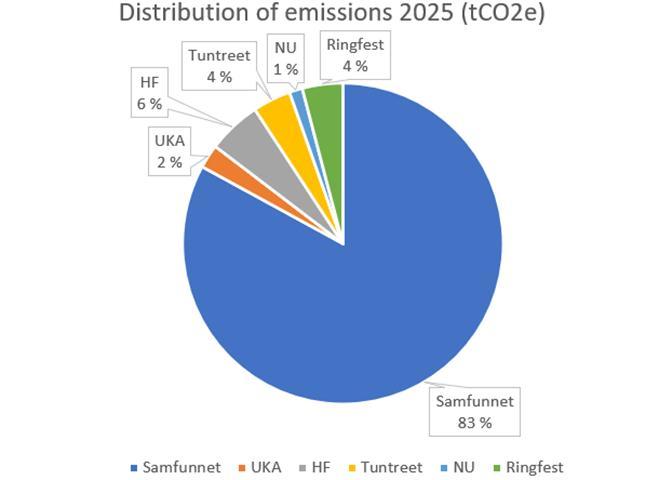
The Business Committee continuously works to reduce its climate footprint. A significant portion of emissions comes from the purchase of food and beverages for events, as well as sweaters for the board and committee leaders.
These emissions are difficult to reduce, but efforts continue through careful planning and more sustainable practices.
On behalf of the Board of the Business Committee
Peder Flaat
Leader of the Business Committee at NMBU
Editorial Assistant: Mina Sofie Haustveit
Tuntréet may have turned 80 this year, but you'll be hard pressed to find a more vibrant and energetic “gamling”! We are keeping production up and experiencing great interest in our issues, and look forward to celebrating our anniversary in the autumn.
Head of Tuntreet, spring of 2026:
Editor-in-Chief: Hanna Lindeman
Journalist Editor: Henrikke Emilia Ellewsen
KS Layout: Lars-Børge Waag Strømsvik
KS Translation: Synne Louise Stromme
KS Correction: Ayda Alizadeh
KS Web: Jakob Sørhus
Editorial Staff:
Honorable General Assembly!
KS Photo: William Fredrik Bakke Dahl
7.3 Tuntreet
Currently, there are a total of 57 people in the editorial staff, of which 47 are on contract and 10 are freelance. We recruited many last fall who have continued after Christmas, which means that we have an editorial staff that now knows their job well - and knows their way around it even better. We have had a replacement of almost all KS, as several are either writing their master's this semester or moving on in other ways in the fall. We have thus received a new KS translation, Correction, photo, web and layout.
Finance and circulation
Tuntréet has ten issues a year, which are divided into five each semester. We have had varying circulations that are adapted to demand, which we calculate based on how many copies are left on the shelves. In the fall of 2025, however, we kept the same steady circulation of 800 Norwegian and 150 English copies of all five issues, and experienced that there were generally no or few newspapers left on the shelves just before the new issue. We have therefore continued this in 2026, and have experienced that with good distribution and also redistribution, there are few issues left in the new edition arriving in Ås. It is pleasant to see that so many people are taking issues home with them and to their kollektiv, and we will continue with this number as long as this pattern continues. In addition to physical newspapers, we also publish all our issues digitally on our website and use Instagram to promote new issues on
the website. However, we feel that there is a lot of unused potential on our SoMe platforms, and have therefore started to look at other ways to utilize them better.
Our main source of income is the support from NMBU and advertisements that we either obtain ourselves or through the sponsorship team in NU. We aim to have around two pages of advertisements in each issue. In 2025 and so far this semester, we have managed to do this, but we are still actively working to obtain more advertisers.
Our biggest expense is still printing costs. In the fall, we managed to negotiate a discount with our printing company, which we still have this semester. It has been announced that prices will rise during the spring, but this will still be less than it was in the spring of 2025. ‘
Odelskatalog
Once again, Tuntréet has taken on the responsibility of creating a new Odelskatalog, which was last published in 2024. Now the catalog has finally arrived at Agrarmetropolen! As the catalog editor in chief, I would like to extend a big thank you to everyone who has signed up, and everyone who has been involved in creating it. Here, I would especially like to thank Eline, William, Jonas, Silje and Lars for helping to row this project to port. You can find the new Odelskatalog where you usually pick up Tuntréet;)
TUN inn
We have finally got our podcast started, and were able to proudly present the first episode of Tun Inn before Christmas. It was about the music life at Ås, where Li Li and Frida interviewed several of the musical associations. The second episode came in February, and was about how to structure everyday life as a student. The listening figures could have been better, but we are still in the start-up phase, and hope that we will reach more people when we create more episodes on different topics.
Thank you!
Last but not least, I would like to thank the entire editorial team at Tuntréet for the work they put into the newspaper. Thank you for being perfectionists, and always going the extra mile to make it as good as possible. You are so incredibly talented!
Thank you very much to all the committee members and to all of you freelancers. Tuntréet is a machine that depends on all of its parts to be able to come out every 3 weeks, and it has been a joy to watch all the cogs turn. We wouldn't have functioned without the sharp pen of the journalists, the InDesign skills of the layout team, the linguistic finesse of the translators, the efficiency of the distributor, the creativity of the illustrators, the eye for
detail of the photographers, the critical eye of the proofreaders or the creativity of the game page manager. You are all Tuntréet, and I am incredibly proud of what you achieve together.
Thank you so much to all of my KS-er, who put in countless hours to keep the cogs turning. It demands a lot from you, but you always deliver and impress me so much.
Tusen takk to my co-editors Henrik and Henrikke, who have made my time as editor completely unforgettable. I dread having to hand over the baton, but fortunately I know that it will land in safe hands. I am very much looking forward to seeing what Henrikke and the new editor will come up with in the fall.
And to you, dear reader. Many thanks for picking up Tuntréet every month. For reading the stories. For getting involved in what we write about. For solving the crossword puzzle. For picking out the center page and decorating it in the collective. Without you, there would be no student newspaper at Ås.
On behalf of Tuntréet
Hanna
Lindeman
Editor-in-chief spring 2026
7.4 UKA i Ås
We hope you have all enjoyed miniUKA and are already looking forward to UKA i Ås this autumn.
It has now been one year since the UKE Board began the work towards UKA i Ås 2026. The organisation currently consists of around 500 volunteers, and together we have both completed miniUKA and continued the planning for the main festival this autumn.
MiniUKA took place from March 4 to March 8 and functioned as a pilot project in preparation for UKA i Ås later this year. The event exceeded our expectations, and both the party nights and the other events were very well received.
Since we have had to rethink several parts of the festival this year, it has been especially valuable for the organisation to test new solutions. Among other things, we tried a new entrance solution through the Bodega entrance and held the revue at the Cultural Centre. These experiences provide important insight as we continue planning the main festival.
In total, we sold about 85% of our tickets during miniUKA, which we are very pleased with.
A big thank you goes to all our volunteers. None of this would have been possible without your effort.
Our work now continues towards the main UKA in Ås this autumn. We are planning, among other things, a large festival tent, which means we will need more engaged students than ever before.
Proposed resolution
The General Assembly takes note of the matter.
8.1
Change in Articles of association sent in by the Business Committee Case 8 Cases submitted in accordance with applicable deadlines
Reasoning:
The Business Committee at NMBU has experienced significant growth in revenue in recent years. As a result, the Career Fund (Karrierefondet) has become very large. Since the Career Fund consists of 15% of the surplus from the previous year, this means that approximately NOK 350,000 can be distributed in 2026. In comparison, the Career Fund amounted to NOK 113,496 in 2018. These are extremely large sums considering that most applicants to the Career Fund apply for relatively small amounts, which results in a few recipients repeatedly receiving very large grants (see Career Fund allocations).
The Student Parliament’s welfare funds have also increased by more than NOK 150,000 over the past two years, meaning that the overall need for funding is not considered so large that the Career Fund needs to distribute NOK 350,000. The Student Society (Studentsamfunnet) is also facing challenging times without Aud. Max and with a significant maintenance backlog, making it desirable to retain a larger share of the Business Committee’s surplus within the organization.
The Student Society in Ås has a contract with NMBU that grants the right to organize Career Day at NMBU. This contract specifies the share of NU’s surplus that shall be allocated to the Career Fund. It is therefore desirable to renegotiate this contract so that the Career Fund will instead constitute 10% of NU’s surplus.
Current wording:
§ 4.5.10 The Career Fund
15% of the total profits of the Business Committee constitutes the next year’s Career Fund and is awarded to career-advancing measures for students, teams and associations at NMBU. Funds that are not used by the end of the calendar year are reimbursed to Studentsamfunnet in Ås, Cf. the guidelines for the Career Fund.
Proposed amendment:
§ 4.5.10 The Career Fund
A share of NU’s surplus, as determined in the contract between Studentsamfunnet in Ås and NMBU, shall be allocated to the Career Fund for the following year.
The Career Fund shall be distributed to career-promoting initiatives for students, clubs, and associations at NMBU.
Funds not used by the end of the calendar year shall be returned to Studentsamfunnet in Ås, cf. the guidelines for the Career Fund.
8.2 Change in Articles of association sent in by the Board of Samfunnet
Background:
Changes in how Brønnøysundsregisteret treats some organizations has made Studentsamfunnet i Ås see the need for giving the Heads of Economy for the Board of Samfunnet and UKA i Ås right to sign within their respective responsibilities.
Existing:
§ 2.2 SIGNATORY RIGHTS AND PROCURATION
Leader of Samfunnet has signatory right.
The Chair of the Board of House and Finance and one member of House and Finance can together sign on behalf of the organization.
Procuration is assigned to the Head of Finance of the Board of UKA and the Head of Finance of Samfunnet.
Proposed amendment:
§ 2.2 SIGNATORY RIGHTS
Leader of Samfunnet has signatory right.
The Chair of the Board of House and Finance and one member of House and Finance can together sign on behalf of the organization.
The Head of Finance of the Board of UKA and the Head of Finance of Samfunnet have signatory rights within their respective responsibilities.
8.3 Resolution concerning internal culture at UKA i Ås and Studentsamfunnet i Ås more broadly
This is to be regarded as a case presentation. The proposed resolution will be submitted in accordance with the deadline set in the Articles of association.
Submitted by Radosław Dworak, Ronald Spro Lamarque, Tonje Elise Holberg Rokstad
Honourable moderators, honourable general assembly,
Actually; no Honourable Students.
The case we present concerns having a down-to-earth, people-oriented approach in the organization Studentamfunnet in Ås. Studentsamfunnet in Ås is a large organization made up of volunteer students what used to be known as the most radical and progressive members of society, the ones who dared to try new things, the ones who stretched boundaries and paved the way for a new future. Studentsamfunnet in Ås is a large organization with an ever-growing number of Committee Heads and Committee Members, and with a constantly growing organization it is natural that one ends up imitating the structure and culture found in large professional companies. This stands in stark contrast to what we consider and what historically has been the student spirit.
The attitude within the organization has awakened a calling in us, shown in the everechoing Studentens Kall “Let the student spirit live long.” We are incredibly fond of the singing from our student songbook Stentor, precisely because it is a living example that one can be human, and achieve things incredibly well and have a lot of fun, all without a polished singing voice. The song Studentens Kall reflects well how we imagine life in the organization should be. A more down-to-earth approach, a feeling that things will work out in the end, an approach where we try things out — and either it goes incredibly well or we try again.
By focusing on three points Over-professionalism, Economy, and Secrecy we wish to give you a picture of how we experience the organization is failing to meet the spirit of volunteerism.
Samfunnet in Ås has what are called “Resolutions.” These function as universal solutions to problems one may encounter. Ahead of the General Assembly, we wish through this case to present a new resolution that can speak to where this dissatisfaction lies, and what we envision as a more positive future for the culture within Studentsamfunnet in Ås.
Over-professionalism
A point we think is incredibly important to raise is the widespread professional approach that characterizes many parts of Studentsamfunnet in Ås especially Samfunnet and UKA and how this negatively affects all volunteers. When the number of students gets an extra zero at the end, organization becomes inevitable. We won’t therefore claim that professionalism is something terrible, but we wish to express our thoughts about its “other side of the coin.” We believe that the current setup is very heavy on organization and too light on fun, and it often feels like benefits are not worth it.
It used to be common to have an evening drink in the Rosehagen by the fireplace. That sounds almost therapeutic. Especially compared with today’s chase of receiving an email telling you that you have a notification saying you have a summons informing you that you have a “community service” that you must attend because otherwise you break a contract that’s n pages long, stating that you have to be at Samfunnet from time A to time B. Only to then sit in a clearly defined position with a list of 20 expectations. This sells
Samfunnet as a place that is not about togetherness, but about incredibly rigid frameworks to keep things running.
We realize that in today’s operating system this is unavoidable that we need community service and contracts. We are not proposing to overturn operations completely, but we believe too much emphasis on this makes Samfunnet stiff and rigid.
If one swings too hard toward professionalism in a voluntary organization like ours, it will oppose the freedom to perform the roles we have in the way we think is best, and it creates an incredibly small margin for error. Volunteer work has to be fun in order to work. Throughout the history of volunteerism in Ås, the big leaps were made by inventing new things, losing money, messing up along the way, and building Samfunnet itself with our own hands and shovels. Over-professionalism is stressful, and stressed volunteers either burn themselves on volunteer work or burn out because of it.
Ronald shares a personal experience:
“I have myself worked in a committe for many years. I have seen the drive fade. I have seen motivation fade around me. And I have seen over half of my committee quit during a single semester. This frustrated me. It frustrated me quite a lot, actually. And I couldn’t understand how anyone could betray the community like that. How anyone could fail to see how important every single person was in pulling Samfunnet forward in its daily operations.
At the same time, I struggled a lot to explain what motivated me to stay when almost everyone else left. In retrospect I have identified it simply as ‘faith.’ I sincerely believed in Samfunnet on the basis that the organization was exactly what it was: us students, ‘for’ and ‘by’. It took me a very long time to wrap my head around why someone could care little enough to give up a position, but one day it dawned on me: it is not very clear what all of this is for.
I have noticed that the frequency of situations where something related to Samfunnet is unnecessarily silly, rootless, or bothersome is higher than I would like. After a certain number of such situations, it becomes difficult to keep telling yourself that it is meaningful to follow endless guidelines and rules.
How can I sincerely believe that the status quo benefits me personally when it turns out again and again that no one is on my side when I have loyally been on Samfunnet’s side? Samfunnet seems not to care about this, which surprises me.
I feel that many parts of Samfunnet’s operations without me being able to point fingers at any specific part no longer function for their purpose of ‘hanging out and having fun.’
Being told that I’m not allowed to be somewhere at a certain time brings me little joy. Traditions that make me feel pressured to work beyond my own capacity.
There is a real cost to receiving the “wonderful reward” of being allowed to pay to stay in the building, with company — who, by the way, must also pay, perhaps even several times more than me. Just to see my trivial contributions to something that feels forced, while simultaneously enclosed and limited for seemingly no reason. Wasn’t the building supposed
to be every student’s living room? It almost feels mysterious that formal General Assembly is the medium through which these feelings must be expressed for anything to happen.”
A professional approach works against human warmth and groundedness, which are incredibly important virtues in “good camraderie”, as it is so beautifully written in our purpose statement.
Examples of this can be thanking someone for their work in a “clean” and “professional” way. That reduces credibility. It feels like something that had to be said, not something said with genuine intention (even when it was meant genuinely). This also creates a divide between UKA/Samfunnet, which wish to appear professional, and the student associations that contribute massively to both but are not taken as seriously or with enough gratitude due to perceived differences in professionalism.
The associations in Ås have a deep-rooted culture that Studentsamfunnet is something worth supporting for a multitude of good reasons. If one becomes too concerned with “which hat” one is wearing association member or volunteer at Studentsamfunnet in Ås that culture will erode. This is counteracted by maintaining a friendly and grounded tone toward everyone regardless.
A smaller point that nevertheless reinforces the argument of “over- professionalization” is when UKA in Ås artificially separates itself strongly from Samfunnet in Ås. For no real reason when we are essentially the same people, working toward the same goals and who have learned to love volunteer work just as much. It becomes more important whether one is “Head of committee at Samfunnet” or “funkis during UKA” than that one is a volunteer student who wants to create something fun and good.
Economy
We wish to share a feeling that the money does not come back to us. We would claim that we have a decent overview of the situation at Samfunnet in general, but it seems that the money collected by Samfunnet and especially by UKA and NU quickly gets locked away. It is placed into funds instead of being returned to those who put in the work. This happens with no specific purpose other than having a “good safety net,” which is fine in itself.
The problem arises in that this safety net will always be better the larger it is, so there is no reason ever to stop building it. But it should not be too difficult to set a goal for when we feel secure enough and then begin working toward more concrete initiatives that require greater investment. A new expansion of the building? Modernization of emergency exits (would that free us from community service??). Dozens of other good ideas.
The surplus that is not saved for “something” we might need in an unknown number of years is often used exclusively for necessary maintenance either of the building’s nearly 100-year-old rooms or of equipment (which really borders on operating costs).
The point is that ambition beyond “just getting it done” is missing: filling a semester with animal themed parties and Bodegas; carrying out UKA with the correct number of concerts;
having enough companies for Career Day. After that we can pat ourselves on the back and hide away the profit.
Volunteering is inherently rewarding and community-building, but it is still work, toil, and effort. This work becomes much sweeter when it leads to a tangible, shared reward and it feels incredibly bitter when that reward is not there on the occasions, we have to pay steep prices at the entrance and in the bar. It becomes far too easy to become “old and bitter” when all the effort you have put in over the years does not lead to improvements for you and your fellow students.
We are aware of the role of the Operations and Maintenance Committee in managing the building, how it consists of representatives from Studentsamfunnet and the university, and how NMBU’s poor financial situation affects our room for action because they must always be involved for anything to happen. We are also aware of how the Directorate for Cultural Heritage hangs over the building with decisions about “heritage value,” ready to bring the axe down and declare “preservation” if we step outside the poorly defined line of what we are allowed to do with our building.
But these beasts can be defeated or rather, these beasts can be talked to. In many ways is our Samfunnet-building the university’s largest shared household. If we want to treat it like the home it is, we must find good solutions that make us less afraid to paint roses in the Rosehagen when we feel like it.
Secrecy
Furthermore, secrecy during UKA feels exaggerated. A feeling that the organization is a bit too pleased with itself makes the average volunteer lose a sense of ownership of the festival. It reinforces the feeling of an “inner circle” that plans and chooses everything, while a “funkis” is just a thrall meant to keep the machine running. It sends the message that funkiser cannot be trusted.
This problem is not only widespread up and down the “hierarchy”, but also across committees and their heads. An example of this was during the 2024 UKA revue, when committees were allowed very little communication with each other. People in Stage and Props could have sat in on the writers’ meetings and contributed their knowledge and enthusiasm for the physical aspects of a revue, enriching the final result. Instead they were excluded from knowing the theme and sketches until the very last moment.
It is important to emphasize that we do not mean that artists should be announced to everyone the moment they are booked. But the feeling that one can talk about what one is doing and why one is doing it with those for whom it is relevant should exist. We believe this creates such a better atmosphere that it outweighs the advantages of the more secretive attitude while also fitting a volunteer organization much, much better.
The deadline for submitting the final Resolution that will be voted on is one week before the General Assembly, with time to revise it until three days before the meeting. This will
come as soon as possible once we feel we have landed after the miniUKA process, and we wish to develop it in collaboration with anyone who wants to participate.
The House and Finance Committee's response to the resolution
First, we would like to thank you for the submitted resolution, which we have read and then discussed in the last board meeting before the AGM. With our response, we want to respond to the criticism that comes, where we do not agree or believe everything is justified, but we accept that we can always become better at communicating our goals and ambitions.
We start with one of the main elements of the criticism, “The economy is not coming back to us”. The student community in Ås needs significant investments, many of which we wish had already been made. Over the past ten years, we have invested just over ten million, mainly in technical equipment for sound, lighting, film and photography. A smaller proportion has been invested in the building, and this is where our ambitions are particularly realized. The reason: That we own the Community Building together with NMBU, which has a significant maintenance backlog on the entire campus, and does not prioritize the Community Building highest.
That situation will not change tomorrow, next week or next year, but by building our own capital, we are ready to invest the moment we get NMBU involved in something. Not all investments are necessarily equally exciting or visible, and as an example, we are now going to start repairing a leak in the roof over Halvors Hybel, which will probably cost close to six million kroner. Last year we replaced the roof over Rosehagen, also at a cost of close to three million. In these two cases, we are left with the bill for half of the aforementioned amount. For the renovation of the stage in the Festsalen, which came to close to four million, we are only paying a third, as it is internal maintenance.
Here we are talking about millions of kroner, which we must cover through operating profits, or alternatively through savings. Fifteen years ago, the situation was that we lived from hand to mouth, and the UKE surplus was essential to cover the ongoing operating costs. Historically, holding the UKA has been a necessity, and the seriousness of raising money has always been there. After the establishment of the Business Council, we have gained a new and important source of income, and combined with good UKE surpluses, we have managed to build equity. However, it could disappear quickly if we start major projects, as we now see NMBU starting.
The cost estimate for the renovation of Aud. Max. is no less than 200 million. The project has already been postponed once, but now we hope it will be carried out as planned, so that from autumn 2027 we can use Aud. Max. again. Unlike the Community Building, Aud. Max. is 100 percent owned by NMBU, and they themselves are footing the entire bill. We hope in the long term to start a similar renovation/upgrade of the Community Building, and then you quickly understand that our saved millions will quickly get a foothold.
Aud. Max. is protected because the building is a good example of modernist architecture from the 1960s and 70s, while the Community Building is not protected, but is worthy of protection. This means that we must deal with the National Board of Antiquities in all development of the building stock. We have chosen to have strict internal justice on what we allow, combined with good dialogue with the National Board of Antiquities when we need it. If we make changes without such dialogue, we could end up with a formally protected building, which would limit the possibilities for further development. In the long run, we believe that this is the right strategy.
Under the topic of finances, we also read about “rigid prices for entrance and at the bar”, and that “UKA differs sharply from Samfunnet i Ås”. In recent years, we have spent more time at the general meeting to present the entirety of our organization. We have one common organizational number, but organize the finances in different departments. We aim to operate Tuntreet with zero profit, the society board must deliver a moderate operating margin (12 percent), while UKA has a profit requirement of 20 percent.
In comparison, the Norwegian Business Council has a target of 80 percent, and why are these percentages so different? Yes, because the income comes from different sources. The ordinary operations of the Society Board are the mainstay, where we try to make it attractive to be a member and/or involved in a committee or board with strong price differentiation.
We recognize the price differentiation under UKA, but UKA also has significant income from the business community through sponsorship agreements, and a larger proportion of external guests. For this reason, they have been given a higher requirement. The Business Committee derives its income from the business community, from which we like to try to generate as much profit as possible. In short: We try to obtain as much as possible from the business community and external guests, and as little as possible from those who register and contribute to the Studentsamfunnet.
In recent years, we have been fortunate to have good profits, both from operations and as a consequence that we have money on the books. However, we cannot count on having interest income and returns on funds if we reach our goal and invest significant sums in the building. In that case, we simply have to rely on the fact that operations must deliver profits that are in line with our ambitions.
Profit is not a given, and we see, among other things, that our bar turnover is decreasing in both kroner and volume. The Student Association in Trondhjem was 12.3 million in the red in 2024, and they report on the failures of ticket and bar sales, and large costs related to development. They still have 45 million in equity, but like us, must think both short-term and long-term about their financial management.
The Housing and Finance Board sets return requirements and handles overall finances in light of these issues, but it is still you, the volunteers, who will decide how the house will be operated from day to day within the framework we set together at the general meeting.
Organizationally, it is undeniable that we are in a period of growing pains. There have been several debates at the GF about the duration of office, and restructuring of boards. For example, people wanted a longer term for the Bodegasjef, and that the concert manager was removed. The changes seen in the composition of the last three UKE boards are reminiscent of the changes seen in the
early 70s, where it took a longer period before the structure stabilized again. The number of committee heads has also increased significantly in a short number of years. Where a flat structure came naturally in the early years of the Student Union, this has become more difficult due to composition and number. This also leads to a natural professionalization. Due to increased legal requirements, demands set by partners, or one's own desire to appear professional to the outside world, the execution of events and party management has reached levels that do not necessarily provide as much freedom as has been seen in previous times.
There are big artists coming, and there are big events that demand professionalism. That Ås students carry out the events here with such bravura is something we should be proud of. This is something we could not have achieved without every single one who contributes through voluntary positions. This can, however, lead to a more conservative approach to experimentation, and a more active approach to what has been tried and failed. This can unfortunately have a negative impact on the ability of volunteer committee members and officials to shape their own positions.
Some of the changes are purely necessary. Others are what you want the organization to be and do. Wording changes like this are important. This is part of the reason why the long-term strategy is written as openly as it is, so that the volunteers can interpret it in the direction of what they themselves want the Student Association in Ås to be. This is revised regularly, and it is possible to make suggestions.
Professionalization is not just about events, but also about ensuring that people are not treated unfairly. Interview processes give people a chance even if they do not know the people in charge. Hours are not just set as an artificial end point. They are set so that everyone gets the same benefits, that no one can be exploited in their position, and that you do not burn out. However, there is often room to give more to the position than is required. These points would not necessarily have been as big a problem when you were in a small place where "everyone knew everyone".
In an organization as large as we are, there will likely be a need to keep some information limited to those who need to know. However, it is not a goal to keep it as secret as possible. Both the UKE Board and the Society Board have a policy that if someone is curious about the reasons for a decision, we will try to explain it as best as possible. Some information is also kept secret, for example for reasons of privacy or to ensure independent work.
Regarding the situation referred to in the review block under UKA in Ås 2024, it was not communicated to those responsible that this was a wish from the relevant committees. Initially, only those committee heads and officials who have direct responsibility for the relevant processes participate. This is due to both considerations of workload and the desire that volunteers' time is used as efficiently as possible. Many blocks under UKA experience periods with very high workloads, and it is therefore a conscious choice that no more people than necessary are called to meetings.
At the same time, it is important to emphasize that the intention is not to withhold information from the organization. On the contrary, the goal is for volunteers to experience ownership of their work and have the opportunity to contribute with input. Surveys and evaluation rounds are regularly sent out precisely to capture suggestions for improvements.
We do not recognize the reference to officials being “slaves” and not to be trusted. Both UKA and Samfunnet are completely dependent on having trust in countless officials and committee members. We trust that our volunteers do a good job, and have good experience with it too. The easiest example is those who work during party nights. All those responsible in the bar, entrance, security committee and the bodega group manage the trust of the boards every single party night. They ensure that guests are safe, that the liquor law is followed, that alcohol is sold and stored in a responsible manner, and much more. We recognize that much of the planning happens at the level of officials and committee members, and can always be better at including more volunteers in processes. We strive to do so, including through workshops, reports, feedback forms and internal meetings in committees and blocks.
Written by the House and Finance Board
Case 9 Informative cases
9.1 Editorial changes for the articles of
According to § 3.6.1 of the statutes of the Student Association in Ås, the Board of Samfunnet is authorized to make editorial changes. The General Assembly must be informed of any changes at the first opportunity. We take this opportunity to inform you about the following editorial changes in §2.3, §2.6.3, §3.5, §3.7, §3.8.2, §3.8.4, §4.2.2, §4.3.8, §4.5.9, §5.1 5.2, §5.3. The editorial changes don't apply to the English version of the Articles of association.
Proposed resolution
The General Assembly takes note of the matter.
9.2 Climate accounting for Studentsamfunnet i Ås
Climate accounting for Studentsamfunnet i Ås 2025
By the Climate Accounting Committee
Spring 2026
1 Introduction and Purpose
At Studentsamfunnet i Ås’ general assembly in autumn 2019, it was decided that the organization should prepare a climate account for the activities of all bodies affiliated with the organization. This includes the bodies Samfunnet i Ås, UKA i Ås, Tuntreet, Næringslivsutvalget, Hus- og Finansstyret, and Ringfesten. As a result, a Climate Accounting Committee was established under the Finance Block (Økonomiblokka).
In the 2025 financial year, the committee has consisted of two Committee Chiefs (one outgoing and one incoming) and 12 committee members. The Climate Accounting Committee is responsible for identifying and mapping relevant data and then calculating the climate footprint of the aforementioned bodies using the software CEMAsys. The result of this work the climate account shall be presented at the Studentsamfunnet i Ås general assembly every spring.
The purpose of this report is to present a method that can be used to prepare a climate account for the Studentsamfunnet i Ås, as well as to highlight the organization’s climate footprint and the magnitude of its greenhouse gas emissions. The method is based on the Greenhouse Gas Protocol (GHG Protocol), which provides guidelines on how an organization conducts a climate account. The guidelines only cover six greenhouse gases defined in the Kyoto Protocol.
The report is also intended to provide a fact-based foundation for implementing measures that reduce emissions in a cost-effective manner. The climate account should be transparent, understandable, and accessible to the student body at the Studentsamfunnet i Ås.
2 Results
2.1 Studentsamfunnet i Ås
Figure 1: Total emissions per Scope, divided into subcategories
The climate account for Studentsamfunnet i Ås for 2025 shows total greenhouse gas emissions of 82.40 tCO2e. Emissions from activities and purchases accounted for the largest share, representing 95.39% of the total emissions, while district heating and electricity (Scope 2) accounted for just under 5% of the emissions. No emissions were recorded from Scope 1. Figure 2 shows how the emissions are distributed across the organization.
2: Distribution of emissions in 2025
2.2 Samfunnet i Ås
Samfunnet i Ås had total greenhouse gas emissions (Scope 2 + 3) of 69.1 tCO2e in 2025. The largest emissions are associated with food, beverages, various operational materials, and district heating. For purchases alone, the total emissions amount to 65.3 tCO2e, and when electricity use and district heating are included, the total for Samfunnet i Ås comes to 69.1 tCO2e
2.3 UKA i Ås
UKA i Ås had total greenhouse gas emissions (Scope 3 only) of 2 tCO2e in 2025. The largest emissions are associated with food and beverages.
Figure
2.4 Tuntreet
Tuntreet had total greenhouse gas emissions (Scope 3 only) of 3.2 tCO2e in 2025. The largest emissions are associated with printing the student newspaper and food and beverages.
2.5 Hus- og Finansstyret (H&F)
Hus- og Finansstyret had total greenhouse gas emissions (Scope 3 only) of 4.5 tCO2e in 2025. The largest emissions are associated with food, flowers, and various operational materials.
2.6 Næringslivsutvalget (NU)
Næringslivsutvalget had total greenhouse gas emissions (Scope 3 only) of 1.1 tCO2e in 2025. The largest share of the emissions is related to paper purchases.
2.7 Ringfest
Ringfesten had total greenhouse gas emissions (Scope 3 only) of 3.4 tCO2e in 2025. 2.4 tCO2e of the emissions are related to meat-based meals. The largest share of the emissions is associated with meals and flowers.
3 Discussion of results and uncertainties
3.1 Assessment of Uncertainties
The method used to register different purchases and activities in CEMAsys has varied somewhat from year to year. This in itself represents a degree of uncertainty in the comparability of the results, but it does not mean that the climate accounts from previous years cannot be compared with the 2025 report. Emission figures for Studentsamfunnet i Ås have, since the beginning in 2020, been based on approximately the same method and software, and can therefore be compared to a large extent. The main challenge in comparing
emission figures between years is the difference in activity levels at Studentsamfunnet i Ås in years when UKA i Ås is organized and years when it is not. It is still possible to compare 2025 with 2024, even though 2024 was a UKA year. Over a longer time period, however, it is more appropriate to compare UKA years with other UKA years, as we observe a relatively large increase in greenhouse gas emissions from years without UKA to years with UKA. For 2025, it is therefore most appropriate to compare emission figures with those from 2023.
There is some uncertainty associated with the underlying data used in the climate account calculations. This uncertainty stems from the judgment used when selecting emission factors, as well as the fact that product weights are rarely specified. Attempts have been made to find realistic figures either through product information pages, by weighing similar products, or through assumptions in some cases. There is also an inherent uncertainty related to the fact that emission factors are largely developed for general cases rather than for the specific case of a single activity. The extent of this uncertainty cannot be quantified and will likely never be fully eliminated under current environmental reporting requirements.
As mentioned earlier, the CEMAsys software has a resolution of 0.1 tCO2e, which for Studentsamfunnet i Ås represents a significant share of the total uncertainty. This is estimated to account for up to 5% total uncertainty and would most likely primarily increase emissions associated with operational materials, as well as secondary transport and food. Figure 3 shows total emissions in 2025 of 82.40 tCO2e. If the total emissions for each department are summed, the total emissions for Studentsamfunnet i Ås in 2025 amount to 83.30 tCO2e. The difference of 0.9 tCO2e can be attributed to the uncertainty related to CEMAsys’ rounding method for emission figures, as previously mentioned.
Previously, electricity and district heating consumption were allocated to the departments responsible during specific periods of the year. This method was abandoned in 2025, partly because it was not a UKA year and partly because it involves assumptions that are difficult to verify. Estimating which department uses the Samfunnsbygningen most during the year or during specific months is challenging, and therefore all energy use is attributed to Studentsamfunnet i Ås, as it is the main department within the organization.
4.2 Waste and Energy
The results show that waste accounts for 2.43% of total emissions. The waste management company Stena Recycling reports a sorting rate of 23%, while Studentsamfunnet i Ås sorts its waste at a rate of 51.86%. This indicates that emissions can be reduced through improved recycling and waste management; however, with emissions of only 2 tCO2e, the waste management practices at Studentsamfunnet deserve recognition.
Compared with previous years, the sorting rate at Studentsamfunnet i Ås has increased each year. Improving the sorting rate is a goal that cuts across organizational blocks and has been a central topic in committee discussions. During UKA i Ås 2024, new waste stations were also
introduced, which are assumed to have contributed to improved waste sorting. In 2025, compared with 2024, the total waste volume increased, but emissions from waste did not increase proportionally because the sorting rate improved significantly. Waste management is a relatively inexpensive way to reduce emissions, as material recycling generates significantly lower emissions than incineration.
District heating and electricity account for 4.18% of total emissions. The relatively low emissions associated with electricity are due to guarantees of origin, as well as the fact that district heating is supplied by Statkraft from a wood-chip–fired district heating plant located near campus. There is some uncertainty regarding how much influence Studentsamfunnet i Ås has over this, since SiÅs and Norwegian University of Life Sciences are also involved in governance and each accounts for one third of the climate accounting share. Emissions from energy use are lower than in 2024 and 2023, mainly due to lower activity levels in 2025 compared with recent years. In 2024, UKA i Ås led to increased activity in Studentsamfunnet’s building. Energy use in 2023 and 2025 was almost identical, differing only by a slight reduction in district heating consumption in 2025.
4.3 Purchases and Total Emissions
Greenhouse gas emissions increased from 2023 to 2025. In 2023, total emissions were 78.15 tCO2e, while in 2025 they reached 82.40 tCO2e. Although emissions in 2025 are higher than in 2023, they remain lower than in 2024. The higher emissions in 2024 can largely be explained by it being a UKA year, which leads to increased use of the building and more events. It is therefore more appropriate to compare 2023 and 2025, since neither of these years included UKA i Ås. The main difference in emissions between these two years comes from purchases of beverages. Emissions from beverages have nearly doubled since 2023, indicating a clear trend in the operations of Studentsamfunnet i Ås.
The largest shares of emissions in 2025 are associated with food and beverages, which together account for 81.07% of total emissions, of which 50% come from beverages. Food accounts for 31.07% of total emissions, but emissions from food have decreased compared with previous years. Based on figures from CEMAsys, an average meat-based meal produces 230% higher greenhouse gas emissions than a vegetarian meal. It would therefore be beneficial to increase the number of vegetarian meals and reduce the number of meat-based meals in order to reduce greenhouse gas emissions. The reduction in food-related emissions in recent years may indicate that vegetarian meals have increasingly been prioritized. Alcohol consumption and purchases are an important part of the economy and the offering at Studentsamfunnet i Ås, and reducing this would likely be one of the more difficult measures for cutting greenhouse gas emissions.
To continue working toward the goal of reducing greenhouse gas emissions, several areas for improvement have been identified. In addition to emissions related to alcohol sales during
party nights, increased availability of vegetarian food, improved waste management, and more systematic maintenance of operational materials could contribute to reductions. Studentsamfunnet i Ås has traditionally covered many trips made with fossil-fuel vehicles through mileage reimbursements, but in 2025 emissions from this source were significantly reduced. Overall, the results from the 2025 climate account are not alarming for the organization. Reducing emissions while increasing activity is challenging, but committees at Studentsamfunnet i Ås are encouraged to be even more aware of the purchases and activities they undertake. A committee such as the Climate Accounting Committee is recommended to be contacted more frequently for advice and guidance regarding such activities, so that emissions can be reduced effectively and where appropriate.
For a complete Climate Accounting report for 2025, see the tab “Miljø og bærekraft” on samfunnetiaas.no.
Proposed resolution
The General Assembly takes note of the matter.
Case
10 Elections in according with Studentsamfunnet’s Articles of Association
According to Studentsamfunnet’s Articles of Association, the candidacies are presented as an attachment three days before the General Assembly.
Hans Hovenhet Hestehoven (HHH) was first thought of in 1914, adopted by Studentsamfunnet in Ås on September 12th 1924, and given its name and insignia in 1929. Since 1924, HHH has served as the high protector of the Studentsamfunnet in Ås. The first order promotion was carried out on August 28th 1938, in connection with the 3rd national meeting of the Norwegian Student Association, which was held in Ås, and where the Order’s Collegium organized this first promotion ceremony and established the standards and framework for future order promotions. Sixteen years would pass before the second promotion was held, during UKA i Ås in 1954, followed by the third promotion during the premiere celebrations of UKA i Ås in 1958. From 1958 onward, the tradition of order promotions became established and has often been held during the premiere weekend of UKA or during anniversaries of the Studentsamfunnet. At irregular intervals, order
Case 10.6 Hans Hovenhet Hestehoven
promotions have occasionally been absent, before later being resumed by the Cantzelli of the Order Collegium.
According to the regulations of Hestehoven, the Cantzelli of HHH is elected for four years at a time, also known as eight periods in the cycle of Studentsamfunnet. The Cantzelli of Hestehoven selects and awards the “hestehov” decoration to individuals who have made exceptionally distinguished contributions to the Student Society in Ås. HHH has three ranks: Storkors, St.H.H. (Grand Cross), Kommandør, K.H.H. (Commander), and Ridder, R.H.H. (Knight). The insignia of the order are awarded during the order promotion ceremony.
The Cantzelli of Hans Hovenhet consists of the following three positions: Stormester (Grand Master), Ceremonimester (Master of Ceremonies), and Cantzler (Chancellor). The Cantzelli is elected collectively by the General Assembly of the Student Society, and in 2022 the following Cantzelli was elected:
Stormester: Jenny B. Osuldsen
Ceremonimester: Halvor Haukerud
Cantzler: Turid Stubø Johnsen
Hans Hovenhet Hestehoven is the Studentsamfunnet i Ås’s own order. It is the highest distinction Studentsamfunnet can award a person, second only to honorary membership in Studentsamfunnet.
Proposed resolution
The General Assembly has by voting elected the following candidates:
The Board of Samfunnet
Leader:
Head of Finance:
Head of Events:
Tuntreet
Editor:
The Business Committee
Head of Event:
Head of Administration:
Head of Career Day:
The Board of House and Finance
Student representative:
Externally appointed representative has been approved: Election Committee
Representative:
Representative:
Hans Hovenhet Hestehoven:
Stormester:
Ceremonimester:
Cantzler:
Case 11 Additional Cases
Cases that are wished to be addressed during case 11 can be delivered to the meeting management by the time the General Assembly begins.
Appendix 1: Candidate Booklet
Student Representative
10.4 The Board of House and Finance Externally appointed representative 10.5 Election Committee Member x 2
Appendix 2: Accountant's report
The case list will be updated in due course when the accountant's report is available.