Sam Agdasi: Inspired Leaders Building Better Campus Culture

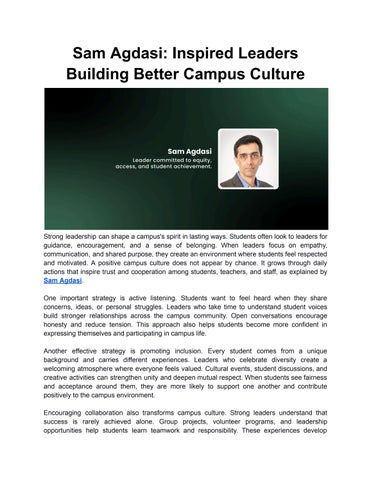
Strong leadership can shape a campus's spirit in lasting ways. Students often look to leaders for guidance, encouragement, and a sense of belonging When leaders focus on empathy, communication, and shared purpose, they create an environment where students feel respected and motivated. A positive campus culture does not appear by chance. It grows through daily actions that inspire trust and cooperation among students, teachers, and staff, as explained by Sam Agdasi.
One important strategy is active listening Students want to feel heard when they share concerns, ideas, or personal struggles. Leaders who take time to understand student voices build stronger relationships across the campus community Open conversations encourage honesty and reduce tension This approach also helps students become more confident in expressing themselves and participating in campus life.
Another effective strategy is promoting inclusion Every student comes from a unique background and carries different experiences. Leaders who celebrate diversity create a welcoming atmosphere where everyone feels valued Cultural events, student discussions, and creative activities can strengthen unity and deepen mutual respect. When students see fairness and acceptance around them, they are more likely to support one another and contribute positively to the campus environment
Encouraging collaboration also transforms campus culture Strong leaders understand that success is rarely achieved alone Group projects, volunteer programs, and leadership opportunities help students learn teamwork and responsibility. These experiences develop
communication skills and encourage students to solve problems together As cooperation grows, the campus becomes more connected and supportive.
Positive leadership also depends on consistency. Students observe how leaders behave during both calm and difficult moments. Leaders who remain respectful, calm, and honest set a powerful example for others to follow Simple actions such as appreciating student efforts, recognizing achievements, and offering encouragement can build motivation across the campus community Students often mirror the attitudes of trusted leaders
Innovation also plays an important role. Modern campuses face changing challenges related to technology, mental health, and academic pressure Leaders who adapt to new needs and encourage creative thinking help students feel prepared for the future Flexible leadership creates confidence and inspires students to explore fresh ideas without fear.
A healthy campus culture begins with leaders who care about people as much as they care about results Their actions influence how students learn, connect, and grow Through empathy, inclusion, collaboration, consistency, and innovation, leadership can transform campuses into communities filled with purpose, respect, and lasting positive change.