good
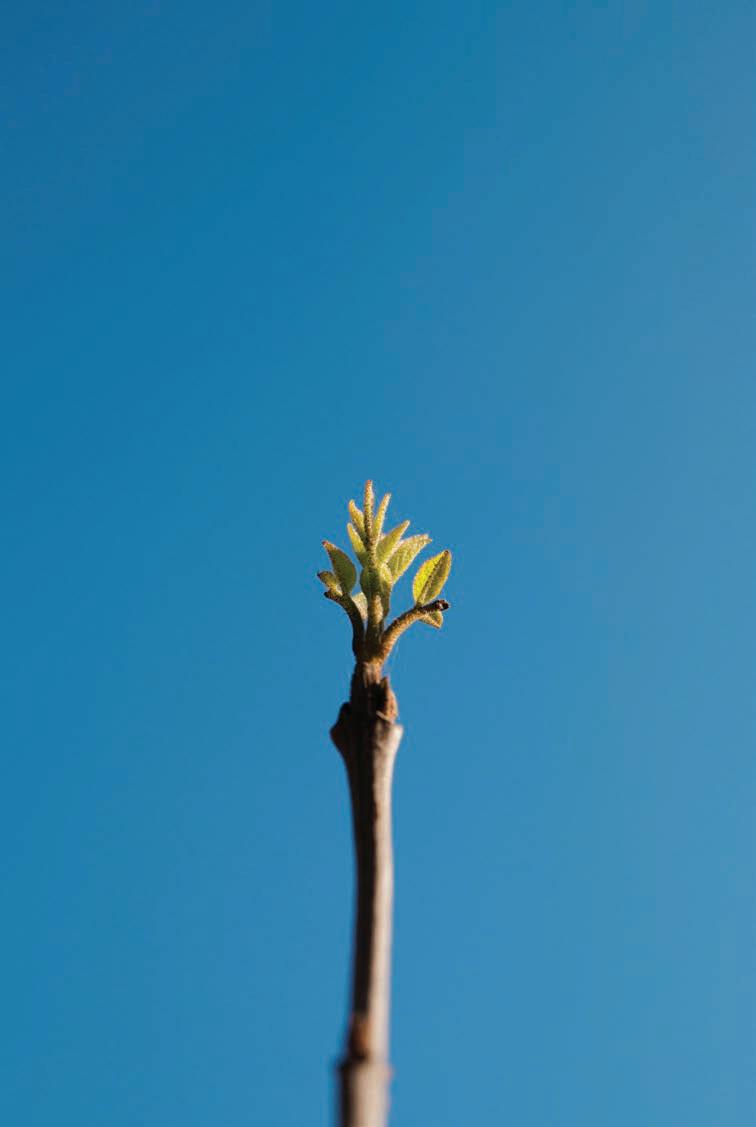
“THE BEGINNING IS ALWAYS TODAY.”
– MARY SHELLEY
PHOTO BY IVÁN DÍAZ ON UNSPLASH
What is The Salvation Army?
The Salvation Army, an international movement, is an evangelical part of the universal Christian Church.
Vision Statement
Wherever there is hardship or injustice, Salvos will live, love and fight alongside others to transform Australia one life at a time with the love of Jesus.
Mission Statement
The Salvation Army is a Christian movement dedicated to sharing the love of Jesus by:
• Caring for people
• Creating faith pathways
• Building healthy communities
• Working for justice
The Salvation Army Australia acknowledges the Traditional Owners of the land on which we meet and work and pay our respect to Elders, past, present, and future. We value and include people of all cultures, languages, abilities, sexual orientations, gender identities, gender expressions, and intersex status. We are committed to providing programs that are fully inclusive. We are committed to the safety and wellbeing of people of all ages, particularly children.

An anchored life
The new year is barely a month old and, as many of us settle back into our regular routines and rhythms of life, memories of Christmas, holidays and hope for peace around the world and better times for everyone already seem dashed. Wars continue, disasters are widespread, personal problems remain, and suffering is everywhere. Yet, life can be so good. We celebrate the love of family and friends, the beauty of creation, the tireless work of those striving to bring hope and relief to many, the giggles of children, medical breakthroughs, forgiveness, lives transformed, and trust in God.
Scan here to connect with The Salvation Army services
Scan here to subscribe to Salvos Magazine
Founders: William and Catherine Booth
Salvation Army World Leaders: General Lyndon and Commissioner Bronwyn
Buckingham
Territorial Leader: Commissioner Miriam Gluyas
Secretary for Communications and Editor-In-Chief: Colonel Rodney Walters
Publications Manager: Cheryl Tinker Editor: Simone Worthing
Graphic Designer: Ryan Harrison
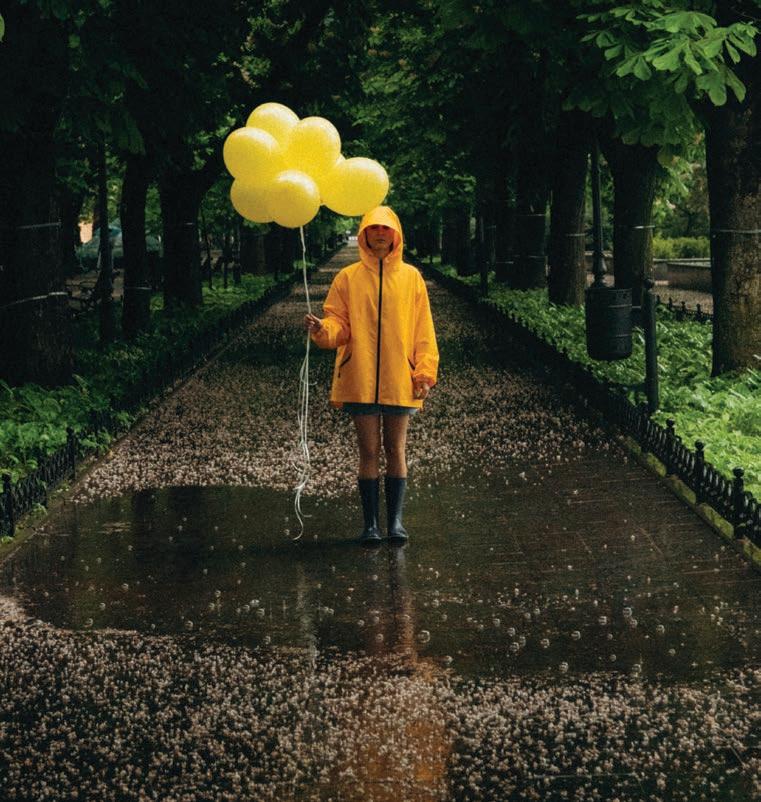
Cover: Photo by Yana Hurska on Unsplash
Enquiry email: publications@salvationarmy.org.au
All other Salvation Army enquiries 13 72 58
Press date: 9 December 2025
Printed and published for The Salvation Army by Commissioner Miriam Gluyas at Focus Print Group, Chester Hill, NSW, Darug Nation lands.
We can feel guilty about enjoying life when so many people are suffering. Author Jo-anne Brown writes about this in our feature this week, focusing on how we can maintain, and even increase, our natural compassion and care for others when we allow ourselves to experience the good in our lives.
Let’s consider anchoring our lives in something stronger than ourselves that is caring and supportive so we can enjoy what life offers while responding to the needs of others.
Simone Worthing Editor
The guilt of good fortune
Loving life while while the world is falling apart
by Jo-anne Brown
It’s dinner time, and I’m enjoying a plate of delicious food. The news is on and as I listen I gradually lose my appetite. How can I eat, let alone enjoy food, when on the other side of the world children are starving to death and countless lives are being torn apart? I feel sick at the thought of what so many people are enduring, yet at the same time I know there is no sense in my choosing to starve.
How do we, who have enough, enjoy our comfort when we know that so many don’t?
Closer to home, how do we who are healthy enjoy an active lifestyle when people we love may be dying or suffering horrendous pain?
How can we rejoice in the goodness of life when others we know may be heartbroken?
These are ancient considerations. There has always been suffering and joy, sickness and health, scarcity and abundance – and a total unjust inequity in what falls to us – and always the quandary of how to feel good without feeling guilt.
Middle ground
We can fall in a heap, overwhelmed by the suffering around us; ignore all the violence and pain and ardently seek pleasure for ourselves … or seek a middle way. That middle way is nurturing the capacity to acknowledge what others are going through and still appreciate the pleasures at our fingertips. Forgoing my own pleasure out of some sense of guilt, doesn’t help anybody.
Our humanity is based on this capacity to care deeply about others, and at the same time, live our lives to the full. In fact, it is built into our nervous systems. Our bodies are so finely tuned that when we face danger or threat, we automatically respond either by fighting to overcome the danger or fleeing from the threat.
Ideally then, our nervous system moves back into the rest and digest system, and we find our way back into that space where we can be compassionate, and also creative, connected, curious, courageous – in other words, we find a way to care about others and live our lives with joy and serenity. Unfortunately, many of us in our modern culture get stuck in that state of stress where we cannot find our way back to calmness and compassion.
Enjoyment and care
But it is there! Our brains are designed to release chemicals that enhance wellbeing and enable us to find joy in the lives we have. They work together every moment to regulate how we see life and how we feel about our experiences. Four main brain chemicals contribute to feeling good – (D.O.S.E.); dopamine, oxytocin, serotonin, endorphins. They do this by helping with movement and motivation, producing feelings of love and connection, boosting mood and triggering positive feelings – even reducing the awareness of pain.
When we nurture the flow of these chemicals within our nervous system,
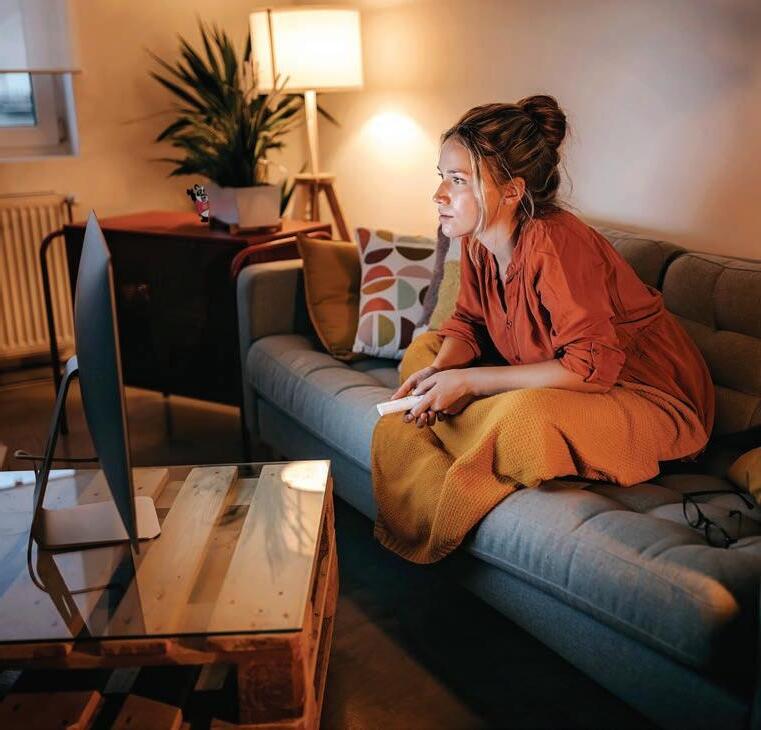
It can be easy to be overwhelmed by the suffering around us and feel guilty about, or not enjoy, the goodness that exists.
something amazing happens. We feel good … and we care more for others! When the pain of the world overwhelms us, not only do we feel bad, but we also reduce our capacity to make a difference to those around us. Yet when we support our nervous system to tap into those feelgood chemicals, which come from both our gastrointestinal (GI) tract and our brain, not only do we feel pleasure, but we can also offer compassion to others.
Coming back to the delicious food I’m eating as I listen to the news. By eating good food, I am nurturing my gut (GI tract), which supports the production of serotonin and dopamine. In turn, this enables me to feel pleasure in the life I have, to cherish and love the people and pets in my household, and to reach out with love and compassion to others, while still acknowledging the pain that others are going through.
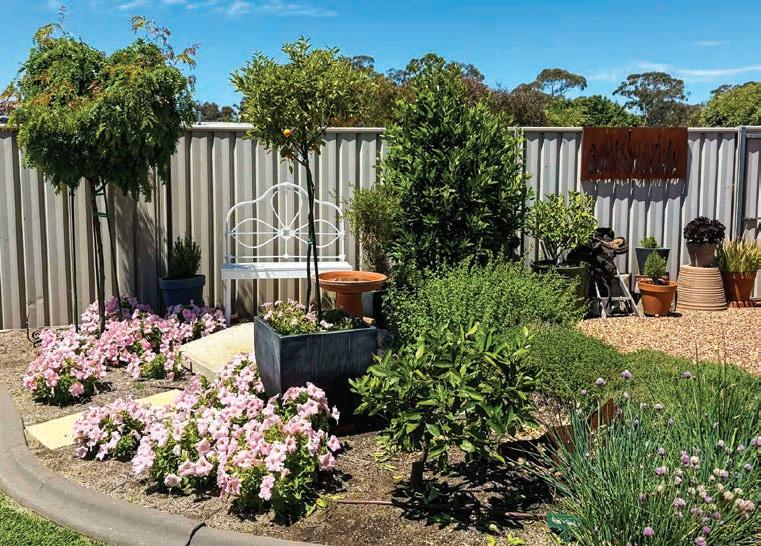
Nature teaches us that by strengthening our own wellbeing, we can better support others.
Nature’s example
Neuroscience affirms we are made for bliss, and when we live out of a blissed state, we make the world a better place through our compassion and caring. By strengthening our own wellbeing, we strengthen and support the wellbeing of others. This affirms that the human experience is all things: joy and sorrow, pain and health, suffering and ease – sometimes all at the same time.
The fruit trees in my garden give some insight into this: right now, our lime tree is in flower, and there are tiny limes being formed, as well as buds not yet in flower, and also fully-grown limes. There are bugs eating the leaves, bees seeking pollen, worms churning the soil beneath – and probably a whole host of other creatures contributing to the thriving ecosystem of the tree.
A healthy tree can support all these things: creatures seeking sustenance, including some which might also be out to damage or destroy the tree; fruit in every stage of development; and the ongoing growth of the tree itself. The support comes from deep roots that tap into the water and nourishment of the earth below, as well as leaves that receive from the sun. This tree can also cope with a certain amount of wind and storm.
When our lives are deeply grounded, anchored into something stronger than ourselves that nurtures and supports us, then we too can hold a variety of experiences – pain and suffering, joy and comfort. We are able to be present to what our world is experiencing, without being absorbed by it.
PHOTO COURTESY JENNIFER HARRISON
Youth housing project brings hope
The Salvation Army’s Cricklewood Youth Housing project recently opened in Melbourne’s Peninsula region. It is based on the Salvos ‘Education Pathway Housing’ model which, since 2016, has delivered strong outcomes in housing, education and employment, and homelessness.
“In the Peninsula region, youth homelessness rates are critically high, with around 220 young people needing safe accommodation on any given night, and 390 young people aged 15 to 25 requesting crisis housing since COVID,” explained Robert Forbes, Regional Manager of Youth Services.
“Many must leave their community to find somewhere to stay, which disconnects them from school, employment and support networks.
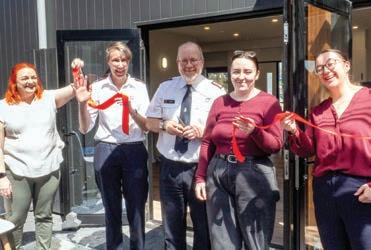
Salvos personnel and young people celebrate the opening of Cricklewood.
“Education Pathway Housing provides a local, realistic alternative. It offers mediumto long-term supported accommodation for young people who are homeless or at risk, who are committed to education, training or employment, and who require intensive, therapeutic support.”
– Lerisse Smith
SAES debuts mobile coffee response
The Salvation Army Emergency Services (SAES) in South Australia has recently rolled out a new response vehicle equipped with a coffee machine.
The set-up, which is located on a harness system in the rear of a Hilux utility, has been in operation since late 2025 across multiple locations, with coffee-loving volunteers Rob Adami and John Briggs primarily serving as baristas.
“We’ve wanted to build up our volunteers, [and] to rebuild a relationship with the CFS,” SA Response Coordinator Reno Elms said. “There was a little bit of money available to get a coffee machine.”
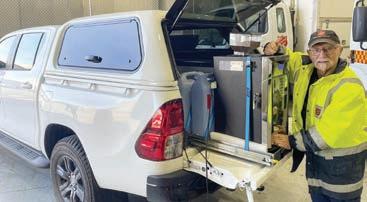
Volunteer barista Rob Adami with the new coffee set-up.
Reno said that through the generosity of Woolworths, the team was able to purchase two coffee machines, and the plan was put in motion.
– Kirra Nicolle
Do something different
Salvos’ tips for new things in 2026
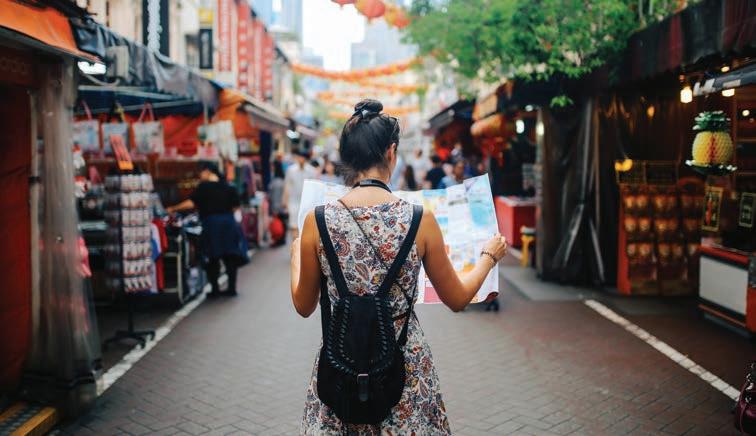
Explore your town or city. No matter whether you’ve just moved in or lived there all your life, there are bound to be parts of your town that you haven’t yet seen. Go for a drive or a walk, and check out those buildings, parks or streets you don’t know. Museums, art galleries and other attractions are often free to visit.
Try a new food. Whether it’s a breakfast cereal, a vegetable or a whole dish, you might just find your next favourite food! Or learn to bake your own bread or cook dishes from another country.
Experiment with gardening. Try growing herbs, succulents, vegetables or berries – then be proud of what you’ve accomplished!
Turn on the radio and try different stations. What kinds of music or talkback
shows do you like? What kinds are out there that you don’t know much about? Check around your home. Is there a piece of furniture that could do with a facelift, or a room that would be better rearranged? What changes (if any) would you like to make this year? Declutter, gift and recycle unused items early in the new year for a fresh start.
Try a new art or craft. Always thought you’d like to paint a picture? Art supplies can be bought cheaply at two-dollar shops and major stores. Would you like to play guitar, write songs or poetry, do calligraphy or turn household waste into sculptures? You don’t have to be good at these things to enjoy them.
Express yourself. Dance your way through the day. The odds are that

nobody’s looking – and if they are, they will probably want to join you! Sing as long and loud as you like.
Learn a new language. There are free apps and low-cost classes to get you started and maybe get you hooked.
Take a train or bus to somewhere new. That’s called exploring.
Find your clan. Join a group at a church, community centre or library. Play darts or pool at your local club. Or literally find your clan by researching your ancestry!
Pick up where you left off. What did you do or learn for a while that you’d like to do or learn more of? Take the next step.
Shop differently. Maybe start by walking around the supermarket in the opposite direction to usual. Look at the brands you don’t usually buy. Wandering around a shopping centre can be interesting and relaxing – and ‘just looking’ is free and valid!
Get outdoors. Fresh air is good for our minds as well as our bodies. A walk along the street or the beach, a picnic, or
watching boats or planes can be a feelgood experience.
Enjoy free activities with others. Your local library is often a great place to start for exercise classes, book clubs, family history workshops, photography and calligraphy classes. Community centres or senior citizens’ centres will usually have walking groups, classes and gatherings of many kinds. Have friends over and visit them – it doesn’t have to be for a meal.
Carry out acts of kindness. This could be as simple as asking your neighbour if they’d like anything from the supermarket while you’re there. Or it could mean a regular commitment to volunteer at a nursing home, school, animal shelter or church-based centre.
Make great memories and save them. Whenever you’ve done something you’ve enjoyed, or are grateful for something, write it down on a piece of paper. Through the year, collect up those memories in a jar. Then at Christmas, or the end of the year, open the jar and enjoy reliving those happy times and finding gratitude all over again.
God is real to me because…
by Catherine Philpot
God is real to me because life is too complex to have come into being by chance. It is not reasonable to me to expect that life, time, space and matter all spontaneously came into being without there being something that brought them into being. I’ve never seen something come from nothing before. It is beyond what I understand from our viewpoint of time and space. Life, every breath, speaks of something supernatural to me.
From this starting point, the next question becomes, if there is something beyond what I can understand by tasting, touching, seeing: what is it?
I’ve heard scientists speak of the ‘Big Bang’, the rapid expansion of space itself from an initial point of immense density and temperature. While there is much that is compelling, there is also a sense that if this is our only origin story, we’ve missed something. Where

did the immense density and pressure come from? Or time, space and matter?
To say they created themselves is to give them functions and behaviours that go beyond what I have observed in the natural world. You have to make supernatural claims at some point to make it work.
On its own, it is not a convincing truth claim. At the very least, it is a truth claim that has to be compared against other competing truth claims.
There are many gods in the global village. The God of the Christian faith is the one that is real to me.
This God is real to me in part because this God provided proof of his existence. Jesus lived. Jesus died. Jesus followers claimed that he rose from the dead. Hundreds of followers, including his inner circle, died, rather than take back their claim that Jesus
was still alive. It is not likely that anyone would die for a lie, much less hundreds of people. There was no gain in this life for the early disciples in claiming that Jesus rose from the dead. There was only death. Yet, they willingly chose death rather than recant. All of these are historically verifiable facts, confirmed by people who weren’t Jesus followers themselves.
It is probably pretty clear by now that I can get a fair way to believing in God in my head.
Personal impact
But this God is also real to me because he has revealed himself to me. There have been times, more than I can count, when I feel things that I can’t explain without God. I have been sick and God has brought words to mind that have brought peace – these turned out to be parts of the Bible I’ve never read before. I’ve been injured, and God has

given the exact words I use to describe my pain to random strangers as they have prayed for me. I have been prayed for, and I have been healed. I have prayed about others and then found them assigned the seat right next to me on a random plane flight.
These times of connecting to God, of seeing the supernatural in the everyday, bring life and colour to the ideas that I have about the reality of God. I don’t just know in my head that God is real, but I feel it in my bones; it is the joy in each breath that I take, the hope that opens my eyes in the morning.
God is real to me because I know him to be true. God is also real to me because I have felt his truth.
Dr Aux-Lieutenant Catherine Philpot is Pastoral Services Manager for The Salvation Army Australia
From incarceration to inspiration
Giving back after a life transformed
by Lauren Martin
Twenty years ago, if you told Leanne Pateman she would someday be an honoured guest at places like NSW Parliament House, she probably would have laughed in your face.
Leanne, a senior soldier (Salvos member) at Raymond Terrace Salvos (NSW), was recently named a finalist in the Rotary Most Inspirational Women’s Awards during a ceremony at Parliament House in Sydney. She said that being recognised among so many “unbelievable women out there doing amazing things” was an honour and a testament to the way God has transformed her life.
Two decades ago, Leanne was in jail. She was serving a seven-year sentence and described herself as a “troublesome prisoner”. At one point, she spent nine months in isolation.
One visitor
Throughout this period, she only received one visitor – Salvation Army officer (pastor) Major Heather Merrick, who was the prison chaplain.
“She was [like] this ‘glowing light’,” Leanne recalls. “She said, ‘God is with you,’ and I got to know her, and everything changed … She turned something around in me in the Lord.”
After enduring decades of domestic violence that led to serious injuries,
homelessness and incarceration, discovering and experiencing the love of Jesus was overwhelming for Leanne.
She says it turned her life around and, over time, gave her the strength and passion to use her life experiences to support others.
“God kept me alive so that I could help others,” she says. “I truly believe that.”
Fresh start
Leanne started attending Raymond Terrace Salvos (just north of Newcastle) after she was released from jail because she said they were the only ones who “spoke to me like a normal person” and didn’t judge her.
“The people were so nice to me I just wanted to give back, and that’s how I started to volunteer,” she says.
Eight years later, Leanne has become a member of The Salvation Army and is a regular volunteer, packing and distributing food hampers and coming alongside people in need.
“[I love] working with homeless and traumatised people and [people impacted by] DV (domestic violence),” she said. “The Lord just brings people to me all the time. I have a way of connecting.”
Leanne is also a member of her local Rotary Club, volunteers with the prison ministry program ‘Kairos’, and
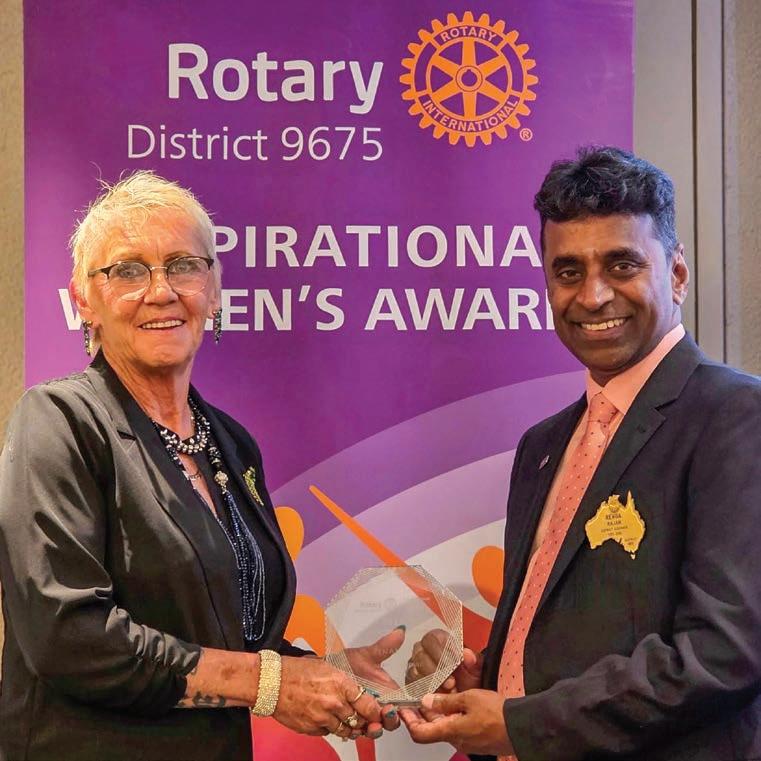
Leanne Pateman with Rotary 9675 District Governor Renga Rajan at the Rotary 2025 Most Inspirational Women’s Awards event at Parliament House in Sydney. has developed wellbeing programs for women in prison. Recently, she started her own podcast, called ‘Hoodwink’, which supports female ex-prisoners in integrating back into society.
No wonder she was nominated and named as a finalist in the 2025 Rotary ‘Most Inspirational Women’s Awards’!
“The Lord has definitely set me up for
this,” she said about her unique ministry to care for women who have experienced incarceration and trauma. “This is a calling from the Lord, no doubt. He wants me to do things that other people can’t do.
“If I can bring people closer to God, and even to start a relationship with him and hand their troubles over to God, I will be so happy,” she says.
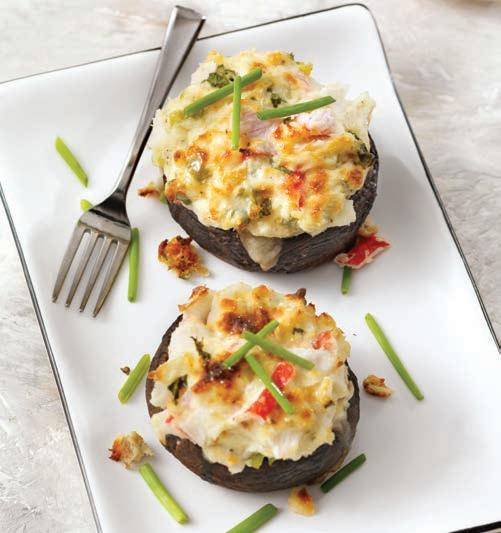
Stuffed mushrooms
Ingredients
6 medium whole mushrooms, 2 slices ham/bacon, 1 small onion, 125g cream cheese
Method
Remove stalks from mushrooms.
Finely chop stalks, ham and onion and place in a bowl. Mix with cream cheese. Spread mixture onto mushrooms. Place mushrooms on a microwave dish. Cover with microwave-safe wrap, pierce the wrap twice.
Cook mushrooms on high for 2 minutes. Stand for 30 seconds, then serve.
☺ Believe in Good: Tips
26 December – Thank You Note Day
“Start each day with a positive thought and a grateful heart.”
– Roy T Bennett
1. What is the main feature of a wetland?
2. What type of wetland is dominated by trees?
3. What type of wetland is dominated by grasses and reeds?
4. What is one way wetlands help the environment?
5. What animals would you find in a wetland?
6. What Banjo Paterson song features an Australian wetland?
❓Did you know?
Ukulele is the Hawaiian word for jumping flea.
Ukuleles come in different sizes – soprano (the standard size), concert, tenor and baritone.
The most famous ukulele player was Israel Kamakawiwo’ole, known for his recording of Somewhere Over the Rainbow.
Have a laugh
Why did the ukulele player get kicked out of the band?
They were always stringing everyone along.
I tried to play a sad song on my ukulele.
But it kept sounding happy!
What’s a ukulele’s life motto?
Stay tuned and keep strumming!
When do ukuleles go to bed?
When they are feeling a little flat!
Tum-Tum

On which page of this week’s Salvos Magazine is Tum-Tum hiding?
✏ Answers
features a billabong Tum-Tum: is hiding behind the pot plant on page 5.
Quiz: 1. Covered by water or very wet soil. 2. Swamp. 3. Marsh. 4. They act as natural water filters. 5. Birds, platypus, water rat, turtle, frog, dragonfly 6. Waltzing Matilda
�� Word search
Words are hidden vertically, horizontally, diagonally, forwards and backwards. Enjoy!
Aquifer
Billabong
Biodiverse
Birds
Bog
Catchment
Coastal
Dragonfly
Drainage
Filter
Floodplain
Frog
Habitat
Mangrove
Marsh
Mudflats
Bible byte
Platypus
Pond
Stream
Swamp
Turtle
Vegetation
Water
Wetlands
“Anyone who belongs to Christ is a new person. The past is forgotten, and everything is new.”
2 Corinthians chapter 5, verse 17 Contemporary English Version
EEnrol nrol Now! Now!
Deeper understanding Fresher skills A greater reserve of wisdom
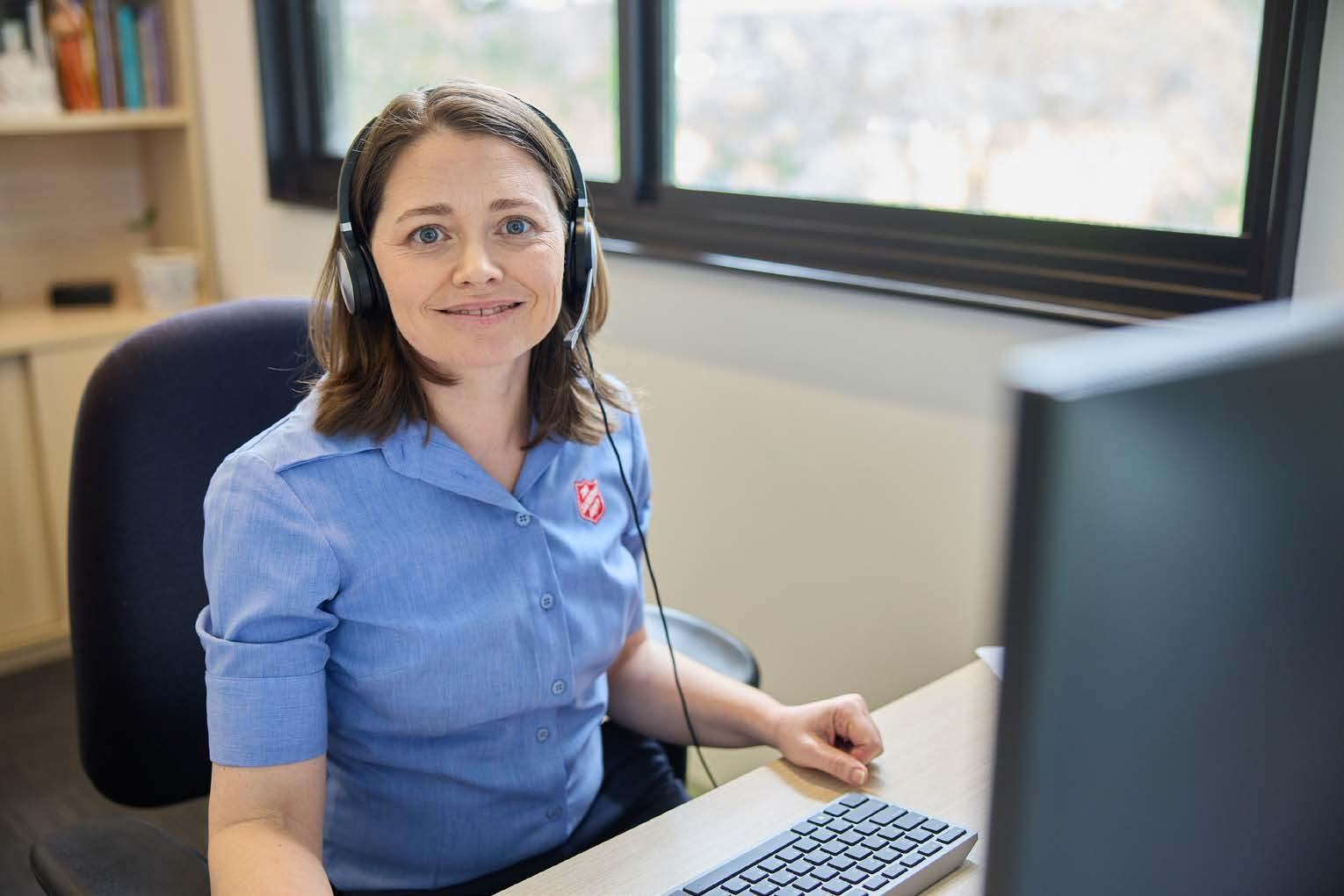
Imagine the difference higher education can make to you, and the people you serve.
Upskill your life, faith, leadership and service through a Higher Education Award course at Eva Burrows College