“The purpose of a storyteller is not to tell you how to think, but to give you questions to think upon.”
– Brandon Sanderson
PHOTO BY FLORIAN KLAUER ON UNSPLASH
What is The Salvation Army?
The Salvation Army, an international movement, is an evangelical part of the universal Christian Church.
Vision Statement
Wherever there is hardship or injustice, Salvos will live, love and fight alongside others to transform Australia one life at a time with the love of Jesus.
Mission Statement
The Salvation Army is a Christian movement dedicated to sharing the love of Jesus by:
• Caring for people
• Creating faith pathways
• Building healthy communities
• Working for justice
The Salvation Army Australia acknowledges the Traditional Owners of the land on which we meet and work and pay our respect to Elders, past, present, and future. We value and include people of all cultures, languages, abilities, sexual orientations, gender identities, gender expressions, and intersex status. We are committed to providing programs that are fully inclusive. We are committed to the safety and wellbeing of people of all ages, particularly children.
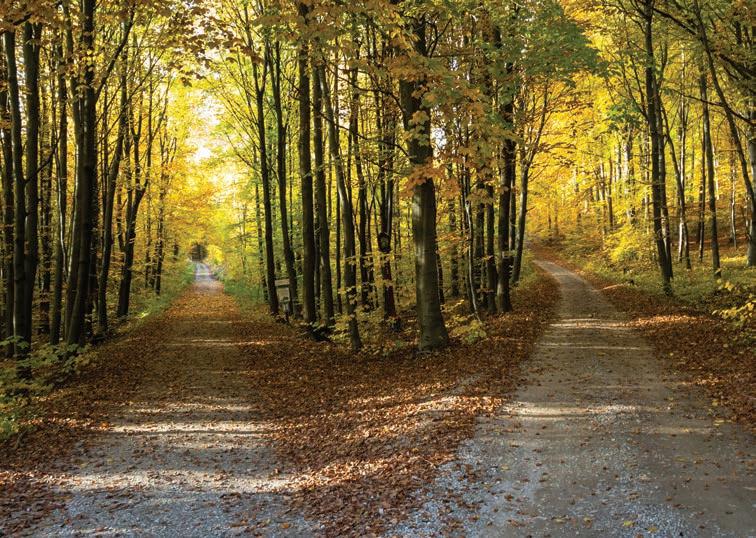
Which way to go?
So much of our daily lives are taken up making decisions. These can be as quick and routine as choosing what to have for breakfast, to complex decisions around relationships, health, employment or personal values.
In this edition, Jo-anne Brown explores discernment – learning to make wise choices and decisions using different strategies (that you might need to choose from!) to unravel the issues involved, and to find the best option for now.
We also introduce our new occasional series, ‘From the storyteller’. These articles are based on the parables (stories) Jesus told in the Bible centuries ago, but that are still relevant and applicable in our lives today. We kick off the series with a tale about a tree that took its time to grow.
Scan here to connect with The Salvation Army services
Scan here to subscribe to Salvos Magazine
Founders: William and Catherine Booth
Salvation Army World Leaders: General Lyndon and Commissioner Bronwyn
Buckingham
Territorial Leader: Commissioner Miriam Gluyas
Secretary for Communications and Editor-In-Chief: Lieutenant-Colonel Paul Hateley
Printed and published for The Salvation Army by Commissioner Miriam Gluyas at Focus Print Group, Chester Hill, NSW, Darug Nation lands.
Daryl Crowden shares his story of faith, adaptability and impact in the field of global disaster response and longterm development – a calling that really began for him as a child growing up in Sri Lanka and India, before taking him all around the world.
For these stories and more, go to salvosonline.org.au
Simone Worthing Editor
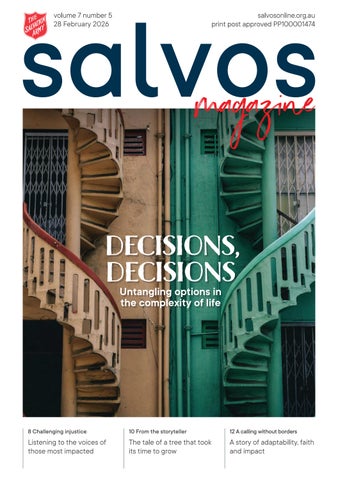
Decisions, decisions
Untangling options in the complexity of life
by Jo-anne Brown
Do you ever feel there are just too many decisions to make on any given day?
There is such a thing as decision fatigue, and it’s not surprising, since research tells us that the average adult makes around 30,000 decisions each day!
Most of these decisions are unconscious, part of our habitual routine. Some may be relatively easy, depending on how busy or stressed out we are: what to wear today, what to have for lunch, should I top up with petrol today or wait till it’s cheaper?
Many decisions, however, require more thought, and it’s these decisions that we can’t really avoid – at least, it’s not advisable to put them off for too long! Sometimes, delaying a decision means it’s taken out of our hands, which doesn’t necessarily work in our favour.
Some significant life decisions are easier to make than others. Those are the ones where the choice between the positive or the negative – what we might call the ‘good’ or the ‘bad’ choice – is relatively clear. We might still wrestle with these decisions, but we often know deep down what the right decision is. Or, we know what is non-negotiable, which points us in the direction of the best decision for us, for now.
The decisions I most struggle with, however, are far more nuanced, when
there is no clear right or wrong response, when all the options are relatively good or relatively negative. Choosing between two alternatives, both of which could cause me (or others) pain or suffering, can be incredibly difficult.
This is when we especially need discernment.
Discernment is the ability to judge well, to see things clearly, and to distinguish between right and wrong, or truth and untruth. It’s the capacity to make wise decisions when the way forward seems hidden or murky. The word ‘discernment’ comes from the Latin word (dis-cernere) which means to separate. This is helpful, because I often feel tied up in knots when making difficult decisions – like I’m holding a big ball of tangled wool and can’t find even one loose end!
PHOTO BY TINGEY INJURY LAW FIRM ON UNSPLASH
Untangling options
What helps us then, to untangle the options so we can discern well?
Information: The more information we can gather, the more clearly we can see what the alternatives are and make an informed choice.
Time and space to think clearly and unhurriedly. There is an old saying: “Don’t make permanent decisions based on temporary emotions.” This is the invitation to slow down if we can and to not rush into making a decision.
Quietness: We need to find ways to quieten the noise in our minds and hearts, the various opinions and voices telling us what we should do. It’s also helpful to find quiet places outside ourselves, where we can pause and reflect without distraction.
Strategies: There are a number of strategies that can help us to discern the best way to go. These include:
• ‘Trying out’ a decision. If we are not entirely sure but are leaning towards one option, then mentally decide that and sit with it for 24 hours to see if there is a sense of rightness about it. If there’s not, repeat the process with the alternative solution.
• Work out what the wrong decision would be and track backwards from there to find the right one.
• Know your values, recognise what is negotiable and what is not, acknowledge that you might need to compromise, and decide how far you can go with that. Having a firm moral compass, or guiding life principles, helps our discernment.
PHOTO BY DAMIAN SIODLAK ON UNSPLASH
• Understand that it’s not always a matter of right and wrong. Sometimes there is no ideal solution, and all options are good ones or hard ones, so we can only follow our instincts.
• Find wise mentors.
• Ask: Is this a decision I can live with? Now? In 10 years’ time?
Trust your intuition: When we integrate all of our faculties and ways of knowing (reason, emotional intelligence, inner wisdom), we often find a deep intuitive sense of the right way to go.
Inner wisdom
Discernment is also a spiritual quality, and many people of faith find that as they connect with God (or how they understand God), they find guidance to make wise decisions. Discernment in the Bible is closely connected to wisdom, as in Solomon’s prayer when he asked for a discerning heart to lead the people of Israel. God responded by giving him “a heart of wisdom and discernment” (1 Kings chapter 3: verses 9,12).
The idea of separating and pulling apart the tangled fibres is a good image of the ability to discern. It does require slowing down, being gentle, and finding just one loose thread to start with.
The above strategies are ways to unravel the issues and find the best option for now. Having a long-term perspective can be freeing when it comes to decisionmaking. I can only make a decision on what I know and experience right now, on what is best for me (or for the circumstances) in this moment. Long term, perhaps, a different decision might be called for – and we need to be free to make that decision.
The wise in heart are called discerning, and gracious words promote instruction.
Proverbs chapter 16, verse 21
PHOTO BY JAVIER ALLEGUE BARROS ON UNSPLASH
Ukuleles, cane toads and community
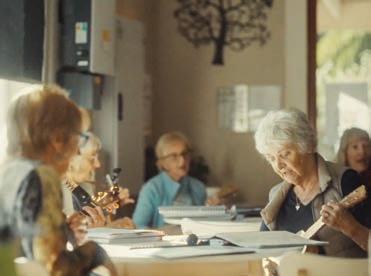
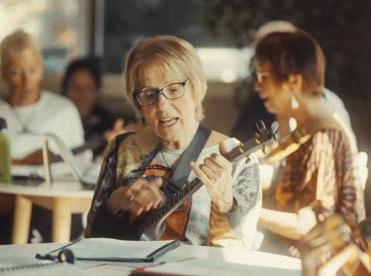
Creating a caring and happy community is the focus of the growing ukulele group.
‘Sing and Strum Ukulele’, a little group run at Mornington-Bayside Salvos in Victoria’s south-east, is “a little bit like the cane toad; it spreads and multiplies,” said Dave, a retired music teacher who runs the program. “It’s about developing a space where people can come and just experience community.”
Members of the growing group come from all walks of life, and most are retired.
“They are probably just trying to find their place in life and what they’re going to do with their retirement,” says Salvos pastor Auxiliary-Lieutenant Debbie Taylor. “They are wanting to have a go at things … and learn a new skill.”
David explains that it’s “good” to learn an instrument and practise, and that singing can also be “very therapeutic”.
Feedback
Participant Liz says, “Even if we make a mistake or anything, that doesn’t matter. If you are just by yourself and you are lonely, you come here and they just make you part of the family. I recently lost my husband and one of the first things
I wanted to come back to was playing the ukulele because it makes you feel good and happy.”
From Connie: “We are all happy to see each other, that is why we all come.”
“And if you only want to play one chord and sing, we are happy,” says Thelma.
Dave describes the program in one word – joy. “The joy of making new friends, the joy of singing. It is reaching out to people. It is letting people in the community know that The Salvation Army offers a broad program.”
Liz agrees. “The Salvation Army is a church, but it is much more than a Sunday morning. It brings people together. It is 24-hour, seven-day-a-week church that moves with life.” Scan here to watch the ‘Sing and strum ukulele’ video.
Working for justice
A focus on inclusion, dignity and hope
As nations globally observed the World Day of Social Justice (WDSJ) on 20 February, the Policy and Advocacy team reflected on their work throughout 2025 (see Salvos Magazine, 21 February edition). This week, Salvos Magazine spoke to the team about their focus areas for 2026 and beyond.
1. How does the WDSJ theme for this year - Empowering Inclusion: Bridging Gaps for Social Justice –fit with your work?
The theme strongly reflects the focus of our work. Much of what we do is aimed at identifying and challenging the systems and structures that perpetuate disadvantage and exclusion, and advocating for reforms that create fairer and more inclusive outcomes.
Our collaboration with teams across The Salvation Army with an inclusion focus strengthens this work by deepening our understanding of the barriers, stigma and lived realities faced by diverse communities. This enables us to better bridge gaps in policy and practice, and amplify voices that are too often overlooked in decision-making.
2. What do you see as the main barriers to full inclusion, and how can we help break them down?
The greatest barriers are not individual circumstances but the systems, attitudes and structures that shape people’s participation in society. Across our frontline services, we see how stigma, deficit-based narratives, inaccessible systems and
fragmented supports can compound disadvantage. Many people also face barriers to self-advocacy when navigating complex systems, leaving them without the support or recourse they need.
We break down barriers by creating safe, inclusive, and accessible workplaces and communities, and by expanding opportunities for people from all backgrounds. This means listening to lived experience, building genuine relationships with people on the margins of society, challenging stigma and misinformation, and co-designing services and spaces that reflect diversity. At a community level, respectful engagement and calling out discrimination strengthen inclusion and belonging for everyone.
3. How would society be different if we truly were inclusive?
In a truly inclusive society, people would not have to continually adapt themselves to fit systems that were never designed for them. Inclusion would be about reimagining spaces, systems and attitudes so that every person belongs, instead of ‘making space’ for people with different needs. Inclusion would be reflected in better social and economic
participation, systems and policies that prevent harm and disadvantage rather than respond to crisis. Most importantly, inclusion would not be understood as charity, but as a shared commitment to ensuring all community members can live a fair, meaningful and fulfilling life.
4. What are the other main focus areas for your team in 2026?
In 2026, housing and homelessness, family and domestic violence, and financial hardship will remain central focus areas for our team. These issues sit at the intersection of inclusion and exclusion in Australia, and can be experienced by any individual or community.
Our advocacy on housing will continue to focus on increasing access to safe, secure and affordable homes, particularly for people facing persistent and recurring disadvantage. In addressing family and domestic violence, we will prioritise advocating for prevention, early intervention, and trauma-informed responses that centre on safety and long-term
recovery for victim survivors, and accountability and behaviour change for persons using violence.
Responding to financial hardship will involve continued advocacy for costof-living relief such as increasing Jobseeker payments.
We will also continue to advocate for frontline services to be fully funded and have access to the resources they need.
5. Is there anything you would like to add about your work in 2026?
Our work will continue to be guided by the voices and experiences of people most affected by injustices. The team will continue to prioritise ensuring those voices and insights from our frontline services help shape our advocacy for systems that are simpler, more accessible, and designed around people rather than processes.
Our aspiration is to help build a society where inclusion is embedded, harm is prevented before crisis occurs, and everyone has the opportunity to participate fully, with dignity and hope.
From the Storyteller
StorieS acroSS the centurieS Still relevant today
The tale of the tree that took its time to grow
by Faye Michelson
Jesus was a great storyteller. His short, succinct parables (another word for stories) have shown people how to live God’s way for centuries and still do today.
“If you don’t do something soon, you’ll be out,” I said sternly. “Yes, I’ll cut you into little pieces and into the bin you’ll go.”
Doesn’t everyone threaten their lemon tree if it refuses to grow fruit?
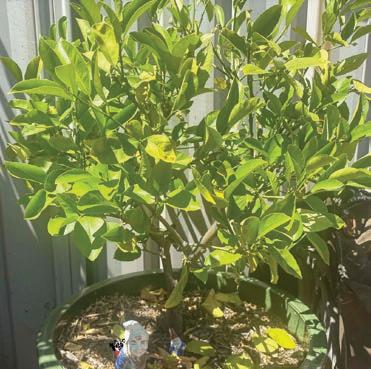
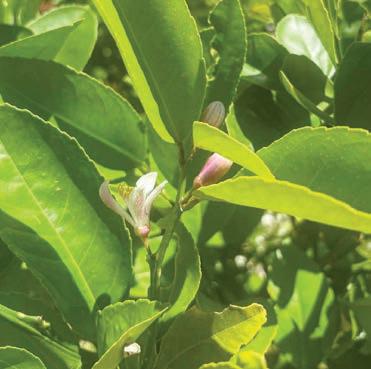
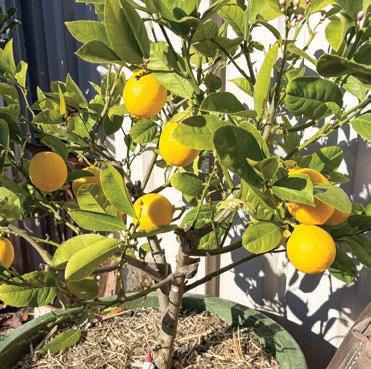
Planted in a lovely, big pot, my dwarf lemon tree was placed in a prime, sunny position on the deck. For two years, it was watered and fertilised, growing new branches and glossy green leaves. It even flowered and produced some tiny fruit, which had just fallen off.
When we moved, two hale and hearty men heaved the lemon tree into a trailer and transported it (with much huffing and puffing) to its new sunny, north-facing position. The first two years in its new home had been promising. I watched the white flowers appear, I saw the bees, I faithfully watered it. I applauded as a smattering of little green lemons appeared – only to have my hopes dashed again as they fell off.
Was I doing something wrong? Or was it just a ‘bad’ tree that would never fruit?
If that were the case, would I be better off pulling it out and using the pot for something else?
This year, I decided to have a last go at encouraging my little lemon tree to grow some fruit. As I’m an enthusiastic gardener, not an experienced one, I thought I’d better read up properly on what to do. So, I added compost, potash and citrus food, removed any dead wood and checked for aphids. I also read that young trees – three to five years old –might need more time to mature before fruiting. (Oops, maybe that was the problem; I’m an enthusiastic gardener, but not a patient enough one.)
Jesus told a story, also known as a parable, about a non-fruiting tree.
“A man had a fig tree growing in his vineyard, and he went to look for fruit on it but did not find any. So, he said to the man who took care of the vineyard, ‘For three years now I’ve been coming to look for fruit on this fig tree and haven’t found any. Cut it down! Why should it use up the soil?’
“‘Sir,’ the man replied, ‘leave it alone for one more year, and I’ll dig around it and fertilise it. If it bears fruit next year, fine! If not, then cut it down,’” (Luke chapter 13, verses 6-9, New International Version).
What was the point of his story? Jesus was talking about us and God. God looks at the way we live and the type of ‘fruit’ we produce. He looks for love, joy, peace, patience, kindness, gentleness, goodness, faithfulness and self-control in our lives.
Do we always produce this kind of fruit? No. But there’s hope for us. The other man in the story, the man taking care of the vineyard, is Jesus. He’s there to give us another chance, to look after us – a patient, diligent gardener working on us so that we can grow the way God has planned for us.
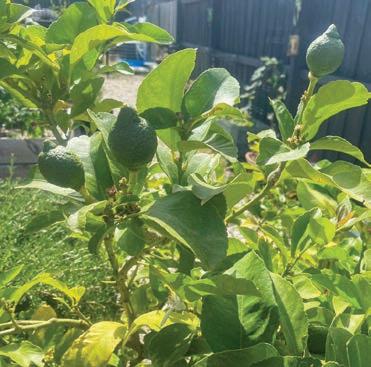
Gardening is a work in progress, just like we are. It can take time; this summer, when my tree grew its tiny green lemons, not all of them fell off. Now to have a chat to the pomegranate tree.
PHOTO COURTESY JENNIFER HARRISON
PHOTO COURTESY JENNIFER HARRISON
PHOTO COURTESY FAYE MICHELSON
PHOTO COURTESY JENNIFER HARRISON
A calling without borders
Daryl’s story of adaptability,
faith and impact
by Rebecca Parish and Simone Worthing
Daryl Crowden’s journey from Salvation Army roots to global humanitarian leadership –and back again – is shaping a more connected approach to disaster response and longterm development.
Delivering compassionate, inclusive support to communities facing crisis and vulnerability, both at home and overseas, is the role of The Salvation Army Australia’s Emergency, Aid and Development stream.
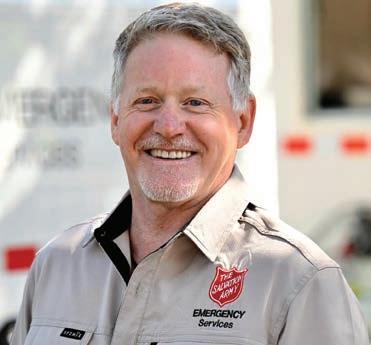
Daryl Crowden leads this work as General Manager, bringing together The Salvation Army Emergency Services (SAES) and International Development (SAID) teams.
“SAES provides emergency response and early-recovery services across Australia, offering food, aid and emotional care to disaster-affected individuals and first responders,” he explains.
“When the disaster is over, The Salvation Army steps up our services to focus, not just on the reconstruction of physical infrastructure, but on the restoration of physical, emotional, environmental and economic wellbeing.
“SAID partners around the world strengthen civil society and improve wellbeing through locally led development in areas including water, food security and child rights.
“Together, they embody The Salvation Army’s mission to care for people and work for justice.”
Personal journey
Born in Australia to Salvation Army officer (pastor) parents, Daryl moved to
Daryl Crowden leads The Salvation Army’s Emergency, Aid and Development stream.
Sri Lanka when he was six and grew up immersed in this South Asian country with its distinct culture and context.
His childhood was spent largely in India where he attended boarding school between the ages of seven and 15, as well as Sri Lanka where his parents served as missionaries for 20 years.
“Those years between six and 15 framed who I am,” he says. “My worldview and my core values came from those years.”
After returning to Australia, Daryl completed a degree in electronics before entering Salvation Army officer training in 1986 and graduating in 1988. Over
the next 24 years, he served as a corps officer (local church pastor) in Australia, Sri Lanka and New Zealand.
Turning point
For much of that time, local church leadership sat alongside an increasing involvement in disaster response. For Daryl, his involvement in the 2004 Indian Ocean tsunami proved pivotal.
“That was when I really started doing this work – disaster relief and humanitarian stuff,” he says. “It became the area I felt most strongly drawn to.”
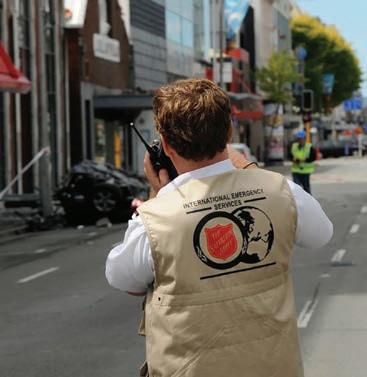
By 2011, Daryl felt he wanted to give everything to humanitarian aid and development – a role that was not then possible in The Salvation Army Australia. At that time, he was leading The Salvation Army’s response to the Christchurch earthquake when World Vision approached him about a role in the Middle East.
“If I couldn’t do that work in the Army, then I believed God was calling me to do it elsewhere,” he shares, although “leaving The Salvation Army was not an easy decision, [but] I never believed I had forsaken my calling. I was fulfilling it; just in a different way.”
Global experience
Working with World Vision and then Medical Teams International gave Daryl a broader view of faith-based humanitarian practice. It also sharpened his thinking around how humanitarian and development organisations work, particularly the need to integrate emergency relief and long-term development.
Now back with the Salvos as an
employee, Daryl brings that perspective into his current role. He is convinced that separation between relief and development limits impact.
“There will always be specialists in both,’ he says, “but increasingly, we need to design development for sustainability even at the moment we go in to hand out the food parcel or drill the well.”
Courage to change
For Daryl, adaptability is non-negotiable. “If we don’t move with the times in how we work and how we think, then we’ll be less effective,” he says.
Daryl believes that outside experience can strengthen the global movement.
“Sometimes it takes stepping outside to see things clearly,’ he reflects. “My calling never changed. The way I lived it did.”
Rebecca Parish is an editor at The Salvation Army’s Headquarters in London. To read the full story on Daryl, go to tinyurl.com/4psf4jk7
Daryl led The Salvation Army response to the Christchurch earthquake in 2011.
Potato and salmon slice
Ingredients
500g small potatoes; 200g tin salmon, drained; 2 tbsp chopped dill; 6 eggs; 250g natural yogurt; 1/3 cup selfraising flour; salad (optional) Method
Preheat oven to 190°C.
Grease/spray baking pan (26cm x 20cm).
Cook potatoes to just soft. Cut and layer half in the pan, then layer half the salmon onto the potatoes. Sprinkle with dill.
Whisk eggs, yogurt and flour in a large jug.
Pour half over the pan contents, then repeat layers of potato, salmon and egg mixture.
Bake for 30 minutes until set.
Serve with salad or cut into squares to serve as a snack.
☺ Believe in Good: Tips
“Kind words are like honey – sweet to the soul and healthy for the body.”
Proverbs chapter 16, verse 24
New Living Translation
Quiz
True or False
1. Tennis was originally known as ‘lawn tennis’.
2. A singles tennis court is the same length as a doubles court.
3. Tennis legends Venus and Serena Williams are twins.
4. The term ‘deuce’ is used for a score of 40-40.
5. The first point scored in a game of tennis is one.
6. A serve must land in the diagonally opposite service court.
��On this day
28 February 1935
Wallace Carothers first produced nylon at DePont Experimental Station in Wilmington, Delaware.
1 March 1998
James Cameron’s epic film, Titanic, became the first film to gross $1 billion. With a budget of $200 million, it grossed over $2 billion.
laugh
�� Word search �� Have a
Why do writers always feel cold?
Where would a writer never want to live?
Why did the writer become a gardener?
Why did the writer break up with the editor?
They are surrounded by drafts. On a writer’s block. He was good at plot development. The editor kept changing the story.
Tum-Tum
On which page of this week’s Salvos Magazine is Tum-Tum hiding?
Answers
Tum-Tum: is hiding behind the gnome on page 11.
Words are hidden vertically, horizontally, diagonally, forwards and backwards. Enjoy!
“The weight of worry drags us down, but a good word lightens our day.”
Proverbs chapter 12, verse 25 The Voice translation
8 March 2026 Rights. Justice. Action. For ALL women and girls.