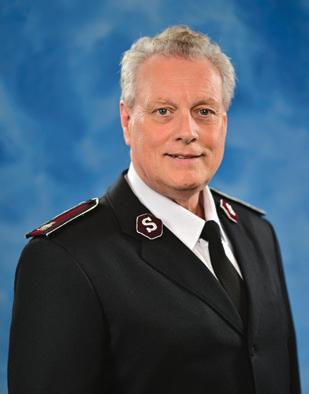
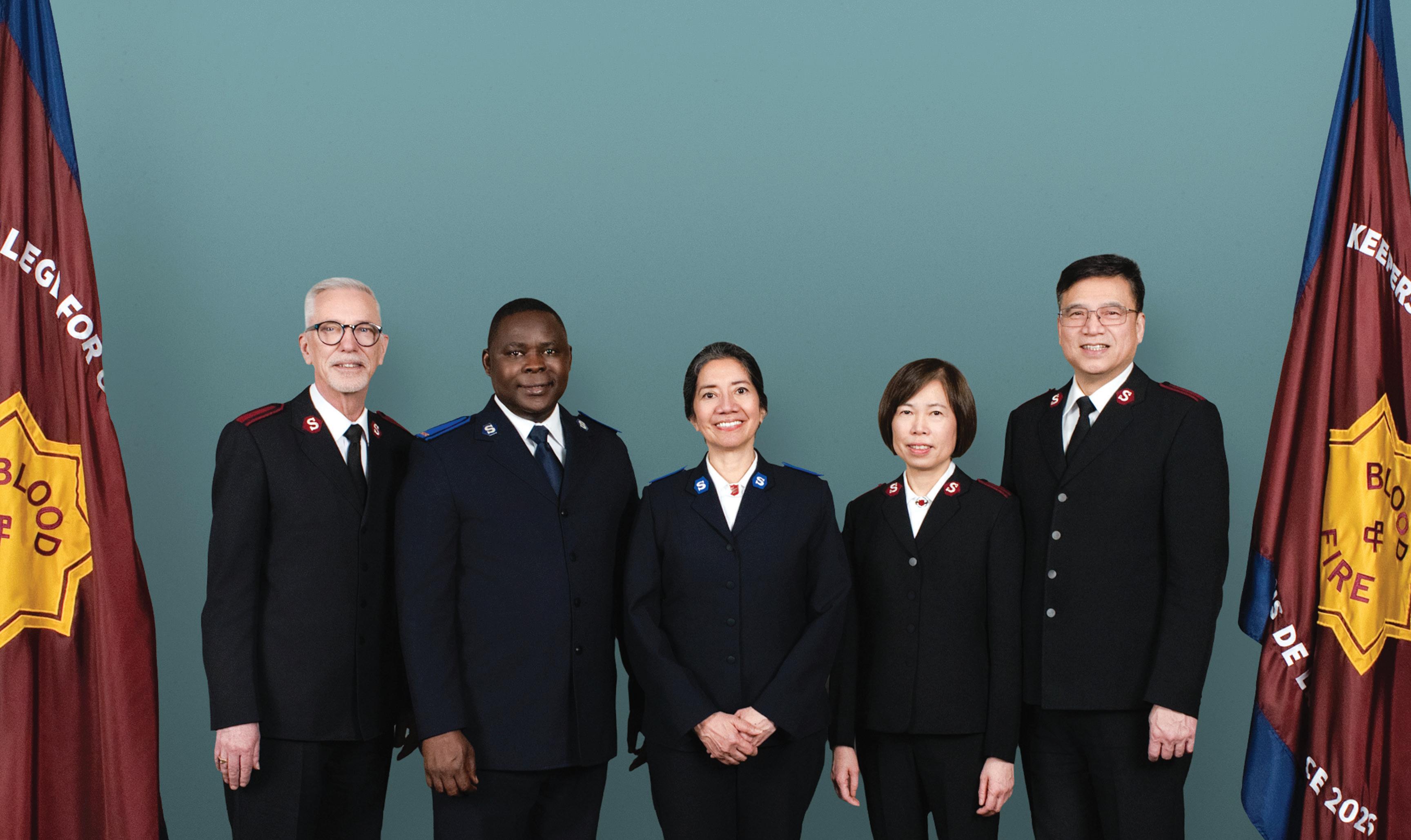
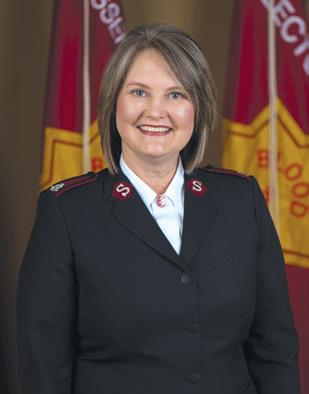
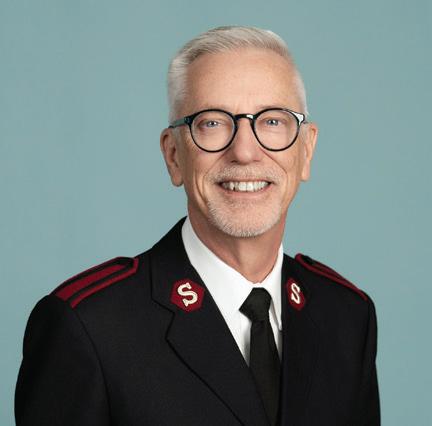
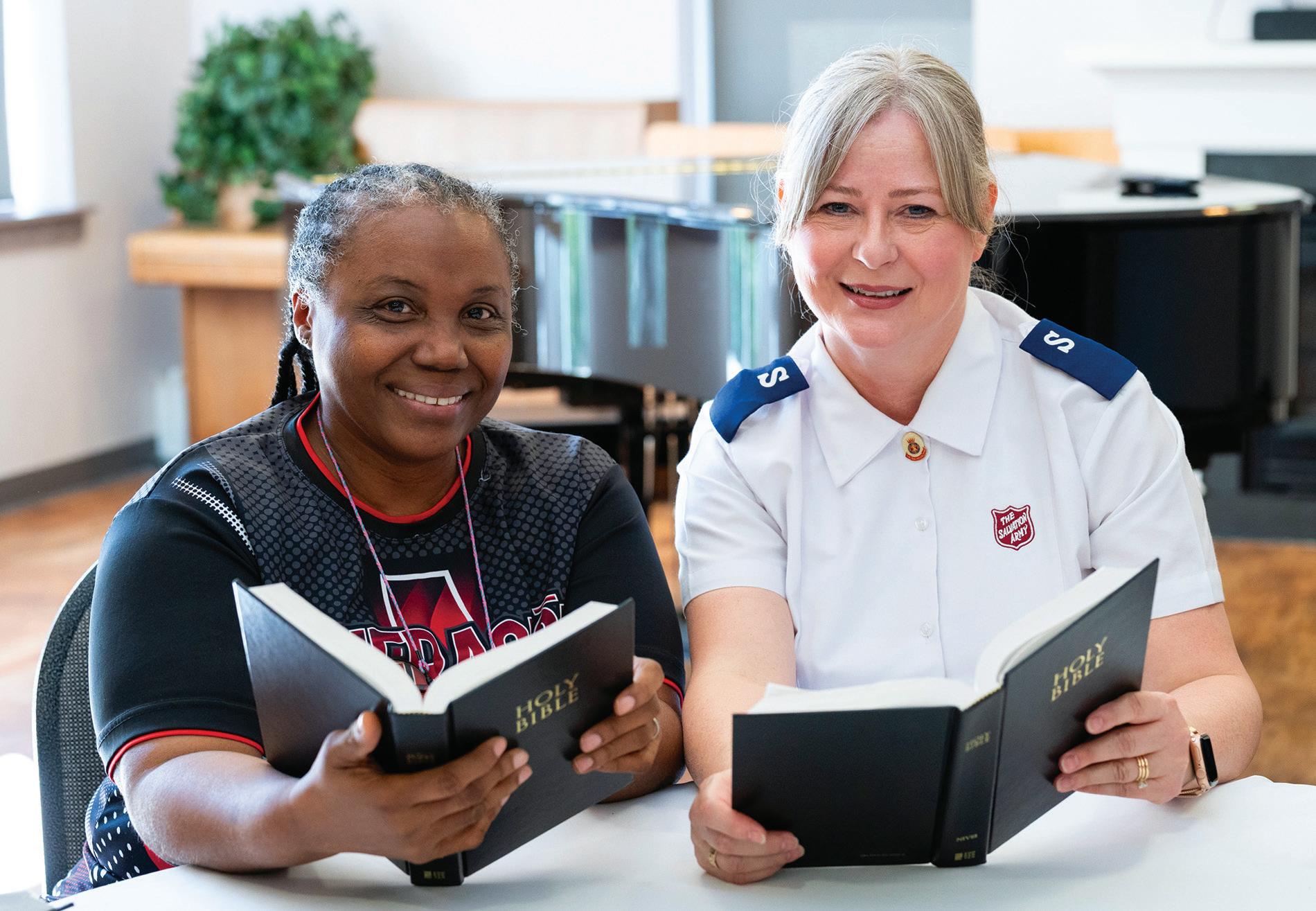
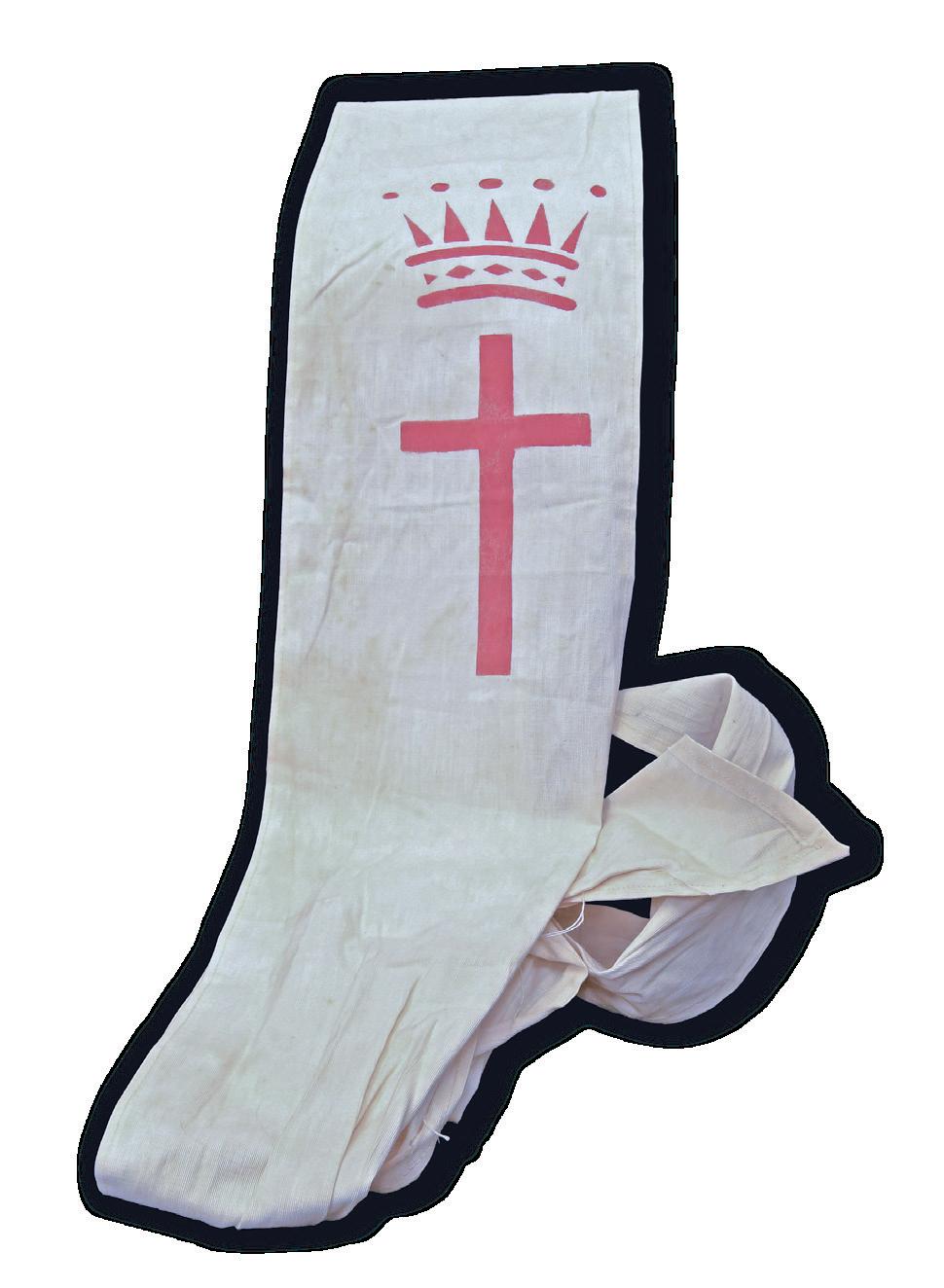
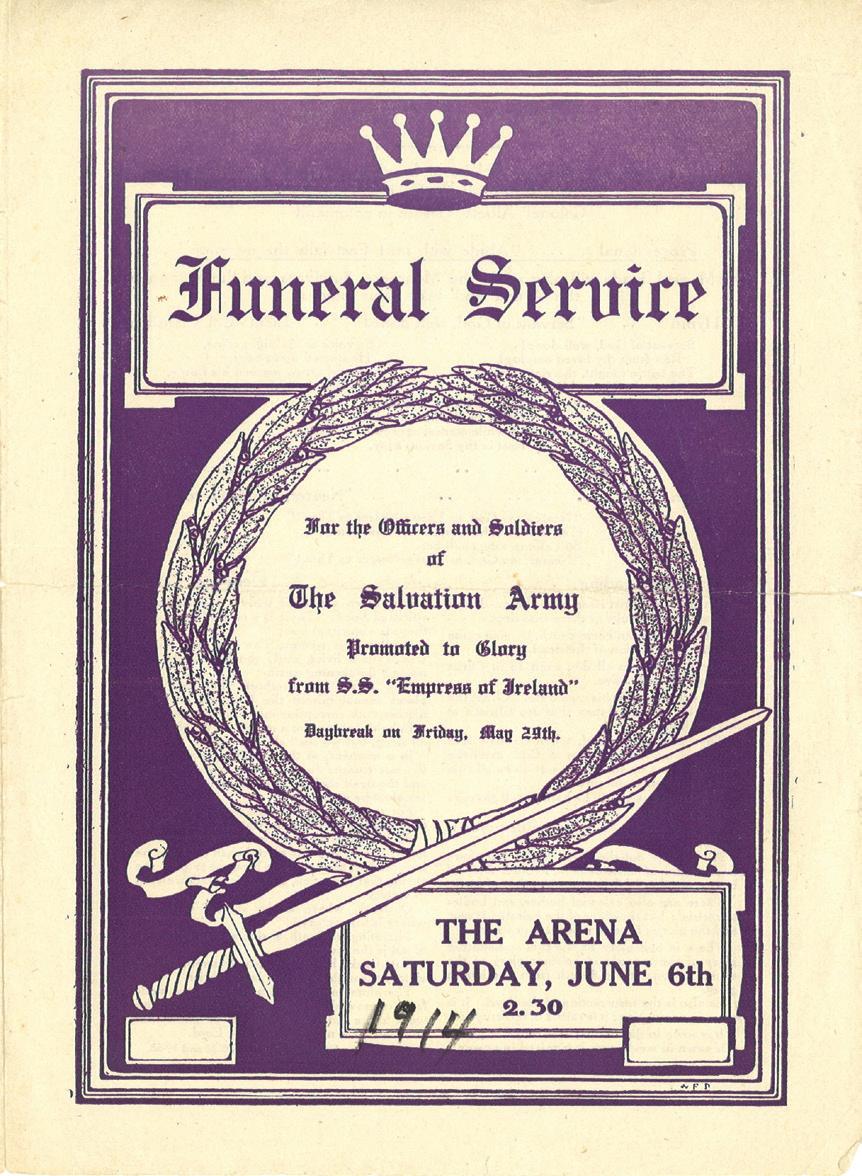
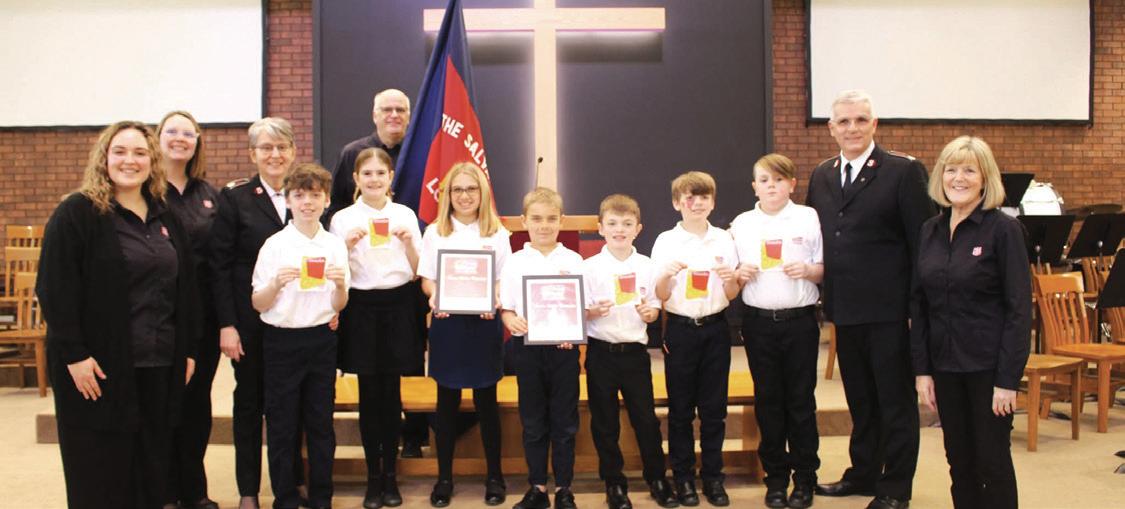
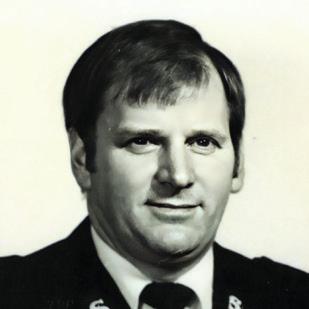
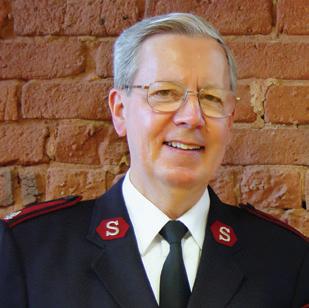
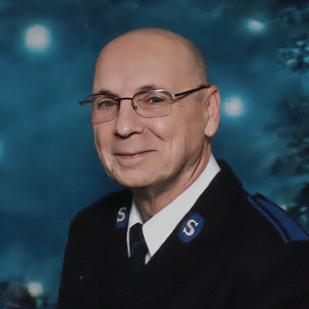
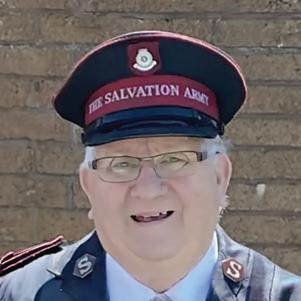
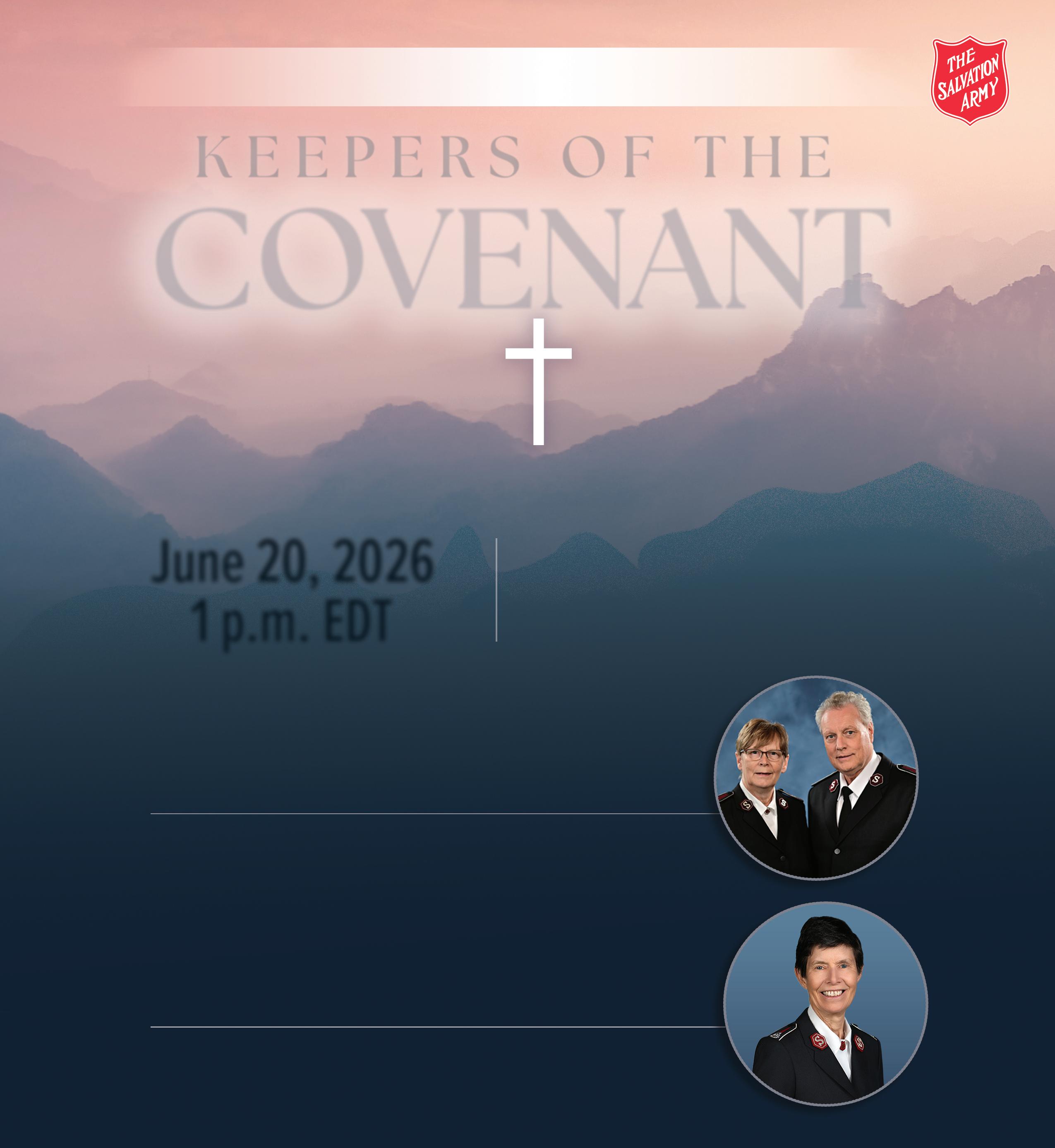
Keepers of the Covenant are fully surrendered to God’s mission.
12 / God’s Church on the Street
In the North End of Winnipeg, a place of deep poverty and pain, a group led by Major Lois Dueck offers family, not charity. by Giselle Randall
14 / I Was a Stranger Hospitality is at the heart of the gospel. by Isaiah Allen
16 / A Story Worth Telling
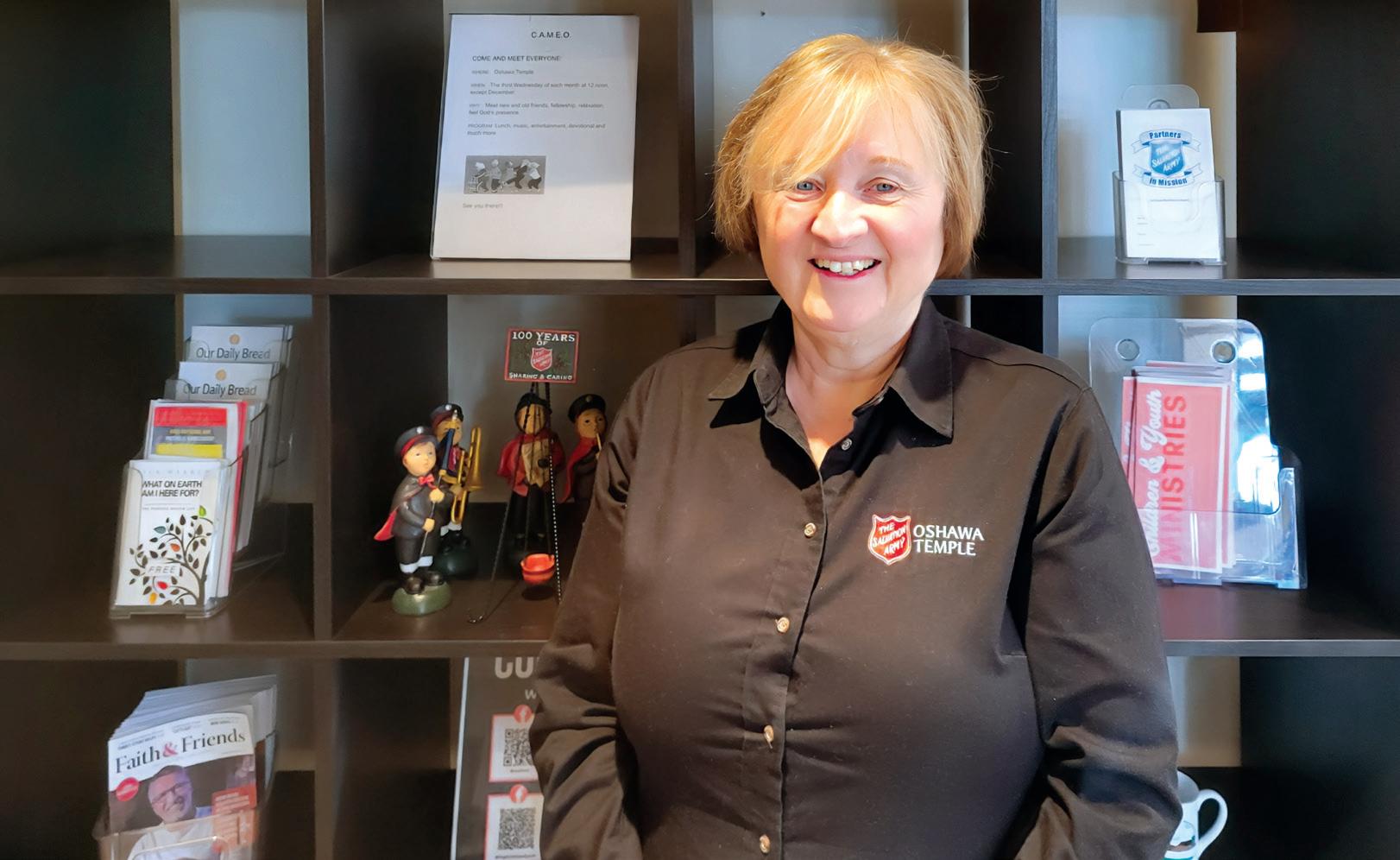
Connecting Through Life Stories, a new program at Oshawa Temple, Ont., empowers people to share their testimonies.
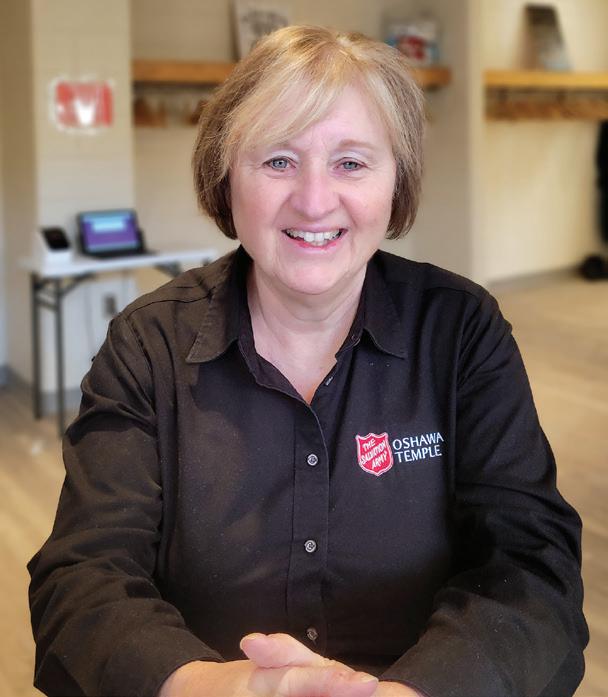
Interview with Gladys Thompson
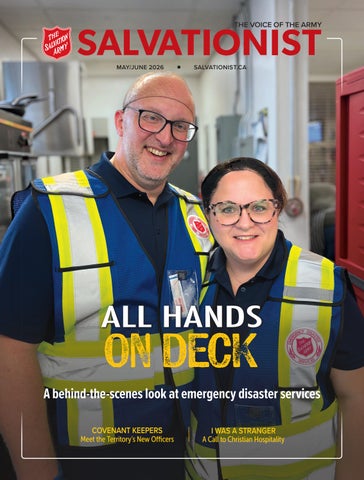
18 / All Hands on Deck
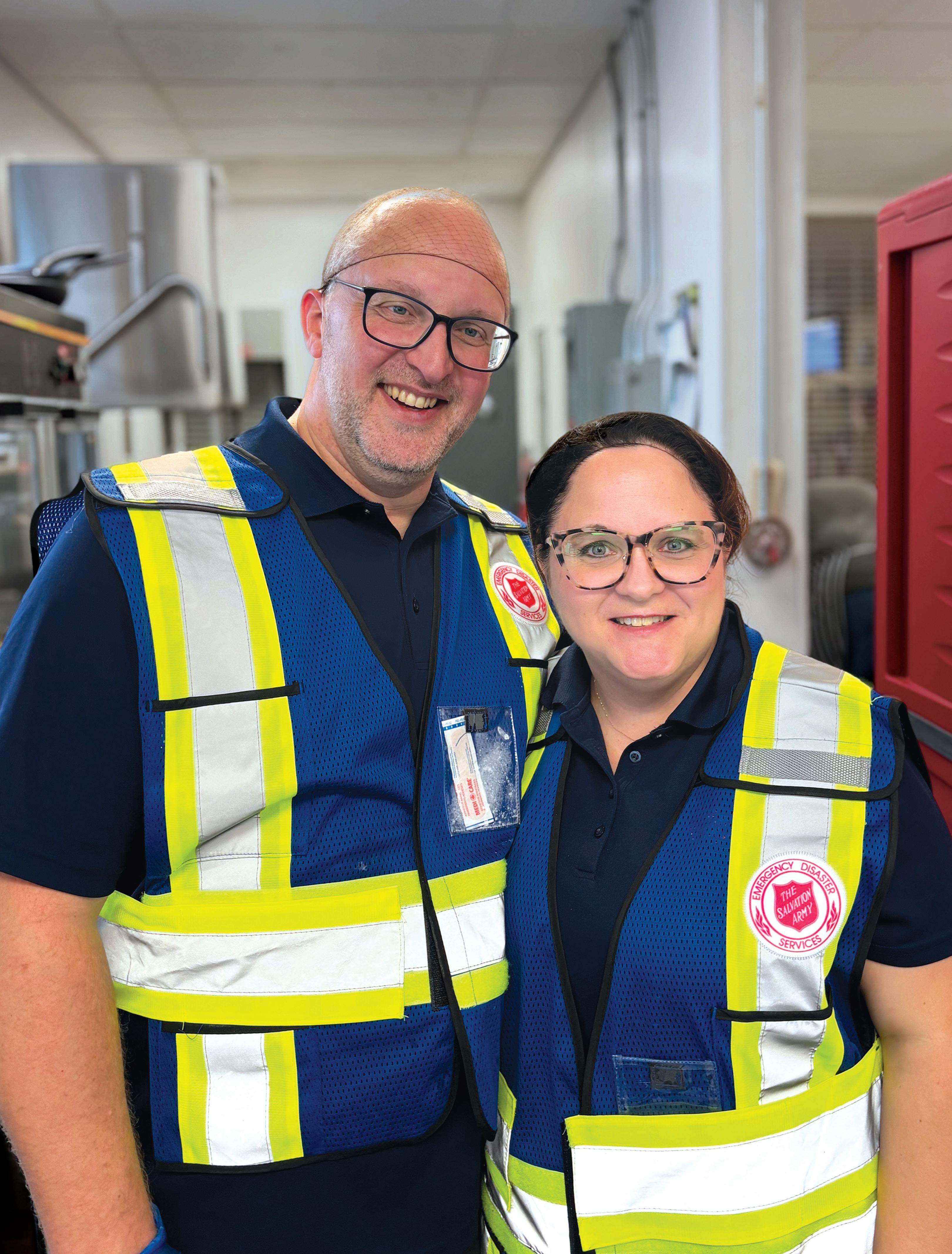
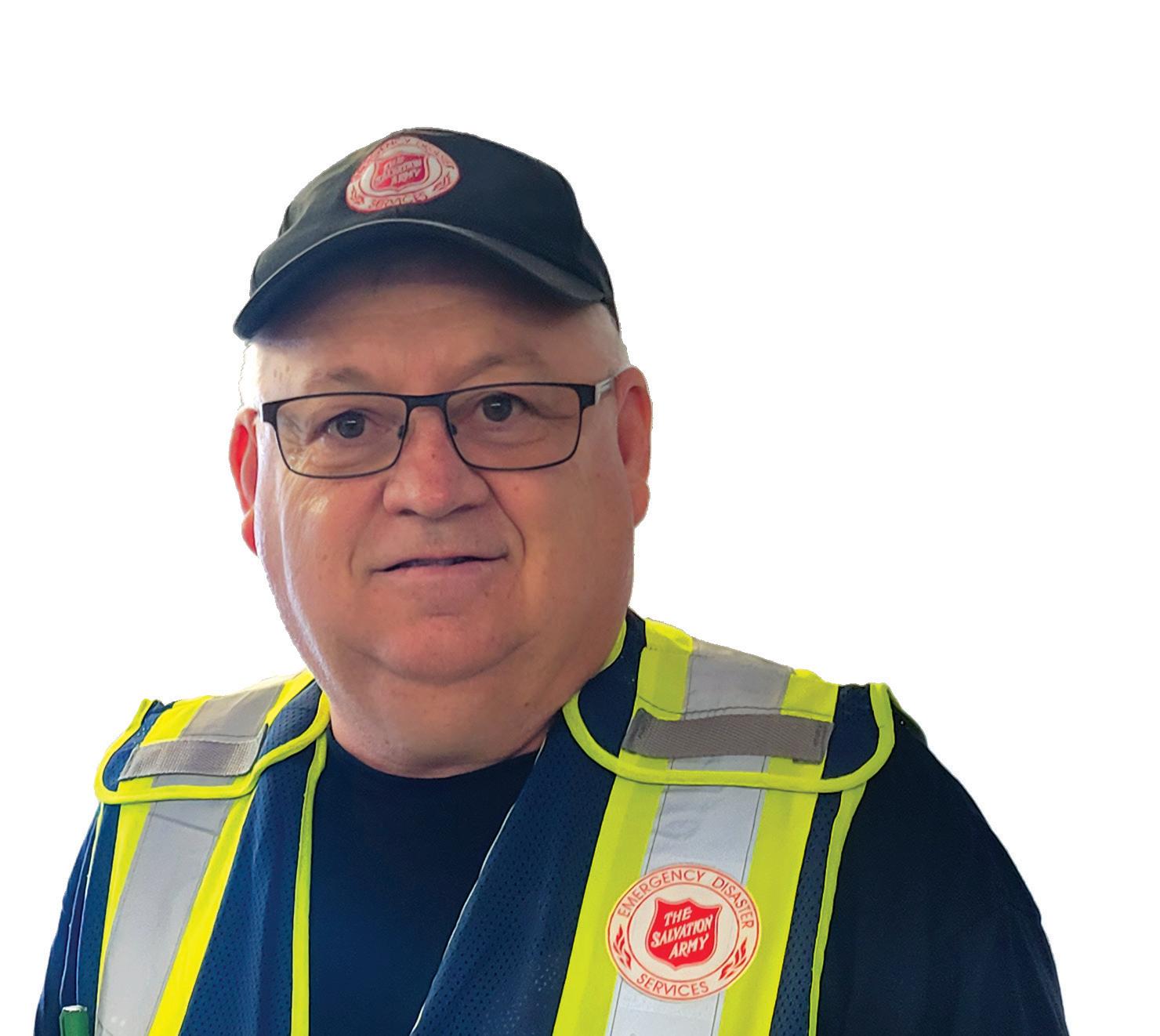
A behind-the-scenes look at emergency disaster services in Canada and Bermuda. by Abbigail Oliver
21 / All Together Now
Community partnerships keep people out of the cold in Saskatoon. by Roger Yenkins
To be called by Jesus is to be called to Jesus. Jesus’ call to follow him requires immense courage, demanding individuals abandon their comfort and livelihood for a higher purpose.
—COMMISSIONER LEE GRAVES, PAGE 8
CONNECT ONLINE
Visit Salvationist.ca to add your comments and read web-exclusive articles
@salvationistmagazine
Follow us on Instagram for the latest and best Army photos and Reels
/salvationistmagazine
Like us on Facebook for photos, live streams and updates. Interact with our community of 44,000+ followers
@salvationistmagazine
Subscribe to our YouTube channel and get notified when new videos are posted
issuu.com/salvationist
Read current and past issues of Salvationist, Faith & Friends and Just for Kids on your tablet, desktop or smartphone
Cover photo: Taylor Simmons
SALVATIONIST
is a bimonthly publication of The Salvation Army Canada and Bermuda Territory
Lyndon Buckingham
General
Commissioner Lee Graves
Territorial Commander
Lt-Colonel John P. Murray
Secretary for Communications
Geoff Moulton
Director of Communications, Editor-in-Chief and Literary Secretary
Pamela Richardson
Assistant Editor-in-Chief
Kristin Ostensen
Managing Editor of Salvationist and Salvationist.ca
Advertising Inquire by email for rates at salvationist@salvationarmy.ca.
News, Events and Submissions
Editorial lead time is seven weeks prior to an issue’s publication date. No responsibility is assumed to publish, preserve or return unsolicited material. Write to salvationist@salvationarmy.ca or Salvationist, 2 Overlea Blvd, Toronto ON M4H 1P4.
Mission
The Salvation Army exists to share the love of Jesus Christ, meet human needs and be a transforming influence in the communities of our world. Salvationist informs readers about the mission and ministry of The Salvation Army in Canada and Bermuda.
Salvationist.ca
Facebook: /salvationistmagazine
Threads: @salvationistmagazine
YouTube: /salvationistmagazine
Instagram: @salvationistmagazine
CLEARED FOR TAKEOFF
There is a running joke among my Salvation Army officer friends that sooner or later someone in an airport will mistake them for an airline pilot. The dark jacket, the shoulder epaulettes, the neat insignia …. I’m sure more than one officer has been asked, “Which gate is boarding for Vancouver?” or “Is the flight on time today?” Usually, they just smile and point in the right direction, resisting the urge to announce, “Ladies and gentlemen, this is your captain speaking.”
Of course, the truth is that Salvation Army ministry regularly carries us across cities, provinces and sometimes continents. After all, we are at work in 134 countries and growing! Every now and then, while standing in line at security or waiting at the gate for another connection, it strikes you just how large and far-flung our Army family really is.
I’ve discovered that some of the most meaningful moments in ministry happen at the end of those long journeys. You arrive a little tired and slightly rumpled from the trip, only to be greeted by Salvationists whose warmth and welcome immediately remind you why the journey mattered in the first place.
Since mid-April, our international leaders, General Lyndon Buckingham and Commissioner Bronwyn Buckingham, have been visiting the Canada and Bermuda Territory, giving us another opportunity to experience that global connection firsthand (see page 5). The communications team is “embedded” with them—moving from airports to corps halls to social centres to capture key highlights along the way.
We celebrate that sense of connectedness when Salvationists gather at divisional events to lift their voices in worship. Or when cadets of the Keepers of the Covenant Session are ordained, commissioned and released to the territory as the newest Salvation Army officers (see page 9). Again and again, we discover that our Army stretches far beyond our own corps walls.
It brings to mind a passage of Scripture from the Apostle Paul—that we are all part of one body, the body of Christ (see 1 Corinthians 12). Our gifts may vary. Our contexts may look very different. But we share one mission.
So, I invite you to follow along with us on Salvationist.ca, through our social media channels and in upcoming issues of Salvationist magazine. My hope is that as you engage with the stories, photos and videos, you’ll feel that same sense of belonging. Because wherever we serve, we are not serving alone.
Of course, pilots rely on a precise flight plan to reach their destination. Instruments keep them oriented when clouds obscure the horizon. Without that guidance, even the most experienced pilot can drift off course. The same is true for us as Christians.
The theme of the international leaders’ visit, Jesus Our Compass, reminds us that we are not navigating life by guesswork. When the world feels turbulent or direc tion seems uncertain, he keeps us oriented—always pointing us back to the mission of loving God and serving others.
Wherever our ministry takes us—whether across the street or across the country—the destination remains the same.
Stay on course. Follow the compass. And trust the One who charts the path ahead.
GEOFF MOULTON EDITOR-IN-CHIEF
International Leaders Visit Canada and Bermuda Territory
The Canada and Bermuda Territory is pleased to welcome General Lyndon Buckingham and Commissioner Bronwyn Buckingham, international leaders of The Salvation Army, for a pastoral visit and tour of all four divisions, supported by Commissioners Lee and Debbie Graves, territorial commander and territorial leader for spiritual life development. Their visit, under the theme Jesus Our Compass, began on April 17 and will continue until May 4.
In the first part of the tour, the General and Commissioner Buckingham visited St. John’s, N.L., where their itinerary included a reception and dinner with territorial and divisional leaders, and a Salvationist rally and public worship service, followed by a youth rally and coffee house-style gathering. They also planned to meet with government officials, as well as Salvation Army personnel, for an afternoon tea, and to tour the Ches Penney Centre of Hope.
After their time in the Atlantic Division, the international leaders moved on to the Prairies and Northern Territories Division where they were scheduled to visit several ministry units to witness Salvation Army mission in action, including the Community Resource Centre at Forest Lawn and the Barbara Mitchell Family Resource Centre, both in Calgary. Additional events would include officers’ councils and a reception at Glenmore Temple, Calgary, followed by a Salvationists’ rally and youth event.
Winnipeg’s Booth University College was excited to welcome General and Commissioner Buckingham to its 2026 convocation ceremony, where they would share in fellowship with students, faculty, friends and dignitaries.
In the British Columbia Division, the international leaders planned to join a united worship service at Cariboo Hill Temple in Burnaby, followed by lunch and youth events. They took part in a tour and the dedication and blessing of the new Vancouver Harbour Light building, later visiting Boundless Vancouver and Cascade Community Church in Abbotsford, where they participated in the Compass2026 Conference worship service and keynote address.
Continuing their territorial tour in the Ontario Division, the Buckinghams were scheduled to visit with Parliament in Ottawa, including meetings with Prime Minister Mark Carney and Governor General Mary Simon. They also planned to meet with the divisional executive team and officers from Eastern Ontario, Ottawa and Montreal in a rally and reception.
Now in Toronto, General and Commissioner Buckingham will meet with the National Advisory Board as well as retired executive leaders and Cabinet secretaries.
They will conclude their tour with exciting stops in Toronto (see sidebar), and local Salvationists and friends are encouraged to attend in person.
“As we look forward to this special visit, we pray that the General’s teachings will encourage us to be open to a fresh outpouring of the Lord’s blessing on our lives and ministries,” says Commissioner Lee Graves.
“Jesus said, ‘I am the way, the truth and the life,’ ” says General Buckingham about this tour’s theme, Jesus Our Compass. “I hope you will join us as we explore what it means to have Jesus at the centre of the mission and ministry of The Salvation Army.”
For more information, visit salvationist.ca/jesusourcompass. Find photos and detailed updates on the tour so far on Salvationist’s Facebook (/salvationistmagazine) and Instagram (@salvationistmagazine) pages.
EVENTS
IN THE GREATER TORONTO AREA
SATURDAY, MAY 2, 2026
7 p.m.
Program and Reception
Canada Christian College (Canada Event Centre)
300 Water Street, Whitby, Ont. 9:30 p.m.
Youth Event
Canada Christian College (Canada Event Centre)
300 Water Street, Whitby, Ont.
SUNDAY, MAY 3, 2026
10:30 a.m.
United Worship Service
Sheraton Parkway North Hotel
600 Highway 7, Richmond Hill, Ont.
International Headquarters Releases
Positional Statement on Religious Freedom
The Salvation Army has released a new international positional statement (IPS) reaffirming its strong commitment to religious freedom. Specifically, religious freedom is positioned by The Salvation Army as being a fundamental human right and a cornerstone of healthy, inclusive societies.
Approved by The General’s Council in November 2025, the statement emphasizes that every person has the right to choose, practise, change and express their religious beliefs without fear of coercion, discrimination or persecution.
Rooted in biblical principles and aligned with international human rights standards, including the United Nations Universal Declaration of Human Rights, the statement highlights religious freedom as essential to human dignity, social cohesion and peaceful coexistence.
Serving in more than 130 countries, The Salvation Army works across diverse cultural and religious contexts. The statement underscores the movement’s commitment to sharing the gospel of Jesus Christ while meeting human needs without discrimination, and to engaging with people of all faiths with wisdom, humility, compassion and respect.
“The Salvation Army believes all people are created in the image of God,” the statement says, “and therefore possess intrinsic and equal value (see Genesis 1:26-27). This provides the foundational understanding of human dignity for The Salvation Army that all people should be treated with respect and their dignity upheld without any conditions attached, such as religious beliefs.”
The Salvation Army also calls on Salvationists worldwide to learn about religious freedom, pray for those facing persecution, foster interfaith co-operation and advocate for the protection of this vital freedom at local, national and international levels.
The full International Positional Statement on Religious Freedom is available at salvationarmy.org/ news/salvation-army-affirmscommitment-religious-freedom.
Workers serve desserts to guests as they shop curated displays in the thrift store
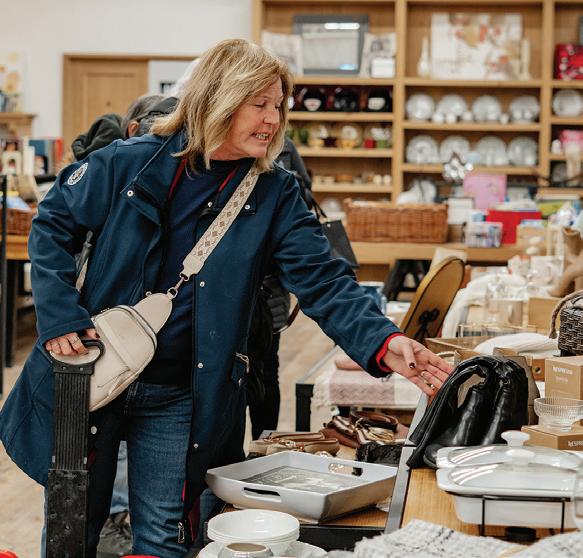
Kemptville, Ont., Thrift Store Celebrates Valentine’s Day in Style
ONTARIO
In February, The Salvation Army in Kemptville, Ont., hosted its second annual Girls Night Out Galentine’s shopping event. Hosted in partnership between the church and its adjoined thrift store, the event was designed as a fun opportunity for women to gather, connect and enjoy a curated shopping experience while supporting The Salvation Army’s food bank.
Inspired by the growing popularity of “Galentine’s Day” celebrations—a cultural holiday celebrating women’s friendship on February 13, ahead of the traditionally romantic holiday—the event grew as part of Kemptville’s women’s ministries.
“The women in our church love getting together and they’re passionate about making a difference in the community,” says Erin Wong, corps leader. “They enjoy using their time to serve others, and this allowed them to do that while also creating a fun and welcoming evening for women in the community.”
The shopping experience was extended into the newly renovated church side of the building, an open concept area that includes a fireplace, couches and welcoming seating where women could relax, socialize and shop. Worship music played throughout the space, and guests could enjoy punch, tea, coffee and water along with desserts served by staff.
“It also created a welcoming space for people who may not normally walk into a church.”
ERIN WONG
Staff and volunteers created thoughtful displays of higher-end thrift merchandise specifically for the event. Items included clothing, athletic wear, shoes, purses, accessories and housewares, as well as some men’s and children’s clothing.
“It was truly a collaborative effort between the women of the church, staff, volunteers and our food bank team,” says Wong. “We were especially grateful for the support of many food bank volunteers who attended and invited friends and family to be part of it.”
According to Wong, there was an encouraging turnout, even better than last year’s Galentine’s Day event. “It also created a welcoming space for people who may not normally walk into a church,” she explains. “Some young women who attended were curious about faith and the church, and this helped them feel more comfortable connecting with us. We also invited them to join our Saturday evening service the following night and connected them with our young adult’s ministry.
“Events like this create meaningful opportunities for connection and fellowship while also supporting people in need in our community,” says Wong. “They allow our church to serve in a practical way while building relationships.”
Photos: Emma Beck, Through The Window
Guests enjoy an exclusive shopping experience in support of the food bank in Kemptville
Prince Albert, Sask., Recovers From Christmas Day Fire
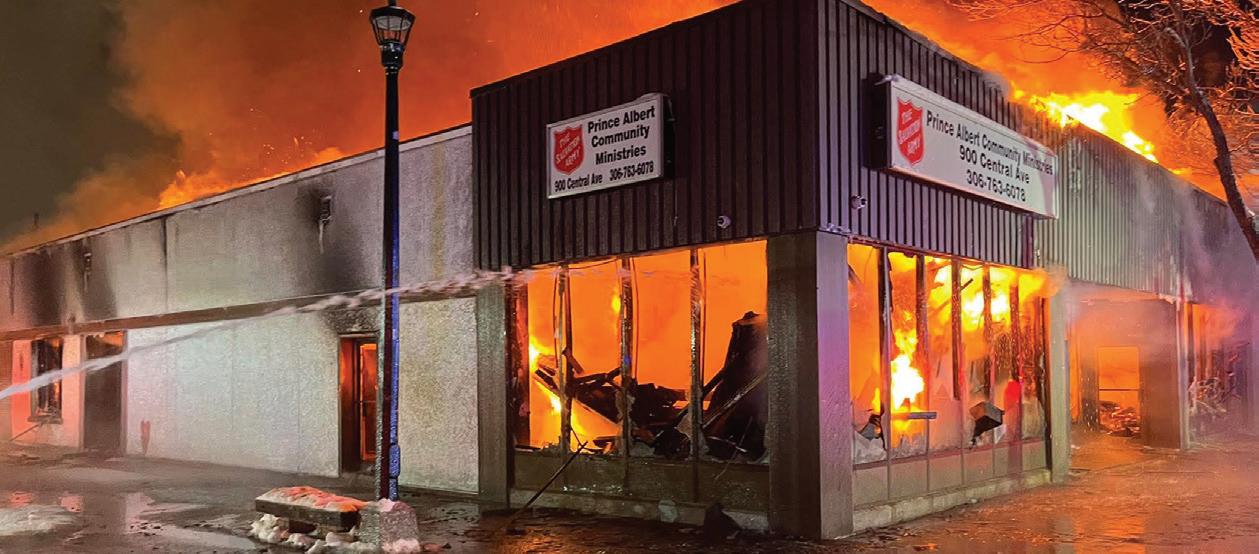
The Salvation Army in Prince Albert, Sask., continues to give hope after a devastating fire destroyed its church and community services building on Christmas Day.
The fire broke out around 8 p.m. on December 25, 2025. Local firefighters were able to contain the fire so that it did not destroy surrounding structures, but the roof of The Salvation Army’s building collapsed, and it was deemed a total loss.
The loss was especially difficult because the building had recently undergone significant renovations to enhance the Army’s programming and ability to serve. Since Majors Charlotte and Ed Dean were appointed corps officers in 2022, the building’s revitalizations included a new commercial kitchen and food services equipment, as well as new floors and interior paint. Staff and volunteers had committed thousands of hours to the project in an effort to better meet community needs.
“That was our chapel, dining room and kitchen. It was also our night warming centre and a day warming centre, where other services such as clothing and laundry and showers were offered. That was our Christmas toy distribution site,” says Major Ed Dean.
The corps had been operating as a critical warming centre since December 15, open seven days a week. On the day of the fire, with temperatures below freezing, the warming centre required an immediate move to a new location, and community partners stepped up to help.
“It was -27 degrees out that night, and our guests needed a place to be. So, while I was on my way home, our partners rallied some volunteers to make sandwiches, get things ready and prepare for what would come next,” explains Major Dean. “For seven days, we used Urban Services to run our programs. If we didn’t have these community partners, where would our people have gone that night?”
The corps has since moved its worship services to the Open Door Church of the Nazarene, while continuing programs through leased spaces.
With support from the community, Prince Albert hosted its second annual Plates of Hope fundraiser in March, including a plated dinner and silent auction to raise money to help support the continuation of services after such loss. Matching sponsors, the Murray and Audrey Neufeld Charitable Foundation and the Malcolm Jenkins Family Foundation Inc., provided significant contributions to help exceed the $250,000 fundraising goal.
“The Salvation Army has been in this community for 132 years, and it is important that the mission and the ministry continue, because there are still lives that need Christ,” says Major Dean. “There are still lives that are deeply lost, and if we can guide them to a warm night, a meal on the table, to an addiction bed, or to other agencies’ services that we may not offer, that is ministry at its finest.”
Moose Jaw, Sask., Hosts Program to Keep People Active
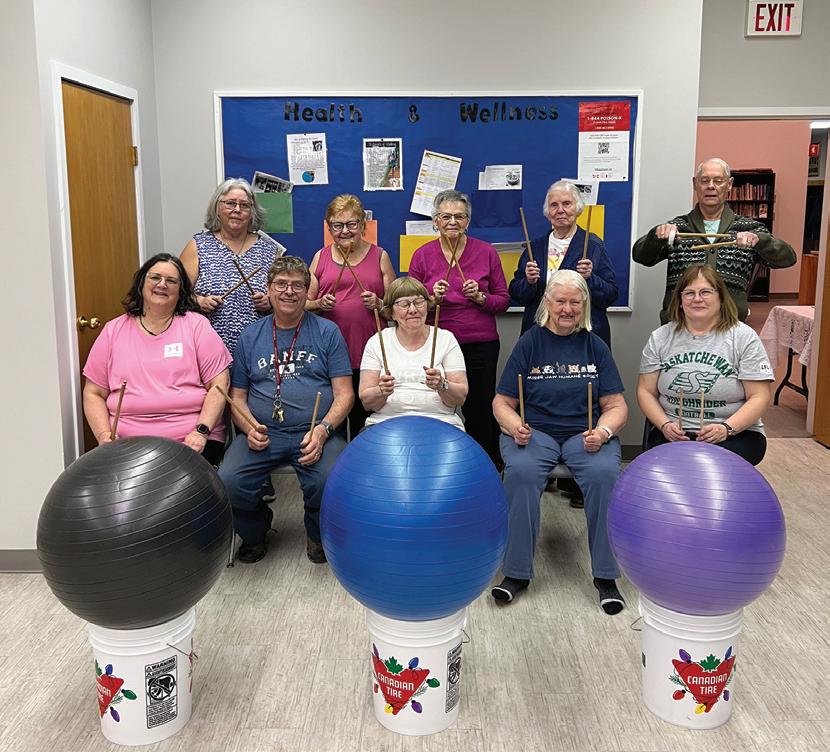
At The Salvation Army in Moose Jaw, Sask., a weekly fitness program is inspiring participants to live healthy active lifestyles, while providing an uplifting atmosphere for fun and socialization. Grace in Action, which launched in 2018 with a walking program, has now shifted into a unique cardio drumming group.
Cardio drumming is an energetic, low-impact form of physical activity that uses exercise balls, resting on top of a stand, and wooden drumsticks to get the body moving. Every Thursday, a group of more than 10 people gather at the church for Grace in Action, beginning with 15 minutes of video-led exercise, followed by a break for conversation and fellowship, and ending with another 15-minute drum session.
Since its inception, Grace in Action has become a great way for people, especially seniors, to stay active and interact socially. “It’s very uplifting. It’s a positive atmosphere—everyone’s happy and enjoying themselves,” says Sherry Howell, who leads the program. “It started out as just getting people moving and then became a way for us to get together on a weekly basis.”
“I like the fact that we exercise our whole bodies, and it is good for our health,” says Karen Lizee, who heard about the program through the church and has been attending since it launched.
Grace in Action is also a unique form of outreach in Moose Jaw. “About a quarter of our participants come from the community, the rest from the church,” explains Howell. “One of the participants recently started coming to church and has come out to our corps breakfast.”
Peter Howell, Sherry’s husband, has been participating in Grace in Action since its start. “It has enriched me socially and physically,” he says. “I like talking with everyone who comes to the program and hearing about their day.”
Every Thursday, a group of corps and community members comes together for Grace in Action, a creative exercise group for cardio drumming
Firefighters respond to the blaze at the Salvation Army Community Ministries building in Prince Albert, Sask.
Photo: Lieutenant Linda Kean
FOLLOW ME
The call, the covenant and the commission.
BY COMMISSIONER LEE GRAVES
Follow me. These familiar words immediately bring to mind scenes from the life of Jesus: the calling of Simon Peter and Andrew, by the Sea of Galilee (see Matthew 4:19); the calling of Matthew, the tax collector (see Matthew 9:9); and his invitation to the rich young ruler (see Matthew 19:21). And these words, this call, remain as poignant today as when first spoken. If Jesus is speaking to your heart, a response must be made.
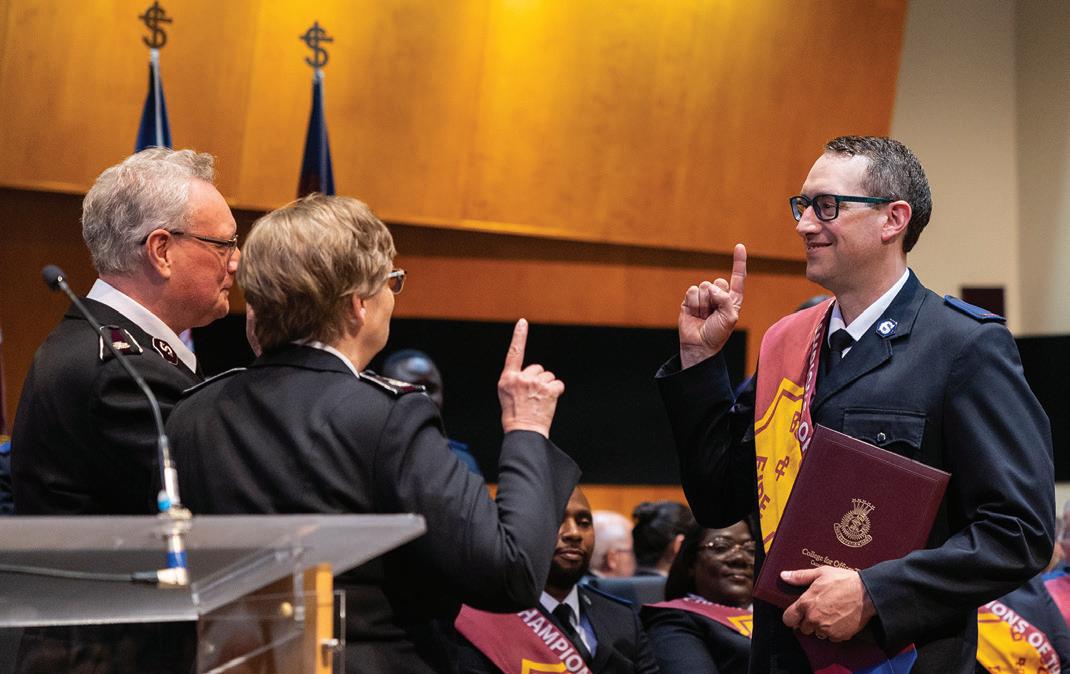
In the life of The Salvation Army in Canada and Bermuda, June is especially meaningful as we celebrate the ordination and commissioning of new lieutenants and auxiliary-captains. After prayerfully signing a covenant, they take their place publicly, receive their ordination and are commissioned to their first appointment. First the call, then the covenant, followed by the commissioning.
The Founders of The Salvation Army declared their belief that God raised up our movement to enter partnership with him in his great business of saving the world. That remains our core business: salvation for the whole wide world. I call all Salvationists again to this chief and sacred great purpose, as signified in our name. In his book Called to Be God’s People, Commissioner Robert Street reminds us that “Our mission is God’s mission. Our identification with God in this outward movement of love for the world requires a corresponding inward movement from ourselves toward God.”
As Salvationists, we believe with all our hearts that we are called to live out the Great Commission, to go into all the world and make disciples. Our newly refreshed territorial strategic plan states it another way: “Forward Together—Christ-centred, Others-focused.”
As Salvationists, not only are we called to this great purpose, but we are covenanted to God as soldiers of this great spiritual war. The Soldier’s Covenant puts it this way: “Having accepted Jesus Christ as my Saviour and Lord, and desiring to fulfil my membership of his church on earth as a soldier of The Salvation Army, I now by God’s grace enter into this sacred covenant.”
For soldiers, it’s not about merely being added to the “soldier’s roll.” It is more than opening up the opportunity to be part of Salvation Army activities and service. It is an integral part of our relationship with God and our calling to follow in active discipleship. Our Soldier’s Covenant is a form of agreement or bond that sets out the promises, privileges and responsibilities between God and ourselves. It is a God-initiated covenant, a sign of his grace and blessing.
Some soldiers may be called to ministry with The Salvation Army as employees. Others use their skills and gifts to serve through paid work that supports, resources and enables mission in their everyday lives. We give God grateful thanks.
Still others are called to be officers of The Salvation Army and, as such, they pledge to give themselves to full-time ministry and service. Their obedience to God leads them away from their local corps to ordination and commissioning. The Officer’s Covenant puts it this way:
Called by God to proclaim the gospel of our Lord and Saviour Jesus Christ as an officer of The Salvation Army, I bind myself to him in this solemn covenant:
To love and serve him supremely all my days;
To live to win souls and make their salvation the first purpose of my life;
To care for the poor, feed the hungry, clothe the naked, love the unloved and befriend those who have no friends;
To maintain the doctrines and principles of The Salvation Army and by God’s grace to prove myself a worthy officer; Done in the strength of my Lord and Saviour.
Whether called to be a soldier or an officer, our covenant reminds us of this beautiful relationship we have with the Lord and the deep privilege of the commission that follows.
To be called by Jesus is to be called to Jesus. Jesus’ call to follow him requires immense courage, demanding individuals abandon their comfort and livelihood for a higher purpose. The disciples left their fishing nets instantly, called to radical, compassionate living; called to step into ministry despite feelings of inadequacy; all rooted in trusting his presence.
We celebrate and give the Lord grateful thanks for those past and present who have heeded the call of God, entered a ministry covenant with him and answered the Great Commission to bring others to him. If Jesus is calling you to leave your net, a response must be given. Jesus calls, the Holy Spirit qualifies and the commission is the privilege.
COMMISSIONER LEE GRAVES is the territorial commander of the Canada and Bermuda Territory.
Lt Peter Chaulk greets Commissioners Lee and Debbie Graves, territorial leaders, with the traditional Army salute at his commissioning and ordination service in 2025
FAITHFUL TO THE CALL
Keepers of the Covenant are fully surrendered to God’s mission.
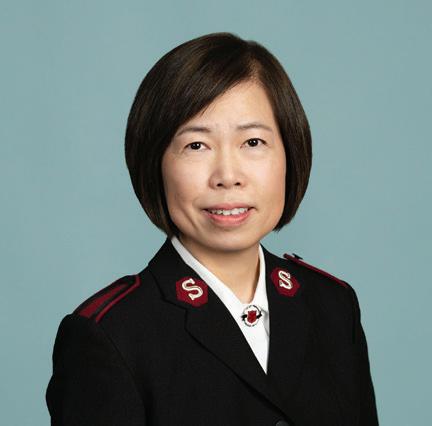
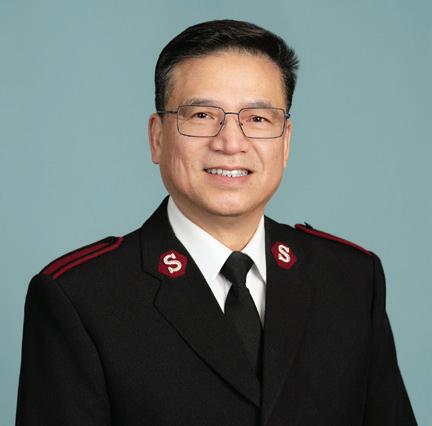
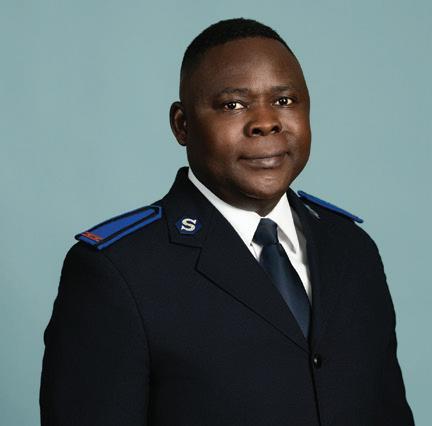
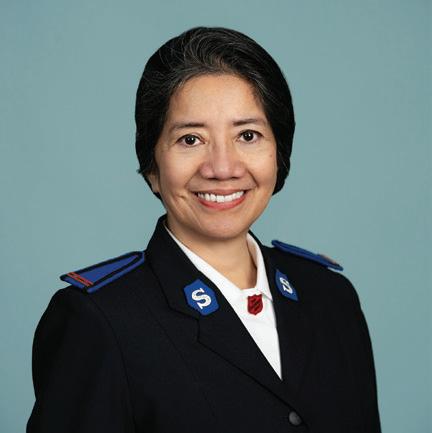
Called. Equipped. Gifted for sacred service. On June 20, the Canada and Bermuda Territory will commission five officers in the Keepers of the Covenant Session. As these Salvationists look forward to the next stage in their ministry, they reflect on their journey to officership, God’s faithfulness and the invaluable lessons they’ve learned during training.
PRINCIPAL’S COMMENDATION
Our territory has reason to celebrate as we prepare to ordain and commission the Keepers of the Covenant Session. Guided by their sessional Scripture, Jeremiah 31:33, that says, “I will put my law in their minds and write it on their hearts. I will be their God, and they will be my people,” these men and women step forward in response to God’s call to serve as officers, committed to a faithful covenant relationship with him and devoted service to others.
This session highlights the beautiful diversity of God’s people. Cadets and auxiliary-captains have brought varied backgrounds, experiences and perspectives to their training, enriching the environment in which they train and serve, and deepening their understanding of ministry within diverse communities. Their shared journey has been marked by mutual encouragement, spiritual growth and a deep commitment to living out the gospel.
The Keepers of the Covenant have completed their training in the field, integrating academic study, spiritual life development and practical ministry experience. The cadets and auxiliary-captains have served actively in ministry contexts, applying their learning while leading and supporting congregational and community outreach.
Auxiliary-captains in this session have faithfully fulfilled their training while leading ministries in Richmond, B.C., and Fort Frances, Ont., balancing the responsibilities of leadership
with their ongoing officer formation. Cadets have also trained in Montreal and Winnipeg, gaining valuable experience in ministry while attending classes virtually at the College for Officer Training (CFOT) and Booth University College, demonstrating both their and the training program’s flexibility and adaptability.
While the contexts and models of training may differ, none is greater than another. Each pathway reflects our territory’s commitment to equipping leaders where they serve, ensuring that officer training is deeply connected to real ministry experience.
Across these varied settings, the members of the Keepers of the Covenant Session have demonstrated remarkable dedication to their formation and calling. They have faithfully shared the love of Jesus Christ through preaching, teaching, pastoral care and compassionate service, meeting people where they are and pointing them toward hope in Christ.
The training college staff joins me in inviting the Salvation Army family to pray for the Keepers of the Covenant as they enter the sacred covenant of Salvation Army officership. May God continue to write his truth upon their hearts and guide them as they serve his people.
MAJOR DEANA ZELINSKY Training Principal
Photos: Jerimi Jones
I first heard my call to officership at the age of nine; however, adolescence brought real barriers I was unable to reconcile. Although I walked away from God, he never walked away from me. Over the years, God was at work, slowly and precisely dismantling every barrier that had caused me to falter. In 2015, I met Christ at the Boundless 150 Congress in London, England, and decided to renew my soldiership. That’s when God’s calling came back and, at a time of life where I was pondering what retirement might look like for me, the door to auxiliarycaptaincy was opened, and I was finally able to say, without reservation, yes to the Lord of my life. When the Word of God is met with obedience, it cannot be contained. This is evidenced in the diversity that makes up our session. Although we come with different skills and backgrounds, we are united in nature and purpose: to go into all the world and make disciples of all nations.
AUX-CAPTAIN FLORENCE YAU
I accepted Jesus as my Saviour while I was studying at university after arriving in Canada from Hong Kong. I was living alone for the first time and had to overcome many hurdles and adapt to a new environment. It was during this challenging time that I experienced the love and reality of God in many personal ways. In response to God’s faithfulness, I have dedicated my life to serve him. I can see how God used each step of my journey to grow my faith, deepen my compassion for others and confirm his purpose for me. My work, relationships and life experiences have all played a part in preparing and equipping me for ministry. Now, with confidence in God’s leading and peace in my heart, I believe this is the time to step forward in obedience. I have no doubt that God is calling me to serve him as an officer within The Salvation Army.
I came to the Lord as a teenager, and shortly afterward I sensed a call into ministry. However, I knew it would be in the future and that I would need to wait for God’s timing. Eventually, the Lord led Florence and me to Richmond Community Church, B.C. There, what God had promised decades earlier began to unfold. When our corps officers, Majors Ed and Kathie Chiu, asked whether we would consider becoming officers, we immediately said yes. The promise God gave me so many years ago has now been fulfilled. Looking back, I understand that God was teaching me to trust him, to wait for his perfect timing and not to step out in my own strength. My hope for this next stage of ministry is that I will be found faithful to the calling of our Lord Jesus Christ. As I abide in him, I pray that my life and ministry will bear much fruit.
My calling to officership has unfolded as both a quiet conviction and a persistent invitation from God through people and spiritual leaders. Over time, I sensed that God was not calling me to serve occasionally but to offer my whole life in covenantal obedience. Officership is not a position but a vocation of availability to be sent wherever God’s love is needed. Some of the most meaningful experiences I’ve had during training have come through hands-on ministry and relationships. Walking alongside people in vulnerability, leading worship and participating in community outreach grounded my theology in lived reality. The field-based training model allowed me to see Christ in the faces of those we serve. As I become an officer, I pray for spiritual courage, wisdom and grace to lead with humility. The harvest is plentiful, and I hope to encourage others who are discerning God’s call: the Lord still calls servants today. When we surrender fully, he equips and sustains us for his mission.
AUX-CAPTAIN STEVE YAU
CADET ALBERTO THEOLA
AUX-CAPTAIN ARTHUR HEATHCOTE
CADET MARICIEL NUYDA
The greatest lessons I have learned during training have been humility and fortitude. Ministry means meeting people where they are and sharing in their pain and hurt. My visits to prisons, in particular, have been deeply meaningful. They remind me why fortitude is essential—it gives spiritual strength to remain faithful and obedient to the call to love the least, the last and the lost. To be part of the Keepers of the Covenant Session is a loving reminder from God that he has been, is and will always be faithful to his promises. Keeping the covenant I have made with God means nurturing my relationship with him so I may continually receive his grace, mercy and forgiveness. It also means choosing the things that draw me closer to him. In all things, whatever I do, may it be for his glory.
OFFICERSHIP IS NOT A POSITION BUT A VOCATION OF AVAILABILITY TO BE SENT WHEREVER GOD’S LOVE IS NEEDED.
—CADET ALBERTO THEOLA
GOD’S CHURCH ON THE STREET
In the North End of Winnipeg, a place of deep poverty and pain, a group led by Major Lois Dueck offers family, not charity.
BY GISELLE RANDALL
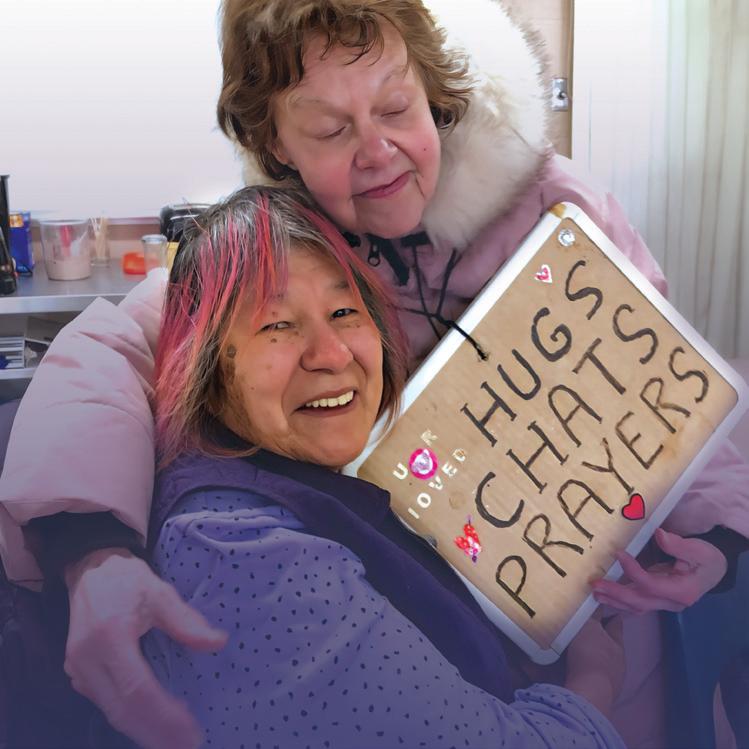
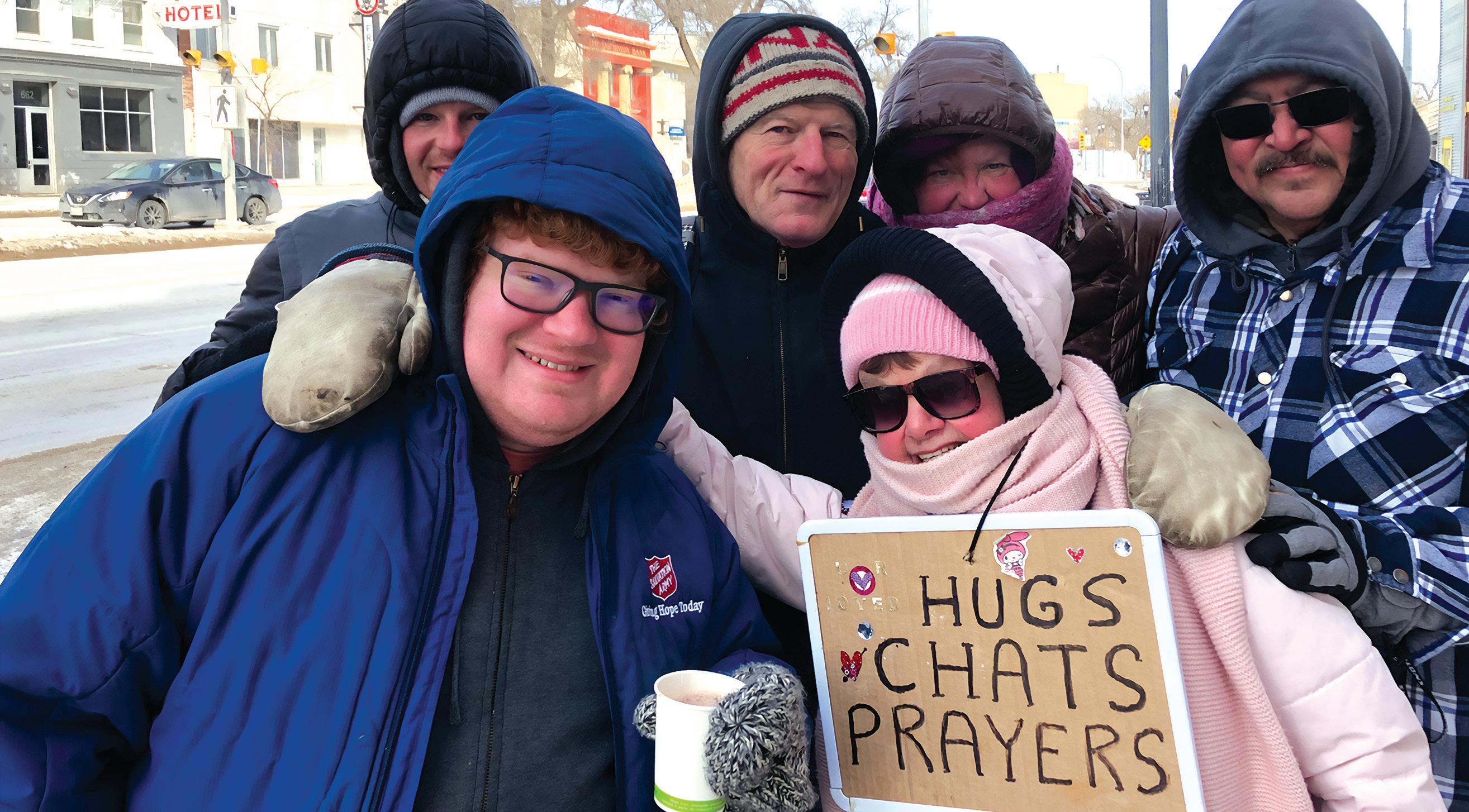
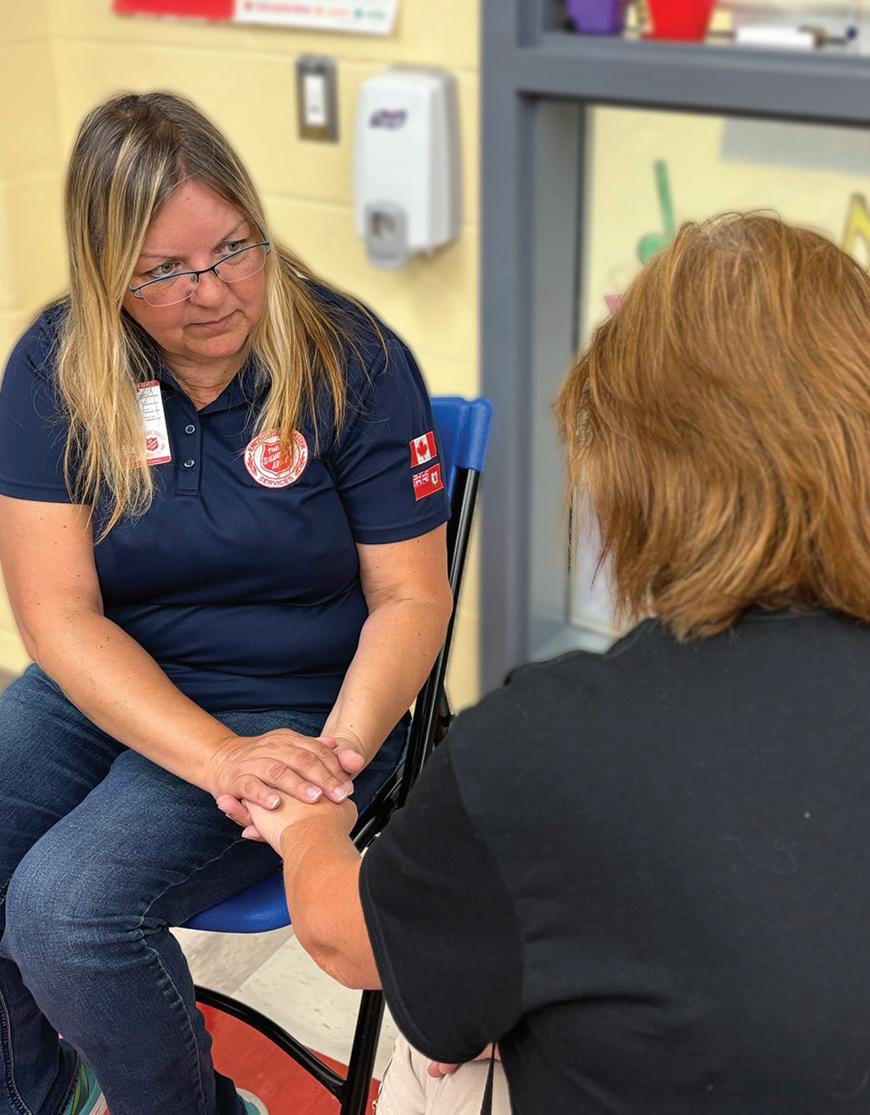
Every Saturday morning, retired Salvation Army officer Major Lois Dueck meets a small team of people at Weetamah Corps in Winnipeg’s North End. It’s a place of deep poverty, divided from the rest of the city by railway tracks, where addiction, mental illness and inadequate housing are part of life. But the team isn’t there to hand out food or lead an open-air service. They don’t take anything with them as they walk the streets, except for the hand-made sign Major Dueck wears around her neck that reads “HUGS, CHATS, PRAYERS.”
“There are more than enough shelters and food programs,” says Major Dueck. “What we are doing is getting to know people on the streets and gathering them into our family—the way they are. We’re not trying to fix them. Only God can do that.
“It’s not a charity. It’s not another agency. They are used to agencies. Most of them have had a traumatic childhood, so what’s missing in their lives is a family.
Psalm 68 tells us that God is a father to the fatherless and sets the lonely in families— not in agencies, but in families. That requires us to become a family to them.”
She calls it God’s church on the street.
WITH, NOT FOR
The vision for this street church goes back to the early years of Major Dueck’s officership, when she spent five years in Ukraine. In 1993, soon after independence from the Soviet Union, the country was struggling economically and hostile to Christian faith. There were no social services available, and The Salvation Army was treated with suspicion.
“We had no office. We had no building for church,” she remembers. “What do you do when you don’t have anything? You start with people. I had to learn the Russian language, and the only way to do that is by getting to know people.
“We started to meet in parking lots, moving from place to place from one day to the next when the military police told
us to leave. Everything had to happen on the streets.”
Slowly, as she built relationships, a community started to form—not a program to meet the needs of people experiencing hardship, but a church made up of them. During her time in Ukraine, five people who had experienced homelessness or struggled with addiction became Salvation Army officers.
“We’re used to doing things for people, and there I had to build something with them,” she says. “This concept, of building a church with them, not for them, was life changing for me.”
GATHERING
In Winnipeg, Major Dueck is building relationships with people in the same way—by walking the streets.
“We gather them into our family,” she says. “And to do that, we have to learn the language of people who are on the streets, who are struggling with addiction. And the only way to do that is to go out. We
Mjr Lois Dueck (front right) and her team walk the streets of Winnipeg, offering hugs, chats and prayers
Photos: Courtesy of Isaiah Allen
go out Saturday after Saturday. We don’t preach—we just listen and accept them.”
What she hears is the language of despair.
“Rejection. No family. No backup person in their life. Shame. Chaos. Lack of physical touch. Loneliness. Darkness. Not belonging. No home,” she says.
Anyone is welcome to join the team that sets out along Logan Avenue toward Main Street, but there’s a core group of about six people who come each week. There’s Terri, who was experiencing homelessness when she first met Major Dueck; Kurt, who attends The Salvation Army; Joe, who grew up on the streets; Barnabas and Johann; and Isaiah Allen, a professor at Booth University College (see page 14 for his reflections on hospitality).
It’s noisy and chaotic, with open drug use, people passed out on the street, others yelling, ambulance sirens, needles and garbage everywhere.
“Nobody will meet my eyes. Everybody has their heads down,” says Major Dueck. But a change often takes place when she offers a hug.
“WHEN YOU HUG SOMEBODY, HOW YOU CAN FEEL THE SPIRIT OF JESUS DRAWING NEAR TO THEM. YOU CAN JUST FEEL THE HEALING BEGINNING.”
—MAJOR LOIS DUECK
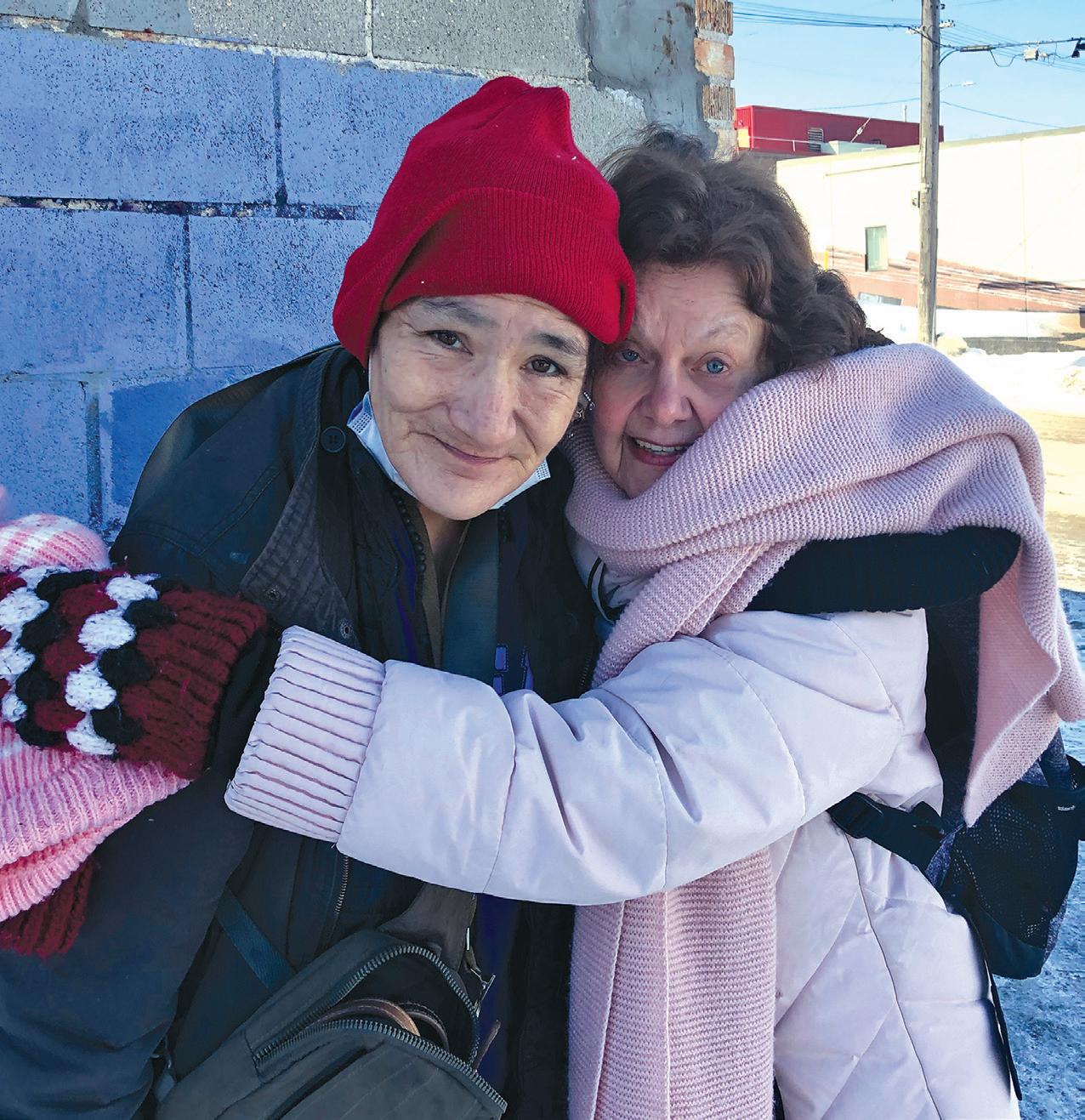
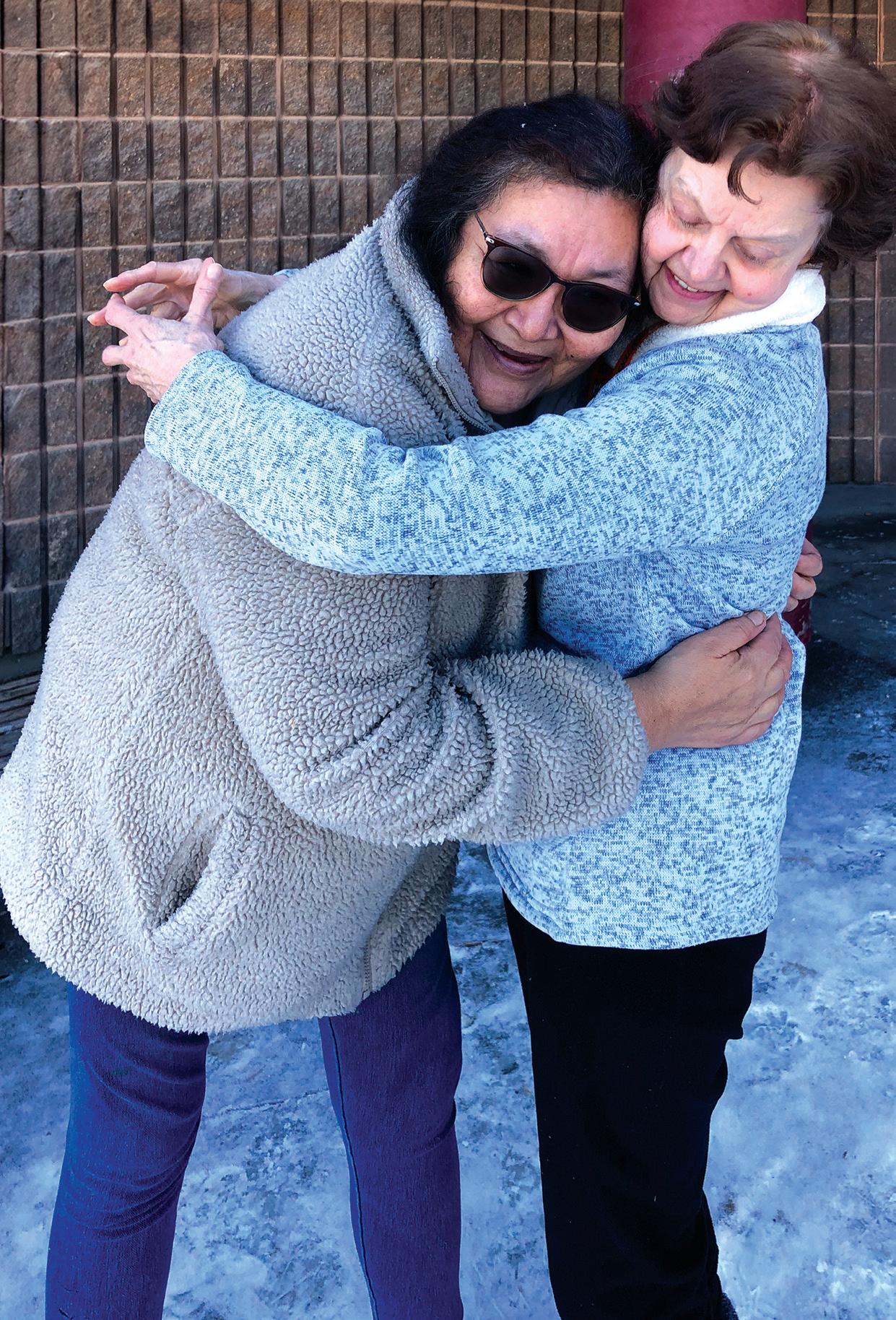
“It’s absolutely astonishing, when you hug somebody, how you can feel the spirit of Jesus drawing near to them. You can just feel the healing beginning,” she says. “Sometimes people hold onto us for 15 or 20 minutes. I’ve seen people come out of their drug psychosis and into their right mind when I’ve hugged them.”
And with the hugs, they listen, without an agenda.
“Our motive isn’t to win them for Christ—although our burning desire is that they will find him—it’s to love them
exactly as they are,” she says. “People can’t hear you until you hear them.”
Often, after a hug and a chat, they are open to prayer. Major Dueck has found that many are real believers, who know their dependence on God. They ask for prayer for practical things, like finding a place to stay, for their fellow companions on the streets, for estranged children. And almost every week, someone will pray for Major Dueck or others on the team.
“If I sense the Spirit telling me, I will share something I’m struggling with,” she says. “If they share something of their story, their vulnerability, then it’s up to me to share something in return, because that’s what builds a relationship.”
Vanessa. “I genuinely can’t wait to go to Main Street on Saturday to see my people,” Mjr Dueck says. “I love them. They are part of my family”
They spend about an hour and a half on the street, inviting those they meet to a family lunch at the corps.
ADOPTING
Back at Weetamah, they share a simple meal at a round table in a small room.
“This is not a feeding program,” says Major Dueck. “We don’t serve them. They help. We do it together, so they have a place to come out of the noise and the chaos and to feel safe, and for us to build that connection, where we adopt them into our family.”
This is the heart of Major Dueck’s vision—that love must be individual and personal.
“Everything that’s done on the street is mass feeding, mass shelters,” she says. “But this is the vision that God gave me, that we have to start investing ourselves into their lives, and that will be costly.
“Another key verse for me is 1 Thessalonians 2:8: ‘Because we loved you so much, we were delighted to share with you not only the gospel of God but our lives as well.’ ”
Although Major Dueck would love to see more churches adopt this approach, she recognizes that it is a calling—one that takes commitment and perseverance to be a consistent presence in people’s lives. Some have joined the team for a
short while and been disappointed not to see change.
Over many years, she has learned to leave the results to God. But she has also become more aware of signs of his presence—a smile, eye contact, a person drawing close to their team in curiosity. She notices a difference in how people act at the lunch. Someone who was throwing garbage on the street will now carefully put their plate away, sensing the family atmosphere.
She looks for ways that people can contribute instead of receive, to reverse the cycle of dependence on charity and restore dignity. It’s why she prefers not to use the word ministry to describe this church on the street. Instead, she says, “I’m sharing my life. And my life comes with the Spirit of Christ in me.”
UNKNOWN SAINT
After more than 50 years of sharing her life in this way, Isaiah Allen describes Major Dueck as “one of the unknown saints of The Salvation Army.”
“This work is the joy of my life,” she says. “What keeps me going is that I genuinely can’t wait to go to Main Street on Saturday to see my people. I miss them during the week. I love them. They are part of my family.”
Hospitality is central to Christian faith and Salvation Army mission. The streets surrounding the Weetamah Corps in Winnipeg may not look hospitable, but I’ve learned about hospitality walking them with retired Major Lois Dueck and the street chat “family.” Following Jesus’ example, we demonstrate and experience hospitality for the gospel. We often find ourselves in other people’s homes and haunts, on the receiving end of their hospitality. Major Dueck wears a hand-written sign: “HUGS, CHATS, PRAYERS.” We open our arms to receive hugs, our ears to listen during chats and our hearts when our street kin request prayers. In other words, we just use what God gave us when we were born. Even people who are unwelcome in the homes of their own relatives and barely welcome in shelters find welcome, just as they are— happiness and heartache. (See page 12 to learn more about Major Dueck’s street chat ministry.)
I WAS A STRANGER
Hospitality is at the heart of the gospel.
BY ISAIAH ALLEN
I was a stranger and you welcomed me. —Matthew 25:35 (NRSVUE)
“Welcome!” is the most beautiful word in any language. It’s the gospel in one word. Jesus is the most hospitable person who ever lived. The one who said, “Come to me” (Matthew 11:28), is also the one who knocks on the door and wishes to enter (see Revelation 3:20). Many gospel stories feature Jesus as a guest who often took the rights of a host and frequently gave unconventional advice about hospitality (see Matthew 9:10; 22:4; Luke 11:37; 14:1, 12; John 2:2; 12:2). He likened the kingdom of God to a banquet. He hosted meals for multitudes in the wilderness (see Mark 6:34-44; 8:1-9). When Jesus wanted to welcome Zacchaeus into Abraham’s family, he made him a host (see Luke 19). Echoing Mary’s commendable act (see John 12), Jesus washed his disciples’ feet (see John 13), an essential act of hospitality. He later said that his Father welcomed his followers into his home (see John 14). Countless examples correlate the gospel with hospitality.
WHAT IS HOSPITALITY?
Hospitality is opening our lives to others without pretence. It entails personal involvement. We open our homes, spaces and personal presence to others just as they are, just as we are. We do not wait for a special occasion or extraordinary explanation to open our door to the stranger. Remember Jesus’ words: “I was a stranger and you welcomed me” (Matthew 25:35 NRSVUE). The stranger’s claims on our generosity are God’s claims upon us (see Leviticus 19:33-34).
Hospitality means making people feel welcome around you however they show up. This is why Christians reject speech and action aimed at making others feel unwelcome and celebrate and support actions that honour people’s dignity. Criticism, grief and resistance are appropriate Christian responses to society’s failures to welcome the stranger.
The Apostle Paul instructed the Roman Christians to “pursue hospitality”
Photo: Courtesy of Isaiah Allen
Mjr Lois Dueck (right) hugs Ramona, a member of the street chat “family” in Winnipeg
(philoxenia, which literally means loving strangers) and to “bless those who persecute you” (Romans 12:13-14). This pairing is the signature of Christian virtue: indiscriminate kindness, even love toward enemies (see Matthew 5:4348). Aimee Patterson, a Christian ethics consultant at The Salvation Army’s Ethics Centre in Winnipeg, highlights the long tradition of hospitality in the Christian faith in “Hosts and Guests,” the sixth chapter of her book Suffering Well and Suffering With. She writes, “Hospitality is more than an industry. It is a virtue.”
We derive words like hotel and hospital from the Latin term hospes Patterson points out that hospes can mean someone on either the giving or receiving end of hospitality. This dual meaning allows the roles to shift in practice. She points out that hospitality is about welcoming and serving the vulnerable, but that the guest often brings good things to the host.
Treating a stranger as an honoured guest scrambles the categories of status and power—a defining mark of Jesus’ kingdom (see Matthew 20:26). Patterson explains, “The practice of Christian hospitality produces a kind of fluid relationship between [hosts and guests] … Both parties share in vulnerability and power.”
WHAT DISTINGUISHES CHRISTIAN HOSPITALITY?
The term hospitality is used in many contexts, so what sets Christian hospitality apart? Let’s consider some analogies. The “hospitality industry” is, at best, a mere imitation of true welcome. Serving friends our finest food from our finest dishes is more properly called “entertainment,” not hospitality. Sales and customer service use the language and customs of hospitality, but for personal and corporate gain.
Hospitals began as voluntary places of welcome and compassion for the sick and dying, who could offer nothing in return. But modern hospitals sometimes commodify care and alienate people. Shelters should be places of hospitality, but can become unwelcoming—places people tolerate living, rather than places of refuge and healing. We must regularly check our hearts and our actions. True
hospitality is not sustained by perpetual motion. It requires regular evaluation and adjustment.
Governments welcome immigrants for various reasons. Accepting refugees and granting asylum can be virtuous, but it can also be done to score political points. Since immigration boosts a nation’s economy, borders may open for mostly economic reasons. That’s not hospitality; it’s expedience. Whatever benefit the stranger stands to gain is used as leverage. When citizens question the net gain, borders close.
These analogies might resemble hospitality at a surface level, but they
CRITICISM, GRIEF AND RESISTANCE
ARE APPROPRIATE CHRISTIAN RESPONSES TO SOCIETY’S FAILURES TO WELCOME THE STRANGER.
do not share its soul. Christian hospitality is not a consumer product or service. It is not strategic or calculating. Just as the gospel is good news for all people (see Luke 2:10), so Christian hospitality extends to others irrespective of real or potential gain. Genuine hospitality is shown for two main reasons: the host's love and the guest's dignity. This is the soul of Christian hospitality.
Jesus told his first disciples that hospitality was pivotal to spreading the gospel (see Mark 6:7-13). Through the hospitality shown to faithful gospel witnesses, the church made inroads across the globe. Ordinary people became instrumental to God’s purpose. The Book of Acts describes the early church sharing everything and eating in each other’s homes (see Acts 2:41-47; 4:31-37). It may sound utopian, but hospitality was necessary to survival. It still is. Where persecution persists, Christians provide refuge and hope.
WORLD AT YOUR DOOR
Hospitality has always been intrinsic to Christian faith, but especially so in current times. No longer do we need to travel far to encounter the stranger. The present global village in which we live brings people to our neighbourhoods and doorsteps that previous generations of missionaries would have sacrificed much to reach, while Christians from abroad nurture revival in secularized nations. God is at work in the migration of peoples.
Without hospitality, we lose the experience of transformation and exchange between hosts and guests, and we miss a key manifestation of the kingdom of God—namely, the disruption of power and status differentials in a kingdom where “the first shall be last” (Mark 9:35). Remember the gospel: While we were strangers, Christ opened his arms for us and brought us near (see Romans 5:6-11; Ephesians 2). We get to enact the gospel every day when we welcome the stranger.
Salvationists like to serve and show up with provisions, but to heed Jesus’ command, we must learn to both give and accept hospitality. Jesus commanded his disciples to receive hospitality just as much as to show it. Although we live in a world where a culture of hospitality has degraded into a culture of consumerism, we should not dismiss the call. Rather, we should look for ways in our present culture to say “Yes!” to people’s invitations and to extend our own “Welcome!” To my knowledge, Jesus never turned down an invitation and offered many.
The most hospitable person who ever lived had no home, no shelter to offer. His personal presence was the safest place anyone could be. Even now, the hurting and harassed take refuge in Christ. As Christ’s representatives in this world, we are to serve this role. That’s hospitality.
DR. ISAIAH ALLEN
is assistant professor of religion at Booth University College in Winnipeg.
A STORY WORTH TELLING
Connecting Through Life Stories, a new ministry at Oshawa Temple, Ont., empowers people to share their testimonies.
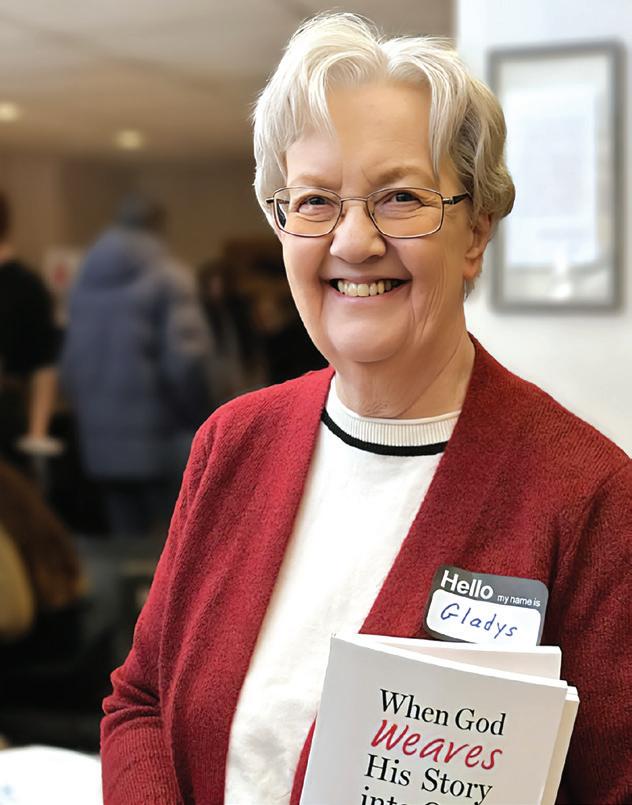
“We often sit beside people in church without really knowing what they’ve lived through,” says Gladys Thompson, Connecting Through Life Stories co-ordinator at Oshawa Temple, Ont. “When they share their story, there’s more understanding, compassion and sometimes even healing.”
As the Apostle Paul wrote in 2 Corinthians 1:3-4 , the comfort we receive from God becomes comfort we can offer others. That’s why Thompson felt called to develop a new ministry at the corps to help people share their testimonies, resulting in the compilation of a new book, When God Weaves His Story into Ours.
“Everyone has a story worth telling. You don’t need a dramatic testimony or a perfect life for God to use you. Your faith journey has value—to both God and others,” says Thompson as she shares more about this unique ministry with Salvationist staff writer Abbigail Oliver.
What inspired this book? When and how did you decide to put it together?
Gladys Thompson: The idea goes back to when my mother passed away in 2006. She was almost 95, and she’d often told us stories about God’s faithfulness through hard seasons, especially during the Great Depression. We always hoped she’d write her memoirs, but she never did. After she died, we found a few slips of paper where she’d tried to start. That experience stayed with me—the realization that so many seniors leave this world with their stories still inside them, often because they don’t know how to record them.
With a background in communications, I have had the opportunity to help publish stories from retired international workers, and those pieces reminded me how powerful and encouraging personal testimonies can be. When I retired and settled in Oshawa, I talked with the officer at that time about how I might serve, and that conversation became the starting point for the Connecting Through Life Stories initiative.
I began by teaching a small memoirwriting group, and as I listened to the stories people were writing, it became clear that many of them deserved to be shared with a broader audience.
Who was involved in the making of When God Weaves His Story into Ours?
GT: It was a team effort. The contributors include both first-time writers and those who have been published previously. All of them are members of our congregation, all from different backgrounds and of all ages.
Because the book was published under the corps’ name, I worked closely with our corps officer, Captain Justin Gleadall, who served as my main consultant. I invited people who were interested in writing and
supported those who needed help shaping their stories. I did an initial edit on each piece before submitting everything to the publisher.
What can readers expect to find inside?
GT: We want readers to feel encouraged. Each story shows God at work in everyday lives, often in ways people don’t realize until they look back. As readers take in these experiences, we pray they’ll notice the ways God has been present in their own journeys, too. We also pray for readers who aren’t Christians, that the honesty and hope in these pages spark curiosity and a desire to explore faith and discover what a relationship with Christ could mean for them.
These stories are relatable; they could happen to any one of us—accidents, navigating dementia, illness, family circumstances and more. By reading them, others will hopefully see that God wants to be part of their story, too, if they let him. Writing a chapter in a book or an article for Salvationist.ca is one way to share our God-stories, but there are others as well, either publicly, in a church or community group, or privately with friends.
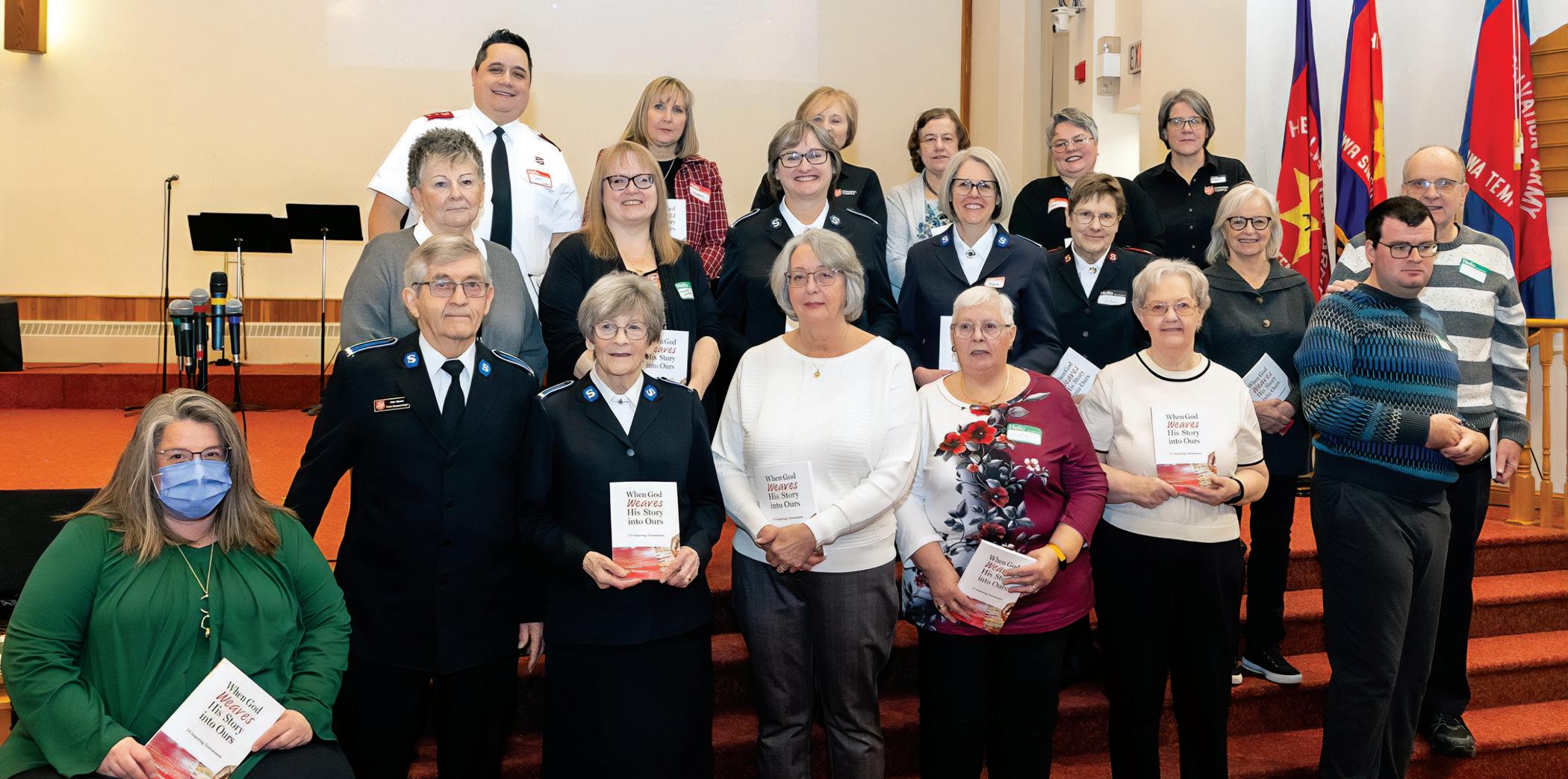
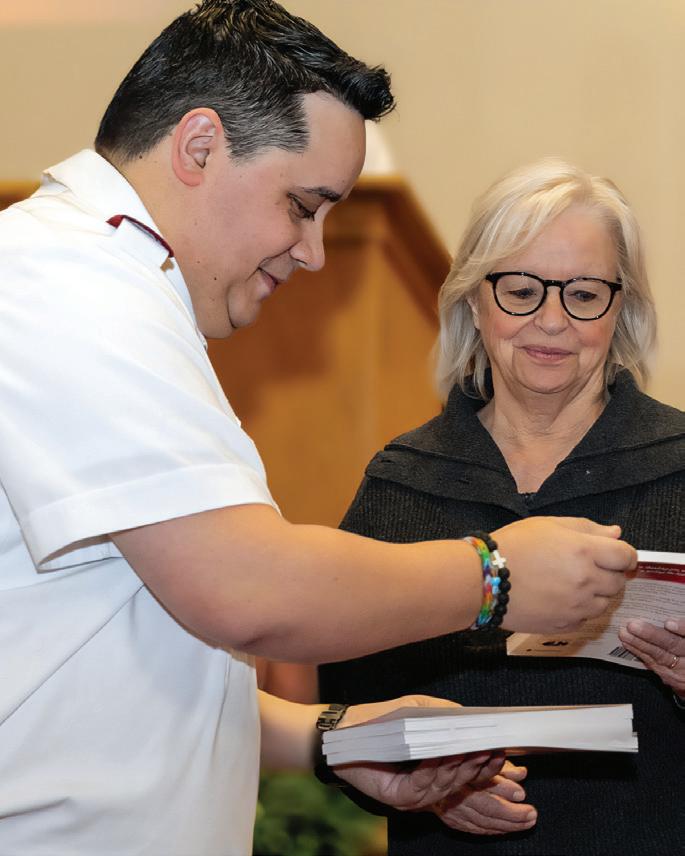
(Above) Representative authors who contributed to When God Weaves His Story into Ours are presented with signed copies at the book launch (Inset) Gladys Thompson, compiler
Photos: Steve Nelson
Photo:CourtesyofKathy Cooper
Can you tell me more about the Connecting Through Life Stories ministry generally?
GT: Christian memoir-writing workshops are where it all began. Over 28 lessons, we walk through remembering, reflecting and writing. The course covers the kinds of stories people can share and practical tools for organizing their memories. Accountability and group interaction have been a real source of encouragement for those who have been taking part.
The book, When God Weaves His Story into Ours, grew naturally out of these workshops. It now serves as an example of what other groups can do—whether that’s publishing a book, creating a church booklet or submitting stories to a magazine.
The next part of the ministry involves a participant’s manual and facilitator’s guide, which I’m now finalizing. The goal is to make it easier for other churches or small groups to offer their own memoir-writing sessions, using material they can adapt to their context.
As this ministry expands, we’re also forming a project committee to support various ways people can share their stories. Not everyone is comfortable writing, so we’re exploring other formats—podcasts, conversations, public speaking, video testimonies and more. We’ve purchased recording equipment and plan to begin producing podcast episodes soon, and we also plan to record video testimonies.
From your perspective, why is storytelling so important?
GT: It matters because it’s one of the ways God repeatedly asks us to reflect on and pass on our faith. When we take time to reflect on our lives, we start to see God’s fingerprints more clearly—the moments he carried, guided or prepared us for what came next. That kind of reflection helps us to grow closer to him.
And for those who are not Christians, honest stories of God’s work can spark curiosity. Testimonies have a way of opening doors—they invite people to wonder what God might do in their own lives.
Sharing our stories also preserves our history and helps our descendants better appreciate what life was like for us. When we talk about the homes we grew up in, how we handled illness, how we travelled, or how our families coped during hard times, we give our children and grandchildren a living picture of where they come from.
What would you say to someone who is hesitant about sharing their story, or who thinks their story might be unimportant?
GT: I know how that feels! When God told me to write about my divorce, I struggled with the same question: Who would care about what I had to say? It took a long time, but eventually I did write and simply prayed that God would use it however he wanted, even if it helped only one person. The feedback I received was overwhelming. If God tells you to share your story, just do it, and leave the results to him. He has a way of turning our stories into encouragement for someone else. Your story might be exactly what someone else is waiting to hear.
For someone who might feel stirred to reflect on their own journey and tell their story, what are the next steps?
GT: The first step is simply to pray about it. Ask God what he wants you to do with your story and trust him to guide you. From there, start exploring some basic resources on how to share a testimony or write a memoir. You don’t need to be a polished writer or speaker—you just need to be honest. Tell the truth about what you’ve lived through, even the hard parts. Own your mistakes, talk about what you learned, and share how God met you along the way. Reflect on your story so it’s fresh in your mind when God opens the door for you to share it.
Before you share anything, pray again. Ask God to use your experience to encourage someone else and then leave the results in his hands
“WHEN
WE TAKE TIME TO REFLECT ON OUR
LIVES, WE START TO SEE GOD’S FINGERPRINTS MORE CLEARLY—THE MOMENTS HE CARRIED, GUIDED OR PREPARED US FOR WHAT CAME NEXT. THAT KIND OF REFLECTION HELPS US TO GROW CLOSER TO HIM.”
—GLADYS THOMPSON
When God Weaves His Story into Ours is available in paperback, hardcover and as an e-book. Visit saoshawa.ca/book to learn more.
Read “I’m Still Me” by Linda Leigh, a story from When God Weaves His Story into Ours, on page 12 of the May/June issue of Faith & Friends.
Cpt Justin Gleadall presents Beth Julien, author, with her copy of the book
ON DECK
Whendisaster strikes, The Salvation Army’s Red Shield is a recognized symbol of hope and support in communities across Canada and Bermuda.
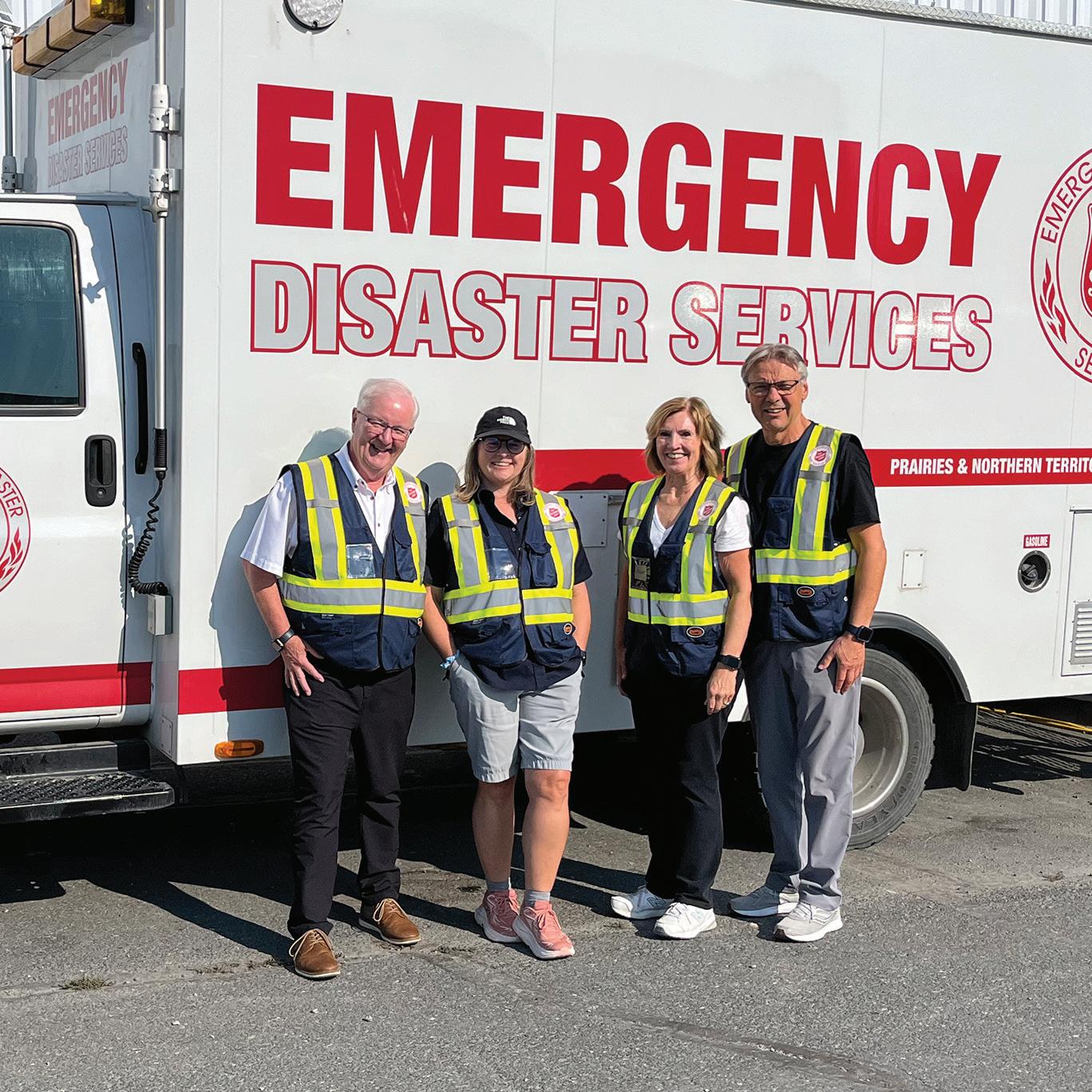
Our emergency disaster services (EDS) responds to emergencies of all scopes and sizes, from local fires to large-scale natural disasters. Teams respond to the immediate needs of communities, while grounding their work in emotional and spiritual care and the hope of Jesus Christ.
Networks of EDS personnel are situated from coast to coast, ready to mobilize at a moment’s notice. This response relies on preparation and training of volunteers, organized leadership and a wide range of resources, from a fleet of emergency vehicles to basic supplies.
And in a territory as vast and diverse as Canada and Bermuda, these operations vary by division, shaped entirely by the geography, climate and unique needs
WHAT DOES EDS RESPOND TO?
Local fires, power outages, food insecurity, extreme heat and cold, floods, wildfires, hurricanes, tsunamis, earthquakes and more.
A behind-the-scenes look at emergency disaster services in Canada and Bermuda.
of local regions. Here’s a behind-thescenes look at how it all comes together to support communities in the face of disaster.
HOW EDS OPERATES
There are more than 100 emergency disaster services teams in Canada and Bermuda. Each division has an department, and many ministry units have their own teams that operate street ministries and who can quickly mobilize for a local emergency.
As of 2026, all divisional EDS departments report to THQ, helping to standardize operations across the territory while allowing each division to respond appropriately to local needs, which vary by region. For example, typically the West Coast has a regular wildfire sea son, Atlantic Canada expe riences more hurricanes and winter storms, and extreme heat and cold affect communities nationwide.
BY ABBIGAIL OLIVER
some regions, such as the Prairies, most responses are remote. Others, such as the Atlantic Division, rely on existing infrastructure and a network of churches ready to provide space and volunteers during a response.”
“Each division is shaped by its landscape,” says Ian Pollard, divisional EDS director for British Columbia. “In
Volunteers from the Prairies and Northern Territories Div respond to wildfires in Yellowknife, N.W.T.
Photo:Major Tony Brushett
ACTIVATION
Emergency disaster services follows a bottom-up approach. Most calls come from the local level—whether it’s a municipal government, a fire department or a ministry unit’s EDS team that has expended its resources and needs divisional assistance.
“An MOU is a memorandum of understanding, and we have lots of them in place across the country between municipalities and our teams,” explains Amy Timperley, territorial manager of mitigation, preparedness and planning. “We are generally called out by the local fire department, city or province.”
“We don’t self-deploy, but we will reach out if we know something is happening,” adds Adam Marshall, EDS director for the Ontario Division. “We remind them that we’re here and to let us know if they need us.”
This year, EDS is implementing a 1-800 number to make call-outs easier. It will be an around-the-clock answering service for municipalities and provincial governments to reach out when they need disaster support. Once the call is received, information will be collected and teams will begin to mobilize.
MOBILIZATION
The first step in a deployment is to confirm the details—the location, size and scope of the emergency, as well as the immediate needs of those involved. These needs can, and often do, change over time as the emergency develops.
Once the scope of the emergency is determined, the initial priorities are to set up an incident command system (ICS),
and ensure teams, supplies and equipment are available and set up. Volunteers are called upon based on location, training, skill and readiness.
“In Ontario, for example, we have an instant messenger group chat for volunteers in every region, and it’s broken down based on their catchment areas,” explains Marshall. “We also have lists of qualifications, strengths and education. So, if I have a volunteer that happens to be a mechanic, I’m going to send them out in our truck.”
PREPAREDNESS AND TRAINING
The Canada and Bermuda Territory has a national training program for EDS volunteers. It includes basic courses to become an EDS worker, as well as more advanced training options for those looking to specialize or be deployed internationally. In addition to academic training, EDS workers must have hands-on experience with the vehicles and equipment used. This may include participating in practice exercises or street ministry.
and first responders; offering emotional and spiritual care; providing emergency clothing, hygiene kits and cleaning supplies; distributing gift cards for essential items; and responding to food insecurity by delivering perishable and nonperishable food to communities.
Days are long, and volunteers can be working for eight to 12 hours each day.
“Volunteer accommodations can range from a trailer, on a cot at a recreation centre or school gym, or at a local hotel,” says Pollard.
“In the Prairies and Northern Territories, there’s a two-week readiness system with pre-made groups that cycle out based on availability,” adds Craig Broadhurst, EDS specialist for the Prairies and Northern Territories Division. “If an emergency were to happen during their two-week readiness period, they would be called upon. After that period, it cycles out to the next group. That way when something happens, we have our volunteer list ready and we can just say, ‘Let’s go.’ ”
ON THE GROUND
Once teams are mobilized, workers load up supplies into the emergency vehicles and drive to the assigned location.
“We are usually set up at a nearby but safe area just outside a disaster site,” says Pollard. “We have several four-wheeldrive canteen trucks and vehicles that can respond to isolated areas.”
During a large-scale emergency response, days begin with a short briefing, and the emotional and spiritual care (ESC) officer will pray. Some of the main services involve feeding evacuees
“Here in the Prairies and Northern Territories, we’re responding to a lot of remote locations,” explains Broadhurst. “We cook out of kitchen canteens set up in the parking lots of community arenas or churches. We’re up at six in the morning making breakfast, cooking, cleaning and prepping for the next day.”
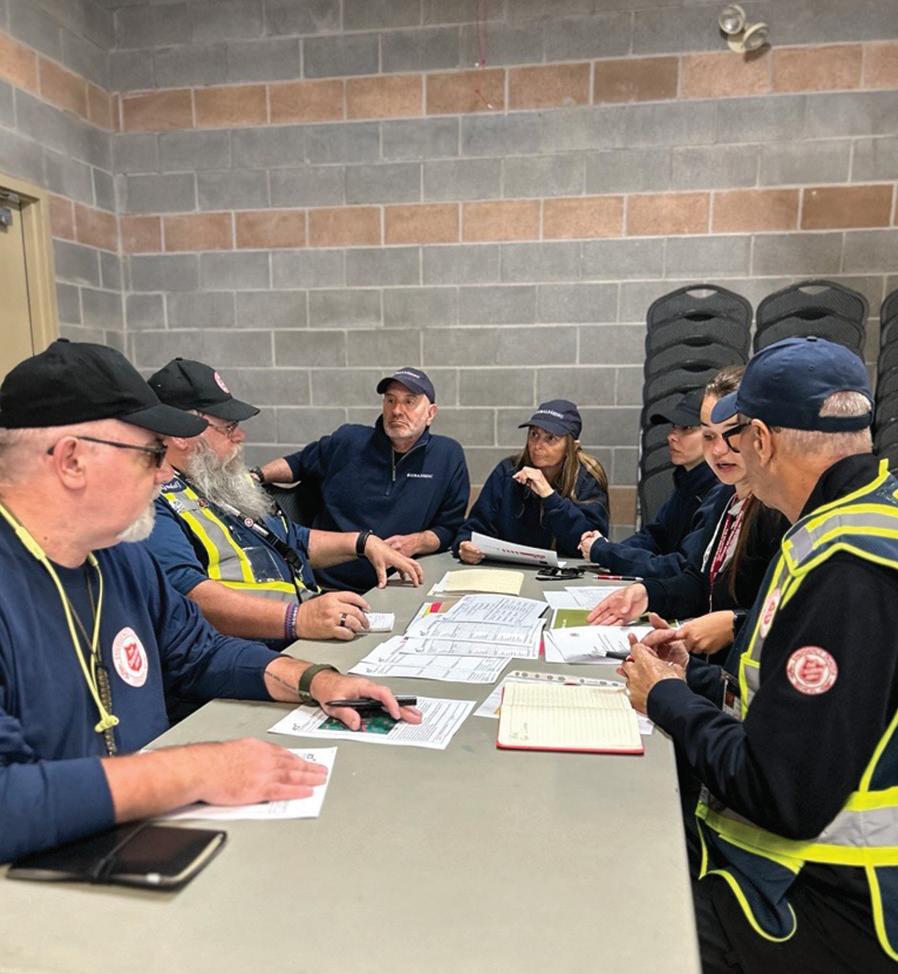
An incident management team meeting during a training exercise in Napanee, Ont.
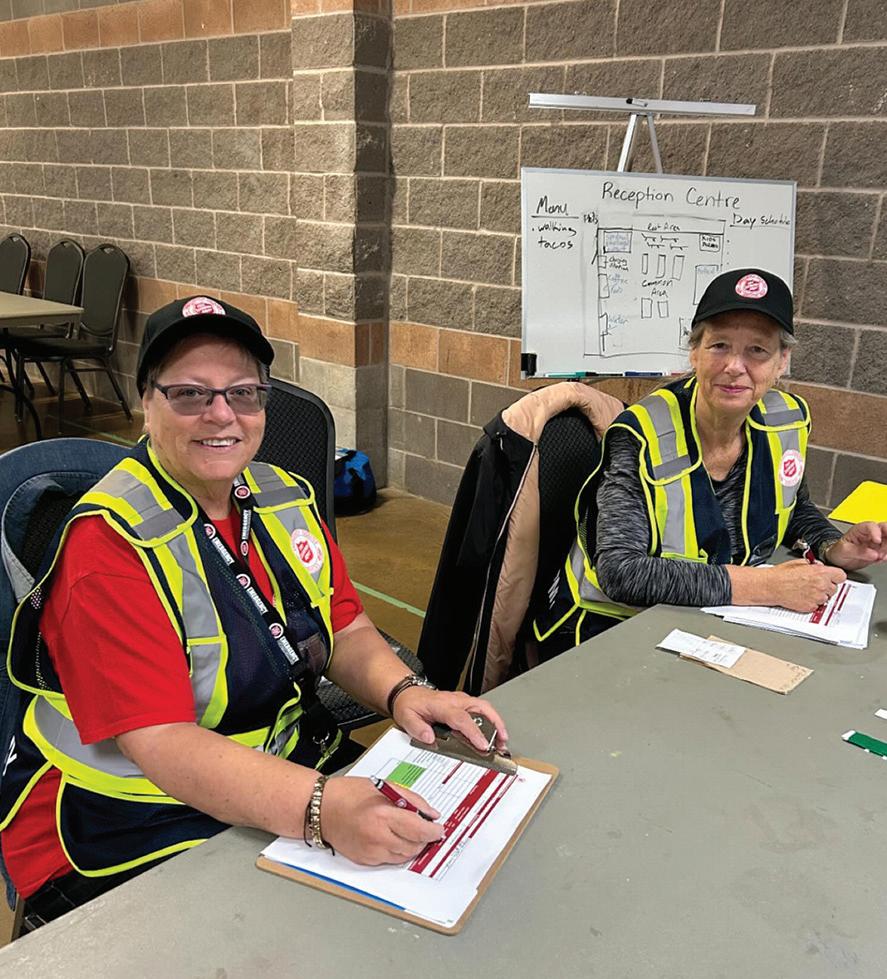
Volunteers check in evacuees at a reception centre during a training exercise in Ontario
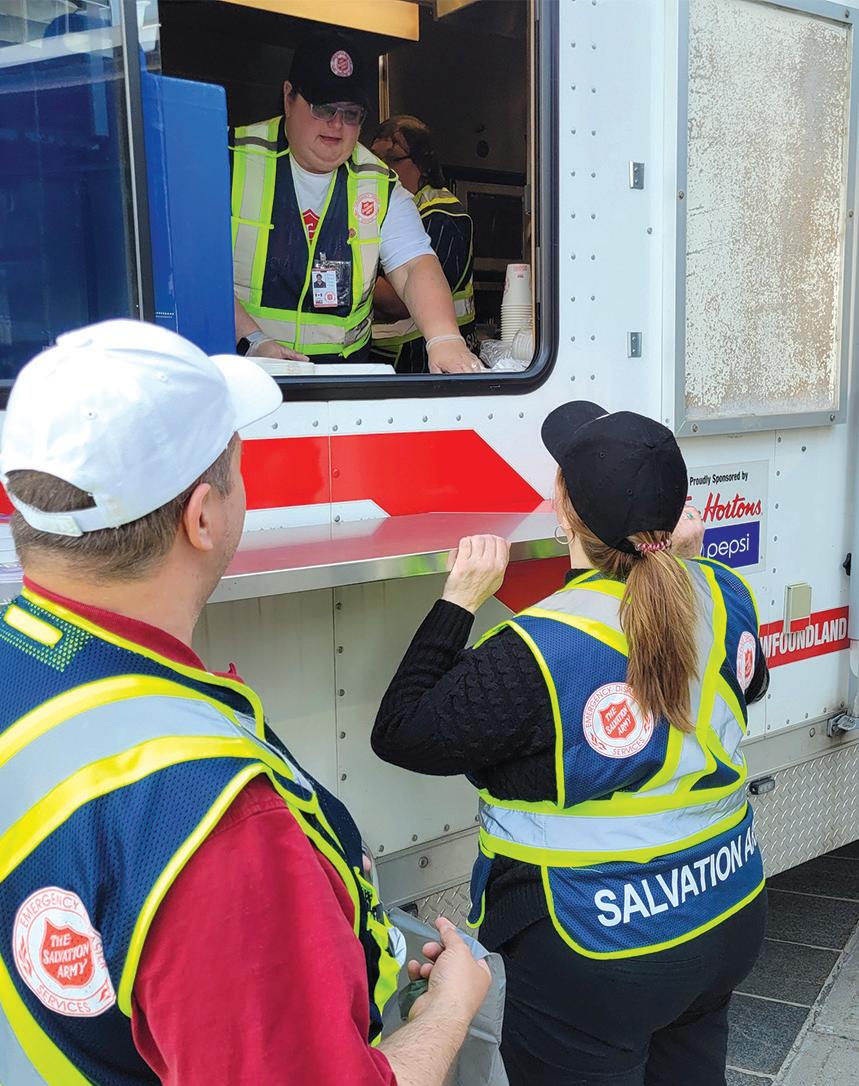
EDS volunteers engage in street ministry in St. John’s, N.L.
MOBILIZATION
ON THE GROUND
Photo: Taylor Simmons
Photo: Taylor Simmons
Photo: Bruce Cluett
At the end of the day, volunteers will come together for a debrief and to report statistics. Each EDS truck has a QR code in the windshield that volunteers can scan to enter data, such as supplies distributed and number of individuals served that day. Situation reports are then provided to leadership.
“No two disasters are the same,” says Dean Gregory, EDS logistics and ESC specialist for the territory. “Neither are the responses.”
According to Gregory, needs can change rapidly, and on-the-ground teams must be ready to adapt and respond accordingly. For example, EDS was called out to Crowsnest Pass, Alta., to assist with a search and rescue in September 2025. The initial ask was for The Salvation Army to provide a few meals a day for 80 people. Within 24 hours, more rescue workers arrived and suddenly the small response team of three people needed to serve meals to more than 300.
“We were right next to Fernie, B.C., so that’s when we had to reach out to EDS in British Columbia for help,” says Broadhurst. “Emergencies can develop very quickly.”
RESOURCES
“The benefit of being part of this organization is the national resources that come with it,” explains Marshall. “Every province has its own catalogue of a wide variety of resources.”
Through grants, operational budgets and donations, EDS has access to a fleet of vehicles (see sidebar), as well as communications trailers, portable towable generators, tents, field kitchens and more.
THE EDS FLEET
A Salvation Army EDS response may involve the following vehicles: A community response unit (CRU), a mobile canteen for on-the-ground response and distribution of food and other resources
Serving vehicles, such as trucks, vans and SUVs, for volunteer and supplies transportation
Support trailers fitted to provide mobile laundry and washroom facilities during deployment
“We prepare supplies prior to going out, and a lot of that we have set up at warehouses or on-board community response units, but quite often, we end up getting donations,” adds Gregory. “People come out of the woodwork to help in any way they can, and most often that’s through donations—everything from monetary donations to food supplies.”
DEBRIEF
“These events are so hard on people, and it can be exhausting,” says Timperley. “You could be out there for 12 to 14 hours a day, cooking, distributing food, reporting statistics. It can become mentally taxing, so it’s important to have supports in place for volunteers.”
Debriefs take place daily with the responding team and leadership to check how people are feeling, what went well, what could be done differently, and to review volunteers’ emotional, spiritual and physical well-being. If a need is identified, volunteers can access additional counselling through an external assistance program. Emotional and spiritual care officers also routinely connect with on-the-ground volunteers to talk to and pray with them.
A final debrief is done after demobilization, once the response has concluded, and will depend on the length and complexity of the response. “We give people a chance to talk through what they’ve seen and to help process the experience,” says Gregory. “This typically happens within the first 24-48 hours after demobilization. Returning home to normal life after having been out in a disaster can have some challenges. We go back to our houses and families after being around people
who may have lost everything, and that can come with some guilt. We try to walk them through that.”
GIVING HOPE
Emergency disaster services is a growing field, and The Salvation Army is well positioned to provide it. Through churches, thrift stores and social services, the Army already has an established presence in 400 communities across Canada.
“We’re ministering to people and building trust and relationships, not only with the residents, but with the governments and other parties,” says Pollard.
National co-ordination also allows people and resources to be deployed quickly and efficiently.
“We’re a recognizable international organization. We’re able to draw resources from across the division or the country,” says Pollard. “We’ve built trust. People know they can call us at any time, for any emergency, and we will be there.”
What sets The Salvation Army apart from other relief organizations is its foundation of faith. Emergency disaster services provides practical support that not only meets human needs but also shares the love of Jesus Christ—a mission that is especially important during disaster, when people need comfort and hope.
“Emotional care is a big part of what we do—a listening ear, a shoulder to cry on,” says Marshall. “At the same time, we let people know that our motivation behind it all is through the grace of God.”
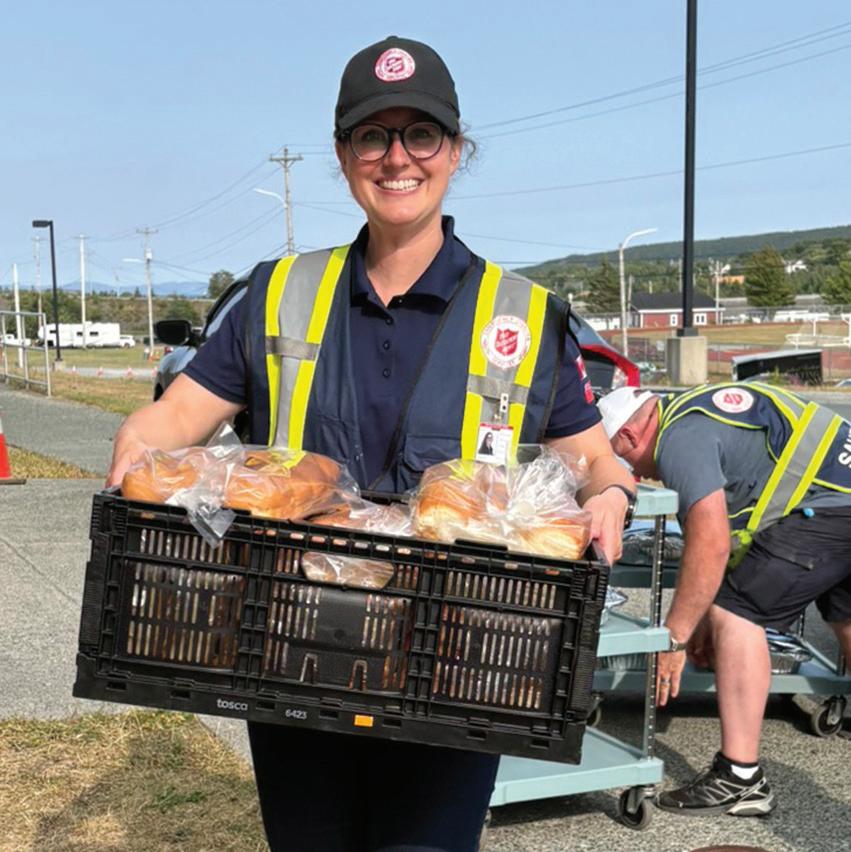
Martina Stephens, EDS specialist, brings in food for wildfire evacuees in Newfoundland and Labrador
Jan Keats, EDS trainer, provides emotional and spiritual care during a wildfire evacuation
GIVING HOPE
Photos: Taylor Simmons
ALL TOGETHER NOW
Community partnerships keep people out of the cold
in Saskatoon.
BY ROGER YENKINS
Wintersin Saskatoon are defined by extremes. Temperatures regularly plunge to -40 C, sometimes lingering for days or weeks at a time. The snow falls, the wind cuts deep and survival becomes the priority. This is a reality we cannot change. What we can change, however, is how we respond to another crisis that has gripped our city for years: housing and homelessness.
Saskatoon’s 2025 Point-in-Time Count revealed that 1,931 individuals were experiencing homelessness in our city—an increase of 432 people compared to 2024. Behind every number is a person facing not only the danger of extreme cold, but also the daily weight of poverty, trauma, addiction and isolation. For those without stable shelter, the cold is not just uncomfortable, it is life-threatening.
For more than 100 years, The Salvation Army in Saskatoon has worked to relieve pressure on vulnerable individuals and the systems that support them through Crossroads Residential Services. Our ministry unit operates six core programs year round and, for the past three winters, has launched a seasonal initiative with one clear mandate: to save lives.
St. Mary’s warming centre was created in response to an urgent community need for additional overnight shelter spaces during the harshest months of the year. In partnership with St. Mary’s Parish, a Catholic church, and the Saskatoon Friendship Inn, we opened our doors to provide a safe, warm place for men to escape the cold. Open seven days a week from 6 p.m. to 8 a.m., St. Mary’s offers dignity, compassion and hope.
NEW PARTNERSHIP
This year’s project has been particularly strong, thanks in part to a new partnership with the Saskatoon Trades and Skills Centre ( STSC ). Last summer, STSC
developed a specialized community shelter worker course tailored to our staffing needs. They opened their classrooms, engaged facilitators and offered new hires the opportunity to receive training in 14 key areas before stepping into their roles in November.
As Karen Cederwall, executive director of STSC, shared, the goal was to “ensure the proper staffing levels required of the overnight men’s shelter run by The Salvation Army. While this sounds simplistic, it provided great learning opportunities not only for the STSC participants, many with lived experience who took part in the course, but also for staff and leadership of both agencies as we worked together to realize skills for a stronger community.”
This winter, our staff supported an average of 110-120 men each night. As of March, 969 individuals had accessed the warming centre, representing more than 12,000 visits. These numbers speak to both the scale of the need and the importance of a sustained, co-ordinated response.
PRAYER AND PRESENCE
Support at St. Mary’s extends beyond shelter. Thanks to a partnership with the Saskatoon Friendship Inn, guests receive supper and breakfast. Volunteers organized by St. Mary’s mission and outreach ministry regularly join us to host movie nights, facilitate conversations and simply sit and listen. Many offer prayer. All offer presence.
Connection is one of the most pressing needs among those we serve. Our seasonal project survey last year revealed that meaningful relationships ranked among the top needs expressed by guests. Many struggle with profound loneliness and a deep lack of trust. Each evening, our prayer and our purpose are the same: that every person who walks through our doors feels welcomed, supported and valued.
Behind the scenes, a dedicated leadership team ensures the project’s strength and sustainability. Our lead chaplain and modern slavery and human trafficking co-ordinator provide essential support to front-line staff, organizing debrief sessions to process the emotional weight of this work. Our program co-ordinator and shelter manager maintain a consistent on-site presence, ensuring that goals are met and standards upheld. From finance and property management to executive leadership and administrative support, the entire Crossroads team is mobilized around one vision: to share hope wherever there is hardship.
CRITICAL CONVERSATIONS
The work at St. Mary’s has inspired our broader community. It has been covered by local media, discussed at city council and has opened doors for The Salvation Army to engage with multiple levels of government and community stakeholders. These conversations are critical. If we are to address homelessness in a meaningful way, we must continue building systems that respond to poverty, addiction, mental-health challenges and the lack of affordable housing.
Winter in Saskatoon will always be cold, but as a community, we can ensure that compassion is stronger. Through partnership and unwavering commitment, St. Mary’s warming centre stands as a testament to what is possible when we come together to care for one another.
ROGER YENKINS is the director of housing services for Saskatoon Community Services.
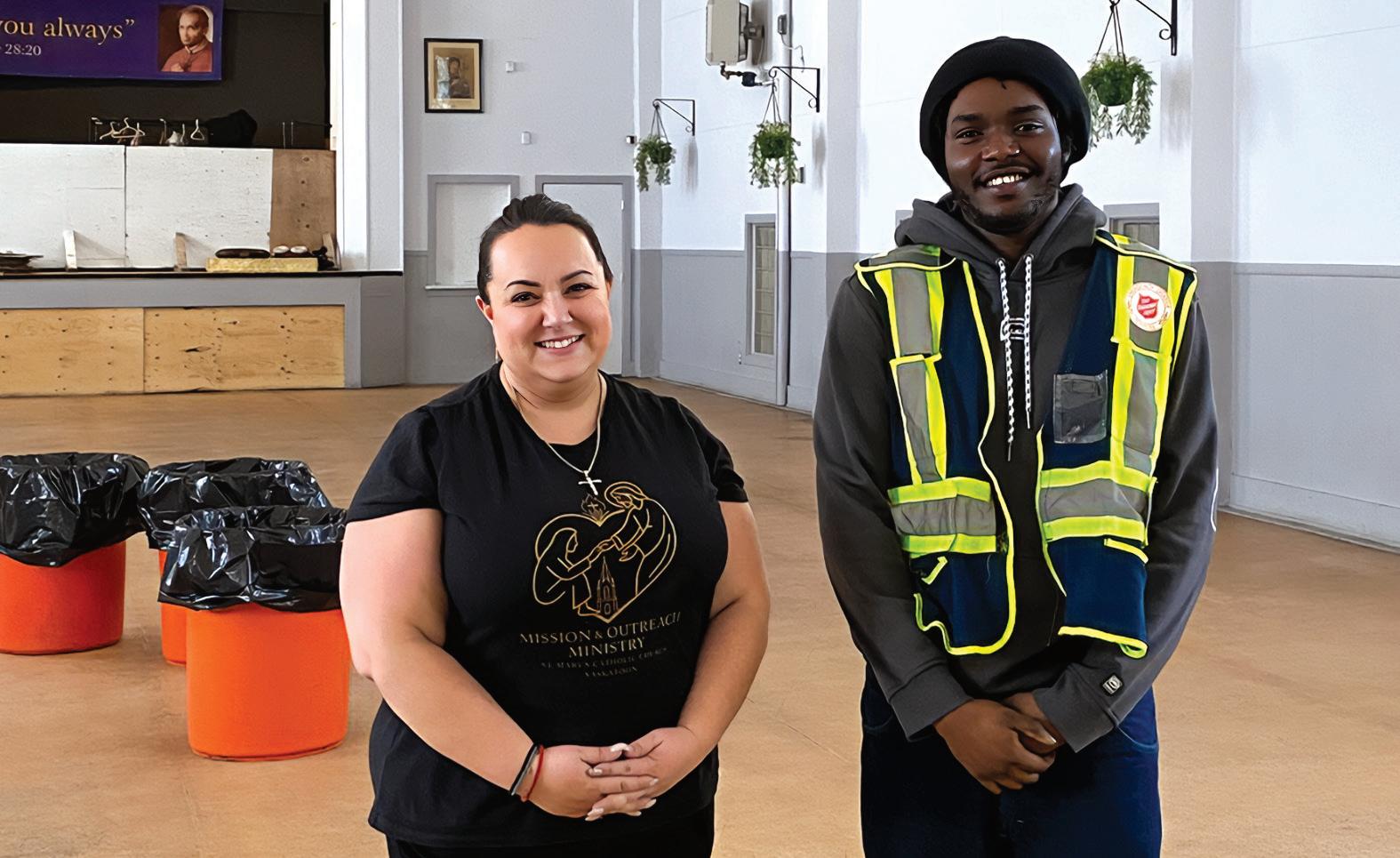
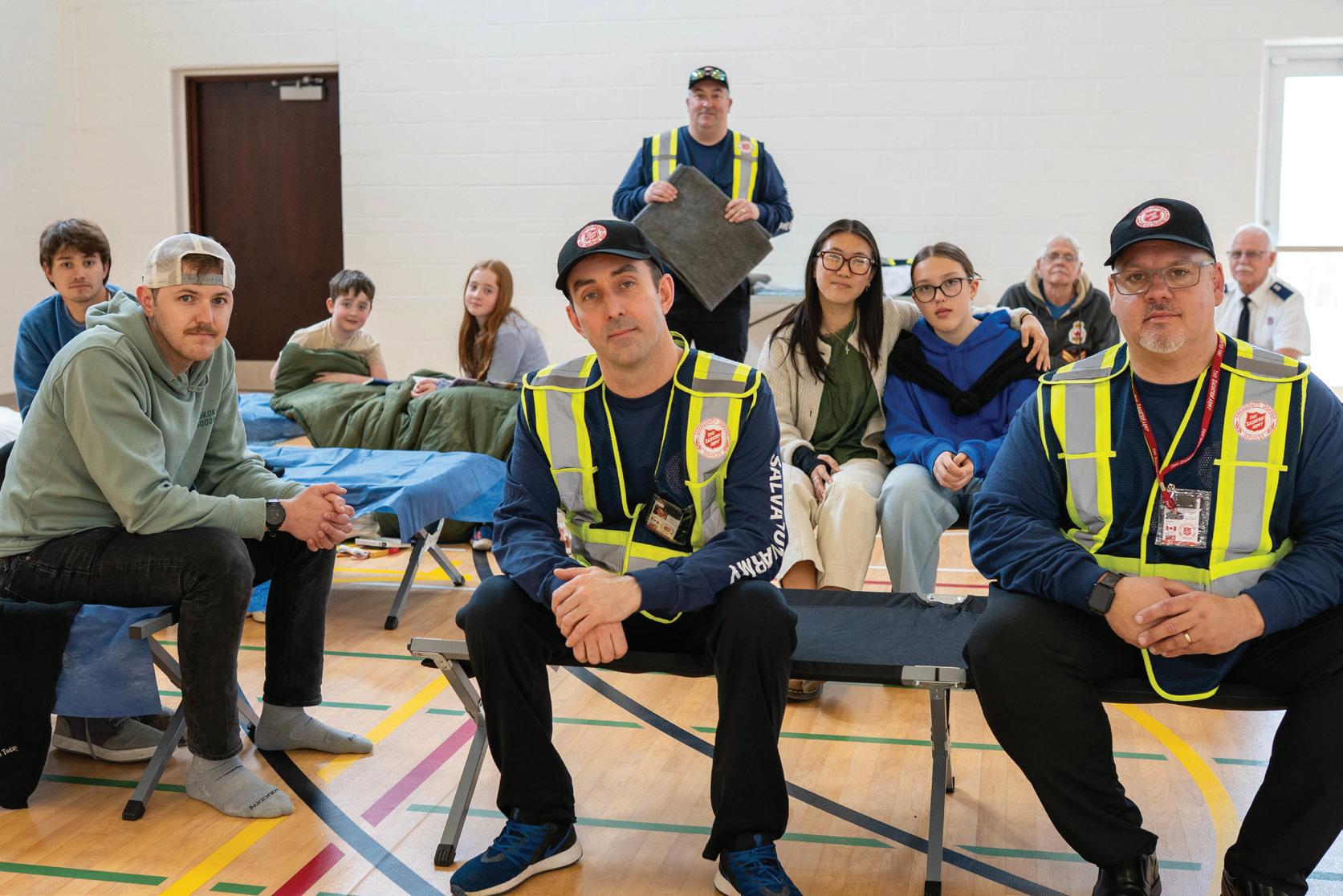
The Salvation Army in Saskatoon has partnered with St. Mary’s Parish, a Catholic church, and the Saskatoon Friendship Inn, to open a warming centre in the winter. From left, Jennifer Nunes, St. Mary’s outreach co-ordinator, and Isaac Kumi, project lead
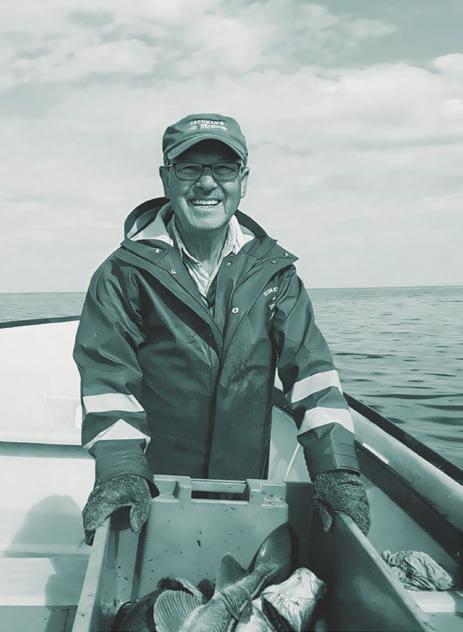
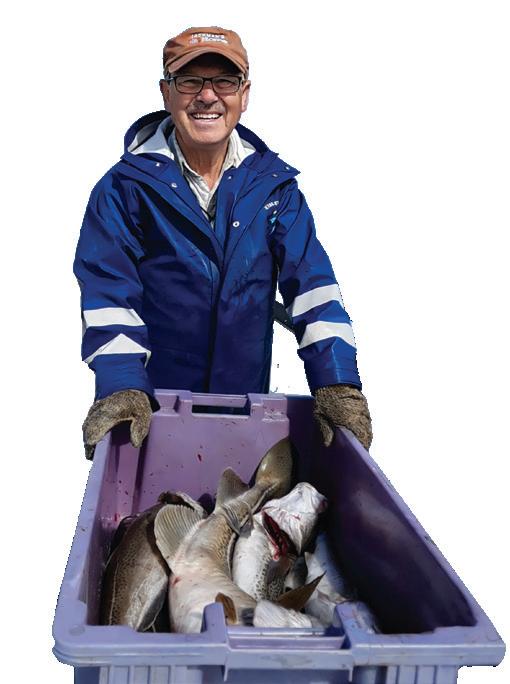
Asa fisherman for most of his life, Major Edward Canning remembers coming in, in the evenings, when he would be up at the bow of the boat and he would look into the sky.
“I felt that deep-down feeling,” he says. “I could identify with the disciples, when Jesus called them from their boats. I thought that God was calling me. I also felt that pull, that there was something more that God had for me.”
But when Major Canning was born, the midwife passed him to his mother, saying, “You have a boy who will never drown.” The prophecy was proven true on many occasions because he came close to drowning several times in the frigid Atlantic waters off Newfoundland and Labrador.
“I sure tried to prove that woman wrong!”
SWIMMING IN CIRCLES
“I don’t know how many times I’ve been in the water,” laughs Major Canning.
Once, he was fishing alone and was thrown out of his boat. He floundered helplessly about in his rain gear as the boat, now pilotless, circled around him. Try as he might, it stayed out of reach.
“I can’t remember taking off my rubber jacket, but I remember the taste of the salt water when I fell in,” he says.
Major Canning had to divest himself of his gear and clothes and then swim 60 metres to land, clad only in his underwear.
“When I took my clothes off, the tide took them and shot them right to the bottom, but I stayed on the surface and I survived that day.”
He swam to shore, wondering how he would get home. As he walked across the beach, he found that his boat had run aground a short distance away. He clambered aboard and sailed home.
NO LOOKING BACK
From a fisherman to a fisher of men.
BY KEN RAMSTEAD
But that wasn’t the only time he was in trouble in the water.
SAVED FROM THE ICE
One late spring day, Major Canning and a friend were fishing on an ice-covered pond.
“He was close to the shore and I was off a little ways. All of a sudden, the ice gave way and I fell through.”
Instinctively, Major Canning spread out his hands to keep from slipping under, and his quick-thinking friend pulled him out.
“If he hadn’t been there, I would have went under the ice.”
BABY’S DAY OUT
When Major Canning was very young, a large boat was anchored not too far out from where his family lived, tethered by a thick rope.
“At the end of this particular day, they couldn’t find me,” he says.
The family frantically searched for the boy. He was eventually found sleeping in the tiller section of the large boat’s stern.
“The only thing my family could figure was that I crawled across the rope and got up aboard the boat.
“I was four years old! I don’t remember a thing about it, but my mother used to tell that story all the time.
“People would say, ‘Well, Canning fell overboard again,’ like it had happened so many times that it was taken for granted.”
LIGHTER THAN AIR
Major Canning was a professional fisherman for about 20 years, but he had always been a person of faith.
“I was probably 14 years old when I accepted Christ. It’s an experience I will never forget,” he says.
He and his family lived in the small community of Bridgeport, N.L., when he had his moment of conversion.
“I remember going to the altar and kneeling, making a confession of my sins.
When I stood up, it was like I was floating on air, as if I was as light as a feather.
“That experience never left me. From that moment more than 50 years ago right up until now, there has been no questioning or doubting it.”
ONE LAST RIDE
As much as he enjoyed fishing, Major Canning always felt that there was something more.
As the corps sergeant-major, he regularly attended the candidates seminar in St. John’s, N.L.
“Every time I attended, I would tie up my boat for the weekend and look back and wonder if she would be OK,” he says, “just thinking about when I would get back to the fishing.”
But in 1998, something different happened.
“I can remember that morning, I went fishing before I left for the seminar. I tied my boat up, and as I walked away from the pier, I never looked back at the boat. Other times I would, but not on this particular day. I just walked away and I went off to the seminar, and it was then that I finally made the commitment, that I was going to be a Salvation Army officer.”
YELLOW, RED AND BLUE
Now retired, Major Canning has always felt that as a Salvation Army officer, he was simply doing a different type of fishing.
“My mission statement was to meet people where they are and lead them where they ought to be,” he smiles.
“I’m a Salvationist, you know: I’m yellow, red and blue. I’m born and bred Salvation Army, and it runs right through me. I respect The Salvation Army to the highest degree.
“It’s been an amazing journey,” he concludes. “At every corps where my wife and I served, we pitched our tent and rolled up our sleeves and went to work and we enjoyed it to the full. There was no place I’d rather be.”
I AM THE GATE
Jesus invites us to a space of relationship, rest and abundance.
BY MAJOR CORINNE CAMERON
Iwentfor a picnic with my parents when we were living in England. En route to Cornwall, we saw signs for picnic tables and pulled to the side of the road to eat our lunch, in what appeared to be a public park. We did not know we were in the middle of a farmer’s field.
My mom laid out a tablecloth, cutlery, plates and sandwiches. As we were eating, a herd of sheep wandered by. They meandered to our table and promptly began eating not only our sandwiches but also our tablecloth. We had entered a sheep pen!
Jesus’ third “I am” statement, in which he names himself “the gate” (see John 10:9), invites us to consider sheep pens—not physical ones, but spaces of rest in our lives that are tended by Jesus our shepherd and guarded by Jesus our gate.
To truly understand this name, we need to pay attention to its’ context. Jesus gives this name within a discourse following his sixth sign, or miracle—one of seven in the Gospel of John—the healing of the man born blind. The religious leaders are threatened by this healing. They grill the man, condemn him and expel him from the synagogue. Jesus hears about the religious leaders’ negative reactions and challenges them, naming their spiritual blindness (see John 9:39). Within this conversation, Jesus explains how their standards and judgments are creating barriers that exclude people from entering the rest and abundance of God. He goes so far as to call the leaders thieves and bandits, stealing rest and abundance from their people (see John 10:1). Jesus indicts the leaders, explaining how they make it challenging for individuals to freely dwell in their faith community.
We do not live with religious leaders who openly require us to denounce Jesus to remain in our communities of faith, yet we do face thieves and bandits in our lives that drain us and steal our peace. Some of these are external pressures, and others are our own internal expectations.
External thieves include disturbing news reports, challenges with family members or financial insecurity. Sometimes they are related to the many demands of our lives in ministry, such as balancing a budget and making challenging cost-saving decisions; parsing out our
time to increase our effectiveness and efficiency; and toggling responsibilities that require pivoting skills at a moment’s notice.
We also have internal thieves and bandits that steal our equanimity and sense of abundance. Many of us struggle with unrealistic expectations; falling prey to comparison and competition traps; isolation or loneliness; performance orientation; or not feeling free to be our authentic selves.
The good news of Jesus is that our thieves and bandits do not have to have the last word. When Jesus appears in our lives as our gate, we are invited into a space of relationship, rest and abundance. Jesus as our gate provides a door through which we may withdraw from the many demands of our lives to find a space of nourishment and care.
In the ancient world, sheep pens did not have physical gates—the shepherd was the gate. Once the sheep settled, the shepherd lay down at the opening, offering his body as protection from prowling wolves and thieving bandits. Each morning, the shepherd rose and led his sheep out into the fields. In this way, the gate was permeable; the sheep did not remain locked away but moved from their rest back into the fields.
Jesus’ calling into rest involves a rhythm of withdrawal and connection, for the sheep who leave the pen are invited to reach out to other sheep, inviting them into the fold (see John 10:16).
There are times when we withdraw in an attempt to recover from hurt. We hem ourselves in for self-protection, yet this self-hemming is not fed by Jesus. The efforts we make to be our own gates result in an experience of exhaustion rather than rest, and scarcity rather than abundance.
The invitation to encounter Jesus as our gate is to surrender our care into Jesus’ trusted hands, and in this surrender discover spaces of “mystic grace” (see SASB 777).
Exploring the “I am” statements of Jesus in the Gospel of John.
PRAYER PRACTICE
Listen to the Canadian Staff Songsters’ recording ’Mid All the Traffic (SASB 777) at salvationist.ca/songsters.
MAJOR CORINNE CAMERON is the corps officer at Yorkminster Citadel in Toronto.
While listening, picture yourself entering a space of rest with Jesus. Name the worries and situations that are stealing your peace. As these are named, release them and feel Jesus’ peace enter your heart.
LIFE TOGETHER
What the Blue Jays’ playoff run taught me about Christian community.
BY CAPTAIN LAURA VAN SCHAICK
It was a Saturday evening, and October playoff baseball had inched its way into November. The Toronto Blue Jays had made their way to game seven of the 2025 World Series, and my family and I sat huddled around our TV, mirroring hundreds of thousands of households across Canada. After a charged and turbulent playoff run, including an 18-inning marathon of a game just a few nights prior, it all came down to this, winner take all.
I followed the play-by-play of the official TV broadcasters, but also the (arguably more absorbing) running commentary on my Facebook news feed. When Bo Bichette hit his three-run homer early in the game, we all collectively cheered—high-fives in the living room, celebratory emojis in the
COULD WE HAVE WATCHED THE BLUE JAYS GAMES BY OURSELVES?
comments section. When the Los Angeles Dodgers rallied, we collectively held our breath. And when the Blue Jays were defeated in extra innings, we shouldered the weight of disappointment together.
While it wasn’t the result we had hoped for, the Blue Jays playoff run brought my family, our community and our country together in a way that little else could.
Throughout the playoffs, rather than siloing ourselves in various corners of the house, my family congregated together most evenings to cheer on our team. When I found myself at a ministry conference during the same time frame, my colleagues similarly came together to enjoy the game after a day of sessions, rather than retreat to our rooms. And suddenly, complete strangers had something positive to chat about on the bus or in line at the grocery store—and did we ever!
Could we have watched the Blue Jays games by ourselves? Sure. But there was something about watching them together that made the experience that much more special. Without acknowledging it, we were each reminded of the beauty of shared experience.
It’s the same with our Christian experience.
In the days following the COVID19 pandemic, increasing numbers of Christians became comfortable practising their faith on their own and disillusioned with corporate worship. But when we neglect meeting together as Christians, we risk missing out on fully experiencing all that God wants for us.
While God can surely meet us in moments of solitude, it should not be the only way we meet with him. Our three-inone God designed for us to experience him in community, in the company of others, to share in our worship, exploration and discovery of him.
Biblical scholar and author Carmen Joy Imes explores this truth in her book Becoming God’s Family: Why the Church Still Matters. Reflecting on a family member’s desire to go it alone on his faith journey, she writes, “Perhaps we’d rather … embark on a personal quest for fulfilment. Instead, God calls us to be with and for each other. He invites us to serve and be served, to let our lives become entangled in healthy ways with other followers of Jesus.”
The New Testament authors use various metaphors to describe the church: we are the body of Christ (see 1 Corinthians 12), living stones built into a temple (see 1 Peter 2:5), members of God’s family and citizens of an alternative kingdom (see Ephesians 2:19). In each of these illustrations, there is an emphasis on individuals coming together to become something greater. This is God’s vision for his people.
When we sing together, it brings unity of mind and heart. Studies have even shown that group singing significantly reduces stress and boosts mood and emotional resilience.
When we study the Bible together, we glean shared wisdom from perspectives and insights offered around the table. Iron sharpens iron, and even contradictory viewpoints can sharpen our faith as we learn to coexist in loving relationships.
And when we pray together, we experience mutual support and comfort, knowing that there are others lifting our joys and our needs to God. Burdens are lifted as we are reminded that we are not going through life’s struggles alone.
As Imes reminds us, “When we stop meeting together, we miss out on the possibility of the presence of God mediated in part by our brothers and sisters in Christ.”
Just as our excitement around the Blue Jays’ playoff run was heightened by experiencing it in community, so, too, is our awareness of God’s presence heightened when we come together to worship, study, pray and live life together.
CAPTAIN LAURA VAN SCHAICK
is the corps officer at Barrhaven Church in Ottawa, and the territorial gender equity officer.
Cpt Laura Van Schaick and her family cheer on the Blue Jays at a game
A TALE OF THREE ARMIES
It’s not about military might. It’s about obedience.
BY LT-COLONEL KEITH PIKE
Iama history buff. When my wife, Shona, and I lived in London, England, I could spend hours wandering the city and soaking in its rich history. And if you spend time in Europe, you soon come face-to-face with memorials to the horrors of war and all those whose lives were affected by it. There is so much to learn beyond the battles fought or the final outcome. The stories behind the story paint a deeper picture of humanity at its worst and best.
The Old Testament tells the tale of two armies: one under the command of Joshua (see Joshua 8) and one commanded by Gideon (see Judges 7). Joshua’s army consisted of 30,000 warriors, while Gideon commanded just 300. Now, at first glance, you might think these stories stand in contrast to one another, but they remind us of a consistent biblical truth: God accomplishes his purposes through obedience, not numerical advantage.
In Joshua’s campaign, God instructed Joshua to select 30,000 mighty warriors to execute a complex military manoeuvre. God used Israel’s large and courageous army as an instrument to bring justice and claim victory. But God reminds Joshua that the victory was achieved not because of the size of their army, but because of their obedience and God’s promise.
The second army is less than one percent of Joshua’s army. By God’s command, Gideon is given just 300 warriors to do battle with the Midianites. Gideon’s army was not outfitted with superior weapons and tactics. Instead, they were given trumpets, torches and jars. This was a powerful reminder to the nation of Israel that their victories came not from their own strength (see Judges 7:2) but through the power of God. The Midianite army panicked, turned on one another and fled—all initiated by the Lord, not military might.
The third army in this story is ours. In 1878, we became known as The Salvation Army. No longer the Christian Mission
with a volunteer force, we became an army created to fight for the “salvation” of the poor and marginalized. Over our history, we have grown to be the largest non-governmental direct provider of social services in Canada. With an army of more than 79,000 volunteers, employees, soldiers and officers, we have become a force for good, giving hope and proclaiming salvation in more than 400 communities across the territory.
THREE STORIES, ONE GOD
Though these stories differ dramatically in numbers, strategy and human involvement, they reveal a consistent theological reality:
1. God is sovereign over outcomes. Whether it’s an army of 30,000, 300 or 79,000, the victory belongs to God. Numbers do not determine success; it is our obedience to God and his leading that will keep his Army marching on.
2. God uses different methods for different purposes. Joshua’s story emphasizes leadership, planning and faithful action. Gideon’s emphasizes humility, dependence
and the elimination of pride. The Salvation Army’s story is one of faithfully following the leading of God to be agents of transformation in the communities where we live. God has lessons for us to learn as we seek to follow him and be faithful to the purposes for which he raised up the Army. Let’s not miss the opportunities to do things differently, to reach out more broadly; to be an Army that is adaptable and innovative to meet the needs we see around us.
3. God calls his people to obedience, not self-reliance. Joshua obeyed detailed tactical instructions. Gideon obeyed an instruction that made no strategic sense. In both cases, obedience positioned them to see God’s power on display. For us, his Army today, we must be obedient to his direction, continually relying on his provision for the work before us.
This tale of three armies reminds us that God accomplishes his purposes through those who walk in obedience to his leading. The Salvation Army today is not the same Army it was when my parents served. In obedience to God’s leading, we have changed as the world around us has changed.
The days ahead hold new and challenging realities for us. We will be stretched and tested in ways we never imagined before. Obedience is our path, and the God who created us, called us and commissions us for his work will be faithful. “Do not be afraid … the battle is not yours, but God’s” (2 Chronicles 20:15).
LT-COLONEL
KEITH PIKE is the territorial secretary for business administration.
Photo: Jerimi Jones
In the past 500 years, Christian denominations have claimed many doctrinal distinctions. While that division is disappointing, it is still encouraging that the biblical record remains compelling enough to produce remarkable agreement on the central affirmations of historic Christian faith: the Trinity, the deity of Christ, the Incarnation, Christ’s death for sin, his bodily Resurrection, salvation by grace and the realities of judgment and eternity.
That is why the first doctrine of The Salvation Army is not merely first in order, but also in importance: “We believe that the Scriptures of the Old and New Testaments were given by inspiration of God, and that they only constitute the Divine rule of Christian faith and practice.”
That phrase, “they only,” is no incidental clause. It is the qualifying assertion that gives substance to everything that follows. No other authority is equal to Scripture in determining what we believe and how we live, worship, lead and serve. Tradition may assist us. Scholarship may help us. Experience may affect us. But none of these rivals the authority of the Word of God.
Our Founders understood clearly that The Salvation Army could never remain what it was called to be unless it coalesced around theological certainty grounded in our triune God’s self-revelation in Scripture. Such a conviction requires that our policies, procedures, plans and priorities be reflective of and subservient to Scripture. Integrity demands, then, that in every meeting, deliberation and ministry decision we proceed with an open Bible—not merely as a symbol on the table, but as the governing authority in the room.
Yet I fear we are drifting from that posture. We hear much today about “mission drift.” But is that ever the first sign of trouble? Is it not almost always preceded by theological drift? When the Bible is reduced to guidance rather than governance, we are planting our feet on shifting sand rather than on solid rock.
THE GOOD BOOK
The foundation of Christian faith and practice.
BY MAJOR LORNE PRITCHETT
Doctrine 1 confronts that drift directly. It reminds us that God has spoken, and that he has not left us to construct faith out of intuition, sentiment or imagination. Why must Scripture govern faith and practice? Because it alone gives us what nothing else can: the self-revelation of God.
The Old Testament is of immense value because it is the inspired record of our triune God’s self-revelation in history, covenant, judgment, mercy and promise. It also reveals God’s redemptive plan—who needs it, why we need it and that the plan is ultimately not a system but a person.
The Old Testament is the necessary prelude to the New Testament. At the Last Supper, Jesus takes the sacred remembrance of Passover and, in effect, tells his Jewish disciples that they are no longer to look back merely to the lamb and the deliverance of Egypt. They are now to understand that he is the true Lamb of God who takes away the sin of the world. That is one of the most compelling transitional moments in the Gospels. The Bible is not a loose collection of religious reflections. It is one unfolding revelation, intricately woven by the Holy Spirit and centred in the coming Messiah, Jesus Christ.
And Scripture does not only tell us how we are redeemed. It also answers the question, “How then shall we live?” It reveals the work of the Holy Spirit, the nature of the church, the call to holiness and the shape of obedience. It tells us what is yet to come. While eschatology contains mystery, one thing is absolutely certain: the Word of God does not permit us to invent or negotiate our own terms of salvation. Scripture makes plain that only those who trust Jesus Christ and his finished work may enter the eternal home of the redeemed—what we call heaven. We could not know this without biblical revelation, and we could not know it with confidence apart from the credibility and authority of Scripture.
That is why Doctrine 1 must remain first. The Scriptures—“they only”—constitute the divine rule of Christian faith and practice. If that conviction is weakened, we will not merely lose clarity—we will lose our bearings altogether.
MAJOR LORNE PRITCHETT
is the corps health officer in the corps mission department at territorial headquarters.
Photo: Jerimi Jones
Early in the morning of May 29, 1914, the Canadian Pacific ocean liner Empress of Ireland was struck by a Norwegian coal boat. In less than 15 minutes, the huge vessel disappeared beneath the cold waters of the St. Lawrence River.
Aboard the Empress were 1,477 passengers and crew members, but only 450 passengers survived the disaster. Of the 1,207 who died, 840 were passengers—33 more than the number of passengers who perished on the ill-fated Titanic a little more than two years earlier.
On board the Empress were 192 Salvation Army members on their way to a congress in London, England. Of these, 167 Salvationists would never get there.
May 29 became known as the Army’s “Black Friday.” The Salvation Army in Canada lost almost the whole headquarters staff, as well as 29 of the 41-member Canadian Staff Band.
On June 6 of that year, a memorial service was held at Toronto’s Mutual Street Arena. “Behind the platform, rising tier after tier, sat the massed bands of Toronto, and bands from Guelph, Oshawa, Hamilton and Chatham, and on either side of them were the men and women soldiers of the Army,” reported the June 20, 1914, edition of The War Cry. “Amidst crowds that thronged the sidewalks, and filled every balcony and window along the route, and in some instances overflowed on to the roofs of houses, the bodies of our dead were conveyed to their last resting place in Mount Pleasant Cemetery.”
Living History is an ongoing series showcasing just a small assortment of the more than 350,000 items housed at The Salvation Army Heritage Centre in Toronto. This month, we spotlight a sash prepared for a tragic memorial.
IN MEMORIAM
A sash made to honour the victims of the Empress of Ireland sinking in 1914 is a treasured keepsake of the Heritage Centre.
Among the archival holdings at the Heritage Centre is a hastily crafted sash that had been prepared for the magnificent and massive memorial service. These banners were likely hung over the vacant chairs where those lost would have been seated had they survived the tragedy. There are several pictures that show bandsmen wearing white sashes during the memorial. The Heritage Centre believes the white sashes with a red crown and cross in the collection are what was worn by the bandsmen at the memorial service in Toronto.
Photos: Courtesy of The Salvation Army
The order of service for the Empress of Ireland memorial on Saturday, June 6, 1914
LONDON, ONT.—London Citadel celebrates the enrolment of two junior soldiers and the renewal of five junior soldiers. From left, AYPSM Taylor Mitchell; YPSM Seritha Rowsell; Lt-Col Wanda Vincent, CO; Caleb Virtue and Penelope Rowsell, junior soldiers; Kevin Cole, holding the flag; Anna-Lynne Vincent, Oliver Vincent, Wilfred Giroux, Felix Virtue and Isaac Rowsell, junior soldiers; Lt-Col Morris Vincent, CO; and Joan Rowsell, junior soldier class teacher.
CALGARY—Glenmore Temple enrols eight new junior soldiers. From left, Mjr Kent Hepditch, CO; Grace Waggoner, junior soldier teacher; Jack Burgess, Jhair Mogollon, Jhaden Mogollon, Viktoriia Lesiv, Naipunya Bandari and Mahima Amin, junior soldiers; Mjr Dena Hepditch, CO; Jadon Still and Harper Still, junior soldiers; Col William Ratcliffe; Matthew Homewood, junior soldier helper; and John Homewood, holding the flag.
GLACE BAY, N.S.—Glace Bay Corps marks its 130th anniversary with a spirit-filled celebration, including a Saturday evening praise event featuring Halifax West CC Band and Cape Breton’s Men of the Deeps choir. On Sunday, the corps celebrated junior soldier, senior soldier and adherent enrolments, and enjoyed a cake cutting with Cpts Charlene and Keith Barrett, COs, and Colonel Margaret McLeod, CS.
HALIFAX—Ronalda Oulton, executive assistant to the divisional leaders and administration manager, Atlantic Div, receives a certificate of appreciation to mark 25 years of service with The Salvation Army. From left, Lt-Col Scott Rideout, DC, Atlantic Div; Oulton; and Lt-Col Michelle Rideout, divisional officer personnel secretary and divisional secretary for spiritual life development.
ST. JOHN’S, N.L.—Mjr Ray Stratton celebrates his 100th birthday at St. John’s Temple. To honour this milestone event, friends and family gathered at the corps for a birthday party with cake and fellowship.
GAZETTE
INTERNATIONAL
Appointments: May 1—Cols Chatonda/Joyce Theu, TC/ TPWM, Malawi Tty; Lt-Cols Brenda/John Murray, TPWM/ TC, Uganda Tty, with rank of col; Lt-Cols Kazue/Tamotsu Nishimura, TPWM/TC, Japan Tty, with rank of col; Mjrs Makoto/Masako Yamaya, CS/TSWM, Japan Tty, with rank of lt-col; Mjrs David/Jean Erickson, CS/TSWM, Bangladesh Tty; Jun 1—Lt-Cols Andrew/Darlene Morgan, international secretaries for administration and personnel, IHQ, with rank of comr; Mjrs Cinzia/Samuel Walzer, TC/territorial leader for leader development, Italy and Greece Tty, with rank of lt-col; Mjrs Francisco/Patricia Paredes, CS/TSWM, Italy and Greece Tty
TERRITORIAL
Appointments: Mjr Lorraine Burry, associate CO, Halifax West CC, Atlantic Div; Cpt Mary Tim, executive director, Winnipeg Centre of Hope, THQ
Promoted to glory: Cpt Gordon Goodridge, Jan 2; Mjr Elizabeth Wiseman, Jan 3; Mjr Catherine Peterson, Jan 30; Aux-Cpt Doreen Cummings, Feb 20
CALENDAR
Commissioners Lee and Debbie Graves: May 1-4 international leaders’ visit; Jun 6-7 Labrador West CC, Labrador City, N.L.; Jun 12 National Advisory Board, Toronto; Jun 13-14 Kitchener CC, Ont.; Jun 18 covenant day, CFOT; Jun 20-21 ordination and commissioning weekend, Mississauga CC, Ont.
Colonel Margaret McLeod: May 1-4 international leaders’ visit; May 10-12 divisional review, Prairies and Northern Territories Div; May 24-26 divisional review, Atlantic Div; May 29-31 Carbonear Corps, N.L.; Jun 12 National Advisory Board, Toronto; Jun 18 covenant day, CFOT; Jun 20-21 ordination and commissioning weekend, Mississauga CC, Ont.
Canadian Staff Band: May 2 international leaders’ visit, Canada Christian College, Whitby, Ont.; Jun 6-7 Labrador West CC, Labrador City, N.L.; Jun 20 ordination and commissioning, Mississauga CC, Ont.
Canadian Staff Songsters: May 2 international leaders’ visit, Canada Christian College, Whitby, Ont.; Jun 6-7 Listowel, Ont.; Jun 20 ordination and commissioning, Mississauga CC, Ont.
NEON: Jun 20 ordination and commissioning, Mississauga CC, Ont.
TRIBUTES
CORNER BROOK, N.L.—Major Frank Johnson was born in Corner Brook in 1941 and attended the United Church as a young man. He met his wife, Jean, and began attending Corner Brook Citadel. Sensing a call to ministry, Frank and Jean entered the auxiliary-captain program in 1982 and were appointed to re-open the work in Ridgetown, Ont. The ensuing 23 years of corps and community and family services ministry brought them to Ontario, Alberta, and Newfoundland and Labrador. The Johnsons retired from active service in 2006 from Pilley’s Island Corps, N.L., and returned to Corner Brook. Frank found great fulfilment in corrections ministry, in which he continued to participate in retirement. He served for many years as chaplain to the local police department who provided an honour guard at his celebration of life. He was well known in Corner Brook for his passion to share his faith and make meaningful contributions in the local coffee shops. Frank leaves to remember him with love and gratitude his wife, Jean; brother, Wayne; sister, Wanda; nieces, nephews and many friends.
BROCKVILLE, ONT.—Ronald Merick Noseworthy was born in Newfoundland and Labrador in 1933. He met his wife, Beverly, in Charlottetown, P.E.I., where they lived until moving to Hamilton, Ont., in 1965. He was a faithful and steadfast follower of Jesus and a dedicated lifelong Salvationist. Ronald served in various corps prior to moving to Brockville, Ont., including as bandmaster at the Charlottetown Corps and songster leader at the former Mount Hamilton Corps. He enjoyed witnessing through song during services at nursing homes. Ronald will be remembered and deeply missed by Beverly, his wife of 73 years; sons Jeff (Marilyn) and Ron (Sue); daughter, Marilyn (Kevin) Ivany; seven grandchildren; six great-grandchildren; and sisters Jessie and Shirley.
ABBOTSFORD, B.C.—Major Kenneth (Ken) Maxwell Bonnar was born in Portage la Prairie, Man., in 1940 as a fourth-generation Salvationist and was commissioned as an officer in 1964. Ken served with distinction in overseas appointments in Hong Kong; Chikankata, Zambia; and the Singapore, Malaysia, Myanmar and Thailand Territory, and also at home in Ontario and British Columbia. Known for his integrity, wisdom and servant leadership, he served faithfully as corps officer, assistant education officer (College for Officer Training), assistant health services secretary, divisional youth secretary, divisional secretary, divisional commander and chief secretary, before retiring in 2007. Ken’s ministry combined strong administrative ability with deep pastoral care, and he was widely respected for his humility, steadiness and compassion. In retirement, he continued to serve at Cascade Community Church and the Centre of Hope, both in Abbotsford, offering mentorship and guidance through volunteer leadership. Ken’s life was marked by faithfulness, dedication and a profound commitment to The Salvation Army’s mission. His legacy of service continues to inspire all who knew him. He is lovingly remembered by his wife, Major Glennice Bonnar, their sons Jonathan and Timothy, and their families.
CONCEPTION BAY SOUTH, N.L.—Major Winston Dodge was born in Little Heart’s Ease, N.L., in 1941. He was a teacher before joining the Royal Canadian Air Force in 1963, where he trained as a nuclear weapons technician and served at #3 Wing Canadian Base in Germany. In 1966, he married his wife, Cora, in Newfoundland and Labrador, and they moved to Germany soon after. Together, they responded to God’s call to officership and were commissioned in the Evangelists Session in 1969. They served as corps officers throughout Newfoundland and Labrador, in Chance Cove, Birchy Bay, Duckworth Street in St. John’s, Clarke’s Beach, Comfort Cove-Newstead, Musgravetown, Carbonear, Bishop’s Falls, DildoNew Harbour and the Haven of Hope in St. John’s. They also served in Red Shield ministry, working with the military in both Germany and Comox, B.C. Winston’s final appointment was manager of the Salvation Army book store, from which they retired in 1998 and settled in Conception Bay South. Winston was a kind man and a great encourager who enjoyed presenting God’s Word, ministering to people in need and leading others to Jesus Christ. He will be greatly missed by his wife, Cora, and loving children, Stephen (Janaya) and Coralie (Bill).
“We
QA &
Bruce Cluett is the emergency disaster services (EDS) co-ordinator for St. John’s, N.L., and area.
When did you first become part of The Salvation Army?
I grew up in Grand Bank, N.L., and was part of The Salvation Army. In my early years, things like corps cadets and junior soldiers helped with our understanding. I was also a member of the salvation singers and played second cornet in the band.
My uncle was an officer, and people saw me going in that direction, but it wasn’t my plan. Having grown up in The Salvation Army, it was all I knew. When I started working, I wanted to see what it was like on the other side, which I had never experienced before. I turned my back on God, but he did not turn his back on me.
My wife, Sharon, didn’t have a Salvation Army background, but after we had our first child, she wanted to be saved. We were living in Lower Sackville, N.S., at the time. The Sunday came when she rose from her chair, handed me the baby, and went to the mercy seat. Shortly after that, I gave my life back to God and have never looked back. In times of struggle, God has been there to comfort. He has placed people in my path to guide and support me.
A BEACON OF HOPE
Why street ministry means so much to me.
In my walk with God, the support of others, the teachings of William and Catherine Booth, and the mission of The Salvation Army to help people at their point of need are important to me. I’m looking forward to the day when I walk through the gates of heaven and see my mom and dad again.
How did you get involved with EDS?
I first became involved with EDS in Halifax. While a member of the Lower Sackville Corps, I played in the worship team, and we also formed a street outreach team. After we returned to Newfoundland and Labrador, I was asked to become the local EDS co-ordinator for Metro St. John’s and surrounding area. We have brought five Salvation Army corps on board to help grow this ministry.
I have been involved in multiple EDS responses, from evacuations to fires, but it’s the local street ministry that gives me a constant blessing. It’s our calling as Salvation Army soldiers to get outside the four walls of the church and onto the street. Helping others is a way of “washing feet,” as Jesus did in the Bible. We do the street ministry every Thursday night, rain or shine. We pray before we commence and we pray after for those we have met. We pray with clients both on the street and during other emergencies. We see sadness, joy and uncertainty that we pray for in all locations. We recently had a husband and wife come to us when their son was murdered and wanted us to pray with them.
In our ministry with our downtown community of friends, we want to be the hands and feet of Jesus, a beacon of hope to those needing care. To provide a safe, unconditional love encounter, while speaking of the power of God, and to witness transformative change is a blessing.
I always advise my team that sometimes your impact on others may not be real to you now, but it will be visible in time. We have had people approach our team and thank them for helping them get their life together.
How else are you involved with your corps?
I am on the worship team at Mount Pearl Citadel, N.L., and play bass guitar and several other instruments. I also co-ordinate monthly chapels, with Scripture reading and songs of joy, for two seniors’ homes. And I co-ordinate the JOY (Just Older Youth) group for people 55 and up.
When you reflect on your spiritual journey, how has God been with you?
Having my wife, Sharon, with me on this walk has made things easier. I also thank God for putting people in my path, such as Majors Rick and Deana Zelinsky, and Dan Millar, for helping me keep close to the cross as I volunteer for EDS. There are times when you need these external people to comfort and guide you through the tough times of both successes and concerns. I thank them for being there with me on my walk.
do the street ministry every Thursday night, rain or shine,” says Bruce Cluett
Faith & Friends
MY BROTHER’S KEEPER
PHRASE BE is an ongoing series highlighting the dozens of everyday sayings that originate with biblical text. In this issue, we unpack:
PHRASE: My brother’s keeper.
DEFINITION: To deny responsibility for the whereabouts or actions of another.
EXAMPLE: “Don’t look at me. I’m not my brother’s keeper,” Mike responded when he was questioned by his parents.
SOURCE: “Then the Lord said to Cain, ‘Where is your brother Abel?’
‘I don’t know,’ he replied. ‘Am I my brother’s keeper?’ “
—Genesis 4:9
The origin of this phrase lies in the first recorded death in the Old Testament, of Abel by his brother, Cain. Rather than answer God directly, Cain chose to lie, an empty gesture at best as God knew the awful truth.
However, if the Bible and Jesus’ words in the New Testament teach us anything, in effect, we really are our brother’s keeper. For we are all made in the image of God and whatever is done to “the least of these,” is done to Jesus (see Matthew 25:40). That’s a heavy responsibility but we are all called to show the love of God to everyone.
How? Try visiting a nursing home. Volunteer at a soup kitchen. Help a neighbour. Reach out to someone who is alone. Sometimes, all that is needed is a smile to show you are your brother’s keeper.
FAITH BUILDERS
5 His Pop Rocks
Mississauga, Ont., artist donates his streaming revenue to The Salvation Army.
SOMEONE CARES
8 Dads DO Matter
Army helps Patrick thrive as a parent.
THE BOTTOM LINE
10 Seeds of Hope
12 “I’m Still Me”
16
For Pete’s Sake
And Sophie’s, too. How one couple’s love of pets turned into a rescue ministry.
22 A Place to Call Home
Faith, family and friends guided Linda Leigh on her cancer journey.
After a difficult upbringing, 13-year-old Mackenzie found a safe haven to grow at The Salvation Army.
Lawn care company partners with The Salvation Army in Newfoundland and Labrador. BE BLESSED
26 Blessed Are the Pure in Heart
When we trust God to cleanse us, we are ready to see, to experience, Him. LITE STUFF
28 Eating Healthy With Erin Word Search, Sudoku, Quick Quiz. A GLOBAL LENS
31 Building Resilience
In Rwanda, the Army enhances economic stability, nutrition and food security through sustainable practices and active community participation.
Cover photo: Roy Gumpel
A Word Not a Sentence
Iwas puppy-sitting my colleague’s chihuahua while she was on vacation. On our first day, I was taking Madison (the dog, not the colleague) out when I noticed her harness was loose. I was fumbling with it when Madison suddenly bolted and was out of sight.
My mind flooded with panic. What if she was gone forever? I only had myself to blame.
“God, help us,” I prayed. “Madison’s just a little dog.”
I realized the only thing to do was head home. Maybe, just maybe …
Sure enough, Madison was at the door, waiting with a “What took you so long?” look on her face.
My place was not in line-of-sight of the park, and we had taken an indirect route to get there. That Madison had unerringly found her way was a testament to her intelligence—and my lack of faith.
Had Madison truly disappeared, I hope she would have found her way to Mike and Peggy Frezon, who run Brookshaven, a shelter for homeless dogs.
Peggy sees God through the rescue of the dogs who were once broken but are now thriving.
“God loves us unconditionally,” she says, “even though we’re flawed. With His help, we can face new and challenging situations, and learn to trust others and Him.”
See their story on page 16.
Elsewhere in this issue of Faith & Friends, you’ll read about Linda Leigh’s cancer journey.
“I want to use my experience as a source of hope and inspiration for others,” she says, “to show that cancer is a ‘word’ not a ‘sentence.’ ”
Ken Ramstead
Mission Statement
To show Christ at work in the lives of real people, and to provide spiritual resources for those who are new to the Christian faith.
Faith & Friends is published bimonthly by:
The Salvation Army 2 Overlea Blvd, Toronto Ontario, M4H 1P4
International Headquarters 101 Queen Victoria Street, London, EC4P 4EP, England
Lyndon Buckingham, GENERAL
Commissioner Lee Graves
TERRITORIAL COMMANDER
Lt-Colonel John P. Murray
SECRETARY FOR COMMUNICATIONS
Geoff Moulton, DIRECTOR OF COMMUNICATIONS, EDITOR-IN-CHIEF AND LITERARY SECRETARY
Pamela Richardson
ASSISTANT EDITOR-IN-CHIEF
Ken Ramstead, EDITOR
Kristin Ostensen
MANAGING EDITOR OF SALVATIONIST AND SALVATIONIST.CA
Lisa Suroso
GRAPHIC DESIGN SPECIALIST
Emily Pedlar
JUNIOR GRAPHIC DESIGNER
Rivonny Luchas
DIGITAL MEDIA SPECIALIST
Giselle Randall
SENIOR EDITOR OF SALVATIONIST
Abbigail Oliver
EDITOR OF JUST FOR KIDS AND STAFF WRITER
Logan Graves CIRCULATION CO-ORDINATOR
Scripture Unless otherwise indicated, all Scripture references are taken from New International Version
Subscription for one year: Canada $17 (includes GST/HST); U.S. $22; foreign $24 P. (416) 422-6153
circulation@ salvationarmy.ca
All articles are copyright The Salvation Army Canada & Bermuda and cannot be reproduced without permission. Publications Mail Agreement No. 40064794
ISSN 1702-0131
His Pop Rocks
Mississauga, Ont., artist donates his streaming revenue to The Salvation Army.
by Nathan Reid-Welford
What started as a way to give people a reason to listen to his music became a charitable challenge for pop singer Neddy. What if I donated any money I make? he thought to himself. “People would get new music, and the money would go to a good cause,” he says.
With this in mind, Neddy underwent a 30-day challenge last fall, with the royalties his music accumulated from streams on Spotify and Apple Music going to The Salvation Army.
Empathic Music
Having always enjoyed music and singing since he was young, Neddy’s first taste of taking it more seriously came in high school. Neddy recorded some songs, one of which gained traction and got him going on Soundcloud.
“That’s where it all started. I loved it and wanted to keep doing it.”
Inspired to create music that reflected what was going on in his life, Neddy began releasing melodic rap.
Partnership
Neddy with Joel Binner, community services director at The Salvation Army Mississauga Community Church
Award Winner Neddy receiving a Best Online Content trophy at the Mississauga Music Awards in 2025
However, as he got older, he adjusted to a more upbeat, emotional pop style. He cites his track Thinking of You as a turning point in his musical journey.
Transforming stories from the world around him into song has allowed him to write as if he’s in other people’s shoes. This technique has been a way for him to sing about conversations he has with God, allowing him to inject faith elements into his music.
“Locked In”
A Christian who has been involved with The Salvation Army his entire life, Neddy attended Mississauga Community Church in Ontario and played baritone at music camps at Jackson’s Point Camp, Ont. But he stopped attending church regularly when he got to high school.
However, while at a low point in life a couple of years ago, he decided to dive deeper into the Bible.
“I had questions I wanted answers to,” Neddy reflects. “I wanted to make sure I was living life the way I should.”
He examined other faiths to ensure that Christianity was not just something he believed because he was born into it. This exploration allowed him to realize that Christianity felt right in his heart.
“I listened to the Bible on tape whenever I could,” he says, “at the gym, while driving to work. I was really locked in, and I’ve become a lot closer with my faith since.”
A Call on the Heart
During this time of life, Neddy connected with Joel Binner, community services director at The Salvation Army Mississauga Community Church.
“I’d always liked Joel even though I’d only seen him in passing,” he says. “I liked his energy and thought I’d get along with him. He reached out, and we just talked. I told him about my faith journey and how I’d gotten into the Bible.”
Joel remained in touch with Neddy. This mentoring relationship, along with Neddy’s experience with the church and his awareness of what the Army does and where the money goes, put Mississauga Community Church on Neddy’s mind as the end of his 30-day challenge drew near.
“I really wanted to help families in need. That was big for me,” he says. “I understand there’s lots of things that people are going through. I see that kids don’t always have supplies, backpacks, healthy lunches. I really like that the Army helps with that sort of thing.”
This call on Neddy’s heart was strengthened by his own experience as a father and rough times of his own, as well as his work with at-risk youth in schools and juvenile detention centres.
Next Steps
When Joel heard from Neddy, he was excited to see how “the phenomenal
young man with a good head on his shoulders” wanted to give back to the community.
“He’s beginning to be recognized locally for his music, and using some of his own profits to give back shows a lot about him,” says Joel.
Though happy to give away $1,000 generated from nearly 290,000 streams, Neddy really appreciated Joel’s willingness to include him in the conversation.
“He didn’t just say give us the money,” he says. “Joel was open to hearing any of my ideas of what the money could go toward. He wanted me to be involved.”
“It is our goal to honour the donor with every penny that comes through the door,” Joel explains. “But what impresses me the most about Neddy is that while he’s someone who’s working on his own next steps, finding his way as a person and supporting his own family, he still
Proud Papa Neddy with his family. “With God, anything is possible," he says
recognizes the needs of others and wants to support his community. That’s not something to be taken lightly.”
Neddy is already thinking of other ways to gather donations, possibly for back-to-school season in the fall.
God at the Centre
While working toward a child and youth care degree and continuing to release music, Neddy strives to remember that having family, faith and happiness is what being rich means. As well, he encourages himself—and others—to keep to his mantra of being humble, working hard and looking to God.
For this, he cites Matthew 19:24.
“I don’t know how to put a camel through the eye of a needle,” he smiles. “But, God does. With Him, anything is possible. That’s a big part of being humble: Accepting assistance because you can’t do it yourself.”
Did You Know?
Neddy is the stage name of Nathaniel Anderson, evolved from a combination of his Jamaican heritage and a childhood nickname—and a mistaken pronunciation in a PlayStation live chat lobby that became an inside joke.
Dads DO Matter
Salvation Army helps Patrick thrive as a parent.
by Juan Romero
Becoming a single father has been a major adjustment for Patrick; however, since day one, he has been up to the challenge with the support of The Salvation Army. Aside from raising his son, Wesley, on his own, Patrick also works full time. To ensure he can be a great parent, he attends the Dads Matter program at The Salvation Army’s Bethany Hope Centre in Ottawa. So far, the program has helped Patrick gain confidence as a father.
An Enjoyable Atmosphere
“I like the help with raising my son,” Patrick says. “They’ve taught me how to manage my time better and take time for myself. This all helps me focus on becoming a better father.”
Dads Matter incorporates activities like cooking, games and crafts, as well as group discussions to help fathers adjust to parenthood. It also provides tips and strategies to manage children’s emotions or any other challenges they may face.
Photo: Rachel Day
Reading Buddies
Patrick and Wesley share a special moment. Play group encourages dads to spend time with their children in a fun, learning environment
“They were there for me when I needed someone to talk to.”
PATRICK
“We talk about how to stay calm and how to comfort your child when they are upset,” Patrick adds.
The atmosphere of the program is one of the aspects Patrick enjoys. He likes playing card games and making new friendships. Patrick even reconnected with an old friend from grade school who also attends.
Amazing Support
While Dads Matter runs each Wednesday afternoon, the Bethany Hope Centre offers a variety of parenting programs throughout the week. Patrick is part of a play group in which he gets to spend some time with his son. He believes the activities are helping Wesley’s development.
“He is learning so much from watching other kids. He has learned how to crawl and how to say certain
words. He is also learning to play with other children, which is great. He is always happy.”
Looking ahead, as Wesley gets older, Patrick will continue attending Dads Matter. His priority is his son.
“Seeing him grow and learn gives me the motivation and energy to get going all the time.”
The Salvation Army has been a key part of Patrick’s journey as a parent. When Wesley was born, he was hospitalized due to health complications. During this time, Patrick found a safe place within the Bethany Hope Centre.
“They were there for me when I needed someone to talk to,” he remembers.
Patrick is grateful to the staff for all the support he has received.
“I appreciate everything they have done for me; they’ve been amazing.”
(left)
Juan Romero is the staff writer/news media relations specialist at The Salvation Army’s territorial headquarters in Toronto.
Ready to Go
Nutri-Lawn staff enjoy their breakfast before embarking on their allocated route to pick up donations (above) Mission Accomplished Staff assisting with the donated items at The Salvation Army’s Ches Penney Centre of Hope
W(inset) A Shopping We Will Go Salvation Army staff member Amy Loveless makes a grocery purchase from the funds that were donated
Seeds of Hope
Lawn care company partners with The Salvation Army in Newfoundland and Labrador.
by Janice Keats
hat do a food drive and a clothing drive have in common? Both exist to meet the needs of the community. Boyd Loveless, the owner of NutriLawn, a lawn care and weed control company in St. John’s, N.L., always believed in giving back to the
community. From the very beginning, he believed that supporting others wasn’t just an occasional act—it was a mindset.
A Global Help
What began as a food drive in 2008 soon grew into a clothing drive, and
that effort has continued to flourish. Today, it has become a fully stocked community resource known as Grandma’s Closet, filled with clothing contributions for anyone in need.
“We have been conducting an annual food drive with our customers, friends, families and employees for many years in aid of the Salvation Army food bank,” Boyd explains. “A few years ago, along with The Salvation Army, we started Grandma’s Closet at the Ches Penney Centre of Hope in memory of my grandma, Elizabeth Loveless from Seal Cove, Fortune Bay, N.L. She was a beautiful lady of faith, patience, humility, love and kindness. She loved to knit and give back.”
The Salvation Army is Boyd’s charity of choice.
“They help the less fortunate around the world regardless of race, status, gender or prequalification,” he says.
Testament to Generosity
Preparations for the event begin several weeks before the annual pickup. During this time, the office supervisor reaches out to customers well in advance to ensure they’re aware of the upcoming initiative. The supervisor will then co-ordinate routes for 20-25 employees.
“People come in to avail themselves of the clothing at Grandma’s Closet, as they need to,” says Major Rhonda Smith, The Salvation Army’s director
of spiritual care for St. John’s Housing and Community Services. “The closet items are available to the public and usually accessed via our receptionist, who gives out items when requested, or by our community and family services staff from Monday to Friday.”
Other donations arrive throughout the year, as well—monetary contributions, support from employees, generosity from the Loveless family and even handmade knitted items.
“Edith Bishop, who we didn’t know, offered to knit for us at no cost,” Boyd recalls. “This is her way of helping others and it reminded me of Grandma Loveless so much. She has knitted numerous beautiful items, and we’re so thankful for her coming into our lives. There are many people that have benefited from her free mittens, hats, gloves and wool socks.”
The efforts that Boyd and his staff put forth are incredibly rewarding, both for the team and for the community they serve. “I firmly believe that every business should have a budgeted line item to give back to the vulnerable, the community and more,” he says. “Success in business comes from people and the community we live in. What a way to say thank you. It stands as a testament to how one small act of generosity can evolve into something truly meaningful for those who need it most.”
“I’m
Still Me”
FAITH, FAMILY AND FRIENDS GUIDED ME ON MY CANCER JOURNEY.
by Linda Leigh
Iwill never forget hearing the words, “I’m so sorry to tell you that you have cancer.”
I was in disbelief. I cried and cried. I’d already survived kidney cancer 13 years earlier, and during that short phone call from my family doctor, all the emotions I had previously experienced resurfaced: shock, resentment, fear, sadness, anxiety. I was devastated.
Processing the Diagnosis
Like many, I had known someone with cancer. My father passed away from esophageal cancer, my mother survived colon cancer and friends had battled breast cancer. While I had journeyed alongside others, I didn’t have the tiniest clue of what would lie ahead of me.
The aftermath of the breast-cancer diagnosis was filled with questions. Has it spread? What physical changes am I facing? How will treatment affect me?
I started writing down thoughts and reflections that included what I was grateful for, Bible references and worship songs—all in an attempt
to reduce my anxiety and boost my mental and emotional health.
Meanwhile, I learned about breast cancer, deciphered terms and researched treatment options. I didn’t know anything about ports, chemotherapy or radiation. I relied heavily on my support network, which included family, breastcancer survivors, colleagues, friends and my church community. I was surrounded by beautiful people and experienced love in many ways.
No Hair?
For me, the first step was surgery. I had every confidence in my surgeon, who, unbeknownst to me, was a Christian.
When I sat in his office for a consultation, a picture of Jesus was on the wall. I said I was a believer, too.
“I’ll do the surgery, and Jesus will heal,” he responded.
God was putting the right people in my life at the right time and for the right reasons.
My surgery took place in August 2023, and a small, cancerous tumour was removed. The contents showed
(above) Staying Strong “It’s hard to stay spiritually strong when you feel terrible,“ says Linda Leigh
(inset) Two Hearts
Linda and her husband, Steve. “Steve has been my rock throughout my cancer journey,” she says
(left) Bell Ringer
Linda triumphantly rings the bell at Lakeridge Hospital in Oshawa, Ont. The ringing of the bell signified Linda’s completion of radiation therapy
it was aggressive, and my treatment plan immediately changed from radiation only to chemotherapy, including a year’s worth of an infusion every three weeks to help block the ability of cancer cells to grow.
When I heard the word chemotherapy, I was numb, then scared of the effects it would have on me.
At every appointment, I carried a card that had been sent to me and pondered the words of encouragement and Scripture as the drugs travelled through my bloodstream. This helped calm my anxiety. Side effects included severe diarrhea, extreme fatigue and hair loss. It could have been worse—nausea, muscle pain, numb fingers and toes—but I knew people were praying for me and was confident that God was listening.
Hair loss was a side effect I struggled with as I had a thick head of hair. I’ll never forget when, after three treatments, I noticed a clump of hair in the tub. Tearfully, I called for my husband to “get rid of it.” Then it became a daily occurrence.
I had considered shaving my head, but I just couldn’t do it. I opted for a short haircut to help ease the idea that there would eventually be no hair.
Effects of Treatment
I continued to work full time throughout my treatment to keep my mind off my illness, feel useful and fulfil my job requirements at The Salvation Army’s territorial
headquarters in Toronto. Flexible schedules and remote work options allowed me to do that. I will be forever grateful to my superiors for their accommodation, care and compassion.
Following chemotherapy, I had 20 radiation treatments, one every day, to target and destroy cancer cells and reduce the risk of recurrence. As I lay on the table, and while beams of radiation were directed at me, I recited Scripture over and over. I trusted that God was in control of my health and weary body.
After surgery, chemotherapy and radiation, I believed I was healed. Then a follow-up mammogram showed cancer cells were present. We will never know if they were new or didn’t respond to treatment. The recommended next step was a mastectomy.
In September 2024, surgery was performed. I experienced a wide range of emotions. From sadness and anger to confusion and negative self-image, it took a long time to grieve the loss of my breast and process my feelings.
“God Moments”
Throughout my journey, if I’m being honest, there were times when I didn’t pray or do well at “resting in Him.” It’s hard to stay spiritually strong when you feel terrible. Cancer had become my Goliath, a huge challenge that invaded my first thoughts of the morning and last worries of the night.
“I opted for a short haircut to help ease the idea that there would eventually be no hair.”
LINDA LEIGH
Then one day, I received a card from my mother that read: “There’s a saying that God never gives us more burdens than we can bear. And if that’s true, then God must think you’re very, very strong.” I began to look at suffering in a different light and viewed it as an opportunity for intense spiritual growth.
I looked for things to be grateful for. I call them “God moments.” And there were many. A routine test showed a tumour. I had no symptoms. When my eyebrows fell out, I received a card that said: “God won’t give you more than you can handle. He might let you bend. But He won’t let you break.” A relative sent a water bottle with the words: “Keep chugging. Don’t give up.” And the list goes on.
Life Today
My experience with cancer has been
a long, winding and sometimes confusing path. I think I will always fear tests, and I pray that will ease over time. I still struggle with physical limitations in one arm, but that should improve, and I take a small pill every day to stop bad cells from growing or spreading.
And I have a great head of hair.
When I look back, I never wanted to be stuck in the dark valley of cancer. It is part of my story but not the whole story.
I’m still me—a wife, a daughter, a sibling, a child of God.
Reprinted from When God Weaves His Story Into Ours, compiled by Gladys Thompson, The Salvation Army Oshawa Temple, 2025
For more information on The Salvation Army's Oshawa Temple's Life Stories project, see Salvationist May/June 2026, pages 14-15.
Photo:CourtesyofLinda Leig h
Mike Frezon with a few of the inhabitants of BrooksHaven. God taught Mike and his wife, Peggy, what they could offer these homeless seniors: the very best kind of “retirement home”
Puppy Love
ForPete’s Sake
AND SOPHIE’S, TOO.
HOW ONE COUPLE’S LOVE OF PETS TURNED INTO A RESCUE MINISTRY.
by Jeanette Levellie
“BUT HE NEEDS US.”
Mike Frezon looked up at his wife, Peggy, from a pet supply store parking lot as he patted the golden retriever they’d come to meet. Mike had seen the ad for the homeless dog the week before and had fallen in love with him. Although the rescue worker held onto the golden with a leash, the dog looked like he wasn’t going anywhere, keeping his gaze to the ground.
The golden had been on his own for some time after being abandoned, and it showed. He was skinny, had patchy fur and crooked teeth. And he was 11 years old.
“Oh, Mike,” Peggy said, “this poor guy probably has a dozen health issues. We’ll fall in love with him, and he’ll become part of our family. Then he’ll break our hearts.”
Photos: Roy Gumpel and Mike Frezon
Pickup Portrait
Two Frezon granddaughters pose with three BrooksHaven dogs
But when Peggy gently tilted the dog’s chin up and looked into his big brown eyes, she saw the potential of a beautiful, loving pet. Still, she hated the thought of only having him for a short time.
Mike thought differently. “But he needs us,” he repeated.
Four simple words, but words that changed Peggy’s mind in an instant.
“Retirement Home”
“For the first time, I looked at rescuing not as what dogs could do for us, but what we could do for them,” Peggy says. “I realized Mike and I could give this scraggly, scared dog a warm, loving home and the comfort he deserved for however long he was part of our family.”
That realization proved to be the defining moment in the Frezons’ desire to rescue senior dogs. Peggy is convinced God had been preparing her and Mike by giving them hearts of compassion based on many years of raising and rescuing dogs. Early in their marriage, they had a Dalmatian and a yellow lab, and then a cocker spaniel-dachshund mix. With this golden retriever—their first senior rescue—whom they named Brooks, God began to teach them what they could offer these homeless seniors: the very best kind of “retirement home.”
Thus began what they now call “BrooksHaven,” named for that once-mangy pooch in the parking lot they took to his forever home and a new life.
Sophie’s Choice
“During our short but very sweet year with Brooks, we realized that older dogs fit perfectly with our more leisurely, senior lifestyle,” Peggy says. “Older dogs enjoy shorter, slower walks, and they take plenty of naps.”
After Brooks passed, Mike and Peggy believe God led them to adopt more senior goldens. One by one, the couple added Ike, Ernest, Pete and Sophie, all golden retrievers.
Peggy and Mike live in upstate New York on a large piece of property that offers lots of room for the dogs to run and play.
Or just sit and stare, like Sophie did.
When the Frezons drove to the rescue shelter to meet Sophie just over a year ago, they were brokenhearted to hear the conditions she’d lived in. Sophie had spent her entire life as a breeding mother in a puppy mill. She lived in abysmal
Who’s a Good Boy?
“Dogs have to trust us to help them, even if in their previous experience people haven’t been kind,” says Peggy
“For the first time, I looked at rescuing not as what dogs could do for us, but what we could do for them.”
PEGGY FREZON
Photo: Amanda Vitti
Photo: Mike Frezon
conditions, with no vet visits, no proper nutrition, and no room to run and play. Her home consisted of a tiny cage stacked upon other cages. Sophie had been bred until she was too old to produce.
“We took her home and promised her she would never live in another cage,” says Peggy. “Because Sophie had never been inside a house before, she was very hesitant and overwhelmed. She hid under the table most of the time and wouldn’t eat. She leaned against the wall and closed her eyes, blocking the world out, afraid of everything.”
Mike and Peggy gave Sophie space and time. She loves to sit in the yard and simply look out over the
Family Affair
Mike and Peggy with three of their dogs. “We realized that older dogs fit perfectly with our more leisurely, senior lifestyle,” says Peggy
expanse of lush green lawn.
“Watching her transform was like watching the sun rise,” Peggy says. “She just filled more and more space. She came out from under the table, started running in the yard and playing with toys. I think she still can’t get over how big her world has grown.”
Sophie went from a breeding dog in a puppy mill to a certified therapy dog, bringing comfort to others.
Learning to Trust
Rescuing seniors is a way for the Frezons to help homeless dogs. It’s also become a way for them to share experiences that demonstrate God’s love for humans.
Photo: Roy Gumpel
Peggy sees God in many ways through the rescue of the dogs who were once broken but are now thriving.
JEANETTE LEVELLIE
“As an author, and regular contributor to devotionals such as All God’s Creatures Devotional for Animal Lovers, it’s one way for me to use the lessons I’ve observed in these dogs to teach others about the Lord,” says Peggy. “Since most rescue dogs have gone through some degree of neglect, abuse or abandonment, they often have emotional baggage.”
Peggy explains that the animals must be brave to enter new homes and new environments.
“They have to trust us to help them,” Peggy says, “even if in their previous experience people haven’t been kind.”
Peggy sees God in many ways through the rescue of the dogs who were once broken but are now thriving.
“God loves us unconditionally,” she says, “even though we’re flawed. With His help, we can face new and challenging situations, and learn to trust others and Him.”
Peggy is amazed at how much the Lord is teaching her. She loves to share what she learns from connecting with these dogs to help others.
Mike and Peggy are looking toward the possibility of turning BrooksHaven into a non-profit in the future, which would allow them to take in more senior dogs. Their goal is to get to the place where they never have to turn down a senior golden in need.
“I can’t even imagine that,” says Peggy. “But only God knows what’s next.”
(left)
Author of five books and hundreds of published articles, Jeanette Levellie and her husband make their home in Paris, Illinois. Jeanette’s hobbies include spoiling her three grandchildren, pampering her cats and inventing new ways to avoid housework. Find her splashes of hope and humour at jeanettelevellie.com.
(bottom) Party Time Mackenzie, here with her father, Mitchell, and grandmother, Karen, at a community Thanksgiving dinner hosted by the church
AFTER A DIFFICULT UPBRINGING, 13-YEAR-OLD MACKENZIE FOUND A SAFE HAVEN TO GROW AT THE SALVATION ARMY.
by Abbigail Oliver
Photos: Courtesy of Shaganappi Community
Church
“It means everything to be able to support Mackenzie.”
KASSANDRA CRISTALL
Last March, a memorial service was held in the gymnasium of The Salvation Army’s Shaganappi Community Church in Calgary, with more than 120 family members and friends in attendance.
A couple of the participants inquired why the funeral service was being held there.
“Don’t you know?” was the answer. “This is Mackenzie’s church.”
A New Home
For the first nine years of her life, Mackenzie lived in 19 different places.
Throughout her childhood, her home life had been unstable. Mackenzie had never consistently attended the same school, which affected her academics and ability to make friends. She was falling behind.
Her mother, who had custody and was living in Drumheller, Alta., was facing her own struggles and was unpredictable. Mackenzie’s father, Mitchell, and grandmother, Karen, lived in Calgary, an hour and a half away.
“Mackenzie’s mom called and asked for help because she was experiencing domestic abuse,” recalls Karen. “When we heard that, we knew we had to go
and get Mackenzie and bring her somewhere safe.”
They eventually gained full custody and Mackenzie moved to Calgary to live with her father and grandmother. It was yet another new city to her, in an unfamiliar school with people she didn’t know, and she had to face the transition while navigating trauma from her past.
But one summer, while searching for summer camps that would help Mackenzie break out of her shell, Karen came across The Salvation Army’s Pine Lake Camp in Alberta. She already knew about the Army because she had gone to one of its churches as a child, so she thought it would be a good fit.
“I went every Sunday as a kid,” says Karen. “My mom and dad had four kids, they’d get us ready, and off we went to The Salvation Army.”
Support System
Karen connected Mackenzie with Kassandra Cristall, children and youth worker at Shaganappi, who welcomed her warmly. At the time, the camps were already full for the year, but Kassandra told her about all the other programs offered at the church, such as movie nights,
kid’s cooking classes and art groups. Mackenzie lit up at the idea of joining the programs.
“They came to our Calgary Stampede breakfast in the summer of 2021,” says Kassandra. “Karen told me Mackenzie didn’t have any friends, her mom wasn’t in the picture, she’d been through a lot and could really use a mentor. So, I told her to come and join us.”
Karen signed Mackenzie up for everything the church offered, and she began attending movie nights and meeting new people.
“Now, she comes to church on her own—her grandma drops her off—and she’s learning more about God and who Jesus is,” says Kassandra. “It’s really helped build her confidence.”
Since then, Mackenzie has
become a regular at church activities and events, and she’s attended Pine Lake Camp for three summers in a row.
“It means everything to be able to support Mackenzie,” says Kassandra. “I feel like God put me in her life path to help her with things that He knows I understand, because I’ve been through very similar things. It’s been an honour to mentor her.”
Support in a Time of Loss
Shaganappi Community Church has quickly become Mackenzie’s safe place, where she feels welcomed and loved, and where she has positive role models and spiritual leaders. She’s more confident, brave and independent, and has even started making a core group of friends through church programs.
Karen recalls one Sunday when Mackenzie forgot that the church service was cancelled. “I dropped her off and went shopping for a few things she needed for camp,” she says. “When I came back, she said, ‘Grandma, church was cancelled today!’ When I asked what she did, she said they let her into the art room to paint. She feels so comfortable there and everyone knows her and takes good care of her.”
When Mackenzie’s grandfather
Helping Out
Mackenzie has found a place where she belongs
passed away, the church was a critical support system for her and her family.
“Everyone is very kind and compassionate,” says Karen. “We’re just an average family. We don’t have much money. But when my husband passed away, the church helped so much, including hosting the memorial service held in the gym.”
According to Karen, Mackenzie had never experienced loss like that before. She was very close with her grandfather, and the loss was hard on her. “We were so thankful that Mackenzie had been going to church because she understood death a bit more,” says Karen. “She knew that her grandpa went to heaven.”
A World of Opportunity
Kassandra has seen Mackenzie’s growth, too. When they first met, Mackenzie struggled to make eye
Staying and Playing Mackenzie has become a regular at church activities and events
contact, but now she is able to stand up for herself and others. She has a greater understanding of kindness, generosity and leadership.
“At the beginning, these concepts were new to her,” says Kassandra. “But she’s grown so much. Sometimes at the end of our art programs, she’ll volunteer to help sort paints or clean paint brushes. She and her friends will take that initiative, and it really shows her leadership skills.”
With so many negative influences in the world for a young person, Karen is glad that The Salvation Army Shaganappi Community Church and the people who work there have been able to help teach Mackenzie right from wrong.
She’s found a place where she belongs, a safe space with trusted mentors, new friends and a world of exciting opportunities.
Photos: Courtesy of Shaganappi Community Church
Blessed Are the Pure in Heart
When we trust God to cleanse us, we are ready to see, to experience, Him.
by Jeanette Levellie
Most of us love to laugh. This is why we enjoy silly, outrageous movies, games and books. Laughing unleashes a feeling of well-being inside our souls. Belly laughing is even considered cathartic, which is an English word that originates from the Greek katharsis, or “to cleanse or purge.”
Interestingly, Jesus spoke about clean, purged hearts in His Sermon on the Mount. “Blessed are the pure in heart, for they will see God” (Matthew 5:8) is the sixth Beatitude, one of eight blessings in Jesus’ first sermon.
As You Wish
In the 1987 movie The Princess Bride, the most memorable line repeatedly spoken by the farmhand Westley to
his beloved is, “As you wish.” In our modern vernacular, we’d use the phrase, “Whatever you say.” That’s the kind of heart that’s more precious to God than gold. One that tells Him, “Whatever you say.”
A heart that’s clean is a heart focused on God rather than self. Which is the opposite of how the religious leaders in Jesus’ day behaved. The things they did that appeared to help others follow God were only done to gain human praise. Common people may have looked up to them, even revered them for their piety. Jesus condemned them, calling them hypocrites (see Matthew 23:23-39).
Jesus told His followers not to copy their pretend religious leaders, who everyone thought were so holy.
If we humans can’t even manufacture pure soap, how are we going to make our own selves pure? JEANETTE LEVELLIE
Then how could anyone please God?
Who could see or experience God, if not the religious leaders of the day?
99.44 Percent Pure
A famous advertising slogan claims that Ivory Soap was 99.44 percent pure. It was a great claim for soap. Who wants to wash with soap that’s only 56 or 78 percent pure? Yet that less-than-perfect claim is the best the world can boast.
If we humans can’t even manufacture pure soap, how are we going to make ourselves pure? Romans 3:23 says: “For all have sinned and fall short of the glory of God.” Only Jesus can remove our sin, cleanse our hearts with His pure, sinless blood and give us new life. When we trust Him to cleanse our hearts, we are ready to see, to experience, God.
I See
We say, “I see what you mean” when we want to show someone that we understand. When we need to have a serious conversation with a friend, we tell them, “I need to see you about a certain matter.” If I want to tell you that I spend a lot of time with my
cousin, Patty, I say, “I see Patty often.”
Seeing is not merely looking at someone with the sense that comes from our eyes. Seeing is to understand a person, to enjoy a relationship with them and to spend time with them.
This is what Jesus was teaching us that day about seeing God. When our hearts are pure with the cleanness that comes from believing in Jesus, we experience God. We get to live with Him. Wow.
Some of the most encouraging words in the Bible are found in Revelation 21:3, where the Apostle John shares some of his vision of the future. “God’s dwelling place is now among the people, and He will dwell with them.”
This is the life Jesus wants for us, to experience God and to live with Him.
This is the sixth article in our series on the Beatitudes, key teachings from the Sermon on the Mount (see Matthew 5-7), Jesus’ first sermon during His earthly ministry. Read the fifth article at salvationist.ca/blessedmerciful.
Eating Healthy With Erin
DIJON ORZO ARUGULA SALAD
TIME 20 min MAKES 4 servings GARNISHED WITH grilled chicken
340 g (12 oz) dry orzo pasta
4 L (16 cups) water
1 ml (¼ tsp) salt
1 L (4 cups) arugula
250 ml (1 cup) avocado, sliced
250 ml (1 cup) feta cheese, cubed
cracked pepper to taste for garnish
DRESSING
15 ml (1 tbsp) Dijon mustard
15 ml (1 tbsp) apple cider vinegar
Salt and pepper to taste
30 ml (2 tbsp) olive oil
MANGO SMOOTHIE BOWL
1. Boil water over high heat and add pinch of salt. Add orzo and reduce heat to medium low. Stir occasionally and cook for 9 minutes. Remove from heat and allow to cool.
2. For the dressing, whisk Dijon mustard, apple cider vinegar, salt and pepper. Slowly add olive oil until it emulsifies.
3. Stir dressing into orzo and add arugula. Stir to mix. Add avocado and feta cheese.
4. Garnish with cracked pepper to taste.
TIME 5 min MAKES 4 servings SERVE WITH toast or oatmeal
1 large banana
250 ml (1 cup) yogurt
500 ml (2 cups) frozen mangos
750 ml (3 cups) ice
60 ml (¼ cup) full-fat milk
5 ml (1 tsp) honey or maple syrup
250 ml (1 cup) sliced strawberries to garnish
1. Add banana, yogurt, mango and 250 ml of ice to blender and blend until smooth.
2. Add remaining ice and honey or maple syrup and blend for 10 seconds.
3. Pour into bowl and garnish with sliced strawberries.
Recipe photos: Erin Stanley
QUICK QUIZ
Word Search Doctor Who
Photo: Courtesy of BBC
Building Resilience
Local community members in Rwanda share the results of the harvest, in this case groundnuts they have grown in their garden, with Manjita Biswas from the international development department of The Salvation Army. Her visit highlights efforts to enhance economic stability, nutrition and food security through sustainable practices and active community participation.
The Salvation Army in Canada and Bermuda has been supporting a three-year water and livelihoods project in Rwanda. Through this project, six boreholes have been established that provide clean drinking water to more than 1,800 families in the Rwimiyaga community, who no longer have to walk up to five kilometres to collect water.
Besides the boreholes, the communities were also provided with training in agriculture, vegetable seeds and nutrition education, which enabled them to grow food, and support better nutrition and well-being for children and families.