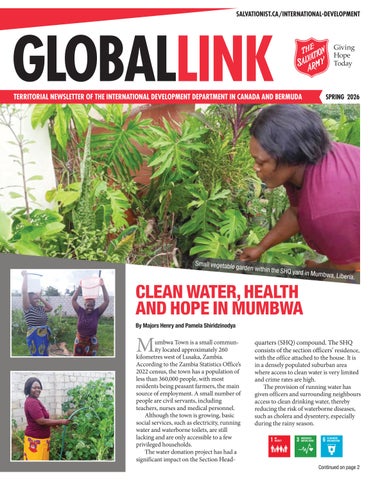
CLEAN WATER, HEALTH AND HOPE IN MUMBWA
By Majors Henry and Pamela
Mumbwa Town is a small community located approximately 260 kilometres west of Lusaka, Zambia
According to the Zambia Statistics Office’s 2022 census, the town has a population of less than 360,000 people, with most residents being peasant farmers, the main source of employment A small number of people are civil servants, including teachers, nurses and medical personnel.
Although the town is growing, basic social services, such as electricity, running water and waterborne toilets, are still lacking and are only accessible to a few privileged households.
The water donation project has had a significant impact on the Section Head-
quarters (SHQ) compound. The SHQ consists of the section officers’ residence, with the office attached to the house. It is in a densely populated suburban area where access to clean water is very limited and crime rates are high.
The provision of running water has given officers and surrounding neighbours access to clean drinking water, thereby reducing the risk of waterborne diseases, such as cholera and dysentery, especially during the rainy season.
Shiridzinodya
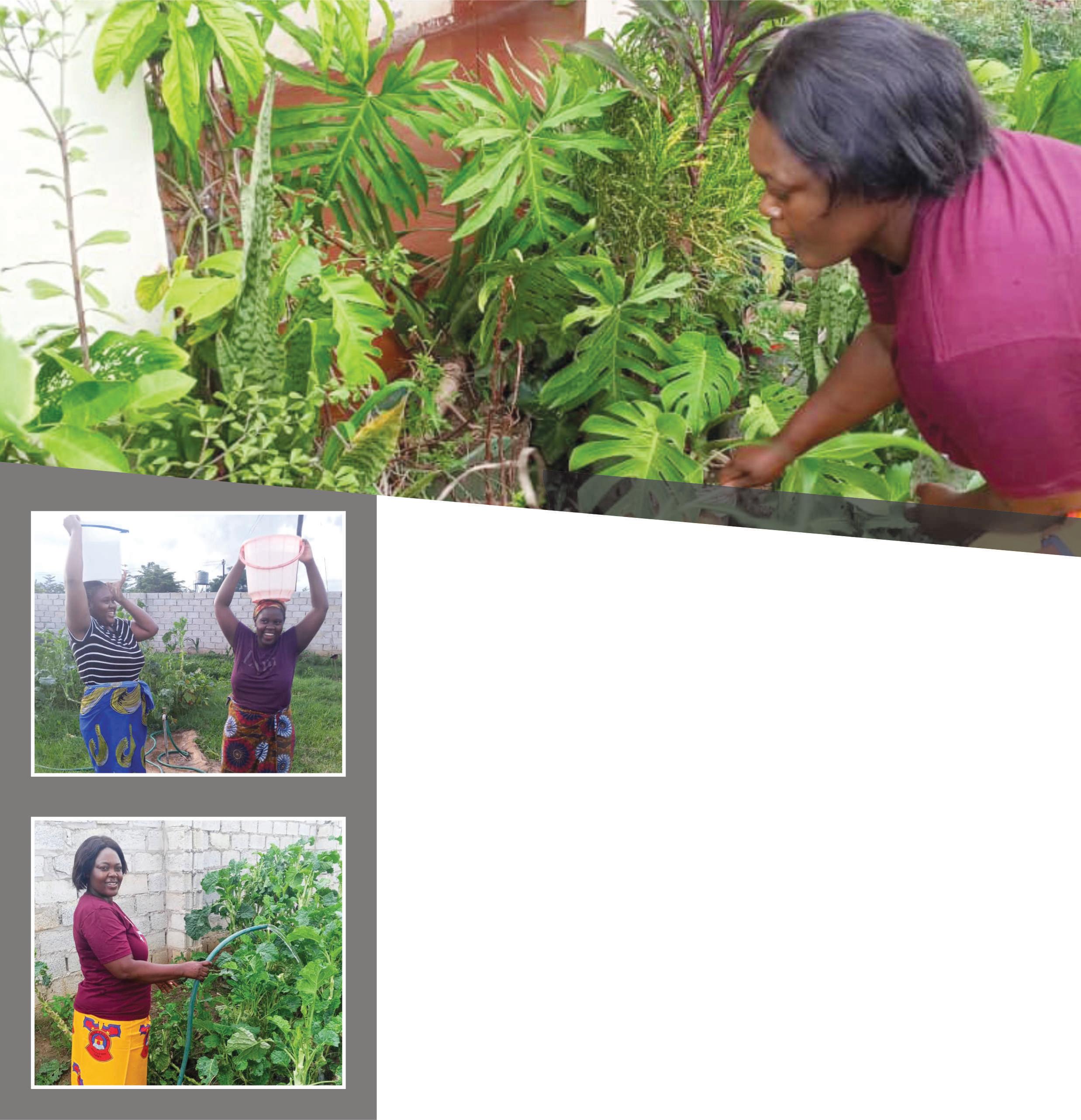
Small vegetable garden within the SHQyard in Mumbwa, Liberia.
Your generosity is helping turn
urgent need into lasting hope across Africa
In Mumbwa, Zambia, access to clean, running water has transformed daily life for Salvation Army officers and their neighbours. Safe drinking water reduces waterborne disease, eases household costs and enables small vegetable gardens, simple changes that strengthen health, dignity and resilience.
In Maiduguri, Nigeria, when catastrophic floods displaced thousands of families, donor support made rapid response possible. Food, hygiene supplies and health education reached families sheltering in overcrowded camps, helping to protect lives, restore dignity and remind survivors that they were not forgotten in their darkest hours.
And in rural Zambia, your support is helping break the cycle of early marriage Through education, vocational training and community partnerships, girls are returning to school, gaining skills and reclaiming hope for their futures, benefiting not only themselves, but entire communities.
Together, these stories reflect the impact of your partnership: clean water, restored health, protected children and renewed hope Thank you for standing with communities as they move from crisis toward lasting change and providing hope through the love of Jesus Christ.
Sincerely,
Lt-Colonel Brenda Murray
Director of International Development

Did you know that we have never bought vegetables from the market since water was provided? With access to water, we are now able to maintain a small vegetable garden within the SHQ yard. This has brought economic benefits, as expenses for vegetables have been eliminated. We now grow our own vegetables.
This donation just came at the right time when the section was struggling to access clean water, and this has helped us so much The good news is that more households now have reliable access to clean drinking water. As a result, community members deeply appreciate The Salvation Army for providing access to clean and safe water for drinking.
We extend our sincere appreciation to our donors who made it possible for the Mumbwa Section to have a secure wall fence and access to safe drinking water
RESTORING HOPE AND HEALTH in the Wake of Maiduguri’s Flood Disaster
By Major Elaine Locke
In September 2024, the city of Maiduguri in northeastern Nigeria experienced one of the most devastating floods in its history. Following the collapse of the Alau Dam, fast-moving floodwaters submerged nearly 70 percent of the city, destroying homes, markets, bridges and sewage systems, and severely damaging critical infrastructure.
The flooding claimed an estimated 264 lives, with many people, especially children, reported missing after being swept away. Residents struggled to survive as floodwaters tore through communities, forcing families to cling to rooftops, trees and canoes Food supplies were destroyed, farmlands ready for harvest were washed away, and hunger and economic hardship rapidly increased. Thousands of people were displaced and relocated to existing internally displaced persons (IDP) camps.
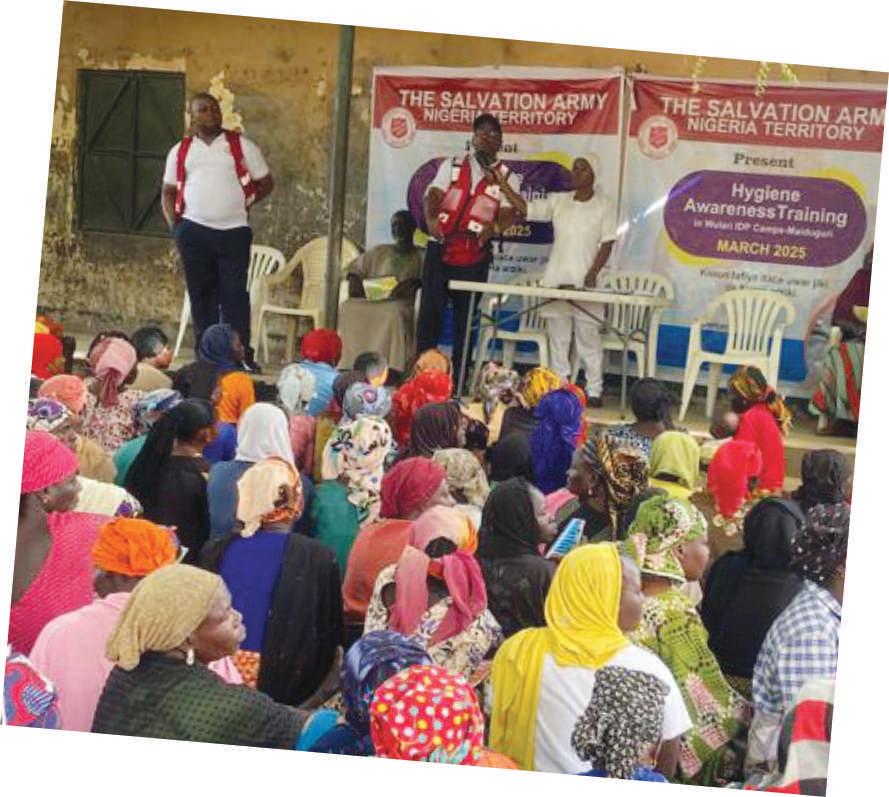
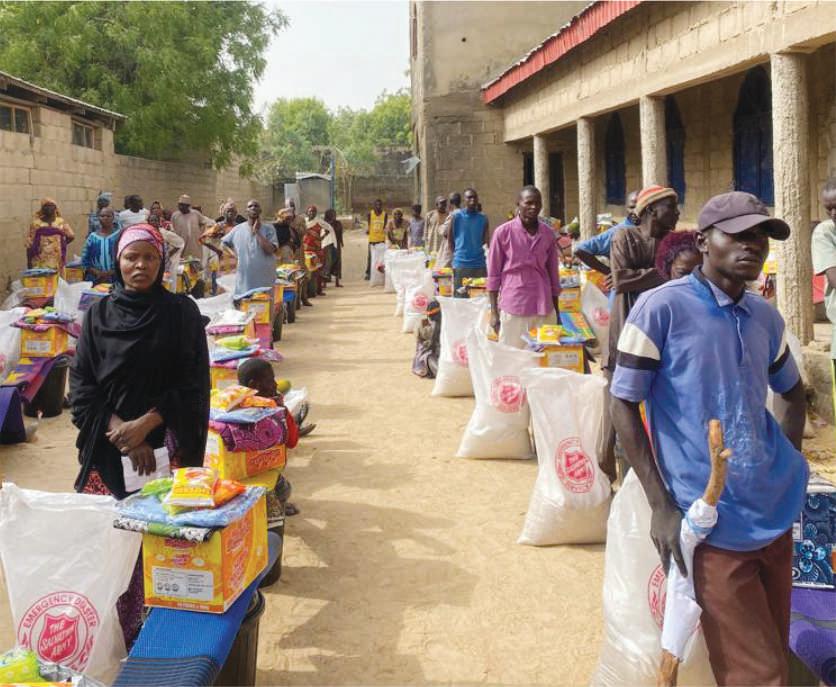
Conditions in the camps posed serious hygiene and health risks. Overcrowding and limited sanitation heightened the threat of disease among already vulnerable populations In response, The Salvation Army provided urgent humanitarian assistance to 620 families by distributing essential food items, such as beans, wheat, rice, cooking oil and noodles Hygiene kits were also provided, including mats, mosquito nets, soap, detergent and water storage buckets with filters Hygiene awareness sessions were conducted to help reduce health risks during displacement. These efforts addressed immediate needs while restoring dignity and hope Through its presence and support, The Salvation Army reminded affected families that they were not alone and helped lay the groundwork for recovery and resilience
BREAKING THE CYCLE OF EARLY MARRIAGE
By Major Heather Matondo
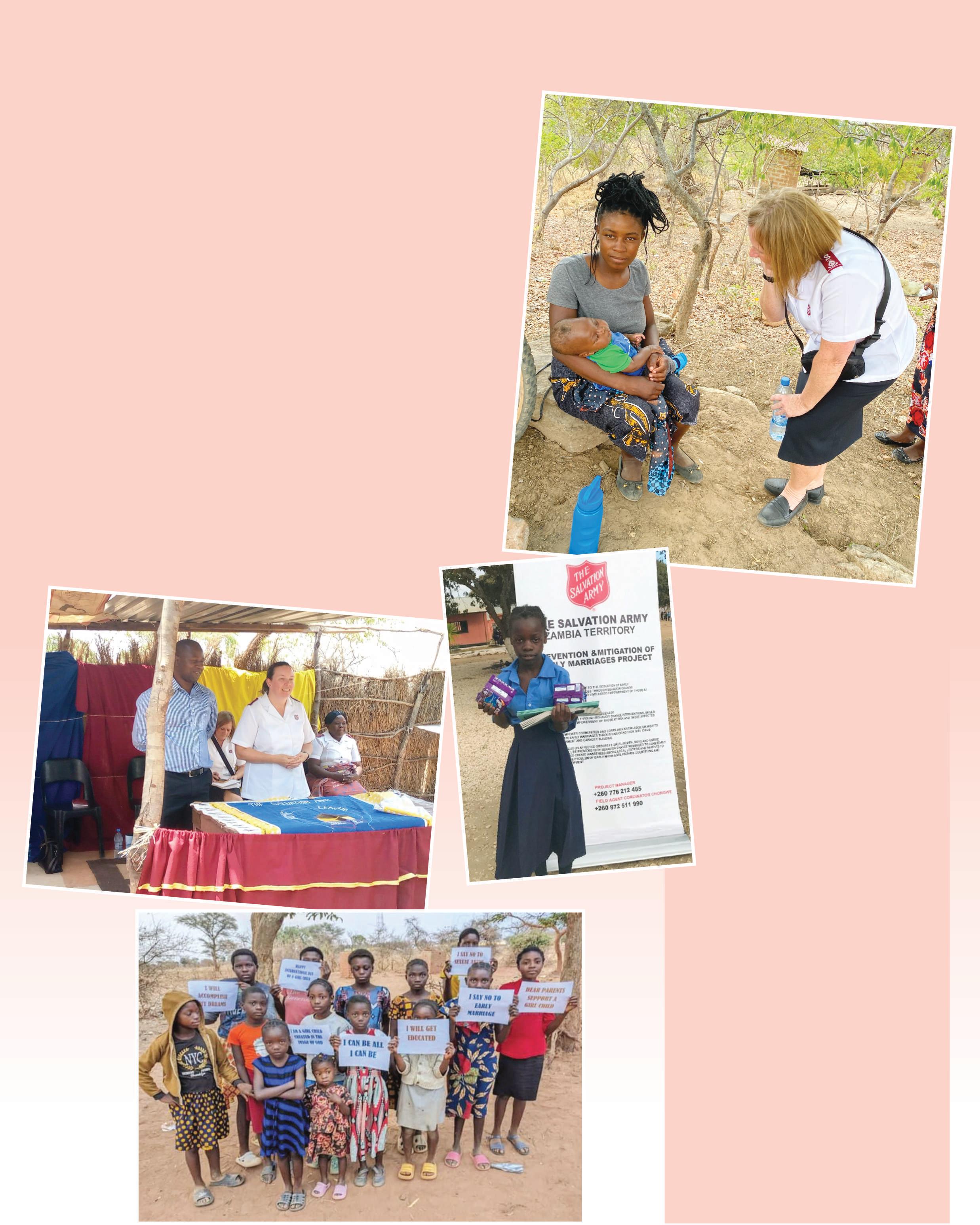
Early marriages and teenage pregnancies remain a serious concern in many rural areas of Zambia. In response, The Salvation Army launched the Early Marriages Prevention Project in Chongwe and Gwembe districts to reduce early marriages and pregnancies by empowering communities The initiative promotes girls’ education, builds the capacity of parents and local leaders, and delivers youthfocused programs that address the root causes of early marriage.
Supported by the Brighter Futures Children’s Sponsorship Program, the project helps reintegrate girls affected by early marriage into formal education through scholarships, school supplies and uniforms It also provides life-skills and vocational training, offering alternative pathways that reduce vulnerability and support economic independence Counselling and psychosocial support further help participants regain confidence and remain in school
To promote sustainable, long-term change, the project works closely with schools, health centres and traditional leaders to strengthen community systems that protect and support girls. These partnerships foster attitudes that value education, gender equality and child protection
In its first year, the project has received a positive response from the community, highlighting both the urgency of addressing early marriage and the impact of community-based, preventative approaches
“Some people think we come here for other reasons, but the truth is, we come to learn and build better futures Many of us have faced the pain and limitations of early marriage, but now we have a chance to gain skills and stand strong for ourselves and our families This program helps us rise above what held us back”
— Matron Chirara