


Photo: Leo Lintang/stock.Adobe.com
PHRASE BE is an ongoing series highlighting the dozens of everyday sayings that originate with biblical text.
In this issue, we unpack:
PHRASE: Fight the good fight.
DEFINITION: To encourage and persist and overcome any difficulties, by doing what is right.
EXAMPLE: It was a difficult election, but the candidate was proud to have fought the good fight.
SOURCE: “Fight the good fight for the true faith. Hold tightly to the eternal life to which God has called you, which you have declared so well before many witnesses.”
—1 Timothy 6:12 (New Living Translation)
Reading the first four words of this Bible verse might make you want to head to the wrestling mat or boxing ring—until you get to the rest of the first sentence and the all-important word “faith.” What we’re talking about here is a spiritual battle more important than any physical one.
Make no mistake, however. Fighting the good fight of faith takes even greater stamina and perseverance. When you align yourself with the values and teachings of Jesus Christ, you need determination, because a call to faith is a privilege and a responsibility not taken lightly.
But you’re not fighting this fight alone. The reference to “many witnesses” means that you have a spiritual army at your back, a community of fellow Christians— whether in your church, your Bible study group or online friends—that will help you persevere in your faith journey. With their help and encouragement, this is one fight you will win!
5 The Honest Cobbler
One shoemaker’s compassion has helped thousands of people stand on their own two feet—with proper footwear.
BE BLESSED
8 Blessed Are the Peacemakers
Why does Jesus applaud them?
GOD IN MY LIFE
10 Plans Far Greater
Or, how Dana-Lyn Phillips unexpectedly found God’s purpose for her life.


An almost-fatal car accident brought Patricia Huber closer to God.
16 Toys Versus Tech
In Toy Story 5, our heroes face their biggest challenge yet.
22 Taking the Next Step
Mike Olver’s not dying from ALS; he’s living with ALS .
CAMP TALES
26 Experience of a Lifetime
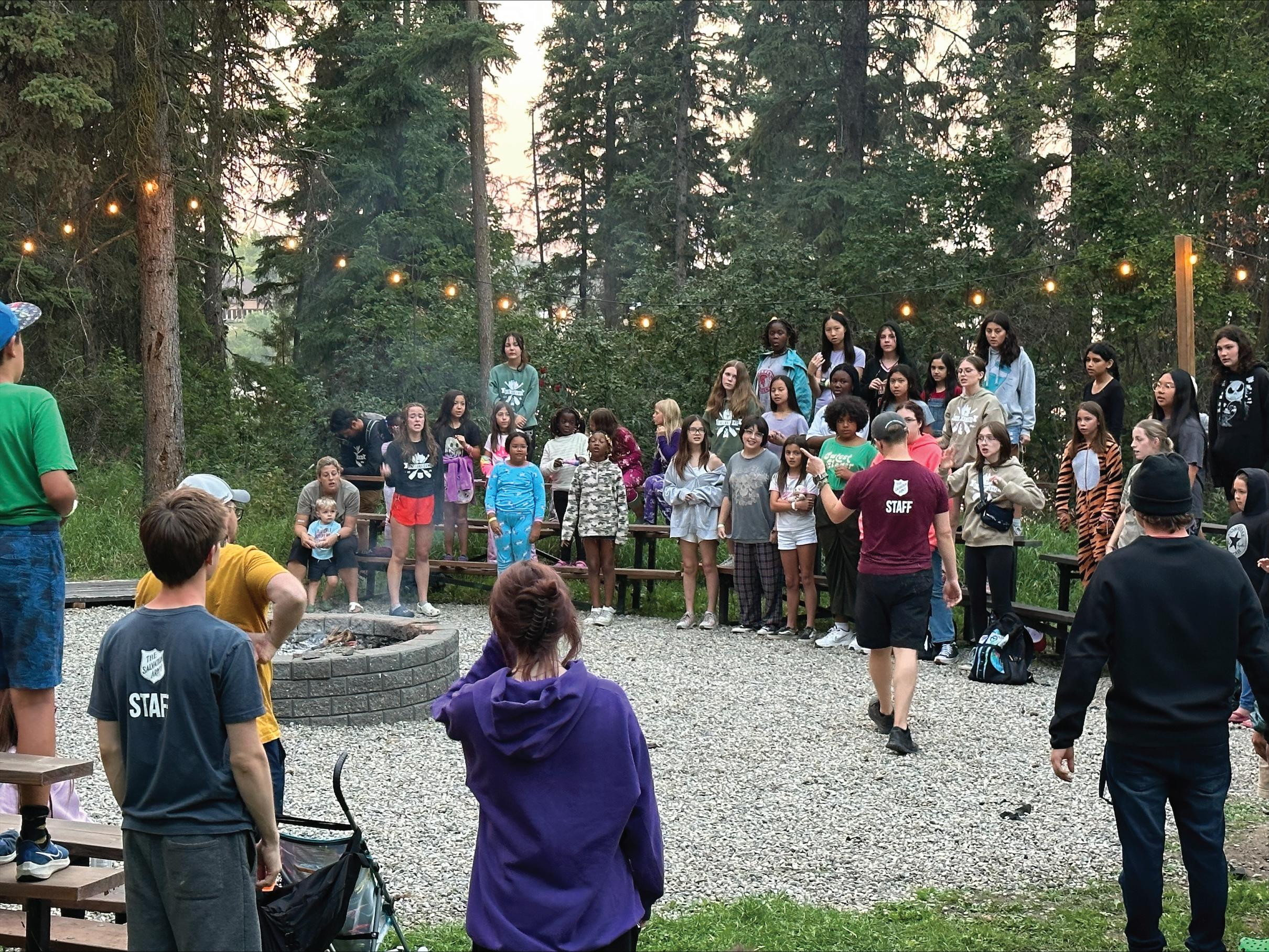
At Beaver Creek Camp in Saskatchewan, Amelia Tremblay returns as staffer to inspire the next generation.
LITE STUFF
28 Eating Healthy With Erin Word Search, Sudoku, Quick Quiz.
A GLOBAL LENS
31 Smiles That Transcend Borders
The Salvation Army supports a network of 102 schools across Indonesia, serving more than 8,300 students.
It began with a stumble.
My mother, usually so sure-footed, chalked it up to some crack in the sidewalk, but soon she realized that it was more serious than that.
Medical tests confirmed the awful truth, that she had an advanced form of ALS (amyotrophic lateral sclerosis). Otherwise known as motor neuron disease or, more commonly, Lou Gehrig’s disease, it is a rare neurodegenerative disease.
There is no known cure for ALS. And it is also terminal.
The doctors gave my mother three months to live but she stubbornly held out for three years, in large part due to her loving husband and her devoted mother—my grandmother—who looked after her until Mom had to be admitted to the hospital. In that time, she went from a nimble, active woman to one who could only move her eyelids to communicate yes or no. Always slim, she had wasted away to nothing by the end of her life.
But her family and her faith were her support. Though my Catholic mother could not attend church, every Sunday, we brought back a communion wafer for her.
I wish she could have read Mike Olver’s article in this month’s Faith & Friends. Diagnosed with ALS, his faith, hope and God’s loving presence helps him to deal with the situation in a positive manner.
“I’m not dying from ALS,” he writes. “I’m living with ALS.”
Read Mike’s inspiring story on page 22.
Elsewhere in this issue, you’ll see our take on the newest Toy Story movie, read how one young woman has inspired a new generation of Salvation Army campers, and find out how another woman unexpectedly found God’s purpose in her life.
Ken Ramstead
Mission Statement
To show Christ at work in the lives of real people, and to provide spiritual resources for those who are new to the Christian faith.
Faith & Friends is published bimonthly by:
The Salvation Army 2 Overlea Blvd, Toronto Ontario, M4H 1P4
International Headquarters 101 Queen Victoria Street, London, EC4P 4EP, England
Lyndon Buckingham, GENERAL
Commissioner Lee Graves
TERRITORIAL COMMANDER
Graham Moore
CHIEF EXTERNAL RELATIONS OFFICER
Geoff Moulton, DIRECTOR OF COMMUNICATIONS, EDITOR-IN-CHIEF AND LITERARY SECRETARY
Pamela Richardson
ASSISTANT EDITOR-IN-CHIEF
Ken Ramstead, EDITOR
Kristin Ostensen
MANAGING EDITOR OF SALVATIONIST AND SALVATIONIST.CA
Lisa Suroso
GRAPHIC DESIGN SPECIALIST
Emily Pedlar
JUNIOR GRAPHIC DESIGNER
Rivonny Luchas
DIGITAL MEDIA SPECIALIST
Giselle Randall
SENIOR EDITOR OF SALVATIONIST
Abbigail Oliver
EDITOR OF JUST FOR KIDS AND STAFF WRITER
Logan Graves CIRCULATION CO-ORDINATOR
Scripture Unless otherwise indicated, all Scripture references are taken from New International Version
Contact Us P. (416) 467-3188, F. (416) 422-6217
Websites faithandfriends.ca, salvationist.ca, salvationarmy.ca
Email faithandfriends@salvationarmy.ca
Subscription for one year: Canada $17 (includes GST/HST); U.S. $22; foreign $24 P. (416) 422-6153
circulation@ salvationarmy.ca
All articles are copyright The Salvation Army Canada & Bermuda and cannot be reproduced without permission. Publications Mail Agreement No. 40064794
ISSN 1702-0131


One shoemaker’s compassion has helped thousands of people stand on their own two feet—with proper footwear.
by Janice Keats
With a shop already overflowing with boots and shoes waiting to be repaired, Darrell Hynes of The Honest Cobbler in St. John’s, N.L., still found room in his day— and in his heart—to take on one
more task: helping people who desperately need proper footwear. The idea for the campaign began when a woman walked into the shop with a pair of badly damaged boots, hoping they could be repaired.
“I couldn’t fix them,” Darrell says. “What haunted me was knowing they were the only boots she owned.”
When Darrell posted the need for footwear on social media, the response was overwhelming, with donations arriving at his shop within hours.
“Within one week, the post went viral,” Darrell says. “So many outlets picked up the story that I was suddenly being interviewed all the time.”
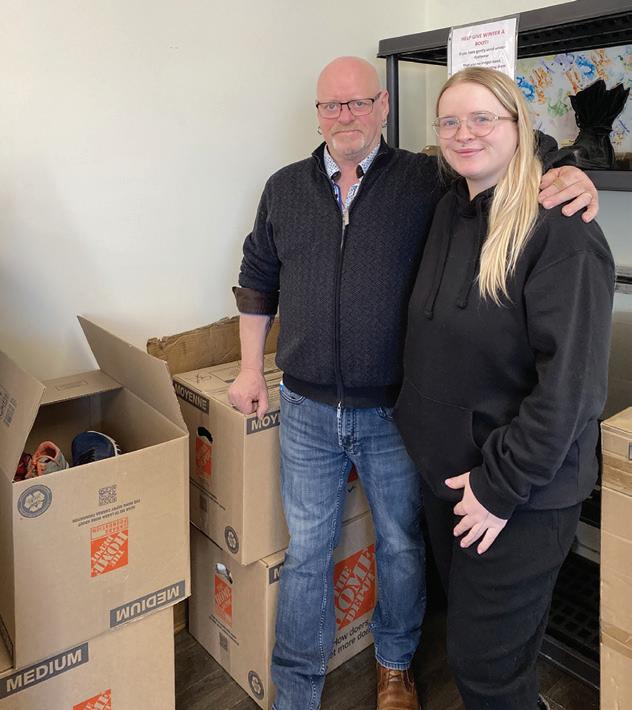
Darrell opened his shop in 2020, working alongside his daughter and business manager, Darra. Since then, the pair have prepared more than 13,000 shoe tags—each one representing a pair of boots or shoes repaired or restored.
The “Give Winter a Boot” campaign was born from that modest appeal. Before long, donated footwear was pouring into the shop, filling every corner with boots and shoes, reflecting the generosity of people who wanted to help.
“Boots are donated from a variety of sources,” Darrell says. “We have received donations from people across Newfoundland and Labrador who have heard about the campaign.”
Darra has been instrumental in organizing the steady stream of donated footwear, and she’s quick to give her father credit for the kindness that started it all.
“Dad came up with the name, and he created the logo,” she says, smiling. “This whole campaign began out of compassion for that one lady who could not afford a pair of boots.”
Companies have also contributed to the campaign. Suppliers donate fitted boots that could not be sold. Other retail companies donate “like new” boots that could not be returned to the manufacturers. Darra has been in conversations with social services as well as city councillors filling requests for clients.
“I often receive calls from them asking for work boots for people who need them to start a job,” Darra says. “So, these new boots truly make a difference.”
As the campaign grew, volunteers came forward, increasing the resources available to keep it going. Local business owner Natalie Tibbo of Kalon Beauty and Glow, along with a couple of her employees who work in the same building as The Honest Cobbler, stepped in to help.
They have volunteered countless hours sorting and packing donations, turning what began as a small effort into a well-organized operation. Each time new footwear arrives, it’s carefully sorted, paired and packed into boxes, ready to be delivered.
“Most of the footwear is sent out to nonprofit organizations,” Darrell says. “In addition to the local requests we
Welcome Assistance
Darrell and Darra with just some of the donations they receive
receive, we also ship boxes of donated boots and shoes to The Gathering Place, The Kindness Closet and The Salvation Army’s Centre of Hope.”
Carolyn Reid, executive director of The Salvation Army’s St. John’s Housing and Community Services, sees first-hand the impact donated footwear has on the people they serve.
“Many of the individuals who come to the Centre of Hope for a hot meal, or who arrive at the Wiseman Centre seeking shelter, have shoes that are worn out, or simply unsuitable for the weather,” she explains. “It’s not uncommon for someone to approach staff and ask if we have any boots or shoes available. A gentleman came in for a meal one day wearing plastic bags inside his sneakers just to keep them dry. To be able to provide a good pair of boots for this gentleman was so rewarding!”
Since the campaign first began— and after that initial wave of media attention—there has never been another formal call for donations.
“We haven’t advertised in two years,” Darrell says. “We just haven’t needed to. If I put out another media post, we’d be absolutely bombarded with donations.”
It’s inspiring to see the community’s needs being met, and even more
encouraging to know that there are resources available to support that work. With these tools in place, Darrell’s business and the volunteers are empowered to keep up with the growing demand and make an even greater impact.
“We are deeply grateful to partners like The Honest Cobbler, whose generosity allows us to offer hope—one pair of shoes at a time,” Carolyn says.
The campaign has grown quickly, meeting the needs of people from all walks of life, and the kindness behind it hasn’t slowed.
“We’ve heard from so many people who’ve cleaned out their closets just to donate footwear to this campaign,” Darrell says. “Some families have even donated shoes from loved ones who have passed on.
“It’s been a remarkable journey, and Darra and I are truly grateful to be part of it.”

by Jeanette Levellie
In the Sermon on the Mount, Jesus tells us of the reward for creating harmony between people.
“Blessed are the peacemakers, for they will be called children of God” (Matthew 5:9), He says in the seventh Beatitude, one of eight blessings in Jesus’ first sermon.
What could honour us more than for God to call us His own children?
There are peacekeepers and peacemakers.
Peacekeepers like to maintain peace. They go to great lengths, even
make compromises, to ensure no one “rocks the boat.”
Jesus didn’t praise those who simply make sure the kids don’t fight when Mom or Dad’s back is turned.
Jesus did, however, commend peacemakers.
According to Merriam Webster’s dictionary, a peacemaker is “one who makes peace, especially by reconciling parties at variance.” Peacemakers bring opposing sides together. They long for harmony to reign, even if the process of making peace proves uncomfortable.
We think highly of people who
Jesus was the greatest peacemaker in history. He stepped in between us and God to buy our freedom from sin with His own life.
JEANETTE LEVELLIE
arrange meetings between warring factions to help them harmonize with each other. We award such people much-deserved trophies, parades and accolades.
And we should honour them because making peace is no piece of cake.
Several decades ago, my friend Kathy and I developed a difference of opinion about a certain Bible teacher. That difference caused an unspoken chasm between us.
Bev, a mutual friend, noticed the tension and stepped in to help reconcile us. She sat us down in comfy chairs in her living room and asked each of us to share our viewpoint, and why we felt offended and hurt by the other.
At the end of that meeting, Kathy and I apologized for our unloving attitudes and shed tears of repentance. To this day, we remain close friends. All because Bev was willing to step between us and make peace. She didn’t choose sides. She listened to both viewpoints without judgment and gently asked ques-
tions that helped us discover the root of our conflict. She sowed the seeds of peace that “reap a harvest of righteousness” James talks about (see James 3:18).
Jesus was the greatest peacemaker in history. He didn’t passively sit by and observe the sin that had caused humankind to become God’s enemies (see Romans 5:10). Jesus stepped in between us and God to buy our freedom from sin with His own life.
When we turn from our sins and turn to Jesus, we find God’s unconditional forgiveness and peace.
When we tell others about salvation, we’re following Jesus’ example of making harmony between God and people. We’re inviting individuals to find the peace that only God can give.
This is the seventh article in our series on the Beatitudes, key teachings from the Sermon on the Mount (see Matthew 5-7), Jesus’ first sermon during His earthly ministry. Read the sixth article at salvationist.ca/blessedpureinheart.
Monday Meltdown
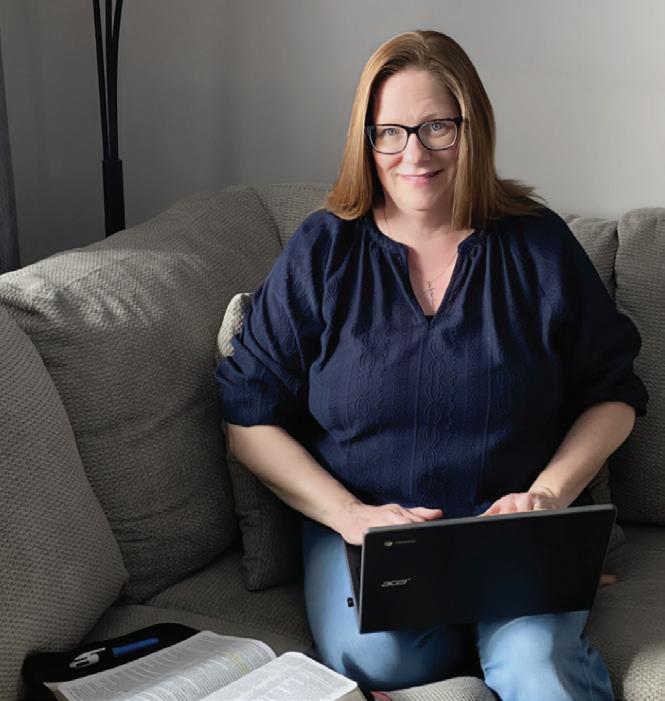
“In that very moment, I became the stereotypical middle-aged woman who had lost her job, her income and her dignity, all in about four minutes,” says Dana-Lyn Phillips
It was just an average Monday morning in May as I arrived at work. As the company’s longestserving employee, I had crossed the threshold hundreds of times over the nine years I worked there. As a result, everything felt comfortable. The week prior, the boss had been on vacation, so there was no inkling that something life-changing was about to take place.
Just as I reached my desk, my boss asked if we could talk upstairs for a minute. I followed her up a flight of stairs to a sunroom she often used as a sanctuary from her daily routine.
Once we were both seated, she
Or, how I unexpectedly found God’s purpose for my life.
by Dana-Lyn Phillips
turned to face me, then calmly began to speak.
“I just wanted to thank you for everything you have done for us the past nine years. We really couldn’t have done it without you. But we can no longer afford to pay you anymore, so we are letting you go, effective immediately.”
I sat frozen, not believing this was really happening. In that very moment, I became the stereotypical middle-aged woman who had lost her job, her income and her dignity, all in about four minutes. And it was only Monday.
As I drove myself home, I asked God to get me there safely because my mind was everywhere but on the
road. I felt blindsided, numb, angry, hurt, scared, underappreciated, disposable and, most of all, lost.
After a few days of grieving, I began to turn my thoughts toward the future. For years, I had questioned God’s purpose for my life.
I believed that everyone was created for a reason, and I desperately wanted to know my purpose, and how it could serve to bring glory to God.
I decided this blip on my resumé was an opportunity to seek God’s purpose for my life.
After recruiting some wonderful friends and acquaintances to pray on my behalf, I intentionally spent a few weeks with God. When I sought Him wholeheartedly, He showed up in big ways.
Slowly, and gently, He began to reveal His plan for me, but the clearer God’s voice became, the more I began to fear what He was asking me to do.
I had never considered that God might ask me to do something I did not feel qualified to do. As I continued to question His plan, I tried for once in my life to give up control, deciding instead to just trust and follow.
Eventually, it was clear that God was asking me to write for the purpose of encouraging Christian women in
their faith. After a lot of research, I decided to create a space on Substack where I would write to fulfil His plan for me.
I named my newsletter “Plans Far Greater” because God’s plans for me are always far greater than the plans I have for myself.
Ephesians 3:20-21 says: “Now to Him who is able to do immeasurably more than all we ask or imagine, according to His power that is at work within us, to Him be glory in the church and in Christ Jesus throughout all generations, for ever and ever! Amen.”
This verse reminds me that even when I don’t feel qualified, God can still work through me. I just need to listen and be obedient to His calling.
Many days I still feel inadequate, but I commit each article to the Lord, and I trust that it will not be my words I am writing, but God speaking through me. Only He knows in advance who will be reading each post, when, and what they may need to hear at that moment.
Looking back, my job loss was difficult, but I know that I would never have intentionally walked away from a paycheque in search of God’s purpose for my life, so I am thankful that God intervened on my behalf.
For the first time ever, I feel like I am doing exactly what God wants me to do—and it feels great!
Connected by Catastrophe
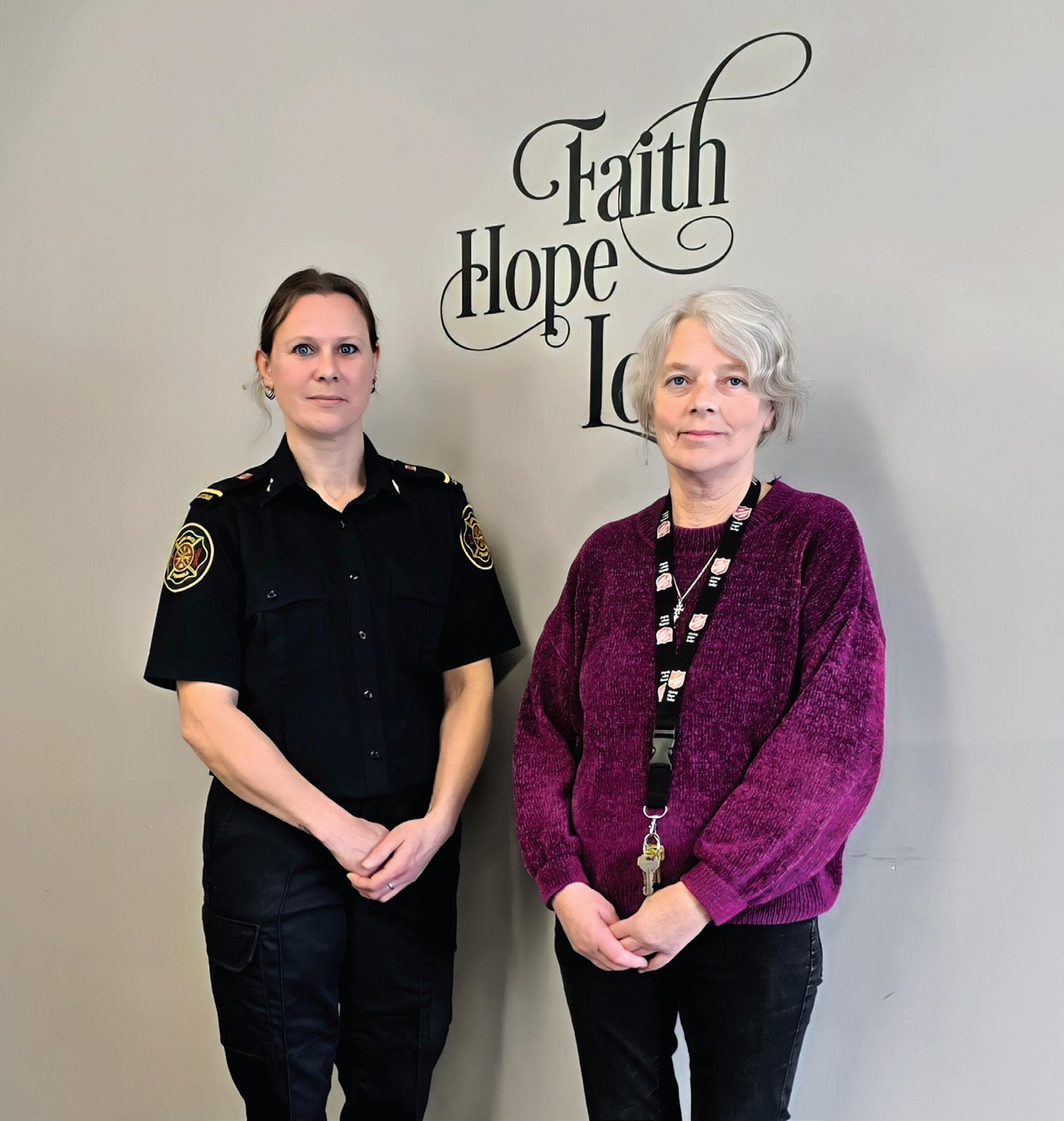
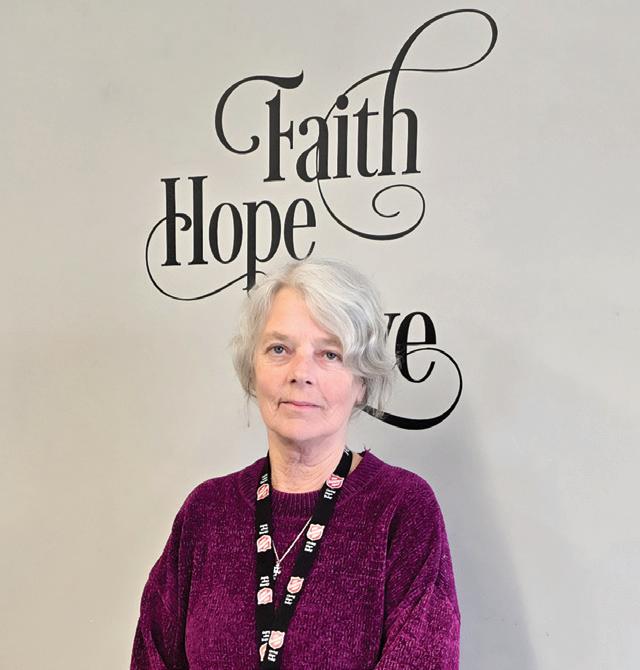
Firefighter Lieutenant MaryAnn Brown (left) with Patricia Huber
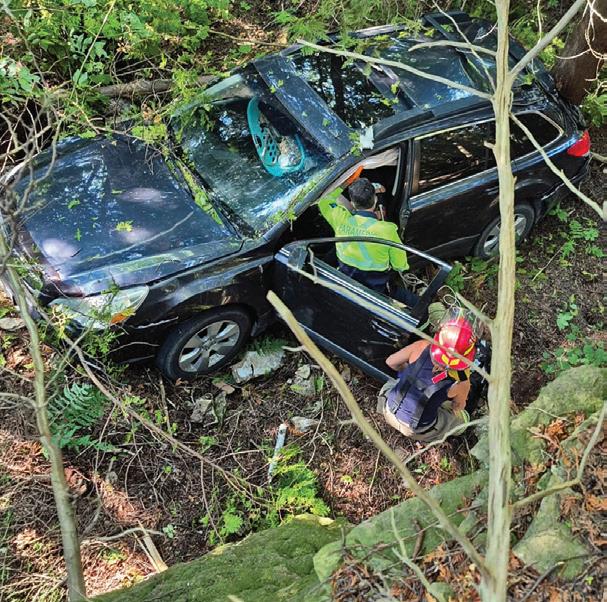
Crash Site
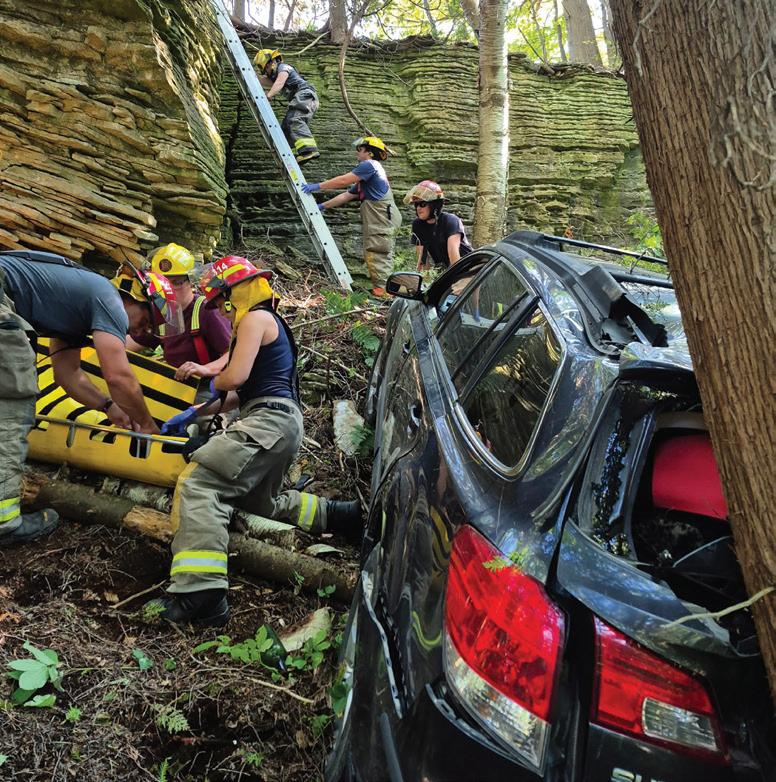
Emergency crew at the scene of the accident. “I remember saying to Patricia when she was still sitting in the car, ‘Girl, you had some guardian angels with you today,’ ” says Lieutenant MaryAnn
by Ken Ramstead
Last Labour Day weekend, Patricia “Trish” Huber was driving along Georgian Bay near Owen Sound, Ont. Formerly in real estate, the taxi driver and Salvation Army community driver had gone out to scout available property for her eldest daughter.
Right after lunch, she was heading home to Wiarton, Ont., when she stopped for an ice cream cone.
Ten minutes from her house, she suddenly started feeling sick, sweaty and dizzy.
I better get going, she thought to herself, and backed her car onto the road.
That was the last thing she remembered before she blacked out.
“Just
When Trish came to, “I thought I was in a movie set. That’s where my mind was at.”
Her vehicle had slid down to the bottom of a cliff, facing up.
“I was looking up at rocks in front
of me, Georgian Bay was behind me, and people were at the top yelling down, ‘Are you OK? Are you OK?’ ” Trish recalls.
“Where am I and how did I get here?” she called back.
“Just hold on, the ambulance is coming,” the crowd called down to her.
When firefighter MaryAnn Brown, a lieutenant at Wiarton Station 30 of the Town of South Bruce Peninsula Fire Department, arrived on the scene with her crew a short time after, what she saw confounded her.
The car had careered off the road toward Georgian Bay through a gap in the forest, and it had ended up with its front facing upward and its back against a tree, which held it from dropping into the bay.
Trish was seated in her car on an angle, uninjured, so the airbags had not hit her when they deployed.
Lieutenant MaryAnn was the first one down to the scene.
“When the call came in that a woman had driven over an embankment, we were trying to strategize how we were going to deal with this,” Lieutenant MaryAnn recalls. “We expected the worst, but when we finally arrived on scene, we couldn’t believe what we saw.”
The front of the car was entirely undamaged. It was almost as if Trish had backed down into the tree.
The emergency team lowered a ladder and checked Trish’s vitals. From there, they got her out of the vehicle and put her on a stretcher. Instead of going straight back up the ladder, the team took the long way around the escarpment. It was a longer hike but less strenuous than a straight climb back would have been.
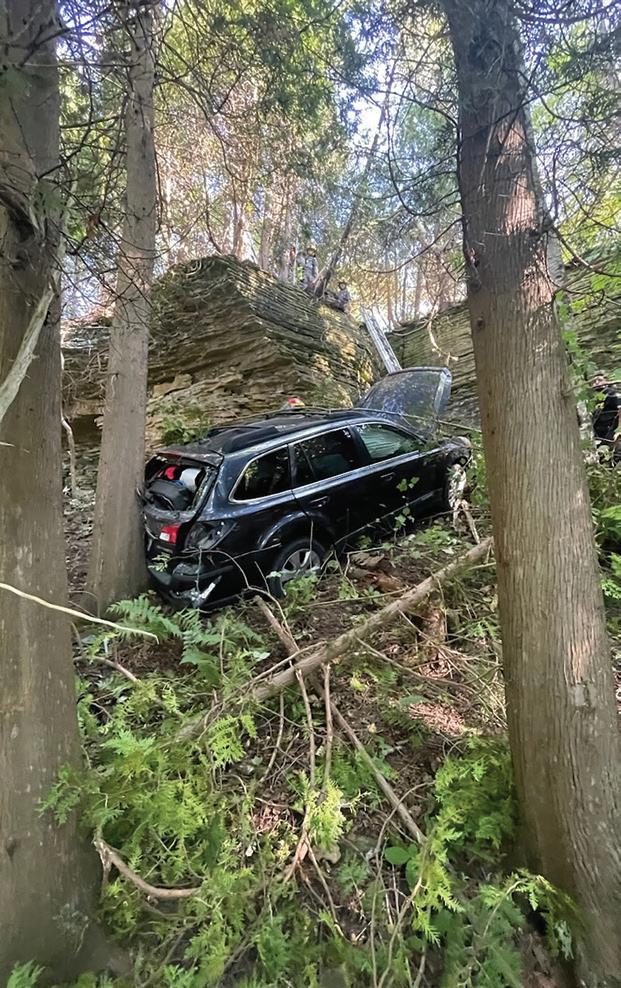
“One Miracle After Another” “I wasn’t scared at all,” Trish says of her coming to when the team reached her. “I was miffed! How did I get here? I wasn’t fearful. I wasn’t injured. I was fine.”
“She was a good sport,” smiles Lieutenant MaryAnn. “She didn’t give us any grief.”
Brought to the hospital, the doctors checked her out and released her after a couple of hours of observation with nothing to show for her ordeal but a few bruised ribs.
What shocks Trish is that she did not wake up throughout the entire incident.
“I felt as if I wasn’t in the car,” she says. “God took me out of that car, because it’s an impossibility to have survived that without any injuries. That’s the thing. I keep going over it in my head, and it completely baffles me.”
Lieutenant MaryAnn agrees.
“I remember saying to her when she was still sitting in the car, ‘Girl, you had some guardian angels with you today.’
“Even looking at where she went in, that spot in particular,” Lieutenant MaryAnn continues, “there were guardrails on each side of the location. How she managed to go where she went through and up over that ledge, and how the car landed, is still ... you have to scratch your head about it.”
Wrong Way Up
“How could my car fall 30 feet, settling on its wheels facing the opposite way I went in?” Patricia marvels
“There’s only one being I can thank, especially after something like that. And that’s God.”
PATRICIA HUBER
“There was no damage to the front of my car,” Trish marvels. “I went through a forest, didn’t hit any trees, went up a tree, apparently, and the tree just cradled me down to the ground? How could my car fall 30 feet, settling on its wheels facing the opposite way I went in?”
The only reason rescue vehicles were on their way so promptly was because a concerned motorist, Josh Beaton, out of the corner of his eye, had seen Trish’s car speed up and go over the embankment.
In that split second, a life was saved.
“If it wasn’t for him taking the time to follow me, stand on the cliff making sure I was awake and calling the ambulance, I might still be there,” Trish declares. “Josh was a big part of the story, the hero really!
“It was one miracle after another.”
The doctors later deduced that Trish had been given an overdose of a blood pressure medication another doctor had inadvertently prescribed.
“As a firefighter, you deal with sad things,” Lieutenant MaryAnn says. “We expected the worst. Instead, we found the best result imaginable.”
Taia Anderson-McLeod, a caseworker who works with Trish at The Salvation Army Wiarton Community Church, says, “The experience brought her closer to knowing the living God who was clearly watching over her.”
Trish attends Salvation Army services regularly as well as Bible study.
“There’s only one being I can thank, especially after something like that,” she says. “And that’s God.
“I hope this story inspires people to realize that miracles happen every day, and I am living proof.”
by Diane Stark
the Toy Story series, in theatres now, is an animated comedy starring a much-loved group that comes to life when no humans are present.
At the end of Toy Story 4, Woody decided to leave Bonnie’s room and live as a lost toy so he and Bo Peep can help abandoned toys find owners. The rest of the toys are living with a now eight-year-old Bonnie, and Jessie has become their leader, with Buzz Lightyear serving as her second-in-command. The toys are enjoying life in Bonnie’s room. She has a wonderful imagination, and they love their playtime with her.
Until one day when a package arrives that contains a frog-like computer tablet named Lilypad.
Lilypad quickly becomes Bonnie’s favourite plaything—to the exclu-
sion of the other toys. Things get so bad that Jessie begs Woody to return to Bonnie’s room to help them figure out what to do.
Can Woody, Jessie and the others help Bonnie remember how much fun they had together? Or is their playtime over forever?
Many of us can relate to Bonnie’s obsession with her new tablet. Some people anxiously await the release of a new phone model, even preordering it so they can be among the first to own the latest tech. Many of us can’t imagine life without a smartphone, and we panic when we misplace it. For many, our phone is one of our most important possessions. We use it every day, and it’s never far from our reach.

Shhh!
Smarty Pants, Jessie and the rest of the toys are determined to help Bonnie remember how much fun they had together
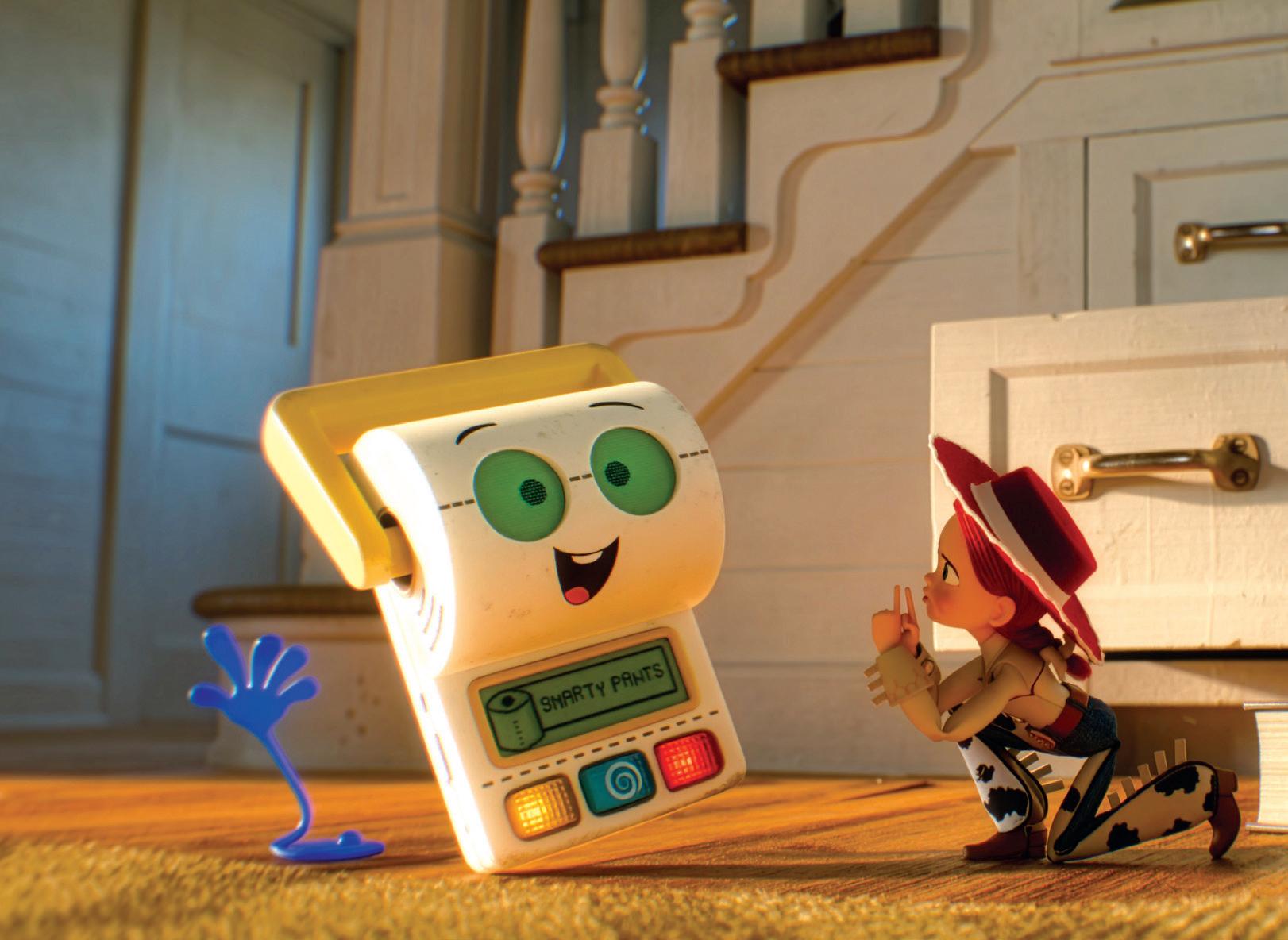
Smartphones can do so many things. They help us stay connected to others. We can order groceries, schedule medical appointments and find information on any topic we choose. It’s easy to see why we spend so much time staring at our phones. Technology is a tool and it helps make life easier in so many ways. But it can also become a huge distraction. It can take our attention away from more important things. Our families. Our jobs. Even—or maybe especially—our faith.
Studies show that more than half of adults admit to being addicted to their phones. A Statistics Canada
study showed that two thirds of Canadians are showing signs of phone addiction, including using their phones at least once every hour. In 2022, the Canadian Internet Use Survey interviewed 50,000 phone users, and their responses showed that the more often a person checks their phone, the less satisfied they feel with their personal relationships. And in 2012, an American ad agency even invented a new word: phubbing. It’s a combination of the words “phone” and “snubbing” and it refers to the act of ignoring a person to engage with one’s phone.
Technology is a tool and it helps make life easier in so many ways. But it can also become a huge distraction.
DIANE STARK
That word might hit a little too close to home for some. Hopefully, if we are guilty of phubbing, our loved ones will kindly point it out so we can properly re-order our priorities. But what happens when the One we are neglecting is God?
God gives each of us free will. We are free to choose Him—or not. We can spend time praying and reading His Word—or not.
God wants a relationship with us, but He never forces us. He allows us to make our own decisions, even if that decision is to ignore Him.
Christians can sometimes be guilty of ignoring God. Even though we trust Him with our lives, we can still daily neglect our relationship with Him. We often don’t give God the time He deserves, and our attention can be so scattered.


This world is loud, and there are so many distractions. Losing focus and neglecting our most important priorities can happen quickly. And often, if we look closely, we’ll see that excessive phone use plays a role in that neglect.
So what do we do in a world where technology is seemingly everywhere? The most important thing is to remember that God is everywhere, too. He’s with us every moment, and we can talk to Him
whenever we want throughout the day. Just as we might send a quick text to a loved one, we can say a brief prayer to thank God for something or ask for His help. He’s always ready to listen and connect with us.
We can also make a rule that we will open our Bibles—or the Bible app on our phones—before we open any other apps. We can prioritize our relationship with God by giving Him the first few minutes of our day. The YouVersion Bible app is free to download, comes in many translations and includes hundreds of Bible
Prepared for Action Buzz stands at the ready
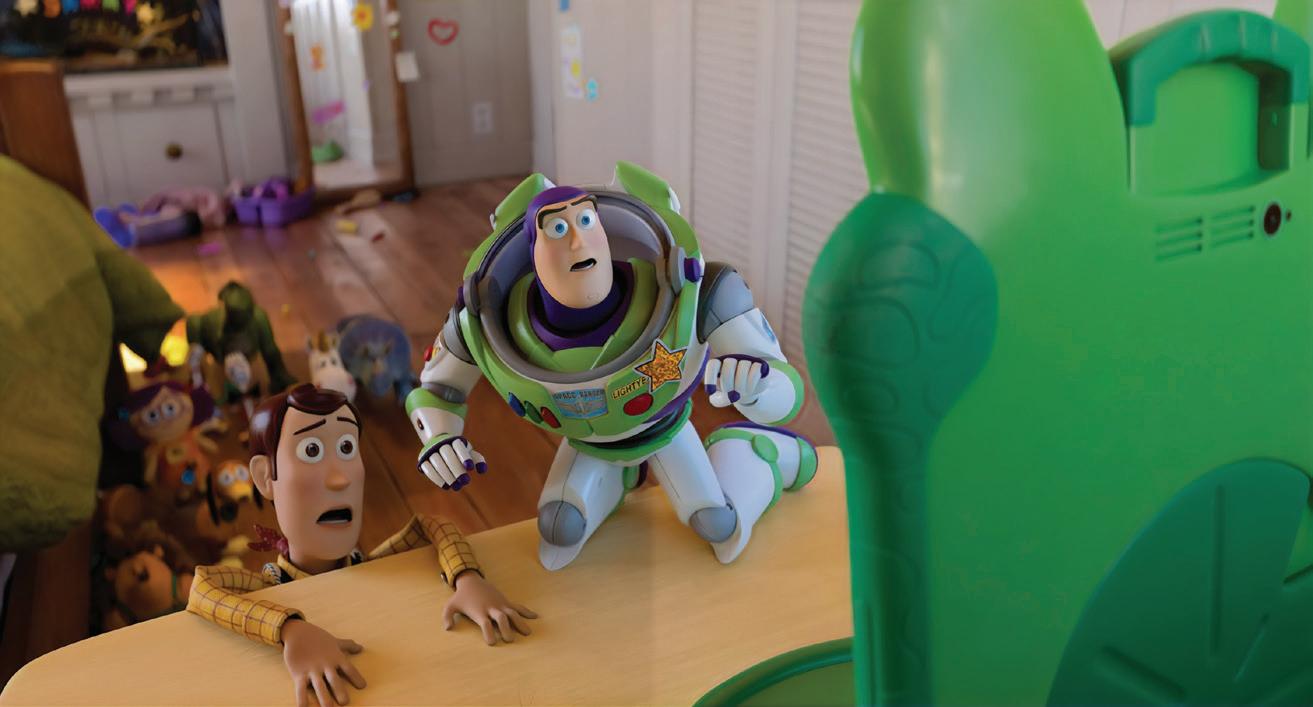
Face-Off Buzz and Woody face their greatest threat yet
reading plans. It’s a great way to use technology to strengthen our faith.
Enjoying quiet, tech-free time in God’s creation helps many people feel closer to God. Others use their phones to play worship music or listen to faith-based podcasts. Many churches broadcast their weekly sermons online, allowing us to listen even when we can’t be physically present.
Life is about choices. These days, owning a smartphone might seem like a necessity, but we can still decide how we use it. Tech is sneaky,
though. We must decide to control it, or it will control us. We can allow it to distract us from our family and our faith, or we can harness the technology for a higher purpose and set it aside when we need to.
In Toy Story 5, Bonnie becomes obsessed with her new tablet. The same can happen to us. After all, a lot of tech was designed to be addictive. But the Creator of the universe designed us and, with His help, we can beat phone addiction and prioritize our relationships with Him—and with one another.
Welcoming the Next Generation
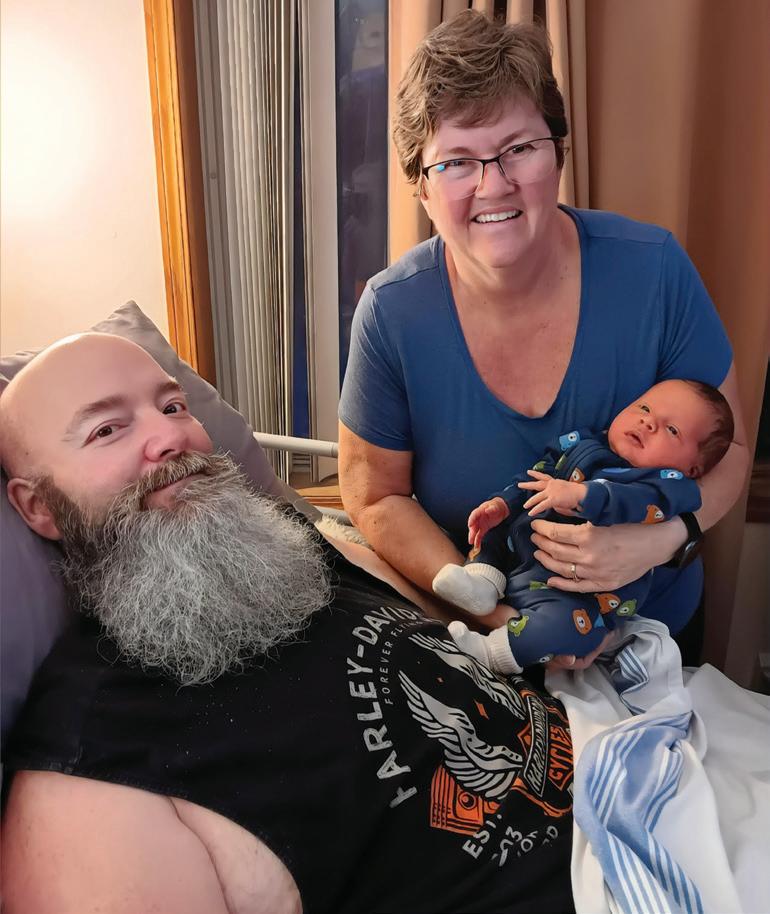
Mike and Bev Olver enjoying every moment with their new grandson, Wesley
by Mike Olver
Growing up, I lived for sports. School was made bearable by the promise of a pickup game of hockey, baseball or football after the final bell. Every day, if it bounced or rolled, we chased it. I couldn’t have dreamed up a better life.
After graduating from high school in Alberta in 1985, I enrolled in Bible college. To be honest, I didn’t
come for the Bible, but for the hockey. After one semester, hockey was going well, but school wasn’t. One day the dean called me in. Since he was also my father, we met in the living room.
“I don’t think you should return second semester,” he said.
That was fine with me. I was no scholar.
That led me into the restaurant business and, in one of the best decisions of my life, I married Bev Wilson, a former classmate, and took a job as a chef. Perks of the job included taking time off on summer afternoons to perfect my golf game and the opportunity for schooling to upgrade my skills. Our son, Theoren, and daughter, Christina, arrived, and for the next 21 years we enjoyed life in the community where I grew up. We loved watching our kids grow and, in what seemed like no time, grandchildren began to arrive.
“You Have ALS ”
But then my body began to let me down. First, it was the tingling in the left leg, then the twitching in the left arm. I consoled myself with the fact that there was no pain. But one day when my left foot wouldn’t respond to my brain’s command to lift and take a simple step forward in the dining hall, I tripped and fell heavily against a wall. Clearly something was very wrong.
The long search for answers began. But X-rays, bloodwork and ultrasounds all yielded nothing. It wasn’t until I went for a nerve and muscle test in Calgary that the mystery was solved.
On March 13, 2024, Bev and I sat silently in an office awaiting the verdict. The doctor entered and cast a nervous glance. There was no way to soften the blow.
Finally, he said, “You have ALS. Lou Gehrig’s disease.”
In an odd way, there was almost a sense of relief after so many months of not knowing. But the silent drive home was almost unbearable as we wondered how to tell our children. Tears flowed freely over the next weeks as we also began to share our new reality with other family and friends. ALS is a neurological disease that slowly robs its victims of the ability to control voluntary movements. Nerve cells in the brain and spinal cord are affected, causing loss of muscle control, and muscles get weaker as more nerve cells die. I had always been physically strong, so it seemed ironic to be stricken with a disease characterized by increasing weakness. We hadn’t realized, however, that
I had always been physically strong, so it seemed ironic to be stricken with a disease characterized by increasing weakness.
MIKE OLVER
Happier Days
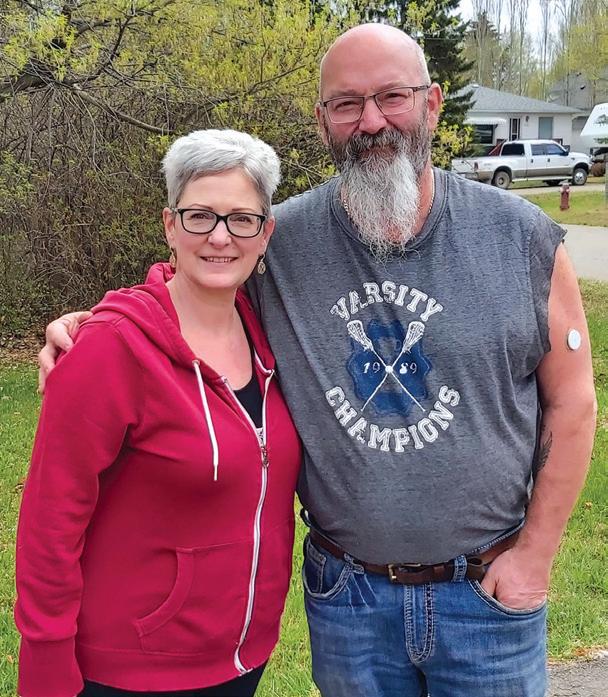
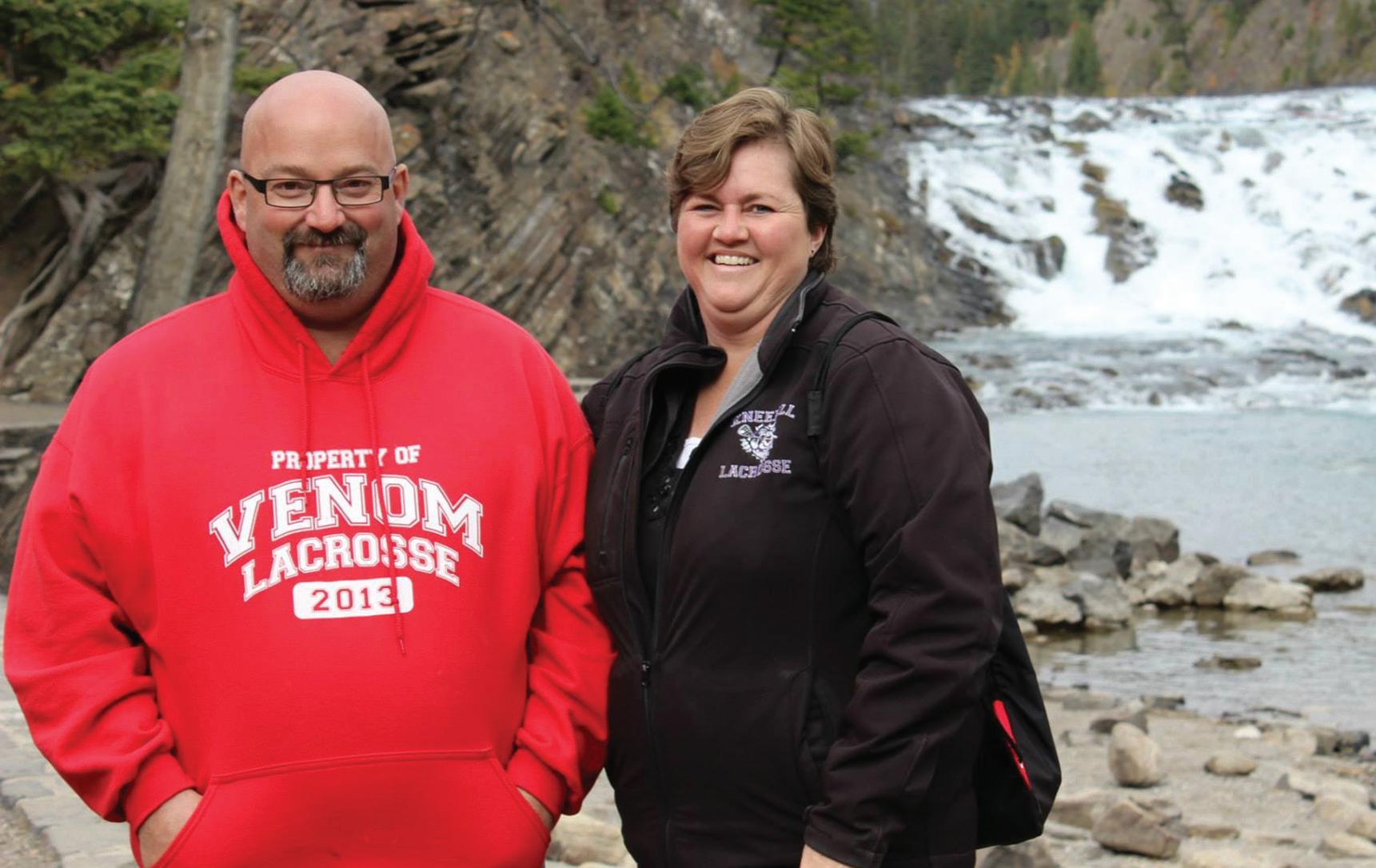
Mike and Bev, taken just before the diagnosis
ALS treats everyone differently. Simply put, it’s impossible to know exactly when and where the losses will be felt. At first, my left arm and leg lost strength, but I enjoyed the use of my right side. A year later, and I am relegated to my comfy recliner. My angel wife and numerous volunteers are the hands and feet and face of Jesus, caring for my every need.
Research into the disease holds promise, but there is no getting away from the fact that one day, sooner than I’d planned, I’ll be changing my address and meeting my Saviour face-to-face.
Despite the difficult path ahead, I often remind myself of how blessed
I am. Each new day brings reminders of the goodness and love of God.
Bev and I have seen others in absolute despair over a similar diagnosis, and there are certainly dark moments, days when I feel useless.
But I believe that the eternal hope we have and God’s constant loving presence in our lives have made it possible to deal with this situation in a positive way. A good friend advised us to live our lives intentionally and that is what we are choosing to do.
I’m not dying from ALS; I’m living with ALS.
“I’ve Got This”
In high school, I dreamed of a trip with my sweetheart, and, after
the diagnosis, nothing stood in the way. We were reminded that relationships built throughout our lives and the precious memories stored up are priceless treasures that nothing can take away.
We visited places like Oklahoma, Montana and Ontario, with no idea how many would bless our socks off.
One highlight was a trip to Seattle, Washington, to watch my Toronto Blue Jays play the Seattle Mariners!
On one trip, in our haste to leave, I neglected to purchase American money. While visiting a friend, I mentioned I needed to get to a bank. When he learned why, he vanished, then returned with an envelope.
“We want you to have this,” he said, smiling. I stared wide-eyed at fives and tens. And twenties. And fifties and hundreds. To this day, I can’t talk about it without tears.
It was like God was saying, “I will never leave you, Mike. I’ve got this.”
Proverbs 18:22 says, “The man who finds a wife finds a treasure” (New Living Translation). How true. Bev has been God’s gift to me. At my side through all of this, there is very little that I can do now without her assistance.
Our children have showered us with their love and time. When I told a friend that our daughter and her husband were moving so they and the grandchildren could be near us, I broke down in tears.
I can’t begin to count the number of people who have told us they are praying for us. What a wonderful illustration to me of the incredible privilege of belonging to the family of God. Why would we not count our blessings?
When Pastor Tim Keller received news that his cancer was terminal, he said, “I’m not suffering from anything that a good resurrection can’t fix.” I share his unshakeable hope. It is the greatest blessing of all. Yet hope can often take a backseat to the challenges and uncertainties of my condition.
As a young man, I valued strength and the ability to be active, never thinking that those days would come to such an end. Where do we turn when life leads us into a new season that we weren’t prepared for? Meaningful music and God’s promises have meant so much. Bev and I have both been drawn at different times to the words of Isaiah 41:10, “So do not fear, for I am with you; do not be dismayed, for I am your God. I will strengthen you and help you; I will uphold you with My righteous right hand.”
Our strength fails. Yet, He is our strength. The way ahead is uncertain. Yet, He is our hope. We did not choose this journey, but one thing we do know is that we are held in God’s loving hands, and He will give enough light for the next step.
At Beaver Creek Camp in Saskatchewan, Amelia Tremblay returns as staffer to inspire the next generation.
by Juan Romero

Long before she was old enough to attend, Amelia Tremblay knew she would spend her summers at Beaver Creek Camp in Saskatchewan. Growing up in a Salvation Army family, she watched her older siblings head off to camp every year.
“As soon as I turned seven, I said, ‘I’m going to camp.’ Every single year since then, I’ve been a camper or part of the staff,” Amelia shares.
As a young camper, Amelia remembers feeling excited and at ease, thanks to the welcoming environment created by the staff. That comfort helped shape her childhood in meaningful ways.
“I felt like this was a place where I had time to be a kid and play,” Amelia says. “I was learning new skills as well, so it was really fun. I remember many of the cabin leaders and staff. At camp, I found people I looked up to.”
Amelia discovered a love for nature at camp, where she enjoyed hiking and learning how to guide others. The many arts and crafts activities helped spark her creativity.
Camp also helped her grow personally. It encouraged her to come out of her shell and build confidence, which made it easier to make friends each summer.
“At camp, I found people I looked up to.”
AMELIA TREMBLAY
In her teens, Amelia joined the Leaders in Training (LIT) program to prepare for a staff role. Since 2019, she has returned to Beaver Creek every year, now as a leader, helping others grow the way she once did.
“My role is program support and leaders-in-training co-ordinator,” Amelia explains. “Campers aged 13 and 14 come out for three weeks and go through leadership training. I walk them through shadowing jobs and show them how the camp runs. The other half of my job is supporting the program team.”
With her background as a longtime camper, Amelia’s knowledge provides valuable insight to the staff.
“My experience gives me a perspective not everyone has. I know which activities were fun and which ones not so much. I have an insider

perspective. I can look back on previous experiences and remember what might work.”
Now that she is on the staff, Amelia encourages more parents to consider The Salvation Army’s summer camps for their affordability and the personal development they can bring to participants.
“It could end up being one of the best experiences a parent could put their child through,” Amelia says. “We see quite a few campers from rougher home lives who don’t always get the chance to go out and play. Camp becomes that place where they don’t have to worry. They know there are people here who care and will listen.”
Amelia is currently studying at the University of Winnipeg, but each summer, she returns to the place where she grew up, a place that continues to shape who she is.

TIME 45 min MAKES 8 servings GARNISHED WITH mayonnaise, cheese, lettuce and tomato
125 ml (½ cup) water
60 ml (¼ cup) quinoa
15 ml (1 tbsp) oil
60 ml (¼ cup) onion, diced
1 garlic clove, minced
125 ml (½ cup) bell pepper, diced
15 ml (1 tbsp) cumin
5 ml (1 tsp) chilli powder
2.5 ml (½ tsp) paprika
375 ml (1½ cups) black beans
2 eggs
125 ml (½ cup) breadcrumbs
8 burger buns (see recipe below)
1. Preheat oven to 205 C (400 F).
2. Bring water and quinoa to a boil, reduce to mediumlow and cover with lid. Allow to simmer until liquid is removed, about 15 minutes.
3. In frying pan, add oil, onion, garlic and pepper and cook until soft, about 5 minutes. Stir in spices.
4. Mash black beans roughly, add to frying pan and stir together. Cook for 1 minute.
5. Combine quinoa and contents of frying pan in large bowl. Add eggs and breadcrumbs.

6. Line baking sheet with parchment paper and make 8 patties. Bake at 205 C (400 F) for 10 minutes, flip over and bake another 10 minutes.
TIME 40 min MAKES 8 servings SERVE WITH burger or steak sandwiches

250 ml (1 cup) warm water
30 ml (2 tbsp) dry yeast
80 ml (1/3 cup) oil
60 ml (¼ cup) sugar
1 egg
5 ml (1 tsp) salt
750 ml (3 cups) flour
1. Add warm water, yeast, oil and sugar to bowl. Allow to stand for 5 minutes.
2. Beat egg and slowly add along with salt and flour.
3. Flour a surface and mix by hand, kneading dough for 5 minutes.
4. Separate into 8 equal pieces and roll into balls. Place on a baking sheet lined with parchment paper and cover with plastic wrap and a tea towel to rise for 20 minutes.
5. Preheat oven to 220 C (425 F) and bake for 10 minutes. Transfer to a cooling rack.
1.




WEIGHTLIFTING
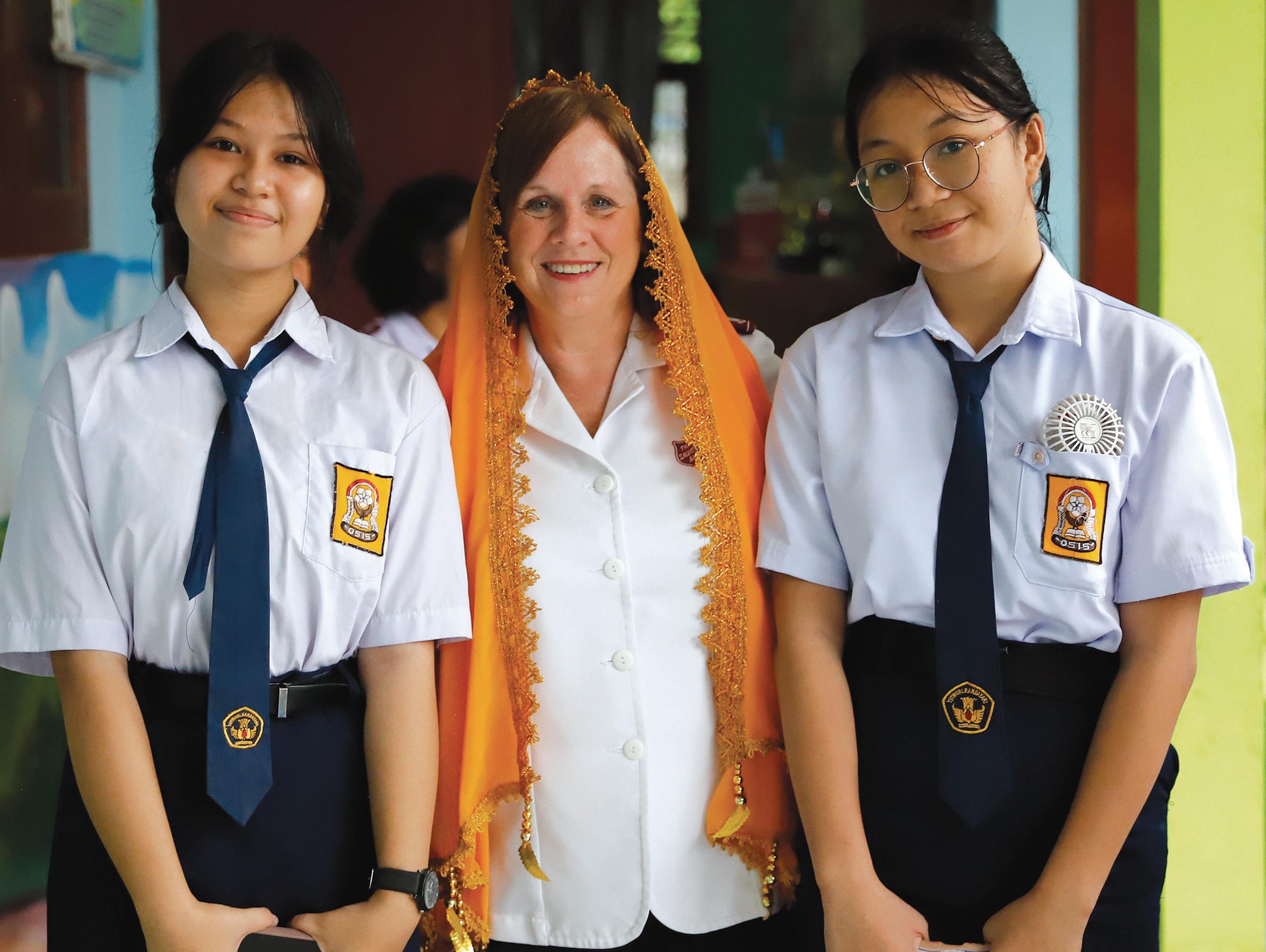
Lt-Colonel Brenda Murray (centre), then director of international development, shares a joyful moment with students from Palu Elementary School in Indonesia.
The Salvation Army supports a network of 102 schools across Indonesia, serving more than 8,300 students—including those in Palu, Central Sulawesi. Through these schools, students are provided with opportunities to learn, grow and build a strong sense of community, supported by dedicated teachers and ongoing efforts to strengthen literacy and enhance learning environments.