
Church gives time and space to Tardis
Smart TV
Bafta awards recognise the best programmes
Author considers the Bible’s most controversial topics

What is The Salvation Army?
The Salvation Army is a Christian church and registered charity seeking to share the good news of Jesus and nurture committed followers of him. We also serve people without discrimination, care for creation and seek justice and reconciliation. We offer practical support and services in more than 700 centres throughout the UK. Go to salvationarmy.org.uk/find-a-church to find your nearest centre.
What is the War Cry?
The Salvation Army first published a newspaper called the War Cry in London in December 1879, and we have continued to appear every week since then. Our name refers to our battle for people’s hearts and souls as we promote the positive impact of the Christian faith and The Salvation Army’s fight for greater social justice.
From the editor’s desk
There are still many people who can remember when there were only three television channels in the UK – and how (apart from some school programmes) BBC1, BBC2 and ITV didn’t broadcast in the mornings, having closed down around midnight after playing the national anthem. In those days, the top programmes could command audiences of more than 20 million, and almost anyone who appeared on screen became a household name.
Things have changed since then, with today’s viewers able to choose from multiple channels broadcasting 24 hours a day, as well as from streaming services such as Netflix and Apple TV. But, despite the changes, what is shown on our screens still matters – a fact reflected in the Bafta TV awards, which, as we report in this week’s War Cry, are taking place on Sunday (10 May). The thought of winning one of these prestigious awards still means a great deal to the nominees.
Among the programmes that have won a good number of Baftas over the years is Doctor Who. The sci-fi series, which was first broadcast in 1963, has enjoyed a cult following for decades.
Editor: Andrew Stone, Major
Managing Editor: Philip Halcrow
Staff Writer: Emily Bright
Staff Writer: Claire Brine
Staff Writer: Ewan Hall
Editorial Assistant: Linda McTurk
Graphic Designer: Mark Knight
Graphic Designer: Natalie Adkins
Email: warcry@salvationarmy.org.uk
The Salvation Army United Kingdom and Ireland Territory 1 Champion Park London SE5 8FJ
Tel: 0845 634 0101
Subscriptions: 01933 445445 (option 1, option 1) or email: subscriptions@satcol.org
Founders: Catherine and William Booth
International leaders: General Lyndon Buckingham and Commissioner Bronwyn Buckingham
Territorial leaders: Commissioners Jenine and Paul Main
Editor-in-Chief: Major Julian Watchorn

In this week’s issue, we meet one fan of the show – the Rev Jason de-Vaux, who has installed a Tardis in his church’s courtyard. The arrival of the Doctor’s spaceship has caused quite a stir.
‘I have given interviews across the UK and with people in India, Australia and Japan – the list goes on,’ Jason tells us. ‘It has just gone international, and I am thinking: “Wow, I didn’t expect any of this.”’
Jason is also keen to explain how the long-running programme covers themes that can be found in the Christian faith.
‘Doctor Who deals with regeneration,’ he says, ‘and when we receive Jesus as our living Lord, he is the one who regenerates us, making us a new creation.’
However much the world around us changes, Jesus’ offer of a better, more fulfilling life remains the same. The question is: are we switched on to him?


INFO INFO


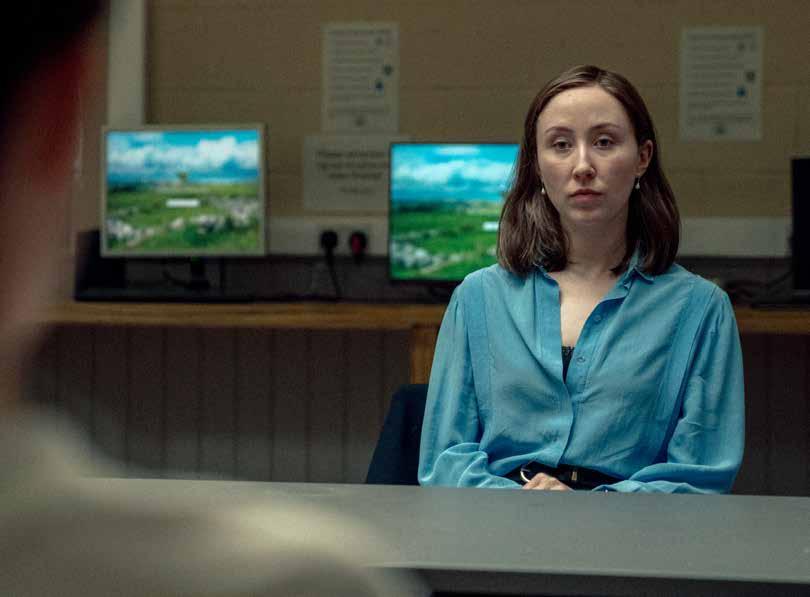
Erin Doherty as psychologist Briony Ariston, in a Baftanominated scene from ‘Adolescence’
And the winner is…
Fromgritty dramas to guilty pleasures, the small-screen highlights of the past year will be celebrated at the TV Baftas on Sunday (10 May). The awards ceremony, which takes place at London’s Royal Festival Hall, will honour the performers and behind-thescenes workers who put together the programmes that have made their mark.
Hosted by comedian Greg Davies, the event will focus on these standout productions, which have been nominated across a variety of categories.
Some shows have been shortlisted more than once – among them, Netflix’s psychological crime drama Adolescence, which is in the running for a number of awards, including the hotly contested prize for best limited drama.
Another key category is the memorable moment award. The only category decided by public vote, it gives viewers the chance to have their say on the TV moment that made them cry, laugh or both. This year’s nominations include Alan Carr winning psychological reality TV show The Celebrity Traitors, Bob Mortimer and Richard Ayoade’s speed dating on comedy game show Last One Laughing and Jamie snapping at his psychologist in Adolescence
The awards acknowledge the role
that people play in programme-making, whether they are in front of the camera –and Aimee Lou Wood, Jodie Whittaker, Colin Firth and Taron Egerton are among those who have been listed in the leading actress and actor categories this year – or working behind the scenes.
For whoever wins, receiving an award can be an emotional moment, as their hard work is rewarded and acknowledged by their peers. A few tears will no doubt be shed during the acceptance speeches, and thankful namechecks will be given to the individuals who have helped them in their career.
While we will not necessarily be getting dressed up and hitting the red carpet, we may still want to be recognised for what we have done, whether at work, in education or within our communities. We want to feel our achievements are worthwhile.
Sadly, our efforts are not always acknowledged. Our success can be undervalued by those closest to us, and when the good we do goes unnoticed, it can cause us to question our worth.
But Christians take solace in knowing that, even when they feel unseen, God recognises and values them.
The Bible describes God as someone who values people, even when they feel

overlooked. One passage, originally written to reassure a community going through difficult times, says: ‘He will show how much he loves you and how happy he is with you. He will laugh and be happy about you’ (Zephaniah 3:17 Easy-to-Read Version).
If we build a relationship with God, we no longer have to rely solely on the acclaim of others to feel valued. Even if our effort goes unnoticed or recognition never comes, our lives still matter deeply to God, who sees the full story.
Throughout our lives, there will be times of gritty reality and light-hearted laughter, but if we put our trust in God, we can know that our worth is always seen.
Bafta ceremony celebrates the best of TV
Feature by Ewan Hall
Bafta host Greg Davies
j TEA M TALK
dog can make a difference – fur real
Ewan Hall gives his take on a story that has caught the attention of War Cry reporters
In a personal lifestyle feature in The Guardian, Mirelle Radley wrote that a long-planned trip to South America last year – one that was intended to ease work burnout and grief after a personal loss –took an unexpected turn. What was meant to be an adventure of ‘breathtaking views, vibrant wildlife and memories to last a lifetime’ changed when she befriended a street dog in Ollantaytambo, Peru.
The dog, later named Paddington or ‘Paddy’ after the famous bear, followed her everywhere. He disrupted Mirelle’s plans, but his joy for life, despite a difficult past, was impossible to ignore.
God has a plan for me
WAR talk talk Team talk Team talk ‘ ’
Caring for her furry friend on her journey gave Mirelle focus, a sense of responsibility and an emotional connection when she needed it most after the death of her brother.
‘I felt trapped and purposeless, with no inkling of which direction to go in next,’ she said. ‘Then Paddy appeared, full of enthusiasm and zest for life. It tipped my life on its head, in the best way. He gave me the courage to quit my job as a scientist in biotech and change careers. I found purpose again.’
When her time in South America came to an end, Mirelle could not leave behind her four-legged friend. Instead, she went through the challenging process of adopting him and bringing him back to the UK.
Mirelle’s bond with Paddington resonates with me. My dog’s companionship is just as strong. Whenever I walk through the door, he bounds over with his tail wagging, eager for attention. He knows my routine and keeps me on track. Even on days when I feel low, caring for him gives me the motivation to keep going.
However, while the companionship of my dog gives me comfort and purpose, my Christian faith reminds me that my pet is not the main source of meaning in my life. I believe that God has a plan for me – one that goes beyond what I can always see or understand.
Even when everything feels uncertain or overwhelming, my faith reassures me that God will show me which path in life I should follow.
Children urge green action
Children taking part in a Christian environmental campaign created a buzz outside the Houses of Parliament by demanding new legislation to protect the natural world.
As part of the Bee a Climate and Nature Champion campaign run by the Green Christian organisation, children carried hundreds of colourful handmade postcards and giant bee props that had been made at churches, community events and schools across the country.
Representatives from The Salvation Army and Green Christian joined campaign group Zero Hour in encouraging MPs to create environmental legislation motivated by the latest science and the pursuit of global justice.
Major Heather Poxon, environmental officer for The Salvation Army in the UK and Ireland, said: ‘The Salvation Army has always stood alongside the most vulnerable, and the climate and nature crisis threatens the future of the children here today and the generations that will follow them.
‘When children ask us to act, we have a responsibility to listen. Caring for creation is not an optional extra for Christians; it is at the heart of who we are called to be.’
WAR CRYWnRLD

Bullet Bible goes on show
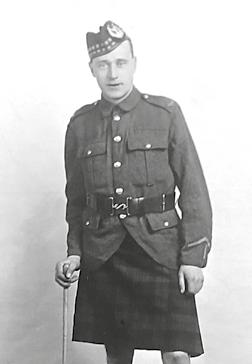
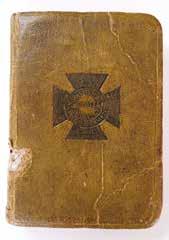
A Bible that saved the life of a First World War soldier is on display at a Scottish heritage centre, BBC News reported.
Private Duncan Macfarlane was seriously wounded in October 1917 during the Battle of Passchendaele, a brutal three-month campaign in which more than 500,000 soldiers were killed or injured.
According to the BBC report, when he ended up in a hospital in Edinburgh with bullet wounds all over his body, Duncan ‘still had his Bible which he carried in his breast pocket – and which saved him from the full force of a bullet to his chest on the front line’.
He was medically discharged in 1919.
His granddaughter, Jo Abbot, wanted Duncan’s service to be remembered, so his Bible, identification tags and medical discharge certificate are now on display in Dunscore Heritage Centre, Dumfries & Galloway.
‘This is the story of a very ordinary Gaelic-speaking man from Argyll who had his life saved by a Bible, which basically stopped the bullet that would have hit his heart and killed him,’ she said.
Cornish church launches domestic abuse support
The Salvation Army in Liskeard has become a Restored Beacon Church – a community designed to support survivors of domestic abuse in a trauma-informed, faith-based environment.
The first of its kind in Cornwall, the Liskeard Restored Beacon Church – run by The Salvation Army in partnership with Christian domestic abuse charity Restored – hosts closed, anonymous support groups for people affected by domestic abuse.
As well as access to the support groups, individuals receive a hospitality box, which contains toiletries, snacks, a towel, a mindfulness booklet and a sloth toy carrying an encouraging message.
To reach people outside a traditional church setting, the Beacon Church will offer a listening ear service in pubs and community centres.
The Salvation Army’s UK family ministries team is working with Restored to build a wider network of such churches.
The Bible that belonged to Duncan Macfarlane (top)

‘We’re
the only church
The Rev JASON DE-VAUX describes what happened when Doctor Who ’s spaceship materialised in his church’s courtyard
Interview by Ewan Hall
The Doctor’s Tardis has been known to materialise in the most unexpected places across time and space –though few could have predicted it arriving in a Cambridge church’s courtyard. But the Rev Jason de-Vaux and his Zion Baptist Church have a bizarre claim to fame – they host a replica of the blue police-box spaceship.
‘We are unique,’ says Jason. ‘As far as we are aware, we are the only church in the United Kingdom that has a full-scale Tardis.’
A fan of the BBC1 sci-fi series Doctor Who since the age of four, Jason has witnessed the TV series change from black and white into colour and has seen multiple actors taking on the role of the Doctor – a character known for his ability to regenerate into a new body. Jason still follows the programme and was looking through fan pages online when one comment caught his eye.
‘It was a question to me from someone in Suffolk,’ he explains. ‘He knew that I came from the area and asked if I knew anyone who could help fix his Tardis.
‘I explained that, because the Tardis was in the middle of a field with no power, it would end up being a very expensive job. But I still offered some advice and kept in occasional contact with him.
‘Then, at the beginning of December last year, he asked if I would like the Tardis.
‘My kneejerk reaction was: “Yes, that would be great. Of course, I will take a Tardis.” But afterwards I started thinking logistically about how I was going to transport it.’
Jason’s new Tardis was stuck in a field in Suffolk in a deteriorated state. So he turned to a member of his church who was a builder for help.
Jason remembers: ‘I was at our church coffee shop going through the logistics when he said: “I am going to pray about this, and I will contact someone.”’
He then returned with good news.
‘He had just spoken to a crane company in Cambridgeshire,’ says Jason. ‘It turned out
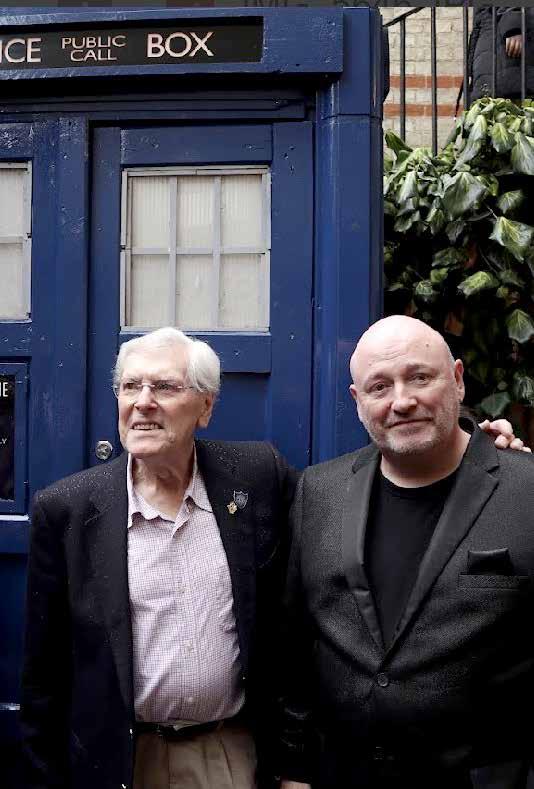
Former ‘Doctor Who’ actor Peter Purves and the Rev Jason de-Vaux outside the replica Tardis
with a Tardis’



they were Christian too, and they would only charge us the fuel for transporting it.’
Once the Tardis arrived at the church, students from Anglia Ruskin University emerged from the campus opposite to see the spectacle.
‘All these students came out with their cameras, shouting, “It’s the Tardis!”,’ Jason recalls. ‘It felt like mass hysteria.’
The excitement caused traffic hold-ups in the area, and one of those stuck in the jam was the wife of a presenter for a local radio station’s breakfast show. She sent a video of the commotion to her husband. Within hours of the Tardis’s arrival, Jason and the church had gone viral.
‘I have given interviews across the UK and with people in India, Australia and Japan – the list goes on,’ he says. ‘It has just gone international, and I am thinking: “Wow, I didn’t expect any of this.”’
To mark the refurbishment of the Tardis – complete with an accessibility ramp –the church hosted an opening celebration last month, bringing together 75 Doctor Who guests, including Peter Purves,
who appeared in the programme in the 1960s playing one of the first Doctor’s companions.
‘Doctor
The afternoon featured a display of props and costumes from the BBC, including those worn by the 10th Doctor, David Tennant, and one of his companions, Captain Jack Harkness, played by John Barrowman. There were also two Daleks and multiple incarnations of the Doctor portrayed by a costume role-playing group called Rogues Gallifrey.
Over the coming months, the church’s courtyard will be altered to match the theme of its new attraction, providing a place for Doctor Who fans and members of the community to get together and relax with food and drink provided by the church’s café.
For Jason, the Tardis is more than just a
quirky attraction. It is an opportunity for his church to do something different in telling people about the good news of Jesus.
‘I don’t believe in coincidence, I believe in God-incidence,’ says Jason. ‘It is a phenomenon which I still can’t get my head around, but God is using the Tardis in massive ways.’
Jason has big plans.
‘You can’t just take a piece of sci-fi history and say, “People will come visit,” and leave it at that. I have to think bigger, because of what it represents. The programme’s concept is timeless and God is timeless too.’
As a fan of the series, Jason can identify similarities between Doctor Who and faith.
‘Doctor Who deals with regeneration, and when we receive Jesus as our living Lord, he is the one who regenerates us, making us a new creation,’ he explains.
‘And what we are doing in our church is simply bringing people to the knowledge of Jesus Christ.’
The Tardis has been a familiar sight to ‘Doctor Who’ fans for decades
The replica being lowered into the church’s courtyard
Who’ deals with regeneration
‘God’s book contains a lot of complaints about him’

Andrew Ollerton
Author and theologian ANDREW OLLERTON gives his take on
the seven most controversial topics of the Bible
Interview by Emily Bright
Andrew Ollerton is not shying away from controversy – but in a good way. The popular theologian, who has written several books on the Bible, has devoted his latest publication, God’s Book, to what he sees as the seven toughest topics raised by the Christian text.
He covers the intersection between science and faith; the apparent condoning of slavery in the Old Testament; whether God supports warfare and violence; and why God
allows people to suffer. Andrew also asks if the Gospel accounts can be trusted; whether the New Testament’s teaching on sex is outdated; and what to make of ideas such as judgement and the afterlife.
When writing his book, Andrew felt it was important to consider the issues within the context of the wider biblical narrative and culture.
‘I wanted to show that each of the difficult topics has a particular moment in the bigger story,’ he says. ‘Although
the Bible was written for us, it wasn’t written to us.
‘I use various illustrations of why, if you isolate one passage or text from its context, you can make it sound terrible. The old adage goes: if you take a text out of context, you’ll be left with a con. My book is about putting things in context within the larger narrative of the whole Bible story, from Genesis to Revelation.’
The first topic that Andrew tackles is science and faith. While some people believe that these two areas contradict each other, he takes a different approach.
‘Science and faith don’t need to conflict, but they do provide different accounts of reality,’ he explains. ‘Science can describe what we find – the evidence – but it can’t explain what we find – the significance.
‘Whereas in the past, we thought that science was disproving the Bible, many scientists are coming back to the conclusion that there must be some kind of great cosmic mind, or God, to explain the fine-tuning of the universe.
‘In a sense, there’s nothing inconsistent about the system of thought that the Bible presents, because it says that in the beginning, God created the heavens and the Earth. Science seems to correlate with the fact that there must have been a miracle in the beginning, because you can’t get something out of nothing.’
The Bible’s story of Creation can sometimes raise eyebrows among nonChristians. But Andrew explains that the narrative was always meant to be metaphorical, not scientific.
‘While I encourage readers to take
some parts of the Bible literally, the Gospels being an example, I’d say to be careful when reading sections like the opening chapters of Genesis,’ he says. ‘It gives us pictures, symbols and windows through which to imagine what otherwise we have not seen – the creation of time, space and matter.’
The whole human race is given a sacred status
As readers progress through the Bible, they’ll come across another contentious topic: in some passages, God appears to condone slavery through his laws. However, Andrew says that it’s crucial to consider the context of the wider Bible story.
‘In the world that God originally created – the world that God wants –there is no slavery,’ he says. ‘In fact, male and female are made in the image and likeness of God. The whole human race is given a sacred status. There’s no hierarchy within it.
‘By the time you get to the books of Exodus and Leviticus, where there are laws about holding slaves, we’re not in the world that God wants. God is
working with a world that is fallen, and he’s seeking to bring his redemptive plan and purpose in and through it. He does accommodate some of the customs, but puts laws around slavery to regulate it.’
Andrew adds that, in the wider arc of the Bible story, God redeems people from slavery.
‘Ultimately in Jesus, a better way emerges where – as Paul says – there is “neither Jew nor Greek, neither slave nor free; all are one in Christ”. The unity of the human race will come back through the gospel of Jesus.’
The Old Testament’s complex list of rules and practice of sacrificing animals to seek forgiveness from God may also seem alien to modern readers.
However, Andrew says, the New Testament demonstrates that ‘there is now a new sacrifice of Jesus himself on the cross. He died for the sins of the world. We no longer need to sacrifice animals as the symbol of the need for forgiveness, because we have the ultimate sacrifice.’
But Andrew emphasises that Jesus
From page 9
didn’t come to legitimise sin – his radical teachings showed people how they could find freedom from their mistakes in order to live life to the full.
‘Jesus takes the moral law of the Old Testament – the Ten Commandments especially – and intensifies them so that we live the kind of life that brings flourishing and freedom,’ he says. ‘Not just where I don’t murder someone physically, but where I don’t hate people. That’s what God wants for this world –the end of hatred.’
The brutal stories of conquest told in the Old Testament seem to contradict Jesus’ teachings. Andrew argues, however, that the Old Testament passages are documenting, not
condoning, acts of cruelty.
‘A significant proportion of violence and warfare in the Bible is not what God wants,’ he says. ‘The majority of the Book of Judges – which is the most violent book in the Bible – is framed by the phrase that recurs and finishes the book: “At the time of the judges, there was no king in Israel, and everyone did what was right in their own eyes.”
‘In other words, what you’ve just read is what happens when things go wrong, as opposed to what God wants. These passages are not giving licence to future generations for ongoing warfare and conflict.’
Today, when warfare seems to dominate news headlines, some people
may wonder how a loving God can allow evil and suffering. But Andrew believes that we can take comfort from how God sent his Son, Jesus, to live and suffer among us.
‘Jesus’ death on the cross – and the way he suffered because God loves us so much – does not tell us why we’re suffering, but it does tell us that through it all God cares. Suffering is not going away through easy answers. But one day, we can look forward to a world where suffering will be no more. In the meantime, Jesus is with us.’
Andrew also finds it striking that the Bible doesn’t shy away from talking about suffering, and ‘contains a lot of complaints against God’.
He says: ‘God doesn’t seem embarrassed by our tears or offended by our honesty. And the Bible doesn’t give pat answers or easy sayings. It offers people the presence of a God who knows what they’re going through. It also says: Don’t try and hide from how you’re really feeling. Here are some resources that will help you.’
As well as being honest, the Bible is relatable, says Andrew.
‘What I find reassuring is that the Gospel accounts describe exactly the world that we live in. It has got fishermen catching fish in their boats. It’s got storms on lakes. It’s got people drinking wine at weddings. And yet we also see Jesus of Nazareth doing extraordinary things in our world, like turning water into wine or calming a storm.’
When we see injustice, we feel it is wrong
Andrew also appreciates the Gospels’ authentic depiction of the disciples and their frailties. He notes that the way in which people respond to Jesus is exactly what would be expected.


‘When these fishermen were caught in a terrible storm on the lake, they were terrified,’ he says. ‘Then, when Jesus calmed the storm by simply speaking to the wind and the waves, they were even more afraid. If you saw Jesus do that, you’d be terrified too.’
Miracles can be seen as another area of controversy – did they really happen or are they just stories? Andrew believes

that we can trust the historicity of the Gospel accounts.
‘The Gospels are storytelling. They develop a narrative. But fundamentally, the Gospels also give us a historically accurate account of the life of Jesus. And if Jesus is the Creator God in human form, we shouldn’t be surprised that his life on Earth was marked by miraculous powers and events.’
After the death and resurrection of Jesus, the early Church was born. Its leaders wrote a series of letters advising followers of Jesus on how to live their lives well. Modern-day readers are sometimes perplexed, however, by the New Testament’s emphasis on sex.
Andrew sheds light on why sex is a sacred issue.
‘It is ultimately a good gift from God. He designed it. He celebrates it at one level. But sex bears witness to a much bigger
relationship, which is that God has made us to have an emotional intimacy with him. Human relationships signpost us to the ultimate relationship with God, who alone satisfies.’
The idea of a loving God can perhaps be challenging in the context of divine judgement after death, and the prospect of Heaven and Hell. But Andrew says Judgement Day is ‘both something that we want and something we can’t handle’.
‘On the one hand,’ he elaborates, ‘we want Judgement Day because we live in a world of injustice. And whenever we witness injustice, something in our spirits as human beings deeply feels it is wrong.
‘But if we understand God’s standards of purity and holiness, we know that deep down, if we’re going to appeal to our own good works alone, we probably couldn’t handle his judgement on us.’
Yet there is an enduring source of hope
to be found in the Bible. Through Jesus’ sacrifice, justice is done, we can receive the grace of God and we can spend eternity in Heaven. All we need to do is follow Jesus.
‘On the cross, Jesus took on himself the judgement that we deserve,’ says Andrew. ‘And because he died in our place, we can be absolved of our guilt. The message of Jesus is such good news, because he has brought us forgiveness, a new start and hope.’
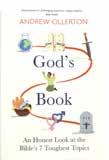
l God’s Book is published by Hodder & Stoughton
Your prayers are requested for Doreen and Eric, who have been unwell; and for Isabelle.
The War Cry invites readers to send in requests for prayer, including the first names of individuals and details of their circumstances, for publication. Send your Prayerlink requests to warcry@salvationarmy.org.uk or to War Cry, 1 Champion Park, London SE5 8FJ. Mark your correspondence ‘Confidential’.
Becoming a Christian
There is no set formula to becoming a Christian, but many people have found saying this prayer to be a helpful first step to a relationship with God
Lord Jesus Christ,
I know that I have done things in my life that are wrong and I’m sorry. Thank you that I can ask you for forgiveness because of the sacrifice you made when you died on the cross.
Please forgive me and help me to live a better life in the future as I learn how to love you and follow your way of living.
Thank you, Lord Jesus.

If you’ve prayed this prayer, scan the QR code or contact us using the coupon on this page

Nigel Bovey gives chapter and verse on each book
of the Scriptures
1 Peter
Although scholars dispute where this letter was written – some interpreting ‘Babylon’ (5:13) as code for Rome – it is agreed that Simon Peter, a disciple of Jesus and later leader of the Jerusalem church, was writing to Christians in Asia Minor (1:1 and 2).
His subject is that of suffering. Although he uses the words ‘suffer’ or ‘suffering’ many times in this letter, Peter does not address the conundrum of why a loving God seemingly allows suffering. There are no ready-made answers here.
Suffering is at the heart of the gospel, writes Peter. God knew beforehand that salvation would be made possible only through the sufferings of Christ (1:10 and 11). Peter had witnessed Jesus’ suffering close-up (5:1).
Suffering is a test of the reality and authenticity of faith (1:6 and 7). True believers are not fair-weather Christians. For followers of Jesus, suffering is inevitable. If they are to imitate Christ, like him they will suffer (2:21–25).
Suffering on account of their faith should come as no surprise (4:12), nor should it result in shame (4:16). Rather than leading to abandonment of faith, it should make a person more committed to God (4:19). Rather than retaliate, believers should rejoice that they are suffering (4:13–17).
The mechanism for enduring suffering is to live in a right relationship with God and with other people (5:5–7). This submissive attitude is possible when a believer compares their present suffering with their ultimate reward in the next life – ‘eternal glory in Christ’ (5:10 New International Version).
Christians have ‘a living hope through the resurrection of Jesus Christ from the dead’ (1:3). They have an inheritance kept in Heaven (1:4). When they meet Christ face to face, they will be ‘overjoyed’ (4:13). Life is short (1:24 and 25). Suffering is relatively short. After ‘a little while’, God will restore and strengthen them (5:10).

Peter emphasises the eternal timescale against which suffering should be measured – God chose Christ as the means of salvation ‘before the creation of the world’ (1:20). He reminds a despised Church of their true identity: living stones, a spiritual house, a holy and royal priesthood, a holy nation and a chosen people who belong to God (2:5–10).
Suffering because of their faith in this life is nothing compared with the glory of living with Christ that awaits the faithful Christian in the next life.

Or email your name and postal address to
To receive basic reading about Christianity and information about The Salvation Army, complete this coupon and send it to

QUICK QUIZ
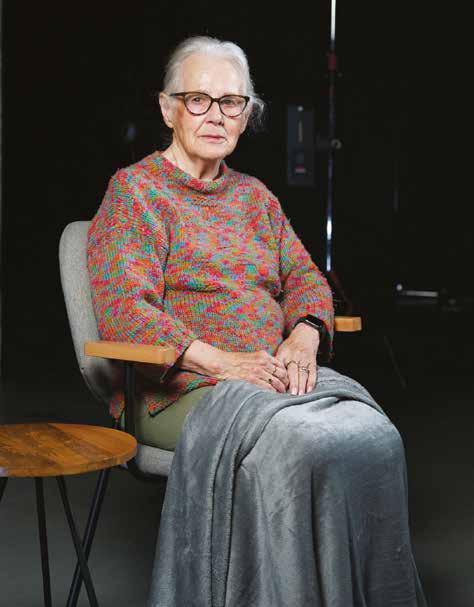
Doreen is one of the witnesses who recall their childhood wartime experiences
Testament of youth
Survivors
of the
Blitz share horrors of war
TV preview: Children of the Blitz BBC2 and iPlayer
By Claire Brine
They were told that children should be seen and not heard. So they kept quiet. But now stories that have gone unheard for decades are finally being told in the BBC2 documentary Children of the Blitz
Between September 1940 and May 1941, more than 35,000 tonnes of bombs and incendiaries were dropped by the German Luftwaffe on towns and cities across the UK. Homes were destroyed. Communities devastated. Around 43,000 lives lost.
To mark the 85th anniversary of the end of the Blitz, the documentary invites the last surviving witnesses to describe how the experience shaped their lives.
Siblings John and Cynthia, aged 89 and 92 respectively, remember the construction of their family’s air-raid shelter in the garden and how the top was covered with earth. Doreen, aged 87, had no garden at her home, so her family had to take cover in the cupboard under the stairs while the sirens blared.
David, also aged 87, recalls walking down the street the day after his home city of Hull had been bombed.
‘It was the most horrendous sight,’ he says. ‘Virtually all the buildings were down. There was smoke and rubble everywhere. There were people searching for survivors.’
Eighty-five years since the Blitz ended, those who lived through it can still remember the intense fear they felt as children. They don’t want the world to face such horrors again.
But humans are prone to messing up. Anyone switching on the news can see that global conflict hasn’t stopped. People are still fighting. It’s enough to make us feel powerless.
But a centuries-old book tells us that we can play a part in fixing what’s broken. The ripples of showing love and forgiveness in our own communities can spread across the world.
The Bible says: ‘Do everything possible on your part to live in peace with everybody’ (Romans 12:18 Good News Bible). In other words, if we want to change the world, it starts with us – because each of us has the power to pick a fight or pursue peace.
When we choose peace, we disagree amicably. We treat those with opposite views justly. We offer forgiveness rather than seek revenge.
When we pursue peace, everyone wins.

Quick CROSSWORD
3. Drinking vessel (3) 7. Motor shed (6)
8. Clergyman (6)
9. Frightened (6)
10. Vibration (6)
11. Allow (3)
12. Dive (6)
14. Thrown out (6)
17. Botch (6)
21. Cure (6)
24. Anger (3)
25. Weeping (6)
26. Vault (6)
27. Agreement (6)
Appeared (6)
Aye (3)
Annul (6)
Head nurse (6)
Interfere (6)
Cave (6) 5. Entry (6) 6. Sullen (6) 12. Inn (3)

13. Sticky substance (3)
15. Employ (3)

Each solution starts on the coloured cell and reads clockwise round the number

ANSWERS
Look up, down, forwards, backwards and diagonally on the grid to find these words associated with grit
16. Arid (3) 18. Disquiet (6) 19. Engineless aircraft (6)
20. Fourscore (6) 21. Niche (6) 22. Fungus (6) 23. Haberdasher (6) QUICK CROSSWORD ACROSS: 3. Mug. 7. Garage. 8. Rector. 9. Scared. 10. Tremor. 11. Let. 12. Plunge. 14. Ousted. 17. Bungle. 21. Remedy. 24. Ire. 25. Crying. 26. Cellar. 27. Assent. 28. Seemed. 29. Yes. DOWN: 1. Cancel. 2. Matron. 3. Meddle. 4. Grotto. 5. Access. 6. Morose. 12. Pub. 13. Gel. 15. Use. 16. Dry. 18. Unrest. 19. Glider. 20. Eighty. 21. Recess. 22. Mildew. 23. Draper. HONEYCOMB 1. Zimmer. 2. Ribbon. 3. Person. 4. Jigsaw. 5. Angina. 6. Moment.


Grilled cheese sandwich
INGREDIENTS
2 slices bread
METHOD
100g cheese, grated
50g butter


Lay a slice of bread on a board and sprinkle over the cheese in an even layer. Top with the remaining slice of bread and press down firmly.
INGREDIENTS
500g sausage meat
50g white onion, finely chopped
Salt and ground black pepper
1 sheet readyrolled puff pastry




Melt the butter in a frying pan over a medium heat. Use a pastry brush to coat the top of the sandwich with half the melted butter from the pan. Set aside the remaining butter in a bowl.
Carefully lift the sandwich and place in the hot pan, with the buttered side down. Press down firmly with a spatula to give an even crisp to the bread and melt to the cheese. Cook for 2-3 minutes, until the underside is crisp and golden.
Generously coat the top of the sandwich with the remaining melted butter and carefully flip the sandwich over.
Press the sandwich down again and allow to cook for another 2-3 minutes, until crisp and golden. Remove from the pan and serve immediately.
Pork sausage rolls
METHOD
Preheat the oven to 170C/Gas Mark 3 and line a baking tray.
To make the filling, place the sausage meat, white onion and some salt and pepper in a bowl and thoroughly combine. Set aside.
Lay the pastry out on a clean surface and cut in half lengthways, then cut each half into 3 to make 6 squares in total.

Split the filling into 6 portions and use a portion to fill the centre of each pastry slice. Fold half the pastry over the sausage meat. Brush with a little beaten egg on top and fold the other half of the pastry up to form a seal.
Place on the baking tray, with the fold side down. Brush with a little more beaten egg and score the tops with a knife. Bake for 30-35 minutes, until golden and risen.

The way to deal with anger is to engage in reconciliation
Nicky Gumbel