Eye on the tiger
TV viewers see the big cats up close


Author notes musicals’ faithful harmonies

TV viewers see the big cats up close
Author notes musicals’ faithful harmonies
The Salvation Army is a Christian church and registered charity seeking to share the good news of Jesus and nurture committed followers of him. We also serve people without discrimination, care for creation and seek justice and reconciliation. We offer practical support and services in more than 700 centres throughout the UK. Go to salvationarmy.org.uk/find-a-church to find your nearest centre.
The Salvation Army first published a newspaper called the War Cry in London in December 1879, and we have continued to appear every week since then. Our name refers to our battle for people’s hearts and souls as we promote the positive impact of the Christian faith and The Salvation Army’s fight for greater social justice.
There are many environments where people may expect to encounter conversations about faith – for example, in an RE lesson, on TV programmes such as Songs of Praise or, perhaps most obviously, in a church.
A perhaps more surprising setting for discussions about spiritual matters is online gaming. But that is exactly where Aaron Brackenridge, gaming ministry lead for Youth for Christ, is engaging with people about faith and life.
‘I live stream Monday to Thursday, playing games such as Minecraft, Roblox and Fortnite – whatever young people are playing. Viewers can join, ask questions in real time and have conversations,’ says Aaron in an interview in this week’s War Cry
‘I am really focused on building a safe, welcoming community for Christians and those who are curious about faith,’ he explains. ‘We bring faith into the community too – posting daily devotionals, sharing Scripture, offering a space for prayer and testimonies – while also providing a place for people to come together, connect and play.’
Christians believe that there is no area of life that God is not interested in –including our hobbies and interests, whether they be gaming, sport or the subject of another interview in this issue: musical theatre.
Editor: Andrew Stone, Major
Managing Editor: Philip Halcrow
Staff Writer: Emily Bright
Staff Writer: Claire Brine
Staff Writer: Ewan Hall
Editorial Assistant: Linda McTurk
Graphic Designer: Mark Knight
Graphic Designer: Matt Penberthy
Email: warcry@salvationarmy.org.uk
The Salvation Army United Kingdom and Ireland Territory 1 Champion Park London SE5 8FJ
Tel: 0845 634 0101
Subscriptions: 01933 445445 (option 1, option 1) or email: subscriptions@satcol.org
Founders: Catherine and William Booth
International leaders: General Lyndon Buckingham and Commissioner Bronwyn Buckingham
Territorial leaders: Commissioners Jenine and Paul Main
Editor-in-Chief: Major Andrew Stone


‘Musicals communicate to people across generations and backgrounds,’ says author Ian Bradley, who has written a book in which he identifies faith themes within many popular West End musicals. ‘It’s striking how many musicals are either explicitly Christian or have Christian influences behind them.’
Ian describes how a number of musicals, including The Sound of Music and Les Misérables, feature strong Christian storylines and characters.
‘Musicals like Les Mis are raising big Christian themes and are speaking to people’s spiritual questions and needs,’ he adds. ‘I think it is one of the reasons that such shows have run for so long.’
While some musicals, or online games, can highlight our spiritual needs, they can’t meet them. The only way for our needs to be met is for us to encounter God. And those encounters can happen wherever we happen to be.






TV preview: Tiger Island BBC1 and iPlayer
By Claire Brine
Cinematographers, wildlife guides and a big cat scientist are on a mission: to document the lives of tigers in more detail than ever before. And thanks to the latest drone technology, powerful zoom lenses and remotely triggered cameras, viewers at home are being invited to take a front-row seat and see what unfolds in the BBC1 series Tiger Island.
Deep in the forests of western Nepal, a team of experts are observing tigers through the day and night. Over the past 10 years, the number of tigers in the area has nearly tripled. Big cat scientist Dan can’t wait to see the animals in action –and his focus is on two mothers, Goma and Mala.
Goma has two cubs. Mala has three. When the team manage to locate Mala and her three-month-old cubs, there’s great excitement. The cubs flit between playing together by having a scrap – ‘classic siblings’, remarks cinematographer Anna – and suckling milk from their mother.
For Goma and Mala, keeping their offspring safe from predators can be a
challenge. To ensure their young are well fed, the mothers must go hunting. But abandoning a litter of boisterous cubs who don’t want to stay hidden is a risky business. Only half of tigers make it to adulthood.
When one of the cameras picks up footage of a male tiger in the area, Dan is immediately concerned.
‘If this male has moved into the territory and is not the cub’s father, those cubs are in major trouble,’ he says. He knows that male tigers kill cubs that are not their own.
Later, the team watch with bated breath as the male tracks Mala down and strides towards her threateningly. Mala holds her ground. Neither tiger is willing to back down. The stand-off continues for several hours.
‘The big male has come in, all guns blazing,’ says Anna, glued to the footage, ‘but Mala has shown him that she means business. And if he’s going to even attempt to get her cubs, he’s going to have to go through her.’
Mala will do everything she can to protect her cubs. But the male is bigger

and stronger. More powerful. And only one tiger can win.
Away from the animal kingdom, humans are busy facing their own conflicts and difficulties. We all go through times in life when we don’t like the look of what we’re up against. Perhaps we have a massive problem right in front of us and don’t know how to get past it. Maybe we are close to admitting defeat.
We don’t need to face our towering troubles alone. Jesus, who died on a cross but was raised to life by the power of his loving Father God, urged people to follow him – because he knew that, with him on their side and God’s love in their heart, they would be given the strength to face anything.
Jesus said: ‘In this world you will have trouble. But take heart! I have overcome the world’ (John 16:33 New International Version).
When we follow Jesus by loving others and ask God to fill our heart with his power and strength, whatever tough times we face, we can’t lose.
Ewan Hall gives his take on a story that has caught the attention of War Cry reporters
Secondary school drama teacher-turned-comedian Greg Davies spoke to The Times about his career – and about his embarrassments.
Greg has never been afraid to lean on self-deprecation in his comedy. His awkward but true stories about himself often leave audiences in fits of laughter.
Explaining his choice of comedy style, Greg said: ‘I look weird, I’m a giant and pot-bellied – it’s a fairly obvious thing to do.’
When quizzed on whether his manner was a way of winning people over, Greg looked back to when he appeared on The Graham Norton Show with Ryan Gosling in 2016.
‘I don’t know whether I’m quite so calculating about it; it’s just a natural thing for me,’ he said. ‘It’s very British. I remember Ryan Gosling really laughing. It was almost in his eyes: “Why would you be putting this on television?”’
Cracking a joke can act as a shield
Asked why he was happy to put his embarrassing stories in the spotlight, Greg said that it seemed a ‘safer’ type of comedy.
‘I know who the victim of that material is –it’s me – and I know that I can take it,’ he said.
But Greg also admitted that there are some topics he would prefer to keep quiet about and not bring up for laughs.
‘Me physically falling apart, that’s fine,’ he said. ‘But I wouldn’t delve into anything really profound.’
While different from Greg in many ways – not least in height – I can relate to his perspective. I find myself using self-deprecating humour among family and friends, especially when talk touches on subjects that I would rather avoid.
Cracking a joke usually gets a laugh and keeps things light, but at the same time, it can act as a shield, which I put up to protect me from potentially awkward conversations that I imagine might open up.
When I don’t feel ready to have certain discussions with others, I find comfort in knowing that God is always there for me. I can take my honest thoughts and emotions to him, knowing that he will help me work through them.
Whether it’s my career, my own embarrassing experiences or an ongoing concern, it’s good to know I can open up to God about them all.

‘Peacemakers’


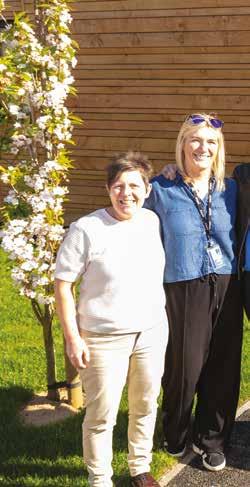
TV presenter Rob Brydon and singer Bob Geldof visited a purpose-built village for people experiencing homelessness.
Keen to learn more about the Harriet Gardens village in Rutherglen, near Glasgow, they met residents and Salvation Army staff who provide round-theclock support.
Homelessness charity Social Bite launched Harriet Gardens in April in partnership with the church and charity and South Lanarkshire council.
The village includes 15 modular houses, a community hub with shared cooking facilities, an outdoor gym and spaces for group activities, therapeutic support and social connection.
A specialist Salvation Army team is based on site 24 hours a day, offering care to residents.
Karen Good, contract manager for The Salvation Army’s homelessness services, said: ‘We aim to create a safe and supportive place where people are encouraged to take steps towards independent living.’
A Church of Scotland minister and his wife have won an art award for an installation highlighting how peace is built through small acts.
Peacemakers, created by the Rev Peter and Heidi Gardner, received the Art and Christianity journal’s award for a temporary installation or exhibition within a place of worship.
The interactive work, which has toured the UK, centres on a circular French knitting loom and invites visitors to contribute simple stitches in a shared contemplative act.
Judges praised its blend of contemporary art, craft and Christian spirituality.
Peter described the award as ‘a lovely affirmation’ of all the people who have joined them in adding to the piece.
He said: ‘This is the practice of Peacemakers – we wait, welcome, knit and listen, without hurry, trusting that the Spirit of God is already present.’
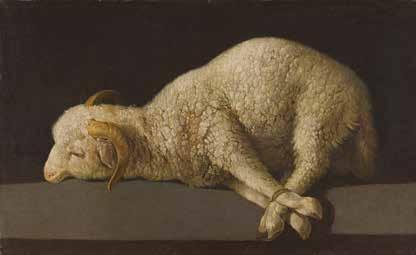
‘Agnes Dei’, 1635–1640, by Francisco de Zurbarán
Agnes Dei, a symbolic depiction of a lamb about to be slaughtered, is among the ‘extraordinarily powerful’ paintings included in an exhibition of the work of 17th-century Spanish artist Francisco de Zurbarán at the National Gallery in London.
The Latin title of the oil on canvas echoes a description of Jesus. In the Bible, John the Baptist calls him ‘the Lamb of God, who takes away the sins of the world’, and Christians see his self-sacrificial death on a cross as bringing redemption to humankind.
Alongside Agnus Dei, which is on loan from the Museo Nacional del Prado in Madrid, the exhibition contains many other religious works, including depictions of the Crucifixion and of the wise men presenting their gifts to the infant Jesus.
Ahead of the show, curator Francesca Whitlum-Cooper said of Zurbarán’s works: ‘Whether they are 10ft tall or small enough to hold in the hands, his paintings are extraordinarily powerful.’

Brackenridge
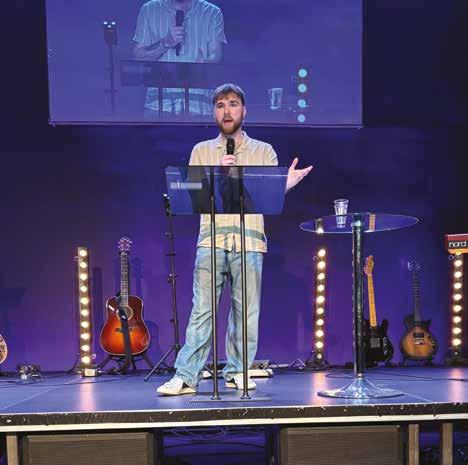
AARON BRACKENRIDGE explains why he is heading up Respawn, a new Christian ministry among gamers
Interview by Ewan Hall
Gaming is no longer just a pastime. From sprawling openworld adventures to fast-paced multiplayer arenas, video games create environments where millions of players can build friendships, form communities and find countless hours of enjoyment.
Aaron Brackenridge understands how important gaming can be in young people’s lives. He is the leader of Respawn, a new gaming initiative which is run by mission organisation Youth for Christ and which centres on engaging young people through video games.
‘What I do at Respawn is evangelismfocused,’ he explains. ‘It is about meeting young people where they already spend a lot of their time, and introducing Jesus to them.
‘We create a mix of online content across different platforms. We have short-form content on platforms such as Instagram and TikTok, and long-form content on YouTube, as well as live streams on Twitch.
‘Our short-form content includes livestream clips and original pieces with a biblical message – including short devotionals within a gaming context. On YouTube, we produce longer videos such as Bible studies, video game “let’s plays”


and Respawn Stories, where I play with guests and we talk about their faith journey. It is all aimed at young people.
‘I live stream Monday to Thursday, playing games such as Minecraft, Roblox and Fortnite – whatever young people are playing. Viewers can join, ask questions in real time and have conversations.’
Aaron has been focusing on creating content that is safe to watch – with no profanity or inappropriate themes –because it can be hard for gamers to find an online community that meets such criteria.
‘I am really focused on building a safe, welcoming community for Christians and those who are curious about faith,’ he says. ‘Other members of Youth for Christ fully moderate our content to keep it safe. And we bring faith into the community too – posting daily devotionals, sharing Scripture, offering a space for prayer and testimonies – while also providing a place for people to come together, connect and play.’
The Respawn team are already seeing young people connect with their content and the community that they are trying to establish.
‘During one stream, I was sharing a bit of my story, how I had grown up in a Christian household,’ Aaron says. ‘I had a young person message me on the streaming platform, asking if I felt it was hard for people who grew up in a Christian household to decide to follow Jesus for themselves.
We spoke to him in a way that made sense to him
‘He opened up and said how he’d been struggling, and that his parents were Christian and he wanted to have these beliefs as well. He just started telling me all the difficulties he was struggling with. While on stream, I answered the questions he asked, not really knowing what would come of it.
‘Later, we received a message from the young person’s parents, saying that the kid had always been far more interested in gaming than wanting to do anything related to church. But the young person had come across Respawn and tuned into our live streams, and because we engaged with his questions, he became more interested in church and faith.
‘The parents were thrilled to see it, and I think it is great that we were able to speak to him in a way that made sense to him.’
Aaron’s own faith journey helps him to understand why video games can matter so much to young people.
Growing up in a Christian household and frequently moving house, he struggled at school as he could not settle or build lasting friendships. In the end, Aaron was homeschooled.
‘Getting taken out of school was actually an answer to prayer,’ he says. ‘When my parents decided to homeschool me, it was a process that normally took weeks to be approved. That meant I would have had to go back to school first.
‘So I prayed that somehow I would not have to go back to school. That same day, we got a call saying I had been accepted for homeschooling and would not need to return to a classroom. That was the first time I had seen a prayer answered, and it made me stop and think that maybe I needed to take this seriously.’
It was while being homeschooled
Turn to page 8 f



From page 7
that Aaron changed the way he viewed video games.
‘Being homeschooled did help – I did not have to deal with what I was putting up with at school,’ he explains. ‘But at the same time, I was missing a real human connection.
‘I had always been into gaming, but being taken out of school and feeling lonely made it a much bigger part of my life than it had been before. It changed what gaming looked like for me. I started playing online and made new friends, and that helped me through the next couple of years.
‘At that point, I wasn’t really able to talk about my faith online – and

honestly, I probably didn’t have much of one anyway. That came gradually. Eventually, at church I began making friends my own age. I was being treated in a way that I hadn’t experienced before, especially compared to school.
‘From then on, things were a bit up and down, and I wasn’t perfect, but as I got more involved in church, made good friends and started building my own relationship with God, my faith became something personal – not just something my parents had. I was baptised at 15, because I felt confident in what I believed and wanted to make that decision for myself.
‘I never stopped gaming. It wasn’t

always as central, but it remained a hobby. For me, games are more fun with people, and I’ve always loved that sense of community.’
Aaron reflects that many people who spend a lot of time online may be trying to escape challenges in their daily lives. He also adds that the anonymity of gaming can make it easier for people to open up or engage with questions of faith.
Hundreds of millions of young people are gaming
‘It is probably easier for them because they are behind a gamertag – the name of their account,’ he says. ‘Half the time, you don’t know who they are when someone asks a question about faith.’
Aaron live streaming a game of Rocket
Aaron hopes that the work he is doing with Respawn will encourage other churches to enter the world of gaming and spread the word of God in a space that is significant to those playing.
‘It is probably one of the largest mission fields out there,’ he says. ‘You have hundreds of millions of young people gaming now – and that is where we need to be. We are just trying to get ahead of the curve and make sure we are in that space.
‘I hope that we will see many more lives impacted by what we are doing.’
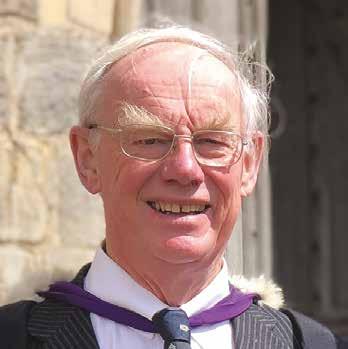
IAN BRADLEY, author of a book about musicals, outlines how two West End shows are infused with ideas of faith
Interview
by Emily Bright

‘Musicals communicate to people across generations and backgrounds,’ says cultural expert Ian Bradley. ‘I feel that they are now where an awful lot of people get their spirituality from, and it’s striking how many musicals are either explicitly Christian or have Christian influences behind them. I also think musicals are healing people’s souls. I believe that they have a tremendous therapeutic and spiritual role.’
Ian, emeritus professor of cultural and spiritual history at St Andrew’s University, has examined the religious influences of some of the best-known musicals and operas for his book Music of the Night Within its pages, Ian investigates themes of faith in shows such as Jesus Christ Superstar, Les Misérables, The Lion King and The Sound of Music.
Ian believes that ‘musicals have the power to speak to people about big issues. They’ve got great tunes and stories, as well as terrific costumes and stagecraft. But I think it is their spiritual themes which account for their popularity.’
Music of the Night also explores how composers and lyricists were influenced by faith and spirituality while creating their hit shows – among them, Rodgers and Hammerstein, whose musicals include The Sound of Music
‘Hammerstein’s grandparents, who were
devout Christians, were a tremendous influence on him,’ says Ian. ‘He was also enormously affected by the Sunday schools that he went to. He was moved by the pastor and could still remember his sermons many years later. Hammerstein is coming to the story of Maria von Trapp with a lot of sympathy.
Sister Gregory had a big input into the script
‘Meanwhile, as an atheist, Rodgers was worried about writing Catholic liturgical music, so he went to a convent to listen to the nuns. He became taken not just with their music, but also with their personalities.’
Sister Gregory Duffy, a Dominican nun who was also professor of theatre at Rosary College in Illinois, told the pair about her understanding of convent life.
Ian says: ‘Sister Gregory was brought in to advise at an early stage when they were writing The Sound of Music. She had a big input into the script.
‘She was struck by how the whole story is one of vocation and finding what God wants you to do. Maria thinks she is called
Turn to page 10 f
by God to be a nun. She goes off to be the governess to the von Trapp family and falls in love with the captain and his children. There’s that wonderful scene where she comes back to the mother superior, feeling guilty that she’s fallen in love. She wants to come back into the convent.
‘The mother superior says: “No, God is calling you to be the mother of these children who’ve lost their mother, the wife of this man who’s lost his wife. God doesn’t love you any less because you’re looking after these children rather than being in a convent.” Her words of wisdom lead into “Climb Ev’ry Mountain”. Sister Gregory, I think, had a huge impact in saying: theme this musical around the subject of vocation, and about what God is calling Maria to do.’
Faith is at the core of another popular musical, Les Misérables, which last year celebrated the 40th anniversary of its West End premiere.
Ian remarks: ‘I think it was George Carey, the former archbishop of Canterbury, who said that outside the New Testament, Les Misérables probably has the clearest expression of the Christian notions of grace, redemption and forgiveness begetting forgiveness.’
Ian says that the original French version
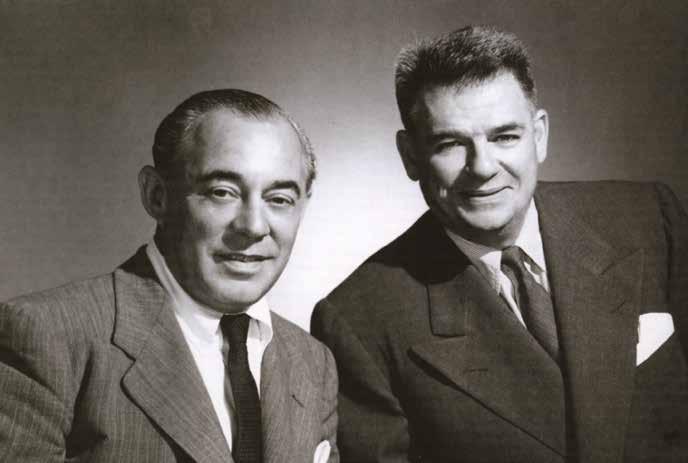
Richard Rodgers and Oscar Hammerstein were advised by a Dominican nun when writing their global hit ‘The Sound of Music’
of the musical was ‘almost completely secular’ and had no religious references and ‘no real Christian meaning’. He believes that what transformed Les Mis was Cameron Mackintosh’s Englishlanguage version, on which every worldwide version is now based.
‘The best-known version starts with Jean Valjean as the ex-convict, set out on

parole,’ he explains. ‘A bishop takes him in, feeds him, and he repays the bishop’s hospitality by stealing his silver. Then Valjean is taken by the gendarme – the French police – back to the bishop, who doesn’t only forgive him, but gives him more silver and says: “I am buying your soul for God. My forgiveness should make you forgive everyone.” Valjean is transformed by this forgiveness.’ Valjean seizes his fresh start and, reinventing himself under a new name, he tries to pay forward the bishop’s kindness. Inspector Javert discovers that Valjean has skipped his parole and mercilessly hunts him down to take him back to prison. The two men couldn’t be more different in their outlook.
‘Javert is portrayed as a police inspector who has a limited, supposedly Old Testament view of an eye for an eye and a tooth for a tooth,’ says Ian. ‘Valjean is completely different. He has a Christ-like view of forgiveness.’
Forgiveness isn’t the only Christian theme in the musical.
‘The show is full of religious references,’ Ian remarks. ‘There are lines about the “never-ending road to Calvary” and the “blood of the martyrs” as well as songs in the form of prayers, like “Bring Him Home”. There are also many references to Jesus and God.’
Ian attributes these religious references to the creative team behind the UK production.
‘John Caird, the co-director

‘Les Misérables’ has been running in the West End for more
of Les Mis, had a father who was a Bible scholar and a professor at Oxford University,’ he explains. ‘I’ve had long email conversations with John, who would say that he is not a Christian. But he was profoundly influenced by his father.
Audiences are gripped by its story of redemption
‘John was responsible for bringing several new songs into the show, one of which is the final scene where Valjean is dying. The last words he says is that to “love another person is to see the face of God”.
‘John told me that he wrote that just after his father had died. He reread his father’s Bible commentaries and was particularly struck by one on the First Epistle of John, with its theme that
if we love someone else, we are seeing God in that person, and we are expressing the love of God. He put that idea into the words of Valjean.
‘He also had a hand in writing Valjean’s prayer, “Bring Him Home”. The creative team were searching for a song for when Valjean is on the battlements. Javert has been captured and expects to be killed – an eye for an eye, a tooth for a tooth. But no, Valjean wants to forgive him, and Javert can’t cope with this.
‘They were going to write a rather angry song. But John said no, it has been produced with a hymn-like tune, and they must make it a prayer. They worked through the night on “Bring Him Home”, which has become an anthem.’
Ian finds it fascinating that ‘Les Mis has become successively more Christian in its different incarnations, from the secular French version to the more overtly Christian, English-language stage version’.
He attributes the success of the musical to its exploration of faith and spirituality.
‘Audiences are completely gripped by its story of forgiveness, redemption and sacrifice,’ he says. ‘Fewer people may be going to church, but they are seeking something and are open spiritually.
‘Musicals like Les Mis are raising big Christian themes and are speaking to people’s spiritual questions and needs. I think it is one of the reasons that such shows have run for so long.’
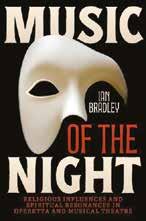
Music of the Night
Your prayers are requested for Oliver and Eric, who have been unwell.
The War Cry invites readers to send in requests for prayer, including the first names of individuals and details of their circumstances, for publication. Send your Prayerlink requests to warcry@salvationarmy.org.uk or to War Cry, 1 Champion Park, London SE5 8FJ. Mark your correspondence ‘Confidential’.
Becoming a Christian
There is no set formula to becoming a Christian, but many people have found saying this prayer to be a helpful first step to a relationship with God
and
Using the pen name of ‘the elder’, John – a disciple of Jesus and Gospel writer – addresses this short, personal letter to ‘my dear friend Gaius’ (verse 1 New International Version). Scholars are uncertain as to who, exactly, Gaius was.
It is a Latin name and, therefore, suggests that Gaius was at least part-Roman. Three men named Gaius appear in the New Testament: a Macedonian companion of Paul’s, who was arrested during a riot in Ephesus (see Acts 19:29); a companion of Paul’s from Derbe (see Acts 20:4); and a man who hosted Paul in Corinth (see Romans 16:23).
Lord Jesus Christ,
I know that I have done things in my life that are wrong and I’m sorry. Thank you that I can ask you for forgiveness because of the sacrifice you made when you died on the cross.
Please forgive me and help me to live a better life in the future as I learn how to love you and follow your way of living.
Thank you, Lord Jesus.

If you’ve prayed this prayer, scan the QR code or contact us using the coupon on this page

The Gaius of this letter is similarly showing hospitality to travelling evangelists – John writes that ‘it was for the sake of the Name that they went out, receiving no help from the pagans’ (7). John’s commendation that Gaius is ‘faithful in what you are doing for the brothers and sisters, even though they are strangers to you’ (5) may tip the balance in favour of this letter’s recipient being the Corinthian Gaius.
As in his two earlier letters, John emphasises the importance of truth. John is delighted to hear that Gaius is faithful to the truth, continuing to ‘walk in it’ (3). John says that showing hospitality to itinerant preachers is a way of working together ‘for the truth’ (8).
The ‘truth’ in question is something that John exposed and expanded upon in his two earlier letters. Contrary to prevalent false teaching, the truth is that, as the Christ – God’s anointed Messiah –Jesus of Nazareth is not only truly divine but also truly human (see 1 John 4:2; 2 John 7).

Christ’s followers are not only to live in truth, but they are also to live by love (see 1 John 4:16).
In contrast to Gaius, John mentions Diotrephes, who lives to love himself. He loves to be first, has isolated himself from John and is openly critical of the apostle (9 and 10).
Gaius, says John, is not to imitate Diotrephes.

Or email your name and postal address to
To receive basic reading about Christianity and information about The Salvation Army, complete this coupon and send it to
War Cry 1 Champion Park London SE5 8FJ



Feature by Ewan Hall
Four years have passed, and it is time once again for football’s great global tournament to kick off. Starting next Thursday (11 June), three nations – Mexico, Canada and the United States – will share the duties of hosting the 2026 World Cup.
Mexico’s team will begin the competition against South Africa at the Mexico City Stadium, aka the Azteca – the first stadium to become a venue for three World Cups. Another 103 fixtures will be staged in 16 stadiums across North America, as 48 teams – the most in the tournament’s history – represent their countries.
Carrying the hopes of their respective nations are the squads of England and Scotland, whose supporters will dare to hope that they will witness some memorable moments on the pitch.
‘The bottom line is this is what you dreamed of as a kid and I think it’s easy to get here [to the World Cup] and then maybe fear the occasion or fear failing, but that’s part of life,’ England’s captain, Harry Kane told Fifa.com. ‘This is what we live for. That’s why we’re on the pitch, that’s why we train every day, to have this opportunity and to express ourselves in that moment.’
Elite players spend years making personal sacrifices – such as missing holidays or family occasions – while pushing their bodies to the limit.
We may not be sport superstars, but commitments in our own lives can entail us making sacrifices. At such times, we can feel isolated and burnt out. We perhaps fear that our dedication is not paying off and so we struggle to continue. Thankfully in those moments, God is willing to help us.
The Bible records how God told one leader who was facing huge challenges: ‘Be strong and courageous. Do not be afraid; do not be discouraged, for the Lord your God will be with you wherever you go’ (Joshua 1:9 New International Version
If we put our faith in God, we can find the strength to keep going through tough times and through the moments of doubt that creep in when progress feels impossible.
He is able to help us tackle every challenge that we face.

1. Obscure (4)
3. Twitch (3)
5. Ancient European region (4)
7. Horrendous (9)
9. Footwear (4)
10. Thaw (4)
11. Tempest (5)
14. Worn out (5)
15. Alternative (5)
17. Redbreast (5)
18. Whimper (5)
19. Weary (5)
20. Timepiece (5)
23. Pain (4)
25. Travel permit (4)
27. Deeply shocking (9)
28. Resound (4)
29. Before (3)
30. Simple (4)
1. Employer (4)
2. Uncommon (4)
3. Taut (5)

4. Provide for (5)
5. Sullen (4)

6. Desire (4) 7. Anticipation (9)
8. Torpid (9)
11. Scatter (5)
12. Sphere (5)
13. Lunar cycle (5)
14. Observed (3)
16. Metal bar (3)
21. Revile (5)
22. Pursue (5)
23. Competent (4)
24. Therefore (4)
25. Hateful (4) 26. Crooked (4)
Each solution starts on the coloured cell and reads clockwise round the number

Underground passage 2. Stringed instrument 3. Receiver of electronic signals 4. Type of coat 5. Erase from a surface
6. Protein found in wheat

Fill the grid so that every column, every row and every 3x3 box contains the digits 1 to 9
Look up, down, forwards, backwards and diagonally on the grid to find these authors of fantasy novels


INGREDIENTS
METHOD
1 orange, grated zest and juice
2tbsp sweet chilli sauce
1tbsp reduced-salt dark soy sauce
2.5cm piece fresh root ginger, peeled and cut into thin strips
4 lean pork loin steaks or medallions, trimmed and cut into thin strips
1tsp cornflour
1tbsp oil
450g packet stir-fry vegetables
Noodles, to serve

INGREDIENTS
500g pork mince (5 per cent fat)
Salt and pepper
2tsp oil
2 x 200g packets stir-fry vegetables
2 x 150g packets straight-to-wok noodles
8tbsp hoisin sauce
4tbsp water

In a small bowl, stir together the orange zest and juice, reserving 1tbsp juice from the orange for later. Stir in the sweet chilli sauce, soy sauce and ginger. Add the pork strips to the marinade, then set aside for 5 minutes. Place the cornflour in a small cup and mix in the reserved juice.




Heat the oil in a wok or large frying pan. Use a slotted spoon to lift the pork from the marinade – reserving the marinade for later – and add the pork to the pan, stirring continuously for 3 minutes.
Add the vegetables and continue to cook for 2-3 minutes, until just tender.
Pour in the reserved marinade and cornflour mixture and cook for 1-2 minutes, stirring continuously, until the sauce thickens and coats the pork and vegetables.
Serve immediately with noodles.
METHOD
Place the pork in a large bowl and season. Shape into 16 small meatballs.
Heat the oil in a large non-stick frying pan over a medium heat and cook the meatballs for 8-10 minutes, until cooked through and any juices run clear. Transfer to a large plate and set aside.
Return the pan to the heat and stir-fry the vegetables for 2-3 minutes. Add the noodles, hoisin sauce, water and meatballs, then toss gently for 2-3 minutes, until piping hot.
Serve immediately.

Joyce Meyer