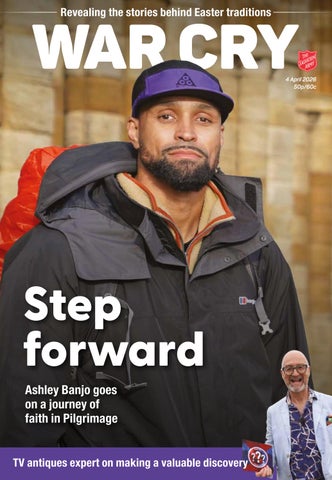
Step forward
Ashley Banjo goes on a journey of faith in Pilgrimage
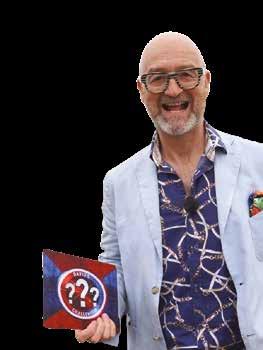
TV antiques expert on making a valuable discovery
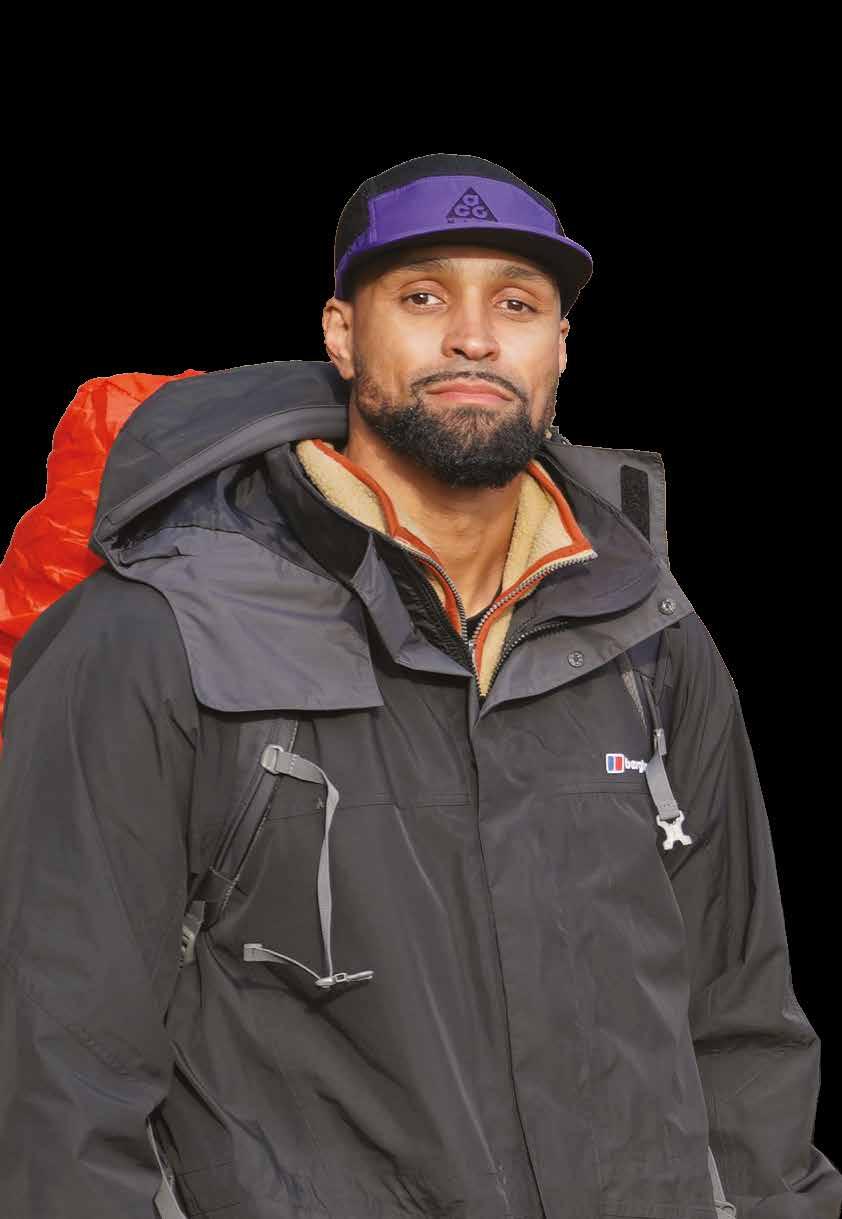
Ashley Banjo goes on a journey of faith in Pilgrimage
TV antiques expert on making a valuable discovery
The Salvation Army is a Christian church and registered charity seeking to share the good news of Jesus and nurture committed followers of him. We also serve people without discrimination, care for creation and seek justice and reconciliation. We offer practical support and services in more than 700 centres throughout the UK. Go to salvationarmy.org.uk/find-a-church to find your nearest centre.
The Salvation Army first published a newspaper called the War Cry in London in December 1879, and we have continued to appear every week since then. Our name refers to our battle for people’s hearts and souls as we promote the positive impact of the Christian faith and The Salvation Army’s fight for greater social justice.
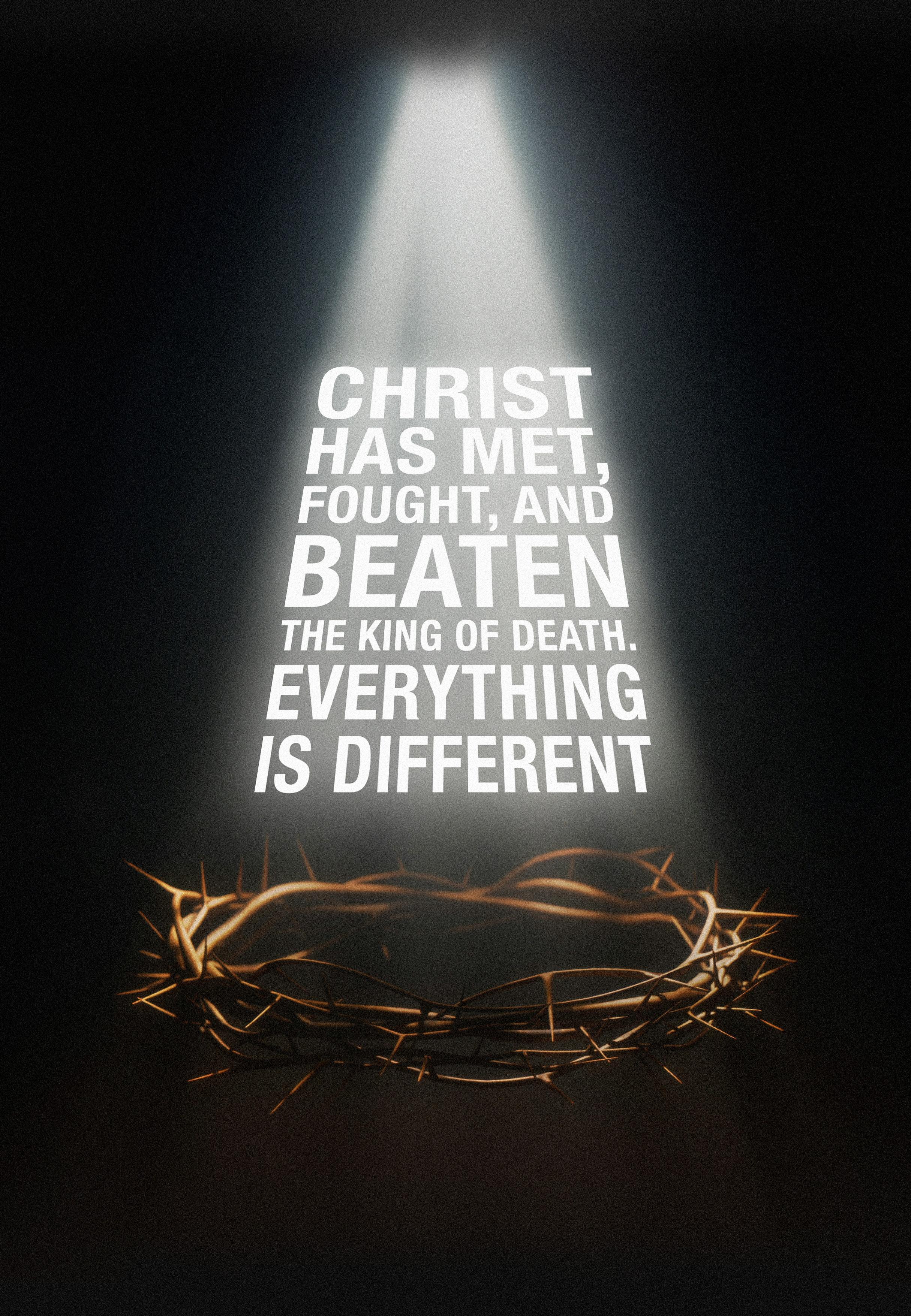
This weekend is the most important time for Christians round the world. On Good Friday, they remember with thanks the sacrifice that Jesus made when he allowed himself to be put to death on a cross. He had done nothing wrong, but took the punishment that humans deserve for all the times they act, speak or think in a wrong way.
Then on Easter Sunday, Christians celebrate that, after his death, Jesus appeared to his followers alive and well. The world has never been the same since.
Despite the change that Jesus’ resurrection made, there are still many people who find it hard to believe that it really did happen. For them, it is a myth from years ago.
In this week’s War Cry we speak with TV antiques expert David Harper. The Bargain Hunt presenter tells us that, for a long time, he could never bring himself to believe in the Christian story. ‘I thought it was a fairytale made up to control weak-minded and unintelligent people,’ he says.
But when his daughter’s life was dramatically changed for the better after she became a Christian, David decided to investigate the faith’s claims for himself. He was shocked at what he discovered.
Editor: Andrew Stone, Major
Managing Editor: Philip Halcrow
Staff Writer: Emily Bright
Staff Writer: Claire Brine
Staff Writer: Ewan Hall
Editorial Assistant: Linda McTurk
Graphic Designer: Mark Knight
Graphic Designer: Natalie Adkins
Email: warcry@salvationarmy.org.uk
The Salvation Army United Kingdom and Ireland Territory
1 Champion Park London SE5 8FJ
Tel: 0845 634 0101
Subscriptions: 01933 445445 (option 1, option 1) or email: subscriptions@satcol.org
Founders: Catherine and William Booth
International leaders: General Lyndon Buckingham and Commissioner Bronwyn Buckingham Territorial leaders: Commissioners Jenine and Paul Main
Editor-in-Chief: Major Julian Watchorn
The Salvation Army Trust is a registered charity. The charity number in England, Wales and Northern Ireland is 214779, in Scotland SC009359 and in the Republic of Ireland CHY6399.
‘The evidence for Jesus being who he said he was just kept on coming at me,’ he reveals. ‘Four months in, I came to the point where I thought: this is all true.’
He adds: ‘I started to believe that Jesus was who he said he was all along. And if what he said and did was true, then the Resurrection had to be true too. Without it, there’s no Christianity. Without it, Jesus is nothing more than a good preacher who was executed. But because he rose to life, he proved he was God.’
Discovering the truth of the life, death and resurrection of Jesus has changed David’s own life just as it has transformed the lives of millions of people through the centuries. It’s a truth that can change our lives as well –at Easter and all year round.
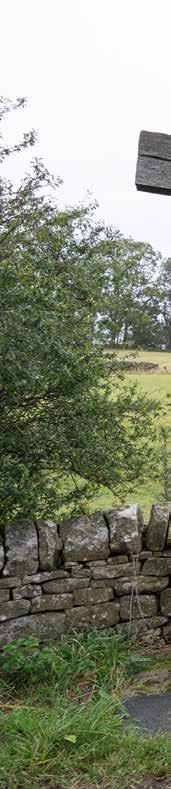



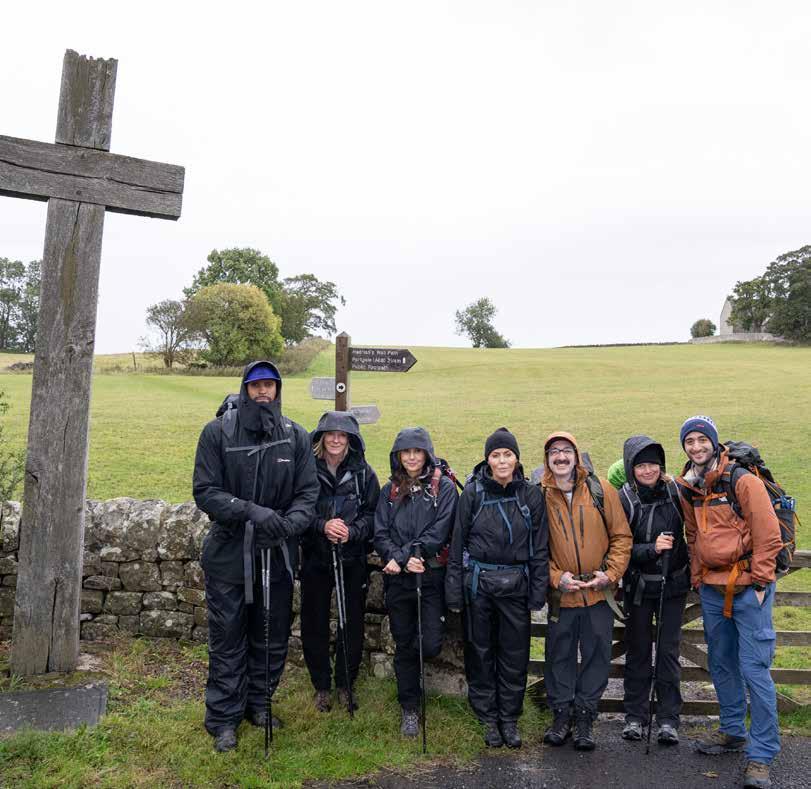
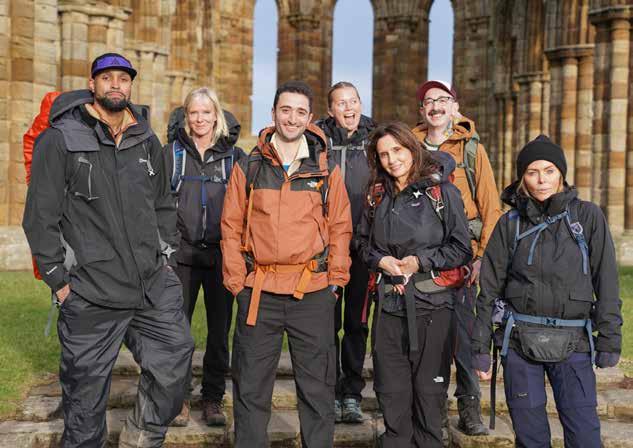
Walking trails weave through national parks and line the coast of the northeast of England. And, for generations, pilgrims searching for answers to some of the big questions of life have followed three routes – the Ways of St Cuthbert, St Oswald and St Hilda. Each path is named after a seventhcentury church leader who helped turn the region into a cradle of Christianity in the UK. Seven celebrities are following these
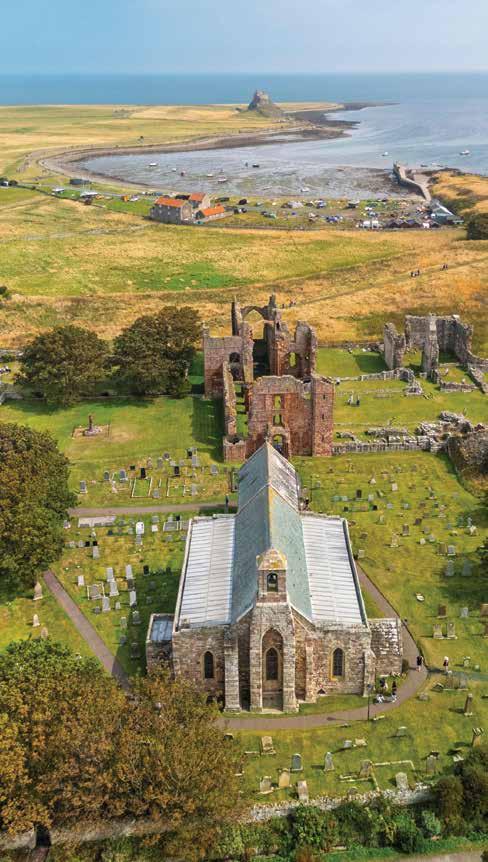
paths in the BBC2 series Pilgrimage, which begins on Sunday (5 April). They begin their journey not far from Whitby Abbey, whose ruins date back to the 13th century and which gained cultural popularity through the horror novel Dracula. Their final destination is Lindisfarne in Northumberland, also known as Holy Island.
It’s a personal relationship with God
Those taking part have a variety of views on faith. Actress Patsy Kensit describes herself as an ‘à-la-carte Catholic’, who adopts what she sees as the best bits of the faith and believes in the power of prayer. Dancer and TV personality Tasha Ghouri is an atheist, while stand-up comedian Hasan Al-Habib is a Muslim, and fellow comic Ashley Blaker is an
Orthodox Jew-turned-agnostic.
Completing the line-up are actress Hermione Norris, who puts her faith in love and connection; radio presenter Jayne Middlemiss, an agnostic who travelled India for five years, exploring various faiths; and Ashley Banjo, a Christian and member of street dance group Diversity, which he joined aged just 18 and which only two years later was catapulted to fame through winning ITV’s competition Britain’s Got Talent
Introducing his own faith background on Pilgrimage, Ashley says: ‘I just remember faith and the idea of God always being there in some way. I know what faith I follow, but the pilgrimage gives me a chance to dive deeper.’ He also reveals that he has ‘really only embraced’ his beliefs in the past couple of years, saying that one of the barriers to exploring faith was keeping up his performance persona to ‘survive all of that public exposure’.
Looking back on Pilgrimage at a press Q&A and roundtable interview in London,
Turn to page 4 f
he returns to that thread of thought.
‘The big bad world of St Cuthbert’s Way was great,’ he says. ‘The main reason to do it wasn’t to discover my faith, it was to discover my faith in context.’
Explaining that his life since his teenage years has been about performing in front of a camera, he tells me: ‘I was wrestling with the projection of my Christian faith. It’s a personal relationship with God, so it’s interesting being on camera and in an environment where I’m having to project myself outwards, rather than just sit with my own thoughts, my own prayers and my own mind.’
He says: ‘The challenge was to let my guard down, explore those conversations and questions, and go on a walk with some amazing people.’
‘Going across the causeway at low tide, I was picturing all the people who had done this pilgrimage before us and the people that may come after us. In that moment, it just hit me in the chest – this was a real privilege.’
Ashley wasn’t expecting how powerfully he would experience God.
‘There were a few moments when I was sitting on my own and I was just looking out at this beautiful landscape, reading the Bible,’ he says. ‘I genuinely felt the presence of God, especially when we got to Holy Island. I had some life-changing moments in nature, looking up and looking forward and being present in what was around me.’
He found that approaching Holy Island was particularly moving.
‘As we were walking, there was this small island in the landscape. The sun broke through and framed the island perfectly. The scientist in me is obsessed with how the universe can be so delicately balanced to support life.
Onreaching the top of a small cliff edge, he sat and read Psalm 136, which talks about God’s love enduring for ever. He treasures that moment.
‘It wasn’t loud, it wasn’t a moment of walking into a cathedral or having a huge conversation. The conversation was internal and upward and something personal. I never lost the gravity of that moment. I encountered something unexplainable there, which was a real step forward for me to dive deeper into faith. I was grateful for it.’
As a dancer, Ashley also connects with his faith through creativity.
‘I feel like the Bible talks a lot about creatives,’ he says. ‘One of the first things
God did was create. Creativity is one of the biggest gifts, and one of the purest things we can do.
‘Being able to create something, to speak to people and affect them is a powerful thing, whether it’s through dance, music or whatever. I think art can be really impactful – maybe more than some people give it credit for.’
While secure in his own faith, Ashley was keen to converse with people who had different beliefs from him.
‘Before the pilgrimage,’ he says, ‘if I ever stopped to talk about God or faith or anything surrounding religion, it was always within my own echo chamber.
‘Seeing people who don’t necessarily believe in God or a fixed religion, or like Hasan, who has a completely different faith to me, I realised that I’d never been in an environment where we were openly and actively there to discuss it. I go to church where people think the same thing I do.
‘So I found it interesting to watch people discover, explore and question. It helped me understand myself and my own beliefs more, seeing what other

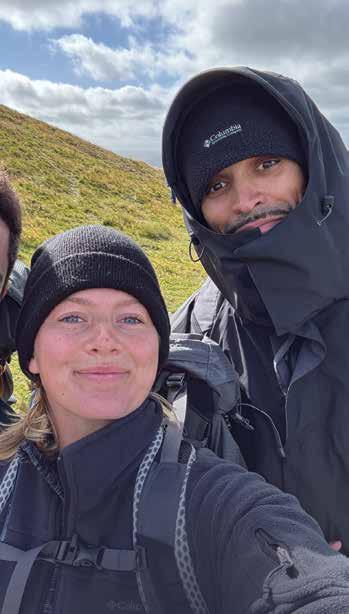
people think and where we disagree.’
The group’s discussions were respectful.
‘There were a few moments of disagreement, but they don’t have to accelerate into conflict,’ says Ashley. ‘They were just, “I think this, you think that. That’s interesting. Why do you think it?”’
During the first episode of the series Hasan visits an Islamic prayer room at Durham University and invites two other celebrities to join him. Ashley and Tasha decide to go, and they find it to be a moving experience. Looking back on it, Ashley appreciates how Christianity and Islam can coexist peacefully, side by side.
‘What struck me when we went to the prayer room,’ he tells me, ‘is that we, as human beings, could go into these different spaces and respect one another. As we left, it wasn’t a Christian and a Muslim, it was just Ash and Hasan. Those moments touched me.’
Discussing theological questions with other celebrities – and engaging with their life experiences – also helped Ashley to see his faith differently. For instance, he
five.
‘There’s loads of questions I have answered and understand from my perspective,’ he says. ‘And I might know the theological or the Sunday school answer to Tasha’s question of pain and suffering. But to get to know Tash and to understand her more, and then to hear her ask a question with emotion about something that I haven’t been through, all of a sudden, the answer that I understand
He explains: ‘Being around people with different perspectives, faiths and experiences, I realise I have to be humble, learn all the time and have an open heart. I try to lead with love, compassion and understanding and get into the Bible every morning to understand a little bit more.’ St Mary the Virgin Church and Lindisfarne Priory on
Ashley is honest about the fact that there’s always more to learn and that ‘anyone who says that they have all the answers doesn’t know what they’re talking about’.
Every spring, people give their loved ones egg-shaped chocolate, eat distinctively decorated buns and take a break from work on a bank holiday weekend. What’s the story behind these customs?
Feature
by Philip Halcrow
one
Easter has long been a time of ‘holy days’ when people would be taking part in religious observances rather than working – but, unlike Christmas Day, which falls on 25 December every year, Easter Day moves around March and April in the calendar.
In a quirk of history, the day has become a movable feast because there is a degree of certainty about the time of year when the events it marks took place.
Easter Day celebrates the resurrection of Jesus. The biblical sources agree that ‘early on the first day of the week’ followers of Jesus went to the tomb where his body had been placed after his crucifixion, found it empty and then encountered him alive.
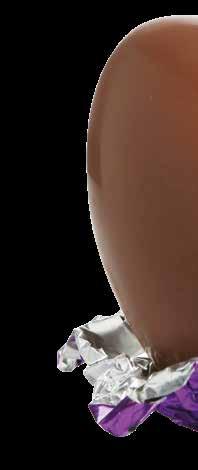
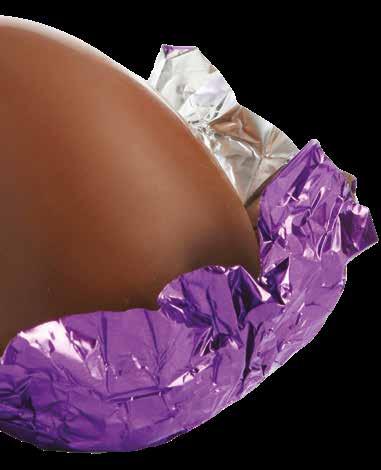
The first hollow chocolate Easter egg in the UK was sold by Fry’s in 1873 –but the association of eggs with the festival goes back centuries further.
During Lent – the period of fasting that precedes Easter – people could not eat fats, says Dr Michael Carter, curator of history for English Heritage.
next E g gs a l l r o u n d ? ? ?
‘Eggs were one of the few sources of readily available protein for the poor – more accessible than meat – and so it must have been a great physical and emotional release to be able to eat them again when your Lenten abstinence ended and you could celebrate Easter.’ Traditions grew up around eggs. In
The accounts also say that the events of Jesus’ crucifixion and resurrection happened around the time of the Jewish Passover – an ancient festival whose timing is determined by the cycles of the moon.
When the early Christians began celebrating Jesus’ resurrection with a religious festival, they came to tie it to the first Sunday after what was – in the Jewish calendar – 14 Nisan.
However, there was some confusion on how to make the calculations, and Celtic and Roman church traditions in Britain and Ireland held different opinions. Church leaders met for discussions – for instance at the Synod of Whitby in 664 – and the Roman dating was chosen.

the Middle Ages, they were collected and distributed as alms to the poor at Easter.
Cadbury launched a chocolate egg a few years after Fry’s. The Creme Egg appeared in the 1960s, made first by Fry’s and then by Cadbury. In the 21st century the Meaningful Chocolate Company started to produce the Real Easter Egg, which comes with a box and a booklet that explains the Easter story.
Over history, Christians have come to see eggs as symbolic, saying that their shape represents the stone that was rolled in front of Jesus’ tomb and that they symbolise the new life promised by his resurrection.
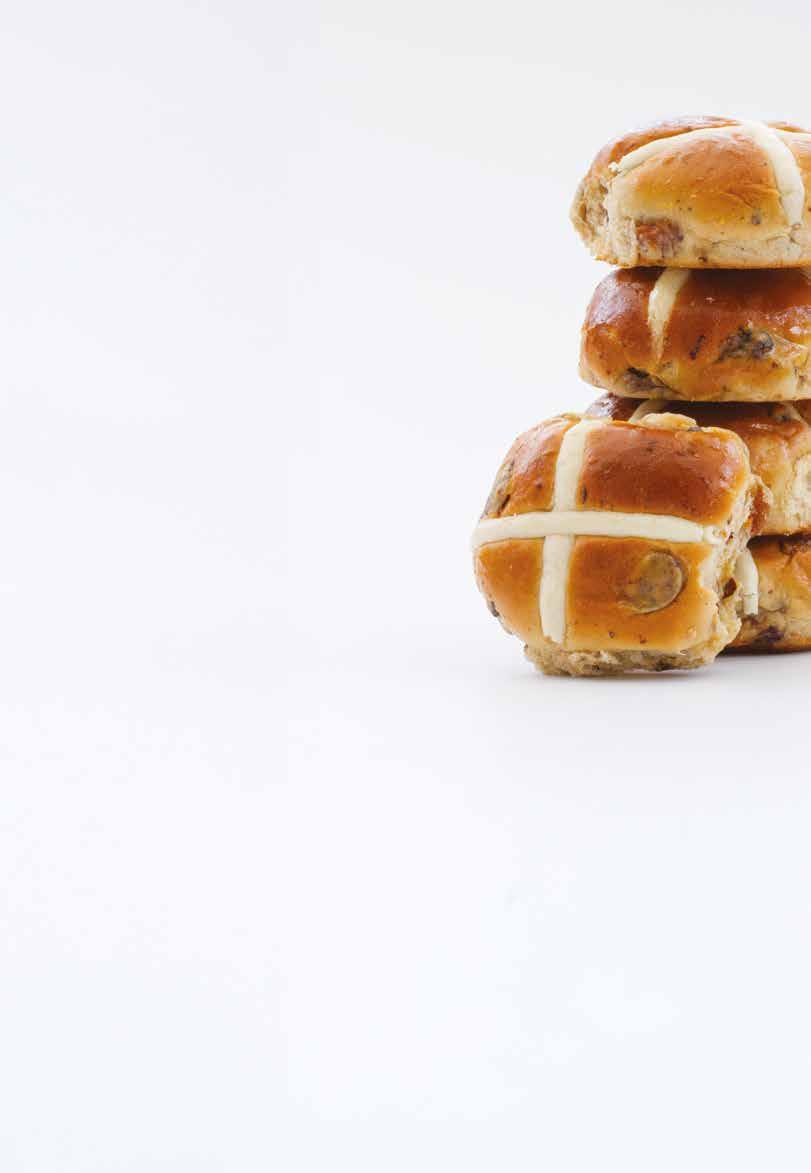
The earliest mention in the Oxford English Dictionary of a ‘cross bun’ – defined as ‘a type of sweet spiced currant bun marked with a cross and traditionally eaten hot or toasted on Good Friday’ – is from 1641. The dictionary notes that ‘hot cross bun’ became the usual term, its first known usage being from a 1733 almanac which observes: ‘Good Friday comes this
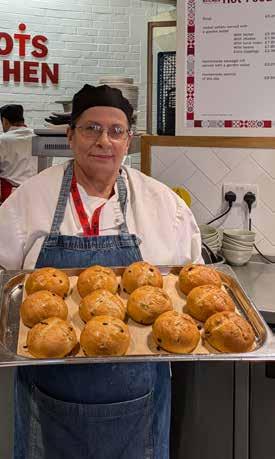
Month, the old woman runs With one or two a Penny hot cross Bunns.’
However, one tradition takes the history of an Easter bun back further. St Albans Cathedral is associated with what it calls an Alban bun.
Cathedral guide Stephen de Silva says: ‘We’re told that in 1361, on Good Friday, one of the monks here in the abbey, Brother Thomas Rocliffe, decided to bake a spiced bun marked with the sign of the cross and to give it to the poor and pilgrims at the door of the abbey refectory.’
Stephen acknowledges, however, that there is a gap of 500 years between the reported bun giveaway and the known documentary evidence for it.
‘In 1851 there was a baker in London called Collier,’ Stephen explains, ‘who bakes some buns and says that his recipe is an ancient one that comes from the abbey of St Albans, where Brother Thomas Rocliffe first baked them.
‘So the question for us is: Has Collier dreamt this story up in his head or does he know something that we don’t?’
The Alban bun is still being made – to a secret recipe – in the cathedral kitchen and is served in its café from Lent till Easter Monday. Whatever the history, the cross which tops the buns serves as a reminder of the events of what is now known as Good Friday – when Jesus was crucified on a cross, revealing God’s offer of forgiveness to the world.

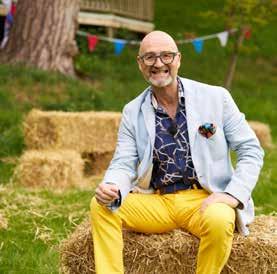
Presenter of Bargain Hunt DAVID HARPER reveals why he decided to explore Christianity, what convinces him that the Jesus story is true, and how his new-found faith has transformed his character
Interview by Claire Brine
Antiques expert David Harper was feeling hopeless. For years, his daughter had been suffering with depression – and he was ill equipped to help. Then the unimaginable happened. She became a Christian. And the change in her character was ‘so dramatic and indescribable’ that David couldn’t believe it – literally. He decided to investigate Christianity for himself.
‘I thought it would take me an afternoon,’ laughs David, a presenter of BBC1’s Bargain Hunt, who also pops up regularly on the channel’s Antiques Road Trip series. ‘I went into my investigation feeling very sceptical, expecting to debunk Christianity. I thought it was a fairytale made up to control weakminded and unintelligent people. So I was fighting against the faith all the way.
‘But the evidence for Jesus being who he said he was just kept on coming at me. And four months in, I came to the
point where I thought: this is all true.’
Following in his daughter’s footsteps, David became a Christian. He shares the story of his journey to faith in his new book, The God Conundrum: An Easy Guide to Life, the Universe and Everything!
‘In the book, I take the most difficult questions in the world about faith – the same questions I was asking when I started exploring Christianity – and attempt to answer them in a way that people can get to grips with,’ he tells me.
‘Before I started writing it, I talked to all sorts of people about the big, fundamental, existential questions of life, asking things like: “How do you think the universe began? Was it an accident or did someone design it?” Most of the time, people’s eyes would light up and we’d enjoy having a conversation together. I think people are open to talking about this stuff.’
Even before his daughter, Hetty, became a Christian, David had harboured a lifelong fascination with faith. Years of ‘inquisitiveness into different world views’ had led him to discover Stoic philosophy.
‘I was always looking for a reason to be alive,’ he explains. ‘I wanted to know why I was here. What was I doing? And what was the point of it all? Questions like that had always troubled me, even as a young boy.
‘Back then, Jesus never entered the conversation at all. I knew he was a person in the Bible. My idea of God was that he was powerful and a bit scary – but Christianity seemed so ordinary. It was just cultural: Christmas, Easter, weddings, funerals and school parades. My parents weren’t Christians, so our family didn’t talk about faith.
‘As I grew up and became interested in antiques, I found myself coming across lots of Eastern religious artefacts. I learnt
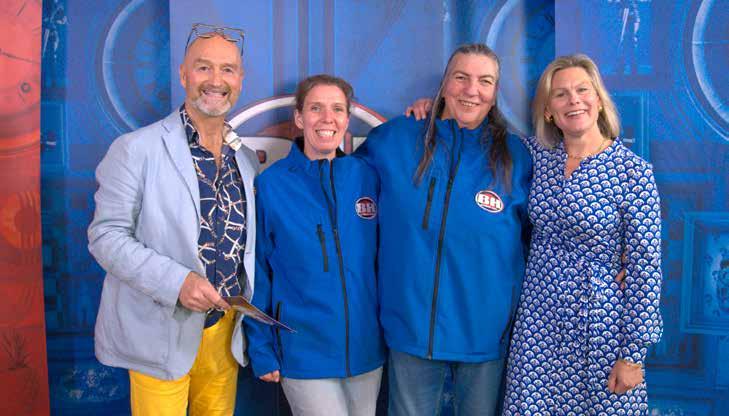
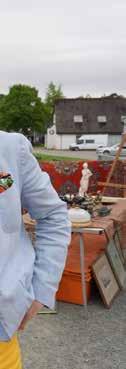
Presenter of ‘Bargain Hunt’ David, along with the blue team and their antiques expert Kate Bliss
about Buddhism and Taoism. I knew that there had to be “something” out there: a reason for everything.
‘Eventually, in my search for reason and purpose, I found Stoicism. I thought it was as good as Christianity, and I even tried to convince my pastor friend that I was right. But while Stoic philosophy helped my mind, showing me how to deal with different things in life like business and relationships, it didn’t touch my soul. And that was always the problem I had with it.’
As David continued on his quest to find answers to the big questions of life, Hetty became ill. It was a tough time for the whole family – and David felt utterly powerless to help his daughter feel better.
‘Hetty found her 20s an incredibly dark time,’ he says. ‘She was depressed and self-harming. Doctors tried their best by prescribing medication and therapy, but nothing could fix her.
‘As her dad, I felt useless because there was nothing I could do. Sometimes she’d call me and I’d dread answering the phone, because we would fall out and I’d always seem to say the wrong thing. But there were also times when I worried she might take her own life.
‘Then a friend told Hetty to “try Jesus”.’
Watching her grow in faith was astonishing
Feelingthat there was nothing to lose, Hetty started going to church. She read the Bible and discovered God’s love for her, shown through the life of his Son, Jesus. She became a Christian.
‘When I saw Hetty after that, she wasn’t the same person,’ says David. ‘She was happy. She was full of God. I’d hear her laughing – and that was a sound I thought I’d never hear again. Watching
her grow in faith was astonishing.’
Over Christmas 2024, when Hetty came to stay with her parents for two weeks, David was given ‘an intense lesson in how Jesus can change people’. It was then that he decided to explore Christianity for himself.
‘I’d given Hetty enough time for this faith of hers to fizzle out,’ he says. ‘And it didn’t fizzle out. It had become stronger and deeper. So I started reading all kinds of books about Christianity: titles about Jesus, as well as scientific and history books.
‘I also started reading the Bible, starting with the four Gospels. Not only did I learn that Jesus was a real person – because I hadn’t ever been sure of that before – but I began to get to know who he was.’
Coming to faith, says David, was an Turn to page 10 f
From page 9
‘incredibly emotional experience’. As well as reading the Bible, he started praying and attending church.
‘I prayed for signs from God all the time,’ he says. ‘I prayed that I would find all the information I needed to believe. I prayed to improve myself. I thanked God for what he’d done for my daughter. It’s remarkable how prayer can fix the human mind and soul.
‘I also went to church and found myself looking forward to the sermons. They helped the Bible come alive to me, and I wouldn’t want the service to end.’
After months of studying the Bible and other Christian literature, spending time in prayer, talking with other Christians and
witnessing the change in Hetty, David was convinced: the Jesus story had to be true. And the part of it that made the greatest impact on him was the Resurrection.
‘In my book, I look at the most popular arguments that claim to debunk Jesus’ resurrection,’ he says. ‘Claims such as: Jesus wasn’t really dead or the risen Jesus was really an impersonator. And yet, through my research, I couldn’t help but come to the conclusion that this historical event actually happened.
‘When the followers of Jesus spread the news that he’d risen from death, they were persecuted for it. They got no money, prestige, nothing. Yet they willingly died to share the good news.
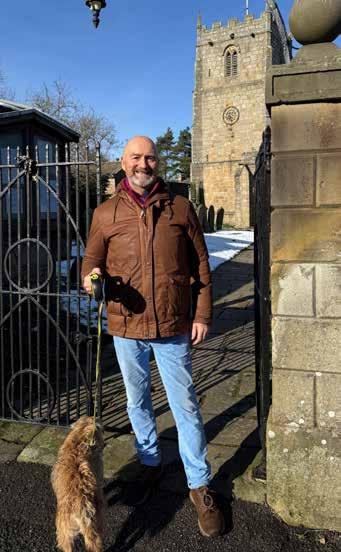
To investigate Christianity, David started attending church
‘I started to believe that Jesus was who he said he was all along. And if what he said and did was true, then the Resurrection had to be true too. Without it, there’s no Christianity. Without it, Jesus is nothing more than a good preacher who was executed. But because he rose to life, he proved he was God.’
Though David had come to accept Jesus’ resurrection on an intellectual level, it was proving more difficult for him to ‘feel the truth’ of such a revelation in his heart. Then he realised that ‘all the proof’ he needed had been staring him in the face since the start of his investigation.
‘I’d spent months looking at facts, figures and science,’ he says. ‘But the proof of God’s love was shown through my daughter. Jesus saved Hetty’s life. It wasn’t doctors
or therapy. It was Jesus – and that realisation hit me like a steam train. I fell to my knees and thanked Jesus for what he’d done. A weight was lifted.’
Jesus means everything to me now
And a life was changed. David became a new person – knowing he was unconditionally loved by God, forgiven for his past mistakes through Jesus’ sacrifice on the cross, and free to face a faith-filled future with everlasting joy and hope, thanks to the Resurrection.
‘Jesus means everything to me now,’ he says. ‘He’s a constant companion. A constant guide. Whatever I’m doing, I’ll
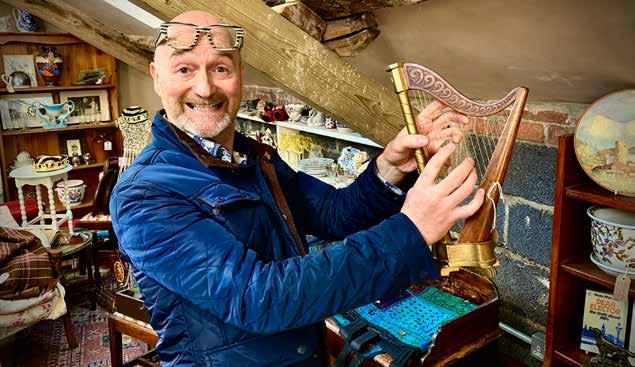

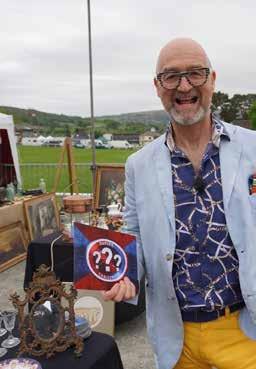
David also appears regularly on BBC1’s ‘Antiques Road Trip’, competing against fellow experts such as Roo Irvine
always pray about it first. Since becoming a Christian, I’ve become a much calmer person. I worry less. I have peace and joy. I’m surprised, daily, by the joy I feel. To sum it up, I’m totally transformed.’
And he wants others who are searching for meaning in life to experience such a transformation for themselves.
‘Being a Christian brings so much joy – and who wouldn’t want that?’ he says. ‘You don’t have to earn God’s love – it’s free. Some people might say that Christianity is boring because you aren’t allowed to sin, but when you accept Jesus in your life, you don’t want to do anything that goes against his teachings anyway. I’m not challenged by the difficulties of having a faith. I revel in it.’
He’s even hoping that his new-found beliefs might feature more prominently in
his television career.
‘For the next few months I’ll be filming a new series of Antiques Road Trip, so I’m looking forward to the opportunity to plant some seeds as I travel about,’ he explains. ‘My role has always been to make TV shows about antiques, but now I see that my purpose is to let people know what I’ve discovered about Jesus.
‘It would be a dream to make a faithbased television programme one day –but I don’t know what will happen in the future. Being a Christian might open some new doors for me. Or it could be that my screen career will come to an end. Either way, it doesn’t matter. If I was told that I’d never film on an antiques programme again, I wouldn’t lose a wink of sleep over it.
‘The most important thing to me now is
the faith that I have discovered. And my focus is on sharing it with people who are a little bit like I was: unsure, worried about life and searching for the truth.’
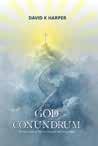
l The God Conundrum: An Easy Guide to Life, the Universe and Everything! is available to buy on Amazon
Your prayers are requested for Will, who has cancer; and Mpumelelo and for his children.
The War Cry invites readers to send in requests for prayer, including the first names of individuals and details of their circumstances, for publication. Send your Prayerlink requests to warcry@salvationarmy.org.uk or to War Cry, 1 Champion Park, London SE5 8FJ. Mark your correspondence ‘Confidential’.
Becoming a Christian
There is no set formula to becoming a Christian, but many people have found saying this prayer to be a helpful first step to a relationship with God
The second letter from Paul to his protégé Timothy was traditionally regarded as the apostle’s last piece of correspondence before his execution in Rome around AD65. Writing from prison (1:8) and knowing that he is close to death (4:6–8), Paul urges his co-worker in preaching the gospel to be faithful to his divine calling –even if, like Paul, he has to suffer for it (1:3–14).
Paul reminds Timothy that Jesus Christ is the essence of the gospel for which he is imprisoned, saying that Christ has ‘destroyed death and has brought life and immortality to light’ (1:10 New International Version).
To endure hardship, says Paul, Timothy must be as disciplined as a soldier, athlete or farmer (2:3–6). Part of that personal spiritual discipline requires Timothy to ‘flee the evil desires of youth and pursue righteousness, faith, love and peace’, as well as to avoid arguments and graciously deal with his opponents (2:22–25).
Lord Jesus Christ,
I know that I have done things in my life that are wrong and I’m sorry.
Thank you that I can ask you for forgiveness because of the sacrifice you made when you died on the cross.
Please forgive me and help me to live a better life in the future as I learn how to love you and follow your way of living.
Thank you, Lord Jesus.
If you’ve prayed this prayer, scan the QR code or contact us using the coupon on this page

Paul encourages Timothy to be a craftsman in the way he teaches the Scriptures – a workman who ‘correctly handles the word of truth’ (2:15). He stresses the role of Scripture in bringing people to faith, urging Timothy to continue in his preaching of it (3:14 to 4:5).
Paul adds the warning that the last days – the time immediately preceding the return of Jesus Christ – will be characterised by godless and hedonistic people. Timothy is to avoid them (3:1–9).
Writing during the time of the Roman emperor Nero’s persecution of Christians, and with his own state-sponsored death imminent, Paul does not see either spiritual virtue or special reward in martyrdom. Rather, writes the former persecutor of Christians, persecution is an expected consequence for ‘everyone who wants to live a godly life in Christ Jesus’ (3:12).
Faithfulness, though, will reap an eternal inheritance. Quoting from a contemporary hymn or creed about Jesus, Paul writes: ‘If we died with him, we will also live with him; if we endure, we will also reign with him’ (2:11 and 12).
While Paul will shortly receive a ‘crown of righteousness’ (4:8) for his faithfulness to Christ, Timothy must ‘endure hardship’ and ‘do the work of an evangelist’ (4:5). In other words, carry on the selfless ministry of his mentor.

Or email your name and postal address to
To receive basic reading about Christianity and information about The Salvation Army, complete this coupon and send it to
War Cry 1 Champion Park London SE5 8FJ


1 2 3 4 5 6
Which two British athletes won gold in the mixed team snowboard event at this year’s Winter Olympics?
Which bascule bridge links the north and south banks of the Thames in central London?
David Morrissey played a headmaster suspected of a crime in which recent ITV drama series?
What does the French phrase ‘excusez-moi’ literally mean in English?
Who had No 1 hits with her albums No Angel and Life for Rent?
What type of flower did poet William Wordsworth encounter while wandering ‘lonely as a cloud’?
ANSWERS
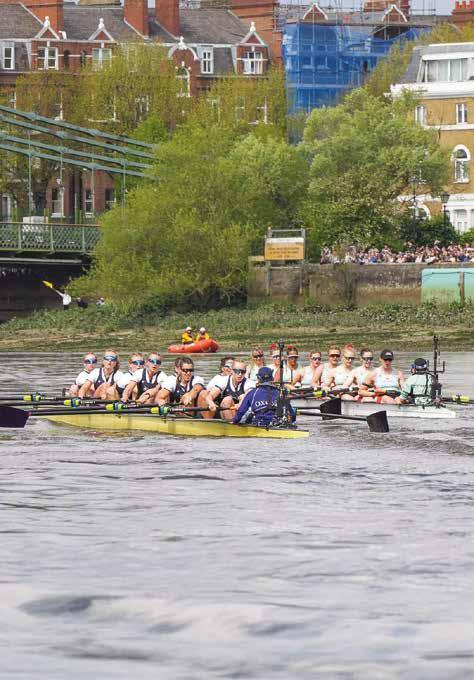
Cambridge and Oxford women in last year’s Boat Race
Feature by Ewan Hall
Cambridge University and Oxford University is now one of the world’s oldest and most popular amateur sporting events.
Originally the event was a challenge set up by two friends, Charles Wordsworth and Charles Merivale, who arranged for the two universities to compete in an eight-oared boat race during the Easter vacation.
A lot has changed since that first race. Today, there are both men’s and women’s teams, and the event now traditionally takes place along a 4.2-mile stretch of the Thames from Putney to Mortlake.
More than 200,000 spectators are likely to line the river to watch the contests this weekend, and more will be watching live on TV. Channel 4, the new broadcasters of the Boat Race, will be hoping to match – or exceed – the viewing figures previously achieved by the BBC, whose coverage last year drew a peak audience of 2.82 million viewers.
Throughout the race, the crews from Oxford and Cambridge will face the strain of rowing against the currents, putting their body and minds under intense pressure as they try to cross the line first.
Though we may not be in the same boat as them, pushing our bodies to the limit on the Thames, many of us will know what it feels like to struggle, to have to push through difficulties and to keep going when life feels tough.
During such times, Christians can rely on their faith to help them.
They follow the advice of one Bible writer, who encouraged people to turn to God in their difficulties, urging them: ‘Cast all your anxiety on him because he cares for you’ (1 Peter 5:7 New International Version).
If we put our trust in God, we will receive strength when we feel weak, courage when our circumstances feel overwhelming and hope when we want to give up. When the challenges in our lives feel like strong currents pushing us back, we can take solace in knowing that God never leaves us to row it alone.


ACROSS
1. Hobble (4)
3. Spigot (3)
5. Collision (4)
7. Wedlock (9)
9. Observed (4)
10. Expensive (4)
11. Stage (5)
14. More sagacious (5)
15. Arrangement (3-2)
17. Corrosives (5)
18. Goat (5)
19. Accede (5)
20. Piquant (5)
23. Cook (4)
25. Gone (4)
27. Systematically (9)
28. Ogle (4)
29. Mate (3)
30. Elderly (4) DOWN
1. Optical glass (4)
2. Design (4)
3. Roost (5)
4. Pastimes (5)
5. Fasten (4)
6. Hard up (4)
7. Harbinger (9)
8. Day before (9)

11. Implores (5)
12. Plea of being elsewhere (5)
13. Attempt (5)
14. Pale (3)
16. Pastry dish (3)
21. Chubby (5)
22. Creep (5)
23. Calm (4)
24. Dread (4)
Each solution starts on the coloured cell and reads clockwise round the number

Fill the grid so that every column, every row and every 3x3 box contains the digits 1 to 9
Look up, down, forwards, backwards and diagonally on the grid to find these words associated with Easter
MAKES 12

INGREDIENTS
METHOD
Preheat the oven to 200C/Gas Mark 6.
MAKES 12

250g readymade shortcrust pastry
6tsp lemon curd
100g soft cheese
2 large British Lion eggs
75g caster sugar
½ lemon, zest
75g plain flour
Milk, for glazing
Icing sugar, for dusting

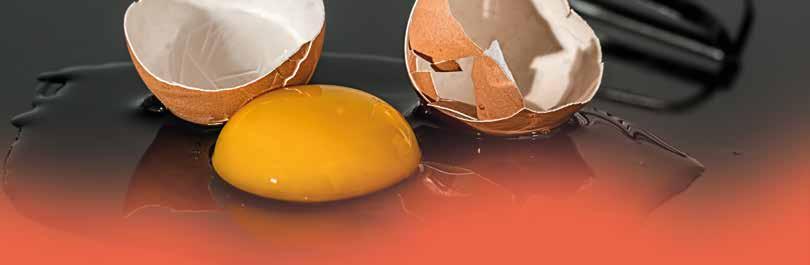


Unroll the pastry on a floured surface. Use a 7.5cm fluted round cutter to press out 12 circles. Reserve the trimmings.
Press a pastry circle into each hole of a 12-hole muffin tin to form the tart bases. Prick lightly with a fork.
Place ½ tsp lemon curd on the base of each tart. Put the cheese, eggs, sugar, lemon zest and flour in a large bowl and beat until smooth. Divide the mixture evenly between the pastry cases.

Roll out the pastry trimmings on a floured surface and cut into 1cm-wide strips. Brush with a little milk, then place a pastry cross over each tart. Brush again with milk.
Bake for 20-25 minutes, until the tops are golden.
Dust with icing sugar and leave to cool, before serving.
INGREDIENTS
225g plain flour
25g cocoa powder
1tsp baking powder
½ tsp bicarbonate of soda
150g caster sugar
3 ripe bananas
2 large British Lion eggs, beaten
4tbsp sunflower oil
To decorate
50g white chocolate
Mini chocolate Easter eggs
METHOD
Preheat the oven to 200C/ Gas Mark 6. Line a 12-hole muffin tin with paper cases.

Sift the flour, cocoa powder, baking powder, bicarbonate of soda and sugar in a large bowl.
Mash the bananas on a plate. Beat the eggs with the oil in a small bowl, then tip into the dry ingredients. Add the mashed bananas and lightly whisk together.
Divide between the 12 cases.
Bake for 20-25 minutes, until risen and firm to the touch.
Leave to cool in the tin for 5 minutes, before transferring to a wire rack. Allow to cool completely.
Melt the white chocolate and drizzle over the muffins. Decorate with the mini Easter eggs, to serve.