Eden Project blooms over 25 years


Eden Project blooms over 25 years
The Salvation Army is a Christian church and registered charity seeking to share the good news of Jesus and nurture committed followers of him. We also serve people without discrimination, care for creation and seek justice and reconciliation. We offer practical support and services in more than 700 centres throughout the UK. Go to salvationarmy.org.uk/find-a-church to find your nearest centre.
The Salvation Army first published a newspaper called the War Cry in London in December 1879, and we have continued to appear every week since then. Our name refers to our battle for people’s hearts and souls as we promote the positive impact of the Christian faith and The Salvation Army’s fight for greater social justice.
Don’t forget that the clocks go forward one hour this weekend for the start of British Summer Time. As we note in this week’s issue, the hour we lose in bed is compensated by lighter evenings and the potential to spend more time outdoors.
The possibility that people will be spending more time outside has traditionally been reflected in the TV schedules, with some channels’ mostwatched programmes coming to an end at this time of year.
One such show, Gladiators, airs its final on Saturday (28 March) as the four most successful contenders of the series battle to be crowned champions.
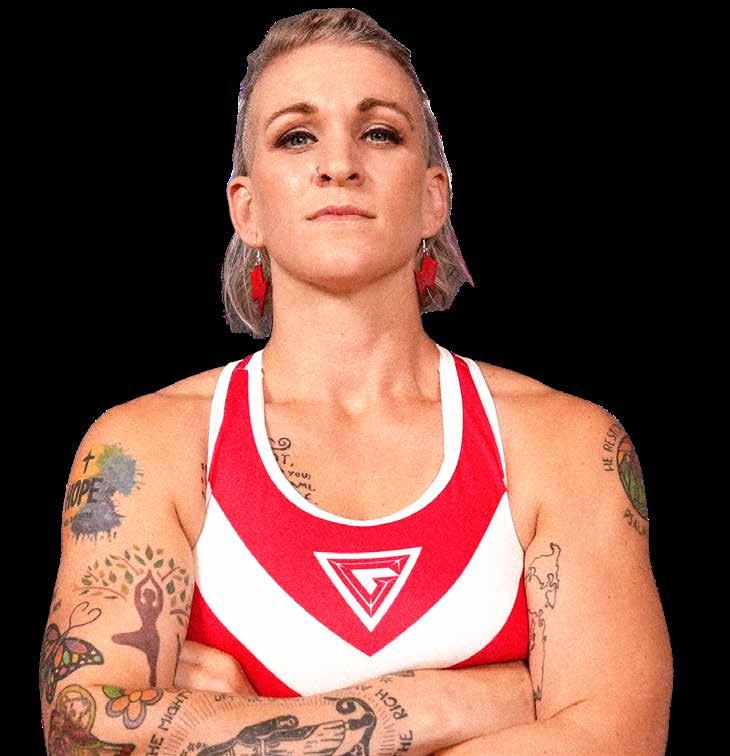
Someone who knows what it’s like to face the might of the Gladiators is the Rev Rachael Phillips, who took part in one of the heats earlier this year.
‘Competing on Gladiators fulfilled my childhood dreams,’ she tells us in an interview. ‘It was a challenge, it was nerve-racking, it was far from the realms of my “normal” life – but it was 100 per cent a positive experience.’
When she appeared in front of millions of viewers, Rachael also took the opportunity to talk about her Christian faith. She leads a church that meets outside every week, and she explains to us how God can be with people when they are out and about.
Editor: Andrew Stone, Major
Managing Editor: Philip Halcrow
Staff Writer: Emily Bright
Staff Writer: Claire Brine
Staff Writer: Ewan Hall
Editorial Assistant: Linda McTurk
Graphic Designer: Mark Knight
Graphic Designer: Natalie Adkins
Email: warcry@salvationarmy.org.uk
The Salvation Army United Kingdom and Ireland Territory 1 Champion Park London SE5 8FJ
Tel: 0845 634 0101
Subscriptions: 01933 445445 (option 1, option 1) or email: subscriptions@satcol.org
Founders: Catherine and William Booth
International leaders: General Lyndon Buckingham and Commissioner Bronwyn Buckingham
Territorial leaders: Commissioners Jenine and Paul Main
Editor-in-Chief: Major Julian Watchorn
The Salvation Army
Kingdom and Ireland
0043-0226 The Salvation Army Trust is a registered charity. The charity number in England, Wales and Northern Ireland is 214779, in Scotland SC009359 and in the Republic of Ireland CHY6399.
by CKN Print, Northampton, on sustainably sourced paper


‘When we smell the earth beneath our feet and listen to the birds, the evidence of God’s creation and presence are undeniable,’ she says.
It’s an experience that Catherine Cutler can relate to. Catherine is the head of horticulture at Cornwall’s ecological visitor attraction the Eden Project, which is celebrating its 25th anniversary. This week, Catherine tells us how she also feels close to God in nature.
‘I connect with God the most when I’m in natural spaces and looking at the creation around me,’ she says.
Many Christians find that they most easily connect with God when they are outside, surrounded by his creation. The good news is that, with the lighter evenings coming, there may be more opportunities for us all to go out and experience him for ourselves.





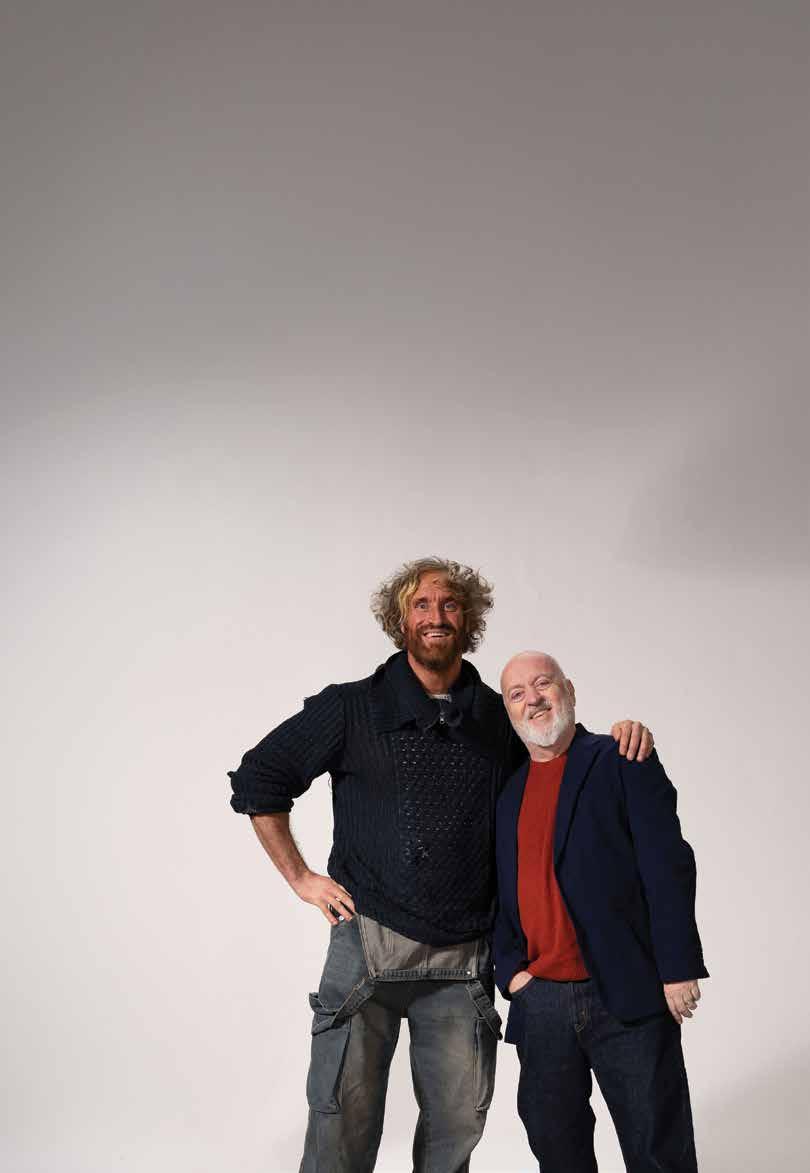
TV feature: Extraordinary Portraits with Bill Bailey BBC1 and iPlayer
By Emily Bright
‘None of us know what surprises life has in store,’ muses presenter Bill Bailey as he introduces BBC1’s Extraordinary Portraits. ‘But all around are everyday heroes, ordinary people showing amazing bravery, courage and determination.’
Bill sits down with some of those heroes to hear their story, before commissioning an artist to immortalise their experiences in a compelling portrait.
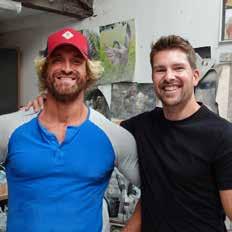
The series opens with Darryn Frost, who helped to subdue the terrorist behind the London Bridge attack in 2019.
While at an event at Fishmongers’ Hall, which celebrated a prison study programme, Darryn, a civil servant, heard screaming and ran downstairs. He saw a man brandishing two eight-inch knives and threatening to detonate a bomb. As the terrorist left the building, Darryn sprinted after him, armed with a narwhal tusk from the hall.
John Crilly, a former prisoner, came to Darryn’s aid, using a fire extinguisher to subdue the attacker. Darryn jumped on the terrorist’s back, grabbing his wrists to prevent him from detonating the bomb.
The day still haunts Darryn, who has experienced PTSD, insomnia, flashbacks and memory problems since. Yet he told Bill: ‘I’ve filled my world with positive things, using that incident as a vehicle for doing good.’
Bill assigns the task of honouring Darryn’s actions to sculptor Nick Elphick, who faces the challenge of depicting both the hero’s bravery and his ongoing mental health struggles.
Darryn admits that the London Bridge attack changed him.
‘I try and hide it from everyone because I don’t want them to see the darkness,’ he says, ‘because there was a lot of darkness, there was a lot of pain and I probably am still not through all of it.’
But he added – addressing his friends and dad at the sculpture unveiling – ‘You
guys don’t know how much it does help having others around and knowing that they’re there for you.’
While Darryn’s situation is an extraordinary one, many of us may relate to experiencing pain in our lives – perhaps even living in such mental and physical anguish that we can see no way out. Sharing our struggles with loved ones – and sometimes with mental health professionals – can help. Being honest can alleviate our burden, and hearing other people’s experiences can also make us feel less alone.
Many people too take comfort in the words of a songwriter who had his own internal struggles.
He wrote: ‘How long must I wrestle with my thoughts and day after day
have sorrow in my heart?’ But then, after expressing his turmoil, he returned to a source of great comfort, saying to God: ‘I trust in your unfailing love; my heart rejoices in your salvation’ (Psalm 13:2 and 5 New International Version).
Having a relationship with God doesn’t automatically solve all our problems. But we can be totally honest with him, and he will always be there to listen, comfort and strengthen us throughout our darkest days. His love, available to us all, is extraordinary.
Never fear
Claire Brine gives her take on a story that has caught the attention of War Cry reporters
Writer Mel Bradman remembers that 2011 was a tough year. Work was stressful, a relationship had come to a painful end and her mother was unwell.
‘Before, when I’d gone through bad patches, I’d been able to dig myself out fairly quickly,’ she explained in The Guardian. ‘Not this time. Suddenly, I was living in a state of high anxiety.’
A therapist tried to help Mel find a way to address her problems.
‘Her kind, firm and practical approach was reassuring,’ she recalled. ‘But my anxiety was still rocketing.’
We can turn our worries into prayers
Then the therapist offered some advice that changed everything: ‘From 6.30pm until you wake up the next day, you’re not allowed to worry.’
Though she was doubtful such an approach would work, Mel gave it a try. She kept trying – and, eventually, ‘something clicked’. She adopted the no-worry rule every evening and enjoyed positive results.
‘I was feeling lighter, no longer bobbing up and down in a sea of anxiety, and starting to feel happy and optimistic again,’ she explained.
As someone who is prone to fretting, I love this story. It gives me hope, because it shows me that worrying doesn’t always have to win. More times than not, I am free to choose a different approach to dealing with whatever is troubling me.
One effective way to tackle our worries can be found in the Bible. The early Church leader Paul writes: ‘Don’t worry about anything; instead, pray about everything. Tell God what you need, and thank him for all he has done. Then you will experience God’s peace, which exceeds anything we can understand’ (Philippians 4:6 and 7 New Living Translation).
When we face difficult times and an unknown future, it may feel impossible to switch off from worrying. But with a small shift of perspective, we can turn our worries into prayers, sharing them with the God who loves us more than we can imagine.
When we tell him what’s on our mind, he listens. And when we spend time in his presence, remembering with gratitude his past goodness to us, he brings peace.
Talking to God may not always change our circumstances, but it can always change us if we give it a try.
Christian theatre company Riding Lights vowed that the show will go on after its equipment van was stolen.
BBC News reported that the company was touring its Passion play Night Falls, written by its artistic director Paul Birch, when the vehicle containing £10,000 worth of stage, lighting and sound equipment was taken.
Oliver Brown, Riding Lights executive director and co-CEO, said: ‘The van housed the entirety of our current theatre tour of Night Falls. It had the set, the costumes, the lights, the sound, the props – everything. The whole show was living in that van.’
The company has since repurposed a set from an old show. Riding Lights posted on its Facebook page: ‘The production may look different when it returns to the stage, but its story and message remain unchanged – a message of hope emerging from grief, and the belief that even in difficult moments, joy can follow.’
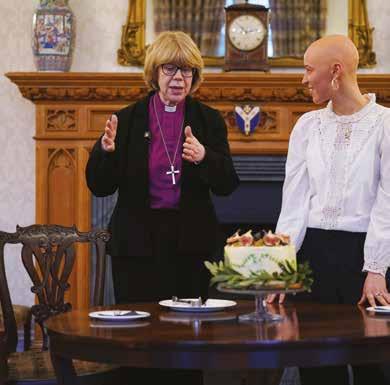
Great British Bake Off winner Jasmine Mitchell made a cake to celebrate the Most Rev Sarah Mullally’s installation as Archbishop of Canterbury, reported the Church Times
During a meeting at Lambeth Palace, the winner of the Channel 4 show presented Archbishop Sarah with a fig, honey and almond cake. It was decorated with olive branches to symbolise peace and healing, and a scallop shell to reflect the new Anglican leader’s love of walking and pilgrimage.
The cake was donated to homelessness charity The Passage and to staff at Evelina London Children’s Hospital.
‘I loved the process of designing and baking the cake for her,’ Jasmine said. ‘I’m praying that Archbishop Sarah would feel God with her as she begins her new role.’
Archbishop Sarah thanked Jasmine for the housewarming gift, adding: ‘We are often characterised by tea and cake in the Church of England, and I think this might be some of the best I’ve had.’
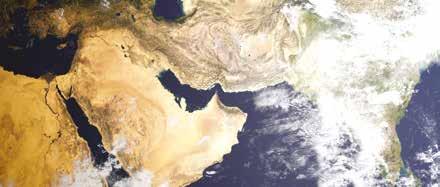
The Mission to Seafarers is helping ship crews in the Gulf region who have been left stranded by the conflict in the Middle East.
Teams from the Christian organisation in the United Arab Emirates, Bahrain, Jordan and Cyprus have arranged emergency deliveries of food and water to seafarers, many of whom have remained on board vessels that are delayed or unable to move because of disruption to shipping routes.
At the beginning of the month, Arsenio Dominguez, secretary-general of the International Maritime Organisation, highlighted the plight of tens of thousands of seafarers who were already trapped by the effective closure of the Strait of Hormuz.
The Mission to Seafarers has also been offering support through its global chaplaincy network and its Happy@Sea app.
Peter Rouch, Mission to Seafarers secretary-general, said: ‘We are deeply concerned for the thousands of seafarers facing growing danger as tensions escalate in the Middle East. Once again, men and women who simply set out to do their jobs – sustaining global trade and supporting the lives of communities around the world – find themselves in harm’s way.
‘Travel restrictions, heightened security and the difficulty of reaching vessels mean support is harder to deliver, even as seafarers face mounting uncertainty and emotional strain. Despite the conflict, our welfare teams across the Middle East remain operational, providing emergency supplies where we can reach vessels and offering remote support when that is the only option.’
Cinemas are showing a film about the ‘earliest-known Christian hymn’.
The First Hymn tells the story of a papyrus fragment unearthed in Oxyrhynchus, Egypt, which contains lyrics and musical notation for what the film-makers describe as the earliest-known Christian hymn.
The film is presented by historian and songwriter John Dickson, who discovered the fragment in a vault at Oxford University.
With a fifth of the text missing, Dickson works with musicologists to reconstruct the hymn’s original shape from 35 surviving words.
The documentary covers the hymn’s journey from its desert origins to its modern reimagining by worship leaders Chris Tomlin and Ben Fielding.
As the Eden Project celebrates its 25th anniversary this month, head of horticulture CATHERINE CUTLER reflects on the opening of the ecological attraction and considers why nature helps her connect to God
Interview by Claire Brine
In the beginning, it was a barren clay pit, situated near St Austell in Cornwall. Then came the idea to turn it into a vibrant and global garden like nothing before. Last week, the Eden Project celebrated its 25th anniversary with a special day of activities that included a performance from a 300-voice choir and the cutting of a cake.
‘We are here to connect people with nature,’ says Catherine Cutler, head of horticulture at the Eden Project. ‘We want to encourage individuals to love
nature, to do what they can to conserve it and to make the planet a better place for us all – both now and in the future.
‘Across the UK, there are a lot of gardens that look beautiful. And there are a lot of gardens that have rare plants. That’s not quite what Eden is all about. Our aim is to get people to realise the importance of plants in their everyday life.’
The co-founder of the Eden Project, Sir Tim Smit, had the idea of creating a garden paradise in the mid-1990s.
‘He’d been restoring the Lost Gardens

of Heligan in Cornwall, and thought that it would be amazing to create a garden full of the plants that people rely on every day,’ says Catherine. ‘He realised that such a site would require not only a huge space, but areas that would be suitable for growing plants in tropical conditions. Slowly, the project got bigger and bigger.’
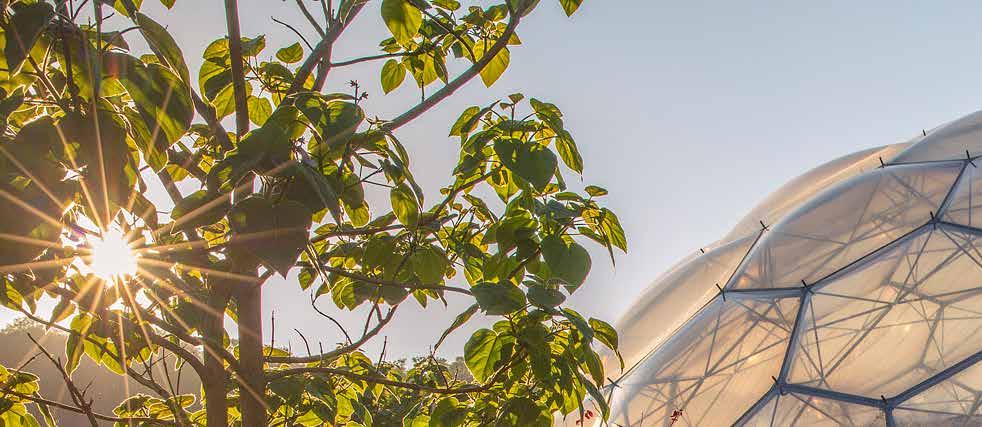
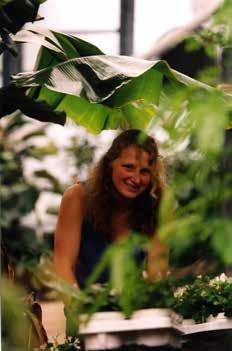
The Eden Project is home to two enormous and transparent ‘biomes’, which contain specific eco-climates. In the rainforest biome – which reaches temperatures of 35C – visitors are able to walk through groves of rubber trees, feel the conditions required for growing cacao, sugar cane and bananas, and spot the roul-roul partridges as they roam freely.
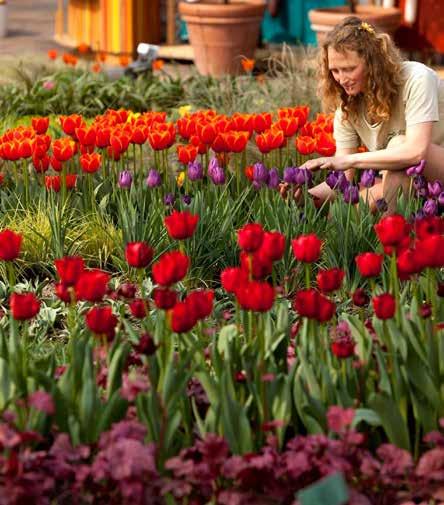
Meawhile, the Mediterranean biome features huge cacti, ancient olive trees, brightly coloured flowers and sweetsmelling fruit and herbs.
‘At the moment, I’m focused on the Mediterranean biome and its planting schemes and exhibits,’ says Catherine. ‘I’m always thinking about the types of plants we want to grow in there and
where we can get them from.
‘As well as the planning side of things, I love getting my hands dirty. The other week I was pruning olive trees, and the week before that I was building gabion baskets with the rainforest team. I like to work alongside all the gardeners, planting, clearing and cutting back.’
Catherine landed her job at the Eden Project back in 2000, when the site was still a dream on the way to becoming a reality.
‘None of us really knew what it was going to be,’ she remembers. ‘I saw in the local press a little advert talking about the concept of a global garden in Cornwall. It sounded intriguing.
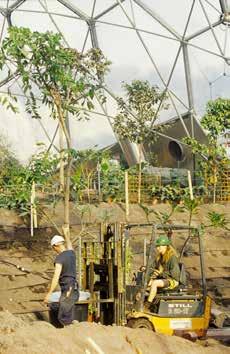
‘Because I had experience of working in the tropics, in Borneo and India, I was hired as the supervisor of the rainforest biome. But I didn’t really know what to expect. I can remember digging huge planting holes with the team, and then trying to keep the plants warm with huge sheets of plastic overhead, because the biomes weren’t finished yet.
‘We were trying to plant and water
a garden alongside builders who were still trying to install pipes. It was a very creative process – but we were under a lot of time pressure.’
The Eden Project opened its doors on 17 March 2001 and – over the past quarter of a century – has welcomed more than 25 million visitors. Catherine explains that the name Eden draws on the ‘concept, beauty and provision of a paradise garden for all’, akin to the Garden of Eden described at the beginning of the Bible.
‘Christians believe that the Garden of Eden was a beautiful and amazing place,’ she says, ‘with a plethora of plants and animals that we humans were asked to care for. I think the name “Eden” conjures up the idea of an appealing garden that people would like to visit.’
As a Christian, Catherine finds that she feels closest to God while spending
time in nature. Being outdoors, working with plants, is how she likes to express her faith.
‘I connect with God the most when I’m in natural spaces and looking at the creation around me,’ she says. ‘It’s amazing to see the cloud formations and trees, and to close my eyes to listen to the birds and insects. The world is so complex that I struggle to imagine it all appearing without a designer.
‘I also feel that what I see around me reflects God’s generosity. In this world he has provided everything that we need to live – and I don’t mean just food and clothing. He has given us wild and green spaces, which are so good for our wellbeing too.
‘Because the world provides everything we need, I think we all have a responsibility to look after it. We need to think not only of ourselves, but the future generations.’


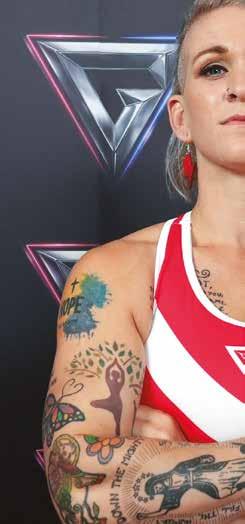
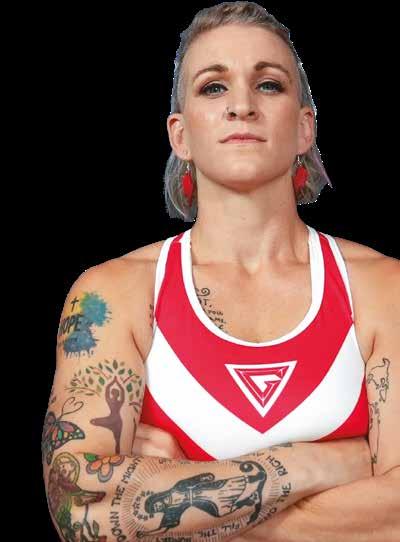
Ahead of the Gladiators final, one contender from earlier in the series, the Rev RACHAEL PHILLIPS, describes her joy at fulfilling a childhood dream and tells how she finds an unbeatable power in God’s love
Interview by Claire Brine
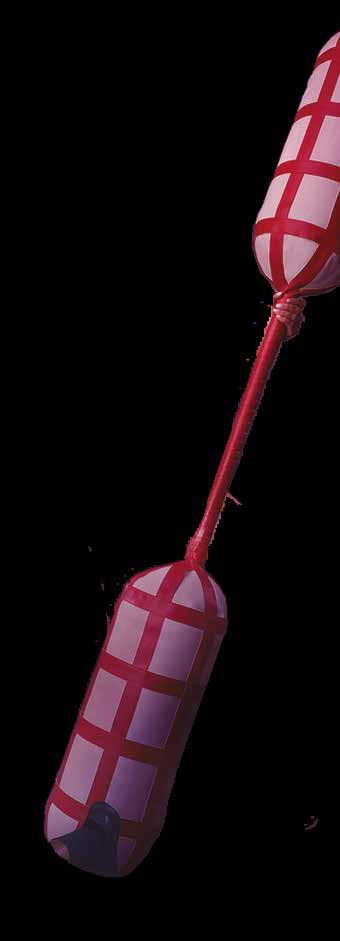
Contenders, ready! Gladiators, ready! Well, they’d better be – as the countdown is on for the final of BBC1’s Gladiators, which is set to be broadcast this Saturday (28 March). As four daring individuals take one step closer to victory (and the show’s trophy), their efforts in games such as Hang Tough and Powerball are about to be challenged (yet again) by a bunch of Lycra-clad titans. The battle is very much on – and it’s one that the Rev Rachael Phillips knows a thing or two about.
‘Competing on Gladiators fulfilled my childhood dreams,’ says the Church of England priest, who appeared on the show at the beginning of the current series. ‘It was a challenge, it was nerveracking, it was far from the realms of my “normal” life – but it was 100 per cent a positive experience. And I love that I got to speak about Jesus.’
Before taking on any of the Gladiators
in the games, Rachael revealed in her introduction on the programme how she planned to approach the competition, saying: ‘At the centre of my faith is that Jesus showed us mercy, but on Gladiators, I’m going to be showing none.’
A few games in, she mentioned the gospel again, after receiving a pugil stick head-bashing from the Gladiator Fire in the event Duel. Rachael told co-presenter Bradley Walsh: ‘Jesus says: “Turn the other cheek.” And I did – and I got battered there as well!’
Whether she’s pushing her body to the limit in challenges of stamina and strength or chatting with parishioners at her outdoor church in Gateshead, Rachael finds that sharing the good news of the gospel comes naturally.
‘I don’t speak about Jesus because it’s brave – I do it because that’s just who I am,’ she explains. ‘It’s the easiest thing in the world for me. It’s my passion. And
I’ve been doing it ever since I became a Christian nearly 14 years ago.’
Rachael was on her second tour of Afghanistan as a captain with the Royal Engineers when she came to faith in the back of a shipping container. It was 2012, and up until that point, she had been an atheist.
‘I had no interest in religion at all,’ she says. ‘I wasn’t raised in a Christian family and there were no people of faith around me. I was suspicious of church and felt that it was full of hypocrites and a place for fairy stories.
‘So I was very surprised one day to find myself choosing to attend a service held by the padre in one of our shipping containers that had previously held rations. The gathering was open to everyone, even if they didn’t have a faith. It was my first proper invitation to church.
‘That night, I heard about the God who had known me and loved me since

Contenders Rachael and Naomi (inset) race against each other on the Travelator


before I was born. It seemed so wild to think that the God who created me so intimately was also the massive God who made the stars and the sky. I felt totally overwhelmed. I could feel God’s love in my heart so much that my body started shaking. And I regretted that I had been walking apart from him for so long.’
Though Rachael had chosen to attend the padre’s service with an open mind, she admits that she ‘never expected’ to find God or experience his presence. She’d only gone along to the service because it had been a tough day.
‘We’d had a horrible afternoon and evening, dealing with a civilian casualty incident,’ she says. ‘And my grandma had recently died as well. I just had a lot on my mind. So the invitation to have some space appealed to me. It didn’t matter that I didn’t have a faith. I could see the sense of seeking peace in war.’
After the service, the padre asked
Rachael if she was OK. She’d been crying. And the response she gave him surprised her.
‘I told him that I thought I was becoming a Christian and asked him what I needed to do next,’ she says.
I didn’t know that Jesus was a radical
‘Eventhen, my attitude was that if God calls, you act on it. I’ve always been a “boom, let’s go” person. After we talked, the padre prayed with me and gave me a copy of the New Testament, telling me to start by reading Mark’s Gospel.
‘When I read it, I fell in love with Jesus.’
The more of the Bible she read, the more Rachael became captivated by the man Christians believe to be God’s Son.
‘I didn’t know that Jesus was a radical,’ she says. ‘This man in the Bible ate with
sinners, touched the “untouchables”, hung out with the “wrong” people, spoke truth to power and got angry at injustice. Jesus was nothing like the nice, pleasant man that I’d seen in whitewashed pictures from my childhood. The way he loved people was so incredible to me.
‘I wanted to follow him, so I started asking the padre loads of questions about faith. One-to-one, he took me through a course called Christianity Explored. For the next nine months, I worshipped God wherever I could – outdoors, in the desert, with groups of two or three people. I read the Bible every day.
I was also desperate to tell everyone I met about Jesus, saying: “Have you read this book? Do you know what Jesus did?”
‘When I got back to the UK, I went to
Turn to page 10
From page 9
church. And as a bishop spoke about his calling to ordained ministry, I had my second big God-moment. I felt God saying to me that I needed to become a priest.’
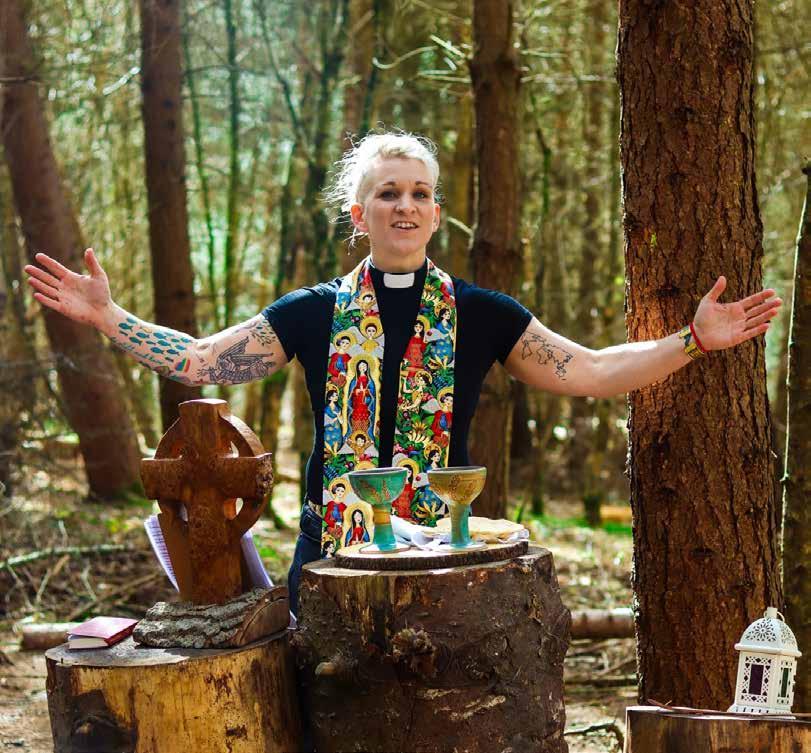
God called, so Rachael acted. She wasn’t sure what the Church of England would make of a tattooed, weightlifting, rugby-playing British Army officer signing up for the priesthood. But they welcomed her application and she was ordained in 2023. Today she runs an outdoor church, called Magdalene Community Church, in Chopwell Wood.
‘We are an intentionally outdoors church, so we don’t have a building at all,’ says Rachael. ‘As a congregation, we feel that being outside is key to our connection with God. Sometimes it even makes it
easier for people to come and join us, because they know that they don’t have to step over that threshold.
‘And they can also see that the Church is wherever Christians are gathered – it’s not a place that you have to go into. You can pray and worship anywhere, because God is everywhere.’
Being among nature, admiring the creation around her, helps Rachael feel closer to the designer who brought it all into being.
‘There’s no “right time” or “right place” to be with God,’ she says, ‘because he’s with us when we are in the rain, walking among the trees, eating together in the sunshine. When we smell the earth beneath our feet and listen to the birds, the evidence of God’s creation
and presence are undeniable. Worshipping outdoors is freeing. It helps us to break down any barriers that have been built up between us and God.’
Rachael met while filming have even expressed an interest in going along to one of her Sunday services. The subject of faith came up several times during the programme’s selection process.
role of a chaplain a little bit,’ Rachael explains, ‘because trying to get a place on the show was such a rollercoaster. Applicants were disappointed if they


didn’t do well in the games that they thought they’d be good at.
‘None of us knew if we’d be selected as contenders or reserves. As we trained together more and more, we got to know each other well. So I was on hand for any folks who were struggling.
‘I remember sharing my mantra with some of the other contenders, which is basically a prayer, saying: “God, thank you for my body. My body can do great things.” I’d repeat it to myself over and over – this prayer of gratitude and affirmation that my body can do so much, like making my heart beat and fighting illness. I’ve grown babies in it. Whatever stage of life we are at, whatever we look like, all bodies are great.’
After being selected as a contender, Rachael felt ready to take on the Gladiators. She prayed before every game. Then came the moment for
Rachael and her rival contender, Naomi (who has a place in this weekend’s final), to go head-to-head in the Eliminator. It was a tense race, with no clear winner emerging. As the pair approached the final obstacle, called the Travelator, Rachael struggled to find the strength to keep going.
The whole experience was a gift from God
‘We both tried to get to the top of the Travelator and failed,’ she recalls. ‘It was soul-destroying. I didn’t think I had any energy reserves left. But we both paused for a while, then set off at the same time to give it another go.
‘I gave it my all and somehow got to the top. As we grabbed our individual ropes and swung through the finishing tape, I knew that Naomi had made it through a fraction of a second before me.’
It was described by co-presenter Barney Walsh as ‘the closest Eliminator we’ve ever seen’ – and it marked the end of Rachael’s time on Gladiators. But rather than feeling disappointed at being a runner-up, she had a sense of peace.
‘I’d given it everything,’ she says. ‘There was no looking back, thinking of things I should have done differently. I believe that what happened on Gladiators was right for me. I presented myself as the athlete I am and I got to share Jesus with people. The whole experience was a gift from God.’
As the latest series draws to a close, Rachael has ‘zero regrets’ about taking part. Far more important than winning the competition was the opportunity she had to talk to millions of viewers about a love that changes lives.
‘God loved us all into being,’ she says. ‘We get to wake up every day knowing that we are deeply loved by him. What can be better than that?’
Your prayers are requested for Patricia’s friends and family.
The War Cry invites readers to send in requests for prayer, including the first names of individuals and details of their circumstances, for publication. Send your Prayerlink requests to warcry@salvationarmy.org.uk or to War Cry, 1 Champion Park, London SE5 8FJ. Mark your correspondence ‘Confidential’.
Becoming a Christian
There is no set formula to becoming a Christian, but many people have found saying this prayer to be a helpful first step to a relationship with God
and
The early Church teacher Paul wrote two letters to Timothy, his representative in Ephesus. Timothy, like his mentor, was born in modern-day Turkey. They first met in Timothy’s home town of Lystra. He subsequently became a junior partner in Paul’s evangelistic tour of Macedonia (see Acts 16:1 to 17:14).
Now the ageing Paul writes advice and instruction to his ‘true son in the faith’ (1 Timothy 1:2 New International Version).
Paul is concerned about false teachings. Some teachers are spreading controversial myths; others are saying that being a Christian means having to keep the Law, which God had given to the Jewish people centuries earlier. Some teachers are causing converts to abandon their faith (4:1 and 2). Paul tells Timothy to stop such people from teaching false doctrines (1:3–11).
From his own experience, Paul outlines the fundamentals of his relationship with God. He says that ‘mercy’, ‘grace’, ‘faith’ and ‘love’ (1:13 and 14) are what count, not law-keeping.
Lord Jesus Christ,
I know that I have done things in my life that are wrong and I’m sorry. Thank you that I can ask you for forgiveness because of the sacrifice you made when you died on the cross.
Please forgive me and help me to live a better life in the future as I learn how to love you and follow your way of living.
Thank you, Lord Jesus.
If you’ve prayed this prayer, scan the QR code or contact us using the coupon on this page

Paul then gives instruction for the conducting of worship. People should pray for those in authority. Men should be free from anger or controversy in prayer. According to the traditions of his day, Paul says that women should dress modestly, be submissive, not assume a teaching role over a man and be quiet in church (2:1–15).
Paul outlines the qualifications for the church leadership roles of overseers and deacons. In the King James Bible the word for ‘overseer’ is translated as ‘bishop’. Paul does not include respective job descriptions, but the personal requirements are similar: they should be monogamous, a good household manager, a person of sincere spiritual conviction, respected by his family and the wider community, temperate, not a lover of wine or money (3:2–13).
Paul then puts money into perspective. Money, he says, should be used to provide for one’s dependants, and the Church should care for widows who are in genuine poverty (5:3–16). Money can be an obstacle to faith. It can be a temptation. Love of money is at the root of all kinds of evil (6:6–10), providing false hope for those who put their trust in it (6:17–19).

Or email your name and postal address to
To receive basic reading about Christianity and information about The Salvation Army, complete this coupon and send it to
War Cry 1 Champion Park London SE5 8FJ

1 2 3 4 5 6
Which AI chatbot’s name indicates that it was built on a ‘generative pre-trained transformer’ model?
Shane Filan, Mark Feehily, Nicky Byrne and Kian Egan are the members of which group?
Which country is due to host the 2027 Fifa Women’s World Cup?
What Latin phrase literally means ‘the state in which’?
Rachel Duffy and Stephen Libby won the latest series of which TV competition?
Lapland is the northernmost region of which European country?

ANSWERS
Feature by Ewan Hall
It
is that time of year when people across the UK will sacrifice an hour of sleep for the promise of warmer and lighter summer evenings. At 1am on Sunday (29 March), the clocks spring forward, marking the start of British Summer Time.
Back in time, the concept of changing clocks to suit different seasons was suggested by a London-based builder. William Willett was out riding his horse one morning when he noticed how many curtains were closed against the sunlight. The observation inspired him to lead a campaign to change the clocks, and he published his opinion in a 1907 pamphlet, The Waste of Daylight.
His idea was not immediately taken up, but in 1916 parliament introduced British Summer Time to make better use of resources during the First World War.
People today, however, are still debating the annual changes. Opponents of British Summer Time argue that changing the clocks disrupts sleep patterns and causes health problems. But those in favour of extended evening daylight hours say that it allows for more time for outdoor leisure and leads to fewer road accidents.
Whatever the arguments, and even though changing the clocks may allow us to spend more time in daylight, life’s gloomier aspects – strained relationships, money worries or health problems – don’t simply fade away.
But even in the darkest situations, we can turn to a source of neverending hope.
One Bible writer describes how when God’s Son, Jesus, came into the world, he ‘brought light to humanity’ – a light which ‘shines in the darkness’ and which ‘the darkness has never put … out’ (John 1:4 and 5 Good News Bible).
When we face struggles, Jesus doesn’t leave us to stumble along alone. If we put our trust in him, he will stay beside us with a love that doesn’t change with the seasons. He will guide us when we can’t see which way to go in life, he will comfort us in our bleakest moments – and he will give us a reason for hope that will never grow dim.






INGREDIENTS
300g wholewheat spaghetti
1tbsp vegetable oil
1 onion, diced
2 garlic cloves, crushed
150g mushrooms, diced
Freshly ground black pepper
500g passata
1tsp dried basil
2tsp dried oregano
400g can butter beans, drained and rinsed

150g reduced-fat soft cheese
50g reduced-fat cheddar cheese
METHOD
Preheat the oven to 210C/Gas Mark 7.
Cook the spaghetti according to the packet instructions.
Heat the oil in a large non-stick pan over a mediumhigh heat and cook the onion, garlic, mushrooms and pepper for 5 minutes, stirring occasionally.



Lower the heat to medium and add the passata, basil, oregano, butter beans and soft cheese. Mix well.
Turn the heat back up to medium-high and cook for 3 minutes, stirring frequently, until the beans are heated through.
Drain the spaghetti when cooked and add to the sauce, mixing thoroughly. Pour into an ovenproof dish. Sprinkle the cheddar over the top and bake in the oven for 10 minutes. Serve immediately.