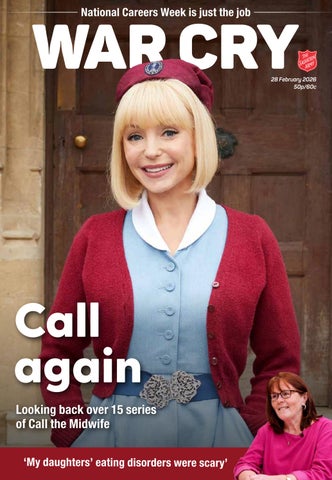
Looking back over 15 series of Call the Midwife
‘My daughters’ eating disorders were scary’

Looking back over 15 series of Call the Midwife
‘My daughters’ eating disorders were scary’
The Salvation Army is a Christian church and registered charity seeking to share the good news of Jesus and nurture committed followers of him. We also serve people without discrimination, care for creation and seek justice and reconciliation. We offer practical support and services in more than 700 centres throughout the UK. Go to salvationarmy.org.uk/find-a-church to find your nearest centre.
The Salvation Army first published a newspaper called the War Cry in London in December 1879, and we have continued to appear every week since then. Our name refers to our battle for people’s hearts and souls as we promote the positive impact of the Christian faith and The Salvation Army’s fight for greater social justice.
Since the first series began in 2012, millions of viewers have got into the habit of watching BBC1’s Call the Midwife on a Sunday evening. Depicting the lives of the midwives and nuns at Nonnatus House in London’s East End, the drama has delivered storylines that have captivated audiences of all ages.
This week’s issue of the War Cry looks back at the way the programme has dealt with the subject of faith over its 15 series, with quotes from the show and some of the cast.
For many viewers, part of the appeal of the programme – which has spanned life from the 1950s through to the 1970s – is that many of the problems faced by the nuns, midwives and patients are often happily resolved by the end of each hour-long episode.
Sadly, in real life, finding an answer to life’s difficulties can take far longer. This week, we speak with Di Archer, who supported her two daughters through eating disorders.
It was a challenging time for the entire family, and Di explains that it affected almost every area of her life, including her Christian faith.
Editor: Andrew Stone, Major
Managing Editor: Philip Halcrow
Staff Writer: Emily Bright
Staff Writer: Claire Brine
Staff Writer: Ewan Hall
Editorial Assistant: Linda McTurk
Graphic
Mark Knight
Graphic Designer: Natalie Adkins
Email: warcry@salvationarmy.org.uk
The Salvation Army United Kingdom and Ireland Territory 1 Champion Park London SE5 8FJ
Tel: 0845 634 0101
Subscriptions: 01933 445445 (option 1, option 1) or email: subscriptions@satcol.org
Founders: Catherine and William Booth
International leaders: General Lyndon Buckingham and Commissioner Bronwyn Buckingham
Territorial leaders: Commissioners Jenine and Paul Main
Editor-in-Chief: Major Julian Watchorn

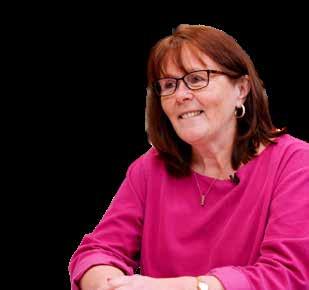
‘The eating disorder years were a tough time,’ she says. ‘I sometimes felt like I was hanging on to my faith by my fingernails. But other people were praying for me.’
Di’s experiences led her to establish the charity tastelifeUK, which has helped thousands of people struggling with an eating disorder, as well as their family and friends.
Di is motivated to help others because of her faith – and her own experiences mean that she is able to offer hope to those facing similar challenges.
‘Life is difficult,’ she says, ‘but we never have to face the difficulties on our own. It doesn’t matter how deep the pit that you are in. Jesus can come to wherever you are.’



At first, there was a plan: build a shelter, start a signal fire and hunt for food – all the while keeping the ‘littluns’ safe. But chaos and corruption have replaced order and justice in the four-part drama Lord of the Flies, based on the novel by William Golding.
After their plane crash-landed on a deserted island, a group of schoolboys elected Ralph (Winston Sawyers) to be their chief, responsible for keeping things under control as they waited in hope to be rescued. Though he was supported by the intellectual ‘Piggy’ (David McKenna), Ralph received criticism for his efforts from Jack (Lox Pratt), a jealous boy who wanted the power of being a leader himself.
After some of the younger boys, nicknamed ‘littluns’, said they feared that a dangerous ‘beast’ was living on the island, Jack gained popularity

by promising to hunt and kill it. He also assured Ralph that he and his pals would keep the signal fire going, believing it would grab the attention of rescuers.
Jack’s tribe hunted and killed not the beast but a pig. However, the celebrations at finding food were shortlived when the boys discovered that the signal fire had gone out, meaning that a ship passing on the horizon had failed to notice them.
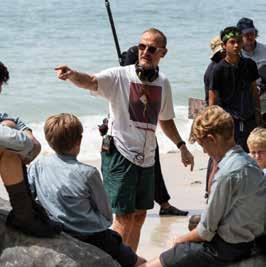
From that point on, any attempt Ralph made to establish order fell on deaf ears. Madness ensued. And under the command of Jack, the frenzied boys lost their senses and ended up killing one of their own.
As the final part of the story unfolds, Ralph and Piggy can’t believe the tragedy facing them. They’re terrified. They become even more alarmed when Jack’s tribe hunt them down. All around them, destruction is winning. Hope is fading. And the beast, it seems, is still at large – and perhaps closer than first thought.
Series director Marc Munden comments: ‘I do feel that Lord of the Flies has a tragic truth to it: the beast is
us. The tendency towards conflict and chaos is self-inflicted.’
Perhaps Marc is right. We don’t need to maroon ourselves on a tiny island to know that, deep down, each one of us has the capacity for hate, selfishness, jealousy, greed and anger. We all know what it’s like to say or do things we shouldn’t. We’ve all messed up and wished we hadn’t.
But this is where another story offers hope.
The Bible says that when we confess our wrongdoing to God and accept the offer of forgiveness revealed through his Son, Jesus, we can become better people.
In its pages, an early Church leader called Paul explains: ‘All of us have ... fallen short of God’s glory. But God treats us much better than we deserve, and because of Christ Jesus, he freely accepts us and sets us free from our sins’ (Romans 3:23 and 24 Contemporary English Version).
Our most beastly behaviour of the past doesn’t have to dictate the rest of our story. If we ask God to wipe our slate clean, he will. And the moment we accept his help to live a life of loving others, a new and hope-filled chapter can begin.
Claire Brine gives her take on a story that has caught the attention of War Cry reporters
Music journalist Tim Jonze was surprised to find himself bursting into tears when listening to a song about an ‘apple man’, performed on Instagram by a dad called Stephen Spencer.
The interesting thing, Tim explained in The Guardian, was that Stephen ‘has a unique lyrical collaborator: his three-year-old daughter. Over the last four months, he has been posting short songs online based on her stream-of-consciousness stories.’ The duo’s ‘banging pop miniatures’ have been streamed nearly 30 million times.
In one of the songs, Apple-the-Stoola, an apple man, has lost his apple mum. A fairy helps him to grow wings so that he can fly off to find her and tell her that he loves her ‘twenty-sixty times’.
It’s a blessing to have a dad who listens
Tim wrote that, on first listen, Stephen’s songs ‘are funny and cute, a welcome respite from the tumult in the world’. But then there’s an emotional punch – and when Tim spoke with Stephen, he asked him about it.
‘I think the songs resonate with parents of children who are no longer three,’ Stephen said. ‘There’s something fleeting about those first few years. I’ve always had a sense of wanting to bottle it because I know it will disappear soon.’
Stephen also talked about people’s reactions to his collaboration with his daughter.
‘What I didn’t realise is how that would land, for so many people, as an act of love. Listening really closely to a child, taking care in understanding, trying to get the words right, no judgement, no correcting – that turned out to be really moving for some people.’
He makes a good point. Songs about purple bear princesses may be fun, but they wouldn’t exist without Stephen ‘listening really closely’ to his daughter. It’s a blessing to have a dad who listens intently, who is encouraging and kind, and who makes a child feel safe enough to tell him anything.
Maybe we have a dad like that. Maybe we don’t. But we all have a heavenly Father who is perfect – and we can turn to him any time.
When we talk to God, and tell him what’s on our mind, he listens to us. He understands. He cares. Best of all, he shows us his love – and not just twenty-sixty times, but time and time again.
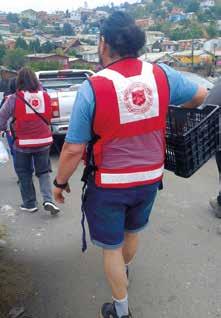
A Salvation Army team delivers aid
The Salvation Army in Chile has served meals and provided spiritual and emotional care to people who have lost their homes because of wildfires.
Fires that swept through southern Chile destroyed more than 750 homes, leaving thousands of people homeless. At least 20 lives were lost.
As government agencies continued to evacuate people affected, a Salvation Army team distributed food, drinking water and essential hygiene items. Soup kitchens were established at the church’s centres to ensure sustained humanitarian assistance.
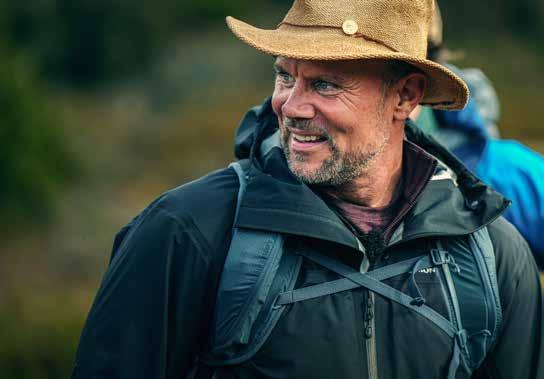
A former Gladiator who went on to become an Anglican priest has explained that he chose to take part in the ITV reality show The Summit because it was ‘an opportunity to grow closer to God’.
Warren Furman – Ace from the 1990s version of the TV series Gladiators – signed up to climb a mountain in New Zealand because he saw it as ‘the ultimate challenge’.
The series has been following the efforts of 14 individuals as they try to reach the summit in 14 days and claim a cash prize.
Before the series began, Warren said: ‘I’m on a massive adventure. I came to faith 10 years ago and everything changed for me. Everything I consider or do I pray about, and I feel this could be an opportunity from God and an opportunity to grow closer to God.’
A lifesize sculpture of Jesus, made from scrap metal, has been unveiled at the British Ironwork Centre in Oswestry, Shropshire.
The figure is positioned on a large cross and stands in a faith zone at the park, alongside a representation of Hindu deity Lord Ganesh. It is expected that more religious figures will be added.
The ironwork centre is known for tackling social issues through recycled material. Its previous projects include the Knife Angel, a monument against violence, which was made from more than 100,000 blades that had been surrendered to police.
Taking to Instagram, the centre announced the new sculpture with the words: ‘Jesus Christ, Lord and Saviour. Lifesize and profoundly moving, this sculpture is so wonderfully detailed throughout.’
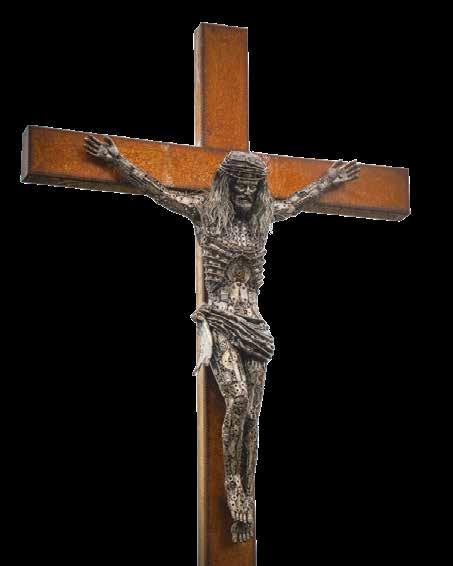
The post added that the sculpture was ‘a true reminder of Christ’s suffering. His grace, and his promise of hope for all mankind.’

A stained-glass window at Carlisle Cathedral has been named England’s favourite after a public vote.
The East Window – which received the most votes in a poll run by the Association of English Cathedrals – includes depictions of the Last Judgement dating from the medieval period and images of the life of Jesus dating from a restoration of the window in the 1860s.
After the result of the poll was announced, the Ven Michael Everitt, interim dean of Carlisle, said: ‘The combination of the ancient glass at the top and the wonderful Victorian depictions of Jesus’ life, all set beneath our starry ceiling, means you truly get a glimpse of Heaven inside the cathedral.’
Carlisle Cathedral’s stained glass was chosen from a shortlist of 12 which also included windows at St Albans, Wells and Ely.
For 15 series, BBC1’s Call the Midwife has fully engaged viewers. As the latest series draws to a close, fans can take comfort from the news that the doors of Nonnatus House will remain open. Production company Neal Street plans to create a Call the Midwife film – set in 1972 with the show’s existing characters – as well as a prequel TV series, set during the Second World War. But before any new projects hit our screens, the War Cry looks back at how the programme has explored faith
Feature by Claire Brine
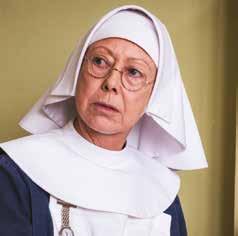
Sister Julienne
‘God isn’t in the event. He is in the response to the event; in the love that is shown and the care that is given.’
‘I generally find the Lord only asks of us what he knows we can give.’
‘All too often I have had to trust in God and say: “Let us see what love can do.”’
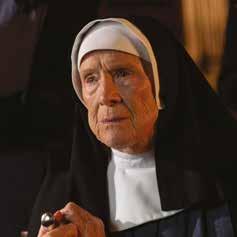
‘The hands of the Almighty are so often to be found at the ends of our own arms.’
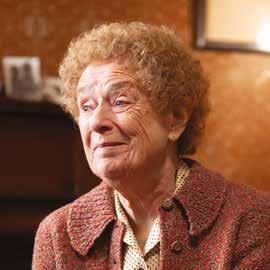
‘I remember a particular scene very vividly, and when it was all cut together, it was really beautiful. The nuns took in this homeless woman, played by Sheila Reid. She was so trodden down and dirty and grimy and her shoes were falling apart, and they just cared for her.
‘There was a scene where they took off her shoes, which was so difficult, and they washed her. There was something so beautiful about her just standing in a tub of water being washed down and looked after by the nuns. It was like a christening. There was something very spiritual about it.’
Jenny Agutter, who plays Sister Julienne
‘I have never run out of stories for our midwives, and I never will. But having wept, laughed and raged my way from 1957 to 1971, I found myself yearning to delve into the deeper past. The Blitz years in the East End were extraordinary – filled with loss, togetherness, courage and joy. The bombs fell, the babies kept on coming, and the sisters kept on going.’
Heidi Thomas, creator and writer of the TV series, looks ahead to writing the show’s prequel
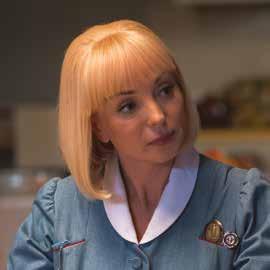
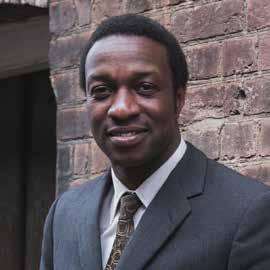
‘There’s a great deal of compassion on this show for people who make mistakes in their life. Compassion is the key to this show, and through Sister Julienne’s eyes, there is a great deal of compassion and a lack of judgement. We could all learn a lot from Sister Julienne.’
Helen George, who plays midwife Lady Trixie Aylward
‘Call the Midwife doesn’t sugarcoat the hard experiences of life but believes love conquers all, so it shows people finding that out and applying it.’
Linda Bassett, who plays midwife Phyllis Crane
‘There’s such a religious undercurrent to this show. There is a teaching with Christianity to be caring, compassionate and love your enemy. That’s a big theme and often it’s quite hard to do as humans. So Call the Midwife taught us how to be a better human.’
Zephryn Taitte, who plays social worker Cyril Robinson
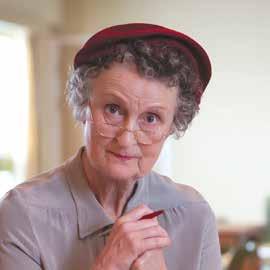
‘There’s always moral good at the end, without being saccharine. Ultimately the best in humanity that can be there is salvaged out of any situation. I think viewers feel safe with Call the Midwife, and it just reassures them that, whatever else is going on in the world, there’s a kind of humanity.’
Georgie Glen, who plays medical secretary Miss Millicent Higgins
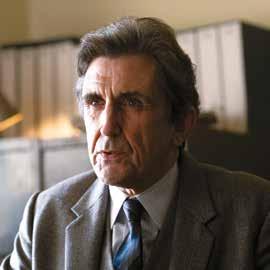
‘One of the things I love about the show is that it’s like a mirror shining on all the ways that women love, whether that’s the Church, God or their children.
‘Nuns like Sister Evangelina and Sister Monica Joan were given proper light and shade. They had their wimples on but they were human beings. Although I don’t have faith myself, I can see that it is a valid, powerful and meaningful force.’
Stephen McGann, who plays Dr Patrick Turner
‘Our
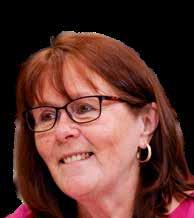
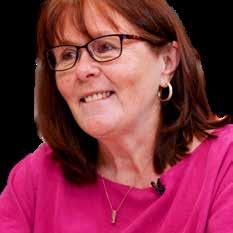
Di Archer
To mark Eating Disorders Awareness Week, which ends on Sunday (1 March), DI ARCHER recalls how her daughters’ experience of anorexia and bulimia led her to become the co-creator of the charity tastelifeUK, and reveals what helped in the tough times
by Emily Bright

In 2005, Di Archer’s daughter Sarah had just finished her first year of university and was travelling to the US for the summer. But her trip turned into a nightmare.
‘Sarah had rung me during the previous term,’ recalls Di, a mother of three and the CEO of charity tastelifeUK. ‘She had said: “Mum, I’ve eaten too much cake and then brought it all back up again. Does that matter?” And I was like: “Don’t worry about it, you’ll be fine.” We knew nothing about eating disorders.
‘The next thing we knew was a phone call from a US hospital saying that Sarah’s life was hanging by a thread. She had such a severe mixture of anorexia and bulimia, and her body was so depleted of potassium, that she should have been in a coma.’
Di’s husband, Graham, flew out to the US to bring Sarah home.
‘They pumped her full of potassium so she could travel, but she wasn’t allowed to travel on her own,’ says Di.
At that point, her family were ‘tipped into the deep end’.
She explains: ‘Eating disorders are cruel – like hell on earth. They don’t just affect the person who is directly struggling, but also family and friends.’
An estimated 1 in 50 people in the UK has an eating disorder. Although symptoms vary for each person, there are typically three main types of eating disorder.
Anorexia nervosa is a condition in which people may excessively control their eating, overexercise and starve their bodies. Bulimia nervosa involves overeating followed by either the vomiting of food or the taking of laxatives in the mistaken belief that their use prevents food absorption. Binge-eating disorder is marked by
the consumption of high-energy foods in secret binges or a struggle to stop eating.
Di and Graham found the initial support for Sarah’s eating disorder to be disappointing. While the NHS later provided family therapy, it initially told the couple that it would not be able to admit Sarah to its services until the autumn – which was months away.
‘It was a scary time,’ remembers Di. ‘I turned to a church friend, Jean Hart, who had been through this nightmare with her daughters. As an eating disorder counsellor, she was our mainstay.’
Di learnt that eating disorders can often be an emotional response to an underlying issue.
eating disorder ‘voice’ is full of lies
‘T he food behaviour is the tip of the iceberg,’ she explains. ‘There’s something else going on underneath. Sarah would say that there were things from her childhood that she’d not dealt with. In our family, we had a couple of years of illness and cancer scares. She also had undiagnosed depression after getting glandular fever.
‘We supported Sarah as she carefully looked underneath the iceberg, to see what might be going on there. That sounds straightforward. It isn’t. The whole point of using a behaviour to cope is that you don’t know how to look at this stuff underneath.
‘But as Sarah began to recover, our second daughter started to do a copycat thing. It was a long, dark tunnel for the whole family. The eating disorder “voice” is loud and full of lies.’
Through that dark tunnel, Di and Graham – who was a vicar in the south of England at the time – held fast to their Christian faith.
‘My relationship with Jesus defines my life,’ says Di. ‘I look back and can see that he was walking with me in the dark times.
‘The eating disorder years were a
tough time. I sometimes felt like I was hanging on to my faith by my fingernails. But other people were praying for me.’
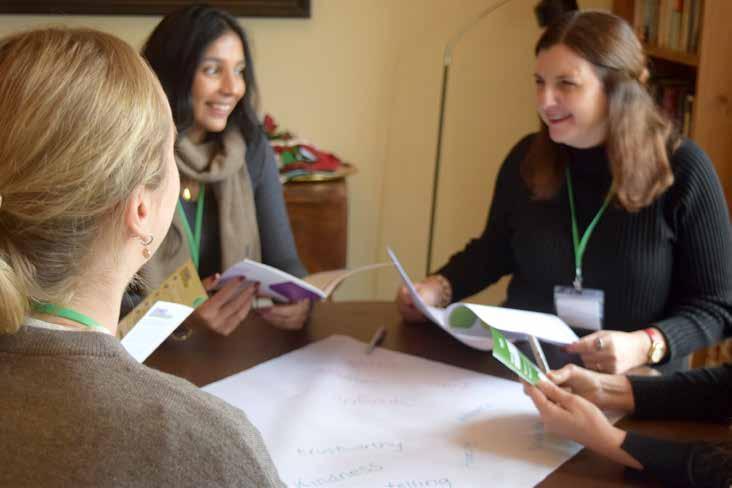
As their daughters’ health began to improve, Di and her friend Jean decided to create the resources and support that they wished they had been given. In the summer of 2013, they launched a recovery course, open to people struggling with eating issues, and their family and friends. It was the beginning of tastelifeUK and its Community Recovery Course.
Over a period of eight weeks, the course explores topics such as selfimage and addiction, how to tackle the emotions behind eating disorders and how to develop a healthier relationship with food. The sessions include discussion groups, video stories of recovery and self-awareness exercises.
‘We trialled, honed and piloted the course over a couple of years,’ says Di. ‘It’s now endorsed by OCN London. It went through eating disorder units and professors.
‘We now run online and on-site groups. For some people, it’s easier to attend online because it’s just your face showing. You don’t have to worry about your body.’
The recovery course is suitable for anyone above the age of 15, because –as Di explains – eating disorders affect all ages and genders.
‘We had people in their 70s come along and say: “I’ve never been able to talk about this. Thank you for listening to my story.” It’s so important to recognise your own story and talk.’
The theme of this year’s Eating Disorders Awareness Week, which ends on Sunday, is the importance of community in recovery. Di and Jean discovered the value of developing community when, after creating the course, people were asking for further support in leading the courses.
‘Some were saying: “We love this, but you’ve got to train us,”’ she says. ‘They
From page 9
were terrified of saying the wrong thing and making it worse.’
So tastelifeUK began training volunteer course leaders. There are now about 250 leaders across the country.
Di explains: ‘Our group recovery course provides a safe space with people who understand completely what you’re going through,’ she says. ‘And 90 per cent of our leaders have been there themselves one way or another.
‘We want to lift that burden off people and say: “If you’re struggling with your relationship with food, this isn’t your fault.” Then we explore why. Shopping for food is complicated in our society, partly because there is so much choice. Some foods can be processed, high in sugar and addictive.
‘Even if they haven’t got a full-blown eating disorder, loads of people struggle with eating, and this gets in the way of
them living life to the full.’
Di believes that part of the addictive nature of eating disorders – particularly with anorexia – stems from the fact that sufferers feel as if they are gaining control.
‘Eating disorders can feel like a friend when they begin,’ she says, ‘because, with anorexic behaviour, for example, your body starts releasing chemicals to help you feel better and keep you going. That gives you a high.
‘But because your body adapts so quickly, the eating disorder is then in control of you. One of the things we talk about on our recovery courses is about getting back control.
‘I can remember one recovered person who had had anorexia saying: “When I started eating again, I could feel holes being filled up in my brain. I started to think differently.” That’s exactly what
was happening. If you don’t have the nutrients, you have gaps where neural synapses and pathways aren’t working properly.’
While the course caters to people of all faiths and none, tastelifeUK is, at its heart, a Christian charity.
‘Some people specifically say that they don’t want the God stuff, and that’s fine,’ says Di. ‘But at the end of the session, we say that if you want to stay behind and talk, or if you’d like some prayer, we can do that.
‘We often find by session three, you’ve got parents saying: “My daughter is in hospital. I know I said I didn’t want any of the God stuff, but would you mind praying for her?” Without doubt, God is using the course to touch people’s lives.’
The course has had a significant impact to date.
‘About 3,000 people have gone
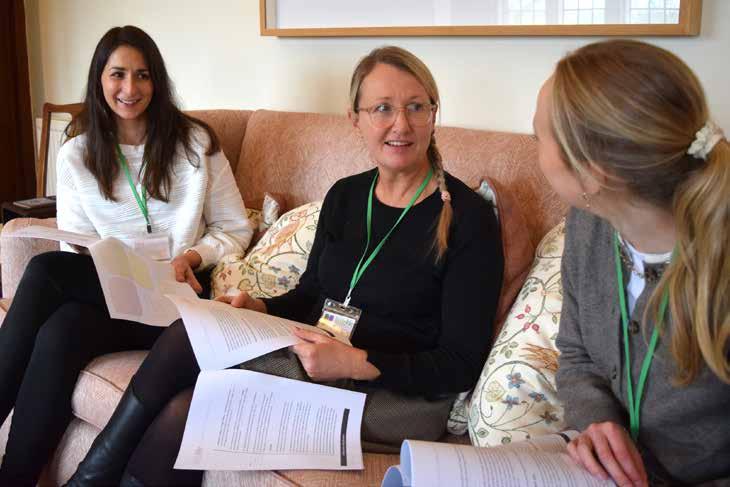
through it over the last 10 years,’ Di says. ‘Since we started doing the proper evaluations, 86 per cent of those report significant progress in their journey of recovery. I get emails from people saying that tastelife saved their family.’
The charity’s work has expanded to education and prevention. In 2019, it created Youth Track, a three-session course for young people.
‘It’s about how to understand and avoid eating disorders,’ says Di. ‘Youth leaders and teachers have said that it’s giving them and the kids the language to talk in a safe way about eating disorders. Youth Track includes someone’s story of going in and out of eating disorders, why it happened and how she found the motivation to get out.
‘We also have Food, Feelings and Faith, which is the Christian version of Youth Track, with reflections such as: “How do you think God thinks about you?”’
Di’s daughter Sarah was given an insight into how God thought about her while she was at a Christian summer festival.
‘She had been hiding in the caravan and was still struggling to keep anything down
food-wise,’ remembers Di. ‘She was weak and not thinking straight.
‘Sarah joined a worship session with thousands of other people, and she couldn’t get out of her chair. She was like, “I can’t stand up. I haven’t got any energy”, because she hadn’t been eating. Sarah was totally exhausted and had no idea what to do.
However dark the valley is, God is there
‘Then she had what she describes as a picture in her head where she was face down in the mud and muck of where she’d got to.
‘In this vision, she saw feet walking towards her. She thought: “If this person tells me to stand up, I can’t do it. I haven’t got the energy; I can’t do anything for myself.” And this person lay down next to her and put his face in the dirt as well.
‘I think Sarah’s faith was small at that point, but she was like: “There’s only one person I know who would do that, and that’s Jesus.” She looked out the corner of her eye, and he turned his face towards
her and said: “Whenever you’re ready.” That was a profound experience for her, that I often go back to.’
Both of Di’s daughters have since recovered from their eating disorders and now have their own families.
‘I’m so grateful that we came through it,’ says Di, ‘because not everybody does. Anorexia in particular is extremely dangerous, and about 25 per cent of those affected don’t make it because they literally starve their brains.’
To those still struggling with eating disorders, Di offers a word of encouragement.
‘Reach out to us. There is always hope. And know that, like it says in Psalm 23, however dark the valley is, God is there. Whether you can feel him or not, you do have someone walking beside you.
‘Life is difficult, but we never have to face the difficulties on our own. It doesn’t matter how deep the pit that you are in. Jesus can come to wherever you are.’
l Sarah’s name has been changed. For more information visit tastelifeuk.org
Your prayers are requested for Doreen, who has been unwell; and for Ros, who has had major surgery and subsequent treatment, and for his sister and brother-in-law, who have been helping him.
The War Cry invites readers to send in requests for prayer, including the first names of individuals and details of their circumstances, for publication. Send your Prayerlink requests to warcry@salvationarmy.org.uk or to War Cry, 1 Champion Park, London SE5 8FJ. Mark your correspondence ‘Confidential’.
There is no set formula to becoming a Christian, but many people have found saying this prayer to be a helpful first step to a relationship with God
Lord Jesus Christ,
I know that I have done things in my life that are wrong and I’m sorry.
Thank you that I can ask you for forgiveness because of the sacrifice you made when you died on the cross.

Please forgive me and help me to live a better life in the future as I learn how to love you and follow your way of living.
Thank you, Lord Jesus.
If you’ve prayed this prayer, scan the QR code or contact us using the coupon on this page

The eventful visit of early Christian leader Paul to the Macedonian city of Philippi is recorded in Acts 16. Fabrics-dealer Lydia and members of her household responded to the gospel. Paul delivered a slave girl from an evil spirit, for which he and his companion, Silas, were flogged and imprisoned. While in their cell, Paul shared the gospel with his jailer. As a result, the jailer and his family put their faith in Jesus.
Now imprisoned in Rome, Paul writes to the church in Philippi, a congregation who hold a special place in his affection (1:3–11). He describes them as ‘my joy and crown’ (4:1 New International Version).
He assures them that his present incarceration is not a setback to the spreading of the gospel. On the contrary, his guards know about his faith, other believers have been emboldened to talk about Jesus (1:12–14) and some in Caesar’s household have become Christians (4:22).
The theme of the letter is unity. Paul knows that some people preach Jesus out of questionable motives. However, rather than allowing this to become a divisive distraction, he maintains that the only thing that counts is that ‘Christ is preached’ (1:18).
Stressing the need for unity, he exhorts his readers not only to be like-minded, but also to have the same attitude as Jesus, who was humbly obedient to God’s will (2:1–11). They are to do everything ‘without grumbling or arguing’ (2:14). He urges two of the congregation to settle their differences (4:2).
They are also to be watchful of false evangelists who require Gentile converts to be circumcised as a sign that they bind themselves to keeping the Law which God had given to the Jewish people in Old Testament times.
Paul asserts that God makes us right with him not by us obeying rules, but through the atoning death of Jesus. When we put our faith in him, we are made right with God and will be raised to new life.
To illustrate his point, Paul describes his religious background. He was a clean-living man, but recognised that his goodness was useless in earning God’s forgiveness. For that, he needed to put his faith in Jesus (3:1–11).

Or email your name and postal address to
To receive basic reading about Christianity and information about The Salvation Army, complete this coupon and send it to


1 2 3 4 5 6
Jing Lusi plays DC Hana Li in which TV crime series?
In which year was the AI chatbot ChatGPT first released to the public?
Olivia Newton-John and John Travolta played would-be couple Sandy and Danny in which 1978 musical film?
Who is the author of the Housemaid psychological thriller novels?
Who won the women’s singles title at last month’s Australian Open tennis tournament?
Which eastern European country’s national flag consists of three vertical stripes of blue, yellow and red?
Feature by Ewan Hall
‘What do you want to be when you grow up?’ It’s a question that young people often hear. And their response is often one of uncertainty. National Careers Week (NCW) – running from Monday (2 March) – aims to open youngsters’ eyes to various, often unseen, types of employment opportunities that they may want to consider for their future.
NCW’s website offers free printable, digital and video resources so that schools, colleges and universities can run career activities for students. It has also created a Virtual Careers Fair, where young people can meet employers.
Taking place over six days, the free online event is supported by partners and businesses, including NatWest, the NHS and Amazon. Those three organisations, for instance, will take turns to showcase their career options, from obvious jobs, such as banker, doctor and delivery driver, to less high-profile roles, such as project manager, admin worker and engineer.
But while NCW aims to help young people spot a career that suits them, when they actually do begin to look for work, they may find that the job market can still be difficult. Trying to secure a role that leads to a desired career may be hard work. Rejection can leave job-seekers feeling demoralised and questioning their self-worth – an experience which is never welcome, but which can happen to any of us when we feel shunned in any area of life.
When we feel at a low, it can be difficult to know who to turn to for help. But there is someone willing to be with us and work through any challenges we are facing. And that’s God. One Bible passage describes him as ‘our shelter and strength, always ready to help in times of trouble’ (Psalm 46:1 Good News Bible).
Whether we face problems in our search for employment, in our family life or with our health, God wants to support us by having a relationship with us. If we join his team, we will find someone who is always ready to listen and who will help us become the kind of person we were meant to be.
ACROSS
1. Post (4)
3. Animal doctor (3)
5. Fasten (4)
7. Bought (9)
9. Retailed (4)
10. Compassion (4)
11. Fetch (5)
14. Town chief (5)
15. Thread (5)
17. Greek letter (5)
18. In no way (5)
19. Essential (5)
20. Loathsome (5)
23. Benevolent (4)
25. Cutlery item (4)
27. Intermediary (2-7)
28. Couple (4)
29. Pitch (3)
30. Young girl (4) DOWN
1. Shapeless heap (4)
2. Praise (4)
3. Parish parson (5)
4. Drill (5)
5. Ooze (4)

6. Idle (4)
7. Toy (9)

8. Course (9)
11. Colour (5)
12. Notions (5)
13. Meat juice (5)
14. Male (3)
16. Snake-like fish (3)
21. Avoid (5)
22. Turret (5)
23. Retain (4)
24. Grim (4)
25. Tumbled (4)
26.


Zimbabwean city 3. Breed of dog with a curly coat
ELLIOT

BENNET


INGREDIENTS
METHOD
Light cooking oil spray
40g button mushrooms, halved
80g cherry tomatoes, halved
40g spinach, fresh or frozen and thawed
2 medium eggs
10g reduced-fat mature cheddar cheese (or similar), grated
Freshly ground black pepper
2 seeded wholemeal rolls, halved

Coat a non-stick frying pan with oil spray and heat over a medium-to-high heat. Cook the mushrooms, tomatoes and spinach for about 5 minutes, until the spinach has wilted and the tomatoes have softened. Using a slotted spoon, transfer the mushrooms and tomatoes to a dish to cool.

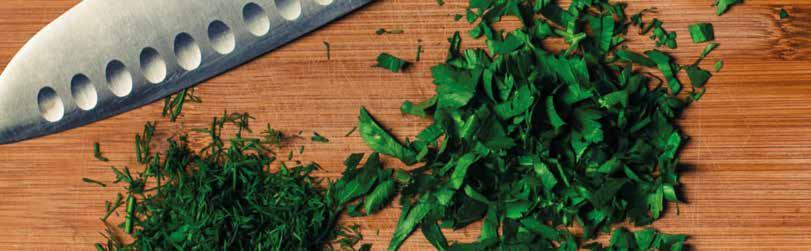


Crack the eggs into a mixing bowl and lightly whisk. Add the mushrooms, tomatoes, spinach and cheese. Season with pepper and mix thoroughly.
Coat the same pan with more oil spray and heat over a high heat. Pour in the egg mixture, making sure the vegetables are spread out.
Cook until the omelette is browned on the bottom and almost set.
Remove the pan from the heat. Place a plate over the pan and invert, tipping the omelette on to the plate. Carefully slide it back into the pan, browned side facing up, and return to the heat, until cooked through and both sides are lightly browned. If liked, lightly toast the wholemeal roll halves. Cut the omelette into quarters and place 2 quarters inside each of the rolls, to serve.
INGREDIENTS
250g small broccoli florets
50ml vegetable oil
300g wholemeal self-raising flour
5 large eggs
150ml semiskimmed milk
2tsp paprika
100g reducedfat extra-mature cheddar cheese, grated
325g can sweetcorn, drained

Preheat the oven to 190C/Gas Mark 5. Grease and line a 30cm square baking tray.
Blanch the broccoli florets in boiling water for 4 minutes. Drain and plunge into cold water, then drain again and cut into 2-3cm pieces. Set aside.
In a large bowl, mix the oil, flour, eggs, milk and paprika. Add the cheese, broccoli and sweetcorn and mix gently, until combined.
Pour the mixture into the baking tray and gently spread to the edges.Bake for 25-30 minutes, until set.
Cool for 10 minutes, then cut into squares and serve warm, or allow to cool completely before serving.