
Star Wars fans return to a galaxy far, far away
Tide’s turning
Holiday hopes go awry in TV drama

Can we put our faith in artificial intelligence?
What is The Salvation Army?
The Salvation Army is a Christian church and registered charity seeking to share the good news of Jesus and nurture committed followers of him. We also serve people without discrimination, care for creation and seek justice and reconciliation. We offer practical support and services in more than 700 centres throughout the UK. Go to salvationarmy.org.uk/find-a-church to find your nearest centre.
What is the War Cry?
The Salvation Army first published a newspaper called the War Cry in London in December 1879, and we have continued to appear every week since then. Our name refers to our battle for people’s hearts and souls as we promote the positive impact of the Christian faith and The Salvation Army’s fight for greater social justice.
From the editor’s desk
Many consumers are drawn to foods whose packaging proclaims that they have ‘no artificial colours’ or ‘no artificial sweeteners’. In fact, many people have an aversion to anything that seems artificial. Perhaps that’s why some are hesitant to embrace artificial intelligence. Others may be concerned by AI’s reliability, how it affects the people who engage with it and how it might develop.
In this week’s War Cry, we speak with youth worker Gareth Cheesman, who has been looking into how AI is impacting young people’s communications and relationships – and he has identified an area of concern.
‘Generative AI at the moment,’ he tells us, ‘is programmed to agree with you; its overarching rule is to make the user happy. Human connections are not built on that principle. Or they are not healthy when they are.’
Healthy relationships are important for us all. And we may know people personally whose example shows us how to forge such relationships. But those role models are not always easy to find. In such cases it can be helpful to look to people we may never meet, but whose lives can still be a guide for us.
Editor: Andrew Stone, Major
Managing Editor: Philip Halcrow
Staff Writer: Emily Bright
Staff Writer: Claire Brine
Staff Writer: Ewan Hall
Editorial Assistant: Linda McTurk
Graphic Designer: Mark Knight
Graphic Designer: Natalie Adkins
Email: warcry@salvationarmy.org.uk
The Salvation Army United Kingdom and Ireland Territory
Champion Park London SE5 8FJ
Tel: 0845 634 0101
Subscriptions: 01933 445445 (option 1, option 1) or email: subscriptions@satcol.org
Founders: Catherine and William Booth International leaders: General Lyndon Buckingham and Commissioner Bronwyn Buckingham
Territorial leaders: Commissioners Jenine and Paul Main
Editor-in-Chief: Major Julian Watchorn

To this end, author Margi McAllister has written the children’s book Extraordinary Women of Faith
‘Children need heroes, role models and inspiration,’ she says in an interview this week, adding: ‘The more I researched the wide range of women for my book, the more I found they had the most amazing stories.’
Regardless of our age, it is encouraging to hear of people who have made a difference for good in this world and to follow their example.
Through the centuries, millions of people have followed Jesus and the example he set – and in doing so they’ve discovered that there’s nothing artificial about him.



INFO INFO


PARADISE LOST
Holiday with friends becomes stressful for couple
TV preview: Two Weeks in August BBC1 and iPlayer
By Claire Brine
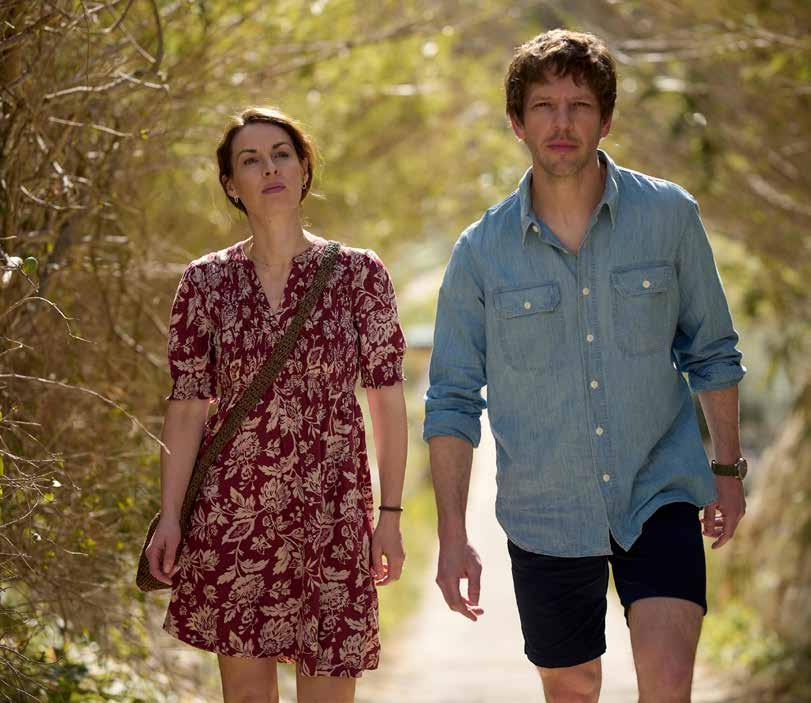
The sun is shining. The sky is blue. Time for a group of friends to relax on holiday. But some are finding it particularly difficult to chill out in the opening episode of the BBC1 drama Two Weeks in August.
When Zoe (Jessica Raine) and her husband Dan (Damien Molony) arrive at a large villa in Greece that they’ve rented with friends, Dan is feeling tense. He’s annoyed to find that he and Zoe have been allocated the smallest bedroom. The villa – although beautiful – is ‘somewhere we can barely afford’. And he and Zoe feel pressured into agreeing to cook the group’s meal for the first night.
At the market, the couple consider buying some fresh fish for dinner, but are dismayed to realise that they can’t afford it. Sensing Dan’s stress levels rising, Zoe tries to keep him calm by suggesting they buy cheaper frozen fish from a nearby supermarket. Nobody will know, she assures him. Dan isn’t convinced. Later, in the kitchen, the couple prepare the evening meal while their friends relax by the pool. When the food is dished up,
the fish is inedible. Zoe tries to stay positive, while Dan apologises for ruining dinner.
In an attempt to lift the mood, Zoe proposes a toast to friendship. Nat (Leila Farzad) jumps in, toasting ‘to getting through bad times’. She gives Dan a pointed look which hints that he is welcome to talk openly about a recent trauma he suffered.
Before Dan can open his mouth, Zoe jumps in, assuring the friends that Dan is ‘doing great’ after his car accident. Everyone at the table compliments their friend on how amazingly he is coping. But Dan doesn’t agree.
‘I’m not doing that great really,’ he confesses. He then reveals that his business has recently gone bust, prompting him to question his worth.
‘It made me think: What is the point of me?’ he says. ‘And I couldn’t really work that one out, so I sort of went mad.’
The revelation that follows shocks the group. Why did Dan insist on suffering alone for so long? And what stopped Zoe from being honest and seeking support from their friends? Some questions don’t
have a straightforward answer.
Perhaps we understand Dan’s position. It can be hard to open up to others about the difficulties we are facing. Maybe we worry that they won’t understand how we feel, or we fear that they’ll judge us. It could be that we’re lost for words.
But, rather than keeping our problems hidden, we can always turn them over to God. When we offload the worries on our mind, he will listen, understand and guide us. He is the kind of friend who never lets us down.
The Bible says: ‘Don’t worry about anything, but pray about everything... God will bless you with peace that no one can completely understand. And this peace will control the way you think and feel’ (Philippians 4:6 and 7 Contemporary English Version).
When we put our trust in God, and allow his love to transform our heart, we can find the strength to face anything. We can rest in the knowledge that we are not alone. And on the days when we’re ‘not doing that great’, we can experience his peace that never ends.
When goodbyes feel bad
Ewan Hall gives his take on a story that has caught the attention of War Cry reporters
When a child leaves home, the story from the parents’ perspective is supposed to be simple. They may expect the moment when their son or daughter leaves the nest to be accompanied by feelings of pride, freedom and a job well done. But it can also bring contradictory emotions that may catch even the most prepared parents off guard. As Eleanor GordonSmith wrote in her advice column in The Guardian, it is OK for parents to feel loss.
‘It’s OK to not feel OK about something you know is good and right,’ said Eleanor in response to a reader’s letter. ‘This is a huge loss. One of the biggest chapters of your life is closing.’
Eleanor pointed out that feeling overwhelmed at a child’s departure from home does not mean that something has gone wrong. Nor does sadness need to be covered up.
‘We mourn the things we’ve cherished,’ she explained. ‘Sometimes feelings get more intense precisely because we expect ourselves to settle firmly on “happy” or “sad”, with no ambivalence, so each side starts clamouring to win.’
Contradictory emotions may catch parents off guard
talk talk Team talk Team talk ‘ ’ j TEA M TALK
WAR
Marathon effort
As participants began the London Marathon last month, The Salvation Army stepped up to its own challenge – gathering all the clothing discarded at the starting line.
The Salvation Army Trading Company (SATCoL) collected 17.5 tonnes of clothing in partnership with London Marathon Events.
In the past three years, SATCoL –which specialises in textile reuse and recycling – has taken 47.5 tonnes of clothing from the London Marathon. This equates to 230 tonnes in avoided emissions, the amount produced by 120 cars travelling for a year.
Collected by 147 helpers, the garments were sorted by The Salvation Army’s processing centre in Kettering and will be resold, reused and recycled or disposed of responsibly. Profits from the garments will go towards supporting the work of the church and charity.
She advised the reader: ‘The fact that you feel this much shows how much devotion and care you’re capable of.’
Saying goodbye to the people we love and care about is never easy, as Eleanor highlights. Whether the farewell is for a child leaving home or a friend or family member moving away, it can be tough for all involved.
For me, the hardest part of saying goodbye to those closest to me is not the moment of parting, but what comes after. It is knowing that they may face struggle, hurt or uncertainty when I am no longer there to help or comfort them.
Thankfully, I can take solace in my Christian faith and the knowledge that, wherever my loved ones are in the world, God is there to help them.
In the Bible, one writer describes hearing God say to people exiled from their homeland: ‘Do not fear, for I am with you’ (Isaiah 41:10 New International Version).
In the moments when we are away from those we love, the promise of God’s presence can bring comfort. If we put our trust in him, we can know that we are not alone, and neither are they.
A 92-year-old nun has become a ‘viral hit after eating her first doner kebab’, reported The Times
The article explained that Sister Irmingard of a convent in Koblenz, Germany, had lived through the Second World War and the fall of the Berlin Wall but ‘one experience had passed her by: the doner kebab’, which is one of Germany’s ‘de facto national dishes’.
A video of the nun enjoying her first kebab at a takeaway received 5.5 million views and 300,000 likes on Instagram within 48 hours.
WAR CRY
Falling actor sees how faith provides ‘sense of peace’
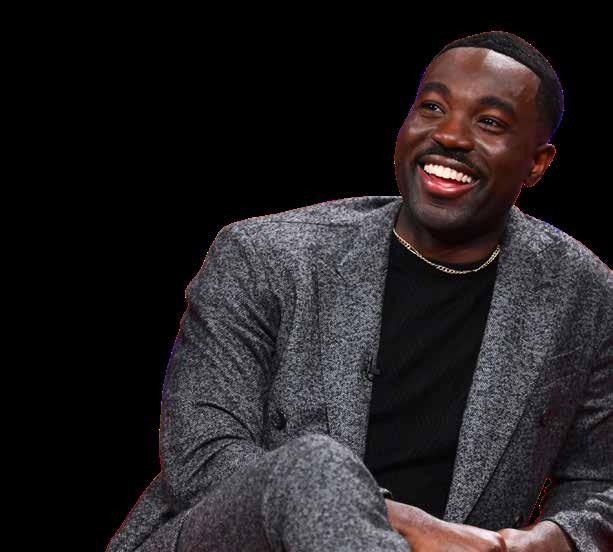
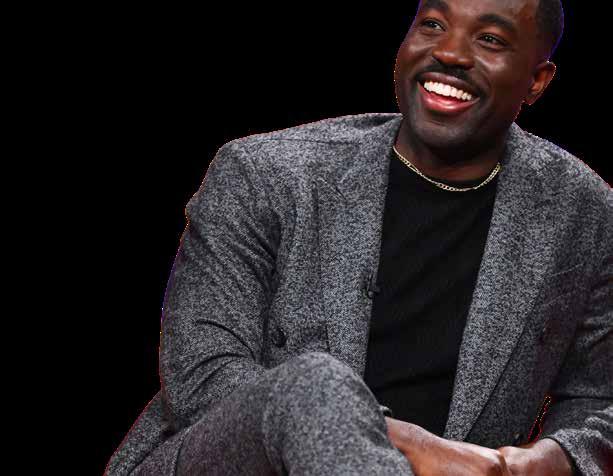
Paapa Essiedu (pictured), who plays a priest in love with a nun in Channel 4’s think again about the Christian faith when making the programme.
Speaking ahead of the broadcast of the drama series, Paapa, who grew up going to church but no longer practises his faith in a place of worship, said that he found ‘something profound about re-entering that state of mind’.
He explained: ‘I find it remarkable, the moments where those rituals or invitations to surrender can be really effective in providing a sense of peace or an opportunity to move through something.’
Paapa added that playing Father David in the programme caused him to ‘feel the power of religion and faith to provide peace’, saying: ‘We often put systems and mechanisms in place to control things that feel wild or scary or disruptive, so we can get through the day-to-day, but there can be a real peace in surrendering to something that feels right and good from within.’
Brides worry about walk down the isle
A ‘tiny church in the sea’ is causing brides to ‘worry about high tide making them late to the altar’, reported BBC News.
The article explained that St Cwyfan’s Church – situated on the tidal island of Cribinau, off the western coast of Anglesey – dates back to the 12th century. After falling into disrepair in the late 19th century, the building was restored in 2006, and its whitewashed walls began to ‘stand out off the coast’, attracting couples seeking a church venue for their wedding.
But the island can be reached only at low tide, meaning people are advised to check tide times before beginning their journey.
Engaged couple Alex and Jonathan fell in love with the remote location for their wedding, but ‘faced a nervous wait’ for 18 months ‘to find out if the tide would be low enough to make it over’.
Despite poor weather on the couple’s wedding day, Alex added that guests were ‘blown away with the romanticism of it all and how beautiful it all was’.

Weight to go, Rev
An 82-year-old retired prison chaplain took on a challenge to lift 200kg to raise funds for his village church after its heating system failed, several media outlets reported.
ITV News was on the scene at the competition in Salisbury where the Rev Vernon Lidstone, from Stroud, successfully lifted the weight to help St Peter’s Church in Framilode install a new heat pump.
With no prior experience, Vernon began exercising in his 70s and started powerlifting only a year ago.
At the competition, Vernon beat his previous best of 182.5kg.
St Cwyfan’s Church on Cribinau
‘You can’t unplug God’
Youth worker GARETH CHEESMAN explores how AI influences young people’s beliefs and their sense of belonging
Interview by Ewan Hall

Gareth Cheesman
For years, artificial intelligence belonged to science fiction, imagined as a helpful assistant, curious companion or a machine that could imitate what it means to be human. Today, AI is no longer a distant idea but a practical reality that is part of everyday life.
While some people approach AI with apprehension, Gareth Cheesman has been exploring in depth how this technology is shaping young people’s faith, as well as their experience of connection and communication.
‘AI is an umbrella term for lots of different computer programs and algorithms,’ says the freelance youth worker, who specialises in providing training in relationship and sex education.
‘Often at the moment, when we talk about artificial intelligence, we are really talking about generative AI systems such as ChatGPT, Microsoft Copilot or
Google Gemini. These programs generate content from a prompt. The best way to understand them is as predictive text turned up to 100 – they predict what word comes next, and that is how they produce an answer.’
By being ‘trained’ – that is, by learning patterns, language, examples from text images and other information – on vast amounts of data, AI programs have become commonplace. Many adults encounter AI as a workplace tool, often used to streamline tasks such as spellchecking or improving workflow.
‘The big promise of AI is that it is going to increase productivity,’ Gareth says. ‘If it does, that could be good for humans –arguably, productivity has been good for civilisation, making us safer, more secure and giving us more leisure time. If AI matches its promise, it can be helpful to society – but that is not a given.
‘The other side of the productivity

issue is that it could lead to a huge wealth inequality between workers and owners, leading to further risks of unemployment and poverty.’
However, Gareth believes that young people are engaging with AI in a very different way.
‘I am seeing three main ways they are encountering AI,’ he says. ‘The first is that they are using it for schoolwork and homework. The second is that they are simply playing around out of curiosity, using the AI provided from Snapchat or WhatsApp to see what this new technology can do. The third way is that they are turning to AI to meet an emotional or relational need. For example, they are using it as someone to talk to, helping them to manage stress or even practising conversation starters and getting feedback.
‘Young people often connect with AI as either a new form of media or almost as a
new kind of creature. I have not met any young people who think AI is human, but some will treat it like a creature – based on the concept that if it quacks like a duck, we call it a duck.
‘So, if AI feels sentient or emotional, they may treat it like a pet or an animal. In that instance, young people are experiencing AI very differently from older adults.’
AI is programmed to agree with you
For Gareth, a key concern arising from young people’s interactions with AI is the nature of the relationships they form with it, and how these may affect people’s relationships with each other in the future.
‘Generative AI at the moment is programmed to agree with you; its

overarching rule is to make the user happy,’ he says. ‘Human connections are not built on that principle. Or they are not healthy when they are.
‘If young people get used to interactions where they’re always validated, they may struggle with disagreement and the rough and tumble of real human connection.’
If an AI tool is designed to prioritise user happiness, how should it respond when people of all ages want to discuss theological questions, such as faith? Gareth argues that AI can still be helpful. It just needs the right prompt.
‘AI is shaped by the data it is trained on,’ he says. ‘Current generative AI needs training data, and it generates answers based on that material. The danger of that is a stagnation of faith. Where is the space for fresh revelation if everything is just regurgitation? My biggest concern is that AI could stunt people’s ability to hear
what God is saying to them.
‘That said, it can still be useful. We will hear stories of people coming to faith through conversations with AI. It can also lower the barrier for people who are curious but too embarrassed to ask questions. And, if used deliberately, it can bring more nuanced perspectives to the surface.’
Gareth believes that God is not surprised by the emergence of AI but, instead, can work through technology.
‘You can’t unplug God,’ he says. ‘We should be cautious about what we put our faith in, including AI. But, like any technology, AI can be harnessed to create opportunities for people to meet God.’
Though AI may give the impression of knowing everything, it does not.
‘AI gives the illusion of universal knowledge, endless patience and endless capacity,’ says Gareth. ‘But these things only belong to God.’
‘These women weren’t afraid to shine’
MARGI
McALLISTER, author of the children’s book Extraordinary Women of Faith, talks about how she hopes to empower young girls to achieve amazing things
Interview by Emily Bright

US civil rights campaigner Rosa Parks protested against racial segregation on buses
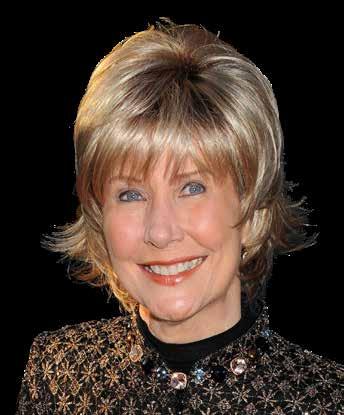
When thinking of female trailblazers, who comes to mind? Some of them may well be featured in Margi McAllister’s children’s book Extraordinary Women of Faith. In the book, the author tells 31 stories about the amazing achievements of painters, musicians, athletes, activists, nurses and naturalists from across the centuries.
Explaining the inspiration behind her latest work, Margi says: ‘I love telling reallife stories of people. I’d already written books for children about women of the Bible and about saints, and my publishers approached me to write 20-plus biographies about women of faith.’
She believes that telling stories of faith provides an opportunity to broaden people’s horizons and help them to realise what is possible with God.
‘Children need heroes, role models and inspiration,’ Margi explains. ‘In the Christian community, we are surrounded by extraordinary women of faith – I’m the mother of one and mother-in-law of two of them. But little girls also need to know about the bigger world out there.’
For Margi and her publishers, SPCK, it felt important to highlight as many stories of people from diverse backgrounds as possible, so that every reader felt represented and had someone they could relate to. Margi and her research team, therefore, made an effort to feature people from all over the world.
‘We did a lot of homework,’ says Margi, ‘to find women from different backgrounds, races and countries and with different talents, so that every little girl reading this book will think: “She was like me.”
‘We can say to girls: “She was once like you, this is where she grew up, this is what she liked when she was a child, and she ended up making music all over the world, or she ended up transforming medicine in China, or she ended up giving black women a pride in
themselves that they hadn’t had before.”’
The book’s attention to diversity extends to impressive women who defied their disability, such as Fanny Crosby and Joni Eareckson Tada.
Despite being blind, Crosby wrote thousands of hymns and played multiple musical instruments. And Tada – who became disabled from the shoulders down after a diving accident – set up her own charity to campaign for greater accessibility rights for disabled people today.
Why hasn’t everybody heard of this woman?
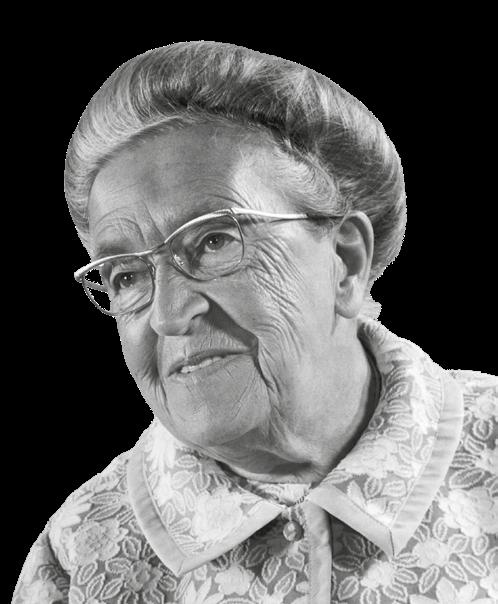
Somenames in Extraordinary Women of Faith have graced history books and TV screens, and readers may already recognise them. For example, Margi relates the experiences of 19th-century nurse Florence Nightingale, 20th-century US civil rights activist Rosa Parks and Corrie ten Boom, whose family hid Jews in the Netherlands during the Second World War.
However, what Margi found particularly fascinating about the project was revealing the lives of other remarkable women who hadn’t captured the same level of public attention.
‘As we did the research,’ Margi says, ‘I realised that I had never heard of some of these women – their stories have gone untold. It was so good to be able to get these biographies out there. For instance, with Isabella Bird, I thought: why hasn’t everybody heard of this woman?’
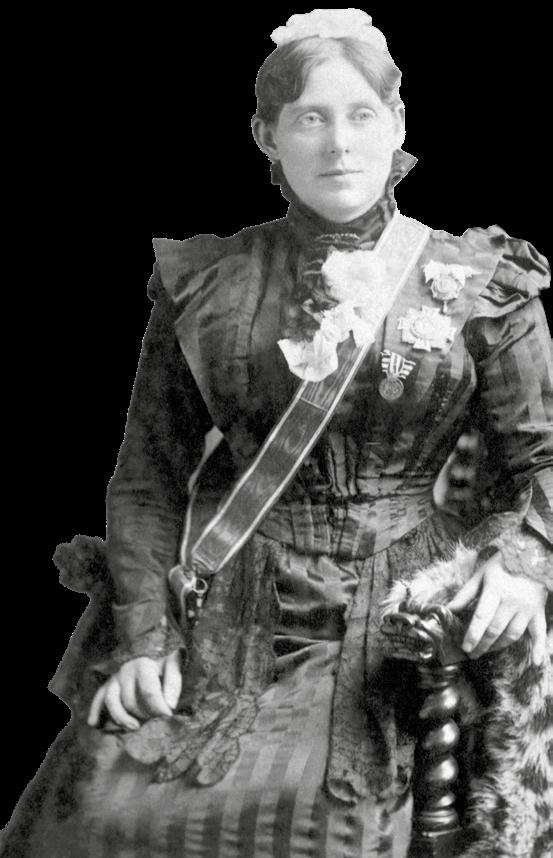
For those who haven’t, Isabella
Turn to page 10
Florence Nightingale
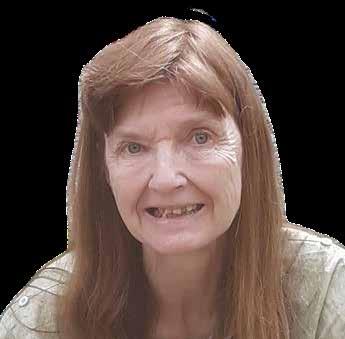
Author Margi McAllister
From page 9
– born in 1831 – often suffered from illness and back pain, but went on to become an explorer. She took a sea voyage to America, climbed volcanoes in Hawaii and rode 800 miles around the Rocky Mountains, during which time she befriended an outlaw. She later visited Asia, New Zealand and Australia.
One of Margi’s biggest challenges was conveying the impact of these pioneering women within a short amount of text.
‘The more I researched the wide range of women for my book, the more I found that they had the most amazing stories,’ she says. ‘I wondered how I could condense each down to 500 words, because they had such rich lives.’
Margi finds it difficult to pick out a favourite.
‘There are so many!’ she exclaims. ‘I love Madeleine Cinquin, who was the heiress to a fortune from a European lingerie house designer. She gave it all up to become a nun.
‘Then, at the age when most nuns would be thinking about retiring back to the convent, she went out to Cairo
and worked on the rubbish tips with the poorest people in Egyptian society, sorting out items and selling them on.
‘She campaigned for the poorest, improved conditions for them and got medical care for them. But she also lived as one of them. She was so committed and gave up everything to help.’
Margi believes that the essential thread running through all these stories of extraordinary women is faith. It empowered them to care and campaign for other people or to use their talents to glorify God.
As a Christian herself, Margi believes that the lives she writes about are examples of one of the principles of her faith.
‘We are called to love,’ she says. ‘These women showed love in action. They had to be out there, seeing the need and meeting it. Their world view was that they could not read the gospel and not act when it was needed. They all had a passionate faith.’
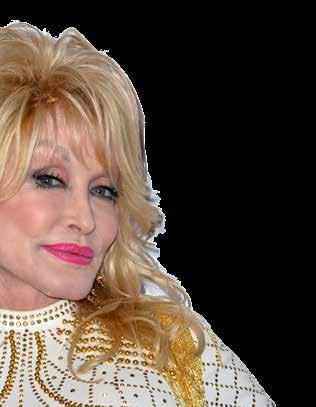
She gives a modern-day example –that of the US country singer who set up
the Imagination Library, an organisation which gives books to impoverished communities across the world.
‘Dolly Parton poured money into an Imagination Library,’ says Margi, ‘because she could not see children growing up deprived without stories when she could do something about it.’
These women persisted against the odds
Margi’s book is notable for the sheer diversity of talents and skills that it showcases. All the women in its pages found creative and purposeful ways in which to live out their faith and serve God.
‘We are all gifted one way or another, and every gift is equal before God,’ says Margi. ‘These women found their calling through their Christian community.
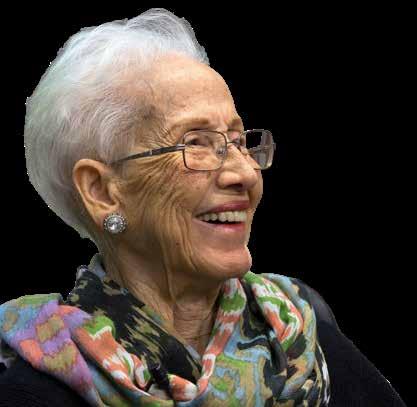
‘Florence Nightingale absolutely had to go out and do nursing. For Katherine Johnson, who worked at Nasa, her thing was mathematics. In her role, she not only contributed to the space project, but
Katherine Johnson
Joni Eareckson Tada
ALAMY/SIPA US

she opened doors for black women.’
The faith that was the driving force behind these women’s achievements is integral to Margi’s world view too.
‘Jesus is the central part of my life,’ she explains. ‘He’s my friend, my God and my King. He’s the first person I talk to in the morning, and the last person I talk to at night.’
Margi realised that the skillset that God had given her was as a writer of children’s books. She encounters his presence through her work.
‘I’m in my zone when I’m writing,’ she says. ‘I have a sense that God is with me and has been with me all the years that I learned the craft and looked at what to write and how to write it.’
Children’s books – particularly fiction – can sometimes sugarcoat life’s challenges with happy endings, making achieving dreams seem easy. But Margi doesn’t shy away from the hardship that these extraordinary women faced. However, at the end of each page, she includes prompts that show how faith in God helped each of them, and how he
can help the reader too.
She writes encouragements such as ‘God can make good things come from bad experiences’ and ‘Faith can give us hope and courage, even in dark times.’
Margi tells me: ‘I don’t want to give the message, “She just had a dream and it all came true.” You can see in the book that these women had to work hard. But I do want readers to go away thinking that these women did this against the odds, they persisted.’
While Margi’s book is primarily aimed at 7 to 10-year-olds, she is certain that it can be read and enjoyed by women and girls of any age, particularly if the reader is going through the same stage of life as the particular woman they are reading about.
Reflecting on the stories she has retold, Margi says that their faith gave them courage to live out their calling.
‘The women – particularly the ones who lived in earlier centuries when so much was against them – weren’t afraid to shine their light,’ she says. ‘They thought: “This is what I’m good at. This
is what God has gifted me with. And, whether people think it’s a woman’s world or not, this is what I’m called to, and this is what I will do.” They would not hide their light.’
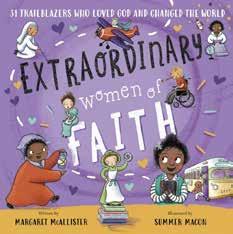
l Extraordinary Women of Faith is published by SPCK
Corrie ten Boom
Dolly Parton
Isabella Bird
ALAMY/CBW
The War Cry invites readers to send in requests for prayer, including the first names of individuals and details of their circumstances, for publication. Send your Prayerlink requests to warcry@salvationarmy.org.uk or to War Cry, 1 Champion Park, London SE5 8FJ. Mark your correspondence ‘Confidential’.
Browsing the Bible
Nigel Bovey
gives chapter and
verse on each book of the Scriptures
1 John
Becoming a Christian
There is no set formula to becoming a Christian, but many people have found saying this prayer to be a helpful first step to a relationship with God
Lord Jesus Christ,
I know that I have done things in my life that are wrong and I’m sorry.
Thank you that I can ask you for forgiveness because of the sacrifice you made when you died on the cross.
Please forgive me and help me to live a better life in the future as I learn how to love you and follow your way of living.
Thank you, Lord Jesus.

If you’ve prayed this prayer, scan the QR code or contact us using the coupon on this page

While this letter is unsigned, it has traditionally been credited as the work of Jesus’ disciple and Gospel author John. He begins by outlining his own credentials: he has seen, heard and touched Jesus (1:1–3).
With believers being led astray by the idea that Jesus is not divine (2:22), John emphasises certainty.
He makes distinctions between darkness and light, hate and love, deceivers and believers, lies and truth.
John uses the words ‘knowledge’ or ‘know’ many times.
He says that his readers can know that they ‘belong to the truth’ (3:19), and they can know ‘what love is’ (3:16), because God has demonstrated his love for humankind through his Son, Jesus.
Love is a major theme throughout the letter, with John declaring that ‘God is love’ (4:8). He explains that people are only able to love because God loved them first. He adds that no one can love God if they hate another person, as anyone who loves God must also love others (4:19–21).
But John also introduces the concept of ‘Antichrist’. He does not identify a specific person, rather generally explains that ‘the man who denies that Jesus is the Christ … is the Antichrist’ (2:22).
In the face of false thinking about Jesus, John points out his true identity. And by knowing the real Jesus, his readers can be sure of attaining eternal life (5:13).
He says that Jesus is eternal: he existed ‘from the beginning’ (1:1) and was ‘with the Father’ (1:2) – God. Jesus is the mediator between sinful humanity and the holy God (2:1). Jesus is the ‘atoning sacrifice’ (2:2), who ‘laid down his life for us’ (3:16).
Jesus is the physical expression of God’s love who ‘has come in the flesh’ (4:2) as the Christ, the long-awaited Messiah (5:1). Jesus is also the destroyer of evil (3:8) and God’s gift (4:9) who is the ‘Saviour of the world’ (4:14).

To receive basic reading about Christianity and information about The Salvation Army, complete this coupon and send it to
War Cry 1 Champion Park London SE5 8FJ a
Or email your name and postal address to warcry@salvationarmy.org.uk


QUICK QUIZ

Duo must tackle remnants of the Empire in new Star Wars release
By Ewan Hall
Avid Star Wars fans may feel as if it was a long time ago that they last visited the galaxy far away on the big screen. But this weekend, the sci-fi franchise returns to cinemas with The Mandalorian and Grogu.
The new film tracks the adventures of bounty hunter Din Djarin (Pedro Pascal) from the planet Mandalore – along with his apprentice Grogu – in his first appearance on the big screen after three series of TV show The Mandalorian on Disney+.
Set after 1983’s Return of the Jedi, the new film explores the aftermath of the Rebellion’s victory over the Empire. Although the regime has fallen, Imperial warlords remain scattered across the galaxy, posing ongoing threats.
As the New Republic works to protect everything the Rebellion fought for, it enlists the help of the Mandalorian and Grogu. Together, the pair embark on adventures, supporting the New Republic’s efforts against the lingering remnants of the Empire.
And while elements of the Empire continues to linger in that faraway galaxy, the idea of unwanted remnants can feel uncomfortably close to home.
Maybe we carry burdens that linger – mistakes we regret, harsh words spoken or chances for doing good missed. And they make us doubt our worth.
However, Christians take comfort in knowing that Jesus is able to deal with their past, including their flaws and failures. One Bible writer describes how Jesus can help us to move on in our lives, highlighting how ‘when anyone is in Christ, it is a whole new world. The old things are gone; suddenly, everything is new’ (2 Corinthians 5:17 Easy-toRead Version).
If we are ‘in Christ’ – by following him and accepting his love for us – we are not reduced to the sum of our mistakes, but are seen as something more. Instead of being held back by the remnants of our past, we receive forgiveness and a fresh start.
We may feel as if the past wants to control us, but with Jesus in the picture, we can move into a hopeful future, regardless of what we did and how long ago it was.
Film feature: The Mandalorian and Grogu in cinemas
Din Djarin and his apprentice Grogu

ACROSS
1. Entice (5)
5. Chin hair (5)
8. Flowing water (5)
9. Extravagant outing (5)
10. Passageway (5)
11. Kitchen garment (5)
12. Challenge (4)
15. Oral (6)
17. Dismissed (5)
18. Filched (6)
20. Pitch a tent (4)
25. Swamp (5)
26. Refrain from enforcing (5)
27. Outstanding (5)
28. At no time (5)
29. Correct (5)
30. Darkness (5)
1. Proved (6)
2. Reflector (6)
3. Step (5)
4. Avoid (5)
5. Marked (7)

6. Engulf (6)


Each solution starts on the coloured cell and reads clockwise round the number
Heavy oil (6)
Astern (3)
Be victorious (3)
Fill the grid so that every column, every row and every 3x3 box
Look up, down, forwards, backwards and diagonally on the grid to find these flowers

Clipped (5)
River.
Spree.
Stolen. 20. Camp.
Marsh. 26. Waive.
Owing. 28. Never. 29. Right. 30. Night.
Mirror.
Tread. 4. Avert.
Aft.
Slower.
Quiche.
Palate. 6. Beware.


Blue cheese scones
INGREDIENTS
200g plain flour
METHOD
Preheat the oven to 230C/Gas Mark 8. Line a baking tray with parchment.
2tsp baking powder
½ tsp bicarbonate of soda
½ tsp salt
1½ tsp caster sugar
75g unsalted butter, cut into small cubes
75g blue cheese, crumbled
4 spring onions, finely chopped
75ml whole milk
1 large British Lion egg
For the egg mayonnaise
3 large British Lion eggs
2tbsp mayonnaise
1 small bunch
mixed herbs, finely chopped
Salt and pepper

INGREDIENTS
100g cooking chorizo, sliced
75g leftover bread, torn into 1.5cm cubes
1tbsp olive oil
1 small onion, thinly sliced
1 red pepper, thinly sliced
4 large British Lion eggs
Small handful parsley, roughly chopped Salt and pepper

Put the flour, baking powder, bicarbonate of soda, salt and sugar in a medium bowl and stir to combine. Add the butter and rub in with your fingertips, until the mixture resembles breadcrumbs. Stir in the blue cheese and spring onions. Beat the milk and egg together in a jug, then add to the bowl and whisk, until just combined.




Spoon 9 mounds of the dough on to the prepared tray, evenly spaced out, and bake for 10-15 minutes, until golden and risen. Leave to cool. Meanwhile, to make the egg mayonnaise, boil the eggs in a medium pan of water for 10 minutes, then drain and cool under cold water. Peel and mash them in a bowl with the mayonnaise.
Stir through the herbs and season, to taste. Cut the scones in half with a serrated knife and spoon the egg mayonnaise on the bottom halves. Add the tops, to serve.
Migas eggs
METHOD
Heat a large frying pan over a medium-high heat and cook the chorizo for 3-5 minutes, until crisp. Remove with a slotted spoon, leaving the oil from the meat in the pan. Add the bread and cook for 2-3 minutes, until crisp, then remove from the pan and set aside.
Add the olive oil to the pan and reduce the heat to medium, then cook the onion and red pepper for 7-10 minutes, until softened.
Beat the eggs in a jug and pour into the pan. Cook for 2-3 minutes, stirring frequently, until just cooked.
Add the chorizo, bread and parsley and stir together. Season, to taste, then serve.

Those who believe in tomorrow can better live today
Henri Nouwen