

No question off limits in The Assembly


Four-legged friends are choosing their new humans in TV series Top dog
‘Home education is a way of life’
What is The Salvation Army?
The Salvation Army is a Christian church and registered charity seeking to share the good news of Jesus and nurture committed followers of him. We also serve people without discrimination, care for creation and seek justice and reconciliation. We offer practical support and services in more than 700 centres throughout the UK. Go to salvationarmy.org.uk/find-a-church to find your nearest centre.
What is the War Cry?
The Salvation Army first published a newspaper called the War Cry in London in December 1879, and we have continued to appear every week since then. Our name refers to our battle for people’s hearts and souls as we promote the positive impact of the Christian faith and The Salvation Army’s fight for greater social justice.
WAR CRY
Editor: Andrew Stone, Major
Managing Editor: Philip Halcrow
Staff Writer: Emily Bright
Staff Writer: Claire Brine
Staff Writer: Ewan Hall
Editorial Assistant: Linda McTurk
Graphic Designer: Mark Knight
Graphic Designer: Natalie Adkins
Email: warcry@salvationarmy.org.uk
The Salvation Army United Kingdom and Ireland Territory 1 Champion Park London SE5 8FJ
Tel: 0845 634 0101
Subscriptions: 01933 445445 (option 1, option 1) or email: subscriptions@satcol.org
Founders: Catherine and William Booth International leaders: General Lyndon Buckingham and Commissioner Bronwyn Buckingham Territorial leaders: Commissioners Jenine and Paul Main
Editor-in-Chief: Major Julian Watchorn
Published weekly by The Salvation Army © The Salvation Army United Kingdom and Ireland Territory ISSN 0043-0226
From the editor’s desk
Interviews on television can be rather predictable. Whether in the chat show conversations where celebs want only to promote their latest project or in the current affairs grillings of politicians who do all they can to avoid answering the question, nothing particularly unexpected is said.
However, as we note in this week’s War Cry, things are somewhat different in The Assembly. Over the course of the ITV series, famous faces have to answer questions from a neurodivergent panel, and no topic is off limits.
Putting good open questions to someone who is willing to give good open answers is a great way to learn. And, in this issue, we find out more about the way a child can learn from home education.
For the past six years, Natasha Barlow has taken responsibility for the education of her 11-year-old daughter, Isabelle.
‘She has really blossomed,’ Natasha tells us. ‘Over the years, Isabelle has become much more confident. She is passionate and focused. She has a real love of learning.’
Natasha has also found that there are aspects of home-educating that resonate with her Christian faith.
‘In the Bible, Jesus meets people where they are,’ she explains. ‘And if people were somewhere they shouldn’t have been, he worked with them to make a change in their life. He was a teacher who connected well with his listeners. He also taught by example – so people learnt from what he did, not just his words.’
During his time on Earth, Jesus used various methods to teach the importance of loving God and loving other people. He showed that caring was the best way to live. He also demonstrated that we can receive forgiveness from God for the things we do wrong and that we can experience a freedom in life when we forgive those who have wronged us.
The option to live this type of life is still available to us all today. The question is whether we will decide to accept it.
When you’ve read the War Cry, why not pass it on ➔


The Salvation Army Trust is a registered charity. The charity number in England, Wales and Northern Ireland is 214779, in Scotland SC009359 and in the Republic of Ireland CHY6399. Printed by CKN Print, Northampton, on sustainably sourced paper


INFO INFO



And they called it
PUPPY LOVE
Rescue dogs are matched with potential new owners in reality TV series
TV feature: The Dog House Channel 4
By Emily Bright
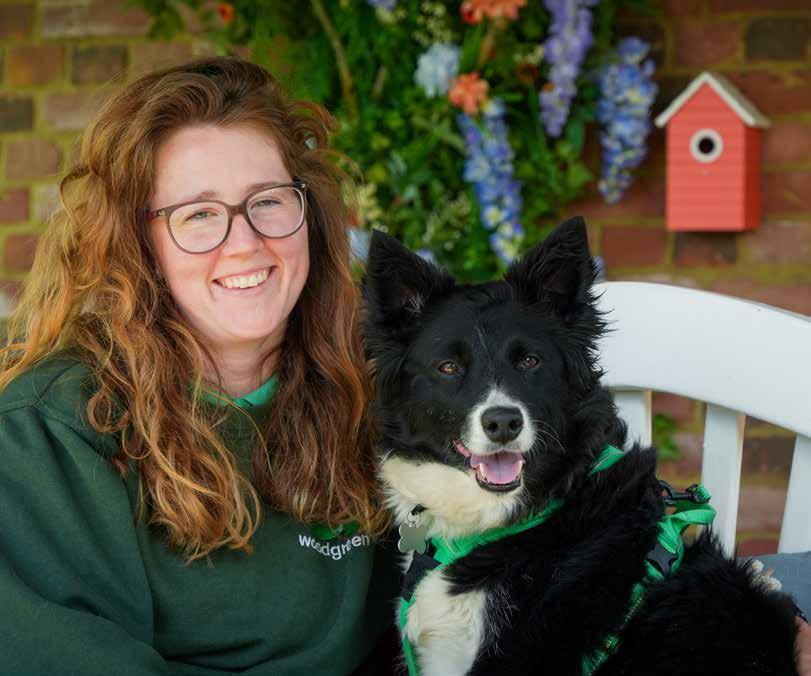
‘In a quiet corner of the English countryside, there’s a place for those looking for love,’ says narrator Andrew Buchan at the beginning of Channel 4’s The Dog House. ‘Here, a dedicated team match abandoned dogs with hopeful new owners.’
In the long-running reality TV series, staff at Woodgreen Pets Charity in Cambridgeshire pair up canines with potential owners according to their mutual personalities and needs. Once matched, the dog is introduced to a family or individual.
Each episode reveals the stories of the rescue dogs, and the reasons why people want a dog – whether it’s to find support after a traumatic life event, to gain confidence or simply to receive unconditional love.
In the final episode of this series, 12-year-old Ruby-Rose is looking for a furry friend. She and her mum have found that dog-sitting has brought them together.
Ruby-Rose, who lives with Down’s syndrome, loves to make people smile and laugh. But she is finding it harder to navigate friendships in her pre-teen years. She fears that people are defining her by
her condition rather than her personality. Her mum hopes that having a dog will help her break the ice with people. The pair meet a West Highland white terrier – or Westie – called Georgie, an independent soul who also loves a cuddle.
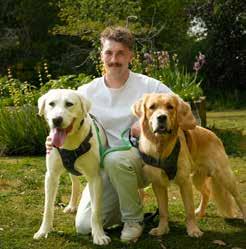
Dog trainer Sandy arrives at Woodgreen with his affectionate golden retriever Max, who is struggling with anxiety when left home alone. Sandy hopes another dog will help Max relax. Could gentle giant Akbash-cross Mavis be the pawfect partner for his pet?
And border collie Bella meets former black cab driver Danny and his childhood sweetheart Lorraine, who have been through a rough time. A dog may just be the thing to bring new life into their Bournemouth home.
In all three cases, the potential owners share a hope that a canine companion will bring a breakthrough or comfort in their lives. And, whether or not we’re dog people, at times we all need support.
In an uncertain world filled with challenges, we can often long for comfort when life doesn’t go smoothly. In many cases it can be found in the love of a family member, friend or pet.
Countless people also discover it in
the pages of a book in which they read of similar experiences and feelings to their own. They draw strength from the Bible writings of an early Christian who often spoke about the value of an ultimate source of companionship – God’s eternal love, which helped him through times of hardship.
Paul reassured his friends that ‘God our Father loves us. Through his loving-favour he gives us comfort and hope that lasts for ever’ (2 Thessalonians 2:16 and 17 New Life Version).
We can experience this comfort for ourselves, if we invite God into our lives.
He loves us unconditionally and wants to help us every day. If we let him take the lead, God will walk with us through our most challenging times and into a more hopeful future.
Sandy and his golden retriever, Max, meet Akbash-cross Mavis
Border collie Bella with her handler
j TEA M TALK
Defending hope
Claire Brine gives her take on a story that has caught the attention of War Cry reporters
Who are the most pessimistic fans in the Premier League? Not that I was asking, but the answer to this very question featured in an article in The Athletic, which contained the ‘Premier League Hope-o-meter’.
A table depicting how fans of each club felt about the rest of the season showed that Sunderland supporters came out on top, feeling 98.6 per cent optimistic about their team’s prospects, while Chelsea supporters were stuck at the bottom, with an optimism level of just 7.6 per cent.
‘Back in August, Chelsea fans were radiating positivity,’ said the article. But, added supporter Liam Twomey, it was ‘hard to keep your optimism when your new head coach is being widely mocked, your club captain is injured [and] your vice-captain appears to be flirting with Real Madrid’.
At the other end of the table, Sunderland are relishing the fact that ‘they haven’t been rubbish’, wrote football journalist and Black Cats watcher Chris Weatherspoon. Despite a consensus that the club would ‘scarcely make a dent in the top tier’, they have ‘exceeded all expectations. Supporters are determined to enjoy it.’
I don’t have to give in to despair
Though tongue-in-cheek, the article and its exploration of hope and hopelessness interested me. I’ve always been fascinated by hope – what it is, where it comes from, why we need it and the difference it can make when we have it (compared with when we don’t).
Just two weeks ago, I was pondering hope as I celebrated Easter. After Jesus was put to death on a cross, his followers felt utterly defeated. Abandoned. Hopeless.
But at that point – the worst time of all – the Resurrection happened. When things were at their bleakest, Jesus rose to life. Hope burst in.
It’s a message that I’m glad to be reminded of.
The power of God to raise his Son from death means that I, too, can dare to have hope when all appears lost. I don’t have to give in to despair. The future isn’t all doom and gloom – because, whatever troubles I may face, my Father God is always with me. His presence in my life and his love in my heart mean that hope will always come out on top.
talk talk Team talk Team talk ‘ ’
Mobos double

Gospel artist DC3 holds the two Mobo awards that he won at this year’s ceremony in Manchester. As well as being named best gospel act, the Christian rapper received the overall award for best newcomer.
Gym fitted out
A Salvation Army centre for people experiencing homelessness has installed a professional-grade outdoor gym in its garden.
The new facility, at Willow House Lifehouse in Reading, provides residents with a free, accessible way to improve their physical health and reduce stress.
The gym features five commercial-grade weight and resistance units for full-body workouts, alongside a cardio exercise bike.
The gym was installed thanks to a donation by a local family in memory of their parents.
WAR CRYWnRLD
Babies actor talks upbringing
Paapa Essiedu, who played Stephen in the BBC1 drama Babies (pictured), told of his religious upbringing.
The actor said: ‘I do call myself a Christian. The Bible was a huge part of my formative years and I stopped going to church as a teen, but retained a connection to something greater than me.’
Reflecting on the deaths of both of his parents before he reached the age of 21, Paapa also shared his thoughts on the idea of an afterlife, saying: ‘I never believed you just die and become worm meat. I always thought there was something else and that remains, even if I don’t sit around reading Psalm 3 looking for answers.’
Next month, Paapa is set to play a Catholic priest in the Channel 4 romantic drama writer Jack Thorne.

Rembrandt resurfaces
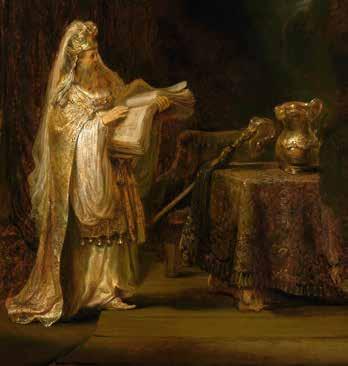
A long-lost 17th-century painting by Dutch artist Rembrandt, Vision of Zacharias in the Temple, has resurfaced and is now on display at the Rijksmuseum in Amsterdam.
Bought by a private collector in 1961 after being excluded from the list of accepted Rembrandt works, it disappeared from public view for decades. It re-emerged recently when the owner took it to the Rijksmuseum for examination.
After two years of rigorous testing, researchers have determined that it is a genuine painting by Rembrandt van Rijn.
The painting is based on the Bible story of the Jewish priest Zacharias and shows the moment he received a visit in the Temple from the archangel Gabriel, who told him that, despite his and his wife’s advanced age, they would have a son: John the Baptist. The angel is not shown, but the light shining from the upper right corner heralds his arrival.

Coffee van to go
A Salvation Army ‘Brew Van’ is heading to university campuses in the northwest of England, enabling students and young people to have a drink and a chat and to seek out support.
The church and charity’s youth team in the region is using the mobile coffee shop to engage with students at university fairs and Salvation Army events.
Travelling across Greater Manchester, Merseyside, Lancashire and Cumbria, the van will serve specialist Fairtrade coffees and teas. A chaplain will also be on hand to offer pastoral support and signpost people to further help if required.
Darren Highton, a youth specialist for The Salvation Army, said: ‘The Salvation Army is passionate about reaching younger members of communities, supporting them and sharing the good news of Jesus, and so it made sense to meet them where they are and do what they like doing. This is doing church differently and getting to the very heart of young people’s communities, giving ourselves a presence within their circles.’
‘Vision of Zacharias in the Temple’,1633, by Rembrandt van Rijn, on loan from a private collection
Youth workers Dan Bate and Darren Highton
Mum’s the word
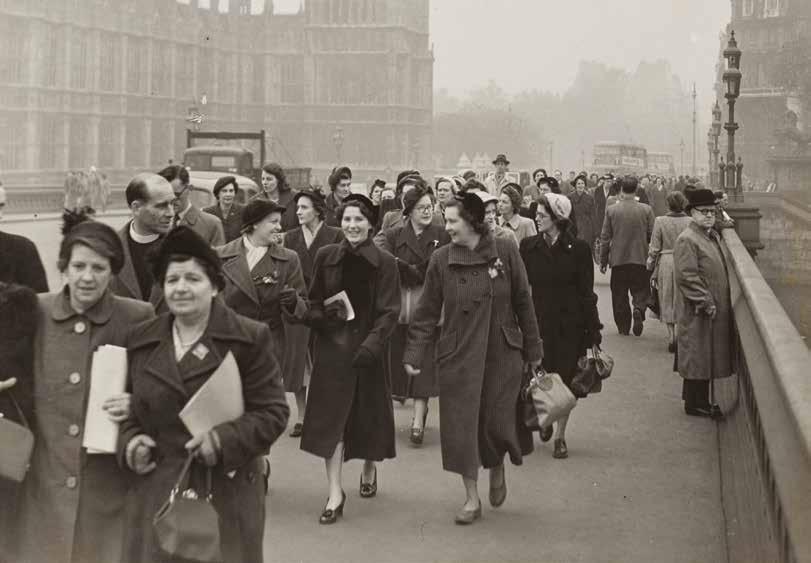
Mothers’ Union members attend a rally in London in 1952
CLARE HOWARTH, an archivist for Mothers’ Union, looks back on 150 years of the international women-led movement
Interview by Claire Brine
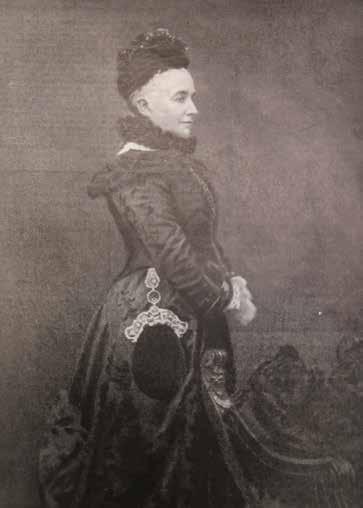
When Mary Sumner became a grandmother, she was reminded how difficult raising a child could be. Feeling inspired to help the mothers around her, she arranged a meeting at her home, the Old Alresford Rectory in Hampshire, where she encouraged women of different social classes to support one another in parenting, and urged them to recognise that motherhood was a profession just as important as any undertaken by men.
In 1876, these regular meetings – and the women who attended them –became known as the Mothers’ Union.
‘Mary felt that if you have stability in the home, you’ll have stability in the nation,’ says Clare Howarth, an archivist for Mothers’ Union, who became a member herself at the age of 18. ‘So she started getting women together to talk about what they could do to help each other in raising their children. Years later, in 1885, the Bishop of Newcastle asked
Mary to address a group of women at the annual Church Congress. Although she was nervous about public speaking, she stood up in front of hundreds of women and said: “If only you knew your power, I feel you would use it.”
‘After that, the Mothers’ Union spread across parishes in the UK, but also in Anglican churches all over the world. Today we operate in more than 80 countries. We have four million members. And this year marks our 150th anniversary.’
Today the women-led Christian movement welcomes both men and women as members, regardless of whether or not they are parents. Its mission is to end poverty, violence and social injustice around the globe. And it supports people of all faiths and none as it works to help families and strengthen communities.
‘Mothers’ Union is a charity rooted in prayer,’ says Clare. ‘Every day at

midday, members will join their sisters and brothers around the world to pray. And that’s a tradition we started in 1916, during the First World War.
‘Other key moments that stand out for us over the past 150 years include our campaign in 1929 to raise the legal age of marriage to 16 and our advocation for maternity provision, which led to us being invited to contribute to the 1942 Beveridge report, which laid the foundations for the welfare state and the NHS.’
That same year, Mothers’ Union also contributed to the design of dwellings committee.
‘We shared with the postwar government our recommendations for homes being built to include communal family areas,’ says Clare. ‘Alongside other women’s groups, we had a say in how modern homes look, which is something we remain proud of today.’
As the years passed, other
Clare Howarth

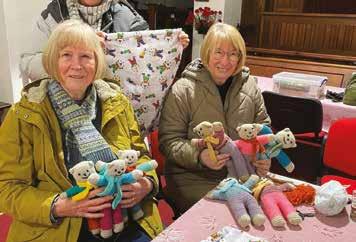
Cuddly toys are knitted by members and placed in caravans as part of the Away From It All scheme
milestones for Mothers’ Union followed. In 1946, after much lobbying, the organisation welcomed the news that the payments of family allowance would be directed to mothers as opposed to men in the household. Twenty years later, Mothers’ Union celebrated the launch of its Away From It All holiday scheme.
Faith is at the heart of everything we do
‘F or more than 60 years, Mothers’ Union has been providing holidays to people facing hardship,’ Clare explains. ‘We have a number of caravans, which we offer to families in need of a break. We recognise the benefits of respite and how families can recharge by spending quality time together.’
As well as reflecting on its history,
Clare points out some of the more recent achievements of Mothers’ Union. In 2003, for instance, it joined a committee of Pegi, a group which provides ratings on the ageappropriateness of video games. Another key moment was the 2023 launch of its national Rise Up campaign, raising awareness of domestic abuse and how individuals can take action against it.
Mothers’ Union also has a presence well beyond the UK. Its parenting programmes are popular with families in Papua New Guinea and the Solomon Islands. And in Burundi, the organisation’s literacy and financial education programmes – which were launched in 2000 – have been accessed by more than 165,000 people.
‘Through our work, 3 per cent of Burundi’s population have become literate,’ says Clare. ‘We believe that when people are able to read, they can
communicate better – and that supports family stability and leads to a better quality of life.
‘Whatever we do, we want to address the problems that are impacting our world. We want to do anything in our power to create a more equal and just society. Basically, if someone raises a need, Mothers’ Union will try to address it and offer support.’
And since its beginnings 150 years ago, the organisation has been motivated by God’s life-changing love.
‘Faith is at the heart of everything we do,’ says Clare. ‘When Mothers’ Union began, one of our central objectives was to organise in every place a band of mothers who would unite in prayer and seek by their own example to lead their families in purity and holiness of life. Today, we continue to support parents in raising their children – and our hope is that those children will grow up knowing God’s love.’
Mary Sumner, founder of Mothers’ Union
Members launch the Rise Up campaign in 2023 to raise awareness of domestic abuse

‘When we could see that our lovely, bright, fun-loving little girl was starting to turn in on herself, it was heartbreaking,’ says Natasha Barlow, who lives in Leamington Spa with her husband, Joe, and their 11-yearold daughter, Isabelle.
‘Because Isabelle had enjoyed preschool so much, we didn’t foresee any problems with her starting school. But that first year in reception just got harder and harder for her. And when the summer holidays came round, and I saw how much she bounced back by not being in that classroom setting, I said to Joe: “I can’t send her back in September.”’
Natasha and Joe had a friend at church who was home-educating her children, prompting Natasha to wonder if such an approach would work for Isabelle. After talking it through, the couple decided to pull their daughter out of school before she started Year 1. More than six years later, Natasha still feels that home-
‘My
home-educated daughter has a love of learning’

educating Isabelle is the best decision they could have made.
‘She has really blossomed,’ says Natasha. ‘Over the years, Isabelle has become much more confident. She is passionate and focused. She has a real love of learning. At the moment, she spends a lot of her time on the sewing machine – and she is even teaching herself, because she passed my level a while ago.
‘The other great thing about homeeducating is that it has made us more connected as a family. Joe works away from home a lot, and his hours can be erratic, so Isabelle hardly got to see him when she was at school. But now, he can be part of whatever she’s doing. I’ll cover most subjects with her, but the maths I hand over to him.’
While some home-educating families opt to follow a 9am till 3pm timetable, imitating traditional school hours, Natasha learnt early on that she and Isabelle worked better by taking a more flexible approach.
‘There are as many ways to homeeducate as there are families who do it,’ she explains. ‘At one end of the spectrum,

NATASHA BARLOW explains why she pulled her daughter out of school, how they approach learning at home and why she thinks Jesus was a great teacher
Interview by Claire Brine
you’ve got families who follow the national curriculum at home, scheduling in specific subjects at specific times. But at the other end, you’ve got what’s known as the “unschooling” method. Effectively, that’s where the parent doesn’t really plan anything, because they see that all life is learning, and so they let the child follow their interests and see where it leads.
‘In England, there’s no legal requirement to follow the national curriculum, but the government guidelines state that home education has to suit the age, aptitude and ability of the child.
We ask ourselves: ‘What do we feel like doing?’
‘W ith Isabelle, I’ve often followed the Charlotte Mason method, which encourages the child to learn from what she calls “living books”. So you gain knowledge from reading, but you probably wouldn’t use an academic textbook with questions in it. The idea is that you pick a book about a particular
subject, read it to your child, then get them to narrate back to you what they’ve understood.
‘The whole concept is a bit like a banquet. You set out all the dishes in front of the child and let them pick what they like. It means that Isabelle and I don’t really have a standard or structured week. We ask ourselves: “What do we feel like doing today?” And then we do it.’
When Natasha and Isabelle started their home-educating journey, the pair discovered that there was a lot to learn –or, rather, unlearn, in order for their new set-up to work effectively.
‘We went through a period of “deschooling”,’ said Natasha. ‘So for the first few months, we didn’t do much at all in order to help us both transition into a different way of learning. I wasn’t too worried about it though, because Isabelle was still only five, and I knew that, in some countries, children don’t start school until they are seven.
‘We also had to take a step back from what she’d done in reception – things like basic maths and phonics – because those methods of learning had been a big
Turn to page 10 f
Natasha Barlow

From page 9
no-no for her.
‘At school, her teacher had used animated monsters to teach maths, and Isabelle used to find them scary, so she’d freak out. But I tried to approach maths in a way that would work for her. So we’d weigh her teddy bears and then line them up, with the heaviest first. And when we did baking, she got to grips with fractions by measuring things in cups.
‘Home education is very much about what you can learn from the things around you.’
Sometimes Natasha and Isabelle learn about history by visiting National Trust properties. The pair get their creative fix through an online art course. And time spent outside enables mum and daughter to study science and wildlife.
‘The seasons play a big part in our learning,’ says Natasha. ‘At the start of last year, Isabelle and I spent a long period watching a starling murmuration that was just down the road from us. That then prompted us to notice what some of the other birds were doing. We always carry a nature book with us when
we go out. And Isabelle usually has a sketchbook with her too.’
Natasha appreciates the flexibility that home education offers.
‘The beauty of it is that we can tailor it to Isabelle’s interests. And that means that learning doesn’t become boring. It’s not something that she’s forced to do, sitting in a classroom. She’s curious and will read a ton of books to figure stuff out. But there’s no test at the end of it and no pressure.’
There’s also no need for weeks to be broken up into ‘learning’ days and ‘nonlearning’ days.
‘We don’t tend to set any work on a Sunday, because, for us as Christians, that day is for church,’ adds Natasha. ‘But if we decide to go for a Sunday afternoon walk and Isabelle becomes interested in a particular topic, then I wouldn’t stop her from exploring it.
‘Home-educating is a way of life, not something we clock in and out of. For us, the approach is relaxed. And that means Isabelle is quite happy to get on with it. There’s no real resistance.’
As well as learning from her parents, Isabelle has had plenty of opportunities to learn alongside other home-educating families. Natasha explains that there are groups set up to cover a wide range of activities and interests.
‘We’ve joined home-ed music groups, climbing groups, swimming groups,’ she says. ‘We have played board games with a group at the library. There are home-ed parkour classes, tenpin bowling groups – everything. And these groups are great because you’ve got children ranging from 5 to 15 years old, playing and learning together.
‘Sometimes people think that homeeducating would mean that a child lacks social activity, but Isabelle has always mixed with other children. And they all have different backgrounds.
‘Some of the children we’ve met are neurodivergent, so the groups are, by nature, very accepting. There’s no comparing among friends and I don’t see much peer pressure either. I always think home-educated children become very good at just going with the flow.’
Back in January, government figures revealed that the number of children in England being taught at home had increased by 15 per cent in one year, with experts saying that parents are withdrawing their children from school because of mental health problems and a lack of support for children with special educational needs and disabilities.
Though Isabelle’s experience of school was difficult, Natasha understands that most teachers are doing the best they can.
‘I think the school system is flawed because it doesn’t cater for every child,’ she explains. ‘But I don’t know how teachers can tailor it for every child. They do a great job with the resources they’re given. And if a child can fit into the current system and flourish, that’s great. But I also know that there is an increasing number of children who are stressed and made anxious by school – and that’s hard to ignore.
As a mum, I wouldn’t want to miss any of this
‘Obviously home education isn’t going to work for everyone. I realise how blessed we are that we can do it and live on Joe’s salary. But one of the benefits I find in educating Isabelle is that I get to know what motivates her and what doesn’t. I know her more than I would if she were going to school every day.
‘And I love hanging out with her. I used to dread the teenage years, but as we approach them, it’s wonderful and so much fun. As a mum, I wouldn’t want to miss any of this.’
As well as getting to spend lots of quality time with her daughter, Natasha has found over the years that there are aspects of home-educating which align strongly with her Christian faith.
‘In the Bible, Jesus meets people where they are,’ she says. ‘And if people were somewhere they shouldn’t have been, he worked with them to make a change in their life. He was a teacher who connected well with his listeners. He also taught by example – so people learnt from what he did, not just his words.’
Often Jesus delivered lessons to his followers in the form of stories. He taught in the formal setting of a synagogue but

also wasn’t afraid to take the learning outside, preaching in nature. He didn’t prioritise spending time with academics, but chose to teach those on the margins of society, many of whom were uneducated.
‘That kind of connection that Jesus had with people is so important,’ says Natasha. ‘And it applies to home education because when times have been a bit tough – when Isabelle and I have got caught up in a battle of wills –connection is what we always come back to. We have to stop what we’re doing and focus on it.’
As Natasha looks to the future, she hopes that her daughter will continue to be curious about the world. She’s happy to be offering her an education that doesn’t prioritise academic goals, endof-year exam grades and the constant
pressure to perform.
‘My only plan is to keep tailoring our activities to what Isabelle wants to be doing,’ says Natasha. ‘If she wants to go to college one day, then she will probably need to do some GCSEs – and if we need to hire a tutor to help prepare for that, then we will.
‘As long as Isabelle loves learning, knows where to look in order to find the answers to problems, and understands how to access the information she needs, then I’ve done my job the best I can. The rest is in her hands.
‘And I think that’s where our faith comes into it as well. Joe and I will carry on home-educating in the way that we do until a new direction becomes clear to us. We trust that God will show us the right path at the right time. And then it’s up to us to follow it.’
Natasha’s daughter Isabelle enjoys exploring nature
The War Cry invites readers to send in requests for prayer, including the first names of individuals and details of their circumstances, for publication. Send your Prayerlink requests to warcry@salvationarmy.org.uk or to War Cry, 1 Champion Park, London SE5 8FJ. Mark your correspondence ‘Confidential’.
Becoming a Christian
There is no set formula to becoming a Christian, but many people have found saying this prayer to be a helpful first step to a relationship with God
Nigel Bovey gives chapter and verse on each book of the Scriptures
Philemon
The apostle Paul’s letter to a man called Philemon is personal and unlike his other letters in the New Testament. Paul is elderly and he writes from prison in Rome.
The story so far is that one of Philemon’s slaves, Onesimus, who originally came from Colossae, ran away from his master, met Paul while he was in prison and became a Christian. Although Paul would like to keep Onesimus with him, he is sending him back to Colossae and Philemon. He now writes, in effect pleading for Onesimus’s life.
The Roman Empire was founded on the backs of slaves and supported by slavery. Under Roman law, a slave was the master’s property. An escaped slave was regarded as a fugitive and a thief (effectively stealing himself from his master). If caught, a runaway slave would be punished and branded, or, if the master chose, killed.
Lord Jesus Christ,
I know that I have done things in my life that are wrong and I’m sorry.
Thank you that I can ask you for forgiveness because of the sacrifice you made when you died on the cross.
Please forgive me and help me to live a better life in the future as I learn how to love you and follow your way of living.
Thank you, Lord Jesus.

If you’ve prayed this prayer, scan the QR code or contact us using the coupon on this page

Now that the slave and the master have experienced the same new life through faith in Christ, Paul asks Philemon to treat Onesimus not according to his legal right but rather with Christian mercy.
Just as Onesimus has become as dear as a son to Paul (verse 10), so Philemon should treat Onesimus as a brother and not as a slave (16 and 17).
Paul asks Philemon to welcome Onesimus as ‘you would welcome me’ (17 New International Version). With a cheeky reminder that Philemon owes him his own life, Paul tells him that if he has suffered any financial loss because of Onesimus’s temporary absence, he will recompense him in full (18 and 19).

To modern ears, the concept of slavery is appalling. Why, we wonder, did Christians have slaves? Why didn’t Paul teach that Christians should release their slaves and that slavery was an offence to God and to humanity?
In other letters, Paul does challenge the status quo in his advice to Christian slave owners, reminding them that God has no favourites, they are to respect their slaves and not threaten them (Ephesians 6:9). They are to provide slaves with ‘what is right and fair’ (Colossians 4:1).
Rather than deal with what modern-day readers would regard as a political or humanitarian issue, Paul focuses on the change in attitudes and actions that should be evident in the life of everyone who becomes a follower of Jesus Christ.

To receive basic reading about Christianity and information about The Salvation Army, complete this coupon and send it to
War Cry 1 Champion Park London SE5 8FJ a
Or email your name and postal address to warcry@salvationarmy.org.uk


QUICK QUIZ
Question time

What will celebrities be asked?
TV feature: The Assembly ITV1 and ITVX
By Claire Brine
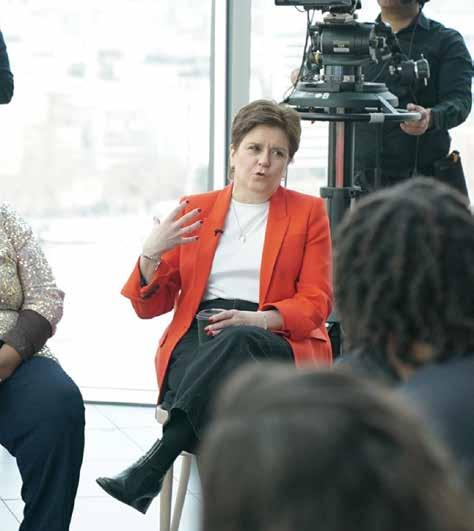
Nosubject is out of bounds and no question off limits in ITV’s The Assembly. When a group of interviewers who are neurodivergent and/or learning disabled sit down to interview public figures such as actor Lenny Henry and former Scottish first minister Nicola Sturgeon, those in the hot seat have no idea what will be asked of them. It’s clear they’re in for a grilling – and they understand that every question posed requires an answer.
What term is given by the US Postal Service to the postal code on its addresses?
Which two animals are featured on the British monarch’s coat of arms?
Who had a No 1 hit in 1986 with her album True Blue?
British driver George Russell competes in Formula One for which team?
1 2 3 4 5 6 Who won the leading actress award at the Baftas for her performance in Hamnet?
What is the atomic number of oxygen?
When the programme’s successful first series was broadcast – in which David Tennant was asked to reveal his skincare regime and Gary Lineker to reflect on his feelings regarding his baby son’s cancer diagnosis – The Times was full of praise for the refreshing format, asking: ‘Is this the best interview show on TV?’ Reviewer Caroline Midgley admitted to being moved by the ‘genuine curiosity’ of the people who were asking the questions.
In next week’s episodes, actress Anna Maxwell Martin and rapper Aitch take their turn in the spotlight. As usual, there’s no telling what topics will come up. And no knowing how any answers will be received.
Whoever we are, and whatever platform we have, it can feel risky to speak openly and honestly with the people around us. What we share out loud may not always meet the approval of those who are listening. It could even change people’s opinions of us. There’s no way of knowing how our words will be interpreted.
When it comes to opening up about our thoughts and feelings to God, we needn’t worry. The Bible says that when a person tells him the truth about what’s on their heart, they are guaranteed a warm reception.
That’s because God is a Father who loves us deeply – so he will listen to anything we tell him, including the difficult things that we can’t tell anyone else. He can bring clarity to the feelings that we struggle to articulate. And he will offer comfort in the silence when words fail us.
Whatever we say to God, we can trust that he can handle it and that he will still love us – because no topic is off limits with him.
Nicola Sturgeon answers questions from her interviewers
PUZZLES SUDOKU

Quick
ACROSS
1. Influence (7)
5. Hazy (5)
7. Doubtful (7)
8. Respond (5)
10. Design (4)
11. Disparage (8)
13. Reverberated (6)
14. Photographic instrument (6)
17. Deliberate damage (8)
19. Assistant (4)
21. Impel (5)
22. Ailment (7)
23. Remuneration (5)
24. Expelled (7)
2. Day of rest (7)
3. Hero (4)
4. Christian festival (6)
5. Ludicrous (8)
6. Colossus (5)
7. Despondent (9) 9. Youngsters (9)
Agitated (8) 15. Obvious (7) 16. Kindle (6) 18. Existence (5) 20. Hint (4)


HONEYC
Each solution starts on the coloured cell and reads clockwise round the number

Quick look
Used to boil water
Supply a forgotten word
Lives in solitude
Writing desk
Population survey
8. React. 10. Plan. 11. Belittle. 13. Echoed. 14. Camera. 17. Sabotage. 19. Aide. 21. Drive. 22. Illness. 23. Wages. 24. Ejected. DOWN: 2. Sabbath. 3. Idol. 4. Easter. 5. Farcical. 6. Giant. 7. Depressed. 9. Teenagers. 12. Restless. 15. Evident. 16. Ignite. 18. Being. 20. Clue. HONEYCOMB 1. Glance. 2. Kettle. 3. Prompt. 4. Hermit. 5. Bureau. 6. Census.
7.
1. Inspire. 5.
CROSSWORD
O M B
Fill the grid so that every column, every row and every 3x3 box contains the digits 1 to 9
Look up, down, forwards, backwards and diagonally on the grid to find these streaming services
Foggy.
Dubious.


Air fryer frittata
INGREDIENTS
4 large British Lion eggs
METHOD
Preheat the air fryer to 180C.
50g mature cheddar, grated
Mushrooms, sliced
4 cherry tomatoes, halved
Handful spinach, chopped
Fresh herbs, chopped

Line a deep 18cm baking tin with parchment paper, then grease with oil.
Whisk the eggs in a bowl.

INGREDIENTS
Oil spray, for greasing
4 large British Lion eggs
1 cup vegetables, diced
4tbsp double cream
1tbsp chopped coriander
1 cup cheese, grated
Salt and freshly ground black pepper





Add the cheese, mushrooms, tomatoes, spinach, herbs and spring onion with a pinch of salt and stir to combine.
Pour the mixture into the tin and cook in the air fryer for 12-16 minutes, until set. Serve immediately.
Air fryer egg cups
METHOD
Grease 4 ramekins with oil.
In a medium bowl, whisk the eggs, vegetables, double cream, coriander and half the cheese. Season with salt and pepper.
Divide evenly between the ramekins and place in the air fryer basket.
Set the air fryer to 150C and cook for 12 minutes.
Top with the remaining cheese.
Increase the temperature to 200C.
Continue to cook for 2 minutes, until the cheese has lightly browned, before serving.


Henri Nouwen