Country singer
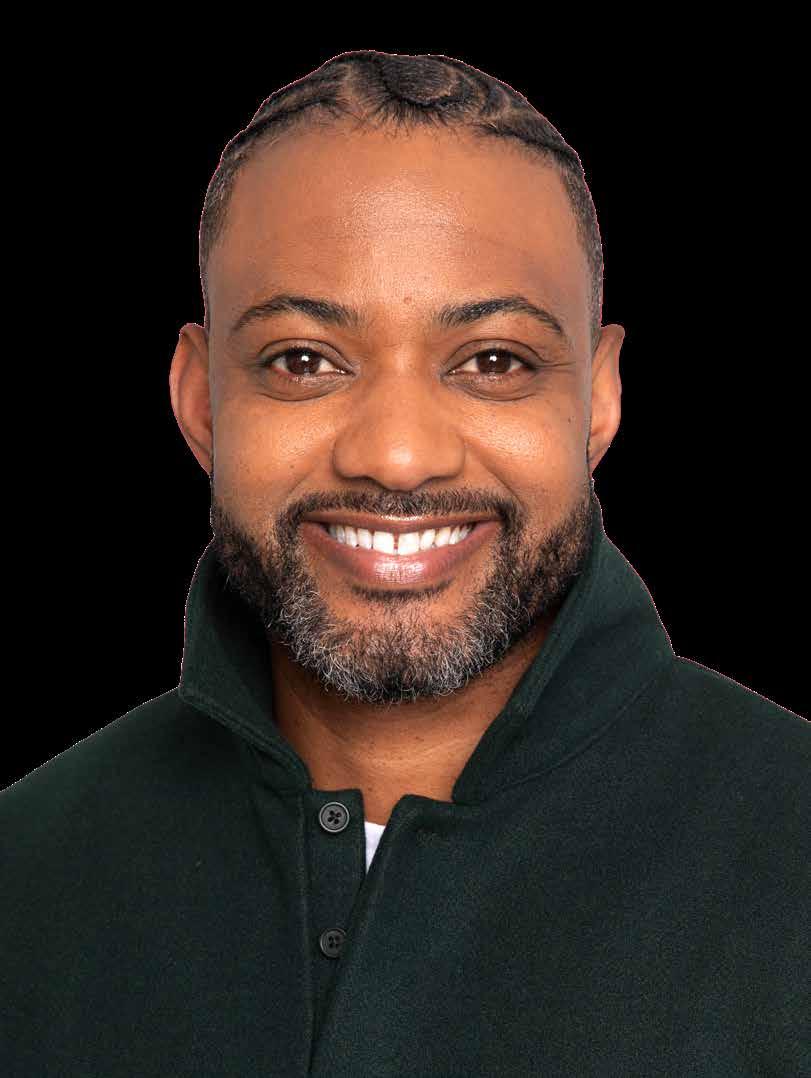
JLS star JB Gill on fans, farming and faith
Thinking of links on Only Connect

JLS star JB Gill on fans, farming and faith
Thinking of links on Only Connect
The Salvation Army is a Christian church and registered charity seeking to share the good news of Jesus and nurture committed followers of him. We also serve people without discrimination, care for creation and seek justice and reconciliation. We offer practical support and services in more than 700 centres throughout the UK. Go to salvationarmy.org.uk/find-a-church to find your nearest centre.
The Salvation Army first published a newspaper called the War Cry in London in December 1879, and we have continued to appear every week since then. Our name refers to our battle for people’s hearts and souls as we promote the positive impact of the Christian faith and The Salvation Army’s fight for greater social justice.
Sometimes one decision can change our life for ever.
Life was never the same again for JB Gill after he decided to audition for ITV’s The X Factor in 2008. A member of the boy band JLS, JB made it through to the final of the singing competition and, over the next five years, he and the band released a host of No 1 singles and hugely successful albums.
In this week’s War Cry, JB tells us how – after a break – he is still singing with the band today, as well as developing his career as a TV presenter and running a farm with his wife. He also explains how he tries to make sure that, in every area of his life, the decisions he makes are good ones.
‘If I’m considering an opportunity, a job, or looking at going in a whole new direction,’ he says, ‘just as I would consult my wife and my family, I also pray about whether it’s the right or the wrong thing.’
It is not always easy to make good decisions. This week Anthony tells us how abusing drugs and alcohol led him to experience homelessness and engage in crime.
Editor: Andrew Stone, Major
Managing Editor: Philip Halcrow
Staff Writer: Emily Bright
Staff Writer: Claire Brine
Staff Writer: Ewan Hall
Editorial Assistant: Linda McTurk
Graphic Designer: Mark Knight
Graphic Designer: Matt Penberthy
Email: warcry@salvationarmy.org.uk
The Salvation Army United Kingdom and Ireland Territory
Champion Park London SE5 8FJ
Tel: 0845 634 0101
Subscriptions: 01933 445445 (option 1, option 1) or email: subscriptions@satcol.org
Founders: Catherine and William Booth
International leaders: General Lyndon Buckingham and Commissioner Bronwyn Buckingham
Territorial leaders: Commissioners Jenine and Paul Main
Editor-in-Chief: Major Andrew Stone


However, Anthony was able to find a way through his challenges when he decided to seek help from The Salvation Army, which supported him as he rebuilt his life.
Major Dr Will Pearson, assistant director of addictions for the church and charity, explains how Jesus inspires him in his work to help people such as Anthony.
‘When I look at Jesus, there are so many examples of him caring about people’s lives in the here and now – their relationships, their needs, their illnesses,’ Will says.
Such love extends to everyone today. Jesus cares about us all, regardless of the choices we have made. Following him is one decision guaranteed to change our lives for the better.




TV feature: Austin BBC1 and iPlayer
By Emily Bright
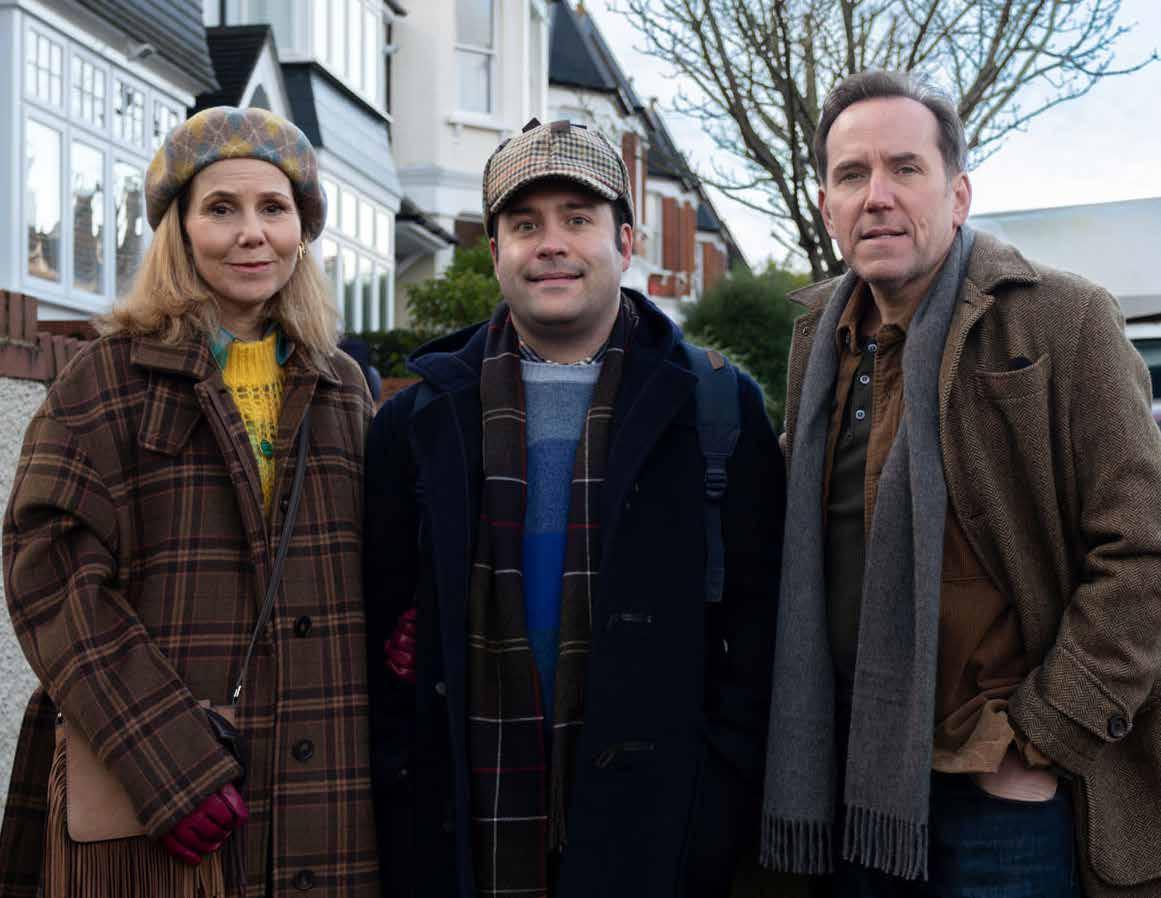
Ingrid and Julian support Austin (centre) as he meets his real dad
The DNA results are in – and Austin Hogan (Michael Theo), is in for a nasty shock. In the previous series of BBC1 sitcom Austin, the 28-year-old Australian believed that his biological father was the British children’s author Julian Hartsnett (Ben Miller). He tracked down Julian and told him the news, with disastrous results.
The author – who had just been cancelled for accidentally retweeting the comments of a white supremacist – took the news of his paternity as an opportunity to rebrand himself, hoping to create a documentary about having a neurodivergent son. He invited Austin to stay with his family in London for some father-son bonding. But there were added complications: Julian’s wife Ingrid (Sally Phillips) did the maths and realised that he must have slept with another woman while she was dating him. Julian didn’t deny it. As the second series begins, Ingrid is still reeling from the news and is sleeping in the garden shed. When her teenage daughter Florence (Ellie McKay) encourages her to move back into the house, Ingrid muses about
the importance of female independence and whether society really needs men –unless it’s to open jam jars. She decides to create a tally of Julian’s pluses and minuses to help her decide whether or not to leave him.
Her thoughts are interrupted by Julian, who comes downstairs exultantly. Overnight, he has received an email from the DNA lab, notifying him that he is not Austin’s father. Ingrid – shocked by her husband’s unfeeling reaction – warns him that Austin will be ‘completely floored’ by this revelation. She advises Julian to break the news sensitively.
Julian, Ingrid and Florence head upstairs to tell Austin. But the DNA lab has already told him who his real father is. He decides to go and meet his dad, who lives in Northampton, and Ingrid and Julian accompany him.
However, along the way, once the initial relief about Austin’s true paternity has subsided, the couple realise that they care more about this young man than they ever thought possible.
It’s not a straightforward situation. But then again, not every father-child relationship is uncomplicated. People
everywhere can have a huge variety of experiences in their relationships with their fathers – and for some, those experiences are no laughing matter. While many people have had great dads, stepdads or adoptive dads, others will have known fathers who behaved poorly or were absent.
Processing our thoughts about our fathers can sometimes be painful –perhaps because they were kind and we’re grieving their loss or, by contrast, because we’re dealing with past trauma.
But the good news is that, regardless of our own experiences with our earthly fathers, there is a heavenly Father who will always treasure us and call us his own. He cares deeply for us.
Jesus, God’s Son, reassured his followers that ‘anyone who loves me will obey my teaching. My Father will love them, and we will … make our home with them’ (John 14:23 New International Version).
We can always find a loving home in a relationship with God, who is the perfect Father. All we need to do is invite him into our lives and we’ll discover the joy of becoming part of his family.
Ewan Hall gives his take on a story that has caught the attention
At a time when news headlines are dominated by conflict, social division and uncertainty, the United Nations is encouraging the world to focus on something different: hope.
Taking place annually on 12 July, the International Day of Hope aims to remind people of the quality that is essential for fostering peace, strengthening social bonds and building an inclusive future.
Last year, the very first International Day of Hope was marked by events in London, New York and Johannesburg. And in Liverpool, the Anglican cathedral – located on Hope Street – celebrated the day by inviting visitors to pause and ponder what hope meant to them.
‘The United Nations is the product of hope,’ its secretary-general, António Guterres, has said. It’s not hard to see why. Founded in the aftermath of the Second World War, the UN was built on the belief that international co-operation could help to prevent future conflict and create a more peaceful world.
Hope is essential to life
But the effects of hope can be felt by individuals as well as wider society. Research has shown that hope can improve mental wellbeing, build resilience and motivate people to overcome challenges.
I agree with the UN that hope is essential to life –but there are times when I can find myself struggling to see the light at the end of the tunnel. In those tough moments, I know that I can turn to my faith to reassure me that there is still a reason to hope.
Speaking to his anxious disciples at a time of uncertainty, Jesus gave a message of comfort and hope. ‘Do not let your hearts be troubled,’ he said. ‘You believe in God; believe also in me’ (John 14:1 New International Version).
Jesus’ invitation continues to resonate today. In a world that is often so focused on what is going wrong, he offers those who follow him a hope that goes deeper than optimism. It’s a hope rooted in the assurance that he is present, cares for us and remains faithful, whatever challenges we – and the wider world – face.
A Salvation Army team has begun distributing relief items to people in urgent need after two earthquakes in Venezuela led to the deaths of at least 1,450 people and displaced more than 12,000 from their homes.
The trained volunteers set up a base in a church in Caracas and started providing hygiene kits. They also purchased food, drinking water and bedding to give to people affected by the 7.2 and 7.5-magnitude earthquakes.

Speaking on the IMO podcast, Kevin Hart told hosts Michelle Obama and Craig Robinson a story about his Christian upbringing.
The comedian and actor recalled a time when he was 18 years old and unable to afford his rent. He pleaded with his mother for help, but she agreed to speak about it only if he read his Bible.
‘She asked me, am I reading the Bible?’ he said, ‘and I was lying, like, “Yeah, I’m reading the Bible.”
‘And she was like, “Well, read the Bible. Talk to God about it.”
‘I’m getting frustrated. So one night I opened up the Bible – she had all of the cheques for the year. In the Bible, they all fell out.’
The Hollywood star has previously talked about his faith on Instagram, in a video made after he was injured in a car accident in 2019. He said: ‘Don’t take today for granted, because tomorrow’s not promised… I’m thankful for God, I’m thankful for life. I’m thankful for simply still being here, on the road to being a bigger and better version of me.’

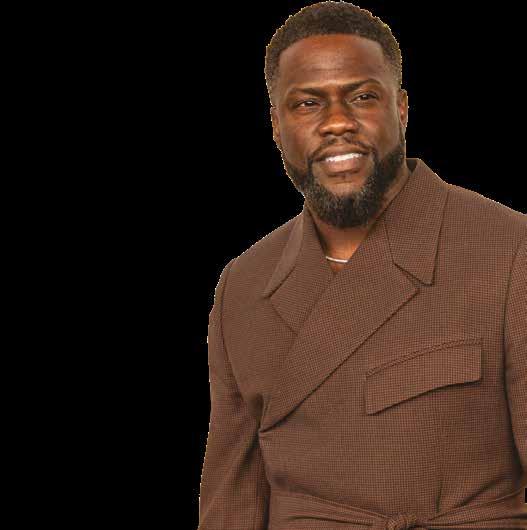
Olympic medallist Jeremiah Azu reflected on the strength he finds in his Christian faith when he was interviewed on the She’s Got Game podcast.
The Welsh sprinter – who won a bronze medal in the 4x100m relay at the Paris Games in 2024, and took home the gold in the 60m event at last year’s World Indoor Championships – told presenter Tess Glynne-Jones how his faith influences his approach to sport, especially when he has not performed as well as he had hoped. He said: ‘I told myself every time: “It doesn’t matter how I feel, it matters what I am.” And then I’d start to list the things that I am. The first thing I’d list is: “I am a child of God”, and then I’d repeat the phrase. The second thing: “I’m fast, so it doesn’t matter how I feel.” And it’s kind of like putting my mind in the right position to be able to perform.’
When asked about leaving an elite training programme in Italy last year to return home to Cardiff, Jeremiah said: ‘People always say about getting out of your comfort zone. For me, that just didn’t work… I’m back with my family, back where I grew up, back being able to go to church and serve at church, and it’s made all the difference for me.’
Jeremiah has been selected to compete for Team Wales at the Commonwealth Games in Glasgow, which start on 23 July.
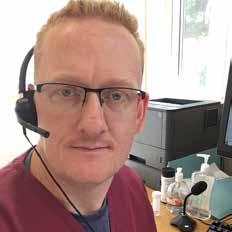
Major Dr Will Pearson
As Alcohol Awareness Week sheds light on the complex realities of alcohol use, The Salvation Army continues to help those people who are struggling with drinkrelated problems
Feature by Ewan Hall

‘Fancy a pint?’ is a familiar invitation heard across the UK. But while drinking may be seen as a normal part of social life, Alcohol Awareness Week, which runs until Sunday (12 July), seeks to highlight the easily overlooked risks of alcohol consumption.
Major Dr Will Pearson is a GP at a medical practice that supports people experiencing homelessness. He also works for The Salvation Army as its assistant director of addictions. The church and charity has long supported people who struggle with addictions to alcohol and other substances, ensuring that they can receive the correct medical and personal care.
‘My GP work informs my addiction work and vice versa,’ says Will. ‘I’m kept in the loop regarding the medical side of drug and alcohol abuse.’
Will sees the importance of Alcohol Awareness Week in highlighting, on a national level, how people’s relationship with alcohol can lead to difficulties.
‘Alcohol is unusual as a drug,’ he says. ‘It is a drug in every definition of the word, but it is unusual because it is legal and very socially acceptable.
‘Being intoxicated on alcohol is seen as perfectly normal, but we wouldn’t feel the same about someone being intoxicated on other drugs. Society has a strange relationship with alcohol, which has just become the norm. And I think that acceptance makes us take our eyes off just how much harm alcohol causes.
‘In both my roles, I witness a lot of that harm. I see what happens because of alcohol – often the worst cases. I would not claim that alcohol does not have a place in society, but I want people to be mindful of just how much difficulty it can
cause, and for us as a society to try to reduce the harm where we can.’
Will says that the consequences he sees at first hand are reflected in the growing body of evidence about alcohol’s health impacts.
‘There is a consensus now that there is no safe level of alcohol to consume. In the past, we would discuss safe limits, but now the government has moved away from that language and is actually saying there is no safe limit. Even a little bit of alcohol is increasing your risk of harm.
‘As an overview, I would say alcohol can cause liver disease, stomach ulcers
and, in those people who are drinking heavily, alcohol-related dementia. When I was working in A&E overnight, so much of what we saw was alcohol-related –accidents, falls, fights and car crashes.’
But alcohol-related harm is not confined to an individual’s health.
‘Once someone is dependent on alcohol,’ says Will, ‘they can’t keep up with their responsibilities, they lose jobs, relationships break down, and they lose their housing. It becomes a cycle of difficulty.’
Will is supporting people caught in that cycle through his work – including his role in The Salvation Army, an organisation with a long history of

tackling alcohol problems.
‘We have been active in this area since our very beginning,’ he says. ‘Part of our origin story was recognising when people were desperate and struggling – and alcohol has always been part of that. Part of who we are is to see a need and want to meet it.’
We’re called to look after those who are struggling
TheSalvation Army’s desire to help those in need comes from the Christian faith that is at the centre of all that it does.
‘Throughout the Bible, we’re called to look after those who are struggling – the poor, the disadvantaged, those left out,’ Will explains. ‘That is the starting point for much of what we do, alongside loving our neighbour, especially those who are most vulnerable.
‘Our addiction work is an expression of that. We believe in transformation – that knowing God’s love can change lives –and we’ve seen many examples of people turning their lives around. So, we don’t believe there’s a hopeless case. There’s
Turn to page 8 f
always hope.
‘At the same time, we believe in people for who they are now. And while we may hope for change, we respect their right to make their own decisions. So, we start where they’re at.’
One of the places where The Salvation Army is helping people to change is at Gloucester House, a residential substance misuse service in Swindon.
Anthony arrived at the service to seek help after a lifetime of challenges.
As a child, he had moved schools frequently and struggled to fit in – bullied in some places and being a bully in others. At 11, he turned to cannabis in search of belonging, which led to 17 years of addiction, homelessness and chronic health problems – including liver problems from his consumption of the more socially acceptable drug of alcohol.
‘I had a void in myself that needed to be filled,’ Anthony explains. ‘The drugs took me away from reality. It was my escapism. As soon as I found something that took me slightly from my current state of mind, I grabbed it.’
From the age of 18, Anthony experienced
homelessness and was sofa-surfing and living in hostels. All the while his health was declining. His mental health collapsed too.
‘I let down everyone that loved me,’ Anthony explains. ‘I was in a very lonely place.’
He committed crimes to fund his addiction and began selling drugs.
‘Paranoia just increased my drug intake because I had more pain to numb,’ he says.
After struggling to access rehab, an opportunity for Anthony came through Gloucester House. He arrived just after his 33rd birthday, still living with addiction, but determined to change. After detoxing, he entered the programme.
‘I was in desperation when I came here,’ he says. ‘I engaged with the programme because I wanted professional help.’
Through counselling and therapy, Anthony began to rebuild his life, and

after completing the programme, he moved into supported housing. He was able to secure his own flat and rebuild relationships with his family.
‘I’ve received amazing support from my family,’ he says. ‘They could see I was serious and that I really wanted to change my life.’
Stories such as Anthony’s have played a part in shaping Will’s faith.
‘What works in addiction is treating people well – starting where people are at, expressing empathy and showing unconditional positive regard,’ he says. ‘And all of those things work with how Christians believe we should treat people.
‘My belief is that everybody is somebody. Any of us could end up in a difficult situation given the wrong circumstances, so there shouldn’t be moral blame.
‘When I look at Jesus, there are so many examples of him caring about people’s lives in the here and now – their relationships, their needs, their illnesses. I feel fulfilled in my work because I see it as an expression of loving your neighbour and serving those who are struggling.’
JB GILL explains why he loves being part of boy band JLS more than ever, how buying a farm propelled him into TV, and why generosity is a central pillar of his life
Feature by Emily Bright
‘You only get one shot, so make it count,’ sang boy band JLS in one of their early Top 10 hits. And they’ve certainly done that. JB, Aston, Oritsé and Marvin – who became X Factor finalists in 2008 – saw their self-titled debut album soar to No 1 in the UK charts. They also scored five No 1 singles. After splitting up in 2013, the bandmates pursued their individual projects before reuniting in 2020.
JB Gill remembers that it felt an honour when the group went on their first reunion tour. ‘We’ve done a number of tours since then,’ he adds, ‘and at the moment we’re just on a festival run, with a few more dates coming up throughout the summer.’
He says that he’s enjoying being part of the band more than ever.
‘We had a lot of fun with JLS the first time around,’ he explains, ‘but now it’s almost enhanced fun, because the family are able to experience it, including both my children.’
JB has a son, Ace, and a daughter, Chiara,
Turn to page 10 f
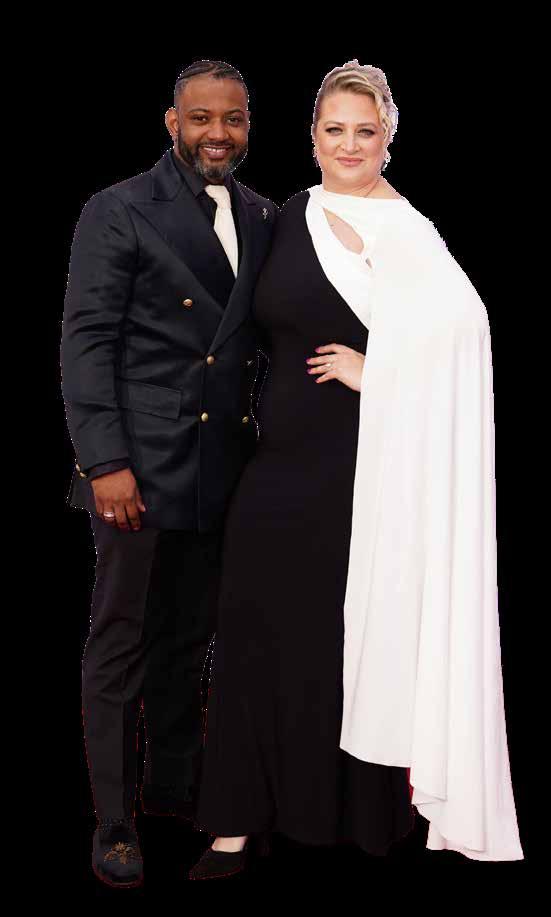
JB Gill and his wife, Chloe, attend the Bafta TV awards earlier this year

From page 9
with his wife, Chloe. In February this year he began putting what he has learnt from fatherhood to a new use in his role as the first male host of the Netmums podcast.
‘It’s a platform that I have been able to rely on personally, for information and for encouragement,’ he enthuses. ‘I want to encourage more fathers to be present and to take an active role within the family environment.
‘To be able to give information, insight and personal experience is what the podcast is all about, and adding the paternal side to it is important. Especially in this day and age, men and fathers in particular are doing a lot more within the parenting space.’
For JB, home life looks a bit different from the way it did in his early JLS days. He and Chloe bought a farmhouse and land on the outskirts of Kent a few years
ago. And – a couple of years after JLS wound down – they decided to use the land to farm.
‘When JLS followed our own individual projects, the farm came into being for me,’ recalls JB. ‘There was an element of faith in going into farming, because I had no idea what I was doing. I had no background in it.
Lionel Richie was so open and honest
‘We
did a lot of research into what we could do and how we could do it. But, as with anything that’s new, you’re going into the unknown. I didn’t know the farm would become such a foundation and a platform for my career as an individual. It was a real source of focus,
but also an opportunity.’
JB’s farming experiences have sparked the inspiration for his children’s book series, Ace and the Animal Heroes. In 2015 they also led to him presenting a new CBeebies series, Down on the Farm After that, more TV work came his way. In 2017, he became a presenter on Songs of Praise and, in March last year, he became a regular presenter on The One Show
‘I’ve interviewed some incredible people on The One Show,’ JB remarks. ‘The standout for me is Lionel Richie. He was so professional, open and honest. He made you feel like you were his friend, and he disarms you. He is a legend for good reason.
‘And Tom Hanks and the crew from Toy Story 5 were also absolute legends. They were just so brilliant, kind and fun.’
JB remembers watching The One Show when he was growing up.
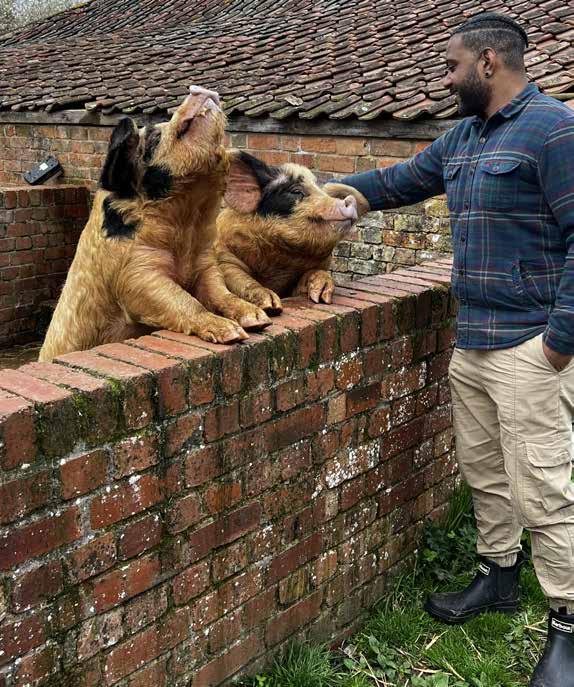
Farming became ‘a real source of focus’ for JB
‘It has been on air for 20 years, which is an incredible achievement,’ he says. ‘I’ve gone full circle, having been interviewed on the show and then being integrated into the presenting team.’
Looking back on his career so far, JB believes that ‘one mark of success is how you’re able to create continued success, not just for yourself but for other people’. This ethos is reflected in his generosity towards charities, which he sees as an outworking of his Christian faith.
‘Benevolence is something that we’re encouraged to do throughout the Bible,’ he explains. ‘So from an early age, I’ve tithed, which is to give 10 per cent of my income to various charities. I try to make those Christian charities, like Mercy Ships, Premier Christian Radio and The Salvation Army.
‘I’ve also been involved with charities such as Farms for City Children, the RSPCA and the Royal Countryside Fund. Those causes are close to my heart and will continue to be.’
JB says that prayer helps him decide which causes to support – as well as any other steps he has to make in life.
‘If I’m considering an


opportunity, a job, or looking at going in a whole new direction, just as I would consult my wife and my family, I also pray about whether it’s the right or the wrong thing.
Some fans wanted to encourage me in my faith
‘For me, prayer is that holistic communication around what I’m doing and why I’m doing it. I pray with the children; we pray as a family. I think that’s really important – not just for our own wellbeing, but for their future as well.’
JB also follows a number of other spiritual practices.
‘My great-aunt encouraged me to read the Bible and pray every day. Those are two things I try to do. And there are so many different ways to access elements of faith, whether it’s listening to music, or tuning into sermons and Christian podcasts.’

His faith also shapes his career decisions.
‘If I don’t think it’s ethically right, I just won’t do it,’ he explains. ‘With JLS, other people have written us songs that don’t have content that I would like to sing to a row full of teenage girls. The JLS boys and I obviously have a great relationship and at the end of the day, you stand on what you believe in, which is something that I do with every opportunity that I have.’
JB remembers being emboldened in his faith by a gift that he received from fans during a radio tour of Scotland.
‘It was a Bible. They had a letter in there saying: “We hope you like it. We wanted to encourage you in your faith.” I had Bibles and I studied theology at university, so faith wasn’t a novelty. But it was one of those trigger moments, reminding me of what’s important for me and to me.’
And faith came into sharper focus when JB and Chloe began thinking about
their future together.
‘Prior to getting married,’ he recalls, ‘Chloe and I felt it was important to map out where faith sat with us, and what we wanted to do in the future. We wanted to have children and, given that you’re a role model to them, they’re going to be asking questions. You either have the answers, or you don’t, so we wanted to be on the same page.’
When looking for answers, JB finds one Bible passage particularly helpful.
He explains: ‘Life is busy, there’s always so much going on. A lot of decisions I have to make are relatively last-minute and I want to make the right ones.
‘The Bible verses in Proverbs 3:5 and 6 always ring true for me. They say: “Trust in the Lord with all your heart, lean not on your own understanding; in all your ways acknowledge him and he will direct your path.”
‘Ultimately I want the best for myself and for the family and I believe that God knows that, so I rely on that.’
Your prayers are requested for Ros, that she will fully regain her strength, and for her sister, that things will work out well for her.
The War Cry invites readers to send in requests for prayer, including the first names of individuals and details of their circumstances, for publication. Send your Prayerlink requests to warcry@salvationarmy.org.uk or to War Cry, 1 Champion Park, London SE5 8FJ. Mark your correspondence ‘Confidential’.
There is no set formula to becoming a Christian, but many people have found saying this prayer to be a helpful first step to a relationship with God Becoming a Christian
Lynne Shaw explores how Jesus’ stories pointed to a bigger picture
The parable of the sower and the seed – Mark 4:2–20
I can’t claim to be a gardener, but over the years I’ve watched enough episodes of BBC2’s Gardeners’ World to have learnt that there are different ways to sow seeds.
Farmers and gardeners will plant some seeds on the surface of the soil and barely cover them, but will sow others more deeply. Some seeds don’t need soil at all but rather grit or sand or even just a rock to cling to.
In this story told by Jesus, a sower flings the seed everywhere: on a path, on rocky ground, in a patch full of weeds and over good soil. To Jesus’ listeners this would have seemed very wasteful, because only the seed that fell in the good soil would grow and produce a proper harvest.
Lord Jesus Christ,
I know that I have done things in my life that are wrong and I’m sorry. Thank you that I can ask you for forgiveness because of the sacrifice you made when you died on the cross.
Please forgive me and help me to live a better life in the future as I learn how to love you and follow your way of living.
Thank you, Lord Jesus.

If you’ve prayed this prayer, scan the QR code or contact us using the coupon on this page

When most farmers and gardeners scatter seeds, they know where they want them to grow. They carefully optimise the ground, and they thin out the growing plants to prevent overcrowding. In contrast, in this parable, the sower who throws the seed – which, Jesus explains, represents the message of God – does so liberally. Indeed the seed is spread so generously that anyone can receive it.
Sometimes, however, things can prevent the ‘seed’ taking root and bearing fruit. For instance, the path in Jesus’ story could represent our cynicism; the weeds could be the things that other people around us say that get in the way of God’s message making a difference to us; and the rocky ground can symbolise how isolation and lack of nurture can starve our faith.

We may rightly ask what that message of God is. Broadly speaking, I believe that it is an invitation to us to see that he is the source of life, hope, love and every good thing. And specifically that he loves us.
When God’s message takes root in our hearts and minds, our own good actions multiply. The good that is in us – because we’re created by God to be like God – is allowed to flourish and bear fruit.

Or email your name and postal address to
To receive basic reading about Christianity and information about The Salvation Army, complete this coupon and send it to


1 Author Harlan Coben teamed up with which actress to write the novel Gone Before Goodbye?

Feature
by
Claire Brine
TV preview: Only Connect BBC2 and iPlayer
Seemingly random clues. A missing link. BBC2. Quizzers quick to join the dots will be shouting the answer already: Only Connect. The new series of the quiz show, presented by Victoria Coren Mitchell, begins on Monday (13 July). For those feeling clueless, the game features two teams competing in a number of rounds during which they must find the connection between some ‘apparently random clues’. Sound easy? It isn’t.
Team Culture Club – a trio brought together by their interest in microbiology – are perplexed when looking for the connection between ‘Germany, HM Treasury, the Galactic Republic and the Duchy of Lancaster’. (Tricky one – but no spoilers here.)
In which year were women first allowed to vote in a UK general election?
Who stars as demigod Maui in Disney’s new live-action film Moana?
Which band had hits with the albums Inside In/Inside Out and Konk ?
Who plays Ken’s son Richard in the TV sitcom Only Child ?
What is the only species of bird that can fly backwards? 3 4 5 6 2
A later round features the Makeweights – three rowers who connected at university – contemplating what comes fourth in the following sequence: ‘Unauthorised entry. Unauthorised consumption of food. Unauthorised use of, and damage to, furniture.’ Bear with it, and the answer may become clear.
Whether we are fans of quiz shows or not, most of us enjoy the satisfaction of answering a question correctly. But how do we cope when faced with life’s biggest questions – the ones which have no easy answers and leave us feeling stumped? How do we work through the situations in which we ask: What should I do next? How will this situation get better? Why has this happened to me?
When the questions appear too tough for us to tackle, Jesus tells us that we have the option of putting our faith in God. No problem is too difficult for him to handle. And when we ask him for help, he will answer.
After addressing some of life’s messiest matters in the Sermon on the Mount – including injustice, infidelity and hypocrisy – Jesus urged his listeners to turn all their questions over to a heavenly Father who would offer them love and guidance.
He said: ‘Ask and it will be given to you; seek and you will find’ (Matthew 7:7 New International Version).
His words apply to us today.
However confusing or complicated our life may be, we don’t need to stay feeling stuck for long. When we connect with God, he will listen. He will answer. And through his love, we will discover the right way to go – no question about it.

ACROSS
1. First appearance (5)
5. Gem (5)
8. Greeting (5)
9. Toadstools (5)
10. Employing (5)
11. More pleasant (5)
12. Be full of (4)
15. Securely (6)
17. Waterway (5)
18. Idea (6)
20. Prejudice (4)
25. Trainer (5)
26. Scope (5)
27. Shining (5)
28. US restaurant (5)
29. Squander (5)
30. Blended (5)
1. Flaw (6)
2. Botch (6)
3. Cogitate (5)
4. Bar (5)
5. Newspaper (7)
6. Complain (6)
7. Bequest (6)
13. Self-esteem (3)


14. Pale (3)
15. Tree juice (3)
16. Meadow (3)
17. Yield (7)
18. Not wide (6)
19. Articles (6)
21. Flowing in (6)
22. Packed (6)
23. Stain (5)
Each solution starts on the coloured cell and reads clockwise round the number

24. Allure (5) 1. ________ Clunes, actor 2. Sung by a choir 3. Very brave 4. Make an effort to hear something 5. Come to an end 6. Rebellion by sailors

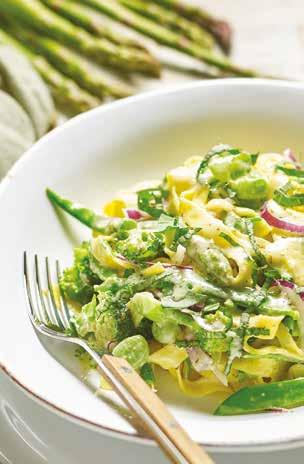
100g mangetout, sliced
METHOD

100g broccoli, diced
100g asparagus, chopped
100g broad beans
½ bunch spring onions, thinly sliced
75g red onion, thinly sliced
25g butter
1 garlic clove, minced
75ml double cream
125ml milk
10g fresh parsley, finely chopped
10g fresh oregano, finely chopped
200g cheddar cheese, grated
Salt and ground black pepper
200g tagliatelle
10g fresh basil, finely chopped, to garnish
Put the mangetout, broccoli, asparagus, broad beans and spring onions in a steamer and cook for 5 minutes. Remove and refresh the vegetables in cold water, drain and leave to dry. Mix in the red onion, then set aside.
3 medium eggs
200g self-raising flour
175g caster sugar
175g salted butter or margarine
250g orange marmalade
200g 70 per cent
METHOD


To make a sauce, melt the butter in a pan over a medium heat and gently sauté the garlic until it softens. Stir in the double cream and milk and bring to the boil. Reduce to a simmer and add the parsley, oregano and half the cheese. Simmer for 5-10 minutes, stirring frequently. Season with salt and pepper.
Cook the pasta according to the packet instructions until al dente, then drain. Add the pasta and vegetables to the sauce and cook on a low heat for 2-3 minutes, stirring until combined and warmed through.
Serve in bowls with basil and the remaining cheese.

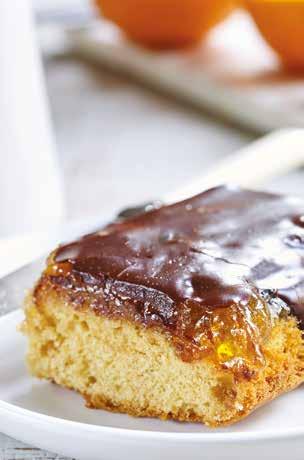
Preheat the oven to 170C/Gas Mark 5. Line a 20cm baking tray with parchment paper.
Whisk the eggs, flour, sugar and butter in a bowl until light and fluffy. Tip into the baking tray. Smooth the top, then bake for 20-25 minutes, until risen and slightly firm. Remove and leave to cool.
Tip the marmalade into a bowl and whisk briefly with a fork to make smooth, then pour over the top of the sponge. Chill in the fridge

Melt the chocolate in a heatproof bowl over a pan of simmering water, stirring occasionally. Remove the cake from the fridge and pour the chocolate over the top, ensuring it is evenly spread.
Leave to set, then remove from the tin by lifting the edges of the parchment
Love God, your neighbour as yourself –and your enemies too.