
Teams tackle the challenge of Women’s Six Nations
Love hurts
Shadowlands play portrays couple’s experiences of terminal illness
Singer talks concerts, classrooms and Christianity


What is The Salvation Army?
The Salvation Army is a Christian church and registered charity seeking to share the good news of Jesus and nurture committed followers of him. We also serve people without discrimination, care for creation and seek justice and reconciliation. We offer practical support and services in more than 700 centres throughout the UK. Go to salvationarmy.org.uk/find-a-church to find your nearest centre.
What is the War Cry?
The Salvation Army first published a newspaper called the War Cry in London in December 1879, and we have continued to appear every week since then. Our name refers to our battle for people’s hearts and souls as we promote the positive impact of the Christian faith and The Salvation Army’s fight for greater social justice.
From the editor’s desk
World Art Day on Wednesday (15 April) encourages people to use their imagination and to explore the works of painters and sculptors.
In this week’s War Cry, we reflect on the way we can draw inspiration from art as well as from other kinds of creative expression.
One author whose work has been enjoyed by millions of people since his first book was published more than 100 years ago is CS Lewis. This week, we speak with William Nicholson, who wrote the play Shadowlands about Lewis and his relationship with his wife, Joy – including how the couple faced her terminal cancer diagnosis together. In writing the story, initially as a TV film, William began reading Lewis’s books.
‘I discovered that he was absolutely wonderful,’ he tells us. ‘Not only that, but I appreciated how he chose to address difficult religious topics in a straightforward and intelligent way.’
Much of CS Lewis’s best-known work – which includes The Chronicles of Narnia – centres on the Christian faith. In Shadowlands, William shows how the author’s faith was stretched by Joy’s illness.
Staff
Staff
Staff Writer: Ewan Hall
Editorial Assistant: Linda McTurk
Graphic Designer: Mark Knight
Graphic Designer: Natalie Adkins
Email: warcry@salvationarmy.org.uk
The Salvation Army
Kingdom and Ireland Territory
8FJ
Tel: 0845 634 0101
Subscriptions: 01933 445445 (option 1, option 1) or email: subscriptions@satcol.org
Founders: Catherine and William Booth International leaders: General Lyndon Buckingham and Commissioner Bronwyn Buckingham Territorial leaders: Commissioners Jenine and Paul Main
Editor-in-Chief: Major Julian Watchorn


‘The faith story I decided to track was one of a man who had a strong faith that had not been tested,’ he says. ‘It becomes brutally tested, it cracks under the pressure and breaks – but then re-forms.’
He adds: ‘By the end, it’s quite clear that he has retained his faith.’
CS Lewis is not unique as a Christian who has faced tough times. Following Jesus is not a fast pass to avoiding the sadnesses and stresses that life brings. However, Christians know that they do not have to face those challenging times alone.
They know that, if they ask him to, Jesus will give them the love, support and strength they need to deal with whatever difficulties life may throw at them.
The good news is that, even if we don’t currently know Jesus for ourselves, he is waiting to guide us. He encourages us all to turn to him and receive that life-changing help.

INFO INFO





Sporting chance
Will the Red Roses blossom again in the Six Nations?
Feature by Emily Bright
England will start the defence of their Six Nations title at Twickenham on Saturday (11 April) in front of a crowd for the record books. More than 60,000 rugby fans are expected to watch the game between the Red Roses and Ireland, making it the biggest attendance so far in the history of the women’s tournament.
England hope to secure their eighth Six Nations title in a row, consolidating their World Cup win last September. Their convincing 33-13 victory over Canada in that final drew in a peak TV audience of 5.8 million – another record for the women’s game.
France appear to be England’s biggest threat this year – they have won the competition six times since 2002. Ireland and Scotland – fifth and sixth in the world rankings – are also set to make their mark. And underdogs Italy and Wales both have a point to prove.
With international sport, victory is never assured and that seems particularly true this year, given that the
Red Roses are going through a time of transition. World Cup stars Abbie Ward, Lark Atkin-Davies and Zoe Stratford have ruled themselves out of the tournament because of pregnancy, and seven players are set to make their international debut. As Zoe relinquishes the captaincy, Meg Jones will step into the role.
When England head coach John Mitchell announced his squad ahead of the competition, he warned that – despite the team’s previous success – the players would take nothing for granted.
‘As Red Roses, what comes next is a fresh start,’ he said. ‘The Six Nations is hugely important to us, and we know success in this competition has to be earned every time. We’re excited by the energy the younger players will bring into our squad, and alongside our experienced players.’
Fresh starts can sometimes feel daunting. Whether we’re beginning a new job, starting a relationship or moving somewhere different, we don’t know what the future will hold. In times of

uncertain beginnings, it can be helpful to return to time-honoured wisdom in order to find reassurance.
The Bible – the book that holds the record for being the biggest-selling book in history – tells how the prophet Isaiah feared that there would be no hope for the future of his nation. But he also sensed God urging people: ‘See, I am doing a new thing! Now it springs up; do you not perceive it? I am making a way in the wilderness and streams in the wasteland’ (Isaiah 43:19 New International Version).
God’s words helped Isaiah to see that, even if dark days lay ahead, there was a reason for hope.
It’s a message that is just as relevant today, showing us that, if we put our trust in God, there’s always the possibility of a fresh start, regardless of what we may go through.
With God by our side, providing us with his love, comfort and hope, we can tackle any challenge. A relationship with him is definitely worth trying.
Megan Jones (right) will captain the Red Roses in their Six Nations campaign
Wales captain Kate Williams (left) will be hoping to improve her team’s fortunes
talk talk Team talk Team talk ‘ ’
j TEA M
Claire Brine gives her take on a story that has caught the attention of War Cry reporters
The likes of TV presenter Konnie Huq and actress Tamzin Outhwaite are opening up about their missed opportunities and hidden desires on What Have You Done?, a YouTube spin-off series based on the BBC3 sitcom Things You Should Have Done. ‘My parents left me a long list of things I should have done,’ explains presenter Chi (played by Lucia Keskin) as she introduces herself. ‘So we’re asking mildly successful celebrities things they wish they’d done.’
So far, broadcaster Kate Garraway has admitted that she wishes she had taken elocution lessons and been a better contestant on The Traitors. Rapper Big Zuu revealed that he wished he could listen more and drink fewer sugary drinks.
Hearing the celebrities’ stories prompted me to consider the question: what do I wish I’d done?
Big Zuu wished he could listen more
Some responses came to mind quickly: I wish I’d run the London Marathon faster. I wish I’d been in a West End play. But then I started thinking more deeply. There have been many situations where I wish I’d been a better mum, daughter, friend, Christian. Obviously, I can’t reattempt events that are behind me. We all know that the past is in the past. But I’m encouraged to know that I still have time to become a better version of me. It’s not too late to be a mum who listens more attentively to her child. I can still be a friend who shows compassion to her pals when they’re struggling.
And when it comes to faith, that’s a leap that we all have the option to take every single day – because it’s never too late to get closer to Jesus.
When Jesus was dying on a cross, a robber being crucified next to him sought to be forgiven. He was moments away from death – but Jesus assured him that on that very day, he would receive God’s love and enter Heaven.
That same offer of salvation applies today. When we confess our past mistakes and trust that Jesus will show us how to live differently, he will reveal to us the life-changing love of God.
Following him is something that we all can do.
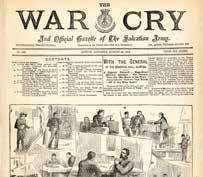
War Cry archive digitised
The British Newspaper Archive (BNA) has digitised issues of the War Cry dating back to its launch in 1879.
Online copies of the War Cry, as well as The Social Gazette – which championed the social work of The Salvation Army between 1893 and 1917 – are now available to access for BNA website subscribers.
The Young Soldier – the precursor to Salvation Army weekly comic Kids Alive! – is also set to be digitised later this year.
Steven Spencer, director of The Salvation Army’s International Heritage Centre in London, said: ‘This digitisation marks an exciting milestone: bringing our storytelling into the digital age and making more than a century of Salvation Army history available at the click of a button.
‘As well as enabling external researchers to access Salvation Army content much more easily, my team will also find it much easier to locate material across the periodicals. This is an exciting moment for us and for anyone interested in our history.’
The Salvation Army will receive royalties from the BNA for the titles.
BAND OPENS NEW HORIZONS
LINDZ WEST, a member of LZ7 – which recently supported Jason Derulo on tour – highlights how his Christian faith and desire to encourage young people shapes his songwriting
Interview by Emily Bright
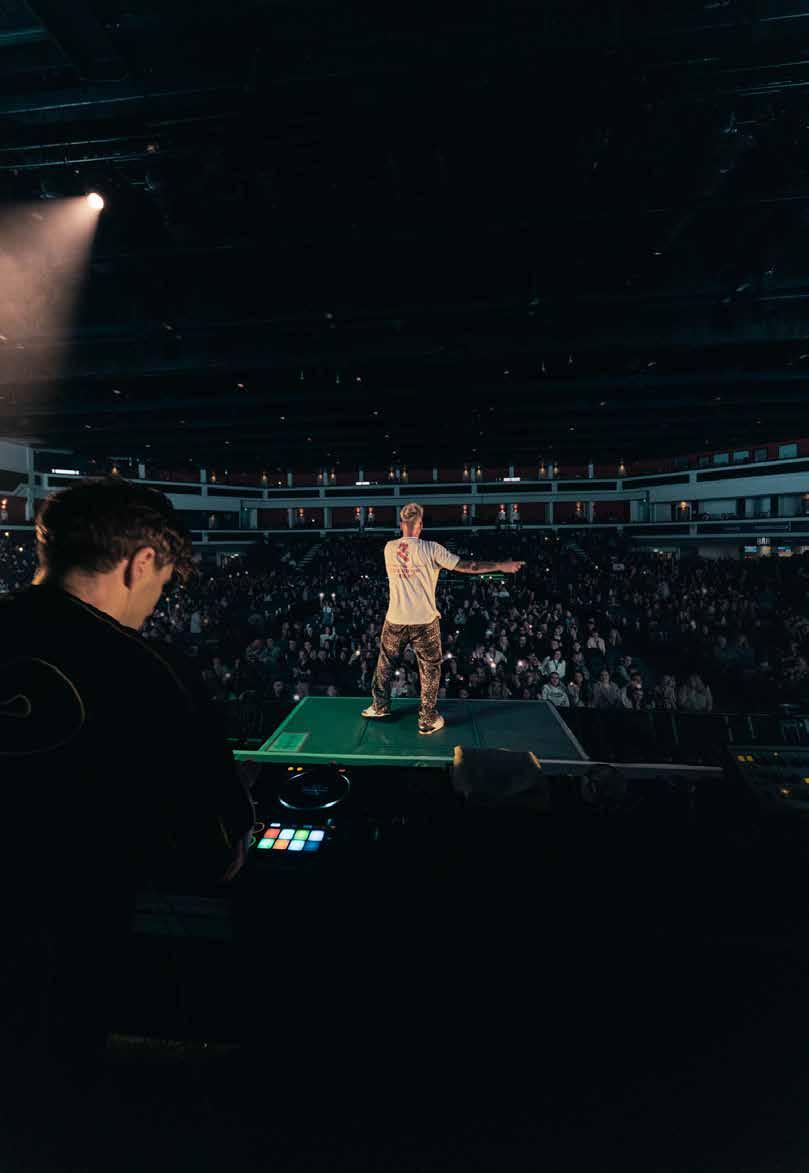
‘Jason Derulo is a really good dude,’ says singer and songwriter Lindz West, whose band LZ7 recently supported the American R&B star on a UK and European tour. Speaking to me over Zoom from his hotel room ahead of a gig in Cardiff, Lindz explains that ‘Jason is meticulous, out there watching all the dancers, routines and soundcheck.
‘It’s inspiring for us, looking up to him. He’s a nice, gentle guy off stage too. He’s got a massive passion for music and for people to be impacted by it.’
Lindz and his bandmates – producer and DJ Saint Louis, singer and drummer Leonn Meade and musical director Lee Matthews – know what it is to have a passion for music. They also have a desire for people to be inspired by their music – specifically, LZ7 want their performances to communicate their faith.
‘We have a mainstream presence,’ says Lindz. ‘But we’re evangelistic in smashing down walls about faith and taking the life-changing message of Jesus to young
people. If we jump up and do a drum and bass set, it disarms people, and then we can share the message of hope.’
For Lindz, prayer is an essential part of any performance.
‘I’m praying: “Lord, give us the right words at the right time.” We are welcoming God into the picture.’
Music builds connection, like a universal language
He explains LZ7’s distinctive genre.
‘Our music is a fusion of different things,’ he says. ‘There’s rap and singing, but it’s mainly anthemic drops and epic beats. It’s essentially electronic dance

music, coupled with a message. It’s showing that you can dance, be cool and have a laugh while also having a faith.’
He sees storytelling as a key component in songwriting.
‘Jesus spoke in stories to connect with people,’ he says. ‘Music builds that connection, like a universal language. I build songs around the stories that we’ve been through – tough times, good times, adversity that we’ve overcome.
‘For example, “No Plan B” is about how my wife and I adopted two little ones, and about how you are chosen. Then we get the whole crowd to shout: “There’s no plan B.” They’re all singing over themselves: “I’m not a plan B, I’m a plan A.”
‘Another one, called “I C Love”, is about my daughter. She went through a
Turn to page 6 f
Lindz West
LZ7 performing at the Utilita Arena Cardiff

From page 5
tough time when we first adopted her. We’re spelling out the story, but the song also says, “When I see you, I see love.” That gets me.’
Lindz has experienced another love – God’s – first-hand. Faith is a ‘daily relationship’, something he doesn’t overcomplicate.
‘I always tell young people: “I became a Christian this morning. I woke up and said, God be part of my day today. I’m sorry for what I did yesterday. Thanks.” I say that every morning.’
Lindz’s parents were Christian missionaries, but it wasn’t until after university that faith became central to his own life. Everything changed for him when a set by a Christian music group at a festival made an impression.
Young people are saying ‘I want to know who I am’
‘Aband called the World Wide Message Tribe were playing,’ he says. ‘They were based in Manchester and were auditioning people. My brother just went, “You should do that.”’
After a successful audition, Lindz joined the band, relocating to Manchester within days.
‘I moved from the borough of Windsor & Maidenhead to Wythenshawe, which is to go from the poshest area to the most socially deprived,’ he says. ‘I fell in love with the hardest kids, the lost, the last and least, the ones that no one wants to talk to. I started youth clubs and played football with them.’
He says that, while he ‘knew the whole Bible story’, working with young people was a ‘baptism of fire’ that kickstarted his faith.
When he was part of the World Wide Message Tribe, Lindz learnt about the music industry through roles as a backing dancer, MC and singer. In 2005, he decided to set up his own band.
‘LZ7 stands for Landing Zone 7, which is when you land into opposition territory and you steal it back,’ he explains. ‘I didn’t know that to begin with – it was L for Lindz and seven for the number of days of creation in the Bible.
‘But Landing Zone 7 is what it means now, as that’s exactly what we do. Some young people might be on the edge of giving up and we’re grabbing them and stealing them back to life.’
While band members may have changed over the years, LZ7’s original
ethos of sharing the gospel with young people has remained a constant.
‘Our first single, “This Little Light”, was about getting young people to shine,’ remembers Lindz. ‘The idea behind it was that whatever you’re going to go into – apprenticeship, GCSEs, A-levels, whatever – forget the words that people have said about you, and just go for it.’
This theme of hope is a feature of the band’s more recent songs too.
‘A new one that we’ve just written,’ says Lindz, ‘is called “New Horizons” and is about lifting people’s heads to see a new horizon, coupled with ideas of faith. The beginning is really ethereal. It’s like Enya, almost mystical.’
Rather than waiting for young people to broaden their musical horizons to LZ7, the band take messages of faith and hope to them.
‘We’ll take over a school for the day, Year 7 to 11,’ explains Lindz. ‘We have a big sound system, huge screens, and

we alternate between songs, stories and games.’
He notices a significant shift in the room before and after LZ7 perform.
‘You walk into a school at 9am on a Monday and you’ve got 250 Year 10s, and they’re just looking at you like…’ Lindz pouts and crosses his arms. ‘By the end of it, they are in a mosh pit down the front. They ask: “Why did I feel like that?” I then share my story and my faith in language they understand. That’s where I really see God move.
‘We then invite them to our youth tours, called Illuminate, and start an Alpha course, which explains Christianity, the next week. We’re seeing hundreds turn up. Some young people are really hurting, maybe at the point of giving up on life. They’re saying: “I want to know who I am and whose I am.”’
Lindz sees God’s timing at work in some of the schools they visit.
‘We turned up to a school in south
London and the head teacher came running out as we were unloading the van,’ he remembers. ‘She said: “I can’t believe the timing. Three days ago, a Year 11 took herself to the third floor and threw herself off. And you’ve turned up.
Can you do a positive message about living life to the full and anti-suicide?”
‘We flipped everything that we were supposed to talk about and focused on that. We want to serve the community the best we can in whatever issues they’re dealing with.’
Feedback suggests that LZ7’s positive message has helped to change the culture of schools.
Lindz says: ‘One head teacher sent out an email on the last schools tour just before Christmas and said: “The whole spirit in the school has changed. It’s transformed. In 23 years, I’ve never experienced anything like it.”’
Perhaps it’s because when young people see LZ7, they see God’s love.

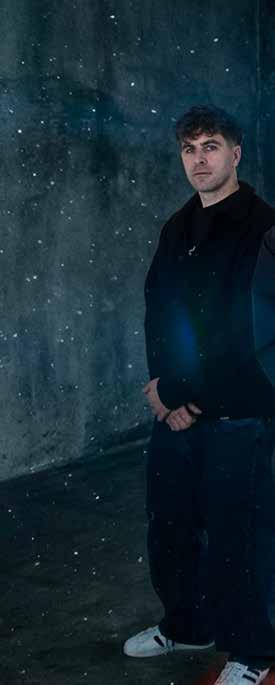
LZ7 members Saint Louis, Lindz, Lee Matthews and Leonn Meade
Me and my Shadowlands
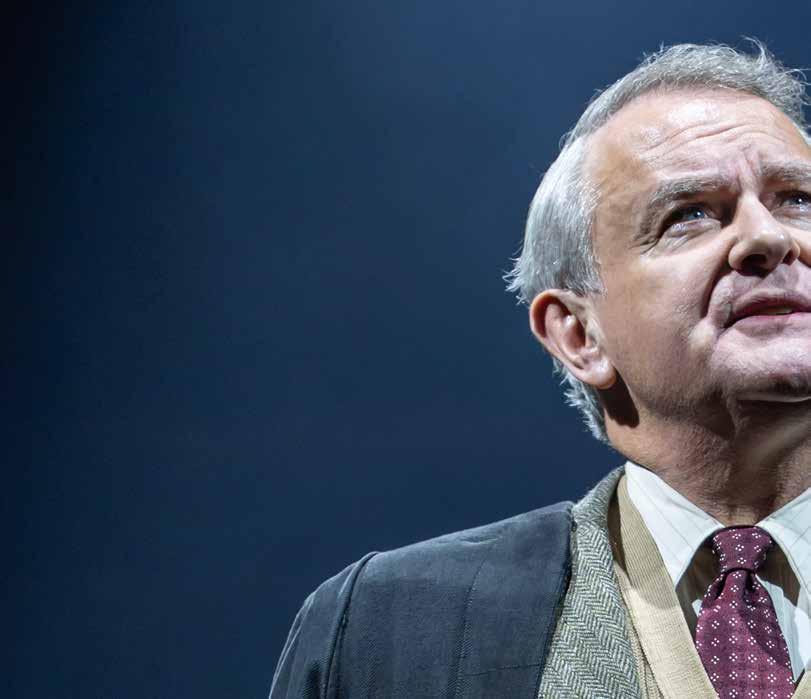
As Hugh Bonneville and Maggie Siff star in a new West End production of Shadowlands, about the relationship between academic and children’s author CS Lewis and poet Joy Davidman, WILLIAM NICHOLSON reveals
how he came to write the story and tells how he hopes it will encourage audiences to consider some big questions
Interview by Philip Halcrow

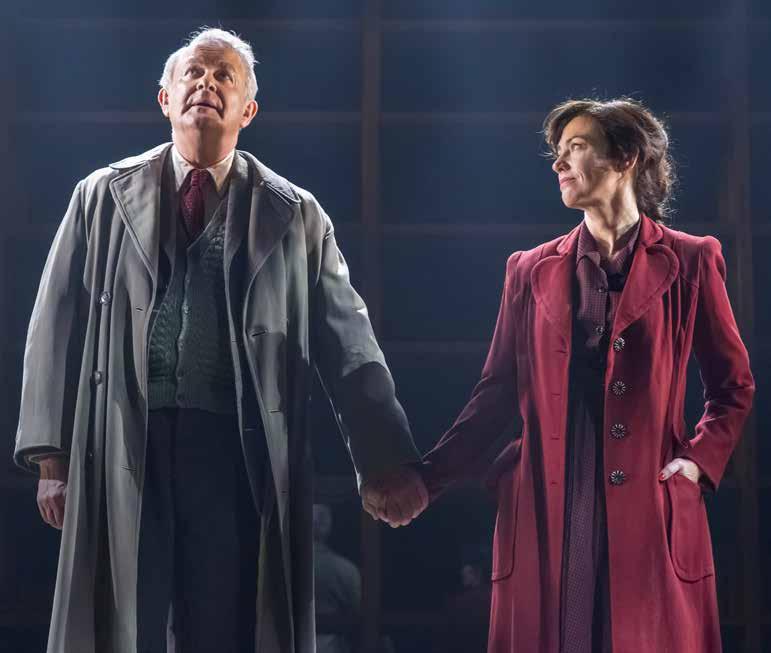
Hugh Bonneville steps on stage as Oxford University tutor and popular speaker CS Lewis with an apology for keeping the audience waiting. And, as if everyone has come to hear one of Lewis’s talks, he begins to address the subject of love in the presence of pain and suffering.
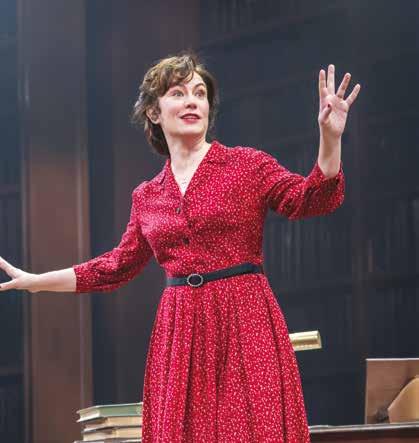
More than just being the subject of a talk, love, pain and suffering will take centre stage over the next two hours at the Aldwych Theatre in London’s West End, where a new production of Shadowlands is telling the story of the unexpected romance between Lewis and American poet Joy Davidman –played by Maggie Siff – and how the couple faced her terminal cancer.
‘I opted to begin with a 10-minute speech, a lecture – and this was quite deliberate,’ says the play’s writer William Nicholson. ‘I wanted to say to the audience: “This is a serious subject. This is something you have asked
yourself about. Let’s listen to what Lewis has to say.”’
Shadowlands had started life back in the 1980s as a TV film – and, says Bill, it had a different focus from the play.
Initially, though, he had been reluctant to tell the story at all.
The future writer of films such as Gladiator, Les Misérables and Thirteen Lives was working in the BBC’s religious TV department, where he had scripted a drama Martin Luther: Heretic, produced and directed by his colleagues David Thompson and Norman Stone.
It had, he says, ‘gone reasonably well’, and Norman Stone had then proposed making a drama which told the story of CS Lewis and Joy Davidman – ‘partly because it’s a great story and partly because Norman is a very strong Christian and saw this as a good story from a Christian perspective’. David Thompson recognised the potential, and he and Norman turned to Bill to write the script.
William Nicholson

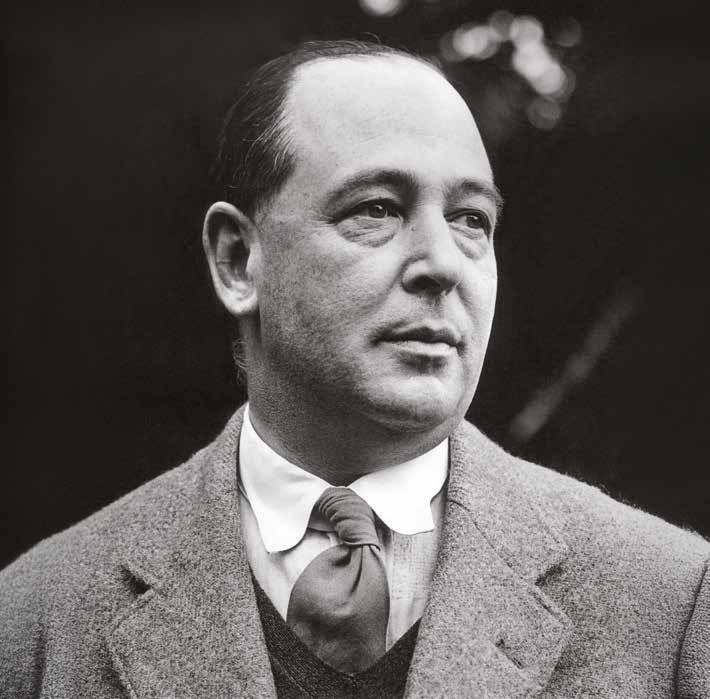
himself against opening up to love –perhaps because of the pain he felt at the death of his mother when he was a child.’
‘Initially, I said no,’ says Bill. ‘Growing up, I had not been exposed to CS Lewis, and I was not interested in him at all.
‘But David found that he was getting quite a lot of interest in the story and thought that he had a chance of raising finance. So he pushed harder and sent me such materials as there were.
‘I read about the relationship between Lewis and Joy Davidman and decided that I could do it – not as a religious story but as an emotional love story. I was in my mid-30s and so perhaps I saw in the story something that I could identify with, which was fear of emotional commitment.
‘I saw that Lewis seemed to defend
Bill agreed to write the film. Along the way, he also began reading the works of Lewis.
Here was an honest man struggling with questions
‘Of
course, I discovered that he was absolutely wonderful. Not only that, but I appreciated how he chose to address difficult religious topics in a straightforward and intelligent way. I was a non-believer, and I still am. But I was impressed. Here was an honest man struggling with very important questions.’
The TV film, which starred Joss
Ackland and Claire Bloom as the couple, won two Baftas.
‘After the success of that film,’ Bill remembers, ‘a theatre producer said to me that it would make a good play. I’d never written a stage play before, but he put me in touch with a director to see if we could come up with something.
‘Once I realised it was going to be on the stage, I made an important decision that the religious content of Lewis’s life could come to the fore. As well as the emotional story, I wanted it to be about the question: why does God permit suffering?
‘So I wrote the opening speech – which is by me, but formed out of ideas that Lewis explored many times: the problem of pain. My whole idea was that the story would show how an honest apologist for
Turn to page 10 f
CS Lewis is played by Hugh Bonneville (opposite page) in ‘Shadowlands’
Maggie Siff as Joy Davidman
From page 9
Christianity finds his explanations bang up against brutal experience.’
Bill points out that, although the play is based on the story of Lewis – known to his friends and family as ‘Jack’ – and Joy Davidman, it is a dramatic construction, a ‘two-hour version of what was a multiyear experience’ rather than a purely factual account.
He explains that, without much biographical source material, he drew what he could from CS Lewis’s writings, including his distraught reflection on bereavement and faith called A Grief Observed. The outline of Lewis’s relationship with Joy is also known – that before they met, she would write him letters from America; that she met him on a visit to England; that when her unstable
marriage broke down she returned to the UK and re-entered Lewis’s life; and that they married before she died of cancer in 1960.
‘We know nothing about what they said to each other or what they did together,’ says Bill. ‘I made all that up – but I made it up within the frame of what we know, and I tried my best to imagine what Jack and Joy would say and be like.
‘There’s only one line in the whole play that’s from CS Lewis – apart from the quotes from The Magician’s Nephew –and that’s where he says: “Pain is God’s megaphone to rouse a deaf world.” But it’s all inspired by Lewis.’
Bill hoped it would ring true, even if he had changed the details of what happened.
He explains how when he was preparing the script, the real Douglas Gresham – Joy Davidman’s younger son from her first marriage who is portrayed as a boy in the play – surfaced.
‘I was thrilled to see him, so I showed him the script. He was fine with it –including my inventions – except for one scene.
‘There’s a very important point in the play, after Joy has died, where Douglas asks Jack: “Do you believe in Heaven?” Jack replies: “Yes.” And the boy says: “I don’t. But I sure would like to see her again.”
‘Douglas said that we couldn’t have that in the play, because his mother was a Christian and he was a Christian, so as a young boy, he, of course, believed in Heaven. He asked for it to be changed, but I said that I couldn’t change it, because it was the way the play had been built. So we proceeded anyway.
‘But when Douglas saw the finished version, he wrote me a letter, saying that, although it wasn’t what happened, he didn’t mind, because the play was the most true thing he had ever seen about his mother and Jack.
‘Being a writer is not about being a documentarist and just adding lots of facts together. I care very much about truth, but truth is a complex thing.’
Shadowlands itself is about Lewis’s search for truth.
‘Shadowlands’ has stayed with me all my life
‘The faith story I decided to track,’ says Bill, ‘was one of a man who had a strong faith that had not been tested. It becomes brutally tested, it cracks under the pressure and breaks – but then re-forms.’
Towards the end of the play, after he has lost Joy to cancer, Lewis questions whether God cares. He says that he is afraid ‘of thinking that suffering is just suffering after all’ with ‘no sense’.
‘But,’ says Bill, ‘by the end, it’s quite clear that he has retained his faith.’
Reflecting on the two losses of his mother and then his wife, Lewis says in the play: ‘I have been given the choice twice in my life. The boy chose safety. The man chooses suffering.’
After the original production was presented in 1989, Shadowlands won the best play category at the Evening Standard drama awards.
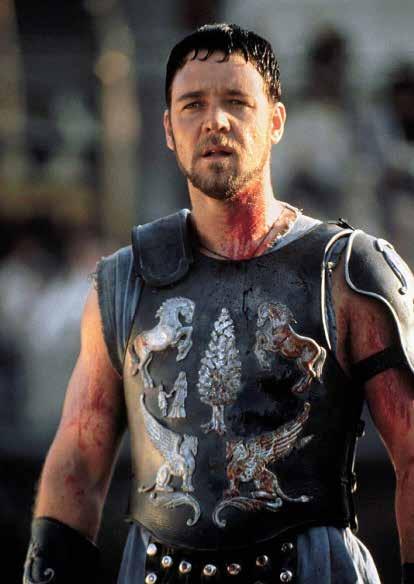
William introduced themes of love and the afterlife when he wrote ‘Gladiator’, starring Russell Crowe
Bill says that the play – along with the original TV film and the 1993 cinema film, which starred Anthony Hopkins and Debra Winger – became ‘transformative’ for him.
‘When I was at the BBC, I was trying to be a writer. After Shadowlands, I was able to be a writer.’
He says too that in some sense the story has lived on in his mind.
‘The “me” who wrote the play is the same “me” that wrote the other 26 film scripts and 14 novels and 5 other plays. I’ve been evolving all the time, but the themes that occur in Shadowlands reoccur in my other work.
‘I sometimes tease people by saying that Gladiator is just another version of Shadowlands. It isn’t. However, I was the third writer on Gladiator, and when I took over, I did a substantial reworking of it. My
reworking was to insert the love interest and the afterlife. And those are exactly the things that are in Shadowlands
‘So I think that the work I did on Shadowlands – thinking about the things that CS Lewis thought about – has stayed with me all my life.’
Having described the play’s opening speech as an invitation to audiences to listen to what Lewis has to say about some of life’s big issues, Bill reflects on what he himself has found in Lewis.
‘I think that what I learned from CS Lewis was that it is possible to deal with very important questions in a way that is simple and honest and direct. He was the master at it. He did his theological thinking in a way that I could understand, and I really appreciated that.
‘I don’t travel with him all the way on
his journey, but I do travel with him on his questions. I come to a different place, but I respect the place he comes to and the way he gets there.
‘He sees what happens in this life not just in terms of this life, but also in terms of the life to come.
‘My version of that is to see things in terms of a timescale beyond what is just happening now. I don’t believe that there’s a life after death, but I do believe that there’s life after my life. The world will continue – and we need to have that perspective.
‘Whatever conclusion you come to, I want people – myself included – to ask themselves these honest questions.’
l Shadowlands is at the Aldwych Theatre, London, until 9 May
Hugh Bonneville as CS Lewis and Maggie Siff as Joy Davidman
Your prayers are requested for Oscar, who has hurt his foot.
The War Cry invites readers to send in requests for prayer, including the first names of individuals and details of their circumstances, for publication. Send your Prayerlink requests to warcry@salvationarmy.org.uk or to War Cry, 1 Champion Park, London SE5 8FJ. Mark your correspondence ‘Confidential’.
Becoming a Christian
There is no set formula to becoming a Christian, but many people have found saying this prayer to be a helpful first step to a relationship with God
Nigel Bovey gives chapter
and
verse on each book of the Scriptures
Titus
Titus, a Greek by birth, was a co-worker with the early Church leader Paul and accompanied him to Jerusalem for his summit meeting with other leading members of the Church (see Galatians 2:1–10). He later travelled with Paul to Macedonia and the church in Corinth. Paul regarded him as a ‘true son in our common faith’ (Titus 1:4 New International Version).
When Paul writes his letter to him, Titus is in Crete to put the church there in order (1:5). It will be a big challenge. Crete is notorious for its waywardness. Cretans are known for being ‘always liars, evil brutes, lazy gluttons’ (1:12). The churches have been infiltrated by ‘rebellious people, full … of deception’ (1:10).
To combat this, Titus must ‘rebuke them sharply’ (1:13) and warn troublemakers. If they do not listen, he is to ‘have nothing to do with them’ (3:10).
Titus must also appoint elders in every church. They are to be faithful to their wives, hospitable, above reproach and teachers of ‘sound doctrine’ (1:6–9). Paul outlines what constitutes sound doctrine. It is twofold: sound belief and sober behaviour.
Lord Jesus Christ,
I know that I have done things in my life that are wrong and I’m sorry. Thank you that I can ask you for forgiveness because of the sacrifice you made when you died on the cross.
Please forgive me and help me to live a better life in the future as I learn how to love you and follow your way of living.
Thank you, Lord Jesus.

If you’ve prayed this prayer, scan the QR code or contact us using the coupon on this page

In contrast to the pervading culture, older men are to be temperate, selfcontrolled and ‘sound in faith’ (2:2). They are to be an example to younger men, encouraging them also to be self-controlled as well as sound of speech (2:6–8).
Older women are to be reverent in their behaviour, not engaging in slander or addicted to drink. They should be role models for younger women (2:3 and 4).
Believers must respect the rule of law and live peaceably (3:1 and 2).
Three times Paul outlines the foundational Christian belief that Christ died to save the world from the consequences of its sin.

Jesus Christ ‘gave himself for us to redeem us from all wickedness’ (2:14). Paul expands on the theme by writing that ‘when the kindness and love of God our Saviour appeared, he saved us, not because of righteous things we had done, but because of his mercy’ (3:4 and 5).
He goes on to say that God ‘saved us through the washing of rebirth and renewal by the Holy Spirit … so that, having been justified by his grace, we might become heirs having the hope of eternal life’ (3:5–7).
This, says Paul, is the sound belief the Cretans need to understand, live by and share with others.

Or email your name and postal address to
To receive basic reading about Christianity and information about The Salvation Army, complete this coupon and send it to
War Cry 1 Champion Park London SE5 8FJ

QUICK QUIZ
1 2 3 4 5 6
In which year was the first Bridget Jones’s Diary film released?
Who has been the editor of satirical magazine Private Eye since 1986?
Madrid, Barcelona and Valencia are cities in which European country?
Who composed the ballet Swan Lake?
Who is the author of the book The Dose Effect, about the connection between lifestyle and mental wellbeing?
How many MPs are there in the UK parliament?


World Art Day encourages creativity
Feature by Ewan Hall
Sharpen those pencils and ready the brushes – it is time to get to the art of the matter. Taking place on Wednesday (15 April), World Art Day encourages everyone, from beginners to aficionados, to take the time to express their creativity while appreciating and learning about the craft.
Created by Unesco in 2019, World Art Day is celebrated each year on 15 April, which is believed to be the birthday of Italian Renaissance artist Leonardo da Vinci.
The day urges people of all ages to embrace their imagination, explore the works of artists – whether painters, sculptors or conceptual artists –and share their enthusiasm with others. Organisers hope that, because art takes so many creative forms, everyone can find a way to take part.
It is easy to admire the way that other people contribute to society through art – or, come to that, through music, literature and any other imaginative outlets that make people’s lives better. Perhaps we wish that we could offer something of equal worth.
At such times, we may feel as though our mistakes stand out more than anything useful we have done. When insecurity sets in, seeing our own worth can be difficult. Yet there is someone who sees the full picture and chooses to love us regardless – and that’s God.
The Bible records God saying to the people who followed him: ‘You are precious to me, and I have given you a special place of honour. I love you’ (Isaiah 43:4 Easy-to-Read Version).
If we too choose to follow God, we will receive his acceptance and a love that embraces us, despite our flaws.
From the broad strokes to the tiny details of our lives, he sees everything about us. And in his eyes we are valuable, even when our lives feel complicated and messy.
God values each of us as the person we are today, and, if we’ll let him, he will show us how we can become the masterpiece that we have the potential to be.

Quick CROSSWORD
ACROSS
1. Protect (5)
5. Furniture item (5)
8. Energy (5)
9. Under (5)
10. Disconcert (5)
11. Twelve (5)
12. Fastened (4)
15. Retrieve (6)
17. Scrub (5)
18. Threaten (6)
20. Diplomacy (4)
25. Cost (5)
26. Implant (5)
27. Requirements (5)
28. Keepsake (5)
29. Stop (5)
30. Secretes (5)
1. Drinking glass (6)
2. Assert (6)
3. Dull (5)
4. Astound (5)
5. Loud rumbling (7)
6. Close to (6)
7. High regard (6) 13. Anger (3) 14. Frozen water (3)


15. Regret (3)
16. And so forth (3)
17. Royal mace (7)
18. Dangerous person (6)
ANSWERS
Look up, down, forwards, backwards and diagonally on the grid to find these words associated with mercy
Sick feeling (6)
Attach


Baked beans and cheese toastie
INGREDIENTS
METHOD
200g can reduced-salt and reducedsugar baked beans
2 slices wholemeal bread
10g reducedfat spread
30g reducedfat cheddar cheese, grated

INGREDIENTS
120g wholewheat pasta shapes
1tsp olive oil
1 garlic clove, finely chopped

Cook the beans on the hob according to the can instructions. Make sure the sauce is thick.



Meanwhile, lightly toast the bread and add a thin layer of spread to each slice. Top the bread with the cheese, then place under a preheated grill until the cheese starts to melt.
Remove from the grill and spoon the beans on to a slice of toast, then cover with the other slice and serve immediately.

Quick pasta with tuna and sweetcorn
METHOD
Cook the pasta according to the packet instructions.
1 medium onion, chopped
½ green pepper, sliced ½ red pepper, sliced
400g can chopped tomatoes
1tsp mixed herbs
200g can sweetcorn, drained
160g can tuna in spring water, drained
1tbsp Parmesan cheese, grated Basil leaves
Meanwhile, heat the oil in a large pan. Add the onion and cook for 5 minutes on a medium heat, stirring continuously. When the onion starts to brown, add the garlic and cook for a further 2 minutes.
Add the peppers, tomatoes and mixed herbs and bring to the boil. Reduce the heat and simmer without a lid for about 10 minutes.
Drain the pasta and add to the sauce. Mix in the sweetcorn. Just before serving, add the tuna and stir in gently to keep the fish in chunks, then place in bowls and sprinkle with the Parmesan and some torn basil leaves, to serve.


Matthew 22:39 (The Message)