WORLD news has, for the most part, offered a very divided and disparate landscape for some time now and one could be forgiven for feeling somewhat dispirited and desperate about it all.
However, there have been glimmers of hope, beacons of unity and togetherness. One such event was the 2026 Winter Olympic Games, which saw competitors come together from nations across the globe to compete, yes, but to do so in a spirit of fairness and mutual respect. They were focused on the prize, but also on sharing together in a unique experience.
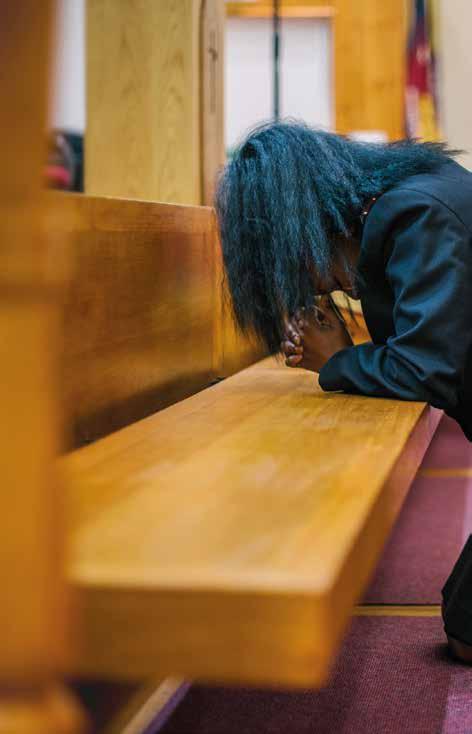
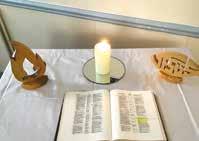
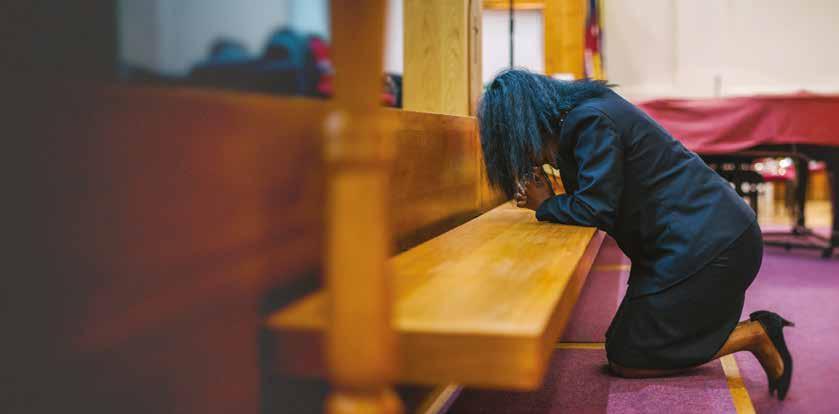
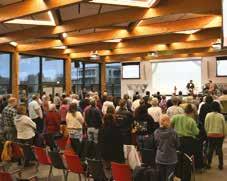
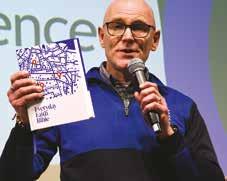
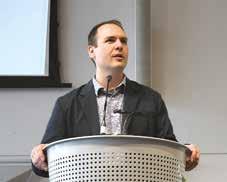
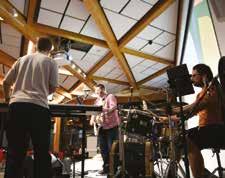
This weekend, prayer warriors from across the territory are meeting together for the Encounter Prayer Gathering, taking the opportunity to go deeper in prayer and in listening to God. Prayer is both intensely personal and also a responsibility and privilege of gathered community.
Coming together in prayerful petition and worship has been at the heart of Christianity since the earliest days of those first disciples. Acts 1:14 tells us that they all ‘joined together constantly in prayer’ and in Matthew 18:20 we are reminded that ‘where two or three gather in my name, there am I with them’, and that what is asked will be done.
There is power in prayer, even more so when it is done together.
Visit salvationist.org.uk/ recommended-content
Explore prayer and how to join the UKI Boiler Room.
Interviewing
To subscribe,
SEEKING SILENCE
LISTENING AND DISCERNING
EDITOR Major Julian Watchorn
MANAGING
EDITOR Ivan Radford
ASSISTANT EDITOR Stevie Hope
EDITORIAL ASSISTANTS Major Margaret Bovey, Major Lynne Shaw, George Tanton, Lyn Woods
SENIOR DESIGNER Hannah Holden
GRAPHIC DESIGNERS
Joseph Halliday, Louise Phillips
PROOFREADER Chris Horne
CONTACT US 020 7367 4890
salvationist@salvationarmy.org.uk
ADVERTISING advertising@salvationarmy.org.uk
DISTRIBUTION AND SUBSCRIPTIONS
INTERNATIONAL LEADERS
General Lyndon Buckingham and Commissioner Bronwyn Buckingham
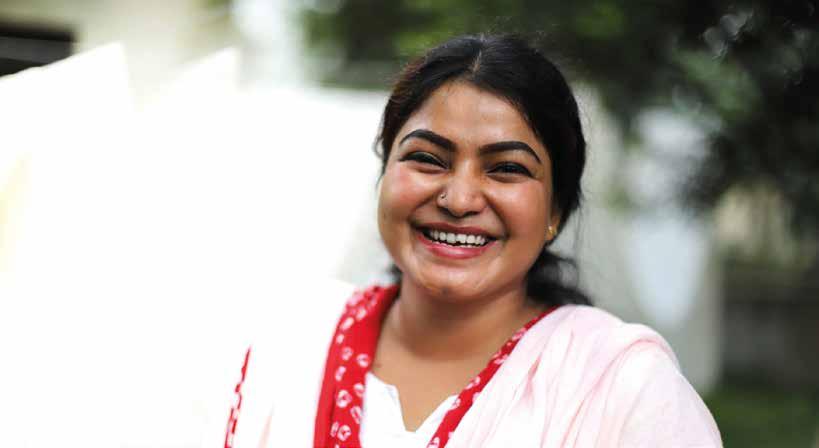
On International Women’s Day, Hayley Still calls us to take action for equality
RIGHTS. Justice. Action. For All Women and Girls. This is the UN’s theme for this year’s International Women’s Day (8 March), now in its 115th year. Today is not only an opportunity to celebrate women’s achievements – it is also a galvanising moment to confront bias and discrimination and take action for equality.
This year’s focus calls for dismantling discriminatory laws, strengthening inadequate legal protections for women, and challenging harmful norms that undermine dignity. According to the UN, globally, approximately 52 per cent of countries lack consent-based legal definitions of rape, 71 per cent allow child
Reflect and respond
Read The Bible Doesn’t Tell Me So: Why You Don’t Have to Submit to Domestic Abuse and Coercive Control by the Rev Helen Paynter.
Find out more about becoming a Restored Beacon church at salvationist.org.uk/domesticabuse-response – join a network of churches that support and journey with survivors.
Engage your whole corps with the Helping-Hand Appeal, which in 2026 is supporting the Army’s international Women and Girls projects. Find out more at salvationist.org.uk/helpinghand.
marriage in all or some circumstances –an issue that disproportionately affects girls – and women hold only 64 per cent of the legal rights afforded to men. In all corners of the world, the law often disadvantages women.
Progress has been made. Women have fought for, and won, the right to vote, work and lead. More girls are in school, there are stronger laws against domestic violence, and digital activism is mobilising movements for justice.
Yet progress does not promise permanence. A global pushback is taking hold, with one in four countries reporting a backlash on women’s rights last year. Women and girls face widespread denial of justice and rights, from rape cases that never reach court to workplace harassment without consequences. Laws might exist, but they do not always provide protection – and the justice system itself can be a source of re-traumatisation and harm.
Scripture shows that justice is everyone’s business and an essential part of our discipleship. Justice is deeply interconnected with righteousness –right relationships with God and with one another.
Throughout the Bible, we see how God’s heart for justice embraces everyone, particularly the persecuted. The prophets implore us to ‘seek justice’ and ‘defend the oppressed’ (Isaiah 1:17). In Psalm 82, the psalmist charges us to ‘defend the weak and the fatherless; uphold the cause of the poor and the oppressed’ (v3). And Micah 6:8 clearly sets the path we are to follow: ‘To act
justly and to love mercy and to walk humbly with your God.’
Jesus echoed the prophets’ cries for God’s people to live lives of righteousness that uphold justice. When he called his followers to ‘love your neighbour as yourself’ (Matthew 22:39) he reaffirmed the instruction found in Micah. When he rebuked the Pharisees for neglecting justice and the love of God, he showed that upholding the Law must never be devoid of compassion. If our justice systems were infused with the radical love of Jesus, we would not see disparities in legal provision for men and women: we would see equality.
Actively oppressing others is not the only way of perpetuating injustice. When we remain silent or allow ourselves to benefit from injustices imposed by others, we become complicit. We are an informed generation, and we cannot claim ignorance of the world’s injustices.
The biblical mandate is clear: God’s people are to do justice, defend the oppressed and reject any teaching or practice that excuses domination or abuse in all aspects of life. Legal reform might feel out of our hands, but we can still have influence: in how we spend our money, how we vote, how we engage with those in power, and how we show up for women and girls.
HAYLEY STILL
UK Engagement Coordinator International Projects Office
IN The Salvation Army, a division is a number of corps and other initiatives grouped together under the direction of divisional leaders. This includes centralised social services and charity shops within a defined geographical area.
The UK and Ireland Territory has 14 divisions that cover the Channel Islands, England, Ireland, the Isle of Man, Northern Ireland, Scotland and Wales. A division can represent a region, such as the North East Division, entire countries, such as the Wales Division, or even a single city, such as the London Division.
The territory’s divisions have not always been the same. The most recent change took place in 2023, when the territory moved from having 22 divisions to the current 14, following the Structure Coordination and Design Project.
Each division has a divisional headquarters – often abbreviated to ‘DHQ’ – which comprises a team who provide the division with support, oversight and coordination.
Divisional leaders are the territorial leaders’ representatives in a division. There is no Salvation Army work within a division that is not the concern of the divisional leaders. They have specific responsibility for support and oversight of all corps, pioneering and communitybased programmes within the division. Divisional leadership varies. Some divisions might have a divisional commander – often abbreviated to ‘DC’ – and an assistant DC. Others may have a DC and a divisional leader with additional responsibilities who may or may not be the spouse of the DC. Each of these roles can be referred to individually as ‘divisional leader’.
• Read a full list of divisions at tsa.link/divisions
‘God spoke
my heart’
to
Gordon Taylor (Croydon Citadel) shares how songs have helped him on his faith journey
AS far back as I can remember, my spiritual life began with a song: ‘And Is It So? A Gift From Me’, with its chorus: ‘I have not much to give thee, Lord, but all I have is thine’ (SASB 570). God spoke to my heart through this song at a meeting in Westminster Central Hall when I was seven and, 30 years later, I had the unusual experience of offering a prayer of thanksgiving at the grave of the songwriter – Richard Slater – when Croydon Citadel Band visited Margate, during the band’s centenary year. Songs have formed part of the soundtrack of my journey of faith for more than 70 years. I thank God ‘for the joy of human love’ in my early years – my brother, sister and parents – and the ‘friends on Earth, and friends above’, who have continued to encourage me. I thank God for my wife, Hazel, my soulmate, who has shared my faith journey for more than 40 years. In 1985, our first overseas trip was to an inspiring International Hymn Conference in Bethlehem, Pennsylvania. In later years I have learnt so much about the importance of singing in the worship of God, and in my own spiritual growth and development.
Recently, I have been researching and writing about all the 1,041 songs and choruses in the current Salvation Army songbook, and it has been an enriching experience to gain insight into the spiritual life of each author, and to learn what inspired their songs. The history of our songs mirrors the history of the Christian Church in every generation. The songs we learn by heart become part of our spiritual conversations and inspire our prayer and our praise: ‘Through all the changing scenes of life, in trouble and in joy, the praises of my God shall still my heart and tongue employ.’ ‘To God be the glory for the things he has done.’ ‘There is a hope that burns within my heart,
that gives me strength for every passing day.’
Many songs come to me with a personal challenge: ‘Except I am moved with compassion, how dwelleth thy Spirit in me?’ We may glibly quote the words ‘my life must be Christ’s broken bread’, but are we prepared to live up to the words, when service involves costly sacrifice?
• Gordon Taylor is the author of Companion to the Song Book of The Salvation Army and the two-part biography The Life and Legacy of William Booth
Have you got a testimony to share? We’d love to hear your faith story! Get in touch at salvationist@salvationarmy.org.uk
FULLNESS OF JOY
by Major Lorraine Chaundy (Cambridge Citadel)
What does Fullness of Joy depict?
It is a watercolour painting that is freehand and abstract in style. I painted full blooming flowers –roses, hyacinths, freesias, sunflowers, primroses, tulips and pansies – with berries and foliage in a garden that is flourishing.
How was it made?
It was simple to create. Honest. Try it! I used a size 8 watercolour brush and began with water washing and adding colour pigment. While wet, I laid over cling film, pressed it and left it for a while. When I peeled the cling film off, it left a good background to add the flowers and foliage on top. For the berries, I literally painted small wobbly circles! To finish, I brush-flicked some berry colour, yellow and a little green. I love watercolours and making watercolour cards –it’s therapeutic, and even more so if it expresses the joy I find in Jesus.
What inspired it?
Psalm 16:11 says: ‘You will make known to me the path of life; you will fill me with joy in your presence, with eternal pleasures at your right hand.’
To me, Fullness of Joy depicts that joy that comes in abundance from God’s presence.
The joy that comes from God renews and strengthens us. It’s good to sit in a pretty garden or landscape to reflect spiritually. The God who created the landscape often creates a response in me. I can testify to experiencing this sort of flourishing in life, even after the worst and hardest time. God is good to know. I like my paintings to remind me of his goodness.
Have you made a piece of art, a drawing, a collage or something else inspired by your faith?
We’d love to share it in our Artists’ Corner! No matter how big or how small, get in touch with our team at salvationist@ salvationarmy.org.uk.
‘I don’t know this man!’
Lieutenant Joel Watson considers how fear and failure do not need to define us
MARK 14:66–72
PERHAPS this hay fever season, you might consider what your sneeze says about you. Yes, you read that right! Are you a silent, internal sneezer who attempts to suppress the sound? You might be a quick sneezer who carries on like nothing happened. Are you a polite sneezer, covering your nose with a readyprepared tissue? Are you an apologetic sneezer who repeatedly says sorry before, during and after? Surely, you’re not a spray-gun sneezer – no description needed!
In the middle of a supermarket, my dad decided to let everyone else know what my brother and I have known all our lives: he is a deliberately loud, big, booming sneezer, who snatches the moment of a sacred sneeze for a flash of humour. In fear of embarrassment, as teenage brothers, we darted off in different directions, yet we couldn’t have been more united in our urgency to show that we did not know this man!
PAUSE AND REFLECT
When are you tempted to distance yourself from Jesus to avoid discomfort or attention?
What fears most often tempt you to stay silent about your faith?
As Jesus stood alone facing false accusation, Peter was seeking warmth and safety among strangers. Mark’s account reveals he was nearby – close but not too close. Spiritually speaking, perhaps not close enough.
Peter positioned himself well enough to see and hear what was happening, yet far away enough to hope no one would notice him. Verse 54 tells us that he
followed at a distance. That distance can feel familiar. Present, but cautious. Near, but guarded.
This physical distance might hint towards a spiritual one, reflecting the gap that can exist between what we know in our heads and what we live from our hearts. Only through obedience to Jesus are they drawn together.
Despite having insisted emphatically that he would never disown Jesus just hours earlier (see Mark 14:31), Peter’s sincere intentions were disintegrated through fear.
PAUSE AND REFLECT
Have you ever done something you said you wouldn’t do, or let someone down badly?
How did you feel?
How did they feel?
God has always longed for a relationship with his people. We can trace this truth throughout the Old Testament. We find it embodied in the incarnation of Jesus. Today, that longing still remains.
Suffering has a way of exposing our need for others. Even Jesus, fully aware of what lay ahead, desired the nearness of his friends as he faced the cross. In Gethsemane, he welcomed them into his struggle, asking them: ‘Stay here and keep watch’ (Mark 14:34). Again, we glimpse the heart of God, who desires relationship, not distance.
It is interesting how Mark’s account recalls how Peter, along with James and John, conceded the request of Jesus by falling asleep, not once but three times (see Mark 14:32–42). Furthermore, Peter’s trifold denial of knowing Jesus allows us to grasp how God maintains
a longing for closeness with his people, despite our inclination to be consumed with ourselves.
In verse 67, Peter is called out: ‘You also were with that Nazarene, Jesus.’ This general observation is not from a powerful authority but a servant-girl with low status, yet Peter denies it. Our greatest failures are not always due to extreme pressures. They can occur in the casual moments of life when we are tired, caught offguard or simply trying to blend in.
Peter then moves away in hope of escaping recognition (see v68). However, avoidance does not bring peace. He is called out again as one of Jesus’ followers and his denials intensify. Sin can do this in us, as one lie or wrongdoing can require another to sustain it.
Peter denies knowing Jesus for a second time. Before long, he makes his third dismissal of any association with Jesus and enforces a false identity as his accent is noticed as being from Galilee. Part of Peter’s identity that marks him as belonging to Jesus becomes a source of shame. Peter, who once promised devotion unto death, sought to erase any association with his Lord with a great outburst: ‘I don’t know this man!’ (v71). What begins with avoidance becomes self-preservation, and truth is gradually sacrificed for safety.
PAUSE AND REFLECT
What parts of your identity as a follower of Christ are hardest to embrace publicly?
As immediate as the cock crowing following Peter’s third denial, Peter’s realisation of Jesus’ words being fulfilled dawns. Remembering Jesus’ words – ‘Before the cock crows twice you will disown me three times’ (Mark 14:3)
– would not condemn Peter, but awaken him.
Perhaps Peter’s declaration of ‘I don’t know this man’ was not just regarding his association with Jesus. It might point to his continuing journey of understanding exactly who Jesus is.
Jesus knew Peter’s weaknesses from the very beginning and still chose him. As Jesus’ words convict Peter’s heart, tears of repentance fall down his face as he realises what was true – true of himself and true of his friend.
Grace proves failure is not the end of our identity in Christ our Saviour, but an opportunity for a new beginning. This proved so in the life of Peter, as it can for you and for me. In the hands of Jesus, repentance always leads to restoration. His redemption and grace send us out with living hope.
If we are asked, ‘Surely you are a disciple of Jesus?’, may our first denial be that of ourselves (see Mark 8:34) and not of Jesus. As we declare that not only do we know Jesus, but we also belong to him, may we be even louder than a big, booming sneeze in a supermarket!
PAUSE AND REFLECT
Jesus invites us to be honest and admit our weaknesses.
What might we need to bring to him today?
How could you boldly share the love of Jesus with others this week?
LIEUTENANT
JOEL WATSON Corps Leader Belfast Citadel
To read the full, unedited Prayer Matters booklet, visit salvationist.org.uk/discipleship.
SATURDAY 7 MARCH – CARE FOR CREATION: SPRING POEMS
‘Frost-locked all the winter,/ Seeds, and roots, and stones of fruits,/ What shall make their sap ascend/ That they may put forth shoots?/ Tips of tender green,/ Leaf, or blade, or sheath;/ Telling of the hidden life/ That breaks forth underneath,/ Life nursed in its grave by death.’ from Christina Rossetti’s poem ‘Spring’
SUNDAY 8 MARCH – SABBATH PRAYER: HIDDEN PEACE
Lord, I bring to you the places where peace has become hidden in my life. Forgive me for the moments when I have relied on my own understanding rather than trusting in your presence. Restore what has become unsettled within me and draw me back into your peace. Holy Spirit, come and renew my heart. Draw me gently back towards God. Guide me in the quiet ways of peace, and lead me forward in step with God’s purposes. taken from salvationist.org.uk/lent
MONDAY 9 MARCH – SHARING THE GOOD NEWS: MULTICULTURAL WORLD, INTERCULTURAL MISSION TRAINING COURSE
This course helps delegates understand something of the history of immigration, the theology of intercultural mission and the practice of helping to build a church that welcomes all peoples and all generations. Pray that the time together will be honest and hope-filled and that all who participate will grow in confidence to be prophetic voices for intercultural church and mission. taken from wbclearningdevelopment.org
TUESDAY 10 MARCH – SERVING AND CARING: OFFICER APPOINTMENTS
ANNOUNCEMENT
We pray for officers who are expecting to hear about new appointments. We pray for peace of mind and a deep awareness of the loving presence of the God who knows every step of their journeys. We pray for grace over every detail of the transition. We pray particularly for those who need to find schools for their children, or who have other family circumstances that need accommodating, that God will give them abundant faith and abundant energy. by Lyndall Bywater (UKI Boiler Room Team)
WEDNESDAY 11 MARCH – JUSTICE AND RECONCILIATION: WOMEN IN JASHORE, BANGLADESH
God of healing, we pray for women who have experienced forced marriage, poverty and violence. May they find freedom from exploitation and recovery from trauma, and may they create safe, secure and sustainable futures. by Hayley Still (UK Engagement Coordinator, International Projects Office)
THURSDAY 12 MARCH – INTERNATIONAL SALVATION ARMY: UGANDA TERRITORY
We pray for a spirit of boldness, particularly in those places where it is hard to share the gospel. We pray for favour with the authorities and for open doors of opportunity to bless communities. We pray for the territorial leadership team: Colonels Chatonda and Joyce Theu and Lieut-Colonels Emmanuel and Irene Sichibona. by Lyndall Bywater (UKI Boiler Room Team)
FRIDAY 13 MARCH – GROWING IN FAITH: WALES DIVISION
Pray for corps that are reviewing and reflecting on their mission. Ask God to help them listen carefully to him, be aware of needs, empower people, be open to innovative approaches, and rely on the presence and power of the Holy Spirit. by Lieut-Colonel Jonathan Roberts (Divisional Commander)
PRAYER REQUESTS
Do you have something or someone you’d like us to pray for? Email salvationist@salvationarmy.org.uk with ‘prayer request’ in the subject line.
Why do you pray?
We asked Salvationists across the territory what motivates them to speak with God in prayer
I have a real passion for prayer. I know praying keeps me closer to God.
Margaret via Facebook
It brings me close to God and helps me feel grounded. As I pray I feel his power listening to me and I can speak to him. As I live alone, praying makes me not feel alone! As my prayers often turn into a conversation with God, I feel close and understood and because of the power of prayers by myself or within Clapton Salvation Army’s weekly Zoom prayers or Sunday worship, I feel able to handle and negotiate my way through all that’s going on in my life and the world today.
As a man, my internal nature is to try and ‘fix’ everything and everyone. About 13 years ago, my mind finally said: ‘Enough, I can’t cope with this anymore!’ And, at the age of 50, I started to finally grow up and realise that I can’t do it all but God said ‘I can’, so now I pray when things are tough and I cannot cope with life, but I know he can, so I just hand it over to him… Just being in his presence is often enough for me.
Mike via Facebook
I just need Jesus. He is my all.
Sue via Facebook
To thank him for everything he does for me and my family, and I feel closer to him when I pray.
To let someone know the things that really bother me that I may not want to say out loud to people.
Because I know he hears me and I will always get an answer. It might be a ‘no’ or a ‘not yet’, but it will always be the right answer, in which case I can trust him to give me acceptance and patience.
To draw close to God, to thank him for all his goodness to me, to bring people/situations to him for his help and to ask for his guidance in my life.
Mary and others Knottingley
What was once a daily routine, when taught to pray at an early age, has increasingly over the years become an essential part of our lives, whether it’s seeking guidance from God, thanking him for our many blessings or praying on behalf of others.
David and Joan Exeter Temple
Quite frankly, if I am not talking to God I become a complete nightmare, not nice to be around and life just doesn’t make sense. His presence is the thing that rights and centres me. Those who know and love me can tell by looking at me if I’ve not been praying. My daughter (5) says: ‘I pray because I get lonely if I don’t talk to Jesus and he might miss me if I don’t talk to him.’
Katy via Facebook
I pray because I can’t do any of this without Jesus by my side… He is my constant, my strength, my joy, my light. I simply need him. I can trust him with everything and for everything. Without my connection to God in prayer, it’s all a waste of time.
Julia via Facebook
It keeps me connected to God, and it’s powerful. I can leave everything with him because he hears and answers! The words of this old chorus sum it up beautifully: ‘Prayer gently lifts me to highest Heaven, from Earth’s confusion to Jesus’ breast. My sin and weakness, my doubt and sorrow, are lost for ever in sweetest rest.’
Lyn via Facebook
I speak to my Lord and Saviour because I can’t do life without him. He is my rock, my guide and my friend. It is a two-way conversation, in which I never fail to receive assurance and encouragement for my onward journey.
Valerie via Facebook
He helps me all the time.
Margaret via Facebook
It is a commandment from God that we must pray all the time.
Andile via Facebook
Nicola via Facebook
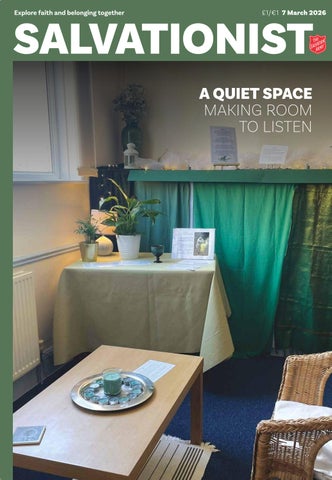
Creating quiet
Major Gary Lacey reflects on seeking silence to listen to
God
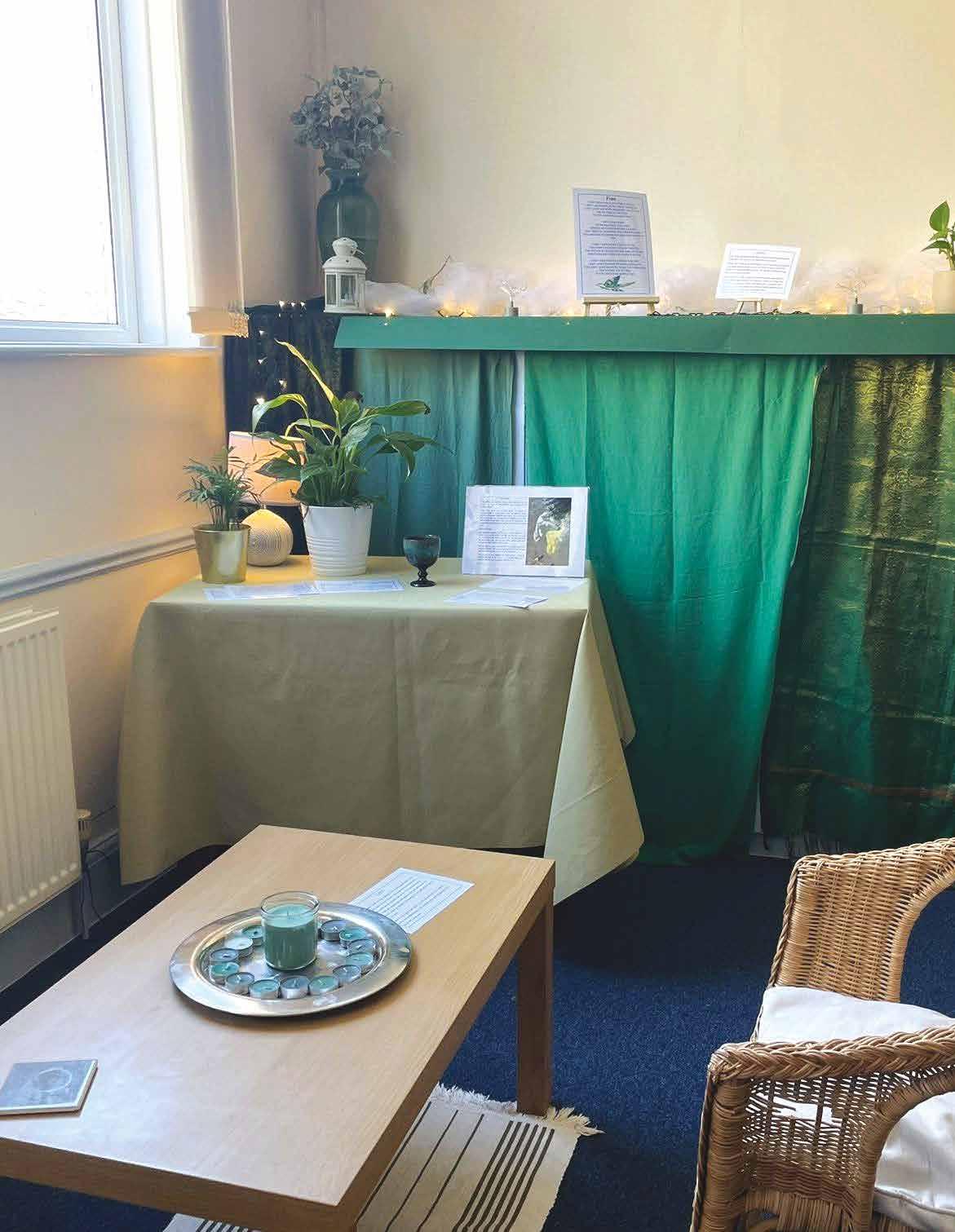
WE live in an ever-faster, technology-driven society, where success is often measured in busyness. Noise has become the stock trade of the masses. It raises the question: where do we give room to God to speak to us?
Finding silence is essential to thriving as a person and as a Christian. It gives us the opportunity to listen to God’s voice, to think and breathe, to formulate new thinking and to be sharper and better in whatever we do. There are two types of quiet: external and internal. They often go together, although not always. Securing, scheduling and heading to a quiet space is vital. The value of intentionally seeking out a quiet place can be seen in Mark 1:35, Mark 6:31, Matthew 6:6, Psalm 62:1 and 1 Kings 19:12 and 13. All these passages highlight the restorative benefits of purposeful withdrawal to an undisturbed location and intimate prayer.
Obstacles to finding quiet might be an always-on culture, work or church demands, unsupportive environments –including family, colleagues or friends –a lack of routine or planning, or not having a space away from noise. We must be honest: we, as the Church today, do noise. We use music to create atmosphere, we love chatter and laughter, we fill every moment we are together. Ask for silence and, for many, it’s uncomfortable. I was recently invited to speak at a church and couldn’t find a quiet spot to get my focus on God sharper. So I headed for the one place I thought would be distraction-free: the toilet. Even there, music was being piped in!
Why are we so afraid of silence? You might feel guilty about not being productive. You might be scared of being alone with your thoughts. You might find yourself saying ‘I’m too busy’, ‘I’m tired’ or ‘I need to check my emails’.
Social media and technology haven’t helped. Phones, computers, tablets, smartwatches and TV can all steal time, space and attention from our lives. We have lost the art of switching off. But reclaiming space for quiet is a pressing need, individually and corporately. When life is taken up by noise, endemic busyness or other obligations, an outward relationship with Jesus can become inwardly non-existent.
Knowing we want to change something is great, but we need to commit in our relationship with God: Scripture says we must love God with all our hearts, souls and minds (see Matthew 22:37) and offer our entire selves as living sacrifices (see Romans 12:1).
Once you have found quiet, how you spend your time is unique to you. You could pray, read, write, contemplate or just be.
Contemplation is a brilliant exercise to begin with or nurture. The word itself never appears in Scripture, but contemplation – looking thoughtfully at something for a long time – is demonstrated many times. It is often described as meditation, waiting on the Lord or seeking God in solitude. It isn’t easy in our fast-paced, alwayson world but, without listening to God, mission is impossible. After visiting monasteries and contemporary expressions of new monasticism,
Steps towards silence
This, or something similar, might help you:
1. Schedule time
Daily or weekly, whatever you can commit to – don’t set overambitious goals.
2. Locate a quiet place
You could exercise, sit in your car or go to a library.
3. Have minimal distractions
If your head tells you to ‘leave it on just in case’, refuse to listen.
4. Be intentional
Make sure people are aware that you do not want to be disturbed.
I have fallen in love with silence. I schedule two hours every morning to sit in my conservatory and just be. It has changed my life entirely.
Yet still, I find I can’t switch off immediately. Many monastics call this moment ‘the chattering monkeys’, because a thousand thoughts swing from tree to tree in your mind. You must go through this – let the monkeys chatter! Eventually, your mind does settle and clarity appears. Then you can listen, really listen.
Holy discernment
Territorial Leader Commissioner Jenine Main reflects on recognising the will of God
AT this year’s territorial prayer gathering, we are giving intentional space to explore and practise holy discernment – not as an abstract spiritual idea, but as a vital way of life for those called to be God’s people. At a time where decisions are increasingly complex and pressured, we are choosing to pause together and ask a deeper question: How do we genuinely seek and recognise the will of God –together?
The Blueprint for Better Choices encourages us to discern God’s will carefully as we consider the five focus areas outlined within it: Courageous Discipleship; Prophetic Voice; Most Marginalised, Most Excluded; Children and Youth; and Growing Leaders. As we consider these, we want to make good choices. To do this we need to listen more intently to what God is calling us to.
Holy discernment invites us beyond efficiency and expertise into attentiveness, prayerful listening and shared dependence on God. It asks us to slow down, make space and trust that God is present and active in the midst of our decision-making.
Discernment, at its heart, means to distinguish. Spiritual or holy discernment is the ability to distinguish between that which is of God and draws us closer to him and that which is not. It involves giving careful attention to God’s presence and activity in both ordinary and significant decisions – personally and corporately.
Scripture reminds us that discernment is not about having all the answers. In Romans 12:2, Paul speaks of being ‘transformed by the renewing of your
mind’ so that we may ‘test and approve what God’s will is’. Discernment is less about certainty and more about posture – openness, humility and willingness to be led.
The Bible offers rich examples of God’s people practising discernment in community. In Acts 6 and Acts 15, leaders faced complex and potentially divisive issues. Rather than rushing to solutions, they gathered, listened, prayed and sought unity. In 2 Chronicles 20:12, King Jehoshaphat openly admitted: ‘We do not know what to do, but our eyes are on you.’ The people stood together before the Lord, waiting until God spoke.
Writers such as Ruth Haley Barton and Henri Nouwen remind us that corporate discernment is the shared capacity to recognise and respond to the presence and activity of God as a community. God often speaks not just to individuals, but through the gathered body – sometimes in surprising or uncomfortable ways.
If holy discernment is to shape our shared life, it must be practised intentionally. It might feel slower, more vulnerable and less controllable than familiar decision-making processes. Yet it is this humility and trust that anchors our leadership in God rather than in our own wisdom. As Isaiah 55:9 reminds us, God’s ways are higher than our ways. Like Jehoshaphat and the people of Judah, we may not always know what to do, but we choose to keep our eyes on God.
COMMISSIONER JENINE MAIN Territorial Leader
Steps towards discernment
Holy discernment is not a formula. It is a lifelong journey of attentiveness, surrender and courageous obedience – walked best, and most faithfully, together.
Some simple but demanding practices include:
Preparing personally
Discernment begins with our own spiritual formation. Regular prayer, Scripture reading, reflection and examen cultivate receptive hearts and help us recognise God’s voice.
Creating space in meetings
Holy discernment requires time. This may mean quieter agendas, intentional pauses, shared silence, and moments of listening prayer woven throughout meetings.
Practising
holy indifference
Discernment calls us to lay aside our attachment to particular outcomes – personal or corporate – and remain open to whatever God may invite us into.
Listening together
Create brave spaces where people can name what they sense God may be saying, what they are noticing internally, or where they feel unease. Discernment deepens when voices are welcomed, not silenced.
Testing and confirming
Discerned direction is tested through Scripture, shared peace, unity and the fruit of the Spirit. Discernment seeks unity, not unanimity, and remains open to further confirmation over time.
Active listening
The leader of the prophetic prayer workshop at the Encounter Prayer Gathering, talks to Salvationist about hearing God’s voice
What is prophetic prayer?
It’s not praying to God for something or a situation, but praying and really listening to God. What a great thing that God gives us the ability to hear what he’s saying or discern some of his will! The challenge is how we discern our own voice from God’s voice, or perhaps if God says something we don’t want to hear.
Out of the five APEST gifts of ministry – apostle, prophet, evangelist, shepherd, teacher – are people perhaps more familiar with the last three?
I think so. There is lots of training for shepherds and teachers, for example. We all have the ability to hear from God, but some people have a spiritual gifting for the prophetic. If you’re a prophet or apostle, people are probably saying to you, ‘Not another idea!’ You might have a question or agitate things. You don’t want to do something for the sake of doing it. You have to learn to manage yourself.
Can you remember when you first heard God’s voice?
When I was 14. I didn’t know it was a prophetic gifting: I just heard God. I don’t really know how to pray any other way without really thinking about it! I find God will speak as long as he’s given space to do so – to be honest, I think he’s very chatty!
Can you describe your experience of prophetic prayer?
It’s quite direct, so I’m praying and saying what I think I’m hearing from God. I’m very wordy: God gives me words or pictures. When I get a picture, I’m like zooming in and out.
How do you distinguish between your voice and God’s voice?
I felt led to explore this gifting and I did a year of training with Raising Prophets. I think staying rooted in God’s word is key: just because I hear it, that doesn’t mean I’m right. I like prophesying for things or situations I don’t know about, so I can’t be influenced, and I never ask for confirmation from someone: I don’t need to know that. And I don’t say, ‘Do this.’ I don’t want to hurt anyone accidentally. I also stay away from certain subjects, for example relationships.
How do you approach discernment?
It’s like when you’re using flour, you sieve to get the lumps out. The best thing, I find, is to leave whatever I say with someone else to pray about for God to reveal what he’s saying. It’s laying a fleece out, like Gideon in Judges 6, and that’s OK – we don’t want to make the wrong decision. When you ask for confirmation, it doesn’t always come in skywriting but, if it’s true for you, God will want to confirm it. And it might not be for now: in 10 years’ time, you might find God plants it back in your head.
Praying for the Encounter Prayer Gathering
I hear the word ‘insightful’. I think God wants this weekend to be insightful and wants an opportunity for his voice to be front and centre. The Lord says I really want to grow disciples so they can hear and discern my voice. I feel the Lord saying he’s going to use the space to anoint an Army that is going to be so gifted in that listening ability and a sense of the Lord saying that our prayerful prophets are in the younger generations, and that we need to be equipping and training the next generation in hearing what he has to say. The Lord is saying it’s no agenda: it’s just about listening to what he has to say. It’s a time of reflection and quiet, to be intentional about prayer. And gatherings are so important because you’re coming to be intentional. And we need more gatherings to be intentional. The Lord hopes this will be a catalyst to more people gathering in their communities for prayer. That across our territory we’re praying and coming together. It’s a real sense of the Lord wanting us all to drop what we’re doing and pray. If you can’t be there, can you stop and pray?
So it’s a combination of boldness, trust and staying grounded?
Humility is important. It’s nothing I’m doing; it’s what God is doing. I don’t have some magic power. It’s staying grounded, gracious and accountable. I don’t want to do anything that could hurt the church. I’m accountable, for example, to my corps officer.
If someone wants to talk about or explore this, what can they do?
Talk to your corps leader about your passion and how you can get involved in prayer in your corps, or reach out to the prayer network at saprayernetwork@ salvationarmy.org.uk
United in prayer
Two years since the launch of the UKI Boiler Room, Prayer Network Associate Dawn Lacey shares how the territory’s prayer furnaces have taken shape
IN 2024, the territorial Prayer Network launched the UKI Boiler Room, a way to harness the prayer rhythm of Salvationists across the UK and Ireland Territory. An important part of this approach is prayer furnaces – local prayer groups united in prayer for the mission of The Salvation Army, who also benefit from being connected to the UKI Boiler Room for encouragement, advice and resourcing.
What happens at a prayer furnace session?
Every furnace is individual. Our furnaces pray for the mission of The Salvation Army in the UK and Ireland and worldwide, but there’s no set pattern because it’s all about your local context.
Anything can happen in a prayer meeting – if the Holy Spirit decides to take it a different way, then that’s what we follow! If we don’t enter into what God is doing, then we’re going to be doing things on our own, thinking that God’s going to join us. Instead, we need to be joining in with what God is doing already.
A furnace is about creating a rhythm of prayer, but the content is entirely about your context!
When we talk about a rhythm of prayer, what might that look like?
Again, it’s entirely up to you! It could be that your furnace prays at a certain time every day. It could be that you meet once a week or once a month. You could meet online or in person or simply set an alarm and know that people are going to be praying at that time.
Furnaces are about praying for the territory’s mission. How do people know what to pray for?
The UKI Boiler Room team shares prayer themes every day on the territory’s Prayer Network Facebook group, so you can get information from there. These posts include Prayer Matters (see page 7 of Salvationist each week). We also have a WhatsApp group, which I use to send out information once a week. This might include a prayer request from someone or a relevant Bible verse.
How does a group become a prayer furnace?
Simply let us know what you’re doing by emailing saprayernetwork@ salvationarmy.org.uk. We’re always excited about more people joining us
Territorial Prayer Furnace
Whether you’re a member of your local prayer furnace or you’ve never prayed before, join people from across the territory and be part of the UK and Ireland Territory’s prayer rhythm in this monthly online gathering. Meetings take place on the first Monday of every month at 6pm via Zoom. The next will take place on 6 April. Email saprayernetwork@salvationarmy.org.uk for meeting details.
Prayer furnaces
A furnace is a group of people who pray together – small or large, in person or online. Currently there are prayer furnaces in the following places:
Aberystwyth
Bath Canterbury Rhyl Rotherham
Selby
Snettisham
Wickford
Wrexham
London Division
To start a prayer furnace where you are, or sign up your existing group as a furnace, email saprayernetwork@ salvationarmy.org.uk
and we encourage people to let us know what’s happening out there. We don’t want anyone to feel that they’re on their own.
We have 10 prayer furnaces so far –and we would like to have so many more! And there are probably people out there who are already doing what a furnace does, but don’t realise it.
We’d really like to see a prayer furnace in every corps and centre. Our hope is to have one in every area, so that prayer is always at the top of the priority list.
• Find out more about joining the UKI Boiler Room at salvationist.org.uk/ prayer-network
‘Prayer is pivotal’
Majors Alan and Carol Young talk to Lyn Woods about Bath’s prayer room ministry
How did the prayer room come about?
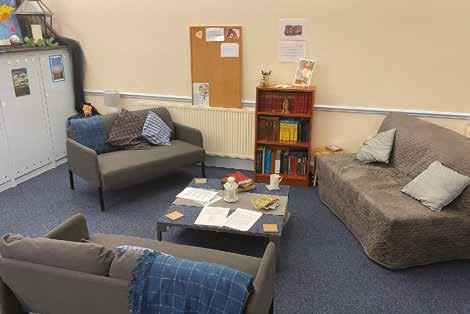
The prayer room started in 2024, using the hall of the former Bath Temple Corps. We always had a vision that, in retirement, we would do something completely focused on prayer – which has always been the bedrock of our ministry – and to offer a space for people to come aside from their day-to-day ministry and have a time of retreat. We felt really at peace that, although this place could no longer operate as a corps, the Army’s presence in this area could be maintained with a remit to serve anyone and everyone, because prayer isn’t confined.
Bath is like a basin surrounded by hills, and we’re located on top of one of the hills. The Temple was a beacon of mission here for 85 years and we felt very strongly about that continuing through our vision, scripturally upheld by Matthew 5:16: ‘Now that I’ve put you there on a hilltop, on a light stand – shine! Keep open house; be generous with your lives. By opening up to others, you’ll prompt people to open up with God, this generous Father in Heaven’ (The Message).
Two years on, how is the prayer room going?
People are starting to get to know about it and use it. We’ve been delighted by the way we’ve been accepted in the community. It was sad that the corps had to close, but people were pleased it was not the end of the Army here. It’s about finding a new way to engage. We’ve had people come from Bath Citadel, people who have made links with us and people from nearby corps and churches.
How is your mission defined?
What we do is underpinned by six core values: loving God through prayer, loving others through hospitality, loving God
through creativity, loving God through justice, loving the world through learning, loving the world through mission. We’ve learnt over the years that people open up to God and engage with prayer in different ways and styles. Creativity is central: there are interactive prayer stations around the prayer room.
What else takes place?
At Easter, we do a Maundy Thursday meeting and meditation evening for Bath Citadel. At Christmas, we have a carol service for the community.
We’ve also done Bible studies and prayer teaching using the Army’s One Thing resource. We’ve hosted corps retreat days, with more lined up, and some people have attended for prayer retreat in preparation for exploring their mission strategy.
As one of our values is hospitality, we feel strongly about keeping an open house. In addition to the prayer room, we have a separately accessed community space with a big table, which everybody gathers around. On Mondays and Fridays, we open from 10am until 1pm, have lunch together and share a reading. That’s a gathering of mostly older people, some of them lonely or living with dementia. On those days, prayer is at the table.
We have some hall hires, which help to keep things running. One of the groups, a local children’s centre, hold their staff
meetings here. We discovered a need in the area for mothers with young babies and saw 10 families attend our recent, first session of Babysong.
People who come here always say it’s a lovely, peaceful place and sense something special, even though they may not identify as Christian.
What do people pray for?
We pray for local and world issues, and for confidential requests. Most of the prayer requests we receive for our bi-monthly Prayer Gathering Days are from corps asking that we pray for mission.
We’re a prayer furnace, part of the wider UKI Boiler Room and we work closely with the Prayer Network. We’ve contacted departments, such as Family Ministries, as well as corps, and have connections with members of the International Projects Office and Refugee Response teams.
What’s next?
As we build the team, we’re looking forward to having more time to devote to the prayer room and developing the rear garden area into a prayer garden. We are unwavering in keeping prayer at the heart of all we do!
• Connect with the Bath Prayer Room online at salvationarmy.org.uk/bathprayer-room or facebook. com/61567477296666
Going deeper
UNIVERSITY OF WARWICK
GRASPING the concept of the theme Intero – meaning between, among, within – delegates dived straight into shared learning streams at this year’s Mission Conference, writes Editor Major Julian Watchorn
Delegates were eager to embrace the opportunity to go deeper spiritually and to learn from one another and the experts sharing across a plethora of mission topics. To take away and apply that learning in their communities, they selected the stream that they felt was most relevant to them in this season, as well as explored other topics in introductory sessions to spark ideas for further mission opportunities.
Under exciting headings such as Ignite Community, Neighbourhood Witness, Transforming Leadership, Express the Gifts, Renew the Heart and Overflow in Worship, delegates could engage with topics such as APEST ministry, Community Services, Core Recovery Church, digital tools for ministry, family ministry, fundraising, intercultural mission, justice and reconciliation, local officer training, Natural Church Development, older people’s ministry, pioneering, mission resources and whole-life discipleship.
In addition to these streams were keynote speakers Steve Rouse on whole-life discipleship, Dave Csinos on intergenerational ministry, Chine McDonald on issues of race, faith and gender, and Territorial Mission Officer Major Ann Montgomery. Each offered key insights into mission in a specific context and all were memorable and challenging.
Opening these plenary sessions was Steve Rouse, church team director at the London Institute for Contemporary Christianity and a teaching pastor at Balham Baptist Church in South London. Using William Booth’s famous one-word telegram ‘others’ as a clarion call to mission, Steve spoke of the challenge to the Church today: to ‘stop going to church and start being the church’. Acknowledging that The Salvation Army is probably more engaged with the world in this context than most denominations, he used the headings Ekklesia, Exiles and Elect to unpack how we engage with the world around us where we are, not just when we are gathered for worship but wherever we live out our lives. He urged us to remain first and foremost a missional Movement that
prioritises living out church in our communities, but also meets together for worship. Using personal examples that resonated with the busyness of Christian activity rather than mission, he added that church should not pull us out of the world but equip us to live in it – we need to be the scattered Church in all the places that God has placed us.
Meeting in two sessions over four days meant that the conference was available to more people depending on their personal circumstances, and it also lent itself to opportunity for crossover and further conversation with colleagues between sessions.
Collective worship formed a golden thread through the gathering, as God was placed front and centre and given his place among his people.
Having gathered to receive resilience, relevance and restoration, delegates were sent out to their own front lines strengthened in their resolve to ensure that the wholeness of God is shared with everyone.
• Read more about the Mission Conference theme Intero at tsa.link/ mission-conference-intero
CHILDREN AND YOUTH
STOCKTON Divisional Children’s Officer Captain Luke Cozens led a very productive, worship-filled Vision day to focus on children’s ministry. He is working with three pilot groups to test a new children’s strategy, the vision of which is to share the territory’s vision of fullness of life for all with Jesus. – TB
EVENT
CHATHAM International College for Officers (ICO) Principal Colonel Bishow Samhika and Assistant Principal Colonel Pamela Samhika led an inspiring International Fellowship Sunday, with guests from the 264th ICO session. The programme began with a meaningful holiness meeting, where Major Karla Perez (USA Southern Territory) encouraged the congregation to deepen their walk with God despite life’s challenges. A highlight was a march of witness and open-air outreach. Community Chaplain Major Nick Hanover (North Scotland Division) shared the word of God, while ICO delegates and corps members engaged the community through music, testimonies, leaflets and conversations. A praise meeting concluded the day with joyful worship, heartfelt prayer and an encouraging message from Major Webster Sandukina (Zimbabwe and Botswana Territory), who emphasised hope, unity and faith in action. – SS
EVENT
NUNHEAD A half-term intergenerational creative afternoon saw people creating rag wreaths from unwanted clothing, craft leftovers and bits of random ribbon. Food and drink were provided by the corps café and the afternoon was a wonderful opportunity for families to relax and connect on a deeper level. – KS
COMMUNITY
CLOWNE The corps held a community games night with 40 people attending. There were traditional board games and some new ones to learn, which everyone enjoyed. Refreshments were provided and there was a Bible focus on who Jesus says we are, and our purpose. The evening raised £130 for corps funds, with a strong vote for more Saturday night specials in future. – GH
Delegates discern Design for Life
WILLIAM BOOTH COLLEGE EVENT
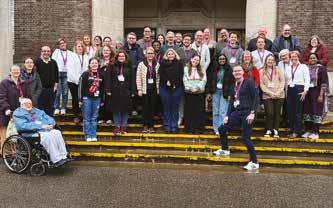
MORE than 30 people gathered at the latest Design for Life (DFL) weekend to discover God’s design for their lives.
Delegates came from around the UK and Ireland Territory and Norway for the event, with worship led by Karl and Lauren Westwood (Bromley Temple) before going into small groups to journey deeper on their lives so far, their spiritual gifts and what they felt God was saying to them.
Caleb from Hadleigh Temple said: ‘Since I’ve been an adult, I’ve been trying to find out where God wants me to go, academically, spiritually, in every way. I think it’s along this path that I’ve lost sight of who I am. Design for Life has been a weekend I didn’t know I needed. I came searching for purpose, but found my identity, and in that, a glimpse of what my purpose might be.
‘It’s not been an easy process, though. There have been moments of laughter, moments of joy, moments of pain, moments of just being stunned into silence.
‘I don’t know everything, and some of what I’ve seen of what God has in store for me scares me, but I’m learning to trust that in his time, he’ll show me the when and the why of everything he’s called me to do.’
Beth from Boston Corps said: ‘I was at DFL by accident. I won a free spot at another event and had no idea what it was and I can easily say that it was one of the best decisions of my year. I thought that because I was young and that I had a rough idea of who I want to be and where I want to go, I wouldn’t get anything from it, but I’ve learnt so much, including talents I didn’t know I had and that there is nothing small or insignificant about me and I thank the team at DFL for my newfound confidence.’
On the Saturday evening there was space for sung worship and prayer stations, where people had the opportunity to seek God in different ways. One of the stations saw Ruth from Droitwich Spa write a powerful poem: ‘Fan the ember into a flame,/ So I may never be the same,/ Not as I was before,/ But ready for what you have in store./ Purified by your love and grace,/ Free to choose, your will embrace,/ Set apart in your holy name,/ Fan the ember into a flame.’
God is working powerfully through the lives of people who attend these weekends. The next weekend takes place from 26 to 28 June. Find out more at tsa.link/DFL. – JS
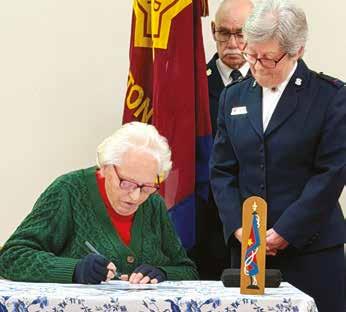
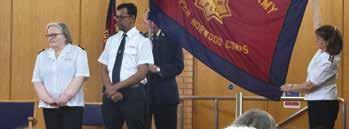
VAL Taylor was enrolled as soldier by corps leader Territorial Envoy Kim Whyard. We congratulate Val and ask for your prayers and encouragement as she begins the latest chapter in her journey of faith. Also pictured is Paul Cole holding the flag. – LT
SURANGA Jayarathna and Chris Gibb were enrolled as soldiers by corps leader Major Phil Layton. Suranga, from Sri Lanka, was surprised to discover that The Salvation Army is a Christian Church. He was invited to have a one-to-one discussion about God, salvation and the afterlife. He recognised his need for forgiveness and for his trust to be in Jesus. He left behind Buddhism and was ostracised by his family, but the corps has become his new spiritual family. Becoming a soldier is one way that Suranga wanted to give his whole life back to God. Chris, the daughter of Salvation Army officers, was enrolled as a soldier more than 40 years ago. She drifted away from God and, after many years of being lost, came to realise that, while she had been taught what to believe, she had never been taught why. At her enrolment she testified to God’s patience, grace and mercy, and encouraged all to dig deeper into their faith to understand why we need Jesus. – PL
WHAT DOES BEING A SOLDIER OR ADHERENT MEAN?
Find out more about formalising your membership of The Salvation Army and ways in which you can make a spiritual commitment at salvationist.org.uk/membership
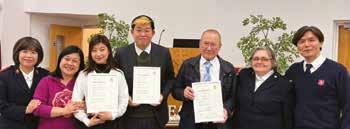
JACKY Fung, Rita Wong and Paul Lomax were welcomed as adherents by corps leaders Captains Eun Ok Shin and Wan Gi Lee. Radio journalist Jacky and his wife, Rita, who writes for lifestyle magazines, arrived in the city from Hong Kong and were invited to attend worship by Rita’s former teacher, Carol Chang, whose family came to the UK a few years ago and are now all active members of the corps. A new Christian, Jacky hosts a radio programme that is transmitted in Hong Kong. Paul, a professional musician and teacher, testified that he had never found a church he could call home but, when invited by Bandswoman Alison Perry to attend band practice, he quickly realised that this was exactly where God wanted him to live out his faith in a new and profound way. – BH
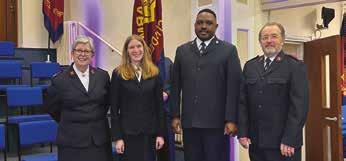
CATHRYN Parfitt and Winston Chipamuriwo were enrolled as soldiers by Majors Martin and Michelle Wheeler. For Winston, this was a re-enrolment as he had previously been a soldier in South Africa. In his testimony, Winston spoke of his years in South Africa, coming to the UK for work and the desire to renew his commitment. In her challenging testimony, Cathryn spoke of her faith journey. She said that she wanted to become a soldier because of connectedness – to Jesus, to her church family, to the corps and to the mission of The Salvation Army. – MW
Vincent
Gloria
and Blessing
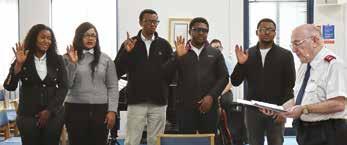
were welcomed by corps leader Major Stephen Battle. The family were soldiers in Nigeria before moving to the UK. Princess gave a testimony on behalf of the family, saying how blessed they were to be made welcome at the corps, especially their children, who thoroughly enjoyed being part of the Sunday school and youth group. They were all so happy and settled in their church family. – DC
NORWICH CITADEL
IPSWICH CITADEL
UPPER NORWOOD
ST ALBANS
BRISTOL EASTON
PRINCESS Nnodim,
Iwuoha, Celestine Iwuoha,
Nnodim
Nnodim
MAJOR RUTH TAYLOR
MAJOR Ruth Taylor was promoted to Glory from Pinderfields Hospital on 28 November 2025.
Ruth was born on 5 February 1944 into a Salvationist family in Chesterfield, progressing with her three brothers and sister through the junior corps to senior soldiership, not forgetting corps cadets. Ruth became a schoolteacher. She married her husband, Les, in 1966.
In 1969, Ruth and Les left their home in Holymoorside, Derbyshire, to join the Victorious session at the International Training College.
Upon commissioning in 1971, they were appointed to Middlesex House in London, followed by 38 years serving in appointments in England, Northern Ireland and Ireland. Their final appointment in Coventry lasted for 15 years. In retirement, they were responsible for Chesterfield Corps for a year. They also became visitors to retired officers for several years.
As a former teacher, Ruth was able to put to good use her teaching skills. She taught many people in English, maths and computing. Many folk have benefited from and been richly blessed by Ruth’s ministry and service given through the years in the name of Christ.
Ruth is greatly missed by Les and their children, Alison and Jonathan. Servant of God, well done. – LT
Please note members’ tributes submitted for publication should be no longer than 150 words. Good quality pictures will be included. Copy should be sent to salvationist@salvationarmy.org.uk
LEN WALKER GLOUCESTER
MUSIC, faith and family were central to Len’s life. Born in London, Len was raised in Surrey, where he attended the Baptist Church and, later, Woking Salvation Army.
After national service, Len entered the International Training College. Following marriage to Pat, they were appointed to Stocksbridge Corps. After resigning their officership, they returned as a family to Woking. Len trained as a music teacher, developing and encouraging young people at school and in the corps. The family then moved to Perth, Australia, where Len taught and they attended a corps.
They returned to Woking and, in retirement, moved to Gloucester, becoming valued members of the corps and local Gideons International ministry. Len was a faithful Christian gentleman, a local officer and talented musician.
Ill health necessitated a move to north Wales, from where Len was promoted to Glory.
He is greatly missed by all who loved and appreciated him. – JA
JEAN WILLOWS BARTON-ONHUMBER
JEAN was a beloved Salvation Army soldier, a dedicated nurse, a wife, a mum and a loved grandma. As a district nurse, Jean cared for others with patience, skill and gentleness. She treated them with dignity and respect. Her work was not just a profession, but a calling – an expression of her Christian faith in action.
Jean married her late husband, Emlyn Willows, in 1971 and they were blessed with two lovely children, Dawn and Karl. They were further blessed with their loving grandchildren – Ross, Astra and Madeline – all of whom she loved dearly.
Jean was a member of the songsters and bands at both Scunthorpe Ashby and Barton-on-Humber. She continued as a songster until she was taken ill over the Christmas period. We give thanks to God for Jean’s life and for the promise that, in Christ, death is not the end but the beginning of eternal peace. – JB-B
BRENDA MELLING SOUTHEND CITADEL
BRENDA Melling (née Camsey) was born in 1932 and was promoted to Glory on 26 December 2025. A Lancashire girl, she started work in a cotton mill aged 14. Attending a Torchbearer house party at Sunbury Court, she met Edgar Melling from Southend. They married in 1954 and gave many years of faithful service at Southend Citadel until Edgar’s promotion to Glory in 2000.
Brenda was the singing company sergeant alongside her husband, who was the leader. She was also an enthusiastic songster and songster sergeant. Always a hard worker, she was known for her catering skills.
Brenda remained very active to the age of 90, regularly walking and dancing. Her final years, in her care home of choice, were happy, and friends visited regularly. Her children, Jayne and David, and their families thank God for her precious legacy of love and faith. – JR
JOYCE CHEAL LEIGH-ON-SEA
JOYCE Natton was born in 1935 in Trimdon, Co Durham.
The family moved to Basingstoke, where Joyce grew up and took an active role in Army life, being corps cadet guardian and singing company leader before she left for teacher training college.
Joyce met her first husband, George Jones, on a student fellowship holiday and they moved to Leigh-on-Sea. Here, she was corps cadet guardian, songster pianist and then songster leader for 12 years, during which time she took the songsters on tour to Germany. Joyce was an accomplished pianist.
Five years after George died, Joyce married Brian Cheal – who had been the best man at her first wedding –and moved to Worthing. Here, she became songster sergeant and pianist.
After Brian’s death, she stayed at Worthing, where she felt settled. When her health started to deteriorate, she moved back to Leigh-on-Sea to be near family. – SJ
Local officers appointed
CORPS PRESS REPRESENTATIVE
GREG DAVIS, Chatham
Wedding anniversaries
Diamond (60 years)
GRAHAM AND MARION
COWDERY, Norwich Citadel, on 12 February
SONGSTER RESERVIST MARY AND RETIRED SONGSTER LEADER TREVOR MARTIN, Bellshill, on 12 March
Emerald (55 years)
JENNY AND KENNETH FINCH, Woodbridge, on 20 March
Promoted to Glory
BRIAN THOROGOOD, Barking
SONGSTER JEAN WILLOWS, Barton-on-Humber
LINDEN MAUNDER , Penarth
RETIRED YOUNG PEOPLE’S SERGEANT-MAJOR PAT SEALEY, Cannock, on 14 February
MAJOR MAUREEN GILL from Catterall House care home on 21 February
LIEUT-COLONEL MAURICE
COOPER from Beckenham Park care home on 23 February
MAJOR JAMES RORIE from University Hospital Wishaw on 23 February
Bereaved
ANTHONY THOROGOOD, Joanne Garinet , both Barking, Andrew Thorogood and Simon Thorogood of their father Brian Thorogood
CORPS TREASURER BRIAN
MAUNDER and Corps SergeantMajor Helen Morton, both Penarth, of their father Linden Maunder
CORPS SERGEANT-MAJOR
GLENN SEALEY, Cannock, of his wife Retired Young People’s Sergeant-Major Pat Sealey, Alison Snell and Paul Sealey, both Hednesford, of their mother
KATY GILL , Lynda Garbutt, Blackpool Citadel, Richard Gill, Deborah Dibb and Sarah Coulphard of their mother Major Maureen Gill
ANNE COOPER and Paul Cooper, Kirkwall, of their father LieutColonel Maurice Cooper
MAJOR JUNE RORIE of her husband Major James Rorie, Paul Rorie and Fiona Bradley, Bellshill, of their father
ENGAGEMENTS
General Lyndon Buckingham and World President of Women’s Ministries Commissioner Bronwyn Buckingham Thu 19 Mar – Mon 30 Mar Kenya East Territory
Chief of the Staff Commissioner Edward Hill and World Secretary for Women’s Ministries Commissioner Shelley Hill Wed 18 Mar – Sun 29 Mar Kenya East Territory (International Conference of Leaders)
Territorial Leaders Commissioners Jenine and Paul Main Fri 6 Mar – Sat 7 Mar Warwick (Encounter Prayer Gathering)* Sat 7 Mar – Sun 8 Mar Petersfield (140th corps anniversary)** Sat 14 Mar – Sun 15 Mar Kirkwall (opening of refurbished hall) Tue 17 Mar Banff Springs (North Scotland Divisional Spiritual Day) Fri 20 Mar – Sat 28 Mar Kenya East Territory (International Conference of Leaders)
Chief Secretary Colonel Peter Forrest and Territorial Secretary for Leader Development Colonel Julie Forrest Thu 21 Mar William Booth College (Children and Youth Conference)
* Commissioner Jenine Main only
** Commissioner Paul Main only
NOTICES
Help us improve the Salvationist website
Thank you to everyone who took part in our first round of user testing earlier this year! We’re running a new, different exercise to help us refine the website’s navigation, and we need your help once again. If you can spare a few minutes, take part at salvationist.org.uk/web-survey by 13 March.
Poetry Corner
Our Poetry Corner will return for Easter. If you have a poem inspired by Easter, please send it to salvationist@salvationarmy.org.uk for consideration by 13 March.
Explore faith online
Do you know someone who is new to Christian faith? Why not explore some of the big questions with them through pages on salvationist.org.uk/explore-faith!
In memory: Online wall of remembrance
The Salvation Army has introduced an online wall of remembrance that allows people to share memories and photos of loved ones. This virtual wall is free to use and a donation to the Army is optional. Access the page at thesalvationarmy.dedicationpage.org
Artists’
Corner
Have you made a piece of art, a drawing, a collage or something creative that’s inspired by your faith? We’d love to share it! Get in touch with us at salvationist@salvationarmy.org.uk
SOUNDS
Sunday
Worship
Join Salvationists across the territory in worship, with music, prayer and a Bible message from a guest speaker. This week’s message is from Lyndall Bywater (UKI Boiler Room Team) and ties into the themes of the Encounter Prayer Gathering. Can’t join us at 11am on Sundays? Catch up with the weekly podcast of highlights. Each week’s broadcast is repeated in full on Sundays at 6pm, Mondays at 12am and Thursdays at 9am.
• Listen online at salvationist.org.uk/radio
Morning Praise with Kids Alive!
Get your day started with half an hour of music, prayer, a thought and lots of giggles! Listen on Saturdays from 7.30am to 8am. Can’t tune in on Saturday morning? The broadcast is repeated in full on Sundays at 9am and Mondays at 7.30am.
• Listen online at salvationist.org.uk/radio
LEIGHTON BUZZARD CORPS, LAMMAS WALK LU7 1JA
140TH ANNIVERSARY CELEBRATIONS
Sunday 22 March
10.30am Celebration service with Divisional Leaders Majors David and Jane Alton, the Divisional Youth Chorus and Leighton Buzzard Band 12pm Musical celebration with the Divisional Youth Chorus
Led by Commissioner William Cochrane with soloist Tina Shepherd Reunion Chorus led by ISS Leader Dorothy Nancekievill
Saturday 21 March, 6.30pm Festival of celebration
Sunday 22 March, 10am Worship and shared lunch
If you have any memorabilia or photos, or you wish to be part of the Reunion Chorus, email hilary.gambling@salvationarmy.org.uk
ADVERTISING RATES
ALL PRICES EXCLUDE VAT
Classified listing Up to 25 words £9 £20
Classified listing Up to 50 words £18 £40
Small box (1/32nd page) 43mm x 30mm £15 £40
Medium box (1/16th page) 89mm x 30mm £35 £85
Large box (1/8th page) 89mm x 62mm £65 £170
Quarter page
Half page
Full back page
ADVERTS CANNOT BE TAKEN OVER THE PHONE. For further information email advertising@salvationarmy.org.uk.
The Salvation Army Trustee Company – SATCo – is the corporate trustee of the trusts under which The Salvation Army operates in the UK. The Audit Committee is chaired by a non-executive director of SATCo and currently comprises three additional external independent members. It plays a vital role in supporting SATCo’s governance responsibilities with a focus on financial reporting, internal controls, internal and external audit oversight and monitoring compliance with relevant laws and regulation.
We wish to appoint up to two additional independent members to the Audit Committee, with the following demonstrable skills and expertise:
• Experience at a senior level in accounting or audit, preferably with committee and/or board level experience.
• Experience in charity, public sector, regulated environments or large/complex organisations.
• Familiarity with current Charity Commission and SORP reporting requirements.
• Strong working knowledge or expertise of good practice in auditing or accounting, audit processes and internal controls.
• Skills to challenge in a constructive and insightful manner, and strong analytical and critical thinking.
• Independent and balanced judgement.
The Audit Committee usually meets four times per year during business hours at Territorial Headquarters in Denmark Hill, with the option to join via Teams when required. Appointments are for an initial term of up to three years, renewable for up to two further three-year terms.
This is an unpaid voluntary role with reasonable expenses reimbursed. Individuals must be supportive of the Christian ethos of The Salvation Army.
To apply, send the following to company.secretary@salvationarmy.org.uk