

TORNADOES EVOKE EMERGENCY DISASTER RESPONSE
BY LT. COLONEL ALLEN SATTERLEESweeping across parts of Alabama and Georgia, a devastating series of tornadoes touched down, leaving in their wake 23 dead, scores injured and millions of dollars in property damage. Particularly hard hit were Selma and Opelika in Alabama as well as LaGrange, Greenville and Griffin in Georgia. “Such strong tornadoes are rare in January,” commented Jeff Jellets, Territorial Disaster Coordinator for the USA Southern Territory, “Not surprisingly with storms of this caliber, the Army not only ministered to those affected but did so even though it sustained damage itself.”
Both in Selma and in LaGrange, the Salvation Army family stores suffered major damage. Caught in the storm, the staff in the Selma Family Store, which doubles as the service center, sheltered in place even as the roof was being ripped off the building. Fortunately, no one was hurt despite the frightening possibilities.
Donald Felice, Divisional Communication Director for the Georgia Division, reported that a similar catastrophe happened at the family store in Griffin. “The roof was completely sheared away by the high-force winds of the tornado. ‘The staff sheltered in a storage room when we saw the tornado coming our way,’ said Michael White, manager of The Salvation Army Family Store in Griffin, ‘It just tore the roof off and put it all in a big pile against a tree across the street.’ There were no customers in the store at the time the tornado struck, as out of an abundance of caution, Mr. White, had asked customers to leave earlier when he saw there was a possibility of severe weather


approaching. In addition, thanks to quick thinking of Mr. White, all of the staff who sheltered in the storage room came through the storm safely.”
A heartwarming story from Selma brings to the fore the importance of a gentle touch amid crushing events. Michelle Hartfield, Divisional Marketing Director for the ALM Division tells of a team of Salvation Army disaster workers coming upon people working around the wreckage of a home owned by “Mr. Danny.” He had weathered the storm with his dog but lost his home because of the storm. Seeing his home destroyed led him to a different way of thinking because of the response of his neighbors and The Salvation Army. “Things have been tough. I even thought I might end my life, but this has pulled me through. I feel like I have purpose. So many people are coming to take care of me. I know I’ll have PTSD, but I have a new purpose. I’ve seen pure love that is a

straight connection to God. It’s what I needed, and I’ll never be the same. In the big picture, this might have helped more than hurt me. People coming together like this has changed me.”
Mr. Danny’s story has been replicated countless times through the compassionate response of the Army, volunteers, family, neighbors and friends as well as other helping agencies.
The numbers marking the assistance rendered by the Army alone are impressive. As of January 17, The Army had served over 6500 meals, 5000 drinks with another 5000+ snacks. Spiritual care contacts, including prayer, caring listening and counsel numbered over 350. In addition, material assistance included cleanup kits, tarps, blankets and clothing. As the canteens withdraw, more assistance will be at hand as the communities affected move to put things together. The Army will be there as long as it is needed.
An Interview With Major Algerome Newsome

Southern Spirit : How did you meet The Salvation Army?
Major Algerome Newsome: I grew up in New Orleans. Lt. Steve Smith came knocking on doors in the community. We lived just around the corner from The Salvation Army. He was the first white man I can recall coming into my home. We saw a lot of activity at The Salvation Army but never quite knew what was going on; we never were invited to come until now. But my parents did not allow me to go because all of them were white, and we were African-American. It wasn’t something my parents felt was a safe environment at that time. In our neighborhood, we had gangs, not like gangs today, but just kids who got into trouble. To move from the smaller gang to the older gang, you had to do certain things. A group of kids came around on my thirteenth birthday and told me I had to go through an initiation process. So, we went to a drugstore with a list of
things to steal. For one of the big items, they took me to The Salvation Army. We were supposed to go back that night and break in to steal things. We looked through the windows to see what we would steal. Lt. Smith saw us, came out, and invited us into a Boy Scout meeting, so we thought, “What better way to scout out the place?” We all went inside for a Boy Scout meeting. We never returned that night to break in, but we all became Boy Scouts. It was the atmosphere of love that we were embraced with when we walked through the doors that kept us coming back.
Southern Spirit : How were you called to be an officer?
Newsome: The Salvation Army was perceived by my family as an all-white organization. My family grew up Baptist; two grandfathers were Baptist ministers. My grandfather had designs on me becoming a Baptist minister and taking over his church one day. In The Salvation Army, you got out after an hour of worship, and the Baptists were there for 3-4 hours. It encouraged me to attend The Salvation Army to spend less time at church and more time doing other things I wanted to do.
I received the call at youth councils. I had
“Newsome...” continued on page 2
A PUBLICATION OF THE SALVATION ARMY SOUTHERN TERRITORY THE SALVATION ARMY 1424 NORTHEAST EXPRESSWAY ATLANTA, GA 30329 WWW.SOUTHERNUSA.SALVATIONARMY.ORG FEBRUARY 2023 VOL 39 ISSUE 2
already accepted Jesus Christ, but I felt the strong sense of God speaking to me about being an officer. I didn’t necessarily want to embrace it because, at youth councils, I was the only African-American in a room of 300 people. I felt out of place, different. I could not understand why God would want me to be a part of that, especially when I was so well accepted in the Baptist community because of my family. Why wouldn’t He call me to be a Baptist minister? Why The Salvation Army? I ran from that for several years, leading me to the military to run away.
I went to the Marine Corps. My goal was to get away from New Orleans, away from everything, and think about what my future held. In boot camp, I drew the closest to God I had ever been, trying to understand what God’s purpose was for my life. I understood clearly: He wanted me to be a minister. I still fought being a Salvation Army officer. Before boot camp ended, that was settled in my heart to do just that.
Growing up in the Deep South New Orleans, it was very prevalent everywhere I went as an African-American that the city was divided in many ways. It was not a surprise that The Salvation Army would be that way. The difficulty was understanding why more African-Americans did not embrace The Salvation Army. From what I saw and understood of the Christian faith, there was no church that was a better model than The Salvation Army. When we began to attend as teenagers, we were thrown into prison ministry, nursing home visitation, reaching out to the community, and finding ways to represent Christ. No other church, including my grandfather’s, did all of that. It was commonplace within The Salvation Army. I didn’t recall seeing the other churches reaching out to my community as The Salvation Army did. Why didn’t people embrace it? People did not understand The Salvation Army because Southern culture taught them to be separate. There were definite struggles within The Salvation Army as folks grappled with living out the Pauline command to bear one another’s burdens.
Even today, there’s still an awkwardness for some to talk to me because they are not quite sure what to say or how to say it or feel they may say the wrong thing. As more African-Americans started coming to The Salvation Army, I saw a good portion of the awkwardness begin to fade away.
Southern Spirit : Were there actual barri -
ers, or people thought there would be barriers?
Newsome: There were barriers, like Southern cultural systems. This culture was how people were raised in the South—the same for the African-American side of this equation. Efforts had to be made to try to come together to identify what the barriers were and to eliminate them as best as possible.
The landscape has changed dramatically. The Salvation Army has, better than most denominations, organizations, or individual churches, maneuvered the waters of racism and racial equity. We, as Salvationists, don’t give ourselves enough credit for that. If you were to go to Salvation Army events anywhere in the territory, you would find multi-ethnic congregations. A young lady came a few years ago to speak to our young adults here at THQ. Her field of expertise was helping groups navigate creating diversity to become multi-ethnic congregations. She struggled speaking to us because she had never spoken to such a diverse group. She said, “You don’t need me to come and speak to you because you’ve already accomplished something in all the areas I typically address with groups.”

of what God wants us to do in and through us. I was trained and understood that wherever God placed me was where He wanted me to minister. I’ve always been blessed to know in each location, no matter how small or large, I was there to serve God and the community of people. Working for upward mobility wasn’t something I craved or desired.
Southern Spirit : What have you learned since becoming a divisional leader that you never knew before?
Newsome: I have learned a lot more about the processes of The Salvation Army at the upper levels of leadership as far as Territorial Executive Council (TEC) and National Headquarters and how things fit together. The struggle with the Army isn’t the process. It’s not bad or evil. Some will say everything needs to change. No. Everything doesn’t need to change just because society is pressing buttons. I believe the processes to be good. They are there to protect the people and protect the Army.
Commissioner Kelly Igleheart, Territorial Commander
Colonel Deborah Sedlar, Chief Secretary
Lt. Colonel Mark Israel, Publisher
Bernie Dake, Communications Director
Lt. Colonel Allen Satterlee, Editor-in-Chief
Brad Rowland, Staff Writer
Photographers: Joseph Chang, Jon Avery, Laura Dake, Adriana Li Mandri, Ed Escobar
Bethany Smith, Circulation Stewart Art & Design, Layout and Design
Wallace Graphics, Printing and Shipping
Published by The Salvation Army USA Southern Territory 1424 Northeast Expressway Atlanta, GA 30329 USA
Phone: (404) 728-1300
Email: allen.satterlee@uss.salvationarmy.org
http://southernspiritonline.org
All materials are copyright of The Salvation Army USA Southern Territory and cannot be reproduced without permission.
For further information or to donate, please visit: www.uss.salvationarmy.org
Subscriptions are available at a rate of $10 per year. Submit check and particulars to the editor-in-chief.
The problem isn’t that our landscape isn’t diverse. The problem is that we have to understand that presence isn’t always acceptance. We must cross that barrier, which is the one area where we still have room to grow. Yes, we still have work to do. Yes, we still need to remove some barriers, but we’ve come a long way.
Southern Spirit : As the first African-American to become a divisional leader, what do you think your appointment says about the Army and our territory in the 21st century?
Newsome: This is one of those areas that many people struggle with because it’s the timing of how things played out. The question then becomes, was I made a division leader because I earned the right to become a division leader? Or was I made a division leader because society at the time was pressing that change take place? You’ll find people on all sides of the fence when it comes to that. Yes, it was time for that to happen. Could it have happened earlier? Yes. There were officers of great standing that could have held the position. Was the Southern Territory ready for that? Probably not at that time. The Southern Territory is behind the rest of the Army world in this area.
We need to grow in how we evaluate and support our minority officers. While serving at territorial headquarters in the Evangelism and Multiculturalism Department, we looked at all African-American officers going back to the early ’80s. We tracked cadets that had gone through training and into their officership career and how well the Army invested in training them to become leaders. It was clear that we didn’t do well in that area. So we began to look at ways in which to make changes that would address the issue. The awareness of the problem was extremely important at the time because we saw increased numbers of African-Americans, Hispanics, and Asian Americans entering the training college.
Southern Spirit : Do minority candidates feel there is an open field for them or are there lingering concerns?
Newsome: If you talk to most of them, they will say they have concerns. That is due to a lack of trust in leadership.
One of the things I share with folks is that when I was called to become a Salvation Army officer, God wasn’t concerned about my upward mobility. God was more concerned about my presence in The Salvation Army, which would open the doors for others who would gain upward mobility. God was more concerned about my presence. When we start our officership off with the concept that we want to be in leadership, we miss the point
The issue is we lack trust in people. One of the things I’m getting to know is the heart of leadership. There are a number of people who believe their leaders to be callous and cold in their decision-making. They forget they’re people who are not perfect, make mistakes, and need their prayer support, just like I do. I believe that if the leader’s heart is good, God will guide them even through the mistakes, and we, as The Salvation Army, will be okay.
Southern Spirit : Share your responsibilities in your other appointment as the Territorial Secretary for Diversity and Inclusion.
Newsome: It is to represent minorities within the Southern Territory to the leadership and to sit on committees and boards in order to ensure that racial equity is being observed. We work to ensure that we don’t just bypass the concept of racial equity for fear of societal pressure but to embrace the Christian concept of understanding that the ground is level at the foot of the cross. An example of the work would be my role on appointment boards, ensuring that minority individuals and those from other cultures with the proper education and training are being considered for appointments fitting their qualifications.
Southern Spirit : What would you say to another young Al Newsome if you met him right now?
Newsome: The call of God is a real thing. When God calls us, we may not see or even understand what it’s all about and what the future might hold. But I could say that I’m a testimony; I’m a testament to the fact that God watches over you, God cares for you, and God leads you through every day of your obedience to His call for you. Will it be easy? No. There will be plenty of challenging days which you will find that come for every officer, no matter what ethnicity they are. There will be difficult days, but if God called you, He will equip you and lead you to where He wants you to be and to what He wants you to do. There will be nobody in leadership or the Salvation Army structure who will be able to change that. My God is sovereign.
Don’t run! Your running is just a waste of time. Especially in today’s chaotic world, there are so many issues that God wants The Salvation Army to address. So don’t run. Don’t waste time because the eternal lives of people are at stake.
If I can leave you with a verse of Scripture that you are familiar with, Romans 8:28 “And we know that all things work together for good to those who love God, to those who are the called according to His purpose.” God reminds me today that there is nothing I’m experiencing or will experience that He doesn’t have the power to redeem, whether in this life or in eternity. Don’t be afraid to run to His call on your life.
SOUTHERN SPIRIT • FEBRUARY 2023 2
“Newsome...”
continued from page 1
Not Your Grandfather’s ‘Center Of Hope’
BY MAJOR FRANK DURACHERIn June 2019, when newly-commissioned Lieutenant Carla Lawson walked across the stage to receive her first appointment, she had no idea what her post had in store as corps officer for Pascagoula, Mississippi. What she found was daunting; but she believes the Lord gave her a vision of what could be for her community.
“When I moved here the shelter had already been closed,” Lieutenant Carla says. A three-bedroom house, formerly officers’ quarters, had served as a shelter for years. Hurricane Katrina severely damaged the aging structure, but insurance money wouldn’t even come close to bringing it up to code. Subsequent years of neglect wrought further deterioration, with gaping holes and mold throughout the walls, roof leaks, and water damage.
“I thought to myself, ‘Why would any homeless person even want to stay here?’ But I wished so much that we could use it for some type of ministry!”
Adding insult to injury, COVID closed Pascagoula’s only Family Store, and Hurricane Ida (2021) “finished the former shelter building off,” she explains.
Enter Ingalls Shipbuilding Corporation, which itself was facing a twofold dilemma. “Ingalls wanted a ‘hands-on’ extreme makeover project, called ‘Ingalls Cares,’” says Major Jerry Friday, Mississippi Gulf Coast area commander, “so they were looking for the perfect project. But even a greater need for them was to find about 3,000 new employees—so what this project morphed into benefits the community, Ingalls, and The Salvation Army!”
“Two members of our advisory council have direct connections to Ingalls,” adds Lieutenant Carla. “(The Army’s and Ingalls’) mutual needs came together in a type of Center of Hope that redefines the model.”
Ingalls not only poured $80,000 toward the renovations, but the company and many of its vendors are providing the labor—easily doubling the initial investment.
“A traditional shelter type of Center of Hope was scrapped, due to community concerns. Besides, there is already a soup kitchen in Pascagoula—so we needed to come up with something outside the box,” she says.
Ingalls volunteers began by completely gutting down the three-bedroom house to its studs.
They are now hanging drywall, painting, flooring, and most other carpentry needs for a complete makeover. In addition, Ingalls has office furniture in storage, so they are providing desks, computer-stations, and other furnishings. The Army agreed to provide a new roof, HVAC system, windows, and electrical wiring.

“One day I counted nearly 50 volunteers— like worker bees—in this tiny house, painting and hammering. It is really something to see!” Lieutenant Carla marvels.
The new Center Of Hope will be laser-focused on “Workforce Development,” an Army program designed to help social service recipients obtain employment training, computer workspace, and all preparations for people not only unemployed, but underemployed, according to Major Jerry.
“We have folks that have a job, but are still struggling to pay the bills,” he says. “They make some money, but not nearly enough to support their family during these trying times.”
Workforce Development is made possible by a grant from MDEQ (Mississippi Department of Environmental Quality). The grant stems from funds obtained by the state due to the BP oil spill.
“Major Gary Sturdivant applied for the grant back when he was the area commander here, and it only now came through,” Friday explains. “The grant is specifically designed for employment training,” so it’s a Godsend for what we want to do here.
“Ingalls is very interested in our Workforce Development program, to meet their need for workers,” he adds. Ingalls employees already working will even be able to improve their skills for advancement in the company.
“Ingalls Shipbuilding is proud to partner with The Salvation Army on the renovation of their new Jackson County facility, which will assist individuals with pre-employment services critical to both the community and our business,” says Lisa Bradley, Ingalls Shipbuilding corporate stewardship and community relations manager. “By investing in agencies like The Salvation Army, we ensure the important support services are available for
Welcome, Colonel Sedlar
BY BRAD ROWLANDOn January 1, 2023, Colonel Deborah Sedlar took up a new appointment as the Chief Secretary of the USA Southern Territory. Just a few days later, the officers and employees of the USA Southern Territorial Headquarters welcomed Colonel Sedlar with a themed gathering under the banner of “It’s A Southern Thing” on January 5.
The event featured a menu of Southern cuisine, including fried chicken, macaroni and cheese, potato salad, and peach cobbler, and Colonel Sedlar was also greeted with customary Southern warmth. Major Brenda Raymer and Lt. Colonel Karol Seiler served as narrators, with a welcome from Commissioner Donna Igleheart, who encouraged attendees to remember Jesus Christ is the centerpiece of this and any gathering.
“One of the things I always do in the new year is to thank God for the new people that He will send into my life, and He always does this,” said Commissioner Donna Igleheart. “Today, we have come to celebrate and to welcome a new member of our family in Colonel Deborah Sedlar. We are so very happy that you are here.”
The meeting featured various songs of the South, including “I’ll Fly Away,” “I’m Gonna Sing, Sing, Sing,” “Swing Low, Sweet Chariot,” and “When the Saints Go Marching In.” A five-member vocal ensemble blessed the day with “The Unclouded Day,” and each of the Southern Territory’s eight divisions, in addition to THQ and the ARC Command, was represented with a message aimed at familiarizing Colonel Sedlar with the local fare. The presentations came from Captain Jervonne Hinton (ALM), Lt. Colonel Janice Riefer (AOK), Cheryl Werner (FL), Major Brenda Raymer (GA), Major Bethany Hawks (NSC), Bernie Dake (PMC), Nick Simmons-Smith (TX), Freda Bullock (THQ/ARCC), and Commissioner Kelly Igleheart (KT).
Commissioner Kelly Igleheart also provided an overarching welcome for Colonel Sedlar, complimenting the new chief secretary on her considerable experience, including a recent post as the Executive Secretary to the General at International Headquarters in London.
“I think you sense already the love and appreciation that this group of people has for people who are no longer visitors but are family,” Commissioner Kelly Igleheart said. “You’re not visiting


our shipbuilders when they need them.”
Social workers helping with rent assistance will be able to also offer Workforce Development to clients. More than providing rent for this month, how can we help you achieve something greater?
“I am a fixer by nature,” Lieutenant Carla muses, “and I never expected my first appointment, especially for a single officer, to be presented by a challenge like this.
“But I think God has given me a dream to match the challenge—a different type of Center Of Hope which will meet a lot of needs here in Pascagoula!”


anymore. You are truly welcomed at THQ.”
The afternoon came to a close with a joint singing of “Blest Be the Tie That Binds,” but before the chorus, Colonel Sedlar offered a heartfelt response. She spoke on the perfect plan of God, how we are all His poetry, and offered encouragement on the aim to stand on the realization that “we’re all in this together.”
“What a welcome,” Colonel Sedlar said. “It’s already home to me and I feel so grateful to be here. God has blessed me in so many ways.”
SOUTHERN SPIRIT • FEBRUARY 2023 3
Volunteers from Ingalls Shipyards tear out a section of the old wall during renovation.
The Center Of Hope renovation included the use of heavy equipment to ensure the building would be of greatest use when completed.
Lt. Carla Lawson, corps officer of Pascagoula, MS, excitedly explains the renovation of the building and the future service for the Army.
‘A Cup of Pardon’
BY BRAD ROWLANDBy the age of 22, Andy Forsythe was in and out of jail and facing addiction issues, in addition to pending criminal charges. By the grace of God, Forsythe made his way to the parking lot of a local center in Tennessee, found sobriety, and moved to the city of Cleveland with entry into a halfway house. Forsythe had a connection to The Salvation Army, in part through Sergeant Ruth Forgey, corps administrator in Cleveland, and that relationship proved fruitful.
Sgt. Forgey ran into Forsythe at Inman Coffee, an outreach effort in Cleveland, and the pair reconnected with a conversation that would change the course of Forsythe’s life.
“I first met Andy when he was a teen,” Sgt. Forgey said. “His mom brought him in for alcohol and drug counseling and began to experiment with marijuana and drinking. His mom remained in counseling with me throughout the years and I kept up with Andy’s descent into the world of addiction, including his criminal activities through her, but I also kept up with his recovery. He moved from Chattanooga into a halfway house in Cleveland following a residential treatment program. We met several times throughout the years to discuss issues and challenges as they arose. So, running into him in the coffeehouse and the ensuing conversation was natural. We had a long relationship and I respected him and all that he had accomplished.”
Forsythe’s sobriety reached the 12-year mark before he encountered Sgt. Forgey, but he was facing challenges with ascending in his employment due to felonies on his criminal record. Sgt. Forgey inquired to see if these charges were expungable through a traditional avenue but, after finding out they were not, she encouraged For-
sythe to apply for a pardon, not knowing the full scope of what such a petition would entail.
After an exhaustive information-gathering effort, Forsythe and Sgt. Forgey uncovered the necessary information and reached out to local figures familiar with the law for assistance. Tennessee state representative Dan Howell, who also sits on The Salvation Army’s advisory board in the region, aided the process and, eventually, Forsythe received a letter that a panel would hear his case in Nashville.
Sgt. Forgey and others spoke to the panel on Forsythe’s behalf, with Andy also providing his personal testimony and backstory. Ultimately, the panel didn’t take long to ponder his petition.
“We were surprised, but they huddled up like a football team right then and there,” said Sgt. Forgey. They all sat back down, and the lead voice of the panel said, ‘I’ll be honest with you, Mr. Forsythe. We get requests for pardons regularly and most are denied, but you are the reason we come to work every day, and I vote 100 percent yes.’”
Each member of the panel voted in favor of a pardon and, after it was submitted to the Tennessee Governor’s Office, the pardon was eventually granted. This kickstarted a process of further growth for Forsythe, who finished an educational degree and found a job at a local paper company, only to be laid off due to organizational downsizing. With the pardon clearing his record, this proved to be a blessing in disguise.
In December 2021, Forsythe was hired by NASA after a thorough vetting process, and his official title is engineering technician with the Artemis program. Artemis is a robotic and human Moon exploration program led by the U.S. space agency and NASA, with insight from three partner agencies.

Forsythe recently spoke on behalf of The Salvation Army at a banquet and continues to volunteer for The Salvation Army in Tennessee. His experience, and that of Sgt. Forgey, will also inform future assistance of others, as Sgt. Forgey garnered valuable insight along the long and winding road.
“From the moment Andy connected with me, it was about a three-year process, in part because I didn’t know what to do,” Sgt. Forgey said. “Thank the Lord that we figured it out together, and now I know what to do in the future to maybe help others in similar circumstances. I’ve used a devotional about it called ‘A Cup of Pardon’ because he came to the shop looking for coffee and left with a pardon.”
“As long as there is breath, there is hope,” Sgt. Forgey continued. “Our past can inform our present, but it does not have to dictate our future. The Salvation Army has officers, staff, volunteers, and mentors willing to journey with people who need support, guidance, and a friend. Circumstances are often temporary, and most problems are just opportunities for solutions. We are here to help! Andy never dreamed that coming in for a cup of coffee one afternoon would result in a pardon, but it did.”
National Capital Band Visits Brazil
BY KATHLEEN JENSENPass any shop in Brazil and you will see the most recognizable symbol of the country, Christ The Redeemer, a giant Art Deco figure of Christ with arms open wide, standing on a mountain, visible to much of Rio de Janeiro. That image marked the start of the National Capital Band’s trip to Brazil in November 2022. The trip began in that city and culminated in a congress of Salvationists, “Others,” celebrating the 100th anniversary of The Salvation Army in Brazil, led by General Brian and Commissioner Rosalie Peddle. As band members stood at the feet of this enormous concrete figure of Jesus, Potomac Divisional Commander Lt. Colonel Allan Hofer noted the words embroidered on the pockets of the guards there—Mission: Christ Present. This became the unofficial motto of the band and the trip; the heart of what Salvationists do: present Christ and experience Christ present in our midst.
Present Christ. The first official duty of the band, a parade of witness, kicked off as band and local Salvationists marched together. The band drew people over with music, so soldiers and officers could testify and preach. The band and soldiers also met together at the beautiful Presbyterian Cathedral for a Rio de Janeiro celebration service of 100 years of The Salvation Army. It was the first time American and Brazilian Salvationists had the opportunity to sing together. The band supported the singing and preaching.
Present Christ. A curving mountain road trip took the band to its second destination of Petropolis, a city without a Salvation Army corps. The area recently suffered dreadful flooding, and the Army responded to the crisis. Through


this door God opened, locals and Salvationists enjoyed an evening of music at Palácio Quitandinha. The enthusiastic response of the audience felt more like a party than a concert, with pictures and conversations in English/Portuguese. Major Anne Westmoreland, NCB executive officer, said she “experienced first-hand how music connects...across generations, cultures and even languages.” Lt. Colonel Hofer stressed the opportunity and future foothold for Christ’s work presented in such connection.
Christ Present. At a camp outside Sau Paulo, the NCB joined with Brazilian Salvationists for the 100th Anniversary Congress. The band supported The General and the ministry of the weekend alongside the musicians, officers, and soldiers in the Brazil Territory. Band members sang in Portuguese with the Territorial Songsters, accompanied timbrellists, augmented the Territorial Praise Band, and accompanied singing. General Brian Peddle and Commissioner Rosalie Peddle challenged all to not only celebrate the past but prepare to seize the future. The General exhort-
ed Salvationists to be sanctified to do the work ahead of them, musing that he hoped to see all of them, and more of them, in Glory. People lined the altars and aisles in response.
A highlight was sharing with fellow Salvationists whose unfettered expression of faith was an inspiration, particularly in the fervency of singing. The power went out: the singing got louder. Accompaniment faltered: the singing went on, stronger. Flags waving, bodies swaying and even dancing, the band joined in singing in Portuguese the song written especially for the congress: “Others, for the glory of God!”
Christ Present. With the congress concluded, an ensemble remained in Sau Paulo to conduct an adult music leadership workshop while most began the trek home. Music leaders from around the Brazilian territory met, and Lt. Colonel Hofer led a short consecration service for musicians in the territory, reinforcing the message of the General to sanctify themselves to do the work ahead of them for the future. All went home with hearts full, singing “Others! For the glory of God.”
SOUTHERN SPIRIT • FEBRUARY 2023 4
Busby Bolsters Collection
BY LT. COLONEL ALLEN SATTERLEEThe Commissioner Elsie Busby Memorial Collection was established in memory of her by her husband, Commissioner John Busby, in 2021. Displayed in the Powell Administration Building at the Evangeline Booth College in Atlanta, it features rare and treasured documents and artifacts from the earliest days of Salvation Army history, primarily centered around General Evangeline Booth.
Recently, Commissioner Busby made another substantial donation of documents and artifacts, mostly centered on the Army’s Founder, William Booth. The collection has spread to the Holz Educational Building in the foyer just outside the chapel. The museum quality items include some that are extremely rare, including –
A pledge card for the Darkest England Scheme: William Booth wrote a landmark book outlining how The Salvation Army could not only reach people with the gospel but provide for their material needs and rehabilitation as well. Modelled after Dr. Stanley’s adventurous book, In Darkest Africa, Booth outlined how the streets of Victorian England were as vicious as any jungle in Africa. His proposed solution included three levels of redemption: the city colony, farm colony and overseas colony. Although not fully implemented because of a lack of funding, the scheme launched The Salvation Army into the world of social work and the effort hugely impacted not only England but many other parts of the world including the United States.
The pledge card was one of the means to find subscribers to support the effort. Busby found it stuck in an old Army book in one of the used bookstores in London. It is in mint condition, one of only a handful still in existence.
William Booth’s business card: The card is stark in its simplicity. It says simply, “General Booth.” No address. No first name. The plainest of type. We know it is his because both his son and daughter who succeeded him later as General, had to put their first names on any document to distinguish them from their father and each other.
Staff Officer’s Commission signed by William Booth: Although commissions of this sort are not all that rare, since there were many staff officers and people tended to treasure them because of the distinction as well as Booth’s signature, this one is of importance to the Busby family because it was given to Commissioner Busby’s grandfather.


Other interesting things in the collection include a teacup that, when hot water is poured in, causes an image of William Booth to appear in the bottom. There’s are a range of artifacts that were created as fund raisers for special Army events as well as in honor of William Booth.
“I wanted to make these donations to the Evangeline Booth College to encourage others to share their things as well. My first wife, Elsie, and I travelled all around putting these on display for special events but now I felt it was time to give them to the college, to share them with future generations and to encourage my fellow Salvationists to share their things as well,” Busby said.
Mr. Michael Nagy, director of the The Salvation Army Historical Center, shared, “If people would like to donate their items, they can email me at michael.nagy@uss.salvationarmy.org. If they would like to see any of these items or tour our museum, it is by appointment during the regular hours that the Evangeline Booth College is open. We would also like to share that our website is a great way to see what we have in our collection and to do research. It can be accessed at: http://salvationarmy.pastperfectonline.com.


SOUTHERN SPIRIT • FEBRUARY 2023 5
FIND ALL THIS AND MORE AT MyTradeSouth.com Trade@uss.salvationarmy.org (800) 786-7372 WE TO STAY WARM NEWBOOK! THE BOOK OF ESTHER Captain Julie Chamberlain Drawing From the Word
CANDIDATES
A Message from Commissioner Kelly Igleheart

On two different occasions, Peter heard the words, “Follow Me.” It was the first and last words Jesus spoke to the disciple. An entire life lies between this call, and it is this life that matters most.
The first responders to the call of Jesus are unlike any others. Can you imagine hearing the very voice of God say to you, “Follow Me?” What was it like to peer directly into the piercing eyes of God and to be beckoned into Kingdom building? The invitation to join the Christ on this journey must have been overwhelming and humbling at the same time. To leave your profession and your safety nets and abandon both family and the familiar took a leap of faith that we cannot truly
comprehend. Yet, it is this type of faith that requires action now.
The command leaders around the Southern Territory have come together around a common purpose and need. We believe that God is calling men and women into full time service as Salvation Army officers today. These leaders are calling all Salvationists to join in prayer as together we ask the Lord of the harvest to send forth laborers into the field. We ask you to pray now that God will send 50 Cadets into the School for Officer Training in the summer of 2023! This is not a small request but one that can only be fulfilled by the moving of the Holy Spirit. We also ask that each person reading these words to examine your heart and to honestly ask the Lord if you are called? If you don’t answer His call, who will?
Join us in prayer, will you? The Army need has never been greater and our God’s calling never clearer.
Halfway in Haran
BY LT. COLONEL ALLEN SATTERLEESomewhere in the wasteland that is the Iraqi desert, the weather worn ruins of Ur of the Chaldees is slowly being claimed by the centuries. Once a great city, feared and respected, the only person we know who lived there is famously remembered for walking away from it. But it was here in Ur where Abraham heard the voice of the one true God in a place where temples to false gods crowded the landscape. No doubt there were other believers, but we are told only of this one, his wife and a handful of family members and servants.
Staying in Ur would have made sense. Here was safety behind city walls and a standing army to protect those who lived there. Prospects were good for business and long friendships had flourished. But when God called Abraham, it meant he had to walk away from it all. Obedience always means walking away from something.
The Bible shares, “The Lord had said to Abram, “Go from your country, your people and your father’s household to the land I will show you. I will make you into a great nation, and I will bless you; I will make your name great, and you will be a blessing” (Genesis 12:1-2). In one way we cannot compare ourselves to Abraham. After all, none of us are going to be called to start a nation that would lead to the birth of the Messiah. How -
ever, there are some aspects of his call that we can claim.
A home. For Abraham, this was the land of Canaan. And although we may have a physical address that we call home, for believers it is a heavenly home that is more real than any building we occupy here. We are pilgrims headed there, the promised heritage of the person in Christ.
A family. The irony for Abraham and Sarah was that promised a family, they were childless, the hopes for a family buried in a painful past of disappointment. When God finally fulfilled His promise, it was hardly a place filled with a tribe of children. One semi-legitimate child and the one child of promise came at the time when they should have been great-grandparents. They would never see the multitude promised, like sands on the seashore. We have a family as well. Although we may only see a handful in front of us, in reality ours spans the centuries, crosses borders, has no respect for race or ethnicity or any other difference. As the song says, “In Christ there is no east or west…”
An honorable name. More than a distant patriarch, Abraham serves as the example of faith. There has never been a time in the history of God’s people when his name has not been honored, his faithfulness cited. It was all because of his relationship with the Lord. And for us, no more honorable thing can be said that “There goes a
woman (or man) of God.” Our honor is in Christ.
Be a blessing. Through the descendant of Abraham, our Lord Jesus Christ, there is a great river of blessing that continues to pour out on all humankind. The wonder is, that when we become His channel, He allows us to be a blessing to others as well. He allows us to share the joy of seeing what we do for Him to reach the heart of others.
It would seem that with all this going for Abraham, he would have embraced all that God’s call meant for him. Not so. Although he had left Ur as he was told to do, he failed to go to the destination God intended for him. Because he was the oldest in the family, Terah, the father of Abraham, took the lead. “Terah took his son Abram, his grandson Lot son of Haran, and his daughter-inlaw Sarai, the wife of his son Abram, and together they set out from Ur of the Chaldeans to go to Canaan. But when they came to Harran, they settled there. (Genesis 11:31).
Rather than going to Canaan as they were supposed to, they settled down in Haran. It was not a full obedience. Halfway Haran was a disappointing compromise.
When God calls a person, it is to full obedience that demands full trust. It is not a thing to be negotiated or deciding that a partial payment will do. If God has not called you to be an officer, you have no business trying to be an officer. But if God has called you to be an officer, you have no business being anything else. If He had not called you, being a local officer, a Sunday school teacher, a faithful soldier would be honorable and right. We need people who are faithful in these places of service and to be sure, God blesses those ministries and those who perform them.

The problem is too many people settle in their own Halfway Harans rather than pressing forward to Canaan where God has directed them. Note this. Abraham did not receive any of the promised blessings until he completed the journey to Canaan as he was directed. And he never became a blessing to others until he obeyed the call.
For the one who is reading this who has made his home in Halfway Haran, we ask, what blessings have you not experienced because of your partial obedience? And what people have missed the blessing you might have been to them because you were not where you were supposed to be?
SOUTHERN SPIRIT • FEBRUARY 2023 6
My Calling
BY CADET MANDY DOGGETTI had a solid plan. I was going to get my elementary education degree and I was going to marry somebody on track to become a pastor and be a pastor’s wife. I had given God my entire ten-year plan. I was sitting in chapel one day and I had a restlessness in my spirit. I’d been praying about it and out of the blue, I heard God speak to my heart. He said, “The Salvation Army.” I wasn’t really sure what He meant by that. In fact, I was afraid of what He might mean and asked Him to clarify. It was just silence.
I fasted and I prayed. I went to my parents and other godly people and asked, “What do you think God means by this?” The feedback from other people was, “No, that’s not what God is telling you to do.” But I was convinced that that’s what God had laid on my heart. That was my calling He placed on my life. I called the Bartlesville Corps and Captain Charlotte Gargas answered. I told her, “God’s called me to be a Salvation Army officer. How do I do that?” She said, “What? I don’t know who you are. How about you start by coming to church here, and we can meet you and you can get involved.”
I started attending and got involved. I became a soldier. Then God opened the door for me to be the SAMS. I was there for two years, and God taught me so much. He grew me and did things that I couldn’t have seen and experienced any other way. I met Corey there, we got engaged. We decided we were going to step away from the Army and start our own life together. We got married, had three kids, bought two different homes. I graduated with my bachelor’s degree in Business Management. We just bought our forever home, had our third child.
There was something missing. I couldn’t figure out what it was. I accomplished everything. I’d gotten promoted at my job. God kept bringing me back to a passage in Philippians 2. One night after everybody else had gone to bed, I sat down with my Bible. I said, “God, I don’t know what you’re trying to tell me, but I know I need to hear it.” He again whispered that exact same calling that he had twelve years. He said, “It never went away.” I cried because we lived in the same town as Corey’s whole family where my kids could walk down to Nana’s house. I had dreamed that that would be the whole life.
I did not want what God was calling me to. I made a deal with God. “I’ll do this, but you’re going to have to put the same calling on Corey’s life.” I felt pretty confident that wasn’t going to happen. I felt like I had my out. Like. Within a couple months Corey once again heard that calling on his life. He was waiting for me, hoping that I wouldn’t hear it either. He decided to step out in faith and contacted our local corps officers. It was Captains Ian and Brittany Carr. I said, “You don’t know us, and you probably never heard of us before, but we’re called to be Salvation Army officers.” They said, “Okay. Can we meet you?”
We picked up some barbecue and went to their house. After we talked, we got back involved in the corps. The most amazing part is that when God called us back, initially we were so resistant. Then as we began to take steps forward, He began to change our hearts in radical ways. His desire was suddenly our desire. We couldn’t imagine any other life. We were so excited to give our kids this life, to show them a totally different experience of ministry than what they had ever seen before. What we dreaded became this exciting passionate dream that we’re excited to live.
Salvationists Aim to ‘Advance’ With Territorial Young Adult Conference
BY BRAD ROWLANDWith a new year underway, Salvationists between the ages of 18-35 gathered for the 2023 Territorial Youth Adult Conference from January 13-16. The event, held at Sonesta Gwinnett Place Hotel in Duluth, Georgia, centered on the theme of “Advance,” focused on Psalm 18:28-29, and included a combination of vibrant worship in general sessions, fellowship opportunities, relevant and practical breakout sessions, and evening entertainment.
The conference opened with “The Mix” on Friday evening. This featured an area of booths, including displays from Salvationist Service Corps (SSC), anti-human trafficking, the AMP program, camp ministry, 730, RAISE youth ministry, and more. In addition, a graffiti wall formed the backdrop of the conference, with an artist from ATL Bench constructing the logo on a large wooden wall and delegates having the chance to tag themselves around that centerpiece.
After a night of rest came a jam-packed slate on Saturday with two general sessions, three breakout sessions, and a “Hip-Hop Slam and Dance battle” to conclude the day. Captain Ruth Cancia, officer for congregational life at the Hampton Roads Kroc Center, served as the general session speaker. She emphasized the events surrounding the walls of Jericho falling while also challenging attendees to “advance” from the “promise” toward the “fulfillment,” which requires one going through the “wilderness” of life. Captain Cancia also installed four tenets in going through this process, by carrying God’s “presence” with us, “obedience” to the leading of the Holy Spirit, the incorporation of the “supernatural strength” of God, and bathing everything in “prayer.”
The breakout sessions proved to be highly beneficial, with classes offered on the alleviation of stress, seeking and finding purpose, holy sexuality, navigating the housing market, breaking the Gen-Z mold, and financial health and wellness.

In addition, Rockwell Dance Academy joined the conference on Saturday to provide an upbeat hiphop and breakdance performance and inspire the delegates to move through the dance battle. Rodney Jean, assistant divisional music director for the Florida Division, also delivered his testimony, both spoken and musical during the evening.
“I am continually overwhelmed when I spend time with our territory’s young adults,” said Major Tim Gilliam, territorial youth secretary. “Despite statistical reports and what we see on the news, I see young adults who are hungry for God’s truth and who are eager to work for the mission He has called the Church to fulfill. Our young adults are Spirit-filled and want to be used by the Lord.”
On Sunday, Commissioner Kelly Igleheart, territorial commander, and Commissioner Donna Igleheart, territorial president of women’s ministries, shared beautifully in the morning session. Commissioner Donna Igleheart shared her experience serving the Lord in South Africa and the power of God answering prayer. Commissioner Kelly Igleheart spoke on the book of Joshua, asking three challenging questions:
1) “Have you experienced a ‘dry land’ moment?”
2) “What is your Jericho?”
3) “Are you standing on holy ground?”
The conference concluded with a poignant prayer walk through several stations on Sunday evening, with each accompanied by audio. This walk culminated in a final gathering in the main ballroom, with delegates presented with flashlights to serve as a reminder to be the light in the darkness of local communities as they return home.
“My job as the TYS is to provide a seat at the table and an avenue for our young adults’ voices to be heard,” Major Gilliam said. “I think both of those things were accomplished at this year’s Territorial Young Adult Conference. Our young adults have so much to offer the Kingdom of God and have so much to teach everyone in the Body of Christ.”


SOUTHERN SPIRIT • FEBRUARY 2023 7
CANDIDATES
In a Little Shop in Egypt Drawn Together in Christ
BY LT. COLONEL ALLEN SATTERLEE
When God came down and confused the languages at Babel (Genesis 11:1-8), it was because the arrogance of the people of the world made them think they could literally become equal with God by erecting a building tall enough to walk into Heaven. Our sinful nature tells us that if we just try hard enough or get everyone on the same page, we can accomplish anything. Don’t you suppose if that were true, we would have figured out how to do it by now?
That splintering of humanity, however, has found an antidote. In Christ, that which has been repelled is now drawn together. It started with the marvel of the Church so that Paul said, “There is neither Jew nor Gentile, neither slave nor free,
nor is there male and female, for you are all one in Christ Jesus” (Galatians 3:28). Babel has been blasted away in the unity created in Christ—but only in Christ.
When there is friction based on race or gender or culture, it is harkening back to Babel, to arrogance and ultimate confusion. But in Christ, while recognizing our uniqueness, we find common ground in Him, and that is where God is honored.
As we consider African-American Heritage Month and the other months that honor different ethnicities, we are doing more than linking arms and singing a rousing rendition of “Kum Ba Yah.” In Christ we are affirming we are the new people of God, a puzzle to the unredeemed but the answer to the longings of our human race. We are stating we value each other and we need each other. Instead of looking at who we can exclude, we are rejoicing that our family is so large.
BY MAJOR THOMAS MCWILLIAMSThe three of us were standing in a small souvenir shop about the size of a large walk-in closet. My daughter and I were on an adventure trip in Egypt where we were visiting the archeological ruins at Luxor. This is the location where the pharaohs reigned during the height of Egyptian power about 3,500 hundred years ago. We were on a tight travel schedule as it was just a few days before the start of Ramadan, a month-long Muslim religious observance of fasting, prayer, and reflection. For non-Muslim travelers, this religious holiday was to be avoided as it meant that many businesses, hotels, and restaurants would be closed.
The third person hovering around the small shop was an Egyptian man somewhere in his forties. He was busying himself with dusting shelves and keeping a sharp eye on us as we thumbed through postcards and “made in China” little plastic pyramids. As it was just days before the start of the Islamic high holiday, we inquired about what would happen to his shop during this time of widespread business shutdowns.
BRAC
BY DR. STEVE KELLNER
When the Cold War came to an end (or did it?) in the early 1990’s the US military responded by making huge cuts in manpower, facilities, weapons, and equipment. For example, there were once nearly 500,000 US troops stationed in Europe, the front lines of the Cold War. Today it’s around 35,000.
When I joined the US Army music program in 1980 there were 57 US Army bands. Today there are 24. Oh, and there was also the little matter of cutting our nuclear arsenal in half.
But by far the most difficult and politically sensitive thing our military had to do was close bases in the United States, because those bases were located in all 50 states and had a huge impact on their local economies. So, Congress came up with BRAC, the Base Realignment and Closure Act, which has closed over 350 bases and installations worldwide over the last 30 years.
BRAC has affected several of my old units. My first band, the 24th Infantry Division Band, no
longer exists, and neither does the division, although the base, Ft. Stewart, GA, is still active. My second band, the 214th Army Band, no longer exists, and the base on which it was located, Ft. McPherson (in Atlanta), is closed, except for the part that is now Tyler Perry’s film studios. (I try not to take it personally!)
Despite all the cuts, no one can say that our military is less effective that it was 30 years ago. In fact, the opposite is true. The individual soldier, marine, sailor, and airmen is better trained, better equipped, and far more effective today than ever. Sometimes, less is more.
Salvationists of a certain age (that would be me) sometimes lament what used to be—the corps they grew up in, old corps buildings, old divisions, old camps, this or that program that no longer exists, corps officers or local officers they loved who are now Promoted to Glory, former comrades no longer in the ranks—and long for the good old days. And it’s certainly true that things aren’t what they used to be in the Army.
But I wonder if our Army wouldn’t do well to initiate its own BRAC program to evaluate and prune away things that no longer serve the mission today. True, it can be a little shocking, and even disheartening, to see things we once held dear go. But putting time, talents, and resources into places and programs that aren’t bearing fruit isn’t good stewardship of what the Lord has provided for us.

Better, I think, to concentrate on training and equipping a new generation of Salvationists who are completely focused on the mission, and not so concerned with what was and is no more. Perhaps less can be more for The Salvation Army as it has been for the US Army.
And we old-timers will try not to take it personally!
As soon as the topic of upcoming Islamic observance was brought up, the shop owner became visibly more animated. At first, we thought we had crossed some religious line seeing that we were American tourists who could easily be offensive due to our lack of cultural understanding. Instead of the chastisement I assumed was coming, the man reached out his arm toward us to show a large, roughly applied black tattoo on his forearm. We couldn’t determine what he was trying to show us, so he explained that it was a tattoo of St. George, the patron saint and primary symbol of Coptic Orthodoxy. It was now our turn to be surprised.
Here in the heart of Egypt, days before Ramadan, this shop owner was sharing his testimony of faith in Jesus Christ through tattoo art. After communicating that I was a Christian minister, our conversation changed from the buying and selling of trinkets to the sharing of faith stories. How did he worship? Was the rest of his family of the Christian faith? How did he maintain his faith walk while living and working in Egypt, a place where periodic Christian executions, confiscation of property, and rehoming of Christian children with Muslim families occurred?
Our newly acquired spiritual brother shared that the threat of persecution was an ever-present shadow. In response to this threat, the believers in his faith circle had been meeting for worship out in the desert where they were outfitting a building in which to hold services. During our very fulfilling faith conversation, the shop owner led us to another little store next door where we met a second member of his faith group. The fourth member of our little gathering didn’t have a good grasp of English, but he didn’t need to as he quickly and proudly displayed his own St. George arm tattoo.
As we stood there talking like age-old friends, I wondered how a family man, living in a place hostile to his Christian faith, could place a sizeable permanent tattoo of St. George on his arm and then wear a short sleeve shirt. His answer to this inquiry filled me with both awe and shame. He told us that the threat of persecution was the “very reason why” they boldly wore a symbol of their Christian faith on their arms. Living under a constant threat of danger, the tattoo ensured they could never retreat from their testimony or deny their faith in Jesus Christ as Lord and Savior. The unrefined look of the tattoo was because his faith community applied the ink to themselves as it was dangerous to visit a proper tattoo parlor.
Listening to his courageous words and studying his arm had me feeling spiritually thin. I re -
SOUTHERN SPIRIT • FEBRUARY 2023 8
FROM THE
A column exploring how the principles, practices and culture of our military services might apply to The Salvation Army
EDITOR
“Egypt...” continued on page 9
WE ARE AN ARMY!

flected on occasions in my life when my actions and words had been selfishly motivated. Moments when I’d demanded that God meet some desire of my heart and then becoming petulant or pouty when He didn’t. My new friends were never aware of the effect their tattoos and stories had on me, but the Lord has never let me forget these friends in the faith.
In a little shop in Egypt, two men who had never attended a seminary, never experienced freedom to worship God openly without fear, spoke loudly and with great clarity to my soul. Even today, thinking of them fills me with courage and, yes, chastisement when selfishness directs my thoughts and actions. The primary lesson I learned that day was not that some believers stand firm in their faith amid danger; it was that when life and death hang in the balance, that faith in Jesus Christ becomes a simple matter of, “Do I walk in faith that Jesus Christ is Lord, or do I walk down the path of self?” All the other spiritual issues of life which seem so important to us for a moment are mere distractions to this primary and foundational question.
Appointments
We are pleased to announce the following appointments effective Monday, January 2, 2023.
Georgia Division
Captain Jose Valentin
Assistant Corps Officer—Atlanta (Temple), GA
Captain Yamira Valentin
Assistant Corps Officer—Atlanta (Temple), GA
Potomac Division (Effective December 16, 2022)
Captain George A. Keith
Assistant Corps Officer Washington (Sherman Ave.), DC
Sergeant Lester Ferguson Corps Administrator
Washington, DC (Solomon G. Brown) Corps
Sergeant Beverly Ferguson Corps Administrator
Washington, DC (Solomon G. Brown) Corps
Texas Division
Sergeant Clarence (Bernard) B. Tolan Corps Administrator—Garland, TX
Join me in praying God’s richest blessing upon these officers as they prepare to take up their new appointment responsibilities.
Calling To Disaster Service Leads To Soldiership
BY MAJOR FRANK DURACHERJohn LeBeau was on a mission. His life’s work has been as an engineer specialist at a local hospital. That involves such critical mechanical maintenance for all the boilers, chiller plants, and generators for heating, cooling, and emergency power. His nearly 40 years in that field gives him an extraordinary skillset.
But for John, something was missing. Working fulltime all those years, he was never able to do what he really wanted to: be of some help for people in need.
“Helping in disaster work was high on my list,” John admits. “But I am willing to do anything the Lord wants me to do and to go anywhere He wants me to go.”
When retirement finally arrived, he cut his workdays down to three just to stay active and to keep some income continuing to supplement his Social Security. He was now able to pursue his calling to do something of great worth for the Lord.
But what?
“Since I was drawn toward disaster relief work, I did some online research,” John says. “I knew there were a lot of worthy organizations, but I began to focus on The Salvation Army, mainly because of one elderly soldier who invited me to the (Sunday) evening meeting long ago at the corps in Canton, Ohio.”
That encouragement, some 35 years ago, remained with John all his life, although he drifted from denomination to denomination—not quite connecting with each church’s beliefs.
“Most churches I tried had at least one doctrinal exception which bothered me—and the response to me was mostly, ‘Chew the meat and spit out the fat.’ In other words, ignore that one difference in favor of the all the positive ones.”
It must be admitted here that as John did his research online for a disaster relief agency to perhaps join, church membership was nowhere near the forefront. That added bonus came shortly after. Deciding on the Army’s Emergency Disaster Service (EDS) ministry was clinched when he began discussing the situation with his supervisor at the hospital where he continued to work now part time.
“I was surprised when my boss told me that The Salvation Army was very important to him as a child. He told me that the Army came to his home for several Christmases, providing gifts and food for his family!”
That did it for John. He looked up the Army’s corps in High Point, North Carolina and contacted the corps officer, Captain Lars Ljungholm. Welcomed with open arms by the Ljungholms, who invited John to that following Sunday’s worship services, John decided to give it a go.
“That first Sunday was such a blessing for me,” John says. “I found the staff is incredible and the corps members were so friendly and lov -
ing right from the start.”
So, it was back to the laptop for John, as he began another search, this time the doctrines of The Salvation Army.
“To my amazement,” he says, “every one of the eleven doctrines align with my beliefs!”
Thus did John’s intense education of things Salvation Army become twofold—while he began taking EDS courses to prepare for disaster eventualities, he also took soldiership classes culminating in his enrollment as a Salvationist in the Spring of 2022.
Now a uniformed soldier, he was becoming something he always felt called to do— service to people through a thoroughly Christian organization.
When Hurricane Ian slammed into Florida in October, John suddenly found himself in the thick of it. His two weeks working on the Fort Lauderdale Canteen on neighborhoods in Port Charlotte was amazing, he says.
John and his two canteen-mates daily fed some 500 families.
“I’ll never forget people—particularly the children—emerging from the nearly-uninhabitable structures that were their homes, responding to our horn to signal that hot meals were now here for them!”
Now that John is a disaster veteran, and a Salvation Army soldier of the High Point Corps, he feels extremely blessed by a double-barrel dream come true.
“In EDS work, my preference is to bring my engineering skills (canteen upkeep, industrial maintenance, staging preparation, etc.),” he says. “But I am willing to literally do anything asked of me.
“Serve food? Sure. Logistics? Certainly. Clean toilets? I’m your guy!”
Wherever and whatever is needed is his goal.
After all, that’s what a Salvation soldier does.


SOUTHERN SPIRIT • FEBRUARY 2023 9
“Egypt...” continued from page 8
David Ehrhardt and John LeBeau are enrolled as senior soldiers by Captains Lars and Ingrid Ljungholm, High Point corps officers.
John LeBeau helps stock the Fort Lauderdale Canteen before feeding some 500 families affected by Hurricane Ian.
Canteen-mates Lieutenant Marlon Rodriguez (Lebanon, Pennsylvania corps officer), and Debra Cannon (Tifton, Georgia service center director) will forever share a bond of disaster service.
World Services Report Indonesia Territory
BY MAJOR RAY COOPER, TERRITORIAL OVERSEAS PROJECTS OFFICERAs we begin a new year, and on behalf of those around the world who benefit from your kindness and generosity, we thank you for your support – both financially and prayerfully.
INDONESIA TERRITORY
New Building
East Indonesia – Dobo Corps – $29,787
God continues to work through The Salvation Army ministry in Indonesia and as the declaration of 2125 Vision “Consecrated for Mission Beyond Borders” God provides fields for the development of the Mission Beyond Borders.
One of them is the development of the ministries and services in the East Indonesia Region which continues to move forward to outreach remote communities.
Dobo Outpost is in the Peak of Dobo. The Salvation Army service at Dobo Outpost began on April 17th, 2004, at the home of the Gasko Erblabei family who were the pioneers of The Salvation Army ministry in Dobo.
After the Promotion to Glory of Mr. and Mrs. Gasko, their children continued Salvation Army work and the number of congregants increased day by day so that the house was no longer sufficient for worship. In the end, the children of Mr. and Mrs. Gasko agreed to give their land to The Salvation Army to build a church and officer’s quarters.


To continue to develop the services, on July 1st, 2022, an officer couple was appointed to Dobo Outpost. Currently, the two officers live in the house where they perform service and activities. The number of people that are still active to date is 5 soldiers and 35 adult adherents as well as 16 Sunday school children.
With great enthusiasm and determination, the people raised funds for the initial construction of the building, collecting IDR 50,000,000 million rupiah ($3,198 USD). They have a great desire to build their own corps building and officers’ quarters because this is a great opportunity for them to build togetherness and involve the local community in Dobo.
We believe God continues to work in Indonesia Territory, where there are many people who need Christian loving touch and who thirst for the gospel of Christ.
We hope through Mission Support 2022 this outpost will have building and officers’ quarters to support the development of the Army ministry in the East Indonesia Region.
USA SOUTHERN TERRITORY Partners in Mission
Spirit of the South
100 Years Ago
Captain E. G. Ball of The Salvation Army in Gaffney, SC is ever on the alert to serve suffering humanity. Sharing the example of D. E. Spencer, a former coal miner who survived 14 days buried in a cave-in, Captain Ball said concerning the Army’s service to him, “No one who applies to The Salvation Army for aid is every turned away if it is possible for us to care for them…We are hoping to have a place ample to take care of those in distress who apply to us. We have a place offered at a bargain price if the people of Gaffney will help.” Gaffney Ledger (Gaffney, SC), February 8, 1923.
75 Years Ago
Lt. Colonel John A. Morrison, divisional commander of the Dixie Division, dedicated the new building for The Salvation Army in Decatur, Alabama. He remarked, “We dedicate this building to every lonely heart, to every child that has no love at home, to every soul that needs comfort and hope.” Morrison also paid tribute to the corps officers, Captain and Mrs. Oscar P. Fuller. The new building will be the spiritual home for The Salvation Army as well as its center of operations for area. The Decatur Daily (Decatur, AL), February 13, 1948.
50 Years Ago
The Southside-Northside Floating Street Hockey Game has found a new home at the new Salvation Army building on Ninth Ave. N. in St. Petersburg after searching for almost a year. Reporter Tom Duffy shared, “The gymnasium is perfect for street hockey; it sent players into a state of ecstasy when they first played there.” It is hoped this is the beginning of a long relationship. St. Petersburg Times (St. Petersburg, FL), February 22, 1973.
25 Years Ago
New leadership has taken the rein of the Southern Territory with the installation of its new leaders: Commissioners John and Elsie Busby, territorial commander and territorial president of women’s organizations respectively, and Colonels Raymond and Merlyn Cooper, chief secretary and territorial secretary for women’s organizations. The appointment of the two couples marks the first time that both sets of top leaders are from the USA Southern Territory. In his remarks, Commissioner John Busby said, “Everyone at THQ must be grounded in mission, living out clearly understood values and establishing a vision for making our purpose for existence a reality. Our direction needs to be mission-driven, vision-focused and service oriented.”(1998)
North
Potomac
Texas

SOUTHERN SPIRIT • FEBRUARY 2023 10
Alabama-Louisiana-Mississippi Division . . . . . . . . . . . . . . . . . . . Ukraine Arkansas-Oklahoma Division Angola Florida Division Republic of Georgia and Bulgaria
Division Moldova
Division Romania
Georgia
Kentucky-Tennessee
and South Carolina Division Italy and Greece
Division India West and Uganda
Division Taiwan
Booth College Angola
Rehabilitation Centers Command Uganda
Evangeline
Adult
NEWS BRIEFS
• On Thanksgiving, the Jonas Brothers performed as part of The Salvation Army’s national launch of the 132nd annual Red Kettle campaign during the annual game hosted by the Dallas Cowboys. Following that live presentation, a partnership was announced between The Salvation Army and Rob’s Backstage Popcorn. The brand, founded by the Jonas Brothers and The Naked Market, produced a limited-edition kettle corn flavor, with 100 percent of the proceeds donated to The Salvation Army. In addition, Rob’s Backstage Popcorn donated 100,000 bags of popcorn to The Salvation Army and other food banks in the United States for distribution to families facing food insecurity.
• Commissioner Kenneth Hodder, USA National Commander, recently attended a fundraiser in New Orleans under a “Shield of Hope” theme with a focus on veterans. This included musical efforts from The Victory Belles, a vocal trio from the National WWII Museum, and the evening raised more than $100,000.
• Reasor’s, a regional grocery store chain with 17 locations in Oklahoma, matched all donations raised by The Salvation Army, up to $5,000, at its stores on November 28. This included a “Tap & Go” method of kettle donations through Apple Pay and Google Pay. In addition to its matching gift, Reasor’s hosted bell ringers at its locations for the entire Christmas season, helping The Salvation Army to raise funds to support its work in helping more than 32,000 individuals annually in the Tulsa area.
• Two small towns outside Amarillo, Texas engaged in friendly competition this Christmas season. Lance DeFever, mayor of the city of Pampa, put forth a challenge to Karen Felker, mayor of the city of Borger, to a “ring off.” Both mayors praised The Salvation Army for its work in the local community, and the competition’s prize was the opposing mayor posing for a photo with the other’s local mascot.
• The Salvation Army and Aetna Better Health recently partnered on a healthcare event in the New Orleans area. This included the debut of a new mobile hygiene unit that includes private bathrooms for public use. Aetna also distributed hygiene kits, with Major Chris Thornhill, area commander, encouraging those in the city to keep health in mind and bolstering The Salvation Army’s aim to serve others by meeting human need.
• In Waxahachie, Texas, The Salvation Army’s Boys & Girls Club of Ellis County received more than $40,000 through the generosity of grants from Maytag and Walgreens. The Salvation Army had a nominee for
Maytag’s Dependable Leader Award in 2022, with Maytag providing two refrigerators and additional funding. Walgreens’ grant was utilized for transportation and education.
• The Salvation Army of Metro Atlanta celebrated 40 years of “Can-AThon” in partnership with 11Alive, the local NBC affiliate. The event, held annually the week after Thanksgiving, collects cans across the Atlanta area, with Publix Super Markets partnering over nearly 20 years. The day-long festivities also include in-person events to raise awareness of The Salvation Army’s work, while stocking the warehouses and food pantries in the city for months.

ADVERTISING RATES
Why not advertise your corps anniversary, concert, fundraising event, or job opening in The Southern Spirit ?
Plan for your event’s success by reaching across the territory and around the world .
1. Design of ads can be done. Contact us for an estimate.
2. Ads must be paid for in advance.
3. All ads must be submitted no later than 60 days before the desired publication date.
4. All ads are subject to editorial approval. We reserve the right to refuse any ad. For
SOUTHERN SPIRIT • FEBRUARY 2023 11
Classified Corps Events 1 ISSUE 3 ISSUES UP TO 15 WORDS $8 00 $20 00 16-25 WORDS $11 00 $27 00 26-35 WORDS $14 00 $35 00 Classified Non-Corps Events 1 ISSUE 3 ISSUES UP TO 15 WORDS $11 . 00 $28 . 00 16-25 WORDS $16 00 $39 00 26-35 WORDS $18 00 $45 00 Page Advertisements (Design furnished as pdf) 1 ISSUE 3 ISSUES QUARTER PAGE $225 00 $565 00 HALF PAGE $425 00 $1050 00 FULL PAGE $850 00 $2100 00
SINGLE COLUMN, 1 ISSUE SINGLE COLUMN, 3 ISSUES DOUBLE COLUMN, 1 ISSUE DOUBLE COLUMN, 3 ISSUES 1.5” TALL $19 00 $45 00 $32 00 $90 00 2.5” TALL $32 00 $80 00 $65 00 $160 00 3.5” TALL $69 00 $170 00 $135 00 $310 00 5.0” TALL $82 00 $195 00 $165 00 $400 00 SINGLE COLUMN WIDTH: 1.5 INCHES DOUBLE COLUMN WIDTH: 2.5 INCHES
Display Ads (Design furnished as pdf)
further information,
contact: Allen.satterlee@uss.salvationarmy.org
WORD SEARCH (ANSWERS) North & South Carolina Division Corps and Area Commands Puzzle on page 12
PROMOTED TO GLORY
Captain James Banks
Captain James Banks, 88, was Promoted to Glory on Monday, January 2, 2023, from his home in Savannah, Georgia.
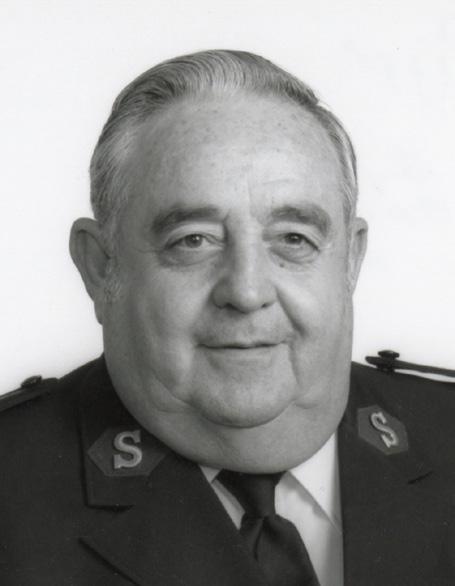
James Hamilton Banks was born in Boston, Massachusetts on June 8, 1934. He served for 20 years in the United States Air Force before retirement from the military. He then entered a second career as a Salvation Army officer, a member of the Proclaimers of The Faith session. Jim and his wife of 66 years, Virginia, spent their entire career in the Georgia Division as corps officers in Valdosta, Marietta, Waycross, Griffin, and Jonesboro—and later at the Georgia DHQ as assistant divisional disaster director and property officer. They retired from active service on June 30, 1999, with the rank of captain.
He graduated from St. Leo’s College with a Bachelor’s in Sociology. He was a lifelong Salvationist having love for its music and musical programs as well as being a bandsman and bandmaster. He was a lover of laughter and fellowship with others.
Captain Banks is survived by his wife, Captain Virginia Louella Beasley Banks; a son and daughter-in-law; five grandchildren; and seven great grandchildren.
A funeral service was held Friday, January 6, 2023, at Baker McCullough Funeral Home, Savannah, Georgia; interment followed in Hillcrest Abbey East Cemetery.
PROMOTED TO GLORY
Lt. Colonel Evangeline Collins
Lt. Colonel Evangeline Collins was Promoted To Glory on Sunday, January 8, 2023, at the age of 84.

Everyone in the family had been there the day before (Saturday), and her husband, Lt. Colonel William Collins reports: “What a blessing it was to have the family around; not knowing that she would be called to her Eternal Home the next day.” On Sunday morning, about 8:30, she called to her William—he went in, and he held her in his arms and spoke a few words. It was then, while holding her, that the Lord called her Home.
Evangeline Rose Lovegrove was born August 21, 1939, in Abertillery, Wales to George and Ruth Lovegrove, as they were officers serving overseas in India. Evangeline attended corps programs and lived with her parents in different parts of England until she was ten, at which time the family returned to America and she began attending schools in Richmond, Virginia.
After graduation, Evangeline worked for a year and then attended Asbury College, earning a major in Christian Education and a minor in Greek. It was during an Asbury Band trip to the Atlanta Temple Corps, where she met William Collins. She received her calling from God to missionary service to Africa during a youth councils.

WORD SEARCH
North & South Carolina Division Corps and Area Commands
WORD LIST:
AIKEN ANDERSON ASHEBORO BEAUFORT BURLINGTON CHARLESTON

She entered the training college in Chicago in 1961 as a member of the Servants of Christ session. Evangeline and William were married the day after her commissioning in June 1963. Her first appointment was to the training college staff as secretary to the principal.
Following the birth of a daughter in 1964, they were sent to the Republic of the Congo, where they served for three terms: mission station head, William Booth College principal and Kazungula corps officer, and finally principal of the Salvation Army Institute in Kinshasa.
They returned in 1974 to the USA Central Territory as corps officers at the Detroit Brightmoor Corps, and two years later were on the divisional staff of the Missouri-Kansas Division.
They were transferred to the USA Southern Territory where they enjoyed four years at the Evangeline Booth College. Following that post, they were sent to Lago, Nigeria, Africa.
Returning to the States, they served in Tupelo, Mississippi and Daytona Beach, Florida. They were on the National Capital Division staff when
the call came from General Eva Burrows for the couple to return to the Congo Territory—their fourth and fifth missionary terms. They consider this the highlight of their officership, despite the political turmoil and revolution taking place there. Their final appointments were back in the Southland, at territorial headquarters, as assistant to the secretary of personnel, secretary for congress planning, and director of stewardship services. Their final appointments came in 1997, to the Adult Rehabilitation Centers Command. Lt. Colonels William and Evangeline Collins retired from active service on December 1, 2002, serving faithfully for over 45 years. They made their retirement home in Port Orange, Florida.
Lt. Colonel Collins is survived by her husband of over 59 years, William; daughters Melanie Owens and Angela Moller; and three grandchildren.
There was no public service held. Colonel William reports that “her wish was that people would place something in their garden as a remembrance of her.”
SOUTHERN SPIRIT • FEBRUARY 2023 12
CHARLOTTE AREA COMMAND CHARLOTTEBELMONT CHARLOTTETEMPLE COLUMBIA CONCORD CONWAY DURHAM ELIZABETHCITY FAYETTEVILLE FLORENCE GAFFNEY GASTONIA GEORGETOWN GOLDSBORO GREENSBORO GREENVILLEAREACOMMAND GREENVILLEKROC GREENVILLENC GREENWOOD HENDERSON HENDERSONVILLE HICKORY HIGHPOINT IRMO JACKSONVILLE KERNERSVILLE KINSTON LEXINGTON MIDLANDSAREACOMMAND MOREHEADCITY MOUNTAIRY NEWBERN ORANGEBURG RALEIGHAREACOMMAND RALEIGHINTER REIDSVILLE ROCKHILL ROCKYMOUNT SALISBURY SHELBY SHELTONLAUREL SLEEPYVALLEY SMITHFIELD SPARTANBURG STATESVILLE SUMTER WASHINGTON WAYNESVILLE WILMINGTON WINSTONSALEMAREACOMMAND WINSTONSALEMCIT
Answers on page 11