


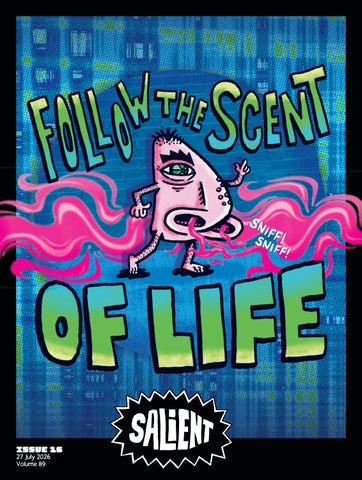
Volume 89
Editor
Phoebe Robertson
Designer & Cartoonist
Jim Higgs
Sub-Editor
Holly Rowsell
News Writers
Dan Moskovitz
Martha Schenk
Otis Whinney
Ali Cook
Columnist
Guy van Egmond
Critic-at-large
Jackson McCarthy
Comic Artists
Grace Elzenheimer
Jack Graham
Contributing Writers
Tamanna Amin
Zia Ravenscroft
Christopher Curtis Ryan Cleland
Social Media Manager
Will Tickner
Photographer Sophie Spencer
Centrefold Artist
Priyal Patel
Advertising advertising@vuwsa.org.nz
Read Online salient.org.nz issuu.com/salientmagazine
Follow Us @salientgram
Want to get published?
To contribute to Salient, you can submit poetry, creative writing, artwork, comics, puzzles, features, and other ideas. Feature articles must be pitched to the Editor before writing; send pitches to editor@salient.org.nz. Artwork should be sent to designer@salient.org.nz. Creative writing submissions are accepted through the form on our website. All other contributions, including puzzles and general ideas, should be emailed to the Editor. Submissions are welcome from first-time and returning contributors.

scan here to find out more!


Dear reader, I have a humble request: please don’t move overseas.
Over the past year, my friends, acquaintances and enemies have all been moving abroad, leaving Wellington—and me— behind.
The latest casualty of this great migration is my friend Tyler, pictured below. Tyler and I have been friends since my first year of university. We also went to the same high school, although she was a couple of years ahead of me, so you could say we’ve known each other for even longer than that.
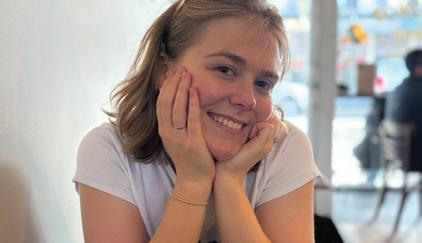
Tyler is abandoning New Zealand in search of better opportunities, better pay and a change of pace. Moving from Wellington to London sounds intimidating to me, but not to her. And you know what? I’m going to miss her dearly.
It feels as though everyone is talking about the brain drain right now, and it’s not hard to understand why leaving is so attractive. As someone with a theatre major, Tyler’s departure coincides with Creative New Zealand cutting its workforce by a third, following a year of reduced funding for the organisations that rely on it for their future.
Another friend of mine—who, for a change, was a year below me at high school—has just dropped out of Massey University to head to Australia and work in the mines. There, he’ll earn more than $30 an hour. On weekends, with overtime, that could rise to as much as $50 an hour—a starting rate that requires no university degree.
Hell, even my twin brother has found an opportunity overseas. He hasn’t moved permanently, but he is currently travelling between Korea, Canada and Greece to present his PhD research at conferences, all funded by his university. He’s getting money from his uni to leave the country. Damn.
So how do we compete?
Perhaps the answer is not to compete with London salaries, Australian mining wages or university-funded trips around the world. Perhaps it is to make the lives we have here worthwhile: to build communities that give people reasons to stay, return and participate.
That idea runs through this issue. In The Youngest Person in the Room, Zara Lyne explores the importance of stepping outside your comfort zone and finding community where you are, rather than always searching for greener pastures elsewhere. Tom Graham introduces us to a new hobby—how to taste wine. We’ve also listened to our own community and included more puzzles.
Enjoy the issue. And, please, don’t leave.

Loove the hiking recommendations! Would


I did the escarpment lask wk and now I feel like I can call everyone else a poser ty salient
Hello.
Last week I wrote in regarding the situationship content in the magazine. I appreciate being featured in this week's issue and the lowered level of situationship content.
However I think your choice of winner was clearly biased and undermines your journalistic integrity. Giving free pizza to bootlickers, suck-ups, and teachers' pets is honestly sad and I wish you had a spine.
I asked eight of my friends and they all agree with me so clearly the masses are on my side. If I knew how I would get the broadcasting standards authority involved in this. However, I am busy being a pretentious law student so instead I simply gazed sadly into Geoffrey Palmer's portrait while thinking about this breach of my human rights under the Bill of Rights Act 1990.
Sincerely (mostly), a now even more concerned reader
p.s. my friend said that sometimes reading the salient feels like "being in a miserable cuck chair" p.p.s. I am trying to make rent this week and could really use a free pizza right about now purely on financial hardship grounds p.p.p.s. does our ongoing correspondence put us in a situationship? (pls text me back)

Hi Barbie!
I am willing to give up my entire life savings of about 10 bucks and maybe some random coins I find in jean pockets to keep them in Salient. I will personally go to the pub and buy you a pint for them.
Please do not let the people down. You know what you have to do.
Think about all the poor people sitting in 2 hour lectures who finish all the puzzles in the first half of the lecture and are left with fuck all to do to look busy for the rest of the lecture. Adding the bonus puzzles as a permanent

WINNER
I simply had to write and say how utterly delighted I am by the Barbie horoscopes. At long last, I can justify the heavy influence these movies have on my existence.
For too long, my friends have dismissed my insistence that Barbie belongs in the canon of modern classics. "It's just a movie," they say. "It doesn't count." Well, who's laughing now? The stars themselves have spoken. While "what makes you different just might be your greatest strength.” (Thanks Merliah!), I wanted them to understand how universally loved these films are, and as Anika says in Magic of Pegasus, it seems “there is always hope.”
Now, they have no excuse! Thanks to you, it is my duty to introduce them to the multiverse that is the BCU - all 44 pinkprincess girl-power classics. I always believed Liana and Alexa were right when they said “friendship is the true treasure," but they're wrong. It's you, Salient.
With Kenergy and gratitude, A very happy Barbie girl


Week of July 27 - August 2, 2026
Wed 29/7 Ew Chucky! Film Fundraiser
Gig - With Dillion Jo, Shayla King, and Ciorstiadh - 7pm @ Moon
Wed 29/7 Eyegum Free Wednesday
With L4dy, Boy Band, and DJ Lazarus 8pm @ San Fran
Thurs 30/7 Abey Sparks, Chris Beernink, Dave Wilson, Aslan - Exploratory 7.30pm @ Cuba St Tavern
Fri 31/7 Christoph El Truento DJ, Dub, Reggae, Hip Hop 7pm @ Cuba St Tavern
Fri 31/1 Corner Store Presents: Dead Air II
With Porcelain, Prose, Ultraviolet, and 3TC 9pm @ Moon
Fri 31/1 Elisa Bird Presents: Manu Jazz, Soul, Funk 8.30pm @ Rogue and Vagabond
Sat 1/8 Fine Wine Social Club Sangria Tour Jazz, Pop, Soul, Funk 8pm @ Moon
Sat 1/8 Parrotdog Presents: Fifteen Years in Flight - With The Circling Sun, DARTZ, There’s A Tuesday, Felix Bird, and Last Light - 7pm @ Parrotdog Bar
Sat 1/8 Aunty Records
With AJ Honey Suckle, Dylan Biscuit, and Benny Salvador - 10pm @ Meow Nui
Gig guide and photography by Sophie Spencer
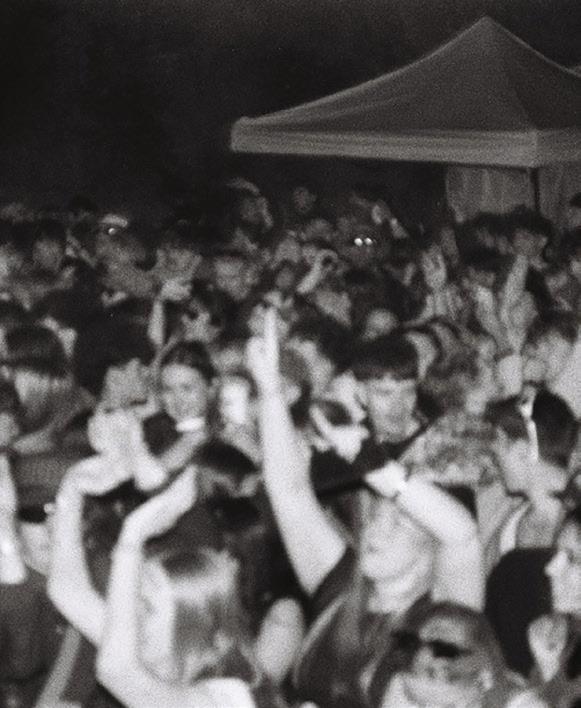



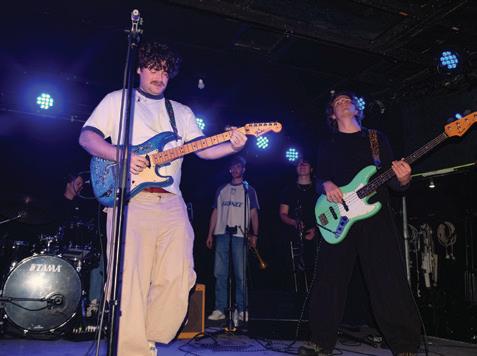
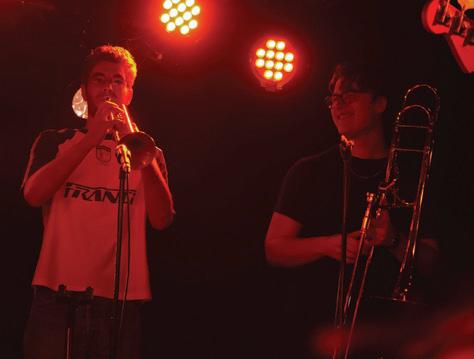
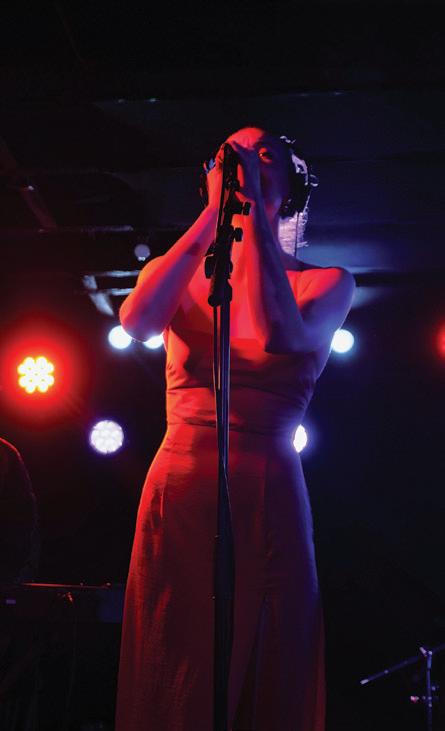
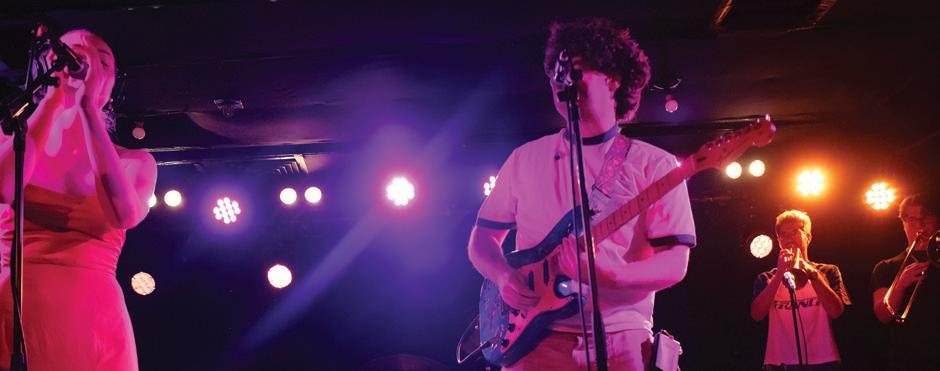
Fine Wine Social Club have spent the last four years building a sound that’s as much about friendship as it is about music. A few of the members have been jamming together for more than eight years, and that long connection comes through every time they play. Their influences run wide—Tom Misch, Michael Jackson, Fat Freddy’s Drop, Masayoshi Takanaka, The Beatles, and Fleetwood Mac—but what really matters is the way they mix it all into a set that feels alive. Every show is about joy, energy, and the simple fun of playing music with people you love.

As a high-school student, I became obsessed with OneSushi’s chicken katsu bowl. I still am. It was a cheap, reliable lunch that offered plenty of bang for your buck.
I wasn’t the only one. In a 2017 post on r/newzealand, one user gushed about OneSushi’s “small” chicken katsu bowl costing just $7.
Today, the same bowl costs $13.50—a 93 percent increase.
Inflation has been brutal, and has been for years. But not that brutal. According to the Reserve Bank’s inflation calculator, $7 in 2017 is equivalent to $9.46 today, or $9.71 when food-price inflation is used.
To be fair, inflation is not the only pressure on prices. The adult minimum wage has risen from $15.75 in 2017 to $23.95 today—an increase of about 52 percent. Rent and other operating costs have also increased. Does that explain a near-doubling in the price of one katsu bowl? Probably not.
The worst part is that OneSushi is still one of the cheapest places to get a meal in Wellington.
No one has the money to eat out anymore. Public servants are holding back spending amid job losses, while students are struggling to find work. In a Salient Instagram poll of 287 respondents, just 24 percent said they felt financially able to eat out in the city.
There are still a few bright spots. As reported by previous Salient employee Ryan Cleland, Scopa offers $10 pizza on Tuesdays, while Sakura Sushi narrowly undercuts OneSushi with a $13 katsu bowl.
Guy van Egmond also runs the excellent column Munch: A Feed for F*ck All, which is devoted to cheap eats. He has awarded five stars to KC Cafe, Everybody Eats, and Little Penang.
Salient readers also sent in their own recommendations on Instagram, including Roman’s Kitchen, Hot n Spicy, Hideout, FJs—and depressingly—OneSushi.
OneSushi did not respond to request for comment.
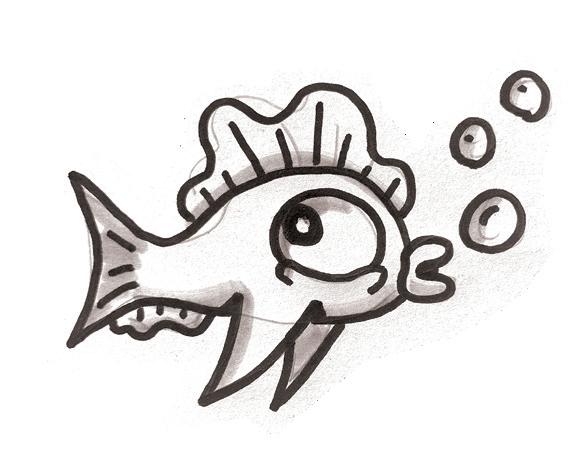
If you’ve visited Mauri Ora’s reception lately, you might have noticed some changes. There’s a wall… with plants. But the lovable, joyous fish tank which soothed the room? It’s gone.
As avid fish fans—In 2024, Salient proudly led a proposal for VUWSA to spend $7,000 adopting a shark—we sought to get to the bottom of this fishy business. Removing Mauri Ora’s fish tank was clearly a load of carp, so we demanded answers from Mauri Ora’s head sturgeon himself, Kevin Rowlatt.
“The fish and fish tank were hired by Mauri Ora,” said Rowlatt. “The company that supplied the fish and fish tank became unresponsive to our needs in late 2025, which meant for several months the tank contained only two fish. We asked for more but didn’t receive them.”
“As a result, we decided the service was not providing good value for money and cancelled the contract. The fish are safe.”
In the tank’s place is the aforementioned plant wall, which Rowlatt said Mauri Ora is gradually expanding. But this isn’t

the beginning of an entire soothing indoor ecosystem: the fish will not be returning. From now on, Mauri Ora is branching out with plants alone.
Tragically, this esteemed journalist appears to be the only student floundering in grief over the fishes’ disappearance. According to Rowlatt, Mauri Ora’s denizens barely seemed to notice—or care.
“There have been no complaints about its [the fish tank’s] absence—but we did hear that people thought the two remaining fish looked lonely in such a large tank.”
Sadly, it seems Mauri Ora’s plants have caught students hook, line, and sinker. The fish, meanwhile, have been well and truly fin-ished.

Phoebe Robertson
Plans for Student Health to offer free ADHD assessments from trimester two will not go ahead after the service failed to secure the additional funding needed to run them without worsening wait times for other patients.
Student Health Director Kevin Rowlatt told Salient the proposed service would have required extra clinical staff, with an in-house pathway estimated to cost between $200,000 and $300,000 each year.
“We were not able to secure that additional funding at this stage,” Rowlatt said. Providing assessments within existing resources would increase waits for other appointments, particularly during the busiest parts of trimesters one and two.
At the beginning of the year, Rowlatt said he was confident funding would be found. He now describes that confidence as “misplaced,” saying he had hoped the Government’s expansion of ADHD prescribing rights would be accompanied by a funding pathway or subsidy.
That has not happened. Ministry of Health guidance says ADHD services are not included in core general-practice funding, meaning patients may still be charged for assessment and treatment even where a GP or nurse practitioner has trained to provide them.
From 1 February, vocationally registered specialist GPs and nurse practitioners have been permitted to diagnose ADHD and initiate stimulant medication for adults. However, offering the service is voluntary and the Ministry has warned that access will develop gradually as clinicians gain training and experience.
The Ministry says a comprehensive assessment generally takes one to two hours across one or more appointments, before treatment planning and follow-up are added.
For students seeking a diagnosis now, Rowlatt said Mauri Ora can provide a list of psychiatrists and telehealth clinics offering assessments. Some accept self-referrals, while others require a referral from a GP.
Students needing a referral can book a roughly 30-minute nurse pre-assessment through Student Health. The nurse gathers health history and observations before a GP appointment, where the doctor can refer the student to a psychiatrist for formal assessment and diagnosis.
Students can also go directly to a psychiatrist and ask Student Health to provide any medical information the clinician requires. Rowlatt said this was usually the simplest pathway, but it remains expensive. Private assessments on the providers’ list generally cost between $900 and $1,800, depending on the complexity of the assessment and whether other conditions need to be considered. The cost will not be subsidised by Student Health.
A further pathway is available to students diagnosed by a clinical psychologist. Where the psychologist’s report recommends stimulant medication, a Mauri Ora multidisciplinary team can review it before the student attends a nurse observation appointment and meets a GP to discuss beginning treatment.
Students who already have a diagnosis and recommendation from a New Zealand or overseas psychiatrist can bring their records to Student Health. A GP may then be able to start or continue medication without requiring a new assessment—an important change for international students who previously risked paying to repeat the diagnostic process after arriving in New Zealand.
The free assessment plan has not been permanently abandoned. Rowlatt said the national primary-care landscape remains uncertain and many practices are still deciding whether to offer ADHD services.
“The door is certainly not closed,” he said. “This is something that we need to offer.”
For general Student Health appointments, Rowlatt said the wait was within a week the time of the interview, with some sameday capacity. Students seeking a particular part-time doctor may still wait several weeks.
Even students who obtain prescriptions may face another
Lauren Morley
The Opportunity Party (previously known as TOP) is, for the fourth election in a row, braving the ever changing political landscape. Free from ideology and rhetoric, Opportunity is campaigning to be the next kingmaker, and the bridge builders our parliament so desperately needs.
Since their recent rise in the polls, Opportunity has become subject to a wide range of scrutiny. Interestingly, their criticisms have been quite contradictory. The left-wing parties claim that Opportunity is right-winged, and the right-wing parties claim that they are left-winged. This phenomenon is causing some serious confusion and what can only be described as closeminded attacks.
In 1996, New Zealand voted to adopt a unique parliamentary system. Our MMP (Mixed Member Proportional) system was designed to encourage major and minor parties to work together, each bringing their voter bases unique views to the table. Individuals supposedly had the option to give their vote to a party who more directly aligned with their personal views without it going to waste. However, it now feels as though our MMP system has turned back into a FPP (First Past the Post) one. The left bloc and the right bloc have become so stubborn in their views that they refuse to work with anyone from the “other side” regardless of how well they have polled. A vote for Labour is automatically a vote for the Greens and Te Pati Maori, and a vote for National is automatically a vote for ACT and New Zealand First.
Is it possible that over the years, good policy has come out of both the left and right parties? I certainly think so, and so does Opportunity. Since the beginning of New Zealand politics as we know it, National has been in power 54% of the time, and Labour 46%. The hard truth is, no matter which side you support, the other will be in power approximately half of the time. It feels as though every time one government gets voted out, the other comes in and spends most of their time undoing the previous government’s policies. On top of this, the behaviour of our parliamentarians is seemingly becoming more and more juvenile. Attacks in the media, AI instagram reels, and heckles shouted across parliament. Question time now feels more like watching a comedy show than a genuine debate or attempt to hold the government to account. Not only does this waste a huge amount of time and money, but it continuously destabilises Kiwi’s everyday lives. The government would be far more successful and efficient if they simply consulted and compromised in a bipartisan way when putting legislation in place.
In the international climate of Trumpism, social media, and misinformation, we are seeing an unprecedented level of political division across the world. When it comes to politics, it feels as if people have lost the ability to think with nuance. People can only see left versus right, or, good versus bad. It is clear that New Zealand is falling victim to this partisan way of thinking too, and it is only hindering our ability to move forward. So how do we solve this issue?
Believe it or not, it was not too long ago that the so called left and right blocs worked together in government. John Key’s National government of 2008 to 2017 entered into a confidence and supply agreement with Te Pati Maori, and worked cross party with the Greens on issues such as home insulation, energy, and cycleways. These parties of the time could recognise each other's strengths and continued to debate their differences.
The Opportunity party famously does not position itself as a left or right wing party, and there are two main reasons for this. The first, is that they believe the left/right rhetoric is outdated and actually means very little. The second, is that Opportunity is willing to go into government with either National or Labour along with other coalition partners. Many criticise this stance as weak, but what is weak about standing up for what you believe in no matter the opponent? A willingness to work with those you disagree with should only be viewed as a strength.
Opportunity’s policy committee is composed of people who have worked across business, sustainability, and government. Their policies are thoroughly researched, evidence based, and reviewed by outside experts. Their signature teal colour represents their blue/green values; a healthy environment, and a thriving economy. They believe that one cannot exist without the other.
Their environmental policies encompass bold ideas and long term planning. Currently, only 0.5% of New Zealand’s oceans are protected as marine reserves. Opportunity’s policy would see this jump to 30% by 2035, and put an end to seabed mining, and bottom trawling.
Their abundant energy policy wants to see New Zealand less reliant on fossil fuels, and instead utilise our incredible solar, wind, hydro, and geothermal resources. This would bring down energy prices for everyday Kiwis and create thousands of high skilled jobs in the energy sector.
In order to boost the local economy they want to invest in New Zealand’s innovative strengths. More funding into science and research, forgiving student loans for Kiwi’s who return from overseas, and funding budgeting services for small businesses.
Opportunity believes in strengthening our democracy. Their citizens voice policy would see the implementation of citizens assemblies. Think jury duty but for policy making. This brings everyday Kiwis to the heart of decision making when it comes to the tricky issues that really impact them. Schools, hospitals, and transport systems - these are the kinds of issues Kiwi’s should have a direct say on.
On top of the environment and the economy, Opportunity’s policies show their strong advocacy for people too. Their tax reset policy encompasses many things, but the most significant is their Citizens Income, which is commonly known as a UBI (Universal Basic Income). UBIs are often seen as a far left radical idea. Welfare for everyone. That can't be affordable right? In reality, it just makes sense.
Opportunity’s UBI would see all Kiwis over the age of 18 receive $370 a week, no application, no forms, and no means testing. This would be paid for through a land value tax. A land value tax focuses on taxing property, meaning the more property a person owns, the more they will pay in tax. For centuries, Kiwi’s have been pushed to invest their money in property, but if that money were invested in the productive economy, housing prices will drop and home ownership becomes more attainable for young people. For those who still choose to invest in property, the land value tax does something a capital gains tax doesn’t. Because land owners will not be taxed on the improvements of their property, they are incentivised to build density. The more houses or units on the land, the easier it is to pay the tax. This will mean more housing and a drop in rental prices.
Many would argue that giving money away to New Zealand’s wealthiest citizens is unfair, but don’t worry, this isn’t another tax break for landlords. In reality, New Zealand’s wealthiest will be paying far more back in tax through their properties and an adjustment to the income tax brackets.
Opportunity predicts that if their system were implemented, the bottom 70% of Kiwi’s would be better off, 20% would be net neutral, and the top 10% would pay more. The simplicity of a UBI and land tax system leaves almost zero loopholes for our wealthiest to get around. Unlike a wealth tax, you can’t just put your money in a trust to get out of it. It would also save millions of dollars worth of administration inside our welfare system, leaving more money to go into the things that actually make a difference.
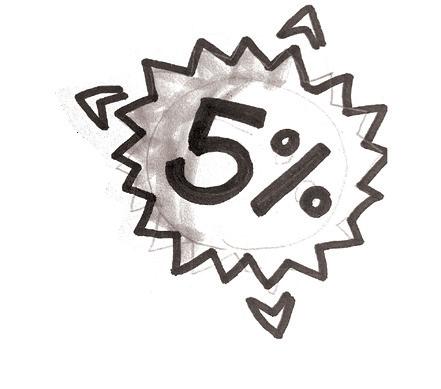
Considering they are only just polling around the 5% threshold, Opportunity recognises that if they were able to enter into coalition negotiations come November, the likelihood of all of their policies getting across the line is slim. However, they are committed to their morals and would not enter into an agreement that would compromise any of their bottom lines, even if that means taking a place in opposition.
The most impactful thing Opportunity is committed to, is bringing about meaningful, long-term change by encouraging our biggest parties to work together constructively. Our current world is so deeply divided by politics, and many of us are too young to know that it hasn’t always been this way.
Political rhetoric is the enemy of meaningful change. We should expect better.


If you’ve got a news tip (or an opinion piece like this one) about what’s happening around Te Herenga Waka—or anything that affects students—we want to hear about it.
Scan our QR code or email editor@salient.org.nz. We’re always keen to know what’s going on in the halls (yes, including the menu), anything unfolding around campus, or any questions you’ve got about what’s happening here. If there’s something studentrelevant you think we should look into, let us know.



It’s safe to say that the Cook Islands have had their fair share of political scandals and moments of tension over the past few years. The current Prime Minister, Mark Brown, has seen the spotlight quite a bit since that very public stoush over a deal signed with China that New Zealand was not consulted on. While that might seem like us poking our nose in other islands' business, in all fairness the Cook Islands exist under a ‘special relationship’ with New Zealand. The country is within the ‘Realm of New Zealand,’ an arrangement that came into existence after the Cook Islands (along with other Pacific island nations) was granted independence from the empire of New Zealand. It’s an arrangement that seems to invite a level of political ambiguity, and the China-scandal brought that to the forefront for people on both sides of that relationship.
Much like Aotearoa, the Cook Islands are now in the throes of an election season, although theirs is arriving much sooner than ours, on August 12. The Incumbent, Mark Brown, has shown through his actions that he seeks to emphasise the sovereignty of the islands even within the New Zealand realm. Brown proposed that the Cook Islands stop using New Zealand passports in favour of creating their own, partially in commemoration of the 60th anniversary of independence for the nation. Both the public and the New Zealand government strongly opposed this move, with many Cook Islanders fearing that the move would distance them from New Zealand and the familial/cultural connections the nations share. Like many countries with a ‘post-colonial’ (in name, at least) relationship, a huge diaspora of Cook Islanders call Aotearoa home. Brown eventually walked this idea back, with Winston Peters making it clear that a move such as this would only work if the nation sought full independence; “If the goal of the government of the Cook Islands is independence from New Zealand, then of course that's a conversation we are ready for them to initiate.” A series of diplomatic tours and lengthy talks eventually ironed out the disagreements Brown and New Zealand had been having for the past few years. It still leaves open the question of whether or not Brown’s apparent desire to afford his country more independence is something that is politically
viable in a place with such deep ties to their more influential neighbor, and one that is in the throes of an increasingly-strained tourism industry and growing cost-of-living crisis.
Perhaps Mark Brown’s actions with China can be explained by a want to avoid further dependence on any one nation, or perhaps it can be more simply explained by a lack of political foresight from a Prime Minister who saw an opportunity and took it. Regardless of what you think of his previous dealings, Mark Brown’s ideas do not represent all Cook Islanders. That some of his people marched in protest to his actions, and that the opposition tabled a motion of no-confidence in parliament in the wake of these events, shows this clearly. The political party with the second-highest number of candidates in the election is the Cook Islands United Party (CIUP), led by Te Ariki Heather. Part of his outline to the people is a proposed halt to discussions with Aotearoa until after our election on November 7, in the hopes that his party will be able to patch up old wounds with whoever comes out on top. He is also adamantly against the passport change, stating on Pacific Mornings that “We love our relationship with our people in New Zealand, Australia, and everywhere else, and we want to keep New Zealand associated or citizenship with New Zealand.” His pitch also includes an increased focus on local industry and a focus on retaining people to live and work within the country as opposed to seeking opportunity elsewhere. While the tourism industry in the Cook Islands has been on the up, the industry has found itself struggling to support those who work in it, forcing some to import workers from other Pacific and Asian nations at high costs to cope. While the government has taken some action to provide relief for the cost-of-living crisis, and while Brown argues that the tourism boom is a positive sign of growth, many are still struggling to make ends meet. So not too different from New Zealand, I guess.
New Zealand will no doubt be watching this election very closely. If Mark Brown takes the W again, it stands to reason not much will change. A win for Brown shows at least some level of support for his agenda, and it gives him a whole parliamentary term to take it as far as he can. A Brown loss leaves everyone in more uncertain waters, but perhaps New Zealand would welcome it. After this security pact between Australia and Fiji was signed recently, and after New Zealand confirmed they were to

discuss the possibility of joining it, the Cook Islands’ newfound closeness with China will remain a sore spot for all those involved.
China’s recent missile test in the Pacific ocean took Pacific media by storm. ABC Pacific ran so many stories on the missile launch you would’ve thought it was aimed at the deciding match for State of Origin. After the landmark deal between Australia and Papua New Guinea and the subsequent deal with Fiji, Australia seems to be collecting the infinity stones of Pacificdefence commitments, but we should not act like Australia is a neutral actor looking out for their Pacific neighbors. The constant back and forth between Australia and countries like Vanuatu and the Solomon Islands over their ties to China and their attempts to halt other countries deepening ties with China makes this clear. PNG and nations like it have still managed to maintain some level of strategic neutrality. PNG recently closed its representative offices for Taiwan, something done to honour China’s ‘OneChina’ policy to delegitimise the existence of Taiwan. This all stems from a very lengthy civil war in China and has remained a thorn in the side of the Chinese Communist Party ever since that war ended. China’s Ministry of Foreign Affairs praised PNG’s decision, while the USA stated they weren’t too happy about it.
Many Pacific nations, PNG and otherwise, are walking this diplomatic tightrope. While the USA remains the dominant force in the region, many Pacific leaders understand the need to diversify to avoid dependency as much as they can. We can’t ignore the fact that New Zealand exists, in some part, as an extension of US interests in the region. We follow them through shows of military power in the South China Sea, we let them open FBI offices in Wellington, and despite whatever tariff or fuel crisis they throw our way, our current leaders seem fine brushing them off and continuing on as if they remain our best friend. Mark Brown doesn’t really seem interested in decoupling from the US, but his deals with China show that maybe he is trying to push the country closer to a position of strategic neutrality like his Pacific neighbors have tried to do.
Winston Peters wasn't entirely off base when he said that these types of moves should only be pursued alongside actual independence for the nation. It is hard to maintain a strategic neutrality when your country literally exists within another country’s
realm. Seeking independence is a very scary thing, and it’s something the people of the Cook Islands don’t seem in any rush to pursue. But maybe this isn’t as weird a relationship as some may think. I mean, New Zealand doesn’t have an independence day, nor have we fought a war to gain it, nor have we ever really been too keen on being independent in the first place. I mean, our founding document is basically a deal to join the British empire. We really became ‘independent’ through a series of boring constitutional amendments, instead of revolutionary war like our fellow settler colonies of the Americas. And then, whenever our politicians stand in front of the cameras and flub through talking points defending illegal overseas wars conducted by our allies and our allies’ allies, we ask ourselves if New Zealand even has an independent foreign policy. Our pride in our nuclear-free stance or our refusal to participate in the US invasion of Iraq serve as reminders that when we follow our values and act like an independent nation regardless of what the great powers think, it does actually make us feel pretty good.
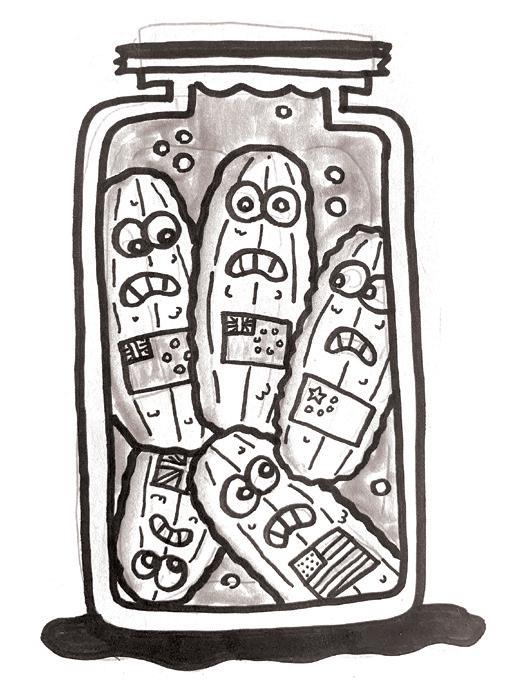
So, yes, Mark Brown and the Cook Islands have found themselves in a political pickle. A pickle that is forcing them to confront what it means to be a part of the global community.

Sally Stirrup
It’s that time of year again where the rain clouds hang heavy in the sky, threatening to unleash precipitation on all humble umbrellafighting, coat-forgetting, electronics-protecting students. But the late waterlogged arrival to class is not the worst of it, oh no! For there is something far more sinister the humble pedestrian fears… a slippage, and not of the nipple variety. As the saying goes, you can lead a horse to water, but you can’t stop it from slipping over said water.
In fact, campus is covered in untrustworthy surfaces that are bound to send you hurtling down steps, skidding across walkways, and sliding through buildings at the slightest drizzle of rain. Should the heavens fully open up you will be doomed with bruised buttocks, grazed knees, and plastered elbows galore.
As meticulous research by Salient reveals, 45 percent of poll responders have slipped over on campus this year alone. Hotspots include the Hub, VUWSA and OGB stairs, as well as the entrance to Hugh Mackenzie and the recreation centre netball court. While many students cited stairs, tiles, and even manholes as issues, one particularly talented individual flagged the carpet on the sixth floor of the library, admitting “This may be a me problem.” Others described feeling “like a looney tunes character trying to stay off the ground,” and a tendency to “keep getting stuck in doors” across campus. Not what we asked, but okay. Solace can be found in the authentic and genuine response of one person, who “tripped and accidentally read every copy of Salient + did the crossword.” Phew! It’s not all bad, folks. Yet some students do recount falling “face down” and “eating shit.” One even credited a concussion to a slip on Mount Street. Another student grieves that they “stopped going to class” after a fall down the Hub stairs, so great can the humiliation be.

But what can be done to address this perilous accident rate? One proactive equine ponders the following campus solutions that might yet prevent her an untimely trip to the glue factory.
If we tore up all the flooring and replaced it with enlarged Lego™ base plates, and equipped students and staff with tailor-made befitting Lego™ shoes, there would be no viable reason why anyone should slip over on campus ever again. We would be maximising our clutch power with thousands of micro plastic platelets for maximum efficiency. Granted, our gait might become somewhat mechanical as we lift and tread at a precisely 90° angle with every step, but falls would become a thing of the past, just like horse meatballs.
It’s time to embrace barefoot culture and connect with the earth. Employ the tactile traction of our natural grippers and spread your toes between classes. No longer will slippery soles and ill-suited footwear be your downfall in these hallowed halls, instead you can suction your bare feet to the wet ground and squelch on down to the library. Albeit, I foresee a possibly problematic future rife with trench foot, fungus, warts, and other hoof related diseases. But think about how much you’ll save at the farrier!

If we’re going to be slipping and sliding around all winter, we may as well commit to the bit (I prefer a snaffle) and turn campus into one giant slip’n’slide. Preliminary costs will include covering the hallways with tarpaulin, replacing all existing stairs with water slides, and installing detergent dispensers on every corner. While risk of injury won’t exactly be mitigated, this author estimates that attendance will increase imminently for all lectures, at least until the novelty wears off.
You’ll have to wait patiently while I pitch these stellar ideas to the university and they deliberate the yay or neigh. In the meantime, take care, and if you fall, remember to pick yourself up, dust yourself
I have been a film critic in the Wellington region for almost 25 years and I have never been invited to a preview screening for a film, until last week. The team behind the film I, Object reached out to The Horse’s Mouth and provided seats for the whole crew, complimentary popcorn included. Before the movie, a producer gave a speech and read dozens of other producers names from the notes app on their phone (It felt like I was at the Oscars!). The screening was held at the Embassy Grand Theatre, if you’re familiar, you know that each seat has a little plaque with the name of a cast/crew member from Lord of the Rings. I was sitting in the ‘Liv Tyler - Arwen’ seat, I thought to myself “Am I in cinema heaven?” I, Object is filmed in Wellington city and uses VUW’s own Hunter Building as a mental asylum, which I found quite fitting.
Rating: 5 bags of popcorn

Patrick Stables
On Monday, Health Minister Simeon Brown unveiled what he called a “bold, innovative step” to grow New Zealand’s private health sector, announcing a new initiative to “legalise ketamine to all under 35s” and “give it out to anyone under 30 for free.”
Officials stressed the policy is not a drug giveaway. It is, they said, “a targeted economic intervention,” designed to “unlock capacity” and “reduce pressure” on the public health system by ensuring the public health system has less to do and more to explain.
“New Zealanders have been asking for reform,” Brown said. “This is reform. It’s just not the kind anyone was expecting.”
The Minister framed the plan as a pragmatic response to familiar constraints: workforce shortages, waitlists, and a public health sector that keeps insisting it’s fine while making the kind of eye contact that suggests it is not, in fact, fine.
Ketamine, Brown noted, is already used internationally in medical contexts. In the United States and Europe, a ketamine-derived medicine (esketamine) has been approved for treatmentresistant depression under strict clinical supervision, with dosing and monitoring requirements designed to keep patients safe and, importantly, indoors.
“But here in New Zealand,” Brown continued, “we do things differently. We believe in delivering healthcare where people are: on couches, at festivals, in the passenger seat of a Toyota Corolla.”
The Government insists the policy is motivated by wellbeing. Critics argue it is motivated by arithmetic.
Under the proposal—currently described as a “discussion document,” which is how you announce a decision without the inconvenience of being accountable for it—ketamine would be made broadly available to younger New Zealanders, with a “starter pack” distributed through pharmacies, student health services, and what officials referred to as “community-based supply partners.” The Minister did not clarify what those partners are, but did confirm they are “very committed to harm minimisation” and “open late.”
Public health experts have raised concerns, pointing out that widespread recreational ketamine use is associated with serious urinary tract harm, including ketamine-induced cystitis, a condition linked to bladder pain, urgency, reduced bladder capacity, and sometimes irreversible damage.
Brown acknowledged these concerns and said they were, in fact, “the whole point.”
“By giving ketamine for free,” he explained, “we’re not encouraging misuse. We’re strategically rebalancing demand.”
He paused, as if waiting for the room to catch up.
“What the public sector can’t fund,” he continued, “the private sector can invoice.”
The logic is elegant in its simplicity. If young people develop chronic bladder issues, they will require urology appointments, investigations, and procedures—services that are already under pressure in the public system and often easier to access faster
through private pathways, provided you have the money, the insurance, or a relative willing to call it an early inheritance.
In other words: a pipeline.
“Right now,” Brown said, “the private health sector is underutilised. People only go private when they have to—hip replacements, cataracts, the occasional morally injured knee. We want to normalise private healthcare earlier. We want to build lifelong customer relationships.”
A reporter asked whether this amounted to manufacturing illness to stimulate market growth.
Brown rejected this characterization.
“We’re not manufacturing anything,” he said. “New Zealanders are perfectly capable of damaging their own bodies. We’re simply removing barriers and streamlining the process.”
The Minister compared the policy to other public health initiatives, such as subsidised prescriptions.
“This is basically Pharmac,” he said, “but for bladder deterioration.”
Officials also emphasised that ketamine is a controlled substance in New Zealand and that current law tightly regulates controlled drugs—an observation some critics described as “interesting” given that the entire plan involves un-regulating it.
Still, the Government urged calm, noting that ketamine has legitimate medical uses and that “responsible administration” is key. They did not clarify how responsibility would be administered at scale to tens of thousands of under-30s, but said a public education campaign was being developed, tentatively titled “Mindful K: Listen to Your Bladder.”
When pressed on the health impacts, Brown said the Government had consulted evidence.
“There are studies,” he said, “and we respect them. Some even show the condition can improve if ketamine use stops.”
He then announced Phase Two: incentives to ensure it doesn’t.
“Obviously,” he said, “behaviour change is difficult. That’s why we’re also launching a loyalty programme.”
Under the loyalty programme, New Zealanders who demonstrate consistent ketamine use would receive “priority access” to private diagnostic services through participating providers, along with a commemorative reusable cup and a voucher for a discounted MRI, redeemable after your first emergency department visit.
The Government insists this is not privatisation. It is “partnership.”
“This is about choice,” Brown said. “We’re expanding the range of ways New Zealanders can experience healthcare: waiting, paying, or doing both.”
Opposition parties called the policy reckless. Civil liberties groups described it as “a bold new approach to consent.” Health advocates asked why the Government was not instead investing directly in public capacity.
Brown responded by reaffirming the Government’s commitment to strengthening the health system.
“And we are strengthening it,” he said. “The private part.”
He added that the plan would also create jobs, including in urology, radiology, and what he described as “bladder-adjacent industries.”
In the final minutes of the press conference, officials attempted to return the narrative to wellbeing, noting that mental health remains a priority and
that ketamine-derived therapies overseas have shown benefits under controlled clinical models.
This reassurance landed awkwardly, mainly because the overseas models involve strict monitoring, medical screening, and supervised administration, whereas the New Zealand model—at least as described on Monday—appears to involve a pharmacist asking if you’d like a tote bag.
That looseness, however, has been welcomed by at least one sector of the health system.
“This is actually a very stable condition, from a planning perspective,” said the chief executive of a large private healthcare provider, speaking on condition of being quoted confidentially. “Ketamine-related bladder damage doesn’t really resolve, which is helpful. It means we’re not dealing with seasonal demand or one-off interventions. These are long-term patients.”
He described ketamine-induced cystitis as “predictable,” “non-curative,” and “resourceintensive,” three qualities the private sector traditionally associates with sustainability.
“There’s no silver bullet,” he said. “Stopping ketamine can slow progression, but it doesn’t undo the damage. Once the bladder’s compromised, you’re managing symptoms for years. Sometimes decades. From an investment standpoint, that’s reassuring.”
Medical literature supports this optimism. Studies of regular recreational ketamine use consistently show that a substantial proportion of users develop chronic lower urinary tract symptoms, reduced bladder capacity, fibrosis, and inflammation that often persist even after cessation. Treatment focuses on pain control, catheterisation, bladder instillations, and, in severe cases, reconstructive surgery or cystectomy. There is no established cure. There is only management.
The CEO confirmed his organisation was already responding.
“We’re expanding urology capacity,” he said. “More clinics, more imaging, more procedure rooms. We’re also training staff to recognise ketaminerelated pathology earlier, which helps patients enter the system sooner.”
Asked whether this amounted to planning around preventable harm, he disagreed.
“Young people are going to experiment,” he said. “We just want to be ready when experimentation turns into a chronic billing relationship.”
He added that bladder conditions were “underrated” from a growth perspective.
“They’re not glamorous,” he said. “But they’re persistent. And persistence is what keeps the lights on.”
The Health Minister declined to comment on the remarks but reiterated that the Government’s focus was on “choice” and “innovation.” He stressed that ketamine has legitimate uses and that individuals would be responsible for how they engage with it.
The private sector, meanwhile, appears grateful for the clarity.
“For once,” the CEO said, “there’s no ambiguity about outcomes. This isn’t a maybe. This is a pipeline.”
For students, this may be the most practical lesson of their degree: some substances don’t just alter your consciousness, they alter your balance sheet. And when a condition has no cure, no quick fix, and no public capacity, it doesn’t disappear.
It simply changes hands.
Preferably early.
Tom Graham
Talk About Wine.

It is a well-documented, if maligned, tradition, probably as old as academia itself, for students to get on the piss. That’s not going away, no matter what the news or your parents’ friends might be telling you. Generation Z isn’t so into Burgundy, Bordeaux, and Napa Cab, and that’s not a bad thing, because there’s a whole world of brilliant quality, sustainable practice, and funky fun to be had down here in the under, for some very decent prices.
Like it or not, wine is the cheapest way to get drunk, and by the nature of the beast, is also very easy to pass around a circle. So perhaps we should take the example of our proverbial forebears, and share our debilitating pleasures, because it’s community-building—it’s a revolutionary act in a world that profits from our disconnection.
This is a collection of affordable wines that are both accessible crowd-pleasers and deliciously complex in their own right. These are not snobby picks, nor are they condescendingly simple or overly sweet. They’re perfect to split with the flat, or serve at your next dinner party.
Vitis Vinifera produces the sweetened, fermented blood of man: the last pleasurable refuge of the reliably sane (for one can never trust the good sense of an ascetic). The making of any extraordinary meal, It is at once anesthetising and aphrodisiacal, medicinal and buttery. It is Bach and Bauhaus and Bourdain and Botticelli’s Birth of Venus.
Wine (γwino in Old Georgian), begins at the footsteps of the Caucasus, presumably at the bottom of a neglected fruit bowl, spreading west like wildfire through Persia and the Mediterranean, and to the near east through the Magyars. Though its cultures, practices, and styles have shifted with the centuries, there is one philosophy that has never ceased to captivate the chauvinistic viticulturalist and judicious drinker alike: That within this glass is the clearest sensory representation of place and time.
Tasting a glass of wine is at once exceedingly straightforward, and monstrously complicated. Simply bring the glass to your lips, fill your gullet and swallow. But there is much more pleasure to be had in extending the tasting experience by its length and breadth. A typical introductory wine course will offer a process like this for getting more joy out of every glass or bottle:
Take note of the colour in your glass. It can tell you much more than you might think. It may be red, sure, but look closely. Turn your glass nearly sideways and see how the colour changes around the rim of the liquid. It may be brick-coloured, or it may well look like a purple jet-plane lolly.
The colour of a red wine is influenced by its tannins (grape-skin and seed), acidity, age, and the pigment structure of its anthocyanins (a phenolic compound which causes red to blue colouration in plants).
As you examined your glass, and took note of its colour, all around you, the air began to fill with an invisible, gaseous, and mysterious vapour. A good wine will cast a spell; swirl it as though stirring a witch’s cauldron. Take a long moment and pick out the sensations. They say it’s the smells you finally don’t forget.
1. Now for the fun. Raise the glass to your lips. Is it cool against your skin? Is it smooth against your throat? Does it remind you of anything? Is it light or is it full? There is only one question worth your immediate attention when taking a first sip: is it good?
2. All further analysis, while interesting and important and beautiful, pales in comparison to that simple question. Is it good? Do you enjoy it? Do you take pleasure in it? Taste, like pleasure, like sex, is an intimate condition, and perhaps should be revered as such.
3. Consider your pairing, consider your table, consider your company. Wine is food. Food is wine. They are both community. To share a meal, a glass, a bottle, a table, is to care for someone in a way that is unreservedly human.
These three wines are all relatively inexpensive, but feature excellent quality, and environmental practice too. Perfect for a dinner party at the flat when you want to impress.
Black Cottage Sauvignon Blanc 2023
$18.99 at Regional Wines
You can never go wrong with a Marlborough Sauv, we make it better than anyone, and this one is no exception. Think green apple, gooseberry, and apricot, with a bit of grassiness on the nose, and without being overwhelmingly acidic. It’s an absolute no-brainer for a curry, salad, or even a picnic when it starts getting warmer again.

Black Cottage got my vote ahead of the many, many excellent Marlborough wines for its commitment to the Sustainable Winemaking NZ programme, as well as a riparian planting scheme which promotes native flora growth.
Babydoll Rosée 2024
$19.99 at New World
This is Wellington on a good day. You just can’t beat a fresh, fruity, floral, slightly acidic rose when the sun is out. When Spring comes around and you can start reaching over fences to rob the neighbours’ fruit trees or the community garden above Fairlie Terrace, get a bit cheeky and pair it with a joint, some blue cheese, and a bottle of this. I promise you, it’ll make your week.
Farm Hand Pinot Noir 2025
$15 at New World
This is a perfect introduction to lighterbodied red wines. Totally fresh, fruit forward, and with a delightful spiced note. Expect cherries, cranberries, and vibrant red fruit with a whisper of cinnamon and anise. This will go perfectly with rotisserie chicken or even a roast if you’re feeling fancy.
I did mention that this would be a New Zealand-focused list, but I just couldn’t
help myself from throwing in a couple cheeky Aussie picks. It’s just too good a synthesis of quality and affordability. It’s also fully vegan, fully organic, and is made with minimal intervention (no preservatives except for a bottling sulfite)
I know we’re all on stretched student budgets, so I wouldn’t recommend anything I wasn’t absolutely sure about. These ones aren’t going to be everyday bottles, but if you’re having an anniversary date at home, or anything else that calls for something special, look out for these picks.
Pegasus Bay Vergence White NV
$28.99 at Regional Wines


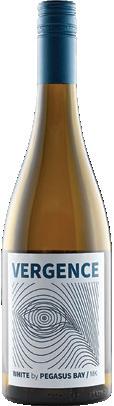
If you want to impress a wino, get them to try a glass of this. According to the tasting notes, it’s “funkier than a night on the town with James Brown.” and after a few glasses worth of inspection (wink) I’ve got to agree. It’s totally, effortlessly cool, it’s entirely unique without being entirely out-there. It’s got body and nuttiness and tropical fruitiness and floral notes and playful acidity. Pegasus Bay have pulled off a kitchen-sink-throwing masterpiece here by just squeezing every good thing about white wine into one bottle, and I am SO here for it.
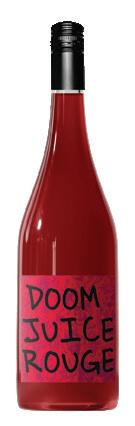
Doom Juice Rouge 2025
$32.99 at Glengarry Thorndon
A devilishly drinkable bit of Aussie claret. Wonderfully juicy and red-fruit-forward, and with a bit of sour-cherry funk, this one is absolutely worth the splurge, and absolutely smashable. Serve chilled, and prepare to find yourself with an empty bottle much sooner than you’d expected.
This is another fully vegan wine from across the ditch, fully wild fermented (no industrial yeast), unfiltered and unfined, this is another one you’ll never have to feel guilty about splurging on.



Mymother and I have long observed that, wherever I go, I seem to be ‘the youngest person in the room.’ This began as a literal expression, suggesting that I was perhaps the only child at a movie screening full of elderly people. But, as I grew older, it took on a more figurative meaning: the spaces I choose to occupy are generally not shared by those alike to myself. I used to be quite embarrassed by this as a child, as most little kids are when they feel singled out. My mother would insist that I accompany her to the 100th anniversary of some dance festival or an orchestra performing in a tiny town up the coast. As an only child, I had little choice but to oblige. While I must admit I often enjoyed these events in the end, I carried a sense of shame that I was missing out on ‘normal kid stuff.’ This shame did not come from disliking these alternative excursions. Instead, I felt jaded by the divide this pushed between myself and many of my peers. At times, I suppose I thought of myself—a very privileged individual with a caring mother—as a victim. Ridiculous, right? However, now old enough to reflect on this, I can see that while I missed out on the joys of Wii Sports and Spongebob, I developed a strong, intrinsic understanding of community. I learned to find joy in all kinds of places, regardless of where I ended up. Spending time in communities that rarely included people from my generation or friendship group also protected me from some of the widespread boredom and loneliness that seem to trouble many members of Gen Z.
You hear it in every setting: “Wellington is so boring and there is nothing to do.” We’ve all said it once or twice. But the same complaint could be made about almost any city. While many of us sit in Wellington, dreaming of leaving, there are people our age in London, Paris,

New York, Tokyo, and every other city around the world thinking the exact same thing. Boredom has become something of a Gen Z consensus, raising the question: can a place truly be boring, or is boredom a mindset? I think the latter is true. We want to be constantly engaged in wonderful and interesting things, yet we expect them to land on our laps without putting in any effort. Have we lost our awe of the world? There seems to be an illicit shame—the same one I felt as a child, I think—around pushing outside of the box though. Here, we might call it tall poppy syndrome. People who join clubs, go to random events, and converse with a range of people are happier and more worldly, yes, but that can also make them targets for others’ spite and projected emotions. This was very prevalent at my high
school. Peers would say, ‘I cannot wait to leave this shitty city because there is absolutely nothing to do and I hate it.’ Yet when someone brave stepped onto the stage to perform a violin solo, or won a collection of science ribbons, those same students would laugh and call them losers, or worse. As we moved through school, some of them found their niche and settled into themselves a little more, letting go of that shame. Others held onto their opinions and left school as bored and angry as ever, becoming further disconnected, and less likely to change with every passing year. Exploring your own discomfort to bring about meaningful change in your life is clearly a skill we cannot afford to neglect.
It seems to me that many of us lack the bravery to engage with our local communities because people our age might not be there, or because we fear being considered cringe. Shame is an awful, isolating feeling. Yet, as human

beings we need a physical community that we can see and participate in to feel safe and stable. We need goals and hobbies to keep us accountable and joyful. Are we so afraid of not being fully understood by people different from ourselves that we are willing to risk our mental health to avoid them? Why do we fear community engagement when we are wired to desire it? Part of the answer may lie in our reliance on technology and a very small social circle. I know, I know, you’ve heard it all before. Yet if as children we learn to play only with other like-minded children and iPads, we may fail to develop the emotional and social structures that reward anything other than instant gratification and safe, familiar connections. When those things inevitably fail, loneliness follows. We desire kinship and joy, but reach for the wrong tools in order to obtain it: Anti-intellectualism is well and truly on the rise. These are things that are very challenging to work on, but certainly not impossible.
Community-building is obviously not a miracle cure. You would hardly be having the full 20s experience if you weren’t feeling a little disconnected and bored, with just a dash of loneliness on the side. Yet exploring a hobby you’ve always wanted to pursue, or attending an event you’ve watched from afar for many years, or even complimenting the baddie sitting next to you on the train can alleviate the dread that rises when boredom sets in. The broader and more unexpected the connection, the richer the reward. Yes, you could talk about Tomodachi Life for the tenth time with your bestie. But you could also learn something new about ‘70s meditation at a pottery class, or hear about abstract art at run club. The information might be useless, but that is not the point. Just as a diverse variety of food nourishes the body,

diverse company and experiences nourish the soul. None of this means you should stop dreaming of moving away or experiencing something new. It simply makes the present a more exciting place to inhabit. You have the power to choose what I like to call ‘your daily side quest’ and let the work you put into it electrify you for the rest of the day. This switch comes from the acceptance that feeling uncomfortable means that you are broadening your horizons; it comes from knowing that even when you are tired or sore or grumpy that getting out and about will make you feel better. Discomfort and fear are temporary when building a habit which is actively working towards your own happiness.
If I could go back, I would have felt far more gratitude for the childhood my mum was giving to me as it was happening. Not only did she give me variety and adventure, but she instilled in me the same appreciation for community and arts that was given to her in her childhood. I find it hard to be bored, even in little Wellington, because I was taught to search for fulfilling connection and entertainment. Some people are lucky enough to learn this early, but it is something which we can all practice and learn. So get out there! You might even be the youngest person in the room, but when you stick your neck out, you enrich both your own life and the lives of others with joy, which is the strongest antidote to boredom and loneliness. The more you engage with your community, the happier your life becomes as you start to turn short term joys into long term happiness.
An outrageously raunchy, funk-riddled ride into the end of the world.

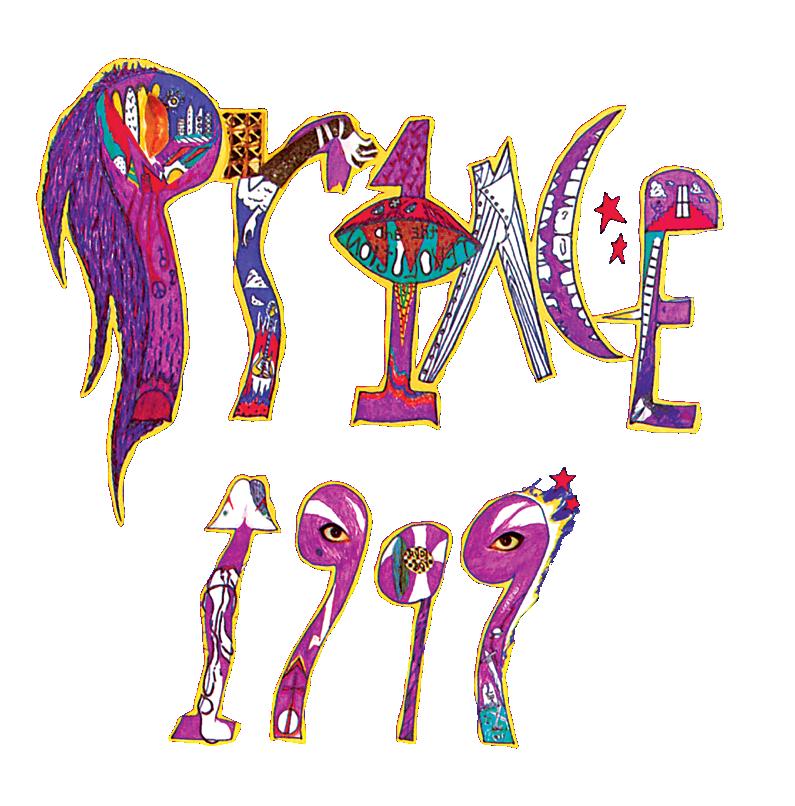
By 1982, Prince had already excited, appalled, and amazed audiences with his equally-revolutionary, equally-risqué brand of funk-heavy pop music. He was lauded by his immense and undeniable talent, having played all of the instruments on his 1978 debut For You, for his hit-making abilities (1979’s “I Wanna Be Your Lover”) and especially for his remarkable (and nearly inhuman) rate of output. But at that point in his career, none of his projects made half the impact that 1999 would.
Before 1999, Prince was already the subject of a LOT of controversy for his music. His lyrics pushed norms of the portrayals of gender and sexuality, and he didn’t try to hide it. Album covers, costume choices, and extravagant live shows became synonymous with his onstage persona; tracks from 1980’s Dirty Mind were banned from radio because of how vulgar the lyrics and subject matter were.
These controversies came at a time where society was growing more paranoid and pessimistic. Everywhere, Cold War-inspired fears about nuclear threats loomed and were a constant topic in the media. For many, it felt like Armageddon could happen at any time.
These fears were well-founded. Estimates place the number of nuclear warheads around the world at the start of the 1980s at around 55,000. This constantlypresent, imposing threat cultivated a culture of fear, which Prince and supporting band The Revolution found themselves in the middle of one night on the Dirty Mind tour. Reportedly, the band were stopped at a hotel watching a TV special about the year 1999 (at the time over 17 years away) and speculated what could happen to the world right before the turn of the millennium.
And just like everyone else, their predictions were not optimistic.
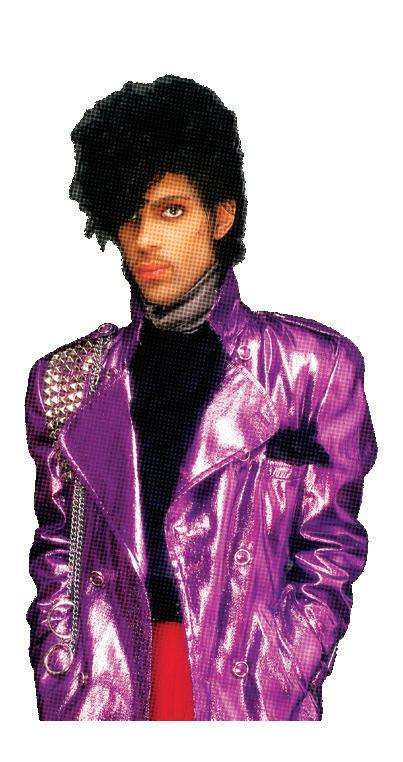

“…and I just found it real ironic how everyone around me, whom I thought to be very optimistic people, were dreading those days.”
- Prince, “Larry King Live” (1999)
The day after the band watched the special, Prince had the album’s title track “1999” completely written. It’s a hopeful party anthem; a more optimistic take on the end of days. The Revolution perform with an undeniable chemistry and the instrumental work is ridiculously good; Prince’s preferences and style evolved to incorporate electrical drum kits, some of the funkiest synths ever heard, and intricately layered instrumentation you could analyse for days, all staples found throughout the album it would eventually be part of.
It’s a hopeful, infectious groove that provides some positivity for a world that was drowning in pessimism— as Prince and co. intended—and this very concept is the driving idea behind the project as a whole.
It’s these key features that make 1999 such a fun and rewarding listen. The whole project is fuelled by this

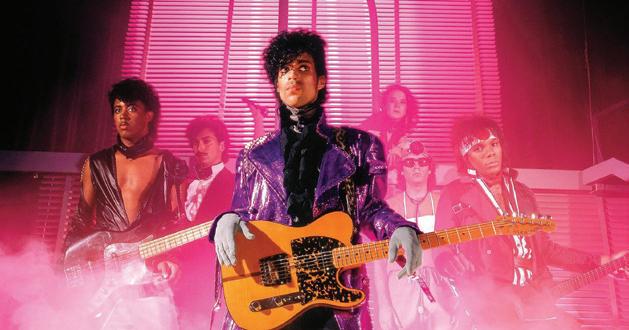
energy that takes different forms, and whether it’s a 4-minute radio friendly jam like “Delirious” or a 8-minute slow burner like “D.M.S.R.” it rarely bores. Prince continues to push thematic boundaries but does so in a well-organised way that makes it a more enjoyable experience than his earlier work. Although the sexual themes can often be more than a bit much, the positives definitely outweigh the negatives. It remains a wonderfully raucous experience and my favourite of Prince’s projects in his extensive discography.
The epitome of the 1999 era for me would have to be the music video of the song of the same name. It’s a slightly out-there affair which sits comfortably in its own marked spot somewhere between hyper and hypnotic. The Revolution’s seamless choreography, energetic lighting, and other striking visual elements elevate an already fantastic song. The video itself is simple enough—just the band performing on stage— but it’s absolutely worth the watch and really captures the mood of the whole album.
In 2019, Prince’s estate released the 1999: Super Deluxe Edition, which is jam-packed with B-sides, new edits, and quality songs that didn’t fit onto the original cut of the album. My favourite previously unreleased tracks from the bunch is “Possessed - 1982 Version”, a slow burner that is both remarkably barebones and infectiously funky. I really recommend giving it a listen if you get the chance.
1999 - 10/10
A classic.
Little Red Corvette – 10/10
Also a classic. Lots of fun.
Delirious - 9.5/10
Upbeat and not as whole as the first two tracks, but very danceable and knows when to stop.
A tongue-n-cheek, fun and upbeat song. The only bad part is Prince’s slightly uncomfortable rant around six minutes in. For the best (and most family-friendly) version of this song, try the 7’’ edit off the Super Deluxe Edition.
D.M.S.R. - 8.5/10
Funky as funky gets.
Automatic - 6.5/10
Drags a little bit - dwindles away and gets too much at times. The 7” edit really benefits from the changes, and I’d rate the 7” version an 8/10.
Something in the Water (Does Not Compute) - 9/10
Has a really unique feel, likely a result of the divergent LinnDrum beat and the hypnotic, slightly spooky synths. Cool. Doesn’t overstay its welcome.
Free - 5.5/10
An entirely different sound to everything else on the album. A bit cheesy and not really my favourite, but still quality to be found.
Lady Cab Driver - 5/10
Another sonic detour that switches the electric drums and synths for an organic, intensely funky arrangement. The song is fantastic, but Prince’s “rant” halfway makes it more than a bit uncomfortable. It would be a 10/10 without it.
All the Critics Love U in New York - 6.5/10
A very low-key, upbeat track. Not outstanding, but a solid track.
International Lover - 7/10
A good song. Gets a little uncomfortable at times.
9.5/10
1999 was revolutionary in its influence on pop, hypnotising in its trance, and electric in its energy. Though the second half isn’t quite as good as the first and the raunchiness at times comes at the expense of the listener, it remains an unforgettable and fun ride.
Want more?
You can find more from The Mindstate on substack at themindstate.substack.com
Also on albumoftheyear.org under the username “themindstate”








Tasman May
there's something about the way nighttime doesn't feel so lonely with her easy-as-breathing chuckle tapping gently at the door / the notification bar of my phone I am not alone, because she is right there, curled up in a woven algorithm blanket. It is beautiful here, high above the stardust of the city, silence bedazzled with the comforts of close proximity. Maybe it's the echo of the day's company, fingerprints of our communal humour blue tacked to the walls and dripping like spilled wine – gleefully. It fades as hands move further away / tinny speakers / ghostly winds / whispered confessions / tired sighs / silent laughter / police sirens / soft snores / love that doesn't need signs.
13/07/2026 Em
for maybe an hour we sat, she did not have to, but we sat together unscrambling famous paintings.
her letters much neater than mine and in light blue rather than black. she guessed ‘the last supper’ right away. that helped us get everything else.
i wore my hand-me-down boots that she said she liked and so i said i loved her braided hair- i did- i do and we found letter e finally. i messed up the order and her friend saw her and said hi, i told him my name and smiled and continued my word puzzles while they caught up.
you’re both so radiant, i thought, so why is she sitting with me while i wait for class when she could be home and sat by a heater. my company can’t be as fulfilling as she needs.
then i smiled because i remembered she’s my friend too. what a lovely pair we make and if she had not shone with that confidence she shines with and told me her name, i would be decoding ‘nighthawks’ by myself
rather than smiling and shining too.



1 The Blair Witch takes place in one of these (6)
3 Nickname for Loch Ness monster (6)
8 Jacob does this on Bella's daughter (7)
9 Ghostly entity (6)
11 Country The Beast of Gévaudan is from (6)
14 Country that has the most cryptid sightings (3)
15 Wife of Zeus (4)
16 A cloven hoofed cryptid (7)
19 Thumb of english folklore (3)
21 If you see a cryptid, you want to take a ___ (3) of it
23 Unidentified sighting (3)
25 Inexplicable event (7)
26 Mesh firing gadget, used to capture small cryptids (6)
28 Legendary West Virginia cryptid (7)
29 Useless, as a battery (4)
30 Goat-headed winged cryptid _____ (6) Devil
2 Parentless child (6)
4 "Wicked" protagonist (7)
The bonus puzzle page stays for another week! Everyone has been on their best behaviour and we can see you definitely have not been procastinating your assignments. Keep up the good work!

5 Lures sailors to their death (5)
6 Gobbled up (5)
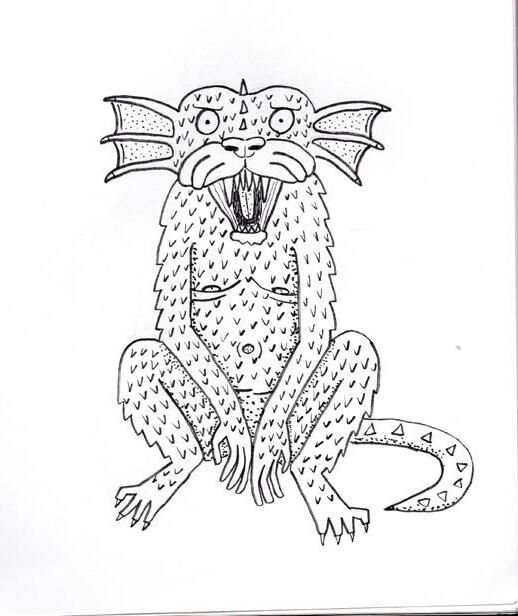
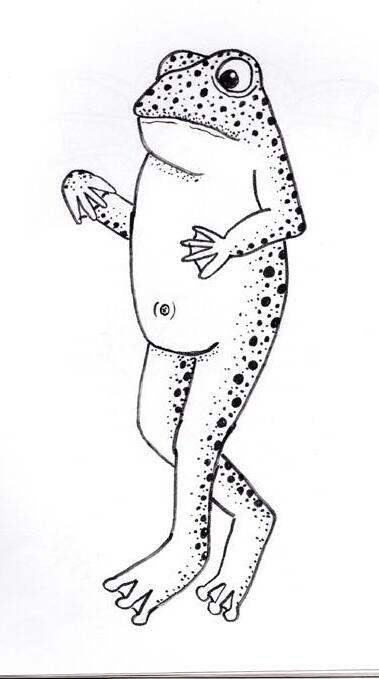
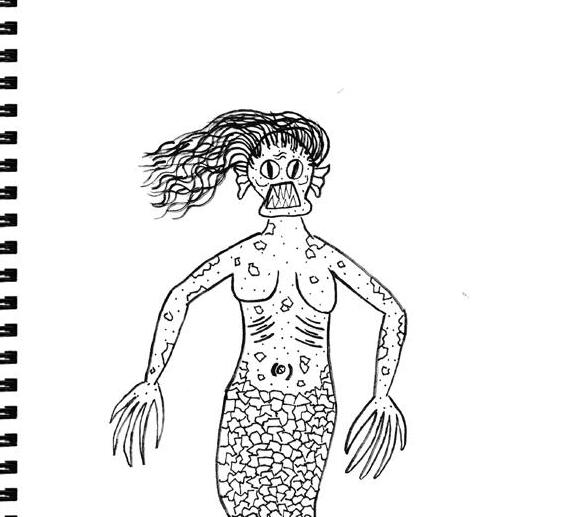
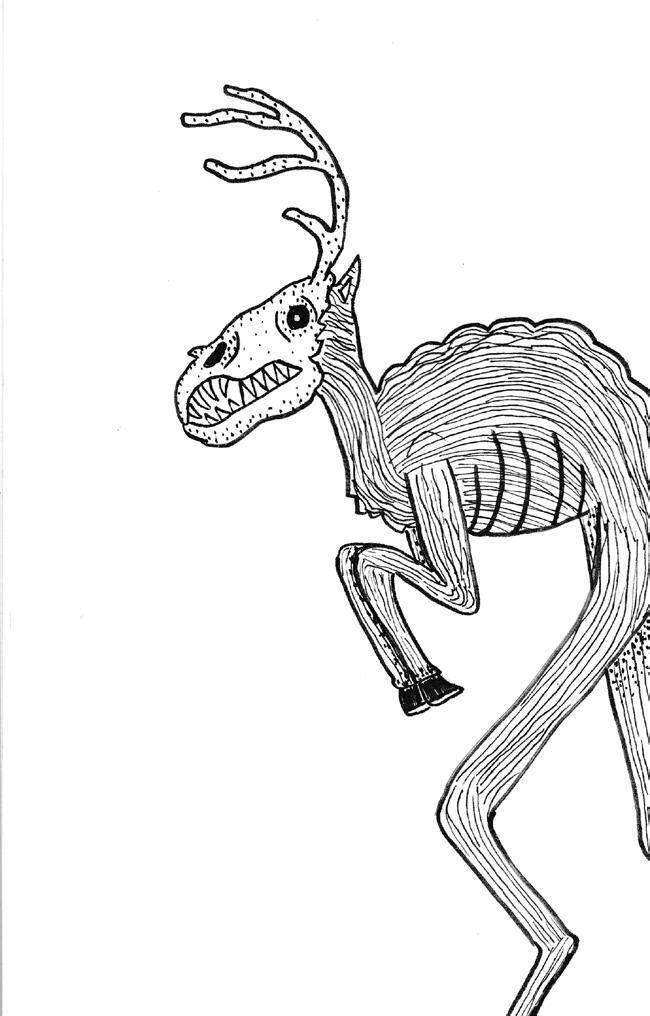
7 Salient designers favorite cryptid (7)
10 Mire, briefly (4)
12 Goat-eater of Mexican lore (10)
13 A squealing sound, when suprised (2)
17 Leonardo, Donatello, Raphael, and Michelangelo, for short (4)
18 Midday (4)
20 Woman/fish hybrid (7)
22 Billiards needs (4)
24 If you see something not human, dial 9 - __ -__ (6)
25 Fiordland cryptid (5)
27 "___ a break!" (5)
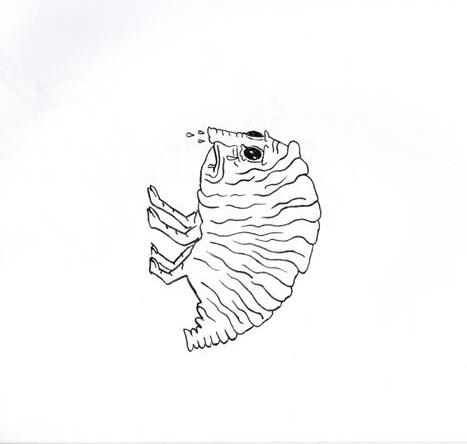
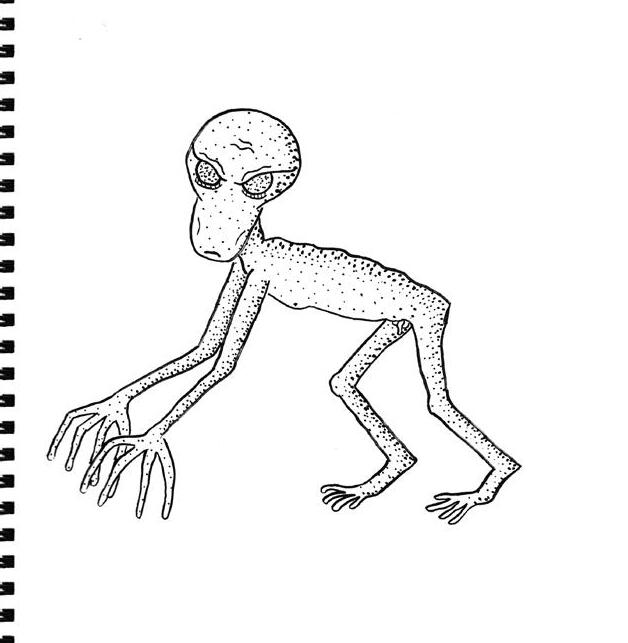
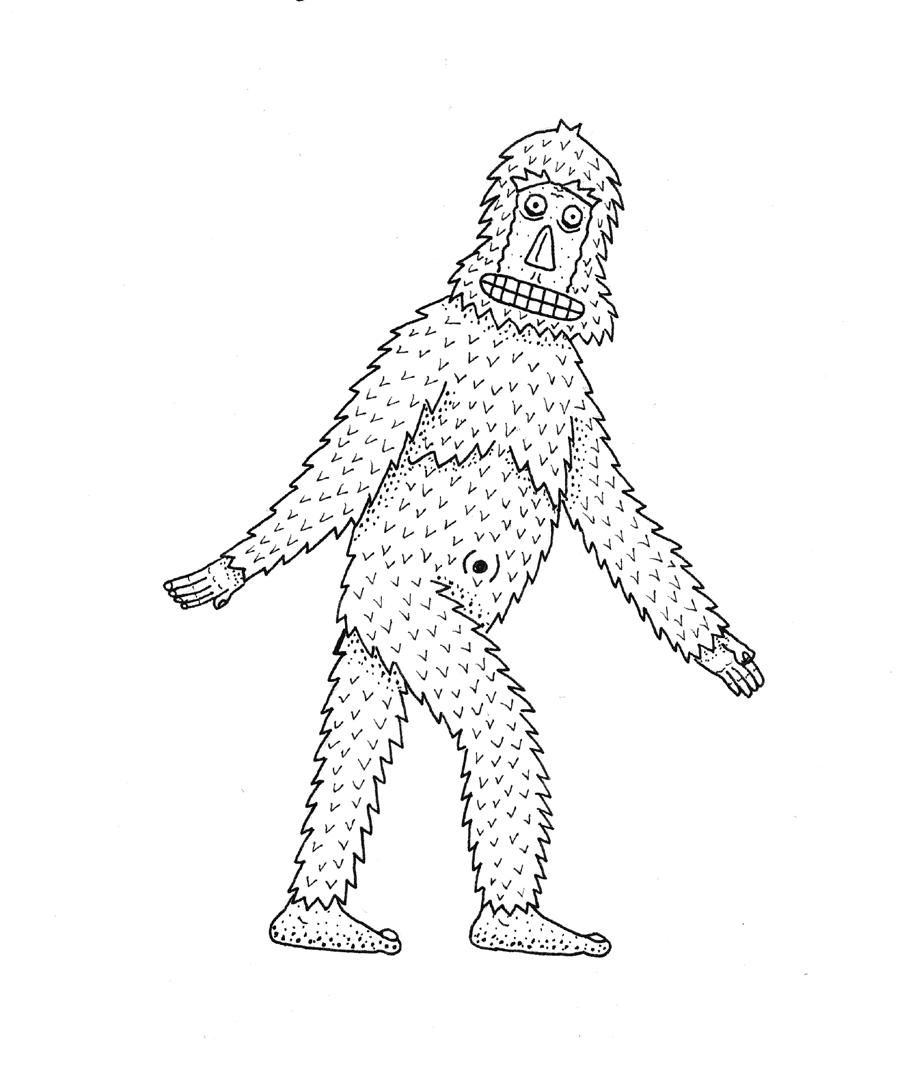
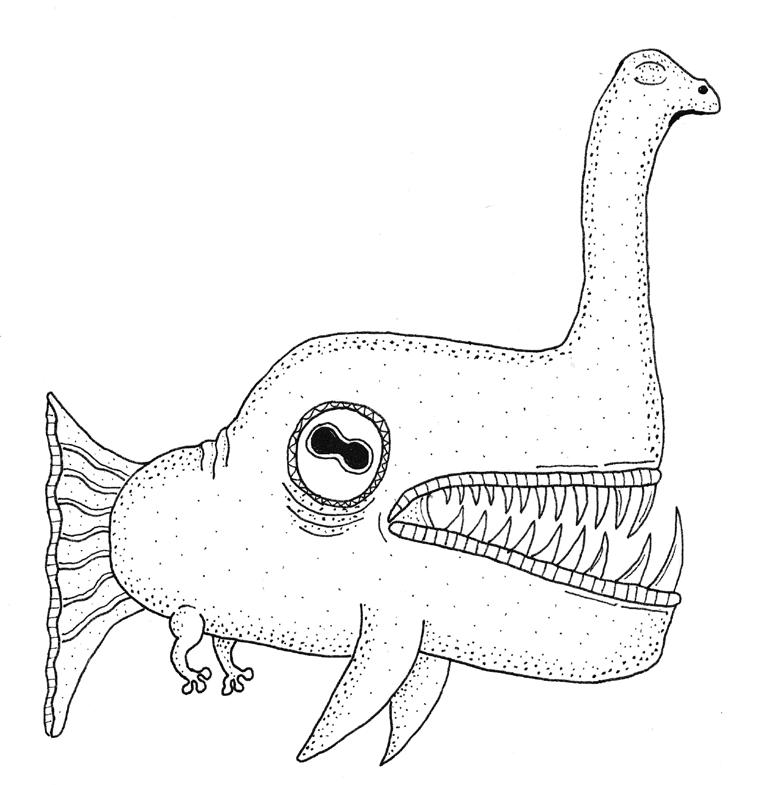
“Cryptic Cryptids” Crossword Author is SparkleTooth and Bigfoot
1. Which cryptid is said to live in Scotland’s Loch Ness?
2. What name is commonly given to the large, ape-like cryptid reported in North America?
3. Which Himalayan cryptid is also called the “Abominable Snowman”?
4. The Chupacabra is said to attack which type of farm animal?
5. Which winged, red-eyed cryptid is associated with Point Pleasant, West Virginia?
6. The Jersey Devil is said to inhabit which U.S. state?
7. Which Australian cryptid is traditionally said to lurk in swamps and waterways?
8. The Mongolian Death Worm is reportedly found in which desert?







This week, I have finally been stricken by the winter illness. My flatmates succumbed one by one, but I foolishly believed I might make it out unscathed. Laughable. Having zero clarity to consciously consume new movies—let alone come up with anything smart to say about them—I am falling back on old familiar favourites. This week: some of my top movies ever, thankfully available on Arovision. Go to ondemand.arovideo.co.nz and get watching, and remember to take some vitamins.
Past Lives (2023) - $6
dir. Celine Song, USA & South Korea
“the kinda movie that makes you want to sit down and write a book about your life” — davidlsims, Letterboxd
Second on my top four. A film about Nora whose family moves from Korea to Canada when she’s 12 years old, leaving behind her childhood crush Hae Sung. Years later, Nora is living in New York to pursue writing when Hae Sung looks her up online to reconnect. What follows is basically the most heartwrenching and soft and beautiful and human story. The acting in this… my god. I’ve never been hurt so much by eye contact. Soooo beautiful to look at, the colour palette and lighting are just scrumptious. And the score! Oh, the score!!! I don’t know how else to sell this to you; the way Past Lives makes me feel is hard to convey. I first saw it at NZIFF in 2023. When the film later had its cinematic release, I happened to be visiting home and decided to invite my own childhood sweetheart to go watch it with me… maybe the craziest stunt I’ve ever pulled. Let this movie affect you, but don't go off trying anything like that. For your own sake.

Barbarella (1968) - $6
dir. Roger Vadim, France & Italy
“Never has straight sex been so gay.” — Todd_Complex, Letterboxd
Third on my top four. This is the most incredibly designed film. The sets and costumes and characters and music are all so funky and so perfectly attuned to the wacky world Barbarella inhabits. The film opens on Jane Fonda floating around inside her space craft as she slowly (and quite seductively) strips off her astronaut suit while an awesomely psychedelic theme song plays. That really sets the tone. After slipping into something a little more comfortable, the titular (haha! boobs!) Barbarella is tasked by the President of Earth to locate and take down evil mad-scientist Durand Durand before he weaponises his deadly Positronic Ray. She sets off through the galaxy, and shortly into her travels discovers the lost art of authentic human intercourse. Yep… this is a suuuper horny movie. At some point, Barbarella is placed inside something called the Excessive Machine, designed to pleasure its victims to death. Yeeeep… a little fucking crazy! It’s still debated whether Barbarella is a feminist-icon in charge of her own sexuality or a victim of the sexualising male gaze. Jane Fonda herself is conflicted about the sex politics of the film. To me, the plot feels so absurdist and the setting so psychedelic I almost view Barbarella as satirical. I think we should reclaim this movie as a feminist text! There, I said it!
Honorable mention
dir. Chris McKay, USA
“they got ralph fiennes to say "master dick" like five times” — childrenofmen, Letterboxd
Fourth on my top four. First of all, I think this is the funniest movie I’ve ever seen— every second line has me laughing heartily, no matter how many times I’ve seen this (...numerous). Secondly, I love Will Arnett. And Zach Galifianakis. And Ralph Fiennes. And and and… this cast is stacked. Even our very own Jemaine Clement (who I’ve already established my appreciation of) features. The plot is heartwarming: a lonely, solitary Batman slowly learns to love, despite his fear of losing everything all over again. Tears in my eyes… and it's not just the blocked sinuses. The Batman x Joker relationship is nothing short of romantic, and the analysis of fatherly bonds really tugs at the heart. For the comic nerds, there's heaps of references to both earlier Batman texts and the DC universe at large. Finally, I’ll once again mention how funny this is. So so so so SO unbelievably funny. Arguably more enjoyable for adult audiences… those stupid kids probably can’t catch half the witty one liners this movie throws at them.
The first movie on my top four is unfortunately not available to stream on Aro, however you can rent the DVD from them in store. When Harry Met Sally (1989) by the late great Rob Reiner is the epitome of a romcom. I’ve been watching this since I was honestly far too young to know what was going on. Great jokes, epic cast, banging soundtrack, and the most impressive collection of 80s sweaters you’ve ever seen.
HEY
hey hunk unc,
(long time reader first time caller) i have a very free schedule this semester so i find myself home often and i very rarely see my lovely flatmates as they all have partners who they cannot spend a second without and of course they have busy lives, i spend some days at a time alone in my flat and it feels like i live alone. how do i talk to my flatmates about this?
Hey, long-time lonely reader, first-time writer.
This Unc is going to give it his best shot, but I’m missing one key piece of information: are these people your friends, or did you move into an existing flat with strangers or mutuals?
That changes the game plan.
If you moved in with mutuals—and I suspect you didn’t—my advice is blunt: find some other friends. Flatmates don’t have to become your best mates. You’re better off widening your social squad than trying to force chemistry just because you live together.
However, this Unc has a sneaking suspicion you were friends before moving in together. That makes things trickier. Everyone enjoys the honeymoon period and wants to spend time with their partner, but that doesn’t mean existing friendships should be left sitting on the bench.
Being single while surrounded by couples can also be rough. You’re allowed to feel lonely without being bitter about their relationships.
Honesty is your best play here. Talk to your flatmates oneon-one rather than calling a full team meeting and unloading
every grievance at once. Next time you’re together in the kitchen, tell them you miss hanging out and have felt a bit lonely around the flat.
Keep it simple. You’re not accusing them of anything; you’re letting them know where you’re at. People can’t respond to a problem if they don’t know the score.
You could also create some regular quality time. Suggest a weekly, fortnightly, or monthly flat dinner. Everyone chips in five bucks, depending on numbers and whichever partners are coming, and you spend an evening eating together.
Different schedules might make that difficult, but pitch it as dinner, cards, a game night, or watching a match. It’s easier to commit to something specific than a vague promise to “hang out soon.”
Finally—and I say this gently—it might help to spend more time outside the flat and meet some new people. Vic has plenty of clubs, teams, and social groups with regular events. Join a social sports team, try something unfamiliar, or simply find somewhere that gets you out of the house once a week.
Group activities might sound lame, but Vic’s Combat Archery Club certainly doesn’t.
You should still talk to your flatmates. Just don’t make them your entire social lineup.
And, as always, you can write back to your old Unc if this advice works—or misses completely. I’m currently accepting applications for regular pen pals.
To submit a question, scan the QR code to the right. Hunk Unc might just get back to you...

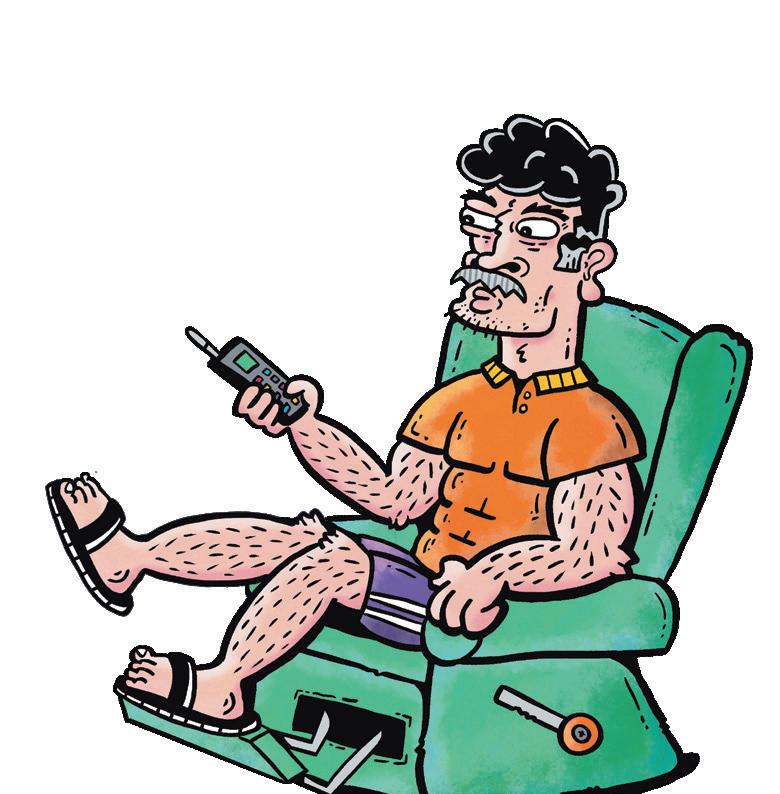


It’s been a while since I’ve featured a ‘meal deal’ here. There’s been a lot of low-cost menus, or fudging entrees and side dishes together into something satisfying. It’s high-time that I let an eatery do the fudging for me. So this week, it’s off to the Willis Street bar that sounds like a McDonald’s smut fic from 2008: Burger Liquor.
Their $9.99 hamburger deal is hard to track down and harder still to obtain: it’s only advertised on a poster down Elmers Avenue, doesn’t feature prominently on their website, and can’t be ordered on Uber Eats or Delivereasy. Of course, you could always sit in at the bar; the staff and vibe is lovely, a kind of WillyWonka’s American diner of spiked milkshakes and wonderful fried things.
But I’d recommend getting the hamburger to take away. It’s ready in a flash, so you could call up in advance or order in person, just as long as you’re there after 8pm. Take the long way home and let the smoky-sweetness of charred beef and molten cheddar waft around your head like in a Looney Tunes scene. By the time you get home and pick at the clumps of caramelised onions peeking out of the bun, you’ll be weak at the knees. Or, at least, I was.
This deal is basically Burger Liquor’s The Standard but at half the price. It comes with a single smash patty, cheddar, pickles, browned onions, and a tomatomustard-mayo burger sauce. This, on its own, is pretty good. The patty is covered in Maillard char and dripping with meaty oils, each crevice and edge on top filled in by a smooth layer of translucent cheese. Some people get iffy about pickles or onions on their burgers but I think these are compulsory for rounding out this experience. With no other vegetables in this meal, the acidity of the sliced gherkins is key to cut through the richness of the fat and protein, making the whole burger
What: Hamburgers
Price: $9.99
When: 8:00pm - 10:00pm; Fri & Sat
If you’re happy to wait, this is a delicious deal.
juicier and lighter. The sweet, grilled onions play their supporting role well, as does the tangy amalgam of sauce that inevitably ended up halfway down my forearm. It’s a simple affair, but very well done.
While delicious for its price, a single burger wasn’t quite a whole meal for me. Luckily, there’s many ways to bulk this out. I got two burgers and a box of spiced Fat Fries to share between my partner and I, which was pretty filling for a final $14.99 per person. There is also the option to customise your burger with tomato, avocado, hash-browns and more, for a couple dollars each. But I think they’d hold up fine with whatever you’ve got left in the fridge on a Friday night. Be that some limp leaves of lettuce, the dregs of a tub of hummus, or a single lonely egg, the basis of this burger is good enough that it can carry almost anything. The restriction of only being available for four hours a week takes this meal deal down a significant notch, it’s hard to realistically take advantage of the discount. But, if it works out, this makes a great Friday fridge clear-out, or fodder for an evening of pre-party drinks.
munch rating: (3 stars)
Obituary: Beyond Bites, the Sri-Lankan street food and fusion kitchen at Capital Markets, has closed up shop. It’s unfortunate to see another storefront there stand dark and empty.
Newcomer: Sri Penang on The Terrace, cousin to Little Penang, now offers a $15 student deal. Consisting of Egg Fried Rice or Noodles, plus a side and a can of soft drink, this sounds like a great new regular.
Am I talking shit or shit-talking your favourite restaurant? Or have I overlooked a place that readers really need to know about? Send me something to chew on at: guy@salient.org.nz







Jackson McCarthy is Salient's Critic-at-Large. His first book of poetry, Portrait, is out now with Auckland University Press.
want to get in touch, tip me off, or rage at me electronically?
jackson@salient.org.nz
Heartstopper’s film finale is so shaky it risks toppling the show that preceded it
Mild spoilers ahead.
In Heartstopper Forever, the feature-length film that closes out the eponymous TV series, things have changed. Once-bullied gay kid Charlie Spring is running for Head Boy, and, on the high of his emotional campaign speech, he clinches it. Now, it’s his gorgeous and popular jock boyfriend, Nick Nelson, who, nearing the end of his high school career, is staring down the barrel of loneliness and uncertainty. It’s a charming and believable enough switcheroo for the film to ride out its runtime on—not least for how it teases out Nick’s blokeish sadness, his insecurities and privacies, that the series has encircled since at least its second season—but the youthful exuberance that made its TV show so potent has all dried up. The film’s obligatory dark middle (in which our boys pretend to break up for about thirty minutes’ screentime) draws out strong performances from its leads, Joe Locke and Kit Connor, who are doing their very best to act as the teenagers that they, now four years into playing these roles, no longer look like. And, I mean, look... Charlie Spring, I too would fall into a major depressive episode if I saw my ex getting hit on at a perplexinglytimed daylight pride parade nightclub afterparty at which I’m sober and sad and inexplicably wearing a hoodie on the dancefloor—but there are factors here that you can control, darling. The contrived narrative scenarios that populate Heartstopper Forever’s world are overwrought and unbelievable—yet in the perverted genius of their architect, the usually-brilliant novelist Alice Oseman, they’re in that sense quite like teenage romance itself. Still, by the time our boys get back together, all dressed up in black and white, the place she takes us is back to
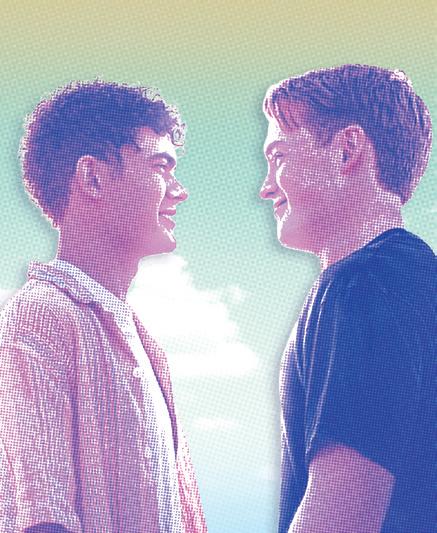
the location of their first kiss in a neglected ballroom. In this scene, it lands with a thud that the film’s narrative is not merely in service of its fans, it’s in service of its protagonists, Nick and Charlie. They’ve become fans of who they used to be: their friends tell them they’re perfect even when they aren’t feeling it, and their romance is fraught with obligation and mutual—but impossible—neediness. In fact, all they seem to be able to talk about is the status of their relationship, “communicating” so intently with each other that you can almost hear gears cranking. Not only does this result in a misjudged underuse of Hearstopper’s great ensemble cast, it’s also a deeply paranoid and deeply Gen Z conversational affect that’s as real as it is bleak, bleak, bleak. I remember phoning home daily to Mummy on the subject during my last relationship... and honestly, fellow kids, our only hope is that Olivia Rodrigo sees through it. If only Nick and Charlie spent less time analysing their relationship and actually living it might we not have been subjected to this flagrant, laggard, stodgy disappointmentof-a-film capping off an otherwise-seminal TV series. We’re back in the dusty old ballroom, only this time we’re the ghosts.
Gracie Abrams does Gracie Abrams — Why is everyone so surprised?
Gracie Abrams has been trying to write from a place of stability. The heartbroken heartbreaker who wrote her smash hit “I Love You, I’m Sorry” back in 2024 is now in a loving relationship. But, in the grand tradition of Diotima in the Symposium and Taylor Swift in “Cornelia Street,” she’s discovered that even real and lasting love comes with its own anxieties, because we’re all mortal, afraid, dark even to ourselves, and surrounded by loss. “Hit the Wall” is this album’s finest and first track—a tight Aaron Dessner production grounded by a kick drum so muffled even Jack Antonoff would turn it up—that sees Abrams swing between needing and fearing: “And I once saw clearly, but it's bloodshot / And I want you so badly, but I close off.” She keeps telling us, in those first two choruses, that she’s “Hit the wall,” not “a problem you can solve”—but with the music in repetitive stasis, it’s hard to feel she really has. Then comes the bridge: with its major supertonic briefly weakening our sense of the home key, it cleverly enacts the very hitting of the wall that the song has been describing, we realise, the aftermath of. In the swirl of textural and harmonic subversion there, we feel suspended, flung up in the crash—and to fall to the ground for one last verse-chorus cycle is our only safety, because, as Abrams has it, “Sooner or later, you’ll find out / I live in a pattern of breakdowns.” This is an impressive, mature song about being the difficult partner in somebody else’s life—and it’s one of Abrams’ very best.
The newspaper critics need this album to be a disappointment for some reason, so they’ve cited the exit of her songwriter friend Audrey Hobart, since embarked on her own solo career, as evidence that Abrams’ lyrics have gone too abstract for their own good. Well, “Man Like You,” certainly, feels incomplete—even before she hits a Sabrina Carpenter-style run in the chorus, you get the sense that a songwriter like Carpenter would have filled out its vagaries with clearer anecdotes and funnier hypotheticals. But Abrams is genuinely a gifted enough singer to deliver rather blank phrases like “And I'm gonna tell you the truth, it almost all went dark / But I'm gonna carry the pain for my whole life” (“Break My Heart”) and have you believe them. Elsewhere, the lucid “Humming,” a meditation on growing up amid Californian wildfires, shows Abrams in a strong light. And “Good Reason” makes another strong case for her depth, whose 12/8 feel and classical syntax sonically echo the aforementioned “I Love You, I’m Sorry”—though its lyrics find Abrams unable to find the kind of melancholy she channeled in that earlier song, and hence melancholic all over again. Now that’s probably getting at what people find grating about her work: her propensity for a kind of melodrama that is largely “unearned”; her directness of address that can feel cut-throat one moment and false the next. For the haters, there’s plenty here that’ll come across as the musical equivalent of watching paint dry—the title track is an, um, “reheating Ethel Cain’s nachos” type of bore; “Minibar” sounds like something Taylor Swift would’ve left off even the bajillionth vinyl variant of Midnights—but we needn’t pretend that we expected anything different from an Abrams record.
As a final aside, I’ll say that I have zero tolerance left for the smug “nepo baby allegations,” which Abrams has handled with about as much grace as is imaginable. The fact is that she wrote these songs and you didn’t, and as much as you and me too would benefit from just so happening to be the offspring of wealthy and well-connected parents like hers, not everybody can write songs, largely for the same reason that not everybody can become a scholar of early modern women's complaint poetry or operate heavy machinery or do a really good Marc Taddei impression. You can point to circumstances, privileges, opportunities, and predispositions, but you have to reenter into the beautiful fantasy of personality at some point, because otherwise you’ll find yourself talking less about Abrams’ music and more speculating grouchily about her person as the beer before you goes room temperature and your friends’ eyes start glazing over. Abrams has offered the former—her music—to us for judgement, and, as this new record’s patchiness might indicate, even the ones who can write songs still struggle with the form endlessly. On Daughter From Hell, that might just exactly be her point: “Do I look high-functioning? / Or is my façade crumbling?” (“Look at My Life”).
Dear dating diary,
My new year's resolution this year was to act a fool and embarrass myself. This was originally intended as a sort of “don’t worry what other people think, put yourself out there and post whatever you want.” For example, reaching out to Phoebe about this column was a push to put work out that I maybe wouldn’t have originally taken! I would say I have most definitely acted a fool this year, but not in a good way.
The truth is that I have embarrassed myself in front of a lot of people over the past couple of months whilst under the influence. Some have stuck by me and others I haven’t seen since, and I will never know if that is from my off-putting behaviour or just a coincidence.
However, regardless of what happens, I end the weekend being consumed by shame and hangxiety. I fill the next day with questioning why I came so strong to that one person, why I overshared so much, and why on earth I said yes to another one?!? Hangxiety gets the best of me, and I am sick of it, and I am more than certain that my friends are sick of hearing about it!! After a pretty horrendous experience on Saturday night, I have been forced to reflect inwards and question if this is what I want for myself? It’s most certainly not the impression I want to give off about who I am!
The question that really circles in my mind is, “do I have a problem?” It’s a very easy thought to dismiss—“Oh, but I could stop if I wanted to!” or “Well, I went sober last Friday so I must be fine.” The reality is, I don’t think that I have an addiction BUT I most certainly have a problem. It’s not healthy to go out drinking and feel horrible and anxiety ridden the next day every single weekend. Especially when that anxiety starts to outweigh the fun you had the night before and take over your life.
lesson:
I am a victim of my own actions, but I can also be the beneficiary of them. I don’t need to feel horrible every single weekend, and I don’t need to sacrifice my social life to do so! I am planning on taking a break for a while and embracing the challenge of sobriety until I get my actions and anxiety under control. I am actually really excited for this journey and to reconnect with who I truly am.
I had a cry to my flatmate the other day about how I don’t feel like myself and that people's perception of me is so different to my own. There are very few individuals that I feel really see all of me, my flatmate being one. I feel as though he has a grounded understanding of my true character—one which is different to the character I play whilst drinking. I have this fear that some people have a two-dimensional understanding of who I am. I am so much more than a girl who always has a crazy story to tell every Monday about her weekend. I want to be able to showcase that third dimension of myself more often.
However, being yourself, truly yourself, is completely and utterly frightening. On further reflection of my new year's resolution, I think I am starting to understand the true meaning of acting a fool. Feeling as though I play a character each time I interact with others, especially when drinking, is not authentically being true to me. I have mistaken confidence for authenticity but have recently learnt you can be confident playing the part of someone else. I need to be vulnerable with who I truly am, no matter how foolish that is. The one that gets nervous about ridiculous things and doesn’t try to “act cool” in front of others. I hope that taking a break from drinking will give me space to do this with more conscious effort. Although it’ll be scary, it will most certainly be more worthwhile in the long run. The hard part will be learning to do it without feeling immense shame.
if you’re starting to feel horrible about every weekend, maybe it is time for you to take a break from being so chaotic and go sober! reflect on who you are at your core and try to embrace that!



Have not hooked up yet (please god when will it be my time) but I have made myself c*m so hard I squirted many a time this year.
Shoutout peaches and cream, great store, great products.
submitted by anonmous

Oh Yes, Oh No is where sex stories go to be judged. Was it hot? Was it a disaster? You decide. All stories are submitted by readers, published anonymously, and guaranteed to make you say 'oh yes' or 'oh no'. Scan the QR code to submit your own and see if it makes the cut.

On a late night walk back from the pub, my partner and I sat down on a bench to discuss kinks. He admitted he had a thing for publicity, so I suggested we try it RIGHT NOW, and he was very excited. We ran around looking for a spot and ended up at the Kelburn Park fountain… Basically we’re going at it behind the fountain… AND IT TURNS ON… Lights, water, everything. We ran away thinking it was some security guard messing with us, but later found out it had to do with the wind speed. Went back and finished the job, mother dearest didn’t raise no quitter. Fun times
submitted by anonmous
Texted a guy on the gay hookup app who seemed hot enough. He came over before we chatted because I was a bit desperate. Said he was a European exchange student. He also wouldn’t make out as it was “pointless”. He just pulled his soft dick out. I jerked him off and sucked him a bit but not much because it was NOT the vibe. He made no effort to reciprocate, said he wanted to f*ck me. I said no, I need to build up to that. Shockingly, silently and passionlessly jerking someone’s dick wasn’t enough for me. I made him finish himself off. While cleaning up he reveals he’s actually far right, and described their left wing party as being supported by weirdos and LGBT people and pointed at ME. When I pointed out there’s a B in LGBT he got offended. Moral of the story: if they don’t make out, they’re a fascist.
submitted by anonmous
First time I had sex with my now boyfriend. It was my first time and definitely not his first. For starters we did it at his grandparents house, on their couch, where they had a flat with tenants in right in the story below, while his grandparents were away on holiday because we were young and horny and didn’t want to wait. Then right after he yk, he says “I love you ‘exs name’”. That was probably the closest near death experience he had ever had because of that. Anyways we have been together for just about 4 years now and completely left that all in the past :)
submitted by anonmous
instructions
A Word Fill puzzle, also known as a Word Fit or Fill-In puzzle, provides a grid and a list of words instead of clues. Your task is to place all the words correctly into the grid so that each word fits the available spaces and matches any intersecting letters.
To complete the puzzle, look for any unusual word lengths, such as the longest or shortest words, as these are often easier to place first. Then, count the number of squares in each empty space on the grid and match them with words of the same length. As you place words, check carefully that the letters match at every intersection. Continue using logic until the entire grid is complete.
“Fill in the Blanks” puzzle Author is SparkleTooth
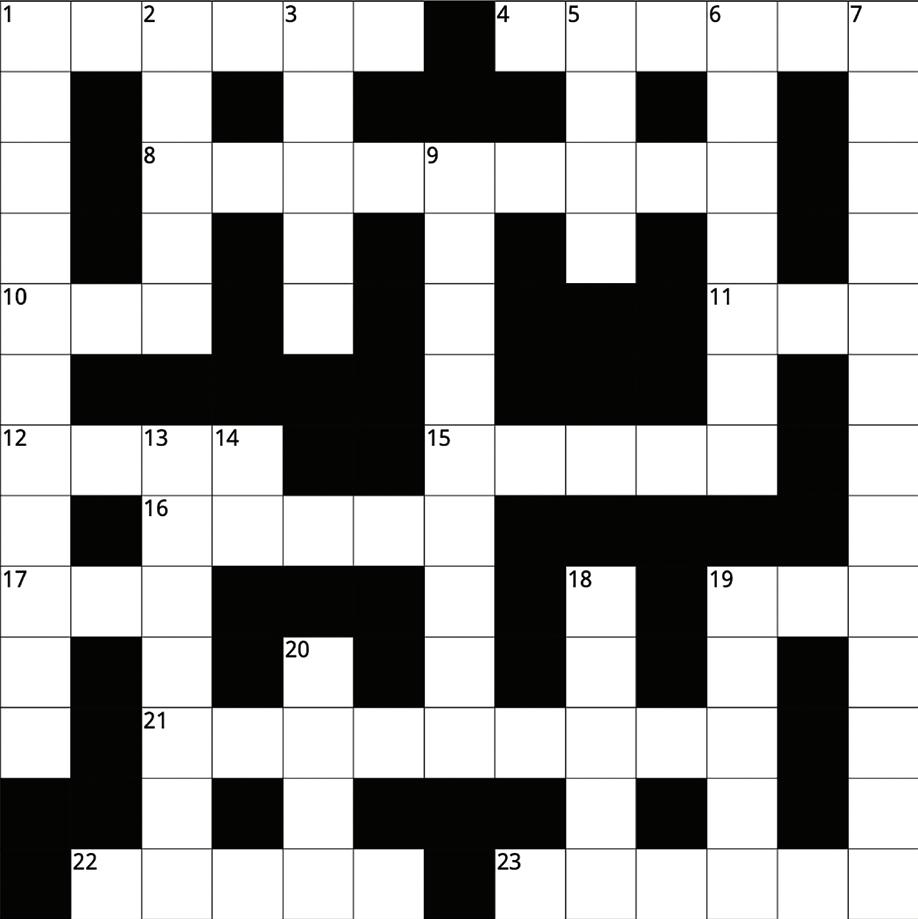
Send us your photos from around campus. It can be a cool bird, a broken vending machine, or anything else you think belongs in the magazine. DM your photo to @Salientgram on Instagram along with a caption. The best images will be chosen each week to be featured, and the winner gets a Hunter Lounge Bacon Butty.
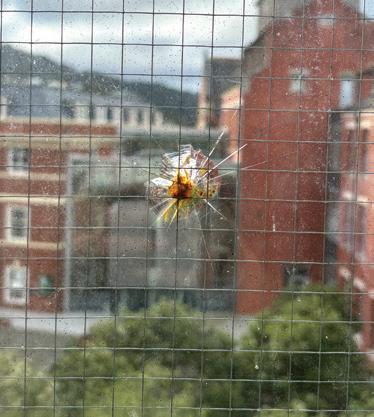
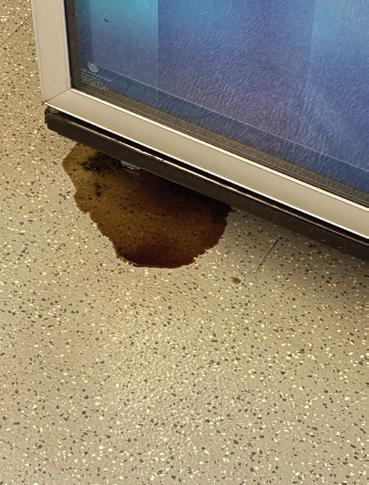
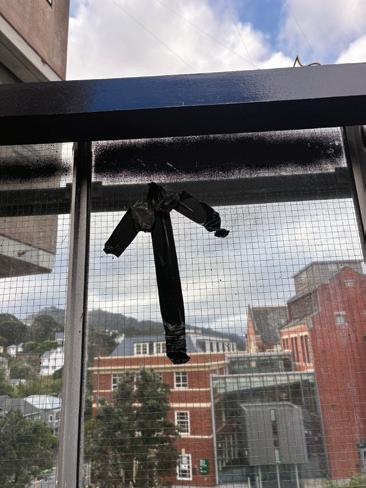
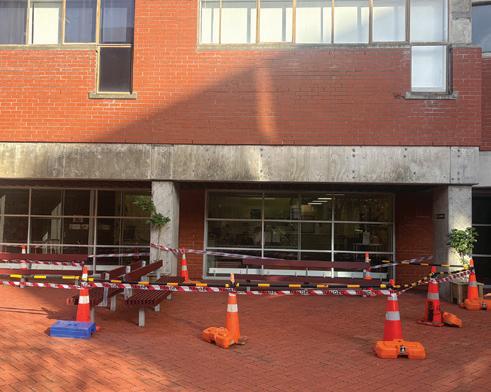

1 You'll find a snake his boot (5)
2 "____'s up, doc?" Bugs Bunny would say (4)
6 What kind of insect is Heimlich in A Bugs Life? (11)
9 Has a crush on Eve (5)
10 Radiator ____ (7)
12 How much ice cream you'd need to watch all seven Ice Age movies in one sitting (3)
14 Kpop Demon Hunters won this award for Best Song Written for Visual Media for the track "Golden" (6)
15 The Simpsons movie bartender (3)
16 Videogame turned to 2024 animated series;
___ Survival Evolved (3)
18 The type of insect the villian from A Bugs Life is (11)
20 Its not A Bugs Life, it's ____ (4)
21 Name of famous Minions short; also a popular fruit (6)
“Animated Film Find” Crossword Author is SparkleTooth
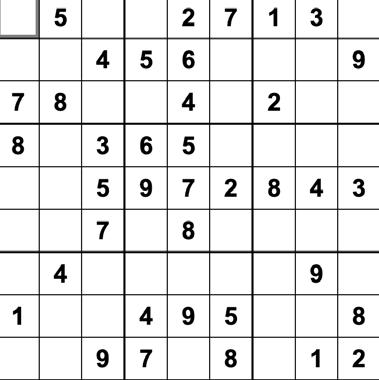
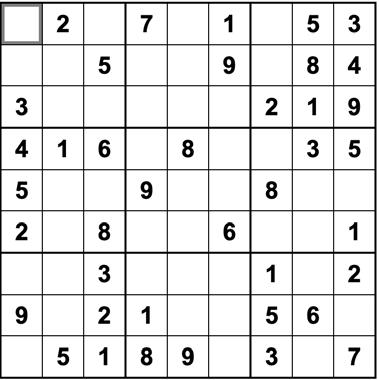
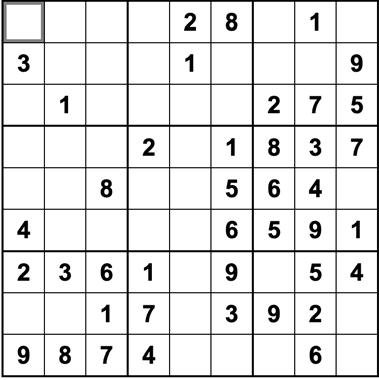
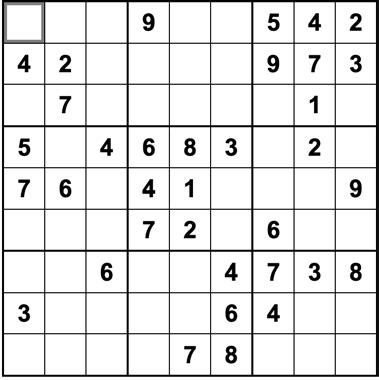
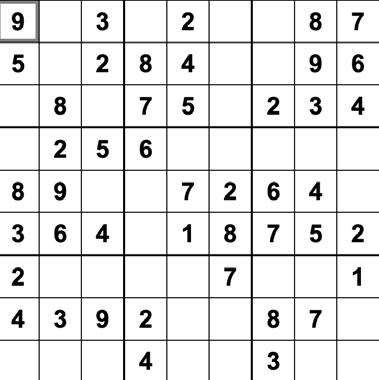
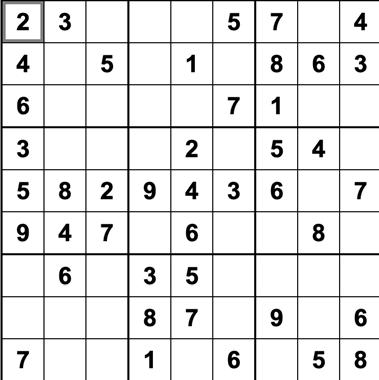
1 What Carl is in Up (7)
3 Rapunzel has a lot of this in Tangled (4)
4 Melman is the ______ out of the animals in Madagascar
5 Tamatoa in Moana is one of these (4)
7 "Under ___ (3) ___ (3)"
8 He voiced Manny (9)
11 Ice ___ (3)
13 This space themed hero does not realise he is a toy (4)
15 ____Mind a bigheaded blue charecter (4)
16 _____ and Omega, a 2010 film turned series (5)
17 The Legend of ___ (sequel to Avatar: The Last Airbender) (5)
19 You take this position when watching a film (3)
If you have a story, confession, or experience you’d like to share—whether it’s an anonymous crush, workplace drama, or something else entirely—you may submit it

I once got high with a random guy in Mount Street Cemetery and he asked if I wanted to be FWBs and I laughed in his face and all the way home.
- anonymous



Welcome to the puzzle page from Puzzhead, your resident Puzzler.
These puzzles are provided to be fun and challenging. The Salient team and our contributors aim for accuracy, but occasional errors may occur. If you notice an error, you may write to editor@salient.org.nz. Please note that our puzzlers and contributors are doing their best, and none are professionals or working on these puzzles full time. For the word find, words may appear diagonally and backwards. To access solutions for the crosswords and connections puzzles, scan the QR code next to Puzzhead.

K O R R E E B G A set square word wheel
To solve a Set Square, use arithmetic and logical reasoning. You are given a grid containing six sums: three reading across and three reading down. The arithmetic operations (division, multiplication, addition, and subtraction) are shown between the grid spaces. Place each of the numbers 1 to 9 exactly once into the grid so that all six sums are correct. Note that calculations are carried out in left-to-right order, not according to BEDMAS.
To solve connections, group the sixteen words into four sets of four based on a shared connection. Each word belongs in only one group. Continue until all four groups are identified. On our website, the groupings are uploaded one at a time, so if you get stuck, you can view the answer for a single connection without revealing the full solution.
To solve Word Wheels, form words of four letters or more using the letters in the nineletter wheel. Every word must include the central letter. Each letter may be used only as many times as it appears in the wheel. The aim is to find as many valid words as possible from the target word list, including the nine-letter word that uses all the letters.
19 possible words
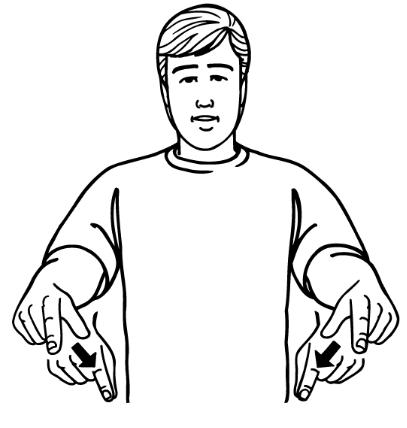
Notes:

Attention finds you easily now, but applause is not the same as truth. Keep Dorian Gray at arm’s length and choose substance over a polished image.
Do: ride, recycle, dawn Don’t: ordinary, guideline, snow
This week needs less charging in and more choosing your moment. Take The Art of War on board: strategy will get you further than sheer nerve. Do: destruction, thanks, arrange Don’t: root, swing, kit




The next adventure may be intellectual, not geographical. Pick up Candide and keep your optimism, just lose the part that ignores obvious warning signs.
Do: healthy, confusion, imperial Don’t: extract, exposure, lung
Stop editing yourself into exhaustion. Jane Eyre is your reminder that standards matter, especially your own; say no cleanly, without turning it into a dissertation.
Do: queue, spread, charge Don’t: truth, related, vat
Comfort is lovely, but don’t let it become a locked door. Avoid The Great Gatsby’s obsession with recreating the past; something better is already forming.
Do: fossil, drain, experiment
Don’t: concession, illness, genuine

You’re capable of carrying it all, but that doesn’t mean you should.
A Christmas Carol offers the lesson: success without warmth becomes a very cold room.
Do: score, hook, trend
Don’t: ballet, bomb, script


Strange travellers from distant constellations have beamed you up to the Mothership to deliver some good news and hard truths. Consider the gravity of their words (or don't).

Your mind is everywhere, and one brilliant idea deserves to survive. Borrow from Frankenstein: create carefully, then stay responsible for what you unleash.
Do: screw, texture, salmon
Don’t: worm, pressure, disappointment


You’re feeling more than people realise, but not everything needs protecting forever. Little Women says tenderness can coexist with ambition; let both sides of you speak.
Do: laborer, study, sunshine
Don’t: title, summer, revolutionary
A decision you’ve delayed is quietly making itself. Take Persuasion seriously: second chances can be beautiful, but only when they come with honesty and movement.
Do: channel, disturbance, low Don’t: line, power, calf



Your strangest idea might be the useful one, so stop sanding off its edges. Take Brave New World as a warning against comfort that costs individuality.
Do: platform, performance, vision
Don’t: drop, due, oral
Secrets have weight, even when nobody mentions them. Let Rebecca warn you off living inside old shadows; the present deserves more power than a ghost.
Do: conductor, inspire, implication
Don’t: waiter, rent, acquisition



Romance is tempting, but projection is doing some heavy lifting. Avoid Wuthering Heights energy: intensity is not proof, and upheaval is not a soulmate.
Do: likely, volunteer, desk
Don’t: margin, disaster, ball
Current constellation LEO July 23August 22